SB 488: Public insurance adjusters.
- Session Year: 2015-2016
- House: Senate
- Latest Version Date: 2016-09-29
Existing law, the Public Insurance Adjusters Act, sets forth various requirements with respect to operation as a public insurance adjuster in this state, including, but not limited to, that the person be licensed and licensing qualifications and application requirements for public insurance adjusters, nonresident public insurance adjusters, and interim public insurance adjusters. Any person who knowingly falsifies the fingerprints or photographs submitted as part of the application process is guilty of a felony, and any person who violates any other provision governing public insurance adjusters is guilty of a misdemeanor punishable by a fine not to exceed $500 or by imprisonment in a county jail not to exceed one year, or by both that fine and imprisonment. Existing law prescribes a schedule for various public insurance adjuster application, license, and license renewal fees.
This bill would revise and recast the above provisions by, among other things, expanding the categories of persons exempt from the act to include, among others, a person who negotiates or settles claims arising under a life or health insurance policy or an annuity contract and a person who settles subrogation claims between insurers. The bill would make certain categories of persons who are exempt from the existing act, subject to the act, thereby requiring those persons to seek licensure in order to practice as a licensee under the act. The bill would place additional eligibility requirements on applicants for a nonresident license. The bill would also repeal the provisions relating to an interim license, and would instead create an apprentice public insurance adjuster license to facilitate the training necessary to ensure reasonable competency in the responsibilities and duties of a public insurance adjuster, and would set forth the various terms and conditions of the license. The bill would make an apprentice public insurance adjuster subject to a felony conviction if he or she knowingly falsifies the fingerprints or photographs submitted as part of his or her application for a license. The bill would also change various public insurance adjuster application, license, and renewal fees, as prescribed.
Existing law requires an individual who holds a public insurance adjuster license and who is not exempt, as specified, to satisfactorily complete a minimum of 24 hours of continuing education courses pertinent to the duties and responsibilities of a public insurance adjuster license, to be reported to the Insurance Commissioner on a biennial basis in conjunction with his or her license renewal cycle.
This bill would require a person who fails to meet those continuing education and reporting requirements, and who has not been granted an extension of time by the commissioner within which to comply, to have his or her license placed on inactive status until he or she demonstrates to the satisfaction of the commissioner that he or she has complied with all of those requirements, as specified. The bill would also prohibit a licensee who is placed on inactive status from performing specified activities.
Because the bill would create new crimes, the bill would impose a state-mandated local program.
This bill also would incorporate additional changes in Sections 1722 and 1751.5 of the Insurance Code proposed by AB 2588, to be operative if AB 2588 and this bill are both enacted and become effective on or before January 1, 2017, and this bill is enacted last.
The California Constitution requires the state to reimburse local agencies and school districts for certain costs mandated by the state. Statutory provisions establish procedures for making that reimbursement.
This bill would provide that no reimbursement is required by this act for a specified reason.
Existing law, the Public Insurance Adjusters Act, sets forth various requirements with respect to operation as a public insurance adjuster in this state, including, but not limited to, that the person be licensed and licensing qualifications and application requirements for public insurance adjusters, nonresident public insurance adjusters, and interim public insurance adjusters. Any person who knowingly falsifies the fingerprints or photographs submitted as part of the application process is guilty of a felony, and any person who violates any other provision governing public insurance adjusters is guilty of a misdemeanor punishable by a fine not to exceed $500 or by imprisonment in a county jail not to exceed one year, or by both that fine and imprisonment. Existing law prescribes a schedule for various public insurance adjuster application, license, and license renewal fees.
This bill would revise and recast the above provisions by, among other things, expanding the categories of persons exempt from the act to include, among others, a person who negotiates or settles claims arising under a life or health insurance policy or an annuity contract and a person who settles subrogation claims between insurers. The bill would make certain categories of persons who are exempt from the existing act, subject to the act, thereby requiring those persons to seek licensure in order to practice as a licensee under the act. The bill would place additional eligibility requirements on applicants for a nonresident license. The bill would also repeal the provisions relating to an interim license, and would instead create an apprentice public insurance adjuster license to facilitate the training necessary to ensure reasonable competency in the responsibilities and duties of a public insurance adjuster, and would set forth the various terms and conditions of the license. The bill would make an apprentice public insurance adjuster subject to a felony conviction if he or she knowingly falsifies the fingerprints or photographs submitted as part of his or her application for a license. Because the bill would create new crimes, it would impose a state-mandated local program. The bill would also change various public insurance adjuster application, license, and renewal fees, as prescribed.
Existing law requires an individual who holds a public insurance adjuster license and who is not exempt, as specified, to satisfactorily complete a minimum of 24 hours of continuing education courses pertinent to the duties and responsibilities of a public insurance adjuster license, to be reported to the Insurance Commissioner on a biennial basis in conjunction with his or her license renewal cycle.
This bill would require a person who fails to meet those continuing education and reporting requirements, and who has not been granted an extension of time by the commissioner within which to comply, to have his or her license placed on inactive status until he or she demonstrates to the satisfaction of the commissioner that he or she has complied with all of those requirements, as specified. The bill would also prohibit a licensee who is placed on inactive status from performing specified activities.
Because the bill would create new crimes, the bill would impose a state-mandated local program.
(3)The California Constitution requires the state to reimburse local agencies and school districts for certain costs mandated by the state. Statutory provisions establish procedures for making that reimbursement.
This bill would provide that no reimbursement is required by this act for a specified reason.
Existing law, the Public Insurance Adjusters Act, sets forth various requirements with respect to operation as a public insurance adjuster in this state, including, but not limited to, that the person be licensed and licensing qualifications and application requirements for public insurance adjusters, nonresident public insurance adjusters, and interim public insurance adjusters. The act defines the term public insurance adjuster to mean a person who, for compensation, acts on behalf of, or aids in any manner, an insured in negotiating for or effecting the settlement of a claim or claims for loss or damage under any policy of insurance covering real or personal property or any person who advertises, solicits business, or holds himself or herself out to the public as an adjuster of those claims and any person who, for compensation, investigates, settles, adjusts, advises, or assists an insured with reference to claims for those losses on behalf of any public insurance adjuster. Any person who knowingly falsifies the fingerprints or photographs submitted as part of the application process is guilty of a felony, and any person who violates any other provision governing public insurance adjusters is guilty of a misdemeanor punishable by a fine not to exceed $500 or by imprisonment in a county jail not to exceed one year, or by both that fine and imprisonment.
This bill would revise and recast the above provisions by, among other things, redefining a public insurance adjuster to include any person who, for compensation or any other thing of value on behalf of an insured, acts or aids, solely in relation to first party claims arising under insurance contracts that insure the real or personal property of the insured, on behalf of an insured in negotiating for, or effecting the settlement of, a claim for loss or damage coverage by an insurance contract, or advertises for employment as a public adjuster of insurance claims or solicits business or represents himself or herself to the public as a public adjuster of first party insurance claims for losses or damages arising out of policies of insurance that insure real or personal property. The bill would expand expanding the categories of persons exempt from the act to include, among others, a person who negotiates or settles claims arising under a life or health insurance policy or an annuity contract and a person who settles subrogation claims between insurers. The bill would make certain categories of persons who are exempt from the existing act, subject to the act, thereby requiring those persons to seek licensure in order to practice as a licensee under the act. The bill would place additional eligibility requirements on applicants for a nonresident license. The bill would also repeal the provisions relating to an interim license, and would instead create an apprentice public insurance adjuster license to facilitate the training necessary to ensure reasonable competency in the responsibilities and duties of a public insurance adjuster, and would set forth the various terms and conditions of the license. The bill would make an apprentice public insurance adjuster subject to a felony conviction if he or she knowingly falsifies the fingerprints or photographs submitted as part of his or her application for a license. Because the bill would create new crimes, it would impose a state-mandated local program.
(3)The California Constitution requires the state to reimburse local agencies and school districts for certain costs mandated by the state. Statutory provisions establish procedures for making that reimbursement.
This bill would provide that no reimbursement is required by this act for a specified reason.
(1)Existing law, the Insurance Adjuster Act, sets forth various requirements with respect to operation as an insurance adjuster in this state, including, but not limited to, that the person be licensed, licensing qualifications and application requirements, codes of conduct, disciplinary actions, and nonresident and emergency licenses. The act defines the term, insurance adjuster, to include a person, other than a private investigator, who, for any consideration whatsoever, engages in business or accepts employment to furnish, or agrees to make, or makes, any investigation for the purpose of obtaining, information in the course of adjusting or otherwise participating in the disposal of, any claim under or in connection with a policy of insurance on behalf of an insurer or engages in soliciting insurance adjustment business. Any person who knowingly falsifies the fingerprints or photographs submitted as part of the application process is guilty of a felony, and any person who violates any other provision governing insurance adjusters is guilty of a misdemeanor punishable by a fine not to exceed $500, or by imprisonment in the county jail not to exceed one year, or by both that fine and imprisonment.
This bill would revise and recast the above provisions by, among other things, changing the name of the act to the Independent Insurance Adjuster Act and redefining an independent insurance adjuster to mean an individual, a business entity, an independent contractor, or an employee of a contractor, who contracts for compensation with insurers or self-insurers, a person whose tax treatment by the insurers or self-insurers is consistent with that of an independent contractor rather than as an employee, and a person that investigates, negotiates, or settles property, casualty, or workers compensation claims for insurers or for self-insurers. The bill would expand the categories of persons exempt from the act to include, among others, an individual who is employed to investigate suspected fraudulent insurance claims but who does not adjust losses or determine claims payments, and a person who solely performs executive, administrative, managerial, or clerical duties or any combination thereof, and who does not investigate, negotiate, or settle claims with policyholders, claimants, or their legal representative. The bill would impose additional information and educational requirements on applicants and would impose additional code of conduct requirements on licensees. The bill would revise the provisions relating to nonresident and emergency licenses with regards to qualifying for those licenses. The bill would also create an apprentice independent insurance adjuster license to facilitate the experience, education, and training necessary to ensure reasonable competency in the responsibilities and duties of an independent insurance adjuster and would set forth the various terms and conditions of the license, including an application fee to be fixed by the commissioner and reasonably related to the actual cost to the department in performing its duties. The bill would make an apprentice independent insurance adjuster subject to a felony conviction if he or she knowingly falsifies the fingerprints or photograph submitted as part of his or her application for a license. The bill would also make conforming changes. Because the bill would create a new crime, it would impose a state-mandated local program.
(2)Existing
Existing law, the Public Insurance Adjusters Act, sets forth various requirements with respect to operation as a public insurance adjuster in this state, including, but not limited to, that the person be licensed and licensing qualifications and application requirements for public insurance adjusters, nonresident public insurance adjusters, and interim public insurance adjusters. The act defines the term public insurance adjuster to mean a person who, for compensation, acts on behalf of, or aids in any manner, an insured in negotiating for or effecting the settlement of a claim or claims for loss or damage under any policy of insurance covering real or personal property or any person who advertises, solicits business, or holds himself or herself out to the public as an adjuster of those claims and any person who, for compensation, investigates, settles, adjusts, advises, or assists an insured with reference to claims for those losses on behalf of any public insurance adjuster. Any person who knowingly falsifies the fingerprints or photographs submitted as part of the application process is guilty of a felony, and any person who violates any other provision governing public insurance adjusters is guilty of a misdemeanor punishable by a fine not to exceed $500 or by imprisonment in the a county jail not to exceed one year, or by both that fine and imprisonment.
This bill would revise and recast the above provisions by, among other things, redefining a public insurance adjuster to include any person who, for compensation or any other thing of value on behalf of an insured, acts or aids, solely in relation to first party claims arising under insurance contracts that insure the real or personal property of the insured, on behalf of an insured in negotiating for, or effecting the settlement of, a claim for loss or damage coverage by an insurance contract, or advertises for employment as a public adjuster of insurance claims or solicits business or represents himself or herself to the public as a public adjuster of first party insurance claims for losses or damages arising out of policies of insurance that insure real or personal property. The bill would expand the categories of persons exempt from the act to include, among others, a person who negotiates or settles claims arising under a life or health insurance policy or an annuity contract and a person who settles subrogation claims between insurers. The bill would make certain categories of persons who are exempt from the existing act, subject to the act, thereby requiring those persons to seek licensure in order to practice as a licensee under the act. The bill would place additional eligibility requirements on applicants for a nonresident license. The bill would also repeal the provisions relating to an interim license, and would instead create an apprentice public insurance adjuster license to facilitate the training necessary to ensure reasonable competency in the responsibilities and duties of a public insurance adjuster, and would set forth the various terms and conditions of the license. The bill would make an apprentice public insurance adjuster subject to a felony conviction if he or she knowingly falsifies the fingerprints or photograph photographs submitted as part of his or her application for a license. Because the bill would create a new crime, new crimes, it would impose a state-mandated local program.
(3)The California Constitution requires the state to reimburse local agencies and school districts for certain costs mandated by the state. Statutory provisions establish procedures for making that reimbursement.
This bill would provide that no reimbursement is required by this act for a specified reason.
(1)Existing law, the Insurance Adjuster Act, sets forth various requirements with respect to operation as an insurance adjuster in this state, including, but not limited to, that the person be licensed, licensing qualifications and application requirements, codes of conduct, disciplinary actions, and nonresident and emergency licenses. The act defines the term, insurance adjuster, to include a person, other than a private investigator, who, for any consideration whatsoever, engages in business or accepts employment to furnish, or agrees to make, or makes, any investigation for the purpose of obtaining, information in the course of adjusting or otherwise participating in the disposal of, any claim under or in connection with a policy of insurance on behalf of an insurer or engages in soliciting insurance adjustment business. Any person who knowingly falsifies the fingerprints or photographs submitted as part of the application process is guilty of a felony, and any person who violates any other provision governing insurance adjusters is guilty of a misdemeanor punishable by a fine not to exceed $500, or by imprisonment in the county jail not to exceed one year, or by both that fine and imprisonment.
This bill would revise and recast the above provisions by, among other things, changing the name of the act to the Independent Insurance Adjuster Act and redefining an independent insurance adjuster to mean an individual, a business entity, an independent contractor, or an employee of a contractor, who contracts for compensation with insurers or self-insurers, a person whose tax treatment by the insurers or self-insurers is consistent with that of an independent contractor rather than as an employee, and a person that investigates, negotiates, or settles property, casualty, or workers compensation claims for insurers or for self-insurers. The bill would expand the categories of persons exempt from the act to include, among others, an individual who is employed to investigate suspected fraudulent insurance claims but who does not adjust losses or determine claims payments, and a person who solely performs executive, administrative, managerial, or clerical duties or any combination thereof, and who does not investigate, negotiate, or settle claims with policyholders, claimants, or their legal representative. The bill would impose additional information and educational requirements on applicants and would impose additional code of conduct requirements on licensees. The bill would revise the provisions relating to nonresident and emergency licenses with regards to qualifying for those licenses. The bill would also create an apprentice independent insurance adjuster license to facilitate the experience, education, and training necessary to ensure reasonable competency in the responsibilities and duties of an independent insurance adjuster and would set forth the various terms and conditions of the license, including an application fee to be fixed by the commissioner and reasonably related to the actual cost to the department in performing its duties. The bill would make an apprentice independent insurance adjuster subject to a felony conviction if he or she knowingly falsifies the fingerprints or photograph submitted as part of his or her application for a license. The bill would also make conforming changes. Because the bill would create a new crime, it would impose a state-mandated local program.
(2)Existing law, the Public Insurance Adjusters Act, sets forth various requirements with respect to operation as a public insurance adjuster in this state, including, but not limited to, that the person be licensed and licensing qualifications and application requirements for public insurance adjusters, nonresident public insurance adjusters, and interim public insurance adjusters. The act defines the term public insurance adjuster to mean a person who, for compensation, acts on behalf of, or aids in any manner, an insured in negotiating for or effecting the settlement of a claim or claims for loss or damage under any policy of insurance covering real or personal property or any person who advertises, solicits business, or holds himself or herself out to the public as an adjuster of those claims and any person who, for compensation, investigates, settles, adjusts, advises, or assists an insured with reference to claims for those losses on behalf of any public insurance adjuster. Any person who knowingly falsifies the fingerprints or photographs submitted as part of the application process is guilty of a felony, and any person who violates any other provision governing public insurance adjusters is guilty of a misdemeanor punishable by a fine not to exceed $500 or by imprisonment in the county jail not to exceed one year, or by both that fine and imprisonment.
This bill would revise and recast the above provisions by, among other things, redefining a public insurance adjuster to include any person who, for compensation or any other thing of value on behalf of an insured, acts or aids, solely in relation to first party claims arising under insurance contracts that insure the real or personal property of the insured, on behalf of an insured in negotiating for, or effecting the settlement of, a claim for loss or damage coverage by an insurance contract, or advertises for employment as a public adjuster of insurance claims or solicits business or represents himself or herself to the public as a public adjuster of first party insurance claims for losses or damages arising out of policies of insurance that insure real or personal property. The bill would expand the categories of persons exempt from the act to include, among others, a person who negotiates or settles claims arising under a life or health insurance policy or an annuity contract and a person who settles subrogation claims between insurers. The bill would place additional eligibility requirements on applicants for a nonresident license. The bill would also repeal the provisions relating to an interim license, and would instead create an apprentice public insurance adjuster license to facilitate the training necessary to ensure reasonable competency in the responsibilities and duties of a public insurance adjuster, and would set forth the various terms and conditions of the license. The bill would make an apprentice public insurance adjuster subject to a felony conviction if he or she knowingly falsifies the fingerprints or photograph submitted as part of his or her application for a license. Because the bill would create a new crime, it would impose a state-mandated local program.
(3)The California Constitution requires the state to reimburse local agencies and school districts for certain costs mandated by the state. Statutory provisions establish procedures for making that reimbursement.
This bill would provide that no reimbursement is required by this act for a specified reason.
The Legislature finds and declares that the changes to the fee amounts in this act codify the current fees charged by the Department of Insurance. The fees in the current statutes, as noted in Sections 15031 and 15060 of the Insurance Code, do not reflect the incremental increases approved by the Insurance Commissioner pursuant to Section 12978 of the Insurance Code since 1985.
SEC. 2.Section 1722 of the Insurance Code is amended to read:1722.If a natural person while licensed pursuant to the provisions of this chapter or Chapter 6 (commencing with Section 1760), Chapter 7 (commencing with Section 1800), or Chapter 8 (commencing with Section 1831) of this part, Part 5 (commencing with Section 12140) of Division 2, or Chapter 2 (commencing with Section 15000) of Division 5 enters the military service of the United States and is in that service at a time prescribed for the filing of a renewal application, the filing of that application is waived, and the license held by that licensee at the time of his or her entry into military service shall remain in force during the period of that military service and until the end of the license year in which he or she is released from that service but not for less than six months after that release. During that period the person may secure a license of the type held by him or her on his or her entry into military service upon the filing of an application and paying the fee therefor without the necessity of taking an examination or paying a penalty.
SEC. 2.5.Section 1722 of the Insurance Code is amended to read:1722.If a natural person while licensed pursuant to the provisions of this chapter or Chapter 6 (commencing with Section 1760), Chapter 7 (commencing with Section 1800), or Chapter 8 (commencing with Section 1831) of this part, Part 5 (commencing with Section 12140) of Division 2, or Chapter 1 (commencing with Section 14000) or Chapter 2 (commencing with Section 15000) of Division 5 enters the military service of the United States and is in that service at a time prescribed for the filing of a renewal application, the filing of that application is waived, and the license held by that licensee at the time of his or her entry into military service shall remain in force during the period of that military service and until the end of the license year in which he or she is released from that service but not for less than six months after that release. During that period, that person may secure a license of the type held by him or her on his or her entry into military service upon the filing of an application and paying the fee therefor without the necessity of taking an examination or paying a penalty.
SEC. 3.Section 1751.5 of the Insurance Code is amended to read:1751.5.The fees required by this chapter and by Chapter 6 (commencing with Section 1760), Chapter 7 (commencing with Section 1800), and Chapter 8 (commencing with Section 1831) of this part, and by Chapter 2 (commencing with Section 15000) of Division 5 are filing fees, no portion of which shall be refunded whether or not the application is acted upon or the examination is taken.
SEC. 3.5.Section 1751.5 of the Insurance Code is amended to read:1751.5.The fees required by this chapter and by Chapter 6 (commencing with Section 1760), Chapter 7 (commencing with Section 1800), and Chapter 8 (commencing with Section 1831) of this part, and by Chapter 1 (commencing with Section 14000) and Chapter 2 (commencing with Section 15000) of Division 5 are filing fees, no portion of which shall be refunded whether or not the application is acted upon or the examination is taken.
SEC. 4.Section 15001 of the Insurance Code is amended to read:15001.As used in this chapter, the following terms have the following meanings:
(a)Apprentice public insurance adjuster means a person who is qualified in all respects as a public adjuster, except as to experience, education, or training.
(b)Business entity means a corporation, association, partnership, limited liability company, limited liability partnership, or other legal entity.
(c)Catastrophic disaster means an event that results in large numbers of deaths and injuries; causes extensive damage or destruction of facilities that provide and sustain human needs; produces an overwhelming demand on state and local response resources and mechanisms; causes a severe long-term effect on general economic activity; and severely affects state, local, and private sector capabilities to begin and sustain response activities. A catastrophic disaster shall be declared by the President of the United States or the Governor of the state or district in which the disaster occurred.
(d)Commissioner means the Insurance Commissioner.
(e)Department means the Department of Insurance.
(f)Fingerprints means an impression of the lines on the finger taken for the purposes of identification.
(g)Home state means the District of Columbia and any state or territory of the United States in which the public insurance adjusters principal place of residence or principal place of business is located. If neither the state in which the public insurance adjuster maintains the principal place of residence nor the state in which the public insurance adjuster maintains the principal place of business has a substantially similar law governing public insurance adjusters, the public insurance adjuster may declare another state in which it becomes licensed and acts as a public insurance adjuster to be the home state.
(h)Licensee means a person licensed under this chapter.
(i)Person includes any individual, firm, company, association, organization, partnership, limited liability company, and corporation.
SEC. 5.Section 15008 of the Insurance Code is amended to read:15008.This chapter does not apply to any of the following:
(a)An attorney at law admitted to practice in this state, when performing his or her duties as an attorney at law.
(b)Photographers, estimators, appraisers, engineers, and arbitrators, who are employed exclusively by a public insurance adjuster for the purpose of furnishing technical assistance to a licensed public insurance adjuster.
(c)A person who negotiates or settles claims arising under a life or health insurance policy or an annuity contract.
(d)A person who settles subrogation claims between insurers.
SEC. 6.Section 15009.1 is added to the Insurance Code, to read:15009.1.(a)The applicant shall complete a 20-hour prelicensing course of study for the lines of authority for a public insurance adjuster license.
(b)An applicant who resides in another state that does not license public insurance adjusters is eligible to designate California as his or her home state. He or she is required to complete the prelicensing education, pass the public insurance adjuster examination, and meet the license application requirements before a license can be issued.
(c)An applicant licensed as a public insurance adjuster in another state is exempt from completing a prelicensing education course to apply for a California public insurance adjuster license if, at the time of application, the applicants out-of-state license is current or was canceled within 90 calendar days.
SEC. 7.Section 15010 of the Insurance Code is amended to read:15010.An application shall be verified and shall include all of the following:
(a)The full name and business address of the applicant.
(b)The name under which the applicant intends to do business.
(c)A statement as to the general nature of the business in which the applicant intends to engage.
(d)If the applicant is a person other than an individual, the full name and resident address of each of its partners, officers, and directors.
(e)Two photographs, not older than six months, of the applicant, of a type prescribed by the commissioner, and one classifiable set of his or her fingerprints, to be sent to a live scan fingerprint provider as directed by the department, if fingerprints are not submitted in person with a live scan fingerprinting service provider certified by the Department of Justice.
(f)A verified statement of his or her experience qualifications.
(g)Other information, evidence, statements, or documents as may be required by the commissioner.
SEC. 8.Section 15011 of the Insurance Code is amended to read:15011.Before an application for a license is granted, the applicant shall meet all of the following requirements:
(a)Be at least 18 years of age.
(b)Shall not have committed acts or crimes constituting grounds for denial of licensure under Section 1668 or 1669.
(c)Shall have at least two years experience in the handling of loss claims under insurance contracts as determined by regulations adopted by the commissioner, and be competent to transact business and discharge the responsibilities of a public insurance adjuster in a manner as to safeguard the interests of the public. A person who has been licensed as an apprentice public insurance adjuster, as set forth in Section 15016, for 12 full months, shall be considered to have met the two-year experience requirement.
(d)Maintain an office in the State of California with public access during regular business hours.
(e)Pass an exam given by the commissioner in regard to property loss adjusting.
(f)Post a surety bond executed by a surety company authorized to do business in this state in the sum of twenty thousand dollars ($20,000).
(g)For an organization applicant, designate a licensed individual public insurance adjuster to be responsible for the organizations compliance with the insurance laws, rules, and regulations of this state.
(h)For an organization applicant, authorize only licensed individual public insurance adjusters to exercise authority under the organizations license.
(i)Comply with any requirement to file supplementary documents, affidavits, and statements as may be necessary to obtain a full disclosure of the information that will aid the commissioner in determining whether the prerequisites for the license have been met.
SEC. 9.Section 15013 of the Insurance Code is amended to read:15013.Each applicant for a license as a public insurance adjuster shall, prior to issuance of the license, personally take and pass, to the satisfaction of the commissioner, an examination given by the department as follows:
(a)The examination shall be prescribed by the commissioner and shall be of sufficient scope to reasonably test the applicants knowledge, among other things, of basic insurance theory, essential elements of contracts, technical competence in the handling of the various lines for which the applicant is being tested, claims ethics and knowledge of the Unfair Practices Act, and the duties and responsibilities of public insurance adjusters under the law.
(b)The examination shall be given to applicants under the supervision of the department or the departments examination contractor and shall be in written form.
(c)The commissioner shall, within a reasonable period of time, not to exceed 30 days, transmit the results of the examination and action taken on the application to the applicant.
(d)In the event an applicant who is otherwise qualified fails the examination, the commissioner may administer a reexamination.
(e)The examination shall be given at those times and places within the state as the commissioner deems reasonably necessary to serve the convenience of the department and applicants.
SEC. 10.Section 15015 of the Insurance Code is repealed.SEC. 11.Section 15016 of the Insurance Code is repealed.SEC. 12.Section 15016 is added to the Insurance Code, to read:15016.(a)The apprentice public insurance adjuster license is a license to facilitate the training necessary to ensure reasonable competency to fulfill the responsibilities of a public insurance adjuster as defined in Section 15007.
(b)The apprentice public insurance adjuster license is subject to the following terms and conditions:
(1)The applicant shall submit, with an application for an initial apprentice public insurance adjuster license, an attestation or certification from a licensed public insurance adjuster assuming responsibility for all actions of that applicant.
(2)The apprentice public insurance adjuster is authorized to adjust claims only in California.
(3)The applicant is required to qualify under subdivisions (a) and (b) of Section 15011.
(4)The applicant is required to pay a license fee of one hundred dollars ($100).
(5)The applicant is required to comply with any requirement to file supplementary documents, affidavits, and statements as may be necessary to obtain a full disclosure of the information that will aid the commissioner in determining whether the prerequisites for the license have been met.
(6)The apprentice public insurance adjuster shall not be required to take and successfully complete the prescribed public insurance adjuster examination.
(7)The licensee shall at all times be an employee of a public insurance adjuster and be subject to training, direction, and control by a licensed public insurance adjuster.
(8)The apprentice public insurance adjuster license is for a period not to exceed 12 months, and the license shall not be renewed.
(9)The licensee is restricted to participation in factual investigation, tentative closing, and solicitation of losses subject to the review and final determination of a licensed public insurance adjuster.
(10)The licensee shall be subject to suspension, revocation, or conditions in accordance with Section 1668.
(11)The applicant shall submit two photographs, not older than six months, of the applicant, of a type prescribed by the commissioner, and one classifiable set of his or her fingerprints, to be sent to a live scan fingerprint provider as directed by the department, if fingerprints are not submitted in person with a live scan fingerprinting service provider certified by the Department of Justice.
(12)The apprentice public insurance adjuster shall complete the 20-hour prelicensing education course of study as defined in Section 15009.1 during the license period.
SEC. 13.Section 15017 of the Insurance Code is amended to read:15017.(a)A nonresident license shall be issued by the commissioner to qualified persons who meet the requirements set forth in Section 15011, and who have appointed the commissioner as an agent for service of process in this state.
(b)Unless denied licensure pursuant to Sections 15018, 15018.5, and 15019, a nonresident person shall receive a nonresident public insurance adjuster license if all of the following apply:
(1)The person is currently licensed in good standing as a public insurance adjuster in his or her home state.
(2)The person has paid the fees required by Section 15060.
(3)The person has provided proof of financial responsibility as required by Section 15033.
(4)The individual has submitted to the commissioner the completed application for licensure.
(5)The persons home state awards nonresident public insurance adjuster licenses to residents of California on the same basis.
SEC. 14.Section 15020 of the Insurance Code is amended to read:15020.The form and content of the license shall be determined by the commissioner.
SEC. 15.Section 15027 of the Insurance Code is amended to read:15027.(a)A licensee shall not, directly or indirectly, act within this state as a public insurance adjuster without having first entered into a contract, in writing, on a form approved by the insurance commissioner and executed in duplicate by the public adjuster and the insured or a duly authorized representative. One original contract shall be kept on file by the licensee, available at all times for inspection, without notice, by the commissioner or his or her duly authorized representative, and one original contract shall be given to the insured.
(b)The written contract between the licensee and the insured shall contain each of the following:
(1)Title of Public Adjuster Contract.
(2)The name, business name, license number, telephone number, and address of the licensee.
(3)The name and address of the insured.
(4)A description of the loss and its location, if applicable.
(5)The name of the insurer and the policy number, if known.
(6)The full salary, fee, commission, or other consideration the licensee is to receive for services under the contract.
(7)A public adjusters fee, commission, or other valuable consideration shall not cause the insured to receive less than any amount paid to the insured by the insurer prior to the date of the written contract between the insured and the public adjuster.
(8)A description of the services to be provided to the insured.
(9)Signatures of the licensee and the insured.
(10)The date the contract was signed by the licensee and the date the contract was signed by the insured.
(11)The following statement: As a public adjuster, I am required by the California Insurance Code to post a surety bond in the sum of $20,000 to cover certain kinds of claims made by you, the insured. If you have any questions concerning the surety bond, you may contact the California Department of Insurance Licensing Hotline at 1-800-967-9331 or www.insurance.ca.gov.
(12)A statement of the compensation to the licensee, including the percentage and base to which the percentage applies.
(13)A statement that the insured has the right to cancel the contract within three business days of signing it and being provided the signed contract.
(c)A contract covered by this section shall not contain a contract term that does any of the following:
(1)Allows the licensees fee to be collected when money is due from an insurer, but not paid, or allows a licensee to collect the entire fee from the first payment issued by an insurer, rather than as a percentage of each payment issued by an insurer.
(2)Requires the insured to authorize an insurer to issue a payment only in the name of the licensee.
(3)Imposes late fees or collection costs on the insured.
(d)A licensee shall not solicit or attempt to solicit a client for employment during a loss-producing occurrence. A loss-producing occurrence continues to exist when any of the following conditions exist at the property that is subject to solicitation:
(1)Any of the circumstances that caused the loss are present at the property where the solicitation would otherwise take place.
(2)Emergency responders are present at the property where the solicitation would otherwise take place.
(3)An evacuation order is still in effect at the property where the solicitation would otherwise take place.
(e)A licensee or any other person or entity offering, for a fee, service regulated by this chapter shall not solicit a policyholder for employment or initiate any contact with a policyholder between the hours of 6 p.m. and 8 a.m., unless requested by the policyholder.
(f)A licensee shall not use any form of contract other than that approved by the commissioner and that contains each of the following:
(1)A provision allowing the client to cancel the contract by written notice sent or delivered by certified mail, return receipt requested, or other form of mailing that provides proof of mailing, to the licensee by midnight of the third business day after the day on which the client signs a contract that complies with this section and is provided a copy of that signed contract. Each copy of the contract shall contain a completed form, captioned Notice of Cancellation, that shall be placed at the end of the contract and be separated from the remainder of the contract by a printed line. Nothing shall be printed on the reverse side of the notice form. The notice form shall be completed by the licensee, and shall contain in type of at least 10-point the following statement written in the same language, e.g., Spanish, as used in the contract:
Notice of Cancellation
| (Date of Contract) |
You may cancel this contract within three business days from the above date that you signed the contract and you were provided with a copy of that signed contract, except that, as it pertains to a disaster as defined in Section 15001, your right to cancel is five calendar days without any penalty or obligation to pay your public adjuster, other than for reimbursement of moneys paid by your public adjuster for out-of-pocket emergency expenses for you or on your behalf. If your public adjuster seeks reimbursement from you for out-of-pocket emergency expenses, your public adjuster shall provide you with an itemized statement of those emergency expenses advanced to you or on your behalf if the cancellation is made within the first three business days after the contract was signed by you and you were provided a copy of the signed contract. Nothing in this contract permits your public adjuster to recover any costs, except for out-of-pocket emergency expenses advanced to you.
If you cancel, any money or other consideration paid by you will be returned within five business days following the receipt of your cancellation notice, and any security interest arising out of the transaction will be canceled.
To cancel this contract, mail or deliver by certified mail, return receipt requested, or other form of mailing that provides proof of mailing, a signed and dated copy of this cancellation notice, or any other written notice, or send a telegram to:
| (name of public adjuster) | |
| at | |
| (address of public adjusters place of business) | |
| not later than midnight of | |
| (Date) | |
| I hereby cancel this contract | |
| (Date) | |
| (Clients signature) | |
(2)The statement WE REPRESENT THE INSURED ONLY prominently displayed in at least 10-point type.
(3)A provision disclosing the percentage of the insureds claim, or other fee, that the licensee will charge for his or her services. The licensee shall obtain the initials of the insured next to this provision.
(4)A conspicuous statement in at least 10-point type in immediate proximity to the space reserved for the clients signature, as follows: You may cancel this contract at any time before midnight of the third business day after the date of this contract. See the notice of cancellation form at the end of this contract for an explanation of this right.
(g)A licensee shall not knowingly make any false report to his or her employer or divulge to any other person, except as he or she may be required by law to do so, any information acquired by him or her except at the direction of the employer or a client for whom the information is obtained.
(h)A licensee shall not use a badge in connection with the official activities of the licensees business.
(i)A licensee shall not permit an employee or agent in his or her own name to advertise, engage clients, furnish reports, or present bills to clients, or in any manner whatever to conduct business for which a license is required under this chapter.
(j)Pursuant to subdivisions (a) and (c) of Section 15006, the commissioner shall have the authority to enforce the provisions of this chapter and prosecute violations thereunder committed by unlicensed persons or entities that hold themselves out or act as public insurance adjusters.
(k)For purposes of this section, business day shall have the same meaning given to that term in subdivision (e) of Section 1689.5 of the Civil Code, as in effect on the operative date of this statute.
(l)The contract and the notice of cancellation set forth in paragraph (1) of subdivision (f) shall be written in the same language, e.g., Spanish, as principally used in the negotiation of the contract.
(m)Within five business days after a contract has been canceled, the licensee shall tender to the client any payments made by the client and any note or other evidence of indebtedness, including an itemized statement of all amounts tendered to the client.
(n)The licensee is not entitled to compensation for services performed prior to cancellation, other than for reimbursement of moneys paid by the licensee for out-of-pocket emergency expenses for the client or on behalf of the client. If the licensee seeks reimbursement from the client for out-of-pocket emergency expenses, and if the cancellation is made within the first three business days after the contract was initiated, the licensee shall provide the client with an itemized statement of those emergency expenses advanced to the client or on behalf of the client by the licensee. Nothing in this subdivision shall permit the licensee to recover any costs, except for out-of-pocket emergency expenses advanced to the client. Any security interest shall be canceled upon cancellation of the contract.
(o)Notice of cancellation given by the client need not take the particular form specified in paragraph (1) of subdivision (f). Notice of cancellation, however expressed, is effective if it indicates the intention of the client not to be bound by the contract.
(p)Cancellation occurs when the client gives written notice of cancellation by certified mail, return receipt requested, or other form of mailing that provides proof of mailing, to the licensee at the address specified in the contract.
(q)Notice of cancellation, if given by mail, is effective when sent by certified mail, return receipt requested, or other form of mailing that provides proof of mailing, properly addressed with postage prepaid.
(r)Until the licensee has complied with this section, the client may cancel the contract.
(s)The contracts shall be executed in duplicate. The licensee shall retain one original contract, and shall provide the insured with an original contract.
(t)The licensee shall provide the client with an original contract and notice of cancellation at the time the client signs the contract.
(u)Any confession of judgment or waiver of the provisions of this chapter shall be deemed contrary to public policy and shall be void and unenforceable.
(v)Prior to the signing of the contract, the licensee shall provide the insured with a separate printed disclosure document in the following form that bears the name and license number of the licensee:
DISCLOSURE
There are three types of insurance adjusters that could be involved in the processing of your insurance claim. The definitions of the three types are as follows:
(1)Public adjusters means the insurance adjusters who do not work for your insurance company. They work for you, the insured, to assist in the preparation, presentation, and settlement of your claim. You hire them by signing a contract and agreeing to pay them a fee or commission based on a percentage of the settlement, or other method of compensation. Public adjusters are required to be licensed, bonded, and tested by the State of California to represent your interest only.
(2)Company adjusters means the insurance adjusters who are employees of your insurance company. They represent your insurance company and are paid by your insurance company. They will not charge you a fee and are not individually licensed or tested by the State of California.
(3)Independent adjusters means the insurance adjusters who are hired on a contract basis by your insurance company to represent the company in the settlement of the claim. They are paid by your insurance company. They will not charge you a fee.
You have the right, but are not required, to use the services of a public adjuster in the preparation and handling of your insurance claim.
Public adjusters cannot solicit your business while the loss is underway, or between the hours of 6 p.m. and 8 a.m.
Your Public Adjuster Contract, with a public adjuster representing you, should clearly indicate the amount of the fee you will be paying to your public adjuster. Your contract, with this fee percentage, should be acknowledged by your initials on the Public Adjuster Contract. The salary, fee, commission, or other consideration is to be paid by you (the insured), not the insurance company (insurer).
You have the right to cancel the contract with your public adjuster, without any penalty or obligation, within three business days from the date the contract is signed. If the contract was established from a catastrophic disaster as defined in subdivision (c) of Section 15001, the insured has the right to cancel within five calendar days.
If you cancel the contract with your public adjuster, any money or other consideration paid by you will be returned within five business days following the receipt of your cancellation notice, and any security interest arising out of the transaction will be canceled.
To cancel the contract with your public adjuster, mail or deliver by certified mail, return receipt requested, or other form of mailing that provides proof of mailing, a signed and dated copy of the cancellation notice, or any other written notice, or send a telegram to the public adjuster at the address in the contract.
You have the right to, and may, communicate with your insurance company at any time if you feel the need during the claims process.
If you have any concerns or questions, the officers at the California Department of Insurance Consumer Hotline are there to help you. Please contact them at 1-800-927-HELP (4357) or www.insurance.ca.gov.
(w)No later than three business days after the cancellation has expired, the public adjuster shall notify the insurer, its adjuster, or its attorney, that he or she has entered into a written contract with the insured.
(x)If the licensee misrepresents or conceals a material fact from the insured prior to execution of the contract, the insured is entitled to rescind the contract without time limit.
(y)Notwithstanding any other provision of this section, if a property loss is included in an area that is subject to a catastrophic disaster, as defined in Section 15001, the insured shall have the right to cancel a contract with a public adjuster within five calendar days of signing it and being provided a copy of the signed contract.
SEC. 16.Section 15027.1 of the Insurance Code is amended to read:15027.1.(a)In addition to the restrictions in subdivision (e) of Section 15027, a licensee shall not solicit a contract of engagement for residential properties under this chapter that are included in an area subject to a catastrophic disaster until seven calendar days have elapsed from the conclusion of a loss-producing occurrence as defined in subdivision (d) of Section 15027.
(b)Subdivision (a) shall not apply if the licensee is contacted directly by the insured or the insureds representative.
(c)Nothing in subdivision (a) shall prohibit a licensee from providing a policyholder, without making personal contact with the policyholder, with accurate written materials explaining services provided by public insurance adjusters.
SEC. 17.Section 15028 of the Insurance Code is amended to read:15028.No person licensed as a public insurance adjuster shall do any of the following:
(a)Use any misrepresentation to solicit a contract or agreement to adjust a claim.
(b)Solicit or accept remuneration from, or have a financial interest in, any salvage, repair or other firm which obtains business in connection with any claim he or she has a contract or agreement to adjust.
(c)Advance moneys to any potential client or insured in order to obtain business.
(d)Offer to pay a fee, commission, or other valuable consideration, exceeding one hundred dollars ($100), to a person for referring a loss unless he or she employs that person to so act for him or her and that person is licensed to act as an adjuster under the provisions of this chapter.
(e)Permit an employee or agent, in his or her own name, to advertise, engage clients, furnish reports, present bills to clients, or in any manner conduct business for which a license is required pursuant to this chapter.
SEC. 18.Section 15031 of the Insurance Code is amended to read:15031.(a)A licensee shall not conduct a business under a fictitious or other business name unless and until he or she has obtained the written authorization of the commissioner to do so.
(b)The commissioner shall not authorize the use of a fictitious or other business name that is so similar to that of a public officer or agency or that is used by another licensee that the public may be confused or misled thereby.
(c)The authorization shall require, as a condition precedent to the use of a fictitious name, that the licensee comply with Section 1724.5.
(d)A licensee desiring to conduct his or her business under more than one fictitious name shall obtain the authorization of the commissioner in a manner prescribed in this section for the use of additional fictitious names.
(e)The licensee shall pay a fee of twenty-five dollars ($25) for each authorization to use an additional fictitious name and for each change in the use of a fictitious business name. If the original license is issued in a nonfictitious name and authorization is requested to have the license reissued in a fictitious business name, the licensee shall pay a fee of twenty-five dollars ($25) for that authorization.
SEC. 19.Section 15036 of the Insurance Code is amended to read:15036.In lieu of the surety bond required by this chapter there may be deposited with the State of California the sum of twenty thousand dollars ($20,000) in cash, or evidence of deposit of the sum of twenty thousand dollars ($20,000) in banks authorized to do business in this state and insured by the Federal Deposit Insurance Corporation, or investment certificates or share accounts in the amount of twenty thousand dollars ($20,000) issued by a savings association doing business in this state and insured by the Federal Deposit Insurance Corporation, or evidence of a certificate of funds or share account of the sum of twenty thousand dollars ($20,000) in a credit union as defined in Section 14002 of the Financial Code whose share deposits are guaranteed by the National Credit Union Administration or guaranteed by any other agency approved by the Department of Business Oversight.
SEC. 20.Section 15053 of the Insurance Code is amended to read:15053.A person who knowingly falsifies the fingerprints or photographs submitted under subdivision (f) of Section 15010 or paragraph (12) of subdivision (b) of Section 15016 is guilty of a felony. A person who violates any of the other provisions of this chapter is guilty of a misdemeanor punishable by a fine not to exceed five hundred dollars ($500) or by imprisonment in a county jail not to exceed one year, or by both that fine and imprisonment.
SEC. 21.Section 15056 of the Insurance Code is amended to read:15056.(a)Except as otherwise provided in this article, an expired license or branch office certificate may be renewed at any time within one year after its expiration on the filing of an application for renewal on a form prescribed by the commissioner, and the payment of a renewal fee in effect on the actual renewal date. If the license or certificate is renewed after its expiration, the licensee, as a condition precedent to renewal, shall also pay the delinquency fee prescribed by this chapter. Renewal under this section shall be effective on the date on which the application is filed, on the date on which the renewal fee is paid, or on the date on which the delinquency fee, if any, is paid, whichever occurs last. If so renewed, the license or certificate shall continue in effect through the date provided in Section 15054 that next occurs after the effective date of the renewal, when it shall expire if it is not again renewed.
(b)Renewal of a license or certificate does not prohibit the bringing of disciplinary proceedings for an act committed before the effective date of the renewal.
SEC. 22.Section 15059.2 is added to the Insurance Code, to read:15059.2.A person who fails to meet the requirements imposed by Section 15059.1, and who has not been granted an extension of time by the commissioner within which to comply, shall have his or her license placed on inactive status until he or she demonstrates to the satisfaction of the commissioner that he or she has complied with all of the requirements of this article and all other applicable law. A licensee placed on inactive status may not perform the activities described in Section 1631. If a person cannot perform the requirements of this article due to a disability or inactivity due to special circumstances, the commissioner shall provide a procedure for the person to place his or her license on inactive status until the person demonstrates to the satisfaction of the commissioner that he or she has complied with all of the requirements of this article for the period of disability or inactivity.
SEC. 23.Section 15060 of the Insurance Code is amended to read:15060.The amount of fees prescribed by this chapter is that in the following schedule:
(a)The fee for the qualifying examination for an original license is sixty-two dollars ($62).
(b)The application fee for an original branch office certificate is thirty-five dollars ($35).
(c)The fee for an original license application is two hundred forty dollars ($240). If the license will expire less than one year after its issuance, then the fee is an amount equal to 50 percent of the renewal fee in effect on the last regular renewal date before the date on which the license is issued.
(d)The renewal fees are as follows:
(1)For a license as a public insurance adjuster, two hundred forty dollars ($240).
(2)For a branch office certificate, fifty dollars ($50).
(e)The fee for replacing an identification card is twenty-five dollars ($25).
(f)The delinquency fee shall be 50 percent of the renewal fee in effect on the date of expiration.
(g)The fee for reexamination of an applicant is twenty-five dollars ($25).
SEC. 24.Section 15062 of the Insurance Code is amended to read:15062.Application or license fees shall not be refunded pursuant to Section 1751.5.
SEC. 25.(a)Section 2.5 of this bill incorporates amendments to Section 1722 of the Insurance Code proposed by both this bill and Assembly Bill 2588. It shall only become operative if (1) both bills are enacted and become effective on or before January 1, 2017, (2) each bill amends Section 1722 of the Insurance Code, and (3) this bill is enacted after Assembly Bill 2588, in which case Section 2 of this bill shall not become operative.
(b)Section 3.5 of this bill incorporates amendments to Section 1751.5 of the Insurance Code proposed by both this bill and Assembly Bill 2588. It shall only become operative if (1) both bills are enacted and become effective on or before January 1, 2017, (2) each bill amends Section 1751.5 of the Insurance Code, and (3) this bill is enacted after Assembly Bill 2588, in which case Section 3 of this bill shall not become operative.
SEC. 26.No reimbursement is required by this act pursuant to Section 6 of Article XIIIB of the California Constitution because the only costs that may be incurred by a local agency or school district will be incurred because this act creates a new crime or infraction, eliminates a crime or infraction, or changes the penalty for a crime or infraction, within the meaning of Section 17556 of the Government Code, or changes the definition of a crime within the meaning of Section 6 of Article XIIIB of the California Constitution.
The Legislature finds and declares that the changes to the fee amounts in this act codify the current fees charged by the Department of Insurance. The fees in the current statutes, as noted in Sections 15031 and 15060 of the Insurance Code, do not reflect the incremental increases approved by the Insurance Commissioner pursuant to Section 12978 of the Insurance Code since 1985.
SEC. 2.Section 1722 of the Insurance Code is amended to read:1722.If a natural person while licensed pursuant to the provisions of this chapter or Chapter 6 (commencing with Section 1760), Chapter 7 (commencing with Section 1800), or Chapter 8 (commencing with Section 1831) of this part, Part 5 (commencing with Section 12140) of Division 2, or Chapter 2 (commencing with Section 15000) of Division 5 enters the military service of the United States and is in that service at a time prescribed for the filing of a renewal application, the filing of that application is waived, and the license held by that licensee at the time of his or her entry into military service shall remain in force during the period of that military service and until the end of the license year in which he or she is released from that service but not for less than six months after that release. During that period the person may secure a license of the type held by him or her on his or her entry into military service upon the filing of an application and paying the fee therefor without the necessity of taking an examination or paying a penalty.
SEC. 2.5.Section 1722 of the Insurance Code is amended to read:1722.If a natural person while licensed pursuant to the provisions of this chapter or Chapters Chapter 6 (commencing with Section 1760), Chapter 7 (commencing with Section 1800), or Chapter 8 (commencing with Section 1831) of this part, or Part 5 (commencing with Section 12140) of Division 2 2, or Chapter 1 (commencing with Section 14000) or Chapter 2 (commencing with Section 15000) of Division 5 enters the military service of the United States and is in such that service at a time prescribed for the filing of a renewal application, the filing of such that application is waived, and the license held by such that licensee at the time of his or her entry into military service shall remain in force during the period of such that military service and until the end of the license year in which he or she is released from such that service but not for less than six months after such that release. During such period such that period, that person may secure a license of the type held by him or her on his or her entry into military service upon the filing of an application and paying the fee therefor without the necessity of taking any an examination or paying any a penalty.
SEC. 3.Section 1751.5 of the Insurance Code is amended to read:1751.5.The fees required by this chapter and by Chapter 6 (commencing with Section 1760), Chapter 7 (commencing with Section 1800), and Chapter 8 (commencing with Section 1831) of this part, and by Chapter 2 (commencing with Section 15000) of Division 5 are filing fees, no portion of which shall be refunded whether or not the application is acted upon or the examination is taken.
SEC. 3.5.Section 1751.5 of the Insurance Code is amended to read:1751.5.The fees required by this chapter and by Chapter 6 (commencing with Section 1760), Chapter 7 (commencing with Section 1800), and Chapter 8 (commencing with Section 1831) of this part part, and by Chapter 1 (commencing with Section 14000) and Chapter 2 (commencing with Section 15000) of Division 5 are filing fees, no portion of which shall be refunded whether or not the application is acted upon or the examination is taken.
SEC. 4.Section 15001 of the Insurance Code is amended to read:15001.As used in this chapter, the following terms have the following meanings:
(a)Apprentice public insurance adjuster means a person who is qualified in all respects as a public adjuster, except as to experience, education, or training.
(b)Business entity means a corporation, association, partnership, limited liability company, limited liability partnership, or other legal entity.
(c)Catastrophic disaster means an event that results in large numbers of deaths and injuries; causes extensive damage or destruction of facilities that provide and sustain human needs; produces an overwhelming demand on state and local response resources and mechanisms; causes a severe long-term effect on general economic activity; and severely affects state, local, and private sector capabilities to begin and sustain response activities. A catastrophic disaster shall be declared by the President of the United States or the Governor of the state or district in which the disaster occurred.
(d)Commissioner means the Insurance Commissioner.
(e)Department means the Department of Insurance.
(f)Fingerprints means an impression of the lines on the finger taken for the purposes of identification.
(g)Home state means the District of Columbia and any state or territory of the United States in which the public insurance adjusters principal place of residence or principal place of business is located. If neither the state in which the public insurance adjuster maintains the principal place of residence nor the state in which the public insurance adjuster maintains the principal place of business has a substantially similar law governing public insurance adjusters, the public insurance adjuster may declare another state in which it becomes licensed and acts as a public insurance adjuster to be the home state.
(h)Licensee means a person licensed under this chapter.
(i)Person includes any individual, firm, company, association, organization, partnership, limited liability company, and corporation.
SEC. 5.Section 15008 of the Insurance Code is amended to read:15008.This chapter does not apply to any of the following:
(a)An attorney at law admitted to practice in this state, when performing his or her duties as an attorney at law.
(b)Photographers, estimators, appraisers, engineers, and arbitrators, who are employed exclusively by a public insurance adjuster for the purpose of furnishing technical assistance to a licensed public insurance adjuster.
(c)A person who negotiates or settles claims arising under a life or health insurance policy or an annuity contract.
(d)A person who settles subrogation claims between insurers.
SEC. 6.Section 15009.1 is added to the Insurance Code, to read:15009.1.(a)The applicant shall complete a 20-hour prelicensing course of study for the lines of authority for a public insurance adjuster license.
(b)An applicant who resides in another state that does not license public insurance adjusters is eligible to designate California as his or her home state. He or she is required to complete the prelicensing education, pass the public insurance adjuster examination, and meet the license application requirements before a license can be issued.
(c)An applicant licensed as a public insurance adjuster in another state is exempt from completing a prelicensing education course to apply for a California public insurance adjuster license if, at the time of application, the applicants out-of-state license is current or was canceled within 90 calendar days.
SEC. 7.Section 15010 of the Insurance Code is amended to read:15010.An application shall be verified and shall include all of the following:
(a)The full name and business address of the applicant.
(b)The name under which the applicant intends to do business.
(c)A statement as to the general nature of the business in which the applicant intends to engage.
(d)If the applicant is a person other than an individual, the full name and resident address of each of its partners, officers, and directors.
(e)Two photographs, not older than six months, of the applicant, of a type prescribed by the commissioner, and one classifiable set of his or her fingerprints, to be sent to a live scan fingerprint provider as directed by the department, if fingerprints are not submitted in person with a live scan fingerprinting service provider certified by the Department of Justice.
(f)A verified statement of his or her experience qualifications.
(g)Other information, evidence, statements, or documents as may be required by the commissioner.
SEC. 8.Section 15011 of the Insurance Code is amended to read:15011.Before an application for a license is granted, the applicant shall meet all of the following requirements:
(a)Be at least 18 years of age.
(b)Shall not have committed acts or crimes constituting grounds for denial of licensure under Section 1668 or 1669.
(c)Shall have at least two years experience in the handling of loss claims under insurance contracts as determined by regulations adopted by the commissioner, and be competent to transact business and discharge the responsibilities of a public insurance adjuster in a manner as to safeguard the interests of the public. A person who has been licensed as an apprentice public insurance adjuster, as set forth in Section 15016, for 12 full months, shall be considered to have met the two-year experience requirement.
(d)Maintain an office in the State of California with public access during regular business hours.
(e)Pass an exam given by the commissioner in regard to property loss adjusting.
(f)Post a surety bond executed by a surety company authorized to do business in this state in the sum of twenty thousand dollars ($20,000).
(g)For an organization applicant, designate a licensed individual public insurance adjuster to be responsible for the organizations compliance with the insurance laws, rules, and regulations of this state.
(h)For an organization applicant, authorize only licensed individual public insurance adjusters to exercise authority under the organizations license.
(i)Comply with any requirement to file supplementary documents, affidavits, and statements as may be necessary to obtain a full disclosure of the information that will aid the commissioner in determining whether the prerequisites for the license have been met.
SEC. 9.Section 15013 of the Insurance Code is amended to read:15013.Each applicant for a license as a public insurance adjuster shall, prior to issuance of the license, personally take and pass, to the satisfaction of the commissioner, an examination given by the department as follows:
(a)The examination shall be prescribed by the commissioner and shall be of sufficient scope to reasonably test the applicants knowledge, among other things, of basic insurance theory, essential elements of contracts, technical competence in the handling of the various lines for which the applicant is being tested, claims ethics and knowledge of the Unfair Practices Act, and the duties and responsibilities of public insurance adjusters under the law.
(b)The examination shall be given to applicants under the supervision of the department or the departments examination contractor and shall be in written form.
(c)The commissioner shall, within a reasonable period of time, not to exceed 30 days, transmit the results of the examination and action taken on the application to the applicant.
(d)In the event an applicant who is otherwise qualified fails the examination, the commissioner may administer a reexamination.
(e)The examination shall be given at those times and places within the state as the commissioner deems reasonably necessary to serve the convenience of the department and applicants.
SEC. 10.Section 15015 of the Insurance Code is repealed.SEC. 11.Section 15016 of the Insurance Code is repealed.SEC. 12.Section 15016 is added to the Insurance Code, to read:15016.(a)The apprentice public insurance adjuster license is a license to facilitate the training necessary to ensure reasonable competency to fulfill the responsibilities of a public insurance adjuster as defined in Section 15007.
(b)The apprentice public insurance adjuster license is subject to the following terms and conditions:
(1)The applicant shall submit, with an application for an initial apprentice public insurance adjuster license, an attestation or certification from a licensed public insurance adjuster assuming responsibility for all actions of that applicant.
(2)The apprentice public insurance adjuster is authorized to adjust claims only in California.
(3)The applicant is required to qualify under subdivisions (a) and (b) of Section 15011.
(4)The applicant is required to pay a license fee of one hundred dollars ($100).
(5)The applicant is required to comply with any requirement to file supplementary documents, affidavits, and statements as may be necessary to obtain a full disclosure of the information that will aid the commissioner in determining whether the prerequisites for the license have been met.
(6)The apprentice public insurance adjuster shall not be required to take and successfully complete the prescribed public insurance adjuster examination.
(7)The licensee shall at all times be an employee of a public insurance adjuster and be subject to training, direction, and control by a licensed public insurance adjuster.
(8)The apprentice public insurance adjuster license is for a period not to exceed 12 months, and the license shall not be renewed.
(9)The licensee is restricted to participation in factual investigation, tentative closing, and solicitation of losses subject to the review and final determination of a licensed public insurance adjuster.
(10)The licensee shall be subject to suspension, revocation, or conditions in accordance with Section 1668.
(11)The applicant shall submit two photographs, not older than six months, of the applicant, of a type prescribed by the commissioner, and one classifiable set of his or her fingerprints, to be sent to a live scan fingerprint provider as directed by the department, if fingerprints are not submitted in person with a live scan fingerprinting service provider certified by the Department of Justice.
(12)The apprentice public insurance adjuster shall complete the 20-hour prelicensing education course of study as defined in Section 15009.1 during the license period.
SEC. 13.Section 15017 of the Insurance Code is amended to read:15017.(a)A nonresident license shall be issued by the commissioner to qualified persons who meet the requirements set forth in Section 15011, and who have appointed the commissioner as an agent for service of process in this state.
(b)Unless denied licensure pursuant to Sections 15018, 15018.5, and 15019, a nonresident person shall receive a nonresident public insurance adjuster license if all of the following apply:
(1)The person is currently licensed in good standing as a public insurance adjuster in his or her home state.
(2)The person has paid the fees required by Section 15060.
(3)The person has provided proof of financial responsibility as required by Section 15033.
(4)The individual has submitted to the commissioner the completed application for licensure.
(5)The persons home state awards nonresident public insurance adjuster licenses to residents of California on the same basis.
SEC. 14.Section 15020 of the Insurance Code is amended to read:15020.The form and content of the license shall be determined by the commissioner.
SEC. 15.Section 15027 of the Insurance Code is amended to read:15027.(a)A licensee shall not, directly or indirectly, act within this state as a public insurance adjuster without having first entered into a contract, in writing, on a form approved by the insurance commissioner and executed in duplicate by the public adjuster and the insured or a duly authorized representative. One original contract shall be kept on file by the licensee, available at all times for inspection, without notice, by the commissioner or his or her duly authorized representative, and one original contract shall be given to the insured.
(b)The written contract between the licensee and the insured shall contain each of the following:
(1)Title of Public Adjuster Contract.
(2)The name, business name, license number, telephone number, and address of the licensee.
(3)The name and address of the insured.
(4)A description of the loss and its location, if applicable.
(5)The name of the insurer and the policy number, if known.
(6)The full salary, fee, commission, or other consideration the licensee is to receive for services under the contract.
(7)A public adjusters fee, commission, or other valuable consideration shall not cause the insured to receive less than any amount paid to the insured by the insurer prior to the date of the written contract between the insured and the public adjuster.
(8)A description of the services to be provided to the insured.
(9)Signatures of the licensee and the insured.
(10)The date the contract was signed by the licensee and the date the contract was signed by the insured.
(11)The following statement: As a public adjuster, I am required by the California Insurance Code to post a surety bond in the sum of $20,000 to cover certain kinds of claims made by you, the insured. If you have any questions concerning the surety bond, you may contact the California Department of Insurance Licensing Hotline at 1-800-967-9331 or www.insurance.ca.gov.
(12)A statement of the compensation to the licensee, including the percentage and base to which the percentage applies.
(13)A statement that the insured has the right to cancel the contract within three business days of signing it and being provided the signed contract.
(c)A contract covered by this section shall not contain a contract term that does any of the following:
(1)Allows the licensees fee to be collected when money is due from an insurer, but not paid, or allows a licensee to collect the entire fee from the first payment issued by an insurer, rather than as a percentage of each payment issued by an insurer.
(2)Requires the insured to authorize an insurer to issue a payment only in the name of the licensee.
(3)Imposes late fees or collection costs on the insured.
(d)A licensee shall not solicit or attempt to solicit a client for employment during a loss-producing occurrence. A loss-producing occurrence continues to exist when any of the following conditions exist at the property that is subject to solicitation:
(1)Any of the circumstances that caused the loss are present at the property where the solicitation would otherwise take place.
(2)Emergency responders are present at the property where the solicitation would otherwise take place.
(3)An evacuation order is still in effect at the property where the solicitation would otherwise take place.
(e)A licensee or any other person or entity offering, for a fee, service regulated by this chapter shall not solicit a policyholder for employment or initiate any contact with a policyholder between the hours of 6 p.m. and 8 a.m., unless requested by the policyholder.
(f)A licensee shall not use any form of contract other than that approved by the commissioner and that contains each of the following:
(1)A provision allowing the client to cancel the contract by written notice sent or delivered by certified mail, return receipt requested, or other form of mailing that provides proof of mailing, to the licensee by midnight of the third business day after the day on which the client signs a contract that complies with this section and is provided a copy of that signed contract. Each copy of the contract shall contain a completed form, captioned Notice of Cancellation, that shall be placed at the end of the contract and be separated from the remainder of the contract by a printed line. Nothing shall be printed on the reverse side of the notice form. The notice form shall be completed by the licensee, and shall contain in type of at least 10-point the following statement written in the same language, e.g., Spanish, as used in the contract:
Notice of Cancellation
| (Date of Contract) |
You may cancel this contract within three business days from the above date that you signed the contract and you were provided with a copy of that signed contract, except that, as it pertains to a disaster as defined in Section 15001, your right to cancel is five calendar days without any penalty or obligation to pay your public adjuster, other than for reimbursement of moneys paid by your public adjuster for out-of-pocket emergency expenses for you or on your behalf. If your public adjuster seeks reimbursement from you for out-of-pocket emergency expenses, your public adjuster shall provide you with an itemized statement of those emergency expenses advanced to you or on your behalf if the cancellation is made within the first three business days after the contract was signed by you and you were provided a copy of the signed contract. Nothing in this contract permits your public adjuster to recover any costs, except for out-of-pocket emergency expenses advanced to you.
If you cancel, any money or other consideration paid by you will be returned within five business days following the receipt of your cancellation notice, and any security interest arising out of the transaction will be canceled.
To cancel this contract, mail or deliver by certified mail, return receipt requested, or other form of mailing that provides proof of mailing, a signed and dated copy of this cancellation notice, or any other written notice, or send a telegram to:
| (name of public adjuster) | |
| at | |
| (address of public adjusters place of business) | |
| not later than midnight of | |
| (Date) | |
| I hereby cancel this contract | |
| (Date) | |
| (Clients signature) | |
(2)The statement WE REPRESENT THE INSURED ONLY prominently displayed in at least 10-point type.
(3)A provision disclosing the percentage of the insureds claim, or other fee, that the licensee will charge for his or her services. The licensee shall obtain the initials of the insured next to this provision.
(4)A conspicuous statement in at least 10-point type in immediate proximity to the space reserved for the clients signature, as follows: You may cancel this contract at any time before midnight of the third business day after the date of this contract. See the notice of cancellation form at the end of this contract for an explanation of this right.
(g)A licensee shall not knowingly make any false report to his or her employer or divulge to any other person, except as he or she may be required by law to do so, any information acquired by him or her except at the direction of the employer or a client for whom the information is obtained.
(h)A licensee shall not use a badge in connection with the official activities of the licensees business.
(i)A licensee shall not permit an employee or agent in his or her own name to advertise, engage clients, furnish reports, or present bills to clients, or in any manner whatever to conduct business for which a license is required under this chapter.
(j)Pursuant to subdivisions (a) and (c) of Section 15006, the commissioner shall have the authority to enforce the provisions of this chapter and prosecute violations thereunder committed by unlicensed persons or entities that hold themselves out or act as public insurance adjusters.
(k)For purposes of this section, business day shall have the same meaning given to that term in subdivision (e) of Section 1689.5 of the Civil Code, as in effect on the operative date of this statute.
(l)The contract and the notice of cancellation set forth in paragraph (1) of subdivision (f) shall be written in the same language, e.g., Spanish, as principally used in the negotiation of the contract.
(m)Within five business days after a contract has been canceled, the licensee shall tender to the client any payments made by the client and any note or other evidence of indebtedness, including an itemized statement of all amounts tendered to the client.
(n)The licensee is not entitled to compensation for services performed prior to cancellation, other than for reimbursement of moneys paid by the licensee for out-of-pocket emergency expenses for the client or on behalf of the client. If the licensee seeks reimbursement from the client for out-of-pocket emergency expenses, and if the cancellation is made within the first three business days after the contract was initiated, the licensee shall provide the client with an itemized statement of those emergency expenses advanced to the client or on behalf of the client by the licensee. Nothing in this subdivision shall permit the licensee to recover any costs, except for out-of-pocket emergency expenses advanced to the client. Any security interest shall be canceled upon cancellation of the contract.
(o)Notice of cancellation given by the client need not take the particular form specified in paragraph (1) of subdivision (f). Notice of cancellation, however expressed, is effective if it indicates the intention of the client not to be bound by the contract.
(p)Cancellation occurs when the client gives written notice of cancellation by certified mail, return receipt requested, or other form of mailing that provides proof of mailing, to the licensee at the address specified in the contract.
(q)Notice of cancellation, if given by mail, is effective when sent by certified mail, return receipt requested, or other form of mailing that provides proof of mailing, properly addressed with postage prepaid.
(r)Until the licensee has complied with this section, the client may cancel the contract.
(s)The contracts shall be executed in duplicate. The licensee shall retain one original contract, and shall provide the insured with an original contract.
(t)The licensee shall provide the client with an original contract and notice of cancellation at the time the client signs the contract.
(u)Any confession of judgment or waiver of the provisions of this chapter shall be deemed contrary to public policy and shall be void and unenforceable.
(v)Prior to the signing of the contract, the licensee shall provide the insured with a separate printed disclosure document in the following form that bears the name and license number of the licensee:
DISCLOSURE
There are three types of insurance adjusters that could be involved in the processing of your insurance claim. The definitions of the three types are as follows:
(1)Public adjusters means the insurance adjusters who do not work for your insurance company. They work for you, the insured, to assist in the preparation, presentation, and settlement of your claim. You hire them by signing a contract and agreeing to pay them a fee or commission based on a percentage of the settlement, or other method of compensation. Public adjusters are required to be licensed, bonded, and tested by the State of California to represent your interest only.
(2)Company adjusters means the insurance adjusters who are employees of your insurance company. They represent your insurance company and are paid by your insurance company. They will not charge you a fee and are not individually licensed or tested by the State of California.
(3)Independent adjusters means the insurance adjusters who are hired on a contract basis by your insurance company to represent the company in the settlement of the claim. They are paid by your insurance company. They will not charge you a fee.
You have the right, but are not required, to use the services of a public adjuster in the preparation and handling of your insurance claim.
Public adjusters cannot solicit your business while the loss is underway, or between the hours of 6 p.m. and 8 a.m.
Your Public Adjuster Contract, with a public adjuster representing you, should clearly indicate the amount of the fee you will be paying to your public adjuster. Your contract, with this fee percentage, should be acknowledged by your initials on the Public Adjuster Contract. The salary, fee, commission, or other consideration is to be paid by you (the insured), not the insurance company (insurer).
You have the right to cancel the contract with your public adjuster, without any penalty or obligation, within three business days from the date the contract is signed. If the contract was established from a catastrophic disaster as defined in subdivision (c) of Section 15001, the insured has the right to cancel within five calendar days.
If you cancel the contract with your public adjuster, any money or other consideration paid by you will be returned within five business days following the receipt of your cancellation notice, and any security interest arising out of the transaction will be canceled.
To cancel the contract with your public adjuster, mail or deliver by certified mail, return receipt requested, or other form of mailing that provides proof of mailing, a signed and dated copy of the cancellation notice, or any other written notice, or send a telegram to the public adjuster at the address in the contract.
You have the right to, and may, communicate with your insurance company at any time if you feel the need during the claims process.
If you have any concerns or questions, the officers at the California Department of Insurance Consumer Hotline are there to help you. Please contact them at 1-800-927-HELP (4357) or www.insurance.ca.gov.
(w)No later than three business days after the cancellation has expired, the public adjuster shall notify the insurer, its adjuster, or its attorney, that he or she has entered into a written contract with the insured.
(x)If the licensee misrepresents or conceals a material fact from the insured prior to execution of the contract, the insured is entitled to rescind the contract without time limit.
(y)Notwithstanding any other provision of this section, if a property loss is included in an area that is subject to a catastrophic disaster, as defined in Section 15001, the insured shall have the right to cancel a contract with a public adjuster within five calendar days of signing it and being provided a copy of the signed contract.
SEC. 16.Section 15027.1 of the Insurance Code is amended to read:15027.1.(a)In addition to the restrictions in subdivision (e) of Section 15027, a licensee shall not solicit a contract of engagement for residential properties under this chapter that are included in an area subject to a catastrophic disaster until seven calendar days have elapsed from the conclusion of a loss-producing occurrence as defined in subdivision (d) of Section 15027.
(b)Subdivision (a) shall not apply if the licensee is contacted directly by the insured or the insureds representative.
(c)Nothing in subdivision (a) shall prohibit a licensee from providing a policyholder, without making personal contact with the policyholder, with accurate written materials explaining services provided by public insurance adjusters.
SEC. 17.Section 15028 of the Insurance Code is amended to read:15028.No person licensed as a public insurance adjuster shall do any of the following:
(a)Use any misrepresentation to solicit a contract or agreement to adjust a claim.
(b)Solicit or accept remuneration from, or have a financial interest in, any salvage, repair or other firm which obtains business in connection with any claim he or she has a contract or agreement to adjust.
(c)Advance moneys to any potential client or insured in order to obtain business.
(d)Offer to pay a fee, commission, or other valuable consideration, exceeding one hundred dollars ($100), to a person for referring a loss unless he or she employs that person to so act for him or her and that person is licensed to act as an adjuster under the provisions of this chapter.
(e)Permit an employee or agent, in his or her own name, to advertise, engage clients, furnish reports, present bills to clients, or in any manner conduct business for which a license is required pursuant to this chapter.
SEC. 18.Section 15031 of the Insurance Code is amended to read:15031.(a)A licensee shall not conduct a business under a fictitious or other business name unless and until he or she has obtained the written authorization of the commissioner to do so.
(b)The commissioner shall not authorize the use of a fictitious or other business name that is so similar to that of a public officer or agency or that is used by another licensee that the public may be confused or misled thereby.
(c)The authorization shall require, as a condition precedent to the use of a fictitious name, that the licensee comply with Section 1724.5.
(d)A licensee desiring to conduct his or her business under more than one fictitious name shall obtain the authorization of the commissioner in a manner prescribed in this section for the use of additional fictitious names.
(e)The licensee shall pay a fee of twenty-five dollars ($25) for each authorization to use an additional fictitious name and for each change in the use of a fictitious business name. If the original license is issued in a nonfictitious name and authorization is requested to have the license reissued in a fictitious business name, the licensee shall pay a fee of twenty-five dollars ($25) for that authorization.
SEC. 19.Section 15036 of the Insurance Code is amended to read:15036.In lieu of the surety bond required by this chapter there may be deposited with the State of California the sum of twenty thousand dollars ($20,000) in cash, or evidence of deposit of the sum of twenty thousand dollars ($20,000) in banks authorized to do business in this state and insured by the Federal Deposit Insurance Corporation, or investment certificates or share accounts in the amount of twenty thousand dollars ($20,000) issued by a savings association doing business in this state and insured by the Federal Deposit Insurance Corporation, or evidence of a certificate of funds or share account of the sum of twenty thousand dollars ($20,000) in a credit union as defined in Section 14002 of the Financial Code whose share deposits are guaranteed by the National Credit Union Administration or guaranteed by any other agency approved by the Department of Business Oversight.
SEC. 20.Section 15053 of the Insurance Code is amended to read:15053.A person who knowingly falsifies the fingerprints or photographs submitted under subdivision (f) of Section 15010 or paragraph (12) of subdivision (b) of Section 15016 is guilty of a felony. A person who violates any of the other provisions of this chapter is guilty of a misdemeanor punishable by a fine not to exceed five hundred dollars ($500) or by imprisonment in a county jail not to exceed one year, or by both that fine and imprisonment.
SEC. 21.Section 15056 of the Insurance Code is amended to read:15056.(a)Except as otherwise provided in this article, an expired license or branch office certificate may be renewed at any time within one year after its expiration on the filing of an application for renewal on a form prescribed by the commissioner, and the payment of a renewal fee in effect on the actual renewal date. If the license or certificate is renewed after its expiration, the licensee, as a condition precedent to renewal, shall also pay the delinquency fee prescribed by this chapter. Renewal under this section shall be effective on the date on which the application is filed, on the date on which the renewal fee is paid, or on the date on which the delinquency fee, if any, is paid, whichever occurs last. If so renewed, the license or certificate shall continue in effect through the date provided in Section 15054 that next occurs after the effective date of the renewal, when it shall expire if it is not again renewed.
(b)Renewal of a license or certificate does not prohibit the bringing of disciplinary proceedings for an act committed before the effective date of the renewal.
SEC. 22.Section 15059.2 is added to the Insurance Code, to read:15059.2.A person who fails to meet the requirements imposed by Section 15059.1, and who has not been granted an extension of time by the commissioner within which to comply, shall have his or her license placed on inactive status until he or she demonstrates to the satisfaction of the commissioner that he or she has complied with all of the requirements of this article and all other applicable law. A licensee placed on inactive status may not perform the activities described in Section 1631. If a person cannot perform the requirements of this article due to a disability or inactivity due to special circumstances, the commissioner shall provide a procedure for the person to place his or her license on inactive status until the person demonstrates to the satisfaction of the commissioner that he or she has complied with all of the requirements of this article for the period of disability or inactivity.
SEC. 23.Section 15060 of the Insurance Code is amended to read:15060.The amount of fees prescribed by this chapter is that in the following schedule:
(a)The fee for the qualifying examination for an original license is sixty-two dollars ($62).
(b)The application fee for an original branch office certificate is thirty-five dollars ($35).
(c)The fee for an original license application is two hundred forty dollars ($240). If the license will expire less than one year after its issuance, then the fee is an amount equal to 50 percent of the renewal fee in effect on the last regular renewal date before the date on which the license is issued.
(d)The renewal fees are as follows:
(1)For a license as a public insurance adjuster, two hundred forty dollars ($240).
(2)For a branch office certificate, fifty dollars ($50).
(e)The fee for replacing an identification card is twenty-five dollars ($25).
(f)The delinquency fee shall be 50 percent of the renewal fee in effect on the date of expiration.
(g)The fee for reexamination of an applicant is twenty-five dollars ($25).
SEC. 24.Section 15062 of the Insurance Code is amended to read:15062.Application or license fees shall not be refunded pursuant to Section 1751.5.
SEC. 25.(a)Section 2.5 of this bill incorporates amendments to Section 1722 of the Insurance Code proposed by both this bill and Assembly Bill 2588. It shall only become operative if (1) both bills are enacted and become effective on or before January 1, 2017, (2) each bill amends Section 1722 of the Insurance Code, and (3) this bill is enacted after Assembly Bill 2588, in which case Section 2 of this bill shall not become operative.
(b)Section 3.5 of this bill incorporates amendments to Section 1751.5 of the Insurance Code proposed by both this bill and Assembly Bill 2588. It shall only become operative if (1) both bills are enacted and become effective on or before January 1, 2017, (2) each bill amends Section 1751.5 of the Insurance Code, and (3) this bill is enacted after Assembly Bill 2588, in which case Section 3 of this bill shall not become operative.
SEC. 25.SEC. 26.No reimbursement is required by this act pursuant to Section 6 of Article XIIIB of the California Constitution because the only costs that may be incurred by a local agency or school district will be incurred because this act creates a new crime or infraction, eliminates a crime or infraction, or changes the penalty for a crime or infraction, within the meaning of Section 17556 of the Government Code, or changes the definition of a crime within the meaning of Section 6 of Article XIIIB of the California Constitution.
The Legislature finds and declares that the changes to the fee amounts in this act codify the current fees charged by the Department of Insurance. The fees in the current statutes, as noted in Sections 15031 and 15060 of the Insurance Code, do not reflect the incremental increases approved by the Insurance Commissioner pursuant to Section 12978 of the Insurance Code since 1985.
SECTION 1.SEC. 2.Section 1722 of the Insurance Code is amended to read:1722.If a natural person while licensed pursuant to the provisions of this chapter or Chapter 6 (commencing with Section 1760), Chapter 7 (commencing with Section 1800), or Chapter 8 (commencing with Section 1831) of this part, Part 5 (commencing with Section 12140) of Division 2, or Chapter 2 (commencing with Section 15000) of Division 5 enters the military service of the United States and is in that service at a time prescribed for the filing of a renewal application, the filing of that application is waived, and the license held by that licensee at the time of his or her entry into military service shall remain in force during the period of that military service and until the end of the license year in which he or she is released from that service but not for less than six months after that release. During that period the person may secure a license of the type held by him or her on his or her entry into military service upon the filing of an application and paying the fee therefor without the necessity of taking an examination or paying a penalty.
SEC. 2.SEC. 3.Section 1751.5 of the Insurance Code is amended to read:1751.5.The fees required by this chapter and by Chapter 6 (commencing with Section 1760), Chapter 7 (commencing with Section 1800), and Chapter 8 (commencing with Section 1831) of this part, and by Chapter 2 (commencing with Section 15000) of Division 5 are filing fees, no portion of which shall be refunded whether or not the application is acted upon or the examination is taken.
SEC. 3.SEC. 4.Section 15001 of the Insurance Code is amended to read:15001.As used in this chapter, the following terms have the following meanings:
(a)Apprentice public insurance adjuster means a person who is qualified in all respects as a public adjuster, except as to experience, education, or training.
(b)Business entity means a corporation, association, partnership, limited liability company, limited liability partnership, or other legal entity.
(c)Catastrophic disaster means an event that results in large numbers of deaths and injuries; causes extensive damage or destruction of facilities that provide and sustain human needs; produces an overwhelming demand on state and local response resources and mechanisms; causes a severe long-term effect on general economic activity; and severely affects state, local, and private sector capabilities to begin and sustain response activities. A catastrophic disaster shall be declared by the President of the United States or the Governor of the state or district in which the disaster occurred.
(d)Commissioner means the Insurance Commissioner.
(e)Department means the Department of Insurance.
(f)Fingerprints means an impression of the lines on the finger taken for the purposes of identification.
(g)Home state means the District of Columbia and any state or territory of the United States in which the public insurance adjusters principal place of residence or principal place of business is located. If neither the state in which the public insurance adjuster maintains the principal place of residence nor the state in which the public insurance adjuster maintains the principal place of business has a substantially similar law governing public insurance adjusters, the public insurance adjuster may declare another state in which it becomes licensed and acts as a public insurance adjuster to be the home state.
(h)Licensee means a person licensed under this chapter.
(i)Person includes any individual, firm, company, association, organization, partnership, limited liability company, and corporation.
SEC. 4.SEC. 5.Section 15008 of the Insurance Code is amended to read:15008.This chapter does not apply to any of the following:
(a)An attorney at law admitted to practice in this state, when performing his or her duties as an attorney at law.
(b)Photographers, estimators, appraisers, engineers, and arbitrators, who are employed exclusively by a public insurance adjuster for the purpose of furnishing technical assistance to a licensed public insurance adjuster.
(c)A person who negotiates or settles claims arising under a life or health insurance policy or an annuity contract.
(d)A licensed health care provider, or employee of a licensed health care provider, who prepares or files a health claim form on behalf of a patient.
(e)
(d)A person who settles subrogation claims between insurers.
SEC. 5.SEC. 6.Section 15009.1 is added to the Insurance Code, to read:15009.1.(a)The applicant shall complete a 20-hour prelicensing course of study for the lines of authority for a public insurance adjuster license.
(b)An applicant who resides in another state that does not license public insurance adjusters is eligible to designate California as his or her home state. He or she is required to complete the prelicensing education, pass the public insurance adjuster examination, and meet the license application requirements before a license can be issued.
(c)An applicant licensed as a public insurance adjuster in another state is exempt from completing a prelicensing education course to apply for a California public insurance adjuster license if, at the time of application, the applicants out-of-state license is current or was canceled within 90 calendar days. The applicant is required to be a licensee in good standing in his or her home state.
SEC. 6.SEC. 7.Section 15010 of the Insurance Code is amended to read:15010.An application shall be verified and shall include all of the following:
(a)The full name and business address of the applicant.
(b)The name under which the applicant intends to do business.
(c)A statement as to the general nature of the business in which the applicant intends to engage.
(d)If the applicant is a person other than an individual, the full name and resident address of each of its partners, officers, and directors.
(e)Two photographs, not older than six months, of the applicant, of a type prescribed by the commissioner, and one classifiable set of his or her fingerprints, to be sent to a live scan fingerprint provider as directed by the department, if fingerprints are not submitted in person with a live scan fingerprinting service provider certified by the Department of Justice.
(f)A verified statement of his or her experience qualifications.
(g)Other information, evidence, statements, or documents as may be required by the commissioner.
SEC. 7.SEC. 8.Section 15011 of the Insurance Code is amended to read:15011.Before an application for a license is granted, the applicant shall meet all of the following requirements:
(a)Be at least 18 years of age.
(b)Be of good character and shall Shall not have committed acts or crimes constituting grounds for denial of licensure under Section 1668 or 1669.
(c)Shall have at least two years experience in the handling of loss claims under insurance contracts as determined by regulations adopted by the commissioner, and be competent to transact business and discharge the responsibilities of a public insurance adjuster in a manner as to safeguard the interests of the public. A person who has been licensed as an apprentice public insurance adjuster, as set forth in Section 15016, for 12 full months, shall be considered to have met the two-year experience requirement.
(d)Maintain an office in the State of California with public access during regular business hours.
(e)Pass an exam given by the commissioner in regard to property loss adjusting.
(f)Post a surety bond executed by a surety company authorized to do business in this state in the sum of twenty thousand dollars ($20,000).
(g)For an organization applicant, designate a licensed individual public insurance adjuster to be responsible for the organizations compliance with the insurance laws, rules, and regulations of this state.
(h)For an organization applicant, authorize only licensed individual public insurance adjusters to exercise authority under the organizations license.
(i)Comply with any other qualifications as required by the commissioner. requirement to file supplementary documents, affidavits, and statements as may be necessary to obtain a full disclosure of the information that will aid the commissioner in determining whether the prerequisites for the license have been met.
SEC. 8.SEC. 9.Section 15013 of the Insurance Code is amended to read:15013.Each applicant for a license as a public insurance adjuster shall, prior to issuance of the license, personally take and pass, to the satisfaction of the commissioner, an examination given by the department as follows:
(a)The examination shall be prescribed by the commissioner and shall be of sufficient scope to reasonably test the applicants knowledge, among other things, of basic insurance theory, essential elements of contracts, technical competence in the handling of the various lines for which the applicant is being tested, claims ethics and knowledge of the Unfair Practices Act, and the duties and responsibilities of public insurance adjusters under the law.
(b)The examination shall be given to applicants under the supervision of the department or the departments examination contractor and shall be in written form.
(c)The commissioner shall, within a reasonable period of time, not to exceed 30 days, transmit the results of the examination and action taken on the application to the applicant.
(d)In the event an applicant who is otherwise qualified fails the examination, the commissioner may administer a reexamination.
(e)The examination shall be given at those times and places within the state as the commissioner deems reasonably necessary to serve the convenience of the department and applicants.
SEC. 9.SEC. 10.Section 15015 of the Insurance Code is repealed.SEC. 10.SEC. 11.Section 15016 of the Insurance Code is repealed.SEC. 11.SEC. 12.Section 15016 is added to the Insurance Code, to read:15016.(a)The apprentice public insurance adjuster license is a license to facilitate the training necessary to ensure reasonable competency to fulfill the responsibilities of a public insurance adjuster as defined in Section 15007.
(b)The apprentice public insurance adjuster license is subject to the following terms and conditions:
(1)The applicant shall submit, with an application for an initial apprentice public insurance adjuster license, an attestation or certification from a licensed public insurance adjuster assuming responsibility for all actions of that applicant.
(2)The apprentice public insurance adjuster is authorized to adjust claims only in California.
(3)The applicant is required to qualify under the applicable provisions of subdivisions (a) and (b) of Section 15011.
(4)The applicant is required to pay a license fee of one hundred dollars ($100).
(5)The applicant is required to comply with any other qualifications required by the commissioner. requirement to file supplementary documents, affidavits, and statements as may be necessary to obtain a full disclosure of the information that will aid the commissioner in determining whether the prerequisites for the license have been met.
(6)The apprentice public insurance adjuster shall not be required to take and successfully complete the prescribed public insurance adjuster examination.
(7)The licensee shall at all times be an employee of a public insurance adjuster and be subject to training, direction, and control by a licensed public insurance adjuster.
(8)The apprentice public insurance adjuster license is for a period not to exceed 12 months, and the license shall not be renewed.
(9)The licensee is restricted to participation in factual investigation, tentative closing, and solicitation of losses subject to the review and final determination of a licensed public insurance adjuster.
(10)The licensee shall be subject to suspension, revocation, or conditions in accordance with Section 1668.
(11)The applicant shall submit two photographs, not older than six months, of the applicant, of a type prescribed by the commissioner, and one classifiable set of his or her fingerprints, to be sent to a live scan fingerprint provider as directed by the department, if fingerprints are not submitted in person with a live scan fingerprinting service provider certified by the Department of Justice.
(12)The apprentice public insurance adjuster shall complete the 20-hour prelicensing education course of study as defined in Section 15009.1 during the license period.
SEC. 12.SEC. 13.Section 15017 of the Insurance Code is amended to read:15017.(a)A nonresident license shall be issued by the commissioner to qualified persons who meet the requirements set forth in Section 15011, and who have appointed the commissioner as an agent for service of process in this state.
(b)Unless denied licensure pursuant to Sections 15018, 15018.5, and 15019, a nonresident person shall receive a nonresident public insurance adjuster license if all of the following apply:
(1)The person is currently licensed in good standing as a public insurance adjuster in his or her home state.
(2)The person has paid the fees required by Section 15060.
(3)The person has provided proof of financial responsibility as required by Section 15033.
(4)The individual has submitted to the commissioner the completed application for licensure.
(5)The persons home state awards nonresident public insurance adjuster licenses to residents of California on the same basis.
SEC. 13.SEC. 14.Section 15020 of the Insurance Code is amended to read:15020.The form and content of the license shall be determined by the commissioner.
SEC. 14.SEC. 15.Section 15027 of the Insurance Code is amended to read:15027.(a)A licensee shall not, directly or indirectly, act within this state as a public insurance adjuster without having first entered into a contract, in writing, on a form approved by the insurance commissioner and executed in duplicate by the public adjuster and the insured or a duly authorized representative. One original contract shall be kept on file by the licensee, available at all times for inspection, without notice, by the commissioner or his or her duly authorized representative, and one original contract shall be given to the insured.
(b)The written contract between the licensee and the insured shall contain each of the following:
(1)Title of Public Adjuster Contract.
(2)The name, business name, license number, telephone number, and address of the licensee.
(3)The name and address of the insured.
(4)A description of the loss and its location, if applicable.
(5)The name of the insurer and the policy number, if known.
(6)The full salary, fee, commission, or other consideration the licensee is to receive for services under the contract.
(7)A public adjusters fee, commission, or other valuable consideration shall not cause the insured to receive less than any amount paid to the insured by the insurer prior to the date of the written contract between the insured and the public adjuster.
(8)A description of the services to be provided to the insured.
(9)Signatures of the licensee and the insured.
(10)The date the contract was signed by the licensee and the date the contract was signed by the insured.
(11)The following statement: As a public adjuster, I am required by the California Insurance Code to post a surety bond in the sum of $20,000 to cover certain kinds of claims made by you, the insured. If you have any questions concerning the surety bond, you may contact the California Department of Insurance Licensing Hotline at 1-800-967-9331 or www.insurance.ca.gov.
(12)A statement of the compensation to the licensee, including the percentage and base to which the percentage applies.
(13)A statement that the insured has the right to cancel the contract within three business days of signing it and being provided the signed contract.
(c)A contract covered by this section shall not contain a contract term that does any of the following:
(1)Allows the licensees fee to be collected when money is due from an insurer, but not paid, or allows a licensee to collect the entire fee from the first payment issued by an insurer, rather than as a percentage of each payment issued by an insurer.
(2)Requires the insured to authorize an insurer to issue a payment only in the name of the licensee.
(3)Imposes late fees or collection costs on the insured.
(d)A licensee shall not solicit or attempt to solicit a client for employment during a loss-producing occurrence. A loss-producing occurrence continues to exist when any of the following conditions exist at the property that is subject to solicitation:
(1)Any of the circumstances that caused the loss are present at the property where the solicitation would otherwise take place.
(2)Emergency responders are present at the property where the solicitation would otherwise take place.
(3)An evacuation order is still in effect at the property where the solicitation would otherwise take place.
(e)A licensee or any other person or entity offering, for a fee, service regulated by this chapter shall not solicit a policyholder for employment or initiate any contact with a policyholder between the hours of 6 p.m. and 8 a.m., unless requested by the policyholder.
(f)A licensee shall not use any form of contract other than that approved by the commissioner and that contains each of the following:
(1)A provision allowing the client to cancel the contract by written notice sent or delivered by certified mail, return receipt requested, or other form of mailing that provides proof of mailing, to the licensee by midnight of the third business day after the day on which the client signs a contract that complies with this section and is provided a copy of that signed contract. Each copy of the contract shall contain a completed form, captioned Notice of Cancellation, that shall be placed at the end of the contract and be separated from the remainder of the contract by a printed line. Nothing shall be printed on the reverse side of the notice form. The notice form shall be completed by the licensee, and shall contain in type of at least 10-point the following statement written in the same language, e.g., Spanish, as used in the contract:
Notice of Cancellation
| (Date of Contract) |
You may cancel this contract within three business days from the above date that you signed the contract and you were provided with a copy of that signed contract, except that, as it pertains to a disaster as defined in Section 15001, your right to cancel is five calendar days without any penalty or obligation to pay your public adjuster, other than for reimbursement of moneys paid by your public adjuster for out-of-pocket emergency expenses for you or on your behalf. If your public adjuster seeks reimbursement from you for out-of-pocket emergency expenses, your public adjuster shall provide you with an itemized statement of those emergency expenses advanced to you or on your behalf if the cancellation is made within the first three business days after the contract was signed by you and you were provided a copy of the signed contract. Nothing in this contract permits your public adjuster to recover any costs, except for out-of-pocket emergency expenses advanced to you.
If you cancel, any money or other consideration paid by you will be returned within five business days following the receipt of your cancellation notice, and any security interest arising out of the transaction will be canceled.
To cancel this contract, mail or deliver by certified mail, return receipt requested, or other form of mailing that provides proof of mailing, a signed and dated copy of this cancellation notice, or any other written notice, or send a telegram to:
| (name of public adjuster) | |
| at | |
| (address of public adjusters place of business) | |
| not later than midnight of | |
| (Date) | |
| I hereby cancel this contract | |
| (Date) | |
| (Clients signature) | |
(2)The statement WE REPRESENT THE INSURED ONLY prominently displayed in at least 10-point type.
(3)A provision disclosing the percentage of the insureds claim, or other fee, that the licensee will charge for his or her services. The licensee shall obtain the initials of the insured next to this provision.
(4)A conspicuous statement in at least 10-point type in immediate proximity to the space reserved for the clients signature, as follows: You may cancel this contract at any time before midnight of the third business day after the date of this contract. See the notice of cancellation form at the end of this contract for an explanation of this right.
(g)A licensee shall not knowingly make any false report to his or her employer or divulge to any other person, except as he or she may be required by law to do so, any information acquired by him or her except at the direction of the employer or a client for whom the information is obtained.
(h)A licensee shall not use a badge in connection with the official activities of the licensees business.
(i)A licensee shall not permit an employee or agent in his or her own name to advertise, engage clients, furnish reports, or present bills to clients, or in any manner whatever to conduct business for which a license is required under this chapter.
(j)Pursuant to subdivisions (a) and (c) of Section 15006, the commissioner shall have the authority to enforce the provisions of this chapter and prosecute violations thereunder committed by unlicensed persons or entities that hold themselves out or act as public insurance adjusters.
(k)For purposes of this section, business day shall have the same meaning given to that term in subdivision (e) of Section 1689.5 of the Civil Code, as in effect on the operative date of this statute.
(l)The contract and the notice of cancellation set forth in paragraph (1) of subdivision (f) shall be written in the same language, e.g., Spanish, as principally used in the negotiation of the contract.
(m)Within five business days after a contract has been canceled, the licensee shall tender to the client any payments made by the client and any note or other evidence of indebtedness, including an itemized statement of all amounts tendered to the client.
(n)The licensee is not entitled to compensation for services performed prior to cancellation, other than for reimbursement of moneys paid by the licensee for out-of-pocket emergency expenses for the client or on behalf of the client. If the licensee seeks reimbursement from the client for out-of-pocket emergency expenses, and if the cancellation is made within the first three business days after the contract was initiated, the licensee shall provide the client with an itemized statement of those emergency expenses advanced to the client or on behalf of the client by the licensee. Nothing in this subdivision shall permit the licensee to recover any costs, except for out-of-pocket emergency expenses advanced to the client. Any security interest shall be canceled upon cancellation of the contract.
(o)Notice of cancellation given by the client need not take the particular form specified in paragraph (1) of subdivision (f). Notice of cancellation, however expressed, is effective if it indicates the intention of the client not to be bound by the contract.
(p)Cancellation occurs when the client gives written notice of cancellation by certified mail, return receipt requested, or other form of mailing that provides proof of mailing, to the licensee at the address specified in the contract.
(q)Notice of cancellation, if given by mail, is effective when sent by certified mail, return receipt requested, or other form of mailing that provides proof of mailing, properly addressed with postage prepaid.
(r)Until the licensee has complied with this section, the client may cancel the contract.
(s)The contracts shall be executed in duplicate. The licensee shall retain one original contract, and shall provide the insured with an original contract.
(t)The licensee shall provide the client with an original contract and notice of cancellation at the time the client signs the contract.
(u)Any confession of judgment or waiver of the provisions of this chapter shall be deemed contrary to public policy and shall be void and unenforceable.
(v)Prior to the signing of the contract, the licensee shall provide the insured with a separate printed disclosure document in the following form that bears the name and license number of the licensee:
DISCLOSURE
There are three types of insurance adjusters that could be involved in the processing of your insurance claim. The definitions of the three types are as follows:
(1)Public adjusters means the insurance adjusters who do not work for your insurance company. They work for you, the insured, to assist in the preparation, presentation, and settlement of your claim. You hire them by signing a contract and agreeing to pay them a fee or commission based on a percentage of the settlement, or other method of compensation. Public adjusters are required to be licensed, bonded, and tested by the State of California to represent your interest only.
(2)Company adjusters means the insurance adjusters who are employees of your insurance company. They represent your insurance company and are paid by your insurance company. They will not charge you a fee and are not individually licensed or tested by the State of California.
(3)Independent adjusters means the insurance adjusters who are hired on a contract basis by your insurance company to represent the company in the settlement of the claim. They are paid by your insurance company. They will not charge you a fee.
You have the right, but are not required, to use the services of a public adjuster in the preparation and handling of your insurance claim.
Public adjusters cannot solicit your business while the loss is underway, or between the hours of 6 p.m. and 8 a.m.
Your Public Adjuster Contract, with a public adjuster representing you, should clearly indicate the amount of the fee you will be paying to your public adjuster. Your contract, with this fee percentage, should be acknowledged by your initials on the Public Adjuster Contract. The salary, fee, commission, or other consideration is to be paid by you (the insured), not the insurance company (insurer).
You have the right to cancel the contract with your public adjuster, without any penalty or obligation, within three business days from the date the contract is signed. If the contract was established from a catastrophic disaster as defined in subdivision (c) of Section 15001, the insured has the right to cancel within five calendar days.
If you cancel the contract with your public adjuster, any money or other consideration paid by you will be returned within five business days following the receipt of your cancellation notice, and any security interest arising out of the transaction will be canceled.
To cancel the contract with your public adjuster, mail or deliver by certified mail, return receipt requested, or other form of mailing that provides proof of mailing, a signed and dated copy of the cancellation notice, or any other written notice, or send a telegram to the public adjuster at the address in the contract.
You have the right to, and may, communicate with your insurance company at any time if you feel the need during the claims process.
If you have any concerns or questions, the officers at the California Department of Insurance Consumer Hotline are there to help you. Please contact them at 1-800-927-HELP (4357) or www.insurance.ca.gov.
(w)No later than three business days after the cancellation has expired, the public adjuster shall notify the insurer, its adjuster, or its attorney, that he or she has entered into a written contract with the insured.
(x)If the licensee misrepresents or conceals a material fact from the insured prior to execution of the contract, the insured is entitled to rescind the contract without time limit.
(y)Notwithstanding any other provision of this section, if a property loss is included in an area that is subject to a catastrophic disaster, as defined in Section 15001, the insured shall have the right to cancel a contract with a public adjuster within five calendar days of signing it and being provided a copy of the signed contract.
SEC. 15.SEC. 16.Section 15027.1 of the Insurance Code is amended to read:15027.1.(a)In addition to the restrictions in subdivision (e) of Section 15027, a licensee shall not solicit a contract of engagement for residential properties under this chapter that are included in an area subject to a catastrophic disaster until seven calendar days have elapsed from the conclusion of a loss-producing occurrence as defined in subdivision (d) of Section 15027.
(b)Subdivision (a) shall not apply if the licensee is contacted directly by the insured or the insureds representative.
(c)Nothing in subdivision (a) shall prohibit a licensee from providing a policyholder, without making personal contact with the policyholder, with accurate written materials explaining services provided by public insurance adjusters.
SEC. 16.SEC. 17.Section 15028 of the Insurance Code is amended to read:15028.No person licensed as a public insurance adjuster shall do any of the following:
(a)Use any misrepresentation to solicit a contract or agreement to adjust a claim.
(b)Solicit or accept remuneration from, or have a financial interest in, any salvage, repair or other firm which obtains business in connection with any claim he or she has a contract or agreement to adjust.
(c)Advance moneys to any potential client or insured in order to obtain business.
(d)Offer to pay a fee, commission, or other valuable consideration, exceeding one hundred dollars ($100), to a person for referring a loss unless he or she employs that person to so act for him or her and that person is licensed to act as an adjuster under the provisions of this chapter.
(e)Permit an employee or agent, in his or her own name, to advertise, engage clients, furnish reports, present bills to clients, or in any manner conduct business for which a license is required pursuant to this chapter.
SEC. 17.SEC. 18.Section 15031 of the Insurance Code is amended to read:15031.(a)A licensee shall not conduct a business under a fictitious or other business name unless and until he or she has obtained the written authorization of the commissioner to do so.
(b)The commissioner shall not authorize the use of a fictitious or other business name that is so similar to that of a public officer or agency or that is used by another licensee that the public may be confused or misled thereby.
(c)The authorization shall require, as a condition precedent to the use of a fictitious name, that the licensee comply with Section 1724.5.
(d)A licensee desiring to conduct his or her business under more than one fictitious name shall obtain the authorization of the commissioner in a manner prescribed in this section for the use of additional fictitious names.
(e)The licensee shall pay a fee of ten dollars ($10) twenty-five dollars ($25) for each authorization to use an additional fictitious name and for each change in the use of a fictitious business name. If the original license is issued in a nonfictitious name and authorization is requested to have the license reissued in a fictitious business name, the licensee shall pay a fee of ten dollars ($10) twenty-five dollars ($25) for that authorization.
SEC. 18.SEC. 19.Section 15036 of the Insurance Code is amended to read:15036.In lieu of the surety bond required by this chapter there may be deposited with the State of California the sum of twenty thousand dollars ($20,000) in cash, or evidence of deposit of the sum of twenty thousand dollars ($20,000) in banks authorized to do business in this state and insured by the Federal Deposit Insurance Corporation, or investment certificates or share accounts in the amount of twenty thousand dollars ($20,000) issued by a savings association doing business in this state and insured by the Federal Deposit Insurance Corporation, or evidence of a certificate of funds or share account of the sum of twenty thousand dollars ($20,000) in a credit union as defined in Section 14002 of the Financial Code whose share deposits are guaranteed by the National Credit Union Administration or guaranteed by any other agency approved by the Department of Business Oversight.
SEC. 19.SEC. 20.Section 15053 of the Insurance Code is amended to read:15053.A person who knowingly falsifies the fingerprints or photographs submitted under subdivision (f) of Section 15010 or paragraph (12) of subdivision (b) of Section 15016 is guilty of a felony. A person who violates any of the other provisions of this chapter is guilty of a misdemeanor punishable by a fine not to exceed five hundred dollars ($500) or by imprisonment in a county jail not to exceed one year, or by both that fine and imprisonment.
SEC. 20.SEC. 21.Section 15056 of the Insurance Code is amended to read:15056.(a)Except as otherwise provided in this article, an expired license or branch office certificate may be renewed at any time within one year after its expiration on the filing of an application for renewal on a form prescribed by the commissioner, and the payment of a renewal fee in effect on the actual renewal date. If the license or certificate is renewed after its expiration, the licensee, as a condition precedent to renewal, shall also pay the delinquency fee prescribed by this chapter. Renewal under this section shall be effective on the date on which the application is filed, on the date on which the renewal fee is paid, or on the date on which the delinquency fee, if any, is paid, whichever occurs last. If so renewed, the license or certificate shall continue in effect through the date provided in Section 15054 that next occurs after the effective date of the renewal, when it shall expire if it is not again renewed.
(b)Renewal of a license or certificate does not prohibit the bringing of disciplinary proceedings for an act committed before the effective date of the renewal.
SEC. 22.Section 15059.2 is added to the Insurance Code, to read:15059.2.A person who fails to meet the requirements imposed by Section 15059.1, and who has not been granted an extension of time by the commissioner within which to comply, shall have his or her license placed on inactive status until he or she demonstrates to the satisfaction of the commissioner that he or she has complied with all of the requirements of this article and all other applicable law. A licensee placed on inactive status may not perform the activities described in Section 1631. If a person cannot perform the requirements of this article due to a disability or inactivity due to special circumstances, the commissioner shall provide a procedure for the person to place his or her license on inactive status until the person demonstrates to the satisfaction of the commissioner that he or she has complied with all of the requirements of this article for the period of disability or inactivity.
SEC. 21.SEC. 23.Section 15060 of the Insurance Code is amended to read:15060.The amount of fees prescribed by this chapter, unless otherwise fixed, is that fixed chapter is that in the following schedule:
(a)The application fee for the qualifying examination for an original license is twenty-five dollars ($25). sixty-two dollars ($62).
(b)The application fee for an original branch office certificate is fifteen dollars ($15). thirty-five dollars ($35).
(c)The fee for an original license application in the amount equal to the renewal fee in effect on the last regular renewal date before the date on which the license is issued, except that, if is two hundred forty dollars ($240). If the license will expire less than one year after its issuance, then the fee is an amount equal to 50 percent of the renewal fee in effect on the last regular renewal date before the date on which the license is issued.
(d)The renewal fee shall be fixed by the commissioner fees are as follows:
(1)For a license as a public insurance adjuster, not more than one hundred dollars ($100). adjuster, two hundred forty dollars ($240).
(2)For a branch office certificate, not more than twenty dollars ($20). certificate, fifty dollars ($50).
(e)The application and license fee for applications prescribed by the commissioner, in addition to those in this chapter, and the application and license fee for a change in the type of business organization of the licensee, shall be in the amount prescribed by rule and regulation of the commissioner.
(e)The fee for replacing an identification card is twenty-five dollars ($25).
(f)The delinquency fee shall be 50 percent of the renewal fee in effect on the date of expiration.
(g)The fee for reexamination of an applicant is ten dollars ($10). twenty-five dollars ($25).
SEC. 22.SEC. 24.Section 15062 of the Insurance Code is amended to read:15062.Application or license fees shall not be refunded pursuant to Section 1751.5.
SEC. 23.SEC. 25.No reimbursement is required by this act pursuant to Section 6 of Article XIIIB of the California Constitution because the only costs that may be incurred by a local agency or school district will be incurred because this act creates a new crime or infraction, eliminates a crime or infraction, or changes the penalty for a crime or infraction, within the meaning of Section 17556 of the Government Code, or changes the definition of a crime within the meaning of Section 6 of Article XIIIB of the California Constitution.
If a natural person while licensed pursuant to the provisions of this chapter or Chapter 6 (commencing with Section 1760), Chapter 7 (commencing with Section 1800), or Chapter 8 (commencing with Section 1831) of this part, Part 5 (commencing with Section 12140) of Division 2, or Chapter 2 (commencing with Section 15000) of Division 5 enters the military service of the United States and is in that service at a time prescribed for the filing of a renewal application, the filing of that application is waived, and the license held by that licensee at the time of his or her entry into military service shall remain in force during the period of that military service and until the end of the license year in which he or she is released from that service but not for less than six months after that release. During that period the person may secure a license of the type held by him or her on his or her entry into military service upon the filing of an application and paying the fee therefor without the necessity of taking an examination or paying a penalty.
SEC. 2.Section 1751.5 of the Insurance Code is amended to read:1751.5.The fees required by this chapter and by Chapter 6 (commencing with Section 1760), Chapter 7 (commencing with Section 1800), and Chapter 8 (commencing with Section 1831) of this part part, and by Chapter 2 (commencing with Section 15000) of Division 5 are filing fees, no portion of which shall be refunded whether or not the application is acted upon or the examination is taken.
SEC. 3.Section 15001 of the Insurance Code is amended to read:15001.As used in this chapter chapter, the following terms have the following meanings:
(a)Apprentice public insurance adjuster means a person who is qualified in all respects as a public adjuster, except as to experience, education, or training.
(b)Business entity means a corporation, association, partnership, limited liability company, limited liability partnership, or other legal entity.
(c)Catastrophic disaster means an event that results in large numbers of deaths and injuries; causes extensive damage or destruction of facilities that provide and sustain human needs; produces an overwhelming demand on state and local response resources and mechanisms; causes a severe long-term effect on general economic activity; and severely affects state, local, and private sector capabilities to begin and sustain response activities. A catastrophic disaster shall be declared by the President of the United States or the Governor of the state or district in which the disaster occurred.
(d)Commissioner means the Insurance Commissioner.
(e)Department means the Department of Insurance.
(f)Fingerprints means an impression of the lines on the finger taken for the purposes of identification.
(g)Home state means the District of Columbia and any state or territory of the United States in which the public insurance adjusters principal place of residence or principal place of business is located. If neither the state in which the public insurance adjuster maintains the principal place of residence nor the state in which the public insurance adjuster maintains the principal place of business has a substantially similar law governing public insurance adjusters, the public insurance adjuster may declare another state in which it becomes licensed and acts as a public insurance adjuster to be the home state.
(h)Licensee means a person licensed under this chapter.
(i)Person includes any individual, firm, company, association, organization, partnership, limited liability company, and corporation.
SEC. 4.Section 15007 of the Insurance Code is repealed.SEC. 5.Section 15007 is added to the Insurance Code, to read:15007.(a)Public insurance adjuster, for purposes of this chapter, means any person who, for compensation or any other thing of value on behalf of an insured, does any of the following:
(1)Acts or aids, solely in relation to first party claims arising under insurance contracts that insure the real or personal property of the insured, on behalf of an insured in negotiating for, or effecting the settlement of, a claim for loss or damage coverage by an insurance contract.
(2)Advertises for employment as a public adjuster of insurance claims or solicits business or represents himself or herself to the public as a public insurance adjuster of first party insurance claims for losses or damages arising out of policies of insurance that insure real or personal property.
(3)Directly or indirectly solicits business, investigates, or adjusts losses, or advises an insured about first party claims for losses or damages arising out of policies of insurance that insure real or personal property for another person engaged in the business of adjusting losses or damages covered by an insurance policy, for the insured.
(b)Paragraph (1) of subdivision (a) does not prohibit a public insurance adjuster from handling third-party claims if liability is not in dispute.
SEC. 6.SEC. 4.Section 15008 of the Insurance Code is amended to read:15008.This chapter does not apply to any of the following:
(a)An attorney at law admitted to practice in this state, when performing his or her duties as an attorney at law.
(b)Photographers, estimators, appraisers, engineers, and arbitrators, who are employed exclusively by a public insurance adjuster for the purpose of furnishing technical assistance to a licensed public insurance adjuster.
(c)A person who negotiates or settles claims arising under a life or health insurance policy or an annuity contract.
(d)A licensed health care provider, or employee of a licensed health care provider, who prepares or files a health claim form on behalf of a patient.
(e)A person who settles subrogation claims between insurers.
SEC. 7.SEC. 5.Section 15009.1 is added to the Insurance Code, to read:15009.1.(a)The applicant shall complete a 20-hour prelicensing course of study for the lines of authority for a public insurance adjuster license.
(b)An applicant who resides in another state that does not license public insurance adjusters is eligible to designate California as his or her home state. He or she is required to complete the prelicensing education, pass the public insurance adjuster examination, and meet the license application requirements before a license can be issued.
(c)An applicant licensed as a public insurance adjuster in another state is exempt from completing a prelicensing education course to apply for a California public insurance adjuster license if, at the time of application, the applicants out-of-state license is current or was canceled within 90 calendar days. The applicant is required to be a licensee in good standing in his or her home state.
SEC. 8.SEC. 6.Section 15010 of the Insurance Code is amended to read:15010.An application shall be verified and shall include all of the following:
(a)The full name and business address of the applicant.
(b)The name under which the applicant intends to do business.
(c)A statement as to the general nature of the business in which the applicant intends to engage.
(d)If the applicant is a person other than an individual, the full name and resident address of each of its partners, officers, and directors.
(e)Two photographs, not older than six months, of the applicant, of a type prescribed by the commissioner, and one classifiable set of his or her fingerprints, to be sent to a live scan fingerprint provider as directed by the department, if fingerprints are not submitted in person with a live scan fingerprinting service provider certified by the Department of Justice.
(f)A verified statement of his or her experience qualifications.
(g)Other information, evidence, statements, or documents as may be required by the commissioner.
SEC. 9.SEC. 7.Section 15011 of the Insurance Code is amended to read:15011.Before an application for a license is granted, the applicant shall meet all of the following requirements:
(a)Be at least 18 years of age.
(b)Be of good character and shall not have committed acts or crimes constituting grounds for denial of licensure under Section 1668 or 1669.
(c)Shall have at least two years years experience in the handling of loss claims under insurance contracts as determined by regulations adopted by the commissioner, and be competent to transact business and discharge the responsibilities of a public insurance adjuster in a manner as to safeguard the interests of the public. A person who has been licensed as an apprentice public insurance adjuster, as set forth in Section 15016, for 12 full months, shall be considered to have met the two-year experience requirement.
(d)Maintain an office in the State of California with public access during regular business hours.
(e)Pass an exam given by the commissioner in regard to property loss adjusting.
(f)Post a surety bond executed by a surety company authorized to do business in this state in the sum of twenty thousand dollars ($20,000).
(g)For an organization applicant, designate a licensed individual public insurance adjuster to be responsible for the organizations compliance with the insurance laws, rules, and regulations of this state.
(h)For an organization applicant, authorize only licensed individual public insurance adjusters to exercise authority under the organizations license.
(i)Comply with any other qualifications as required by the commissioner.
SEC. 10.SEC. 8.Section 15013 of the Insurance Code is amended to read:15013.Each applicant for a license as a public insurance adjuster shall, prior to issuance of the license, personally take and pass, to the satisfaction of the commissioner, an examination given by the department as follows:
(a)The examination shall be prescribed by the commissioner and shall be of sufficient scope to reasonably test the applicants knowledge, among other things, of basic insurance theory, essential elements of contracts, technical competence in the handling of the various lines for which the applicant is being tested, claims ethics and knowledge of the Unfair Practices Act, and the duties and responsibilities of public insurance adjusters under the law.
(b)The examination shall be given to applicants under the supervision of the department or the departments examination contractor and shall be in written form.
(c)The commissioner shall, within a reasonable period of time, not to exceed 30 days, transmit the results of the examination and action taken on the application to the applicant.
(d)In the event an applicant who is otherwise qualified fails the examination, the commissioner may administer a reexamination.
(e)The examination shall be given at those times and places within the state as the commissioner deems reasonably necessary to serve the convenience of the department and applicants.
SEC. 11.SEC. 9.Section 15015 of the Insurance Code is repealed.SEC. 12.SEC. 10.Section 15016 of the Insurance Code is repealed.SEC. 13.SEC. 11.Section 15016 is added to the Insurance Code, to read:15016.(a)The apprentice public insurance adjuster license is a license to facilitate the training necessary to ensure reasonable competency to fulfill the responsibilities of a public insurance adjuster as defined in Section 15007.
(b)The apprentice public insurance adjuster license is subject to the following terms and conditions:
(1)The applicant shall submit, with an application for an initial apprentice public insurance adjuster license, an attestation or certification from a licensed public insurance adjuster assuming responsibility for all actions of that applicant.
(2)The apprentice public insurance adjuster is authorized to adjust claims only in California.
(3)The applicant is required to qualify under the applicable provisions of Section 15011.
(4)The applicant is required to pay a license fee of one hundred dollars ($100).
(5)The applicant is required to comply with any other qualifications required by the commissioner.
(6)The apprentice public insurance adjuster shall not be required to take and successfully complete the prescribed public insurance adjuster examination.
(7)The licensee shall at all times be an employee of a public insurance adjuster and be subject to training, direction, and control by a licensed public insurance adjuster.
(8)The apprentice public insurance adjuster license is for a period not to exceed 12 months, and the license shall not be renewed.
(9)The licensee is restricted to participation in factual investigation, tentative closing, and solicitation of losses subject to the review and final determination of a licensed public insurance adjuster.
(10)Compensation of an apprentice public insurance adjuster shall only be on a salaried or hourly basis.
(11)
(10)The licensee shall be subject to suspension, revocation, or conditions in accordance with Section 1668.
(12)
(11)The applicant shall submit two photographs, not older than six months, of the applicant, of a type prescribed by the commissioner, and one classifiable set of his or her fingerprints, to be sent to a live scan fingerprint provider as directed by the department, if fingerprints are not submitted in person with a live scan fingerprinting service provider certified by the Department of Justice.
SEC. 14.SEC. 12.Section 15017 of the Insurance Code is amended to read:15017.(a)A nonresident license shall be issued by the commissioner to qualified persons who meet the requirements set forth in Section 15011, and who have appointed the commissioner as an agent for service of process in this state.
(b)Unless denied licensure pursuant to Sections 15018, 15018.5, and 15019, a nonresident person shall receive a nonresident public insurance adjuster license if all of the following apply:
(1)The person is currently licensed in good standing as a public insurance adjuster in his or her home state.
(2)The person has paid the fees required by Section 15060.
(3)The person has provided proof of financial responsibility as required by Section 15033.
(4)The individual has submitted to the commissioner the completed application for licensure.
(5)The persons home state awards nonresident public insurance adjuster licenses to residents of California on the same basis.
SEC. 15.SEC. 13.Section 15020 of the Insurance Code is amended to read:15020.The form and content of the license shall be determined by the commissioner.
SEC. 16.SEC. 14.Section 15027 of the Insurance Code is amended to read:15027.(a)A licensee shall not, directly or indirectly, act within this state as a public insurance adjuster without having first entered into a contract, in writing, on a form approved by the insurance commissioner and executed in duplicate by the public adjuster and the insured or a duly authorized representative. One original contract shall be kept on file by the licensee, available at all times for inspection, without notice, by the commissioner or his or her duly authorized representative, and one original contract shall be given to the insured.
(b)The written contract between the licensee and the insured shall contain each of the following:
(1)Title of Public Adjuster Contract.
(2)The name, business name, license number, telephone number, and address of the licensee.
(3)The name and address of the insured.
(4)A description of the loss and its location, if applicable.
(5)The name of the insurer and the policy number, if known.
(6)The full salary, fee, commission, or other consideration the licensee is to receive for services under the contract.
(7)A public adjusters fee, commission, or other valuable consideration shall not cause the insured to receive less than any amount paid to the insured by the insurer prior to the date of the written contract between the insured and the public adjuster.
(8)A description of the services to be provided to the insured.
(9)Signatures of the licensee and the insured.
(10)The date the contract was signed by the licensee and the date the contract was signed by the insured.
(11)The following statement: As a public adjuster, I am required by the California Insurance Code to post a surety bond in the sum of $20,000 to cover certain kinds of claims made by you, the insured. If you have any questions concerning the surety bond, you may contact the California Department of Insurance Licensing Hotline at 1-800-967-9331 or www.insurance.ca.gov.
(12)A statement of the compensation to the licensee, including the percentage and base to which the percentage applies.
(13)A statement that the insured has the right to cancel the contract within three business days of signing it and being provided the signed contract.
(c)A contract covered by this section shall not contain a contract term that does any of the following:
(1)Allows the licensees fee to be collected when money is due from an insurer, but not paid, or allows a licensee to collect the entire fee from the first payment issued by an insurer, rather than as a percentage of each payment issued by an insurer.
(2)Requires the insured to authorize an insurer to issue a payment only in the name of the licensee.
(3)Imposes late fees or collection costs on the insured.
(d)A licensee shall not solicit or attempt to solicit a client for employment during a loss-producing occurrence. A loss-producing occurrence continues to exist when any of the following conditions exist at the property that is subject to solicitation:
(1)Any of the circumstances that caused the loss are present at the property where the solicitation would otherwise take place.
(2)Emergency responders are present at the property where the solicitation would otherwise take place.
(3)An evacuation order is still in effect at the property where the solicitation would otherwise take place.
(e)A licensee or any other person or entity offering, for a fee, service regulated by this chapter shall not solicit a policyholder for employment or initiate any contact with a policyholder between the hours of 6 p.m. and 8 a.m., unless requested by the policyholder.
(f)A licensee shall not use any form of contract other than that approved by the commissioner and that contains each of the following:
(1)A provision allowing the client to cancel the contract by written notice sent or delivered by certified mail, return receipt requested, or other form of mailing that provides proof of mailing, to the licensee by midnight of the third business day after the day on which the client signs a contract that complies with this section and is provided a copy of that signed contract. Each copy of the contract shall contain a completed form, captioned Notice of Cancellation, that shall be placed at the end of the contract and be separated from the remainder of the contract by a printed line. Nothing shall be printed on the reverse side of the notice form. The notice form shall be completed by the licensee, and shall contain in type of at least 10-point the following statement written in the same language, e.g., Spanish, as used in the contract:
Notice of Cancellation
| (Date of Contract) |
You may cancel this contract within three business days from the above date that you signed the contract and you were provided with a copy of that signed contract, except that, as it pertains to a disaster as defined in Section 15001, your right to cancel is five calendar days without any penalty or obligation to pay your public adjuster, other than for reimbursement of moneys paid by your public adjuster for out-of-pocket emergency expenses for you or on your behalf. If your public adjuster seeks reimbursement from you for out-of-pocket emergency expenses, your public adjuster shall provide you with an itemized statement of those emergency expenses advanced to you or on your behalf if the cancellation is made within the first three business days after the contract was signed by you and you were provided a copy of the signed contract. Nothing in this contract permits your public adjuster to recover any costs, except for out-of-pocket emergency expenses advanced to you.
If you cancel, any money or other consideration paid by you will be returned within five business days following the receipt of your cancellation notice, and any security interest arising out of the transaction will be canceled.
To cancel this contract, mail or deliver by certified mail, return receipt requested, or other form of mailing that provides proof of mailing, a signed and dated copy of this cancellation notice, or any other written notice, or send a telegram to:
| (name of public adjuster) | |
| at | |
| (address of public adjusters place of business) | |
| not later than midnight of | |
| (Date) | |
| I hereby cancel this contract | |
| (Date) | |
| (Clients signature) | |
(2)The statement WE REPRESENT THE INSURED ONLY prominently displayed in at least 10-point type.
(3)A provision disclosing the percentage of the insureds claim, or other fee, that the licensee will charge for his or her services. The licensee shall obtain the initials of the insured next to this provision.
(4)A conspicuous statement in at least 10-point type in immediate proximity to the space reserved for the clients signature, as follows: You may cancel this contract at any time before midnight of the third business day after the date of this contract. See the notice of cancellation form at the end of this contract for an explanation of this right.
(g)A licensee shall not knowingly make any false report to his or her employer or divulge to any other person, except as he or she may be required by law to do so, any information acquired by him or her except at the direction of the employer or a client for whom the information is obtained.
(h)A licensee shall not use a badge in connection with the official activities of the licensees business.
(i)A licensee shall not permit an employee or agent in his or her own name to advertise, engage clients, furnish reports, or present bills to clients, or in any manner whatever to conduct business for which a license is required under this chapter.
(j)Pursuant to subdivisions (a) and (c) of Section 15006, the commissioner shall have the authority to enforce the provisions of this chapter and prosecute violations thereunder committed by unlicensed persons or entities that hold themselves out or act as public insurance adjusters.
(k)For purposes of this section, business day shall have the same meaning given to that term in subdivision (e) of Section 1689.5 of the Civil Code, as in effect on the operative date of this statute.
(l)The contract and the notice of cancellation set forth in paragraph (1) of subdivision (f) shall be written in the same language, e.g., Spanish, as principally used in the negotiation of the contract.
(m)Within five business days after a contract has been canceled, the licensee shall tender to the client any payments made by the client and any note or other evidence of indebtedness, including an itemized statement of all amounts tendered to the client.
(n)The licensee is not entitled to compensation for services performed prior to cancellation, other than for reimbursement of moneys paid by the licensee for out-of-pocket emergency expenses for the client or on behalf of the client. If the licensee seeks reimbursement from the client for out-of-pocket emergency expenses, and if the cancellation is made within the first three business days after the contract was initiated, the licensee shall provide the client with an itemized statement of those emergency expenses advanced to the client or on behalf of the client by the licensee. Nothing in this subdivision shall permit the licensee to recover any costs, except for out-of-pocket emergency expenses advanced to the client. Any security interest shall be canceled upon cancellation of the contract.
(o)Notice of cancellation given by the client need not take the particular form specified in paragraph (1) of subdivision (f). Notice of cancellation, however expressed, is effective if it indicates the intention of the client not to be bound by the contract.
(p)Cancellation occurs when the client gives written notice of cancellation by certified mail, return receipt requested, or other form of mailing that provides proof of mailing, to the licensee at the address specified in the contract.
(q)Notice of cancellation, if given by mail, is effective when sent by certified mail, return receipt requested, or other form of mailing that provides proof of mailing, properly addressed with postage prepaid.
(r)Until the licensee has complied with this section, the client may cancel the contract.
(s)The contracts shall be executed in duplicate. The licensee shall retain one original contract, and shall provide the insured with an original contract.
(t)The licensee shall provide the client with an original contract and notice of cancellation at the time the client signs the contract.
(u)Any confession of judgment or waiver of the provisions of this chapter shall be deemed contrary to public policy and shall be void and unenforceable.
(v)Prior to the signing of the contract, the licensee shall provide the insured with a separate printed disclosure document in the following form that bears the name and license number of the licensee:
DISCLOSURE
There are three types of insurance adjusters that could be involved in the processing of your insurance claim. The definitions of the three types are as follows:
(1)Public adjusters means the insurance adjusters who do not work for your insurance company. They work for you, the insured, to assist in the preparation, presentation, and settlement of your claim. You hire them by signing a contract and agreeing to pay them a fee or commission based on a percentage of the settlement, or other method of compensation. Public adjusters are required to be licensed, bonded, and tested by the State of California to represent your interest only.
(2)Company adjusters means the insurance adjusters who are employees of your insurance company. They represent your insurance company and are paid by your insurance company. They will not charge you a fee and are not individually licensed or tested by the State of California.
(3)Independent adjusters means the insurance adjusters who are hired on a contract basis by your insurance company to represent the company in the settlement of the claim. They are paid by your insurance company. They will not charge you a fee.
You have the right, but are not required, to use the services of a public adjuster in the preparation and handling of your insurance claim.
Public adjusters cannot solicit your business while the loss is underway, or between the hours of 6 p.m. and 8 a.m.
Your Public Adjuster Contract, with a public adjuster representing you, should clearly indicate the amount of the fee you will be paying to your public adjuster. Your contract, with this fee percentage, should be acknowledged by your initials on the Public Adjuster Contract. The salary, fee, commission, or other consideration is to be paid by you (the insured), not the insurance company (insurer).
You have the right to cancel the contract with your public adjuster, without any penalty or obligation, within three business days from the date the contract is signed. If the contract was established from a catastrophic disaster as defined in subdivision (c) of Section 15001, the insured has the right to cancel within five calendar days.
If you cancel the contract with your public adjuster, any money or other consideration paid by you will be returned within five business days following the receipt of your cancellation notice, and any security interest arising out of the transaction will be canceled.
To cancel the contract with your public adjuster, mail or deliver by certified mail, return receipt requested, or other form of mailing that provides proof of mailing, a signed and dated copy of the cancellation notice, or any other written notice, or send a telegram to the public adjuster at the address in the contract.
You have the right to, and may, communicate with your insurance company at any time if you feel the need during the claims process.
If you have any concerns or questions, the officers at the California Department of Insurance Consumer Hotline are there to help you. Please contact them at 1-800-927-HELP
(4357) or www.insurance.ca.gov.
(w)No later than three business days after the cancellation has expired, the public adjuster shall notify the insurer, its adjuster, or its attorney, that he or she has entered into a written contract with the insured.
(x)If the licensee misrepresents or conceals a material fact from the insured prior to execution of the contract, the insured is entitled to rescind the contract without time limit.
(y)Notwithstanding any other provision of this section, if a property loss is included in an area that is subject to a catastrophic disaster, as defined in Section 15001, the insured shall have the right to cancel a contract with a public adjuster within five calendar days of signing it and being provided a copy of the signed contract.
SEC. 17.SEC. 15.Section 15027.1 of the Insurance Code is amended to read:15027.1.(a)In addition to the restrictions in subdivision (e) of Section 15027, a licensee shall not solicit a contract of engagement for residential properties under this chapter that are included in an area subject to a catastrophic disaster until seven calendar days have elapsed from the conclusion of a loss-producing occurrence as defined in subdivision (d) of Section 15027.
(b)Subdivision (a) shall not apply if the licensee is contacted directly by the insured or the insureds representative.
(c)Nothing in subdivision (a) shall prohibit a licensee from providing a policyholder, without making personal contact with the policyholder, with accurate written materials explaining services provided by public insurance adjusters.
SEC. 18.SEC. 16.Section 15028 of the Insurance Code is amended to read:15028.No person licensed as a public insurance adjuster shall do any of the following:
(a)Use any misrepresentation to solicit a contract or agreement to adjust a claim.
(b)Solicit or accept remuneration from, or have a financial interest in, any salvage, repair or other firm which obtains business in connection with any claim he or she has a contract or agreement to adjust.
(c)Advance moneys to any potential client or insured in order to obtain business.
(d)Offer to pay a fee, commission, or other valuable consideration, exceeding one hundred dollars ($100), to a person for referring a loss unless he or she employs that person to so act for him or her and that person is licensed to act as an adjuster under the provisions of this chapter.
(e)Permit an employee or agent, in his or her own name, to advertise, engage clients, furnish reports, present bills to clients, or in any manner conduct business for which a license is required pursuant to this chapter.
SEC. 19.SEC. 17.Section 15031 of the Insurance Code is amended to read:15031.(a)A licensee shall not conduct a business under a fictitious or other business name unless and until he or she has obtained the written authorization of the commissioner to do so.
(b)The commissioner shall not authorize the use of a fictitious or other business name that is so similar to that of a public officer or agency or that is used by another licensee that the public may be confused or misled thereby.
(c)The authorization shall require, as a condition precedent to the use of a fictitious name, that the licensee comply with Section 1724.5.
(d)A licensee desiring to conduct his or her business under more than one fictitious name shall obtain the authorization of the commissioner in a manner prescribed in this section for the use of additional fictitious names.
(e)The licensee shall pay a fee of ten dollars ($10) for each authorization to use an additional fictitious name and for each change in the use of a fictitious business name. If the original license is issued in a nonfictitious name and authorization is requested to have the license reissued in a fictitious business name, the licensee shall pay a fee of ten dollars ($10) for that authorization.
SEC. 20.SEC. 18.Section 15036 of the Insurance Code is amended to read:15036.In lieu of the surety bond required by this chapter there may be deposited with the State of California the sum of twenty thousand dollars ($20,000) in cash, or evidence of deposit of the sum of twenty thousand dollars ($20,000) in banks authorized to do business in this state and insured by the Federal Deposit Insurance Corporation, or investment certificates or share accounts in the amount of twenty thousand dollars ($20,000) issued by a savings association doing business in this state and insured by the Federal Deposit Insurance Corporation, or evidence of a certificate of funds or share account of the sum of twenty thousand dollars ($20,000) in a credit union as defined in Section 14002 of the Financial Code whose share deposits are guaranteed by the National Credit Union Administration or guaranteed by any other agency approved by the Department of Business Oversight.
SEC. 21.SEC. 19.Section 15053 of the Insurance Code is amended to read:15053.A person who knowingly falsifies the fingerprints or photographs submitted under subdivision (f) of Section 15010 or paragraph (12) of subdivision (b) of Section 15016 is guilty of a felony. A person who violates any of the other provisions of this chapter is guilty of a misdemeanor punishable by a fine not to exceed five hundred dollars ($500) or by imprisonment in a county jail not to exceed one year, or by both that fine and imprisonment.
SEC. 22.SEC. 20.Section 15056 of the Insurance Code is amended to read:15056.(a)Except as otherwise provided in this article, an expired license or branch office certificate may be renewed at any time within one year after its expiration on the filing of an application for renewal on a form prescribed by the commissioner, and the payment of a renewal fee in effect on the actual renewal date. If the license or certificate is renewed after its expiration, the licensee, as a condition precedent to renewal, shall also pay the delinquency fee prescribed by this chapter. Renewal under this section shall be effective on the date on which the application is filed, on the date on which the renewal fee is paid, or on the date on which the delinquency fee, if any, is paid, whichever occurs last. If so renewed, the license or certificate shall continue in effect through the date provided in Section 15054 that next occurs after the effective date of the renewal, when it shall expire if it is not again renewed.
(b)Renewal of a license or certificate does not prohibit the bringing of disciplinary proceedings for an act committed before the effective date of the renewal.
SEC. 23.SEC. 21.Section 15060 of the Insurance Code is amended to read:15060.The amount of fees prescribed by this chapter, unless otherwise fixed, is that fixed in the following schedule:
(a)The application fee for the qualifying examination for an original license is twenty-five dollars ($25).
(b)The application fee for an original branch office certificate is fifteen dollars ($15).
(c)The fee for an original license application in the amount equal to the renewal fee in effect on the last regular renewal date before the date on which the license is issued, except that, if the license will expire less than one year after its issuance, then the fee is an amount equal to 50 percent of the renewal fee in effect on the last regular renewal date before the date on which the license is issued.
(d)The renewal fee shall be fixed by the commissioner as follows:
(1)For a license as a public insurance adjuster, not more than one hundred dollars ($100).
(2)For a branch office certificate, not more than twenty dollars ($20).
(e)The application and license fee for applications prescribed by the commissioner, in addition to those in this chapter, and the application and license fee for a change in the type of business organization of the licensee, shall be in the amount prescribed by rule and regulation of the commissioner.
(f)The delinquency fee shall be 50 percent of the renewal fee in effect on the date of expiration.
(g)The fee for reexamination of an applicant is ten dollars ($10).
SEC. 24.SEC. 22.Section 15062 of the Insurance Code is amended to read:15062.Application or license fees shall not be refunded pursuant to Section 1751.5.
SEC. 25.SEC. 23.No reimbursement is required by this act pursuant to Section 6 of Article XIIIB of the California Constitution because the only costs that may be incurred by a local agency or school district will be incurred because this act creates a new crime or infraction, eliminates a crime or infraction, or changes the penalty for a crime or infraction, within the meaning of Section 17556 of the Government Code, or changes the definition of a crime within the meaning of Section 6 of Article XIIIB of the California Constitution.
If a natural person while licensed pursuant to the provisions of this chapter or Chapter 6 (commencing with Section 1760), 7 (commencing with Section 1800), or 8 (commencing with Section 1831) of this part, Part 5 (commencing with Section 12140) of Division 2, or Chapter 1 (commencing with Section 14000) or 2 (commencing with Section 15000) of Division 5 enters the military service of the United States and is in that service at a time prescribed for the filing of a renewal application, the filing of that application is waived, and the license held by that licensee at the time of his or her entry into military service shall remain in force during the period of that military service and until the end of the license year in which he or she is released from that service but not for less than six months after that release. During that period, that period the person may secure a license of the type held by him or her on his or her entry into military service upon the filing of an application and paying the fee therefor without the necessity of taking any an examination or paying any a penalty.
SEC. 2.Section 1751.5 of the Insurance Code is amended to read:1751.5.The fees required by this chapter and by Chapter 6 (commencing with Section 1760), Chapter 7 (commencing with Section 1800), and Chapter 8 (commencing with Section 1831) of this part and by Chapter 1 (commencing with Section 14000) and Chapter 2 (commencing with Section 15000) of Division 5 are filing fees, no portion of which shall be refunded whether or not the application is acted upon or the examination is taken.
SEC. 3.Section 14000 of the Insurance Code is amended to read:14000.This chapter may be cited as the Independent Insurance Adjuster Act.
SEC. 4.Section 14001 of the Insurance Code is amended to read:14001.As used in this chapter, the following terms have the following meanings:
(a)Catastrophe means an event that results in a large number of deaths or injuries, causes extensive damage or destruction of facilities that provide and sustain human needs, produces an overwhelming demand on state and local response resources and mechanisms, causes a severe long-term effect on general economic activity, or severely affects state, local, and private sector capabilities to begin and sustain response activities.
(b)Commissioner means the Insurance Commissioner.
(c)Department means the Department of Insurance.
(d)Fingerprints means an impression of the lines on the finger taken for the purposes of identification.
(e)Home state means the District of Columbia and any state or territory of the United States in which an independent insurance adjuster maintains his, her, or its principal place of residence or business and is licensed to act as a resident independent insurance adjuster. If the resident state does not license independent insurance adjusters, the independent insurance adjuster may designate California as his, her, or its home state, provided that the independent insurance adjuster is licensed and in good standing.
(f)Individual means a natural person.
(g)Licensee means a person licensed under this chapter.
(h)Manager means the individual under whose direction, control, charge, or management the business of a licensee is operated.
(i)Nonresident means a person who is not a resident of California at the time of the performance of the act referred to in Section 14071.
(j)Person includes any individual, firm, company, association, organization, partnership, limited liability company, and corporation.
SEC. 5.Section 14010 of the Insurance Code is repealed.SEC. 6.Section 14010 is added to the Insurance Code, to read:14010.The commissioner shall administer and enforce the provisions of this chapter.
SEC. 7.Section 14020 of the Insurance Code is amended to read:14020.(a)A person shall not engage in a business regulated by this chapter, or act or assume to act as, or represent himself or herself to be, a licensee unless he or she is licensed as an independent insurance adjuster in accordance with this chapter.
(b)A person shall not falsely represent that he or she is employed by a licensee.
SEC. 8.Section 14021 of the Insurance Code is repealed.SEC. 9.Section 14021 is added to the Insurance Code, to read:14021.An independent insurance adjuster, for purposes of this chapter, is all of the following:
(a)An individual, a business entity, an independent contractor, or an employee of a contractor, who contracts for compensation with insurers or self-insurers.
(b)A person whose tax treatment by the insurers or self-insurers is consistent with that of an independent contractor rather than an employee, as defined in Section 3121 of Title 26 of the United States Code.
(c)A person who investigates, negotiates, or settles property, casualty, or workers compensation claims for insurers or for self-insurers.
SEC. 10.Section 14022 of the Insurance Code is amended to read:14022.This chapter does not apply to any of the following:
(a)An officer or employee of the United States of America, or of this state or a political subdivision thereof, while that officer or employee is engaged in the performance of his or her official duties.
(b)A person engaged exclusively in the business of obtaining and furnishing information as to the financial rating of persons.
(c)A charitable philanthropic society or association duly incorporated under the laws of this state, which is organized and maintained for the public good and not for private profit.
(d)An attorney at law admitted to practice in California, when acting in his or her professional capacity as an attorney.
(e)A licensed collection agency or an employee thereof while acting within the scope of his or her employment, while making an investigation incidental to the business of the agency, including an investigation of the location of a debtor or his or her property where the contract with an assignor creditor is for the collection of claims owed or due or asserted to be owed or due or the equivalent thereof.
(f)An officer, director, manager, or employee of an authorized insurer, surplus line insurer, a risk retention group, or an attorney-in-fact of a reciprocal insurer.
(g)A licensed insurance agent or broker, attorney-in-fact of a reciprocal insurer, or managing general agent of the insurer to whom claim authority has been granted by the insurer.
(h)The legal owner of personal property that has been sold under a conditional sales agreement or a mortgagee under the terms of a chattel mortgage.
(i)Any bank subject to the jurisdiction of the Commissioner of Business Oversight under Division 1 (commencing with Section 99) of the Financial Code or the Comptroller of the Currency of the United States.
(j)A person employed solely to obtain facts surrounding a claim or to furnish technical assistance to a licensed independent insurance adjuster.
(k)Any building contractor, engineer, technical expert, or other person who is engaged by an insurer or licensed independent insurance adjuster to provide an expert or professional evaluation of the extent, cause, or origin of damage to the insured property, but who does not otherwise participate in the process of adjusting claims.
(l)An individual who is employed to investigate suspected fraudulent insurance claims but who does not adjust losses or determine claims payments.
(m)A person who solely performs executive, administrative, managerial, or clerical duties or any combination thereof and who does not investigate, negotiate, or settle claims with policyholders, claimants, or their legal representative.
(n)A licensed health care provider or its employee who provides managed care if the services do not include the determination of compensability.
(o)A managed care organization or any of its employees who provide managed care services if the services do not include the determination of compensability.
(p)A person who settles only reinsurance or subrogation claims.
(q)A United States manager of the United States branch of an alien insurer.
(r)A person who investigates, negotiates, or settles life, accident and health, annuity, or disability insurance claims.
(s)An individual employee, under a self-insured arrangement, who adjusts claims on behalf of his or her employer.
SEC. 11.Section 14022.5 of the Insurance Code is amended to read:14022.5.(a)In the event of an emergency situation as declared by the commissioner, claims arising out of the emergency, catastrophe, disaster, or other similar occurrence may be adjusted by a nonlicensed independent insurance adjuster upon registration with the commissioner if all of the following requirements are met:
(1)The work performed by the nonlicensed independent insurance adjuster is under the active direction, control, charge, or management of a licensed independent insurance adjuster or an insurer authorized to do business in this state.
(2)Registration with the commissioner is accomplished within five working days from the date on which the nonlicensed independent insurance adjuster commences the claims adjusting activity in connection with the emergency situation.
(b)Registration, within the meaning of this section, means a written letter to the commissioner, submitted by the supervising licensed independent insurance adjuster or admitted insurer, naming the nonlicensed independent insurance adjusters, identifying their independent insurance adjuster licenses held in other jurisdictions, and stating when their claims adjusting activity commenced.
(c)Registration under this section is valid for a period of 90 days from the date of the registration letter. Before the lapse of that period, the commissioner may grant further 90-day extensions as he or she deems appropriate upon written request from the supervising licensed independent insurance adjuster or the admitted insurer.
SEC. 12.Section 14024 of the Insurance Code is amended to read:14024.(a)An individual application shall be verified and shall include all of the following:
(1)The full legal name and business, resident, and mailing addresses of the applicant.
(2)The name under which the applicant intends to do business.
(3)The applicants birth date and social security number.
(4)The application fees set forth in Section 14097.
(5)A statement as to the general nature of the business in which the applicant intends to engage.
(6)A statement as to the classifications under which the applicant desires to be qualified.
(7)Two recent photographs of the applicant, of a type prescribed by the commissioner, and one classifiable set of his or her fingerprints, to be sent to a live scan fingerprint provider as directed by the department, if fingerprints are not submitted in person with a live scan fingerprinting service provider certified by the Department of Justice.
(8)A verified statement of his or her experience qualifications, unless applying for an apprentice independent insurance adjuster license.
(9)Other information, evidence, statements, or documents as may be required by the commissioner.
(b)A business entity application shall be verified and shall include all of the following:
(1)The full legal name and residence address of each of its partners, officers, and directors, and its manager.
(2)The name under which the applicant intends to do business.
(3)The name of a licensed independent insurance adjuster who is responsible for the business entities compliance with this chapter.
(4)That the applicant paid the fees set forth in Section 14097.
(5)A statement as to the general nature of the business in which the applicant intends to engage.
(6)A statement as to the classifications under which the applicant desires to be qualified.
(7)Other information, evidence, statements, or documents as may be required by the commissioner.
SEC. 13.Section 14025 of the Insurance Code is amended to read:14025.Before a license is granted, the applicant shall meet all of the following requirements:
(a)Be at least 18 years of age.
(b)Not have committed acts or crimes constituting grounds for denial of licensure under Sections 1668 and 1669.
(c)Shall have had at least two years of experience in adjusting insurance claims or the equivalent thereof as determined by the commissioner, unless applying for an apprentice independent insurance adjuster license.
(d)If the applicant resides in a state that does not license independent insurance adjusters, he or she is required to be licensed in good standing to designate California as his or her home state.
(e)(1)Completed a 20-hour prelicensing education course of study.
(2)A nonresident applicant currently licensed as a home state independent insurance adjuster in another state who has met that states prelicensing education requirements is exempt from completing the prelicensing education requirement.
(f)Successfully passed the examination for the independent insurance adjuster license, unless he or she qualifies for an exemption in Section 14026.
(g)Comply with those other qualifications that the commissioner may require by regulation.
SEC. 14.Section 14025.1 is added to the Insurance Code, to read:14025.1.(a)The apprentice independent insurance adjuster license is a license to facilitate the experience, education, and training necessary to ensure reasonable competency in the responsibilities and duties of an independent insurance adjuster.
(b)An individual applying for an apprentice independent insurance adjuster license shall submit an application in a format prescribed by the commissioner and shall declare under penalty of suspension, revocation, or refusal of the license that the statements made in the application are true, correct, and complete to the best of the individuals knowledge and belief. Before approving the application, the commissioner shall determine that the individual meets all of the following:
(1)Is at least 18 years of age.
(2)Is a resident of California and has designated California as his or her home state.
(3)Has a business or mailing address in California for the acceptance of service of process.
(4)Has not committed any act that is a ground for suspension, revocation, or denial of licensure as set forth in Sections 1668, 1668.1, and 1669.
(5)Is trustworthy, reliable, and of good reputation, evidence of which may be determined by the commissioner.
(6)Has paid the fees set forth in subdivision (h) of Section 14097.
(c)The apprentice independent insurance adjuster license shall be subject to the following terms and conditions:
(1)The applicant shall submit, with the apprentice independent insurance adjuster application, an attestation from a licensed independent insurance adjuster certifying that the apprentice will be subject to training, direction, and control by the licensed independent insurance adjuster and further certifying that the licensed independent insurance adjuster assumes responsibility for the actions of the apprentice in the apprentices capacity as an independent insurance adjuster.
(2)The apprentice independent insurance adjuster is only authorized to adjust claims in California.
(3)The apprentice independent insurance adjuster is restricted to participation in the investigation, settlement, and negotiation of claims subject to the review and final determination of the claim by a supervising licensed independent insurance adjuster.
(4)Compensation of an apprentice independent insurance adjuster shall only be on a salaried or hourly basis.
(5)The apprentice independent insurance adjuster shall not be required to take and successfully complete the independent insurance adjuster examination to adjust claims as an apprentice independent insurance adjuster. At any time during the apprenticeship, the apprentice independent insurance adjuster may choose to take the examination. If the individual takes and successfully completes the independent insurance adjuster exam, the apprentice independent insurance adjuster license shall automatically terminate and an independent insurance adjuster license shall be issued to that individual in its place.
(6)The apprentice independent insurance adjuster license is valid for a period not to exceed 12 months and is nonrenewable.
(7)The licensee shall be subject to suspension, revocation, or denial pursuant to Sections 1668, 1668.1, and 1669.
(8)The applicant shall submit two recent photographs of the applicant, of a type prescribed by the commissioner, and one classifiable set of his or her fingerprints, to be sent to a live scan fingerprint provider as directed by the department, if fingerprints are not submitted in person with a live scan fingerprinting service provider certified by the Department of Justice.
SEC. 15.Section 14026 of the Insurance Code is repealed.SEC. 16.Section 14026 is added to the Insurance Code, to read:14026.(a)An applicant for an independent insurance adjuster license, unless applying for an apprentice independent insurance adjuster license or crop insurance adjuster license, shall pass a written examination.
(1)The examination shall test the knowledge of the applicant concerning the duties and responsibilities of an independent insurance adjuster and this code.
(2)An applicant applying for an examination shall remit a nonrefundable fee as prescribed by the commissioner in Section 14097.
(b)An individual who applies for an independent insurance adjuster license in California who holds a home state license in another state as an independent insurance adjuster shall not be required to complete the examination if he or she successfully passed an examination as a condition of receiving an independent insurance adjuster license in his or her home state. This exemption applies to individuals who are currently licensed in their home state or if the home state license expired and the application is received by the commissioner within 90 days of expiration.
(c)An individual who applies for an apprentice independent insurance adjuster license pursuant to Section 14025.1, and who adjusts claims in that capacity, shall not be required to take and successfully complete the independent insurance adjuster examination.
SEC. 17.Section 14027 of the Insurance Code is repealed.SEC. 18.Section 14028 of the Insurance Code is amended to read:14028.After a hearing, the commissioner may deny a license unless the application makes a showing satisfactory to the commissioner that the applicant, if an individual, has not, or if the applicant is a person other than an individual, that its manager and each of its officers and partners have not done any of the following:
(a)Been refused a license under this chapter or had a license revoked.
(b)Been an officer, partner, or manager of any person who has been refused a license under this chapter or whose license has been revoked.
(c)While unlicensed committed, or aided and abetted the commission of, any act for which a license is required by this chapter.
(d)Committed any act or crime constituting grounds for denial of licensure under Section 1668.
SEC. 19.Section 14029 of the Insurance Code is repealed.SEC. 20.Section 14029 is added to the Insurance Code, to read:14029.Each organization licensed under this chapter shall designate an individual also licensed as an independent insurance adjuster to be responsible for the organizations compliance with state law.
SEC. 21.Section 14030 of the Insurance Code is repealed.SEC. 22.Section 14031 of the Insurance Code is amended to read:14031.A hearing held under this chapter to determine whether an application for a license should be granted shall be conducted in accordance with Chapter 5 (commencing with Section 11501) of Part 1 of Division 3 of Title 2 of the Government Code, and the commissioner shall have all of the powers granted therein.
SEC. 23.Section 14032 of the Insurance Code is amended to read:14032.The form and content of the license shall be determined by the commissioner.
SEC. 24.Section 14037 of the Insurance Code is repealed.SEC. 25.Section 14038 of the Insurance Code is amended to read:14038.(a)Any licensee or officer, director, or partner of a licensee may divulge to any law enforcement officer or district attorney, or to his or her representative, any information he or she may acquire as to any criminal offense, but he or she shall not divulge to any other person, except as he or she may be required by law to do so, any information acquired by him or her except at the direction of the employer or client for whom the information was obtained.
(b)A licensee or officer, director, or partner of a licensee shall not knowingly make any false report to his or her employer or client for whom information was being obtained.
(c)A written report shall not be submitted to a client except by the licensee who shall exercise diligence in ascertaining whether or not the facts and information in that report are true and correct.
(d)A licensee or officer, director, or partner of a licensee shall not use a badge in connection with the official activities of the licensees business.
(e)A licensee or officer, director, or partner of a licensee shall not use a title, wear a uniform, use an insignia, use an identification card, or make any statement with the intent to give an impression that he or she is connected in any way with the federal government, a state government, or any political subdivision of a state government.
(f)A licensee or officer, director, or partner of a licensee, shall not enter any private building or portion thereof without the consent of the owner or of the person in legal possession thereof.
(g)A licensee shall not appear as an assignee party in any proceeding involving claim and delivery, replevin, or other possessory action, action to foreclose a chattel mortgage, mechanics lien, materialmans lien, or any other lien.
(h)A licensee shall not permit an agent in his or her own name to advertise, engage clients, furnish reports, or present bills to clients, or in any manner whatever to conduct business for which a license is required under this chapter. All business of the licensee shall be conducted in the name of and under the control of the licensee.
(i)A licensee acting as an independent automobile damage appraiser or adjuster or as an automobile insurance claims adjuster, appraiser, or representative shall not receive any financial benefit from an automobile repair facility. Financial benefit means the receiving of any commission or gratuity, discount on repair costs, free repairs, employment by a repair facility, or possession of more than 3 percent direct ownership in an automobile repair facility located in this state.
SEC. 26.Section 14039 of the Insurance Code is amended to read:14039.A person licensed as an independent insurance adjuster shall not do any of the following:
(a)Fail to disclose his or her full financial interest in a contract or agreement executed by him or her for the adjustment of a claim prior to the execution thereof.
(b)Use any misrepresentation to solicit a contract or agreement to adjust a claim.
(c)Solicit or accept remuneration from, or have a financial interest exceeding 3 percent in, any salvage, repair, or other firm that obtains business in connection with any claim that he or she has a contract or agreement to adjust.
SEC. 27.Section 14040 of the Insurance Code is amended to read:14040.Any badge or cap insignia worn by a person who is a licensee, officer, director, or partner of a licensee shall be of a design approved by the commissioner, and shall bear on its face a distinctive word indicating the name of the licensee.
SEC. 28.Section 14042 of the Insurance Code is amended to read:14042.(a)A licensee shall not conduct a business under a fictitious or other business name unless and until he or she has obtained the written authorization of the commissioner to do so.
(b)The commissioner shall not authorize the use of a fictitious or other business name that is so similar to that of a public officer or agency or of that used by another licensee that the public may be confused or misled thereby.
(c)The authorization shall require, as a condition precedent to the use of any fictitious name, that the licensee comply with Section 1724.5.
(d)A licensee desiring to conduct his or her business under more than one fictitious business name shall obtain the authorization of the commissioner in the manner prescribed in this section for the use of that name.
(e)The licensee shall pay a fee of ten dollars ($10) for each authorization to use an additional fictitious business name and for each change in the use of a fictitious business name. If the original license is issued in a nonfictitious name and authorization is requested to have the license reissued in a fictitious business name, the licensee shall pay a fee of twelve dollars ($12) for that authorization.
SEC. 29.Section 14061 of the Insurance Code is amended to read:14061.The commissioner may suspend or revoke a license issued under this chapter or may issue a restricted license in accordance with Section 14026.5 if he or she determines that the licensee or if the licensee is a person other than an individual, that any of its officers, directors, partners, or its designated responsible person has done any of the following:
(a)Made any false statement or given any false information in connection with an application for a license or a renewal or reinstatement of a license.
(b)Violated any provisions of this chapter.
(c)Violated any rule of the commissioner adopted pursuant to the authority contained in this chapter.
(d)Been convicted of any crime substantially related to the qualifications, functions, and duties of the holder of the registration or license in question.
(e)Impersonated, or permitted or aided and abetted an employee to impersonate, a law enforcement officer or employee of the United States of America, or of any state or political subdivision thereof.
(f)Committed or permitted any employee to commit any act, while the license was expired that would be cause for the suspension or revocation of a license, or grounds for the denial of an application for a license.
(g)Willfully failed or refused to render to a client services or a report as agreed between the parties and for which compensation has been paid or tendered in accordance with the agreement of the parties.
(h)Committed assault, battery, or kidnapping, or used force or violence on any person, without proper justification.
(i)Knowingly violated or advised, encouraged, or assisted the violation of any court order or injunction in the course of business as a licensee.
(j)Acted as a runner or capper for any attorney.
(k)Committed any act that is a ground for denial of an application for license under this chapter.
(l)Purchased, possessed, or transported any tear gas weapon except as authorized by law. A violation of this subdivision may be punished by the suspension of a license for a period to be determined by the commissioner.
SEC. 30.Section 14063 of the Insurance Code is amended to read:14063.The commissioner may suspend or revoke a license issued under this chapter or may issue a restricted license in accordance with Section 14026.5 if the commissioner determines that the licensee, if an individual, or if the licensee is a person other than an individual, that any of its officers, directors, partners, or its designated responsible person has done any of the following:
(a)Used any letterhead, advertisement, or other printed matter, or in any matter whatever represented that he or she is an instrumentality of the federal government, or of a state or any political subdivision thereof.
(b)Used a name different from that under which he or she is currently licensed in any advertisement, solicitation, or contract for business.
SEC. 31.Section 14064 of the Insurance Code is amended to read:14064.(a)The commissioner may suspend or revoke a license issued under this chapter or may issue a restricted license in accordance with Section 14026.5 if the commissioner determines that the licensee, if an individual, or if the licensee is a person other than an individual, that any of its officers, directors, partners, or its designated responsible person has committed any act in the course of the licensees business constituting dishonesty or fraud.
(b)Dishonesty or fraud as used in this section includes, in addition to other acts not specifically enumerated herein, all of the following:
(1)Knowingly making a false statement relating to evidence or information obtained in the course of employment, or knowingly publishing a slander or a libel in the course of business.
(2)Using illegal means in the collection or attempted collection of a debt or obligation.
(3)Manufacture of evidence.
(4)Acceptance of employment adverse to a client or former client relating to a matter with respect to which the licensee has obtained confidential information by reason of or in the course of his or her employment by that client or former client.
(5)Impersonating, or permitting or aiding and abetting an employee to impersonate, a law enforcement officer or employee of the United States of America, or of any state or political subdivision thereof.
SEC. 32.Section 14078 of the Insurance Code is repealed.SEC. 33.Section 14078 is added to the Insurance Code, to read:14078.(a)Unless refused licensure pursuant to Sections 14060 to 14065, inclusive, a nonresident person shall receive a nonresident independent insurance adjuster license if all of the following apply:
(1)The applicant is currently licensed in good standing as an independent insurance adjuster in his, her, or its resident or home state.
(2)The applicant paid the fees required by Section 14097.
(3)The applicant submitted to the commissioner the completed application for licensure.
(4)The applicants home state awards nonresident independent insurance adjuster licenses to residents of California on the same basis.
(b)The commissioner may verify the independent insurance adjusters licensing status through any appropriate database, including the Producer Database maintained by the National Association of Insurance Commissioners, its affiliates or subsidiaries, or may request certification of good standing.
(c)As a condition to the continuation of a nonresident independent insurance adjuster license, the licensee shall maintain a resident independent insurance adjuster license in his, her, or its home state.
(1)The nonresident independent insurance adjuster license issued under this chapter shall terminate and be surrendered immediately to the commissioner if the resident independent insurance adjuster license terminates for any reason, unless the termination is due to the independent insurance adjuster being issued a new resident independent insurance adjuster license in his, her, or its new home state.
(2)The nonresident independent insurance adjuster license shall terminate if the persons home state does not award nonresident independent insurance adjuster licenses to residents of California on the same basis.
(3)(A)The licensee is required to give notice of resident independent insurance adjuster license termination to any state that issued a nonresident independent insurance adjuster license.
(B)The notice is required to be given within 30 days of the termination date. If the resident independent insurance adjuster license was terminated for change in resident home state, then the notice is required to include both the previous and current address.
(4)Maintaining a resident independent insurance adjuster license is required for the nonresident independent insurance adjuster license to remain valid.
SEC. 34.Section 14079 is added to the Insurance Code, to read:14079.(a)An independent insurance adjuster shall be honest and fair in all communications with the insured, the insurer, and the public.
(b)An independent insurance adjuster shall provide policyholders and claimants with prompt and knowledgeable service and courteous, fair, and objective treatment at all times.
(c)An independent insurance adjuster shall not give legal advice and shall not deal directly with any policyholder or claimant who is represented by legal counsel without the consent of the legal counsel involved.
(d)An independent insurance adjuster shall comply with all local, state, and federal privacy and information security laws.
(e)An independent insurance adjuster shall identify himself or herself as an independent insurance adjuster and, if applicable, shall identify his or her employer when dealing with any policyholder or claimant.
(f)An independent insurance adjuster shall not have any financial interest in any adjustment or shall not acquire for himself, herself, or any person any interest or title in salvage, without first receiving written authority from the principal.
SEC. 35.Section 14080 of the Insurance Code is amended to read:14080.Any person who knowingly falsifies the fingerprints or photographs submitted under paragraph (7) of subdivision (a) of Section 14024 or paragraph (8) of subdivision (c) of Section 14025.1 is guilty of a felony. Any person who violates any of the other provisions of this chapter is guilty of a misdemeanor punishable by fine not to exceed five hundred dollars ($500), or by imprisonment in the county jail not to exceed one year, or by both the fine and imprisonment.
SEC. 36.Section 14090.1 of the Insurance Code is amended to read:14090.1.(a)An individual who holds an independent insurance adjuster license and who is not exempt under subdivision (b) shall satisfactorily complete a minimum of 24 hours, of which three hours are to be in ethics, of continuing education courses pertinent to the duties and responsibilities of an independent insurance adjuster license and shall report the completion of this coursework to the insurance commissioner on a biennial basis in conjunction with his or her license renewal cycle.
(b)This section does not apply to any of the following:
(1)A licensee not licensed for one full year prior to the end of the applicable continuing education biennium.
(2)A licensee holding a nonresident independent insurance adjuster license who has met the continuing education requirements of his or her designated home state.
(3)An individual licensed as an independent insurance adjuster and as a property or casualty broker-agent, pursuant to Section 1625, who has met the continuing education requirements specified in Section 1749.3.
(4)An individual licensed as an apprentice independent insurance adjuster pursuant to Section 14025.1.
SEC. 37.Section 14097 of the Insurance Code is amended to read:14097.The amount of fees prescribed by this chapter, unless otherwise fixed, is that fixed in the following schedule:
(a)The application fee for the qualifying examination for an original license is twenty-nine dollars ($29).
(b)The application fee for an original branch office certificate is eighteen dollars ($18).
(c)The fee for an original license application is an amount equal to the renewal fee in effect on the last regular renewal date before the date on which the license is issued, except that, if the license will expire less than one year after its issuance, then the fee is an amount equal to 50 percent of the renewal fee in effect on the last regular renewal date before the date on which the license is issued. The commissioner may, by appropriate regulation, provide for the waiver or refund of the initial license fee where the license is issued less than 45 days before the date on which it will expire.
(d)The renewal fee shall be fixed by the commissioner as follows:
(1)For a license as an independent insurance adjuster, not more than one hundred eighteen dollars ($118).
(2)For a branch office certificate, not more than twenty-four dollars ($24).
(e)The application and license fee for classifications prescribed by the commissioner, in addition to those provided for in this chapter, and the application and license fees for a change in the type of business organization of a licensee, shall be in the amount prescribed by rule and regulation of the commissioner.
(f)The delinquency fee shall be 50 percent of the renewal fee in effect on the date of expiration.
(g)The fee for reexamination of an applicant is twelve dollars ($12).
(h)The application fee for an apprentice independent insurance adjuster license shall be fixed by the commissioner by regulation and shall be reasonably related to the actual cost to the department in performing its duties under this chapter.
SEC. 38.Section 14099 of the Insurance Code is amended to read:14099.Application or license fees shall not be refunded pursuant to Section 1751.5.
SEC. 39.SEC. 3.Section 15001 of the Insurance Code is amended to read:15001.As used in this chapter the following terms have the following meanings:
(a)Apprentice public insurance adjuster means a person who is qualified in all respects as a public adjuster, except as to experience, education, or training.
(b)Business entity means a corporation, association, partnership, limited liability company, limited liability partnership, or other legal entity.
(c)Catastrophic disaster means an event that results in large numbers of deaths and injuries; causes extensive damage or destruction of facilities that provide and sustain human needs; produces an overwhelming demand on state and local response resources and mechanisms; causes a severe long-term effect on general economic activity; and severely affects state, local, and private sector capabilities to begin and sustain response activities. A catastrophic disaster shall be declared by the President of the United States or the Governor of the state or district in which the disaster occurred.
(a)
(d)Commissioner means the Insurance Commissioner.
(b)
(e)Department means the Department of Insurance.
(c)
(f)Fingerprints means an impression of the lines on the finger taken for the purposes of identification.
(d)
(g)Home state means the District of Columbia and any state or territory of the United States in which the public insurance adjusters principal place of residence or principal place of business is located. If neither the state in which the public insurance adjuster maintains the principal place of residence nor the state in which the public insurance adjuster maintains the principal place of business has a substantially similar law governing public insurance adjusters, the public insurance adjuster may declare another state in which it becomes licensed and acts as a public insurance adjuster to be the home state.
(e)
(h)Licensee means a person licensed under this chapter.
(f)
(i)Person includes any individual, firm, company, association, organization, partnership, limited liability company, and corporation.
SEC. 40.SEC. 4.Section 15007 of the Insurance Code is repealed.SEC. 41.SEC. 5.Section 15007 is added to the Insurance Code, to read:15007.(a)Public insurance adjuster, for purposes of this chapter, means any person who, for compensation or any other thing of value on behalf of an insured, does any of the following:
(a)
(1)Acts or aids, solely in relation to first party claims arising under insurance contracts that insure the real or personal property of the insured, on behalf of an insured in negotiating for, or effecting the settlement of, a claim for loss or damage coverage by an insurance contract.
(b)
(2)Advertises for employment as a public adjuster of insurance claims or solicits business or represents himself or herself to the public as a public insurance adjuster of first party insurance claims for losses or damages arising out of policies of insurance that insure real or personal property.
(c)
(3)Directly or indirectly solicits business, investigates, or adjusts losses, or advises an insured about first party claims for losses or damages arising out of policies of insurance that insure real or personal property for another person engaged in the business of adjusting losses or damages covered by an insurance policy, for the insured.
(b)Paragraph (1) of subdivision (a) does not prohibit a public insurance adjuster from handling third-party claims if liability is not in dispute.
SEC. 42.SEC. 6.Section 15008 of the Insurance Code is amended to read:15008.This chapter does not apply to any of the following:
(a)An officer or employee of the United States of America, or of the state or of a political subdivision thereof while the officer or employee is engaged in the performance of his or her official duties.
(b)A charitable philanthropic society duly incorporated under the laws of this state that is organized and maintained for the public good and not for private profit.
(c)
(a)An attorney at law in admitted to practice in this state, when performing his or her duties as an attorney at law.
(d)Admitted insurers, agents, and insurance brokers licensed by the state performing duties in connection with insurance transactions by them.
(e)The legal owner of personal property that has been sold under a conditional sales agreement or a mortgagee under the terms of a chattel mortgage.
(f)Any salaried office employee who performs exclusively clerical and administrative duties attendant to the disposition of the business regulated by this chapter.
(g)
(b)Photographers, estimators, appraisers, engineers, and arbitrators, who are employed exclusively by a public insurance adjuster for the purpose of furnishing technical assistance to a licensed public insurance adjuster.
(h)A private investigator licensed pursuant to Chapter 11.3 (commencing with Section 7512) of Division 3 of the Business and Professions Code while acting within the scope of that license.
(i)
(c)A person who negotiates or settles claims arising under a life or health insurance policy or an annuity contract.
(j)
(d)A licensed health care provider, or employee of a licensed health care provider, who prepares or files a health claim form on behalf of a patient.
(k)
(e)A person who settles subrogation claims between insurers.
SEC. 43.SEC. 7.Section 15009.1 is added to the Insurance Code, to read:15009.1.(a)The applicant shall complete a 20-hour prelicensing course of study for the lines of authority for a public insurance adjuster license.
(b)An applicant who resides in another state that does not license public insurance adjusters is eligible to designate California as his or her home state. He or she is required to complete the prelicensing education, pass the public insurance adjuster examination, and meet the license application requirements before a license can be issued.
(c)An applicant licensed as a public insurance adjuster in another state is exempt from completing a prelicensing education course to apply for a California public insurance adjuster license if, at the time of application, the applicants out-of-state license is current or was canceled within 90 calendar days. The applicant is required to be a licensee in good standing in his or her home state.
SEC. 44.SEC. 8.Section 15010 of the Insurance Code is amended to read:15010.An application shall be verified and shall include all of the following:
(a)The full name and business address of the applicant.
(b)The name under which the applicant intends to do business.
(c)A statement as to the general nature of the business in which the applicant intends to engage.
(d)A statement as to the classifications under which the applicant desires to be qualified.
(e)
(d)If the applicant is a person other than an individual, the full name and resident address of each of its partners, officers, and directors.
(f)
(e)Two recent photographs photographs, not older than six months, of the applicant, of a type prescribed by the commissioner, and one classifiable set of his or her fingerprints, to be sent to a live scan fingerprint provider as directed by the department, if fingerprints are not submitted in person with a live scan fingerprinting service provider certified by the Department of Justice.
(g)
(f)A verified statement of his or her experience qualifications.
(h)
(g)Other information, evidence, statements, or documents as may be required by the commissioner.
SEC. 45.SEC. 9.Section 15011 of the Insurance Code is amended to read:15011.Before an application for a license is granted, the applicant shall meet all of the following requirements:
(a)Be at least 18 years of age.
(b)Be a bona fide resident of the State of California.
(c)
(b)Be of good character and shall not have committed acts or crimes constituting grounds for denial of licensure under Section 1668 or 1669.
(d)
(c)Shall have had sufficient experience, or special education or training, or both, at least two years experience in the handling of loss claims under insurance contracts as determined by regulations adopted by the commissioner, and be competent to transact business and discharge the responsibilities of a public insurance adjuster in a manner as to safeguard the interests of the public. A person who has been licensed as an apprentice public insurance adjuster, as set forth in Section 15016, for 12 full months, shall be considered to have met the two-year experience requirement.
(e)
(d)Maintain an office in the State of California with public access during regular business hours.
(f)
(e)Pass an exam given by the commissioner in regard to property loss adjusting.
(g)
(f)Post a surety bond executed by a surety company authorized to do business in this state in the sum of twenty thousand dollars ($20,000).
(h)
(g)For an organization applicant, designate a licensed individual public insurance adjuster to be responsible for the organizations compliance with the insurance laws, rules, and regulations of this state.
(i)
(h)For an organization applicant, authorize only licensed individual public insurance adjusters to exercise authority under the organizations license.
(j)
(i)Comply with any other qualifications as required by the commissioner.
SEC. 46.SEC. 10.Section 15013 of the Insurance Code is amended to read:15013.Each applicant for a license as a public insurance adjuster shall, prior to issuance of the license, personally take and pass, to the satisfaction of the commissioner, an examination given by the department as follows:
(a)The examination shall be prescribed by the commissioner and shall be of sufficient scope to reasonably test the applicants knowledge, among other things, of basic insurance theory, essential elements of contracts, technical competence in the handling of the various lines for which the applicant is being tested, claims ethics and knowledge of the Unfair Practices Act, and the duties and responsibilities of public insurance adjusters under the law.
(b)The examination shall be given to applicants under the supervision of the department or the departments examination contractor and shall be in written form.
(c)The commissioner shall, within a reasonable period of time, not to exceed 30 days, transmit the results of the examination and action taken on the application to the applicant.
(d)In the event an applicant who is otherwise qualified fails the examination, the commissioner may administer a reexamination after a waiting period not to exceed six months. reexamination.
(e)The examination shall be given at those times and places within the state as the commissioner deems reasonably necessary to serve the convenience of the department and applicants.
SEC. 47.SEC. 11.Section 15015 of the Insurance Code is repealed.SEC. 48.SEC. 12.Section 15016 of the Insurance Code is repealed.SEC. 49.SEC. 13.Section 15016 is added to the Insurance Code, to read:15016.(a)The apprentice public insurance adjuster license is a license to facilitate the training necessary to ensure reasonable competency to fulfill the responsibilities of a public insurance adjuster as defined in Section 15007.
(b)The apprentice public insurance adjuster license is subject to the following terms and conditions:
(1)The applicant shall submit, with an application for an initial apprentice public insurance adjuster license, an attestation or certification from a licensed public insurance adjuster assuming responsibility for all actions of that applicant.
(2)The apprentice public insurance adjuster is authorized to adjust claims only in California.
(3)The applicant is required to qualify under the applicable provisions of Section 15011.
(4)The applicant is required to pay a license fee of one hundred dollars ($100).
(5)The applicant is required to comply with any other qualifications required by the commissioner.
(6)The apprentice public insurance adjuster shall not be required to take and successfully complete the prescribed public insurance adjuster examination.
(7)The licensee shall at all times be an employee of a public insurance adjuster and be subject to training, direction, and control by a licensed public insurance adjuster.
(8)The apprentice public insurance adjuster license is for a period not to exceed 12 months, and the license shall not be renewed.
(9)The licensee is restricted to participation in factual investigation, tentative closing, and solicitation of losses subject to the review and final determination of a licensed public insurance adjuster.
(10)Compensation of an apprentice public insurance adjuster shall only be on a salaried or hourly basis.
(11)The licensee shall be subject to suspension, revocation, or conditions in accordance with Section 1668.
(12)The applicant shall submit two recent photographs photographs, not older than six months, of the applicant, of a type prescribed by the commissioner, and one classifiable set of his or her fingerprints, to be sent to a live scan fingerprint provider as directed by the department, if fingerprints are not submitted in person with a live scan fingerprinting service provider certified by the Department of Justice.
SEC. 50.SEC. 14.Section 15017 of the Insurance Code is amended to read:15017.(a)A nonresident license shall be issued by the commissioner to qualified persons who meet the requirements of this chapter as set forth in subdivisions (a), (c), (d), (e), (f), (g), and (j) of Section 15011, and who have appointed the commissioner as an agent for service of process in this state.
(b)Unless denied licensure pursuant to Sections 15018, 15018.5, and 15019, a nonresident person shall receive a nonresident public insurance adjuster license if all of the following apply:
(1)The person is currently licensed in good standing as a public insurance adjuster in his or her home state.
(2)The person has paid the fees required by Section 15060.
(3)The person has provided proof of financial responsibility as required by Section 15033.
(4)The individual has submitted to the commissioner the completed application for licensure.
(5)The persons home state awards nonresident public insurance adjuster licenses to residents of California on the same basis.
SEC. 51.SEC. 15.Section 15020 of the Insurance Code is amended to read:15020.The form and content of the license shall be determined by the commissioner.
SEC. 52.SEC. 16.Section 15027 of the Insurance Code is amended to read:15027.(a)A licensee shall not, directly or indirectly, act within this state as a public insurance adjuster without having first entered into a contract, in writing, on a form approved by the insurance commissioner and executed in duplicate by the public adjuster and the insured or a duly authorized representative. One original contract shall be kept on file by the licensee, available at all times for inspection, without notice, by the commissioner or his or her duly authorized representative, and one original contract shall be given to the insured.
(b)The written contract between the licensee and the insured shall contain each of the following:
(1)Title of Public Adjuster Contract.
(2)The name, business name, license number, telephone number, and address of the licensee.
(3)The name and address of the insured.
(4)A description of the loss and its location, if applicable.
(5)The name of the insurer and the policy number, if known.
(6)The full salary, fee, commission, or other consideration the licensee is to receive for services under the contract.
(7)The following statement: No public adjuster shall charge a fee, commission, or other valuable consideration based, in whole or in part, on any amount paid to the insured by the insurer prior to the date of the written contract between the insured and the public adjuster.
(7)A public adjusters fee, commission, or other valuable consideration shall not cause the insured to receive less than any amount paid to the insured by the insurer prior to the date of the written contract between the insured and the public adjuster.
(8)A description of the services to be provided to the insured.
(9)Signatures of the licensee and the insured.
(10)The date the contract was signed by the licensee and the date the contract was signed by the insured.
(11)The following statement: As a public adjuster, I am required by the California Insurance Code to post a surety bond in the sum of $20,000 to cover certain kinds of claims made by you, the insured. If you have any questions concerning the surety bond, you may contact the California Department of Insurance Producer Licensing Call Center Hotline at 1-800-967-9331 or www.insurance.ca.gov.
(12)A statement of the compensation to the licensee, including the percentage and base to which the percentage applies.
(13)A statement that the insured has the right to rescind cancel the contract within seven calendar three business days of signing it. it and being provided the signed contract.
(c)A contract covered by this section shall not contain a contract term that does any of the following:
(1)Allows the licensees fee to be collected when money is due from an insurer, but not paid, or allows a licensee to collect the entire fee from the first payment issued by an insurer, rather than as a percentage of each payment issued by an insurer.
(2)Requires the insured to authorize an insurer to issue a payment only in the name of the licensee.
(3)Imposes late fees or collection costs on the insured.
(d)A licensee shall not solicit or attempt to solicit a client for employment during a loss-producing occurrence. A loss-producing occurrence continues to exist under when any of the following conditions: conditions exist at the property that is subject to solicitation:
(1)Any of the circumstances that caused the loss are present. present at the property where the solicitation would otherwise take place.
(2)Emergency responders are present. present at the property where the solicitation would otherwise take place.
(3)An evacuation order is still in effect. effect at the property where the solicitation would otherwise take place.
(e)A licensee or any other person or entity offering, for a fee, service regulated by this chapter shall not solicit a policyholder for employment or initiate any contact with a policyholder between the hours of 6 p.m. and 8 a.m. a.m., unless requested by the policyholder.
(f)A licensee shall not use any form of contract other than that approved by the commissioner and that contains each of the following:
(1)A provision allowing the client to rescind cancel the contract by written notice sent or delivered by certified mail, return receipt requested, or other form of mailing that provides proof of mailing, to the licensee by midnight of the seventh calendar third business day after the day on which the client signs a contract that complies with this section. section and is provided a copy of that signed contract. Each copy of the contract shall contain a completed form, captioned Notice of Cancellation, that shall be placed at the end of the contract and be separated from the remainder of the contract by a printed line. Nothing shall be printed on the reverse side of the notice form. The notice form shall be completed by the licensee, and shall contain in type of at least 10-point the following statement written in the same language, e.g., Spanish, as used in the contract:
Notice of Cancellation
| (Date of Contract) |
You may cancel this contract within seven calendar three business days from the above date that you signed the contract and you were provided with a copy of that signed contract, except that, as it pertains to a disaster as defined in Section 15001, your right to cancel is five calendar days without any penalty or obligation to pay your public adjuster, other than for reimbursement of moneys paid by your public adjuster for out-of-pocket emergency expenses for you or on your behalf. If your public adjuster seeks reimbursement from you for out-of-pocket emergency expenses, your public adjuster shall provide you with an itemized statement of those emergency expenses advanced to you or on your behalf if the cancellation is made within the first seven calendar three business days after the contract was initiated. signed by you and you were provided a copy of the signed contract. Nothing in this contract permits your public adjuster to recover any costs, except for out-of-pocket emergency expenses advanced to you.
If you cancel, any money or other consideration paid by you will be returned within five business days following the receipt of your cancellation notice, and any security interest arising out of the transaction will be canceled.
To cancel this contract, mail or deliver by certified mail, return receipt requested, or other form of mailing that provides proof of mailing, a signed and dated copy of this cancellation notice, or any other written notice, or send a telegram to:
| (name of public adjuster) | |
| at | |
| (address of public adjusters place of business) | |
| not later than midnight of | |
| (Date) | |
| I hereby cancel this contract | |
| (Date) | |
| (Clients signature) | |
(2)The statement WE REPRESENT THE INSURED ONLY prominently displayed in at least 10-point type.
(3)A provision disclosing the percentage of the insureds claim, or other fee, that the licensee will charge for his or her services. The licensee shall obtain the initials of the insured next to this provision.
(4)A conspicuous statement in at least 10-point type in immediate proximity to the space reserved for the clients signature, as follows: You may cancel this contract at any time before midnight of the seventh calendar third business day after the date of this contract. See the notice of cancellation form at the end of this contract for an explanation of this right.
(g)A licensee shall not knowingly make any false report to his or her employer or divulge to any other person, except as he or she may be required by law to do so, any information acquired by him or her except at the direction of the employer or a client for whom the information is obtained.
(h)A licensee shall not use a badge in connection with the official activities of the licensees business.
(i)A licensee shall not permit an employee or agent in his or her own name to advertise, engage clients, furnish reports, or present bills to clients, or in any manner whatever to conduct business for which a license is required under this chapter.
(j)Pursuant to subdivisions (a) and (c) of Section 15006, the commissioner shall have the authority to enforce the provisions of this chapter and prosecute violations thereunder committed by unlicensed persons or entities that hold themselves out or act as public insurance adjusters.
(k)For purposes of this section, business day shall have the same meaning given to that term in subdivision (e) of Section 1689.5 of the Civil Code, as in effect on the operative date of this statute.
(l)The contract and the notice of cancellation set forth in paragraph (1) of subdivision (f) shall be written in the same language, e.g., Spanish, as principally used in the negotiation of the contract.
(m)Within five business days after a contract has been canceled, the licensee shall tender to the client any payments made by the client and any note or other evidence of indebtedness, including an itemized statement of all amounts tendered to the client.
(n)The licensee is not entitled to compensation for services performed prior to cancellation, other than for reimbursement of moneys paid by the licensee for out-of-pocket emergency expenses for the client or on behalf of the client. If the licensee seeks reimbursement from the client for out-of-pocket emergency expenses, and if the cancellation is made within the first seven calendar three business days after the contract was initiated, the licensee shall provide the client with an itemized statement of those emergency expenses advanced to the client or on behalf of the client by the licensee. Nothing in this subdivision shall permit the licensee to recover any costs, except for out-of-pocket emergency expenses advanced to the client. Any security interest shall be canceled upon cancellation of the contract.
(o)Notice of cancellation given by the client need not take the particular form specified in paragraph (1) of subdivision (f). Notice of cancellation, however expressed, is effective if it indicates the intention of the client not to be bound by the contract.
(p)Cancellation occurs when the client gives written notice of cancellation by certified mail, return receipt requested, or other form of mailing that provides proof of mailing, to the licensee at the address specified in the contract.
(q)Notice of cancellation, if given by mail, is effective when sent by certified mail, return receipt requested, or other form of mailing that provides proof of mailing, properly addressed with postage prepaid.
(r)Until the licensee has complied with this section, the client may cancel the contract.
(s)The contracts shall be executed in duplicate. The licensee shall retain one original contract, and shall provide the insured with an original contract.
(t)The licensee shall provide the client with an original contract and notice of cancellation at the time the client signs the contract.
(u)Any confession of judgment or waiver of the provisions of this chapter shall be deemed contrary to public policy and shall be void and unenforceable.
(v)Prior to the signing of the contract, the licensee shall provide the insured with a separate printed disclosure document in the following form that bears the name and license number of the licensee:
DISCLOSURE
There are three types of insurance adjusters that could be involved in the processing of your insurance claim. The definitions of the three types are as follows:
(1)Public adjusters means the insurance adjusters who do not work for your insurance company. They work for you, the insured, to assist in the preparation, presentation, and settlement of your claim. You hire them by signing a contract and agreeing to pay them a fee or commission based on a percentage of the settlement, or other method of compensation. Public adjusters are required to be licensed, bonded, and tested by the State of California to represent your interest only.
(2)Company adjusters means the insurance adjusters who are employees of your insurance company. They represent your insurance company and are paid by your insurance company. They will not charge you a fee and are not individually licensed or tested by the State of California.
(3)Independent adjusters means the insurance adjusters who are hired on a contract basis by your insurance company to represent the company in the settlement of the claim. They are paid by your insurance company. They will not charge you a fee.
You have the right, but are not required, to use the services of a public adjuster in the preparation and handling of your insurance claim.
Public adjusters cannot solicit your business while the loss is underway, or between the hours of 6 p.m. and 8 a.m.
Your Public Adjuster Contract, with a public adjuster representing you, should clearly indicate the amount of the fee you will be paying to your public adjuster. Your contract, with this fee percentage, should be acknowledged by your initials on the Public Adjuster Contract. The salary, fee, commission, or other consideration is to be paid by you (the insured), not the insurance company (insurer).
You have the right to cancel the contract with your public adjuster, without any penalty or obligation, within seven calendar three business days from the date the contract is signed. If the contract was established from a catastrophic disaster as defined in subdivision (c) of Section 15001, the insured has the right to cancel within five calendar days.
If you cancel the contract with your public adjuster, any money or other consideration paid by you will be returned within five business days following the receipt of your cancellation notice, and any security interest arising out of the transaction will be canceled.
To cancel the contract with your public adjuster, mail or deliver by certified mail, return receipt requested, or other form of mailing that provides proof of mailing, a signed and dated copy of the cancellation notice, or any other written notice, or send a telegram to the public adjuster at the address in the contract.
You have the right to, and may, communicate with your insurance company at any time if you feel the need during the claims process.
If you have any concerns or questions, the officers at the California Department of Insurance Consumer Hotline are there to help you. Please call contact them at 1-800-927-HELP (4357), (4357) or www.insurance.ca.gov.
(w)No later than seven calendar three business days after the cancellation has expired, the public adjuster shall notify the insurer, its adjuster, or its attorney, that he or she has entered into a written contract with the insured.
(x)If the licensee misrepresents or conceals a material fact from the insured prior to execution of the contract, the insured is entitled to rescind the contract without time limit.
(y)Notwithstanding any other provision of this section, if a property loss is included in an area that is subject to a catastrophic disaster, as defined in Section 15001, the insured shall have the right to cancel a contract with a public adjuster within five calendar days of signing it and being provided a copy of the signed contract.
SEC. 53.SEC. 17.Section 15027.1 of the Insurance Code is amended to read:15027.1.(a)In addition to the restrictions in subdivision (e) of Section 15027, a licensee shall not solicit a contract of engagement for residential properties under this chapter that are included in an area subject to a catastrophic disaster until seven calendar days have elapsed from the conclusion of a loss-producing occurrence as defined in subdivision (d) of Section 15027.
(b)Subdivision (a) shall not apply if the licensee is contacted directly by the insured or the insureds representative.
(c)Nothing in subdivision (a) shall prohibit a licensee from providing a policyholder, without making personal contact with the policyholder, with accurate written materials explaining services provided by public insurance adjusters.
SEC. 18.Section 15028 of the Insurance Code is amended to read:15028.No person licensed as a public insurance adjuster shall do any of the following:
(a)Use any misrepresentation to solicit a contract or agreement to adjust a claim.
(b)Solicit or accept remuneration from, or have a financial interest in, any salvage, repair or other firm which obtains business in connection with any claim he or she has a contract or agreement to adjust.
(c)Advance moneys to any potential client or insured in order to obtain business.
(d)Offer to pay a fee, commission, or other valuable consideration, exceeding one hundred dollars ($100), to a person for referring a loss unless he or she employs that person to so act for him or her and that person is licensed to act as an adjuster under the provisions of this chapter.
(e)Permit an employee or agent, in his or her own name, to advertise, engage clients, furnish reports, present bills to clients, or in any manner conduct business for which a license is required pursuant to this chapter.
SEC. 54.SEC. 19.Section 15031 of the Insurance Code is amended to read:15031.(a)A licensee shall not conduct a business under a fictitious or other business name unless and until he or she has obtained the written authorization of the commissioner to do so.
(b)The commissioner shall not authorize the use of a fictitious or other business name that is so similar to that of a public officer or agency or that is used by another licensee that the public may be confused or misled thereby.
(c)The authorization shall require, as a condition precedent to the use of a fictitious name, that the licensee comply with Section 1724.5.
(d)A licensee desiring to conduct his or her business under more than one fictitious name shall obtain the authorization of the commissioner in a manner prescribed in this section for the use of additional fictitious names.
(e)The licensee shall pay a fee of ten dollars ($10) for each authorization to use an additional fictitious name and for each change in the use of a fictitious business name. If the original license is issued in a nonfictitious name and authorization is requested to have the license reissued in a fictitious business name, the licensee shall pay a fee of ten dollars ($10) for that authorization.
SEC. 55.Section 15036 of the Insurance Code is amended to read:15036.In lieu of the surety bond required by this chapter there may be deposited with the State of California the sum of twenty thousand dollars ($20,000) in cash, or evidence of deposit of the sum of twenty thousand dollars ($20,000) in banks authorized to do business in this state and insured by the Federal Deposit Insurance Corporation, or investment certificates or share accounts in the amount of twenty thousand dollars ($20,000) issued by a savings association doing business in this state and insured by the Federal Deposit Insurance Corporation, or evidence of a certificate of funds or share account of the sum of twenty thousand dollars ($20,000) in a credit union as defined in Section 14002 of the Financial Code whose share deposits are guaranteed by the National Credit Union Administration or guaranteed by any other agency approved by the Department of Business Oversight.
SEC. 20.Section 15036 of the Insurance Code is amended to read:15036.In lieu of the surety bond required by this chapter there may be deposited with the State of California the sum of twenty thousand dollars ($20,000) in cash, or evidence of deposit of the sum of twenty thousand dollars ($20,000) in banks authorized to do business in this state and insured by the Federal Deposit Insurance Corporation, or investment certificates or share accounts in the amount of twenty thousand dollars ($20,000) issued by a savings association doing business in this state and insured by the Federal Deposit Insurance Corporation, or evidence of a certificate of funds or share account of the sum of twenty thousand dollars ($20,000) in a credit union as defined in Section 14000 14002 of the Financial Code whose share deposits are guaranteed by the National Credit Union Administration or guaranteed by any other agency approved by the Department of Business Oversight.
SEC. 56.SEC. 21.Section 15053 of the Insurance Code is amended to read:15053.Any A person who knowingly falsifies the fingerprints or photographs submitted under subdivision (f) of Section 15010 or paragraph (12) of subdivision (b) of Section 15016 is guilty of a felony. Any A person who violates any of the other provisions of this chapter is guilty of a misdemeanor punishable by a fine not to exceed five hundred dollars ($500) or by imprisonment in the a county jail not to exceed one year, or by both that fine and imprisonment.
SEC. 57.SEC. 22.Section 15056 of the Insurance Code is amended to read:15056.(a)Except as otherwise provided in this article, an expired license or branch office certificate may be renewed at any time within one year after its expiration on the filing of an application for renewal on a form prescribed by the commissioner, and the payment of a renewal fee in effect on the actual renewal date. If the license or certificate is renewed after its expiration, the licensee, as a condition precedent to renewal, shall also pay the delinquency fee prescribed by this chapter. Renewal under this section shall be effective on the date on which the application is filed, on the date on which the renewal fee is paid, or on the date on which the delinquency fee, if any, is paid, whichever occurs last. If so renewed, the license or certificate shall continue in effect through the date provided in Section 15054 that next occurs after the effective date of the renewal, when it shall expire if it is not again renewed.
(b)Renewal of a license or certificate does not prohibit the bringing of disciplinary proceedings for an act committed before the effective date of the renewal.
SEC. 58.SEC. 23.Section 15060 of the Insurance Code is amended to read:15060.The amount of fees prescribed by this chapter, unless otherwise fixed, is that fixed in the following schedule:
(a)The application fee for the qualifying examination for an original license is twenty-five dollars ($25).
(b)The application fee for an original branch office certificate is fifteen dollars ($15).
(c)The fee for an original license application in the amount equal to the renewal fee in effect on the last regular renewal date before the date on which the license is issued, except that, if the license will expire less than one year after its issuance, then the fee is an amount equal to 50 percent of the renewal fee in effect on the last regular renewal date before the date on which the license is issued.
(d)The renewal fee shall be fixed by the commissioner as follows:
(1)For a license as a public insurance adjuster, not more than one hundred dollars ($100).
(2)For a branch office certificate, not more than twenty dollars ($20).
(e)The application and license fee for applications prescribed by the commissioner, in addition to those in this chapter, and the application and license fee for a change in the type of business organization of the licensee, shall be in the amount prescribed by rule and regulation of the commissioner.
(f)The delinquency fee shall be 50 percent of the renewal fee in effect on the date of expiration.
(g)The fee for reexamination of an applicant is ten dollars ($10).
SEC. 59.SEC. 24.Section 15062 of the Insurance Code is amended to read:15062.Application or license fees shall not be refunded pursuant to Section 1751.5.
SEC. 60.SEC. 25.No reimbursement is required by this act pursuant to Section 6 of Article XIIIB of the California Constitution because the only costs that may be incurred by a local agency or school district will be incurred because this act creates a new crime or infraction, eliminates a crime or infraction, or changes the penalty for a crime or infraction, within the meaning of Section 17556 of the Government Code, or changes the definition of a crime within the meaning of Section 6 of Article XIIIB of the California Constitution.
If a natural person while licensed pursuant to the provisions of this chapter or Chapters Chapter 6 (commencing with Section 1760), 7 (commencing with Section 1800), or 8 (commencing with Section 1831) of this part, or Part 5 (commencing with Section 12140) of Division 2, or Chapter 1 (commencing with Section 14000) or 2 (commencing with Section 15000) of Division 5 enters the military service of the United States and is in such that service at a time prescribed for the filing of a renewal application, the filing of such that application is waived, and the license held by such that licensee at the time of his or her entry into military service shall remain in force during the period of such that military service and until the end of the license year in which he or she is released from such that service but not for less than six months after such that release. During such that period such, that person may secure a license of the type held by him or her on his or her entry into military service upon the filing of an application and paying the fee therefor without the necessity of taking any examination or paying any penalty.
SEC. 2.Section 1751.5 of the Insurance Code is amended to read:1751.5.The fees required by this chapter and by Chapter 6 (commencing with Section 1760), Chapter 7 (commencing with Section 1800), and Chapter 8 (commencing with Section 1831) of this part and by Chapter 1 (commencing with Section 14000) and Chapter 2 (commencing with Section 15000) of Division 5 are filing fees, no portion of which shall be refunded whether or not the application is acted upon or the examination is taken.
SEC. 3.Section 14000 of the Insurance Code is amended to read:14000.This chapter may be cited as the Independent Insurance Adjuster Act.
SEC. 4.Section 14001 of the Insurance Code is amended to read:14001.As used in this chapter, the following terms have the following meanings:
(a)Catastrophe means an event that results in a large number of deaths or injuries, causes extensive damage or destruction of facilities that provide and sustain human needs, produces an overwhelming demand on state and local response resources and mechanisms, causes a severe long-term effect on general economic activity, or severely affects state, local, and private sector capabilities to begin and sustain response activities.
(a)
(b)Commissioner means the Insurance Commissioner.
(b)
(c)Department means the Department of Insurance.
(d)Fingerprints means an impression of the lines on the finger taken for the purposes of identification.
(e)Home state means the District of Columbia and any state or territory of the United States in which an independent insurance adjuster maintains his, her, or its principal place of residence or business and is licensed to act as a resident independent insurance adjuster. If the resident state does not license independent insurance adjusters, the independent insurance adjuster may designate California as his, her, or its home state, provided that the independent insurance adjuster is licensed and in good standing.
(f)Individual means a natural person.
(c)
(g)Licensee means a person licensed under this chapter.
(d)
(h)Manager means the individual under whose direction, control, charge, or management the business of a licensee is operated.
(i)Nonresident means a person who is not a resident of California at the time of the performance of the act referred to in Section 14071.
(e)
(j)Person includes any individual, firm, company, association, organization, partnership, limited liability company, and corporation.
SEC. 5.Section 14010 of the Insurance Code is repealed.14010.The department succeeds to and is vested with all the duties, powers, purposes, responsibilities, and jurisdiction previously vested in the Bureau of Collection and Investigative Services with respect to the licensing of insurance adjusters.
Any reference to prior licensing shall be deemed to licensing under the Private Investigator and Adjuster Act.
The commissioner shall administer and enforce the provisions of this chapter.
SEC. 6.Section 14010 is added to the Insurance Code, to read:14010.The commissioner shall administer and enforce the provisions of this chapter.
SEC. 7.Section 14020 of the Insurance Code is amended to read:14020.No person shall (a)A person shall not engage in a business regulated by this chapter, or act or assume to act as, or represent himself or herself to be, a licensee unless he or she is licensed under as an independent insurance adjuster in accordance with this chapter.
No
(b)A person shall not falsely represent that he or she is employed by a licensee.
SEC. 8.Section 14021 of the Insurance Code is repealed.14021.An insurance adjuster within the meaning of this chapter is a person other than a private investigator as defined in Section 7521 of the Business and Professions Code who, for any consideration whatsoever, engages in business or accepts employment to furnish, or agrees to make, or makes, any investigation for the purpose of obtaining, information in the course of adjusting or otherwise participating in the disposal of, any claim under or in connection with a policy of insurance on behalf of an insurer or engages in soliciting insurance adjustment business or aids an insurer in any manner with reference to:
Crime or wrongs done or threatened against the United States of America or any state or territory of the United States of America; the identity, habits, conduct, business, occupation, honesty, integrity, credibility, knowledge, trustworthiness, efficiency, loyalty, activity, movement, whereabouts, affiliations, associations, transactions, acts, reputation, or character of any person; the location, disposition, or recovery of lost or stolen property; the cause or responsibility for fires, libels, losses, accidents, or damage or injury to persons or to property; or securing evidence to be used before any court, board, officer, or investigating committee.
Notwithstanding any other provision of law, this section is in no way intended to limit the ability of a duly licensed independent insurance adjuster to perform the duties of an independent insurance adjuster for any other entity.
SEC. 9.Section 14021 is added to the Insurance Code, to read:14021.An independent insurance adjuster, for purposes of this chapter, is all of the following:
(a)An individual, a business entity, an independent contractor, or an employee of a contractor, who contracts for compensation with insurers or self-insurers.
(b)A person whose tax treatment by the insurers or self-insurers is consistent with that of an independent contractor rather than an employee, as defined in Section 3121 of Title 26 of the United States Code.
(c)A person who investigates, negotiates, or settles property, casualty, or workers compensation claims for insurers or for self-insurers.
SEC. 10.Section 14022 of the Insurance Code is amended to read:14022.This chapter does not apply to any of the following:
(a)A person employed exclusively and regularly by one employer in connection with the affairs of such employer only and where there exists an employer- employee relationship.
(b)
(a)An officer or employee of the United States of America, or of this state or a political subdivision thereof, while such that officer or employee is engaged in the performance of his or her official duties.
(c)
(b)A person engaged exclusively in the business of obtaining and furnishing information as to the financial rating of persons.
(d)
(c)A charitable philanthropic society or association duly incorporated under the laws of this state, which is organized and maintained for the public good and not for private profit.
(e)
(d)An attorney at law in performing his or her duties as such attorney at law. admitted to practice in California, when acting in his or her professional capacity as an attorney.
(f)
(e)A licensed collection agency or an employee thereof while acting within the scope of his or her employment, while making an investigation incidental to the business of the agency, including an investigation of the location of a debtor or his or her property where the contract with an assignor creditor is for the collection of claims owed or due or asserted to be owed or due or the equivalent thereof.
(g)Admitted insurers and agents and insurance brokers licensed by the state, performing duties in connection with insurance transacted by them.
(f)An officer, director, manager, or employee of an authorized insurer, surplus line insurer, a risk retention group, or an attorney-in-fact of a reciprocal insurer.
(g)A licensed insurance agent or broker, attorney-in-fact of a reciprocal insurer, or managing general agent of the insurer to whom claim authority has been granted by the insurer.
(h)The legal owner of personal property which that has been sold under a conditional sales agreement or a mortgagee under the terms of a chattel mortgage.
(i)Any bank subject to the jurisdiction of the Commissioner of Financial Institutions of the State of California of Business Oversight under Division 1 (commencing with Section 99) of the Financial Code or the Comptroller of the Currency of the United States.
(j)A person engaged solely in the business of securing information about persons or property from public records. employed solely to obtain facts surrounding a claim or to furnish technical assistance to a licensed independent insurance adjuster.
(k)Any building contractor, engineer, technical expert, or other person who is engaged by an insurer or licensed independent insurance adjuster to provide an expert or professional evaluation of the extent, cause, or origin of damage to the insured property, but who does not otherwise participate in the process of adjusting claims.
(l)An individual who is employed to investigate suspected fraudulent insurance claims but who does not adjust losses or determine claims payments.
(m)A person who solely performs executive, administrative, managerial, or clerical duties or any combination thereof and who does not investigate, negotiate, or settle claims with policyholders, claimants, or their legal representative.
(n)A licensed health care provider or its employee who provides managed care if the services do not include the determination of compensability.
(o)A managed care organization or any of its employees who provide managed care services if the services do not include the determination of compensability.
(p)A person who settles only reinsurance or subrogation claims.
(q)A United States manager of the United States branch of an alien insurer.
(r)A person who investigates, negotiates, or settles life, accident and health, annuity, or disability insurance claims.
(s)An individual employee, under a self-insured arrangement, who adjusts claims on behalf of his or her employer.
SEC. 11.Section 14022.5 of the Insurance Code is amended to read:14022.5.(a)In the event of an emergency situation as declared by the commissioner, claims arising out of the emergency, catastrophe, disaster, or other similar occurrence may be adjusted by a nonlicensed independent insurance adjuster upon registration with the commissioner if all of the following requirements are met:
(1)The work performed by the nonlicensed independent insurance adjuster is under the active direction, control, charge, or management of a licensed independent insurance adjuster or an insurer authorized to do business in this state.
(2)Registration with the commissioner is accomplished within 15 five working days from the date on which the nonlicensed independent insurance adjuster commences the claims adjusting activity in connection with the emergency situation.
(b)Registration, within the meaning of this section, shall mean means a written letter to the commissioner, submitted by the supervising licensed independent insurance adjuster or admitted insurer, naming the nonlicensed independent insurance adjusters, identifying their independent insurance adjuster licenses held in other jurisdictions, and stating when their claims adjusting activity commenced.
(c)Registration under this section is valid for a period of 180 90 days from the date of the registration letter. Before the lapse of that period, the commissioner may grant further 180-day 90-day extensions as he or she deems appropriate upon written request from the supervising licensed independent insurance adjuster or the admitted insurer.
SEC. 12.Section 14024 of the Insurance Code is amended to read:14024.An (a)An individual application shall be verified and shall include all of the following:
(a)
(1)The full legal name and business address business, resident, and mailing addresses of the applicant.
(b)
(2)The name under which the applicant intends to do business.
(3)The applicants birth date and social security number.
(4)The application fees set forth in Section 14097.
(c)
(5)A statement as to the general nature of the business in which the applicant intends to engage.
(d)
(6)A statement as to the classification or classifications under which the applicant desires to be qualified.
(e)If the applicant is a person other than an individual, the full name and residence address of each of its partners, officers, and directors, and its manager.
(f)
(7)Two recent photographs of the applicant, of a type prescribed by the commissioner, and two one classifiable sets set of his or her fingerprints. fingerprints, to be sent to a live scan fingerprint provider as directed by the department, if fingerprints are not submitted in person with a live scan fingerprinting service provider certified by the Department of Justice.
(g)
(8)A verified statement of his or her experience qualifications. qualifications, unless applying for an apprentice independent insurance adjuster license.
(h)Such other information, evidence, statements, or documents as may be required by the commissioner.
(9)Other information, evidence, statements, or documents as may be required by the commissioner.
(b)A business entity application shall be verified and shall include all of the following:
(1)The full legal name and residence address of each of its partners, officers, and directors, and its manager.
(2)The name under which the applicant intends to do business.
(3)The name of a licensed independent insurance adjuster who is responsible for the business entities compliance with this chapter.
(4)That the applicant paid the fees set forth in Section 14097.
(5)A statement as to the general nature of the business in which the applicant intends to engage.
(6)A statement as to the classifications under which the applicant desires to be qualified.
(7)Other information, evidence, statements, or documents as may be required by the commissioner.
SEC. 13.Section 14025 of the Insurance Code is amended to read:14025.Before an application for a license is granted, the applicant, or his or her manager, shall meet all of the following requirements:
(a)Be at least 18 years of age.
(b)Not have committed acts or crimes constituting grounds for denial of licensure under Section 480 of the Business and Professions Code. Sections 1668 and 1669.
(c)Shall have had at least two years of experience in adjusting insurance claims or the equivalent thereof as determined by the commissioner. commissioner, unless applying for an apprentice independent insurance adjuster license.
(d)If the applicant resides in a state that does not license independent insurance adjusters, he or she is required to be licensed in good standing to designate California as his or her home state.
(e)(1)Completed a 20-hour prelicensing education course of study.
(2)A nonresident applicant currently licensed as a home state independent insurance adjuster in another state who has met that states prelicensing education requirements is exempt from completing the prelicensing education requirement.
(f)Successfully passed the examination for the independent insurance adjuster license, unless he or she qualifies for an exemption in Section 14026.
(d)
(g)Comply with such those other qualifications as that the commissioner may fix by rule. require by regulation.
SEC. 14.Section 14025.1 is added to the Insurance Code, to read:14025.1.(a)The apprentice independent insurance adjuster license is a license to facilitate the experience, education, and training necessary to ensure reasonable competency in the responsibilities and duties of an independent insurance adjuster.
(b)An individual applying for an apprentice independent insurance adjuster license shall submit an application in a format prescribed by the commissioner and shall declare under penalty of suspension, revocation, or refusal of the license that the statements made in the application are true, correct, and complete to the best of the individuals knowledge and belief. Before approving the application, the commissioner shall determine that the individual meets all of the following:
(1)Is at least 18 years of age.
(2)Is a resident of California and has designated California as his or her home state.
(3)Has a business or mailing address in California for the acceptance of service of process.
(4)Has not committed any act that is a ground for suspension, revocation, or denial of licensure as set forth in Sections 1668, 1668.1, and 1669.
(5)Is trustworthy, reliable, and of good reputation, evidence of which may be determined by the commissioner.
(6)Has paid the fees set forth in subdivision (h) of Section 14097.
(c)The apprentice independent insurance adjuster license shall be subject to the following terms and conditions:
(1)The applicant shall submit, with the apprentice independent insurance adjuster application, an attestation from a licensed independent insurance adjuster certifying that the apprentice will be subject to training, direction, and control by the licensed independent insurance adjuster and further certifying that the licensed independent insurance adjuster assumes responsibility for the actions of the apprentice in the apprentices capacity as an independent insurance adjuster.
(2)The apprentice independent insurance adjuster is only authorized to adjust claims in California.
(3)The apprentice independent insurance adjuster is restricted to participation in the investigation, settlement, and negotiation of claims subject to the review and final determination of the claim by a supervising licensed independent insurance adjuster.
(4)Compensation of an apprentice independent insurance adjuster shall only be on a salaried or hourly basis.
(5)The apprentice independent insurance adjuster shall not be required to take and successfully complete the independent insurance adjuster examination to adjust claims as an apprentice independent insurance adjuster. At any time during the apprenticeship, the apprentice independent insurance adjuster may choose to take the examination. If the individual takes and successfully completes the independent insurance adjuster exam, the apprentice independent insurance adjuster license shall automatically terminate and an independent insurance adjuster license shall be issued to that individual in its place.
(6)The apprentice independent insurance adjuster license is valid for a period not to exceed 12 months and is nonrenewable.
(7)The licensee shall be subject to suspension, revocation, or denial pursuant to Sections 1668, 1668.1, and 1669.
(8)The applicant shall submit two recent photographs of the applicant, of a type prescribed by the commissioner, and one classifiable set of his or her fingerprints, to be sent to a live scan fingerprint provider as directed by the department, if fingerprints are not submitted in person with a live scan fingerprinting service provider certified by the Department of Justice.
SEC. 15.Section 14026 of the Insurance Code is repealed.14026.The commissioner may require an applicant, or his or her manager, to demonstrate his or her qualifications by a written or oral examination, or a combination of both.
SEC. 16.Section 14026 is added to the Insurance Code, to read:14026.(a)An applicant for an independent insurance adjuster license, unless applying for an apprentice independent insurance adjuster license or crop insurance adjuster license, shall pass a written examination.
(1)The examination shall test the knowledge of the applicant concerning the duties and responsibilities of an independent insurance adjuster and this code.
(2)An applicant applying for an examination shall remit a nonrefundable fee as prescribed by the commissioner in Section 14097.
(b)An individual who applies for an independent insurance adjuster license in California who holds a home state license in another state as an independent insurance adjuster shall not be required to complete the examination if he or she successfully passed an examination as a condition of receiving an independent insurance adjuster license in his or her home state. This exemption applies to individuals who are currently licensed in their home state or if the home state license expired and the application is received by the commissioner within 90 days of expiration.
(c)An individual who applies for an apprentice independent insurance adjuster license pursuant to Section 14025.1, and who adjusts claims in that capacity, shall not be required to take and successfully complete the independent insurance adjuster examination.
SEC. 17.Section 14027 of the Insurance Code is repealed.14027.Payment of the application fee prescribed by this chapter entitles an applicant, or his or her manager, to one examination without further charge. If the person fails to pass the examination, he or she shall not be eligible for any subsequent examination except upon payment of the reexamination fee prescribed by this chapter for each such subsequent examination.
SEC. 18.Section 14028 of the Insurance Code is amended to read:14028.After a hearing hearing, the commissioner may deny a license unless the application makes a showing satisfactory to the commissioner that the applicant, if an individual, has not, or if the applicant is a person other than an individual, that its manager and each of its officers and partners have not done any of the following:
(a)Committed any acts or crimes constituting grounds for denial of licensure under Section 480 of the Business and Professions Code.
(b)
(a)Been refused a license under this chapter or had a license revoked.
(c)
(b)Been an officer, partner, or manager of any person who has been refused a license under this chapter or whose license has been revoked.
(d)
(c)While unlicensed committed, or aided and abetted the commission of, any act for which a license is required by this chapter.
(e)
(d)Committed any act or crime constituting grounds for denial of license licensure under Section 1668.
SEC. 19.Section 14029 of the Insurance Code is repealed.14029.(a)The business of each licensee shall be operated under the active direction, control, charge, or management of the licensee, if the licensee is qualified, or the person who has qualified to act as the licensees manager, if the licensee is not qualified.
(b)No person shall act as a manager of a licensee until he or she has complied with each of the following:
(1)Demonstrated his or her qualifications by a written or oral examination, or a combination of both, if required by the commissioner.
(2)Made a satisfactory showing to the commissioner that he or she has the qualifications prescribed by Section 14025 and that none of the facts stated in Section 14028 or 14028.5 exist as to him or her.
(c)If the manager, who has qualified as provided in this section, ceases for any reason whatsoever to be connected with the licensee to whom the license is issued, the licensee shall notify the commissioner in writing 30 days from the cessation. If notice is given, the license shall remain in force for a reasonable length of time to be determined by the rules of the commissioner pending the qualifications, as provided in this chapter, of another manager. If the licensee fails to notify the commissioner within the 30-day period, his or her license shall be subject to suspension or revocation and may be reinstated only upon the filing of an application for reinstatement, payment of the reinstatement fee, if any is due, and the qualification of a manager as provided herein.
(d)Every manager shall renew his or her authority by satisfying the requirements of Article 8 (commencing with Section 14090).
SEC. 20.Section 14029 is added to the Insurance Code, to read:14029.Each organization licensed under this chapter shall designate an individual also licensed as an independent insurance adjuster to be responsible for the organizations compliance with state law.
SEC. 21.Section 14030 of the Insurance Code is repealed.14030.Whenever the individual on the basis of whose qualifications a license under this chapter has been obtained ceases to be connected with the licensee for any reason whatever, the business may be carried on for such temporary period and under such terms and conditions as the commissioner shall provide by regulation.
SEC. 22.Section 14031 of the Insurance Code is amended to read:14031.Whenever a A hearing is held under this chapter to determine whether an application for a license should be granted or to determine the qualifications of a licensees manager, the proceedings shall be conducted in accordance with Chapter 5 (commencing with Section 11501) of Part 1 of Division 3 of Title 2 of the Government Code, and the commissioner shall have all of the powers granted therein.
SEC. 23.Section 14032 of the Insurance Code is amended to read:14032.The form and content of the license shall be determined by the commissioner in accordance with Section 164 of the Business and Professions Code. commissioner.
SEC. 24.Section 14037 of the Insurance Code is repealed.14037.A licensee shall at all times be legally responsible for the good conduct in the business of each of his or her employees or agents, including his or her manager.
SEC. 25.Section 14038 of the Insurance Code is amended to read:14038.(a)Any licensee or officer, director, partner, or manager or partner of a licensee may divulge to any law enforcement officer or district attorney, or to his or her representative, any information he or she may acquire as to any criminal offense, but he or she shall not divulge to any other person, except as he or she may be required by law to do so, any information acquired by him or her except at the direction of the employer or client for whom the information was obtained.
(b)No licensee A licensee or officer, director, partner, manager, or employee or partner of a licensee shall not knowingly make any false report to his or her employer or client for whom information was being obtained.
(c)No written A written report shall not be submitted to a client except by the licensee, qualifying manager, or a person authorized by one or either of them, and such person submitting the report licensee who shall exercise diligence in ascertaining whether or not the facts and information in such a that report are true and correct.
(d)No licensee, A licensee or officer, director, partner, manager, or employee or partner of a licensee shall not use a badge in connection with the official activities of the licensees business.
(e)No licensee, A licensee or officer, director, partner, manager, or employee of a licensee, shall use a title, or wear a uniform, or use an insignia, or use an identification card, or partner of a licensee shall not use a title, wear a uniform, use an insignia, use an identification card, or make any statement with the intent to give an impression that he or she is connected in any way with the federal government, a state government, or any political subdivision of a state government.
(f)No licensee, A licensee or officer, director, partner, manager, or employee or partner of a licensee, shall not enter any private building or portion thereof without the consent of the owner or of the person in legal possession thereof.
(g)No licensee shall A licensee shall not appear as an assignee party in any proceeding involving claim and delivery, replevin, or other possessory action, action to foreclose a chattel mortgage, mechanics lien, materialmans lien, or any other lien.
(h)No licensee shall permit an employee or A licensee shall not permit an agent in his or her own name to advertise, engage clients, furnish reports, or present bills to clients, or in any manner whatever to conduct business for which a license is required under this chapter. All business of the licensee shall be conducted in the name of and under the control of the licensee.
(i)No licensee A licensee acting as an independent automobile damage appraiser or adjuster or as an automobile insurance claims adjuster, appraiser appraiser, or representative shall not receive any financial benefit from an automobile repair facility. Financial benefit means the receiving of any commission or gratuity, discount on repair costs, free repairs, employment by a repair facility, or possession of more than 3 percent direct ownership in an automobile repair facility located in this state.
SEC. 26.Section 14039 of the Insurance Code is amended to read:14039.No A person licensed as an independent insurance adjuster shall not do any of the following:
(a)Fail to disclose his or her full financial interest in a contract or agreement executed by him or her for the adjustment of a claim prior to the execution thereof.
(b)Use any misrepresentation to solicit a contract or agreement to adjust a claim.
(c)Solicit or accept remuneration from, or have a financial interest exceeding 3 percent in, any salvage, repair, or other firm, which that obtains business in connection with any claim which that he or she has a contract or agreement to adjust.
SEC. 27.Section 14040 of the Insurance Code is amended to read:14040.Any badge or cap insignia worn by a person who is a licensee, officer, director, partner, manager, or employee or partner of a licensee shall be of a design approved by the commissioner, and shall bear on its face a distinctive word indicating the name of the licensee and an employee number by which such person may be identified by the licensee. licensee.
SEC. 28.Section 14042 of the Insurance Code is amended to read:14042.No licensee shall (a)A licensee shall not conduct a business under a fictitious or other business name unless and until he or she has obtained the written authorization of the commissioner to do so.
The
(b)The commissioner shall not authorize the use of a fictitious or other business name which that is so similar to that of a public officer or agency or of that used by another licensee that the public may be confused or misled thereby.
The
(c)The authorization shall require, as a condition precedent to the use of any fictitious name, that the licensee comply with Section 1724.5 of this code and Chapter 5 (commencing with Section 17900) of Part 3 of Division 7 of the Business and Professions Code. 1724.5.
A
(d)A licensee desiring to conduct his or her business under more than one fictitious business name shall obtain the authorization of the commissioner in the manner prescribed in this section for the use of each such that name.
The
(e)The licensee shall pay a fee of ten dollars ($10) for each authorization to use an additional fictitious business name and for each change in the use of a fictitious business name. If the original license is issued in a nonfictitious name and authorization is requested to have the license reissued in a fictitious business name, the licensee shall pay a fee of twelve dollars ($12) for such that authorization.
SEC. 29.Section 14061 of the Insurance Code is amended to read:14061.The commissioner may suspend or revoke a license issued under this chapter or may issue a restricted license in accordance with Section 14026.5 if he or she determines that the licensee, or his or her manager, if an individual, licensee or if the licensee is a person other than an individual, that any of its officers, directors, partners, or its manager, designated responsible person has done any of the following:
(a)Made any false statement or given any false information in connection with an application for a license or a renewal or reinstatement of a license.
(b)Violated any provisions of this chapter.
(c)Violated any rule of the commissioner adopted pursuant to the authority contained in this chapter.
(d)Been convicted of any crime substantially related to the qualifications, functions functions, and duties of the holder of the registration or license in question.
(e)Impersonated, or permitted or aided and abetted an employee to impersonate impersonate, a law enforcement officer or employee of the United States of America, or of any state or political subdivision thereof.
(f)Committed or permitted any employee to commit any act, while the license was expired which that would be cause for the suspension or revocation of a license, or grounds for the denial of an application for a license.
(g)Willfully failed or refused to render to a client services or a report as agreed between the parties and for which compensation has been paid or tendered in accordance with the agreement of the parties.
(h)Committed assault, battery, or kidnapping, or used force or violence on any person, without proper justification.
(i)Knowingly violated, violated or advised, encouraged, or assisted the violation of any court order or injunction in the course of business as a licensee.
(j)Acted as a runner or capper for any attorney.
(k)Committed any act which that is a ground for denial of an application for license under this chapter.
(l)Purchased, possessed, or transported any tear gas weapon except as authorized by law. A violation of this subdivision may be punished by the suspension of a license for a period to be determined by the commissioner.
SEC. 30.Section 14063 of the Insurance Code is amended to read:14063.The commissioner may suspend or revoke a license issued under this chapter or may issue a restricted license in accordance with Section 14026.5 if the commissioner determines that the licensee, or his or her manager, licensee, if an individual, or if the licensee is a person other than an individual, that any of its officers, directors, partners, or its manager, has designated responsible person has done any of the following:
(a)Used any letterhead, advertisement, or other printed matter, or in any matter whatever represented that he or she is an instrumentality of the federal government, or of a state or any political subdivision thereof.
(b)Used a name different from that under which he or she is currently licensed in any advertisement, solicitation, or contract for business.
SEC. 31.Section 14064 of the Insurance Code is amended to read:14064.(a)The commissioner may suspend or revoke a license issued under this chapter or may issue a restricted license in accordance with Section 14026.5 if the commissioner determines that the licensee, or his or her manager, licensee, if an individual, or if the licensee is a person other than an individual, that any of its officers, directors, partners, or its manager, designated responsible person has committed any act in the course of the licensees business constituting dishonesty or fraud.
Dishonesty
(b)Dishonesty or fraud as used in this section includes, in addition to other acts not specifically enumerated herein, all of the following:
(a)
(1)Knowingly making a false statement relating to evidence or information obtained in the course of employment, or knowingly publishing a slander or a libel in the course of business.
(b)
(2)Using illegal means in the collection or attempted collection of a debt or obligation.
(c)
(3)Manufacture of evidence.
(d)
(4)Acceptance of employment adverse to a client or former client relating to a matter with respect to which the licensee has obtained confidential information by reason of or in the course of his or her employment by such that client or former client.
(e)
(5)Impersonating, or permitting or aiding and abetting an employee to impersonate impersonate, a law enforcement officer or employee of the United States of America, or of any state or political subdivision thereof.
SEC. 32.Section 14078 of the Insurance Code is repealed.14078.As used in this article, nonresident means a person who is not a resident of this state at the time of the performance of the act referred to in Section 14071.
SEC. 33.Section 14078 is added to the Insurance Code, to read:14078.(a)Unless refused licensure pursuant to Sections 14060 to 14065, inclusive, a nonresident person shall receive a nonresident independent insurance adjuster license if all of the following apply:
(1)The applicant is currently licensed in good standing as an independent insurance adjuster in his, her, or its resident or home state.
(2)The applicant paid the fees required by Section 14097.
(3)The applicant submitted to the commissioner the completed application for licensure.
(4)The applicants home state awards nonresident independent insurance adjuster licenses to residents of California on the same basis.
(b)The commissioner may verify the independent insurance adjusters licensing status through any appropriate database, including the Producer Database maintained by the National Association of Insurance Commissioners, its affiliates or subsidiaries, or may request certification of good standing.
(c)As a condition to the continuation of a nonresident independent insurance adjuster license, the licensee shall maintain a resident independent insurance adjuster license in his, her, or its home state.
(1)The nonresident independent insurance adjuster license issued under this chapter shall terminate and be surrendered immediately to the commissioner if the resident independent insurance adjuster license terminates for any reason, unless the termination is due to the independent insurance adjuster being issued a new resident independent insurance adjuster license in his, her, or its new home state.
(2)The nonresident independent insurance adjuster license shall terminate if the persons home state does not award nonresident independent insurance adjuster licenses to residents of California on the same basis.
(3)(A)The licensee is required to give notice of resident independent insurance adjuster license termination to any state that issued a nonresident independent insurance adjuster license.
(B)The notice is required to be given within 30 days of the termination date. If the resident independent insurance adjuster license was terminated for change in resident home state, then the notice is required to include both the previous and current address.
(4)Maintaining a resident independent insurance adjuster license is required for the nonresident independent insurance adjuster license to remain valid.
SEC. 34.Section 14079 is added to the Insurance Code, to read:14079.(a)An independent insurance adjuster shall be honest and fair in all communications with the insured, the insurer, and the public.
(b)An independent insurance adjuster shall provide policyholders and claimants with prompt and knowledgeable service and courteous, fair, and objective treatment at all times.
(c)An independent insurance adjuster shall not give legal advice and shall not deal directly with any policyholder or claimant who is represented by legal counsel without the consent of the legal counsel involved.
(d)An independent insurance adjuster shall comply with all local, state, and federal privacy and information security laws.
(e)An independent insurance adjuster shall identify himself or herself as an independent insurance adjuster and, if applicable, shall identify his or her employer when dealing with any policyholder or claimant.
(f)An independent insurance adjuster shall not have any financial interest in any adjustment or shall not acquire for himself, herself, or any person any interest or title in salvage, without first receiving written authority from the principal.
SEC. 35.Section 14080 of the Insurance Code is amended to read:14080.Any person who knowingly falsifies the fingerprints or photographs submitted under paragraph (7) of subdivision (f) (a) of Section 14024 or paragraph (8) of subdivision (c) of Section 14025.1 is guilty of a felony. Any person who violates any of the other provisions of this chapter is guilty of a misdemeanor punishable by fine not to exceed five hundred dollars ($500), or by imprisonment in the county jail not to exceed one year, or by both such the fine and imprisonment.
SEC. 36.Section 14090.1 of the Insurance Code is amended to read:14090.1.(a)An individual who holds an independent insurance adjuster license and who is not exempt under subdivision (b) shall satisfactorily complete a minimum of 24 hours, of which three hours are to be in ethics, of continuing education courses pertinent to the duties and responsibilities of an independent insurance adjuster license reported license and shall report the completion of this coursework to the insurance commissioner on a biennial basis in conjunction with his or her license renewal cycle.
(b)This section does not apply to any of the following:
(1)A licensee not licensed for one full year prior to the end of the applicable continuing education biennium.
(2)A licensee holding a nonresident independent insurance adjuster license who has met the continuing education requirements of his or her designated resident home state.
(3)An individual licensed as an independent insurance adjuster and as a property or casualty broker-agent, pursuant to Section 1625, who has met the continuing education requirements specified in Section 1749.3.
(4)An individual licensed as an apprentice independent insurance adjuster pursuant to Section 14025.1.
SEC. 37.Section 14097 of the Insurance Code is amended to read:14097.The amount of fees prescribed by this chapter, unless otherwise fixed, is that fixed in the following schedule:
(a)The application fee for the qualifying examination for an original license is twenty-nine dollars ($29).
(b)The application fee for an original branch office certificate is eighteen dollars ($18).
(c)The fee for an original license application is an amount equal to the renewal fee in effect on the last regular renewal date before the date on which the license is issued, except that, if the license will expire less than one year after its issuance, then the fee is an amount equal to 50 percent of the renewal fee in effect on the last regular renewal date before the date on which the license is issued. The commissioner may, by appropriate regulation, provide for the waiver or refund of the initial license fee where the license is issued less than 45 days before the date on which it will expire.
(d)The renewal fee shall be fixed by the commissioner as follows:
(1)For a license as an independent insurance adjuster, not more than one hundred eighteen dollars ($118).
(2)For a branch office certificate, not more than twenty-four dollars ($24).
(e)The application and license fee for classifications prescribed by the commissioner, in addition to those provided for in this chapter, and the application and license fees for a change in the type of business organization of a licensee, shall be in the amount prescribed by rule and regulation of the commissioner.
(f)The delinquency fee shall be 50 percent of the renewal fee in effect on the date of expiration, but not more than twenty-nine dollars ($29). expiration.
(g)The fee for reexamination of an applicant or his manager is twelve dollars ($12).
(h)The application fee for an apprentice independent insurance adjuster license shall be fixed by the commissioner by regulation and shall be reasonably related to the actual cost to the department in performing its duties under this chapter.
SEC. 38.Section 14099 of the Insurance Code is amended to read:14099.Application or license fee fees shall not be refunded except in accordance with Section 158 of the Business and Professions Code. pursuant to Section 1751.5.
SEC. 39.Section 15001 of the Insurance Code is amended to read:15001.As used in this chapter the following terms have the following meanings:
(a)Commissioner means the Insurance Commissioner.
(b)Department means the Department of Insurance.
(c)Fingerprints means an impression of the lines on the finger taken for the purposes of identification
(d)Home state means the District of Columbia and any state or territory of the United States in which the public insurance adjusters principal place of residence or principal place of business is located. If neither the state in which the public insurance adjuster maintains the principal place of residence nor the state in which the public insurance adjuster maintains the principal place of business has a substantially similar law governing public insurance adjusters, the public insurance adjuster may declare another state in which it becomes licensed and acts as a public insurance adjuster to be the home state.
(c)
(e)Licensee means a person licensed under this chapter.
(d)
(f)Person includes any individual, firm, company, association, organization, partnership, limited liability company, and corporation.
SEC. 40.Section 15007 of the Insurance Code is repealed.15007.A public insurance adjuster within the meaning of this chapter is a person who, for compensation, acts on behalf of or aids in any manner, an insured in negotiating for or effecting the settlement of a claim or claims for loss or damage under any policy of insurance covering real or personal property or any person who advertises, solicits business, or holds himself or herself out to the public as an adjuster of those claims and any person who, for compensation, investigates, settles, adjusts, advises, or assists an insured with reference to claims for those losses on behalf of any public insurance adjuster.
SEC. 41.Section 15007 is added to the Insurance Code, to read:15007.Public insurance adjuster, for purposes of this chapter, means any person who, for compensation or any other thing of value on behalf of an insured, does any of the following:
(a)Acts or aids, solely in relation to first party claims arising under insurance contracts that insure the real or personal property of the insured, on behalf of an insured in negotiating for, or effecting the settlement of, a claim for loss or damage coverage by an insurance contract.
(b)Advertises for employment as a public adjuster of insurance claims or solicits business or represents himself or herself to the public as a public insurance adjuster of first party insurance claims for losses or damages arising out of policies of insurance that insure real or personal property.
(c)Directly or indirectly solicits business, investigates, or adjusts losses, or advises an insured about first party claims for losses or damages arising out of policies of insurance that insure real or personal property for another person engaged in the business of adjusting losses or damages covered by an insurance policy, for the insured.
SEC. 42.Section 15008 of the Insurance Code is amended to read:15008.This chapter does not apply to any of the following:
(a)An officer or employee of the United States of America America, or of the state or of a political subdivision thereof while the officer or employee is engaged in the performance of his or her official duties.
(b)A charitable philanthropic society duly incorporated under the laws of this state which that is organized and maintained for the public good and not for private profit.
(c)An attorney at law in performing his or her duties as an attorney at law.
(d)Admitted insurers, agents, and insurance brokers licensed by the state performing duties in connection with insurance transactions by them.
(e)The legal owner of personal property which that has been sold under a conditional sales agreement or a mortgagee under the terms of a chattel mortgage.
(f)Any salaried office employee who performs exclusively clerical and administrative duties attendant to the disposition of the business regulated by this chapter.
(g)Photographers, estimators, appraisers, engineers, and arbitrators, who are employed exclusively by a public insurance adjuster for the purpose of furnishing technical assistance to a licensed public insurance adjuster.
(h)A private investigator licensed pursuant to Chapter 11.5 11.3 (commencing with Section 7512) of Division 3 of the Business and Professions Code while acting within the scope of that license.
(i)A person who negotiates or settles claims arising under a life or health insurance policy or an annuity contract.
(j)A licensed health care provider, or employee of a licensed health care provider, who prepares or files a health claim form on behalf of a patient.
(k)A person who settles subrogation claims between insurers.
SEC. 43.Section 15009.1 is added to the Insurance Code, to read:15009.1.(a)The applicant shall complete a 20-hour prelicensing course of study for the lines of authority for a public insurance adjuster license.
(b)An applicant who resides in another state that does not license public insurance adjusters is eligible to designate California as his or her home state. He or she is required to complete the prelicensing education, pass the public insurance adjuster examination, and meet the license application requirements before a license can be issued.
(c)An applicant licensed as a public insurance adjuster in another state is exempt from completing a prelicensing education course to apply for a California public insurance adjuster license if, at the time of application, the applicants out-of-state license is current or was canceled within 90 calendar days. The applicant is required to be a licensee in good standing in his or her home state.
SEC. 44.Section 15010 of the Insurance Code is amended to read:15010.An application shall be verified and shall include all of the following:
(a)The full name and business address of the applicant.
(b)The name under which the applicant intends to do business.
(c)A statement as to the general nature of the business in which the applicant intends to engage.
(d)A statement as to the classification or classifications under which the applicant desires to be qualified.
(e)If the applicant is a person other than an individual, the full name and resident address of each of its partners, officers, and directors.
(f)Two recent photographs of the applicant, of the a type prescribed by the commissioner, and two one classifiable sets set of his or her fingerprints. fingerprints, to be sent to a live scan fingerprint provider as directed by the department, if fingerprints are not submitted in person with a live scan fingerprinting service provider certified by the Department of Justice.
(g)A verified statement of his or her experience qualifications.
(h)Such other Other information, evidence, statements statements, or documents as may be required by the commissioner.
SEC. 45.Section 15011 of the Insurance Code is amended to read:15011.Before an application for a license is granted, the applicant shall meet all of the following requirements:
(a)Be at least 18 years of age.
(b)Be a bona fide resident of the State of California.
(c)Must be Be of good character and shall not have committed acts or crimes constituting grounds for denial of licensure under Section 1668 or 1669.
(d)Shall have had sufficient experience, or special education or training, or both, in the handling of loss claims under insurance contracts as determined by regulations adopted by the commissioner, and is be competent to transact business and discharge the responsibilities of a public insurance adjuster in such a manner as to safeguard the interests of the public.
(e)Must maintain Maintain an office in the State of California with public access during regular business hours.
(f)Pass an exam given by the commissioner in regard to property loss adjusting.
(g)Post a surety bond executed by a surety company authorized to do business in this state in the sum of twenty thousand dollars ($20,000).
(h)For an organization applicant, designate a licensed individual public insurance adjuster to be responsible for the organizations compliance with the insurance laws, rules, and regulations of this state.
(i)For an organization applicant, authorize only licensed individual public insurance adjusters to exercise authority under the organizations license.
(h)
(j)Comply with any other qualifications as required by the commissioner.
SEC. 46.Section 15013 of the Insurance Code is amended to read:15013.Each applicant for a license as a public insurance adjuster, except as provided in Section 15014, adjuster shall, prior to issuance of the license, personally take and pass, to the satisfaction of the commissioner, an examination given by the department as follows:
(a)The examination shall be prescribed by the commissioner and shall be of sufficient scope to reasonably to test the applicants knowlege knowledge, among other things, of basic insurance theory, essential elements of contracts, technical competence in the handling of the various lines for which the applicant is being tested, claims ethics and knowledge of the Unfair Claims Practices Act, and the duties and responsibilities of public insurance adjusters under the law.
(b)Such The examination shall be given to applicants under the supervision of the department of this state, department or the departments examination contractor and shall be in written form.
(c)The commissioner shall, within a reasonable period of time, not to exceed 30 days, transmit the results of the examination and action taken on the application to the applicant.
(d)In the event an applicant, applicant who is otherwise qualified, qualified fails the examination, the commissioner may administer a reexamination, reexamination after a waiting period not to exceed six months.
(e)The examination shall be given at those times and places within the state as the commissioner deems reasonably necessary to serve the convenience of the department and applicants.
SEC. 47.Section 15015 of the Insurance Code is repealed.15015.Payment of the application fee prescribed by this chapter entitles the applicant to one examination without further charge. If the person fails to pass the examination, he or she shall not be eligible for any subsequent examination except upon payment of the reexamination fee prescribed by this chapter for each subsequent examination.
SEC. 48.Section 15016 of the Insurance Code is repealed.15016.(a)The commissioner shall issue an interim license to all qualified individuals for the purpose of training so long as the persons meet all of the following requirements:
(1)Are employed and under the direct supervision of a person licensed under the provisions of this chapter.
(2)Qualify under the applicable provisions of Section 15011.
(3)Pay a license fee of one hundred dollars ($100).
(4)Comply with any other qualifications required by the commissioner.
(b)An interim license may be issued for a period not to exceed one year and may not be renewed.
SEC. 49.Section 15016 is added to the Insurance Code, to read:15016.(a)The apprentice public insurance adjuster license is a license to facilitate the training necessary to ensure reasonable competency to fulfill the responsibilities of a public insurance adjuster as defined in Section 15007.
(b)The apprentice public insurance adjuster license is subject to the following terms and conditions:
(1)The applicant shall submit, with an application for an initial apprentice public insurance adjuster license, an attestation or certification from a licensed public insurance adjuster assuming responsibility for all actions of that applicant.
(2)The apprentice public insurance adjuster is authorized to adjust claims only in California.
(3)The applicant is required to qualify under the applicable provisions of Section 15011.
(4)The applicant is required to pay a license fee of one hundred dollars ($100).
(5)The applicant is required to comply with any other qualifications required by the commissioner.
(6)The apprentice public insurance adjuster shall not be required to take and successfully complete the prescribed public insurance adjuster examination.
(7)The licensee shall at all times be an employee of a public insurance adjuster and be subject to training, direction, and control by a licensed public insurance adjuster.
(8)The apprentice public insurance adjuster license is for a period not to exceed 12 months, and the license shall not be renewed.
(9)The licensee is restricted to participation in factual investigation, tentative closing, and solicitation of losses subject to the review and final determination of a licensed public insurance adjuster.
(10)Compensation of an apprentice public insurance adjuster shall only be on a salaried or hourly basis.
(11)The licensee shall be subject to suspension, revocation, or conditions in accordance with Section 1668.
(12)The applicant shall submit two recent photographs of the applicant, of a type prescribed by the commissioner, and one classifiable set of his or her fingerprints, to be sent to a live scan fingerprint provider as directed by the department, if fingerprints are not submitted in person with a live scan fingerprinting service provider certified by the Department of Justice.
SEC. 50.Section 15017 of the Insurance Code is amended to read:15017.(a)A nonresident license shall be issued by the commissioner to qualified persons who meet the requirements of this chapter as set forth in subdivisions (a), (c), (d), (e), (f), (g), and (h) (j) of Section 15011 15011, and who have appointed the commissioner as an agent for service of process in this state.
(b)Unless denied licensure pursuant to Sections 15018, 15018.5, and 15019, a nonresident person shall receive a nonresident public insurance adjuster license if all of the following apply:
(1)The person is currently licensed in good standing as a public insurance adjuster in his or her home state.
(2)The person has paid the fees required by Section 15060.
(3)The person has provided proof of financial responsibility as required by Section 15033.
(4)The individual has submitted to the commissioner the completed application for licensure.
(5)The persons home state awards nonresident public insurance adjuster licenses to residents of California on the same basis.
SEC. 51.Section 15020 of the Insurance Code is amended to read:15020.The form and content of the license shall be determined by the commissioner in accordance with Section 164 of the Business and Professions Code. commissioner.
SEC. 52.Section 15027 of the Insurance Code is amended to read:15027.(a)No A licensee shall not, directly or indirectly, act within this state as a public insurance adjuster without having first entered into a contract, in writing, on a form approved by the insurance commissioner and executed in duplicate by the public adjuster and the insured or a duly authorized representative. One original contract shall be kept on file by the licensee, available at all times for inspection, without notice, by the commissioner or his or her duly authorized representative, and one original contract shall be given to the insured.
(b)The written contract between the licensee and the insured shall contain each of the following:
(1)Title of Public Adjuster Contract.
(2)The name, business name, license number, telephone number, and address of the licensee.
(3)The name and address of the insured.
(4)A description of the loss and its location, if applicable.
(5)The name of the insurer and the policy number, if known.
(6)The full salary, fee, commission, or other consideration the licensee is to receive for services under the contract.
(7)The following statement: No public adjuster shall charge a fee, commission, or other valuable consideration based, in whole or in part, on any amount paid to the insured by the insurer prior to the date of the written contract between the insured and the public adjuster.
(7)
(8)A description of the services to be provided to the insured.
(8)
(9)Signatures of the licensee and the insured.
(9)
(10)The date the contract was signed by the licensee and the date the contract was signed by the insured.
(10)
(11)The following statement: As a public adjuster, I am required by the California Insurance Code to post a surety bond in the sum of $20,000 to cover certain kinds of claims made by you, the insured. If you have any questions concerning the surety bond, you may contact the California Department of Insurance Producer Licensing Call Center at 1-800-967-9331 or www.insurance.ca.gov.
(11)
(12)A statement of the compensation to the licensee, including the percentage and base to which the percentage applies.
(12)
(13)A statement that the insured has the right to rescind the contract within three business seven calendar days of signing it.
(c)A contract covered by this section shall not contain a contract term that does any of the following:
(1)Allows the licensees fee to be collected when money is due from an insurer, but not paid, or allows a licensee to collect the entire fee from the first payment issued by an insurer, rather than as a percentage of each payment issued by an insurer.
(2)Requires the insured to authorize an insurer to issue a payment only in the name of the licensee.
(3)Imposes late fees or collection costs on the insured.
(d)No A licensee shall not solicit or attempt to solicit a client for employment during the progress of a loss-producing occurrence. A loss-producing occurrence continues to exist under any of the following conditions:
(1)Any of the circumstances that caused the loss are present.
(2)Emergency responders are present.
(3)An evacuation order is still in effect.
(e)No A licensee or any other person or entity offering, for a fee, service regulated by this chapter shall not solicit a client policyholder for employment or initiate any contact with a policyholder between the hours of 6 p.m. and 8 a.m.
(f)No A licensee shall not use any form of contract other than that approved by the commissioner and which that contains each of the following:
(1)A provision allowing the client to rescind the contract by written notice sent or delivered by certified mail, return receipt requested, or other form of mailing which that provides proof of mailing, to the licensee by midnight of the third business seventh calendar day after the day on which the client signs a contract which that complies with this section. Each copy of the contract shall contain a completed form, captioned Notice of Cancellation, which that shall be placed at the end of the contract and be separated from the remainder of the contract by a printed line. Nothing shall be printed on the reverse side of the notice form. The notice form shall be completed by the licensee, and shall contain in type of at least 10-point the following statement written in the same language, e.g., Spanish, as used in the contract:
Notice of Cancellation
| (Date of Contract) |
You may cancel this contract within three business seven calendar days from the above date without any penalty or obligation to pay your public adjuster, other than for reimbursement of moneys paid by your public adjuster for out-of-pocket emergency expenses for you or on your behalf. If your public adjuster seeks reimbursement from you for out-of-pocket emergency expenses, your public adjuster shall provide you with an itemized statement of those emergency expenses advanced to you or on your behalf if the cancellation is made within the first three business seven calendar days after the contract was initiated. Nothing in this contract permits your public adjuster to recover any costs, except for out-of-pocket emergency expenses advanced to you.
If you cancel, any money or other consideration paid by you will be returned within five business days following the receipt of your cancellation notice, and any security interest arising out of the transaction will be canceled.
To cancel this contract, mail or deliver by certified mail, return receipt requested, or other form of mailing which that provides proof of mailing, a signed and dated copy of this cancellation notice, or any other written notice, or send a telegram to:
| (name of public adjuster) | |
| at | |
| (address of public adjusters place of business) | |
| not later than midnight of | |
| (Date) | |
| I hereby cancel this contract | |
| (Date) | |
| (Clients signature) | |
(2)The statement WE REPRESENT THE INSURED ONLY prominently displayed in at least 10-point type.
(3)A provision disclosing the percentage of the insureds claim, or other fee, that the licensee will charge for his or her services. The licensee shall obtain the initials of the insured next to this provision.
(4)A conspicuous statement in at least 10-point type in immediate proximity to the space reserved for the clients signature, as follows: You may cancel this contract at any time before midnight of the third business seventh calendar day after the date of this contract. See the notice of cancellation form at the end of this contract for an explanation of this right.
(g)No A licensee shall not knowingly make any false report to his or her employer or divulge to any other person, except as he or she may be required by law to do so, any information acquired by him or her except at the direction of the employer or a client for whom the information is obtained.
(h)No A licensee shall not use a badge in connection with the official activities of the licensees business.
(i)No A licensee shall not permit an employee or agent in his or her own name to advertise, engage clients, furnish reports, or present bills to clients, or in any manner whatever to conduct business for which a license is required under this chapter.
(j)Pursuant to subdivisions (a) and (c) of Section 15006, the commissioner shall have the authority to enforce the provisions of this chapter and prosecute violations thereunder committed by unlicensed persons or entities that hold themselves out or act as public insurance adjusters.
(k)For purposes of this section, business day shall have the same meaning given to that term in subdivision (e) of Section 1689.5 of the Civil Code, as in effect on the operative date of this statute.
(l)The contract and the notice of cancellation set forth in paragraph (1) of subdivision (f) shall be written in the same language, e.g., Spanish, as principally used in the negotiation of the contract.
(m)Within five business days after a contract has been canceled, the licensee shall tender to the client any payments made by the client and any note or other evidence of indebtedness, including an itemized statement of all amounts tendered to the client.
(n)The licensee is not entitled to compensation for services performed prior to cancellation, other than for reimbursement of moneys paid by the licensee for out-of-pocket emergency expenses for the client or on behalf of the client. If the licensee seeks reimbursement from the client for out-of-pocket emergency expenses, and if the cancellation is made within the first three business seven calendar days after the contract was initiated, the licensee shall provide the client with an itemized statement of those emergency expenses advanced to the client or on behalf of the client by the licensee. Nothing in this subdivision shall permit the licensee to recover any costs, except for out-of-pocket emergency expenses advanced to the client. Any security interest shall be canceled upon cancellation of the contract.
(o)Notice of cancellation given by the client need not take the particular form specified in paragraph (1) of subdivision (f). Notice of cancellation, however expressed, is effective if it indicates the intention of the client not to be bound by the contract.
(p)Cancellation occurs when the client gives written notice of cancellation by certified mail, return receipt requested, or other form of mailing which that provides proof of mailing, to the licensee at the address specified in the contract.
(q)Notice of cancellation, if given by mail, is effective when sent by certified mail, return receipt requested, or other form of mailing which that provides proof of mailing, properly addressed with postage prepaid.
(r)Until the licensee has complied with this section, the client may cancel the contract.
(s)The contracts shall be executed in duplicate. The licensee shall retain one original contract, and shall provide the insured with an original contract.
(t)The licensee shall provide the client with an original contract and notice of cancellation at the time the client signs the contract.
(u)Any confession of judgment or waiver of the provisions of this chapter shall be deemed contrary to public policy and shall be void and unenforceable.
(v)Prior to the signing of the contract, the licensee shall provide the insured with a separate printed disclosure document in the following form that bears the name and license number of the licensee:
DISCLOSURE
There are three types of insurance adjusters that could be involved in the processing of your insurance claim. The definitions of the three types are as follows:
(1)Public adjusters means the insurance adjusters who do not work for your insurance company. They work for you, the insured, to assist in the preparation, presentation, and settlement of your claim. You hire them by signing a contract and agreeing to pay them a fee or commission based on a percentage of the settlement, or other method of compensation. Public adjusters are required to be licensed, bonded, and tested by the State of California to represent your interest only.
(2)Company adjusters means the insurance adjusters who are employees of your insurance company. They represent your insurance company and are paid by your insurance company. They will not charge you a fee and are not individually licensed or tested by the State of California.
(3)Independent adjusters means the insurance adjusters who are hired on a contract basis by your insurance company to represent the company in the settlement of the claim. They are paid by your insurance company. They will not charge you a fee.
You have the right, but are not required, to use the services of a public adjuster in the preparation and handling of your insurance claim.
Public adjusters cannot solicit your business while the loss is underway, or between the hours of 6 p.m. and 8 a.m.
Your Public Adjuster Contract, with a public adjuster representing you, should clearly indicate the amount of the fee you will be paying to your public adjuster. Your contract, with this fee percentage, should be acknowledged by your initials on the Public Adjuster Contract. The salary, fee, commission, or other consideration is to be paid by you (the insured), not the insurance company (insurer).
You have the right to cancel the contract with your public adjuster, without any penalty or obligation, within three business seven calendar days from the date the contract is signed.
If you cancel the contract with your public adjuster, any money or other consideration paid by you will be returned within five business days following the receipt of your cancellation notice, and any security interest arising out of the transaction will be canceled.
To cancel the contract with your public adjuster, mail or deliver by certified mail, return receipt requested, or other form of mailing which that provides proof of mailing, a signed and dated copy of the cancellation notice, or any other written notice, or send a telegram to the public adjuster at the address in the contract.
You have the right to, and may, communicate with your insurance company at any time if you feel the need during the claims process.
If you have any concerns or questions, the officers at the California Department of Insurance Consumer Hotline are there to help you. Please call them at 1-800-927-HELP (4357), or www.insurance.ca.gov.
(w)No later than three business seven calendar days after the cancellation has expired, the public adjuster shall notify the insurer, its adjuster, or its attorney, that he or she has entered into a written contract with the insured.
(x)If the licensee misrepresents or conceals a material fact from the insured prior to execution of the contract, the insured is entitled to rescind the contract without time limit.
SEC. 53.Section 15027.1 of the Insurance Code is amended to read:15027.1.(a)Notwithstanding In addition to the restrictions in subdivision (e) of Section 15027, a licensee shall not solicit a contract of engagement for residential properties under this chapter until seven calendar days have elapsed after the occurrence of a disaster. from the conclusion of a loss-producing occurrence as defined in subdivision (d) of Section 15027.
(b)Subdivision (a) shall not apply if the licensee is contacted directly by the insured or the insureds representative.
(c)For the purposes of this section, disaster means a loss-producing event that damages or destroys more than 25 dwellings, or a disaster as that term is defined in subdivision (b) of Section 1689.14 of the Civil Code.
SEC. 54.Section 15031 of the Insurance Code is amended to read:15031.(a)A licensee shall not conduct a business under a fictitious or other business name unless and until he or she has obtained the written authorization of the commissioner to do so.
(b)The commissioner shall not authorize the use of a fictitious or other business name that is so similar to that of a public officer or agency or that is used by another licensee that the public may be confused or misled thereby.
(c)The authorization shall require, as a condition precedent to the use of a fictitious name, that the licensee comply with Section 1724.5 of this code and Chapter 5 (commencing with Section 17900) of Part 3 of Division 7 of the Business and Professions Code. 1724.5.
(d)A licensee desiring to conduct his or her business under more than one fictitious name shall obtain the authorization of the commissioner in a manner prescribed in this section for the use of additional fictitious names.
(e)The licensee shall pay a fee of ten dollars ($10) for each authorization to use an additional fictitious name and for each change in the use of a fictitious business name. If the original license is issued in a nonfictitious name and authorization is requested to have the license reissued in a fictitious business name, the licensee shall pay a fee of ten dollars ($10) for that authorization.
SEC. 55.Section 15036 of the Insurance Code is amended to read:15036.In lieu of the surety bond required by this chapter there may be deposited with the State of California the sum of twenty thousand dollars ($20,000) in cash, or evidence of deposit of the sum of twenty thousand dollars ($20,000) in banks authorized to do business in this state and insured by the Federal Deposit Insurance Corporation, or investment certificates or share accounts in the amount of twenty thousand dollars ($20,000) issued by a savings association doing business in this state and insured by the Federal Deposit Insurance Corporation, or evidence of a certificate of funds or share account of the sum of twenty thousand dollars ($20,000) in a credit union as defined in Section 14000 14002 of the Financial Code whose share deposits are guaranteed by the National Credit Union Administration or guaranteed by any other agency approved by the Department of Financial Institutions. Business Oversight.
SEC. 56.Section 15053 of the Insurance Code is amended to read:15053.Any person who knowingly falsifies the fingerprints or photographs submitted under subdivision (f) of Section 15010 or paragraph (12) of subdivision (b) of Section 15016 is guilty of a felony. Any person who violates any of the other provisions of this chapter is guilty of a misdemeanor punishable by fine not to exceed five hundred dollars ($500) or by imprisonment in the county jail not to exceed one year, or by both that fine and imprisonment.
SEC. 57.Section 15056 of the Insurance Code is amended to read:15056.(a)Except as otherwise provided in this article, an expired license or branch office certificate may be renewed at any time within one year after its expiration on the filing of an application for renewal on a form prescribed by the commissioner, and the payment of a renewal fee in effect on the last preceding regular actual renewal date. If the license or certificate is renewed more than 30 days after its expiration, the licensee, as a condition precedent to renewal, shall also pay the delinquency fee prescribed by this chapter. Renewal under this section shall be effective on the date on which the application is filed, on the date on which the renewal fee is paid, or on the date on which the delinquency fee, if any, is paid, whichever last occurs last. If so renewed, the license or certificate shall continue in effect through the date provided in Section 15044 which 15054 that next occurs after the effective date of the renewal, when it shall expire if it is not again renewed.
Renewal
(b)Renewal of a license or certificate shall does not prohibit the bringing of disciplinary proceedings for an act committed before the effective date of the renewal.
SEC. 58.Section 15060 of the Insurance Code is amended to read:15060.The amount of fees prescribed by this chapter, unless otherwise fixed, is that fixed in the following schedule:
(a)The application fee for the qualifying examination for an original license is twenty-five dollars ($25).
(b)The application fee for an original branch office certificate is fifteen dollars ($15).
(c)The fee for an original license application in the amount equal to the renewal fee in effect on the last regular renewal date before the date on which the license is issued, except that, if the license will expire less than one year after its issuance, then the fee is an amount equal to 50 percent of the renewal fee in effect on the last regular renewal date before the date on which the license is issued. The commissioner may, by appropriate regulation, provide for the waiver or refund of the original licensee fee where the license is issued less than 45 days before the date on which it will expire.
(d)The renewal fee shall be fixed by the commissioner as follows: (1) for a license as a public insurance adjuster, not more than one hundred dollars ($100) (2) for a branch office certificate, not more than twenty dollars ($20).
(1)For a license as a public insurance adjuster, not more than one hundred dollars ($100).
(2)For a branch office certificate, not more than twenty dollars ($20).
(e)The application and license fee for applications prescribed by the commissioner, in addition to those in this chapter, and the application and license fee for a change in the type of business organization of the licensee, shall be in the amount prescribed by rule and regulation of the commissioner.
(f)The delinquency fee shall be 50 percent of the renewal fee in effect on the date of expiration, but not more than twenty-five dollars ($25). expiration.
(g)The fee for reexamination of an applicant is ten dollars ($10).
SEC. 59.Section 15062 of the Insurance Code is amended to read:15062.Application or license fee fees shall not be refunded except in accordance with Section 158 of the Business and Professions Code. pursuant to Section 1751.5.
SEC. 60.No reimbursement is required by this act pursuant to Section 6 of Article XIIIB of the California Constitution because the only costs that may be incurred by a local agency or school district will be incurred because this act creates a new crime or infraction, eliminates a crime or infraction, or changes the penalty for a crime or infraction, within the meaning of Section 17556 of the Government Code, or changes the definition of a crime within the meaning of Section 6 of Article XIIIB of the California Constitution.
|
Date
|
Status
|
|---|---|
| Sep 8, 2016 | Enrolled and presented to the Governor at 5 p.m. |
| Aug 29, 2016 | Assembly amendments concurred in. (Ayes 39. Noes 0. Page 5495.) Ordered to engrossing and enrolling. |
| Aug 29, 2016 | Assembly amendments concurred in. (Ayes 39. Noes 0.) Ordered to engrossing and enrolling. |
| Aug 24, 2016 | Ordered to special consent calendar. |
| Aug 22, 2016 | Read third time. Passed. (Ayes 79. Noes 0. Page 6011.) Ordered to the Senate. |
| Aug 22, 2016 | In Senate. Concurrence in Assembly amendments pending. |
| Aug 22, 2016 | Read third time. Passed. Ordered to the Senate. |
| Aug 19, 2016 | Read third time and amended. (Ayes 73. Noes 0. Page 5949.) |
| Aug 19, 2016 | Ordered to third reading. |
| Aug 19, 2016 | Read third time and amended. |
| Aug 1, 2016 | Ordered to third reading. |
| Aug 1, 2016 | From consent calendar on motion of Assembly Member Calderon. |
| Jun 30, 2016 | Read second time. Ordered to consent calendar. |
| Jun 29, 2016 | From committee: Do pass. Ordered to consent calendar. (Ayes 18. Noes 0.) (June 29). |
| Jun 22, 2016 | From committee: Do pass and re-refer to Com. on APPR. with recommendation: To consent calendar. (Ayes 13. Noes 0.) (June 22). Re-referred to Com. on APPR. |
| Jun 16, 2016 | From committee with author's amendments. Read second time and amended. Re-referred to Com. on INS. |
| May 17, 2016 | From committee with author's amendments. Read second time and amended. Re-referred to Com. on INS. |
| Apr 28, 2016 | Referred to Com. on INS. |
| Jan 26, 2016 | In Assembly. Read first time. Held at Desk. |
| Jan 25, 2016 | Read third time. Passed. (Ayes 38. Noes 0. Page 2943.) Ordered to the Assembly. |
| Jan 20, 2016 | Read second time. Ordered to third reading. |
| Jan 19, 2016 | From committee: Be ordered to second reading pursuant to Senate Rule 28.8. |
| Jan 14, 2016 | Set for hearing January 19. |
| Jan 13, 2016 | From committee: Do pass and re-refer to Com. on APPR. (Ayes 8. Noes 0. Page 2896.) (January 13). Re-referred to Com. on APPR. |
| Jan 4, 2016 | From committee with author's amendments. Read second time and amended. Re-referred to Com. on INS. |
| Jan 4, 2016 | Set for hearing January 13. |
| Apr 21, 2015 | April 22 set for first hearing canceled at the request of author. |
| Mar 27, 2015 | Set for hearing April 22. |
| Mar 12, 2015 | Referred to Com. on INS. |
| Feb 27, 2015 | From printer. May be acted upon on or after March 29. |
| Feb 26, 2015 | Introduced. Read first time. To Com. on RLS. for assignment. To print. |
|
Date
|
Description
|
Location
|
Votes
|
|
|---|---|---|---|---|
| Aug 29, 2016 | Special Consent SB488 Block | Senate Floor |
Passed |
|
| Aug 22, 2016 | SB 488 Block Senate Third Reading By COOLEY | Assembly Floor |
Passed |
|
| Aug 19, 2016 | SB 488 Block Senate Third Reading By HEALTH Amendment Set #1 | Assembly Floor |
Passed |
|
| Jun 29, 2016 | Do pass. To Consent Calendar. | Assembly Standing Committee on Appropriations |
Passed |
|
| Jun 22, 2016 | Do pass and be re-referred to the Committee on [Appropriations] with recommendation: To Consent Calendar | Assembly Standing Committee on Insurance |
Passed |
|
| Jan 25, 2016 | Senate 3rd Reading SB488 Block | Senate Floor |
Passed |
|
| Jan 13, 2016 | Do pass, but first be re-referred to the Committee on [Appropriations] | Senate Standing Committee on Insurance |
Passed |
This list shows positions taken on this bill by organizations on the date displayed, which is linked to the original source.
Positions by individuals are not included.
Office of Senate Floor Analyses (916) 651-1520 Fax: (916) 327-4478 | SB |
UNFINISHED BUSINESS
Bill No: SB 488
:
SENATE INSURANCE COMMITTEE: 8-0, 1/13/16
AYES: Roth, Gaines, Berryhill, Glazer, Hernandez, Liu, Mitchell, Wieckowski
NO VOTE RECORDED: Hall
SENATE APPROPRIATIONS COMMITTEE: Senate Rule 28.8
SENATE FLOOR: 38-0, 1/25/16
AYES: Allen, Anderson, Beall, Berryhill, Block, Cannella, De León, Fuller, Gaines, Galgiani, Glazer, Hall, Hancock, Hernandez, Hertzberg, Hill, Hueso, Huff, Jackson, Lara, Leno, Leyva, Liu, McGuire, Mendoza, Mitchell, Monning, Moorlach, Morrell, Nguyen, Nielsen, Pan, Pavley, Roth, Runner, Vidak, Wieckowski, Wolk
NO VOTE RECORDED: Bates, Stone
ASSEMBLY FLOOR: 79-0, 8/22/16 - See last page for vote
SOURCE: California Department of Insurance
DIGEST: This bill revises the eligibility requirements and regulations applicable to persons holding a license as a public insurance adjuster (PIA).
Assembly Amendments (1) remove the new definition of PIA leaving the existing definition in place; (2) strike provisions related to the compensation of an apprentice PIA; (3) add the authority of the Insurance Commissioner (IC) to place a licensee on inactive status if he or she fails to comply with continuing education requirements; (4) revise various fees and added findings and declaration that the fees in this bill codify fees currently charged; (5) remove health care providers from the list of exemption from the licensing requirements; (6) add a prelicensing education requirement for an apprentice PIA license; and (7) add double-jointing language that avoids a potential “chaptering” conflict with AB 2588 (Chu).
Existing law:
- Requires a license to act as a PIA, and establishes three categories of licenses: PIA, nonresident PIA, and interim PIA.
- Excludes various persons from the licensing requirement.
- Requires applicants for a PIA license to meet age, residency, character, and other requirements; have sufficient experience in the handling of loss claims under insurance contracts; pass an examination; and pay a fee.
- Requires applicants for a nonresident license to meet the same criteria for a PIA license, except residency, and to appoint the IC as an agent for service of process.
- Requires applicants for an interim license to be employed and supervised by a licensee, and meet most other the requirements for applicants, but they are not required to have prior experience or pass an exam.
- Requires specified fees and examinations for application and renewal of a license.
- Exempts some licensees, not including PIAs, from license renewal if the requirement arises while the licensee is serving in the military, and holds the license in force during the period of service until the end of the license year for which he or she is released from service.
- Requires PIAs to enter into a written contract on a form approved by the IC before acting on behalf of the client.
- Requires PIA contracts to include specified disclosures, information, and provisions, including a provision allowing the client to cancel the contract, without penalty and obligation, by the third business day after the client signs the contract.
- Provides that if a PIA misrepresents or conceals a material fact from the insured prior to execution of the contract, the insured is entitled to rescind the contract without time limit.
- Prohibits PIAs from soliciting clients between 6:00 p.m. and 8:00 a.m.; during a “loss-producing occurrence”; and, for residential properties, during a seven-day period after a disaster.
- Defines “disaster.”
This bill:
- Eliminates some categories of persons exempt from the licensing requirements, including specified public employees, charitable organizations, and admitted insurers.
- Adds to the categories of persons exempt from the licensing requirements a person that negotiates or settles claims arising under a life or health insurance policy or an annuity contract and a person who settles subrogation claims between insurers.
- Clarifies that unlicensed employees or agents of a licensee may not conduct business for the licensee that would require a license.
- Revises application requirements and requires live scan fingerprinting.
- Requires applicants to complete a 20-hour prelicensing course of study, but exempts applicants licensed in another state.
- Authorizes the IC to place a licensee on inactive status if he or she fails to comply with continuing education requirements
- Repeals the provisions relating to interim licenses; establishes an apprentice PIA license effective for no more than 12 months; and limits apprentices to participation in the factual investigation, tentative closing, and solicitation of losses.
- Requires applicants for PIA license to have at least two years of experience in the handling of loss claims under insurance contracts, except that applicants who have served 12 months under the new apprenticeship program are deemed to have met the requirement.
- Requires organization applicants to designate a licensed individual to be responsible for compliance with insurance laws.
- Revises the eligibility requirements for nonresident licenses so that, absent a history of certain types of misconduct, a license will be granted if the person is licensed and is in good standing in his or her home state, has paid the necessary fees, and meets the standard financial responsibility requirements.
- Requires the contract with the insured to contain a notice that the PIA may not base a fee on any amount paid to the insured by the insurer prior to the contract.
- Tolls the three-business-day cancellation period until the client receives a copy of the signed contract and extends it to five calendar days for claims resulting from a “catastrophic disaster” as defined in this bill.
- Permits PIAs to solicit clients between 6:00 p.m. and 8:00 a.m. if requested by the policyholder.
- Defines “loss-producing occurrence” and clarifies that a loss-producing occurrence is ongoing whenever any specified circumstances are still present such as emergency responders are still present on the property or an evacuation order is still in effect.
- Eliminates the definition of “disaster” and defines the phrase “catastrophic disaster” as an event that results in large numbers of deaths and injuries; causes extensive damage or destruction of facilities that provide and sustain human needs; produces an overwhelming demand on state and local response resources and mechanisms; causes a severe long-term effect on general economic activity; and severely affects state, local, and private sector capabilities to begin and sustain response activities; and also provides that a catastrophic disaster shall be declared by the U.S. President or the Governor.
- Clarifies that a PIA may not solicit clients until seven days have elapsed from the conclusion of a loss-producing occurrence if the property is included in an area subject to a catastrophic disaster, but may provide written materials without making personal contact.
- Adjusts provisions related to application and renewal fees, revises fees, and declares that the changes to the fees in the bill codify those already charged by the California Department of Insurance (CDI).
- Adds PIAs to the list of licensees exempt from examination and fees on renewal if the requirement arises while serving in the military.
- Makes various technical changes and removes obsolete references.
Background
Insurance adjusters investigate the circumstances of an insurance claim, evaluate the covered losses, and negotiate settlements according to the policy and applicable law. Adjusters may be hired by an insurer or a claimant. PIAs represent insureds (policyholders and others who are protected under the contract) in the negotiation or settlement of claims involving real or personal property. They serve the consumer in a position of trust and confidence and are regulated by CDI.
SB 488 makes comprehensive revisions to PIA licensing laws many of which conform to the model act adopted by the National Association of Insurance Commissioners.
FISCAL EFFECT: Appropriation: Fiscal Com.: Local:
According to the Assembly Appropriations Committee, this bill will result in anticipated costs to CDI, which currently licenses public adjusters, under $20,000 for the first year to develop and approve additional pre-licensing courses, and under $20,000 annually ongoing to accommodate a slightly increased volume of nonresident public adjuster applications. (Insurance Fund).
California Department of Insurance (source)
California Association of Public Insurance Adjusters
NCFIA Anti-Fraud Alliance
United Policyholders
OPPOSITION: (Verified 8/22/16)
None received
ARGUMENTS IN SUPPORT: CDI supports SB 488 because it clarifies several provisions that would build stronger consumer protections related to fees, representation agreements, and losses arising from catastrophes. California Association of Public Insurance Adjusters supports the bill because it conforms California law to the National Association of Insurance Commissioners Public Adjusters Licensing Model Act relative to apprentice PIAs, non-resident licensees and other technical issues, including the definition of a disaster.
ASSEMBLY FLOOR: 79-0, 8/22/16
AYES: Achadjian, Alejo, Travis Allen, Arambula, Atkins, Baker, Bigelow, Bloom, Bonilla, Bonta, Brough, Brown, Burke, Calderon, Campos, Chang, Chau, Chávez, Chiu, Chu, Cooley, Cooper, Dababneh, Dahle, Daly, Dodd, Eggman, Frazier, Beth Gaines, Gallagher, Cristina Garcia, Eduardo Garcia, Gatto, Gipson, Gomez, Gonzalez, Gordon, Gray, Grove, Hadley, Harper, Roger Hernández, Holden, Irwin, Jones, Jones-Sawyer, Kim, Lackey, Levine, Linder, Lopez, Low, Maienschein, Mathis, Mayes, McCarty, Medina, Mullin, Nazarian, Obernolte, O'Donnell, Olsen, Patterson, Quirk, Ridley-Thomas, Rodriguez, Salas, Santiago, Steinorth, Mark Stone, Thurmond, Ting, Wagner, Waldron, Weber, Wilk, Williams, Wood, Rendon
NO VOTE RECORDED: Melendez
8/22/16 23:15:17
**** END ****
SENATE THIRD READING
STR Bill Id:SB 488
Author:(Block)
As Amended Ver:August 19, 2016
Majority vote
SENATE VOTE: 38-0
Committee | Votes | Ayes | Noes |
Insurance | 13-0 | Daly, Melendez, Travis Allen, Bigelow, Calderon, Chu, Cooley, Cooper, Dababneh, Dahle, Frazier, Gatto, Rodriguez | |
Appropriations | 18-0 | Gonzalez, Bigelow, Bloom, Bonta, Calderon, Chang, Daly, Eggman, Gallagher, Roger Hernández, Holden, Jones, Obernolte, Quirk, Santiago, Wagner, Weber, Wood |
SUMMARY: Updates existing statutes governing public insurance adjusters (public adjusters). Specifically, this bill:
- Adds public adjusters to an existing statute regarding license renewal for those in active military service.
- Provides that fees collected related to the licensing of public adjusters are earned fees and not refundable.
- Defines various terms for the purposes of the Public Insurance Adjusters Act.
- Exempts various entities involved in submitting and negotiating insurance claims from the act.
- Requires an applicant for a public adjuster license to complete 20 hours of pre-license education.
- Requires an applicant for a public adjuster license to have either two-years of experience adjusting property claims or completed one year while licensed as an apprentice public adjuster.
- Permits an individual who resides in a state that does not license public adjusters to designate California as their home state.
- Exempts an individual licensed as a public adjuster in another state from the pre-license education requirement.
- Requires the issuance of a non-resident public adjuster license to an applicant that meets the requirements for a public adjuster in California and whose home state grants non-resident licenses to California licensed public adjusters on the same basis.
- Establishes a license for apprentice public adjusters to permit individuals to engage in specified public adjusting activities under the supervision of a public adjuster while preparing to become fully licensed.
- Requires an applicant for the apprentice public adjuster to complete 20 hours of pre-license education during the course of their apprenticeship.
- Prohibits the fee charged by a public adjuster to result in the insured receiving less compensation from the insurer than before the public adjuster was retained.
- Prohibits public adjusters from soliciting new business before the event causing the loss is over.
- Permits the insured to cancel a contract with a public adjuster after a catastrophe up to five days after signing the contract.
- Establishes an inactive license category for public adjusters who are not actively practicing.
- Updates the fees listed in statute to reflect the current fee schedule.
- Resolves chaptering out conflicts with AB 2588 (Chu).
- Makes findings and declarations related to the licensing fees for public adjusters.
EXISTING LAW:
- Requires individuals and organizations acting as public adjusters to be licensed by the Department of Insurance (DOI).
- Defines a public adjuster as an individual or organization that assists insureds in negotiating and settling property insurance claims for a fee.
- Requires an applicant for a public adjuster license to have sufficient experience adjusting property claims, as determined by the Insurance Commissioner (commissioner).
FISCAL EFFECT: According to the Senate Appropriations Committee, pursuant to Senate Rule 28.8, negligible state costs.
COMMENTS:
- Purpose. According to the author, this bill establishes and enhances consumer protections against unfair practices by public adjusters. The bill also more closely aligns California law with national licensing standards. Additionally, the bill enhances consumer protections by clarifying the rules governing the compensation public adjusters receive, better defines the conditions under which a public adjuster may contact consumers, and changes the notification requirement which allows consumers to cancel the services of a public adjuster in claims relating to a catastrophic disaster.
- Public Adjusters. Insurance adjusters investigate the circumstances of an insurance claim, evaluate the covered losses, and negotiate settlements according to the policy and applicable law. Adjusters fall into one of three categories, "company adjusters" who are employed by insurers, "independent insurance adjusters" who are independent contractors used by insurers, and "public adjusters" who represent a policyholder in the settlement of a claim. Public adjusters inspect the property, evaluate the damage, prepare supporting documentation and data, help to establish replacement costs, and provide other services. They are typically paid on a contingency fee basis by the policyholder.
- Related Legislation. AB 2588 (Chu) which greatly expands the regulation of independent insurance adjusters passed this committee in April. The bill is scheduled for a hearing before the Senate Insurance Committee on June 22.
Analysis Prepared by: Paul Riches / INS. / (916) 319-2086 FN: 0004541
SENATE THIRD READING
STR Bill Id:
Author:(Block)
As Amended Ver:
Majority vote
SENATE VOTE: 38-0
Committee | Votes | Ayes | Noes |
Insurance | 13-0 | Daly, Melendez, Travis Allen, Bigelow, Calderon, Chu, Cooley, Cooper, Dababneh, Dahle, Frazier, Gatto, Rodriguez | |
Appropriations | 18-0 | Gonzalez, Bigelow, Bloom, Bonta, Calderon, Chang, Daly, Eggman, Gallagher, Roger Hernández, Holden, Jones, Obernolte, Quirk, Santiago, Wagner, Weber, Wood |
SUMMARY: Updates existing statutes governing public insurance adjusters (public adjusters). Specifically, this bill:
- Adds public adjusters to an existing statute regarding license renewal for those in active military service.
- Provides that fees collected related to the licensing of public adjusters are earned fees and not refundable.
- Defines various terms for the purposes of the Public Insurance Adjusters Act.
- Exempts various entities involved in submitting and negotiating insurance claims from the act.
- Requires an applicant for a public adjuster license to complete 20 hours of pre-license education.
- Requires an applicant for a public adjuster license to have either two-years of experience adjusting property claims or completed one year while licensed as an apprentice public adjuster.
- Permits an individual who resides in a state that does not license public adjusters to designate California as their home state.
- Exempts an individual licensed as a public adjuster in another state from the pre-license education requirement.
- Requires the issuance of a non-resident public adjuster license to an applicant that meets the requirements for a public adjuster in California and whose home state grants non-resident licenses to California licensed public adjusters on the same basis.
- Establishes a license for apprentice public adjusters to permit individuals to engage in specified public adjusting activities under the supervision of a public adjuster while preparing to become fully licensed.
- Requires an applicant for the apprentice public adjuster to complete 20 hours of pre-license education during the course of their apprenticeship.
- Prohibits the fee charged by a public adjuster to result in the insured receiving less compensation from the insurer than before the public adjuster was retained.
- Prohibits public adjusters from soliciting new business before the event causing the loss is over.
- Permits the insured to cancel a contract with a public adjuster after a catastrophe up to five days after signing the contract.
- Establishes an inactive license category for public adjusters who are not actively practicing.
- Updates the fees listed in statute to reflect the current fee schedule.
- Makes findings and declarations related to the licensing fees for public adjusters.
EXISTING LAW:
- Requires individuals and organizations acting as public adjusters to be licensed by the Department of Insurance (DOI).
- Defines a public adjuster as an individual or organization that assists insureds in negotiating and settling property insurance claims for a fee.
- Requires an applicant for a public adjuster license to have sufficient experience adjusting property claims, as determined by the Insurance Commissioner (commissioner).
FISCAL EFFECT: According to the Assembly Appropriations Committee, DOI costs are anticipated to be under $20,000 for the first year to develop and approve additional pre-licensing courses, and under $20,000 annually ongoing to accommodate a slightly increased volume of nonresident public adjuster applications
COMMENTS:
- Purpose. According to the author, Senate Bill 488 establishes and enhances consumer protections against unfair practices by public adjusters. The bill also more closely aligns California law with national licensing standards. Additionally, the bill enhances consumer protections by clarifying the rules governing the compensation public adjusters receive, better defines the conditions under which a public adjuster may contact consumers, and changes the notification requirement which allows consumers to cancel the services of a public adjuster in claims relating to a catastrophic disaster.
- Public Adjusters. Insurance adjusters investigate the circumstances of an insurance claim, evaluate the covered losses, and negotiate settlements according to the policy and applicable law. Adjusters fall into one of three categories, "company adjusters" who are employed by insurers, "independent insurance adjusters" who are independent contractors used by insurers, and "public adjusters" who represent a policyholder in the settlement of a claim. Public adjusters inspect the property, evaluate the damage, prepare supporting documentation and data, help to establish replacement costs, and provide other services. They are typically paid on a contingency fee basis by the policyholder.
- Related Legislation. AB 2588 (Chu) of the current legislative session, which greatly expands the regulation of independent insurance adjusters passed this committee in April. The bill is scheduled for a hearing before the Senate Insurance Committee on June 22.
Analysis Prepared by: Paul Riches / INS. / (916) 319-2086 FN: 0003680
Date of Hearing: June 29, 2016
ASSEMBLY COMMITTEE ON APPROPRIATIONS
Lorena Gonzalez, Chair
SBPCA Bill Id:SB 488
Author:(Block) – As Amended Ver:June 16, 2016
Policy Committee: | Insurance | Vote: | 13 - 0 |
Urgency: No State Mandated Local Program: Yes Reimbursable: No
SUMMARY:
This bill updates statutes governing public insurance adjusters (public adjusters), a class of adjusters who represent policyholders in the negotiation or settlement of insurance claims. Specifically, this bill:
- Adds experience and pre-license education requirements.
- Establishes reciprocity with other states' educational requirements, and permits an individual who resides in a state that does not license public adjusters to designate California as their home state.
- Updates fees listed in statute to reflect the current fee schedule.
- Establishes an inactive license category and an apprentice license category, and eliminates the "interim" license category.
- Makes related minor and technical, as well as substantive, changes.
FISCAL EFFECT:
Costs to the California Department of Insurance (CDI), which currently licenses public adjusters, are anticipated to be under $20,000 for the first year to develop and approve additional pre-licensing courses, and under $20,000 annually ongoing to accommodate a slightly increased volume of nonresident public adjuster applications (Insurance Fund).
COMMENTS:
- Purpose. According to the author, this bill establishes and enhances consumer protections against unfair practices by public adjusters. The bill also more closely aligns California law with national licensing standards. Additionally, it enhances consumer protections by clarifying the rules governing the compensation public adjusters receive, better defines the conditions under which a public adjuster may contact consumers, and changes the notification requirement which allows consumers to cancel the services of a public adjuster in claims relating to a catastrophic disaster.
- Background. Insurance adjusters investigate the circumstances of an insurance claim, evaluate the covered losses, and negotiate settlements according to the policy and applicable law. Adjusters fall into one of three categories: “company adjusters,” who are employed by insurers; "independent insurance adjusters," who are independent contractors used by insurers; and "public adjusters," who represent policyholders. Public adjusters inspect property, evaluate damage, prepare supporting documentation and data, help to establish replacement costs, and provide other services. They are typically paid on a contingency fee basis by the policyholder (i.e., they get paid based on a successful resolution of the claim). CDI currently licenses public adjusters and "interim" public adjusters (trainees), as well as some independent insurance adjusters.
- Related Legislation. AB 2588 (Chu), which expands the regulation of independent insurance adjusters, is pending in the Senate Appropriations Committee.
Analysis Prepared by: Lisa Murawski / APPR. / (916) 319-2081
Date of Hearing: June 22, 2016
ASSEMBLY COMMITTEE ON INSURANCE
Tom Daly, Chair
SBPCA Bill Id:SB 488
Author:(Block) – As Amended Ver:June 16, 2016
SENATE VOTE: 38-0
SUBJECT: Public insurance adjusters
SUMMARY: Updates existing statutes governing public insurance adjusters (public adjusters). Specifically, this bill:
- Adds public adjusters to an existing statute regarding license renewal for those in active military service.
- Provides that fees collected related to the licensing of public adjusters are earned fees and not refundable.
- Defines various terms for the purposes of the Public Insurance Adjusters Act.
- Exempts various entities involved in submitting and negotiating insurance claims from the act.
- Requires an applicant for a public adjuster license to complete 20 hours of pre-license education.
- Requires an applicant for a public adjuster license to have either two-years of experience adjusting property claims or completed one year while licensed as an apprentice public adjuster.
- Permits an individual who resides in a state that does not license public adjusters to designate California as their home state.
- Exempts an individual licensed as a public adjuster in another state from the pre-license education requirement.
- Requires the issuance of a non-resident public adjuster license to an applicant that meets the requirements for a public adjuster in California and whose home state grants non-resident licenses to California licensed public adjusters on the same basis.
- Establishes a license for apprentice public adjusters to permit individuals to engage in specified public adjusting activities under the supervision of a public adjuster while preparing to become fully licensed.
- Requires an applicant for the apprentice public adjuster to complete 20 hours of pre-license education during the course of their apprenticeship.
- Prohibits the fee charged by a public adjuster to result in the insured receiving less compensation from the insurer than before the public adjuster was retained.
- Prohibits public adjusters from soliciting new business before the event causing the loss is over.
- Permits the insured to cancel a contract with a public adjuster after a catastrophe up to five days after signing the contract.
- Establishes an inactive license category for public adjusters who are not actively practicing.
- Updates the fees listed in statute to reflect the current fee schedule.
- Makes findings and declarations related to the licensing fees for public adjusters.
EXISTING LAW:
- Requires individuals and organizations acting as public adjusters to be licensed by the Department of Insurance (DOI).
- Defines a public adjuster as an individual or organization that assists insureds in negotiating and settling property insurance claims for a fee.
- Requires an applicant for a public adjuster license to have sufficient experience adjusting property claims, as determined by the Insurance Commissioner (commissioner).
FISCAL EFFECT: This bill was reported out of the Senate Appropriations Committee pursuant to Senate Rule 28.8.
COMMENTS:
- Purpose. According to the author, Senate Bill 488 establishes and enhances consumer protections against unfair practices by public adjusters. The bill also more closely aligns California law with national licensing standards. Additionally, the bill enhances consumer protections by clarifying the rules governing the compensation public adjusters receive, better defines the conditions under which a public adjuster may contact consumers, and changes the notification requirement which allows consumers to cancel the services of a public adjuster in claims relating to a catastrophic disaster.
- Public Adjusters. Insurance adjusters investigate the circumstances of an insurance claim, evaluate the covered losses, and negotiate settlements according to the policy and applicable law. Adjusters fall into one of three categories, “company adjusters” who are employed by insurers, "independent insurance adjusters" who are independent contractors used by insurers, and "public adjusters" who represent a policyholder in the settlement of a claim. Public adjusters inspect the property, evaluate the damage, prepare supporting documentation and data, help to establish replacement costs, and provide other services. They are typically paid on a contingency fee basis by the policyholder.
- Related Legislation. AB 2588 (Chu) which greatly expands the regulation of independent insurance adjusters passed this committee in April. The bill is scheduled for a hearing before the Senate Insurance Committee on June 22.
REGISTERED SUPPORT / OPPOSITION:
Support
Department of Insurance
Opposition
None received
Analysis Prepared by: Paul Riches / INS. / (916) 319-2086
Office of Senate Floor Analyses (916) 651-1520 Fax: (916) 327-4478 | SB |
THIRD READING
Bill No: SB 488
:
SENATE INSURANCE COMMITTEE: 8-0, 1/13/16
AYES: Roth, Gaines, Berryhill, Glazer, Hernandez, Liu, Mitchell, Wieckowski
NO VOTE RECORDED: Hall
SENATE APPROPRIATIONS COMMITTEE: Senate Rule 28.8
SOURCE: California Department of Insurance
DIGEST: This bill revises the eligibility requirements and regulations applicable to persons holding a license as a public insurance adjuster (PIA).
Existing law:
- Defines the term “public insurance adjuster” as:
- A person who, for compensation, acts on behalf of, or aids in any manner, an insured in negotiating for or effecting the settlement of a claim or claims for loss or damage under any policy of insurance covering real or personal property; or
- Any person who advertises, solicits business, or holds himself or herself out to the public as an adjuster of those claims; and
- Any person who, for compensation, investigates, settles, adjusts, advises, or assists an insured with reference to claims for those losses on behalf of any public insurance adjuster.
- Requires a license to act as a PIA, and establishes three categories of licenses: PIA, nonresident PIA, and interim PIA.
- Excludes various persons from the licensing requirement.
- Requires applicants for a PIA license to meet age, residency, character, and other requirements; have sufficient experience in the handling of loss claims under insurance contracts; pass an examination; and pay a fee.
- Requires applicants for a nonresident license to meet the same criteria for a PIA license, except residency, and to appoint the Insurance Commissioner (IC) as an agent for service of process.
- Requires applicants for an interim license to be employed and supervised by a licensee, and meet most other the requirements for applicants, but they are not required to have prior experience or pass an exam.
- Requires specified fees and examinations for application and renewal of a license.
- Exempts some licensees, not including PIAs, from license renewal if the requirement arises while the licensee is serving in the military, and holds the license in force during the period of service until the end of the license year for which he or she is released from service.
- Requires PIAs to enter into a written contract on a form approved by the IC before acting on behalf of the client.
- Requires PIA contracts to include specified disclosures, information, and provisions, including a provision allowing the client to cancel the contract, without penalty and obligation, by the third business day after the client signs the contract.
- Provides that if a PIA misrepresents or conceals a material fact from the insured prior to execution of the contract, the insured is entitled to rescind the contract without time limit.
- Prohibits PIAs from soliciting clients between 6:00 p.m. and 8:00 a.m.; during a “loss-producing occurrence”; and, for residential properties, during a seven-day period after a disaster.
- Defines “disaster” to mean either a loss-producing event that damages or destroys more than 25 dwellings, or an earthquake, flood, fire, hurricane, riot, storm, tidal wave, or other similar sudden or catastrophic occurrence for which a state of emergency has been declared by the President or the Governor or for which a local emergency has been declared by the executive officer or governing body of any city, county, or city and county.
This bill:
- Redefines “public insurance adjuster” to mean any person, for compensation, that:
- Acts or aids, solely in relation to first party claims arising under insurance contracts that insure the real or personal property of the insured, on behalf of an insured in negotiating for, or effecting the settlement of, a claim for loss or damage covered by an insurance contract.
- Advertises for employment as a PIA of insurance claims or solicits business or represents himself or herself to the public as a PIA of first party insurance claims for losses or damages arising out of policies of insurance that insure real or personal property.
- Directly or indirectly solicits business, investigates, or adjusts losses, or advises an insured about first party claims for losses or damages arising out of policies of insurance that insure real or personal property for another person engaged in the business of adjusting losses or damages covered by an insurance policy, for the insured.
- Provides that the definition does not prohibit a PIA from handling third-party claims if liability is not in dispute.
- Eliminates some categories of persons exempt from the licensing requirements including specified public employees, charitable organizations, and admitted insurers.
- Adds to the categories of persons exempt from the licensing requirements a person that negotiate or settles claims arising under a life or health insurance policy or an annuity contract, a health care provider or employee who files claims on behalf of patients, and a person who settles subrogation claims between insurers.
- Clarifies that unlicensed employees or agents of a licensee may not conduct business for the licensee that would require a license.
- Revises application requirements and requires live scan fingerprinting.
- Requires applicants to complete a 20-hour prelicensing course of study, but exempts applicants licensed in another state.
- Repeals the provisions relating to interim licenses; establishes an apprentice PIA license effective for no more than 12 months; limits apprentices to participation in the factual investigation, tentative closing, and solicitation of losses; and requires apprentice compensation be on a salaried or hourly basis.
- Requires applicants for PIA license to have at least two years of experience in the handling of loss claims under insurance contracts, except that applicants who have served 12 months under the new apprenticeship program are deemed to have met the requirement.
- Requires organization applicants to designate a licensed individual to be responsible for compliance with insurance laws.
- Revises the eligibility requirements for nonresident licenses so that, absent a history of certain types of misconduct, a license will be granted if the person is licensed and is in good standing in his or her home state, has paid the necessary fees, and meets the standard financial responsibility requirements.
- Requires the contract with the insured to contain a notice that the PIA may not base a fee on any amount paid to the insured by the insurer prior to the contract.
- Tolls the three-business-day cancellation period until the client receives a copy of the signed contract and extends it to five calendar days for claims resulting from a “catastrophic disaster” as defined in this bill.
- Permits PIAs to solicit clients between 6:00 p.m. and 8:00 a.m. if requested by the policyholder.
- Defines “loss-producing occurrence” and clarifies that a loss-producing occurrence is ongoing whenever any specified circumstances are still present such as emergency responders are still present on the property or an evacuation order is still in effect.
- Eliminates the definition of “disaster” and defines the phrase “catastrophic disaster” as an event that results in large numbers of deaths and injuries; causes extensive damage or destruction of facilities that provide and sustain human needs; produces an overwhelming demand on state and local response resources and mechanisms; causes a severe long-term effect on general economic activity; and severely affects state, local, and private sector capabilities to begin and sustain response activities; and also provides that a catastrophic disaster shall be declared by the U.S. President or the Governor.
- Clarifies that a PIA may not solicit clients until seven days have elapsed from the conclusion of a loss-producing occurrence if the property is included in an area subject to a catastrophic disaster, but may provide written materials without making personal contact.
- Adjusts provisions related to application and renewal fees.
- Adds PIAs to the list of licensees exempt from examination and fees on renewal if the requirement arises while serving in the military.
- Makes various technical changes and removes obsolete references.
Background
Insurance adjusters investigate the circumstances of an insurance claim, evaluate the covered losses, and negotiate settlements according to the policy and applicable law. Adjusters may be hired by an insurer or a claimant. PIAs represent commercial and noncommercial insureds (policyholders and others who are protected under the contract) in the negotiation or settlement of claims involving real or personal property. PIAs are typically paid on a contingency fee basis taking a portion of the settlement proceeds. They serve the consumer in a position of trust and confidence and are regulated by California Department of Insurance (CDI).
SB 488 makes comprehensive revisions to PIA licensing laws many of which conform to the model act adopted by the National Association of Insurance Commissioners. Its most significant provisions clarify when PIAs should not be soliciting clients, establish new standards of reciprocity for nonresident licensees with states that have similar licensing requirements, enhance consumer protections related to the service contract between the PIA and the client, and establish a new apprenticeship program.
Recent amendments reflect negotiations among the author, CDI, and the California Association of Public Insurance Adjusters (CAPIA). All known opposition has been removed, however, several trade associations that have taken a neutral position on the bill continue to have concerns about some of the provisions related to the apprentice license and services provided to third-party claimants, as well as a concern that the bill does not address potential delays in the filing of a notice of a claim by insureds represented by PIAs.
FISCAL EFFECT: Appropriation: Fiscal Com.: Local:
California Department of Insurance (source)
California Association of Public Insurance Adjusters
NCFIA Anti-Fraud Alliance
United Policyholders
OPPOSITION: (Verified 1/19/16)
None received
ARGUMENTS IN SUPPORT: CDI supports SB 488 because it clarifies several provisions that would build stronger consumer protections related to fees, representation agreements, and losses arising from catastrophes. The CAPIA supports the bill because it conforms California law to the National Association of Insurance Commissioners Public Adjusters Licensing Model Act relative to apprentice PIAs, non-resident licensees and other technical issues, including the definition of a disaster.
1/20/16 15:39:59
**** END ****
SENATE COMMITTEE ON INSURANCE
Senator Richard Roth, Chair
2015 - 2016 Regular
Bill No: SB 488 Hearing Date: January 13, 2016
Author: | Block | ||
Version: | January 4, 2016 Amended | ||
Urgency: | No | Fiscal: | Yes |
Consultant: | Hugh Slayden | ||
Subject: Public insurance adjusters
SUMMARY
Revises the eligibility requirements and regulations applicable to persons holding a license as a public insurance adjuster (PIA).
DIGEST
Existing law
- Defines the term “public insurance adjuster” as:
- A person who, for compensation, acts on behalf of, or aids in any manner, an insured in negotiating for or effecting the settlement of a claim or claims for loss or damage under any policy of insurance covering real or personal property; or
- Any person who advertises, solicits business, or holds himself or herself out to the public as an adjuster of those claims; and
- Any person who, for compensation, investigates, settles, adjusts, advises, or assists an insured with reference to claims for those losses on behalf of any public insurance adjuster.
- Requires a license to act as a PIA, and establishes three categories of licenses: PIA, nonresident PIA, and interim PIA.
- Excludes various persons from the licensing requirement.
- Requires applicants for a PIA license to meet age, residency, character, and other requirements; have sufficient experience in the handling of loss claims under insurance contracts; pass an examination; and pay a fee.
- Requires applicants for a nonresident license to meet the same criteria for PIA a license, except residency, and to appoint the Insurance Commissioner (IC) as an agent for service of process.
- Requires applicants for an interim license to be employed and supervised by a licensee, and meet most other the requirements for applicants, but they are not required to have prior experience or pass an exam.
- Requires specified fees and examinations for application and renewal of a license.
- Exempts some licensees, not including PIAs, from license renewal if the requirement arises while the licensee is serving in the military, and holds the license in force during the period of service until the end of the license year for which he or she is released from service.
- Requires PIAs to enter into a written contract on a form approved by the IC before acting on behalf of the client.
- Requires PIA contracts to include specified disclosures, information, and provisions, including a provision allowing the client to cancel the contract, without penalty and obligation, by the third business day after the client signs the contract.
- Provides that if a PIA misrepresents or conceals a material fact from the insured prior to execution of the contract, the insured is entitled to rescind the contract without time limit.
- Prohibits PIAs from soliciting clients between 6 p.m. and 8:00 a.m.; during a “loss-producing occurrence”; and, for residential properties, during a seven day period after a disaster.
- Defines “disaster” to mean either a loss-producing event that damages or destroys more than 25 dwellings, or an earthquake, flood, fire, hurricane, riot, storm, tidal wave, or other similar sudden or catastrophic occurrence for which a state of emergency has been declared by the President or the Governor or for which a local emergency has been declared by the executive officer or governing body of any city, county, or city and county.
This bill
- Redefines “public insurance adjuster” to mean any person, for compensation, that:
- Acts or aids, solely in relation to first party claims arising under insurance contracts that insure the real or personal property of the insured, on behalf of an insured in negotiating for, or effecting the settlement of, a claim for loss or damage covered by an insurance contract.
- Advertises for employment as a PIA of insurance claims or solicits business or represents himself or herself to the public as a PIA of first party insurance claims for losses or damages arising out of policies of insurance that insure real or personal property.
- Directly or indirectly solicits business, investigates, or adjusts losses, or advises an insured about first party claims for losses or damages arising out of policies of insurance that insure real or personal property for another person engaged in the business of adjusting losses or damages covered by an insurance policy, for the insured.
- Provides that the definition does not prohibit a PIA from handling third-party claims if liability is not in dispute.
- Eliminates some categories of persons exempt from the licensing requirements including specified public employees, charitable organizations, and admitted insurers.
- Adds to the categories of persons exempt from the licensing requirements a person that negotiate or settles claims arising under a life or health insurance policy or an annuity contract, a health care provider or employee who files claims on behalf of patients, and a person who settles subrogation claims between insurers.
- Clarifies that unlicensed employees or agents of a licensee may not conduct business for the licensee that would require a license.
- Revises application requirements and requires live scan fingerprinting.
- Requires applicants to complete a 20-hour prelicensing course of study, but exempts applicants licensed in another state.
- Repeals the provisions relating to interim licenses; establishes an apprentice PIA license effective for no more than 12 months; limits apprentices to participation in the factual investigation, tentative closing, and solicitation of losses; and requires apprentice compensation be on a salaried or hourly basis.
- Requires applicants for PIA license to have at least two years of experience in the handling of loss claims under insurance contracts, except that applicants who have served 12 months under the new apprenticeship program are deemed to have met the requirement.
- Requires organization applicants to designate a licensed individual to be responsible for compliance with insurance laws.
- Revises the eligibility requirements for nonresident licenses so that, absent a history of certain types of misconduct, a license will be granted if the person is licensed and is in good standing in his or her home state, has paid the necessary fees, and meets the standard financial responsibility requirements.
- Requires the contract with the insured to contain a notice that the PIA may not base a fee on any amount paid to the insured by the insurer prior the contract.
- Tolls the three-business-day cancelation period until the client receives a copy of the signed contract and extends it to five calendar days for claims resulting from a “catastrophic disaster” as defined in this bill.
- Permits PIAs to solicit clients between 6:00 p.m. and 8:00 a.m. if requested by the policyholder.
- Defines “loss-producing occurrence” and clarifies that a loss-producing occurrence is ongoing whenever any specified circumstances are still present in respect to the subject property such as emergency responders are still present on the property or an evacuation order is still in effect.
- Eliminates the definition of “disaster” and defines the term “catastrophic disaster” as an event that results in large numbers of deaths and injuries; causes extensive damage or destruction of facilities that provide and sustain human needs; produces an overwhelming demand on state and local response resources and mechanisms; causes a severe long-term effect on general economic activity; and severely affects state, local, and private sector capabilities to begin and sustain response activities; and provides that a catastrophic disaster shall be declared by the U.S. President or the Governor.
- Clarifies that a PIA may not solicit clients until seven days have elapsed from the conclusion of a loss-producing occurrence if the property is included in an area subject to a catastrophic disaster, but may provide written materials without making personal contact.
- Adjusts provisions related to application and renewal fees.
- Adds PIAs to the list of licensees exempt from examination and fees on renewal if the requirement arises while serving in the military.
- Makes various technical changes and removes obsolete references.
COMMENTS
- Purpose of the bill According to the author, Senate Bill 488 establishes and enhances consumer protections against unfair practices by PIAs. The bill also more closely conforms California law to national licensing standards further and clarifies conditions under which a PIA may contact consumers in a disaster area.
- Background Insurance adjusters investigate the circumstances of an insurance claim, evaluate the covered losses, and negotiate settlements according to the policy and applicable law. Adjusters fall into one of three categories. Insurance adjusters (sometimes referred to as “company adjusters”) employed by insurers. Independent insurance adjusters who adjust claims, as independent contractors, for insurers, self-insurers, and third-party administrators of self-insured plans. And PIAs, the subject of this bill, who represent commercial and noncommercial insureds (policyholders and others who are protected under the contract) in the negotiation or settlement of claims involving real or personal property. PIAs inspect the property, evaluate the damage, prepare supporting documentation and data, help to establish replacement costs, and provide other services. PIAs are typically paid on a contingency fee basis taking a portion of the settlement proceeds. They serve the consumer in a position of trust and confidence and are regulated by California Department of Insurance (CDI).
SB 488 makes comprehensive revisions to PIA licensing laws. Its most significant provisions clarify periods when a PIA should not be soliciting clients, such as during a loss-producing occurrence and after a catastrophic disaster, and establishes reciprocity for nonresident licensees with states that have similar licensing requirements. The bill also enhances some of the consumer protections related to the contract between the PIA and the client by tolling the three-business-day cancellation period until the client is provided a copy of the contract and extending the cancellation period to five days after disaster for residential properties.
Recent amendments, reflecting an agreement among the author, CDI, and the California Association of Public Insurance Adjusters (CAPIA), struck several controversial provisions and language related to independent insurance adjusters. All known opposition has been removed based on those amendments, however, several insurance trade associations that have taken a neutral position on the bill continue to have concerns about the experience requirements proposed in the bill, language regarding services provided to third-party claimants as proposed, and that current law and this bill do not explicitly address delays in the filing of a notice of claim that may be caused by PIAs.
Apprentice PIA License. This bill would establish an apprentice PIA license consistent with optional provisions of the NAIC model act and eliminate the current interim license. Existing law requires that applicants have “sufficient experience, or special education or training, or both.” This bill would require applicants to have two years of experience, except those who have completed an apprenticeship would only need one. Insurer trade associations have expressed concerns about the adequacy of the one-year requirement for apprentices, especially since independent adjusters are currently required to have two-years. It is anticipated that language, recently stricken from this bill, that would have established more flexible experience requirements for independent adjusters will be revived in a separate bill.
The American Association of Public Insurance Adjusters (AAPIA) has expressed one concern that the bill would require that PIAs pay apprentices on an hourly or salaried basis. AAPIA argues that this requirement would be cost-prohibitive since PIAs are compensated on a contingency basis. AAPIA also argues that the requirement would place resident PIAs at a disadvantage with nonresident PIAs that are not subject to this or a similar requirement.
Third Party Claimants. Under existing law and this bill, PIAs are defined as serving the “insured.” The current statute is silent as to third-party claimants who file claims against someone else’s insurance policy. This bill clarifies that it would not prohibit a PIA from assisting third-party claimants when liability is not in dispute. Insurer trade associations argue that it is unreasonable to expect PIAs or insurers to know if liability is an issue within a 3-5 day period (the cancellation period), especially since insurers have 40 calendar days to accept or deny the claim under current regulations. The bill does not address who gets to make the determination if liability is not in dispute and what happens if liability later comes into dispute. They also state that the language blurs the line between adjusting and practicing law. However, evidence has not been offered regarding the extent or impact of PIAs providing services to third-party claimants. Moreover, existing law already explicitly prohibits any independent or public adjuster from engaging in the unlicensed practice of law. (Ins. Code § 14002.)
Notice of Claim. The claims process begins with when the insurer is notified that a loss has occurred and provided necessary and available information related to the loss (referred to as a “notice of claim”). This notice triggers an investigation by the insurer. Prompt investigation of claims is necessary to make sure that evidence is not lost or become stale and that the memories of potential witness remain fresh. Existing law defers to the contract, with some limitations, to establish the insured’s duty to a report a claim in a timely fashion. An insurer may deny a claim if the policyholder fails to provide reasonable notice, but only if late notice prejudiced the insurer. Insurance industry representatives have expressed concern that existing law, and this bill, fail to require PIAs to notify the insurer about the actual claim. Under current law, PIAs must notify insurers of representation agreements within six business days after a contract is signed (three business days after the expiration of the three-day cancelation period) with no statutory requirement to provide notice of the claim. Insurer representatives argue that if the insured waits to sign the PIA contract, the notice of claim may be further delayed. Under existing law the insured remains bound to the contract and the PIA is already subject to civil liability or license discipline if he or she negligently or willfully causes an insured to violate that duty.
Solicitation “Blackout Periods.” Existing law prohibits PIAs from personally soliciting clients outside of regular business hours and during periods when insured’s emotional state may be compromised due to an insurance-related loss. PIAs may not solicit during a “loss-producing occurrence” or seven calendar days after a disaster. While “disaster” is defined, “loss-producing occurrence” is not. The author explains that the definition of “occurrence” is paramount in interpreting and enforcing the blackout provisions since it is unclear when to start the seven-day clock. For instance, “occurrence” could be the date of loss or the date that the home is destroyed, the date the homeowner is permitted to return to confirm damage, or the date a fire is contained. This bill clarifies what is meant by a loss-producing occurrence by providing specific benchmarks. It also replaces “disaster” with the phrase “catastrophic disaster” which is defined in conformity with national standards, but may be more restrictive than existing law because of the extensive criteria established in the definition.
- Support
- CDI supports the bill because it clarifies several provisions that would build stronger consumer protections related to fees, representation agreements, and losses arising from catastrophes.
- California Association of Public Insurance Adjusters (CAPIA) support SB 488 because it conforms California law to the National Association of Insurance Commissioners Public Adjusters Licensing Model Act relative to apprentice PIAs, non-resident licensees and other technical issues, including the definition of a disaster, which is an improvement over existing law
- Opposition
None received
- Prior and Related Legislation
- AB 1636 (McAlister), SB 518 Chapter 1202, Statutes of 1985, enacted the Public Insurance Adjusters Act and established a specific licensing scheme for PIAs in lieu of a general insurance adjuster license.
- AB 1953 (Vargas), Chapter 600, Statutes of 2004, increased fines for acting as an unlicensed PIA; established the 7-day solicitation blackout period for contracts related to losses resulting from disasters; and clarified that the Public Insurance Adjuster Act applies to PIAs rather than the Home Sales Solicitation Act.
- SB 518 (Kehoe) Chapter 448, Statutes of 2005, made significant revisions to the licensing requirements for PIAs and the mandatory provisions for PIA contracts.
POSITIONS
Support
California Department of Insurance (sponsor)
California Association of Public Insurance Adjusters
NCFIA Anti-Fraud Alliance
United Policyholders
Oppose
None received
-- END --
Discussed in Hearing
View Older Hearings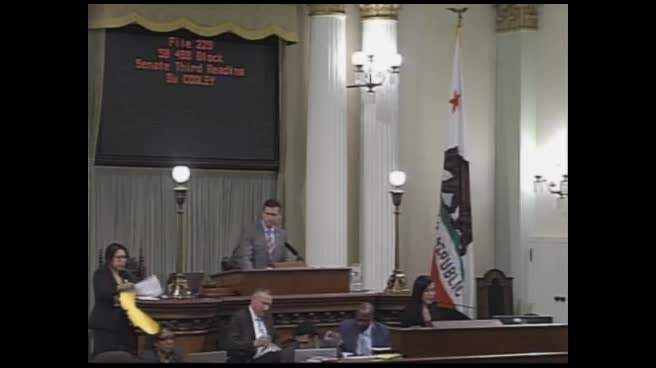
Bill Author
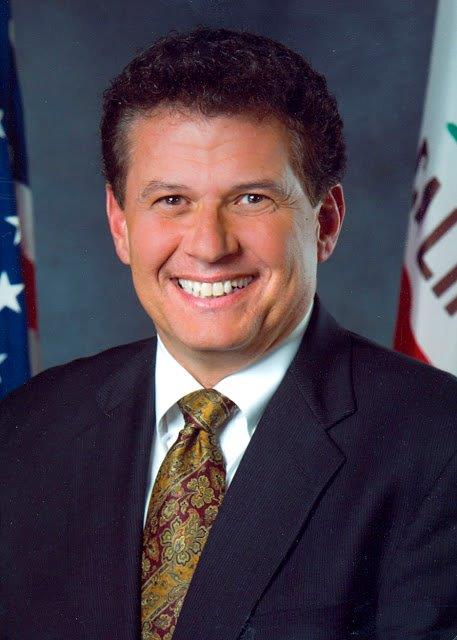
Bill Co-Author(s):