SB 489: Hazardous waste: photovoltaic modules.
- Session Year: 2015-2016
- House: Senate
- Latest Version Date: 2015-10-01
The Hazardous Waste Control Law, among other things, vests the Department of Toxic Substances Control with the authority to regulate the generation and disposal of hazardous waste. Under now-expired authority, the department adopted regulations exempting specified hazardous waste management activities from certain statutory requirements related to hazardous waste management. These regulations are to remain valid unless repealed. A violation of the Hazardous Waste Control Law, including a regulation adopted pursuant to that law, is a crime. Under existing law, the hazardous wastes that are deemed exempt from the Hazardous Waste Control Law are known as universal waste and are regulated pursuant to universal waste management provisions.
This bill would authorize the department to adopt regulations to designate end-of-life photovoltaic modules that are identified as hazardous waste as a universal waste and subject those modules to universal waste management. The bill would authorize the department to revise the regulations as necessary. Because a violation of these regulations would be a crime, this bill would impose a state-mandated local program.
The California Constitution requires the state to reimburse local agencies and school districts for certain costs mandated by the state. Statutory provisions establish procedures for making that reimbursement.
This bill would provide that no reimbursement is required by this act for a specified reason.
The California Integrated Waste Management Act of 1989, administered by the Department of Resources Recycling and Recovery, generally regulates the disposal, management, and recycling of solid waste.
This bill would prohibit an end-of-life photovoltaic module, as defined, from being disposed of at a solid waste disposal facility or a hazardous waste disposal facility, except that it would permit materials that have been separated from an end-of-life photovoltaic module to be disposed of at a solid waste disposal facility, if those materials are nonrecyclable and are not identified as hazardous waste. The bill would make a person who knowingly violates this provision liable for a civil penalty not to exceed $2,500 for each violation, as specified. The bill would specify exceptions to this provision, including that disposal of an end-of-life photovoltaic module from a photovoltaic system subject to a contractual or regulatory obligation as of January 1, 2016, to dispose of the systems end-of-life photovoltaic module at a solid waste disposal facility shall be deemed to comply with this provision if a reasonable effort to recycle or reuse material from the end-of-life photovoltaic module is made by the owner or operator of the system.
The Hazardous Waste Control Law, among other things, vests the Department of Toxic Substances Control (department) with the authority to regulate the generation and disposal of hazardous waste. Under now-expired authority, the department adopted regulations exempting specified hazardous waste management activities from certain statutory requirements related to hazardous waste management. These regulations are to remain valid unless repealed. A violation of the Hazardous Waste Control Law, including a regulation adopted pursuant to that law, is a crime. Under existing law, the hazardous wastes that are deemed exempt from the Hazardous Waste Control Law are known as universal waste and are regulated pursuant to universal waste management provisions.
This bill would authorize the department to adopt regulations to designate end-of-life photovoltaic modules that are identified as hazardous waste as a universal waste and subject those modules to universal waste management. The bill would authorize the department to revise the regulations as necessary. Because a violation of these regulations would be a crime, this bill would impose a state-mandated local program.
This bill would prohibit an end-of-life photovoltaic module that is identified as hazardous waste from being disposed of at a solid waste disposal facility or a hazardous waste disposal facility, except that it would permit materials that have been separated from an end-of-life photovoltaic module that is identified as hazardous waste to be disposed of at a solid waste disposal facility or hazardous waste facility, if those materials are nonrecyclable and are not identified as hazardous waste. The bill also would provide for a specified exception to this provision. Because a violation of these provisions would be a crime, this bill would impose a state-mandated local program.
The California Constitution requires the state to reimburse local agencies and school districts for certain costs mandated by the state. Statutory provisions establish procedures for making that reimbursement.
This bill would provide that no reimbursement is required by this act for a specified reason.
(a)The Legislature finds and declares all of the following:
(1)California has adopted policies that have contributed to making the state a leader in the installation of solar energy systems and have resulted in a substantial increase in solar energy utilization by homes, businesses, and utilities.
(2)These policies include the California Solar Initiative (Chapter 8.8 (commencing with Section 25780) of Division 15 of the Public Resources Code), the states net energy metering program, and the California Renewables Portfolio Standard Program (Article 16 (commencing with Section 399.11) of Chapter 2.3 of Part 1 of Division 1 of the Public Utilities Code).
(3)Existing solar energy systems use photovoltaic technology to capture sunlight and convert it into electricity until the end of their useful lives, estimated to be between 25 and 40 years. Today, a wide variety of solar photovoltaic technologies, manufactured using processes and materials similar to those of the microelectronics industry, contribute to Californias solar energy portfolio.
(4)The numerous renewable and customer-generated solar programs in California have led to a rapid expansion of solar energy systems and have given rise to an emerging photovoltaic industry. An increasing amount of end-of-life photovoltaic modules can be expected from 2020 onwards in California. It is critical to consider the end-of-life issues associated with photovoltaic modules. Recycling is the most sustainable way to manage end-of-life photovoltaic modules.
(b)It is the intent of the Legislature to do all of the following:
(1)Foster a comprehensive and innovative system for the reuse, recycling, and proper and legal disposal of end-of-life photovoltaic modules.
(2)Encourage the photovoltaic module industry to make end-of-life management of photovoltaic modules convenient for consumers and the public, to ensure the recovery and recycling of photovoltaic modules, which is the most efficient and environmentally safe disposition of end-of-life photovoltaic modules, by developing a plan for recycling end-of-life photovoltaic modules in the state in an economically efficient manner.
(3)Reduce the likelihood of end-of-life photovoltaic modules being disposed of in landfills.
(c)It is further the intent of the Legislature that photovoltaic modules should be designed for extended life, repair, and reuse, and that collection and recycling services should be promoted.
SEC. 2.Article 17 (commencing with Section 25259) is added to Chapter 6.5 of Division 20 of the Health and Safety Code, to read:17.Photovoltaic Modules25259.The department may, by regulation, designate end-of-life photovoltaic modules that are identified as hazardous waste as a universal waste and subject those modules to universal waste management. The department may revise these regulations as necessary.
SEC. 3.No reimbursement is required by this act pursuant to Section 6 of Article XIIIB of the California Constitution because the only costs that may be incurred by a local agency or school district will be incurred because this act creates a new crime or infraction, eliminates a crime or infraction, or changes the penalty for a crime or infraction, within the meaning of Section 17556 of the Government Code, or changes the definition of a crime within the meaning of Section 6 of Article XIIIB of the California Constitution.
(a)The Legislature finds and declares all of the following:
(1)California has adopted policies that have contributed to making the state a leader in the installation of solar energy systems and have resulted in a substantial increase in solar energy utilization by homes, businesses, and utilities.
(2)These policies include the California Solar Initiative (Chapter 8.8 (commencing with Section 25780) of Division 15 of the Public Resources Code), the states net energy metering program, and the California Renewables Portfolio Standard Program (Article 16 (commencing with Section 399.11) of Chapter 2.3 of Part 1 of Division 1 of the Public Utilities Code).
(3)Existing solar energy systems use photovoltaic technology to capture sunlight and convert it into electricity until the end of their useful lives, estimated to be between 25 and 40 years. Today, a wide variety of solar photovoltaic technologies, manufactured using processes and materials similar to those of the microelectronics industry, contribute to Californias solar energy portfolio.
(4)The numerous renewable and customer-generated solar programs in California have led to a rapid expansion of solar energy systems and have given rise to an emerging photovoltaic industry. An increasing amount of end-of-life photovoltaic modules can be expected from 2020 onwards in California. It is critical to consider the end-of-life issues associated with photovoltaic modules. Recycling is the most sustainable way to manage end-of-life photovoltaic modules.
(b)It is the intent of the Legislature to do all of the following:
(1)Foster a comprehensive and innovative system for the reuse, recycling, and proper and legal disposal of end-of-life photovoltaic modules.
(2)Encourage the photovoltaic module industry to make end-of-life management of photovoltaic modules convenient for consumers and the public, to ensure the return recovery and recycling of photovoltaic modules, which is the most efficient and environmentally safe disposition of end-of-life photovoltaic modules, by creating a photovoltaic module recycling organization to develop developing a plan for recycling end-of-life photovoltaic modules in the state in an economically efficient manner.
(3)Reduce the likelihood of end-of-life photovoltaic modules being disposed of in landfills.
(c)It is further the intent of the Legislature that photovoltaic modules should be designed for extended life, repair, and reuse, and that collection and recycling services should be promoted.
SEC. 2.Article 17 (commencing with Section 25259) is added to Chapter 6.5 of Division 20 of the Health and Safety Code, to read:17.Photovoltaic Modules25259.The department may, by regulation, designate end-of-life photovoltaic modules that are identified as hazardous waste as a universal waste and subject those modules to universal waste management. The department may revise these regulations as necessary.
SEC. 3.No reimbursement is required by this act pursuant to Section 6 of Article XIIIB of the California Constitution because the only costs that may be incurred by a local agency or school district will be incurred because this act creates a new crime or infraction, eliminates a crime or infraction, or changes the penalty for a crime or infraction, within the meaning of Section 17556 of the Government Code, or changes the definition of a crime within the meaning of Section 6 of Article XIIIB of the California Constitution.
(a)The Legislature finds and declares all of the following:
(1)California has adopted policies that have contributed to making the state a leader in the installation of solar energy systems and have resulted in a substantial increase in solar energy utilization by homes, businesses, and utilities.
(2)These policies include the California Solar Initiative (Chapter 8.8 (commencing with Section 25780) of Division 15 of the Public Resources Code), the states net energy metering program, and the California Renewables Portfolio Standard Program (Article 16 (commencing with Section 399.11) of Chapter 2.3 of Part 1 of Division 1 of the Public Utilities Code).
(3)Existing solar energy systems use photovoltaic technology to capture sunlight and convert it into electricity until the end of their useful lives, estimated to be between 25 and 40 years. Today, a wide variety of solar photovoltaic technologies, manufactured using processes and materials similar to those of the microelectronics industry, contribute to Californias solar energy portfolio.
(4)The numerous renewable and customer-generated solar programs in California have led to a rapid expansion of solar energy systems and have given rise to an emerging photovoltaic industry. An increasing amount of end-of-life photovoltaic modules can be expected from 2020 onwards in California. It is critical to consider the end-of-life issues associated with photovoltaic modules. Recycling is the most sustainable way to manage end-of-life photovoltaic modules.
(b)It is the intent of the Legislature to do all of the following:
(1)Foster a comprehensive and innovative system for the reuse, recycling, and proper and legal disposal of end-of-life photovoltaic modules.
(2)Encourage the photovoltaic module industry to make end-of-life management of photovoltaic modules convenient for consumers and the public, to ensure the return and recycling of photovoltaic modules, which is the most efficient and environmentally safe disposition of end-of-life photovoltaic modules, by creating a photovoltaic module recycling organization to develop a plan for recycling end-of-life photovoltaic modules in the state in an economically efficient manner.
(3)Reduce the likelihood of improper disposal by prohibiting end-of-life photovoltaic modules from entering being disposed of in landfills.
(c)It is further the intent of the Legislature that photovoltaic modules should be designed for extended life, repair, and reuse, and that collection and recycling services should be promoted.
SEC. 2.Article 17 (commencing with Section 25259) is added to Chapter 6.5 of Division 20 of the Health and Safety Code, to read:17.Photovoltaic Modules25259.The department may, by regulation, designate end-of-life photovoltaic modules that are identified as hazardous waste as a universal waste and subject those modules to universal waste management. The department may revise these regulations as necessary.
SEC. 3.No reimbursement is required by this act pursuant to Section 6 of Article XIIIB of the California Constitution because the only costs that may be incurred by a local agency or school district will be incurred because this act creates a new crime or infraction, eliminates a crime or infraction, or changes the penalty for a crime or infraction, within the meaning of Section 17556 of the Government Code, or changes the definition of a crime within the meaning of Section 6 of Article XIIIB of the California Constitution.
(a)The Legislature finds and declares all of the following:
(1)California has adopted policies that have contributed to making the state a leader in the installation of solar energy systems and have resulted in a substantial increase in solar energy utilization by homes, businesses, and utilities.
(1)Californias policies, including the policies reflected in
(2)These policies include the California Solar Initiative (Chapter 8.8 (commencing with Section 25780) of Division 15 of the Public Resources Code), the states net energy metering program, and the California Renewables Portfolio Standard Program (Article 16 (commencing with Section 399.11) of Chapter 2.3 of Part 1 of Division 1 of the Public Utilities Code), have made California the leading state in the installation of solar energy systems by providing ratepayer-funded incentives to eligible solar energy systems, resulting in substantially increased utilization by homes, businesses, and utilities. Code).
(2)
(3)Existing solar energy systems use photovoltaic technology to capture sunlight and convert it into electricity until the end of their useful lives, estimated to be between 25 and 40 years. Today Today, a wide variety of solar photovoltaic technologies, manufactured using processes and materials similar to those of the microelectronics industry, contribute to Californias solar energy portfolio.
(3)
(4)The numerous renewable and customer-generated solar programs in California have led to a rapid expansion of solar energy systems and have given rise to an emerging photovoltaic industry. An increasing amount of end-of-life photovoltaic modules can be expected from 2020 onwards in California. It is critical to consider the end-of-life issues associated with photovoltaic modules. Recycling is the most sustainable way to manage end-of-life photovoltaic modules.
(b)It is the intent of the Legislature to do all of the following:
(1)Foster a comprehensive and innovative system for the reuse, recycling, and proper and legal disposal of end-of-life photovoltaic modules.
(2)Encourage the photovoltaic module industry to make end-of-life management of photovoltaic modules convenient for consumers and the public, to ensure the return and recycling of photovoltaic modules, which is the most efficient and environmentally safe disposition of end-of-life photovoltaic modules, by constructing creating a photovoltaic module recycling organization to develop a plan for recycling end-of-life photovoltaic modules in the state in an economically efficient manner.
(3)Reduce the likelihood of improper disposal by prohibiting end-of-life photovoltaic modules from entering landfills.
(c)It is further the intent of the Legislature that photovoltaic modules should be designed for extended life, repair, and reuse, and that collection and recycling services should be promoted.
SEC. 2.Article 17 (commencing with Section 25259) is added to Chapter 6.5 of Division 20 of the Health and Safety Code, to read:17.Photovoltaic Modules25259.The department may, by regulation, designate end-of-life photovoltaic modules that are identified as hazardous waste as a universal waste and subject those modules to universal waste management. The department may revise these regulations as necessary.
SEC. 3.No reimbursement is required by this act pursuant to Section 6 of Article XIIIB of the California Constitution because the only costs that may be incurred by a local agency or school district will be incurred because this act creates a new crime or infraction, eliminates a crime or infraction, or changes the penalty for a crime or infraction, within the meaning of Section 17556 of the Government Code, or changes the definition of a crime within the meaning of Section 6 of Article XIIIB of the California Constitution.
(a)The Legislature finds and declares all of the following:
(1)Californias policies, including the policies reflected in the California Solar Initiative (Chapter 8.8 (commencing with Section 25780) of Division 15 of the Public Resources Code), the states net energy metering program, and the California Renewables Portfolio Standard Program (Article 16 (commencing with Section 399.11) of Chapter 2.3 of Part 1 of Division 1 of the Public Utilities Code), have made California the leading state in the installation of solar energy systems by providing ratepayer-funded incentives to eligible solar energy systems, resulting in substantially increased utilization by homes, businesses, and utilities.
(2)Existing solar energy systems use photovoltaic technology to capture sunlight and convert it into electricity until the end of their useful lives, estimated to be between 25 and 40 years. Today a wide variety of solar photovoltaic technologies, manufactured using processes and materials similar to those of the microelectronics industry, contribute to Californias solar energy portfolio.
(3)The numerous renewable and customer-generated solar programs in California have led to a rapid expansion of solar energy systems and have given rise to an emerging photovoltaic industry. An increasing amount of end-of-life photovoltaic panels modules can be expected from 2020 onwards in California. It is critical to consider the end-of-life issues associated with photovoltaic panels. modules. Recycling is the most sustainable way to manage end-of-life photovoltaic panels. modules.
(b)It is the intent of the Legislature to do all of the following:
(1)Foster a comprehensive and innovative system for the reuse, recycling, and proper and legal disposal of end-of-life photovoltaic panels. modules.
(2)Encourage the photovoltaic panel module industry to make end-of-life management of photovoltaic panels modules convenient for consumers and the public, to ensure the return and recycling of photovoltaic panels, modules, which is the most efficient and environmentally safe disposition of end-of-life photovoltaic panels. modules, by constructing a photovoltaic module recycling organization to develop a plan for recycling end-of-life photovoltaic modules in the state in an economically efficient manner.
(3)Reduce the likelihood of improper disposal by prohibiting end-of-life photovoltaic panels modules from entering landfills.
(c)It is further the intent of the Legislature that photovoltaic panels, to the greatest extent feasible, modules should be designed for extended life, repair, and reuse, and that collection and recycling services should be provided for the maximum feasible number of end-of-life photovoltaic panels. promoted.
SEC. 2.Article 17 (commencing with Section 25259) is added to Chapter 6.5 of Division 20 of the Health and Safety Code, to read:17.Photovoltaic Modules25259.(a)Except as provided in subdivision (b), a person shall not knowingly dispose of an end-of-life photovoltaic module that is identified as hazardous waste at a solid waste disposal facility or hazardous waste disposal facility in the state.
(b)Materials that have been separated from an end-of-life photovoltaic module that is identified as hazardous waste, if those materials are nonrecyclable and are not identified as hazardous waste, may be disposed of at either a solid waste disposal facility or a hazardous waste disposal facility.
(c)Materials that have been separated from an end-of-life photovoltaic module, if those materials are nonrecyclable and are identified as hazardous waste, shall only be handled at an authorized hazardous waste management facility.
(d)An owner or operator of a solid waste disposal facility or hazardous waste disposal facility shall not be found in violation of this section if the owner or operator has done all of the following:
(1)Made a good faith effort to comply with this section.
(2)Posted, in a conspicuous location at the facility, a sign stating that end-of-life photovoltaic modules shall not be accepted at the facility.
(3)Notified, in writing, all commercial and government collectors and haulers known to haul waste to each respective facility that end-of-life photovoltaic modules shall not be accepted at the facility.
(e)Nothing in this section authorizes hazardous waste to be disposed of at a facility that is not authorized to receive and handle hazardous waste.
(f)The department shall develop ways to inform hazardous waste disposal facilities and the public of the requirements of this section.
(g)For purposes of this section, end-of-life photovoltaic module has the same definition as in Section 42030 of the Public Resources Code.
25259.1.25259.The department may, by regulation, designate end-of-life photovoltaic modules that are identified as hazardous waste as a universal waste and subject those modules to universal waste management. The department may revise these regulations as necessary.
SEC. 3.Chapter 2 (commencing with Section 42030) is added to Part 3 of Division 30 of the Public Resources Code, to read:2.Photovoltaic Modules42030.For purposes of this chapter, the following definitions shall apply:
(a)End-of-life photovoltaic module means a photovoltaic module that has been used and is removed from service in the state and is a waste, as defined in Section 25124 of the Health and Safety Code. A photovoltaic module that is designated for refurbishment or reuse is not an end-of-life photovoltaic module.
(b)Photovoltaic module means a device that collects energy from the sun for the purpose of converting light into electricity for general electricity use, but does not include solar-powered electronic devices that have one or more solar cells incorporated into their structure.
42031.(a)Except as provided in subdivision (b), a person shall not knowingly dispose of an end-of-life photovoltaic module at a solid waste disposal facility or a hazardous waste disposal facility in the state.
(b)Materials that have been separated from an end-of-life photovoltaic module, if those materials are nonrecyclable and are not identified as hazardous waste, may be disposed of at a solid waste disposal facility.
(c)Disposal of an end-of-life photovoltaic module from a photovoltaic system in the state that is subject to a contractual or regulatory obligation by the owner or operator of the system as of January 1, 2016, to dispose of the systems end-of-life photovoltaic module at a solid waste disposal facility, shall be deemed to comply with this section if a reasonable effort to recycle or reuse material from the end-of-life photovoltaic module is made by the owner or operator of the system, unless that photovoltaic module is identified as hazardous waste.
(d)A person who knowingly violates this section shall be liable for a civil penalty not to exceed two thousand five hundred dollars ($2,500) for each violation. A city, a county, a city and county, or the state may impose the civil liability, and any civil penalties collected pursuant to this subdivision shall be paid to the office of the city attorney, city prosecutor, district attorney, or Attorney General, whichever office brought the action. The penalties collected pursuant to this section by the Attorney General may be expended by the Attorney General, upon appropriation by the Legislature, to enforce this chapter.
(e)An owner or operator of a solid waste disposal facility or hazardous waste disposal facility shall not be found in violation of this section if the owner or operator has done all of the following:
(1)Made a good faith effort to comply with this section.
(2)Incorporated the identification and removal of end-of-life photovoltaic modules as part of the facilitys load check program.
(3)Posted, in a conspicuous location at the facility, a sign stating that end-of-life photovoltaic modules shall not be accepted at the facility.
(4)Notified, in writing, all commercial and government collectors and haulers known to haul waste to each respective facility that end-of-life photovoltaic modules shall not be accepted at the facility.
(f)Nothing in this section authorizes hazardous waste to be disposed of at a facility that is not authorized to receive and handle hazardous waste.
(g)The department shall develop ways to inform solid waste disposal facilities and the public of the requirements of this section.
(h)For purposes of this section, solid waste disposal facility does not include a transfer station.
SEC. 4.SEC. 3.No reimbursement is required by this act pursuant to Section 6 of Article XIIIB of the California Constitution because the only costs that may be incurred by a local agency or school district will be incurred because this act creates a new crime or infraction, eliminates a crime or infraction, or changes the penalty for a crime or infraction, within the meaning of Section 17556 of the Government Code, or changes the definition of a crime within the meaning of Section 6 of Article XIIIB of the California Constitution.
(a)The Legislature finds and declares all of the following:
(1)Californias policies, including the policies reflected in the California Solar Initiative (Chapter 8.8 (commencing with Section 25780) of Division 15 of the Public Resources Code), the states net energy metering program, and the California Renewables Portfolio Standard Program (Article 16 (commencing with Section 399.11) of Chapter 2.3 of Part 1 of Division 1 of the Public Utilities Code), have made California the leading state in the installation of solar energy systems by providing ratepayer-funded incentives to eligible solar energy systems, resulting in substantially increased utilization by homes, businesses, and utilities.
(2)Existing solar energy systems use photovoltaic technology to capture sunlight and convert it into electricity until the end of their useful lives, estimated to be between 25 and 40 years. Today a wide variety of solar photovoltaic technologies, manufactured using processes and materials similar to those of the microelectronics industry, contribute to Californias solar energy portfolio.
(3)The numerous renewable and customer-generated solar programs in California have led to a rapid expansion of solar energy systems and have given rise to an emerging photovoltaic industry. An increasing amount of end-of-life photovoltaic panels can be expected from 2020 onwards in California. It is critical to consider the end-of-life issues associated with photovoltaic panels. Recycling is the most sustainable way to manage end-of-life photovoltaic panels.
(b)It is the intent of the Legislature to do all of the following:
(1)Foster a comprehensive and innovative system for the reuse, recycling, and proper and legal disposal of end-of-life photovoltaic panels.
(2)Encourage the photovoltaic panel industry to make end-of-life management of photovoltaic panels convenient for consumers and the public, to ensure the return and recycling of photovoltaic panels, which is the most efficient and environmentally safe disposition of end-of-life photovoltaic panels.
(3)Reduce the likelihood of improper disposal by prohibiting end-of-life photovoltaic panels from entering landfills.
(c)It is further the intent of the Legislature that photovoltaic panels, to the greatest extent feasible, should be designed for extended life, repair, and reuse, and that collection and recycling services should be provided for the maximum feasible number of end-of-life photovoltaic panels.
SEC. 2.Article 17 (commencing with Section 25259) is added to Chapter 6.5 of Division 20 of the Health and Safety Code, to read:17.Photovoltaic Modules25259.(a)Except as provided in subdivision (b), a person shall not knowingly dispose of an end-of-life photovoltaic module that is identified as hazardous waste at a solid waste disposal facility or hazardous waste disposal facility in the state.
(b)Materials that have been separated from an end-of-life photovoltaic module that is identified as hazardous waste, if those materials are nonrecyclable and are not identified as hazardous waste, may be disposed of at either a solid waste disposal facility or a hazardous waste disposal facility.
(c)Materials that have been separated from an end-of-life photovoltaic module, if those materials are nonrecyclable and are identified as hazardous waste, shall only be handled at an authorized hazardous waste management facility.
(d)An owner or operator of a solid waste disposal facility or hazardous waste disposal facility shall not be found in violation of this section if the owner or operator has done all of the following:
(1)Made a good faith effort to comply with this section.
(2)Posted, in a conspicuous location at the facility, a sign stating that end-of-life photovoltaic modules shall not be accepted at the facility.
(3)Notified, in writing, all commercial and government collectors and haulers known to haul waste to each respective facility that end-of-life photovoltaic modules shall not be accepted at the facility.
(e)Nothing in this section authorizes hazardous waste to be disposed of at a facility that is not authorized to receive and handle hazardous waste.
(f)The department shall develop ways to inform hazardous waste disposal facilities and the public of the requirements of this section.
(g)For purposes of this section, end-of-life photovoltaic module has the same definition as in Section 42030 of the Public Resources Code.
25259.1.The department may, by regulation, designate end-of-life photovoltaic modules that are identified as hazardous waste as a universal waste and subject those modules to universal waste management. The department may revise these regulations as necessary.
SEC. 3.Chapter 2 (commencing with Section 42030) is added to Part 3 of Division 30 of the Public Resources Code, to read:2.Photovoltaic Modules42030.For purposes of this chapter, the following definitions shall apply:
(a)End-of-life photovoltaic module means a photovoltaic module that has been used and is removed from service in the state and is a waste, as defined in Section 25124 of the Health and Safety Code. A photovoltaic module that is designated for refurbishment or reuse is not an end-of-life photovoltaic module.
(b)Photovoltaic module means a device that collects energy from the sun for the purpose of converting light into electricity for general electricity use, but does not include solar-powered electronic devices that have one or more solar cells incorporated into their structure.
42031.(a)Except as provided in subdivision (b), a person shall not knowingly dispose of an end-of-life photovoltaic module at a solid waste disposal facility or a hazardous waste disposal facility in the state.
(b)Materials that have been separated from an end-of-life photovoltaic module, if those materials are nonrecyclable and are not identified as hazardous waste, may be disposed of at a solid waste disposal facility.
(c)Disposal of an end-of-life photovoltaic module from a photovoltaic system in the state that is subject to a contractual or regulatory obligation by the owner or operator of the system as of January 1, 2016, to dispose of the systems end-of-life photovoltaic module at a solid waste disposal facility, shall be deemed to comply with this section if a reasonable effort to recycle or reuse material from the end-of-life photovoltaic module is made by the owner or operator of the system, unless that photovoltaic module is identified as hazardous waste.
(d)A person who knowingly violates this section shall be liable for a civil penalty not to exceed two thousand five hundred dollars ($2,500) for each violation. A city, a county, a city and county, or the state may impose the civil liability, and any civil penalties collected pursuant to this subdivision shall be paid to the office of the city attorney, city prosecutor, district attorney, or Attorney General, whichever office brought the action. The penalties collected pursuant to this section by the Attorney General may be expended by the Attorney General, upon appropriation by the Legislature, to enforce this chapter.
(e)An owner or operator of a solid waste disposal facility or hazardous waste disposal facility shall not be found in violation of this section if the owner or operator has done all of the following:
(1)Made a good faith effort to comply with this section.
(2)Incorporated the identification and removal of end-of-life photovoltaic modules as part of the facilitys load check program.
(3)Posted, in a conspicuous location at the facility, a sign stating that end-of-life photovoltaic modules shall not be accepted at the facility.
(4)Notified, in writing, all commercial and government collectors and haulers known to haul waste to each respective facility that end-of-life photovoltaic modules shall not be accepted at the facility.
(f)Nothing in this section authorizes hazardous waste to be disposed of at a facility that is not authorized to receive and handle hazardous waste.
(g)The department shall develop ways to inform solid waste disposal facilities and the public of the requirements of this section.
(h)For purposes of this section, solid waste disposal facility does not include a transfer station.
SEC. 4.No reimbursement is required by this act pursuant to Section 6 of Article XIIIB of the California Constitution because the only costs that may be incurred by a local agency or school district will be incurred because this act creates a new crime or infraction, eliminates a crime or infraction, or changes the penalty for a crime or infraction, within the meaning of Section 17556 of the Government Code, or changes the definition of a crime within the meaning of Section 6 of Article XIIIB of the California Constitution.
|
Date
|
Status
|
|---|---|
| Oct 1, 2015 | Chaptered by Secretary of State. Chapter 419, Statutes of 2015. |
| Oct 1, 2015 | Approved by the Governor. |
| Sep 3, 2015 | Enrolled and presented to the Governor at 10 a.m. |
| Sep 1, 2015 | Assembly amendments concurred in. (Ayes 40. Noes 0. Page 2378.) Ordered to engrossing and enrolling. |
| Sep 1, 2015 | Assembly amendments concurred in. (Ayes 40. Noes 0.) Ordered to engrossing and enrolling. |
| Aug 31, 2015 | Ordered to special consent calendar. |
| Aug 27, 2015 | Read third time. Passed. (Ayes 76. Noes 1. Page 2628.) Ordered to the Senate. |
| Aug 27, 2015 | In Senate. Concurrence in Assembly amendments pending. |
| Aug 27, 2015 | Read third time. Passed. Ordered to the Senate. |
| Aug 24, 2015 | Ordered to third reading. |
| Aug 24, 2015 | Read third time and amended. |
| Aug 20, 2015 | Ordered to third reading. |
| Aug 20, 2015 | From consent calendar on motion of Assembly Member Holden. |
| Aug 17, 2015 | Read second time. Ordered to consent calendar. |
| Jul 16, 2015 | Read second time and amended. Ordered to second reading. |
| Jul 15, 2015 | From committee: Do pass as amended. Ordered to consent calendar. (Ayes 16. Noes 0.) (July 15). |
| Jul 1, 2015 | From committee: Do pass and re-refer to Com. on APPR. with recommendation: To consent calendar. (Ayes 7. Noes 0.) (June 30). Re-referred to Com. on APPR. |
| Jun 23, 2015 | From committee with author's amendments. Read second time and amended. Re-referred to Com. on E.S. & T.M. |
| May 22, 2015 | Referred to Com. on E.S. & T.M. |
| May 5, 2015 | In Assembly. Read first time. Held at Desk. |
| May 4, 2015 | Read third time. Passed. (Ayes 35. Noes 0. Page 881.) Ordered to the Assembly. |
| May 4, 2015 | Read third time. Passed. (Ayes 35. Noes 0.) Ordered to the Assembly. |
| Apr 28, 2015 | Read second time. Ordered to third reading. |
| Apr 27, 2015 | From committee: Do pass. (Ayes 7. Noes 0. Page 779.) (April 27). |
| Apr 17, 2015 | Set for hearing April 27. |
| Apr 16, 2015 | From committee: Do pass and re-refer to Com. on APPR. (Ayes 7. Noes 0. Page 649.) (April 15). Re-referred to Com. on APPR. |
| Apr 6, 2015 | From committee with author's amendments. Read second time and amended. Re-referred to Com. on E.Q. |
| Mar 17, 2015 | Set for hearing April 15. |
| Mar 12, 2015 | Referred to Com. on E.Q. |
| Feb 27, 2015 | From printer. May be acted upon on or after March 29. |
| Feb 26, 2015 | Introduced. Read first time. To Com. on RLS. for assignment. To print. |
|
Date
|
Description
|
Location
|
Votes
|
|
|---|---|---|---|---|
| Sep 1, 2015 | Special Consent #9 SB489 Monning | Senate Floor |
Passed |
|
| Aug 27, 2015 | SB 489 Monning Senate Third Reading By ALEJO | Assembly Floor |
Passed |
|
| Jul 15, 2015 | Do pass as amended. To Consent Calendar. | Assembly Standing Committee on Appropriations |
Passed |
|
| Jun 30, 2015 | Do pass and be re-referred to the Committee on [Appropriations] with recommendation: To Consent Calendar | Assembly Standing Committee on Environmental Safety and Toxic Materials |
Passed |
|
| May 4, 2015 | Senate 3rd Reading SB489 Monning | Senate Floor |
Passed |
|
| Apr 27, 2015 | Do pass | Senate Standing Committee on Appropriations |
Passed |
|
| Apr 15, 2015 | Do pass, but first be re-referred to the Committee on [Appropriations] | Senate Standing Committee on Environmental Quality |
Passed |
This list shows positions taken on this bill by organizations on the date displayed, which is linked to the original source.
Positions by individuals are not included.
SB 489
Page 5
|
Office of Senate Floor Analyses (916) 651-1520 Fax: (916) 327-4478 |
UNFINISHED BUSINESS
Bill No: SB 489
Amended: 8/24/15
SENATE ENVIRONMENTAL QUALITY COMMITTEE: 7-0, 4/15/15
AYES: Wieckowski, Gaines, Bates, Hill, Jackson, Leno, Pavley
SENATE APPROPRIATIONS COMMITTEE: 7-0, 4/27/15
AYES: Lara, Bates, Beall, Hill, Leyva, Mendoza, Nielsen
SENATE FLOOR: 35-0, 5/4/15
AYES: Allen, Anderson, Bates, Beall, Block, Cannella, De León, Fuller, Gaines, Galgiani, Hall, Hernandez, Hertzberg, Hill, Hueso, Huff, Jackson, Leno, Leyva, Liu, McGuire, Mendoza, Mitchell, Monning, Moorlach, Morrell, Nguyen, Nielsen, Pan, Roth, Runner, Stone, Vidak, Wieckowski, Wolk
NO VOTE RECORDED: Berryhill, Hancock, Lara, Pavley
ASSEMBLY FLOOR: 76-1, 8/27/15 - See last page for vote
SUBJECT: Hazardous waste: photovoltaic modules
DIGEST: This bill authorizes photovoltaic modules (known as solar panels) to be managed as universal waste.
Assembly Amendments make technical amendments to specify that photovoltaic modules need to be recovered rather than returned as part of end-of-life management and remove language requiring the creation of a “photovoltaic module recycling organization” by the photovoltaic module industry.
ANALYSIS: Existing federal law, under the federal Resource Conservation and Recovery Act of 1976 (RCRA) and subsequent amendments to RCRA, requires the United States Environmental Protection Agency (US EPA) to establish standards and regulations for the management and disposal of hazardous materials and wastes.
US EPA’s universal waste regulations streamline hazardous waste management standards for federally designated "universal wastes," which include: batteries, pesticides, mercury-containing equipment and bulbs (lamps). The regulations govern the collection and management of these widely generated wastes and provide that states can modify the universal waste rule and add additional universal waste(s) as governed by state hazardous waste laws.
Existing state law:
Provides, under the Hazardous Waste Control Act (HWCA), for the registration, licensure and permitting of hazardous waste generators, transporters and storage, transfer and disposal facilities. HWCA requires the Department of Toxic Substances Control (DTSC) to implement and enforce the Act.
Defines “Universal waste” to mean a hazardous waste identified as a universal waste in Section 66273.9 of Title 22 of the California Code of Regulations, or a hazardous waste designated as a universal waste pursuant Health and Safety Code Chapter 6.5.
Authorizes, under HWCA, the DTSC to adopt regulations to allow for the alternative management of universal waste. The statutory authority to adopt new universal waste regulations sunsetted in 2008.
This bill authorizes photovoltaic modules (known as solar panels) to be managed as universal waste. Specifically, this bill:
States the intent of the Legislature to foster a comprehensive and innovative system for the reuse, recycling and proper and legal disposal of end-of-life photovoltaic modules.
States the intent of the Legislature to encourage the photovoltaic module industry to make end-of-life management of photovoltaic modules convenient for consumers and the public, in order to ensure the recovery of photovoltaic modules, by developing a plan for recycling end-of-life photovoltaic modules.
Authorizes DTSC to designate end-of-life photovoltaic modules that are identified as hazardous waste as a universal waste and subject those modules to universal waste management.
Background
What are universal wastes? Universal wastes are hazardous wastes that are widely produced by households and many different types of businesses.
California’s Universal Waste Rule allows individuals and businesses to transport, handle and recycle certain common hazardous wastes, termed universal wastes, in a manner that differs from the requirements for most hazardous wastes. The aim of the alternative rule is to acknowledge the ubiquitous nature of universal waste and provide management rules that ensure that they are managed safely and are not disposed of in the trash.
The hazardous waste regulations identify seven categories of hazardous wastes that can be managed as universal wastes. Any waste item that falls within one of these waste streams can be handled, transported and recycled following the simple requirements set forth in the universal waste regulations.
California Universal Wastes are:
Electronic devices: Includes any electronic device that is a hazardous waste (with or without a Cathode Ray Tube (CRT)), including televisions, computer monitors, cell phones, VCRs, computer CPUs and portable DVD players.
Batteries: Most household-type batteries, including rechargeable nickel-cadmium batteries, silver button batteries, mercury batteries, alkaline batteries and other batteries that exhibit a characteristic of a hazardous waste.
Electric lamps: Fluorescent tubes and bulbs, high intensity discharge lamps, sodium vapor lamps and electric lamps that contain added mercury, as well as any other lamp that exhibits a characteristic of a hazardous waste. (e.g., lead).
Mercury-containing equipment: Thermostats, mercury switches, mercury thermometers, pressure or vacuum gauges, dilators and weighted tubing, mercury rubber flooring, mercury gas flow regulators, dental amalgams, counterweights, dampers and mercury added novelties such as jewelry, ornaments and footwear.
CRTs: The glass picture tubes removed from devices such as televisions and computer monitors.
CRT glass: A cathode ray tube that has been accidently broken or processed for recycling.
Non-empty aerosol cans.
Photovoltaic modules as California Universal Waste. The DTSC submitted in August 2013 a proposed regulation to treat photovoltaic modules that are a hazardous waste as a universal waste and to establish standards for alternative management of hazardous waste solar modules to the Office of Administrative Law (OAL). On October 1, 2013, the OAL disapproved the proposed regulations citing the expired statute authorizing the DTSC to adopt new universal waste regulations.
Solar in California. California is the national leader in installation and use of renewable energy including solar power. As of the end of 2013, California had 490 MW of concentrated solar power and 5,183 MW of photovoltaics capacity in operation. The American Solar Energy Industries Association reports that a further 19,200 MW of utility-scale solar projects are under construction or development in the state as of August 2014. California leads the nation in the number of homes which have solar panels installed, totaling over 230,000.
FISCAL EFFECT: Appropriation: No Fiscal Com.: Yes Local: Yes
According to the Assembly Appropriations Committee, this bill will likely result in potential one-time cost for DTSC of approximately $27,000 (Hazardous Waste Control Account) to prepare the documents required to resubmit the universal waste regulations for photovoltaic modules.
ACR Solar International Corp.
Californians Against Waste
California Chapters of the Solid Waste Association of North America
California Product Stewardship Council
Central Contra Costa Solid Waste Authority
Los Angeles County Solid Waste Management Committee/Integrated Waste Management Task Force
Rural County Representatives of California
Sierra Club California
Silicon Valley Toxics Coalition
Solar Energy Industries Association
SolarCity
Thousand Oaks, City
OPPOSITION: (Verified 8/27/15)
None received
AYES: Achadjian, Alejo, Travis Allen, Baker, Bigelow, Bloom, Bonilla, Bonta, Brough, Brown, Burke, Calderon, Campos, Chang, Chau, Chávez, Chiu, Chu, Cooley, Cooper, Dababneh, Dahle, Daly, Dodd, Eggman, Beth Gaines, Gallagher, Cristina Garcia, Eduardo Garcia, Gatto, Gipson, Gomez, Gonzalez, Gordon, Gray, Grove, Hadley, Roger Hernández, Holden, Irwin, Jones, Jones-Sawyer, Kim, Lackey, Levine, Linder, Lopez, Low, Maienschein, Mathis, Mayes, McCarty, Medina, Melendez, Mullin, Nazarian, Obernolte, O'Donnell, Olsen, Perea, Quirk, Rendon, Ridley-Thomas, Rodriguez, Salas, Santiago, Steinorth, Mark Stone, Thurmond, Ting, Wagner, Waldron, Weber, Williams, Wood, Atkins
NOES: Wilk
NO VOTE RECORDED: Frazier, Harper, Patterson
Prepared by: Rachel Machi Wagoner / E.Q. / (916) 651-4108
8/29/15 10:09:07
**** END ****
SB 489
Page 3
SENATE THIRD READING
SB 489
(Monning)
As Amended August 24, 2015
Majority vote
SENATE VOTE: 35-0
Committee |
Votes |
Ayes |
Noes |
Environmental Safety |
7-0 |
Alejo, Dahle, Gallagher, Gonzalez, Gray, McCarty, Ting |
|
Appropriations |
16-0 |
Gomez, Bigelow, Bloom, Bonta, Calderon, Chang, Daly, Eggman, Gallagher, Eduardo Garcia, Jones, Quirk, Rendon, Wagner, Weber, Wood |
|
SUMMARY: Authorizes photovoltaic modules (known as solar panels) to be managed as universal waste. Specifically, this bill:
States the intent of the Legislature to foster a comprehensive and innovative system for the reuse, recycling and proper and legal disposal of end-of-life photovoltaic modules.
States the intent of the Legislature to encourage the photovoltaic module industry to make end-of-life management of photovoltaic modules convenient for consumers and the public, in order to ensure the recovery of photovoltaic modules, by developing a plan for recycling end-of-life photovoltaic modules.
Authorizes the Department of Toxic Substances Control (DTSC) to designate end-of-life photovoltaic modules that are identified as hazardous waste as a universal waste and subject those modules to universal waste management.
EXISTING LAW:
Requires, pursuant to the Integrated Water Management Act of 1989, each city and county in California to implement a plan to divert 25% of its waste stream by 1995 and 50% of its waste stream starting in 2000. (Public Resources Code (PRC) Section 41780 et seq.)
Requires the California Department of Resources Recycling and Recovery (CalRecycle) to coordinate with DTSC to develop and implement a public information program to provide uniform and consistent information on the proper disposal of hazardous substances found in and around homes, and to assist the efforts of counties required to provide household hazardous waste collection, recycling, and disposal programs. (PRC Sections 47050 to 47051)
Requires, by December 31, 2020, 33% of total retail sales of electricity in California to be generated from eligible renewable energy resources, including from solar energy. (Public Utilities Code (PUC) Sections 399.11 to 399.32)
Defines "solar energy system" as a solar energy device that has the primary purpose of providing for the collection and distribution of solar energy for the generation of electricity, that produces at least one kilowatt, and produces not more than five megawatts, alternating current rated peak electricity, and that meets or exceeds the eligibility criteria established by the commission or the California Energy Commission. (PUC Section 2852)
FISCAL EFFECT: According to the Assembly Appropriations Committee, this bill will likely result in potential one-time cost for DTSC of approximately $27,000 (Hazardous Waste Control Account) to prepare the documents required to resubmit the universal waste regulations for Photovoltaic (PV) modules.
COMMENTS:
Need for this bill: According to the author, "PV modules, commonly referred to as solar panels, have varying useful lives with some estimates ranging from 25-40 years. As part of California's effort to invest in solar installation, it is critical to consider its inevitable waste stream by making it easier for end-users to properly dispose and recycle these PV modules, promote efforts that provide a comprehensive system for take-back and recycling, and discourage disposal to landfills…
"While some PV module companies may provide take-back and recycling services for their end-of-life PV modules, there is no comprehensive industry standard or system in place to deal with all PV modules…
"SB 489 allows for a universal waste designation for hazardous waste PV modules, which will provide flexibility for companies or third-parties to develop more effective and cost efficient methods of handling PV modules within a take-back and recycle program. Universal waste designation relieves the burden of meeting some of the state's rigorous hazardous waste laws and allows the waste to be streamlined in existing systems for proper management similar to electronic devices, batteries, or CRVs [cathode ray tubes]."
Life expectancy of a solar panel: According to the Solar Energy Industries Association, "[Solar panels] are designed to last more than 25 years, and many manufacturers back their products with performance guarantees backed by warranties. The lifespan of a [solar panel] is approximately 20-30 years, while the lifetime of an inverter is approximately 10 years. Therefore, many solar products have not yet reached end-of-life, and in fact, panels installed in the early 1980s are still performing at levels nearly equal to the installation performance level. Thus, even accounting for the dramatic growth of the industry, annual [solar panel] waste will not exceed 10,000 tons until after 2014, and will not exceed 100,000 tons until after 2017."
Solar energy is ever-growing: Under California law, the Renewable Portfolio Standard requires 33% of all of California's energy to be generated from eligible renewable energy resources, including solar energy, by 2020. Governor Brown made statements in his January 5, 2015, Inaugural Address proposing to increase, from one-third to 50% our electricity derived from renewable sources, and there are multiple pending legislative proposals to codify that proposal. If an increase in the RPS mandate is successful, there will likely be a significant uptick in solar panel installations and, therefore, eventual solar panel disposal.
Current regulatory thinking on governing solar panel disposal: Given that solar panels can be recycled and that portions of the panels can be reclaimed for use in new panels, or used in other products such as fiberglass, DTSC proposed amending its regulations to manage solar panels that are a hazardous waste as a universal waste.
However, on October 8, 2013, the Office of Administrative Law (OAL) disapproved the proposed regulations citing the expired statute authorizing DTSC to adopt new universal waste regulations.
After consideration of OAL's concerns, DTSC decided to withdraw the proposed solar panel regulations package. DTSC plans to pursue obtaining authorization from the United States Environmental Protection Agency to implement the federal Universal Waste Regulations in California – a process that was initiated by DTSC in 2003, but was never completed. Upon completion of the application for RCRA Authorization and approval by the United States Environmental Protection Agency, DTSC intends to reintroduce this rulemaking for Proposed Management Standards for Hazardous Waste Photovoltaic Modules.
Extended producer responsibility (EPR): This bill is essentially calling on solar panel manufacturers to establish an EPR framework for spent solar panels.
By shifting costs and responsibilities of product disposal to producers and others who directly benefit, EPR provides an incentive to eliminate waste and pollution through product design changes.
Analysis Prepared by: Paige Brokaw / E.S. & T.M. / (916) 319-3965 FN: 0001489
SB 489
Page 2
SENATE THIRD READING
SB 489
(Monning)
As Amended July 16, 2015
Majority vote
SENATE VOTE: 35-0
Committee |
Votes |
Ayes |
Noes |
Environmental Safety |
7-0 |
Alejo, Dahle, Gallagher, Gonzalez, Gray, McCarty, Ting |
|
Appropriations |
16-0 |
Gomez, Bigelow, Bloom, Bonta, Calderon, Chang, Daly, Eggman, Gallagher, Eduardo Garcia, Jones, Quirk, Rendon, Wagner, Weber, Wood |
|
SUMMARY: Authorizes photovoltaic modules (known as solar panels) to be managed as universal waste. Specifically, this bill:
States the intent of the Legislature to foster a comprehensive and innovative system for the reuse, recycling and proper and legal disposal of end-of-life photovoltaic modules.
States the intent of the Legislature to encourage the photovoltaic module industry to develop a plan for recycling end-of-life photovoltaic modules in order to make end-of-life management of photovoltaic modules convenient for consumers and the public and to ensure the recovery and recycling of photovoltaic modules.
Authorizes the Department of Toxic Substances Control (DTSC) to designate end-of-life photovoltaic modules that are identified as hazardous waste as a universal waste and subject those modules to universal waste management.
FISCAL EFFECT: According to the Assembly Appropriations Committee, this bill will likely result in potential one-time cost for DTSC of approximately $27,000 (Hazardous Waste Control Account) to prepare the documents required to resubmit the universal waste regulations for Photovoltaic (PV) modules.
COMMENTS:
Need for this bill: According to the author, "PV modules, commonly referred to as solar panels, have varying useful lives with some estimates ranging from 25-40 years. As part of California's effort to invest in solar installation, it is critical to consider its inevitable waste stream by making it easier for end-users to properly dispose and recycle these PV modules, promote efforts that provide a comprehensive system for take-back and recycling, and discourage disposal to landfills…
"While some PV module companies may provide take-back and recycling services for their end-of-life PV modules, there is no comprehensive industry standard or system in place to deal with all PV modules…
"SB 489 allows for a universal waste designation for hazardous waste PV modules, which will provide flexibility for companies or third-parties to develop more effective and cost efficient methods of handling PV modules within a take-back and recycle program. Universal waste designation relieves the burden of meeting some of the state's rigorous hazardous waste laws and allows the waste to be streamlined in existing systems for proper management similar to electronic devices, batteries, or CRVs [cathode ray tubes]."
Life expectancy of a solar panel: According to the Solar Energy Industries Association, "[Solar panels] are designed to last more than 25 years, and many manufacturers back their products with performance guarantees backed by warranties. The lifespan of a [solar panel] is approximately 20-30 years, while the lifetime of an inverter is approximately 10 years. Therefore, many solar products have not yet reached end-of-life, and in fact, panels installed in the early 1980s are still performing at levels nearly equal to the installation performance level. Thus, even accounting for the dramatic growth of the industry, annual [solar panel] waste will not exceed 10,000 tons until after 2014, and will not exceed 100,000 tons until after 2017."
Solar energy is ever-growing: Under California law, the California Renewable Portfolio Standard (RPS) requires 33% of all of California's energy to be generated from eligible renewable energy resources, including solar energy, by 2020. Governor Brown made statements in his January 5, 2015, Inaugural Address proposing to increase, from one-third to 50% our electricity derived from renewable sources, and there are multiple pending legislative proposals to codify that proposal. If an increase in the RPS mandate is successful, there will likely be a significant uptick in solar panel installations and, therefore, eventual solar panel disposal.
Current regulatory thinking on governing solar panel disposal: Given that solar panels can be recycled and that portions of the panels can be reclaimed for use in new panels, or used in other products such as fiberglass, DTSC proposed amending its regulations to manage solar panels that are a hazardous waste as a universal waste.
However, on October 8, 2013, the Office of Administrative Law (OAL) disapproved the proposed regulations citing the expired statute authorizing DTSC to adopt new universal waste regulations.
After consideration of OAL's concerns, DTSC decided to withdraw the proposed solar panel regulations package. DTSC plans to pursue obtaining authorization from the United States EPA to implement the federal Universal Waste Regulations in California – a process that was initiated by DTSC in 2003, but was never completed. Upon completion of the application for RCRA Authorization and approval by the United States Environmental Protection Agency, DTSC intends to reintroduce this rulemaking for Proposed Management Standards for Hazardous Waste Photovoltaic Modules.
Extended producer responsibility (EPR): This bill is essentially calling on solar panel manufacturers to establish an EPR framework for spent solar panels.
By shifting costs and responsibilities of product disposal to producers and others who directly benefit, EPR provides an incentive to eliminate waste and pollution through product design changes.
Analysis Prepared by: Paige Brokaw / E.S. & T.M. / (916) 319-3965 FN: 0001480
Date of Hearing: July 15, 2015
ASSEMBLY COMMITTEE ON APPROPRIATIONS
Jimmy Gomez, Chair
SB 489
(Monning) – As Amended June 23, 2015
Policy Committee: |
Environmental Safety and Toxic Materials |
Vote: |
7 - 0 |
|
|
|
|
|
|
|
|
Urgency: No State Mandated Local Program: Yes Reimbursable: No
SUMMARY:
This bill authorizes the Department of Toxic Substances Control (DTSC) to regulate and manage end-of-life photovoltaic (PV) modules (i.e. solar panels) that are identified as hazardous waste as universal waste.
FISCAL EFFECT:
Potential one-time cost for DTSC of approximately $27,000 (Hazardous Waste Control Account) to prepare the documents required to resubmit the universal waste regulations for PV modules.
COMMENTS:
Purpose. According to the author, this bill allows for a universal waste designation for hazardous waste PV modules, which will provide flexibility for companies or third parties to develop more effective and cost efficient methods of handling PV modules within a take-back and recycling program. Universal waste designation relieves the burden of meeting some of the state’s rigorous hazardous waste laws and allows the waste to be streamlined in existing systems for proper management – similar to electronic devices, batteries, or cathode ray tubes.
Background. The federal Resource Conservation and Recovery Act (RCRA) directs the US Environmental Protection Agency (US EPA) to establish a system for managing hazardous waste from the time it is generated to its ultimate disposal. In 1992, DTSC received authorization from US EPA to implement and enforce RCRA hazardous waste requirements in California.
California’s Universal Waste Rule allows individuals and businesses to transport, handle and recycle certain common hazardous wastes – referred to as universal wastes – differently than the requirements for most hazardous wastes. Universal wastes, such as batteries and fluorescent tubes, are subject to streamlined hazardous waste management standards and cannot be discarded in household trash or disposed of in landfills.
In recent years, California has seen a growing number of solar energy system installations that use PV technology to capture sunlight and convert that energy into electricity. The estimated useful life for PV modules ranges from 25-40 years. According to the author, as part of California’s effort to invest in solar installation, it is critical to consider its inevitable waste stream by making it easier for end-users to properly dispose and recycle these PV modules and foster a comprehensive system for take-back and recycling.
In 2009, DTSC determined that most solar panels on the market do not fail the federal hazardous waste criteria for toxicity, and some solar panels would likely only be classified as hazardous waste under California hazardous waste criteria for toxicity. Furthermore, given that solar panels can be recycled and portions of the panels can be reclaimed for other uses, DTSC prepared proposed regulations to manage solar panels that are identified as hazardous waste as a universal waste.
However, in 2013, the Office of Administrative Law (OAL) disapproved the proposed regulations due to DTSC’s expired statutory authority to adopt new universal waste regulations. This bill grants DTSC the authority it needs to resubmit its universal waste regulations for PV modules.
Related Legislation. SB 1020 (Monning, 2014) would have classified solar panels with hazardous waste properties as universal waste. The bill would also have required manufacturers of solar panels to have a take-back and recycling plan. SB 1020 bill was held by the author in the Senate Environmental Quality Committee.
Author’s Amendment. This bill contains uncodified intent language related to the state’s need for a comprehensive take-back and recycling program for used solar panels. A previous version of the bill included a landfill ban, and the author wishes to amend the bill to make a conforming change in the intent language to no longer reference a landfill ban as follows:
Section 1
b) It is the intent of the Legislature to do all of the following:
(1) Foster a comprehensive and innovative system for the reuse, recycling, and proper and legal disposal of end-of-life photovoltaic modules.
(2) Encourage the photovoltaic module industry to make end-of-life management of photovoltaic modules convenient for consumers and the public, to ensure the return and recycling of photovoltaic modules, which is the most efficient and environmentally safe disposition of end-of-life photovoltaic modules, by creating a photovoltaic module recycling organization to develop a plan for recycling end-of-life photovoltaic modules in the state in an economically efficient manner.
(3) Reduce the likelihood of improper disposal
by prohibiting end-of-life
photovoltaic modules from entering being
disposed in landfills.
Analysis Prepared by: Nikita Koraddi/ Jennifer Galehouse / APPR. / (916) 319-2081
SB 489
Page 5
Date of Hearing: June 30, 2015
ASSEMBLY COMMITTEE ON ENVIRONMENTAL SAFETY AND TOXIC MATERIALS
Luis Alejo, Chair
SB 489
(Monning) – As Amended April 6, 2015
SENATE VOTE: 35-0
SUBJECT: Hazardous waste: photovoltaic modules.
SUMMARY: Authorizes photovoltaic modules (known as solar panels) to be managed as universal waste. Specifically, this bill:
Finds and declares that California has adopted policies that have contributed to making the state a leader in the installation of solar energy systems.
Finds and declares these policies include the California Solar Initiative, the state's net energy metering program, and the California Renewable Portfolio Standard (RPS).
Finds and declares that existing solar energy systems use photovoltaic technology to capture sunlight and convert it into electricity until the end of their useful lives, estimated to be between 25 and 40 years.
Finds and declares the numerous renewable and customer-generated solar programs in California have led to a rapid expansion of solar energy systems and that an increasing amount of end-of-life photovoltaic modules can be expected from 2020 onwards, and that recycling is the most sustainable way to manage end-of-life photovoltaic modules.
States the intent of the Legislature to foster a comprehensive and innovative system for the reuse, recycling and proper and legal disposal of end-of-life photovoltaic modules.
States the intent of the Legislature to encourage the photovoltaic module industry to create a photovoltaic recycling organization to develop a plan for recycling end-of-life photovoltaic modules in order to make end-of-life management of photovoltaic modules convenient for consumers and the public and to ensure the return and recycling of photovoltaic modules.
Authorizes the Department of Toxic Substances Control (DTSC) to designate end-of-life photovoltaic modules that are identified as hazardous waste as a universal waste and subject those modules to universal waste management.
EXISTING LAW:
Requires, pursuant to the Integrated Water Management Act of 1989, each city and county in California to implement a plan to divert 25-percent of its waste stream by 1995 and 50-percent of its waste stream starting in 2000. (Public Resources Code (PRC) § 41780, et seq.)
Defines hazardous wastes as those identified in regulation by DTSC; wastes categorized as hazardous under the federal Resource Conservation and Recovery Act (RCRA); and, extremely hazardous waste and acutely hazardous waste. (Health & Safety Code § 25117)
Regulates seven categories of hazardous wastes that can be managed as universal wastes. (California Code of Regulations (CCR), Title 22, Division 4.5, Ch. 22)
Requires the California Department of Resources Recycling and Recovery (CalRecycle) to coordinate with DTSC to develop and implement a public information program to provide uniform and consistent information on the proper disposal of hazardous substances found in and around homes, and to assist the efforts of counties required to provide household hazardous waste collection, recycling, and disposal programs. (PRC § 47050 - 47051)
Allows CalRecycle to provide grants to local governments to help prevent the disposal of HHW, including for programs that expand or initially implement HHW programs. (PRC § 47200)
Requires, by December 31, 2020, 33% of total retail sales of electricity in California to be generated from eligible renewable energy resources, including from solar energy. (PUC § 399.11-399.32)
Defines "solar energy system" as a solar energy device that has the primary purpose of providing for the collection and distribution of solar energy for the generation of electricity, that produces at least one kilowatt, and produces not more than five megawatts, alternating current rated peak electricity, and that meets or exceeds the eligibility criteria established by the commission or the California Energy Commission. (Public Utilities Code (PUC) § 2852)
FISCAL EFFECT: According to the Senate Appropriations Committee, this bill will likely result in one-time costs of $28,000 from the Toxic Substances Control Account to resubmit universal waste regulations for photovoltaic modules.
COMMENTS:
Need for the bill: According to the author, "Photovoltaic (PV) modules, commonly referred to as solar panels, have varying useful lives with some estimates ranging from 25-40 years. As part of California’s effort to invest in solar installation, it is critical to consider its inevitable waste stream by making it easier for end-users to properly dispose and recycle these PV modules, promote efforts that provide a comprehensive system for take-back and recycling, and discourage disposal to landfills…
"While some PV module companies may provide take-back and recycling services for their end-of-life PV modules, there is no comprehensive industry standard or system in place to deal with all PV modules…
"SB 489 allows for a universal waste designation for hazardous waste PV modules, which will provide flexibility for companies or third-parties to develop more effective and cost efficient methods of handling PV modules within a take-back and recycle program. Universal waste designation relieves the burden of meeting some of the state’s rigorous hazardous waste laws and allows the waste to be streamlined in existing systems for proper management similar to electronic devices, batteries, or CRVs [cathode ray tubes]."
Life expectancy of a solar panel: According to the Solar Energy Industries Association, "[Solar panels] are designed to last more than 25 years, and many manufacturers back their products with performance guarantees backed by warranties. The lifespan of a [solar panel] is approximately 20-30 years, while the lifetime of an inverter is approximately 10 years. Therefore, many solar products have not yet reached end-of-life, and in fact, panels installed in the early 1980s are still performing at levels nearly equal to the installation performance level. Thus, even accounting for the dramatic growth of the industry, annual [solar panel] waste will not exceed 10,000 tons until after 2014, and will not exceed 100,000 tons until after 2017."
Right now, solar panel recycling suffers from a chicken-or-egg problem: there currently aren’t many places to recycle old solar panels, and there aren't enough defunct solar panels to make recycling them economically attractive.
Solar energy is ever-growing: Under California law, the RPS requires 33% of all of California's energy to be generated from eligible renewable energy resources, including solar energy, by 2020. In May 2015, the Public Utilities Commission reported that California's three largest Independent Utility Operators (IOU) collectively served 22.7% of their 2013 retail electricity sales with renewable power, and the IOUs are on track to achieve the 2020 RPS mandate. Much of that can be attributed to solar. As of December 2014, 8,544 megawatts of cumulative solar energy have been installed in California. There were 642 megawatts of solar energy installed in California in the third quarter of 2014, which marks a 37% increase over the same quarter last year.
Governor Brown made statements in his January 5, 2015, Inaugural Address proposing to increase, from one-third to 50 percent our electricity derived from renewable sources, and there are multiple pending legislative proposals to codify that proposal. If an increase in the RPS mandate is successful, there will likely be a significant uptick in solar panel installations and, therefore, eventual solar panel disposal.
Universal waste: Under current law, it is illegal to dispose of hazardous waste in the garbage, down storm drains, or onto the ground. Universal waste, which is regulated by DTSC (California Code of Regulations (CCR), Title 22, Division 4.5, Chapter 23), comes primarily from consumer products containing mercury, lead, cadmium and other substances that are hazardous to human health and the environment. Examples of universal waste are batteries, fluorescent tubes, and many electronic devices. These items cannot be discarded in household trash or disposed of in landfills.
Are solar panels hazardous? End-of-life disposal of solar products in the United States is governed by RCRA, and state policies that govern waste. To be governed by RCRA, solar panels must be classified as hazardous waste. To be classified as hazardous, panels must fail to pass the Toxicity Characteristics Leach Procedure (TCLP) test. Most solar panels pass the TCLP test, and thus are classified as non-hazardous and are not federally regulated.
However, the production of solar panels involves toxic heavy metals, such as cadmium, copper, lead, and selenium; therefore, some solar panels are likely to exhibit the characteristic of toxicity that have adverse environmental and public health effects.
Current regulatory thinking on governing solar panel disposal: Given that solar panels can be recycled and that portions of the panels can be reclaimed for use in new panels, or used in other products such as fiberglass, DTSC proposed amending its regulations (CCR, Title 22, Division 4.5, Chapter 10 (commencing with §66260.10), Chapter 11 (commencing with §66261.1), and Chapter 23 (commencing with §66273.1)) to manage solar panels that are a hazardous waste as a universal waste, stating:
"In 2009, DTSC became aware that some [solar panels] may be hazardous waste by California standards for non-RCRA hazardous waste (i.e., [solar panels] that fail California’s hazardous waste criteria for toxicity). DTSC conducted further research and found that few [solar panels] on the market had undergone hazardous waste testing. However, available information indicates that most [solar panels] do not fail the federal hazardous waste criteria for toxicity (i.e., are not federally-regulated RCRA hazardous waste). If such [solar panels] then fail California hazardous waste criteria, then those [solar panels] would be non-RCRA hazardous waste. Therefore, based on available information on hazardous waste testing to date, DTSC believes that some [solar panels] would likely only be hazardous waste under California hazardous waste criteria for toxicity. Thus, these non-RCRA hazardous waste [solar panels] would be subject to full hazardous waste management standards when handled in California."
However, on October 8, 2013, the Office of Administrative Law (OAL) disapproved the proposed regulations citing the expired statute authorizing DTSC to adopt new universal waste regulations.
After consideration of OAL’s concerns, DTSC decided to withdraw the proposed solar panel regulations package. DTSC plans to pursue obtaining authorization from the US EPA to implement the federal Universal Waste Regulations in California—a process that was initiated by DTSC in 2003, but was never completed. Upon completion of the application for RCRA Authorization and approval by the United States Environmental Protection Agency, DTSC intends to reintroduce this rulemaking for Proposed Management Standards for Hazardous Waste Photovoltaic Modules.
Extended producer responsibility (EPR): This bill is essentially calling on solar panel manufacturers to establish an EPR framework for spent solar panels.
CalRecycle defines EPR as a strategy to place a shared responsibility for end-of-life product management on the producers, and all entities involved in the product chain, instead of the general public; while encouraging product design changes that minimize a negative impact on human health and the environment at every stage of the product's lifecycle. This allows the costs of treatment and disposal to be incorporated into the total cost of a product. It places primary responsibility on the producer, or brand owner, who makes design and marketing decisions. It also creates a setting for markets to emerge that truly reflect the environmental impacts of a product, and to which producers and consumers respond.
By shifting costs and responsibilities of product disposal to producers and others who directly benefit, EPR provides an incentive to eliminate waste and pollution through product design changes.
Related legislation:
SB 1020 (Monning, 2014) would have designated solar panels with hazardous waste properties to be classified as universal waste. The bill also would have required producers of solar panels to have a take-back and recycling plan. That bill was held by the author in the Senate Environmental Quality.
AB 645 (Williams), which is pending in the Senate Rules Committee, would increase the State's RPS from 33% to 50% by 2030.
SB 350 (de Léon), which is pending the Assembly Rules Committee, would also increase the State's RPS from 33% to 50% by 2030.
REGISTERED SUPPORT / OPPOSITION:
Support
ACR Solar International Corp.
California Product Stewardship Council
Californians Against Waste
Central Contra Costa Solid Waste Authority (dba RecycleSmart)
Los Angeles County Solid Waste Management Committee / Integrated waste Management Task Force
Rural County Representatives of California
Sierra Club California
Silicon Valley Toxics Coalition
Solar Energy Industries Association
SolarCity
Solid Waste Association of North America
Opposition
None on file
Analysis Prepared by: Paige Brokaw / E.S. & T.M. / (916) 319-3965
SB 489
Page 5
|
Office of Senate Floor Analyses (916) 651-1520 Fax: (916) 327-4478 |
THIRD READING
Bill No: SB 489
Amended: 4/6/15
SENATE ENVIRONMENTAL QUALITY COMMITTEE: 7-0, 4/15/15
AYES: Wieckowski, Gaines, Bates, Hill, Jackson, Leno, Pavley
SENATE APPROPRIATIONS COMMITTEE: 7-0, 4/27/15
AYES: Lara, Bates, Beall, Hill, Leyva, Mendoza, Nielsen
SUBJECT: Hazardous waste: photovoltaic modules
DIGEST: This bill makes findings regarding the need to have a plan for the end-of-life of photovoltaic modules and states that it is the intent of the Legislature to encourage the photovoltaic industry to develop and implement recycling policies and reduce waste. This bill provides the Department of Toxic Substances Control (DTSC) the statutory authority to adopt regulations to designate end-of-life photovoltaic modules that are hazardous waste as a universal waste and subject those modules to universal waste management.
Existing law:
Provides, under the Hazardous Waste Control Act (HWCA), for the registration, licensure and permitting of hazardous waste generators, transporters and storage, transfer and disposal facilities. HWCA requires the DTSC to implement and enforce the Act.
Defines “universal waste” to mean a hazardous waste identified as a universal waste in Section 66273.9 of Title 22 of the California Code of Regulations, or a hazardous waste designated as a universal waste pursuant Health and Safety Code Chapter 6.5.
HWCA authorized DTSC to adopt regulations to allow for the alternative management of universal waste. The statutory authority to adopt new universal waste regulations sunsetted in 2008.
This bill:
Makes findings regarding the need to have a plan for the end-of-life of photovoltaic modules that does not create an additional burden on California’s already strained solid waste landfills.
States that it is the intent of the Legislature to encourage the photovoltaic industry to develop and implement recycling policies and programs to reduce the waste generated by this waste stream in an economically efficient manner that does not burden consumers.
Provides DTSC the statutory authority to adopt regulations to designate
end-of-life photovoltaic modules that are hazardous waste as a universal waste and subject those modules to universal waste management.
Background
What are universal wastes? Universal wastes are hazardous wastes that are widely produced by households and many different types of businesses.
California’s Universal Waste Rule allows individuals and businesses to transport, handle and recycle certain common hazardous wastes, termed universal wastes, in a manner that differs from the requirements for most hazardous wastes. The aim of the alternative rule is to acknowledge the ubiquitous nature of universal waste and provide management rules that ensure that they are managed safely and are not disposed of in the trash.
The hazardous waste regulations identify seven categories of hazardous wastes that can be managed as universal wastes. Any waste item that falls within one of these waste streams can be handled, transported and recycled following the simple requirements set forth in the universal waste regulations.
California universal wastes are:
Electronic devices: Includes any electronic device that is a hazardous waste (with or without a Cathode Ray Tube (CRT)), including televisions, computer monitors, cell phones, VCRs, computer CPUs and portable DVD players.
Batteries: Most household-type batteries, including rechargeable nickel-cadmium batteries, silver button batteries, mercury batteries, alkaline batteries and other batteries that exhibit a characteristic of a hazardous waste.
Electric lamps: Fluorescent tubes and bulbs, high intensity discharge lamps, sodium vapor lamps and electric lamps that contain added mercury, as well as any other lamp that exhibits a characteristic of a hazardous waste. (e.g., lead).
Mercury-containing equipment: Thermostats, mercury switches, mercury thermometers, pressure or vacuum gauges, dilators and weighted tubing, mercury rubber flooring, mercury gas flow regulators, dental amalgams, counterweights, dampers and mercury added novelties such as jewelry, ornaments and footwear.
CRTs: The glass picture tubes removed from devices such as televisions and computer monitors.
CRT glass: A cathode ray tube that has been accidently broken or processed for recycling.
Non-empty aerosol cans.
Photovoltaic modules as California universal waste. DTSC submitted in August 2013 a proposed regulation to treat photovoltaic modules that are a hazardous waste as a universal waste and to establish standards for alternative management of hazardous waste solar modules to the Office of Administrative Law (OAL). On October 1, 2013, the OAL disapproved the proposed regulations citing the expired statute authorizing DTSC to adopt new universal waste regulations.
Solar in California. California is the national leader in installation and use of renewable energy including solar power. As of the end of 2013, California had 490 MW of concentrated solar power concentrated solar power and 5,183 MW of photovoltaics capacity in operation. The American Solar Energy Industries Association reports that a further 19,200 MW of utility-scale solar projects are under construction or development in the state as of August 2014. California leads the nation in the number of homes which have solar panels installed, totaling over 230,000. As we progress with growing this important source of energy for California, it is also prudent to begin the discussion of how the waste from the spent photovoltaic modules will be handled and develop a system for the most environmentally sound reuse, recycling and disposal at the end-of-life in order to prevent creating a waste problem from an energy solution.
Related/Prior Legislation
SB 1020 (Monning, 2013) would have (1) authorized DTSC to develop universal waste regulations for photovoltaic modules and (2) required an photovoltaic module industry end-of-life take-back program as specified. The bill was held in the Senate Committee on Environmental Quality at the request of the author.
FISCAL EFFECT: Appropriation: No Fiscal Com.: Yes Local: Yes
According to the Senate Appropriations Committee, there are one-time costs of $28,000 from the Toxic Substances Control Account (General Fund) to resubmit universal waste regulations for photovoltaic modules.
ACR Solar International Corp.
California Product Stewardship Council
Californians Against Waste
Los Angeles County Solid Waste Management Committee
Recycle Smart
Sierra Club California
Silicon Valley Toxics Coalition
Solar Energy Industries Association
SolarCity
Solid Waste Association of North America, California Chapters
OPPOSITION: (Verified 4/27/15)
None received
ARGUMENTS IN SUPPORT: According to the supporters, photovoltaic modules, commonly referred to as solar panels, have varying useful lives with some estimates ranging from 25-40 years. As part of California’s effort to invest in solar installation, it is critical to consider its inevitable waste stream by making it easier for end-users to properly dispose and recycle these photovoltaic modules, promote efforts that provide a comprehensive system for take-back and recycling, and discourage disposal to landfills.
DTSC does not currently have statutory authority to designate hazardous waste photovoltaic modules as universal waste. This authorization is necessary to allow DTSC to proceed with attempted regulations. For the photovoltaic panels determined to be hazardous waste, the regulations would have created an exemption to hazardous waste requirements for photovoltaic panels and treat them as universal waste.
Prepared by: Rachel Machi Wagoner / E.Q. / (916) 651-4108
5/1/15 15:09:31
**** END ****
SB 489
Page 5
|
Office of Senate Floor Analyses (916) 651-1520 Fax: (916) 327-4478 |
THIRD READING
Bill No: SB 489
Amended: 4/6/15
SENATE ENVIRONMENTAL QUALITY COMMITTEE: 7-0, 4/15/15
AYES: Wieckowski, Gaines, Bates, Hill, Jackson, Leno, Pavley
SENATE APPROPRIATIONS COMMITTEE: 7-0, 4/27/15
AYES: Lara, Bates, Beall, Hill, Leyva, Mendoza, Nielsen
SUBJECT: Hazardous waste: photovoltaic modules
DIGEST: This bill makes findings regarding the need to have a plan for the end-of-life of photovoltaic modules and states that it is the intent of the Legislature to encourage the photovoltaic industry to develop and implement recycling policies and reduce waste. This bill provides the Department of Toxic Substances Control (DTSC) the statutory authority to adopt regulations to designate end-of-life photovoltaic modules that are hazardous waste as a universal waste and subject those modules to universal waste management.
Existing law:
Provides, under the Hazardous Waste Control Act (HWCA), for the registration, licensure and permitting of hazardous waste generators, transporters and storage, transfer and disposal facilities. HWCA requires the DTSC to implement and enforce the Act.
Defines “universal waste” to mean a hazardous waste identified as a universal waste in Section 66273.9 of Title 22 of the California Code of Regulations, or a hazardous waste designated as a universal waste pursuant Health and Safety Code Chapter 6.5.
HWCA authorized DTSC to adopt regulations to allow for the alternative management of universal waste. The statutory authority to adopt new universal waste regulations sunsetted in 2008.
This bill:
Makes findings regarding the need to have a plan for the end-of-life of photovoltaic modules that does not create an additional burden on California’s already strained solid waste landfills.
States that it is the intent of the Legislature to encourage the photovoltaic industry to develop and implement recycling policies and programs to reduce the waste generated by this waste stream in an economically efficient manner that does not burden consumers.
Provides DTSC the statutory authority to adopt regulations to designate
end-of-life photovoltaic modules that are hazardous waste as a universal waste and subject those modules to universal waste management.
Background
What are universal wastes? Universal wastes are hazardous wastes that are widely produced by households and many different types of businesses.
California’s Universal Waste Rule allows individuals and businesses to transport, handle and recycle certain common hazardous wastes, termed universal wastes, in a manner that differs from the requirements for most hazardous wastes. The aim of the alternative rule is to acknowledge the ubiquitous nature of universal waste and provide management rules that ensure that they are managed safely and are not disposed of in the trash.
The hazardous waste regulations identify seven categories of hazardous wastes that can be managed as universal wastes. Any waste item that falls within one of these waste streams can be handled, transported and recycled following the simple requirements set forth in the universal waste regulations.
California universal wastes are:
Electronic devices: Includes any electronic device that is a hazardous waste (with or without a Cathode Ray Tube (CRT)), including televisions, computer monitors, cell phones, VCRs, computer CPUs and portable DVD players.
Batteries: Most household-type batteries, including rechargeable nickel-cadmium batteries, silver button batteries, mercury batteries, alkaline batteries and other batteries that exhibit a characteristic of a hazardous waste.
Electric lamps: Fluorescent tubes and bulbs, high intensity discharge lamps, sodium vapor lamps and electric lamps that contain added mercury, as well as any other lamp that exhibits a characteristic of a hazardous waste. (e.g., lead).
Mercury-containing equipment: Thermostats, mercury switches, mercury thermometers, pressure or vacuum gauges, dilators and weighted tubing, mercury rubber flooring, mercury gas flow regulators, dental amalgams, counterweights, dampers and mercury added novelties such as jewelry, ornaments and footwear.
CRTs: The glass picture tubes removed from devices such as televisions and computer monitors.
CRT glass: A cathode ray tube that has been accidently broken or processed for recycling.
Non-empty aerosol cans.
Photovoltaic modules as California universal waste. DTSC submitted in August 2013 a proposed regulation to treat photovoltaic modules that are a hazardous waste as a universal waste and to establish standards for alternative management of hazardous waste solar modules to the Office of Administrative Law (OAL). On October 1, 2013, the OAL disapproved the proposed regulations citing the expired statute authorizing DTSC to adopt new universal waste regulations.
Solar in California. California is the national leader in installation and use of renewable energy including solar power. As of the end of 2013, California had 490 MW of concentrated solar power concentrated solar power and 5,183 MW of photovoltaics photovoltaics capacity in operation. The American Solar Energy Industries Association reports that a further 19,200 MW of utility-scale solar projects are under construction or development in the state as of August 2014. California leads the nation in the number of homes which have solar panels installed, totaling over 230,000. As we progress with growing this important source of energy for California, it is also prudent to begin the discussion of how the waste from the spent photovoltaic modules will be handled and develop a system for the most environmentally sound reuse, recycling and disposal at the end-of-life in order to prevent creating a waste problem from an energy solution.
Related/Prior Legislation
SB 1020 (Monning, 2013) would have (1) authorized DTSC to develop universal waste regulations for photovoltaic modules and (2) required an photovoltaic module industry end-of-life take-back program as specified. The bill was held in the Senate Committee on Environmental Quality at the request of the author.
FISCAL EFFECT: Appropriation: No Fiscal Com.: Yes Local: Yes
According to the Senate Appropriations Committee, there are one-time costs of $28,000 from the Toxic Substances Control Account (General Fund) to resubmit universal waste regulations for photovoltaic modules.
ACR Solar International Corp.
California Product Stewardship Council
Californians Against Waste
Los Angeles County Solid Waste Management Committee
Recycle Smart
Sierra Club California
Silicon Valley Toxics Coalition
Solar Energy Industries Association
SolarCity
Solid Waste Association of North America, California Chapters
OPPOSITION: (Verified 4/27/15)
None received
ARGUMENTS IN SUPPORT: According to the supporters, photovoltaic modules, commonly referred to as solar panels, have varying useful lives with some estimates ranging from 25-40 years. As part of California’s effort to invest in solar installation, it is critical to consider its inevitable waste stream by making it easier for end-users to properly dispose and recycle these photovoltaic modules, promote efforts that provide a comprehensive system for take-back and recycling, and discourage disposal to landfills.
DTSC does not currently have statutory authority to designate hazardous waste photovoltaic modules as universal waste. This authorization is necessary to allow DTSC to proceed with attempted regulations. For the photovoltaic panels determined to be hazardous waste, the regulations would have created an exemption to hazardous waste requirements for photovoltaic panels and treat them as universal waste.
Prepared by: Rachel Machi Wagoner / E.Q. / (916) 651-4108
4/29/15 16:48:03
**** END ****
SB 489 (Monning) Page 2 of 2
SENATE COMMITTEE ON APPROPRIATIONS
Senator Ricardo Lara, Chair
2015 - 2016 Regular
SB 489 (Monning) - Hazardous waste: photovoltaic modules
|
|
Version: April 6, 2015 |
Policy Vote: E.Q. 7 - 0 |
Urgency: No |
Mandate: Yes |
Hearing Date: April 27, 2015 |
Consultant: Marie Liu |
This bill does not meet the criteria for referral to the Suspense File.
Bill Summary:
SB 489 would authorize the Department of Toxic Substances Control (DTSC) to regulate end-of-life photovoltaic (PV) modules as universal waste.
Fiscal Impact:
One-time costs of $28,000 from the Toxic Substances Control Account (General Fund) to resubmit universal waste regulations for PV modules.
Background:
The federal Resource Conservation and Recovery Act requires the US Environmental Protection Agency (US EPA) to establish standards and regulations for the management and disposal of hazardous materials and waste. For certain widely generated wastes, known as “universal wastes,” US EPA established streamlined hazardous waste management standards. Federal universal wastes include batteries, pesticides, mercury-containing equipment, and light bulbs. The federal law allows states to create additional universal waste laws.
Existing California law, known as the Hazardous Waste Control Act (HWCA), requires DTSC to implement and enforce hazardous waste management. At one time, DTSC had authority under the HWCA to adopt new universal waste regulations. However, this authority sunsetted in 2008.
Proposed Law:
This bill would authorize, but not require, DTSC to designate and manage end-of-life PV modules as universal waste. This bill would also make several legislative findings and declarations to this effect.
Staff Comments:
In 2013, DTSC prepared proposed regulations that would have created universal waste regulations for PV modules. However, The Office of Administrative Law disapproved the proposed regulations for several reasons, including that DTSC was no longer authorized to adopt new universal waste regulations. This bill would grant DTSC the authority it would need to proceed again with its universal waste regulations for PV modules.
Because DTSC already prepared proposed regulations, the majority of the work has already been completed. DTSC will still incur additional workload at a cost of approximately $28,000 to go the regulation adoption process including making any necessary changes to the proposed regulations.
Staff notes that this bill is tagged as a state-mandated local program as this bill creates a new crime as violations of new regulations are crimes. However, such costs are not reimbursable under the California Constitution.
-- END --
SB 489 (Monning) Page 6 of 6
SENATE COMMITTEE ON ENVIRONMENTAL QUALITY
Senator Bob Wieckowski, Chair
2015 - 2016 Regular
Bill No: SB 489 Hearing Date: 4/15/2015
Author: |
Monning |
||
Version: |
4/6/2015 |
||
Urgency: |
No |
Fiscal: |
Yes |
Consultant: |
Rachel Machi Wagoner |
||
Subject: Hazardous waste: photovoltaic modules
ANALYSIS:
Existing federal law:
Under the federal Resource Conservation and Recovery Act of 1976 (RCRA) and subsequent amendments to RCRA requires the United States Environmental Protection Agency (US EPA) to establish standards and regulations for the management and disposal of hazardous materials and wastes.
US EPA's universal waste regulations streamline hazardous waste management standards for federally designated "universal wastes," which include: batteries, pesticides, mercury-containing equipment and bulbs (lamps). The regulations govern the collection and management of these widely generated wastes and provide that states can modify the universal waste rule and add additional universal waste(s) as governed by state hazardous waste laws.
Existing California law:
Under the Hazardous Waste Control Act (HWCA), provides for the registration, licensure and permitting of hazardous waste generators, transporters and storage, transfer and disposal facilities. HWCA requires the Department of Toxic Substances Control (DTSC) to implement and enforce the Act.
Defines “Universal waste” to mean a hazardous waste identified as a universal waste in Section 66273.9 of Title 22 of the California Code of Regulations, or a hazardous waste designated as a universal waste pursuant Health and Safety Code Chapter 6.5.
HWCA authorized DTSC to adopt regulations to allow for the alternative management of universal waste. The statutory authority to adopt new universal waste regulations sunsetted in 2008.
This bill:
Makes findings regarding the need to have a plan for the end-of-life of photovoltaic modules that does not create an additional burden on California’s already strained solid waste landfills.
States that it is the intent of the Legislature to encourage the photovoltaic industry to develop and implement recycling policies and programs to reduce the waste generated by this waste stream in an economically efficient manner that does not burden consumers.
Provides DTSC the statutory authority to adopt regulations to designate
end-of-life photovoltaic modules that are hazardous waste as a universal waste and subject those modules to universal waste management.
Background
What are Universal Wastes?
Universal wastes are hazardous wastes that are widely produced by households and many different types of businesses.
California’s Universal Waste Rule allows individuals and businesses to transport, handle and recycle certain common hazardous wastes, termed universal wastes, in a manner that differs from the requirements for most hazardous wastes. The aim of the alternative rule is to acknowledge the ubiquitous nature of universal waste and provide management rules that ensure that they are managed safely and are not disposed of in the trash.
The hazardous waste regulations identify seven categories of hazardous wastes that can be managed as universal wastes. Any waste item that falls within one of these waste streams can be handled, transported and recycled following the simple requirements set forth in the universal waste regulations.
California Universal Wastes are:
Electronic devices: Includes any electronic device that is a hazardous waste (with or without a Cathode Ray Tube (CRT)), including televisions, computer monitors, cell phones, VCRs, computer CPUs and portable DVD players.
Batteries: Most household-type batteries, including rechargeable nickel-cadmium batteries, silver button batteries, mercury batteries, alkaline batteries and other batteries that exhibit a characteristic of a hazardous waste.
Electric lamps: Fluorescent tubes and bulbs, high intensity discharge lamps, sodium vapor lamps and electric lamps that contain added mercury, as well as any other lamp that exhibits a characteristic of a hazardous waste. (e.g., lead).
Mercury-containing equipment: Thermostats, mercury switches, mercury thermometers, pressure or vacuum gauges, dilators and weighted tubing, mercury rubber flooring, mercury gas flow regulators, dental amalgams, counterweights, dampers and mercury added novelties such as jewelry, ornaments and footwear.
CRTs: The glass picture tubes removed from devices such as televisions and computer monitors.
CRT glass: A cathode ray tube that has been accidently broken or processed for recycling.
Non-empty aerosol cans.
Photovoltaic Modules as California Universal Waste.
DTSC submitted in August 2013 a proposed regulation to treat photovoltaic modules that are a hazardous waste as a universal waste and to establish standards for alternative management of hazardous waste solar modules to the Office of Administrative Law (OAL). On October 1, 2013, the OAL disapproved the proposed regulations citing the expired statute authorizing DTSC to adopt new universal waste regulations.
Comments
Purpose of Bill.
According to the author, photovoltaic modules (PV), commonly referred to as solar panels, have varying useful lives with some estimates ranging from 25-40 years. As part of California’s effort to invest in solar installation, it is critical to consider its inevitable waste stream by making it easier for end-users to properly dispose and recycle these PV modules, promote efforts that provide a comprehensive system for take-back and recycling, and discourage disposal to landfills.
DTSC does not currently have statutory authority to designate hazardous waste photovoltaic modules as universal waste. This authorization is necessary to allow DTSC to proceed with attempted regulations. For the PV panels determined to be hazardous waste, the regulations would have created an exemption to hazardous waste requirements for PV panels and treat them as universal waste.
DTSC plans to pursue obtaining federal authorization from the US EPA to implement the federal Universal Waste Regulations in California-a process that was initiated by DTSC in 2003, but was never completed. Upon approval by the US EPA and assuming state authorization is provided, DTSC intends to reintroduce this rulemaking for Proposed Management Standards for Hazardous Waste PV Modules.
The author states that currently, there is ambiguity on whether PV modules are hazardous waste per California law. Furthermore the author believes the solar industry may assume that the majority of PV modules are silicon-based solar modules that are non-hazardous, but this might not necessarily be true for certain older modules that are still in service. The author asserts that the only way to comprehensively understand this issue is to conduct Toxicity Characteristics Leaching Procedures/Total Threshold Leaching Concentration/Soluble Threshold Leaching Concentration (TCLP/TTLC/STLC) analytical testing for the variety of modules manufacturers have manufactured over time and that assumes each manufacturer has actually conducted these waste characterization tests on their modules and is willing to provide the analytical data. Because of this ambiguity, it is unclear whether PV modules can or should be disposed in a solid waste landfill.
The author states that while some PV module companies may provide take-back and recycling services for their end-of-life PV modules, there is no comprehensive industry standard or system in place to deal with all PV modules.
The author concludes that because California leads the nation in solar installation, it is equally critical that the state lead with addressing the inevitable entry of solar panels into the waste stream by making it easier for end-users to properly dispose and recycle these PV modules, promote efforts that provide a comprehensive system for take-back and recycling, and discourage disposal to landfills. While it is predicted that waste from PV modules will not be a large scale problem before the year 2020, we need to prepare for this waste stream now. Ensuring that these clean, renewable energy systems are not wastefully discarded in landfills is crucial. SB 489 will send a signal to the solar industry and markets that they need to prepare for sustainable end of life practices.
Solar in California.
California is the national leader in installation and use of renewable energy including solar power. As of the end of 2013, California had 490 MW of concentrated solar power and 5,183 MW of photovoltaics capacity in operation. The American Solar Energy Industries Association reports that a further 19,200 MW of utility-scale solar projects are under construction or development in the state as of August 2014. California leads the nation in the number of homes which have solar panels installed, totaling over 230,000. As we progress with growing this important source of energy for California, it is also prudent to begin the discussion of how the waste from the spent photovoltaic modules will be handled and develop a system for the most environmentally sound reuse, recycling and disposal at the end-of-life in order to prevent creating a waste problem from an energy solution.
Related/Prior Legislation
SB 1020 (Monning, 2013) would have 1) authorized DTSC to develop universal waste regulations for photovoltaic modules and 2) required an photovoltaic module industry end-of-life take-back program as specified. The bill was held in the Senate Committee on Environmental Quality at the request of the author.
SOURCE:
Senator Monning
SUPPORT:
Californians Against Waste
Recycle Smart
Silicon Valley Toxics Coalition
Solid Waste Association of North America, California Chapters
OPPOSITION:
None on file
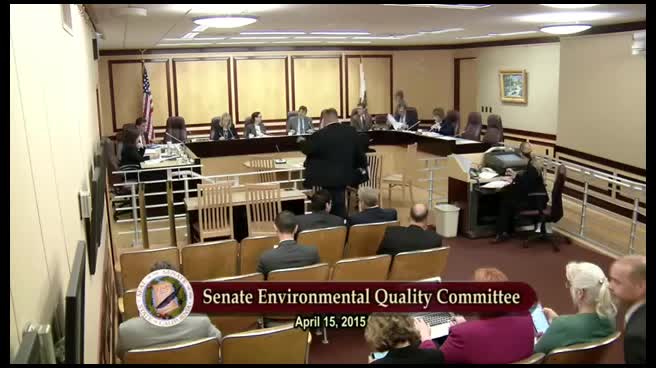
Bill Author

Bill Co-Author(s):