SB 493: Elections in cities: by or from districts.
- Session Year: 2015-2016
- House: Senate
- Latest Version Date: 2015-10-10
Existing law generally requires all elective city offices, including the members of a city council, to be filled at large by the city electorate at a general municipal election. Existing law, at any municipal election or special election held for this purpose, authorizes the legislative body of a city to submit to the registered voters an ordinance providing for the election of members of the legislative body by district or from district, as defined, and with or without an elective mayor.
This bill would authorize the legislative body of a city with a population of fewer than 100,000 people to adopt an ordinance that requires the members of the legislative body to be elected by district or by district with an elective mayor without being required to submit the ordinance to the voters for approval. The bill would require the ordinance to include a specified declaration and would require the population of the city to be determined by the most recent federal decennial census.
Existing law generally requires all elective city offices, including the members of a city council, to be filled at large by the city electorate at a general municipal election. Existing law, at any municipal election or special election held for this purpose, authorizes the legislative body of a city to submit to the registered voters an ordinance providing for the election of members of the legislative body by district or from district, as defined, and with or without an elective mayor.
This bill would authorize the legislative body of a general law city to amend adopt an ordinance providing for that requires the election of members of the legislative body from district, as defined, to provide for the election of members of the legislative body by district, as defined, to be elected by district or by district with an elective mayor without submitting the amendment to the registered being required to submit the ordinance to the voters for approval. The bill would prohibit the amendment of the ordinance, as described above, from changing whether the general law city has an elective mayor.
Existing law, at any municipal election or special election held for this purpose, authorizes the legislative body of a city to submit to the registered voters an ordinance providing for the election of members of the legislative body by district or from district, as defined, and with or without an elective mayor.
This bill would authorize the legislative body of a general law city to amend an ordinance providing for the election of members of the legislative body from district, as defined, to provide for the election of members of the legislative body by district, as defined, without submitting the amendment to the registered voters for approval. The bill would prohibit the amendment of the ordinance, as described above, from changing whether the general law city has an elective mayor.
(a)Notwithstanding Section 34871 or any other law, the legislative body of a city with a population of fewer than 100,000 people may adopt an ordinance that requires the members of the legislative body to be elected by district or by district with an elective mayor, as described in subdivisions (a) and (c) of Section 34871, without being required to submit the ordinance to the voters for approval. An ordinance adopted pursuant to this subdivision shall include a declaration that the change in the method of electing members of the legislative body is being made in furtherance of the purposes of the California Voting Rights Act of 2001 (Chapter 1.5 (commencing with Section 14025) of Division 14 of the Elections Code).
(b)For purposes of this section, the population of a city shall be determined by the most recent federal decennial census.
Notwithstanding Section 34871 or any other law, the legislative body of a city may adopt an ordinance that requires the members of the legislative body to be elected by district or by district with an elective mayor, as described in subdivisions (a) and (c) of Section 34871, without being required to submit the ordinance to the voters for approval.
SECTION 1.Section 34873.5 is added to the Government Code, to read:34873.5.(a)Notwithstanding any other law, including, but not limited to, Section 34873, if an ordinance provides for the legislative body of a general law city to be elected from district, as defined by Section 34871, the legislative body of the general law city may amend the ordinance to provide for the legislative body of the general law city to be elected by district, as defined by Section 34871, without submitting the amendment to the registered voters for approval.
(b)An amendment of the ordinance pursuant to subdivision (a) shall not change whether the general law city has an elective mayor.
(a)Notwithstanding any other law, including, but not limited to, Section 34873, if an ordinance provides for the legislative body of a general law city to be elected from district, as defined by Section 34871, the legislative body of the general law city may amend the ordinance to provide for the legislative body of the general law city to be elected by district, as defined by Section 34871, without submitting the amendment to the registered voters for approval.
(b)An amendment of the ordinance pursuant to subdivision (a) shall not change whether the general law city has an elective mayor.
|
Date
|
Status
|
|---|---|
| Oct 10, 2015 | Chaptered by Secretary of State. Chapter 735, Statutes of 2015. |
| Oct 10, 2015 | Approved by the Governor. |
| Sep 11, 2015 | Enrolled and presented to the Governor at 5 p.m. |
| Sep 8, 2015 | Assembly amendments concurred in. (Ayes 35. Noes 4. Page 2565.) Ordered to engrossing and enrolling. |
| Sep 8, 2015 | Assembly amendments concurred in. (Ayes 35. Noes 4.) Ordered to engrossing and enrolling. |
| Sep 4, 2015 | Read third time. Passed. (Ayes 62. Noes 14. Page 2922.) Ordered to the Senate. |
| Sep 4, 2015 | In Senate. Concurrence in Assembly amendments pending. |
| Sep 4, 2015 | Read third time. Passed. Ordered to the Senate. |
| Aug 17, 2015 | Read second time. Ordered to third reading. |
| Jul 16, 2015 | From committee: Do pass. (Ayes 8. Noes 0.) (July 15). |
| Jul 7, 2015 | Read second time and amended. Re-referred to Com. on L. GOV. |
| Jul 6, 2015 | From committee: Do pass as amended and re-refer to Com. on L. GOV. (Ayes 5. Noes 0.) (July 1). |
| May 28, 2015 | Referred to Coms. on E. & R. and L. GOV. |
| May 18, 2015 | In Assembly. Read first time. Held at Desk. |
| May 18, 2015 | Read third time. Passed. (Ayes 29. Noes 3. Page 1018.) Ordered to the Assembly. |
| May 18, 2015 | Read third time. Passed. (Ayes 29. Noes 3.) Ordered to the Assembly. |
| May 7, 2015 | Read second time. Ordered to third reading. |
| May 6, 2015 | From committee: Do pass. (Ayes 7. Noes 0. Page 920.) (May 6). |
| May 6, 2015 | From committee: Do pass. (Ayes 7. Noes 0.) (May 6). |
| Apr 24, 2015 | Set for hearing May 6. |
| Apr 20, 2015 | From committee with author's amendments. Read second time and amended. Re-referred to Com. on GOV. & F. |
| Mar 12, 2015 | Referred to Com. on GOV. & F. |
| Feb 27, 2015 | From printer. May be acted upon on or after March 29. |
| Feb 26, 2015 | Introduced. Read first time. To Com. on RLS. for assignment. To print. |
|
Date
|
Description
|
Location
|
Votes
|
|
|---|---|---|---|---|
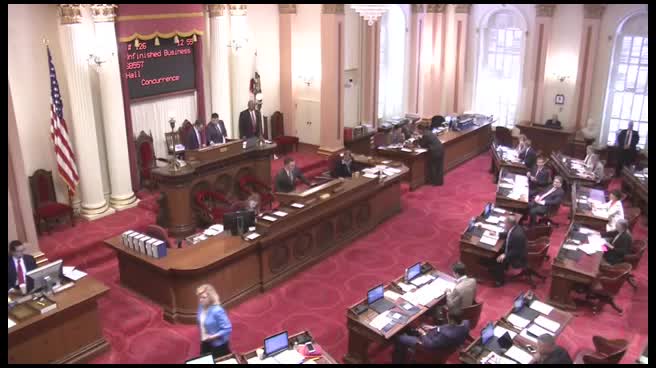
| Sep 8, 2015 | Unfinished Business SB493 Cannella Concurrence | Senate Floor |
Passed |
|
| Sep 4, 2015 | SB 493 Cannella Senate Third Reading By ALEJO | Assembly Floor |
Passed |
|
| Jul 15, 2015 | Do pass. | Assembly Standing Committee on Local Government |
Passed |
|
| Jul 1, 2015 | Do pass as amended and be re-referred to the Committee on [Local Government] | Assembly Standing Committee on Elections and Redistricting |
Passed |
|
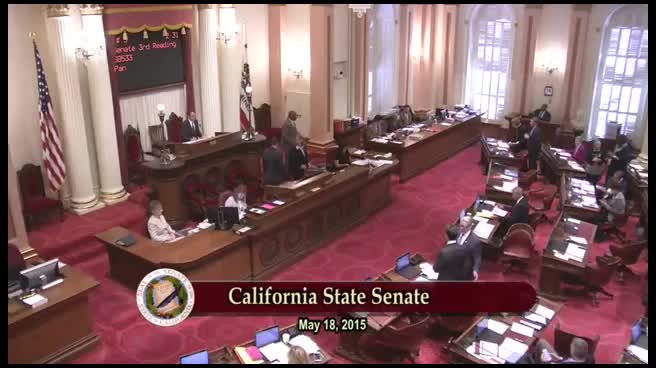
| May 18, 2015 | Senate 3rd Reading SB493 Cannella | Senate Floor |
Passed |
|
| May 6, 2015 | Do pass | Senate Standing Committee on Governance and Finance |
Passed |
This list shows positions taken on this bill by organizations on the date displayed, which is linked to the original source.
Positions by individuals are not included.
SB 493
Page 5
|
Office of Senate Floor Analyses (916) 651-1520 Fax: (916) 327-4478 |
UNFINISHED BUSINESS
Bill No: SB 493
Amended: 7/7/15
SENATE GOVERNANCE & FIN. COMMITTEE: 7-0, 5/6/15
AYES: Hertzberg, Nguyen, Beall, Hernandez, Lara, Moorlach, Pavley
SENATE FLOOR: 29-3, 5/18/15
AYES: Beall, Block, Cannella, De León, Fuller, Gaines, Galgiani, Hancock, Hernandez, Hertzberg, Hill, Hueso, Huff, Jackson, Lara, Leno, Leyva, Liu, McGuire, Mendoza, Mitchell, Monning, Moorlach, Nguyen, Pan, Roth, Vidak, Wieckowski, Wolk
NOES: Anderson, Morrell, Stone
NO VOTE RECORDED: Allen, Bates, Berryhill, Hall, Nielsen, Pavley, Runner
ASSEMBLY FLOOR: 62-14, 9/4/15 - See last page for vote
SUBJECT: Elections in cities: by or from districts
DIGEST: This bill permits a city that elects its city council at-large to enact an ordinance switching its election method to by-district without submitting the change to voters for approval.
Assembly Amendments limit the bill’s effect to cities with a population of fewer than 100,000 people, and require ordinances adopted pursuant to the bill to be accompanied by a declaration that the change in election method is being made in furtherance of the purposes of the California Voting Rights Act of 2001.
Existing law:
Permits a general law city that elects its councilmembers through at-large elections to provide for city council members to be elected by districts or from districts. Such a change shall occur only upon the approval of voters of a measure submitted to them by the city council or placed on the ballot through the initiative process.
Defines, for the purposes of 1), above, the following:
"By districts" to mean the election of members by voters of the district alone; and,
"From districts" to mean the election of members who are residents of the districts from which they are elected, but who are elected by voters of the city as a whole.
Prohibits, pursuant to the California Voting Rights Act of 2001 (CVRA), an at-large method of election from being imposed or applied in a political subdivision (including a city) in a manner that impairs the ability of a protected class of voters to elect a candidate of its choice or its ability to influence the outcome of an election, as a result of the dilution or the abridgement of the rights of voters who are members of a protected class.
Provides that a violation of the CVRA may be established, if it is shown that racially polarized voting occurs in elections for members of the governing body of the political subdivision or in elections incorporating other electoral choices by the voters of the political subdivision.
Requires a court, upon finding a violation of the CVRA, to implement appropriate remedies, including the imposition of district-based elections, which are tailored to remedy the violation.
Permits any voter who is a member of a protected class and who resides in a political subdivision where a violation of the CVRA is alleged to file an action in the superior court of the county in which the political subdivision is located.
This bill:
Permits the legislative body of a city with a population of fewer than 100,000 people to adopt an ordinance, without being required to submit the ordinance to the voters for approval, that requires members of the legislative body to be elected in one of the following ways:
By districts, in five, seven, or nine districts; or,
By districts in four, six, or eight districts, with a mayor who is elected citywide.
Requires an ordinance adopted pursuant to this bill to include a declaration that the change in the method of electing members of the legislative body is being made in furtherance of the purposes of the CVRA.
Provides that the population of a city shall be determined by the most recent federal decennial census.
Background
The
CVRA was enacted to address racial block voting in at-large elections
for local office in California, in which an at-large method of
election dilutes the voting rights of minority communities if the
majority usually votes for majority candidates rather than for
minority candidates. In such situations, breaking up a jurisdiction
into districts can result in districts in which a minority community
can elect the candidate of its choice or otherwise have the power to
influence the outcome of an election. If a judge finds that a city’s
at-large election method violates the CVRA, state law requires the
court to implement appropriate remedies, including the imposition of
district-based elections.
Over 130 local governments have
switched from at-large to district-based elections since the
enactment of the CVRA in 2001. While some jurisdictions did so in
response to litigation or threats of litigation, other jurisdictions
proactively changed election methods because they believed they could
be susceptible to a legal challenge under the CVRA, and they wished
to avoid the potential expense of litigation. However, submitting an
ordinance to voters via the ballot initiative process can be
cumbersome and costly. Furthermore, there is no guarantee that a
city’s voters will approve a proposed change, no matter how
proactive the city council.
Some officials now seek to remove the requirement in state law that they must obtain voter approval before changing their electoral system.
Comments
Purpose of the bill. Most California cities elect their city councils through at-large elections. But, since the passage of the CVRA, an increasing number of cities are opting to switch to by-district elections. Numerous remaining cities that use at-large election methods have been sued under the CVRA by groups arguing that at-large elections prevent minority groups from electing candidates that represent their community or their interests. In all such cases, citizens alleging that at-large elections violated the CVRA prevailed. Reading the proverbial writing on the wall, cities with at-large election methods want to avoid inevitable CVRA lawsuits, but are also weary of the costly process of submitting an ordinance to the voters for approval to switch to by-district voting—which, ultimately, the voters might reject. SB 493 allows cities with at-large elections to switch to by-district elections, as recommended by many judges in CVRA lawsuits, without having to first go through the costly and uncertain process of voter approval.
Who decides? Current law empowers voters to choose the method by which they elect their city council. SB 493 takes this power away from the voters and give it to city councils.
Charter cities vs. general law cities. State law permits a city to provide for its own governance through the adoption of a charter by a majority vote of its electors voting on the question. Charter cities may provide for the method of city elections in their city charters. Since SB 493 seeks only to change the manner in which municipal officers are elected, the provisions of this bill apply only to general law cities, and not charter cities.
FISCAL EFFECT: Appropriation: No Fiscal Com.: No Local: No
Advancement Project
City of Ceres
City of Chowchilla
City of Greenfield
City of Hesperia
City of Lodi
City of Modesto
City of Ontario
City of Rancho Cucamonga
City of Riverbank
City of Turlock
City of Woodland
Greater Merced Chamber of Commerce
Latino Community Roundtable of Stanislaus County
League of California Cities
League of California Cities, Central Valley Division
Mexican American Legal Defense and Educational Fund
San Joaquin County Hispanic Chamber of Commerce
None received
AYES: Alejo, Bloom, Bonilla, Bonta, Brown, Burke, Calderon, Campos, Chang, Chau, Chiu, Chu, Cooley, Cooper, Dababneh, Daly, Dodd, Eggman, Frazier, Cristina Garcia, Eduardo Garcia, Gatto, Gipson, Gomez, Gonzalez, Gordon, Gray, Grove, Roger Hernández, Holden, Irwin, Jones-Sawyer, Kim, Lackey, Levine, Linder, Lopez, Low, Maienschein, Mayes, McCarty, Medina, Mullin, Nazarian, O'Donnell, Olsen, Perea, Quirk, Rendon, Rodriguez, Salas, Santiago, Steinorth, Mark Stone, Thurmond, Ting, Wagner, Weber, Wilk, Williams, Wood, Atkins
NOES: Travis Allen, Baker, Brough, Chávez, Dahle, Beth Gaines, Gallagher, Hadley, Harper, Mathis, Melendez, Obernolte, Patterson, Waldron
NO VOTE RECORDED: Achadjian, Bigelow, Jones, Ridley-Thomas
Prepared by: Toren Lewis / GOV. & F. / (916) 651-4119
9/8/15 11:10:11
**** END ****
SB 493
Page 5
|
Office of Senate Floor Analyses (916) 651-1520 Fax: (916) 327-4478 |
UNFINISHED BUSINESS
Bill No: SB 493
Amended: 7/7/15
SENATE GOVERNANCE & FIN. COMMITTEE: 7-0, 5/6/15
AYES: Hertzberg, Nguyen, Beall, Hernandez, Lara, Moorlach, Pavley
SENATE FLOOR: 29-3, 5/18/15
AYES: Beall, Block, Cannella, De León, Fuller, Gaines, Galgiani, Hancock, Hernandez, Hertzberg, Hill, Hueso, Huff, Jackson, Lara, Leno, Leyva, Liu, McGuire, Mendoza, Mitchell, Monning, Moorlach, Nguyen, Pan, Roth, Vidak, Wieckowski, Wolk
NOES: Anderson, Morrell, Stone
NO VOTE RECORDED: Allen, Bates, Berryhill, Hall, Nielsen, Pavley, Runner
ASSEMBLY FLOOR: 62-14, 9/4/15 - See last page for vote
SUBJECT: Elections in cities: by or from districts
DIGEST: This bill permits a city that elects its city council at-large to enact an ordinance switching its election method to by-district without submitting the change to voters for approval.
Assembly Amendments limit the bill’s effect to cities with a population of fewer than 100,000 people, and require ordinances adopted pursuant to the bill to be accompanied by a declaration that the change in election method is being made in furtherance of the purposes of the California Voting Rights Act of 2001.
Existing law:
Permits a general law city that elects its councilmembers through at-large elections to provide for city council members to be elected by districts or from districts. Such a change shall occur only upon the approval of voters of a measure submitted to them by the city council or placed on the ballot through the initiative process.
Defines, for the purposes of 1), above, the following:
"By districts" to mean the election of members by voters of the district alone; and,
"From districts" to mean the election of members who are residents of the districts from which they are elected, but who are elected by voters of the city as a whole.
Prohibits, pursuant to the California Voting Rights Act of 2001 (CVRA), an at-large method of election from being imposed or applied in a political subdivision (including a city) in a manner that impairs the ability of a protected class of voters to elect a candidate of its choice or its ability to influence the outcome of an election, as a result of the dilution or the abridgement of the rights of voters who are members of a protected class.
Provides that a violation of the CVRA may be established, if it is shown that racially polarized voting occurs in elections for members of the governing body of the political subdivision or in elections incorporating other electoral choices by the voters of the political subdivision.
Requires a court, upon finding a violation of the CVRA, to implement appropriate remedies, including the imposition of district-based elections, which are tailored to remedy the violation.
Permits any voter who is a member of a protected class and who resides in a political subdivision where a violation of the CVRA is alleged to file an action in the superior court of the county in which the political subdivision is located.
This bill:
Permits the legislative body of a city with a population of fewer than 100,000 people to adopt an ordinance, without being required to submit the ordinance to the voters for approval, that requires members of the legislative body to be elected in one of the following ways:
By districts, in five, seven, or nine districts; or,
By districts in four, six, or eight districts, with a mayor who is elected citywide.
Requires an ordinance adopted pursuant to this bill to include a declaration that the change in the method of electing members of the legislative body is being made in furtherance of the purposes of the CVRA.
Provides that the population of a city shall be determined by the most recent federal decennial census.
Background
The
CVRA was enacted to address racial block voting in at-large elections
for local office in California, in which an at-large method of
election dilutes the voting rights of minority communities if the
majority usually votes for majority candidates rather than for
minority candidates. In such situations, breaking up a jurisdiction
into districts can result in districts in which a minority community
can elect the candidate of its choice or otherwise have the power to
influence the outcome of an election. If a judge finds that a city’s
at-large election method violates the CVRA, state law requires the
court to implement appropriate remedies, including the imposition of
district-based elections.
Over 130 local governments have
switched from at-large to district-based elections since the
enactment of the CVRA in 2001. While some jurisdictions did so in
response to litigation or threats of litigation, other jurisdictions
proactively changed election methods because they believed they could
be susceptible to a legal challenge under the CVRA, and they wished
to avoid the potential expense of litigation. However, submitting an
ordinance to voters via the ballot initiative process can be
cumbersome and costly. Furthermore, there is no guarantee that a
city’s voters will approve a proposed change, no matter how
proactive the city council.
Some officials now seek to remove the requirement in state law that they must obtain voter approval before changing their electoral system.
Comments
Purpose of the bill. Most California cities elect their city councils through at-large elections. But, since the passage of the CVRA, an increasing number of cities are opting to switch to by-district elections. Numerous remaining cities that use at-large election methods have been sued under the CVRA by groups arguing that at-large elections prevent minority groups from electing candidates that represent their community or their interests. In all such cases, citizens alleging that at-large elections violated the CVRA prevailed. Reading the proverbial writing on the wall, cities with at-large election methods want to avoid inevitable CVRA lawsuits, but are also weary of the costly process of submitting an ordinance to the voters for approval to switch to by-district voting—which, ultimately, the voters might reject. SB 493 allows cities with at-large elections to switch to by-district elections, as recommended by many judges in CVRA lawsuits, without having to first go through the costly and uncertain process of voter approval.
Who decides? Current law empowers voters to choose the method by which they elect their city council. SB 493 takes this power away from the voters and give it to city councils.
Charter cities vs. general law cities. State law permits a city to provide for its own governance through the adoption of a charter by a majority vote of its electors voting on the question. Charter cities may provide for the method of city elections in their city charters. Since SB 493 seeks only to change the manner in which municipal officers are elected, the provisions of this bill apply only to general law cities, and not charter cities.
FISCAL EFFECT: Appropriation: No Fiscal Com.: No Local: No
None received
None received
AYES: Alejo, Bloom, Bonilla, Bonta, Brown, Burke, Calderon, Campos, Chang, Chau, Chiu, Chu, Cooley, Cooper, Dababneh, Daly, Dodd, Eggman, Frazier, Cristina Garcia, Eduardo Garcia, Gatto, Gipson, Gomez, Gonzalez, Gordon, Gray, Grove, Roger Hernández, Holden, Irwin, Jones-Sawyer, Kim, Lackey, Levine, Linder, Lopez, Low, Maienschein, Mayes, McCarty, Medina, Mullin, Nazarian, O'Donnell, Olsen, Perea, Quirk, Rendon, Rodriguez, Salas, Santiago, Steinorth, Mark Stone, Thurmond, Ting, Wagner, Weber, Wilk, Williams, Wood, Atkins
NOES: Travis Allen, Baker, Brough, Chávez, Dahle, Beth Gaines, Gallagher, Hadley, Harper, Mathis, Melendez, Obernolte, Patterson, Waldron
NO VOTE RECORDED: Achadjian, Bigelow, Jones, Ridley-Thomas
Prepared by: Toren Lewis / GOV. & F. / (916) 651-4119
9/4/15 18:17:25
**** END ****
SB 493
Page 2
SENATE THIRD READING
SB 493
(Cannella)
As Amended July 7, 2015
Majority vote
SENATE VOTE: 29-3
Committee |
Votes |
Ayes |
Noes |
Elections |
5-0 |
Ridley-Thomas, Grove, Gatto, Mullin, Perea |
|
Local Government |
8-0 |
Maienschein, Gonzalez, Alejo, Chiu, Cooley, Linder, Low, Mullin |
|
SUMMARY: Permits a city with a population of fewer than 100,000 people to change the method of electing council members to a by-district method of election without receiving voter approval. Specifically, this bill:
Permits the legislative body of a city with a population of fewer than 100,000 people to adopt an ordinance, without being required to submit the ordinance to the voters for approval, that requires members of the legislative body to be elected in one of the following ways:
By districts, in five, seven, or nine districts; or,
By districts in four, six, or eight districts, with a mayor who is elected citywide.
Requires an ordinance adopted pursuant to this bill to include a declaration that the change in the method of electing members of the legislative body is being made in furtherance of the purposes of the California Voting Rights Act (CVRA).
Provides, for the purposes of this bill, that the population of a city shall be determined by the most recent federal decennial census.
FISCAL EFFECT: None. This bill is keyed non-fiscal by the Legislative Counsel.
COMMENTS: According to the author, "Since 2003, California cities using at-large elections methods have become subject to lawsuits asserting violations of the California Voting Rights Act and demanding by-district elections be implemented. For a city facing such a suit, the options are limited – they can either [1] submit an ordinance making this change to the voters for approval, which is expensive, slow, and not guaranteed to win approval, or [2] accept the lawsuit, which they are bound to lose, costing taxpayer money in legal fees. SB 493 proposes to save cities this time and money by permitting them to enact an ordinance switching their election method to by-district without submitting it for voter approval."
Under existing law, a city can be organized so that members of the city council are elected at-large or are elected using districts. In cities that have districts, the city can be organized such that the registered voters in the entire city vote for councilmembers from each of the districts (known as "from-district" elections), or the city can be organized so that only the registered voters in a district vote in the election to choose the councilmember from that area (known as "by-district" elections). In either case, a candidate for the city council must reside in the district in which he or she is running.
For any city that wishes to move from at-large elections to a district-based method of election, existing law requires the voters of the city to approve the change. If the voters reject the proposed change, the city must continue holding elections using an at-large method of election.
SB 976 (Polanco), Chapter 129, Statutes of 2002, enacted the CVRA to address racial block voting in at-large elections for local office in California. In areas where racial block voting occurs, an at-large method of election can dilute the voting rights of minority communities if the majority typically votes to support candidates that differ from the candidates who are preferred by minority communities. In such situations, breaking a jurisdiction up into districts can result in districts in which a minority community can elect the candidate of its choice or otherwise have the ability to influence the outcome of an election. Accordingly, the CVRA prohibits an at-large method of election from being imposed or applied in a political subdivision in a manner that impairs the ability of a protected class of voters to elect the candidate of its choice or to influence the outcome of an election, as a result of the dilution or the abridgement of the rights of voters who are members of the protected class.
Generally, local government bodies must receive voter approval to move from an at-large method of election to a district-based method of election for selecting governing board members. The State Board of Education (SBE) and the Board of Governors (BOG) of the California Community Colleges, however, can waive the voter-approval requirement for school districts and community college districts, respectively. The SBE and the BOG have granted approximately 130 requests for waivers from the voter-approval requirement for school districts and community college districts that have sought to move to district-based elections for board members due to concerns about potential liability under the CVRA.
Unlike school districts and community college districts, no formal process exists for cities to transition from at-large to district-based elections without receiving voter approval. (A few cities have transitioned from at-large to district-based elections without receiving voter approval as a part of settlement agreements to lawsuits brought under the CVRA.) This bill would allow cities to transition to district-based elections without receiving voter approval, which could allow cities that potentially face liability under the CVRA to proactively change the method of electing city council members.
AB 278 (Roger Hernández) of the current legislative session, which is pending in the Senate Elections and Constitutional Amendments Committee, requires general law cities with a population of 100,000 or more, as specified, to elect members of the city council by district. AB 278 was approved by the Assembly on a 43-32 vote.
Please see the policy committee analysis for a full discussion of this bill.
Analysis Prepared by: Ethan Jones / E. & R. / (916) 319-2094 FN: 0001255
SB 493
Page 5
Date of Hearing: July 15, 2015
ASSEMBLY COMMITTEE ON LOCAL GOVERNMENT
Brian Maienschein, Chair
SB 493
(Cannella) – As Amended July 7, 2015
SENATE VOTE: 29-3
SUBJECT: Elections in cities: by or from districts.
SUMMARY: Allows a city with less than 100,000 people to adopt an ordinance requiring the city council to be elected by district or by district with an elective mayor, without being required to submit the ordinance to the voters for approval. Specifically, this bill:
Allows the legislative body of a city with a population of fewer than 100,000 people to adopt an ordinance that requires the members of the legislative body to be elected by district or by district with an elective mayor, without being required to submit the ordinance to the voters for approval.
Requires an ordinance adopted pursuant to this bill to include a declaration that the change in the method of electing members of the legislative body is being made in furtherance of the purposes of the California Voting Rights Act of 2001 (CVRA), as specified.
Requires, for purposes of this bill, the population of a city to be determined by the most recent federal decennial census.
EXISTING LAW:
Permits a general law city that elects its councilmembers through at-large elections to provide for city council members to be elected by districts or from districts. Such a change shall occur only upon the approval of voters of a measure submitted to them by the city council or placed on the ballot through the initiative process.
Defines, for the purposes of 1), above, the following:
"By districts" to mean the election of members by voters of the district alone; and,
"From districts" to mean the election of members who are residents of the districts from which they are elected, but who are elected by voters of the city as a whole.
Prohibits, pursuant to the CVRA, an at-large method of election from being imposed or applied in a political subdivision (including a city) in a manner that impairs the ability
of a protected class of voters to elect a candidate of its choice or its ability to influence the outcome of an election, as a result of the dilution or the abridgement of the rights of voters who are members of a protected class.
Provides that a violation of the CVRA may be established, if it is shown that racially polarized voting occurs in elections for members of the governing body of the political
subdivision or in elections incorporating other electoral choices by the voters of the political subdivision.
Requires a court, upon finding a violation of the CVRA, to implement appropriate remedies, including the imposition of district-based elections, which are tailored to remedy the violation.
Permits any voter who is a member of a protected class and who resides in a political subdivision where a violation of the CVRA is alleged to file an action in the superior court
of the county in which the political subdivision is located.
FISCAL EFFECT: None
COMMENTS:
Bill Summary. This bill allows California's smaller cities (of 100,000 or less in population) to adopt an ordinance, without going to the voters, that requires the city to elect its council members by district, or by district with an elective mayor. This bill is sponsored by the author.
Author's Statement. According to the author, "Since 2003, California cities using at-large elections methods have become subject to lawsuits asserting violations of the California Voting Rights Act and demanding by-district elections be implemented. For a city facing such a suit, the options are limited – they can either [1] submit an ordinance making this change to the voters for approval, which is expensive, slow, and not guaranteed to win approval, or [2] accept the lawsuit, which they are bound to lose, costing taxpayer money in legal fees. SB 493 proposes to save cities this time and money by permitting them to enact an ordinance switching their election method to by-district without submitting it for voter approval."
Background. The CVRA was enacted to address racial block voting in at-large elections for local office in California. In areas where racial block voting occurs, an at-large method of election can dilute the voting rights of minority communities, if the majority usually votes for majority candidates rather than for minority candidates. In such situations, breaking up a jurisdiction into districts can result in districts in which a minority community can elect the candidate of its choice or otherwise have the ability to influence the outcome of an election. Accordingly, the CVRA prohibits an at-large method of election from being imposed or applied in a political subdivision in a manner that impairs the ability of a protected class
of voters to elect the candidate of its choice or to influence the outcome of an election, as a result of the dilution or the abridgement of the rights of voters who are members of the protected class.
The CVRA also allows a prevailing plaintiff to recover attorney's fees and litigation expenses to increase the likelihood that attorneys will be willing to bring challenges under the law.
More than 140 local government bodies have transitioned from at-large to district-based elections since the enactment of the CVRA in 2002. While some jurisdictions did so in response to litigation or threats of litigation, other jurisdictions proactively changed election methods because they believed they could be susceptible to a legal challenge under the CVRA, and they wished to avoid the potential expense of litigation.
Voter Approval and Waivers. Generally, local government bodies must receive voter approval to move from an at-large method of election to a district-based method of election for selecting governing board members. However, the State Board of Education (SBE) and the Board of Governors (BOG) of the California Community Colleges can waive the voter-approval requirement for school districts and community college districts. The SBE and the BOG have granted nearly 120 requests for waivers from the voter-approval requirement for school districts and community college districts that have sought to move to district-based elections for board members due to concerns about potential liability under the CVRA.
There is no procedure in statute for cities or special districts to receive a waiver for the voter-approval requirement to move from at-large to district-based elections, if those governmental bodies have concerns about liability under the CVRA. However, in at least some cases, judges have approved settlements to CVRA lawsuits that allow the governing body to transition from at-large to district-based elections without voter approval. According to information compiled by the Lawyers' Committee for Civil Rights of the San Francisco Bay Area, at least a dozen other local jurisdictions statewide have transitioned to electing governing board members by districts as a result of settlements to lawsuits brought under the CVRA.
General Law vs. Charter Cities. The California Constitution gives cities the ability to exercise greater control over municipal affairs through the adoption of a charter by a majority vote of the city's electors voting on the question. Cities that have not adopted charters are commonly referred to as "general law" cities, because such cities are subject to the state's general laws, regardless of whether those laws concern a municipal affair.
The California Constitution grants charter cities the plenary authority, subject only to restrictions contained in specified provisions of the California Constitution, to provide for the manner in which municipal officers are elected or appointed. Because this bill seeks to regulate the manner in which municipal officers are elected, the provisions of this bill would not apply to charter cities, but instead, would apply only to general law cities with a population of less than 100,000 people.
Cities Affected. According to information compiled by the author's office, this bill would apply to nearly 350 California cities.
Related Legislation. AB 278 (Roger Hernández) requires general law cities with a population of 100,000 or more, as specified, to elect members of the city council by district, and requires certain criteria to be met in preparing district boundaries. AB 278 is pending in the Senate Elections and Constitutional Amendments Committee.
Previous Legislation. AB 2715 (Roger Hernández) and AB 1383 (Roger Hernández) of 2014 would have cities with a population of 100,000 or more to elect city council members by district. AB 2715 was held in the Assembly Appropriations Committee and AB 1383 was held in the Senate Rules Committee.
AB 1440 (Campos), Chapter 873, Statutes of 2014, required political subdivisions that change from an at-large method of election to a district-based election to hold public hearings, and required special districts to hold a public hearing before adjusting the boundaries of a division.
SB 1365 (Padilla) of 2014, which was vetoed by the Governor, would have prohibited the use of a district-based election in a political subdivision, if it would impair the ability of a protected class to elect candidates of its choice or otherwise influence the outcome of an election as a result of the dilution or the abridgment of the rights of voters who are members of a protected class, and would have required a court to implement specified remedies.
AB 1979 (Roger Hernández) of 2012 would have required the City of West Covina to elect city council members by districts, instead of at-large. AB 1979 was held in the Assembly Elections and Redistricting Committee.
AB 450 (Jones-Sawyer) of 2013 would have required the Los Angeles Community College District to elect governing board members by trustee area, instead of at-large. AB 450 was held in the Assembly Appropriations Committee.
Arguments in Support. The League of California Cities, in support, states, "Since the passage of the California Voting Rights Act of 2001 (CVRA), entities using at-large elections have faced an ever-increasing number of lawsuits asserting that racially polarized voting is occurring within their boundaries and demanding that district-based elections be implemented. Courts have found for the plaintiffs in all of the cases where racially-polarized has been proven. Remedies have included the consolidation of elections, cumulative voting and district-based elections.
"While remedies have varied by jurisdiction, what has been
consistent in CVRA cases is the high cost for litigation. The CVRA
provides generous recovery for attorney's fees. As a consequence,
cities have incurred extremely high legal fees – from the several
hundred thousand to several million dollars. Cities sole alternative
to going to court: seeking voter approval. Elections are costly,
too, however…It's equally important to note that cities are not
insulated from suit if their voters reject district-based
elections…The League believes
SB 493 will give cities a
much-needed tool for addressing concerns under the CVRA in an
efficient and cost-effective manner."
Arguments in Opposition. None on file.
Double-Referral. This bill was heard by the Elections and Redistricting Committee on
July 1, 2015, where it passed with a 5-0 vote.
REGISTERED SUPPORT / OPPOSITION:
Support
Advancement Project
Californians for Electoral Reform (if amended)
Cities of Ceres, Greenfield, Hesperia, Lodi, Modesto, Ontario, Rancho Cucamonga, Riverbank,
Turlock, and Woodland
Greater Merced Chamber of Commerce
Latino Community Roundtable of Stanislaus County
League of California Cities
League of California Cities, Central Valley Division
San Joaquin County Hispanic Chamber of Commerce
Opposition
None on file
Analysis Prepared by: Angela Mapp / L. GOV. / (916) 319-3958
SB 493
Page 6
Date of Hearing: July 1, 2015
ASSEMBLY COMMITTEE ON ELECTIONS AND REDISTRICTING
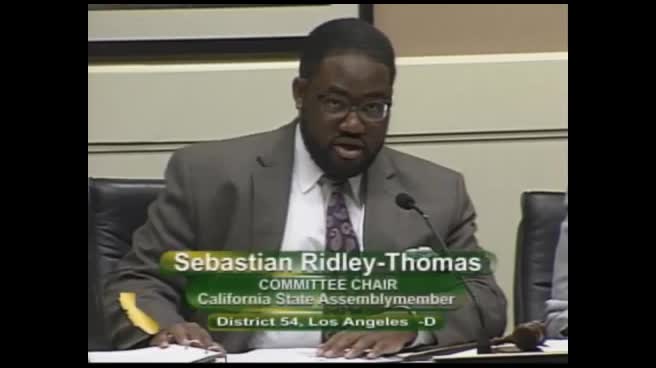
Sebastian Ridley-Thomas, Chair
SB 493
(Cannella) – As Amended April 20, 2015
SENATE VOTE: 29-3
SUBJECT: Elections in cities: by or from districts.
SUMMARY: Permits a city to change the method of electing council members to a by-district method of election without receiving voter approval. Specifically, this bill permits the legislative body of a city to adopt an ordinance, without being required to submit the ordinance to the voters for approval, that requires members of the legislative body to be elected in one of the following ways:
By districts, in five, seven, or nine districts; or,
By districts in four, six, or eight districts, with a mayor who is elected citywide.
EXISTING LAW:
Permits a city to submit an ordinance to the voters of the city to provide for city council members to be elected in any of the following ways:
By districts, in five, seven, or nine districts;
From districts, in five, seven, or nine districts;
By districts, in four, six, or eight districts, with a mayor who is elected citywide; or,
From districts, in four, six, or eight districts, with a mayor who is elected citywide.
Provides that such a change shall occur only upon the approval of
voters. Provides that the term "by districts," for the
purposes of this provision, means the election of members by voters
of the district alone; provides that "from districts" means
the election of members who are residents of the districts from which
they are elected, but who are elected by voters of the city as a
whole.
Prohibits, pursuant to the California Voting Rights Act of 2001 (CVRA), an at-large method of election from being imposed or applied in a political subdivision (including a city) in a manner that impairs the ability of a protected class of voters to elect the candidate of its choice or its ability to influence the outcome of an election, as a result of the dilution or the abridgement of the rights of voters who are members of a protected class.
Provides that a violation of the CVRA may be established if it is shown that racially polarized voting occurs in elections for members of the governing body of the political subdivision or in elections incorporating other electoral choices by the voters of the political subdivision.
Requires a court, upon finding a violation of the CVRA, to implement appropriate remedies, including the imposition of district-based elections, which are tailored to remedy the violation.
Permits any voter who is a member of a protected class and who resides in a political subdivision where a violation of the CVRA is alleged to file an action in the superior court of the county in which the political subdivision is located.
FISCAL EFFECT: None. This bill is keyed non-fiscal by the Legislative Counsel.
COMMENTS:
Purpose of the Bill: According to the author:
Since 2003, California cities using at-large elections methods have
become subject to lawsuits asserting violations of the California
Voting Rights Act and demanding by-district elections be implemented.
For a city facing such a suit, the options are limited – they can
either [1] submit an ordinance making this change to the voters for
approval, which is expensive, slow, and not guaranteed to win
approval, or [2] accept the lawsuit, which they are bound to lose,
costing taxpayer money in legal fees. SB 493 proposes to save cities
this time and money by permitting them to enact an ordinance
switching their election method to by-district without submitting it
for voter approval.
At-Large vs. District Elections: Under existing law, a city can be organized so that members of the city council are elected at-large or are elected using districts. In cities that have districts, the city can be organized such that the registered voters in the entire city vote for councilmembers from each of the districts (known as "from district" elections), or the city can be organized so that only the registered voters in a district vote in the election to choose the councilmember from that area (known as "by district" elections). In either case, a candidate for the city council must reside in the district in which he or she is running.
For any city that wishes to move from at-large elections to a district-based method of election, existing law requires the voters of the city to approve the change. If the voters reject the proposed change, the city must continue holding elections using an at-large method of election.
California Voting Rights Act of 2001: SB 976 (Polanco), Chapter 129, Statutes of 2002, enacted the CVRA to address racial block voting in at-large elections for local office in California. In areas where racial block voting occurs, an at-large method of election can dilute the voting rights of minority communities if the majority typically votes to support candidates that differ from the candidates who are preferred by minority communities. In such situations, breaking a jurisdiction up into districts can result in districts in which a minority community can elect the candidate of its choice or otherwise have the ability to influence the outcome of an election. Accordingly, the CVRA prohibits an at-large method of election from being imposed or applied in a political subdivision in a manner that impairs the ability of a protected class of voters to elect the candidate of its choice or to influence the outcome of an election, as a result of the dilution or the abridgement of the rights of voters who are members of the protected class.
The first case brought under the CVRA was filed in 2004, and the jurisdiction that was the target of that case—the City of Modesto—challenged the constitutionality of the law. Ultimately, the City of Modesto appealed that case all the way to the United States Supreme Court, which rejected the city's appeal in October 2007. The legal uncertainty surrounding the CVRA may have limited the impacts of that law in the first five years after its passage.
Since the case in Modesto was resolved, however, many local
jurisdictions have converted or are in the process of converting from
an at-large method of election to district-based elections due to the
CVRA.
Generally, local government bodies must receive
voter approval to move from an at-large method of election to a
district-based method of election for selecting governing board
members. This voter approval requirement can make it difficult for
jurisdictions to proactively transition to district-based elections
in order to address potential liability under the CVRA. If a
jurisdiction attempts to transition from at-large to district-based
elections to address CVRA concerns, but the voters reject the
proposal, the jurisdiction nonetheless remains subject to a lawsuit
under the CVRA. Furthermore, to the extent that there is racially
polarized voting on the question of whether to transition from
at-large to district-based elections, the results of the vote on that
question could provide further evidence for a lawsuit under the CVRA.
As a result, many jurisdictions have sought ways to transition from
at-large to district-based elections without having to receive voter
approval for such a change.
Most notably, many school
districts have transitioned from at-large to district-based elections
without receiving voter approval in an effort to avoid potential
liability under the CVRA. Even though state law generally requires
such a transition to be approved by the voters in a school district,
existing law also permits the State Board of Education (SBE) to waive
all or part of any section of the Education Code, with certain
identified exceptions, upon request by the governing board of a
school district or county board of education. The SBE generally is
required to approve any and all requests for waivers unless it makes
a finding that one of seven enumerated conditions exists. Since
2009, the SBE has approved waivers to permit approximately 110 school
districts to change from at-large to district elections without
receiving voter approval, as would otherwise be required by the
Education Code.
Furthermore, in response to concerns that
community college districts were subject to liability under the CVRA
but were unable to change from at-large to district-based elections
without voter approval, AB 684 (Block), Chapter 614, Statutes of
2011, established a process under which a community college district
could transition from at-large to district-based elections without
receiving voter approval if such a transition was approved by the
Board of Governors (BOG) of the California Community Colleges, among
other provisions. Since the enactment of AB 684, the BOG has
approved requests from approximately 20 community college districts
to change from at-large to district elections.
Unlike
school districts and community college districts, however, no formal
process exists for cities to transition from at-large to
district-based elections without receiving voter approval. (A few
cities have transitioned from at-large to district-based elections
without receiving voter approval as a part of settlement agreements
to lawsuits brought under the CVRA.) This bill would allow cities to
transition to district-based elections without receiving voter
approval, which could allow cities that potentially face liability
under the CVRA to proactively change the method of electing city
council members. Unlike the waiver process that applies for school
districts and community college districts, this bill would not
require any other entity to approve a city's request to change from
at-large to district-based elections without receiving voter
approval. However, there is no statewide body that has general
oversight authority over all of the state's cities that is comparable
to the authority that the SBE has over school districts, and that the
BOG has over community college districts.
Change in Election Method Not Related to CVRA Issues and Potential Amendments: Although the author's intent for this bill is to make it easier for cities to proactively respond to potential liability under the CVRA, this bill could also bypass the voter approval requirement for changes in the method of electing city council members that are unrelated to CVRA concerns. For example, if a city currently elects its council members by districts, and the city council wants to increase the number of members on the council from five to nine, this bill would permit such a change to occur without voter approval, even though voter approval would be required under existing law. Similarly, a city council could move from electing seven council members by districts to electing six council members by districts with an elective mayor without the approval of voters.
AB 182 (Alejo), which is pending in the Senate, proposes to expand the CVRA to allow challenges to district-based elections to be brought under the CVRA. If AB 182 becomes law, it's possible that a city might need to expand the number of members on the city council in order to address potential liability under that bill.
In order to ensure that this bill is not used to bypass voter approval requirements in situations where CVRA concerns are not relevant while preserving flexibility for cities in the event that the CVRA is expanded, as proposed by pending legislation, the committee and the author may wish to consider an amendment to require a city council that changes the method of electing members pursuant to this bill to make findings and declarations when adopting the ordinance that the changes are being made in furtherance of the purposes of the CVRA.
Arguments in Support: In support of this bill, the League of California Cities writes:
Since the passage of the [CVRA], entities using at-large elections
have faced an ever-increasing number of lawsuits asserting that
racially polarized voting is occurring within their boundaries and
demanding that district-based elections be implemented. Courts have
found for the plaintiffs in all of the cases where racially polarized
voting has been proven. Remedies have included the consolidation of
elections, cumulative voting and district-based elections.
While
remedies have varied by jurisdiction, what has been consistent in
CVRA cases is the high cost for litigation. The CVRA provides
generous recovery for attorney's fees. As a consequence, cities have
incurred extremely high legal fees—from the several hundred
thousand to several million dollars.
Cities' sole
alternative to going to court: seeking voter approval. Elections are
costly too, however. Cities like Turlock and Woodland spent
significant time and money ensuring that their residents understood
the CVRA and the consequences of their votes. It's equally important
to note that cities are not insulated from suit if their voters
reject district-based elections. That's the case for the City of
Highlands, now tied up in litigation after voters rejected district
elections there….
The League believes SB 493 will give
cities a much-needed tool for addressing concerns under the CVRA in
an efficient and cost-effective manner.
Amendments Sought: Californians for Electoral Reform, which has a "support if amended" position on this bill, writes:
While we appreciate the intent of [SB 493], we are concerned that it
does not recognize that, in some cases, modified at-large systems
such as cumulative voting, limited voting, and the
single-transferrable vote can result in better representation for the
electorate than produced by a district system….
There
are three electoral methods that provide protected classes the
opportunity for their fair share of representation when districts
cannot. These are the fully-proportional method of the
single-transferrable vote and the semi-proportional methods of
cumulative voting and limited voting. We would be fully supportive of
SB 493 if it recognized these systems and put them on equal footing
with a district system by allowing a city to switch to them without a
vote of the people.
Notwithstanding the concern that a district-based method of election
may not address voting rights concerns in all circumstances, the
amendments proposed by Californians for Electoral Reform would
represent a fundamental change in this bill, by authorizing the use
of certain methods of election (single-transferrable vote, cumulative
voting, and limited voting) that are not currently permitted to be
used in public elections under state law. (The City of Santa Clarita
reached a settlement agreement in a CVRA lawsuit in which the City
agreed to use cumulative voting to address the voting rights issues
raised in the lawsuit, and the Superior Court in that case
subsequently authorized the use of cumulative voting in the City.
Notwithstanding that settlement agreement, however, state statute
does not generally permit single-transferrable vote, cumulative
voting, or limited voting to be used in public elections.)
Because
those methods of election are not explicitly permitted under existing
law, state law does not define those methods of election or contain
procedures for conducting elections using those methods of election.
By contrast, the current provisions of this bill simply allow cities,
without receiving voter approval, to transition between methods of
election that are already explicitly provided for under state law.
The authorization of the use of single-transferrable vote, cumulative
voting, and limited voting for elections in California may present
policy questions that are not addressed in this analysis.
Related Legislation: AB 278 (Roger Hernández), which is pending in the Senate, requires general law cities with a population of 100,000 or more, as specified, to elect members of the city council by district. AB 278 was approved by this committee on a 4-1 vote, and was approved by the Assembly on a 43-32 vote.
Double-Referral: This bill has been double-referred to the Assembly Committee on Local Government.
REGISTERED SUPPORT / OPPOSITION:
Support
Advancement Project
Californians for Electoral Reform (if amended)
City of Ceres
City of Greenfield
City of Modesto
Greater Merced Chamber of Commerce
Latino Community Roundtable of Stanislaus County
League of California Cities
Opposition
None on file.
Analysis Prepared by: Ethan Jones / E. & R. / (916) 319-2094
SB 493
Page 3
|
Office of Senate Floor Analyses (916) 651-1520 Fax: (916) 327-4478 |
THIRD READING
Bill No: SB 493
Amended: 4/20/15
SENATE GOVERNANCE & FIN. COMMITTEE: 7-0, 5/6/15
AYES: Hertzberg, Nguyen, Beall, Hernandez, Lara, Moorlach, Pavley
SUBJECT: Elections in cities: by or from districts
DIGEST: This bill authorizes the legislative body of a city to adopt an ordinance that requires members of the legislative body to be elected by district or by district with an elective mayor without being required to submit the ordinance to the voters for approval.
Existing law:
Permits a general law city that elects its councilmembers through at-large elections to change to a by-district electoral system, provided that the city’s voters approve the change through a ballot measure or the initiative process.
Prohibits cities from imposing at-large city council elections in a manner that impairs the ability of minority groups to elect a candidate of their choice, or minorities’ ability to influence the outcome of an election.
Requires courts, in cases where at-large city council elections impermissibly result in racially polarized voting, to implement appropriate remedies, including the imposition of district-based elections.
This bill allows the legislative body of a city to adopt an ordinance that requires members of the city’s legislative body to be elected by district or by district with an elective mayor, without having to submit the ordinance to the city’s voters for approval.
Background
Existing law permits a general law city that elects its councilmembers through at-large elections to provide for city council members to be elected by district. A city may only change its election method after the city’s voters approve a measure proposing a switch. The measure can either be submitted to the voters by the city council or placed on the ballot through the initiative process.
The California Voting Rights Act of 2001 (CVRA) prohibits cities from imposing at-large city council elections in a manner that impairs the ability of minority groups to elect a candidate of their choice, or minorities’ ability to influence the outcome of an election. The CVRA was enacted to address racial block voting in at-large elections for local office in California, in which an at-large method of election dilutes the voting rights of minority communities if the majority usually votes for majority candidates rather than for minority candidates. In such situations, breaking up a jurisdiction into districts can result in districts in which a minority community can elect the candidate of its choice or otherwise have the power to influence the outcome of an election. If a judge finds that a city’s at-large election method violates the CVRA, state law requires the court to implement appropriate remedies, including the imposition of district-based elections.
Over 130 local governments have switched from at-large to district-based elections since the enactment of the CVRA in 2001. While some jurisdictions did so in response to litigation or threats of litigation, other jurisdictions proactively changed election methods because they believed they could be susceptible to a legal challenge under the CVRA, and they wished to avoid the potential expense of litigation. However, submitting an ordinance to voters via the ballot initiative process can be cumbersome and costly. Furthermore, there is no guarantee that a city’s voters will approve a proposed change, no matter how proactive the city council.
Therefore, some officials now seek to remove the requirement in state law that they must obtain voter approval before changing their electoral system.
FISCAL EFFECT: Appropriation: No Fiscal Com.: No Local: No
City of Ceres
City of Greenfield
Latino Community Roundtable
League of California Cities
None received
ARGUMENTS IN SUPPORT: According to the author, “California cities have commonly used at-large election methods to select their legislative bodies. However, since the passage of the California Voting Rights of 2001 (CVRA), many cities have switched from electing their city councils at-large to by-district. Those continuing to use at-large elections have increasingly found themselves faced with lawsuits asserting that racially polarized voting is occurring and demanding that district-based elections be implemented.
“SB 493 would allow general law cities to switch from at-large city council elections to district-based without a vote of the people.”
Prepared by: Toren Lewis / GOV. & F. / (916) 651-4119
5/15/15 16:56:48
**** END ****
SB 493
Page 3
|
Office of Senate Floor Analyses (916) 651-1520 Fax: (916) 327-4478 |
THIRD READING
Bill No: SB 493
Amended: 4/20/15
SENATE GOVERNANCE & FIN. COMMITTEE: 7-0, 5/6/15
AYES: Hertzberg, Nguyen, Beall, Hernandez, Lara, Moorlach, Pavley
SUBJECT: Elections in cities: by or from districts.
DIGEST: This bill authorizes the legislative body of a city to adopt an ordinance that requires members of the legislative body to be elected by district or by district with an elective mayor without being required to submit the ordinance to the voters for approval.
Existing law:
Permits a general law city that elects its councilmembers through at-large elections to change to a by-district electoral system, provided that the city’s voters approve the change through a ballot measure or the initiative process.
Prohibits cities from imposing at-large city council elections in a manner that impairs the ability of minority groups to elect a candidate of their choice, or minorities’ ability to influence the outcome of an election.
Requires courts, in cases where at-large city council elections impermissibly result in racially polarized voting, to implement appropriate remedies, including the imposition of district-based elections.
This bill allows the legislative body of a city to adopt an ordinance that requires members of the city’s legislative body to be elected by district or by district with an elective mayor, without having to submit the ordinance to the city’s voters for approval.
Background
Existing law permits a general law city that elects its councilmembers through at-large elections to provide for city council members to be elected by district. A city may only change its election method after the city’s voters approve a measure proposing a switch. The measure can either be submitted to the voters by the city council or placed on the ballot through the initiative process.
The California
Voting Rights Act of 2001 (CVRA) prohibits cities from imposing
at-large city council elections in a manner that impairs the ability
of minority groups to elect a candidate of their choice, or
minorities’ ability to influence the outcome of an election. The
CVRA was enacted to address racial block voting in at-large elections
for local office in California, in which an at-large method of
election dilutes the voting rights of minority communities if the
majority usually votes for majority candidates rather than for
minority candidates. In such situations, breaking up a jurisdiction
into districts can result in districts in which a minority community
can elect the candidate of its choice or otherwise have the power to
influence the outcome of an election. If a judge finds that a city’s
at-large election method violates the CVRA, state law requires the
court to implement appropriate remedies, including the imposition of
district-based elections.
Over 130 local governments have
switched from at-large to district-based elections since the
enactment of the CVRA in 2001. While some jurisdictions did so in
response to litigation or threats of litigation, other jurisdictions
proactively changed election methods because they believed they could
be susceptible to a legal challenge under the CVRA, and they wished
to avoid the potential expense of litigation. However, submitting an
ordinance to voters via the ballot initiative process can be
cumbersome and costly. Furthermore, there is no guarantee that a
city’s voters will approve a proposed change, no matter how
proactive the city council.
Therefore, some officials now seek to remove the requirement in state law that they must obtain voter approval before changing their electoral system.
FISCAL EFFECT: Appropriation: No Fiscal Com.: No Local: No
City of Ceres
City of Greenfield
Latino Community Roundtable
League of California Cities
None received
ARGUMENTS IN SUPPORT: According to the author, “California cities have commonly used at-large election methods to select their legislative bodies. However, since the passage of the California Voting Rights of 2001 (CVRA), many cities have switched from electing their city councils at-large to by-district. Those continuing to use at-large elections have increasingly found themselves faced with lawsuits asserting that racially polarized voting is occurring and demanding that district-based elections be implemented.
“SB 493 would allow general law cities to switch from at-large city council elections to district-based without a vote of the people.”
Prepared by: Toren Lewis / GOV. & F. / (916) 651-4119
5/8/15 15:09:23
**** END ****
SB 493 (Cannella) 4/20/15 Page 2 of 2
SENATE COMMITTEE ON GOVERNANCE AND FINANCE
Senator Robert M. Hertzberg, Chair
2015 - 2016 Regular
Bill No: |
SB 493 |
Hearing Date: |
5/6/15 |
Author: |
Cannella |
Tax Levy: |
No |
Version: |
4/20/15 |
Fiscal: |
No |
Consultant: |
Lewis |
||
Elections in cities: by or from districts
Permits a city that elects its city council at-large to enact an ordinance switching its election method to by-district without submitting the change to voters for approval.
Background and Existing Law
Existing law permits a general law city that elects its councilmembers through at-large elections to provide for city council members to be elected by district. A city may only change its election method after the city’s voters approve a measure proposing a switch. The measure can either be submitted to the voters by the city council or placed on the ballot through the initiative process.
The
California Voting Rights Act of 2002 (CVRA) prohibits cities from
imposing at-large city council elections in a manner that impairs the
ability of minority groups to elect a candidate of their choice, or
minorities’ ability to influence the outcome of an election. The
CVRA was enacted to address racial block voting in at-large elections
for local office in California, in which an at-large method of
election dilutes the voting rights of minority communities if the
majority usually votes for majority candidates rather than for
minority candidates. In such situations, breaking up a jurisdiction
into districts can result in districts in which a minority community
can elect the candidate of its choice or otherwise have the power to
influence the outcome of an election. If a judge finds that a city’s
at-large election method violates the CVRA, state law requires the
court to implement appropriate remedies, including the imposition of
district-based elections.
Over 130 local governments have
switched from at-large to district-based elections since the
enactment of the CVRA in 2002. While some jurisdictions did so in
response to litigation or threats of litigation, other jurisdictions
proactively changed election methods because they believed they could
be susceptible to a legal challenge under the CVRA, and they wished
to avoid the potential expense of litigation. However, submitting an
ordinance to voters via the ballot initiative process can be
cumbersome and costly. Furthermore, there is no guarantee that a
city’s voters will approve a proposed change, no matter how
proactive the city council.
Therefore, some officials now seek to remove the requirement in state law that they must obtain voter approval before changing their electoral system.
Proposed Law
Senate Bill 493 allows the legislative body of a city to adopt an ordinance that requires members of the city’s legislative body to be elected by district or by district with an elective mayor, without having to submit the ordinance to the city’s voters for approval.
State Revenue Impact
No estimate.
Comments
Purpose of the bill. Most California cities elect their city councils through at-large elections. But, since the passage of the California Voting Rights Act of 2001, an increasing number of cities are opting to switch to by-district elections. Numerous remaining cities that use at-large election methods have been sued under the CVRA by groups arguing that at-large elections prevent minority groups from electing candidates that represent their community or their interests. In all such cases, citizens alleging that at-large elections violated the CVRA prevailed. Reading the proverbial writing on the wall, cities with at-large election methods want to avoid inevitable CVRA lawsuits, but are also weary of the costly process of submitting an ordinance to the voters for approval to switch to by-district voting—which, ultimately, the voters might reject. SB 493 would allow cities with at-large elections to switch to by-district elections, as recommended by many judges in CVRA lawsuits, without having to first go through the costly and uncertain process of voter approval.
Who decides? Current law empowers voters to choose the method by which they elect their city council. SB 493 would take this power away from the voters and give it to city councils. Legislators should think carefully before divesting the voters of powers, especially a power as fundamental as choosing the manner in which they elect their city representatives.
Charter cities vs. general law cities. State law permits a city to provide for its own governance through the adoption of a charter by a majority vote of its electors voting on the question. Charter cities may provide for the method of city elections in their city charters. Since SB 493 seeks only to change the manner in which municipal officers are elected, the provisions of this bill would apply only to general law cities, and not charter cities.
Support and Opposition
(4/30/15)
Support: City of Ceres; City of Greenfield; Latino Community Roundtable; League of California Cities.
Opposition: Unknown.
-- END --
Bill Author

Bill Co-Author(s):
