SB 533: Cities and counties: sales and use tax agreements.
- Session Year: 2015-2016
- House: Senate
- Latest Version Date: 2015-10-09
The Bradley-Burns Uniform Local Sales and Use Tax Law authorizes counties and cities to impose local sales and use taxes in conformity with the Sales and Use Tax Law. That law provides that for the purpose of a local sales tax adopted pursuant to that law, all retail sales are consummated at the place of business of the retailer unless otherwise specified.
Existing law prohibits a local agency, as defined to mean all cities and counties, from entering into any form of agreement with any other person that would involve the payment, transfer, diversion, or rebate of any amount of Bradley-Burns local tax revenues for any purpose if the agreement results in a reduction in the amount of revenue that is received by another local agency from a retailer that is located within the territorial jurisdiction of that other local agency, and the retailer continues to maintain a physical presence within the territorial jurisdiction of that other local agency, with specified exceptions, including an exception for an agreement to pay or rebate any Bradley-Burns local tax revenue relating to a buying company, as defined.
This bill would repeal that prohibition and instead prohibit, on or after January 1, 2016, a local agency from entering into any form of agreement that would result, directly or indirectly, in the payment, transfer, diversion, or rebate of Bradley-Burns local tax revenues to any person, as defined, for any purpose, if the agreement results in a reduction in the amount of Bradley-Burns local tax revenues that, in the absence of the agreement, would be received by another local agency and the retailer continues to maintain a physical presence within the territorial jurisdiction of that other local agency, with specified exceptions. This bill would also impose specified notification and reporting requirements on a local agency entering into an agreement that results in a reduction of the amount of Bradley-Burns local tax revenues, that in the absence of the agreement, would be received by another local agency, prior to the ratification of that agreement. This bill would also require any local agency to post such an agreement on its Internet Web site, including any agreements entered into prior to January 1, 2016, that are still in effect. By imposing these notification and reporting requirements on a local agency, this bill would impose a state-mandated local program. This bill would exclude from these provisions any mutual tax revenue sharing agreement between local agencies to pay, transfer, or divert Bradley-Burns local tax revenues to another local agency, and where the agreement would not result, directly or indirectly, in the payment, transfer, diversion, or rebate of those tax revenues to a retailer.
The California Constitution requires the state to reimburse local agencies and school districts for certain costs mandated by the state. Statutory provisions establish procedures for making that reimbursement.
This bill would provide that, if the Commission on State Mandates determines that the bill contains costs mandated by the state, reimbursement for those costs shall be made pursuant to these statutory provisions.
The Bradley-Burns Uniform Local Sales and Use Tax Law authorizes counties and cities to impose local sales and use taxes in conformity with the Sales and Use Tax Law. That law provides that for the purpose of a local sales tax adopted pursuant to that law, all retail sales are consummated at the place of business of the retailer unless otherwise specified.
Existing law prohibits a local agency, as defined to mean all cities and counties, from entering into any form of agreement with any other person that would involve the payment, transfer, diversion, or rebate of any amount of Bradley-Burns local tax revenues for any purpose if the agreement results in a reduction in the amount of revenue that is received by another local agency from a retailer that is located within the territorial jurisdiction of that other local agency, and the retailer continues to maintain a physical presence within the territorial jurisdiction of that other local agency, with specified exceptions, including an exception for an agreement to pay or rebate any Bradley-Burns local tax revenue relating to a buying company, as defined.
This bill would repeal that prohibition and instead prohibit, on or after January 1, 2016, a local agency from entering into any form of agreement that would result, directly or indirectly, in the payment, transfer, diversion, or rebate of Bradley-Burns local tax revenues to any person, as defined, for any purpose, if the agreement results in a reduction in the amount of Bradley-Burns local tax revenues that, in the absence of the agreement, would be received by another local agency and the retailer continues to maintain a physical presence within the territorial jurisdiction of that other local agency, with specified exceptions. This bill would also impose specified notification and reporting requirements on a local agency entering into an agreement that results in a reduction of the amount of Bradley-Burns local tax revenues, that in the absence of the agreement, would be received by another local agency, prior to the ratification of that agreement. This bill would also require any local agency to post such an agreement on its Internet Web site, including any agreements entered into prior to January 1, 2016, that are still in effect. By imposing these notification and reporting requirements on a local agency, this bill would impose a state-mandated local program. This bill would exclude from these provisions any mutual tax revenue sharing agreement between local agencies to pay, transfer, or divert Bradley-Burns local tax revenues to another local agency, and where the agreement would not result, directly or indirectly, in the payment, transfer, diversion, or rebate of those tax revenues to a retailer.
The California Constitution requires the state to reimburse local agencies and school districts for certain costs mandated by the state. Statutory provisions establish procedures for making that reimbursement.
This bill would provide that, if the Commission on State Mandates determines that the bill contains costs mandated by the state, reimbursement for those costs shall be made pursuant to these statutory provisions.
The Bradley-Burns Uniform Local Sales and Use Tax Law authorizes counties and cities to impose local sales and use taxes in conformity with the Sales and Use Tax Law. That law provides that for the purpose of a local sales tax adopted pursuant to that law, all retail sales are consummated at the place of business of the retailer unless otherwise specified.
Existing law prohibits a local agency, as defined to mean all cities and counties, from entering into any form of agreement with any other person that would involve the payment, transfer, diversion, or rebate of any amount of Bradley-Burns local tax proceeds revenues for any purpose if the agreement results in a reduction in the amount of revenue that is received by another local agency from a retailer that is located within the territorial jurisdiction of that other local agency, and the retailer continues to maintain a physical presence within the territorial jurisdiction of that other local agency, with specified exceptions, including an exception for an agreement to pay or rebate any Bradley-Burns local tax revenue relating to a buying company, as defined.
This bill would repeal that prohibition and instead prohibit, on or after January 1, 2016, a local agency from entering into any form of agreement that would result, directly or indirectly, in the payment, transfer, diversion, or rebate of Bradley-Burns local tax proceeds revenues to any person, as defined, for any purpose, if the agreement results in a reduction in the amount of Bradley-Burns local tax proceeds revenues that, in the absence of the agreement, would be received by another local agency and the retailer continues to maintain a physical presence within the territorial jurisdiction of that other local agency, with specified exceptions. This bill would also impose specified notification and reporting requirements on a local agency entering into an agreement that results in a reduction of the amount of Bradley-Burns local tax proceeds, revenues, that in the absence of the agreement, would be received by another local agency, prior to the ratification of that agreement. This bill would also require any local agency to post such an agreement on its Internet Web site, including any agreements entered into prior to the effective date of this bill January 1, 2016, that are still in effect. By imposing these notification and reporting requirements on a local agency, this bill would impose a state-mandated local program. This bill would exclude from these provisions a local agency that has a mutual tax revenue sharing agreement with each local agency that would be affected by the form of agreement generally prohibited by these provisions. any mutual tax revenue sharing agreement between local agencies to pay, transfer, or divert Bradley-Burns local tax revenues to another local agency, and where the agreement would not result, directly or indirectly, in the payment, transfer, diversion, or rebate of those tax revenues to a retailer.
The California Constitution requires the state to reimburse local agencies and school districts for certain costs mandated by the state. Statutory provisions establish procedures for making that reimbursement.
This bill would provide that, if the Commission on State Mandates determines that the bill contains costs mandated by the state, reimbursement for those costs shall be made pursuant to these statutory provisions.
The Bradley-Burns Uniform Local Sales and Use Tax Law authorizes counties and cities to impose local sales and use taxes in conformity with the Sales and Use Tax Law. That law provides that for the purpose of a local sales tax adopted pursuant to that law, all retail sales are consummated at the place of business of the retailer unless otherwise specified.
Existing law prohibits a local agency, as defined to mean all cities and counties, from entering into any form of agreement with any other person that would involve the payment, transfer, diversion, or rebate of any amount of Bradley-Burns local tax proceeds for any purpose if the agreement results in a reduction in the amount of revenue that is received by another local agency from a retailer that is located within the territorial jurisdiction of that other local agency, and the retailer continues to maintain a physical presence within the territorial jurisdiction of that other local agency, with specified exceptions, including an exception for an agreement to pay or rebate any Bradley-Burns local tax revenue relating to a buying company, as defined.
This bill would repeal that prohibition and instead prohibit, on or after January 1, 2016, a local agency from entering into any form of agreement that would result, directly or indirectly, in the payment, transfer, diversion, or rebate of Bradley-Burns local tax proceeds to any person, as defined, for any purpose, if the agreement results in a reduction in the amount of Bradley-Burns tax proceeds that, in the absence of the agreement, would be received by another local agency and the retailer continues to maintain a physical presence within the territorial jurisdiction of that other local agency, with specified exceptions. This bill would also impose specified notification and reporting requirements on a local agency entering into an agreement that results in a reduction of the amount of Bradley-Burns tax proceeds, that in the absence of the agreement, would be received by another local agency, prior to the ratification of that agreement. This bill would also require any local agency to post such an agreement on its Internet Web site the local agency has entered into, including any agreements entered into prior to the effective date of this bill that are still in effect. By imposing these notification and reporting requirements on a local agency, this bill would impose a state-mandated local program. This bill would exclude from these provisions a local agency that has a mutual tax revenue sharing agreement with each local agency that would be affected by the form of agreement generally prohibited by these provisions.
The California Constitution requires the state to reimburse local agencies and school districts for certain costs mandated by the state. Statutory provisions establish procedures for making that reimbursement.
This bill would provide that, if the Commission on State Mandates determines that the bill contains costs mandated by the state, reimbursement for those costs shall be made pursuant to these statutory provisions.
The Bradley-Burns Uniform Local Sales and Use Tax Law authorizes counties and cities to impose local sales and use taxes in conformity with the Sales and Use Tax Law. That law provides that for the purpose of a local sales tax adopted pursuant to that law, all retail sales are consummated at the place of business of the retailer unless otherwise specified.
Existing law prohibits a local agency, as defined to mean all cities and counties, from entering into any form of agreement with any other person that would involve the payment, transfer, diversion, or rebate of any amount of Bradley-Burns local tax proceeds for any purpose if the agreement results in a reduction in the amount of revenue that is received by another local agency from a retailer that is located within the territorial jurisdiction of that other local agency, and the retailer continues to maintain a physical presence within the territorial jurisdiction of that other local agency, with specified exceptions, including an exception for an agreement to pay or rebate any Bradley-Burns local tax revenue relating to a buying company, as defined.
This bill would repeal that prohibition and instead prohibit, on or after January 1, 2016, a local agency from entering into any form of agreement that would result, directly or indirectly, in the payment, transfer, diversion, or rebate of Bradley-Burns local tax proceeds to any person, as defined, for any purpose, if the agreement results in a reduction in the amount of Bradley-Burns tax proceeds that, in the absence of the agreement, would be received by another local agency and the retailer continues to maintain a physical presence within the territorial jurisdiction of that other local agency, with specified exceptions. This bill would also impose specified notification and reporting requirements on a local agency entering into an agreement that results in a reduction of the amount of Bradley-Burns tax proceeds, that in the absence of the agreement, would be received by another local agency, prior to the ratification of that agreement. This bill would also require any local agency to post such an agreement on its Internet Web site the local agency has entered into, including any agreements entered into prior to the effective date of this bill that are still in effect. By imposing these notification and reporting requirements on a local agency, this bill would impose a state-mandated local program.
The California Constitution requires the state to reimburse local agencies and school districts for certain costs mandated by the state. Statutory provisions establish procedures for making that reimbursement.
This bill would provide that, if the Commission on State Mandates determines that the bill contains costs mandated by the state, reimbursement for those costs shall be made pursuant to these statutory provisions.
(a)On or after January 1, 2016, a local agency shall not enter into any form of agreement that would result, directly or indirectly, in the payment, transfer, diversion, or rebate of any tax revenue resulting from the imposition of a sales and use tax under the Bradley-Burns Uniform Local Sales and Use Tax Law (Part 1.5 (commencing with Section 7200) of Division 2 of the Revenue and Taxation Code) to any person for any purpose when both of the following apply:
(1)The agreement results in a reduction in the amount of revenue under the Bradley-Burns Uniform Local Sales and Use Tax Law that, in the absence of the agreement, would be received by another local agency.
(2)The retailer continues to maintain a physical presence within the territorial jurisdiction of that other local agency.
(b)(1)A local agency entering into an agreement that results in a reduction of the amount of revenue under the Bradley-Burns Uniform Local Sales and Use Tax Law that, in the absence of the agreement, would be received by another local agency shall post the proposed agreement on its Internet Web site for at least 30 days prior to ratification or approval of that agreement by its governing body.
(2)A local agency entering into an agreement that results in a reduction of the amount of revenue under the Bradley-Burns Uniform Local Sales and Use Tax Law that, in the absence of the agreement, would be received by another local agency shall notify the other local agency by certified mail addressed to the attention of the chief executive of that other local agency at least 60 days prior to ratification or approval of that agreement by its governing body.
(3)A local agency shall post any agreement on its Internet Web site it has entered into that results in a reduction of the amount of revenue under the Bradley-Burns Uniform Local Sales and Use Tax Law that, in the absence of the agreement, would be received by another local agency, including any agreements entered into prior to January 1, 2016, that are still in effect on and after that date.
(c)For the purposes of this section, the following terms have the following meanings:
(1)Local agency means a chartered or general law city, a chartered or general law county, or a city and county, of this state.
(2)Person means a person as defined in Section 6005 of the Revenue and Taxation Code.
(3)Physical presence means the lease or ownership of any real property for the purpose of carrying on business operations.
(4)Retailer means a retailer as defined by Section 6015 of the Revenue and Taxation Code.
(d)This section shall not apply to any agreement by a local agency to pay or rebate any use tax revenue resulting from the imposition of a use tax under the Bradley-Burns Uniform Local Sales and Use Tax Law relating to a use tax direct payment permit issued under Section 7051.3 of the Revenue and Taxation Code.
(e)This section shall not be interpreted to limit the ability of a local agency to contract with or otherwise enter into an agreement pursuant to subdivision (b) of Section 7056 of the Revenue and Taxation Code.
(f)This section shall not apply to any mutual tax revenue sharing agreement between local agencies to pay, transfer, or divert tax revenues that would be received by a local agency resulting from the imposition of a sales and use tax under the Bradley-Burns Uniform Local Sales and Use Tax Law to another local agency, and where the agreement would not result, directly or indirectly, in the payment, transfer, diversion, or rebate of those tax revenues to a retailer.
SEC. 3.If the Commission on State Mandates determines that this act contains costs mandated by the state, reimbursement to local agencies and school districts for those costs shall be made pursuant to Part 7 (commencing with Section 17500) of Division 4 of Title 2 of the Government Code.
(a)On or after January 1, 2016, a local agency shall not enter into any form of agreement that would result, directly or indirectly, in the payment, transfer, diversion, or rebate of any tax revenue resulting from the imposition of a sales and use tax under the Bradley-Burns Uniform Local Sales and Use Tax Law (Part 1.5 (commencing with Section 7200) of Division 2 of the Revenue and Taxation Code) to any person for any purpose when both of the following apply:
(1)The agreement results in a reduction in the amount of revenue under the Bradley-Burns Uniform Local Sales and Use Tax Law that, in the absence of the agreement, would be received by another local agency.
(2)The retailer continues to maintain a physical presence within the territorial jurisdiction of that other local agency.
(b)(1)A local agency entering into an agreement that results in a reduction of the amount of revenue under the Bradley-Burns Uniform Local Sales and Use Tax Law that, in the absence of the agreement, would be received by another local agency shall post the proposed agreement on its Internet Web site for at least 30 days prior to ratification or approval of that agreement by its governing body.
(2)A local agency entering into an agreement that results in a reduction of the amount of revenue under the Bradley-Burns Uniform Local Sales and Use Tax Law that, in the absence of the agreement, would be received by another local agency shall notify the other local agency by certified mail addressed to the attention of the chief executive of that other local agency at least 60 days prior to ratification or approval of that agreement by its governing body.
(3)A local agency shall post any agreement on its Internet Web site it has entered into that results in a reduction of the amount of revenue under the Bradley-Burns Uniform Local Sales and Use Tax Law that, in the absence of the agreement, would be received by another local agency, including any agreements entered into prior to January 1, 2016, that are still in effect on and after that date.
(c)For the purposes of this section, the following terms have the following meanings:
(1)Local agency means a chartered or general law city, a chartered or general law county, or a city and county, of this state.
(2)Person means a person as defined in Section 6005 of the Revenue and Taxation Code.
(3)Physical presence means the lease or ownership of any real property for the purpose of carrying on business operations.
(4)Retailer means a retailer as defined by Section 6015 of the Revenue and Taxation Code.
(d)This section shall not apply to any agreement by a local agency to pay or rebate any use tax revenue resulting from the imposition of a use tax under the Bradley-Burns Uniform Local Sales and Use Tax Law relating to a use tax direct payment permit issued under Section 7051.3 of the Revenue and Taxation Code.
(e)This section shall not be interpreted to limit the ability of a local agency to contract with or otherwise enter into an agreement pursuant to subdivision (b) of Section 7056 of the Revenue and Taxation Code.
(f)This section shall not apply to any mutual tax revenue sharing agreement between local agencies to pay, transfer, or divert tax revenues that would be received by a local agency resulting from the imposition of a sales and use tax under the Bradley-Burns Uniform Local Sales and Use Tax Law to another local agency, and where the agreement would not result, directly or indirectly, in the payment, transfer, diversion, or rebate of those tax revenues to a retailer.
SEC. 3.If the Commission on State Mandates determines that this act contains costs mandated by the state, reimbursement to local agencies and school districts for those costs shall be made pursuant to Part 7 (commencing with Section 17500) of Division 4 of Title 2 of the Government Code.
(a)On or after January 1, 2016, a local agency shall not enter into any form of agreement that would result, directly or indirectly, in the payment, transfer, diversion, or rebate of any tax revenue resulting from the imposition of a sales and use tax under the Bradley-Burns Uniform Local Sales and Use Tax Law (Part 1.5 (commencing with Section 7200) of Division 2 of the Revenue and Taxation Code) to any person for any purpose when both of the following apply:
(1)The agreement results in a reduction in the amount of revenue under the Bradley-Burns Uniform Local Sales and Use Tax Law that, in the absence of the agreement, would be received by another local agency.
(2)The retailer continues to maintain a physical presence within the territorial jurisdiction of that other local agency.
(b)(1)A local agency entering into an agreement that results in a reduction of the amount of revenue under the Bradley-Burns Uniform Local Sales and Use Tax Law that, in the absence of the agreement, would be received by another local agency shall post the proposed agreement on its Internet Web site for at least 30 days prior to ratification or approval of that agreement by its governing body.
(2)A local agency entering into an agreement that results in a reduction of the amount of revenue under the Bradley-Burns Uniform Local Sales and Use Tax Law that, in the absence of the agreement, would be received by another local agency shall notify the other local agency by certified mail addressed to the attention of the chief executive of that other local agency at least 60 days prior to ratification or approval of that agreement by its governing body.
(3)A local agency shall post any agreement on its Internet Web site it has entered into that results in a reduction of the amount of revenue under the Bradley-Burns Uniform Local Sales and Use Tax Law that, in the absence of the agreement, would be received by another local agency, including any agreements entered into prior to the effective date of this section January 1, 2016, that are still in effect on and after that date.
(c)For the purposes of this section, the following terms have the following meanings:
(1)Local agency means a chartered or general law city, a chartered or general law county, or a city and county, of this state.
(2)Person means a person as defined in Section 6005 of the Revenue and Taxation Code.
(3)Physical presence means the lease or ownership of any real property for the purpose of carrying on business operations.
(4)Retailer means a retailer as defined by Section 6015 of the Revenue and Taxation Code.
(d)This section shall not apply to any agreement by a local agency to pay or rebate any use tax revenue resulting from the imposition of a use tax under the Bradley-Burns Uniform Local Sales and Use Tax Law relating to a use tax direct payment permit issued under Section 7051.3 of the Revenue and Taxation Code.
(e)This section shall not be interpreted to limit the ability of a local agency to contract with or otherwise enter into an agreement pursuant to subdivision (b) of Section 7056 of the Revenue and Taxation Code.
(f)This section shall not apply to a local agency that has a mutual tax revenue sharing agreement with each local agency that would be affected by the form of agreement prohibited by subdivision (a). any mutual tax revenue sharing agreement between local agencies to pay, transfer, or divert tax revenues that would be received by a local agency resulting from the imposition of a sales and use tax under the Bradley-Burns Uniform Local Sales and Use Tax Law to another local agency, and where the agreement would not result, directly or indirectly, in the payment, transfer, diversion, or rebate of those tax revenues to a retailer.
SEC. 3.If the Commission on State Mandates determines that this act contains costs mandated by the state, reimbursement to local agencies and school districts for those costs shall be made pursuant to Part 7 (commencing with Section 17500) of Division 4 of Title 2 of the Government Code.
(a)On or after January 1, 2016, a local agency shall not enter into any form of agreement that would result, directly or indirectly, in the payment, transfer, diversion, or rebate of any tax revenue resulting from the imposition of a sales and use tax under the Bradley-Burns Uniform Local Sales and Use Tax Law (Part 1.5 (commencing with Section 7200) of Division 2 of the Revenue and Taxation Code) to any person for any purpose when both of the following apply:
(1)The agreement results in a reduction in the amount of revenue under the Bradley-Burns Uniform Local Sales and Use Tax Law that, in the absence of the agreement, would be received by another local agency.
(2)The retailer continues to maintain a physical presence within the territorial jurisdiction of that other local agency.
(b)(1)A local agency entering into an agreement that results in a reduction of the amount of revenue under the Bradley-Burns Uniform Local Sales and Use Tax Law that, in the absence of the agreement, would be received by another local agency shall post the proposed agreement on its Internet Web site for at least 30 days prior to ratification or approval of that agreement by its governing body.
(2)A local agency entering into an agreement that results in a reduction of the amount of revenue under the Bradley-Burns Uniform Local Sales and Use Tax Law that, in the absence of the agreement, would be received by another local agency shall notify the other local agency by certified mail addressed to the attention of the chief executive of that other local agency at least 60 days prior to ratification or approval of that agreement by its governing body.
(3)A local agency shall post any agreement on its Internet Web site it has entered into that results in a reduction of the amount of revenue under the Bradley-Burns Uniform Local Sales and Use Tax Law that, in the absence of the agreement, would be received by another local agency, including any agreements entered into prior to the effective date of this section that are still in effect.
(c)For the purposes of this section, the following definitions terms have the following meanings:
(1)Local agency means a chartered or general law city, a chartered or general law county, or a city and county, of this state.
(2)Person means a person as defined in Section 6005 of the Revenue and Taxation Code.
(3)Physical presence means the lease or ownership of any real property for the purpose of carrying on business operations.
(4)Retailer means a retailer as defined by Section 6015 of the Revenue and Taxation Code.
(d)This section shall not apply to any agreement by a local agency to pay or rebate any use tax revenue resulting from the imposition of a use tax under the Bradley-Burns Uniform Local Sales and Use Tax Law relating to a use tax direct payment permit issued under Section 7051.3 of the Revenue and Taxation Code.
(e)Nothing in this This section shall not be interpreted to limit the ability of a local agency to contract with or otherwise enter into an agreement pursuant to subdivision (b) of Section 7056 of the Revenue and Taxation Code.
(f)This section shall not apply to a local agency that has a mutual tax revenue sharing agreement with each local agency that would be affected by the form of agreement prohibited by subdivision (a).
SEC. 3.If the Commission on State Mandates determines that this act contains costs mandated by the state, reimbursement to local agencies and school districts for those costs shall be made pursuant to Part 7 (commencing with Section 17500) of Division 4 of Title 2 of the Government Code.
(a)On or after the date the act adding this section takes effect, a local agency shall not enter into any form of agreement that would result, directly or indirectly, in the payment, transfer, diversion, or rebate of any tax revenue resulting from the imposition of a sales and use tax under the Bradley-Burns Uniform Local Sales and Use Tax Law (Part 1.5 (commencing with Section 7200) of Division 2 of the Revenue and Taxation Code) to any person for any purpose when both of the following apply:
(1)The agreement results in a reduction in the amount of revenue that is received by another local agency from a retailer that is located within the territorial jurisdiction of that other local agency from the tax proceeds collected under the Bradley-Burns Uniform Local Sales and Use Tax Law (Part 1.5 (commencing with Section 7200) of Division 2 of the Revenue and Taxation Code). This subdivision shall not apply to a reduction in the use tax proceeds that are distributed to that other local agency through one or more countywide pools.
(2)The retailer continues to maintain a physical presence within the territorial jurisdiction of that other local agency. This subdivision shall not apply if the retailer has expanded its operations into another jurisdiction with the result that the retailer is conducting a comparable operation within the jurisdiction of both local agencies.
(b)For the purposes of this section, the following definitions have the following meanings:
(1)Local agency means a chartered or general law city, a chartered or general law county, or a city and county.
(2)Retailer means a retailer as defined by Section 6015 of the Revenue and Taxation Code.
(3)Physical presence means the lease or ownership of any real property for the purpose of carrying on business operations.
(c)This section shall not apply to local tax proceeds provided by a local agency to a retailer if the funds are used to reimburse the retailer for the construction of public works improvements that serve all or a portion of the territorial jurisdiction of the local agency.
(d)This section shall not apply to an agreement to pay or rebate any tax revenue resulting from the imposition of a sales and use tax under the Bradley-Burns Uniform Local Sales and Use Tax Law (Part 1.5 (commencing with Section 7200) of Division 2 of the Revenue and Taxation Code) relating to a buying company. Buying company means, and is limited to, a legal entity that is separate from another legal entity that owns, controls, or is otherwise related to, the buying company and which has been created for the purpose of performing administrative functions, including acquiring goods and services for the other entity, as defined by the State Board of Equalization, and meets requirements of a buying company under Sections 6066 to 6075, inclusive, of the Revenue and Taxation Code, and the regulations adopted pursuant to those sections.
(e)This section shall not apply to any agreement by a local agency to pay or rebate any use tax revenue resulting from the imposition of a sales and use tax under the Bradley-Burns Uniform Local Sales and Use Tax Law (Part 1.5 (commencing with Section 7200) of Division 2 of the Revenue and Taxation Code) relating to a use tax direct payment permit issued under Section 7051.3 of the Revenue and Taxation Code.
(f)Nothing in this section shall be interpreted to limit the ability of a local agency to contract with or otherwise enter into an agreement pursuant to subdivision (b) of Section 7056 of the Revenue and Taxation Code.
SEC. 2.Section 53084.5 is added to the Government Code, to read:53084.5.(a)On or after January 1, 2016, a local agency shall not enter into any form of agreement that would result, directly or indirectly, in the payment, transfer, diversion, or rebate of any tax revenue resulting from the imposition of a sales and use tax under the Bradley-Burns Uniform Local Sales and Use Tax Law (Part 1.5 (commencing with Section 7200) of Division 2 of the Revenue and Taxation Code) to any person for any purpose when both of the following apply:
(1)The agreement results in a reduction in the amount of revenue under the Bradley-Burns Uniform Local Sales and Use Tax Law that, in the absence of the agreement, would be received by another local agency.
(2)The retailer continues to maintain a physical presence within the territorial jurisdiction of that other local agency.
(b)(1)A local agency entering into an agreement that results in a reduction of the amount of revenue under the Bradley-Burns Uniform Local Sales and Use Tax Law that, in the absence of the agreement, would be received by another local agency shall post the proposed agreement on its Internet Web site for at least 30 days prior to ratification or approval of that agreement by its governing body.
(2)A local agency entering into an agreement that results in a reduction of the amount of revenue under the Bradley-Burns Uniform Local Sales and Use Tax Law that, in the absence of the agreement, would be received by another local agency shall notify the other local agency by certified mail addressed to the attention of the chief executive of that other local agency at least 60 days prior to ratification or approval of that agreement by its governing body.
(3)A local agency shall post any agreement on its Internet Web site it has entered into that results in a reduction of the amount of revenue under the Bradley-Burns Uniform Local Sales and Use Tax Law that, in the absence of the agreement, would be received by another local agency, including any agreements entered into prior to the effective date of this section that are still in effect.
(c)For the purposes of this section, the following definitions have the following meanings:
(1)Local agency means a chartered or general law city, a chartered or general law county, or a city and county, of this state.
(2)Person means a person as defined in Section 6005 of the Revenue and Taxation Code.
(3)Physical presence means the lease or ownership of any real property for the purpose of carrying on business operations.
(4)Retailer means a retailer as defined by Section 6015 of the Revenue and Taxation Code.
(d)This section shall not apply to any agreement by a local agency to pay or rebate any use tax revenue resulting from the imposition of a use tax under the Bradley-Burns Uniform Local Sales and Use Tax Law relating to a use tax direct payment permit issued under Section 7051.3 of the Revenue and Taxation Code.
(e)Nothing in this section shall be interpreted to limit the ability of a local agency to contract with or otherwise enter into an agreement pursuant to subdivision (b) of Section 7056 of the Revenue and Taxation Code.
SEC. 3.If the Commission on State Mandates determines that this act contains costs mandated by the state, reimbursement to local agencies and school districts for those costs shall be made pursuant to Part 7 (commencing with Section 17500) of Division 4 of Title 2 of the Government Code.
|
Date
|
Status
|
|---|---|
| Oct 9, 2015 | Chaptered by Secretary of State. Chapter 717, Statutes of 2015. |
| Oct 9, 2015 | Approved by the Governor. |
| Sep 16, 2015 | Enrolled and presented to the Governor at 11:45 a.m. |
| Sep 10, 2015 | Assembly amendments concurred in. (Ayes 28. Noes 12. Page 2707.) Ordered to engrossing and enrolling. |
| Sep 10, 2015 | Assembly amendments concurred in. (Ayes 28. Noes 12.) Ordered to engrossing and enrolling. |
| Aug 31, 2015 | Read third time. Passed. (Ayes 55. Noes 22. Page 2697.) Ordered to the Senate. |
| Aug 31, 2015 | In Senate. Concurrence in Assembly amendments pending. |
| Aug 31, 2015 | Read third time. Passed. Ordered to the Senate. |
| Aug 20, 2015 | Read second time. Ordered to third reading. |
| Aug 19, 2015 | From committee: Do pass. (Ayes 12. Noes 4.) (August 19). |
| Jul 14, 2015 | From committee: Do pass and re-refer to Com. on APPR. (Ayes 5. Noes 3.) (July 13). Re-referred to Com. on APPR. |
| Jul 6, 2015 | Read second time and amended. Re-referred to Com. on REV. & TAX. |
| Jul 2, 2015 | From committee: Do pass as amended and re-refer to Com. on REV. & TAX. (Ayes 9. Noes 0.) (July 1). |
| Jun 10, 2015 | From committee with author's amendments. Read second time and amended. Re-referred to Com. on L. GOV. |
| Jun 4, 2015 | Referred to Coms. on L. GOV. and REV. & TAX. |
| May 18, 2015 | Read third time. Passed. (Ayes 25. Noes 11. Page 1018.) Ordered to the Assembly. |
| May 18, 2015 | In Assembly. Read first time. Held at Desk. |
| May 18, 2015 | Read third time. Passed. (Ayes 25. Noes 11.) Ordered to the Assembly. |
| May 5, 2015 | Read second time. Ordered to third reading. |
| May 4, 2015 | From committee: Be ordered to second reading pursuant to Senate Rule 28.8. |
| Apr 24, 2015 | Set for hearing May 4. |
| Apr 22, 2015 | From committee: Do pass and re-refer to Com. on APPR. (Ayes 6. Noes 1. Page 725.) (April 22). Re-referred to Com. on APPR. |
| Apr 15, 2015 | Set for hearing April 22. |
| Apr 14, 2015 | April 15 set for first hearing canceled at the request of author. |
| Mar 27, 2015 | Set for hearing April 15. |
| Mar 12, 2015 | Referred to Com. on GOV. & F. |
| Feb 27, 2015 | From printer. May be acted upon on or after March 29. |
| Feb 26, 2015 | Introduced. Read first time. To Com. on RLS. for assignment. To print. |
|
Date
|
Description
|
Location
|
Votes
|
|
|---|---|---|---|---|
| Sep 10, 2015 | Unfinished Business SB533 Pan Concurrence | Senate Floor |
Passed |
|
| Aug 31, 2015 | SB 533 Pan Senate Third Reading By MCCARTY | Assembly Floor |
Passed |
|
| Aug 19, 2015 | Do pass. | Assembly Standing Committee on Appropriations |
Passed |
|
| Jul 13, 2015 | Do pass and be re-referred to the Committee on [Appropriations] | Assembly Standing Committee on Revenue and Taxation |
Passed |
|
| Jul 1, 2015 | Do pass as amended and be re-referred to the Committee on [Revenue and Taxation] | Assembly Standing Committee on Local Government |
Passed |
|
| May 18, 2015 | Senate 3rd Reading SB533 Pan | Senate Floor |
Passed |
|
| Apr 22, 2015 | Do pass, but first be re-referred to the Committee on [Appropriations] | Senate Standing Committee on Governance and Finance |
Passed |
This list shows positions taken on this bill by organizations on the date displayed, which is linked to the original source.
Positions by individuals are not included.
SB 533
Page 6
|
Office of Senate Floor Analyses (916) 651-1520 Fax: (916) 327-4478 |
UNFINISHED BUSINESS
Bill No: SB 533
Amended: 7/6/15
SENATE GOVERNANCE & FIN. COMMITTEE: 6-1, 4/22/15
AYES: Hertzberg, Beall, Hernandez, Lara, Moorlach, Pavley
NOES: Nguyen
SENATE APPROPRIATIONS COMMITTEE: Senate Rule 28.8
SENATE FLOOR: 25-11, 5/18/15
AYES: Allen, Beall, Block, Cannella, De León, Galgiani, Hancock, Hernandez, Hertzberg, Hill, Hueso, Jackson, Lara, Leno, Leyva, Liu, McGuire, Mendoza, Mitchell, Monning, Moorlach, Pan, Roth, Wieckowski, Wolk
NOES: Anderson, Bates, Fuller, Gaines, Huff, Morrell, Nguyen, Nielsen, Runner, Stone, Vidak
NO VOTE RECORDED: Berryhill, Hall, Pavley
ASSEMBLY FLOOR: 55-22, 8/31/15 - See last page for vote
SUBJECT: Cities and counties: sales and use tax agreements
DIGEST: This bill revises existing law, which prohibits a local agency from entering into an agreement that would result in the payment, transfer, diversion, or rebate of Bradley-Burns local tax proceeds to a retailer if the agreement results in a reduction of revenue that is received by another local agency.
Assembly Amendments provide an exemption and specifies that this bill does not apply to a mutual tax revenue sharing agreement between local agencies to pay, transfer, or divert Bradley-Burns tax revenues that would be received by a local agency where the agreement would not result, directly or indirectly, in the payment, transfer, diversion, or rebate of tax revenues to a retailer.
Existing law:
Authorizes counties, under the Bradley-Burns law, to impose a local sales and use tax of up to one percent on tangible personal property sold at retail in the county, or purchased outside the county for use in the county.
Specifies the "place of sale" for purposes of the local sales tax. In general, all retail sales in California are consummated at the place of business of the retailer. If a retailer has only one place of business in California, the local sales tax derived from sales consummated at that place of business is transmitted to the city, county, or city and county in which the retailer's place of business is located. If a retailer has more than one place of business in the State, the Board of Equalization regulation specifies that the sale occurs at the place of business where the principal negotiations are carried on.
Specifies that out of state retailers that negotiate sales outside of California, allocate the local tax in one of two ways. If the out of state retailer is engaged in business in this state, the local tax is allocated to the location of the retailer’s in-state location. If the out of state retailer is not engaged in business in this state, the local tax is allocated to the location of the headquarters of the California based business the retailer has contracted with.
Prohibits a local agency from entering into an agreement that results in the payment, transfer, diversion, or rebate of any Bradley-Burns local tax proceeds, when the agreement results in a reduction of Bradley-Burns tax proceeds received by another local agency from a retailer, and that retailer continues to maintain a physical presence within the jurisdiction of the originating local agency. The prohibition does not apply to certain agreements related to:
A retailer that expands its operations into another jurisdiction with the result that the retailer is conducting a comparable operation within the jurisdiction of both local agencies.
A reduction in the use tax proceeds that are distributed to the originating local agency through one or more countywide pools.
Any agreement to pay or rebate Bradley-Burns local tax revenue related to a buying company, which is defined as a legal entity that is separate from another legal entity that owns, controls, or is otherwise related to, the buying company and which has been created for the purpose of performing administrative functions, including acquiring goods and services for the other entity, as defined in specified Revenue and Taxation Code (RTC) statutes and regulations.
Any agreement to pay or rebate any local use tax revenue related to a use tax direct payment permit issued under RTC 7051.3.
Bradley-Burns tax proceeds provided by a local agency to a retailer if those proceeds are used to reimburse the retailer for the construction of public works improvements that serve all or a portion of the territorial jurisdiction of that local agency.
This bill:
Prohibits a local agency, on or after the bill’s effective date, from entering into any form of agreement or taking any action that would result, directly or indirectly, in the payment, transfer, diversion or rebate of any amount of Bradley-Burns local tax proceeds to any person, for any purpose, when:
The agreement results in a substantial reduction in the amount of Bradley-Burns tax proceeds received by another local agency from a retailer within that other local agency; and,
The retailer continues to maintain a physical presence and location within that other local agency.
Does not apply to taxpayers with a “use tax direct payment permit” and to local agencies entering into agreements with other local agencies.
Requires local governments to post online any agreements it has entered into that results in a reduction of the amount of revenue under the Bradley-Burns Uniform Local Sales and Use Tax Law that, in the absence of the agreement, would be received by another local agency, including any agreements entered into prior to the effective date of this section that are still in effect: A local government entering into a new agreement must post the agreement online as well as notify the other local agency by certified mail addressed to the attention of the chief executive of that other local agency at least 60 days prior to ratification or approval of that agreement by its governing body.
Specifies that this bill does not apply to a mutual tax revenue sharing agreement between local agencies to pay, transfer, or divert Bradley-Burns tax revenues that would be received by a local agency where the agreement would not result, directly or indirectly, in the payment, transfer, diversion, or rebate of tax revenues to a retailer.
Defines local agency to mean a chartered or general law city, a chartered or general law county, or a city and county, of this state.
Defines "person" pursuant to existing law to mean "any individual, firm, partnership, joint venture, limited liability company, association, social club, fraternal organization, corporations, estate, trust, business trust, receiver, assignee for the benefit of creditors, trustee, trustee in bankruptcy, syndicate, the United States, this state, any county, city and county, municipality, district, or other political subdivision of the state, or any other group or combination acting as a unit."
Provides that, if the Commission on State Mandates determines that this bill contains costs mandated by the state, reimbursement to local agencies and school districts for those costs shall be made, pursuant to current law governing state mandated local costs.
Background
Allocating Bradley-Burns sales taxes at the place of sale leads to competition among cities and counties to attract land uses that generate local revenues. This “fiscalization of land use” distorts local land use decisions by emphasizing tax revenues, but discounts traffic, air quality, open space, and affordable housing.
Some large retailers take advantage of the fiscalization of land use to play one community against others. They ask local officials to give them subsidies so they can relocate, moving their sales tax revenues from a “sending” community to a “receiving” community. The receiving community gets new revenue, but spends some of it on the retailer; the subsidy to the retailer lowers its costs; and the sending community suffers the revenue loss.
SB 27 (Hancock, Chapter 4, Statutes of 2009) sought to remedy the fiscalization of land use by prohibiting a local agency from entering into an agreement that results in the payment, transfer, diversion, or rebate of any Bradley-Burns local tax proceeds, when the agreement results in a reduction of Bradley-Burns tax proceeds received by another local agency from a retailer, and that retailer continues to maintain a physical presence within the jurisdiction of the originating local agency. However, exceptions to the above prohibition have allowed the practice to continue.
Despite the passage of SB 27 in 2009, local officials continue to engage in competition involving sales taxes. For example, a county or city can offer a sales tax rebate to a business that consolidates all of its California sales into that county or city by opening a buying company in that jurisdiction. Cities like West Sacramento no longer receive tax dollars they had once relied upon. Much like the problem a sales office created that lead to SB 27 (Hancock, 2009), buying companies are consolidating statewide sales all in one location.
FISCAL EFFECT: Appropriation: No Fiscal Com.: Yes Local: Yes
According to the Assembly Appropriations Committee, no impact to state revenues; possible, though very likely minor, reimbursable state mandate costs to local agencies for providing required notifications.
City of Emeryville
City of Oakland
City of San Diego
City of Cerritos
City of West Sacramento
League of California Cities
OPPOSITION: (Verified 8/31/15)
County of San Bernardino
ARGUMENTS IN SUPPORT: The City of West Sacramento argues that current law "attempts to limit abusive sales tax agreements. However, fiscally predatory jurisdictions and a growing cottage industry of consultants dedicated to helping them still seek loopholes. SB 533 would remove the current exclusion for businesses that have 'expanded their operations into another jurisdiction with the result that the retailer is conducting a comparable operation within the jurisdiction of both agencies' an essentially meaningless qualifier that mostly serves to facilitate the very types of agreements the law is intended to preclude."
ARGUMENTS IN OPPOSITION: San Bernardino County argues, "If SB 533 were to pass, business owners who are prohibited from receiving economic incentives to expand operations outside of the original jurisdiction to other areas of the state, may choose to completely close down operations and move their business to a new location which may or may not exist within the boundaries of California. The bill prohibits normal incentives, designed to encourage local businesses to expand and upgrade, so they can generate additional tax revenue and jobs for the local community."
ASSEMBLY FLOOR: 55-22, 8/31/15
AYES: Achadjian, Alejo, Baker, Bloom, Bonta, Burke, Calderon, Campos, Chau, Chiu, Chu, Cooley, Cooper, Dababneh, Daly, Dodd, Eggman, Frazier, Cristina Garcia, Eduardo Garcia, Gatto, Gipson, Gomez, Gonzalez, Gordon, Gray, Roger Hernández, Holden, Irwin, Jones-Sawyer, Lackey, Levine, Linder, Lopez, Low, Maienschein, McCarty, Medina, Mullin, Nazarian, O'Donnell, Perea, Quirk, Rendon, Ridley-Thomas, Salas, Santiago, Mark Stone, Thurmond, Ting, Waldron, Weber, Williams, Wood, Atkins
NOES: Travis Allen, Bigelow, Brough, Brown, Chang, Chávez, Dahle, Beth Gaines, Gallagher, Grove, Hadley, Harper, Jones, Kim, Mathis, Mayes, Melendez, Obernolte, Olsen, Steinorth, Wagner, Wilk
NO VOTE RECORDED: Bonilla, Patterson, Rodriguez
Prepared by: Myriam Bouaziz / GOV. & F. / (916) 651-4119
8/31/15 19:58:19
**** END ****
SB 533
Page 4
SENATE THIRD READING
SB 533
(Pan)
As Amended July 6, 2015
Majority vote
SENATE VOTE: 25-11
Committee |
Votes |
Ayes |
Noes |
Local Government |
9-0 |
Maienschein, Gonzalez, Alejo, Chiu, Cooley, Gordon, Holden, Linder, Waldron |
|
Revenue & Taxation |
5-3 |
Ting, Dababneh, Gipson, Mullin, Quirk |
Brough, Patterson, Wagner |
Appropriations |
12-4 |
Gomez, Bloom, Bonta, Calderon, Daly, Eggman, Eduardo Garcia, Holden, Quirk, Rendon, Weber, Wood |
Bigelow, Gallagher, Jones, Wagner |
SUMMARY: Revises and recasts existing law which prohibits a local agency from entering into an agreement that would result in the payment, transfer, diversion, or rebate of Bradley-Burns local tax proceeds to a retailer if the agreement results in a reduction of revenue that is received by another local agency. Specifically, this bill:
Revises and recasts existing law which prohibits a local agency from entering into any form of agreement with a retailer that would involve the payment, transfer, or rebate of any amount of Bradley-Burns local tax proceeds if the agreement results in a reduction in the amount of revenue that is received by another local agency from the same retailer if it is located within that other local agency, and continues to maintain a physical presence and location there.
Requires a local agency entering into an agreement that results in a reduction of Bradley-Burns revenue that would be received by another local agency in the absence of the agreement to do the following:
Post the proposed agreement on its Internet Web site for at least 30 days prior to ratification or approval of the agreement by its governing body; and,
Notify the other local agency by certified mail addressed to the attention of the chief executive officer of that other local agency at least 60 days prior to ratification or approval of the agreement by its governing body.
Requires a local agency to post any agreement it has entered into on its Internet Web site that results in a reduction of Bradley-Burns revenue to another local agency, in the absence of the agreement, including any agreements entered into prior to January 1, 2016, that are still in effect.
Removes the following agreements exempted under existing law, which therefore prohibits the following agreements:
A reduction in the use tax proceeds that are distributed to a local agency through one or more countywide pools;
A retailer that expands its operations into another jurisdiction with the result that the retailer is conducting a comparable operation in both local agencies; and,
Bradley-Burns local tax proceeds provided by a local agency to a retailer if those proceeds are used to reimburse the retailer for the construction of public works improvements that serve all or a portion of the territorial jurisdiction of the local agency; and,
Any agreement to pay or rebate any tax revenue resulting from the imposition of a sales and use tax relating to a buying company.
Maintains the exemption in current law for any agreement to pay or rebate Bradley-Burns local use tax revenue relating to a use tax direct payment permit.
Provides an additional exemption and specifies that this bill does not apply to a mutual tax revenue sharing agreement between local agencies to pay, transfer, or divert Bradley-Burns tax revenues that would be received by a local agency where the agreement would not result, directly or indirectly, in the payment, transfer, diversion, or rebate of tax revenues to a retailer.
Defines local agency to mean a chartered or general law city, a chartered or general law county, or a city and county, of this state.
Defines "person" pursuant to existing law to mean "any individual, firm, partnership, joint venture, limited liability company, association, social club, fraternal organization, corporations, estate, trust, business trust, receiver, assignee for the benefit of creditors, trustee, trustee in bankruptcy, syndicate, the United States, this state, any county, city and county, municipality, district, or other political subdivision of the state, or any other group or combination acting as a unit."
Provides that, if the Commission on State Mandates determines that this bill contains costs mandated by the state, reimbursement to local agencies and school districts for those costs shall be made, pursuant to current law governing state mandated local costs.
FISCAL EFFECT: According to the Assembly Appropriations Committee, no impact to state revenues; possible, though very likely minor, reimbursable state mandate costs to local agencies for providing required notifications.
COMMENTS:
Bradley-Burns Local Sales and Use Tax Law. The Bradley-Burns Local Sales and Use Tax Law authorizes counties to impose a 1% tax on the sales price of tangible personal property sold at retail in the county, or purchased outside the county for use in the county. A city may impose a 0.75% sales and use tax which is credited against the county's tax. The remainder of the county rate (0.25%) is designated under current law for county transportation purposes.
Bradley-Burns sales taxes are allocated on a "situs-based" system meaning that the revenue is allocated to the city or county that served as the place of sale in a transaction. Generally, the place of sale is the retailer's sales location, the place where the transaction occurred. The Bradley-Burns tax revenues from sales within a city's limits are allocated to that city and revenues from transactions occurring in a county's unincorporated area are allocated to the county.
Fiscalization of Land Use. The distribution of Bradley-Burns revenue based on the retailer's sales location gives local governments the fiscal incentive to make land use decisions that favor revenue-generating uses for land, as opposed to land uses that may require extensive public services. Given the greater importance of sales tax revenue as opposed to other priorities, like affordable housing or open space and agricultural lands, the fiscalization of land use has led cities and counties to provide tax rebates in some cases in order to attract new retail development. Evaluating Options for Sales Tax Reform by Michael Coleman, author of the online California Local Government Finance Almanac (CaliforniaCityFinance.com), states "Current sales tax incentive agreements in California rebate amounts ranging from 50% to 85% of sales tax revenues back to the corporations. Today, experts familiar with the industry believe that between 15% to 20% of local Bradley-Burns sales taxes paid by California consumers is diverted from local general funds back to corporations; over $1 billion per year."
Prior Legislation. There have been several attempts in the Legislature to address the issue of rebating sales tax and to address retailers taking advantage of the ficalization of land use. AB 178 (Torlakson), Chapter 462, Statutes of 1999, required a community that uses financial incentives to lure a big-box retailer or auto dealer from a neighboring community to offer the other community a contract apportioning the sales taxes generated by the business between the two jurisdictions. The provisions of AB 178 were replaced by tougher restrictions, with the enactment of SB 114 (Torlakson), Chapter 781, Statutes of 2003. SB 114 prohibited a community from providing any form of financial assistance to a vehicle dealer or big-box retailer relocating from a neighboring community within the same county.
Existing Law and Bill Summary. SB 27 (Hancock), Chapter 4, Statues of 2009, sought to prohibit cities or counties from using Bradley-Burns sales tax rebates as an incentive to draw sales tax-generating activities away from other communities. SB 27 prohibits a local agency from entering into any form of agreement or taking any actions that would result in the payment, transfer, diversion, or rebate of any amount of Bradley-Burns local tax proceeds to any person or for any purpose if the agreement results in a substantial reduction in the amount of tax proceeds received by another local agency from a retailer within that other local agency and when the retailer continues to maintain a physical presence and location within that other agency. This bill revises and recasts the prohibition on a local agency from entering into those agreements, beginning on January 1, 2016; however, it also removes several exemptions put in place by SB 27.
This bill removes the exemptions for the following agreements in
current law: a) A reduction in the use tax proceeds that are
distributed to a local agency through one or more county pools; b) A
retailer that expands its operations into another jurisdiction with
the result that the retailer is conducting a comparable operation
within the jurisdiction of both local agencies; c) Bradley-Burns
local tax proceeds provided by a local agency to a retailer if the
proceeds are used to reimburse the retailer for the construction of
public works improvements that serve all or a portion of the
territorial jurisdiction of the local agency; and,
d) An
agreement to pay or rebate any tax revenue relating to a buying
company.
This bill maintains an exemption for any agreement by a local agency to pay or rebate any use tax revenue relating to a use tax direct payment permit. Additionally, this bill does not apply to a local agency that has a mutual tax revenue sharing agreement with each local agency that would not result in payment of tax revenues to a retailer.
Under this bill, a local agency must post online any agreements it has entered into that results in a reduction of the amount of revenue under Bradley-Burns that, in the absence of the agreement, would be received by another local agency, including any agreements entered into prior to January 1, 2016. Additionally, with any new agreement the local agency must comply with posting requirements and notification requirements.
This bill is sponsored by the City of West Sacramento.
Author's Statement. According to the author, "It is becoming increasingly common practice for companies to pressure local agencies to provide a sales tax revenue rebate on the promise to book all sales from multiple sites with that local agency. When the sales tax revenue from commercial activity in one jurisdiction is booked in another, the local agency that is losing the sales tax revenue must continue to provide police and fire protection services to the company since it maintains a physical presence within the territory of the local agency, and the local agency streets and other services are used and must be maintained. Making this practice even more nefarious, this is often done without the knowledge of the citizens, businesses and employees within the jurisdiction of the local agency agreeing to the 'deal' and without any notice to the local agency that is losing sales tax revenue as a result of the agreement."
Policy Consideration. The Legislature may wish to consider that this bill maintains the situs-based sales tax allocation system for local governments, and therefore, does not adequately address the underlying problems with the fiscalization of land use.
Arguments in Support. The City of West Sacramento argues that current law "attempts to limit abusive sales tax agreements. However, fiscally predatory jurisdictions and a growing cottage industry of consultants dedicated to helping them still seek loopholes. SB 533 would remove the current exclusion for businesses that have 'expanded their operations into another jurisdiction with the result that the retailer is conducting a comparable operation within the jurisdiction of both agencies' an essentially meaningless qualifier that mostly serves to facilitate the very types of agreements the law is intended to preclude."
Arguments in Opposition. San Bernardino County argues, "If SB 533 were to pass, business owners who are prohibited from receiving economic incentives to expand operations outside of the original jurisdiction to other areas of the state, may choose to completely close down operations and move their business to a new location which may or may not exist within the boundaries of California. The bill prohibits normal incentives, designed to encourage local businesses to expand and upgrade, so they can generate additional tax revenue and jobs for the local community."
Analysis Prepared by: Misa Lennox / L. GOV. / (916) 319-3958 FN: 0001392
Date of Hearing: August 19, 2015
ASSEMBLY COMMITTEE ON APPROPRIATIONS
Jimmy Gomez, Chair
SB 533
(Pan) – As Amended July 6, 2015
Policy Committee: |
Local Government |
Vote: |
9 - 0 |
|
Revenue and Taxation |
|
5 - 3 |
Urgency: No State Mandated Local Program: Yes Reimbursable: Yes
SUMMARY:
This bill repeals and replaces the statutory prohibition on local agencies entering into agreements that result in the payment, transfer, diversion, or rebate of sales and use tax revenues under the Bradley-Burns Uniform Local Sales and Use Tax Law (Bradley-Burns), prohibiting agreements that reduce the Bradley-Burns revenues that another local agency would receive absent the agreement when a retailer continues to maintain a physical presence within that other local agency. The bill specifies the prohibition does not apply to mutual tax revenue sharing agreements among local agencies where the agreement does not result in payment of revenues to a retailer, and certain other narrow exceptions.
The bill further requires a local agency entering into an agreement that would reduce the Bradley-Burns revenues received by another local agency to notify the affected local agency 60 days prior to ratification and post the proposed agreement to its website 30 days prior to ratification, as well as post to its website any other agreements that reduce the Bradley-Burns revenues another local agency would receive absent the agreement, including agreements entered into before January 1, 2016 that remain in effect.
FISCAL EFFECT:
No impact to state revenues; possible, though very likely minor, reimbursable state mandate costs to local agencies for providing required notifications.
COMMENTS:
1) Purpose. According to the author and sponsor, this bill eliminates the current exception for retailers that have expanded operations into another jurisdiction and conduct comparable operations there. The author and sponsor contend this exception allows local agencies to agree with retailers to rebate the retailers' sales tax if the retailers agree to book sales tax in the new local agencies' jurisdiction, thereby depriving the retailers' original local agency of sales tax revenue.
The sponsor, the City of West Sacramento, recently experienced a significant decrease in sales tax revenue from a local business as a result of such an agreement. Supporters argue this change is necessary to maintain the sales tax revenue that funds the infrastructure and services needed to support those retail operations, and to provide transparency to local agencies and taxpayers with respect to future agreements .
2) Diverting the Tax Stream. Bradley-Burns sales taxes are allocated among local agencies based on the place of sale of taxable transactions. The Revenue and Tax Code specifies the "place of sale" for purposes of local sales tax is the place of business of the retailer. Regulations adopted by the Board of Equalization specify that for retailers with more than one place of business in the state, the place of sale for any given transaction is the location where the "principal negotiations are conducted."
The distribution of Bradley-Burns revenue based on the place of sale gives local agencies an incentive to make land use decisions that favor revenue-generating uses for land. With the increasing importance of sales tax revenue relative to property tax revenue following the enactment of Proposition 13, local agencies may seek strategic solutions to boost sales tax revenues, and sales tax rebate agreements to attract retail have become popular. Michael Coleman, a local government finance commentator, estimates those incentive agreements rebate 50-85% of sales tax revenue to corporations. Statewide, an estimated average of 15-20% of aggregate Bradley-Burns sales tax revenues are rebated to corporations.
3) Opposition. San Bernardino County argues SB 533 unnecessarily prohibits legitimate economic incentives that can be used to encourage local businesses to expand and upgrade, generating net tax revenue and jobs for local communities. The county believes the bill has the potential to encourage lawsuits against local agencies from other agencies claiming revenue losses, leading to complications and uncertainty over future economic development.
Analysis Prepared by: Joel Tashjian / APPR. / (916) 319-2081
SB 533
Page 7
Date of Hearing: July 13, 2015
ASSEMBLY COMMITTEE ON REVENUE AND TAXATION
Philip Ting, Chair
SB 533
(Pan) – As Amended July 6, 2015
Majority vote. Fiscal committee.
SENATE VOTE: 25-11
SUBJECT: Cities and counties: sales and use tax agreements.
SUMMARY: Modifies the general prohibition on a city or county entering into an agreement that would result in the payment, transfer, diversion, or rebate of sales and use tax (SUT) revenues under the Bradley-Burns Uniform Local SUT Law (Bradley-Burns) to any person for any purpose. Specifically, this bill:
Repeals the existing statutory prohibition and instead prohibits a local agency, defined as any city or county, from entering into any agreement that would result in the payment, transfer, diversion, or rebate of any Bradley-Burns revenues to any person when both of the following conditions apply:
The agreement reduces the Bradley-Burns revenues that another local agency would receive absent the agreement; and,
The retailer continues to maintain a physical presence within that other local agency.
Specifies that this prohibition does not apply to any mutual tax revenue sharing agreement between local agencies to pay, transfer, or divert Bradley-Burns revenues to another local agency, and where the agreement would not result in the payment of those revenues to a retailer.
Retains two existing exceptions to the statutory prohibition. Specifically, the prohibition shall continue not to apply to any local agency agreement:
To pay or rebate any Bradley-Burns use tax revenue relating to a use tax direct payment permit issued under Revenue and Taxation Code (R&TC) Section 7051.3; and,
Entered into under R&TC Section 7056(b).
Requires any local agency entering into an agreement that would reduce the Bradley-Burns revenues received by another local agency to:
Post the proposed agreement on its Internet Web site for at least 30 days prior to the agreement's ratification or approval; and,
Notify the other local agency by certified mail addressed to the attention of the chief executive of that other local agency at least 60 days prior to the agreement's ratification or approval.
Requires a local agency to post on its Internet Web site any agreement it has entered that reduces Bradley-Burns revenues that, absent the agreement, would be received by another local agency, including any agreements entered into before January 1, 2016, that are still in effect.
Provides that if the Commission on State Mandates determines that this bill contains costs mandated by the state, reimbursement to local agencies and school districts for those costs shall be made pursuant to existing law.
EXISTING LAW:
Prohibits, under certain circumstances, a "local agency" from entering into any agreement that would result in the payment, transfer, diversion, or rebate of any tax revenue resulting from the imposition of a SUT under Bradley-Burns to any person for any purpose. (Government Code (GC) Section 53084.5(a).) Specifically, this prohibition applies when both of the following conditions arise:
The agreement reduces Bradley-Burns revenues received by another "local agency" from a "retailer" located within that other "local agency". The prohibition, however, does not apply to a reduction in use tax proceeds distributed to that other "local agency" through one or more countywide pools; and,
The "retailer" continues to maintain a "physical presence" within the other "local agency". The prohibition, however, does not apply if the "retailer" has expanded its operations into another jurisdiction with the result that the "retailer" is conducting a comparable operation within both local agencies.
Defines a "local agency" as a chartered or general law city, a chartered or general law county, or a city and county.
Defines a "retailer" by reference to R&TC Section 6015.
Defines "physical presence" as the lease or ownership of any real property for the purpose of carrying on business operations.
Specifies that this prohibition does not apply to any of the following:
Local tax proceeds a local agency provides to a retailer to reimburse the retailer for the construction of public works improvements serving all or a portion of the local agency;
An agreement to pay or rebate Bradley-Burns revenues relating to a "buying company". A buying company, in turn, is defined as a legal entity that is separate from another legal entity that owns, controls, or is otherwise related to, the buying company and which has been created to perform administrative functions, including acquiring goods and services for the other entity, as defined by the State Board of Equalization (BOE), and meets the requirements of a buying company under R&TC Section 6066 et seq., and the regulations adopted pursuant thereto; and,
Any agreement by a local agency to pay or rebate any Bradley-Burns use tax revenue relating to a use tax direct payment permit issued under R&TC Section 7051.3.
Specifies that this general prohibition shall not be interpreted to limit a local agency's ability to enter into an agreement under R&TC Section 7056(b).
FISCAL EFFECT: The BOE estimates that this bill would not impact state revenues.
COMMENTS:
The author has provided the following statement in support of this bill:
SB 533 will prohibit a sales tax rebate when (1) the agreement results in a loss of sales tax revenue in another local agency and (2) the retailer maintains a physical presence within the territory of the other local agency and eliminates the exception for a retailer that "has expanded its operations into another jurisdiction with the result that the retailer is conducting a comparable operation within the jurisdiction of both local agencies." This bill requires the local agency entering into such an agreement to provide sixty (60) days prior notice to the local agency that is going to lose sales tax revenue due to the agreement and thirty (30) days prior notice to the public prior to Council ratification of the agreement. These changes make it more difficult to take the sales tax revenue that helps finance local agency services from the commercial activities that create demands upon them, resulting in a fairer and more transparent sales tax structure.
This bill is sponsored by the City of West Sacramento, which notes the following:
As you know, local sales and property taxes are the primary means through which local jurisdictions generate the revenues they need to provide crucial services to the residents and businesses that reside within their boundaries. The geographic relationship between revenues collected and services delivered is the basis of local government accountability.
Unfortunately, some jurisdictions have sought to unravel this fundamental relationship by laying claim to the sales tax revenues generated by businesses operating in cities hundreds of miles away. Frequently aided by consultants, these jurisdictions have entered into deals whereby the "new" city agrees to rebate a portion of a business' sales tax if the business agrees to book its sales tax there, even as the business continues to operate in the existing location.
These deals can have devastating fiscal impacts on local jurisdictions. For example, the City of West Sacramento recently saw its sales tax revenue from a local business drop by over $1 million annually as a result of a deal between that business and a distant jurisdiction, even though the business continues to operate in West Sacramento. That is fundamentally unfair.
Government Code Section 53084.5 attempts to limit such abusive sales tax agreements. However, fiscally predatory jurisdictions – and a growing cottage industry of consultants dedicated to helping them – still seek loopholes. SB 533 would remove the current exclusion for businesses that have "expanded [their] operations into another jurisdiction with the result that the retailer is conducting a comparable operation within the jurisdiction of both local agencies," an essentially meaningless qualifier that mostly serves to facilitate the very types of agreements the law is intended to preclude.
This bill is supported by the City of Cerritos, which notes the following:
This legislation is needed to protect cities from the potential loss of an important revenue source, particularly one that is needed to provide public safety services and infrastructure needs that are required to support retail developments within their jurisdictions.
SB 533 will remove a number of exemptions and require more public transparency for future agreements that result in the loss of sales tax to local agencies who have supported a healthy retail climate in their community.
The BOE notes the following in its staff analysis of this bill:
Effect of the bill: "This bill eliminates certain exemptions from the prohibition in GC Section 53084.5. Those exemptions are:
"A retailer that expands its operations into another jurisdiction with the result that the retailer is conducting a comparable operation within the jurisdiction of both local agencies.
"Local tax proceeds provided by a local agency to a retailer to reimburse the retailer for the construction of public works improvements that serve all or a portion of the territorial jurisdiction of that local agency.
"An agreement involving reductions in local use tax distributed through the countywide pool process.
"An agreement to pay or rebate local tax revenue relating to a buying company.
"The bill requires local agencies entering into agreements involving reductions in local tax revenues that otherwise would be received by another local agency to notify that other local agency by certified mail at least 60 days prior to ratification or approval of these proposed agreements. The local agency must post these proposed agreements on its Internet Web site for at least 30 days prior to their ratification or approval. Additionally, the bill requires local agencies to post on their Internet Web site any of these agreements entered into prior to the effective date of SB 533 that are still in effect."
The bill does not impact the BOE's administration of the local tax: "Once the BOE disburses funds to cities and counties based on the Bradley-Burns laws and regulations, the cities and counties then control how the money is spent or allocated."
Committee Staff Comments
An overview of existing law: The BOE administers Bradley-Burns, which authorizes counties to impose a local SUT. The tax rate is fixed at 1% of the sales price of tangible personal property sold at retail in the county, or purchased outside the county for use within the county. Current law authorizes cities to impose a local SUT rate of up to 0.75%. The city SUT rate is "credited" against the county rate so that the combined rate does not exceed 1%.
Of the 1%, cities and counties use 0.75% to support general operations. The remaining 0.25% is designated by statute for county transportation purposes and restricted to road maintenance or the operation of transit systems. Counties receive the 0.25% tax for transportation purposes regardless of whether the sale occurs in a city or in the unincorporated area of a county. In California, all cities and counties impose Bradley-Burns local taxes at a total uniform rate of 1%.
Place of sale – allocation of Bradley-Burns revenues: R&TC Section 7205 specifies the "place of sale" for purposes of the local sales tax as the place of business of the retailer. If the retailer has only one place of business in California, all California retail sales in which that place of business participates occur at that place of business. The BOE allocates the local sales tax to the city, county, or city and county in which that place of business is located, even if title to the property passes to the purchaser outside the jurisdiction in which the retailer's business is located, or if the property is never within the jurisdiction in which the retailer's business is located.
If a retailer has more than one place of business in California, the place of sale is determined in accordance with BOE regulations. Specifically, SUT Regulation 1802 governs the "place of sale" for purposes of allocating local tax revenues to local jurisdictions. Under Regulation 1802, if a retailer has more than one place of business in this state participating in the sale, then the place of sale is where principal negotiations are conducted.1
The existing statutory prohibition on certain agreements: GC Section 53084.5 currently prohibits a local agency from entering into an agreement resulting in the payment, transfer, diversion, or rebate of any Bradley-Burns proceeds, when both of the following conditions apply:
The agreement results in reduced Bradley-Burns proceeds received by another local agency from a retailer that is located within that other local agency; and,
The retailer continues to maintain a physical presence within that other local agency.
Current law specifies that this prohibition does not apply to certain agreements involving the following:
A retailer that expands its operations into another jurisdiction with the result that the retailer is conducting a comparable operation within the jurisdiction of both local agencies;
A reduction in the use tax proceeds that are distributed to the other local agency through one or more countywide pools;
Any agreement to pay or rebate Bradley-Burns revenues related to a buying company, as specified;
Any agreement to pay or rebate any local use tax revenue related to a use tax direct payment permit issued under R&TC Section 7051.3; and,
Bradley-Burns revenues provided by a local agency to a retailer if those proceeds are used to reimburse the retailer for the construction of public works improvements serving all or a portion of that local agency.
What would this bill do? This bill would repeal the existing statutory prohibition on certain local agency agreements contained in GC Section 53084.5, and add a new GC Section 53084.5 applicable on and after January 1, 2016. The new statutory provisions would prohibit a local agency from entering into an agreement that results in the payment, transfer, diversion, or rebate of Bradley-Burns revenues to any person when both of the following conditions apply:
The agreement results in a reduction in Bradley-Burns tax proceeds that, in the absence of the agreement, would be received by another local agency; and,
The retailer continues to maintain a physical presence within that other local agency.
The bill effectively eliminates nearly all of the exceptions contained in the current version of GC Section 53084.5.
Moreover, this bill adds new public notification requirements to increase governmental transparency and accountability. Specifically, any local agency entering into a permitted agreement reducing the amount of Bradley-Burns revenues that would be received by another local agency must do the following:
Post the proposed agreement on its Internet Web site for at least 30 days prior to the agreement's ratification or approval; and,
Notify the other local agency by certified mail at least 60 days prior to ratification or approval of that agreement.
What's the back story? Recently, the Sacramento Bee reported that in November 2014 the City of West Sacramento found itself nearly $600,000 short in sales tax revenue it had anticipated from HD Supply, a company that sells hardware fixtures and home improvement products. The City of West Sacramento responded by inquiring whether the company had closed its distributing operations there; it had not. Instead, the Florida-based company had consolidated its point-of-sale operations in the City of Santee so that all of its local sales taxes would be assigned to that jurisdiction. In exchange, the City of Santee reportedly agreed to provide HD Supply a 50% rebate of the tax once revenue exceeds $500,000 annually. Thus, the City of West Sacramento is sponsoring this bill to prevent similar actions in the future and to prevent a "race to the bottom" among municipalities competing for revenues.
Double-referral: This bill was double referred to the Assembly Committee on Local Government, which approved this bill by a vote of 9 to 0 on July 1, 2015. For additional discussion of this bill, please refer to that committee's analysis.
REGISTERED SUPPORT / OPPOSITION:
Support
City of West Sacramento
City of Cerritos
League of California Cities
Opposition
None on file
Analysis Prepared by: M. David Ruff / REV. & TAX. / (916) 319-2098
1 Different rules apply for purposes of determining the place of sale for jet fuel.
SB 533
Page 5
Date of Hearing: July 1, 2015
ASSEMBLY COMMITTEE ON LOCAL GOVERNMENT
Brian Maienschein, Chair
SB 533
(Pan) – As Amended June 10, 2015
SENATE VOTE: 25-11
SUBJECT: Cities and counties: sales and use tax agreements.
SUMMARY: Revises and recasts existing law which prohibits a local agency from entering into an agreement with a retailer that would result in the payment of Bradley-Burns local tax proceeds to a retailer if the agreement results in a reduction of revenue that is received by another local agency. Specifically, this bill:
Revises and recasts existing law which prohibits a local agency from entering into any form of agreement with a retailer that would involve the payment, transfer, or rebate of any amount of Bradley-Burns local tax proceeds if the agreement results in a reduction in the amount of revenue that is received by another local agency from the same retailer if it is located within that other local agency, and continues to maintain a physical presence and location there.
Requires a local agency entering into an agreement that results in a reduction of Bradley-Burns revenue that would be received by another local agency in the absence of the agreement to do the following:
Post the proposed agreement on its Internet Web site for at least 30 days prior to ratification or approval of the agreement by its governing body; and,
Notify the other local agency by certified mail addressed to the attention of the chief executive officer of that other local agency at least 60 days prior to ratification or approval of the agreement by its governing body.
Requires a local agency to post any agreement it has entered into on its Internet Web site that results in a reduction of Bradley-Burns revenue to another local agency, in the absence of the agreement, including any agreements entered into prior to January 1, 2016, that are still in effect.
Removes the following agreements exempted under existing law, which therefore prohibits the following agreements:
A reduction in the use tax proceeds that are distributed to a local agency through one or more countywide pools;
A retailer that expands its operations into another jurisdiction with the result that the retailer is conducting a comparable operation in both local agencies; and,
Bradley-Burns local tax proceeds provided by a local agency to a retailer if those proceeds are used to reimburse the retailer for the construction of public works improvements that serve all or a portion of the territorial jurisdiction of the local agency; and,
Any agreement to pay or rebate any tax revenue resulting from the imposition of a sales and use tax relating to a buying company.
Maintains the exemption in current law for any agreement to pay or rebate Bradley-Burns local use tax revenue relating to a use tax direct payment permit.
Provides an additional exemption and specifies that this bill does not apply to a local agency that has a mutual tax revenue sharing agreement with each local agency that would be affected by the form of the agreement prohibited under 1), above.
Defines local agency to mean a chartered or general law city, a chartered or general law county, or a city and county, of this state.
Defines "person" pursuant to existing law to mean "any individual, firm, partnership, joint venture, limited liability company, association, social club, fraternal organization, corporations, estate, trust, business trust, receiver, assignee for the benefit of creditors, trustee, trustee in bankruptcy, syndicate, the United States, this state, any county, city and county, municipality, district, or other political subdivision of the state, or any other group or combination acting as a unit."
Provides that, if the Commission on State Mandates determines that this bill contains costs mandated by the state, reimbursement to local agencies and school districts for those costs shall be made, pursuant to current law governing state mandated local costs.
FISCAL EFFECT: According to the Senate Appropriations Committee, pursuant to Senate Rule 28.8, negligible state costs.
COMMENTS:
Bradley-Burns Local Sales and Use Tax Law. The Bradley-Burns Local Sales and Use Tax Law authorizes counties to impose a 1% tax on the sales price of tangible personal property sold at retail in the county, or purchased outside the county for use in the county.
A city may impose a 0.75% sales and use tax which is credited against the county's tax. The remainder of the county rate (0.25%) is designated under current law for county transportation purposes.
Bradley-Burns sales taxes are allocated on a "situs-based" system meaning that the revenue is allocated to the city or county that served as the place of sale in a transaction. Generally, the place of sale is the retailer's sales location, the place where the transaction occurred. The Bradley-Burns tax revenues from sales within a city's limits are allocated to that city and revenues from transactions occurring in a county's unincorporated area are allocated to the county.
Fiscalization of Land Use. The distribution of Bradley-Burns revenue based on the retailer's sales location gives local governments the fiscal incentive to make land use decisions that favor revenue-generating uses for land, as opposed to land uses that may require extensive public services. Given the greater importance of sales tax revenue as opposed to other priorities, like affordable housing or open space and agricultural lands, the fiscalization of land use has led cities and counties to provide tax rebates in some cases in order to attract new retail development. Evaluating Options for Sales Tax Reform by Michael Coleman, author of the online California Local Government Finance Almanac (CaliforniaCityFinance.com), states "Current sales tax incentive agreements in California rebate amounts ranging from 50% to 85% of sales tax revenues back to the corporations. Today, experts familiar with the industry believe that between 15% to 20% of local Bradley-Burns sales taxes paid by California consumers is diverted from local general funds back to corporations; over $1 billion per year."
Prior Legislation. There have been several attempts in the Legislature to address the issue of rebating sales tax and to address retailers taking advantage of the ficalization of land use. AB 178 (Torlakson), Chapter 462, Statutes of 1999, required a community that uses financial incentives to lure a big-box retailer or auto dealer from a neighboring community to offer the other community a contract apportioning the sales taxes generated by the business between the two jurisdictions. The provisions of AB 178 were replaced by tougher restrictions, with the enactment of SB 114 (Torlakson), Chapter 781, Statutes of 2003. SB 114 prohibited a community from providing any form of financial assistance to a vehicle dealer or big-box retailer relocating from a neighboring community within the same county.
Existing Law and Bill Summary. SB 27 (Hancock), Chapter 4, Statues of 2009, sought to prohibit cities or counties from using Bradley-Burns sales tax rebates as an incentive to draw sales tax-generating activities away from other communities. SB 27 prohibits a local agency from entering into any form of agreement or taking any actions that would result in the payment, transfer, diversion, or rebate of any amount of Bradley-Burns local tax proceeds to any person or for any purpose if the agreement results in a substantial reduction in the amount of tax proceeds received by another local agency from a retailer within that other local agency and when the retailer continues to maintain a physical presence and location within that other agency. This bill revises and recasts the prohibition on a local agency from entering into those agreements, beginning on January 1, 2016; however, it also removes several exemptions put in place by SB 27.
This bill removes the exemptions for the following agreements in
current law: a) A reduction in the use tax proceeds that are
distributed to a local agency through one or more county pools; b) A
retailer that expands its operations into another jurisdiction with
the result that the retailer is conducting a comparable operation
within the jurisdiction of both local agencies; c) Bradley-Burns
local tax proceeds provided by a local agency to a retailer if the
proceeds are used to reimburse the retailer for the construction of
public works improvements that serve all or a portion of the
territorial jurisdiction of the local agency; and,
d) An
agreement to pay or rebate any tax revenue relating to a buying
company.
This bill maintains an exemption for any agreement by a local agency to pay or rebate any use tax revenue relating to a use tax direct payment permit. Additionally, this bill does not apply to a local agency that has a mutual tax revenue sharing agreement with each local agency that would be affected by the form of agreement prohibited by this bill.
Under this bill, a local agency must post online any agreements it has entered into that results in a reduction of the amount of revenue under Bradley-Burns that, in the absence of the agreement, would be received by another local agency, including any agreements entered into prior to January 1, 2016. Additionally, with any new agreement the local agency must comply with posting requirements and notification requirements.
This bill is sponsored by the City of West Sacramento.
Author's Statement. According to the author, "It is becoming increasingly common practice for companies to pressure local agencies to provide a sales tax revenue rebate on the promise to book all sales from multiple sites with that local agency. There is a growing cottage industry of consultants who appear to specialize in helping companies pursue this strategy. This practice is fundamentally unfair. When the sales tax revenue from commercial activity in one jurisdiction is booked in another, the local agency that is losing the sales tax revenue must continue to provide police and fire protection services to the company since it maintains a physical presence within the territory of the local agency, and the local agency streets and other services are used and must be maintained.
"Making this practice even more nefarious, this is often done without the knowledge of the citizens, businesses and employees within the jurisdiction of the local agency agreeing to the 'deal' and without any notice to the local agency that is losing sales tax revenue as a result of the agreement. It is significant to note that many of these sales tax rebate deals result in sales tax revenue leaving California and going to corporations in other states. Yet, California local agencies are still responsible for providing the police and fire protections services and maintaining the roads and other infrastructure needs for these companies."
Policy Consideration. The Committee may wish to consider the following:
Mutual Tax Revenue Sharing Agreement. A retail establishment may straddle a border with sales being made in more than one jurisdiction in which case the neighboring jurisdictions may agree to divide the sales tax proceeds by entering into a mutual agreement. This bill provides an exemption for a local agency that has a mutual tax revenue sharing agreement with each local agency that would be affected by the form of the agreement prohibited by this bill. The Committee may wish to consider, given the practical need for a tax revenue sharing agreement, if this exemption needs to be clarified to specify that this mutual tax sharing agreement does not include a retailer. This clarification would ensure that this exemption will not provide another loophole and allow the types of practices the author and proponents are trying to prevent.
Systemic Issue. The Committee may wish to consider that this bill maintains the situs-based sales tax allocation system for local governments, and therefore, does not adequately address the underlying problems with the fiscalization of land use.
Arguments in Support. The City of West Sacramento argues that current law "attempts to limit abusive sales tax agreements. However, fiscally predatory jurisdictions and a growing cottage industry of consultants dedicated to helping them still seek loopholes. SB 533 would remove the current exclusion for businesses that have 'expanded their operations into another jurisdiction with the result that the retailer is conducting a comparable operation within the jurisdiction of both agencies' an essentially meaningless qualifier that mostly serves to facilitate the very types of agreements the law is intended to preclude."
Arguments in Opposition. San Bernardino County argues, "If SB 533 were to pass, business owners who are prohibited from receiving economic incentives to expand operations outside of the original jurisdiction to other areas of the state, may choose to completely close down operations and move their business to a new location which may or may not exist within the boundaries of California. The bill prohibits normal incentives, designed to encourage local businesses to expand and upgrade, so they can generate additional tax revenue and jobs for the local community. The bill has the potential to bring lawsuits against cities and counties, from other jurisdictions claiming revenue losses. SB 533 would cause tremendous complications and uncertainty for legitimate economic development."
Double-Referral. This bill is double-referred to the Revenue and Taxation Committee.
REGISTERED SUPPORT / OPPOSITION:
Support
City of West Sacramento [SPONSOR]
City of Cerritos
City of San Diego
League of California Cities
Opposition
San Bernardino County
Analysis Prepared by: Misa Lennox / L. GOV. / (916) 319-3958
SB 533
Page 5
|
Office of Senate Floor Analyses (916) 651-1520 Fax: (916) 327-4478 |
THIRD READING
Bill No: SB 533
Introduced: 2/26/15
SENATE GOVERNANCE & FIN. COMMITTEE: 6-1, 4/22/15
AYES: Hertzberg, Beall, Hernandez, Lara, Moorlach, Pavley
NOES: Nguyen
SENATE APPROPRIATIONS COMMITTEE: Senate Rule 28.8
SUBJECT: Cities and counties: sales and use tax agreements
DIGEST: This bill prohibits a local agency from entering into an agreement that would result in the payment of Bradley-Burns tax proceeds to a retailer if the agreement results in a reduction in revenue that is received by another local agency.
Existing law:
Authorizes counties, under the Bradley-Burns law, to impose a local sales and use tax of up to 1 percent on tangible personal property sold at retail in the county, or purchased outside the county for use in the county.
Specifies the "place of sale" for purposes of the local sales tax. In general, all retail sales in California are consummated at the place of business of the retailer. If a retailer has only one place of business in California, the local sales tax derived from sales consummated at that place of business is transmitted to the city, county, or city and county in which the retailer's place of business is located. If a retailer has more than one place of business in the State, the Board of Equalization regulation specifies that the sale occurs at the place of business where the principal negotiations are carried on.
Specifies that out of state retailers that negotiate sales outside of California, allocate the local tax in one of two ways. If the out of state retailer is engaged in business in this state, the local tax is allocated to the location of the retailer’s in-state location. If the out of state retailer is not engaged in business in this state, the local tax is allocated to the location of the headquarters of the California based business the retailer has contracted with.
Prohibits a local agency from entering into an agreement that results in the payment, transfer, diversion, or rebate of any Bradley-Burns local tax proceeds, when the agreement results in a reduction of Bradley-Burns tax proceeds received by another local agency from a retailer, and that retailer continues to maintain a physical presence within the jurisdiction of the originating local agency. The prohibition does not apply to certain agreements related to:
A retailer that expands its operations into another jurisdiction with the result that the retailer is conducting a comparable operation within the jurisdiction of both local agencies.
A reduction in the use tax proceeds that are distributed to the originating local agency through one or more countywide pools.
Any agreement to pay or rebate Bradley-Burns local tax revenue related to a buying company, which is defined as a legal entity that is separate from another legal entity that owns, controls, or is otherwise related to, the buying company and which has been created for the purpose of performing administrative functions, including acquiring goods and services for the other entity, as defined in specified Revenue and Taxation Code (RTC) statutes and regulations.
Any agreement to pay or rebate any local use tax revenue related to a use tax direct payment permit issued under RTC 7051.3.
Bradley-Burns tax proceeds provided by a local agency to a retailer if those proceeds are used to reimburse the retailer for the construction of public works improvements that serve all or a portion of the territorial jurisdiction of that local agency.
This bill:
Prohibits a local agency, on or after the bill’s effective date, from entering into any form of agreement or taking any action that would result, directly or indirectly, in the payment, transfer, diversion or rebate of any amount of Bradley-Burns local tax proceeds to any person, for any purpose, when:
The agreement results in a substantial reduction in the amount of Bradley-Burns tax proceeds received by another local agency from a retailer within that other local agency; and,
The retailer continues to maintain a physical presence and location within that other local agency.
Does not apply to taxpayers with a “use tax direct payment permit” and to local agencies entering into agreements with other local agencies.
Requires local governments to post online any agreements it has entered into that results in a reduction of the amount of revenue under the Bradley-Burns Uniform Local Sales and Use Tax Law that, in the absence of the agreement, would be received by another local agency, including any agreements entered into prior to the effective date of this section that are still in effect: A local government entering into a new agreement must post the agreement online as well as notify the other local agency by certified mail addressed to the attention of the chief executive of that other local agency at least 60 days prior to ratification or approval of that agreement by its governing body.
Background
Allocating Bradley-Burns sales taxes at the place of sale leads to competition among cities and counties to attract land uses that generate local revenues. This “fiscalization of land use” distorts local land use decisions by emphasizing tax revenues, but discounts traffic, air quality, open space, and affordable housing.
Some large retailers take advantage of the fiscalization of land use to play one community against others. They ask local officials to give them subsidies so they can relocate, moving their sales tax revenues from a “sending” community to a “receiving” community. The receiving community gets new revenue, but spends some of it on the retailer; the subsidy to the retailer lowers its costs; and the sending community suffers the revenue loss.
SB 27 (Hancock, Chapter 4, Statutes of 2009) sought to remedy the fiscalization of land use by prohibiting a local agency from entering into an agreement that results in the payment, transfer, diversion, or rebate of any Bradley-Burns local tax proceeds, when the agreement results in a reduction of Bradley-Burns tax proceeds received by another local agency from a retailer, and that retailer continues to maintain a physical presence within the jurisdiction of the originating local agency. However, exceptions to the above prohibition have allowed the practice to continue.
Despite the passage of SB 27 in 2009, local officials continue to engage in competition involving sales taxes. For example, a county or city can offer a sales tax rebate to a business that consolidates all of its California sales into that county or city by opening a buying company in that jurisdiction. Cities like West Sacramento no longer receive tax dollars they had once relied upon. Much like the problem a sales office created that lead to SB 27 (Hancock, 2009), buying companies are consolidating statewide sales all in one location.
The City of West Sacramento wants the Legislature to prohibit counties or cities from entering into similar Bradley-Burns sales tax rebate agreements that draw sales tax revenues away from other communities.
FISCAL EFFECT: Appropriation: No Fiscal Com.: Yes Local: Yes
City of West Sacramento
None received
ARGUMENTS IN SUPPORT: According to the author, “It is becoming increasingly common practice for companies to pressure local agencies to provide a sales tax revenue rebate on the promise to book all sales from multiple sites with that local agency. There is a growing cottage industry of consultants who appear to specialize in helping companies pursue this strategy. This practice is fundamentally unfair. When the sales tax revenue from commercial activity in one jurisdiction is booked in another, the local agency that is losing the sales tax revenue must continue to provide police and fire protection services to the company since it maintains a physical presence within the territory of the local agency, and the local agency streets and other services are used and must be maintained. Making this practice even more nefarious, this is often done without the knowledge of the citizens, businesses and employees within the jurisdiction of the local agency agreeing to the ‘deal’ and without any notice to the local agency that is losing sales tax revenue as a result of the agreement. It is significant to note that many of these sales tax rebate deals result in sales tax revenue leaving the State of California and going to corporations in other states. Yet, California local agencies are still responsible for providing the police and fire protections services and maintaining the roads and other infrastructure needs for these companies.”
Prepared by: Myriam Bouaziz / GOV. & F. / (916) 651-4119
5/6/15 16:16:25
**** END ****
SB 533 (Pan) 2/26/15 Page 4 of 4
SENATE COMMITTEE ON GOVERNANCE AND FINANCE
Senator Robert M. Hertzberg, Chair
2015 - 2016 Regular
Bill No: |
SB 533 |
Hearing Date: |
4/22/15 |
Author: |
Pan |
Tax Levy: |
No |
Version: |
2/26/15 |
Fiscal: |
Yes |
Consultant: |
Bouaziz |
||
CITIES AND COUNTIES: SALES AND USE TAX AGREEMENTS
Prohibits a local agency from entering into an agreement that would result in the payment of Bradley-Burns tax proceeds to a retailer if the agreement results in a reduction in revenue that is received by another local agency.
Background and Existing Law
State law authorizes counties, under the Bradley-Burns law, to impose a local sales and use tax of up to 1 percent on tangible personal property sold at retail in the county, or purchased outside the county for use in the county. All cities and counties within California have adopted ordinances under the terms of the Bradley-Burns Law and levy the 1 percent local tax. Cities can impose a sales and use tax rate of up to 1 percent, credited against the county rate so that the combined rate does not exceed 1 percent. The State Board of Equalization (BOE) administers these taxes. Of the 1 percent tax, 0.75 percent is used to support general operations and the remaining 0.25 percent is designated by statute for county transportation purposes.
Bradley-Burns law specifies the "place of sale" for purposes of the local sales tax. In general, all retail sales in California are consummated at the place of business of the retailer. If a retailer has only one place of business in California, the local sales tax derived from sales consummated at that place of business is transmitted to the city, county, or city and county in which the retailer's place of business is located. If a retailer has more than one place of business in the State, BOE regulation specifies that the sale occurs at the place of business where the principal negotiations are carried on.
Out of state retailers that negotiate sales outside of California, allocate the local tax in one of two ways. If the out of state retailer is engaged in business in this state, the local tax is allocated to the location of the retailer’s in-state location. If the out of state retailer is not engaged in business in this state, the local tax is allocated to the location of the headquarters of the California based business the retailer has contracted with.
Allocating Bradley-Burns sales taxes at the place of sale leads to competition among cities and counties to attract land uses that generate local revenues. This “fiscalization of land use” distorts local land use decisions by emphasizing tax revenues, but discounts traffic, air quality, open space, and affordable housing.
Some large retailers take advantage of the fiscalization of land use to play one community against others. They ask local officials to give them subsidies so they can relocate, moving their sales tax revenues from a "sending" community to a "receiving" community. The receiving community gets new revenue, but spends some of it on the retailer; the subsidy to the retailer lowers its costs; and the sending community suffers the revenue loss.
SB 27 (Hancock, 2009) sought to remedy the fiscalization of land use by prohibiting a local agency from entering into an agreement that results in the payment, transfer, diversion, or rebate of any Bradley-Burns local tax proceeds, when the agreement results in a reduction of Bradley-Burns tax proceeds received by another local agency from a retailer, and that retailer continues to maintain a physical presence within the jurisdiction of the originating local agency. However exceptions to the above prohibition have allowed the practice to continue. Specifically, SB 27 did NOT apply to certain agreements related to:
A retailer that expands its operations into another jurisdiction with the result that the retailer is conducting a comparable operation within the jurisdiction of both local agencies.
A reduction in the use tax proceeds that are distributed to the originating local agency through one or more countywide pools.
Any agreement to pay or rebate Bradley-Burns local tax revenue related to a buying company, which is defined as a legal entity that is separate from another legal entity that owns, controls, or is otherwise related to, the buying company and which has been created for the purpose of performing administrative functions, including acquiring goods and services for the other entity, as defined in specified revenue and taxation code (RTC) statutes and regulations.
Any agreement to pay or rebate any local use tax revenue related to a use tax direct payment permit issued under RTC 7051.3.
Bradley-Burns tax proceeds provided by a local agency to a retailer if those proceeds are used to reimburse the retailer for the construction of public works improvements that serve all or a portion of the territorial jurisdiction of that local agency.
Despite the passage of SB 27 in 2009, local officials continue to engage in competition involving sales taxes. For example, a county or city can offer a sales tax rebate to a business that consolidates all of its California sales into that county or city by opening a buying company in that jurisdiction. Cities like West Sacramento no longer receive tax dollars they had once relied upon. Much like the problem sales office created that lead to SB 27 (Hancock, 2012), buying companies are consolidating statewide sales all in one location.
The City of West Sacramento wants the Legislature to prohibit counties or cities from entering into similar Bradley-Burns sales tax rebate agreements that draw sales tax revenues away from other communities.
Proposed Law
Senate Bill 533 prohibits a local agency, on or after the bill’s effective date, from entering into any form of agreement or taking any action that would result, directly or indirectly, in the payment, transfer, diversion or rebate of any amount of Bradley-Burns local tax proceeds to any person for any purpose when:
The agreement results in a substantial reduction in the amount of Bradley-Burns tax proceeds received by another local agency from a retailer within that other local agency; and,
The retailer continues to maintain a physical presence and location within that other local agency.
SB 533 does not apply to taxpayers with a “use tax direct payment permit” and to local agencies entering into agreements with other local agencies.
Additionally, SB 533 requires local governments to post online any agreements it has entered into that results in a reduction of the amount of revenue under the Bradley-Burns Uniform Local Sales and Use Tax Law that, in the absence of the agreement, would be received by another local agency, including any agreements entered into prior to the effective date of this section that are still in effect: A local government entering into a new agreement must post the agreement online as well as notify the other local agency by certified mail addressed to the attention of the chief executive of that other local agency at least 60 days prior to ratification or approval of that agreement by its governing body.
State Revenue Impact
None.
Comments
1. Purpose of the bill. According to the author, “It is becoming increasingly common practice for companies to pressure local agencies to provide a sales tax revenue rebate on the promise to book all sales from multiple sites with that local agency. There is a growing cottage industry of consultants who appear to specialize in helping companies pursue this strategy. This practice is fundamentally unfair. When the sales tax revenue from commercial activity in one jurisdiction is booked in another, the local agency that is losing the sales tax revenue must continue to provide police and fire protection services to the company since it maintains a physical presence within the territory of the local agency, and the local agency streets and other services are used and must be maintained. Making this practice even more nefarious, this is often done without the knowledge of the citizens, businesses and employees within the jurisdiction of the local agency agreeing to the “deal” and without any notice to the local agency that is losing sales tax revenue as a result of the agreement. It is significant to note that many of these sales tax rebate deals result in sales tax revenue leaving the State of California and going to corporations in other states. Yet, California local agencies are still responsible for providing the police and fire protections services and maintaining the roads and other infrastructure needs for these companies.”
2. Righting a wrong. A scheme in which a retailer consolidates all statewide sales by relocating a buying company to divert another city’s local sales tax revenues is simply wrong. SB 533 imposes a narrowly-tailored prohibition on the use of Bradley-Burns tax rebates. The bill eliminates exceptions in current law that some businesses and local governments have been taking advantage of.
3. Treating the symptom, not the disease. Buying company schemes are a manifestation of the aggressive competition for sales tax dollars that local officials engage in as a result of the situs-based sales tax allocation system. The Legislative Analyst’s Office has suggested replacing situs-based allocation with a population based allocation system to reduce incentives for local governments to use their economic development powers to promote retail developments. The LAO also suggested that replacing local government sales tax revenues with a different tax base could achieve similar results. Yet, because Section 25.5 of Article XIII of the California Constitution prohibits the Legislature from enacting a statute that would change the method of distributing revenues derived under Bradley-Burns Uniform Local Sales and Use Tax Law, as it read on November 3, 2004, except to comply with federal law or to allow the state to participate in an interstate compact, moving away from a situs-based sales tax allocation system would require a Constitutional Amendment or enacting a new local tax scheme.
4. Race to the bottom. The current buying company exception allows retailers to purchase in bulk for companywide supplies, allowing the company to benefit from economies of scale. Unfortunately, some retailers that take advantage of the buying company exception do so to play one community against others. This incentivizes communities with little sales tax revenues to offer huge rebates, sometimes more than half of the total sales tax revenue received. The loss of sales tax revenue is compounded when a local government entices a buying company to relocate and that retailer was already receiving a sales tax rebate from the local jurisdiction of origin. As this race to the bottom continues, more and more tax dollars are being rebated to retailers with buying companies.
Support and Opposition
(4/17/15)
Support: City of West Sacramento.
Opposition: Unknown
-- END --
SB 533 (Pan) 2/26/15 Page 4 of 4
SENATE COMMITTEE ON GOVERNANCE AND FINANCE
Senator Robert M. Hertzberg, Chair
2015 - 2016 Regular
Bill No: |
SB 533 |
Hearing Date: |
4/15/15 |
Author: |
Pan |
Tax Levy: |
No |
Version: |
2/26/15 |
Fiscal: |
Yes |
Consultant: |
Bouaziz |
||
CITIES AND COUNTIES: SALES AND USE TAX AGREEMENTS
Prohibits a local agency from entering into an agreement that would result in the payment of Bradley-Burns tax proceeds to a retailer if the agreement results in a reduction in revenue that is received by another local agency.
Background and Existing Law
State law authorizes counties, under the Bradley-Burns law, to impose a local sales and use tax of up to 1 percent on tangible personal property sold at retail in the county, or purchased outside the county for use in the county. All cities and counties within California have adopted ordinances under the terms of the Bradley-Burns Law and levy the 1 percent local tax. Cities can impose a sales and use tax rate of up to 1 percent, credited against the county rate so that the combined rate does not exceed 1 percent. The State Board of Equalization (BOE) administers these taxes. Of the 1 percent tax, 0.75 percent is used to support general operations and the remaining 0.25 percent is designated by statute for county transportation purposes.
Bradley-Burns law specifies the "place of sale" for purposes of the local sales tax. In general, all retail sales in California are consummated at the place of business of the retailer. If a retailer has only one place of business in California, the local sales tax derived from sales consummated at that place of business is transmitted to the city, county, or city and county in which the retailer's place of business is located. If a retailer has more than one place of business in the State, BOE regulation specifies that the sale occurs at the place of business where the principal negotiations are carried on.
Out of state retailers that negotiate sales outside of California, allocate the local tax in one of two ways. If the out of state retailer is engaged in business in this state, the local tax is allocated to the location of the retailer’s in-state location. If the out of state retailer is not engaged in business in this state, the local tax is allocated to the location of the headquarters of the California based business the retailer has contracted with.
Allocating Bradley-Burns sales taxes at the place of sale leads to competition among cities and counties to attract land uses that generate local revenues. This “fiscalization of land use” distorts local land use decisions by emphasizing tax revenues, but discounts traffic, air quality, open space, and affordable housing.
Some large retailers take advantage of the fiscalization of land use to play one community against others. They ask local officials to give them subsidies so they can relocate, moving their sales tax revenues from a "sending" community to a "receiving" community. The receiving community gets new revenue, but spends some of it on the retailer; the subsidy to the retailer lowers its costs; and the sending community suffers the revenue loss.
SB 27 (Hancock, 2009) sought to remedy the fiscalization of land use by prohibiting a local agency from entering into an agreement that results in the payment, transfer, diversion, or rebate of any Bradley-Burns local tax proceeds, when the agreement results in a reduction of Bradley-Burns tax proceeds received by another local agency from a retailer, and that retailer continues to maintain a physical presence within the jurisdiction of the originating local agency. However exceptions to the above prohibition have allowed the practice to continue. Specifically, SB 27 did NOT apply to certain agreements related to:
A retailer that expands its operations into another jurisdiction with the result that the retailer is conducting a comparable operation within the jurisdiction of both local agencies.
A reduction in the use tax proceeds that are distributed to the originating local agency through one or more countywide pools.
Any agreement to pay or rebate Bradley-Burns local tax revenue related to a buying company, which is defined as a legal entity that is separate from another legal entity that owns, controls, or is otherwise related to, the buying company and which has been created for the purpose of performing administrative functions, including acquiring goods and services for the other entity, as defined in specified revenue and taxation code (RTC) statutes and regulations.
Any agreement to pay or rebate any local use tax revenue related to a use tax direct payment permit issued under RTC 7051.3.
Bradley-Burns tax proceeds provided by a local agency to a retailer if those proceeds are used to reimburse the retailer for the construction of public works improvements that serve all or a portion of the territorial jurisdiction of that local agency.
Despite the passage of SB 27 in 2009, local officials continue to engage in competition involving sales taxes. For example, a county or city can offer a sales tax rebate to a business that consolidates all of its California sales into that county or city by opening a buying company in that jurisdiction. Cities like West Sacramento no longer receive tax dollars they had once relied upon. Much like the problem sales office created that lead to SB 27 (Hancock, 2012), buying companies are consolidating statewide sales all in one location.
The City of West Sacramento wants the Legislature to prohibit counties or cities from entering into similar Bradley-Burns sales tax rebate agreements that draw sales tax revenues away from other communities.
Proposed Law
Senate Bill 533 prohibits a local agency, on or after the bill’s effective date, from entering into any form of agreement or taking any action that would result, directly or indirectly, in the payment, transfer, diversion or rebate of any amount of Bradley-Burns local tax proceeds to any person for any purpose when:
The agreement results in a substantial reduction in the amount of Bradley-Burns tax proceeds received by another local agency from a retailer within that other local agency; and,
The retailer continues to maintain a physical presence and location within that other local agency.
SB 533 does not apply to taxpayers with a “use tax direct payment permit” and to local agencies entering into agreements with other local agencies.
Additionally, SB 533 requires local governments to post online any agreements it has entered into that results in a reduction of the amount of revenue under the Bradley-Burns Uniform Local Sales and Use Tax Law that, in the absence of the agreement, would be received by another local agency, including any agreements entered into prior to the effective date of this section that are still in effect: A local government entering into a new agreement must post the agreement online as well as notify the other local agency by certified mail addressed to the attention of the chief executive of that other local agency at least 60 days prior to ratification or approval of that agreement by its governing body.
State Revenue Impact
None.
Comments
1. Purpose of the bill. According to the author, “It is becoming increasingly common practice for companies to pressure local agencies to provide a sales tax revenue rebate on the promise to book all sales from multiple sites with that local agency. There is a growing cottage industry of consultants who appear to specialize in helping companies pursue this strategy. This practice is fundamentally unfair. When the sales tax revenue from commercial activity in one jurisdiction is booked in another, the local agency that is losing the sales tax revenue must continue to provide police and fire protection services to the company since it maintains a physical presence within the territory of the local agency, and the local agency streets and other services are used and must be maintained. Making this practice even more nefarious, this is often done without the knowledge of the citizens, businesses and employees within the jurisdiction of the local agency agreeing to the “deal” and without any notice to the local agency that is losing sales tax revenue as a result of the agreement. It is significant to note that many of these sales tax rebate deals result in sales tax revenue leaving the State of California and going to corporations in other states. Yet, California local agencies are still responsible for providing the police and fire protections services and maintaining the roads and other infrastructure needs for these companies.”
2. Righting a wrong. A scheme in which a retailer consolidates all statewide sales by relocating a buying company to divert another city’s local sales tax revenues is simply wrong. SB 533 imposes a narrowly-tailored prohibition on the use of Bradley-Burns tax rebates. The bill eliminates exceptions in current law that some businesses and local governments have been taking advantage of.
3. Treating the symptom, not the disease. Buying company schemes are a manifestation of the aggressive competition for sales tax dollars that local officials engage in as a result of the situs-based sales tax allocation system. The Legislative Analyst’s Office has suggested replacing situs-based allocation with a population based allocation system to reduce incentives for local governments to use their economic development powers to promote retail developments. The LAO also suggested that replacing local government sales tax revenues with a different tax base could achieve similar results. Yet, because Section 25.5 of Article XIII of the California Constitution prohibits the Legislature from enacting a statute that would change the method of distributing revenues derived under Bradley-Burns Uniform Local Sales and Use Tax Law, as it read on November 3, 2004, except to comply with federal law or to allow the state to participate in an interstate compact, moving away from a situs-based sales tax allocation system would require a Constitutional Amendment or enacting a new local tax scheme.
4. Race to the bottom. The current buying company exception allows retailers to purchase in bulk for companywide supplies, allowing the company to benefit from economies of scale. Unfortunately, some retailers that take advantage of the buying company exception do so to play one community against others. This incentivizes communities with little sales tax revenues to offer huge rebates, sometimes more than half of the total sales tax revenue received. The loss of sales tax revenue is compounded when a local government entices a buying company to relocate and that retailer was already receiving a sales tax rebate from the local jurisdiction of origin. As this race to the bottom continues, more and more tax dollars are being rebated to retailers with buying companies.
Support and Opposition
(4/9/15)
Support: City of West Sacramento.
Opposition: Unknown
-- END --
Discussed in Hearing
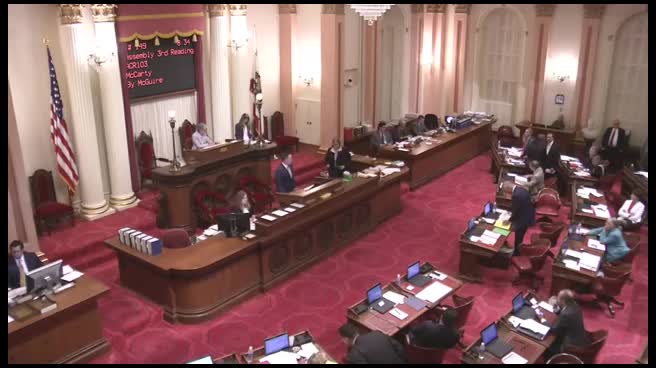 3MIN
Senate Floor
 3MIN
Assembly Floor
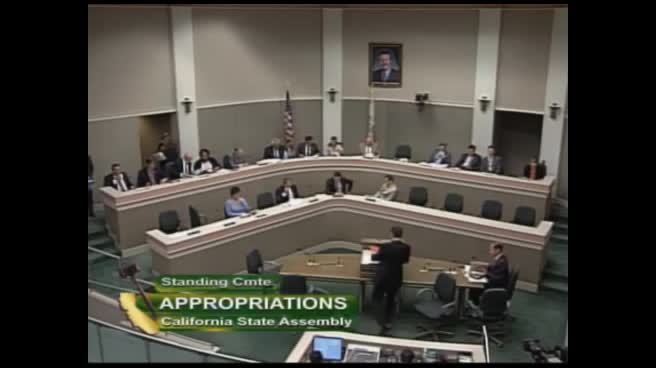 2MIN
Assembly Standing Committee on Appropriations
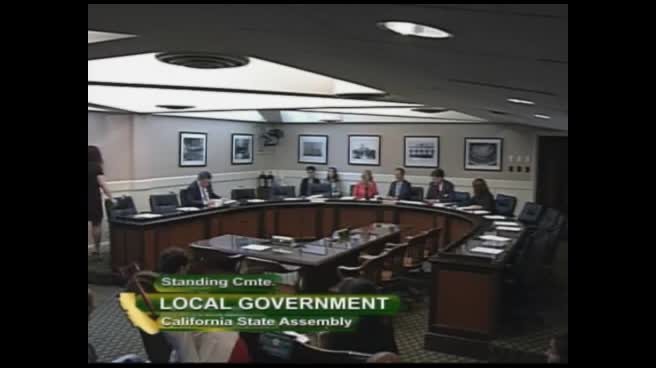 9MIN
Assembly Standing Committee on Local Government
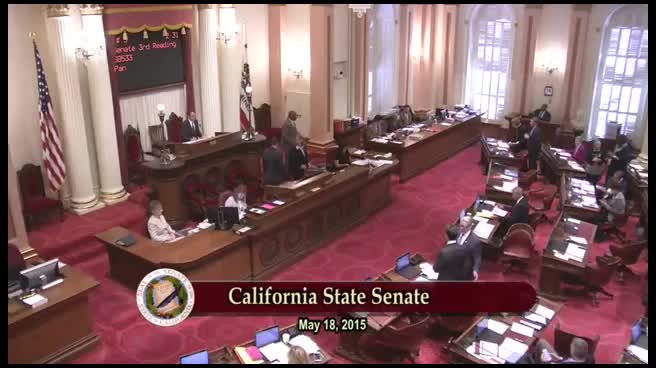 3MIN
Senate Floor
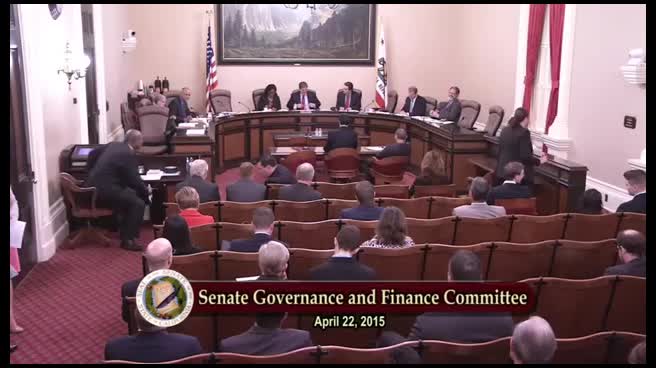 12MIN
Senate Standing Committee on Governance and Finance
Bill Author
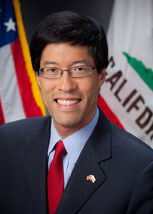
Bill Co-Author(s):