SB 547: Aging and long-term care services, supports, and program coordination.
- Session Year: 2015-2016
- House: Senate
- Latest Version Date: 2016-08-26
Existing law establishes the California Health and Human Services Agency consisting of the Departments of Aging, Child Support Services, Community Services and Development, Developmental Services, Health Care Services, Managed Health Care, Public Health, Rehabilitation, Social Services, and State Hospitals, among other entities.
Existing law sets forth legislative findings and declarations regarding long-term care services, including that consumers of those services experience great differences in service levels, eligibility criteria, and service availability that often result in inappropriate and expensive care that is not responsive to individual needs. Those findings and declarations also state that the laws governing long-term care facilities have established an uncoordinated array of long-term care services that are funded and administered by a state structure that lacks necessary integration and focus.
This bill, among other things, would create the Statewide Aging and Long-Term Care Services Coordinating Council, chaired by the Secretary of California Health and Human Services, and would consist of the heads, or their designated representative, of specified departments and offices. The secretary would have specified responsibilities, including, but not limited to, leading the council in the development of a state aging and long-term care services strategic plan to address how the state will meet the needs of the aging population in the years 2020, 2025, and 2030. The bill would require the strategic plan to be submitted to the Secretary of the Senate, the Chief Clerk of the Assembly, and the chairs of specified policy and fiscal committees of the Legislature by July 1, 2018. The bill would authorize the Secretary of California Health and Human Services to accept grants or donations, real or in-kind, to support the operation of the Statewide Aging and Long-Term Care Services Coordinating Council and the development of the state aging and long-term care services strategic plan.
Existing law establishes the California Health and Human Services Agency consisting of the Departments of Aging, Child Support services, Services, Community Services and Development, Developmental Services, Health Care Services, Managed Health Care, Public Health, Rehabilitation, Social Services, and State Hospitals. Hospitals, among other entities.
Existing law sets forth legislative findings and declarations regarding long-term care services, including that consumers of those services experience great differences in service levels, eligibility criteria, and service availability that often result in inappropriate and expensive care that is not responsive to individual needs. Those findings and declarations also state that the laws governing long-term care facilities have established an uncoordinated array of long-term care services that are funded and administered by a state structure that lacks necessary integration and focus.
This bill, among other things, would create the Statewide Aging and Long-Term Care Services Coordinating Council, chaired by the Secretary of California Health and Human Services, and would consist of the heads, or their designated representative, of specified departments and offices. The secretary would have specified responsibilities, including, but not limited to, leading the council in the development of a state aging and long-term care services strategic plan to address how the state will meet the needs of the aging population in the years 2020, 2025, and 2030. The bill would require the strategic plan to be submitted to the Secretary of the Senate, the Chief Clerk of the Assembly, and the chairs of specified policy and fiscal committees of the Legislature by July 1, 2018. The bill would authorize the Secretary of California Health and Human Services to accept grants or donations, real or in-kind, to support the operation of the Statewide Aging and Long-Term Care Services Coordinating Council and the development of the state aging and long-term care services strategic plan.
Existing law establishes the California Health and Human Services Agency consisting of the Departments of Aging, Child Support services, Community Services and Development, Developmental Services, Health Care Services, Managed Health Care, Public Health, Rehabilitation, Social Services, and State Hospitals.
Existing law sets forth legislative findings and declarations regarding long-term care services, including that consumers of those services experience great differences in service levels, eligibility criteria, and service availability that often result in inappropriate and expensive care that is not responsive to individual needs. Those findings and declarations also state that the laws governing long-term care facilities have established an uncoordinated array of long-term care services that are funded and administered by a state structure that lacks necessary integration and focus.
This bill, among other things, would create the Statewide Aging and Long-Term Care Services Coordinating Council, chaired by the Secretary of California Health and Human Services, and would consist of the heads, or their designated representative, of specified departments and offices. The secretary would have specified responsibilities, including, but not limited to, leading the council in the development and implementation of a state aging and long-term care services strategic plan to address how the state will meet the needs of the aging population in the years 2020, 2025, and 2030. The bill would also require the secretary to enter into a contract with the Regents of the University of California so that the council may either partner with the University of California, San Francisco, to operate, revise, and manage the CalQualityCare.org Internet Web site or acquire the rights to operate the CalQualityCare.org Internet Web site to function as a consumer-oriented portal that provides specified aging and long-term care information on a statewide basis. The bill would require the strategic plan to be submitted to the Secretary of the Senate, the Chief Clerk of the Assembly, and the chairs of specified policy and fiscal committees of the Legislature by July 1, 2018.
Existing law establishes the California Health and Human Services Agency consisting of the Departments of Aging, Child Support services, Community Services and Development, Developmental Services, Health Care Services, Managed Health Care, Public Health, Rehabilitation, Social Services, and State Hospitals.
Existing law sets forth legislative findings and declarations regarding long-term care services, including that consumers of those services experience great differences in service levels, eligibility criteria, and service availability that often result in inappropriate and expensive care that is not responsive to individual needs. Those findings and declarations also state that the laws governing long-term care facilities have established an uncoordinated array of long-term care services that are funded and administered by a state structure that lacks necessary integration and focus.
This bill would establish the Department of Community Living within the agency. The department would, among other duties, serve as the single state-level contact on issues of aging and long-term care, oversee statewide long-term care service delivery, promote coordinated long-term care service delivery and access to home and community-based services at the local and regional level, and serve as the organizational unit designated to oversee all long-term care programs in the state and to consolidate all long-term care programs administered throughout all departments of the agency. The bill would also create the office of Assistant Secretary of Aging and Long-term Care Coordination within the agency, who would be appointed by the Governor and confirmed by the Senate.
The bill would require the Assistant Secretary to develop a systemwide long-term care plan that would, among other things, address the expansion of managed care and the changes to, and differences in, access to health care for older and disabled adults in counties throughout the state, propose a support network for unpaid family caregivers, and include an analysis of workforce needs, including the training and education requirements of a long-term care workforce, and a strategy for aligning the available resources to meet those needs.
This bill, among other things, would create the Statewide Aging and Long-Term Care Services Coordinating Council, chaired by the Secretary of California Health and Human Services, and would consist of the heads, or their designated representative, of specified departments and offices. The secretary would have specified responsibilities, including, but not limited to, leading the council in the development and implementation of a state aging and long-term care services strategic plan to address how the state will meet the needs of the aging population in the years 2020, 2025, and 2030. The bill would also require the secretary to enter into a contract with the Regents of the University of California so that the council may either partner with the University of California, San Francisco, to operate, revise, and manage the CalQualityCare.org Internet Web site or acquire the rights to operate the CalQualityCare.org Internet Web site to function as a consumer-oriented portal that provides specified aging and long-term care information on a statewide basis.
Existing law establishes the California Health and Human Services Agency consisting of the Departments of Aging, Child Support services, Community Services and Development, Developmental Services, Health Care Services, Managed Health Care, Public Health, Rehabilitation, Social Services, and State Hospitals.
Existing law sets forth legislative findings and declarations regarding long-term care services, including that consumers of those services experience great differences in service levels, eligibility criteria, and service availability that often result in inappropriate and expensive care that is not responsive to individual needs. Those findings and declarations also state that the laws governing long-term care facilities have established an uncoordinated array of long-term care services that are funded and administered by a state structure that lacks necessary integration and focus.
This bill would establish the Department of Community Living within the agency. The department would, among other duties, serve as the single state-level contact on issues of aging and long-term care, oversee statewide long-term care service delivery, promote coordinated long-term care service delivery and access to home and community-based services at the local and regional level, and serve as the organizational unit designated to oversee all long-term care programs in the state and to consolidate all long-term care programs administered throughout all departments of the agency. The bill would also create the office of Assistant Secretary of Aging and Long-term Care Coordination within the agency, who would be appointed by the Governor and confirmed by the Senate.
The bill would require the Assistant Secretary to develop a systemwide long-term care plan that would, among other things, address the expansion of managed care and the changes to, and differences in, access to health care for older and disabled adults in counties throughout the state, propose a support network for unpaid family caregivers, and include an analysis of workforce needs, including the training and education requirements of a long-term care workforce, and a strategy for aligning the available resources to meet those needs.
The Legislature finds and declares all of the following:
(a)The California Health and Human Services Agency consists of the following departments: the California Department of Aging, the Department of Community Services and Development, the State Department of Developmental Services, the State Department of Health Care Services, the Department of Managed Health Care, the State Department of Public Health, the Department of Rehabilitation, the State Department of Social Services, and the State Department of State Hospitals.
(b)The agency also includes the Emergency Medical Services Authority, the Office of Health Information Integrity, the Office of Patient Advocate, the Office of Statewide Health Planning and Development, the Office of Systems Integration, the Office of Law Enforcement Support, and the State Council on Developmental Disabilities.
(c)California baby boomers are turning 65 years of age at the highest rate in the nation, and over 20 percent of Californias population will be 65 years of age or older by 2030.
(d)Among persons 65 years of age and older, an estimated 70 percent will use long-term services and supports (LTSS).
(e)Persons who are 85 years of age or older are the fastest growing segment of the United States population, and they are four times more likely to need LTSS than persons who are 65 years of age or older, but younger than 85 years of age.
(f)People are living longer, and the aging population is increasingly diverse.
(g)A report by the Senate Select Committee on Aging and Long Term Care on January 5, 2015, called, A Shattered System: Reforming Long-Term Care in California. Envisioning and Implementing an IDEAL Long-Term Care System in California, found that the states system of 112 aging and long-term care programs administered by 20 agencies and departments is almost impossible for consumers to navigate.
(h)Other deficiencies of the system include the lack of person-centered care, poor transitions from hospital to home or to other institutions, limited access to a range of services that enable aging in place, deficiency of services and supports in rural areas, limited cultural competency, skilled workforce shortages across a range of disciplines, the lack of uniform data, the lack of a universal assessment tool, and limited caregiver supports.
SEC. 2.Division 121 (commencing with Section 152000) is added to the Health and Safety Code, to read:121.Aging and Long-Term Care Services, Supports, and Program Coordination152000.The Secretary of California Health and Human Services shall be responsible for all of the following:
(a)Inter- and intra-agency coordination of state aging and long-term care services, supports, and programs.
(b)Ensuring efficient and effective use of state funds.
(c)Maximizing the drawdown, and the efficient and effective use of federal funds.
152001.There is hereby created a Statewide Aging and Long-Term Care Services Coordinating Council, chaired by the Secretary of California Health and Human Services, and consisting of the heads, or their designated representative, of all of the following:
(a)The California Department of Aging.
(b)The Department of Community Services and Development.
(c)The Department of Consumer Affairs.
(d)The Department of Food and Agriculture.
(e)The Department of Human Resources.
(f)The Department of Insurance.
(g)The Department of Justice.
(h)The Department of Motor Vehicles.
(i)The Department of Rehabilitation.
(j)The Department of Transportation.
(k)The Department of Veterans Affairs.
(l)The Emergency Medical Services Authority.
(m)The Employment Development Department.
(n)The Office of Health Information Integrity.
(o)The Office of Law Enforcement Support.
(p)The Office of Patient Advocate.
(q)The Office of Statewide Health Planning and Development.
(r)The Office of Systems Integration.
(s)The State Department of Developmental Services.
(t)The State Department of Health Care Services.
(u)The State Department of Public Health.
(v)The State Department of Social Services.
152002.(a)The secretary shall lead the council in the development of a state aging and long-term care services strategic plan to address how the state will meet the needs of the aging population in the years 2020, 2025, and 2030. The strategic plan shall incorporate clear benchmarks and timelines for achieving the goals set forth in the strategic plan and a cost and benefit analysis for each goal or recommendation included in the plan. In developing the strategic plan, the council shall consult with all of the following:
(1)Experts, researchers, practitioners, service providers, and facility operators in the field of aging and long-term care.
(2)Consumer advocates and stakeholders, including the Olmstead Advisory Committee, the California Commission on Aging, area agencies on aging, the State Council on Developmental Disabilities, the California Foundation for Independent Living Centers, and the Milton Marks Little Hoover Commission on California State Government Organization and Economy.
(3)Rural and urban communities, in order to identify infrastructure capacity issues, the need for uniform access standards for home and community-based services, and mechanisms for supporting coordination of regional and local service access and delivery.
(4)The California Task Force on Family Caregiving, the findings and recommendations of which shall be incorporated into the strategic plan.
(b)Technical support for the development of the strategic plan shall be provided by the Office of Health Equity in the State Department of Public Health and by the California Department of Aging.
(c)The strategic plan shall address all of the following:
(1)Integration and coordination of services that support independent living, aging in place, social and civic engagement, and preventive care.
(2)Long-term care financing.
(3)Managed care expansion and continuum of care.
(4)Advanced planning for end-of-life care.
(5)Elder justice.
(6)Care guidelines for Alzheimers disease, dementia, Amyotrophic Lateral Sclerosis (ALS), and other debilitating diseases.
(7)Caregiver support.
(8)Data collection, consolidation, uniformity, analysis, and access.
(9)Affordable housing.
(10)Mobility.
(11)Workforce.
(12)The alignment of state programs with the federal Administration for Community Living.
(13)The potential for integration and coordination of aging and long-term care services with services and supports for people with disabilities.
(d)In developing the strategic plan, the council shall examine model programs in various cities, counties, and states. The strategic plan shall consider how to scale up local, regional, and state-level best practices and innovations designed to overcome the challenges related to long-term care services delivery.
(e)Notwithstanding Section 10231.5 of the Government Code, the strategic plan shall be submitted to the Secretary of the Senate and the Chief Clerk of the Assembly, to the appropriate chairs of the policy committees of the Legislature with jurisdiction over any aging and long-term care related issues, and to the chairs of the fiscal committees of the Legislature by July 1, 2018.
152003.The secretary may accept grants or donations, real or in-kind, to support the operation of the council and the development of the state aging and long-term care services strategic plan.
The Legislature finds and declares all of the following:
(a)The California Health and Human Services Agency consists of the following departments: the California Department of Aging, the Department of Community Services and Development, the State Department of Developmental Services, the State Department of Health Care Services, the Department of Managed Health Care, the State Department of Public Health, the Department of Rehabilitation, the State Department of Social Services, and the State Department of State Hospitals.
(b)The agency also includes the Emergency Medical Services Authority, the Office of Health Information Integrity, the Office of Patient Advocate, the Office of Statewide Health Planning and Development, the Office of Systems Integration, the Office of Law Enforcement Support, and the State Council on Developmental Disabilities.
(c)California baby boomers are turning 65 years of age at the highest rate in the nation, and over 20 percent of Californias population will be 65 years of age or older by 2030.
(d)Among persons 65 years of age and older, an estimated 70 percent will use long-term services and supports (LTSS).
(e)Persons who are 85 years of age or older are the fastest growing segment of the United States population, and they are four times more likely to need LTSS than persons who are 65 years of age or older, but younger than 85 years of age.
(f)People are living longer, and the aging population is increasingly diverse.
(g)A report by the Senate Select Committee on Aging and Long Term Care on January 5, 2015, called, A Shattered System: Reforming Long-Term Care in California. Envisioning and Implementing an IDEAL Long-Term Care System in California, found that the states system of 112 aging and long-term care programs administered by 20 agencies and departments is almost impossible for consumers to navigate.
(h)Other deficiencies of the system include the lack of person-centered care, poor transitions from hospital to home or to other institutions, limited access to a range of services that enable aging in place, deficiency of services and supports in rural areas, limited cultural competency, skilled workforce shortages across a range of disciplines, the lack of uniform data, the lack of a universal assessment tool, and limited caregiver supports.
SEC. 2.Division 121 (commencing with Section 152000) is added to the Health and Safety Code, to read:121.Aging and Long-Term Care Services, Supports, and Program Coordination152000.The Secretary of California Health and Human Services shall be responsible for all of the following:
(a)Inter- and intra-agency coordination of state aging and long-term care services, supports, and programs.
(b)Ensuring efficient and effective use of state funds.
(c)Maximizing the drawdown, and the efficient and effective use of federal funds.
152001.There is hereby created a Statewide Aging and Long-Term Care Services Coordinating Council, chaired by the Secretary of California Health and Human Services, and consisting of the heads, or their designated representative, of all of the following:
(a)The California Department of Aging.
(b)The Department of Community Services and Development.
(c)The Department of Consumer Affairs.
(d)The Department of Food and Agriculture.
(e)The Department of Human Resources.
(f)The Department of Insurance.
(g)The Department of Justice.
(h)The Department of Motor Vehicles.
(i)The Department of Rehabilitation.
(j)The Department of Transportation.
(k)The Department of Veterans Affairs.
(l)The Emergency Medical Services Authority.
(m)The Employment Development Department.
(n)The Office of Health Information Integrity.
(o)The Office of Law Enforcement Support.
(p)The Office of Patient Advocate.
(q)The Office of Statewide Health Planning and Development.
(r)The Office of Systems Integration.
(s)The State Department of Developmental Services.
(t)The State Department of Health Care Services.
(u)The State Department of Public Health.
(v)The State Department of Social Services.
152002.(a)The secretary shall lead the council in the development of a state aging and long-term care services strategic plan to address how the state will meet the needs of the aging population in the years 2020, 2025, and 2030. The strategic plan shall incorporate clear benchmarks and timelines for achieving the goals set forth in the strategic plan and a cost and benefit analysis for each goal or recommendation included in the plan. In developing the strategic plan, the council shall consult with all of the following:
(1)Experts, researchers, practitioners, service providers, and facility operators in the field of aging and long-term care.
(2)Consumer advocates and stakeholders, including the Olmstead Advisory Committee, the California Commission on Aging, area agencies on aging, the State Council on Developmental Disabilities, the California Foundation for Independent Living Centers, and the Milton Marks Little Hoover Commission on California State Government Organization and Economy.
(3)Rural and urban communities, in order to identify infrastructure capacity issues, the need for uniform access standards for home and community-based services, and mechanisms for supporting coordination of regional and local service access and delivery.
(4)The California Task Force on Family Caregiving, the findings and recommendations of which shall be incorporated into the strategic plan.
(b)Technical support for the development of the strategic plan shall be provided by the Office of Health Equity in the State Department of Public Health and by the California Department of Aging.
(c)The strategic plan shall address all of the following:
(1)Integration and coordination of services that support independent living, aging in place, social and civic engagement, and preventative care.
(2)Long-term care financing.
(3)Managed care expansion and continuum of care.
(4)Advanced planning for end-of-life care.
(5)Elder justice.
(6)Care guidelines for Alzheimers disease, dementia, Amyotrophic Lateral Sclerosis (ALS), and other debilitating diseases.
(7)Caregiver support.
(8)Data collection, consolidation, uniformity, analysis, and access.
(9)Affordable housing.
(10)Mobility.
(11)Workforce.
(12)The alignment of state programs with the federal Administration for Community Living.
(13)The potential for integration and coordination of aging and long-term care services with services and supports for people with disabilities.
(d)In developing the strategic plan, the council shall examine model programs in various cities, counties, and states. The strategic plan shall consider how to scale up local, regional, and state-level best practices and innovations designed to overcome the challenges related to long-term care services delivery.
(e)Notwithstanding Section 10231.5 of the Government Code, the strategic plan shall be submitted to the Secretary of the Senate and the Chief Clerk of the Assembly, to the appropriate chairs of the policy committees of the Legislature with jurisdiction over any aging and long-term care related issues, and to the chairs of the fiscal committees of the Legislature by July 1, 2018.
152003.The secretary may accept grants or donations, real or in-kind, to support the operation of the council and the development of the state aging and long-term care services strategic plan.
The Legislature finds and declares all of the following:
(a)The California Health and Human Services Agency consists of the following departments: the California Department of Aging, the Department of Community Services and Development, the State Department of Developmental Services, the State Department of Health Care Services, the Department of Managed Health Care, the State Department of Public Health, the Department of Rehabilitation, the State Department of Social Services, and the State Department of State Hospitals.
(b)The agency also includes the Emergency Medical Services Authority, the Office of Health Information Integrity, the Office of Patient Advocate, the Office of Statewide Health Planning and Development, the Office of Systems Integration, the Office of Law Enforcement Support, and the State Council on Developmental Disabilities.
(c)California baby boomers are turning 65 years of age at the highest rate in the nation, and over 20 percent of Californias population will be 65 years of age or older by 2030.
(d)Among persons 65 years of age and older, an estimated 70 percent will use long-term services and supports (LTSS).
(e)Persons who are 85 years of age or older are the fastest growing segment of the United States population, and they are four times more likely to need LTSS than persons who are 65 years of age or older, but younger than 85 years of age.
(f)People are living longer, and the aging population is increasingly diverse.
(g)A report by the Senate Select Committee on Aging and Long Term Care on January 2015, called, A Shattered System: Reforming Long-Term Care in California. Envisioning and Implementing an IDEAL Long-Term Care System in California, found that the states system of 112 aging long-term care programs administered by 20 agencies and departments is almost impossible for consumers to navigate.
(h)Other deficiencies of the system include the lack of person-centered care, poor transitions from hospital to home or to other institutions, limited access to a range of services that enable aging in place, deficiency of services and supports in rural areas, limited cultural competency, skilled workforce shortages across a range of disciplines, the lack of uniform data, the lack of a universal assessment tool, and limited caregiver supports.
SECTION 1.SEC. 2.Division 121 (commencing with Section 152000) is added to the Health and Safety Code, to read:121.Aging and Long-Term Care Services, Supports, and Program Coordination152000.The Legislature finds and declares all of the following:
(a)The California Health and Human Services Agency consists of the following departments: the California Department of Aging, the Department of Community Services and Development, the State Department of Developmental Services, the State Department of Health Care Services, the Department of Managed Health Care, the State Department of Public Health, the Department of Rehabilitation, the State Department of Social Services, and the State Department of State Hospitals.
(b)The agency also includes the Emergency Medical Services Authority, the Office of Health Information Integrity, the Office of Patient Advocate, the Office of Statewide Health Planning and Development, the Office of Systems Integration, the Office of Law Enforcement Support, and the State Council on Developmental Disabilities.
(c)California baby boomers are turning 65 years of age at the highest rate in the nation, and over 20 percent of Californias population will be 65 years of age or older by 2030.
(d)Among persons 65 years of age and older, an estimated 70 percent will use long-term services and supports (LTSS).
(e)Persons 85 years of age and older are the fastest growing segment of the United States population, and they are four times more likely to need LTSS than persons between 65 and 84 years of age.
(f)People are living longer, and the aging population is increasingly diverse.
(g)A report by the Senate Select Committee on Aging and Long Term Care on January 2015, called, A Shattered System: Reforming Long-Term Care in California. Envisioning and Implementing an IDEAL Long-Term Care System in California, found that the states system of 112 aging long-term care programs administered by 20 agencies and departments is almost impossible for consumers to navigate.
(h)Other deficiencies of the system include no person-centered care, poor transitions from hospital to home or to other institutions, limited access to a range of services that enable aging in place, deficiency of services and supports in rural areas, limited cultural competency, skilled workforce shortages across a range of disciplines, no uniform data, no universal assessment tool, and limited caregiver supports.
(i)Also, the End of Life Option Act authorizes an adult, who meets certain qualifications and who has been determined by his or her attending physician to be suffering from a terminal disease, to make a request for a drug for the purpose of ending his or her life. Paragraph (5) of subdivision (i) of Section 443.1 states that an individual choosing the end-of-life option is required to be informed of feasible alternatives or additional treatment opportunities, including, but not limited to, comfort care, hospice care, palliative care, and pain control. Better systemwide coordination of aging and long-term care services and supports is needed to ensure access to services and information, so individuals can plan for, access, and make informed decisions on end-of-life options.
152001.152000.The Secretary of California Health and Human Services shall be responsible for all of the following:
(a)Inter- and intra-agency coordination of state aging and long-term care services, supports, and programs.
(b)Ensuring efficient and effective use of state funds.
(c)Maximizing the drawdown, and the efficient and effective use of federal funds.
152002.152001.There is hereby created a Statewide Aging and Long-Term Care Services Coordinating Council, chaired by the Secretary of California Health and Human Services, and consisting of the heads, or their designated representative, of all of the following:
(a)The California Department of Aging.
(b)The Department of Community Services and Development.
(c)The Department of Consumer Affairs.
(d)The Department of Food and Agriculture.
(e)The Department of Human Resources.
(f)The Department of Insurance.
(g)The Department of Justice.
(h)The Department of Motor Vehicles.
(i)The Department of Rehabilitation.
(j)The Department of Transportation.
(k)The Department of Veterans Affairs.
(l)The Emergency Medical Services Authority.
(m)The Employment Development Department.
(n)The Office of Health Information Integrity.
(o)The Office of Law Enforcement Support.
(p)The Office of Patient Advocate.
(q)The Office of Statewide Health Planning and Development.
(r)The Office of Systems Integration.
(s)The State Department of Developmental Services.
(t)The State Department of Health Care Services.
(u)The State Department of Public Health.
(v)The State Department of Social Services.
152003.152002.(a)The secretary shall lead the council in the development and implementation of a state aging and long-term care services strategic plan to address how the state will meet the needs of the aging population in the years 2020, 2025, and 2030. The strategic plan shall incorporate clear benchmarks and timelines for achieving the goals set forth in the strategic plan and be updated every five years. and a cost and benefit analysis for each goal or recommendation included in the plan. In developing the strategic plan, the council shall consult with all of the following:
(1)Experts, researchers, practitioners, service providers, and facility operators in the field of aging and long-term care.
(2)Consumer advocates and stakeholders, including the Olmstead Advisory Committee, the California Commission on Aging, the area agency area agencies on aging, the State Council on Developmental Disabilities, the California Foundation for Independent Living Centers, and the Milton Marks Little Hoover Commission on California State Government Organization and Economy.
(3)Rural and urban communities communities, in order to identify infrastructure capacity issues, the need for uniform access standards for home and community-based services, and mechanisms for supporting coordination of regional and local service access and delivery.
(4)The California Task Force on Family Caregiving, the findings and recommendations of which shall be incorporated into the strategic plan.
(b)Technical support for the development of the strategic plan shall be provided by the Office of Health Equity in the State Department of Public Health and by the California Department of Aging.
(c)The strategic plan shall address all of the following:
(1)Integration and coordination of services that support independent living, aging in place, social and civic engagement, and preventative care.
(2)Long-term care financing.
(3)Managed care expansion and continuum of care.
(4)Advanced planning for end-of-life care.
(5)Elder justice.
(6)Care guidelines for Alzheimers disease, dementia, Amyotrophic Lateral Sclerosis (ALS), and other debilitating diseases.
(7)Caregiver support.
(8)Data collection, consolidation, uniformity, analysis, and access.
(9)Affordable housing.
(10)Mobility.
(11)Workforce.
(12)The alignment of state programs with the federal Administration for Community Living.
(13)The potential for integration and coordination of aging and long-term care services with services and supports for people with disabilities.
(d)In developing the strategic plan, the council shall examine model programs in various cities, counties, and states. The strategic plan shall consider how to scale up local, regional, and state-level best practices and innovations designed to overcome the challenges related to long-term care services delivery.
(e)Notwithstanding Section 10231.5 of the Government Code, the strategic plan shall be submitted to the Secretary of the Senate and the Chief Clerk of the Assembly, to the appropriate chairs of the policy committees of the Legislature with jurisdiction over any aging and long-term care related issues, and to the chairs of the fiscal committees of the Legislature by July 1, 2018, with updates submitted by July 1, 2023, and by July 1, 2028. 2018.
(f)Notwithstanding Section 10231.5 of the Government Code, beginning on July 1, 2017, the secretary shall report on an annual basis to the appropriate policy committees of the Legislature with jurisdiction over any aging and long-term care related issues and to the fiscal committees of the Legislature regarding the current status of long-term care in the state, the level of state spending on long-term care programs, federal funding received, progress in developing and implementing the strategic plan as provided in this section, and the statewide Internet Web site portal as provided in Section 152004.
152004.Notwithstanding Chapter 2 (commencing with Section 10290) and Chapter 3 (commencing with Section 12100) of Part 2 of Division 2 of the Public Contract Code, the secretary shall enter into a contract with the Regents of the University of California so that the council may either partner with the University of California, San Francisco, to operate, revise, and manage the CalQualityCare.org Internet Web site or acquire the rights to operate the CalQualityCare.org Internet Web site to function as a consumer oriented portal that provides all of the following information on a statewide basis:
(a)Comprehensive, free, unbiased information on long-term care services and supports, including licensed skilled nursing facilities (freestanding and hospital-based), congregate living health facilities, hospice, home health, assisted living, continuing care retirement communities, adult day care, adult day health care, and intermediate care for the developmentally disabled (ICF/DD).
(b)Depending on the availability and reliability of the data, information within all of the following domains shall be provided:
(1)Provider characteristics, such as location, size, and ownership.
(2)Ratings of skilled nursing facilities, home health, hospice, and ICF/DD.
(3)Staffing, such as number and type.
(4)Quality of the facility, such as deficiencies and complaints.
(5)Quality of care, such as incidence of pressure ulcers and infections.
(6)Cost and finances.
(c)The CalQualityCare.org Internet Web site shall include information that assists the consumer to learn about options and how to make decisions on long-term care services and supports, advanced planning, and end-of-life options.
(d)By July 1, 2018, the secretary shall expand the CalQualityCare.org Internet Web site to provide all of the following:
(1)Information about long-term services and supports eligibility and how to access long-term care services and supports.
(2)Internet links to reputable local resource portals, such as county long-term care services and supports Internet Web sites.
(3)Internet links to reputable caregiver resources.
(4)Information on additional licensed providers, such as nonmedical home care aides.
The Legislature finds and declares all of the following:
(a)The California Health and Human Services Agency consists of the following departments: the California Department of Aging, the Department of Community Services and Development, the State Department of Developmental Services, the State Department of Health Care Services, the Department of Managed Health Care, the State Department of Public Health, the Department of Rehabilitation, the State Department of Social Services, and the State Department of State Hospitals.
(b)The agency also includes the Emergency Medical Services Authority, the Office of Health Information Integrity, the Office of Patient Advocate, the Office of Statewide Health Planning and Development, the Office of Systems Integration, the Office of Law Enforcement Support, and the State Council on Developmental Disabilities.
(c)California baby boomers are turning 65 years of age at the highest rate in the nation, and over 20 percent of Californias population will be 65 years of age or older by 2030.
(d)Among persons 65 years of age and older, an estimated 70 percent will use long-term services and supports (LTSS).
(e)Persons 85 years of age and older are the fastest growing segment of the United States population, and they are four times more likely to need LTSS than persons between 65 and 84 years of age.
(f)People are living longer, and the aging population is increasingly diverse.
(g)A report by the Senate Select Committee on Aging and Long Term Care on January 2015, called, A Shattered System: Reforming Long-Term Care in California. Envisioning and Implementing an IDEAL Long-Term Care System in California, found that the states system of 112 aging long-term care programs administered by 20 agencies and departments is almost impossible for consumers to navigate.
(h)Other deficiencies of the system include no person-centered care, poor transitions from hospital to home or to other institutions, limited access to a range of services that enable aging in place, deficiency of services and supports in rural areas, limited cultural competency, skilled workforce shortages across a range of disciplines, no uniform data, no universal assessment tool, and limited caregiver supports.
(i)Also, the End of Life Option Act authorizes an adult, who meets certain qualifications and who has been determined by his or her attending physician to be suffering from a terminal disease, to make a request for a drug for the purpose of ending his or her life. Paragraph (5) of subdivision (i) of Section 443.1 states that an individual choosing the end of life option is required to be informed of feasible alternatives or additional treatment opportunities, including, but not limited to, comfort care, hospice care, palliative care, and pain control. Better system wide coordination of aging and long-term care services and supports is needed to ensure access to services and information, so individuals can plan for, access, and make informed decisions on end of life options.
152001.The Secretary of California Health and Human Services shall be responsible for all of the following:
(a)Inter- and intra-agency coordination of state aging and long-term care services, supports, and programs.
(b)Ensuring efficient and effective use of state funds.
(c)Maximizing the drawdown, and the efficient and effective use of federal funds.
152002.There is hereby created a Statewide Aging and Long-Term Care Services Coordinating Council, chaired by the Secretary of California Health and Human Services, and consisting of the heads, or their designated representative, of all of the following:
(a)The California Department of Aging.
(b)The Department of Community Services and Development.
(c)The Department of Consumer Affairs.
(d)The Department of Food and Agriculture.
(e)The Department of Human Resources.
(f)The Department of Insurance.
(g)The Department of Justice.
(h)The Department of Motor Vehicles.
(i)The Department of Rehabilitation.
(j)The Department of Transportation.
(k)The Department of Veterans Affairs.
(l)The Emergency Medical Services Authority.
(m)The Employment Development Department.
(n)The Office of Health Information Integrity.
(o)The Office of Law Enforcement Support.
(p)The Office of Patient Advocate.
(q)The Office of Statewide Health Planning and Development.
(r)The Office of Systems Integration.
(s)The State Department of Developmental Services.
(t)The State Department of Health Care Services.
(u)The State Department of Public Health.
(v)The State Department of Social Services.
152003.(a)The secretary shall lead the council in the development and implementation of a state aging and long-term care services strategic plan to address how the state will meet the needs of the aging population in the years 2020, 2025, and 2030. The strategic plan shall incorporate clear benchmarks and timelines for achieving the goals set forth in the strategic plan and be updated every five years. In developing the strategic plan, the council shall consult with all of the following:
(1)Experts, researchers, practitioners, service providers, and facility operators in the field of aging and long-term care.
(2)Consumer advocates and stakeholders, including the Olmstead Advisory Committee, the California Commission on Aging, the area agency on aging, the State Council on Developmental Disabilities, the California Foundation for Independent Living Centers, and the Milton Marks Little Hoover Commission on California State Government Organization and Economy.
(3)Rural and urban communities in order to identify infrastructure capacity issues, the need for uniform access standards for home and community-based services, and mechanisms for supporting coordination of regional and local service access and delivery.
(4)The California Task Force on Family Caregiving, the findings and recommendations of which shall be incorporated into the strategic plan.
(b)Technical support for the development of the strategic plan shall be provided by the Office of Health Equity in the State Department of Public Health and by the California Department of Aging.
(c)The strategic plan shall address all of the following:
(1)Integration and coordination of services that support independent living, aging in place, social and civic engagement, and preventative care.
(2)Long-term care financing.
(3)Managed care expansion and continuum of care.
(4)Advanced planning for end of life care.
(5)Elder justice.
(6)Care guidelines for Alzheimers disease, dementia, Amyotrophic Lateral Sclerosis (ALS), and other debilitating diseases.
(7)Caregiver support.
(8)Data collection, consolidation, uniformity, analysis, and access.
(9)Affordable housing.
(10)Mobility.
(11)Workforce.
(12)The alignment of state programs with the federal Administration for Community Living.
(13)The potential for integration and coordination of aging and long-term care services with services and supports for people with disabilities.
(d)In developing the strategic plan, the council shall examine model programs in various cities, counties, and states. The strategic plan shall consider how to scale up local, regional, and state-level best practices and innovations designed to overcome the challenges related to long-term care services delivery.
(e)Notwithstanding Section 10231.5 of the Government Code, the strategic plan shall be submitted to the Secretary of the Senate and the Chief Clerk of the Assembly, to the appropriate chairs of the policy committees of the Legislature with jurisdiction over any aging and long-term care related issues, and to the chairs of the fiscal committees of the Legislature by July 1, 2018, with updates submitted by July 1, 2023, and by July 1, 2028.
(f)Notwithstanding Section 10231.5 of the Government Code, beginning on July 1, 2017, the secretary shall report on an annual basis to the appropriate policy committees of the Legislature with jurisdiction over any aging and long-term care related issues and to the fiscal committees of the Legislature regarding the current status of long-term care in the state, the level of state spending on long-term care programs, federal funding received, progress in developing and implementing the strategic plan as provided in this section, and the statewide Internet Web site portal as provided in Section 152004.
152004.Notwithstanding Chapter 2 (commencing with Section 10290) and Chapter 3 (commencing with Section 12100) of Part 2 of Division 2 of the Public Contract Code, the Secretary shall enter into a contract with the Regents of the University of California so that the council may either partner with the University of California, San Francisco, to operate, revise, and manage the CalQualityCare.org Internet Web site or acquire the rights to operate the CalQualityCare.org Internet Web Site to function as a consumer-oriented portal that provides all of the following information on a statewide basis:
(a)Comprehensive, free, unbiased information on long-term care services and supports, including licensed skilled nursing facilities (freestanding and hospital-based), congregate living health facilities, hospice, home health, assisted living, continuing care retirement communities, adult day care, adult day health care, and intermediate care for the developmentally disabled (ICF/DD).
(b)Depending on the availability and reliability of the data, information within all of the following domains shall be provided:
(1)Provider characteristics, such as location, size, and ownership.
(2)Ratings of skilled nursing facilities, home health, hospice, and ICF/DD.
(3)Staffing, such as number and type.
(4)Quality of the facility, such as deficiencies and complaints.
(5)Quality of care, such as incidence of pressure ulcers and infections.
(6)Cost and finances.
(c)The CalQualityCare.org Internet Web site shall include information that assists the consumer to learn about options and how to make decisions on long-term care services and supports, advanced planning, and end of life options.
(d)By July 1, 2018, the Secretary shall expand the CalQualityCare.org Internet Web site to provide all of the following:
(1)Information about long-term services and supports eligibility and how to access long-term care services and supports.
(2)Internet links to reputable local resource portals, such as county long-term care services and supports Internet Web sites.
(3)Internet links to reputable caregiver resources.
(4)Information on additional licensed providers, such as nonmedical home care aides.
SECTION 1.Section 12803 of the Government Code is amended to read:12803.(a)The California Health and Human Services Agency consists of the following departments: Aging; Community Services and Development; Developmental Services; Health Care Services; Managed Health Care; Public Health; Rehabilitation; Social Services; and State Hospitals.
(b)The agency also includes the Emergency Medical Services Authority, the Managed Risk Medical Insurance Board, the Office of Health Information Integrity, the Office of Patient Advocate, the Office of Statewide Health Planning and Development, the Office of Systems Integration, the Office of Law Enforcement Support, and the State Council on Developmental Disabilities.
(c)The Department of Child Support Services is hereby created within the agency commencing January 1, 2000, and shall be the single organizational unit designated as the states Title IV-D agency with the responsibility for administering the state plan and providing services relating to the establishment of paternity or the establishment, modification, or enforcement of child support obligations as required by Section 654 of Title 42 of the United States Code. State plan functions shall be performed by other agencies as required by law, by delegation of the department, or by cooperative agreements.
(d)There shall be an Assistant Secretary of Aging and Long-term Care Coordination within the agency who shall be appointed by the Governor and confirmed by the Senate. The person appointed shall have an appropriate background in and knowledge of long-term care.
(e)The Department of Community Living is hereby created within the agency.
SEC. 2.Division 121 (commencing with Section 152000) is added to the Health and Safety Code, to read:121.Department of Community Living152000.There is in the California Health and Human Services Agency the Department of Community Living.
152001.The Assistant Secretary of Aging and Long-term Care Coordination shall serve as liaison to the federal Administration for Community Living and shall be responsible for ensuring that the state maximizes the use of available federal funding opportunities. The Assistant Secretary of Aging and Long-term Care Coordination shall do all of the following:
(a)Consolidate data and programs regarding long-term care from all departments and programs in the agency.
(b)Coordinate and direct the establishment of the Department of Community Living.
(c)Lead the development and implementation of a statewide long-term care strategic plan.
(d)Oversee and coordinate the integration of health care and long-term care services.
(e)Work with rural and urban communities to identify infrastructure capacity issues and lead in the development of access standards for home and community-based services.
(f)Facilitate the coordination of long-term care services at the local level.
(g)Report on an annual basis to the legislative and fiscal policy committees regarding the current status of long-term care in the state, the level of state spending on long-term care programs, federal funding received, progress in improving the continuum of services, and policy recommendations to enhance the coordination and delivery of long-term care services.
152002.The department shall be aligned, to the extent practicable, with the federal Administration for Community Living. The department shall serve as the single state-level contact on issues of aging and long-term care, oversee statewide long-term care service delivery, promote coordinated long-term care service delivery and access to home and community-based services at the local and regional level, and provide leadership and information to local agencies on best practices. The department shall also serve as the organizational unit designated to oversee all long-term care programs in the state and to consolidate all long-term care programs administered throughout all departments of the agency, including programs serving older adults and those serving persons with disabilities. The department may develop statewide standards for the delivery of long-term care services to ensure consistent access to those services throughout the state, but shall provide sufficient flexibility to local agencies to meet the specific needs of the local population.
152003.The Assistant Secretary of Aging and Long-term Care Coordination shall develop a system-wide long-term care plan. The plan shall establish the priorities of the state, maximize the use of limited resources, engage a range of stakeholders representing the population of aging and disabled persons who need long-term care services, and incorporate clear benchmarks and timelines for achieving the goals set forth in the plan. The plan shall do all of the following:
(a)The plan shall address the expansion of managed care in Coordinated Care Initiative counties, as defined in Section 14182,16 of the Welfare and Institutions Code, and the changes to, and differences in, access to health care for older and disabled adults in counties throughout the state. The plan shall include a strategy for integrating the health care system statewide, including recommended budgeting practices and incentives to make home and community-based services more accessible regardless of where persons in need of long-term care reside.
(b)The plan shall propose a support network for unpaid family caregivers in this state. The plan would review and analyze existing programs, services, and deficiencies. The plan shall also consider employment-related policies and offer proposals to improve the support network, such as increasing the length of protected leave.
(c)The plan shall develop principles and standards for person-centered planning in an integrated system of care to ensure that individuals and families have the opportunity to engage in service planning across the health and long-term care continuum in a manner that reflects their needs, desires, and preferences.
(d)The plan shall include an analysis of workforce needs, including the training and education requirements of a long-term care workforce, and a strategy for aligning the available resources to meet those needs.
(e)The plan shall include directives for ensuring that the integrated long-term care system screens individuals prior to placement in a nursing home or similar long-term care facility, to avoid unnecessary admissions to those facilities. The plan shall also examine how a preadmission screening program may be integrated into a managed care system and shall include a discussion of best practices in other states, such as Oregon, that are used to determine whether an individual is appropriate for community-based care as opposed to institutional placement. The plan shall specify the minimum levels of functional limitations that an individual must have in order for a facility to receive Medi-Cal reimbursement.
(f)The plan shall include a strategy for developing a public/private partnership to raise Californians awareness of, and engagement in, long-term care planning. The plan shall consult advocates, private foundations, and other stakeholders in developing a strategy to engage the general population on long-term care issues.
(g)The plan shall include guidance on enhancing decision-making capacity for impaired individuals, as well as options for supported and surrogate decision-making that are appropriate for various levels of impairment and risk. The plan shall also specify measures to evaluate a consumers capacity to provide or oversee self-care and consent to or refuse services. The plan shall also address how to educate long-term care consumers and providers, the legal system, and the public about safe advance directives, limited conservatorships, and affordable access to conservators.
(h)The plan shall address end-of-life planning issues emphasizing a consumers rights to make decisions about options to die with dignity. The plan shall also address improvements to end-of-life care, while promoting access to quality health and long-term care services, including palliative care, for consumers and their families.
(i)The plan shall consider how to expand local and state-level innovations designed to address the challenges related to long-term care services delivery. The plan shall examine model programs in various cities and counties.
(a)The California Health and Human Services Agency consists of the following departments: Aging; Community Services and Development; Developmental Services; Health Care Services; Managed Health Care; Public Health; Rehabilitation; Social Services; and State Hospitals.
(b)The agency also includes the Emergency Medical Services Authority, the Managed Risk Medical Insurance Board, the Office of Health Information Integrity, the Office of Patient Advocate, the Office of Statewide Health Planning and Development, the Office of Systems Integration, the Office of Law Enforcement Support, and the State Council on Developmental Disabilities.
(c)The Department of Child Support Services is hereby created within the agency commencing January 1, 2000, and shall be the single organizational unit designated as the states Title IV-D agency with the responsibility for administering the state plan and providing services relating to the establishment of paternity or the establishment, modification, or enforcement of child support obligations as required by Section 654 of Title 42 of the United States Code. State plan functions shall be performed by other agencies as required by law, by delegation of the department, or by cooperative agreements.
(d)There shall be an Assistant Secretary of Aging and Long-term Care Coordination within the agency who shall be appointed by the Governor and confirmed by the Senate. The person appointed shall have an appropriate background in and knowledge of long-term care.
(e)The Department of Community Living is hereby created within the agency.
SEC. 2.Division 121 (commencing with Section 152000) is added to the Health and Safety Code, to read:121.Department of Community Living152000.There is in the California Health and Human Services Agency the Department of Community Living.
152001.The Assistant Secretary of Aging and Long-term Care Coordination shall serve as liaison to the federal Administration for Community Living and shall be responsible for ensuring that the state maximizes the use of available federal funding opportunities. The Assistant Secretary of Aging and Long-term Care Coordination shall do all of the following:
(a)Consolidate data and programs regarding long-term care from all departments and programs in the agency.
(b)Coordinate and direct the establishment of the Department of Community Living.
(c)Lead the development and implementation of a statewide long-term care strategic plan.
(d)Oversee and coordinate the integration of health care and long-term care services.
(e)Work with rural and urban communities to identify infrastructure capacity issues and lead in the development of access standards for home and community-based services.
(f)Facilitate the coordination of long-term care services at the local level.
(g)Report on an annual basis to the legislative and fiscal policy committees regarding the current status of long-term care in the state, the level of state spending on long-term care programs, federal funding received, progress in improving the continuum of services, and policy recommendations to enhance the coordination and delivery of long-term care services.
152002.The department shall be aligned, to the extent practicable, with the federal Administration for Community Living. The department shall serve as the single state-level contact on issues of aging and long-term care, oversee statewide long-term care service delivery, promote coordinated long-term care service delivery and access to home and community-based services at the local and regional level, and provide leadership and information to local agencies on best practices. The department shall also serve as the organizational unit designated to oversee all long-term care programs in the state and to consolidate all long-term care programs administered throughout all departments of the agency, including programs serving older adults and those serving persons with disabilities. The department may develop statewide standards for the delivery of long-term care services to ensure consistent access to those services throughout the state, but shall provide sufficient flexibility to local agencies to meet the specific needs of the local population.
152003.The Assistant Secretary of Aging and Long-term Care Coordination shall develop a system-wide long-term care plan. The plan shall establish the priorities of the state, maximize the use of limited resources, engage a range of stakeholders representing the population of aging and disabled persons who need long-term care services, and incorporate clear benchmarks and timelines for achieving the goals set forth in the plan. The plan shall do all of the following:
(a)The plan shall address the expansion of managed care in Coordinated Care Initiative counties, as defined in Section 14182,16 of the Welfare and Institutions Code, and the changes to, and differences in, access to health care for older and disabled adults in counties throughout the state. The plan shall include a strategy for integrating the health care system statewide, including recommended budgeting practices and incentives to make home and community-based services more accessible regardless of where persons in need of long-term care reside.
(b)The plan shall propose a support network for unpaid family caregivers in this state. The plan would review and analyze existing programs, services, and deficiencies. The plan shall also consider employment-related policies and offer proposals to improve the support network, such as increasing the length of protected leave.
(c)The plan shall develop principles and standards for person-centered planning in an integrated system of care to ensure that individuals and families have the opportunity to engage in service planning across the health and long-term care continuum in a manner that reflects their needs, desires, and preferences.
(d)The plan shall include an analysis of workforce needs, including the training and education requirements of a long-term care workforce, and a strategy for aligning the available resources to meet those needs.
(e)The plan shall include directives for ensuring that the integrated long-term care system screens individuals prior to placement in a nursing home or similar long-term care facility, to avoid unnecessary admissions to those facilities. The plan shall also examine how a preadmission screening program may be integrated into a managed care system and shall include a discussion of best practices in other states, such as Oregon, that are used to determine whether an individual is appropriate for community-based care as opposed to institutional placement. The plan shall specify the minimum levels of functional limitations that an individual must have in order for a facility to receive Medi-Cal reimbursement.
(f)The plan shall include a strategy for developing a public/private partnership to raise Californians awareness of, and engagement in, long-term care planning. The plan shall consult advocates, private foundations, and other stakeholders in developing a strategy to engage the general population on long-term care issues.
(g)The plan shall include guidance on enhancing decision-making capacity for impaired individuals, as well as options for supported and surrogate decision-making that are appropriate for various levels of impairment and risk. The plan shall also specify measures to evaluate a consumers capacity to provide or oversee self-care and consent to or refuse services. The plan shall also address how to educate long-term care consumers and providers, the legal system, and the public about safe advance directives, limited conservatorships, and affordable access to conservators.
(h)The plan shall address end-of-life planning issues emphasizing a consumers rights to make decisions about options to die with dignity. The plan shall also address improvements to end-of-life care, while promoting access to quality health and long-term care services, including palliative care, for consumers and their families.
(i)The plan shall consider how to expand local and state-level innovations designed to address the challenges related to long-term care services delivery. The plan shall examine model programs in various cities and counties.
|
Date
|
Status
|
|---|---|
| Aug 30, 2016 | Enrolled and presented to the Governor at 1:30 p.m. |
| Aug 24, 2016 | Assembly amendments concurred in. (Ayes 38. Noes 1.) Ordered to engrossing and enrolling. |
| Aug 22, 2016 | Read third time. Passed. (Ayes 76. Noes 0. Page 6056.) Ordered to the Senate. |
| Aug 22, 2016 | In Senate. Concurrence in Assembly amendments pending. |
| Aug 22, 2016 | Read third time. Passed. Ordered to the Senate. |
| Aug 15, 2016 | Read second time. Ordered to third reading. |
| Aug 12, 2016 | From committee: Do pass. (Ayes 19. Noes 1.) (August 11). |
| Aug 3, 2016 | August 3 set for first hearing. Placed on APPR. suspense file. |
| Aug 1, 2016 | From committee with author's amendments. Read second time and amended. Re-referred to Com. on APPR. |
| Jun 22, 2016 | From committee: Do pass and re-refer to Com. on APPR. (Ayes 6. Noes 0.) (June 21). Re-referred to Com. on APPR. |
| Apr 28, 2016 | Referred to Com. on AGING & L.T.C. |
| Jan 27, 2016 | In Assembly. Read first time. Held at Desk. |
| Jan 27, 2016 | Read third time. Passed. (Ayes 35. Noes 4. Page 2963.) Ordered to the Assembly. |
| Jan 26, 2016 | Read second time and amended. Ordered to third reading. |
| Jan 25, 2016 | From committee: Do pass as amended. (Ayes 5. Noes 1. Page 2934.) (January 21). |
| Jan 20, 2016 | Set for hearing January 21. |
| Jan 19, 2016 | January 19 hearing: Placed on APPR. suspense file. |
| Jan 15, 2016 | Set for hearing January 19. |
| Jan 14, 2016 | From committee: Do pass and re-refer to Com. on APPR. (Ayes 6. Noes 0. Page 2901.) (January 13). Re-referred to Com. on APPR. |
| Jan 5, 2016 | Set for hearing January 13. |
| Jan 4, 2016 | From committee with author's amendments. Read second time and amended. Re-referred to Com. on HEALTH. |
| Apr 30, 2015 | April 29 set for first hearing. Testimony taken. Further hearing to be set. |
| Apr 21, 2015 | Set for hearing April 29. |
| Apr 14, 2015 | From committee: Do pass and re-refer to Com. on HEALTH. (Ayes 8. Noes 3. Page 592.) (April 14). Re-referred to Com. on HEALTH. |
| Mar 17, 2015 | Set for hearing April 14. |
| Mar 12, 2015 | Referred to Coms. on G.O. and HEALTH. |
| Feb 27, 2015 | From printer. May be acted upon on or after March 29. |
| Feb 26, 2015 | Introduced. Read first time. To Com. on RLS. for assignment. To print. |
|
Date
|
Description
|
Location
|
Votes
|
|
|---|---|---|---|---|
| Aug 24, 2016 | Unfinished Business SB547 Liu Concurrence | Senate Floor |
Passed |
|
| Aug 22, 2016 | SB 547 Liu Senate Third Reading By BROWN | Assembly Floor |
Passed |
|
| Aug 11, 2016 | Do pass. | Assembly Standing Committee on Appropriations |
Passed |
|
| Jun 21, 2016 | Do pass and be re-referred to the Committee on [Appropriations] | Assembly Standing Committee on Aging and Long-Term Care |
Passed |
|
| Jan 27, 2016 | Senate 3rd Reading SB547 Liu | Senate Floor |
Passed |
|
| Jan 21, 2016 | Do pass as amended | Senate Standing Committee on Appropriations |
Passed |
|
| Jan 19, 2016 | Placed on suspense file | Senate Standing Committee on Appropriations |
Passed |
|
| Jan 13, 2016 | Do pass, but first be re-referred to the Committee on [Appropriations] | Senate Standing Committee on Health |
Passed |
|
| Apr 14, 2015 | Do pass, but first be re-referred to the Committee on [Health] | Senate Standing Committee on Governmental Organization |
Passed |
This list shows positions taken on this bill by organizations on the date displayed, which is linked to the original source.
Positions by individuals are not included.
Office of Senate Floor Analyses (916) 651-1520 Fax: (916) 327-4478 | SB |
VETO
Bill No: SB 547
:
PRIOR VOTES NOT RELEVANT
SENATE HEALTH COMMITTEE: 6-0, 1/13/16
AYES: Hernandez, Nguyen, Monning, Nielsen, Roth, Wolk
NO VOTE RECORDED: Hall, Mitchell, Pan
SENATE APPROPRIATIONS COMMITTEE: 5-1, 1/21/16
AYES: Lara, Beall, Hill, Leyva, Mendoza
NOES: Nielsen
NO VOTE RECORDED: Bates
SENATE FLOOR: 35-4, 1/27/16
AYES: Allen, Bates, Beall, Block, Cannella, De León, Fuller, Gaines, Galgiani, Glazer, Hall, Hancock, Hernandez, Hertzberg, Hill, Hueso, Huff, Jackson, Lara, Leno, Leyva, Liu, McGuire, Mendoza, Mitchell, Monning, Nguyen, Pan, Pavley, Roth, Runner, Stone, Vidak, Wieckowski, Wolk
NOES: Anderson, Moorlach, Morrell, Nielsen
NO VOTE RECORDED: Berryhill
SENATE FLOOR: 38-1, 8/24/16
AYES: Allen, Anderson, Bates, Beall, Berryhill, Block, Cannella, De León, Fuller, Gaines, Galgiani, Glazer, Hall, Hancock, Hernandez, Hertzberg, Hill, Hueso, Huff, Jackson, Lara, Leno, Leyva, Liu, McGuire, Mendoza, Mitchell, Monning, Morrell, Nguyen, Nielsen, Pan, Pavley, Roth, Stone, Vidak, Wieckowski, Wolk
NOES: Moorlach
ASSEMBLY FLOOR: 76-0, 8/22/16 - See last page for vote
DIGEST: This bill creates a Statewide Aging and Long-Term Care Services and Coordinating Council (Council), chaired by the Secretary of the California Health and Human Services Agency (CHHS) and requires the Council to develop a state aging and long-term care services strategic plan to address how California will meet the needs of the aging population in 2020, 2025, and 2030.
Existing law:
- Establishes CHHS, an umbrella agency over the Departments of Aging, Child Support Services, Community Services and Development, Developmental Services, Health Care Services, Managed Health Care, Public Health, Rehabilitation, Social Services, and State Hospitals.
- Requires the Department of Public Health (DPH) to license and certify long-term care facilities to: administer the Alzheimer’s Disease Program; California Arthritis Partnership Program; Preventive Health Care for Adults; Well-Integrated Screening and Evaluation for Women Across the Nation; California Colon Cancer Control Program; Acquired Immune Deficiency Syndrome Waiver; Home Health Aide Certification; Nursing Home Licensing and Certification; and, Community-Based Adult Services Facility Licensing and Certification.
- Requires the Department of Health Care Services to administer Medi-Cal, through which the following programs operate: Community-Based Adult Services; Caregiver Resource Centers; Acquired Immune Deficiency Syndrome waiver; Home and Community-Based Services for the Developmentally Disabled; Assisted Living Waiver; California Community Transitions Project; California Partnership for Long-Term Care; Community Living Support Benefit waiver; Proving Access, Counseling and Treatment for Californians with Prostate Cancer, In-Home Operations waiver; Developmentally-Disabled/Continuous Nursing Care Program; Nursing Home/Acute Hospital waiver; Home Supportive Services Plus State Plan Option Program; Program of All-Inclusive Care for the Elderly; Senior Care Action Network Health Plan; State Plan Services, Medi-Cal Managed Care; Prescription Drug Discount Program for Medicare Recipients; and, Genetically Handicapped Persons Program.
- Establishes the California Department of Aging (CDA) to administer programs that serve older adults, adults with disabilities, family caregivers, and residents in long-term care facilities throughout the state.
- Sets forth legislative findings and declarations regarding long-term care services, including that consumers of those services experience great differences in service levels, eligibility criteria, and service availability that often result in inappropriate and expensive care that is not responsive to individual needs.
- Sets forth legislative findings and declarations stating that the laws governing long-term care facilities have established an uncoordinated array of long-term care services that are funded and administered by a state structure that lacks necessary integration and focus.
- Establishes, under federal law, the U.S. Administration for Community Living (ACL), bringing together the Administration on Aging, the Office on Disability and the Administration on Developmental Disabilities to: reduce fragmentation in Federal programs that address the community living service and support needs of aging and disabled populations; enhance access to quality health care and long-term supports and services (LTSS) for all individuals; and, promote consistency in community living policy across other areas of the federal government.
This bill:
- Requires the Secretary of CHHS (Secretary) to be responsible for the inter- and intra-agency coordination of state aging and long-term care services, supports, and programs, ensuring efficient and effective use of state funds, and maximizing the drawdown, and the efficient and effective use of federal funds.
- Creates the Council, chaired by the Secretary and consisting of the heads, or designees, representing 22 state departments.
- Requires the Council to develop a state aging and long-term care services strategic plan to address how California will meet the needs of the aging population in 2020, 2025, and 2030. Requires the strategic plan to incorporate clear benchmarks and timelines for achieving the goals set forth in the strategic plan, and include a cost benefit analysis for each goal or recommendation included in the plan.
- Requires consultation with specified experts, advocates and stakeholders in developing the strategic plan, and requires technical support to be provided by the Office of Health Equity in DPH and the CDA.
- Requires the strategic plan to address all of the following:
- Integration and coordination of services that support independent living, aging in place, social and civic engagement, and preventative care;
- Long-term care financing;
- Managed care expansion and continuum of care;
- Advanced planning for end-of-life care;
- Elder justice;
- Care guidelines for Alzheimer’s disease, dementia, Amyotrophic Lateral Sclerosis, and other debilitating diseases;
- Caregiver support;
- Data collection, consolidation, uniformity, analysis, and access;
- Affordable housing;
- Mobility;
- Workforce;
- The alignment of state programs with the federal ACL; and,
- The potential for integration and coordination of aging and long-term care services with services and supports for people with disabilities.
- Requires the Council to examine model programs and consider how to scale up local, regional, and state-level best practices and innovations to overcome long-term care services delivery.
- Requires the strategic plan to be submitted to the specified committees of the Legislature by July 1, 2018.
Comments
- Author’s statement. According to the author, “California’s population of residents 65 years old and older will grow from about 13% of the population in 2015 to almost 20% of the population by 2030. The state is not prepared for this silver tsunami. The overwhelming conclusion the Senate Select Committee on Aging and Long Term Care drew from its research and public hearings in 2014 is that California’s aging and long term care system of services and supports is fragmented to the point of being almost impossible for consumers, caregivers, and providers to navigate. There are 112 aging and long term care programs spread over 20 state agencies and departments and very little coordination among them. We cannot change overnight, but change we must. California must begin now to organize our services and supports delivery system and plan our investments in long term care to maximize returns in the form of improved quality of life and cost savings to consumers and taxpayers before we are faced with an overwhelming crisis. It is time for California to commit to creating a rational system of supports and services that will meet the needs of aging and disabled adults. The costs of failure to the state and to society are too great for us not to act.”
- Select Committee on Aging and Long Term Care report. The Select Committee on Aging and Long Term Care’s 2014 report, “A Shattered System: Reforming Long Term Care in California” (report) was the result of a comprehensive effort in 2014 to identify the structural, policy, and administrative changes necessary to realize an ideal long-term care delivery system and develop recommendations and a strategy to achieve that vision. One of the critical policy areas identified by the report was the fragmented long-term care system, with the report stating that California’s fragmented structure complicates comprehensive long-term care reform, and that in lieu of a cohesive strategic plan, California has instead adopted a piecemeal and reactive approach to change. To address this issue, the report recommended creating the Department of Community Living within CHHS, appointing an individual to lead the Department, and developing and implementing a long-term care strategic plan. The Little Hoover Commission Report from 2011 recommends that the Governor and Legislature should consolidate all long-term care programs and funding into a single long-term care entity within the CHHS.
- Existing Committees. CHHS has two advisory bodies on long-term care, the Olmstead Advisory Committee and the Alzheimer’s Disease and Related Disorders Committee. The Olmstead Advisory Committee was established in 2005 in reaction to a 1999 ruling in which the United States Supreme Court held in Olmstead v. L.C. that unjustified segregation of persons with disabilities constitutes discrimination in violation of title II of the Americans with Disabilities Act. The federal government advised states that one way states could demonstrate compliance was to develop an Olmstead plan and stakeholder committee to address implementation of the plan’s goals and objectives. The committee, which meets quarterly, is led by the Secretary along with the Chair, and directors also participate from the Departments of Social Services, Aging, Health Care Services, Developmental Services, and Rehabilitation. There were also at least 30 non-government organizations with members represented on the committee as of January 2015. According to CHHS, the Alzheimer’s Disease and Related Disorders Committee was established in 1988 and continues to meet to provide ongoing advice, assistance, and planning support concerning the needs of persons with Alzheimer’s disease and related disorders.
- Existing long-term care strategic plans. According to CHHS, California has a number of plans on long-term care. For example, in 2010, CHHS and the Alzheimer’s Association collaborated on California’s State Plan for Alzheimer’s disease: An Action Plan for 2011-2021. In addition to the Olmstead plan and the State Plan for Alzheimer’s Disease, a Centers for Medicare and Medicaid Services grant provided funding for a 2009 California LTC Financing Study that provided a review of the existing LTSS populations, Medi-Cal funding for services and supports and identified new strategies the state could consider to provide these services in a more cost effective way that also increased resources to support living more independently in the community. Also, SB 910 (Vasconcellos, Chapter 948, Statutes of 1999) required CHHS to develop a statewide strategic plan to address the impending demographic, economic, and social changes tied to California’s increasingly diverse and rapidly growing aging population. Funding was provided to the University of California which produced a series of reports addressing the topics specified in SB 910.
FISCAL EFFECT: Appropriation: Fiscal Com.: Local:
According to the Assembly Appropriations Committee:
- One-time costs, potentially in the hundreds of thousands, in staff or contract costs to convene the council and produce a strategic plan that includes goals, timelines, and cost-benefit analyses (GF, or potentially private or in-kind funds). Staff time from a number of departments and agencies will be required as well; however, no significant increased staffing appears necessary (various funds). The cost will vary based on the robustness of the effort.
- The creation of a legislatively mandated strategic plan may result in unknown cost pressure (potentially GF/federal/special funds) if various improvements to the long-term care system are recommended as goals in the plan. Improvements could also result in cost avoidance by increasing efficiency and effectiveness of aging services and long-term care services and supports. The magnitude of any such costs, and net effect on costs, are unknown.
California Alliance for Retired Americans
California Association of Area Agencies on Aging
California Association of Public Authorities
California Commission on Aging
California Foundation for Independent Living Centers
California Retired Teachers Association
California State Retirees
California Welfare Directors Association
Congress of California Seniors
Little Hoover Commission
National Association of Social Workers
Solano County Board of Supervisors
Yolo County Healthy Aging Alliance
OPPOSITION: (Verified 8/22/16)
California Health and Human Services Agency
ARGUMENTS IN SUPPORT: Writing in support of this bill, the California Association of Area Agencies on Aging (C4A) states that uncoordinated services for older adults and adults with disabilities have created barriers in services, and that services need to be individualized to empower older adults to live independently in the community. C4A supports the notion to charge the Secretary with the responsibility to coordinate aging and long-term care services and to convene a coordinating council. The California Commission on Aging writes that silos and fragmentation have long impeded the delivery of services to the state’s most frail and vulnerable adults. Through creation of the Council, this bill focuses the attention of 23 state departments and divisions on their shared role in meeting the needs of a growing population of older adults and persons with disabilities. The Council’s development of an Aging and Long-Term Care Services Strategic Plan will spell out the steps to better organize and coordinate the administration and delivery of critical LTSS.
ARGUMENTS IN OPPOSITION: CHHS writes that this bill is very broad in scope, and the Agency provides guidance to and coordinates the efforts of departments, including significant work undertaken related to aging and the provision of long-term care services. In addition, CHHS has conducted a review of opportunities to improve administrative and service delivery efficiency and quality improvement. Given these and other ongoing efforts, the added value of a broad Council would not outweigh the cost in time, attention and administrative burden.
GOVERNOR'S VETO MESSAGE:
I am returning Senate Bill 547 without my signature.
This bill establishes the Statewide Aging and Long-Term Care Services Coordinating Council and requires it to develop a strategic plan that addresses California's aging population.
These are important issues, but I'm not convinced that creating such an unwieldy state council would advance the goals we both share.
AYES: Achadjian, Alejo, Travis Allen, Arambula, Atkins, Baker, Bigelow, Bloom, Bonilla, Bonta, Brough, Brown, Burke, Calderon, Campos, Chang, Chau, Chávez, Chiu, Chu, Cooley, Cooper, Dababneh, Dahle, Daly, Dodd, Eggman, Frazier, Gallagher, Cristina Garcia, Eduardo Garcia, Gatto, Gipson, Gomez, Gonzalez, Gordon, Gray, Grove, Hadley, Roger Hernández, Holden, Irwin, Jones, Jones-Sawyer, Kim, Lackey, Levine, Linder, Lopez, Low, Maienschein, Mathis, Mayes, McCarty, Medina, Mullin, Nazarian, Obernolte, O'Donnell, Olsen, Quirk, Ridley-Thomas, Rodriguez, Salas, Santiago, Steinorth, Mark Stone, Thurmond, Ting, Wagner, Waldron, Weber, Wilk, Williams, Wood, Rendon
NO VOTE RECORDED: Beth Gaines, Harper, Melendez, Patterson
10/21/16 15:22:24
**** END ****
Office of Senate Floor Analyses (916) 651-1520 Fax: (916) 327-4478 | SB |
UNFINISHED BUSINESS
Bill No: SB 547
:
PRIOR VOTES NOT RELEVANT
SENATE HEALTH COMMITTEE: 6-0, 1/13/16
AYES: Hernandez, Nguyen, Monning, Nielsen, Roth, Wolk
NO VOTE RECORDED: Hall, Mitchell, Pan
SENATE APPROPRIATIONS COMMITTEE: 5-1, 1/21/16
AYES: Lara, Beall, Hill, Leyva, Mendoza
NOES: Nielsen
NO VOTE RECORDED: Bates
SENATE FLOOR: 35-4, 1/27/16
AYES: Allen, Bates, Beall, Block, Cannella, De León, Fuller, Gaines, Galgiani, Glazer, Hall, Hancock, Hernandez, Hertzberg, Hill, Hueso, Huff, Jackson, Lara, Leno, Leyva, Liu, McGuire, Mendoza, Mitchell, Monning, Nguyen, Pan, Pavley, Roth, Runner, Stone, Vidak, Wieckowski, Wolk
NOES: Anderson, Moorlach, Morrell, Nielsen
NO VOTE RECORDED: Berryhill
ASSEMBLY FLOOR: 76-0, 8/22/16 - See last page for vote
DIGEST: This bill creates a Statewide Aging and Long-Term Care Services and Coordinating Council (Council), chaired by the Secretary of the California Health and Human Services Agency (CHHS) and requires the Council to develop a state aging and long-term care services strategic plan to address how California will meet the needs of the aging population in 2020, 2025, and 2030.
Assembly Amendments permit the Secretary of CHHS (Secretary) to accept grants or donations, real or in-kind, to support the operation of the Council and the development of the state aging and long-term care services strategic plan.
Existing law:
- Establishes CHHS, an umbrella agency over the Departments of Aging, Child Support Services, Community Services and Development, Developmental Services, Health Care Services, Managed Health Care, Public Health, Rehabilitation, Social Services, and State Hospitals.
- Requires the Department of Public Health (DPH) to license and certify long-term care facilities to: administer the Alzheimer’s Disease Program; California Arthritis Partnership Program; Preventive Health Care for Adults; Well-Integrated Screening and Evaluation for Women Across the Nation; California Colon Cancer Control Program; Acquired Immune Deficiency Syndrome Waiver; Home Health Aide Certification; Nursing Home Licensing and Certification; and, Community-Based Adult Services Facility Licensing and Certification.
- Requires the Department of Health Care Services to administer Medi-Cal, through which the following programs operate: Community-Based Adult Services; Caregiver Resource Centers; Acquired Immune Deficiency Syndrome waiver; Home and Community-Based Services for the Developmentally Disabled; Assisted Living Waiver; California Community Transitions Project; California Partnership for Long-Term Care; Community Living Support Benefit waiver; Proving Access, Counseling and Treatment for Californians with Prostate Cancer, In-Home Operations waiver; Developmentally-Disabled/Continuous Nursing Care Program; Nursing Home/Acute Hospital waiver; Home Supportive Services Plus State Plan Option Program; Program of All-Inclusive Care for the Elderly; Senior Care Action Network Health Plan; State Plan Services, Medi-Cal Managed Care; Prescription Drug Discount Program for Medicare Recipients; and, Genetically Handicapped Persons Program.
- Establishes the California Department of Aging (CDA) to administer programs that serve older adults, adults with disabilities, family caregivers, and residents in long-term care facilities throughout the state.
- Sets forth legislative findings and declarations regarding long-term care services, including that consumers of those services experience great differences in service levels, eligibility criteria, and service availability that often result in inappropriate and expensive care that is not responsive to individual needs.
- Sets forth legislative findings and declarations stating that the laws governing long-term care facilities have established an uncoordinated array of long-term care services that are funded and administered by a state structure that lacks necessary integration and focus.
- Establishes, under federal law, the U.S. Administration for Community Living (ACL), bringing together the Administration on Aging, the Office on Disability and the Administration on Developmental Disabilities to: reduce fragmentation in Federal programs that address the community living service and support needs of aging and disabled populations; enhance access to quality health care and long-term supports and services (LTSS) for all individuals; and, promote consistency in community living policy across other areas of the federal government.
This bill:
- Requires the Secretary to be responsible for the inter- and intra-agency coordination of state aging and long-term care services, supports, and programs, ensuring efficient and effective use of state funds, and maximizing the drawdown, and the efficient and effective use of federal funds.
- Creates the Council, chaired by the Secretary and consisting of the heads, or designees, representing 22 state departments.
- Requires the Council to develop a state aging and long-term care services strategic plan to address how California will meet the needs of the aging population in 2020, 2025, and 2030. Requires the strategic plan to incorporate clear benchmarks and timelines for achieving the goals set forth in the strategic plan, and include a cost benefit analysis for each goal or recommendation included in the plan.
- Requires consultation with specified experts, advocates and stakeholders in developing the strategic plan, and requires technical support to be provided by the Office of Health Equity in DPH and the CDA.
- Requires the strategic plan to address all of the following:
- Integration and coordination of services that support independent living, aging in place, social and civic engagement, and preventative care;
- Long-term care financing;
- Managed care expansion and continuum of care;
- Advanced planning for end-of-life care;
- Elder justice;
- Care guidelines for Alzheimer’s disease, dementia, Amyotrophic Lateral Sclerosis, and other debilitating diseases;
- Caregiver support;
- Data collection, consolidation, uniformity, analysis, and access;
- Affordable housing;
- Mobility;
- Workforce;
- The alignment of state programs with the federal ACL; and,
- The potential for integration and coordination of aging and long-term care services with services and supports for people with disabilities.
- Requires the Council to examine model programs and consider how to scale up local, regional, and state-level best practices and innovations to overcome long-term care services delivery.
- Requires the strategic plan to be submitted to the specified committees of the Legislature by July 1, 2018.
Comments
- Author’s statement. According to the author, “California’s population of residents 65 years old and older will grow from about 13% of the population in 2015 to almost 20 % of the population by 2030. The state is not prepared for this silver tsunami. The overwhelming conclusion the Senate Select Committee on Aging and Long Term Care drew from its research and public hearings in 2014 is that California’s aging and long term care system of services and supports is fragmented to the point of being almost impossible for consumers, caregivers, and providers to navigate. There are 112 aging and long term care programs spread over 20 state agencies and departments and very little coordination among them. We cannot change overnight, but change we must. California must begin now to organize our services and supports delivery system and plan our investments in long term care to maximize returns in the form of improved quality of life and cost savings to consumers and taxpayers before we are faced with an overwhelming crisis. It is time for California to commit to creating a rational system of supports and services that will meet the needs of aging and disabled adults. The costs of failure to the state and to society are too great for us not to act.”
- Select Committee on Aging and Long Term Care report. The Select Committee on Aging and Long Term Care’s 2014 report, “A Shattered System: Reforming Long Term Care in California” (report) was the result of a comprehensive effort in 2014 to identify the structural, policy, and administrative changes necessary to realize an ideal long-term care delivery system and develop recommendations and a strategy to achieve that vision. One of the critical policy areas identified by the report was the fragmented long-term care system, with the report stating that California’s fragmented structure complicates comprehensive long-term care reform, and that in lieu of a cohesive strategic plan, California has instead adopted a piecemeal and reactive approach to change. To address this issue, the report recommended creating the Department of Community Living within CHHS, appointing an individual to lead the Department, and developing and implementing a long-term care strategic plan. The Little Hoover Commission Report from 2011 recommends that the Governor and Legislature should consolidate all long-term care programs and funding into a single long-term care entity within the CHHS.
- Existing Committees. CHHS has two advisory bodies on long-term care, the Olmstead Advisory Committee and the Alzheimer’s Disease and Related Disorders Committee. The Olmstead Advisory Committee was established in 2005 in reaction to a 1999 ruling in which the United States Supreme Court held in Olmstead v. L.C. that unjustified segregation of persons with disabilities constitutes discrimination in violation of title II of the Americans with Disabilities Act. The federal government advised states that one way states could demonstrate compliance was to develop an Olmstead plan and stakeholder committee to address implementation of the plan’s goals and objectives. The committee, which meets quarterly, is led by the Secretary along with the Chair, and directors also participate from the Departments of Social Services, Aging, Health Care Services, Developmental Services, and Rehabilitation. There were also at least 30 non-government organizations with members represented on the committee as of January 2015. According to CHHS, the Alzheimer’s Disease and Related Disorders Committee was established in 1988 and continues to meet to provide ongoing advice, assistance, and planning support concerning the needs of persons with Alzheimer’s disease and related disorders.
- Existing long-term care strategic plans. According to CHHS, California has a number of plans on long-term care. For example, in 2010, CHHS and the Alzheimer’s Association collaborated on California’s State Plan for Alzheimer’s disease: An Action Plan for 2011-2021. In addition to the Olmstead plan and the State Plan for Alzheimer’s Disease, a Centers for Medicare and Medicaid Services grant provided funding for a 2009 California LTC Financing Study that provided a review of the existing LTSS populations, Medi-Cal funding for services and supports and identified new strategies the state could consider to provide these services in a more cost effective way that also increased resources to support living more independently in the community. Also, SB 910 (Vasconcellos, Chapter 948, Statutes of 1999) required CHHS to develop a statewide strategic plan to address the impending demographic, economic, and social changes tied to California’s increasingly diverse and rapidly growing aging population. Funding was provided to the University of California which produced a series of reports addressing the topics specified in SB 910.
FISCAL EFFECT: Appropriation: Fiscal Com.: Local:
According to the Assembly Appropriations Committee:
- One-time costs, potentially in the hundreds of thousands, in staff or contract costs to convene the council and produce a strategic plan that includes goals, timelines, and cost-benefit analyses (GF, or potentially private or in-kind funds). Staff time from a number of departments and agencies will be required as well; however, no significant increased staffing appears necessary (various funds). The cost will vary based on the robustness of the effort.
- The creation of a legislatively mandated strategic plan may result in unknown cost pressure (potentially GF/federal/special funds) if various improvements to the long-term care system are recommended as goals in the plan. Improvements could also result in cost avoidance by increasing efficiency and effectiveness of aging services and long-term care services and supports. The magnitude of any such costs, and net effect on costs, are unknown.
California Alliance for Retired Americans
California Association of Area Agencies on Aging
California Association of Public Authorities
California Commission on Aging
California Foundation for Independent Living Centers
California Retired Teachers Association
California State Retirees
California Welfare Directors Association
Congress of California Seniors
Little Hoover Commission
National Association of Social Workers
Solano County Board of Supervisors
Yolo County Healthy Aging Alliance
OPPOSITION: (Verified 8/22/16)
California Health and Human Services Agency
ARGUMENTS IN SUPPORT: Writing in support of this bill, the California Association of Area Agencies on Aging (C4A) states that uncoordinated services for older adults and adults with disabilities have created barriers in services, and that services need to be individualized to empower older adults to live independently in the community. C4A supports the notion to charge the Secretary with the responsibility to coordinate aging and long-term care services and to convene a coordinating council. The California Commission on Aging writes that silos and fragmentation have long impeded the delivery of services to the state’s most frail and vulnerable adults. Through creation of the Council, this bill focuses the attention of 23 state departments and divisions on their shared role in meeting the needs of a growing population of older adults and persons with disabilities. The Council’s development of an Aging and Long-Term Care Services Strategic Plan will spell out the steps to better organize and coordinate the administration and delivery of critical LTSS.
ARGUMENTS IN OPPOSITION: CHHS writes that this bill is very broad in scope, and the Agency provides guidance to and coordinates the efforts of departments, including significant work undertaken related to aging and the provision of long-term care services. In addition, CHHS has conducted a review of opportunities to improve administrative and service delivery efficiency and quality improvement. Given these and other ongoing efforts, the added value of a broad Council would not outweigh the cost in time, attention and administrative burden.
ASSEMBLY FLOOR: 76-0, 8/22/16
AYES: Achadjian, Alejo, Travis Allen, Arambula, Atkins, Baker, Bigelow, Bloom, Bonilla, Bonta, Brough, Brown, Burke, Calderon, Campos, Chang, Chau, Chávez, Chiu, Chu, Cooley, Cooper, Dababneh, Dahle, Daly, Dodd, Eggman, Frazier, Gallagher, Cristina Garcia, Eduardo Garcia, Gatto, Gipson, Gomez, Gonzalez, Gordon, Gray, Grove, Hadley, Roger Hernández, Holden, Irwin, Jones, Jones-Sawyer, Kim, Lackey, Levine, Linder, Lopez, Low, Maienschein, Mathis, Mayes, McCarty, Medina, Mullin, Nazarian, Obernolte, O'Donnell, Olsen, Quirk, Ridley-Thomas, Rodriguez, Salas, Santiago, Steinorth, Mark Stone, Thurmond, Ting, Wagner, Waldron, Weber, Wilk, Williams, Wood, Rendon
NO VOTE RECORDED: Beth Gaines, Harper, Melendez, Patterson
8/22/16 22:49:37
**** END ****
SENATE THIRD READING
STR Bill Id:SB 547
Author:(Liu)
As Amended Ver:August 1, 2016
Majority vote
SENATE VOTE: 35-4
Committee | Votes | Ayes | Noes |
Aging | 6-0 | Brown, Hadley, Dahle, Gray, Levine, Lopez | |
Appropriations | 19-1 | Gonzalez, Bloom, Bonilla, Bonta, Calderon, Chang, Daly, Eggman, Gallagher, Eduardo Garcia, Holden, Jones, Obernolte, Quirk, Santiago, Wagner, Weber, Wood, McCarty | Bigelow |
SUMMARY: This bill creates the Statewide Aging and Long-Term Care Services and Coordinating Council (Council), chaired by the Secretary of the California Health and Human Services Agency (CHHS) and requires the Council to develop a state aging and long-term care services strategic plan to address how in 2020, 2025, and 2030 California will meet the needs of the aging population. Specifically, this bill:
1) Requires the Secretary of CHHS (Secretary) to be responsible for the inter- and intra-agency coordination of state aging and long-term care services, supports, and programs, to ensure the efficient and effective use of state funds, and maximize the drawdown, and efficient and effective use of federal funds.
2) Creates a Statewide Aging and Long-Term Care Services and Coordinating Council (Council), chaired by the Secretary and consisting of the heads, or designees, representing 22 state departments.
3) Requires the Council to develop a state aging and long-term care services strategic plan to address how in 2020, 2025, and 2030, California will meet the needs of the aging population.
4) Requires the strategic plan to incorporate clear benchmarks and timelines for achieving the goals set forth in the strategic plan, and include a cost benefit analysis for each goal or recommendation included in the plan.
5) Requires consultation with specified experts, practitioners, service providers, advocates and stakeholders in developing the strategic plan, and requires the findings and recommendations of the California Task Force on Family Care Giving be incorporated in the strategic plan.
6) Requires the strategic plan to address all of the following:
a) Integration and coordination of services that support independent living, aging in place, social and civic engagement, and preventative care;
b) Long-term care financing;
c) Managed care expansion and continuum of care;
d) Advanced planning for end-of-life care;
e) Elder justice;
f) Care guidelines for Alzheimer's disease, dementia, Amyotrophic Lateral Sclerosis, and other debilitating diseases;
g) Caregiver support;
h) Data collection, consolidation, uniformity, analysis, and access;
i) Affordable housing;
j) Mobility;
k) Workforce;
l) The alignment of state programs with the Federal Administration for Community Living (ACL); and,
m) The potential for integration and coordination of aging and long-term care services with services and supports for people with disabilities.
7) Requires the Council to examine model programs and consider how to scale up local, regional, and state-level best practices and innovations to overcome long-term care services delivery.
8) Requires the strategic plan to be submitted to the specified committees of the Legislature by July 1, 2018.
FISCAL EFFECT: According to the Assembly Appropriations Committee:
1) One-time costs, potentially in the hundreds of thousands, in staff or contract costs to convene the council and produce a strategic plan that includes goals, timelines, and cost-benefit analyses (General Fund (GF), or potentially private or in-kind funds). Staff time from a number of departments and agencies will be required as well; however, no significant increased staffing appears necessary (various funds). The cost will vary based on the robustness of the effort.
2) The creation of a legislatively mandated strategic plan may result in unknown cost pressure (potentially GF/federal/special funds) if various improvements to the long-term care system are recommended as goals in the plan. Improvements could also result in cost avoidance by increasing efficiency and effectiveness of aging services and long-term care services and supports. The magnitude of any such costs, and net effect on costs, are unknown.
COMMENTS:
Author’s statement. According to the author, "California's population of residents 65 years old and older will grow from about 13 percent of the population to almost 20 percent of the population by 2030. The state is not prepared for this 'silver tsunami.' …California's aging and long term care "system" of services and supports is fragmented to the point of being almost impossible for consumers, caregivers, and providers to navigate. There are 112 aging and long term care programs spread over 20 state agencies and departments and very little coordination among them. …California must begin now to organize our services and supports delivery system and plan our investments in long term care to maximize returns in the form of improved quality of life and cost savings to consumers and taxpayers before we are faced with an overwhelming crisis."
Senate Select Committee on Aging and Long Term Care report. The Senate Select Committee on Aging and Long Term Care's 2014 report, A Shattered System: Reforming Long Term Care in California (report) was the result of a comprehensive effort in 2014 to identify the structural, policy, and administrative changes necessary to realize an ideal long-term care delivery system and develop recommendations and a strategy to achieve that vision. The report found that California's fragmented organizational structure leaves the state with a leadership vacuum that complicates any effort to undertake comprehensive Long Term Care reform. Among state agencies there is no distinct leader who is responsible for establishing and implementing a vision for comprehensive LTC service delivery. Instead, the current structure offers a piecemeal approach to system change; there is no overarching plan for creating an integrated system.
The Little Hoover Commission in its 2011 report, A Long-Term Strategy for Long-Term Care, found California's long-term care system broken. The state has no reliable means of gauging what clients need, what benefits they receive, which services are used by whom, how much each service costs the state, and which programs work the best and are the most cost-effective in keeping people in their homes. There is virtually no coordination or communication between programs and staff responsible for long-term care services. There is no integrated management or coordination of financing, service delivery or assessment of long-term care client needs or of providers. These fundamental structural flaws leave the system unable to effectively or efficiently deal with current needs and make it woefully unprepared for the "silver tsunami" of seniors who will lack services in the years to come. Furthermore, California lacks a single leader within the Health and Human Services Agency accountable for managing and modernizing long-term care in the state, which creates significant challenges to any attempt to systematically harness the dozens of long-term care programs and the many billions of dollars spent on them.
Analysis Prepared by: Barry Brewer / AGING & L.T.C. / (916) 319-3990 FN: 0004051
Date of Hearing: August 3, 2016
ASSEMBLY COMMITTEE ON APPROPRIATIONS
Lorena Gonzalez, Chair
SBPCA Bill Id:SB 547
Author:(Liu) – As Amended Ver:August 1, 2016
Policy Committee: | Aging and Long Term Care | Vote: | 6 - 0 |
|
|
Urgency: No State Mandated Local Program: No Reimbursable: No
SUMMARY:
This bill requires the California Health and Human Services Agency to be responsible for inter- and intra-agency coordination of state aging and long-term care services, supports, and programs, and creates a Statewide Aging and Long-Term Care Services Coordinating Council comprised of state departments that is required to produce a state strategic plan for aging and long-term care services by July 1, 2018. It also allows CHHSA to accept private or in-kind contributions for its purposes.
FISCAL EFFECT:
- One-time costs, potentially in the hundreds of thousands, in staff or contract costs to convene the council and produce a strategic plan that includes goals, timelines, and cost-benefit analyses (GF, or potentially private or in-kind funds). Staff time from a number of departments and agencies will be required as well; however, no significant increased staffing appears necessary (various funds). The cost will vary based on the robustness of the effort.
- The creation of a legislatively mandated strategic plan may result in unknown cost pressure (potentially GF/federal/special funds) if various improvements to the long-term care system are recommended as goals in the plan. Improvements could also result in cost avoidance by increasing efficiency and effectiveness of aging services and long-term care services and supports. The magnitude of any such costs, and net effect on costs, are unknown.
COMMENTS:
- Purpose. The author indicates California lacks a strategic vision for aging and long-term care. According to the author, California must begin now to organize our services and supports delivery system and plan our investments in long term care to maximize returns in the form of improved quality of life and cost savings to consumers and taxpayers before we are faced with an overwhelming crisis.
- Background. California’s population of residents 65 years old and older will grow from about 13 percent of the population to almost 20 percent of the population by 2030. The Little Hoover Commission (LHC) and the Senate Select Committee on Aging and Long Term Care both note, in recent reports, a lack of integrated management and coordination of financing and service delivery, and a lack of assessment and planning for long-term care client needs. This bill would develop a council to coordinate aging-related services and make recommendations for improvements.
Analysis Prepared by: Lisa Murawski / APPR. / (916) 319-2081
Date of Hearing: June 21, 2016
ASSEMBLY COMMITTEE ON AGING AND LONG-TERM CARE
Cheryl Brown, Chair
SBPCA Bill Id:SB 547
Author:(Liu) – As Amended Ver:January 26, 2016
SENATE VOTE: 35-4
SUBJECT: Aging and long-term care services, supports, and program coordination.
SUMMARY: This bill creates the Statewide Aging and Long-Term Care Services and Coordinating Council (Council), chaired by the Secretary of the California Health and Human Services Agency (CHHS) and requires the Council to develop a state aging and long-term care services strategic plan to address how in 2020, 2025, and 2030 California will meet the needs of the aging population. Specifically, this bill:
1) Requires the Secretary of CHHS (Secretary) to be responsible for the inter- and intra-agency coordination of state aging and long-term care services, supports, and programs, to ensure the efficient and effective use of state funds, and maximize the drawdown, and efficient and effective use of federal funds.
2) Creates a Statewide Aging and Long-Term Care Services and Coordinating Council (Council), chaired by the Secretary and consisting of the heads, or designees, representing 22 state departments.
3) Requires the Council to develop a state aging and long-term care services strategic plan to address how in 2020, 2025, and 2030 California will meet the needs of the aging population.
4) Requires the strategic plan to incorporate clear benchmarks and timelines for achieving the goals set forth in the strategic plan, and include a cost benefit analysis for each goal or recommendation included in the plan.
5) Requires consultation with specified experts, practitioners, service providers, advocates and stakeholders in developing the strategic plan, and requires the findings and recommendations of the California Task Force on Family Care Giving be incorporated in the strategic plan.
6) Requires the strategic plan to address all of the following:
a) Integration and coordination of services that support independent living, aging in place, social and civic engagement, and preventative care;
b) Long-term care financing;
c) Managed care expansion and continuum of care;
d) Advanced planning for end-of-life care;
e) Elder justice;
f) Care guidelines for Alzheimer’s disease, dementia, Amyotrophic Lateral Sclerosis, and other debilitating diseases;
g) Caregiver support;
h) Data collection, consolidation, uniformity, analysis, and access;
i) Affordable housing;
j) Mobility;
k) Workforce;
l) The alignment of state programs with the Federal Administration for Community Living (ACL); and,
m) The potential for integration and coordination of aging and long-term care services with services and supports for people with disabilities.
7) Requires the Council to examine model programs and consider how to scale up local, regional, and state-level best practices and innovations to overcome long-term care services delivery.
8) Requires the strategic plan to be submitted to the specified committees of the Legislature by July 1, 2018.
EXISTING LAW:
1) Establishes the California Health and Human Services Agency (CHHS), an umbrella agency over the Departments of Aging, Child Support Services, Community Services and Development, Developmental Services, Health Care Services, Managed Health Care, Public Health, Rehabilitation, Social Services, and State Hospitals.
2) Establishes the California Department of Aging (CDA) to administer programs that serve older adults, adults with disabilities, family caregivers, and residents in long-term care facilities throughout the state.
3) Sets forth legislative findings and declarations regarding long-term care services, including that consumers of those services experience great differences in service levels, eligibility criteria, and service availability that often result in inappropriate and expensive care that is not responsive to individual needs.
4) Sets forth legislative findings and declarations stating that the laws governing long-term care facilities have established an uncoordinated array of long-term care services that are funded and administered by a state structure that lacks necessary integration and focus.
5) Establishes, under federal law, the U.S. Administration for Community Living (ACL), bringing together the Administration on Aging, the Office on Disability and the Administration on Developmental Disabilities to: reduce fragmentation in federal programs that address the community living service and support needs of aging and disabled populations; enhance access to quality health care and long-term supports and services (LTSS) for all individuals; and, promote consistency in community living policy across other areas of the federal government.
FISCAL EFFECT: According to the Senate Appropriations Committee:
• Likely ongoing costs of about $300,000 per year for CHHS to coordinate state policy and support the new Council (General Fund). In order to coordinate programs and activities between various state agencies and provide ongoing staff support to the newly created Council, CHHS is likely to need additional staff positions.
• Likely one-time costs of about $600,000 to develop the required strategic plan (General Fund). Given the breadth of issues facing an aging population and the complexity of the current system for providing services to senior citizens, it is likely that CHHS will need to dedicate a significant amount of staff time to performing the necessary research, facilitating the Council’s deliberations, and drafting the required strategic plan.
COMMENTS:
Author’s statement. According to the author, “California’s population of residents 65 years old and older will grow from about 13 percent of the population to almost 20 percent of the population by 2030. The state is not prepared for this “silver tsunami.” …California’s aging and long term care “system” of services and supports is fragmented to the point of being almost impossible for consumers, caregivers, and providers to navigate. There are 112 aging and long term care programs spread over 20 state agencies and departments and very little coordination among them. …California must begin now to organize our services and supports delivery system and plan our investments in long term care to maximize returns in the form of improved quality of life and cost savings to consumers and taxpayers before we are faced with an overwhelming crisis.”
Senate Select Committee on Aging and Long Term Care report. The Senate Select Committee on Aging and Long Term Care’s 2014 report, “A Shattered System: Reforming Long Term Care in California” (report) was the result of a comprehensive effort in 2014 to identify the structural, policy, and administrative changes necessary to realize an ideal long-term care delivery system and develop recommendations and a strategy to achieve that vision. The report found that California’s fragmented organizational structure leaves the state with a leadership vacuum that complicates any effort to undertake comprehensive Long Term Care reform. Among state agencies there is no distinct leader who is responsible for establishing and implementing a vision for comprehensive LTC service delivery. Instead, the current structure offers a piecemeal approach to system change; there is no overarching plan for creating an integrated system.
The Little Hoover Commission in its 2011 report, A Long-Term Strategy for Long-Term Care, found California’s long-term care system broken. The state has no reliable means of gauging what clients need, what benefits they receive, which services are used by whom, how much each service costs the state, and which programs work the best and are the most cost-effective in keeping people in their homes. There is virtually no coordination or communication between programs and staff responsible for long-term care services. There is no integrated management or coordination of financing, service delivery or assessment of long-term care client needs or of providers. These fundamental structural flaws leave the system unable to effectively or efficiently deal with current needs and make it woefully unprepared for the “silver tsunami” of seniors who will lack services in the years to come. Furthermore, California lacks a single leader within the Health and Human Services Agency accountable for managing and modernizing long-term care in the state, which creates significant challenges to any attempt to systematically harness the dozens of long-term care programs and the many billions of dollars spent on them.
Arguments in Support: Writing in support of this bill, The California Commission on Aging states “silos and fragmentation have long impeded the delivery of services to the state’s most frail and vulnerable adults. Through creation of the Council, this bill focuses the attention of 23 state departments and divisions on their shared role in meeting the needs of a growing population of older adults and persons with disabilities. The Council’s development of an Aging and Long-Term Care Services Strategic Plan will spell out the steps to better organize and coordinate the administration and delivery of critical Long Term Care Services.”
REGISTERED SUPPORT / OPPOSITION:
Support
California Alliance for Retired Americans (CARA)
California Commission on Aging
California State Retirees
County Welfare Directors Association of California
Little Hoover Commission
National Association of Social Workers-California Chapter (NASW-CA)
Solano County Board of Supervisors
Opposition
None on file.
Analysis Prepared by: Barry Brewer / AGING & L.T.C. / (916) 319-3990
Office of Senate Floor Analyses (916) 651-1520 Fax: (916) 327-4478 | SB 547 |
THIRD READING
Bill No: SB 547
Amended: 1/26/16
SENATE GOVERNMENTAL ORG. COMMITTEE: 8-3, 4/14/15
AYES: Hall, Block, Galgiani, Hernandez, Hill, Hueso, Lara, McGuire
NOES: Berryhill, Gaines, Vidak
SENATE HEALTH COMMITTEE: 6-0, 1/13/16
AYES: Hernandez, Nguyen, Monning, Nielsen, Roth, Wolk
NO VOTE RECORDED: Hall, Mitchell, Pan
SENATE APPROPRIATIONS COMMITTEE: 5-1, 1/21/16
AYES: Lara, Beall, Hill, Leyva, Mendoza
NOES: Nielsen
NO VOTE RECORDED: Bates
SUBJECT: Aging and long-term care services, supports, and program coordination
DIGEST: This bill creates a Statewide Aging and Long-Term Care Services and Coordinating Council (Council), chaired by the Secretary of the California Health and Human Services Agency and requires the Council to develop a state aging and long-term care services strategic plan to address how California will meet the needs of the aging population in 2020, 2025, and 2030.
Existing law:
- Establishes the California Health and Human Services Agency (CHHS), an umbrella agency over the Departments of Aging, Child Support Services, Community Services and Development, Developmental Services, Health Care Services, Managed Health Care, Public Health, Rehabilitation, Social Services, and State Hospitals.
- Requires the Department of Public Health (DPH) to license and certify long-term care facilities to: administer the Alzheimer’s Disease Program; California Arthritis Partnership Program; Preventive Health Care for Adults; Well-Integrated Screening and Evaluation for Women Across the Nation; California Colon Cancer Control Program; Acquired Immune Deficiency Syndrome Waiver; Home Health Aide Certification; Nursing Home Licensing and Certification; and, Community-Based Adult Services Facility Licensing and Certification.
- Requires the Department of Health Care Services to administer Medi-Cal, through which the following programs operate: Community-Based Adult Services; Caregiver Resource Centers; Acquired Immune Deficiency Syndrome waiver; Home and Community-Based Services for the Developmentally Disabled; Assisted Living Waiver; California Community Transitions Project; California Partnership for Long-Term Care; Community Living Support Benefit waiver; Proving Access, Counseling and Treatment for Californians with Prostate Cancer, In-Home Operations waiver; Developmentally-Disabled/Continuous Nursing Care Program; Nursing Home/Acute Hospital waiver; Home Supportive Services Plus State Plan Option Program; Program of All-Inclusive Care for the Elderly; Senior Care Action Network Health Plan; State Plan Services, Medi-Cal Managed Care; Prescription Drug Discount Program for Medicare Recipients; and, Genetically Handicapped Persons Program.
- Establishes the California Department of Aging (CDA) to administer programs that serve older adults, adults with disabilities, family caregivers, and residents in long-term care facilities throughout the state.
- Sets forth legislative findings and declarations regarding long-term care services, including that consumers of those services experience great differences in service levels, eligibility criteria, and service availability that often result in inappropriate and expensive care that is not responsive to individual needs.
- Sets forth legislative findings and declarations stating that the laws governing long-term care facilities have established an uncoordinated array of long-term care services that are funded and administered by a state structure that lacks necessary integration and focus.
- Establishes, under federal law, the U.S. Administration for Community Living (ACL), bringing together the Administration on Aging, the Office on Disability and the Administration on Developmental Disabilities to: reduce fragmentation in Federal programs that address the community living service and support needs of aging and disabled populations; enhance access to quality health care and long-term supports and services (LTSS) for all individuals; and, promote consistency in community living policy across other areas of the federal government.
This bill:
- Requires the Secretary of CHHS (Secretary) to be responsible for the inter- and intra-agency coordination of state aging and long-term care services, supports, and programs, ensuring efficient and effective use of state funds, and maximizing the drawdown, and the efficient and effective use of federal funds.
- Creates a Statewide Aging and Long-Term Care Services and Coordinating Council (Council), chaired by the Secretary and consisting of the heads, or designees, representing 22 state departments.
- Requires the Council to develop a state aging and long-term care services strategic plan to address how California will meet the needs of the aging population in 2020, 2025, and 2030. Requires the strategic plan to incorporate clear benchmarks and timelines for achieving the goals set forth in the strategic plan, and include a cost benefit analysis for each goal or recommendation included in the plan.
- Requires consultation with specified experts, advocates and stakeholders in developing the strategic plan, and requires technical support to be provided by the Office of Health Equity in DPH and the CDA.
- Requires the strategic plan to address all of the following:
- Integration and coordination of services that support independent living, aging in place, social and civic engagement, and preventative care;
- Long-term care financing;
- Managed care expansion and continuum of care;
- Advanced planning for end-of-life care;
- Elder justice;
- Care guidelines for Alzheimer’s disease, dementia, Amyotrophic Lateral Sclerosis, and other debilitating diseases;
- Caregiver support;
- Data collection, consolidation, uniformity, analysis, and access;
- Affordable housing;
- Mobility;
- Workforce;
- The alignment of state programs with the federal ACL; and,
- The potential for integration and coordination of aging and long-term care services with services and supports for people with disabilities.
- Requires the Council to examine model programs and consider how to scale up local, regional, and state-level best practices and innovations to overcome long-term care services delivery.
- Requires the strategic plan to be submitted to the specified committees of the Legislature by July 1, 2018.
Comments
- Author’s statement. According to the author, “California’s population of residents 65 years old and older will grow from about 13% of the population in 2015 to almost 20 % of the population by 2030. The state is not prepared for this silver tsunami. The overwhelming conclusion the Senate Select Committee on Aging and Long Term Care drew from its research and public hearings in 2014 is that California’s aging and long term care system of services and supports is fragmented to the point of being almost impossible for consumers, caregivers, and providers to navigate. There are 112 aging and long term care programs spread over 20 state agencies and departments and very little coordination among them. We cannot change overnight, but change we must. California must begin now to organize our services and supports delivery system and plan our investments in long term care to maximize returns in the form of improved quality of life and cost savings to consumers and taxpayers before we are faced with an overwhelming crisis. It is time for California to commit to creating a rational system of supports and services that will meet the needs of aging and disabled adults. The costs of failure to the state and to society are too great for us not to act.”
- Select Committee on Aging and Long Term Care report. The Select Committee on Aging and Long Term Care’s 2014 report, “A Shattered System: Reforming Long Term Care in California” (report) was the result of a comprehensive effort in 2014 to identify the structural, policy, and administrative changes necessary to realize an ideal long-term care delivery system and develop recommendations and a strategy to achieve that vision. One of the critical policy areas identified by the report was the fragmented long-term care system, with the report stating that California’s fragmented structure complicates comprehensive long-term care reform, and that in lieu of a cohesive strategic plan, California has instead adopted a piecemeal and reactive approach to change. To address this issue, the report recommended creating the Department of Community Living within CHHS, appointing an individual to lead the Department, and developing and implementing a long-term care strategic plan. The Little Hoover Commission Report from 2011 recommends that the Governor and Legislature should consolidate all long-term care programs and funding into a single long-term care entity within the CHHS.
- Existing Committees. CHHS has two advisory bodies on long-term care, the Olmstead Advisory Committee and the Alzheimer’s Disease and Related Disorders Committee. The Olmstead Advisory Committee was established in 2005 in reaction to a 1999 ruling in which the United States Supreme Court held in Olmstead v. L.C. that unjustified segregation of persons with disabilities constitutes discrimination in violation of title II of the Americans with Disabilities Act. The federal government advised states that one way states could demonstrate compliance was to develop an Olmstead plan and stakeholder committee to address implementation of the plan’s goals and objectives. The committee, which meets quarterly, is led by the Secretary along with the Chair, and directors also participate from the Departments of Social Services, Aging, Health Care Services, Developmental Services, and Rehabilitation. There were also at least 30 non-government organizations with members represented on the committee as of January 2015. According to CHHS, the Alzheimer’s Disease and Related Disorders Committee was established in 1988 and continues to meet to provide ongoing advice, assistance, and planning support concerning the needs of persons with Alzheimer’s disease and related disorders.
- Existing long-term care strategic plans. According to CHHS, California has a number of plans on long-term care. For example, in 2010, CHHS and the Alzheimer’s Association collaborated on California’s State Plan for Alzheimer’s disease: An Action Plan for 2011-2021. In addition to the Olmstead plan and the State Plan for Alzheimer’s Disease, a Centers for Medicare and Medicaid Services grant provided funding for a 2009 California LTC Financing Study that provided a review of the existing LTSS populations, Medi-Cal funding for services and supports and identified new strategies the state could consider to provide these services in a more cost effective way that also increased resources to support living more independently in the community. Also, SB 910 (Vasconcellos, Chapter 948, Statutes of 1999) required CHHS to develop a statewide strategic plan to address the impending demographic, economic, and social changes tied to California’s increasingly diverse and rapidly growing aging population. Funding was provided to the University of California which produced a series of reports addressing the topics specified in SB 910.
FISCAL EFFECT: Appropriation: No Fiscal Com.: Yes Local: No
According to the Senate Appropriations Committee:
- Likely ongoing costs of about $300,000 per year for CHHS to coordinate state policy and support the new Council (General Fund). In order to coordinate programs and activities between various state agencies and provide ongoing staff support to the newly created Council, CHHS is likely to need additional staff positions.
- Likely one-time costs of about $600,000 to develop the required strategic plan (General Fund). Given the breadth of issues facing an aging population and the complexity of the current system for providing services to senior citizens, it is likely that CHHS will need to dedicate a significant amount of staff time to performing the necessary research, facilitating the Council’s deliberations, and drafting the required strategic plan.
California Association of Area Agencies on Aging
California Commission on Aging
OPPOSITION: (Verified 1/26/16)
None received
ARGUMENTS IN SUPPORT: Writing in support of this bill, the California Association of Area Agencies on Aging (C4A) states that uncoordinated services for older adults and adults with disabilities have created barriers in services, and that services need to be individualized to empower older adults to live independently in the community. C4A supports the notion to charge the Secretary with the responsibility to coordinate aging and long-term care services and to convene a coordinating council. The California Commission on Aging writes that silos and fragmentation have long impeded the delivery of services to the state’s most frail and vulnerable adults. Through creation of the Council, this bill focuses the attention of 23 state departments and divisions on their shared role in meeting the needs of a growing population of older adults and persons with disabilities. The Council’s development of an Aging and Long-Term Care Services Strategic Plan will spell out the steps to better organize and coordinate the administration and delivery of critical LTSS.
Prepared by: Teri Boughton / HEALTH /
1/26/16 16:39:29
**** END ****
SENATE COMMITTEE ON APPROPRIATIONS
Senator Ricardo Lara, Chair
2015 - 2016 Regular Session
SB 547 (Liu) - Aging and long-term care services, supports, and program coordination
Version: January 4, 2016 | Policy Vote: HEALTH 6 - 0 |
Urgency: No | Mandate: No |
Hearing Date: January 21, 2016 | Consultant: Brendan McCarthy |
*********** ANALYSIS ADDENDUM – SUSPENSE FILE ***********
The following information is revised to reflect amendments
adopted by the committee on January 21, 2016
Bill Summary:
SB 547 would create a Statewide Aging and Long-Term Care Services and Coordinating Council and would require the Council to develop a plan to meet the needs of the state’s elderly population.
Fiscal Impact:
- Likely ongoing costs of about $300,000 per year for the Health and Human Services Agency to coordinate state policy and support the new Council (General Fund). In order to coordinate programs and activities between various state agencies and provide ongoing staff support to the newly created Council, the Health and Human Services Agency is likely to need additional staff positions.
- Likely one-time costs of about $600,000 to develop the required strategic plan (General Fund). Given the breadth of issues facing an aging population and the complexity of the current system for providing services to senior citizens, it is likely that the Agency will need to dedicate a significant amount of staff time to performing the necessary research, facilitating the Council’s deliberations, and drafting the required strategic plan.
Committee Amendments:
delete the requirement to implement the strategic plan, delete the requirement for updates to the plan, require a cost and benefit analysis of recommendations included in the plan, and delete the requirement for the state to take over and maintain the website.
-- END --
SENATE COMMITTEE ON
Senator Ricardo Lara, Chair
2015 - 2016 Regular Session
SB 547 (Liu) - Aging and long-term care services, supports, and program coordination
Version: | Policy Vote: Health 6-0 |
Urgency: | Mandate: |
Hearing Date: January 19, 2016 | Consultant: |
This bill meets the criteria for referral to the Suspense File.
Bill Summary:
SB 547 would create a Statewide Aging and Long-Term Care Services and Coordinating Council and would require the Council to develop and implement a plan to meet the needs of the state’s elderly population. The bill would require the California Health and Human Services Agency to assume responsibility for the continued operation of the CalCareNet.org website.
Fiscal Impact:
- Likely ongoing costs of about $300,000 per year for the Health and Human Services Agency to coordinate state policy and support the new Council (General Fund). In order to coordinate programs and activities between various state agencies and provide ongoing staff support to the newly created Council, the Health and Human Services Agency is likely to need additional staff positions.
- Likely one-time costs of about $600,000 and ongoing costs of about $125,000 per year to develop the required strategic plan (General Fund). Given the breadth of issues facing an aging population and the complexity of the current system for providing services to senior citizens, it is likely that the Agency will need to dedicate a significant amount of staff time to performing the necessary research, facilitating the Council’s deliberations, and drafting the required strategic plan. In addition, the bill requires annual reporting on the status of the plan.
- Unknown costs to implement the strategic plan (General Fund and other unknown fund sources). The bill requires the Secretary of Health and Human Services to lead the development and implementation of the strategic plan. The costs to actually implement the plan are unknown. Given the size of the aging population in the state and the high costs to provide long-term services and supports to this population, additional state costs to implement the plan could be very large.
- One-time costs between $500,000 and $1 million to develop the website standards, compile information about existing services and programs, and develop the website (General Fund).
- Likely ongoing costs up to $150,000 per year for ongoing review of information for accuracy and completeness (General Fund).
Background:
Under current law and practice, the state operates numerous programs that relate to the elderly population of the state. Those programs are housed in a variety of state agencies. For example, the state provides health care services through the Medi-Cal program to low income senior citizens, the Departments of Public Health licenses and regulates health care facilities the provide services to the elderly, and the Department of Aging manages programs that target senior citizens.
Under current law, the Health and Human Services Agency is required to develop a website, CalCareNet, to provide information to consumers about a variety of services for the elderly relating to long-term care services and programs. An initial version of that website was created in 2001, but was subsequently shut down.
Currently, the California Health Care Foundation manages the CalQualityCare.org website. This website provides information to consumers on facilities and services available from doctors, hospitals, and long-term support service providers. The California Health Care Foundation has indicated that it does not wish to provide long-term financial support to maintain this public resource.
Proposed Law:
SB 547 would create a Statewide Aging and Long-Term Care Services and Coordinating Council and would require the Council to develop and implement a plan to meet the needs of the state’s elderly population. The bill would require the California Health and Human Services Agency to assume responsibility for the continued operation of the CalCareNet.org website.
Specific provisions of the bill would:
- Require the Secretary of Human Services to be responsible for coordinating state programs relating to the elderly population;
- Create a Statewide Aging and Long-Term Care Services and Coordinating Council;
- Require the new Council to develop and implement a strategic plan for meeting the needs of the state’s aging population in 2020, 2025, and 2030;
- Specify the issues to be addressed in the strategic plan;
- Require the Secretary of Health and Human Services to contract with the University of California to operate the CalQualityCare.org website, in order to continue to provide information to consumers;
- Specify the kinds of information that must be included on CalQualityCare.org.
Related Legislation:
SB 571 (Liu) would have required the Health and Human Services Agency to create a new CalCareNet website to provide information to consumers about federal, state, and nongovernmental services for the elderly, including long-term care services. That bill was held on this committee’s Suspense File.
-- END --
SENATE COMMITTEE ON HEALTH
Senator Ed Hernandez, O.D., Chair
BILL NO: SB 547
AUTHOR: | Liu | ||
VERSION: | January 4, 2016 | ||
HEARING DATE: | January 13, 2016 | ||
CONSULTANT: | Teri Boughton | ||
SUBJECT: Aging and long-term care services, supports, and program coordination.
SUMMARY:
- Creates a Statewide Aging and Long-Term Care Services and Coordinating Council (Council), chaired by the Secretary of the California Health and Human Services Agency and requires the Council to develop and implement a state aging and long-term care services strategic plan to address how California will meet the needs of the aging population in 2020, 2025, and 2030.
Existing law:
- Establishes the California Health and Human Services Agency (CHHS), an umbrella agency over the departments of Aging, Child Support Services, Community Services and Development, Developmental Services, Health Care Services, Managed Health Care, Public Health, Rehabilitation, Social Services, and State Hospitals.
- Establishes the Coordinate Care Initiative which: mandates that most Medi-Cal beneficiaries over age 21 enroll in a Medi-Cal managed care health plan in order to receive Medi-Cal benefits, including long-term supports and services (LTSS); creates a demonstration program for Medicare and Medi-Cal dual eligible beneficiaries to coordinate medical, behavioral health, long-term institutional, and home- and community-based services through a single health plan; and, provides state authority for Cal MediConnect.
- Requires the Department of Public Health (DPH) to license and certify long-term care facilities to: administer the Alzheimer’s Disease Program; California Arthritis Partnership Program; Preventive Health Care for Adults; Well-Integrated Screening and Evaluation for Women Across the Nation; California Colon Cancer Control Program; Acquired Immune Deficiency Syndrome Waiver; Home Health Aide Certification; Nursing Home Licensing & Certification; and, Community-Based Adult Services Facility Licensing & Certification.
- Requires the Department of Health Care Services (DHCS) to administer Medi-Cal, through which the following programs operate: Community-Based Adult Services; Caregiver Resource Centers; Acquired Immune Deficiency Syndrome waiver; Home and Community-Based Services for the Developmentally Disabled; Assisted Living Waiver; California Community Transitions Project; California Partnership for Long-Term Care; Community Living Support Benefit waiver; Proving Access, Counseling & Treatment for Californians with Prostate Cancer, In-Home Operations waiver; Developmentally-Disabled/Continuous Nursing Care Program; Nursing Home/Acute Hospital waiver; Home Supportive Services Plus State Plan Option Program; Program of All-Inclusive Care for the Elderly; Senior Care Action Network Health Plan; State Plan Services, Medi-Cal Managed Care; Prescription Drug Discount Program for Medicare Recipients; and, Genetically Handicapped Persons Program.
- Requires the Department of Developmental Service to administer Home and Community-Based Services for the Developmentally Disabled, Developmental Centers, Office of Protective Services, Foster Grandparent and Senior Companion Programs
- Establishes the California Department of Aging (CDA) to administer programs that serve older adults, adults with disabilities, family caregivers, and residents in long-term care facilities throughout the State.
- Sets forth legislative findings and declarations regarding long-term care services, including that consumers of those services experience great differences in service levels, eligibility criteria, and service availability that often result in inappropriate and expensive care that is not responsive to individual needs.
- Sets forth legislative findings and declarations stating that the laws governing long-term care facilities have established an uncoordinated array of long-term care services that are funded and administered by a state structure that lacks necessary integration and focus.
- Under federal law, establishes the U.S. Administration for Community Living (ACL), bringing together the Administration on Aging, the Office on Disability and the Administration on Developmental Disabilities to: reduce fragmentation in Federal programs that address the community living service and support needs of aging and disabled populations; enhance access to quality health care and LTSS for all individuals; and, promote consistency in community living policy across other areas of the federal government.
This bill:
- Requires the Secretary of CHHS (Secretary) to be responsible for the inter- and intra-agency coordination of state aging and long-term care services, supports, and programs, ensuring efficient and effective use of state funds, and maximizing the drawdown, and the efficient and effective use of federal funds.
- Creates a Statewide Aging and Long-Term Care Services and Coordinating Council (Council), chaired by the Secretary and consisting of the heads, or designees, representing 22 state departments.
- Requires the Council to develop and implement a state aging and long-term care services strategic plan to address how California will meet the needs of the aging population in 2020, 2025, and 2030. Requires the strategic plan to incorporate clear benchmarks and timelines for achieving the goals set forth in the strategic plan, and be updated every five years.
- Requires consultation with specified experts, advocates and stakeholders in developing the strategic plan, and requires technical support to be provided by the Office of Health Equity in DPH and the CDA.
- Requires the strategic plan to address all of the following:
- Integration and coordination of services that support independent living, aging in place, social and civic engagement, and preventative care;
- Long-term care financing;
- Managed care expansion and continuum of care;
- Advanced planning for end-of-life care;
- Elder justice;
- Care guidelines for Alzheimer’s disease, dementia, Amyotrophic Lateral Sclerosis, and other debilitating diseases;
- Caregiver support;
- Data collection, consolidation, uniformity, analysis, and access;
- Affordable housing;
- Mobility;
- Workforce;
- The alignment of state programs with the federal ACL; and,
- The potential for integration and coordination of aging and long-term care services with services and supports for people with disabilities.
- Requires the Council to examine model programs and consider how to scale up local, regional, and state-level best practices and innovations to overcome long-term care services delivery.
- Requires the strategic plan to be submitted to the specified committees of the Legislature by July 1, 2018, with updates submitted by July 1, 2023, and July 1, 2028. Requires, beginning July 1, 2017, the Secretary to report on an annual basis to specified committees of the Legislature, the status of the long-term care programs, federal funding received, progress in developing and implementing the strategic plan as provided in this bill and the statewide Internet Website portal (CalQualityCare.org), as specified below in 8) and 9).
- Requires the Secretary to enter into a contract with the Regents of the University of California so that the Council may either partner with the University of California, San Francisco (UCSF) to operate, revise, and manage the CalQualtiyCare.org Internet Website or acquire the rights to operate the Website to function as a consumer-oriented portal, as specified in 9).
- Requires the CalQualityCare.org Website to provide all of the following information:
- Comprehensive, free unbiased information on LTSS, including licensed skilled nursing facilities, and others, as specified;
- Depending upon availability and reliability of the data,
- Provider characteristics, such as location, size and ownership;
- Ratings of SNFs, home health, hospice and ICF/DDs;
- Staffing, such as number and type;
- Quality of the facility, such as deficiencies and complaints;
- Quality of care, such as incidence of pressure ulcers and infections; and,
- Cost and finances.
- Information that assists the consumer to learn about options and how to make decisions on LTSS, advanced planning, and end of life options;
- Requires the Secretary, by July 1, 2018, to expand the CalQualityCare.org Internet Website to include:
- Information about LTSS eligibility and how to access LTSS;
- Internet links to reputable local resource portals, such as county LTSS Internet Web sites; and,
- Information on additional licensed providers, such as nonmedical home care aides.
FISCAL EFFECT:
This bill has not been analyzed by a fiscal committee.
COMMENTS:
- Author’s statement. According to the author, “California’s population of residents 65 years old and older will grow from about 13% of the population in 2015 to almost 20 % of the population by 2030. The state is not prepared for this silver tsunami. The overwhelming conclusion the Senate Select Committee on Aging and Long Term Care drew from its research and public hearings in 2014 is that California’s aging and long term care system of services and supports is fragmented to the point of being almost impossible for consumers, caregivers, and providers to navigate. There are 112 aging and long term care programs spread over 20 state agencies and departments and very little coordination among them. We cannot change overnight, but change we must. California must begin now to organize our services and supports delivery system and plan our investments in long term care to maximize returns in the form of improved quality of life and cost savings to consumers and taxpayers before we are faced with an overwhelming crisis. It is time for California to commit to creating a rational system of supports and services that will meet the needs of aging and disabled adults. The costs of failure to the state and to society are too great for us not to act.”
- California’s aging population. According to the 2011 study “A Long-Term Strategy for Long-Term Care” by the Little Hoover Commission, the number of Californians over age 65 is projected to double by 2030 to 8.84 million people, or 18 % of California’s population. Working age adults with disabilities likely will increase in number to more than half a million by 2030, exerting additional pressure on California’s long-term care system. The aging population also is living longer, many with physical or cognitive disabilities or chronic illnesses such as Alzheimer’s disease, high blood pressure, diabetes and obesity, or with a history of heart attack or stroke. According to a series of articles in the Sacramento Bee from 2010 and 2011, California’s growing population will place unprecedented level of demand on the state’s health care resources.
- Select Committee on Aging and Long Term Care Report. The Select Committee on Aging and Long Term Care’s 2014 report, “A Shattered System: Reforming Long Term Care in California” (report) was the result of a comprehensive effort in 2014 to identify the structural, policy, and administrative changes necessary to realize an ideal long-term care delivery system and develop recommendations and a strategy to achieve that vision. One of the critical policy areas identified by the report was the fragmented long-term care system, with the report stating that California’s fragmented structure complicates comprehensive long-term care reform, and that in lieu of a cohesive strategic plan, California has instead adopted a piecemeal and reactive approach to change. To address this issue, the report recommended creating the Department of Community Living within CHHS, appointing an individual to lead the Department, and developing and implementing a long-term care strategic plan. The Little Hoover Commission Report from 2011 recommends that the Governor and Legislature should consolidate all long-term care programs and funding into a single long-term care entity within the CHHS.
- CalQualityCare.org. CalQualityCare.org is a free Website, managed by the California HealthCare Foundation (CHCF) , which features information on California hospitals, medical groups, nursing homes, and other long-term care facilities, along with tips and checklists about how to choose a health care provider, questions to ask, how to pay for care, and what to do if something goes wrong. CHCF has plans to transfer control of CalQualityCare.org to UCSF. According to CHHS, UCSF has approached several CHHS departments to see if they would be able to both finance and manage the website, including website maintenance, data collection, analysis and linkage. CHHS did engage in a discussion with the departments to assess the capacity and resources that would be required to assume management of this website. After further review and discussion, CHHS determined that the information available on CalQualityCare.org is made available to consumers through various existing efforts. As examples, CHHS refers to federal CMS sites designed to provide consumer-friendly information on physicians, hospitals, nursing homes, home health and dialysis. CHHS also indicates that state specific data are made publicly available through CHHS departments and some data are included in the CHHS Open Data Portal.
- Existing Committees. CHHS has two advisory bodies on long-term care, the Olmstead Advisory Committee and the Alzheimer’s Disease and Related Disorders Committee. The Olmstead Advisory Committee was established in 2005 in reaction to a 1999 ruling in which the United States Supreme Court held in Olmstead v. L.C. that unjustified segregation of persons with disabilities constitutes discrimination in violation of title II of the Americans with Disabilities Act. The federal government advised states that one way states could demonstrate compliance was to develop an Olmstead plan and stakeholder committee to address implementation of the plan’s goals and objectives. The committee, which meets quarterly, is led by the Secretary along with the Chair, and directors also participate from the departments of Social Services, Aging, Health Care Services, Developmental Services, and Rehabilitation. There were also at least 30 non-government organizations with members represented on the committee as of January 2015. According to the Alzheimer’s Disease and Related Disorders Committee was established in 1988 and continues to meet to provide ongoing advice, assistance, and planning support concerning the needs of persons with Alzheimer’s disease and related disorders.
- Existing long-term care strategic plans. According to CHHS, California has a number of plans on long-term care. For example, in 2010, CHHS and the Alzheimer’s Association collaborated on California’s State Plan for Alzheimer’s disease: An Action Plan for 2011-2021. In addition to the Olmstead Plan and the State Plan for Alzheimer’s Disease, a Centers for Medicare and Medicaid Services (CMS) grant provided funding for a 2009 California LTC Financing Study that provided a review of the existing LTSS populations, Medi-Cal funding for services and supports and identified new strategies the state could consider to provide these services in a more cost effective way that also increased resources to support living more independently in the community. Also, SB 910 (Vasconcellos, Chapter 948, Statutes of 1999) required CHHS to develop a statewide strategic plan to address the impending demographic, economic, and social changes tied to California’s increasingly diverse and rapidly growing aging population. Funding was provided to the University of California which produced a series of reports addressing the topics specified in SB 910.
- Double referral. A previous version of this bill was heard in the Senate Governmental Organization Committee on April 14, 2015, and passed by an 8-3 vote.
- Related legislation. SB 571 (Liu) would have required CHHS to update the standards for CalCareNet and create an Internet Web site that provides information to consumers, caregivers, and health and social service providers on how to effectively navigate long-term care services and that assists consumers, caregivers, and health and social service providers in making informed decisions relating to long-term care services. SB 571 was held in the Senate Committee on Appropriations.
AB 310 (Mathis) would require the Insurance Commissioner to commission an annual study comparing the statutory requirements for long-term care products in this state with the statutory requirements governing long-term care products as defined. AB 310 also requires the commissioner to provide an annual report to the Legislature comparing the marketability and affordability of long-term care insurance products in this state with similar products in other states. AB 310 is currently pending hearing in the Assembly Committee on Insurance.
AB 1235 (Gipson) would require the home upkeep allowance for Medi-Cal beneficiaries in long-term care facilities to be based on the actual cost to maintain the beneficiary’s home and allow Medi-Cal beneficiaries in long-term care facilities that do not have a home to establish a transitional needs fund to set aside up to $7,500 for the purpose of securing a home. AB 1235 was held in the Assembly Committee on Appropriations.
- Prior legislation. AB 332 (Calderon of 2015) would have required the Insurance Commissioner to convene a task force to examine the components necessary to design a statewide long-term care insurance program, as specified. AB 332 was vetoed by the Governor. In his veto message, the Governor states, “Since the federal government and a number of private organizations have undertaken essentially the same task, I don't think that this bill is necessary. Moreover, I'm hesitant to start down a path that may lead to a large and potentially costly new mandate.”
AB 2014 (Berg of 2006) would have established the California Department of Adult and Aging Services for the purpose of coordinating and promoting those programs that support adults who are aging or disabled so that they may remain in their homes and communities as long as practically possible. AB 2014 was referred to the Senate Committee on Human Services but was never heard.
SB 2008 (Alquist Chapter 339, Statutes of 2008) expands the membership of the Alzheimer’s Disease and Related Disorders Advisory Committee, and requires the Committee to update the 1987 Task Force Report on Alzheimer’s and make recommendations to the Secretary and Legislature.
AB 452 (Mazzoni Chapter 895, Statutes of 1999) established the Long-Term Care Council to coordinate long-term care policy development and program operations, and provide leadership in developing a long-term care system from the array of existing programs. The bill contained a sunset of the council effective January 1, 2007.
SB 910 required CHHS, with the advice of the California Commission on Aging, to develop a statewide strategic plan for regarding aging and long-term care issues, and to provide three annual reports to the Legislature beginning July 1, 2000.
SB 139 (Mello, Chapter 303, Statutes of 1988) established the Alzheimer’s Disease and Related Disorders Committee as well as a grant program and report requirements.
- Support. Writing in support of this bill, the California Association of Area Agencies on Aging (C4A) states that uncoordinated services for older adults and adults with disabilities have created barriers in services, and that services need to be individualized to empower older adults to live independently in the community. C4A supports the notion to charge the Secretary with the responsibility to coordinate aging and long-term care services and to convene a coordinating council. The California Commission on Aging writes that silos and fragmentation have long impeded the delivery of services to the state’s most frail and vulnerable adults. Through creation of a Council, this bill focuses the attention of 23 state departments and divisions on their shared role in meeting the needs of a growing population of older adults and persons with disabilities. The Council’s development of an Aging & Long-Term Care Services Strategic Plan will spell out the steps to better organize and coordinate the administration and delivery of critical LTSS.
- Support (prior version): The California Retired Teachers Association states that “fractured oversight and the complexity of the administrative ‘spider web’ have been ongoing issues of discussion in recent years, especially with heightened interest in improving the system of long-term care. For example, nursing homes are overseen by the Department of Public Health, while residential care facilities for the elderly are under the jurisdiction of the Department of Social Services. As our population ages and requires more nuanced and specialized care, the artificial bifurcation of programs within the administration is illogical and burdensome to navigate for seniors, their families, and caregivers. Additionally, lack of coordination between state departments has created a system with compromised transparency and accountability, meaning that bad actors regulated by one department may subsequently be licensed to run programs under the banner of a second department.” The California Retired Teachers Association believes that this bill will improve the likelihood that community-based services will meet the needs of seniors, reducing hospitalizations and institutional placements and ultimately improving their health and well-being. The National Association of Social Workers states that silos and fragmentation have long been a problem in the delivery of services to the state’s most frail and vulnerable adults, and that this bill will enhance coordination and provide consumers with the services they need.
- Policy Comment. A prior version of this bill called for a reorganization and major restructuring of state departments to create a new Department of Community Living within CHHS and establish an Assistant Secretary of Aging and Long-term Care Coordination with an extensive list of requirements on the Assistant Secretary and Department of Community Living. While this bill has been significantly narrowed to require the development of a council and strategic plan, it is not clear how this Council and another strategic plan will bring about the outcome sought by proponents (i.e., better integration and delivery of LTSS). With respect to CalQualityCare.org, CHHS points out that the data are available elsewhere. A Website where all data are brought together in one place for California consumers is worthwhile but the state may not be best situated to operate the Website given its track record with technology projects.
SUPPORT AND OPPOSITION:
Support: California Association of Area Agencies on Aging
California Commission on Aging
Support (prior version) :
California Alzheimer’s Association
California Chapter of the National Association of Social Workers
California Collaborative for Long Term Services and Supports
California Commission on Aging
California Foundation for Independent Living Centers
California Retired Teachers Association
Congress of California Seniors
Justice in Aging
LeadingAge California
National Association of Social Workers
Service Employees International Union (SEIU) United Long Term Care Workers
State Independent Living Council
-- END --
SB 547 (Liu) Page 8 of 8
SENATE COMMITTEE ON HEALTH
Senator Ed Hernandez, O.D., Chair
BILL NO: SB 547
AUTHOR: |
Liu |
||
VERSION: |
February 26, 2015 |
||
HEARING DATE: |
April 29, 2015 |
|
|
CONSULTANT: |
Shannon Muir |
||
SUBJECT: Long-term care: Assistant Secretary of Aging and Long-term Care: Department of Community Living
SUMMARY:
Establishes the Department of Community Living within the Health and Human Services Agency (CHHS) to serve as the single state-level contact on issues of aging and long-term care. Creates the position of Assistant Secretary of Aging and Long-Term Care Coordination within CHHS, and tasks the position with specified duties and responsibilities.
Existing law:
Establishes CHHS, an umbrella agency over the departments of Aging, Child Support Services, Community Services and Development, Developmental Services, Health Care Services, Managed Health Care, Public Health, Rehabilitation, Social Services, and State Hospitals.
Establishes the Coordinate Care Initiative which: mandates that most Medi-Cal beneficiaries over age 21 enroll in a Medi-Cal managed care health plan in order to receive Medi-Cal benefits, including long-term supports and services; creates a demonstration program for Medicare and Medi-Cal dual eligible beneficiaries to coordinate medical, behavioral health, long-term institutional, and home- and community-based services through a single health plan; and, provides state authority for Cal MediConnect.
Requires the Department of Public Health (DPH) to license and certify long-term care facilities; to administer the Alzheimer’s Disease Program, California Arthritis Partnership Program, Preventive Health Care for Adults, Well-Integrated Screening and Evaluation for Women Across the Nation, California Colon Cancer Control Program, Acquired Immune Deficiency Syndrome Waiver, Home Health Aide Certification, Nursing Home Licensing & Certification, and Community-Based Adult Services Facility Licensing & Certification.
Requires the Department of Health Care Services (DHCS) to administer Medi-Cal, through which the following programs operate: Community-Based Adult Services, Caregiver Resource Centers, Acquired Immune Deficiency Syndrome waiver, Home and Community-Based Services for the Developmentally Disabled, Assisted Living Waiver, California Community Transitions Project, California Partnership for Long-Term Care, Community Living Support Benefit waiver, Proving Access, Counseling & Treatment for Californians with Prostate Cancer, In-Home Operations waiver, Developmentally-Disabled/Continuous Nursing Care Program, Nursing Home/Acute Hospital waive, Home Supportive Services Plus State Plan Option Program, Program of All-Inclusive Care for the Elderly, Senior Care Action Network Health Plan, State Plan Services, Medi-Cal Managed Care, Prescription Drug Discount Program for Medicare Recipients, and Genetically Handicapped Persons Program.
Requires the Department of Developmental Service to administer Home and Community-Based Services for the Developmentally Disabled, Developmental Centers, Office of Protective Services, Foster Grandparent and Senior Companion Programs
Establishes the Department of Aging to administer programs that serve older adults, adults with disabilities, family caregivers, and residents in long-term care facilities throughout the State.
Sets forth legislative findings and declarations regarding long-term care services, including that consumers of those services experience great differences in service levels, eligibility criteria, and service availability that often result in inappropriate and expensive care that is not responsive to individual needs.
Sets forth legislative findings and declarations stating that the laws governing long-term care facilities have established an uncoordinated array of long-term care services that are funded and administered by a state structure that lacks necessary integration and focus.
Under federal law, establishes the U.S. Administration for Community Living (ACL), bringing together the Administration on Aging, the Office on Disability and the Administration on Developmental Disabilities to: reduce fragmentation in Federal programs that address the community living service and support needs of aging and disabled populations; enhance access to quality health care and long-term services and supports for all individuals; and, promote consistency in community living policy across other areas of the federal government.
This bill:
Establishes the Department of Community Living (Department) within CHHS, and requires the it to:
Align, to the extent possible, with the federal Administration for Community Living;
Serve as the single state-level contact on the issues of aging and long-term care;
Oversee statewide long-term care service delivery;
Promote coordinated long-term care service delivery and access to home and community-based services at the local and regional level;
Provide leadership and information to local agencies on best practices; and,
Serve as the organizational unit designated to oversee all the long-term care programs in the state and to consolidate all long-term care programs administered throughout all departments of CHHS, including programs serving older adults and those serving person with disabilities.
Permits the Department to develop statewide standards for the delivery of long-term care services to ensure consistent access to those services throughout the state.
Requires the Department to provide sufficient flexibility to local agencies to meet the specific needs of the local population.
Establishes the position of Assistant Secretary of Aging and Long-Term Care Coordination (Assistant Secretary) within CHHS, be appointed by the Governor and confirmed by the Senate.
Requires the Assistant Secretary to:
Have an appropriate background in the knowledge of long-term care;
Serve as a liaison to the federal Administration for Community Living;
Maximize federal funding opportunities;
Consolidate data and programs regarding long-term care from all departments and programs within CHHS;
Coordinate and direct establishment of the Department;
Lead the development and implementation of a statewide long-term care strategic plan;
Oversee and coordinate the integration of health care and long-term care services;
Work with rural and urban communities to identify infrastructure capacity issues and lead in the development of access standards for home and community-based services;
Facilitate the coordination of long-term care services at the local level; and,
Report on an annual basis to legislative and fiscal policy committees regarding the current status of long-term care in the state, the level of state spending on long-term care programs, federal funding received, progress in improving the continuum of services, and policy recommendations to enhance the coordination and delivery of long-term care services.
Requires the Assistant Secretary develop a system-wide long-term care plan that will:
Establish the priorities of the state;
Maximize the use of limited resources;
Engage a range of stakeholders representing the population of aging and disabled persons who need long-term care services;
Incorporate clear benchmarks and timelines for achieving the goals set forth in the plan;
Address the expansion of managed care in the Coordinated Care Initiatives counties, as defined;
Address the changes to, and differences in, access to health care for older and disabled adults in counties throughout the state;
Include a strategy for integrating the health care system statewide, including recommended budgeting practices and incentives to make home and community-based services more accessible regardless of where persons in need of long-term care reside;
Propose a support network for unpaid family caregivers in the state;
Review and analyze existing programs, services, and deficiencies;
Consider employment-related policies and offer to improve the support network, such as increasing the length of protected leave;
Develop principles and standards for person-centering planning in an integrated system of care to ensure that individuals and families have the opportunity to engage in service planning across the health and long-term care continuum in a manner that reflects their needs, desires, and preferences;
Include an analysis of workforce needs, including the training and education requirements of a long-term care workforce, and a strategy for aligning the available resources to meet those needs;
Include directives for ensuring that the integrated long-term care system screens individuals prior to placement in a “nursing home” or similar long-term care facility, to avoid unnecessary admissions to those facilities;
Examine how a preadmission screening program may be integrated into a managed care system and include discussion of best practices in other states, such as Oregon, that are used to determine whether an individual is appropriate for community-based care as opposed to institutional placement;
Specify the minimum levels of functional limitations that an individual must have in order for a facility to receive Medi-Cal reimbursement;
Include a strategy for developing a public/private partnership to raise Californians’ awareness of, and engagement in, long-term care planning;
Consult advocates, private foundations, and other stakeholders in developing a strategy to engage the general population on long-term care issues;
Include guidance on enhancing decision-making capacity for impaired individuals, as well as options for supported and surrogate decision-making that are appropriate for various levels of impairment and risk;
Specify measures to evaluate a consumer’s capacity to provide or oversee self-care and consent to, or, refuse services;
Address how to educate long-term care consumers and providers, the legal system, and the public about “safe” advance directives, limited conservatorships, and affordable access to conservators;
Address end-of-life planning issues emphasizing a consumer’s rights to make decisions about options to die with dignity;
Address improvements to end-of-life care while promoting access to quality health and long-term care services, including palliative care, for consumers and their families;
Consider how to expand local and state-level innovations designed to address the challenges related to long-term care services delivery; and,
Examine model programs in various cities and counties.
FISCAL EFFECT:
This bill has not been analyzed by a fiscal committee.
COMMENTS:
Author’s statement. According to the author, California’s population of residents 65 years old and older will grow from about 13 percent of the population to almost 20 percent of the population by 2030. The state is not prepared for this “silver tsunami.” The overwhelming conclusion the Senate Select Committee on Aging and Long Term Care drew from its research and public hearings in 2014 is that California’s aging and long term care “system” of services and supports is fragmented to the point of being almost impossible for consumers, caregivers, and providers to navigate. We have 112 aging and long term care programs spread over 20 state agencies and departments and very little coordination among them. Change cannot happen overnight. We must begin now to organize our services and supports delivery system and plan our investments in long term care to maximize return in the form of improved quality of life and cost savings to consumers and taxpayers. It is time for California to commit to creating a rational system of supports and services that will meet the needs of aging and disabled adults. The costs of failure to the state and to society are too great for us not to act.
California’s aging population. According to the 2011 study “A Long-Term Strategy for Long-Term Care” by the Little Hoover Commission, the number of Californians over age 65 is projected to double by 2030 to 8.84 million people, or 18 percent of California’s population. Working age adults with disabilities likely will increase in number to more than half a million by 2030, exerting additional pressure on California’s long-term care system. The aging population also is living longer, many with physical or cognitive disabilities or chronic illnesses such as Alzheimer’s disease, high blood pressure, diabetes and obesity, or with a history of heart attack or stroke. According to a series of articles in the Sacramento Bee from 2010 and 2011, California’s growing population will place unprecedented level of demand on the state’s health care resources.
Select Committee on Aging and Long Term Care Report. According to the author, this bill is intended to implement one of the recommendations of the Select Committee on Aging and Long Term Care’s 2014 report, “A Shattered System: Reforming Long Term Care in California” (report). According to the Select Committee on Aging and Long Term Care, this report was the result of a comprehensive effort in 2014 to identify the structural, policy, and administrative changes necessary to realize an ideal long-term care delivery system and develop recommendations and a strategy to achieve that vision. One of the critical policy areas identified by the report was the fragmented long-term care system, with the report stating that California’s fragmented structure complicates comprehensive long-term care reform, and that in lieu of a cohesive strategic plan, California has instead adopted a piecemeal and reactive approach to change. To address this issue, the report recommended creating the Department of Community Living within CHHS, appointing an individual to lead the Department, and developing and implement a long-term care strategic plan. The Little Hoover Commission Report from 2011 recommends that the Governor and Legislature should consolidate all long-term care programs and funding into a single long-term care entity within the CHHS.
Double referral. This bill was heard in the Senate Governmental Organization Committee on April 14, 2015, and passed by an 8-3 vote.
Related legislation. SB 571 (Liu), would require CHHS to update the standards for CalCareNet and create an Internet Web site that provides information to consumers, caregivers, and health and social service providers on how to effectively navigate long-term care services and that assists consumers, caregivers, and health and social service providers in making informed decisions relating to long-term care services. SB 571 is set for hearing on April 28, 2015 in the Senate Committee on Human Services.
AB 310 (Mathis), would require the Insurance Commissioner to commission an annual study comparing the statutory requirements for long-term care products in this state with the statutory requirements governing long-term care products as defined. AB 310 also requires the commissioner to provide an annual report to the Legislature comparing the marketability and affordability of long-term care insurance products in this state with similar products in other states. AB 310 is currently pending hearing in the Assembly Committee on Insurance.
AB 332 (Calderon), would require the Insurance Commissioner to convene a task force to examine the components necessary to design a statewide long-term care insurance program, as specified. AB 322 also requires the task force to recommend options for establishing this program and to comment on their respective degrees of feasibility in a report submitted to the commissioner, the Governor, and the Legislature. AB 332 is currently pending hearing in the Assembly Committee on Appropriations.
AB 1235 (Gipson), declares the intent of the Legislature to enact legislation to prohibit the use of in-kind value of housing as a basis for calculating the home upkeep allowance for a patient in long-term care. AB 1235 is currently pending hearing in the Assembly Committee on Health.
Prior legislation. AB 2014 (Berg), of 2006, would have establishes the California Department of Adult and Aging Services for the purpose of coordinating and promoting those programs that support adults who are aging or disabled so that they may remain in their homes and communities as long as practically possible. AB 2014 was referred to the Senate Committee on Human Services but was never heard.
Support. Writing in support of this bill, the California Retired Teachers Association states that “fractured oversight and the complexity of the administrative ‘spider web’ have been ongoing issues of discussion in recent years, especially with heightened interest in improving the system of long-term care. For example, nursing homes are overseen by the Department of Public Health, while residential care facilities for the elderly are under the jurisdiction of the Department of Social Services. As our population ages and requires more nuanced and specialized care, the artificial bifurcation of programs within the administration is illogical and burdensome to navigate for seniors, their families, and caregivers. Additionally, lack of coordination between state departments has created a system with compromised transparency and accountability, meaning that bad actors regulated by one department may subsequently be licensed to run programs under the banner of a second department.”
The California Retired Teachers
Association believes that this bill will improve the likelihood that
community-based services will meet the needs of seniors, reducing
hospitalizations and institutional placements and ultimately
improving their health and well-being.
The National Association of Social Workers states that silos and fragmentation have long been a problem in the delivery of services to the state’s most frail and vulnerable adults, and that this bill with enhance coordination and provide consumers with the services they need.
The California Association of Area Agencies on Aging states that uncoordinated services for older adults and adults with disabilities have created barriers in services, and that services need to be individualized to empower older adults to live independently in the community.
Opposition. The California Association of Public Authorities (CAPA) has expressed concern about the bill’s potential impact on the In-Home Support Services (IHSS) program. CAPA points out that the IHSS program provides personal care and domestic services to aged, blind or disabled individuals in their own homes. The purpose of the program is to allow these individuals to live safely at home rather than in costly and less desirable out-of-home placement facilities. The California Department of Social Services (CDSS) has lead responsibility for the administration of the IHSS program.
CAPA notes that the IHSS program has undergone extensive changes in the past few years and that one of the most significant undertakings has been implementation of the Coordinated Care Initiative (CCI) which was created to improve care for California seniors and persons with disabilities who are dually eligible for both Medi-Cal and Medicare. CAPA states that even though this is a difficult population to serve its members have had a great deal of “customer” satisfaction with CDSS. CAPA emphasizes that CDSS has displayed a cooperative and thorough manner of providing assistance. CAPA believes that in light of the fact that CDSS has several other major projects underway that impact Public Authorities, the state-level reorganization of CHHS called for in SB 547 is not well timed for IHSS consumers or providers.
Policy Comment. Historically, large-scale reorganization of California state agencies and departments has been done either through a Governor’s Reorganization Plan, such as the plan executed by Governor Brown in 2012, or through the Legislature in the form of a bill, as with the reorganization of the Department of Health Services (DHS) in 2006. In both examples, the processes required extensive planning and review prior to introduction of the legislation. In the reorganization of DHS, in which it was split into DHCS and DPH, the resulting bill (SB 126, Ortiz, Chapter 241, Statutes of 2006) included structure and details regarding the authority of the new heads of the departments, and which department would manage which programs. Likewise, the Governor’s Reorganization Plan No. 2 of 2012, which streamlined agencies and moved several programs, was approved by the Legislature in the form of a 369 page bill, and the review of the plan by the Legislative Analyst Office still found the plan to be lacking detail.
In this bill, there are several policy points that have yet to be addressed. It is unclear if or when in the reorganization process the Legislature will have the chance to review and authorize the reorganization plan, or if the newly appointed Assistant Secretary will have unilateral authority to reorganize CHHS, perhaps at odds with the other directors in the Agency. It is also unclear if the intent of the bill is to disband the Department of Aging, or absorb the entire department into the new Department of Community Living. Additionally, the author cites 112 programs pertaining to long-term care spread across agencies and departments, yet the bill only calls for consolidation of programs and departments within CHHS, which accounts for only 82 of the programs. Consolidation of programs will necessitate large changes in personnel, and any plan will have to comply with statutes and codes pertaining to hiring and firing state employees.
The Committee may wish to suggest the author and stakeholders work through many of the details of this proposal before this bill advances.
SUPPORT AND OPPOSITION:
Support: California Alzheimer’s Association
California Association of Area Agencies on Aging
California Chapter of the National Association of Social Workers
California Collaborative for Long Term Services and Supports
California Commission on Aging
California Foundation for Independent Living Centers
California Retired Teachers Association
Congress of California Seniors
Justice in Aging
LeadingAge California
National Association of Social Workers
Service Employees International Union (SEIU) United Long Term Care Workers
State Independent Living Council
Oppose: California Association of Public Authorities for IHSS
-- END --
SB 547 (Liu) Page 7 of 7
SENATE COMMITTEE ON GOVERNMENTAL ORGANIZATION
Senator Isadore Hall, III
Chair
2015 - 2016 Regular
Bill No: SB 547 Hearing Date: 4/14/2015
Author: |
Liu |
||
Version: |
2/26/2015 |
||
Urgency: |
No |
Fiscal: |
Yes |
Consultant: |
Arthur Terzakis |
||
SUBJECT: Long-term care: Assistant Secretary of Aging and Long-Term Care: Department of Community Living
DIGEST: This bill establishes the Department of Community Living (DCL) within the Health and Human Services Agency to serve as the single state-level contact on issues of aging and long-term care. Additionally, this bill creates an Assistant Secretary of Aging and Long-Term Care Coordination position within the agency with specified duties and responsibilities.
ANALYSIS:
Existing law:
Establishes the California Health and Human Services Agency consisting of the Departments of Aging, Child Support Services, Community Services and Development, Developmental Services, Health Care Services, Managed Health Care, Public Health, Rehabilitation, Social Services, and State Hospitals.
Sets forth legislative findings and declarations regarding long-term care services, including that consumers of those services experience great differences in service levels, eligibility criteria, and service availability that often result in inappropriate and expensive care that is not responsive to individual needs. Those findings and declarations also state that the laws governing long-term care facilities have established an uncoordinated array of long-term care services that are funded and administered by a state structure that lacks necessary integration and focus.
This bill:
Establishes the Department of Community Living (DCL) within the Health and Human Services Agency and creates an Assistant Secretary of Aging and Long-Term Care Coordination position within the agency, to be appointed by the Governor and confirmed by the Senate.
Stipulates that the DCL shall be aligned, to the extent practicable, with the federal Administration for Community Living and shall serve as the single state-level contact on issues of aging and long-term care, oversee statewide long-term care service delivery, promote coordinated long-term care service delivery and access to home and community-based services at the local and regional levels, and provide leadership and information to local agencies on best practices.
Also, provides that the DCL shall serve as the organizational unit designated to oversee all long-term care programs in the state and to consolidate all long-term care administered throughout all departments of the agency, including programs serving older adults and persons with disabilities.
Stipulates that the Assistant Secretary shall serve as liaison to the federal Administration for Community Living and be responsible for ensuring that the state maximizes the use of federal funding opportunities. Also, requires the Assistant Secretary to do all of the following:
Consolidate data and programs pertaining to long-term care from all departments and programs within the agency;
Coordinate and direct the establishment of the DCL and lead the development and implementation of a statewide long-term care strategic plan;
Oversee and coordinate the integration of health care and long-term care services;
Facilitate the coordination of long-term care services at the local level and work with rural and urban communities to identify infrastructure capacity issues and lead in the development of access standards for home and community-based services; and,
Report annually to the legislative policy and fiscal committees regarding the status of long-term care in the state, the level of state spending on long-term care programs, the amount of federal funding received, progress in improving the range of services, and recommendations to enhance the overall coordination and delivery of long-term care services.
Additionally, requires the Assistant Secretary to develop a system wide long-term care plan that establishes the state’s priorities, maximizes the use of limited resources, engages a range of stakeholders who need long-term care services and incorporates clear benchmarks and timelines for achieving the goals set forth in the plan.
Furthermore, stipulates that the plan shall do all of the following:
Address the expansion of managed care in Coordinated Care Initiative counties, as defined, and the changes to, and differences in, access to health care for older and disabled adults throughout the state and development of a strategy for integrating the health care system statewide.
Provide a review and an analysis of existing programs, services, and deficiencies as well as a plan of action for a support network for unpaid family caregivers in this state and consideration of employment-related policies and proposals to improve the support network.
Include an analysis of workforce needs, including the training and education requirements of a long-term care workforce and a strategy for aligning the available resources to meet those needs.
Provide directives for ensuring that the system screens individuals prior to placement in a “nursing home” or similar long-term care facility to avoid unnecessary admissions and examine how a preadmission screening program may be integrated into a managed care system and also include a discussion of best practices in other states.
Contain a strategy for developing a public/private partnership to raise awareness of, and engagement in, long-term care planning.
Identify how to educate long-term care consumers and providers, the legal system, and the public about “safe” advance directives, limited conservatorships, and affordable access to conservators.
Address end-of-life planning issues and improvements to end-of-life care and examine model programs in various cities and counties and consider how to expand local and state-level innovations designed to address the challenges related to long-term care services delivery.
Background
Purpose of SB 547: According to the author’s office, Senator Liu, Chair of the Senate Select Committee on Aging and Long-Term Care, led a comprehensive effort in 2014 to identify the structural, policy, and administrative changes necessary to realize an “ideal” long-term care delivery system and develop recommendations and a strategy to achieve that vision. This measure represents certain recommendations contained in the Select Committee’s report titled, “A Shattered System: Reforming Long-Term Care in California.” The full report addresses challenges in the current system that fall into eight issue areas and contains an overall strategy for creating a sustainable, efficient continuum of care for this and future generations of aging and disabled adults.
One of the issue areas identified by the Select Committee involves “state leadership” – specifically, the Select Committee found that “California’s fragmented organizational structure leaves the state with a leadership vacuum that complicates any effort to undertake comprehensive long-term care reform. Rather than develop a vision and overall strategic plan for long-term care system transformation, the state has adopted a piecemeal and reactive approach to change.”
The Report’s suggested recommendation with respect to this issue area is as follows: “Reform the state-level administrative structure by naming a Long-Term Care leader (a Czar) to organize system-wide planning activities and establishing a Department of Community Living with the Health and Human Services Agency. The Department, in collaboration with other agencies and departments with relevant responsibilities, should develop a state Long-Term Care Plan to guide the priorities and implementation of aging and long-term care investments, policies, and programs statewide.”
California’s Aging Population: According to information provided by the Senate Select Committee on Aging and Long-Term Care, California’s aging population is growing rapidly and also becoming more racially and culturally diverse. The population of individuals over age 65 will increase by 27% for young retirees (aged 65-74) and 10% for mature retirees (aged 75-84) by the year 2017. In addition, the number of adults with disabilities in California is expected to grow by approximately 20% in the next 20 years.
Alzheimer’s disease and other dementias are on the rise and projected to affect an estimated 1.1 million Californians by 2030. Aging disproportionately impacts women; though women comprise roughly half of the population overall, by age 65 the proportion of women to men increases to almost six out of ten, and in the 85+ group, women outnumber men nearly two to one. Moreover, because women’s life expectancy is longer than men’s, women are more likely to outlive their resources and slip into poverty.
These demographic realities constitute a social and moral imperative to plan thoughtfully for the aging of our population. At stake is the ability to age with dignity, choice, and independence for two key groups: older adults and people with disabilities who depend upon a system of long-term care (LTC) to remain as independent as possible. Unfortunately, California is not prepared to meet this demographic imperative.
A person-centered, culturally responsive LTC system would enable individuals to receive services in the most affordable, home-like settings available. California was once a leader in providing services to support the full integration of older adults and persons with disabilities into community life. Over the past several years, however, the LTC system has been adversely impacted by system fragmentation, a lack of usable data, poor planning, unaddressed workforce issues, capacity issues, and of course devastating budget cuts during the recession.
Staff Comments:
Suggested technical amendment – On page 3, line 6, after the word “Senate” add the following: “Committee on Rules”
Prior/Related Legislation
SB 128 (Monning), 2015-16 Session. Among other things, would enact the End of Life Option Act authorizing an adult who meets certain qualifications, and who has been determined by his or her attending physician to be suffering from a terminal illness, as defined, to make a request for medication prescribed pursuant to these provisions for the purpose of ending his or her life. Also, would establish the procedures for making these requests. (Pending in Senate Appropriations Committee)
AB 2014 (Berg) 2005-06 Session. Would have established a new, single department, known as the California Department of Adult and Aging Services, for the purpose of coordinating and promoting those programs that support adults who are aging or disabled so that they may remain in their homes and communities for as long as practicably possible. (Held in Senate Human Services Committee)
FISCAL EFFECT: Appropriation: No Fiscal Com.: Yes Local: No
SUPPORT:
California Alzheimer’s Association
California Association of Area Agencies on Aging
California Collaborative for Long Term Services and Supports
California Commission on Aging
California Foundation for Independent Living Centers
Congress of California Seniors
Justice in Aging
LeadingAge California
Service Employees International Union (SEIU) United Long Term Care Workers
State Independent Living Council
OPPOSITION:
California Association of Public Authorities for In-Home Supportive Services
ARGUMENTS IN SUPPORT: Writing in support of SB 547, the California Retired Teachers Association states that “fractured oversight and the complexity of the administrative ‘spider web’ have been ongoing issues of discussion in recent years, especially with heightened interest in improving the system of long-term care. For example, nursing homes are overseen by the Department of Public Health, while residential care facilities for the elderly are under the jurisdiction of the Department of Social Services. As our population ages and requires more nuanced and specialized care, the artificial bifurcation of programs within the Administration is illogical and burdensome to navigate for seniors, their families, and caregivers. Additionally, lack of coordination between state departments has created a system with compromised transparency and accountability, meaning that bad actors regulated by one department may subsequently be licensed to run programs under the banner of a second department.”
The
California Retired Teachers Association believes that SB 547 will
improve the likelihood that community-based services will meet the
needs of seniors, reducing hospitalizations and institutional
placements and ultimately improving their health and well-being.
ARGUMENTS IN OPPOSITION: Writing in opposition to SB 547, the California Association of Public Authorities (CAPA) has expressed concern about the bill’s potential impact on the In-Home Support Services (IHSS) program. CAPA points out that the IHSS program provides personal care and domestic services to aged, blind or disabled individuals in their own homes. The purpose of the program is to allow these individuals to live safely at home rather than in costly and less desirable out-of-home placement facilities. The California Department of Social Services (CDSS) has lead responsibility for the administration of the IHSS program.
CAPA notes that the IHSS program has undergone extensive changes in the past few years and that one of the most significant undertakings has been implementation of the Coordinated Care Initiative (CCI) which was created to improve care for California seniors and persons with disabilities who are dually eligible for both Medi-Cal and Medicare. CAPA states that even though this is a difficult population to serve its members have had a great deal of “customer” satisfaction with CDSS. CAPA emphasizes that CDSS has displayed a cooperative and thorough manner of providing assistance. CAPA believes that in light of the fact that CDSS has several other major projects underway that impact Public Authorities, the state-level reorganization of the Health and Human Services Agency called for in SB 547 is not well timed for IHSS consumers or providers.
DUAL REFERRAL: Senate Health Committee
Discussed in Hearing
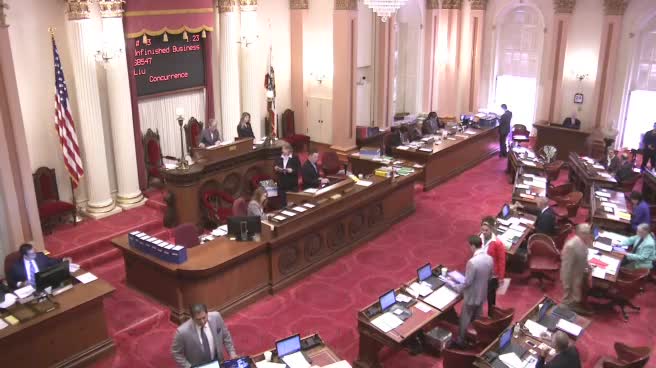 2MIN
Senate Floor
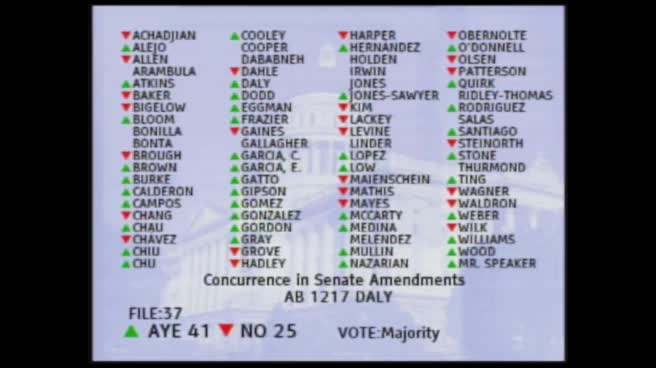 3MIN
Assembly Floor
 9MIN
Assembly Standing Committee on Appropriations
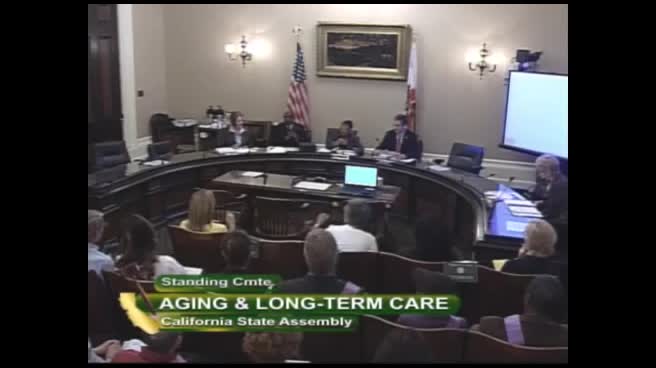 18MIN
Assembly Standing Committee on Aging and Long-Term Care
 3MIN
Senate Floor
 29SEC
Senate Standing Committee on Appropriations
 3MIN
Senate Standing Committee on Appropriations
 8MIN
Senate Standing Committee on Health
Bill Author

Bill Co-Author(s):
