SB 554: Delta levee maintenance.
- Session Year: 2015-2016
- House: Senate
- Latest Version Date: 2016-08-30
Existing law establishes a delta levee maintenance program pursuant to which a local agency may request reimbursement for costs incurred in connection with the maintenance or improvement of project or nonproject levees in the Sacramento-San Joaquin Delta. Existing law declares legislative intent to reimburse eligible local agencies under this program, until July 1, 2018, in an amount not to exceed 75% of those costs that are incurred in excess of $1,000 per mile of levee. Existing law, until July 1, 2018, authorizes the board to provide funds to an eligible local agency under this program in the form of an advance in an amount that does not exceed 75% of the estimated state share.
This bill would extend the authorization to reimburse eligible local agencies under the program and advance funds until July 1, 2020.
Existing law, on and after July 1, 2018, declares the intent of the Legislature to reimburse eligible local agencies under this program in an amount not to exceed 50% of those costs that are incurred in any year for the maintenance and improvement of levees.
This bill, on and after July 1, 2020, would declare legislative intent to reimburse eligible local agencies under this program in an amount not to exceed 50% of the costs.
Existing law establishes a delta levee maintenance program pursuant to which a local agency may request reimbursement for costs incurred in connection with the maintenance or improvement of project or nonproject levees in the Sacramento-San Joaquin Delta. Existing law declares legislative intent to reimburse eligible local agencies under this program, until July 1, 2018, in an amount not to exceed 75% of those costs that are incurred in excess of $1,000 per mile of levee. Existing law, until July 1, 2018, authorizes the board to provide funds to an eligible local agency under this program in the form of an advance in an amount that does not exceed 75% of the estimated state share. Existing
This bill would extend the authorization to reimburse eligible local agencies under the program and advance funds until July 1, 2020.
Existing law, on and after July 1, 2018, declares the intent of the Legislature to reimburse eligible local agencies under this program in an amount not to exceed 50% of those costs that are incurred in any year for the maintenance and improvement of levees.
This bill bill, on and after July 1, 2020, would declare legislative intent to reimburse up to 75% of those costs incurred in any year for the maintenance or improvement of levees in excess of $1,000 per mile of levee and would authorize the board to advance funds in an amount that does not exceed 75% of the estimated state share to an eligible local agency. eligible local agencies under this program in an amount not to exceed 50% of the costs.
Existing law establishes a delta levee maintenance program pursuant to which a local agency may request reimbursement for costs incurred in connection with the maintenance or improvement of project or nonproject levees in the Sacramento-San Joaquin Delta. Existing law declares legislative intent to reimburse eligible local agencies under this program, until July 1, 2018, in an amount not to exceed 75% of those costs that are incurred in excess of $1,000 per mile of levee. Existing law, until July 1, 2018, authorizes the board to provide funds to an eligible local agency under this program in the form of an advance in an amount that does not exceed 75% of the estimated state share. Existing law, on and after July 1, 2018, declares the intent of the Legislature to reimburse eligible local agencies under this program in an amount not to exceed 50% of those costs that are incurred in any year for the maintenance and improvement of levees.
This bill would declare legislative intent to reimburse up to 75% of those costs incurred in any year for the maintenance or improvement of levees in excess of $1,000 per mile of levee and would authorize the board to advance funds in an amount that does not exceed 75% of the estimated state share to an eligible local agency.
Existing law, the Political Reform Act of 1974, prohibits a public official at any level of state or local government from making, participating in making, or in any way attempting to use his or her official position to influence a governmental decision in which he or she knows, or has reason to know, that he or she has a financial interest. Existing law provides that a public official has a financial interest in a decision if it is reasonably foreseeable that the decision will have a material financial effect, distinguishable from its effect on the public generally, on the official, a member of his or her immediate family, or as specified.
This bill would remove a member of the California Water Commission from office if after trial a court finds that the commission member has knowingly participated in any commission decision in which the member has a disqualifying financial interest in the decision.
(a)It is the intent of the Legislature to reimburse an eligible local agency pursuant to this part for costs incurred in any year for the maintenance or improvement of project or nonproject levees as follows:
(1)No costs incurred shall be reimbursed if the entire cost incurred per mile of project or nonproject levee is one thousand dollars ($1,000) or less.
(2)Not more than 75 percent of any costs incurred in excess of one thousand dollars ($1,000) per mile of project or nonproject levee shall be reimbursed.
(3)(A)As part of the project plans approved by the board, the department shall require the local agency or an independent financial consultant to provide information regarding the agencys ability to pay for the cost of levee maintenance or improvement. Based on that information, the department may require the local agency or an independent financial consultant to prepare a comprehensive study on the agencys ability to pay.
(B)The information or comprehensive study of the agencys ability to pay shall be the basis for determining the maximum allowable reimbursement eligible under this part. Nothing in this paragraph shall be interpreted to increase the maximum reimbursement allowed under paragraph (2).
(4)Reimbursements made to the local agency in excess of the maximum allowable reimbursement shall be returned to the department.
(5)The department may recover, retroactively, excess reimbursements paid to the local agency from any time after January 1, 1997, based on an updated study of the agencys ability to pay.
(6)All final costs allocated or reimbursed under a plan shall be approved by the Central Valley Flood Protection Board for project and nonproject levee work.
(7)Costs incurred pursuant to this part that are eligible for reimbursement include construction costs and associated engineering services, financial or economic analyses, environmental costs, mitigation costs, and habitat improvement costs.
(b)Upon completion of its evaluation pursuant to Sections 139.2 and 139.4, by January 1, 2008, the department shall recommend to the Legislature and the Governor priorities for funding under this section.
(c)Reimbursements made pursuant to this section shall reflect the priorities of, and be consistent with, the Delta Plan established pursuant to Chapter 1 (commencing with Section 85300) of Part 4 of Division 35.
(d)This section shall become inoperative on July 1, 2020, and, as of January 1, 2021, is repealed, unless a later enacted statute, that becomes operative on or before January 1, 2021, deletes or extends the dates on which it becomes inoperative and is repealed.
SEC. 2.Section 12986 of the Water Code, as amended by Section 2 of Chapter 549 of the Statutes of 2012, is amended to read:12986.(a)It is the intent of the Legislature to reimburse from the General Fund an eligible local agency pursuant to this part for costs incurred in any year for the maintenance or improvement of project or nonproject levees as follows:
(1)No costs incurred shall be reimbursed if the entire cost incurred per mile of levee is one thousand dollars ($1,000) or less.
(2)Fifty percent of any costs incurred in excess of one thousand dollars ($1,000) per mile of levee shall be reimbursed.
(3)The maximum total reimbursement from the General Fund shall not exceed two million dollars ($2,000,000) annually.
(b)This section shall become operative on July 1, 2020.
SEC. 3.Section 12987.5 of the Water Code is amended to read:12987.5.(a)In an agreement entered into under Section 12987, the board may provide for an advance to the applicant in an amount not to exceed 75 percent of the estimated state share. The agreement shall provide that no advance shall be made until the applicant has incurred costs averaging one thousand dollars ($1,000) per mile of levee.
(b)Advances made under subdivision (a) shall be subtracted from amounts to be reimbursed after the work has been performed. If the department finds that work has not been satisfactorily performed or where advances made actually exceed reimbursable costs, the local agency shall promptly remit to the state all amounts advanced in excess of reimbursable costs. If advances are sought, the board may require a bond to be posted to ensure the faithful performance of the work set forth in the agreement.
(c)This section shall become inoperative on July 1, 2020, and, as of January 1, 2021, is repealed, unless a later enacted statute, that becomes operative on or before January 1, 2021, deletes or extends the dates on which it becomes inoperative and is repealed.
(a)It is the intent of the Legislature to reimburse an eligible local agency pursuant to this part for costs incurred in any year for the maintenance or improvement of project or nonproject levees as follows:
(1)No costs incurred shall be reimbursed if the entire cost incurred per mile of project or nonproject levee is one thousand dollars ($1,000) or less.
(2)Not more than 75 percent of any costs incurred in excess of one thousand dollars ($1,000) per mile of project or nonproject levee shall be reimbursed.
(3)(A)As part of the project plans approved by the board, the department shall require the local agency or an independent financial consultant to provide information regarding the agencys ability to pay for the cost of levee maintenance or improvement. Based on that information, the department may require the local agency or an independent financial consultant to prepare a comprehensive study on the agencys ability to pay.
(B)The information or comprehensive study of the agencys ability to pay shall be the basis for determining the maximum allowable reimbursement eligible under this part. Nothing in this paragraph shall be interpreted to increase the maximum reimbursement allowed under paragraph (2).
(4)Reimbursements made to the local agency in excess of the maximum allowable reimbursement shall be returned to the department.
(5)The department may recover, retroactively, excess reimbursements paid to the local agency from any time after January 1, 1997, based on an updated study of the agencys ability to pay.
(6)All final costs allocated or reimbursed under a plan shall be approved by the Central Valley Flood Protection Board for project and nonproject levee work.
(7)Costs incurred pursuant to this part that are eligible for reimbursement include construction costs and associated engineering services, financial or economic analyses, environmental costs, mitigation costs, and habitat improvement costs.
(b)Upon completion of its evaluation pursuant to Sections 139.2 and 139.4, by January 1, 2008, the department shall recommend to the Legislature and the Governor priorities for funding under this section.
(c)Reimbursements made pursuant to this section shall reflect the priorities of, and be consistent with, the Delta Plan established pursuant to Chapter 1 (commencing with Section 85300) of Part 4 of Division 35.
(d)This section shall become inoperative on July 1, 2020, and, as of January 1, 2021, is repealed, unless a later enacted statute, that becomes operative on or before January 1, 2021, deletes or extends the dates on which it becomes inoperative and is repealed.
SEC. 2.Section 12986 of the Water Code, as amended by Section 2 of Chapter 549 of the Statutes of 2012, is repealed.SEC. 2.Section 12986 of the Water Code, as amended by Section 2 of Chapter 549 of the Statutes of 2012, is amended to read:12986.(a)It is the intent of the Legislature to reimburse from the General Fund an eligible local agency pursuant to this part for costs incurred in any year for the maintenance or improvement of project or nonproject levees as follows:
(1)No costs incurred shall be reimbursed if the entire cost incurred per mile of levee is one thousand dollars ($1,000) or less.
(2)Fifty percent of any costs incurred in excess of one thousand dollars ($1,000) per mile of levee shall be reimbursed.
(3)The maximum total reimbursement from the General Fund shall not exceed two million dollars ($2,000,000) annually.
(b)This section shall become operative on July 1, 2018. 2020.
SEC. 3.Section 12987.5 of the Water Code is amended to read:12987.5.(a)In an agreement entered into under Section 12987, the board may provide for an advance to the applicant in an amount not to exceed 75 percent of the estimated state share. The agreement shall provide that no advance shall be made until the applicant has incurred costs averaging one thousand dollars ($1,000) per mile of levee.
(b)Advances made under subdivision (a) shall be subtracted from amounts to be reimbursed after the work has been performed. If the department finds that work has not been satisfactorily performed or where advances made actually exceed reimbursable costs, the local agency shall promptly remit to the state all amounts advanced in excess of reimbursable costs. If advances are sought, the board may require a bond to be posted to ensure the faithful performance of the work set forth in the agreement.
(c)This section shall become inoperative on July 1, 2020, and, as of January 1, 2021, is repealed, unless a later enacted statute, that becomes operative on or before January 1, 2021, deletes or extends the dates on which it becomes inoperative and is repealed.
(a)It is the intent of the Legislature to reimburse an eligible local agency pursuant to this part for costs incurred in any year for the maintenance or improvement of project or nonproject levees as follows:
(1)No costs incurred shall be reimbursed if the entire cost incurred per mile of project or nonproject levee is one thousand dollars ($1,000) or less.
(2)Not more than 75 percent of any costs incurred in excess of one thousand dollars ($1,000) per mile of project or nonproject levee shall be reimbursed.
(3)(A)As part of the project plans approved by the board, the department shall require the local agency or an independent financial consultant to provide information regarding the agencys ability to pay for the cost of levee maintenance or improvement. Based on that information, the department may require the local agency or an independent financial consultant to prepare a comprehensive study on the agencys ability to pay.
(B)The information or comprehensive study of the agencys ability to pay shall be the basis for determining the maximum allowable reimbursement eligible under this part. Nothing in this paragraph shall be interpreted to increase the maximum reimbursement allowed under paragraph (2).
(4)Reimbursements made to the local agency in excess of the maximum allowable reimbursement shall be returned to the department.
(5)The department may recover, retroactively, excess reimbursements paid to the local agency from any time after January 1, 1997, based on an updated study of the agencys ability to pay.
(6)All final costs allocated or reimbursed under a plan shall be approved by the Central Valley Flood Protection Board for project and nonproject levee work.
(7)Costs incurred pursuant to this part that are eligible for reimbursement include construction costs and associated engineering services, financial or economic analyses, environmental costs, mitigation costs, and habitat improvement costs.
(b)Upon completion of its evaluation pursuant to Sections 139.2 and 139.4, by January 1, 2008, the department shall recommend to the Legislature and the Governor priorities for funding under this section.
(c)Reimbursements made pursuant to this section shall reflect the priorities of, and be consistent with, the Delta Plan established pursuant to Chapter 1 (commencing with Section 85300) of Part 4 of Division 35.
(d)This section shall become inoperative on July 1, 2018, and, as of January 1, 2019, is repealed, unless a later enacted statute, that becomes operative on or before January 1, 2019, deletes or extends the dates on which it becomes inoperative and is repealed.
SEC. 2.Section 12986 of the Water Code, as amended by Section 2 of Chapter 549 of the Statutes of 2012, is repealed.12986.(a)It is the intent of the Legislature to reimburse from the General Fund an eligible local agency pursuant to this part for costs incurred in any year for the maintenance or improvement of project or nonproject levees as follows:
(1)No costs incurred shall be reimbursed if the entire cost incurred per mile of levee is one thousand dollars ($1,000) or less.
(2)Fifty percent of any costs incurred in excess of one thousand dollars ($1,000) per mile of levee shall be reimbursed.
(3)The maximum total reimbursement from the General Fund shall not exceed two million dollars ($2,000,000) annually.
(b)This section shall become operative on July 1, 2018.
SEC. 3.Section 12987.5 of the Water Code is amended to read:12987.5.(a)In an agreement entered into under Section 12987, the board may provide for an advance to the applicant in an amount not to exceed 75 percent of the estimated state share. The agreement shall provide that no advance shall be made until the applicant has incurred costs averaging one thousand dollars ($1,000) per mile of levee.
(b)Advances made under subdivision (a) shall be subtracted from amounts to be reimbursed after the work has been performed. If the department finds that work has not been satisfactorily performed or where advances made actually exceed reimbursable costs, the local agency shall promptly remit to the state all amounts advanced in excess of reimbursable costs. If advances are sought, the board may require a bond to be posted to ensure the faithful performance of the work set forth in the agreement.
(c)This section shall become inoperative on July 1, 2018, and, as of January 1, 2019, is repealed, unless a later enacted statute, that becomes operative on or before January 1, 2019, deletes or extends the dates on which it becomes inoperative and is repealed.
SECTION 1.Section 167 is added to the Water Code, to read:167.(a)A member of the commission shall not participate in any commission decision in which the member has a disqualifying financial interest in the decision within the meaning of Section 87103 of the Government Code.
(b)Upon the request of any person, or on the Attorney Generals own initiative, the Attorney General may file a complaint in the Superior Court for the County of Sacramento alleging that a commission member has knowingly violated this section and the facts upon which the allegation is based and asking that the member be removed from office. Further proceedings shall be in accordance as near as may be with rules governing civil actions. If after trial the court finds that the commission member has knowingly violated this section, it shall pronounce judgment that the member be removed from office.
(a)A member of the commission shall not participate in any commission decision in which the member has a disqualifying financial interest in the decision within the meaning of Section 87103 of the Government Code.
(b)Upon the request of any person, or on the Attorney Generals own initiative, the Attorney General may file a complaint in the Superior Court for the County of Sacramento alleging that a commission member has knowingly violated this section and the facts upon which the allegation is based and asking that the member be removed from office. Further proceedings shall be in accordance as near as may be with rules governing civil actions. If after trial the court finds that the commission member has knowingly violated this section, it shall pronounce judgment that the member be removed from office.
|
Date
|
Status
|
|---|---|
| Sep 1, 2016 | Enrolled and presented to the Governor at 5 p.m. |
| Aug 26, 2016 | Assembly amendments concurred in. (Ayes 36. Noes 3. Page 5445.) Ordered to engrossing and enrolling. |
| Aug 26, 2016 | Reconsideration granted. (Ayes 39. Noes 0. Page 5444.) |
| Aug 26, 2016 | Assembly amendments concurred in. (Ayes 39. Noes 0. Page 5443.) Ordered to engrossing and enrolling. |
| Aug 26, 2016 | Assembly amendments concurred in. (Ayes 39. Noes 0.) Ordered to engrossing and enrolling. |
| Aug 26, 2016 | Assembly amendments concurred in. (Ayes 36. Noes 3.) Ordered to engrossing and enrolling. |
| Aug 26, 2016 | Reconsideration granted. (Ayes 39. Noes 0.) |
| Aug 26, 2016 | Motion to reconsider made by Senator Wolk. |
| Aug 25, 2016 | In Senate. Concurrence in Assembly amendments pending. |
| Aug 24, 2016 | Read third time. Passed. Ordered to the Senate. |
| Aug 18, 2016 | Read second time. Ordered to third reading. |
| Aug 17, 2016 | Read second time and amended. Ordered to second reading. |
| Aug 16, 2016 | From committee: Do pass as amended. (Ayes 11. Noes 4.) (August 11). |
| Jun 29, 2016 | June 29 set for first hearing. Placed on APPR. suspense file. |
| Jun 14, 2016 | From committee: Do pass and re-refer to Com. on APPR. (Ayes 10. Noes 3.) (June 14). Re-referred to Com. on APPR. |
| Apr 28, 2016 | Referred to Com. on W., P., & W. |
| Jan 27, 2016 | In Assembly. Read first time. Held at Desk. |
| Jan 27, 2016 | Read third time. Passed. (Ayes 39. Noes 0. Page 2961.) Ordered to the Assembly. |
| Jan 25, 2016 | Read second time. Ordered to third reading. |
| Jan 21, 2016 | From committee: Do pass. (Ayes 7. Noes 0. Page 2934.) (January 21). |
| Jan 20, 2016 | Set for hearing January 21. |
| Jan 19, 2016 | January 19 hearing: Placed on APPR. suspense file. |
| Jan 14, 2016 | Set for hearing January 19. |
| Jan 12, 2016 | From committee: Do pass and re-refer to Com. on APPR. (Ayes 9. Noes 0. Page 2886.) (January 12). Re-referred to Com. on APPR. |
| Jan 7, 2016 | Set for hearing January 12. |
| Jan 6, 2016 | Re-referred to Com. on N.R. & W. |
| Jan 4, 2016 | Re-referred to Com. on RLS. |
| Jan 4, 2016 | Withdrawn from committee. |
| Jan 4, 2016 | From committee with author's amendments. Read second time and amended. Re-referred to Com. on E. & C.A. |
| Apr 21, 2015 | April 21 set for first hearing canceled at the request of author. |
| Apr 9, 2015 | Set for hearing April 21. |
| Mar 12, 2015 | Referred to Com. on E. & C.A. |
| Feb 27, 2015 | From printer. May be acted upon on or after March 29. |
| Feb 26, 2015 | Introduced. Read first time. To Com. on RLS. for assignment. To print. |
|
Date
|
Description
|
Location
|
Votes
|
|
|---|---|---|---|---|
| Aug 26, 2016 | Unfinished Business SB554 Wolk Concurrence | Senate Floor |
Passed |
|
| Aug 26, 2016 | Unfinished Business SB554 Wolk Concurrence | Senate Floor |
Passed |
|
| Aug 26, 2016 | Unfinished Business SB554 Wolk Concurrence | Senate Floor |
Passed |
|
| Aug 24, 2016 | SB 554 Wolk Senate Third Reading By OLSEN | Assembly Floor |
Passed |
|
| Aug 11, 2016 | Do pass as amended. | Assembly Standing Committee on Appropriations |
Passed |
|
| Jun 14, 2016 | Do pass and be re-referred to the Committee on [Appropriations] | Assembly Standing Committee on Water, Parks, and Wildlife |
Passed |
|
| Jan 27, 2016 | Senate 3rd Reading SB554 Wolk | Senate Floor |
Passed |
|
| Jan 21, 2016 | Do pass | Senate Standing Committee on Appropriations |
Passed |
|
| Jan 19, 2016 | Placed on suspense file | Senate Standing Committee on Appropriations |
Passed |
|
| Jan 12, 2016 | Do pass, but first be re-referred to the Committee on [Appropriations] | Senate Standing Committee on Natural Resources and Water |
Passed |
This list shows positions taken on this bill by organizations on the date displayed, which is linked to the original source.
Positions by individuals are not included.
Office of Senate Floor Analyses (916) 651-1520 Fax: (916) 327-4478 | SB |
VETO
Bill No: SB 554
:
SENATE NATURAL RES. & WATER COMMITTEE: 9-0, 1/12/16
AYES: Pavley, Stone, Allen, Hertzberg, Hueso, Jackson, Monning, Vidak, Wolk
SENATE APPROPRIATIONS COMMITTEE: 7-0, 1/21/16
AYES: Lara, Bates, Beall, Hill, Leyva, Mendoza, Nielsen
SENATE FLOOR: 39-0, 1/27/16
AYES: Allen, Anderson, Bates, Beall, Block, Cannella, De León, Fuller, Gaines, Galgiani, Glazer, Hall, Hancock, Hernandez, Hertzberg, Hill, Hueso, Huff, Jackson, Lara, Leno, Leyva, Liu, McGuire, Mendoza, Mitchell, Monning, Moorlach, Morrell, Nguyen, Nielsen, Pan, Pavley, Roth, Runner, Stone, Vidak, Wieckowski, Wolk
NO VOTE RECORDED: Berryhill
SENATE FLOOR: 36-3, 8/26/16
AYES: Allen, Anderson, Beall, Berryhill, Block, Cannella, De León, Fuller, Gaines, Galgiani, Glazer, Hall, Hancock, Hernandez, Hertzberg, Hill, Hueso, Huff, Jackson, Lara, Leno, Leyva, Liu, McGuire, Mendoza, Mitchell, Monning, Moorlach, Nielsen, Pan, Pavley, Roth, Stone, Vidak, Wieckowski, Wolk
NOES: Bates, Morrell, Nguyen
ASSEMBLY FLOOR: 72-4, 8/24/16 - See last page for vote
SOURCE: Central Valley Flood Control Association
DIGEST: This bill extends the July 1, 2018, sunset date for the Delta Levee Subventions program by two years. Specifically, this bill maintains the state's 75% maximum share for Delta levee maintenance costs in excess of $1,000 per mile until July 1, 2020.
- Creates the Delta levee maintenance subvention program. This program provides reimbursement funds to local agencies for costs of maintaining or improving project or nonproject levees.
- Provides that the reimbursement rate is up to 75 percent of any costs incurred in excess of $1,000 per mile, based on an assessment of the agency’s ability to pay.
- Provides that the 75 percent reimbursement rate ends July 1, 2018, at which time the reimbursement rate would become 50 percent of any costs incurred in excess of $1,000 per mile.
This bill extends the current 75 percent reimbursement rate for Delta levee maintenance costs in excess of $1,000 per mile to July 1, 2020.
Background
Legislature has extended the 75 percent reimbursement rate three times. The Legislature created the Delta levee subvention program in 1996. The 75 percent reimbursement rate was to be in effect for 10 years, at which time the rate would drop to 50 percent. The Legislature has subsequently delayed the reduction in the reimbursement rate in 2006, 2010, and 2012.
Comments
One of the few Delta bright spots. The 2010 Public Policy Institute of California publication Comparing Futures for the Sacramento - San Joaquin Delta noted, “The Delta Levee Subventions Program, in particular, has significantly reduced levee failures and is the most important state investments in Delta levees today.” It is still true five years later. Moreover, it is also one of the few Delta programs that have shown tangible results.
FISCAL EFFECT: Appropriation: Fiscal Com.: Local:
According to the Assembly Appropriations Committee, “Potential annual cost pressures, likely in the millions of dollars (GF), to fund local projects to improve and maintain levees. Without this bill, the state cost share formula would decrease from 75% to 50% on July 1, 2018.”
SUPPORT: (Verified 10/6/16)
Central Valley Flood Control Association (source)
Association of California Water Agencies
Bethel Island Municipal Improvement District
California State Association of Counties
Collinsville Levee District
Contra Costa County
Delta Counties Coalition
Delta Protection Commission
East Bay Municipal Utilities Commission
Reclamation District No. 3
Reclamation District No. 150
Reclamation District No. 548
Reclamation District No. 756
Reclamation District No. 799
Reclamation District No. 2025
Reclamation District No. 2026
Reclamation District No. 2028
Reclamation District No. 2029
Reclamation District No. 2041
Reclamation District No. 2044
Reclamation District No. 2060
Reclamation District No. 2065
Rural County Representatives of California
San Joaquin County
Solano County
Solano County Farm Bureau
Yolo County Farm Bureau
OPPOSITION: (Verified 10/6/16)
Calleguas Municipal Water District
Cucamonga Valley Water District
East Orange County Water District
Eastern Municipal Water District
Inland Empire Utilities Agency
Las Virgenes Municipal Water District
Long Beach Water Commission
Mesa Water District
Metropolitan Water District of Southern California
Municipal Water District of Orange County
Santa Margarita Water District
South Coast Water District
Three Valleys Municipal Water District
Upper San Gabriel Valley Municipal Water District
Walnut Valley Water District
Yorba Linda Water District
ARGUMENTS IN SUPPORT: According to the author, “By continuing the current cost share formula, SB 554 ensures that Delta reclamation districts can afford to maintain and improve Delta levees. Maintenance of the Delta levees is important to reduce flood risk and ensure the Delta can continue to serve its many valuable uses – as fertile farmland, a water conveyance, and a rich estuary ecosystem.”
ARGUMENTS IN OPPOSITION: According to a coalition of Southern California water agencies, “We recommend that a further amendment be made to SB 554 to direct DWR to enlist an independent entity, with financial expertise, to conduct an affordability and benefits assessment for the Delta Levee Subventions Program. It is simply unclear which Delta islands, if any, lack the economic standing to underwrite their own levee maintenance, and whether statewide interests merit a public subsidy for those levee improvements.
“We, the undersigned agree with the author, that levee improvements in the Delta are important to protect public health and safety, critical infrastructure and the fragile ecosystem. But it is also important to ensure the best use of limited state resources. An assessment of the program and accountability for the level of funding expended to date and in the future is long overdue.
“Absent the further amendment as noted above, we urge your NO vote on SB 554.”
GOVERNOR'S VETO MESSAGE:
I am returning Senate Bill 554 without my signature.
A number of efforts are underway to determine the levee protection needs in the Delta. The Delta Stewardship Council is currently in the middle of identifying state priorities for levee investments in the Delta, and the Department of Water Resources has been working with the Delta Protection Commission evaluating new financing mechanisms.
The existing 75 percent state cost share does not sunset until July 2018, and as such, consideration of this bill is premature.
ASSEMBLY FLOOR: 72-4, 8/24/16
AYES: Achadjian, Alejo, Travis Allen, Arambula, Atkins, Baker, Bloom, Bonilla, Bonta, Brough, Brown, Burke, Calderon, Campos, Chang, Chávez, Chiu, Chu, Cooley, Cooper, Dababneh, Dahle, Dodd, Eggman, Frazier, Beth Gaines, Gallagher, Cristina Garcia, Eduardo Garcia, Gatto, Gipson, Gomez, Gonzalez, Gordon, Gray, Grove, Hadley, Roger Hernández, Holden, Jones, Jones-Sawyer, Kim, Lackey, Levine, Linder, Lopez, Low, Maienschein, Mathis, Mayes, McCarty, Medina, Mullin, Nazarian, Obernolte, O'Donnell, Olsen, Patterson, Quirk, Ridley-Thomas, Salas, Santiago, Mark Stone, Thurmond, Ting, Wagner, Waldron, Weber, Wilk, Williams, Wood, Rendon
NOES: Bigelow, Harper, Irwin, Melendez
NO VOTE RECORDED: Chau, Daly, Rodriguez, Steinorth
10/14/16 12:54:08
**** END ****
Office of Senate Floor Analyses (916) 651-1520 Fax: (916) 327-4478 | SB |
UNFINISHED BUSINESS
Bill No: SB 554
:
SENATE NATURAL RES. & WATER COMMITTEE: 9-0, 1/12/16
AYES: Pavley, Stone, Allen, Hertzberg, Hueso, Jackson, Monning, Vidak, Wolk
SENATE APPROPRIATIONS COMMITTEE: 7-0, 1/21/16
AYES: Lara, Bates, Beall, Hill, Leyva, Mendoza, Nielsen
SENATE FLOOR: 39-0, 1/27/16
AYES: Allen, Anderson, Bates, Beall, Block, Cannella, De León, Fuller, Gaines, Galgiani, Glazer, Hall, Hancock, Hernandez, Hertzberg, Hill, Hueso, Huff, Jackson, Lara, Leno, Leyva, Liu, McGuire, Mendoza, Mitchell, Monning, Moorlach, Morrell, Nguyen, Nielsen, Pan, Pavley, Roth, Runner, Stone, Vidak, Wieckowski, Wolk
NO VOTE RECORDED: Berryhill
ASSEMBLY FLOOR: 72-4, 8/24/16 - See last page for vote
SOURCE: Central Valley Flood Control Association
DIGEST: This bill extends the July 1, 2018, sunset date for the Delta Levee Subventions program by two years. Specifically, this bill maintains the state's 75% maximum share for Delta levee maintenance costs in excess of $1,000 per mile until July 1, 2020.
Assembly Amendments reinstate a sunset on the Delta Levee Subventions program’s 75 percent reimbursement rate and set the sunset to be July 1, 2020.
Existing law:
- Creates the Delta levee maintenance subvention program. This program provides reimbursement funds to local agencies for costs of maintaining or improving project or nonproject levees.
- Provides that the reimbursement rate is up to 75 percent of any costs incurred in excess of $1,000 per mile, based on an assessment of the agency’s ability to pay.
- Provides that the 75 percent reimbursement rate ends July 1, 2018, at which time the reimbursement rate would become 50 percent of any costs incurred in excess of $1,000 per mile.
This bill extends the current 75 percent reimbursement rate for Delta levee maintenance costs in excess of $1,000 per mile to July 1, 2020.
Background
Legislature has extended the 75 percent reimbursement rate three times. The Legislature created the Delta levee subvention program in 1996. The 75 percent reimbursement rate was to be in effect for 10 years, at which time the rate would drop to 50 percent. The Legislature has subsequently delayed the reduction in the reimbursement rate in 2006, 2010, and 2012.
Comments
One of the few Delta bright spots. The 2010 Public Policy Institute of California publication Comparing Futures for the Sacramento - San Joaquin Delta noted, “The Delta Levee Subventions Program, in particular, has significantly reduced levee failures and is the most important state investments in Delta levees today.” It is still true five years later. Moreover, it is also one of the few Delta programs that have shown tangible results.
FISCAL EFFECT: Appropriation: Fiscal Com.: Local:
According to the Assembly Appropriations Committee, “Potential annual cost pressures, likely in the millions of dollars (GF), to fund local projects to improve and maintain levees. Without this bill, the state cost share formula would decrease from 75% to 50% on July 1, 2018.”
Central Valley Flood Control Association (source)
Association of California Water Agencies
Bethel Island Municipal Improvement District
California State Association of Counties
Collinsville Levee District
Contra Costa County
Delta Counties Coalition
Delta Protection Commission
East Bay Municipal Utilities Commission
Reclamation District No. 3
Reclamation District No. 150
Reclamation District No. 548
Reclamation District No. 756
Reclamation District No. 799
Reclamation District No. 2025
Reclamation District No. 2026
Reclamation District No. 2028
Reclamation District No. 2029
Reclamation District No. 2041
Reclamation District No. 2044
Reclamation District No. 2060
Reclamation District No. 2065
Rural County Representatives of California
San Joaquin County
Solano County
Solano County Farm Bureau
Yolo County Farm Bureau
OPPOSITION: (Verified 8/24/16)
Calleguas Municipal Water District
Cucamonga Valley Water District
East Orange County Water District
Eastern Municipal Water District
Inland Empire Utilities Agency
Las Virgenes Municipal Water District
Long Beach Water Commission
Mesa Water District
Metropolitan Water District of Southern California
Municipal Water District of Orange County
Santa Margarita Water District
South Coast Water District
Three Valleys Municipal Water District
Upper San Gabriel Valley Municipal Water District
Walnut Valley Water District
Yorba Linda Water District
ARGUMENTS IN SUPPORT: According to the author, “By continuing the current cost share formula, SB 554 ensures that Delta reclamation districts can afford to maintain and improve Delta levees. Maintenance of the Delta levees is important to reduce flood risk and ensure the Delta can continue to serve its many valuable uses – as fertile farmland, a water conveyance, and a rich estuary ecosystem.”
ARGUMENTS IN OPPOSITION: According to a coalition of Southern California water agencies, “We recommend that a further amendment be made to SB 554 to direct DWR to enlist an independent entity, with financial expertise, to conduct an affordability and benefits assessment for the Delta Levee Subventions Program. It is simply unclear which Delta islands, if any, lack the economic standing to underwrite their own levee maintenance, and whether statewide interests merit a public subsidy for those levee improvements.
“We, the undersigned agree with the author, that levee improvements in the Delta are important to protect public health and safety, critical infrastructure and the fragile ecosystem. But it is also important to ensure the best use of limited state resources. An assessment of the program and accountability for the level of funding expended to date and in the future is long overdue.
“Absent the further amendment as noted above, we urge your NO vote on SB 554.”
ASSEMBLY FLOOR: 72-4, 8/24/16
AYES: Achadjian, Alejo, Travis Allen, Arambula, Atkins, Baker, Bloom, Bonilla, Bonta, Brough, Brown, Burke, Calderon, Campos, Chang, Chávez, Chiu, Chu, Cooley, Cooper, Dababneh, Dahle, Dodd, Eggman, Frazier, Beth Gaines, Gallagher, Cristina Garcia, Eduardo Garcia, Gatto, Gipson, Gomez, Gonzalez, Gordon, Gray, Grove, Hadley, Roger Hernández, Holden, Jones, Jones-Sawyer, Kim, Lackey, Levine, Linder, Lopez, Low, Maienschein, Mathis, Mayes, McCarty, Medina, Mullin, Nazarian, Obernolte, O'Donnell, Olsen, Patterson, Quirk, Ridley-Thomas, Salas, Santiago, Mark Stone, Thurmond, Ting, Wagner, Waldron, Weber, Wilk, Williams, Wood, Rendon
NOES: Bigelow, Harper, Irwin, Melendez
NO VOTE RECORDED: Chau, Daly, Rodriguez, Steinorth
8/25/16 17:30:42
**** END ****
SENATE THIRD READING
STR Bill Id:
Author:(Wolk)
As Amended Ver:August 17, 2016
Majority vote
SENATE VOTE: 39-0
Committee | Votes | Ayes | Noes |
Water | 10-3 | Levine, Gallagher, Dodd, Eggman, Cristina Garcia, Eduardo Garcia, Lopez, Olsen, Salas, Williams | Bigelow, Gomez, Harper |
Appropriations | 11-4 | Gonzalez, Bloom, Bonilla, Bonta, Eggman, Eduardo Garcia, Quirk, Santiago, Weber, Wood, McCarty | Bigelow, Chang, Jones, Obernolte |
SUMMARY: This bill extends the July 1, 2018, sunset date for the Delta Levee Subventions program by two years. Specifically, this bill maintains the state's 75% maximum share for Delta levee maintenance costs in excess of $1,000 per mile until July 1, 2020.
EXISTING LAW:
- Establishes the Delta Levee Maintenance Subventions Program (Subventions Program) administered jointly by the Central Valley Flood Protection Board (CVFPB) and the Department of Water Resources (DWR) to provide reimbursement to local agencies for a portion of the costs of maintaining or improving project or non-project levees.
- Since 1996, has maintained the following reimbursement rate for the Subventions Program:
- $0 for the first $1,000 per mile of levee, and
- Up to 75% of eligible costs in excess of the $1,000 per mile, based on an assessment of the agency's ability to pay.
- On July 1, 2018, reverts the reimbursement rate for the Subventions Program to:
- $0 for the first $1,000 per mile of levee,
- Up to 50% of eligible costs in excess of the $1,000 per mile, based on an assessment of the agency's ability to pay, and
- Caps the maximum annual reimbursement per agency at $2 million.
- Establishes the Delta Levees Program (Program) to provide financial assistance for flood protection in the Delta. Includes the Subventions Program and the Special Flood Control Project Program in the Program.
- Establishes the Delta Stewardship Council (Council) to maintain a Delta Plan that is the long-term management plan for the Delta. Requires the Delta Plan to, among other things, recommend priorities for state investments in levee operation, maintenance, and improvements.
FISCAL EFFECT: Unknown.
COMMENTS: Delta levees protect significant state interests including conveyance for the State Water Project and the Central Valley Project, highways, utilities, agriculture, recreational assets, fisheries, and wildlife. The maintenance of Delta levees is intended to reduce flood risk and ensure the Delta can continue to serve its many valuable uses.
The Delta Levee Subventions Program provides state funding to local agencies for the rehabilitation and maintenance of levees in the Sacramento-San Joaquin Delta. In 1996, the Legislature temporarily established the reimbursement rate to be up to 75% of any costs incurred in excess of $1,000 per mile depending on the agency’s ability to pay. This rate was to be reduced to 50% on July 1, 2006. However, the Legislature subsequently extended this date several times and the higher reimbursement rates are currently authorized until July 1, 2018.
According to the 2013 Delta Plan the state has committed approximately $700 million to levee operations, maintenance and improvements since the 1970's. Recent estimates for needed Delta levee improvements range from $1.3 billion to $3 billion. Even if that level of investment were to occur, there would still be a risk of levee failure in the Delta as increasing risks of earthquake, flood, and sea level rise are mounting and levees on deeply subsided islands cannot be built at a reasonable cost to withstand all risks.
Discretion on how to spend state money on Delta levees has been left to the DWR and the CVFPB. The Delta Stewardship Council in consultation with local agencies and various state agencies, is in the process of developing state investment priorities for Delta Levees consistent with the Delta Reform Act of 2009 for levees that are a part of the State Plan of Flood Control, and for non-project levees. The Delta Levee Investment Strategy is expected to be completed within the next calendar year.
According to the Public Policy Institute of California (PPIC) the Delta Levee Subventions Program has resulted in significant improvements in the stability of Delta levees. In 2010, the PPIC called the Subventions Program "the most important state investment in Delta levees."
Analysis Prepared by: Ryan Ojakian / W., P., & W. / (916) 319-2096 FN: 0004267
Date of Hearing: June 29, 2016
ASSEMBLY COMMITTEE ON APPROPRIATIONS
Lorena Gonzalez, Chair
SBPCA Bill Id:SB 554
Author:(Wolk) – As Amended Ver:January 4, 2016
Policy Committee: | Water, Parks and Wildlife | Vote: | 10 - 3 |
Urgency: No State Mandated Local Program: No Reimbursable: No
SUMMARY:
This bill repeals the July 1, 2018 sunset date for the Delta Levee Subventions program. Specifically, this bill permanently establishes the state's 75% maximum share for Delta levee maintenance costs in excess of $1,000 per mile.
FISCAL EFFECT:
Potential annual cost pressures, likely in the millions of dollars (GF), to fund local projects to improve and maintain levees. Without this bill, the state cost share formula would decrease from 75% to 50% on July 1, 2018.
According to the Department of Finance (DOF), eliminating the sunset date will result in greater state expenditures per project than would be the case under current law. However, the Department of Water Resources (DWR) indicates many local governments find it difficult to meet the current 25% local match, so it is unclear how many projects would be eligible for state funding at the 50% match level.
COMMENTS:
- Purpose. According to the author, the maintenance of Delta levees is important to reduce flood risk and ensure the Delta can continue to serve its many valuable uses such as fertile farmland, water conveyance, and a rich estuary ecosystem. By continuing the current cost share formula, this bill will ensure Delta reclamation districts are able to afford to maintain and improve their levees.
- Background. The Delta Levee Subventions Program provides state funding to local agencies for the rehabilitation and maintenance of levees in the Sacramento-San Joaquin Delta. In 1996, the Legislature temporarily established the reimbursement rate to be up to 75% of any costs incurred in excess of $1,000 per mile depending on the agency’s ability to pay. This rate was to be reduced to 50% on July 1, 2006. However, the Legislature subsequently extended this date several times and the higher reimbursement rates are currently authorized until July 1, 2018.
- Funding history. Chapter 718, Statutes of 2010 (SB 855) allocated $170 million of Proposition 1E and $32 million of Proposition 84 funding for projects intended to reduce the risk of levee failure in the Sacramento-San Joaquin Delta.
The 2016-17 Budget includes $60 million for local assistance expenditures in the Delta. DWR indicates that an additional $70 million is still available from the 2015-16 Budget Act. Of these funds, about 40 percent, or $62 million, will go toward the Subventions program. The state's share of program costs ranges from $6 to$12 million annually, and state reimbursement of eligible costs is typically near 75 percent for projects. Based on annual costs of $6 to $12 million a year, DWR predicts that available and eligible bond funding will last between 5 and 10 years.
Proposition 1 provided $295 million to reduce the risk of levee failure and flood in the Delta, of which local assistance through the subventions program is an eligible use.
- Water Action Plan. The Delta Stewardship Council, in consultation with local agencies and various state agencies, is in the process of developing state investment priorities for Delta Levees consistent with the Delta Reform Act of 2009, for levees that are a part of the State Plan of Flood Control, and for nonproject levees.
The author may wish to consider extending rather than eliminating the sunset provision to coincide with the completion of the state's work to identify investment priorities.
Analysis Prepared by: Jennifer Galehouse / APPR. / (916) 319-2081
Date of Hearing: June 14, 2016
ASSEMBLY COMMITTEE ON WATER, PARKS, AND WILDLIFE
Marc Levine, Chair
SBPCA Bill Id:SB 554
Author:(Wolk) – As Amended Ver:January 4, 2016
SENATE VOTE: 39-0
SUBJECT: Delta levee maintenance
SUMMARY: Makes permanent the current 75% reimbursement rate for Sacramento–San Joaquin Delta (Delta) levee maintenance costs in excess of $1,000 per mile. Specifically, this bill:
- Eliminates the July 1, 2018, sunset on the current authorization of a 75% state cost-share in the Delta levee maintenance or improvement program.
- Eliminates the effective date for returning to a 50% state cost-share.
- Eliminates the July 1, 2018, sunset on advance reimbursement.
EXISTING LAW:
- Establishes the Delta Levee Maintenance Subventions Program (Subventions Program) administered jointly by the Central Valley Flood Protection Board (CVFPB) and the Department of Water Resources (DWR) to provide reimbursement to local agencies for a portion of the costs of maintaining or improving project or non-project levees.
- Since 1996, has maintained the following reimbursement rate for the Subventions Program of:
- $0 for the first $1,000 per mile of levee, and
- up to 75% of eligible costs in excess of the $1,000 per mile, based on an assessment of the agency’s ability to pay.
- On July 1, 2018, reverts the reimbursement rate for the Subventions Program to:
- $0 for the first $1,000 per mile of levee,
- up to 50% of eligible costs in excess of the $1,000 per mile, based on an assessment of the agency’s ability to pay, and
- caps the maximum annual reimbursement per agency at $2 million.
- Establishes the Delta Levees Special Flood Control Project Program (Flood Control Project Program) to fund levee improvements that have identifiable public benefits. Includes the Subventions Program and the Special Flood Control Project Program in the Flood Control Project Program.
- Establishes the Delta Stewardship Council (Council) to maintain a Delta Plan that is the long-term management plan for the Delta. Requires the Delta Plan to, among other things, recommend priorities for state investments in levee operation, maintenance, and improvements.
- Requires Delta levee investments through the Subventions Program and the Special Flood Control Project Program to be consistent with the Delta Plan.
FISCAL EFFECT: According to the Senate Appropriations Committee, over the past ten years, annual program funding has ranged between $5.7 million and $16.3 million. In recent years, funding for the program has come from voter-approved general obligation bonds (Proposition 50, Proposition 84, and Proposition 1E), which are repaid by the General Fund.
COMMENTS: This bill makes permanent the current 75% reimbursement rate for Delta levee maintenance costs in excess of $1,000 per mile.
- Author’s statement: By continuing the current cost share formula, SB 554 ensures that Delta reclamation districts can afford to maintain and improve Delta levees. Maintenance of the Delta levees is important to reduce flood risk and ensure the Delta can continue to serve its many valuable uses – as fertile farmland, a water conveyance, and a rich estuary ecosystem.
- Background: The Delta is the hub of the California water system, and is the most valuable estuary and wetland ecosystem on the west coast of the Americas. Much of Delta land is subsiding such that it has been called California’s sinking heart. Most of the primary Delta is below sea level and the central Delta is deeply subsided, resting 15 feet or more below sea level.
There are significant state interests protected by Delta levees including conveyance for the State Water Project and the Central Valley Project, highways, utilities, agriculture, recreational assets, fisheries, and wildlife.
- Limited funds, competing priorities: There are just over 1,100 miles of levees that protect 141 Delta islands. The majority of those levees are locally owned (non-project levees). Since the 1970’s the state has committed approximately $700 million to levee operations, maintenance and improvements. Recent estimates for needed Delta levee improvements range from $1.3 billion to $3 billion. Even if that level of investment were to occur there would will still be a risk of levee failure in the Delta, as increasing risks of earthquake, flood, and sea level rise are mounting and levees on deeply subsided islands cannot reasonably be built to withstand all risks.
Attempts have been made to focus state investments in Delta levees, but to date there are no clear priorities for state spending on levees in the Delta. Additionally, the standard to which a levee must be maintained is variable, with uncertainty as to what is necessary to qualify for federal disaster assistance. Discretion on how to spend state money on Delta levees has been left to the DWR and the CVFPB. The DWR has developed guidelines, but essentially, any agency that has the ability to come up with financing has had their projects funded in recent years. According to a 2012 Public Policy Institute of California (PPIC) study and a Council evaluation of levee investments we have not seen the highest level of investments in levees that would best protect the Delta and state interest, but have seen high levels of investment in levees that have been identified as being a poor cost benefit investment for the state.
- Development of priorities and who should pay: In 2005, AB 1200 (Laird) required the DWR to assess the risk of Delta levee failure and evaluate how best to address such risks. At the time, this was consistent with the DWR’s plan to develop a Delta Risk Management Strategy (DRMS) to identify which levees had greatest value to state interests to justify state investment. In 2009, SB 1 x7 (Simitian), the Delta Reform Act, became law. In part, the Delta Reform Act required the Council to include a Delta Levees Investment Strategy (DLIS) in its Delta Plan. The DLIS is expected to be completed within the next calendar year.
Moving forward, there is a question of who should pay what level for levee maintenance. The key issue is that most levee miles (730 miles) are privately owned. Existing law requires local agencies applying for Subventions Program funding to provide information on the agency’s ability to pay. The last time the ability to pay was analyzed was in 2007. That study found that agricultural districts should qualify for a 75% reimbursement while non-agricultural districts may have an ability to pay a higher share.
- Real improvements: Despite some of the questions highlighted above, the Subventions Program has resulted in significant improvements in the stability of Delta levees. Delta levee failures have declined significantly since the 1980’s, and in 2010, the PPIC called the Subventions Program “the most important state investments in Delta levees”.
- Sunset date? If the desire of the committee is to maintain the current 75% reimbursement rate until the Council adopts a DLIS for state investments in Delta levees, some delay may be appropriate. Even if the Council were to adopt the DLIS by late 2016 or early 2017, it may be challenging to make any necessary statutory changes to the Delta subventions program before the July 1, 2018, reduction in the reimbursement rate. Further, if the committee wishes to require a more substantive analysis of a local agency’s ability to pay, an evaluation by the Council or another independent body should be required.
If the committee wishes to keep pressure on the Council to develop and adopt the DLIS for State investments in Delta flood management, extending the current 75% reimbursement rate indefinitely might not be prudent. Further, an indefinite extension may predetermine a level of funding across all levees that is inconsistent with what the DLIS would identify, and in doing so may undermine the development of the DLIS.
It is not immediately clear what an appropriate extension should be. However, given the Council indicates that it is close to completion of the DLIS, a shorter extension may be more appropriate than a longer one.
- Prior and Related Legislation:
- AB 1200 (Laird), Chapter 573, Statutes of 2005, required study of levee risks and development of levee funding priorities.
- SB 1 x7 (Simitian), Chapter 5, Statues of the 7th Extraordinary Session of 2009-2010, established the Sacramento-San Joaquin Delta Reform Act requiring Delta management to meet coequal goals of environmental and water supply sustainability.
- AB 798 (Wolk), Chapter 548, Statutes of 2006, provided a 4-year extension on the 75% reimbursement rate for the Subventions Program.
- SB 808 (Wolk), Chapter 23, Statutes of 2010, provided a 3-year extension on the 75% reimbursement rate for the Subventions Program.
- SB 200 (Wolk), Chapter 549, Statutes of 2012, provided a 5-year extension on the 75% reimbursement rate for the Subventions Program.
- Support Arguments: The Subventions Program has dramatically improved flood control and increased the reliability of water conveyance in the Delta by utilizing a very efficient process of partnering with local flood control agencies for levee maintenance and improvements. Local agencies fund 100% of the work up front, and the state reimburses a percentage, creating an incentive for the local agencies to perform the work in the most cost effective and efficient manner possible. Levees will always require some degree of maintenance, supervision and upkeep, just like any other element of state or local infrastructure. Ensuring that the Subvention Program becomes a permanent resource for local governments that partner with state agencies is critical, appropriate, and timely.
- Opposing Arguments: This bill provides an opportunity to advance the beneficiaries-pay principle in the Delta with appropriate analysis and deliberation. The Legislature’s clear intent in the 1990’s was to reduce the state’s financial exposure on the Subvention’s Program from 75% to 50% within 10 years. Since that time, three bills have passed to temporarily extend the subsidy while waiting for the state to reassess the direction it will pursue in protecting the Delta. This bill, however, seeks to extend the higher level of subsidy in perpetuity, in contradiction to the rationales of previous legislation. Prior to any further legislative action to extend the state cost-share, an outside entity should conduct an affordability and benefits assessment for the Subventions Program.
REGISTERED SUPPORT/ OPPOSITION:
Support
Association of Water Agencies
Bethel Island Municipal Improvement District
California Central Valley Flood Control Association
Collinsville Levee District
Contra Costa County Board of Supervisors
Delta Counties Coalition
Delta Protection Commission
East Bay Municipal Utility District
Reclamation District No. 3
Reclamation District No. 150
Reclamation District No. 548
Reclamation District No. 756
Reclamation District No. 799
Reclamation District No. 2025
Reclamation District No. 2026
Reclamation District No. 2028
Reclamation District No. 2029
Reclamation District No. 2041
Reclamation District No. 2060
Reclamation District No. 2065
Sacramento County Board of Supervisors
San Joaquin County Board of Supervisors
Solano County Board of Supervisors
Solano County Farm Bureau
Oppose (unless amended )
Calleguas Municipal Water District
Cucamonga Valley Water District
Eastern Municipal Water District
Inland Empire Utilities Agency
Las Virgenes Municipal Water District
Long Beach Water Commission
Mesa Water District
Metropolitan Water District of Southern California
Upper San Gabriel Valley Municipal Water District
Walnut Valley Water District
Analysis Prepared by: Ryan Ojakian / W., P., & W. / (916) 319-2096
Office of Senate Floor Analyses (916) 651-1520 Fax: (916) 327-4478 | SB |
THIRD READING
Bill No: SB 554
:
SENATE NATURAL RES. & WATER COMMITTEE: 9-0, 1/12/16
AYES: Pavley, Stone, Allen, Hertzberg, Hueso, Jackson, Monning, Vidak, Wolk
SENATE APPROPRIATIONS COMMITTEE: 7-0, 1/21/16
AYES: Lara, Bates, Beall, Hill, Leyva, Mendoza, Nielsen
DIGEST: This bill makes permanent the state’s 75 percent maximum cost share for Delta levee maintenance costs in excess of $1,000 per mile.
Existing law:
- Creates the Delta levee maintenance subvention program. This program provides reimbursement funds to local agencies for costs of maintaining or improving project or nonproject levees.
- Provides that the reimbursement rate is up to 75 percent of any costs incurred in excess of $1,000 per mile, based on an assessment of the agency’s ability to pay.
- Provides that the 75 percent reimbursement rate ends July 1, 2018, at which time the reimbursement rate would become 50 percent of any costs incurred in excess of $1,000 per mile.
This bill makes permanent the current 75 percent reimbursement rate for Delta levee maintenance costs in excess of $1,000 per mile. Specifically, this bill:
- Eliminates the July 1, 2018, sunset on the current authorization of a 75 percent state cost-share in Delta levee maintenance or improvement projects.
- Eliminates the effective date for returning to a 50 percent state cost-share.
Background
Legislature has extended the 75 percent reimbursement rate three times. The Legislature created the Delta levee subvention program in 1996. The 75 percent reimbursement rate was to be in effect for 10 years, at which time the rate would drop to 50 percent. The Legislature has subsequently delayed the reduction in the reimbursement rate in 2006, 2010, and 2012.
Comments
One of the few Delta bright spots. The 2010 Public Policy Institute of California publication Comparing Futures for the Sacramento - San Joaquin Delta noted, “The Delta Levee Subventions Program, in particular, has significantly reduced levee failures and is the most important state investments in Delta levees today.” It is still true five years later. Moreover, it is also one of the few Delta programs that have shown tangible results.
FISCAL EFFECT: Appropriation: Fiscal Com.: Local:
According to the Senate Appropriations Committee, this bill creates annual cost pressures in the millions of dollars (General Fund) to fund local projects to improve and maintain levees.
California Central Valley Flood Control Association
OPPOSITION: (Verified 1/22/16)
None received
ARGUMENTS IN SUPPORT: According to the author, “By continuing the current cost share formula, SB 554 ensures that Delta reclamation districts can afford to maintain and improve Delta levees. Maintenance of the Delta levees is important to reduce flood risk and ensure the Delta can continue to serve its many valuable uses – as fertile farmland, a water conveyance, and a rich estuary ecosystem.”
1/25/16 16:16:47
**** END ****
SENATE COMMITTEE ON APPROPRIATIONS
Senator Ricardo Lara, Chair
2015 - 2016 Regular Session
SB 554 (Wolk) - Delta levee maintenance
Version: January 4, 2016 | Policy Vote: N.R.&W. 9 - 0 |
Urgency: No | Mandate: No |
Hearing Date: January 19, 2016 | Consultant: Marie Liu |
This bill meets the criteria for referral to the Suspense File.
Bill Summary:
SB 554 would make permanent the state’s 75% maximum cost share for Delta levee maintenance costs in excess of $1,000 per mile.
Fiscal Impact:
Annual cost pressures in the millions of dollars (General Fund) to fund local projects to improve and maintain levees
Background:
The Delta Levees Maintenance Subventions Program provides state funding to local agencies for the rehabilitation and maintenance of levees in the Sacramento-San Joaquin Delta. In 1996, the Legislature established the reimbursement rate to be temporarily up to 75% of any costs incurred in excess of $1,000 per mile depending on the agency’s ability to pay. This rate was to be reduced to 50% on July 1, 2006. Legislative intent language also suggested a $2 million annual limit on reimbursements to each agency beginning on July 1, 2006. However, the Legislature subsequently extended this date several times so that the higher reimbursement rates are currently authorized until July 1, 2018.
The sunset extensions have been made under various justifications, including that such levee improvements are important measures to protect the state’s drinking water supply and other infrastructure.
Proposed Law:
This bill would permanently delete the sunset date and would instead set the upper limit on the state’s cost share at 75%.
This bill would also delete the legislative intent language regarding the 50% reimbursement rate and the $2 million annual limit.
Staff Comments:
Funding history. The funding for the Delta Levee Maintenance and Subventions Program has come from multiple sources through the year, including the General Fund. Since 1997, the funding from the program has come from voter-approved general obligation bonds (Prop 50, Prop 84, and Prop 1E), which are repaid by the General Fund. Over the past ten years, annual program funding has ranged between $5.7 and $16.3 million. Reimbursements to a single agency have rarely exceeded $2 million annually.
Remaining funding. According to DWR, there is $85 million from Proposition 84 and $70 million from Proposition 1E available for Delta levees. Historically 40% of these funds have been spent for the Subventions Program with the remaining amount going towards special projects. Based on historical spending, these bonds monies will be able to support the Subventions Program for another 5 to 10 years.
Staff notes that Proposition 1 provided $295 million to reduce the risk of levee failure and flood in the Delta, of which local assistance through the subventions program is an eligible use.
What has been the state cost share of delta levee projects historically? According to DWR, the state has been paying approximately 75% of eligible project costs. Ineligible project costs include items such as salaries, non-patrol road roadway repairs, and the first $1,000 per mile costs. When all costs are considered, the state pays an average of 70% of the costs with the local districts paying the remainder.
Existing law requires that Department of Water Resources (DWR) assess the local agency’s ability to pay for the levee maintenance or improvement when determining the reimbursement rate. In its initial assessment of program participants in 1997-98, DWR found that all local districts qualified for full 75% reimbursement given their agricultural economic base. In 2007, the Subventions Program did another full review of local agencies’ ability to pay. In a letter to the Central Valley Flood Protection Board dated October 28, 2013, DWR states, “The [2007] study verified that agricultural islands continue to qualify for full 75-percent State reimbursement. The study also revealed that non-agricultural islands may have the ability to pay a higher share; however, with the downturn in the economy in 2008, it was determined that the non-agricultural islands should not conduct a comprehensive ability to pay study at the time. The economic downturn and continuing economic slump through today have reinforced the wisdom of that decision.”
The letter further states that DWR reviews annual applications for significant changes of land use or economic conditions and while the 2013-14 applications revealed no significant changes, a closer look into the ability to pay may be warranted as the economy continues to improve and local districts gain greater financial stability.
-- END --
SENATE COMMITTEE ON NATURAL RESOURCES AND WATER
Senator Fran Pavley, Chair
2015 - 2016 Regular
Bill No: SB Hearing Date: January 12, 2016
Author: | Wolk | ||
Version: | January 4, 2016 | ||
Urgency: | No | Fiscal: | Yes |
Consultant: | Dennis O'Connor | ||
Subject: Delta levee maintenance
BACKGROUND AND EXISTING LAW
- The Delta levee maintenance subvention program provides reimbursement funds to local agencies for costs of maintaining or improving project or nonproject levees.
In 1996, the Legislature established the reimbursement rate for the subsequent ten years to be up to 75 percent of any costs incurred in excess of $1,000 per mile, based on an assessment of the agency’s ability to pay.
At the end of the 10 year period, (July 1, 2006), the reimbursement rate would become 50 percent of any costs incurred in excess of one thousand dollars $1,000 per mile.
Also, the maximum annual reimbursements from the General Fund would be capped at $2 M.
- In 2005, the Legislature required the Department of Water Resources (DWR) to conduct a study of the potential impacts of subsidence, earthquakes, floods, and climate change on the Delta and evaluate options for addressing those impacts. That study, known as the Delta Risk Management Study (DRMS), was to be completed by January 1, 2008.
- In 2006, the Legislature passed and the Governor signed AB 798 (Wolk). That bill, among other things, extended the 75 percent reimbursement rate for the Delta subvention rate to July 2010. Part of the justification was that changing the rate was premature, given that DWR had not completed the DRMS.
- In 2009, the Legislature passed and the Governor signed SBX7 1 (Simitian). That bill, among other things, created the Delta Stewardship Council (Council) and required it to adopt a Delta Plan by January 1, 2012. That plan, among other things, was to include “priorities for state investments in levee operation, maintenance, and improvements in the Delta, including both levees that are a part of the State Plan of Flood Control and nonproject levees.”
- In 2010, the Legislature passed and the Governor signed SB 808 (Wolk). That bill, among other things, extended the 75 percent reimbursement rate for the Delta subvention rate to July 2014. Part of the justification was that changing the rate was premature, given that the Delta Stewardship Council had not had sufficient time to complete the Delta Plan.
- In 2012, the Legislature passed and the Governor signed SB 200 (Wolk). That bill, among other things, extended the 75 percent reimbursement rate for the Delta subvention rate to July 2014. Part of the justification was that because of the dire financial conditions of most local Delta levee agencies, and the important tie to California's drinking water supply and other infrastructure, the 75% state cost-share was necessary to continue protecting Delta levees
PROPOSED LAW
SB 554 makes permanent the current 75 percent reimbursement rate for Delta levee maintenance costs in excess of $1,000 per mile. Specifically, this bill:
- Eliminates the July 1, 2018, sunset on the current authorization of a 75 percent state cost-share in Delta levee maintenance or improvement projects.
- Extends the life of the Delta Flood Protection Fund.
- Eliminates the effective date for returning to a 50% State cost-share.
ARGUMENTS IN SUPPORT
According to the author, “By continuing the current cost share formula, SB 554 ensures that Delta reclamation districts can afford to maintain and improve Delta levees. Maintenance of the Delta levees is important to reduce flood risk and ensure the Delta can continue to serve its many valuable uses – as fertile farmland, a water conveyance, and a rich estuary ecosystem.”
ARGUMENTS IN OPPOSITION: None Received
COMMENTS
One Of The Few Delta Bright Spots. The 2010 Public Policy Institute of California (PPIC) publication Comparing Futures for the Sacramento - San Joaquin Delta noted, “The Delta Levee Subventions Program, in particular, has significantly reduced levee failures and is the most important state investments in Delta levees today.” It is still true five years later. Moreover, it is also one of the few Delta programs that have shown tangible results.
SUGGESTED AMENDMENTS: None
SUPPORT
California Central Valley Flood Control Association
OPPOSITION
None Received
-- END --
SB 554 (Wolk) Page 4 of 4
SENATE COMMITTEE ON
ELECTIONS AND CONSTITUTIONAL AMENDMENTS
Senator Ben Allen, Chair
2015 - 2016 Regular
Bill No: SB 554 Hearing Date: 4/21/15
Author: |
Wolk |
||
Version: |
2/26/15 |
||
Urgency: |
No |
Fiscal: |
Yes |
Consultant: |
Darren Chesin |
||
Subject: California Water Commission: disqualifying financial interest: removal from office
DIGEST
This bill provides that a member of the California Water Commission is removed from office if after trial a court finds that the commission member has knowingly participated in any commission decision in which the member has a disqualifying financial interest in the decision.
ANALYSIS
Existing law:
Creates the Fair Political Practices Commission (FPPC), and makes it responsible for the impartial, effective administration and implementation of the Political Reform Act (PRA).
Prohibits members of the Legislature and state, county, district, judicial district, and city officers or employees, pursuant to Section 1090 of the Government Code, from being financially interested in any contract made by them in their official capacity, or by any body or board of which they are members. Prohibits state, county, district, judicial district, and city officers or employees from being purchasers at any sale made by them in their official capacity, or from being vendors at any purchase made by them in their official capacity.
Provides that a person who willfully violates Section 1090 is subject to a fine of not more than $1,000 or by imprisonment in the state prison, and is forever disqualified from holding any office in the state.
Alternatively permits the FPPC to bring a civil or administrative action against any person for a violation of Section 1090 but prohibits the FPPC from commencing an action absent a written authorization from the district attorney of the county in which the violation occurred, or if the Attorney General (AG) or a district attorney is pursuing a criminal action against that person for the same alleged violation.
Provides that a civil violation of Section 1090 shall be punishable by a fine in an amount not to exceed the greater of $10,000 or three times the value of the financial benefit received by the person. Provides that a violation of Section 1090 is punishable through an administrative action by a monetary penalty of up to $5,000.
Prohibits a public official, pursuant to the PRA, from making, participating in making, or in any way attempting to use his or her official position to influence a governmental decision in which the official knows or has reason to know that he or she has a financial interest. Provides that designated employees and specified public officials that realize an economic benefit as a result of a violation of this provision are liable in a civil action brought by the civil prosecutor for an amount of up to three times the value of the benefit.
Provides that a public official has a financial interest in a decision within the meaning of the PRA if it is reasonably foreseeable that the decision will have a material financial effect, distinguishable from its effect on the public generally, on the official, a member of his or her immediate family, or on any of the following:
Any business entity in which the public official has a direct or indirect investment worth $2,000 or more.
Any real property in which the public official has a direct or indirect interest worth $2,000 or more.
Any source of income, as specified, aggregating $500 or more in value provided or promised to, received by, the public official within 12 months prior to the time when the decision is made.
Any business entity in which the public official is a director, officer, partner, trustee, employee, or holds any position of management.
Any donor of, or any intermediary or agent for a donor of, a gift, as specified, provided to, received by, or promised to the public official within 12 months prior to the time when the decision is made.
Provides that violations of the PRA are subject to specified criminal, civil, and administrative penalties.
Makes the AG responsible for enforcing the criminal provisions of the PRA with respect to state agencies, lobbyists, and state elections. Provides that the district attorney of any county in which a violation occurs has concurrent powers and responsibilities with the AG.
Provides that the FPPC is the civil prosecutor for violations of the PRA with respect to the state or any state agency, except itself.
This bill:
Prohibits members of the California Water Commission from participating in any commission decision in which they have a disqualifying financial interest in the decision as defined in the PRA.
Provides that upon the request of any person, or on the AG’s own initiative, the AG may file a complaint in the Superior Court for the County of Sacramento alleging that a commission member has knowingly violated this provision and the facts upon which the allegation is based and asking that the member be removed from office.
Requires that the court shall pronounce judgment that the member be removed from office after trial if it finds that the commission member has knowingly violated this provision.
BACKGROUND
The California Water Commission. According to information provided on its website, the California Water Commission consists of nine members appointed by the Governor and confirmed by the State Senate. Seven members are chosen for their general expertise related to the control, storage, and beneficial use of water and two are chosen for their knowledge of the environment. The Commission provides a public forum for discussing water issues, advises the Department of Water Resources (DWR), and takes appropriate statutory actions to further the development of policies that support integrated and sustainable water resource management and a healthy environment. Statutory duties include advising the Director of DWR, approving rules and regulations, and monitoring and reporting on the construction and operation of the State Water Project.
Proposition 1, which was approved by the voters in 2014, authorizes a $2.7 billion continuous appropriation without regard to fiscal year to the Commission for water storage projects that improve the operation of the state water system, are cost effective, and provide a net improvement in ecosystem and water quality conditions.
These projects are required to be selected by the Commission through a competitive public process that ranks potential projects based on the expected return for public investment as measured by the magnitude of the public benefits provided, pursuant to specified criteria.
COMMENTS
According to the author: The California Water Commission has been given a new and important charge in Proposition 1. The Commission has been given the task of granting $2.7 billion in continuously appropriated bond dollars for the public benefits of water storage. In implementing this new charge, which will not include legislative oversight, it is important to ensure that the commissioners will not have financial conflicts of interest.
SB 554 simply prohibits Commissioners from participating in decisions in which there is a financial conflict of interest, and specifies that a commissioner can be removed if such an action is taken. SB 554 ensures that conflict of interest provisions apply specifically to the California Water Commission.
Are existing penalties sufficient? As described above, existing law provides for criminal, civil, and administrative penalties for violations of various conflict of interest prohibitions including, in some instances, disqualification from holding office. Since all of these existing provisions already apply to members of the California Water Commission is the additional penalty provided in this bill necessary?
POSITIONS
Sponsor: Author
Support: Sierra Club California
Oppose: None received
-- END --
Discussed in Hearing
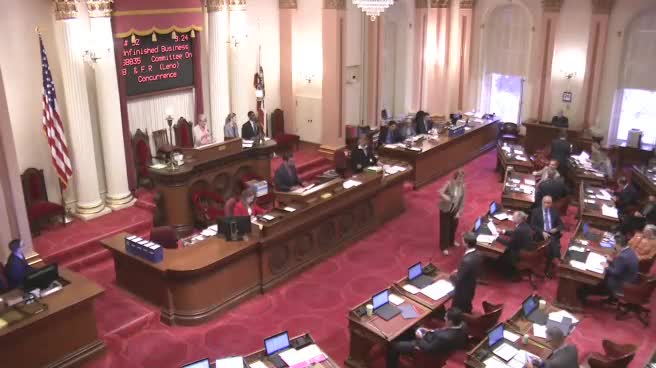 54SEC
Senate Floor
 1MIN
Assembly Floor
 22MIN
Assembly Standing Committee on Water, Parks, and Wildlife
 2MIN
Senate Floor
 1MIN
Senate Standing Committee on Appropriations
 1MIN
Senate Standing Committee on Appropriations
 18MIN
Senate Standing Committee on Natural Resources and Water
Bill Author

Bill Co-Author(s):