SB 555: Urban retail water suppliers: water loss management.
- Session Year: 2015-2016
- House: Senate
- Latest Version Date: 2015-10-09
Existing law requires the state to achieve a 20% reduction in urban per capita water use in California by December 31, 2020, and requires the state to make incremental progress towards this goal by reducing per capita water use by at least 10% on or before December 31, 2015. Existing law requires each urban retail water supplier to develop urban water use targets and an interim urban water use target, in accordance with specified requirements.
This bill would require each urban retail water supplier, on or before October 1, 2017, and on or before October 1 of each year thereafter, to submit a completed and validated water loss audit report for the previous calendar year or previous fiscal year as prescribed by rules adopted by the Department of Water Resources on or before January 1, 2017, and updated as provided. The bill would require the department to post all validated water loss audit reports on its Internet Web site in a manner that allows for comparisons across water suppliers and to make these reports available for public viewing. This bill would require the department to provide technical assistance to guide urban retail water suppliers water loss detection programs. The bill would require the State Water Resources Control Board, no earlier than January 1, 2019, and no later than July 1, 2020, to adopt rules requiring urban retail water suppliers to meet performance standards for the volume of water losses. This bill would require the board to contribute up to $400,000 using funds available for the 201617 fiscal year towards procuring water loss audit report validation assistance for urban retail water suppliers.
Existing law requires the state to achieve a 20% reduction in urban per capita water use in California by December 31, 2020, and requires the state to make incremental progress towards this goal by reducing per capita water use by at least 10% on or before December 31, 2015. Existing law requires each urban retail water supplier to develop urban water use targets and an interim urban water use target, in accordance with specified requirements.
This bill would require each urban retail water supplier, on or before October 1, 2017, and on or before July October 1 of each year thereafter, to submit a completed and validated water loss audit report for the previous calendar year or previous fiscal year as prescribed by rules adopted by the Department of Water Resources on or before January 1, 2017, and updated as provided. The bill would require the department to post all validated water loss audit reports on its Internet Web site in a manner that allows for comparisons across water suppliers and to make these reports available for public viewing. This bill would require the department to provide technical assistance to guide urban retail water suppliers water loss detection programs. The bill would require the State Water Resources Control Board, no earlier than January 1, 2019, and no later than July 1, 2020, to adopt rules requiring urban retail water suppliers to meet performance standards for the volume of water losses. This bill would require the board to contribute up to $400,000 using funds available for the 201617 fiscal year towards procuring water loss audit report validation assistance for urban retail water suppliers.
Existing law requires the state to achieve a 20% reduction in urban per capita water use in California by December 31, 2020, and requires the state to make incremental progress towards this goal by reducing per capita water use by at least 10% on or before December 31, 2015. Existing law requires each urban retail water supplier to develop urban water use targets and an interim urban water use target, in accordance with specified requirements.
This bill would require each urban retail water supplier, on or before October 1, 2017, and on or before July 1 of each year thereafter, to submit a completed and validated water loss audit report for the previous calendar year as prescribed by rules adopted by the Department of Water Resources on or before January 1, 2017, and updated as provided. The bill would require the department to post all validated water loss audit reports on its Internet Web site in a manner that allows for comparisons across water suppliers and to make these reports available for public viewing. This bill would require the department to provide technical assistance to guide urban retail water suppliers water loss detection programs. The bill would require the State Water Resources Control Board, no earlier than January 1, 2019, and no later than July 1, 2020, to adopt rules requiring urban retail water suppliers to meet performance standards for the volume of water losses. This bill would require the board to contribute up to $400,000 using funds available for the 2016 17 201617 fiscal year towards procuring water loss audit report validation assistance for urban retail water suppliers.
Existing law requires the state to achieve a 20% reduction in urban per capita water use in California by December 31, 2020, and requires the state to make incremental progress towards this goal by reducing per capita water use by at least 10% on or before December 31, 2015. Existing law requires each urban retail water supplier to develop urban water use targets and an interim urban water use target, in accordance with specified requirements.
This bill would require each urban retail water supplier, on or before July October 1, 2017, and annually on or before July 1 of each year thereafter, to submit a completed and validated water loss audit report for the previous calendar year as prescribed by rules adopted by the Department of Water Resources on or before January 1, 2017, and updated as provided. The bill would require the department to post all validated water loss audit reports on its Internet Web site in a manner that allows for comparisons across water suppliers and to make these reports available for public viewing. This bill would require the department to provide technical assistance to guide urban retail water suppliers water loss detection programs. The bill would require the State Water Resources Control Board, no earlier than January 1, 2019, and no later than July 1, 2020, to adopt rules requiring urban retail water suppliers to meet performance standards for the volume of water losses. This bill would require the board to contribute up to $400,000 using funds available for the 2016 17 fiscal year towards the departments costs incurred in performing validations of procuring water loss audit reports during the period beginning on July 1, 2016, and ending on or before July 1, 2017. report validation assistance for urban retail water suppliers.
Existing law requires the state to achieve a 20% reduction in urban per capita water use in California by December 31, 2020, and requires the state to make incremental progress towards this goal by reducing per capita water use by at least 10% on or before December 31, 2015. Existing law requires each urban retail water supplier to develop urban water use targets and an interim urban water use target, in accordance with specified requirements.
This bill would require each urban retail water supplier, on or before July 1, 2017, and annually each year thereafter, to submit a completed and validated water loss audit report for the previous calendar year as prescribed by rules adopted by the Department of Water Resources on or before January 1, 2017, and updated as provided. The bill would require the department to post all validated water loss audit reports on its Internet Web site in a manner that allows for comparisons across water suppliers and to make these reports available for public viewing. This bill would require the department to provide technical assistance to guide urban retail water suppliers water loss detection programs. The bill would require the department, in consultation with the State Water Resources Control Board, to develop metrics for reporting year-over-year progress on water loss reduction and would require the board no earlier than January 1, 2019, and no later than July 1, 2020, to adopt rules requiring urban retail water suppliers to meet performance standards for the volume of water losses. This bill would require the board to contribute up to $400,000 towards the departments costs incurred in performing validations of water loss audit reports during the period beginning on July 1, 2016, and ending on or before July 1, 2017.
Existing law requires the state to achieve a 20% reduction in urban per capita water use in California by December 31, 2020, and requires the state to make incremental progress towards this goal by reducing per capita water use by at least 10% on or before December 31, 2015. Existing law requires each urban retail water supplier to develop urban water use targets and an interim urban water use target, in accordance with specified requirements.
This bill would require each urban retail water supplier, on or before July 1, 2017, and annually each year thereafter, to conduct a submit a completed and validated water loss audit report for the previous calendar year as prescribed by rules adopted by the Department of Water Resources on or before July 1, 2016, January 1, 2017, and updated as provided. This bill would require an urban retail water supplier to submit a completed and validated water loss audit report for the previous calendar year to the department, as specified. The bill would require the department to post all validated water loss audit reports on its Internet Web site in a manner that allows for comparisons across water suppliers and to make these reports available for public viewing. This bill would require the department to provide technical assistance to guide urban retail water suppliers water loss detection programs. The bill would require the department, in consultation with the State Water Resources Control Board, to develop metrics for reporting year-over-year progress on water loss reduction and would require the board to adopt rules requiring urban retail water suppliers to meet performance standards for the volume of water losses.
Existing law requires the state to achieve a 20% reduction in urban per capita water use in California by December 31, 2020, and requires the state to make incremental progress towards this goal by reducing per capita water use by at least 10% on or before December 31, 2015. Existing law requires each urban retail water supplier to develop urban water use targets and an interim urban water use target, in accordance with specified requirements.
This bill would require each urban retail water supplier, on or before July 1, 2017, and annually each year thereafter, to conduct a water loss audit as prescribed by rules adopted by the Department of Water Resources on or before July 1, 2016, and updated as provided. This bill would require an urban retail water supplier to submit a completed and validated water loss audit report for the previous calendar year to the department within 60 days of completion and department, as specified. The bill would require the department to post the report all validated water loss audit reports on its Internet Web site in a timely manner after its receipt. in a manner that allows for comparisons across water suppliers and to make these reports available for public viewing. This bill would require the department to provide technical assistance to guide urban retail water suppliers water loss detection programs. The bill would require the department, in consultation with the State Water Resources Control Board, to develop metrics for reporting year-over-year progress on water loss reduction and would require the board to adopt rules requiring urban retail water suppliers to meet performance standards for the volume of water losses.
Existing law requires the state to achieve a 20% reduction in urban per capita water use in California by December 31, 2020, and requires the state to make incremental progress towards this goal by reducing per capita water use by at least 10% on or before December 31, 2015. Existing law requires each urban retail water supplier to develop urban water use targets and an interim urban water use target, in accordance with specified requirements.
This bill would require each urban retail water supplier, on or before July 1, 2017, to conduct a water loss audit as prescribed by rules adopted by the Department of Water Resources on or before July 1, 2016. This bill would require an urban retail water supplier to submit a validated audit report to the department within 60 days of completion and the department to post the report on its Internet Web site in a timely manner after its receipt. This bill would require the department to provide technical assistance to guide urban retail water suppliers water loss detection programs.
(a)(1)On or before January 1, 2017, the department shall adopt rules for all of the following:
(A)The conduct of standardized water loss audits by urban retail water suppliers in accordance with the method adopted by the American Water Works Association in the third edition of Water Audits and Loss Control Programs, Manual M36 and in the Free Water Audit Software, version 5.0.
(B)The process for validating a water loss audit report prior to submitting the report to the department. For the purposes of this section, validating is a process whereby an urban retail water supplier uses a technical expert to confirm the basis of all data entries in the urban retail water suppliers water loss audit report and to appropriately characterize the quality of the reported data. The validation process shall follow the principles and terminology laid out by the American Water Works Association in the third edition of Water Audits and Loss Control Programs, Manual M36 and in the Free Water Audit Software, version 5.0. A validated water loss audit report shall include the name and technical qualifications of the person engaged for validation.
(C)The technical qualifications required of a person to engage in validation, as described in subparagraph (B).
(D)The certification requirements for a person selected by an urban retail water supplier to provide validation of its own water loss audit report.
(E)The method of submitting a water loss audit report to the department.
(2)The department shall update rules adopted pursuant to paragraph (1) no later than six months after the release of subsequent editions of the American Water Works Associations Water Audits and Loss Control Programs, Manual M36. Except as provided by the department, until the department adopts updated rules pursuant to this paragraph, an urban retail water supplier may rely upon a subsequent edition of the American Water Works Associations Water Audits and Loss Control Programs, Manual M36 or the Free Water Audit Software.
(b)On or before October 1, 2017, and on or before October 1 of each year thereafter, each urban retail water supplier shall submit a completed and validated water loss audit report for the previous calendar year or the previous fiscal year as prescribed by the department pursuant to subdivision (a). Water loss audit reports submitted on or before October 1, 2017, may be completed and validated with assistance as described in subdivision (c).
(c)Using funds available for the 201617 fiscal year, the board shall contribute up to four hundred thousand dollars ($400,000) towards procuring water loss audit report validation assistance for urban retail water suppliers.
(d)Each water loss audit report submitted to the department shall be accompanied by information, in a form specified by the department, identifying steps taken in the preceding year to increase the validity of data entered into the final audit, reduce the volume of apparent losses, and reduce the volume of real losses.
(e)At least one of the following employees of an urban retail water supplier shall attest to each water loss audit report submitted to the department:
(1)The chief financial officer.
(2)The chief engineer.
(3)The general manager.
(f)The department shall deem incomplete and return to the urban retail water supplier any final water loss audit report found by the department to be incomplete, not validated, unattested, or incongruent with known characteristics of water system operations. A water supplier shall resubmit a completed water loss audit report within 90 days of an audit being returned by the department.
(g)The department shall post all validated water loss audit reports on its Internet Web site in a manner that allows for comparisons across water suppliers. The department shall make the validated water loss audit reports available for public viewing in a timely manner after their receipt.
(h)Using available funds, the department shall provide technical assistance to guide urban retail water suppliers water loss detection programs, including, but not limited to, metering techniques, pressure management techniques, condition-based assessment techniques for transmission and distribution pipelines, and utilization of portable and permanent water loss detection devices.
(i)No earlier than January 1, 2019, and no later than July 1, 2020, the board shall adopt rules requiring urban retail water suppliers to meet performance standards for the volume of water losses. In adopting these rules, the board shall employ full life cycle cost accounting to evaluate the costs of meeting the performance standards. The board may consider establishing a minimum allowable water loss threshold that, if reached and maintained by an urban water supplier, would exempt the urban water supplier from further water loss reduction requirements.
(a)(1)On or before January 1, 2017, the department shall adopt rules for all of the following:
(A)The conduct of standardized water loss audits by urban retail water suppliers in accordance with the method adopted by the American Water Works Association in the third edition of Water Audits and Loss Control Programs, Manual M36 and in the Free Water Audit Software, version 5.0.
(B)The process for validating a water loss audit report prior to submitting the report to the department. For the purposes of this section, validating is a process whereby an urban retail water supplier uses a technical expert to confirm the basis of all data entries in the urban retail water suppliers water loss audit report and to appropriately characterize the quality of the reported data. The validation process shall follow the principles and terminology laid out by the American Water Works Association in the third edition of Water Audits and Loss Control Programs, Manual M36 and in the Free Water Audit Software, version 5.0. A validated water loss audit report shall include the name and technical qualifications of the person engaged for validation.
(C)The technical qualifications required of a person to engage in validation, as described in subparagraph (B).
(D)The certification requirements for a person selected by an urban retail water supplier to provide validation of its own water loss audit report.
(E)The method of submitting a water loss audit report to the department.
(2)The department shall update rules adopted pursuant to paragraph (1) no later than six months after the release of subsequent editions of the American Water Works Associations Water Audits and Loss Control Programs, Manual M36. Except as provided by the department, until the department adopts updated rules pursuant to this paragraph, an urban retail water supplier may rely upon a subsequent edition of the American Water Works Associations Water Audits and Loss Control Programs, Manual M36 or the Free Water Audit Software.
(b)On or before October 1, 2017, and on or before July October 1 of each year thereafter, each urban retail water supplier shall submit a completed and validated water loss audit report for the previous calendar year or the previous fiscal year as prescribed by the department pursuant to subdivision (a). Water loss audit reports submitted on or before October 1, 2017, may be completed and validated with assistance as described in paragraph (1) of subdivision (c).
(c)Using funds available for the 201617 fiscal year, the board shall contribute up to four hundred thousand dollars ($400,000) towards procuring water loss audit report validation assistance for urban retail water suppliers.
(d)Each water loss audit report submitted to the department shall be accompanied by information, in a form specified by the department, identifying steps taken in the preceding year to increase the validity of data entered into the final audit, reduce the volume of apparent losses, and reduce the volume of real losses.
(e)At least one of the following employees of an urban retail water supplier shall attest to each water loss audit report submitted to the department:
(1)The chief financial officer.
(2)The chief engineer.
(3)The general manager.
(f)The department shall deem incomplete and return to the urban retail water supplier any final water loss audit report found by the department to be incomplete, not validated, unattested, or incongruent with known characteristics of water system operations. A water supplier shall resubmit a completed water loss audit report within 90 days of an audit being returned by the department.
(g)The department shall post all validated water loss audit reports on its Internet Web site in a manner that allows for comparisons across water suppliers. The department shall make the validated water loss audit reports available for public viewing in a timely manner after their receipt.
(h)Using available funds, the department shall provide technical assistance to guide urban retail water suppliers water loss detection programs, including, but not limited to, metering techniques, pressure management techniques, condition-based assessment techniques for transmission and distribution pipelines, and utilization of portable and permanent water loss detection devices.
(i)No earlier than January 1, 2019, and no later than July 1, 2020, the board shall adopt rules requiring urban retail water suppliers to meet performance standards for the volume of water losses. In adopting these rules, the board shall employ full life cycle cost accounting to evaluate the costs of meeting the performance standards. The board may consider establishing a minimum allowable water loss threshold that, if reached and maintained by an urban water supplier, would exempt the urban water supplier from further water loss reduction requirements.
(a)(1)On or before January 1, 2017, the department shall adopt rules for all of the following:
(A)The conduct of standardized water loss audits by urban retail water suppliers in accordance with the method adopted by the American Water Works Association in the third edition of Water Audits and Loss Control Programs, Manual M36 and in the Free Water Audit Software, version 5.0.
(B)The process for validating a water loss audit report prior to submitting the report to the department. For the purposes of this section, validating is a process whereby an urban retail water supplier uses a technical expert to confirm the basis of all data entries in the urban retail water suppliers water loss audit report and to appropriately characterize the quality of the reported data. The validation process shall follow the principles and terminology laid out by the American Water Works Association in the third edition of Water Audits and Loss Control Programs, Manual M36 and in the Free Water Audit Software, version 5.0. A validated water loss audit report shall include the name and technical qualifications of the person engaged for validation.
(C)The technical qualifications required of a person to engage in validation, as described in subparagraph (B).
(D)The certification requirements for a person selected by an urban retail water supplier to provide validation of its own water loss audit report.
(E)The method of submitting a water loss audit report to the department.
(2)The department shall update rules adopted pursuant to paragraph (1) no later than six months after the release of subsequent editions of the American Water Works Associations Water Audits and Loss Control Programs, Manual M36. Except as provided by the department, until the department adopts updated rules pursuant to this paragraph, an urban retail water supplier may rely upon a subsequent edition of the American Water Works Associations Water Audits and Loss Control Programs, Manual M36 or the Free Water Audit Software.
(b)On or before October 1, 2017, and on or before July 1 of each year thereafter, each urban retail water supplier shall submit a completed and validated water loss audit report for the previous calendar year as prescribed by the department pursuant to subdivision (a). Water loss audit reports submitted on or before October 1, 2017, may be completed and validated with assistance as described in paragraph (1) of subdivision (c).
(c)(1)Using funds available for the 2016 17 201617 fiscal year, the board shall contribute up to four hundred thousand dollars ($400,000) towards procuring water loss audit report validation assistance for urban retail water suppliers.
(2)The board shall determine whether providing water loss audit report validation assistance is an appropriate use of state funds or whether an urban retail water supplier shall be solely responsible for its own validation costs after the 201617 fiscal year.
(d)Each water loss audit report submitted to the department shall be accompanied by information, in a form specified by the department, identifying steps taken in the preceding year to increase the validity of data entered into the final audit, reduce the volume of apparent losses, and reduce the volume of real losses.
(e)At least one of the following employees of an urban retail water supplier shall attest to each water loss audit report submitted to the department:
(1)The chief financial officer.
(2)The chief engineer.
(3)The general manager.
(f)The department shall deem incomplete and return to the urban retail water supplier any final water loss audit report found by the department to be incomplete, not validated, unattested, or incongruent with known characteristics of water system operations. A water supplier shall resubmit a completed water loss audit report within 90 days of an audit being returned by the department.
(g)The department shall post all validated water loss audit reports on its Internet Web site in a manner that allows for comparisons across water suppliers. The department shall make the validated water loss audit reports available for public viewing in a timely manner after their receipt.
(h)Using available funds, the department shall provide technical assistance to guide urban retail water suppliers water loss detection programs, including, but not limited to, metering techniques, pressure management techniques, condition-based assessment techniques for transmission and distribution pipelines, and utilization of portable and permanent water loss detection devices.
(i)No earlier than January 1, 2019, and no later than July 1, 2020, the board shall adopt rules requiring urban retail water suppliers to meet performance standards for the volume of water losses. In adopting these rules, the board shall employ full life cycle cost accounting to evaluate the costs of meeting the performance standards. The board may consider establishing a minimum allowable water loss threshold that, if reached and maintained by an urban water supplier, would exempt the urban water supplier from further water loss reduction requirements.
(a)(1)On or before January 1, 2017, the department shall adopt rules for all of the following:
(A)The conduct of standardized water loss audits by urban retail water suppliers in accordance with the method adopted by the American Water Works Association in the third edition of Water Audits and Loss Control Programs, Manual M36 and in the Free Water Audit Software, version 5.0.
(B)The process for validating a water loss audit report prior to submitting the report to the department. For the purposes of this section, validating is a process whereby a technical expert engages with an urban retail water supplier uses a technical expert to confirm the basis of all data entries in the urban retail water suppliers water loss audit report and to appropriately characterize the quality of the reported data. The validation process shall follow the principles and terminology laid out by the American Water Works Association in the third edition of Water Audits and Loss Control Programs, Manual M36 and in the Free Water Audit Software, version 5.0. A validated water loss audit report shall include the name and technical qualifications of the person engaged for validation.
(C)The technical qualifications required of a person to engage in validation, as described in subparagraph (B).
(D)The certification requirements for a person selected by an urban retail water supplier to provide validation of its own water loss audit report.
(E)The method and timing of submitting a water loss audit report to the department.
(2)The department shall update rules adopted pursuant to paragraph (1) no later than six months after the release of subsequent editions of the American Water Works Associations Water Audits and Loss Control Programs, Manual M36. Except as provided by the department, until the department adopts updated rules pursuant to this paragraph , an urban retail water supplier may rely upon a subsequent edition of the American Water Works Associations Water Audits and Loss Control Programs, Manual M36 or the Free Water Audit Software.
(b)On or before July October 1, 2017, and annually on or before July 1 of each year thereafter, each urban retail water supplier shall submit a completed and validated water loss audit report for the previous calendar year as prescribed by the department pursuant to subdivision (a). Water loss audit reports submitted on or before October 1, 2017, may be completed and validated with assistance as described in paragraph (1) of subdivision (c).
(c)(1)Using available funds, funds available for the 2016 17 fiscal year, the board shall contribute up to four hundred thousand dollars ($400,000) towards the departments costs incurred in performing validations of water loss audit reportsduring the period beginning on July 1, 2016, and ending on or before July 1, 2017. Thereafter, the board shall determine whether performing validations is an appropriate use of state funds or whether an urban retail water supplier shall be responsible for its own validation costs. procuring water loss audit report validation assistance for urban retail water suppliers.
(2)The board shall determine whether providing water loss audit report validation assistance is an appropriate use of state funds or whether an urban retail water supplier shall be solely responsible for its own validation costs after the 201617 fiscal year.
(d)Each water loss audit report submitted to the department shall be accompanied by information, in a form specified by the department, identifying steps taken in the preceding year to increase the validity of data entered into the final audit, reduce the volume of apparent losses, and reduce the volume of real losses.
(e)At least one of the following employees of an urban retail water supplier shall attest to each water loss audit report submitted to the department:
(1)The chief financial officer.
(2)The chief engineer.
(3)The general manager.
(f)The department shall deem incomplete and return to the urban retail water supplier any final water loss audit report found by the department to be incomplete, not validated, unattested, or incongruent with known characteristics of water system operations. A water supplier shall resubmit a completed water loss audit report within 90 days of an audit being returned by the department.
(g)The department shall post all validated water loss audit reports on its Internet Web site in a manner that allows for comparisons across water suppliers. The department shall make the validated water loss audit reports available for public viewing in a timely manner after their receipt.
(h)Using available funds, the department shall provide technical assistance to guide urban retail water suppliers water loss detection programs, including, but not limited to, metering techniques, pressure management techniques, condition-based assessment techniques for transmission and distribution pipelines, and utilization of portable and permanent water loss detection devices.
(i)No earlier than January 1, 2019, and no later than July 1, 2020, the board shall adopt rules requiring urban retail water suppliers to meet performance standards for the volume of water losses. In adopting these rules, the board shall employ full life cycle cost accounting to evaluate the costs of meeting the performance standards.
(a)(1)On or before January 1, 2017, the department shall adopt rules for all of the following:
(A)The conduct of standardized water loss audits by urban retail water suppliers in accordance with the method adopted by the American Water Works Association in the third edition of Water Audits and Loss Control Programs, Manual M36 and in the Free Water Audit Software, version 5.0.
(B)The process for validating a water loss audit report prior to submitting the report to the department. For the purposes of this section, validating is a process whereby a technical expert engages with an urban retail water supplier to confirm the basis of all data entries in the urban retail water suppliers water loss audit report and to appropriately characterize the quality of the reported data. The validation process shall follow the principles and terminology laid out by the American Water Works Association in the third edition of Water Audits and Loss Control Programs, Manual M36 and in the Free Water Audit Software, version 5.0. A validated water loss audit report shall include the name and technical qualifications of the person engaged for validation.
(C)The technical qualifications required of a person to engage in validation, as described in subparagraph (B).
(D)The certification requirements for a person selected by an urban retail water supplier to provide validation of its own water loss audit report.
(C)
(E)The method and timing of submitting a water loss audit report to the department.
(2)The department shall update rules adopted pursuant to paragraph (1) every five years and no later than six months after the release of subsequent editions of the American Water Works Associations Water Audits and Loss Control Programs, Manual M36.
(b)On or before July 1, 2017, and annually each year thereafter, each urban retail water supplier shall submit a completed and validated water loss audit report for the previous calendar year as prescribed by the department pursuant to subdivision (a).
(c)Using available funds, the board shall contribute up to four hundred thousand dollars ($400,000) towards the departments costs incurred in performing validations of water loss audit reports during the period beginning on July 1, 2016, and ending on or before July 1, 2017. Thereafter, the board shall determine whether performing validations is an appropriate use of state funds or whether an urban retail water supplier shall be responsible for its own validation costs.
(c)
(d)Each water loss audit report submitted to the department shall be accompanied by information, in a form specified by the department, identifying steps taken in the preceding year to increase the validity of data entered into the final audit, reduce the volume of apparent losses, and reduce the volume of real losses.
(d)
(e)At least one of the following employees of an urban retail water supplier shall attest to each water loss audit report submitted to the department:
(1)The chief financial officer.
(2)The chief engineer.
(3)The general manager.
(e)
(f)The department shall deem incomplete and return to the urban retail water supplier any final water loss audit report found by the department to be incomplete, not validated, unattested, or incongruent with known characteristics of water system operations. A water supplier shall resubmit a completed water loss audit report within 90 days of an audit being returned by the department.
(f)
(g)The department shall post all validated water loss audit reports on its Internet Web site in a manner that allows for comparisons across water suppliers. The department shall make the validated water loss audit reports available for public viewing in a timely manner after their receipt.
(g)
(h)Using available funds, the department shall provide technical assistance to guide urban retail water suppliers water loss detection programs, including, but not limited to, metering techniques, pressure management techniques, condition-based assessment techniques for transmission and distribution pipelines, and utilization of portable and permanent water loss detection devices, and funding. devices.
(h)(1)The department, in consultation with the board, shall develop metrics for reporting year-over-year progress on water loss reduction.
(2)On or before
(i)No earlier than January 1, 2019, and no later than July 1, 2020, the board shall adopt rules requiring urban retail water suppliers to meet performance standards for the volume of water losses. In adopting these rules, the board shall employ full life cycle cost accounting to evaluate the costs of meeting the performance standards.
(a)(1)On or before July 1, 2016, January 1, 2017, the department shall adopt rules for all of the following:
(A)The conduct of standardized water loss audits by urban retail water suppliers in accordance with the method adopted by the American Water Works Association in the third edition of Water Audits and Loss Control Programs, Manual M36 and in the Free Water Audit Software, version 5.0.
(B)The process for validating a water loss audit report prior to submitting the report to the department.
(C)The method and timing of submitting a water loss audit report to the department.
(2)The department shall update rules adopted pursuant to paragraph (1) every five years and no later than six months after the release of subsequent editions of the American Water Works Associations Water Audits and Loss Control Programs, Manual M36.
(b)On or before July 1, 2017, and annually each year thereafter, each urban retail water supplier shall submit a completed and validated water loss audit report for the previous calendar year as prescribed by the department pursuant to subdivision (a).
(c)Each water loss audit report submitted to the department shall be accompanied by information, in a form specified by the department, identifying steps taken in the preceding year to increase the validity of data entered into the final audit, reduce the volume of apparent losses, and reduce the volume of real losses.
(d)At least one of the following employees of an urban retail water supplier shall attest to each water loss audit report submitted to the department:
(1)The chief financial officer.
(2)The chief engineer.
(3)The general manager.
(e)The department shall deem incomplete and return to the urban retail water supplier any final water loss audit report found by the department to be incomplete, not validated, unattested, or incongruent with known characteristics of water system operations. A water supplier shall resubmit a completed water loss audit report within 90 days of an audit being returned by the department.
(f)The department shall post all validated water loss audit reports on its Internet Web site in a manner that allows for comparisons across water suppliers. The department shall make the validated water loss audit reports available for public viewing in a timely manner after their receipt.
(g)Using available funds, the department shall provide technical assistance to guide urban retail water suppliers water loss detection programs, including, but not limited to, metering techniques, pressure management techniques, condition-based assessment techniques for transmission and distribution pipelines, utilization of portable and permanent water loss detection devices, and funding.
(h)(1)The department, in consultation with the board, shall develop metrics for reporting year-over-year progress on water loss reduction.
(2)On or before July 1, 2020, the board shall adopt rules requiring urban retail water suppliers to meet performance standards for the volume of water losses.
(a)(1)On or before July 1, 2016, the department shall adopt rules for all of the following:
(1)
(A)The conduct of standardized water loss audits by urban retail water suppliers in accordance with the method adopted by the American Water Works Association in the third edition of Water Audits and Loss Control Programs, Manual M36. M36 and in the Free Water Audit Software, version 5.0.
(2)
(B)The process for validating audit reports a water loss audit report prior to submitting the report to the department.
(3)
(C)The method and timing of submitting an a water loss audit report to the department.
(2)The department shall update rules adopted pursuant to paragraph (1) every five years and no later than six months after the release of subsequent editions of the American Water Works Associations Water Audits and Loss Control Programs, Manual M36.
(b)On or before July 1, 2017, and annually each year thereafter, each urban retail water supplier shall conduct a water loss audit submit a completed and validated water loss audit report for the previous calendar year as prescribed by the department pursuant to subdivision (a).
(c)An urban retail water supplier shall submit a validated audit report to the department within 60 days of completion. The
(c)Each water loss audit report submitted to the department shall be accompanied by information, in a form specified by the department, identifying steps taken in the preceding year to increase the validity of data entered into the final audit, reduce the volume of apparent losses, and reduce the volume of real losses.
(d)At least one of the following employees of an urban retail water supplier shall attest to each water loss audit report submitted to the department:
(1)The chief financial officer.
(2)The chief engineer.
(3)The general manager.
(e)The department shall deem incomplete and return to the urban retail water supplier any final water loss audit report found by the department to be incomplete, not validated, unattested, or incongruent with known characteristics of water system operations. A water supplier shall resubmit a completed water loss audit report within 90 days of an audit being returned by the department.
(f)The department shall post the report all validated water loss audit reports on its Internet Web site in a manner that allows for comparisons across water suppliers. The department shall make the validated water loss audit reports available for public viewing in a timely manner after its their receipt.
(d)
(g)Using available funds, the department shall provide technical assistance to guide urban retail water suppliers water loss detection programs, including, but not limited to, metering techniques, pressure management techniques, condition-based assessment techniques for transmission and distribution pipelines, utilization of portable and permanent water loss detection devices, and funding.
(h)(1)The department, in consultation with the board, shall develop metrics for reporting year-over-year progress on water loss reduction.
(2)On or before July 1, 2020, the board shall adopt rules requiring urban retail water suppliers to meet performance standards for the volume of water losses.
(a)On or before July 1, 2016, the department shall adopt rules for all of the following:
(1)The conduct of standardized water loss audits by urban retail water suppliers in accordance with the method adopted by the American Water Works Association in the third edition of Water Audits and Loss Control Programs, Manual M36.
(2)The process for validating audit reports prior to submitting the report to the department.
(3)The method and timing of submitting an audit report to the department.
(b)On or before July 1, 2017, each urban retail water supplier shall conduct a water loss audit as prescribed by the department pursuant to subdivision (a).
(c)An urban retail water supplier shall submit a validated audit report to the department within 60 days of completion. The department shall post the report on its Internet Web site in a timely manner after its receipt.
(d)Using available funds, the department shall provide technical assistance to guide urban retail water suppliers water loss detection programs, including, but not limited to, metering techniques, utilization of portable and permanent water loss detection devices, and funding.
|
Date
|
Status
|
|---|---|
| Oct 9, 2015 | Chaptered by Secretary of State. Chapter 679, Statutes of 2015. |
| Oct 9, 2015 | Approved by the Governor. |
| Sep 10, 2015 | Enrolled and presented to the Governor at 3:30 p.m. |
| Sep 4, 2015 | Assembly amendments concurred in. (Ayes 40. Noes 0. Page 2500.) Ordered to engrossing and enrolling. |
| Sep 4, 2015 | Assembly amendments concurred in. (Ayes 40. Noes 0.) Ordered to engrossing and enrolling. |
| Sep 3, 2015 | Read third time. Passed. (Ayes 71. Noes 5. Page 2853.) Ordered to the Senate. |
| Sep 3, 2015 | In Senate. Concurrence in Assembly amendments pending. |
| Sep 3, 2015 | Read third time. Passed. Ordered to the Senate. |
| Sep 1, 2015 | Ordered to third reading. |
| Sep 1, 2015 | Read third time and amended. |
| Aug 31, 2015 | Read second time. Ordered to third reading. |
| Aug 28, 2015 | From committee: Do pass. (Ayes 12. Noes 4.) (August 27). |
| Aug 19, 2015 | August 19 set for first hearing. Placed on APPR. suspense file. |
| Aug 17, 2015 | From committee with author's amendments. Read second time and amended. Re-referred to Com. on APPR. |
| Jul 16, 2015 | Read second time and amended. Re-referred to Com. on APPR. |
| Jul 15, 2015 | From committee: Do pass as amended and re-refer to Com. on APPR. (Ayes 10. Noes 3.) (July 14). |
| Jul 7, 2015 | From committee with author's amendments. Read second time and amended. Re-referred to Com. on W., P., & W. |
| Jun 18, 2015 | Referred to Com. on W., P., & W. |
| Jun 2, 2015 | In Assembly. Read first time. Held at Desk. |
| Jun 1, 2015 | Read third time. Passed. (Ayes 36. Noes 2. Page 1206.) Ordered to the Assembly. |
| Jun 1, 2015 | Read third time. Passed. (Ayes 36. Noes 2.) Ordered to the Assembly. |
| May 28, 2015 | Read second time. Ordered to third reading. |
| May 28, 2015 | From committee: Do pass. (Ayes 7. Noes 0. Page 1156.) (May 28). |
| May 28, 2015 | From committee: Do pass. (Ayes 7. Noes 0.) (May 28). |
| May 23, 2015 | Set for hearing May 28. |
| Apr 27, 2015 | April 27 hearing: Placed on APPR. suspense file. |
| Apr 21, 2015 | Set for hearing April 27. |
| Apr 16, 2015 | Read second time and amended. Re-referred to Com. on APPR. |
| Apr 15, 2015 | From committee: Do pass as amended and re-refer to Com. on APPR. (Ayes 8. Noes 0. Page 593.) (April 14). |
| Apr 7, 2015 | From committee with author's amendments. Read second time and amended. Re-referred to Com. on N.R. & W. |
| Apr 7, 2015 | Set for hearing April 14. |
| Mar 12, 2015 | Referred to Com. on N.R. & W. |
| Feb 27, 2015 | From printer. May be acted upon on or after March 29. |
| Feb 26, 2015 | Introduced. Read first time. To Com. on RLS. for assignment. To print. |
|
Date
|
Description
|
Location
|
Votes
|
|
|---|---|---|---|---|
| Sep 4, 2015 | Unfinished Business SB555 Wolk Concurrence | Senate Floor |
Passed |
|
| Sep 3, 2015 | SB 555 Wolk Senate Third Reading By CHU | Assembly Floor |
Passed |
|
| Aug 27, 2015 | Do pass. | Assembly Standing Committee on Appropriations |
Passed |
|
| Jul 14, 2015 | Do pass as amended and be re-referred to the Committee on [Appropriations] | Assembly Standing Committee on Water, Parks, and Wildlife |
Passed |
|
| Jun 1, 2015 | Senate 3rd Reading SB555 Wolk | Senate Floor |
Passed |
|
| May 28, 2015 | Do pass | Senate Standing Committee on Appropriations |
Passed |
|
| Apr 27, 2015 | Placed on suspense file | Senate Standing Committee on Appropriations |
Passed |
|
| Apr 14, 2015 | Do pass as amended, but first amend, and re-refer to the Committee on [Appropriations] | Senate Standing Committee on Natural Resources and Water |
Passed |
This list shows positions taken on this bill by organizations on the date displayed, which is linked to the original source.
Positions by individuals are not included.
SB 555
Page 7
|
Office of Senate Floor Analyses (916) 651-1520 Fax: (916) 327-4478 |
UNFINISHED BUSINESS
Bill No: SB 555
Amended: 9/1/15
SENATE NATURAL RES. & WATER COMMITTEE: 8-0, 4/14/15
AYES: Pavley, Stone, Allen, Fuller, Hueso, Jackson, Monning, Wolk
NO VOTE RECORDED: Hertzberg
SENATE APPROPRIATIONS COMMITTEE: 7-0, 5/28/15
AYES: Lara, Bates, Beall, Hill, Leyva, Mendoza, Nielsen
SENATE FLOOR: 36-2, 6/1/15
AYES: Allen, Anderson, Bates, Beall, Berryhill, Block, Cannella, De León, Fuller, Gaines, Galgiani, Glazer, Hall, Hancock, Hernandez, Hertzberg, Hill, Huff, Jackson, Lara, Leno, Leyva, Liu, McGuire, Mendoza, Mitchell, Monning, Nguyen, Nielsen, Pan, Pavley, Roth, Stone, Vidak, Wieckowski, Wolk
NOES: Moorlach, Morrell
NO VOTE RECORDED: Hueso, Runner
ASSEMBLY FLOOR: 71-5, 9/3/15 - See last page for vote
SUBJECT: Urban retail water suppliers: water loss management.
DIGEST: This bill requires each urban retail water supplier, on or before October 1, 2017, and annually thereafter, to submit annual water loss audit (WLA) reports to the Department of Water Resources (DWR) as specified and requires DWR to post such WLAs and provide technical assistance.
Assembly Amendments add a requirement that the State Water Resources Control Board (State Board) provide up to $400,000 for validation assistance for urban retail water suppliers; and make a number of clarifying changes.
Existing law:
Requires all urban water suppliers to prepare and adopt urban water management plans (UWMPs), update them every five years, and submit them to DWR. Among other requirements, UWMPs must:
Provide a description of the service area of the supplier;
Identify and quantify water resources; and,
Make water use projections.
Specifies that compliance with the Urban Water Management Planning Act is a prerequisite to receiving state funding for water projects and programs.
Requires, beginning with the 2015 update, that UWMPs contain a calculation of the distribution system water losses.
Requires distribution system water losses to be reported in accordance with a worksheet approved or developed by DWR using water loss calculations that are based on the water system balance methodology developed by the American Water Works Association (AWWA).
This bill:
Requires each urban retail water supplier, beginning October 1, 2017, and annually thereafter, to submit a completed and validated water loss audit report to DWR for the previous year (calendar or fiscal).
Requires each water loss audit report to be accompanied by information identifying steps taken in the preceding year to increase the validity of data entered into the final audit, reduce the volume of apparent losses, and reduce the volume of real losses.
Requires DWR to deem incomplete and return to the urban retail water supplier any final water loss audit report found by the department to be incomplete, not validated, unattested, or incongruent with known characteristics of water system operations. A water supplier shall resubmit a completed water loss audit report within 90 days of an audit being returned by the department.
Requires DWR to post all validated water loss audit reports on its Internet Web site in a manner that allows for comparisons across water suppliers. (a)
Requires DWR, by January 1, 2017, to adopt rules for all of the following:
The conduct of standardized water loss audits by urban retail water suppliers in accordance with the method adopted by the AWWA.
The process for validating a water loss audit report prior to submitting the report to the department.
The necessary qualifications of persons validating a water loss audit report
The method of submitting a water loss audit report to the department.
Requires DWR to update the rules no later than six months after the release of subsequent editions of the AWWA’s Water Audits and Loss Control Programs, Manual M36.
Requires the State Board, between January 1, 2019, and July 1, 2020, to adopt rules requiring urban retail water suppliers to meet performance standards for the volume of water losses.
Requires the State Board, using funds available for the 2016–17 fiscal year, to contribute up to $400,000 towards procuring water loss audit report validation assistance for urban retail water suppliers.
Requires DWR, using available funds, to provide technical assistance to guide urban retail water suppliers’ water loss detection programs, including, but not limited to, metering techniques, pressure management techniques, condition-based assessment techniques for transmission and distribution pipelines, and utilization of portable and permanent water loss detection devices.
Comments
Is Water Loss a Real Problem? It’s hard to know. According to the California Water Plan, in its discussion on urban water use efficiency:
“The amount of water lost due to leakage in the distribution system of the State’s water suppliers is not well known. This is largely due to the fact that not all water suppliers perform regular water loss audits. If water audits are not conducted, it is difficult for a water agency to know the extent of its losses and unlikely that the agency will implement practices to reduce these losses.” (California Water Plan Update 2013, Vol. 3, Ch. 3)
Proponents point to a 2011 study prepared for the California Public Utilities Commission Energy Division titled “Embedded Energy in Water Pilot Programs Impact Evaluation.” Included in that study was an evaluation of Southern California Edison’s Leak Detection pilot program. However, the statewide estimates of water losses and economically recoverable losses reported in that study were essentially back of the envelope calculations; based on year 2000 urban water use, “the commonly quoted threshold for acceptable real losses in California of 10% of volume supplied,” and a 40% economically recoverable real losses rate based on San Francisco Public Utilities Commission’s experience. (Secondary Research For Water Leak Detection Program And Water System Loss Control Study, December 2009). Consequently, it is not clear whether those estimates of 840,000 acre feet/year (af/y) real losses and 350,000 af/y economically recoverable real losses are reasonably accurate or not.
Do any other states require this? According to the Center For Neighborhood Technology:
“In June of 2010, the Georgia Water Stewardship Act (the Act) was signed into law in an effort to create a “culture of water conservation” throughout the state of Georgia. One of the main components of this legislation was a mandate requiring that all utilities serving populations of 3,300 and above submit annual water loss audits utilizing the American Water Works Association (AWWA) and International Water Association (IWA) water audit methodology (M36).”
“Currently, Georgia has had 100% compliance from utilities for every year that they have been required to submit the AWWA water audits. It is interesting to note that some utilities serving populations less than 3,300, while not included in this mandate, are now using the auditing method voluntarily after hearing positive anecdotes from their larger system peers. The success of Georgia’s program provides an effective blueprint for other states and agencies in how to begin providing support to their utilities in moving forward with best practices in water loss management.” (Stepping Up Water Loss Control: Lessons From The State Of Georgia, February 2014)
Besides Georgia, it appears that some states have water loss detection requirements of one type or another. But none of those states have programs as rigorous as Georgia’s or as proposed by this bill.
FISCAL EFFECT: Appropriation: No Fiscal Com.: Yes Local: No
According to the Assembly Appropriations Committee:
One-time General Fund (GF) costs of approximately $150,000 for DWR to develop the rules for standardizing and validating water loss audit reports and auditors.
Annual GF costs of approximately $150,000 for DWR to review urban water supplier audit reports and post the reports on its Internet website.
Increased annual GF costs shifts of between $150,000 and $200,000 to provide technical assistance to urban water suppliers on water loss detection programs.
This bill requires DWR to provide technical assistance with existing resources. However, DWR indicates this cost is not absorbable and would require reductions in existing programs.Absorbable one-time costs for the State Board to consult with DWR to develop water loss metrics and performance standards.
The 2015-16 Budget Act provides $833,000 (special fund) and two positions to SWRCB for water conservation activities that are available fulfill these requirements.
Absorbable one-time costs to the State Board of up to $400,000 (Drinking Water State Revolving Fund) for its contribution towards procuring water loss audit report validation assistance for urban water suppliers.
It is presumed the urban water suppliers will be responsible for their validation costs after the first year. The author may wish to clarify that the urban water supplier is responsible for its ongoing validations costs after the 2016-17 year.
Aclara
California League of Conservation Voters
Clean Water Action
Coca-Cola Company
Dignity Health
Environment California
Gap
Heal the Bay
Irvine Ranch Water District
MillerCoors
Natural Resources Defense Council
Regional Water Authority
San Diego County Water Authority
Sierra Club California
Sierra Nevada Brewing Co.
Sonoma County Water Agency
Symantec Corporation
U.S. Green Building Council, California
ARGUMENTS IN SUPPORT: According to the author, the author asserts that “it is essential that all California communities use existing water supplies as efficiently as possible.
“Despite the availability of free audit software and the establishment of a Best Management Practice for water loss by the California Urban Water Conservation Council (CUWCC), urban water suppliers have been slow to realize the full potential of water loss control. One reason for the slow adoption of water loss control methods is the unreliability of water loss audit data. One CUWCC study found that 35% of water audit data submitted by California water suppliers was invalid.
“By requiring urban water suppliers to report system audit results and directing DWR to set audit standards, while providing the necessary technical assistance, water suppliers will achieve effective water loss control and contribute to California’s water management, climate mitigation and climate adaption goals.”
ASSEMBLY FLOOR: 71-5, 9/3/15
AYES: Achadjian, Alejo, Travis Allen, Baker, Bloom, Bonilla, Bonta, Brown, Burke, Calderon, Campos, Chang, Chau, Chávez, Chiu, Chu, Cooley, Cooper, Dababneh, Daly, Dodd, Eggman, Frazier, Beth Gaines, Gallagher, Cristina Garcia, Eduardo Garcia, Gatto, Gipson, Gomez, Gonzalez, Gordon, Gray, Roger Hernández, Holden, Irwin, Jones, Jones-Sawyer, Kim, Lackey, Levine, Linder, Lopez, Low, Maienschein, Mayes, McCarty, Medina, Melendez, Mullin, Nazarian, O'Donnell, Olsen, Perea, Quirk, Rendon, Ridley-Thomas, Rodriguez, Salas, Santiago, Steinorth, Mark Stone, Thurmond, Ting, Wagner, Waldron, Weber, Wilk, Williams, Wood, Atkins
NOES: Bigelow, Grove, Mathis, Obernolte, Patterson
NO VOTE RECORDED: Brough, Dahle, Hadley, Harper
Prepared by: Dennis O'Connor / N.R. & W. / (916) 651-4116
9/3/15 18:47:50
**** END ****
SB 555
Page 7
|
Office of Senate Floor Analyses (916) 651-1520 Fax: (916) 327-4478 |
UNFINISHED BUSINESS
Bill No: SB 555
Amended: 9/1/15
SENATE NATURAL RES. & WATER COMMITTEE: 8-0, 4/14/15
AYES: Pavley, Stone, Allen, Fuller, Hueso, Jackson, Monning, Wolk
NO VOTE RECORDED: Hertzberg
SENATE APPROPRIATIONS COMMITTEE: 7-0, 5/28/15
AYES: Lara, Bates, Beall, Hill, Leyva, Mendoza, Nielsen
SENATE FLOOR: 36-2, 6/1/15
AYES: Allen, Anderson, Bates, Beall, Berryhill, Block, Cannella, De León, Fuller, Gaines, Galgiani, Glazer, Hall, Hancock, Hernandez, Hertzberg, Hill, Huff, Jackson, Lara, Leno, Leyva, Liu, McGuire, Mendoza, Mitchell, Monning, Nguyen, Nielsen, Pan, Pavley, Roth, Stone, Vidak, Wieckowski, Wolk
NOES: Moorlach, Morrell
NO VOTE RECORDED: Hueso, Runner
ASSEMBLY FLOOR: 71-5, 9/3/15 - See last page for vote
SUBJECT: Urban retail water suppliers: water loss management.
DIGEST: This bill requires each urban retail water supplier, on or before October 1, 2017, and annually thereafter, to submit annual water loss audit (WLA) reports to the Department of Water Resources (DWR) as specified and requires DWR to post such WLAs and provide technical assistance.
Assembly Amendments add a requirement that the State Water Resources Control Board (State Board) provide up to $400,000 for validation assistance for urban retail water suppliers; and make a number of clarifying changes.
Existing law:
Requires all urban water suppliers to prepare and adopt urban water management plans (UWMPs), update them every five years, and submit them to DWR. Among other requirements, UWMPs must:
Provide a description of the service area of the supplier;
Identify and quantify water resources; and,
Make water use projections.
Specifies that compliance with the Urban Water Management Planning Act is a prerequisite to receiving state funding for water projects and programs.
Requires, beginning with the 2015 update, that UWMPs contain a calculation of the distribution system water losses.
Requires distribution system water losses to be reported in accordance with a worksheet approved or developed by DWR using water loss calculations that are based on the water system balance methodology developed by the American Water Works Association (AWWA).
This bill:
Requires each urban retail water supplier, beginning October 1, 2017, and annually thereafter, to submit a completed and validated water loss audit report to DWR for the previous year (calendar or fiscal).
Requires each water loss audit report to be accompanied by information identifying steps taken in the preceding year to increase the validity of data entered into the final audit, reduce the volume of apparent losses, and reduce the volume of real losses.
Requires DWR to deem incomplete and return to the urban retail water supplier any final water loss audit report found by the department to be incomplete, not validated, unattested, or incongruent with known characteristics of water system operations. A water supplier shall resubmit a completed water loss audit report within 90 days of an audit being returned by the department.
Requires DWR to post all validated water loss audit reports on its Internet Web site in a manner that allows for comparisons across water suppliers. (a)
Requires DWR, by January 1, 2017, to adopt rules for all of the following:
The conduct of standardized water loss audits by urban retail water suppliers in accordance with the method adopted by the AWWA.
The process for validating a water loss audit report prior to submitting the report to the department.
The necessary qualifications of persons validating a water loss audit report
The method of submitting a water loss audit report to the department.
Requires DWR to update the rules no later than six months after the release of subsequent editions of the AWWA’s Water Audits and Loss Control Programs, Manual M36.
Requires the State Board, between January 1, 2019, and July 1, 2020, to adopt rules requiring urban retail water suppliers to meet performance standards for the volume of water losses.
Requires the State Board, using funds available for the 2016–17 fiscal year, to contribute up to $400,000 towards procuring water loss audit report validation assistance for urban retail water suppliers.
Requires DWR, using available funds, to provide technical assistance to guide urban retail water suppliers’ water loss detection programs, including, but not limited to, metering techniques, pressure management techniques, condition-based assessment techniques for transmission and distribution pipelines, and utilization of portable and permanent water loss detection devices.
Comments
Is Water Loss a Real Problem? It’s hard to know. According to the California Water Plan, in its discussion on urban water use efficiency:
“The amount of water lost due to leakage in the distribution system of the State’s water suppliers is not well known. This is largely due to the fact that not all water suppliers perform regular water loss audits. If water audits are not conducted, it is difficult for a water agency to know the extent of its losses and unlikely that the agency will implement practices to reduce these losses.” (California Water Plan Update 2013, Vol. 3, Ch. 3)
Proponents point to a 2011 study prepared for the California Public Utilities Commission Energy Division titled “Embedded Energy in Water Pilot Programs Impact Evaluation.” Included in that study was an evaluation of Southern California Edison’s Leak Detection pilot program. However, the statewide estimates of water losses and economically recoverable losses reported in that study were essentially back of the envelope calculations; based on year 2000 urban water use, “the commonly quoted threshold for acceptable real losses in California of 10% of volume supplied,” and a 40% economically recoverable real losses rate based on San Francisco Public Utilities Commission’s experience. (Secondary Research For Water Leak Detection Program And Water System Loss Control Study, December 2009). Consequently, it is not clear whether those estimates of 840,000 acre feet/year (af/y) real losses and 350,000 af/y economically recoverable real losses are reasonably accurate or not.
Do any other states require this? According to the Center For Neighborhood Technology:
“In June of 2010, the Georgia Water Stewardship Act (the Act) was signed into law in an effort to create a “culture of water conservation” throughout the state of Georgia. One of the main components of this legislation was a mandate requiring that all utilities serving populations of 3,300 and above submit annual water loss audits utilizing the American Water Works Association (AWWA) and International Water Association (IWA) water audit methodology (M36).”
“Currently, Georgia has had 100% compliance from utilities for every year that they have been required to submit the AWWA water audits. It is interesting to note that some utilities serving populations less than 3,300, while not included in this mandate, are now using the auditing method voluntarily after hearing positive anecdotes from their larger system peers. The success of Georgia’s program provides an effective blueprint for other states and agencies in how to begin providing support to their utilities in moving forward with best practices in water loss management.” (Stepping Up Water Loss Control: Lessons From The State Of Georgia, February 2014)
Besides Georgia, it appears that some states have water loss detection requirements of one type or another. But none of those states have programs as rigorous as Georgia’s or as proposed by this bill.
FISCAL EFFECT: Appropriation: No Fiscal Com.: Yes Local: No
According to the Assembly Appropriations Committee:
One-time General Fund (GF) costs of approximately $150,000 for DWR to develop the rules for standardizing and validating water loss audit reports and auditors.
Annual GF costs of approximately $150,000 for DWR to review urban water supplier audit reports and post the reports on its Internet website.
Increased annual GF costs shifts of between $150,000 and $200,000 to provide technical assistance to urban water suppliers on water loss detection programs.
This bill requires DWR to provide technical assistance with existing resources. However, DWR indicates this cost is not absorbable and would require reductions in existing programs.Absorbable one-time costs for the State Board to consult with DWR to develop water loss metrics and performance standards.
The 2015-16 Budget Act provides $833,000 (special fund) and two positions to SWRCB for water conservation activities that are available fulfill these requirements.
Absorbable one-time costs to the State Board of up to $400,000 (Drinking Water State Revolving Fund) for its contribution towards procuring water loss audit report validation assistance for urban water suppliers.
It is presumed the urban water suppliers will be responsible for their validation costs after the first year. The author may wish to clarify that the urban water supplier is responsible for its ongoing validations costs after the 2016-17 year.
Aclara
California League of Conservation Voters
Clean Water Action
Coca-Cola Company
Dignity Health
Environment California
Gap
Heal the Bay
Irvine Ranch Water District
MillerCoors
Natural Resources Defense Council
Regional Water Authority
San Diego County Water Authority
Sierra Club California
Sierra Nevada Brewing Co.
Sonoma County Water Agency
Symantec Corporation
U.S. Green Building Council, California
OPPOSITION: (Verified 9/3/15)
None received
ARGUMENTS IN SUPPORT: According to the author, the author asserts that “it is essential that all California communities use existing water supplies as efficiently as possible.
“Despite the availability of free audit software and the establishment of a Best Management Practice for water loss by the California Urban Water Conservation Council (CUWCC), urban water suppliers have been slow to realize the full potential of water loss control. One reason for the slow adoption of water loss control methods is the unreliability of water loss audit data. One CUWCC study found that 35% of water audit data submitted by California water suppliers was invalid.
“By requiring urban water suppliers to report system audit results and directing DWR to set audit standards, while providing the necessary technical assistance, water suppliers will achieve effective water loss control and contribute to California’s water management, climate mitigation and climate adaption goals.”
ASSEMBLY FLOOR: 71-5, 9/3/15
AYES: Achadjian, Alejo, Travis Allen, Baker, Bloom, Bonilla, Bonta, Brown, Burke, Calderon, Campos, Chang, Chau, Chávez, Chiu, Chu, Cooley, Cooper, Dababneh, Daly, Dodd, Eggman, Frazier, Beth Gaines, Gallagher, Cristina Garcia, Eduardo Garcia, Gatto, Gipson, Gomez, Gonzalez, Gordon, Gray, Roger Hernández, Holden, Irwin, Jones, Jones-Sawyer, Kim, Lackey, Levine, Linder, Lopez, Low, Maienschein, Mayes, McCarty, Medina, Melendez, Mullin, Nazarian, O'Donnell, Olsen, Perea, Quirk, Rendon, Ridley-Thomas, Rodriguez, Salas, Santiago, Steinorth, Mark Stone, Thurmond, Ting, Wagner, Waldron, Weber, Wilk, Williams, Wood, Atkins
NOES: Bigelow, Grove, Mathis, Obernolte, Patterson
NO VOTE RECORDED: Brough, Dahle, Hadley, Harper
Prepared by: Dennis O'Connor / N.R. & W. / (916) 651-4116
9/3/15 19:22:10
**** END ****
SB 555
Page 4
SENATE THIRD READING
SB 555
(Wolk)
As Amended September 1, 2015
Majority vote
SENATE VOTE: 36-2
Committee |
Votes |
Ayes |
Noes |
Water |
10-3 |
Levine, Dababneh, Dodd, Cristina Garcia, Gomez, Lopez, Medina, Rendon, Salas, Williams |
Beth Gaines, Harper, Mathis |
Appropriations |
12-4 |
Gomez, Bloom, Bonta, Calderon, Nazarian, Eggman, Eduardo Garcia, Holden, Quirk, Rendon, Weber, Wood |
Bigelow, Gallagher, Jones, Wagner |
SUMMARY: Requires each urban retail water supplier, on or before October 1, 2017, and annually thereafter, to submit annual water loss audit (WLA) reports to the Department of Water Resources (DWR) as specified and requires DWR to post such WLAs and provide technical assistance. Specifically, this bill:
Requires DWR, by January 1, 2017, to adopt rules for standardizing and validating WLAs, including the method for submitting WLAs, and to update those rules within six months of a release of subsequent editions of the American Water Works Association's (AWWA's) Water Audits and Loss Control Programs Manual.
Requires DWR, as part of its rules, to specify the technical qualifications required of a person performing validations and the certification requirements for a person selected by an urban retail water supplier to provide validations of its own water loss audit report.
Defines validating, for the purpose of this bill, to mean a process whereby an urban water supplier uses a technical expert, who is identified by name and qualifications, to confirm the basis of all data entries and appropriately characterize the quality of the reported data by following the principles and terminology set out in the AWWA manual and free software.
Requires that on or before October 1, 2017, and on or before October 1 of each year thereafter, each urban retail water supplier shall submit a completed and validated WLA report for the previous calendar year or fiscal year.
Requires the State Water Resources Control Board (State Water Board), using funds available for the 2016-17 fiscal year, to contribute up to $400,000 towards procuring water loss audit report validation assistance for urban retail water suppliers. Allows water loss audit reports submitted on or before October 1, 2017, to be completed and validated utilizing this assistance.
Requires each WLA report to be accompanied by information identifying the steps taken to: increase the validity of data entered into the final audit; reduce the volume of apparent losses; and, reduce the volume of real losses.
Specifies that a chief financial officer, chief engineer, or general manager of the urban retail water supplier shall attest to the WLA.
Requires DWR to return incomplete, invalid, or unattested WLAs to the urban retail water supplier for resubmission within 90 days.
Requires DWR to post all validated WLAs on its Internet Web site and to otherwise make the WLAs available for public viewing.
Requires DWR, using available funds, to provide technical assistance to urban retail water suppliers regarding water loss detection programs.
Requires the State Water Board, no earlier than January 1, 2019, and no later than July 1, 2020, to adopt rules requiring urban retail water suppliers to meet performance standards for the volume of water losses.
Requires the State Water Board to employ full life cycle cost accounting to evaluate the costs of meeting the performance standards.
Allows the State Water Board to consider establishing a minimum allowable water loss threshold that, if reached and maintained by an urban water supplier, would exempt the urban water supplier from further water loss reduction requirements.
EXISTING LAW:
Requires all urban water suppliers to prepare and adopt UWMPs, update them every five years, and submit them to DWR. Among other requirements, UWMPs must:
Provide a description of the service area of the supplier;
Identify and quantify water resources; and,
Make water use projections.
Specifies that compliance with the Urban Water Management Planning Act is a prerequisite to receiving state funding for water projects and programs.
Requires, beginning with the 2015 update, that UWMPs contain a calculation of the distribution system water losses.
Requires distribution system water losses to be reported in accordance with a worksheet approved or developed by DWR using water loss calculations that are based on the water system balance methodology developed by the AWWA.
FISCAL EFFECT: According to the Assembly Appropriations Committee analysis:
One-time General Fund (GF) costs of approximately $150,000 for DWR to develop the rules for standardizing and validating water loss audit reports and auditors.
Annual GF costs of approximately $150,000 for DWR to review urban water supplier audit reports and post the reports on its internet website.
Increased annual GF costs shifts of between $150,000 and $200,000 to provide technical assistance to urban water suppliers on water loss detection programs.
This bill requires DWR to provide technical assistance with existing resources. However, DWR indicates this cost is not absorbable and would require reductions in existing programs.
Absorbable one-time costs for the State Water Board to consult with DWR to develop water loss metrics and performance standards.
The 2015-16 Budget Act provides $833,000 (special fund) and 2 positions to the State Water Board for water conservation activities that are available to fulfill these requirements.
Absorbable one-time costs to the State Water Board of up to $400,000 (Drinking Water State Revolving Fund) for its contribution towards procuring water loss audit report validation assistance for urban water suppliers.
It is presumed the urban water suppliers will be responsible for their validation costs after the first year. The author may wish to clarify that the urban water supplier is responsible for its ongoing validations costs after the 2016-17 year.
COMMENTS: This bill seeks to increase water use efficiency by requiring water suppliers to document and control water losses from their systems through annual audit reports to DWR. This bill also directs DWR to set audit standards and provide technical assistance. This bill also requires the State Water Board to provide funding for validation assistance to urban water suppliers for the first audits due under this bill and then to later adopt rules requiring urban retail water suppliers to meet performance standards.
According to the California Water Plan, in its discussion on urban water use efficiency, the amount of water lost due to leakage in the distribution system of the State's water suppliers is not well known. This is largely due to the fact that not all water suppliers perform regular water loss audits. If water audits are not conducted, it is difficult for a water agency to know the extent of its losses and unlikely that the agency will implement practices to reduce these losses.
The author advises that California's water supply is under intense pressure from climate change, increasing population, and aging infrastructure and that the financial demands from communities around the state for additional water and wastewater currently exceeds the available state and federal budgetary resources. The author advises that despite the availability of free audit software and the establishment of a Best Management Practice for water loss by the California Urban Water Conservation Council (CUWCC), urban water suppliers have been slow to realize the full potential of water loss control. The author posits that one reason for the slow adoption of water loss control methods is the unreliability of water loss audit data and cites to a CUWCC study that found that 35% of water audit data submitted by California water suppliers was invalid. The author concludes that by requiring urban water suppliers to report system audit results and directing DWR to set audit standards, while providing the necessary technical assistance, water suppliers will achieve effective water loss control and contribute to California's water management, climate mitigation and climate adaptation goals.
Supporters state that water lost from leaks and breaks in urban water suppliers' distribution systems is a significant problem in California. Supporters add that a 2010 study conducted for the California Public Utilities Commission estimated that 10% of urban water (870,000 acre-feet) is lost to leaks and that 40% of that water (350,000 acre-feet) could be cost-effectively recovered through pressure management, leak repair, and targeted pipe replacement. Other supporters state that conducting annual water loss audits will help California achieve its goal of reducing urban water use 20% by 2020 and that water conservation is a key strategy to make the best use of our limited water supplies.
The August 17, 2015, amendments to this bill removed all known opposition.
Prior legislation has also focused on distribution system water losses. SB 1420 (Wolk), Chapter 490, Statutes of 2014, requires, among other provisions, that beginning with the 2015 update UWMPs are to contain a distribution system water loss calculation.
Analysis Prepared by: Tina Leahy / W., P., & W. / (916) 319-2096 FN: 0001863
SB 555
Page 4
SENATE THIRD READING
SB 555
(Wolk)
As Amended August 17, 2015
Majority vote
SENATE VOTE: 36-2
Committee |
Votes |
Ayes |
Noes |
Water |
10-3 |
Levine, Dababneh, Dodd, Cristina Garcia, Gomez, Lopez, Medina, Rendon, Salas, Williams |
Beth Gaines, Harper, Mathis |
Appropriations |
12-4 |
Gomez, Bloom, Bonta, Calderon, Nazarian, Eggman, Eduardo Garcia, Holden, Quirk, Rendon, Weber, Wood |
Bigelow, Gallagher, Jones, Wagner |
SUMMARY: Requires each urban retail water supplier, on or before July 1, 2017, and annually thereafter, to submit annual water loss audit (WLA) reports to the Department of Water Resources (DWR) as specified and requires DWR to post such WLAs and provide technical assistance. Specifically, this bill:
Requires DWR, by January 1, 2017, to adopt rules for standardizing and validating WLAs, including the method for submitting WLAs, and to update those rules within six months of a release of subsequent editions of the American Water Works Association's (AWWA's) Water Audits and Loss Control Programs Manual.
Requires DWR, as part of its rules, to specify the technical qualifications required of a person performing validations and the certification requirements for a person selected by an urban retail water supplier to provide validations of its own water loss audit report.
Defines validating, for the purpose of this bill, to mean a process whereby an urban water supplier uses a technical expert, who is identified by name and qualifications, to confirm the basis of all data entries and appropriately characterize the quality of the reported data by following the principles and terminology set out in the AWWA manual and free software.
Requires that on or before October 1, 2017, and on or before July 1 of each year thereafter, each urban retail water supplier shall submit a completed and validated WLA report for the previous calendar year.
Requires the State Water Resources Control Board (State Water Board), using funds available for the 2016-17 Fiscal Year, to contribute up to $400,000 towards procuring water loss audit report validation assistance for urban retail water suppliers. Allows water loss audit reports submitted on or before October 1, 2017, to be completed and validated utilizing this assistance.
Requires each WLA report to be accompanied by information identifying the steps taken to: increase the validity of data entered into the final audit; reduce the volume of apparent losses; and, reduce the volume of real losses.
Specifies that a chief financial officer, chief engineer, or general manager of the urban retail water supplier shall attest to the WLA.
Requires DWR to return incomplete, invalid, or unattested WLAs to the urban retail water supplier for resubmission within 90 days.
Requires DWR to post all validated WLAs on its Internet Web site and to otherwise make the WLAs available for public viewing.
Requires DWR, using available funds, to provide technical assistance to urban retail water suppliers regarding water loss detection programs.
Requires the State Water Board, no earlier than January 1, 2019, and no later than July 1, 2020, to adopt rules requiring urban retail water suppliers to meet performance standards for the volume of water losses.
Requires the State Water Board to employ full life cycle cost accounting to evaluate the costs of meeting the performance standards.
Allows the State Water Board to consider establishing a minimum allowable water loss threshold that, if reached and maintained by an urban water supplier, would exempt the urban water supplier from further water loss reduction requirements.
EXISTING LAW:
Requires all urban water suppliers to prepare and adopt Urban Water Management Plans (UWMPs), update them every five years, and submit them to DWR. Among other requirements, UWMPs must:
Provide a description of the service area of the supplier;
Identify and quantify water resources; and,
Make water use projections.
Specifies that compliance with the Urban Water Management Planning Act is a prerequisite to receiving state funding for water projects and programs.
Requires, beginning with the 2015 update, that UWMPs contain a calculation of the distribution system water losses.
Requires distribution system water losses to be reported in accordance with a worksheet approved or developed by DWR using water loss calculations that are based on the water system balance methodology developed by the AWWA.
FISCAL EFFECT: According to the Assembly Appropriations Committee:
One-time General Fund (GF) costs of approximately $150,000 for DWR to develop the rules for standardizing and validating water loss audit reports and auditors.
Annual GF costs of approximately $150,000 for DWR to review urban water supplier audit reports and post the reports on its Internet Web site.
Increased annual GF costs shifts of between $150,000 and $200,000 to provide technical assistance to urban water suppliers on water loss detection programs.
This bill requires DWR to provide technical assistance with existing resources. However, DWR indicates this cost is not absorbable and would require reductions in existing programs.
Absorbable one-time costs for the State Water Board to consult with DWR to develop water loss metrics and performance standards.
The 2015-16 Budget Act provides $833,000 (special fund) and two positions to the State Water Board for water conservation activities that are available to fulfill these requirements.
Absorbable one-time costs to the State Water Board of up to $400,000 (Drinking Water State Revolving Fund) for its contribution towards procuring water loss audit report validation assistance for urban water suppliers.
It is presumed the urban water suppliers will be responsible for their validation costs after the first year. The author may wish to clarify that the urban water supplier is responsible for its ongoing validations costs after the 2016-17 year.
COMMENTS: This bill seeks to increase water use efficiency by requiring water suppliers to document and control water losses from their systems through annual audit reports to DWR. This bill also directs DWR to set audit standards and provide technical assistance. This bill also requires the State Water Board to provide funding for validation assistance to urban water suppliers for the first audits due under this bill and then to later adopt rules requiring urban retail water suppliers to meet performance standards.
According to the California Water Plan, in its discussion on urban water use efficiency, the amount of water lost due to leakage in the distribution system of the state's water suppliers is not well known. This is largely due to the fact that not all water suppliers perform regular water loss audits. If water audits are not conducted, it is difficult for a water agency to know the extent of its losses and unlikely that the agency will implement practices to reduce these losses.
The author advises that California's water supply is under intense pressure from climate change, increasing population, and aging infrastructure and that the financial demands from communities around the state for additional water and wastewater currently exceeds the available state and federal budgetary resources. The author advises that despite the availability of free audit software and the establishment of a Best Management Practice for water loss by the California Urban Water Conservation Council (CUWCC), urban water suppliers have been slow to realize the full potential of water loss control. The author posits that one reason for the slow adoption of water loss control methods is the unreliability of water loss audit data and cites to a CUWCC study that found that 35% of water audit data submitted by California water suppliers was invalid. The author concludes that by requiring urban water suppliers to report system audit results and directing DWR to set audit standards, while providing the necessary technical assistance, water suppliers will achieve effective water loss control and contribute to California’s water management, climate mitigation and climate adaptation goals.
Supporters state that water lost from leaks and breaks in urban water suppliers' distribution systems is a significant problem in California. Supporters add that a 2010 study conducted for the California Public Utilities Commission estimated that 10% of urban water (870,000 acre-feet) is lost to leaks and that 40% of that water (350,000 acre-feet) could be cost-effectively recovered through pressure management, leak repair, and targeted pipe replacement. Other supporters state that conducting annual water loss audits will help California achieve its goal of reducing urban water use 20% by 2020 and that water conservation is a key strategy to make the best use of our limited water supplies.
The August 17, 2015, amendments to this bill removed all known opposition.
Prior legislation has also focused on distribution system water losses. SB 1420 (Wolk), Chapter 490, Statutes of 2014 requires, among other provisions, that beginning with the 2015 update UWMPs are to contain a distribution system water loss calculation.
Analysis Prepared by: Tina Leahy / W., P., & W. / (916) 319-2096 FN: 0001676
Date of Hearing: August 19, 2015
ASSEMBLY COMMITTEE ON APPROPRIATIONS
Jimmy Gomez, Chair
SB 555
(Wolk) – As Amended August 17, 2015
Policy Committee: |
Water, Parks and Wildlife |
Vote: |
10 - 3 |
|
|
|
|
|
|
|
|
Urgency: No State Mandated Local Program: No Reimbursable: No
SUMMARY:
This bill requires urban water suppliers to submit annual water loss audit reports to the Department of Water Resources (DWR) beginning in 2017. This bill requires DWR and the State Water Resources Control Board (SWRCB) to adopt rules related to the water loss audits and to establish water loss performance standards as specified. Additionally, this bill requires SWRCB to contribute up to $400,000 towards the initial costs for validating water loss audit reports using funds available for the 2016-17 year.
FISCAL EFFECT:
One-time GF costs of approximately $150,000 for DWR to develop the rules for standardizing and validating water loss audit reports and auditors.
Annual GF costs of approximately $150,000 for DWR to review urban water supplier audit reports and post the reports on its internet website.
Increased annual GF costs shifts of between $150,000 and $200,000 to provide technical assistance to urban water suppliers on water loss detection programs.
This bill requires DWR to provide technical assistance with existing resources. However, DWR indicates this cost is not absorbable and would require reductions in existing programs.
Absorbable one-time costs for SWRCB to consult with DWR to develop water loss metrics and performance standards.
The 2015-16 Budget Act provides $833,000 (special fund) and 2 positions to SWRCB for water conservation activities that are available fulfill these requirements.
Absorbable one-time costs to SWRCB of up to $400,000 (Drinking Water State Revolving Fund) for its contribution towards procuring water loss audit report validation assistance for urban water suppliers.
It is presumed the urban water suppliers will be responsible for their validation costs after the first year. The author may wish to clarify that the urban water supplier is responsible for its ongoing validations costs after the 2016-17 year.
COMMENTS:
Purpose. According to the author, California's water supply is under intense pressure from climate change, increasing population, and aging infrastructure. The financial demands from communities around the state for additional water and wastewater currently exceed the available state and federal resources.
The author states that despite the availability of free audit software and the establishment of a Best Management Practice (BMP) for water loss by the California Urban Water Conservation Council, urban water suppliers have been slow to realize the full potential of water loss control.
This bill will increase water use efficiency by requiring water suppliers to document and control system water losses through annual audit reports to DWR.
Background. The Urban Water Management Planning Act requires all urban water suppliers to prepare and adopt an urban water management plan. In order for an urban water supplier to be eligible for a water management grant or loan from the state, it must implement the water demand management measures in its urban water management plan.
Last year, the Legislature passed and the Governor signed SB 1420 (Wolk), which requires the urban water management plan to include a calculation of the distribution system water losses. The loss calculations are to be based on the water system balance methodology developed by the American Water Works Association (AWWA).
Analysis Prepared by: Jennifer Galehouse / APPR. / (916) 319-2081
SB 555
Page 5
Date of Hearing: July 14, 2015
ASSEMBLY COMMITTEE ON WATER, PARKS, AND WILDLIFE
Marc Levine, Chair
SB 555
(Wolk) – As Amended July 7, 2015
SENATE VOTE: 36-2
SUBJECT: Urban retail water suppliers: water loss management.
SUMMARY: Requires each urban retail water supplier, on or before July 1, 2017, and annually thereafter, to submit annual water loss audit (WLA) reports to the Department of Water Resources (DWR) as specified and requires DWR to post such WLAs and provide technical assistance. Specifically, this bill:
Requires DWR, by January 1, 2017, to adopt rules for standardizing and validating WLAs, including the method for submitting WLAs, and to update those rules within six months of a release of subsequent editions of the American Water Works Association's (AWWA's) Water Audits and Loss Control Programs Manual.
Requires DWR, as part of its rules, to specify the technical qualifications required of a person performing validations and the certification requirements for a person selected by an urban retail water supplier to provide validations of its own water loss audit report.
Defines validating, for the purpose of this bill, to mean a process whereby a technical expert, who is identified by name and qualifications, engages with the urban retail water supplier to confirm the quality and accuracy of the WLA report data by following the principles and terminology set out in the AWWA manual and free software.
Requires that on or before July 1, 2017, and annually thereafter, that each urban retail water supplier shall submit completed and validated WLA report for the previous calendar year.
Requires the State Water Resources Control Board (State Water Board), using available funds, to contribute up to $400,000 towards DWR's costs incurred in performing validations of water loss audit reports for the 2016-17 fiscal year. Thereafter requires the State Water Board to determine if validations should be paid for using state funds or if urban retail water suppliers should be solely responsible for their own validation costs.
Requires each WLA report to be accompanied by information identifying the steps taken to:
Increase the validity of data entered into the final audit.
Reduce the volume of apparent losses.
Reduce the volume of real losses.
Specifies that a chief financial officer, chief engineer, or general manager of the urban retail water supplier shall attest to the WLA.
Requires DWR to return incomplete, invalid, or unattested WLAs to the urban retail water supplier for resubmission within 90 days.
Requires DWR to post all validated WLAs on its Internet Web site and to otherwise make the WLAs available for public viewing.
Requires DWR, using available funds, to provide technical assistance to urban retail water suppliers regarding water loss detection programs.
Requires the State Water Board, no earlier than January 1, 2019 and no later than July 1, 2020, to adopt rules requiring urban retail water suppliers to meet performance standards for the volume of water losses.
Requires the State Water Board to employ full life cycle cost accounting to evaluate the costs of meeting the performance standards.
EXISTING LAW:
Requires all urban water suppliers to prepare and adopt UWMPs, update them every five years, and submit them to the Department of Water Resources. Among other requirements, UWMPs must:
Provide a description of the service area of the supplier;
Identify and quantify water resources; and,
Make water use projections.
Specifies that compliance with the Urban Water Management Planning Act is a prerequisite to receiving state funding for water projects and programs.
Requires, beginning with the 2015 update, that UWMPs contain a calculation of the distribution system water losses.
Requires distribution system water losses to be reported in accordance with a worksheet approved or developed by DWR using water loss calculations that are based on the water system balance methodology developed by the AWWA.
FISCAL EFFECT: According to the Senate Appropriations Committee analysis:
One-time costs of $400,000 from the General Fund to DWR to develop the rules guiding the water audit reports.
Unknown ongoing costs, but likely in the range of $150,000 to $200,000, from the General Fund to review audits annually, provide technical assistance to urban water suppliers, and update the water audit report regulations every five years.
COMMENTS: This bill seeks to increase water use efficiency by requiring water suppliers to document and control water losses from their systems through annual audit reports to DWR. This bill also directs DWR to set audit standards and provide technical assistance. This bill also requires the State Water Board to provide funding for validation assistance to urban water suppliers for the first audits due under this bill and then to later adopt rules requiring urban retail water suppliers to meet performance standards.
Author's statement: The author advises that California's water supply is under intense pressure from climate change, increasing population, and aging infrastructure. The financial demands from communities around the state for additional water and wastewater currently exceed the available state and federal budgetary resources.
The author advises that "despite the availability of free audit
software and the establishment of a Best Management Practice for
water loss by the California Urban Water Conservation Council
(CUWCC), urban water suppliers have been slow to realize the full
potential of water loss control. One reason for the slow adoption of
water loss control methods is the unreliability of water loss audit
data. One CUWCC study found that 35% of water audit data submitted by
California water suppliers was invalid."
The author concludes that by "requiring urban water suppliers to
report system audit results and directing DWR to set audit standards,
while providing the necessary technical assistance, water suppliers
will achieve effective water loss control and contribute to
California’s water management, climate mitigation and climate
adaption goals.”
Background: According to the California Water Plan, in its discussion on urban water use efficiency, "the amount of water lost due to leakage in the distribution system of the State’s water suppliers is not well known. This is largely due to the fact that not all water suppliers perform regular water loss audits. If water audits are not conducted, it is difficult for a water agency to know the extent of its losses and unlikely that the agency will implement practices to reduce these losses."
Prior and related legislation: SB 1420 (Wolk), Chapter 490, Statutes of 2014 requires, among other provisions, that beginning with the 2015 update UWMPs are to contain a calculation of the distribution system water losses.
Supporting arguments: Supporters state that water lost from leaks and breaks in urban water suppliers' distribution systems is a significant problem in California. Supporters add that a 2010 study conducted for the California Public Utilities Commission estimated that 10% of urban water (870,000 acre-feet) is lost to leaks and that 40% of that water (350,000 acre-feet) could be cost-effectively recovered through pressure management, leak repair, and targeted pipe replacement. Other supporters state that conducting annual water loss audits will help California achieve its goal of reducing urban water use 20% by 2020 and that water conservation is a key strategy to make the best use of our limited water supplies.
Opposing arguments: Opponents are concerned that this bill does not take into consideration the cost-effectiveness of eliminating water loss or validating water loss surveys. Opponents request a definition for the term "validation" and a percentage "floor" of calculated water loss that once met would allow an urban retail water supplier to "be exempt from providing specified information supplemental to the validated water loss survey." Opponents want a "cap on the requirement to continually improve the validity of the water audit" and a requirement that water audit "survey must focus on reducing real as opposed to apparent water losses."
Suggested Committee amendments: Committee staff suggests amendments that achieve the following five corrections and improvements. These amendments, which are attached in mockup form:
Remove language indicating a technical expert performing a validation of a WLA report would "engage with" an urban retail water supplier. The use of the term "engage with" was misinterpreted by stakeholders to infer that a technical expert performing an audit must be an external third party to the urban retail water supplier. This bill states that DWR will provide rules regarding certification for a person selected by an urban retail water supplier. That language is intended to provide the urban retail water supplier the choice of using a qualified expert who is either employed in-house by the urban retail water supplier, if one is available, or a third-party.
Clarify that relying on the AWWA manual and software cited in this bill as the basis for validation principles and terminology also incorporates any updates or revisions of those resources.
Delete a redundant and confusing reference to DWR adopting rules regarding the "timing" for submitting validated WLA reports. The timing for submitting the reports is already specified in this bill.
Extend the date for when the first validated WLA report is due to October 1, 2017. This allows for additional time after DWR adopts rules on January 1, 2017 for urban retail water suppliers to complete and validate WLA reports.
Specify that by October 1, 2016 the State Water Board will fund and provide WLA report validation assistance to urban retail water suppliers. This change is meant to achieve two goals: i) streamline the WLA report validation assistance process by having the State Water Board, who is the funding agency, directly obtain or provide the assistance; and, ii) establish a deadline by which the assistance will be made available so that urban retail water suppliers are provided up to a year to avail themselves of the assistance before their validated WLA report is due.
REGISTERED SUPPORT / OPPOSITION:
Support
California League of Conservation Voters
Clean Water Action
Dignity Health
Gap Inc.
MillerCoors
Natural Resources Defense Council
San Diego County Water Authority
Sierra Club California
Sierra Nevada Brewing Company
Sonoma County Water Agency
Symantec
The Coca Cola Company
Opposition
Association of California Water Agencies (unless amended)
California Municipal Utilities Association (unless amended)
Analysis Prepared by: Tina Leahy / W., P., & W. / (916) 319-2096
SB 555
Page 5
|
Office of Senate Floor Analyses (916) 651-1520 Fax: (916) 327-4478 |
THIRD READING
Bill No: SB 555
Amended: 4/16/15
SENATE NATURAL RES. & WATER COMMITTEE: 8-0, 4/14/15
AYES: Pavley, Stone, Allen, Fuller, Hueso, Jackson, Monning, Wolk
NO VOTE RECORDED: Hertzberg
SENATE APPROPRIATIONS COMMITTEE: 7-0, 5/28/15
AYES: Lara, Bates, Beall, Hill, Leyva, Mendoza, Nielsen
SUBJECT: Urban retail water suppliers: water loss management
DIGEST: This bill requires urban retail water suppliers to submit an annual water loss audit report to the Department of Water Resources (DWR) beginning in 2017. This bill requires DWR and the State Water Resources Control Board to establish rules related to the water loss audits and to establish water loss performance standards.
Existing law:
Requires all urban water suppliers to prepare and adopt an urban water management plan (UWMP).
Requires UWMPs to be updated every five years. The 2015 update of UWMPs are due July 1, 2016.
Requires UWMPs to include, among other things, a description of the service area of the supplier, the identity and quantity of water resources, and water use projections.
Requires UWMPs to also include a calculation of the distribution system water losses. The losses are required to be reported in accordance with a worksheet approved or developed by DWR through a public process. The water loss calculations are required to be based on the water system balance methodology developed by the American Water Works Association (AWWA).
This bill:
Requires DWR, by January 1, 2017, to adopt rules governing all of the following:
Conducting standardized water loss audits by urban retail water suppliers in accordance with the method adopted by the American Water Works Association in the third edition of Water Audits and Loss Control Programs Manual M36 and AWWA Free Water Audit Software version 5.0.
Validating a water loss audit report prior to submitting the report to DWR.
Submitting a water loss audit report to DWR, including the method and timing.
Requires DWR to update the water loss rules every five years and no later than six months after the release of any subsequent editions of the American Water Works Association’s Water Audits and Loss Control Programs Manual M36.
Requires every urban retail water supplier, by July 1, 2017, and annually each year thereafter, to submit a completed and validated water loss audit report for the previous calendar year as prescribed by DWR. Each water loss audit report is to be accompanied by information, in a form specified by the department, identifying steps taken in the preceding year to:
Increase the validity of data entered into the final audit report;
Reduce the volume of apparent losses; and
Reduce the volume of real losses.
Requires DWR, if it finds any final audit report to be incomplete, unvalidated, unattested, or incongruent with known characteristics of water system operations, to deem the report incomplete and return it to the water supplier. Requires a water supplier whose audit is returned by DWR to resubmit a completed audit within 90 days.
Background
UWMPs help inform the public about the water challenges faced by their local water supplier, the suppliers’ plans for addressing those challenges, and are the basis for making water availability determinations under the “show us the water” 2001 statutes (SB 610 (Costa, Chapter 643) and SB 221 (Kuehl, Chapter 642). Compliance with the Act is a requirement to receive state funding.
Comments
Is water loss a real problem? It’s hard to know. According to the California Water Plan, in its discussion on urban water use efficiency:
“The amount of water lost due to leakage in the distribution system of the State’s water suppliers is not well known. This is largely due to the fact that not all water suppliers perform regular water loss audits. If water audits are not conducted, it is difficult for a water agency to know the extent of its losses and unlikely that the agency will implement practices to reduce these losses.” (California Water Plan Update 2013, Vol. 3, Ch. 3)
Proponents point to a 2011 study prepared for the California Public Utilities Commission Energy Division titled “Embedded Energy in Water Pilot Programs Impact Evaluation.” Included in that study was an evaluation of Southern California Edison’s (SCE) Leak Detection pilot program. However, the statewide estimates of water losses and economically recoverable losses reported in that study were essentially back of the envelope calculations; based on year 2000 urban water use, “the commonly quoted threshold for acceptable real losses in California of 10% of volume supplied,” and a 40% economically recoverable real losses rate based on San Francisco Public Utilities Commission’s experience. (Secondary Research For Water Leak Detection Program And Water System Loss Control Study, December 2009). Consequently, it is not clear whether those estimates of 840,000 acre feet per year (af/y) real losses and 350,000 acre feet per year af/y economically recoverable real losses are reasonably accurate or not.
Do any other states require this? According to the Center For Neighborhood Technology:
“In June of 2010, the Georgia Water Stewardship Act (the Act) was signed into law in an effort to create a “culture of water conservation” throughout the state of Georgia. One of the main components of this legislation was a mandate requiring that all utilities serving populations of 3,300 and above submit annual water loss audits utilizing the American Water Works Association (AWWA) and International Water Association (IWA) water audit methodology (M36).
“Currently, Georgia has had 100% compliance from utilities for every year that they have been required to submit the AWWA water audits. It is interesting to note that some utilities serving populations less than 3,300, while not included in this mandate, are now using the auditing method voluntarily after hearing positive anecdotes from their larger system peers. The success of Georgia’s program provides an effective blueprint for other states and agencies in how to begin providing support to their utilities in moving forward with best practices in water loss management.” (Stepping Up Water Loss Control: Lessons From The State Of Georgia, February 2014)”
Besides Georgia, it appears that some states have water loss detection requirements of one type or another. But none of those states have programs as rigorous as Georgia’s or as proposed by this bill.
Who validates? This bill requires DWR to establish rules for validating the water loss audit report prior to submitting the report to DWR. Who would that entity be? How with the validating entity’s cost be reimbursed? This bill is silent on these questions.
How does this relate to UWMP Act requirements? Last year, SB 1420 (Wolk, Chapter 490, Statutes of 2014) added water loss reporting requirement to the Act. While the reporting requirements in the Act are similar to that in this bill, they are not the same. It is not clear whether future plans will simply report an agency’s last five annual audits required by this bill, or if the future plans would have to present some other water loss analysis.
FISCAL EFFECT: Appropriation: No Fiscal Com.: Yes Local: No
According to the Senate Appropriations Committee:
One-time costs of $400,000 from the General Fund to DWR to develop the rules guiding the water audit reports.
Unknown ongoing costs, but likely in the range of $150,000 to $200,000, from the General Fund to review audits annually, provide technical assistance to urban water suppliers, and update the water audit report regulations every five years.
California League of Conservation Voters
Clean Water Action
Coastal Environmental Rights Foundation
Friends of the River
Heal the Bay
Natural Resources Defense Council
Planning and Conservation League
San Diego County Water Agency
Sierra Club California
Sonoma County Water Agency
Wholly H2O
None received
ARGUMENTS IN SUPPORT: The author asserts that “it is essential that all California communities use existing water supplies as efficiently as possible.
“Despite the availability of free audit software and the establishment of a Best Management Practice for water loss by the California Urban Water Conservation Council (CUWCC), urban water suppliers have been slow to realize the full potential of water loss control. One reason for the slow adoption of water loss control methods is the unreliability of water loss audit data. One CUWCC study found that 35% of water audit data submitted by California water suppliers was invalid.
“By requiring urban water suppliers to report system audit results and directing DWR to set audit standards, while providing the necessary technical assistance, water suppliers will achieve effective water loss control and contribute to California’s water management, climate mitigation and climate adaption goals.”
Prepared by: Dennis O’Connor / N.R. & W. / (916) 651-4116
6/1/15 16:16:54
**** END ****
SB 555
Page 5
|
Office of Senate Floor Analyses (916) 651-1520 Fax: (916) 327-4478 |
THIRD READING
Bill No: SB 555
Amended: 4/16/15
SENATE NATURAL RES. & WATER COMMITTEE: 8-0, 4/14/15
AYES: Pavley, Stone, Allen, Fuller, Hueso, Jackson, Monning, Wolk
NO VOTE RECORDED: Hertzberg
SENATE APPROPRIATIONS COMMITTEE: 7-0, 5/28/15
AYES: Lara, Bates, Beall, Hill, Leyva, Mendoza, Nielsen
SUBJECT: Urban retail water suppliers: water loss management
DIGEST: This bill requires urban retail water suppliers to submit an annual water loss audit report to the Department of Water Resources (DWR) beginning in 2017. This bill requires DWR and the State Water Resources Control Board to establish rules related to the water loss audits and to establish water loss performance standards.
Existing law:
Requires all urban water suppliers to prepare and adopt an urban water management plan (UWMP).
Requires UWMPs to be updated every five years. The 2015 update of UWMPs are due July 1, 2016.
Requires UWMPs to include, among other things, a description of the service area of the supplier, the identity and quantity of water resources, and water use projections.
Requires UWMPs to also include a calculation of the distribution system water losses. The losses are required to be reported in accordance with a worksheet approved or developed by DWR through a public process. The water loss calculations are required to be based on the water system balance methodology developed by the American Water Works Association (AWWA).
This bill:
Requires DWR, by January 1, 2017, to adopt rules governing all of the following:
Conducting standardized water loss audits by urban retail water suppliers in accordance with the method adopted by the American Water Works Association in the third edition of Water Audits and Loss Control Programs Manual M36 and AWWA Free Water Audit Software version 5.0.
Validating a water loss audit report prior to submitting the report to DWR.
Submitting a water loss audit report to DWR, including the method and timing.
Requires DWR to update the water loss rules every five years and no later than six months after the release of any subsequent editions of the American Water Works Association’s Water Audits and Loss Control Programs Manual M36.
Requires every urban retail water supplier, by July 1, 2017, and annually each year thereafter, to submit a completed and validated water loss audit report for the previous calendar year as prescribed by DWR. Each water loss audit report is to be accompanied by information, in a form specified by the department, identifying steps taken in the preceding year to:
Increase the validity of data entered into the final audit report;
Reduce the volume of apparent losses; and
Reduce the volume of real losses.
Requires DWR, if it finds any final audit report to be incomplete, unvalidated, unattested, or incongruent with known characteristics of water system operations, to deem the report incomplete and return it to the water supplier. Requires a water supplier whose audit is returned by DWR to resubmit a completed audit within 90 days.
Background
UWMPs help inform the public about the water challenges faced by their local water supplier, the suppliers’ plans for addressing those challenges, and are the basis for making water availability determinations under the “show us the water” 2001 statutes (SB 610 (Costa, Chapter 643) and SB 221 (Kuehl, Chapter 642). Compliance with the Act is a requirement to receive state funding.
Comments
Is water loss a real problem? It’s hard to know. According to the California Water Plan, in its discussion on urban water use efficiency:
“The amount of water lost due to leakage in the distribution system of the State’s water suppliers is not well known. This is largely due to the fact that not all water suppliers perform regular water loss audits. If water audits are not conducted, it is difficult for a water agency to know the extent of its losses and unlikely that the agency will implement practices to reduce these losses.” (California Water Plan Update 2013, Vol. 3, Ch. 3)
Proponents point to a 2011 study prepared for the California Public Utilities Commission Energy Division titled “Embedded Energy in Water Pilot Programs Impact Evaluation.” Included in that study was an evaluation of Southern California Edison’s (SCE) Leak Detection pilot program. However, the statewide estimates of water losses and economically recoverable losses reported in that study were essentially back of the envelope calculations; based on year 2000 urban water use, “the commonly quoted threshold for acceptable real losses in California of 10% of volume supplied,” and a 40% economically recoverable real losses rate based on San Francisco Public Utilities Commission’s experience. (Secondary Research For Water Leak Detection Program And Water System Loss Control Study, December 2009). Consequently, it is not clear whether those estimates of 840,000 acre feet per year (af/y) real losses and 350,000 acre feet per year af/y economically recoverable real losses are reasonably accurate or not.
Do any other states require this? According to the Center For Neighborhood Technology:
“In June of 2010, the Georgia Water Stewardship Act (the Act) was signed into law in an effort to create a “culture of water conservation” throughout the state of Georgia. One of the main components of this legislation was a mandate requiring that all utilities serving populations of 3,300 and above submit annual water loss audits utilizing the American Water Works Association (AWWA) and International Water Association (IWA) water audit methodology (M36).
“Currently, Georgia has had 100% compliance from utilities for every year that they have been required to submit the AWWA water audits. It is interesting to note that some utilities serving populations less than 3,300, while not included in this mandate, are now using the auditing method voluntarily after hearing positive anecdotes from their larger system peers. The success of Georgia’s program provides an effective blueprint for other states and agencies in how to begin providing support to their utilities in moving forward with best practices in water loss management.” (Stepping Up Water Loss Control: Lessons From The State Of Georgia, February 2014)”
Besides Georgia, it appears that some states have water loss detection requirements of one type or another. But none of those states have programs as rigorous as Georgia’s or as proposed by this bill.
Who validates? This bill requires DWR to establish rules for validating the water loss audit report prior to submitting the report to DWR. Who would that entity be? How with the validating entity’s cost be reimbursed? This bill is silent on these questions.
How does this relate to UWMP Act requirements? Last year, SB 1420 (Wolk, Chapter 490, Statutes of 2014) added water loss reporting requirement to the Act. While the reporting requirements in the Act are similar to that in this bill, they are not the same. It is not clear whether future plans will simply report an agency’s last five annual audits required by this bill, or if the future plans would have to present some other water loss analysis.
FISCAL EFFECT: Appropriation: No Fiscal Com.: Yes Local: No
According to the Senate Appropriations Committee:
One-time costs of $400,000 from the General Fund to DWR to develop the rules guiding the water audit reports.
Unknown ongoing costs, but likely in the range of $150,000 to $200,000, from the General Fund to review audits annually, provide technical assistance to urban water suppliers, and update the water audit report regulations every five years.
California League of Conservation Voters
Clean Water Action
Natural Resources Defense Council
San Diego County Water Agency
Sierra Club California
Sonoma County Water Agency
OPPOSITION: (Verified 5/18/15)
None received
ARGUMENTS IN SUPPORT: The author asserts that “it is essential that all California communities use existing water supplies as efficiently as possible.
“Despite the availability of free audit software and the establishment of a Best Management Practice for water loss by the California Urban Water Conservation Council (CUWCC), urban water suppliers have been slow to realize the full potential of water loss control. One reason for the slow adoption of water loss control methods is the unreliability of water loss audit data. One CUWCC study found that 35% of water audit data submitted by California water suppliers was invalid.
“By requiring urban water suppliers to report system audit results and directing DWR to set audit standards, while providing the necessary technical assistance, water suppliers will achieve effective water loss control and contribute to California’s water management, climate mitigation and climate adaption goals.”
Prepared by: Dennis O'Connor / N.R. & W. / (916) 651-4116
5/30/15 17:41:30
**** END ****
SB 555 (Wolk) Page 3 of 3
SENATE COMMITTEE ON APPROPRIATIONS
Senator Ricardo Lara, Chair
2015 - 2016 Regular
SB 555 (Wolk) - Urban retail water suppliers: water loss management.
|
|
Version: April 16, 2015 |
Policy Vote: N.R. & W. 8 - 0 |
Urgency: No |
Mandate: No |
Hearing Date: May 28, 2015 |
Consultant: Marie Liu |
SUSPENSE FILE.
Bill Summary:
SB 555 would require urban retail water suppliers to submit an annual water loss audit report to the Department of Water Resources (DWR) beginning in 2017. This bill would require DWR and the State Water Resources Control Board (SWRCB) to establish rules related to the water loss audits and to establish water loss performance standards.
Fiscal Impact (as approved on May 28, 2015):
One-time costs of $400,000 from the General Fund to DWR to develop the rules guiding the water audit reports.
Unknown ongoing costs, but likely in the range of $150,000 to $200,000, from the General Fund to review audits annually, provide technical assistance to urban water suppliers, and update the water audit report regulations every five years.
Background:
The Urban Water Management Planning Act (act) requires all urban water suppliers to prepare and adopt an urban water management plan. In order for an urban water supplier to be eligible for a water management grant or loan from the state, it must be implementing the water demand management measures in its urban water management plan. Last year the Legislature passed and the Governor signed SB 1420 (Wolk), which requires the urban water management plan include a calculation of the distribution system water losses. The loss calculations are to be based on the water system balance methodology developed by the American Water Works Association (AWWA).
Proposed Law:
This bill would require, beginning January 1, 2017, each urban retail water supplier to annually submit a water loss audit for the previous calendar year. The audit must identify steps taken in the preceding year to increase the validity of the data, reduce the volume of apparent losses, and reduce the volume of real losses. This audit must be validated by the chief financial officer, the chief engineer, or the general manager of the urban retail water supplier and determined complete by DWR.
This bill would require DWR to do the following:
By January 1, 2017, to adopt rules that: (1) require the audit to be conducted in accordance with the method adopted by the AWWA; (2) establish the process for validating an water loss audit report; and (3) establish the method and timing of submitting a water loss audit report to DWR. These rules must be updated every five years and within six months after the release of any revisions by the American Water Works Association to its water audits method.
Determine whether validated audits are complete. Water suppliers would have 90 days to resubmit an audit that was deemed incomplete.
Post validated water audits on its website in a manner that allows for public viewing and comparisons across water suppliers.
Provide technical assistance using available funds, including funding.
In consultation with the SWRCB, develop metrics for reporting year-over-year progress on water loss reduction.
This bill would also require the SWRCB to adopt rules by July 1, 2020, that would mandate urban retail water suppliers to meet performance standards for water losses.
Related Legislation:
SB 1420 (Wolk) Chapter 490, Statutes of 2014 required urban water management plans (UWMPs) to include quantification of water loss in the distribution system and would allow UWMPs to include projected water savings.
Staff Comments:
To adopt the rules required by this bill regarding the conduct of water loss audits, submittal of reports, validation of reports, and reporting metrics, DWR would need to develop regulations at a one-time cost of $400,000, including costs for two PYs. DWR notes that that part of these regulatory costs is the staff time to review the AWWA water loss audit method to ensure that it appropriate for California and to consider any potential modifications to that method. Staff notes that the bill requires that the rules be “in accordance” with the AWWA methods, which would give DWR leeway in making changes to the method as DWR sees fit.
This bill would also require DWR to determine whether the water loss audit reports are complete, validated, attested, or congruent with known characteristics of water system operations. DWR estimates annual review costs of $150,000 to $200,000 to review 400 reports each year.
The regulations guiding the development of the water loss audits would be required to be updated every five years or within six months after the release of an update to the AWWA methods. It is unknown at this time whether substantial revisions would be necessary after five years or whether updates to the AWWA methods would require significant regulatory changes. However, staff believes that it is reasonable to assume that these ongoing activities could be achieved within the above estimated ongoing costs.
Staff notes that the bill also requires DWR to provide technical assistance to water suppliers’ water loss detection programs, including, but not limited to “funding.” According to the author, the intention is not for DWR to provide funding to water suppliers for their water loss detection programs, but for DWR to provide assistance in identifying local or non-state funding sources. Staff recommends that the bill be amended to clarify what responsibilities are included in technical assistance.
This bill would also require the SWRCB to adopt rules requiring urban retail water suppliers to meet water loss performance standards and to assist DWR in their development of metrics for water loss reduction progress. The SWRCB estimates that they will need one PY at a cost of $140,000 for three years for these responsibilities.
-- END --
SB 555 (Wolk) Page 3 of 3
SENATE COMMITTEE ON APPROPRIATIONS
Senator Ricardo Lara, Chair
2015 - 2016 Regular
SB 555 (Wolk) - Urban retail water suppliers: water loss management.
|
|
Version: April 16, 2015 |
Policy Vote: N.R. & W. 8 - 0 |
Urgency: No |
Mandate: No |
Hearing Date: April 27, 2015 |
Consultant: Marie Liu |
This bill meets the criteria for referral to the Suspense File.
Bill Summary:
SB 555 would require urban retail water suppliers to submit an annual water loss audit report to the Department of Water Resources (DWR) beginning in 2017. This bill would require DWR and the State Water Resources Control Board (SWRCB) to establish rules related to the water loss audits and to establish water loss performance standards.
Fiscal Impact:
One-time costs of $400,000 from the General Fund to DWR to develop the rules guiding the water audit reports.
Unknown ongoing costs, but likely in the range of $150,000 to $200,000, from the General Fund to review audits annually, provide technical assistance to urban water suppliers, and update the water audit report regulations every five years.
Annual costs of $140,000 for three years from the General Fund to the SWRCB to develop metrics and rules requiring suppliers to meet performance standards for water losses and to assist DWR in developing metrics for reporting year-over-year progress on water loss reduction.
Background:
The Urban Water Management Planning Act (act) requires all urban water suppliers to prepare and adopt an urban water management plan. In order for an urban water supplier to be eligible for a water management grant or loan from the state, it must be implementing the water demand management measures in its urban water management plan. Last year the Legislature passed and the Governor signed SB 1420 (Wolk), which requires the urban water management plan include a calculation of the distribution system water losses. The loss calculations are to be based on the water system balance methodology developed by the American Water Works Association (AWWA).
Proposed Law:
This bill would require, beginning January 1, 2017, each urban retail water supplier to annually submit a water loss audit for the previous calendar year. The audit must identify steps taken in the preceding year to increase the validity of the data, reduce the volume of apparent losses, and reduce the volume of real losses. This audit must be validated by the chief financial officer, the chief engineer, or the general manager of the urban retail water supplier and determined complete by DWR.
This bill would require DWR to do the following:
By January 1, 2017, to adopt rules that: (1) require the audit to be conducted in accordance with the method adopted by the AWWA; (2) establish the process for validating an water loss audit report; and (3) establish the method and timing of submitting a water loss audit report to DWR. These rules must be updated every five years and within six months after the release of any revisions by the American Water Works Association to its water audits method.
Determine whether validated audits are complete. Water suppliers would have 90 days to resubmit an audit that was deemed incomplete.
Post validated water audits on its website in a manner that allows for public viewing and comparisons across water suppliers.
Provide technical assistance using available funds, including funding.
In consultation with the SWRCB, develop metrics for reporting year-over-year progress on water loss reduction.
This bill would also require the SWRCB to adopt rules by July 1, 2020, that would mandate urban retail water suppliers to meet performance standards for water losses.
Related Legislation:
SB 1420 (Wolk) Chapter 490, Statutes of 2014 required urban water management plans (UWMPs) to include quantification of water loss in the distribution system and would allow UWMPs to include projected water savings.
Staff Comments:
To adopt the rules required by this bill regarding the conduct of water loss audits, submittal of reports, validation of reports, and reporting metrics, DWR would need to develop regulations at a one-time cost of $400,000, including costs for two PYs. DWR notes that that part of these regulatory costs is the staff time to review the AWWA water loss audit method to ensure that it appropriate for California and to consider any potential modifications to that method. Staff notes that the bill requires that the rules be “in accordance” with the AWWA methods, which would give DWR leeway in making changes to the method as DWR sees fit.
This bill would also require DWR to determine whether the water loss audit reports are complete, validated, attested, or congruent with known characteristics of water system operations. DWR estimates annual review costs of $150,000 to $200,000 to review 400 reports each year.
The regulations guiding the development of the water loss audits would be required to be updated every five years or within six months after the release of an update to the AWWA methods. It is unknown at this time whether substantial revisions would be necessary after five years or whether updates to the AWWA methods would require significant regulatory changes. However, staff believes that it is reasonable to assume that these ongoing activities could be achieved within the above estimated ongoing costs.
Staff notes that the bill also requires DWR to provide technical assistance to water suppliers’ water loss detection programs, including, but not limited to “funding.” According to the author, the intention is not for DWR to provide funding to water suppliers for their water loss detection programs, but for DWR to provide assistance in identifying local or non-state funding sources. Staff recommends that the bill be amended to clarify what responsibilities are included in technical assistance.
This bill would also require the SWRCB to adopt rules requiring urban retail water suppliers to meet water loss performance standards and to assist DWR in their development of metrics for water loss reduction progress. The SWRCB estimates that they will need one PY at a cost of $140,000 for three years for these responsibilities.
-- END --
SB 555 (Wolk) Page 4 of 4
SENATE COMMITTEE ON NATURAL RESOURCES AND WATER
Senator Fran Pavley, Chair
2015 - 2016 Regular
Bill No: SB 555 Hearing Date: April 14, 2015
Author: |
Wolk |
|
|
Version: |
April 7, 2015 |
||
Urgency: |
No |
Fiscal: |
Yes |
Consultant: |
Dennis O'Connor |
||
Subject: Urban retail water suppliers: water loss management.
BACKGROUND AND EXISTING LAW
Under the Urban Water Management Planning Act (Act), all urban water suppliers are required to prepare and adopt an urban water management plan (UWMP). Updated every five years, the plans include, among other things, a description of the service area of the supplier, the identity and quantity of water resources, and water use projections. UWMPs help inform the public about the water challenges faced by their local water supplier, the suppliers’ plans for addressing those challenges, and are the basis for making water availability determinations under the “show us the water” statutes (SBs 610 & 221 of 2001). Compliance with the Act is a requirement to receive state funding. The 2015 update of UWMPs are due July 1, 2016.
Last year, the Legislature passed and the Governor signed SB 1420 (Wolk). That bill, among other things, added to the Act a requirement that beginning with the 2015 update, UWMPs are to contain a calculation of the distribution system water losses. The losses are to be reported in accordance with a worksheet approved or developed by the Department of Water Resources (DWR) through a public process. The water loss calculations are to be based on the water system balance methodology developed by the American Water Works Association (AWWA).
PROPOSED LAW
This bill would:
Require DWR, by July 1, 2016, to adopt rules governing all of the following:
Conducting standardized water loss audits by urban retail water suppliers in accordance with the method adopted by the American Water Works Association in the third edition of Water Audits and Loss Control Programs Manual M36 and AWWA Free Water Audit Software version 5.0.
Validating a water loss audit report prior to submitting the report to DWR.
Submitting a water loss audit report to DWR, including the method and timing.
Require DWR to update the water loss rules every five years and no later than six months after the release of any subsequent editions of the American Water Works Association’s Water Audits and Loss Control Programs Manual M36.
Require every urban retail water supplier, by July 1, 2016, and annually each year thereafter, to submit a completed and validated water loss audit report for the previous calendar year as prescribed by DWR. Each water loss audit report is to be accompanied by information, in a form specified by the department, identifying steps taken in the preceding year to:
Increase the validity of data entered into the final audit report;
Reduce the volume of apparent losses; and
Reduce the volume of real losses.
If DWR finds any final audit report to be incomplete, unvalidated, unattested, or incongruent with known characteristics of water system operations, DWR would be required to deemed the report incomplete and return it to the water supplier. A water supplier whose audit is returned by would be required to resubmit a completed audit within 90 days.
ARGUMENTS IN SUPPORT
The author asserts that “it is essential that all California communities use existing water supplies as efficiently as possible.”
“Despite the availability of free audit software and the establishment of a Best Management Practice for water loss by the California Urban Water Conservation Council (CUWCC), urban water suppliers have been slow to realize the full potential of water loss control. One reason for the slow adoption of water loss control methods is the unreliability of water loss audit data. One CUWCC study found that 35% of water audit data submitted by California water suppliers was invalid.”
“By requiring urban water suppliers to report system audit results and directing DWR to set audit standards, while providing the necessary technical assistance, water suppliers will achieve effective water loss control and contribute to California’s water management, climate mitigation and climate adaption goals.”
ARGUMENTS IN OPPOSITION: None received
COMMENTS
Is Water Loss A Real Problem? It’s hard to know. According to the California Water Plan, in its discussion on urban water use efficiency:
“The amount of water lost due to leakage in the distribution system of the State’s water suppliers is not well known. This is largely due to the fact that not all water suppliers perform regular water loss audits. If water audits are not conducted, it is difficult for a water agency to know the extent of its losses and unlikely that the agency will implement practices to reduce these losses.” (California Water Plan Update 2013, Vol. 3, Ch. 3)
Proponents point to a 2011 study prepared for the California Public Utilities Commission Energy Division titled “Embedded Energy in Water Pilot Programs Impact Evaluation.” Included in that study was an evaluation of Southern California Edison’s (SCE) Leak Detection pilot program. However, the statewide estimates of water losses and economically recoverable losses reported in that study were essentially back of the envelope calculations; based on year 2000 urban water use, “the commonly
quoted threshold for acceptable real losses in California of 10% of volume supplied,” and a 40% economically recoverable real losses rate based on SFPUC’s experience. (Secondary Research For Water Leak Detection Program And Water System Loss Control Study, December 2009). Consequently, it is not clear whether those estimates of 840,000 af/y real losses and 350,000 af/y economically recoverable real losses are reasonably accurate or not.
Do any other states require this? According to the Center For Neighborhood Technology:
“In June of 2010, the Georgia Water Stewardship Act (the Act) was signed into law in an effort to create a “culture of water conservation” throughout the state of Georgia. One of the main components of this legislation was a mandate requiring that all utilities serving populations of 3,300 and above submit annual water loss audits utilizing the American Water Works Association (AWWA) and International Water Association (IWA) water audit methodology (M36).”
“Currently, Georgia has had 100% compliance from utilities for every year that they have been required to submit the AWWA water audits. It is interesting to note that some utilities serving populations less than 3,300, while not included in this mandate, are now using the auditing method voluntarily after hearing positive anecdotes from their larger system peers. The success of Georgia’s program provides an effective blueprint for other states and agencies in how to begin providing support to their utilities in moving forward with best practices in water loss management.” (Stepping Up Water Loss Control: Lessons From The State Of Georgia, February 2014)
Besides Georgia, it appears that some states have water loss detection requirements of one type or another. But none of those states have programs as rigorous as Georgia’s or as proposed by this bill.
Who Validates? The bill requires DWR to establish rules for validating the water loss audit report prior to submitting the report to DWR. Who would that entity be? How with the validating entity’s cost be reimbursed? The bill is silent on these questions.
How Does This Relate To UWMP Act Requirements? As noted in the background, last year SB 1420 (Wolk) added water loss reporting requirement to the Act. While the reporting requirements in the Act are similar to that in this bill, they are not the same. It is not clear whether future plans will simply report an agency’s last 5 annual audits required by this bill, or if the future plans would have to present some other water loss analysis.
6 Months To Adopt Rules? This bill would give DWR 6 months to adopt rules regarding water loss audits. Under best of circumstances, the administrative process for adopting rules or regulations is about one year. The committee may wish to amend this bill to give DWR a more reasonable amount of time to adopt rules required by this bill. [See Suggested Amendment]
SUGGESTED AMENDMENT
On page 2, line 3, strike out “July 1, 2016” and insert “January 1, 2017”
SUPPORT
Natural Resources Defense Council
Clean Water Action
Sierra Club California
OPPOSITION: None Received
-- END --
Discussed in Hearing
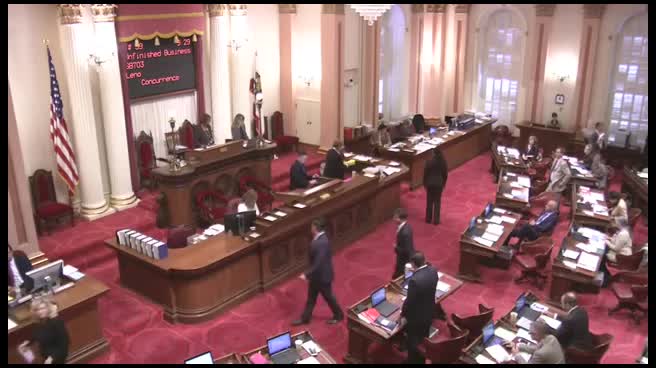 2MIN
Senate Floor
 2MIN
Assembly Floor
 58SEC
Assembly Floor
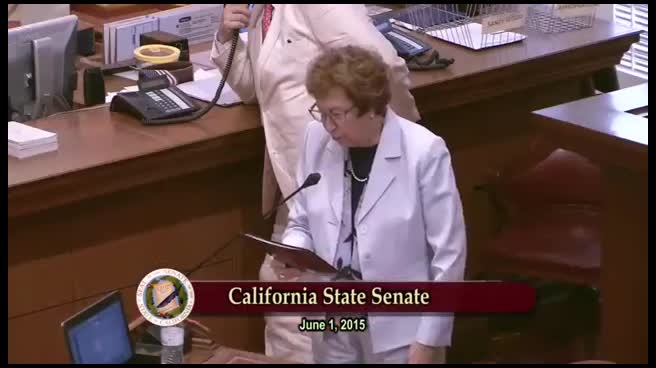 3MIN
Senate Floor
 48SEC
Senate Standing Committee on Appropriations
 11MIN
Senate Standing Committee on Natural Resources and Water
Bill Author