SB 567: Child care programs: continuity of services.
- Session Year: 2015-2016
- House: Senate
- Latest Version Date: 2015-02-26
The Child Care and Development Services Act is enacted for, among other purposes, the purpose of providing a comprehensive, coordinated, and cost-effective system of child care and development services for children from infancy to 13 years of age and their parents, including a full range of supervision, health, and support services through full- and part-time programs.
Existing law authorizes a family enrolled in state or federally funded child care and development program whose services would otherwise be terminated because the family no longer meets the program criteria to continue to receive child development services in another state or a federally funded child care and development program, as provided.
This bill would require a child to be deemed eligible for the remainder of the program year subsequent to enrollment in a state or federally funded child care program.
It is the intent of the Legislature to strategically use state and federal funds to provide a stable, comprehensive, and adequately funded early learning and educational support system for children from birth to five years of age that promotes access to safe, high-quality, part-day and full-day services that support the development of the whole child, especially for those children who need it most, that includes, but is not limited to, the following:
(a)Supporting positive parent-child relationships and responsive caregiving.
(b)Promoting language-rich environments, including at home.
(c)Developmentally appropriate curriculum with differentiated instruction.
(d)Knowledgeable, caring, and well-trained educators, staff, and providers.
(e)Program activities and services that are age appropriate and meet the developmental needs of each child, including special needs children.
(f)Promotion of healthy practices and activities.
(g)An educationally enriched environment that respects and supports cultural, linguistic, and ability diversity.
(h)A physical environment that is safe and appropriate to the ages and developmental needs of the children served.
(i)Provision for nutritional needs and physical activity of children.
(j)Access for low-income infants, toddlers, and preschoolers to high-quality early learning and care.
(k)Support services for children and families that include referral of children to appropriate agencies, including referrals related to, but not limited to, all of the following:
(1)Health care.
(2)Social services that include, but are not limited to, child abuse prevention, identification of child and family needs, and referral to appropriate agencies.
(3)Early childhood mental health services, including primary prevention, crisis intervention, assessments, and referrals.
(4)Family support, parenting education, and family and community engagement.
(5)Counseling, including family counseling.
(6)Nutrition services.
(7)Interagency coordination and collaboration among the state agencies responsible for the provision of support services to children and their families.
SEC. 2.Section 8263 of the Education Code is amended to read:8263.(a)The Superintendent shall adopt rules and regulations on eligibility, enrollment, and priority of services needed to implement this chapter. In order to be eligible for federal and state subsidized child development services, families shall meet at least one requirement in each of the following areas:
(1)A family is (A) a current aid recipient, (B) income eligible, (C) homeless, or (D) one whose children are recipients of protective services, or whose children have been identified as being abused, neglected, or exploited, or at risk of being abused, neglected, or exploited.
(2)A family needs the child care services (A) because the child is identified by a legal, medical, or social services agency, or emergency shelter as (i) a recipient of protective services or (ii) being neglected, abused, or exploited, or at risk of neglect, abuse, or exploitation, or (B) because the parents are (i) engaged in vocational training leading directly to a recognized trade, paraprofession, or profession, (ii) employed or seeking employment, (iii) seeking permanent housing for family stability, or (iv) incapacitated.
(b)Except as provided in Article 15.5 (commencing with Section 8350), priority for federal and state subsidized child development services is as follows:
(1)(A)First priority shall be given to neglected or abused children who are recipients of child protective services, or children who are at risk of being neglected or abused, upon written referral from a legal, medical, or social services agency. If an agency is unable to enroll a child in the first priority category, the agency shall refer the family to local resource and referral services to locate services for the child.
(B)A family who is receiving child care on the basis of being a child at risk of abuse, neglect, or exploitation, as defined in subdivision (k) of Section 8208, is eligible to receive services pursuant to subparagraph (A) for up to three months, unless the family becomes eligible pursuant to subparagraph (C).
(C)A family may receive child care services for up to 12 months on the basis of a certification by the county child welfare agency that child care services continue to be necessary or, if the child is receiving child protective services during that period of time, and the family requires child care and remains otherwise eligible. This time limit does not apply if the familys child care referral is recertified by the county child welfare agency.
(2)Second priority shall be given equally to eligible families, regardless of the number of parents in the home, who are income eligible. Within this priority, families with the lowest gross monthly income in relation to family size, as determined by a schedule adopted by the Superintendent, shall be admitted first. If two or more families are in the same priority in relation to income, the family that has a child with exceptional needs shall be admitted first. If there is no family of the same priority with a child with exceptional needs, the same priority family that has been on the waiting list for the longest time shall be admitted first. For purposes of determining order of admission, the grants of public assistance recipients shall be counted as income.
(3)The Superintendent shall set criteria for, and may grant specific waivers of, the priorities established in this subdivision for agencies that wish to serve specific populations, including children with exceptional needs or children of prisoners. These new waivers shall not include proposals to avoid appropriate fee schedules or admit ineligible families, but may include proposals to accept members of special populations in other than strict income order, as long as appropriate fees are paid.
(c)Notwithstanding any other law, in order to promote continuity of services, subsequent to enrollment in a state or federally funded child care program, a child shall be deemed eligible for the remainder of the program year.
(c)
(d)Notwithstanding any other law, in order to promote continuity of services, a family enrolled in a state or federally funded child care and development program whose services would otherwise be terminated because the family no longer meets the program income, eligibility, or need criteria may continue to receive child development services in another state or federally funded child care and development program if the contractor is able to transfer the familys enrollment to another program for which the family is eligible before the date of termination of services or to exchange the familys existing enrollment with the enrollment of a family in another program, provided that both families satisfy the eligibility requirements for the program in which they are being enrolled. The transfer of enrollment may be to another program within the same administrative agency or to another agency that administers state or federally funded child care and development programs.
(d)
(e)In order to promote continuity of services, the Superintendent may extend the 60-working-day period specified in subdivision (a) of Section 18086.5 of Title 5 of the California Code of Regulations for an additional 60 working days if he or she determines that opportunities for employment have diminished to the degree that one or both parents cannot reasonably be expected to find employment within 60 working days and granting the extension is in the public interest. The scope of extensions granted pursuant to this subdivision shall be limited to the necessary geographic areas and affected persons, which shall be described in the Superintendents order granting the extension. It is the intent of the Legislature that extensions granted pursuant to this subdivision improve services in areas with high unemployment rates and areas with disproportionately high numbers of seasonal agricultural jobs.
(e)
(f)A physical examination and evaluation, including age-appropriate immunization, shall be required before, or within six weeks of, enrollment. A standard, rule, or regulation shall not require medical examination or immunization for admission to a child care and development program of a child whose parent or guardian files a letter with the governing board of the child care and development program stating that the medical examination or immunization is contrary to his or her religious beliefs, or provide for the exclusion of a child from the program because of a parent or guardian having filed the letter. However, if there is good cause to believe that a child is suffering from a recognized contagious or infectious disease, the child shall be temporarily excluded from the program until the governing board of the child care and development program is satisfied that the child is not suffering from that contagious or infectious disease.
(f)
(g)Regulations formulated and promulgated pursuant to this section shall include the recommendations of the State Department of Health Care Services relative to health care screening and the provision of health care services. The Superintendent shall seek the advice and assistance of these health authorities in situations where service under this chapter includes or requires care of children who are ill or children with exceptional needs.
(g)
(h)The Superintendent shall establish guidelines for the collection of employer-sponsored child care benefit payments from a parent whose child receives subsidized child care and development services. These guidelines shall provide for the collection of the full amount of the benefit payment, but not to exceed the actual cost of child care and development services provided, notwithstanding the applicable fee based on the fee schedule.
(h)
(i)The Superintendent shall establish guidelines according to which the director or a duly authorized representative of the child care and development program will certify children as eligible for state reimbursement pursuant to this section.
(i)
(j)Public funds shall not be paid directly or indirectly to an agency that does not pay at least the minimum wage to each of its employees.
|
Date
|
Status
|
|---|---|
| Feb 1, 2016 | Returned to Secretary of Senate pursuant to Joint Rule 56. |
| May 28, 2015 | May 28 hearing: Held in committee and under submission. |
| May 23, 2015 | Set for hearing May 28. |
| May 18, 2015 | May 18 hearing: Placed on APPR. suspense file. |
| May 8, 2015 | Set for hearing May 18. |
| May 5, 2015 | May 11 hearing postponed by committee. |
| May 1, 2015 | Set for hearing May 11. |
| Apr 29, 2015 | From committee: Do pass and re-refer to Com. on APPR. (Ayes 7. Noes 0. Page 814.) (April 29). Re-referred to Com. on APPR. |
| Apr 29, 2015 | From committee: Do pass and re-refer to Com. on APPR. (Ayes 7. Noes 0.) (April 29). Re-referred to Com. on APPR. |
| Apr 24, 2015 | Set for hearing April 29. |
| Apr 22, 2015 | From committee: Do pass and re-refer to Com. on ED. (Ayes 3. Noes 1. Page 727.) (April 21). Re-referred to Com. on ED. |
| Apr 15, 2015 | Set for hearing April 21. |
| Apr 14, 2015 | April 14 hearing postponed by committee. |
| Mar 17, 2015 | Set for hearing April 14. |
| Mar 12, 2015 | Referred to Coms. on HUMAN S. and ED. |
| Feb 27, 2015 | From printer. May be acted upon on or after March 29. |
| Feb 26, 2015 | Introduced. Read first time. To Com. on RLS. for assignment. To print. |
|
Date
|
Description
|
Location
|
Votes
|
|
|---|---|---|---|---|
| May 18, 2015 | Placed on suspense file | Senate Standing Committee on Appropriations |
Passed |
|
| Apr 29, 2015 | Do pass, but first be re-referred to the Committee on [Appropriations] | Senate Standing Committee on Education |
Passed |
|
| Apr 21, 2015 | Do pass, but first be re-referred to the Committee on [Education] | Senate Standing Committee on Human Services |
Passed |
This list shows positions taken on this bill by organizations on the date displayed, which is linked to the original source.
Positions by individuals are not included.
SB 567 (Liu) Page 3 of 3
SENATE COMMITTEE ON APPROPRIATIONS
Senator Ricardo Lara, Chair
2015 - 2016 Regular Session
SB 567 (Liu) - Child care programs: continuity of services.
|
|
Version: February 26, 2015 |
Policy Vote: HUMAN S. 3 - 1, ED. 7 - 0 |
Urgency: No |
Mandate: No |
Hearing Date: May 18, 2015 |
Consultant: Jillian Kissee |
This bill meets the criteria for referral to the Suspense File.
Bill Summary:
This bill deems a child who is enrolled in a federal or state funded child care program to be eligible for the remainder of the program year in order to promote continuity of service and includes legislative intent language regarding early learning and child development services.
Fiscal Impact:
Unknown, but potential costs in the low tens of millions General Fund annually for CalWORKS Stage 2 and Stage 3 to expand eligibility to provide services for the remainder of the program year.
Expanded eligibility also likely results in longer waitlists for programs that have a capped number of slots due to children remaining in programs despite changes in income or need that would have otherwise caused them to become ineligible, thus freeing up a slot for a waiting family.
Background:
Existing law establishes the Child Care and Developmental Services
Act to provide child care and development services as part of a
coordinated, comprehensive, and cost-effective system serving
children from birth to 13 years old and their parents including a
full range of supervision, health, and support services through full-
and part-time programs. (Education Code § 8200, et. seq.)
Existing
law states legislative intent that all families have access to child
care and development services, regardless of demographic background
or special needs, that families are provided the opportunity to
attain financial stability through employment while maximizing growth
and development of their children, and enhancing their parenting
skills through participation in child care and development programs,
among other things. (EC § 8202)
Existing law requires the Superintendent of Public Instruction to adopt rules and regulations regarding eligibility, enrollment, and priority of services. The Superintendent may extend the 60-day eligibility limit for job-seeking activities, as specified, in order to promote continuity of care. Existing law also requires a physical examination and evaluation for enrollment, as specified. (EC § 8263)
Child
Care Eligibility
Existing law specifies that
children are eligible for subsidized child care if the family
currently receives aid, meets specified income eligibility
requirements, is homeless, or if the child is the recipient of
protective services, or has been identified as neglected, abused or
exploited (or at risk of such). In addition, the family must be in
need of the child care services due to specified social service
circumstances, employment training, or other specified needs.
Families
are required to report changes in these circumstances throughout
their child’s enrollment that could disqualify a child from the
program. Specifically, state regulations require:
Recertification and eligibility verification of each family/child as follows:
Families receiving services because the child is at risk of abuse, neglect, or exploitation are recertified at least once every six months.
Families receiving services because of actual abuse, neglect, or exploitation are recertified at least every six months, as specified.
All other families are recertified at least once each contract period and at intervals not to exceed 12 months. (5 CCR § 18103)
Families to notify the child care provider (contractor) within five calendar days of any changes in family income, size or the need for service. (5 CCR § 18102)
Documentation to determine continued need and eligibility and any change to fee assessment, if applicable. (5 CCR § 18103)
Child Care and
Development Block Grant (CCDBG)
The federal Child Care and
Development Block Grant Act of 1990 was reauthorized in 2014. This
reauthorization brought about a number of changes aimed at addressing
health and safety requirements, quality of care, and consumer and
provider education. Among the changes adopted, the reauthorization
establishes a 12-month eligibility redetermination period for
families, regardless of changes in income (provided income does not
exceed 85% of state median income), or temporary changes in
participation in work, training, or education activities.
State regulations establish a 6-month eligibility redetermination period in some special cases. These provisions call into question whether the state currently meets the federal 12-month eligibility requirement. The Department of Education is seeking a legal opinion to determine if the state qualifies for CCDBG based on current regulations and/or if clarifying language is needed. According to the author’s office, this bill moves the state toward meeting the 12-month eligibility requirement by clarifying that families should receive care for a full program year or for the remainder of the program year if a family is offered care after the program year has begun.
Proposed Law:
This bill:
Deems a child who is enrolled in a federal or state funded child care program to be eligible for the remainder of the program year in order to promote continuity of service. As a result, a child that becomes ineligible during the program year would be allowed to continue to receive federal or state funded child care for the duration of the program year.
States legislative intent that promotes access to specified federal and state funded early learning and educational support services from birth to five years of age, including:
Supporting parent-child relationships, promoting language enrichment, developing curriculum with differentiated instruction, knowledgeable educators and staff, developing appropriate program activities and services, promoting healthy practices, supporting cultural, linguistic and ability diversity, ensuring a safe environment, providing for nutritional needs and physical activity and ensuring access for low-income families.
Support services that include specified referrals related to health care, child abuse prevention, identifying child and family needs, mental health services, parenting education, family and community engagement, counseling, nutrition services, and interagency collaboration among state agencies.
Related Legislation:
AB 233 (Lopez, 2015) adopts a 12-month eligibility determination process for subsidized child care and removes certain reporting and administrative requirements. AB 233 is pending in the Assembly Appropriations Committee.
SB 1123 (Liu, 2014) would have increased access to infant and toddler care and family support services by establishing grant programs in parent engagement and voluntary home visitation. Additionally the bill would have provided for greater flexibility and allowed services to be tailored to fit community needs including remainder of program year eligibility. SB 1123 was held in the Assembly Appropriations Committee.
Staff Comments:
This bill imposes unknown but potential costs to CalWORKS Stage 1 and Stage 2 costs in the tens of millions General Fund to the state to expand eligibility for a child enrolled in a state or federally funded child care program to continue receiving services through the end of the program year, if a family’s eligibility would have otherwise changed. Because federal funds would not rise, the state would have to bear all resulting costs. Costs are ultimately unknown because the state does not have access to information that indicates how long a child stays in care or reasons for leaving care. Reasons for leaving care extend beyond changes in eligibility.
-- END --
SB 567 (Liu) Page 5 of 5
SENATE COMMITTEE ON HUMAN SERVICES
Senator McGuire, Chair
2015 - 2016 Regular
Bill No: SB 567
Author: |
Liu |
||
Version: |
February 26, 2015 |
Hearing Date: |
April 21, 2015 |
Urgency: |
No |
Fiscal: |
Yes |
Consultant: |
Mareva Brown |
||
Subject: Child care programs: continuity of services
SUMMARY
This bill would require a child who is enrolled in a state or federally funded child care program to be deemed eligible for that program for the remainder of the program year.
ABSTRACT
Existing law:
Establishes in federal law the Child Care and Developmental Block Grant (CCDBG), reauthorized in 2014 with the following purposes:
To allow each state maximum flexibility in developing child care programs and policies that best suit the needs of children and parents within that state;
To promote parental choice to empower working parents to make their own decisions regarding the child care services that best suit their family’s needs;
To encourage states to provide consumer education information to help parents make informed choices about child care services and to promote involvement by parents and family members in the development of their children in child care settings;
To assist states in delivering high-quality, coordinated early childhood care and education services to maximize parents’ options and support parents trying to achieve independence from public assistance;
To assist states in improving the overall quality of child care services and programs by implementing the health, safety, licensing, training, and oversight standards;
To improve child care and development of participating children; and
To increase the number and percentage of low-income children in high-quality child care settings.” (42 USC 9801, § 658A)
Requires in the CCDBG that state plans demonstrate that each child who receives assistance will be considered to meet all eligibility requirements and will receive assistance for not less than 12 months before the state or designated local entity re-determines the eligibility of the child, regardless of a temporary change in the ongoing status of the child's parent as working or attending a job training or educational program, or a change in family income for the child's family, if that family income does not exceed 85 percent of the state median income for a family of the same size. (42 USC 9801, § 658E(c)(2)(N)(i))
Establishes in state law the Child Care and Development Services Act and outlines its purpose to include a comprehensive, coordinated and cost-effective system of child care and development services for children from infancy to 13 years of age in an environment that is healthy and nurturing for all children, among other goals. (EDC 8200, et seq.)
Requires the Superintendent of Public Instruction to adopt rules and regulations on eligibility, enrollment, and priority of services. In order to be eligible for federal and state subsidized child development services, families shall meet at least one requirement in each of the following areas: The child’s family is a current aid recipient, income eligible, homeless, or involved with the child protection system, and the child’s family needs child care. (EDC 8263)
Defines income eligibility to mean that a family’s adjusted monthly income is at or below 70 percent of the state median income, adjusted for family size, and adjusted annually. (EDC 8263.1 (a)) For the 2014–15 fiscal year, the income eligibility limits shall be 70 percent of the state median income that was in use for the 2007–08 fiscal year, adjusted for family size. (EDC 8263.1 (e))
Establishes a 12-month certification for child care providing the family continues to require child care and remains otherwise eligible. This time limit does not apply if the family’s child care referral is recertified. (EDC 8263 (b)(1)(c))
Requires that families be disenrolled from subsidized child care services in a specified order, with families whose incomes are above 70 percent of SMI being disenrolled first and families with the highest incomes below 70 percent of SMI being disenrolled next, unless certain factors are present, as specified. (EDC 8263.2, EDC 8263.3)
Requires families to notify their child care contractor within five calendar days of any changes in family income, family size or the need for services. (Title V Regulations, 18102, 18410 and 18425)
Permits a family enrolled in a state or federally funded child care and development program whose services would otherwise be terminated because the family no longer meets the program income, eligibility, or need criteria, to continue to receive child development services in another state or federally funded child care and development program if the contractor is able to transfer the family’s enrollment to another program, as specified. (EDC 8263 (c))
This bill:
States Legislative intent to strategically use state and federal funds to provide a stable, comprehensive, and adequately funded early learning and educational support system for children from birth to five years of age that promotes access to safe, high-quality, part-day and full-day services that support the development of the whole child, especially for those children who need it most, as defined.
Requires that, notwithstanding any other law, in order to promote continuity of services, subsequent to enrollment in a state or federally funded child care program, a child shall be deemed eligible for the remainder of the program year.
FISCAL IMPACT
This bill has not been analyzed by a fiscal committee.
BACKGROUND AND DISCUSSION
Purpose of the bill:
According to the author, families that receive state-subsidized childcare are certified for 12 months of eligibility; however they are also required to report changes in circumstances throughout that period that can result in the loss of the care subsidy. For example, a single mother who receives a .50 raise at an hourly job can lose her entire subsidy if that raise puts her $1.00 over the income ceiling, the author states. Working 40 hours a week, a 50-cent raise equates to $20 per week, the author writes that is hardly enough to obtain childcare in the private market. The author also states that changes like this can destabilize families, create a disincentive to garner raises and interrupt the continuity of care for children.
Continuity for children is one of the most important aspects of effective early learning and care programs, according to the author. She states that this bill would guarantee eligibility to families enrolled in subsidized care for the remainder of the program year, ensuring that families can make long-term plans for economic prosperity and that children receive the care necessary to thrive.
Child Care
The state’s child care slots are means-tested for families, meaning that eligibility is predicated on families remaining at or below 70 percent of the state median income. Currently a family of three loses eligibility for child care if they earn more than $42,216 annually and a family of four loses eligibility at $46,896. Concern about families whose wages fluctuate or who receive incremental increases that bump them above the eligibility threshold have been persistent both in California and nationwide. Researchers have documented that maintaining a primary caregiver relationship until a child is at least 3 years old is an important effort to support children and their families.1
Deep reductions in child care slots and reimbursement rates during the Great Recession have left California about 16 percent fewer slots than in 2008-09. In FY 2015-16, approximately 360,000 children will receive subsidized child care funding in a variety of settings.
Child Care and Development Block Grant reauthorization
The federal CCDBG is the primary source of federal funding to help families pay for care. In November 2014, Congress re-authorized the block grant (S.1086) with major changes to programming requirements, including more frequent inspections, higher health and safety standards and policies to help low-income working families maintain greater stability in their child care arrangements. The new federal statute is the first comprehensive reauthorization of the original CCDBG, which was first authorized nearly 25 years ago with minimal safety and quality requirements.
Deadline change
The reauthorization bill mandated a state plan be submitted to the federal government by June 30, 2015, detailing how states would spend federal funds. California’s 2014 state budget required the California Department of Education (CDE) to provide the revised state plan and a description of the changes to the Director of Finance and the Legislature by April 1, 2015. However correspondence from the U.S. Health and Human Services Agency’s Office of Child Care in late March moved that date back by nine months, to March 1, 2016, leaving California with additional planning time.
Placement stability
The reauthorization bill includes a requirement that every child receiving care under the CCDBG must be considered eligible for that care for not less than 12 months before the state imposes any kind of redetermination on the family, regardless of temporary changes in the parent’s income or work status so long as the family income does not exceed 85 percent of the state median income. It also allows for a graduated phase-out period for parents who have exceeded income eligibility at the time of redetermination, in keeping with many state practices.2
California’s statute currently includes a 12-month eligibility period, but requires parents to report changes in income or work status, which can trigger a loss of the child care subsidy. CDE has recently sought an internal legal opinion about whether California’s 12-month eligibility statute is sufficient to comply with the new federal block grant.
This bill is silent on the 12-month requirement, and instead requires that a child retains eligibility to remain in the program for the remainder of the program year. The author states that this language is a step toward fulfilling the stability requirement until there is clarity around the need for legislation on the 12-month mandate. The author intends this requirement to encompass school-year programs as well as programs that run continuously and therefore may be subject to a calendar year timeline. Should the state additionally enacted legislation to satisfy the 12-month federal mandate, this bill would require that some children be maintained in a program longer than 12 months if that 12-month period does not coincide with the end of a program year.
Related legislation:
AB 233 (Lopez, 2015) would require that a family enrolled in a state or federally funded child care and development program to be considered eligible for services for 12 months from time of initial or annual, eligibility determination. The bill additionally would make substantial changes to the process used by alternative payment providers in establishing and tracking rates.
SB 1123 (Liu, 2014) would have permitted providers to have choices that enable greater funding flexibility and allow services to be tailored to fit community needs including the remainder of program year eligibility. This bill died in the Assembly Appropriations Committee.
SB 192 (Liu, 2014) would have recast existing child care and development statute as the Early Learning and Educational Support Act, and would require the Superintendent to develop standards for the implementation of high-quality early learning and educational support programs based on certain indicia of quality, as defined. This bill died in the Assembly appropriations committee.
COMMENTS
Despite the roll-back of the CCDBG state plan deadline from September 2015 to March 2016, changes still need to be considered and implemented in this Legislative session. The author states she intends this bill to be a vehicle for those necessary changes and plans to include other required changes as the bill moves forward and guidance from the federal government becomes clearer.
Mandating a child remain eligible for the remainder of the program year does not explicitly align with the CCDBG requirements to make children eligible for a minimum of 12 months. The author states that the intent of this bill is to comply with the intent of the stabilization language and that if CDE’s legal opinion indicates the current law does not comply with the new mandate that this bill can be changed.
Staff suggests that should this bill move to the Senate Education Committee, the author consider adding a minimum 12-month requirement into this language, to comply with federal reauthorization language. Staff also recommends the author consider establishing what entity defines the duration of a program year.
POSITIONS
Support:
None.
Oppose:
None.
-- END --
1 “Promoting continuity of Care in Infant/Toddler Settings: What Can State/Territory Leaders Do?” National Center on Child Care professional Development Systems and Workforce Initiatives, September 2012.
2 Child Care Law Center, CCDBG Legislative Update, November 2014
SB 567 (Liu) Page 4 of 4
SENATE COMMITTEE ON EDUCATION
Senator Carol Liu, Chair
2015 - 2016 Regular
Bill No: SB 567
Author: |
Liu |
||
Version: |
February 26, 2015 Hearing Date: April 29, 2015 |
||
Urgency: |
No |
Fiscal: |
Yes |
Consultant: |
Olgalilia Ramirez |
||
Subject: Child care programs: continuity of services
SUMMARY
This bill deems a child who is enrolled in a federal or state funded child care program to be eligible for the remainder of the program year in order to promote continuity of service and includes legislative intent language regarding early learning and child development services.
BACKGROUND
Existing law establishes the Child Care and Developmental Services Act to provide child care and development services as part of a coordinated, comprehensive, and cost-effective system serving children from birth to 13 years old and their parents including a full range of supervision, health, and support services through full- and part-time programs. (Education Code § 8200, et. seq.)
Existing law states legislative intent that all families have access to child care and development services, regardless of demographic background or special needs, that families are provided the opportunity to attain financial stability through employment, while maximizing growth and development of their children, and enhancing their parenting skills through participation in child care and development programs, among other things. (EC § 8202)
Existing law requires the Superintendent of Public Instruction to adopt rules and regulations regarding eligibility, enrollment, and priority of services. The Superintendent may extend the 60-day eligibility limit for job-seeking activities, as specified, in order to promote continuity of care. Existing law also requires a physical examination and evaluation for enrollment, as specified. (EC § 8263)
ANALYSIS
This bill:
Deems a child who is enrolled in a federal or state funded child care program to be eligible for the remainder of the program year in order to promote continuity of service.
States legislative intent that promotes access to specified federal and state funded early learning and educational support services from birth to five years of age, including:
Supporting parent-child relationships, promoting language enrichment, developing curriculum with differentiated instruction, knowledgeable educators and staff, developing appropriate program activities and services, promoting healthy practices, supporting cultural, linguistic and ability diversity, ensuring a safe environment, providing for nutritional needs and physical activity and ensuring access for low-income families.
Support services that include specified referrals related to health care, child abuse prevention, identifying child and family needs, mental health services, parenting education, family and community engagement, counseling, nutrition services and interagency collaboration among state agencies.
STAFF
COMMENTS
1. Need for the bill. According to the author, families in California that receive state subsidized childcare are certified for 12-months of eligibility, however, they are also required to report changes in circumstances throughout that period which can result in the loss of the child care subsidy. For example, an increase in hourly wages could push a family past the income threshold resulting in termination of service. The author contends that the loss of the child care subsidy can destabilize families, create financial disincentives, and interrupt the continuity of care for children. This bill seeks to guarantee eligibility to families enrolled in subsidized care for the remainder of the program year.
2. Child Care Eligibility. Existing law specifies that children are eligible for subsidized child care if the family currently receives aid, meets specified income eligibility requirements, is homeless, or if the child is the recipient of protective services, or has been identified as neglected, abused or exploited (or at risk of such). In addition, the family must be in need of the child care services due to specified social service circumstances, employment training, or other specified needs.
Families are required to report changes in these circumstances throughout their child’s enrollment that could disqualify a child from the program. Specifically, state regulations require:
Recertification and eligibility verification of each family/child as follows:
Families receiving services because the child is at risk of abuse, neglect, or exploitation are recertified at least once every six months.
Families receiving services because of actual abuse, neglect, or exploitation are recertified at least every six months, as specified.
All other families are recertified at least once each contract period and at intervals not to exceed 12 months. (5 CCR § 18103)
Families to notify the child care provider (contractor) within five calendar days of any changes in family income, size or the need for service.
(5 CCR § 18102)
Documentation to determine continued need and eligibility and any change to fee assessment, if applicable. (5 CCR § 18103)
This bill statutorily deems a child enrolled in a subsidized child care program to remain eligible for the remainder of the program year before they can be terminated. As a result, a child that becomes ineligible during the program year would be allowed to continue to receive federal or state funded child care for the duration of the program year.
Child Care and Development Block Grant (CCDBG): The federal Child Care and Development Block Grant Act of 1990 was reauthorized in 2014. This reauthorization brought about a number of changes aimed at addressing health and safety requirements, quality of care, and consumer and provider education. Among the changes adopted, the reauthorization establishes a 12-month eligibility redetermination period for families, regardless of changes in income (provided income does not exceed 85% of State median income), or temporary changes in participation in work, training, or education activities.
As mentioned in comment 2 in the analysis, state regulations establish a 6-month eligibility redetermination period in some special cases. These provisions call into question whether the state currently meets the federal 12-month eligibility requirement. The Department of Education is seeking a legal opinion to determine if the state qualifies for CCDBG based on current regulations and/or if clarifying language is needed. According to the author’s office, this bill moves the state toward meeting the 12-month eligibility requirement by clarifying that families should receive care for a full program year or for the remainder of the program year if a family is offered care after the program year has begun.
4. Related and prior legislation.
RELATED LEGISLATION
AB 233 (Lopez, 2015) adopts a 12-month eligibility determination process for subsidized child care and removes certain reporting and administrative requirements. AB 233 is scheduled to be heard in Assembly Education on April 29th.
PRIOR LEGISLATION
SB 1123 (Liu, 2014) would have increased access to infant and toddler care and family support services by establishing grant programs in parent engagement and voluntary home visitation. Additionally the bill would have provided for greater flexibility and allowed services to be tailored to fit community needs including remainder of program year eligibility. SB 1123 was held in the Assembly Appropriations Committee.
SUPPORT
Los Angeles Unified School District
OPPOSITION
None received.
-- END --
Discussed in Hearing
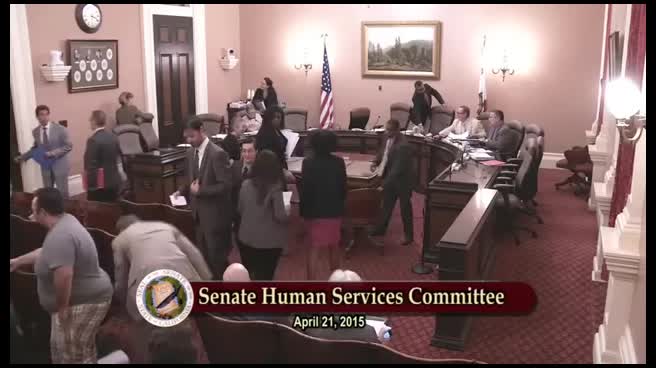 2MIN
Senate Standing Committee on Human Services
Bill Author

Bill Co-Author(s):