SB 572: School facilities: school district advisory committee: use or disposition of school buildings: school closures.
- Session Year: 2015-2016
- House: Senate
- Latest Version Date: 2015-04-22
Existing law authorizes the governing board of any school district, and, prior to the sale, lease, or rental of any excess real property, except rentals not exceeding 30 days, requires the governing board of any school district, to appoint a school district advisory committee to advise the governing board of the school district in the development of districtwide policies and procedures governing the use or disposition of school buildings or space in school buildings which is not needed for school purposes. Existing law requires a school district advisory committee to consist of at least 7 but not more than 11 members, as provided, and specifies the duties of a school district advisory committee.
This bill would instead require the governing board of a school district to also appoint a school district advisory committee for those purposes regardless of the sale, lease, or rental of any excess real property, and would also require the governing board of a school district to appoint a school district advisory committee for specified purposes prior to before closing a school within the governing boards school district. school district to advise the governing board of the school district regarding the closure of the school. If a school district advisory committee is created to advise the governing board of a school district regarding the closure of a school, the bill also would require the appointment of a cross section of community members, including pupil representatives, who have an interest in, and who may be affected by, the school closure to the school district advisory committee. The bill would require a school district advisory committee created for that purpose to be involved in the factfinding necessary for an informal recommendation regarding the school closure, as specified. By imposing additional duties on the governing board of a school district, this bill would impose a state-mandated local program.
The California Constitution requires the state to reimburse local agencies and school districts for certain costs mandated by the state. Statutory provisions establish procedures for making that reimbursement.
This bill would provide that, if the Commission on State Mandates determines that the bill contains costs mandated by the state, reimbursement for those costs shall be made pursuant to these statutory provisions.
Existing law authorizes the governing board of any school district, and, prior to the sale, lease, or rental of any excess real property, except rentals not exceeding 30 days, requires the governing board of any school district, to appoint a school district advisory committee to advise the governing board of the school district in the development of districtwide policies and procedures governing the use or disposition of school buildings or space in school buildings which is not needed for school purposes.
This bill would instead require the governing board of a school district to appoint a school district advisory committee for those purposes regardless of the sale, lease, or rental of any excess real property. property, and would also require the governing board of a school district to appoint a school district advisory committee for specified purposes prior to closing a school within the governing boards school district. By imposing additional duties on the governing board of a school district, this bill would impose a state-mandated local program.
The California Constitution requires the state to reimburse local agencies and school districts for certain costs mandated by the state. Statutory provisions establish procedures for making that reimbursement.
This bill would provide that, if the Commission on State Mandates determines that the bill contains costs mandated by the state, reimbursement for those costs shall be made pursuant to these statutory provisions.
Existing law authorizes the governing board of any school district, and, prior to the sale, lease, or rental of any excess real property, except rentals not exceeding 30 days, requires the governing board of any school district, to appoint a school district advisory committee to advise the governing board of the school district in the development of districtwide policies and procedures governing the use or disposition of school buildings or space in school buildings which is not needed for school purposes.
This bill would instead require the governing board of a school district to appoint a school district advisory committee for those purposes regardless of the sale, lease, or rental of any excess real property. By imposing additional duties on the governing board of a school district, this bill would impose a state-mandated local program.
The California Constitution requires the state to reimburse local agencies and school districts for certain costs mandated by the state. Statutory provisions establish procedures for making that reimbursement.
This bill would provide that, if the Commission on State Mandates determines that the bill contains costs mandated by the state, reimbursement for those costs shall be made pursuant to these statutory provisions.
(a)The governing board of a school district shall may, and, prior to the sale, lease, or rental of any excess real property, except rentals not exceeding 30 days, the governing board of a school district shall, appoint a school district advisory committee for either of the following purposes:
(a)To to advise the governing board of the school district in the development of districtwide policies and procedures governing the use or disposition of school buildings or space in school buildings that is not needed for school purposes.
(b)Prior to closing a school within the governing boards school district, to advise the governing board in the development of districtwide policies and procedures governing the closure of the school.
(b)The governing board of a school district shall appoint a school district advisory committee before closing a school within the school district to advise the governing board of the school district regarding the closure of the school.
SEC. 2.Section 17389 of the Education Code is amended to read:17389.A school district advisory committee appointed pursuant to Section 17388 shall consist of not less than at least seven nor but not more than 11 members, and shall be representative of each of the following:
(a)The ethnic, age group, and socioeconomic composition of the district.
(b)The business community, such as store owners, managers, or supervisors.
(c)Landowners or renters, with preference to be given to representatives of neighborhood associations.
(d)Teachers.
(e)Administrators.
(f)Parents of students. pupils.
(g)Persons with expertise in environmental impact, legal contracts, building codes, and land use planning, including, but not limited to, knowledge of the zoning and other land use restrictions of the cities or cities and counties in which surplus space and real property is located.
(h)For a school district advisory committee created to advise the governing board of a school district regarding the closure of a school, a cross section of community members, including pupil representatives, who have an interest in, and who may be affected by, the school closure.
SEC. 3.Section 17390 of the Education Code is amended to read:17390.The (a)A school district advisory committee created for purposes of subdivision (a) of Section 17388 shall do all of the following:
(a)
(1)Review the projected school enrollment and other data as provided by the school district to determine the amount of surplus space and real property.
(b)
(2)Establish a priority list of use of surplus space and real property that will be acceptable to the community.
(c)
(3)Cause to have circulated throughout the attendance area a priority list of surplus space and real property and provide for hearings of community input to the committee on acceptable uses of space and real property, including the sale or lease of surplus real property for child care development purposes pursuant to Section 17458.
(d)
(4)Make a final determination of limits of tolerance of use of space and real property.
(e)
(5)Forward to the district governing board of the school district a report recommending uses of surplus space and real property.
(b)A school district advisory committee created pursuant to subdivision (b) of Section 17388 to advise the governing board of a school district regarding closure of a school, shall be involved in the factfinding necessary for an informal recommendation regarding the school closure. These duties may include, but are not limited to, consideration of school district enrollment projections, the capacity and condition of existing facilities, uniqueness of educational programs, environmental and safety concerns, projected cost savings, housing and transportation options for displaced pupils, and transition strategies.
SEC. 2.SEC. 4.If the Commission on State Mandates determines that this act contains costs mandated by the state, reimbursement to local agencies and school districts for those costs shall be made pursuant to Part 7 (commencing with Section 17500) of Division 4 of Title 2 of the Government Code.
The governing board of a school district shall appoint a school district advisory committee to for either of the following purposes:
(a)To advise the governing board of the school district in the development of districtwide policies and procedures governing the use or disposition of school buildings or space in school buildings that is not needed for school purposes.
(b)Prior to closing a school within the governing boards school district, to advise the governing board in the development of districtwide policies and procedures governing the closure of the school.
SEC. 2.If the Commission on State Mandates determines that this act contains costs mandated by the state, reimbursement to local agencies and school districts for those costs shall be made pursuant to Part 7 (commencing with Section 17500) of Division 4 of Title 2 of the Government Code.
The governing board of any a school district may, and the governing board of each school district, prior to the sale, lease, or rental of any excess real property, except rentals not exceeding 30 days, shall, shall appoint a school district advisory committee to advise the governing board of the school district in the development of districtwide policies and procedures governing the use or disposition of school buildings or space in school buildings which that is not needed for school purposes.
SEC. 2.If the Commission on State Mandates determines that this act contains costs mandated by the state, reimbursement to local agencies and school districts for those costs shall be made pursuant to Part 7 (commencing with Section 17500) of Division 4 of Title 2 of the Government Code.
|
Date
|
Status
|
|---|---|
| Feb 1, 2016 | Died on file pursuant to Joint Rule 56. |
| Jun 4, 2015 | Ordered to inactive file on request of Senator Pan. |
| Jun 2, 2015 | (Ayes 40. Noes 0. Page 1263.) |
| Jun 2, 2015 | Reconsideration granted. |
| Jun 2, 2015 | Motion to reconsider made by Senator Pan. |
| Jun 2, 2015 | Read third time. Refused passage. (Ayes 17. Noes 19. Page 1263.) |
| Jun 2, 2015 | Read third time. Refused passage. (Ayes 17. Noes 19.) |
| May 28, 2015 | From committee: Do pass. (Ayes 5. Noes 2. Page 1156.) (May 28). |
| May 28, 2015 | Read second time. Ordered to third reading. |
| May 28, 2015 | From committee: Do pass. (Ayes 5. Noes 2.) (May 28). |
| May 23, 2015 | Set for hearing May 28. |
| May 11, 2015 | May 11 hearing: Placed on APPR. suspense file. |
| May 1, 2015 | Set for hearing May 11. |
| Apr 22, 2015 | Read second time and amended. Re-referred to Com. on APPR. |
| Apr 21, 2015 | From committee: Do pass as amended and re-refer to Com. on APPR. (Ayes 6. Noes 2. Page 647.) (April 15). |
| Apr 6, 2015 | From committee with author's amendments. Read second time and amended. Re-referred to Com. on ED. |
| Apr 2, 2015 | Set for hearing April 15. |
| Mar 23, 2015 | April 8 set for first hearing canceled at the request of author. |
| Mar 20, 2015 | Set for hearing April 8. |
| Mar 12, 2015 | Referred to Com. on ED. |
| Feb 27, 2015 | From printer. May be acted upon on or after March 29. |
| Feb 26, 2015 | Introduced. Read first time. To Com. on RLS. for assignment. To print. |
|
Date
|
Description
|
Location
|
Votes
|
|
|---|---|---|---|---|
| Jun 2, 2015 | Senate 3rd Reading SB572 Pan Reconsider | Senate Floor |
Passed |
|
| Jun 2, 2015 | Senate 3rd Reading SB572 Pan | Senate Floor |
Failed |
|
| May 28, 2015 | Do pass | Senate Standing Committee on Appropriations |
Passed |
|
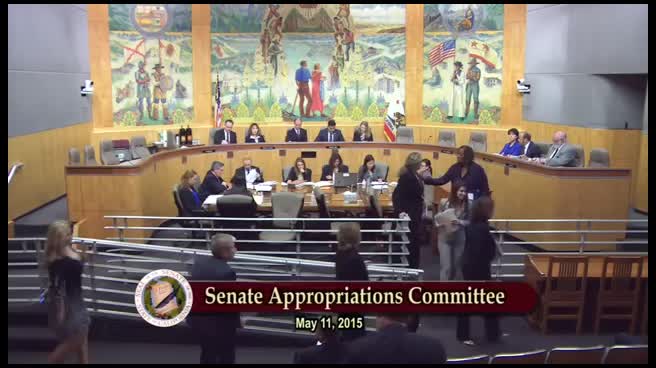
| May 11, 2015 | Placed on suspense file | Senate Standing Committee on Appropriations |
Passed |
|
| Apr 15, 2015 | Do pass as amended, but first amend, and re-refer to the Committee on [Appropriations] | Senate Standing Committee on Education |
Passed |
This list shows positions taken on this bill by organizations on the date displayed, which is linked to the original source.
Positions by individuals are not included.
SB 572
Page 4
|
Office of Senate Floor Analyses (916) 651-1520 Fax: (916) 327-4478 |
THIRD READING
Bill No: SB 572
Amended: 4/22/15
SENATE EDUCATION COMMITTEE: 6-2, 4/15/15
AYES: Liu, Block, Hancock, Leyva, Mendoza, Pan
NOES: Huff, Vidak
SENATE APPROPRIATIONS COMMITTEE: 5-2, 5/28/15
AYES: Lara, Beall, Hill, Leyva, Mendoza
NOES: Bates, Nielsen
SENATE FLOOR: 17-19, 6/2/15 (FAIL)
(ROLL CALL NOT AVAILABLE)
SUBJECT: School facilities: school district advisory committee: use or disposition of school buildings: school closures
DIGEST: This bill requires the governing board of a school district to appoint a district advisory committee prior to the closing of a school within the district, and outlines the membership and responsibilities of the committee.
Existing law:
Declares the intent of the Legislature that the community be involved before decisions are made about school closure or the use of surplus space. (Education Code § 17387)
Authorizes the governing board of any school district to appoint a district advisory committee (DAC) to advise the governing board in the development of districtwide policies and procedures governing the use or disposition of school buildings or space in school buildings which is not needed for school purposes. Requires the appointment of a DAC purpose prior to the sale, lease, or rental of any excess real property, but makes an exception to this requirement for rentals for 30 days or less. (Education Code § 17388)
Outlines the membership of the DAC and its duties. (Education Code § 17389-17390)
This bill:
Requires the governing board of a school district to appoint a DAC prior to the closing of a school within the district to advise the governing board regarding the school closure.
Requires that a school DAC appointed for the purpose of advising on a school closure be representative of a cross section of community members, including pupil representatives, who are interested in, and may be affected by, the school closure.
Requires that a school DAC created for the purpose of advising on a school closure be involved in fact finding necessary for an informal recommendation regarding school closure.
Authorizes the fact finding duties of the school DAC to include, but not be limited to, consideration of enrollment projection, capacity and condition of facilities, uniqueness of educational programs, environmental and safety concerns, potential cost savings, housing and transportation options for displaced students and transition strategies.
Comments
Need for the bill. This bill is prompted by the closure of two Sacramento schools. According to the author, parents and community stakeholders were brought into the conversation after the school board had already decided to close the school. SB 572 seeks to establish a DAC for the purpose of advising the school board whether or not to close a school and to determine how to move forward based upon the decision. The decision to close a school can profoundly affect parents, entire communities, district personnel, and of course, students. At the same time, a decision to not close a school faced with declining enrollment, performance, and financial support, can be irresponsible. In either case, the author opines that it is vital to engage the community, parents, district personnel, and students throughout the entire decision process because their lives are most affected. Existing law allows, but does not require the use of an advisory committee before decisions are made about school closure.
School closures. It is unclear how many school closures occur in California annually. While districts do generally notify the California Department of Education (CDE) of school closures, due to the broad definitions used to define a “closure” the data collected is problematic and potentially overstates the type of “closure” intended to be affected by this bill. It is also unclear how many districts that initiate a school closure already establish a DAC. According to information provided by the author, nationally about 1% of schools have closed since 1995.
Current law does not require a district to take specific steps when closing a school, but does specify the Legislature’s intent that there be community involvement prior to these decisions being made. The CDE has developed a Closing a School Best Practices Guide, available on its website, which recommends that a DAC be formed for this purpose and be involved in the fact-finding necessary for an informal recommendation about school closure. The CDE recommends the statutory DAC be expanded to include a cross-section of community members who have an interest in and may be affected by school closures. The CDE also recommends that the DAC duties involve the determination of enrollment projections and their impact on surplus space, that it inventory the capacity and conditions of existing facilities, determine per-student operating costs at each facility; consider the uniqueness of the educational program at each site, evaluate specific schools considered for closure and identify specific new environmental/safety concerns for each site, determine projected cost-savings for each school considered for closure; identify housing/transportation options for displaced students, consider cost benefits of various property disposition/use options, recommend transition strategies; make specific recommendations about specific school sites to the board, and assess the impact of school closure on district’s insurance coverage.
FISCAL EFFECT: Appropriation: No Fiscal Com.: Yes Local: Yes
According to the Senate Appropriations Committee:
Potentially significant costs may result if the requirements in this bill result in a reimbursable state mandate, depending on the frequency of closures.
To the extent a DAC contributes to a decision to not pursue school closure, the school district would not achieve related cost savings.
Though this bill does not impose any additional requirements on CDE, there may be pressure for CDE to provide technical assistance to school districts resulting in costs in the low tens of thousands in General Fund.
California Association of Student Councils
United Way of California
OPPOSITION: (Verified 5/28/15)
None received
Prepared by: Kathleen Chavira / ED. / (916) 651-4105
6/4/15 16:09:59
**** END ****
SB 572
Page 4
|
Office of Senate Floor Analyses (916) 651-1520 Fax: (916) 327-4478 |
THIRD READING
Bill No: SB 572
Amended: 4/22/15
SENATE EDUCATION COMMITTEE: 6-2, 4/15/15
AYES: Liu, Block, Hancock, Leyva, Mendoza, Pan
NOES: Huff, Vidak
SENATE APPROPRIATIONS COMMITTEE: 5-2, 5/28/15
AYES: Lara, Beall, Hill, Leyva, Mendoza
NOES: Bates, Nielsen
SUBJECT: School facilities: school district advisory committee: use or disposition of school buildings: school closures
DIGEST: This bill requires the governing board of a school district to appoint a district advisory committee prior to the closing of a school within the district, and outlines the membership and responsibilities of the committee.
Existing law:
Declares the intent of the Legislature that the community be involved before decisions are made about school closure or the use of surplus space. (Education Code § 17387)
Authorizes the governing board of any school district to appoint a district advisory committee (DAC) to advise the governing board in the development of districtwide policies and procedures governing the use or disposition of school buildings or space in school buildings which is not needed for school purposes. Requires the appointment of a DAC purpose prior to the sale, lease, or rental of any excess real property, but makes an exception to this requirement for rentals for 30 days or less. (Education Code § 17388)
Outlines the membership of the DAC and its duties. (Education Code § 17389-17390)
This bill:
Requires the governing board of a school district to appoint a DAC prior to the closing of a school within the district to advise the governing board regarding the school closure.
Requires that a school DAC appointed for the purpose of advising on a school closure be representative of a cross section of community members, including pupil representatives, who are interested in, and may be affected by, the school closure.
Requires that a school DAC created for the purpose of advising on a school closure be involved in fact finding necessary for an informal recommendation regarding school closure.
Authorizes the fact finding duties of the school DAC to include, but not be limited to, consideration of enrollment projection, capacity and condition of facilities, uniqueness of educational programs, environmental and safety concerns, potential cost savings, housing and transportation options for displaced students and transition strategies.
Comments
Need for the bill. This bill is prompted by the closure of two Sacramento schools. According to the author, parents and community stakeholders were brought into the conversation after the school board had already decided to close the school. SB 572 seeks to establish a DAC for the purpose of advising the school board whether or not to close a school and to determine how to move forward based upon the decision. The decision to close a school can profoundly affect parents, entire communities, district personnel, and of course, students. At the same time, a decision to not close a school faced with declining enrollment, performance, and financial support, can be irresponsible. In either case, the author opines that it is vital to engage the community, parents, district personnel, and students throughout the entire decision process because their lives are most affected. Existing law allows, but does not require the use of an advisory committee before decisions are made about school closure.
School closures. It is unclear how many school closures occur in California annually. While districts do generally notify the California Department of Education (CDE) of school closures, due to the broad definitions used to define a “closure” the data collected is problematic and potentially overstates the type of “closure” intended to be affected by this bill. It is also unclear how many districts that initiate a school closure already establish a DAC. According to information provided by the author, nationally about 1% of schools have closed since 1995.
Current law does not require a district to take specific steps when closing a school, but does specify the Legislature’s intent that there be community involvement prior to these decisions being made. The CDE has developed a Closing a School Best Practices Guide, available on its website, which recommends that a DAC be formed for this purpose and be involved in the fact-finding necessary for an informal recommendation about school closure. The CDE recommends the statutory DAC be expanded to include a cross-section of community members who have an interest in and may be affected by school closures. The CDE also recommends that the DAC duties involve the determination of enrollment projections and their impact on surplus space, that it inventory the capacity and conditions of existing facilities, determine per-student operating costs at each facility; consider the uniqueness of the educational program at each site, evaluate specific schools considered for closure and identify specific new environmental/safety concerns for each site, determine projected cost-savings for each school considered for closure; identify housing/transportation options for displaced students, consider cost benefits of various property disposition/use options, recommend transition strategies; make specific recommendations about specific school sites to the board, and assess the impact of school closure on district’s insurance coverage.
FISCAL EFFECT: Appropriation: No Fiscal Com.: Yes Local: Yes
According to the Senate Appropriations Committee:
Potentially significant costs may result if the requirements in this bill result in a reimbursable state mandate, depending on the frequency of closures.
To the extent a DAC contributes to a decision to not pursue school closure, the school district would not achieve related cost savings.
Though this bill does not impose any additional requirements on CDE, there may be pressure for CDE to provide technical assistance to school districts resulting in costs in the low tens of thousands in General Fund.
California Association of Student Councils
United Way of California
OPPOSITION: (Verified 5/28/15)
None received
Prepared by: Kathleen Chavira / ED. / (916) 651-4105
5/31/15 12:19:46
**** END ****
SB 572 (Pan) Page 2 of 2
SENATE COMMITTEE ON APPROPRIATIONS
Senator Ricardo Lara, Chair
2015 - 2016 Regular Session
SB 572 (Pan) - School facilities: school district advisory committee: use or disposition of school buildings: school closures.
|
|
Version: April 22, 2015 |
Policy Vote: ED. 6 - 2 |
Urgency: No |
Mandate: Yes |
Hearing Date: May 11, 2015 |
Consultant: Jillian Kissee |
This bill meets the criteria for referral to the Suspense File.
Bill Summary:
This bill requires that before closing a school, a governing board of a school district appoint a school district advisory committee for advisement.
Fiscal Impact:
Potentially significant costs may result if its requirements in this bill result in a reimbursable state mandate, depending on the frequency of closures. (See Staff Comments)
To the extent district advisory committee contributes to a decision to not pursue school closure, the school district would not achieve related cost savings.
Though this bill does not impose any additional requirements California Department of Education (CDE), there may be pressure for CDE to provide technical assistance to school districts resulting in costs in the low tens of thousands in General Fund.
Background:
Existing law declares the intent of the Legislature that the community be involved before decisions are made about school closure or the use of surplus space.
(Education Code § 17387)
Existing law authorizes the governing board of any school district to appoint a district advisory committee to advise the governing board in the development of districtwide policies and procedures governing the use or disposition of school buildings or space in school buildings which is not needed for school purposes. Existing law requires the appointment of a districtwide advisory committee purpose prior to the sale, lease, or rental of any excess real property, but makes an exception to this requirement for rentals for 30 days or less. (Education Code § 17388)
Proposed Law:
This bill requires a governing board of a school district to appoint a school district advisory committee before closing a school within the school district to advise the board regarding the closure of the school. This bill requires that the district advisory committee be representative, among other things, of a cross section of community members, including student representatives who may be affected by the school closure.
In addition, the school advisory committee is required to be involved in the fact-finding necessary for an informal recommendation regarding the school closure. These activities may include: consideration of school district enrollment projections, the capacity and condition of existing facilities, uniqueness of educational programs, environmental and safety concerns, projected cost savings, housing and transportation options for displaced pupils, and transition strategies.
Staff Comments:
This bill requires that before closing a school, a governing board of a school district appoint a school district advisory committee for advisement. The school advisory committee is required to be involved in the fact-finding necessary for an informal recommendation regarding the school closure. These activities may include: consideration of school district enrollment projections, the capacity and condition of existing facilities, uniqueness of educational programs, environmental and safety concerns, projected cost savings, housing and transportation options for displaced pupils, and transition strategies. These requirements are consistent with CDE’s “Closing a School, Best Practices Guide.”
To the extent that the Commission on State Mandates determines that the requirement to appoint a school district advisory committee and related activities a reimbursable state mandate, this could drive potentially significant Proposition 98 General Fund costs to the state. According to CDE’s school closure guide, the fact-finding stage before a school closure could take up to 4 months. During this time, it is recommended that the advisory committee appoint a subcommittee to serve as a research group on such items as facilities; provide progress reports; communicate with the community and school site; and present a final report to the advisory committee.
Current law also requires district advisory committee meetings to be subject to the Ralph M. Brown Act which requires, among other things that meetings be open and public and includes specific notice and agenda requirements which would drive staffing costs.
-- END --
SB 572 (Pan) Page 3 of 3
SENATE COMMITTEE ON EDUCATION
Senator Carol Liu, Chair
2015 - 2016 Regular
Bill No: SB 572
Author: |
Pan |
||
Version: |
April 6, 2015 Hearing Date: April 15, 2015 |
||
Urgency: |
No |
Fiscal: |
Yes |
Consultant: |
Kathleen Chavira |
||
Subject: School facilities: school district advisory committee: use or disposition of …………..school buildings
SUMMARY
This bill requires the governing board of a school district to appoint a district advisory committee to advise in the development of districtwide policies and procedures about the use and disposition of school buildings, and specifically requires its appointment prior to the closing of a school within the district.
BACKGROUND
Existing law declares the intent of the Legislature that the community be involved before decisions are made about school closure or the use of surplus space.
(Education Code § 17387)
Existing law authorizes the governing board of any school district to appoint a district advisory committee to advise the governing board in the development of districtwide policies and procedures governing the use or disposition of school buildings or space in school buildings which is not needed for school purposes. Existing law requires the appointment of a districtwide advisory committee purpose prior to the sale, lease, or rental of any excess real property, but makes an exception to this requirement for rentals for 30 days or less. (Education Code § 17388)
Existing law outlines the membership of the district advisory committee and its duties. (Education Code § 17389-17390)
ANALYSIS
This bill expands the requirements for establishing a school district advisory relative to the use of school buildings. Specifically it:
Deletes the requirement that the advisory committee be appointed prior to the sale, lease or rental of excess property.
Requires the appointment of a school district advisory committee:
To advise in the development of districtwide policies and procedures around the use and disposition of buildings, or space within buildings, which are not needed for school purposes.
Prior to closing a school to advise the board in the development of districtwide policies and procedures governing the closure of the school.
STAFF
COMMENTS
Need for the bill. This bill is prompted by the closure of two Sacramento schools. According to the author, parents and community stakeholders were brought into the conversation after the school board had already decided to close the school. SB 572 would seek to establish a district advisory committee (DAC) for the purpose of advising the school board whether or not to close a school and to determine how to move forward based upon the decision. The decision to close a school can profoundly affect parents, entire communities, district personnel, and of course, students. At the same time, a decision to not close a school faced with declining enrollment, performance, and financial support, can be irresponsible. In either case, the author opines that it is vital to engage the community, parents, district personnel, and students throughout the entire decision process because their lives are most affected. Current law allows, but does not require the use of an advisory committee before decisions are made about school closure. This bill would require the creation of a district advisory committee by every school district governing board.
School closures. It is unclear how many school closures occur in California annually. While districts do generally notify the California Department of Education (CDE) of school closures, due to the broad definitions used to define a “closure” the data collected is problematic and potentially overstates the type of “closure” intended to be affected by this bill. It is also unclear how many districts that initiate a school closure already establish a DAC. According to information provided by the author, nationally about 1% of schools have closed since 1995.
Current law does not require a district to take specific steps when closing a school, but does specify the Legislature's intent that there be community involvement prior to these decisions being made. The CDE has developed a Closing a School Best Practices Guide, available on its website, which recommends that a DAC be formed for this purpose and be involved in the fact-finding necessary for an informal recommendation about school closure. The CDE recommends the statutory DAC be expanded to include a cross-section of community members who have an interest in and may be affected by school closures. The CDE also recommends that the DAC duties involve the determination of enrollment projections and their impact on surplus space, that it inventory the capacity and conditions of existing facilities, determine per-student operating costs at each facility; consider the uniqueness of the educational program at each site, evaluate specific schools considered for closure and identify specific new environmental/safety concerns for each site, determine projected cost-savings for each school considered for closure; identify housing/transportation options for displaced students, consider cost benefits of various property disposition/use options, recommend transition strategies; make specific recommendations about specific school sites to the board, and assess the impact of school closure on district's insurance coverage.
District Advisory Committee (DAC). Current law only requires a DAC to be established prior to the sale, lease, or rental of any excess real property. While the stated intent of the author is to ensure that an affected community is granted the opportunity to participate in decisions surrounding school closures, this bill mandates that all districts establish a DAC regardless of whether a school is being closed or property is being sold, leased or rented.
Rather than establish a broad new mandate, staff recommends the bill be amended to restore current law, and to specifically require that a DAC be established prior to the closure of a school. Staff further recommends the bill be amended to outline the membership and duties of the DAC for this purpose consistent with the elements of the Closing a School Best Practices Guide outlined in staff comment #2.
SUPPORT
California Association of Student Councils
United Way
OPPOSITION
None received.
-- END --
Discussed in Hearing
View Older Hearings
Bill Author

Bill Co-Author(s):