SB 580: Surplus residential property: affordable housing: historic buildings.
- Session Year: 2015-2016
- House: Senate
- Latest Version Date: 2016-09-27
(1)Existing law declares the intent of the Legislature to preserve, upgrade, and expand the supply of housing to persons and families of low or moderate income, through the sale of specified surplus residential property owned by public agencies. Existing law establishes priorities and procedures that any state agency disposing of that surplus residential property is required to follow. Under existing law, specified single-family residences must first be offered to their former owners or present occupants, as specified. If the property is not sold to a former owner or present occupant, existing law requires that the property be offered to a housing-related private or public entity at a reasonable price for either limited equity cooperative housing or low and moderate income rental or owner-occupied housing, as specified.
This bill would authorize a local housing authority to purchase and rehabilitate surplus residential property within Pasadena, South Pasadena, Alhambra, La Canada Flintridge, and the 90032 postal ZIP Code. The local housing authority would be required to dedicate any profits realized from a subsequent sale to the construction of affordable housing. The bill would also require that, prior to offering the property to a housing-related private or public entity as specified above, that property that is a historic home, as defined, be first offered to a housing-related public entity or a nonprofit private entity dedicated to rehabilitating and maintaining the historic home for public and community access and use.
(2)Existing law requires the Department of Transportation to deposit proceeds from sales of surplus residential property into the SR-710 Rehabilitation Account, a continuously appropriated fund, to be distributed, as specified, exclusively to fund projects located in Pasadena, South Pasadena, Alhambra, La Canada Flintridge, and the 90032 postal ZIP Code.
This bill would specifically require the department to deposit proceeds from the sale of surplus residential property from the department to a new owner in the SR-710 Rehabilitation Account. This bill would establish the Affordable Housing Trust Account within the Housing Finance Fund and require the net proceeds from a subsequent market sale of surplus residential property sold pursuant to these provisions at an affordable or reasonable price, as specified, be deposited in this account. The bill would continuously appropriate funds in this account to the California Housing Finance Agency to carry out specified activities for the benefit of persons residing exclusively within Pasadena, South Pasadena, Alhambra, La Canada Flintridge, and the 90032 postal ZIP Code.
(3)This bill would make legislative findings and declarations as to the necessity of a special statute for Pasadena, South Pasadena, Alhambra, La Canada Flintridge, and the 90032 postal ZIP Code.
(4)This bill would declare that it is to take effect immediately as an urgency statute.
(1)Existing law declares the intent of the Legislature to preserve, upgrade, and expand the supply of housing to persons and families of low or moderate income, through the sale of specified surplus residential property owned by public agencies. Existing law establishes priorities and procedures that any state agency disposing of that surplus residential property is required to follow. Under existing law, specified single-family residences must first be offered to their former owners or present occupants, as specified. If the property is not sold to a former owner or present occupant, existing law requires that the property be offered to a housing-related private or public entity at a reasonable price for either limited equity cooperative housing or low and moderate income rental or owner-occupied housing, as specified.
This bill would authorize a local housing authority to purchase and rehabilitate surplus residential property within Pasadena, South Pasadena, Alhambra, La Canada Flintridge, and the 90032 postal ZIP code. Code. The local housing authority would be required to dedicate any profits realized from a subsequent sale to the construction of affordable housing. The bill would also require that, prior to offering the property to a housing-related private or public entity as specified above, that property that is a historic home, as defined, be first offered to a housing-related public entity or a nonprofit private entity dedicated to rehabilitating and maintaining the historic home for public and community access and use.
(2)Existing law requires the Department of Transportation to deposit proceeds from sales of surplus residential property into the SR-710 Rehabilitation Account, a continuously appropriated fund, to be distributed, as specified, exclusively to fund projects located in Pasadena, South Pasadena, Alhambra, La Canada Flintridge, and the 90032 postal ZIP code. Code.
This bill would specifically require the department to deposit proceeds from the sale of surplus residential property from the department to a new owner in the SR-710 Rehabilitation Account. This bill would establish the Affordable Housing Trust Account within the Housing Finance Fund and require the net proceeds from a subsequent market sale of surplus residential property sold pursuant to these provisions at an affordable or reasonable price, as specified, be deposited in this account. The bill would, upon appropriation by the Legislature, make would continuously appropriate funds in this account available to the California Housing Finance Agency to carry out specified activities for the benefit of persons residing exclusively within Pasadena, South Pasadena, Alhambra, La Canada Flintridge, and the 90032 postal ZIP code. Code.
(3)This bill would make legislative findings and declarations as to the necessity of a special statute for Pasadena, South Pasadena, Alhambra, La Canada Flintridge, and the 90032 postal ZIP code. Code.
(4)This bill would declare that it is to take effect immediately as an urgency statute.
(1)Existing law declares the intent of the Legislature to preserve, upgrade, and expand the supply of housing to persons and families of low or moderate income, through the sale of specified surplus residential property owned by public agencies. Existing law establishes priorities and procedures that any state agency disposing of that surplus residential property is required to follow. Under existing law, specified single-family residences must first be offered to their former owners or present occupants, as specified. If the property is not sold to a former owner or present occupant, existing law requires that the property be offered to a housing-related private or public entity at a reasonable price for either limited equity cooperative housing or low and moderate income rental or owner-occupied housing, as specified.
This bill would authorize a local housing authority to purchase and rehabilitate surplus residential property within Pasadena, South Pasadena, Alhambra, La Canada Flintridge, and the 90032 postal ZIP code. The local housing authority would be required to dedicate any profits realized from a subsequent sale to the construction of affordable housing. The bill would also require that, prior to offering the property to a housing-related private or public entity as specified above, that property that is a historic home, as defined, be first offered to a housing-related public entity or a nonprofit private entity dedicated to rehabilitating and maintaining the historic home for public and community access and use.
(2)Existing law requires the Department of Transportation to deposit proceeds from sales of surplus residential property into the SR-710 Rehabilitation Account, a continuously appropriated fund, to be distributed, as specified, exclusively to fund projects located in Pasadena, South Pasadena, Alhambra, La Canada Flintridge, and the 90032 postal ZIP code.
This bill would specifically require the department to deposit proceeds from the sale of surplus residential property from the department to a new owner in the SR-710 Rehabilitation Account. This bill would establish the Affordable Housing Trust Account within the Housing Finance Fund and require the net proceeds from a subsequent market sale of surplus residential property sold pursuant to these provisions at an affordable or reasonable price, as specified, be deposited in this account. The bill would continuously appropriate would, upon appropriation by the Legislature, make funds in this account available to the California Housing Finance Agency to carry out specified activities for the benefit persons residing exclusively within Pasadena, South Pasadena, Alhambra, La Canada Flintridge, and the 90032 postal ZIP code.
(3)This bill would make legislative findings and declarations as to the necessity of a special statute for Pasadena, South Pasadena, Alhambra, La Canada Flintridge, and the 90032 postal ZIP code.
Existing
(1)Existing law declares the intent of the Legislature to preserve, upgrade, and expand the supply of housing to persons and families of low or moderate income, through the sale of specified surplus residential property owned by public agencies. Existing law establishes priorities and procedures that any state agency disposing of that surplus residential property is required to follow. Under existing law, specified single-family residences must first be offered to their former owners or present occupants, as specified. If the property is not sold to a former owner or present occupant, existing law requires that the property be offered to a housing-related private or public entity at a reasonable price for either limited equity cooperative housing or low and moderate income rental or owner-occupied housing, as specified.
This bill would authorize a local housing authority to purchase, rehabilitate, and resell purchase and rehabilitate surplus residential property within its jurisdiction. Pasadena, South Pasadena, Alhambra, La Canada Flintridge, and the 90032 postal ZIP code. The local housing authority would be required to dedicate any profits realized from the sale a subsequent sale to the construction of affordable housing. The bill would also require that, prior to offering the property to a housing-related private or public entity as specified above, that property that is a historic home, as defined, be first offered to a housing-related public entity or a nonprofit private entity dedicated to rehabilitating and maintaining the historic home for public and community access and use.
(2)Existing law requires the Department of Transportation to deposit proceeds from sales of surplus residential property into the SR-710 Rehabilitation Account, a continuously appropriated fund, to be distributed, as specified, exclusively to fund projects located in Pasadena, South Pasadena, Alhambra, La Canada Flintridge, and the 90032 postal ZIP code.
This bill would specifically require the department to deposit proceeds from the sale of surplus residential property from the department to a new owner in the SR-710 Rehabilitation Account. This bill would establish the Affordable Housing Trust Account within the Housing Finance Fund and require the net proceeds from a subsequent market sale of surplus residential property sold pursuant to these provisions at an affordable or reasonable price, as specified, be deposited in this account. The bill would continuously appropriate funds in this account to the California Housing Finance Agency to carry out specified activities for the benefit persons residing exclusively within Pasadena, South Pasadena, Alhambra, La Canada Flintridge, and the 90032 postal ZIP code.
(3)This bill would make legislative findings and declarations as to the necessity of a special statute for Pasadena, South Pasadena, Alhambra, La Canada Flintridge, and the 90032 postal ZIP code.
Existing law declares the intent of the Legislature to preserve, upgrade, and expand the supply of housing to persons and families of low or moderate income, through the sale of specified surplus residential property owned by public agencies. Existing law establishes priorities and procedures that any state agency disposing of that surplus residential property is required to follow. Under existing law, specified single-family residences must first be offered to their former owners or present occupants, as specified. If the property is not sold to a former owner or present occupant, existing law requires that the property be offered to a housing-related private or public entity at a reasonable price for either limited equity cooperative housing or low and moderate income rental or owner-occupied housing, as specified.
This bill would authorize a local housing authority to purchase, rehabilitate, and resell surplus residential property within its jurisdiction. The local housing authority would be required to dedicate any profits realized from the sale to the construction of affordable housing. The bill would also require that, prior to offering the property to a housing-related private or public entity as specified above, that property that is a historic home, as defined, be first offered to a housing-related public entity or a nonprofit private entity dedicated to rehabilitating and maintaining the historic home for public and community access and use.
(a)Notwithstanding Section 11011.1, an agency of the state disposing of surplus residential property shall do so in accordance with the following priorities and procedures:
(1)First, all single-family residences presently occupied by their former owners shall be offered to those former owners at the appraised fair market value.
(2)Second, all single-family residences shall be offered, pursuant to this article, to their present occupants who have occupied the property two years or more and who are persons and families of low or moderate income.
(3)Third, all single-family residences shall be offered, pursuant to this article, to their present occupants who have occupied the property five years or more and whose household income does not exceed 150 percent of the area median income.
(4)Fourth, a single-family residence shall not be offered, pursuant to this article, to present occupants who are not the former owners of the property if the present occupants have had an ownership interest in real property in the last three years.
(b)Single-family residences offered to their present occupants pursuant to paragraphs (2) and (3) of subdivision (a) shall be offered to those present occupants at an affordable price. The price shall not be less than the price paid by the agency for original acquisition, unless the acquisition price was greater than the current fair market value, and shall not be greater than fair market value. When a single-family residence is offered to present occupants at a price that is less than fair market value, the selling agency shall impose terms, conditions, and restrictions to ensure that the housing will remain available to persons and families of low or moderate income and households with incomes no greater than the incomes of the present occupants in proportion to the area median income. The Department of Housing and Community Development shall provide to the selling agency recommendations of standards and criteria for these prices, terms, conditions, and restrictions. The selling agency shall provide repairs required by lenders and government housing assistance programs, or, at the option of the agency, provide the present occupants with a replacement dwelling pursuant to Section 54237.5.
(c)If single-family residences are offered to their present occupants pursuant to paragraphs (2) and (3) of subdivision (a), the occupants shall certify their income and assets to the selling agency. When a single-family residence is offered to present occupants at a price that is less than fair market value, the selling agency may verify the certifications, in accordance with procedures utilized for verification of incomes of purchasers and occupants of housing financed by the California Housing Finance Agency and with regulations adopted for the verification of assets by the United States Department of Housing and Urban Development. The income and asset limitations and term of residency requirements of paragraphs (2) and (3) of subdivision (a) shall not apply to sales that are described as mitigation measures in an environmental study prepared pursuant to the Public Resources Code, if the study was initiated before this measure was enacted.
(d)All other surplus residential properties and all properties described in paragraphs (1), (2), and (3) of subdivision (a) that are not purchased by the former owners or the present occupants shall be then offered as follows:
(1)Except as required by paragraph (2), the property shall be offered to a housing-related private or public entity at a reasonable price, which is best suited to economically feasible use of the property as decent, safe, and sanitary housing at affordable rents and affordable prices for persons and families of low or moderate income, on the condition that the purchasing entity shall cause the property to be rehabilitated and used as follows:
(A)If the housing-related entity is a public entity, the entity shall dedicate profits realized from a subsequent sale, as specified in subdivision (b) of Section 54237.7, to the construction of affordable housing within Pasadena, South Pasadena, Alhambra, La Canada Flintridge, and the 90032 postal ZIP Code.
(B)If the entity is a private housing-related entity or a housing-related public entity, the entity shall cause the property to be developed as limited equity cooperative housing with first right of occupancy to present occupants, except that where the development of cooperative or cooperatives is not feasible, the purchasing entity shall cause the property to be used for low and moderate income rental or owner-occupied housing, with first right of occupancy to the present tenants. The price of the property in no case shall be less than the price paid by the entity for original acquisition unless the acquisition price was greater than current fair market value and shall not be greater than fair market value. Subject to the foregoing, it shall be set at the level necessary to provide housing at affordable rents and affordable prices for present tenants and persons and families of low or moderate income. When residential property is offered at a price that is less than fair market value, the selling agency shall impose terms, conditions, and restrictions as will ensure that the housing will remain available to persons and families of low or moderate income. The Department of Housing and Community Development shall provide to the selling agency recommendations of standards and criteria for prices, terms, conditions, and restrictions.
(2)(A)If the property is a historic home, the property shall be offered first to a housing-related public entity subject to subparagraph (A) or (B) of paragraph (1) or to a nonprofit private entity dedicated to rehabilitating and maintaining the historic home for public and community access and use subject to subparagraph (B) of paragraph (1).
(B)For the purposes of this subdivision, historic home means single-family surplus residential property that is listed on, or for which an application has been filed for listing on, at least one of the following by January 1, 2015:
(i)The California Register of Historical Resources, as established pursuant to Article 2 (commencing with Section 5020) of Chapter 1 of Division 5 of the Public Resources Code.
(ii)The National Register of Historic Places, as established pursuant to Chapter 3021 of Title 54 of the United States Code.
(iii)The National Register of Historic Places, as previously established pursuant to the National Historic Preservation Act (16 U.S.C. Sec. 470 et seq.).
(e)A surplus residential property not sold pursuant to subdivisions (a) to (d), inclusive, shall then be sold at fair market value, with priority given first to purchasers who are present tenants in good standing with all rent obligations current and paid in full, second to former tenants who were in good standing at the time they vacated the premises, with priority given to the most recent tenants first, and then to purchasers who will be owner occupants. The selling agency may commence the sale of property that former tenants may possess a right to purchase as provided by this subdivision 30 days after the selling agency has done both of the following:
(1)Posted information regarding the sale under this subdivision on the selling agencys Internet Web site.
(2)Made a good faith effort to provide written notice, by first-class mail, to the last known address of each former tenant.
(f)Tenants in good standing of nonresidential properties shall be given priority to purchase, at fair market value, the property they rent, lease, or otherwise legally occupy.
SEC. 2.Section 54237.7 of the Government Code is amended to read:54237.7.(a)Notwithstanding Section 183.1 of the Streets and Highways Code, the Department of Transportation shall deposit proceeds from the sale of surplus residential property from the department to a new owner pursuant to this article into the SR-710 Rehabilitation Account, which is hereby created. Notwithstanding Section 13340, funds in the account are hereby continuously appropriated to the department without regard to fiscal years for the purpose of providing repairs required pursuant to subdivision (b) of Section 54237. The total funds maintained in the account shall not exceed five hundred thousand dollars ($500,000). Funds exceeding that amount, less any reimbursements due to the federal government, shall be transferred to the State Highway Account in the State Transportation Fund to be used for allocation by the California Transportation Commission (commission) exclusively to fund projects located in Pasadena, South Pasadena, Alhambra, La Canada Flintridge, and the 90032 postal ZIP Code. Projects shall be selected and prioritized by the affected communities in consultation with the Los Angeles County Metropolitan Transportation Authority, pursuant to guidelines developed by the commission. The Los Angeles County Metropolitan Transportation Authority shall submit a proposed program of projects and the commission shall have final authority to approve the projects. Eligible projects may include, but are not limited to: sound walls; transit and rail capital improvements; bikeways; pedestrian improvements; signal synchronization; left turn signals; and major street resurfacing, rehabilitation, and reconstruction. The funds shall not be used to advance or construct any proposed North State Route 710 tunnel. Any funds remaining in the SR-710 Rehabilitation Account on the date that final payment due for the last of the properties repaired has been made, less any reimbursements due to the federal government, shall be transferred to the State Highway Account in the State Transportation Fund, to be used exclusively for the purposes described in this section.
(b)Notwithstanding any other law, the net proceeds from a subsequent market sale of surplus residential property sold pursuant to this article at an affordable or reasonable price, as specified in regulations adopted by the department, shall be deposited into the Affordable Housing Trust Account, which is hereby created within the Housing Finance Fund and, notwithstanding Section 13340, continuously appropriated to the California Housing Finance Agency to carry out any activity authorized by Part 3 (commencing with Section 50900) of Division 31 of the Health and Safety Code for the benefit of persons and families of low and moderate income residing exclusively in Pasadena, South Pasadena, Alhambra, La Canada Flintridge, and the 90032 postal ZIP Code. The priority for the distribution of proceeds from subsequent sales shall be established pursuant to regulations adopted by the department.
SEC. 3.The Legislature finds and declares that a special law is necessary and that a general law cannot be made applicable within the meaning of Section 16 of Article IV of the California Constitution because of the unique circumstances relating to affordable housing and surplus properties in the State Route 710 corridor.
SEC. 4.This act is an urgency statute necessary for the immediate preservation of the public peace, health, or safety within the meaning of Article IV of the Constitution and shall go into immediate effect. The facts constituting the necessity are:
In order to implement the sale of historic properties in the State Route 710 corridor, it is necessary that this act take effect immediately.
(a)Notwithstanding Section 11011.1, an agency of the state disposing of surplus residential property shall do so in accordance with the following priorities and procedures:
(1)First, all single-family residences presently occupied by their former owners shall be offered to those former owners at the appraised fair market value.
(2)Second, all single-family residences shall be offered, pursuant to this article, to their present occupants who have occupied the property two years or more and who are persons and families of low or moderate income.
(3)Third, all single-family residences shall be offered, pursuant to this article, to their present occupants who have occupied the property five years or more and whose household income does not exceed 150 percent of the area median income.
(4)Fourth, a single-family residence shall not be offered, pursuant to this article, to present occupants who are not the former owners of the property if the present occupants have had an ownership interest in real property in the last three years.
(b)Single-family residences offered to their present occupants pursuant to paragraphs (2) and (3) of subdivision (a) shall be offered to those present occupants at an affordable price. The price shall not be less than the price paid by the agency for original acquisition, unless the acquisition price was greater than the current fair market value, and shall not be greater than fair market value. When a single-family residence is offered to present occupants at a price that is less than fair market value, the selling agency shall impose terms, conditions, and restrictions to ensure that the housing will remain available to persons and families of low or moderate income and households with incomes no greater than the incomes of the present occupants in proportion to the area median income. The Department of Housing and Community Development shall provide to the selling agency recommendations of standards and criteria for these prices, terms, conditions, and restrictions. The selling agency shall provide repairs required by lenders and government housing assistance programs, or, at the option of the agency, provide the present occupants with a replacement dwelling pursuant to Section 54237.5.
(c)If single-family residences are offered to their present occupants pursuant to paragraphs (2) and (3) of subdivision (a), the occupants shall certify their income and assets to the selling agency. When a single-family residence is offered to present occupants at a price that is less than fair market value, the selling agency may verify the certifications, in accordance with procedures utilized for verification of incomes of purchasers and occupants of housing financed by the California Housing Finance Agency and with regulations adopted for the verification of assets by the United States Department of Housing and Urban Development. The income and asset limitations and term of residency requirements of paragraphs (2) and (3) of subdivision (a) shall not apply to sales that are described as mitigation measures in an environmental study prepared pursuant to the Public Resources Code, if the study was initiated before this measure was enacted.
(d)All other surplus residential properties and all properties described in paragraphs (1), (2), and (3) of subdivision (a) that are not purchased by the former owners or the present occupants shall be then offered as follows:
(1)Except as required by paragraph (2), the property shall be offered to a housing-related private or public entity at a reasonable price, which is best suited to economically feasible use of the property as decent, safe, and sanitary housing at affordable rents and affordable prices for persons and families of low or moderate income, on the condition that the purchasing entity shall cause the property to be rehabilitated and used as follows:
(A)If the housing-related entity is a public entity, the entity shall dedicate profits realized from a subsequent sale, as specified in subdivision (b) of Section 54237.7, to the construction of affordable housing within Pasadena, South Pasadena, Alhambra, La Canada Flintridge, and the 90032 postal ZIP code. Code.
(B)If the entity is a private housing-related entity or a housing-related public entity, the entity shall cause the property to be developed as limited equity cooperative housing with first right of occupancy to present occupants, except that where the development of cooperative or cooperatives is not feasible, the purchasing entity shall cause the property to be used for low and moderate income rental or owner-occupied housing, with first right of occupancy to the present tenants. The price of the property in no case shall be less than the price paid by the entity for original acquisition unless the acquisition price was greater than current fair market value and shall not be greater than fair market value. Subject to the foregoing, it shall be set at the level necessary to provide housing at affordable rents and affordable prices for present tenants and persons and families of low or moderate income. When residential property is offered at a price that is less than fair market value, the selling agency shall impose terms, conditions, and restrictions as will ensure that the housing will remain available to persons and families of low or moderate income. The Department of Housing and Community Development shall provide to the selling agency recommendations of standards and criteria for prices, terms, conditions, and restrictions.
(2)(A)If the property is a historic home, the property shall be offered first to a housing-related public entity subject to subparagraph (A) or (B) of paragraph (1) or to a nonprofit private entity dedicated to rehabilitating and maintaining the historic home for public and community access and use subject to subparagraph (B) of paragraph (1).
(B)For the purposes of this subdivision, historic home means single-family surplus residential property that is listed on, or for which an application has been filed for listing on, at least one of the following by January 1, 2015:
(i)The California Register of Historical Resources, as established pursuant to Article 2 (commencing with Section 5020) of Chapter 1 of Division 5 of the Public Resources Code.
(ii)The National Register of Historic Places, as established pursuant to Chapter 3021 of Title 54 of the United States Code.
(iii)The National Register of Historic Places, as previously established pursuant to the National Historic Preservation Act (16 U.S.C. Sec. 470 et seq.).
(e)A surplus residential property not sold pursuant to subdivisions (a) to (d), inclusive, shall then be sold at fair market value, with priority given first to purchasers who are present tenants in good standing with all rent obligations current and paid in full, second to former tenants who were in good standing at the time they vacated the premises, with priority given to the most recent tenants first, and then to purchasers who will be owner occupants. The selling agency may commence the sale of property that former tenants may possess a right to purchase as provided by this subdivision 30 days after the selling agency has done both of the following:
(1)Posted information regarding the sale under this subdivision on the selling agencys Internet Web site.
(2)Made a good faith effort to provide written notice, by first-class mail, to the last known address of each former tenant.
(f)Tenants in good standing of nonresidential properties shall be given priority to purchase, at fair market value, the property they rent, lease, or otherwise legally occupy.
SEC. 2.Section 54237.7 of the Government Code is amended to read:54237.7.(a)Notwithstanding Section 183.1 of the Streets and Highways Code, the Department of Transportation shall deposit proceeds from the sale of surplus residential property from the department to a new owner pursuant to this article into the SR-710 Rehabilitation Account, which is hereby created. Notwithstanding Section 13340, funds in the account are hereby continuously appropriated to the department without regard to fiscal years for the purpose of providing repairs required pursuant to subdivision (b) of Section 54237. The total funds maintained in the account shall not exceed five hundred thousand dollars ($500,000). Funds exceeding that amount, less any reimbursements due to the federal government, shall be transferred to the State Highway Account in the State Transportation Fund to be used for allocation by the California Transportation Commission (commission) exclusively to fund projects located in Pasadena, South Pasadena, Alhambra, La Canada Flintridge, and the 90032 postal ZIP Code. Projects shall be selected and prioritized by the affected communities in consultation with the Los Angeles County Metropolitan Transportation Authority, pursuant to guidelines developed by the commission. The Los Angeles County Metropolitan Transportation Authority shall submit a proposed program of projects and the commission shall have final authority to approve the projects. Eligible projects may include, but are not limited to: sound walls; transit and rail capital improvements; bikeways; pedestrian improvements; signal synchronization; left turn signals; and major street resurfacing, rehabilitation, and reconstruction. The funds shall not be used to advance or construct any proposed North State Route 710 tunnel. Any funds remaining in the SR-710 Rehabilitation Account on the date that final payment due for the last of the properties repaired has been made, less any reimbursements due to the federal government, shall be transferred to the State Highway Account in the State Transportation Fund, to be used exclusively for the purposes described in this section.
(b)Notwithstanding any other law, the net proceeds from a subsequent market sale of surplus residential property sold pursuant to this article at an affordable or reasonable price, as specified in regulations adopted by the department, shall be deposited into the Affordable Housing Trust Account, which is hereby created within the Housing Finance Fund. The moneys in this account shall, upon appropriation by the Legislature, be made available Fund and, notwithstanding Section 13340, continuously appropriated to the California Housing Finance Agency to carry out any activity authorized by Part 3 (commencing with Section 50900) of Division 31 of the Health and Safety Code for the benefit of persons and families of low and moderate income residing exclusively in Pasadena, South Pasadena, Alhambra, La Canada Flintridge, and the 90032 postal ZIP code. Code. The priority for the distribution of proceeds from subsequent sales shall be established pursuant to regulations adopted by the department.
SEC. 3.The Legislature finds and declares that a special law is necessary and that a general law cannot be made applicable within the meaning of Section 16 of Article IV of the California Constitution because of the unique circumstances relating to affordable housing and surplus properties in the State Route 710 corridor.
SEC. 4.This act is an urgency statute necessary for the immediate preservation of the public peace, health, or safety within the meaning of Article IV of the Constitution and shall go into immediate effect. The facts constituting the necessity are:
In order to implement the sale of historic properties in the State Route 710 corridor, it is necessary that this act take effect immediately.
(a)Notwithstanding Section 11011.1, an agency of the state disposing of surplus residential property shall do so in accordance with the following priorities and procedures:
(1)First, all single-family residences presently occupied by their former owners shall be offered to those former owners at the appraised fair market value.
(2)Second, all single-family residences shall be offered, pursuant to this article, to their present occupants who have occupied the property two years or more and who are persons and families of low or moderate income.
(3)Third, all single-family residences shall be offered, pursuant to this article, to their present occupants who have occupied the property five years or more and whose household income does not exceed 150 percent of the area median income.
(4)Fourth, a single-family residence shall not be offered, pursuant to this article, to present occupants who are not the former owners of the property if the present occupants have had an ownership interest in real property in the last three years.
(b)Single-family residences offered to their present occupants pursuant to paragraphs (2) and (3) of subdivision (a) shall be offered to those present occupants at an affordable price. The price shall not be less than the price paid by the agency for original acquisition, unless the acquisition price was greater than the current fair market value, and shall not be greater than fair market value. When a single-family residence is offered to present occupants at a price that is less than fair market value, the selling agency shall impose terms, conditions, and restrictions to ensure that the housing will remain available to persons and families of low or moderate income and households with incomes no greater than the incomes of the present occupants in proportion to the area median income. The Department of Housing and Community Development shall provide to the selling agency recommendations of standards and criteria for these prices, terms, conditions, and restrictions. The selling agency shall provide repairs required by lenders and government housing assistance programs, or, at the option of the agency, provide the present occupants with a replacement dwelling pursuant to Section 54237.5.
(c)If single-family residences are offered to their present occupants pursuant to paragraphs (2) and (3) of subdivision (a), the occupants shall certify their income and assets to the selling agency. When a single-family residence is offered to present occupants at a price that is less than fair market value, the selling agency may verify the certifications, in accordance with procedures utilized for verification of incomes of purchasers and occupants of housing financed by the California Housing Finance Agency and with regulations adopted for the verification of assets by the United States Department of Housing and Urban Development. The income and asset limitations and term of residency requirements of paragraphs (2) and (3) of subdivision (a) shall not apply to sales that are described as mitigation measures in an environmental study prepared pursuant to the Public Resources Code, if the study was initiated before this measure was enacted.
(d)All other surplus residential properties and all properties described in paragraphs (1), (2), and (3) of subdivision (a) that are not purchased by the former owners or the present occupants shall be then offered as follows:
(1)Except as required by paragraph (2), the property shall be offered to a housing-related private or public entity at a reasonable price, which is best suited to economically feasible use of the property as decent, safe, and sanitary housing at affordable rents and affordable prices for persons and families of low or moderate income, on the condition that the purchasing entity shall cause the property to be rehabilitated and used as follows:
(A)If the housing-related entity is a public entity, the entity shall dedicate profits realized from a subsequent sale, as specified in subdivision (b) of Section 54237.7, to the construction of affordable housing within Pasadena, South Pasadena, Alhambra, La Canada Flintridge, and the 90032 postal ZIP code.
(B)If the entity is a private housing-related entity or a housing-related public entity, the entity shall cause the property to be developed as limited equity cooperative housing with first right of occupancy to present occupants, except that where the development of cooperative or cooperatives is not feasible, the purchasing entity shall cause the property to be used for low and moderate income rental or owner-occupied housing, with first right of occupancy to the present tenants. The price of the property in no case shall be less than the price paid by the entity for original acquisition unless the acquisition price was greater than current fair market value and shall not be greater than fair market value. Subject to the foregoing, it shall be set at the level necessary to provide housing at affordable rents and affordable prices for present tenants and persons and families of low or moderate income. When residential property is offered at a price that is less than fair market value, the selling agency shall impose terms, conditions, and restrictions as will ensure that the housing will remain available to persons and families of low or moderate income. The Department of Housing and Community Development shall provide to the selling agency recommendations of standards and criteria for prices, terms, conditions, and restrictions.
(2)(A)If the property is a historic home, the property shall be offered first to a housing-related public entity subject to subparagraph (A) or (B) of paragraph (1) or to a nonprofit private entity dedicated to rehabilitating and maintaining the historic home for public and community access and use subject to subparagraph (B) of paragraph (1).
(B)For the purposes of this subdivision, historic home means single-family surplus residential property that is listed on, or for which an application has been filed for listing on, at least one of the following by January 1, 2015:
(i)The California Register of Historical Resources, as established pursuant to Article 2 (commencing with Section 5020) of Chapter 1 of Division 5 of the Public Resources Code.
(ii)The National Register of Historic Places, as established pursuant to Chapter 3021 of Title 54 of the United States Code.
(iii)The National Register of Historic Places, as previously established pursuant to the National Historic Preservation Act (16 U.S.C. Sec. 470 et seq.).
(e)A surplus residential property not sold pursuant to subdivisions (a) to (d), inclusive, shall then be sold at fair market value, with priority given first to purchasers who are present tenants in good standing with all rent obligations current and paid in full, second to former tenants who were in good standing at the time they vacated the premises, with priority given to the most recent tenants first, and then to purchasers who will be owner occupants. The selling agency may commence the sale of property that former tenants may possess a right to purchase as provided by this subdivision 30 days after the selling agency has done both of the following:
(1)Posted information regarding the sale under this subdivision on the selling agencys Internet Web site.
(2)Made a good faith effort to provide written notice, by first-class mail, to the last known address of each former tenant.
(f)Tenants in good standing of nonresidential properties shall be given priority to purchase, at fair market value, the property they rent, lease, or otherwise legally occupy.
SEC. 2.Section 54237.7 of the Government Code is amended to read:54237.7.(a)Notwithstanding Section 183.1 of the Streets and Highways Code, the Department of Transportation shall deposit proceeds from the sale of surplus residential property from the department to a new owner pursuant to this article into the SR-710 Rehabilitation Account, which is hereby created. Notwithstanding Section 13340, funds in the account are hereby continuously appropriated to the department without regard to fiscal years for the purpose of providing repairs required pursuant to subdivision (b) of Section 54237. The total funds maintained in the account shall not exceed five hundred thousand dollars ($500,000). Funds exceeding that amount, less any reimbursements due to the federal government, shall be transferred to the State Highway Account in the State Transportation Fund to be used for allocation by the California Transportation Commission (commission) exclusively to fund projects located in Pasadena, South Pasadena, Alhambra, La Canada Flintridge, and the 90032 postal ZIP Code. Projects shall be selected and prioritized by the affected communities in consultation with the Los Angeles County Metropolitan Transportation Authority, pursuant to guidelines developed by the commission. The Los Angeles Metropolitan Transportation Authority shall submit a proposed program of projects and the commission shall have final authority to approve the projects. Eligible projects may include, but are not limited to: sound walls; transit and rail capital improvements; bikeways; pedestrian improvements; signal synchronization; left turn signals; and major street resurfacing, rehabilitation, and reconstruction. The funds shall not be used to advance or construct any proposed North State Route 710 tunnel. Any funds remaining in the SR-710 Rehabilitation Account on the date that final payment due for the last of the properties repaired has been made, less any reimbursements due to the federal government, shall be transferred to the State Highway Account in the State Transportation Fund, to be used exclusively for the purposes described in this section.
(b)Notwithstanding any other law, the net proceeds from a subsequent market sale of surplus residential property sold pursuant to this article at an affordable or reasonable price, as specified in regulations adopted by the department, shall be deposited into the Affordable Housing Trust Account, which is hereby created within the Housing Finance Fund and, notwithstanding Section 13340, continuously appropriated Fund. The moneys in this account shall, upon appropriation by the Legislature, be made available to the California Housing Finance Agency to carry out any activity authorized by Part 3 (commencing with Section 50900) of Division 31 of the Health and Safety Code for the benefit of persons and families of low and moderate income residing exclusively in Pasadena, South Pasadena, Alhambra, La Canada Flintridge, and the 90032 postal ZIP code. The priority for the distribution of proceeds from subsequent sales shall be established pursuant to regulations adopted by the department.
SEC. 3.The Legislature finds and declares that a special law is necessary and that a general law cannot be made applicable within the meaning of Section 16 of Article IV of the California Constitution because of the unique circumstances relating to affordable housing and surplus properties in the State Route 710 corridor.
(a)Notwithstanding Section 11011.1, an agency of the state disposing of surplus residential property shall do so in accordance with the following priorities and procedures:
(1)First, all single-family residences presently occupied by their former owners shall be offered to those former owners at the appraised fair market value.
(2)Second, all single-family residences shall be offered, pursuant to this article, to their present occupants who have occupied the property two years or more and who are persons and families of low or moderate income.
(3)Third, all single-family residences shall be offered, pursuant to this article, to their present occupants who have occupied the property five years or more and whose household income does not exceed 150 percent of the area median income.
(4)Fourth, a single-family residence shall not be offered, pursuant to this article, to present occupants who are not the former owners of the property if the present occupants have had an ownership interest in real property in the last three years.
(b)Single-family residences offered to their present occupants pursuant to paragraphs (2) and (3) of subdivision (a) shall be offered to those present occupants at an affordable price. The price shall not be less than the price paid by the agency for original acquisition, unless the acquisition price was greater than the current fair market value, and shall not be greater than fair market value. When a single-family residence is offered to present occupants at a price that is less than fair market value, the selling agency shall impose terms, conditions, and restrictions to ensure that the housing will remain available to persons and families of low or moderate income and households with incomes no greater than the incomes of the present occupants in proportion to the area median income. The Department of Housing and Community Development shall provide to the selling agency recommendations of standards and criteria for these prices, terms, conditions, and restrictions. The selling agency shall provide repairs required by lenders and government housing assistance programs, or, at the option of the agency, provide the present occupants with a replacement dwelling pursuant to Section 54237.5.
(c)If single-family residences are offered to their present occupants pursuant to paragraphs (2) and (3) of subdivision (a), the occupants shall certify their income and assets to the selling agency. When a single-family residence is offered to present occupants at a price that is less than fair market value, the selling agency may verify the certifications, in accordance with procedures utilized for verification of incomes of purchasers and occupants of housing financed by the California Housing Finance Agency and with regulations adopted for the verification of assets by the United States Department of Housing and Urban Development. The income and asset limitations and term of residency requirements of paragraphs (2) and (3) of subdivision (a) shall not apply to sales that are described as mitigation measures in an environmental study prepared pursuant to the Public Resources Code, if the study was initiated before this measure was enacted.
(d)All other surplus residential properties and all properties described in paragraphs (1), (2), and (3) of subdivision (a) that are not purchased by the former owners or the present occupants shall be then offered as follows:
(1)Except as required by paragraph (2), the property shall be offered to a housing-related private or public entity at a reasonable price, which is best suited to economically feasible use of the property as decent, safe, and sanitary housing at affordable rents and affordable prices for persons and families of low or moderate income, on the condition that the purchasing entity shall cause the property to be rehabilitated and used as follows:
(A)If the housing-related entity is a public entity, the entity may resell the property. The entity shall dedicate profits realized from a sale pursuant to this subparagraph subsequent sale, as specified in subdivision (b) of Section 54237.7, to the construction of affordable housing within its jurisdiction. Pasadena, South Pasadena, Alhambra, La Canada Flintridge, and the 90032 postal ZIP code.
(B)If the entity is a private housing-related entity or a housing-related public entity that does not use the property as described in subparagraph (A), entity, the entity shall cause the property to be developed as limited equity cooperative housing with first right of occupancy to present occupants, except that where the development of cooperative or cooperatives is not feasible, the purchasing entity shall cause the property to be used for low and moderate income rental or owner-occupied housing, with first right of occupancy to the present tenants. The price of the property in no case shall be less than the price paid by the entity for original acquisition unless the acquisition price was greater than current fair market value and shall not be greater than fair market value. Subject to the foregoing, it shall be set at the level necessary to provide housing at affordable rents and affordable prices for present tenants and persons and families of low or moderate income. When residential property is offered at a price that is less than fair market value, the selling agency shall impose terms, conditions, and restrictions as will ensure that the housing will remain available to persons and families of low or moderate income. The Department of Housing and Community Development shall provide to the selling agency recommendations of standards and criteria for prices, terms, conditions, and restrictions.
(2)(A)If the property is a historic home, the property shall be offered first to a housing-related public entity subject to subparagraph (A) subparagraph (A) or (B) of paragraph (1) or to a nonprofit private entity dedicated to rehabilitating and maintaining the historic home for public and community access and use. use subject to subparagraph (B) of paragraph (1).
(B)For the purposes of this paragraph, subdivision, historic home means single-family surplus residential property that is listed on, or for which an application has been filed for listing on, at least one of the following by January 1, 2015:
(i)The California Register of Historical Resources, as established pursuant to Article 2 (commencing with Section 5020) of Chapter 1 of Division 5 of the Public Resources Code.
(ii)The National Register of Historic Places, as established pursuant to Chapter 3021 of Title 54 of the United States Code.
(iii)The National Register of Historic Places, as previously established pursuant to the National Historic Preservation Act (16 U.S.C. Sec. 470 et seq.).
(e)A surplus residential property not sold pursuant to subdivisions (a) to (d), inclusive, shall then be sold at fair market value, with priority given first to purchasers who are present tenants in good standing with all rent obligations current and paid in full, second to former tenants who were in good standing at the time they vacated the premises, with priority given to the most recent tenants first, and then to purchasers who will be owner occupants. The selling agency may commence the sale of property that former tenants may possess a right to purchase as provided by this subdivision 30 days after the selling agency has done both of the following:
(1)Posted information regarding the sale under this subdivision on the selling agencys Internet Web site.
(2)Made a good faith effort to provide written notice, by first-class mail, to the last known address of each former tenant.
(f)Tenants in good standing of nonresidential properties shall be given priority to purchase, at fair market value, the property they rent, lease, or otherwise legally occupy.
SEC. 2.Section 54237.7 of the Government Code is amended to read:54237.7.(a)Notwithstanding Section 183.1 of the Streets and Highways Code, the Department of Transportation shall deposit proceeds from sales the sale of surplus residential property from the department to a new owner pursuant to this article into the SR-710 Rehabilitation Account, which is hereby created. Notwithstanding Section 13340, funds in the account are hereby continuously appropriated to the department without regard to fiscal years for the purpose of providing repairs required pursuant to subdivision (b) of Section 54237. The total funds maintained in the account shall not exceed five hundred thousand dollars ($500,000). Funds exceeding that amount, less any reimbursements due to the federal government, shall be transferred to the State Highway Account in the State Transportation Fund to be used for allocation by the California Transportation Commission (commission) exclusively to fund projects located in Pasadena, South Pasadena, Alhambra, La Canada Flintridge, and the 90032 postal ZIP Code. Projects shall be selected and prioritized by the affected communities in consultation with the Los Angeles County Metropolitan Transportation Authority, pursuant to guidelines developed by the commission. The Los Angeles Metropolitan Transportation Authority shall submit a proposed program of projects and the commission shall have final authority to approve the projects. Eligible projects may include, but are not limited to: sound walls; transit and rail capital improvements; bikeways; pedestrian improvements; signal synchronization; left turn signals; and major street resurfacing, rehabilitation, and reconstruction. The funds shall not be used to advance or construct any proposed North State Route 710 tunnel. Any funds remaining in the SR-710 Rehabilitation Account on the date that final payment due for the last of the properties repaired has been made, less any reimbursements due to the federal government, shall be transferred to the State Highway Account in the State Transportation Fund, to be used exclusively for the purposes described in this section.
(b)Notwithstanding any other law, the net proceeds from a subsequent market sale of surplus residential property sold pursuant to this article at an affordable or reasonable price, as specified in regulations adopted by the department, shall be deposited into the Affordable Housing Trust Account, which is hereby created within the Housing Finance Fund and, notwithstanding Section 13340, continuously appropriated to the California Housing Finance Agency to carry out any activity authorized by Part 3 (commencing with Section 50900) of Division 31 of the Health and Safety Code for the benefit of persons and families of low and moderate income residing exclusively in Pasadena, South Pasadena, Alhambra, La Canada Flintridge, and the 90032 postal ZIP code. The priority for the distribution of proceeds from subsequent sales shall be established pursuant to regulations adopted by the department.
SEC. 3.The Legislature finds and declares that a special law is necessary and that a general law cannot be made applicable within the meaning of Section 16 of Article IV of the California Constitution because of the unique circumstances relating to affordable housing and surplus properties in the State Route 710 corridor.
(a)Notwithstanding Section 11011.1, any an agency of the state disposing of surplus residential property shall do so in accordance with the following priorities and procedures:
(1)First, all single-family residences presently occupied by their former owners shall be offered to those former owners at the appraised fair market value.
(2)Second, all single-family residences shall be offered, pursuant to this article, to their present occupants who have occupied the property two years or more and who are persons and families of low or moderate income.
(3)Third, all single-family residences shall be offered, pursuant to this article, to their present occupants who have occupied the property five years or more and whose household income does not exceed 150 percent of the area median income.
(4)Fourth, a single-family residence shall not be offered, pursuant to this article, to present occupants who are not the former owners of the property if the present occupants have had an ownership interest in real property in the last three years.
(b)Single-family residences offered to their present occupants pursuant to paragraphs (2) and (3) of subdivision (a) shall be offered to those present occupants at an affordable price, which price. The price shall not be less than the price paid by the agency for original acquisition, unless the acquisition price was greater than the current fair market value, and shall not be greater than fair market value. When a single-family residences are residence is offered to present occupants at a price that is less than fair market value, the selling agency shall impose terms, conditions, and restrictions to ensure that the housing will remain available to persons and families of low or moderate income and households with incomes no greater than the incomes of the present occupants in proportion to the area median income. The Department of Housing and Community Development shall provide to the selling agency recommendations of standards and criteria for these prices, terms, conditions, and restrictions. The selling agency shall provide repairs required by lenders and government housing assistance programs, or, at the option of the agency, provide the present occupants with a replacement dwelling pursuant to Section 54237.5.
(c)If single-family residences are offered to their present occupants pursuant to paragraphs (2) and (3) of subdivision (a), the occupants shall certify their income and assets to the selling agency. When a single-family residences are residence is offered to present occupants at a price that is less than fair market value, the selling agency may verify the certifications, in accordance with procedures utilized for verification of incomes of purchasers and occupants of housing financed by the California Housing Finance Agency and with regulations adopted for the verification of assets by the United States Department of Housing and Urban Development. The income and asset limitations and term of residency requirements of paragraphs (2) and (3) of subdivision (a) shall not apply to sales that are described as mitigation measures in an environmental study prepared pursuant to the Public Resources Code, if the study was initiated before this measure was enacted.
(d)All other surplus residential properties and all properties described in paragraphs (1), (2), and (3) of subdivision (a) that are not purchased by the former owners or the present occupants shall be then offered to as follows:
(1)Except as required by paragraph (2), the property shall be offered to a housing-related private and or public entities entity at a reasonable price, which is best suited to economically feasible use of the property as decent, safe, and sanitary housing at affordable rents and affordable prices for persons and families of low or moderate income, on the condition that the purchasing entity shall cause the property to be rehabilitated and developed used as follows:
(A)If the housing-related entity is a public entity, the entity may resell the property. The entity shall dedicate profits realized from a sale pursuant to this subparagraph to the construction of affordable housing within its jurisdiction.
(B)If the entity is a private housing-related entity or a housing-related public entity that does not use the property as described in subparagraph (A), the entity shall cause the property to be developed as limited equity cooperative housing with first right of occupancy to present occupants, except that where the development of cooperative or cooperatives is not feasible, the purchasing agency entity shall cause the property to be used for low and moderate income rental or owner-occupied housing, with first right of occupancy to the present tenants. The price of the property in no case shall be less than the price paid by the agency entity for original acquisition unless the acquisition price was greater than current fair market value and shall not be greater than fair market value. Subject to the foregoing, it shall be set at the level necessary to provide housing at affordable rents and affordable prices for present tenants and persons and families of low or moderate income. When residential property is offered at a price that is less than fair market value, the selling agency shall impose terms, conditions, and restrictions as will ensure that the housing will remain available to persons and families of low or moderate income. The Department of Housing and Community Development shall provide to the selling agency recommendations of standards and criteria for prices, terms, conditions, and restrictions.
(2)(A)If the property is a historic home, the property shall be offered first to a housing-related public entity subject to subparagraph (A) of paragraph (1) or to a nonprofit private entity dedicated to rehabilitating and maintaining the historic home for public and community access and use.
(B)For the purposes of this paragraph, historic home means surplus residential property that is listed on, or for which an application has been filed for listing on, at least one of the following by January 1, 2015:
(i)The California Register of Historical Resources, as established pursuant to Article 2 (commencing with Section 5020) of Chapter 1 of Division 5 of the Public Resources Code.
(ii)The National Register of Historic Places, as established pursuant to Chapter 3021 of Title 54 of the United States Code.
(iii)The National Register of Historic Places, as previously established pursuant to the National Historic Preservation Act (16 U.S.C. Sec. 470 et seq.).
(e)Any A surplus residential properties property not sold pursuant to subdivisions (a) to (d), inclusive, shall then be sold at fair market value, with priority given first to purchasers who are present tenants in good standing with all rent obligations current and paid in full, second to former tenants who were in good standing at the time they vacated the premises, with priority given to the most recent tenants first, and then to purchasers who will be owner occupants. The selling agency may commence the sales sale of properties property that former tenants may possess a right to purchase as provided by this subdivision 30 days after the selling agency has done both of the following:
(1)Posted information regarding the sales sale under this subdivision on the selling agencys Internet Web site.
(2)Made a good faith effort to provide written notice, by first-class mail, to the last known address of each former tenant.
(f)Tenants in good standing of nonresidential properties shall be given priority to purchase, at fair market value, the property they rent, lease, or otherwise legally occupy.
|
Date
|
Status
|
|---|---|
| Aug 30, 2016 | Enrolled and presented to the Governor at 1:30 p.m. |
| Aug 25, 2016 | Assembly amendments concurred in. (Ayes 39. Noes 0. Page 5428.) Ordered to engrossing and enrolling. |
| Aug 25, 2016 | Assembly amendments concurred in. (Ayes 39. Noes 0.) Ordered to engrossing and enrolling. |
| Aug 25, 2016 | Urgency clause adopted. |
| Aug 23, 2016 | Ordered to special consent calendar. |
| Aug 19, 2016 | In Senate. Concurrence in Assembly amendments pending. |
| Aug 18, 2016 | Read third time. Urgency clause adopted. Passed. (Ayes 79. Noes 0. Page 5900.) Ordered to the Senate. |
| Aug 18, 2016 | Read third time. Urgency clause adopted. Passed. Ordered to the Senate. |
| Aug 15, 2016 | Ordered to third reading. |
| Aug 15, 2016 | Read third time and amended. |
| Aug 11, 2016 | Ordered to third reading. |
| Aug 11, 2016 | Action rescinded whereby the bill was read a third time, passed and ordered to the Senate. |
| Jan 28, 2016 | In Assembly. Held at Desk. |
| Jan 28, 2016 | Ordered to the Assembly. |
| Jan 28, 2016 | From inactive file on motion of Senator Liu. |
| Sep 11, 2015 | Ordered to inactive file on request of Senator Liu. |
| Sep 8, 2015 | Read third time. Passed. (Ayes 77. Noes 1. Page 2960.) Ordered to the Senate. |
| Sep 8, 2015 | In Senate. Concurrence in Assembly amendments pending. |
| Sep 8, 2015 | Read third time. Passed. Ordered to the Senate. |
| Sep 4, 2015 | Ordered to third reading. |
| Sep 4, 2015 | Read third time and amended. |
| Sep 1, 2015 | Ordered to third reading. |
| Sep 1, 2015 | Read third time and amended. |
| Aug 31, 2015 | Ordered to third reading. |
| Aug 31, 2015 | From inactive file. |
| Aug 27, 2015 | Notice of intention to remove from inactive file given by Assembly Member Cristina Garcia. |
| Jul 13, 2015 | Ordered to inactive file on request of Assembly Member Cristina Garcia. |
| Jul 13, 2015 | From consent calendar. |
| Jul 9, 2015 | Read second time. Ordered to consent calendar. |
| Jul 8, 2015 | From committee: Do pass. Ordered to consent calendar. (Ayes 14. Noes 0.) (July 8). |
| Jul 1, 2015 | From committee: Do pass and re-refer to Com. on APPR. (Ayes 7. Noes 0.) (July 1). Re-referred to Com. on APPR. |
| Jun 11, 2015 | Referred to Com. on H. & C.D. |
| May 18, 2015 | Read third time. Passed. (Ayes 36. Noes 0. Page 1031.) Ordered to the Assembly. |
| May 18, 2015 | In Assembly. Read first time. Held at Desk. |
| May 13, 2015 | Ordered to special consent calendar. |
| May 5, 2015 | Read second time. Ordered to third reading. |
| May 4, 2015 | From committee: Do pass. (Ayes 7. Noes 0. Page 884.) (May 4). |
| May 4, 2015 | From committee: Do pass. (Ayes 7. Noes 0.) (May 4). |
| Apr 24, 2015 | Set for hearing May 4. |
| Apr 22, 2015 | From committee: Do pass and re-refer to Com. on APPR. (Ayes 10. Noes 0. Page 732.) (April 21). Re-referred to Com. on APPR. |
| Apr 14, 2015 | Set for hearing April 21. |
| Apr 13, 2015 | April 14 set for first hearing canceled at the request of author. |
| Mar 26, 2015 | Set for hearing April 14. |
| Mar 12, 2015 | Referred to Com. on T. & H. |
| Feb 27, 2015 | From printer. May be acted upon on or after March 29. |
| Feb 26, 2015 | Introduced. Read first time. To Com. on RLS. for assignment. To print. |
|
Date
|
Description
|
Location
|
Votes
|
|
|---|---|---|---|---|
| Aug 25, 2016 | Special Consent SB580 Liu Urgency Clause | Senate Floor |
Passed |
|
| Aug 18, 2016 | SB 580 Liu Third Reading Urgency By HOLDEN | Assembly Floor |
Passed |
|
| Sep 8, 2015 | SB 580 Liu Senate Third Reading By HOLDEN | Assembly Floor |
Passed |
|
| Jul 8, 2015 | Do pass. To Consent Calendar. | Assembly Standing Committee on Appropriations |
Passed |
|
| Jul 1, 2015 | Do pass and be re-referred to the Committee on [Appropriations] | Assembly Standing Committee on Housing and Community Development |
Passed |
|
| May 18, 2015 | Special Consent #1 SB580 Liu | Senate Floor |
Passed |
|
| May 4, 2015 | Do pass | Senate Standing Committee on Appropriations |
Passed |
|
| Apr 21, 2015 | Do pass, but first be re-referred to the Committee on [Appropriations] | Senate Standing Committee on Transportation and Housing |
Passed |
This list shows positions taken on this bill by organizations on the date displayed, which is linked to the original source.
Positions by individuals are not included.
Office of Senate Floor Analyses (916) 651-1520 Fax: (916) 327-4478 | SB |
UNFINISHED BUSINESS
Bill No: SB 580
:
SENATE TRANS. & HOUSING COMMITTEE: 10-0, 4/21/15
AYES: Beall, Cannella, Allen, Bates, Galgiani, Leyva, McGuire, Mendoza, Roth, Wieckowski
NO VOTE RECORDED: Gaines
SENATE APPROPRIATIONS COMMITTEE: 7-0, 5/4/15
AYES: Lara, Bates, Beall, Hill, Leyva, Mendoza, Nielsen
SENATE FLOOR: 36-0, 5/18/15
AYES: Allen, Anderson, Bates, Beall, Block, Cannella, De León, Fuller, Gaines, Galgiani, Hancock, Hernandez, Hertzberg, Hill, Hueso, Huff, Jackson, Lara, Leno, Leyva, Liu, McGuire, Mendoza, Mitchell, Monning, Moorlach, Morrell, Nguyen, Nielsen, Pan, Roth, Runner, Stone, Vidak, Wieckowski, Wolk
NO VOTE RECORDED: Berryhill, Hall, Pavley
ASSEMBLY FLOOR: 79-0, 8/18/16 - See last page for vote
DIGEST: This bill makes changes to the Roberti Act governing the sale of surplus properties in the State Route (SR) 710 corridor.
Assembly Amendments state that the net proceeds from a subsequent sale of surplus residential property shall be deposited into an Affordable Housing Trust Account to benefit families of low and moderate income residing exclusively in Pasadena, South Pasadena, Alhambra, La Canada Flintridge, and the 90032 postal ZIP code and add an urgency clause.
Existing law:
1) Identifies the California state highway system through a description of segments of the state’s regional and interregional roads that the Department of Transportation (Caltrans) owns and operates. Under current law, whenever Caltrans determines that any real property acquired for highway purposes is no longer necessary, it may sell or exchange the property upon terms, standards, and conditions established by the California Transportation Commission (CTC). Proceeds from the sale are returned to the State Highway Account.
For decades, Caltrans has proposed extending SR 710 to close a roughly
4.5-mile unconstructed gap in the freeway between SR 10 in Los Angeles and SR 710 in Pasadena. This gap affects the cities of Alhambra, Pasadena, South Pasadena, and a portion of Los Angeles. The project has been in the planning stage since 1953 for a variety of reasons related to the federal environmental review process. Caltrans currently owns over 460 homes within the original surface route corridor, 97 of which are declared to be of federal or state historical significance. More than 400 homes are occupied by tenants for whom Caltrans serves as landlord.
2) Establishes, pursuant to the Roberti Act, priorities and procedures for the disposition of surplus residential properties in the SR 710 corridor. Under the Act, Caltrans must offer surplus property in the following priority order:
- First, at fair-market value (market rate) to all single-family residences presently occupied by the former owners.
- Second, at an affordable price to current low- or moderate-income occupants who meet minimum length-of-occupancy standards.
- Third, to public or private housing-related entities at a price necessary to make the housing affordable to present tenants and households of low or moderate income. The sale is conditioned upon the entity rehabilitating and developing the property as a limited-equity cooperative housing with first right of occupancy to present tenants. If cooperative housing is not feasible, the purchasing agency shall use the property for low- and moderate-income rental or owner-occupied housing, with the first right of occupancy to present tenants.
- Fourth, at market rate to present occupants in good standing, next to former tenants, and lastly to persons who intend to be owner-occupants.
3) Expedites, pursuant to SB 416 (Liu, Chapter 468, Statutes of 2013), the sale of surplus residential properties in the cities of Los Angeles, South Pasadena, and Pasadena that do not fall within the boundaries of any alternate route being considered in the North Route 710 Project Draft Environmental Impact Report/Environmental Impact Statement. SB 416 also removed the originally proposed surface route from further consideration and increased opportunities for current and former tenants to purchase surplus properties owned by Caltrans. Caltrans recently published and is presently receiving public comments on draft regulations that set forth procedures to dispose of surplus residential properties originally acquired for the SR 710 extension in accordance with the Roberti Act.
This bill makes changes to the Roberti Act governing the sale of surplus properties in the SR 710 corridor. Specifically, this bill:
- Requires all non-historic surplus residential properties that are not purchased by former owners or the present occupants to be offered to a public or private housing-related entity at a reasonable price to allow the property to be used as affordable housing for low- and moderate-income individuals. If that housing entity is a public entity, the entity may resell the property, and the profits realized from the sale must be used for the construction of affordable housing within its jurisdiction. If the housing entity is a private entity, the property must be developed as limited-equity cooperative housing, with first right of occupancy to present occupants. If development of a cooperative is not feasible, the purchasing entity shall use the property for low- and moderate-income rental or owner-occupied housing, with first right of occupancy to the present tenants.
- Requires all historic surplus residential properties that are not purchased by former owners or the present occupants to be offered first to a housing-related public entity or a nonprofit private entity dedicated to rehabilitating and maintaining the home for public and community access and use.
- Requires the net proceeds from a subsequent sale of surplus residential property shall be deposited into an Affordable Housing Trust Account to benefit families of low and moderate income residing exclusively in Pasadena, South Pasadena, Alhambra, La Canada Flintridge, and the 90032 postal ZIP code.
Comments
- Purpose. According to the author, the purpose of the Roberti Act was to preserve thousands of mostly low- to moderate-income homes. Caltrans published regulations in April 2014 to implement the amended Roberti Act (pursuant to SB 416, Chapter 468, Statutes of 2013) and expedite the sale of homes in the SR 710 corridor. After substantial input from current tenants and the impacted cities, stakeholders, and elected officials, earlier this year Caltrans issued revised regulations. The revised regulations address major concerns with the originally proposed regulations. One issue remains, however, that requires legislative action to resolve: disposition and preservation of designated historical homes. Many of these historical homes remained vacant and boarded up for decades and require substantial restoration. Even then, they may be too large and costly for conversion into affordable housing or for an affordable-housing owner to maintain. Amending the bill to allow cities to buy and sell homes, both historical and otherwise, will provide a financial incentive to generate more affordable housing and preserve neighborhoods and community historical assets.
- Priority of sale for non-historic homes. The Roberti Act establishes a priority of sales for the disposal of surplus rental property within the SR 710 corridor. The Act states that after a non-historic surplus property has been offered to former owners and present occupants, it shall then be offered to a public or private housing-related entity at a reasonable price to establish affordable housing for low- and moderate-income people. This bill also allows a public housing-related entity to resell the property and requires profits realized from that sale to fund the construction of affordable housing within its jurisdiction. If the housing entity is a private entity, this bill states that the property shall be developed as a cooperative with first right of occupancy to the present tenants. If the development of a cooperative is not feasible, the private entity shall use the property for low- and moderate-income rental or owner-occupied housing with first right of occupancy to the present tenants.
This bill seeks to realize the original intent of the Roberti Act by preserving and creating affordable housing for low- and moderate-income individuals. The changes to the Roberti Act will allow a public housing entity to purchase, rehabilitate, and resell a home and requires the profits from that sale to be used for building affordable housing in the same area.
- Historic home sales. This bill establishes a priority of sale of surplus historic homes in the SR 710 corridor. After historic surplus property has been offered to former owners and present occupants, that property shall be offered first to a public housing-related public entity or other public entity at a reasonable price for purposes of rehabilitating and reselling the home at fair market value. The bill requires profits from that sale to be dedicated to the construction of affordable housing in that area. Next, the home will be offered to a non-profit dedicated to rehabilitating and maintaining the home for public and community access.
As noted above, this bill seeks to realize the original intent of the Roberti Act. Many of these historical homes are in such a state of disrepair that rehabilitation of the existing structure may not be economically feasible. Where possible, the bill gives priority to public entities to rehabilitate the home for resale and use the profits to construct affordable housing in the entities’ jurisdiction. Alternatively, the bill will allow nonprofit entities to purchase and convert an otherwise dilapidated home into a community park or other neighborhood use.
FISCAL EFFECT: Appropriation: Fiscal Com.: Local:
According to the Assembly Appropriations Committee, minor one-time costs to Caltrans to update regulations regarding the sale of surplus property in the SR 710 corridor. (State Highway Account)
None received
OPPOSITION: (Verified 8/18/16)
None received
ASSEMBLY FLOOR: 79-0, 8/18/16
AYES: Achadjian, Alejo, Travis Allen, Arambula, Atkins, Baker, Bigelow, Bloom, Bonilla, Bonta, Brough, Brown, Burke, Calderon, Campos, Chang, Chau, Chávez, Chiu, Chu, Cooley, Cooper, Dababneh, Dahle, Daly, Dodd, Eggman, Frazier, Beth Gaines, Gallagher, Cristina Garcia, Eduardo Garcia, Gatto, Gipson, Gomez, Gonzalez, Gordon, Gray, Grove, Hadley, Harper, Holden, Irwin, Jones, Jones-Sawyer, Kim, Lackey, Levine, Linder, Lopez, Low, Maienschein, Mathis, Mayes, McCarty, Medina, Melendez, Mullin, Nazarian, Obernolte, O'Donnell, Olsen, Patterson, Quirk, Ridley-Thomas, Rodriguez, Salas, Santiago, Steinorth, Mark Stone, Thurmond, Ting, Wagner, Waldron, Weber, Wilk, Williams, Wood, Rendon
NO VOTE RECORDED: Roger Hernández
8/19/16 19:21:45
**** END ****
SENATE THIRD READING
STR Bill Id:SB 580
Author:(Liu)
As Amended Ver:August 15, 2016
2/3 vote. Urgency
SENATE VOTE: 36-0
Committee | Votes | Ayes | Noes |
Housing | 7-0 | Chau, Steinorth, Burke, Chiu, Beth Gaines, Lopez, Mullin | |
Appropriations | 14-0 | Gomez, Bigelow, Bloom, Bonta, Calderon, Chang, Eggman, Gallagher, Eduardo Garcia, Jones, Quirk, Rendon, Weber, Wood |
SUMMARY: Makes changes to the Roberti Act (Act) governing the sale of surplus properties in the State Route (SR) 710 corridor. Specifically, this bill:
- Requires all non-historic surplus residential properties that are not purchased by former owners or the present occupants to be offered to a public or private housing-related entity at a reasonable price to allow the property to be used as affordable housing for low- and moderate-income individuals, subject to the following:
- Provides that if that housing entity is a public entity, the entity may resell the property, and the profits realized from the sale must be used for the construction of affordable housing within its jurisdiction.
- Provides that if the housing entity is a private entity, the property must be developed as limited-equity cooperative housing, with first right of occupancy to present occupants. If development of a cooperative is not feasible, the purchasing entity shall use the property for low- and moderate-income rental or owner-occupied housing, with first right of occupancy to the present tenants.
- Requires all surplus historic homes that are not purchased by former owners or the present occupants to be offered first to a housing-related public entity, for purposes of rehabilitating and reselling the home at fair market value, or a nonprofit private entity dedicated to rehabilitating and maintaining the home for public and community access and use.
- Defines "historic home" as property that is listed on, or for which an application has been filed for listing on, at least one of the following by January 1, 2015:
- The California Register of Historical Resources, as established pursuant to Public Resources Code Division 5 Chapter 1 Article 2;
- The National Register of Historic Places, as established pursuant to 54 United States Code (U.S.C.) Chapter 3021; or
- The National Register of Historic Places, as previously established pursuant to the National Historic Preservation Act (16 U.S.C. Sections 470 et seq.).
- Creates the Affordable Housing Trust Account within the Housing Finance Fund.
- Provides that net proceeds from a subsequent market sale of surplus residential property sold pursuant to regulations implementing the Roberti Act at an affordable or reasonable price, as specified in regulations adopted by the Department of Transportation (Department), shall be deposited into the Affordable Housing Trust Account and continuously appropriated to the California Housing Finance Agency (CalHFA) to carry out any authorized activities for the benefit of persons and families of low and moderate income residing exclusively in Pasadena, South Pasadena, Alhambra, La Cañada Flintridge, and the 90032 postal ZIP Code. The priority for distribution of proceeds from subsequent sales shall be established pursuant to regulations adopted by the Department.
- Provides that this act is an urgency statute necessary for the immediate preservation of the public peace, health, or safety within the meaning of Article IV of the Constitution and shall go into immediate effect.
FISCAL EFFECT: According to the Assembly Appropriations Committee, minor one-time costs to the Department of Transportation (Caltrans) to update regulations regarding the sale of surplus property in the SR 710 corridor. (State Highway Account)
COMMENTS:
Background: For decades, Caltrans has proposed extending SR 710 to close a roughly 4.5-mile unconstructed gap in the freeway between SR 10 in Los Angeles and SR 710 in Pasadena. This gap affects the cities of Alhambra, Pasadena, South Pasadena, and a portion of Los Angeles. The project has been in the planning stage since 1953 for a variety of reasons related to the federal environmental review process. Caltrans currently owns over 460 homes within the original surface route corridor, 97 of which are declared to be of federal or state historical significance. More than 400 homes are occupied by tenants for whom Caltrans serves as landlord.
Purpose of this bill: The author points out that, according to Senator Roberti, the Act was intended both to preserve neighborhoods and provide affordable housing. According to the author, "Caltrans revised regulations to implement the Act as amended by SB 416 (Liu) to a great extent addressed major concerns with the originally proposed regulations. However, one issue remains that requires legislative action to resolve: disposition and preservation of the historical homes. Many of these homes have remained vacant and boarded up for decades. They require substantial restoration in accordance with historical designation protocols. Even if it were economically feasible to restore and convert a property into affordable housing, it would likely be too expensive for an affordable housing owner to maintain. Amending the Act to allow cities to buy and flip homes, both historical and otherwise, will provide a financial incentive to 'do it right,' generate more affordable housing than might otherwise be created, and preserve neighborhoods and community historical assets."
Historic home sales: This bill establishes a priority of sale of surplus historic homes in the SR 710 corridor. After historic surplus property has been offered to former owners and present occupants, that property must be offered first to a public housing-related public entity or other public entity at a reasonable price for purposes of rehabilitating and reselling the home at fair market value, or to a non-profit dedicated to rehabilitating and maintaining the home for public and community access. If the home is sold by a public-housing-related public entity, profits from that sale must be dedicated to the construction of affordable housing in that area.
The author notes that many of these historic homes are in such a state of disrepair that rehabilitation of the existing structure may not be economically feasible. After the property has been offered to former owners and present occupants, this bill gives priority to public entities to rehabilitate the home for resale and use the profits to construct affordable housing in the entities' jurisdiction. Alternatively, this bill will allow nonprofit entities to purchase and convert an otherwise dilapidated home into a community park or other neighborhood use.
Priority of sale for non-historic homes: The Act establishes a priority of sales for the disposal of surplus rental property within the SR 710 corridor. The Act states that after a non-historic surplus property has been offered to former owners and present occupants, it shall then be offered to a public or private housing-related entity at a reasonable price to establish affordable housing for low- and moderate-income people. This bill also allows a public housing-related entity to resell the property and requires profits realized from that sale to fund the construction of affordable housing within its jurisdiction. If the housing entity is a private entity, this bill requires the property to be developed as a cooperative with first right of occupancy to the present tenants. If the development of a cooperative is not feasible, the private entity must use the property for low- and moderate-income rental or owner-occupied housing with first right of occupancy to the present tenants.
Affordable Housing Trust Account: This bill creates the Affordable Housing Trust Account within the Housing Finance Fund. Net proceeds from a subsequent market sale of surplus residential property sold pursuant to regulations implementing the Roberti Act at an affordable or reasonable price must be deposited into the Affordable Housing Trust Account. These funds will be continuously appropriated to CalHFA to carry out any authorized activities for the benefit of persons and families of low and moderate income residing exclusively in Pasadena, South Pasadena, Alhambra, La Cañada Flintridge, and the 90032 postal ZIP Code. The priority for distribution of proceeds from subsequent sales will be established pursuant to regulations adopted by the Department.
Related legislation: SB 416 (Liu), Chapter 468, Statutes of 2013: Expedited the sale of surplus residential properties in the cities of Los Angeles, South Pasadena, and Pasadena that do not fall within the boundaries of any alternate route being considered in the North State Route 710 Project Draft Environmental Impact Report/Environmental Impact Statement.
SB 204 (Liu) of 2012: Would have required the sale of Caltrans-owned surplus properties in the North Route 710 Project. This bill was vetoed by the Governor.
AB 1617 (Liu) of 2006: Would have given cities priority over affordable housing entities to purchase, rehabilitate, and resell Caltrans-owned surplus residential properties in the North State Route 710. This bill failed passage in the Senate Transportation and Housing Committee.
Analysis Prepared by: Rebecca Rabovsky / H. & C.D. / (916) 319-2085 FN: 0003998
SB 580
Page 6
|
Office of Senate Floor Analyses (916) 651-1520 Fax: (916) 327-4478 |
UNFINISHED BUSINESS
Bill No: SB 580
Amended: 9/4/15
SENATE TRANS. & HOUSING COMMITTEE: 10-0, 4/21/15
AYES: Beall, Cannella, Allen, Bates, Galgiani, Leyva, McGuire, Mendoza, Roth, Wieckowski
NO VOTE RECORDED: Gaines
SENATE APPROPRIATIONS COMMITTEE: 7-0, 5/4/15
AYES: Lara, Bates, Beall, Hill, Leyva, Mendoza, Nielsen
SENATE FLOOR: 36-0, 5/18/15
AYES: Allen, Anderson, Bates, Beall, Block, Cannella, De León, Fuller, Gaines, Galgiani, Hancock, Hernandez, Hertzberg, Hill, Hueso, Huff, Jackson, Lara, Leno, Leyva, Liu, McGuire, Mendoza, Mitchell, Monning, Moorlach, Morrell, Nguyen, Nielsen, Pan, Roth, Runner, Stone, Vidak, Wieckowski, Wolk
NO VOTE RECORDED: Berryhill, Hall, Pavley
ASSEMBLY FLOOR: 77-1, 9/8/15 - See last page for vote
SUBJECT: Surplus residential property: affordable housing: historic buildings
DIGEST: This bill makes changes to the Roberti Act (Act) governing the sale of surplus properties in the State Route (SR) 710 corridor.
Assembly Amendments create the Affordable Housing Trust Account within the Housing Finance Fund. Net proceeds from a subsequent market sale of surplus residential property sold pursuant to regulations implementing the Roberti Act at an affordable or reasonable price must be deposited into the Affordable Housing Trust Account. The moneys in this account shall, upon appropriation by the Legislature, be made available to the California Housing Finance Agency (CalHFA) to carry out any authorized activities for the benefit of persons and families of low and moderate income residing exclusively in the SR 710 corridor.
Existing law:
1) Identifies the California state highway system through a description of segments of the state’s regional and interregional roads that the Department of Transportation (Caltrans) owns and operates. Under current law, whenever Caltrans determines that any real property acquired for highway purposes is no longer necessary, it may sell or exchange the property upon terms, standards, and conditions established by the California Transportation Commission. Proceeds from the sale are returned to the State Highway Account.
For decades, Caltrans has proposed extending SR 710 to close a
roughly
4.5-mile unconstructed gap in the freeway between SR 10
in Los Angeles and SR 710 in Pasadena. This gap affects the cities
of Alhambra, Pasadena, South Pasadena, and a portion of Los Angeles.
The project has been in the planning stage since 1953 for a variety
of reasons related to the federal environmental review process.
Caltrans currently owns over 460 homes within the original surface
route corridor, 97 of which are declared to be of federal or state
historical significance. More than 400 homes are occupied by tenants
for whom Caltrans serves as landlord.
2) Establishes, pursuant to the Act, priorities and procedures for the disposition of surplus residential properties in the SR 710 corridor. Under the Act, Caltrans must offer surplus property in the following priority order:
First, at fair-market value (market rate) to all single-family residences presently occupied by the former owners.
Second, at an affordable price to current low- or moderate-income occupants who meet minimum length-of-occupancy standards.
Third, to public or private housing-related entities at a price necessary to make the housing affordable to present tenants and households of low or moderate income. The sale is conditioned upon the entity rehabilitating and developing the property as a limited-equity cooperative housing with first right of occupancy to present tenants. If cooperative housing is not feasible, the purchasing agency shall use the property for low- and moderate-income rental or owner-occupied housing, with the first right of occupancy to present tenants.
Fourth, at market rate to present occupants in good standing, next to former tenants, and lastly to persons who intend to be owner-occupants.
3) Expedites, pursuant to SB 416 (Liu, Chapter 468, Statutes of 2013), the sale of surplus residential properties in the cities of Los Angeles, South Pasadena, and Pasadena that do not fall within the boundaries of any alternate route being considered in the North Route 710 Project Draft Environmental Impact Report/Environmental Impact Statement. SB 416 also removed the originally proposed surface route from further consideration and increased opportunities for current and former tenants to purchase surplus properties owned by Caltrans. Caltrans recently published and is presently receiving public comments on draft regulations that set forth procedures to dispose of surplus residential properties originally acquired for the SR 710 extension in accordance with the Act.
This bill makes changes to the Act governing the sale of surplus properties in the SR 710 corridor. Specifically, this bill:
Requires all non-historic surplus residential properties that are not purchased by former owners or the present occupants to be offered to a public or private housing-related entity at a reasonable price to allow the property to be used as affordable housing for low- and moderate-income individuals. If that housing entity is a public entity, the entity shall dedicate profits realized from a subsequent sale to the construction of affordable housing with Pasadena, South Pasadena, Alhambra, La Cañada Flintridge, and the 90032 postal ZIP code. If the housing entity is a private entity, the property must be developed as limited-equity cooperative housing, with first right of occupancy to present occupants. If development of a cooperative is not feasible, the purchasing entity shall use the property for low- and moderate-income rental or owner-occupied housing, with first right of occupancy to the present tenants.
Requires all historic surplus residential properties that are not purchased by former owners or the present occupants to be offered first to a housing-related public entity or a nonprofit private entity dedicated to rehabilitating and maintaining the home for public and community access and use.
Creates the Affordable Housing Trust Account within the Housing Finance Fund. Net proceeds from a subsequent market sale of surplus residential property sold pursuant to regulations implementing the Roberti Act at an affordable or reasonable price must be deposited into the Affordable Housing Trust Account. The moneys in this account shall, upon appropriation by the Legislature, be made available to CalHFA to carry out any authorized activities for the benefit of persons and families of low and moderate income residing exclusively in Pasadena, South Pasadena, Alhambra, La Cañada Flintridge, and the 90032 postal ZIP Code. The priority for distribution of proceeds from subsequent sales will be established pursuant to regulations adopted by the Department.
Comments
Purpose. According to the author, the purpose of the Act was to preserve thousands of mostly low- to moderate-income homes. Caltrans published regulations in April 2014 to implement the amended Act (pursuant to SB 416) and expedite the sale of homes in the SR 710 corridor. After substantial input from current tenants and the impacted cities, stakeholders, and elected officials, earlier this year Caltrans issued revised regulations. The revised regulations address major concerns with the originally proposed regulations. One issue remains, however, that requires legislative action to resolve: disposition and preservation of designated historical homes. Many of these historical homes remained vacant and boarded up for decades and require substantial restoration. Even then, they may be too large and costly for conversion into affordable housing or for an affordable-housing owner to maintain. Amending the bill to allow cities to buy and sell homes, both historical and otherwise, will provide a financial incentive to generate more affordable housing and preserve neighborhoods and community historical assets.
Priority of sale for non-historic homes. The Act establishes a priority of sales for the disposal of surplus rental property within the SR 710 corridor. The Act states that after a non-historic surplus property has been offered to former owners and present occupants, it shall then be offered to a public or private housing-related entity at a reasonable price to establish affordable housing for low- and moderate-income people. This bill also requires a public entity to dedicate profits realized from a subsequent sale to the construction of affordable housing within Pasadena, South Pasadena, Alhambra, La Cañada Flintridge, and the 90032 postal ZIP code. If the housing entity is a private entity, this bill states that the property shall be developed as a cooperative with first right of occupancy to the present tenants. If the development of a cooperative is not feasible, the private entity shall use the property for low- and moderate-income rental or owner-occupied housing with first right of occupancy to the present tenants.
This bill seeks to realize the original intent of the Act by preserving and creating affordable housing for low- and moderate-income individuals. The changes to the Act will allow a public housing entity to purchase, rehabilitate, and resell a home and requires the profits from that sale to be u sed for building affordable housing in the same area.
Historic home sales. This bill establishes a priority of sale of surplus historic homes in the SR 710 corridor. After historic surplus property has been offered to former owners and present occupants, that property shall be offered first to a public housing-related public entity or other public entity at a reasonable price for purposes of rehabilitating and reselling the home at fair market value. This bill requires profits from that sale to be dedicated to the construction of affordable housing in that area. Next, the home will be offered to a non-profit dedicated to rehabilitating and maintaining the home for public and community access.
As noted above, this bill seeks to realize the original intent of the Act. Many of these historic homes are in such a state of disrepair that rehabilitation of the existing structure may not be economically feasible. Where possible, this bill gives priority to public entities to rehabilitate the home for resale and use the profits to construct affordable housing in the entities’ jurisdiction. Alternatively, this bill will allow nonprofit entities to purchase and convert an otherwise dilapidated home into a community park or other neighborhood use.
FISCAL EFFECT: Appropriation: No Fiscal Com.: Yes Local: No
According to the Senate Appropriations Committee:
Minor one-time costs to Caltrans to update regulations regarding the sale of surplus property in the SR 710 corridor. (State Highway Account)
Unknown secondary fiscal impacts related to the authority for public housing-related entities to resell properties purchased at less than fair market value.
None received
None received
ASSEMBLY FLOOR: 77-1, 9/08/15
AYES: Achadjian, Alejo, Travis Allen, Baker, Bigelow, Bloom, Bonilla, Bonta, Brough, Brown, Burke, Calderon, Campos, Chang, Chau, Chiu, Chu, Cooley, Cooper, Dababneh, Dahle, Daly, Dodd, Eggman, Frazier, Beth Gaines, Gallagher, Cristina Garcia, Eduardo Garcia, Gatto, Gipson, Gomez, Gonzalez, Gordon, Gray, Hadley, Roger Hernández, Holden, Irwin, Jones, Jones-Sawyer, Kim, Lackey, Levine, Linder, Lopez, Low, Maienschein, Mathis, Mayes, McCarty, Medina, Melendez, Mullin, Nazarian, Obernolte, O'Donnell, Olsen, Patterson, Perea, Quirk, Rendon, Ridley-Thomas, Rodriguez, Salas, Santiago, Steinorth, Mark Stone, Thurmond, Ting, Wagner, Waldron, Weber, Wilk, Williams, Wood, Atkins
NOES: Harper
NO VOTE RECORDED: Chávez, Grove
Prepared by: Alison Dinmore / T. & H. / (916) 651-4121
9/9/15 9:55:11
**** END ****
SB 580
Page 3
SENATE THIRD READING
SB 580
(Liu)
As Amended September 4, 2015
Majority vote
SENATE VOTE: 36-0
Committee |
Votes |
Ayes |
Noes |
Housing |
7-0 |
Chau, Steinorth, Burke, Chiu, Beth Gaines, Lopez, Mullin |
|
Appropriations |
14-0 |
Gomez, Bigelow, Bloom, Bonta, Calderon, Chang, Eggman, Gallagher, Eduardo Garcia, Jones, Quirk, Rendon, Weber, Wood |
|
SUMMARY: Makes changes to the Roberti Act (Act) governing the sale of surplus properties in the State Route (SR) 710 corridor. Specifically, this bill:
Requires all non-historic surplus residential properties that are not purchased by former owners or the present occupants to be offered to a public or private housing-related entity at a reasonable price to allow the property to be used as affordable housing for low- and moderate-income individuals, subject to the following:
Provides that if that housing entity is a public entity, the entity may resell the property, and the profits realized from the sale must be used for the construction of affordable housing within its jurisdiction.
Provides that if the housing entity is a private entity, the property must be developed as limited-equity cooperative housing, with first right of occupancy to present occupants. If development of a cooperative is not feasible, the purchasing entity shall use the property for low- and moderate-income rental or owner-occupied housing, with first right of occupancy to the present tenants.
Requires all surplus historic homes that are not purchased by former owners or the present occupants to be offered first to a housing-related public entity, for purposes of rehabilitating and reselling the home at fair market value, or a nonprofit private entity dedicated to rehabilitating and maintaining the home for public and community access and use.
Defines "historic home" as property that is listed on, or for which an application has been filed for listing on, at least one of the following by January 1, 2015:
The California Register of Historical Resources, as established pursuant to Public Resources Code Division 5, Chapter 1, Article 2;
The National Register of Historic Places, as established pursuant to 54 United States Code (US.C.) Chapter 3021; or
The National Register of Historic Places, as previously established pursuant to the National Historic Preservation Act (16 U.S.C. Sections 470 et seq.).
Creates the Affordable Housing Trust Account within the Housing Finance Fund.
Provides that net proceeds from a subsequent market sale of surplus residential property sold pursuant to regulations implementing the Roberti Act at an affordable or reasonable price, as specified in regulations adopted by the Department of Transportation (Department), shall be deposited into the Affordable Housing Trust Account within the Housing Finance Fund. The moneys in this account shall, upon appropriation by the Legislature, be made available to the California Housing Finance Agency (CalHFA) to carry out any authorized activities for the benefit of persons and families of low and moderate income residing exclusively in Pasadena, South Pasadena, Alhambra, La Cañada Flintridge, and the 90032 postal ZIP Code. The priority for distribution of proceeds from subsequent sales shall be established pursuant to regulations adopted by the Department.
FISCAL EFFECT: According to the Assembly Appropriations Committee, minor one-time costs to the Department of Transportation (Caltrans) to update regulations regarding the sale of surplus property in the SR 710 corridor. (State Highway Account)
COMMENTS:
Background: For decades, Caltrans has proposed extending SR 710 to close a roughly 4.5-mile unconstructed gap in the freeway between SR 10 in Los Angeles and SR 710 in Pasadena. This gap affects the cities of Alhambra, Pasadena, South Pasadena, and a portion of Los Angeles. The project has been in the planning stage since 1953 for a variety of reasons related to the federal environmental review process. Caltrans currently owns over 460 homes within the original surface route corridor, 97 of which are declared to be of federal or state historical significance. More than 400 homes are occupied by tenants for whom Caltrans serves as landlord.
Purpose of this bill: The author points out that, according to Senator Roberti, the Act was intended both to preserve neighborhoods and provide affordable housing. According to the author, "Caltrans revised regulations to implement the Act as amended by SB 416 (Liu) to a great extent addressed major concerns with the originally proposed regulations. However, one issue remains that requires legislative action to resolve: disposition and preservation of the historical homes. Many of these homes have remained vacant and boarded up for decades. They require substantial restoration in accordance with historical designation protocols. Even if it were economically feasible to restore and convert a property into affordable housing, it would likely be too expensive for an affordable housing owner to maintain. Amending the Act to allow cities to buy and flip homes, both historical and otherwise, will provide a financial incentive to 'do it right,' generate more affordable housing than might otherwise be created, and preserve neighborhoods and community historical assets."
Historic home sales: This bill establishes a priority of sale of surplus historic homes in the SR 710 corridor. After historic surplus property has been offered to former owners and present occupants, that property must be offered first to a public housing-related public entity or other public entity at a reasonable price for purposes of rehabilitating and reselling the home at fair market value, or to a non-profit dedicated to rehabilitating and maintaining the home for public and community access. If the home is sold by a public-housing-related public entity, profits from that sale must be dedicated to the construction of affordable housing in that area.
The author notes that many of these historic homes are in such a state of disrepair that rehabilitation of the existing structure may not be economically feasible. After the property has been offered to former owners and present occupants, this bill gives priority to public entities to rehabilitate the home for resale and use the profits to construct affordable housing in the entities’ jurisdiction. Alternatively, this bill will allow nonprofit entities to purchase and convert an otherwise dilapidated home into a community park or other neighborhood use.
Priority of sale for non-historic homes: The Act establishes a priority of sales for the disposal of surplus rental property within the SR 710 corridor. The Act states that after a non-historic surplus property has been offered to former owners and present occupants, it shall then be offered to a public or private housing-related entity at a reasonable price to establish affordable housing for low- and moderate-income people. This bill also allows a public housing-related entity to resell the property and requires profits realized from that sale to fund the construction of affordable housing within its jurisdiction. If the housing entity is a private entity, this bill requires the property to be developed as a cooperative with first right of occupancy to the present tenants. If the development of a cooperative is not feasible, the private entity must use the property for low- and moderate-income rental or owner-occupied housing with first right of occupancy to the present tenants.
Affordable Housing Trust Account: Assembly Floor amendments create the Affordable Housing Trust Account within the Housing Finance Fund. Net proceeds from a subsequent market sale of surplus residential property sold pursuant to regulations implementing the Roberti Act at an affordable or reasonable price must be deposited into the Affordable Housing Trust Account. The moneys in this account shall, upon appropriation by the Legislature, be made available to CalHFA to carry out any authorized activities for the benefit of persons and families of low and moderate income residing exclusively in Pasadena, South Pasadena, Alhambra, La Cañada Flintridge, and the 90032 postal ZIP Code. The priority for distribution of proceeds from subsequent sales will be established pursuant to regulations adopted by the Department.
Related legislation: SB 416 (Liu), Chapter 468, Statutes of 2013: Expedited the sale of surplus residential properties in the cities of Los Angeles, South Pasadena, and Pasadena that do not fall within the boundaries of any alternate route being considered in the North State Route 710 Project Draft Environmental Impact Report/Environmental Impact Statement.
SB 204 (Liu), 2012: Would have required the sale of Caltrans-owned surplus properties in the North Route 710 Project. This bill was vetoed by the Governor.
AB 1617 (Liu), 2006: Would have given cities priority over affordable housing entities to purchase, rehabilitate, and resell Caltrans-owned surplus residential properties in the North State Route 710. This bill failed passage in the Senate Transportation and Housing Committee.
Analysis Prepared by: Rebecca Rabovsky / H. & C.D. / (916) 319-2085 FN: 0002141
SB 580
Page 3
SENATE THIRD READING
SB 580
(Liu)
As Amended September 1, 2015
Majority vote
SENATE VOTE: 36-0
Committee |
Votes |
Ayes |
Noes |
Housing |
7-0 |
Chau, Steinorth, Burke, Chiu, Beth Gaines, Lopez, Mullin |
|
Appropriations |
14-0 |
Gomez, Bigelow, Bloom, Bonta, Calderon, Chang, Eggman, Gallagher, Eduardo Garcia, Jones, Quirk, Rendon, Weber, Wood |
|
SUMMARY: Makes changes to the Roberti Act (Act) governing the sale of surplus properties in the State Route (SR) 710 corridor. Specifically, this bill:
Requires all non-historic surplus residential properties that are not purchased by former owners or the present occupants to be offered to a public or private housing-related entity at a reasonable price to allow the property to be used as affordable housing for low- and moderate-income individuals, subject to the following:
Provides that if that housing entity is a public entity, the entity may resell the property, and the profits realized from the sale must be used for the construction of affordable housing within its jurisdiction.
Provides that if the housing entity is a private entity, the property must be developed as limited-equity cooperative housing, with first right of occupancy to present occupants. If development of a cooperative is not feasible, the purchasing entity shall use the property for low- and moderate-income rental or owner-occupied housing, with first right of occupancy to the present tenants.
Requires all surplus historic homes that are not purchased by former owners or the present occupants to be offered first to a housing-related public entity, for purposes of rehabilitating and reselling the home at fair market value, or a nonprofit private entity dedicated to rehabilitating and maintaining the home for public and community access and use.
Defines "historic home" as property that is listed on, or for which an application has been filed for listing on, at least one of the following by January 1, 2015:
The California Register of Historical Resources, as established pursuant to Article 2 of Chapter 1 of Division 5 of the Public Resources Code;
The National Register of Historic Places, as established pursuant to 54 United States Code (U.S.C.) Chapter 3021; or
The National Register of Historic Places, as previously established pursuant to the National Historic Preservation Act (16 U.S.C. Sections 470 et seq.).
Creates the Affordable Housing Trust Account within the Housing Finance Fund.
Provides that net proceeds from a subsequent market sale of surplus residential property sold pursuant to regulations implementing the Roberti Act at an affordable or reasonable price, as specified in regulations adopted by the Department of Transportation (Department), shall be deposited into the Affordable Housing Trust Account and continuously appropriated to the California Housing Finance Agency (CalHFA) to carry out any authorized activities for the benefit of persons and families of low and moderate income residing exclusively in Pasadena, South Pasadena, Alhambra, La Cañada Flintridge, and the 90032 postal ZIP code. The priority for distribution of proceeds from subsequent sales shall be established pursuant to regulations adopted by the Department.
FISCAL EFFECT: According to the Assembly Appropriations Committee, minor one-time costs to the Department of Transportation (Caltrans) to update regulations regarding the sale of surplus property in the SR 710 corridor. (State Highway Account)
COMMENTS:
Background: For decades, Caltrans has proposed extending SR 710 to close a roughly 4.5-mile unconstructed gap in the freeway between SR 10 in Los Angeles and SR 710 in Pasadena. This gap affects the cities of Alhambra, Pasadena, South Pasadena, and a portion of Los Angeles. The project has been in the planning stage since 1953 for a variety of reasons related to the federal environmental review process. Caltrans currently owns over 460 homes within the original surface route corridor, 97 of which are declared to be of federal or state historical significance. More than 400 homes are occupied by tenants for whom Caltrans serves as landlord.
Purpose of this bill: The author points out that, according to Senator Roberti, the Act was intended both to preserve neighborhoods and provide affordable housing. According to the author, "Caltrans revised regulations to implement the Act as amended by SB 416 (Liu) to a great extent addressed major concerns with the originally proposed regulations. However, one issue remains that requires legislative action to resolve: disposition and preservation of the historical homes. Many of these homes have remained vacant and boarded up for decades. They require substantial restoration in accordance with historical designation protocols. Even if it were economically feasible to restore and convert a property into affordable housing, it would likely be too expensive for an affordable housing owner to maintain. Amending the Act to allow cities to buy and flip homes, both historical and otherwise, will provide a financial incentive to 'do it right,' generate more affordable housing than might otherwise be created, and preserve neighborhoods and community historical assets."
Historic home sales: This bill establishes a priority of sale of surplus historic homes in the SR 710 corridor. After historic surplus property has been offered to former owners and present occupants, that property must be offered first to a public housing-related public entity or other public entity at a reasonable price for purposes of rehabilitating and reselling the home at fair market value, or to a non-profit dedicated to rehabilitating and maintaining the home for public and community access. If the home is sold by a public-housing-related public entity, profits from that sale must be dedicated to the construction of affordable housing in that area.
The author notes that many of these historic homes are in such a state of disrepair that rehabilitation of the existing structure may not be economically feasible. After the property has been offered to former owners and present occupants, this bill gives priority to public entities to rehabilitate the home for resale and use the profits to construct affordable housing in the entities’ jurisdiction. Alternatively, this bill will allow nonprofit entities to purchase and convert an otherwise dilapidated home into a community park or other neighborhood use.
Priority of sale for non-historic homes: The Act establishes a priority of sales for the disposal of surplus rental property within the SR 710 corridor. The Act states that after a non-historic surplus property has been offered to former owners and present occupants, it shall then be offered to a public or private housing-related entity at a reasonable price to establish affordable housing for low- and moderate-income people. This bill also allows a public housing-related entity to resell the property and requires profits realized from that sale to fund the construction of affordable housing within its jurisdiction. If the housing entity is a private entity, this bill requires the property to be developed as a cooperative with first right of occupancy to the present tenants. If the development of a cooperative is not feasible, the private entity must use the property for low- and moderate-income rental or owner-occupied housing with first right of occupancy to the present tenants.
Affordable Housing Trust Account: Amendments adopted on the Assembly Floor create the Affordable Housing Trust Account within the Housing Finance Fund. Net proceeds from a subsequent market sale of surplus residential property sold pursuant to regulations implementing the Roberti Act at an affordable or reasonable price must be deposited into the Affordable Housing Trust Account. These funds will be continuously appropriated to CalHFA to carry out any authorized activities for the benefit of persons and families of low and moderate income residing exclusively in Pasadena, South Pasadena, Alhambra, La Cañada Flintridge, and the 90032 postal ZIP code. The priority for distribution of proceeds from subsequent sales will be established pursuant to regulations adopted by the Department.
Related legislation: SB 416 (Liu), Chapter 468, Statutes of 2013: Expedited the sale of surplus residential properties in the cities of Los Angeles, South Pasadena, and Pasadena that do not fall within the boundaries of any alternate route being considered in the North State Route 710 Project Draft Environmental Impact Report/Environmental Impact Statement.
SB 204 (Liu) of the 2011-12 Regular Session: Would have required the sale of Caltrans-owned surplus properties in the North Route 710 Project. This bill was vetoed by the Governor.
AB 1617 (Liu) of the 2005-06 Regular Session: Would have given cities priority over affordable housing entities to purchase, rehabilitate, and resell Caltrans-owned surplus residential properties in the North State Route 710. This bill failed passage in the Senate Transportation and Housing Committee.
Analysis Prepared by: Rebecca Rabovsky / H. & C.D. / (916) 319-2085 FN: 0001797
SB 580
Page 3
SENATE THIRD READING
SB 580
(Liu)
As Introduced February 26, 2015
Majority vote
SENATE VOTE: 36-0
Committee |
Votes |
Ayes |
Noes |
Housing |
7-0 |
Chau, Steinorth, Burke, Chiu, Beth Gaines, Lopez, Mullin |
|
Appropriations |
14-0 |
Gomez, Bigelow, Bloom, Bonta, Calderon, Chang, Eggman, Gallagher, Eduardo Garcia, Jones, Quirk, Rendon, Weber, Wood |
|
SUMMARY: Makes changes to the Roberti Act (Act) governing the sale of surplus properties in the State Route (SR) 710 corridor. Specifically, this bill:
Requires all non-historic surplus residential properties that are not purchased by former owners or the present occupants to be offered to a public or private housing-related entity at a reasonable price to allow the property to be used as affordable housing for low- and moderate-income individuals, subject to the following:
Provides that if that housing entity is a public entity, the entity may resell the property, and the profits realized from the sale must be used for the construction of affordable housing within its jurisdiction.
Provides that if the housing entity is a private entity, the property must be developed as limited-equity cooperative housing, with first right of occupancy to present occupants. If development of a cooperative is not feasible, the purchasing entity shall use the property for low- and moderate-income rental or owner-occupied housing, with first right of occupancy to the present tenants.
Requires all surplus historic homes that are not purchased by former owners or the present occupants to be offered first to a housing-related public entity, for purposes of rehabilitating and reselling the home at fair market value, or a nonprofit private entity dedicated to rehabilitating and maintaining the home for public and community access and use.
Defines "historic home" as property that is listed on, or for which an application has been filed for listing on, at least one of the following by January 1, 2015:
The California Register of Historical Resources, as established pursuant to Article 2 of Chapter 1 of Division 5 of the Public Resources Code;
The National Register of Historic Places, as established pursuant to 54 United States Code (U.S.C.) Chapter 3021; or
The National Register of Historic Places, as previously established pursuant to the National Historic Preservation Act (16 U.S.C. Sections 470 et seq.).
FISCAL EFFECT: According to the Assembly Appropriations Committee, minor one-time costs to the Department of Transportation (Caltrans) to update regulations regarding the sale of surplus property in the SR 710 corridor. (State Highway Account)
COMMENTS:
Background:
For decades, Caltrans has proposed extending SR 710 to close a
roughly
4.5-mile unconstructed gap in the freeway between SR 10
in Los Angeles and SR 710 in Pasadena. This gap affects the cities
of Alhambra, Pasadena, South Pasadena, and a portion of Los Angeles.
The project has been in the planning stage since 1953 for a variety
of reasons related to the federal environmental review process.
Caltrans currently owns over 460 homes within the original surface
route corridor, 97 of which are declared to be of federal or state
historical significance. More than 400 homes are occupied by tenants
for whom Caltrans serves as landlord.
Purpose of this bill: The author points out that, according to Senator Roberti, the Act was intended both to preserve neighborhoods and provide affordable housing. According to the author, "Caltrans revised regulations to implement the Act as amended by SB 416 (Liu) to a great extent addressed major concerns with the originally proposed regulations. However, one issue remains that requires legislative action to resolve: disposition and preservation of the historical homes. Many of these homes have remained vacant and boarded up for decades. They require substantial restoration in accordance with historical designation protocols. Even if it were economically feasible to restore and convert a property into affordable housing, it would likely be too expensive for an affordable housing owner to maintain. Amending the Act to allow cities to buy and flip homes, both historical and otherwise, will provide a financial incentive to 'do it right,' generate more affordable housing than might otherwise be created, and preserve neighborhoods and community historical assets."
Historic home sales: This bill establishes a priority of sale of surplus historic homes in the SR 710 corridor. After historic surplus property has been offered to former owners and present occupants, that property must be offered first to a public housing-related public entity or other public entity at a reasonable price for purposes of rehabilitating and reselling the home at fair market value, or to a non-profit dedicated to rehabilitating and maintaining the home for public and community access. If the home is sold by a public-housing-related public entity, profits from that sale must be dedicated to the construction of affordable housing in that area.
The author notes that many of these historic homes are in such a state of disrepair that rehabilitation of the existing structure may not be economically feasible. After the property has been offered to former owners and present occupants, this bill gives priority to public entities to rehabilitate the home for resale and use the profits to construct affordable housing in the entities’ jurisdiction. Alternatively, this bill will allow nonprofit entities to purchase and convert an otherwise dilapidated home into a community park or other neighborhood use.
Priority of sale for non-historic homes: The Act establishes a priority of sales for the disposal of surplus rental property within the SR 710 corridor. The Act states that after a non-historic surplus property has been offered to former owners and present occupants, it shall then be offered to a public or private housing-related entity at a reasonable price to establish affordable housing for low- and moderate-income people. This bill also allows a public housing-related entity to resell the property and requires profits realized from that sale to fund the construction of affordable housing within its jurisdiction. If the housing entity is a private entity, this bill requires the property to be developed as a cooperative with first right of occupancy to the present tenants. If the development of a cooperative is not feasible, the private entity must use the property for low- and moderate-income rental or owner-occupied housing with first right of occupancy to the present tenants.
Related legislation: SB 416 (Liu), Chapter 468, Statutes of 2013. Expedited the sale of surplus residential properties in the cities of Los Angeles, South Pasadena, and Pasadena that do not fall within the boundaries of any alternate route being considered in the North State Route 710 Project Draft Environmental Impact Report/Environmental Impact Statement.
SB 204 (Liu) of the 2011-12 Regular Session. Would have required the sale of Caltrans-owned surplus properties in the North Route 710 Project. This bill was vetoed by the Governor.
AB 1617 (Liu) of the 2005-06 Regular Session. Would have given cities priority over affordable housing entities to purchase, rehabilitate, and resell Caltrans-owned surplus residential properties in the North State Route 710. This bill failed passage in the Senate Transportation and Housing Committee.
Analysis Prepared by: Rebecca Rabovsky / H. & C.D. / (916) 319-2085 FN: 0001602
Date of Hearing: July 8, 2015
ASSEMBLY COMMITTEE ON APPROPRIATIONS
Jimmy Gomez, Chair
SB 580
(Liu) – As Introduced February 26, 2015
Policy Committee: |
Housing and Community Development |
Vote: |
7 - 0 |
|
|
|
|
|
|
|
|
Urgency: No State Mandated Local Program: No Reimbursable: No
SUMMARY: This bill would make changes to the Roberti Act, which governs the sale of surplus property in the corridor of state highway route (SR) 710, to specify procedures for the sale of historic homes, and to allow for the resale of certain properties purchased by a public housing entity, under specified circumstances.
FISCAL EFFECT:
Minor one-time costs to the Department of Transportation (Caltrans) to update regulations regarding the sale of surplus property in the SR 710 corridor. (State Highway Account)
COMMENTS:
Purpose. According to the author, the Roberti Act is intended to both preserve neighborhoods and provide affordable housing. The author states, "Caltrans' revised regulations implementing the Act, as amended by SB 416 (Liu), to a great extent addressed major concerns with the originally proposed regulations. However, one issue remains that requires legislative action to resolve: disposition and preservation of the historical homes. Many of these homes have remained vacant and boarded up for decades. They require substantial restoration in accordance with historical designation protocols. Even if it were economically feasible to restore and convert a property into affordable housing, it would likely be too expensive for an affordable housing owner to maintain. Amending the Act to allow cities to buy and flip homes, both historical and otherwise, will provide a financial incentive to 'do it right,' generate more affordable housing than might otherwise be created, and preserve neighborhoods and community historical assets."
Background. Under existing law, whenever Caltrans determines that real property acquired for highway purposes is no longer necessary, that property may be sold or exchanged upon terms, standards, and conditions established by the California Transportation Commission (CTC). Proceeds from the sale are returned to the State Highway Account. If a proposed state highway route location is rescinded, existing law requires Caltrans to sell any excess real property acquired for the rescinded route location and use the proceeds to fund the state highway project that is proposed as the alternative to the rescinded route.
The Roberti Act establishes priorities and procedures for the disposition of surplus residential properties in the SR 710 corridor. Under the act, Caltrans must offer surplus single-family residences in a specified priority order. The Roberti Act further requires that proceeds from the sale of surplus residential properties in the SR 710 corridor must be used for providing repairs to other properties in the corridor prior to sale and for allocation by the CTC to fund projects located in Pasadena, South Pasadena, Alhambra, La Canada Flintridge, and the 90032 postal ZIP code, as specified. The Los Angeles County Metropolitan Transportation Authority must submit a proposed program of projects to be funded with these proceeds, and CTC has final authority to approve these local projects. No funds can be used to advance or construct any proposed SR 710 tunnel.
For decades, Caltrans has proposed extending SR 710 to close a 4.5-mile unconstructed gap in the freeway between SR 10 in Los Angeles and SR 710 in Pasadena. This gap affects the cities of Alhambra, Pasadena, South Pasadena, and a portion of Los Angeles. Beginning in 1953, when the location of the SR 710 Gap Closure Project was originally identified, Caltrans acquired nearly 600 properties in the corridor with the intent to eventually remove structures and construct the freeway project. The proposed project has engendered considerable and ongoing controversy over the years, evoking both strong support and opposition from various parties, and has been the subject of numerous lawsuits. Caltrans has been an unwilling long-term property manager for years, which was the subject a 2012 Bureau of State Audits report that criticized Caltrans’ management of over 400 rental properties. Among the over 460 homes that Caltrans currently owns in the corridor, 97 have been declared to be of federal or state historical significance.
Prior Legislation.
SB 416 (Liu), Chapter 468, Statutes of 2013, expedited the sale of surplus residential properties in the cities of Los Angeles, South Pasadena, and Pasadena that do not fall within the boundaries of any alternate route being considered in the North State Route 710 Project Draft Environmental Impact Report/Environmental Impact Statement.
SB 204 (Liu), 2012, would have required the sale of Caltrans-owned surplus properties in the North Route 710 Project. This bill was vetoed by the Governor.
AB 1617 (Liu), 2006, would have given cities priority over affordable housing entities to purchase, rehabilitate, and resell Caltrans-owned surplus residential properties in the North State Route 710. This bill failed passage in the Senate Transportation and Housing Committee.
Analysis Prepared by: Jennifer Swenson / APPR. / (916) 319-2081
SB 580
Page 4
Date of Hearing: July 1, 2015
ASSEMBLY COMMITTEE ON HOUSING AND COMMUNITY DEVELOPMENT
Ed Chau, Chair
SB 580
(Liu) – As Introduced February 26, 2015
SENATE VOTE: 36-0
SUBJECT: Surplus residential property: affordable housing: historic buildings.
SUMMARY: This bill makes changes to the Roberti Act (Act) governing the sale of surplus properties in the State Route (SR) 710 corridor. Specifically, this bill:
Requires all non-historic surplus residential properties that are not purchased by former owners or the present occupants to be offered to a public or private housing-related entity at a reasonable price to allow the property to be used as affordable housing for low- and moderate-income individuals, subject to the following:
Provides that if that housing entity is a public entity, the entity may resell the property, and the profits realized from the sale must be used for the construction of affordable housing within its jurisdiction.
Provides that if the housing entity is a private entity, the property must be developed as limited-equity cooperative housing, with first right of occupancy to present occupants. If development of a cooperative is not feasible, the purchasing entity shall use the property for low- and moderate-income rental or owner-occupied housing, with first right of occupancy to the present tenants.
Requires all surplus historic homes that are not purchased by former owners or the present occupants to be offered first to a housing-related public entity, for purposes of rehabilitating and reselling the home at fair market value, or a nonprofit private entity dedicated to rehabilitating and maintaining the home for public and community access and use.
Defines “historic home” as property that is listed on, or for which an application has been filed for listing on, at least one of the following by January 1, 2015:
The California Register of Historical Resources, as established pursuant to Article 2 of Chapter 1 of Division 5 of the Public Resources Code;
The National Register of Historic Places, as established pursuant to Chapter 3021 of Title 54 of the United States Code; or
The National Register of Historic Places, as previously established pursuant to the National Historic Preservation Act (16 U.S.C. Sec. 470 et seq.).
EXISTING LAW:
Identifies the California state highway system through a description of segments of the state’s regional and interregional roads that the Department of Transportation (Caltrans) owns and operates (Streets and Highways Code Section 230 et seq.).
Provides that, whenever Caltrans determines that any real property acquired for highway purposes is no longer necessary, it may sell or exchange the property upon terms, standards, and conditions established by the California Transportation Commission (CTC). Proceeds from the sale are returned to the State Highway Account (Streets and Highways Code Sections 118-118.6).
Establishes, pursuant to the Act, priorities and procedures for the disposition of surplus residential properties in the SR 710 corridor. Under the Act, Caltrans must offer surplus property in the following priority order:
First, at fair-market value (market rate) to all single-family residences presently occupied by the former owners.
Second, at an affordable price to current low- or moderate-income occupants who meet minimum length-of-occupancy standards.
Third, to public or private housing-related entities at a price necessary to make the housing affordable to present tenants and households of low or moderate income. The sale is conditioned upon the entity rehabilitating and developing the property as a limited-equity cooperative housing with first right of occupancy to present tenants. If cooperative housing is not feasible, the purchasing agency shall use the property for low- and moderate-income rental or owner-occupied housing, with the first right of occupancy to present tenants.
Fourth, at market rate to present occupants in good standing, next to former tenants, and lastly to persons who intend to be owner-occupants.
(Government Code Section 54237)
Expedites, pursuant to SB 416 (Liu, Chapter 468, Statutes of 2013), the sale of surplus residential properties in the cities of Los Angeles, South Pasadena, and Pasadena that do not fall within the boundaries of any alternate route being considered in the North Route 710 Project Draft Environmental Impact Report/Environmental Impact Statement. Removes the originally proposed surface route from further consideration and increased opportunities for current and former tenants to purchase surplus properties owned by Caltrans (Government Code Sections 54236-54237.8).
FISCAL EFFECT: According to the Senate Appropriations Committee:
Minor one-time costs to Caltrans to update regulations regarding the sale of surplus property in the SR 710 corridor (State Highway Account).
Unknown secondary fiscal impacts related to the authority for public housing-related entities to resell properties purchased at less than fair market value.
COMMENTS:
Background:
For decades, Caltrans has proposed extending SR 710 to close a
roughly
4.5-mile unconstructed gap in the freeway between SR 10
in Los Angeles and SR 710 in Pasadena. This gap affects the cities
of Alhambra, Pasadena, South Pasadena, and a portion of Los Angeles.
The project has been in the planning stage since 1953 for a variety
of reasons related to the federal environmental review process.
Caltrans currently owns over 460 homes within the original surface
route corridor, 97 of which are declared to be of federal or state
historical significance. More than 400 homes are occupied by tenants
for whom Caltrans serves as landlord.
Purpose of this bill: The author points out that, according to Senator Roberti, the Act was intended both to preserve neighborhoods and provide affordable housing. According to the author, "Caltrans revised regulations to implement the Act as amended by SB 416 (Liu) to a great extent addressed major concerns with the originally proposed regulations. However, one issue remains that requires legislative action to resolve: disposition and preservation of the historical homes. Many of these homes have remained vacant and boarded up for decades. They require substantial restoration in accordance with historical designation protocols. Even if it were economically feasible to restore and convert a property into affordable housing, it would likely be too expensive for an affordable housing owner to maintain. Amending the Act to allow cities to buy and flip homes, both historical and otherwise, will provide a financial incentive to 'do it right,' generate more affordable housing than might otherwise be created, and preserve neighborhoods and community historical assets."
Historic home sales: This bill establishes a priority of sale of surplus historic homes in the SR 710 corridor. After historic surplus property has been offered to former owners and present occupants, that property must be offered first to a public housing-related public entity or other public entity at a reasonable price for purposes of rehabilitating and reselling the home at fair market value, or to a non-profit dedicated to rehabilitating and maintaining the home for public and community access. If the home is sold by a public-housing-related public entity, profits from that sale must be dedicated to the construction of affordable housing in that area.
The author notes that many of these historic homes are in such a state of disrepair that rehabilitation of the existing structure may not be economically feasible. After the property has been offered to former owners and present occupants, this bill gives priority to public entities to rehabilitate the home for resale and use the profits to construct affordable housing in the entities’ jurisdiction. Alternatively, this bill will allow nonprofit entities to purchase and convert an otherwise dilapidated home into a community park or other neighborhood use.
Priority of sale for non-historic homes: The Act establishes a priority of sales for the disposal of surplus rental property within the SR 710 corridor. The Act states that after a non-historic surplus property has been offered to former owners and present occupants, it shall then be offered to a public or private housing-related entity at a reasonable price to establish affordable housing for low- and moderate-income people. This bill also allows a public housing-related entity to resell the property and requires profits realized from that sale to fund the construction of affordable housing within its jurisdiction. If the housing entity is a private entity, this bill requires the property to be developed as a cooperative with first right of occupancy to the present tenants. If the development of a cooperative is not feasible, the private entity must use the property for low- and moderate-income rental or owner-occupied housing with first right of occupancy to the present tenants.
Caltrans regulations: Caltrans issued revised draft regulations earlier this year to accommodate public input. The author has indicated that this bill is a work in progress, and is committed to working with Caltrans to make any necessary changes to the bill to address outstanding issues raised from the public feedback.
Related legislation:
SB 416 (Liu), Chapter 468, Statutes of 2013: Expedited the sale of surplus residential properties in the cities of Los Angeles, South Pasadena, and Pasadena that do not fall within the boundaries of any alternate route being considered in the North State Route 710 Project Draft Environmental Impact Report/Environmental Impact Statement.
SB 204 (Liu), 2012: Would have required the sale of Caltrans-owned surplus properties in the North Route 710 Project. This bill was vetoed by the Governor.
AB 1617 (Liu), 2006: Would have given cities priority over affordable housing entities to purchase, rehabilitate, and resell Caltrans-owned surplus residential properties in the North State Route 710. This bill failed passage in the Senate Transportation and Housing Committee.
REGISTERED SUPPORT / OPPOSITION:
Support
None on file
Opposition
None on file
Analysis Prepared by: Rebecca Rabovsky / H. & C.D. / (916) 319-2085
SB 580
Page 5
|
Office of Senate Floor Analyses (916) 651-1520 Fax: (916) 327-4478 |
THIRD READING
Bill No: SB 580
Introduced: 2/26/15
SENATE TRANS. & HOUSING COMMITTEE: 10-0, 4/21/15
AYES: Beall, Cannella, Allen, Bates, Galgiani, Leyva, McGuire, Mendoza, Roth, Wieckowski
NO VOTE RECORDED: Gaines
SENATE APPROPRIATIONS COMMITTEE: 7-0, 5/4/15
AYES: Lara, Bates, Beall, Hill, Leyva, Mendoza, Nielsen
SUBJECT: Surplus residential property: affordable housing: historic buildings
DIGEST: This bill makes changes to the Roberti Act (Act) governing the sale of surplus properties in the State Route (SR) 710 corridor.
Existing law:
1) Identifies the California state highway system through a description of segments of the state’s regional and interregional roads that the Department of Transportation (Caltrans) owns and operates. Under current law, whenever Caltrans determines that any real property acquired for highway purposes is no longer necessary, it may sell or exchange the property upon terms, standards, and conditions established by the California Transportation Commission. Proceeds from the sale are returned to the State Highway Account.
For decades, Caltrans has proposed extending SR 710 to close a
roughly
4.5-mile unconstructed gap in the freeway between SR 10
in Los Angeles and SR 710 in Pasadena. This gap affects the cities
of Alhambra, Pasadena, South Pasadena, and a portion of Los Angeles.
The project has been in the planning stage since 1953 for a variety
of reasons related to the federal environmental review process.
Caltrans currently owns over 460 homes within the original surface
route corridor, 97 of which are declared to be of federal or state
historical significance. More than 400 homes are occupied by tenants
for whom Caltrans serves as landlord.
2) Establishes, pursuant to the Act, priorities and procedures for the disposition of surplus residential properties in the SR 710 corridor. Under the Act, Caltrans must offer surplus property in the following priority order:
First, at fair-market value (market rate) to all single-family residences presently occupied by the former owners.
Second, at an affordable price to current low- or moderate-income occupants who meet minimum length-of-occupancy standards.
Third, to public or private housing-related entities at a price necessary to make the housing affordable to present tenants and households of low or moderate income. The sale is conditioned upon the entity rehabilitating and developing the property as a limited-equity cooperative housing with first right of occupancy to present tenants. If cooperative housing is not feasible, the purchasing agency shall use the property for low- and moderate-income rental or owner-occupied housing, with the first right of occupancy to present tenants.
Fourth, at market rate to present occupants in good standing, next to former tenants, and lastly to persons who intend to be owner-occupants.
3) Expedites, pursuant to SB 416 (Liu, Chapter 468, Statutes of 2013), the sale of surplus residential properties in the cities of Los Angeles, South Pasadena, and Pasadena that do not fall within the boundaries of any alternate route being considered in the North Route 710 Project Draft Environmental Impact Report/Environmental Impact Statement. SB 416 also removed the originally proposed surface route from further consideration and increased opportunities for current and former tenants to purchase surplus properties owned by Caltrans. Caltrans recently published and is presently receiving public comments on draft regulations that set forth procedures to dispose of surplus residential properties originally acquired for the SR 710 extension in accordance with the Act.
This bill:
Makes changes to the Act governing the sale of surplus properties in the SR 710 corridor. Specifically, this bill:
Requires all non-historic surplus residential properties that are not purchased by former owners or the present occupants to be offered to a public or private housing-related entity at a reasonable price to allow the property to be used as affordable housing for low- and moderate-income individuals. If that housing entity is a public entity, the entity may resell the property, and the profits realized from the sale must be used for the construction of affordable housing within its jurisdiction. If the housing entity is a private entity, the property must be developed as limited-equity cooperative housing, with first right of occupancy to present occupants. If development of a cooperative is not feasible, the purchasing entity shall use the property for low- and moderate-income rental or owner-occupied housing, with first right of occupancy to the present tenants.
Requires all historic surplus residential properties that are not purchased by former owners or the present occupants to be offered first to a housing-related public entity or a nonprofit private entity dedicated to rehabilitating and maintaining the home for public and community access and use.
Comments
Purpose. According to the author, the purpose of the Act was to preserve thousands of mostly low- to moderate-income homes. Caltrans published regulations in April 2014 to implement the amended Act (pursuant to SB 416, Chapter 468, Statutes of 2013) and expedite the sale of homes in the SR 710 corridor. After substantial input from current tenants and the impacted cities, stakeholders, and elected officials, earlier this year Caltrans issued revised regulations. The revised regulations address major concerns with the originally proposed regulations. One issue remains, however, that requires legislative action to resolve: disposition and preservation of designated historical homes. Many of these historical homes remained vacant and boarded up for decades and require substantial restoration. Even then, they may be too large and costly for conversion into affordable housing or for an affordable-housing owner to maintain. Amending the bill to allow cities to buy and sell homes, both historical and otherwise, will provide a financial incentive to generate more affordable housing and preserve neighborhoods and community historical assets.
Priority of sale for non-historic homes. The Act establishes a priority of sales for the disposal of surplus rental property within the SR 710 corridor. The Act states that after a non-historic surplus property has been offered to former owners and present occupants, it shall then be offered to a public or private housing-related entity at a reasonable price to establish affordable housing for low- and moderate-income people. This bill also allows a public housing-related entity to resell the property and requires profits realized from that sale to fund the construction of affordable housing within its jurisdiction. If the housing entity is a private entity, this bill states that the property shall be developed as a cooperative with first right of occupancy to the present tenants. If the development of a cooperative is not feasible, the private entity shall use the property for low- and moderate-income rental or owner-occupied housing with first right of occupancy to the present tenants.
This bill seeks to realize the original intent of the Act by preserving and creating affordable housing for low- and moderate-income individuals. The changes to the Act will allow a public housing entity to purchase, rehabilitate, and resell a home and requires the profits from that sale to be used for building affordable housing in the same area.
Historic home sales. This bill establishes a priority of sale of surplus historic homes in the SR 710 corridor. After historic surplus property has been offered to former owners and present occupants, that property shall be offered first to a public housing-related public entity or other public entity at a reasonable price for purposes of rehabilitating and reselling the home at fair market value. This bill requires profits from that sale to be dedicated to the construction of affordable housing in that area. Next, the home will be offered to a non-profit dedicated to rehabilitating and maintaining the home for public and community access.
As noted above, this bill seeks to realize the original intent of the Act. Many of these historic homes are in such a state of disrepair that rehabilitation of the existing structure may not be economically feasible. Where possible, this bill gives priority to public entities to rehabilitate the home for resale and use the profits to construct affordable housing in the entities’ jurisdiction. Alternatively, this bill will allow nonprofit entities to purchase and convert an otherwise dilapidated home into a community park or other neighborhood use.
Caltrans regulations. Caltrans issued revised draft regulations earlier this year to accommodate public input and is presently receiving feedback from the public on those regulations. This bill is a work in progress; once the public comment period has ended, the author is committed to working with Caltrans to make any necessary changes to the bill to address outstanding issues raised from the public feedback.
FISCAL EFFECT: Appropriation: No Fiscal Com.: Yes Local: No
According to the Senate Appropriations Committee:
Minor one-time costs to Caltrans to update regulations regarding the sale of surplus property in the SR 710 corridor (State Highway Account)
Unknown secondary fiscal impacts related to the authority for public housing-related entities to resell properties purchased at less than fair market value
None received
None received
Prepared by: Alison Dinmore / T. & H. / (916) 651-4121
5/6/15 16:49:50
**** END ****
SB 580 (Liu) Page 4 of 4
SENATE COMMITTEE ON APPROPRIATIONS
Senator Ricardo Lara, Chair
2015 - 2016 Regular Session
SB 580 (Liu) - Surplus residential property: affordable housing: historic buildings
|
|
Version: February 26, 2015 |
Policy Vote: T. & H. 10 - 0 |
Urgency: No |
Mandate: No |
Hearing Date: May 4, 2015 |
Consultant: Mark McKenzie |
This bill does not meet the criteria for referral to the Suspense File.
Bill Summary:
SB 580 would make changes to the Roberti Act, which governs the sale of surplus property in the corridor of state highway route (SR) 710, to specify procedures for the sale of historic homes, and to allow for the resale of certain properties purchased by a public housing entity, under specified circumstances.
Fiscal Impact:
Minor one-time costs to the Department of Transportation (Caltans) to update regulations regarding the sale of surplus property in the SR 710 corridor. (State Highway Account)
Unknown secondary fiscal impacts related to the authority for public housing-related entities to resell properties purchased at less than fair market value. See staff comments.
Background:
Under existing law, whenever Caltrans determines that real property acquired for highway purposes is no longer necessary, that property may be sold or exchanged upon terms, standards, and conditions established by the California Transportation Commission (CTC). Proceeds from the sale are returned to the State Highway Account. If a proposed state highway route location is rescinded, existing law requires Caltrans to sell any excess real property acquired for the rescinded route location and use the proceeds to fund the state highway project that is proposed as the alternative to the rescinded route.
For decades Caltrans has proposed the SR 710 extension project to close a roughly 4.5‑mile unconstructed gap in the freeway from just north of SR 10 in Los Angeles to SR 210 in Pasadena. Beginning in 1953, when the location of the SR 710 Gap Closure Project was originally identified, Caltrans acquired nearly 600 properties in the corridor with the intent to eventually remove structures and construct the freeway project. The proposed project has engendered considerable and ongoing controversy over the years, evoking both strong support and opposition from various parties, and has been the subject of numerous lawsuits. Caltrans has been an unwilling long-term property manager for years, which was the subject a 2012 Bureau of State Audits report that criticized Caltrans’ management of over 400 rental properties. Among the over 460 homes that Caltrans currently owns in the corridor, 97 have been declared to be of federal or state historical significance.
Existing law, the Roberti Act, establishes priorities and procedures for the disposition of surplus residential properties in the SR 710 corridor. Under the act, Caltrans must offer surplus single-family residences in the following priority order:
First, at the appraised fair market value to a former owner who currently occupies the residence.
Second, at an affordable price to a current low- or moderate-income occupant who has occupied the property for at least two years.
Third, at an affordable price to a current occupant with household income of up to 150% of the area median income who has occupied the property for at least five years.
Fourth, to housing-related public and private entities that provide affordable housing at a price necessary to make the housing affordable to present tenants and households of low or moderate income, on the condition that the purchasing entity rehabilitate and develop the property as limited-equity cooperative housing with first right of occupancy to present tenants. If cooperative housing is not feasible, the purchasing entity must use the property for low- and moderate-income rental or owner-occupied housing, with the first right of occupancy to present tenants.
Lastly, at fair market value with priority given to occupants, then to previous occupants, and then to persons who intend to be owner-occupants.
With respect to properties offered to income-qualified buyers, as noted in the second and third priorities above, Caltrans must provide repairs required by lenders and government housing assistance programs prior to the sale or provide the occupants with a replacement dwelling.
The Roberti Act requires that proceeds from the sale of surplus residential properties in the SR 710 corridor must be used for providing repairs to other properties in the corridor prior to sale and for allocation by the CTC to fund projects located in Pasadena, South Pasadena, Alhambra, La Canada Flintridge, and the 90032 postal ZIP Code, as specified. The Los Angeles County Metropolitan Transportation Authority must submit a proposed program of projects to be funded with these proceeds, and CTC has final authority to approve these local projects. No funds can be used to advance or construct any proposed SR 710 tunnel.
Proposed Law:
SB 580 would make changes to the Roberti Act. After offering surplus single-family residences at fair market value to current occupants, or at an affordable price to current occupants (as noted in priorities 1-3 above), this bill would:
Authorize a public housing-related entity who purchases a property (under the 4th priority noted above) to resell that property and dedicate any profits from the sale to the construction of affordable housing within its jurisdiction.
Specify that surplus historic homes that are sold pursuant to the 4th priority noted above must first be offered to public housing-related entities for affordable housing purposes (who may subsequently resell the property pursuant to the bill) or to a nonprofit private entity dedicated to rehabilitating and maintaining the historic home for public and community access and use.
Define historic home as surplus residential property that is listed on, or for which an application has been filed for listing on, at least one of the following by January 1, 2015:
The California Register of Historic Places.
The National Register of Historic Places, as specified.
The National Register of Historic Places, as previously established pursuant to the National Historic Preservation Act.
Related Legislation:
SB 416 (Liu), Chap 468/2013, revised the Roberti Act to expedite the sale of surplus residential properties in the SR 710 corridor, including an authorization for Caltrans to sell certain properties in “as-is” condition rather than rehabilitating prior to sale, and giving priority to tenants in good standing with rent obligations. The bill also removed the surface option for closing the SR 710 gap from consideration and required that proceeds from the sale of surplus property must be used for rehabilitation of properties prior to sale, as specified for allocation by the CTC exclusively to fund projects located in Pasadena, South Pasadena, Alhambra, La Cañada Flintridge, and the 90032 postal ZIP Code.
Staff Comments:
Apart from the minor state fiscal impact on Caltrans to update Roberti Act regulations regarding the sale of surplus SR 710 residential properties, the remaining fiscal impacts are indirect and unquantifiable. Caltrans has published draft regulations, which authorize a buyer to resell the surplus property during the term of use and resale restrictions, subject to certain terms and conditions. Regarding the circumstances in which the buyer was a private or public housing-related entity (which would be affected by this bill), the draft regulations require:
Any “net equity” (the difference between the original fair market value and sale price) must be divided evenly between the entity and the California Housing Finance Agency (CalHFA), which is the state’s affordable housing bank.
Any “net appreciation” (the difference between the sales price upon resale and the sum of the net equity, remaining principal loan balance, and other charges) must be divided between the entity and CalHFA pursuant to a proportionate share schedule over a period of years. Essentially, the more time that has passed between original sale and resale, the more funds the purchasing entity may keep. The entity may retain all appreciation if the resale occurs after five years.
All net proceeds retained by the original purchasing entity must be used to preserve, upgrade, and expand the supply of affordable housing in the jurisdiction of the SR 710 corridor.
Final regulations may include revisions to this section, but they illustrate what may occur upon resale under current law.
SB 580 would instead require that all proceeds from the resale of a property originally sold to a public housing –related entity at a “reasonable price” may be retained by that entity for the construction of affordable housing within its jurisdiction. It should be noted that these provisions would not have a direct impact on state funds. Under current law, and this bill, proceeds from the original sale of surplus properties to public and private housing entities must be used to rehabilitate other properties in the corridor and for local transportation projects in the surrounding communities. To the extent that draft regulations envision the payment of some share of funds from the resale of property originally purchased by a public housing –related entity to CalHFA, this bill could result in a redirection of some of the proceeds away from CalHFA. Staff notes that CalHFA is not supported by state funds, and typically functions by making low interest rate loans for affordable housing through the sale of tax exempt bonds. It is impossible to quantify or predict the amount of revenues that could be directed away from CalHFA as a result of the bill, as the impacts are entirely dependent upon the future behavior of public housing-related entities regarding the sale of a subset of SR 710 surplus properties. In either case noted here, the proceeds in question would be used to supply more affordable housing, and would not be available for other state uses.
-- END --
SB 580 (Liu) Page 5 of 5
SENATE COMMITTEE ON TRANSPORTATION AND HOUSING
Senator Jim Beall, Chair
2015 - 2016 Regular
Bill No: SB 580 Hearing Date: 4/21/2015
Author: |
Liu |
||
Version: |
2/26/2015 |
||
Urgency: |
No |
Fiscal: |
Yes |
Consultant: |
Alison Dinmore |
||
SUBJECT: Surplus properties in the State Route 710 corridor
DIGEST: This bill makes changes to the Roberti Act governing the sale of surplus properties in the State Route (SR) 710 corridor.
ANALYSIS:
Existing law identifies the California state highway system through a description of segments of the state’s regional and interregional roads that the Department of Transportation (Caltrans) owns and operates. Under current law, whenever Caltrans determines that any real property acquired for highway purposes is no longer necessary, it may sell or exchange the property upon terms, standards, and conditions established by the California Transportation Commission (CTC). Proceeds from the sale are returned to the State Highway Account.
For decades, Caltrans has proposed extending SR 710 to close a roughly 4.5 mile unconstructed gap in the freeway between SR 10 in Los Angeles and SR 710 in Pasadena. This gap affects the cities of Alhambra, Pasadena, South Pasadena, and a portion of Los Angeles. The project has been in the planning stage since 1953 for a variety of reasons related to the federal environmental review process. Caltrans currently owns over 460 homes within the original surface route corridor, 97 of which are declared to be of federal or state historical significance. More than 400 homes are occupied by tenants for whom Caltrans serves as landlord.
Existing law, known as the Roberti Act, establishes priorities and procedures for the disposition of surplus residential properties in the SR 710 corridor. Under the Act, Caltrans must offer surplus property in the following priority order:
First, at fair-market value (market rate) to all single-family residences presently occupied by the former owners.
Second, at an affordable price to current low- or moderate-income occupants who meet minimum length-of-occupancy standards.
Third, to public or private housing-related entities at a price necessary to make the housing affordable to present tenants and households of low or moderate income. The sale is conditioned upon the entity rehabilitating and developing the property as a limited-equity cooperative housing with first right of occupancy to present tenants. If cooperative housing is not feasible, the purchasing agency shall use the property for low- and moderate-income rental or owner-occupied housing, with the first right of occupancy to present tenants.
Fourth, at market rate to present occupants in good standing, next to former tenants, and lastly to persons who intend to be owner-occupants.
In 2013, SB 416 (Liu, Chapter 468) expedited the sale of surplus residential properties in the cities of Los Angeles, South Pasadena, and Pasadena that do not fall within the boundaries of any alternate route being considered in the North Route 710 Project Draft Environmental Impact Report/Environmental Impact Statement. SB 416 also removed the originally proposed surface route from further consideration and increased opportunities for current and former tenants to purchase surplus properties owned by Caltrans. Caltrans recently published and is presently receiving public comments on draft regulations that set forth procedures to dispose of surplus residential properties originally acquired for the SR 710 extension in accordance with the Roberti Act.
This bill makes changes to the Roberti Act governing the sale of surplus properties in the SR 710 corridor. Specifically, this bill:
Requires all non-historic surplus residential properties that are not purchased by former owners or the present occupants to be offered to a public or private housing-related entity at a reasonable price to allow the property to be used as affordable housing for low- and moderate-income individuals. If that housing entity is a public entity, the entity may resell the property, and the profits realized from the sale must be used for the construction of affordable housing within its jurisdiction. If the housing entity is a private entity, the property must be developed as limited-equity cooperative housing, with first right of occupancy to present occupants. If development of a cooperative is not feasible, the purchasing entity shall use the property for low- and moderate-income rental or owner-occupied housing, with first right of occupancy to the present tenants.
2. Requires all historic surplus residential properties that are not purchased by former owners or the present occupants to be offered first to a housing-related public entity or a nonprofit private entity dedicated to rehabilitating and maintaining the home for public and community access and use.
COMMENTS:
1. Purpose. According to the author, the purpose of the Roberti Act was to preserve thousands of mostly low- to moderate-income homes. Caltrans published regulations in April 2014 to implement the amended Roberti Act (pursuant to SB 416, Chapter 468, Statutes of 2013) and expedite the sale of homes in the SR 710 corridor. After substantial input from current tenants and the impacted cities, stakeholders, and elected officials, earlier this year Caltrans issued revised regulations. The revised regulations address major concerns with the originally proposed regulations. One issue remains, however, that requires legislative action to resolve: disposition and preservation of designated historical homes. Many of these historical homes remained vacant and boarded up for decades and require substantial restoration. Even then, they may be too large and costly for conversion into affordable housing or for an affordable housing owner to maintain. Amending the bill to allow cities to buy and sell homes, both historical and otherwise, will provide a financial incentive to generate more affordable housing and preserve neighborhoods and community historical assets.
2. Priority of sale for non-historic homes. The Roberti Act establishes a priority of sales for the disposal of surplus rental property within the SR 710 corridor. The Act states that after a non-historic surplus property has been offered to former owners and present occupants, it shall then be offered to a public or private housing-related entity at a reasonable price to establish affordable housing for low- and moderate-income people. This bill also allows a public housing-related entity to resell the property and requires profits realized from that sale to fund the construction of affordable housing within its jurisdiction. If the housing entity is a private entity, the bill states that the property shall be developed as a cooperative with first right of occupancy to the present tenants. If the development of a cooperative is not feasible, the private entity shall use the property for low- and moderate-income rental or owner-occupied housing with first right of occupancy to the present tenants.
The bill seeks to realize the original intent of the Roberti Act by preserving and creating affordable housing for low- and moderate-income individuals. The changes to the Act will allow a public housing entity to purchase, rehabilitate, and resell a home and requires the profits from that sale to be used for building affordable housing in the same area.
3. Historic home sales. This bill establishes a priority of sale of surplus historic homes in the SR 710 corridor. After historic surplus property has been offered to former owners and present occupants, that property shall be offered first to a public housing-related public entity or other public entity at a reasonable price for purposes of rehabilitating and reselling the home at fair market value. The bill requires profits from that sale to be dedicated to the construction of affordable housing in that area. Next, the home will be offered to a non-profit dedicated to rehabilitating and maintaining the home for public and community access.
As noted above, this bill seeks to realize the original intent of the Roberti Act. Many of these historic homes are in such a state of disrepair that rehabilitation of the existing structure may not be economically feasible. Where possible, the bill gives priority to public entities to rehabilitate the home for resale and use the profits to construct affordable housing in the entities’ jurisdiction. Alternatively, the bill will allow nonprofit entities to purchase and convert an otherwise dilapidated home into a community park or other neighborhood use.
4. Caltrans regulations. Caltrans issued revised draft regulations earlier this year to accommodate public input and is presently receiving feedback from the public on those regulations. This bill is a work in progress; once the public comment period has ended, the author is committed to working with Caltrans to make any necessary changes to the bill to address outstanding issues raised from the public feedback.
Related Legislation:
SB 416 (Liu, Chapter 468, Statutes of 2013) — Expedited the sale of surplus residential properties in the cities of Los Angeles, South Pasadena, and Pasadena that do not fall within the boundaries of any alternate route being considered in the North State Route 710 Project Draft Environmental Impact Report/Environmental Impact Statement.
SB 204 (Liu, 2012) — Would have required the sale of Caltrans-owned surplus properties in the North Route 710 Project. This bill was vetoed by the Governor.
AB 1617 (Liu, 2006) — Would have given cities priority over affordable housing entities to purchase, rehabilitate, and resell Caltrans-owned surplus residential properties in the North State Route 710. This bill failed passage in the Senate Transportation and Housing Committee.
FISCAL EFFECT: Appropriation: No Fiscal Com.: Yes Local: No
POSITIONS: (Communicated to the committee before noon on Wednesday,
April 15, 2015.)
SUPPORT:
None received.
OPPOSITION:
None received.
-- END --
SB 580 (Liu) Page 5 of 5
SENATE COMMITTEE ON TRANSPORTATION AND HOUSING
Senator Jim Beall, Chair
2015 - 2016 Regular
Bill No: SB 580 Hearing Date: 4/14/2015
Author: |
Liu |
||
Version: |
2/26/2015 |
||
Urgency: |
No |
Fiscal: |
Yes |
Consultant: |
Alison Dinmore |
||
SUBJECT: Surplus properties in the State Route 710 corridor
DIGEST: This bill makes changes to the Roberti Act governing the sale of surplus properties in the State Route (SR) 710 corridor.
ANALYSIS:
Existing law identifies the California state highway system through a description of segments of the state’s regional and interregional roads that the Department of Transportation (Caltrans) owns and operates. Under current law, whenever Caltrans determines that any real property acquired for highway purposes is no longer necessary, it may sell or exchange the property upon terms, standards, and conditions established by the California Transportation Commission (CTC). Proceeds from the sale are returned to the State Highway Account.
For decades, Caltrans has proposed extending SR 710 to close a roughly 4.5 mile unconstructed gap in the freeway between SR 10 in Los Angeles and SR 710 in Pasadena. This gap affects the cities of Alhambra, Pasadena, South Pasadena, and a portion of Los Angeles. The project has been in the planning stage since 1953 for a variety of reasons related to the federal environmental review process. Caltrans currently owns over 460 homes within the original surface route corridor, 97 of which are declared to be of federal or state historical significance. More than 400 homes are occupied by tenants for whom Caltrans serves as landlord.
Existing law, known as the Roberti Act, establishes priorities and procedures for the disposition of surplus residential properties in the SR 710 corridor. Under the Act, Caltrans must offer surplus property in the following priority order:
First, at fair-market value (market rate) to all single-family residences presently occupied by the former owners.
Second, at an affordable price to current low- or moderate-income occupants who meet minimum length-of-occupancy standards.
Third, to public or private housing-related entities at a price necessary to make the housing affordable to present tenants and households of low or moderate income. The sale is conditioned upon the entity rehabilitating and developing the property as a limited-equity cooperative housing with first right of occupancy to present tenants. If cooperative housing is not feasible, the purchasing agency shall use the property for low- and moderate-income rental or owner-occupied housing, with the first right of occupancy to present tenants.
Fourth, at market rate to present occupants in good standing, next to former tenants, and lastly to persons who intend to be owner-occupants.
In 2013, SB 416, (Liu) Chapter 468, expedited the sale of surplus residential properties in the cities of Los Angeles, South Pasadena, and Pasadena that do not fall within the boundaries of any alternate route being considered in the North Route 710 Project Draft Environmental Impact Report/Environmental Impact Statement. SB 416 also removed the originally proposed surface route from further consideration and increased opportunities for current and former tenants to purchase surplus properties owned by Caltrans. Caltrans recently published and is presently receiving public comments on draft regulations that set forth procedures to dispose of surplus residential properties originally acquired for the SR 710 extension in accordance with the Roberti Act.
This bill makes changes to the Roberti Act governing the sale of surplus properties in the State Route (SR) 710 corridor. Specifically, this bill:
Requires all non-historic surplus residential properties that are not purchased by former owners or the present occupants to be offered to a public or private housing-related entity at a reasonable price to allow the property to be used as affordable housing for low- and moderate-income individuals. If that housing entity is a public entity, the entity may resell the property, and the profits realized from the sale must be used for the construction of affordable housing within its jurisdiction. If the housing entity is a private entity, the property must be developed as limited-equity cooperative housing, with first right of occupancy to present occupants. If development of a cooperative is not feasible, the purchasing entity shall use the property for low- and moderate-income rental or owner-occupied housing, with first right of occupancy to the present tenants.
2. Requires all historic surplus residential properties that are not purchased by former owners or the present occupants to be offered first to a housing-related public entity or a nonprofit private entity dedicated to rehabilitating and maintaining the home for public and community access and use.
COMMENTS:
1. Purpose of the bill. According to the author, the purpose of the Roberti Act was to preserve thousands of mostly low- to moderate-income homes. Caltrans published regulations in April 2014 to implement the amended Roberti Act (pursuant to SB 416, Chapter 468, Statutes of 2013) and expedite the sale of homes in the SR 710 corridor. After substantial input from current tenants, the impacted cities, stakeholders, and elected officials, earlier this year Caltrans issued revised regulations. The revised regulations address major concerns with the originally proposed regulations. One issue remains, however, that requires legislative action to resolve: disposition and preservation of designated historical homes. Many of these historical homes remained vacant and boarded up for decades and require substantial restoration. Even then, they may be too large and costly for conversion into affordable housing or for an affordable housing owner to maintain. Amending the bill to allow cities to buy and sell homes, both historical and otherwise, will provide a financial incentive to generate more affordable housing and preserve neighborhoods and community historical assets.
2. Priority of sale for non-historic homes. The Roberti Act establishes a priority of sales for the disposal of surplus rental property within the SR 710 corridor. The Act states that after a non-historic surplus property has been offered to former owners and present occupants, it shall then be offered to a public or private housing-related entity at a reasonable price to establish affordable housing for low- and moderate-income people. This bill also allows a public housing-related entity to resell the property and requires profits realized from that sale to fund the construction of affordable housing within its jurisdiction. If the housing entity is a private entity, the bill states that the property shall be developed as a cooperative with first right of occupancy to the present tenants. If the development of a cooperative is not feasible, the private entity shall use the property for low- and moderate-income rental or owner-occupied housing with first right of occupancy to the present tenants.
The bill seeks to realize the original intent of the Roberti Act by preserving and creating affordable housing for low- and moderate-income individuals. The changes to the Act will allow a public housing entity to purchase, rehabilitate, and resell a home and requires the profits from that sale to be used for building affordable housing in the same area.
3. Historic home sales. This bill establishes a priority of sale of surplus historic homes in the SR 710 corridor. After historic surplus property has been offered to former owners and present occupants, that property shall be offered first to a public housing-related public entity or other public entity at a reasonable price for purposes of rehabilitating and reselling the home at fair market value. The bill requires profits from that sale to be dedicated to the construction of affordable housing in that area. Next, the home will be offered to a non-profit dedicated to rehabilitating and maintaining the home for public and community access.
As noted above, this bill seeks to realize the original intent of the Roberti Act. Many of these historic homes are in such a state of disrepair that rehabilitation of the existing structure may not be economically feasible. Where possible, the bill gives priority to public entities to rehabilitate the home for resale and use the profits to construct affordable housing in the entities’ jurisdiction. Alternatively, the bill will allow non-profit entities to purchase and convert an otherwise dilapidated home into a community park or other neighborhood use.
4. Caltrans regulations. Caltrans issued revised draft regulations earlier this year to accommodate public input and is presently receiving feedback from the public on those regulations. This bill is a work in progress; once the public comment period has ended, the author is committed to working with Caltrans to make any necessary changes to the bill to address outstanding issues raised from the public feedback.
Related Legislation:
SB 416 (Liu, Chapter 468, Statutes of 2013) — Expedited the sale of surplus residential properties in the cities of Los Angeles, South Pasadena, and Pasadena that do not fall within the boundaries of any alternate route being considered in the North State Route 710 Project Draft Environmental Impact Report/Environmental Impact Statement.
SB 204 (Liu, 2012) — Would have required the sale of Caltrans-owned surplus properties in the North Route 710 Project. This bill was vetoed by the Governor.
AB 1617 (Liu, 2006) — Would have given cities priority over affordable housing entities to purchase, rehabilitate, and resell Caltrans-owned surplus residential properties in the North State Route 710. This bill failed passage in the Senate Transportation and Housing Committee.
FISCAL EFFECT: Appropriation: No Fiscal Com.: Yes Local: No
POSITIONS: (Communicated to the committee before noon on Wednesday,
April 8, 2015.)
SUPPORT:
None received.
OPPOSITION:
None received.
-- END --
Discussed in Hearing
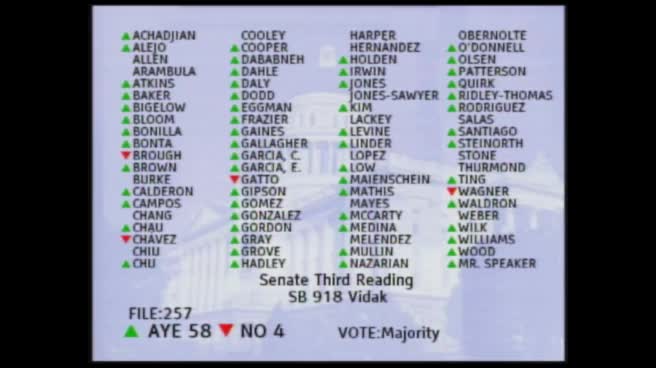 1MIN
Assembly Floor
 58SEC
Assembly Floor
 2MIN
Assembly Floor
 52SEC
Assembly Floor
 53SEC
Assembly Floor
 5MIN
Assembly Standing Committee on Housing and Community Development
 2MIN
Senate Standing Committee on Appropriations
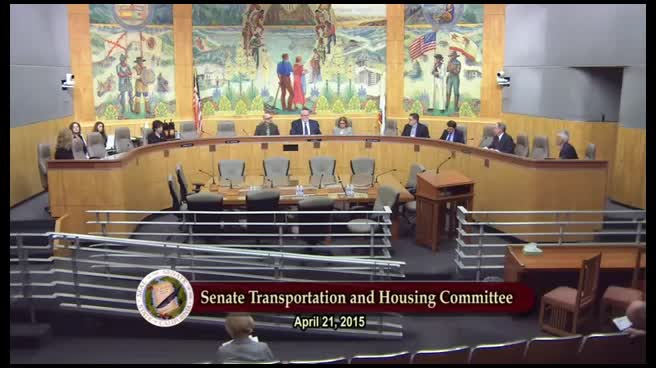 3MIN
Senate Standing Committee on Transportation and Housing
Bill Author

Bill Co-Author(s):
