AB 1381: Professions and vocations: real estate appraisers: real estate brokers.
- Session Year: 2015-2016
- House: Assembly
- Latest Version Date: 2016-09-30
Existing law provides for the licensure and regulation of real estate brokers and defines real estate broker for its purposes to include a person who, among other things, (1) sells or offers to sell, buys or offers to buy, solicits prospective sellers or purchasers of, solicits or obtains listings of, or negotiates the purchase, sale or exchange of real property or a business opportunity, or (2) leases or rents or offers to lease or rent, or places for rent, or solicits listings of places for rent, or solicits for prospective tenants, or negotiates the sale, purchase, or exchanges of leases on real property, or on a business opportunity, or collects rents from real property, or improvements thereon, or from business opportunities.
This bill would provide that a person acting in the capacity of an outdoor advertising representative, as defined, in connection with a specified transaction is not a real estate broker.
Existing law, the Real Estate Appraisers Licensing and Certification Law, provides for the licensure and regulation of persons who engage in specified real estate appraisal activity by the Chief of the Bureau of Real Estate Appraisers.
Existing law prohibits a person from engaging in real estate appraisal activity without obtaining a license issued by the Bureau of Real Estate Appraisers (formerly the Office of Real Estate Appraisers). Existing law requires a licensee to complete specified continuing education requirements in order to renew a license. Existing law requires the bureau to provide on the Internet information regarding, among other things, the status of every license and registration issued by the bureau.
This bill would additionally require the bureau to provide, on the Internet, the continuing education course information provided by a licensee when an individual applies for licensure renewal. The bill would also make various nonsubstantive changes.
Existing law provides for the licensure and regulation of real estate brokers and defines real estate broker for its purposes to include a person who, among other things, (1) sells or offers to sell, buys or offers to buy, solicits prospective sellers or purchasers of, solicits or obtains listings of, or negotiates the purchase, sale or exchange of real property or a business opportunity, or (2) leases or rents or offers to lease or rent, or places for rent, or solicits listings of places for rent, or solicits for prospective tenants, or negotiates the sale, purchase, or exchanges of leases on real property, or on a business opportunity, or collects rents from real property, or improvements thereon, or from business opportunities.
This bill would exclude from the definition of real estate broker persons acting in the capacity of an outdoor advertising representative, as defined, in connection with a specified transaction.
Existing law, the Real Estate Appraisers Licensing and Certification Law, provides for the licensure and regulation of persons who engage in specified real estate appraisal activity by the Chief of the Bureau of Real Estate Appraisers.
Existing law prohibits a person from engaging in real estate appraisal activity without obtaining a license issued by the Bureau of Real Estate Appraisers (formerly the Office of Real Estate Appraisers). Existing law requires a licensee to complete specified continuing education requirements in order to renew a license. Existing law requires the bureau to provide on the Internet information regarding, among other things, the status of every license and registration issued by the bureau.
This bill would additionally require the bureau to provide, on the Internet, the continuing education course information provided by a licensee when an individual applies for licensure renewal. The bill would also make various nonsubstantive changes.
Existing law, the Real Estate Appraisers Licensing and Certification Law, provides for the licensure and regulation of persons who engage in specified real estate appraisal activity by the Chief of the Bureau of Real Estate Appraisers.
Existing law prohibits a person from engaging in real estate appraisal activity without obtaining a license issued by the Bureau of Real Estate Appraisers (formerly the Office of Real Estate Appraisers). Existing law requires a licensee to complete specified continuing education requirements in order to renew a license. Existing law requires the bureau to provide on the Internet information regarding, among other things, the status of every license and registration issued by the bureau.
This bill would additionally require the bureau to provide, on the Internet, information regarding the continuing education courses taken by a licensee in order to renew a license to engage in real estate activity. the continuing education course information provided by a licensee when an individual applies for licensure renewal. The bill would also make various nonsubstantive changes.
Existing law law, the Real Estate Appraisers Licensing and Certification Law, provides for the licensure, certification, licensure and regulation of persons who engage in specified real estate appraisal activity by the Chief of the Bureau of Real Estate Appraisers. Existing law requires the chief to adopt regulations governing the process and the procedure of applying for a license, including, but not limited to, necessary experience or education, equivalency, and minimum requirements of the Appraisal Foundation. Existing law requires, for purposes of the educational background requirements, the chief to grant credits for any courses taken on real estate appraisal ethics or practices, as specified.
This bill would also require, for purposes of the educational background requirements, the chief to require education in valuing sustainable real estate assets.
Existing law prohibits a person from engaging in real estate appraisal activity without obtaining a license issued by the Bureau of Real Estate (formerly the Office of Real Estate Appraisers). Existing law requires a licensee to complete specified continuing education requirements in order to renew a license. Existing law requires the bureau to provide on the Internet information regarding, among other things, the status of every license and registration issued by the bureau.
This bill would additionally require the bureau to provide, on the Internet, information regarding the continuing education courses taken by a licensee in order to renew a license to engage in real estate activity. The bill would also make various nonsubstantive changes.
Existing law provides for the licensure, certification, and regulation of persons who engage in specified real estate appraisal activity by the Chief of the Bureau of Real Estate Appraisers. Existing law requires the chief to adopt regulations governing the process and the procedure of applying for a license, including, but not limited to, necessary experience or education, equivalency, and minimum requirements of the Appraisal Foundation. Existing law requires, for purposes of the educational background requirements, the chief to grant credits for any courses taken on real estate appraisal ethics or practices, as specified.
This bill would also require, for purposes of the educational background requirements, the chief to require education in valuing sustainable real estate assets.
Existing law also requires the chief to adopt regulations relating to the license renewal process that include continuing education requirements.
This bill would require the continuing education requirements to include education in valuing sustainable real estate assets. This bill would also prohibit the renewal of a license unless an applicant provides evidence of continuing education in valuing sustainable real estate assets.
Existing law provides for the licensure, certification, and regulation of persons who engage in specified real estate appraisal activity by the Chief of the Bureau of Real Estate Appraisers. Existing law authorizes requires the chief to adopt regulations governing the process and the procedure of applying for a license, including, but not limited to, necessary experience or education, equivalency, and minimum requirements of the Appraisal Foundation. Existing law requires, for purposes of the educational background requirements, the chief to grant credits for any courses taken on real estate appraisal ethics or practices, as specified.
This bill would also require, for purposes of the educational background requirements, the chief to require education in valuing sustainable real estate assets.
Existing law also requires the chief to adopt regulations relating to the license renewal process that include continuing education requirements.
This bill would make a nonsubstantive change to that latter provision.
This bill would require the continuing education requirements to include education in valuing sustainable real estate assets. This bill would also prohibit the renewal of a license unless an applicant provides evidence of continuing education in valuing sustainable real estate assets.
Existing law provides for the licensure, certification, and regulation of persons who engage in specified real estate appraisal activity by the Chief of the Bureau of Real Estate Appraisers. Existing law authorizes the chief to adopt regulations relating to the license renewal process that include continuing education requirements.
This bill would make a nonsubstantive change to that latter provision.
(a)Subdivisions (a) and (b) of Section 10131 do not apply to persons acting in the capacity of an outdoor advertising representative in connection with a transaction described in subdivision (c).
(b)For purposes of this section, outdoor advertising representative means an employee of a corporation or a limited liability company or a general partner of a partnership that holds a license issued by the Department of Transportation to engage in the business of outdoor advertising, arranging for the lease or transfer of real property by his or her employer or an interest in real property solely for the placement of, access to, or operation of, an advertising display and appurtenances thereto, as defined in Section 5202.
(c)In every transaction involving the transfer, lease, or use of real property for the operation of an advertising display negotiated by an outdoor advertising representative, the owner or operator of the advertising display shall maintain liability insurance coverage for death, bodily injury, and property damage arising out of, or in connection with, its acts, omissions, or operations on the real property. The amount of the insurance coverage shall not be less than five hundred thousand dollars ($500,000) per person or one million dollars ($1,000,000) per occurrence for personal injury and five hundred thousand dollars ($500,000) for property damage. It must be issued by an insurance carrier authorized to sell such insurance in California.
SEC. 2.Section 11317.2 of the Business and Professions Code is amended to read:11317.2.(a)(1)In addition to publishing the summary required by Section 11317, the bureau shall provide on the Internet information regarding the status of every license and registration issued by the bureau in accordance with the California Public Records Act (Chapter 3.5 (commencing with Section 6250) of Division 7 of Title 1 of the Government Code) and the Information Practices Act of 1977 (Chapter 1 (commencing with Section 1798) of Title 1.8 of Part 4 of Division 3 of the Civil Code). The public information to be provided on the Internet shall include information on suspensions and revocations of licenses and registrations issued by the bureau and accusations filed pursuant to the Administrative Procedure Act (Chapter 3.5 (commencing with Section 11340) of Part 1 of Division 3 of Title 2 of the Government Code) relative to persons or businesses subject to licensure, registration, or regulation by the bureau. The information shall not include personal information, including home telephone number, date of birth, or social security number. The bureau shall disclose a licensees or registrants address of record. However, the bureau shall allow a licensee or registrant to provide a post office box number or other alternate address, instead of his or her home address, as the address of record. This section shall not preclude the bureau from also requiring a licensee or registrant who has provided a post office box number or other alternative mailing address as his or her address of record to provide a physical business address or residence address only for the bureaus internal administrative use and not for disclosure as the licensees or registrants address of record or disclosure on the Internet.
(2)In addition to the information required by subdivision (a), the bureau shall provide, on the Internet, the continuing education course information provided by a licensee when an individual applies for licensure renewal.
(b)The bureau shall not provide on the Internet identifying information with respect to private reprovals or letters of warning, which shall remain confidential.
(c)For purposes of this section, Internet has the meaning set forth in paragraph (6) of subdivision (f) of Section 17538.
(a)Subdivisions (a) and (b) of Section 10131 do not apply to persons acting in the capacity of an outdoor advertising representative in connection with a transaction described in subdivision (c).
(b)For purposes of this section, outdoor advertising representative means an employee of a corporation or a limited liability company or a general partner of a partnership arranging for the lease or transfer of real property or an interest in real property solely for the placement of, access to, or operation of, an advertising display and appurtenances thereto, as defined in Section 5202.
(c)In every transaction involving the transfer, lease, or use of real property for the operation of an advertising display negotiated by an outdoor advertising representative, the owner or operator of the advertising display shall maintain liability insurance coverage for death, bodily injury, and property damage arising out of, or in connection with, its acts, omissions, or operations on the real property. The amount of the insurance coverage shall not be less than five hundred thousand dollars ($500,000) per person or one million dollars ($1,000,000) per occurrence for personal injury and five hundred thousand dollars ($500,000) for property damage. It must be issued by an insurance carrier authorized to sell such insurance in California.
SECTION 1.SEC. 2.Section 11317.2 of the Business and Professions Code is amended to read:11317.2.(a)(1)In addition to publishing the summary required by Section 11317, the bureau shall provide on the Internet information regarding the status of every license and registration issued by the bureau in accordance with the California Public Records Act (Chapter 3.5 (commencing with Section 6250) of Division 7 of Title 1 of the Government Code) and the Information Practices Act of 1977 (Chapter 1 (commencing with Section 1798) of Title 1.8 of Part 4 of Division 3 of the Civil Code). The public information to be provided on the Internet shall include information on suspensions and revocations of licenses and registrations issued by the bureau and accusations filed pursuant to the Administrative Procedure Act (Chapter 3.5 (commencing with Section 11340) of Part 1 of Division 3 of Title 2 of the Government Code) relative to persons or businesses subject to licensure, registration, or regulation by the bureau. The information shall not include personal information, including home telephone number, date of birth, or social security number. The bureau shall disclose a licensees or registrants address of record. However, the bureau shall allow a licensee or registrant to provide a post office box number or other alternate address, instead of his or her home address, as the address of record. This section shall not preclude the bureau from also requiring a licensee or registrant who has provided a post office box number or other alternative mailing address as his or her address of record to provide a physical business address or residence address only for the bureaus internal administrative use and not for disclosure as the licensees or registrants address of record or disclosure on the Internet.
(2)In addition to the information required by subdivision (a), the bureau shall provide, on the Internet, the continuing education course information provided by a licensee when an individual applies for licensure renewal.
(b)The bureau shall not provide on the Internet identifying information with respect to private reprovals or letters of warning, which shall remain confidential.
(c)For purposes of this section, Internet has the meaning set forth in paragraph (6) of subdivision (f) of Section 17538.
(a)(1)In addition to publishing the summary required by Section 11317, the bureau shall provide on the Internet information regarding the status of every license and registration issued by the bureau in accordance with the California Public Records Act (Chapter 3.5 (commencing with Section 6250) of Division 7 of Title 1 of the Government Code) and the Information Practices Act of 1977 (Chapter 1 (commencing with Section 1798) of Title 1.8 of Part 4 of Division 3 of the Civil Code). The public information to be provided on the Internet shall include information on suspensions and revocations of licenses and registrations issued by the bureau and accusations filed pursuant to the Administrative Procedure Act (Chapter 3.5 (commencing with Section 11340) of Part 1 of Division 3 of Title 2 of the Government Code) relative to persons or businesses subject to licensure, registration, or regulation by the bureau. The information shall not include personal information, including home telephone number, date of birth, or social security number. The bureau shall disclose a licensees or registrants address of record. However, the bureau shall allow a licensee or registrant to provide a post office box number or other alternate address, instead of his or her home address, as the address of record. This section shall not preclude the bureau from also requiring a licensee or registrant who has provided a post office box number or other alternative mailing address as his or her address of record to provide a physical business address or residence address only for the bureaus internal administrative use and not for disclosure as the licensees or registrants address of record or disclosure on the Internet.
(2)In addition to the information required by subdivision (a), the bureau shall provide, on the Internet, information regarding the continuing education courses taken by a licensee in order to renew a license to engage in real estate appraisal activity. the continuing education course information provided by a licensee when an individual applies for licensure renewal.
(b)The bureau shall not provide on the Internet identifying information with respect to private reprovals or letters of warning, which shall remain confidential.
(c)For purposes of this section, Internet has the meaning set forth in paragraph (6) of subdivision (f) of Section 17538.
(a)(1)In addition to publishing the summary required by Section 11317, the office bureau shall provide on the Internet information regarding the status of every license and registration issued by the office bureau in accordance with the California Public Records Act (Chapter 3.5 (commencing with Section 6250) of Division 7 of Title 1 of the Government Code) and the Information Practices Act of 1977 (Chapter 1 (commencing with Section 1798) of Title 1.8 of Part 4 of Division 3 of the Civil Code). The public information to be provided on the Internet shall include information on suspensions and revocations of licenses and registrations issued by the office bureau and accusations filed pursuant to the Administrative Procedure Act (Chapter 3.5 (commencing with Section 11340) of Part 1 of Division 3 of Title 2 of the Government Code) relative to persons or businesses subject to licensure, registration, or regulation by the office bureau. The information shall not include personal information, including home telephone number, date of birth, or social security number. The office bureau shall disclose a licensees or registrants address of record. However, the office bureau shall allow a licensee or registrant to provide a post office box number or other alternate address, instead of his or her home address, as the address of record. This section shall not preclude the office bureau from also requiring a licensee or registrant who has provided a post office box number or other alternative mailing address as his or her address of record to provide a physical business address or residence address only for the offices bureaus internal administrative use and not for disclosure as the licensees or registrants address of record or disclosure on the Internet.
(2)In addition to the information required by subdivision (a), the bureau shall provide, on the Internet, information regarding the continuing education courses taken by a licensee in order to renew a license to engage in real estate appraisal activity.
(b)The office bureau shall not provide on the Internet identifying information with respect to private reprovals or letters of warning, which shall remain confidential.
(c)For purposes of this section, Internet has the meaning set forth in paragraph (6) of subdivision (f) of Section 17538.
SECTION 1.Section 11340 of the Business and Professions Code is amended to read:11340.The director shall adopt regulations governing the process and the procedure of applying for a license which shall include, but not be limited to, necessary experience or education, equivalency, and minimum requirements of the Appraisal Foundation, if any.
(a)For purposes of the educational background requirements established under this section, the director shall do both of the following:
(1)Grant credits for any courses taken on real estate appraisal ethics or practices pursuant to Section 10153.2, or which are deemed by the director to meet standards established pursuant to this part and federal law.
(2)(A)Require education in valuing sustainable real estate assets.
(B)For purposes of this paragraph, sustainable real estate assets include, but are not limited to, solar and wind power generation installations and energy efficiency measures.
(b)For the purpose of implementing and applying this section, the director shall prescribe by regulation equivalent courses and equivalent experience. The experience of employees of an assessors office or of the State Board of Equalization in setting forth opinions of value of real property for tax purposes shall be deemed equivalent to experience in federally related real estate appraisal activity. Notwithstanding any other law, a holder of a valid real estate broker license shall be deemed to have completed appraisal license application experience requirements upon proof that he or she has accumulated 1,000 hours of experience in the valuation of real property.
(c)The director shall adopt regulations for licensure which shall meet, at a minimum, the requirements and standards established by the Appraisal Foundation and the federal financial institutions regulatory agencies acting pursuant to Section 1112 of the Financial Institutions Reform Recovery and Enforcement Act of 1989, Public Law 101-73 (FIRREA). The director shall, by regulation, require the application for a real estate appraiser license to include the applicants social security number.
(d)In evaluating the experience of any applicant for a license, regardless of the number of hours required of that applicant, the director shall apply the same standards to the experience of all applicants.
(e)No license shall be issued to an applicant who is less than 18 years of age.
The director shall adopt regulations governing the process and the procedure of applying for a license which shall include, but not be limited to, necessary experience or education, equivalency, and minimum requirements of the Appraisal Foundation, if any.
(a)For purposes of the educational background requirements established under this section, the director shall do both of the following:
(1)Grant credits for any courses taken on real estate appraisal ethics or practices pursuant to Section 10153.2, or which are deemed by the director to meet standards established pursuant to this part and federal law.
(2)(A)Require education in valuing sustainable real estate assets.
(B)For purposes of this paragraph, sustainable real estate assets include, but are not limited to, solar and wind power generation installations and energy efficiency measures.
(b)For the purpose of implementing and applying this section, the director shall prescribe by regulation equivalent courses and equivalent experience. The experience of employees of an assessors office or of the State Board of Equalization in setting forth opinions of value of real property for tax purposes shall be deemed equivalent to experience in federally related real estate appraisal activity. Notwithstanding any other law, a holder of a valid real estate broker license shall be deemed to have completed appraisal license application experience requirements upon proof that he or she has accumulated 1,000 hours of experience in the valuation of real property.
(c)The director shall adopt regulations for licensure which shall meet, at a minimum, the requirements and standards established by the Appraisal Foundation and the federal financial institutions regulatory agencies acting pursuant to Section 1112 of the Financial Institutions Reform Recovery and Enforcement Act of 1989, Public Law 101-73 (FIRREA). The director shall, by regulation, require the application for a real estate appraiser license to include the applicants social security number.
(d)In evaluating the experience of any applicant for a license, regardless of the number of hours required of that applicant, the director shall apply the same standards to the experience of all applicants.
(e)No license shall be issued to an applicant who is less than 18 years of age.
SEC. 2.Section 11360 of the Business and Professions Code is amended to read:11360.(a)The director shall adopt regulations governing the process and procedures for renewal of a license that shall include, but not be limited to, continuing education requirements, which shall be reported on the basis of four-year continuing education cycles.
(b)An applicant for renewal of a license shall be required to demonstrate his or her continuing fitness to hold a license prior to its renewal. Applicants shall also fulfill continuing education requirements established pursuant to this section and shall be required to take a minimum of four hours of federal and California appraisal related statutory and regulatory law every four years.
(c)(1)The continuing education requirements established pursuant to this section shall include education in valuing sustainable real estate assets.
(2)A license shall not be renewed unless an applicant provides evidence, in the form and manner prescribed by the bureau, of continuing education in valuing sustainable real estate assets.
(3)For purposes of this subdivision, sustainable real estate assets include, but are not limited to, solar and wind power generation installations and energy efficiency measures.
(d)This section shall become operative on January 1, 2013.
The director shall adopt regulations governing the process and the procedure of applying for a license which shall include, but not be limited to, necessary experience or education, equivalency, and minimum requirements of the Appraisal Foundation, if any.
(a)For purposes of the educational background requirements established under this section, the director shall grant do both of the following:
(1)Grant credits for any courses taken on real estate appraisal ethics or practices pursuant to Section 10153.2, or which are deemed by the director to meet standards established pursuant to this part and federal law.
(2)(A)Require education in valuing sustainable real estate assets.
(B)For purposes of this paragraph, sustainable real estate assets include, but are not limited to, solar and wind power generation installations and energy efficiency measures.
(b)For the purpose of implementing and applying this section, the director shall prescribe by regulation equivalent courses and equivalent experience. The experience of employees of an assessors office or of the State Board of Equalization in setting forth opinions of value of real property for tax purposes shall be deemed equivalent to experience in federally related real estate appraisal activity. Notwithstanding any other law, a holder of a valid real estate broker license shall be deemed to have completed appraisal license application experience requirements upon proof that he or she has accumulated 1,000 hours of experience in the valuation of real property.
(c)The director shall adopt regulations for licensure which shall meet, at a minimum, the requirements and standards established by the Appraisal Foundation and the federal financial institutions regulatory agencies acting pursuant to Section 1112 of the Financial Institutions Reform Recovery and Enforcement Act of 1989, Public Law 101-73 (FIRREA). The director shall, by regulation, require the application for a real estate appraiser license to include the applicants social security number.
(d)In evaluating the experience of any applicant for a license, regardless of the number of hours required of that applicant, the director shall apply the same standards to the experience of all applicants.
(e)No license shall be issued to an applicant who is less than 18 years of age.
SECTION 1.SEC. 2.Section 11360 of the Business and Professions Code is amended to read:11360.(a)The director shall adopt regulations governing the process and procedures for renewal of a license that shall include, but not be limited to, continuing education requirements, which shall be reported on the basis of four-year continuing education cycles.
(b)An applicant for renewal of a license shall be required to demonstrate his or her continuing fitness to hold a license prior to its renewal. Applicants shall also fulfill continuing education requirements established pursuant to this section and shall be required to take a minimum of four hours of federal and California appraisal related statutory and regulatory law every four years.
(c)(1)The continuing education requirements established pursuant to this section shall include education in valuing sustainable real estate assets.
(2)A license shall not be renewed unless an applicant provides evidence, in the form and manner prescribed by the bureau, of continuing education in valuing sustainable real estate assets.
(3)For purposes of this subdivision, sustainable real estate assets include, but are not limited to, solar and wind power generation installations and energy efficiency measures.
(c)
(d)This section shall become operative on January 1, 2013.
(a)The director shall adopt regulations governing the process and procedures for renewal of a license which that shall include, but not be limited to, continuing education requirements, which shall be reported on the basis of four-year continuing education cycles.
(b)An applicant for renewal of a license shall be required to demonstrate his or her continuing fitness to hold a license prior to its renewal. Applicants shall also fulfill continuing education requirements established pursuant to this section and shall be required to take a minimum of four hours of federal and California appraisal related statutory and regulatory law every four years.
(c)This section shall become operative on January 1, 2013.
|
Date
|
Status
|
|---|---|
| Sep 9, 2016 | Enrolled and presented to the Governor at 2:30 p.m. |
| Aug 31, 2016 | Senate amendments concurred in. To Engrossing and Enrolling. |
| Aug 30, 2016 | Read third time. Passed. Ordered to the Assembly. (Ayes 36. Noes 0. Page 5520.). |
| Aug 30, 2016 | In Assembly. Concurrence in Senate amendments pending. |
| Aug 30, 2016 | Read third time. Passed. Ordered to the Assembly. |
| Aug 29, 2016 | Read second time. Ordered to third reading. |
| Aug 26, 2016 | Joint Rule 61(b)(16) suspended. (Page 5452.) |
| Aug 26, 2016 | Read third time and amended. Ordered to second reading. |
| Aug 26, 2016 | Joint Rule 61(b)(16) suspended. |
| Aug 25, 2016 | From committee: Return to Senate floor for consideration. (Ayes 9. Noes 0.) . |
| Aug 22, 2016 | From committee: Be re-referred to Com. on B., P. & E.D. pursuant to Senate Rule 29.10(b). (Ayes 5. Noes 0.) Re-referred to Com. on B., P. & E.D. |
| Aug 22, 2016 | From committee: Be re-referred to Com. on RLS. pursuant to Senate Rule 29.10(b). Re-referred to Com. on RLS. |
| Aug 22, 2016 | From committee: Be re-referred to Com. on B., P. & E.D. pursuant to Senate Rule 29.10 (b). Re-referred to Com. on B., P. & E.D. |
| Aug 22, 2016 | From committee: Be re-referred to Com. on RLS. pursuant to Senate Rule 29.10 (b). Re-referred to Com. on RLS. |
| Aug 22, 2016 | Read second time. Ordered to third reading. |
| Aug 19, 2016 | Read third time and amended. Ordered to second reading. |
| Aug 15, 2016 | Read second time. Ordered to third reading. |
| Aug 11, 2016 | Read third time and amended. Ordered to second reading. |
| Jun 28, 2016 | Read second time. Ordered to third reading. |
| Jun 27, 2016 | From committee: Be placed on second reading file pursuant to Senate Rule 28.8. |
| Jun 14, 2016 | From committee: Do pass and re-refer to Com. on APPR. (Ayes 7. Noes 1.) (June 13). Re-referred to Com. on APPR. |
| Jun 1, 2016 | From committee chair, with author's amendments: Amend, and re-refer to committee. Read second time, amended, and re-referred to Com. on B., P. & E.D. |
| Feb 4, 2016 | Referred to Com. on B., P. & E.D. |
| Jan 27, 2016 | In Senate. Read first time. To Com. on RLS. for assignment. |
| Jan 27, 2016 | Read third time. Passed. Ordered to the Senate. (Ayes 65. Noes 10. Page 3503.) |
| Jan 25, 2016 | Read third time and amended. Ordered to third reading. (Page 3471.) |
| Jan 25, 2016 | Read second time. Ordered to third reading. |
| Jan 21, 2016 | From committee: Do pass. (Ayes 12. Noes 3.) (January 21). |
| Jan 12, 2016 | From committee: Do pass and re-refer to Com. on APPR. (Ayes 8. Noes 3.) (January 12). Re-referred to Com. on APPR. |
| Apr 28, 2015 | In committee: Set, first hearing. Hearing canceled at the request of author. |
| Apr 6, 2015 | Re-referred to Com. on B. & P. |
| Mar 26, 2015 | From committee chair, with author's amendments: Amend, and re-refer to Com. on B. & P. Read second time and amended. |
| Mar 26, 2015 | Referred to Com. on B. & P. |
| Mar 2, 2015 | Read first time. |
| Mar 1, 2015 | From printer. May be heard in committee March 31. |
| Feb 27, 2015 | Introduced. To print. |
|
Date
|
Description
|
Location
|
Votes
|
|
|---|---|---|---|---|
| Aug 31, 2016 | AB 1381 WEBER Concurrence in Senate Amendments | Assembly Floor |
Passed |
|
| Aug 30, 2016 | Assembly 3rd Reading AB1381 Weber By Hill | Senate Floor |
Passed |
|
| Aug 25, 2016 | That the measure be returned to Senate Floor for consideration. Ordered to third reading. | Senate Standing Committee on Business, Professions and Economic Development |
Passed |
|
| Jun 13, 2016 | Do pass, but first be re-referred to the Committee on [Appropriations] | Senate Standing Committee on Business, Professions and Economic Development |
Passed |
|
| Jan 27, 2016 | AB 1381 WEBER Assembly Third Reading | Assembly Floor |
Passed |
|
| Jan 21, 2016 | Do pass. | Assembly Standing Committee on Appropriations |
Passed |
|
| Jan 12, 2016 | Do pass and be re-referred to the Committee on [Appropriations] | Assembly Standing Committee on Business and Professions |
Passed |
This list shows positions taken on this bill by organizations on the date displayed, which is linked to the original source.
Positions by individuals are not included.
CONCURRENCE IN SENATE AMENDMENTS
CSA1 Bill Id:AB 1381
Author:(Weber)
As Amended Ver:August 26, 2016
Majority vote
ASSEMBLY: |
| (January 27, 2016) | SENATE: | 36-0 | (August 30, 2016) |
(vote not relevant)
Original Committee Reference: B. & P.
SUMMARY: Requires the Bureau of Real Estate Appraisers (BREA) to provide information on the Internet regarding continuing education courses taken by a licensee, in addition to other specified reporting requirements pursuant to the California Public Records Act.
The Senate amendments delete the Assembly version of this bill, and instead:
- Exclude from the definition of "real estate broker" persons acting in the capacity of an outdoor advertising representative in connection with a specified transaction.
- Define an "outdoor advertising representative" as an employee of a corporation or a limited liability company or a general partner of a partnership that holds a license issued by the Department of Transportation to engage in the business of outdoor advertising, arranging for the lease or transfer of real property by his or her employer, or an interest in real property solely for the placement of, access to, or operation of, an advertising display and appurtenances thereto, as defined.
- Require in every transaction involving the transfer, lease, or use of real property for the operation of an advertising display negotiated by an outdoor advertising representative, the owner or operator of the advertising display to maintain liability insurance coverage for death, bodily injury, and property damage arising out of, or in connection with, its acts, omissions, or operations on the real property, as specified.
- Require the BREA to provide, on the Internet, information regarding continuing education courses taken by a licensee.
- Replace obsolete references to the Office of Real Estate Appraisers with the word "Bureau".
FISCAL EFFECT: According to the Senate Appropriations Committee, pursuant to Senate Rule 28.8, this bill will result in negligible state costs.
COMMENTS:
Purpose. This bill is sponsored by the author. According to the author, "[This bill] would provide the public with additional information on the continuing education courses taken when an appraiser seeks to renew his or her license. By listing an appraiser's continuing education courses, the public will have a better understanding of who appraises their property. In addition, businesses would be better able to evaluate candidates and select appraisers with certain specializations.
Additionally, [this bill] clarifies that employees of outdoor advertising companies can continue to conduct business negotiations related to the placement and operation of outdoor advertising displays without seeking licensure as a real estate broker for specific transactions related to the placement, access, and operation of an outdoor advertising display. This bill takes a measured approach explicitly detailing the types of transactions that outdoor advertising representatives may negotiate and further requires that the outdoor advertising company maintain appropriate liability insurance – a model that has served the film industry well."
Background. In 1989, Congress adopted the Federal Financial Institutions Reform, Recovery and Enforcement Act (FIRREA), which requires states to license and certify real estate appraisers who appraise property for federally related transactions (FRTs), as a result of the savings and loan disaster. In short, FRTs are transactions involving loans made, guaranteed, or insured by federally supervised financial institutions. The FIRREA, and rules promulgated pursuant to that act, require that real estate appraisals be performed in accordance with generally accepted uniform standards as promulgated by the Appraisal Standards Board (ASB) of the Appraisal Foundation.
The Appraisal Foundation also has an Appraisal Qualifications Board (AQB) that establishes the qualification criteria for state licensing, certification, and recertification of appraisers. FIRREA mandates that all state certified appraisers must meet the minimum education, experience, and examination requirements promulgated by the AQB. These criteria, among other things, establish four levels of real property appraiser classifications, which are reflected under California law, and have different education, experience, and scope of practice requirements.
Background Education Requirements. Educational requirements for all certifications are based upon national standards determined by the AQB, and require specific modules to be covered, such as basic appraisal principles and procedures and a 15-hour National Uniform Standards of Professional Appraisal Practice (USPAP) course, or its equivalent. Among other things, the qualifications specifically provide that case studies relating to special energy efficient items (i.e. "green buildings") may be used as a part of the curriculum required under certain education modules for certified residential and certified general licensees. It is unclear the extent to which these foundational courses incorporate energy efficiency items.
Continuing Education Requirements. The current term of a California real estate appraiser license is two years, and all licensed appraisers must meet minimum continuing education requirements (CEs) before renewing their license. A total of 56 hours of CEs are required every four years, although proof of completion of the seven-hour National USPAP Update Course, or its equivalent, is required every two years and must be submitted with each renewal application. Of the remaining hours, proof of completion of a four hour BREA approved course covering federal and state laws and regulations and remaining CE courses is required every four years. Currently, the AQB allows, CE credit for courses that cover topics including, but not limited to, energy efficient items and "green building" appraisals.
Valuing Sustainable Real Estate Assets. According to the author, there have been concerns raised regarding the consistent assessment of solar and other renewable technologies when added to a home. While these retrofits are often relatively costly, they are worthwhile, considering the savings found in energy bills and a perceived increase in the value of the home, and research shows that sustainable real estate assets do indeed add value to a home. However, according to "The Challenges of Valuing Green," published in the Winter 2015 issue of the Appraisal Journal, an industry publication, valuation professionals, real estate agents, and homebuyers face challenges in the process of valuing, selling, and purchasing green and energy efficient homes due to a lack of comparable properties and lack of data. When applied to homes, the term "green" can take a variety of meanings, which creates difficulty in the marketplace when valuing a home that has been classified as green or has energy efficient or high performance features.
Outdoor Advertising. According to the author, "Outdoor advertising companies have operated within the State of California for nearly 100 years. These businesses must comply with federal and state laws, as well as municipal ordinances that mandate permitting processes, spacing and size requirements for the placement of outdoor advertising displays. Municipalities throughout the state have opted to negotiate agreements with outdoor advertising companies to generate important local revenue."
Recently, a member of the public made a complaint about a negotiation that had taken place between two outdoor advertising companies and a private property owner at a CalBRE forum. The complaint raised the question of whether employees of outdoor advertising companies were required to be licensed real estate brokers under existing state law.
Under current law, any person or company wishing to display advertising, other than a display on a building within 660 feet of a highway right of way, must comply with federal and state law relating to display size, distance between displays, and certain content limitations. The person or company must be licensed by the State Office of Outdoor Advertising, within the Department of Transportation, obtain a permit from the state Office of Outdoor Advertising, and comply with all local permitting requirements. The State license and permit must be renewed each year.
The Department of Transportation is responsible for enforcing compliance with federal and state laws governing outdoor advertising. If the state fails to properly administer the federal program, the state shall lose 10% of its federal highway funding. Given the level of regulation already placed on the outdoor advertising industry, the Department of Consumer Affairs does not believe an additional real estate license for outdoor advertising representatives is needed.
The proposed language is modeled after an existing exemption for film industry employees who negotiate lease agreements for filming and are not required to obtain licensure as real estate brokers.
Analysis Prepared by: Gabby Nepomuceno / B. & P. / (916) 319-3301 FN: 0004973
Office of Senate Floor Analyses (916) 651-1520 Fax: (916) 327-4478 | AB |
THIRD READING
Bill No: AB 1381
:
SENATE BUS., PROF. & ECON. DEV. COMMITTEE: 7-1, 6/13/16
AYES: Hill, Block, Galgiani, Hernandez, Jackson, Mendoza, Wieckowski
NOES: Gaines
NO VOTE RECORDED: Bates
SENATE APPROPRIATIONS COMMITTEE: Senate Rule 28.8
SENATE BUS., PROF. & ECON. DEV. COMMITTEE: 9-0, 8/25/16 (Pursuant to Senate Rule 29.10)
AYES: Hill, Bates, Block, Gaines, Galgiani, Hernandez, Jackson, Mendoza, Wieckowski
ASSEMBLY FLOOR: 65-10, 1/27/16 - See last page for vote
DIGEST: This bill provides that an “outdoor advertising representative” is not required to register as a broker with the Bureau of Real Estate; defines an “outdoor advertising representative” as specified; requires the owner or operator of the advertising display to maintain liability insurance; and requires the Bureau of Real Estate Appraisers to provide information on its Web site regarding the continuing education courses taken by a licensee.
Senate Floor Amendments of 8/26/16 define an “outdoor advertising representative”, as specified, clarify that an “outdoor advertising representative” is not required to obtain a real estate broker’s license, and require that the owner or operator of the advertising display maintain liability insurance coverage, as specified.
Existing law:
- Establishes the Outdoor Advertising Act that regulates outdoor advertising structures and signs. (Business and Professions Code (BPC) § 5200)
- Declares that it is the intent of the Legislature to regulate advertising displays adjacent to highways included in the national system of interstate and defense highways or the federal-aid primary highway system. (BPC § 5228)
- Authorizes the governing body of any city or city and county to enact ordinances requiring licenses or permits for the placing of advertising displays in view of any highway. (BPC § 5231)
- States that a person engages in the business of outdoor advertising whenever, personally or through employees, that person places an advertising display, changes the advertising message of an advertising display that does not pertain exclusively to that person’s business and is visible to a state highway or freeway. (BPC § 5300)
- Prohibits a person to engage in or carry on the business or occupation of outdoor advertising without first having paid the license fee. The fee is payable annually in advance on the first day of July of each year to the Director of Transportation or his authorized agent. Requires each license remain in force for the term of one year from and after the first day of July, and may be renewed annually. (BPC § 5301)
- Provides that persons acting in the capacity of a film location representative in connection with a transaction are not required to be licensed as a real estate broker. (BPC § 10133.4(a))
- Defines “film location representative” as an employee of a principal arranging for the use of real property for photographic purposes. (BPC § 10133.4(b)(1))
- Defines “principal” as the person who will use the real property for photographic purposes. (BPC § 10133.4(b)(2))
- Requires, in every transaction by a film location representative, the principal maintain liability insurance coverage for death, bodily injury, and property damage arising out of, or in connection with the use, ownership, or maintenance of real property which is the subject of the transaction. (BPC § 10133.4(c))
- Requires that the liability insurance not be less than five hundred thousand dollars ($500,000) per person or one million dollars ($1,000,000) per occurrence for personal injury and five hundred thousand dollars ($500,000) for property damage. (BPC § 10133.4(c))
- Requires that the liability insurance be issued by an insurance carrier authorized to sell such insurance in California. (BPC § 10133.4(c))
- Establishes the Real Estate Appraisers’ Licensing and Certification Law (Act), administered by the Bureau of Real Estate Appraisers (BREA) within the Department of Consumer Affairs (DCA), which regulates the licensing of real estate appraisers. (BPC § 11300 et seq.)
- Requires the BREA to provide information on the Internet in regarding, among other things, the status of every license and registration issued by the BREA.
(BPC § 11317.2(a)) - Requires the Director of the DCA to adopt regulations for licensure which shall meet, at a minimum, the requirements and standards established by the Appraisal Foundation and the federal financial institutions regulatory agencies acting pursuant to Section 1112 of the Financial Institutions Reform Recovery and Enforcement Act of 1989, Public Law 101-73 (FIRREA). (BPC § 11340(c))
- Requires the director to adopt regulations governing the process and procedures for renewal of a license, which shall include, but not be limited to, continuing education requirements, which shall be reported on the basis of four-year continuing education cycles. (BPC § 11360)
This bill:
- Provides that an “outdoor advertising representative” is not required to register as a broker with the Bureau of Real Estate (BRE).
- Defines an “outdoor advertising representative” as an employee of a corporation or a limited liability company or a general partner of a partnership, that holds a license issued by the Department of Transportation to engage in the business of outdoor advertising, arranging for the lease or transfer of real property by his or her employer or an interest in real property solely for the placement of, access to, or operation of, an advertising display and appurtenances.
- Requires, in every transaction involving the transfer, lease, or use of real property for the operation of an advertising display negotiated by an outdoor advertising representative, the owner or operator of the advertising display to maintain liability insurance coverage for death, bodily injury, and property damage arising out of, or in connection with, its acts, omissions, or operations on the real property.
- Requires that the liability insurance not be less than five hundred thousand dollars ($500,000) per person or one million dollars ($1,000,000) per occurrence for personal injury and five hundred thousand dollars ($500,000) for property damage.
- Requires that the liability insurance be issued by an insurance carrier authorized to sell such insurance in California.
- Requires BREA to provide, on the Internet, the continuing education course information provided by a licensee when an individual applies for licensure renewal.
- Removes obsolete references to the Office of Real Estate Appraisers and inserts the word “Bureau”.
Background
According to the author, “AB 1381 would provide the public with additional information on the continuing education courses taken when an appraiser seeks to renew his or her license. By listing an appraiser’s continuing education courses, the public will have a better understanding of who appraises their property. In addition, businesses would be better able to evaluate candidates and select appraisers with certain specializations.
Additionally, AB 1381 clarifies that employees of outdoor advertising companies can continue to conduct business negotiations related to the placement and operation of outdoor advertising displays without seeking licensure as a real estate broker for specific transactions related to the placement, access, and operation of an outdoor advertising display. Since 1901, this has been industry practice, and with decades of experience, we have little evidence that the status quo needs to be changed.
This issue was raised recently as the result of a signal inquiry raised at the BRE. This bill takes a measured approach explicitly detailing the types of transactions that outdoor advertising representatives may negotiate and further requires that the outdoor advertising company maintain appropriate liability insurance – a model that has served the film industry well. As the Little Hoover Commission and others continue their efforts to study appropriate levels of licensure, and how appropriate licensure levels can facilitate economic prosperity as well as maintain consumer protection, it is appropriate to codify this century-long practice.”
Broadway Heights Community Council and the author ultimately underscore,
“AB 1381 would provide the public with additional information on the continuing education courses taken when an appraiser seeks to renew his or her license. By listing an appraiser’s continuing education courses, the public will have a better understanding of who appraises their property. In addition, businesses would be better able to evaluate candidates and select appraisers with certain specializations.”
FISCAL EFFECT: Appropriation: Fiscal Com.: Local:
According to the Senate Appropriations Committee that analyzed the June 1, 2016 version, this bill will result in minor and absorbable costs. Given the new outdoor advertising provisions, additional costs are unknown.
Broadway Heights Community Council
California State Outdoor Advertising Association
Outfront Media
OPPOSITION: (Verified 8/25/16)
None received
The California State Outdoor Advertising Association writes that this bill “takes a measured approach explicitly detailing the types of transactions that outdoor advertising representatives may negotiate and further requires that the outdoor advertising company maintain appropriate liability insurance – a model that has served the film industry well.”
ASSEMBLY FLOOR: 65-10, 1/27/16
AYES: Achadjian, Alejo, Travis Allen, Baker, Bloom, Bonilla, Bonta, Brown, Burke, Calderon, Campos, Chau, Chávez, Chiu, Chu, Cooley, Cooper, Dababneh, Dahle, Daly, Dodd, Eggman, Frazier, Cristina Garcia, Eduardo Garcia, Gatto, Gipson, Gomez, Gonzalez, Gordon, Hadley, Roger Hernández, Holden, Irwin, Jones, Jones-Sawyer, Lackey, Levine, Linder, Lopez, Low, Maienschein, Mathis, Mayes, McCarty, Medina, Mullin, Nazarian, O'Donnell, Olsen, Quirk, Rendon, Ridley-Thomas, Rodriguez, Salas, Santiago, Mark Stone, Thurmond, Ting, Wagner, Waldron, Weber, Williams, Wood, Atkins
NOES: Bigelow, Brough, Beth Gaines, Gallagher, Grove, Harper, Melendez, Obernolte, Steinorth, Wilk
NO VOTE RECORDED: Chang, Gray, Kim, Patterson
8/29/16 18:49:53
**** END ****
SENATE COMMITTEE ON
BUSINESS, PROFESSIONS AND ECONOMIC DEVELOPMENT
Senator Jerry Hill, Chair
2015 - 2016 Regular
Bill No: AB 1381 Hearing Date: August 25, 2016
Author: | Weber | ||
Version: |
| ||
Urgency: | Fiscal: | ||
Consultant: | |||
Subject: Professions and vocations: real estate appraisers: real estate brokers
SUMMARY: Provides that an “outdoor advertising representative” is not required to register as a broker with the Bureau of Real Estate; defines an “outdoor advertising representative” as specified; requires the owner or operator of the advertising display to maintain liability insurance; requires the Bureau of Real Estate Appraisers to provide information on its website regarding the continuing education courses taken by a licensee.
NOTE: The Senate floor amendments as of 8/19/16 constitute a rewrite and this measure has been referred to this Committee pursuant to Senate Rule 29.10 (b) for consideration. The Committee may, by a vote of the majority, either: (1) hold the bill, or (2) return the bill to the Senate floor for consideration, or (3) re-refer the bill to fiscal committee pursuant to Joint Rule 10.5.
The Senate floor amendments define an “outdoor advertising representative”, clarify that an “outdoor advertising representative” is not required to obtain a real estate broker’s license, require that the owner or operator of the advertising display maintain liability insurance coverage, as specified, and clarify that the renewal of an appraiser’s license is not contingent on the Bureau of Real Estate Appraisers’ posting a licensee’s continuing education courses on its Web site.
Existing law:
- Establishes the Outdoor Advertising Act that regulates outdoor advertising structures and signs. (Business and Professions Code (BPC) § 5200)
- Declares that it is the intent of the Legislature to regulate advertising displays adjacent to highways included in the national system of interstate and defense highways or the federal-aid primary highway system. (BPC § 5228)
- Authorizes the governing body of any city or city and county to enact ordinances requiring licenses or permits for the placing of advertising displays in view of any highway. (BPC § 5231)
- States that a person engages in the business of outdoor advertising whenever, personally or through employees, that person places an advertising display, changes the advertising message of an advertising display that does not pertain exclusively to that person’s business and is visible to a state highway or freeway. (BPC § 5300)
- Prohibits a person to engage in or carry on the business or occupation of outdoor advertising without first having paid the license fee. The fee is payable annually in advance on the first day of July of each year to the Director of Transportation or his authorized agent. Requires each license remain in force for the term of one year from and after the first day of July, and may be renewed annually. (BPC § 5301)
- Provides that persons acting in the capacity of a film location representative in connection with a transaction are not required to be licensed as a real estate broker. (BPC § 10133.4(a))
- Defines “film location representative” as an employee of a principal arranging for the use of real property for photographic purposes. (BPC § 10133.4(b)(1))
- Defines “principal” as the person who will use the real property for photographic purposes. (BPC § 10133.4(b)(2))
- Requires, in every transaction by a film location representative, the principal maintain liability insurance coverage for death, bodily injury, and property damage arising out of, or in connection with the use, ownership, or maintenance of real property which is the subject of the transaction. (BPC § 10133.4(c))
- Requires that the liability insurance not be less than five hundred thousand dollars ($500,000) per person or one million dollars ($1,000,000) per occurrence for personal injury and five hundred thousand dollars ($500,000) for property damage. (BPC § 10133.4(c))
- Requires that the liability insurance be issued by an insurance carrier authorized to sell such insurance in California. (BPC § 10133.4(c))
- Establishes the Real Estate Appraisers’ Licensing and Certification Law (Act), administered by the Bureau of Real Estate Appraisers (BREA) within the Department of Consumer Affairs (DCA), which regulates the licensing of real estate appraisers. (BPC § 11300 et seq.)
- Requires the BREA to provide information on the Internet in regarding, among other things, the status of every license and registration issued by the BREA.
(BPC § 11317.2(a)) - Requires the Director of the DCA to adopt regulations for licensure which shall meet, at a minimum, the requirements and standards established by the Appraisal Foundation and the federal financial institutions regulatory agencies acting pursuant to Section 1112 of the Financial Institutions Reform Recovery and Enforcement Act of 1989, Public Law 101-73 (FIRREA). (BPC § 11340(c))
- Requires the director to adopt regulations governing the process and procedures for renewal of a license, which shall include, but not be limited to, continuing education requirements, which shall be reported on the basis of four-year continuing education cycles. (BPC § 11360)
This bill:
- Provides that an “outdoor advertising representative” is not required to register as a broker with the Bureau of Real Estate (BRE).
- Defines an “outdoor advertising representative” as an employee of a corporation or a limited liability company or a general partner of a partnership arranging for the lease or transfer of real property or an interest in real property solely for the placement of, access to, or operation of, an advertising display and appurtenances.
- Requires, in every transaction involving the transfer, lease, or use of real property for the operation of an advertising display negotiated by an outdoor advertising representative, the owner or operator of the advertising display to maintain liability insurance coverage for death, bodily injury, and property damage arising out of, or in connection with, its acts, omissions, or operations on the real property.
- Requires that the liability insurance not be less than five hundred thousand dollars ($500,000) per person or one million dollars ($1,000,000) per occurrence for personal injury and five hundred thousand dollars ($500,000) for property damage.
- Requires that the liability insurance be issued by an insurance carrier authorized to sell such insurance in California.
- Requires BREA to provide, on the Internet, the continuing education course information provided by a licensee when an individual applies for licensure renewal.
- Removes obsolete references to the Office of Real Estate Appraisers and inserts the word “Bureau”.
FISCAL EFFECT: According to the Senate Committee on Appropriations that analyzed the June 1, 2016 version, this measure will result in minor and absorbable costs. Given the new outdoor advertising provisions, additional costs are unknown.
COMMENTS:
- Purpose. The Author is the sponsor of the bill. According to the Author, “AB 1381 would provide the public with additional information on the continuing education courses taken when an appraiser seeks to renew his or her license. By listing an appraiser’s continuing education courses, the public will have a better understanding of who appraises their property. In addition, businesses would be better able to evaluate candidates and select appraisers with certain specializations.
Additionally, AB 1381 clarifies that employees of outdoor advertising companies can continue to conduct business negotiations related to the placement and operation of outdoor advertising displays without seeking licensure as a real estate broker for specific transactions related to the placement, access, and operation of an outdoor advertising display. Since 1901, this has been industry practice, and with decades of experience, we have little evidence that the status quo needs to be changed.
This issue was raised recently as the result of a signal inquiry raised at the BRE. This bill takes a measured approach explicitly detailing the types of transactions that outdoor advertising representatives may negotiate and further requires that the outdoor advertising company maintain appropriate liability insurance – a model that has served the film industry well. As the Little Hoover Commission and others continue their efforts to study appropriate levels of licensure, and how appropriate licensure levels can facilitate economic prosperity as well as maintain consumer protection, it is appropriate to codify this century-long practice.”
Broadway Heights Community Council and the Author ultimately underscore,
“AB 1381 would provide the public with additional information on the continuing education courses taken when an appraiser seeks to renew his or her license. By listing an appraiser’s continuing education courses, the public will have a better understanding of who appraises their property. In addition, businesses would be better able to evaluate candidates and select appraisers with certain specializations.”
- Outdoor Advertising Displays. Tracing back to 1867, outdoor advertising displays have served as a messaging medium to the United States. Outdoor advertising companies negotiate with private property owners, business partners and municipalities to reach contractual agreements between the parties for the ownership, operation, or placement of outdoor advertising displays. Outdoor advertising displays are required to comply with applicable federal, state and municipal ordinances.
Recently, a member of the public made a complaint about a negotiation that had taken place between two outdoor advertising companies and a private property owner at a BRE forum. The complaint raised the question of whether employees of outdoor advertising companies were required to be licensed real estate brokers under existing state law.
Since 1960s, the California State Outdoor Advertising Association (CSOAA) has represented member outdoor advertising companies and affiliate members in California. CSOAA states the following:
“Although individuals may negotiate to sell their own real property assets without holding a broker’s license, and officers of corporations may negotiate on behalf of their corporation, existing law may be interpreted that an employee is not viewed to have the same ability. Oil and mineral property owners, and film industry representatives have explicit exemptions from licensure as real estate brokers under existing law.”
The Administration also notes that outdoor advertising is a heavily regulated business. Under current law, any person or company wishing to display advertising, other than a display on a building, within 660 feet of a highway right of way must comply with federal and State law relating to display size, distance between displays, and certain content limitations. The person or company must be licensed by the State Office of Outdoor Advertising, within Department of Transportation, obtain a permit from the State Office of Outdoor Advertising, and comply with all local permitting requirements. The State license and permit must be renewed each year.
The Department of Transportation is responsible for enforcing compliance with federal and state laws governing outdoor advertising. If the state fails to properly administer the federal program, the state shall lose 10% of its federal highway funding.
Given the level of regulation already placed on the outdoor advertising industry, the Department of Consumer Affairs does not believe an additional real estate license for outdoor advertising representatives is needed.
The proposed language is modeled after an existing exemption for film industry employees who negotiate lease agreements for filming and are not required to obtain licensure as real estate brokers.
- Background on the BREA. In 1989, Title XI of the federal Financial Institutions Reform, Recovery and Enforcement Act was adopted by Congress mandating states to license and certify real estate appraisers who appraise property for federally related transactions. The federal law was enacted as a result of the savings and loan crisis.
In response to the federal mandate, the California Legislature enacted the Real Estate Appraisers Licensing and Certification Law in 1990 (AB 527, Chapter 491, Statutes of 1990). The Office of Real Estate Appraisers was established within the Business, Transportation and Housing Agency, and charged with developing and implementing a real estate appraiser licensing and certification program compliant with the federal mandate. In 2012, Governor Brown submitted a reorganization plan to the Legislature. As a result, on July 1, 2013, OREA became the BREA within DCA.
BREA, which is entirely funded by licensing fees, is a single program comprised of two core components, licensing and enforcement.
The Licensing Division implements the minimum requirements for licensure, according to criteria established by the federal government and California law, to ensure that only qualified persons are licensed to conduct appraisals in federally related real estate transactions. Applicants must meet minimum education and experience requirements and successfully complete a nationally approved examination. The Licensing Division also registers Appraisal Management Companies (AMC) in compliance with California law.
The Enforcement Division investigates the background of applicants, licensees, and AMC registrants to ensure they meet the standards for licensure. The Enforcement Division also investigates complaints of violations of California law and national appraisal standards filed against licensed appraisers and registered AMCs.
BREA is responsible for the accreditation of educational courses and providers for real estate appraisers. BREA has reviewed and approved over 1,800 pre-licensing and continuing education courses. In addition to the real estate appraisal related
3 courses offered by California's community colleges and universities, over 70 proprietary schools provide appraisal education.
- Continuing Education for Licensees. The term of a California real estate appraiser's license is two years. All licensed appraisers must meet minimum continuing education requirements before renewing their license. A total of 56 hours of continuing education is required during the four-year continuing education cycle including the following mandatory courses for all license categories.
- 7-hour National Uniform Standards of Professional Appraisal Practice (USPAP) course-required every two years.
- 4-hour Bureau approved course entitled "Federal and State Laws and Regulations"- required every four years. This 4-hour course is an addition since the last sunset review. (California Code of Regulations, Title 10, § 3543)
In practical terms, this requires a renewal of the 7-hour USPAP course every two years on its own, and a full continuing education (56 hours) renewal every four years. Generally the requirement is a full CE 56 hour renewal every other two year cycle, with a reduced 7 hour CE renewal cycle in between.
Continuing education courses or seminars must cover appraisal related topics including subjects such as land use planning, appraisal computer applications, cost estimating, and green building appraisals.
- BREA Continuing Education Course Approval. Continuing education courses, both classroom and online, must meet the requirements of the Appraisal Qualifications Board (AQB). The AQB is within the Appraisal Foundation, a non-profit organization that works to advance professionalism for appraisers through the promulgation of standards, appraiser qualifications, and guidance regarding appraisal methods and techniques. The AQB establishes the minimum education and experience requirements as well as the examination requirements for appraisers.
The requirements for BREA approval of continuing education courses are:
- Courses must be a minimum of two classroom hours long (classroom hour means 50 minutes within a one-hour period actually spent in presenting the course content).
- Participants must have been present for at least 90% of the course hours to obtain credit for the course.
Continuing education courses that BREA has already approved allow for faster processing of renewal applications. Courses offered by providers that are private vocational schools or professional organizations are assigned a BREA course approval number. In addition, some college and university courses may be acceptable if the courses cover one of the topics listed below.
The AQB allows, and BREA may grant, continuing education credit for courses that cover topics including, but not limited to:
- Ad Valorem Taxation
- Arbitration-Dispute Resolution
- Practice of Real Estate Appraisal
- Development Cost Estimating
- Ethics and Standards of Practice
- Land Use Planning-Zoning
- Property Management-Leasing-Timesharing
- Property Development-Partial Interests
- Real Estate Law-Easements-Legal Interests
- Real Estate Litigation-Damages-Condemnation
- Real Estate Financing and Investment
- Real Estate Appraisal Computer Applications
- Real Estate Securities and Syndication
- Real Property Appraisals-Personal Property-Business Valuation
- Seller Concession Impact on Value
- Energy Efficient-Green Building Appraisal
- Arguments in Support. The California State Outdoor Adverting Association writes that this bill “takes a measured approach explicitly detailing the types of transactions that outdoor advertising representatives may negotiate and further requires that the outdoor advertising company maintain appropriate liability insurance – a model that has served the film industry well.”
- Arguments in Opposition. The California Association of Realtors writes, “We respectfully suggest that it is inappropriate to carve out a new exemption to the real estate license at the very last hour, and to do so in a way that interferes with a pending enforcement action that has not yet been resolved.
Under the new proposed language, any individual can create a partnership or company and “end run” the license requirement for agents that negotiate extremely valuable leases, and sales, on behalf of third parties. The change allows unlicensed agents to evade the recently enacted commercial agency disclosures that were enacted only last session; it also allows unlicensed agents to evade the fiduciary duty responsibilities that would apply to any other legitimate agent.
As we understand it, the bill is intended to protect salaried in-house employees that negotiate only outdoor advertising siting on behalf of their own employer. We respectfully suggest that such a goal is already addressed in the so-called ‘principal’s exemption’ in existing Business and Professions Code 10133 (a). That law already allows individuals and corporate entities to negotiate their own transactions without a license. If that provision is unclear, we would welcome an opportunity to work with you and your staff, or the sponsors, to clarify it.”
The California Association of Realtors believes the following language would better capture the Author’s intent:
“SECTION 1. Section 10133 of the Business and Professions Code is amended to read:
(a) The acts described in Section 10131 are not acts for which a real estate license is required if performed by:
(1)(A) A regular officer of a corporation or a general partner of a partnership with respect to real property owned or leased by the corporation or partnership, respectively, or in connection with the proposed purchase or leasing of real property by the corporation or partnership, respectively, if the acts are not performed by the officer or partner in expectation of special compensation.
(B) For the purposes of this Section a regular officer may include an officer of a corporation, a limited liability company; or a general partner of a partnership, that is a salaried employee whose duties entail the arranging or negotiation on behalf of his or her employer of a lease or purchase by the employer of an interest in real property for the placement of, access to or operation of an advertising display defined in Section 5202."
SUPPORT AND OPPOSITION:
Support:
Broadway Heights Community Council
The California State Outdoor Adverting Association
Outfront Media
Opposition:
California Association of Realtors
Office of Senate Floor Analyses (916) 651-1520 Fax: (916) 327-4478 | AB |
THIRD READING
Bill No: AB 1381
:
SENATE BUS., PROF. & ECON. DEV. COMMITTEE: 7-1, 6/13/16
AYES: Hill, Block, Galgiani, Hernandez, Jackson, Mendoza, Wieckowski
NOES: Gaines
NO VOTE RECORDED: Bates
SENATE APPROPRIATIONS COMMITTEE: Senate Rule 28.8
SENATE BUS., PROF. & ECON. DEV. COMMITTEE: 9-0, 8/25/16 (Pursuant to Senate Rule 29.10)
AYES: Hill, Bates, Block, Gaines, Galgiani, Hernandez, Jackson, Mendoza, Wieckowski
ASSEMBLY FLOOR: 65-10, 1/27/16 - See last page for vote
DIGEST: This bill requires the Bureau of Real Estate Appraisers to provide information on the Internet of the continuing education course information provided by a licensee when an individual applies for licensure renewal. Additionally, this bill clarifies that an “outdoor advertising representative” is not required to obtain a real estate broker’s license, as specified.
Existing law:
- Establishes the Real Estate Appraisers’ Licensing and Certification Law (Act), administered by the Bureau of Real Estate Appraisers (BREA) within the Department of Consumer Affairs (DCA), which regulates the licensing of real estate appraisers. (Business and Professions Code (BPC) § 11300 et seq.)
- Requires the BREA to provide on the Internet information regarding, among other things, the status of every license and registration issued by the BREA.
(BPC § 11317.2(a)) - Requires the Director of the DCA to adopt regulations for licensure which shall meet, at a minimum, the requirements and standards established by the Appraisal Foundation and the federal financial institutions regulatory agencies acting pursuant to Section 1112 of the Financial Institutions Reform Recovery and Enforcement Act of 1989, Public Law 101-73 (FIRREA).
(BPC § 11340(c)) - Requires the director to adopt regulations governing the process and procedures for renewal of a license, which shall include, but not be limited to, continuing education requirements, which shall be reported on the basis of four-year continuing education cycles. (BPC § 11360)
This bill:
- Requires the Bureau of Real Estate Appraisers to provide, on the Internet, the continuing education course information provided by a licensee when an individual applies for licensure renewal
- Removes obsolete references to the Office of Real Estate Appraisers and inserts the word “Bureau”.
- Clarifies that an outdoor advertising representative is not required to obtain a real estate broker’s license.
- Defines an “outdoor advertising representative”, as specified.
- Requires that the owner or operator of the advertising display maintain liability insurance coverage, as specified.
Background
According to the Author, “In San Diego, the Broadway Heights Community Council raised concerns about recent appraisals in their neighborhood. Many residents questioned whether this appraiser was knowledgeable in renewable energy sources when appraising residential homes. When searching online for additional information about real estate appraisers, very little information is publically available.
To attain a license in real estate appraising, every applicant is required to meet certain educational requirements for the type of license he or she is seeking. Once an applicant becomes licensed, at least 56 hours of continuing education is required during each four-year continuing education cycle. The continuing education requirement includes mandatory courses. For the remainder of the hours required, an appraiser is free to choose from a wide range of courses. This allows an appraiser to develop a specialization for a certain type of appraising, such as renewable energy.”
Outdoor Advertising Companies. Outdoor advertising companies negotiate with private property owners, business partners and municipalities to reach contractual agreements between the parties for the ownership, operation, or placement of outdoor advertising displays. Outdoor advertising displays must comply with federal, state and municipal ordinances.
About a year ago, a member of the public made a complaint about a negotiation that had taken place between two outdoor advertising companies and a private property owner at a Bureau of Real Estate hearing. The complaint raised the question as whether employees of outdoor advertising companies were required to be licensed real estate brokers under existing state law. The California State Outdoor Advertising Association (CSOAA) reports that they are unaware of any other such compliant or any other consumer complaint.
After conversations with the DCA and the Administration, it was clarified that licensure for outdoor advertising company employees would not achieve additional consumer protection.
The proposed language is modeled after an existing exemption for film industry employees who negotiate lease agreements for filming and are not required to seek licensure as real estate brokers.
FISCAL EFFECT: Appropriation: Fiscal Com.: Local:
Broadway Heights Community Council
California State Outdoor Advertising Association
OPPOSITION: (Verified 8/22/16)
California Association of Realtors
ARGUMENTS IN SUPPORT: Broadway Heights Community Council and the Author ultimately underscore, “AB 1381 would provide the public with additional information on the continuing education courses taken when an appraiser seeks to renew his or her license. By listing an appraiser’s continuing education courses, the public will have a better understanding of who appraises their property. In addition, businesses would be better able to evaluate candidates and select appraisers with certain specializations.”
The California State Outdoor Adverting Association writes that, “this bill takes a measured approach explicitly detailing the types of transactions that outdoor advertising representatives may negotiate and further requires that the outdoor advertising company maintain appropriate liability insurance – a model that has served the film industry well.”
ARGUMENTS IN OPPOSITION: The California Association of Realtors underscore that “the process is flawed and the policy is flawed…The change allows unlicensed agents to evade the recently enacted commercial agency disclosures that were enacted only last session; it also allows unlicensed agents to evade the fiduciary responsibilities that would apply to any other legitimate agent.”
ASSEMBLY FLOOR: 65-10, 1/27/16
AYES: Achadjian, Alejo, Travis Allen, Baker, Bloom, Bonilla, Bonta, Brown, Burke, Calderon, Campos, Chau, Chávez, Chiu, Chu, Cooley, Cooper, Dababneh, Dahle, Daly, Dodd, Eggman, Frazier, Cristina Garcia, Eduardo Garcia, Gatto, Gipson, Gomez, Gonzalez, Gordon, Hadley, Roger Hernández, Holden, Irwin, Jones, Jones-Sawyer, Lackey, Levine, Linder, Lopez, Low, Maienschein, Mathis, Mayes, McCarty, Medina, Mullin, Nazarian, O'Donnell, Olsen, Quirk, Rendon, Ridley-Thomas, Rodriguez, Salas, Santiago, Mark Stone, Thurmond, Ting, Wagner, Waldron, Weber, Williams, Wood, Atkins
NOES: Bigelow, Brough, Beth Gaines, Gallagher, Grove, Harper, Melendez, Obernolte, Steinorth, Wilk
NO VOTE RECORDED: Chang, Gray, Kim, Patterson
8/25/16 17:23:53
Office of Senate Floor Analyses (916) 651-1520 Fax: (916) 327-4478 | AB |
THIRD READING
Bill No: AB 1381
:
SENATE BUS., PROF. & ECON. DEV. COMMITTEE: 7-1, 6/13/16
AYES: Hill, Block, Galgiani, Hernandez, Jackson, Mendoza, Wieckowski
NOES: Gaines
NO VOTE RECORDED: Bates
SENATE APPROPRIATIONS COMMITTEE: Senate Rule 28.8
ASSEMBLY FLOOR: 65-10, 1/27/16 - See last page for vote
DIGEST: This bill requires the Bureau of Real Estate Appraisers to provide information on the Internet of the continuing education course information provided by a licensee when an individual applies for licensure renewal.
Senate Floor Amendments of 8/11/16 clarify that the renewal of an appraiser’s license is not contingent on the Bureau of Real Estate Apprisers’ posting a licensee’s continuing education courses on it Web site.
Existing law:
- Establishes the Real Estate Appraisers’ Licensing and Certification Law (Act), administered by the Bureau of Real Estate Appraisers (BREA) within the Department of Consumer Affairs (DCA), which regulates the licensing of real estate appraisers. (Business and Professions Code (BPC) § 11300 et seq.)
- Requires the BREA to provide on the Internet information regarding, among other things, the status of every license and registration issued by the BREA.
(BPC § 11317.2(a)) - Requires the Director of the DCA to adopt regulations for licensure which shall meet, at a minimum, the requirements and standards established by the Appraisal Foundation and the federal financial institutions regulatory agencies acting pursuant to Section 1112 of the Financial Institutions Reform Recovery and Enforcement Act of 1989, Public Law 101-73 (FIRREA).
(BPC § 11340(c)) - Requires the director to adopt regulations governing the process and procedures for renewal of a license, which shall include, but not be limited to, continuing education requirements, which shall be reported on the basis of four-year continuing education cycles. (BPC § 11360)
This bill:
- Requires the Bureau of Real Estate Appraisers to provide, on the Internet, the continuing education course information provided by a licensee when an individual applies for licensure renewal
- Removes obsolete references to the Office of Real Estate Appraisers and inserts the word “Bureau”.
Background
According to the Author, “In San Diego, the Broadway Heights Community Council raised concerns about recent appraisals in their neighborhood. Many residents questioned whether this appraiser was knowledgeable in renewable energy sources when appraising residential homes. When searching online for additional information about real estate appraisers, very little information is publically available.
To attain a license in real estate appraising, every applicant is required to meet certain educational requirements for the type of license he or she is seeking. Once an applicant becomes licensed, at least 56 hours of continuing education is required during each four-year continuing education cycle. The continuing education requirement includes mandatory courses. For the remainder of the hours required, an appraiser is free to choose from a wide range of courses. This allows an appraiser to develop a specialization for a certain type of appraising, such as renewable energy.”
FISCAL EFFECT: Appropriation: Fiscal Com.: Local:
Broadway Heights Community Council
OPPOSITION: (Verified 8/11/16)
None received
ARGUMENTS IN SUPPORT: Broadway Heights Community Council and the Author ultimately underscore, “AB 1381 would provide the public with additional information on the continuing education courses taken when an appraiser seeks to renew his or her license. By listing an appraiser’s continuing education courses, the public will have a better understanding of who appraises their property. In addition, businesses would be better able to evaluate candidates and select appraisers with certain specializations.”
ASSEMBLY FLOOR: 65-10, 1/27/16
AYES: Achadjian, Alejo, Travis Allen, Baker, Bloom, Bonilla, Bonta, Brown, Burke, Calderon, Campos, Chau, Chávez, Chiu, Chu, Cooley, Cooper, Dababneh, Dahle, Daly, Dodd, Eggman, Frazier, Cristina Garcia, Eduardo Garcia, Gatto, Gipson, Gomez, Gonzalez, Gordon, Hadley, Roger Hernández, Holden, Irwin, Jones, Jones-Sawyer, Lackey, Levine, Linder, Lopez, Low, Maienschein, Mathis, Mayes, McCarty, Medina, Mullin, Nazarian, O'Donnell, Olsen, Quirk, Rendon, Ridley-Thomas, Rodriguez, Salas, Santiago, Mark Stone, Thurmond, Ting, Wagner, Waldron, Weber, Williams, Wood, Atkins
NOES: Bigelow, Brough, Beth Gaines, Gallagher, Grove, Harper, Melendez, Obernolte, Steinorth, Wilk
NO VOTE RECORDED: Chang, Gray, Kim, Patterson
8/15/16 19:36:04
**** END ****
Office of Senate Floor Analyses (916) 651-1520 Fax: (916) 327-4478 | AB |
THIRD READING
Bill No: AB 1381
:
SENATE BUS., PROF. & ECON. DEV. COMMITTEE: 7-1, 6/13/16
AYES: Hill, Block, Galgiani, Hernandez, Jackson, Mendoza, Wieckowski
NOES: Gaines
NO VOTE RECORDED: Bates
SENATE APPROPRIATIONS COMMITTEE: Senate Rule 28.8
ASSEMBLY FLOOR: 65-10, 1/27/16 - See last page for vote
DIGEST: This bill requires the Bureau of Real Estate Appraisers to provide information on the Internet regarding the continuing education courses taken by a licensee.
Existing law:
- Establishes the Real Estate Appraisers’ Licensing and Certification Law (Act), administered by the Bureau of Real Estate Appraisers (BREA) within the Department of Consumer Affairs (DCA), which regulates the licensing of real estate appraisers. (Business and Professions Code (BPC) § 11300 et seq.)
- Requires the BREA to provide on the Internet information regarding, among other things, the status of every license and registration issued by the BREA.
(BPC § 11317.2(a)) - Requires the Director of the DCA to adopt regulations for licensure which shall meet, at a minimum, the requirements and standards established by the Appraisal Foundation and the federal financial institutions regulatory agencies acting pursuant to Section 1112 of the Financial Institutions Reform Recovery and Enforcement Act of 1989, Public Law 101-73. (BPC § 11340(c))
- Requires the Director to adopt regulations governing the process and procedures for renewal of a license, which shall include, but not be limited to, continuing education requirements, which shall be reported on the basis of four-year continuing education cycles. (BPC § 11360)
This bill:
- Requires the BREA to provide, on the Internet, information regarding the continuing education courses taken by a licensee.
- Removes obsolete references to the Office of Real Estate Appraisers and inserts the word “Bureau”.
Background
Continuing Education for Licensees. The term of a California real estate appraiser's license is two years. All licensed appraisers must meet minimum continuing education requirements before renewing their license. A total of 56 hours of continuing education is required during the four-year continuing education cycle including the following mandatory courses for all license categories.
- 7-hour National Uniform Standards of Professional Appraisal Practice (USPAP) course-required every two years.
- 4-hour BREA approved course entitled "Federal and State Laws and Regulations"- required every four years. This 4-hour course is an addition since the last sunset review. (California Code of Regulations, Title 10, § 3543)
In practical terms, this requires a renewal of the 7-hour USPAP course every two years on its own, and a full continuing education (56 hours) renewal every four years. Generally the requirement is a full continuing education 56 hour renewal every other two year cycle, with a reduced 7 hour continuing education renewal cycle in between.
Continuing education courses or seminars must cover appraisal related topics including subjects such as land use planning, appraisal computer applications, cost estimating, and green building appraisals.
FISCAL EFFECT: Appropriation: Fiscal Com.: Local:
Broadway Heights Community Council
OPPOSITION: (Verified 6/28/16)
None received
ARGUMENTS IN SUPPORT: Broadway Heights Community Council underscores, “AB 1381 would provide the public with additional information on the continuing education courses taken when an appraiser seeks to renew his or her license. By listing an appraiser’s continuing education courses, the public will have a better understanding of who appraises their property. In addition, businesses would be better able to evaluate candidates and select appraisers with certain specializations.”
ASSEMBLY FLOOR: 65-10, 1/27/16
AYES: Achadjian, Alejo, Travis Allen, Baker, Bloom, Bonilla, Bonta, Brown, Burke, Calderon, Campos, Chau, Chávez, Chiu, Chu, Cooley, Cooper, Dababneh, Dahle, Daly, Dodd, Eggman, Frazier, Cristina Garcia, Eduardo Garcia, Gatto, Gipson, Gomez, Gonzalez, Gordon, Hadley, Roger Hernández, Holden, Irwin, Jones, Jones-Sawyer, Lackey, Levine, Linder, Lopez, Low, Maienschein, Mathis, Mayes, McCarty, Medina, Mullin, Nazarian, O'Donnell, Olsen, Quirk, Rendon, Ridley-Thomas, Rodriguez, Salas, Santiago, Mark Stone, Thurmond, Ting, Wagner, Waldron, Weber, Williams, Wood, Atkins
NOES: Bigelow, Brough, Beth Gaines, Gallagher, Grove, Harper, Melendez, Obernolte, Steinorth, Wilk
NO VOTE RECORDED: Chang, Gray, Kim, Patterson
6/29/16 15:45:53
SENATE COMMITTEE ON
BUSINESS, PROFESSIONS AND ECONOMIC DEVELOPMENT
Senator Jerry Hill, Chair
2015 - 2016 Regular
Bill No: Hearing Date: June 13, 2016
Author: | |||
Version: | June 1, 2016 | ||
Urgency: | No | Fiscal: | Yes |
Consultant: | Mark Mendoza | ||
Subject:
SUMMARY:
Requires the Bureau of Real Estate Appraisers to provide information on the Internet regarding the continuing education courses taken by a licensee.
Existing law:
- Establishes the Real Estate Appraisers’ Licensing and Certification Law (Act), administered by the Bureau of Real Estate Appraisers (BREA) within the Department of Consumer Affairs (DCA), which regulates the licensing of real estate appraisers. (Business and Professions Code (BPC) § 11300 et seq.)
- Requires the BREA to provide on the Internet information regarding, among other things, the status of every license and registration issued by the BREA.
(BPC § 11317.2(a)) - Requires the Director of the DCA to adopt regulations for licensure which shall meet, at a minimum, the requirements and standards established by the Appraisal Foundation and the federal financial institutions regulatory agencies acting pursuant to Section 1112 of the Financial Institutions Reform Recovery and Enforcement Act of 1989, Public Law 101-73 (FIRREA). (BPC § 11340(c))
- Requires the director to adopt regulations governing the process and procedures for renewal of a license, which shall include, but not be limited to, continuing education requirements, which shall be reported on the basis of four-year continuing education cycles. (BPC § 11360)
This bill:
- Requires the Bureau of Real Estate Appraisers to provide, on the Internet, information regarding the continuing education courses taken by a licensee.
- Removes obsolete references to the Office of Real Estate Appraisers and inserts the word “Bureau”.
FISCAL EFFECT: Unknown for the current version of this bill. The bill is keyed “fiscal” by Legislative Counsel but was changed substantially since being heard by the Assembly Committee on Appropriations in January.
COMMENTS:
- Purpose. The Author is the sponsor of the bill. According to the Author, “In San Diego, the Broadway Heights Community Council raised concerns about recent appraisals in their neighborhood. Many residents questioned whether this appraiser was knowledgeable in renewable energy sources when appraising residential homes. When searching online for additional information about real estate appraisers, very little information is publically available.
To attain a license in real estate appraising, every applicant is required to meet certain educational requirements for the type of license he or she is seeking. Once an applicant becomes licensed, at least 56 hours of continuing education is required during each four-year continuing education cycle. The continuing education requirement includes mandatory courses. For the remainder of the hours required, an appraiser is free to choose from a wide range of courses. This allows an appraiser to develop a specialization for a certain type of appraising, such as renewable energy.”
Broadway Heights Community Council and the Author ultimately underscore, “AB 1381 would provide the public with additional information on the continuing education courses taken when an appraiser seeks to renew his or her license. By listing an appraiser’s continuing education courses, the public will have a better understanding of who appraises their property. In addition, businesses would be better able to evaluate candidates and select appraisers with certain specializations.”
- Background on the BREA. In 1989, Title XI of the federal Financial Institutions Reform, Recovery and Enforcement Act was adopted by congress mandating states to license and certify real estate appraisers who appraise property for federally related transactions. The federal law was enacted as a result of the savings and loan crisis.
In response to the federal mandate, the California Legislature enacted the Real Estate Appraisers Licensing and Certification Law in 1990 (AB 527, Chapter 491, Statutes of 1990). The OREA was established within the Business, Transportation and Housing Agency, and charged with developing and implementing a real estate appraiser licensing and certification program compliant with the federal mandate. In 2012, Governor Brown submitted a reorganization plan to the Legislature. As a result, on July 1, 2013, OREA became the BREA within DCA.
BREA, which is entirely funded by licensing fees, is a single program comprised of two core components, licensing and enforcement.
The Licensing Division implements the minimum requirements for licensure, according to criteria established by the federal government and California law, to ensure that only qualified persons are licensed to conduct appraisals in federally related real estate transactions. Applicants must meet minimum education and experience requirements and successfully complete a nationally approved examination. The Licensing Division also registers Appraisal Management Companies (AMC) in compliance with California law.
The Enforcement Division investigates the background of applicants, licensees, and AMC registrants to ensure they meet the standards for licensure. The Enforcement Division also investigates complaints of violations of California law and national appraisal standards filed against licensed appraisers and registered AMCs.
BREA is responsible for the accreditation of educational courses and providers for real estate appraisers. BREA has reviewed and approved over 1,800 pre-licensing and continuing education courses. In addition to the real estate appraisal related
3 courses offered by California's community colleges and universities, over 70 proprietary schools provide appraisal education.
- Continuing Education for Licensees. The term of a California real estate appraiser's license is two years. All licensed appraisers must meet minimum continuing education requirements before renewing their license. A total of 56 hours of continuing education is required during the four-year continuing education cycle including the following mandatory courses for all license categories.
- 7-hour National Uniform Standards of Professional Appraisal Practice (USPAP) course-required every two years.
- 4-hour Bureau approved course entitled "Federal and State Laws and Regulations"- required every four years. This 4-hour course is an addition since the last sunset review. (California Code of Regulations, Title 10, § 3543)
In practical terms, this requires a renewal of the 7-hour USPAP course every two years on its own, and a full continuing education (56 hours) renewal every four years. Generally the requirement is a full CE 56 hour renewal every other two year cycle, with a reduced 7 hour CE renewal cycle in between.
Continuing education courses or seminars must cover appraisal related topics including subjects such as land use planning, appraisal computer applications, cost estimating, and green building appraisals.
- BREA Continuing Education Course Approval. Continuing education courses, both classroom and online, must meet the requirements of the Appraisal Qualifications Board (AQB). The AQB is within the Appraisal Foundation, a non-profit organization that works to advance professionalism for appraisers through the promulgation of standards, appraiser qualifications, and guidance regarding appraisal methods and techniques. The AQB establishes the minimum education and experience requirements as well as the examination requirements for appraisers.
The requirements for BREA approval of continuing education courses are:
- Courses must be a minimum of two classroom hours long (classroom hour means 50 minutes within a one-hour period actually spent in presenting the course content).
- Participants must have been present for at least 90% of the course hours to obtain credit for the course.
Continuing education courses that BREA has already approved allow for faster processing of renewal applications. Courses offered by providers that are private vocational schools or professional organizations are assigned a BREA course approval number. In addition, some college and university courses may be acceptable if the courses cover one of the topics listed below.
The AQB allows, and BREA may grant, continuing education credit for courses that cover topics including but not limited to:
- Ad Valorem Taxation
- Arbitration-Dispute Resolution
- Practice of Real Estate Appraisal
- Development Cost Estimating
- Ethics and Standards of Practice
- Land use Planning-Zoning
- Property Management-Leasing-Timesharing
- Property Development-Partial Interests
- Real estate law-Easements-Legal Interests
- Real Estate Litigation-Damages-Condemnation
- Real Estate Financing and Investment
- Real Estate Appraisal Computer Applications
- Real Estate Securities and Syndication
- Real Property Appraisals-Personal Property-Business Valuation
- Seller Concession Impact on Value
- Energy Efficient-Green Building Appraisal
- Policy Issue: Do continuing education courses demonstrate expertise in a specific area of appraising? The Author’s office underscores that, “By listing an appraiser’s continuing education courses, the public will have a better understanding of who appraises their property. In addition, businesses would be better able to evaluate candidates and select appraisers with certain specializations.” Representing a continuing education course as equitable with a “specialty” may be questionable. The Author may wish to clarify to the committee how posting these courses outweigh the fiscal costs of this program (posting courses for 11,278 licensees) and the aforementioned issue.
SUPPORT AND OPPOSITION:
Support:
Broadway Heights Community Council
Opposition:
None on file as of June 7, 2016.
-- END --
ASSEMBLY THIRD READING
ATR Bill Id:AB 1381
Author:(Weber)
As Amended Ver:January 25, 2016
Majority vote
Committee | Votes | Ayes | Noes |
Business & Professions | 8-3 | Bonilla, Bloom, Campos, Dodd, Holden, Mullin, Ting, Wood | Jones, Gatto, Wilk |
Appropriations | 12-3 | Gomez, Bloom, Bonilla, Bonta, Calderon, Daly, Eggman, Eduardo Garcia, Holden, Quirk, Weber, Wood | Bigelow, Gallagher, Wagner |
SUMMARY: Requires real estate appraisers to obtain education in valuing sustainable real estate assets for purposes of meeting educational background requirements and continuing education requirements. This bill requires the Director of the Bureau of Real Estate Appraisers (BREA), for purposes of establishing educational background requirements, to require education in valuing sustainable real estate assets, which include, but are not limited to, solar and wind power generation installations, and energy efficiency measures.
FISCAL EFFECT: According to the Assembly Appropriations Committee, minor and absorbable costs to BREA.
COMMENTS:
Purpose. This bill is sponsored by the author. According to the author, "California has been at the forefront of the expansion of the green economy and has continued to make strides to support growth within the renewables market. As this growth continues it is critical that homeowners who make investments in renewable residential retrofits with the reasonable expectation of adding value to their homes are ensure to be assessed as such. Having required education for the appraisal of sustainable real estate assets makes sense as the way to make sure homeowners have these changes adequately valued."
Background. In 1989, Congress adopted the Federal Financial Institutions Reform, Recovery and Enforcement Act (FIRREA), which requires states to license and certify real estate appraisers who appraise property for federally related transactions (FRTs), as a result of the savings and loan disaster. In short, FRTs are transactions involving loans made, guaranteed, or insured by federally supervised financial institutions. The FIRREA, and rules promulgated pursuant to that act, require that real estate appraisals be performed in accordance with generally accepted uniform standards as promulgated by the Appraisal Standards Board (ASB) of the Appraisal Foundation.
The Appraisal Foundation also has an Appraisal Qualifications Board (AQB) that establishes the qualification criteria for state licensing, certification, and recertification of appraisers. FIRREA mandates that all state certified appraisers must meet the minimum education, experience, and examination requirements promulgated by the AQB. These criteria, among other things, establish four levels of real property appraiser classifications, which are reflected under California law, and have different education, experience, and scope of practice requirements. As of January 1, 2015:
- Trainee Licensees may appraise any property which the supervising appraiser is permitted to appraise. Requires 150 education hours and does not require experience.
- Residential Licensees may appraise any non-complex family property with up to four dwelling units with a transaction value up to $1 million, and non-residential property with a transaction value up to $250,000. Requires 150 education hours and 30 semester hours of college level education or an associate's degree or higher in any field and 2,000 hours of appraisal experience.
- Certified Residential Licensees may appraise any family property with up to four dwelling units without regard to transaction value or complexity, and non-residential property with a transaction value of up to $250,000. Requires 200 education hours and a bachelor's degree or higher and 2,500 hours of appraisal experience.
- Certified General Licenses may appraise all real estate, without regard to transaction value or complexity. Requires 300 education hours and 3,000 hours of appraisal experience.
Background Education Requirements. Educational requirements for all certifications are based upon national standards determined by the AQB, and require specific modules to be covered, such as basic appraisal principles and procedures and a 15-hour National USPAP course, or its equivalent. The AQB made changes relating to real estate appraiser qualifications which became effective January 1, 2015. Among other things, the qualifications specifically provide that case studies relating to special energy efficient items (i.e. "green buildings") may be used as a part of the curriculum required under certain education modules for certified residential and certified general licensees. It is unclear the extent to which these foundational courses already incorporate energy efficiency items.
Continuing Education Requirements. The current term of a California real estate appraiser license is two years, and all licensed appraisers must meet minimum continuing education requirements (CEs) before renewing their license. A total of 56 hours of CEs are required every four years, although proof of completion of the seven-hour National USPAP Update Course, or its equivalent, is required every two years and must be submitted with each renewal application. Of the remaining hours, proof of completion of a four hour BREA approved course covering federal and state laws and regulations and remaining CE courses is required every four years. The cycle starts with the issuance date of the current license. Currently, the AQB allows, and the BREA may grant, CE credit for courses that cover topics including, but not limited to, energy efficient items and "green building" appraisals.
Valuing Sustainable Real Estate Assets. According to the author, there have been concerns raised regarding the consistent assessment of solar and other renewable technologies when added to a home. While these retrofits are often relatively costly, they are worthwhile, considering the savings found in energy bills and a perceived increase in the value of the home, and research shows that sustainable real estate assets do indeed add value to a home. However, according to "The Challenges of Valuing Green," published in the Winter 2015 issue of the Appraisal Journal, an industry publication, valuation professionals, real estate agents, and homebuyers face challenges in the process of valuing, selling, and purchasing green and energy efficient homes due to a lack of comparable properties and lack of data. When applied to homes, the term "green" can take a variety of meanings, which creates difficulty in the marketplace when valuing a home that has been classified as green or has energy efficient or high performance features. This bill would build upon current efforts to appropriately value green features by requiring the Bureau to require education in valuing sustainable real estate assets.
Renewable Energy in California. According to the Solar Energy Industries Association (SEIA), in 2014, California installed 4,316 megawatts (MW) of solar electric capacity, and of this capacity, 615 MW were residential, 307 MW were commercial, and 3,395 MW were utility-scale. As of September 2015, the 11,535 MW of solar energy currently installed in California ranks first in the country in installed solar capacity.
According to the SEIA, prices for solar systems for the residential market continue to drop year after year, and have fallen nearly 50% since 2010. In 2014, over 230,000 homes in California had solar panels. According to the March 2015, California Energy Commission's New Solar Homes Partnership Program (NSHP) Case Study, the NSHP, part of California's comprehensive statewide solar program, the California Solar Initiative, had the highest market penetration in Southern California, reaching 27% of new single-family homes in 2012. Market penetration was 8% in Northern California and 4% in Central California.
Analysis Prepared by: Gabby Nepomuceno / B. & P. / (916) 319-3301 FN: 0002593
Date of Hearing: January 21, 2016
ASSEMBLY COMMITTEE ON APPROPRIATIONS
Jimmy Gomez, Chair
ABPCA Bill Id:AB 1381
Author:(Weber) – As Amended Ver:March 26, 2015
Policy Committee: | Business and Professions | Vote: | 8 - 3 |
|
| ||
|
|
Urgency: No State Mandated Local Program: No Reimbursable: No
SUMMARY:
This bill requires real estate appraisers to obtain education in valuing sustainable real estate assets, including solar and wind power generation installations, and energy efficiency measures, for purposes of meeting educational background requirements and continuing education requirements. In addition, the bill prohibits the renewal of a license unless the licensee provides evidence of continuing education in valuing sustainable reals estate assets.
FISCAL EFFECT:
Minor and absorbable costs to the Bureau of Real Estate Appraisers (BREA).
COMMENTS:
- Purpose. According to the author, "California has been at the forefront of the expansion of the green economy and has continued to make strides to support growth within the renewables market. As this growth continues it is critical that homeowners who make investments in renewable residential retrofits with the reasonable expectation of adding value to their homes are ensure to be assessed as such. Having required education for the appraisal of sustainable real estate assets makes sense as the way to make sure homeowners have these changes adequately valued." This bill would build upon current efforts to appropriately value green features by requiring the BREA to require education in valuing sustainable real estate assets.
- Background. The BREA, within the Department of Consumer Affairs, is responsible for regulating the practice of real estate appraisers in California, by ensuring that only qualified persons are licensed to conduct appraisals in federally related real estate loan transactions and that all real estate appraisers licensed by the state adhere to applicable laws, regulations, and standards.
There are four levels of appraiser licensees: appraiser trainee; appraiser licensee; certified residential; and certified general. Levels of licensure are distinguished by increasing levels of education, experience, and scope of practice (property type, transaction value and supervision level). When a licensee wishes to move to a higher level of licensure, she or he must meet the qualifications and apply to upgrade the license.
- Educational requirements. Education requirements for all certifications are based upon national standards determined by the Appraisal Qualifications Board (AQB), and require specific modules to be covered, such as basic appraisal principles and procedures and a 15 hour National Uniform Standards of Professional Appraisal Practice (USPAP) course, or its equivalent. Case studies relating to special energy efficient items (i.e. "green buildings") may be used as a part of the curriculum required under certain education modules for certified residential and certified general licensees.
- Continuing Education Requirements. The current term of a California real estate appraiser
license is two years, and all licensed appraisers must meet minimum continuing education requirements (CEs) before renewing their license. A total of 56 hours of CEs are required every four years, although proof of completion of the seven hour National USPAP Update Course, or its equivalent, is required every two years and must be submitted with each renewal application. Currently, the AQB allows, and the BREA may grant, CE credit for courses that cover topics including, but not limited to, energy efficient items and "green building" appraisals.
- Arguments in Support. A local community group has noted, "Renewable technologies are quickly becoming a fixture in residential and commercial markets as a way to not only to save on energy costs, but also to increase the value of a property. Although the trend of retrofitting real estate with green technology is a promising one, there have been a number of complaints from those who received these updates that additions are being undervalued or not taken into account at all. These situations are detrimental to those who have invested a great deal in these green technologies, and if issues with valuing persist over the long term, they have the potential to hinder the ability of the renewable industry to continue to grow."
- Arguments in Opposition. Appraisers argue it is inappropriate to impose a CE requirement on all appraisers when some may specialize in types of appraisals, such as right of way or drainage, where valuing sustainable real estate is not part of their practice.
- Prior Legislation.
- AB 2519 (Berryhill) Chapter 683, Statutes of 2012, among other things, prohibited the renewal of a license if the licensee failed to satisfactorily complete the additional education requirements imposed by a citation.
- SB 706 (Price) Chapter 712, Statutes of 2011, required licensees to take a four-hour course relating to federal and state appraisal laws instead of certifying that they have read and understand specified state and federal laws.
Analysis Prepared by: Jennifer Swenson / APPR. / (916) 319-2081
Date of Hearing: January 12, 2016
ASSEMBLY COMMITTEE ON BUSINESS AND PROFESSIONS
Susan Bonilla, Chair
ABPCA Bill Id:AB 1381
Author:Weber – As Amended Ver:March 26, 2015
SUBJECT: Real estate appraisers.
SUMMARY: Requires real estate appraisers to obtain education in valuing sustainable real estate assets for purposes of meeting educational background requirements and continuing education requirements.
EXISTING LAW:
- Establishes the Real Estate Appraisers’ Licensing and Certification Law (Act), administered by the Bureau of Real Estate Appraisers (BREA) within the Department of Consumer Affairs (DCA), which regulates the licensing of real estate appraisers. (Business and Professions Code (BPC) Section 11300 et seq.)
- Requires the Director of the DCA to adopt regulations for licensure which shall meet, at a minimum, the requirements and standards established by the Appraisal Foundation and the federal financial institutions regulatory agencies acting pursuant to Section 1112 of the Financial Institutions Reform Recovery and Enforcement Act of 1989, Public Law 101-73 (FIRREA). (BPC Section 11340(c))
- Authorizes the Director to issue a citation to a licensee if the person or entity is in violation of the Act or any regulations adopted to carry out its purposes, which may also contain an order to enroll in and successfully complete additional basic or continuing education courses. (BPC Section 11315(a))
- Provides that when a citation imposes an education course or courses, failure to satisfactorily complete or timely report an education course to the office by the date specified in the citation shall result in the automatic suspension of the licensee’s real estate appraiser license as of that date. (BPC Section 11315(d))
- Provides that a license shall not be renewed prior to the satisfactory completion of an education course specified in the citation. (BPC Section 11315(d))
THIS BILL:
- Requires the Director, for purposes of establishing educational background requirements, to require education in valuing sustainable real estate assets, which include, but are not limited to, solar and wind power generation installations, and energy efficiency measures.
- Requires continuing education requirements to include education in valuing sustainable real estate assets, and prohibits the renewal of a license unless the licensee provides evidence of continuing education in valuing sustainable real estate assets.
FISCAL EFFECT: Unknown. This bill is keyed fiscal by the Legislative Counsel.
COMMENTS:
Purpose. This bill is sponsored by the author. According to the author, "California has been at the forefront of the expansion of the green economy and has continued to make strides to support growth within the renewables market. As this growth continues it is critical that homeowners who make investments in renewable residential retrofits with the reasonable expectation of adding value to their homes are ensure to be assessed as such. Having required education for the appraisal of sustainable real estate assets makes sense as the way to make sure homeowners have these changes adequately valued."
Background. In 1989, Congress adopted the Federal Financial Institutions Reform, Recovery and Enforcement Act (FIRREA), which requires states to license and certify real estate appraisers who appraise property for federally related transactions (FRTs), as a result of the savings and loan disaster. In short, FRTs are transactions involving loans made, guaranteed, or insured by federally supervised financial institutions. The FIRREA, and rules promulgated pursuant to that act, require that real estate appraisals be performed in accordance with generally accepted uniform standards as promulgated by the Appraisal Standards Board (ASB) of the Appraisal Foundation.
The Appraisal Foundation also has an Appraisal Qualifications Board (AQB) that establishes the qualification criteria for state licensing, certification, and recertification of appraisers. FIRREA mandates that all state certified appraisers must meet the minimum education, experience, and examination requirements promulgated by the AQB. These criteria, among other things, establish four levels of real property appraiser classifications, which are reflected under California law, and have different education, experience, and scope of practice requirements. As of January 1, 2015:
- Trainee Licensees may appraise any property which the supervising appraiser is permitted to appraise. Requires 150 education hours and does not require experience.
- Residential Licensees may appraise any non-complex family property with up to four dwelling units with a transaction value up to $1 million, and non-residential property with a transaction value up to $250,000. Requires 150 education hours and 30 semester hours of college level education or an associate's degree or higher in any field and 2,000 hours of appraisal experience.
- Certified Residential Licensees may appraise any family property with up to four dwelling units without regard to transaction value or complexity, and non-residential property with a transaction value of up to $250,000. Requires 200 education hours and a bachelor's degree or higher and 2,500 hours of appraisal experience.
- Certified General Licenses may appraise all real estate, without regard to transaction value or complexity. Requires 300 education hours and 3,000 hours of appraisal experience.
Background Education Requirements. Educational requirements for all certifications are based upon national standards determined by the AQB, and require specific modules to be covered, such as basic appraisal principles and procedures and a 15 hour National USPAPA course, or its equivalent. The AQB made changes relating to real estate appraiser qualifications which became effective January 1, 2015. Among other things, the qualifications specifically provide that case studies relating to special energy efficient items (i.e. "green buildings") may be used as a part of the curriculum required under certain education modules for certified residential and certified general licensees. It is unclear the extent to which these foundational courses already incorporate energy efficiency items.
Continuing Education Requirements. The current term of a California real estate appraiser
license is two years, and all licensed appraisers must meet minimum continuing education requirements (CEs) before renewing their license. A total of 56 hours of CEs are required every four years, although proof of completion of the seven hour National USPAP Update Course, or its equivalent, is required every two years and must be submitted with each renewal application. Of the remaining hours, proof of completion of a four hour BREA approved course covering federal and state laws and regulations and remaining CE courses is required every four years. The cycle starts with the issuance date of the current license. Currently, the AQB allows, and the BREA may grant, CE credit for courses that cover topics including, but not limited to, energy efficient items and "green building" appraisals.
Valuing Sustainable Real Estate Assets. According to the author, there have been concerns raised regarding the consistent assessment of solar and other renewable technologies when added to a home. While these retrofits are often relatively costly, they are worthwhile, considering the savings found in energy bills and a perceived increase in the value of the home, and research shows that sustainable real estate assets do indeed add value to a home. However, according to "The Challenges of Valuing Green," published in the Winter 2015 issue of the Appraisal Journal, an industry publication, valuation professionals, real estate agents, and homebuyers face challenges in the process of valuing, selling, and purchasing green and energy efficient homes due to a lack of comparable properties and lack of data. When applied to homes, the term "green" can take a variety of meanings, which creates difficulty in the marketplace when valuing a home that has been classified as green or has energy efficient or high performance features. This bill would build upon current efforts to appropriately value green features by requiring the Bureau to require education in valuing sustainable real estate assets.
Renewable Energy in California. According to the Solar Energy Industries Association (SEIA), in 2014, California installed 4,316 megawatts (MW) of solar electric capacity, and of this capacity, 615 MW were residential, 307 MW were commercial, and 3395 MW were utility-scale. As of September 2015, the 11,535 MW of solar energy currently installed in California ranks first in the country in installed solar capacity.
According to the SEIA, prices for solar systems for the residential market continue to drop year after year, and have fallen nearly 50 percent since 2010. In 2014, over 230,000 homes in California had solar panels. According to the March 2015, California Energy Commission's New Solar Homes Partnership Program (NSHP) Case Study, the NSHP, part of California's comprehensive statewide solar program, the California Solar Initiative, had the highest market penetration in Southern California, reaching 27 percent of new single-family homes in 2012. Market penetration was 8 percent in Northern California and 4 percent in Central California.
Prior Related Legislation. AB 2519 (Berryhill) Chapter 683, Statutes of 2012, among other things, prohibited the renewal of a license if the licensee failed to satisfactorily complete the additional education requirements imposed by a citation.
SB 706 (Price) Chapter 712, Statutes of 2011, required licensees to take a four-hour course relating to federal and state appraisal laws instead of certifying that they have read and understand specified state and federal laws.
ARGUMENTS IN SUPPORT:
Broadway Heights Community Council writes, "Renewable technologies are quickly becoming a fixture in residential and commercial markets as a way not only to save on energy costs but also to increase the value of a property. Nationwide in 2015 alone there has been enough solar and wind energy installed to run more than 2.6 million homes according to the Natural Resources Defense Council. Although the trend of retrofitting real estate with green technology is a promising one, there have been a number of complaints from those who received these updates that additions are being undervalued or not taken into account at all. These situations are detrimental to those who have invested a great deal in these green technologies and if issues with valuing persist over the long term, they have the potential to hinder the ability of the renewable industry to continue to grow."
ARGUMENTS IN OPPOSITION:
The Appraisal Institute California Government Relations Committee writes, "…AB 1381 imposes a (CE) requirement for valuing sustainable real estate assets on all appraisers, whether or not their practice includes any solar energy appraisals. Appraisers may specialize in agricultural, right of way, drainage, and other appraisals, and it is inappropriate to extend this (CE) requirement to all appraisers."
POLICY ISSUES:
Course Availability and Amount of Education Required. While the AQB recently specified that foundational courses may include energy efficient items, it is unclear how many foundational courses incorporate energy efficiency into their curriculum. As a result, unlike CE courses, which already exist for energy efficiency and green building characteristics, applicants for initial licensure may have a harder time finding foundational courses that meet this requirement without having to take supplemental courses. In addition, this requirement would also affect reciprocity for out-of-state applicants, who may also have to take supplemental courses to receive State licensure. Accordingly, the author may wish to consider delaying the operative date for the background educational requirement to give the market time to adjust, and to provide more time for applicants to meet this requirement. In addition, the author may wish to consider specifying the amount of coursework (e.g., number of hours) required to meet these new requirements, and whether all licensees, including those who do not work with sustainable real estate assets, should be required to take ongoing CEs credits in this area.
REGISTERED SUPPORT:
Broadway Heights Community Council
REGISTERED OPPOSITION:
Appraisal Institute California Government Relations Committee
Analysis Prepared by: Eunie Linden / B. & P. / (916) 319-3301
Discussed in Hearing
 57SEC
Assembly Floor
 3MIN
Senate Floor
 6MIN
Senate Standing Committee on Business, Professions and Economic Development
 1MIN
Assembly Floor
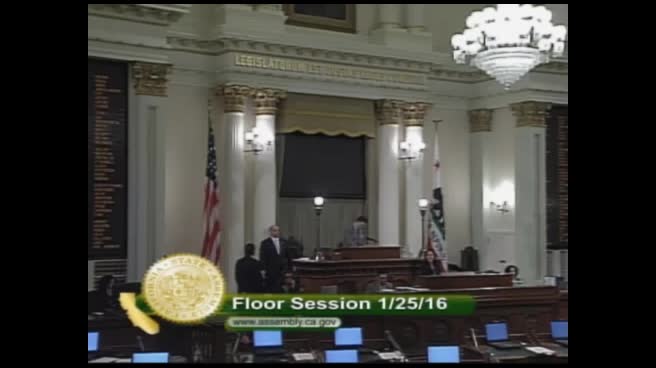 35SEC
Assembly Floor
 2MIN
Assembly Standing Committee on Appropriations
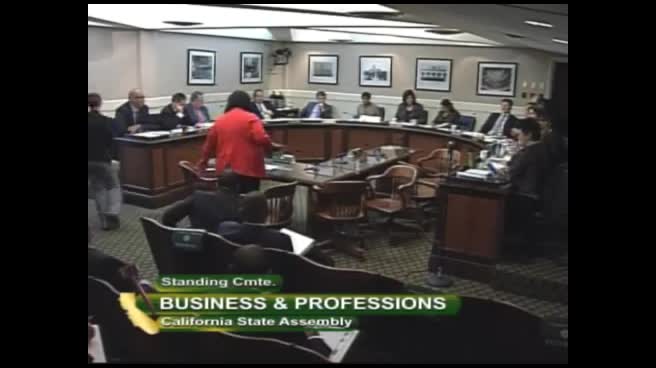 13MIN
Assembly Standing Committee on Business and Professions
Bill Author

Bill Co-Author(s):