SB 591: Cigarette and tobacco products taxes: California Tobacco Tax Act of 2015.
- Session Year: 2015-2016
- House: Senate
- Latest Version Date: 2015-06-02
The Cigarette and Tobacco Products Tax Law, the violation of which is a crime, imposes a tax of $0.87 per package of 20 cigarettes on every distributor of cigarettes and a tax on the wholesale cost of tobacco products distributed at a tax rate that is equivalent to the combined rate of all taxes imposed on cigarettes, and at a rate equivalent to $0.50 per pack cigarette tax. Revenues from taxes imposed under this law are deposited in specified accounts. These taxes are inclusive of the taxes imposed under the Tobacco Tax and Health Protection Act of 1988 (Proposition 99) and the California Children and Families Act of 1998 (Proposition 10).
This bill, beginning January 1, 2016, would impose an additional tax on the distribution of cigarettes at the rate of $0.10 for each cigarette distributed, which would be $2.00 per pack; would require a dealer and a wholesaler to file a return with the State Board of Equalization showing the number of cigarettes in its possession or under its control on that date, and impose a related floor stock tax; and would require a licensed cigarette distributor to file a return with the board and pay a cigarette indicia adjustment tax at the rate equal to the difference between the existing tax rate and the tax rate imposed by this bill for cigarette tax stamps in its possession or under its control on that date. Because the bill would impose an additional tax on cigarettes under the Cigarette and Tobacco Products Tax Law, it would increase the tax upon the distribution of tobacco products under that law.
The bill would provide that the revenues collected from the additional tax be deposited in the California Tobacco Tax Act of 2015 Fund created by this bill, and transferred into accounts within that fund, which are created by this bill, the Tobacco Prevention and Education Account, the Tobacco Disease Related Health Care Account, and the Tobacco Law Enforcement Account. The bill would provide that revenue from this tax would not be considered General Fund revenue, and would limit the use or loan of those revenues, as provided.
Because this bill would impose new requirements under the Cigarette and Tobacco Products Tax Law, the violation of which is a crime, it would impose a state-mandated local program.
The California Constitution requires the state to reimburse local agencies and school districts for certain costs mandated by the state. Statutory provisions establish procedures for making that reimbursement.
This bill would provide that no reimbursement is required by this act for a specified reason.
This bill would include a change in state statute that would result in a taxpayer paying a higher tax within the meaning of Section 3 of Article XIIIA of the California Constitution, and thus would require for passage the approval of 2/3 of the membership of each house of the Legislature.
This bill would become operative only if AB 1396 of the 201516 Regular Session is also enacted and takes effect on or before January 1, 2016.
The Cigarette and Tobacco Products Tax Law, the violation of which is a crime, imposes a tax of $0.87 per package of 20 cigarettes on every distributor of cigarettes and a tax on the wholesale cost of tobacco products distributed at a tax rate that is equivalent to the combined rate of all taxes imposed on cigarettes, and at a rate equivalent to $0.50 per pack cigarette tax. Revenues from taxes imposed under this law are deposited in specified accounts. These taxes are inclusive of the taxes imposed under the Tobacco Tax and Health Protection Act of 1988 (Proposition 99) and the California Families and Children and Families Act of 1998 (Proposition 10).
This bill would, on or after the first day of the first calendar quarter commencing more than 90 days on or after the effective date of the bill, beginning January 1, 2016, would impose an additional tax on the distribution of cigarettes at the rate of $0.10 for each cigarette distributed distributed, which would be $2.00 per pack; would require a dealer and a wholesaler to file a return with the State Board of Equalization showing the number of cigarettes in its possession or under its control on that date, and impose a related floor stock tax; and would require a licensed cigarette distributor to file a return with the board and pay a cigarette indicia adjustment tax at the rate equal to the difference between the existing tax rate and the tax rate imposed by this bill for cigarette tax stamps in its possession or under its control on that date. Because the bill would impose an additional tax on cigarettes under the Cigarette and Tobacco Products Tax Law, it would increase the tax upon the distribution of tobacco products under that law.
The bill would provide that the revenues collected from the additional tax be deposited in the California Tobacco Tax Act of 2015 Fund created by this bill, which would be a continuously appropriated fund, and transferred into accounts within that fund, which are created by this bill, the Tobacco Prevention and Education Account, the Tobacco Disease Related Health Care Account, and the Tobacco Law Enforcement Account to be expended for specified purposes. Because the California Tobacco Tax Act of 2015 Fund would be a continuously appropriated fund, the bill would make an appropriation. Account. The bill would provide that revenue from this tax would not be considered General Fund revenue, and would limit the use or loan of those revenues, as provided.
The bill would require moneys in the California Tobacco Tax Act of 2015 Fund to be transferred from the fund to the California Children and Families First Trust Fund, which is a continuously appropriated fund, the Cigarette and Tobacco Products Surtax Fund, the Breast Cancer Fund, and the General Fund, as necessary to offset revenue decreases to those funds directly resulting from imposition of additional taxes by these provisions. Because this bill would require funds to be transferred to a continuously appropriated fund, it would make an appropriation.
Because this bill would impose new requirements under the Cigarette and Tobacco Products Tax Law, the violation of which is a crime, it would impose a state-mandated local program.
The California Constitution requires the state to reimburse local agencies and school districts for certain costs mandated by the state. Statutory provisions establish procedures for making that reimbursement.
This bill would provide that no reimbursement is required by this act for a specified reason.
This bill would include a change in state statute that would result in a taxpayer paying a higher tax within the meaning of Section 3 of Article XIIIA of the California Constitution, and thus would require for passage the approval of 2/3 of the membership of each house of the Legislature.
This bill would take effect immediately as a tax levy.
This bill would become operative only if AB 1396 of the 201516 Regular Session is also enacted and takes effect on or before January 1, 2016.
The Cigarette and Tobacco Products Tax Law, the violation of which is a crime, imposes a tax of $0.87 per package of 20 cigarettes on every distributor of cigarettes and a tax on the wholesale cost of tobacco products distributed at a tax rate that is equivalent to the combined rate of all taxes imposed on cigarettes, and at a rate equivalent to $0.50 per pack cigarette tax. Revenues from taxes imposed under this law are deposited in specified accounts. These taxes are inclusive of the taxes imposed under the Tobacco Tax and Health Protection Act of 1988 (Proposition 99) and the California Families and Children Act of 1998 (Proposition 10).
This bill would, on or after the first day of the first calendar quarter commencing more than 90 days on or after the effective date of the bill, impose an additional tax on the distribution of cigarettes at the rate of $0.10 for each cigarette distributed which would be $2.00 per pack; would require a dealer and a wholesaler to file a return with the State Board of Equalization showing the number of cigarettes in its possession or under its control on that date, and impose a related floor stock tax; and would require a licensed cigarette distributor to file a return with the board and pay a cigarette indicia adjustment tax at the rate equal to the difference between the existing tax rate and the tax rate imposed by this bill for cigarette tax stamps in its possession or under its control on that date. Because the bill would impose an additional tax on cigarettes under the Cigarette and Tobacco Products Tax Law, it would increase the tax upon the distribution of tobacco products under that law.
The bill would provide that the revenues collected from the additional tax be deposited in the California Tobacco Tax Act of 2015 Fund created by this bill, which would be a continuously appropriated fund, and transferred into the Tobacco Prevention and Education Account, the Tobacco Disease Related Health Care Account, and the Tobacco Law Enforcement Account to be expended for specified purposes. Because the California Tobacco Tax Act of 2015 Fund would be a continuously appropriated fund, the bill would make an appropriation.
The bill would require moneys in the California Tobacco Tax Act of 2015 Fund to be transferred from the fund to the California Children and Families First Trust Fund, which is a continuously appropriated fund, the Cigarette and Tobacco Products Surtax Fund, the Breast Cancer Fund, and the General Fund, as necessary to offset revenue decreases to those funds directly resulting from imposition of additional taxes by these provisions. Because this bill would require funds to be transferred to a continuously appropriated fund, it would make an appropriation.
Because this bill would impose new requirements under the Cigarette and Tobacco Products Tax Law, the violation of which is a crime, it would impose a state-mandated local program.
The California Constitution requires the state to reimburse local agencies and school districts for certain costs mandated by the state. Statutory provisions establish procedures for making that reimbursement.
This bill would provide that no reimbursement is required by this act for a specified reason.
This bill would include a change in state statute that would result in a taxpayer paying a higher tax within the meaning of Section 3 of Article XIIIA of the California Constitution, and thus would require for passage the approval of 2/3 of the membership of each house of the Legislature.
This bill would take effect immediately as a tax levy.
The Legislature hereby finds and declares all of the following:
(a)Tobacco use is the single most preventable cause of death and disease in California, claiming the lives of more than 40,000 people every year. California still has approximately 3.64 million adult smokers and 224,000 youth smokers.
(b)The inevitable health care costs of smoking come to almost $10 for every pack of cigarettes sold in California.
(c)Tobacco use costs Californians more than $13.29 billion in tobacco-related medical expenses every year. The cost of lost productivity due to tobacco use adds an additional estimated $10.35 billion to the annual economic consequences of smoking in California.
(d)The treatment of cancer, heart disease and stroke, lung disease, diabetes, and other diseases related to tobacco use continues to impose a significant burden upon Californias overstressed health care system, including publicly funded health care programs.
(e)In 201516, it is estimated that the General Fund cost of publicly funded health care programs to the state will be more than $18 billion. In 201516, it is estimated that publicly funded health care programs will provide health care coverage to more than 12 million Californians. At the same time, hundreds of thousands of families and children go without any medical coverage due to financial constraints upon the state and local government budgets and recent cutbacks in publicly funded health care programs.
(f)A recent cost-benefit analysis concluded that if states followed the United States Centers for Disease Control and Preventions Best Practices for Comprehensive Tobacco Control Programs 2007 funding guidelines, up to 14 to 20 times the cost of program implementation could be saved through reduced medical and productivity costs as well as reduced Medicaid costs.
(g)The California Tobacco Tax Act of 2015 will help fund the comprehensive California Tobacco Control Program designed to change social norms about tobacco and discourage individuals from taking up smoking and the use of other tobacco products through educational programs, thereby saving the state and local governments significant money now and in the future.
(h)Tobacco tax increases are an appropriate way to mitigate the impacts of tobacco-related diseases and improve existing programs providing for quality and access to health care services for families and children.
(i)An increase in the tobacco tax will have an immediate effect on smoking and is the most appropriate mechanism to fund services to prevent tobacco use, help people quit smoking, and discourage many people from taking up smoking.
(j)California taxes cigarettes at only $0.87 per pack, and ranks 33rd in tobacco tax rates, reflecting one of the lowest tobacco taxes in the United States. Thirty states have cigarette tax rates of $1 per pack or higher, and California is well below other west coast states (Washington: $3.025, Oregon: $1.31, and Arizona: $2). California last raised its tobacco tax in 1998.
(k)The burden of smoking is not equally shared across California populations and communities. Tobacco use rates are much higher than the general population in African Americans, white men, Korean men, enlisted military personnel, lesbian, gay, bisexual, and transgender, young adult, rural, and low-income populations.
(l)A reinvigorated tobacco control program will allow targeted public health and research efforts to combat the tobacco industrys predatory marketing to ethnic groups, driving down smoking rates and ultimately reducing heart disease, stroke, lung disease, and cancer in these California communities, which together represent more than half one-half of our states residents.
SEC. 2.Section 30104 of the Revenue and Taxation Code is amended to read:30104.The taxes imposed by this part shall not apply to the sale of cigarettes or tobacco products by a distributor to a common carrier engaged in interstate or foreign passenger service or to a person authorized to sell cigarettes or tobacco products on the facilities of the carrier. Whenever cigarettes or tobacco products are sold by distributors to common carriers engaged in interstate or foreign passenger service for use or sale on facilities of the carriers, or to persons authorized to sell cigarettes or tobacco products on those facilities, the tax imposed under this part shall not be levied with respect to the sales of the cigarettes or tobacco products by the distributors, but a tax is hereby levied upon the carriers or upon the persons authorized to sell cigarettes or tobacco products on the facilities of the carriers, as the case may be, for the privilege of making sales in California at the same rate as set forth under this part. Those common carriers and authorized persons shall pay the tax imposed by this section and file reports with the board, as provided in Section 30186.
SEC. 3.Section 30108 of the Revenue and Taxation Code is amended to read:30108.(a)Every distributor engaged in business in this state and selling or accepting orders for cigarettes or tobacco products with respect to the sale of which the tax imposed under this part is inapplicable shall, at the time of making the sale or accepting the order or, if the purchaser is not then obligated to pay the tax with respect to his or her distribution of the cigarettes or tobacco products, at the time the purchaser becomes so obligated, collect the tax from the purchaser, if the purchaser is other than a licensed distributor, and shall give to the purchaser a receipt therefor in the manner and form prescribed by the board.
(b)Every person engaged in business in this state and making gifts of untaxed cigarettes or tobacco products as samples with respect to which the tax imposed under this part is inapplicable shall, at the time of making the gift or, if the donee is not then obligated to pay the tax with respect to his or her distribution of the cigarettes or tobacco products, at the time the donee becomes so obligated, collect the tax from the donee, if the donee is other than a licensed distributor, and shall give the donee a receipt therefor in the manner and form prescribed by the board. This section shall not apply to those distributions of cigarettes or tobacco products that are exempt from tax under Section 30105.5.
(c)Engaged in business in the state means and includes any of the following:
(1)Maintaining, occupying, or using, permanently or temporarily, directly or indirectly, or through a subsidiary, or agent, by whatever name called, an office, place of distribution, sales or sample room or place, warehouse or storage place, or other place of business.
(2)Having any representative, agent, salesperson, canvasser, or solicitor operating in this state under the authority of the distributor or its subsidiary for the purpose of selling, delivering, or the taking of orders for cigarettes or tobacco products.
(d)The taxes required to be collected by this section constitute debts owed by the distributor, or other person required to collect the taxes, to the state.
SEC. 4.Article 2.5 (commencing with Section 30130.50) is added to Chapter 2 of Part 13 of Division 2 of the Revenue and Taxation Code, to read:2.5.The California Tobacco Tax Act of 201530130.50.For the purposes of this article:
(a)Cigarette has the same meaning as in Section 30003 as it read on January 1, 2015.
(b)Tobacco products includes, but is not limited to, all forms of cigars, smoking tobacco, chewing tobacco, snuff, and any other articles or products made of, or containing at least 50 percent, tobacco, but does not include cigarettes.
30130.51.In addition to any other taxes imposed upon the distribution of cigarettes, there shall be imposed an additional tax upon every distributor of cigarettes at the rate of one hundred mills ($0.10) for each cigarette distributed on or after January 1, 2016.
30130.52.(a)(1)Every dealer and wholesaler, for the privilege of holding or storing cigarettes for sale, use, or consumption, shall pay a floor stock tax for each cigarette in its possession or under its control in this state at 12:01 a.m. on January 1, 2016, at the rate of one hundred mills ($0.10) for each cigarette.
(2)Every dealer and wholesaler shall file a return with the board on or before July 1, 2016, on a form prescribed by the board, showing the number of cigarettes in its possession or under its control in this state at 12:01 a.m. on January 1, 2016. The amount of tax shall be computed and shown on the return.
(b)(1)Every licensed cigarette distributor, for the privilege of distributing cigarettes and for holding or storing cigarettes for sale, use, or consumption, shall pay a cigarette indicia adjustment tax for each California cigarette tax stamp that is affixed to any package of cigarettes and for each unaffixed California cigarette tax stamp in its possession or under its control at 12:01 a.m. on January 1, 2016, at the following rates:
(A)Two dollars and fifty cents ($2.50) for each stamp bearing the designation 25.
(B)Two dollars ($2) for each stamp bearing the designation 20.
(C)One dollar ($1) for each stamp bearing the designation 10.
(2)Every licensed cigarette distributor shall file a return with the board on or before July 1, 2016, on a form prescribed by the board, showing the number of stamps described in subparagraphs (A), (B), and (C) of paragraph (1). The amount of tax shall be computed and shown on the return.
(c)The taxes required to be paid by this section are due and payable on or before July 1, 2016. Payments shall be made by remittances payable to the board and the payments shall accompany the return and forms required to be filed by this section.
(d)Any amount required to be paid by this section that is not timely paid shall bear interest at the rate and by the method established pursuant to Section 30202 from July 1, 2016, until paid, and shall be subject to determination, and redetermination, and any penalties provided with respect to determinations and redeterminations.
30130.54.(a)The California Tobacco Tax Act of 2015 Fund is hereby established in the State Treasury for the purposes set forth in this article. All revenues, less refunds and moneys transferred pursuant to Section 30130.53, derived from the taxes imposed by this article shall be deposited in the California Tobacco Tax Act of 2015 Fund.
(b)Moneys in the California Tobacco Tax Act of 2015 Fund shall be transferred as follows:
(1)___ Fourteen percent to the Tobacco Prevention and Education Account, which is hereby created in the California Tobacco Tax Act of 2015 Fund.
(2)___ Eighty-four percent to the Tobacco Disease Related Health Care Account, which is hereby created in the California Tobacco Tax Act of 2015 Fund.
(3)___ Two percent to the Tobacco Law Enforcement Account, which is hereby created in the California Tobacco Tax Act of 2015 Fund.
(c)Funds deposited into the California Tobacco Tax Act of 2015 Fund may be placed into the Pooled Money Investment Account for investment only, and interest earned shall be credited to the fund and deposited, apportioned, and expended only in accordance with this article and its purposes.
(d)Notwithstanding any other law, the taxes imposed by this article and the revenue derived therefrom, including investment interest, shall not be considered to be part of the General Fund, as that term is used in Chapter 1 (commencing with Section 16300) of Part 2 of Division 4 of the Government Code, shall not be considered General Fund revenue for purposes of Section 8 of Article XVI of the California Constitution, and its implementing statutes, and shall not be considered moneys to be applied by the state for the support of school districts and community college districts pursuant to Section 8 of Article XVI of the California Constitution, and its implementing statutes.
(e)Notwithstanding any other law, revenues deposited into the California Tobacco Tax Act of 2015 Fund, and any interest earned by the fund, shall only be used for the specific purposes set forth in this article. Revenues deposited into the California Tobacco Tax Act of 2015 Fund shall not be subject to appropriation, reversion, or transfer by the Legislature, the Governor, the Director of Finance, or the Controller for any other purpose, nor shall the funds be loaned to the General Fund or any other fund of the state or any local government fund.
(f)All revenues deposited into the California Tobacco Tax Act of 2015 Fund shall be expended only for the purposes expressed in this article, and shall be used only to supplement existing levels of service and not to fund existing levels of service. Moneys in the fund shall not be used to supplant state or local general fund moneys for any purpose.
SEC. 5.Section 30181 of the Revenue and Taxation Code is amended to read:30181.(a) If any tax imposed upon cigarettes under this part is not paid through the use of stamps or meter impressions, the tax shall be due and payable monthly on or before the 25th day of the month following the calendar month in which a distribution of cigarettes occurs, or in the case of a sale of cigarettes on the facilities of a common carrier for which the tax is imposed pursuant to Section 30104, the tax shall be due and payable monthly on or before the 25th day of the month following the calendar month in which a sale of cigarettes on the facilities of the carrier occurs.
(b)Each distributor of tobacco products shall file a return in the form, as prescribed by the board, that may include, but not be limited to, electronic media respecting the distributions of tobacco products and their wholesale cost during the preceding month, and any other information as the board may require to carry out this part. The return shall be filed with the board on or before the 25th day of the calendar month following the close of the monthly period for which it relates, together with a remittance payable to the board, of the amount of tax, if any, due under Article 2 (commencing with Section 30121) or Article 3 (commencing with Section 30131) of Chapter 2 for that period.
(c)To facilitate the administration of this part, the board may require the filing of the returns for longer than monthly periods.
(d)Returns shall be authenticated in a form or pursuant to methods as may be prescribed by the board.
SEC. 6.No reimbursement is required by this act pursuant to Section 6 of Article XIIIB of the California Constitution because the only costs that may be incurred by a local agency or school district will be incurred because this act creates a new crime or infraction, eliminates a crime or infraction, or changes the penalty for a crime or infraction, within the meaning of Section 17556 of the Government Code, or changes the definition of a crime within the meaning of Section 6 of Article XIIIB of the California Constitution.
SEC. 7.This act shall become operative only if Assembly Bill 1396 of the 201516 Regular Session is also enacted and takes effect on or before January 1, 2016.
The Legislature hereby finds and declares all of the following:
(a)Tobacco use is the single most preventable cause of death and disease in California, claiming the lives of more than 36,000 40,000 people every year. California still has approximately 3.4 3.64 million adult smokers and 200,000 224,000 youth smokers.
(b)The inevitable health care costs of smoking come to almost $10 for every pack of cigarettes sold in California.
(c)Tobacco use costs Californians more than $9.1 $13.29 billion in tobacco-related medical expenses every year. The cost of lost productivity due to tobacco use adds an additional estimated $8.5 $10.35 billion to the annual economic consequences of smoking in California.
(d)The treatment of cancer, heart disease and stroke, lung disease, diabetes, and other diseases related to tobacco use continues to impose a significant burden upon Californias overstressed health care system, including publicly funded health care programs.
(e)In 201516, it is estimated that the General Fund cost of publicly funded health care programs to the state will be more than $18 billion. In 201516, it is estimated that publicly funded health care programs will provide health care coverage to more than 12 million Californians. At the same time, hundreds of thousands of families and children go without any medical coverage due to financial constraints upon the state and local government budgets and recent cutbacks in publicly funded health care programs.
(f)A recent cost-benefit analysis concluded that if states followed the United States Centers for Disease Control and Preventions Best Practices for Comprehensive Tobacco Control Programs 2007 funding guidelines, up to 14 to 20 times the cost of program implementation could be saved through reduced medical and productivity costs as well as reduced Medicaid costs.
(g)The California Tobacco Tax Act of 2015 will help fund the comprehensive California Tobacco Control Program designed to change social norms about tobacco and discourage individuals from taking up smoking and the use of other tobacco products through educational programs, thereby saving the state and local governments significant money now and in the future.
(h)Tobacco tax increases are an appropriate way to mitigate the impacts of tobacco-related diseases and improve existing programs providing for quality and access to health care services for families and children.
(i)An increase in the tobacco tax will have an immediate effect on smoking and is the most appropriate mechanism to fund services to prevent tobacco use, help people quit smoking, and discourage many people from taking up smoking.
(j)California taxes cigarettes at only $0.87 per pack, and ranks 33rd in tobacco tax rates, reflecting one of the lowest tobacco taxes in the United States. Thirty states have cigarette tax rates of $1 per pack or higher, and California is well below other west coast states (Washington: $3.025, Oregon: $1.18, $1.31, and Arizona: $2). California last raised its tobacco tax in 1998.
(k)The burden of smoking is not equally shared across California populations and communities. Tobacco use rates are much higher than the general population in African Americans, white men, Korean men, enlisted military personnel, lesbian, gay, bisexual, and transgender, young adult, rural, and low-income populations.
(l)A reinvigorated tobacco control program will allow targeted public health and research efforts to combat the tobacco industrys predatory marketing to ethnic groups, driving down smoking rates and ultimately reducing heart disease, stroke, lung disease, and cancer in these California communities, which together represent more than half of our states residents.
SEC. 2.Section 30104 of the Revenue and Taxation Code is amended to read:30104.The taxes imposed by this part shall not apply to the sale of cigarettes or tobacco products by a distributor to a common carrier engaged in interstate or foreign passenger service or to a person authorized to sell cigarettes or tobacco products on the facilities of the carrier. Whenever cigarettes or tobacco products are sold by distributors to common carriers engaged in interstate or foreign passenger service for use or sale on facilities of the carriers, or to persons authorized to sell cigarettes or tobacco products on those facilities, the tax imposed under this part shall not be levied with respect to the sales of the cigarettes or tobacco products by the distributors, but a tax is hereby levied upon the carriers or upon the persons authorized to sell cigarettes or tobacco products on the facilities of the carriers, as the case may be, for the privilege of making sales in California at the same rate as set forth under this part. Those common carriers and authorized persons shall pay the tax imposed by this section and file reports with the board, as provided in Section 30186.
SEC. 3.Section 30108 of the Revenue and Taxation Code is amended to read:30108.(a)Every distributor engaged in business in this state and selling or accepting orders for cigarettes or tobacco products with respect to the sale of which the tax imposed under this part is inapplicable shall, at the time of making the sale or accepting the order or, if the purchaser is not then obligated to pay the tax with respect to his or her distribution of the cigarettes or tobacco products, at the time the purchaser becomes so obligated, collect the tax from the purchaser, if the purchaser is other than a licensed distributor, and shall give to the purchaser a receipt therefor in the manner and form prescribed by the board.
(b)Every person engaged in business in this state and making gifts of untaxed cigarettes or tobacco products as samples with respect to which the tax imposed under this part is inapplicable shall, at the time of making the gift or, if the donee is not then obligated to pay the tax with respect to his or her distribution of the cigarettes or tobacco products, at the time the donee becomes so obligated, collect the tax from the donee, if the donee is other than a licensed distributor, and shall give the donee a receipt therefor in the manner and form prescribed by the board. This section shall not apply to those distributions of cigarettes or tobacco products that are exempt from tax under Section 30105.5.
(c)Engaged in business in the state means and includes any of the following:
(1)Maintaining, occupying, or using, permanently or temporarily, directly or indirectly, or through a subsidiary, or agent, by whatever name called, an office, place of distribution, sales or sample room or place, warehouse or storage place, or other place of business.
(2)Having any representative, agent, salesperson, canvasser, or solicitor operating in this state under the authority of the distributor or its subsidiary for the purpose of selling, delivering, or the taking of orders for cigarettes or tobacco products.
(d)The taxes required to be collected by this section constitute debts owed by the distributor, or other person required to collect the taxes, to the state.
SEC. 4.Article 2.5 (commencing with Section 30130.50) is added to Chapter 2 of Part 13 of Division 2 of the Revenue and Taxation Code, to read:2.5.The California Tobacco Tax Act of 201530130.50.For the purposes of this article:
(a)Cigarette has the same meaning as in Section 30003 as it read on January 1, 2013. 2015.
(b)Tobacco products includes, but is not limited to, all forms of cigars, smoking tobacco, chewing tobacco, snuff, and any other articles or products made of, or containing at least 50 percent, tobacco, but does not include cigarettes.
30130.51.In addition to any other taxes imposed upon the distribution of cigarettes, there shall be imposed an additional tax upon every distributor of cigarettes at the rate of one hundred mills ($0.10) for each cigarette distributed on or after the first day of the first calendar quarter commencing more than 90 days after the effective date of this act. January 1, 2016.
30130.52.(a)(1)Every dealer and wholesaler, for the privilege of holding or storing cigarettes for sale, use, or consumption, shall pay a floor stock tax for each cigarette in its possession or under its control in this state at 12:01 a.m. on the first day of the first calendar quarter commencing more than 90 days after the effective date of this act January 1, 2016, at the rate of one hundred mills ($0.10) for each cigarette.
(2)Every dealer and wholesaler shall file a return with the State Board of Equalization board on or before the first day of the first calendar quarter commencing more than 180 days after the effective date of this act July 1, 2016, on a form prescribed by the State Board of Equalization, board, showing the number of cigarettes in its possession or under its control in this state at 12:01 a.m. on the first day of the first calendar quarter commencing more than 90 days after the effective date of this act. January 1, 2016. The amount of tax shall be computed and shown on the return.
(b)(1)Every licensed cigarette distributor, for the privilege of distributing cigarettes and for holding or storing cigarettes for sale, use, or consumption, shall pay a cigarette indicia adjustment tax for each California cigarette tax stamp that is affixed to any package of cigarettes and for each unaffixed California cigarette tax stamp in its possession or under its control at 12:01 a.m. on the first day of the first calendar quarter commencing more than 90 days after the effective date of this act January 1, 2016, at the following rates:
(A)Two dollars and fifty cents ($2.50) for each stamp bearing the designation 25.
(B)Two dollars ($2) for each stamp bearing the designation 20.
(C)One dollar ($1) for each stamp bearing the designation 10.
(2)Every licensed cigarette distributor shall file a return with the board on or before the first day of the first calendar quarter commencing 180 days after the effective date of this act July 1, 2016, on a form prescribed by the board, showing the number of stamps described in subparagraphs (A), (B), and (C) of paragraph (1). The amount of tax shall be computed and shown on the return.
(c)The taxes required to be paid by this section are due and payable on or before the first day of the first calendar quarter commencing 180 days after the effective date of this act. July 1, 2016. Payments shall be made by remittances payable to the board and the payments shall accompany the return and forms required to be filed by this section.
(d)Any amount required to be paid by this section that is not timely paid shall bear interest at the rate and by the method established pursuant to Section 30202 from the first day of the first calendar quarter commencing 180 days after the effective date of this act, July 1, 2016, until paid, and shall be subject to determination, and redetermination, and any penalties provided with respect to determinations and redeterminations.
30130.53.(a)The State Board of Equalization shall determine within one year of the effective date of this act, and annually thereafter, the effect that the additional taxes imposed on cigarettes by this article, and the resulting increase in the tax on tobacco products required by subdivision (b) of Section 30123, have on the consumption of cigarettes and tobacco products in this state. To the extent that a decrease in consumption is determined by the State Board of Equalization to be a direct result of the additional tax imposed by this article, or the resulting increase in the tax on tobacco products required by subdivision (b) of Section 30123, the State Board of Equalization shall determine the fiscal effect the decrease in consumption has on the Cigarette and Tobacco Products Surtax Fund created by Section 30122 (Proposition 99 as approved by the voters at the November 8, 1988, statewide general election), the Breast Cancer Fund created by Section 30461.6, the California Children and Families Trust Fund created by Section 30131 (Proposition 10 as approved by the voters at the November 3, 1998, statewide general election), and the General Fund with respect to revenues derived from Section 30101.
(b)Funds shall be transferred from the California Tobacco Tax Act of 2015 Fund to the Cigarette and Tobacco Products Surtax Fund, the Breast Cancer Fund, the California Children and Families Trust Fund, and the General Fund, to offset the revenue decrease directly resulting from imposition of additional taxes by this article.
(c)Transfers under this section shall be made by the board at times as the board determines necessary to further the intent of this section.
30130.54.(a)The California Tobacco Tax Act of 2015 Fund is hereby established in the State Treasury for the purposes set forth in this article. All revenues, less refunds and moneys transferred pursuant to Section 30130.53, derived from the taxes imposed by this article shall be deposited in the California Tobacco Tax Act of 2015 Fund.
(b)Moneys in the California Tobacco Tax Act of 2015 Fund, less moneys transferred pursuant to Section 30130.53, shall be transferred as follows:
(1)___ percent to the Tobacco Prevention and Education Account, which is hereby created in the California Tobacco Tax Act of 2015 Fund.
(2)___ percent to the Tobacco Disease Related Health Care Account, which is hereby created in the California Tobacco Tax Act of 2015 Fund.
(3)___ percent to the Tobacco Law Enforcement Account, which is hereby created in the California Tobacco Tax Act of 2015 Fund.
(c)Funds deposited into the California Tobacco Tax Act of 2015 Fund may be placed into the Pooled Money Investment Account for investment only, and interest earned shall be credited to the fund and deposited, apportioned, and expended only in accordance with this article and its purposes.
(d)Notwithstanding any other law, the California Tobacco Tax Act of 2015 Fund is a trust fund established solely to carry out the purposes set forth in this article and all revenues deposited into the California Tobacco Tax Act of 2015 Fund, together with interest earned by the fund, are hereby continuously appropriated without regard to fiscal year to be expended only in accordance with this article and its purposes.
(e)
(d)Notwithstanding any other law, the taxes imposed by this article and the revenue derived therefrom, including investment interest, shall not be considered to be part of the General Fund, as that term is used in Chapter 1 (commencing with Section 16300) of Part 2 of Division 4 of the Government Code, shall not be considered General Fund revenue for purposes of Section 8 of Article XVI of the California Constitution, and its implementing statutes, and shall not be considered moneys to be applied by the state for the support of school districts and community college districts pursuant to Section 8 of Article XVI of the California Constitution, and its implementing statutes.
(f)
(e)Notwithstanding any other law, revenues deposited into the California Tobacco Tax Act of 2015 Fund, and any interest earned by the fund, shall only be used for the specific purposes set forth in this article. Revenues deposited into the California Tobacco Tax Act of 2015 Fund shall not be subject to appropriation, reversion, or transfer by the Legislature, the Governor, the Director of Finance, or the Controller for any other purpose, nor shall the funds be loaned to the General Fund or any other fund of the state or any local government fund.
(g)
(f)All revenues deposited into the California Tobacco Tax Act of 2015 Fund shall be expended only for the purposes expressed in this article, and shall be used only to supplement existing levels of service and not to fund existing levels of service. Moneys in the fund shall not be used to supplant state or local general fund moneys for any purpose.
30130.55.After transferring the moneys as required pursuant to subdivision (b) of Section 30130.53 and pursuant to subdivision (b) of Section 30130.54, the Controller shall allocate the moneys from the accounts in the California Tobacco Tax Act of 2015 Fund as follows:
(a)The Tobacco Prevention and Education Account shall be allocated to supplement tobacco prevention and control programs as follows:
(1)__ percent to the State Department of Public Health.
(2)__ percent to the State Department of Education.
(3)___percent to the University of California.
(b)Funds in the Tobacco Disease Related Health Care Account shall be allocated to the State Department of Health Care Services to improve existing programs to provide quality and access to health care programs for families and children pursuant to Chapter 7 (commencing with Section 14000) to Chapter 8.9 (commencing with Section 14700), inclusive, of Part 3 of Division 9 of the Welfare and Institutions Code.
(c)Funds in the Tobacco Law Enforcement Account shall be allocated to the State Board of Equalization, the Department of Justice, and the State Department of Public Health for the purpose of supplementing funding for the enforcement of laws that regulate the distribution and sale of cigarettes and other tobacco products, including, but not limited to, laws that prohibit cigarette smuggling, counterfeiting, selling untaxed tobacco, selling tobacco without a proper license, and selling tobacco to minors, and enforcing tobacco-related laws, court judgments, and settlements.
(d)Not more than 2 percent of the funds received from the California Tobacco Tax Act of 2015 Fund shall be used by any department for administrative costs.
(e)The Department of Justice, the State Department of Public Health, the State Department of Education, the State Department of Health Care Services, and the University of California shall, on an annual basis, publish on their respective Internet Web sites an accounting of moneys received from the California Tobacco Tax Act of 2015 Fund and how the moneys were spent.
SEC. 5.Section 30181 of the Revenue and Taxation Code is amended to read:30181.(a) If any tax imposed upon cigarettes under this part is not paid through the use of stamps or meter impressions, the tax shall be due and payable monthly on or before the 25th day of the month following the calendar month in which a distribution of cigarettes occurs, or in the case of a sale of cigarettes on the facilities of a common carrier for which the tax is imposed pursuant to Section 30104, the tax shall be due and payable monthly on or before the 25th day of the month following the calendar month in which a sale of cigarettes on the facilities of the carrier occurs.
(b)Each distributor of tobacco products shall file a return in the form, as prescribed by the board, that may include, but not be limited to, electronic media respecting the distributions of tobacco products and their wholesale cost during the preceding month, and any other information as the board may require to carry out this part. The return shall be filed with the board on or before the 25th day of the calendar month following the close of the monthly period for which it relates, together with a remittance payable to the board, of the amount of tax, if any, due under Article 2 (commencing with Section 30121) or Article 3 (commencing with Section 30131) of Chapter 2 for that period.
(c)To facilitate the administration of this part, the board may require the filing of the returns for longer than monthly periods.
(d)Returns shall be authenticated in a form or pursuant to methods as may be prescribed by the board.
SEC. 6.No reimbursement is required by this act pursuant to Section 6 of Article XIIIB of the California Constitution because the only costs that may be incurred by a local agency or school district will be incurred because this act creates a new crime or infraction, eliminates a crime or infraction, or changes the penalty for a crime or infraction, within the meaning of Section 17556 of the Government Code, or changes the definition of a crime within the meaning of Section 6 of Article XIIIB of the California Constitution.
SEC. 7.This act provides for a tax levy within the meaning of Article IV of the Constitution and shall go into immediate effect.
SEC. 7.This act shall become operative only if Assembly Bill 1396 of the 201516 Regular Session is also enacted and takes effect on or before January 1, 2016.
The Legislature hereby finds and declares all of the following:
(a)Tobacco use is the single most preventable cause of death and disease in California, claiming the lives of more than 36,000 people every year. California still has approximately 3.4 million adult smokers and 200,000 youth smokers.
(b)The inevitable health care costs of smoking come to almost $10 for every pack of cigarettes sold in California.
(c)Tobacco use costs Californians more than $9.1 billion in tobacco-related medical expenses every year. The cost of lost productivity due to tobacco use adds an additional estimated $8.5 billion to the annual economic consequences of smoking in California.
(d)The treatment of cancer, heart disease and stroke, lung disease, diabetes, and other diseases related to tobacco use continues to impose a significant burden upon Californias overstressed health care system, including publicly funded health care programs.
(e)In 2015-16, it is estimated that the General Fund cost of publicly funded health care programs to the state will be more than $18 billion. In 201516, it is estimated that publicly funded health care programs will provide health care coverage to more than 12 million Californians. At the same time, hundreds of thousands of families and children go without any medical coverage due to financial constraints upon the state and local government budgets and recent cutbacks in publicly funded health care programs.
(f)A recent cost-benefit analysis concluded that if states followed the United States Centers for Disease Control and Preventions Best Practices for Comprehensive Tobacco Control Programs 2007 funding guidelines, up to 14 to 20 times the cost of program implementation could be saved through reduced medical and productivity costs as well as reduced Medicaid costs.
(g)The California Tobacco Tax Act of 2015 will help fund the comprehensive California Tobacco Control Program designed to change social norms about tobacco and discourage individuals from taking up smoking and the use of other tobacco products through educational programs, thereby saving the state and local governments significant money now and in the future.
(h)Tobacco tax increases are an appropriate way to mitigate the impacts of tobacco-related diseases and improve existing programs providing for quality and access to health care services for families and children.
(i)An increase in the tobacco tax will have an immediate effect on smoking and is the most appropriate mechanism to fund services to prevent tobacco use, help people quit smoking, and discourage many people from taking up smoking.
(j)California taxes cigarettes at only $0.87 per pack, and ranks 33rd in tobacco tax rates, reflecting one of the lowest tobacco taxes in the United States. Thirty states have cigarette tax rates of $1 per pack or higher, and California is well below other west coast states (Washington: $3.025, Oregon: $1.18, and Arizona: $2). California last raised its tobacco tax in 1998.
(k)The burden of smoking is not equally shared across California populations and communities. Tobacco use rates are much higher than the general population in African Americans, white men, Korean men, enlisted military personnel, lesbian, gay, bisexual, and transgender, young adult, rural, and low-income populations.
(l)A reinvigorated tobacco control program will allow targeted public health and research efforts to combat the tobacco industrys predatory marketing to ethnic groups, driving down smoking rates and ultimately reducing heart disease, stroke, lung disease, and cancer in these California communities, which together represent more than half of our states residents.
SEC. 2.Section 30104 of the Revenue and Taxation Code is amended to read:30104.The taxes imposed by this part shall not apply to the sale of cigarettes or tobacco products by a distributor to a common carrier engaged in interstate or foreign passenger service or to a person authorized to sell cigarettes or tobacco products on the facilities of the carrier. Whenever cigarettes or tobacco products are sold by distributors to common carriers engaged in interstate or foreign passenger service for use or sale on facilities of the carriers, or to persons authorized to sell cigarettes or tobacco products on those facilities, the tax imposed by Sections 30101, 30123, and 30131.2 under this part shall not be levied with respect to the sales of the cigarettes or tobacco products by the distributors, but a tax is hereby levied upon the carriers or upon the persons authorized to sell cigarettes or tobacco products on the facilities of the carriers, as the case may be, for the privilege of making sales in California at the same rate as set forth in Sections 30101, 30123, and 30131.2. under this part. Those common carriers and authorized persons shall pay the tax imposed by this section and file reports with the board, as provided in Section 30186.
SEC. 3.Section 30108 of the Revenue and Taxation Code is amended to read:30108.(a)Every distributor engaged in business in this state and selling or accepting orders for cigarettes or tobacco products with respect to the sale of which the tax imposed by Sections 30101, 30123, and 30131.2 under this part is inapplicable shall, at the time of making the sale or accepting the order or, if the purchaser is not then obligated to pay the tax with respect to his or her distribution of the cigarettes or tobacco products, at the time the purchaser becomes so obligated, collect the tax from the purchaser, if the purchaser is other than a licensed distributor, and shall give to the purchaser a receipt therefor in the manner and form prescribed by the board.
(b)Every person engaged in business in this state and making gifts of untaxed cigarettes or tobacco products as samples with respect to which the tax imposed by Sections 30101, 30123, and 30131.2 under this part is inapplicable shall, at the time of making the gift or, if the donee is not then obligated to pay the tax with respect to his or her distribution of the cigarettes or tobacco products, at the time the donee becomes so obligated, collect the tax from the donee, if the donee is other than a licensed distributor, and shall give the donee a receipt therefor in the manner and form prescribed by the board. This section shall not apply to those distributions of cigarettes or tobacco products which that are exempt from tax under Section 30105.5.
(c)Engaged in business in the state means and includes any of the following:
(1)Maintaining, occupying, or using, permanently or temporarily, directly or indirectly, or through a subsidiary, or agent, by whatever name called, an office, place of distribution, sales or sample room or place, warehouse or storage place, or other place of business.
(2)Having any representative, agent, salesperson, canvasser canvasser, or solicitor operating in this state under the authority of the distributor or its subsidiary for the purpose of selling, delivering, or the taking of orders for cigarettes or tobacco products.
(d)The taxes required to be collected by this section constitute debts owed by the distributor, or other person required to collect the taxes, to the state.
SEC. 4.Article 2.5 (commencing with Section 30130.50) is added to Chapter 2 of Part 13 of Division 2 of the Revenue and Taxation Code, to read:2.5.The California Tobacco Tax Act of 201530130.50.For the purposes of this article:
(a)Cigarette has the same meaning as in Section 30003 as it read on January 1, 2013.
(b)Tobacco products includes, but is not limited to, all forms of cigars, smoking tobacco, chewing tobacco, snuff, and any other articles or products made of, or containing at least 50 percent, tobacco, but does not include cigarettes.
30130.51.In addition to any other taxes imposed upon the distribution of cigarettes, there shall be imposed an additional tax upon every distributor of cigarettes at the rate of one hundred mills ($0.10) for each cigarette distributed on or after the first day of the first calendar quarter commencing more than 90 days after the effective date of this act.
30130.52.(a)(1)Every dealer and wholesaler, for the privilege of holding or storing cigarettes for sale, use, or consumption, shall pay a floor stock tax for each cigarette in its possession or under its control in this state at 12:01 a.m. on the first day of the first calendar quarter commencing more than 90 days after the effective date of this act at the rate of one hundred mills ($0.10) for each cigarette.
(2)Every dealer and wholesaler shall file a return with the State Board of Equalization on or before the first day of the first calendar quarter commencing more than 180 days after the effective date of this act on a form prescribed by the State Board of Equalization, showing the number of cigarettes in its possession or under its control in this state at 12:01 a.m. on the first day of the first calendar quarter commencing more than 90 days after the effective date of this act. The amount of tax shall be computed and shown on the return.
(b)(1)Every licensed cigarette distributor, for the privilege of distributing cigarettes and for holding or storing cigarettes for sale, use, or consumption, shall pay a cigarette indicia adjustment tax for each California cigarette tax stamp that is affixed to any package of cigarettes and for each unaffixed California cigarette tax stamp in its possession or under its control at 12:01 a.m. on the first day of the first calendar quarter commencing more than 90 days after the effective date of this act at the following rates:
(A)Two dollars and fifty cents ($2.50) for each stamp bearing the designation 25.
(B)Two dollars ($2) for each stamp bearing the designation 20.
(C)One dollar ($1) for each stamp bearing the designation 10.
(2)Every licensed cigarette distributor shall file a return with the board on or before the first day of the first calendar quarter commencing 180 days after the effective date of this act on a form prescribed by the board, showing the number of stamps described in subparagraphs (A), (B), and (C) of paragraph (1). The amount of tax shall be computed and shown on the return.
(c)The taxes required to be paid by this section are due and payable on or before the first day of the first calendar quarter commencing 180 days after the effective date of this act. Payments shall be made by remittances payable to the board and the payments shall accompany the return and forms required to be filed by this section.
(d)Any amount required to be paid by this section that is not timely paid shall bear interest at the rate and by the method established pursuant to Section 30202 from the first day of the first calendar quarter commencing 180 days after the effective date of this act, until paid, and shall be subject to determination, and redetermination, and any penalties provided with respect to determinations and redeterminations.
30130.53.(a)The State Board of Equalization shall determine within one year of the effective date of this act, and annually thereafter, the effect that the additional taxes imposed on cigarettes by this article, and the resulting increase in the tax on tobacco products required by subdivision (b) of Section 30123, have on the consumption of cigarettes and tobacco products in this state. To the extent that a decrease in consumption is determined by the State Board of Equalization to be a direct result of the additional tax imposed by this article, or the resulting increase in the tax on tobacco products required by subdivision (b) of Section 30123, the State Board of Equalization shall determine the fiscal effect the decrease in consumption has on the Cigarette and Tobacco Products Surtax Fund created by Section 30122 (Proposition 99 as approved by the voters at the November 8, 1988, statewide general election), the Breast Cancer Fund created by Section 30461.6, the California Children and Families Trust Fund created by Section 30131 (Proposition 10 as approved by the voters at the November 3, 1998, statewide general election), and the General Fund with respect to revenues derived from Section 30101.
(b)Funds shall be transferred from the California Tobacco Tax Act of 2015 Fund to the Cigarette and Tobacco Products Surtax Fund, the Breast Cancer Fund, the California Children and Families Trust Fund, and the General Fund, to offset the revenue decrease directly resulting from imposition of additional taxes by this article.
(c)Transfers under this section shall be made by the board at times as the board determines necessary to further the intent of this section.
30130.54.(a)The California Tobacco Tax Act of 2015 Fund is hereby established in the State Treasury for the purposes set forth in this article. All revenues, less refunds, derived from the taxes imposed by this article shall be deposited in the California Tobacco Tax Act of 2015 Fund.
(b)Moneys in the California Tobacco Tax Act of 2015 Fund, less moneys transferred pursuant to Section 30130.53, shall be transferred as follows:
(1)___ percent to the Tobacco Prevention and Education Account, which is hereby created in the California Tobacco Tax Act of 2015 Fund.
(2)___ percent to the Tobacco Disease Related Health Care Account, which is hereby created in the California Tobacco Tax Act of 2015 Fund.
(3)___ percent to the Tobacco Law Enforcement Account, which is hereby created in the California Tobacco Tax Act of 2015 Fund.
(c)Funds deposited into the California Tobacco Tax Act of 2015 Fund may be placed into the Pooled Money Investment Account for investment only, and interest earned shall be credited to the fund and deposited, apportioned, and expended only in accordance with this article and its purposes.
(d)Notwithstanding any other law, the California Tobacco Tax Act of 2015 Fund is a trust fund established solely to carry out the purposes set forth in this article and all revenues deposited into the California Tobacco Tax Act of 2015 Fund, together with interest earned by the fund, are hereby continuously appropriated without regard to fiscal year to be expended only in accordance with this article and its purposes.
(e)Notwithstanding any other law, the taxes imposed by this article and the revenue derived therefrom, including investment interest, shall not be considered to be part of the General Fund, as that term is used in Chapter 1 (commencing with Section 16300) of Part 2 of Division 4 of the Government Code, shall not be considered General Fund revenue for purposes of Section 8 of Article XVI of the California Constitution, and its implementing statutes, and shall not be considered moneys to be applied by the state for the support of school districts and community college districts pursuant to Section 8 of Article XVI of the California Constitution, and its implementing statutes.
(f)Notwithstanding any other law, revenues deposited into the California Tobacco Tax Act of 2015 Fund, and any interest earned by the fund, shall only be used for the specific purposes set forth in this article. Revenues deposited into the California Tobacco Tax Act of 2015 Fund shall not be subject to appropriation, reversion, or transfer by the Legislature, the Governor, the Director of Finance, or the Controller for any other purpose, nor shall the funds be loaned to the General Fund or any other fund of the state or any local government fund.
(g)All revenues deposited into the California Tobacco Tax Act of 2015 Fund shall be expended only for the purposes expressed in this article, and shall be used only to supplement existing levels of service and not to fund existing levels of service. Moneys in the fund shall not be used to supplant state or local general fund moneys for any purpose.
30130.55.After transferring the moneys as required pursuant to subdivision (b) of Section 30130.53 and pursuant to subdivision (b) of Section 30130.54, the Controller shall allocate the moneys from the accounts in the California Tobacco Tax Act of 2015 Fund as follows:
(a)The Tobacco Prevention and Education Account shall be allocated to supplement tobacco prevention and control programs as follows:
(1)__ percent to the State Department of Public Health.
(2)__ percent to the State Department of Education.
(3)___percent to the University of California.
(b)Funds in the Tobacco Disease Related Health Care Account shall be allocated to the State Department of Health Care Services to improve existing programs to provide quality and access to health care programs for families and children pursuant to Chapter 7 (commencing with Section 14000) to Chapter 8.9 (commencing with Section 14700), inclusive, of Part 3 of Division 9 of the Welfare and Institutions Code.
(c)Funds in the Tobacco Law Enforcement Account shall be allocated to the State Board of Equalization, the Department of Justice, and the State Department of Public Health for the purpose of supplementing funding for the enforcement of laws that regulate the distribution and sale of cigarettes and other tobacco products, including, but not limited to, laws that prohibit cigarette smuggling, counterfeiting, selling untaxed tobacco, selling tobacco without a proper license, and selling tobacco to minors, and enforcing tobacco-related laws, court judgments, and settlements.
(d)Not more than 2 percent of the funds received from the California Tobacco Tax Act of 2015 Fund shall be used by any department for administrative costs.
(e)The Department of Justice, the State Department of Public Health, the State Department of Education, the State Department of Health Care Services, and the University of California shall, on an annual basis, publish on their respective Internet Web sites an accounting of moneys received from the California Tobacco Tax Act of 2015 Fund and how the moneys were spent.
SEC. 5.Section 30181 of the Revenue and Taxation Code is amended to read:30181.(a) When If any tax imposed upon cigarettes under Article 1 (commencing with Section 30101), Article 2 (commencing with Section 30121), and Article 3 (commencing with Section 30131) of Chapter 2 this part is not paid through the use of stamps or meter impressions, the tax shall be due and payable monthly on or before the 25th day of the month following the calendar month in which a distribution of cigarettes occurs, or in the case of a sale of cigarettes on the facilities of a common carrier for which the tax is imposed pursuant to Section 30104, the tax shall be due and payable monthly on or before the 25th day of the month following the calendar month in which a sale of cigarettes on the facilities of the carrier occurs.
(b)Each distributor of tobacco products shall file a return in the form, as prescribed by the board, which that may include, but not be limited to, electronic media respecting the distributions of tobacco products and their wholesale cost during the preceding month, and any other information as the board may require to carry out this part. The return shall be filed with the board on or before the 25th day of the calendar month following the close of the monthly period for which it relates, together with a remittance payable to the board, of the amount of tax, if any, due under Article 2 (commencing with Section 30121) or Article 3 (commencing with Section 30131) of Chapter 2 for that period.
(c)To facilitate the administration of this part, the board may require the filing of the returns for longer than monthly periods.
(d)Returns shall be authenticated in a form or pursuant to methods as may be prescribed by the board.
(e)This section shall become operative on January 1, 2007.
SEC. 6.No reimbursement is required by this act pursuant to Section 6 of Article XIIIB of the California Constitution because the only costs that may be incurred by a local agency or school district will be incurred because this act creates a new crime or infraction, eliminates a crime or infraction, or changes the penalty for a crime or infraction, within the meaning of Section 17556 of the Government Code, or changes the definition of a crime within the meaning of Section 6 of Article XIIIB of the California Constitution.
SEC. 7.This act provides for a tax levy within the meaning of Article IV of the Constitution and shall go into immediate effect.
|
Date
|
Status
|
|---|---|
| Feb 1, 2016 | Died on file pursuant to Joint Rule 56. |
| Jun 10, 2015 | Ordered to inactive file on request of Senator Pan. |
| Jun 2, 2015 | Read second time and amended. Ordered to third reading. |
| Jun 1, 2015 | From committee: Do pass as amended. (Ayes 5. Noes 2. Page 1157.) (May 28). |
| Jun 1, 2015 | From committee: Do pass as amended. (Ayes 5. Noes 2.) (May 28). |
| May 23, 2015 | Set for hearing May 28. |
| May 11, 2015 | May 11 hearing: Placed on APPR. suspense file. |
| May 1, 2015 | Set for hearing May 11. |
| Apr 30, 2015 | From committee: Do pass and re-refer to Com. on APPR. (Ayes 6. Noes 2. Page 861.) (April 29). Re-referred to Com. on APPR. |
| Apr 30, 2015 | From committee: Do pass and re-refer to Com. on APPR. (Ayes 6. Noes 2.) (April 29). Re-referred to Com. on APPR. |
| Apr 24, 2015 | Set for hearing April 29. |
| Apr 22, 2015 | From committee: Do pass and re-refer to Com. on HEALTH. (Ayes 5. Noes 2. Page 725.) (April 22). Re-referred to Com. on HEALTH. |
| Apr 16, 2015 | From committee with author's amendments. Read second time and amended. Re-referred to Com. on GOV. & F. |
| Apr 8, 2015 | Set for hearing April 22. |
| Mar 24, 2015 | April 8 set for first hearing canceled at the request of author. |
| Mar 19, 2015 | Set for hearing April 8. |
| Mar 12, 2015 | Referred to Coms. on GOV. & F. and HEALTH. |
| Feb 27, 2015 | From printer. May be acted upon on or after March 29. |
| Feb 26, 2015 | Introduced. Read first time. To Com. on RLS. for assignment. To print. |
|
Date
|
Description
|
Location
|
Votes
|
|
|---|---|---|---|---|
| May 28, 2015 | Do pass as amended | Senate Standing Committee on Appropriations |
Passed |
|
| May 11, 2015 | Placed on suspense file | Senate Standing Committee on Appropriations |
Passed |
|
| Apr 29, 2015 | Do pass, but first be re-referred to the Committee on [Appropriations] | Senate Standing Committee on Health |
Passed |
|
| Apr 22, 2015 | Do pass, but first be re-referred to the Committee on [Health] | Senate Standing Committee on Governance and Finance |
Passed |
This list shows positions taken on this bill by organizations on the date displayed, which is linked to the original source.
Positions by individuals are not included.
SB 591
Page 6
|
Office of Senate Floor Analyses (916) 651-1520 Fax: (916) 327-4478 |
THIRD READING
Bill No: SB 591
Amended: 6/2/15
SENATE GOVERNANCE & FIN. COMMITTEE: 5-2, 4/22/15
AYES: Hertzberg, Beall, Hernandez, Lara, Pavley
NOES: Nguyen, Moorlach
SENATE HEALTH COMMITTEE: 6-2, 4/29/15
AYES: Hernandez, Hall, Mitchell, Monning, Pan, Wolk
NOES: Nguyen, Nielsen
NO VOTE RECORDED: Roth
SENATE APPROPRIATIONS COMMITTEE: 5-2, 5/28/15
AYES: Lara, Beall, Hill, Leyva, Mendoza
NOES: Bates, Nielsen
SUBJECT: Cigarette and tobacco products taxes: California Tobacco Tax Act of 2015
DIGEST: This bill imposes an additional excise tax of $2.00 per package of 20 cigarettes. This bill also (1) imposes an equivalent one-time “floor stock tax” on the cigarettes held or stored by dealers and wholesalers, and (2) indirectly increases the tobacco products tax.
Existing law:
Imposes a tax of $1.01 per pack of 20 cigarettes with the majority of the funds being used to fund children's health programs, under federal law.
Imposes a $0.87 per pack of 20 cigarettes tax on distributors of cigarettes and tobacco products which fund a variety of programs and services including: health education, research, hospital care, fire prevention, environmental conservation, breast cancer research and early detection services, and early childhood development programs.
This bill:
Imposes an additional excise tax of $2.00 per package of 20 cigarettes.
Imposes a one-time “floor stock tax” on the cigarettes held or stored by dealers and wholesalers.
Creates the Tobacco Tax Act Fund.
Requires that, except for payment of refunds and backfill transfers, the Board of Equalization (BOE) deposit all revenues into the Tobacco Tax Act Fund.
Specifies the Tobacco Tax Act Fund monies to be transferred to three subaccounts: (a) the Tobacco Prevention and Education Account, (b) the Tobacco Disease Related Health Care Account, and (c) the Tobacco Law Enforcement Account.
Specifies that the monies are allocated in the following manner:
14% to the Tobacco Prevention and Education Account,
84% to the Tobacco Disease Related Health Care Account,
And 2% to the Tobacco Law Enforcement Account.
Becomes operative only if AB 1396 (Bonta) is also enacted.
Background
The California Cigarette and Tobacco Products Tax Law imposes two types of excise taxes on cigarette and tobacco products distributed in the state: 1) the cigarette tax, and 2) the cigarette and tobacco products surtax. Cigarettes are subject to both the cigarette tax and the cigarette and tobacco products surtax. Distributors pay both the tax and surtax through the use of cigarette indicia, or tax stamps, which are purchased from the BOE and affixed to a cigarette package. Currently, each stamp costs $0.87 per pack of 20 cigarettes: $0.12 cents for the cigarette tax and $0.75 for the combined surtaxes.
A distributor, wholesaler, manufacturer, or importer of cigarettes or tobacco products is required to register with the BOE and be licensed. All licensed distributors, wholesalers, manufacturers, and importers must file returns or reports on or before the 25th of the month following the reporting period.
State law defines “cigarette” as any roll for smoking, made wholly or in part of tobacco, irrespective of size, shape, or whether the tobacco is flavored, adulterated or mixed with any other ingredient, where such roll has a wrapper or cover made of paper or any other material, except where such a wrapper is wholly or in the greater part made of tobacco and weighs over three pounds per thousand. “Tobacco products” includes all forms of cigars, smoking tobacco, chewing tobacco, snuff and any other articles or products made of, or containing at least 50% tobacco, but does not include cigarettes.
There are certain transactions that are not subject to the cigarette tax and the cigarette and tobacco products surtaxes, like the sales by a distributor to a carrier engaged in interstate or foreign passenger services, sales to U.S. military exchanges, or an individual shipment of not more than 400 cigarettes personally transported into the state.
If a consumer purchases cigarettes or tobacco for their own use from outside the state, either through mail, telephone, or the internet, without paying the excise tax, they must pay the tax directly to the BOE. Consumers owe the tax if they physically bring tobacco products or more than 400 cigarettes into the state. These purchases are also subject to California’s use tax law.
Since 1998, the Legislature and voters have adopted three tobacco tax measures:
On the November 1988 ballot, California voters approved Proposition 99, which imposed a surtax of $0.25 cents per package of 20 cigarettes, and created an equivalent tax on tobacco products. Proceeds from the taxes fund health education, disease research, hospital care, fire prevention, and environmental conservation.
On November 3, 1998, California voters approved Proposition 10, which imposed an additional surtax of $0.50 per package of 20 cigarettes, and created a proportionately larger increase in the tax on tobacco products. The revenues are used to fund early childhood development programs, called “First 5.”
AB l 478 (Friedman, 1993) added an excise tax of $0.02 per packet of 20 cigarettes for breast cancer research and early detection services.
The federal cigarette tax is $1.01 per pack. Current state taxes and surtaxes are allocated in the following manner:
$0.10 to the state General Fund.
$0.25 to the Cigarette and Tobacco Products Surtax Fund (Proposition 99, 1988).
$0.02 to the Breast Cancer Fund.
$0.50 to the California Children and Families Trust Fund (Proposition 10, 1998).
In November 1998, state attorney generals and tobacco companies entered into the Master Settlement Agreement, whereby, tobacco companies, agreed to change the way tobacco products were marketed and agreed to pay, in perpetuity, various annual payments to compensate for medical costs for caring for persons with smoking-related illnesses. In 2012, California received a Master Settlement Payment around $735.7 million, which adds an additional $0.50 tax per pack.
FISCAL EFFECT: Appropriation: No Fiscal Com.: Yes Local: Yes
According to the Senate Appropriations Committee, the BOE estimates that this bill will result in a net cigarette tax revenue gain (nearly all of which would be special funds) of $665 million in 2015-16 (a half-year effect), and $1.3 billion in 2016-17. In addition, the higher excise tax would lead to increased sales and use tax revenue. For example, 2016-17 sales and use tax revenues would increase by $39 million. The associated floor stock tax would raise an estimated $86 million.
Additionally, though this bill does not directly increase the tobacco products tax, current law triggers an automatic tobacco products tax increase whenever the tax imposed on cigarettes is increased. Specifically, current law requires BOE to annually determine the tobacco products tax rate at a rate equivalent to the combined rate of all taxes imposed on cigarettes. Thus, when the cigarette tax is increased, the tobacco products tax rate increases as well. BOE estimates the increase associated with this bill to be $96 million (special funds) in 2016-17.
BOE administrative costs related to this bill are substantial, likely about $10 million annually. These costs include: taxpayer notification, tax return design, computer programming, cigarette tax stamp design and denomination changes, and compliance and audit efforts to ensure proper reporting, and floor stock tax administration. Furthermore, this bill requires enhanced efforts to ensure proper floor stock tax reporting and collection, greater compliance efforts for additional billings and delinquencies, and an increase in BOE program, audit and investigative staff presence related to increased tax evasion.
American Cancer Society Cancer Action Network
American Heart Association
American Lung Association
Association of Northern California Oncologists
California Academy of Family Physicians
California Black Health Network
California Chapter of the American College of Emergency Physicians
California Chronic Care Coalition
California Medical Association
California Pan-Ethnic Health Network
California Pharmacists Association
California Primary Care Association
California Primary Care Association
California Tax Reform Association
Campaign for Tobacco-Free Kids
Health Access
Health Officers Association of California
Kaiser Permanente
March of Dimes California Chapter
Medical Oncology Association of Southern California, Inc.
Planned Parenthood Action Fund of Orange County and San Bernardino Counties
Planned Parenthood Action Fund of Santa Barbara, Ventura, and San Luis Obispo Counties
Planned Parenthood Action Fund of the Pacific Southwest
Planned Parenthood Affiliates of California
Planned Parenthood Mar Monte
Planned Parenthood Northern California Action Fund
Planned Parenthood Pasadena and San Gabriel Valley
Santa Clara County Board of Supervisors
Service Employees International Union
California Chamber of Commerce
California Taxpayers Association
Cigar Association of America
Howard Jarvis Taxpayers Association
National Federation of Independent Business
ARGUMENTS IN SUPPORT: According to the author, “Tobacco-related deaths are the single most preventable cause of death in California claiming over 40,000 lives per year and costing taxpayers billions of dollars to treat victims of tobacco-related diseases. SB 591 will increase the capacity of proven statewide prevention and education programs that reach adults and youth alike through the media, schools and workplaces while restoring California’s leadership in smoking prevention and research to offset the costs of tobacco-related diseases for taxpayers.”
ARGUMENTS IN OPPOSITION: Opponents argue that this bill creates a regressive tax on a declining revenue source. Opponents also argue that raising the cost of cigarettes will exacerbate tax evasion and foster illegal cigarette sales. Tax evasion reduces state revenues that cigarettes and other tobacco products taxes generate. BOE staff estimates that cigarette tax evasion in California runs at a rate of approximately $126 million, along with $88 million in tax on other tobacco products. These illegal activities include smuggling of cigarettes and tobacco products into California, and the sale of counterfeit cigarette stamps and products.
Prepared by: Myriam Bouaziz / GOV. & F. / (916) 651-4119
6/2/15 22:42:03
**** END ****
SB 591 (Pan) Page 4 of 4
SENATE COMMITTEE ON APPROPRIATIONS
Senator Ricardo Lara, Chair
2015 - 2016 Regular Session
SB 591 (Pan) - Cigarette and tobacco products taxes: California Tobacco Tax Act of 2015.
|
|
Version: April 16, 2015 |
Policy Vote: GOV. & F. 5 - 2, HEALTH 6 - 2 |
Urgency: No |
Mandate: Yes |
Hearing Date: May 11, 2015 |
Consultant: Robert Ingenito |
SUSPENSE FILE. AS AMENDED.
Bill Summary: SB 591 would impose an additional excise tax of $2.00 per package of 20 cigarettes. The bill also would (1) impose an equivalent one-time “floor stock tax” on the cigarettes held or stored by dealers and wholesalers, and (2) indirectly increase the tobacco products tax.
Fiscal Impact (as approved on May 28, 2015): The Board of Equalization (BOE) estimates that this bill would result in a net cigarette tax revenue gain (nearly all of which would be special funds) of $665 million in 2015-16 (a half-year effect), and $1.3 billion in 2016-17. In addition, the higher excise tax would lead to increased sales and use tax revenue. For example, 2016-17 sales and use tax revenues would increase by $39 million. The associated floor stock tax would raise an estimated $86 million.
Additionally, though this measure does not directly increase the tobacco products tax, current law triggers an automatic tobacco products tax increase whenever the tax imposed on cigarettes is increased. Specifically, current law requires BOE to annually determine the tobacco products tax rate at a rate equivalent to the combined rate of all taxes imposed on cigarettes. Thus, when the cigarette tax is increased, the tobacco products tax rate increases as well. BOE estimates the increase associated with this bill to be $96 million (special funds) in 2016-17.
BOE administrative costs related to this bill are substantial, likely about $10 million annually. These costs include: taxpayer notification, tax return design, computer programming, cigarette tax stamp design and denomination changes, and compliance and audit efforts to ensure proper reporting, and floor stock tax administration. Furthermore, the bill requires enhanced efforts to ensure proper floor stock tax reporting and collection, greater compliance efforts for additional billings and delinquencies, and an increase in BOE program, audit and investigative staff presence related to increased tax evasion.
Background: Existing federal law imposes a tax of $1.01 per pack of 20 cigarettes with the majority of the funds being used to fund children's health programs. The federal cigarette tax rose by 62 cents in 2009 to fund the "S-Chip" federal children's health programs. Existing state law imposes a tax on distributors of cigarettes and tobacco products which fund a variety of programs and services including: health education, research, hospital care, fire prevention, environmental conservation, breast cancer research and early detection services, and early childhood development programs. The excise tax on cigarettes is imposed at a total rate of 87 cents per pack of 20 cigarettes, allocated as follows:
10 cents to the General Fund.
25 cents to the Cigarette and Tobacco Products Surtax Fund (created by Proposition 99 in 1988).
2 cents to the Breast Cancer Fund (created by AB 478, Chapter 660 of 1993).
50 cents to the California Children and Families Trust Fund (created by Proposition 10 in 1998).
The tobacco products tax is imposed at a rate that is based on the combined rate of tax imposed on cigarettes, as determined by BOE. The 2014-15 tobacco products rate is 28.95 percent. Revenue from the tax imposed on tobacco products is split between the Proposition 99 and Proposition 10 funds.
California tax-paid cigarette distributions have decreased dramatically over the past 30 years, both before and after passage of Proposition 10. Consequently, revenues for all funds supported by cigarette taxes have declined as well. Based on outcomes from similar tax increases, there is strong evidence that the Proposition 10 tax increase results in greater declines in annual cigarette and tobacco sales than would have been the case had the Proposition not passed. Current law, as added by Proposition 10, requires BOE to determine the effect of Proposition 10 on the consumption of cigarettes and tobacco products and directs that a transfer of funds to Proposition 99 and Breast Cancer programs be made to backfill for revenue losses to those programs resulting from consumption changes triggered by Proposition 10. The intent of the backfill is to keep the funding levels of certain Proposition 99 and breast cancer programs from declining any more than they would have decreased without the Proposition 10 tax increase. These determinations do not affect the amount of taxes paid by taxpayers. The Proposition 10 backfill determination is strictly an issue of the magnitude of funds allocation from one set of funds to another.
Proposed Law: SB 591 would (1) impose an additional excise tax of $2.00 per package of 20 cigarettes, and (2) indirectly increase the tax on other tobacco products. The bill would also impose a one-time “floor stock tax” on the cigarettes held or stored by dealers and wholesalers. Except for payment of refunds and backfill transfers, the bill would require BOE to deposit all revenues into the Tobacco Tax Act Fund, which this bill would create. The bill would require the Tobacco Tax Act Fund monies to be transferred in unspecified percentages to three subaccounts: (1) the Tobacco Prevention and Education Account, (2) the Tobacco Disease Related Health Care Account, and (3) the Tobacco Law Enforcement Account. The bill would only become operative if AB 1396 (Bonta) is also enacted.
AB 1396 would require BOE to determine the effect of the additional cigarette tax and indirect tobacco products tax on cigarette and tobacco products consumption and to backfill the existing cigarette tax funds to offset the revenue decrease resulting from this measure’s additional cigarette and indirect tobacco products tax increase. That bill also includes revenue allocation provisions, which currently are not specified.
Related Legislation: SB 768 (de León, 2013) would have imposed a $2.00 increase per one pack of 20 cigarettes. The bill was held on this committee’s suspense file.
Staff Comments: According to BOE estimates, this bill is expected to raise total of
approximately $1.4 billion in revenues related to the excise tax increase of $2.00 per pack of cigarettes. The assumed increase in the retail price of cigarettes and tobacco products as a result of this bill would also have an impact on sales and use tax revenues. State and local sales and use tax revenues are expected to increase by $39 million in 2016-17, of which $20 million is General Fund.
Furthermore, SB 591 would impose a one-time “floor stock” tax on existing inventories of cigarette dealers, wholesalers, and distributors in an amount equal to the difference between the old tax rate and the new tax rate. This is intended to equalize the excise tax paid by these entities on their inventory (which was purchased before the effective date of the tax increase) and those products purchased after the effective date. The floor stock tax mitigates the windfall profits that would occur otherwise. The floor stock tax would generate about $86 million. BOE would incur additional administrative costs associated with the administration and enforcement of the floor stock tax, but these costs would be offset by the proceeds from the tax.
BOE would incur non-absorbable costs related to the administration and collection of the additional cigarette and tobacco products tax proposed by this measure. These costs would be related to notifying taxpayers, developing returns, programming computers, developing and carrying out compliance and audit efforts to ensure proper reporting, and administering a floor stock tax. BOE identified preliminary costs associated with a similar measure in 2009 to be estimated at $11.4 million for fiscal year 2009-10 and $8.8 million for fiscal year 2010-11, and each fiscal year thereafter. The bill imposes the new tax on January 1st, 2016. Consequently, BOE would need to implement and administer the bill in 2015-16. However, current 2015-16 budget proposals for BOE do not contain funding for administrative expenses associated with this bill’s start-up costs. Typically, BOE seeks administrative cost reimbursement from the account or fund into which tax proceeds are deposited. However, this fund this bill would create lacks funding to reimburse the BOE prior to collection of the tax. Upfront BOE implementation costs would need to be addressed, most likely as a loan from another eligible state fund.
BOE (1) indicates that 871 million tax-paid cigarettes packs were distributed in 2013-14, and forecasts that a long seen 3-percent rate of decline in cigarette consumption will continue, suggesting that consumption could decline to 795 million packs by 2016-17. The decline reflects both the long-term decline in cigarette consumption that has occurred over the last 30 years, and well as reduced demand in response to this bill’s $2.00 per pack increase. Finally, BOE research suggests that a tax rate increase as large as the one imposed by this bill is likely to cause both a decrease in actual consumption and an increase in tax evasion. BOE staff recently estimated an annual revenue loss of $126 million stemming from evasion. Evasion losses would likely increase, given the bill’s proposed excise tax increase; however, the magnitude is unknown.
Author’s Amendments (as adopted May 28, 2015): Amendments would specify the distribution of the Tobacco Tax Act Fund monies as follows: (1) 14 percent to the Tobacco Prevention and Education Account, (2) 86 percent to the Tobacco Disease Related Health Care Account, and (3) two percent to the Tobacco Law Enforcement Account.
-- END --
SB 591 (Pan) Page 3 of 3
SENATE COMMITTEE ON APPROPRIATIONS
Senator Ricardo Lara, Chair
2015 - 2016 Regular Session
SB 591 (Pan) - Cigarette and tobacco products taxes: California Tobacco Tax Act of 2015.
|
|
Version: April 16, 2015 |
Policy Vote: GOV. & F. 5 - 2, HEALTH 6 - 2 |
Urgency: No |
Mandate: Yes |
Hearing Date: May 11, 2015 |
Consultant: Robert Ingenito |
This bill meets the criteria for referral to the Suspense File.
Bill Summary: SB 591 would impose an additional excise tax of $2.00 per package of 20 cigarettes. The bill also would (1) impose an equivalent one-time “floor stock tax” on the cigarettes held or stored by dealers and wholesalers, and (2) indirectly increase the tobacco products tax.
Fiscal Impact: The Board of Equalization (BOE) estimates that this bill would result in a net cigarette tax revenue gain (nearly all of which would be special funds) of $665 million in 2015-16 (a half-year effect), and $1.3 billion in 2016-17. In addition, the higher excise tax would lead to increased sales and use tax revenue. For example, 2016-17 sales and use tax revenues would increase by $39 million. The associated floor stock tax would raise an estimated $86 million.
Additionally, though this measure does not directly increase the tobacco products tax, current law triggers an automatic tobacco products tax increase whenever the tax imposed on cigarettes is increased. Specifically, current law requires BOE to annually determine the tobacco products tax rate at a rate equivalent to the combined rate of all taxes imposed on cigarettes. Thus, when the cigarette tax is increased, the tobacco products tax rate increases as well. BOE estimates the increase associated with this bill to be $96 million (special funds) in 2016-17.
BOE administrative costs related to this bill are substantial, likely about $10 million annually. These costs include: taxpayer notification, tax return design, computer programming, cigarette tax stamp design and denomination changes, and compliance and audit efforts to ensure proper reporting, and floor stock tax administration. Furthermore, the bill requires enhanced efforts to ensure proper floor stock tax reporting and collection, greater compliance efforts for additional billings and delinquencies, and an increase in BOE program, audit and investigative staff presence related to increased tax evasion.
Background: Existing federal law imposes a tax of $1.01 per pack of 20 cigarettes with the majority of the funds being used to fund children's health programs. The federal cigarette tax rose by 62 cents in 2009 to fund the "S-Chip" federal children's health programs. Existing state law imposes a tax on distributors of cigarettes and tobacco products which fund a variety of programs and services including: health education, research, hospital care, fire prevention, environmental conservation, breast cancer research and early detection services, and early childhood development programs. The excise tax on cigarettes is imposed at a total rate of 87 cents per pack of 20 cigarettes, allocated as follows:
10 cents to the General Fund.
25 cents to the Cigarette and Tobacco Products Surtax Fund (created by Proposition 99 in 1988).
2 cents to the Breast Cancer Fund (created by AB 478, Chapter 660 of 1993).
50 cents to the California Children and Families Trust Fund (created by Proposition 10 in 1998).
The tobacco products tax is imposed at a rate that is based on the combined rate of tax imposed on cigarettes, as determined by BOE. The 2014-15 tobacco products rate is 28.95 percent. Revenue from the tax imposed on tobacco products is split between the Proposition 99 and Proposition 10 funds.
California tax-paid cigarette distributions have decreased dramatically over the past 30 years, both before and after passage of Proposition 10. Consequently, revenues for all funds supported by cigarette taxes have declined as well. Based on outcomes from similar tax increases, there is strong evidence that the Proposition 10 tax increase results in greater declines in annual cigarette and tobacco sales than would have been the case had the Proposition not passed. Current law, as added by Proposition 10, requires BOE to determine the effect of Proposition 10 on the consumption of cigarettes and tobacco products and directs that a transfer of funds to Proposition 99 and Breast Cancer programs be made to backfill for revenue losses to those programs resulting from consumption changes triggered by Proposition 10. The intent of the backfill is to keep the funding levels of certain Proposition 99 and breast cancer programs from declining any more than they would have decreased without the Proposition 10 tax increase. These determinations do not affect the amount of taxes paid by taxpayers. The Proposition 10 backfill determination is strictly an issue of the magnitude of funds allocation from one set of funds to another.
Proposed Law: SB 591 would (1) impose an additional excise tax of $2.00 per package of 20 cigarettes, and (2) indirectly increase the tax on other tobacco products. The bill would also impose a one-time “floor stock tax” on the cigarettes held or stored by dealers and wholesalers. Except for payment of refunds and backfill transfers, the bill would require BOE to deposit all revenues into the Tobacco Tax Act Fund, which this bill would create. The bill would require the Tobacco Tax Act Fund monies to be transferred in unspecified percentages to three subaccounts: (1) the Tobacco Prevention and Education Account, (2) the Tobacco Disease Related Health Care Account, and (3) the Tobacco Law Enforcement Account. The bill would only become operative if AB 1396 (Bonta) is also enacted.
AB 1396 would require BOE to determine the effect of the additional cigarette tax and indirect tobacco products tax on cigarette and tobacco products consumption and to backfill the existing cigarette tax funds to offset the revenue decrease resulting from this measure’s additional cigarette and indirect tobacco products tax increase. That bill also includes revenue allocation provisions, which currently are not specified.
Related Legislation: SB 768 (de León, 2013) would have imposed a $2.00 increase per one pack of 20 cigarettes. The bill was held on this committee’s suspense file.
Staff Comments: According to BOE estimates, this bill is expected to raise total of
approximately $1.4 billion in revenues related to the excise tax increase of $2.00 per pack of cigarettes. The assumed increase in the retail price of cigarettes and tobacco products as a result of this bill would also have an impact on sales and use tax revenues. State and local sales and use tax revenues are expected to increase by $39 million in 2016-17, of which $20 million is General Fund.
Furthermore, SB 591 would impose a one-time “floor stock” tax on existing inventories of cigarette dealers, wholesalers, and distributors in an amount equal to the difference between the old tax rate and the new tax rate. This is intended to equalize the excise tax paid by these entities on their inventory (which was purchased before the effective date of the tax increase) and those products purchased after the effective date. The floor stock tax mitigates the windfall profits that would occur otherwise. The floor stock tax would generate about $86 million. BOE would incur additional administrative costs associated with the administration and enforcement of the floor stock tax, but these costs would be offset by the proceeds from the tax.
BOE would incur non-absorbable costs related to the administration and collection of the additional cigarette and tobacco products tax proposed by this measure. These costs would be related to notifying taxpayers, developing returns, programming computers, developing and carrying out compliance and audit efforts to ensure proper reporting, and administering a floor stock tax. BOE identified preliminary costs associated with a similar measure in 2009 to be estimated at $11.4 million for fiscal year 2009-10 and $8.8 million for fiscal year 2010-11, and each fiscal year thereafter. The bill imposes the new tax on January 1st, 2016. Consequently, BOE would need to implement and administer the bill in 2015-16. However, current 2015-16 budget proposals for BOE do not contain funding for administrative expenses associated with this bill’s start-up costs. Typically, BOE seeks administrative cost reimbursement from the account or fund into which tax proceeds are deposited. However, this fund this bill would create lacks funding to reimburse the BOE prior to collection of the tax. Upfront BOE implementation costs would need to be addressed, most likely as a loan from another eligible state fund.
BOE (1) indicates that 871 million tax-paid cigarettes packs were distributed in 2013-14, and forecasts that a long seen 3-percent rate of decline in cigarette consumption will continue, suggesting that consumption could decline to 795 million packs by 2016-17. The decline reflects both the long-term decline in cigarette consumption that has occurred over the last 30 years, and well as reduced demand in response to this bill’s $2.00 per pack increase. Finally, BOE research suggests that a tax rate increase as large as the one imposed by this bill is likely to cause both a decrease in actual consumption and an increase in tax evasion. BOE staff recently estimated an annual revenue loss of $126 million stemming from evasion. Evasion losses would likely increase, given the bill’s proposed excise tax increase; however, the magnitude is unknown.
-- END --
SB 591 (Pan) Page 7 of 7
SENATE COMMITTEE ON HEALTH
Senator Ed Hernandez, O.D., Chair
BILL NO: SB 591
AUTHOR: |
Pan |
||
VERSION: |
April 16, 2015 |
||
HEARING DATE: |
April 29, 2015 |
|
|
CONSULTANT: |
Reyes Diaz |
||
SUBJECT: Cigarette and tobacco products taxes: California Tobacco Tax Act of 2015
SUMMARY:
Imposes an additional cigarette tax at a rate of $2.00 per package of 20 cigarettes, and a corresponding rate for a cigarette tax stamp. Imposes a floor stock tax on dealers and wholesalers for cigarettes in their possession or under their control on January 1, 2016. Establishes in the State Treasury the California Tobacco Tax Act of 2015 Fund into which revenues of the additional cigarette tax will be deposited to be transferred into specified existing and newly created accounts for specified purposes.
Existing law:
Imposes a tax on distributors of cigarettes and tobacco products, set at $0.87 per pack of 20 cigarettes. Requires the taxes on cigarette and tobacco products to fund a variety of programs and services including: health education, research, hospital care, fire prevention, environmental conservation, breast cancer research and early detection services, and early childhood development programs.
Establishes the Board of Equalization (BOE) and requires the BOE to administer the tobacco tax provisions, including collecting the tax.
Requires the BOE to annually set a tax on other tobacco products, such as cigars and chewing tobacco, at an amount equivalent to the tax on cigarettes.
Requires a distributor, wholesaler, manufacturer, or importer of cigarettes or tobacco products to register with and be licensed by the BOE.
Establishes the Department of Public Health (DPH) and grants it responsibility for public health programs, including tobacco control.
This bill:
California Tobacco Tax Act of 2015
Enacts the California Tobacco Tax Act of 2015, which imposes an additional cigarette tax at a rate of $0.10 per cigarette, or $2.00 per package of 20 cigarettes.
Requires every dealer and wholesaler, for the privilege of holding or storing cigarettes for sale, use, or consumption, to pay a floor stock tax for each cigarette in its possession or under its control in this state at 12:01 a.m. on January 1, 2016, at the rate of $0.10 for each cigarette. Requires every dealer and wholesaler to file a return with the BOE on or before July 1, 2016, on a form prescribed by the BOE, showing the number of cigarettes in its possession or under its control in this state at 12:01 a.m. on January 1, 2016. Requires the amount of the tax to be computed and shown on the return.
Requires every licensed cigarette distributor, for the privilege of distributing cigarettes and for holding or storing cigarettes for sale, use, or consumption, to pay a cigarette indicia adjustment tax for each California cigarette tax stamp that is affixed to any package of cigarettes and for each unaffixed California cigarette tax stamp in its possession or under its control at 12:01 a.m. on January 1, 2016, at the following rates:
$2.50 for each stamp bearing the designation “25.”
$2.00 for each stamp bearing the designation “20.”
$1.00 for each stamp bearing the designation “10.”
Requires every licensed cigarette distributor to file a return with the BOE on or before July 1, 2016, on a form prescribed by the BOE, showing the number of the stamps described in (3 above. Requires the amount of the tax to be computed and shown on the return.
California Tobacco Tax Act of 2015 Fund
Establishes in the State Treasury the California Tobacco Tax Act of 2015 Fund (the Fund) into which all revenues (except for those required to be deposited into the Cigarette and Tobacco Products Surtax Fund, the Breast Cancer Fund, the California Children and Families Trust Fund, and the General Fund) will be deposited to be transferred in unspecified percentages to the following accounts created by this bill:
Tobacco Prevention and Education Account;
Tobacco Disease Related Health Care Account; and,
Tobacco Law Enforcement Account.
Allows funds deposited into the Fund to be placed in the Pooled Money Investment Account for investment only. Requires interest earned to be credited to the Fund and deposited, apportioned, and expended only in accordance with the purposes of this bill.
Prohibits taxes imposed by this bill and the revenue derived therefrom, including investment interest, from being considered part of the State General Fund (SGF), or from being moneys to be applied by the state for the support of school districts and community college districts.
Requires revenues deposited into the Fund and any interest earned by the Fund to be used for the specific purposes required in this bill. Prohibits the Legislature, Governor, Director of Finance, or the Controller from subjecting revenues deposited into the Fund to appropriation, reversion, or transfer for any other purpose or from being loaned to the SGF or any other state or any local government fund.
Requires revenues deposited into the Fund to be expended only for purposes expressed in this bill and to be used to supplement existing levels of service, not to fund existing levels of service. Prohibits moneys in the Fund from being used to supplant the SGF or local general fund moneys for any purpose.
Provides that this bill becomes operative only if Assembly Bill 1396 (Bonta), is also enacted and takes effect on or before January 1, 2016.
FISCAL EFFECT:
This bill has not been analyzed by a fiscal committee.
COMMENTS:
Author’s statement. According to the author, tobacco-related deaths are the single most preventable cause of death in California, claiming more than 40,000 lives per year and costing taxpayers billions of dollars to treat victims of tobacco-related diseases. SB 591 will increase the tobacco tax by $2 per pack. This bill will raise $1.5 billion that will, through allocations made by AB 1396, increase access to care for Medi-Cal patients, support existing statewide programs to prevent youth from using tobacco, and stop illegal sales of tobacco. These two bills together will reduce tobacco use in California while restoring California’s leadership in smoking prevention and research to offset the costs of tobacco-related diseases for taxpayers.
Tobacco taxation in California. According to the BOE, there are two types of excise taxes for cigarettes and tobacco products distributed in California: 1) the cigarette tax; and, 2) the cigarette and tobacco products surtax. While cigarettes are subject to both the cigarette tax and the cigarette and tobacco products surtax, tobacco products are subject only to the cigarette and tobacco products surtax. Tobacco products include all forms of cigars, smoking tobacco, chewing tobacco, and snuff, as well as other products containing at least 50 percent tobacco. The tax and the surtax are paid by distributers through the use of tax stamps which are purchased from the BOE and affixed to each packet of cigarettes before distribution. In the 1960’s, the Legislature passed a $0.10 cigarette tax that was allocated to the SGF. The Legislature and voters have adopted the following three additional tobacco tax measures since 1988:
Proposition 99, from the November 1988 ballot, imposed a cigarette and tobacco product surtax of $0.25 per package of 20 cigarettes and the resulting revenue is used for the following purposes: tobacco-related health education programs and disease research; medical and hospital care and treatment of patients who cannot afford those services, and for whom payment will not be made by any private coverage or federal program; programs for fire prevention, environmental conservation, protection, restoration, enhancement, as well as maintenance of fish, waterfowl, and wildlife habitat areas; and enhancement of state and local parks and recreation
Assembly Bill 478 (Friedman), Chapter 660, Statutes of 1993, and Assembly Bill 2055 (Friedman), Chapter 661, Statutes of 1993, added a cigarette excise tax of $0.02 per package of 20 cigarettes for breast cancer research and early detection services.
Proposition 10, from the November 3, 1998 ballot, imposed an additional cigarette and tobacco product surtax of $0.50 per package of 20 cigarettes and is used for programs that encourage proper childhood development, including: the development of professional and parental education and training; informed selection of childcare; development and education of childcare providers; and research into best practices and standards for all programs and services related to early childhood development.
Smoking prevalence. According to the 2012 Surgeon General’s Report, nearly 90 percent of smokers in the United States started smoking by the age of 18, and 99 percent started by age 26. In California, 64 percent of smokers start by the age of 18 and 96 percent start by age 26. According to DPH in 2010, 36.8 percent of high school students had smoked a whole cigarette by age 13 or 14, and in 2012, illegal tobacco sales to minors rose to 8.7 percent from 5.6 percent in 2011.
According to DPH, the state’s adult smoking rate has hit a record low. In 2010, 11.9 percent of the state’s adults smoked, down from 13.1 percent in 2009, making California one of only two states to reach the federal Healthy People 2020 target of reducing the adult smoking prevalence rate to 12 percent. However, research highlights that the burdens of smoking do not fall evenly across the state. According to the American Lung Association (ALA), African-American men and women have the highest smoking usage rate at 21.3 percent and 17.1 percent respectively, followed by white men at 17.2 percent and Latino men at 16 percent. The ALA reports that Korean men have an unusually high tobacco usage rate at 27.9 percent, as do Lesbian, Gay, Bisexual, and Transgender women who smoke at almost triple the rate of women in general.
Tobacco-related diseases. Every year, an estimated 443,000 people in the United States die from tobacco and smoking-related illnesses or exposure to secondhand smoke, according to the Centers for Disease Control and Prevention (CDC). The CDC also reports that another 8.6 million people suffer from serious smoking-related illnesses. According to DPH, smoking causes ischemic heart disease, cancer, stroke, and chronic lower respiratory diseases, which are the leading causes of death and disability among adults in California. Smoking-attributed diseases are an economic burden due not only to health care expenses but also productivity losses related to disability or early death. DPH asserts, since the 1988 passage of Proposition 99 in California, adult smoking rates declined by more than 40 percent from 22.7 percent to 13.3 percent in 2008. As smoking rates declined, mortality and morbidity rates for diseases related to smoking also declined. This parallel trend, according to DPH, supports causal association between these conditions and smoking.
California Tobacco Control Program. The California Tobacco Control Program (CTCP) is a program administered by DPH. Established in 1990 through the passage of Proposition 99, CTCP funds and coordinates the efforts of local communities in California to create smoke-free environments, prevent illegal sales of tobacco to youth, counter the aggressive marketing practices of the tobacco industry, and help smokers to quit. To ensure that federal, state, and local laws are followed, CTCP works closely with law enforcement agencies. CTCP currently works in all 58 counties in partnership with many nonprofit, community-based organizations around the state. A key component of CTCP’s comprehensive approach is its focus on changing social norms rather than a frontal attack designed to market cessation services directly to tobacco users. According to a recent study conducted by UC San Francisco, while CTCP has cost $2.4 billion over the span of the more than 20 years of the program’s existence, CTCP has reduced health care costs by $134 billion.
Tobacco taxes and other states. California’s tobacco tax rate ($0.87) ranks 33rd when compared to the rates of other states. The national median cigarette tax rate is $1.54 per pack. The highest tobacco tax rate is in New York at $4.35 per pack and the lowest is Virginia at $0.30 per pack. Some local governments, such as New York City ($5.85 per pack total tax rate) and Chicago ($5.66 per pack total tax rate) have their own tax in addition to the state tax. California has not raised its cigarette excise tax since 1998. According to the Campaign for Tobacco-Free Kids, the average price for a pack of cigarettes in California is $5.44 with all taxes included.
Impacts of higher cigarette prices. According to the Legislative Analyst’s Office (LAO), most revenue estimates assume that an increased excise tax on cigarettes would raise the retail prices of cigarettes and other tobacco products to include the new cost. This could potentially result in consumers reducing the quantity of taxable products they consume. Additionally, the state and local governments in California incur costs for providing: 1) health care for low-income and uninsured persons and 2) health insurance coverage for state and local government employees and retirees. Consequently, changes in state law, such as this bill that could affect the health of the general population and low-income and uninsured persons and public employees in particular, could affect publicly funded health care costs. The LAO further reports, since the use of tobacco products has been linked to various adverse health effects, an increase in a cigarette excise tax could reduce state and local government health care spending on tobacco-related diseases over the long-term.
DPH maintains that higher taxes are particularly effective in reducing smoking among vulnerable populations, such as youth, pregnant women, and low-income smokers. Increases in tobacco prices affect the behavior of the young and low-income, who tend to be more responsive to price changes than older and wealthier individuals. Higher tobacco taxes could encourage more low-income smokers to quit. According to the Federal Trade Commission Cigarette Report, since three out of every four smokers expected to quit because of cigarette tax increase are estimated to be low-income, the public health benefits of reduced tobacco-related illnesses from smoking will also be borne by lower-income households. However, if individuals considered to be low-income do not quit, the tobacco tax increase could be considered a regressive tax because these populations would be spending more of their income on the product.
Higher cigarette prices through tax or fee increases can also exacerbate tax evasion and foster illegal cigarette sales. These illegal activities include increased smuggling of cigarettes and tobacco products into California and the sale of counterfeit cigarette stamps and products. According to the BOE, cigarette tax evasion is highly correlated with cigarette prices and excise tax rates. It was this concern regarding illegal sales that led to the enactment of the California Cigarette and Tobacco Products Licensing Act of 2003 (AB 71 [Horton], Chapter 890, Statutes of 2003), which established a comprehensive licensing program for retailers, manufacturers, distributors, and importers of cigarettes and tobacco products. According to the BOE, the California Cigarette and Tobacco Licensing Act of 2003 has been successful in reducing illegal sales.
Double referral. This bill was heard in the Senate Governance and Finance Committee on April 22, 2015, and passed with a vote of 5-2.
Related legislation. AB 1396 (Bonta) requires moneys collected from an additional tax to be imposed on the distribution of cigarettes, a related floor stock tax, and a cigarette indicia adjustment tax deposited into the California Tobacco Tax Act of 2015 Fund, and transferred from that fund to specified funds. AB 1396 continuously appropriates funds in the California Tobacco Tax Act of 2015 Fund to DPH, the Department of Justice, the Department of Education, and the Department of Health Care Services, and the University of California (UC), and requires the state departments, and requests of the Regents of the UC, to annually publish an accounting of moneys received from the Fund on their respective Internet Web sites. AB 1396 becomes operative only if this bill is also enacted and takes effect on or before January 1, 2016. AB 1396 is pending in the Assembly Appropriations Committee.
Prior legislation. SB 768 (de León), of 2013, was substantially similar to this bill. SB 768 held under submission in the Senate Appropriations Committee.
SB 330 (Padilla), of 2011, would have increased the tobacco tax by $1.50 per pack and dedicated 85 percent of revenue to the SGF and 15 percent to tobacco control and lung cancer efforts. The tobacco tax provisions were amended out of SB 330 before hearing in Senate Health Committee.
SB 600 (Padilla), of 2009, was substantially similar to SB 330. SB 600 was held in the Senate Rules Committee.
AB 89 (Torlakson), of 2009, would have increased the tobacco tax by $2.10 per pack. Revenues would have been directed to education, children’s health care, cessation services, lung cancer research, and general health care. AB 89 was never heard and died in the Assembly Governmental Organization Committee.
SB 564 (Torlakson), of 2004, would have imposed an additional tax on the distribution of cigarettes at the rate of $2.00 per package of cigarettes. SB 564 was held in the Senate Revenue and Taxation Committee.
AB 35 (Vargas), of 2003, would have imposed an additional tax on the distribution of cigarettes at the rate of $1.50 per package of cigarettes. AB 35 was subsequently amended to a different subject.
SB 1890 (Ortiz), of 2002, would have increased cigarette tax by $0.65 per package with the proceeds being used for health-related programs. SB 1890 was held in the Senate Revenue and Taxation Committee.
Support. The sponsors and supporters of this bill, generally comprised of health care professionals, consumer advocates, local governments, and labor groups, argue that this bill will help dissuade people from smoking, which causes various smoking-related diseases and is the single-largest preventable cause of death—killing more people than alcohol, AIDS, car crashes, illegal drugs, murders, and suicide combined. Supporters also cite the strains that tobacco-related illness cause on the state’s health care system, which is estimated at $13.29 billion a year. Supporters argue that the burdens of smoking are disproportionately felt by underserved, low-income, and minority groups, and that an increased cigarette tax will further fund programs that currently exist to support these communities.
Support if Amended. The California Chapter of the American College of Emergency Physicians supports this bill for the same reasons as other supporters but would like to see an amendment that allocates a portion of the Fund revenues to the Maddy Emergency Medical Services Fund, which is dramatically underfunded and is the only source of reimbursement to emergency physicians and call panelists who provide care to the uninsured.
Opposition. Opponents of the bill, generally representing large and small businesses and taxpayers, argue that this bill taxes an industry that already has declining sales, which will further decrease revenues in the various programs that currently benefit from cigarette taxes. Opponents also state that an increased tax would result in the black market profiting from counterfeit cigarettes, and that Californians already pay the highest sales, income, and gas taxes in the nation.
Policy comment. While the author intends to continue working with stakeholders to determine appropriate allocation amounts of revenues in the Fund, this bill currently leaves the percentage allocations for the newly created accounts unspecified.
SUPPORT AND OPPOSITION:
Support: American Cancer Society Cancer Action Network (co-sponsor)
American Lung Association in California (co-sponsor)
California Medical Association (co-sponsor)
SEIU California (co-sponsor)
Association of Northern California Oncologists
California Academy of Family Physicians
California Black Health Network
California Chronic Care Coalition
California Pan-Ethnic Health Network
California Pharmacists Association
California Primary Care Association
California Tax Reform Association
Community Action Fund of Planned Parenthood of Orange and San Bernardino Counties
Health Officers Association of California
Kaiser Permanente
March of Dimes California Chapter
Medical Oncology Association of Southern California, Inc.
Planned Parenthood Action Fund of the Pacific Southwest
Planned Parenthood Action Fund of Santa Barbara, Ventura and San Luis Obispo Counties, Inc.
Planned Parenthood Mar Monte
Planned Parenthood Northern California Action Fund
Planned Parenthood Pasadena and San Gabriel Valley
Santa Clara County Board of Supervisors
Oppose: California Chamber of Commerce
California Taxpayers Association
Howard Jarvis Taxpayers Association
National Federation of Independent Business
-- END --
SB 591 (Pan) 4/16/15 Page 6 of 6
SENATE COMMITTEE ON GOVERNANCE AND FINANCE
Senator Robert M. Hertzberg, Chair
2015 - 2016 Regular
Bill No: |
SB 591 |
Hearing Date: |
4/22/15 |
Author: |
Pan |
Tax Levy: |
Yes |
Version: |
4/16/15 |
Fiscal: |
Yes |
Consultant: |
Bouaziz |
||
CIGARETTE AND TOBACCO PRODUCTS TAXES: CALIFORNIA TOBACCO TAX ACT OF 2015
Establishes the California Tobacco Tax Act of 2015, which imposes an additional cigarette tax at a rate of $2.00 per package of 20 cigarettes.
Background and Existing Law
The California Cigarette and Tobacco Products Tax Law imposes two types of excise taxes on cigarette and tobacco products distributed in the state: 1) the cigarette tax, and 2) the cigarette and tobacco products surtax. Cigarettes are subject to both the cigarette tax and the cigarette and tobacco products surtax. Distributors pay both the tax and surtax through the use of cigarette indicia, or tax stamps, which are purchased from the Board of Equalization (BOE) and affixed to a cigarette package. Currently, each stamp costs $0.87 per pack of 20 cigarettes: $0.12 cents for the cigarette tax and $0.75 for the combined surtaxes.
A distributor, wholesaler, manufacturer, or importer of cigarettes or tobacco products is required to register with the BOE and be licensed. All licensed distributors, wholesalers, manufacturers, and importers must file returns or reports on or before the 25th of the month following the reporting period.
State law defines “cigarette” as any roll for smoking, made wholly or in part of tobacco, irrespective of size, shape, or whether the tobacco is flavored, adulterated or mixed with any other ingredient, where such roll has a wrapper or cover made of paper or any other material, except where such a wrapper is wholly or in the greater part made of tobacco and weighs over three pounds per thousand. “Tobacco products” includes all forms of cigars, smoking tobacco, chewing tobacco, snuff and any other articles or products made of, or containing at least 50% tobacco, but does not include cigarettes.
There are certain transactions that are not subject to the cigarette tax and the cigarette and tobacco products surtaxes, like the sales by a distributor to a carrier engaged in interstate or foreign passenger services, sales to U.S. military exchanges, or an individual shipment of not more than 400 cigarettes personally transported into the state.
If a consumer purchases cigarettes or tobacco for their own use from outside the state, either through mail, telephone, or the internet, without paying the excise tax, they must pay the tax directly to the BOE. Consumers owe the tax if they physically bring tobacco products or more than 400 cigarettes into the state. These purchases are also subject to California’s use tax law.
Since 1998, the Legislature and voters have adopted three tobacco tax measures:
On the November 1988 ballot, California voters approved Proposition 99, which imposed a surtax of $0.25 cents per package of 20 cigarettes, and created an equivalent tax on tobacco products. Proceeds from the taxes fund health education, disease research, hospital care, fire prevention, and environmental conservation.
On November 3, 1998, California voters approved Proposition 10, which imposed an additional surtax of $0.50 per package of 20 cigarettes, and created a proportionately larger increase in the tax on tobacco products. The revenues are used to fund early childhood development programs, called “First 5.”
Assembly Bill 478 (Friedman, 1993) added an excise tax of $0.02 per packet of 20 cigarettes for breast cancer research and early detection services.
The federal cigarette tax is $1.01 per pack. Current state taxes and surtaxes are allocated in the following manner:
$0.10 to the state General Fund.
$0.25 to the Cigarette and Tobacco Products Surtax Fund (Proposition 99, 1988).
$0.02 to the Breast Cancer Fund .
$0.50 to the California Children and Families Trust Fund (Proposition 10, 1998).
In November 1998, state attorney generals and tobacco companies entered into the Master Settlement Agreement, whereby, tobacco companies, agreed to change the way tobacco products were marketed and agreed to pay, in perpetuity, various annual payments to compensate for medical costs for caring for person with smoking-related illnesses. In 2012, California received a Master Settlement Payment around $735.7 million, which adds an additional $0.50 tax per pack.
Proposed Law
Senate Bill 591 establishes the California Tobacco Tax Act of 2015, and requires all revenues from the imposed taxes to be deposited in the California Tobacco Tax Act of 2015 Fund. The bill specifies:
The excise tax rate and the annual cigarette tax rate adjustment.
The floor stock tax rate and cigarette stamp tax rates.
How revenues will be deposited in the Tobacco Tax Fund.
I. Excise tax. SB 591 imposes an additional one-hundred mills ($0.10) tax for each cigarette, or $2 per pack of 20 cigarettes, distributed on or after January 1, 2016.
II. Floor stock tax and cigarette stamp tax. A floor stock tax imposes a one-time tax on paid fixed stamp cigarettes and unaffixed tax stamps in a distributor, wholesaler, or retailer’s possession, to equalize the excise tax paid on inventory before the tax increase and inventory purchased after the effective date of a tax increase.
To prevent possible windfalls, SB 591 requires every dealer and wholesaler, for the privilege of holding or storing cigarettes for sale, use, or consumption, to pay a floor stock tax for each cigarette in its possession or under its control at 12:01 am on July 1, 2016.
SB 591 also requires every dealer and wholesaler, on or before the first day of the first calendar quarter commencing more than 180 days after the effective date of this Act, to file a return with the BOE, on a form prescribed by the BOE, showing the number of cigarettes in a dealer and wholesaler’s possession or under its control at 12:01 a.m. on July 1, 2016. The amount of the tax must be computed and shown on the return.
SB 591 requires every licensed cigarette distributor, for the privilege of distributing cigarettes and for holding or storing cigarettes for sale, use, or consumption, to pay a cigarette indicia adjustment tax for each California cigarette tax stamp that is affixed to any package of cigarettes, and for each unaffixed California cigarette tax stamp, at the following rates:
$2.50 for each stamp bearing the designation “25.”
$2.00 for each stamp bearing the designation “20.”
$1 for each stamp bearing the designation “10.”
SB 591 requires every licensed cigarette distributor to file a return with BOE on or before July 1, 2016, on a form prescribed by the board, showing the number of stamps of “25”, “20”, and “10.” The amount of tax must be computed and shown on the return.
SB 591 requires the floor stock tax and cigarette indicia adjustment tax to be due and paid on July 1, 2016. The bill requires that payments must be made by remittances payable to the BOE, and must accompany the required returns and forms.
III. Tobacco Tax Act of 2014 Fund. SB 591 establishes the California Tobacco Tax Act of 2015 Fund in the State Treasury. The bill requires that all revenues, less refunds, derived from the additional taxes imposed by the Act must be deposited into the Tobacco Tax Act Fund, as follows:
____% to the Tobacco Prevention and Education Account, which the bill creates in the Tobacco Tax Act Fund.
____% to the Tobacco Disease Related Health Care Account, which the bill creates in the Tobacco Tax Act Fund.
____% to the Tobacco Law Enforcement Account, which the bill creates in the Tobacco Tax Act Fund.
SB 591 authorizes funds in the Tobacco Tax Fund to be placed into the State Treasurer’s Pooled Money Investment Account for investment only. The bill provides that interest earned must be credited to the Fund and be deposited, apportioned, and expended only in accordance with the Act and its expressed purposes.
The bill prohibits taxes imposed by the bill and revenue from those taxes from being considered part of the state General Fund and “moneys to be applied by the state for the support of school districts and community college districts,” known as the Proposition 98 guarantee, which mandates a minimum level of education spending based on three tests (Proposition 98, 1988).
SB 591 prohibits revenues in the Tobacco Tax Act Fund from being subject to appropriation, reversion, or transfer by the Legislature, the Governor, the Director of Finance, or the Controller for any other purpose. The bill also prohibits funds from being loaned to the General Fund or any other state or local government fund.
The bill prohibits revenues in the Tobacco Tax Act Fund to fund existing levels of service or supplant state or local general fund moneys for any purpose.
The bill prohibits that no more than 2% of funds received from the Tobacco Tax Act Fund be used by any department for administrative costs.
Also, SB 591 makes several conforming changes to cross section references in the Cigarette and Tobacco Products Law, and the bill makes legislative findings and declarations to support its purpose.
State Revenue Impact
According to the Board of Equalization, the net total cigarette excise tax revenue is $1.3 billion for fiscal year 2016-16, which includes a one-time floor stocks tax of $86 million.
Comments
1. Purpose of the bill. According to the author, “Tobacco-related deaths are the single most preventable cause of death in California claiming over 40,000 lives per year and costing taxpayers billions of dollars to treat victims of tobacco-related diseases. SB 591 will increase the capacity of proven statewide prevention and education programs that reach adults and youth alike through the media, schools and workplaces while restoring California’s leadership in smoking prevention and research to offset the costs of tobacco-related diseases for taxpayers.”
2. Underground market. Taxes increase product prices, and higher cigarette prices can exacerbate tax evasion and foster illegal cigarette sales. Tax evasion reduces state revenues that cigarettes and other tobacco products taxes generate. BOE staff estimates that cigarette tax evasion in California runs at a rate of approximately $126 million, along with $88 million in tax on other tobacco products. These illegal activities include smuggling of cigarettes and tobacco products into California, and the sale of counterfeit cigarette stamps and products. The California Cigarette and Tobacco Products Licensing Act of 2003 (AB 71, Horton, 2003) was enacted to address the concerns of illegal sales. This Act established a comprehensive licensing program for retailers, manufacturers, distributors and importers of cigarettes and tobacco products. According to BOE, the Act has been successful in reducing illegal sales of cigarettes, but such a substantial increase in price may incentive tax evasion.
3. Indirect tobacco products and sales tax increase. This measure does not directly increase the tobacco products tax; however, existing law triggers an automatic tobacco products tax increase whenever the cigarette tax is increased. Specifically, Section 30123(b), as added by Proposition 99, requires BOE to annually determine the tobacco products tax rate at a rate equivalent to the combined rate of all taxes imposed on cigarettes. Additionally, because the cigarette tax increase and indirect tobacco products tax will be included in the total sales price, the bill will increase sales tax revenues.
4. Missing something? SB 591 does not specify allocation percentages to be deposited in the Tobacco Prevention and Education Account, the Tobacco Disease Related Health Care Account, and the Tobacco Law Enforcement Account. The author intends to continue working with stakeholders to determine the appropriate allocation amounts.
5. A shrinking base. According to BOE, each year there is a 3% decrease in cigarette tax revenue. Although it is the intent of the bill to encourage smokers to quit and others to never start by making the habit cost prohibitive, it also makes this a declining revenue source for the programs that benefit from the tax.
6. Matching states. Across the 50 states and U.S. territories, the median tax rate on cigarettes is $1.34 per pack. California is one of three states, with Missouri and North Dakota, which have not increased their cigarette tax since 1998. Some local governments have their own cigarette taxes, such as Chicago (68¢), Cook County, IL ($3.00), New York City ($1.50), and Anchorage, AK ($2.206).
7. Program administration funding. Uncodified language in AB 71 (Horton, Chapter 890, Statutes of 2003) states that “All revenues and expenses generated by this act with respect to the taxes imposed under the Cigarette and Tobacco Products Tax Law (Part 13 (commencing with Section 30001) of Division 2 of the Revenue and Taxation Code), shall be allocated in the same manner as those revenues and expenses are allocated under the Cigarette and Tobacco Products Tax Law as that law read on the effective date of this act.” It appears that the tax revenues generated by this bill could not be used to reimburse the BOE’s Licensing Act administrative costs because the tax proposed in this bill was not effective on the date of the Licensing Act. The Committee may wish to consider amending the language so that BOE can be reimbursed for Licensing Act administrative costs.
8. Recent amendments. SB 591 recently deleted language that would have done the following:
Require BOE to annually determine the effect of additional taxes imposed on cigarettes and the resulting increase on tobacco products’ tax have on the consumption of cigarettes and tobacco products in the state.
To the extent BOE determines a decrease in consumption to be a direct result of the additional tax imposed by this Act or state law, BOE must determine the fiscal effect the decrease in consumption has on the Cigarette and Tobacco Products Surtax Fund (Proposition 99, 1988), Breast Cancer Fund, California Children and Families Trust Fund (Proposition 10, 1998), and State General Fund.
Require the Controller to allocate money from the accounts in the California Tobacco Tax Act of 2015 Fund to various other accounts.
Establish the California Tobacco Tax Act of 2015 Fund as a trust fund.
The provisions above will be amended into AB 1396 (Bonta), and the two bills will contain contingency language.
9. Double-referral. The Senate Rules Committee ordered a double-referral of SB 591 to the Senate Governance and Finance Committee, which will consider the bills’ excise tax provisions, and to the Senate Health Committee, which has jurisdiction over public health measures. The bill is set to be heard in Senate Health Committee on April 29, 2015.
10. Related legislation.
SB 768 (de León, 2013) imposed a $2.00 increase per one pack of 20 cigarettes. The bill passed the Senate Health and Senate Governance and Finance. It was held on the Senate Appropriations Committee’s suspense file.
SB 600 (Padilla, 2009) imposed a $1.50 increase per one pack of 20 cigarettes. The bill passed the Senate Health, Senate Revenue and Taxation, and Senate Appropriations Committee. It was held in Senate Rules.
AB 89 (Torklakson, 2009) imposed an additional tax, at a rate of $2.10 per one pack of 20 cigarettes, and deposited revenues into a Tobacco Excise Tax Account. The bill was not heard in the Assembly Governmental Organization Committee.
SB 564 (Torlakson, 2004) imposed an additional tax on the distribution of cigarettes at the rate of $2.00 per each package of cigarettes. This bill was held on the Senate Revenue and Taxation Committee.
AB 35 (Vargas, 2003) imposed an additional tax on the distribution of cigarettes at the rate of $1.50 per each package of cigarettes. The bill was later amended to a different subject.
SB 1890 (Ortiz, 2002) increased the cigarette tax by 65 cents per package with the proceeds to have been used for health-related programs. The bill was held on the Senate Revenue and Taxation Committee’s suspense file.
Support and Opposition
(4/16/15)
Support: American Cancer Society Cancer Action Network (ACS CAN); American Heart Association; American Lung Association; Association of Northern California Oncologists (ANCO); California Academy of Family Physicians; California Black Health Network; California Chapter of the American College of Emergency Physicians (California ACEP); California Medical Association; California Primary Care Association (CPCA); California Tax Reform Association; Campaign for Tobacco-Free Kids; Health Access; Health Officers Association of California (HOAC); Kaiser Permanente; Medical Oncology Association of Southern California, Inc. (MOSAC); Planned Parenthood Action Fund of Orange County and San Bernardino Counties; Planned Parenthood Action Fund of Santa Barbara, Ventura, and San Luis Obispo Counties; Planned Parenthood Action Fund of the Pacific Southwest; Planned Parenthood Affiliates of California; Planned Parenthood Mar Monte; Planned Parenthood Northern California Action Fund; Planned Parenthood Pasadena and San Gabriel Valley; Santa Clara County Board of Supervisors; Service Employees International Union (SEIU).
Opposition: California Chamber of Commerce (CalChamber); California Taxpayers Association (CalTax); Howard Jarvis Taxpayers Association; National Federation of Independent Business (NFIB).
-- END --
Discussed in Hearing
 9MIN
Senate Standing Committee on Health
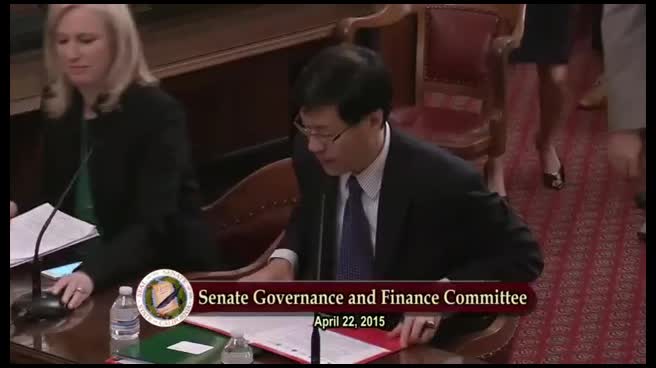 26MIN
Senate Standing Committee on Governance and Finance
Bill Author
Bill Co-Author(s):
