SB 601: Corrections: prisons: reports.
- Session Year: 2015-2016
- House: Senate
- Latest Version Date: 2015-08-10
Existing law provides that the supervision, management, and control of the state prisons, and the responsibility for the care, custody, treatment, training, discipline, and employment of persons confined therein are vested in the Secretary of the Department of Corrections and Rehabilitation. Existing law requires the Secretary to establish the Case Management Reentry Pilot Program for specified offenders who are likely to benefit from a case management reentry strategy. Existing law requires the Department of Corrections and Rehabilitation to submit a final report of the findings from its evaluation of the pilot program to the Legislature and the Governor by a specified date.
This bill would require the Department of Corrections and Rehabilitation to submit a final report of the findings from its evaluation of the Case Management Reentry Pilot Program to the Legislature and the Governor by no later than July 31, 2017.
The bill would also require the Secretary of the Department of Corrections and Rehabilitation to develop a Data Dashboard on a quarterly basis containing specified information regarding each institution, including, among other information, the total budget, including actual expenditures, staff vacancies and the number of authorized staff positions, overtime, sick leave, and the number of use of force incidents, and to post those reports on the departments Internet Web site, as provided.
Existing law provides that the supervision, management, and control of the state prisons, and the responsibility for the care, custody, treatment, training, discipline, and employment of persons confined therein are vested in the Secretary of the Department of Corrections and Rehabilitation. Existing law requires the Secretary to establish the Case Management Reentry Pilot Program for specified offenders who are likely to benefit from a case management reentry strategy. Existing law requires the Department of Corrections and Rehabilitation to submit a final report of the findings from its evaluation of the pilot program to the Legislature and the Governor by a specified date.
This bill would require the Department of Corrections and Rehabilitation to submit a final report of the findings from its evaluation of the Case Management Reentry Pilot Program to the Legislature and the Governor by no later than July 31, 2017.
This
The bill would also require the Secretary of the Department of Corrections and Rehabilitation to develop a Corrections Accountability Report on January 10, March 15, and a fiscal year-end report, Data Dashboard on a quarterly basis containing specified information regarding each institution, including, among other information, the total budget, including actual expenditures, staff vacancies and the number of authorized staff positions, overtime, sick leave, and the average length of lockdowns number of use of force incidents, and to post those reports on the departments Internet Web site, as provided.
Existing law provides that the supervision, management, and control of the state prisons, and the responsibility for the care, custody, treatment, training, discipline, and employment of persons confined therein are vested in the Secretary of the Department of Corrections and Rehabilitation.
This bill would require the Secretary of the Department of Corrections and Rehabilitation to develop a Corrections Accountability Report on January 10, March 15, and a fiscal year-end report, containing specified information regarding each institution, including, among other information, the total budget, including actual expenditures, staff vacancies and the number of authorized staff positions, overtime, sick leave, and the average length of lockdowns, and to post those reports on the departments Internet Web site, as provided.
(a)The Secretary of the Department of Corrections and Rehabilitation shall establish the Case Management Reentry Pilot Program for offenders under the jurisdiction of the department who have been sentenced to a term of imprisonment under Section 1170 and are likely to benefit from a case management reentry strategy designed to address homelessness, joblessness, mental disorders, and developmental disabilities among offenders transitioning from prison into the community. The purpose of the pilot program is to implement promising and evidence-based practices and strategies that promote improved public safety outcomes for offenders reentering society after serving a term in state prison and while released to parole.
(b)The program shall be initiated in at least three counties over three years, supported by department employees focusing primarily on case management services for eligible parolees selected for the pilot program. Department employees shall be experienced or trained to work as social workers with a parole population. Selection of a parolee for participation in the pilot program does not guarantee the availability of services.
(c)Case management social workers shall assist offenders on parole who are assigned to the program in managing basic needs, including housing, job training and placement, medical and mental health care, and any additional programming or responsibilities attendant to the terms of the offenders reentry requirements. Case management social workers also shall work closely with offenders to prepare, monitor, revise, and fulfill individualized offender reentry plans consistent with this section during the term of the program.
(d)Individualized offender reentry plans shall focus on connecting offenders to services for which the offender is eligible under existing federal, state, and local rules.
(e)Case management services shall be prioritized for offenders identified as potentially benefiting from assistance with the following:
(1)Food, including the immediate need and long-term planning for obtaining food.
(2)Clothing, including the immediate need to obtain appropriate clothing.
(3)Shelter, including obtaining housing consistent with the goals of the most independent, least restrictive and potentially durable housing in the local community and that are feasible for the circumstances of each reentering offender.
(4)Benefits, including, but not limited to, the California Work Opportunity and Responsibility to Kids program, general assistance, benefits administered by the federal Social Security Administration, Medi-Cal, and veterans benefits.
(5)Health services, including assisting parolee clients with accessing community mental health, medical, and dental treatment.
(6)Substance abuse services, including assisting parolee clients with obtaining community substance abuse treatment or related 12-step program information and locations.
(7)Income, including developing and implementing a feasible plan to obtain an income and employment reflecting the highest level of work appropriate for a reentering offenders abilities and experience.
(8)Identification cards, including assisting reentering offenders with obtaining state identification cards.
(9)Life skills, including assisting with the development of skills concerning money management, job interviewing, resume writing, and activities of daily living.
(10)Activities, including working with reentering offenders in choosing and engaging in suitable and productive activities.
(11)Support systems, including working with reentering offenders on developing a support system, which may consist of prosocial friends, family, and community groups and activities, such as religious activities, recovery groups, and other social events.
(12)Academic and vocational programs, including assisting reentering offenders in developing and implementing a realistic plan to achieve an academic education, or vocational training, or both.
(13)Discharge planning, including developing postparole plans to sustain parolees achievements and goals to insure long-term community success.
(f)The department shall contract for an evaluation of the pilot program that will assess its effectiveness in reducing recidivism among offenders transitioning from prison into the community.
(g)The department shall submit a final report of the findings from its evaluation of the pilot program to the Legislature and the Governor no later than July 31, 2017.
(h)Implementation of this article is contingent on the availability of funds and the pilot program may be limited in scope or duration based on the availability of funds.
SEC. 2.Section 5055.5 is added to the Penal Code, to read:5055.5.(a)The Secretary of the Department of Corrections and Rehabilitation shall develop a Data Dashboard as described in subdivisions (b) and (c) for each institution on a quarterly basis and post those reports on the departments Internet Web site. The department shall post both current fiscal-year reports and reports for the immediately preceding three fiscal years for each institution. The department shall also post corrections made to inaccurate or incomplete data to current or previous reports.
(b)Each report shall include a brief biography of the warden, including whether he or she is an acting or permanent warden, and a brief description of the prison, including the total number and level of inmates.
(c)Each report shall be created using the following information already collected using the COMPSTAT (computer assisted statistics) reports for each prison and shall include, but not be limited to, all of the following indicators:
(1)Staff vacancies, overtime, sick leave, and number of authorized staff positions.
(2)Rehabilitation programs, including enrollment capacity, actual enrollment, and diploma and GED completion rate.
(3)Number of deaths, specifying homicides, suicides, unexpected deaths, and expected deaths.
(4)Number of use of force incidents.
(5)Number of inmate appeals, including the number being processed, overdue, dismissed, and upheld.
(6)Number of inmates in administrative segregation.
(7)Total contraband seized, specifying the number of cellular telephones and drugs.
(d)Each report shall also include the following information, which is not currently collected or displayed by COMPSTAT:
(1)Total budget, including actual expenditures.
(2)Number of days in lockdown.
(a)The Secretary of the Department of Corrections and Rehabilitation shall establish the Case Management Reentry Pilot Program for offenders under the jurisdiction of the department who have been sentenced to a term of imprisonment under Section 1170 and are likely to benefit from a case management reentry strategy designed to address homelessness, joblessness, mental disorders, and developmental disabilities among offenders transitioning from prison into the community. The purpose of the pilot program is to implement promising and evidence-based practices and strategies that promote improved public safety outcomes for offenders reentering society after serving a term in state prison and while released to parole.
(b)The program shall be initiated in at least three counties over three years, supported by department employees focusing primarily on case management services for eligible parolees selected for the pilot program. Department employees shall be experienced or trained to work as social workers with a parole population. Selection of a parolee for participation in the pilot program does not guarantee the availability of services.
(c)Case management social workers shall assist offenders on parole who are assigned to the program in managing basic needs, including housing, job training and placement, medical and mental health care, and any additional programming or responsibilities attendant to the terms of the offenders reentry requirements. Case management social workers also shall work closely with offenders to prepare, monitor, revise, and fulfill individualized offender reentry plans consistent with this section during the term of the program.
(d)Individualized offender reentry plans shall focus on connecting offenders to services for which the offender is eligible under existing federal, state, and local rules.
(e)Case management services shall be prioritized for offenders identified as potentially benefiting from assistance with the following:
(1)Food, including the immediate need and long-term planning for obtaining food.
(2)Clothing, including the immediate need to obtain appropriate clothing.
(3)Shelter, including obtaining housing consistent with the goals of the most independent, least restrictive and potentially durable housing in the local community and that are feasible for the circumstances of each reentering offender.
(4)Benefits, including, but not limited to, the California Work Opportunity and Responsibility to Kids program, general assistance, benefits administered by the federal Social Security Administration, Medi-Cal, and veterans benefits.
(5)Health services, including assisting parolee clients with accessing community mental health, medical, and dental treatment.
(6)Substance abuse services, including assisting parolee clients with obtaining community substance abuse treatment or related 12-step program information and locations.
(7)Income, including developing and implementing a feasible plan to obtain an income and employment reflecting the highest level of work appropriate for a reentering offenders abilities and experience.
(8)Identification cards, including assisting reentering offenders with obtaining state identification cards.
(9)Life skills, including assisting with the development of skills concerning money management, job interviewing, resume writing, and activities of daily living.
(10)Activities, including working with reentering offenders in choosing and engaging in suitable and productive activities.
(11)Support systems, including working with reentering offenders on developing a support system, which may consist of prosocial friends, family, and community groups and activities, such as religious activities, recovery groups, and other social events.
(12)Academic and vocational programs, including assisting reentering offenders in developing and implementing a realistic plan to achieve an academic education, or vocational training, or both.
(13)Discharge planning, including developing postparole plans to sustain parolees achievements and goals to insure long-term community success.
(f)The department shall contract for an evaluation of the pilot program that will assess its effectiveness in reducing recidivism among offenders transitioning from prison into the community.
(g)The department shall submit a final report of the findings from its evaluation of the pilot program to the Legislature and the Governor no later than three years after the enactment of Assembly Bill 1457 or Senate Bill 851 of the 201314 Regular Session. The report shall be submitted in compliance with Section 9795 of the Government Code. July 31, 2017.
(h)Implementation of this article is contingent on the availability of funds and the pilot program may be limited in scope or duration based on the availability of funds.
SECTION 1.SEC. 2.Section 5055.5 is added to the Penal Code, to read:5055.5.(a)The Secretary of the Department of Corrections and Rehabilitation shall develop a Corrections Accountability Report Data Dashboard as described in subdivisions (b) and (c) for each institution on January 10, March 15, and a fiscal year-end report a quarterly basis and post those reports on the departments Internet Web site. The department shall post both current fiscal-year reports and reports for the immediately preceding three fiscal years for each institution. The department shall also post corrections made to inaccurate or incomplete data to current or previous reports.
(b)Each report shall include the three-year statewide recidivism rate, a brief biography of the warden, including whether he or she is an acting or permanent warden, contact information for the warden, and a brief description of the prison, including the total number and level of inmates.
(c)Each report shall be created using, when possible, the following information already collected using the Compstat COMPSTAT (computer assisted statistics) reports for each prison, or other verifiable information collected by the department, and shall include, but not be limited to, all of the following indicators:
(1)Total budget, including actual expenditures, staff Staff vacancies, overtime, sick leave, and number of authorized staff positions.
(2)Rehabilitation programs, including enrollment capacity, actual enrollment, and diploma and GED completion rate.
(3)Average length of lockdowns.
(4)
(3)Number of deaths, specifying homicides, suicides, unexpected deaths, and expected deaths.
(5)
(4)Number of use of force incidents.
(6)
(5)Number of inmate appeals, including the number being processed, overdue, and dismissed, and upheld.
(7)
(6)Number of inmates in administrative segregation.
(8)
(7)Total contraband seized, specifying the number of cellular telephones and drugs.
(d)Each report shall also include the following information, which is not currently collected or displayed by COMPSTAT:
(1)Total budget, including actual expenditures.
(2)Number of days in lockdown.
(a)The Secretary of the Department of Corrections and Rehabilitation shall develop a Corrections Accountability Report as described in subdivisions (b) and (c) for each institution on January 10, March 15, and a fiscal year-end report and post those reports on the departments Internet Web site. The department shall post both current fiscal-year reports and reports for the immediately preceding three fiscal years for each institution. The department shall also post corrections made to inaccurate or incomplete data to current or previous reports.
(b)Each report shall include the three-year statewide recidivism rate, a brief biography of the warden, including whether he or she is an acting or permanent warden, contact information for the warden, and a brief description of the prison, including the total number of inmates.
(c)Each report shall be created using, when possible, information collected using the Compstat (computer assisted statistics) reports for each prison, or other verifiable information collected by the department, and shall include, but not be limited to, all of the following indicators:
(1)Total budget, including actual expenditures, staff vacancies, overtime, sick leave, and number of authorized staff positions.
(2)Rehabilitation programs, including capacity, enrollment, and diploma and GED completion rate.
(3)Average length of lockdowns.
(4)Number of deaths, specifying homicides, suicides, unexpected deaths, and expected deaths.
(5)Number of use of force incidents.
(6)Number of inmate appeals, including the number being processed, overdue, and dismissed.
(7)Number of inmates in administrative segregation.
(8)Total contraband seized, specifying the number of cellular telephones.
|
Date
|
Status
|
|---|---|
| Aug 10, 2015 | Chaptered by Secretary of State. Chapter 162, Statutes of 2015. |
| Aug 10, 2015 | Approved by the Governor. |
| Jul 30, 2015 | Enrolled and presented to the Governor at 10 a.m. |
| Jul 16, 2015 | In Senate. Ordered to engrossing and enrolling. |
| Jul 16, 2015 | Read third time. Passed. (Ayes 79. Noes 0. Page 2434.) Ordered to the Senate. |
| Jul 16, 2015 | Read third time. Passed. Ordered to the Senate. |
| Jul 9, 2015 | Read second time. Ordered to consent calendar. |
| Jul 8, 2015 | From committee: Do pass. Ordered to consent calendar. (Ayes 14. Noes 0.) (July 8). |
| Jul 1, 2015 | From committee: Do pass and re-refer to Com. on APPR. with recommendation: To consent calendar. (Ayes 7. Noes 0.) (June 30). Re-referred to Com. on APPR. |
| Jun 11, 2015 | Referred to Com. on PUB. S. |
| May 22, 2015 | In Assembly. Read first time. Held at Desk. |
| May 22, 2015 | Read third time. Passed. (Ayes 39. Noes 0. Page 1062.) Ordered to the Assembly. |
| May 22, 2015 | Read third time. Passed. (Ayes 39. Noes 0.) Ordered to the Assembly. |
| May 12, 2015 | Read second time. Ordered to third reading. |
| May 11, 2015 | From committee: Be ordered to second reading pursuant to Senate Rule 28.8. |
| May 1, 2015 | Set for hearing May 11. |
| Apr 29, 2015 | From committee: Do pass and re-refer to Com. on APPR. (Ayes 7. Noes 0. Page 823.) (April 28). Re-referred to Com. on APPR. |
| Apr 29, 2015 | From committee: Do pass and re-refer to Com. on APPR. (Ayes 7. Noes 0.) (April 28). Re-referred to Com. on APPR. |
| Apr 23, 2015 | Set for hearing April 28. |
| Apr 22, 2015 | Re-referred to Com. on PUB. S. |
| Apr 20, 2015 | From committee with author's amendments. Read second time and amended. Re-referred to Com. on RLS. |
| Mar 12, 2015 | Referred to Com. on RLS. |
| Mar 2, 2015 | Read first time. |
| Mar 2, 2015 | From printer. May be acted upon on or after April 1. |
| Feb 27, 2015 | Introduced. To Com. on RLS. for assignment. To print. |
|
Date
|
Description
|
Location
|
Votes
|
|
|---|---|---|---|---|
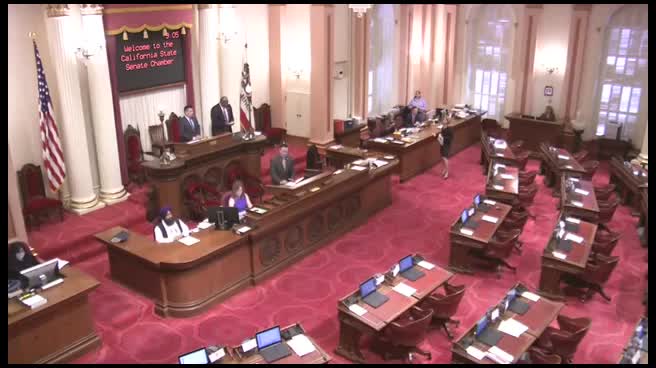
| Jul 16, 2015 | SB 601 Hancock Consent Calendar Second Day Regular Session | Assembly Floor |
Passed |
|
| Jul 8, 2015 | Do pass. To Consent Calendar. | Assembly Standing Committee on Appropriations |
Passed |
|
| Jun 30, 2015 | Do pass and be re-referred to the Committee on [Appropriations] with recommendation: To Consent Calendar | Assembly Standing Committee on Public Safety |
Passed |
|
| May 22, 2015 | Senate 3rd Reading SB601 Hancock | Senate Floor |
Passed |
|
| Apr 28, 2015 | Do pass, but first be re-referred to the Committee on [Appropriations] | Senate Standing Committee on Public Safety |
Passed |
This list shows positions taken on this bill by organizations on the date displayed, which is linked to the original source.
Positions by individuals are not included.
Date of Hearing: July 8, 2015
ASSEMBLY COMMITTEE ON APPROPRIATIONS
Jimmy Gomez, Chair
SB 601
(Hancock) – As Amended April 20, 2015
Policy Committee: |
Public Safety |
Vote: |
7 - 0 |
|
|
|
|
|
|
|
|
Urgency: No State Mandated Local Program: No Reimbursable: No
SUMMARY:
This bill requires the Secretary of the Department of Corrections and Rehabilitation (CDCR) to develop a Data Dashboard, and post those reports on the CDCR's web page on a quarterly basis, containing specified information regarding each institution, including, among other information, the total budget, including actual expenditures, staff vacancies and the number of authorized staff positions, overtime, sick leave, and the average length of lockdowns, number of inmates, total contraband seized, information about the warden, and use of force incidents.
FISCAL EFFECT:
Minor absorbable costs to CDCR to publish the required information, CDCR currently collects almost all the information required in this bill.
COMMENTS:
Purpose. According to the author, "SB 601 establishes a framework for providing better public access to key information about the performance of California’s prison system by displaying a user friendly quarterly report on the CDCR webpage."
SB 601 intends to develop an accessible quarterly report that highlights management and performance of each state prison for legislative use. By requiring the Secretary of the CDCR to repackage the data to post online, the public and the Legislature could hold the department accountable for the overall management of the correctional facility, including administrative services, expenditures, safety and security, and program and support services."
Background. Comstat (short for "computer statistics") is an organizational management tool modeled after the Los Angeles and the New York Police Departments to monitor and reduce crimes and is easily accessible to the public. In 2006, the CDCR designed and implemented Compstat to monitor and provide operational review of prisons, parole, and CDCR as a whole. As part of Governor Schwarzenegger’s government transparency efforts in 2009, the Compstat reports were moved from the CDCR's Web site and made available on the Reporting Transparency in Government's Web site; however, the Compstat reports and audits are hard for the public to find and view among the thicket of reports on that site. In addition, the Compstat audits and reports are non-descriptive and difficult to understand. This bill is intended to make Comstat information more readily accessible and easier to understand.
Argument in Support: According to Legal Services for Prisoners with Children, "SB 601's 'data dashboard' would provide a much more accurate picture of CDCR policy and procedure to lawmakers. Further, by requiring the CDCR to publish the 'data dashboard' on their website on a quarterly basis, SB 601 involves the general public and establishes a more meaningful system of accountability within California's correctional system. By increasing the ability of the public, lawmakers, and the Governor to each hold the CDCR accountable for the performance of correctional programs, SB 601's 'data dashboard' will ultimately allow for more responsible policy and more effective reform to follow."
Prior Legislation: SB 601 (Hancock) of the 2011-2012 Legislative Session, which was vetoed, would have required the Secretary of the Department of Corrections and Rehabilitation to develop a Corrections Accountability Report on January 10, March 15, and a fiscal year-end report, containing specified information regarding each institution, including, among other information, the total budget, including actual expenditures, staff vacancies and the number of authorized staff positions, overtime, sick leave, and the average length of lockdowns, and to post those reports on the department’s Internet website. In his veto message, the Governor stated, "This measure is unnecessary and redundant; existing law already requires the Department to provide this information. I am happy to work with the author on ways the Department could better organize its website, but I don't think this takes a law."
Analysis Prepared by: Pedro R. Reyes / APPR. / (916) 319-2081
SB 601
Page 7
Date of Hearing: June 30, 2015
Counsel: Gabriel Caswell
ASSEMBLY COMMITTEE ON PUBLIC SAFETY
Bill Quirk, Chair
SB 601
(Hancock) – As Amended April 20, 2015
SUMMARY:
Requires the
Secretary of the Department of Corrections and Rehabilitation develop
a Corrections Accountability Report on January 10, March 15, and a
fiscal year-end report, containing specified information regarding
each institution, including, among other information, the total
budget, including actual expenditures, staff vacancies and the number
of authorized staff positions, overtime, sick leave, and the average
length of lockdowns, and to post those reports on the department’s
Internet Web site, as provided. Specifically, this
bill:
Provides that the Secretary of the Department of Corrections and Rehabilitation shall develop a Corrections Accountability Report for each institution on January 10, March 15, and a fiscal year-end report and post those reports on the department’s website. The department shall post both current fiscal-year reports and reports for the immediately preceding three fiscal years for each institution. The department shall also post corrections made to inaccurate or incomplete data to current or previous reports.
Specifies that each report shall include the three-year statewide recidivism rate, a brief biography of the warden, including whether he or she is an acting or permanent warden, contact information for the warden, and a brief description of the prison, including the total number of inmates.
Specifies that each report shall be created using, when possible, information collected using the Compstat (computer assisted statistics) reports for each prison, or other verifiable information collected by the department, and shall include, but not be limited to, all of the following indicators:
Total budget, including actual expenditures, staff vacancies, overtime, sick leave, and number of authorized staff positions;
Rehabilitation programs, including capacity, enrollment, and diploma and GED completion rate;
Average length of lockdowns;
Number of deaths, specifying homicides, suicides, unexpected deaths, and expected deaths;
Number of use of force incidents;
Number of inmate appeals, including the number being processed, overdue, and dismissed;
Number of inmates in administrative segregation; and
Total contraband seized, specifying the number of cellular telephones.
EXISTING LAW:
Creates in state government, the California Department of Corrections and Rehabilitation (CDCR), headed by a Secretary who is appointed by the Governor, subject to Senate confirmation, and serves at the pleasure of the Governor. CDCR consists of Adult Operations, Adult Programs, Juvenile Justice, the Corrections Standards Authority, the Board of Parole Hearings, the State Commission on Juvenile Justice, the Prison Industry Authority, and the Prison Industry Board. (Gov. Code, § 12838, subd. (a).) As explained in the Legislative Analyst's Office Analysis of the Governor’s 2015-16 Proposed Budget: The CDCR is responsible for the incarceration of adult felons, including the provision of training, education, and health care services. As of February 4, 2015, CDCR housed about 132,000 adult inmates in the state’s prison system. Most of these inmates are housed in the state’s 34 prisons and 43 conservation camps. About 15,000 inmates are housed in either in–state or out–of–state contracted prisons. The department also supervises and treats about 44,000 adult parolees and is responsible for the apprehension of those parolees who commit new offenses or parole violations. In addition, about 700 juvenile offenders are housed in facilities operated by CDCR’s Division of Juvenile Justice, which includes three facilities and one conservation camp. The Governor’s budget proposes total expenditures of $10.3 billion ($10 billion General Fund) for CDCR operations in 2015–16.
Provides that the Governor, upon recommendation of the Secretary, shall appoint the wardens of the various state prisons. Each warden shall be subject to removal by the secretary. If the Secretary removes him or her, the secretary's action shall be final. The warden shall be exempt from civil service. (Pen. Code, § 6050, subd. (a).)
Authorizes the Inspector General (IG) to conduct a management review audit of any warden in CDCR or superintendent in the Division of Juvenile Justice. The management review audit shall include, but not be limited to, issues relating to personnel, training, investigations, and financial matters. Each management review audit shall include an assessment of the maintenance of the facility managed by the warden or superintendent. The audit report shall be submitted to the Secretary of CDCR for evaluation and for any response deemed necessary. Any Member of the Legislature or the public may request and shall be provided with a copy of any audit by the Inspector General, including a management review audit or a special audit or review. A report that involves potential criminal investigations or prosecution or security practices and procedures shall be considered confidential, and its disclosure shall not be required under this section. (Pen. Code, § 6051.)
States that the IG shall audit each warden of an institution one year after his or her appointment, and shall audit each correctional institution at least once every four years. Each audit shall include, but not be limited to, issues relating to personnel, training, investigations, and financial matters. Each audit shall include an assessment of the maintenance of the facility managed by the warden. The audit report shall include the IG's assessment of facility maintenance. These audit reports shall be provided to the Legislature and shall be made public. The requirements of this paragraph shall be phased in by the IG so that they are fully met by July 1, 2009. (Pen. Code, § 6126 subd. (a)(2).)
Specifies that the Secretary of the Department of Corrections and Rehabilitation is required to establish the Case Management Reentry Pilot Program for offenders under the jurisdiction of the department who have been sentenced to a term of imprisonment under Section 1170 and are likely to benefit from a case management reentry strategy designed to address homelessness, joblessness, mental disorders, and developmental disabilities among offenders transitioning from prison into the community, as specified. The department is required to submit a final report of the findings from its evaluation of the pilot program to the Legislature and the Governor no later than three years after the enactment of Assembly Bill 1457 or Senate Bill 851 of the 2013−14 Regular Session. (Pen. Code § 3016.)
FISCAL EFFECT:
COMMENTS:
Author's Statement: According to the author, "SB 601 establishes a framework for providing better public access to key information about the performance of California’s prison system by displaying a user friendly quarterly report on the CDCR webpage."
Author's Background: According to the background submitted by the author, "SB 601 intends to develop an accessible quarterly report that highlights management and performance of each state prison for legislative use. By requiring the Secretary of the CDCR to repackage the data to post online, the public and the Legislature could hold the department accountable for the overall management of the correctional facility, including administrative services, expenditures, safety and security, and program and support services."
Comstat: Comstat (short for "computer statistics") is an organizational management tool modeled after the Los Angeles and the New York Police Departments to monitor and reduce crimes and is easily accessible to the public. In 2006, the CDCR designed and implemented Compstat to monitor and provide operational review of prisons, parole, and CDCR as a whole. As part of Governor Schwarzenegger’s government transparency efforts in 2009, the Compstat reports were moved from the CDCR's Web site and made available on the Reporting Transparency in Government's Web site; however, the Compstat reports and audits are hard for the public to find and view among the thicket of reports on that site. In addition, the Compstat audits and reports are non-descriptive and difficult to understand. This bill is intended to make Comstat information more readily accessible and easier to understand.
Independent Review Panel Recommendations: For the last several years the CDCR has been the subject of a great deal of scrutiny and criticism. In March of 2004 then-Governor Schwarzenegger announced the creation of an “Independent Review Panel” (“IRP”) led by former Governor George Deukmejian to examine ways to improve adult and youth corrections in California. In June of 2004 the IRP released its report, urging in part the establishment of “a system of accountability that includes performance measures by which to evaluate employees and monitor levels of achievement.”1 The IRP, which assessed a state correctional system prior to the reorganization approved in 2005,2 stated in part:
To a significant extent, the problems of California’s Correctional system grow out of its structure. The Secretary of the Youth and Adult Correctional Agency, for example, has no control over line operations. Instead, the state’s 32 prison wardens and eight juvenile institution superintendents each operate independently, with little consistency in procedures and minimal help from headquarters. Lines of responsibility are blurred by layers of bureaucracy between managers and functions. Accountability is conspicuously absent, as is transparency for the public into the system’s inner workings. Clear, uniform policies governing the system’s most vital functions — fiscal matters, personnel and training, internal affairs, information technology, and health care — are equally lacking. Boards, commissions, and other entities that have evolved over the decades perform duplicate and overlapping functions. And the system’s organizational structure has not kept pace with the massive growth in inmate population or with the vast geographical spread of the institutions.
The sheer size and complexity of the correctional system, the critical nature of its mission, and the severity of the problems dictate the need for wholesale reform, and that reform should begin with the system’s organizational structure. The Corrections Independent Review Panel therefore proposes that the state’s correctional agencies be reorganized according to the plan described in this chapter. While the restructuring alone will not produce the necessary reforms, it will serve as the foundation for cleaning up the prison system, reining in costs, curbing misconduct, holding correctional administrators accountable for the system’s performance, and making communities safer by doing more to ensure that inmates and youth wards leave custody better prepared to function in society.3
The IRP, which recommended a restructuring that “’flattens’ the organization by removing layers of bureaucracy that have obscured lines of authority and accountability between top managers and the functions for which they are responsible,”4 identified the following management principles as key to reforming the state’s correctional system, and in particular recommended:
Transforming the culture of the Department of Corrections and the California Youth Authority into one in which personal integrity and loyalty to the department mission consistently take precedence over loyalty to co-workers suspected of wrongdoing, requires a vigorous, multi-pronged approach. The effort should be guided by quality management principles incorporating clear objectives and purpose; key performance measures; consistent monitoring; and a system of correction and reward. Quality management principles accomplish the following:
Provide clarity of purpose in each employee's job;
Link each person's work to the department's mission;
Foster continual improvement;
Bring accountability to all department levels.5
With respect to management staff, the IRP stated the department “must provide supervisors, managers, and executive management every possible opportunity to succeed.
These individuals must be given a clear understanding of the responsibilities of their positions. They must also receive performance evaluations to ensure that they grow in their positions and know how to improve their performance. To accomplish that purpose, the Department of Correctional Services should take the following actions:
Develop specific job objectives in the job description for all managers, and executives, and rate job performance by these objectives at least annually. The specific job objectives and method of rating job performance must be standardized to ensure consistency. . . .
These basic management steps must be incorporated into the performance evaluations of each manager and evaluated at least annually. Clear standards lead to better accountability of employee actions and help identify employees who need further training or mentorship. . . . 6
Specifically with respect to wardens, the report states:
To provide a model for exceptional performance by wardens Secretary Lehman of the Washington State Department of Corrections noted:
There are five questions to ask top performing wardens to find out how effectively they deal with an issue: (1) What alternatives or options were considered? (2) What were the expected results? (3) What data was tracked? (4) What barriers were encountered? (5) What actions were taken to improve the problem?7
Following the IRP report, in 2005 Governor Schwarzenegger proposed to reorganize what then was the “Youth and Adult Correctional Agency.” Accountability was a key goal of the proposed reorganization:
Restructuring will establish clear lines of reporting, accountability and responsibility and performance assessment that will improve services, reduce the likelihood of repeat offenses and eliminate abuses within the current system. It will centralize services and activities to remove duplication and leverage the scale of the Department’s $6 billion spending authority, thus reducing the cost of operations. The reorganization will deliver a safer society at less cost to the people of California.8
In its report assessing the Governor’s proposed reorganization, the Little Hoover Commission stated in part:
The plan clarifies and strengthens the chain of command from the secretary to the prison wardens and Youth Authority superintendents, who under the current system operate with little accountability to the secretary or loyalty to the organization. Wardens and superintendents will report to the secretary through a division director and chief deputy secretary and will not require Senate confirmation. The proposed reorganization would give the secretary necessary authority over all activities in the agency and its subordinate departments, thereby increasing the ability of the Governor, lawmakers and the public to hold the secretary accountable for the performance of correctional programs.
. . . The lack of a unified structure for prison work and education programs has diminished their effectiveness. The longstanding practice of allowing prisons to operate independently has hindered accountability and hampered the standardization of policies, contributing to inmate abuse and expensive lawsuits.9
With respect to wardens prior to the 2005 reorganization, the Little Hoover Commission noted:
Under the current system, the Secretary reports to the Governor, but he does not have the actual power to change the operations of the Department of Corrections and the California Youth Authority that administer the correctional institutions. As a result, the Governor cannot truly hold the Secretary accountable for the performance of the correctional system or enact major reforms in the way prisons are administered. Nor can the Secretary dismiss a warden of an institution. Currently the system’s 32 wardens and eight superintendents do not report directly into the Secretary. Each warden employs different standards and different operating procedures. This decentralized framework, along with Senate confirmation of wardens, has helped create a system of operational silos with little accountability or sharing of best practices outside the facility walls.10
SB 601 (2011) Hancock: Senator Hancock sponsored SB 601 in 2011 which required the Secretary of the Department of Corrections and Rehabilitation to develop a Corrections Accountability Report on January 10, March 15, and a fiscal year-end report, containing specified information regarding each institution, including, among other information, the total budget, including actual expenditures, staff vacancies and the number of authorized staff positions, overtime, sick leave, and the average length of lockdowns, and to post those reports on the department’s Internet website. The bill was vetoed by Governor Brown with the following veto message:
" This measure would require the Department of Corrections and Rehabilitation to post on its website prescribed information and reports and to update them every four months.
"This measure is unnecessary and redundant; existing law already requires the Department to provide this information. I am happy to work with the author on ways the Department could better organize its website, but I don't think this takes a law."
Argument in Support: According to Legal Services for Prisoners with Children, "SB 601's 'data dashboard' would provide a much more accurate picture of CDCR policy and procedure to lawmakers. Further, by requiring the CDCR to publish the 'data dashboard' on their website on a quarterly basis, SB 601 involves the general public and establishes a more meaningful system of accountability within California's correctional system. By increasing the ability of the public, lawmakers, and the Governor to each hold the CDCR accountable for the performance of correctional programs, SB 601's 'data dashboard' will ultimately allow for more responsible policy and more effective reform to follow."
Prior Legislation: SB 601 (Hancock) of the 2011-2012 Legislative Session, required the Secretary of the Department of Corrections and Rehabilitation to develop a Corrections Accountability Report on January 10, March 15, and a fiscal year-end report, containing specified information regarding each institution, including, among other information, the total budget, including actual expenditures, staff vacancies and the number of authorized staff positions, overtime, sick leave, and the average length of lockdowns, and to post those reports on the department’s Internet website. SB 601 was vetoed by Governor Brown.
REGISTERED SUPPORT / OPPOSITION:
Support
Legal Services for Prisoners with Children
Opposition
None
Analysis Prepared by: Gabriel Caswell / PUB. S. / (916) 319-3744
1 Report of the Independent Corrections Review Panel (June 2004), p. 26. The report is available online at http://cpr.ca.gov/Review_Panel/.
2 The reorganization of the corrections agency was codified in SB 737 (Romero), Ch. 10 Stats. 2005.
3 Id, p. 1 (emphasis added).
4 Id. p. 4.
5 Id., p. 20-21 (emphasis added).
6 Id., p. 75.
7 Id. p. 94.
8 Governor's Reorganization Plan, Reforming California's Youth & Adult Correctional Agency (Appendix “A,” Reconstructing Government: A Review of the Governor's Reorganization Plan: Reforming California's Youth and Adult Correctional Agency, Little Hoover Commission (Feb. 2005).
9 Id (emphasis added).
10 Id. (emphasis added).
SB 601
Page 3
|
Office of Senate Floor Analyses (916) 651-1520 Fax: (916) 327-4478 |
THIRD READING
Bill No: SB 601
Amended: 4/20/15
SENATE PUBLIC SAFETY COMMITTEE: 7-0, 4/28/15
AYES: Hancock, Anderson, Leno, Liu, McGuire, Monning, Stone
SENATE APPROPRIATIONS COMMITTEE: Senate Rule 28.8
SUBJECT: Corrections: prisons: reports
DIGEST: This bill requires the Secretary of the California Department of Corrections and Rehabilitation (CDCR) to develop and make public a quarterly “data dashboard,” as specified.
Existing law:
Creates CDCR, to be headed by a Secretary, who shall be appointed by the Governor, subject to Senate confirmation, and shall serve at the pleasure of the Governor. (Government Code § 12838.) CDCR consists of Adult Operations, Adult Programs, Health Care Services, Juvenile Justice, the Board of Parole Hearings, the State Commission on Juvenile Justice, the Prison Industry Authority, and the Prison Industry Board. (Id.)
Requires the Secretary of CDCR to establish the Case Management Reentry Pilot Program for offenders under the jurisdiction of CDCR who have been sentenced to a term of imprisonment under Penal Code Section 1170 and are likely to benefit from a case management reentry strategy designed to address homelessness, joblessness, mental disorders, and developmental disabilities among offenders transitioning from prison into the community, as specified. CDCR is required to submit a final report of the findings from its evaluation of the pilot program to the Legislature and the Governor no later than three years after the enactment of AB 1457 (Skinner) or SB 851 (Leno) (both of which were not enacted) of the 2013−14 Regular Session. (Penal Code § 3016.)
This bill:
Requires the Secretary of CDCR to develop a “data dashboard,” as specified below, on a quarterly basis and post those reports on CDCR’s Internet Web site.
Requires CDCR to “post both current fiscal-year reports and reports for the immediately preceding three fiscal years for each institution.”
Requires that each report be created using, when possible, information collected using the COMPSTAT (computer assisted statistics) reports for each prison and shall include, but not be limited to, all of the following information:
A brief biography of the warden, whether he or she is an acting or permanent warden.
A brief description of the prison and the total number and level of inmates currently residing at the prison.
Staff vacancies, overtime, sick leave, and number of authorized staff positions.
Rehabilitation programs, including enrollment capacity, actual enrollment, and diploma and GED completion rate.
Number of deaths, specifying homicides, suicides, unexpected deaths, and expected deaths.
Number of use of force incidents.
Number of inmate appeals, including the number being processed, overdue, dismissed and upheld.
Number of inmates in administrative segregation.
Total contraband seized, specifying the number of cellular telephones.
States that the report should include two items not currently collected or displayed by COMPSTAT:
a) Total budget, including actual expenditures.
b) Number of days in lockdown.
5) States that the report on the Case Management Reentry Pilot Program is due to the Legislature and the Governor by July 31, 2017.
Background
For the last several years CDCR has been the subject of a great deal of scrutiny and criticism. In March of 2004, then-Governor Schwarzenegger announced the creation of an “Independent Review Panel” (“IRP”) led by former Governor George Deukmejian to examine ways to improve adult and youth corrections in California. In June of 2004, the IRP released its report, urging in part the establishment of “a system of accountability that includes performance measures by which to evaluate employees and monitor levels of achievement.” This bill seeks to increase accountability and transparency by requiring that CDCR develop a quarterly report that is made available to the public.
FISCAL EFFECT: Appropriation: No Fiscal Com.: Yes Local: No
None received
OPPOSITION: (Verified 5/11/15)
None received
Prepared by: Jessica Devencenzi / PUB. S. /
5/13/15 17:17:52
**** END ****
SB 601 (Hancock ) Page 7 of 7
SENATE COMMITTEE ON PUBLIC SAFETY
Senator Loni Hancock, Chair
2015 - 2016 Regular
Bill No: SB 601 Hearing Date: April 28, 2015
Author: |
Hancock |
||
Version: |
April 20, 2015 |
||
Urgency: |
No |
Fiscal: |
Yes |
Consultant: |
JRD |
||
Subject: Corrections: Prisons: Reports
HISTORY
Source: Author
Prior Legislation: SB 601 (Hancock) – 2011, vetoed
Support: Unknown
Opposition: None known
PURPOSE
The purpose of this bill is to require the secretary of the CDCR to develop and make public a quarterly “data dashboard,” as specified.
Current law creates in state government the California Department of Corrections and Rehabilitation (CDCR), to be headed by a secretary, who shall be appointed by the Governor, subject to Senate confirmation, and shall serve at the pleasure of the Governor. (Government Code § 12838.) CDCR shall consist of Adult Operations, Adult Programs, Health Care Services, Juvenile Justice, the Board of Parole Hearings, the State Commission on Juvenile Justice, the Prison Industry Authority, and the Prison Industry Board. (Id.) As explained in the Legislative Analyst's Office Analysis of the Governor’s 2015-16 Proposed Budget:
The CDCR is responsible for the incarceration of adult felons, including the provision of training, education, and health care services. As of February 4, 2015, CDCR housed about 132,000 adult inmates in the state’s prison system. Most of these inmates are housed in the state’s 34 prisons and 43 conservation camps. About 15,000 inmates are housed in either in–state or out–of–state contracted prisons. The department also supervises and treats about 44,000 adult parolees
and is responsible for the apprehension of those parolees who commit new offenses or parole violations. In addition, about 700 juvenile offenders are housed in facilities operated by CDCR’s Division of Juvenile Justice, which includes three facilities and one conservation camp.
The Governor’s budget proposes total expenditures of $10.3 billion ($10 billion General Fund) for CDCR operations in 2015–16.
Under current law the Secretary of the Department of Corrections and Rehabilitation is required to establish the Case Management Reentry Pilot Program for offenders under the jurisdiction of
the department who have been sentenced to a term of imprisonment under Section 1170 and are likely to benefit from a case management reentry strategy designed to address homelessness, joblessness, mental disorders, and developmental disabilities among offenders transitioning from prison into the community, as specified. The department is required to submit a final report of the findings from its evaluation of the pilot program to the Legislature and the Governor no later than three years after the enactment of Assembly Bill 1457 or Senate Bill 851 of the 2013−14 Regular Session. (Penal Code § 3016.)
This bill would require the Secretary of CDCR to develop a “data dashboard,” as specified below, on a quarterly basis and post those reports on the department’s Internet Web site.
This bill would require CDCR to “post both current fiscal-year reports and reports for the immediately preceding three fiscal years for each institution.”
This bill would require that each report be created using, when possible, information collected using the COMPSTAT (computer assisted statistics) reports for each prison and shall include, but not be limited to, all of the following information:
(1) A brief biography of the warden, whether he or she is an acting or permanent warden.
(2) A brief description of the prison and the total number and level of inmates currently residing at the prison.
(3) Staff vacancies, overtime, sick leave, and number of authorized staff positions.
(4) Rehabilitation programs, including enrollment capacity, actual enrollment, and diploma and GED completion rate.
(5) Number of deaths, specifying homicides, suicides, unexpected deaths, and expected deaths.
(6) Number of use of force incidents.
(7) Number of inmate appeals, including the number being processed, overdue, dismissed and
upheld.
(8) Number of inmates in administrative segregation.
(9) Total contraband seized, specifying the number of cellular telephones.
This bill states that the report should include two items not currently collected or displayed by COMPSTAT:
Total budget, including actual expenditures.
Number of days in lockdown.
This bill states that the report on the Case Management Reentry Pilot Program is due to the legislature and the governor by July 31, 2017.
RECEIVERSHIP/OVERCROWDING CRISIS AGGRAVATION
For the past eight years, this Committee has scrutinized legislation referred to its jurisdiction for any potential impact on prison overcrowding. Mindful of the United States Supreme Court ruling and federal court orders relating to the state’s ability to provide a constitutional level of health care to its inmate population and the related issue of prison overcrowding, this Committee has applied its “ROCA” policy as a content-neutral, provisional measure necessary to ensure that the Legislature does not erode progress in reducing prison overcrowding.
On February 10, 2014, the federal court ordered California to reduce its in-state adult institution population to 137.5% of design capacity by February 28, 2016, as follows:
143% of design bed capacity by June 30, 2014;
141.5% of design bed capacity by February 28, 2015; and,
137.5% of design bed capacity by February 28, 2016.
In February of this year the administration reported that as “of February 11, 2015, 112,993 inmates were housed in the State’s 34 adult institutions, which amounts to 136.6% of design bed capacity, and 8,828 inmates were housed in out-of-state facilities. This current population is now below the court-ordered reduction to 137.5% of design bed capacity.”( Defendants’ February 2015 Status Report In Response To February 10, 2014 Order, 2:90-cv-00520 KJM DAD PC, 3-Judge Court, Coleman v. Brown, Plata v. Brown (fn. omitted).
While significant gains have been made in reducing the prison population, the state now must stabilize these advances and demonstrate to the federal court that California has in place the “durable solution” to prison overcrowding “consistently demanded” by the court. (Opinion Re: Order Granting in Part and Denying in Part Defendants’ Request For Extension of December 31, 2013 Deadline, NO. 2:90-cv-0520 LKK DAD (PC), 3-Judge Court, Coleman v. Brown, Plata v. Brown (2-10-14). The Committee’s consideration of bills that may impact the prison population therefore will be informed by the following questions:
Whether a proposal erodes a measure which has contributed to reducing the prison population;
Whether a proposal addresses a major area of public safety or criminal activity for which there is no other reasonable, appropriate remedy;
Whether a proposal addresses a crime which is directly dangerous to the physical safety of others for which there is no other reasonably appropriate sanction;
Whether a proposal corrects a constitutional problem or legislative drafting error; and
Whether a proposal proposes penalties which are proportionate, and cannot be achieved through any other reasonably appropriate remedy.
COMMENTS
1. Need for Legislation
According to the Author:
California’s correctional system lacks transparency and accountability. The public as well as the Legislature have no clear way of accessing information on the management and performance of each warden at California’s 33 prisons.
SB 601 would require the Secretary of the California Department of Corrections and Rehabilitation (CDCR) to develop a quarterly report for each prison. This measure would require the CDCR to post their report on the CDCR website.
The report would include the following information:
Staff vacancies, overtime sick leave, and the number of authorized staff prisons
Rehabilitation programs, including enrollment capacity, and actual enrollment, and diploma and GED completion rate
Number of deaths, specifying homicides, suicides, unexpected deaths, and expected deaths
Number of use of force incidents
Number of inmate appeals, including the number being processed, overdue, dismissed and upheld
Number of inmates in administrative segregation
Total contraband seized, specifying the number of cellular telephones and drugs
Total Budget, including actual expenditures*
Number of days in lockdown*
*Data not currently collected by the department using COMPSTAT.
2. Background
For the last several years the CDCR has been the subject of a great deal of scrutiny and criticism. In March of 2004 then-Governor Schwarzenegger announced the creation of an “Independent Review Panel” (“IRP”) led by former Governor George Deukmejian to examine ways to improve adult and youth corrections in California. In June of 2004 the IRP released its report, urging in part the establishment of “a system of accountability that includes performance measures by which to evaluate employees and monitor levels of achievement.”1 The IRP, which assessed a state correctional system prior to the reorganization approved in 2005,2 stated in part:
To a significant extent, the problems of California’s Correctional system grow out of its structure. The Secretary of the Youth and Adult Correctional Agency, for example, has no control over line operations. Instead, the state’s 32 prison wardens and eight juvenile institution superintendents each operate independently, with little consistency in procedures and minimal help from headquarters. Lines of responsibility are blurred by layers of bureaucracy between managers and functions. Accountability is conspicuously absent, as is transparency for the public into the system’s inner workings. Clear, uniform policies governing the system’s most vital functions — fiscal matters, personnel and training, internal affairs, information technology, and health care — are equally lacking. Boards, commissions, and other entities that have evolved over the decades perform duplicate and overlapping functions. And the system’s organizational structure has not kept pace with the massive growth in inmate population or with the vast geographical spread of the institutions.
The sheer size and complexity of the correctional system, the critical nature of its mission, and the severity of the problems dictate the need for wholesale reform, and that reform should begin with the system’s organizational structure. The Corrections Independent Review Panel therefore proposes that the state’s correctional agencies be reorganized according to the plan described in this chapter. While the restructuring alone will not produce the necessary reforms, it will serve as the foundation for cleaning up the prison system, reining in costs, curbing misconduct, holding correctional administrators accountable for the system’s performance, and making communities safer by doing more to ensure that inmates and youth wards leave custody better prepared to function in society.3
The IRP, which recommended a restructuring that “’flattens’ the organization by removing layers of bureaucracy that have obscured lines of authority and accountability between top managers and the functions for which they are responsible,”4 identified the following management principles as key to reforming the state’s correctional system, and in particular recommended:
Transforming the culture of the Department of Corrections and the California Youth Authority into one in which personal integrity and loyalty to the department mission consistently take precedence over loyalty to co-workers suspected of wrongdoing, requires a vigorous, multi-pronged approach. The effort should be guided by quality management principles incorporating clear objectives and purpose; key performance measures; consistent monitoring; and a system of correction and reward. Quality management principles accomplish the following:
Provide clarity of purpose in each employee's job;
Link each person's work to the department's mission;
Foster continual improvement;
Bring accountability to all department levels.5
With respect to management staff, the IRP stated the department “must provide supervisors, managers, and executive management every possible opportunity to succeed.
These individuals must be given a clear understanding of the responsibilities of their positions. They must also receive performance evaluations to ensure that they grow in their positions and know how to improve their performance. To accomplish that purpose, the Department of Correctional Services should take the following actions:
Develop specific job objectives in the job description for all managers, and executives, and rate job performance by these objectives at least annually. The specific job objectives and method of rating job performance must be standardized to ensure consistency. . . .
These basic management steps must be incorporated into the performance evaluations of each manager and evaluated at least annually. Clear standards lead to better accountability of employee actions and help identify employees who need further training or mentorship. . . . 6
Specifically with respect to wardens, the report states:
To provide a model for exceptional performance by wardens Secretary Lehman of the Washington State Department of Corrections noted:
There are five questions to ask top performing wardens to find out how effectively they deal with an issue: (1) What alternatives or options were considered? (2) What were the expected results? (3) What data was tracked? (4) What barriers were encountered? (5) What actions were taken to improve the problem?7
Following the IRP report, in 2005 Governor Schwarzenegger proposed to reorganize what then was the “Youth and Adult Correctional Agency.” Accountability was a key goal of the proposed reorganization:
Restructuring will establish clear lines of reporting, accountability and responsibility and performance assessment that will improve services, reduce the likelihood of repeat offenses and eliminate abuses within the current system. It will centralize services and activities to remove duplication and leverage the scale of the Department’s $6 billion spending authority, thus reducing the cost of operations. The reorganization will deliver a safer society at less cost to
the people of California.8
In its report assessing the Governor’s proposed reorganization, the Little Hoover Commission stated in part:
The plan clarifies and strengthens the chain of command from the secretary to the prison wardens and Youth Authority superintendents, who under the current system operate with little accountability to the secretary or loyalty to the organization. Wardens and superintendents will report to the secretary through a division director and chief deputy secretary and will not require Senate confirmation. The proposed reorganization would give the secretary necessary authority over all activities in the agency and its subordinate departments, thereby increasing the ability of the Governor, lawmakers and the public to hold the secretary accountable for the performance of correctional programs.
. . . The lack of a unified structure for prison work and education programs has diminished their effectiveness. The longstanding practice of allowing prisons to operate independently has hindered accountability and hampered the standardization of policies, contributing to inmate abuse and expensive
lawsuits.9
With respect to wardens prior to the 2005 reorganization, the Little Hoover Commission noted:
Under the current system, the Secretary reports to the Governor, but he does not have the actual power to change the operations of the Department of Corrections and the California Youth Authority that administer the correctional institutions. As a result, the Governor cannot truly hold the Secretary accountable for the performance of the correctional system or enact major reforms in the way prisons are administered. Nor can the Secretary dismiss a warden of an institution. Currently the system’s 32 wardens and eight superintendents do not report
directly into the Secretary. Each warden employs different standards and different operating procedures. This decentralized framework, along with Senate confirmation of wardens, has helped create a system of operational silos with little accountability or sharing of best practices outside the facility walls.10
WOULD THIS BILL IMPROVE ACCOUNTABILITY FOR PRISON OPERATIONS?
-- END –
1 Report of the Independent Corrections Review Panel (June 2004), p. 26. The report is available online at http://cpr.ca.gov/Review_Panel/.
2 The reorganization of the corrections agency was codified in SB 737 (Romero), Ch. 10 Stats. 2005.
3 Id, p. 1 (emphasis added).
4 Id. p. 4.
5 Id., p. 20-21 (emphasis added).
6 Id., p. 75.
7 Id. p. 94.
8 Governor's Reorganization Plan, Reforming California's Youth & Adult Correctional Agency (Appendix “A,” Reconstructing Government: A Review of the Governor's Reorganization Plan: Reforming California's Youth and Adult Correctional Agency, Little Hoover Commission (Feb. 2005).
9 Id (emphasis added).
10 Id. (emphasis added).
Bill Author

Bill Co-Author(s):