SB 617: Crimes.
- Session Year: 2015-2016
- House: Senate
- Latest Version Date: 2016-01-14
Existing law defines crimes as infractions, misdemeanors, or felonies. Existing law provides that when a crime is punishable in the discretion of the court as a felony or a misdemeanor, it is a misdemeanor for all purposes if certain circumstances are met. Existing law provides that when a defendant is committed to the Division of Juvenile Justice for a crime that is punishable in the discretion of the court as a felony or a misdemeanor punishable by incarceration in a county jail not exceeding one year, upon discharge of the defendant from the division, the crime is a misdemeanor for all purposes.
This bill would, subject to exceptions, allow misdemeanors punishable by a maximum term of confinement not exceeding 6 months in a county jail to be charged as a misdemeanor or an infraction, in the discretion of the prosecuting attorney, as specified. The bill would prohibit a misdemeanor charged as an infraction pursuant to these provisions from being punished by imprisonment and would specify that a person charged with an infraction is not entitled to have appointed counsel, unless specified conditions apply, or a trial by jury. This The bill would require an indigent person to be provided a public defender or appointed counsel for arraignment if charged with an infraction under these provisions. The bill would authorize a person charged with an infraction pursuant to these provisions to elect to have the charge elevated to a misdemeanor, with all the rights and consequences of a misdemeanor charge. The bill would require a district attorney who elects to charge infractions pursuant to these provisions to file a report with the Legislature no later than March 1, 2019, reporting information relating to the number of infractions that were filed for the district attorneys jurisdiction between January 1, 2017, and January 1, 2019, inclusive, and other specified data. The provisions of the bill would be repealed on January 1, 2020.
By requiring local governments to provide a public defender or appointed counsel for indigent persons charged with an infraction under these provisions, the bill would impose a state-mandated local program.
The California Constitution requires the state to reimburse local agencies and school districts for certain costs mandated by the state. Statutory provisions establish procedures for making that reimbursement.
This bill would provide that no reimbursement is required by this act for a specified reason.
Existing law defines crimes as infractions, misdemeanors, or felonies. Existing law provides that when a crime is punishable in the discretion of the court as a felony or a misdemeanor, it is a misdemeanor for all purposes if certain circumstances are met. Existing law provides that when a defendant is committed to the Division of Juvenile Justice for a crime that is punishable in the discretion of the court as a felony or a misdemeanor punishable by incarceration in a county jail not exceeding one year, upon discharge of the defendant from the division, the crime is a misdemeanor for all purposes.
This bill would, subject to exceptions, allow misdemeanors punishable by a maximum term of confinement not exceeding 6 months in a county jail to be charged as a misdemeanor or an infraction, in the discretion of the prosecuting attorney, as specified. The bill would, for a misdemeanor offense that is charged as an infraction under these provisions, make all statutory provisions of a misdemeanor offense, including fines of up to $1,000 or penalties, applicable to the infraction as if the offense were charged as a misdemeanor. The bill would require the prosecuting attorney, prior to disposition of the case, to notify the person charged with the infraction of specified information, including that there may be penalties, disabilities, or collateral consequences to professional licensing, immigration, or probation or parole status upon conviction. The bill would prohibit a misdemeanor charged as an infraction pursuant to these provisions from being punished by imprisonment and would specify that a person charged with an infraction is not entitled to have appointed counsel, unless specified conditions apply, or a trial by jury. This bill would authorize a person charged with an infraction pursuant to these provisions to elect to have the charge elevated to a misdemeanor, with all the rights and consequences of a misdemeanor charge.
Existing law defines crimes as infractions, misdemeanors, or felonies. Existing law provides that when a crime is punishable in the discretion of the court as a felony or a misdemeanor, it is a misdemeanor for all purposes if certain circumstances are met. Existing law provides that when a defendant is committed to the Division of Juvenile Justice for a crime that is punishable in the discretion of the court as a felony or a misdemeanor punishable by incarceration in a county jail not exceeding one year, upon discharge of the defendant from the division, the crime is a misdemeanor for all purposes.
This bill would, subject to exceptions, allow misdemeanors punishable by a maximum term of confinement not exceeding 6 months in a county jail to be charged as a misdemeanor or an infraction, in the discretion of the prosecuting attorney, as specified. The bill would, for a misdemeanor offense that is charged as an infraction under these provisions, make all statutory provisions of a misdemeanor offense, including fines of up to $1,000 or penalties, applicable to the infraction as if the offense were charged as a misdemeanor. The bill would require the prosecuting attorney, prior to disposition of the case, to notify the person charged with the infraction of specified information, including that there may be penalties, disabilities, or collateral consequences to professional licensing, immigration, or probation or parole status upon conviction. The bill would prohibit a misdemeanor charged as an infraction pursuant to these provisions from being punished by imprisonment.
Existing law defines crimes as infractions, misdemeanors, or felonies. Existing law provides that when a crime is punishable in the discretion of the court as a felony or a misdemeanor, it is a misdemeanor for all purposes if certain circumstances are met. Existing law provides that when a defendant is committed to the Division of Juvenile Justice for a crime that is punishable in the discretion of the court as a felony or a misdemeanor punishable by incarceration in a county jail not exceeding one year, upon discharge of the defendant from the division, the crime is a misdemeanor for all purposes.
This bill would provide, subject to exceptions, that allow misdemeanors punishable by a maximum term of confinement not exceeding 6 months in jail may to be charged as a misdemeanor or an infraction, in the discretion of the prosecuting attorney, as specified. The bill would provide that would, for a misdemeanor offense that is charged as an infraction under those these provisions, make all of the statutory provisions of the a misdemeanor offense, including fines or penalties, are applicable to the infraction and would be imposed as if the offense were charged as a misdemeanor. The bill would prohibit a misdemeanor charged as an infraction pursuant to these provisions from being punished by imprisonment.
Existing law defines crimes as infractions, misdemeanors, or felonies. Existing law provides that when a crime is punishable in the discretion of the court as a felony or a misdemeanor, it is a misdemeanor for all purposes if certain circumstances are met. Existing law provides that when a defendant is committed to the Division of Juvenile Justice for a crime that is punishable in the discretion of the court as a felony or a misdemeanor punishable by incarceration in a county jail not exceeding one year, upon discharge of the defendant from the division, the crime is a misdemeanor for all purposes.
This bill would provide, subject to exceptions, that misdemeanors punishable by a maximum term of confinement not exceeding 6 months in jail may be charged as a misdemeanor or an infraction, in the discretion of the prosecuting attorney, as specified. The bill would provide that for a misdemeanor offense that is charged as an infraction under those provisions, all of the provisions of the misdemeanor offense, including fines or penalties, are applicable to the infraction and would be imposed as if the offense were charged as a misdemeanor.
Under existing law, a felony is a crime that is punishable with death, or by imprisonment in the state prison, or by imprisonment in a county jail for more than one year. Under existing law, every other crime or public offense is a misdemeanor, except those offenses that are classified as infractions.
This bill would make a technical, nonsubstantive change to these provisions.
(a)The Legislature finds and declares that there are low-level misdemeanor offenses that, at the discretion of the prosecuting attorney, and based on the facts of the committed offenses, the lack of prior delinquency or criminality of the offender, and the lack of the offenders need for supervision, can be effectively prosecuted as infractions. The Legislature further finds and declares that reducing these misdemeanors to infractions will not compromise public safety, and that diverting low-level misdemeanor offenders away from the criminal justice system and the stigma associated with it will avoid costs associated with protracted court involvement, jury trials, attorney representation, confinement, and probation involvement.
(b)Except as provided by express statutory provisions providing an alternative punishment or procedure, a crime punishable as a misdemeanor with a maximum term of confinement not exceeding six months in a county jail may be charged as a misdemeanor or an infraction at the discretion of the prosecuting attorney.
(c)A crime charged as a misdemeanor shall not be reduced to an infraction except at the discretion of the prosecuting attorney pursuant to this section, or pursuant to express statutory provisions providing an alternative punishment or procedure. The prosecuting attorney may reduce the misdemeanor charge to an infraction pursuant to this section at any time before trial.
(d)A person charged with an infraction pursuant to this section is subject to Section 19.6 and shall not be punished by imprisonment, shall not be entitled to trial by jury, and shall not be entitled to have the public defender or other counsel appointed at public expense to represent him or her unless he or she is arrested and not released on his or her written promise to appear, his or her own recognizance, or a deposit of bail.
(e)Notwithstanding subdivision (d), a
(c)A person charged with an infraction pursuant to this section is subject to Section 19.6.
(d)An indigent person charged with an infraction pursuant to this section shall be entitled to have the public defender or other counsel appointed at public expense to represent the person at arraignment.
(e)A person charged with an infraction pursuant to this section shall have the right to elect that the charge be brought as a misdemeanor and, if that election is made, shall have all of the rights, privileges, punishments, consequences, fines, penalties, and disabilities afforded those charged with a misdemeanor. The person charged shall be notified of this right in writing or in person before a disposition of the charge is accepted.
(f)An offense charged as an infraction pursuant to this section is punishable by a fine not to exceed two hundred fifty dollars ($250), except where a lesser fine is expressly prescribed.
(g)This section shall not apply to the following offenses:
(1)A misdemeanor firearms violation.
(2)A misdemeanor violation of the requirement to register pursuant to Chapter 5.5 (commencing with Section 290) of Title 9 of Part 1.
(3)A misdemeanor violation of a crime for which a person is required to register pursuant to Section 290.
(4)A misdemeanor child endangerment or child abuse violation.
(5)A misdemeanor elder abuse violation.
(6)A misdemeanor domestic violence violation.
(7)A misdemeanor driving-under-the-influence violation.
(8)A misdemeanor sex offense.
(9)A misdemeanor that is imposed by an initiative statute that does not permit a lesser punishment.
(10)A misdemeanor violation resulting in restitution being owed to a victim.
(11)A misdemeanor violation of Division 5 (commencing with Section 6300) of the Labor Code.
(12)A misdemeanor for any of the following:
(A)A violation of Division 26 (commencing with Section 39000) of the Health and Safety Code pertaining to air pollution.
(B)A violation of Division 7 (commencing with Section 13000) of the Water Code pertaining to water pollution.
(C)A violation pertaining to hazardous waste. For purposes of this subdivision, hazardous waste means hazardous waste as defined in Section 25117 or 25141 of the Health and Safety Code and subject to regulation pursuant to Chapter 6.5 (commencing with Section 25100) of Division 20 of the Health and Safety Code.
(D)A violation pertaining to medical waste. For purposes of this subdivision, medical waste means medical waste subject to regulation pursuant to Part 14 (commencing with Section 117600) of Division 104 of the Health and Safety Code.
(E)A violation of Sections 12500 to 14103, inclusive, of the Food and Agricultural Code, pertaining to pesticides.
(F)A violation pertaining to a public nuisance.
(G)A violation of the Fish and Game Code pertaining to pollution.
(h)A district attorney who charges infractions pursuant to this section shall report the following for his or her jurisdiction for the period January 1, 2017, to January 1, 2019, inclusive, to the Legislature by March 1, 2019:
(1)The number of cases filed as an infraction pursuant to this section, by year.
(2)The number of filings for each crime filed as an infraction pursuant to this section, by year.
(3)The perceived race or ethnicity and gender of the defendant in the cases filed as infractions, if that information is available.
(4)The number of defendants whose cases proceeded as an infraction pursuant to this section, by year.
(5)The number of defendants who elected to proceed with a misdemeanor charge instead of an infraction, by year.
(i)A report submitted pursuant to subdivision (h) shall be submitted in compliance with Section 9795 of the Government Code. The requirement for submitting a report imposed by subdivision (h) is inoperative on March 1, 2024, pursuant to Section 10231.5 of the Government Code.
(j)This section shall remain in effect only until January 1, 2020, and as of that date is repealed, unless a later enacted statute, that is enacted before January 1, 2020, deletes or extends that date.
SEC. 2.No reimbursement is required by this act pursuant to Section 6 of Article XIIIB of the California Constitution because the only costs that may be incurred by a local agency or school district will be incurred because this act creates a new crime or infraction, eliminates a crime or infraction, or changes the penalty for a crime or infraction, within the meaning of Section 17556 of the Government Code, or changes the definition of a crime within the meaning of Section 6 of Article XIIIB of the California Constitution.
(a)The Legislature finds and declares that there are low-level misdemeanor offenses that, at the discretion of the prosecuting attorney, and based on the facts of the committed offenses, the lack of prior delinquency or criminality of the offender, and the lack of the offenders need for supervision, can be effectively prosecuted as infractions. The Legislature further finds and declares that reducing these misdemeanors to infractions will not compromise public safety, and that diverting low-level misdemeanor offenders away from the criminal justice system and the stigma associated with it will avoid costs associated with protracted court involvement, jury trials, attorney representation, confinement, and probation involvement.
(b)Except as provided by express statutory provisions providing an alternative punishment or procedure, a crime punishable as a misdemeanor with a maximum term of confinement not exceeding six months in a county jail may be charged as a misdemeanor or an infraction at the discretion of the prosecuting attorney.
(c)A crime charged as a misdemeanor shall not be reduced to an infraction except at the discretion of the prosecuting attorney pursuant to this section, or pursuant to express statutory provisions providing an alternative punishment or procedure. The prosecuting attorney may reduce the misdemeanor charge to an infraction pursuant to this section at any time before trial.
(d)A person charged with an infraction pursuant to this section is subject to Section 19.6 and shall not be punished by imprisonment, shall not be entitled to trial by jury, and shall not be entitled to have the public defender or other counsel appointed at public expense to represent him or her unless he or she is arrested and not released on his or her written promise to appear, his or her own recognizance, or a deposit of bail.
(e)Before disposition of the case, the prosecuting attorney shall notify a person who is charged with an infraction pursuant to this section, in person or in writing, of all of the following:
(1)There may be penalties, disabilities, or collateral consequences to professional licensing, immigration status, or probation or parole status upon conviction of the infraction.
(2)The person has the right to have the court consider a fine modification by electing a trial by declaration.
(3)The person has the right to elect that the charge be elevated to a misdemeanor and shall have all of the rights, privileges, punishments, consequences, fines, penalties, and disabilities afforded those charged with a misdemeanor pursuant to this code, including the right to trial by jury and a publicly appointed attorney.
(f)All statutory provisions of a misdemeanor that is charged as an infraction pursuant to this section, including, but not limited to, fines of up to one thousand dollars ($1,000) and penalties, apply to the infraction and shall be imposed as if the offense had been charged as a misdemeanor.
(e)Notwithstanding subdivision (d), a person charged with an infraction pursuant to this section shall have the right to elect that the charge be brought as a misdemeanor and, if that election is made, shall have all of the rights, privileges, punishments, consequences, fines, penalties, and disabilities afforded those charged with a misdemeanor. The person charged shall be notified of this right in writing or in person before a disposition of the charge is accepted.
(f)An offense charged as an infraction pursuant to this section is punishable by a fine not to exceed two hundred fifty dollars ($250), except where a lesser fine is expressly prescribed.
(g)This section shall not apply to the following offenses:
(1)A misdemeanor firearms violation.
(2)A misdemeanor violation of the requirement to register pursuant to Chapter 5.5 (commencing with Section 290) of Title 9 of Part 1.
(3)A misdemeanor violation of a crime for which a person is required to register pursuant to Section 290.
(4)A misdemeanor child endangerment or child abuse violation.
(5)A misdemeanor elder abuse violation.
(6)A misdemeanor domestic violence violation.
(7)A misdemeanor driving-under-the-influence violation.
(8)A misdemeanor sex offense.
(9)A misdemeanor that is imposed by an initiative statute that does not permit a lesser punishment.
(10)A misdemeanor violation resulting in restitution being owed to a victim.
(a)The Legislature finds and declares that there are low-level misdemeanor offenses that, at the discretion of the prosecuting attorney, and based on the facts of the committed offenses, the lack of prior delinquency or criminality of the offender, and the lack of the offenders need for supervision, can be effectively prosecuted as infractions. The Legislature further finds and declares that reducing these misdemeanors to infractions will not compromise public safety, and that diverting low-level misdemeanor offenders away from the criminal justice system and the stigma associated with it will avoid costs associated with protracted court involvement, jury trials, attorney representation, confinement, and probation involvement.
(b)Except as provided by express statutory provisions providing an alternative punishment or procedure, a crime punishable as a misdemeanor with a maximum term of confinement not exceeding six months in a county jail may be charged as a misdemeanor or an infraction at the discretion of the prosecuting attorney.
(c)A crime charged as a misdemeanor shall not be reduced to an infraction except at the discretion of the prosecuting attorney pursuant to this section, or pursuant to express statutory provisions providing an alternative punishment or procedure. The prosecuting attorney may reduce the misdemeanor charge to an infraction pursuant to this section at any time before trial.
(d)A person charged with an infraction that was reduced from a misdemeanor pursuant to this section is subject to Section 19.6. 19.6 and shall not be punished by imprisonment, shall not be entitled to trial by jury, and shall not be entitled to have the public defender or other counsel appointed at public expense to represent him or her unless he or she is arrested and not released on his or her written promise to appear, his or her own recognizance, or a deposit of bail.
(e)Before disposition of the case, the prosecuting attorney shall notify a person who is charged with an infraction pursuant to this section, in person or in writing, of all of the following:
(1)There may be penalties, disabilities, or collateral consequences to professional licensing, immigration status, or probation or parole status upon conviction of the infraction.
(2)The person has the right to have the court consider a fine modification by electing a trial by declaration.
(3)The person has the right to elect that the charge be elevated to a misdemeanor and shall have all of the rights, privileges, punishments, consequences, fines, penalties, and disabilities afforded those charged with a misdemeanor pursuant to this code, including the right to trial by jury and a publicly appointed attorney.
(e)
(f)All statutory provisions of a misdemeanor that is charged as an infraction pursuant to this section, including, but not limited to, fines of up to one thousand dollars ($1,000) and penalties, apply to the infraction and shall be imposed as if the offense had been charged as a misdemeanor. A misdemeanor that is charged as an infraction pursuant to this section is not punishable by imprisonment.
(f)
(g)This section shall not apply to the following offenses:
(1)A misdemeanor firearms violation.
(2)A misdemeanor sex offender registration violation of the requirement to register pursuant to Chapter 5.5 (commencing with Section 290) of Title 9 of Part 1.
(3)A misdemeanor violation of a crime for which a person is required to register pursuant to Section 290.
(3)
(4)A misdemeanor child endangerment or child abuse violation.
(4)
(5)A misdemeanor elder abuse violation.
(5)
(6)A misdemeanor domestic violence violation.
(6)
(7)A misdemeanor driving-under-the-influence violation.
(7)
(8)A misdemeanor sex offense.
(8)
(9)A misdemeanor that is imposed by an initiative statute that does not permit a lesser punishment.
(10)A misdemeanor violation resulting in restitution being owed to a victim.
(a)The Legislature finds and declares that there are low-level misdemeanor offenses that, at the discretion of the prosecuting attorney, and based on the facts of the committed offenses, the lack of prior delinquency or criminality of the offender, and the lack of the offenders need for supervision, can be effectively prosecuted as infractions. The Legislature further finds and declares that reducing these misdemeanors to infractions will not compromise public safety, and that diverting low-level misdemeanor offenders away from the criminal justice system and the stigma associated with it will avoid costs associated with protracted court involvement, jury trials, attorney representation, confinement, and probation involvement.
(b)Except as provided by express statutory provisions providing an alternative punishment or procedure, a crime punishable as a misdemeanor with a maximum term of confinement not exceeding six months in jail may be charged as a misdemeanor or an infraction at the discretion of the prosecuting attorney.
(c)A crime charged as a misdemeanor shall not be reduced to an infraction except at the discretion of the prosecuting attorney pursuant to this section, or pursuant to express statutory provisions providing an alternative punishment or procedure. The prosecuting attorney may reduce the misdemeanor charge to an infraction pursuant to this section at any time before trial.
(d)A person charged with an infraction that was reduced from a misdemeanor pursuant to this section is subject to Section 19.6.
(e)All statutory provisions of a misdemeanor that is charged as an infraction pursuant to this section, including, but not limited to, fines and penalties, apply to the infraction and shall be imposed as if the offense had been charged as a misdemeanor. A misdemeanor that is charged as an infraction pursuant to this section is not punishable by imprisonment.
(f)This section shall not apply to the following offenses:
(1)A misdemeanor firearms violation.
(2)A misdemeanor sex offender registration violation.
(3)A misdemeanor child endangerment or child abuse violation.
(4)A misdemeanor elder abuse violation.
(5)A misdemeanor domestic violence violation.
(6)A misdemeanor driving-under-the-influence violation.
(7)A misdemeanor sex offense.
(8)A misdemeanor that is imposed by an initiative statute that does not permit a lesser punishment.
(a)The Legislature finds and declares that there are low-level misdemeanor offenses that, at the discretion of the prosecuting attorney, and based on the facts of the committed offenses, the lack of prior delinquency or criminality of the offender, and the lack of the offenders need for supervision, can be effectively prosecuted as infractions. The Legislature further finds and declares that reducing these misdemeanors to infractions will not compromise public safety, and that diverting low-level misdemeanor offenders away from the criminal justice system and the stigma associated with it will avoid costs associated with protracted court involvement, jury trials, attorney representation, confinement, and probation involvement.
(b)Except as provided by express statutory provisions providing an alternative punishment or procedure, a crime punishable as a misdemeanor with a maximum term of confinement not exceeding six months in jail may be charged as a misdemeanor or an infraction at the discretion of the prosecuting attorney.
(c)A crime charged as a misdemeanor shall not be reduced to an infraction except at the discretion of the prosecuting attorney pursuant to this section, or pursuant to express statutory provisions providing an alternative punishment or procedure. The prosecuting attorney may reduce the misdemeanor charge to an infraction pursuant to this section at any time before trial.
(d)A person charged with an infraction that was reduced from a misdemeanor pursuant to this section is subject to Section 19.6.
(e)All statutory provisions of a misdemeanor that is charged as an infraction pursuant to this section, including, but not limited to, fines and penalties, apply to the infraction and shall be imposed as if the offense had been charged as a misdemeanor.
(f)This section shall not apply to the following offenses:
(1)A misdemeanor firearms violation.
(2)A misdemeanor sex offender registration violation.
(3)A misdemeanor child endangerment or child abuse violation.
(4)A misdemeanor elder abuse violation.
(5)A misdemeanor domestic violence violation.
(6)A misdemeanor driving-under-the-influence violation.
(7)A misdemeanor sex offense.
SECTION 1.Section 17 of the Penal Code is amended to read:17.(a)A felony is a crime that is punishable with death, by imprisonment in the state prison, or notwithstanding any other provision of law, by imprisonment in a county jail under the provisions of subdivision (h) of Section 1170. Every other crime or public offense is a misdemeanor except those offenses that are classified as infractions.
(b)When a crime is punishable, in the discretion of the court, either by imprisonment in the state prison or imprisonment in a county jail under the provisions of subdivision (h) of Section 1170, or by fine or imprisonment in the county jail, it is a misdemeanor for all purposes under the following circumstances:
(1)After a judgment imposing a punishment other than imprisonment in the state prison or imprisonment in a county jail under the provisions of subdivision (h) of Section 1170.
(2)When the court, upon committing the defendant to the Division of Juvenile Justice, designates the offense to be a misdemeanor.
(3)When the court grants probation to a defendant without imposition of sentence and at the time of granting probation, or on application of the defendant or probation officer thereafter, the court declares the offense to be a misdemeanor.
(4)When the prosecuting attorney files in a court having jurisdiction over misdemeanor offenses a complaint specifying that the offense is a misdemeanor, unless the defendant at the time of his or her arraignment or plea objects to the offense being made a misdemeanor, in which event the complaint shall be amended to charge the felony and the case shall proceed on the felony complaint.
(5)When, at or before the preliminary examination or prior to filing an order pursuant to Section 872, the magistrate determines that the offense is a misdemeanor, in which event the case shall proceed as if the defendant had been arraigned on a misdemeanor complaint.
(c)When a defendant is committed to the Division of Juvenile Justice for a crime punishable, in the discretion of the court, either by imprisonment in the state prison or imprisonment in a county jail under the provisions of subdivision (h) of Section 1170, or by fine or imprisonment in the county jail not exceeding one year, the offense shall, upon the discharge of the defendant from the Division of Juvenile Justice, thereafter be deemed a misdemeanor for all purposes.
(d)A violation of any code section listed in Section 19.8 is an infraction subject to the procedures described in Sections 19.6 and 19.7 under either of the following circumstances:
(1)The prosecutor files a complaint charging the offense as an infraction unless the defendant, at the time he or she is arraigned, after being informed of his or her rights, elects to have the case proceed as a misdemeanor.
(2)The court, with the consent of the defendant, determines that the offense is an infraction in which event the case shall proceed as if the defendant had been arraigned on an infraction complaint.
(e)Nothing in this section authorizes a judge to relieve a defendant of the duty to register as a sex offender pursuant to Section 290 if the defendant is charged with an offense for which registration as a sex offender is required pursuant to Section 290, and for which the trier of fact has found the defendant guilty.
(a)A felony is a crime that is punishable with death, by imprisonment in the state prison, or notwithstanding any other provision of law, by imprisonment in a county jail under the provisions of subdivision (h) of Section 1170. Every other crime or public offense is a misdemeanor except those offenses that are classified as infractions.
(b)When a crime is punishable, in the discretion of the court, either by imprisonment in the state prison or imprisonment in a county jail under the provisions of subdivision (h) of Section 1170, or by fine or imprisonment in the county jail, it is a misdemeanor for all purposes under the following circumstances:
(1)After a judgment imposing a punishment other than imprisonment in the state prison or imprisonment in a county jail under the provisions of subdivision (h) of Section 1170.
(2)When the court, upon committing the defendant to the Division of Juvenile Justice, designates the offense to be a misdemeanor.
(3)When the court grants probation to a defendant without imposition of sentence and at the time of granting probation, or on application of the defendant or probation officer thereafter, the court declares the offense to be a misdemeanor.
(4)When the prosecuting attorney files in a court having jurisdiction over misdemeanor offenses a complaint specifying that the offense is a misdemeanor, unless the defendant at the time of his or her arraignment or plea objects to the offense being made a misdemeanor, in which event the complaint shall be amended to charge the felony and the case shall proceed on the felony complaint.
(5)When, at or before the preliminary examination or prior to filing an order pursuant to Section 872, the magistrate determines that the offense is a misdemeanor, in which event the case shall proceed as if the defendant had been arraigned on a misdemeanor complaint.
(c)When a defendant is committed to the Division of Juvenile Justice for a crime punishable, in the discretion of the court, either by imprisonment in the state prison or imprisonment in a county jail under the provisions of subdivision (h) of Section 1170, or by fine or imprisonment in the county jail not exceeding one year, the offense shall, upon the discharge of the defendant from the Division of Juvenile Justice, thereafter be deemed a misdemeanor for all purposes.
(d)A violation of any code section listed in Section 19.8 is an infraction subject to the procedures described in Sections 19.6 and 19.7 when under either of the following circumstances:
(1)The prosecutor files a complaint charging the offense as an infraction unless the defendant, at the time he or she is arraigned, after being informed of his or her rights, elects to have the case proceed as a misdemeanor, or;.
(2)The court, with the consent of the defendant, determines that the offense is an infraction in which event the case shall proceed as if the defendant had been arraigned on an infraction complaint.
(e)Nothing in this section authorizes a judge to relieve a defendant of the duty to register as a sex offender pursuant to Section 290 if the defendant is charged with an offense for which registration as a sex offender is required pursuant to Section 290, and for which the trier of fact has found the defendant guilty.
|
Date
|
Status
|
|---|---|
| Feb 1, 2016 | Returned to Secretary of Senate pursuant to Joint Rule 56. |
| Jan 21, 2016 | January 21 hearing: Held in committee and under submission. |
| Jan 20, 2016 | Set for hearing January 21. |
| Jan 19, 2016 | January 19 hearing: Placed on APPR. suspense file. |
| Jan 15, 2016 | Set for hearing January 19. |
| Jan 14, 2016 | From committee with author's amendments. Read second time and amended. Re-referred to Com. on APPR. |
| Jan 13, 2016 | Re-referred to Com. on APPR. |
| Jan 12, 2016 | From committee: Do pass and re-refer to Com. on RLS. (Ayes 5. Noes 1. Page 2886.) (January 12). Re-referred to Com. on RLS. |
| Jan 5, 2016 | From committee with author's amendments. Read second time and amended. Re-referred to Com. on PUB. S. |
| Jan 4, 2016 | From committee with author's amendments. Read second time and amended. Re-referred to Com. on PUB. S. |
| Dec 10, 2015 | Set for hearing January 12. |
| May 13, 2015 | May 12 set for first hearing.Testimony taken. |
| Apr 29, 2015 | From committee with author's amendments. Read second time and amended. Re-referred to Com. on PUB. S. |
| Apr 24, 2015 | Set for hearing May 12. |
| Apr 22, 2015 | April 28 hearing postponed by committee. |
| Apr 14, 2015 | Set for hearing April 28. |
| Apr 9, 2015 | Re-referred to Com. on PUB. S. |
| Apr 6, 2015 | From committee with author's amendments. Read second time and amended. Re-referred to Com. on RLS. |
| Mar 12, 2015 | Referred to Com. on RLS. |
| Mar 2, 2015 | Read first time. |
| Mar 2, 2015 | From printer. May be acted upon on or after April 1. |
| Feb 27, 2015 | Introduced. To Com. on RLS. for assignment. To print. |
|
Date
|
Description
|
Location
|
Votes
|
|
|---|---|---|---|---|
| Jan 19, 2016 | Placed on suspense file | Senate Standing Committee on Appropriations |
Passed |
|
| Jan 12, 2016 | Do pass, but first be re-referred to the Committee on [Rules] | Senate Standing Committee on Public Safety |
Passed |
This list shows positions taken on this bill by organizations on the date displayed, which is linked to the original source.
Positions by individuals are not included.
SENATE COMMITTEE ON APPROPRIATIONS
Senator Ricardo Lara, Chair
2015 - 2016 Regular Session
SB 617 (Block) - Crimes
Version: January 14, 2016 | Policy Vote: Public Safety 5-1 |
Urgency: No | Mandate: Yes |
Hearing Date: January 19, 2016 | Consultant: Jolie Onodera |
This bill meets the criteria for referral to the Suspense File.
Bill Summary:
This bill would, subject to specified exceptions, allow misdemeanors punishable by a maximum term of confinement not exceeding six months in a county jail to be charged as a misdemeanor or an infraction at the discretion of the prosecuting attorney. This bill would require prosecutors exercising this charging discretion to collect and report specified data to the Legislature. The provisions of this bill would sunset on January 1, 2020.
Fiscal Impact:
- Court administration: Major cost savings, potentially in the tens of millions of dollars (Trial Court Trust Fund*) annually through 2019 to the trial courts to the extent defendants that otherwise would have been charged with a misdemeanor are charged with an infraction. The number of cases potentially impacted statewide is unknown, but for every 50,000 cases impacted, cost savings are estimated at $17.3 million. Any cost savings experienced by the courts would potentially be redirected to support trial court operations and services that have been subject to significant budget reductions.
- Restitution fines: Potentially major future reduction in restitution fines imposed (Restitution Fund), as restitution fines are only assessed on felony and misdemeanor convictions. Restitution fines for misdemeanor offenses range from $150 to $1,000 per conviction. For every 50,000 cases impacted, a minimum of $7.5 million in restitution fines would no longer be imposed. Revenue impact would be dependent on the rate of collection and collectability of the court-ordered debt.
- Other Fines/Fees/Assessments: Potentially major future reduction in fine, fee, and assessments imposed in the tens of millions of dollars (General Fund / various Special Funds) to the extent reducing the maximum fine from $1,000 to $250 will result in lower fine amounts on average being charged. Revenue impact would be dependent on number of cases impacted, actual fine imposed, rate of collection, and collectability of the debt.
- Public defenders: Major local cost savings in the millions of dollars (Local Funds) due to significant workload reduction resulting from fewer misdemeanor filings and trials, as well as new costs potentially in the millions of dollars to entitle indigent defendants charged with an infraction to a public defender at arraignment. To the extent local agency expenditures to provide counsel at arraignment qualify as a reimbursable state mandate, agencies could claim reimbursement for those costs (General Fund). Creates additional future cost pressure to have counsel available at arraignment for alternate misdemeanor/infractions under existing law.
- County jails/probation: Potentially major cost savings in the tens of millions of dollars (Local Funds) in reduced county jail and probation costs to the extent the offenses impacted by this bill would have otherwise resulted in a misdemeanor conviction that included a jail sentence and/or local supervision.
- Local prosecutors: Likely major net cost savings in the millions of dollars (Local Funds) annually due to fewer misdemeanor filings and trials, offset in minor part by costs for data collection and reporting. Costs for data reporting are likely non-reimbursable (Local Funds), as only those prosecutors opting to exercise the charging discretion created by this bill are subject to the reporting requirement.
*General Fund
Background:
Existing law provides that except in cases where a different punishment is prescribed by statute, every offense declared to be a misdemeanor is punishable by imprisonment in a county jail not exceeding six months, or by a fine not exceeding $1,000, or by both. (Penal Code (PC) § 19.)
In the case of an infraction, existing law provides that the offense is not punishable by imprisonment. Existing law further states that a person charged with an infraction is not entitled to a trial by jury, nor entitled to have the public defender or other counsel appointed at public expense to represent him or her unless he or she is arrested and not released on his or her written promise to appear, his or her own recognizance, or a deposit of bail. Except in cases where a different punishment is prescribed, every offense declared to be an infraction is punishable by a fine not exceeding $250. (PC §§ 19.6 and 19.8(b).)
Existing law states that except as otherwise provided by law, all provisions of law relating to misdemeanors apply to infractions including, but not limited to, powers of peace officers, jurisdiction of courts, periods for commencing action and for bringing a case to trial and burden of proof. (PC § 19.7.)
Penal Code § 19.8 includes a list of specific offenses (including but not limited to disturbing the peace and public fighting) that may be charged as an infraction or a misdemeanor (commonly referred to as a “wobblette”). Under existing law, the decision to reduce the charge occurs at arraignment and may be made by either the prosecuting attorney or the court, as follows:
- The prosecutor files a complaint charging the offense as an infraction unless the defendant, at the time he or she is arraigned, after being informed of his or her rights, elects to have the case proceed as a misdemeanor, or;
- The court, with the consent of the defendant, determines that the offense is an infraction in which event the case shall proceed as if the defendant had been arraigned on an infraction complaint. (PC § 17(d).)
In contrast, although the offense of petty theft (value of the money or property taken is of a value no greater than $50) pursuant to PC § 490.1 may be charged as a misdemeanor or an infraction provided the person charged with the offense has no other theft or theft-related conviction, in People v. Campbell (2002) 104 Cal.App.4th Supp.1, the court determined that the trial court, with the consent of the accused and over the objection of the prosecutor, was not authorized by statute to reduce the misdemeanor charge of petty theft to an infraction, as the plain language of the petty theft statute only provides charging authority to the prosecutor, and petty theft is not an offense specifically designated in PC § 19.8.
Similarly, this bill would allow misdemeanors, with specified exceptions, punishable by a maximum term of confinement not exceeding six months in jail to be charged as a misdemeanor or an infraction at the discretion of the prosecuting attorney.
Proposed Law:
This bill would provide that except as provided by express statutory provisions providing an alternative punishment or procedure, a crime punishable as a misdemeanor with a maximum term of confinement not exceeding six months in a county jail may be charged as a misdemeanor or an infraction at the discretion of the prosecuting attorney. Specifically, this bill:
- Codifies legislative findings declaring that there are low-level misdemeanor offenses that, at the discretion of the prosecuting attorney, and based on the facts of the committed offenses, the lack of prior delinquency or criminality of the offender, and the lack of the offender’s need for supervision, can be effectively prosecuted as infractions. And, that reducing these misdemeanors to infractions will not compromise public safety, and that diverting low-level misdemeanor offenders away from the criminal justice system and the stigma associated with it will avoid costs associated with protracted court involvement, jury trials, attorney representation, confinement, and probation involvement.
- Provides that a person charged with an infraction pursuant to the bill’s provisions is subject to PC § 19.6 (shall not be punished by imprisonment, shall not be entitled to a trial by jury, and shall not be entitled to have the public defender or other counsel appointed at public expense to represent him or her, subject to exceptions.
- Specifies that an indigent person charged with an infraction pursuant to the bill’s provisions is entitled to have the public defender or other counsel appointed at public expense to represent the person at arraignment.
- Provides that a person charged with an infraction pursuant to the bill’s provisions has the right to elect that the charge be brought as a misdemeanor and, if that election is made, has all of the rights, privileges, punishments, consequences, fines, penalties, and disabilities afforded those charged with a misdemeanor. Requires the person to be notified of this right in writing or in person before a disposition of the charge is accepted.
- Specifies that an offense charged as an infraction pursuant to the bill’s provisions is punishable by a fine not to exceed $250, except where a lesser fine is expressly prescribed.
- Provides that the provisions of the bill do not apply to the following offenses:
- A misdemeanor firearms violation.
- A misdemeanor violation of the requirement to register pursuant to Chapter 5.5 of Title 9 of Part 1 of the Penal Code.
- A misdemeanor violation of a crime for which a person is required to register pursuant to Section 290.
- A misdemeanor child endangerment or child abuse violation.
- A misdemeanor elder abuse violation.
- A misdemeanor domestic violence violation.
- A misdemeanor driving-under-the-influence violation.
- A misdemeanor sex offense.
- A misdemeanor that is imposed by an initiative statute that does not permit a lesser punishment.
- A misdemeanor violation resulting in restitution being owed to a victim.
- A misdemeanor violation of the California Occupational Safety and Health Act (Cal-OSHA).
- A misdemeanor violation of specified environmental offenses.
- Requires a district attorney who charges infractions pursuant to the bill’s provisions to report the following data for his or her jurisdiction for the period January 1, 2017, to January 1, 2019, to the Legislature by March 1, 2019:
- The specific offense filed under this section.
- The number of cases filed under this section as an infraction.
- The number of defendants who elected to proceed with an infraction.
- The number of defendants that elected to proceed with the charge as a misdemeanor.
- Sunsets the provisions of the bill on January 1, 2020, unless a later enacted statute that is enacted before January 1, 2020, deletes or extends that date.
Staff Comments:
By allowing misdemeanors, with specified exceptions, to be charged as either a misdemeanor or an infraction, this bill could potentially result in major cost savings to the courts, county jails, prosecutors, public defenders, and probation departments, to the extent prosecutors exercise the charging discretion created in this bill to charge these offenses as infractions.
It cannot be determined with certainty how many cases will be impacted by this measure, as the impact will be dependent on numerous factors including but not limited to the charging discretion of prosecutors and the decisions made by individuals who elect to proceed with either an infraction charge or misdemeanor charge.
According to the Judicial Council’s 2015 Court Statistics Report, there were over 915,500 misdemeanor filings and nearly 741,000 dispositions of misdemeanor cases statewide in Fiscal Year 2013-14. Of the total misdemeanor cases resolved, 99 percent of cases were disposed of before trial, and one percent of misdemeanor dispositions resulted in court or jury trials.
Statewide data on the number of misdemeanor cases that would potentially be impacted under this measure was not available at the time of this analysis. However, after accounting for only those misdemeanor offenses with maximum terms of six months or less, as well as excluding the specific offenses exempted under the provisions of this bill and the offenses already eligible to be charged as infractions pursuant to PC § 19.8, data specific to San Diego County indicates slightly more than 25 percent of misdemeanor filings per year could potentially be impacted by this bill. As the impact to individual counties will likely vary and could vary widely, for a rough sense of magnitude, extrapolating from the San Diego County data to misdemeanor filings statewide results in nearly 230,000 misdemeanor cases per year potentially eligible statewide. The number of cases that will ultimately be charged as infractions under the provisions of this bill in any one year statewide is unknown, but for every 50,000 cases in which an infraction is charged in lieu of a misdemeanor, cost savings to the courts are estimated at $17.2 million, based on the difference between the average court cost to administer a misdemeanor ($380) vs. an infraction ($35) case [Legislative Analyst’s Office, California’s Criminal Justice System: A Primer, 2013, p. 36]. To the extent the number of cases impacted is greater or less, cost savings to the courts would be commensurately higher or lower.
This bill could significantly reduce the amount of restitution fines imposed, as restitution fines are only assessed on felony and misdemeanor convictions. In addition to any restitution required to be paid to a victim, existing law pursuant to PC § 1202.4(b)(1), requires the court to impose a separate and additional restitution fine, unless it finds compelling and extraordinary reasons for not doing so. The amount of the restitution fine is set at the discretion of the court and commensurate with the seriousness of the offense. For misdemeanor convictions, the fine amount ranges between $150 and $1,000.
To the extent the provisions of this bill result in a reduction in the number of misdemeanor convictions, the number of cases in which a restitution fine will be imposed will likewise decrease. Although the number of cases to be impacted statewide is unknown, for every 50,000 cases impacted, assuming the minimum fine amount of $150 per misdemeanor conviction, $7.5 million in restitution fines would no longer be imposed. The revenue impact in any one year would be dependent on numerous factors including the rate of collection and collectability of the court-ordered debt.
With regard to other criminal fines, this bill could result in a reduction in the level of fine, fee, and assessments imposed in the tens of millions of dollars (General Fund / various Special Funds) to the extent reducing the maximum fine from $1,000 to $250 results in lower fine amounts on average being imposed in these cases. Accounting for the additional state penalty assessment and state surcharge assessed on base fines, this bill could reduce the amount of court-ordered debt imposed and payable to various state funds by up to $675 per case.
| Misdemeanor | Infraction |
Base fine (maximum) | $1,000 | $250 |
|
|
|
State penalty assessment ($10 per $10 BF) | $1,000 | $250 |
70% of assessment to state funds | $700 | $175 |
State surcharge (20% of BF) | $200 | $50 |
|
|
|
Total state funds impacted per case | $900 | $225 |
Difference |
| ($675) |
As this bill is intended to impact non-serious offenses, the misdemeanor fine imposed could potentially have been significantly lower than the maximum in most cases, or alternatively, closer to the maximum assuming no jail time would have been imposed. Given the potential number of cases impacted, however, even a slight decrease in the average fine amount imposed would result in a potential reduction to state funds in the millions of dollars. The actual impact to state fund revenues in any one year would be dependent on numerous factors including but not limited to the number of cases impacted, the fine amount imposed, the rate of collection, and collectability of the debt.
This bill creates a new requirement on public defenders by entitling indigent defendants charged with an infraction to appointment of a public defender or appointed counsel at public expense at arraignment. Although the provisions of this bill will significantly reduce the existing level of workload required of public defenders in misdemeanor cases, to the extent the Commission on State Mandates determines the provisions of this bill create a higher level of service on public defenders, local agency expenditures resulting from providing counsel at arraignment could potentially qualify as a reimbursable state mandate, and local agencies could claim General Fund reimbursement for those costs.
Staff notes it is unclear whether the new requirement to have public defenders available at arraignment for persons charged with an infraction will also require adjustments to existing court processes, timelines, or procedures that could result in additional administrative costs to the court. This new requirement also potentially creates additional future cost pressure to have public defenders or appointed counsel available at arraignment for alternate misdemeanor/infractions under existing law that are not afforded this service.
Recommended Amendments: Subdivision (c) of Section 19.5 provides that a person charged with an infraction is subject to PC § 19.6, which provides in part that a person charged with an infraction is not entitled to have the public defender or other counsel appointed at public expense to represent him or her, as specified. However, subdivision (d) of Section 19.5 provides that an indigent person charged with an infraction shall be entitled to counsel at arraignment. To address this contradiction, staff recommends the following amendment on page 3, in line 24:
(d) Notwithstanding subdivision (c), an An indigent person charged with an infraction pursuant to this section shall be entitled to have the public defender or other counsel appointed at public expense to represent the person at arraignment.
-- END --
SENATE COMMITTEE ON PUBLIC SAFETY
Senator Loni Hancock, Chair
2015 - 2016 Regular
Bill No: SB 617 Hearing Date: January 12, 2016
Author: | Block | ||
Version: | January 5, 2016 | ||
Urgency: | No | Fiscal: | No |
Consultant: | JRD | ||
Subject: Crimes
HISTORY
Source: San Diego County District Attorney’s Office
Prior Legislation: None Known
Support: Unknown
Opposition: California Civil Liberties Union; California Public Defenders Association; Legal Services for Prisoners with Children; Los Angeles County District Attorney’s Office
PURPOSE
The purpose of this legislation is to allow a crime punishable as a misdemeanor to be charged as a misdemeanor or an infraction at the discretion of the prosecuting attorney, as specified.
Existing law states that except in cases where a different punishment is prescribed by any law of this state, every offense declared to be a misdemeanor is punishable by imprisonment in the county jail not exceeding six months, or by fine not exceeding one thousand dollars ($1,000), or by both. (Penal Code § 19.)
Under existing law no person sentenced to confinement in a county or city jail, or in a county or joint county penal farm, road camp, work camp, or other county adult detention facility, or committed to the sheriff for placement in any county adult detention facility, on conviction of a misdemeanor, or as a condition of probation upon conviction of either a felony or a misdemeanor, or upon commitment for civil contempt, or upon default in the payment of a fine upon conviction of either a felony or a misdemeanor, or for any reason except upon conviction of a crime that specifies a felony punishment pursuant to subdivision (h) of Section 1170 or a conviction of more than one offense when consecutive sentences have been imposed, be committed for a period in excess of one year, as specified. (Penal Code § 19.2.)
Under existing law when an act or omission is declared by a statute to be a public offense and no penalty for the offense is prescribed in any statute, the act or omission is punishable as a misdemeanor. (Penal Code § 19.4.)
Existing law states that an infraction is not punishable by imprisonment. A person charged with an infraction shall not be entitled to a trial by jury. A person charged with an infraction shall not be entitled to have the public defender or other counsel appointed at public expense to represent him or her unless he or she is arrested and not released on his or her written promise to appear, his or her own recognizance, or a deposit of bail. (Penal Code § 19.6.)
Existing law states that except as otherwise provided by law, all provisions of law relating to misdemeanors shall apply to infractions including, but not limited to, powers of peace officers, jurisdiction of courts, periods for commencing action and for bringing a case to trial and burden of proof. (Penal Code § 19.7.)
Existing law states that specified offenses are an infraction when:
- The prosecutor files a complaint charging the offense as an infraction unless the defendant, at the time he or she is arraigned, after being informed of his or her rights, elects to have the case proceed as a misdemeanor; or
- The court, with the consent of the defendant, determines that the offense is an infraction in which event the case shall proceed as if the defendant had been arraigned on an infraction complaint.
(Penal Code §§ 17 and 19.8.)
This bill codifies legislative findings declaring that there are low-level misdemeanor offenses that, at the discretion of the prosecuting attorney, and based on the facts of the committed offenses, the lack of prior delinquency or criminality of the offender, and the lack of the offender’s need for supervision, can be effectively prosecuted as infractions. And, that reducing these misdemeanors to infractions will not compromise public safety, and that diverting low-level misdemeanor offenders away from the criminal justice system and the stigma associated with it will avoid costs associated with protracted court involvement, jury trials, attorney representation, confinement, and probation involvement.
This bill states that except as provided by express statutory provisions providing an alternative punishment or procedure, a crime punishable as a misdemeanor with a maximum term of confinement not exceeding six months in jail may be charged as a misdemeanor or an infraction at the discretion of the prosecuting attorney.
This bill states that a crime charged as a misdemeanor shall not be reduced to an infraction except at the discretion of the prosecuting attorney pursuant to this section, or pursuant to express statutory provisions providing an alternative punishment or procedure. The prosecuting attorney may reduce the misdemeanor charge to an infraction pursuant to this section at any time before trial.
This bill states that a person charged with an infraction are subject to the provisions of penal code section 19.6 and cannot be punished by imprisonment, is not entitled to a trial by jury, and not entitled to have counsel appointed, unless he or she is arrested and not released on his or her written promise to appear, his or her own recognizance, or a deposit of bail, as specified.
This bill states that a person charged with an infraction pursuant to this section shall have the right to elect that the charge be elevated to a misdemeanor and shall then have all of the rights, privileges, punishments, consequences, fines, penalites and disabilities afforded those charged with misdemeanors. And, the person charged must be notified of this right in writing or in person before a disposition on the charge is accepted.
This bill states that an offense that is charged as an infraction pursuant to this the section is
punishable by a fine not exceeding two hundred and fifty dollars ($250), except where a
lesser fine is expressly provided.
This bill limits the misdemeanors that can be reduced to infraction by stating that the section added by this legislation does not apply to the following:
- A misdemeanor firearms violation;
- A misdemeanor violation of the requirement to register pursuant to Chapter 5.5 (commencing with section 290) of Title 9 of Part 1;
- A misdemeanor violation of a crime for which a person is required to register pursuant to section 290.
- A misdemeanor child endangerment or child abuse violation;
- A misdemeanor elder abuse violation;
- A misdemeanor domestic violence violation;
- A misdemeanor driving-under-the-influence violation;
- A misdemeanor sex offense;
- An misdemeanor that is imposed by an initiative statute that does not permit a lesser punishment; or,
- A misdemeanor violation resulting in restitution being owed to a victim.
RECEIVERSHIP/OVERCROWDING CRISIS AGGRAVATION
For the past several years this Committee has scrutinized legislation referred to its jurisdiction for any potential impact on prison overcrowding. Mindful of the United States Supreme Court ruling and federal court orders relating to the state’s ability to provide a constitutional level of health care to its inmate population and the related issue of prison overcrowding, this Committee has applied its “ROCA” policy as a content-neutral, provisional measure necessary to ensure that the Legislature does not erode progress in reducing prison overcrowding.
On February 10, 2014, the federal court ordered California to reduce its in-state adult institution population to 137.5% of design capacity by February 28, 2016, as follows:
- 143% of design bed capacity by June 30, 2014;
- 141.5% of design bed capacity by February 28, 2015; and,
- 137.5% of design bed capacity by February 28, 2016.
In December of 2015 the administration reported that as “of December 9, 2015, 112,510 inmates were housed in the State’s 34 adult institutions, which amounts to 136.0% of design bed capacity, and 5,264 inmates were housed in out-of-state facilities. The current population is 1,212 inmates below the final court-ordered population benchmark of 137.5% of design bed capacity, and has been under that benchmark since February 2015.” (Defendants’ December 2015 Status Report in Response to February 10, 2014 Order, 2:90-cv-00520 KJM DAD PC, 3-Judge Court, Coleman v. Brown, Plata v. Brown (fn. omitted).) One year ago, 115,826 inmates were housed in the State’s 34 adult institutions, which amounted to 140.0% of design bed capacity, and 8,864 inmates were housed in out-of-state facilities. (Defendants’ December 2014 Status Report in Response to February 10, 2014 Order, 2:90-cv-00520 KJM DAD PC, 3-Judge Court, Coleman v. Brown, Plata v. Brown (fn. omitted).)
While significant gains have been made in reducing the prison population, the state must stabilize these advances and demonstrate to the federal court that California has in place the “durable solution” to prison overcrowding “consistently demanded” by the court. (Opinion Re: Order Granting in Part and Denying in Part Defendants’ Request For Extension of December 31, 2013 Deadline, NO. 2:90-cv-0520 LKK DAD (PC), 3-Judge Court, Coleman v. Brown, Plata v. Brown (2-10-14). The Committee’s consideration of bills that may impact the prison population therefore will be informed by the following questions:
- Whether a proposal erodes a measure which has contributed to reducing the prison population;
- Whether a proposal addresses a major area of public safety or criminal activity for which there is no other reasonable, appropriate remedy;
- Whether a proposal addresses a crime which is directly dangerous to the physical safety of others for which there is no other reasonably appropriate sanction;
- Whether a proposal corrects a constitutional problem or legislative drafting error; and
- Whether a proposal proposes penalties which are proportionate, and cannot be achieved through any other reasonably appropriate remedy.
COMMENTS
1. Need for This Bill
According to the author:
SB 617 will reduce the number of people who enter the criminal justice system while continuing to hold them accountable for their offense. This measure will allow county prosecutors to charge certain non-serious, non-violent misdemeanors as infractions. It excludes serious misdemeanors including those involving sex crimes, child abuse, elder abuse, domestic violence, driving under the influence, and any offense involving a firearm.
California recently made major reforms to its criminal justice system by implementing AB 109, or realignment, in response to the prison overcrowding crisis. With the emphasis on keeping offenders close to home and highlighting re-entry services, realignment has increased the jail population and costs at the local level. SB 617 provides a tool to county district attorneys to weed out folks that do not belong in the criminal justice system.
This measure will also generate major savings to our court system which has seen major cuts to its operating budget due to the recent budget crisis. According to the Criminal Justice Statistics Center, there were over 750,000 misdemeanor arrests in 2013[1]. Averaging about $380 per case to administer, courts are spending roughly $500 million per year on misdemeanors alone[2]. In contrast, the average cost to administer an infraction is only about $35 per case[3]; significantly lower than a misdemeanor. This measure will reduce costs to the courts, by reducing the number of jury trials and cutting back on court administrative services. It also cuts down on the number of people incarcerated and on probation.
SB 617 is an important measure whose time has come. It will continue to hold offenders of minor offenses accountable and reserve our criminal justice system for those that need to be there.
2. Effect of Legislation
This legislation would allow a crime punishable as a misdemeanor, with a maximum term of confinement not exceeding six months in jail, to be charged as a misdemeanor or an infraction at the discretion of the prosecuting attorney. This legislation, however, does limit the misdemeanors that can be reduced. Specifically, misdemeanors involving a firearms violation, sex offender registration violation, child endangerment or child abuse violation, elder abuse violation, domestic violence violation, driving under the influence violation, or a sex offense, and misdemeanors requiring restitution, cannot be charged as an infraction.
According to the San Diego District Attorney’s Office, who is the sponsor of this legislation:
SB 617 allows a person charged with an infraction to elevate the charge back up to a misdemeanor, preserving their rights and privileges, such as the right to counsel and the right to jury trial.
The currently existing non-custodial penalties and fines associated with the minor offenses will mirror Penal Code 19.8 (b) by a fine not exceeding $250. In the case of indigent defendants, there is language to allow for judicial discretion to lower fines or forego imposition of the fines and require the defendant to perform community service.
SB 617 will allow the prosecutor to exercise his or her discretion at charging, the earliest phase of the prosecution, or at any time before trial, as soon as information regarding the facts of the committed offense, the lack of prior delinquency or criminality of the offender, and the lack of the offender’s need for supervision become apparent and warrant prosecution of an infraction.
SB 617 will result in steering minor offenders away from the criminal justice system, and from the stigma associated with it. It will allow offenders to be held accountable while avoiding costs associated with protracted court involvement, jury trials, attorney representation, confinement, and probation involvement, all of which are inapplicable to infractions.
The most recent amendments to the legislation provide that an offense that is charged as an
infraction pursuant to this the section is punishable by a fine not exceeding $250, except where a
lesser fine is expressly provided, and, additionally, require that the person being charged with an
infraction be notified in writing or in person that they have the ability to have the matter proceed
as a misdemeanor.
This legislation, as amended, is more in line with the current “wobblette” code sections, than the prior version. The primary differences are that, under the existing wobblette section: (1) the decision to reduce the misdemeanor to an infraction occurs at arraignment, and (2) the court, with the consent of the defendant, may determine that the offense is an infraction. Members may wish to consider recommending an amendment making the code sections consistent.
3. Argument in Opposition
The Los Angeles District Attorney’s office states:
I regret to inform you that the preliminary position of the Los Angeles District Attorney’s Office on Senate Bill 617, as proposed to be amended in committee, is Oppose, unless Amended. We would be happy to work with your office and the sponsor to attempt to address our concerns regarding the bill.
SB 617 would provide that, subject to specified exceptions, misdemeanors punished by a maximum term of confinement not exceeding 6 months in jail may be charged with a misdemeanor or infraction, in the discretion of the prosecution. The bill further provides that a misdemeanor shall not be reduced to an infraction, except at the discretion of the prosecution. Fines for crimes filed as or reduced to infractions would be limited to a maximum of $250.
Our initial concern is that SB 617 may not operate as intended. While the bill has express language stating that a misdemeanor cannot be reduced to an infraction without the consent of the prosecution, we believe that this language could be construed as unconstitutional under a separation of powers analysis. Once a charge is filed, the ability to reduce or dispose of a filed charge becomes a judicial function and cannot be conditioned upon the prosecution’s approval. Manduley v. Superior Court (2002) 27 Cal. 4th 537,552; Esteybar v. Municipal Court for Long Beach Municipal Court (1971) 5 Cal. 3d 119, 122; People v. Tenorio (1970) 3 Cal. 3d 89, 94. Hence, we believe it is likely that an appellate court would construe SB 617 to permit the reduction of a misdemeanor to an infraction over the objection of the prosecutor.
We also have a serious concern about the limitation of the fine to $250. This could have the unintended consequence of limiting the effectiveness of many misdemeanors in the areas of environmental crimes, consumer protection and OSHA (worker safety protection). Most cases in these areas are against corporations that cannot be punished by incarceration. In the regulatory context, thousands of dollars in fines are often necessary to compel compliance and protect public health and safety. Moreover, some misdemeanors in these cases are punished as felonies if there is a prior misdemeanor conviction. This is a strong disincentive for a corporate criminal.
In general, a misdemeanor conviction has a deterrent effect upon corporations and its officers and employees. An infraction and a $250 fine would have little or no deterrent effect.
There are numerous six month misdemeanors in the codes. Many are for conduct that is arguably as serious as those punished by a longer term. An alternate approach might be to identify misdemeanors that are less serious but have resulted in a significant expenditure of court time and to add those crimes to the list of misdemeanors that can be filed as or reduced to an infraction under current law.
We look forward to working with you regarding Senate Bill 617.
-- END –
SB 617 (Block ) Page 6 of 6
SENATE COMMITTEE ON PUBLIC SAFETY
Senator Loni Hancock, Chair
2015 - 2016 Regular
Bill No: SB 617 Hearing Date: May 12, 2015
Author: |
Block |
||
Version: |
April 29, 2015 |
||
Urgency: |
No |
Fiscal: |
No |
Consultant: |
JRD |
||
Subject: Crimes
HISTORY
Source: San Diego County District Attorney’s Office
Prior Legislation: None Known
Support: Unknown
Opposition: California Public Defenders Association; Legal Services for Prisoners with
Children
PURPOSE
The purpose of this legislation is to allow a crime punishable as a misdemeanor to be charged as a misdemeanor or an infraction at the discretion of the prosecuting attorney, as specified.
Existing law states that except in cases where a different punishment is prescribed by any law of this state, every offense declared to be a misdemeanor is punishable by imprisonment in the county jail not exceeding six months, or by fine not exceeding one thousand dollars ($1,000), or by both. (Penal Code § 19.)
Under existing law no person sentenced to confinement in a county or city jail, or in a county or joint county penal farm, road camp, work camp, or other county adult detention facility, or committed to the sheriff for placement in any county adult detention facility, on conviction of a misdemeanor, or as a condition of probation upon conviction of either a felony or a misdemeanor, or upon commitment for civil contempt, or upon default in the payment of a fine upon conviction of either a felony or a misdemeanor, or for any reason except upon conviction of a crime that specifies a felony punishment pursuant to subdivision (h) of Section 1170 or a conviction of more than one offense when consecutive sentences have been imposed, be committed for a period in excess of one year, as specified. (Penal Code § 19.2.)
Under existing law when an act or omission is declared by a statute to be a public offense and no penalty for the offense is prescribed in any statute, the act or omission is punishable as a misdemeanor. (Penal Code § 19.4.)
Existing law states that an infraction is not punishable by imprisonment. A person charged with an infraction shall not be entitled to a trial by jury. A person charged with an infraction shall not be entitled to have the public defender or other counsel appointed at public expense to represent him or her unless he or she is arrested and not released on his or her written promise to appear, his or her own recognizance, or a deposit of bail. (Penal Code § 19.6.)
Existing law states that except as otherwise provided by law, all provisions of law relating to misdemeanors shall apply to infractions including, but not limited to, powers of peace officers, jurisdiction of courts, periods for commencing action and for bringing a case to trial and burden of proof. (Penal Code § 19.7.)
Existing law states that specified offenses are an infraction when:
The prosecutor files a complaint charging the offense as an infraction unless the defendant, at the time he or she is arraigned, after being informed of his or her rights, elects to have the case proceed as a misdemeanor; or
The court, with the consent of the defendant, determines that the offense is an infraction in which event the case shall proceed as if the defendant had been arraigned on an infraction complaint.
(Penal Code §§ 17 and 19.8.)
This bill codifies legislative findings declaring that there are low-level misdemeanor offenses that, at the discretion of the prosecuting attorney, and based on the facts of the committed offenses, the lack of prior delinquency or criminality of the offender, and the lack of the offender’s need for supervision, can be effectively prosecuted as infractions. And, that reducing these misdemeanors to infractions will not compromise public safety, and that diverting low-level misdemeanor offenders away from the criminal justice system and the stigma associated with it will avoid costs associated with protracted court involvement, jury trials, attorney representation, confinement, and probation involvement.
This bill states that except as provided by express statutory provisions providing an alternative punishment or procedure, a crime punishable as a misdemeanor with a maximum term of confinement not exceeding six months in jail may be charged as a misdemeanor or an infraction at the discretion of the prosecuting attorney.
This bill states that a crime charged as a misdemeanor shall not be reduced to an infraction except at the discretion of the prosecuting attorney pursuant to this section, or pursuant to express statutory provisions providing an alternative punishment or procedure. The prosecuting attorney may reduce the misdemeanor charge to an infraction pursuant to this section at any time before trial.
This bill limits the misdemeanors that can be reduced to infraction by stating that the section added by this legislation does not apply to the following:
A misdemeanor firearms violation;
A misdemeanor sex offender registration violation;
A misdemeanor child endangerment or child abuse violation;
A misdemeanor elder abuse violation;
A misdemeanor domestic violence violation;
A misdemeanor driving-under-the-influence violation; or
A misdemeanor sex offense.
This bill states that the person charged with an infraction that was reduced from a misdemeanor pursuant to this section is not to be entitled to a trial by jury, and is not entitled to have the public defender or other counsel appointed at public expense to represent him or her unless he or she is arrested and not released on his or her written promise to appear, his or her own recognizance, or a deposit of bail.
This bill states that statutory provisions of a misdemeanor that is charged as an infraction pursuant to this section, including, but not limited to, fines and penalties, apply to the infraction and shall be imposed as if the offense had been charged as a misdemeanor.
RECEIVERSHIP/OVERCROWDING CRISIS AGGRAVATION
For the past eight years, this Committee has scrutinized legislation referred to its jurisdiction for any potential impact on prison overcrowding. Mindful of the United States Supreme Court ruling and federal court orders relating to the state’s ability to provide a constitutional level of health care to its inmate population and the related issue of prison overcrowding, this Committee has applied its “ROCA” policy as a content-neutral, provisional measure necessary to ensure that the Legislature does not erode progress in reducing prison overcrowding.
On February 10, 2014, the federal court ordered California to reduce its in-state adult institution population to 137.5% of design capacity by February 28, 2016, as follows:
143% of design bed capacity by June 30, 2014;
141.5% of design bed capacity by February 28, 2015; and,
137.5% of design bed capacity by February 28, 2016.
In February of this year the administration reported that as “of February 11, 2015, 112,993 inmates were housed in the State’s 34 adult institutions, which amounts to 136.6% of design bed capacity, and 8,828 inmates were housed in out-of-state facilities. This current population is now below the court-ordered reduction to 137.5% of design bed capacity.”( Defendants’ February 2015 Status Report In Response To February 10, 2014 Order, 2:90-cv-00520 KJM DAD PC, 3-Judge Court, Coleman v. Brown, Plata v. Brown (fn. omitted).
While significant gains have been made in reducing the prison population, the state now must stabilize these advances and demonstrate to the federal court that California has in place the “durable solution” to prison overcrowding “consistently demanded” by the court. (Opinion Re: Order Granting in Part and Denying in Part Defendants’ Request For Extension of December 31, 2013 Deadline, NO. 2:90-cv-0520 LKK DAD (PC), 3-Judge Court, Coleman v. Brown, Plata v. Brown (2-10-14). The Committee’s consideration of bills that may impact the prison population therefore will be informed by the following questions:
Whether a proposal erodes a measure which has contributed to reducing the prison population;
Whether a proposal addresses a major area of public safety or criminal activity for which there is no other reasonable, appropriate remedy;
Whether a proposal addresses a crime which is directly dangerous to the physical safety of others for which there is no other reasonably appropriate sanction;
Whether a proposal corrects a constitutional problem or legislative drafting error; and
Whether a proposal proposes penalties which are proportionate, and cannot be achieved through any other reasonably appropriate remedy.
COMMENTS
1. Need for This Bill
According to the author:
SB 617 will give county prosecutors the discretion to charge certain non-serious, non-violent misdemeanors as infractions, while keeping intact all existing non-custodial penalties and fines associated with the minor offense. It excludes serious misdemeanors including those involving sex crimes, child abuse, elder abuse, domestic violence, driving under the influence, and any offense involving a firearm.
California recently made major reforms to its criminal justice system by implementing AB 109, or realignment, in response to the prison overcrowding crisis. With the emphasis on keeping offenders close to home and highlighting re-entry services, realignment has increased the jail population and costs at the local level. SB 617 provides a tool to county district attorneys to weed out folks that do not belong in the criminal justice system.
This measure will also generate major savings to our court system which has seen major cuts to its operating budget due to the recent budget crisis. According to the Criminal Justice Statistics Center, there were over 750,000 misdemeanor arrests in 20131. Averaging about $380 per case to administer, courts are spending roughly $500 million per year on misdemeanors alone2. In contrast, the average cost to administer an infraction is only about $35 per case3; significantly lower than a misdemeanor. This measure will leave intact all non-custodial penalties and fees associated with the offense but reduce costs to the courts, by reducing the number of jury trials and cutting back on court administrative services. It also cuts down on the number of people incarcerated and on probation.
SB 617 is an important measure whose time has come. It will continue to hold offenders of minor offenses accountable and reserve our criminal justice system for those that need to be there.
2. Effect of Legislation
This legislation would allow a crime punishable as a misdemeanor, with a maximum term of confinement not exceeding six months in jail, to be charged as a misdemeanor or an infraction at the discretion of the prosecuting attorney. This legislation, however, does limit the misdemeanors that can be reduced. Specifically, misdemeanors involving a firearms violation, sex offender registration violation, child endangerment or child abuse violation, elder abuse violation, domestic violence violation, driving under the influence violation, or a sex offense, cannot be charged as an infraction. According to the San Diego District Attorney’s Office, who is the sponsor of this legislation:
SB 617 will allow the prosecutor to exercise his or her discretion at charging, the earliest phase of the prosecution, or at any time before trial, as soon as information regarding the facts of the committed offence, the lack of prior delinquency or criminality of the offender, and the lack of the offender’s need for supervision become apparent and warrant prosecution of an infraction.
SB 617 will result in steering minor offenders away from the criminal justice system, and from the stigma associated with it. It will allow offenders to be held accountable while avoiding costs associated with protracted court involvement, jury trials, attorney representation, confinement, and probation involvement, all of which are inapplicable to infractions.
This legislation states that statutory provisions of a misdemeanor that are charged as an infraction pursuant to this section apply to the infraction and shall be imposed as if the offense had been charged as a misdemeanor. This legislation applies misdemeanor fines and penalties to an infraction charge pursuant to this legislation, but does not set a cap on the amount of fines that can be assessed. The standard fine for a misdemeanor is $1,000, but penalty assessments bring the fine up to $4,000. Given that a person is not entitled to an attorney in a case involving an infraction, exposing a person to more than $4,000 in fines and penalty assessments seems extreme. Members may wish to consider an amendment to include a cap on the amount of fines that can be charged for an infraction under this section.
3. Argument in Opposition
According to California Public Defenders Association:
This bill would, subject to exceptions, allow misdemeanors punishable by a maximum term of confinement not exceeding 6 months in jail to be charged as a misdemeanor or an infraction, in the discretion of the prosecuting attorney, as specified. The bill would, for a misdemeanor offense that is charged under these provisions, make all statutory provisions of a misdemeanor offense, including fines or penalties, applicable to the infraction as if the offense were charged as a misdemeanor. The bill would prohibit a misdemeanor charged as an infraction pursuant to these provisions from being punished by imprisonment.
This bill would apply Penal Code section 19.6 to those cases reduced through prosecutorial discretion. (Penal Code section 19.5(d) states: “A person charged with an infraction that was reduced from a misdemeanor pursuant to this section is subject to Section 19.6.” So, what does Penal Code section 19.6 state: (In pertinent part, “…A person charged with an infraction shall not be entitled to a trial by jury. A person charged with an infraction shall not be entitled to have the public defender or other counsel appointed at public expense to represent him or her unless he or she is arrested and not released on his or her written promise to appear, his or her own recognizance, or a deposit of bail.”
Thus, in essence, the prosecution gets to decide whether an indigent defendant gets a court appointed attorney, even though that defendant may face misdemeanor penalties, with the exception of imprisonment, and other disabilities, also creating the situation where an indigent defendant would face a prosecution lawyer, without the assistance of counsel.
Under existing law, a misdemeanor is punishable by a fine up to $1,000, whereas an infraction is only punishable by a fine up to $250. (Penal Code sections 19 and 19.8) CPDA believes that a maximum fine of $1,000 for an infraction is excessive for a situation where one is denied the right to counsel. If offenses are to be made infractions, then the existing maximum fine for an infraction should be the maximum punishment.
Infractions may also have peripheral consequences. Penal Code section 19.8 already allows for certain misdemeanors to be charged as infractions, however Penal Code section 19.8 has a specific protection; section 19.8(c) provides “Except for the violations enumerated in subdivision (d) of Section 13202.5 of the Vehicle Code, and Section 14601.1 of the Vehicle Code based upon failure to appear, a conviction for an offense made an infraction under subdivision (d) of Section 17 is not grounds for the suspension, revocation, or denial of a license, or for the revocation of probation or parole of the person convicted.” This bill, as written, does not provide these protections, thus one convicted of an infraction pursuant to this legislation could face consequences that are not present in other infraction convictions.
In addition, for certain offenses that could become infractions under this legislation, there may be other consequences, such as adverse immigration consequences. These possible consequences need to be explained to a defendant, in the absence of counsel would not receive the appropriate advisement.
Thus, CPDA opposes this legislation unless 1) the right to counsel is preserved for defendants where infraction charges are filed or where there is reduction of a misdemeanor to an infraction, 2) informed consent from the defendant, which requires right to counsel, for any reduction to take place, and 3) only infraction penalties should apply, meaning a maximum fine of $250 and no peripheral consequences, such as loss of professional license.
-- END –
1 Criminal Justice Statistics Center, Office of the California Attorney General Kamala Harris
2 Legislative Analyst Office, California’s Criminal Justice System: A Primer, 2013. Page 36
3 Legislative Analyst Office, California’s Criminal Justice System: A Primer, 2013. Page 36
Discussed in Hearing
 9MIN
Senate Standing Committee on Appropriations
 1H
Senate Standing Committee on Public Safety
Bill Author
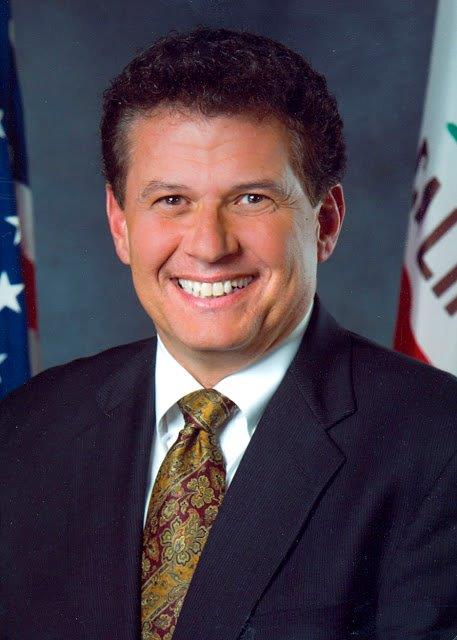
Bill Co-Author(s):