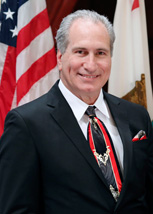
SB 619: Pharmacy: outsourcing facilities: licensure.
- Session Year: 2015-2016
- House: Senate
- Latest Version Date: 2015-04-06
Existing law, the Pharmacy Law, provides for the licensure and regulation of pharmacists and pharmacy corporations in this state by the California State Board of Pharmacy. The law prohibits a pharmacy from compounding sterile drug products unless the pharmacy has obtained a sterile compounding pharmacy license from the board, and prohibits the board from issuing or renewing that license until the board has, among other things, reviewed a current copy of the pharmacys procedures and policies for sterile compounding. Existing law provides that fees collected on behalf of the board are credited to the Pharmacy Board Contingent Fund, a continuously appropriated fund.
This bill would require the board to license an outsourcing facility, as defined, and would prohibit an outsourcing facility to be concurrently licensed with the board as a sterile compounding pharmacy at the same location. The bill would require an outsourcing facility to be licensed with the board before doing business within or into the state, and would require an outsourcing facility to, among other things, notify the board of any disciplinary or other action taken by another state or the federal Food and Drug Administration within 10 days of the action. The bill would require the board to, among other things, inspect the location of an outsourcing facility to ensure that the outsourcing facility is in compliance with all laws and regulations before issuing or renewing an outsourcing facilitys license. The bill would make a violation of any of these provisions or regulations adopted thereto punishable by a fine of up to $5,000 per occurrence. The bill would, on or after January 1, 2018, require the board to provide a report, as specified, to the Legislature regarding the regulation of nonresident outsourcing facilities. The bill would also authorize the board to collect a fee of $780 for the issuance and renewal of an outsourcing license and a fee of $715 for a temporary license, as specified. By increasing the amount of money deposited into a continuously appropriated fund, the bill would make an appropriation.
Existing law provides for the Medi-Cal program, which is administered by the State Department of Health Care Services, under which qualified low-income individuals receive health care services, including pharmacy services and drugs. Existing law requires pharmacy providers to submit their usual and customary charge when billing the Medi-Cal program for prescribed drugs.
This bill would make a technical, nonsubstantive change to that provision.
Outsourcing facility means a facility that meets all of the following:
(a)Is located within the United States of America at one address that is engaged in the compounding of sterile drugs and nonsterile drugs.
(b)Has registered as an outsourcing facility with the federal Food and Drug Administration under Section 503B of the Federal Food, Drug, and Cosmetic Act (21 U.S.C. Sec. 353b).
(c)Is doing business within or into California.
(d)Is licensed with the board as an outsourcing facility.
SEC. 2.Article 7.7 (commencing with Section 4129) is added to Chapter 9 of Division 2 of the Business and Professions Code, to read:7.7.Outsourcing Facilities4129.(a)An entity licensed as an outsourcing facility with the federal Food and Drug Administration (FDA) shall be concurrently licensed with the board as an outsourcing facility if it compounds sterile medication or nonsterile medication for patients or practitioners within or into California. A product compounded by an outsourcing facility shall be distributed without a patient-specific prescription.
(b)A facility premises licensed with the board as a sterile compounding pharmacy shall not be concurrently licensed with the board as an outsourcing facility at the same location. A sterile compounding pharmacy compounds and dispenses pursuant to a prescription.
(c)The board may adopt regulations in accordance with the Administrative Procedure Act (Chapter 3.5 (commencing with Section 11340) of Part 1 of Division 3 of Title 2 of the Government Code) to establish policies, guidelines, and procedures to implement this article.
(d)The board shall review any formal requirements or guidance documents developed by the FDA regarding outsourcing facilities within 90 days after the release in order to determine whether revisions are necessary for any regulations.
(e)An outsourcing facility licensed by the board shall not perform the duties of a pharmacy, such as filling individual prescriptions for individual patients, within the outsourcing facility. Patient-specific compounding shall be performed only by a licensed pharmacy. An outsourcing facility shall not be located in the same licensed premises as a pharmacy.
4129.1.(a)An outsourcing facility that is licensed with the FDA and with an address in this state shall also be licensed by the board as an outsourcing facility before doing business within or into this state. The license shall be renewed annually and is not transferable.
(b)An outsourcing facility shall compound all sterile products and nonsterile products in compliance with current federal good manufacturing practices.
(c)An outsourcing facility license shall not be issued or renewed until the location is inspected by the board and found in compliance with this article and regulations adopted by the board.
(d)An outsourcing facility license shall not be issued or renewed until the board does all of the following:
(1)Reviews a current copy of the outsourcing facilitys policies and procedures for sterile compounding and nonsterile compounding.
(2)Is provided with copies of all inspection reports of the outsourcing facilitys premises conducted in the prior 12 months.
(3)Receives a list of all sterile drugs and nonsterile drugs compounded by the outsourcing facility as reported to the FDA in the last 12 months.
(e)An outsourcing facility licensed pursuant to this section shall provide the board with all of the following:
(1)A copy of any disciplinary or other action taken by another state or the FDA within 10 days of the action.
(2)Notice within 24 hours of any recall notice issued by the outsourcing facility.
(3)Notice within 24 hours after learning of adverse effects reported or potentially attributable to an outsourcing facilitys products.
4129.2.(a)An outsourcing facility that is licensed with the FDA as an outsourcing facility and has an address outside of this state but in the United States of America is a nonresident outsourcing facility. A nonresident outsourcing facility shall not compound sterile drug products or nonsterile drug products for shipment into this state without an outsourcing license issued by the board pursuant to this section. The license shall be renewed annually and shall not be transferable.
(b)A nonresident outsourcing facility shall compound all sterile products and nonsterile products in compliance with current federal good manufacturing practices.
(c)A license for a nonresident outsourcing facility shall not be issued or renewed until the location is inspected by the board and found in compliance with this article and any regulations adopted by the board. The nonresident outsourcing facility shall reimburse the board for all actual and necessary costs incurred by the board in conducting an inspection of the nonresident outsourcing facility at least once annually pursuant to subdivision (x) of Section 4400.
(d)A license for a nonresident outsourcing facility shall not be issued or renewed until the board:
(1)Reviews a current copy of the nonresident outsourcing facilitys policies and procedures for sterile compounding and nonsterile compounding.
(2)Is provided with copies of all inspection reports of the nonresident outsourcing facilitys premises conducted in the prior 12 months.
(3)Receives a list of all sterile drug products and nonsterile drug products compounded by the pharmacy as reported to the FDA within the prior 12 months.
(e)A nonresident outsourcing facility licensed pursuant to this section shall do all of the following:
(1)Provide the board with a copy of any disciplinary or other action taken by another state or the FDA within 10 days of the action.
(2)Provide the board notice within 24 hours of any recall notice issued by the nonresident outsourcing facility.
(3)Advise the board of any complaint it receives from a provider, pharmacy, or patient in California.
(f)A nonresident outsourcing facility shall provide to the board notice within 24 hours after learning of adverse effects reported or potentially attributable to a nonresident outsourcing facilitys products.
4129.3.(a)On or before January 1, 2018, the board shall provide a report to the Legislature regarding the regulation of nonresident outsourcing facilities. The report shall be submitted to the Legislature in the manner required pursuant to Section 9795 of the Government Code. At a minimum, the report shall address all of the following:
(1)A detailed description of board activities related to the inspection and licensure of nonresident outsourcing facilities.
(2)Whether fee revenue collected pursuant to subdivision (x) of Section 4400 and travel cost reimbursements collected pursuant to subdivision (c) of Section 4129.2 provide revenue in an amount sufficient to support the boards activities related to the inspection and licensure of nonresident outsourcing facilities.
(3)The status of proposed changes to federal law that are under serious consideration and that would govern outsourcing facilities and compounding pharmacies, including, but not limited to, legislation pending before Congress, administrative rules, regulations, or orders under consideration by the FDA or other appropriate federal agency, and cases pending before the courts.
(4)If applicable, recommended modifications to the boards statutory duties related to nonresident outsourcing facilities as a result of changes to federal law or any additional modifications necessary to protect the health and safety of the public.
(b)The requirement for submitting a report imposed under subdivision (a) is inoperative on January 1, 2022, pursuant to Section 10231.5 of the Government Code.
4129.4.(a)Whenever the board has a reasonable belief, based on information obtained during an inspection or investigation by the board, that an outsourcing facility compounding sterile drug products or nonsterile drug products poses an immediate threat to the public health or safety, the executive officer of the board may issue an order to the outsourcing facility to immediately cease and desist compounding sterile drug products or nonsterile drug products. The cease and desist order shall remain in effect for no more than 30 days or the date of a hearing seeking an interim suspension order, whichever is earlier.
(b)Whenever the board issues a cease and desist order pursuant to subdivision (a), the board shall immediately issue a notice to the owner setting forth the acts or omissions with which the owner is charged, specifying the pertinent code section or sections.
(c)The cease and desist order shall state that the owner, within 15 days of receipt of the notice, may request a hearing before the president of the board to contest the cease and desist order. Consideration of the owners contest of the cease and desist order shall comply with the requirements of Section 11425.10 of the Government Code. The hearing shall be held no later than five days after the date the request of the owner is received by the board. The president shall render a written decision within five days after the hearing. In the absence of the president of the board, the vice president of the board may conduct the hearing permitted by this subdivision. Review of the decision may be sought by the owner or person in possession or control of the outsourcing facility pursuant to Section 1094.5 of the Code of Civil Procedure.
(d)Failure to comply with a cease and desist order issued pursuant to this section is unprofessional conduct.
4129.5.Notwithstanding any other law, a violation of this article, or regulation adopted pursuant thereto, may subject the person or entity that committed the violation to a fine of up to five thousand dollars ($5,000) per occurrence pursuant to a citation issued by the board.
4129.6.For purposes of this article, sterile compounded products means compounded preparations for injection administration into the eye, or inhalation.
4129.8.The board, at its discretion, may issue a temporary license to an outsourcing facility when the ownership of the outsourcing facility is transferred from one person to another, upon the conditions and for any periods of time as the board determines to be in the public interest. A temporary license fee shall be required as specified in subdivision (w) of Section 4400. When needed to protect public safety, a temporary license may be issued for a period not to exceed 180 days, and may be issued subject to terms and conditions the board deems necessary. If the board determines a temporary license was issued by mistake or denies the application for a permanent license, the temporary license shall terminate upon the earlier of personal service of the notice of termination upon the licenseholder or service by certified mail with return receipt requested at the licenseholders address of record with the board. The temporary licenseholder shall not be deemed to have a vested property right or interest in the license for purposes of retaining a temporary license or for purposes of any disciplinary or license denial proceeding before the board.
4129.9.(a)An outsourcing facility licensed pursuant to Section 4129.1 or 4129.2 that issues a recall notice for a sterile drug or nonsterile drug compounded by the outsourcing facility, in addition to any other duties, shall contact the recipient pharmacy, prescriber, or patient of the recalled drug and the board as soon as possible within 24 hours of the recall notice if both of the following apply:
(1)Use of or exposure to the recalled drug may cause serious adverse health consequences or death.
(2)The recalled drug was dispensed, or is intended for use, in this state.
(b)A recall notice issued pursuant to subdivision (a) shall be made as follows:
(1)If the recalled drug was dispensed directly to the prescriber, the notice shall be made to the prescriber and the prescriber shall ensure the patient is notified.
(2)If the recalled drug was dispensed directly to a pharmacy, the notice shall be made to the pharmacy and that pharmacy shall notify the prescriber or patient, as appropriate. If the pharmacy notifies the prescriber, the prescriber shall ensure the patient is notified.
SEC. 3.Section 4400 of the Business and Professions Code is amended to read:4400.The amount of fees and penalties prescribed by this chapter, except as otherwise provided, is that fixed by the board according to the following schedule:
(a)The fee for a nongovernmental pharmacy license shall be four hundred dollars ($400) and may be increased to five hundred twenty dollars ($520). The fee for the issuance of a temporary nongovernmental pharmacy permit shall be two hundred fifty dollars ($250) and may be increased to three hundred twenty-five dollars ($325).
(b)The fee for a nongovernmental pharmacy license annual renewal shall be two hundred fifty dollars ($250) and may be increased to three hundred twenty-five dollars ($325).
(c)The fee for the pharmacist application and examination shall be two hundred dollars ($200) and may be increased to two hundred sixty dollars ($260).
(d)The fee for regrading an examination shall be ninety dollars ($90) and may be increased to one hundred fifteen dollars ($115). If an error in grading is found and the applicant passes the examination, the regrading fee shall be refunded.
(e)The fee for a pharmacist license and biennial renewal shall be one hundred fifty dollars ($150) and may be increased to one hundred ninety-five dollars ($195).
(f)The fee for a nongovernmental wholesaler or third-party logistics provider license and annual renewal shall be seven hundred eighty dollars ($780) and may be decreased to no less than six hundred dollars ($600). The application fee for any additional location after licensure of the first 20 locations shall be three hundred dollars ($300) and may be decreased to no less than two hundred twenty-five dollars ($225). A temporary license fee shall be seven hundred fifteen dollars ($715) and may be decreased to no less than five hundred fifty dollars ($550).
(g)The fee for a hypodermic license and renewal shall be one hundred twenty-five dollars ($125) and may be increased to one hundred sixty-five dollars ($165).
(h)(1)The fee for application, investigation, and issuance of a license as a designated representative pursuant to Section 4053, or as a designated representative-3PL pursuant to Section 4053.1, shall be three hundred thirty dollars ($330) and may be decreased to no less than two hundred fifty-five dollars ($255).
(2)The fee for the annual renewal of a license as a designated representative or designated representative-3PL shall be one hundred ninety-five dollars ($195) and may be decreased to no less than one hundred fifty dollars ($150).
(i)(1)The fee for the application, investigation, and issuance of a license as a designated representative for a veterinary food-animal drug retailer pursuant to Section 4053 shall be three hundred thirty dollars ($330) and may be decreased to no less than two hundred fifty-five dollars ($255).
(2)The fee for the annual renewal of a license as a designated representative for a veterinary food-animal drug retailer shall be one hundred ninety-five dollars ($195) and may be decreased to no less than one hundred fifty dollars ($150).
(j)(1)The application fee for a nonresident wholesaler or third-party logistics provider license issued pursuant to Section 4161 shall be seven hundred eighty dollars ($780) and may be decreased to no less than six hundred dollars ($600).
(2)For nonresident wholesalers or third-party logistics providers that have 21 or more facilities operating nationwide the application fees for the first 20 locations shall be seven hundred eighty dollars ($780) and may be decreased to no less than six hundred dollars ($600). The application fee for any additional location after licensure of the first 20 locations shall be three hundred dollars ($300) and may be decreased to no less than two hundred twenty-five dollars ($225). A temporary license fee shall be seven hundred fifteen dollars ($715) and may be decreased to no less than five hundred fifty dollars ($550).
(3)The annual renewal fee for a nonresident wholesaler license or third-party logistics provider license issued pursuant to Section 4161 shall be seven hundred eighty dollars ($780) and may be decreased to no less than six hundred dollars ($600).
(k)The fee for evaluation of continuing education courses for accreditation shall be set by the board at an amount not to exceed forty dollars ($40) per course hour.
(l)The fee for an intern pharmacist license shall be ninety dollars ($90) and may be increased to one hundred fifteen dollars ($115). The fee for transfer of intern hours or verification of licensure to another state shall be twenty-five dollars ($25) and may be increased to thirty dollars ($30).
(m)The board may waive or refund the additional fee for the issuance of a license where the license is issued less than 45 days before the next regular renewal date.
(n)The fee for the reissuance of any license, or renewal thereof, that has been lost or destroyed or reissued due to a name change shall be thirty-five dollars ($35) and may be increased to forty-five dollars ($45).
(o)The fee for the reissuance of any license, or renewal thereof, that must be reissued because of a change in the information, shall be one hundred dollars ($100) and may be increased to one hundred thirty dollars ($130).
(p)It is the intent of the Legislature that, in setting fees pursuant to this section, the board shall seek to maintain a reserve in the Pharmacy Board Contingent Fund equal to approximately one years operating expenditures.
(q)The fee for any applicant for a nongovernmental clinic license shall be four hundred dollars ($400) and may be increased to five hundred twenty dollars ($520) for each license. The annual fee for renewal of the license shall be two hundred fifty dollars ($250) and may be increased to three hundred twenty-five dollars ($325) for each license.
(r)The fee for the issuance of a pharmacy technician license shall be eighty dollars ($80) and may be increased to one hundred five dollars ($105). The fee for renewal of a pharmacy technician license shall be one hundred dollars ($100) and may be increased to one hundred thirty dollars ($130).
(s)The fee for a veterinary food-animal drug retailer license shall be four hundred five dollars ($405) and may be increased to four hundred twenty-five dollars ($425). The annual renewal fee for a veterinary food-animal drug retailer license shall be two hundred fifty dollars ($250) and may be increased to three hundred twenty-five dollars ($325).
(t)The fee for issuance of a retired license pursuant to Section 4200.5 shall be thirty-five dollars ($35) and may be increased to forty-five dollars ($45).
(u)The fee for issuance or renewal of a nongovernmental sterile compounding pharmacy license shall be six hundred dollars ($600) and may be increased to seven hundred eighty dollars ($780). The fee for a temporary license shall be five hundred fifty dollars ($550) and may be increased to seven hundred fifteen dollars ($715).
(v)The fee for the issuance or renewal of a nonresident sterile compounding pharmacy license shall be seven hundred eighty dollars ($780). In addition to paying that application fee, the nonresident sterile compounding pharmacy shall deposit, when submitting the application, a reasonable amount, as determined by the board, necessary to cover the boards estimated cost of performing the inspection required by Section 4127.2. If the required deposit is not submitted with the application, the application shall be deemed to be incomplete. If the actual cost of the inspection exceeds the amount deposited, the board shall provide to the applicant a written invoice for the remaining amount and shall not take action on the application until the full amount has been paid to the board. If the amount deposited exceeds the amount of actual and necessary costs incurred, the board shall remit the difference to the applicant.
(w)This section shall become operative on July 1, 2014.
(w)The fee for issuance or renewal of a nongovernmental outsourcing facility license shall be seven hundred eighty dollars ($780). The fee for a temporary outsourcing facility license shall be seven hundred fifteen dollars ($715).
(x)The fee for the issuance or renewal of a nonresident outsourcing facility license shall be seven hundred eighty dollars ($780). In addition to paying that application fee, the nonresident outsourcing facility shall deposit, when submitting the application, a reasonable amount, as determined by the board, necessary to cover the boards estimated cost of performing the inspection required by Section 4129.2. If the required deposit is not submitted with the application, the application shall be deemed to be incomplete. If the actual cost of the inspection exceeds the amount deposited, the board shall provide to the applicant a written invoice for the remaining amount and shall not take action on the application until the full amount has been paid to the board. If the amount deposited exceeds the amount of actual and necessary costs incurred, the board shall remit the difference to the applicant.
SECTION 1.Section 14105.455 of the Welfare and Institutions Code is amended to read:14105.455.(a)Pharmacy providers shall submit their usual and customary charge when billing the Medi-Cal program for prescribed drugs.
(b)Usual and customary charge means the lower of either of the following:
(1)The lowest price reimbursed to the pharmacy by other third-party payers in California, excluding Medi-Cal managed care plans and Medicare Part D prescription drug plans.
(2)The lowest price routinely offered to any segment of the general public.
(c)Donations or discounts provided to a charitable organization are not considered usual and customary charges.
(d)Pharmacy providers shall keep and maintain records of their usual and customary charges for a period of three years from the date the service was rendered.
(e)Payment to pharmacy providers shall be the lower of the pharmacys usual and customary charge or the reimbursement rate pursuant to subdivision (b) of Section 14105.45.
(f)Notwithstanding Chapter 3.5 (commencing with Section 11340) of Part 1 of Division 3 of Title 2 of the Government Code, the department may implement, interpret, or make specific this section by means of a provider bulletin or notice, policy letter, or other similar instructions, without taking regulatory action.
(a)Pharmacy providers shall submit their usual and customary charge when billing the Medi-Cal program for prescribed drugs.
(b)Usual and customary charge means the lower of either of the following:
(1)The lowest price reimbursed to the pharmacy by other third-party payers in California, excluding Medi-Cal managed care plans and Medicare Part D prescription drug plans.
(2)The lowest price routinely offered to any segment of the general public.
(c)Donations or discounts provided to a charitable organization are not considered usual and customary charges.
(d)Pharmacy providers shall keep and maintain records of their usual and customary charges for a period of three years from the date the service was rendered.
(e)Payment to pharmacy providers shall be the lower of the pharmacys usual and customary charge or the reimbursement rate pursuant to subdivision (b) of Section 14105.45.
(f)Notwithstanding Chapter 3.5 (commencing with Section 11340) of Part 1 of Division 3 of Title 2 of the Government Code, the department may implement, interpret, or make specific this section by means of a provider bulletin or notice, policy letter, or other similar instructions, without taking regulatory action.
|
Date
|
Status
|
|---|---|
| Feb 1, 2016 | Returned to Secretary of Senate pursuant to Joint Rule 56. |
| May 28, 2015 | May 28 hearing: Held in committee and under submission. |
| May 23, 2015 | Set for hearing May 28. |
| May 11, 2015 | May 11 hearing: Placed on APPR. suspense file. |
| May 1, 2015 | Set for hearing May 11. |
| Apr 28, 2015 | From committee: Do pass and re-refer to Com. on APPR. (Ayes 8. Noes 0. Page 794.) (April 27). Re-referred to Com. on APPR. |
| Apr 17, 2015 | Set for hearing April 27. |
| Apr 16, 2015 | Re-referred to Com. on B., P. & E.D. |
| Apr 6, 2015 | From committee with author's amendments. Read second time and amended. Re-referred to Com. on RLS. |
| Mar 12, 2015 | Referred to Com. on RLS. |
| Mar 2, 2015 | Read first time. |
| Mar 2, 2015 | From printer. May be acted upon on or after April 1. |
| Feb 27, 2015 | Introduced. To Com. on RLS. for assignment. To print. |
|
Date
|
Description
|
Location
|
Votes
|
|
|---|---|---|---|---|
| May 11, 2015 | Placed on suspense file | Senate Standing Committee on Appropriations |
Passed |
|
| Apr 27, 2015 | Do pass, but first be re-referred to the Committee on [Appropriations] | Senate Standing Committee on Business, Professions and Economic Development |
Passed |
This list shows positions taken on this bill by organizations on the date displayed, which is linked to the original source.
Positions by individuals are not included.
SB 619 (Morrell) Page 2 of 2
SENATE COMMITTEE ON APPROPRIATIONS
Senator Ricardo Lara, Chair
2015 - 2016 Regular Session
SB 619 (Morrell) - Pharmacy: outsourcing facilities: licensure
|
|
Version: April 6, 2015 |
Policy Vote: B., P. & E.D. 8 - 0 |
Urgency: No |
Mandate: No |
Hearing Date: May 11, 2015 |
Consultant: Brendan McCarthy |
This bill meets the criteria for referral to the Suspense File.
Bill Summary:
SB 619 would require outsourcing facilities to be licensed by the Board of Pharmacy.
Fiscal Impact:
One-time costs of $177,000 for licensing and inspection activities and computer system upgrades and ongoing costs of $126,000 per year for licensing and inspections (Pharmacy Board Contingent Fund).
Background:
Under current law, the Board of Pharmacy licenses pharmacists as well as pharmacies, compounding pharmacies, wholesalers, dispensaries, and related facilities. Current law requires out-of-state pharmacies that sell prescription drugs in the state to be licensed by the Board.
Federal law has created a new category relating to prescription drugs known as outsourcing facilities. Outsourcing facilities are sterile facilities that compound prescription drugs in large quantities, not for individual patients. (In contrast to compounding pharmacies, which compound drugs to fill specific prescriptions.)
Proposed Law:
SB 619 would require outsourcing facilities to be licensed by the Board of Pharmacy.
Specific provisions of the bill would:
Require an outsourcing facility to be licensed by the Board of Pharmacy if it compounds medication, without a patient-specific prescription, for patients or practitioners inside or outside California;
Specify the activities that an outsourcing facility can and cannot perform;
Apply the licensing requirement to out-of-state outsourcing facilities that ship compounded prescription drugs into the state;
Require the Board to report to the Legislature by January 1, 2018 on its licensing and regulatory efforts;
Authorize the Board to issue a cease and desist order to an outsourcing facility if the Board determines that there is an immediate threat to public health;
Specify the fees for issuance or renewal of a license for an outsourcing facility, including a requirement that an out-of-state outsourcing facility must also provide reasonable funding to cover the costs for out-of-state inspections.
Related Legislation:
SB 600 (Lieu, Statutes of 2014) made changes to state law to conform to changes to federal law in the area of pharmacy.
AB 2605 (Bonilla, Statutes of 2014) requires third party logistics providers to be licensed by the Board of Pharmacy.
SB 294 (Emmerson, Statutes of 2013) requires an inspection by the Board of Pharmacy before licensing compounding pharmacies, including out-of-state facilities.
Staff Comments:
As noted above, recent federal law created a new category of facility relating to the distribution of prescription drugs. This bill requires licensure by outsourcing facilities by the Board of Pharmacy with requirements similar to those imposed on compounding pharmacies.
-- END --
SB 619 (Morrell) Page 6 of 6
SENATE COMMITTEE ON
BUSINESS, PROFESSIONS AND ECONOMIC DEVELOPMENT
Senator Jerry Hill, Chair
2015 - 2016 Regular
Bill No: SB 619 Hearing Date: April 27, 2015
Author: |
Morrell |
||
Version: |
April 6, 2015 |
||
Urgency: |
No |
Fiscal: |
Yes |
Consultant: |
Janelle Miyashiro, Sarah Mason |
||
Subject: Pharmacy: outsourcing facilities: licensure
SUMMARY:
Requires an outsourcing facility, as defined by federal law, to be licensed by the California State Board of Pharmacy before doing business within and across state lines.
Existing federal law:
Establishes the United States Food and Drug Administration (FDA) to protect the public health by assuring the safety, effectiveness, quality, and security of human and veterinary drugs, vaccines and other biological products, and medical devices through the Food, Drug, and Cosmetic Act (FDCA). (21 United States Code (USC) § 301 et seq.)
Establishes the Drug Supply Chain Security Act as part of the Drug Quality and Security Act (DQSA), which outlines steps to build an electronic, interoperable system to identify and trace certain prescription drugs as they are distributed in the United States.
Includes in the term “current good manufacturing practice”, the implementation of oversight and controls over the manufacture of drugs to ensure quality, including managing the risk of and establishing the safety of raw materials, materials used in the manufacturing of drugs, and finished drug products. (21 USC § 351)
Establishes standards for introduction of new drugs into interstate commerce, including submission of safety and effective use reports, list of articles and compositions used as components in the drug, methods used, and the manufacture, processing, and packing of the drug. (21 USC § 355)
Establishes the DQSA, which:
Defines an outsourcing facility as a facility at one geographic location or address that:
Is engaged in the compounding of sterile human drugs.
Has elected to register as an outsourcing facility.
Complies with all of the requirements in the newly enacted Section 503B, including:
Reporting biannually to the Secretary of Health and Human Services (HHS) on what drugs are compounding in the facility, the source of ingredients used to compound, and submission of all adverse event reports.
Compliance with the Current Good Manufacturing Practice (CGMP) regulations.
Drugs are compounded under the direct supervision of a licensed pharmacist in a registered facility.
Annual registration with the FDA.
Exempts drug products compounded at an outsourcing facilities from FDA approval requirements in section 505 of the FD&C Act and from requirements to label products with adequate directions from use if the requirements in section 503B listed above are met. (21 USC § 353b)
Existing
California law:
Establishes the practice of pharmacy and provides for the licensing and regulation of pharmacies and pharmacists by the Board of Pharmacy (Board). (Business and Professions Code (BPC) § 4000 et seq.)
Authorizes Board inspectors to inspect all pharmacies, wholesalers, dispensaries, stores or places where drugs or devices are compounded, prepared, furnished, dispensed or stored. (BPC § 4008)
Prohibits an out-of-state pharmacy from selling or distributing dangerous drugs or devices in California through any other method than a Board-licensed wholesaler, unless the out-of-state pharmacy is licensed by the Board. (BPC § 4120)
States that any pharmacy that contracts to compound a drug for parenteral therapy, pursuant to a prescription, for delivery to another pharmacy, must report that contractual arrangement to the Board within 30 days of commencing that compounding. (BPC § 4123)
Requires the Board to adopt regulations establishing standards for compounding injectable sterile drug products (sterile injectables) in a pharmacy. Clarifies that a pharmacy cannot compound sterile injectables unless the pharmacy is licensed by the Board. States that a license to compound sterile injectables cannot be renewed without a Board inspection. Exempts pharmacies with accreditation by the Joint Commission on Accreditation of Healthcare Organizations or other accrediting agencies approved by the Board from these requirements. (BPC §§ 4127-4127.1)
States that a nonresident pharmacy cannot compound sterile drug products for shipment into California without a sterile compounding pharmacy license issued by the Board. (BPC § 4127.2)
Authorizes the Board to issue a cease and desist order to a pharmacy compounding sterile injectables whenever the Board has reasonable belief, based on information obtained through an investigation or inspection, that there is an immediate threat to public health or safety. (BPC § 4127.3)
Allows a centralized hospital packaging pharmacy to prepare medications for administration only to inpatients within its own general acute care hospital, and one or more general acute care hospitals, if the hospitals are under common ownership and located within a 75-mile radius of each other. Requires a centralized hospital packaging pharmacy to obtain a specialty license from the Board. Authorizes a centralized hospital packaging pharmacy to: prepare unit dose packages for single administration to inpatients from bulk containers; prepare compounded unit dose drugs for parenteral therapy for administration to inpatients; and prepare compounded unit dose drugs for administration to inpatients. Authorizes a centralized hospital packaging pharmacy to prepare and store a limited quantity of unit dose drugs prior to receiving a patient-specific prescription according to certain circumstances. Clarifies that all compounding functions shall only be performed in the licensed centralized hospital pharmacy. (BPC §§ 4128-4128.6)
Grants the Board certain enforcement abilities against out-of-state pharmacies, authorizes the Board to report actions against an out-of-state pharmacy and authorizes the Board to take any action against an out-of-state pharmacy that it would against a pharmacy in this state if the grounds for action are also grounds for action in the state in which the out-of-state pharmacy is permanently located.
(BPC § 4303)
This
bill:
Requires outsourcing facilities [as defined under federal law] to register with the Board annually.
Requires a licensed outsourcing facility to compound drugs in compliance with federal Current Good Manufacturing Practices.
Prohibits an outsourcing facility to be simultaneously licensed with the Board as a sterile compounding pharmacy at the same location.
Prohibits a licensed outsourcing facility from filling patient specific prescriptions.
Requires an outsourcing facility to notify the Board of any disciplinary or other action taken by another state or the FDA within 10 days of the action.
Requires an outsource facility to notify the Board within 24 hours of any recall notices or the reporting of any adverse events potentially attributable to an outsourcing facility’s products.
Requires the Board to inspect the location of a nonresident outsourcing facility to ensure that the facility is in compliance with all laws and regulations before issuing or renewing a nonresident outsourcing facility’s license. This includes:
A revision of a current copy of the nonresident outsourcing facility’s policies and procedures for sterile and non-sterile compounding.
Copies of all inspection reports of the nonresident outsourcing facility’s premises conducted in the past 12 months.
A list of all sterile and non-sterile drug products compounded within the past
12 months.
Authorizes the Board to issue a cease and desist order to an outsourcing facility if the Board has reasonable belief, based on information obtained during an inspection or investigation, that the products produced by the facility poses an immediate threat to the public health or safety.
Establishes a fine of up to $5,000 per occurrence for a violation of any of the provisions or regulations outlined above.
FISCAL EFFECT:
Unknown. This bill has been keyed “fiscal” by Legislative Counsel.
COMMENTS:
Purpose. This bill is sponsored by the California State Board of Pharmacy. The Author states that this bill creates California licensing requirements for a new category of prescription drug compounding entity called an outsourcing facility. The Author adds that the federal government has created this new category of compounding facilities at the federal level via the Drug Quality and Security Act (DQSA) and that the DQSA allows for federal registration of outsourcing facilities under section 503B (in order to recognize specialized businesses that compound prescription medication in large quantities which are typically not pursuant to a patient-specific prescription that typically sell this medication to practitioners, hospitals and sometimes patients in multiple states.)
The Author cites the 2012 incident related to compounded drug products from the New England Compounding Center in Massachusetts, when more than 65 people in multiple states were killed and hundreds of others were severely injured due to contaminated compounded medication, as sparking state and federal policy actions. The Author states that “each of the 50 states is grappling with how to regulate these outsourcing facilities as a new category of prescription drug compounder” in order to hold these compounding facilities to a high standard for public health and safety.
Background. On November 27, 2013, President Obama signed the DQSA which established provisions relating to the oversight of compounded human drugs. Title I of the DQSA, the Compounding Quality Act, removed certain provisions from section 503A of the FDCA that were found to be unconstitutional by the U.S. Supreme Court in 2002. The Compounding Quality Act simultaneously created a new section, 503B, to allow compounding facilities to become a registered “outsourcing facility”. Registration as an outsourcing facility is a voluntary program, and companies must meet the requirements in 503B to continue operating as an outsourcing facility.
The law defines an “outsourcing facility” as a facility at one geographic location or address that is engaged in the compounding of sterile human drugs, has elected to register as an outsourcing facility, and complies with all of the requirements of section 503B; including biannual reporting to the Secretary of Health and Human Services on what drugs are compounded in the facility, the source of ingredients used to compound, submission of all adverse event reports, and compliance with the CGMP regulations. Outsourcing facilities are subject to inspection by the FDA according to a risk-based schedule and must meet FDA reporting requirements for product recalls and adverse events. An outsourcing facility is not required to be a licensed pharmacy and may or may not obtain prescriptions from identified individual patients.
Drugs that are compounded by an outsourcing facility can qualify for exemptions from the FDA new drug approval requirements and the requirement to label products with adequate directions for use if all the conditions in 503B are met. However, drug products compounded by a registered outsourcing facility must have a prominent label that identifies the drug as a compounded drug product.
Currently, there are no specific FDA requirements for licensure as an outsourcing compounding facility. The FDA released draft guidance in February 2015 titled “For Entities Considering Whether to Register as Outsourcing Facilities Under Section 503B of the Federal Food, Drug, and Cosmetic Act” for those facilities that are considering registration under 503B. This draft guidance, however, does not include CGMP standards, inspection schedules, or staffing requirements specific to outsourcing facilities. The FDA has currently issued licenses to 54 outsourcing facility entities that ship compounded drug products within and across state lines. Three of these federally licensed outsourcing facilities are located in California.
There has been some debate as to how outsourcing facilities should be licensed and regulated at the state level. An outsourcing facility must be licensed federally with the FDA to perform the duties of large scale compounding. Under current California and federal law, a pharmacy may compound medication prescribed for a patient by a prescriber. The Board licenses these entities as resident sterile compounding pharmacies if they are located in California or as non-resident compounding pharmacies if the pharmacy ships the sterile compounded products into California.
However, outsourcing facilities integrate both the functions traditionally performed by drug manufacturers (non-patient specific mass drug manufacturing) with the traditional functions of pharmacies (compounding and supplying drug products to prescribers and hospitals). The FDA does not require an entity to be licensed as a pharmacy in order to be licensed as an outsourcing facility. However, the FDA does not authorize pharmacies to compound and distribute non-patient specific medications.
This bill will create new licensure requirements, specific to the state of California, for in state and out of state outsourcing facilities doing business within and across state lines. These new requirements will prohibit an outsourcing facility to be located in the same licensed premises as a pharmacy, therefore only allowing outsourcing facilities to distribute compounded drugs for non-patient specific prescriptions. Since the FDA has yet to release specific federal requirements for outsourcing facilities, this bill anticipates future federal requirements and creates California specific standards by which licensed outsourcing facilities must comply.
Prior Related Legislation. SB 600 (Lieu, Chapter 492, Statutes of 2014) repealed California’s electronic pedigree law to conform to the DQSA and declared that any foreign dangerous drug that is not approved by the FDA, or that is obtained outside the licensed supply chain, to be misbranded and that anyone who purchases or sells that drug is guilty of a misdemeanor and subject to a fine of not more than $10,000.
AB 2605 (Bonilla, Chapter 507, Statutes of 2014) requires third party logistic providers who provide storage, handling, or distribution services, to be licensed by the California Board of Pharmacy.
SB 294 (Emmerson, Chapter 565, Statutes of 2013) requires an inspection by the California Board of Pharmacy (Board) prior to licensure for all compounding pharmacies that make or distribute compounded drugs in California. Requires a compounding pharmacy to notify the Board within 24 hours of initiating any recall, to provide a list of all drugs it compounds to the Board, and to notify the Board of any discipline or suspension of accreditation.
SUPPORT AND OPPOSITION:
Support:
Board of Pharmacy (Sponsor)
Opposition:
None on file as of April 21, 2015.
.
-- END --
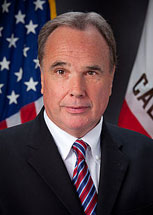
Bill Author
Bill Co-Author(s):