SB 645: After school programs.
- Session Year: 2015-2016
- House: Senate
- Latest Version Date: 2015-08-17
Existing law, the After School Education and Safety Program Act of 2002, enacted by initiative statute, establishes the After School Education and Safety Program to serve pupils in kindergarten and grades 1 to 9, inclusive, at participating public elementary, middle, junior high, and charter schools. The act provides that each school establishing a program pursuant to the act is eligible to receive a renewable 3-year grant for before or after school programs, as provided, and a grant for operating a program beyond 180 regular schooldays or during summer, weekend, intersession, or vacation periods, as provided. The act specifies the maximum grant amount and related amounts for each of these grants, provides a formula for determining an amount to be continuously appropriated from the General Fund to the State Department of Education for purposes of the program, and authorizes the Legislature to appropriate additional funds for purposes of the program. Existing law requires applicants for grants to, among other things, state the targeted number of pupils to be served by the program, and requires the department, for any school in the program that is under its targeted attendance level by more than 15% in each of 2 consecutive years, to adjust the grant level, and, in any year after the initial grant year, if a schools actual attendance level falls below 75% of the targeted attendance level, to review the program and adjust its grant level as appropriate.
This bill would, commencing January 1, 2016, and until July 1, 2017, authorize a program to suspend its operation for up to 5 schooldays in a fiscal year and, if this results in and would prohibit an adjustment of the grant provided to the participating school, would authorize the department to approve a request from the program grantee for an exemption from this adjustment. school as a result of a suspension. The bill would require that cost savings that result from a suspension be used solely by the entity that is providing direct services to pupils. The bill would also authorize the program to determine the specific grades to serve in accordance with local needs.
Existing law expresses the intent of the Legislature that, for the before and after school components of the program, participating middle school and junior high school pupils should attend a minimum number of hours, days, or both, as specified, while elementary school pupils should participate in the full day of these components of the program for each day in which they participate, except as provided.
This bill would instead express the intent of the Legislature that each attending pupil participate in the full day of the before or after school components of the program for each day in which the pupil attends the program, except as provided.
The After School Education and Safety Program Act of 2002 authorizes the Legislature to amend certain of its provisions to further its purposes by majority vote of each house.
This bill would set forth a legislative finding and declaration that this bill furthers the purposes of that act.
Existing law, the After School Education and Safety Program Act of 2002, enacted by initiative statute, establishes the After School Education and Safety Program to serve pupils in kindergarten and grades 1 to 9, inclusive, at participating public elementary, middle, junior high, and charter schools. The act provides that each school establishing a program pursuant to the act is eligible to receive a renewable 3-year grant for before or after school programs, as provided, and a grant for operating a program beyond 180 regular schooldays or during summer, weekend, intersession, or vacation periods, as provided. The act specifies the maximum grant amount and related amounts for each of these grants, provides a formula for determining an amount to be continuously appropriated from the General Fund to the State Department of Education for purposes of the program, and authorizes the Legislature to appropriate additional funds for purposes of the program.
This bill would, to the extent funding is provided in the annual Budget Act, require the department to proportionately adjust the maximum grant amounts and those related amounts to reflect that appropriation.
This bill would, commencing January 1, 2016, and until July 1, 2017, authorize a program to suspend its operation for up to 5 schooldays in a fiscal year and, if this results in an adjustment of the grant provided to the participating school, would authorize the department to approve a request from the program grantee for an exemption from this adjustment. The bill would require that cost savings that result from a suspension be used solely by the entity that is providing direct services to pupils. The bill would also authorize the program to determine the specific grades to serve in accordance with local needs.
Existing law expresses the intent of the Legislature that, for the before and after school components of the program, participating middle school and junior high school pupils should attend a minimum number of hours, days, or both, as specified, while elementary school pupils should participate in the full day of these components of the program for each day in which they participate, except as provided.
This bill would instead express the intent of the Legislature that each attending pupil participate in the full day of the before or after school components of the program for each day in which the pupil attends the program, except as provided.
The After School Education and Safety Program Act of 2002 authorizes the Legislature to amend certain of its provisions to further its purposes by majority vote of each house.
This bill would set forth a legislative finding and declaration that this bill furthers the purposes of that act.
Existing law, the After School Education and Safety Program Act of 2002, enacted by initiative statute, establishes the After School Education and Safety Program to serve pupils in kindergarten and grades 1 to 9, inclusive, at participating public elementary, middle, junior high, and charter schools. The existing act provides that each school establishing a program pursuant to the act is eligible to receive a renewable 3-year grant for before or after school programs, as provided, and a grant for operating a program beyond 180 regular schooldays or during summer, weekend, intersession, or vacation periods, as provided. The act specifies the maximum grant amount and related amounts for each of these grants, provides a formula for determining an amount to be continuously appropriated from the General Fund to the State Department of Education for purposes of the program, and authorizes the Legislature to appropriate additional funds for purposes of the program.
This bill would, for the 201516 fiscal year, appropriate $54,000,000 more to the department for purposes of the program and would, to the extent funding is provided in the annual Budget Act, require the department to proportionately adjust the maximum grant amounts and those related amounts to reflect this that appropriation. Commencing with the 201617 fiscal year, and for each fiscal year thereafter, the bill would appropriate $72,000,000 more to the department for purposes of the program and would require the department to proportionately adjust the maximum grant amounts and those related amounts to reflect this appropriation. The bill would, commencing with the 201718 fiscal year, require the Department of Finance to annually adjust that amount using a specified calculation, provided that adjustment does not result in a reduction. The bill would, also commencing with the 201718 fiscal year, require the State Department of Education to annually adjust the maximum grant amounts and those related amounts to reflect the percentage change in the California Consumer Price Index, provided that adjustment does not result in a reduction. The bill also would provide that funds appropriated by the bill would be applied toward the minimum funding requirements for school districts and community college districts imposed by Section 8 of Article XVI of the California Constitution.
Existing law, the After School Education and Safety Program Act of 2002, enacted by initiative statute, establishes the After School Education and Safety Program to serve pupils in kindergarten and grades 1 to 9, inclusive, at participating public elementary, middle, junior high, and charter schools. The existing act provides that each school establishing a program pursuant to the act is eligible to receive a renewable 3-year grant for before or after school programs, as provided, and a grant for operating a program beyond 180 regular schooldays or during summer, weekend, intersession, or vacation periods, as provided, and. The act specifies the maximum grant amount and related amounts for each of these grants. The existing act, provides a formula for determining an amount to be continuously appropriated from the General Fund to the State Department of Education for purposes of the program, and authorizes the Legislature to appropriate additional funds for purposes of the program.
This bill would, for the 201516 fiscal year, appropriate $36,630,000 $54,000,000 more to the department for purposes of the program and would require the department to proportionately adjust the maximum grant amounts and those related amounts to reflect this appropriation. Commencing with the 201617 fiscal year, and for each fiscal year thereafter, the bill would appropriate $73,260,000 $72,000,000 more to the department for purposes of the program and would require the department to proportionately adjust the maximum grant amounts and those related amounts to reflect this appropriation. The bill would, commencing with the 201718 fiscal year, require the Department of Finance to annually adjust that amount using a specified calculation, provided that adjustment does not result in a reduction. The bill would, also commencing with the 201718 fiscal year, require the State Department of Education to annually adjust the maximum grant amounts and those related amounts to reflect the percentage change in the California Consumer Price Index, provided that adjustment does not result in a reduction. The bill also would provide that funds appropriated by the bill would be applied toward the minimum funding requirements for school districts and community college districts imposed by Section 8 of Article XVI of the California Constitution.
Existing law, the After School Education and Safety Program Act of 2002, enacted by initiative statute, establishes the After School Education and Safety Program to serve pupils in kindergarten and grades 1 to 9, inclusive, at participating public elementary, middle, junior high, and charter schools. The existing act provides that each school establishing a program pursuant to the act is eligible to receive a renewable 3-year grant for before or after school programs, as provided, and a grant for operating a program beyond 180 regular schooldays or during summer, weekend, intersession, or vacation periods, as provided, and specifies the maximum grant amount and related amounts for each of these grants. The existing act provides a formula for determining an amount to be continuously appropriated from the General Fund to the State Department of Education for purposes of the program, and authorizes the Legislature to appropriate additional funds for purposes of the program.
This bill would, for the 201516 fiscal year, appropriate $36,630,000 more to the department for purposes of the program. Commencing with the 201617 fiscal year, and for each fiscal year thereafter, the bill would appropriate $73,260,000 more to the department for purposes of the program. The bill would, commencing with the 201718 fiscal year, require the Department of Finance to annually adjust that amount using a specified calculation, provided that adjustment does not result in a reduction. The bill would, also commencing with the 201718 fiscal year, require the State Department of Education to annually adjust the maximum grant amounts and those related amounts to reflect the percentage change in the California Consumer Price Index, provided that adjustment does not result in a reduction. The bill also would provide that funds appropriated by the bill would be applied toward the minimum funding requirements for school districts and community college districts imposed by Section 8 of Article XVI of the California Constitution.
(a)The After School Education and Safety Program shall be established to serve pupils in kindergarten and grades 1 to 9, inclusive, at participating public elementary, middle, junior high, and charter schools. The specific grades to be served by a program at participating schools may be determined in accordance with local needs.
(b)A program may operate a before school component of a program, an after school component, or both the before and after school components of a program, on one or multiple schoolsites. If a program operates at multiple schoolsites, only one application shall be required for its establishment.
(c)(1)Each component of a program established pursuant to this article shall consist of the following two elements:
(A)An educational and literacy element in which tutoring or homework assistance is provided in one or more of the following areas: language arts, mathematics, history and social science, computer training, or science.
(B)An educational enrichment element that may include, but need not be limited to, fine arts, career technical education, recreation, physical fitness, and prevention activities.
(2)Notwithstanding any other provision of this article, the majority of the time spent by a pupil who is in kindergarten or any of grades 1 to 9, inclusive, and who is participating in a career technical education element of a program established pursuant to this article shall be at a site that complies with Section 8484.6.
(d)(1)Applicants shall agree that snacks made available through a program shall conform to the nutrition standards in Article 2.5 (commencing with Section 49430) of Chapter 9 of Part 27 of Division 4 of Title 2.
(2)Applicants shall agree that meals made available through a program shall conform to the nutrition standards of the United States Department of Agricultures at-risk afterschool meal component of the Child and Adult Care Food Program (42 U.S.C. Sec. 1766).
(e)Applicants for programs established pursuant to this article may include any of the following:
(1)A local educational agency, including, but not limited to, a charter school, the California School for the Deaf (northern California), the California School for the Deaf (southern California), and the California School for the Blind.
(2)A city, county, or nonprofit organization in partnership with, and with the approval of, a local educational agency or agencies.
(f)Applicants for grants pursuant to this article shall ensure that each of the following requirements is fulfilled, if applicable:
(1)The application documents the commitments of each partner to operate a program on that site or sites.
(2)The application has been approved by the school district, or the charter school governing body, and the principal of each participating school for each schoolsite or other site.
(3)Each partner in the application agrees to share responsibility for the quality of the program.
(4)The application designates the public agency or local educational agency partner to act as the fiscal agent. For purposes of this section, public agency means only a county board of supervisors or if the city is incorporated or has a charter, a city council.
(5)Applicants agree to follow all fiscal reporting and auditing standards required by the department.
(6)Applicants agree to incorporate into the program both of the elements required pursuant to subdivision (c).
(7)Applicants agree to provide information to the department for the purpose of program evaluation pursuant to Section 8483.55.
(8)Applicants shall certify that program evaluations will be based upon Section 8484 and upon any requirements recommended by the Advisory Committee on Before and After School Programs and adopted by the state board, in compliance with subdivision (g) of Section 8482.4.
(9)The application states the targeted number of pupils to be served by the program.
(10)Applicants agree to provide the following information on participating pupils to the department:
(A)Schoolday attendance rates.
(B)Program attendance.
(g)(1)Grantees shall review their after school program plans every three years, including, but not limited to, all of the following:
(A)Program goals. A grantee may specify any new program goals that will apply to the following three years during the grant renewal process.
(B)Program content, including the elements identified in subdivision (c).
(C)Outcome measures selected from those identified in subdivision (a) of Section 8484 that the grantee will use for the next three years.
(D)Any other information requested by the department.
(E)If the program goals or outcome measures change as a result of this review, the grantee shall notify the department in a manner prescribed by the department.
(F)The grantee shall maintain documentation of the after school program plan for a minimum of five years.
(2)The department shall monitor this review as part of its onsite monitoring process.
SEC. 2.Section 8482.8 of the Education Code is amended to read:8482.8.(a)If there is a significant barrier to pupil participation in a program established pursuant to this article at the school of attendance for either the before school or the after school component, an applicant may request approval from the Superintendent, before or during the grant application process, to provide services at another schoolsite for that component. An applicant that requests approval shall describe the manner in which the applicant intends to provide safe, supervised transportation between schoolsites; ensure communication among teachers in the regular school program, staff in the before school and after school components of the program, and parents of pupils; and coordinate the educational and literacy component of the before and after school components of the program with the regular school programs of participating pupils.
(b)For purposes of this article, a significant barrier to pupil participation in the before school or the after school component of a program established pursuant to this chapter means either of the following:
(1)Fewer than 20 pupils participating in the component of the program.
(2)Extreme transportation constraints, including, but not limited to, desegregation bussing, bussing for magnet or open enrollment schools, or pupil dependence on public transportation.
(c)In addition to the authority to transfer funds among school programs pursuant to Sections 8483.7 and 8483.75, and in addition to the flexibility provided by subdivisions (a) and (b), a program grantee that is temporarily prevented from operating a program established pursuant to this article at the program site due to natural disaster, civil unrest, or imminent danger to pupils or staff may shift program funds to the sites of other programs established pursuant to this article to meet attendance targets during that time period.
(d)If a program grantee is temporarily prevented from operating its entire program due to natural disaster, civil unrest, or imminent danger to pupils or staff, the department may recommend, and the state board may approve, a request by the grantee for payment equal to the amount of funding the grantee would have received if it had been able to operate its entire program during that time period.
(e)Upon the request of a program grantee, the state board may approve other unforeseen events as qualifying a program grantee to use the authority provided by subdivisions (c) and (d).
(f)(1)The Legislature finds and declares that the cost of operating a program is exceeding the grant amount provided under this article.
(2)Commencing January 1, 2016, a program established pursuant to this article may suspend its operation for no more than five schooldays in a fiscal year. If the suspension results in a grant adjustment A grant shall not be adjusted pursuant to clause (ii) or (iii) of subparagraph (A) of paragraph (1) of subdivision (a) of Section 8483.7, the department may approve a request from the program grantee for an exemption from the adjustment. 8483.7 as a result of a program suspending its operation pursuant to this paragraph. Cost savings that result from a suspension of a program in accordance with this subdivision shall be used solely by the entity that is providing direct services to pupils.
(3)This subdivision shall remain in effect only until July 1, 2017, unless a later enacted statute, that is enacted before July 1, 2017, deletes or extends that date.
SEC. 3.Section 8483 of the Education Code is amended to read:8483.(a)(1)Every after school component of a program established pursuant to this article shall commence immediately upon the conclusion of the regular schoolday, and operate a minimum of 15 hours per week, and at least until 6 p.m. on every regular schoolday. Every after school component of the program shall establish a policy regarding reasonable early daily release of pupils from the program. For those programs or schoolsites operating in a community where the early release policy does not meet the unique needs of that community or school, or both, documented evidence may be submitted to the department for an exception and a request for approval of an alternative plan.
(2)It is the intent of the Legislature that each attending pupil participate in the full day of the program for each day in which the pupil attends the program.
(3)In order to develop an age-appropriate after school program for pupils in middle school or junior high school, programs established pursuant to this article may implement a flexible attendance schedule for those pupils. Priority for enrollment of pupils in middle school or junior high school shall be given to pupils who attend daily.
(b)The administrators of a program established pursuant to this article have the option of operating during any combination of summer, intersession, or vacation periods for a minimum of three hours per day for the regular school year pursuant to Section 8483.7.
SEC. 4.Section 8483.1 of the Education Code is amended to read:8483.1.(a)(1)Every before school program component established pursuant to this article shall in no instance operate for less than one and one-half hours per regular schoolday. Every program shall establish a policy regarding reasonable late daily arrival of pupils to the program.
(2)(A)It is the intent of the Legislature that each attending pupil participate in the full day of the program for each day in which the pupil attends the program, except when arriving late in accordance with the late arrival policy described in paragraph (1) or as reasonably necessary.
(B)A pupil who attends less than one-half of the daily program hours shall not be counted for the purposes of attendance.
(3)In order to develop an age-appropriate before school program for pupils in middle school or junior high school, programs established pursuant to this article may implement a flexible attendance schedule for those pupils. Priority for enrollment of pupils in middle school or junior high school shall be given to pupils who attend daily.
(b)The administrators of a before school program established pursuant to this article shall have the option of operating during any combination of summer, intersession, or vacation periods for a minimum of two hours per day for the regular school year pursuant to Section 8483.75.
(c)Every before school program component established pursuant to this article shall offer a breakfast meal as described by Section 49553 for all program participants.
SEC. 5.The Legislature finds and declares that this act furthers the purposes of the After School Education and Safety Program Act of 2002.
(a)The After School Education and Safety Program shall be established to serve pupils in kindergarten and grades 1 to 9, inclusive, at participating public elementary, middle, junior high, and charter schools. The specific grades to be served by a program at participating schools may be determined in accordance with local needs.
(b)A program may operate a before school component of a program, an after school component, or both the before and after school components of a program, on one or multiple schoolsites. If a program operates at multiple schoolsites, only one application shall be required for its establishment.
(c)(1)Each component of a program established pursuant to this article shall consist of the following two elements:
(A)An educational and literacy element in which tutoring or homework assistance is provided in one or more of the following areas: language arts, mathematics, history and social science, computer training, or science.
(B)An educational enrichment element that may include, but need not be limited to, fine arts, career technical education, recreation, physical fitness, and prevention activities.
(2)Notwithstanding any other provision of this article, the majority of the time spent by a pupil who is in kindergarten or any of grades 1 to 9, inclusive, and who is participating in a career technical education element of a program established pursuant to this article shall be at a site that complies with Section 8484.6.
(d)(1)Applicants shall agree that snacks made available through a program shall conform to the nutrition standards in Article 2.5 (commencing with Section 49430) of Chapter 9 of Part 27 of Division 4 of Title 2.
(2)Applicants shall agree that meals made available through a program shall conform to the nutrition standards of the United States Department of Agricultures at-risk afterschool meal component of the Child and Adult Care Food Program (42 U.S.C. Sec. 1766).
(e)Applicants for programs established pursuant to this article may include any of the following:
(1)A local educational agency, including, but not limited to, a charter school, the California School for the Deaf (northern California), the California School for the Deaf (southern California), and the California School for the Blind.
(2)A city, county, or nonprofit organization in partnership with, and with the approval of, a local educational agency or agencies.
(f)Applicants for grants pursuant to this article shall ensure that each of the following requirements is fulfilled, if applicable:
(1)The application documents the commitments of each partner to operate a program on that site or sites.
(2)The application has been approved by the school district, or the charter school governing body, and the principal of each participating school for each schoolsite or other site.
(3)Each partner in the application agrees to share responsibility for the quality of the program.
(4)The application designates the public agency or local educational agency partner to act as the fiscal agent. For purposes of this section, public agency means only a county board of supervisors or if the city is incorporated or has a charter, a city council.
(5)Applicants agree to follow all fiscal reporting and auditing standards required by the department.
(6)Applicants agree to incorporate into the program both of the elements required pursuant to subdivision (c).
(7)Applicants agree to provide information to the department for the purpose of program evaluation pursuant to Section 8483.55.
(8)Applicants shall certify that program evaluations will be based upon Section 8484 and upon any requirements recommended by the Advisory Committee on Before and After School Programs and adopted by the state board, in compliance with subdivision (g) of Section 8482.4.
(9)The application states the targeted number of pupils to be served by the program.
(10)Applicants agree to provide the following information on participating pupils to the department:
(A)Schoolday attendance rates.
(B)Program attendance.
(g)(1)Grantees shall review their after school program plans every three years, including, but not limited to, all of the following:
(A)Program goals. A grantee may specify any new program goals that will apply to the following three years during the grant renewal process.
(B)Program content, including the elements identified in subdivision (c).
(C)Outcome measures selected from those identified in subdivision (a) of Section 8484 that the grantee will use for the next three years.
(D)Any other information requested by the department.
(E)If the program goals or outcome measures change as a result of this review, the grantee shall notify the department in a manner prescribed by the department.
(F)The grantee shall maintain documentation of the after school program plan for a minimum of five years.
(2)The department shall monitor this review as part of its onsite monitoring process.
SEC. 2.Section 8482.8 of the Education Code is amended to read:8482.8.(a)If there is a significant barrier to pupil participation in a program established pursuant to this article at the school of attendance for either the before school or the after school component, an applicant may request approval from the Superintendent, before or during the grant application process, to provide services at another schoolsite for that component. An applicant that requests approval shall describe the manner in which the applicant intends to provide safe, supervised transportation between schoolsites; ensure communication among teachers in the regular school program, staff in the before school and after school components of the program, and parents of pupils; and coordinate the educational and literacy component of the before and after school components of the program with the regular school programs of participating pupils.
(b)For purposes of this article, a significant barrier to pupil participation in the before school or the after school component of a program established pursuant to this chapter means either of the following:
(1)Fewer than 20 pupils participating in the component of the program.
(2)Extreme transportation constraints, including, but not limited to, desegregation bussing, bussing for magnet or open enrollment schools, or pupil dependence on public transportation.
(c)In addition to the authority to transfer funds among school programs pursuant to Sections 8483.7 and 8483.75, and in addition to the flexibility provided by subdivisions (a) and (b), a program grantee that is temporarily prevented from operating a program established pursuant to this article at the program site due to natural disaster, civil unrest, or imminent danger to pupils or staff may shift program funds to the sites of other programs established pursuant to this article to meet attendance targets during that time period.
(d)If a program grantee is temporarily prevented from operating its entire program due to natural disaster, civil unrest, or imminent danger to pupils or staff, the department may recommend, and the state board may approve, a request by the grantee for payment equal to the amount of funding the grantee would have received if it had been able to operate its entire program during that time period.
(e)Upon the request of a program grantee, the state board may approve other unforeseen events as qualifying a program grantee to use the authority provided by subdivisions (c) and (d).
(f)(1)The Legislature finds and declares that the cost of operating a program is exceeding the grant amount provided under this article.
(2)Commencing January 1, 2016, a program established pursuant to this article may suspend its operation for no more than five schooldays in a fiscal year. If the suspension results in a grant adjustment pursuant to clause (ii) or (iii) of subparagraph (A) of paragraph (1) of subdivision (a) of Section 8483.7, the department may approve a request from the program grantee for an exemption from the adjustment. Cost savings that result from a suspension of a program in accordance with this subdivision shall be used solely by the entity that is providing direct services to pupils.
(3)This subdivision shall remain in effect only until July 1, 2017, unless a later enacted statute, that is enacted before July 1, 2017, deletes or extends that date.
SEC. 3.Section 8483 of the Education Code is amended to read:8483.(a)(1)Every after school component of a program established pursuant to this article shall commence immediately upon the conclusion of the regular schoolday, and operate a minimum of 15 hours per week, and at least until 6 p.m. on every regular schoolday. Every after school component of the program shall establish a policy regarding reasonable early daily release of pupils from the program. For those programs or schoolsites operating in a community where the early release policy does not meet the unique needs of that community or school, or both, documented evidence may be submitted to the department for an exception and a request for approval of an alternative plan.
(2)It is the intent of the Legislature that elementary school pupils each attending pupil participate in the full day of the program every for each day during in which pupils participate and that pupils in middle school or junior high school attend a minimum of nine hours a week and three days a week to accomplish program goals. the pupil attends the program.
(3)In order to develop an age-appropriate after school program for pupils in middle school or junior high school, programs established pursuant to this article may implement a flexible attendance schedule for those pupils. Priority for enrollment of pupils in middle school or junior high school shall be given to pupils who attend daily.
(b)The administrators of a program established pursuant to this article have the option of operating during any combination of summer, intersession, or vacation periods for a minimum of three hours per day for the regular school year pursuant to Section 8483.7.
SEC. 4.Section 8483.1 of the Education Code is amended to read:8483.1.(a)(1)Every before school program component established pursuant to this article shall in no instance operate for less than one and one-half hours per regular schoolday. Every program shall establish a policy regarding reasonable late daily arrival of pupils to the program.
(2)(A)It is the intent of the Legislature that elementary school pupils each attending pupil participate in the full day of the program every for each day during in which pupils participate and that pupils in middle school or junior high school attend a minimum of six hours a week or three days a week to accomplish program goals, the pupil attends the program, except when arriving late in accordance with the late arrival policy described in paragraph (1) or as reasonably necessary.
(B)A pupil who attends less than one-half of the daily program hours shall not be counted for the purposes of attendance.
(3)In order to develop an age-appropriate before school program for pupils in middle school or junior high school, programs established pursuant to this article may implement a flexible attendance schedule for those pupils. Priority for enrollment of pupils in middle school or junior high school shall be given to pupils who attend daily.
(b)The administrators of a before school program established pursuant to this article shall have the option of operating during any combination of summer, intersession, or vacation periods for a minimum of two hours per day for the regular school year pursuant to Section 8483.75.
(c)Every before school program component established pursuant to this article shall offer a breakfast meal as described by Section 49553 for all program participants.
SEC. 5.The Legislature finds and declares that this act furthers the purposes of the After School Education and Safety Program Act of 2002.
SECTION 1.Section 8483.73 is added to the Education Code, to read:8483.73.To the extent funding is provided in the annual Budget Act, the department shall proportionately adjust the dollar amounts for grant amounts and per pupil per day formulas specified in Sections 8482.55, 8483.7, 8483.75, and 8483.76 by an amount necessary to reflect that appropriation.
(a)(1)For the 201516 fiscal year, fifty-four million dollars ($54,000,000) is hereby appropriated from the General Fund to the department for purposes of the program established pursuant to this article. The department To the extent funding is provided in the annual Budget Act, the department shall proportionately adjust the dollar amounts for grant amounts and per pupil per day formulas specified in Sections 8482.55, 8483.7, 8483.75, and 8483.76 by an amount necessary to reflect this that appropriation.
(2)For the 201617 fiscal year, and for each fiscal year thereafter, seventy-two million dollars ($72,000,000) is hereby continuously appropriated from the General Fund to the department for purposes of the program established pursuant to this article. The department shall proportionately adjust the dollar amounts for grant amounts and per pupil per day formulas specified in Sections 8482.55, 8483.7, 8483.75, and 8483.76 by an amount necessary to reflect this appropriation. Commencing with the 201718 fiscal year, and each fiscal year thereafter, the Department of Finance shall adjust this amount by adding the product of six hundred twenty-two million dollars ($622,000,000) times the percentage change in the California Consumer Price Index from the 201617 fiscal year, provided that adjustment does not result in a reduction in any fiscal year.
(b)Commencing with the 201718 fiscal year, and each fiscal year thereafter, the department shall annually adjust the dollar amounts for grant amounts and per pupil per day formulas specified in Sections 8482.55, 8483.7, 8483.75, and 8483.76 by an amount necessary to reflect the percentage change in the California Consumer Price Index from the 201617 fiscal year, provided that adjustment does not result in a reduction in any fiscal year.
(c)For purposes of making the computations required by Section 8 of Article XVI of the California Constitution, the appropriations made by subdivision (a) shall be deemed to be General Fund revenues appropriated for school districts, as defined in subdivision (c) of Section 41202, for the fiscal year in which they were appropriated, and included within the total allocations to school districts and community college districts from General Fund proceeds of taxes appropriated pursuant to Article XIII B, as defined in subdivision (e) of Section 41202, for the fiscal year in which they were appropriated.
(a)(1)For the 201516 fiscal year, thirty-six million six hundred thirty thousand dollars ($36,630,000) fifty-four million dollars ($54,000,000) is hereby appropriated from the General Fund to the department for purposes of the program established pursuant to this article. The department shall proportionately adjust the dollar amounts for grant amounts and per pupil per day formulas specified in Sections 8482.55, 8483.7, 8483.75, and 8483.76 by an amount necessary to reflect this appropriation.
(2)For the 201617 fiscal year, and for each fiscal year thereafter, seventy-two million two hundred sixty thousand dollars ($73,260,000) ($72,000,000) is hereby continuously appropriated from the General Fund to the department for purposes of the program established pursuant to this article. The department shall proportionately adjust the dollar amounts for grant amounts and per pupil per day formulas specified in Sections 8482.55, 8483.7, 8483.75, and 8483.76 by an amount necessary to reflect this appropriation. Commencing with the 201718 fiscal year, and each fiscal year thereafter, the Department of Finance shall adjust this amount by adding the product of six hundred twenty-three twenty-two million two hundred sixty thousand dollars ($623,260,000) ($622,000,000) times the percentage change in the California Consumer Price Index from the 201617 fiscal year, provided that adjustment does not result in a reduction in any fiscal year.
(b)(1)Commencing with the 201718 fiscal year, and each fiscal year thereafter, the department shall annually adjust the dollar amounts for grant amounts and per pupil per day formulas specified in Sections 8482.55, 8483.7, 8483.75, and 8483.76 by an amount necessary to reflect the percentage change in the California Consumer Price Index from the 201617 fiscal year, provided that adjustment does not result in a reduction in any fiscal year.
(c)For purposes of making the computations required by Section 8 of Article XVI of the California Constitution, the appropriations made by subdivision (a) shall be deemed to be General Fund revenues appropriated for school districts, as defined in subdivision (c) of Section 41202, for the fiscal year in which they were appropriated, and included within the total allocations to school districts and community college districts from General Fund proceeds of taxes appropriated pursuant to Article XIII B, as defined in subdivision (e) of Section 41202, for the fiscal year in which they were appropriated.
(a)(1)For the 201516 fiscal year, thirty-six million six hundred thirty thousand dollars ($36,630,000) is hereby appropriated from the General Fund to the department for purposes of the program established pursuant to this article.
(2)For the 201617 fiscal year, and for each fiscal year thereafter, seventy-two million two hundred sixty thousand dollars ($73,260,000) is hereby continuously appropriated from the General Fund to the department for purposes of the program established pursuant to this article. Commencing with the 201718 fiscal year, and each fiscal year thereafter, the Department of Finance shall adjust this amount by adding the product of six hundred twenty-three million two hundred sixty thousand dollars ($623,260,000) times the percentage change in the California Consumer Price Index from the 201617 fiscal year, provided that adjustment does not result in a reduction in any fiscal year.
(b)(1)Commencing with the 201718 fiscal year, and each fiscal year thereafter, the department shall annually adjust the dollar amounts specified in Sections 8482.55, 8483.7, 8483.75, and 8483.76 by an amount necessary to reflect the percentage change in the California Consumer Price Index from the 201617 fiscal year, provided that adjustment does not result in a reduction in any fiscal year.
(c)For purposes of making the computations required by Section 8 of Article XVI of the California Constitution, the appropriations made by subdivision (a) shall be deemed to be General Fund revenues appropriated for school districts, as defined in subdivision (c) of Section 41202, for the fiscal year in which they were appropriated, and included within the total allocations to school districts and community college districts from General Fund proceeds of taxes appropriated pursuant to Article XIII B, as defined in subdivision (e) of Section 41202, for the fiscal year in which they were appropriated.
|
Date
|
Status
|
|---|---|
| Aug 27, 2015 | August 27 hearing: Held in committee and under submission. |
| Aug 19, 2015 | August 19 set for first hearing. Placed on APPR. suspense file. |
| Aug 17, 2015 | From committee with author's amendments. Read second time and amended. Re-referred to Com. on APPR. |
| Jul 16, 2015 | From committee: Do pass and re-refer to Com. on APPR. with recommendation: To consent calendar. (Ayes 7. Noes 0.) (July 15). Re-referred to Com. on APPR. |
| Jul 7, 2015 | From committee with author's amendments. Read second time and amended. Re-referred to Com. on ED. |
| Jun 18, 2015 | Referred to Com. on ED. |
| Jun 4, 2015 | In Assembly. Read first time. Held at Desk. |
| Jun 3, 2015 | Read third time. Passed. (Ayes 30. Noes 10. Page 1305.) Ordered to the Assembly. |
| Jun 3, 2015 | Read third time. Passed. (Ayes 30. Noes 10.) Ordered to the Assembly. |
| Jun 2, 2015 | Read second time and amended. Ordered to third reading. |
| Jun 1, 2015 | From committee: Do pass as amended. (Ayes 5. Noes 2. Page 1158.) (May 28). |
| Jun 1, 2015 | From committee: Do pass as amended. (Ayes 5. Noes 2.) (May 28). |
| May 23, 2015 | Set for hearing May 28. |
| Apr 20, 2015 | April 20 hearing: Placed on APPR. suspense file. |
| Apr 14, 2015 | Set for hearing April 20. |
| Apr 8, 2015 | From committee: Do pass and re-refer to Com. on APPR. (Ayes 7. Noes 1. Page 522.) (April 8). Re-referred to Com. on APPR. |
| Apr 6, 2015 | From committee with author's amendments. Read second time and amended. Re-referred to Com. on ED. |
| Mar 20, 2015 | Set for hearing April 8. |
| Mar 12, 2015 | Referred to Com. on ED. |
| Mar 2, 2015 | Read first time. |
| Mar 2, 2015 | From printer. May be acted upon on or after April 1. |
| Feb 27, 2015 | Introduced. To Com. on RLS. for assignment. To print. |
|
Date
|
Description
|
Location
|
Votes
|
|
|---|---|---|---|---|
| Jul 15, 2015 | Do pass and be re-referred to the Committee on [Appropriations] with recommendation: To Consent Calendar | Assembly Standing Committee on Education |
Passed |
|
| Jun 3, 2015 | Senate 3rd Reading SB645 Hancock | Senate Floor |
Passed |
|
| May 28, 2015 | Do pass as amended | Senate Standing Committee on Appropriations |
Passed |
|
| Apr 20, 2015 | Placed on suspense file | Senate Standing Committee on Appropriations |
Passed |
|
| Apr 8, 2015 | Do pass, but first be re-referred to the Committee on [Appropriations] | Senate Standing Committee on Education |
Passed |
This list shows positions taken on this bill by organizations on the date displayed, which is linked to the original source.
Positions by individuals are not included.
Date of Hearing: August 19, 2015
ASSEMBLY COMMITTEE ON APPROPRIATIONS
Jimmy Gomez, Chair
SBPCA Bill Id:SB 645
Author:(Hancock) – As Amended Ver:August 17, 2015
Policy Committee: | Education | Vote: | 7 - 0 |
|
| ||
|
|
Urgency: No State Mandated Local Program: No Reimbursable: No
SUMMARY:
This bill authorizes an After School Education and Safety (ASES) Program to suspend operation for up to five days in a fiscal year beginning January 1, 2016. Specifically, this bill:
- Makes Legislative findings and declarations that the cost of operating a program is exceeding the grant amount provided for the program.
- Authorizes an ASES Program to suspend operation for up to five days in a fiscal year beginning January 1, 2016. Specifies a grant shall not be adjusted as a result of the program suspending its operation. Requires any cost savings associated with the program suspension to be used solely by the entity that is providing direct services to pupils. Sunsets the authorization to suspend operation for up to five days as of July 1, 2017.
- Authorizes an ASES program to determine the specific grades to be served at participating schools based on local needs.
- Modifies Legislative intent that pupils in middle school or junior high school attend before and after school programs for a specific minimum number of hours and days and instead expresses the intent of the Legislature that each attending pupil participate in the full day of the program for each day in which the pupil attends the program.
FISCAL EFFECT:
No initial state fiscal impact, however, the bill will result in Proposition 98/GF cost pressure, potentially up to $14 million, to supplement the loss of program savings once the bill sunsets July 1, 2017.
According to the California Department of Education, total grant awards for the 2015-16 year equal $506 million. This bill allows programs to implement up to five furlough days without a reduction in grant awards. Assuming all grantees applied the maximum five furlough days (out of 180 total operating days), this bill would free up approximately $14 million to be used for program operations. Once the provisions of the bill sunset, the state would likely face pressure to maintain this higher program cost through a comparable rate increase.
COMMENTS:
- Purpose. According to the California After School Coalition and LA's Best, sponsors of this bill, allowing after school programs to impose up to five furlough days will provide modest financial relief to programs that are feeling squeezed by increased minimum wage and sick leave requirements. They state that program funding has remained static since 2002 and programs are at risk of becoming financially unviable or closing down. This bill, they state, will provide modest relief to programs struggling to stay open.
- Background on furloughs. Furloughs are implemented as a cost saving mechanism during tight fiscal times. Requiring employees to take unpaid leave can provide schools or programs with corresponding savings while avoiding permanent reductions in staff.
In response to the state budget crisis, the state cut billions of dollars from local education agencies (LEAs) starting in 2009. In order to provide some fiscal relief, the state authorized school districts, county offices of education, and charter schools to reduce up to five days of instruction (or the equivalent number of instructional minutes) without incurring penalties.
Although providing less instructional time helped school districts balance their budgets, this also meant students were provided less instruction and learning. As the state fiscal situation improved, the Legislature began to reinvest in schools and the Legislature ended the authority for schools to provide less instruction with the 2014-15 school year.
- Background on ASES. The ASES program was enacted in 2002 by Proposition 49, and statute guarantees $550 million in Proposition 98/GF for ASES grants and program administration each year. This funding has remained constant and was spared budget reductions during the state budget crisis.
Although funding has remained constant for after school programs for more than a decade, the Legislature acknowledged the $550 million allocation may not be keeping pace with program costs. This bill follows an attempt to secure increased funding or after school programs in the 2015-16 budget. The Assembly version of the budget provided an additional $50 million. The budget conference committee reduced this amount to $25 million. Ultimately, the Governor signed the budget without an increase in after school funding.
- Opposition. Children Now is concerned with the provisions of this bill that allow programs to reduce the delivery of services for up to five days. According to Children Now, the bill allows for a discretionary reduction of programming days which will have a nominal impact on the fiscal challenges facing programs and is in direct opposition to the purpose of the ASES grant to provide kids with a safe and enriching space after school. Children Now recognizes the cost pressures programs are facing and that the program has not received a cost of living adjustment in nine years; however, they state, "Unfortunately, the proposed short term remedy of cutting up to five days of programming will create a small amount of savings ($3,000 to $4,000 a site), doing little to impact the fiscal challenges faced by programs while simultaneously having a direct negative impact on children." Children Now opposes the bill unless amended to remove the provision authorizing furloughs. Children Now supports the remaining sections of the bill that provide program implementation flexibility, including the ability to locally determine which grade levels to offer and adjusting middle school attendance targets.
Analysis Prepared by: Misty Feusahrens / APPR. / (916) 319-2081
SB 645
Page 4
Date of Hearing: July 15, 2015
ASSEMBLY COMMITTEE ON EDUCATION
Patrick O'Donnell, Chair
SB 645
(Hancock) – As Amended July 7, 2015
SENATE VOTE: Vote not relevant
SUBJECT: After school programs: grant amounts.
SUMMARY: Authorizes an After School Education and Safety (ASES) Program to suspend its operation for no more than five schooldays in a fiscal year, beginning January 1, 2016. Specifically, this bill:
Finds and declares that the cost of operating a program is exceeding the grant amount provided in statute.
Specifies that if the suspension of operation results in a grant adjustment due to not meeting targeted attendance level, the California Department of Education (CDE) may approve a request from the program grantee for an exemption from the adjustment. Specifies that cost savings that result from the suspension of a program pursuant to this bill shall be used solely by the entity that is providing direct services to pupils.
Specifies that the authorization to suspend operation of program shall remain in effect only until July 1, 2017, unless a later enacted statute, that is enacted before July 1, 2017, deletes or extends that date.
Authorizes an ASES program to determine the specific grades to be served at participating schools based on local needs.
Strikes the intent of the Legislature that pupils in middle school or junior high school attend a minimum of nine hours a week and three days a week in an after school program to accomplish program goals and instead expresses the intent of the Legislature that each attending pupil participate in the full day of the program for each day in which the pupil attends the program.
Strikes the intent of the Legislature that pupils in middle school or junior high schools attend a minimum of six hours a week or three days a week in a before school program to accomplish program goals and instead expresses the intent of the Legislature that each attending pupil participate in the full day of the program for each day in which the pupil attends the program, except when arriving late in accordance with the late arrival policy.
EXISTING LAW:
Establishes the ASES program through the 2002 voter approved initiative, Proposition 49. The ASES program funds the establishment of local after school education and enrichment programs, which are created through partnerships between schools and local community resources to provide literacy, academic enrichment and safe constructive alternatives for students in kindergarten through ninth grade (Education Code (EC) Section 8482).
Requires the CDE to adjust the grant level of any school within the program that is under its targeted attendance level by more than 15% in each of two consecutive years. (EC Section 8483.7(a)(1)(A)(ii))
Specifies that in any year after the initial grant year, if the actual attendance level of a school within the program falls below 75% of the target attendance level, the CDE shall perform a review of the program and adjust the grant level as the CDE deems appropriate. (EC Section 8483.7(a)(1)(A)(iii))
Expresses the intent of the Legislature that elementary school pupils participate in the full day of an after school program every day during which pupils participate and that pupils in middle school or junior high school attend a minimum of nine hours a week and three days a week to accomplish program goals. (EC Section 8483(a)(2))
Expresses the intent of the Legislature that elementary school pupils participate in the full day of a before school program every day during which pupils participate and that pupils in middle school or junior high school attend a minimum of six hours a week or three days a week to accomplish program goals, except when arriving late in accordance with the late arrival policy or as reasonably necessary. (EC Section 8483.1(a)(2)(A))
FISCAL EFFECT: Unknown
COMMENTS: ASES program. The ASES program, passed by voters as Proposition 49 in 2002, provides almost $550 million annually for before and after school programs for kindergarten through grade 9 students. In FY 2015-16, 555 school districts and county offices of education operated ASES programs. Local governments and nonprofit organizations working in partnership with local educational agencies may also apply for funding. After school programs must commence right after school and at least until 6 p.m. for 15 hours per week. Grants are provided in three one-year increments with maximum grants at $112,500 per year for elementary schools, $150,000 per year for middle or junior high schools based on a per pupil amount of $7.50 per day of pupil attendance, and $7.50 per project pupil per day for staff development, with a maximum of three staff development days per year. Priority for funding goes to schools where at least 50% of the pupils are eligible for free- or reduced-priced lunch. Each program is required to provide a match equal to not less than one-third of the total grant. Facilities may count towards 25% of the local contribution.
Participating afterschool programs are required to have an educational and literacy component in which tutoring or homework assistance is provided in one or more of the following areas: language arts, mathematics, history and social science, computer training, or sciences; and an educational enrichment component, which may include, but is not limited to, fine arts, career technical education, career exploration, recreation, physical fitness and prevention activities.
The program requires before school programs to operate one and a half hours a day and after school programs to operate after school until 6 p.m. for a minimum of 15 hours per week. ASES grantees can request summer grants (previously called supplemental grants) in order to operate for more than 180 days or to operate during summer, intersession or vacation.
This bill authorizes a program, beginning January 1, 2016 and ending July 1, 2017, to suspend its operation for a maximum of five schooldays in each fiscal year. The bill also authorizes a program to request the CDE to exempt an adjustment of its grant level if the suspension results in a school not meeting its targeted attendance level. Under current law, the CDE is required to adjust the grant level of any school that does not meet its targeted attendance level by more than 15% in each of two consecutive years; or, in any year after its initial grant year, the actual attendance level of a school falls below 75% of the target attendance level.
The author states:
"After school programs allow parents to obtain and keep their jobs, providing children with a safe environment to receive meaningful academic and enrichment services. While the costs, demands, and expectations of ASES programs have been consistently increasing since the passage of Prop 49, the funding has remained stagnant. SB 645 will ensure high-quality after school programs serving the neediest children and their families are sustainable.
After nearly a decade of flat financing, these programs have been stretched to their breaking point. The ADA rate of $7.50 has not been increased since 2006. During that time the minimum wage has increased to $9 in 2014 (and will soon increase to $10), and the Consumer Price Index has increased more than 17%. Research has shown that the average cost of a quality after school program is at least $7 per child per hour or $21 per day—nearly 3 times the rate paid to ASES providers. A 2015 survey of over 500 ASES grantees representing over 300 school districts found that 89% of programs are negatively impacted by the current daily rate, with 84% of ASES grantees struggling to attract, recruit, and retain quality staff, and many forced to reduce staffing hours, limit professional development, abandon specialized instruction, and reduce efforts to coordinate learning with the school day as a direct consequence of the stagnant ASES daily rate."
This bill follows an attempt to secure increased funding in the 2015-16 budget. The Assembly's budget provided an additional $50 million and the budget conference committee reduced the amount to $25 million. However, the budget signed by the Governor included no increase. According to the California After School Coalition, allowing the suspension of existing programs will prevent closure of some programs.
The bill also revises legislative intent regarding pupil attendance. Current law expresses the intent of the Legislature that for an after school program, elementary school pupils participate in the full day of a program every day and for middle and junior high school pupils to attend a minimum of nine hours a week and three days a week. Current law also expresses the intent of the Legislature for pupils to attend a before school program similarly, except when arriving late in accordance with the late arrival policy. This bill strikes reference to middle and high school pupils and simply expresses the intent of the Legislature that each pupil participate in the full day of the program for each day in which the pupil attends the program. According to the CDE, this change is to eliminate confusion that students are required to attend at least three days a week in order for pupils' attendance to count.
Current law specifies that the ASES program is established for kindergarten through grade 9. This bill authorizes participating schools to determine the specific grades to be served by a program based on local needs. According to the CDE, this is to clarify that programs are not required to serve pupils in all grades – kindergarten through 9.
Prior related legislation. SB 1221 (Hancock), Chapter 370, Statutes of 2014, modified eligibility, types of grants, amount of grants, and outcome measures of the ASES, the 21st Century Community Learning Centers, and the 21st Century After School Safety and Enrichment for Teens programs.
SB 429 (DeSaulnier), Chapter 626, Statutes of 2011, authorizes an ASES program provider to use supplemental grant funds to operate a six-hour program and establishes other parameters for programs operating summer, intersession or vacation programs, including authorizing a program to be conducted at an offsite location or at an alternate schoolsite and authorizing a supplemental grantee to open eligibility to every pupil attending a school in the district with priority for pupils enrolled in the school that receive a grant.
SB 798 (DeSaulnier), Chapter 479, Statutes of 2010, requires any federal 21st CCLC program funds that exceed the total state appropriation for fiscal year 2008-09 to be allocated in accordance with a specified formula that includes 15% for summer programs serving elementary and middle school pupils.
REGISTERED SUPPORT / OPPOSITION:
Support
A World Fit for Kids!
California After School Coalition
California Teaching Fellows Foundation (prior version)
Environmental Charter Schools
Fight Crime: Invest in Kids California
LA's BEST
Los Angeles County Office of Education
Magnolia Science Academy – 8 Bell
Partnership for Children and Youth
THINK Together
Today's Fresh Start Charter School
Opposition
None on file
Analysis Prepared by: Sophia Kwong Kim / ED. / (916) 319-2087
SB 645
Page 5
|
Office of Senate Floor Analyses (916) 651-1520 Fax: (916) 327-4478 |
THIRD READING
Bill No: SB 645
Amended: 6/2/15
SENATE EDUCATION COMMITTEE: 7-1, 4/8/15
AYES: Liu, Block, Hancock, Leyva, Mendoza, Pan, Vidak
NOES: Huff
SENATE APPROPRIATIONS COMMITTEE: 5-2, 5/28/15
AYES: Lara, Beall, Hill, Leyva, Mendoza
NOES: Bates, Nielsen
SUBJECT: After school programs: grant amounts
SOURCE: California After School Coalition
DIGEST: This bill requires the California Department of Education (CDE) to proportionately adjust grant amounts for the After School Education and Safety program, to the extent funding is provided in the annual Budget Act.
Existing law establishes:
The After School Education and Safety (ASES) program, consisting of before and after school academic enrichment. Priority for funding is granted to schools where at least 50% of the students are eligible for free or reduced price meals. ASES programs receive direct grants, where attendance is projected and grants are funded up-front, in three one-year increments. (Education Code § 8482, 8482.4, and § 8482.5)
Grant awards as follows:
The maximum total direct grant awarded annually for an after school program as $112,500 for each regular school year for elementary schools and $150,000 for middle or junior high schools (based on a formula of $7.50 per student per day of attendance, at a maximum of $37.50 per student per week). (EC § 8482.55 and § 8483.7)
The maximum total grant awarded annually for a before school program as $37,500 for each regular school year for elementary schools and $49,000 for middle or junior high schools (based on a formula of $5 per student per day of attendance, at a maximum of $25 per student per week). (EC § 8483.75)
A summer grant to operate the program in excess of 180 days or during any combination of summer, intersession, or vacation for a maximum of the lesser of:
$7.50 per student per day; or,
30% of the total grant amount awarded to the school per school year; or,
$33,750 for elementary schools and $45,000 for middle or junior high schools. (EC § 8483.7 and § 8483.76)
Existing law appropriates, continuously, to CDE $550 million from the General Fund for the ASES program. (EC § 8483.5)
This bill requires CDE to proportionately adjust grant amounts for the ASES program, to the extent funding is provided in the annual Budget Act.
Comments
Budget
issue. The Education Code requires the continuous appropriation
of $550 million from the General Fund to the CDE for the ASES
program. A prior version of this bill proposed to increase that
appropriation annually and provide an annual cost of living
adjustment. The Governor’s proposed 2015-16 Budget does not
provide an increased appropriation for the ASES program, nor does
either legislative version of the Budget Act.
Family
fees. Current law does not require ASES programs to charge
family fees or to conduct individual eligibility determinations based
on need or income. It appears that ASES programs have the ability to
charge family fees; however, it is unlikely that many programs charge
fees, or reap significant fees, as ASES programs serve schools where
a minimum of 50% of the students are eligible for free- or
reduced-price meals, and funding priority is given to programs
serving the highest percentages of students who are eligible for free
and reduced-price meals.
Subcommittee hearing. The Senate Education Subcommittee on Community Schools held an informational hearing on March 25, 2015, featuring a panel on after school and out-of-school programs. This panel provided testimony relative to the effects the increases in minimum wage will have on the statutory funding levels and caps on per student daily rates for ASES programs.
FISCAL EFFECT: Appropriation: Yes Fiscal Com.: Yes Local: No
According to the Senate Appropriations Committee, this bill imposes unknown cost pressure to provide additional funding for the ASES program
California After School Coalition (source)
Alhambra Afterschool Adventures
Alhambra Unified School District
ARC
Aspiranet
Bay Area Community Resources
Boys & Girls Clubs of Garden Grove
Boys & Girls Clubs of Greater Redlands-Riverside
California Educational Centers
California School – Age Consortium
California State Alliance of YMCAs
California Teaching Fellows Foundation
Children’s Initiative
Citizen Schools
City of Moreno Valley
City of Santa Maria Recreation and Parks Department
Coaching Corps
Compton Unified School District
Conservation Corps of Long Beach
Empire Union School District
Fight Crime: Invest in Kids California
Institute for Student Success, Inc.
LA’s Best After School Enrichment
Lassen County Office of Education
LEAD ASES Assistant, Site Coordinator, Bernardo Height Middle School
Los Angeles County Office of Education
Merced County Office of Education
Mission: Readiness – Military Leaders for Kids
Mountain View School District, Family Engagement & After School Programs
Oakland Unified School District
Options Enrichment Program
Para Los Niños Charter
Partnership for Children & Youth
Patterson Joint Unified School District, After School Programs
Reach for the Stars
Recreation Association of Corcoran
Sacramento START
Student Success Institute, Inc.
Summerville School District
Think Together
TOSA/Program Coordinator/ Poway Unified School District
Twin Peaks Middle School, Site Coordinator ASES Programs
YMCA Central Coast
YMCA of Greater Whittier
YMCA of Metropolitan Los Angeles
YMCA of San Diego County
YMCA of the East Bay
Youth Alliance
None received
ARGUMENTS IN SUPPORT: According to the Partnership for Children & Youth, the costs, demands, and expectations of expended learning (after school and summer) programs have been consistently increasing since the passage of Proposition 49, yet the funding has remained stagnant. Since 2006, the California consumer price index has increased by more than 17%, the state minimum wage was raised to $9 per hour, and will soon be raised to $10 per hour. Over the same time period, the ASES daily rate of $7.50 per student has not increased and there is no legal authority for a cost of living adjustment. Research has shown that on average it costs at least $21-24 per day per student to operate a high-quality after school program.
Prepared by: Lynn Lorber / ED. / (916) 651-4105
6/2/15 22:26:47
**** END ****
SB 645 (Hancock) Page 3 of 3
SENATE COMMITTEE ON APPROPRIATIONS
Senator Ricardo Lara, Chair
2015 - 2016 Regular Session
SB 645 (Hancock) - After school programs: grant amounts
|
|
Version: April 6, 2015 |
Policy Vote: ED. 7 - 1 |
Urgency: No |
Mandate: No |
Hearing Date: May 28, 2015 |
Consultant: Mark McKenzie/Jillian Kissee |
SUSPENSE FILE. AS AMENDED.
Bill Summary:
SB 645 would appropriate $54 million in 2015-16, and $72 million annually ongoing, adjusted each year by an inflator, from the General Fund to the California Department of Education (CDE) for purposes of the After School Education and Safety (ASES) program.
Fiscal Impact (as approved on May 28, 2015):
Unknown cost pressure to provide additional funding for the ASES program.
Background:
Existing law, as approved by the voters in 2002 (Proposition 49), establishes ASES program, consisting of before and after school academic enrichment. Priority for funding is granted to schools where at least 50% of the students are eligible for free or reduced price meals. ASES programs receive direct grants, where attendance is projected and grants are funded up-front, in three one-year increments. The maximum total direct grant awarded annually for an after school program as $112,500 for each regular school year for elementary schools and $150,000 for middle or junior high schools (based on a formula of $7.50 per student per day of attendance, at a maximum of $37.50 per student per week). The maximum total grant awarded annually for a before school program as $37,500 for each regular school year for elementary schools and $49,000 for middle or junior high schools (based on a formula of $5 per student per day of attendance, at a maximum of $25 per student per week). A summer grant to operate the program in excess of 180 days or during any combination of summer, intersession, or vacation for a maximum of the lesser of: $7.50 per student per day; 30% of the total grant amount awarded to the school per school year; or,$33,750 for elementary schools and $45,000 for middle or junior high schools.
Existing law continuously appropriates $550 million from the General Fund annually to CDE for the program, and authorizes the department to use 1.5 percent of the funds to cover its administrative costs. Statutes explicitly authorize the Legislature to appropriate additional funds for the program, but funding has remained at $550 million annually since 2006.
Existing law increased the minimum wage to $9.00 per hour on July 1, 2014, and will increase the rate to $10.00 per hour on January 1, 2016. Existing law also requires employers, as of July 1, 2015, to provide at least one hour of paid sick time for every 30 hours worked, or a minimum of three days per year, as specified.
Proposed Law:
SB 645 would provide a permanent annual increase in funding for the ASES program. Specifically, this bill would:
For the 2015-16 fiscal year, appropriate $54 million from the General Fund to CDE for the ASES program, and require CDE to proportionately adjust the dollar amounts for the ASES base grants and the per student per day rates.
For the 2016-17 fiscal year, and each year thereafter, continuously appropriate $72 million from the General Fund to CDE for the ASES program, and require CDE to proportionately adjust the dollar amounts for the ASES base grants and the per student per day rates.
Require the Department of Finance (DOF), for the 2017-18 fiscal year, and each year thereafter, to adjust the annual appropriation for the entire program ($622 million in 2017-18) by the CPI, provided the adjustment does not result in a reduction.
For the 2017-18 fiscal year, and each year thereafter, require CDE to adjust the dollar amounts for the ASES base grants and the per student per day rates to reflect any increases in the CPI.
Staff Comments:
This bill is intended to provide permanent increased funding for the ASES program to account for increased program costs as a result of minimum wage increases, new requirements for employee sick leave, and other operational costs. Funding for the program has remained flat since 2006, and staff notes that the Governor’s Proposed Budget for 2015-16 does not contain an augmentation for ASES.
SB 645 incrementally increases the appropriation over the next two years and provides for an annual inflationary adjustment to the total amount of funds continuously appropriated to the program beginning in 2017-18. If the CPI increases by 2.5% over 2016-17, total program costs would increase by approximately $15.5 million in the first year the adjustment is effective. Any increases would be compounded into future annual calculations.
Recommended Amendments:
Staff recommends an amendment to delete the continuous appropriation of the augmented funds provided in the bill from the 2016-17 fiscal year and each fiscal year thereafter, and instead make those augmentations subject to an annual appropriation by the Legislature. Based upon the plain language of Proposition 49, it appears that the voters’ will was to provide permanent ongoing funding of $550 million annually with the authorization for the Legislature to appropriate additional funds. Keeping any augmentations subject to annual appropriation by the Legislature ensures continued oversight, and allows maximum flexibility for expenditure of limited General Fund resources.
Committee amendments (as adopted on May 28, 2015): Amendments delete appropriations and CPI adjustments, and make additional funding contingent upon funding provided in the budget.
-- END --
SB 645 (Hancock) Page 3 of 3
SENATE COMMITTEE ON APPROPRIATIONS
Senator Ricardo Lara, Chair
2015 - 2016 Regular Session
SB 645 (Hancock) - After school programs: grant amounts
|
|
Version: April 6, 2015 |
Policy Vote: ED. 7 - 1 |
Urgency: No |
Mandate: No |
Hearing Date: April 20, 2015 |
Consultant: Mark McKenzie |
This bill meets the criteria for referral to the Suspense File.
Bill Summary:
SB 645 would appropriate $54 million in 2015-16, and $72 million annually ongoing, adjusted each year by an inflator, from the General Fund to the California Department of Education (CDE) for purposes of the After School Education and Safety (ASES) program.
Fiscal Impact:
General Fund appropriation of $54 million in 2015-16 to augment the existing annual continuous appropriation of $550 million from the General Fund for the ASES program.
General Fund continuous appropriation of $72 million in 2016-17 to augment the existing funding for the ASES program.
Annual increases in the continuous appropriation for the ASES program thereafter by multiplying the combined appropriations for the program from the prior year ($622 million total for 2017-18) by the California Consumer Price Index (CPI).
Background:
Existing law, as approved by the voters in 2002 (Proposition 49), establishes ASES program, consisting of before and after school academic enrichment. Priority for funding is granted to schools where at least 50% of the students are eligible for free or reduced price meals. ASES programs receive direct grants, where attendance is projected and grants are funded up-front, in three one-year increments. The maximum total direct grant awarded annually for an after school program as $112,500 for each regular school year for elementary schools and $150,000 for middle or junior high schools (based on a formula of $7.50 per student per day of attendance, at a maximum of $37.50 per student per week). The maximum total grant awarded annually for a before school program as $37,500 for each regular school year for elementary schools and $49,000 for middle or junior high schools (based on a formula of $5 per student per day of attendance, at a maximum of $25 per student per week). A summer grant to operate the program in excess of 180 days or during any combination of summer, intersession, or vacation for a maximum of the lesser of: $7.50 per student per day; 30% of the total grant amount awarded to the school per school year; or,$33,750 for elementary schools and $45,000 for middle or junior high schools.
Existing law continuously appropriates $550 million from the General Fund annually to CDE for the program, and authorizes the department to use 1.5 percent of the funds to cover its administrative costs. Statutes explicitly authorize the Legislature to appropriate additional funds for the program, but funding has remained at $550 million annually since 2006.
Existing law increased the minimum wage to $9.00 per hour on July 1, 2014, and will increase the rate to $10.00 per hour on January 1, 2016. Existing law also requires employers, as of July 1, 2015, to provide at least one hour of paid sick time for every 30 hours worked, or a minimum of three days per year, as specified.
Proposed Law:
SB 645 would provide a permanent annual increase in funding for the ASES program. Specifically, this bill would:
For the 2015-16 fiscal year, appropriate $54 million from the General Fund to CDE for the ASES program, and require CDE to proportionately adjust the dollar amounts for the ASES base grants and the per student per day rates.
For the 2016-17 fiscal year, and each year thereafter, continuously appropriate $72 million from the General Fund to CDE for the ASES program, and require CDE to proportionately adjust the dollar amounts for the ASES base grants and the per student per day rates.
Require the Department of Finance (DOF), for the 2017-18 fiscal year, and each year thereafter, to adjust the annual appropriation for the entire program ($622 million in 2017-18) by the CPI, provided the adjustment does not result in a reduction.
For the 2017-18 fiscal year, and each year thereafter, require CDE to adjust the dollar amounts for the ASES base grants and the per student per day rates to reflect any increases in the CPI.
Staff Comments:
This bill is intended to provide permanent increased funding for the ASES program to account for increased program costs as a result of minimum wage increases, new requirements for employee sick leave, and other operational costs. Funding for the program has remained flat since 2006, and staff notes that the Governor’s Proposed Budget for 2015-16 does not contain an augmentation for ASES.
SB 645 incrementally increases the appropriation over the next two years and provides for an annual inflationary adjustment to the total amount of funds continuously appropriated to the program beginning in 2017-18. If the CPI increases by 2.5% over 2016-17, total program costs would increase by approximately $15.5 million in the first year the adjustment is effective. Any increases would be compounded into future annual calculations.
Recommended Amendments:
Staff recommends an amendment to delete the continuous appropriation of the augmented funds provided in the bill from the 2016-17 fiscal year and each fiscal year thereafter, and instead make those augmentations subject to an annual appropriation by the Legislature. Based upon the plain language of Proposition 49, it appears that the voters’ will was to provide permanent ongoing funding of $550 million annually with the authorization for the Legislature to appropriate additional funds. Keeping any augmentations subject to annual appropriation by the Legislature ensures continued oversight, and allows maximum flexibility for expenditure of limited General Fund resources.
-- END --
SB 645 (Hancock) Page 4 of 4
SENATE COMMITTEE ON EDUCATION
Senator Carol Liu, Chair
2015 - 2016 Regular
Bill No: SB 645
Author: |
Hancock |
||
Version: |
April 6, 2015 Hearing Date: April 8, 2015 |
||
Urgency: |
No |
Fiscal: |
Yes |
Consultant: |
Lynn Lorber |
||
Subject: After school programs: grant amounts
SUMMARY
This bill appropriates to the After School Education and Safety program $54 million in the 2015-16 fiscal year, and $72 million beginning in the 2016-17 fiscal year and every year thereafter, and creates a cost of living adjustment linked to the California Consumer Price Index beginning in the 2017-18 fiscal year.
BACKGROUND
Current law establishes:
The After School Education and Safety (ASES) program, consisting of before and after school academic enrichment. Priority for funding is granted to schools where at least 50% of the students are eligible for free or reduced price meals. ASES programs receive direct grants, where attendance is projected and grants are funded up-front, in three one-year increments.
(Education
Code § 8482, 8482.4, and § 8482.5)
The maximum total direct grant awarded annually for an after school program as $112,500 for each regular school year for elementary schools and $150,000 for middle or junior high schools (based on a formula of $7.50 per student per day of attendance, at a maximum of $37.50 per student per week).
(EC
§ 8482.55 and § 8483.7)
The maximum total grant awarded annually for a before school program as $37,500 for each regular school year for elementary schools and $49,000 for middle or junior high schools (based on a formula of $5 per student per day of attendance, at a maximum of $25 per student per week). (EC § 8483.75)
A summer grant to operate the program in excess of 180 days or during any combination of summer, intersession, or vacation for a maximum of the lesser of:
$7.50 per student per day; or,
30% of the total grant amount awarded to the school per school year; or,
$33,750 for elementary schools and $45,000 for middle or junior high schools. (EC § 8483.7 and § 8483.76)
Current law continuously appropriates to the California Department of Education $550 million from the General Fund for the After School Education and Safety (ASES) program. (EC § 8483.5)
Current law:
Establishes the minimum wage of nine dollars per hour on and after July 1, 2014, and ten dollars per hour on and after January 1, 2016. (Labor Code § 1182.12)
Requires employers to provide at least one hour of paid sick time for every 30 hours worked, or a minimum of three days per year. (Labor Code § 246)
ANALYSIS
This bill appropriates to the After School Education and Safety (ASES) program $54 million in the 2015-16 fiscal year, and $72 million beginning in the 2016-17 fiscal year and every year thereafter, and creates a cost of living adjustment linked to the California Consumer Price Index beginning in the 2017-18 fiscal year. Specifically, this bill:
For the 2015-16 fiscal year, appropriates $54 million from the General Fund (Proposition 98) to the California Department of Education (CDE) for the ASES program, and requires the CDE to proportionately adjust the dollar amounts for the ASES base grants and the per student per day rates.
For the 2016-17 fiscal year and each fiscal year thereafter, continuously appropriates $72 million from the General Fund (Proposition 98) to the CDE for the ASES program, and requires the CDE to proportionately adjust the dollar amounts for the ASES base grants and the per student per day rates.
Requires the Department of Finance, beginning with the 2017-18 fiscal year and each fiscal year thereafter, to adjust the appropriation for the ASES program by adding the product of $622 million times the percentage change in the California Consumer Price Index from the 2016-17 fiscal year, provided the adjustment does not result in a reduction in any fiscal year.
Requires the CDE, beginning with the 2017-18 fiscal year and each fiscal year thereafter, to annually adjust the dollar amounts for the ASES base grants and the per student per day rates by an amount reflecting the percentage change in the California Consumer Price Index from the 2016-17 fiscal year, provided the adjustment does not result in a reduction in any fiscal year.
STAFF COMMENTS
Need for the bill. According to the author, “The Education Code establishes that $550 million shall be continuously appropriated from the General Fund to the Department of Education for the After School Education and Safety (ASES) Program. This funding amount has not increased since the introduction of the program, despite minimum wage increases that impact the hourly pay for both site coordinators and program leaders, the new statutory requirement for three paid sick days per year, and other increased costs associated with operated After School Education and Safety (ASES) programs. The average cost of an after school program is $7 per child per hour, or $21 per day. This is nearly three times the average daily attendance rate of $7.50 paid to ASES providers.”
Family fees. Current law does not require ASES programs to charge family fees or to conduct individual eligibility determinations based on need or income. It appears that ASES programs have the ability to charge family fees; however, it is unlikely that many programs charge fees, or reap significant fees, as ASES programs serve schools where a minimum of 50% of the students are eligible for free- or reduced-price meals, and funding priority is given to programs serving the highest percentages of students who are eligible for free and reduced-price meals.
Budget issue. The Education Code requires the continuous appropriation of $550 million from the General Fund to the California Department of Education for the ASES program. This bill proposes to increase that appropriation by $54 million in the 2015-16 fiscal year, $72 million in the 2016-17 fiscal year and every fiscal year thereafter, and provide an annual cost of living adjustment beginning in the 2017-18 fiscal year. The Governor’s proposed 2015-16 Budget does not provide an increased appropriation for the ASES program. The Senate Budget Subcommittee on Education may wish to consider this funding proposal through the annual budget process.
Is it appropriate for this Committee to pass a bill that makes a significant appropriation of Proposition 98 funds? Passing this bill would signal this Committee’s desire to provide funds to ASES programs that are sufficient to mitigate the increase in minimum wage. The decision of whether to provide additional funds will ultimately be made in the Budget Act.
Subcommittee hearing. The Senate Education Subcommittee on Community Schools held an informational hearing on March 25, 2015, featuring a panel on after school and out-of-school programs. This panel provided testimony relative to the effects the increases in minimum wage will have on the statutory funding levels and caps on per student daily rates for ASES programs (see Comment #1).
SUPPORT
Alhambra Afterschool Adventures
Alhambra Unified School District
ARC
Aspiranet
Bay Area Community Resources
Boys & Girls Clubs of Garden Grove
Boys & Girls Clubs of Greater Redlands-Riverside
California Educational Centers
California School – Age Consortium
California State Alliance of YMCAs
California Teaching Fellows Foundation
Children’s Initiative
Citizen Schools
City of Santa Maria Recreation and Parks Department
Coaching Corps.
Empire Union School District
Fight Crime: Invest in Kids California
Institute for Student Success, Inc.
LA’s Best After School Enrichment
Lassen County Office of Education
LEAD ASES Assist., Site Coordinator, Bernardo Height Middle School
Merced County Office of Education
MVM Strategy Group
Oakland Unified School District
Para Los Niños Charter
Partnership for Children & Youth
Patterson Joint Unified School District, After School Programs
Reach for the Stars
Student Success Institute, Inc.
Summerville School District
Think Together
TOSA/Program Coordinator/ Poway Unified School District
Twin Peaks Middle School, Site Coordinator ASES Programs
YMCA Coast Central
YMCA of Metropolitan Los Angeles
YMCA of San Diego County
YMCA of the East Bay
An individual
OPPOSITION
None received.
-- END --
Discussed in Hearing
View Older Hearings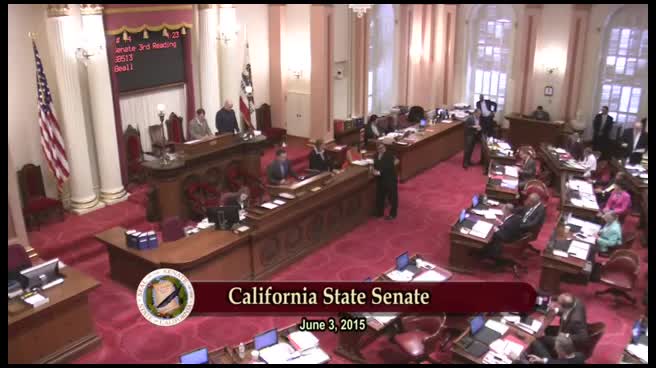
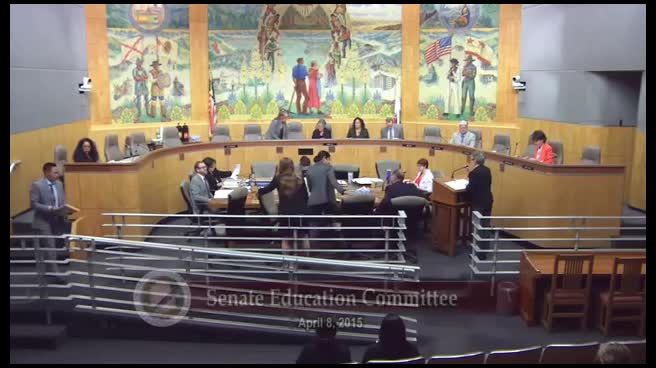
Bill Author

Bill Co-Author(s):