SB 66: Career technical education.
- Session Year: 2015-2016
- House: Senate
- Latest Version Date: 2016-09-28
(1)Existing law establishes various career technical education programs, including regional occupational centers and programs, specialized secondary programs, partnership academies, and agricultural career technical education programs. Existing law provides for numerous boards, bureaus, commissions, or programs within the Department of Consumer Affairs that administer the licensing and regulation of various businesses and professions.
This bill would require the department to make available, upon request by the Office of the Chancellor of the California Community Colleges, and only to the extent specified, to the chancellors office specified information with respect to every licensee for the sole purpose of enabling the office of the chancellor to measure employment outcomes of students who participate in career technical education programs offered by the California Community Colleges and recommend how these programs may be improved.
(2)Existing law requires the Chancellor of the California Community Colleges to implement performance accountability outcome measures for the California Community Colleges Economic and Workforce Development Program.
This bill would urge the chancellor to align these measures with the performance accountability measures of the federal Workforce Innovation and Opportunity Act.
(1)Existing law establishes various career technical education programs, including regional occupational centers and programs, specialized secondary programs, partnership academies, and agricultural career technical education programs. Existing law provides for numerous boards, bureaus, commissions, or programs within the Department of Consumer Affairs that administer the licensing and regulation of various businesses and professions.
This bill would require the department to make available, upon request by the Office of the Chancellor of the California Community Colleges, and only to the extent specified, to the Chancellors office specified information with respect to every licensee for the sole purpose of enabling the office of the chancellor to measure employment outcomes of students who participate in career technical education programs offered by the California Community Colleges and recommend how these programs may be improved.
(2)Existing law requires the Chancellor of the California Community Colleges to implement performance accountability outcome measures for the California Community Colleges Economic and Workforce Development Program.
This bill would urge the chancellor to align these measures with the performance accountability measures of the federal Workforce Innovation and Opportunity Act.
(1)Existing law establishes various career technical education programs, including regional occupational centers and programs, specialized secondary programs, partnership academies, and agricultural career technical education programs. Existing law provides for numerous boards, bureaus, commissions, or programs within the Department of Consumer Affairs that administer the licensing and regulation of various businesses and professions.
This bill would require the department to make available, upon request by the Office of the Chancellor of the California Community Colleges, and only to the extent specified, to the Office of the Chancellor of the California Community Colleges, any licensure Chancellors office specified information that the department has in electronic format for its boards, bureaus, commissions, or programs with respect to every licensee for the sole purpose of enabling the office of the chancellor to measure employment outcomes of students who participate in career technical education programs offered by the California Community Colleges and recommend how these programs may be improved.
(2)Existing law requires the Chancellor of the California Community Colleges to implement performance accountability outcome measures for the California Community Colleges Economic and Workforce Development Program.
This bill would urge the chancellor to align these measures with the performance accountability measures of the federal Workforce Innovation and Opportunity Act.
(1)Existing law establishes various career technical education programs, including regional occupational centers and programs, specialized secondary programs, partnership academies, and agricultural career technical education programs. Existing law provides for numerous boards, bureaus, commissions, or programs within the Department of Consumer Affairs that administer the licensing and regulation of various businesses and professions.
This bill would require the department to make available, only to the extent specified, to the Office of the Chancellor of the California Community Colleges, any licensure information that the department has in electronic format for its boards, bureaus, commissions, or programs for the sole purpose of enabling the office of the chancellor to measure employment outcomes of students who participate in career technical education programs offered by the California Community Colleges and recommend how these programs may be improved.
(2)Existing law requires the Chancellor of the California Community Colleges to implement performance accountability outcome measures for the California Community Colleges Economic and Workforce Development Program.
This bill would urge the chancellor to align these measures with the performance accountability measures of the federal Workforce Innovation and Opportunity Act.
(1)Existing law establishes various career technical education programs, including regional occupational centers and programs, specialized secondary programs, partnership academies, and agricultural career technical education programs. Existing law provides for numerous boards, bureaus, commissions, or programs within the Department of Consumer Affairs that administer the licensing and regulation of various businesses and professions.
This bill would require the department to make available available, only to the extent specified, to the Office of the Chancellor of the California Community Colleges Colleges, any licensure information that the department has in electronic format for its boards, bureaus, commissions, or programs to enable for the sole purpose of enabling the office of the chancellor to measure employment outcomes of students who participate in career technical education programs offered by the California Community Colleges and recommend how these programs may be improved.
(2)The Cal Grant Program establishes Cal Grant C awards, which may be used only for occupational or technical training in a course of not less than 4 months, under the administration of the Student Aid Commission. Existing law requires the maximum award amount and the total amount of funding for Cal Grant C awards to be determined each year in the annual Budget Act.
Unless adjusted in the annual Budget Act, this bill would set the maximum Cal Grant C award amount for tuition and fees at $2,462 and for access costs at $3,000.
(3)
(2)Existing law requires the Chancellor of the California Community Colleges to implement performance accountability outcome measures for the California Community Colleges Economic and Workforce Development Program.
This bill would urge the chancellor to align these measures with the performance accountability measures of the federal Workforce Innovation and Opportunity Act.
(1)Existing law establishes various career technical education programs, including regional occupational centers and programs, specialized secondary programs, partnership academies, and agricultural career technical education programs. Existing law provides for numerous boards, bureaus, commissions, or programs within the Department of Consumer Affairs that administer the licensing and regulation of various businesses and professions.
This bill would require the department to make available to the Office of the Chancellor of the California Community Colleges any licensure information that the department has in electronic format for its boards, bureaus, commissions, or programs to enable the office of the chancellor to measure employment outcomes of students who participate in career technical education programs offered by the California Community Colleges and recommend how these programs may be improved.
(2)The Cal Grant Program establishes Cal Grant C awards, which may be used only for occupational or technical training in a course of not less than 4 months, under the administration of the Student Aid Commission. Existing law requires the maximum award amount and the total amount of funding for Cal Grant C awards to be determined each year in the annual Budget Act.
Unless adjusted in the annual Budget Act, this bill would set the maximum Cal Grant C award amount for tuition and fees at $2,462 and for access costs at $3,000.
(3)Existing law requires the Chancellor of the California Community Colleges to implement performance accountability outcome measures for the California Community Colleges Economic and Workforce Development Program.
This bill would urge the chancellor to align these measures with the performance accountability measures of the federal Workforce Innovation and Opportunity Act.
Existing law, until June 30, 2015, establishes the Career Technical Education Pathways Program, which requires the Chancellor of the California Community Colleges and the Superintendent of Public Instruction to assist economic and workforce regional development centers and consortia, community colleges, middle schools, high schools, and regional occupational centers and programs to improve linkages and career technical education pathways between high schools and community colleges, as specified.
This bill would extend the operation of the program until July 1, 2018.
This bill would declare that it is to take effect immediately as an urgency statute.
This bill would declare that it is to take effect immediately as an urgency statute.
The Legislature finds and declares all of the following:
(a)The economic competitiveness of California is fueled by the strength of regional economies and their skilled workers. Upward social and economic mobility and increased opportunities keep the states economy diversified and vibrant.
(b)The pathway out of poverty for millions of California residents is the attainment of industry-valued middle skill credentials, which is defined as a job requiring a certificate, associates degree, or third-party credential that is less advanced than a bachelors degree, but more advanced than a high school diploma.
(c)Middle skill credentials serve as the gateway for a large number of careers in the states prioritized and emergent industry sectors.
(d)The California Community Colleges Board of Governors Task Force on Workforce, Job Creation, and a Strong Economy, also referred to as the Strong Workforce Task Force, identified 25 policy and strategy recommendations to help close the gap on these middle skill credentials.
(e)The recommendations built upon the foundation established by the California Community Colleges Economic and Workforce Development Program in Part 52.5 (commencing with Section 88600) of Division 7 of Title 3 of the Education Code, the Office of the Chancellor of the California Community Colleges Doing What MATTERS for Jobs and the Economy framework, and the federal Workforce Innovation and Opportunities Act (Public Law 113-128).
(f)With the enactment of the federal Workforce Innovation and Opportunity Act (Public Law 113-128), California agencies receiving workforce-related funds have adopted the following common program strategies articulated by the California Workforce Investment Board:
(1)Partnering in sector strategies to ensure training programs are relevant to the economy.
(2)Building career pathways to increase access, flexibility, and facilitated navigation of training and education programs.
(3)Utilizing earn and learn to increase simultaneous access to income and training for those who cannot afford full-time education.
(4)Organizing regionally to benefit from economies of scale, recognizing gains when labor markets and industry are organized regionally.
(5)Providing supportive services to remove barriers to program completion and employment.
(6)Creating cross-system data capacity to ensure effective use of resources.
(7)Integrating service delivery and braiding of resources to optimize limited resources and make use of program specializations to better serve individuals.
SEC. 2.Section 30 of the Business and Professions Code is amended to read:30.(a)(1)Notwithstanding any other law, any board, as defined in Section 22, and the State Bar and the Bureau of Real Estate shall, at the time of issuance of the license, require that the applicant provide its federal employer identification number, if the applicant is a partnership, or the applicants social security number for all other applicants.
(2)No later than January 1, 2016, in accordance with Section 135.5, a board, as defined in Section 22, and the State Bar and the Bureau of Real Estate shall require either the individual taxpayer identification number or social security number if the applicant is an individual for purposes of this subdivision.
(b)A licensee failing to provide the federal employer identification number, or the individual taxpayer identification number or social security number shall be reported by the licensing board to the Franchise Tax Board. If the licensee fails to provide that information after notification pursuant to paragraph (1) of subdivision (b) of Section 19528 of the Revenue and Taxation Code, the licensee shall be subject to the penalty provided in paragraph (2) of subdivision (b) of Section 19528 of the Revenue and Taxation Code.
(c)In addition to the penalty specified in subdivision (b), a licensing board shall not process an application for an initial license unless the applicant provides its federal employer identification number, or individual taxpayer identification number or social security number where requested on the application.
(d)A licensing board shall, upon request of the Franchise Tax Board or the Employment Development Department, furnish to the board or the department, as applicable, the following information with respect to every licensee:
(1)Name.
(2)Address or addresses of record.
(3)Federal employer identification number if the licensee is a partnership, or the licensees individual taxpayer identification number or social security number for all other licensees.
(4)Type of license.
(5)Effective date of license or a renewal.
(6)Expiration date of license.
(7)Whether license is active or inactive, if known.
(8)Whether license is new or a renewal.
(e)For the purposes of this section:
(1)Licensee means a person or entity, other than a corporation, authorized by a license, certificate, registration, or other means to engage in a business or profession regulated by this code or referred to in Section 1000 or 3600.
(2)License includes a certificate, registration, or any other authorization needed to engage in a business or profession regulated by this code or referred to in Section 1000 or 3600.
(3)Licensing board means any board, as defined in Section 22, the State Bar, and the Bureau of Real Estate.
(f)The reports required under this section shall be filed on magnetic media or in other machine-readable form, according to standards furnished by the Franchise Tax Board or the Employment Development Department, as applicable.
(g)Licensing boards shall provide to the Franchise Tax Board or the Employment Development Department the information required by this section at a time that the board or the department, as applicable, may require.
(h)Notwithstanding Chapter 3.5 (commencing with Section 6250) of Division 7 of Title 1 of the Government Code, a federal employer identification number, individual taxpayer identification number, or social security number furnished pursuant to this section shall not be deemed to be a public record and shall not be open to the public for inspection.
(i)A deputy, agent, clerk, officer, or employee of a licensing board described in subdivision (a), or any former officer or employee or other individual who, in the course of his or her employment or duty, has or has had access to the information required to be furnished under this section, shall not disclose or make known in any manner that information, except as provided pursuant to this section to the Franchise Tax Board, the Employment Development Department, or the Office of the Chancellor of the California Community Colleges, or as provided in subdivision (k).
(j)It is the intent of the Legislature in enacting this section to utilize the federal employer identification number, individual taxpayer identification number, or social security number for the purpose of establishing the identification of persons affected by state tax laws, for purposes of compliance with Section 17520 of the Family Code, and for purposes of measuring employment outcomes of students who participate in career technical education programs offered by the California Community Colleges and, to that end, the information furnished pursuant to this section shall be used exclusively for those purposes.
(k)If the board utilizes a national examination to issue a license, and if a reciprocity agreement or comity exists between the State of California and the state requesting release of the individual taxpayer identification number or social security number, any deputy, agent, clerk, officer, or employee of any licensing board described in subdivision (a) may release an individual taxpayer identification number or social security number to an examination or licensing entity, only for the purpose of verification of licensure or examination status.
(l)For the purposes of enforcement of Section 17520 of the Family Code, and notwithstanding any other law, a board, as defined in Section 22, and the State Bar and the Bureau of Real Estate shall at the time of issuance of the license require that each licensee provide the individual taxpayer identification number or social security number of each individual listed on the license and any person who qualifies for the license. For the purposes of this subdivision, licensee means an entity that is issued a license by any board, as defined in Section 22, the State Bar, the Bureau of Real Estate, and the Department of Motor Vehicles.
(m)The department shall, upon request by the Office of the Chancellor of the California Community Colleges, furnish to the chancellors office, as applicable, the following information with respect to every licensee:
(1)Name.
(2)Federal employer identification number if the licensee is a partnership, or the licensees individual taxpayer identification number or social security number for all other licensees.
(3)Date of birth.
(4)Type of license.
(5)Effective date of license or a renewal.
(6)Expiration date of license.
(n)The department shall make available information pursuant to subdivision (m) only to allow the chancellors office to measure employment outcomes of students who participate in career technical education programs offered by the California Community Colleges and recommend how these programs may be improved. Licensure information made available by the department pursuant to this section shall not be used for any other purpose.
(o)The department may make available information pursuant to subdivision (m) only to the extent that making the information available complies with state and federal privacy laws.
(p)The department may, by agreement, condition or limit the availability of licensure information pursuant to subdivision (m) in order to ensure the security of the information and to protect the privacy rights of the individuals to whom the information pertains.
(q)All of the following apply to the licensure information made available pursuant to subdivision (m):
(1)It shall be limited to only the information necessary to accomplish the purpose authorized in subdivision (n).
(2)It shall not be used in a manner that permits third parties to personally identify the individual or individuals to whom the information pertains.
(3)Except as provided in subdivision (n), it shall not be shared with or transmitted to any other party or entity without the consent of the individual or individuals to whom the information pertains.
(4)It shall be protected by reasonable security procedures and practices appropriate to the nature of the information to protect that information from unauthorized access, destruction, use, modification, or disclosure.
(5)It shall be immediately and securely destroyed when no longer needed for the purpose authorized in subdivision (n).
(r)The department or the chancellors office may share licensure information with a third party who contracts to perform the function described in subdivision (n), if the third party is required by contract to follow the requirements of this section.
SEC. 3.Section 88650 of the Education Code is amended to read:88650.(a)The chancellor shall implement performance accountability outcome measures for the economic and workforce development program that provide the Governor, Legislature, and general public with information that quantifies employer and student outcomes for those participating in the program. These performance accountability measures should, to the extent possible, align with the performance accountability measures of the federal Workforce Innovation and Opportunity Act (Public Law 113-128).
(b)The chancellor shall submit a report to the Governor and Legislature on or about March 1 of each year. This report shall include, but not necessarily be limited to, both of the following:
(1)Sufficient information to ensure the understanding of the magnitude of expenditures, by type of expenditure, including those specified in Section 88625, disaggregated by industry sector or cluster, region, and type of grant.
(2)Data summarizing outcome accountability performance measures required by this section.
The Legislature finds and declares all of the following:
(a)The economic competitiveness of California is fueled by the strength of regional economies and their skilled workers. Upward social and economic mobility and increased opportunities keep the states economy diversified and vibrant.
(b)The pathway out of poverty for millions of California residents is the attainment of industry-valued middle skill credentials, which is defined as a job requiring a certificate, associates degree, or third-party credential that is less advanced than a bachelors degree, but more advanced than a high school diploma.
(c)Middle skill credentials serve as the gateway for a large number of careers in the states prioritized and emergent industry sectors.
(d)The California Community Colleges Board of Governors Task Force on Workforce, Job Creation, and a Strong Economy, also referred to as the Strong Workforce Task Force, identified 25 policy and strategy recommendations to help close the gap on these middle skill credentials.
(e)The recommendations built upon the foundation established by the California Community Colleges Economic and Workforce Development Program in Part 52.5 (commencing with Section 88600) of Division 7 of Title 3 of the Education Code, the Office of the Chancellor of the California Community Colleges Doing What MATTERS for Jobs and the Economy framework, and the federal Workforce Innovation and Opportunities Act (Public Law 113-128).
(f)With the enactment of the federal Workforce Innovation and Opportunity Act (Public Law 113-128), California agencies receiving workforce-related funds have adopted the following common program strategies articulated by the California Workforce Investment Board:
(1)Partnering in sector strategies to ensure training programs are relevant to the economy.
(2)Building career pathways to increase access, flexibility, and facilitated navigation of training and education programs.
(3)Utilizing earn and learn to increase simultaneous access to income and training for those who cannot afford full-time education.
(4)Organizing regionally to benefit from economies of scale, recognizing gains when labor markets and industry are organized regionally.
(5)Providing supportive services to remove barriers to program completion and employment.
(6)Creating cross-system data capacity to ensure effective use of resources.
(7)Integrating service delivery and braiding of resources to optimize limited resources and make use of program specializations to better serve individuals.
SEC. 2.Section 30 of the Business and Professions Code is amended to read:30.(a)(1)Notwithstanding any other law, any board, as defined in Section 22, and the State Bar and the Bureau of Real Estate shall, at the time of issuance of the license, require that the applicant provide its federal employer identification number, if the applicant is a partnership, or the applicants social security number for all other applicants.
(2)No later than January 1, 2016, in accordance with Section 135.5, a board, as defined in Section 22, and the State Bar and the Bureau of Real Estate shall require either the individual taxpayer identification number or social security number if the applicant is an individual for purposes of this subdivision.
(b)A licensee failing to provide the federal employer identification number, or the individual taxpayer identification number or social security number shall be reported by the licensing board to the Franchise Tax Board. If the licensee fails to provide that information after notification pursuant to paragraph (1) of subdivision (b) of Section 19528 of the Revenue and Taxation Code, the licensee shall be subject to the penalty provided in paragraph (2) of subdivision (b) of Section 19528 of the Revenue and Taxation Code.
(c)In addition to the penalty specified in subdivision (b), a licensing board shall not process an application for an initial license unless the applicant provides its federal employer identification number, or individual taxpayer identification number or social security number where requested on the application.
(d)A licensing board shall, upon request of the Franchise Tax Board or the Employment Development Department, furnish to the board or the department, as applicable, the following information with respect to every licensee:
(1)Name.
(2)Address or addresses of record.
(3)Federal employer identification number if the licensee is a partnership, or the licensees individual taxpayer identification number or social security number for all other licensees.
(4)Type of license.
(5)Effective date of license or a renewal.
(6)Expiration date of license.
(7)Whether license is active or inactive, if known.
(8)Whether license is new or a renewal.
(e)For the purposes of this section:
(1)Licensee means a person or entity, other than a corporation, authorized by a license, certificate, registration, or other means to engage in a business or profession regulated by this code or referred to in Section 1000 or 3600.
(2)License includes a certificate, registration, or any other authorization needed to engage in a business or profession regulated by this code or referred to in Section 1000 or 3600.
(3)Licensing board means any board, as defined in Section 22, the State Bar, and the Bureau of Real Estate.
(f)The reports required under this section shall be filed on magnetic media or in other machine-readable form, according to standards furnished by the Franchise Tax Board or the Employment Development Department, as applicable.
(g)Licensing boards shall provide to the Franchise Tax Board or the Employment Development Department the information required by this section at a time that the board or the department, as applicable, may require.
(h)Notwithstanding Chapter 3.5 (commencing with Section 6250) of Division 7 of Title 1 of the Government Code, a federal employer identification number, individual taxpayer identification number, or social security number furnished pursuant to this section shall not be deemed to be a public record and shall not be open to the public for inspection.
(i)A deputy, agent, clerk, officer, or employee of a licensing board described in subdivision (a), or any former officer or employee or other individual who, in the course of his or her employment or duty, has or has had access to the information required to be furnished under this section, shall not disclose or make known in any manner that information, except as provided pursuant to this section to the Franchise Tax Board, the Employment Development Department, or the Office of the Chancellor of the California Community Colleges, or as provided in subdivision (k).
(j)It is the intent of the Legislature in enacting this section to utilize the federal employer identification number, individual taxpayer identification number, or social security number for the purpose of establishing the identification of persons affected by state tax laws, for purposes of compliance with Section 17520 of the Family Code, and for purposes of measuring employment outcomes of students who participate in career technical education programs offered by the California Community Colleges and, to that end, the information furnished pursuant to this section shall be used exclusively for those purposes.
(k)If the board utilizes a national examination to issue a license, and if a reciprocity agreement or comity exists between the State of California and the state requesting release of the individual taxpayer identification number or social security number, any deputy, agent, clerk, officer, or employee of any licensing board described in subdivision (a) may release an individual taxpayer identification number or social security number to an examination or licensing entity, only for the purpose of verification of licensure or examination status.
(l)For the purposes of enforcement of Section 17520 of the Family Code, and notwithstanding any other law, a board, as defined in Section 22, and the State Bar and the Bureau of Real Estate shall at the time of issuance of the license require that each licensee provide the individual taxpayer identification number or social security number of each individual listed on the license and any person who qualifies for the license. For the purposes of this subdivision, licensee means an entity that is issued a license by any board, as defined in Section 22, the State Bar, the Bureau of Real Estate, and the Department of Motor Vehicles.
(m)The department shall, upon request by the Office of the Chancellor of the California Community Colleges, furnish to the chancellors office, as applicable, the following information with respect to every licensee:
(1)Name.
(2)Federal employer identification number if the licensee is a partnership, or the licensees individual taxpayer identification number or social security number for all other licensees.
(3)Date of birth.
(4)Gender.
(5)
(4)Type of license.
(6)
(5)Effective date of license or a renewal.
(7)
(6)Expiration date of license.
(n)The department shall make available information pursuant to subdivision (m) only to allow the chancellors office to measure employment outcomes of students who participate in career technical education programs offered by the California Community Colleges and recommend how these programs may be improved. Licensure information made available by the department pursuant to this section shall not be used for any other purpose.
(o)The department may make available information pursuant to subdivision (m) only to the extent that making the information available complies with state and federal privacy laws.
(p)The department may, by agreement, condition or limit the availability of licensure information pursuant to subdivision (m) in order to ensure the security of the information and to protect the privacy rights of the individuals to whom the information pertains.
(q)All of the following apply to the licensure information made available pursuant to subdivision (m):
(1)It shall be limited to only the information necessary to accomplish the purpose authorized in subdivision (n).
(2)It shall not be used in a manner that permits third parties to personally identify the individual or individuals to whom the information pertains.
(3)Except as provided in subdivision (n), it shall not be shared with or transmitted to any other party or entity without the consent of the individual or individuals to whom the information pertains.
(4)It shall be protected by reasonable security procedures and practices appropriate to the nature of the information to protect that information from unauthorized access, destruction, use, modification, or disclosure.
(5)It shall be immediately and securely destroyed when no longer needed for the purpose authorized in subdivision (n).
(r)The department or the chancellors office may share licensure information with a third party who contracts to perform the function described in subdivision (n), if the third party is required by contract to follow the requirements of this section.
SEC. 3.Section 88650 of the Education Code is amended to read:88650.(a)The chancellor shall implement performance accountability outcome measures for the economic and workforce development program that provide the Governor, Legislature, and general public with information that quantifies employer and student outcomes for those participating in the program. These performance accountability measures should, to the extent possible, align with the performance accountability measures of the federal Workforce Innovation and Opportunity Act (Public Law 113-128).
(b)The chancellor shall submit a report to the Governor and Legislature on or about March 1 of each year. This report shall include, but not necessarily be limited to, both of the following:
(1)Sufficient information to ensure the understanding of the magnitude of expenditures, by type of expenditure, including those specified in Section 88625, disaggregated by industry sector or cluster, region, and type of grant.
(2)Data summarizing outcome accountability performance measures required by this section.
The Legislature finds and declares all of the following:
(a)The economic competitiveness of California is fueled by the strength of regional economies and their skilled workers. Upward social and economic mobility and increased opportunities keep the states economy diversified and vibrant.
(b)The pathway out of poverty for millions of California residents is the attainment of industry-valued middle skill credentials, which is defined as a job requiring a certificate, associates degree, or third-party credential that is less advanced than a bachelors degree, but more advanced than a high school diploma.
(c)Middle skill credentials serve as the gateway for a large number of careers in the states prioritized and emergent industry sectors.
(d)The California Community Colleges Board of Governors Task Force on Workforce, Job Creation, and a Strong Economy, also referred to as the Strong Workforce Task Force, identified 25 policy and strategy recommendations to help close the gap on these middle skill credentials.
(e)The recommendations built upon the foundation established by the California Community Colleges Economic and Workforce Development Program in Part 52.5 (commencing with Section 88600) of Division 7 of Title 3 of the Education Code, the Office of the Chancellor of the California Community Colleges Doing What MATTERS for Jobs and the Economy framework, and the federal Workforce Innovation and Opportunities Act (Public Law 113-128).
(f)With the enactment of the federal Workforce Innovation and Opportunity Act (Public Law 113-128), California agencies receiving workforce-related funds have adopted the following common program strategies articulated by the California Workforce Investment Board:
(1)Partnering in sector strategies to ensure training programs are relevant to the economy.
(2)Building career pathways to increase access, flexibility, and facilitated navigation of training and education programs.
(3)Utilizing earn and learn to increase simultaneous access to income and training for those who cannot afford full-time education.
(4)Organizing regionally to benefit from economies of scale, recognizing gains when labor markets and industry are organized regionally.
(5)Providing supportive services to remove barriers to program completion and employment.
(6)Creating cross-system data capacity to ensure effective use of resources.
(7)Integrating service delivery and braiding of resources to optimize limited resources and make use of program specializations to better serve individuals.
SEC. 2.Section 463 is added to the Business and Professions Code, to read:463.(a)The department shall make available to the Office of the Chancellor of the California Community Colleges any licensure information that the department has in electronic format for its boards, bureaus, commissions, or programs to enable the office of the chancellor to measure employment outcomes of students who participate in career technical education programs offered by the California Community Colleges and recommend how these programs may be improved. Licensure information made available by the department pursuant to this section shall not be used for any other purpose.
(b)The department may make available information pursuant to subdivision (a) only to the extent that making the information available complies with state and federal privacy laws.
(c)The department may, by agreement, condition or limit the availability of licensure information pursuant to subdivision (a) in order to ensure the security of the information and to protect the privacy rights of the individuals to whom the information pertains.
(d)All of the following apply to the licensure information made available pursuant to subdivision (a):
(1)It shall be limited to only the information necessary to accomplish the purpose authorized in subdivision (a).
(2)It shall not be used in a manner that permits third parties to personally identify the individual or individuals to whom the information pertains.
(3)Except as provided in subdivision (e), it shall not be shared with or transmitted to any other party or entity without the consent of the individual or individuals to whom the information pertains.
(4)It shall be protected by reasonable security procedures and practices appropriate to the nature of the information to protect that information from unauthorized access, destruction, use, modification, or disclosure.
(5)It shall be immediately and securely destroyed when no longer needed for the purpose authorized in subdivision (a).
(e)The department or the Office of the Chancellor of the California Community Colleges may share licensure information with a third party who contracts to perform the function authorized in subdivision (a), if the third party is required by contract to follow the requirements of this section.
SEC. 2.Section 30 of the Business and Professions Code is amended to read:30.(a)(1)Notwithstanding any other law, any board, as defined in Section 22, and the State Bar and the Bureau of Real Estate shall, at the time of issuance of the license, require that the applicant provide its federal employer identification number, if the applicant is a partnership, or the applicants social security number for all other applicants.
(2)No later than January 1, 2016, in accordance with Section 135.5, a board, as defined in Section 22, and the State Bar and the Bureau of Real Estate shall require either the individual taxpayer identification number or social security number if the applicant is an individual for purposes of this subdivision.
(b)A licensee failing to provide the federal employer identification number, or the individual taxpayer identification number or social security number shall be reported by the licensing board to the Franchise Tax Board. If the licensee fails to provide that information after notification pursuant to paragraph (1) of subdivision (b) of Section 19528 of the Revenue and Taxation Code, the licensee shall be subject to the penalty provided in paragraph (2) of subdivision (b) of Section 19528 of the Revenue and Taxation Code.
(c)In addition to the penalty specified in subdivision (b), a licensing board shall not process an application for an initial license unless the applicant provides its federal employer identification number, or individual taxpayer identification number or social security number where requested on the application.
(d)A licensing board shall, upon request of the Franchise Tax Board or the Employment Development Department, furnish to the board or the department, as applicable, the following information with respect to every licensee:
(1)Name.
(2)Address or addresses of record.
(3)Federal employer identification number if the licensee is a partnership, or the licensees individual taxpayer identification number or social security number for all other licensees.
(4)Type of license.
(5)Effective date of license or a renewal.
(6)Expiration date of license.
(7)Whether license is active or inactive, if known.
(8)Whether license is new or a renewal.
(e)For the purposes of this section:
(1)Licensee means a person or entity, other than a corporation, authorized by a license, certificate, registration, or other means to engage in a business or profession regulated by this code or referred to in Section 1000 or 3600.
(2)License includes a certificate, registration, or any other authorization needed to engage in a business or profession regulated by this code or referred to in Section 1000 or 3600.
(3)Licensing board means any board, as defined in Section 22, the State Bar, and the Bureau of Real Estate.
(f)The reports required under this section shall be filed on magnetic media or in other machine-readable form, according to standards furnished by the Franchise Tax Board or the Employment Development Department, as applicable.
(g)Licensing boards shall provide to the Franchise Tax Board or the Employment Development Department the information required by this section at a time that the board or the department, as applicable, may require.
(h)Notwithstanding Chapter 3.5 (commencing with Section 6250) of Division 7 of Title 1 of the Government Code, a federal employer identification number, individual taxpayer identification number, or social security number furnished pursuant to this section shall not be deemed to be a public record and shall not be open to the public for inspection.
(i)A deputy, agent, clerk, officer, or employee of a licensing board described in subdivision (a), or any former officer or employee or other individual who, in the course of his or her employment or duty, has or has had access to the information required to be furnished under this section, shall not disclose or make known in any manner that information, except as provided in pursuant to this section to the Franchise Tax Board or Board, the Employment Development Department Department, or the Office of the Chancellor of the California Community Colleges, or as provided in subdivision (k).
(j)It is the intent of the Legislature in enacting this section to utilize the federal employer identification number, individual taxpayer identification number, or social security number for the purpose of establishing the identification of persons affected by state tax laws and laws, for purposes of compliance with Section 17520 of the Family Code Code, and for purposes of measuring employment outcomes of students who participate in career technical education programs offered by the California Community Colleges and, to that end, the information furnished pursuant to this section shall be used exclusively for those purposes.
(k)If the board utilizes a national examination to issue a license, and if a reciprocity agreement or comity exists between the State of California and the state requesting release of the individual taxpayer identification number or social security number, any deputy, agent, clerk, officer, or employee of any licensing board described in subdivision (a) may release an individual taxpayer identification number or social security number to an examination or licensing entity, only for the purpose of verification of licensure or examination status.
(l)For the purposes of enforcement of Section 17520 of the Family Code, and notwithstanding any other law, a board, as defined in Section 22, and the State Bar and the Bureau of Real Estate shall at the time of issuance of the license require that each licensee provide the individual taxpayer identification number or social security number of each individual listed on the license and any person who qualifies for the license. For the purposes of this subdivision, licensee means an entity that is issued a license by any board, as defined in Section 22, the State Bar, the Bureau of Real Estate, and the Department of Motor Vehicles.
(m)The department shall, upon request by the Office of the Chancellor of the California Community Colleges, furnish to the chancellors office, as applicable, the following information with respect to every licensee:
(1)Name.
(2)Federal employer identification number if the licensee is a partnership, or the licensees individual taxpayer identification number or social security number for all other licensees.
(3)Date of Birth.
(4)Gender.
(5)Type of license.
(6)Effective date of license or a renewal.
(7)Expiration date of license.
(n)The department shall make available information pursuant to subdivision (m) only to allow the Chancellors office to measure employment outcomes of students who participate in career technical education programs offered by the California Community Colleges and recommend how these programs may be improved. Licensure information made available by the department pursuant to this section shall not be used for any other purpose.
(o)The department may make available information pursuant to subdivision (m) only to the extent that making the information available complies with state and federal privacy laws.
(p)The department may, by agreement, condition or limit the availability of licensure information pursuant to subdivision (m) in order to ensure the security of the information and to protect the privacy rights of the individuals to whom the information pertains.
(q)All of the following apply to the licensure information made available pursuant to subdivision (m):
(1)It shall be limited to only the information necessary to accomplish the purpose authorized in subdivision (n).
(2)It shall not be used in a manner that permits third parties to personally identify the individual or individuals to whom the information pertains.
(3)Except as provided in subdivision (n), it shall not be shared with or transmitted to any other party or entity without the consent of the individual or individuals to whom the information pertains.
(4)It shall be protected by reasonable security procedures and practices appropriate to the nature of the information to protect that information from unauthorized access, destruction, use, modification, or disclosure.
(5)It shall be immediately and securely destroyed when no longer needed for the purpose authorized in subdivision (n).
(r)The department or the Chancellors office may share licensure information with a third party who contracts to perform the function described in subdivision (n), if the third party is required by contract to follow the requirements of this section.
SEC. 3.Section 88650 of the Education Code is amended to read:88650.(a)The chancellor shall implement performance accountability outcome measures for the economic and workforce development program that provide the Governor, Legislature, and general public with information that quantifies employer and student outcomes for those participating in the program. These performance accountability measures should, to the extent possible, align with the performance accountability measures of the federal Workforce Innovation and Opportunity Act (Public Law 113-128).
(b)The chancellor shall submit a report to the Governor and Legislature on or about March 1 of each year. This report shall include, but not necessarily be limited to, both of the following:
(1)Sufficient information to ensure the understanding of the magnitude of expenditures, by type of expenditure, including those specified in Section 88625, disaggregated by industry sector or cluster, region, and type of grant.
(2)Data summarizing outcome accountability performance measures required by this section.
The Legislature finds and declares all of the following:
(a)The economic competitiveness of California is fueled by the strength of regional economies and their skilled workers. Upward social and economic mobility and increased opportunities keep the states economy diversified and vibrant.
(b)The pathway out of poverty for millions of California residents is the attainment of industry-valued middle skill credentials, which is defined as a job requiring a certificate, associates degree, or third-party credential that is less advanced than a bachelors degree, but more advanced than a high school diploma.
(c)Middle skill credentials serve as the gateway for a large number of careers in the states prioritized and emergent industry sectors.
(d)The California Community Colleges Board of Governors Task Force on Workforce, Job Creation, and a Strong Economy, also referred to as the Strong Workforce Task Force, identified 25 policy and strategy recommendations to help close the gap on these middle skill credentials.
(e)The recommendations built upon the foundation established by the California Community Colleges Economic and Workforce Development Program in Part 52.5 (commencing with Section 88600) of Division 7 of Title 3 of the Education Code, the Office of the Chancellor of the California Community Colleges Doing What MATTERS for Jobs and the Economy framework, and the federal Workforce Innovation and Opportunities Act (Public Law 113-128).
(f)With the enactment of the federal Workforce Innovation and Opportunity Act (Public Law 113-128), California agencies receiving workforce-related funds have adopted the following common program strategies articulated by the California Workforce Investment Board:
(1)Partnering in sector strategies to ensure training programs are relevant to the economy.
(2)Building career pathways to increase access, flexibility, and facilitated navigation of training and education programs.
(3)Utilizing earn and learn to increase simultaneous access to income and training for those who cannot afford full-time education.
(4)Organizing regionally to benefit from economies of scale, recognizing gains when labor markets and industry are organized regionally.
(5)Providing supportive services to remove barriers to program completion and employment.
(6)Creating cross-system data capacity to ensure effective use of resources.
(7)Integrating service delivery and braiding of resources to optimize limited resources and make use of program specializations to better serve individuals.
SEC. 2.Section 463 is added to the Business and Professions Code, to read:463.(a)The department shall make available to the Office of the Chancellor of the California Community Colleges any licensure information that the department has in electronic format for its boards, bureaus, commissions, or programs to enable the office of the chancellor to measure employment outcomes of students who participate in career technical education programs offered by the California Community Colleges and recommend how these programs may be improved. Licensure information made available by the department pursuant to this section shall not be used for any other purpose.
(b)The department may make available information pursuant to subdivision (a) only to the extent that making the information available complies with state and federal privacy laws.
(c)The department may, by agreement, condition or limit the availability of licensure information pursuant to subdivision (a) in order to ensure the security of the information and to protect the privacy rights of the individuals to whom the information pertains.
(d)All of the following apply to the licensure information made available pursuant to subdivision (a):
(1)It shall be limited to only the information necessary to accomplish the purpose authorized in subdivision (a).
(2)It shall not be used in a manner that permits third parties to personally identify the individual or individuals to whom the information pertains.
(3)Except as provided in subdivision (e), it shall not be shared with or transmitted to any other party or entity without the consent of the individual or individuals to whom the information pertains.
(4)It shall be protected by reasonable security procedures and practices appropriate to the nature of the information to protect that information from unauthorized access, destruction, use, modification, or disclosure.
(5)It shall be immediately and securely destroyed when no longer needed for the purpose authorized in subdivision (a).
(e)The department or the Office of the Chancellor of the California Community Colleges may share licensure information with a third party who contracts to perform the function authorized in subdivision (a), if the third party is required by contract to follow the requirements of this section.
SEC. 3.Section 88650 of the Education Code is amended to read:88650.(a)The chancellor shall implement performance accountability outcome measures for the economic and workplace workforce development program that provide the Governor, Legislature, and general public with information that quantifies employer and student outcomes for those participating in the program. These performance accountability measures should, to the extent possible, align with the performance accountability measures of the federal Workforce Innovation and Opportunity Act (Public Law 113-128).
(b)The chancellor shall submit a report to the Governor and Legislature on or about March 1 of each year. This report shall include, but not necessarily be limited to, both of the following:
(1)Sufficient information to ensure the understanding of the magnitude of expenditures, by type of expenditure, including those specified in Section 88625, disaggregated by industry sector or cluster, region, and type of grant.
(2)Data summarizing outcome accountability performance measures required by this section.
The Legislature finds and declares all of the following:
(a)The economic competitiveness of California is fueled by the strength of regional economies and their skilled workers. Upward social and economic mobility and increased opportunities keep the states economy diversified and vibrant.
(b)The pathway out of poverty for millions of California residents is the attainment of industry-valued middle skill credentials, which is defined as a job requiring a certificate, associates degree, or third-party credential that is less advanced than a bachelors degree, but more advanced than a high school diploma.
(c)Middle skill credentials serve as the gateway for a large number of careers in the states prioritized and emergent industry sectors.
(d)The California Community Colleges Board of Governors Task Force on Workforce, Job Creation, and a Strong Economy, also referred to as the Strong Workforce Task Force, identified 25 policy and strategy recommendations to help close the gap on these middle skill credentials.
(e)The recommendations built upon the foundation established by the California Community Colleges Economic and Workforce Development Program in Part 52.5 (commencing with Section 88600) of Division 7 of Title 3 of the Education Code, the Office of the Chancellor of the California Community Colleges Doing What MATTERS for Jobs and the Economy framework, and the federal Workforce Innovation and Opportunities Act (Public Law 113-128).
(f)With the enactment of the federal Workforce Innovation and Opportunity Act (Public Law 113-128), California agencies receiving workforce-related funds have adopted the following common program strategies articulated by the California Workforce Investment Board:
(1)Partnering in sector strategies to ensure training programs are relevant to the economy.
(2)Building career pathways to increase access, flexibility, and facilitated navigation of training and education programs.
(3)Utilizing earn and learn to increase simultaneous access to income and training for those who cannot afford full-time education.
(4)Organizing regionally to benefit from economies of scale, recognizing gains when labor markets and industry are organized regionally.
(5)Providing supportive services to remove barriers to program completion and employment.
(6)Creating cross-system data capacity to ensure effective use of resources.
(7)Integrating service delivery and braiding of resources to optimize limited resources and make use of program specializations to better serve individuals.
SEC. 2.Section 463 is added to the Business and Professions Code, to read:463.(a)The department shall make available to the Office of the Chancellor of the California Community Colleges any licensure information that the department has in electronic format for its boards, bureaus, commissions, or programs to enable the office of the chancellor to measure employment outcomes of students who participate in career technical education programs offered by the California Community Colleges and recommend how these programs may be improved. Licensure information made available by the department pursuant to this section shall not be used for any other purpose.
(b)The department may make available confidential information pursuant to subdivision (a) only to the extent that making the information available is in compliance complies with state and federal privacy laws.
(c)The department may, by agreement, condition or limit the availability of licensure information pursuant to subdivision (a) in order to ensure the security of the information and to protect the privacy rights of the individuals to whom the information pertains.
(d)All of the following apply to the licensure information made available pursuant to subdivision (a):
(1)It shall be limited to only the information necessary to accomplish the purpose authorized in subdivision (a).
(2)It shall not be used in a manner that permits third parties to personally identify the individual or individuals to whom the information pertains.
(3)Except as provided in subdivision (e), it shall not be shared with or transmitted to any other party or entity without the consent of the individual or individuals to whom the information pertains.
(4)It shall be protected by reasonable security procedures and practices appropriate to the nature of the information to protect that information from unauthorized access, destruction, use, modification, or disclosure.
(5)It shall be immediately and securely destroyed when no longer needed for the purpose authorized in subdivision (a).
(e)The department or the Office of the Chancellor of the California Community Colleges may share licensure information with a third party who contracts to perform the function authorized in subdivision (a), if the third party is required by contract to follow the requirements of this section.
SEC. 3.Section 69439 of the Education Code is amended to read:69439.(a)For the purposes of this section, the following terms have the following meanings:
(1)Career pathway has the same meaning as set forth in Section 88620.
(2)Economic security has the same meaning as set forth in Section 14005 of the Unemployment Insurance Code.
(3)Industry cluster has the same meaning as set forth in Section 88620.
(4)Long-term unemployed means, with respect to an award applicant, a person who has been unemployed for more than 26 weeks at the time of submission to the commission of his or her application.
(5)Occupational or technical training means that phase of education coming after the completion of a secondary school program and leading toward recognized occupational goals approved by the commission.
(b)A Cal Grant C award shall be utilized only for occupational or technical training in a course of not less than four months. There shall be the same number of Cal Grant C awards each year as were made in the 200001 fiscal year. The total amount of funding shall be determined each year in the annual Budget Act and the maximum award amount shall be in accordance with the following:
(1)The maximum amount of an annual Cal Grant C award for tuition and fees shall not exceed two thousand four hundred sixty-two dollars ($2,462).
(2)The maximum amount of an annual Cal Grant C award for access costs shall not exceed three thousand dollars ($3,000).
(3)The maximum amount of a Cal Grant C award pursuant to paragraphs (1) and (2) may be adjusted in the annual Budget Act.
(c)The commission may use criteria it deems appropriate in selecting students to receive grants for occupational or technical training and shall give special consideration to the social and economic situations of the students applying for these grants, giving additional weight to disadvantaged applicants, applicants who face economic hardship, and applicants who face particular barriers to employment. Criteria to be considered for these purposes shall include, but are not limited to, all of the following:
(1)Family income and household size.
(2)Students or the students parents household status, including whether the student is a single parent or child of a single parent.
(3)The employment status of the applicant and whether the applicant is unemployed, giving greater weight to the long-term unemployed.
(d)The Cal Grant C award recipients shall be eligible for renewal of their grants until they have completed their occupational or technical training in conformance with terms prescribed by the commission. A determination by the commission for a subsequent award year that the program under which a Cal Grant C award was initially awarded is no longer deemed to receive priority shall not affect an award recipients renewal. In no case shall the grants exceed two calendar years.
(e)Cal Grant C awards may be used for access costs, as defined in subdivision (b) of Section 69432.7, and training-related costs, such as special clothing, required tools and equipment, and institutional charges. In determining the individual award amounts, the commission shall take into account the financial means available to the student to fund his or her course of study and costs of attendance as well as other state and federal programs available to the applicant.
(f)(1)To ensure alignment with the states dynamic economic needs, the commission, in consultation with appropriate state and federal agencies, including the Economic and Workforce Development Division of the Office of the Chancellor of the California Community Colleges and the California Workforce Investment Board, shall identify areas of occupational and technical training for which students may utilize Cal Grant C awards. The commission, to the extent feasible, shall also consult with representatives of the states leading competitive and emerging industry clusters, workforce professionals, and career technical educators, to determine which occupational training programs and industry clusters should be prioritized.
(2)(A)Except as provided in subparagraph (B), the areas of occupational and technical training developed pursuant to paragraph (1) shall be regularly reviewed and updated at least every five years, beginning in 2012.
(B)By January 1, 2016, the commission shall update the priority areas of occupational and technical training.
(3)(A)The commission shall give priority in granting Cal Grant C awards to students pursuing occupational or technical training in areas that meet two of the following criteria pertaining to job quality:
(i)High employer need or demand for the specific skills offered in the program.
(ii)High employment growth in the occupational field or industry cluster for which the student is being trained.
(iii)High employment salary and wage projections for workers employed in the occupations for which they are being trained.
(iv)The occupation or training program is part of a well-articulated career pathway to a job providing economic security.
(B)To receive priority pursuant to subparagraph (A), at least one of the criteria met shall be specified in clause (iii) or (iv) of that subparagraph.
(g)The commission shall determine areas of occupational or technical training that meet the criteria described in paragraph (3) of subdivision (f) in consultation with the Employment Development Department, the Economic and Workforce Development Division of the Office of the Chancellor of the California Community Colleges, and the California Workforce Investment Board using projections available through the Labor Market Information Data Library. The commission may supplement the analyses of the Employment Development Departments Labor Market Information Data Library with the labor market analyses developed by the Economic and Workforce Development Division of the Office of the Chancellor of the California Community Colleges and the California Workforce Investment Board, as well as the projections of occupational shortages and skills gap developed by industry leaders. The commission shall publish, and retain, on its Internet Web site a current list of the areas of occupational or technical training that meet the criteria described in paragraph (3) of subdivision (f), and update this list as necessary.
(h)Using the best available data, the commission shall examine the graduation rates and job placement data, or salary data, of eligible programs. Commencing with the 201415 academic year, the commission shall give priority to Cal Grant C award applicants seeking to enroll in programs that rate high in graduation rates and job placement data, or salary data.
(i)(1)The commission shall consult with the Employment Development Department, the Office of the Chancellor of the California Community Colleges, the California Workforce Investment Board, and the local workforce investment boards to develop a plan to publicize the existence of the grant award program to Californias long-term unemployed to be used by those consulting agencies when they come in contact with members of the population who are likely to be experiencing long-term unemployment. The outreach plan shall use existing administrative and service delivery processes making use of existing points of contact with the long-term unemployed. The local workforce investment boards are required to participate only to the extent that the outreach efforts are a part of their existing responsibilities under the federal Workforce Investment Act of 1998 (Public Law 105-220).
(2)The commission shall consult with the Workforce Services Branch of the Employment Development Department, the Office of the Chancellor of the California Community Colleges, the California Workforce Investment Board, and the local workforce investment boards to develop a plan to make students receiving awards aware of job search and placement services available through the Employment Development Department and the local workforce investment boards. Outreach shall use existing administrative and service delivery processes making use of existing points of contact with the students. The local workforce investment boards are required to participate only to the extent that the outreach efforts are a part of their existing responsibilities under the federal Workforce Investment Act of 1998 (Public Law 105-220).
(j)(1)Notwithstanding Section 10231.5 of the Government Code, the Legislative Analysts Office shall submit a report to the Legislature on the outcomes of the Cal Grant C program on or before April 1, 2015, and on or before April 1 of each odd-numbered year thereafter. This report shall include, but not necessarily be limited to, information on all of the following:
(A)The age, gender, and segment of attendance for recipients in two prior award years.
(B)The occupational and technical training program categories prioritized.
(C)The number and percentage of students who received selection priority as defined in paragraph (3) of subdivision (f).
(D)The extent to which recipients in these award years were successfully placed in jobs that meet local, regional, or state workforce needs.
(2)For the report due on or before April 1, 2015, the Legislative Analysts Office shall include data for two additional prior award years and shall compare the mix of occupational and technical training programs and institutions in which Cal Grant C award recipients enrolled before and after implementation of subdivision (f).
(3)A report to be submitted pursuant to this subdivision shall be submitted in compliance with Section 9795 of the Government Code.
SEC. 4.SEC. 3.Section 88650 of the Education Code is amended to read:88650.(a)The chancellor shall implement performance accountability outcome measures for the economic and workplace development program that provide the Governor, Legislature, and general public with information that quantifies employer and student outcomes for those participating in the program. These performance accountability measures should, to the extent possible, align with the performance accountability measures of the federal Workforce Innovation and Opportunity Act (Public Law 113-128).
(b)The chancellor shall submit a report to the Governor and Legislature on or about March 1 of each year. This report shall include, but not necessarily be limited to, both of the following:
(1)Sufficient information to ensure the understanding of the magnitude of expenditures, by type of expenditure, including those specified in Section 88625, disaggregated by industry sector or cluster, region, and type of grant.
(2)Data summarizing outcome accountability performance measures required by this section.
The Legislature finds and declares all of the following:
(a)The economic competitiveness of California is fueled by the strength of regional economies and their skilled workers. Upward social and economic mobility and increased opportunities keep the states economy diversified and vibrant.
(b)The pathway out of poverty for millions of California residents is the attainment of industry-valued middle skill credentials, which is defined as a job requiring a certificate, associates degree, or third-party credential that is less advanced than a bachelors degree, but more advanced than a high school diploma.
(c)Middle skill credentials serve as the gateway for a large number of careers in the states prioritized and emergent industry sectors.
(d)The California Community Colleges Board of Governors Task Force on Workforce, Job Creation, and a Strong Economy, also referred to as the Strong Workforce Task Force, identified 25 policy and strategy recommendations to help close the gap on these middle skill credentials.
(e)The recommendations built upon the foundation established by the California Community Colleges Economic and Workforce Development Program in Part 52.5 (commencing with Section 88600) of Division 7 of Title 3 of the Education Code, the Office of the Chancellor of the California Community Colleges Doing What MATTERS for Jobs and the Economy framework, and the federal Workforce Innovation and Opportunities Act (Public Law 113-128).
(f)With the enactment of the federal Workforce Innovation and Opportunity Act (Public Law 113-128), California agencies receiving workforce-related funds have adopted the following common program strategies articulated by the California Workforce Investment Board:
(1)Partnering in sector strategies to ensure training programs are relevant to the economy.
(2)Building career pathways to increase access, flexibility, and facilitated navigation of training and education programs.
(3)Utilizing earn and learn to increase simultaneous access to income and training for those who cannot afford full-time education.
(4)Organizing regionally to benefit from economies of scale, recognizing gains when labor markets and industry are organized regionally.
(5)Providing supportive services to remove barriers to program completion and employment.
(6)Creating cross-system data capacity to ensure effective use of resources.
(7)Integrating service delivery and braiding of resources to optimize limited resources and make use of program specializations to better serve individuals.
SEC. 2.Section 463 is added to the Business and Professions Code, to read:463.(a)The department shall make available to the Office of the Chancellor of the California Community Colleges any licensure information that the department has in electronic format for its boards, bureaus, commissions, or programs to enable the office of the chancellor to measure employment outcomes of students who participate in career technical education programs offered by the California Community Colleges and recommend how these programs may be improved.
(b)The department may make available confidential information pursuant to subdivision (a) only to the extent that making the information available is in compliance with state and federal privacy laws.
SEC. 3.Section 69439 of the Education Code is amended to read:69439.(a)For the purposes of this section, the following terms have the following meanings:
(1)Career pathway has the same meaning as set forth in Section 88620.
(2)Economic security has the same meaning as set forth in Section 14005 of the Unemployment Insurance Code.
(3)Industry cluster has the same meaning as set forth in Section 88620.
(4)Long-term unemployed means, with respect to an award applicant, a person who has been unemployed for more than 26 weeks at the time of submission to the commission of his or her application.
(5)Occupational or technical training means that phase of education coming after the completion of a secondary school program and leading toward recognized occupational goals approved by the commission.
(b)A Cal Grant C award shall be utilized only for occupational or technical training in a course of not less than four months. There shall be the same number of Cal Grant C awards each year as were made in the 200001 fiscal year. The maximum award amount and the total amount of funding shall be determined each year in the annual Budget Act. Act and the maximum award amount shall be in accordance with the following:
(1)The maximum amount of an annual Cal Grant C award for tuition and fees shall not exceed two thousand four hundred sixty-two dollars ($2,462).
(2)The maximum amount of an annual Cal Grant C award for access costs shall not exceed three thousand dollars ($3,000).
(3)The maximum amount of a Cal Grant C award pursuant to paragraphs (1) and (2) may be adjusted in the annual Budget Act.
(c)The commission may use criteria it deems appropriate in selecting students to receive grants for occupational or technical training and shall give special consideration to the social and economic situations of the students applying for these grants, giving additional weight to disadvantaged applicants, applicants who face economic hardship, and applicants who face particular barriers to employment. Criteria to be considered for these purposes shall include, but are not limited to, all of the following:
(1)Family income and household size.
(2)Students or the students parents household status, including whether the student is a single parent or child of a single parent.
(3)The employment status of the applicant and whether the applicant is unemployed, giving greater weight to the long-term unemployed.
(d)The Cal Grant C award recipients shall be eligible for renewal of their grants until they have completed their occupational or technical training in conformance with terms prescribed by the commission. A determination by the commission for a subsequent award year that the program under which a Cal Grant C award was initially awarded is no longer deemed to receive priority shall not affect an award recipients renewal. In no case shall the grants exceed two calendar years.
(e)Cal Grant C awards may be used for institutional fees, charges, and other costs, including tuition, plus access costs, as defined in subdivision (b) of Section 69432.7, and training-related costs, such as special clothing, local transportation, required tools, tools and equipment, supplies, books, and living expenses. and institutional charges. In determining the individual award amounts, the commission shall take into account the financial means available to the student to fund his or her course of study and costs of attendance as well as other state and federal programs available to the applicant.
(f)(1)To ensure alignment with the states dynamic economic needs, the commission, in consultation with appropriate state and federal agencies, including the Economic and Workforce Development Division of the Office of the Chancellor of the California Community Colleges and the California Workforce Investment Board, shall identify areas of occupational and technical training for which students may utilize Cal Grant C awards. The commission, to the extent feasible, shall also consult with representatives of the states leading competitive and emerging industry clusters, workforce professionals, and career technical educators, to determine which occupational training programs and industry clusters should be prioritized.
(2)(A)Except as provided in subparagraph (B), the areas of occupational and technical training developed pursuant to paragraph (1) shall be regularly reviewed and updated at least every five years, beginning in 2012.
(B)By January 1, 2016, the commission shall update the priority areas of occupational and technical training.
(3)(A)The commission shall give priority in granting Cal Grant C awards to students pursuing occupational or technical training in areas that meet two of the following criteria pertaining to job quality:
(i)High employer need or demand for the specific skills offered in the program.
(ii)High employment growth in the occupational field or industry cluster for which the student is being trained.
(iii)High employment salary and wage projections for workers employed in the occupations for which they are being trained.
(iv)The occupation or training program is part of a well-articulated career pathway to a job providing economic security.
(B)To receive priority pursuant to subparagraph (A), at least one of the criteria met shall be specified in clause (iii) or (iv) of that subparagraph.
(g)The commission shall determine areas of occupational or technical training that meet the criteria described in paragraph (3) of subdivision (f) in consultation with the Employment Development Department, the Economic and Workforce Development Division of the Office of the Chancellor of the California Community Colleges, and the California Workforce Investment Board using projections available through the Labor Market Information Data Library. The commission may supplement the analyses of the Employment Development Departments Labor Market Information Data Library with the labor market analyses developed by the Economic and Workforce Development Division of the Office of the Chancellor of the California Community Colleges and the California Workforce Investment Board, as well as the projections of occupational shortages and skills gap developed by industry leaders. The commission shall publish, and retain, on its Internet Web site a current list of the areas of occupational or technical training that meet the criteria described in paragraph (3) of subdivision (f), and update this list as necessary.
(h)Using the best available data, the commission shall examine the graduation rates and job placement data, or salary data, of eligible programs. Commencing with the 201415 academic year, the commission shall give priority to Cal Grant C award applicants seeking to enroll in programs that rate high in graduation rates and job placement data, or salary data.
(i)(1)The commission shall consult with the Employment Development Department, the Office of the Chancellor of the California Community Colleges, the California Workforce Investment Board, and the local workforce investment boards to develop a plan to publicize the existence of the grant award program to Californias long-term unemployed to be used by those consulting agencies when they come in contact with members of the population who are likely to be experiencing long-term unemployment. The outreach plan shall use existing administrative and service delivery processes making use of existing points of contact with the long-term unemployed. The local workforce investment boards are required to participate only to the extent that the outreach efforts are a part of their existing responsibilities under the federal Workforce Investment Act of 1998 (Public Law 105-220).
(2)The commission shall consult with the Workforce Services Branch of the Employment Development Department, the Office of the Chancellor of the California Community Colleges, the California Workforce Investment Board, and the local workforce investment boards to develop a plan to make students receiving awards aware of job search and placement services available through the Employment Development Department and the local workforce investment boards. Outreach shall use existing administrative and service delivery processes making use of existing points of contact with the students. The local workforce investment boards are required to participate only to the extent that the outreach efforts are a part of their existing responsibilities under the federal Workforce Investment Act of 1998 (Public Law 105-220).
(j)(1)Notwithstanding Section 10231.5 of the Government Code, the Legislative Analysts Office shall submit a report to the Legislature on the outcomes of the Cal Grant C program on or before April 1, 2015, and on or before April 1 of each odd-numbered year thereafter. This report shall include, but not necessarily be limited to, information on all of the following:
(A)The age, gender, and segment of attendance for recipients in two prior award years.
(B)The occupational and technical training program categories prioritized.
(C)The number and percentage of students who received selection priority as defined in paragraph (3) of subdivision (f).
(D)The extent to which recipients in these award years were successfully placed in jobs that meet local, regional, or state workforce needs.
(2)For the report due on or before April 1, 2015, the Legislative Analysts Office shall include data for two additional prior award years and shall compare the mix of occupational and technical training programs and institutions in which Cal Grant C award recipients enrolled before and after implementation of subdivision (f).
(3)A report to be submitted pursuant to this subdivision shall be submitted in compliance with Section 9795 of the Government Code.
SEC. 4.Section 88650 of the Education Code is amended to read:88650.(a)The chancellor shall implement performance accountability outcome measures for the economic and workplace development program that provide the Governor, Legislature, and general public with information that quantifies employer and student outcomes for those participating in the program. At a minimum, these performance measures shall include all of the following: These performance accountability measures should, to the extent possible, align with the performance accountability measures of the federal Workforce Innovation and Opportunity Act (Public Law 113-128).
(1)Measures of skills or competency attainment by students and workers receiving educational or workforce training services under the program.
(2)Measures relevant to program completion, including measures of course, certificate, degree, and program of study rates of completion for students or workers receiving education or workforce training services under the program.
(3)Measures of employment placement or measures of educational progression, such as transfer readiness, for students or workers receiving education or workforce training services under the program, depending on whether the client is entering the labor market or continuing in education.
(4)For those who have entered the labor market following completion of the education or workforce training services offered under the program, measures of income, including wage measures.
(5)A quantitative assessment of impacts on businesses receiving services under the program. These may include data pertaining to profitability, labor productivity, workplace injuries, employer cost savings resulting from improved business processes, levels of customer satisfaction, employee retention rates, estimates of new revenue generated, sales, and market penetration, as well as information pertaining to new products or services developed.
(b)The chancellor shall submit a report to the Governor and Legislature on or about March 1 of each year. This report shall include, but not necessarily be limited to, all both of the following:
(1)Sufficient information to ensure the understanding of the magnitude of expenditures, by type of expenditure, including those specified in Section 88625, disaggregated by industry sector or cluster, region, and type of grant.
(2)Information pertaining to the type of services provided to colleges and employers, and the number of businesses, students, and employees served, including information to identify the benchmarks and indicators used to demonstrate the results achieved.
(3)
(2)Data summarizing outcome accountability performance measures enumerated and required by this section.
SECTION 1.Section 88540 of the Education Code is repealed.SEC. 2.Section 88540 is added to the Education Code, to read:88540.This part shall become inoperative on July 1, 2018, and, as of January 1, 2019, is repealed, unless a later enacted statute, that becomes operative on or before January 1, 2019, deletes or extends the dates on which it becomes inoperative and is repealed.
SEC. 3.This act is an urgency statute necessary for the immediate preservation of the public peace, health, or safety within the meaning of Article IV of the Constitution and shall go into immediate effect. The facts constituting the necessity are:
In order to continue these career technical education programs uninterrupted and with the same level of funding, it is necessary for this act to take effect immediately.
This act is an urgency statute necessary for the immediate preservation of the public peace, health, or safety within the meaning of Article IV of the Constitution and shall go into immediate effect. The facts constituting the necessity are:
This part shall remain in effect only until June 30, 2015, and as of that date is repealed, unless a later enacted statute, that is enacted before June 30, 2015, deletes or extends that date.
SEC. 2.Section 88540 is added to the Education Code, to read:88540.This part shall become inoperative on July 1, 2018, and, as of January 1, 2019, is repealed, unless a later enacted statute, that becomes operative on or before January 1, 2019, deletes or extends the dates on which it becomes inoperative and is repealed.
SEC. 3.This act is an urgency statute necessary for the immediate preservation of the public peace, health, or safety within the meaning of Article IV of the Constitution and shall go into immediate effect. The facts constituting the necessity are:
In order to continue these career technical education programs uninterrupted and with the same level of funding, it is necessary for this act to take effect immediately.
This act is an urgency statute necessary for the immediate preservation of the public peace, health, or safety within the meaning of Article IV of the Constitution and shall go into immediate effect. The facts constituting the necessity are:
|
Date
|
Status
|
|---|---|
| Sep 9, 2016 | Enrolled and presented to the Governor at 3:30 p.m. |
| Aug 31, 2016 | Assembly amendments concurred in. (Ayes 39. Noes 0. Page 5556.) Ordered to engrossing and enrolling. |
| Aug 31, 2016 | Assembly amendments concurred in. (Ayes 39. Noes 0.) Ordered to engrossing and enrolling. |
| Aug 30, 2016 | Read third time. Passed. (Ayes 78. Noes 1. Page 6472.) Ordered to the Senate. |
| Aug 30, 2016 | In Senate. Concurrence in Assembly amendments pending. |
| Aug 30, 2016 | Read third time. Passed. Ordered to the Senate. |
| Aug 18, 2016 | Ordered to third reading. |
| Aug 18, 2016 | Read third time and amended. |
| Aug 11, 2016 | Read second time. Ordered to third reading. |
| Aug 10, 2016 | From committee: Do pass. (Ayes 19. Noes 0.) (August 10). |
| Aug 3, 2016 | August 3 hearing postponed by committee. |
| Aug 2, 2016 | From committee with author's amendments. Read second time and amended. Re-referred to Com. on APPR. |
| Jun 28, 2016 | From committee: Do pass and re-refer to Com. on APPR. (Ayes 16. Noes 0.) (June 28). Re-referred to Com. on APPR. |
| Jun 23, 2016 | Read second time and amended. Re-referred to Com. on B. & P. |
| Jun 22, 2016 | From committee: Do pass as amended and re-refer to Com. on B. & P. (Ayes 13. Noes 0.) (June 21). |
| Jun 9, 2016 | Re-referred to Coms. on HIGHER ED. and B. & P. pursuant to Assembly Rule 96. |
| Apr 28, 2016 | Referred to Coms. on B. & P. and HIGHER ED. |
| Jan 26, 2016 | In Assembly. Read first time. Held at Desk. |
| Jan 25, 2016 | Read third time. Passed. (Ayes 38. Noes 0. Page 2942.) Ordered to the Assembly. |
| Jan 20, 2016 | Read second time. Ordered to third reading. |
| Jan 19, 2016 | From committee: Do pass. (Ayes 7. Noes 0. Page 2916.) (January 19). |
| Jan 14, 2016 | From committee with author's amendments. Read second time and amended. Re-referred to Com. on APPR. |
| Jan 14, 2016 | Set for hearing January 19. |
| Jan 13, 2016 | From committee: Do pass and re-refer to Com. on APPR. (Ayes 6. Noes 0. Page 2894.) (January 13). Re-referred to Com. on APPR. |
| Jan 4, 2016 | Set for hearing January 13. |
| Jan 4, 2016 | From committee with author's amendments. Read second time and amended. Re-referred to Com. on ED. |
| Mar 23, 2015 | March 25 set for first hearing canceled at the request of author. |
| Mar 13, 2015 | Set for hearing March 25. |
| Jan 15, 2015 | Referred to Com. on ED. |
| Jan 8, 2015 | From printer. May be acted upon on or after February 7. |
| Jan 7, 2015 | Introduced. Read first time. To Com. on RLS. for assignment. To print. |
|
Date
|
Description
|
Location
|
Votes
|
|
|---|---|---|---|---|
| Aug 31, 2016 | Unfinished Business SB66 Leyva Concurrence | Senate Floor |
Passed |
|
| Aug 30, 2016 | SB 66 Leyva Senate Third Reading By THURMOND | Assembly Floor |
Passed |
|
| Aug 10, 2016 | Do pass. | Assembly Standing Committee on Appropriations |
Passed |
|
| Jun 28, 2016 | Do pass and be re-referred to the Committee on [Appropriations] | Assembly Standing Committee on Business and Professions |
Passed |
|
| Jun 21, 2016 | Do pass as amended and be re-referred to the Committee on [Business and Professions] | Assembly Standing Committee on Higher Education |
Passed |
|
| Jan 25, 2016 | Senate 3rd Reading SB66 Leyva | Senate Floor |
Passed |
|
| Jan 19, 2016 | Do pass | Senate Standing Committee on Appropriations |
Passed |
|
| Jan 13, 2016 | Do pass, but first be re-referred to the Committee on [Appropriations] | Senate Standing Committee on Education |
Passed |
This list shows positions taken on this bill by organizations on the date displayed, which is linked to the original source.
Positions by individuals are not included.
Office of Senate Floor Analyses (916) 651-1520 Fax: (916) 327-4478 | SB |
UNFINISHED BUSINESS
Bill No: SB 66
:
SENATE EDUCATION COMMITTEE: 6-0, 1/13/16
AYES: Liu, Block, Hancock, Mendoza, Monning, Vidak
NO VOTE RECORDED: Runner, Leyva, Pan
SENATE APPROPRIATIONS COMMITTEE: 7-0, 1/19/16
AYES: Lara, Bates, Beall, Hill, Leyva, Mendoza, Nielsen
SENATE FLOOR: 38-0, 1/25/16
AYES: Allen, Anderson, Beall, Berryhill, Block, Cannella, De León, Fuller, Gaines, Galgiani, Glazer, Hall, Hancock, Hernandez, Hertzberg, Hill, Hueso, Huff, Jackson, Lara, Leno, Leyva, Liu, McGuire, Mendoza, Mitchell, Monning, Moorlach, Morrell, Nguyen, Nielsen, Pan, Pavley, Roth, Runner, Vidak, Wieckowski, Wolk
NO VOTE RECORDED: Bates, Stone
ASSEMBLY FLOOR: 78-1, 8/30/16 - See last page for vote
DIGEST: This bill aligns performance accountability outcome measures for the Economic and Workforce Development Program with the outcome measures for the federal Workforce Innovation and Opportunity Act, and authorizes the Department of Consumer Affairs (DCA) to make specified licensure information available to the California Community Colleges (CCC) Chancellor’s Office for purposes of evaluating outcomes for students who participate in CCC career technical education (CTE) programs.
Assembly Amendments specify the type of information for which DCA is authorized to provide the CCC Chancellor’s office with respect to licensees, including certain personal identification numbers and make other technical changes.
Existing federal law, the Workforce Innovation and Opportunity Act (WIOA) reauthorizes the nation's employment, training, adult education, and vocational rehabilitation programs created under the Workforce Investment Act of 1998. WIOA, among other things, requires states to strategically align workforce development programs, promote accountability and transparency and foster regional collaboration. (Title 29 United States Code, Chapter 32, § 3101, et seq.)
Existing state law:
- Establishes the California Community Colleges Economic and Workforce Development (EWD) Program to be implemented and administered by the Chancellor’s Office of the CCC in those fiscal years for which funds are appropriated for this purpose.
- Requires the Chancellor to implement performance accountability outcome measures to annually provide the Governor, Legislature, and public with information that quantifies employer and student outcomes for program participants. (Education Code § 88600, § 88650)
This bill aligns performance accountability outcome measures for the EWD program with the outcome measures for the federal WIOA, and authorizes the DCA to make specified licensure information available to the CCC Chancellor’s Office for purposes of evaluating outcomes for students who participate in CCC CTE programs. Specifically, this bill:
- Prohibits anyone who has or had access to information required to be furnished to the chancellor for purposes of measuring employment outcomes of students who participate in CTE programs from disclosing the information, except when required to furnish the information as provided.
- Declares that it is the intent of the Legislature to utilize the federal employer identification number, individual taxpayer identification number, or social security number for the purposes of measuring employment outcomes of students who participate in CTE programs offered by the CCC, among other purposes and to use that information exclusively for those purposes.
- Requires the DCA, upon request by the CCC Chancellor’s Office, to furnish to the Chancellor’s office, the following information:
- Name.
- Federal employer identification number, individual taxpayer identification number, or social security number, as specified.
- Date of birth.
- Type of license.
- Effective date of license or renewal.
- Expiration date of license.
- Requires DCA to make the available the specified information outlined in (1), to measure employment outcomes of students who participate in CTE programs and recommend how these programs may be improved and prohibits licensure information provided to be used for any other propose.
- Authorizes DCA to make available information outlined in (3) only to the extent that making the information available complies with state and federal privacy laws.
- Authorizes DCA, by agreement, condition or limit the availability of licensure information outlined in (3) in order to ensure the security of the information and to protect the privacy rights of the individuals to whom the information pertains.
- Requires that the licensure information in (3) :
- Be limited to only the information necessary to measure employment outcomes of students who participate in CTE programs and recommend how these programs may be improved.
- Not be used in a manner that permits third parties to personally identify the individual or individuals to whom the information pertains.
- Not be shared with or transmitted to any other party or entity without the consent of the individual or individuals to whom the information pertains, except as provided.
- Be protected by reasonable security procedures and practices appropriate to the nature of the information to protect that information from unauthorized access, destruction, use, modification, or disclosure.
- Be immediately and securely destroyed when no longer needed for the purpose authorized.
- Authorizes the DCA or the CCC Chancellor’s office to share licensure information with a third party who contracts to perform the measurement of employment outcomes, if the third party is required by contract to follow the requirements for use and release of a licensee’s federal employment identification number, taxpayer identification number or social security number.
- Requires, to the extent possible, the alignment of performance accountability outcome measures for the economic and workplace development program with the performance accountability measures of the federal WIOA. It also:
- Deletes existing statutorily prescribed performance measures.
- Reduces data collection requirements.
- Makes findings and declarations relative to CTE in California.
- Makes other technical and non-substantive changes.
Comments
- Source of the bill. In December 2014, the Board of Governors of the CCC commissioned the Task Force on Workforce, Job Creation and a Strong Economy to consider strategies and recommend policies and practices to meet California's anticipated shortage of one million industry-valued, middle skill credentials. According to the report of the Task Force, California's education pipeline is not keeping pace with the higher levels of skills and education required by employers and must significantly increase the number of individuals with industry-valued degrees, certificates and credentials.
The Task Force was comprised of representatives from community college faculty, staff, administration, trustees and students, the employer community, labor, public agencies involved in workforce training and economic development, K-12 education policy and community based organizations. The work of the task force involved regional college conversations, town hall meetings, and task force meetings. After almost a year of public meetings and stakeholder input, the Task Force issued 25 recommendations which were presented to the Board of Governors in September 2015 and adopted in November 2015. Implementation of these recommendations requires statutory, regulatory and administrative changes.
This bill implements statutory changes recommended by the Task Force in two areas in an effort to improve and streamline CTE programs. These include recommendations to:
- Develop, streamline, and align common outcome metrics for all state funded CTE programs and to ensure compatibility with federal reporting requirements.
- Authorize the sharing of third-party licenses/certification data across government entities.
- Middle skills jobs. Middle skills jobs are defined as those that require more education and training than a high school diploma but less than a four-year college degree. According to the National Skills Coalition (NSC), a national advocacy organization governed and advised by a coalition drawn from business, labor, community colleges, community-based organizations, and the public workforce system, while middle skills jobs make up the largest part of California’s labor market, key industries are unable to find enough sufficiently trained workers to fill these jobs. NSC reports that in 2012, 50 percent of all jobs in California were middle skills but only 40 percent of the workforce was trained to the level necessary to fill those positions.
- Streamlining/alignment of outcome metrics. Currently, workforce development program funds for community college CTE offerings come from the federal Carl Perkins Career and Technical Education Act, the Economic and Workforce Development Program, and the Career Technical Education Pathways Program. The Chancellor’s Office reports that state and national policy shifts have made these programs more similar in scope. However, each of these funding streams requires distinct metrics to be reported, creating duplicative administrative burdens for both the Chancellor’s Office staff and local data collectors. With the enactment of the federal WIOA, another source of funding for workforce development programs, a single set of common measures has been adopted for programs serving both adults and youths under the Act.
This bill replaces existing accountability language under the Economic and Workforce Development Program with performance accountability outcome measures consistent with that required under WIOA. Staff notes that the Legislature has also recently provided funding for the development of metrics to evaluate outcomes for Adult Education programs and that these metrics are also expected to align with the federal WIOA where applicable. Enactment of these provisions reduces the burden of data collection and reporting, establishes common reporting across districts and inter-segmentally, and eases the overall administrative burden associated with workforce development programs.
- Data sharing and privacy protections. This bill requires the DCA to share licensing data with the CCC. Information on licensure has not historically been a data element collected by the community colleges. The ability to reliably collect this data is impacted by the fact that these are industry licenses generally awarded by certifying bodies, and not the schools that provided the training.
The CCC report that they have already gathered similar data on apprenticeship, POST (Peace Officers Standards and Training) certification, and CompTIA (Computer Technology Industry Association) certification with the intent that this information be used for the Student Success Scorecard as one measure of a successful completion in CTE pathways and programs.
The CCC report that they have already entered into several memorandums of understanding (MOUs) with various state agencies to facilitate data sharing. These include the Employment Development, the Department of Social Services, the Office of Statewide Health Planning and Development, the California Student Aid Commission and California’s public 4-year universities. While these agencies interpret federal and state law to allow such sharing of information, according to the CCC, the DCA believes that state and federal privacy laws restrict their ability to share licensing information. The provisions of this bill provide the statutory clarity necessary to facilitate the sharing of licensure data for the purpose of evaluating programmatic outcomes.
FISCAL EFFECT: Appropriation: Fiscal Com.: Local:
According to the Assembly Appropriations Committee this bill imposes the following costs:
- The CCC Chancellor’s Office foresees significant ongoing savings from obtaining the licensure information directly from DCA rather than through an expansion of existing surveys of students to track program outcomes. Costs to evaluate the licensing data in relation to CTE programs and to align the outcome measures will be minor and absorbable.
- Costs will be minor and absorbable for the DCA to establish an interface with the CCC in order to electronically provide the licensure information.
None received
OPPOSITION: (Verified 8/30/2016)
None received
ASSEMBLY FLOOR: 78-1, 8/30/16
AYES: Achadjian, Alejo, Travis Allen, Arambula, Atkins, Baker, Bigelow, Bloom, Bonilla, Bonta, Brough, Brown, Burke, Calderon, Campos, Chang, Chau, Chávez, Chiu, Chu, Cooley, Dababneh, Dahle, Daly, Dodd, Eggman, Frazier, Beth Gaines, Gallagher, Cristina Garcia, Eduardo Garcia, Gatto, Gipson, Gomez, Gonzalez, Gordon, Gray, Grove, Hadley, Harper, Roger Hernández, Holden, Irwin, Jones, Jones-Sawyer, Kim, Lackey, Levine, Lopez, Low, Maienschein, Mathis, Mayes, McCarty, Medina, Melendez, Mullin, Nazarian, Obernolte, O'Donnell, Olsen, Patterson, Quirk, Ridley-Thomas, Rodriguez, Salas, Santiago, Steinorth, Mark Stone, Thurmond, Ting, Wagner, Waldron, Weber, Wilk, Williams, Wood, Rendon
NOES: Linder
NO VOTE RECORDED: Cooper
8/30/16 20:22:29
**** END ****
SENATE THIRD READING
STR Bill Id:SB 66
Author:(Leyva and McGuire)
As Amended Ver:August 18, 2016
Majority vote
SENATE VOTE: 38-0
Committee | Votes | Ayes | Noes |
Higher Education | 13-0 | Medina, Baker, Bloom, Chávez, Irwin, Jones-Sawyer, Levine, Linder, Low, Olsen, Santiago, Weber, Williams | |
Business & Professions | 16-0 | Salas, Brough, Baker, Bloom, Campos, Chávez, Dahle, Dodd, Eggman, Gatto, Gomez, Holden, Jones, Mullin, Ting, Wood | |
Appropriations | 19-0 | Gonzalez, Bigelow, Bloom, Bonilla, Bonta, Calderon, Daly, Eggman, Gallagher, Eduardo Garcia, Holden, Jones, Obernolte, Quirk, Santiago, Wagner, Weber, Wood, Chu |
SUMMARY: Specifies that the performance accountability outcome measures implemented by the Chancellor of the California Community Colleges (CCC) for the Economic and Workforce Development (EWD) program should align with the outcome measures for the federal Workforce Innovation and Opportunity Act (WIOA) and authorizes the Department of Consumer Affairs (DCA) to make specified licensure information available to the chancellor for purposes of evaluating outcomes for students who participate in CCC career technical education (CTE) programs. Specifically, this bill:
- Makes findings and declarations relative to CTE in California.
- Specifies that, to the extent possible, the performance accountability outcome measures implemented by the chancellor for the EWD should align with the performance accountability measures of the federal WIOA.
- Deletes existing statutorily prescribed performance measures and reduces data collection requirements.
- Prohibits anyone who has or had access to the information required to be furnished to the chancellor for purposes of measuring employment outcomes of students who participate in CTE programs from disclosing the information, except when required to furnish the information as provided.
- Declares that it is the intent of the Legislature to utilize the federal employer identification number (EIN), individual taxpayer identification number, or social security number (SSN) for the purposes of measuring employment outcomes of students who participate in CTE programs offered by the CCC, among other purposes, and to use that information exclusively for those purposes.
- Requires the DCA, upon request by the CCC Chancellor's Office, to furnish to the CCC Chancellor's Office the following information:
- Name;
- Federal EIN, individual taxpayer identification number, or SSN, as specified;
- Date of birth;
- Type of license;
- Effective date of license or renewal; and,
- Expiration date of license.
- Requires the DCA to make available the information specified in 6) above, to measure employment outcomes of students who participate in CTE programs and recommend how these programs may be improved and prohibits licensure information provided to be used for any other purpose.
- Provides that the DCA may make information available only to the extent that making the information available complies with state and federal privacy laws.
- Requires that the licensure information in 6) above:
- Is limited to the information necessary to measure employment outcomes of students who participate in CTE programs and recommend how these programs may be improved;
- Is not used in a manner that permits third parties to personally identify the individual or individuals to whom the information pertains, except as specified;
- Is not shared with or transmitted to any other party or entity without the consent of the individual or individuals to whom the information pertains;
- Is, by reasonable security procedures and practices, protected from unauthorized access, destruction, use, modification, or disclosure; and,
- Is immediately and securely destroyed when no longer needed for measuring employment outcomes of students who participate in CTE programs.
- Provides that the DCA or the CCC Chancellor's Office may share licensure information with a third party who contracts to perform the measurement of employment outcomes, if the third party is required by contract to follow the requirements for use and release of a licensee's federal EIN, taxpayer identification number, or SSN.
- Deletes the requirement that the annual report the chancellor of the CCC submits to the Governor and Legislature includes information pertaining to the type of services provided to colleges and employers, and the number of businesses, students, and employees served, including information to identify the benchmarks and indicators used to demonstrate the results achieved.
- Makes other technical and nonsubstantive changes.
FISCAL EFFECT: According to the Assembly Appropriations Committee, this bill will result in:
1) The [CCC Chancellor's Office] foresees significant ongoing savings from obtaining the licensure information directly from DCA rather than through an expansion of existing surveys of students to track program outcomes. Costs to evaluate the licensing data in relation to CTE programs and to align the outcome measures will be minor and absorbable.
2) Costs will be minor and absorbable for the DCA to establish an interface with the CCC in order to electronically provide the licensure information.
COMMENTS:
Purpose. This bill is sponsored by the Chancellor's Office of the Board of Governors of the California Community Colleges. According to the author, "[This bill] will improve the [CCC's CTE] programs by increasing cross-agency data collection and streamlining reporting requirements. These changes originate from recommendations made by the [CCC] Chancellor's Taskforce on Workforce, Job Creation, and the Economy. The data collected as a result of this bill will help ensure that the Community College system is giving students the skills that they need to be effectively prepared for successful careers."
Background. In December 2014, the Board of Governors of the CCC commissioned the Task Force on Workforce, Job Creation and a Strong Economy to consider strategies and recommend policies and practices to increase individual and regional economic competitiveness by providing California's workforce with relevant skills and quality credentials that match employer needs and fuel a strong economy. These recommendations were to prepare students for high-value jobs that currently exist in California, position California's regions to attract high-value jobs from other states and around the globe, create more jobs through workforce training that enables small business development, and finance these initiatives by aligning state and federal resources.
The Task Force was comprised of representatives from community college faculty, staff, administration, trustees and students, the employer community, labor, public agencies involved in workforce training and economic development, K-12 education policy, and community based organizations. After almost a year of public meetings and stakeholder input, the Task Force issued 25 recommendations that were presented to the Board of Governors in September 2015 and adopted in November 2015. Implementation of these recommendations requires statutory, regulatory and administrative changes.
Streamlining/Aligning Outcome Metrics. Currently, workforce development program funds for community college CTE offerings come from the federal Carl Perkins Career and Technical Education Act, the Economic and Workforce Development Program, and the Career Technical Education Pathways Program. The Chancellor's Office reports that state and national policy shifts have made these programs more similar in scope. However, each of these funding streams requires distinct metrics to be reported, creating duplicative administrative burdens for both the Chancellor's Office staff and local data collectors. With the enactment of the federal WIOA another source of funding for workforce development programs, a single set of common measures has been adopted for programs serving both adults and youths under the WIOA.
The Legislature recently provided funding for the development of metrics to evaluate outcomes for Adult Education programs; these metrics are also expected to align with the federal WIOA where applicable.
Data Sharing and Privacy Protections. Information on licensure has not historically been a data element collected by the community colleges. The ability to reliably collect this data is impacted by the fact that these are industry licenses generally awarded by certifying bodies, and not the schools that provided the training. The CCC report that they have already gathered similar data on apprenticeship, Peace Officers Standards and Training certification, and Computer Technology Industry Association certification. It is the intent that this information be used for the Student Success Scorecard as one measure of a successful completion in CTE pathways and programs.
The CCC reports that they have already entered into several memorandums of understanding (MOUs) with various state agencies to facilitate data sharing. These include the Employment Development, the Department of Social Services, the Office of Statewide Health Planning and Development, the California Student Aid Commission and California's public four-year universities. While these agencies interpret federal and state law to allow such sharing of information, according to the CCC, the DCA believes that state and federal privacy laws restrict their ability to share licensing information. The provisions of this bill would provide the statutory clarity necessary to facilitate the sharing of licensure data for the purpose of evaluating programmatic outcomes.
Analysis Prepared by: Gabby Nepomuceno / B. & P. / (916) 319-3301 FN: 0004485
SENATE THIRD READING
STR Bill Id:SB 66
Author:(Leyva and McGuire)
As Amended Ver:August 2, 2016
Majority vote
SENATE VOTE: 38-0
Committee | Votes | Ayes | Noes |
Higher Education | 13-0 | Medina, Baker, Bloom, Chávez, Irwin, Jones-Sawyer, Levine, Linder, Low, Olsen, Santiago, Weber, Williams | |
Business & Professions | 16-0 | Salas, Brough, Baker, Bloom, Campos, Chávez, Dahle, Dodd, Eggman, Gatto, Gomez, Holden, Jones, Mullin, Ting, Wood | |
Appropriations | 19-0 | Gonzalez, Bigelow, Bloom, Bonilla, Bonta, Calderon, Daly, Eggman, Gallagher, Eduardo Garcia, Holden, Jones, Obernolte, Quirk, Santiago, Wagner, Weber, Wood, Chu |
SUMMARY: Specifies that the performance accountability outcome measures implemented by the Chancellor of the California Community Colleges (CCC) for the Economic and Workforce Development (EWD) program should align with the outcome measures for the federal Workforce Innovation and Opportunity Act (WIOA) and authorizes the Department of Consumer Affairs (DCA) to make specified licensure information available to the chancellor for purposes of evaluating outcomes for students who participate in CCC career technical education (CTE) programs. Specifically, this bill:
- Makes findings and declarations relative to CTE in California.
- Specifies that, to the extent possible, the performance accountability outcome measures implemented by the chancellor for the EWD should align with the performance accountability measures of the federal WIOA.
- Deletes existing statutorily prescribed performance measures and reduces data collection requirements.
- Prohibits anyone who has or had access to the information required to be furnished to the chancellor for purposes of measuring employment outcomes of students who participate in CTE programs from disclosing the information, except when required to furnish the information as provided.
- Declares that it is the intent of the Legislature to utilize the federal employer identification number (EIN), individual taxpayer identification number, or social security number (SSN) for the purposes of measuring employment outcomes of students who participate in CTE programs offered by the CCC, among other purposes, and to use that information exclusively for those purposes.
- Requires the DCA, upon request by the CCC Chancellor's Office, to furnish to the CCC Chancellor's Office the following information:
- Name;
- Federal EIN, individual taxpayer identification number, or SSN, as specified;
- Date of birth;
- Gender;
- Type of license;
- Effective date of license or renewal; and,
- Expiration date of license.
- Requires the DCA to make available the information specified in 6) above, to measure employment outcomes of students who participate in CTE programs and recommend how these programs may be improved and prohibits licensure information provided to be used for any other purpose.
- Provides that the DCA may make information available only to the extent that making the information available complies with state and federal privacy laws.
- Requires that the licensure information in 6) above:
- Is limited to the information necessary to measure employment outcomes of students who participate in CTE programs and recommend how these programs may be improved;
- Is not used in a manner that permits third parties to personally identify the individual or individuals to whom the information pertains, except as specified;
- Is not shared with or transmitted to any other party or entity without the consent of the individual or individuals to whom the information pertains;
- Is, by reasonable security procedures and practices, protected from unauthorized access, destruction, use, modification, or disclosure; and,
- Is immediately and securely destroyed when no longer needed for measuring employment outcomes of students who participate in CTE programs.
- Provides that the DCA or the CCC Chancellor's Office may share licensure information with a third party who contracts to perform the measurement of employment outcomes, if the third party is required by contract to follow the requirements for use and release of a licensee's federal EIN, taxpayer identification number, or SSN.
- Deletes the requirement that the annual report the chancellor of the CCC submits to the Governor and Legislature includes information pertaining to the type of services provided to colleges and employers, and the number of businesses, students, and employees served, including information to identify the benchmarks and indicators used to demonstrate the results achieved.
- Makes other technical and nonsubstantive changes.
FISCAL EFFECT: According to the Assembly Appropriations Committee, this bill will result in:
1) The [CCC Chancellor's Office] foresees significant ongoing savings from obtaining the licensure information directly from DCA rather than through an expansion of existing surveys of students to track program outcomes. Costs to evaluate the licensing data in relation to CTE programs and to align the outcome measures will be minor and absorbable.
2) Costs will be minor and absorbable for the DCA to establish an interface with the CCC in order to electronically provide the licensure information.
COMMENTS:
Purpose. This bill is sponsored by the Chancellor's Office of the Board of Governors of the California Community Colleges. According to the author, "[This bill] will improve the [CCC's CTE] programs by increasing cross-agency data collection and streamlining reporting requirements. These changes originate from recommendations made by the [CCC] Chancellor's Taskforce on Workforce, Job Creation, and the Economy. The data collected as a result of this bill will help ensure that the Community College system is giving students the skills that they need to be effectively prepared for successful careers."
Background. In December 2014, the Board of Governors of the CCC commissioned the Task Force on Workforce, Job Creation and a Strong Economy to consider strategies and recommend policies and practices to increase individual and regional economic competitiveness by providing California's workforce with relevant skills and quality credentials that match employer needs and fuel a strong economy. These recommendations were to prepare students for high-value jobs that currently exist in California, position California's regions to attract high-value jobs from other states and around the globe, create more jobs through workforce training that enables small business development, and finance these initiatives by aligning state and federal resources.
The Task Force was comprised of representatives from community college faculty, staff, administration, trustees and students, the employer community, labor, public agencies involved in workforce training and economic development, K-12 education policy, and community based organizations. After almost a year of public meetings and stakeholder input, the Task Force issued 25 recommendations that were presented to the Board of Governors in September 2015 and adopted in November 2015. Implementation of these recommendations requires statutory, regulatory and administrative changes.
Streamlining/Aligning Outcome Metrics. Currently, workforce development program funds for community college CTE offerings come from the federal Carl Perkins Career and Technical Education Act, the Economic and Workforce Development Program, and the Career Technical Education Pathways Program. The Chancellor's Office reports that state and national policy shifts have made these programs more similar in scope. However, each of these funding streams requires distinct metrics to be reported, creating duplicative administrative burdens for both the Chancellor's Office staff and local data collectors. With the enactment of the federal WIOA another source of funding for workforce development programs, a single set of common measures has been adopted for programs serving both adults and youths under the WIOA.
The Legislature recently provided funding for the development of metrics to evaluate outcomes for Adult Education programs; these metrics are also expected to align with the federal WIOA where applicable.
Data Sharing and Privacy Protections. Information on licensure has not historically been a data element collected by the community colleges. The ability to reliably collect this data is impacted by the fact that these are industry licenses generally awarded by certifying bodies, and not the schools that provided the training. The CCC report that they have already gathered similar data on apprenticeship, Peace Officers Standards and Training certification, and Computer Technology Industry Association certification. It is the intent that this information be used for the Student Success Scorecard as one measure of a successful completion in CTE pathways and programs.
The CCC reports that they have already entered into several memorandums of understanding (MOUs) with various state agencies to facilitate data sharing. These include the Employment Development, the Department of Social Services, the Office of Statewide Health Planning and Development, the California Student Aid Commission and California's public four-year universities. While these agencies interpret federal and state law to allow such sharing of information, according to the CCC, the DCA believes that state and federal privacy laws restrict their ability to share licensing information. The provisions of this bill would provide the statutory clarity necessary to facilitate the sharing of licensure data for the purpose of evaluating programmatic outcomes.
Analysis Prepared by: Gabby Nepomuceno / B. & P. / (916) 319-3301 FN: 0004048
Date of Hearing: August 10, 2016
ASSEMBLY COMMITTEE ON APPROPRIATIONS
Lorena Gonzalez, Chair
SBPCA Bill Id:SB 66
Author:(Leyva) – As Amended Ver:August 2, 2016
Policy Committee: | Higher Education | Vote: | 13 - 0 |
Business and Professions | 16 - 0 |
Urgency: No State Mandated Local Program: No Reimbursable: No
SUMMARY:
This bill:
- Requires the Department of Consumer Affairs (DCA) to provide of the California Community Colleges Chancellor's Office (CCCCO), upon request, with specified information regarding licensees of DCA's boards, bureaus, commissions, or programs, only for the purpose of enabling the Chancellor's Office to: a) measure employment outcomes of students participating in CCC career technical education (CTE) programs, and b) to recommend improvements in those programs. The information must be provided consistent with state and federal privacy laws.
- Requires the CCC, to the extent possible, to align performance accountability outcome measures for its Economic and Workplace Development Program (EWDP) with the performance accountability measures of the federal (Workforce Innovation and Opportunity Act) WIOA.
FISCAL EFFECT:
- The CCCCO foresees significant ongoing savings from obtaining the licensure information directly from DCA rather than through an expansion of existing surveys of students to track program outcomes. Costs to evaluate the licensing data in relation to CTE programs and to align the outcome measures will be minor and absorbable.
- Costs will be minor and absorbable for the DCA to establish an interface with the CCC in order to electronically provide the licensure information.
COMMENTS:
- Sharing Licensure Information. According to the author, "Currently, it is very difficult to acquire information on employment outcomes after students leave the education system. This is especially true when looking at third party licensure and certification because a lack of information makes it difficult to determine how well CTE programs prepared students for these various fields."
SB 66 addresses this issue by requiring, to the extent the disclosure is in compliance with state and federal privacy laws, the DCA to make any licensure information available to the CCCCO for the purposes of matching students and evaluating the outcomes of CTE programs.
- WIOA and EWDP. Enacted in 2014, WIOA, which superseded the Workforce Investment Act of 1998, is intended to help job seekers and workers access employment, education, training, and support services to succeed in the labor market and match employers with skilled workers they need to compete in the global economy. The community college’s EWDP advances the economic growth and global competitiveness of California and its regional economies by providing education, training, and other services that contribute to continuous workforce improvement, technology deployment, and business development.
With the enactment of WIOA, a single set of common performance measures has been adopted for programs serving both adults and youths under the Act. This bill replaces existing accountability language under the EWDP with performance accountability outcome measures consistent to those required under WIOA.
Analysis Prepared by: Chuck Nicol / APPR. / (916) 319-2081
Date of Hearing: June 28, 2016
ASSEMBLY COMMITTEE ON BUSINESS AND PROFESSIONS
Rudy Salas, Chair
SBPCA Bill Id:SB 66
Author:(Leyva) – As Amended Ver:June 23, 2016
SENATE VOTE: 38-0
NOTE: This bill was double-referred to the Assembly Committee on Higher Education and passed on a 13-0 vote.
SUBJECT: Career technical education
SUMMARY: Aligns performance accountability outcome measures for the Economic and Workforce Development (EWD) program with the outcome measures for the federal Workforce Innovation and Opportunity Act; authorizes the Department of Consumer Affairs (DCA) to make specified licensure information available to the California Community Colleges (CCC) Chancellor’s Office for purposes of evaluating outcomes for students who participate in CCC career technical education (CTE) programs.
EXISTING STATE LAW:
- Establishes the EWD program to be implemented and administered by the Chancellor’s Office of the CCC in those fiscal years for which funds are appropriated for this purpose; be outcome-oriented and accountable by measuring results for program participants, including students, employers, and workers; provide technical assistance and infrastructure support that engenders alignment between the CTE programs of the community college system and the needs of California’s competitive and emerging industry sectors and industry clusters. (Education Code (EDC) Sections 88600, et seq.)
- Requires the Chancellor to implement performance accountability outcome measures to annually provide the Governor, Legislature, and public with information that quantifies employer and student outcomes for program participants. (EDC Section 88650)
- Sunsets this program on January 1, 2018 unless legislation is enacted before that date deletes or extends that date. (EDC Section 88651)
- Provides that a CTE staff within the State Department of Education is responsible for the design, implementation, and maintenance of a basic integrated statewide information system for CTE and technical training; requires the Board of Governors of the CCC to collect and maintain information related to CTE and technical training within the CCC for inclusion within the integrated statewide information system. (EDC Section 8006)
- Establishes the Bureau of Private Postsecondary Education (BPPE) within the DCA to oversee and regulate private postsecondary educational institutions; provides that the BPPE operate until January 1, 2017. (Education Code (EDC) Section 94800, et seq.)
- Requires the BPPE to adopt by regulation minimum operating standards for an institution to ensure that the program can achieve its objective; the facilities and instructional equipment and material are sufficient to enable the program; the administrators and faculty are qualified; the institution maintain written and relevant standards for student admissions, as well as maintains a withdrawal policy and provides refunds; gives students a document signifying the degree or diploma awarded; maintains records and standard transcripts; and, is accredited by an accrediting agency or is in the process of accreditation. (EDC Section 94885)
- Requires an institution to provide a prospective student, prior to enrollment, with a School Performance Fact Sheet containing, at a minimum, information as it relates to the educational program, including but not limited to, completion rates, placement rates, starting salaries, license exam passage rates, and that the fact sheet is filed with the BPPE. (BPC Section 94910(g)(1))
- Establishes the DCA to regulate private businesses and professions engaged in activities which have potential impact upon public health, safety, and welfare in order to protect the people of California; the DCA oversees more than 40 boards, bureaus commissions and programs. (Business and Professions Code Section 100, et seq.)
EXISTING FEDERAL LAW:
- Establishes the Workforce Innovation and Opportunity Act (WIOA) to reauthorize the nation's employment, training, adult education, and vocational rehabilitation programs created under the Workforce Investment Act of 1998. WIOA, among other things, requires states to strategically align workforce development programs, promote accountability and transparency and foster regional collaboration. (Title 29 United States Code, Chapter 32, Section 3101, et seq.)
THIS BILL:
- Requires the DCA to make available any licensure information it has in electronic format for its boards, bureaus, commissions, or programs to the CCC Chancellor’s Office to enable the CCC to:
- Measure employment outcomes of students who participate in CCC CTE programs.
- Recommend improvements in CCC CTE programs.
- Authorizes DCA to make available the confidential information outlined in (1) only to the extent that such disclosure is in compliance with state and federal privacy laws.
- Authorizes the DCA by agreement, condition or limit the availability of licensure information in order to ensure the security of the information and to protect the privacy rights of the individuals to whom the information pertains.
- Specifies information sharing parameters for the DCA.
- Authorizes the DCA or the Office of the Chancellor of the CCC to share licensure information with a third party who contracts to perform the function authorized in (1) above if the third party is required by contract to follow the requirements, as specified.
- Requires, to the extent possible, the alignment of performance accountability outcome measures for the economic and workplace development program with the performance accountability measures of the federal Workforce Innovation and Opportunity Act;
- Deletes existing statutorily prescribed performance measures; and, reduces data collection requirements.
- Makes findings and declarations relative to career technical education in California.
FISCAL EFFECT: According to the Senate Committee on Appropriations (Committee), this bill will result in:
1) Data sharing: The DCA indicates that workload to provide the CCC Chancellor’s Office licensure information is minor and absorbable. However, the department will incur one-time administrative costs of about $100,000 to make the data system changes necessary to maintain confidentiality of the information (Special fund).
2) Outcome measures alignment: The CCC Chancellor’s Office indicates that costs to align the outcome measures are minor and absorbable.
COMMENTS:
Purpose. This bill aligns performance accountability outcome measures for the EWD program with the outcome measures for the federal Workforce Innovation and Opportunity Act and authorizes the DCA to make specified licensure information available to the CCC Chancellor’s Office for purposes of evaluating outcomes for students who participate in CCC CTE programs.
This bill is sponsored by the Chancellor’s Office of the Board of Governors of the California Community Colleges. According to the author, “[This bill] will improve the [CCC’s CTE] programs by increasing cross-agency data collection and streamlining reporting requirements. These changes originate from recommendations made by the [CCC] Chancellor’s Taskforce on Workforce, Job Creation, and the Economy. The data collected as a result of this bill will help ensure that the Community College system is giving students the skills that they need to be effectively prepared for successful careers.”
Background. In December 2014, the Board of Governors of the CCC commissioned the Task Force on Workforce, Job Creation and a Strong Economy to consider strategies and recommend policies and practices to increase individual and regional economic competitiveness by providing California's workforce with relevant skills and quality credentials that match employer needs and fuel a strong economy. These recommendations were to prepare students for high-value jobs that currently exist in California, position California’s regions to attract high-value jobs from other states and around the globe, create more jobs through workforce training that enables small business development, and finance these initiatives by aligning state and federal resources.
The Task Force was comprised of representatives from community college faculty, staff, administration, trustees and students, the employer community, labor, public agencies involved in workforce training and economic development, K-12 education policy and community based organizations. After almost a year of public meetings and stakeholder input, the Task Force issued 25 recommendations that were presented to the Board of Governors in September 2015 and adopted in November 2015. Implementation of these recommendations requires statutory, regulatory and administrative changes.
According to the Task Force’s 2015 report, the CCC serves “more than 2.1 million students, the 113 community colleges provide workforce training, basic skills education, and transfer preparation. Students can enroll in associate degree and certificate programs in 350 fields of study. The colleges also offer apprenticeship programs, short-term training aligned to third-party credentials, and incumbent worker training to upgrade skill sets in various industry sectors.”
Middle Skills Jobs. Middle skills jobs are defined as those that require more education and training than a high school diploma but less than a four-year college degree. According to the National Skills Coalition (NSC), a national advocacy organization governed and advised by a coalition drawn from business, labor, community colleges, community-based organizations, and the public workforce system, while middle skills jobs make up the largest part of California’s labor market, key industries are unable to find enough sufficiently trained workers to fill these jobs. NSC reports that in 2012, 50 percent of all jobs in California were middle skills but only 40 percent of the workforce was trained to the level necessary to fill those positions.
Streamlining/Aligning Outcome Metrics. Currently, workforce development program funds for community college CTE offerings come from the federal Carl Perkins Career and Technical Education Act, the Economic and Workforce Development Program, and the Career Technical Education Pathways Program. The Chancellor’s Office reports that state and national policy shifts have made these programs more similar in scope. However, each of these funding streams requires distinct metrics to be reported, creating duplicative administrative burdens for both the Chancellor’s Office staff and local data collectors. With the enactment of the federal WIOA another source of funding for workforce development programs, a single set of common measures has been adopted for programs serving both adults and youths under the Act.
The Legislature recently provided funding for the development of metrics to evaluate outcomes for Adult Education programs; these metrics are also expected to align with the federal WIOA where applicable.
Data Sharing and Privacy Protections. Information on licensure has not historically been a data element collected by the community colleges. The ability to reliably collect this data is impacted by the fact that these are industry licenses generally awarded by certifying bodies, and not the schools that provided the training. The CCC report that they have already gathered similar data on apprenticeship, Peace Officers Standards and Training certification, and Computer Technology Industry Association certification. It is the intent that this information be used for the Student Success Scorecard as one measure of a successful completion in CTE pathways and programs.
The CCC reports that they have already entered into several memorandums of understanding (MOUs) with various state agencies to facilitate data sharing. These include the Employment Development, the Department of Social Services, the Office of Statewide Health Planning and Development, the California Student Aid Commission and California’s public four-year universities. While these agencies interpret federal and state law to allow such sharing of information, according to the CCC, the DCA believes that state and federal privacy laws restrict their ability to share licensing information. The provisions of this bill would provide the statutory clarity necessary to facilitate the sharing of licensure data for the purpose of evaluating programmatic outcomes.
Current Related Legislation. AB 1608 (Assembly Committee on Budget) of the current Legislative Session, establishes, among other things, the Strong Workforce Program, to provide funding to career technical education regional consortia made up of community college districts. The program would require consortia to collaborate with local educational agencies and other interested bodies that meet certain requirements for purposes of expanding the availability of quality community college career technical education and workforce development courses, programs, pathways, credentials, certificates, and degrees for community college students. According to the Governor, the Task Force on Workforce, Job Creation, and a Strong Economy identified an opportunity to align the myriad of career technical education programs at the community colleges and local education agencies with the state’s regional workforce needs and four-year undergraduate programs.
ARGUMENTS IN SUPPORT:
California Community Colleges Chancellor’s Office writes in support, “The state policy changes included in [this bill] would help to ensure that community college CTE programs are achieving their intended outcomes and aligned to California’s workforce needs. These changes would also eliminate duplicative and inconsistent reporting requirements so our colleges can achieve greater efficiencies without compromising transparency or continuous program improvement.”
California Chamber of Commerce writes in support, “[This bill] eases administrative burdens for the community colleges by streamlining their reporting and accountability metrics related to workforce and economic development, and will allow them to better track the success of students once they leave school and enter the workforce, to better inform the colleges’ future workforce development policies.”
California Community College Association for Occupational Education (CCCAOE) writes in support, “By aligning state accountability reporting requirements with the federal [WIOA] and requiring the California [DCA] to make licensure information available to the Chancellor’s Office, this bill will provided needed information to our programs, improving their efficiency and outcomes.”
California School Boards Association (CBSA) writes in support, “The provisions of this bill provide the statutory clarity necessary to facilitate the sharing of licensure data for the purpose of evaluating programmatic outcomes. In addition, the bill incorporates the broader conditions applicable to most of the MOU agreements governing the use, exchange, maintenance, and destruction of confidential data.”
California School Employees Association (CSEA) writes in support, “[This bill] seeks to rectify a number of issues that hinder CTE program efficiency, accountability, and access…. [This bill] implements recommendations from the Task Force and better prepares Community College students for the future economy.”
Community College League of California writes in support, “By increasing aid to financially needy students and streamlining data recoding or reporting, [this bill] will help CTE students achieve their educational goals and improve California’s economy.”
Inland Empire Economic Partnership (IEEP), Los Angeles Area Chamber of Commerce, Long Beach Community College District, and Southern California College Access Network similarly write in support, write in support, “[This bill] will improve the [CCC’s] [CTE] programs by increasing cross-agency data collection and streamlining reporting requirements, as recommended by the Community Colleges Board of Governors Task Force on Workforce, Job Creation, and a Strong Economy.”
Los Rios, San Bernardino, and San Diego Community College Districts write in support, “This bill will allow for the sharing of licensure and certification data in order to measure the effectiveness of [CCC CTE] programs so they are compatible with federal reporting requirements.”
Regional Economic Association Leaders (R.E.A.L.) Coalition writes in support, “[This bill] will require the California [DCA] to make licensure information available to the Chancellor’s Office of the [CCC] for the purposes of matching students and evaluating the outcomes of CTE programs. Additionally, the bill will amend the Education Code to better align state accountability reporting requirements with the federal WIOA to remove reporting inefficiencies for programs receiving multiple sources of funding.”
Silicon Valley leadership Group writes in support, “[This bill] would allow the [DCA] to share licensing information with the [CCC’s] Chancellor’s Office for the specific purpose of evaluating programmatic outcomes for its [CTE] program graduates. Additionally, this bill would ease administrative burdens by streamlining reporting requirements”
Teamsters writes in support, “Until the passage of the current law, we had seen a long term decline in commitment to and funding of career technical education. Not every high school student is bound for college and it is important that we invest in everyone to help insure that they learn the skills necessary to get a good job.”
REGISTERED SUPPORT:
California Community Colleges Chancellor’s Office (sponsor)
Los Angeles Area Chamber of Commerce (sponsor)
California Chamber of Commerce
California Community College Association for Occupational Education (CCCAOE)
California School Boards Association (CBSA)
California School Employees Association (CSEA)
Community College League of California
Inland Empire Economic Partnership (IEEP)
Long Beach Community College District
Los Rios, San Bernardino, and San Diego Community College Districts
Regional Economic Association Leaders (R.E.A.L.) Coalition
Silicon Valley leadership Group
Southern California College Access Network
Teamsters
REGISTERED OPPOSITION:
None on file.
Analysis Prepared by: Gabby Nepomuceno / B. & P. / (916) 319-3301
Date of Hearing: June 21, 2016
ASSEMBLY COMMITTEE ON HIGHER EDUCATION
Jose Medina, Chair
SBPCA Bill Id:SB 66
Author:(Leyva) – As Amended Ver:January 14, 2016
[Note: This bill is doubled referred to the Assembly Business and Professions Committee and will be heard as it relates to issues under its jurisdiction.]
SENATE VOTE: 38-0
SUBJECT: Career technical education.
SUMMARY: Requires the Department of Consumer Affairs (DCA) to make licensure information available to the California Community Colleges (CCC) Chancellor’s Office (CCCCO) to enable the colleges to measure and improve student outcomes of career technical education (CTE) programs offered; and, aligns performance accountability outcome measures for the Economic and Workforce Development Program (EWDP) to the federal Workforce Innovation and Opportunity Act (WIOA). Specifically, this bill:
- States and declares that the Legislatures finds, among others, the following:
- The pathway out of poverty for millions of California residents is the attainment of industry-valued, "middle skill credentials," which is defined as a job requiring a certificate, associate's degree, or third-party credential that is less advanced than a bachelor's degree, but more advanced than a high school diploma;
- Middle skill credentials serve as the gateway for a large number of careers in the state's prioritized emergent industry sectors; and,
- With the enactment of the federal WIOA (Public Law 113-128), California agencies receiving workforce-related funds have adopted the following, among others, common program strategies articulated by the California Workforce Investment Board:
- Partnering in sector strategies to ensure training programs are relevant to the economy;
- Organizing regionally to benefit from economies of scale, recognizing gains when labor markets and industry are organized regionally;
- Creating cross-system data capacity to ensure effective use of resources; and,
- Integrating service delivery and braiding of resources to optimize limited resources and make use of program specialization to better serve individuals.
- Requires the DCA to make available any licensure information it has in electronic format for its boards, bureaus, commissions, or programs to the CCCCO to enable the CCC to:
- Measure employment outcomes of students who participate in CCC CTE programs; and,
- Recommend improvements in CCC CTE programs.
- Authorizes DCA to make available the confidential information outlined in number two above, only to the extent that such disclosure is in compliance with state and federal privacy laws.
- Requires, to the extent possible, the alignment of performance accountability outcome measures for the economic and workplace development program with the performance accountability measures of the federal WIOA.
- Deletes existing statutorily prescribed performance measures.
- Reduces data collection requirements.
EXISTING LAW:
Federal. Reauthorizes the nation's employment, training, adult education, and vocational rehabilitation programs created under the Workforce Investment Act of 1998 and remains the Act as WIOA; which, among others, requires states to strategically align workforce development programs, promote accountability and transparency, and foster regional collaboration (Title 29 United States Code, Chapter 32, Section 3101, et seq.).
State.
- Establishes the EWDP as a primary CCC mission and specifies the program's mission and goals and an administrative structure for the program that includes:
- The California Community Colleges Business Resource Assistance and Innovation Network Trust Fund;
- Centers and Regional Collaboratives; and,
- The Job Development Incentive Training Program.
- The California Community Colleges Business Resource Assistance and Innovation Network Trust Fund;
- EWDP is administered through the CCCCO, which is required under current law to implement accountability measures and annually report specified information to the Governor and the Legislature (Education Code (EC) Section 88500, et seq.).
- Requires the CCC Board of Governors to assist economic and workforce regional development centers and consortia to improve linkages and CTE pathways between high schools and CCCs in a manner that improves the quality of career exploration (EC Section 88532).
FISCAL EFFECT: According to the Senate Appropriations Committee:
- Data sharing: The DCA indicates that workload to provide the CCC Chancellor’s Office licensure information is minor and absorbable. However, the department will incur one-time administrative costs of about $100,000 to make the data system changes necessary to maintain confidentiality of the information (Special fund).
- Outcome measures alignment: The CCC Chancellor’s Office indicates that costs to align the outcome measures are minor and absorbable.
COMMENTS: Background. California Community Colleges lead the state and nation in providing postsecondary CTE and training. Serving more than 2.1 million students, the 113 community colleges provide workforce training, basic skills education, and transfer preparation. Students can enroll in associate degree and certificate programs in 350 fields of study. The colleges also offer apprenticeship programs, short-term training aligned to third-party credentials, and incumbent worker training to upgrade skill sets in various industry sectors.
According to the CCCCO, employers currently struggle to find workers who possess the necessary skills to fill job openings, and this skills gap is projected to grow. By 2025, 30 percent of all job openings in California – or a total of 1.9 million jobs – will require some form of postsecondary education short of a four-year degree. California’s education pipeline is not keeping pace with the higher levels of skills and education required by employers and must significantly increase the number of individuals with industry-valued, middle-skill degrees, certificates and credentials.
Task Force on Workforce, Job Creation, and a Strong Economy. California’s community colleges have a strong CTE mission and, with added emphasis and prioritization, are well positioned to close this impending skills gap. The CCC Board of Governors launched the Task Force on Workforce, Job Creation and a Strong Economy to address the projected shortfall in middle-skill workers. The task force, comprised of both internal and external stakeholders, was convened to recommend a series of policies and practices to increase the production of industry-valued degrees and credentials.
The 25 recommendations in the task force's report, released in August 2015, build upon current college efforts and address barriers to enhancing the capacity of the CCC to prepare students for high-value jobs in regions throughout the state. The recommendations are the culmination of extensive input from more than 1,200 stakeholders during a nine-month period to identify actions that can be taken to provide policy guidance, regulatory review, and legislative and budgetary actions with the goal of increasing the number of students obtaining career technical education degrees and certificates – crucial for closing California’s skills gap. The importance of creating incentives, streamlining processes, and identifying and showcasing best practices was an overarching theme of the deliberations and the final recommendations.
This measure comes as a result of some of the policy recommendations outlined in the report and seeks to ensure the CCC CTE programs are reaching their intended outcomes and are aligned to the state's unique workforce needs.
Need for this measure. According to the author, "Currently, it is very difficult to acquire information on employment outcomes after students leave the education system. This is especially true when looking at third party licensure and certification because a lack of information makes it difficult to determine how well CTE programs prepared students for these various fields."
This measure seeks to rectify the situation by requiring, to the extent the disclosure is in compliance with state and federal privacy laws, the DCA to make any licensure information available to the CCCCO for the purposes of matching students and evaluating the outcomes of CTE programs.
WIOA and EWDP. Signed into law on July 22, 2014, by President Obama, WIOA supersedes the Workforce Investment Act of 1998 and amends the Adult Education and Family Literacy Act, the Wagner-Peyser Act and the Rehabilitation Act of 1973.
The Act will help job seekers and workers access employment, education, training, and support services to succeed in the labor market and match employers with skilled workers they need to compete in the global economy. Among others, at the state level WIOA aligns establishes unified strategic planning across "core" programs, which include, Title I Adult, Dislocated Worker and Youth programs; Adult Education and Literacy programs; the Wagner-Peyser Employment Service; and Title I of the Rehabilitation Act programs. Additionally, WIOA aligns the performance for core programs, and adds new ones related to services to employers and postsecondary credential attainment.
To note, state performance goals must reflect economic conditions and participant characteristics; makes available data on training providers' performance outcomes; and, requires third party evaluations of programs.
The Act took effect generally, on July 1, 2015. However, the State Unified Plans and Common Performance Accountability provisions take effect on July 1, 2016.
The California Community College’s EWD Program advances the economic growth and global competitiveness of California and its regional economies by providing education, training, and other services that contribute to continuous workforce improvement, technology deployment, and business development.
Alignment. Currently, workforce development program funds for community college CTE offerings come from the federal Carl Perkins Career and Technical Education Act, the EWDP, and the Career Technical Education Pathways Program. According to the CCCCO, state and national policy changes have made said programs similar in nature. However, each of these funding streams requires distinct metrics to be reported, creating duplicative administrative burdens for both the CCCCO's staff and local data collectors. With the enactment of the federal WIOA, another source of funding for workforce development programs, a single set of common measures has been adopted for programs serving both adults and youths under the Act.
This measure replaces existing accountability language under the EWDP with performance accountability outcome measures consistent to those that are required under WIOA.
Technical amendment. As presently drafted in Section 88650 (a) of the measure, an incorrect term is referenced. Committee staff recommends, and the author has agreed to take, the following amendment:
88650 (a) The chancellor shall implement performance accountability outcome measures for the economic and workplace workforce development program that provide the Governor, Legislature, and general public with information that quantifies employer and student outcomes for those participating in the program.
REGISTERED SUPPORT / OPPOSITION:
Support
American Federation of State, County and Municipal Employees, AFL-CIO
Board of Governors of the California Community Colleges (sponsor)
California Chamber of Commerce
California Community College Association for Occupational Education
California Conference Board of the Amalgamated Transit Union
California Conference of Machinists
California Hospital Association
California School Boards Association
California School Employees Association
California Teamsters Public Affairs Council
Community College League of California
Engineers & Scientists of California
International Longshore & Warehouse Union
Los Angeles Area Chamber of Commerce
Los Rios Community College District
Professional & Technical Engineers
Regional Economic Association Leaders Coalition
San Bernardino Community College District
San Diego Community College District
San Gabriel Valley Economic Partnership
Silicon Valley Leadership Group
UNITE-HERE, AFL-CIO
Utility Workers Union of America
Opposition
None on file.
Analysis Prepared by: Jeanice Warden / HIGHER ED. / (916) 319-3960
Office of Senate Floor Analyses (916) 651-1520 Fax: (916) 327-4478 | SB |
THIRD READING
Bill No: SB 66
:
SENATE EDUCATION COMMITTEE: 6-0, 1/13/16
AYES: Liu, Block, Hancock, Mendoza, Monning, Vidak
NO VOTE RECORDED: Runner, Leyva, Pan
SENATE APPROPRIATIONS COMMITTEE: 7-0, 1/19/16
AYES: Lara, Bates, Beall, Hill, Leyva, Mendoza, Nielsen
DIGEST: This bill aligns performance accountability outcome measures for the Economic and Workforce Development program with the outcome measures for the federal Workforce Innovation and Opportunity Act, and authorizes the Department of Consumer Affairs to make specified licensure information available to the California Community Colleges (CCC) Chancellor’s Office for purposes of evaluating outcomes for students who participate in CCC career technical education programs.
Existing federal law, the Workforce Innovation and Opportunity Act (WIOA) reauthorizes the nation's employment, training, adult education, and vocational rehabilitation programs created under the Workforce Investment Act of 1998. WIOA, among other things, requires states to strategically align workforce development programs, promote accountability and transparency and foster regional collaboration. (Title 29 United States Code, Chapter 32, § 3101, et seq.)
Existing state law:
- Establishes the California Community Colleges Economic and Workforce Development (EWD) Program to be implemented and administered by the Chancellor’s Office of the CCC in those fiscal years for which funds are appropriated for this purpose.
- Requires the Chancellor to implement performance accountability outcome measures to annually provide the Governor, Legislature, and public with information that quantifies employer and student outcomes for program participants. (Education Code § 88600, § 88650)
This bill:
- Requires the Department of Consumer Affairs (DCA) to make available any licensure information it has in electronic format for its boards, bureaus, commissions, or programs to the CCC Chancellor’s Office to enable the CCC to:
- Measure employment outcomes of students who participate in CCC career technical education programs.
- Recommend improvements in CCC career technical education programs.
- Authorizes DCA to make available the confidential information outlined in (1) only to the extent that such disclosure is in compliance with state and federal privacy laws.
- Requires, to the extent possible, the alignment of performance accountability outcome measures for the economic and workplace development program with the performance accountability measures of the federal WIOA. It also:
- Deletes existing statutorily prescribed performance measures.
- Reduces data collection requirements.
Comments
- Source of the bill. In December 2014, the Board of Governors of the CCC commissioned the Task Force on Workforce, Job Creation and a Strong Economy to consider strategies and recommend policies and practices to meet California's anticipated shortage of one million industry-valued, middle skill credentials. According to the report of the Task Force, California's education pipeline is not keeping pace with the higher levels of skills and education required by employers and must significantly increase the number of individuals with industry-valued degrees, certificates and credentials.
The Task Force was comprised of representatives from community college faculty, staff, administration, trustees and students, the employer community, labor, public agencies involved in workforce training and economic development, K-12 education policy and community based organizations. The work of the task force involved regional college conversations, town hall meetings, and task force meetings. After almost a year of public meetings and stakeholder input, the Task Force issued 25 recommendations which were presented to the Board of Governors in September 2015 and adopted in November 2015. Implementation of these recommendations requires statutory, regulatory and administrative changes.
This bill, sponsored by the Chancellor's Office of the CCC, implements statutory changes recommended by the Task Force in two areas in an effort to improve and streamline Career Technical Education (CTE) programs. These include recommendations to:
- Develop, streamline, and align common outcome metrics for all state funded CTE programs and to ensure compatibility with federal reporting requirements.
- Authorize the sharing of third-party licenses/certification data across government entities.
- Middle skills jobs. Middle skills jobs are defined as those that require more education and training than a high school diploma but less than a four-year college degree. According to the National Skills Coalition (NSC), a national advocacy organization governed and advised by a coalition drawn from business, labor, community colleges, community-based organizations, and the public workforce system, while middle skills jobs make up the largest part of California’s labor market, key industries are unable to find enough sufficiently trained workers to fill these jobs. NSC reports that in 2012, 50 percent of all jobs in California were middle skills but only 40 percent of the workforce was trained to the level necessary to fill those positions.
- Streamlining/alignment of outcome metrics. Currently, workforce development program funds for community college Career Technical Education (CTE) offerings come from the federal Carl Perkins Career and Technical Education Act, the Economic and Workforce Development Program, and the Career Technical Education Pathways Program. The Chancellor’s Office reports that state and national policy shifts have made these programs more similar in scope. However, each of these funding streams requires distinct metrics to be reported, creating duplicative administrative burdens for both the Chancellor’s Office staff and local data collectors. With the enactment of the federal WIOA, another source of funding for workforce development programs, a single set of common measures has been adopted for programs serving both adults and youths under the Act.
This bill replaces existing accountability language under the Economic and Workforce Development Program with performance accountability outcome measures consistent with that required under WIOA. Staff notes that the Legislature has also recently provided funding for the development of metrics to evaluate outcomes for Adult Education programs and that these metrics are also expected to align with the federal WIOA where applicable. Enactment of these provisions reduces the burden of data collection and reporting, establishes common reporting across districts and inter-segmentally, and eases the overall administrative burden associated with workforce development programs.
- Data sharing and privacy protections. This bill requires the DCA to share licensing data with the CCC. Information on licensure has not historically been a data element collected by the community colleges. The ability to reliably collect this data is impacted by the fact that these are industry licenses generally awarded by certifying bodies, and not the schools that provided the training.
The CCC report that they have already gathered similar data on apprenticeship, POST (Peace Officers Standards and Training) certification, and CompTIA (Computer Technology Industry Association) certification with the intent that this information be used for the Student Success Scorecard as one measure of a successful completion in CTE pathways and programs.
The CCC report that they have already entered into several memorandums of understanding (MOUs) with various state agencies to facilitate data sharing. These include the Employment Development, the Department of Social Services, the Office of Statewide Health Planning and Development, the California Student Aid Commission and California’s public 4-year universities. While these agencies interpret federal and state law to allow such sharing of information, according to the CCC, the DCA believes that state and federal privacy laws restrict their ability to share licensing information. The provisions of this bill provide the statutory clarity necessary to facilitate the sharing of licensure data for the purpose of evaluating programmatic outcomes. In addition, the bill incorporates the broader conditions applicable to most of the MOU agreements governing the use, exchange, maintenance, and destruction of confidential data.
FISCAL EFFECT: Appropriation: Fiscal Com.: Local:
According to the Senate Appropriations Committee, the DCA indicates that workload to provide the CCC Chancellor’s Office licensure information is minor and absorbable. However, the DCA will incur one-time administrative costs of about $100,000 to make the data system changes necessary to maintain confidentiality of the information. The CCC Chancellor’s Office indicates that costs to align the outcome measures are minor and absorbable.
Board of Governors
California Chamber Commerce
Los Rios Community College District
San Bernardino Community College District
San Diego Community College District
OPPOSITION: (Verified 1/19/16)
None received
1/20/16 15:40:05
**** END ****
SENATE COMMITTEE ON APPROPRIATIONS
Senator Ricardo Lara, Chair
2015 - 2016 Regular Session
SB 66 (Leyva) - Career technical education
Version: January 14, 2016 | Policy Vote: ED. 6 - 0 |
Urgency: No | Mandate: No |
Hearing Date: January 19, 2016 | Consultant: Jillian Kissee |
This bill does not meet the criteria for referral to the Suspense File.
Bill Summary:
This bill requires the Department of Consumer Affairs (DCA) to make licensure information available to the California Community Colleges (CCC) Chancellor’s Office to enable the colleges to measure and improve student outcomes of career technical education programs offered. It also aligns performance accountability outcome measures for the Economic and Workforce Development Program (EWD) to the federal Workforce Innovation and Opportunity Act (WIOA).
Fiscal Impact:
- Data sharing: The DCA indicates that workload to provide the CCC Chancellor’s Office licensure information is minor and absorbable. However, the department will incur one-time administrative costs of about $100,000 to make the data system changes necessary to maintain confidentiality of the information. (Special fund)
- Outcome measures alignment: The CCC Chancellor’s Office indicates that costs to align the outcome measures are minor and absorbable.
Background:
The federal WIOA reauthorizes the nation’s employment, training, adult education, and vocational rehabilitation programs created under the Workforce Investment Act of 1998. Under the WIOA, federal investments in employment, education, and training services for adults, youth, dislocated workers, and individuals with disabilities are authorized. The WIOA, among other things, requires greater alignment among its core programs by requiring a unified state plan, a single set of accountability measures, and places greater emphasis on regional collaboration. (Title 29 United States Code, Chapter 32, § 3101, et seq.)
Workforce development program funds for community college career technical education offerings also come from the federal Carl Perkins Career and Technical Education Act, the EWD, and the Career Technical Education Pathways Program. Each funding stream requires distinct metrics to be reported, creating duplicative administrative burdens for both the Chancellor’s Office and at the local level to collect required data. The Chancellor’s Office indicates that the EWD measures are the most specific.
The EWD provides Proposition 98 funding to help community colleges identify regional workforce education and training needs in collaboration with employers, business, industry, and economic development partners. Current law requires the Chancellor to implement performance accountability outcome measures to annually provide the Governor, Legislature, and public with information that quantifies employer and student outcomes for program participants. (Education Code § 88650)
This bill intends to implement two recommendations from the Task Force on Workforce, Job Creation and a Strong Economy (Strong Workforce Task Force). The task force included representatives from the CCCs (faculty, staff, administration, trustees, and students), the business community, labor, public agencies involved in workforce training, community-based organizations, K-12 policy, and other groups. Its purpose was to address a projected shortfall in middle-skill workers and to make recommendations on how to increase the production of industry-valued degrees and credentials. Middle skills jobs are those that require more education and training than a high school diploma but less than a four-year college degree.
Proposed Law:
This bill requires the DCA to make licensure information, as specified, available to the CCC Chancellor’s Office so that it may measure and improve employment outcomes of students that participate in career technical education programs offered. The information may be made available as long as it complies with state and federal privacy laws and satisfies other privacy protection requirements governing the use, maintenance, and destruction of confidential data. The bill authorizes the DCA to limit the availability of such information with an agreement, in order to ensure the protection of affected individuals’ privacy rights.
This bill also requires replacement of existing performance accountability outcome measures for the EWD with those that align with the federal WIOA. Finally, this bill streamlines the information required to be reported to the Governor, Legislature, and public on the EWD.
Staff Comments:
This bill’s requirement to align program outcome measures with those required by federal law will likely reduce staff time spent on data collection and reporting at the local level. It also likely streamlines the overall administration and operation of respective programs at the state level.
The bill’s requirement for the DCA to make licensure information available to the CCC Chancellor’s Office is intended to allow the information to be used as an additional measure indicating successful completion in career technical education programs. This additional information could contribute to better assessment of the state’s workforce initiatives and inform targeting of funding.
Staff notes that the Governor’s Budget for the 2016-17 fiscal year includes proposals related to this bill. Specifically, it proposes $200 million ongoing Proposition 98 to enable the CCC to expand access to additional career technical education courses and programs to meet each region’s workforce needs and to implement a regional accountability structure that is aligned with the recommendations of the Strong Workforce Task Force. In addition, the proposal includes $48 million Proposition 98 to provide ongoing support for the Career Technical Education Pathways Program, which is scheduled to sunset at the end of the 2015-16 fiscal year.
-- END --
SENATE COMMITTEE ON EDUCATION
Senator Carol Liu, Chair
2015 - 2016 Regular
Bill No:
Author: | Leyva | ||
Version: | Hearing Date: January 13, 2016 | ||
Urgency: | Fiscal: | ||
Consultant: | |||
Subject:
SUMMARY
This bill aligns performance accountability outcome measures for the Economic and Workforce Development program with the outcome measures for the federal Workforce Innovation and Opportunity Act, authorizes the Department of Consumer Affairs to make specified licensure information available to the California Community Colleges (CCC) Chancellor’s Office for purposes of evaluating outcomes for students who participate in CCC career technical education programs, statutorily establishes the maximum Cal Grant C award at $2,462 for tuition and fees and $3,000 for access costs, and authorizes adjustment of these maximum amounts in the annual Budget Act.
BACKGROUND
Current law authorizes the Cal Grant program, administered by the California Student Aid Commission (CSAC), to provide grants to financially needy students to attend college. The program consists of the Cal Grant A, Cal Grant B, and Cal Grant C programs, and eligibility is based upon financial need, grade point average, California residency, and other eligibility criteria, as specified in Education Code § 69433.9. (Education Code § 69430 – § 69439)
Cal Grant C awards assist with tuition and training costs at occupational or vocational programs and may be used for institutional fees, charges, and other costs, including tuition, plus training-related costs, such as special clothing, local transportation, required tools, equipment, supplies, and books and living expenses. Current law establishes the total number of Cal Grant C awards as the number awarded in the 2000-01 fiscal year (7,761) with the maximum award amount and the total amount of funding being determined in the annual Budget Act. (Education Code § 69439)
Current law establishes the California Community Colleges Economic and Workforce Development (EWD) Program to be implemented and administered by the Chancellor’s Office of the CCC in those fiscal years for which funds are appropriated for this purpose. Current law requires the Chancellor to implement performance accountability outcome measures to annually provide the Governor, Legislature, and public with information that quantifies employer and student outcomes for program participants.
(Education Code § 88600, § 88650)
Current federal law, the Workforce Innovation and Opportunity Act (WIOA) reauthorizes the nation's employment, training, adult education, and vocational rehabilitation programs created under the Workforce Investment Act of 1998. WIOA, among other things, requires states to strategically align workforce development programs, promote accountability and transparency and foster regional collaboration.
(Title 29 United States Code, Chapter 32, § 3101, et seq.)
ANALYSIS
This bill:
- Requires the Department of Consumer Affairs (DCA) to make available any licensure information it has in electronic format for its boards, bureaus, commissions, or programs to the California Community College (CCC) Chancellor’s Office to enable the CCC to:
- Measure employment outcomes of students who participate in CCC career technical education programs.
- Recommend improvements in CCC career technical education programs.
- Authorizes DCA to make available the confidential information outlined in (1) only to the extent that such disclosure is in compliance with state and federal privacy laws.
- Statutorily establishes the maximum annual amount of the Cal Grant C award. Specifically it:
- Establishes the maximum annual amount of the Cal Grant C for purposes of tuition and fees as $2,462.
- Establishes the maximum annual amount of the Cal Grant C for purposes of access costs as $3,000.
- Authorizes the adjustment of the statutory maximum amounts in the annual Budget Act.
- Streamlines the current list of allowable uses of Cal Grant C awards with a cross-reference to an existing definition of access costs within the Cal Grant program.
- Requires, to the extent possible, the alignment of performance accountability outcome measures for the economic and workplace development program with the performance accountability measures of the federal Workforce Innovation and Opportunity Act. It also:
- Deletes existing statutorily prescribed performance measures.
- Reduces data collection requirements.
STAFF COMMENTS
- Source of the bill. In December 2014, the Board of Governors of the California Community Colleges commissioned the Task Force on Workforce, Job Creation and a Strong Economy to consider strategies and recommend policies and practices to meet California's anticipated shortage of one million industry-valued, middle skill credentials. According to the report of the Task Force, California's education pipeline is not keeping pace with the higher levels of skills and education required by employers and must significantly increase the number of individuals with industry-valued degrees, certificates and credentials.
The Task Force was comprised of representatives from community college faculty, staff, administration, trustees and students, the employer community, labor, public agencies involved in workforce training and economic development, K-12 education policy and community based organizations. The work of the task force involved regional college conversations, town hall meetings, and task force meetings. After almost a year of public meetings and stakeholder input, the Task Force issued 25 recommendations which were presented to the Board of Governors in September 2015 and adopted in November 2015. Implementation of these recommendations requires statutory, regulatory and administrative changes.
This bill, sponsored by the Chancellor's Office of the California Community Colleges, implements statutory changes recommended by the Task Force in three areas in an effort to improve and streamline Career Technical Education (CTE) programs. These include recommendations to:
- Develop, streamline, and align common outcome metrics for all state funded CTE programs and to ensure compatibility with federal reporting requirements.
- Authorize the sharing of third-party licenses/certification data across government entities.
- Support efforts to increase financial support under the Cal Grant C program for community college CTE students.
- Middle skills jobs. Middle skills jobs are defined as those that require more education and training than a high school diploma but less than a four-year college degree. According to the National Skills Coalition (NSC), a national advocacy organization governed and advised by a coalition drawn from business, labor, community colleges, community-based organizations, and the public workforce system, while middle skills jobs make up the largest part of California’s labor market, key industries are unable to find enough sufficiently trained workers to fill these jobs. NSC reports that in 2012, 50 percent of all jobs in California were middle skills but only 40 percent of the workforce was trained to the level necessary to fill those positions.
- Cal Grant C background. Students meeting the general eligibility for the Cal Grant award may be considered for the Cal Grant C. There is no high school graduation requirement, minimum grade point average or maximum age for recipients. However, students must be California residents, have United States or eligible noncitizen status, complete US selective service requirements, enroll at least half-time at an eligible California institution, maintain satisfactory academic progress (defined by the institution) once enrolled, meet family income and asset ceilings, and not be in default on any student loan or owe any federal or state grant refund.
Funding is available for up to two years, depending on the length of the program. To qualify, a student must enroll in an occupational, technical, or vocational program that is at least four months long at a California Community College (CCC), an independent college, or a vocational/career school.
According to the 2013-14 report on Cal Grant awardees prepared by the California Student Aid Commission (CSAC) almost 82 percent of Cal Grant C awardees are independent students. About 68 percent earned less than $18,000 annually, and more than 85 percent earned less than $30,000 annually. Almost half are over age 30.
CSAC also reports that of the 15,159 Cal Grant C awardees in 2013-14, 12,800 attend a CCC, 2 attend a UC campus, 36 attend another public institution, 105 attend an independent college and 1,483 attend a private for-profit institution. Although the vast majority of students who receive the Cal Grant C are enrolled in community college programs, almost two-thirds of the total funds awarded are paid to students enrolled in vocational for-profit programs.
In 2013-14, the maximum annual award was $547 for training related costs and up to $2,462 more for tuition and fees for attendance at other than a California Community College.
- Impact of Cal Grant C changes? Given the demographics of the Cal Grant recipients outlined in staff comment #5, it appears that most students receiving a Cal Grant C at the community colleges would be eligible for a Board of Governor’s fee waiver. The typical Cal Grant C award for CCC students is thus $547 for costs other than tuition and fees. Although SB 1028 (Jackson, Chapter 692, Statutes of 2014) expanded the allowable use of the Cal Grant C to include living expenses, the CCC report that the Department of Finance and the CSAC do not believe that the language expands the allowable grant amount to community college students. According to the CCC, a 2006 student survey conducted by the CSAC indicates that the average cost of books and supplies alone was $795/term. This bill would establish the maximum grant amount for purposes of access costs at $3000 per year, providing much need additional aid to help more community college students complete their Career Technical Education programs.
It is the stated intent of the bill sponsors to increase the award amount to meet the financial assistance needs of community college students. As drafted, however, it appears that a qualifying student who attends a higher cost institution could receive a Cal Grant C for both tuition/fees and access costs, for a total annual award of up to $5,462.
The Committee may wish to consider and clarify:
- Is it the intent to provide for tuition/fees or access costs, or to increase the overall award for Cal Grant C recipients to cover both?
- Would increasing the overall award amount have the effect of incentivizing recruitment of Grant C recipient students by private and/or for-profit institutions? Is this a desirable effect?
- Should the increase in the award amount for access costs be limited to Cal Grant C recipients who attend a public community college?
- The current number of authorized Cal Grant C awards is 7,761. Would increasing the overall award amount of an already over-subscribed program result in fewer students receiving Cal Grant C awards?
- Streamlining/alignment of outcome metrics. Currently, workforce development program funds for community college Career Technical Education (CTE) offerings come from the federal Carl Perkins Career and Technical Education Act, the Economic and Workforce Development Program, and the Career Technical Education Pathways Program. The Chancellor’s Office reports that state and national policy shifts have made these programs more similar in scope. However, each of these funding streams requires distinct metrics to be reported, creating duplicative administrative burdens for both the Chancellor’s Office staff and local data collectors. With the enactment of the federal Workforce Innovation and Opportunity Act (WIOA), another source of funding for workforce development programs, a single set of common measures has been adopted for programs serving both adults and youths under the Act.
This bill replaces existing accountability language under the Economic and Workforce Development Program with performance accountability outcome measures consistent with that required under WIOA. Staff notes that the Legislature has also recently provided funding for the development of metrics to evaluate outcomes for Adult Education programs and that these metrics are also expected to align with the federal WIOA where applicable. Enactment of these provisions reduces the burden of data collection and reporting, establishes common reporting across districts and inter-segmentally, and eases the overall administrative burden associated with workforce development programs.
- Data sharing and privacy protections. This bill requires the Department of Consumer Affairs to share licensing data with the California Community Colleges. Information on licensure has not historically been a data element collected by the community colleges. The ability to reliably collect this data is impacted by the fact that these are industry licenses generally awarded by certifying bodies, and not the schools that provided the training.
The California Community Colleges (CCC) report that they have already gathered similar data on apprenticeship, POST (Peace Officers Standards and Training) certification, and CompTIA (Computer Technology Industry Association) certification it is the intent that this information be used for the Student Success Scorecard as one measure of a successful completion in CTE pathways and programs.
The CCC report that they have already entered into several memorandums of understanding (MOUs) with various state agencies to facilitate data sharing. These include the Employment Development, the Department of Social Services, the Office of Statewide Health Planning and Development, the California Student Aid Commission and California’s public 4-year universities. While these agencies interpret federal and state law to allow such sharing of information, according to the CCC, the Department of Consumer Affairs believes that state and federal privacy laws restrict their ability to share licensing information. The provisions of this bill would provide the statutory clarity necessary to facilitate the sharing of licensure data for the purpose of evaluating programmatic outcomes.
Staff notes that examples of the MOUs governing data use and exchange outline very similar conditions regarding the use, maintenance and destruction of confidential data. In order to ensure consistency, as well as protection of privacy, staff recommends that the broader conditions applicable to most MOU agreements be statutorily incorporated into the bill’s provisions, and that the bill be amended as follows:
- On page 4, line 13, after the period insert, “Licensure information made available by the department pursuant to this section shall not be used for any other purpose.”
- On page 4, line 14, strike “confidential” and on line 16, replace “is in compliance” with “complies”
- On page 4 after line 17 insert:
“(c) The department may, by agreement, condition or limit the availability of licensure information pursuant to subdivision (a) in order to ensure the security of the information and protect the privacy rights of the individuals to whom the information pertains.
(d) Licensure information made available pursuant to subdivision (a):
(1) shall be limited to only that information necessary to accomplish the purpose authorized in subdivision (a);
(2) shall not be used in a manner that permits third parties to personally identify the individual or individuals to whom the information pertains;
(3) shall not be shared with or transmitted to any other party or entity without the consent of the individual or individuals to whom the information pertains;
(4) shall be protected by reasonable security procedures and practices appropriate to the nature of the information to protect that information from unauthorized access, destruction, use, modification, or disclosure; and
(5) shall be immediately and securely destroyed when no longer needed for the purpose authorized in subdivision (a).
(e) Notwithstanding subparagraph (d)(3), the department or the Office of the Chancellor of the California Community Colleges may share licensure information with a third party who contracts to perform the function authorized in subdivision (a), provided the third party is required by contract to follow the provisions of this section.”
- Related Budget Proposal. The Governor’s Proposed Budget for 2016-17 includes $200 million to enable community colleges to expand access to additional career technical education courses and programs and to implement a regional accountability structure that is aligned with the recommendations of the Task Force on Workforce, Job Creation, and a Strong Economy. According to the Governor, the Task Force identified an opportunity to align the myriad of career technical education programs at the community colleges and local education agencies with the state’s regional workforce needs and four‑year undergraduate programs. Community colleges will be expected to collaborate regionally with their educational, workforce, labor, and civic partners to expand access to career technical education programs and align programmatic offerings with local workforce demand. Community colleges will use the strategic plans to inform the development, coordination, and availability of new and existing career technical education. In addition, the Board of Governors are expected to adopt guidance, policies, and regulatory reforms that enable community college districts to develop and expand access to career technical education courses and programs in a timely manner.
SUPPORT
Board of Governors
California Chamber of Commerce
Community College League of California
OPPOSITION
None received.
-- END --
Discussed in Hearing
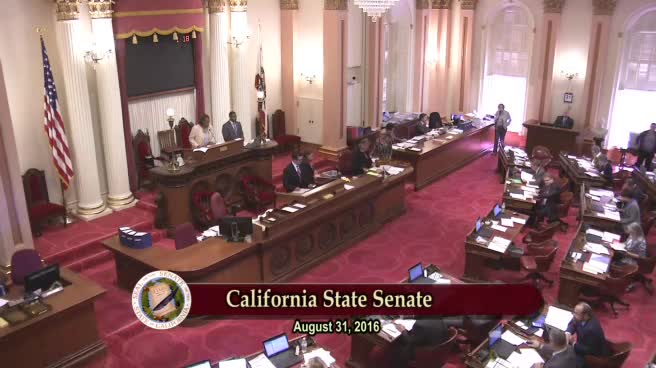 53SEC
Senate Floor
 2MIN
Assembly Floor
 1MIN
Assembly Floor
 4MIN
Assembly Standing Committee on Appropriations
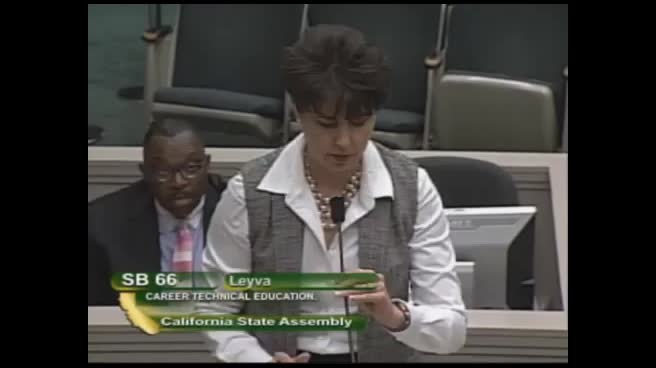 12MIN
Assembly Standing Committee on Business and Professions
 4MIN
Senate Floor
 4MIN
Senate Standing Committee on Appropriations
 9MIN
Senate Standing Committee on Education


Bill Co-Author(s):