SB 673: Hazardous waste.
- Session Year: 2015-2016
- House: Senate
- Latest Version Date: 2015-10-08
The Hazardous Waste Control Law, among other things, authorizes the Department of Toxic Substances Control to regulate the generation and disposal of hazardous waste.
This bill would require the department, by January 1, 2018, to establish or update criteria for use in determining whether to issue a new or modified hazardous waste facilities permit or a renewal of a hazardous waste facilities permit, and to develop and implement, by July 1, 2018, programmatic reforms designed to improve the protectiveness, timeliness, legal defensibility, and enforceability of the departments permitting program.
(1)The
The Hazardous Waste Control Law, among other things, authorizes the Department of Toxic Substances Control to regulate the generation and disposal of hazardous waste.
This bill would establish, until January 1, 2021, the DTSC California Communities Committee within the department and require the committee to make recommendations to the department to increase public participation in, and the transparency of, the departments decisionmaking. The bill would require the department, by July January 1, 2018, to adopt additional criteria, as specified, establish or update criteria for use in determining whether to issue a new or modified hazardous waste facilities permit or a renewal of a hazardous waste facilities permit, and to develop and implement implement, by July 1, 2018, programmatic reforms designed to improve the protectiveness, timeliness, legal defensibility, and enforceability of the departments permitting program.
(2)Existing law authorizes the Department of Toxic Substances Control to issue an order under the hazardous waste control laws requiring that a violation be corrected and imposing a civil penalty to specified persons, including a person who has violated various provisions regulating hazardous waste or provisions concerning removal and remedial actions for hazardous substance releases. A person who is issued that order is required to pay for oversight of the removal or remedial action. The existing Carpenter-Presley-Tanner Hazardous Substance Account Act, authorizes the department to take or oversee removal and remedial actions related to the release of hazardous substances.
This bill would require a person to pay for oversight of any corrective action required of the person with respect to hazardous waste.
(1)The Hazardous Waste Control Law, among other things, authorizes the Department of Toxic Substances Control to regulate the generation and disposal of hazardous waste.
This bill would establish, until January 1, 2021, the DTSC California Communities Committee within the department and require the committee to make recommendations to the department to increase public participation in, and the transparency of, the departments decisionmaking. The bill would require the department, by July 1, 2018, to adopt additional criteria, as specified, for use in determining whether to issue a new or modified hazardous waste facilities permit or a renewal of a hazardous waste facilities permit, and to develop and implement programmatic reforms designed to improve the protectiveness, timeliness, legal defensibility, and enforceability of the departments permitting program.
(2)Existing law authorizes the Department of Toxic Substances Control to issue an order under the hazardous waste control laws requiring that a violation be corrected and imposing a civil penalty to specified persons, including a person who has violated various provisions regulating hazardous waste or provisions concerning removal and remedial actions for hazardous substance releases. A person who is issued that order is required to pay for oversight of the removal or remedial action. The existing Carpenter-Presley-Tanner Hazardous Substance Account Act, authorizes the department to take or oversee removal and remedial actions related to the release of hazardous substances.
This bill would require a person to pay for oversight of any corrective action required of the person with respect to hazardous waste.
(1)The Hazardous Waste Control Law, among other things, authorizes the Department of Toxic Substances Control to regulate the generation and disposal of hazardous waste.
This bill would establish, until January 1, 2021, the DTSC Community Oversight California Communities Committee within the department and require the committee to make recommendations to the department to increase public participation in, and the transparency of, the departments decisionmaking, and to serve as a resource and liaison for communities and residents in communication with the department. decisionmaking. The bill would require the department, by July 1, 2018, to adopt additional criteria, as specified, for use in determining whether to issue a new hazardous waste facilities permit or a renewal of a hazardous waste facilities permit, and to develop and implement programmatic reforms designed to improve the protectiveness, timeliness, legal defensibility, and enforceability of the departments permitting program.
(2)Existing law authorizes the Department of Toxic Substances Control to issue an order under the hazardous waste control laws requiring that a violation be corrected and imposing a civil penalty to specified persons, including a person who has violated various provisions regulating hazardous waste or provisions concerning removal and remedial actions for hazardous substance releases. A person who is issued that order is required to pay for oversight of the removal or remedial action. The existing Carpenter-Presley-Tanner Hazardous Substance Account Act, authorizes the department to take or oversee removal and remedial actions related to the release of hazardous substances.
This bill would require a person to pay for oversight of any corrective action required of the person with respect to hazardous waste.
(1)The Hazardous Waste Control Law, among other things, authorizes the Department of Toxic Substances Control to regulate the generation and disposal of hazardous waste.
This bill would establish, until January 1, 2021, the DTSC Community Oversight Committee within the department and require the committee to make recommendations to the department to increase public participation in, and the transparency of, the departments decisionmaking, and to serve as a resource and liaison for communities and residents in communication with the department. The bill would require the department, by July 1, 2018, to adopt additional criteria, as specified, for use in determining whether to issue a new hazardous waste facilities permit or a renewal of a hazardous waste facilities permit, and to develop and implement programmatic reforms designed to improve the protectiveness, timeliness, legal defensibility, and enforceability of the departments permitting program.
(2)Existing law authorizes the Department of Toxic Substances Control to issue an order under the hazardous waste control laws requiring that a violation be corrected and imposing a civil penalty to specified persons, including a person who has violated various provisions regulating hazardous waste or provisions concerning removal and remedial actions for hazardous substance releases. A person who is issued that order is required to pay for oversight of the removal or remedial action. The existing Carpenter-Presley-Tanner Hazardous Substance Account Act, authorizes the department to take or oversee removal and remedial actions related to the release of hazardous substances.
This bill would require a person to pay for oversight of any corrective action required of the person with respect to hazardous waste.
Existing law requires air pollution control and air quality management districts to adopt and enforce rules and regulations to achieve and maintain the state and federal ambient air quality standards in all areas affected by emissions sources under their jurisdiction and requires those districts to enforce all applicable provisions of state and federal law.
This bill would make technical, nonsubstantive changes to this provision.
On or before January 1, 2018, the department shall adopt regulations establishing or updating criteria used for the issuance of a new or modified permit or renewal of a permit, which may include criteria for the denial or suspension of a permit. In addition to any other criteria the department may establish or update in these regulations, the department shall consider for inclusion as criteria all of the following:
(a)Number and types of past violations that will result in a denial.
(b)The vulnerability of, and existing health risks to, nearby populations. Vulnerability and existing health risks shall be assessed using available tools, local and regional health risk assessments, the regions federal Clean Air Act attainment status, and other indicators of community vulnerability, cumulative impact, and potential risks to health and well-being.
(c)Minimum setback distances from sensitive receptors, such as schools, child care facilities, residences, hospitals, elder care facilities, and other sensitive locations.
(d)Evidence of financial responsibility and qualifications of ownership.
(e)Provision of financial assurances pursuant to Section 25200.1.
(f)Training of personnel in the safety culture and plans, emergency plans, and maintenance of operations.
(g)Completion of a health risk assessment.
SEC. 2.Section 25200.23 is added to the Health and Safety Code, to read:25200.23.On or before July 1, 2018, the department shall develop and implement programmatic reforms designed to improve the protectiveness, timeliness, legal defensibility, and enforceability of the departments permitting program, including strengthening environmental justice safeguards, enhancing enforcement of public health protections, and increasing public participation and outreach activities. In accomplishing these reforms, the department shall do all of the following:
(a)Establish transparent standards and procedures for permitting decisions, including those that are applicable to permit revocation and denial.
(b)Establish terms and conditions on permits to better protect public health and the environment, including in imminent and substantial endangerment situations.
(c)Employ consistent procedures for reviewing permit applications, integrating public input into those procedures, and making timely permit decisions.
(d)Enhance public involvement using procedures that provide for early identification and integration of public concerns into permitting decisions, including concerns of communities identified pursuant to Section 39711.
If a person is required to take corrective action with respect to hazardous waste, that person shall pay for oversight of the corrective action. This section does not prohibit the department or unified program agency from assessing any other penalty or recovering any costs for oversight of a removal or remedial action, pursuant to any other provision. Nothing in this section limits the due process requirements of Section 25187.
SEC. 2.Article 8.8 (commencing with Section 25199.20) is added to Chapter 6.5 of Division 20 of the Health and Safety Code, to read:8.8.DTSC California Communities Committee25199.20.(a)There is hereby established in the department, the DTSC California Communities Committee composed of 13 members representing California residents affected by hazardous waste. The committee members shall not include representatives from the department or an entity regulated by the department pursuant to this chapter.
(b)Members of the committees shall be appointed as follows:
(1)Five members appointed by the Secretary for Environmental Protection, including a designated chair of the committee.
(2)Four members appointed by the Senate Committee on Rules.
(3)Four members appointed by the Speaker of the Assembly.
(c) Each member of the committee shall serve at the pleasure of his or her appointing authority.
(d)Beginning March 1, 2016, the committee shall meet with the Secretary for Environmental Protection or his or her representative, the director, and department staff at least three times during that year, then quarterly beginning in the 2017 calendar year on a schedule as agreed upon by the committee and the director.
(e)The committee shall do both of the following:
(1)Provide information on the concerns of individual communities impacted by the departments hazardous waste permitting, enforcement, or remediation activities, and provide input on outreach activities to increase public participation in those communities.
(2)Make recommendations for changes in policies, procedures, and standards of the department to increase public participation in, and the transparency of, the departments decisionmaking, including providing input to the director on ways to improve the departments permitting of hazardous waste facilities and enforcement and remedial actions, particularly with regard to public participation and in communities identified pursuant to Section 39711 that are burdened by multiple sources of pollution.
(f)The committee shall, 30 days prior to each meeting, provide the director with an agenda outlining the topics to be discussed at the meeting.
(g)Upon receipt of the agenda, the department shall post the agenda on its Internet Web site.
(h)The department shall provide appropriate meeting space for meetings of the committee.
(i)Meetings of the committee shall be open to the public and are subject to the Bagley-Keene Open Meeting Act (Article 9 (commencing with Section 11120) of Chapter 1 of Part 1 of Division 3 of Title 2 of the Government Code).
(j)The department shall provide the committee with appropriate per diem compensation consistent with Section 19822.5 of the Government Code.
25199.21.This article shall remain in effect only until January 1, 2021, and as of that date is repealed, unless a later enacted statute, that is enacted before January 1, 2021, deletes or extends that date.
SEC. 3.SECTION 1.Section 25200.21 is added to the Health and Safety Code, to read:25200.21.On or before January 1, 2018, the department shall adopt regulations establishing additional criteria that the department shall use to determine whether to issue a new or modified permit or a renewal of a permit pursuant to this article. These or updating criteria used for the issuance of a new or modified permit or renewal of a permit, which may include criteria for the denial or suspension of a permit. In addition to any other criteria the department may establish or update in these regulations, the department shall consider for inclusion as criteria shall include, but are not limited to, all of the following:
(a)Number and types of past violations that will result in a denial.
(b)The vulnerability of, and existing health risks to, nearby populations. Vulnerability and existing health risks shall be assessed using the CalEnviroScreen tool, available tools, local and regional health risk assessments, the regions federal Clean Air Act attainment status, and other indicators of community vulnerability, cumulative impact, and potential risks to health and well-being.
(c)Minimum setback distances from sensitive receptors, such as schools, child care facilities, residences, hospitals, elder care facilities, and other sensitive locations.
(d)Evidence of financial responsibility and qualifications of ownership.
(e)Provision of financial assurances pursuant to Section 25200.1.
(f)Training of personnel in the safety culture and plans, emergency plans, and maintenance of operations.
(g)Completion of a health risk assessment.
SEC. 4.SEC. 2.Section 25200.23 is added to the Health and Safety Code, to read:25200.23.On or before July 1, 2018, the department shall develop and implement programmatic reforms designed to improve the protectiveness, timeliness, legal defensibility, and enforceability of the departments permitting program, including strengthening environmental justice safeguards, enhancing enforcement of public health protections, and increasing public participation and outreach activities. In accomplishing these reforms, the department shall do all of the following:
(a)Establish transparent standards and procedures for permitting decisions, including those that are applicable to permit revocation and denial.
(b)Establish terms and conditions on permits to better protect public health and the environment, including in imminent and substantial endangerment situations.
(c)Employ consistent procedures for reviewing permit applications, integrating public input into those procedures, and making timely permit decisions.
(d)Enhance public involvement using procedures that provide for early identification and integration of public concerns into permitting decisions, including concerns of communities identified pursuant to Section 39711.
If a person is required to take corrective action with respect to hazardous waste, that person shall pay for oversight of the corrective action. This section does not prohibit the department or unified program agency from assessing any other penalty or recovering any costs for oversight of a removal or remedial action, pursuant to any other provision. Nothing in this section limits the due process requirements of Section 25187.
SEC. 2.Article 8.8 (commencing with Section 25199.20) is added to Chapter 6.5 of Division 20 of the Health and Safety Code, to read:8.8.DTSC California Communities Committee25199.20.(a)There is hereby established in the department, the DTSC California Communities Committee composed of 13 members representing California residents affected by hazardous waste. The committee members shall not include representatives from the department or an entity regulated by the department pursuant to this chapter.
(b)Members of the committees shall be appointed as follows:
(1)Five members appointed by the Secretary for Environmental Protection, including a designated chair of the committee.
(2)Four members appointed by the Senate Committee on Rules.
(3)Four members appointed by the Speaker of the Assembly.
(c) Each member of the committee shall serve at the pleasure of his or her appointing authority.
(d)Beginning March 1, 2016, the committee shall meet with the Secretary for Environmental Protection or his or her representative, the director, and department staff at least three times during that year, then quarterly beginning in the 2017 calendar year on a schedule as agreed upon by the committee and the director.
(e)The committee shall do both of the following:
(1)Provide information on the concerns of individual communities impacted by the departments hazardous waste permitting, enforcement, or remediation activities, and provide input on outreach activities to increase public participation in those communities.
(2)Make recommendations for changes in policies, procedures, and standards of the department to increase public participation in, and the transparency of, the departments decisionmaking, including providing input to the director on ways to improve the departments permitting of hazardous waste facilities and enforcement and remedial actions, particularly with regard to public participation and in communities identified pursuant to Section 39711 that are burdened by multiple sources of pollution.
(f)The committee shall, 30 days prior to each meeting, provide the director with an agenda outlining the topics to be discussed at the meeting.
(g)Upon receipt of the agenda, the department shall post the agenda on its Internet Web site.
(h)The department shall provide appropriate meeting space for meetings of the committee.
(i)Meetings of the committee shall be open to the public and are subject to the Bagley-Keene Open Meeting Act (Article 9 (commencing with Section 11120) of Chapter 1 of Part 1 of Division 3 of Title 2 of the Government Code).
(j)The department shall provide the committee with appropriate per diem compensation consistent with Section 19822.5 of the Government Code.
25199.21.This article shall remain in effect only until January 1, 2021, and as of that date is repealed, unless a later enacted statute, that is enacted before January 1, 2021, deletes or extends that date.
SEC. 3.Section 25200.21 is added to the Health and Safety Code, to read:25200.21.On or before January 1, 2018, the department shall adopt regulations establishing additional criteria that the department shall use to determine whether to issue a new or modified permit or a renewal of a permit pursuant to this article. These criteria shall include, but are not limited to, all of the following:
(a)Number and types of past violations that will result in a denial.
(b)The vulnerability of, and existing health risks to, nearby populations. Vulnerability and existing health risks shall be assessed using the CalEnviroScreen tool, local and regional health risk assessments, the regions federal Clean Air Act attainment status, and other indicators of community vulnerability, cumulative impact, and potential risks to health and well-being.
(c)Minimum setback distances from sensitive receptors, such as schools, child care facilities, residences, hospitals, elder care facilities, and other sensitive locations.
(d)Evidence of financial responsibility, responsibility and qualifications of ownership, and continuity of ownership and operation. ownership.
(e)Provision of financial assurances pursuant to Section 25200.1.
(f)Training of personnel in the safety culture and plans, emergency plans, and maintenance of operations.
(g)Completion of a health risk assessment.
SEC. 4.Section 25200.23 is added to the Health and Safety Code, to read:25200.23.On or before July 1, 2018, the department shall develop and implement programmatic reforms designed to improve the protectiveness, timeliness, legal defensibility, and enforceability of the departments permitting program, including strengthening environmental justice safeguards, enhancing enforcement of public health protections, and increasing public participation and outreach activities. In accomplishing these reforms, the department shall do all of the following:
(a)Establish transparent standards and procedures for permitting decisions, including those that are applicable to permit revocation and denial.
(b)Establish terms and conditions on permits to better protect public health and the environment, including in imminent and substantial endangerment situations.
(c)Employ consistent procedures for reviewing permit applications, integrating public input into those procedures, and making timely permit decisions.
(d)Enhance public involvement using procedures that provide for early identification and integration of public concerns into permitting decisions, including concerns of communities identified pursuant to Section 39711.
If a person is required to take corrective action with respect to hazardous waste, that person shall pay for oversight of the corrective action. This section does not prohibit the department or unified program agency from assessing any other penalty or recovering any costs for oversight of a removal or remedial action, pursuant to any other provision. Nothing in this section limits the due process requirements of Section 25187.
SEC. 2.Article 8.8 (commencing with Section 25199.20) is added to Chapter 6.5 of Division 20 of the Health and Safety Code, to read:8.8.DTSC Community Oversight California Communities Committee25199.20.(a)There is hereby established in the department, the DTSC Community Oversight California Communities Committee composed of 13 members representing California residents affected by hazardous waste. The committee members shall not include representatives from the department or an entity regulated by the department pursuant to this chapter.
(b)Members of the committees shall be appointed as follows:
(1)Five members appointed by the Secretary for Environmental Protection. Protection, including a designated chair of the committee.
(2)Four members appointed by the Senate Committee on Rules.
(3)Four members appointed by the Speaker of the Assembly.
(c) Each member of the committee shall serve at the pleasure of his or her appointing authority.
(d)Beginning March 1, 2016, the committee shall meet with the Secretary for Environmental Protection or his or her representative, the director, and department staff at least three times during that year, then quarterly beginning in the 2017 calendar year. year on a schedule as agreed upon by the committee and the director.
(e)The committee shall do both of the following:
(1)Provide information on the concerns of individual communities impacted by the departments hazardous waste permitting, enforcement, or remediation activities, and provide input on outreach activities to increase public participation in those communities.
(1)
(2)Make recommendations for changes in policies, procedures, and standards of the department to increase public participation in, and the transparency of, the departments decisionmaking, including providing input to the director on ways to improve the departments permitting of hazardous waste facilities and enforcement and remedial actions, particularly with regard to public participation and in communities identified pursuant to Section 39711 that are burdened by multiple sources of pollution.
(2)Serve as a resource and liaison for communities and residents in communication with the department, including reviewing the departments current efforts and providing input to the director on ways to improve the departments outreach to, and communication with, communities and stakeholders, to increase public participation in, and the transparency of, the departments permitting process.
(f)The committee shall, 30 days prior to each meeting, provide the director with an agenda outlining the topics to be discussed at the meeting.
(g)Upon receipt of the agenda, the department shall post the agenda on its Internet Web site.
(h)The department shall provide appropriate meeting space for meetings of the committee.
(i)Meetings of the committee shall be open to the public and are subject to the Bagley-Keene Open Meeting Act (Article 9 (commencing with Section 11120) of Chapter 1 of Part 1 of Division 3 of Title 2 of the Government Code).
(f)
(j)The department shall provide the committee with appropriate per diem compensation consistent with Section 19822.5 of the Government Code.
25199.21.This article shall remain in effect only until January 1, 2021, and as of that date is repealed, unless a later enacted statute, that is enacted before January 1, 2021, deletes or extends that date.
SEC. 3.Section 25200.21 is added to the Health and Safety Code, to read:25200.21.On or before January 1, 2018, the department shall adopt regulations establishing additional criteria that the department shall use to determine whether to issue a new permit or a renewal of a permit pursuant to this article. These criteria shall include, but are not limited to, all of the following:
(a)Number and types of past violations that will result in a denial.
(b)The vulnerability of, and existing health risks to, nearby populations. Vulnerability shall be assessed using the CalEnviroScreen tool, local and regional health risk assessments, the regions federal Clean Air Act attainment status, and other indicators of community vulnerability, cumulative impact, and potential risks to health and well-being.
(c)Minimum setback distances from sensitive receptors, such as schools, child care facilities, residences, hospitals, elder care facilities, and other sensitive locations.
(d)Evidence of financial responsibility, qualifications of ownership, and continuity of ownership and operation.
(e)Provision of financial assurances pursuant to Section 25200.1.
(f)Training of personnel in the safety culture and plans, emergency plans, and maintenance of operations.
SEC. 4.Section 25200.23 is added to the Health and Safety Code, to read:25200.23.On or before July 1, 2018, the department shall develop and implement programmatic reforms designed to improve the protectiveness, timeliness, legal defensibility, and enforceability of the departments permitting program, including strengthening environmental justice safeguards, enhancing enforcement of public health protections, and increasing public participation and outreach activities. In accomplishing these reforms, the department shall do all of the following:
(a)Establish transparent standards and procedures for permitting decisions, including those that are applicable to permit revocation and denial.
(b)Establish terms and conditions on permits to better protect public health and the environment, including in imminent and substantial endangerment situations.
(c)Employ consistent procedures for reviewing permit applications, integrating public input into those procedures, and making timely permit decisions.
(d)Enhance public involvement using procedures that provide for early identification and integration of public concerns into permitting decisions, including concerns of communities identified pursuant to Section 39711.
If a removal or remedial action order issued pursuant to Section 25187 to a potentially responsible party requires a person is required to take corrective action with respect to hazardous waste, that person shall pay for oversight of the removal or remedial corrective action. This section does not prohibit the department or unified program agency from assessing any other penalty or recovering any costs for oversight of a removal or remedial action, pursuant to any other provision. Nothing in this section limits the due process requirements of Section 25187.
SEC. 2.Article 8.8 (commencing with Section 25199.20) is added to Chapter 6.5 of Division 20 of the Health and Safety Code, to read:8.8.DTSC Community Oversight Committee25199.20.(a)There is hereby established in the department, the DTSC Community Oversight Committee composed of 13 members representing California residents affected by hazardous waste. The committee members shall not include representatives from the department or an entity regulated by the department pursuant to this chapter.
(b)Members of the committees shall be appointed as follows:
(1)Five members appointed by the Secretary for Environmental Protection.
(2)Four members appointed by the Senate Committee on Rules.
(3)Four members appointed by the Speaker of the Assembly.
(c) Each member of the committee shall serve at the pleasure of his or her appointing authority.
(d)Beginning March 1, 2016, the committee shall meet at least three times during that year, then quarterly beginning in the 2017 calendar year.
(e)The committee shall do both of the following:
(1)Make recommendations for changes in policies, procedures, and standards of the department to increase public participation in, and the transparency of, the departments decisionmaking, including providing input to the director on ways to improve the departments permitting of hazardous waste facilities and enforcement actions, particularly with regard to public participation and in communities identified pursuant to Section 39711 that are burdened by multiple sources of pollution.
(2)Serve as a resource and liaison for communities and residents in communication with the department, including reviewing the departments current efforts and providing input to the director on ways to improve the departments outreach to, and communication with, communities and stakeholders, to increase public participation in, and the transparency of, the departments permitting process.
(f)The department shall provide the committee with appropriate per diem compensation consistent with Section 19822.5 of the Government Code.
25199.21.This article shall remain in effect only until January 1, 2021, and as of that date is repealed, unless a later enacted statute, that is enacted before January 1, 2021, deletes or extends that date.
SEC. 3.Section 25200.21 is added to the Health and Safety Code, to read:25200.21.On or before January 1, 2018, the department shall adopt regulations establishing additional criteria that the department shall use to determine whether to issue a new permit or a renewal of a permit pursuant to this article. These criteria shall include, but are not limited to, all of the following:
(a)Number and types of past violations that will result in a denial.
(b)The vulnerability of, and existing health risks to, nearby populations. Vulnerability shall be assessed using the CalEnviroScreen tool, local and regional health risk assessments, the regions federal Clean Air Act attainment status, and other indicators of community vulnerability, cumulative impact, and potential risks to health and well-being.
(c)Minimum setback distances from sensitive receptors, such as schools, child care facilities, residences, hospitals, elder care facilities, and other sensitive locations.
(d)Evidence of financial responsibility, qualifications of ownership, and continuity of ownership and operation.
(e)Provision of financial assurances pursuant to Section 25200.1.
(f)Training of personnel in the safety culture and plans, emergency plans, and maintenance of operations.
SEC. 4.Section 25200.23 is added to the Health and Safety Code, to read:25200.23.On or before July 1, 2018, the department shall develop and implement programmatic reforms designed to improve the protectiveness, timeliness, legal defensibility, and enforceability of the departments permitting program, including strengthening environmental justice safeguards, enhancing enforcement of public health protections, and increasing public participation and outreach activities. In accomplishing these reforms, the department shall do all of the following:
(a)Establish transparent standards and procedures for permitting decisions, including those that are applicable to permit revocation and denial.
(b)Establish terms and conditions on permits to better protect public health and the environment, including in imminent and substantial endangerment situations.
(c)Employ consistent procedures for reviewing permit applications, integrating public input into those procedures, and making timely permit decisions.
(d)Enhance public involvement using procedures that provide for early identification and integration of public concerns into permitting decisions, including concerns of communities identified pursuant to Section 39711.
SECTION 1.Section 40001 of the Health and Safety Code is amended to read:40001.(a) Subject to the powers and duties of the state board, the districts shall adopt and enforce rules and regulations to achieve and maintain the state and federal ambient air quality standards in all areas affected by emission sources under their jurisdiction, and shall enforce all applicable provisions of state and federal law.
(b) The district rules and regulations may, and at the request of the state board shall, provide for the prevention and abatement of air pollution episodes that, at intervals, cause discomfort or health risks to, or damage to the property of, a significant number of persons or class of persons.
(c) Prior to adopting a rule or regulation to reduce criteria pollutants, a district shall determine that there is a problem that the proposed rule or regulation will alleviate and that the rule or regulation will promote the attainment or maintenance of state or federal ambient air quality standards.
(d) (1) The district rules and regulations shall include a process to approve alternative methods of complying with emission control requirements that provide equivalent emission reductions, emissions monitoring, or recordkeeping.
(2) A district shall allow the implementation of alternative methods of emission reduction, emissions monitoring, or recordkeeping if a facility demonstrates to the satisfaction of the district that those alternative methods will provide equivalent performance. An alternative method of emission reduction, emissions monitoring, or recordkeeping proposed by the facility shall not violate other provisions of law.
(3) If a district rule specifies an emission limit for a facility or system, the district shall not set operational or effectiveness requirements for any specific emission control equipment operating on a facility or system under that limit. An alternative method of emission reduction, emissions monitoring, or recordkeeping proposed by the facility shall include the necessary operational and effectiveness measurement elements that can be included as permit conditions by the district to ensure compliance with, and enforcement of, the equivalent performance requirements of paragraphs (1) and (2). Nothing in this subdivision limits the districts authority to inspect a facilitys equipment or records to ensure operational compliance. This paragraph shall apply to existing rules and facilities operating under those rules.
(a) Subject to the powers and duties of the state board, the districts shall adopt and enforce rules and regulations to achieve and maintain the state and federal ambient air quality standards in all areas affected by emission sources under their jurisdiction, and shall enforce all applicable provisions of state and federal law.
(b) The district rules and regulations may, and at the request of the state board shall, provide for the prevention and abatement of air pollution episodes which that, at intervals, cause discomfort or health risks to, or damage to the property of, a significant number of persons or class of persons.
(c) Prior to adopting any a rule or regulation to reduce criteria pollutants, a district shall determine that there is a problem that the proposed rule or regulation will alleviate and that the rule or regulation will promote the attainment or maintenance of state or federal ambient air quality standards.
(d) (1) The district rules and regulations shall include a process to approve alternative methods of complying with emission control requirements that provide equivalent emission reductions, emissions monitoring, or recordkeeping.
(2) A district shall allow the implementation of alternative methods of emission reduction, emissions monitoring, or recordkeeping if a facility demonstrates to the satisfaction of the district that those alternative methods will provide equivalent performance. Any An alternative method of emission reduction, emissions monitoring, or recordkeeping proposed by the facility shall not violate other provisions of law.
(3) If a district rule specifies an emission limit for a facility or system, the district shall not set operational or effectiveness requirements for any specific emission control equipment operating on a facility or system under that limit. Any An alternative method of emission reduction, emissions monitoring, or recordkeeping proposed by the facility shall include the necessary operational and effectiveness measurement elements that can be included as permit conditions by the district to ensure compliance with, and enforcement of, the equivalent performance requirements of paragraphs (1) and (2). Nothing in this subdivision limits the districts authority to inspect a facilitys equipment or records to ensure operational compliance. This paragraph shall apply to existing rules and facilities operating under those rules.
|
Date
|
Status
|
|---|---|
| Oct 8, 2015 | Chaptered by Secretary of State. Chapter 611, Statutes of 2015. |
| Oct 8, 2015 | Approved by the Governor. |
| Sep 16, 2015 | Enrolled and presented to the Governor at 4:45 p.m. |
| Sep 11, 2015 | Assembly amendments concurred in. (Ayes 31. Noes 7. Page 2754.) Ordered to engrossing and enrolling. |
| Sep 11, 2015 | Assembly amendments concurred in. (Ayes 31. Noes 7.) Ordered to engrossing and enrolling. |
| Sep 10, 2015 | Read third time. Passed. (Ayes 50. Noes 25. Page 3095.) Ordered to the Senate. |
| Sep 10, 2015 | In Senate. Concurrence in Assembly amendments pending. |
| Sep 10, 2015 | Read third time. Passed. Ordered to the Senate. |
| Sep 4, 2015 | Ordered to third reading. |
| Sep 4, 2015 | Read third time and amended. |
| Aug 31, 2015 | Read second time. Ordered to third reading. |
| Aug 28, 2015 | From committee: Do pass. (Ayes 12. Noes 5.) (August 27). |
| Aug 19, 2015 | August 19 set for first hearing. Placed on APPR. suspense file. |
| Jul 15, 2015 | From committee: Do pass and re-refer to Com. on APPR. (Ayes 5. Noes 1.) (July 14). Re-referred to Com. on APPR. |
| Jul 8, 2015 | From committee with author's amendments. Read second time and amended. Re-referred to Com. on E.S. & T.M. |
| Jun 18, 2015 | Referred to Com. on E.S. & T.M. |
| Jun 2, 2015 | In Assembly. Read first time. Held at Desk. |
| Jun 1, 2015 | Read third time. Passed. (Ayes 21. Noes 14. Page 1192.) Ordered to the Assembly. |
| Jun 1, 2015 | Read third time. Passed. (Ayes 21. Noes 14.) Ordered to the Assembly. |
| May 28, 2015 | Read second time. Ordered to third reading. |
| May 28, 2015 | From committee: Do pass. (Ayes 5. Noes 2. Page 1158.) (May 28). |
| May 28, 2015 | From committee: Do pass. (Ayes 5. Noes 2.) (May 28). |
| May 23, 2015 | Set for hearing May 28. |
| May 18, 2015 | May 18 hearing: Placed on APPR. suspense file. |
| May 8, 2015 | Set for hearing May 18. |
| May 5, 2015 | Read second time and amended. Re-referred to Com. on APPR. |
| May 4, 2015 | From committee: Do pass as amended and re-refer to Com. on APPR. (Ayes 5. Noes 2. Page 859.) (April 29). |
| May 4, 2015 | From committee: Do pass as amended and re-refer to Com. on APPR. (Ayes 5. Noes 2.) (April 29). |
| Apr 17, 2015 | Set for hearing April 29. |
| Apr 16, 2015 | Re-referred to Com. on E.Q. |
| Apr 6, 2015 | From committee with author's amendments. Read second time and amended. Re-referred to Com. on RLS. |
| Mar 12, 2015 | Referred to Com. on RLS. |
| Mar 2, 2015 | Read first time. |
| Mar 2, 2015 | From printer. May be acted upon on or after April 1. |
| Feb 27, 2015 | Introduced. To Com. on RLS. for assignment. To print. |
|
Date
|
Description
|
Location
|
Votes
|
|
|---|---|---|---|---|
| Sep 11, 2015 | Unfinished Business SB673 Lara Concurrence | Senate Floor |
Passed |
|
| Sep 10, 2015 | SB 673 Lara Senate Third Reading By SANTIAGO | Assembly Floor |
Passed |
|
| Aug 27, 2015 | Do pass. | Assembly Standing Committee on Appropriations |
Passed |
|
| Jul 14, 2015 | Do pass and be re-referred to the Committee on [Appropriations] | Assembly Standing Committee on Environmental Safety and Toxic Materials |
Passed |
|
| Jun 1, 2015 | Senate 3rd Reading SB673 Lara Motions | Senate Floor |
Passed |
|
| May 28, 2015 | Do pass | Senate Standing Committee on Appropriations |
Passed |
|
| May 18, 2015 | Placed on suspense file | Senate Standing Committee on Appropriations |
Passed |
|
| Apr 29, 2015 | Do pass as amended, but first amend, and re-refer to the Committee on [Appropriations] | Senate Standing Committee on Environmental Quality |
Passed |
This list shows positions taken on this bill by organizations on the date displayed, which is linked to the original source.
Positions by individuals are not included.
SB 673
Page 4
|
Office of Senate Floor Analyses (916) 651-1520 Fax: (916) 327-4478 |
UNFINISHED BUSINESS
Bill No: SB 673
Amended: 9/4/15
SENATE ENVIRONMENTAL QUALITY COMMITTEE: 5-2, 4/29/15
AYES: Wieckowski, Hill, Jackson, Leno, Pavley
NOES: Gaines, Bates
SENATE APPROPRIATIONS COMMITTEE: 5-2, 5/28/15
AYES: Lara, Beall, Hill, Leyva, Mendoza
NOES: Bates, Nielsen
SENATE FLOOR: 21-14, 6/1/15
AYES: Allen, Beall, De León, Hall, Hancock, Hernandez, Hill, Hueso, Jackson, Lara, Leno, Leyva, Liu, McGuire, Mendoza, Mitchell, Monning, Pan, Pavley, Wieckowski, Wolk
NOES: Anderson, Bates, Berryhill, Cannella, Fuller, Gaines, Huff, Moorlach, Morrell, Nguyen, Nielsen, Runner, Stone, Vidak
NO VOTE RECORDED: Block, Galgiani, Glazer, Hertzberg, Roth
ASSEMBLY FLOOR: 50-25, 9/10/15 - See last page for vote
DIGEST: This bill revises the Department of Toxic Substances Control's (DTSC) permitting process and public participation requirements for hazardous waste facilities.
Assembly Amendments remove language:
Creating the DTSC California Communities Committee within the DTSC.
Requiring the DTSC to adopt regulations establishing additional criteria that the DTSC shall use to determine whether to issue a new or modified permit or a renewal of a permit pursuant to this article and rather require the DTSC to adopt regulations that establish or update criteria used for the issuance of a new or modified permit or renewal of a permit, which may include criteria for the denial or suspension of a permit.
Existing law, the Hazardous Waste Control Law, authorizes the DTSC to regulate the generation and disposal of hazardous waste.
This bill revises the Department of Toxic Substances Control's (DTSC) permitting process and public participation requirements for hazardous waste facilities. Specifically, this bill:
Requires the DTSC, by July 1, 2018, to adopt criteria for use in determining whether to issue a new or modified hazardous waste facilities permit or a renewal of a hazardous waste facilities permit, and to develop and implement programmatic reforms designed to improve the protectiveness, timeliness, legal defensibility, and enforceability of the DTSC's permitting program.
Requires the DTSC to consider vulnerable communities in making permit decisions using the available assessment tools, local and regional health risk assessments, the region's federal Clean Air Act attainment status, and other indicators of community vulnerability, cumulative impact, and potential risks to health and well-being.
Requires the DTSC to consider minimum facility setback distances from sensitive receptors, such as schools, child care facilities, residences, hospitals, elder care facilities, and other sensitive locations when making permit decisions.
Requires the DTSC to establish criteria of the completion of a health risk assessment associated with facility permit reviews.
Background
Permitting hazardous waste storage, treatment, and disposal facilities: The DTSC is responsible for the review of RCRA and non-RCRA hazardous waste permit applications to ensure the safe design and operation; for issuance/denial of operating permits; issuance of post closure permits; approval/denial of permit modifications; issuance/denial of emergency permits; review and approval of closure plans; closure oversight of approved closure plans; issuance/denial of variances; assistance to regulated industry on permitting matters; public involvement.
The DTSC external peer review of permit reforms: The DTSC has undertaken a review of permitting and enforcement processes for hazardous waste facilities. To do this, the DTSC contracted for an outside program evaluation by CPS HR Consulting that provided a review of the DTSC permit process to develop a standardized process with decision criteria and corresponding standards of performance.
The program evaluation of the DTSC permitting process found that there has been significant dissatisfaction with the performance of the permitting office, directed at the cost and length of time in completing the permit process and a perception that the office does not deny or revoke permits as often as it should to address community concerns.
The DTSC Permitting Enhancement Work Plan (PEWP): In 2014, the DTSC developed PEWP to improve the DTSC's permitting program and to ensure that the problems of the past do not resurface in the future. The PEWP will serve as a comprehensive work plan for the DTSC's efforts to improve the permitting program's ability to issue protective, timely, and enforceable permits using more transparent standards and consistent procedures.
FISCAL EFFECT: Appropriation: No Fiscal Com.: Yes Local: No
According to the Assembly Appropriations Committee, this bill would have an increased one-time cost of $600,000 for DTSC to revise permitting regulations.
California Environmental Justice Alliance
Center for Community Action and Environmental Justice
Center on Race, Poverty & the Environment
Clean Water Action
Communities for a Better Environment
Concerned Neighbors of Wildomar
Environmental Action Committee of West Marin
Environmental Working Group
Greater Pasadena Jews for Justice
LA Human Right to Housing Collective
Natural Resources Defense Council
People Organizing to Demand Environmental & Economic Rights
People’s Senate and Leadership Institute
Physicians for Social Responsibility, Los Angeles
OPPOSITION: (Verified 9/10/15)
Clean Harbors Environmental Services, Inc.
DeMenno/Kerdoon
Safety-Kleen
World Oil Corp
ASSEMBLY FLOOR: 50-25, 9/10/15
AYES: Alejo, Bloom, Bonilla, Bonta, Brown, Burke, Calderon, Campos, Chau, Chiu, Chu, Cooley, Cooper, Dababneh, Daly, Dodd, Eggman, Cristina Garcia, Eduardo Garcia, Gatto, Gomez, Gonzalez, Gordon, Gray, Roger Hernández, Holden, Irwin, Jones-Sawyer, Levine, Lopez, Low, McCarty, Medina, Mullin, Nazarian, O'Donnell, Perea, Quirk, Rendon, Ridley-Thomas, Rodriguez, Salas, Santiago, Mark Stone, Thurmond, Ting, Weber, Williams, Wood, Atkins
NOES: Achadjian, Travis Allen, Baker, Bigelow, Brough, Chang, Chávez, Beth Gaines, Gallagher, Grove, Harper, Jones, Kim, Lackey, Maienschein, Mathis, Mayes, Melendez, Obernolte, Olsen, Patterson, Steinorth, Wagner, Waldron, Wilk
NO VOTE RECORDED: Dahle, Frazier, Gipson, Hadley, Linder
Prepared by: Rachel Machi Wagoner / E.Q. / (916) 651-4108
9/10/15 23:22:51
**** END ****
SB 673
Page 2
SENATE THIRD READING
SB 673
(Lara)
As Amended September 4, 2015
Majority vote
SENATE VOTE: 21-14
Committee |
Votes |
Ayes |
Noes |
Environmental Safety |
5-1 |
Alejo, Gonzalez, Gray, McCarty, Ting |
Gallagher |
Appropriations |
12-5 |
Gomez, Bloom, Bonta, Calderon, Nazarian, Eggman, Eduardo Garcia, Holden, Quirk, Rendon, Weber, Wood |
Bigelow, Chang, Gallagher, Jones, Wagner |
SUMMARY: Revises the Department of Toxic Substances Control's (DTSC) permitting process and public participation requirements for hazardous waste facilities. Specifically, this bill:
Requires DTSC, by July 1, 2018, to adopt criteria for use in determining whether to issue a new or modified hazardous waste facilities permit or a renewal of a hazardous waste facilities permit, and to develop and implement programmatic reforms designed to improve the protectiveness, timeliness, legal defensibility, and enforceability of DTSC's permitting program.
Requires DTSC to consider vulnerable communities in making permit decisions using the available assessment tools, local and regional health risk assessments, the region's federal Clean Air Act attainment status, and other indicators of community vulnerability, cumulative impact, and potential risks to health and well-being.
Requires DTSC to consider minimum facility setback distances from sensitive receptors, such as schools, child care facilities, residences, hospitals, elder care facilities, and other sensitive locations when making permit decisions.
Requires DTSC to establish criteria of the completion of a health risk assessment associated with facility permit reviews.
FISCAL EFFECT: According to the Assembly Appropriations Committee, this bill would have an increased one-time cost of $600,000 for DTSC to revise permitting regulations.
COMMENTS:
Need for this bill: According to the author, "Recent high profile cases involving permitted facilities such as the Exide Technologies battery recycling facility in Vernon, CA, and the Kettleman Hills Hazardous Waste Facility in Kings County have raised significant environmental justice concerns from the communities surrounding the facilities and have led to criticism of the department’s permitting procedures and responsiveness to community concerns.
An external peer review of permit reforms undertaken by DTSC found that there has been significant dissatisfaction with the performance of the department, and in particular a perception that the office is not responsive to community concerns. That report also recommended that clear and objective permitting criteria should be developed to establish when permits should be revoked or not renewed."
Permitting hazardous waste storage, treatment, and disposal facilities: DTSC is responsible for the review of RCRA and non-RCRA hazardous waste permit applications to ensure the safe design and operation; for issuance/denial of operating permits; issuance of post closure permits; approval/denial of permit modifications; issuance/denial of emergency permits; review and approval of closure plans; closure oversight of approved closure plans; issuance/denial of variances; assistance to regulated industry on permitting matters; public involvement.
DTSC external peer review of permit reforms: DTSC has undertaken a review of permitting and enforcement processes for hazardous waste facilities. To do this, DTSC contracted for an outside program evaluation by CPS HR Consulting that provided a review of the DTSC permit process to develop a standardized process with decision criteria and corresponding standards of performance.
The program evaluation of the DTSC permitting process found that there has been significant dissatisfaction with the performance of the permitting office, directed at the cost and length of time in completing the permit process and a perception that the office does not deny or revoke permits as often as it should to address community concerns.
DTSC Permitting Enhancement Work Plan (PEWP): In 2014, DTSC developed PEWP to improve DTSC's permitting program and to ensure that the problems of the past do not resurface in the future. The PEWP will serve as a comprehensive work plan for DTSC's efforts to improve the permitting program's ability to issue protective, timely, and enforceable permits using more transparent standards and consistent procedures.
Analysis Prepared by: Bob Fredenburg / E.S. & T.M. / (916) 319-3965 FN: 0002137
SB 673
Page 2
SENATE THIRD READING
SB 673
(Lara)
As Amended July 8, 2015
Majority vote
SENATE VOTE: 21-14
Committee |
Votes |
Ayes |
Noes |
Environmental Safety |
5-1 |
Alejo, Gonzalez, Gray, McCarty, Ting |
Gallagher |
Appropriations |
12-5 |
Gomez, Bloom, Bonta, Calderon, Nazarian, Eggman, Eduardo Garcia, Holden, Quirk, Rendon, Weber, Wood |
Bigelow, Chang, Gallagher, Jones, Wagner |
SUMMARY: Revises the Department of Toxic Substances Control's (DTSC) permitting process and public participation requirements for hazardous waste facilities. Specifically, this bill:
Establishes, until January 1, 2021, the DTSC Community Oversight Committee within DTSC and requires it to make recommendations to DTSC to increase public participation in, and the transparency of, the department’s decision making process, and to serve as a resource and liaison for communities and residents in communication with DTSC.
Requires the Community Oversight Committee is comprised of thirteen members appointed by California Environmental Protection Agency (five members), Senate Rules Committee (four members), and Speaker of the Assembly (four members). Provides that the members of the Community Oversight Committee receive per diem and serve at the pleasure of the respective appointing authorities.
Requires DTSC, by July 1, 2018, to adopt additional criteria for use in determining whether to issue a new or modified hazardous waste facilities permit or a renewal of a hazardous waste facilities permit, and to develop and implement programmatic reforms designed to improve the protectiveness, timeliness, legal defensibility, and enforceability of DTSC's permitting program.
Requires DTSC to consider vulnerable communities in making permit decisions using the CalEnviro Screen tool, local and regional health risk assessments, the region's federal Clean Air Act attainment status, and other indicators of community vulnerability, cumulative impact, and potential risks to health and well-being.
Requires DTSC to consider minimum facility setback distances from sensitive receptors, such as schools, child care facilities, residences, hospitals, elder care facilities, and other sensitive locations when making permit decisions.
Requires DTSC to establish criteria of the completion of a health risk assessment associated with facility permit reviews.
Requires a person to pay for oversight of any corrective action required of the person with respect to hazardous waste.
FISCAL EFFECT: According to the Assembly Appropriations Committee, this bill would have an increased one-time cost of $600,000 for DTSC to revise permitting regulations as well as an ongoing annual cost of $300,000 to staff the California Communities Committee.
COMMENTS:
Need for this bill: According to the author, "Recent high profile cases involving permitted facilities such as the Exide Technologies battery recycling facility in Vernon, CA, and the Kettleman Hills Hazardous Waste Facility in Kings County have raised significant environmental justice concerns from the communities surrounding the facilities and have led to criticism of the department’s permitting procedures and responsiveness to community concerns.
An external peer review of permit reforms undertaken by DTSC found that there has been significant dissatisfaction with the performance of the department, and in particular a perception that the office is not responsive to community concerns. That report also recommended that clear and objective permitting criteria should be developed to establish when permits should be revoked or not renewed."
Permitting hazardous waste storage, treatment, and disposal facilities: DTSC is responsible for the review of Resource Conservation and Recovery Act (RCRA) and non-RCRA hazardous waste permit applications to ensure the safe design and operation; for issuance/denial of operating permits; issuance of post closure permits; approval/denial of permit modifications; issuance/denial of emergency permits; review and approval of closure plans; closure oversight of approved closure plans; issuance/denial of variances; assistance to regulated industry on permitting matters; public involvement.
DTSC external peer review of permit reforms: DTCS has undertaken a review of permitting and enforcement processes for hazardous waste facilities. To do this, DTSC contracted for an outside program evaluation by CPS HR Consulting that provided a review of the DTSC permit process to develop a standardized process with decision criteria and corresponding standards of performance.
The program evaluation of the DTSC permitting process found that there has been significant dissatisfaction with the performance of the permitting office, directed at the cost and length of time in completing the permit process and a perception that the office does not deny or revoke permits as often as it should to address community concerns.
DTSC Permitting Enhancement Work Plan (PEWP): In 2014, DTSC developed PEWP to improve DTSC's permitting program and to ensure that the problems of the past do not resurface in the future. The PEWP will serve as a comprehensive work plan for DTSC's efforts to improve the permitting program's ability to issue protective, timely, and enforceable permits using more transparent standards and consistent procedures.
Analysis Prepared by: Bob Fredenburg / E.S. & T.M. / (916) 319-3965 FN: 0001643
Date of Hearing: August 19, 2015
ASSEMBLY COMMITTEE ON APPROPRIATIONS
Jimmy Gomez, Chair
SB 673
(Lara) – As Amended July 8, 2015
Policy Committee: |
Environmental Safety and Toxic Materials |
Vote: |
5 - 1 |
|
|
|
|
|
|
|
|
Urgency: No State Mandated Local Program: No Reimbursable: No
SUMMARY:
This bill revises the Department of Toxic Substance Control's (DTSC) permitting process and creates an oversight committee. Specifically, this bill:
Establishes the DTSC California Communities Committee (Committee) within DTSC and requires the Committee to make recommendations to increase public participation and the transparency of the decision making process, Requires the Committee to serve as a resource and liaison for communities and residents in communication with DTSC. Sunsets the Committee on January 1, 2021.
Requires the Committee to be comprised of thirteen members appointed by: California Environmental Protection Agency (five members); Senate Rules Committee (four members); and Speaker of the Assembly (four members). Provides Committee members may receive per diem and serve at the pleasure of the respective appointing authorities.
Requires DTSC, by July 1, 2018, to adopt additional criteria for use in determining whether to issue a new or modified hazardous waste facilities permit or a renewal of a hazardous waste facilities permit. Requires DTSC to develop and implement programmatic reforms designed to improve the protectiveness, timeliness, legal defensibility, and enforceability of DTSC's permitting program.
Requires DTSC to consider vulnerable communities in making permit decisions using the CalEnviroScreen tool, local and regional health risk assessments, the region’s federal Clean Air Act attainment status, and other indicators of community vulnerability, cumulative impact, and potential risks to health and well-being.
Requires DTSC to consider minimum facility setback distances from sensitive receptors, such as schools, child care facilities, residences, hospitals, elder care facilities, and other sensitive locations when making permit decisions.
Requires DTSC to establish criteria for the completion of a health risk assessment associated with facility permit reviews.
Requires a person to pay for oversight of any corrective action required of the person with respect to hazardous waste.
FISCAL EFFECT:
Increased one-time cost of $600,000 for DTSC to revise permitting regulations (Hazardous Waste Control Account).
Increased ongoing annual costs of $300,000 to staff the CA Communities Committee (Hazardous Waste Control Account).
COMMENTS:
Rationale. An external peer review of permit reforms undertaken by DTSC found significant dissatisfaction with the performance of the department, and in particular, a perception that the office is not responsive to community concerns. That report also recommended that clear and objective permitting criteria should be developed to establish when permits should be revoked or not renewed.
Additionally, recent high profile cases involving permitted facilities such as the Exide Technologies battery recycling facility in Vernon, CA, and the Kettleman Hills Hazardous Waste Facility in Kings County have raised significant concerns from the communities surrounding the facilities and have led to criticism of the department’s permitting procedures and responsiveness to community concerns.
This bill addresses DTSC shortcomings raised by peer reviews and community reactions.
Background. Under the California Hazardous Waste Control Act, facilities that treat, store, handle, and/or dispose of hazardous waste are required to be permitted by the DTSC. The hazardous waste facility permit specifies specific requirements for the facility to ensure safe operation. There are currently 117 facilities permitted by DTSC. While these permits expire after 10-years, the facility is allowed to continue to operate past this date while DTSC considers their permit renewal application. These permits are referred to as “continued permits.”
DTSC currently has a backlog of 24 permits operating as "continued permits" with pending permit renewal applications. The backlog is anticipated to grow to 34 pending applications by 2017. Facilities operating under continued permits are held to the standards in the original permit and do not have the advantage of the most recent technologies, practices, and safeguards to prevent releases of hazardous waste into the environment. In addition, assessments to identify releases of hazardous waste from the facility will not have been conducted, potentially allowing contaminants to migrate further, possibly causing increased environmental damage and public exposure.
Permit Process Review and Analysis. DTSC entered into a contract with CPS HR Consulting to conduct a Permitting Process Review and Analysis. CPS HR was asked to review the existing permitting program and develop a recommended standardized process with clear decision criteria and corresponding standards of performance.
CPS HR was also asked to document the changes in the permitting process over the past five years based primarily on the records obtained from past internal review, and to obtain perspectives of designated subject matter experts, including representatives from the environmentalist, environmental justice, and industry communities.
The CPS review found that the overall average permitting process time, which was 5.0 years prior to 2003, improved to a 3.2 year average for the period from 2003 to 2007, before increasing to 4.3 years in the most recent time period. While there was an improvement from the oldest period studied to the most recent, the current trend is towards longer processing times again.
Related Legislation. SB 654 (de Leon) requires a complete permit renewal application to be submitted by a regulated facility at least two years prior to the expiration of the permit. This bill requires DTSC to approve or deny the permit renewal application within 36 months of the permit’s expiration or the facility would be deemed in violation of the California Hazardous Waste Control Act. SB 654 is pending in this committee.
Prior Legislation. The committee established by this bill is substantially similar to the committee that was proposed by SB 812 (De León, 2014) which was vetoed by the Governor.
Analysis Prepared by: Jennifer Galehouse / APPR. / (916) 319-2081
SB 673
Page 5
Date of Hearing: July 14, 2015
ASSEMBLY COMMITTEE ON ENVIRONMENTAL SAFETY AND TOXIC MATERIALS
Luis Alejo, Chair
SB 673
(Lara) – As Amended July 8, 2015
SENATE VOTE: 21-14
SUBJECT: Hazardous waste.
SUMMARY: Revises the Department of Toxic Substances Control’s (DTSC) permitting process and public participation requirements for hazardous waste facilities. Specifically, this bill:
Establishes, until January 1, 2021, the DTSC Community Oversight Committee within DTSC and requires it to make recommendations to DTSC to increase public participation in, and the transparency of, the department’s decision making process, and to serve as a resource and liaison for communities and residents in communication with DTSC.
Requires the Community Oversight Committee is comprised of thirteen members appointed by California Environmental Protection Agency (five members), Senate Rules Committee (four members), and Speaker of the Assembly (four members). Provides that the members of the Community Oversight Committee receive per diem and serve at the pleasure of the respective appointing authorities.
Requires DTSC, by July 1, 2018, to adopt additional criteria for use in determining whether to issue a new or modified hazardous waste facilities permit or a renewal of a hazardous waste facilities permit, and to develop and implement programmatic reforms designed to improve the protectiveness, timeliness, legal defensibility, and enforceability of DTSC's permitting program.
Requires DTSC to consider vulnerable communities in making permit decisions using the CalEnviroScreen tool, local and regional health risk assessments, the region’s federal Clean Air Act attainment status, and other indicators of community vulnerability, cumulative impact, and potential risks to health and well-being.
Requires DTSC to consider minimum facility setback distances from sensitive receptors, such as schools, child care facilities, residences, hospitals, elder care facilities, and other sensitive locations when making permit decisions.
Requires DTSC to establish criteria of the completion of a health risk assessment associated with facility permit reviews.
Requires a person to pay for oversight of any corrective action required of the person with respect to hazardous waste.
EXISTING LAW:
Pursuant to the federal Resource Conservation and Recovery Act (RCRA), requires owners and operators of facilities that treat, store, or dispose of hazardous waste to obtain an operating permit.
Provides, under RCRA, that DTSC is authorized by the United States Environmental Protection Agency (US/EPA) to be the lead agency for enforcing the provisions of RCRA. Requires, as an authorized state, California's regulations be consistent with, and at least as strict as, the federal regulations.
Requires, pursuant to the Hazardous Waste Control Act, any person who stores, treats, or disposes of hazardous waste, to obtain a hazardous waste facility permit from the DTSC.
Requires hazardous waste facilities to operate subject to permits issued by DTSC and which are in accordance with applicable federal law, including RCRA.
Requires DTSC to issue a hazardous waste facilities permit for a fixed term, which is prohibited from exceeding ten years, for any land disposal facility, storage facility, incinerator, or other treatment facility.
Establishes an independent review panel to make recommendations regarding improvements to the DTSC's permitting, enforcement, public outreach and fiscal management.
Creates an assistant director for environmental justice within DTSC to serve as an ombudsperson for disadvantaged communities.
FISCAL EFFECT: According to the Senate Appropriations Committee, this bill would have ongoing costs of $1.2 annually from the Hazardous Waste Control Account (special) beginning in 2015-2016 and continuing through 2020-2021to DTSC to administer and staff the DTSC California Communities Committee. The bill would result in one-time costs of no more than $600,000 costs from the Hazardous Waste Control Account (special) to develop additional permit criteria regulations and financial assurance regulations.
COMMENTS:
Need for the bill: According to the author, "Recent high profile cases involving permitted facilities such as the Exide Technologies battery recycling facility in Vernon, CA, and the Kettleman Hills Hazardous Waste Facility in Kings County have raised significant environmental justice concerns from the communities surrounding the facilities and have led to criticism of the department’s permitting procedures and responsiveness to community concerns.
An external peer review of permit reforms undertaken by DTSC found that there has been significant dissatisfaction with the performance of the department, and in particular a perception that the office is not responsive to community concerns. That report also recommended that clear and objective permitting criteria should be developed to establish when permits should be revoked or not renewed."
Permitting hazardous waste storage, treatment, and disposal facilities: DTSC is responsible for the review of RCRA and non-RCRA hazardous waste permit applications for to ensure the safe design and operation; issuance/denial of operating permits; issuance of post closure permits; approval/denial of permit modifications; issuance/denial of emergency permits; review and approval of closure plans; closure oversight of approved closure plans; issuance/denial of variances; assistance to regulated industry on permitting matters; public involvement.
There are currently 118 DTSC permitted hazardous waste facilities in California. These facilities include: 44 storage sites, 43 treatment facilities, 3 disposal sites, and 28 post-closure sites.
Criticism of the DTSC hazardous waste facility permitting process: A report entitled "Golden Wasteland," prepared by the Consumer Watchdog organization, issued in February of 2013, was critical of DTSC's hazardous waste permitting and enforcement processes. According the report, DTSC settles cases out of court with facility operators, levies ineffective fines, and fails to develop and refer cases for prosecution. It was asserted that DTSC often awards permits without environmental review, and has not revoked the permit of a serial violator of environmental laws in more than 15 years.
DTSC external peer review of permit reforms: DTCS has undertaken a review of permitting and enforcement processes for hazardous waste facilities. To do this, DTSC contracted for an outside program evaluation by CPS HR Consulting that provided a review of the DTSC permit process to develop a standardized process with decision criteria and corresponding standards of performance.
The program evaluation of the DTSC permitting process found that there has been significant dissatisfaction with the performance of the permitting office, directed at the cost and length of time in completing the permit process and a perception that the office does not deny or revoke permits as often as it should to address community concerns.
DTSC Permitting Enhancement Work Plan (PEWP): In 2014, DTSC developed PEWP to improve DTSC’s permitting program and to ensure that the problems of the past do not resurface in the future. The PEWP will serve as a comprehensive work plan for DTSC’s efforts to improve the permitting program’s ability to issue protective, timely, and enforceable permits using more transparent standards and consistent procedures.
Key provisions of the PEWP include:
Clear and updated permitting standards and decision making criteria;
Increased and early public participation;
Enhanced enforcement actions; and,
Developing new and more effective engagement strategies for communities overburdened by multiple pollution sources.
Arguments in support:
According to a coalition of environmental, public health and community organizations, including the Center on Race, Poverty & the Environment, “Residents impacted by hazardous waste sites across California have identified a need for an effective forum to develop community-led solutions to reduce the toxic threats they face, as well as to improve communications, transparency and agency responsiveness. The committee is designed to do just that and will provide a seat at the table for those most impacted by DTSC decisions…
"The additional permitting criteria will ensure that DTSC’s permitting decisions are more protective of neighborhoods near proposed hazardous waste facilities by providing consistent and objective standards to evaluate an applicant’s compliance history as well as the neighborhoods’ social and environmental vulnerabilities.”
Arguments in opposition:
A coalition of business and industry groups, including the California Chamber of Commerce, are opposed to SB 673 and voiced a concern over the effect of the facility siting standards, "SB 673 requires DTSC to adopt regulations establishing additional criteria that DTSC must use to determine whether to issue a new or renewed hazardous waste permit. According to SB 673, these criteria shall include, among others: (1) minimum setback distances from sensitive receptors and (2) the vulnerability of, and existing health risks to, nearby populations. Vulnerability, according to SB 673, shall be assessed using the CalEnviroScreen tool and other indicators of community vulnerability.
The permit criterion related to minimum setbacks from sensitive receptors fails to take into account that virtually every application for a hazardous waste permit is for a renewal of an existing facility. With this understanding in mind, some sensitive receptors have located near hazardous waste facilities after the facility had already been operating for years within an existing, permitted footprint. SB 673 would now require DTSC to potentially impose new, more restrictive setback requirements which would, in turn, require existing facilities to change their operating footprint. This would be impossible for many facilities as a practical matter, and would further raise serious legal implications with respect to the vested property rights of existing facilities."
Recent related legislation:
SB 83 (Senate Budget Committee) Chapter 24, Statutes of 2015. Established of an independent review panel at DTSC to make recommendations regarding improvements to the department's permitting, enforcement, public outreach and fiscal management. Also establishes an assistant director for environmental justice to serve as an ombudsperson for disadvantaged communities.
SB 812 (De León) 2014. Would have provided permit standards and community involvement in the DTSC process similar in nature to those provided by this bill. SB 812 was vetoed by Governor Brown. In his veto message the Governor stated,
"The delay and complexity that has plagued the Department's
permit process over the last few decades has resulted in an
inadequate and unresponsive regulatory program.
Unfortunately,
there are provisions in the bill that will unintentionally delay the
Department's current plan to revise its program and complete its
review of expired permits over the next two years. Instead of risking
further delay and confusion, I would like to personally work with the
author on modifications to the language, including providing the
Department the necessary authority and adequate resources to fulfill
our shared objectives of improving the performance of this critically
important state program."
REGISTERED SUPPORT / OPPOSITION:
Support:
California Environmental Justice Alliance
Center for Community Action and Environmental Justice
Center on Race, Poverty & the Environment
Clean Water Action
Communities for a Better Environment
Concerned Neighbors of Wildomar
Environmental Action Committee of West Marin
Environmental Working Group
Greater Pasadena Jews for Justice
LA Human Right to Housing Collective
People Organizing to Demand Environmental & Economic Rights (PODER)
People’s Senate and Leadership Institute
Physicians for Social Responsibility, Los Angeles
Opposition:
Automotive Specialty Products Association
California Building Industry Association
California Business Properties Association
California Cement Manufacturers Environmental Coalition
California Chamber of Commerce
California Council for Environmental and Economic Balance
California Manufacturers and Technology Association
California Metals Coalition
Chemical Industry Council of California
Clean Harbors Environmental Services, Inc.
Consumer Specialty Products Association
Industrial Environmental Association
Institute of Scrap Recycling Industries, Inc.
Western Plant Health Association
Western States Petroleum Association
Analysis Prepared by: Bob Fredenburg / E.S. & T.M. / (916) 319-3965
SB 673
Page 8
|
Office of Senate Floor Analyses (916) 651-1520 Fax: (916) 327-4478 |
THIRD READING
Bill No: SB 673
Amended: 5/5/15
SENATE ENVIRONMENTAL QUALITY COMMITTEE: 5-2, 4/29/15
AYES: Wieckowski, Hill, Jackson, Leno, Pavley
NOES: Gaines, Bates
SENATE APPROPRIATIONS COMMITTEE: 5-2, 5/28/15
AYES: Lara, Beall, Hill, Leyva, Mendoza
NOES: Bates, Nielsen
SOURCE: Center on Race, Poverty & the Environment
DIGEST: This bill revises the Department of Toxic Substances Control’s (DTSC) permitting process and public participation requirements for hazardous waste facilities.
Existing law, under the California Hazardous Waste Control Act (HWCA) of 1972:
Establishes the Hazardous Waste Control program.
Regulates the appropriate handling, processing and disposal of hazardous and extremely hazardous waste to protect the public, livestock and wildlife from hazards to health and safety.
Implements federal tracking requirements for the handling and transportation of hazardous waste from the point of waste generation to the point of ultimate disposition.
Establishes a system of fees to cover the costs of operating the hazardous waste management program.
Authorizes the DTSC to enforce federal law and regulations under RCRA.
Requires the DTSC to grant and review permits and enforce HWCA requirements for hazardous waste treatment, storage and disposal facilities.
Authorizes the DTSC to issue an order under the hazardous waste control laws requiring that a violation be corrected and imposing a civil penalty to specified persons, including a person who has violated various provisions regulating hazardous waste or provisions concerning removal and remedial actions for hazardous substance releases. A person who is issued that order is required to pay for oversight of the removal or remedial action.
This bill:
Establishes, until January 1, 2021, the DTSC California Communities Committee within the DTSC and requires the committee to make recommendations to the DTSC to increase public participation in, and the transparency of, the DTSC’s decisionmaking.
Requires the DTSC, by July 1, 2018, to adopt additional criteria, as specified, for use in determining whether to issue a new hazardous waste facilities permit or a renewal of a hazardous waste facilities permit, and to develop and implement programmatic reforms designed to improve the protectiveness, timeliness, legal defensibility, and enforceability of the DTSC’s permitting program.
Requires a person to pay for oversight of any corrective action required of the person with respect to hazardous waste.
Background
DTSC Permitting Program Backlog. The DTSC Office of Permitting (Office) is authorized to issue hazardous waste facilities permits, and to impose conditions specifying the types of hazardous waste that may be accepted for transfer, storage, treatment, or disposal in California. Currently there are 117 permitted Operating Facilities, including 28 Post Closure Facilities (closed and going through final remediation) in the state, that provide for the treatment, storage, or disposal of substances regulated as hazardous waste under federal and state law. A total of 1.82 billion pounds of California toxic waste were disposed of in these facilities in 2012, with 62% treated to the point where it no longer met toxic standards, and 38% placed in landfills. From a staffing standpoint, currently there are 29 authorized positions allocated to the Office, located in Sacramento, Berkeley, and Chatsworth.
There has been significant dissatisfaction with the performance of the Office, directed at the cost and length of time in completing the permit process and a perception that the Office does not deny or revoke permits as often as it should to address community concerns. The stakeholder interviews conducted as part of this study identified the following major concerns:
The need to create clear and objective criteria for making denial/revocation decisions that are based on valid standards of performance and risk;
A clear standard for violations that would lead to a denial or revocation;
The need for the DTSC to document and measure a “scorecard” of attributes that would be perceived as a “good result” for the permitting program.
The DTSC entered into a contract with CPS HR Consulting on February 1, 2013, to conduct a Permitting Process Review and Analysis.
CPS HR was asked to review the existing permitting program and develop a recommended standardized process with clear decision criteria and corresponding standards of performance. CPS HR was also asked to document the changes in the permitting process over the past five years based primarily on the record obtained from past internal review, and to obtain perspectives of designated subject matter experts, including representatives from the environmentalist, environmental justice, and industry communities. This report provides findings in each defined area.
The study found that the overall average permitting process time, which was 5.0 years prior to FY2003, improved to a 3.2 year average for the period from FY2003 to FY2007, before again increasing to 4.3 years in the most recent time period (from FY2008 through part of FY2013). So while there was an improvement from the oldest period studied to the most recent, the current trend is again towards longer processing time.
The study notes several key findings regarding the recent increase in permit processing time which is attributed to at least two major factors:
There was a reduction in staffing in the office. Permitting staffing has been reduced significantly from 95.8 personnel years utilized in FY2007 to just 24.6 personnel years utilized in FY2009. The initial change was a response to the economic recession in 2009, and its required state budget reductions. However, less than 26.1 personnel years have been utilized in each year since that time.
The study found that the second primary reason for permitting delays is poor management practices. Between December 2009 and June 2013, the Office did not maintain consistent uniform management, supervisory structure or clear consistent organizational structure. This is demonstrated by the fact that program managers were either re‐assigned to other duties or vacant for a majority of the time period from July 2009 through July 2013, while program supervisor positions for all personnel in the unit were either not authorized or vacant for more than half of this period. In other words, there was a four‐year period in which direct supervision of personnel lapsed.
This study concludes that while many aspects of the work process required for a permit renewal are well defined and well known, most of the difficult or complex steps are not clear or well defined. This is one of the most likely reasons for prolonged delays, and for future process improvement.
The study further stated that much of the “process” knowledge within the Office is in the individual professional knowledge of the DTSC staff which is interpretive and not documented. More importantly, a rereview of the Permit Renewal Team effort of 2007‐2009 has not found any structural changes or permanent process changes that have been implemented that could cause significantly improved permit renewals in the future. According to CPS HR the “lessons learned” from the Renewal team effort appear to have been misconstrued, and the actions taken after the team experience were damaging to management and supervision in the unit.
In 2014, the DTSC released its Permitting Enhancement Work Plan as a comprehensive roadmap to guide efforts to improve DTSC’s ability to issue protective, timely and enforceable permits using more transparent standards and consistent procedures.
In the 2014-15 Budget Act, the DTSC requested and was granted 8 limited-term positions and $1.2 million for reduction of backlogged permitting application review.
As part of the 2015-16 Budget Act, the DTSC has requested an additional $1.632 million and 16 limited-term positions for two years to address the permitting backlog.
Exide Technologies, Vernon, California. The Exide facility in Vernon, California was one of two secondary lead smelting facilities in California which recovered lead from recycled automotive batteries. It has over 100 employees. It recycles 23,000 to 41,000 batteries daily and has an average production of 100,000 to 120,000 tons of lead per year.
The facility in Vernon has been operating with an interim hazardous waste facility permit since 1981.
In recent years, the Exide facility has brought to light the failings of the DTSC’s Permitting Program. Over the 30 years that the facility operated with an interim permit, there were many violations of the permit as well as other regulatory standards, such as those by the South Coast Air Quality Management District, which caused environmental damage and risk to public health.
In March, 2015 it was announced that an agreement was reached between the United States Department of Justice and Exide Technologies to permanently close the battery recycling facility in Vernon, CA, and in order to avoid criminal prosecution, Exide Technologies further agreed to a stipulation and order with the DTSC to complete remediation activities as specified in the stipulation and order issued by the DTSC.
This example of a failed process calls into question whether the statutory authorizations, requirements and direction to the DTSC is adequate to ensure that the program runs correctly and is appropriately protective of public health and the environment, especially in the vulnerable communities where there are permitted facilities.
Additionally, it calls into question whether there are other facilities that may currently be similarly causing harm to the communities in which they are located.
Comments
Purpose of Bill. According to the author “SB 673 establishes the California Communities Committee within DTSC to make policy recommendations to the department, and to serve as a liaison and conduit between the department and communities that may be impacted by permitting and enforcement actions for facilities regulated by the department. The bill also requires DTSC to adopt additional permitting criteria, and evaluate past and potential future community impacts, when determining whether to issue or renew a hazardous waste facilities permit.”
The author states that “the bill creates important additional criteria that DTSC must consider when issuing or renewing a permit for a hazardous waste facility. The bill will ensure that the department considers past violations of the facility, vulnerability of surrounding communities, evidence of financial responsibility and adequate financial assurances for closure and cleanup. The bill also establishes an opportunity for public participation and input in DTSC actions, improving accountability and transparency.”
The author asserts that “SB 673 will create a conduit between DTSC and vulnerable communities across California that are impacted by hazardous waste facilities that are regulated by the department. Many of those communities are low income communities and communities of color that are already disproportionally affected by pollution. This bill provides important accountability, transparency, and oversight measures that will improve the relationship between DTSC and the communities it is mandated to protect.”
FISCAL EFFECT: Appropriation: No Fiscal Com.: Yes Local: No
According to the Senate Appropriations Committee:
Ongoing costs of $1.2 annually from the Hazardous Waste Control Account (special) beginning in 2015-16 and continuing through 2020-21to DTSC to administer and staff the DTSC California Communities Committee.
One-time costs of no more than $600,000 costs from the Hazardous Waste Control Account (special) to develop additional permit criteria regulations and financial assurance regulations.
Center on Race, Poverty & the Environment (source)
California Environmental Justice Alliance
Center for Community Action and Environmental Justice
Clean Water Action
Communities for a Better Environment
Concerned Neighbors of Wildomar
Environmental Action Committee of West Marin
Environmental Working Group
Greater Pasadena Jews for Justice
LA Human Right to Housing Collective
Natural Resource Defense Council
People’s Senate and Leadership Institute
Physicians for Social Responsibility, Los Angeles
OPPOSITION: (Verified 5/28/15)
Automotive Specialty Products Association
California Building Industry Association
California Business Properties Association
California Chamber of Commerce
California Cement Manufacturers Environmental Coalition
California Manufacturers and Technology Association
California Metals Coalition
Chemical Industry Council of California
Clean Harbors Environmental Services, Inc.
Consumer Specialty Products Association
Industrial Environmental Association
Institute of Scrap Recycling Industries, Inc.
Western States Petroleum Association
Western Plant Health Association
ARGUMENTS IN SUPPORT:
According to the support, “residents impacted by hazardous waste sites across
California have identified a need for an effective forum to develop community-led solutions to reduce the toxic threats they face, as well as to improve communications, transparency and agency responsiveness. The committee is designed to do just that and will provide a seat at the table for those most impacted by DTSC decisions.”
The support continues by stating that, “the additional permitting criteria will ensure that DTSC’s permitting decisions are more protective of neighborhoods near proposed hazardous waste facilities by providing consistent and objective standards to evaluate an applicant’s compliance history as well as the neighborhoods’ social and environmental vulnerabilities.”
ARGUMENTS IN OPPOSITION:
According to the opposition, “SB 673 is unnecessary, and at the very least premature, as it fundamentally undermines DTSC’s recently proposed regulatory plan to improve the hazardous waste permitting system by issuing protective, timely and enforceable hazardous waste permits.”
The opposition further states that the Permitting Enhancement Work Plan “seeks to achieve similar goals as SB 673 on the regulatory level.”
The opposition asserts that while their organizations “do not take a formal position on the Permitting Enhancement Work Plan, but merely reference its existence and content to underscore [their] position that substantive legislation to reform the hazardous waste permitting system is unneeded at this time and could further complicate and undermine DTSC’s efforts to make needed potentially effective improvements through the regulatory process.”
Prepared by: Rachel Machi Wagoner / E.Q. / (916) 651-4108
5/31/15 12:53:57
**** END ****
SB 673 (Lara) Page 2 of 2
SENATE COMMITTEE ON APPROPRIATIONS
Senator Ricardo Lara, Chair
2015 - 2016 Regular Session
SB 673 (Lara) - Hazardous waste.
|
|
Version: May 5, 2015 |
Policy Vote: E.Q. 5 - 2 |
Urgency: No |
Mandate: No |
Hearing Date: May 18, 2015 |
Consultant: Marie Liu |
This bill meets the criteria for referral to the Suspense File.
Bill Summary:
SB 673 would make additional requirements of the Department of Toxic Substance Control’s (DTSC) permitting process and create an DTSC oversight committee.
Fiscal Impact:
Ongoing costs of $1.2 annually from the Hazardous Waste Control Account (special) beginning in 2015-16 and continuing through 2020-21to DTSC to administer and staff the DTSC California Communities Committee.
One-time costs of no more than $600,000 costs from the Hazardous Waste Control Account (special) to develop additional permit criteria regulations and financial assurance regulations.
Background:
Under the California Hazardous Waste Control Act, facilities that treat, store, handle, and/or dispose of hazardous waste are required to be permitted by the DTSC. The hazardous waste facility permit outlines specific requirements for the facility to ensure safe operation.
Proposed Law:
SB 673 would revise the Department of Toxic Substance Control’s (DTSC) permitting process and public participation requirements for hazardous waste facilities. Specifically, this bill would:
Require a person to pay for oversight of any correction action for which they are required with respect to hazardous waste.
Establish the DTSC California Communities Committee (committee) until January 1, 2021, which would comprise of five members appointed by the Secretary for Environmental Protection, four by the Speaker of the Assembly, and four by the Senate Committee on Rules, all of whom would serve at the pleasure of his or her appointing authority.
Charge the committee with providing information on the concerns of individual communities impacted by DTSC’s permitting and for making recommendations for changes to that process.
Require the committee to meet at least three times in 2016 and quarterly thereafter with the secretary for Environmental Protection Agency, the director of DTSC, and DTSC staff. Its meetings would be required to be noticed and open to the public and subject to the Bagley-Keene Open Meeting Act.
Require DTSC to adopt regulations by January 1, 2018 that would establish additional criteria by which DTSC will base its permitting decisions. At a minimum, the additional criteria would be required to include the following:
The number and type of past violations.
The vulnerability and existing health risks to nearby populations.
Minimum setback distances from sensitive populations.
Evidence of financial responsibility, qualifications of ownership, and continuity of ownership and operation.
Provision of financial assurances.
Require DTSC to develop and implement programmatic reforms by January 1, 2018, that are designed to improve the protectiveness, timeliness, legal defensibility, and enforceability of the DTSC permitting process.
Related Legislation:
SB 654 (de Leon) would require that a complete permit renewal application be submitted by a regulated facility at least two years prior to the expiration of the permit. DTSC would be required to approve or deny the permit renewal application within 36 months of the permit’s expiration or the facility would be deemed in violation of the California Hazardous Waste Control Act. SB 654 is currently on the Senate Appropriations Suspense File.
Staff Comments:
The committee established by this bill is substantially similar to the committee that was proposed by SB 812 (de Leon, 2014) which was vetoed by the Governor. Similar to SB 812, DTSC preliminarily estimates that it will cost approximately $1.2 million to provide administration and staff to the committee. Staff notes that this is a relatively large cost for an oversight committee. However, given the ongoing criticisms of DTSC and its regulation of hazardous waste facilities, staff believes it is reasonable to assume that the committee will address a wide range of issues and have substantial involvement from the public.
To adopt the expanded regulations regarding facilities permitting, DTSC estimates that it would need one-time costs of $600,000 to develop the regulations. However, because the bill would allow DTSC to spread this effort over two years, the regulatory costs may be lower.
DTSC believes that the programmatic reforms required by the bill are consistent with the department’s current workplan to improve their permitting process. Therefore, DTSC does not anticipate any additional costs from this portion of the bill.
-- END --
SB 673 (Lara) Page 9 of 9
SENATE COMMITTEE ON ENVIRONMENTAL QUALITY
Senator Wieckowski, Chair
2015 - 2016 Regular
Bill No: SB 673
Author: |
Lara |
||
Version: |
4/6/2015 |
Hearing Date: |
4/29/2015 |
Urgency: |
No |
Fiscal: |
Yes |
Consultant: |
Rachel Machi Wagoner |
||
SUBJECT: Hazardous waste
ANALYSIS:
Existing law:
Under the federal Resource Conservation and Recovery Act (RCRA) of 1976, governs the disposal of hazardous waste:
Through regulation, sets standards for the treatment, storage, transport, tracking and disposal of hazardous waste in the United States.
Authorizes states to carry out many of the functions of the federal law through their own hazardous waste laws if such programs have been approved by the United States Environmental Protection Agency (US EPA).
Under the California Hazardous Waste Control Act (HWCA) of 1972:
Establishes the Hazardous Waste Control program;
Regulates the appropriate handling, processing and disposal of hazardous and extremely hazardous waste to protect the public, livestock and wildlife from hazards to health and safety.
Implements federal tracking requirements for the handling and transportation of hazardous waste from the point of waste generation to the point of ultimate disposition.
Establishes a system of fees to cover the costs of operating the hazardous waste management program.
Authorizes the Department of Toxic Substances Control (DTSC) to enforce federal law and regulations under RCRA.
Requires DTSC to grant and review permits and enforce HWCA requirements for hazardous waste treatment, storage and disposal facilities.
Authorizes the Department of Toxic Substances Control to issue an order under the hazardous waste control laws requiring that a violation be corrected and imposing a civil penalty to specified persons, including a person who has violated various provisions regulating hazardous waste or provisions concerning removal and remedial actions for hazardous substance releases. A person who is issued that order is required to pay for oversight of the removal or remedial action.
This bill: Revises the Department of Toxic Substances Control’s (DTSC) permitting process and public participation requirements for hazardous waste facilities. Specifically, this bill:
Establishes, until January 1, 2021, the DTSC Community Oversight Committee within the department and requires the committee to make recommendations to the department to increase public participation in, and the transparency of, the department’s decisionmaking, and to serve as a resource and liaison for communities and residents in communication with the department.
Specifies that the Community Oversight Committee be comprised of thirteen members appointed by California Environmental Protection Agency (five members), Senate Rules Committee (four members) and Speaker of the Assembly (four members). Members of the Community Oversight Committee receive per diem and serve at the pleasure of the respective appointing authorities.
Specifies that the Community Oversight Committee provides input to the Director of DTSC on improving outreach and communications with communities and stakeholders to increase public participation and transparency.
Requires the department, by July 1, 2018, to adopt additional criteria, as specified, for use in determining whether to issue a new hazardous waste facilities permit or a renewal of a hazardous waste facilities permit, and to develop and implement programmatic reforms designed to improve the protectiveness, timeliness, legal defensibility, and enforceability of the department’s permitting program.
Requires a person to pay for oversight of any corrective action required of the person with respect to hazardous waste.
Background
DTSC Permitting Program Backlog.
The DTSC Office of Permitting is authorized to issue hazardous waste facilities permits, and to impose conditions specifying the types of hazardous waste that may be accepted for transfer, storage, treatment, or disposal in California. Currently there are 117 permitted Operating Facilities, including 28 Post Closure Facilities (closed and going through final remediation) in the state, that provide for the treatment, storage, or disposal of substances regulated as hazardous waste under federal and state law. A total of 1.82 billion pounds of California toxic waste were disposed of in these facilities in 2012, with 62% treated to the point where it no longer met toxic standards, and 38% placed in landfills. From a staffing standpoint, currently there are 29 authorized positions allocated to the Office of Permitting, located in Sacramento, Berkeley, and Chatsworth.
There has been significant dissatisfaction with the performance of the Permitting Office, directed at the cost and length of time in completing the permit process and a perception that the Office does not deny or revoke permits as often as it should to address community concerns. The stakeholder interviews conducted as part of this study identified the following major concerns:
The need to create clear and objective criteria for making denial/revocation decisions that are based on valid standards of performance and risk;
A clear standard for violations that would lead to a denial or revocation;
The need for the Department to document and measure a “scorecard” of attributes that would be perceived as a “good result” for the permitting program;
DTSC entered into a contract with CPS HR Consulting on February 1, 2013, to conduct a Permitting Process Review and Analysis.
CPS HR was asked to review the existing permitting program and develop a recommended standardized process with clear decision criteria and corresponding standards of performance. CPS HR was also asked to document the changes in the permitting process over the past five years based primarily on the record obtained from past internal review, and to obtain perspectives of designated subject matter experts, including representatives from the environmentalist, environmental justice, and industry communities. This report provides findings in each defined area.
The study found that the overall average permitting process time, which was 5.0 years prior to FY2003, improved to a 3.2 year average for the period from FY2003 to FY2007, before again increasing to 4.3 years in the most recent time period (from FY2008 through part of FY2013). So while there was an improvement from the oldest period studied to the most recent, the current trend is again towards longer processing time.
The study notes several key findings regarding the recent increase in permit processing time which is attributed to at least two major factors:
There was a reduction in staffing in the office. Permitting staffing has been reduced significantly from 95.8 personnel years utilized in FY2007 to just 24.6 personnel years utilized in FY2009. The initial change was a response to the economic recession in 2009, and its required state budget reductions. However, less than 26.1 personnel years have been utilized in each year since that time.
The study found that the second primary reason for permitting delays is poor management practices. Between December 2009 and June 2013, the Permitting Program Office did not maintain consistent uniform management, supervisory structure or clear consistent organizational structure. This is demonstrated by the fact that program managers were either re‐assigned to other duties or vacant for a majority of the time period from July 2009 through July 2013, while program supervisor positions for all personnel in the unit were either not authorized or vacant for more than half of this period. In other words, there was a four‐year period in which direct supervision of personnel lapsed.
This study concludes that while many aspects of the work process required for a permit renewal are well defined and well known, most of the difficult or complex steps are not clear or well defined. This is one of the most likely reasons for prolonged delays, and for future process improvement.
The study further stated that much of the “process” knowledge within the Office of Permitting is in the individual professional knowledge of the DTSC staff which is interpretive and not documented. More importantly, a rereview of the Permit Renewal Team effort of 2007‐2009 has not found any structural changes or permanent process changes that have been implemented that could cause significantly improved permit renewals in the future. According to CPS HR the “lessons learned” from the Renewal team effort appear to have been misconstrued, and the actions taken after the team experience were damaging to management and supervision in the unit.
In 2014, DTSC released its Permitting Enhancement Work Plan as a comprehensive roadmap to guide efforts to improve DTSC’s ability to issue protective, timely and enforceable permits using more transparent standards and consistent procedures.
In the 2014-15 Budget Act, DTSC requested and was granted 8 limited-term positions and $1.2 million for reduction of backlogged permitting application review.
As part of the 2015-16 Budget Act, DTSC has requested an additional $1.632 million and 16 limited-term positions for two years to address the permitting backlog.
Exide Technologies, Vernon, California. The Exide facility in Vernon, California was one of two secondary lead smelting facilities in California which recovered lead from recycled automotive batteries. It has over 100 employees. It recycles 23,000 to 41,000 batteries daily and has an average production of 100,000 to 120,000 tons of lead per year.
The facility has been used for a variety of metal fabrication and metal recovery operations since 1922. Previous owners have included Morris P. Kirk & Sons, Inc., NL Industries, Gould Inc., and GNB Inc.
The facility in Vernon has been operating with an interim hazardous waste facility permit since 1981.
In recent years, the Exide facility has brought to light the failings of DTSC’s Permitting Program. Over the 30 years that the facility operated with an interim permit, there were many violations of the permit as well as other regulatory standards, such as those by the South Coast Air Quality Management District, which caused environmental damage and risk to public health.
In March, 2015 it was announced that an agreement was reached between the United States Department of Justice and Exide Technologies to permanently close the battery recycling facility in Vernon, CA, and in order to avoid criminal prosecution, Exide Technologies further agreed to a stipulation and order with DTSC to complete remediation activities as specified in the stipulation and order issued by DTSC.
This example of a failed process calls into question whether the statutory authorizations, requirements and direction to DTSC is adequate to ensure that the program runs correctly and is appropriately protective of public health and the environment, especially in the vulnerable communities where there are permitted facilities.
Additionally, it calls into question whether there are other facilities that may currently be similarly causing harm to the communities in which they are located.
Comments
Purpose of Bill. According to the author “SB 673 establishes a Community Oversight Committee within DTSC to make policy recommendations to the department, and to serve as a liaison and conduit between the department and communities that may be impacted by permitting and enforcement actions for facilities regulated by the department. The bill also requires DTSC to adopt additional permitting criteria, and evaluate past and potential future community impacts, when determining whether to issue or renew a hazardous waste facilities permit.”
The author states that “the bill creates important additional criteria that DTSC must consider when issuing or renewing a permit for a hazardous waste facility. The bill will ensure that the department considers past violations of the facility, vulnerability of surrounding communities, evidence of financial responsibility and adequate financial assurances for closure and cleanup. The bill also establishes an opportunity for public participation and input in DTSC actions, improving accountability and transparency.”
The author asserts that “SB 673 will create a conduit between DTSC and vulnerable communities across California that are impacted by hazardous waste facilities that are regulated by the department. Many of those communities are low income communities and communities of color that are already disproportionally affected by pollution. This bill provides important accountability, transparency, and oversight measures that will improve the relationship between DTSC and the communities it is mandated to protect.”
What is the Role of the “Community Oversight Committee”?
This bill creates a 13 member committee of community members to fulfill two roles: 1) give DTSC community member input on hazardous waste permitting, enforcement and public participation and 2) be a communication resource to communities with DTSC. The intent of this new committee is to create more accountability and transparency within DTSC around its hazardous waste activities and to allow California communities input in making improvements.
The bill, however, does not provide clear direction of how the committee will fulfill these roles, how it will interact with the department and how members of the public that do not sit on the committee can participate. The following amendments would further clarify the bill to meet the above intent:
Provide for designation, by the Secretary of the California Environmental Protection Agency, of a chair of the committee.
Require the committee meetings include the Secretary or designee of Cal EPA and the DTSC director and staff.
Require that dates for the meetings be agreed upon and set with the DTSC director.
Require that the committee provide to the DTSC director an agenda for the meeting at least 30 days prior to the meeting.
Require DTSC to post that agenda on its Internet web site.
Require DTSC to provide meeting space for the committee meetings.
Require that the committee meetings be public and comply with the Bagley-Keene Open Meeting Act.
Clarify the role of the committee by removing the role of “resource” and “liaison” and replacing it with language stating that the committee shall provide DTSC with information about the specific communities and the impacts of DTSC hazardous waste activities within those communities.
Additionally, the term “oversight” implies a supervisorial role. Based on the description of this committee with the legislation, this committee appears to be providing advice as opposed to oversight. The author may wish to consider amending the bill to provide a name that is more accurately descriptive of the role of the committee.
Related/Prior Legislation
SB 712 (Lara), Chapter 833, Statutes of 2014, requires the Department of Toxic Substances Control (DTSC), on or before December 31, 2015, to issue a final permit decision on an application for a hazardous waste facilities permit that is submitted by a facility operating under a grant of interim status on or before January 1, 1986, by either issuing a final permit or a final denial of the application.
SB 812 (De León, 2014) would have required DTSC to adopt regulations by January 1, 2017, to specify conditions for new permits and the renewal of existing permits, as specified, and establishes deadlines for the submission and processing of facility applications, as specified. SB 812 was vetoed by Governor Brown.
SOURCE:
Center on Race, Poverty & the Environment
SUPPORT:
California Environmental Justice Alliance
Center for Community Action and Environmental Justice
Clean Water Action
Communities for a Better Environment
Concerned Neighbors of Wildomar
Environmental Action Committee of West Marin
Environmental Working Group
Greater Pasadena Jews for Justice
LA Human Right to Housing Collective
People’s Senate and Leadership Institute
Physicians for Social Responsibility, Los Angeles
OPPOSITION:
Automotive Specialty Products Association
California Building Industry Association
California Business Properties Association
California Chamber of Commerce
California Cement Manufacturers Environmental Coalition
California Manufacturers and Technology Association
California Metals Coalition
Chemical Industry Council of California
Clean Harbors Environmental Services, Inc.
Consumer Specialty Products Association
Industrial Environmental Association
Institute of Scrap Recycling Industries, Inc.
Western States Petroleum Association
Western Plant Health Association
ARGUMENTS IN SUPPORT:
According to the support, “residents impacted by hazardous waste sites across
California have identified a need for an effective forum to develop community-led solutions to reduce the toxic threats they face, as well as to improve communications, transparency and agency responsiveness. The committee is designed to do just that and will provide a seat at the table for those most impacted by DTSC decisions.”
The support continues by stating that, “the additional permitting criteria will ensure that DTSC’s permitting decisions are more protective of neighborhoods near proposed hazardous waste facilities by providing consistent and objective standards to evaluate an applicant’s compliance history as well as the neighborhoods’ social and environmental vulnerabilities.”
ARGUMENTS IN OPPOSITION:
According to the opposition, “SB 673 is unnecessary, and at the very least premature, as it fundamentally undermines DTSC’s recently proposed regulatory plan to improve the hazardous waste permitting system by issuing protective, timely and enforceable hazardous waste permits.”
The opposition further states that the Permitting Enhancement Work Plan “seeks to achieve similar goals as SB 673 on the regulatory level.”
The opposition asserts that while their organizations “do not take a formal position on the Permitting Enhancement Work Plan, but merely reference its existence and content to underscore [their] position that substantive legislation to reform the hazardous waste permitting system is unneeded at this time and could further complicate and undermine DTSC’s efforts to make needed potentially effective improvements through the regulatory process.”
-- END --
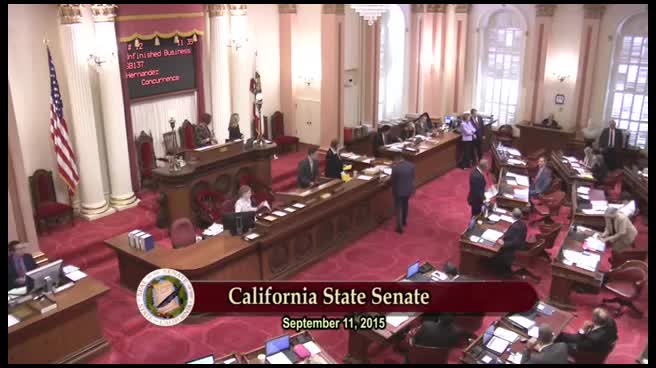
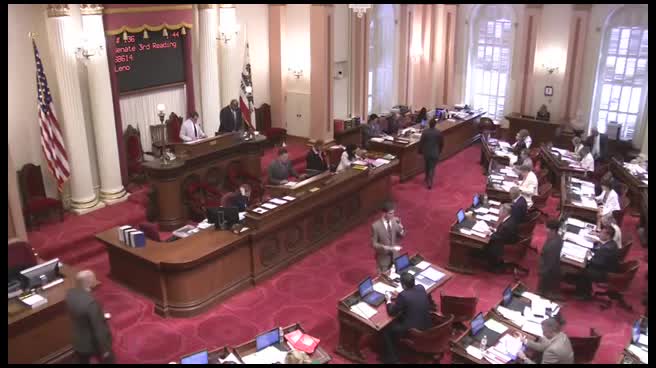
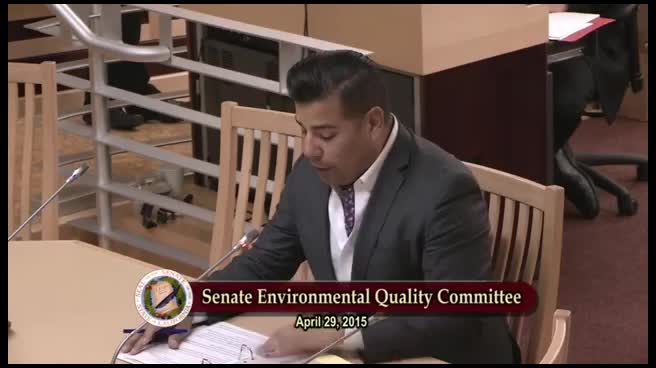
Bill Author

Bill Co-Author(s):
