SB 704: Public officers and employees: conflict of interest: contracts.
- Session Year: 2015-2016
- House: Senate
- Latest Version Date: 2015-10-04
Existing law prohibits Members of the Legislature, state, county, district, judicial district, and city officers or employees from being financially interested in any contract made by them in their official capacity, or by any body or board of which they are members. Existing law identifies certain remote interests in contracts that are not subject to this prohibition and other situations in which an official is not deemed to be financially interested in a contract. Existing law makes a willful violation of this prohibition a crime.
This bill would include in the definition of remote interest the interest of a person who is an owner or partner of a firm serving as an appointed member of an unelected board or commission of the contracting agency, if the owner or partner recuses himself or herself from providing any advice to the contracting agency regarding the contract between the firm and the contracting agency, and from all participation in reviewing a project that results from that contract. The bill would also include in the definition of remote interest the interest of a planner employed by a consulting engineering, architectural, or planning firm.
Existing law prohibits Members of the Legislature, state, county, district, judicial district, and city officers or employees from being financially interested in any contract made by them in their official capacity, or by any body or board of which they are members. Existing law identifies certain remote interests in contracts that are not subject to this prohibition and other situations in which an official is not deemed to be financially interested in a contract. Existing law makes a willful violation of this prohibition a crime.
This bill would include in the definition of remote interest the interest of a person who is an owner or partner of a firm serving on as an advisory appointed member of an unelected board or commission to of the contracting agency, if the duties of the advisory board or commission do not include providing advice with respect to seeking or awarding contracts, and if the owner or partner recuses himself or herself from providing any advice to the contracting agency regarding the contract between the firm and the contracting agency, and from all participation in reviewing a project that results from a contract between the firm and the contracting agency. that contract. The bill would also include in the definition of remote interest the interest of a planner employed by a consulting engineering, architectural, or planning firm.
Existing law prohibits Members of the Legislature, state, county, district, judicial district, and city officers or employees from being financially interested in any contract made by them in their official capacity, or by any body or board of which they are members. Existing law identifies certain remote interests that are not subject to this prohibition and other situations in which an official is not deemed to be financially interested in a contract. Existing law makes a willful violation of this prohibition a crime.
This bill would establish an additional situation in which an official is not financially interested in a contract as applied to include in the definition of remote interest the interest of a person who is an owner or partner of a firm serving on an advisory board or commission to the contracting agency, if the duties of the advisory board or commission do not include providing advice with respect to seeking or awarding contracts, and if the owner or partner recuses himself or herself from all participation in reviewing a project that results from a contract between the firm and the contracting agency.
Existing law prohibits Members of the Legislature, state, county, district, judicial district, and city officers or employees from being financially interested in any contract made by them in their official capacity, or by any body or board of which they are members. Existing law identifies certain remote interests that are not subject to this prohibition and other situations in which an official is not deemed to be financially interested in a contract. Existing law makes a willful violation of this prohibition a crime.
This bill would establish an additional situation in which an official is not financially interested in a contract as applied to an owner or partner of a firm serving on an advisory board or commission to the contracting agency if the owner or partner recuses himself or herself from all participation in reviewing a project that results from a contract between the firm and the contracting agency.
The Political Reform Act of 1974 establishes the Fair Political Practices Commission as the agency responsible for enforcing the act. The act authorizes the Commission to issue an opinion or advice to a person with respect to that persons duties under the act, as specified. The act authorizes the Commission to seek and impose administrative and civil penalties against persons who violate the act, as prescribed.
Existing law prohibits Members of the Legislature, state, county, district, judicial district, and city officers or employees from being financially interested in any contract made by them in their official capacity, or by any body or board of which they are members. Existing law identifies certain remote interests that are not subject to this prohibition and other situations in which an official is not deemed to be financially interested in a contract. Existing law makes a willful violation of this prohibition a crime.
Existing law also makes a person who violates the prohibition against being financially interested in a contract, or who causes another person to violate the prohibition, subject to administrative and civil fines, as specified. Existing law authorizes the Commission to enforce these violations by bringing an administrative or civil action against a person who is subject to the prohibition, as specified, upon written authorization from the district attorney of the county in which the alleged violation occurred. Existing law authorizes a person who is subject to those prohibitions to request an opinion or advice from the Commission with respect to those prohibitions, as specified.
This bill would establish an additional situation in which an official is not financially interested in a contract as applied to an owner or partner of a firm serving on an advisory board or commission to the contracting agency if the owner or partner recuses himself or herself from all participation in reviewing a project that results from a contract between the firm and the contracting agency.
The Political Reform Act of 1974, an initiative measure, provides that the Legislature may amend the act to further the acts purposes upon a 2/3 vote of each house and compliance with specified procedural requirements.
This bill would declare that it furthers the purposes of the act.
(a)An officer shall not be deemed to be interested in a contract entered into by a body or board of which the officer is a member within the meaning of this article if the officer has only a remote interest in the contract and if the fact of that interest is disclosed to the body or board of which the officer is a member and noted in its official records, and thereafter the body or board authorizes, approves, or ratifies the contract in good faith by a vote of its membership sufficient for the purpose without counting the vote or votes of the officer or member with the remote interest.
(b)As used in this article, remote interest means any of the following:
(1)That of an officer or employee of a nonprofit entity exempt from taxation pursuant to Section 501(c)(3) of the Internal Revenue Code (26 U.S.C. Sec. 501(c)(3)), pursuant to Section 501(c)(5) of the Internal Revenue Code (26 U.S.C. Sec. 501(c)(5)), or a nonprofit corporation, except as provided in paragraph (8) of subdivision (a) of Section 1091.5.
(2)That of an employee or agent of the contracting party, if the contracting party has 10 or more other employees and if the officer was an employee or agent of that contracting party for at least three years prior to the officer initially accepting his or her office and the officer owns less than 3 percent of the shares of stock of the contracting party; and the employee or agent is not an officer or director of the contracting party and did not directly participate in formulating the bid of the contracting party.
For purposes of this paragraph, time of employment with the contracting party by the officer shall be counted in computing the three-year period specified in this paragraph even though the contracting party has been converted from one form of business organization to a different form of business organization within three years of the initial taking of office by the officer. Time of employment in that case shall be counted only if, after the transfer or change in organization, the real or ultimate ownership of the contracting party is the same or substantially similar to that which existed before the transfer or change in organization. For purposes of this paragraph, stockholders, bondholders, partners, or other persons holding an interest in the contracting party are regarded as having the real or ultimate ownership of the contracting party.
(3)That of an employee or agent of the contracting party, if all of the following conditions are met:
(A)The agency of which the person is an officer is a local public agency located in a county with a population of less than 4,000,000.
(B)The contract is competitively bid and is not for personal services.
(C)The employee or agent is not in a primary management capacity with the contracting party, is not an officer or director of the contracting party, and holds no ownership interest in the contracting party.
(D)The contracting party has 10 or more other employees.
(E)The employee or agent did not directly participate in formulating the bid of the contracting party.
(F)The contracting party is the lowest responsible bidder.
(4)That of a parent in the earnings of his or her minor child for personal services.
(5)That of a landlord or tenant of the contracting party.
(6)That of an attorney of the contracting party or that of an owner, officer, employee, or agent of a firm that renders, or has rendered, service to the contracting party in the capacity of stockbroker, insurance agent, insurance broker, real estate agent, or real estate broker, if these individuals have not received and will not receive remuneration, consideration, or a commission as a result of the contract and if these individuals have an ownership interest of 10 percent or more in the law practice or firm, stock brokerage firm, insurance firm, or real estate firm.
(7)That of a member of a nonprofit corporation formed under the Food and Agricultural Code or a nonprofit corporation formed under the Corporations Code for the sole purpose of engaging in the merchandising of agricultural products or the supplying of water.
(8)That of a supplier of goods or services when those goods or services have been supplied to the contracting party by the officer for at least five years prior to his or her election or appointment to office.
(9)That of a person subject to the provisions of Section 1090 in any contract or agreement entered into pursuant to the provisions of the California Land Conservation Act of 1965.
(10)Except as provided in subdivision (b) of Section 1091.5, that of a director of, or a person having an ownership interest of, 10 percent or more in a bank, bank holding company, or savings and loan association with which a party to the contract has a relationship of borrower or depositor, debtor or creditor.
(11)That of an engineer, geologist, architect, or planner employed by a consulting engineering, architectural, or planning firm. This paragraph applies only to an employee of a consulting firm who does not serve in a primary management capacity, and does not apply to an officer or director of a consulting firm.
(12)That of an elected officer otherwise subject to Section 1090, in any housing assistance payment contract entered into pursuant to Section 8 of the United States Housing Act of 1937 (42 U.S.C. Sec. 1437f) as amended, provided that the housing assistance payment contract was in existence before Section 1090 became applicable to the officer and will be renewed or extended only as to the existing tenant, or, in a jurisdiction in which the rental vacancy rate is less than 5 percent, as to new tenants in a unit previously under a Section 8 contract. This section applies to any person who became a public official on or after November 1, 1986.
(13)That of a person receiving salary, per diem, or reimbursement for expenses from a government entity.
(14)That of a person owning less than 3 percent of the shares of a contracting party that is a for-profit corporation, provided that the ownership of the shares derived from the persons employment with that corporation.
(15)That of a party to litigation involving the body or board of which the officer is a member in connection with an agreement in which all of the following apply:
(A)The agreement is entered into as part of a settlement of litigation in which the body or board is represented by legal counsel.
(B)After a review of the merits of the agreement and other relevant facts and circumstances, a court of competent jurisdiction finds that the agreement serves the public interest.
(C)The interested member has recused himself or herself from all participation, direct or indirect, in the making of the agreement on behalf of the body or board.
(16)That of a person who is an officer or employee of an investor-owned utility that is regulated by the Public Utilities Commission with respect to a contract between the investor-owned utility and a state, county, district, judicial district, or city body or board of which the person is a member, if the contract requires the investor-owned utility to provide energy efficiency rebates or other type of program to encourage energy efficiency that benefits the public when all of the following apply:
(A)The contract is funded by utility consumers pursuant to regulations of the Public Utilities Commission.
(B)The contract provides no individual benefit to the person that is not also provided to the public, and the investor-owned utility receives no direct financial profit from the contract.
(C)The person has recused himself or herself from all participation in making the contract on behalf of the state, county, district, judicial district, or city body or board of which he or she is a member.
(D)The contract implements a program authorized by the Public Utilities Commission.
(17)That of an owner or partner of a firm serving as an appointed member of an unelected board or commission of the contracting agency if the owner or partner recuses himself or herself from providing any advice to the contracting agency regarding the contract between the firm and the contracting agency and from all participation in reviewing a project that results from that contract.
(c)This section is not applicable to any officer interested in a contract who influences or attempts to influence another member of the body or board of which he or she is a member to enter into the contract.
(d)The willful failure of an officer to disclose the fact of his or her interest in a contract pursuant to this section is punishable as provided in Section 1097. That violation does not void the contract unless the contracting party had knowledge of the fact of the remote interest of the officer at the time the contract was executed.
(a)An officer shall not be deemed to be interested in a contract entered into by a body or board of which the officer is a member within the meaning of this article if the officer has only a remote interest in the contract and if the fact of that interest is disclosed to the body or board of which the officer is a member and noted in its official records, and thereafter the body or board authorizes, approves, or ratifies the contract in good faith by a vote of its membership sufficient for the purpose without counting the vote or votes of the officer or member with the remote interest.
(b)As used in this article, remote interest means any of the following:
(1)That of an officer or employee of a nonprofit entity exempt from taxation pursuant to Section 501(c)(3) of the Internal Revenue Code (26 U.S.C. Sec. 501(c)(3)), pursuant to Section 501(c)(5) of the Internal Revenue Code (26 U.S.C. Sec. 501(c)(5)), or a nonprofit corporation, except as provided in paragraph (8) of subdivision (a) of Section 1091.5.
(2)That of an employee or agent of the contracting party, if the contracting party has 10 or more other employees and if the officer was an employee or agent of that contracting party for at least three years prior to the officer initially accepting his or her office and the officer owns less than 3 percent of the shares of stock of the contracting party; and the employee or agent is not an officer or director of the contracting party and did not directly participate in formulating the bid of the contracting party.
For purposes of this paragraph, time of employment with the contracting party by the officer shall be counted in computing the three-year period specified in this paragraph even though the contracting party has been converted from one form of business organization to a different form of business organization within three years of the initial taking of office by the officer. Time of employment in that case shall be counted only if, after the transfer or change in organization, the real or ultimate ownership of the contracting party is the same or substantially similar to that which existed before the transfer or change in organization. For purposes of this paragraph, stockholders, bondholders, partners, or other persons holding an interest in the contracting party are regarded as having the real or ultimate ownership of the contracting party.
(3)That of an employee or agent of the contracting party, if all of the following conditions are met:
(A)The agency of which the person is an officer is a local public agency located in a county with a population of less than 4,000,000.
(B)The contract is competitively bid and is not for personal services.
(C)The employee or agent is not in a primary management capacity with the contracting party, is not an officer or director of the contracting party, and holds no ownership interest in the contracting party.
(D)The contracting party has 10 or more other employees.
(E)The employee or agent did not directly participate in formulating the bid of the contracting party.
(F)The contracting party is the lowest responsible bidder.
(4)That of a parent in the earnings of his or her minor child for personal services.
(5)That of a landlord or tenant of the contracting party.
(6)That of an attorney of the contracting party or that of an owner, officer, employee, or agent of a firm that renders, or has rendered, service to the contracting party in the capacity of stockbroker, insurance agent, insurance broker, real estate agent, or real estate broker, if these individuals have not received and will not receive remuneration, consideration, or a commission as a result of the contract and if these individuals have an ownership interest of 10 percent or more in the law practice or firm, stock brokerage firm, insurance firm, or real estate firm.
(7)That of a member of a nonprofit corporation formed under the Food and Agricultural Code or a nonprofit corporation formed under the Corporations Code for the sole purpose of engaging in the merchandising of agricultural products or the supplying of water.
(8)That of a supplier of goods or services when those goods or services have been supplied to the contracting party by the officer for at least five years prior to his or her election or appointment to office.
(9)That of a person subject to the provisions of Section 1090 in any contract or agreement entered into pursuant to the provisions of the California Land Conservation Act of 1965.
(10)Except as provided in subdivision (b) of Section 1091.5, that of a director of, or a person having an ownership interest of, 10 percent or more in a bank, bank holding company, or savings and loan association with which a party to the contract has a relationship of borrower or depositor, debtor or creditor.
(11)That of an engineer, geologist, or architect, or planner employed by a consulting engineering or engineering, architectural, or planning firm. This paragraph applies only to an employee of a consulting firm who does not serve in a primary management capacity, and does not apply to an officer or director of a consulting firm.
(12)That of an elected officer otherwise subject to Section 1090, in any housing assistance payment contract entered into pursuant to Section 8 of the United States Housing Act of 1937 (42 U.S.C. Sec. 1437f) as amended, provided that the housing assistance payment contract was in existence before Section 1090 became applicable to the officer and will be renewed or extended only as to the existing tenant, or, in a jurisdiction in which the rental vacancy rate is less than 5 percent, as to new tenants in a unit previously under a Section 8 contract. This section applies to any person who became a public official on or after November 1, 1986.
(13)That of a person receiving salary, per diem, or reimbursement for expenses from a government entity.
(14)That of a person owning less than 3 percent of the shares of a contracting party that is a for-profit corporation, provided that the ownership of the shares derived from the persons employment with that corporation.
(15)That of a party to litigation involving the body or board of which the officer is a member in connection with an agreement in which all of the following apply:
(A)The agreement is entered into as part of a settlement of litigation in which the body or board is represented by legal counsel.
(B)After a review of the merits of the agreement and other relevant facts and circumstances, a court of competent jurisdiction finds that the agreement serves the public interest.
(C)The interested member has recused himself or herself from all participation, direct or indirect, in the making of the agreement on behalf of the body or board.
(16)That of a person who is an officer or employee of an investor-owned utility that is regulated by the Public Utilities Commission with respect to a contract between the investor-owned utility and a state, county, district, judicial district, or city body or board of which the person is a member, if the contract requires the investor-owned utility to provide energy efficiency rebates or other type of program to encourage energy efficiency that benefits the public when all of the following apply:
(A)The contract is funded by utility consumers pursuant to regulations of the Public Utilities Commission.
(B)The contract provides no individual benefit to the person that is not also provided to the public, and the investor-owned utility receives no direct financial profit from the contract.
(C)The person has recused himself or herself from all participation in making the contract on behalf of the state, county, district, judicial district, or city body or board of which he or she is a member.
(D)The contract implements a program authorized by the Public Utilities Commission.
(17)That of an owner or partner of a firm serving on as an advisory appointed member of an unelected board or commission to of the contracting agency if the duties of the advisory board or commission do not include providing advice with respect to seeking or awarding contracts and if the owner or partner recuses himself or herself from providing any advice to the contracting agency regarding the contract between the firm and the contracting agency and from all participation in reviewing a project that results from a contract between the firm and the contracting agency. that contract.
(c)This section is not applicable to any officer interested in a contract who influences or attempts to influence another member of the body or board of which he or she is a member to enter into the contract.
(d)The willful failure of an officer to disclose the fact of his or her interest in a contract pursuant to this section is punishable as provided in Section 1097. That violation does not void the contract unless the contracting party had knowledge of the fact of the remote interest of the officer at the time the contract was executed.
(a)An officer shall not be deemed to be interested in a contract entered into by a body or board of which the officer is a member within the meaning of this article if the officer has only a remote interest in the contract and if the fact of that interest is disclosed to the body or board of which the officer is a member and noted in its official records, and thereafter the body or board authorizes, approves, or ratifies the contract in good faith by a vote of its membership sufficient for the purpose without counting the vote or votes of the officer or member with the remote interest.
(b)As used in this article, remote interest means any of the following:
(1)That of an officer or employee of a nonprofit entity exempt from taxation pursuant to Section 501(c)(3) of the Internal Revenue Code (26 U.S.C. Sec. 501(c)(3)), pursuant to Section 501(c)(5) of the Internal Revenue Code (26 U.S.C. Sec. 501(c)(5)), or a nonprofit corporation, except as provided in paragraph (8) of subdivision (a) of Section 1091.5.
(2)That of an employee or agent of the contracting party, if the contracting party has 10 or more other employees and if the officer was an employee or agent of that contracting party for at least three years prior to the officer initially accepting his or her office and the officer owns less than 3 percent of the shares of stock of the contracting party; and the employee or agent is not an officer or director of the contracting party and did not directly participate in formulating the bid of the contracting party.
For purposes of this paragraph, time of employment with the contracting party by the officer shall be counted in computing the three-year period specified in this paragraph even though the contracting party has been converted from one form of business organization to a different form of business organization within three years of the initial taking of office by the officer. Time of employment in that case shall be counted only if, after the transfer or change in organization, the real or ultimate ownership of the contracting party is the same or substantially similar to that which existed before the transfer or change in organization. For purposes of this paragraph, stockholders, bondholders, partners, or other persons holding an interest in the contracting party are regarded as having the real or ultimate ownership of the contracting party.
(3)That of an employee or agent of the contracting party, if all of the following conditions are met:
(A)The agency of which the person is an officer is a local public agency located in a county with a population of less than 4,000,000.
(B)The contract is competitively bid and is not for personal services.
(C)The employee or agent is not in a primary management capacity with the contracting party, is not an officer or director of the contracting party, and holds no ownership interest in the contracting party.
(D)The contracting party has 10 or more other employees.
(E)The employee or agent did not directly participate in formulating the bid of the contracting party.
(F)The contracting party is the lowest responsible bidder.
(4)That of a parent in the earnings of his or her minor child for personal services.
(5)That of a landlord or tenant of the contracting party.
(6)That of an attorney of the contracting party or that of an owner, officer, employee, or agent of a firm that renders, or has rendered, service to the contracting party in the capacity of stockbroker, insurance agent, insurance broker, real estate agent, or real estate broker, if these individuals have not received and will not receive remuneration, consideration, or a commission as a result of the contract and if these individuals have an ownership interest of 10 percent or more in the law practice or firm, stock brokerage firm, insurance firm, or real estate firm.
(7)That of a member of a nonprofit corporation formed under the Food and Agricultural Code or a nonprofit corporation formed under the Corporations Code for the sole purpose of engaging in the merchandising of agricultural products or the supplying of water.
(8)That of a supplier of goods or services when those goods or services have been supplied to the contracting party by the officer for at least five years prior to his or her election or appointment to office.
(9)That of a person subject to the provisions of Section 1090 in any contract or agreement entered into pursuant to the provisions of the California Land Conservation Act of 1965.
(10)Except as provided in subdivision (b) of Section 1091.5, that of a director of, or a person having an ownership interest of, 10 percent or more in a bank, bank holding company, or savings and loan association with which a party to the contract has a relationship of borrower or depositor, debtor or creditor.
(11)That of an engineer, geologist, or architect employed by a consulting engineering or architectural firm. This paragraph applies only to an employee of a consulting firm who does not serve in a primary management capacity, and does not apply to an officer or director of a consulting firm.
(12)That of an elected officer otherwise subject to Section 1090, in any housing assistance payment contract entered into pursuant to Section 8 of the United States Housing Act of 1937 (42 U.S.C. Sec. 1437f) as amended, provided that the housing assistance payment contract was in existence before Section 1090 became applicable to the officer and will be renewed or extended only as to the existing tenant, or, in a jurisdiction in which the rental vacancy rate is less than 5 percent, as to new tenants in a unit previously under a Section 8 contract. This section applies to any person who became a public official on or after November 1, 1986.
(13)That of a person receiving salary, per diem, or reimbursement for expenses from a government entity.
(14)That of a person owning less than 3 percent of the shares of a contracting party that is a for-profit corporation, provided that the ownership of the shares derived from the persons employment with that corporation.
(15)That of a party to litigation involving the body or board of which the officer is a member in connection with an agreement in which all of the following apply:
(A)The agreement is entered into as part of a settlement of litigation in which the body or board is represented by legal counsel.
(B)After a review of the merits of the agreement and other relevant facts and circumstances, a court of competent jurisdiction finds that the agreement serves the public interest.
(C)The interested member has recused himself or herself from all participation, direct or indirect, in the making of the agreement on behalf of the body or board.
(16)That of a person who is an officer or employee of an investor-owned utility that is regulated by the Public Utilities Commission with respect to a contract between the investor-owned utility and a state, county, district, judicial district, or city body or board of which the person is a member, if the contract requires the investor-owned utility to provide energy efficiency rebates or other type of program to encourage energy efficiency that benefits the public when all of the following apply:
(A)The contract is funded by utility consumers pursuant to regulations of the Public Utilities Commission.
(B)The contract provides no individual benefit to the person that is not also provided to the public, and the investor-owned utility receives no direct financial profit from the contract.
(C)The person has recused himself or herself from all participation in making the contract on behalf of the state, county, district, judicial district, or city body or board of which he or she is a member.
(D)The contract implements a program authorized by the Public Utilities Commission.
(17)That of an owner or partner of a firm serving on an advisory board or commission to the contracting agency if the duties of the advisory board or commission do not include providing advice with respect to seeking or awarding contracts and if the owner or partner recuses himself or herself from all participation in reviewing a project that results from a contract between the firm and the contracting agency.
(c)This section is not applicable to any officer interested in a contract who influences or attempts to influence another member of the body or board of which he or she is a member to enter into the contract.
(d)The willful failure of an officer to disclose the fact of his or her interest in a contract pursuant to this section is punishable as provided in Section 1097. That violation does not void the contract unless the contracting party had knowledge of the fact of the remote interest of the officer at the time the contract was executed.
SECTION 1.Section 1091.5 of the Government Code is amended to read:1091.5.(a)An officer or employee shall not be deemed to be interested in a contract if his or her interest is any of the following:
(1)The ownership of less than 3 percent of the shares of a corporation for profit, provided that the total annual income to him or her from dividends, including the value of stock dividends, from the corporation does not exceed 5 percent of his or her total annual income, and any other payments made to him or her by the corporation do not exceed 5 percent of his or her total annual income.
(2)That of an officer in being reimbursed for his or her actual and necessary expenses incurred in the performance of official duties.
(3)That of a recipient of public services generally provided by the public body or board of which he or she is a member, on the same terms and conditions as if he or she were not a member of the body or board.
(4)That of a landlord or tenant of the contracting party if the contracting party is the federal government or any federal department or agency, this state or an adjoining state, any department or agency of this state or an adjoining state, any county or city of this state or an adjoining state, or any public corporation or special, judicial, or other public district of this state or an adjoining state unless the subject matter of the contract is the property in which the officer or employee has the interest as landlord or tenant in which event his or her interest shall be deemed a remote interest within the meaning of, and subject to, the provisions of Section 1091.
(5)That of a tenant in a public housing authority created pursuant to Part 2 (commencing with Section 34200) of Division 24 of the Health and Safety Code in which he or she serves as a member of the board of commissioners of the authority or of a community development commission created pursuant to Part 1.7 (commencing with Section 34100) of Division 24 of the Health and Safety Code.
(6)That of a spouse of an officer or employee of a public agency in his or her spouses employment or officeholding if his or her spouses employment or officeholding has existed for at least one year prior to his or her election or appointment.
(7)That of a nonsalaried member of a nonprofit corporation, provided that this interest is disclosed to the body or board at the time of the first consideration of the contract, and provided further that this interest is noted in its official records.
(8)That of a noncompensated officer of a nonprofit, tax-exempt corporation, which, as one of its primary purposes, supports the functions of the body or board or to which the body or board has a legal obligation to give particular consideration, and provided further that this interest is noted in its official records.
For purposes of this paragraph, an officer is noncompensated even though he or she receives reimbursement from the nonprofit, tax-exempt corporation for necessary travel and other actual expenses incurred in performing the duties of his or her office.
(9)That of a person receiving salary, per diem, or reimbursement for expenses from a government entity, unless the contract directly involves the department of the government entity that employs the officer or employee, provided that the interest is disclosed to the body or board at the time of consideration of the contract, and provided further that the interest is noted in its official record.
(10)That of an attorney of the contracting party or that of an owner, officer, employee, or agent of a firm which renders, or has rendered, service to the contracting party in the capacity of stockbroker, insurance agent, insurance broker, real estate agent, or real estate broker, if these individuals have not received and will not receive remuneration, consideration, or a commission as a result of the contract and if these individuals have an ownership interest of less than 10 percent in the law practice or firm, stock brokerage firm, insurance firm, or real estate firm.
(11)Except as provided in subdivision (b), that of an officer or employee of, or a person having less than a 10-percent ownership interest in, a bank, bank holding company, or savings and loan association with which a party to the contract has a relationship of borrower, depositor, debtor, or creditor.
(12)That of (A) a bona fide nonprofit, tax-exempt corporation having among its primary purposes the conservation, preservation, or restoration of park and natural lands or historical resources for public benefit, which corporation enters into an agreement with a public agency to provide services related to park and natural lands or historical resources and which services are found by the public agency, prior to entering into the agreement or as part of the agreement, to be necessary to the public interest to plan for, acquire, protect, conserve, improve, or restore park and natural lands or historical resources for public purposes and (B) any officer, director, or employee acting pursuant to the agreement on behalf of the nonprofit corporation. For purposes of this paragraph, agreement includes contracts and grants, and park, natural lands, and historical resources shall have the meanings set forth in subdivisions (d), (g), and (i) of Section 5902 of the Public Resources Code. Services to be provided to the public agency may include those studies and related services, acquisitions of property and property interests, and any activities related to those studies and acquisitions necessary for the conservation, preservation, improvement, or restoration of park and natural lands or historical resources.
(13)That of an officer, employee, or member of the Board of Directors of the California Housing Finance Agency with respect to a loan product or programs if the officer, employee, or member participated in the planning, discussions, development, or approval of the loan product or program and both of the following two conditions exist:
(A)The loan product or program is or may be originated by any lender approved by the agency.
(B)The loan product or program is generally available to qualifying borrowers on terms and conditions that are substantially the same for all qualifying borrowers at the time the loan is made.
(14)That of a party to a contract for public services entered into by a special district that requires a person to be a landowner or a representative of a landowner to serve on the board of which the officer or employee is a member, on the same terms and conditions as if he or she were not a member of the body or board. For purposes of this paragraph, public services includes the powers and purposes generally provided pursuant to provisions of the Water Code relating to irrigation districts, California water districts, water storage districts, or reclamation districts.
(15)That of an owner or partner of a firm serving on an advisory board or commission to the contracting agency if the owner or partner recuses himself or herself from all participation in reviewing a project that results from a contract between the firm and the contracting agency.
(b)An officer or employee shall not be deemed to be interested in a contract made pursuant to competitive bidding under a procedure established by law if his or her sole interest is that of an officer, director, or employee of a bank or savings and loan association with which a party to the contract has the relationship of borrower or depositor, debtor or creditor.
(a)An officer or employee shall not be deemed to be interested in a contract if his or her interest is any of the following:
(1)The ownership of less than 3 percent of the shares of a corporation for profit, provided that the total annual income to him or her from dividends, including the value of stock dividends, from the corporation does not exceed 5 percent of his or her total annual income, and any other payments made to him or her by the corporation do not exceed 5 percent of his or her total annual income.
(2)That of an officer in being reimbursed for his or her actual and necessary expenses incurred in the performance of official duties.
(3)That of a recipient of public services generally provided by the public body or board of which he or she is a member, on the same terms and conditions as if he or she were not a member of the body or board.
(4)That of a landlord or tenant of the contracting party if the contracting party is the federal government or any federal department or agency, this state or an adjoining state, any department or agency of this state or an adjoining state, any county or city of this state or an adjoining state, or any public corporation or special, judicial, or other public district of this state or an adjoining state unless the subject matter of the contract is the property in which the officer or employee has the interest as landlord or tenant in which event his or her interest shall be deemed a remote interest within the meaning of, and subject to, the provisions of Section 1091.
(5)That of a tenant in a public housing authority created pursuant to Part 2 (commencing with Section 34200) of Division 24 of the Health and Safety Code in which he or she serves as a member of the board of commissioners of the authority or of a community development commission created pursuant to Part 1.7 (commencing with Section 34100) of Division 24 of the Health and Safety Code.
(6)That of a spouse of an officer or employee of a public agency in his or her spouses employment or officeholding if his or her spouses employment or officeholding has existed for at least one year prior to his or her election or appointment.
(7)That of a nonsalaried member of a nonprofit corporation, provided that this interest is disclosed to the body or board at the time of the first consideration of the contract, and provided further that this interest is noted in its official records.
(8)That of a noncompensated officer of a nonprofit, tax-exempt corporation, which, as one of its primary purposes, supports the functions of the body or board or to which the body or board has a legal obligation to give particular consideration, and provided further that this interest is noted in its official records.
For purposes of this paragraph, an officer is noncompensated even though he or she receives reimbursement from the nonprofit, tax-exempt corporation for necessary travel and other actual expenses incurred in performing the duties of his or her office.
(9)That of a person receiving salary, per diem, or reimbursement for expenses from a government entity, unless the contract directly involves the department of the government entity that employs the officer or employee, provided that the interest is disclosed to the body or board at the time of consideration of the contract, and provided further that the interest is noted in its official record.
(10)That of an attorney of the contracting party or that of an owner, officer, employee, or agent of a firm which renders, or has rendered, service to the contracting party in the capacity of stockbroker, insurance agent, insurance broker, real estate agent, or real estate broker, if these individuals have not received and will not receive remuneration, consideration, or a commission as a result of the contract and if these individuals have an ownership interest of less than 10 percent in the law practice or firm, stock brokerage firm, insurance firm, or real estate firm.
(11)Except as provided in subdivision (b), that of an officer or employee of, or a person having less than a 10-percent ownership interest in, a bank, bank holding company, or savings and loan association with which a party to the contract has a relationship of borrower, depositor, debtor, or creditor.
(12)That of (A) a bona fide nonprofit, tax-exempt corporation having among its primary purposes the conservation, preservation, or restoration of park and natural lands or historical resources for public benefit, which corporation enters into an agreement with a public agency to provide services related to park and natural lands or historical resources and which services are found by the public agency, prior to entering into the agreement or as part of the agreement, to be necessary to the public interest to plan for, acquire, protect, conserve, improve, or restore park and natural lands or historical resources for public purposes and (B) any officer, director, or employee acting pursuant to the agreement on behalf of the nonprofit corporation. For purposes of this paragraph, agreement includes contracts and grants, and park, natural lands, and historical resources shall have the meanings set forth in subdivisions (d), (g), and (i) of Section 5902 of the Public Resources Code. Services to be provided to the public agency may include those studies and related services, acquisitions of property and property interests, and any activities related to those studies and acquisitions necessary for the conservation, preservation, improvement, or restoration of park and natural lands or historical resources.
(13)That of an officer, employee, or member of the Board of Directors of the California Housing Finance Agency with respect to a loan product or programs if the officer, employee, or member participated in the planning, discussions, development, or approval of the loan product or program and both of the following two conditions exist:
(A)The loan product or program is or may be originated by any lender approved by the agency.
(B)The loan product or program is generally available to qualifying borrowers on terms and conditions that are substantially the same for all qualifying borrowers at the time the loan is made.
(14)That of a party to a contract for public services entered into by a special district that requires a person to be a landowner or a representative of a landowner to serve on the board of which the officer or employee is a member, on the same terms and conditions as if he or she were not a member of the body or board. For purposes of this paragraph, public services includes the powers and purposes generally provided pursuant to provisions of the Water Code relating to irrigation districts, California water districts, water storage districts, or reclamation districts.
(15)That of an owner or partner of a firm serving on an advisory board or commission to the contracting agency if the owner or partner recuses himself or herself from all participation in reviewing a project that results from a contract between the firm and the contracting agency.
(b)An officer or employee shall not be deemed to be interested in a contract made pursuant to competitive bidding under a procedure established by law if his or her sole interest is that of an officer, director, or employee of a bank or savings and loan association with which a party to the contract has the relationship of borrower or depositor, debtor or creditor.
SEC. 2.The Legislature finds and declares that this bill furthers the purposes of the Political Reform Act of 1974 within the meaning of subdivision (a) of Section 81012 of the Government Code.
|
Date
|
Status
|
|---|---|
| Oct 4, 2015 | Chaptered by Secretary of State. Chapter 495, Statutes of 2015. |
| Oct 4, 2015 | Approved by the Governor. |
| Sep 3, 2015 | Enrolled and presented to the Governor at 10 a.m. |
| Sep 1, 2015 | Assembly amendments concurred in. (Ayes 40. Noes 0. Page 2379.) Ordered to engrossing and enrolling. |
| Sep 1, 2015 | Assembly amendments concurred in. (Ayes 40. Noes 0.) Ordered to engrossing and enrolling. |
| Aug 31, 2015 | Ordered to special consent calendar. |
| Aug 27, 2015 | Read third time. Passed. (Ayes 78. Noes 0. Page 2639.) Ordered to the Senate. |
| Aug 27, 2015 | In Senate. Concurrence in Assembly amendments pending. |
| Aug 27, 2015 | Read third time. Passed. Ordered to the Senate. |
| Aug 20, 2015 | Read second time. Ordered to consent calendar. |
| Aug 19, 2015 | From committee: Do pass. Ordered to consent calendar. (Ayes 17. Noes 0.) (August 19). |
| Jul 15, 2015 | From committee: Do pass and re-refer to Com. on APPR. (Ayes 7. Noes 0.) (July 15). Re-referred to Com. on APPR. |
| Jul 8, 2015 | From committee with author's amendments. Read second time and amended. Re-referred to Com. on E. & R. |
| Jun 15, 2015 | July 1 set for first hearing canceled at the request of author. |
| Jun 11, 2015 | Referred to Com. on E. & R. |
| May 22, 2015 | Read third time. Passed. (Ayes 38. Noes 0. Page 1068.) Ordered to the Assembly. |
| May 22, 2015 | In Assembly. Read first time. Held at Desk. |
| May 22, 2015 | Read third time. Passed. (Ayes 38. Noes 0.) Ordered to the Assembly. |
| May 19, 2015 | Read second time. Ordered to third reading. |
| May 18, 2015 | From committee: Be ordered to second reading pursuant to Senate Rule 28.8. |
| May 8, 2015 | Set for hearing May 18. |
| Apr 30, 2015 | Read second time and amended. Re-referred to Com. on APPR. |
| Apr 29, 2015 | From committee: Do pass as amended and re-refer to Com. on APPR. (Ayes 6. Noes 0. Page 816.) (April 29). |
| Apr 29, 2015 | From committee: Do pass as amended and re-refer to Com. on APPR. (Ayes 6. Noes 0.) (April 29). |
| Apr 22, 2015 | From committee with author's amendments. Read second time and amended. Re-referred to Com. on GOV. & F. |
| Apr 22, 2015 | Set for hearing April 29. |
| Apr 6, 2015 | From committee with author's amendments. Read second time and amended. Re-referred to Com. on GOV. & F. |
| Mar 19, 2015 | Referred to Coms. on GOV. & F. and E. & C.A. |
| Mar 2, 2015 | Read first time. |
| Mar 2, 2015 | From printer. May be acted upon on or after April 1. |
| Feb 27, 2015 | Introduced. To Com. on RLS. for assignment. To print. |
|
Date
|
Description
|
Location
|
Votes
|
|
|---|---|---|---|---|
| Sep 1, 2015 | Special Consent #9 SB704 Gaines | Senate Floor |
Passed |
|
| Aug 27, 2015 | SB 704 Gaines Consent Calendar Second Day Regular Session | Assembly Floor |
Passed |
|
| Aug 19, 2015 | Do pass. To Consent Calendar. | Assembly Standing Committee on Appropriations |
Passed |
|
| Jul 15, 2015 | Do pass and be re-referred to the Committee on [Appropriations] | Assembly Standing Committee on Elections and Redistricting |
Passed |
|
| May 22, 2015 | Senate 3rd Reading SB704 Gaines | Senate Floor |
Passed |
|
| Apr 29, 2015 | Do pass as amended, but first amend, and re-refer to the Committee on [Appropriations] | Senate Standing Committee on Governance and Finance |
Passed |
This list shows positions taken on this bill by organizations on the date displayed, which is linked to the original source.
Positions by individuals are not included.
SB 704
Page 5
|
Office of Senate Floor Analyses (916) 651-1520 Fax: (916) 327-4478 |
UNFINISHED BUSINESS
Bill No: SB 704
Amended: 7/8/15
SENATE GOVERNANCE & FIN. COMMITTEE: 6-0, 4/29/15
AYES: Hertzberg, Nguyen, Beall, Hernandez, Lara, Pavley
NO VOTE RECORDED: Moorlach
SENATE APPROPRIATIONS COMMITTEE: Senate Rule 28.8
SENATE FLOOR: 38-0, 5/22/15
AYES: Allen, Anderson, Bates, Beall, Berryhill, Block, Cannella, De León, Gaines, Galgiani, Hall, Hancock, Hernandez, Hertzberg, Hill, Hueso, Huff, Jackson, Lara, Leno, Leyva, Liu, McGuire, Mendoza, Mitchell, Monning, Moorlach, Morrell, Nguyen, Nielsen, Pan, Pavley, Roth, Runner, Stone, Vidak, Wieckowski, Wolk
NO VOTE RECORDED: Fuller
ASSEMBLY FLOOR: 78-0, 8/27/15 (Consent) - See last page for vote
SUBJECT: Public officers and employees: conflict of interest: contracts
DIGEST: This bill adds a new exception to the list of “remote interests” that are exempt from statutory conflict of interest prohibitions.
Assembly Amendments include planners in the list of professionals included under the definition of “remote interest,” clarify that advisory board or commission refers to an unelected board or commission, and narrow the scope of the remote interest prohibition as it relates to owners or partners of certain firms who serve on an unelected board or commission.
Existing law:
Prohibits state and local officials from making, influencing, or voting on public contracts in which they have a prohibited financial interest, as defined under Government Code Section 1090.
Lists 16 interests in a public contract that qualify only as “remote interests,” such as the interest of an engineer, geologist, or architect employed by an engineering or architectural consulting firm.
Requires an official with a remote interest to:
disclose his or her interest to the contracting government body;
note the interest in the government body’s official records; and
abstain from participating in making the contract.
Lists 14 types of financial “non-interests” that the Legislature has determined should not be subject to Section 1090 at all, including: ownership interest of less than 3% of a corporation; interest in a spouse’s employment, if the spouse has held the same job for at least one year before the official took office; or that of a public official being reimbursed for his or her actual expenses related to the performance of official government duties.
This bill:
Adds the interest of an owner or partner of a firm who serves on an unelected board or commission to a contracting agency to the list of “remote interest” exceptions to Government Code Section 1090.
Requires the owner or partner of a firm to recuse himself or herself from providing any advice to a contracting agency regarding the contract between the firm and the contracting agency, and from all participation in reviewing a project that results from that contract.
Includes in the definition of “remote interest” the interest of a planner employed by a consulting engineering, architectural, or planning firm.
Background
Architects and engineers often serve on various local government advisory bodies—including architectural review boards, art commissions and design review boards—for the purpose of providing technical advice to local elected officials. These boards advise city councils and other officials on matters such as:
Promoting orderly development;
Encouraging desirable land use and improvements; and
Aesthetic, health, and safety factors of relevance to the community.
Under existing law, a partner or owner of an architectural or engineering firm may not serve on such a review board and simultaneously enter into a contract with the government entity which the board advises. Attorney General’s opinions have indicated that the interest of a partner or owner of an architectural or engineering firm in a public contract is a prohibited financial interest under Section 1090, and not a “remote interest.” Therefore, the owner or partner of an architectural or engineering firm cannot avoid liability under Section 1090 by abstaining from voting or recusing him or herself.
Some California architects now seek to establish an additional “remote interest” exception to Section 1090, so that owners or partners of architectural or engineering firms who serve on review boards to contracting agencies can recuse themselves in the event of a conflict of interest, instead of resigning.
Comments
Purpose of this bill. Section 1090 of the Government Code prohibits a government body from approving a public contract with an owner or partner of a firm who serves on a board or commission that advises the government body. These boards and commissions and the communities they serve, benefit when architects and other professionals volunteer their time and expertise. SB 704 would allow and encourage more architects, engineers and other professionals to serve their communities as volunteers on appointed boards and commissions, such as design review boards and planning commissions.
Let’s be clear. SB 704 does not define what constitutes an “advisory board or commission.” Cities around the state may have commissions and boards with varying degrees of power and responsibility. Some bodies offer only nonbinding suggestions, while the recommendations of some boards and commissions are treated as final. According to Attorney General’s opinions, courts have construed the “making” of a contract broadly, to include contract-related negotiations, discussions, reasoning, and planning. The Committee may wish to consider amending SB 704 to clarify the definition of “advisory board or commission” and to clarify that elected officials and anyone with the ability to make, influence, or vote on public contracts are not exempt from Section 1090.
Remotely close. SB 704 amends 1091.5 of the Government Code, which relates to so-called “non-interests” under Section 1090. However, the bill proposes creating another situation in which an interested party could overcome the 1090 prohibition, by recusing himself or herself from all participation in a public contract. State law classifies such scenarios as “remote interests.” Therefore, the Committee may wish to consider amending SB 704 to place its language in the statute that deals with “remote interests.”
FISCAL EFFECT: Appropriation: No Fiscal Com.: Yes Local: No
American Institute of Architects, California Council
OPPOSITION: (Verified 8/28/15)
None received
ASSEMBLY FLOOR: 78-0, 8/27/15
AYES: Achadjian, Alejo, Travis Allen, Baker, Bigelow, Bloom, Bonilla, Bonta, Brough, Brown, Burke, Calderon, Campos, Chang, Chau, Chávez, Chiu, Chu, Cooley, Cooper, Dababneh, Dahle, Daly, Dodd, Eggman, Beth Gaines, Gallagher, Cristina Garcia, Eduardo Garcia, Gatto, Gipson, Gomez, Gonzalez, Gordon, Gray, Grove, Hadley, Harper, Roger Hernández, Holden, Irwin, Jones, Jones-Sawyer, Kim, Lackey, Levine, Linder, Lopez, Low, Maienschein, Mathis, Mayes, McCarty, Medina, Melendez, Mullin, Nazarian, Obernolte, O'Donnell, Olsen, Patterson, Perea, Quirk, Rendon, Ridley-Thomas, Rodriguez, Salas, Santiago, Steinorth, Mark Stone, Thurmond, Ting, Wagner, Waldron, Weber, Wilk, Wood, Atkins
NO VOTE RECORDED: Frazier, Williams
Prepared by: Toren Lewis / GOV. & F. / (916) 651-4119
8/28/15 14:11:10
**** END ****
Date of Hearing: August 19, 2015
ASSEMBLY COMMITTEE ON APPROPRIATIONS
Jimmy Gomez, Chair
SB 704
(Gaines) – As Amended July 8, 2015
Policy Committee: |
Elections and Redistricting |
Vote: |
7 - 0 |
|
|
|
|
|
|
|
|
Urgency: No State Mandated Local Program: No Reimbursable: No
SUMMARY:
This bill provides the following additional exceptions to the state's conflict of interest statute:
Allows a governmental entity to enter into a contract with a firm—when an owner or partner of the firm serves as an appointed member of an unelected board or commission to the governmental entity—if the owner or partner recuses himself or herself from providing any advice to the contracting agency regarding the contract between the firm and the contracting agency.
Allows a governmental board or body to enter into a contract with a firm that employs a member of the board or body, if the firm is a consulting engineering or architectural firm and the employee is a planner, or if the firm is a consulting planning firm and the employee is an engineer, geologist, architect, or planner.
FISCAL EFFECT:
Potential but likely minor increase in state costs to the extent anyone is sentenced to state prison for violation of the bill's provisions. (The penalty for violation of the conflict of interest provisions is a fine of not more than $1,000, or by imprisonment in the state prison, and by permanent disqualification from holding any office in this state.)
COMMENTS:
Background. Section 1090 of the Government Code generally prohibits a public official or employee from making a contract in his or her official capacity in which he or she has a financial interest. In addition, a public body or board is prohibited from making a contract in which any member of the body or board has a financial interest, even if that member does not participate in the making of the contract. This prohibition, contained in Section 1090, dates back to the second session of the California Legislature (Chapter 136/Statutes of 1851).
State law recognizes two categories of exceptions to Section 1090. One category is "remote interests". Where a government official has a "remote interest" in a contract, he or she must take three steps before the body on which he or she sits may vote on that contract. First, the official must disclose the interest to the government body. Second, the interest must be noted in the government body's official records. Finally, the official with the "remote interest" must abstain from participating in the review and approval of the contract.
State law lists 16 situations that qualify as "remote interests." While the willful failure of an officer to disclose a remote interest in a contract would subject that officer to the conflict of interest penalties, the contract itself is not subject to cancelation due to the violation unless the contracting party had knowledge of the fact of the remote interest of the officer at the time the contract was executed.
Purpose. To the extent that design review boards, planning commissions, and similar bodies are composed of architects and other professionals who have expertise that may be relevant to the work of those boards and commissions, the broad construction of Section 1090 can create conflicts that limit the ability of those boards and commissions to perform their intended functions. In recognition of that fact, state law was previously amended to provide that the interest of an engineer, geologist, or architect employed by a consulting engineering or architectural firm is a "remote interest" under Section 1090, provided that the employee of the consulting firm does not serve in a primary management capacity, and is not an officer or director of the firm. This bill, sponsored by the American Institute of Architects, California Council, expands that remote interest such that it also applies to planners and to those employed by consulting planning firms.
Additionally, this bill creates a new "remote interest" under Section 1090, providing that the interest of an owner or partner of a firm serving as an appointed member of an unelected board or commission of the contracting agency is a remote interest if the owner or partner recuses himself or herself from providing any advice to the contracting agency regarding the contract between the firm and the contracting agency and from all participation in reviewing a project that results from that contract.
Analysis Prepared by: Chuck Nicol / APPR. / (916) 319-2081
SB 704
Page 6
Date of Hearing: July 15, 2015
ASSEMBLY COMMITTEE ON ELECTIONS AND REDISTRICTING
Sebastian Ridley-Thomas, Chair
SB 704
(Gaines) – As Amended July 8, 2015
SENATE VOTE: 38-0
SUBJECT: Public officers and employees: conflict of interest: contracts.
SUMMARY: Allows a governmental entity to enter into a contract with a firm where an owner or partner of the firm serves as an appointed member of an unelected board or commission to the governmental entity if the owner or partner recuses himself or herself from providing any advice to the contracting agency regarding the contract between the firm and the contracting agency, and if certain other conditions are met. Allows a governmental board or body to enter into a contract with a firm that employs a member of the board or body if the firm is a consulting engineering or architectural firm and the employee is a planner, or if the firm is a consulting planning firm and the employee is an engineer, geologist, architect, or planner, if certain conditions are met. Specifically, this bill:
Provides that the term "remote interest," for the purposes of Government Code Section 1090 (Section 1090) relating to conflicts of interest in contracts, includes the interest of an owner or partner of a firm who is serving as an appointed member of an unelected board or commission of the contracting agency if the owner or partner recuses himself or herself from providing any advice to the contracting agency regarding the contract between the firm and the contracting agency and from all participation in reviewing a project that results from that contract.
Provides that the term "remote interest," for the purposes of Section 1090, includes the interest of a planner employed by a consulting engineering or architectural firm, or the interest of an engineer, geologist, architect, or planner employed by a consulting planning firm, provided that the employee of the consulting firm does not serve in a primary management capacity and is not an officer or director of the consulting firm.
EXISTING LAW:
Prohibits members of the Legislature and state, county, district, judicial district, and city officers or employees, pursuant to Section 1090, from being financially interested in any contract made by them in their official capacity, or by any body or board of which they are members. Prohibits state, county, district, judicial district, and city officers or employees from being purchasers at any sale made by them in their official capacity, or from being vendors at any purchase made by them in their official capacity. Prohibits an individual from aiding or abetting a violation of Section 1090.
Provides that an officer shall not be deemed to be interested in a contract pursuant to Section 1090 if the officer has only a remote interest, as defined, in the contract. Requires that the remote interest be disclosed to the body or board of which the officer is a member and noted in its official records, and thereafter that the body or board authorizes, approves, or ratifies the contract in good faith by a vote of its membership, without counting the vote or votes of the officer or member with the remote interest.
Provides that the term "remote interest" includes, among other interests, the interest of an engineer, geologist, or architect employed by a consulting engineering or architectural firm. Provides that this remote interest applies only to an employee of a consulting firm who does not serve in a primary management capacity, and provides that it does not apply to an officer or director of a consulting firm.
Enumerates various financial interests for which an officer or employee is deemed not to be interested in a contract pursuant to Section 1090.
Provides that a contract made in violation of Section 1090 may be voided by any party to the contract, except for the officer who had an interest in the contract in violation of Section 1090, as specified. Provides that the willful failure of an officer to disclose a remote interest in a contract does not void the contract unless the contracting party had knowledge of the fact of the remote interest of the officer at the time the contract was executed.
Provides that a person who willfully violates Section 1090, or who willfully aids or abets a violation of Section 1090, is punishable by a fine of not more than $1,000 or by imprisonment in the state prison, and is forever disqualified from holding any office in the state. Gives the Fair Political Practices Commission (FPPC) the authority to commence an administrative or civil enforcement action for a violation of Section 1090 and related laws.
Authorizes a person subject to Section 1090 to request the FPPC to issue an opinion or advice with respect to that person's duties under Section 1090 and related laws. Permits the FPPC to issue such an opinion or advice, subject to certain conditions.
FISCAL EFFECT: Unknown
COMMENTS:
Purpose of the Bill: According to the author:
[Section 1090] precludes owners of architectural firms (and others) to serve as appointed volunteers on local government bodies, such as design review boards and planning commissions, and to have a contract to provide services with the appointing jurisdiction if the project for which the services are provided goes before the board on which the architect sits.
If City A appoints architect and architectural firm owner Joan to its design review board, and Joan's business partner and fellow owner Tom gets a contract with City A to provide architectural services, Joan and Tom Architects has two options under existing law: Joan and Tom Architects gives up the contract or Joan resigns from the design review board….
This proposal would create a third option that would allow Joan and
Tom Architects to keep the contract and allow Joan to continue
serving on the design review board. The proposal would allow the
conflict of interest (which is what the law considers this) to be
legally resolved with Joan recusing herself when this project comes
before the design review board.
Government Code Section 1090: Section 1090 generally prohibits a public official or employee from making a contract in his or her official capacity in which he or she has a financial interest. In addition, a public body or board is prohibited from making a contract in which any member of the body or board has a financial interest, even if that member does not participate in the making of the contract. Violation of this provision is punishable by a fine of up to $1,000 or imprisonment in the state prison, and any violator is forever disqualified from holding any office in the state. Additionally, contracts that are made in violation Section 1090 can be voided by any party to the contract except the officer interested in the contract, as specified. The prohibitions against public officers being financially interested in contracts that are contained in Section 1090 date back to the second session of the California Legislature (Chapter 136, Statutes of 1851). A public official can be subject to felony penalties for a violation of Section 1090 even if the official did not intend to secure any personal benefit, did not intend to violate Section 1090, and did not know that his or her conduct was unlawful.
Unlike conflicts of interest under the Political Reform Act (PRA), it is generally not sufficient for a public official who has a financial interest in a contracting decision under Section 1090 to recuse himself or herself from participating in that decision in order to avoid the conflict. Instead, under Section 1090, the board or body of which the official is a member continues to be prohibited from making a contract in which one of its members is financially interested even if that member recuses himself or herself from participating in the decision. This policy reflects a concern that remaining board members' knowledge of their fellow member's interest could lead the board to favor an award which would benefit the recused member.
State law recognizes two categories of exceptions to Section 1090: "remote interests" and "non-interests." State law lists 14 types of financial interests that the Legislature has chosen to exclude from the scope of Section 1090, commonly referred to as "non-interests." Examples of "non-interests" include: an ownership interest of less than 3% of a corporation; interest in a spouse's employment, if the spouse has held the same job for at least one year before the official took office; or that of a public official being reimbursed for his or her actual expenses related to the performance of official government duties.
By contrast, where a government official has a "remote
interest," he or she must take three steps before the body on
which he or she sits may vote on that contract. First, the official
must disclose the interest to the government body. Second, the
interest must be noted in the government body's official records.
Finally, the official with the "remote interest" must
abstain from participating in making the contract. State law lists
16 situations that qualify as "remote interests," including
that of an engineer, geologist, or architect employed by an
engineering or architectural consulting firm. While the willful
failure of an officer to disclose a remote interest in a contract
would subject that officer to the penalties outlined above, the
contract itself is not subject to cancelation due to the violation
unless the contracting party had knowledge of the fact of the remote
interest of the officer at the time the contract was executed.
When
considering whether a public official is involved in the making of a
contract for the purposes of Section 1090, legal opinions generally
have broadly construed the "making" of a contract to
include governmental actions that go beyond the award of the
contract. For example, courts have found that for the purposes of
Section 1090, the "making" of a contract includes
preliminary discussions, negotiations, compromises, reasoning,
planning, drawing of plans and specifications, and solicitation for
bids. (Millbrae Association for Residential Survival v. City of
Millbrae (1968) 262 Cal.App.2d 222.) In an informal opinion from
1993, the California Attorney General (AG) concluded that a former
member of a city planning commission would violate Section 1090 if he
entered into a contract with the city to be a consultant with respect
to the city's general plan revision, because when the person was
still on the planning commission, it had adopted a policy to use
consultants rather than employees for the plan revision.
(Cal.Atty.Gen., Indexed Letter, No. IL 92-1212 (Jan. 26, 1993).)
Of
particular relevance for the purposes of this bill, a 1994 opinion by
the California AG concluded that a governmental entity's review of
work under a contract could be considered to be part of the "making"
of a contract for the purposes of Section 1090 even if the entity
reviewing the contract was not involved in the awarding of the
contract and was not a party to the contract. In that opinion, the
AG concluded that the San Francisco Art Commission (Art Commission)
would violate Section 1090 if it considered and approved the design
for a terminal at the San Francisco International Airport, because a
member of the Art Commission was a partner at an architectural firm
that was awarded the contract to design the terminal. Even though it
was the San Francisco Airports Commission, and not the Art
Commission, that awarded the contract to the architectural firm, the
opinion found that the review and approval of the design by the Art
Commission could be considered part of the "making" of a
contract, because the review was similar to determining whether the
original contract should be affirmed or modified (the Art Commission
was required to review the design pursuant to the San Francisco city
charter). As a result, the opinion concluded that the partner of the
architectural firm would have to resign from the Art Commission
before the Art Commission could consider the design of the airport
terminal (77 Ops.Cal.Atty.Gen. 112 (1994)).
To the extent
that design review boards, planning commissions, and similar bodies
are composed of architects and other professionals who have expertise
that may be relevant to the work of those boards and commissions, the
broad construction of Section 1090 can create conflicts that limit
the ability of those boards and commissions to perform their intended
functions. In recognition of that fact, state law was previously
amended to provide that the interest of an engineer, geologist, or
architect employed by a consulting engineering or architectural firm
is a "remote interest" under Section 1090, provided that
the employee of the consulting firm does not serve in a primary
management capacity, and is not an officer or director of the firm.
This bill expands that remote interest such that it also applies to
planners and to those employed by consulting planning
firms.
Additionally, this bill creates a new "remote
interest" under Section 1090, providing that the interest of an
owner or partner of a firm serving as an appointed member of an
unelected board or commission of the contracting agency is a remote
interest if the owner or partner recuses himself or herself from
providing any advice to the contracting agency regarding the contract
between the firm and the contracting agency and from all
participation in reviewing a project that results from that contract.
Arguments in Support: The sponsor of this bill, the American Institute of Architects, California Council, writes in support:
SB 704 would allow and encourage more architects and other professionals to serve their local communities as volunteers on appointed boards and commissions such as design review boards and planning commissions.
These boards and commissions, and thus the communities they
serve, benefit when architects and other professionals volunteer
their time and expertise through service on these appointed bodies.
Unfortunately, existing law makes it difficult for owners of a firm to serve on these appointed bodies. The Government Code 1090 body of law does not allow an owner of a firm to serve as a volunteer on an appointed body and to have a contract with the local government that appointed him or her. As a result, architects and others who are active in their communities either do not seek to volunteer on these bodies or, if they do, resign from the body in order to enter into a contract to provide services or goods.
SB 704 proposes to allow owners of firms who serve as
volunteers on appointed bodies or commissions to enter into a
contract with the local government that appointed them so long as
they recuse themselves if the subject of the contract ever comes
before the board and commission on which they serve.
This is not a new idea. The [PRA] allows for similar types of
conflicts to be resolved with the board or commission member recusing
him or herself from participating in any decision on a matter in
which the member has a financial interest. The [PRA] recusal option
does not apply, however, if the matter is the result of a contract
between the member and the local government that appointed the
member.
In other words, if a city appoints an architect to a design
review board, and then wants to give that architect a contract to
design a facility at one of its parks, the architect would either
have to resign from the design review board or not accept the
contract. However, an architect who serves on the design review board
may design a project for a private sector client and remain on the
design review board when that project comes before the design review
board for approval, so long as the architect recuses him or herself.
Related Legislation: SB 330 (Mendoza), which is also being heard in this committee today, provides, beginning in 2017, that an elected officer of a state or local governmental entity is deemed to have a remote interest in a contract made by the governmental entity if the officer's spouse, child, parent, or sibling, or the spouse of the child, parent, or sibling, has a financial interest in the contract.
REGISTERED SUPPORT / OPPOSITION:
Support
American Institute of Architects, California Council (sponsor)
Opposition
None on file.
Analysis Prepared by: Ethan Jones / E. & R. / (916) 319-2094
SB 704
Page 3
|
Office of Senate Floor Analyses (916) 651-1520 Fax: (916) 327-4478 |
THIRD READING
Bill No: SB 704
Amended: 4/30/15
SENATE GOVERNANCE & FIN. COMMITTEE: 6-0, 4/29/15
AYES: Hertzberg, Nguyen, Beall, Hernandez, Lara, Pavley
NO VOTE RECORDED: Moorlach
SENATE APPROPRIATIONS COMMITTEE: Senate Rule 28.8
SUBJECT: Public officers and employees: conflict of interest
DIGEST: This bill adds the interest of an owner or partner of a firm who serves on an advisory board or commission to a contracting agency to the list of “remote interest” exceptions to Government Code Section 1090.
Existing law:
Prohibits state and local officials from making, influencing, or voting on public contracts in which they have a prohibited financial interest.
Recognizes exceptions to Government Code Section 1090 for 14 “remote interests,” and 16 “non-interests.”
Permits architects and engineers to serve on various local government advisory bodies—including architectural review boards, art commissions and design review boards—for the purpose of providing technical advice to local elected officials.
This bill adds
the interest of an owner or partner of a firm who serves on an
advisory board or commission to a contracting agency to the list of
“remote interest” exceptions to Government Code Section 1090.
Background
Purpose of this bill. Section 1090 of the Government Code prohibits a government body from approving a public contract with an owner or partner of a firm who serves on a board or commission that advises the government body. These boards and commissions and the communities they serve, benefit when architects and other professionals volunteer their time and expertise. SB 704 allows and encourage more architects, engineers and other professionals to serve their communities as volunteers on appointed boards and commissions, such as design review boards and planning commissions.
Let’s
be clear. SB 704 does not define what constitutes an “advisory
board or commission.” Cities around the state may have commissions
and boards with varying degrees of power and responsibility. Some
bodies offer only nonbinding suggestions, while the recommendations
of some boards and commissions are treated as final. According to
Attorney General’s opinions, courts have construed the “making”
of a contract broadly, to include contract-related negotiations,
discussions, reasoning, and planning.
Remotely close. SB 704 amends Section 1091.5 of the Government Code, which relates to so-called “non-interests” under Section 1090. However, the bill proposes creating another situation in which an interested party could overcome the 1090 prohibition, by recusing himself or herself from all participation in a public contract. State law classifies such scenarios as “remote interests.”
FISCAL EFFECT: Appropriation: No Fiscal Com.: Yes Local: No
American Institute of Architects, California Council
OPPOSITION: (Verified 5/20/15)
None received
Prepared by: Toren Lewis / GOV. & F. / (916) 651-4119
5/20/15 14:44:38
**** END ****
SB 704 (Gaines) 4/22/15 Page 3 of 3
SENATE COMMITTEE ON GOVERNANCE AND FINANCE
Senator Robert M. Hertzberg, Chair
2015 - 2016 Regular
Bill No: |
SB 704 |
Hearing Date: |
4/29/15 |
Author: |
Gaines |
Tax Levy: |
No |
Version: |
4/22/15 |
Fiscal: |
Yes |
Consultant: |
Lewis |
||
PUBLIC OFFICERS AND EMPLOYEES: CONFLICTS OF INTERESTS
Adds a new exception to the list of “remote interests” that are exempt from statutory conflict of interest prohibitions.
Background and Existing Law
Section 1090 of the Government Code (referred to simply as “Section 1090”) prohibits state and local officials from making, influencing, or voting on public contracts in which they have a prohibited financial interest. A contract that violates Section 1090 is void, even if it is fair and the interested official did not intend to receive a personal benefit. Willful violators can also face criminal penalties ranging from fines to prison time, plus a lifetime ban on holding public office.
State law recognizes two categories of exceptions to Section 1090: “remote interests,” and so-called “non-interests.” State law lists 14 types of financial interests that the Legislature has determined, should not be subject to Section 1090 at all commonly referred to as “non-interests.” Examples of “non-interests” include: an ownership interest of less than 3% of a corporation; interest in a spouse’s employment, if the spouse has held the same job for at least one year before the official took office; or that of a public official being reimbursed for his or her actual expenses related to the performance of official government duties.
By contrast, where a government official has a “remote interest,” he or she must take three steps before the body on which he or she sits may vote on that contract. First, the official must disclose the interest to the government body. Second, the interest must be noted in the government body’s official records. Finally, the official with the “remote interest” must abstain from participating in making the contract. State law lists 16 situations that qualify as “remote interests,” including that of an engineer, geologist, or architect employed by an engineering or architectural consulting firm.
Architects and engineers often serve on various local government advisory bodies—including architectural review boards, art commissions and design review boards—for the purpose of providing technical advice to local elected officials. These boards advise city councils and other officials on matters such as:
Promoting orderly development;
Encouraging desirable land use and improvements; and
Aesthetic, health, and safety factors of relevance to the community.
Under
existing law, a partner or owner of an architectural or engineering
firm may not serve on such a review board and simultaneously enter
into a contract with the government entity which the board advises.
Attorney General’s opinions have indicated that the interest of a
partner or owner of an architectural or engineering firm in a public
contract is a prohibited financial interest under Section 1090, and
not a “remote interest.” Therefore, the owner or partner of an
architectural or engineering firm cannot avoid liability under
Section 1090 by abstaining from voting or recusing him or herself.
Some California architects now seek to establish an additional “remote interest” exception to Section 1090, so that owners or partners of architectural or engineering firms who serve on review boards to contracting agencies can recuse themselves in the event of a conflict of interest, instead of resigning.
Proposed Law
Senate Bill 704 adds the interest of an owner or partner of a firm who serves on an advisory board or commission to a contracting agency to the list of “remote interest” exceptions to Government Code Section 1090.
State Revenue Impact
No estimate.
Comments
Purpose of this bill. Section 1090 of the Government Code prohibits a government body from approving a public contract with an owner or partner of a firm who serves on a board or commission that advises the government body. These boards and commissions and the communities they serve, benefit when architects and other professionals volunteer their time and expertise. SB 704 would allow and encourage more architects, engineers and other professionals to serve their communities as volunteers on appointed boards and commissions, such as design review boards and planning commissions.
Let’s be clear. SB 704 does not define what constitutes an “advisory board or commission.” Cities around the state may have commissions and boards with varying degrees of power and responsibility. Some bodies offer only nonbinding suggestions, while the recommendations of some boards and commissions are treated as final. According to Attorney General’s opinions, courts have construed the “making” of a contract broadly, to include contract-related negotiations, discussions, reasoning, and planning. The Committee may wish to consider amending SB 704 to clarify the definition of “advisory board or commission” and to clarify that elected officials and anyone with the ability to make, influence, or vote on public contracts are not exempt from Section 1090.
Remotely close. SB 704 amends 1091.5 of the Government Code, which relates to so-called “non-interests” under Section 1090. However, the bill proposes creating another situation in which an interested party could overcome the 1090 prohibition, by recusing himself or herself from all participation in a public contract. State law classifies such scenarios as “remote interests.” Therefore, the Committee may wish to consider amending SB 704 to place its language in the statute that deals with “remote interests.”
Support and Opposition (4/23/15)
Support: American Institute of Architects, California Council.
Opposition: Unknown.
-- END --
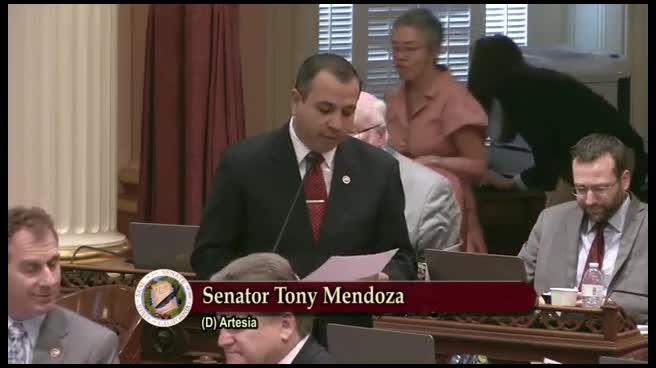


Bill Co-Author(s):