SB 762: Competitive bidding: best value: pilot program: design-build.
- Session Year: 2015-2016
- House: Senate
- Latest Version Date: 2015-10-08
The Local Agency Public Construction Act requires counties, among others, to comply with specified procedures for contracting for public works projects, including the use of a competitive bidding process and awarding contracts to the lowest responsible bidder. Existing law provides that specified provisions of the act applicable to public works contracts awarded by counties, as specified, do not apply to certain contracts by the County of Napa and the County of San Diego.
This bill would establish a pilot program to allow the Counties of Alameda, Los Angeles, Riverside, San Bernardino, San Diego, Solano, and Yuba to select a bidder on the basis of best value, as defined, for construction projects in excess of $1,000,000. The bill would establish procedures and criteria for the selection of a best value contractor. The bill would require that bidders verify specified information under oath, thereby imposing a state-mandated local program by creating a new crime. The bill would require the board of supervisors of a participating county, before January 1, 2020, to submit a report to specified legislative committees. The bill would repeal the pilot program provisions on January 1, 2020.
The bill would make legislative findings and declarations as to the necessity of a special statute for the Counties of Alameda, Los Angeles, Riverside, San Bernardino, San Diego, Solano, and Yuba.
Existing law, until January 1, 2025, authorizes the Department of General Services, the Department of Corrections and Rehabilitation, and certain local agencies to use the design-build procurement process for specified public works. Existing law defines best value for those purposes to mean a value determined by evaluation of objective criteria that may include, but are not limited to, price, features, functions, life-cycle costs, experience, and past performance.
This bill would modify that definition to have the objective criteria evaluated, instead, relate to those specific criteria.
The California Constitution requires the state to reimburse local agencies and school districts for certain costs mandated by the state. Statutory provisions establish procedures for making that reimbursement.
This bill would provide that no reimbursement is required by this act for a specified reason.
The Local Agency Public Construction Act requires counties, among others, to comply with specified procedures for contracting for public works projects, including the use of a competitive bidding process and awarding contracts to the lowest responsible bidder. Existing law provides that specified provisions of the act applicable to public works contracts awarded by counties, as specified, do not apply to certain contracts by the County of Napa and the County of San Diego.
This bill would establish a pilot program to allow the Counties of Alameda, Los Angeles, Placer, Riverside, San Bernardino, San Diego, Solano, and Yuba to select a bidder on the basis of best value, as defined, for construction projects in excess of $1,000,000. The bill would establish procedures and criteria for the selection of a best value contractor. The bill would require that bidders verify specified information under oath, thereby imposing a state-mandated local program by creating a new crime. The bill would require the board of supervisors of a participating county, before January 1, 2020, to submit a report to specified legislative committees. The bill would repeal the pilot program provisions on January 1, 2020.
The bill would make legislative findings and declarations as to the necessity of a special statute for the Counties of Alameda, Los Angeles, Placer, Riverside, San Bernardino, San Diego, Solano, and Yuba.
Existing law, until January 1, 2025, authorizes the Department of General Services, the Department of Corrections and Rehabilitation, and certain local agencies to use the design-build procurement process for specified public works. Existing law defines best value for those purposes to mean a value determined by evaluation of objective criteria that may include, but are not limited to, price, features, functions, life-cycle costs, experience, and past performance.
This bill would modify that definition to have the objective criteria evaluated, instead, relate to those specific criteria.
The California Constitution requires the state to reimburse local agencies and school districts for certain costs mandated by the state. Statutory provisions establish procedures for making that reimbursement.
This bill would provide that no reimbursement is required by this act for a specified reason.
The Local Agency Public Construction Act requires counties, among others, to comply with specified procedures for contracting for public works projects, including the use of a competitive bidding process and awarding contracts to the lowest responsible bidder. Existing law provides that specified provisions of the act applicable to public works contracts awarded by counties, as specified, do not apply to certain contracts by the County of Napa and the County of San Diego.
This bill would establish a pilot program to allow counties the Counties of Alameda, Los Angeles, Placer, Riverside, San Bernardino, San Diego, Solano, and Yuba to select a bidder on the basis of best value, as defined, for construction projects in excess of $1,000,000. The bill would establish procedures and criteria for the selection of a best value contractor. The bill would require that bidders verify specified information under oath, thereby imposing a state-mandated local program by creating a new crime. The bill would require the board of supervisors of a participating county, before January 1, 2020, to submit a report to specified legislative committees. The bill would repeal the pilot program provisions on January 1, 2020.
The bill would make legislative findings and declarations as to the necessity of a special statute for the Counties of Alameda, Los Angeles, Placer, Riverside, San Bernardino, San Diego, Solano, and Yuba.
Existing law, until January 1, 2025, authorizes the Department of General Services, the Department of Corrections and Rehabilitation, and certain local agencies to use the design-build procurement process for specified public works. Existing law defines best value for those purposes to mean a value determined by evaluation of objective criteria that may include, but are not limited to, price, features, functions, life-cycle costs, experience, and past performance.
This bill would modify that definition to have the objective criteria evaluated, instead, relate to those specific criteria.
The California Constitution requires the state to reimburse local agencies and school districts for certain costs mandated by the state. Statutory provisions establish procedures for making that reimbursement.
This bill would provide that no reimbursement is required by this act for a specified reason.
The Local Agency Public Construction Act requires counties, among others, to comply with specified procedures for contracting for public works projects, including the use of a competitive bidding process and awarding contracts to the lowest responsible bidder. Existing law provides that specified provisions of the act applicable to public works contracts awarded by counties, as specified, do not apply to certain contracts by the County of Napa and the County of San Diego.
This bill would establish a pilot program to allow counties to select the lowest responsible a bidder on the basis of best value, as defined, for construction projects in excess of $1,000,000. The bill would establish procedures and criteria for the selection of a best value contractor. The bill would require that bidders verify specified information under oath, thereby imposing a state-mandated local program by creating a new crime. The bill would require the board of supervisors of a participating county, before January 1, 2020, to submit a report to specified legislative committees. The bill would repeal the pilot program provisions on January 1, 2020.
Existing law, until January 1, 2025, authorizes the Department of General Services, the Department of Corrections and Rehabilitation, and certain local agencies to use the design-build procurement process for specified public works. Existing law defines best value for those purposes to mean a value determined by evaluation of objective criteria that may include, but are not limited to, price, features, functions, life-cycle costs, experience, and past performance.
This bill would modify that definition to have the objective criteria evaluated, instead, relate to those specific criteria.
The California Constitution requires the state to reimburse local agencies and school districts for certain costs mandated by the state. Statutory provisions establish procedures for making that reimbursement.
This bill would provide that no reimbursement is required by this act for a specified reason.
The Local Agency Public Construction Act requires counties, among others, to comply with specified procedures for contracting for public works projects, including the use of a competitive bidding process and awarding contracts to the lowest responsible bidder. Existing law provides that specified provisions of the act applicable to public works contracts awarded by counties, as specified, do not apply to certain contracts by the County of Napa and the County of San Diego.
This bill would establish a pilot program to allow counties to select the lowest responsible bidder on the basis of best value, as defined, for construction projects in excess of $1,000,000. The bill would establish procedures and criteria for the selection of a best value contractor. The bill would require that bidders verify specified information under oath, thereby imposing a state-mandated local program by creating a new crime. The bill would require the board of supervisors of a participating county, before January 1, 2020, to submit a report to specified legislative committees. The bill would repeal the pilot program provisions on January 1, 2020.
Existing law, until January 1, 2025, authorizes the Department of General Services, the Department of Corrections and Rehabilitation, and certain local agencies to use the design-build procurement process for specified public works. Existing law defines best value for those purposes to mean a value determined by evaluation of objective criteria that may include, but are not limited to, price, features, functions, life-cycle costs, experience, and past performance.
This bill would modify that definition to have the objective criteria evaluated, instead, relate to those specific criteria.
The California Constitution requires the state to reimburse local agencies and school districts for certain costs mandated by the state. Statutory provisions establish procedures for making that reimbursement.
This bill would provide that no reimbursement is required by this act for a specified reason.
The Local Agency Public Construction Act requires counties, among others, to comply with specified procedures for contracting for public works projects, including the use of a competitive bidding process and awarding contracts to the lowest responsible bidder. Existing law provides that specified provisions of the act applicable to public works contracts awarded by counties, as specified, do not apply to certain contracts by the County of Napa and the County of San Diego.
This bill would establish a pilot program to allow counties to select the lowest responsible bidder on the basis of best value, as defined, for construction projects in excess of $1,000,000. The bill would establish procedures and criteria for the selection of a best value contractor. The bill would require that bidders verify specified information under oath, thereby imposing a state-mandated local program by creating a new crime. The bill would require the board of supervisors of a participating county, before January 1, 2020, to submit a report to specified legislative committees. The bill would repeal its the pilot program provisions on January 1, 2020.
Existing law, until January 1, 2025, authorizes the Department of General Services, the Department of Corrections and Rehabilitation, and certain local agencies to use the design-build procurement process for specified public works. Existing law defines best value for those purposes to mean a value determined by evaluation of objective criteria that may include, but are not limited to, price, features, functions, life-cycle costs, experience, and past performance.
This bill would modify that definition to have the objective criteria evaluated, instead, relate to those specific criteria.
The California Constitution requires the state to reimburse local agencies and school districts for certain costs mandated by the state. Statutory provisions establish procedures for making that reimbursement.
This bill would provide that no reimbursement is required by this act for a specified reason.
The Local Agency Public Construction Act requires counties, among others, to comply with specified procedures for contracting for public works projects, including the use of a competitive bidding process and awarding contracts to the lowest responsible bidder. Existing law provides that specified provisions of the act applicable to public works contracts awarded by counties, as specified, do not apply to certain contracts by the County of Napa and the County of San Diego.
This bill would establish a pilot program to allow counties to select the lowest responsible bidder on the basis of best value, as defined, for construction projects in excess of $1,000,000. The bill would establish procedures and criteria for the selection of a best value contractor. The bill would require that bidders verify specified information under oath, thereby imposing a state-mandated local program by creating a new crime. The bill would require the board of supervisors of a participating county, before January 1, 2020, to submit a report to specified legislative committees. The bill would repeal its provisions on January 1, 2020.
The California Constitution requires the state to reimburse local agencies and school districts for certain costs mandated by the state. Statutory provisions establish procedures for making that reimbursement.
This bill would provide that no reimbursement is required by this act for a specified reason.
The Local Agency Public Construction Act requires counties, among others, to comply with specified procedures for contracting for public works projects, including, including the use of a competitive bidding process and awarding contracts to the lowest responsible bidder. Existing law provides that specified provisions of the act applicable to public works contracts awarded by counties, as specified, do not apply to certain contracts by the County of Napa and the County of San Diego.
This bill would establish a pilot program to allow counties to select the lowest responsible bidder on the basis of best value, as defined, for construction projects in excess of $1,000,000. The bill would establish procedures and criteria for the selection of a best value contractor. The bill would require that bidders verify specified information under oath, thereby imposing a state-mandated local program by creating a new crime. The bill would require the board of supervisors of a participating county, before January 1, 2020, to submit a report to specified legislative committees.
The California Constitution requires the state to reimburse local agencies and school districts for certain costs mandated by the state. Statutory provisions establish procedures for making that reimbursement.
This bill would provide that no reimbursement is required by this act for a specified reason.
The Local Agency Public Construction Act requires counties, among others, to comply with specified procedures for contracting for public works projects, including, the use of a competitive bidding process and awarding contracts to the lowest responsible bidder. Existing law provides that specified provisions of the act applicable to public works contracts awarded by counties, as specified, do not apply to certain contracts by the County of Napa and the County of San Diego.
This bill would establish a pilot program to allow counties to select the lowest responsible bidder on the basis of best value, as defined. This defined, for construction projects in excess of $1,000,000. The bill would require that bidders verify specified information under oath, thereby imposing a state-mandated local program by creating a new crime.
The California Constitution requires the state to reimburse local agencies and school districts for certain costs mandated by the state. Statutory provisions establish procedures for making that reimbursement.
This bill would provide that no reimbursement is required by this act for a specified reason.
The Local Agency Public Construction Act requires counties, among others, to comply with specified procedures for contracting for public works projects, including, the use of a competitive bidding process and awarding contracts to the lowest responsible bidder. Existing law provides that specified provisions of the act applicable to public works contracts awarded by counties, as specified, do not apply to certain contracts by the County of Napa and the County of San Diego.
This bill would establish a pilot program to allow counties to select the lowest responsible bidder on the basis of best value, as defined. This bill would require that bidders verify specified information under oath, thereby imposing a state-mandated local program by creating a new crime.
The California Constitution requires the state to reimburse local agencies and school districts for certain costs mandated by the state. Statutory provisions establish procedures for making that reimbursement.
This bill would provide that no reimbursement is required by this act for a specified reason.
For purposes of this article, the following definitions and the definitions in subdivision (a) of Section 13332.19 of the Government Code shall apply:
(a)Best value means a value determined by evaluation of objective criteria that relate to price, features, functions, life-cycle costs, experience, and past performance. A best value determination may involve the selection of the lowest cost proposal meeting the interests of the department and meeting the objectives of the project, selection of the best proposal for a stipulated sum established by the procuring agency, or a tradeoff between price and other specified factors.
(b)Construction subcontract means each subcontract awarded by the design-build entity to a subcontractor that will perform work or labor or render service to the design-build entity in or about the construction of the work or improvement, or a subcontractor licensed by the State of California that, under subcontract to the design-build entity, specially fabricates and installs a portion of the work or improvement according to detailed drawings contained in the plans and specifications produced by the design-build team.
(c)Department means the Department of General Services and the Department of Corrections and Rehabilitation.
(d)Design-build means a project delivery process in which both the design and construction of a project are procured from a single entity.
(e)Design-build entity means a corporation, limited liability company, partnership, joint venture, or other legal entity that is able to provide appropriately licensed contracting, architectural, and engineering services as needed pursuant to a design-build contract.
(f)Design-build team means the design-build entity itself and the individuals and other entities identified by the design-build entity as members of its team. Members shall include the general contractor and, if utilized in the design of the project, all electrical, mechanical, and plumbing contractors.
(g)Director means, with respect to procurements undertaken by the Department of General Services, the Director of General Services or, with respect to procurements undertaken by the Department of Corrections and Rehabilitation, the secretary of that department.
SEC. 2.Article 3.7 (commencing with Section 20155) is added to Chapter 1 of Part 3 of Division 2 of the Public Contract Code, to read:3.7.Best Value Construction Contracting for Counties Pilot Program20155.(a)This article provides for a pilot program for the Counties of Alameda, Los Angeles, Riverside, San Bernardino, San Diego, Solano, and Yuba for construction projects in excess of one million dollars ($1,000,000).
(b)The board of supervisors of a county shall let any contract for a construction project pursuant to this article to the bidder representing the best value or else reject all bids.
(c)The bidder may be selected on the basis of the best value to the county. In order to implement this method of selection, the board of supervisors shall adopt and publish procedures and required criteria that ensure that all selections are conducted in a fair and impartial manner. These procedures shall conform to Sections 20155.3 to 20155.6, inclusive, and shall be mandatory for a county that chooses to participate in the pilot program.
(d)If the board of supervisors of a county deems it to be in the best interest of the county, the board of supervisors, on the refusal or failure of the successful bidder for a project to execute a tendered contract, may award it to the bidder with the second lowest best value score, as determined in accordance with subdivision (c) of Section 20155.5. If the second bidder fails or refuses to execute the contract, the board of supervisors may likewise award it to the bidder with the third lowest best value score, as determined in accordance with subdivision (c) of Section 20155.5.
20155.1.As used in this article:
(a)Best value means a procurement process whereby the selected bidder may be selected on the basis of objective criteria for evaluating the qualifications of bidders with the resulting selection representing the best combination of price and qualifications.
(b)Best value contract means a competitively bid contract entered into pursuant to this article.
(c)Best value contractor means a properly licensed person, firm, or corporation that submits a bid for, or is awarded, a best value contract.
(d)County means any of the following counties:
(1)The County of Alameda.
(2)The County of Los Angeles.
(3)The County of Riverside.
(4)The County of San Bernardino.
(5)The County of San Diego.
(6)The County of Solano.
(7)The County of Yuba.
(e)Demonstrated management competency means the experience, competency, capability, and capacity of the proposed management staffing to complete projects of similar size, scope, or complexity.
(f)Financial condition means the financial resources needed to perform the contract. The criteria used to evaluate a bidders financial condition shall include, at a minimum, capacity to obtain all required payment bonds, performance bonds, and liability insurance.
(g)Labor compliance means the ability to comply with, and past performance with, contract and statutory requirements for the payment of wages and qualifications of the workforce. The criteria used to evaluate a bidders labor compliance shall include, as a minimum, the bidders ability to comply with the apprenticeship requirements of the California Apprenticeship Council and the Department of Industrial Relations, its past conformance with those requirements, and its past conformance with requirements to pay prevailing wages on public works projects.
(h)Qualifications means the financial condition, relevant experience, demonstrated management competency, labor compliance, and safety record of the bidder, and, if required by the bidding documents, some or all of the preceding qualifications as they pertain to subcontractors proposed to be used by the bidder for designated portions of the work. A county shall evaluate financial condition, relevant experience, demonstrated management competency, labor compliance, and safety record, using, to the extent possible, quantifiable measurements.
(i)Relevant experience means the experience, competency, capability, and capacity to complete projects of similar size, scope, or complexity.
(j)Safety record means the prior history concerning the safe performance of construction contracts. The criteria used to evaluate a bidders safety record shall include, at a minimum, its experience modification rate for the most recent three-year period, and its average total recordable injury or illness rate and average lost work rate for the most recent three-year period.
20155.2.As used in this article:
(a)Apprenticeable occupation means an occupation for which the Chief of the Division of Apprenticeship Standards had approved an apprenticeship program pursuant to Section 3075 of the Labor Code prior to January 1, 2014.
(b)Skilled and trained workforce means a workforce that meets all of the following conditions:
(1)All the workers are either skilled journeypersons or apprentices registered in an apprenticeship program approved by the Chief of the Division of Apprenticeship Standards.
(2)(A) As of January 1, 2016, at least 20 percent of the skilled journeypersons employed to perform work on the contract or project by the entity and each of its subcontractors at every tier are graduates of an apprenticeship program for the applicable occupation that was either approved by the Chief of the Division of Apprenticeship Standards pursuant to Section 3075 of the Labor Code or located outside California and approved for federal purposes pursuant to the apprenticeship regulations adopted by the United States Secretary of Labor.
(B)As of January 1, 2017, at least 30 percent of the skilled journeypersons employed to perform work on the contract or project by the entity and each of its subcontractors at every tier are graduates of an apprenticeship program for the applicable occupation that was either approved by the Chief of the Division of Apprenticeship Standards pursuant to Section 3075 of the Labor Code or located outside California and approved for federal purposes pursuant to the apprenticeship regulations adopted by the United States Secretary of Labor.
(C)As of January 1, 2018, at least 40 percent of the skilled journeypersons employed to perform work on the contract or project by the entity and each of its subcontractors at every tier are graduates of an apprenticeship program for the applicable occupation that was either approved by the Chief of the Division of Apprenticeship Standards pursuant to Section 3075 of the Labor Code or located outside California and approved for federal purposes pursuant to the apprenticeship regulations adopted by the United States Secretary of Labor.
(D)As of January 1, 2019, at least 50 percent of the skilled journeypersons employed to perform work on the contract or project by the entity and each of its subcontractors at every tier are graduates of an apprenticeship program for the applicable occupation that was either approved by the Chief of the Division of Apprenticeship Standards pursuant to Section 3075 of the Labor Code or located outside California and approved for federal purposes pursuant to the apprenticeship regulations adopted by the United States Secretary of Labor.
(E)As of January 1, 2020, at least 60 percent of the skilled journeypersons employed to perform work on the contract or project by the entity and each of its subcontractors at every tier are graduates of an apprenticeship program for the applicable occupation that was either approved by the Chief of the Division of Apprenticeship Standards pursuant to Section 3075 of the Labor Code or located outside California and approved for federal purposes pursuant to the apprenticeship regulations adopted by the United States Secretary of Labor.
(F)For an apprenticeable occupation in which no apprenticeship program had been approved by the Chief of the Division of Apprenticeship Standards prior to January 1, 1995, up to one-half of the graduation percentage requirements of subparagraphs (A) to (E), inclusive, may be satisfied by skilled journeypersons who commenced working in the apprenticeable occupation prior to the chiefs approval of an apprenticeship program for that occupation in the county in which the project is located.
(c)Skilled journeyperson means a worker who either:
(1)Graduated from an apprenticeship program for the applicable occupation that was approved by the Chief of the Division of Apprenticeship Standards or located outside California and approved for federal purposes pursuant to the apprenticeship regulations adopted by the United States Secretary of Labor.
(2)Has at least as many hours of on-the-job experience in the applicable occupation as would be required to graduate from an apprenticeship program for the applicable occupation that is approved by the Chief of the Division of Apprenticeship Standards.
20155.3.A county shall proceed in accordance with the following when awarding best value contracts under this article:
(a)The county shall not select a bidder on the basis of the best value to a county unless, after evaluating at a public meeting the alternative of awarding the contract on the basis of the lowest bid price, the county makes a written finding that awarding the contract on the basis of best value, for the specific project under consideration, will accomplish one or more of the following objectives: reducing project costs, expediting the completion of the project, or providing features not achievable through awarding the contract on the basis of the lowest bid price.
(b)The county shall prepare a solicitation for bids and give notice pursuant to Section 20125. A county may identify specific types of subcontractors that are required to be included in the bids. A county shall comply with Chapter 4 (commencing with Section 4100) of Part 1 with regard to construction subcontractors identified in the bid.
(c)The county shall establish a procedure to prequalify bidders pursuant to Section 20101. The information required pursuant to this section shall be verified under oath by the bidder in the manner in which civil pleadings in civil actions are verified. Information submitted by the bidder as part of the evaluation process shall not be open to public inspection to the extent that information is exempt from disclosure under the California Public Records Act (Chapter 3.5 (commencing with Section 6250) of Division 7 of Title 1 of the Government Code).
(d)Each solicitation for bids shall do all of the following:
(1)Invite prequalified bidders to submit sealed bids in the manner prescribed by this article.
(2)Include a section identifying and describing the following:
(A)Criteria that the county will consider in evaluating bids.
(B)The methodology and rating or weighting system that will be used by the county in evaluating bids.
(C)The relative importance or weight assigned to the criteria identified in the request for bids.
(e)Final evaluation of the best value contractor shall be done in a manner that prevents cost or price information from being revealed to the committee evaluating the qualifications of the bidders prior to completion and announcement of that committees decision.
20155.4.(a)A best value contractor shall not be prequalified or shortlisted unless the contractor provides an enforceable commitment to the county that the contractor and its subcontractors at every tier will use a skilled and trained workforce to perform all work on the project or contract that falls within an apprenticeable occupation in the building and construction trades.
(b)A contractors commitment that a skilled and trained workforce will be used to perform the project or contract may be established by any of the following:
(1)The contractors agreement with the county that the contractor and its subcontractors at every tier will comply with the requirements of this section and that the contractor will provide the county with evidence, on a monthly basis while the project or contract is being performed, that the contractor and its subcontractors are complying with the requirements of this section.
(2)If the county has entered into a project labor agreement that will bind all contractors and subcontractors performing work on the project or contract, and that includes the requirements of this section, the contractors agreement that it will become a party to that project labor agreement.
(3)Evidence that the contractor has entered into a project labor agreement that includes the requirements of this section and that will bind the contractor and all its subcontractors at every tier performing the project or contract.
20155.5.Selection of the best value contractor shall be made as follows:
(a)(1)An evaluation committee appointed by the county shall evaluate the qualifications of the bidders based solely upon the criteria set forth in the solicitation documents, and shall assign a qualifications score to each bid.
(2)A county shall establish written policies and procedures, consistent with applicable law, to ensure that members of an evaluation committee are free from conflicts of interest, if the county has not already established applicable written policies and procedures.
(b)A county shall not award a contract for a construction project pursuant to this article if a solicitation for bids for that construction project results in the submission of fewer than three responsive bids to the county for evaluation.
(c)Except as provided in subdivision (d) of Section 20155, the award of the contract shall be made to the bidder whose bid is determined by a county, in writing, to be the best value to the county. To determine the best value contractor, the county shall divide each bidders price by its qualifications score. The lowest resulting cost per quality point will represent the best value bid.
(d)A county shall issue a written decision of its contract award.
(e)Upon issuance of a contract award, a county shall publicly announce its award identifying the best value contractor to which the award is made, the project, the project price, and the selected best value contractors score based on the evaluation criteria listed in the request for bids. The notice of award shall be made public and include the score of the selected best value contractor in relation to all other responsive bidders and their respective prices. The contract file shall include documentation sufficient to support the decision to award.
20155.6.(a)If a county elects to award a project pursuant to this article, retention proceeds withheld by the county from the selected best value contractor shall not exceed 5 percent if a performance and payment bond, issued by an admitted surety insurer, is required in the solicitation of bids.
(b)In a contract between the selected best value contractor and a subcontractor, and in a contract between a subcontractor and any subcontractor thereunder, the percentage of the retention proceeds withheld shall not exceed the percentage specified in the contract between the county and the selected best value contractor. If the selected best value contractor provides written notice to a subcontractor that, prior to or at the time the bid is requested, a bond may be required and the subcontractor subsequently is unable or refuses to furnish a bond to the selected best value contractor, then the selected best value contractor may withhold retention proceeds in excess of the percentage specified in the contract between the county and the selected best value contractor from any payment made by the selected best value contractor to the subcontractor.
20155.7.(a)Before January 1, 2020, the board of supervisors of a participating county shall submit a report to the appropriate policy committees of the Legislature and the Joint Legislative Budget Committee. The report shall include, but is not limited to, the following information:
(1)A description of the projects awarded using the best value procedures.
(2)The contract award amounts.
(3)The best value contractors awarded the projects.
(4)A description of any written protests concerning any aspect of the solicitation, bid, or award of the best value contracts, including the resolution of the protests.
(5)A description of the prequalification process.
(6)The criteria used to evaluate the bids, including the weighting of the criteria and an assessment of the effectiveness of the methodology.
(7)If a project awarded under this article has been completed, an assessment of the project performance, to include a summary of any delays or cost increases.
(b)A report submitted pursuant to subdivision (a) shall be submitted in compliance with Section 9795 of the Government Code.
20155.8.Except as otherwise provided in this article, this article is not intended to change in any manner any guideline, criteria, procedure, or requirement of a county to let any contract for a project to the lowest responsible bidder or else reject all bids.
20155.9.This article shall remain in effect only until January 1, 2020, and as of that date is repealed.
SEC. 3.Section 22161 of the Public Contract Code is amended to read:22161.For purposes of this chapter, the following definitions apply:
(a)Best value means a value determined by evaluation of objective criteria that relate to price, features, functions, life-cycle costs, experience, and past performance. A best value determination may involve the selection of the lowest cost proposal meeting the interests of the local agency and meeting the objectives of the project, selection of the best proposal for a stipulated sum established by the procuring agency, or a tradeoff between price and other specified factors.
(b)Construction subcontract means each subcontract awarded by the design-build entity to a subcontractor that will perform work or labor or render service to the design-build entity in or about the construction of the work or improvement, or a subcontractor licensed by the State of California that, under subcontract to the design-build entity, specially fabricates and installs a portion of the work or improvement according to detailed drawings contained in the plans and specifications produced by the design-build team.
(c)Design-build means a project delivery process in which both the design and construction of a project are procured from a single entity.
(d)Design-build entity means a corporation, limited liability company, partnership, joint venture, or other legal entity that is able to provide appropriately licensed contracting, architectural, and engineering services as needed pursuant to a design-build contract.
(e)Design-build team means the design-build entity itself and the individuals and other entities identified by the design-build entity as members of its team. Members shall include the general contractor and, if utilized in the design of the project, all electrical, mechanical, and plumbing contractors.
(f)Local agency means the following:
(1)A city, county, or city and county.
(2)A special district that operates wastewater facilities, solid waste management facilities, water recycling facilities, or fire protection facilities.
(3)Any transit district, included transit district, municipal operator, included municipal operator, any consolidated agency, as described in Section 132353.1 of the Public Utilities Code, any joint powers authority formed to provide transit service, any county transportation commission created pursuant to Section 130050 of the Public Utilities Code, or any other local or regional agency, responsible for the construction of transit projects.
(g)(1)For a local agency defined in paragraph (1) of subdivision (f), project means the construction of a building or buildings and improvements directly related to the construction of a building or buildings, county sanitation wastewater treatment facilities, and park and recreational facilities, but does not include the construction of other infrastructure, including, but not limited to, streets and highways, public rail transit, or water resources facilities and infrastructure. For a local agency defined in paragraph (1) of subdivision (f) that operates wastewater facilities, solid waste management facilities, or water recycling facilities, project also means the construction of regional and local wastewater treatment facilities, regional and local solid waste facilities, or regional and local water recycling facilities.
(2)For a local agency defined in paragraph (2) of subdivision (f), project means the construction of regional and local wastewater treatment facilities, regional and local solid waste facilities, regional and local water recycling facilities, or fire protection facilities.
(3)For a local agency defined in paragraph (3) of subdivision (f), project means a transit capital project that begins a project solicitation on or after January 1, 2015. A project, as defined by this paragraph, that begins the solicitation process before January 1, 2015, is subject to Article 6.8 (commencing with Section 20209.5) of Chapter 1. Project, as defined by this paragraph, does not include state highway construction or local street and road projects.
SEC. 4.The Legislature finds and declares that a special law is necessary and that a general law cannot be made applicable within the meaning of Section 16 of Article IV of the California Constitution because of the need to establish a pilot project for the Counties of Alameda, Los Angeles, Riverside, San Bernardino, San Diego, Solano, and Yuba to determine the potential benefits and consequences of using best value procurement to facilitate infrastructure improvements and ease fiscal impacts.
SEC. 5.No reimbursement is required by this act pursuant to Section 6 of Article XIIIB of the California Constitution because the only costs that may be incurred by a local agency or school district will be incurred because this act creates a new crime or infraction, eliminates a crime or infraction, or changes the penalty for a crime or infraction, within the meaning of Section 17556 of the Government Code, or changes the definition of a crime within the meaning of Section 6 of Article XIIIB of the California Constitution.
For purposes of this article, the following definitions and the definitions in subdivision (a) of Section 13332.19 of the Government Code shall apply:
(a)Best value means a value determined by evaluation of objective criteria that relate to price, features, functions, life-cycle costs, experience, and past performance. A best value determination may involve the selection of the lowest cost proposal meeting the interests of the department and meeting the objectives of the project, selection of the best proposal for a stipulated sum established by the procuring agency, or a tradeoff between price and other specified factors.
(b)Construction subcontract means each subcontract awarded by the design-build entity to a subcontractor that will perform work or labor or render service to the design-build entity in or about the construction of the work or improvement, or a subcontractor licensed by the State of California that, under subcontract to the design-build entity, specially fabricates and installs a portion of the work or improvement according to detailed drawings contained in the plans and specifications produced by the design-build team.
(c)Department means the Department of General Services and the Department of Corrections and Rehabilitation.
(d)Design-build means a project delivery process in which both the design and construction of a project are procured from a single entity.
(e)Design-build entity means a corporation, limited liability company, partnership, joint venture, or other legal entity that is able to provide appropriately licensed contracting, architectural, and engineering services as needed pursuant to a design-build contract.
(f)Design-build team means the design-build entity itself and the individuals and other entities identified by the design-build entity as members of its team. Members shall include the general contractor and, if utilized in the design of the project, all electrical, mechanical, and plumbing contractors.
(g)Director means, with respect to procurements undertaken by the Department of General Services, the Director of General Services or, with respect to procurements undertaken by the Department of Corrections and Rehabilitation, the secretary of that department.
SEC. 2.Article 3.7 (commencing with Section 20155) is added to Chapter 1 of Part 3 of Division 2 of the Public Contract Code, to read:3.7.Best Value Construction Contracting for Counties Pilot Program20155.(a)This article provides for a pilot program for the Counties of Alameda, Los Angeles, Placer, Riverside, San Bernardino, San Diego, Solano, and Yuba for construction projects in excess of one million dollars ($1,000,000).
(b)The board of supervisors of a county shall let any contract for a construction project pursuant to this article to the bidder representing the best value or else reject all bids.
(c)The bidder may be selected on the basis of the best value to the county. In order to implement this method of selection, the board of supervisors shall adopt and publish procedures and required criteria that ensure that all selections are conducted in a fair and impartial manner. These procedures shall conform to Sections 20155.3 to 20155.6, inclusive, and shall be mandatory for a county that chooses to participate in the pilot program.
(d)If the board of supervisors of a county deems it to be in the best interest of the county, the board of supervisors, on the refusal or failure of the successful bidder for a project to execute a tendered contract, may award it to the bidder with the second lowest best value score, as determined in accordance with subdivision (c) of Section 20155.5. If the second bidder fails or refuses to execute the contract, the board of supervisors may likewise award it to the bidder with the third lowest best value score, as determined in accordance with subdivision (c) of Section 20155.5.
20155.1.As used in this article:
(a)Best value means a procurement process whereby the selected bidder may be selected on the basis of objective criteria for evaluating the qualifications of bidders with the resulting selection representing the best combination of price and qualifications.
(b)Best value contract means a competitively bid contract entered into pursuant to this article.
(c)Best value contractor means a properly licensed person, firm, or corporation that submits a bid for, or is awarded, a best value contract.
(d)County means any of the following counties:
(1)The County of Alameda.
(2)The County of Los Angeles.
(3)The County of Placer.
(4)
(3)The County of Riverside.
(5)
(4)The County of San Bernardino.
(6)
(5)The County of San Diego.
(7)
(6)The County of Solano.
(8)
(7)The County of Yuba.
(e)Demonstrated management competency means the experience, competency, capability, and capacity of the proposed management staffing to complete projects of similar size, scope, or complexity.
(f)Financial condition means the financial resources needed to perform the contract. The criteria used to evaluate a bidders financial condition shall include, at a minimum, capacity to obtain all required payment bonds, performance bonds, and liability insurance.
(g)Labor compliance means the ability to comply with, and past performance with, contract and statutory requirements for the payment of wages and qualifications of the workforce. The criteria used to evaluate a bidders labor compliance shall include, as a minimum, the bidders ability to comply with the apprenticeship requirements of the California Apprenticeship Council and the Department of Industrial Relations, its past conformance with those requirements, and its past conformance with requirements to pay prevailing wages on public works projects.
(h)Qualifications means the financial condition, relevant experience, demonstrated management competency, labor compliance, and safety record of the bidder, and, if required by the bidding documents, some or all of the preceding qualifications as they pertain to subcontractors proposed to be used by the bidder for designated portions of the work. A county shall evaluate financial condition, relevant experience, demonstrated management competency, labor compliance, and safety record, using, to the extent possible, quantifiable measurements.
(i)Relevant experience means the experience, competency, capability, and capacity to complete projects of similar size, scope, or complexity.
(j)Safety record means the prior history concerning the safe performance of construction contracts. The criteria used to evaluate a bidders safety record shall include, at a minimum, its experience modification rate for the most recent three-year period, and its average total recordable injury or illness rate and average lost work rate for the most recent three-year period.
20155.2.As used in this article:
(a)Apprenticeable occupation means an occupation for which the Chief of the Division of Apprenticeship Standards had approved an apprenticeship program pursuant to Section 3075 of the Labor Code prior to January 1, 2014.
(b)Skilled and trained workforce means a workforce that meets all of the following conditions:
(1)All the workers are either skilled journeypersons or apprentices registered in an apprenticeship program approved by the Chief of the Division of Apprenticeship Standards.
(2)(A) As of January 1, 2016, at least 20 percent of the skilled journeypersons employed to perform work on the contract or project by the entity and each of its subcontractors at every tier are graduates of an apprenticeship program for the applicable occupation that was either approved by the Chief of the Division of Apprenticeship Standards pursuant to Section 3075 of the Labor Code or located outside California and approved for federal purposes pursuant to the apprenticeship regulations adopted by the United States Secretary of Labor.
(B)As of January 1, 2017, at least 30 percent of the skilled journeypersons employed to perform work on the contract or project by the entity and each of its subcontractors at every tier are graduates of an apprenticeship program for the applicable occupation that was either approved by the Chief of the Division of Apprenticeship Standards pursuant to Section 3075 of the Labor Code or located outside California and approved for federal purposes pursuant to the apprenticeship regulations adopted by the United States Secretary of Labor.
(C)As of January 1, 2018, at least 40 percent of the skilled journeypersons employed to perform work on the contract or project by the entity and each of its subcontractors at every tier are graduates of an apprenticeship program for the applicable occupation that was either approved by the Chief of the Division of Apprenticeship Standards pursuant to Section 3075 of the Labor Code or located outside California and approved for federal purposes pursuant to the apprenticeship regulations adopted by the United States Secretary of Labor.
(D)As of January 1, 2019, at least 50 percent of the skilled journeypersons employed to perform work on the contract or project by the entity and each of its subcontractors at every tier are graduates of an apprenticeship program for the applicable occupation that was either approved by the Chief of the Division of Apprenticeship Standards pursuant to Section 3075 of the Labor Code or located outside California and approved for federal purposes pursuant to the apprenticeship regulations adopted by the United States Secretary of Labor.
(E)As of January 1, 2020, at least 60 percent of the skilled journeypersons employed to perform work on the contract or project by the entity and each of its subcontractors at every tier are graduates of an apprenticeship program for the applicable occupation that was either approved by the Chief of the Division of Apprenticeship Standards pursuant to Section 3075 of the Labor Code or located outside California and approved for federal purposes pursuant to the apprenticeship regulations adopted by the United States Secretary of Labor.
(F)For an apprenticeable occupation in which no apprenticeship program had been approved by the Chief of the Division of Apprenticeship Standards prior to January 1, 1995, up to one-half of the graduation percentage requirements of subparagraphs (A) to (E), inclusive, may be satisfied by skilled journeypersons who commenced working in the apprenticeable occupation prior to the chiefs approval of an apprenticeship program for that occupation in the county in which the project is located.
(c)Skilled journeyperson means a worker who either:
(1)Graduated from an apprenticeship program for the applicable occupation that was approved by the Chief of the Division of Apprenticeship Standards or located outside California and approved for federal purposes pursuant to the apprenticeship regulations adopted by the United States Secretary of Labor.
(2)Has at least as many hours of on-the-job experience in the applicable occupation as would be required to graduate from an apprenticeship program for the applicable occupation that is approved by the Chief of the Division of Apprenticeship Standards.
20155.3.A county shall proceed in accordance with the following when awarding best value contracts under this article:
(a)The county shall not select a bidder on the basis of the best value to a county unless, after evaluating at a public meeting the alternative of awarding the contract on the basis of the lowest bid price, the county makes a written finding that awarding the contract on the basis of best value, for the specific project under consideration, will accomplish one or more of the following objectives: reducing project costs, expediting the completion of the project, or providing features not achievable through awarding the contract on the basis of the lowest bid price.
(b)The county shall prepare a solicitation for bids and give notice pursuant to Section 20125. A county may identify specific types of subcontractors that are required to be included in the bids. A county shall comply with Chapter 4 (commencing with Section 4100) of Part 1 with regard to construction subcontractors identified in the bid.
(c)The county shall establish a procedure to prequalify bidders pursuant to Section 20101. The information required pursuant to this section shall be verified under oath by the bidder in the manner in which civil pleadings in civil actions are verified. Information submitted by the bidder as part of the evaluation process shall not be open to public inspection to the extent that information is exempt from disclosure under the California Public Records Act (Chapter 3.5 (commencing with Section 6250) of Division 7 of Title 1 of the Government Code).
(d)Each solicitation for bids shall do all of the following:
(1)Invite prequalified bidders to submit sealed bids in the manner prescribed by this article.
(2)Include a section identifying and describing the following:
(A)Criteria that the county will consider in evaluating bids.
(B)The methodology and rating or weighting system that will be used by the county in evaluating bids.
(C)The relative importance or weight assigned to the criteria identified in the request for bids.
(e)Final evaluation of the best value contractor shall be done in a manner that prevents cost or price information from being revealed to the committee evaluating the qualifications of the bidders prior to completion and announcement of that committees decision.
20155.4.(a)A best value contractor shall not be prequalified or shortlisted unless the contractor provides an enforceable commitment to the county that the contractor and its subcontractors at every tier will use a skilled and trained workforce to perform all work on the project or contract that falls within an apprenticeable occupation in the building and construction trades.
(b)A contractors commitment that a skilled and trained workforce will be used to perform the project or contract may be established by any of the following:
(1)The contractors agreement with the county that the contractor and its subcontractors at every tier will comply with the requirements of this section and that the contractor will provide the county with evidence, on a monthly basis while the project or contract is being performed, that the contractor and its subcontractors are complying with the requirements of this section.
(2)If the county has entered into a project labor agreement that will bind all contractors and subcontractors performing work on the project or contract, and that includes the requirements of this section, the contractors agreement that it will become a party to that project labor agreement.
(3)Evidence that the contractor has entered into a project labor agreement that includes the requirements of this section and that will bind the contractor and all its subcontractors at every tier performing the project or contract.
20155.5.Selection of the best value contractor shall be made as follows:
(a)(1)An evaluation committee appointed by the county shall evaluate the qualifications of the bidders based solely upon the criteria set forth in the solicitation documents, and shall assign a qualifications score to each bid.
(2)A county shall establish written policies and procedures, consistent with applicable law, to ensure that members of an evaluation committee are free from conflicts of interest, if the county has not already established applicable written policies and procedures.
(b)A county shall not award a contract for a construction project pursuant to this article if a solicitation for bids for that construction project results in the submission of fewer than three responsive bids to the county for evaluation.
(c)Except as provided in subdivision (d) of Section 20155, the award of the contract shall be made to the bidder whose bid is determined by a county, in writing, to be the best value to the county. To determine the best value contractor, the county shall divide each bidders price by its qualifications score. The lowest resulting cost per quality point will represent the best value bid.
(d)A county shall issue a written decision of its contract award.
(e)Upon issuance of a contract award, a county shall publicly announce its award identifying the best value contractor to which the award is made, the project, the project price, and the selected best value contractors score based on the evaluation criteria listed in the request for bids. The notice of award shall be made public and include the score of the selected best value contractor in relation to all other responsive bidders and their respective prices. The contract file shall include documentation sufficient to support the decision to award.
20155.6.(a)If a county elects to award a project pursuant to this article, retention proceeds withheld by the county from the selected best value contractor shall not exceed 5 percent if a performance and payment bond, issued by an admitted surety insurer, is required in the solicitation of bids.
(b)In a contract between the selected best value contractor and a subcontractor, and in a contract between a subcontractor and any subcontractor thereunder, the percentage of the retention proceeds withheld shall not exceed the percentage specified in the contract between the county and the selected best value contractor. If the selected best value contractor provides written notice to a subcontractor that, prior to or at the time the bid is requested, a bond may be required and the subcontractor subsequently is unable or refuses to furnish a bond to the selected best value contractor, then the selected best value contractor may withhold retention proceeds in excess of the percentage specified in the contract between the county and the selected best value contractor from any payment made by the selected best value contractor to the subcontractor.
20155.7.(a)Before January 1, 2020, the board of supervisors of a participating county shall submit a report to the appropriate policy committees of the Legislature and the Joint Legislative Budget Committee. The report shall include, but is not limited to, the following information:
(1)A description of the projects awarded using the best value procedures.
(2)The contract award amounts.
(3)The best value contractors awarded the projects.
(4)A description of any written protests concerning any aspect of the solicitation, bid, or award of the best value contracts, including the resolution of the protests.
(5)A description of the prequalification process.
(6)The criteria used to evaluate the bids, including the weighting of the criteria and an assessment of the effectiveness of the methodology.
(7)If a project awarded under this article has been completed, an assessment of the project performance, to include a summary of any delays or cost increases.
(b)A report submitted pursuant to subdivision (a) shall be submitted in compliance with Section 9795 of the Government Code.
20155.8.Except as otherwise provided in this article, this article is not intended to change in any manner any guideline, criteria, procedure, or requirement of a county to let any contract for a project to the lowest responsible bidder or else reject all bids.
20155.9.This article shall remain in effect only until January 1, 2020, and as of that date is repealed.
SEC. 3.Section 22161 of the Public Contract Code is amended to read:22161.For purposes of this chapter, the following definitions apply:
(a)Best value means a value determined by evaluation of objective criteria that relate to price, features, functions, life-cycle costs, experience, and past performance. A best value determination may involve the selection of the lowest cost proposal meeting the interests of the local agency and meeting the objectives of the project, selection of the best proposal for a stipulated sum established by the procuring agency, or a tradeoff between price and other specified factors.
(b)Construction subcontract means each subcontract awarded by the design-build entity to a subcontractor that will perform work or labor or render service to the design-build entity in or about the construction of the work or improvement, or a subcontractor licensed by the State of California that, under subcontract to the design-build entity, specially fabricates and installs a portion of the work or improvement according to detailed drawings contained in the plans and specifications produced by the design-build team.
(c)Design-build means a project delivery process in which both the design and construction of a project are procured from a single entity.
(d)Design-build entity means a corporation, limited liability company, partnership, joint venture, or other legal entity that is able to provide appropriately licensed contracting, architectural, and engineering services as needed pursuant to a design-build contract.
(e)Design-build team means the design-build entity itself and the individuals and other entities identified by the design-build entity as members of its team. Members shall include the general contractor and, if utilized in the design of the project, all electrical, mechanical, and plumbing contractors.
(f)Local agency means the following:
(1)A city, county, or city and county.
(2)A special district that operates wastewater facilities, solid waste management facilities, water recycling facilities, or fire protection facilities.
(3)Any transit district, included transit district, municipal operator, included municipal operator, any consolidated agency, as described in Section 132353.1 of the Public Utilities Code, any joint powers authority formed to provide transit service, any county transportation commission created pursuant to Section 130050 of the Public Utilities Code, or any other local or regional agency, responsible for the construction of transit projects.
(g)(1)For a local agency defined in paragraph (1) of subdivision (f), project means the construction of a building or buildings and improvements directly related to the construction of a building or buildings, county sanitation wastewater treatment facilities, and park and recreational facilities, but does not include the construction of other infrastructure, including, but not limited to, streets and highways, public rail transit, or water resources facilities and infrastructure. For a local agency defined in paragraph (1) of subdivision (f) that operates wastewater facilities, solid waste management facilities, or water recycling facilities, project also means the construction of regional and local wastewater treatment facilities, regional and local solid waste facilities, or regional and local water recycling facilities.
(2)For a local agency defined in paragraph (2) of subdivision (f), project means the construction of regional and local wastewater treatment facilities, regional and local solid waste facilities, regional and local water recycling facilities, or fire protection facilities.
(3)For a local agency defined in paragraph (3) of subdivision (f), project means a transit capital project that begins a project solicitation on or after January 1, 2015. A project, as defined by this paragraph, that begins the solicitation process before January 1, 2015, is subject to Article 6.8 (commencing with Section 20209.5) of Chapter 1. Project, as defined by this paragraph, does not include state highway construction or local street and road projects.
SEC. 4.The Legislature finds and declares that a special law is necessary and that a general law cannot be made applicable within the meaning of Section 16 of Article IV of the California Constitution because of the need to establish a pilot project for the Counties of Alameda, Los Angeles, Placer, Riverside, San Bernardino, San Diego, Solano, and Yuba to determine the potential benefits and consequences of using best value procurement to facilitate infrastructure improvements and ease fiscal impacts.
SEC. 5.No reimbursement is required by this act pursuant to Section 6 of Article XIIIB of the California Constitution because the only costs that may be incurred by a local agency or school district will be incurred because this act creates a new crime or infraction, eliminates a crime or infraction, or changes the penalty for a crime or infraction, within the meaning of Section 17556 of the Government Code, or changes the definition of a crime within the meaning of Section 6 of Article XIIIB of the California Constitution.
For purposes of this article, the following definitions and the definitions in subdivision (a) of Section 13332.19 of the Government Code shall apply:
(a)Best value means a value determined by evaluation of objective criteria that relate to price, features, functions, life-cycle costs, experience, and past performance. A best value determination may involve the selection of the lowest cost proposal meeting the interests of the department and meeting the objectives of the project, selection of the best proposal for a stipulated sum established by the procuring agency, or a tradeoff between price and other specified factors.
(b)Construction subcontract means each subcontract awarded by the design-build entity to a subcontractor that will perform work or labor or render service to the design-build entity in or about the construction of the work or improvement, or a subcontractor licensed by the State of California that, under subcontract to the design-build entity, specially fabricates and installs a portion of the work or improvement according to detailed drawings contained in the plans and specifications produced by the design-build team.
(c)Department means the Department of General Services and the Department of Corrections and Rehabilitation.
(d)Design-build means a project delivery process in which both the design and construction of a project are procured from a single entity.
(e)Design-build entity means a corporation, limited liability company, partnership, joint venture, or other legal entity that is able to provide appropriately licensed contracting, architectural, and engineering services as needed pursuant to a design-build contract.
(f)Design-build team means the design-build entity itself and the individuals and other entities identified by the design-build entity as members of its team. Members shall include the general contractor and, if utilized in the design of the project, all electrical, mechanical, and plumbing contractors.
(g)Director means, with respect to procurements undertaken by the Department of General Services, the Director of General Services or, with respect to procurements undertaken by the Department of Corrections and Rehabilitation, the secretary of that department.
SEC. 2.Article 3.7 (commencing with Section 20155) is added to Chapter 1 of Part 3 of Division 2 of the Public Contract Code, to read:3.7.Best Value Construction Contracting for Counties Pilot Program20155.(a)This article provides for a pilot program for counties the Counties of Alameda, Los Angeles, Placer, Riverside, San Bernardino, San Diego, Solano, and Yuba for construction projects in excess of one million dollars ($1,000,000).
(b)The board of supervisors of any a county shall let any contract for a construction project pursuant to this article to the bidder representing the best value or else reject all bids.
(c)The bidder may be selected on the basis of the best value to a the county. In order to implement this method of selection, the board of supervisors shall adopt and publish procedures and required criteria that ensure that all selections are conducted in a fair and impartial manner. These procedures shall conform to Sections 20155.3 to 20155.6, inclusive, and shall be mandatory for counties a county that choose chooses to participate in the pilot program.
(d)If the board of supervisors of a county deems it to be in the best interest of the county, the board of supervisors, on the refusal or failure of the successful bidder for a project to execute a tendered contract, may award it to the bidder with the second lowest best value score. score, as determined in accordance with subdivision (c) of Section 20155.5. If the second bidder fails or refuses to execute the contract, the board of supervisors may likewise award it to the bidder with the third lowest best value score. score, as determined in accordance with subdivision (c) of Section 20155.5.
20155.1.As used in this article:
(a)Best value means a procurement process whereby the selected bidder may be selected on the basis of objective criteria for evaluating the qualifications of bidders with the resulting selection representing the best combination of price and qualifications.
(b)Best value contract means a competitively bid contract entered into pursuant to this article.
(c)Best value contractor means a properly licensed person, firm, or corporation that submits a bid for, or is awarded, a best value contract.
(d)County means any of the following counties:
(1)The County of Alameda.
(2)The County of Los Angeles.
(3)The County of Placer.
(4)The County of Riverside.
(5)The County of San Bernardino.
(6)The County of San Diego.
(7)The County of Solano.
(8)The County of Yuba.
(d)
(e)Demonstrated management competency means the experience, competency, capability, and capacity of the proposed management staffing to complete projects of similar size, scope, or complexity.
(e)
(f)Financial condition means the financial resources needed to perform the contract. The criteria used to evaluate a bidders financial condition shall include, at a minimum, capacity to obtain all required payment bonds, performance bonds, and liability insurance.
(f)
(g)Labor compliance means the ability to comply with, and past performance with, contract and statutory requirements for the payment of wages and qualifications of the workforce. The criteria used to evaluate a bidders labor compliance shall include, as a minimum, the bidders ability to comply with the apprenticeship requirements of the California Apprenticeship Council and the Department of Industrial Relations, its past conformance with those requirements, and its past conformance with requirements to pay prevailing wages on public works projects.
(g)
(h)Qualifications means the financial condition, relevant experience, demonstrated management competency, labor compliance, and safety record of the bidder, and, if required by the bidding documents, some or all of the preceding qualifications as they pertain to subcontractors proposed to be used by the bidder for designated portions of the work. A county shall evaluate financial condition, relevant experience, demonstrated management competency, labor compliance, and safety record, using, to the extent possible, quantifiable measurements.
(h)
(i)Relevant experience means the experience, competency, capability, and capacity to complete projects of similar size, scope, or complexity.
(i)
(j)Safety record means the prior history concerning the safe performance of construction contracts. The criteria used to evaluate a bidders safety record shall include, at a minimum, its experience modification rate for the most recent three-year period, and its average total recordable injury or illness rate and average lost work rate for the most recent three-year period.
20155.2.As used in this article:
(a)Apprenticeable occupation means an occupation for which the Chief of the Division of Apprenticeship Standards had approved an apprenticeship program pursuant to Section 3075 of the Labor Code prior to January 1, 2014.
(b)Skilled and trained workforce means a workforce that meets all of the following conditions:
(1)All the workers are either skilled journeypersons or apprentices registered in an apprenticeship program approved by the Chief of the Division of Apprenticeship Standards.
(2)(A) As of January 1, 2016, at least 20 percent of the skilled journeypersons employed to perform work on the contract or project by the entity and each of its subcontractors at every tier are graduates of an apprenticeship program for the applicable occupation that was either approved by the Chief of the Division of Apprenticeship Standards pursuant to Section 3075 of the Labor Code or located outside California and approved for federal purposes pursuant to the apprenticeship regulations adopted by the United States Secretary of Labor.
(B)As of January 1, 2017, at least 30 percent of the skilled journeypersons employed to perform work on the contract or project by the entity and each of its subcontractors at every tier are graduates of an apprenticeship program for the applicable occupation that was either approved by the Chief of the Division of Apprenticeship Standards pursuant to Section 3075 of the Labor Code or located outside California and approved for federal purposes pursuant to the apprenticeship regulations adopted by the United States Secretary of Labor.
(C)As of January 1, 2018, at least 40 percent of the skilled journeypersons employed to perform work on the contract or project by the entity and each of its subcontractors at every tier are graduates of an apprenticeship program for the applicable occupation that was either approved by the Chief of the Division of Apprenticeship Standards pursuant to Section 3075 of the Labor Code or located outside California and approved for federal purposes pursuant to the apprenticeship regulations adopted by the United States Secretary of Labor.
(D)As of January 1, 2019, at least 50 percent of the skilled journeypersons employed to perform work on the contract or project by the entity and each of its subcontractors at every tier are graduates of an apprenticeship program for the applicable occupation that was either approved by the Chief of the Division of Apprenticeship Standards pursuant to Section 3075 of the Labor Code or located outside California and approved for federal purposes pursuant to the apprenticeship regulations adopted by the United States Secretary of Labor.
(E)As of January 1, 2020, at least 60 percent of the skilled journeypersons employed to perform work on the contract or project by the entity and each of its subcontractors at every tier are graduates of an apprenticeship program for the applicable occupation that was either approved by the Chief of the Division of Apprenticeship Standards pursuant to Section 3075 of the Labor Code or located outside California and approved for federal purposes pursuant to the apprenticeship regulations adopted by the United States Secretary of Labor.
(F)For an apprenticeable occupation in which no apprenticeship program had been approved by the Chief of the Division of Apprenticeship Standards prior to January 1, 1995, up to one-half of the graduation percentage requirements of subparagraphs (A) through to (E), inclusive, may be satisfied by skilled journeypersons who commenced working in the apprenticeable occupation prior to the chiefs approval of an apprenticeship program for that occupation in the county in which the project is located.
(c)Skilled journeyperson means a worker who either:
(1)Graduated from an apprenticeship program for the applicable occupation that was approved by the Chief of the Division of Apprenticeship Standards or located outside California and approved for federal purposes pursuant to the apprenticeship regulations adopted by the United States Secretary of Labor.
(2)Has at least as many hours of on-the-job experience in the applicable occupation as would be required to graduate from an apprenticeship program for the applicable occupation that is approved by the Chief of the Division of Apprenticeship Standards.
20155.3.A county shall proceed in accordance with the following when awarding best value contracts under this article:
(a)A The county shall not select a bidder on the basis of the best value to a county unless, after evaluating at a public meeting the alternative of awarding the contract on the basis of the lowest bid price, the county makes a written finding that awarding the contract on the basis of best value, for the specific project under consideration, will accomplish one or more of the following objectives: reducing project costs, expediting the completion of the project, or providing features not achievable through awarding the contract on the basis of the lowest bid price.
(b)A The county shall prepare a solicitation for bids and give notice pursuant to Section 20125. A county may identify specific types of subcontractors that are required to be included in the bids. A county shall comply with Chapter 4 (commencing with Section 4100) of Part 1 with regard to construction subcontractors identified in the bid.
(c)A The county shall establish a procedure to prequalify bidders pursuant to Section 20101. The information required pursuant to this section shall be verified under oath by the bidder in the manner in which civil pleadings in civil actions are verified. Information submitted by the bidder as part of the evaluation process shall not be open to public inspection to the extent that information is exempt from disclosure under the California Public Records Act (Chapter 3.5 (commencing with Section 6250) of Division 7 of Title 1 of the Government Code).
(d)Each solicitation for bids shall do all of the following:
(1)Invite prequalified bidders to submit sealed bids in the manner prescribed by this article.
(2)Include a section identifying and describing the following:
(A)Criteria that a the county will consider in evaluating bids.
(B)The methodology and rating or weighting system that will be used by a the county in evaluating bids.
(C)The relative importance or weight assigned to the criteria identified in the request for bids.
(e)Final evaluation of the best value contractor shall be done in a manner that prevents cost or price information from being revealed to the committee evaluating the qualifications of the bidders prior to completion and announcement of that committees decision.
20155.4.(a)A best value entity contractor shall not be prequalified or shortlisted unless the entity contractor provides an enforceable commitment to the local agency county that the entity contractor and its subcontractors at every tier will use a skilled and trained workforce to perform all work on the project or contract that falls within an apprenticeable occupation in the building and construction trades.
(b)An entitys A contractors commitment that a skilled and trained workforce will be used to perform the project or contract may be established by any of the following:
(1)The entitys The contractors agreement with the county that the entity contractor and its subcontractors at every tier will comply with the requirements of this section and that the entity contractor will provide the county with evidence, on a monthly basis while the project or contract is being performed, that the entity contractor and its subcontractors are complying with the requirements of this section.
(2)If the county has entered into a project labor agreement that will bind all contractors and subcontractors performing work on the project or contract, and that includes the requirements of this section, the entitys contractors agreement that it will become a party to that project labor agreement.
(3)Evidence that the entity contractor has entered into a project labor agreement that includes the requirements of this section and that will bind the entity contractor and all its subcontractors at every tier performing the project or contract.
20155.5.Selection of the best value contractor shall be made as follows:
(a)(1)An evaluation committee appointed by the county shall evaluate the qualifications of the bidders based solely upon the criteria set forth in the solicitation documents, and shall assign a qualifications score to each bid.
(2)A county shall establish written policies and procedures, consistent with applicable law, to ensure that members of an evaluation committee are free from conflicts of interest, if the county has not already established applicable written policies and procedures.
(b)A county shall not award a contract for a construction project pursuant to this article if a solicitation for bids for that construction project results in the submission of fewer than three responsive bids to the county for evaluation.
(c)The Except as provided in subdivision (d) of Section 20155, the award of the contract shall be made to the bidder whose bid is determined by a county, in writing, to be the best value to a the county. To determine the best value contractor, the county shall divide each bidders price by its qualifications score. The lowest resulting cost per quality point will represent the best value bid.
(d)A county shall issue a written decision of its contract award.
(e)Upon issuance of a contract award, a county shall publicly announce its award identifying the best value contractor to which the award is made, the project, the project price, and the selected best value contractors score based on the evaluation criteria listed in the request for bids. The notice of award shall be made public and include the score of the selected best value contractor in relation to all other responsive bidders and their respective prices. The contract file shall include documentation sufficient to support the decision to award.
20155.6.(a)If the a county elects to award a project pursuant to this article, retention proceeds withheld by the county from the selected best value contractor shall not exceed 5 percent if a performance and payment bond, issued by an admitted surety insurer, is required in the solicitation of bids.
(b)In a contract between the selected best value contractor and a subcontractor, and in a contract between a subcontractor and any subcontractor thereunder, the percentage of the retention proceeds withheld shall not exceed the percentage specified in the contract between the county and the selected best value contractor. If the selected best value contractor provides written notice to a subcontractor that, prior to or at the time the bid is requested, a bond may be required and the subcontractor subsequently is unable or refuses to furnish a bond to the selected best value contractor, then the selected best value contractor may withhold retention proceeds in excess of the percentage specified in the contract between the county and the selected best value contractor from any payment made by the selected best value contractor to the subcontractor.
20155.7.(a)Before January 1, 2020, the board of supervisors of a participating county shall submit a report to the appropriate policy committees of the Legislature and the Joint Legislative Budget Committee. The report shall include, but is not limited to, the following information:
(1)A description of the projects awarded using the best value procedures.
(2)The contract award amounts.
(3)The best value contractors awarded the projects.
(4)A description of any written protests concerning any aspect of the solicitation, bid, or award of the best value contracts, including the resolution of the protests.
(5)A description of the prequalification process.
(6)The criteria used to evaluate the bids, including the weighting of the criteria and an assessment of the effectiveness of the methodology.
(7)If a project awarded under this article has been completed, an assessment of the project performance, to include a summary of any delays or cost increases.
(b)A report submitted pursuant to subdivision (a) shall be submitted in compliance with Section 9795 of the Government Code.
20155.8.Except as otherwise provided in this article, this article is not intended to change in any manner any guideline, criteria, procedure, or requirement of a county to let any contract for a project to the lowest responsible bidder or else reject all bids.
20155.9.This article shall remain in effect only until January 1, 2020, and as of that date is repealed.
SEC. 3.Section 22161 of the Public Contract Code is amended to read:22161.For purposes of this chapter, the following definitions apply:
(a)Best value means a value determined by evaluation of objective criteria that relate to price, features, functions, life-cycle costs, experience, and past performance. A best value determination may involve the selection of the lowest cost proposal meeting the interests of the local agency and meeting the objectives of the project, selection of the best proposal for a stipulated sum established by the procuring agency, or a tradeoff between price and other specified factors.
(b)Construction subcontract means each subcontract awarded by the design-build entity to a subcontractor that will perform work or labor or render service to the design-build entity in or about the construction of the work or improvement, or a subcontractor licensed by the State of California that, under subcontract to the design-build entity, specially fabricates and installs a portion of the work or improvement according to detailed drawings contained in the plans and specifications produced by the design-build team.
(c)Design-build means a project delivery process in which both the design and construction of a project are procured from a single entity.
(d)Design-build entity means a corporation, limited liability company, partnership, joint venture, or other legal entity that is able to provide appropriately licensed contracting, architectural, and engineering services as needed pursuant to a design-build contract.
(e)Design-build team means the design-build entity itself and the individuals and other entities identified by the design-build entity as members of its team. Members shall include the general contractor and, if utilized in the design of the project, all electrical, mechanical, and plumbing contractors.
(f)Local agency means the following:
(1)A city, county, or city and county.
(2)A special district that operates wastewater facilities, solid waste management facilities, water recycling facilities, or fire protection facilities.
(3)Any transit district, included transit district, municipal operator, included municipal operator, any consolidated agency, as described in Section 132353.1 of the Public Utilities Code, any joint powers authority formed to provide transit service, any county transportation commission created pursuant to Section 130050 of the Public Utilities Code, or any other local or regional agency, responsible for the construction of transit projects.
(g)(1)For a local agency defined in paragraph (1) of subdivision (f), project means the construction of a building or buildings and improvements directly related to the construction of a building or buildings, county sanitation wastewater treatment facilities, and park and recreational facilities, but does not include the construction of other infrastructure, including, but not limited to, streets and highways, public rail transit, or water resources facilities and infrastructure. For a local agency defined in paragraph (1) of subdivision (f) that operates wastewater facilities, solid waste management facilities, or water recycling facilities, project also means the construction of regional and local wastewater treatment facilities, regional and local solid waste facilities, or regional and local water recycling facilities.
(2)For a local agency defined in paragraph (2) of subdivision (f), project means the construction of regional and local wastewater treatment facilities, regional and local solid waste facilities, regional and local water recycling facilities, or fire protection facilities.
(3)For a local agency defined in paragraph (3) of subdivision (f), project means a transit capital project that begins a project solicitation on or after January 1, 2015. A project, as defined by this paragraph, that begins the solicitation process before January 1, 2015, is subject to Article 6.8 (commencing with Section 20209.5) of Chapter 1. Project, as defined by this paragraph, does not include state highway construction or local street and road projects.
SEC. 4.The Legislature finds and declares that a special law is necessary and that a general law cannot be made applicable within the meaning of Section 16 of Article IV of the California Constitution because of the need to establish a pilot project for the Counties of Alameda, Los Angeles, Placer, Riverside, San Bernardino, San Diego, Solano, and Yuba to determine the potential benefits and consequences of using best value procurement to facilitate infrastructure improvements and ease fiscal impacts.
SEC. 4.SEC. 5.No reimbursement is required by this act pursuant to Section 6 of Article XIIIB of the California Constitution because the only costs that may be incurred by a local agency or school district will be incurred because this act creates a new crime or infraction, eliminates a crime or infraction, or changes the penalty for a crime or infraction, within the meaning of Section 17556 of the Government Code, or changes the definition of a crime within the meaning of Section 6 of Article XIIIB of the California Constitution.
For purposes of this article, the following definitions and the definitions in subdivision (a) of Section 13332.19 of the Government Code shall apply:
(a)Best value means a value determined by evaluation of objective criteria that relate to price, features, functions, life-cycle costs, experience, and past performance. A best value determination may involve the selection of the lowest cost proposal meeting the interests of the department and meeting the objectives of the project, selection of the best proposal for a stipulated sum established by the procuring agency, or a tradeoff between price and other specified factors.
(b)Construction subcontract means each subcontract awarded by the design-build entity to a subcontractor that will perform work or labor or render service to the design-build entity in or about the construction of the work or improvement, or a subcontractor licensed by the State of California that, under subcontract to the design-build entity, specially fabricates and installs a portion of the work or improvement according to detailed drawings contained in the plans and specifications produced by the design-build team.
(c)Department means the Department of General Services and the Department of Corrections and Rehabilitation.
(d)Design-build means a project delivery process in which both the design and construction of a project are procured from a single entity.
(e)Design-build entity means a corporation, limited liability company, partnership, joint venture, or other legal entity that is able to provide appropriately licensed contracting, architectural, and engineering services as needed pursuant to a design-build contract.
(f)Design-build team means the design-build entity itself and the individuals and other entities identified by the design-build entity as members of its team. Members shall include the general contractor and, if utilized in the design of the project, all electrical, mechanical, and plumbing contractors.
(g)Director means, with respect to procurements undertaken by the Department of General Services, the Director of General Services or, with respect to procurements undertaken by the Department of Corrections and Rehabilitation, the secretary of that department.
SEC. 2.Article 3.7 (commencing with Section 20155) is added to Chapter 1 of Part 3 of Division 2 of the Public Contract Code, to read:3.7.Best Value Construction Contracting for Counties Pilot Program20155.(a)This article provides for a pilot program for counties for construction projects in excess of one million dollars ($1,000,000).
(b)The board of supervisors of any county shall let any contract for a construction project pursuant to this article to the lowest responsible bidder representing the best value or else reject all bids.
(c)The lowest responsible bidder may be selected on the basis of the best value to a county. In order to implement this method of selection, the board of supervisors shall adopt and publish procedures and required criteria that ensure that all selections are conducted in a fair and impartial manner. These procedures shall conform to Sections 20155.3 to 20155.6, inclusive, and shall be mandatory for counties who that choose to participate in the pilot program.
(d)If the board of supervisors deems it to be in the best interest of the county, the board of supervisors, on the refusal or failure of the successful bidder for a project to execute a tendered contract, may award it to the second lowest responsible bidder. bidder with the second lowest best value score. If the second lowest responsible bidder fails or refuses to execute the contract, the board of supervisors may likewise award it to the third lowest responsible bidder. bidder with the third lowest best value score.
20155.1.As used in this article:
(a)Best value means a procurement process whereby the lowest responsible selected bidder may be selected on the basis of objective criteria for evaluating the qualifications of bidders with the resulting selection representing the best combination of price and qualifications.
(b)Best value contract means a competitively bid contract entered into pursuant to this article.
(c)Best value contractor means a properly licensed person, firm, or corporation that submits a bid for, or is awarded, a best value contract.
(d)Demonstrated management competency means the experience, competency, capability, and capacity of the proposed management staffing to complete projects of similar size, scope, or complexity.
(e)Financial condition means the financial resources needed to perform the contract. The criteria used to evaluate a bidders financial condition shall include, at a minimum, capacity to obtain all required payment bonds, performance bonds, and liability insurance.
(f)Labor compliance means the ability to comply with, and past performance with, contract and statutory requirements for the payment of wages and qualifications of the workforce. The criteria used to evaluate a bidders labor compliance shall include, as a minimum, the bidders ability to comply with the apprenticeship requirements of the California Apprenticeship Council and the Department of Industrial Relations, its past conformance with those requirements, and its past conformance with requirements to pay prevailing wages on public works projects.
(g)Qualifications means the financial condition, relevant experience, demonstrated management competency, labor compliance, and safety record of the bidder, and, if required by the bidding documents, some or all of the preceding qualifications as they pertain to subcontractors proposed to be used by the bidder for designated portions of the work. A county shall evaluate financial condition, relevant experience, demonstrated management competency, labor compliance, and safety record, using, to the extent possible, quantifiable measurements.
(h)Relevant experience means the experience of the bidder with experience, competency, capability, and capacity to complete projects of similar size, scope, or complexity.
(i)Safety record means the prior history concerning the safe performance of construction contracts. The criteria used to evaluate a bidders safety record shall include, at a minimum, its experience modification rate for the most recent three-year period, and its average total recordable injury or illness rate and average lost work rate for the most recent three-year period.
20155.2.As used in this article:
(a)Apprenticeable occupation means an occupation for which the Chief of the Division of Apprenticeship Standards had approved an apprenticeship program pursuant to Section 3075 of the Labor Code prior to January 1, 2014.
(b)Skilled and trained workforce means a workforce that meets all of the following conditions:
(1)All the workers are either skilled journeypersons or apprentices registered in an apprenticeship program approved by the Chief of the Division of Apprenticeship Standards.
(2)(A) As of January 1, 2016, at least 20 percent of the skilled journeypersons employed to perform work on the contract or project by the entity and each of its subcontractors at every tier are graduates of an apprenticeship program for the applicable occupation that was either approved by the Chief of the Division of Apprenticeship Standards pursuant to Section 3075 of the Labor Code or located outside California and approved for federal purposes pursuant to the apprenticeship regulations adopted by the federal United States Secretary of Labor.
(B)As of January 1, 2017, at least 30 percent of the skilled journeypersons employed to perform work on the contract or project by the entity and each of its subcontractors at every tier are graduates of an apprenticeship program for the applicable occupation that was either approved by the Chief of the Division of Apprenticeship Standards pursuant to Section 3075 of the Labor Code or located outside California and approved for federal purposes pursuant to the apprenticeship regulations adopted by the federal United States Secretary of Labor.
(C)As of January 1, 2018, at least 40 percent of the skilled journeypersons employed to perform work on the contract or project by the entity and each of its subcontractors at every tier are graduates of an apprenticeship program for the applicable occupation that was either approved by the Chief of the Division of Apprenticeship Standards pursuant to Section 3075 of the Labor Code or located outside California and approved for federal purposes pursuant to the apprenticeship regulations adopted by the federal United States Secretary of Labor.
(D)As of January 1, 2019, at least 50 percent of the skilled journeypersons employed to perform work on the contract or project by the entity and each of its subcontractors at every tier are graduates of an apprenticeship program for the applicable occupation that was either approved by the Chief of the Division of Apprenticeship Standards pursuant to Section 3075 of the Labor Code or located outside California and approved for federal purposes pursuant to the apprenticeship regulations adopted by the federal United States Secretary of Labor.
(E)As of January 1, 2020, at least 60 percent of the skilled journeypersons employed to perform work on the contract or project by the entity and each of its subcontractors at every tier are graduates of an apprenticeship program for the applicable occupation that was either approved by the Chief of the Division of Apprenticeship Standards pursuant to Section 3075 of the Labor Code or located outside California and approved for federal purposes pursuant to the apprenticeship regulations adopted by the federal United States Secretary of Labor.
(F)For an apprenticeable occupation in which no apprenticeship program had been approved by the Chief of the Division of Apprenticeship Standards prior to January 1, 1995, up to one-half of the graduation percentage requirements of subparagraphs (A) through (E), inclusive, may be satisfied by skilled journeypersons who commenced working in the apprenticeable occupation prior to the chiefs approval of an apprenticeship program for that occupation in the county in which the project is located.
(c)Skilled journeyperson means a worker who either:
(1)Graduated from an apprenticeship program for the applicable occupation that was approved by the Chief of the Division of Apprenticeship Standards or located outside California and approved for federal purposes pursuant to the apprenticeship regulations adopted by the federal United States Secretary of Labor.
(2)Has at least as many hours of on-the-job experience in the applicable occupation as would be required to graduate from an apprenticeship program for the applicable occupation that is approved by the Chief of the Division of Apprenticeship Standards.
20155.3.A county shall proceed in accordance with the following when awarding best value contracts under this article:
(a)A county shall not select a lowest responsible bidder on the basis of the best value to a county unless, after evaluating at a public meeting the alternative of awarding the contract on the basis of the lowest bid price, the county makes a written finding that awarding the contract on the basis of best value, for the specific project under consideration, will accomplish one or more of the following objectives: reducing project costs, expediting the completion of the project, or providing features not achievable through awarding the contract on the basis of the lowest bid price.
(b)A county shall prepare a solicitation for bids and give notice pursuant to Section 20125. A county may identify specific types of subcontractors that are required to be included in the bids. A county shall comply with Chapter 4 (commencing with Section 4100) of Part 1 with regard to construction subcontractors identified in the bid.
(c)A county shall establish a procedure to prequalify bidders pursuant to Section 20101. The information required pursuant to this section shall be verified under oath by the bidder in the manner in which civil pleadings in civil actions are verified. Information submitted by the bidder as part of the evaluation process shall not be open to public inspection to the extent that information is exempt from disclosure under the California Public Records Act (Chapter 3.5 (commencing with Section 6250) of Division 7 of Title 1 of the Government Code).
(d)Each solicitation for bids shall do all of the following:
(1)Invite prequalified bidders to submit sealed bids in the manner prescribed by this article.
(2)Include a section identifying and describing the following:
(A)Criteria that a county will consider in evaluating bids.
(B)The methodology and rating or weighting system that will be used by a county in evaluating bids.
(C)The relative importance or weight assigned to the criteria identified in the request for bids.
(e)Final evaluation of the best value contractor shall be done in a manner that prevents cost or price information from being revealed to the committee evaluating the qualifications of the bidders prior to completion and announcement of that committees decision.
20155.4.(a)A best value entity shall not be prequalified or shortlisted unless the entity provides an enforceable commitment to the local agency that the entity and its subcontractors at every tier will use a skilled and trained workforce to perform all work on the project or contract that falls within an apprenticeable occupation in the building and construction trades.
(b)An entitys commitment that a skilled and trained workforce will be used to perform the project or contract may be established by any of the following:
(1)The entitys agreement with the county that the entity and its subcontractors at every tier will comply with the requirements of this section and that the entity will provide the county with evidence, on a monthly basis while the project or contract is being performed, that the entity and its subcontractors are complying with the requirements of this section.
(2)If the county has entered into a project labor agreement that will bind all contractors and subcontractors performing work on the project or contract, and that includes the requirements of this section, the entitys agreement that it will become a party to that project labor agreement.
(3)Evidence that the entity has entered into a project labor agreement that includes the requirements of this section and that will bind the entity and all its subcontractors at every tier performing the project or contract.
20155.5.Selection of the best value contractor shall be made as follows:
(a)(1)An evaluation committee appointed by the county shall evaluate the qualifications of the bidders based solely upon the criteria set forth in the solicitation documents, and shall assign a qualifications score to each bid.
(2)A county shall establish written policies and procedures, consistent with applicable law, to ensure that members of an evaluation committee are free from conflicts of interest, if the county has not already established applicable written policies and procedures.
(b)A county shall not award a contract for a construction project pursuant to this article if a solicitation for bids for that construction project results in the submission of fewer than three responsive bids to the county for evaluation.
(c)The award of the contract shall be made to the bidder whose bid is determined by a county, in writing, to be the best value to a county. To determine the best value contractor, the county shall divide each bidders price by its qualifications score. The lowest resulting cost per quality point will represent the best value bid.
(d)A county shall issue a written decision of its contract award.
(e)Upon issuance of a contract award, a county shall publicly announce its award identifying the best value contractor to which the award is made, the project, the project price, and the selected best value contractors score based on the evaluation criteria listed in the request for bids. The notice of award shall be made public and include the score of the selected best value contractor in relation to all other responsive bidders and their respective prices. The contract file shall include documentation sufficient to support the decision to award.
20155.6.(a)If the county elects to award a project pursuant to this article, retention proceeds withheld by the county from the selected best value contractor shall not exceed 5 percent if a performance and payment bond, issued by an admitted surety insurer, is required in the solicitation of bids.
(b)In a contract between the selected best value contractor and a subcontractor, and in a contract between a subcontractor and any subcontractor thereunder, the percentage of the retention proceeds withheld shall not exceed the percentage specified in the contract between the county and the selected best value contractor. If the selected best value contractor provides written notice to a subcontractor that, prior to or at the time the bid is requested, a bond may be required and the subcontractor subsequently is unable or refuses to furnish a bond to the selected best value contractor, then the selected best value contractor may withhold retention proceeds in excess of the percentage specified in the contract between the county and the selected best value contractor from any payment made by the selected best value contractor to the subcontractor.
20155.7.(a)Before January 1, 2020, the board of supervisors of a participating county shall submit a report to the appropriate policy committees of the Legislature and the Joint Legislative Budget Committee. The report shall include, but is not limited to, the following information:
(1)A description of the projects awarded using the best value procedures.
(2)The contract award amounts.
(3)The best value contractors awarded the projects.
(4)A description of any written protests concerning any aspect of the solicitation, bid, or award of the best value contracts, including the resolution of the protests.
(5)A description of the prequalification process.
(6)The criteria used to evaluate the bids, including the weighting of the criteria and an assessment of the effectiveness of the methodology.
(7)If a project awarded under this article has been completed, an assessment of the project performance, to include a summary of any delays or cost increases.
(b)A report submitted pursuant to subdivision (a) shall be submitted in compliance with Section 9795 of the Government Code.
20155.8.Except as otherwise provided in this article, this article is not intended to change in any manner any guideline, criteria, procedure, or requirement of a county to let any contract for a project to the lowest responsible bidder or else reject all bids.
20155.9.This article shall remain in effect only until January 1, 2020, and as of that date is repealed.
SEC. 3.Section 22161 of the Public Contract Code is amended to read:22161.For purposes of this chapter, the following definitions apply:
(a)Best value means a value determined by evaluation of objective criteria that relate to price, features, functions, life-cycle costs, experience, and past performance. A best value determination may involve the selection of the lowest cost proposal meeting the interests of the local agency and meeting the objectives of the project, selection of the best proposal for a stipulated sum established by the procuring agency, or a tradeoff between price and other specified factors.
(b)Construction subcontract means each subcontract awarded by the design-build entity to a subcontractor that will perform work or labor or render service to the design-build entity in or about the construction of the work or improvement, or a subcontractor licensed by the State of California that, under subcontract to the design-build entity, specially fabricates and installs a portion of the work or improvement according to detailed drawings contained in the plans and specifications produced by the design-build team.
(c)Design-build means a project delivery process in which both the design and construction of a project are procured from a single entity.
(d)Design-build entity means a corporation, limited liability company, partnership, joint venture, or other legal entity that is able to provide appropriately licensed contracting, architectural, and engineering services as needed pursuant to a design-build contract.
(e)Design-build team means the design-build entity itself and the individuals and other entities identified by the design-build entity as members of its team. Members shall include the general contractor and, if utilized in the design of the project, all electrical, mechanical, and plumbing contractors.
(f)Local agency means the following:
(1)A city, county, or city and county.
(2)A special district that operates wastewater facilities, solid waste management facilities, water recycling facilities, or fire protection facilities.
(3)Any transit district, included transit district, municipal operator, included municipal operator, any consolidated agency, as described in Section 132353.1 of the Public Utilities Code, any joint powers authority formed to provide transit service, any county transportation commission created pursuant to Section 130050 of the Public Utilities Code, or any other local or regional agency, responsible for the construction of transit projects.
(g)(1)For a local agency defined in paragraph (1) of subdivision (f), project means the construction of a building or buildings and improvements directly related to the construction of a building or buildings, county sanitation wastewater treatment facilities, and park and recreational facilities, but does not include the construction of other infrastructure, including, but not limited to, streets and highways, public rail transit, or water resources facilities and infrastructure. For a local agency defined in paragraph (1) of subdivision (f) that operates wastewater facilities, solid waste management facilities, or water recycling facilities, project also means the construction of regional and local wastewater treatment facilities, regional and local solid waste facilities, or regional and local water recycling facilities.
(2)For a local agency defined in paragraph (2) of subdivision (f), project means the construction of regional and local wastewater treatment facilities, regional and local solid waste facilities, regional and local water recycling facilities, or fire protection facilities.
(3)For a local agency defined in paragraph (3) of subdivision (f), project means a transit capital project that begins a project solicitation on or after January 1, 2015. A project, as defined by this paragraph, that begins the solicitation process before January 1, 2015, is subject to Article 6.8 (commencing with Section 20209.5) of Chapter 1. Project, as defined by this paragraph, does not include state highway construction or local street and road projects.
SEC. 4.No reimbursement is required by this act pursuant to Section 6 of Article XIIIB of the California Constitution because the only costs that may be incurred by a local agency or school district will be incurred because this act creates a new crime or infraction, eliminates a crime or infraction, or changes the penalty for a crime or infraction, within the meaning of Section 17556 of the Government Code, or changes the definition of a crime within the meaning of Section 6 of Article XIIIB of the California Constitution.
For purposes of this article, the following definitions and the definitions in subdivision (a) of Section 13332.19 of the Government Code shall apply:
(a)Best value means a value determined by evaluation of objective criteria that relate to price, features, functions, life-cycle costs, experience, and past performance. A best value determination may involve the selection of the lowest cost proposal meeting the interests of the department and meeting the objectives of the project, selection of the best proposal for a stipulated sum established by the procuring agency, or a tradeoff between price and other specified factors.
(b)Construction subcontract means each subcontract awarded by the design-build entity to a subcontractor that will perform work or labor or render service to the design-build entity in or about the construction of the work or improvement, or a subcontractor licensed by the State of California that, under subcontract to the design-build entity, specially fabricates and installs a portion of the work or improvement according to detailed drawings contained in the plans and specifications produced by the design-build team.
(c)Department means the Department of General Services and the Department of Corrections and Rehabilitation.
(d)Design-build means a project delivery process in which both the design and construction of a project are procured from a single entity.
(e)Design-build entity means a corporation, limited liability company, partnership, joint venture, or other legal entity that is able to provide appropriately licensed contracting, architectural, and engineering services as needed pursuant to a design-build contract.
(f)Design-build team means the design-build entity itself and the individuals and other entities identified by the design-build entity as members of its team. Members shall include the general contractor and, if utilized in the design of the project, all electrical, mechanical, and plumbing contractors.
(g)Director means, with respect to procurements undertaken by the Department of General Services, the Director of General Services or, with respect to procurements undertaken by the Department of Corrections and Rehabilitation, the secretary of that department.
SEC. 2.Article 3.7 (commencing with Section 20155) is added to Chapter 1 of Part 3 of Division 2 of the Public Contract Code, to read:3.7.Best Value Construction Contracting for Counties Pilot Program20155.(a)This article provides for a pilot program for counties for construction projects in excess of one million dollars ($1,000,000).
(b)The board of supervisors of any county shall let any contract for a construction project pursuant to this article to the lowest responsible bidder or else reject all bids.
(c)The lowest responsible bidder may be selected on the basis of the best value to a county. In order to implement this method of selection, the board of supervisors shall adopt and publish procedures and required criteria that ensure that all selections are conducted in a fair and impartial manner. These procedures shall conform to Sections 20155.3 to 20155.6, inclusive, and shall be mandatory for counties who choose to participate in the pilot program.
(d)If the board of supervisors deems it to be in the best interest of the county, the board of supervisors, on the refusal or failure of the successful bidder for a project to execute a tendered contract, may award it to the second lowest responsible bidder. If the second lowest responsible bidder fails or refuses to execute the contract, the board of supervisors may likewise award it to the third lowest responsible bidder.
20155.1.As used in this article:
(a)Best value means a procurement process whereby the lowest responsible bidder may be selected on the basis of objective criteria with the resulting selection representing the best combination of price and qualifications.
(b)Best value contract means a contract entered into pursuant to this article.
(c)Best value contractor means a properly licensed person, firm, or corporation that submits a bid for, or is awarded, a best value contract.
(d)Demonstrated management competency means the experience, competency, capability, and capacity of the proposed management staffing to complete projects of similar size, scope, or complexity.
(e)Financial condition means the financial resources needed to perform the contract. The criteria used to evaluate a bidders financial condition shall include, at a minimum, capacity to obtain all required payment bonds, performance bonds, and liability insurance.
(f)Labor compliance means the ability to comply with, and past performance with, contract and statutory requirements for the payment of wages and qualifications of the workforce. The criteria used to evaluate a bidders labor compliance shall include, as a minimum, the bidders ability to comply with the apprenticeship requirements of the California Apprenticeship Council and the Department of Industrial Relations, its past conformance with those requirements, and its past conformance with requirements to pay prevailing wages on public works projects.
(g)Qualifications means the financial condition, relevant experience, demonstrated management competency, labor compliance, and safety record of the bidder, and, if required by the bidding documents, some or all of the preceding qualifications as they pertain to subcontractors proposed to be used by the bidder for designated portions of the work. A county shall evaluate financial condition, relevant experience, demonstrated management competency, labor compliance, and safety record, using, to the extent possible, quantifiable measurements.
(h)Relevant experience means the experience of the bidder with projects of similar size, scope, or complexity.
(i)Safety record means the prior history concerning the safe performance of construction contracts. The criteria used to evaluate a bidders safety record shall include, at a minimum, its experience modification rate for the most recent three-year period, and its average total recordable injury or illness rate and average lost work rate for the most recent three-year period.
20155.2.As used in this article:
(a)Apprenticeable occupation means an occupation for which the Chief of the Division of Apprenticeship Standards had approved an apprenticeship program pursuant to Section 3075 of the Labor Code prior to January 1, 2014.
(b)Skilled and trained workforce means a workforce that meets all of the following conditions:
(1)All the workers are either skilled journeypersons or apprentices registered in an apprenticeship program approved by the chief. Chief of the Division of Apprenticeship Standards.
(2)(A) As of January 1, 2016, at least 20 percent of the skilled journeypersons employed to perform work on the contract or project by the entity and each of its subcontractors at every tier are graduates of an apprenticeship program for the applicable occupation that was either approved by the Chief of the Division of Apprenticeship Standards pursuant to Section 3075 of the Labor Code or located outside California and approved for federal purposes pursuant to the apprenticeship regulations adopted by the federal Secretary of Labor.
(B)As of January 1, 2017, at least 30 percent of the skilled journeypersons employed to perform work on the contract or project by the entity and each of its subcontractors at every tier are graduates of an apprenticeship program for the applicable occupation that was either approved by the Chief of the Division of Apprenticeship Standards pursuant to Section 3075 of the Labor Code or located outside California and approved for federal purposes pursuant to the apprenticeship regulations adopted by the federal Secretary of Labor.
(C)As of January 1, 2018, at least 40 percent of the skilled journeypersons employed to perform work on the contract or project by the entity and each of its subcontractors at every tier are graduates of an apprenticeship program for the applicable occupation that was either approved by the Chief of the Division of Apprenticeship Standards pursuant to Section 3075 of the Labor Code or located outside California and approved for federal purposes pursuant to the apprenticeship regulations adopted by the federal Secretary of Labor.
(D)As of January 1, 2019, at least 50 percent of the skilled journeypersons employed to perform work on the contract or project by the entity and each of its subcontractors at every tier are graduates of an apprenticeship program for the applicable occupation that was either approved by the Chief of the Division of Apprenticeship Standards pursuant to Section 3075 of the Labor Code or located outside California and approved for federal purposes pursuant to the apprenticeship regulations adopted by the federal Secretary of Labor.
(E)As of January 1, 2020, at least 60 percent of the skilled journeypersons employed to perform work on the contract or project by the entity and each of its subcontractors at every tier are graduates of an apprenticeship program for the applicable occupation that was either approved by the Chief of the Division of Apprenticeship Standards pursuant to Section 3075 of the Labor Code or located outside California and approved for federal purposes pursuant to the apprenticeship regulations adopted by the federal Secretary of Labor.
(F)For an apprenticeable occupation in which no apprenticeship program had been approved by the chief Chief of the Division of Apprenticeship Standards prior to January 1, 1995, up to one-half of the graduation percentage requirements of subparagraph (B) subparagraphs (A) through (E), inclusive, may be satisfied by skilled journeypersons who commenced working in the apprenticeable occupation prior to the chiefs approval of an apprenticeship program for that occupation in the county in which the project is located.
(c)Skilled journeyperson means a worker who either:
(1)Graduated from an apprenticeship program for the applicable occupation that was approved by the chief Chief of the Division of Apprenticeship Standards or located outside California and approved for federal purposes pursuant to the apprenticeship regulations adopted by the federal Secretary of Labor.
(2)Has at least as many hours of on-the-job experience in the applicable occupation as would be required to graduate from an apprenticeship program for the applicable occupation that is approved by the chief. Chief of the Division of Apprenticeship Standards.
20155.3.A county shall proceed in accordance with the following when awarding best value contracts under this article:
(a)A county shall not select a lowest responsible bidder on the basis of the best value to a county unless, after evaluating at a public meeting the alternative of awarding the contract on the basis of the lowest bid price, the county makes a written finding that awarding the contract on the basis of best value, for the specific project under consideration, will accomplish one or more of the following objectives: reducing project costs, expediting the completion of the project, or providing features not achievable through awarding the contract on the basis of the lowest bid price.
(b)A county shall prepare a solicitation for bids and give notice pursuant to Section 20125. A county may identify specific types of subcontractors that are required to be included in the bids. A county shall comply with Chapter 4 (commencing with Section 4100) of Part 1 with regard to construction subcontractors identified in the bid.
(c)A county shall establish a procedure to prequalify bidders pursuant to Section 20101. The information required pursuant to this section shall be verified under oath by the bidder in the manner in which civil pleadings in civil actions are verified. Information submitted by the bidder as part of the evaluation process shall not be open to public inspection to the extent that information is exempt from disclosure under the California Public Records Act (Chapter 3.5 (commencing with Section 6250) of Division 7 of Title 1 of the Government Code).
(d)Each solicitation for bids shall do all of the following:
(1)Invite prequalified bidders to submit sealed bids in the manner prescribed by this article.
(2)Include a section identifying and describing the following:
(A)Criteria that a county will consider in evaluating bids.
(B)The methodology and rating or weighting system that will be used by a county in evaluating bids.
(C)The relative importance or weight assigned to the criteria identified in the request for bids.
(e)Final evaluation of the best value contractor shall be done in a manner that prevents cost or price information from being revealed to the committee evaluating the qualifications of the bidders prior to completion and announcement of that committees decision.
20155.4.(a)A best value entity shall not be prequalified or shortlisted unless the entity provides an enforceable commitment to the local agency that the entity and its subcontractors at every tier will use a skilled and trained workforce to perform all work on the project or contract that falls within an apprenticeable occupation in the building and construction trades.
(b)An entitys commitment that a skilled and trained workforce will be used to perform the project or contract may be established by any of the following:
(1)The entitys agreement with the county that the entity and its subcontractors at every tier will comply with the requirements of this subdivision section and that the entity will provide the county with evidence, on a monthly basis while the project or contract is being performed, that the entity and its subcontractors are complying with the requirements of this subdivision. section.
(2)If the county has entered into a project labor agreement that will bind all contractors and subcontractors performing work on the project or contract, and that includes the requirements of this subdivision, section, the entitys agreement that it will become a party to that project labor agreement.
(3)Evidence that the entity has entered into a project labor agreement that includes the requirements of this section and that will bind the entity and all its subcontractors at every tier performing the project or contract.
20155.5.Selection of the best value contractor shall be made as follows:
(a)(1)An evaluation committee appointed by the county shall evaluate the qualifications of the bidders based solely upon the criteria set forth in the solicitation documents, and shall assign a qualifications score to each bid.
(2)A county shall establish written policies and procedures, consistent with applicable law, to ensure that members of an evaluation committee are free from conflicts of interest, if the county has not already established applicable written policies and procedures.
(b)A county shall not award a contract for a construction project pursuant to this article if a solicitation for bids for that construction project results in the submission of fewer than three responsive bids to the county for evaluation.
(c)The award of the contract shall be made to the bidder whose bid is determined by a county, in writing, to be the best value to a county. To determine the best value contractor, the county shall divide each bidders price by its qualifications score. The lowest resulting cost per quality point will represent the best value bid.
(d)A county shall issue a written decision of its contract award.
(e)Upon issuance of a contract award, a county shall publicly announce its award identifying the best value contractor to which the award is made, the project, the project price, and the selected best value contractors score based on the evaluation criteria listed in the request for bids. The notice of award shall be made public and include the score of the selected best value contractor in relation to all other responsive bidders and their respective prices. The contract file shall include documentation sufficient to support the decision to award.
20155.6.(a)If the county elects to award a project pursuant to this article, retention proceeds withheld by the district county from the selected best value contractor shall not exceed 5 percent if a performance and payment bond, issued by an admitted surety insurer, is required in the solicitation of bids.
(b)In a contract between the selected best value contractor and a subcontractor, and in a contract between a subcontractor and any subcontractor thereunder, the percentage of the retention proceeds withheld shall not exceed the percentage specified in the contract between the district county and the selected best value contractor. If the selected best value contractor provides written notice to a subcontractor that, prior to or at the time the bid is requested, a bond may be required and the subcontractor subsequently is unable or refuses to furnish a bond to the selected best value contractor, then the selected best value contractor may withhold retention proceeds in excess of the percentage specified in the contract between the district county and the selected best value contractor from any payment made by the selected best value contractor to the subcontractor.
20155.7.(a)Before January 1, 2020, the board of supervisors of a participating county shall submit a report to the appropriate policy committees of the Legislature and the Joint Legislative Budget Committee. The report shall include, but is not limited to, the following information:
(1)A description of the projects awarded using the best value procedures.
(2)The contract award amounts.
(3)The best value contractors awarded the projects.
(4)A description of any written protests concerning any aspect of the solicitation, bid, or award of the best value contracts, including the resolution of the protests.
(5)A description of the prequalification process.
(6)The criteria used to evaluate the bids, including the weighting of the criteria and an assessment of the effectiveness of the methodology.
(7)If a project awarded under this article has been completed, an assessment of the project performance, to include a summary of any delays or cost increases.
(b)A report submitted pursuant to subdivision (a) shall be submitted in compliance with Section 9795 of the Government Code.
20155.8.Except as otherwise provided in this article, this article is not intended to change in any manner any guideline, criteria, procedure, or requirement of a county to let any contract for a project to the lowest responsible bidder or else reject all bids.
20155.9.This article shall remain in effect only until January 1, 2020, and as of that date is repealed.
SEC. 3.Section 22161 of the Public Contract Code is amended to read:22161.For purposes of this chapter, the following definitions apply:
(a)Best value means a value determined by evaluation of objective criteria that relate to price, features, functions, life-cycle costs, experience, and past performance. A best value determination may involve the selection of the lowest cost proposal meeting the interests of the local agency and meeting the objectives of the project, selection of the best proposal for a stipulated sum established by the procuring agency, or a tradeoff between price and other specified factors.
(b)Construction subcontract means each subcontract awarded by the design-build entity to a subcontractor that will perform work or labor or render service to the design-build entity in or about the construction of the work or improvement, or a subcontractor licensed by the State of California that, under subcontract to the design-build entity, specially fabricates and installs a portion of the work or improvement according to detailed drawings contained in the plans and specifications produced by the design-build team.
(c)Design-build means a project delivery process in which both the design and construction of a project are procured from a single entity.
(d)Design-build entity means a corporation, limited liability company, partnership, joint venture, or other legal entity that is able to provide appropriately licensed contracting, architectural, and engineering services as needed pursuant to a design-build contract.
(e)Design-build team means the design-build entity itself and the individuals and other entities identified by the design-build entity as members of its team. Members shall include the general contractor and, if utilized in the design of the project, all electrical, mechanical, and plumbing contractors.
(f)Local agency means the following:
(1)A city, county, or city and county.
(2)A special district that operates wastewater facilities, solid waste management facilities, water recycling facilities, or fire protection facilities.
(3)Any transit district, included transit district, municipal operator, included municipal operator, any consolidated agency, as described in Section 132353.1 of the Public Utilities Code, any joint powers authority formed to provide transit service, any county transportation commission created pursuant to Section 130050 of the Public Utilities Code, or any other local or regional agency, responsible for the construction of transit projects.
(g)(1)For a local agency defined in paragraph (1) of subdivision (f), project means the construction of a building or buildings and improvements directly related to the construction of a building or buildings, county sanitation wastewater treatment facilities, and park and recreational facilities, but does not include the construction of other infrastructure, including, but not limited to, streets and highways, public rail transit, or water resources facilities and infrastructure. For a local agency defined in paragraph (1) of subdivision (f) that operates wastewater facilities, solid waste management facilities, or water recycling facilities, project also means the construction of regional and local wastewater treatment facilities, regional and local solid waste facilities, or regional and local water recycling facilities.
(2)For a local agency defined in paragraph (2) of subdivision (f), project means the construction of regional and local wastewater treatment facilities, regional and local solid waste facilities, regional and local water recycling facilities, or fire protection facilities.
(3)For a local agency defined in paragraph (3) of subdivision (f), project means a transit capital project that begins a project solicitation on or after January 1, 2015. A project, as defined by this paragraph, that begins the solicitation process before January 1, 2015, is subject to Article 6.8 (commencing with Section 20209.5) of Chapter 1. Project, as defined by this paragraph, does not include state highway construction or local street and road projects.
SEC. 4.No reimbursement is required by this act pursuant to Section 6 of Article XIIIB of the California Constitution because the only costs that may be incurred by a local agency or school district will be incurred because this act creates a new crime or infraction, eliminates a crime or infraction, or changes the penalty for a crime or infraction, within the meaning of Section 17556 of the Government Code, or changes the definition of a crime within the meaning of Section 6 of Article XIIIB of the California Constitution.
For purposes of this article, the following definitions and the definitions in subdivision (a) of Section 13332.19 of the Government Code shall apply:
(a)Best value means a value determined by evaluation of objective criteria that may include, but not be limited, relate to price, features, functions, life-cycle costs, experience, and past performance. A best value determination may involve the selection of the lowest cost proposal meeting the interests of the department and meeting the objectives of the project, selection of the best proposal for a stipulated sum established by the procuring agency, or a tradeoff between price and other specified factors.
(b)Construction subcontract means each subcontract awarded by the design-build entity to a subcontractor that will perform work or labor or render service to the design-build entity in or about the construction of the work or improvement, or a subcontractor licensed by the State of California that, under subcontract to the design-build entity, specially fabricates and installs a portion of the work or improvement according to detailed drawings contained in the plans and specifications produced by the design-build team.
(c)Department means the Department of General Services and the Department of Corrections and Rehabilitation.
(d)Design-build means a project delivery process in which both the design and construction of a project are procured from a single entity.
(e)Design-build entity means a corporation, limited liability company, partnership, joint venture, or other legal entity that is able to provide appropriately licensed contracting, architectural, and engineering services as needed pursuant to a design-build contract.
(f)Design-build team means the design-build entity itself and the individuals and other entities identified by the design-build entity as members of its team. Members shall include the general contractor and, if utilized in the design of the project, all electrical, mechanical, and plumbing contractors.
(g)Director means, with respect to procurements undertaken by the Department of General Services, the Director of General Services or, with respect to procurements undertaken by the Department of Corrections and Rehabilitation, the secretary of that department.
SECTION 1.SEC. 2.Article 3.7 (commencing with Section 20155) is added to Chapter 1 of Part 3 of Division 2 of the Public Contract Code, to read:3.7.Best Value Construction Contracting for Counties Pilot Program20155.(a)This article provides for a pilot program for counties for construction projects in excess of one million dollars ($1,000,000).
(b)The board of supervisors of any county shall let any contract for a construction project pursuant to this article to the lowest responsible bidder or else reject all bids.
(c)The lowest responsible bidder may be selected on the basis of the best value to a county. In order to implement this method of selection, the board of supervisors shall adopt and publish procedures and required criteria that ensure that all selections are conducted in a fair and impartial manner. These procedures shall conform to Sections 20155.2 and 20155.3 to 20155.6, inclusive, and shall be mandatory for counties who choose to participate in the pilot program.
(d)If the board of supervisors deems it to be in the best interest of the county, the board of supervisors, on the refusal or failure of the successful bidder for a project to execute a tendered contract, may award it to the second lowest responsible bidder. If the second lowest responsible bidder fails or refuses to execute the contract, the board of supervisors may likewise award it to the third lowest responsible bidder.
20155.1.As used in this article:
(a)Best value means a procurement process whereby the lowest responsible bidder may be selected on the basis of objective criteria with the resulting selection representing the best combination of price and qualifications.
(b)Best value contract means a contract entered into pursuant to this article.
(c)Best value contractor means a properly licensed person, firm, or corporation that submits a bid for, or is awarded, a best value contract.
(d)Demonstrated management competency means the experience, competency, capability, and capacity of the proposed management staffing to complete projects of similar size, scope, or complexity.
(e)Financial condition means the financial resources needed to perform the contract. The criteria used to evaluate a bidders financial condition shall include, at a minimum, capacity to obtain all required payment bonds, performance bonds, and liability insurance.
(f)Labor compliance means the ability to comply with, and past performance with, contract and statutory requirements for the payment of wages and qualifications of the workforce. The criteria used to evaluate a bidders labor compliance shall include, as a minimum, the bidders ability to comply with the apprenticeship requirements of the California Apprenticeship Council and the Department of Industrial Relations, its past conformance with those requirements, and its past conformance with requirements to pay prevailing wages on public works projects.
(g)Qualifications means the financial condition, relevant experience, demonstrated management competency, labor compliance, and safety record of the bidder, and, if required by the bidding documents, some or all of the preceding qualifications as they pertain to subcontractors proposed to be used by the bidder for designated portions of the work. A county shall evaluate financial condition, relevant experience, demonstrated management competency, labor compliance, and safety record, using, to the extent possible, quantifiable measurements.
(h)Relevant experience means the experience of the bidder with projects of similar size, scope, or complexity.
(i)Safety record means the prior history concerning the safe performance of construction contracts. The criteria used to evaluate a bidders safety record shall include, at a minimum, its experience modification rate for the most recent three-year period, and its average total recordable injury or illness rate and average lost work rate for the most recent three-year period.
20155.2.As used in this article:
(a)Apprenticeable occupation means an occupation for which the Chief of the Division of Apprenticeship Standards had approved an apprenticeship program pursuant to Section 3075 of the Labor Code prior to January 1, 2014.
(b)Skilled and trained workforce means a workforce that meets all of the following conditions:
(1)All the workers are either skilled journeypersons or apprentices registered in an apprenticeship program approved by the chief.
(2)(A) As of January 1, 2016, at least 20 percent of the skilled journeypersons employed to perform work on the contract or project by the entity and each of its subcontractors at every tier are graduates of an apprenticeship program for the applicable occupation that was either approved by the Chief of the Division of Apprenticeship Standards pursuant to Section 3075 of the Labor Code or located outside California and approved for federal purposes pursuant to the apprenticeship regulations adopted by the federal Secretary of Labor.
(B)As of January 1, 2017, at least 30 percent of the skilled journeypersons employed to perform work on the contract or project by the entity and each of its subcontractors at every tier are graduates of an apprenticeship program for the applicable occupation that was either approved by the Chief of the Division of Apprenticeship Standards pursuant to Section 3075 of the Labor Code or located outside California and approved for federal purposes pursuant to the apprenticeship regulations adopted by the federal Secretary of Labor.
(C)As of January 1, 2018, at least 40 percent of the skilled journeypersons employed to perform work on the contract or project by the entity and each of its subcontractors at every tier are graduates of an apprenticeship program for the applicable occupation that was either approved by the Chief of the Division of Apprenticeship Standards pursuant to Section 3075 of the Labor Code or located outside California and approved for federal purposes pursuant to the apprenticeship regulations adopted by the federal Secretary of Labor.
(D)As of January 1, 2019, at least 50 percent of the skilled journeypersons employed to perform work on the contract or project by the entity and each of its subcontractors at every tier are graduates of an apprenticeship program for the applicable occupation that was either approved by the Chief of the Division of Apprenticeship Standards pursuant to Section 3075 of the Labor Code or located outside California and approved for federal purposes pursuant to the apprenticeship regulations adopted by the federal Secretary of Labor.
(E)As of January 1, 2020, at least 60 percent of the skilled journeypersons employed to perform work on the contract or project by the entity and each of its subcontractors at every tier are graduates of an apprenticeship program for the applicable occupation that was either approved by the Chief of the Division of Apprenticeship Standards pursuant to Section 3075 of the Labor Code or located outside California and approved for federal purposes pursuant to the apprenticeship regulations adopted by the federal Secretary of Labor.
(F)For an apprenticeable occupation in which no apprenticeship program had been approved by the chief prior to January 1, 1995, up to one-half of the graduation percentage requirements of subparagraph (B) may be satisfied by skilled journeypersons who commenced working in the apprenticeable occupation prior to the chiefs approval of an apprenticeship program for that occupation in the county in which the project is located.
(c)Skilled journeyperson means a worker who either:
(1)Graduated from an apprenticeship program for the applicable occupation that was approved by the chief or located outside California and approved for federal purposes pursuant to the apprenticeship regulations adopted by the federal Secretary of Labor.
(2)Has at least as many hours of on-the-job experience in the applicable occupation as would be required to graduate from an apprenticeship program for the applicable occupation that is approved by the chief.
20155.2.20155.3.A county shall proceed in accordance with the following when awarding best value contracts under this article:
(a)A county shall not select a lowest responsible bidder on the basis of the best value to a county unless, after evaluating at a public meeting the alternative of awarding the contract on the basis of the lowest bid price, the county makes a written finding that awarding the contract on the basis of best value, for the specific project under consideration, will accomplish one or more of the following objectives: reducing project costs, expediting the completion of the project, or providing features not achievable through awarding the contract on the basis of the lowest bid price.
(b)A county shall prepare a solicitation for bids and give notice pursuant to Section 20125. A county may identify specific types of subcontractors that are required to be included in the bids. A county shall comply with Chapter 4 (commencing with Section 4100) of Part 1 with regard to construction subcontractors identified in the bid.
(c)A county shall establish a procedure to prequalify bidders pursuant to Section 20101. The information required pursuant to this section shall be verified under oath by the bidder in the manner in which civil pleadings in civil actions are verified. Information submitted by the bidder as part of the evaluation process shall not be open to public inspection to the extent that information is exempt from disclosure under the California Public Records Act (Chapter 3.5 (commencing with Section 6250) of Division 7 of Title 1 of the Government Code).
(d)Each solicitation for bids shall do all of the following:
(1)Invite prequalified bidders to submit sealed bids in the manner prescribed by this article.
(2)Include a section identifying and describing the following:
(A)Criteria that a county will consider in evaluating bids.
(B)The methodology and rating or weighting system that will be used by a county in evaluating bids.
(C)The relative importance or weight assigned to the criteria identified in the request for bids.
(e)Final evaluation of the best value contractor shall be done in a manner that prevents cost or price information from being revealed to the committee evaluating the qualifications of the bidders prior to completion and announcement of that committees decision.
20155.4.(a) A best value entity shall not be prequalified or shortlisted unless the entity provides an enforceable commitment to the local agency that the entity and its subcontractors at every tier will use a skilled and trained workforce to perform all work on the project or contract that falls within an apprenticeable occupation in the building and construction trades.
(b)An entitys commitment that a skilled and trained workforce will be used to perform the project or contract may be established by any of the following:
(1)The entitys agreement with the county that the entity and its subcontractors at every tier will comply with the requirements of this subdivision and that the entity will provide the county with evidence, on a monthly basis while the project or contract is being performed, that the entity and its subcontractors are complying with the requirements of this subdivision.
(2)If the county has entered into a project labor agreement that will bind all contractors and subcontractors performing work on the project or contract, and that includes the requirements of this subdivision, the entitys agreement that it will become a party to that project labor agreement.
(3)Evidence that the entity has entered into a project labor agreement that includes the requirements of this section and that will bind the entity and all its subcontractors at every tier performing the project or contract.
20155.3.20155.5.Selection of the best value contractor shall be made as follows:
(a)(1)An evaluation committee appointed by the county shall evaluate the qualifications of the bidders based solely upon the criteria set forth in the solicitation documents, and shall assign a qualifications score to each bid.
(2)A county shall establish written policies and procedures, consistent with applicable law, to ensure that members of an evaluation committee are free from conflicts of interest, if the county has not already established applicable written policies and procedures.
(b)A county shall not award a contract for a construction project pursuant to this article if a solicitation for bids for that construction project results in the submission of fewer than three responsive bids to the county for evaluation.
(c)The award of the contract shall be made to the bidder whose bid is determined by a county, in writing, to be the best value to a county. To determine the best value contractor, the county shall divide each bidders price by its qualifications score. The lowest resulting cost per quality point will represent the best value bid.
(d)A county shall issue a written decision of its contract award.
(e)Upon issuance of a contract award, a county shall publicly announce its award identifying the best value contractor to which the award is made, the project, the project price, and the selected best value contractors score based on the evaluation criteria listed in the request for bids. The notice of award shall be made public and include the score of the selected best value contractor in relation to all other responsive bidders and their respective prices. The contract file shall include documentation sufficient to support the decision to award.
20155.6.(a)If the county elects to award a project pursuant to this article, retention proceeds withheld by the district from the selected best value contractor shall not exceed 5 percent if a performance and payment bond, issued by an admitted surety insurer, is required in the solicitation of bids.
(b)In a contract between the selected best value contractor and a subcontractor, and in a contract between a subcontractor and any subcontractor thereunder, the percentage of the retention proceeds withheld shall not exceed the percentage specified in the contract between the district and the selected best value contractor. If the selected best value contractor provides written notice to a subcontractor that, prior to or at the time the bid is requested, a bond may be required and the subcontractor subsequently is unable or refuses to furnish a bond to the selected best value contractor, then the selected best value contractor may withhold retention proceeds in excess of the percentage specified in the contract between the district and the selected best value contractor from any payment made by the selected best value contractor to the subcontractor.
20155.4.20155.7.(a)Before January 1, 2020, the board of supervisors of a participating county shall submit a report to the appropriate policy committees of the Legislature and the Joint Legislative Budget Committee. The report shall include, but is not limited to, the following information:
(1)A description of the projects awarded using the best value procedures.
(2)The contract award amounts.
(3)The best value contractors awarded the projects.
(4)A description of any written protests concerning any aspect of the solicitation, bid, or award of the best value contracts, including the resolution of the protests.
(5)A description of the prequalification process.
(6)The criteria used to evaluate the bids, including the weighting of the criteria and an assessment of the effectiveness of the methodology.
(7)If a project awarded under this article has been completed, an assessment of the project performance, to include a summary of any delays or cost increases.
(b)A report submitted pursuant to subdivision (a) shall be submitted in compliance with Section 9795 of the Government Code.
20155.5.20155.8.Except as otherwise provided in this article, this article is not intended to change in any manner any guideline, criteria, procedure, or requirement of a county to let any contract for a project to the lowest responsible bidder or else reject all bids.
20155.6.20155.9.This article shall remain in effect only until January 1, 2020, and as of that date is repealed.
SEC. 3.Section 22161 of the Public Contract Code is amended to read:22161.For purposes of this chapter, the following definitions apply:
(a)Best value means a value determined by evaluation of objective criteria that may include, but not be limited relate to price, features, functions, life-cycle costs, experience, and past performance. A best value determination may involve the selection of the lowest cost proposal meeting the interests of the local agency and meeting the objectives of the project, selection of the best proposal for a stipulated sum established by the procuring agency, or a tradeoff between price and other specified factors.
(b)Construction subcontract means each subcontract awarded by the design-build entity to a subcontractor that will perform work or labor or render service to the design-build entity in or about the construction of the work or improvement, or a subcontractor licensed by the State of California that, under subcontract to the design-build entity, specially fabricates and installs a portion of the work or improvement according to detailed drawings contained in the plans and specifications produced by the design-build team.
(c)Design-build means a project delivery process in which both the design and construction of a project are procured from a single entity.
(d)Design-build entity means a corporation, limited liability company, partnership, joint venture, or other legal entity that is able to provide appropriately licensed contracting, architectural, and engineering services as needed pursuant to a design-build contract.
(e)Design-build team means the design-build entity itself and the individuals and other entities identified by the design-build entity as members of its team. Members shall include the general contractor and, if utilized in the design of the project, all electrical, mechanical, and plumbing contractors.
(f)Local agency means the following:
(1)A city, county, or city and county.
(2)A special district that operates wastewater facilities, solid waste management facilities, water recycling facilities, or fire protection facilities.
(3)Any transit district, included transit district, municipal operator, included municipal operator, any consolidated agency, as described in Section 132353.1 of the Public Utilities Code, any joint powers authority formed to provide transit service, any county transportation commission created pursuant to Section 130050 of the Public Utilities Code, or any other local or regional agency, responsible for the construction of transit projects.
(g)(1)For a local agency defined in paragraph (1) of subdivision (f), project means the construction of a building or buildings and improvements directly related to the construction of a building or buildings, county sanitation wastewater treatment facilities, and park and recreational facilities, but does not include the construction of other infrastructure, including, but not limited to, streets and highways, public rail transit, or water resources facilities and infrastructure. For a local agency defined in paragraph (1) of subdivision (f) that operates wastewater facilities, solid waste management facilities, or water recycling facilities, project also means the construction of regional and local wastewater treatment facilities, regional and local solid waste facilities, or regional and local water recycling facilities.
(2)For a local agency defined in paragraph (2) of subdivision (f), project means the construction of regional and local wastewater treatment facilities, regional and local solid waste facilities, regional and local water recycling facilities, or fire protection facilities.
(3)For a local agency defined in paragraph (3) of subdivision (f), project means a transit capital project that begins a project solicitation on or after January 1, 2015. A project, as defined by this paragraph, that begins the solicitation process before January 1, 2015, is subject to Article 6.8 (commencing with Section 20209.5) of Chapter 1. Project, as defined by this paragraph, does not include state highway construction or local street and road projects.
SEC. 2.SEC. 4.No reimbursement is required by this act pursuant to Section 6 of Article XIIIB of the California Constitution because the only costs that may be incurred by a local agency or school district will be incurred because this act creates a new crime or infraction, eliminates a crime or infraction, or changes the penalty for a crime or infraction, within the meaning of Section 17556 of the Government Code, or changes the definition of a crime within the meaning of Section 6 of Article XIIIB of the California Constitution.
(a)This article provides for a pilot program for counties for construction projects in excess of one million dollars ($1,000,000).
(b)The board of supervisors of any county shall let any contract for a construction project pursuant to this article to the lowest responsible bidder or else reject all bids.
(c)The lowest responsible bidder may be selected on the basis of the best value to a county. In order to implement this method of selection, the board of supervisors shall adopt and publish procedures and required criteria that ensure that all selections are conducted in a fair and impartial manner. These procedures shall conform to Sections 20155.2 and 20155.3 and shall be mandatory for counties who choose to participate in the pilot program.
(d)If the board of supervisors deems it to be in the best interest of the county, the board of supervisors, on the refusal or failure of the successful bidder for a project to execute a tendered contract, may award it to the second lowest responsible bidder. If the second lowest responsible bidder fails or refuses to execute the contract, the board of supervisors may likewise award it to the third lowest responsible bidder.
20155.1.As used in this article:
(a)Best value means a procurement process whereby the lowest responsible bidder may be selected on the basis of objective criteria with the resulting selection representing the best combination of price and qualifications.
(b)Best value contract means a contract entered into pursuant to this article.
(c)Best value contractor means a properly licensed person, firm, or corporation that submits a bid for, or is awarded, a best value contract.
(d)Demonstrated management competency means the experience, competency, capability, and capacity of the proposed management staffing to complete projects of similar size, scope, or complexity.
(e)Financial condition means the financial resources needed to perform the contract. The criteria used to evaluate a bidders financial condition shall include, at a minimum, capacity to obtain all required payment bonds, performance bonds, and liability insurance.
(f)Labor compliance means the ability to comply with, and past performance with, contract and statutory requirements for the payment of wages and qualifications of the workforce. The criteria used to evaluate a bidders labor compliance shall include, as a minimum, the bidders ability to comply with the apprenticeship requirements of the California Apprenticeship Council and the Department of Industrial Relations, its past conformance with those requirements, and its past conformance with requirements to pay prevailing wages on public works projects.
(g)Qualifications means the financial condition, relevant experience, demonstrated management competency, labor compliance, and safety record of the bidder, and, if required by the bidding documents, some or all of the preceding qualifications as they pertain to subcontractors proposed to be used by the bidder for designated portions of the work. A county shall evaluate financial condition, relevant experience, demonstrated management competency, labor compliance, and safety record, using, to the extent possible, quantifiable measurements.
(h)Relevant experience means the experience of the bidder with projects of similar size, scope, or complexity.
(i)Safety record means the prior history concerning the safe performance of construction contracts. The criteria used to evaluate a bidders safety record shall include, at a minimum, its experience modification rate for the most recent three-year period, and its average total recordable injury or illness rate and average lost work rate for the most recent three-year period.
20155.2.A county shall proceed in accordance with the following when awarding best value contracts under this article:
(a)A county shall not select a lowest responsible bidder on the basis of the best value to a county unless, after evaluating at a public meeting the alternative of awarding the contract on the basis of the lowest bid price, the county makes a written finding that awarding the contract on the basis of best value, for the specific project under consideration, will accomplish one or more of the following objectives: reducing project costs, expediting the completion of the project, or providing features not achievable through awarding the contract on the basis of the lowest bid price.
(b)A county shall prepare a solicitation for bids and give notice pursuant to Section 20125. The A county may identify specific types of subcontractors that are required to be included in the bids. A county shall comply with Chapter 4 (commencing with Section 4100) of Part 1 with regard to construction subcontractors identified in the bid.
(c)A county shall establish a procedure to prequalify bidders pursuant to Section 20101. The information required pursuant to this section shall be verified under oath by the bidder in the manner in which civil pleadings in civil actions are verified. Information submitted by the bidder as part of the evaluation process shall not be open to public inspection to the extent that information is exempt from disclosure under the California Public Records Act (Chapter 3.5 (commencing with Section 6250) of Division 7 of Title 1 of the Government Code).
(d)Each solicitation for bids shall do all of the following:
(1)Invite prequalified bidders to submit sealed bids in the manner prescribed by this article.
(2)Include a section identifying and describing the following:
(A)Criteria that a county will consider in evaluating bids.
(B)The methodology and rating or weighting system that will be used by a county in evaluating bids.
(C)The relative importance or weight assigned to the criteria identified in the request for bids.
(e)Final evaluation of the best value contractor shall be done in a manner that prevents cost or price information from being revealed to the committee evaluating the qualifications of the bidders prior to completion and announcement of that committees decision.
20155.3.Selection of the best value contractor shall be made as follows:
(a)(1)An evaluation committee appointed by the county shall evaluate the qualifications of the bidders based solely upon the criteria set forth in the solicitation documents, and shall assign a qualifications score to each bid.
(2)A county shall establish written policies and procedures, consistent with applicable law, to ensure that members of an evaluation committee are free from conflicts of interest, if the county has not already established applicable written policies and procedures.
(b)A county shall not award a contract for a construction project pursuant to this article if a solicitation for bids for that construction project results in the submission of fewer than three responsive bids to the county for evaluation.
(c)The award of the contract shall be made to the bidder whose bid is determined by a county, in writing, to be the best value to a county. To determine the best value contractor, the county shall divide each bidders price by its qualifications score. The lowest resulting cost per quality point will represent the best value bid.
(d)A county shall issue a written decision of its contract award.
(e)Upon issuance of a contract award, a county shall publicly announce its award identifying the best value contractor to which the award is made, the project, the project price, and the selected best value contractors score based on the evaluation criteria listed in the request for bids. The notice of award shall be made public and include the score of the selected best value contractor in relation to all other responsive bidders and their respective prices. The contract file shall include documentation sufficient to support the decision to award.
20155.4.(a)Before January 1, 2020, the board of supervisors of a participating county shall submit a report to the appropriate policy committees of the Legislature and the Joint Legislative Budget Committee. The report shall include, but is not limited to, the following information:
(1)A description of the projects awarded using the best value procedures.
(2)The contract award amounts.
(3)The best value contractors awarded the projects.
(4)A description of any written protests concerning any aspect of the solicitation, bid, or award of the best value contracts, including the resolution of the protests.
(5)A description of the prequalification process.
(6)The criteria used to evaluate the bids, including the weighting of the criteria and an assessment of the effectiveness of the methodology.
(7)If a project awarded under this article has been completed, an assessment of the project performance, to include a summary of any delays or cost increases.
(b)A report submitted pursuant to subdivision (a) shall be submitted in compliance with Section 9795 of the Government Code.
(c)This section shall remain in effect only until January 1, 2020, and as of that date is repealed, unless a later enacted statute, that is enacted before January 1, 2020, deletes or extends that date.
20155.5.Except as otherwise provided in this article, this article is not intended to change in any manner any guideline, criteria, procedure, or requirement of a county to let any contract for a project to the lowest responsible bidder or else reject all bids.
20155.6.This article shall remain in effect only until January 1, 2020, and as of that date is repealed.
SEC. 2.No reimbursement is required by this act pursuant to Section 6 of Article XIIIB of the California Constitution because the only costs that may be incurred by a local agency or school district will be incurred because this act creates a new crime or infraction, eliminates a crime or infraction, or changes the penalty for a crime or infraction, within the meaning of Section 17556 of the Government Code, or changes the definition of a crime within the meaning of Section 6 of Article XIIIB of the California Constitution.
(a)This article provides for a pilot program for counties for construction projects in excess of one million dollars ($1,000,000).
(b)The board of supervisors of any county shall let any contract for a construction project pursuant to this article to the lowest responsible bidder or else reject all bids.
(c)The lowest responsible bidder may be selected on the basis of the best value to a county. In order to implement this method of selection, the board of supervisors shall adopt and publish procedures and required criteria that ensure that all selections are conducted in a fair and impartial manner. These procedures shall conform to Sections 20155.2 and 20155.3 and shall be mandatory for counties who choose to participate in the pilot program.
(d)If the board of supervisors deems it to be in the best interest of the county, the board of supervisors, on the refusal or failure of the successful bidder for a project to execute a tendered contract, may award it to the second lowest responsible bidder. If the second lowest responsible bidder fails or refuses to execute the contract, the board of supervisors may likewise award it to the third lowest responsible bidder.
20155.1.As used in this article:
(a)Best value means a procurement process whereby the lowest responsible bidder may be selected on the basis of objective criteria with the resulting selection representing the best combination of price and qualifications.
(b)Best value contract means a contract entered into pursuant to this article.
(c)Best value contractor means a properly licensed person, firm, or corporation that submits a bid for, or is awarded, a best value contract.
(d)Demonstrated management competency means the experience, competency, capability, and capacity of the proposed management staffing to complete projects of similar size, scope, or complexity.
(e)Financial condition means the financial resources needed to perform the contract. The criteria used to evaluate a bidders financial condition shall include, at a minimum, capacity to obtain all required payment bonds, performance bonds, and liability insurance.
(f)Labor compliance means the ability to comply with, and past performance with, contract and statutory requirements for the payment of wages and qualifications of the workforce. The criteria used to evaluate a bidders labor compliance shall include, as a minimum, the bidders ability to comply with the apprenticeship requirements of the California Apprenticeship Council and the Department of Industrial Relations, its past conformance with those requirements, and its past conformance with requirements to pay prevailing wages on public works projects.
(g)Qualifications means the financial condition, relevant experience, demonstrated management competency, labor compliance, the and safety record of the bidder, and, if required by the bidding documents, some or all of the preceding qualifications as they pertain to subcontractors proposed to be used by the bidder for designated portions of the work. A county shall evaluate financial condition, relevant experience, demonstrated management competency, labor compliance, and safety record, using, to the extent possible, quantifiable measurements.
(h)Relevant experience means the experience, competency, capability, and capacity to complete experience of the bidder with projects of similar size, scope, or complexity.
(i)Safety record means the prior history concerning the safe performance of construction contracts. The criteria used to evaluate a bidders safety record shall include, at a minimum, its experience modification rate for the most recent three-year period, and its average total recordable injury or illness rate and average lost work rate for the most recent three-year period.
20155.2.A county shall proceed in accordance with the following when awarding best value contracts under this article:
(a)A county shall not select a lowest responsible bidder on the basis of the best value to a county unless, after evaluating at a public meeting the alternative of awarding the contract on the basis of the lowest bid price, the county makes a written finding that awarding the contract on the basis of best value, for the specific project under consideration, will accomplish one or more of the following objectives: reducing project costs, expediting the completion of the project, or providing features not achievable through awarding the contract on the basis of the lowest bid price.
(a)
(b)A county shall prepare a solicitation for bids and give notice pursuant to Section 20125. The county may identify specific types of subcontractors that are required to be included in the bids. A county shall comply with Chapter 4 (commencing with Section 4100) of Part 1 with regard to construction subcontractors identified in the bid.
(b)
(c)A county shall establish a procedure to prequalify bidders pursuant to Section 20101. The information required pursuant to this section shall be verified under oath by the bidder in the manner in which civil pleadings in civil actions are verified. Information submitted by the bidder as part of the evaluation process shall not be open to public inspection to the extent that information is exempt from disclosure under the California Public Records Act (Chapter 3.5 (commencing with Section 6250) of Division 7 of Title 1 of the Government Code).
(c)
(d)Each solicitation for bids shall do all of the following:
(1)Invite prequalified bidders to submit sealed bids in the manner prescribed by this article.
(2)Include a section identifying and describing the following:
(A)Criteria that a county will consider in evaluating bids.
(B)The methodology and rating or weighting system that will be used by a county in evaluating bids.
(C)The relative importance or weight assigned to the criteria identified in the request for bids.
(d)
(e)Final evaluation of the best value contractor shall be done in a manner that prevents cost or price information from being revealed to the committee evaluating the qualifications of the bidders prior to completion and announcement of that committees decision.
20155.3.Selection of the best value contractor shall be made as follows:
(a)(1)An evaluation committee appointed by the county shall evaluate the qualifications of the bidders based solely upon the criteria set forth in the solicitation documents, and shall assign a qualifications score to each bid.
(2)A county shall establish written policies and procedures, consistent with applicable law, to ensure that members of an evaluation committee are free from conflicts of interest, if the county has not already established applicable written policies and procedures.
(b)A county shall not award a contract for a construction project pursuant to this article if a solicitation for bids for that construction project results in the submission of fewer than three responsive bids to the county for evaluation.
(c)The award of the contract shall be made to the bidder whose bid is determined by a county, in writing, to be the best value to a county. To determine the best value contractor, the county shall divide each bidders price by its qualifications score. The lowest resulting cost per quality point will represent the best value bid.
(d)A county shall issue a written decision of its contract award.
(e)Upon issuance of a contract award, a county shall publicly announce its award identifying the best value contractor to which the award is made, the project, the project price, and the selected best value contractors score based on the evaluation criteria listed in the request for bids. The notice of award shall be made public and include the score of the selected best value contractor in relation to all other responsive bidders and their respective prices. The contract file shall include documentation sufficient to support the decision to award.
20155.4.(a)Before January 1, 2020, the board of supervisors of a participating county shall submit a report to the appropriate policy committees of the Legislature and the Joint Legislative Budget Committee. The report shall include, but is not limited to, the following information:
(1)A description of the projects awarded using the best value procedures.
(2)The contract award amounts.
(3)The best value contractors awarded the projects.
(4)A description of any written protests concerning any aspect of the solicitation, bid, or award of the best value contracts, including the resolution of the protests.
(5)A description of the prequalification process.
(6)The criteria used to evaluate the bids, including the weighting of the criteria and an assessment of the effectiveness of the methodology.
(7)If a project awarded under this article has been completed, an assessment of the project performance, to include a summary of any delays or cost increases.
(b)A report submitted pursuant to subdivision (a) shall be submitted in compliance with Section 9795 of the Government Code.
(c)This section shall remain in effect only until January 1, 2020, and as of that date is repealed, unless a later enacted statute, that is enacted before January 1, 2020, deletes or extends that date.
20155.5.Except as otherwise provided in this article, this article is not intended to change in any manner any guideline, criteria, procedure, or requirement of a county to let any contract for a project to the lowest responsible bidder or else reject all bids.
SEC. 2.No reimbursement is required by this act pursuant to Section 6 of Article XIIIB of the California Constitution because the only costs that may be incurred by a local agency or school district will be incurred because this act creates a new crime or infraction, eliminates a crime or infraction, or changes the penalty for a crime or infraction, within the meaning of Section 17556 of the Government Code, or changes the definition of a crime within the meaning of Section 6 of Article XIIIB of the California Constitution.
(a)This article provides for a pilot program for counties when awarding construction contracts. for construction projects in excess of one million dollars ($1,000,000).
(b)The board of supervisors of any county shall let any contract for a construction project pursuant to this article to the lowest responsible bidder or else reject all bids.
(c)The lowest responsible bidder may be selected on the basis of the best value to a county. In order to implement this method of selection, the board of supervisors shall adopt and publish procedures and required criteria that ensure that all selections are conducted in a fair and impartial manner. These procedures shall conform to Sections 20155.2 and 20155.3 and shall be mandatory for counties who choose to participate in the pilot program.
(d)If the board of supervisors deems it to be in the best interest of the county, the board of supervisors may, supervisors, on the refusal or failure of the successful bidder for a project to execute a tendered contract, may award it to the second lowest responsible bidder. If the second lowest responsible bidder fails or refuses to execute the contract, the board of supervisors may likewise award it to the third lowest responsible bidder.
20155.1.As used in this article:
(a)Best value means a procurement process whereby the lowest responsible bidder may be selected on the basis of objective criteria with the resulting selection representing the best combination of price and qualifications.
(b)Best value contract means a contract entered into pursuant to this article.
(c)Best value contractor means a properly licensed person, firm, or corporation that submits a bid for, or is awarded, a best value contract.
(d)Demonstrated management competency means the experience, competency, capability, and capacity of the proposed management staffing to complete projects of similar size, scope, or complexity.
(e)Financial condition means the financial resources needed to perform the contract. The criteria used to evaluate a bidders financial condition shall include, at a minimum, capacity to obtain all required payment bonds, performance bonds, and liability insurance.
(f)Labor compliance means the ability to comply with, and past performance with, contract and statutory requirements for the payment of wages and qualifications of the workforce. The criteria used to evaluate a bidders labor compliance shall include, as a minimum, the bidders ability to comply with the apprenticeship requirements of the California Apprenticeship Council and the Department of Industrial Relations, its past conformance with those requirements, and its past conformance with requirements to pay prevailing wages on public works projects.
(g)Qualifications means the financial condition, relevant experience, demonstrated management competency, labor compliance, the safety record of the bidder, and, if required by the bidding documents, some or all of the preceding qualifications as they pertain to subcontractors proposed to be used by the bidder for designated portions of the work.
(h)Relevant experience means the experience, competency, capability, and capacity to complete projects of similar size, scope, or complexity.
(i)Safety record means the prior history concerning the safe performance of construction contracts. The criteria used to evaluate a bidders safety record shall include, at a minimum, its experience modification rate for the most recent three-year period, and its average total recordable injury or illness rate and average lost work rate for the most recent three-year period.
20155.2.A county shall proceed in accordance with the following when awarding best value contracts under this article:
(a)A county shall prepare a solicitation for bids and give notice pursuant to Section 20125.
(b)A county shall establish a procedure to prequalify bidders. bidders pursuant to Section 20101. The information required pursuant to this section shall be verified under oath by the bidder in the manner in which civil pleadings in civil actions are verified. Information submitted by the bidder as part of the evaluation process shall not be open to public inspection to the extent that information is exempt from disclosure under the California Public Records Act (Chapter 3.5 (commencing with Section 6250) of Division 7 of Title 1 of the Government Code).
(c)Each solicitation for bids shall do all of the following:
(1)Invite prequalified bidders to submit sealed bids in the manner prescribed by this article.
(2)Include a section identifying and describing the following:
(A)Criteria that a county will consider in evaluating bids.
(B)The methodology and rating or weighting system that will be used by a county in evaluating bids.
(C)The relative importance or weight assigned to the criteria identified in the request for bids.
(d)Final evaluation of the best value contractor shall be done in a manner that prevents cost or price information from being revealed to the committee evaluating the qualifications of the bidders prior to completion and announcement of that committees decision.
20155.3.Selection of the best value contractor shall be made as follows:
(a)A An evaluation committee appointed by the county shall evaluate the qualifications of the bidders based solely upon the criteria set forth in the solicitation documents, and shall assign a qualifications score to each bid.
(b)A county shall not award a contract for a construction project pursuant to this article if a solicitation for bids for that construction project results in the submission of fewer than three responsive bids to the county for evaluation.
(b)
(c)The award of the contract shall be made to the bidder whose bid is determined by a county, in writing, to be the best value to a county. To determine the best value contractor, the county shall divide each bidders price by its qualifications score. The lowest resulting cost per quality point will represent the best value bid.
(c)
(d)A county shall issue a written decision of its contract award.
(d)
(e)Upon issuance of a contract award, a county shall publicly announce its award identifying the best value contractor to which the award is made, the project, the project price, and the selected best value contractors score based on the evaluation criteria listed in the request for bids. The notice of award shall be made public and include the score of the selected best value contractor in relation to all other responsive bidders and their respective prices. The contract file shall include documentation sufficient to support the decision to award.
20155.4.(a)On or before Before January 1, 2020, the board of supervisors of a participating county shall submit a report to the appropriate policy committees of the Legislature and the Joint Legislative Budget Committee. The report shall include, but is not limited to, the following information:
(1)A description of the projects awarded using the best value procedures.
(2)The contract award amounts.
(3)The best value contractors awarded the projects.
(4)A description of any written protests concerning any aspect of the solicitation, bid, or award of the best value contracts, including the resolution of the protests.
(5)A description of the prequalification process.
(6)The criteria used to evaluate the bids, including the weighting of the criteria and an assessment of the effectiveness of the methodology.
(7)If a project awarded under this article has been completed, an assessment of the project performance, to include a summary of any delays or cost increases.
(b)A report submitted pursuant to subdivision (a) shall be submitted in compliance with Section 9795 of the Government Code.
(c)This section shall remain in effect only until January 1, 2020, and as of that date is repealed, unless a later enacted statute, that is enacted before January 1, 2020, deletes or extends that date.
20155.5.Except as otherwise provided in this article, this article is not intended to change in any manner any guideline, criteria, procedure, or requirement of a county to let any contract for a project to the lowest responsible bidder or else reject all bids.
SEC. 2.No reimbursement is required by this act pursuant to Section 6 of Article XIIIB of the California Constitution because the only costs that may be incurred by a local agency or school district will be incurred because this act creates a new crime or infraction, eliminates a crime or infraction, or changes the penalty for a crime or infraction, within the meaning of Section 17556 of the Government Code, or changes the definition of a crime within the meaning of Section 6 of Article XIIIB of the California Constitution.
(a)This article provides for a pilot program for counties when awarding construction contracts.
(b)The board of supervisors of any county shall let any contract for a project pursuant to this article to the lowest responsible bidder or else reject all bids.
(c)The lowest responsible bidder may be selected on the basis of the best value to a county. In order to implement this method of selection, the board of supervisors shall adopt and publish procedures and required criteria that ensure that all selections are conducted in a fair and impartial manner. These procedures shall conform to Sections 20155.2 and 20155.3 and shall be mandatory for counties who choose to participate in the pilot program.
(d)If the board of supervisors deems it to be in the best interest of the county, the board of supervisors may, on the refusal or failure of the successful bidder for a project to execute a tendered contract, award it to the second lowest responsible bidder. If the second lowest responsible bidder fails or refuses to execute the contract, the board of supervisors may likewise award it to the third lowest responsible bidder.
20155.1.As used in this article:
(a)Best value means a procurement process whereby the lowest responsible bidder may be selected on the basis of objective criteria with the resulting selection representing the best combination of price and qualifications.
(b)Best value contract means a contract entered into pursuant to this article.
(c)Best value contractor means a properly licensed person, firm, or corporation that submits a bid for, or is awarded, a best value contract.
(d)Demonstrated management competency means the experience, competency, capability, and capacity of the proposed management staffing to complete projects of similar size, scope, or complexity.
(e)Financial condition means the financial resources needed to perform the contract. The criteria used to evaluate a bidders financial condition shall include, at a minimum, capacity to obtain all required payment bonds, performance bonds, and liability insurance.
(f)Labor compliance means the ability to comply with, and past performance with, contract and statutory requirements for the payment of wages and qualifications of the workforce. The criteria used to evaluate a bidders labor compliance shall include, as a minimum, the bidders ability to comply with the apprenticeship requirements of the California Apprenticeship Council and the Department of Industrial Relations, its past conformance with those requirements, and its past conformance with requirements to pay prevailing wages on public works projects.
(g)Qualifications means the financial condition, relevant experience, demonstrated management competency, labor compliance, the safety record of the bidder, and, if required by the bidding documents, some or all of the preceding qualifications as they pertain to subcontractors proposed to be used by the bidder for designated portions of the work.
(h)Relevant experience means the experience, competency, capability, and capacity to complete projects of similar size, scope, or complexity.
(i)Safety record means the prior history concerning the safe performance of construction contracts. The criteria used to evaluate a bidders safety record shall include, at a minimum, its experience modification rate for the most recent three-year period, and its average total recordable injury or illness rate and average lost work rate for the most recent three-year period.
20155.2.A county shall proceed in accordance with the following when awarding best value contracts under this article:
(a)A county shall prepare a solicitation for bids and give notice pursuant to Section 20125.
(b)A county shall establish a procedure to prequalify bidders. The information required pursuant to this section shall be verified under oath by the bidder in the manner in which civil pleadings in civil actions are verified. Information submitted by the bidder as part of the evaluation process shall not be open to public inspection to the extent that information is exempt from disclosure under the California Public Records Act (Chapter 3.5 (commencing with Section 6250) of Division 7 of Title 1 of the Government Code).
(c)Each solicitation for bids shall do all of the following:
(1)Invite prequalified bidders to submit sealed bids in the manner prescribed by this article.
(2)Include a section identifying and describing the following:
(A)Criteria that a county will consider in evaluating bids.
(B)The methodology and rating or weighting system that will be used by a county in evaluating bids.
(C)The relative importance or weight assigned to the criteria identified in the request for bids.
(d)Final evaluation of the best value contractor shall be done in a manner that prevents cost or price information from being revealed to the committee evaluating the qualifications of the bidders prior to completion and announcement of that committees decision.
20155.3.Selection of the best value contractor shall be made as follows:
(a)A county shall evaluate the qualifications of the bidders based solely upon the criteria set forth in the solicitation documents, and shall assign a qualifications score to each bid.
(b)The award of the contract shall be made to the bidder whose bid is determined by a county, in writing, to be the best value to a county. To determine the best value contractor, the county shall divide each bidders price by its qualifications score. The lowest resulting cost per quality point will represent the best value bid.
(c)A county shall issue a written decision of its contract award.
(d)Upon issuance of a contract award, a county shall publicly announce its award identifying the best value contractor to which the award is made, the project, the project price, and the selected best value contractors score based on the evaluation criteria listed in the request for bids. The notice of award shall be made public and include the score of the selected best value contractor in relation to all other responsive bidders and their respective prices. The contract file shall include documentation sufficient to support the decision to award.
20155.4.(a)On or before January 1, 2020, the board of supervisors of a participating county shall submit a report to the appropriate policy committees of the Legislature and the Joint Legislative Budget Committee. The report shall include, but is not limited to, the following information:
(1)A description of the projects awarded using the best value procedures.
(2)The contract award amounts.
(3)The best value contractors awarded the projects.
(4)A description of any written protests concerning any aspect of the solicitation, bid, or award of the best value contracts, including the resolution of the protests.
(5)A description of the prequalification process.
(6)The criteria used to evaluate the bids, including the weighting of the criteria and an assessment of the effectiveness of the methodology.
(7)If a project awarded under this article has been completed, an assessment of the project performance, to include a summary of any delays or cost increases.
(b)A report submitted pursuant to subdivision (a) shall be submitted in compliance with Section 9795 of the Government Code.
(c)This section shall remain in effect only until January 1, 2020, and as of that date is repealed, unless a later enacted statute, that is enacted before January 1, 2020, deletes or extends that date.
20155.5.Except as otherwise provided in this article, this article is not intended to change in any manner any guideline, criteria, procedure, or requirement of a county to let any contract for a project to the lowest responsible bidder or else reject all bids.
SEC. 2.No reimbursement is required by this act pursuant to Section 6 of Article XIIIB of the California Constitution because the only costs that may be incurred by a local agency or school district will be incurred because this act creates a new crime or infraction, eliminates a crime or infraction, or changes the penalty for a crime or infraction, within the meaning of Section 17556 of the Government Code, or changes the definition of a crime within the meaning of Section 6 of Article XIIIB of the California Constitution.
|
Date
|
Status
|
|---|---|
| Oct 8, 2015 | Chaptered by Secretary of State. Chapter 627, Statutes of 2015. |
| Oct 8, 2015 | Approved by the Governor. |
| Sep 15, 2015 | Enrolled and presented to the Governor at 9:30 a.m. |
| Sep 10, 2015 | Assembly amendments concurred in. (Ayes 28. Noes 12. Page 2674.) Ordered to engrossing and enrolling. |
| Sep 10, 2015 | Assembly amendments concurred in. (Ayes 28. Noes 12.) Ordered to engrossing and enrolling. |
| Sep 10, 2015 | Assembly amendments concurred in. (Ayes 27. Noes 12.) Ordered to engrossing and enrolling. |
| Sep 8, 2015 | Read third time. Passed. (Ayes 53. Noes 25. Page 2973.) Ordered to the Senate. |
| Sep 8, 2015 | In Senate. Concurrence in Assembly amendments pending. |
| Sep 8, 2015 | Read third time. Passed. Ordered to the Senate. |
| Sep 4, 2015 | Ordered to third reading. |
| Sep 4, 2015 | Read third time and amended. |
| Aug 31, 2015 | Ordered to third reading. |
| Aug 31, 2015 | Read third time and amended. |
| Aug 20, 2015 | Read second time. Ordered to third reading. |
| Aug 19, 2015 | From committee: Do pass. (Ayes 13. Noes 4.) (August 19). |
| Aug 17, 2015 | From committee with author's amendments. Read second time and amended. Re-referred to Com. on APPR. |
| Jul 16, 2015 | Read second time and amended. Re-referred to Com. on APPR. |
| Jul 15, 2015 | From committee: Do pass as amended and re-refer to Com. on APPR. (Ayes 6. Noes 3.) (July 15). |
| Jul 7, 2015 | From committee with author's amendments. Read second time and amended. Re-referred to Com. on L. GOV. |
| Jun 4, 2015 | Referred to Com. on L. GOV. |
| May 18, 2015 | In Assembly. Read first time. Held at Desk. |
| May 18, 2015 | Read third time. Passed. (Ayes 24. Noes 12. Page 1019.) Ordered to the Assembly. |
| May 18, 2015 | Read third time. Passed. (Ayes 24. Noes 12.) Ordered to the Assembly. |
| May 12, 2015 | Read second time and amended. Ordered to third reading. |
| May 11, 2015 | From committee: Be ordered to second reading pursuant to Senate Rule 28.8 and be amended. |
| May 5, 2015 | Set for hearing May 11. |
| Apr 28, 2015 | Read second time and amended. Re-referred to Com. on APPR. |
| Apr 27, 2015 | From committee: Do pass as amended and re-refer to Com. on APPR. (Ayes 5. Noes 0. Page 726.) (April 22). |
| Apr 15, 2015 | From committee with author's amendments. Read second time and amended. Re-referred to Com. on GOV. & F. |
| Apr 10, 2015 | Set for hearing April 22. |
| Apr 8, 2015 | April 15 set for first hearing canceled at the request of author. |
| Mar 27, 2015 | Set for hearing April 15. |
| Mar 19, 2015 | Referred to Com. on GOV. & F. |
| Mar 2, 2015 | Read first time. |
| Mar 2, 2015 | From printer. May be acted upon on or after April 1. |
| Feb 27, 2015 | Introduced. To Com. on RLS. for assignment. To print. |
|
Date
|
Description
|
Location
|
Votes
|
|
|---|---|---|---|---|
| Sep 10, 2015 | Unfinished Business SB762 Wolk Concurrence | Senate Floor |
Passed |
|
| Sep 8, 2015 | SB 762 Wolk Senate Third Reading By RIDLEY-THOMAS | Assembly Floor |
Passed |
|
| Aug 19, 2015 | Do pass. | Assembly Standing Committee on Appropriations |
Passed |
|
| Jul 15, 2015 | Do pass as amended and be re-referred to the Committee on [Appropriations] | Assembly Standing Committee on Local Government |
Passed |
|
| May 18, 2015 | Senate 3rd Reading SB762 Wolk | Senate Floor |
Passed |
|
| Apr 22, 2015 | Do pass as amended, but first amend, and re-refer to the Committee on [Appropriations] | Senate Standing Committee on Governance and Finance |
Passed |
This list shows positions taken on this bill by organizations on the date displayed, which is linked to the original source.
Positions by individuals are not included.
SB 762
Page 8
|
Office of Senate Floor Analyses (916) 651-1520 Fax: (916) 327-4478 |
UNFINISHED BUSINESS
Bill No: SB 762
Amended: 9/4/15
SENATE GOVERNANCE & FIN. COMMITTEE: 5-0, 4/22/15
AYES: Hertzberg, Beall, Hernandez, Lara, Pavley
NO VOTE RECORDED: Nguyen, Moorlach
SENATE APPROPRIATIONS COMMITTEE: Senate Rule 28.8
SENATE FLOOR: 24-12, 5/18/15
AYES: Allen, Beall, Block, Cannella, De León, Galgiani, Hancock, Hernandez, Hertzberg, Hill, Hueso, Jackson, Lara, Leno, Leyva, Liu, McGuire, Mendoza, Mitchell, Monning, Pan, Roth, Wieckowski, Wolk
NOES: Anderson, Bates, Fuller, Gaines, Huff, Moorlach, Morrell, Nguyen, Nielsen, Runner, Stone, Vidak
NO VOTE RECORDED: Berryhill, Hall, Pavley
ASSEMBLY FLOOR: 53-25, 9/8/15 - See last page for vote
SUBJECT: Competitive bidding: best value: pilot program: design-build
DIGEST: This bill allows seven specified counties to award construction contracts through a “best value” procurement process and modifies the definitions of “best value” in statutes allowing the state and local government officials to use the design-build contracting method for some public works.
Assembly Amendments:
Direct that the bill’s provisions will only apply in seven specified counties.
Add requirements relating to the use of a skilled and trained workforce, as defined.
Add language limiting retention proceeds that can be withheld in a contract awarded pursuant to this bill’s provisions.
Modify definitions of “best value” in existing statutes that allow state and local officials to use the design-build procurement method.
Add findings and declarations explaining the need for legislation that applies only to seven specified counties.
Existing law:
Requires, pursuant to the Local Agency Public Construction Act, that local officials must invite bids for construction projects and then award contracts to the lowest responsible bidder.
Allows various state and local agencies to use the design-build procurement process for specified public works under different laws.
This bill:
Establishes a pilot program to allow the counties of Alameda, Los Angeles, Riverside, San Bernardino, San Diego, Solano, and Yuba, until January 1, 2020, to use a “best value” procurement process to award construction contracts in excess of $1 million.
Requires a county using the pilot program to award a contract for a construction project to the bidder representing the best value or else reject all bids.
Allows a county to select the bidder on the basis of the best value to a county. To ensure that selections are conducted fairly and impartially, a county that wants to select a bidder using the best value method must adopt and publish mandatory procedures and criteria that conform to this bill’s requirements.
Defines “best value” as a procurement process whereby the selected bidder may be selected on the basis of objective criteria with the resulting selection representing the best combination of price and qualifications.
Defines “best value contract” as a competitively bid contract entered into pursuant to this bill’s provisions.
Defines “qualifications” as comprising the following five criteria, as further defined within this bill: demonstrated management competency, financial condition, labor compliance, relevant experience, and safety record.
Requires a county to evaluate financial condition, relevant experience, demonstrated management competency, labor compliance, and safety record, using, to the extent possible, quantifiable measurements.
Specifies that the bidding documents may require the county to evaluate some or all of the preceding qualifications as they pertain to subcontractors proposed to be used by the bidder for designated portions of the work.
Requires that a county using best value contracting must establish a procedure to prequalify bidders pursuant to a specified statute, prepare a solicitation for bids, and give public notice of the solicitation pursuant to a specific statute.
Prohibits a county from prequalifying a best value contractor unless the contractor provides an enforceable commitment to the county that the contractor and its subcontractors at every tier will use a skilled and trained workforce, as defined, to perform all work on the project or contract that falls within an apprenticeable occupation, as defined, in the building and construction trades.
Prohibits a county from selecting a bidder on the basis of the best value to a county unless, after evaluating at a public meeting the alternative of awarding the contract on the basis of the lowest bid price, the county makes a written finding that awarding the contract on the basis of best value, for the specific project under consideration, will accomplish one or more of the following objectives:
Reducing project costs,
Expediting the completion of the project, or
Providing features not achievable through awarding the contract on the basis of the lowest bid price.
Allows a county to identify specific types of subcontractors that are required to be included in the bids and requires a county to comply with the Subletting and Subcontracting Fair Practices Act with regard to construction subcontractors identified in the bid.
Each solicitation for bids must:
Invite prequalified bidders to submit sealed bids in a specified manner.
Include a section identifying and describing the following:
Criteria that a county will consider in evaluating bids.
The methodology and rating or weighting system that the county will use in evaluating bids.
The relative importance or weight assigned to the criteria identified in the request for bids.
Requires bidders to verify under oath the information that is required as part of the bid solicitation process.
Specifies that information submitted by a bidder is not open to public inspection to the extent that information is exempt from disclosure under the California Public Records Act.
Requires that an evaluation committee appointed by a county selecting a best value contractor must evaluate bidders’ qualifications based solely upon the criteria specified in the solicitation documents. The evaluation committee must assign a qualifications score to each bid.
Requires a county to establish written policies and procedures, consistent with applicable law, to ensure that members of an evaluation committee are free from conflicts of interest, if the county has not already established applicable written policies and procedures.
Requires that the final evaluation of a best value contractor must be done in a manner that prevents cost or price information from being revealed to the committee evaluating the qualifications of the bidders prior to completion and announcement of that committee’s decision.
Prohibits a county from awarding a contract for a construction project under this bill’s provisions if a solicitation for bids for that construction project results in fewer than three responsive bids being submitted for the county to evaluate.
Requires that the bidder whose bid is determined by a county, in writing, to be the best value to a county must be awarded the contract.
Requires a county to determine the best value contractor by dividing each bidder’s price by its qualifications score. The lowest resulting cost per quality point represents the best value bid.
Requires a county to issue a written decision of its contract award.
Requires that, after issuing a contract award, a county must:
Publicly announce its award identifying the best value contractor that was selected, the project, the project price, and the selected contractor’s score based on the evaluation criteria listed in the request for bids.
Make the notice of award public and include the score of the selected best value contractor in relation to all other responsive bidders and their respective prices. Include, in the contract file, documentation sufficient to support the decision to award.
Allows, if a successful bidder for a project refuses or fails to execute a tendered contract, a board of supervisors that deems it to be in the best interest of the county to award the contract to bidder with the second lowest best value score. If the second lowest responsible bidder fails or refuses to execute the contract, this bill allows the board of supervisors to likewise award the contract to the bidder with the third lowest best value score.
Imposes limits on retention proceeds that can be withheld in a contract awarded pursuant to this bill’s provisions.
Requires that the board of supervisors of a county that uses the best value contracting process authorized by this bill must submit a report that fulfills specified requirements to the appropriate policy committees of the Legislature and the Joint Legislative Budget Committee.
Clarifies that, except for the best-value process it authorizes, it is not intended to change any guideline, criteria, procedure, or requirement for a county to let a contract to the lowest responsible bidder or else reject all bids.
Modifies definitions in statutes that allow state and local officials to use the design-build procurement method to specify that “best value” means a value determined by evaluation of objective criteria that relate to price, features, functions, life-cycle costs, experience, and past performance.
Background
Over the last two decades, legislators have gradually expanded local governments’ authority to procure construction projects using various alternatives to the design-bid-build project delivery method. These alternative methods include: “Design-build” contracting, which allows local officials to procure both design and construction services from a single company before the development of complete plans and specifications (SB 785, Wolk, Chapter 931, Statutes of 2014); and “Construction manager at risk” contracting, which allows local officials to retain a construction manager, who provides pre-construction services during the design period, later becomes the general contractor during the construction process, and is responsible for delivering the project within an agreed upon price, thereby assuming the risk for cost-overruns (SB 328, Knight, Chapter 517, Statutes of 2013).
During the bidding phase, these alternative procurement methods allow a local government to evaluate bids on a best-value basis, incorporating technical factors, such as qualifications, in addition to price. For example, the statutes authorizing design-build contracting allow a contract to be awarded based on consideration of objective criteria that include features, functions, lifecycle costs, experience, and past performance. State law allows the University of California (UC), as a pilot project until January 1, 2017, to award construction contracts on a best-value basis, rather than awarding contracts based on the lowest-priced bid (SB 835, Wolk, Chapter 636, Statutes of 2011).
Some county officials want the Legislature to grant them the authority to award construction contracts on a best-value basis, similar to the pilot program authorized for UC.
FISCAL EFFECT: Appropriation: No Fiscal Com.: Yes Local: Yes
According to the Assembly Appropriations Committee, this bill will result in negligible state costs.
County of Solano (source)
Air Conditioning & Refrigeration Contractors Association
Air Conditioning Sheet Metal Association
Associated General Contractors
California Legislative Conference of the Plumbing, Heating and Piping Industry
California State Association of Counties
County of Los Angeles
County of San Bernardino
County of Yuba
Finishing Contractors Association of Southern California
National Electrical Contractors Association, California Chapters
Northern California Allied Trades
State Building and Construction Trades Council of California
Wall and Ceiling Alliance
Air Conditioning Trade Association
American Fire Sprinkler Association
Associated Builders and Contractors - San Diego Chapter
Associated Builders and Contractors of California
National Right to Work Committee
Pacific Power & Systems
Plumbing-Heating-Cooling Contractors Association of California
Southern California Contractors Association
Western Electrical Contractors Association
ARGUMENTS IN SUPPORT: Supporters state allowing local governments to consider a range of relevant criteria, rather than focusing solely on price allows local governments to better match a contractor to a public works project’s specific requirements. Contracts awarded solely on a low-bid basis may go to bidders who are not the best-qualified to meet the technical challenges, mitigate the unique risks, or fulfill the scheduling requirements of a particular construction project. This sometimes results in change orders, construction defects, delays, and litigation that ultimately cost taxpayers more than the savings that were realized by awarding a contract to the lowest bidder. This bill allows counties to use a version of the “best value” bid evaluation that is already authorized as part of some alternative project delivery methods, like design-build. By doing so, the bill lets local officials to exercise discretion in awarding contracts to the bidder who is most likely to provide the public with the best project outcome for a fair price.
ARGUMENTS IN OPPOSITION: Opponents state by allowing officials to award contracts based on a range of variously-weighted criteria in addition to price, this bill makes the procurement process for county construction projects more subjective. More subjectivity increases the chances that inappropriate factors could influence which bidders are awarded some contracts. Many common public works projects can be specified with great precision in bid documents. In such cases, where a public agency can meticulously describe a project exactly as it is to be built, it is unclear why the agency should distinguish between bidders based on any criteria other than price.
ASSEMBLY FLOOR: 53-25, 9/8/15
AYES: Alejo, Bloom, Bonilla, Bonta, Brown, Burke, Campos, Chau, Chiu, Chu, Cooley, Cooper, Dababneh, Dahle, Daly, Dodd, Eggman, Frazier, Gallagher, Cristina Garcia, Eduardo Garcia, Gatto, Gipson, Gomez, Gonzalez, Gordon, Gray, Roger Hernández, Holden, Irwin, Jones-Sawyer, Levine, Lopez, Low, McCarty, Medina, Mullin, Nazarian, O'Donnell, Perea, Quirk, Rendon, Ridley-Thomas, Rodriguez, Salas, Santiago, Mark Stone, Thurmond, Ting, Weber, Williams, Wood, Atkins
NOES: Achadjian, Travis Allen, Baker, Bigelow, Brough, Chang, Beth Gaines, Grove, Hadley, Harper, Jones, Kim, Lackey, Linder, Maienschein, Mathis, Mayes, Melendez, Obernolte, Olsen, Patterson, Steinorth, Wagner, Waldron, Wilk
NO VOTE RECORDED: Calderon, Chávez
Prepared by: Brian Weinberger / GOV. & F. / (916) 651-4119
9/8/15 21:51:47
**** END ****
SB 762
Page 9
SENATE THIRD READING
SB 762
(Wolk)
As Amended September 4, 2015
Majority vote
SENATE VOTE: 24-12
Committee |
Votes |
Ayes |
Noes |
Local Government |
6-3 |
Gonzalez, Alejo, Chiu, Cooley, Low, Mullin |
Maienschein, Linder, Waldron |
Appropriations |
13-4 |
Gomez, Bloom, Bonta, Calderon, Daly, Eggman, Gallagher, Eduardo Garcia, Holden, Quirk, Rendon, Weber, Wood |
Bigelow, Chang, Jones, Wagner |
SUMMARY: Allows seven counties to award construction contracts valued above $1 million on the basis of best value, until January 1, 2020. Specifically, this bill:
Provides for a pilot program for construction projects in excess of $1 million for the Counties of Alameda, Los Angeles, Riverside, San Bernardino, San Diego, Solano, and Yuba.
Requires the board of supervisors (BOS) of a county to let any contract for a construction project pursuant to this bill to the bidder representing the best value or else reject all bids.
Allows the bidder to be selected on the basis of the best value to the county. In order to implement this method of selection, the BOS shall adopt and publish procedures and required criteria that ensure that all selections are conducted in a fair and impartial manner. These procedures shall conform to 5) through 10) below, and shall be mandatory for a county that chooses to participate in the pilot program.
Allows, if the BOS of a county deems it to be in the best interest of the county, the BOS, on the refusal or failure of the successful bidder for a project to execute a tendered contract, to award it to the bidder with the second lowest best value score, as specified. If the second bidder fails or refuses to execute the contract, the BOS may likewise award it to the bidder with the third lowest best value score, as specified.
Requires a county to proceed in accordance with the following when awarding best value contracts under this bill:
The county shall not select a bidder on the basis of the best value to a county unless, after evaluating at a public meeting the alternative of awarding the contract on the basis of the lowest bid price, the county makes a written finding that awarding the contract on the basis of best value, for the specific project under consideration, will accomplish one or more of the following objectives: reducing project costs, expediting the completion of the project, or providing features not achievable through awarding the contract on the basis of the lowest bid price;
The county shall prepare a solicitation for bids and give notice pursuant to provisions of the Local Agency Public Construction Act (LAPCA) that govern counties' bid advertisement procedures. A county may identify specific types of subcontractors that are required to be included in the bids. A county shall comply with the Subletting and Subcontracting Fair Practices Act (Subcontracting Act ) with regard to construction subcontractors identified in the bid;
The county shall establish a procedure to prequalify bidders pursuant to provisions of the LAPCA governing prequalification procedures. The information required pursuant to this provision shall be verified under oath by the bidder in the manner in which civil pleadings in civil actions are verified. Information submitted by the bidder as part of the evaluation process shall not be open to public inspection to the extent that information is exempt from disclosure under the California Public Records Act;
Each solicitation for bids shall do all of the following:
Invite prequalified bidders to submit sealed bids in the manner prescribed by this bill;
Include a section identifying and describing the following:
Criteria that the county will consider in evaluating bids;
The methodology and rating or weighting system that will be used by the county in evaluating bids; and,
The relative importance or weight assigned to the criteria identified in the request for bids; and,
Final evaluation of the best value contractor shall be done in a manner that prevents cost or price information from being revealed to the committee evaluating the qualifications of the bidders prior to completion and announcement of that committee's decision.
Prohibits a best value contractor from being prequalified or shortlisted, unless the contractor provides an enforceable commitment to the county that the contractor and its subcontractors at every tier will use a skilled and trained workforce to perform all work on the project or contract that falls within an apprenticeable occupation in the building and construction trades.
Allows a contractor's commitment that a skilled and trained workforce will be used to perform the project or contract to be established by any of the following:
The contractor's agreement with the county that the contractor and its subcontractors at every tier will comply with the requirements of 6) above, and that the contractor will provide the county with evidence, on a monthly basis while the project or contract is being performed, that the contractor and its subcontractors are complying with the requirements of 6) above;
If the county has entered into a project labor agreement (PLA) that will bind all contractors and subcontractors performing work on the project or contract, and that includes the requirements of 6) above, the contractor's agreement that it will become a party to that PLA; or,
Evidence that the contractor has entered into a PLA that includes the requirements of 6) above, and that will bind the contractor and all its subcontractors at every tier performing the project or contract.
Requires selection of the best value contractor to be made as follows:
An evaluation committee appointed by the county shall evaluate the qualifications of the bidders based solely upon the criteria set forth in the solicitation documents, and shall assign a qualifications score to each bid. A county shall establish written policies and procedures, consistent with applicable law, to ensure that members of an evaluation committee are free from conflicts of interest, if the county has not already established applicable written policies and procedures;
A county shall not award a contract for a construction project pursuant to this bill if a solicitation for bids for that construction project results in the submission of fewer than three responsive bids to the county for evaluation;
The award of the contract shall be made to the bidder whose bid is determined by a county, in writing, to be the best value to the county, as specified. To determine the best value contractor, the county shall divide each bidder's price by its qualifications score. The lowest resulting cost per quality point will represent the best value bid;
A county shall issue a written decision of its contract award; and,
Upon issuance of a contract award, a county shall publicly announce its award identifying the best value contractor to which the award is made, the project, the project price, and the selected best value contractor's score based on the evaluation criteria listed in the request for bids. The notice of award shall be made public and include the score of the selected best value contractor in relation to all other responsive bidders and their respective prices. The contract file shall include documentation sufficient to support the decision to award.
Prohibits, if a county elects to award a project pursuant to this bill, retention proceeds from exceeding 5% if a performance and payment bond, issued by an admitted surety insurer, is required in the solicitation of bids, as specified.
Provides for allowable retention proceeds that contractors and subcontractors may withhold, as specified.
Requires, before January 1, 2020, the BOS of a participating county to submit a report to the appropriate policy committees of the Legislature and the Joint Legislative Budget Committee. The report shall include, but is not limited to, the following information:
A description of the projects awarded using the best value procedures;
The contract award amounts;
The best value contractors awarded the projects;
A description of any written protests concerning any aspect of the solicitation, bid, or award of the best value contracts, including the resolution of the protests;
A description of the prequalification process;
The criteria used to evaluate the bids, including the weighting of the criteria and an assessment of the effectiveness of the methodology; and,
If a project awarded under this bill has been completed, an assessment of the project performance, to include a summary of any delays or cost increases.
Requires the report described in 11) above, to be submitted in compliance with existing law governing the procedures for submitting required or requested reports to the Legislature.
Provides that, except as otherwise provided in this bill, this bill is not intended to change in any manner any guideline, criteria, procedure, or requirement of a county to let any contract for a project to the lowest responsible bidder or else reject all bids.
Provides the following definitions:
"Best value" means a procurement process whereby the selected bidder may be selected on the basis of objective criteria for evaluating the qualifications of bidders with the resulting selection representing the best combination of price and qualifications;
"Best value contract" means a competitively bid contract entered into pursuant to this article;
"Best value contractor" means a properly licensed person, firm, or corporation that submits a bid for, or is awarded, a best value contract;
"County" means any of the following counties: Alameda, Los Angeles, Riverside, San Bernardino, San Diego, Solano, and Yuba.
"Demonstrated management competency" means the experience, competency, capability, and capacity of the proposed management staffing to complete projects of similar size, scope, or complexity;
"Financial condition" means the financial resources needed to perform the contract. The criteria used to evaluate a bidder's financial condition shall include, at a minimum, capacity to obtain all required payment bonds, performance bonds, and liability insurance;
"Labor compliance" means the ability to comply with, and past performance with, contract and statutory requirements for the payment of wages and qualifications of the workforce. The criteria used to evaluate a bidder's labor compliance shall include, as a minimum, the bidder's ability to comply with the apprenticeship requirements of the California Apprenticeship Council and the Department of Industrial Relations, its past conformance with those requirements, and its past conformance with requirements to pay prevailing wages on public works projects;
"Qualifications" means the financial condition, relevant experience, demonstrated management competency, labor compliance, and safety record of the bidder, and, if required by the bidding documents, some or all of the preceding qualifications as they pertain to subcontractors proposed to be used by the bidder for designated portions of the work. A county shall evaluate financial condition, relevant experience, demonstrated management competency, labor compliance, and safety record, using, to the extent possible, quantifiable measurements;
"Relevant experience" means the experience, competency, capability, and capacity to complete projects of similar size, scope, or complexity;
"Safety record" means the prior history concerning the safe performance of construction contracts. The criteria used to evaluate a bidder's safety record shall include, at a minimum, its experience modification rate for the most recent three-year period, and its average total recordable injury or illness rate and average lost work rate for the most recent three-year period;
"Apprenticeable occupation" means an occupation for which the Chief of the Division of Apprenticeship Standards had approved an apprenticeship program pursuant to existing law, as specified, prior to January 1, 2014;
"Skilled and trained workforce" means a workforce that meets all of the following conditions:
All the workers are either skilled journeypersons or apprentices registered in an apprenticeship program, as specified;
As of January 1, 2016, at least 20% of the skilled journeypersons employed to perform work on the contract or project by the entity and each of its subcontractors at every tier are graduates of an apprenticeship program, as specified;
As of January 1, 2017, at least 30% of the skilled journeypersons employed to perform work on the contract or project by the entity and each of its subcontractors at every tier are graduates of an apprenticeship program, as specified;
As of January 1, 2018, at least 40% of the skilled journeypersons employed to perform work on the contract or project by the entity and each of its subcontractors at every tier are graduates of an apprenticeship program, as specified;
As of January 1, 2019, at least 50% of the skilled journeypersons employed to perform work on the contract or project by the entity and each of its subcontractors at every tier are graduates of an apprenticeship program, as specified;
As of January 1, 2020, at least 60% of the skilled journeypersons employed to perform work on the contract or project by the entity and each of its subcontractors at every tier are graduates of an apprenticeship program, as specified;
For an apprenticeable occupation in which no apprenticeship program had been approved by the chief prior to January 1, 1995, up to one-half of the graduation percentage requirements specified above may be satisfied by skilled journeypersons who commenced working in the apprenticeable occupation prior to the chief's approval of an apprenticeship program for that occupation in the county in which the project is located.
"Skilled journeyperson" means a worker who either:
Graduated from an apprenticeship program for the applicable occupation, as specified; or,
Has at least as many hours of on-the-job experience in the applicable occupation as would be required to graduate from an apprenticeship program for the applicable occupation, as specified.
Finds and declares that a special law is necessary and that a general law cannot be made applicable within the meaning of California Constitution Article IV, Section 16 because of the need to establish a pilot project for the Counties of Alameda, Los Angeles, Placer, Riverside, San Bernardino, San Diego, Solano, and Yuba to determine the potential benefits and consequences of using best value procurement to facilitate infrastructure improvements and ease fiscal impacts.
Provides that no reimbursement is required by this act, pursuant to California Constitution Article XIII B, Section 6, because the only costs that may be incurred by a local agency or school district will be incurred because this act creates a new crime or infraction, eliminates a crime or infraction, or changes the penalty for a crime or infraction, within the meaning of Government Code Section 17556, or changes the definition of a crime within the meaning of California Constitution Article XIII B, Section 6.
Contains a repeal date of January 1, 2020.
EXISTING LAW:
Establishes, pursuant to the LAPCA within the Public Contract Code, the procedures counties are required to use when soliciting and evaluating bids or proposals for the construction of a public work or improvement, which generally require contracts to be awarded to the lowest responsible bidder after a competitive bidding process.
Allows local agencies limited use of best value contracting when the design-build or the construction manager at-risk methods are used, but not for traditional design-bid-build contracting.
Allows various government entities to use best value when purchasing goods or services, generally under specified dollar thresholds.
Allows, until January 1, 2017, the University of California (UC) to award contracts based on best value procedures.
FISCAL EFFECT: According to the Assembly Appropriations Committee, negligible state costs.
COMMENTS:
Bill Summary. This bill establishes a pilot program until January 1, 2020, that allows the Counties of Alameda, Los Angeles, Riverside, San Bernardino, San Diego, Solano, and Yuba to award construction contracts costing more than $1 million on a best value basis. Participating counties would have to satisfy a number of requirements in order to use this authority, including:
Adopting and publishing procedures and required criteria that ensure all selections are conducted in a fair and impartial manner;
Evaluating at a public meeting the alternative of awarding the contract on the basis of the lowest bid price;
Making a written finding that awarding a contract on the basis of best value will reduce project costs, expedite project completion, and/or provide features not achievable via the low-bid method;
Preparing bid solicitations and providing notice as required by the LAPCA, and complying with the Subcontracting Act regarding subcontractors identified in a bid;
Establishing prequalification procedures in accordance with the LAPCA;
Including in bid solicitations the criteria and rating system a county will consider in evaluating bids;
Appointing an evaluation committee, which must evaluate bidders solely upon the criteria in the bid solicitations and assign a qualifications score to each bid;
Determining best value by dividing each bidder's price by its qualifications score, with the lowest cost per quality point representing the best value bid;
Publicly announcing bid awards, including the score of the selected contractor in relation to all other bidders; and,
Submitting a report to the Legislature, including information about the county's use of this bill's authority.
This bill is sponsored by the Solano County Board of Supervisors.
Author's Statement. According to the author, "Counties are currently permitted to award construction contracts using the 'best value' method of selection for the design-build project delivery method and for the construction management at risk project delivery method. However, counties are prohibited from awarding construction contracts based on Best Value for projects contracted through the traditional (design-bid-build) method of project delivery. Awarding public works contracts solely based on lowest responsible bid can result in firms underbidding the cost of work to receive the contract award, which can set up a contentious relationship between the county and general contractor.
"SB 762 will allow selected counties to consider other objective criteria such as relevant experience, demonstrated management competency, financial condition, labor compliance, safety record of the bidder, and other relevant factors for the general contractors (and if applicable, the subcontractors), in addition to cost during the contract award process."
Background. The LAPCA requires local officials to invite bids for construction projects and then award contracts to the lowest responsible bidder. This design-bid-build method is the traditional, and most widely-used, approach to public works construction. However, during the past two decades, the Legislature has gradually expanded local governments' authority to procure construction projects using various alternatives to the design-bid-build project delivery method. These alternative methods include:
Design-build contracting, which allows local officials to procure both design and construction services from a single company before the development of complete plans and specifications; and,
Construction manager at-risk contracting, which allows local officials to retain a construction manager, who provides pre-construction services during the design period, becomes the general contractor during the construction process, and is responsible for delivering the project within an agreed upon price, thereby assuming the risk for cost-overruns.
These alternative procurement methods allow local governments to evaluate bids on a best-value basis. Best value contracting has generally been recognized as a viable alternative for construction projects. Traditionally, construction projects have been bid out and awarded based upon a lowest-cost approach. Best value, a competitive contracting process, allows projects to be awarded to the contractor offering the best combination of price and qualifications, instead of just the lowest bid. In addition to submitting bids for project cost, prospective design-build teams also submit technical proposals. The technical proposals are evaluated based on objective criteria, and scores are compiled. The scores are then used to weigh or adjust the submitted bid price. The contract is awarded to the design-build team with the best value.
Best value contracting is also allowed on a limited basis for goods and services, and for procuring technology, telecommunications, and related equipment.
Best Value Pilot at the UC. SB 667 (Migden), Chapter 367, Statutes of 2006, established a pilot program for the UC. Initially authorized for five years, SB 667 allowed the UC San Francisco to award contracts based on the best value for the university. Under this process, UC prequalifies bidders, then evaluates the bid based on answers to a separate best value questionnaire and assigns a qualification score. UC then divides each bidder's price by its qualification score. The lowest resulting cost per quality point represents the best value bid.
In a report to the Legislature in January 2010, the UC reported that 23 contracts totaling $158.3 million were issued under the best value pilot program. Of the 23 contracts, 12 contracts were low bid contracts. According to the report, the "University Representatives for all these projects [four completed and two almost completed projects] have been unanimous in their praise of this process that has already demonstrated numerous advantages such as decreased bid protests and communication problems, decreased the need for multiple inspections and re-work, decreased disputes, change order requests, claims and litigation and increased incentives for contractors to perform their work safety and to adhere to high labor and quality standards." UC concludes that the best value pilot program fosters better quality work, less labor and safety problems, better qualified persons/contractors, better on-time completion, and better on-budget performance. In 2011, SB 835 (Wolk), Chapter 636, Statutes of 2011, expanded the authority to all UC campuses and extended the sunset from January 1, 2012 to January 1, 2017.
Related Legislation. AB 1185 (Ridley-Thomas) of the current legislative session, authorizes a pilot program for the Los Angeles Unified School District to use best value procurement for projects over $1 million and requires the Legislative Analyst's Office to report on the use of the best value procurement method by school districts. AB 1185 is pending on the Senate Floor.
Previous Legislation. AB 1971 (Bocanegra) of 2014 was substantially similar to AB 1185. AB 1971 was held on the Senate Floor.
SB 835 (Wolk), Chapter 636, Statutes of 2011, extended the sunset of the best value pilot program for the UC to January 1, 2017, and expanded the program to all UC campuses.
SB 667 established the best value pilot program for the UC San Francisco campus for five years.
Arguments in Support. The Solano County Board of Supervisors, sponsor of this measure, writes, "A 'best value' construction contract is one that allows counties to select the lowest responsible bidder on the basis of a number of measurable, verifiable criteria. These criteria include management competency, financial condition, labor compliance, qualifications, experience, and safety record. Factoring in these criteria will allow counties that participate in the pilot program to choose contractors that provide the best combination of price and quality."
Arguments in Opposition. The Southern California Contractors Association, in opposition, argues, "This (bill) will lead to protests from the second and third 'best value' contractors, leading to project delays and additional costs to the public agency... Additionally, the subjective criteria created by the county could lead to fraud in the awarding process. By making the awarding criteria subjective, public agencies could craft the solicitation of bids in such a way that it benefits one contractor. This equates to the public agency selecting, possibly by popularity, the contractor based on their preference rather than on the lowest responsible bid."
The Associated Builders and Contractors of California (ABC), also in opposition, note, "… ABC California continues to believe there should be an extended phase-in period to ensure enough skilled journey level workers will be available to meet the new skilled workforce mandate in SB 762… ABC requests the first year of SB 762's skilled workforce requirements be amended to take effect no sooner than January 1, 2018, and each of the tiered implementation dates following be pushed back by one year."
Analysis Prepared by: Angela Mapp / L. GOV. / (916) 319-3958 FN: 0002108
SB 762
Page 9
SENATE THIRD READING
SB 762
(Wolk)
As Amended August 31, 2015
Majority vote
SENATE VOTE: 24-12
Committee |
Votes |
Ayes |
Noes |
Local Government |
6-3 |
Gonzalez, Alejo, Chiu, Cooley, Low, Mullin |
Maienschein, Linder, Waldron |
Appropriations |
13-4 |
Gomez, Bloom, Bonta, Calderon, Daly, Eggman, Gallagher, Eduardo Garcia, Holden, Quirk, Rendon, Weber, Wood |
Bigelow, Chang, Jones, Wagner |
SUMMARY: Allows eight counties to award construction contracts valued above $1 million on the basis of best value, until January 1, 2020. Specifically, this bill:
Provides for a pilot program for construction projects in excess of $1 million for the Counties of Alameda, Los Angeles, Placer, Riverside, San Bernardino, San Diego, Solano, and Yuba.
Requires the board of supervisors (BOS) of a county to let any contract for a construction project pursuant to this bill to the bidder representing the best value or else reject all bids.
Allows the bidder to be selected on the basis of the best value to the county. In order to implement this method of selection, the BOS shall adopt and publish procedures and required criteria that ensure that all selections are conducted in a fair and impartial manner. These procedures shall conform to 5) through 10) below, and shall be mandatory for a county that chooses to participate in the pilot program.
Allows, if the BOS of a county deems it to be in the best interest of the county, the BOS, on the refusal or failure of the successful bidder for a project to execute a tendered contract, to award it to the bidder with the second lowest best value score, as specified. If the second bidder fails or refuses to execute the contract, the BOS may likewise award it to the bidder with the third lowest best value score, as specified.
Requires a county to proceed in accordance with the following when awarding best value contracts under this bill:
The county shall not select a bidder on the basis of the best value to a county unless, after evaluating at a public meeting the alternative of awarding the contract on the basis of the lowest bid price, the county makes a written finding that awarding the contract on the basis of best value, for the specific project under consideration, will accomplish one or more of the following objectives: reducing project costs, expediting the completion of the project, or providing features not achievable through awarding the contract on the basis of the lowest bid price;
The county shall prepare a solicitation for bids and give notice pursuant to provisions of the Local Agency Public Construction Act (LAPCA) that govern counties' bid advertisement procedures. A county may identify specific types of subcontractors that are required to be included in the bids. A county shall comply with the Subletting and Subcontracting Fair Practices Act (Subcontracting Act ) with regard to construction subcontractors identified in the bid;
The county shall establish a procedure to prequalify bidders pursuant to provisions of the LAPCA governing prequalification procedures. The information required pursuant to this provision shall be verified under oath by the bidder in the manner in which civil pleadings in civil actions are verified. Information submitted by the bidder as part of the evaluation process shall not be open to public inspection to the extent that information is exempt from disclosure under the California Public Records Act;
Each solicitation for bids shall do all of the following:
Invite prequalified bidders to submit sealed bids in the manner prescribed by this bill;
Include a section identifying and describing the following:
Criteria that the county will consider in evaluating bids;
The methodology and rating or weighting system that will be used by the county in evaluating bids; and,
The relative importance or weight assigned to the criteria identified in the request for bids; and,
Final evaluation of the best value contractor shall be done in a manner that prevents cost or price information from being revealed to the committee evaluating the qualifications of the bidders prior to completion and announcement of that committee's decision.
Prohibits a best value contractor from being prequalified or shortlisted, unless the contractor provides an enforceable commitment to the county that the contractor and its subcontractors at every tier will use a skilled and trained workforce to perform all work on the project or contract that falls within an apprenticeable occupation in the building and construction trades.
Allows a contractor's commitment that a skilled and trained workforce will be used to perform the project or contract to be established by any of the following:
The contractor's agreement with the county that the contractor and its subcontractors at every tier will comply with the requirements of 6) above, and that the contractor will provide the county with evidence, on a monthly basis while the project or contract is being performed, that the contractor and its subcontractors are complying with the requirements of 6) above;
If the county has entered into a project labor agreement (PLA) that will bind all contractors and subcontractors performing work on the project or contract, and that includes the requirements of 6) above, the contractor's agreement that it will become a party to that PLA; or,
Evidence that the contractor has entered into a PLA that includes the requirements of 6) above, and that will bind the contractor and all its subcontractors at every tier performing the project or contract.
Requires selection of the best value contractor to be made as follows:
An evaluation committee appointed by the county shall evaluate the qualifications of the bidders based solely upon the criteria set forth in the solicitation documents, and shall assign a qualifications score to each bid. A county shall establish written policies and procedures, consistent with applicable law, to ensure that members of an evaluation committee are free from conflicts of interest, if the county has not already established applicable written policies and procedures;
A county shall not award a contract for a construction project pursuant to this bill if a solicitation for bids for that construction project results in the submission of fewer than three responsive bids to the county for evaluation;
The award of the contract shall be made to the bidder whose bid is determined by a county, in writing, to be the best value to the county, as specified. To determine the best value contractor, the county shall divide each bidder's price by its qualifications score. The lowest resulting cost per quality point will represent the best value bid;
A county shall issue a written decision of its contract award; and,
Upon issuance of a contract award, a county shall publicly announce its award identifying the best value contractor to which the award is made, the project, the project price, and the selected best value contractor's score based on the evaluation criteria listed in the request for bids. The notice of award shall be made public and include the score of the selected best value contractor in relation to all other responsive bidders and their respective prices. The contract file shall include documentation sufficient to support the decision to award.
Prohibits, if a county elects to award a project pursuant to this bill, retention proceeds from exceeding 5% if a performance and payment bond, issued by an admitted surety insurer, is required in the solicitation of bids, as specified.
Provides for allowable retention proceeds that contractors and subcontractors may withhold, as specified.
Requires, before January 1, 2020, the BOS of a participating county to submit a report to the appropriate policy committees of the Legislature and the Joint Legislative Budget Committee. The report shall include, but is not limited to, the following information:
A description of the projects awarded using the best value procedures;
The contract award amounts;
The best value contractors awarded the projects;
A description of any written protests concerning any aspect of the solicitation, bid, or award of the best value contracts, including the resolution of the protests;
A description of the prequalification process;
The criteria used to evaluate the bids, including the weighting of the criteria and an assessment of the effectiveness of the methodology; and,
If a project awarded under this bill has been completed, an assessment of the project performance, to include a summary of any delays or cost increases.
Requires the report described in 11) above, to be submitted in compliance with existing law governing the procedures for submitting required or requested reports to the Legislature.
Provides that, except as otherwise provided in this bill, this bill is not intended to change in any manner any guideline, criteria, procedure, or requirement of a county to let any contract for a project to the lowest responsible bidder or else reject all bids.
Provides the following definitions:
"Best value" means a procurement process whereby the selected bidder may be selected on the basis of objective criteria for evaluating the qualifications of bidders with the resulting selection representing the best combination of price and qualifications;
"Best value contract" means a competitively bid contract entered into pursuant to this article;
"Best value contractor" means a properly licensed person, firm, or corporation that submits a bid for, or is awarded, a best value contract;
"County" means any of the following counties: Alameda, Los Angeles, Placer, Riverside, San Bernardino, San Diego, Solano, and Yuba.
"Demonstrated management competency" means the experience, competency, capability, and capacity of the proposed management staffing to complete projects of similar size, scope, or complexity;
"Financial condition" means the financial resources needed to perform the contract. The criteria used to evaluate a bidder's financial condition shall include, at a minimum, capacity to obtain all required payment bonds, performance bonds, and liability insurance;
"Labor compliance" means the ability to comply with, and past performance with, contract and statutory requirements for the payment of wages and qualifications of the workforce. The criteria used to evaluate a bidder's labor compliance shall include, as a minimum, the bidder's ability to comply with the apprenticeship requirements of the California Apprenticeship Council and the Department of Industrial Relations, its past conformance with those requirements, and its past conformance with requirements to pay prevailing wages on public works projects;
"Qualifications" means the financial condition, relevant experience, demonstrated management competency, labor compliance, and safety record of the bidder, and, if required by the bidding documents, some or all of the preceding qualifications as they pertain to subcontractors proposed to be used by the bidder for designated portions of the work. A county shall evaluate financial condition, relevant experience, demonstrated management competency, labor compliance, and safety record, using, to the extent possible, quantifiable measurements;
"Relevant experience" means the experience, competency, capability, and capacity to complete projects of similar size, scope, or complexity;
"Safety record" means the prior history concerning the safe performance of construction contracts. The criteria used to evaluate a bidder's safety record shall include, at a minimum, its experience modification rate for the most recent three-year period, and its average total recordable injury or illness rate and average lost work rate for the most recent three-year period;
"Apprenticeable occupation" means an occupation for which the Chief of the Division of Apprenticeship Standards had approved an apprenticeship program pursuant to existing law, as specified, prior to January 1, 2014;
"Skilled and trained workforce" means a workforce that meets all of the following conditions:
All the workers are either skilled journeypersons or apprentices registered in an apprenticeship program, as specified;
As of January 1, 2016, at least 20% of the skilled journeypersons employed to perform work on the contract or project by the entity and each of its subcontractors at every tier are graduates of an apprenticeship program, as specified;
As of January 1, 2017, at least 30% of the skilled journeypersons employed to perform work on the contract or project by the entity and each of its subcontractors at every tier are graduates of an apprenticeship program, as specified;
As of January 1, 2018, at least 40% of the skilled journeypersons employed to perform work on the contract or project by the entity and each of its subcontractors at every tier are graduates of an apprenticeship program, as specified;
As of January 1, 2019, at least 50% of the skilled journeypersons employed to perform work on the contract or project by the entity and each of its subcontractors at every tier are graduates of an apprenticeship program, as specified;
As of January 1, 2020, at least 60% of the skilled journeypersons employed to perform work on the contract or project by the entity and each of its subcontractors at every tier are graduates of an apprenticeship program, as specified;
For an apprenticeable occupation in which no apprenticeship program had been approved by the chief prior to January 1, 1995, up to one-half of the graduation percentage requirements specified above may be satisfied by skilled journeypersons who commenced working in the apprenticeable occupation prior to the chief's approval of an apprenticeship program for that occupation in the county in which the project is located.
"Skilled journeyperson" means a worker who either:
Graduated from an apprenticeship program for the applicable occupation, as specified; or,
Has at least as many hours of on-the-job experience in the applicable occupation as would be required to graduate from an apprenticeship program for the applicable occupation, as specified.
Finds and declares that a special law is necessary and that a general law cannot be made applicable within the meaning of California Constitution Article IV, Section 16 because of the need to establish a pilot project for the Counties of Alameda, Los Angeles, Placer, Riverside, San Bernardino, San Diego, Solano, and Yuba to determine the potential benefits and consequences of using best value procurement to facilitate infrastructure improvements and ease fiscal impacts.
Provides that no reimbursement is required by this act, pursuant to California Constitution Article XIII B, Section 6, because the only costs that may be incurred by a local agency or school district will be incurred because this act creates a new crime or infraction, eliminates a crime or infraction, or changes the penalty for a crime or infraction, within the meaning of Government Code Section 17556, or changes the definition of a crime within the meaning of California Constitution Article XIII B, Section 6.
Contains a repeal date of January 1, 2020.
EXISTING LAW:
Establishes, pursuant to the LAPCA within the Public Contract Code, the procedures counties are required to use when soliciting and evaluating bids or proposals for the construction of a public work or improvement, which generally require contracts to be awarded to the lowest responsible bidder after a competitive bidding process.
Allows local agencies limited use of best value contracting when the design-build or the construction manager at-risk methods are used, but not for traditional design-bid-build contracting.
Allows various government entities to use best value when purchasing goods or services, generally under specified dollar thresholds.
Allows, until January 1, 2017, the University of California (UC) to award contracts based on best value procedures.
FISCAL EFFECT: According to the Assembly Appropriations Committee, negligible state costs.
COMMENTS:
Bill Summary. This bill establishes a pilot program until January 1, 2020, that allows the Counties of Alameda, Los Angeles, Placer, Riverside, San Bernardino, San Diego, Solano, and Yuba to award construction contracts costing more than $1 million on a best value basis. Participating counties would have to satisfy a number of requirements in order to use this authority, including:
Adopting and publishing procedures and required criteria that ensure all selections are conducted in a fair and impartial manner;
Evaluating at a public meeting the alternative of awarding the contract on the basis of the lowest bid price;
Making a written finding that awarding a contract on the basis of best value will reduce project costs, expedite project completion, and/or provide features not achievable via the low-bid method;
Preparing bid solicitations and providing notice as required by the LAPCA, and complying with the Subcontracting Act regarding subcontractors identified in a bid;
Establishing prequalification procedures in accordance with the LAPCA;
Including in bid solicitations the criteria and rating system a county will consider in evaluating bids;
Appointing an evaluation committee, which must evaluate bidders solely upon the criteria in the bid solicitations and assign a qualifications score to each bid;
Determining best value by dividing each bidder's price by its qualifications score, with the lowest cost per quality point representing the best value bid;
Publicly announcing bid awards, including the score of the selected contractor in relation to all other bidders; and,
Submitting a report to the Legislature, including information about the county's use of this bill's authority.
This bill is sponsored by the Solano County Board of Supervisors.
Author's Statement. According to the author, "Counties are currently permitted to award construction contracts using the 'best value' method of selection for the design-build project delivery method and for the construction management at risk project delivery method. However, counties are prohibited from awarding construction contracts based on Best Value for projects contracted through the traditional (design-bid-build) method of project delivery. Awarding public works contracts solely based on lowest responsible bid can result in firms underbidding the cost of work to receive the contract award, which can set up a contentious relationship between the county and general contractor.
"SB 762 will allow selected counties to consider other objective criteria such as relevant experience, demonstrated management competency, financial condition, labor compliance, safety record of the bidder, and other relevant factors for the general contractors (and if applicable, the subcontractors), in addition to cost during the contract award process."
Background. The LAPCA requires local officials to invite bids for construction projects and then award contracts to the lowest responsible bidder. This design-bid-build method is the traditional, and most widely-used, approach to public works construction. However, during the past two decades, the Legislature has gradually expanded local governments' authority to procure construction projects using various alternatives to the design-bid-build project delivery method. These alternative methods include:
Design-build contracting, which allows local officials to procure both design and construction services from a single company before the development of complete plans and specifications; and,
Construction manager at-risk contracting, which allows local officials to retain a construction manager, who provides pre-construction services during the design period, becomes the general contractor during the construction process, and is responsible for delivering the project within an agreed upon price, thereby assuming the risk for cost-overruns.
These alternative procurement methods allow local governments to evaluate bids on a best-value basis. Best value contracting has generally been recognized as a viable alternative for construction projects. Traditionally, construction projects have been bid out and awarded based upon a lowest-cost approach. Best value, a competitive contracting process, allows projects to be awarded to the contractor offering the best combination of price and qualifications, instead of just the lowest bid. In addition to submitting bids for project cost, prospective design-build teams also submit technical proposals. The technical proposals are evaluated based on objective criteria, and scores are compiled. The scores are then used to weigh or adjust the submitted bid price. The contract is awarded to the design-build team with the best value.
Best value contracting is also allowed on a limited basis for goods and services, and for procuring technology, telecommunications, and related equipment.
Best Value Pilot at the UC. SB 667 (Migden), Chapter 367, Statutes of 2006, established a pilot program for the UC. Initially authorized for five years, SB 667 allowed the UC San Francisco to award contracts based on the best value for the university. Under this process, UC prequalifies bidders, then evaluates the bid based on answers to a separate best value questionnaire and assigns a qualification score. UC then divides each bidder's price by its qualification score. The lowest resulting cost per quality point represents the best value bid.
In a report to the Legislature in January 2010, the UC reported that 23 contracts totaling $158.3 million were issued under the best value pilot program. Of the 23 contracts, 12 contracts were low bid contracts. According to the report, the "University Representatives for all these projects [four completed and two almost completed projects] have been unanimous in their praise of this process that has already demonstrated numerous advantages such as decreased bid protests and communication problems, decreased the need for multiple inspections and re-work, decreased disputes, change order requests, claims and litigation and increased incentives for contractors to perform their work safety and to adhere to high labor and quality standards." UC concludes that the best value pilot program fosters better quality work, less labor and safety problems, better qualified persons/contractors, better on-time completion, and better on-budget performance. In 2011, SB 835 (Wolk), Chapter 636, Statutes of 2011, expanded the authority to all UC campuses and extended the sunset from January 1, 2012 to January 1, 2017.
Related Legislation. AB 1185 (Ridley-Thomas) of the current legislative session, authorizes a pilot program for the Los Angeles Unified School District to use best value procurement for projects over $1 million and requires the Legislative Analyst's Office to report on the use of the best value procurement method by school districts. AB 1185 is pending on the Senate Floor.
Previous Legislation. AB 1971 (Bocanegra) of 2014 was substantially similar to AB 1185. AB 1971 was held on the Senate Floor.
SB 835 (Wolk), Chapter 636, Statutes of 2011, extended the sunset of the best value pilot program for the UC to January 1, 2017, and expanded the program to all UC campuses.
SB 667, established the best value pilot program for the UC San Francisco campus for five years.
Arguments in Support. The Solano County Board of Supervisors, sponsor of this measure, writes, "A 'best value' construction contract is one that allows counties to select the lowest responsible bidder on the basis of a number of measurable, verifiable criteria. These criteria include management competency, financial condition, labor compliance, qualifications, experience, and safety record. Factoring in these criteria will allow counties that participate in the pilot program to choose contractors that provide the best combination of price and quality."
Arguments in Opposition. The Southern California Contractors Association, in opposition, argues, "This (bill) will lead to protests from the second and third 'best value' contractors, leading to project delays and additional costs to the public agency... Additionally, the subjective criteria created by the county could lead to fraud in the awarding process. By making the awarding criteria subjective, public agencies could craft the solicitation of bids in such a way that it benefits one contractor. This equates to the public agency selecting, possibly by popularity, the contractor based on their preference rather than on the lowest responsible bid."
The Associated Builders and Contractors of California (ABC), also in opposition, note, "… ABC California continues to believe there should be an extended phase-in period to ensure enough skilled journey level workers will be available to meet the new skilled workforce mandate in SB 762… ABC requests the first year of SB 762's skilled workforce requirements be amended to take effect no sooner than January 1, 2018, and each of the tiered implementation dates following be pushed back by one year."
Analysis Prepared by: Angela Mapp / L. GOV. / (916) 319-3958 FN: 0001747
SB 762
Page 9
SENATE THIRD READING
SB 762
(Wolk)
As Amended August 17, 2015
Majority vote
SENATE VOTE: 24-12
Committee |
Votes |
Ayes |
Noes |
Local Government |
6-3 |
Gonzalez, Alejo, Chiu, Cooley, Low, Mullin |
Maienschein, Linder, Waldron |
Appropriations |
13-4 |
Gomez, Bloom, Bonta, Calderon, Daly, Eggman, Gallagher, Eduardo Garcia, Holden, Quirk, Rendon, Weber, Wood |
Bigelow, Chang, Jones, Wagner |
SUMMARY: Allows counties to award construction contracts valued above $1 million on the basis of best value, until January 1, 2020. Specifically, this bill:
Provides for a pilot program for counties for construction projects in excess of $1 million.
Requires the board of supervisors (BOS) of any county to let any contract for a construction project pursuant to this bill to the bidder representing the best value or else reject all bids.
Allows the bidder to be selected on the basis of the best value to a county. In order to implement this method of selection, the BOS shall adopt and publish procedures and required criteria that ensure that all selections are conducted in a fair and impartial manner. These procedures shall conform to 5) through 10) below, and shall be mandatory for counties that choose to participate in the pilot program.
Allows, if the BOS deems it to be in the best interest of the county, the BOS, on the refusal or failure of the successful bidder for a project to execute a tendered contract, to award it to the bidder with the second lowest best value score. If the second bidder fails or refuses to execute the contract, the BOS may likewise award it to the bidder with the third lowest best value score.
Requires a county to proceed in accordance with the following when awarding best value contracts under this bill:
A county shall not select a bidder on the basis of the best value to a county unless, after evaluating at a public meeting the alternative of awarding the contract on the basis of the lowest bid price, the county makes a written finding that awarding the contract on the basis of best value, for the specific project under consideration, will accomplish one or more of the following objectives: reducing project costs, expediting the completion of the project, or providing features not achievable through awarding the contract on the basis of the lowest bid price;
A county shall prepare a solicitation for bids and give notice pursuant to provisions of the Local Agency Public Construction Act (LAPCA) that govern counties' bid advertisement procedures. A county may identify specific types of subcontractors that are required to be included in the bids. A county shall comply with the Subletting and Subcontracting Fair Practices Act (Subcontracting Act ) with regard to construction subcontractors identified in the bid;
A county shall establish a procedure to prequalify bidders pursuant to provisions of the LAPCA governing prequalification procedures. The information required pursuant to this provision shall be verified under oath by the bidder in the manner in which civil pleadings in civil actions are verified. Information submitted by the bidder as part of the evaluation process shall not be open to public inspection to the extent that information is exempt from disclosure under the California Public Records Act;
Each solicitation for bids shall do all of the following:
Invite prequalified bidders to submit sealed bids in the manner prescribed by this bill;
Include a section identifying and describing the following:
Criteria that a county will consider in evaluating bids;
The methodology and rating or weighting system that will be used by a county in evaluating bids; and,
The relative importance or weight assigned to the criteria identified in the request for bids; and,
Final evaluation of the best value contractor shall be done in a manner that prevents cost or price information from being revealed to the committee evaluating the qualifications of the bidders prior to completion and announcement of that committee’s decision.
Prohibits a best value entity from being prequalified or shortlisted, unless the entity provides an enforceable commitment to the local agency that the entity and its subcontractors at every tier will use a skilled and trained workforce to perform all work on the project or contract that falls within an apprenticeable occupation in the building and construction trades.
Allows an entity's commitment that a skilled and trained workforce will be used to perform the project or contract to be established by any of the following:
The entity's agreement with the county that the entity and its subcontractors at every tier will comply with the requirements of 6) above, and that the entity will provide the county with evidence, on a monthly basis while the project or contract is being performed, that the entity and its subcontractors are complying with the requirements of 6) above;
If the county has entered into a project labor agreement (PLA) that will bind all contractors and subcontractors performing work on the project or contract, and that includes the requirements of 6) above, the entity’s agreement that it will become a party to that PLA; or,
Evidence that the entity has entered into a PLA that includes the requirements of 6) above, and that will bind the entity and all its subcontractors at every tier performing the project or contract.
Requires selection of the best value contractor to be made as follows:
An evaluation committee appointed by the county shall evaluate the qualifications of the bidders based solely upon the criteria set forth in the solicitation documents, and shall assign a qualifications score to each bid. A county shall establish written policies and procedures, consistent with applicable law, to ensure that members of an evaluation committee are free from conflicts of interest, if the county has not already established applicable written policies and procedures;
A county shall not award a contract for a construction project pursuant to this bill if a solicitation for bids for that construction project results in the submission of fewer than three responsive bids to the county for evaluation;
The award of the contract shall be made to the bidder whose bid is determined by a county, in writing, to be the best value to a county. To determine the best value contractor, the county shall divide each bidder's price by its qualifications score. The lowest resulting cost per quality point will represent the best value bid;
A county shall issue a written decision of its contract award; and,
Upon issuance of a contract award, a county shall publicly announce its award identifying the best value contractor to which the award is made, the project, the project price, and the selected best value contractor's score based on the evaluation criteria listed in the request for bids. The notice of award shall be made public and include the score of the selected best value contractor in relation to all other responsive bidders and their respective prices. The contract file shall include documentation sufficient to support the decision to award.
Prohibits, if a county elects to award a project pursuant to this bill, retention proceeds from exceeding 5% if a performance and payment bond, issued by an admitted surety insurer, is required in the solicitation of bids, as specified.
Provides for allowable retention proceeds that contractors and subcontractors may withhold, as specified.
Requires, before January 1, 2020, the BOS of a participating county to submit a report to the appropriate policy committees of the Legislature and the Joint Legislative Budget Committee. The report shall include, but is not limited to, the following information:
A description of the projects awarded using the best value procedures;
The contract award amounts;
The best value contractors awarded the projects;
A description of any written protests concerning any aspect of the solicitation, bid, or award of the best value contracts, including the resolution of the protests;
A description of the prequalification process;
The criteria used to evaluate the bids, including the weighting of the criteria and an assessment of the effectiveness of the methodology; and,
If a project awarded under this bill has been completed, an assessment of the project performance, to include a summary of any delays or cost increases.
Requires the report described in 11) above, to be submitted in compliance with existing law governing the procedures for submitting required or requested reports to the Legislature.
Provides that, except as otherwise provided in this bill, this bill is not intended to change in any manner any guideline, criteria, procedure, or requirement of a county to let any contract for a project to the lowest responsible bidder or else reject all bids.
Provides the following definitions:
"Best value" means a procurement process whereby the selected bidder may be selected on the basis of objective criteria for evaluating the qualifications of bidders with the resulting selection representing the best combination of price and qualifications;
"Best value contract" means a competitively bid contract entered into pursuant to this article;
"Best value contractor" means a properly licensed person, firm, or corporation that submits a bid for, or is awarded, a best value contract;
"Demonstrated management competency" means the experience, competency, capability, and capacity of the proposed management staffing to complete projects of similar size, scope, or complexity;
"Financial condition" means the financial resources needed to perform the contract. The criteria used to evaluate a bidder's financial condition shall include, at a minimum, capacity to obtain all required payment bonds, performance bonds, and liability insurance;
"Labor compliance" means the ability to comply with, and past performance with, contract and statutory requirements for the payment of wages and qualifications of the workforce. The criteria used to evaluate a bidder's labor compliance shall include, as a minimum, the bidder's ability to comply with the apprenticeship requirements of the California Apprenticeship Council and the Department of Industrial Relations, its past conformance with those requirements, and its past conformance with requirements to pay prevailing wages on public works projects;
"Qualifications" means the financial condition, relevant experience, demonstrated management competency, labor compliance, and safety record of the bidder, and, if required by the bidding documents, some or all of the preceding qualifications as they pertain to subcontractors proposed to be used by the bidder for designated portions of the work. A county shall evaluate financial condition, relevant experience, demonstrated management competency, labor compliance, and safety record, using, to the extent possible, quantifiable measurements;
"Relevant experience" means the experience, competency, capability, and capacity to complete projects of similar size, scope, or complexity;
"Safety record" means the prior history concerning the safe performance of construction contracts. The criteria used to evaluate a bidder's safety record shall include, at a minimum, its experience modification rate for the most recent three-year period, and its average total recordable injury or illness rate and average lost work rate for the most recent three-year period;
"Apprenticeable occupation" means an occupation for which the Chief of the Division of Apprenticeship Standards had approved an apprenticeship program pursuant to existing law, as specified, prior to January 1, 2014;
"Skilled and trained workforce" means a workforce that meets all of the following conditions:
All the workers are either skilled journeypersons or apprentices registered in an apprenticeship program, as specified;
As of January 1, 2016, at least 20% of the skilled journeypersons employed to perform work on the contract or project by the entity and each of its subcontractors at every tier are graduates of an apprenticeship program, as specified;
As of January 1, 2017, at least 30% of the skilled journeypersons employed to perform work on the contract or project by the entity and each of its subcontractors at every tier are graduates of an apprenticeship program, as specified;
As of January 1, 2018, at least 40% of the skilled journeypersons employed to perform work on the contract or project by the entity and each of its subcontractors at every tier are graduates of an apprenticeship program, as specified;
As of January 1, 2019, at least 50% of the skilled journeypersons employed to perform work on the contract or project by the entity and each of its subcontractors at every tier are graduates of an apprenticeship program, as specified;
As of January 1, 2020, at least 60% of the skilled journeypersons employed to perform work on the contract or project by the entity and each of its subcontractors at every tier are graduates of an apprenticeship program, as specified;
For an apprenticeable occupation in which no apprenticeship program had been approved by the chief prior to January 1, 1995, up to one-half of the graduation percentage requirements specified above may be satisfied by skilled journeypersons who commenced working in the apprenticeable occupation prior to the chief's approval of an apprenticeship program for that occupation in the county in which the project is located.
"Skilled journeyperson" means a worker who either:
Graduated from an apprenticeship program for the applicable occupation, as specified; or,
Has at least as many hours of on-the-job experience in the applicable occupation as would be required to graduate from an apprenticeship program for the applicable occupation, as specified.
Provides that no reimbursement is required by this act, pursuant to California Constitution Article XIII B, Section 6, because the only costs that may be incurred by a local agency or school district will be incurred because this act creates a new crime or infraction, eliminates a crime or infraction, or changes the penalty for a crime or infraction, within the meaning of Government Code Section 17556, or changes the definition of a crime within the meaning of California Constitution Article XIII B, Section 6.
Contains a repeal date of January 1, 2020.
EXISTING LAW:
Establishes, pursuant to the LAPCA within the Public Contract Code, the procedures counties are required to use when soliciting and evaluating bids or proposals for the construction of a public work or improvement, which generally require contracts to be awarded to the lowest responsible bidder after a competitive bidding process.
Allows local agencies limited use of best value contracting when the design-build or the construction manager at-risk methods are used, but not for traditional design-bid-build contracting.
Allows various government entities to use best value when purchasing goods or services, generally under specified dollar thresholds.
Allows, until January 1, 2017, the University of California (UC) to award contracts based on best value procedures.
FISCAL EFFECT: According to the Assembly Appropriations Committee, negligible state costs.
COMMENTS:
Bill Summary. This bill establishes a pilot program until January 1, 2020, that allows counties to award construction contracts costing more than $1 million on a best value basis. Counties would have to satisfy a number of requirements in order to use this authority, including:
Adopting and publishing procedures and required criteria that ensure all selections are conducted in a fair and impartial manner;
Evaluating at a public meeting the alternative of awarding the contract on the basis of the lowest bid price;
Making a written finding that awarding a contract on the basis of best value will reduce project costs, expedite project completion, and/or provide features not achievable via the low-bid method;
Preparing bid solicitations and providing notice as required by the LAPCA, and complying with the Subcontracting Act regarding subcontractors identified in a bid;
Establishing prequalification procedures in accordance with the LAPCA;
Including in bid solicitations the criteria and rating system a county will consider in evaluating bids;
Appointing an evaluation committee, which must evaluate bidders solely upon the criteria in the bid solicitations and assign a qualifications score to each bid;
Determining best value by dividing each bidder's price by its qualifications score, with the lowest cost per quality point representing the best value bid;
Publicly announcing bid awards, including the score of the selected contractor in relation to all other bidders; and,
Submitting a report to the Legislature, including information about the county's use of this bill's authority.
This bill is sponsored by the Solano County Board of Supervisors.
Author's Statement. According to the author, "Counties are currently permitted to award construction contracts using the 'best value' method of selection for the design-build project delivery method and for the construction management at risk project delivery method. However, counties are prohibited from awarding construction contracts based on Best Value for projects contracted through the traditional (design-bid-build) method of project delivery. Awarding public works contracts solely based on lowest responsible bid can result in firms underbidding the cost of work to receive the contract award, which can set up a contentious relationship between the county and general contractor.
"SB 762 will allow counties to consider other objective criteria such as relevant experience, demonstrated management competency, financial condition, labor compliance, safety record of the bidder, and other relevant factors for the general contractors (and if applicable, the subcontractors), in addition to cost during the contract award process."
Background. The LAPCA requires local officials to invite bids for construction projects and then award contracts to the lowest responsible bidder. This design-bid-build method is the traditional, and most widely-used, approach to public works construction. However, during the past two decades, the Legislature has gradually expanded local governments' authority to procure construction projects using various alternatives to the design-bid-build project delivery method. These alternative methods include:
Design-build contracting, which allows local officials to procure both design and construction services from a single company before the development of complete plans and specifications; and,
Construction manager at-risk contracting, which allows local officials to retain a construction manager, who provides pre-construction services during the design period, becomes the general contractor during the construction process, and is responsible for delivering the project within an agreed upon price, thereby assuming the risk for cost-overruns.
These alternative procurement methods allow local governments to evaluate bids on a best-value basis. Best value contracting has generally been recognized as a viable alternative for construction projects. Traditionally, construction projects have been bid out and awarded based upon a lowest-cost approach. Best value, a competitive contracting process, allows projects to be awarded to the contractor offering the best combination of price and qualifications, instead of just the lowest bid. In addition to submitting bids for project cost, prospective design-build teams also submit technical proposals. The technical proposals are evaluated based on objective criteria, and scores are compiled. The scores are then used to weigh or adjust the submitted bid price. The contract is awarded to the design-build team with the best value.
Best value contracting is also allowed on a limited basis for goods and services, and for procuring technology, telecommunications and related equipment.
Best Value Pilot at the UC. SB 667 (Migden), Chapter 367, Statutes of 2006, established a pilot program for the UC. Initially authorized for five years, SB 667 allowed the UC San Francisco to award contracts based on the best value for the university. Under this process, UC prequalifies bidders, then evaluates the bid based on answers to a separate best value questionnaire and assigns a qualification score. UC then divides each bidder's price by its qualification score. The lowest resulting cost per quality point represents the best value bid.
In a report to the Legislature in January 2010, the UC reported that 23 contracts totaling $158.3 million were issued under the best value pilot program. Of the 23 contracts, 12 contracts were low bid contracts. According to the report, the "University Representatives for all these projects [four completed and two almost completed projects] have been unanimous in their praise of this process that has already demonstrated numerous advantages such as decreased bid protests and communication problems, decreased the need for multiple inspections and re-work, decreased disputes, change order requests, claims and litigation and increased incentives for contractors to perform their work safety and to adhere to high labor and quality standards." UC concludes that the best value pilot program fosters better quality work, less labor and safety problems, better qualified persons/contractors, better on-time completion, and better on-budget performance. In 2011, SB 835 (Wolk), Chapter 636, Statutes of 2011, expanded the authority to all UC campuses and extended the sunset from January 1, 2012 to January 1, 2017.
Related Legislation. AB 1185 (Ridley-Thomas) of the current legislative session, authorizes a pilot program for the Los Angeles Unified School District to use best value procurement for projects over $1 million and requires the Legislative Analyst's Office to report on the use of the best value procurement method by school districts. AB 1185 is pending in the Senate Appropriations Committee.
Previous Legislation. AB 1971 (Bocanegra) of 2014 was substantially similar to AB 1185. AB 1971 was held on the Senate Floor.
SB 835 (Wolk), Chapter 636, Statutes of 2011, extended the sunset of the best value pilot program for the UC to January 1, 2017, and expanded the program to all UC campuses.
SB 667, established the best value pilot program for the UC San Francisco campus for five years.
Arguments in Support. The Solano County Board of Supervisors, sponsor of this measure, writes, "A 'best value' construction contract is one that allows counties to select the lowest responsible bidder on the basis of a number of measurable, verifiable criteria. These criteria include management competency, financial condition, labor compliance, qualifications, experience, and safety record. Factoring in these criteria will allow counties that participate in the pilot program to choose contractors that provide the best combination of price and quality."
Arguments in Opposition. The Southern California Contractors Association, in opposition, argues, "This (bill) will lead to protests from the second and third 'best value' contractors, leading to project delays and additional costs to the public agency... Additionally, the subjective criteria created by the county could lead to fraud in the awarding process. By making the awarding criteria subjective, public agencies could craft the solicitation of bids in such a way that it benefits one contractor. This equates to the public agency selecting, possibly by popularity, the contractor based on their preference rather than on the lowest responsible bid."
The Associated Builders and Contractors of California (ABC), also in opposition, note, "… ABC California continues to believe there should be an extended phase-in period to ensure enough skilled journey level workers will be available to meet the new skilled workforce mandate in SB 762… ABC requests the first year of SB 762's skilled workforce requirements be amended to take effect no sooner than January 1, 2018, and each of the tiered implementation dates following be pushed back by one year."
Analysis Prepared by: Angela Mapp / L. GOV. / (916) 319-3958 FN: 0001398
Date of Hearing: August 19, 2015
ASSEMBLY COMMITTEE ON APPROPRIATIONS
Jimmy Gomez, Chair
SB 762
(Wolk) – As Amended August 17, 2015
Policy Committee: |
Local Government |
Vote: |
6 - 3 |
|
|
|
|
|
|
|
|
Urgency: No State Mandated Local Program: Yes Reimbursable: No
SUMMARY:
This bill authorizes counties to use “best value” criteria to award construction contracts valued above $1 million, until January 1, 2020. In order to use best value, the bill requires a county to evaluate at a public meeting the alternative of awarding the contract on the basis of lowest bid price, and make a finding that using best value will accomplish one or more of the following: reduce project costs, expedite project completion, or provide features not available by awarding based on lowest bid price. The bill prescribes the methodology for preparing solicitations for bids, prequalifying bidders, evaluating bidder qualifications, and selection of the best value contractor. The bill requires any county using best value procurement to report specified information on its experience using best value to the Legislature by January 1, 2020.
FISCAL EFFECT:
Negligible state costs.
COMMENTS:
Purpose. The author states, "Counties are currently permitted to award construction contracts using the 'best value' method of selection for the design-build project delivery method and for the construction management at risk project delivery method. However, counties are prohibited from awarding construction contracts based on Best Value for projects contracted through the traditional (design-bid-build) method of project delivery. Awarding public works contracts solely based on lowest responsible bid can result in firms underbidding the cost of work to receive the contract award, which can set up a contentious relationship between the county and general contractor."
This bill authorizes counties to award contracts in excess of $1 million to the lowest responsible bidder selected on the basis of objective criteria representing the best value to the county including both price and bidder qualifications.
Background. Existing law requires public entities to comply with certain procedures in soliciting and evaluating bids and awarding contracts for the construction of public works. The traditional approach to public contracting is referred to as the design-bid-build method, which requires local officials to invite bids for construction projects, based on a completed set of engineering plans, then award the construction bid to the lowest bidder. In recent years, the Legislature has authorized local agencies to also use the “design-build” and “construction manager at risk” procurement methods, as specified. During the bidding phase, these alternative procurement methods allow a local government to evaluate bids on a best-value basis, which allows a contract to be awarded based on consideration of objective criteria that include features, functions, lifecycle costs, experience, and past performance, in addition to price.
Existing law, until January 1, 2017, authorizes a pilot program at the University of California (UC) to award construction contracts on a "best value" basis. The authorization was initially established as a five year pilot program for UC San Francisco in 2006. In a January 2010 report to the Legislature, UC concluded that the best value pilot program fostered better quality work, less labor and safety problems, better qualified persons/contractors, better on-time completion, and better on-budget performance. As a result, the authority was expanded to all UC campuses in 2011 and the sunset extended to January 1, 2017.
Related Legislation. AB 1185 (Ridley-Thomas) authorizes a pilot program for the Los Angeles Unified School District to use best value procurement for projects over $1 million and requires the Legislative Analyst's Office to report on the use of the best value procurement method by school districts. AB 1185 is pending in the Senate Appropriations Committee.
Previous Legislation.
AB 1971 (Bocanegra) of 2014 was substantially similar to AB 1185. AB 1971 was held on the Senate Floor.
SB 835 (Wolk), Chapter 636, Statutes of 2011, extended the sunset of the best value pilot program for the UC to January 1, 2017, and expanded the program to all UC campuses.
SB 667 (Migden), Chapter 367, Statutes of 2006, established the best value pilot program for the UC San Francisco campus for five years.
Arguments in Support. Counties state that a "best value" construction contract allows them to select the lowest responsible bidder by factoring in relevant criteria that allow for the best combination of price and quality.
Arguments in Opposition. Contractors worry that the best value process invites abuse in the awarding process, possibly allowing a public agency to select a contractor based on their preference rather than the lowest responsible bid.
Analysis Prepared by: Jennifer Swenson / APPR. / (916) 319-2081
SB 762
Page 10
Date of Hearing: July 15, 2015
ASSEMBLY COMMITTEE ON LOCAL GOVERNMENT
Brian Maienschein, Chair
SB 762
(Wolk) – As Amended July 7, 2015
SENATE VOTE: 24-12
SUBJECT: Competitive bidding: best value: pilot program: design-build.
SUMMARY: Allows counties to award construction contracts valued above $1 million on the basis of best value, until January 1, 2020. Specifically, this bill:
Provides for a pilot program for counties for construction projects in excess of $1 million.
Requires the board of supervisors (BOS) of any county to let any contract for a construction project pursuant to this bill to the lowest responsible bidder or else reject all bids.
Allows the lowest responsible bidder to be selected on the basis of the best value to a county. In order to implement this method of selection, the BOS shall adopt and publish procedures and required criteria that ensure that all selections are conducted in a fair and impartial manner. These procedures shall conform to 5) through 10), below, and shall be mandatory for counties who choose to participate in the pilot program.
Allows, if the BOS deems it to be in the best interest of the county, the BOS, on the refusal or failure of the successful bidder for a project to execute a tendered contract, to award it to the second lowest responsible bidder. If the second lowest responsible bidder fails or refuses to execute the contract, the BOS may likewise award it to the third lowest responsible bidder.
Requires a county to proceed in accordance with the following when awarding best value contracts under this bill:
A county shall not select a lowest responsible bidder on the basis of the best value to a county unless, after evaluating at a public meeting the alternative of awarding the contract on the basis of the lowest bid price, the county makes a written finding that awarding the contract on the basis of best value, for the specific project under consideration, will accomplish one or more of the following objectives: reducing project costs, expediting the completion of the project, or providing features not achievable through awarding the contract on the basis of the lowest bid price;
A county shall prepare a solicitation for bids and give notice pursuant to provisions of the Local Agency Public Construction Act (LAPCA) that govern counties' bid advertisement procedures. A county may identify specific types of subcontractors that are required to be included in the bids. A county shall comply with the Subletting and Subcontracting Fair Practices Act (Subcontracting Act ) with regard to construction subcontractors identified in the bid;
A county shall establish a procedure to prequalify bidders pursuant to provisions of the LAPCA governing prequalification procedures. The information required pursuant to this provision shall be verified under oath by the bidder in the manner in which civil pleadings in civil actions are verified. Information submitted by the bidder as part of the evaluation process shall not be open to public inspection to the extent that information is exempt from disclosure under the California Public Records Act;
Each solicitation for bids shall do all of the following:
Invite prequalified bidders to submit sealed bids in the manner prescribed by this bill;
Include a section identifying and describing the following:
Criteria that a county will consider in evaluating bids;
The methodology and rating or weighting system that will be used by a county in evaluating bids; and,
The relative importance or weight assigned to the criteria identified in the request for bids; and,
Final evaluation of the best value contractor shall be done in a manner that prevents cost or price information from being revealed to the committee evaluating the qualifications
of the bidders prior to completion and announcement of that committee’s decision.
Prohibits a best value entity from being prequalified or shortlisted, unless the entity provides an enforceable commitment to the local agency that the entity and its subcontractors at every tier will use a skilled and trained workforce to perform all work on the project or contract that falls within an apprenticeable occupation in the building and construction trades.
Allows an entity’s commitment that a skilled and trained workforce will be used to perform the project or contract to be established by any of the following:
The entity’s agreement with the county that the entity and its subcontractors at every tier will comply with the requirements of 6), above, and that the entity will provide the county with evidence, on a monthly basis while the project or contract is being performed, that the entity and its subcontractors are complying with the requirements
of 6), above;
If the county has entered into a project labor agreement (PLA) that will bind all contractors and subcontractors performing work on the project or contract, and that includes the requirements of 6), above, the entity’s agreement that it will become a party to that PLA; or,
Evidence that the entity has entered into a PLA that includes the requirements of 6), above, and that will bind the entity and all its subcontractors at every tier performing the project or contract.
Requires selection of the best value contractor to be made as follows:
An evaluation committee appointed by the county shall evaluate the qualifications of the bidders based solely upon the criteria set forth in the solicitation documents, and shall assign a qualifications score to each bid. A county shall establish written policies and procedures, consistent with applicable law, to ensure that members of an evaluation committee are free from conflicts of interest, if the county has not already established applicable written policies and procedures;
A county shall not award a contract for a construction project pursuant to this bill if a solicitation for bids for that construction project results in the submission of fewer than three responsive bids to the county for evaluation;
The award of the contract shall be made to the bidder whose bid is determined by a county, in writing, to be the best value to a county. To determine the best value contractor, the county shall divide each bidder’s price by its qualifications score. The lowest resulting cost per quality point will represent the best value bid;
A county shall issue a written decision of its contract award; and,
Upon issuance of a contract award, a county shall publicly announce its award identifying the best value contractor to which the award is made, the project, the project price, and the selected best value contractor’s score based on the evaluation criteria listed in the request for bids. The notice of award shall be made public and include the score of the selected best value contractor in relation to all other responsive bidders and their respective prices. The contract file shall include documentation sufficient to support the decision to award.
Prohibits, if a county elects to award a project pursuant to this bill, retention proceeds from exceeding 5% if a performance and payment bond, issued by an admitted surety insurer, is required in the solicitation of bids, as specified.
Provides for allowable retention proceeds that contractors and subcontractors may withhold, as specified.
Requires, before January 1, 2020, the BOS of a participating county to submit a report to the appropriate policy committees of the Legislature and the Joint Legislative Budget Committee. The report shall include, but is not limited to, the following information:
A description of the projects awarded using the best value procedures;
The contract award amounts;
The best value contractors awarded the projects;
A description of any written protests concerning any aspect of the solicitation, bid, or award of the best value contracts, including the resolution of the protests;
A description of the prequalification process;
The criteria used to evaluate the bids, including the weighting of the criteria and an assessment of the effectiveness of the methodology; and,
If a project awarded under this bill has been completed, an assessment of the project performance, to include a summary of any delays or cost increases.
Requires the report described in 11), above, to be submitted in compliance with existing law governing the procedures for submitting required or requested reports to the Legislature.
Provides that, except as otherwise provided in this bill, this bill is not intended to change in any manner any guideline, criteria, procedure, or requirement of a county to let any contract for a project to the lowest responsible bidder or else reject all bids.
Provides the following definitions:
"Best value" means a procurement process whereby the lowest responsible bidder may be selected on the basis of objective criteria with the resulting selection representing the best combination of price and qualifications;
"Best value contract" means a contract entered into pursuant to this article;
"Best value contractor" means a properly licensed person, firm, or corporation that submits a bid for, or is awarded, a best value contract;
"Demonstrated management competency" means the experience, competency, capability, and capacity of the proposed management staffing to complete projects of similar size, scope, or complexity;
"Financial condition" means the financial resources needed to perform the contract.
The criteria used to evaluate a bidder’s financial condition shall include, at a minimum, capacity to obtain all required payment bonds, performance bonds, and liability insurance;
"Labor compliance" means the ability to comply with, and past performance with, contract and statutory requirements for the payment of wages and qualifications of the workforce. The criteria used to evaluate a bidder’s labor compliance shall include, as a minimum, the bidder’s ability to comply with the apprenticeship requirements of the California Apprenticeship Council and the Department of Industrial Relations, its past conformance with those requirements, and its past conformance with requirements to pay prevailing wages on public works projects;
"Qualifications" means the financial condition, relevant experience, demonstrated management competency, labor compliance, and safety record of the bidder, and, if required by the bidding documents, some or all of the preceding qualifications as they pertain to subcontractors proposed to be used by the bidder for designated portions of the work. A county shall evaluate financial condition, relevant experience, demonstrated management competency, labor compliance, and safety record, using, to the extent possible, quantifiable measurements;
"Relevant experience" means the experience of the bidder with projects of similar size, scope, or complexity;
"Safety record" means the prior history concerning the safe performance of construction contracts. The criteria used to evaluate a bidder’s safety record shall include, at a minimum, its experience modification rate for the most recent three-year period, and its average total recordable injury or illness rate and average lost work rate for the most recent three-year period;
“Apprenticeable occupation” means an occupation for which the Chief of the Division
of Apprenticeship Standards had approved an apprenticeship program pursuant to existing law, as specified, prior to January 1, 2014;
“Skilled and trained workforce” means a workforce that meets all of the following conditions:
All the workers are either skilled journeypersons or apprentices registered in an apprenticeship program, as specified;
As of January 1, 2016, at least 20% of the skilled journeypersons employed to perform work on the contract or project by the entity and each of its subcontractors at every tier are graduates of an apprenticeship program, as specified;
As of January 1, 2017, at least 30% of the skilled journeypersons employed to perform work on the contract or project by the entity and each of its subcontractors at every tier are graduates of an apprenticeship program, as specified;
As of January 1, 2018, at least 40% of the skilled journeypersons employed to perform work on the contract or project by the entity and each of its subcontractors at every tier are graduates of an apprenticeship program, as specified;
As of January 1, 2019, at least 50% of the skilled journeypersons employed to perform work on the contract or project by the entity and each of its subcontractors at every tier are graduates of an apprenticeship program, as specified;
As of January 1, 2020, at least 60% of the skilled journeypersons employed to perform work on the contract or project by the entity and each of its subcontractors at every tier are graduates of an apprenticeship program, as specified;
For an apprenticeable occupation in which no apprenticeship program had been approved by the chief prior to January 1, 1995, up to one-half of the graduation percentage requirements specified above may be satisfied by skilled journeypersons who commenced working in the apprenticeable occupation prior to the chief’s approval of an apprenticeship program for that occupation in the county in which the project is located.
“Skilled journeyperson” means a worker who either:
Graduated from an apprenticeship program for the applicable occupation, as specified; or,
Has at least as many hours of on-the-job experience in the applicable occupation as would be required to graduate from an apprenticeship program for the applicable occupation, as specified.
Provides that no reimbursement is required by this act, pursuant to Section 6 of Article XIII B of the California Constitution, because the only costs that may be incurred by a local agency or school district will be incurred because this act creates a new crime or infraction, eliminates a crime or infraction, or changes the penalty for a crime or infraction, within the meaning of Section 17556 of the Government Code, or changes the definition of a crime within the meaning of Section 6 of Article XIII B of the California Constitution.
Contains a repeal date of January 1, 2020.
EXISTING LAW:
Establishes, pursuant to the LAPCA within the Public Contract Code, the procedures counties are required to use when soliciting and evaluating bids or proposals for the construction of a public work or improvement, which generally require contracts to be awarded to the lowest responsible bidder after a competitive bidding process.
Allows local agencies limited use of best value contracting when the design-build or the construction manager at risk methods are used, but not for traditional design-bid-build contracting.
Allows various government entities to use best value when purchasing goods or services, generally under specified dollar thresholds.
Allows, until January 1, 2017, the University of California (UC) to award contracts based on best value procedures.
FISCAL EFFECT: According to the Senate Appropriations Committee, pursuant to Senate Rule 28.8, negligible state costs.
COMMENTS:
Bill Summary. This bill establishes a pilot program until January 1, 2020, that allows counties to award construction contracts costing more than $1 million on a best value basis. Counties would have to satisfy a number of requirements in order to use this authority, including:
Adopting and publishing procedures and required criteria that ensure all selections are conducted in a fair and impartial manner;
Evaluating at a public meeting the alternative of awarding the contract on the basis of the lowest bid price;
Making a written finding that awarding a contract on the basis of best value will reduce project costs, expedite project completion, and/or provide features not achievable via the low-bid method;
Preparing bid solicitations and providing notice as required by the LAPC Act, and complying with the Subcontracting Act regarding subcontractors identified in a bid;
Establishing prequalification procedures in accordance with the LAPC Act;
Including in bid solicitations the criteria and rating system a county will consider in evaluating bids;
Appointing an evaluation committee, which must evaluate bidders solely upon the criteria in the bid solicitations and assign a qualifications score to each bid;
Determining best value by dividing each bidder's price by its qualifications score, with the lowest cost per quality point representing the best value bid;
Publicly announcing bid awards, including the score of the selected contractor in relation to all other bidders; and,
Submitting a report to the Legislature, including information about the county's use of this bill's authority.
This bill is sponsored by the Solano County Board of Supervisors.
Author's Statement. According to the author, "Counties are currently permitted to award construction contracts using the 'best value' method of selection for the design-build project delivery method and for the construction management at risk project delivery method. However, counties are prohibited from awarding construction contracts based on Best Value for projects contracted through the traditional (design-bid-build) method of project delivery. Awarding public works contracts solely based on lowest responsible bid can result in firms underbidding the cost of work to receive the contract award, which can set up a contentious relationship between the county and general contractor.
"SB 762 will allow counties to consider other objective criteria such as relevant experience, demonstrated management competency, financial condition, labor compliance, safety record of the bidder, and other relevant factors for the general contractors (and if applicable, the subcontractors), in addition to cost during the contract award process."
Background. The LAPCA requires local officials to invite bids for construction projects and then award contracts to the lowest responsible bidder. This design-bid-build method is the traditional, and most widely-used, approach to public works construction. However, during the past two decades, the Legislature has gradually expanded local governments’ authority to procure construction projects using various alternatives to the design-bid-build project delivery method. These alternative methods include:
Design-build contracting, which allows local officials to procure both design and construction services from a single company before the development of complete plans and specifications; and,
Construction manager at-risk contracting, which allows local officials to retain a construction manager, who provides pre-construction services during the design period, becomes the general contractor during the construction process, and is responsible for delivering the project within an agreed upon price, thereby assuming the risk for cost-overruns.
These alternative procurement methods allow local governments to evaluate bids on a best-value basis. Best value contracting has generally been recognized as a viable alternative for construction projects. Traditionally, construction projects have been bid out and awarded based upon a lowest-cost approach. Best value, a competitive contracting process, allows projects to be awarded to the contractor offering the best combination of price AND qualifications, instead of just the lowest bid. In addition to submitting bids for project cost, prospective design-build teams also submit technical proposals. The technical proposals are evaluated based on objective criteria, and scores are compiled. The scores are then used to weigh or adjust the submitted bid price. The contract is awarded to the design-build team with the best value.
Best value contracting is also allowed on a limited basis for goods and services, and for procuring technology, telecommunications and related equipment.
Best Value Pilot at the UC. SB 667 (Migden), Chapter 367, Statutes of 2006, established a pilot program for the UC. Initially authorized for five years, SB 667 allowed the UC San Francisco to award contracts based on the best value for the university. Under this process, UC prequalifies bidders, then evaluates the bid based on answers to a separate best value questionnaire and assigns a qualification score. UC then divides each bidder's price by its qualification score. The lowest resulting cost per quality point represents the best value bid.
In a report to the Legislature in January 2010, the UC reported that 23 contracts totaling $158.3 million were issued under the best value pilot program. Of the 23 contracts, 12 contracts were low bid contracts. According to the report, the "University Representatives for all these projects [four completed and two almost completed projects] have been unanimous in their praise of this process that has already demonstrated numerous advantages such as decreased bid protests and communication problems, decreased the need for multiple inspections and re-work, decreased disputes, change order requests, claims and litigation and increased incentives for contractors to perform their work safety and to adhere to high labor and quality standards." UC concludes that the best value pilot program fosters better quality work, less labor and safety problems, better qualified persons/contractors, better on-time completion, and better on-budget performance. In 2011, SB 835 (Wolk), Chapter 636, Statutes of 2011, expanded the authority to all UC campuses and extended the sunset from January 1, 2012 to January 1, 2017.
Related Legislation. AB 1185 (Ridley-Thomas) authorizes a pilot program for the Los Angeles Unified School District to use best value procurement for projects over $1 million and requires the Legislative Analyst's Office to report on the use of the best value procurement method by school districts. AB 1185 is pending in the Senate Appropriations Committee.
Previous Legislation. AB 1971 (Bocanegra) of 2014 was substantially similar to AB 1185. AB 1971 was held on the Senate Floor.
SB 835 (Wolk), Chapter 636, Statutes of 2011, extended the sunset of the best value pilot program for the UC to January 1, 2017, and expanded the program to all UC campuses.
SB 667 (Migden), Chapter 367, Statutes of 2006, established the best value pilot program for the UC San Francisco campus for five years.
Technical Amendments. The Committee may wish to consider adopting the following technical amendments:
On page 5, in line 29, strike out "chief" and insert "Chief of the Division of Apprenticeship Standards;
On page 6, in line 36, strike out "chief" and insert "Chief of the Division of Apprenticeship Standards;
On page 6, in line 38, strike out "subparagraph (B)" and insert "subparagraphs (A) through (E)";
On page 7, in line 5, strike out "chief" and insert "Chief of the Division of Apprenticeship Standards;
On page 7, in line 12, strike out "chief" and insert "Chief of the Division of Apprenticeship Standards;
On page 8, in line 25, strike out "subdivision" and insert "section";
On page 8, in line 28, strike out "subdivision" and insert "section";
On page 8, in line 32, strike out "subdivision" and insert "section";
On page 9, in line 30, strike out "district" and insert "county";
On page 9, in line 38, strike out "district" and insert "county"; and,
On page 10, in line 5, strike out "district" and insert "county"
Arguments in Support. The Solano County Board of Supervisors, sponsor of this measure, writes, "A 'best value' construction contract is one that allows counties to select the lowest responsible bidder on the basis of a number of measurable, verifiable criteria. These criteria include management competency, financial condition, labor compliance, qualifications, experience, and safety record. Factoring in these criteria will allow counties that participate in the pilot program to choose contractors that provide the best combination of price and quality."
Arguments in Opposition. The Southern California Contractors Association, in opposition, argues, "This (bill) will lead to protests from the second and third 'best value' contractors, leading to project delays and additional costs to the public agency... Additionally, the subjective criteria created by the county could lead to fraud in the awarding process. By making the awarding criteria subjective, public agencies could craft the solicitation of bids in such a way that it benefits one contractor. This equates to the public agency selecting, possibly by popularity, the contractor based on their preference rather than on the lowest responsible bid."
The Associated Builders and Contractors of California, also in opposition, note, "…ABC California continues to believe there should be an extended phase-in period to ensure enough skilled journey level workers will be available to meet the new skilled workforce mandate in SB 762…ABC requests the first year of SB 762's skilled workforce requirements be amended to take effect no sooner than January 1, 2018, and each of the tiered implementation dates following be pushed back by one year."
REGISTERED SUPPORT / OPPOSITION:
Support
Solano County Board of Supervisors [SPONSOR]
California State Association of Counties
Los Angeles County Board of Supervisors
San Bernardino County
Opposition
Associated Builders and Contractors of California (unless amended)
Southern California Contractors Association
Analysis Prepared by: Angela Mapp / L. GOV. / (916) 319-3958
SB 762
Page 6
|
Office of Senate Floor Analyses (916) 651-1520 Fax: (916) 327-4478 |
THIRD READING
Bill No: SB 762
Amended: 5/12/15
SENATE GOVERNANCE & FIN. COMMITTEE: 5-0, 4/22/15
AYES: Hertzberg, Beall, Hernandez, Lara, Pavley
NO VOTE RECORDED: Nguyen, Moorlach
SENATE APPROPRIATIONS COMMITTEE: Senate Rule 28.8
SUBJECT: Counties: competitive bidding: best value: pilot program
DIGEST: This bill allows counties award construction contracts through a “best value” procurement process.
ANALYSIS: Existing law, the Local Agency Public Construction Act, requires local officials to invite bids for construction projects and then award contracts to the lowest responsible bidder.
This bill:
Establishes a pilot program to allow counties, until January 1, 2020, to use a “best value” procurement process to award construction contracts in excess of $1 million.
Requires a county using the pilot program to award a contract for a construction project to the lowest responsible bidder or else reject all bids.
Allows a county to select the lowest responsible bidder on the basis of the best value to a county. To ensure that selections are conducted fairly and impartially, a county that wants to select a bidder using the best value method must adopt and publish mandatory procedures and criteria that conform to this bill’s requirements.
Defines “best value” as a procurement process whereby the lowest responsible bidder may be selected on the basis of objective criteria with the resulting selection representing the best combination of price and qualifications.
Defines “qualifications” as comprising the following five criteria:
“Demonstrated management competency,” which this bill defines as the experience, competency, capability, and capacity of the proposed management staffing to complete projects of similar size, scope, or complexity.
“Financial condition,” which this bill defines as the financial resources needed to perform the contract, including the capacity to obtain all required payment bonds, performance bonds, and liability insurance.
“Labor compliance,” which this bill defines as the ability to comply with, and past performance with, contract and statutory requirements for the payment of wages and qualifications of the workforce. Criteria used to evaluate a bidder’s labor compliance must include the bidder’s ability to comply with the apprenticeship requirements of the California Apprenticeship Council and the Department of Industrial Relations, its past conformance with those requirements, and its past conformance with requirements to pay prevailing wages on public works projects.
“Relevant experience,” which this bill defines as experience of the bidder to complete projects of similar size, scope, or complexity.
“Safety record,” which this bill defines as the prior history concerning the safe performance of construction contracts. The criteria used to evaluate a bidder’s safety record must include, at a minimum, its experience modification rate for the most recent three-year period, and its average total recordable injury or illness rate and average lost work rate for the most recent three-year period.
Requires a county to evaluate financial condition, relevant experience, demonstrated management competency, labor compliance, and safety record, using, to the extent possible, quantifiable measurements.
Specifies that the bidding documents may require the county to evaluate some or all of the preceding qualifications as they pertain to subcontractors proposed to be used by the bidder for designated portions of the work.
Requires that a county using best value contracting must establish a procedure to prequalify bidders pursuant to a specified statute, prepare a solicitation for bids, and give public notice of the solicitation pursuant to a specific statute.
Prohibits a county from selecting a lowest responsible bidder on the basis of the best value to a county unless, after evaluating at a public meeting the alternative of awarding the contract on the basis of the lowest bid price, the county makes a written finding that awarding the contract on the basis of best value, for the specific project under consideration, will accomplish one or more of the following objectives:
Reducing project costs,
Expediting the completion of the project, or
Providing features not achievable through awarding the contract on the basis of the lowest bid price.
Allows a county to identify specific types of subcontractors that are required to be included in the bids and requires a county to comply with the Subletting and Subcontracting Fair Practices Act with regard to construction subcontractors identified in the bid.
Each solicitation for bids must:
Invite prequalified bidders to submit sealed bids in a specified manner.
Include a section identifying and describing the following:
Criteria that a county will consider in evaluating bids.
The methodology and rating or weighting system that the county will use in evaluating bids.
The relative importance or weight assigned to the criteria identified in the request for bids.
Requires bidders to verify under oath the information that is required as part of the bid solicitation process.
Specifies that information submitted by a bidder is not open to public inspection to the extent that information is exempt from disclosure under the California Public Records Act.
Requires that an evaluation committee appointed by a county selecting a best value contractor must evaluate bidders’ qualifications based solely upon the criteria specified in the solicitation documents. The evaluation committee must assign a qualifications score to each bid.
Requires a county to establish written policies and procedures, consistent with applicable law, to ensure that members of an evaluation committee are free from conflicts of interest, if the county has not already established applicable written policies and procedures.
Requires that the final evaluation of a best value contractor must be done in a manner that prevents cost or price information from being revealed to the committee evaluating the qualifications of the bidders prior to completion and announcement of that committee’s decision.
Prohibits a county from awarding a contract for a construction project under this bill’s provisions if a solicitation for bids for that construction project results in fewer than three responsive bids being submitted for the county to evaluate.
Requires that the bidder whose bid is determined by a county, in writing, to be the best value to a county must be awarded the contract.
Requires a county to determine the best value contractor by dividing each bidder’s price by its qualifications score. The lowest resulting cost per quality point represents the best value bid.
Requires a county to issue a written decision of its contract award.
Requires that, after issuing a contract award, a county must:
Publicly announce its award identifying the best value contractor to which the award is made, the project, the project price, and the selected best value contractor’s score based on the evaluation criteria listed in the request for bids.
Make the notice of award public and include the score of the selected best value contractor in relation to all other responsive bidders and their respective prices. Include, in the contract file, documentation sufficient to support the decision to award.
If a successful bidder for a project refuses or fails to execute a tendered contract, allows a board of supervisors that deems it to be in the best interest of the county to award the contract to the second lowest responsible bidder. If the second lowest responsible bidder fails or refuses to execute the contract, this bill allows the board of supervisors to likewise award the contract to the third lowest responsible bidder.
Requires that the board of supervisors of a county that uses the best value contracting process authorized by this bill must submit a report to the appropriate policy committees of the Legislature and the Joint Legislative Budget Committee. The report must comply with statutory requirements for submitting reports to the Legislature and must include specified information about projects awarded using best value procedures.
Clarifies that, except for the best-value process it authorizes, it is not intended to change any guideline, criteria, procedure, or requirement for a county to let a contract to the lowest responsible bidder or else reject all bids.
Background
Over the last two decades, legislators have gradually expanded local governments’ authority to procure construction projects using various alternatives to the design-bid-build project delivery method. These alternative methods include: “Design-build” contracting, which allows local officials to procure both design and construction services from a single company before the development of complete plans and specifications (SB 785, Wolk, Chapter 931, Statutes of 2014); and “Construction manager at risk” contracting, which allows local officials to retain a construction manager, who provides pre-construction services during the design period, later becomes the general contractor during the construction process, and is responsible for delivering the project within an agreed upon price, thereby assuming the risk for cost-overruns (SB 328, Knight, Chapter 517, Statutes of 2013).
During the bidding phase, these alternative procurement methods allow a local government to evaluate bids on a best-value basis, incorporating technical factors, such as qualifications, in addition to price. For example, the statutes authorizing design-build contracting allow a contract to be awarded based on consideration of objective criteria that include features, functions, lifecycle costs, experience, and past performance. State law allows the University of California (UC), as a pilot project until January 1, 2017, to award construction contracts on a best-value basis, rather than awarding contracts based on the lowest-priced bid (SB 835, Wolk, Chapter 636, Statutes of 2011).
Some county officials want the Legislature to grant them the authority to award construction contracts on a best-value basis, similar to the pilot program authorized for UC.
FISCAL EFFECT: Appropriation: No Fiscal Com.: Yes Local: Yes
Solano County
OPPOSITION: (Verified 5/13/15)
Southern California Contractors Association
Prepared by: Brian Weinberger / GOV. & F. / (916) 651-4119
5/13/15 16:45:35
**** END ****
SB 762 (Wolk) 4/15/15 Page 5 of 5
SENATE COMMITTEE ON GOVERNANCE AND FINANCE
Senator Robert M. Hertzberg, Chair
2015 - 2016 Regular
Bill No: |
SB 762 |
Hearing Date: |
4/22/15 |
Author: |
Wolk |
Tax Levy: |
No |
Version: |
4/15/15 |
Fiscal: |
Yes |
Consultant: |
Weinberger |
||
BEST VALUE CONTRACTING FOR COUNTIES
Let’s counties award construction contracts through a “best value” procurement process.
Background and Existing Law
The Local Agency Public Construction Act requires local officials to invite bids for construction projects and then award contracts to the lowest responsible bidder. This design-bid-build method is the traditional, and most widely-used, approach to public works construction. This approach splits construction projects into two distinct phases: design and construction. During the design phase, the local agency prepares detailed project plans and specifications using its own employees or by hiring outside architects and engineers. Once project designs are complete, local officials invite bids from the construction community and award the contract to the lowest responsible bidder.
Over the last two decades, legislators have gradually expanded local governments’ authority to procure construction projects using various alternatives to the design-bid-build project delivery method. These alternative methods include:
“Design-build” contracting, which allows local officials to procure both design and construction services from a single company before the development of complete plans and specifications (SB 785, Wolk, 2014); and,
“Construction manager at risk” contracting, which allows local officials to retain a construction manager, who provides pre-construction services during the design period, later becomes the general contractor during the construction process, and is responsible for delivering the project within an agreed upon price, thereby assuming the risk for cost-overruns (SB 328, Knight, 2013).
During the bidding phase, these alternative procurement methods allow a local government to evaluate bids on a best-value basis, incorporating technical factors, such as qualifications, in addition to price. For example, the statutes authorizing design-build contracting allow a contract to be awarded based on consideration of objective criteria that include features, functions, lifecycle costs, experience, and past performance. State law allows the University of California, as a pilot project until January 1, 2017, to award construction contracts on a best-value basis, rather than awarding contracts based on the lowest-priced bid (SB 835, Wolk, 2011).
Some county officials want the Legislature to grant them the authority to award construction contracts on a best-value basis, similar to the pilot program authorized for UC.
Proposed Law
Senate Bill 762 establishes a pilot program to allow counties, until January 1, 2020, to use a “best value” procurement process to award construction contracts in excess of $1 million.
Pilot program. SB 762 requires a county using the pilot program to award a contract for a construction project to the lowest responsible bidder or else reject all bids. The bill allows a county to select the lowest responsible bidder on the basis of the best value to a county. To ensure that selections are conducted fairly and impartially, a county that wants to select a bidder using the best value method must adopt and publish mandatory procedures and criteria that conform to the bill’s requirements.
Definitions. SB 672 defines “best value” as a procurement process whereby the lowest responsible bidder may be selected on the basis of objective criteria with the resulting selection representing the best combination of price and qualifications.
SB 672 defines “qualifications” as comprising the following five criteria:
“Demonstrated management competency,” which the bill defines as the experience, competency, capability, and capacity of the proposed management staffing to complete projects of similar size, scope, or complexity.
“Financial condition,” which the bill defines as the financial resources needed to perform the contract, including the capacity to obtain all required payment bonds, performance bonds, and liability insurance.
“Labor compliance,” which the bill defines as the ability to comply with, and past performance with, contract and statutory requirements for the payment of wages and qualifications of the workforce. Criteria used to evaluate a bidder’s labor compliance must include the bidder’s ability to comply with the apprenticeship requirements of the California Apprenticeship Council and the Department of Industrial Relations, its past conformance with those requirements, and its past conformance with requirements to pay prevailing wages on public works projects.
“Relevant experience,” which the bill defines as experience, competency, capability, and capacity to complete projects of similar size, scope, or complexity.
“Safety record,” which the bill defines as the prior history concerning the safe performance of construction contracts. The criteria used to evaluate a bidder’s safety record shall include, at a minimum, its experience modification rate for the most recent three-year period, and its average total recordable injury or illness rate and average lost work rate for the most recent three-year period.
SB 672 specifies that the bidding documents may require the county to evaluate some or all of the preceding qualifications as they pertain to subcontractors proposed to be used by the bidder for designated portions of the work.
Bid Solicitation. SB 672 requires that a county using best value contracting must establish a procedure to prequalify bidders pursuant to a specified statute, prepare a solicitation for bids, and give public notice of the solicitation pursuant to a specific statute. Each solicitation for bids must:
Invite prequalified bidders to submit sealed bids in a specified manner.
Include a section identifying and describing the following:
Criteria that a county will consider in evaluating bids.
The methodology and rating or weighting system that the county will use in evaluating bids.
The relative importance or weight assigned to the criteria identified in the request for bids.
Bidders must verify under oath the information that is required as part of the bid solicitation process. Information submitted by a bidder is not open to public inspection to the extent that information is exempt from disclosure under the California Public Records Act.
Contractor selection. SB 762 requires that an evaluation committee appointed by a county selecting a best value contractor must evaluate bidders’ qualifications based solely upon the criteria specified in the solicitation documents. The evaluation committee must assign a qualifications score to each bid. The bill requires that the final evaluation of a best value contractor must be done in a manner that prevents cost or price information from being revealed to the committee evaluating the qualifications of the bidders prior to completion and announcement of that committee’s decision.
A county is prohibited from awarding a contract for a construction project under the bill’s provisions if a solicitation for bids for that construction project results in fewer than three responsive bids being submitted for the county to evaluate.
The bidder whose bid is determined by a county, in writing, to be the best value to a county must be awarded the contract. To determine the best value contractor, the county must divide each bidder’s price by its qualifications score. The lowest resulting cost per quality point represents the best value bid. A county must issue a written decision of its contract award.
SB 762 requires that, after issuing a contract award, a county must:
Publicly announce its award identifying the best value contractor to which the award is made, the project, the project price, and the selected best value contractor’s score based on the evaluation criteria listed in the request for bids.
Make the notice of award public and include the score of the selected best value contractor in relation to all other responsive bidders and their respective prices.
Include, in the contract file, documentation sufficient to support the decision to award.
If a successful bidder for a project refuses or fails to execute a tendered contract, SB 762 allows a board of supervisors that deems it to be in the best interest of the county to award the contract to the second lowest responsible bidder. If the second lowest responsible bidder fails or refuses to execute the contract, the bill allows the board of supervisors to likewise award the contract to the third lowest responsible bidder.
Reporting. Senate Bill 762 requires that the board of supervisors of a county that uses the best value contracting process authorized by the bill must submit a report to the appropriate policy committees of the Legislature and the Joint Legislative Budget Committee. The report must comply with statutory requirements for submitting reports to the Legislature and must include specified information about projects awarded using best value procedures.
The bill clarifies that, except for the best-value process it authorizes, it is not intended to change any guideline, criteria, procedure, or requirement for a county to let a contract to the lowest responsible bidder or else reject all bids.
State Revenue Impact
No estimate.
Comments
1. Purpose of the bill. Proponents of awarding contracts on a best-value basis assert that allowing local governments to consider a range of relevant criteria, rather than focusing solely on price, allows local governments to better match a contractor to a public works project’s specific requirements. Contracts awarded solely on a low-bid basis may go to bidders who are not necessarily the best-qualified to meet the technical challenges, mitigate the unique risks, or fulfill the scheduling requirements of a particular construction project. This sometimes results in change orders, construction defects, delays, and litigation that ultimately cost taxpayers more than the savings that were realized by awarding a contract to the lowest bidder. SB 762 allows counties to use a version of the “best value” bid evaluation that is already authorized as part of some alternative project delivery methods, like design-build. By doing so, the bill allows local officials to exercise vital discretion in awarding contracts to the bidder who is most likely to provide the public with the best project outcome for a fair price.
2. Is a more subjective process necessary? The purpose of awarding construction contracts to the lowest responsible bidder is to reduce, as much as possible, local officials’ discretion to award contracts to undeserving bidders based on favoritism, payoffs, or bad judgment. By allowing officials to award contracts based on a range of variously-weighted criteria in addition to price, SB 762 makes the procurement process for county construction projects more subjective. More subjectivity increases the chances that inappropriate factors could influence which bidders are awarded some contracts. Many common public works projects can be specified with great precision in bid documents. In such cases, where a public agency can meticulously describe a project exactly as it is to be built, it is unclear why the agency should distinguish between bidders based on any criteria other than price. The Committee may wish to consider amending SB 762 to require a local agency, before it prepares a solicitation for bids, to adopt findings that justify why awarding a contract on a best value basis for a specific construction project will serve the public’s interest.
3. Evaluation committee. SB 762 requires an appointed evaluation committee to judge the qualifications of bidders participating in a best value solicitation process, but does not describe the committee in any detail. The objectivity of the best value process could be significantly enhanced by the involvement of a committee of independent reviewers who are insulated from political influence and possess technical expertise relevant to the project being procured. To ensure the evaluation committee’s independence and objectivity, the Committee may wish to consider amending SB 762 to:
Require that members of an appointed evaluation committee must be subject to the contracting conflict-of-interest prohibitions in Government Code Section 1090 and the Political Reform Act.
Require members of an evaluation committee to possess expertise relevant to the project for which bid were solicited.
4. Subletting. Some contractors worry that the bid solicitation process established by SB 762 is not explicitly subject to the “Subletting and Subcontracting Fair Practices Act” (AB 515, Harris, 1986), which establishes statutory protections for public construction subcontractors. The Committee may wish to consider amending SB 762 to require that its bid solicitation process must extend the Subletting and Subcontracting Fair Practices Act’s protections to subcontractors working on contracts awarded through a best-value process.
5. Definitions. SB 762 defines the criteria that must be considered to assign a qualifications score to a bid. However, the definitions of “demonstrated management competency” and “relevant experience” seem to be largely redundant. Other criteria, like “competence” and “capability” to perform specified functions, seem difficult to quantify to produce a numerical qualifications score, as required by the bill. The Committee may wish to consider amending SB 762 to clarify the definitions of criteria that counties must use when awarding best value contracts.
6. Mandate. SB 762 requires that specified information provided by bidders in response to a request for qualifications must be certified under penalty of perjury. By creating a new crime, SB 762 also creates a new state-mandated program. But the bill disclaims the state's responsibility for reimbursing local governments for enforcing these new crimes. That's consistent with the California Constitution, which says that the state does not have to reimburse local governments for the costs of new crimes (Article XIIIB, 6[a] [2]).
Support and Opposition
(4/17/15)
Support: Solano County.
Opposition: American Subcontractors Association California; Southern California Contractors Association.
-- END --
Discussed in Hearing
 3MIN
Senate Floor
 2MIN
Assembly Floor
 44SEC
Assembly Floor
 57SEC
Assembly Floor
 6MIN
Assembly Standing Committee on Appropriations
 6MIN
Senate Floor
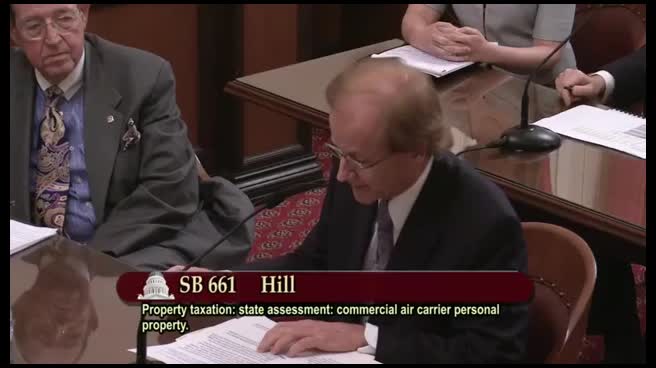 17MIN
Senate Standing Committee on Governance and Finance
Bill Author

Bill Co-Author(s):