SB 767: Los Angeles County Metropolitan Transportation Authority: transactions and use tax.
- Session Year: 2015-2016
- House: Senate
- Latest Version Date: 2015-10-07
Existing law authorizes the Los Angeles County Metropolitan Transportation Authority (MTA) to impose, in addition to any other tax that it is authorized to impose, a transactions and use tax at a rate of 0.5% for the funding of specified transportation-related projects and programs, subject to various requirements, including the adoption of an expenditure plan and voter approval. Existing law authorizes the MTA to seek voter approval to extend the transactions and use tax pursuant to an amended ordinance, subject to various requirements, including adoption of an amended expenditure plan that, among other things, updates certain cost estimates and identifies expected completion dates for projects and programs under the previous expenditure plan, and also requires the amended expenditure plan to be included in an updated long range transportation plan, as specified.
This bill would delete the above-referenced provisions relative to extension of the transactions and use tax and an amended ordinance and expenditure plan, The bill would instead authorize the MTA to impose an additional transportation transactions and use tax at a maximum rate of 0.5% as long as a specified existing 0.5% transactions and use tax is in effect, and at a maximum rate of 1% thereafter, as specified, for a period of time determined by the MTA, if certain conditions exist and subject to various requirements, including the adoption of an expenditure plan and voter approval, as specified.
The Transactions and Use Tax Law limits to 2% the combined rate of all transactions and use taxes imposed in any county, with certain exceptions.
This bill would exempt the transactions and use tax authorized by the bill from this limitation.
Existing law authorizes the Los Angeles County Metropolitan Transportation Authority (MTA) to impose, in addition to any other tax that it is authorized to impose, a transactions and use tax at a rate of 0.5% for the funding of specified transportation-related projects and programs, subject to various requirements, including the adoption of an expenditure plan and voter approval. Existing law authorizes the MTA to seek voter approval to extend the transactions and use tax pursuant to an amended ordinance, subject to various requirements, including adoption of an amended expenditure plan that, among other things, updates certain cost estimates and identifies expected completion dates for projects and programs under the previous expenditure plan, and also requires the amended expenditure plan to be included in an updated long range transportation plan, as specified.
This bill would delete the above-referenced provisions relative to extension of the transactions and use tax and an amended ordinance and expenditure plan, The bill would instead authorize the MTA to impose an additional transportation transactions and use tax at a maximum rate of 0.5% as long as a specified existing 0.5% transactions and use tax is in effect, and at a maximum rate of 1% thereafter, as specified, for a period of time determined by the MTA, if certain conditions exist and subject to various requirements, including the adoption of an expenditure plan and voter approval, as specified.
The Transactions and Use Tax Law limits to 2% the combined rate of all transactions and use taxes imposed in any county, with certain exceptions.
This bill would exempt the transactions and use tax authorized by the bill from this limitation.
Existing law authorizes the Los Angeles County Metropolitan Transportation Authority (MTA) to impose, in addition to any other tax that it is authorized to impose, a transactions and use tax at a rate of 0.5% for the funding of specified transportation-related projects and programs, subject to various requirements, including the adoption of an expenditure plan and voter approval. Existing law authorizes the MTA to seek voter approval to extend the transactions and use tax pursuant to an amended ordinance, subject to various requirements, including adoption of an amended expenditure plan that, among other things, updates certain cost estimates and identifies expected completion dates for projects and programs under the previous expenditure plan, and also requires the amended expenditure plan to be included in an updated long range transportation plan, as specified.
This bill would delete the above-referenced provisions relative to extension of the transactions and use tax and an amended ordinance and expenditure plan, The bill would instead authorize the MTA to impose an additional transportation transactions and use tax at a specified rate of up to 0.5% or 1.0% maximum rate of 0.5% as long as a specified existing 0.5% transactions and use tax is in effect, and at a maximum rate of 1% thereafter, as specified, for a period of time determined by the MTA, if certain conditions exist and subject to various requirements, including the adoption of an expenditure plan and voter approval, as specified.
The Transactions and Use Tax Law limits to 2% the combined rate of all transactions and use taxes imposed in any county, with certain exceptions.
This bill would exempt the transactions and use tax authorized by the bill from this limitation.
Existing law authorizes the Los Angeles County Metropolitan Transportation Authority (MTA) to impose, in addition to any other tax that it is authorized to impose, a transactions and use tax at a rate of 0.5% for the funding of specified transportation-related projects and programs, subject to various requirements, including the adoption of an expenditure plan and voter approval. Existing law authorizes the MTA to seek voter approval to extend the transactions and use tax pursuant to an amended ordinance, subject to various requirements, including adoption of an amended expenditure plan that, among other things, updates certain cost estimates and identifies expected completion dates for projects and programs under the previous expenditure plan, and also requires the amended expenditure plan to be included in an updated long range transportation plan, as specified.
This bill would authorize the MTA to impose an additional transportation transactions and use tax at a specified rate of up to 0.5% or 1.0% if certain conditions exist and subject to various requirements, including the adoption of an expenditure plan and voter approval, as specified.
The Transactions and Use Tax Law limits to 2% the combined rate of all transactions and use taxes imposed in any county, with certain exceptions.
This bill would exempt the transactions and use tax authorized by the bill from this limitation.
Existing law authorizes the Los Angeles County Metropolitan Transportation Authority (MTA) to impose, in addition to any other tax that it is authorized to impose, a transactions and use tax at a rate of 0.5% for the funding of specified transportation-related projects and programs, subject to various requirements, including the adoption of an expenditure plan and voter approval. Existing law authorizes the MTA to seek voter approval to extend the transactions and use tax pursuant to an amended ordinance, subject to various requirements, including adoption of an amended expenditure plan that, among other things, updates certain cost estimates and identifies expected completion dates for projects and programs under the previous expenditure plan, and also requires the amended expenditure plan to be included in an updated long range transportation plan, as specified.
This bill would authorize the MTA to impose an additional transportation transactions and use tax at a rate of 0.5% subject to various requirements, including the adoption of an expenditure plan and voter approval. approval, as specified.
The Transactions and Use Tax Law limits to 2% the combined rate of all transactions and use taxes imposed in any county, with certain exceptions.
This bill would exempt the transactions and use tax authorized by the bill from this limitation.
Existing law authorizes the Los Angeles County Metropolitan Transportation Authority (MTA) to impose, in addition to any other tax that it is authorized to impose, a transactions and use tax at a rate of 0.5% for the funding of specified transportation-related projects and programs, subject to various requirements, including the adoption of an expenditure plan and voter approval. Existing law authorizes the MTA to seek voter approval to extend the transactions and use tax pursuant to an amended ordinance, subject to various requirements, including adoption of an amended expenditure plan that, among other things, updates certain cost estimates and identifies expected completion dates for projects and programs under the previous expenditure plan, and also requires the amended expenditure plan to be included in an updated long range transportation plan, as specified.
This bill would authorize the MTA to impose an additional transportation transactions and use tax at a rate of 0.5% subject to various requirements, including the adoption of an expenditure plan and voter approval.
The Transactions and Use Tax Law limits to 2% the combined rate of all transactions and use taxes imposed in any county, with certain exceptions.
This bill would exempt the transactions and use tax authorized by the bill from this limitation.
(a)In addition to any other tax that it is authorized by law to impose, the Los Angeles County Metropolitan Transportation Authority (MTA) may impose, in compliance with subdivision (b), a transactions and use tax at a rate of 0.5 percent that is applicable in the incorporated and unincorporated areas of the county.
(b)For purposes of the taxing authority set forth in subdivision (a), all of the following apply:
(1)The tax shall be proposed in a transactions and use tax ordinance, that conforms with Chapter 2 (commencing with Section 7261) to Chapter 4 (commencing with Section 7275), inclusive, of the Transactions and Use Tax Law (Part 1.6 (commencing with Section 7251) of Division 2 of the Revenue and Taxation Code), and that is approved by a majority of the entire membership of the authority.
(2)The tax may be imposed only if the proposing ordinance is approved by two-thirds of the voters, in the manner as otherwise required by law, voting on this measure, in an election held on November 4, 2008, or at a subsequent election and, if so approved, shall become operative as provided in Section 130352.
(3)The proposing ordinance shall specify, in addition to the rate of tax and other matters as required by the Transactions and Use Tax Law, that the net revenues derived from the tax are to be administered by the MTA as provided in this section. Net revenues shall be defined as all revenues derived from the tax less any refunds, costs of administration by the State Board of Equalization, and costs of administration by the MTA. Such costs of administration by the MTA shall not exceed 1.5 percent of the revenues derived from the tax. The MTA shall, during the period in which the ordinance is operative, allocate 20 percent of all net revenues derived from the tax for bus operations to all eligible and included municipal transit operators in the County of Los Angeles and to the MTA, in accordance with Section 99285. However, the allocations to the MTA and eligible and included municipal operators shall be made solely from revenues derived from a tax imposed pursuant to this section, and not from local discretionary sources. Funds allocated by MTA to itself pursuant to this section shall be used for transit operations and shall not supplant funds from any other source allocated by MTA to itself for public transit operations. Funds allocated by MTA to the eligible and included municipal operators pursuant to this section shall be used for transit operations and shall not supplant any funds authorized by other provisions of law and allocated by MTA to the eligible and included municipal operators for public transit. In addition to this amount, the MTA shall allocate 5 percent of all net revenues derived from the tax, for rail operations. The MTA shall include the projects and programs described in subparagraphs (A) and (B) in the expenditure plan required under subdivision (f). The MTA shall include all projects and programs described in the expenditure plan required under subdivision (f) in its Long Range Transportation Plan (LRTP). The priorities for projects and programs described in subparagraphs (A) and (B) and in the expenditure plan required under subdivision (f) shall be those set forth in the expenditure plan. The funding amounts specified in subparagraphs (A) and (B) are minimum amounts that shall be allocated by the MTA from the net revenues derived from a tax imposed pursuant to this section. Nothing in this section prohibits the MTA from allocating additional net revenues derived from the tax to these projects and programs.
(A)Capital Projects.
(i)Exposition Boulevard Light Rail Transit Project from downtown Los Angeles to Santa Monica. The sum of nine hundred twenty-five million dollars ($925,000,000).
(ii)Crenshaw Transit Corridor from Wilshire Boulevard to Los Angeles International Airport along Crenshaw Boulevard. The sum of two hundred thirty-five million five hundred thousand dollars ($235,500,000).
(iii)San Fernando Valley North-South Rapidways. The sum of one hundred million five hundred thousand dollars ($100,500,000).
(iv)Metro Gold Line (Pasadena to Claremont) Light Rail Transit Extension. The sum of seven hundred thirty-five million dollars ($735,000,000).
(v)Metro Regional Connector. The sum of one hundred sixty million dollars ($160,000,000).
(vi)Metro Westside Subway Extension. The sum of nine hundred million dollars ($900,000,000).
(vii)State Highway Route 5 Carmenita Road Interchange Improvement. The sum of one hundred thirty-eight million dollars ($138,000,000).
(viii)State Highway Route 5 Capacity Enhancement (State Highway Route 134 to State Highway Route 170, including access improvement for Empire Avenue). The sum of two hundred seventy-one million five hundred thousand dollars ($271,500,000).
(ix)State Highway Route 5 Capacity Enhancement (State Highway Route 605 to the Orange County line, including improvements to the Valley View Interchange). The sum of two hundred sixty-four million eight hundred thousand dollars ($264,800,000).
(x)State Highway Route 5/State Highway Route 14 Capacity Enhancement. The sum of ninety million eight hundred thousand dollars ($90,800,000).
(xi)Capital Project Contingency Fund. The sum of one hundred seventy-three million dollars ($173,000,000).
(B)Capital Programs.
(i)Alameda Corridor East Grade Separations. The sum of two hundred million dollars ($200,000,000).
(ii)MTA and Municipal Regional Clean Fuel Bus Capital (Facilities and Rolling Stock). The sum of one hundred fifty million dollars ($150,000,000).
(iii)Countywide Soundwall Construction (MTA Regional List and Monterey Park/State Highway Route 60). The sum of two hundred fifty million dollars ($250,000,000).
(iv)Local return for major street resurfacing, rehabilitation, and reconstruction. The sum of two hundred fifty million dollars ($250,000,000).
(v)Metrolink Capital Improvements. The sum of seventy million dollars ($70,000,000).
(vi)Eastside Light Rail Access. The sum of thirty million dollars ($30,000,000).
(c)The MTA may incur bonded indebtedness payable from the proceeds of the tax provided by this section pursuant to the bond issuance provisions of Chapter 5 (commencing with Section 130500) and any successor act. The MTA shall include in the expenditure plan, required under subdivision (f), the amount of net revenue specified for all projects and programs in subparagraphs (A) and (B) of paragraph (3) of subdivision (b) as a condition of the use and expenditure of the proceeds of the tax. The MTA shall maintain the current amount of any funding for the projects and programs specified in this section that has been previously programmed or received from sources other than the proceeds of the tax, and may not reallocate money that has been previously programmed or received for those projects and programs to other projects or uses.
(d)Notwithstanding Section 7251.1 of the Revenue and Taxation Code, the tax rate authorized by this section shall not be considered for purposes of the combined rate limit established by that section.
(e)A jurisdiction or recipient is eligible to receive funds from the local return program, described in clause (iv) of subparagraph (B) of paragraph (3) of subdivision (b), only if it continues to contribute to that program an amount that is equal to its existing commitment of local funds or other available funds. The MTA may develop guidelines that, at a minimum, specify maintenance of effort requirements for the local return program, matching funds, and administrative requirements for the recipients of revenue derived from the tax.
(f)Prior to submitting the ordinance to the voters, the MTA shall adopt an expenditure plan for the net revenues derived from the tax. The expenditure plan shall include, in addition to other projects and programs identified by the MTA, the specified projects and programs listed in paragraph (3) of subdivision (b), the estimated total cost for each project and program, funds other than the tax revenues that the MTA anticipates will be expended on the projects and programs, and the schedule during which the MTA anticipates funds will be available for each project and program. The MTA shall also identify in its expenditure plan the expected completion dates for each project described in subparagraph (A) of paragraph (3) of subdivision (b). To be eligible to receive revenues derived from the tax, an agency sponsoring a capital project or capital program shall submit to the MTA an expenditure plan for its project or program containing the same elements as the expenditure plan that MTA is required by this subdivision to prepare.
(g)The MTA shall establish and administer a sales tax revenue fund. The net revenue derived from the tax, after payment of any debt services and related obligations, shall be credited to this fund. The moneys in the fund shall be available to the MTA to meet expenditure and cashflow needs of the projects and programs described in the expenditure plan required under subdivision (f). In the event that there are net revenues in excess of the amount necessary to provide the amount of net revenues specified in the expenditure plan for the projects and programs described therein, the MTA may expend the excess net revenues on projects and programs in the expenditure plan or the LRTP. In the event that projects and programs in the expenditure plan are completed without the expenditure of the amount of net revenues specified, the MTA shall expend the excess net revenues on projects and programs in the expenditure plan or the LRTP within the same subregion as the project or program that is completed. For the purposes of this section, subregion shall be defined in the LRTP.
(h)If other funds become available and are allocated to provide all or a portion of the amount of net revenues specified in the expenditure plan for the projects or programs described therein, the MTA may expend the surplus net revenues on other projects and programs in the expenditure plan or the LRTP.
(i)(1)Notwithstanding subdivision (h), if a capital project or capital program described in clauses (i) to (x), inclusive, of subparagraph (A) of paragraph (3) of subdivision (b) and clauses (i) and (vi) of subparagraph (B) of paragraph (3) of subdivision (b), has been fully funded from other sources on or before December 31, 2008, the funds designated to the project or program in clauses (i) to (x), inclusive, of subparagraph (A) of paragraph (3) of subdivision (b) and clauses (i) and (vi) of subparagraph (B) of paragraph (3) of subdivision (b) shall remain in the subregion in which the project or program is located and shall be allocated to other projects or programs in the subregion prior to the expiration of the tax.
(2)A capital project or capital program funded with reallocated funds pursuant to paragraph (1) shall be included in the adopted 2008 Long Range Transportation Plan or the successor plan and shall be of regional significance as determined by the MTA. For purposes of this subdivision, subregions means the subregions as defined in the LRTP in effect as of January 1, 2008.
(j)Notwithstanding Section 130354, revenues raised under this section may be used to facilitate the transportation of people and goods within Los Angeles County. The use of the revenues shall not be limited to public transit purposes.
(k)No later than 365 days prior to the adoption of an amendment described in paragraph (1) to an expenditure plan adopted pursuant to subdivision (f), including, but not limited to, the expenditure plan adopted by the MTA board as Attachment A in Ordinance #08-01 adopted by the board on July 24, 2008, and in addition to any other notice requirements in the proposing ordinance, the board shall notify the Members of the Legislature representing the County of Los Angeles of all of the following:
(1)A description of the proposed amendments to the adopted expenditure plan that would do any of the following:
(A)Affect the amount of net revenues derived from the tax imposed pursuant to this act that is proposed to be expended on a capital project or projects identified in the adopted expenditure plan.
(B)Delay the schedule for the availability of funds proposed to be expended on a capital project or projects identified in the adopted expenditure plan.
(C)Delay the schedule for the estimated or expected completion date of a capital project or projects identified in the adopted expenditure plan.
(2)The reason for the proposed amendment.
(3)The estimated impact the proposed amendment will have on the schedule, cost, scope, or timely availability of funding for the capital project or projects contained in the adopted expenditure plan.
(l)The notification required pursuant to subdivision (k) shall be achieved by resolution adopted by the MTA board.
(m)The MTA board shall provide prior written notice to the Members of the Legislature representing the County of Los Angeles of any proposed amendments to the adopted expenditure plan that would accelerate funding for a capital project or projects in the adopted expenditure plan.
SEC. 2.Section 130350.6 of the Public Utilities Code is repealed.SEC. 3.Section 130350.7 is added to the Public Utilities Code, to read:130350.7.(a)The Los Angeles County Metropolitan Transportation Authority (MTA), in addition to any other tax it is authorized to impose or has imposed, may impose a transactions and use tax, for a period to be determined by the MTA, that is applicable in the incorporated and unincorporated areas of Los Angeles County. The rate of tax authorized by this section, when combined with the rate of tax authorized by voter approval of Measure R pursuant to Section 130350.5 during any period when that tax is in effect, and upon the expiration of that tax, shall not exceed 1 percent.
(b)The ordinance imposing the tax shall contain all of the following:
(1)An expenditure plan that lists the transportation projects and programs to be funded from net revenues from the tax. The expenditure plan shall appear in the ordinance as an exhibit. The expenditure plan shall include all of the following:
(A)The most recent cost estimates for each project and program identified in the expenditure plan.
(B)The identification of the accelerated cost, if applicable, for each project and program in the expenditure plan.
(C)The approximate schedule during which the MTA anticipates funds will be available for each project and program.
(D)The expected completion dates for each project and program within a three-year range.
(2)Provisions conforming to the Transactions and Use Tax Law (Part 1.6 (commencing with Section 7251) of Division 2 of the Revenue and Taxation Code), except as otherwise provided in subdivision (f).
(3)A provision limiting the MTAs costs of administering the ordinance and the net revenues from the tax to 1.5 percent of the total tax revenues.
(4)A requirement that the net revenues from the tax, defined to mean the total tax revenues less any refunds, costs of administration by the State Board of Equalization, and the MTAs administration costs, shall be used by the MTA to fund transportation projects and programs identified in the expenditure plan.
(5)The rate of the tax.
(c)The MTA shall do all of the following:
(1)Develop a transparent process to determine the most recent costs estimates for each project and program identified in the expenditure plan.
(2)At least 30 days before submitting the ordinance described in subdivision (b) to the voters, post the expenditure plan on its Internet Web site in a prominent manner.
(d)The ordinance shall be adopted by the MTA board, which shall also adopt a resolution that submits the ordinance to the voters.
(e)The ordinance shall become operative pursuant to Section 130352 if approved by two-thirds of the voters voting on the measure, pursuant to subdivision (d) of Section 2 of Article XIII C of the California Constitution.
(f)(1)If the voters approve the ordinance authorized by this section, the expenditure plan included as an exhibit to the ordinance pursuant to paragraph (1) of subdivision (b) shall also be included in the revised and updated Long Range Transportation Plan within one year of the date the ordinance takes effect. The revised and updated Long Range Transportation Plan shall also include capital projects and capital programs that are adopted by each subregion that are submitted to the MTA for inclusion in the revised and updated Long Range Transportation Plan, if the cost and schedule details are provided by the subregions, in a manner consistent with the requirements of the plan. Inclusion of a capital project or a capital program in the Long Range Transportation Plan is not a commitment or guarantee that the project or program shall receive any future funding.
(2)For purposes of this subdivision, subregion shall have the same meaning as defined in the Long Range Transportation Plan.
(g)The MTA may incur bonded indebtedness payable from the net revenues of the tax pursuant to the bond issuance provisions of Chapter 5 (commencing with Section 130500) and any successor act.
(h)The tax authorized by this section shall be imposed pursuant to the Transactions and Use Tax Law (Part 1.6 (commencing with Section 7251) of Division 2 of the Revenue and Taxation Code), notwithstanding the combined rate limitation in Section 7251.1 of the Revenue and Taxation Code.
(a)In addition to any other tax that it is authorized by law to impose, the Los Angeles County Metropolitan Transportation Authority (MTA) may impose, in compliance with subdivision (b), a transactions and use tax at a rate of 0.5 percent that is applicable in the incorporated and unincorporated areas of the county.
(b)For purposes of the taxing authority set forth in subdivision (a), all of the following apply:
(1)The tax shall be proposed in a transactions and use tax ordinance, that conforms with Chapter 2 (commencing with Section 7261) to Chapter 4 (commencing with Section 7275), inclusive, of the Transactions and Use Tax Law (Part 1.6 (commencing with Section 7251) of Division 2 of the Revenue and Taxation Code), and that is approved by a majority of the entire membership of the authority.
(2)The tax may be imposed only if the proposing ordinance is approved by two-thirds of the voters, in the manner as otherwise required by law, voting on this measure, in an election held on November 4, 2008, or at a subsequent election and, if so approved, shall become operative as provided in Section 130352.
(3)The proposing ordinance shall specify, in addition to the rate of tax and other matters as required by the Transactions and Use Tax Law, that the net revenues derived from the tax are to be administered by the MTA as provided in this section. Net revenues shall be defined as all revenues derived from the tax less any refunds, costs of administration by the State Board of Equalization, and costs of administration by the MTA. Such costs of administration by the MTA shall not exceed 1.5 percent of the revenues derived from the tax. The MTA shall, during the period in which the ordinance is operative, allocate 20 percent of all net revenues derived from the tax for bus operations to all eligible and included municipal transit operators in the County of Los Angeles and to the MTA, in accordance with Section 99285. However, the allocations to the MTA and eligible and included municipal operators shall be made solely from revenues derived from a tax imposed pursuant to this section, and not from local discretionary sources. Funds allocated by MTA to itself pursuant to this section shall be used for transit operations and shall not supplant funds from any other source allocated by MTA to itself for public transit operations. Funds allocated by MTA to the eligible and included municipal operators pursuant to this section shall be used for transit operations and shall not supplant any funds authorized by other provisions of law and allocated by MTA to the eligible and included municipal operators for public transit. In addition to this amount, the MTA shall allocate 5 percent of all net revenues derived from the tax, for rail operations. The MTA shall include the projects and programs described in subparagraphs (A) and (B) in the expenditure plan required under subdivision (f). The MTA shall include all projects and programs described in the expenditure plan required under subdivision (f) in its Long Range Transportation Plan (LRTP). The priorities for projects and programs described in subparagraphs (A) and (B) and in the expenditure plan required under subdivision (f) shall be those set forth in the expenditure plan. The funding amounts specified in subparagraphs (A) and (B) are minimum amounts that shall be allocated by the MTA from the net revenues derived from a tax imposed pursuant to this section. Nothing in this section prohibits the MTA from allocating additional net revenues derived from the tax to these projects and programs.
(A)Capital Projects.
(i)Exposition Boulevard Light Rail Transit Project from downtown Los Angeles to Santa Monica. The sum of nine hundred twenty-five million dollars ($925,000,000).
(ii)Crenshaw Transit Corridor from Wilshire Boulevard to Los Angeles International Airport along Crenshaw Boulevard. The sum of two hundred thirty-five million five hundred thousand dollars ($235,500,000).
(iii)San Fernando Valley North-South Rapidways. The sum of one hundred million five hundred thousand dollars ($100,500,000).
(iv)Metro Gold Line (Pasadena to Claremont) Light Rail Transit Extension. The sum of seven hundred thirty-five million dollars ($735,000,000).
(v)Metro Regional Connector. The sum of one hundred sixty million dollars ($160,000,000).
(vi)Metro Westside Subway Extension. The sum of nine hundred million dollars ($900,000,000).
(vii)State Highway Route 5 Carmenita Road Interchange Improvement. The sum of one hundred thirty-eight million dollars ($138,000,000).
(viii)State Highway Route 5 Capacity Enhancement (State Highway Route 134 to State Highway Route 170, including access improvement for Empire Avenue). The sum of two hundred seventy-one million five hundred thousand dollars ($271,500,000).
(ix)State Highway Route 5 Capacity Enhancement (State Highway Route 605 to the Orange County line, including improvements to the Valley View Interchange). The sum of two hundred sixty-four million eight hundred thousand dollars ($264,800,000).
(x)State Highway Route 5/State Highway Route 14 Capacity Enhancement. The sum of ninety million eight hundred thousand dollars ($90,800,000).
(xi)Capital Project Contingency Fund. The sum of one hundred seventy-three million dollars ($173,000,000).
(B)Capital Programs.
(i)Alameda Corridor East Grade Separations. The sum of two hundred million dollars ($200,000,000).
(ii)MTA and Municipal Regional Clean Fuel Bus Capital (Facilities and Rolling Stock). The sum of one hundred fifty million dollars ($150,000,000).
(iii)Countywide Soundwall Construction (MTA Regional List and Monterey Park/State Highway Route 60). The sum of two hundred fifty million dollars ($250,000,000).
(iv)Local return for major street resurfacing, rehabilitation, and reconstruction. The sum of two hundred fifty million dollars ($250,000,000).
(v)Metrolink Capital Improvements. The sum of seventy million dollars ($70,000,000).
(vi)Eastside Light Rail Access. The sum of thirty million dollars ($30,000,000).
(c)The MTA may incur bonded indebtedness payable from the proceeds of the tax provided by this section pursuant to the bond issuance provisions of Chapter 5 (commencing with Section 130500) and any successor act. The MTA shall include in the expenditure plan, required under subdivision (f), the amount of net revenue specified for all projects and programs in subparagraphs (A) and (B) of paragraph (3) of subdivision (b) as a condition of the use and expenditure of the proceeds of the tax. The MTA shall maintain the current amount of any funding for the projects and programs specified in this section that has been previously programmed or received from sources other than the proceeds of the tax, and may not reallocate money that has been previously programmed or received for those projects and programs to other projects or uses.
(d)Notwithstanding Section 7251.1 of the Revenue and Taxation Code, the tax rate authorized by this section shall not be considered for purposes of the combined rate limit established by that section.
(e)A jurisdiction or recipient is eligible to receive funds from the local return program, described in clause (iv) of subparagraph (B) of paragraph (3) of subdivision (b), only if it continues to contribute to that program an amount that is equal to its existing commitment of local funds or other available funds. The MTA may develop guidelines that, at a minimum, specify maintenance of effort requirements for the local return program, matching funds, and administrative requirements for the recipients of revenue derived from the tax.
(f)Prior to submitting the ordinance to the voters, the MTA shall adopt an expenditure plan for the net revenues derived from the tax. The expenditure plan shall include, in addition to other projects and programs identified by the MTA, the specified projects and programs listed in paragraph (3) of subdivision (b), the estimated total cost for each project and program, funds other than the tax revenues that the MTA anticipates will be expended on the projects and programs, and the schedule during which the MTA anticipates funds will be available for each project and program. The MTA shall also identify in its expenditure plan the expected completion dates for each project described in subparagraph (A) of paragraph (3) of subdivision (b). To be eligible to receive revenues derived from the tax, an agency sponsoring a capital project or capital program shall submit to the MTA an expenditure plan for its project or program containing the same elements as the expenditure plan that MTA is required by this subdivision to prepare.
(g)The MTA shall establish and administer a sales tax revenue fund. The net revenue derived from the tax, after payment of any debt services and related obligations, shall be credited to this fund. The moneys in the fund shall be available to the MTA to meet expenditure and cashflow needs of the projects and programs described in the expenditure plan required under subdivision (f). In the event that there are net revenues in excess of the amount necessary to provide the amount of net revenues specified in the expenditure plan for the projects and programs described therein, the MTA may expend the excess net revenues on projects and programs in the expenditure plan or the LRTP. In the event that projects and programs in the expenditure plan are completed without the expenditure of the amount of net revenues specified, the MTA shall expend the excess net revenues on projects and programs in the expenditure plan or the LRTP within the same subregion as the project or program that is completed. For the purposes of this section, subregion shall be defined in the LRTP.
(h)If other funds become available and are allocated to provide all or a portion of the amount of net revenues specified in the expenditure plan for the projects or programs described therein, the MTA may expend the surplus net revenues on other projects and programs in the expenditure plan or the LRTP.
(i)(1)Notwithstanding subdivision (h), if a capital project or capital program described in clauses (i) to (x), inclusive, of subparagraph (A) of paragraph (3) of subdivision (b) and clauses (i) and (vi) of subparagraph (B) of paragraph (3) of subdivision (b), has been fully funded from other sources on or before December 31, 2008, the funds designated to the project or program in clauses (i) to (x), inclusive, of subparagraph (A) of paragraph (3) of subdivision (b) and clauses (i) and (vi) of subparagraph (B) of paragraph (3) of subdivision (b) shall remain in the subregion in which the project or program is located and shall be allocated to other projects or programs in the subregion prior to the expiration of the tax.
(2)A capital project or capital program funded with reallocated funds pursuant to paragraph (1) shall be included in the adopted 2008 Long Range Transportation Plan or the successor plan and shall be of regional significance as determined by the MTA. For purposes of this subdivision, subregions means the subregions as defined in the LRTP in effect as of January 1, 2008.
(j)Notwithstanding Section 130354, revenues raised under this section may be used to facilitate the transportation of people and goods within Los Angeles County. The use of the revenues shall not be limited to public transit purposes.
(k)No later than 365 days prior to the adoption of an amendment described in paragraph (1) to an expenditure plan adopted pursuant to subdivision (f), including, but not limited to, the expenditure plan adopted by the MTA board as Attachment A in Ordinance #08-01 adopted by the board on July 24, 2008, and in addition to any other notice requirements in the proposing ordinance, the board shall notify the Members of the Legislature representing the County of Los Angeles of all of the following:
(1)A description of the proposed amendments to the adopted expenditure plan that would do any of the following:
(A)Affect the amount of net revenues derived from the tax imposed pursuant to this act that is proposed to be expended on a capital project or projects identified in the adopted expenditure plan.
(B)Delay the schedule for the availability of funds proposed to be expended on a capital project or projects identified in the adopted expenditure plan.
(C)Delay the schedule for the estimated or expected completion date of a capital project or projects identified in the adopted expenditure plan.
(2)The reason for the proposed amendment.
(3)The estimated impact the proposed amendment will have on the schedule, cost, scope, or timely availability of funding for the capital project or projects contained in the adopted expenditure plan.
(l)The notification required pursuant to subdivision (k) shall be achieved by resolution adopted by the MTA board.
(m)The MTA board shall provide prior written notice to the Members of the Legislature representing the County of Los Angeles of any proposed amendments to the adopted expenditure plan that would accelerate funding for a capital project or projects in the adopted expenditure plan.
SEC. 2.Section 130350.6 of the Public Utilities Code is repealed.SEC. 3.Section 130350.7 is added to the Public Utilities Code, to read:130350.7.(a)The Los Angeles County Metropolitan Transportation Authority (MTA), in addition to any other tax it is authorized to impose or has imposed, may impose a transactions and use tax, for a period to be determined by the MTA, that is applicable in the incorporated and unincorporated areas of Los Angeles County. The rate of tax authorized by this section, when combined with the rate of tax authorized by voter approval of Measure R pursuant to Section 130350.5 during any period when that tax is in effect, and upon the expiration of that tax, shall not exceed 1 percent.
(b)The ordinance imposing the tax shall contain all of the following:
(1)An expenditure plan that lists the transportation projects and programs to be funded from net revenues from the tax. The expenditure plan shall appear in the ordinance as an exhibit. The expenditure plan shall include all of the following:
(A)The most recent cost estimates for each project and program identified in the expenditure plan.
(B)The identification of the accelerated cost, if applicable, for each project and program in the expenditure plan.
(C)The approximate schedule during which the MTA anticipates funds will be available for each project and program.
(D)The expected completion dates for each project and program within a three-year range.
(2)Provisions conforming to the Transactions and Use Tax Law (Part 1.6 (commencing with Section 7251) of Division 2 of the Revenue and Taxation Code), except as otherwise provided in subdivision (f).
(3)A provision limiting the MTAs costs of administering the ordinance and the net revenues from the tax to 1.5 percent of the total tax revenues.
(4)A requirement that the net revenues from the tax, defined to mean the total tax revenues less any refunds, costs of administration by the State Board of Equalization, and the MTAs administration costs, shall be used by the MTA to fund transportation projects and programs identified in the expenditure plan.
(5)The rate of the tax.
(c)The MTA shall do all of the following:
(1)Develop a transparent process to determine the most recent costs estimates for each project and program identified in the expenditure plan.
(2)At least 30 days before submitting the ordinance described in subdivision (b) to the voters, post the expenditure plan on its Internet Web site in a prominent manner.
(d)The ordinance shall be adopted by the MTA board, which shall also adopt a resolution that submits the ordinance to the voters.
(e)The ordinance shall become operative pursuant to Section 130352 if approved by two-thirds of the voters voting on the measure, pursuant to subdivision (d) of Section 2 of Article XIII C of the California Constitution.
(f)(1)If the voters approve the ordinance authorized by this section, the expenditure plan included as an exhibit to the ordinance pursuant to paragraph (1) of subdivision (b) shall also be included in the revised and updated Long Range Transportation Plan within one year of the date the ordinance takes effect. The revised and updated Long Range Transportation Plan shall also include capital projects and capital programs that are adopted by each subregion that are submitted to the MTA for inclusion in the revised and updated Long Range Transportation Plan, if the cost and schedule details are provided by the subregions, in a manner consistent with the requirements of the plan. Inclusion of a capital project or a capital program in the Long Range Transportation Plan is not a commitment or guarantee that the project or program shall receive any future funding.
(2)For purposes of this subdivision, subregion shall have the same meaning as defined in the Long Range Transportation Plan.
(g)The MTA may incur bonded indebtedness payable from the net revenues of the tax pursuant to the bond issuance provisions of Chapter 5 (commencing with Section 130500) and any successor act.
(h)The tax authorized by this section shall be imposed pursuant to the Transactions and Use Tax Law (Part 1.6 (commencing with Section 7251) of Division 2 of the Revenue and Taxation Code), notwithstanding the combined rate limitation in Section 7251.1 of the Revenue and Taxation Code.
(a)In addition to any other tax that it is authorized by law to impose, the Los Angeles County Metropolitan Transportation Authority (MTA) may impose, in compliance with subdivision (b) and Section 130350.6, a transactions and use tax at a rate of 0.5 percent that is applicable in the incorporated and unincorporated areas of the county.
(b)For purposes of the taxing authority set forth in subdivision (a), all of the following apply:
(1)The tax shall be proposed in a transactions and use tax ordinance, that conforms with Chapter 2 (commencing with Section 7261) to Chapter 4 (commencing with Section 7275), inclusive, of the Transactions and Use Tax Law (Part 1.6 (commencing with Section 7251) of Division 2 of the Revenue and Taxation Code), and that is approved by a majority of the entire membership of the authority.
(2)The tax may be imposed only if the proposing ordinance is approved by two-thirds of the voters, in the manner as otherwise required by law, voting on this measure, in an election held on November 4, 2008, or at a subsequent election and, if so approved, shall become operative as provided in Section 130352.
(3)The proposing ordinance shall specify, in addition to the rate of tax and other matters as required by the Transactions and Use Tax Law, that the net revenues derived from the tax are to be administered by the MTA as provided in this section. Net revenues shall be defined as all revenues derived from the tax less any refunds, costs of administration by the State Board of Equalization, and costs of administration by the MTA. Such costs of administration by the MTA shall not exceed 1.5 percent of the revenues derived from the tax. The MTA shall, during the period in which the ordinance is operative, allocate 20 percent of all net revenues derived from the tax for bus operations to all eligible and included municipal transit operators in the County of Los Angeles and to the MTA, in accordance with Section 99285. However, the allocations to the MTA and eligible and included municipal operators shall be made solely from revenues derived from a tax imposed pursuant to this section, and not from local discretionary sources. Funds allocated by MTA to itself pursuant to this section shall be used for transit operations and shall not supplant funds from any other source allocated by MTA to itself for public transit operations. Funds allocated by MTA to the eligible and included municipal operators pursuant to this section shall be used for transit operations and shall not supplant any funds authorized by other provisions of law and allocated by MTA to the eligible and included municipal operators for public transit. In addition to this amount, the MTA shall allocate 5 percent of all net revenues derived from the tax, for rail operations. The MTA shall include the projects and programs described in subparagraphs (A) and (B) in the expenditure plan required under subdivision (f). The MTA shall include all projects and programs described in the expenditure plan required under subdivision (f) in its Long Range Transportation Plan (LRTP). The priorities for projects and programs described in subparagraphs (A) and (B) and in the expenditure plan required under subdivision (f) shall be those set forth in the expenditure plan. The funding amounts specified in subparagraphs (A) and (B) are minimum amounts that shall be allocated by the MTA from the net revenues derived from a tax imposed pursuant to this section. Nothing in this section prohibits the MTA from allocating additional net revenues derived from the tax to these projects and programs.
(A)Capital Projects.
(i)Exposition Boulevard Light Rail Transit Project from downtown Los Angeles to Santa Monica. The sum of nine hundred twenty-five million dollars ($925,000,000).
(ii)Crenshaw Transit Corridor from Wilshire Boulevard to Los Angeles International Airport along Crenshaw Boulevard. The sum of two hundred thirty-five million five hundred thousand dollars ($235,500,000).
(iii)San Fernando Valley North-South Rapidways. The sum of one hundred million five hundred thousand dollars ($100,500,000).
(iv)Metro Gold Line (Pasadena to Claremont) Light Rail Transit Extension. The sum of seven hundred thirty-five million dollars ($735,000,000).
(v)Metro Regional Connector. The sum of one hundred sixty million dollars ($160,000,000).
(vi)Metro Westside Subway Extension. The sum of nine hundred million dollars ($900,000,000).
(vii)State Highway Route 5 Carmenita Road Interchange Improvement. The sum of one hundred thirty-eight million dollars ($138,000,000).
(viii)State Highway Route 5 Capacity Enhancement (State Highway Route 134 to State Highway Route 170, including access improvement for Empire Avenue). The sum of two hundred seventy-one million five hundred thousand dollars ($271,500,000).
(ix)State Highway Route 5 Capacity Enhancement (State Highway Route 605 to the Orange County line, including improvements to the Valley View Interchange). The sum of two hundred sixty-four million eight hundred thousand dollars ($264,800,000).
(x)State Highway Route 5/State Highway Route 14 Capacity Enhancement. The sum of ninety million eight hundred thousand dollars ($90,800,000).
(xi)Capital Project Contingency Fund. The sum of one hundred seventy-three million dollars ($173,000,000).
(B)Capital Programs.
(i)Alameda Corridor East Grade Separations. The sum of two hundred million dollars ($200,000,000).
(ii)MTA and Municipal Regional Clean Fuel Bus Capital (Facilities and Rolling Stock). The sum of one hundred fifty million dollars ($150,000,000).
(iii)Countywide Soundwall Construction (MTA Regional List and Monterey Park/State Highway Route 60). The sum of two hundred fifty million dollars ($250,000,000).
(iv)Local return for major street resurfacing, rehabilitation, and reconstruction. The sum of two hundred fifty million dollars ($250,000,000).
(v)Metrolink Capital Improvements. The sum of seventy million dollars ($70,000,000).
(vi)Eastside Light Rail Access. The sum of thirty million dollars ($30,000,000).
(c)The MTA may incur bonded indebtedness payable from the proceeds of the tax provided by this section pursuant to the bond issuance provisions of Section 130500 et seq. of the Public Utilities Code, Chapter 5 (commencing with Section 130500) and any successor act. The MTA shall include in the expenditure plan, required under subdivision (f), the amount of net revenue specified for all projects and programs in subparagraphs (A) and (B) of paragraph (3) of subdivision (b) as a condition of the use and expenditure of the proceeds of the tax. The MTA shall maintain the current amount of any funding for the projects and programs specified in this section that has been previously programmed or received from sources other than the proceeds of the tax, and may not reallocate money that has been previously programmed or received for those projects and programs to other projects or uses.
(d)Notwithstanding Section 7251.1 of the Revenue and Taxation Code, the tax rate authorized by this section shall not be considered for purposes of the combined rate limit established by that section.
(e)A jurisdiction or recipient is eligible to receive funds from the local return program, described in clause (iv) of subparagraph (B) of paragraph (3) of subdivision (b) of this section and in subdivision (c) of Section 130350.6, (b), only if it continues to contribute to that program an amount that is equal to its existing commitment of local funds or other available funds. The MTA may develop guidelines that, at a minimum, specify maintenance of effort requirements for the local return program, matching funds, and administrative requirements for the recipients of revenue derived from the tax.
(f)Prior to submitting the ordinance to the voters, the MTA shall adopt an expenditure plan for the net revenues derived from the tax. The expenditure plan shall include, in addition to other projects and programs identified by the MTA, the specified projects and programs listed in paragraph (3) of subdivision (b), the estimated total cost for each project and program, funds other than the tax revenues that the MTA anticipates will be expended on the projects and programs, and the schedule during which the MTA anticipates funds will be available for each project and program. The MTA shall also identify in its expenditure plan the expected completion dates for each project described in subparagraph (A) of paragraph (3) of subdivision (b). To be eligible to receive revenues derived from the tax, an agency sponsoring a capital project or capital program shall submit to the MTA an expenditure plan for its project or program containing the same elements as the expenditure plan that MTA is required by this subdivision to prepare.
(g)The MTA shall establish and administer a sales tax revenue fund. The net revenue derived from the tax, after payment of any debt services and related obligations, shall be credited to this fund. The moneys in the fund shall be available to the MTA to meet expenditure and cashflow needs of the projects and programs described in the expenditure plan required under subdivision (f). In the event that there are net revenues in excess of the amount necessary to provide the amount of net revenues specified in the expenditure plan for the projects and programs described therein, the MTA may expend the excess net revenues on projects and programs in the expenditure plan or the LRTP. In the event that projects and programs in the expenditure plan are completed without the expenditure of the amount of net revenues specified, the MTA shall expend the excess net revenues on projects and programs in the expenditure plan or the LRTP within the same subregion as the project or program that is completed. For the purposes of this section, subregion shall be defined in the LRTP.
(h)If other funds become available and are allocated to provide all or a portion of the amount of net revenues specified in the expenditure plan for the projects or programs described therein, the MTA may expend the surplus net revenues on other projects and programs in the expenditure plan or the LRTP.
(i)(1)Notwithstanding subdivision (h), if a capital project or capital program described in clauses (i) to (x), inclusive, of subparagraph (A) of paragraph (3) of subdivision (b) and clauses (i) and (vi) of subparagraph (B) of paragraph (3) of subdivision (b), has been fully funded from other sources on or before December 31, 2008, the funds designated to the project or program in clauses (i) to (x), inclusive, of subparagraph (A) of paragraph (3) of subdivision (b) and clauses (i) and (vi) of subparagraph (B) of paragraph (3) of subdivision (b) shall remain in the subregion in which the project or program is located and shall be allocated to other projects or programs in the subregion prior to the expiration of the tax.
(2)A capital project or capital program funded with reallocated funds pursuant to paragraph (1) shall be included in the adopted 2008 Long Range Transportation Plan or the successor plan and shall be of regional significance as determined by the MTA. For purposes of this subdivision, subregions means the subregions as defined in the LRTP in effect as of January 1, 2008.
(j)Notwithstanding Section 130354, revenues raised under this section and Section 130350.6 may be used to facilitate the transportation of people and goods within Los Angeles County. The use of the revenues shall not be limited to public transit purposes.
(k)No later than 365 days prior to the adoption of an amendment described in paragraph (1) to an expenditure plan adopted pursuant to subdivision (f), including, but not limited to, the expenditure plan adopted by the MTA board as Attachment A in Ordinance #08-01 adopted by the board on July 24, 2008, and in addition to any other notice requirements in the proposing ordinance, the board shall notify the Members of the Legislature representing the County of Los Angeles of all of the following:
(1)A description of the proposed amendments to the adopted expenditure plan that would do any of the following:
(A)Affect the amount of net revenues derived from the tax imposed pursuant to this act that is proposed to be expended on a capital project or projects identified in the adopted expenditure plan.
(B)Delay the schedule for the availability of funds proposed to be expended on a capital project or projects identified in the adopted expenditure plan.
(C)Delay the schedule for the estimated or expected completion date of a capital project or projects identified in the adopted expenditure plan.
(2)The reason for the proposed amendment.
(3)The estimated impact the proposed amendment will have on the schedule, cost, scope, or timely availability of funding for the capital project or projects contained in the adopted expenditure plan.
(l)The notification required pursuant to subdivision (k) shall be achieved by resolution adopted by the MTA board.
(m)The MTA board shall provide prior written notice to the Members of the Legislature representing the County of Los Angeles of any proposed amendments to the adopted expenditure plan that would accelerate funding for a capital project or projects in the adopted expenditure plan.
SEC. 2.Section 130350.6 of the Public Utilities Code is repealed.130350.6.(a)The tax authorized by Section 130350.5 may be imposed as set forth in paragraph (3) of subdivision (b) of Section 130350.5 in a transactions and use tax ordinance, or an amendment of the ordinance approved pursuant to paragraph (1) of subdivision (b) of Section 130350.5, that conforms with Chapter 2 (commencing with Section 7261) to Chapter 4 (commencing with Section 7275), inclusive, of the Transactions and Use Tax Law (Part 1.6 (commencing with Section 7251) of Division 2 of the Revenue and Taxation Code), and that is approved by a majority of the entire membership of the authority. The tax may be imposed pursuant to this section only if the proposing ordinance, or amendment thereof, is approved by two-thirds of the voters, in the manner as otherwise required by law, voting on this measure, in a special or general election and, if so approved, shall become operative as provided in Section 130352. The proposing ordinance shall specify that the net revenues derived from the tax are to be administered by the Los Angeles County Metropolitan Transportation Authority (MTA) as provided in this section. Net revenues shall be defined as all revenues derived from the tax less any refunds, costs of administration by the State Board of Equalization, and costs of administration by the MTA. Such costs of administration by the MTA shall not exceed 1.5 percent of the revenues derived from the tax. The proposing ordinance shall be accompanied by a new expenditure plan for the net revenues derived from the tax. This new expenditure plan shall identify the years in which the MTA anticipates net revenues derived from the tax will be available to each project or program in the new expenditure plan.
(b)The MTA may incur bonded indebtedness payable from the proceeds of the tax authorized by this section pursuant to the bond issuance provisions of this chapter, and any successor act.
(c)Proceeds from the tax authorized by this section, including proceeds from bonds issued pursuant to subdivision (b), after payment of the bonded indebtedness, shall be used to accelerate the completion of the projects and programs identified in subparagraphs (A) and (B) of paragraph (3) of subdivision (b) of Section 130350.5, for the expenditure plan adopted by the MTA board on July 24, 2008, and for operations pursuant to paragraph (3) of subdivision (b) of Section 130350.5.
(d)Upon completion of the projects and programs identified in subparagraphs (A) and (B) of paragraph (3) of subdivision (b) of Section 130350.5 and the expenditure plan adopted by the MTA board on July 24, 2008, any funds remaining from the bonds described in subdivision (b) and any funds remaining from the proceeds of the tax authorized by this section, after payment of the bonded indebtedness, shall be expended by the MTA on projects and programs in the Long Range Transportation Plan or its successor plans, and for operations pursuant to paragraph (3) of subdivision (b) of Section 130350.5.
(e)To the extent that the MTA deems it necessary to accelerate the completion of a project or program in a new expenditure plan adopted pursuant to this section, the MTA shall expend funds derived from the sales tax authorized by Section 130350.5 according to the schedule described in the new expenditure plan adopted pursuant to this section. The MTA shall make this determination by a majority vote of the MTA board.
(f)(1)Before submitting the ordinance described in subdivision (a) to the voters, the MTA shall amend the expenditure plan adopted pursuant to subdivision (f) of Section 130350.5. The amended expenditure plan shall update all of the following for the projects and programs listed in subparagraphs (A) and (B) of paragraph (3) of subdivision (b) of Section 130350.5:
(A)The most recent cost estimates for each project and program identified in the amended expenditure plan.
(B)The identification of the accelerated cost, if applicable, for each project and program in the amended expenditure plan.
(C)The schedule during which the MTA anticipates funds will be available for each project and program.
(D)The expected completion dates for each project and program.
(2)The MTA shall develop a transparent process to determine the most recent cost estimates for each project and program identified in the amended expenditure plan.
(3)The amended expenditure plan shall also be included in the revised and updated Long Range Transportation Plan before the ordinance described in subdivision (a) is submitted to the voters. The revised and updated Long Range Transportation Plan shall also include capital projects and capital programs that are adopted by each subregion that are submitted to the MTA for inclusion in the revised and updated Long Range Transportation Plan. Inclusion of a capital project or a capital program in the Long Range Transportation Plan is not a commitment or guarantee that the project or program shall receive any future funding. As used in this paragraph, subregion shall have the meaning as defined in the Long Range Transportation Plan in effect as of January 1, 2008.
(4)At least 30 days before submitting the ordinance described in subdivision (a) to the voters, the MTA shall post the amended expenditure plan and the Long Range Transportation Plan on the MTAs Internet Web site in a prominent manner.
SECTION 1.SEC. 3.Section 130350.7 is added to the Public Utilities Code, to read:130350.7.(a)The Los Angeles County Metropolitan Transportation Authority (MTA), in addition to any other tax it is authorized to impose or has imposed, may impose a transactions and use tax, for a period to be determined by the MTA, that is applicable in the incorporated and unincorporated areas of Los Angeles County. The rate of tax authorized by this section shall not exceed either of the following: section, when combined with the rate of tax authorized by voter approval of Measure R pursuant to Section 130350.5 during any period when that tax is in effect, and upon the expiration of that tax, shall not exceed 1 percent.
(1)The rate of 0.5 percent if a tax authorized by Section 130350.5 or 130350.6 is in effect.
(2)The rate of 1.0 percent if a tax authorized by Section 130350.5 or 130350.6 is not in effect.
(b)The ordinance imposing the tax shall contain all of the following:
(1)An expenditure plan that lists the transportation projects and programs to be funded from net revenues from the tax. The expenditure plan shall appear in the ordinance as an exhibit. The expenditure plan shall include all of the following:
(A)The most recent cost estimates for each project and program identified in the expenditure plan.
(B)The identification of the accelerated cost, if applicable, for each project and program in the expenditure plan.
(C)The approximate schedule during which the MTA anticipates funds will be available for each project and program.
(D)The expected completion dates for each project and program within a three-year range.
(2)Provisions conforming to the Transactions and Use Tax Law (Part 1.6 (commencing with Section 7251) of Division 2 of the Revenue and Taxation Code), except as otherwise provided in subdivision (f).
(3)A provision limiting the MTAs costs of administering the ordinance and the net revenues from the tax to 1.5 percent of the total tax revenues.
(4)A requirement that the net revenues from the tax, defined to mean the total tax revenues less any refunds, costs of administration by the State Board of Equalization, and the MTAs administration costs, shall be used by the MTA to fund transportation projects and programs identified in the expenditure plan.
(5)The rate of the tax, which shall not exceed the applicable maximum rate described in subdivision (a). tax.
(c)The MTA shall do all of the following:
(1)Develop a transparent process to determine the most recent costs estimates for each project and program identified in the expenditure plan.
(2)At least 30 days before submitting the ordinance described in subdivision (b) to the voters, post the expenditure plan on its Internet Web site in a prominent manner.
(d)The ordinance shall be adopted by the MTA board, which shall also adopt a resolution that submits the ordinance to the voters.
(e)The ordinance shall become operative pursuant to Section 130352 if approved by two-thirds of the voters voting on the measure, pursuant to subdivision (d) of Section 2 of Article XIII C of the California Constitution.
(f)(1)If the voters approve the ordinance authorized by this section, the expenditure plan included as an exhibit to the ordinance pursuant to paragraph (1) of subdivision (b) shall also be included in the revised and updated Long Range Transportation Plan within one year of the date the ordinance takes effect. The revised and updated Long Range Transportation Plan shall also include capital projects and capital programs that are adopted by each subregion that are submitted to the MTA for inclusion in the revised and updated Long Range Transportation Plan, if the cost and schedule details are provided by the subregions, in a manner consistent with the requirements of the plan. Inclusion of a capital project or a capital program in the Long Range Transportation Plan is not a commitment or guarantee that the project or program shall receive any future funding.
(2)For purposes of this subdivision, subregion shall have the same meaning as that term is defined in the Long Range Transportation Plan process in effect as of January 1, 2008. Plan.
(g)The MTA may incur bonded indebtedness payable from the net revenues of the tax pursuant to the bond issuance provisions of this chapter Chapter 5 (commencing with Section 130500) and any successor act.
(h)The tax authorized by this section shall be imposed pursuant to the Transactions and Use Tax Law (Part 1.6 (commencing with Section 7251) of Division 2 of the Revenue and Taxation Code), notwithstanding the combined rate limitation in Section 7251.1 of the Revenue and Taxation Code.
(a)The Los Angeles County Metropolitan Transportation Authority (MTA), in addition to any other tax it is authorized to impose or has imposed, may impose a transactions and use tax at the rate of 0.5 percent, tax, for a period to be determined by the MTA, that is applicable in the incorporated and unincorporated areas of Los Angeles County. The tax authorized by this section shall not exceed either of the following:
(1)The rate of 0.5 percent if a tax authorized by Section 130350.5 or 130350.6 is in effect.
(2)The rate of 1.0 percent if a tax authorized by Section 130350.5 or 130350.6 is not in effect.
(b)The ordinance imposing the tax shall contain all of the following:
(1)An expenditure plan that lists the transportation projects and programs to be funded from net revenues from the tax. The expenditure plan shall appear in the ordinance as an exhibit. The expenditure plan shall include all of the following:
(A)The most recent cost estimates for each project and program identified in the expenditure plan.
(B)The identification of the accelerated cost, if applicable, for each project and program in the expenditure plan.
(C)The approximate schedule during which the MTA anticipates funds will be available for each project and program.
(D)The expected completion dates for each project and program within a three-year range.
(2)Provisions conforming to the Transactions and Use Tax Law (Part 1.6 (commencing with Section 7251) of Division 2 of the Revenue and Taxation Code), except as otherwise provided in subdivision (f).
(3)A provision limiting the MTAs costs of administering the ordinance and the net revenues from the tax to 1.5 percent of the total tax revenues.
(4)A requirement that the net revenues from the tax, defined to mean the total tax revenues less any refunds, costs of administration by the State Board of Equalization, and the MTAs administration costs, shall be used by the MTA to fund transportation projects and programs identified in the expenditure plan.
(5)The rate of the tax, which shall not exceed the applicable maximum rate described in subdivision (a).
(c)The MTA shall do all of the following:
(1)Develop a transparent process to determine the most recent costs estimates for each project and program identified in the expenditure plan.
(2)At least 30 days before submitting the ordinance described in subdivision (b) to the voters, post the expenditure plan on its Internet Web site in a prominent manner.
(d)The ordinance shall be adopted by the MTA board, which shall also adopt a resolution that submits the ordinance to the voters.
(e)The ordinance shall become operative pursuant to Section 130352 if approved by two-thirds of the voters voting on the measure, pursuant to subdivision (d) of Section 2 of Article XIII C of the California Constitution.
(f)(1)If the voters approve the ordinance authorized by this section, the expenditure plan included as an exhibit to the ordinance pursuant to paragraph (1) of subdivision (b) shall also be included in the revised and updated Long Range Transportation Plan within one year of the date the ordinance takes effect. The revised and updated Long Range Transportation Plan shall also include capital projects and capital programs that are adopted by each subregion that are submitted to the MTA for inclusion in the revised and updated Long Range Transportation Plan, if the cost and schedule details are provided by the subregions, in a manner consistent with the requirements of the plan. Inclusion of a capital project or a capital program in the Long Range Transportation Plan is not a commitment or guarantee that the project or program shall receive any future funding.
(2)For purposes of this subdivision, subregion shall have the same meaning as that term is defined in the Long Range Transportation Plan process in effect as of January 1, 2008.
(g)The MTA may incur bonded indebtedness payable from the net revenues of the tax pursuant to the bond issuance provisions of this chapter and any successor act.
(h)The tax authorized by this section shall be imposed pursuant to the Transactions and Use Tax Law (Part 1.6 (commencing with Section 7251) of Division 2 of the Revenue and Taxation Code), notwithstanding the combined rate limitation in Section 7251.1 of the Revenue and Taxation Code.
(a)The Los Angeles County Metropolitan Transportation Authority (MTA), in addition to any other tax it is authorized to impose or has imposed, may impose a transactions and use tax at the rate of 0.5 percent, for a period to be determined by the MTA, that is applicable in the incorporated and unincorporated areas of Los Angeles County.
(b)The ordinance imposing the tax shall contain all of the following:
(1)An expenditure plan that lists the transportation projects and programs to be funded from net revenues from the tax. The expenditure plan shall appear in the ordinance as an exhibit. The expenditure plan shall include all of the following:
(A)The most recent cost estimates for each project and program identified in the expenditure plan.
(B)The identification of the accelerated cost, if applicable, for each project and program in the expenditure plan.
(C)The approximate schedule during which the MTA anticipates funds will be available for each project and program.
(D)The expected completion dates for each project and program within a three-year range.
(2)Provisions conforming to the Transactions and Use Tax Law (Part 1.6 (commencing with Section 7251) of Division 2 of the Revenue and Taxation Code), except as otherwise provided in subdivision (f).
(3)A provision limiting the MTAs costs of administering the ordinance and the net revenues from the tax to 1.5 percent of the total tax revenues.
(4)A requirement that the net revenues from the tax, defined to mean the total tax revenues less any refunds, costs of administration by the State Board of Equalization, and the MTAs administration costs, shall be used by the MTA to fund transportation projects and programs identified in the expenditure plan.
(c)The MTA shall do all of the following:
(1)Develop a transparent process to determine the most recent costs estimates for each project and program identified in the expenditure plan.
(2)At least 30 days before submitting the ordinance described in subdivision (b) to the voters, post the expenditure plan on its Internet Web site in a prominent manner.
(c)
(d)The ordinance shall be adopted by the MTA board, which shall also adopt a resolution that submits the ordinance to the voters.
(d)
(e)The ordinance shall become operative pursuant to Section 130352 if approved by two-thirds of the voters voting on the measure, pursuant to subdivision (d) of Section 2 of Article XIII C of the California Constitution.
(f)(1)If the voters approve the ordinance authorized by this section, the expenditure plan included as an exhibit to the ordinance pursuant to paragraph (1) of subdivision (b) shall also be included in the revised and updated Long Range Transportation Plan within one year of the date the ordinance takes effect. The revised and updated Long Range Transportation Plan shall also include capital projects and capital programs that are adopted by each subregion that are submitted to the MTA for inclusion in the revised and updated Long Range Transportation Plan, if the cost and schedule details are provided by the subregions, in a manner consistent with the requirements of the plan. Inclusion of a capital project or a capital program in the Long Range Transportation Plan is not a commitment or guarantee that the project or program shall receive any future funding.
(2)For purposes of this subdivision, subregion shall have the same meaning as that term is defined in the Long Range Transportation Plan process in effect as of January 1, 2008.
(e)
(g)The MTA may incur bonded indebtedness payable from the net revenues of the tax pursuant to the bond issuance provisions of this chapter and any successor act.
(f)
(h)The tax authorized by this section shall be imposed pursuant to the Transactions and Use Tax Law (Part 1.6 (commencing with Section 7251) of Division 2 of the Revenue and Taxation Code), notwithstanding the combined rate limitation in Section 7251.1 of the Revenue and Taxation Code.
(a)The Los Angeles County Metropolitan Transportation Authority (MTA), in addition to any other tax it is authorized to impose or has imposed, may impose a transactions and use tax at the rate of 0.5 percent, for a period to be determined by the MTA, that is applicable in the incorporated and unincorporated areas of Los Angeles County.
(b)The ordinance imposing the tax shall contain all of the following:
(1)An expenditure plan that lists the transportation projects and programs to be funded from net revenues from the tax. The expenditure plan shall appear in the ordinance as an exhibit.
(2)Provisions conforming to the Transactions and Use Tax Law (Part 1.6 (commencing with Section 7251) of Division 2 of the Revenue and Taxation Code), except as otherwise provided in subdivision (f).
(3)A provision limiting the MTAs costs of administering the ordinance and the net revenues from the tax to 1.5 percent of the total tax revenues.
(4)A requirement that the net revenues from the tax, defined to mean the total tax revenues less any refunds, costs of administration by the State Board of Equalization, and the MTAs administration costs, shall be used by the MTA to fund transportation projects and programs identified in the expenditure plan.
(c)The ordinance shall be adopted by the MTA board, which shall also adopt a resolution that submits the ordinance to the voters.
(d)The ordinance shall become operative pursuant to Section 130352 if approved by two-thirds of the voters voting on the measure, pursuant to subdivision (d) of Section 2 of Article XIII C of the California Constitution.
(e)The MTA may incur bonded indebtedness payable from the net revenues of the tax pursuant to the bond issuance provisions of this chapter and any successor act.
(f)The tax authorized by this section shall be imposed pursuant to the Transactions and Use Tax Law (Part 1.6 (commencing with Section 7251) of Division 2 of the Revenue and Taxation Code), notwithstanding the combined rate limitation in Section 7251.1 of the Revenue and Taxation Code.
|
Date
|
Status
|
|---|---|
| Oct 7, 2015 | Chaptered by Secretary of State. Chapter 580, Statutes of 2015. |
| Oct 7, 2015 | Approved by the Governor. |
| Sep 16, 2015 | Enrolled and presented to the Governor at 4:45 p.m. |
| Sep 11, 2015 | Assembly amendments concurred in. (Ayes 26. Noes 13. Page 2754.) Ordered to engrossing and enrolling. |
| Sep 11, 2015 | Assembly amendments concurred in. (Ayes 26. Noes 13.) Ordered to engrossing and enrolling. |
| Sep 10, 2015 | Read third time. Passed. (Ayes 51. Noes 27. Page 3104.) Ordered to the Senate. |
| Sep 10, 2015 | In Senate. Concurrence in Assembly amendments pending. |
| Sep 10, 2015 | Read third time. Passed. Ordered to the Senate. |
| Aug 20, 2015 | Read second time. Ordered to third reading. |
| Aug 19, 2015 | From committee: Do pass. (Ayes 12. Noes 4.) (August 19). |
| Jul 16, 2015 | Read second time and amended. Re-referred to Com. on APPR. |
| Jul 15, 2015 | From committee: Do pass as amended and re-refer to Com. on APPR. (Ayes 12. Noes 2.) (July 13). |
| Jul 8, 2015 | From committee with author's amendments. Read second time and amended. Re-referred to Com. on TRANS. |
| Jul 2, 2015 | From committee: Do pass and re-refer to Com. on TRANS. (Ayes 6. Noes 3.) (July 1). Re-referred to Com. on TRANS. |
| Jun 18, 2015 | Referred to Coms. on L. GOV. and TRANS. |
| Jun 4, 2015 | In Assembly. Read first time. Held at Desk. |
| Jun 4, 2015 | Read third time. Passed. (Ayes 24. Noes 13. Page 1332.) Ordered to the Assembly. |
| Jun 4, 2015 | Read third time. Passed. (Ayes 24. Noes 13.) Ordered to the Assembly. |
| Jun 2, 2015 | Read second time. Ordered to third reading. |
| Jun 1, 2015 | Ordered to second reading. |
| Jun 1, 2015 | Read third time and amended. |
| May 5, 2015 | Read second time. Ordered to third reading. |
| May 4, 2015 | From committee: Be ordered to second reading pursuant to Senate Rule 28.8. |
| Apr 24, 2015 | Set for hearing May 4. |
| Apr 22, 2015 | From committee: Do pass and re-refer to Com. on APPR. (Ayes 5. Noes 2. Page 726.) (April 22). Re-referred to Com. on APPR. |
| Apr 17, 2015 | Set for hearing April 22. |
| Apr 15, 2015 | From committee: Do pass and re-refer to Com. on GOV. & F. (Ayes 8. Noes 0. Page 621.) (April 14). Re-referred to Com. on GOV. & F. |
| Mar 27, 2015 | Set for hearing April 14. |
| Mar 19, 2015 | Referred to Coms. on T. & H. and GOV. & F. |
| Mar 2, 2015 | Read first time. |
| Mar 2, 2015 | From printer. May be acted upon on or after April 1. |
| Feb 27, 2015 | Introduced. To Com. on RLS. for assignment. To print. |
|
Date
|
Description
|
Location
|
Votes
|
|
|---|---|---|---|---|
| Sep 11, 2015 | Unfinished Business SB767 De León Concurrence | Senate Floor |
Passed |
|
| Sep 10, 2015 | SB 767 De León Senate Third Reading By SANTIAGO | Assembly Floor |
Passed |
|
| Aug 19, 2015 | Do pass. | Assembly Standing Committee on Appropriations |
Passed |
|
| Jul 13, 2015 | Do pass as amended and be re-referred to the Committee on [Appropriations] | Assembly Standing Committee on Transportation |
Passed |
|
| Jul 1, 2015 | Do pass and be re-referred to the Committee on [Transportation] | Assembly Standing Committee on Local Government |
Passed |
|
| Jun 4, 2015 | Senate 3rd Reading SB767 De León | Senate Floor |
Passed |
|
| Apr 22, 2015 | Do pass, but first be re-referred to the Committee on [Appropriations] | Senate Standing Committee on Governance and Finance |
Passed |
|
| Apr 14, 2015 | Do pass, but first be re-referred to the Committee on [Governance and Finance] | Senate Standing Committee on Transportation and Housing |
Passed |
This list shows positions taken on this bill by organizations on the date displayed, which is linked to the original source.
Positions by individuals are not included.
SB 767
Page 7
|
Office of Senate Floor Analyses (916) 651-1520 Fax: (916) 327-4478 |
UNFINISHED BUSINESS
Bill No: SB 767
Amended: 7/16/15
SENATE TRANS. & HOUSING COMMITTEE: 8-0, 4/14/15
AYES: Beall, Cannella, Allen, Galgiani, Leyva, McGuire, Mendoza, Wieckowski
NO VOTE RECORDED: Bates, Gaines, Roth
SENATE GOVERNANCE & FIN. COMMITTEE: 5-2, 4/22/15
AYES: Hertzberg, Beall, Hernandez, Lara, Pavley
NOES: Nguyen, Moorlach
SENATE FLOOR: 24-13, 6/4/15
AYES: Allen, Beall, Block, Cannella, De León, Galgiani, Hall, Hernandez, Hertzberg, Hill, Huff, Jackson, Lara, Leno, Leyva, Liu, McGuire, Mendoza, Mitchell, Monning, Pan, Pavley, Wieckowski, Wolk
NOES: Anderson, Bates, Berryhill, Fuller, Gaines, Glazer, Moorlach, Morrell, Nguyen, Nielsen, Runner, Stone, Vidak
NO VOTE RECORDED: Hancock, Hueso, Roth
ASSEMBLY FLOOR: 51-27, 9/10/15 - See last page for vote
SUBJECT: Los Angeles County Metropolitan Transportation Authority: transactions and use tax
DIGEST: This bill authorizes the Los Angeles County Metropolitan Transportation Authority (LACMTA) to impose by ordinance an additional local, countywide, one-half-cent sales tax.
Assembly Amendments delete authority previously granted to LACMTA to extend an existing 0.5% transactions and use tax (Measure R) by 30 years.
Existing law:
Allows cities and counties to impose beyond the state sales tax additional sales and use taxes, called transactions and use taxes, up to a combined 2% rate, with voter approval. The tax must be imposed in increments of 0.125%.
Permits a county board of supervisors to create a countywide transportation authority to plan and fund transportation projects within the county. These transportation authorities may impose a local sales tax for transportation purposes, if the tax ordinance is within statutory limits and abides by restrictions on local taxes contained in the California Constitution. Counties that have chosen to tax themselves for transportation purposes call themselves “self-help” counties because they have approved measures to help themselves address their own transportation problems.
Instead of asking voters to impose a local sales tax for transportation purposes under the generic authority in existing law, some counties have specific authorization to propose a measure to increase the sales tax for transportation purposes. For example, the Legislature has passed specific legislation authorizing Los Angeles County to propose to the voters an increase in the local sales tax for transportation. Voters have approved three separate measures in Los Angeles County, for a total sales tax rate of 1.5% dedicated to transportation purposes.
This bill:
Allows LACMTA to impose a sales tax for a period to be determined by LACMTA, at a rate that when combined with Measure R (2008) shall not exceed 1%.
Authorizes LACMTA to impose by ordinance an additional local, countywide, one-half-cent sales tax for a period to be determined by LACMTA.
Requires LACMTA to adopt the ordinance and submit the proposal to the voters.
Specifies that the ordinance only becomes operative if approved by two-thirds of the voters voting on the measure.
Requires the ordinance imposing the tax to contain all of the following:
An expenditure plan that lists the projects and programs to be funded from the tax.
Provisions conforming to existing requirements for the imposition of a sales tax, except the limitation that the combined sales tax rate cannot exceed 2%.
Provisions limiting LACMTA’s administration costs to 1.5%.
A requirement that net revenues must be used for projects and programs in the expenditure plan.
The rate of the tax.
Requires the expenditure plan to include the most recent cost estimates for each project, the approximate schedule during which LACMTA anticipates making funds available for each project and program, and the expected completion dates for each project.
Requires LACMTA to develop a transparent process to determine the most recent cost estimates, as well as to post the expenditure plan on its website at least 30 days before submitting the measure to the voters.
Requires the expenditure plan to be included in LACMTA’s Long Range Transportation Plan within one year of the date the measure is approved by voters.
Deletes authority previously granted to MTA to extend an existing 0.5% transactions and use tax (Measure R) by 30 years.
Comments
Purpose. In 2008, L.A. County voters recognized the need for additional transportation investments and approved Measure R to fund both increased transit options and highway improvements. While Measure R will dramatically change mobility throughout L.A. County, the author states that the projects funded by the measure do not encompass all of the transportation needs in the region. Residents, local governments, and transportation leaders in the region believe that there are thousands of worthy projects which will not be funded by Measure R. The author contends that an additional one-half-cent sales tax will allow L.A. County to further expand its transit system, address key highway needs around the county, support local agency transportation programs, and improve regional rail service.
L.A. County measure history. L.A. County currently has in place three separate one-half-cent sales taxes for transportation purposes (for a total of 1.5 cents per dollar spent). The first two one-half-cent taxes were initiated in 1981 and 1991 under terms of special legislation and after local voter approval, and have no expiration date.
In 2008, the Legislature passed and the governor signed AB 2321 (Feuer, Chapter 302), which authorized LACMTA to place before the voters an ordinance to increase the local transportation sales tax by another one-half cent for 30 years. The statute required LACMTA to adopt an expenditure plan prior to submitting the ordinance to the voters, and identified 18 projects to be included in that expenditure plan. AB 2321 required LACMTA to include in the expenditure plan the anticipated completion date for each project. In November 2008, LACMTA placed the sales tax ordinance, referred to as Measure R, on the ballot, and 67% of the voters approved the measure.
At the time voters approved Measure R, LACMTA estimated that the 30-year program would raise about $40 billion. Because of the recession and general economic malaise that followed that vote, LACMTA adjusted its revenue estimates downward and now only expects the sales tax measure to generate about $36 billion. To address this funding shortfall, LACMTA began a search for additional revenue or funding mechanisms to meet its transportation needs. In 2012, the Legislature passed and the governor signed AB 1446 (Feuer, Chapter 806), which authorized LACMTA to place before the voters an ordinance to either eliminate or extend Measure R’s 30-year sunset date. The measure, put before the voters in November 2012, failed to achieve the two-thirds majority necessary for passage.
Instead of seeking to extend Measure R, the author of this bill is authorizing LACMTA to propose to voters another half-cent sales tax. This new authorization would not contain the required projects of past measures, nor the restrictions of past legislation, but is somewhat a “clean slate” from which LACMTA can build a new expenditure plan and funding prioritization.
Project selection concerns. In 1998, the Legislature created the Metro Gold Line Foothill Extension Construction Authority to oversee the construction of a light rail system from Los Angeles to Claremont. This Authority has nearly completed the project to Azusa, but lacks funding to complete the project all the way to Claremont. The Authority would like to be included in the expenditure plan for this new sales tax measure, thereby securing the funding necessary to complete its project. In a letter to the author, the Authority expresses concern that LACMTA staff may give priority to new projects at the expense of projects that have been previously approved. The author has expressed a desire for the local process to determine the projects to be included in the expenditure plan instead of the Legislature making that determination.
FISCAL EFFECT: Appropriation: No Fiscal Com.: Yes Local: No
According to the Assembly Appropriations Committee:
Negligible state fiscal impact.
According to the State Board of Equalization, a new 0.5% district tax in L.A. County would raise approximately $8 million in the first full year of implementation.
Amalgamated Transit Union
Amalgamated Transit Union Local 1277
Association for Commuter Transportation, Southern California
Avvantt Partners
California Asphalt Pavement Association
CALPIRG
CH2MHILL
City of Culver City
Climate Resolve
Community Health Councils
DE Architects
Endangered Habitats League
Environment California
Eric Garcetti, Mayor of Los Angeles
Fixing Angelenos Stuck in Traffic
Green Communications Initiative
Hatch Mott McDonald
HDR
International Brotherhood of Electrical Workers Local 11
International Union of Operating Engineers Local 12
Jacobs Engineering Group
Kal Krishnan Consultant Services
LAANE
Laborers International Union Local 300
Los Angeles Area Chamber of Commerce
Los Angeles Community College District
Los Angeles County Bicycle Coalition
Los Angeles County Business Federation
Los Angeles County Federation of Labor
Los Angeles County Metropolitan Transportation Authority
Los Angeles County Museum of Art
Los Angeles River Revitalization Corporation
Los Angeles Urban League
Los Angeles Walks
Los Angeles/Orange County Building and Construction Trades Council
Meghan Sahli-Wells, Mayor of Culver City
Metro Gold Line Foothill Extension Construction Authority
Metropolitan Pacific Capitol, Inc.
MNS Engineers
Mobility 21
Move LA
Natural Resources Defense Council
Pacifica Services Inc.
Parsons Brinkerhoff
railLA
SENER Engineering & Systems Inc.
SKANSKA
Solutions International
Southern California Association of Governments
Southern California Association of Nonprofit Housing
Southern California Contractors Association
Southern California Transit Advocates
Stantec
State Building and Construction Trades Council
Subway to the Sea Coalition
Transpo Group
V&A Incorporated
Westchester Neighbors Association
Westside Center for Independent Living
OPPOSITION: (Verified 9/10/15)
California Taxpayers Association
Howard Jarvis Taxpayers Association
ASSEMBLY FLOOR: 51-27, 9/10/15
AYES: Alejo, Bloom, Bonilla, Bonta, Brown, Burke, Calderon, Campos, Chau, Chiu, Chu, Cooley, Cooper, Dababneh, Daly, Dodd, Eggman, Frazier, Cristina Garcia, Eduardo Garcia, Gatto, Gipson, Gomez, Gonzalez, Gordon, Gray, Roger Hernández, Holden, Jones-Sawyer, Levine, Lopez, Low, McCarty, Medina, Mullin, Nazarian, O'Donnell, Perea, Quirk, Rendon, Ridley-Thomas, Rodriguez, Salas, Santiago, Mark Stone, Thurmond, Ting, Weber, Williams, Wood, Atkins
NOES: Achadjian, Travis Allen, Baker, Bigelow, Brough, Chang, Chávez, Dahle, Beth Gaines, Gallagher, Grove, Hadley, Harper, Irwin, Jones, Kim, Lackey, Maienschein, Mathis, Mayes, Obernolte, Olsen, Patterson, Steinorth, Wagner, Waldron, Wilk
NO VOTE RECORDED: Linder, Melendez
Prepared by: Eric Thronson / T. & H. / (916) 651-4121
9/10/15 23:28:19
**** END ****
SB 767
Page 4
SENATE THIRD READING
SB 767
(De León)
As Amended July 16, 2015
Majority vote
SENATE VOTE: 24-13
Committee |
Votes |
Ayes |
Noes |
|
Local Government |
6-3 |
Gonzalez, Alejo, Chiu, Cooley, Gordon, Holden |
Maienschein, Linder, Waldron |
|
Transportation |
12-2 |
Frazier, Achadjian, Bloom, Campos, Chu, Daly, Dodd, Eduardo Garcia, Gomez, Medina, Nazarian, O'Donnell |
Linder, Melendez |
|
Appropriations |
12-4 |
Gomez, Bloom, Bonta, Calderon, Daly, Eggman, Eduardo Garcia, Holden, Quirk, Rendon, Weber, Wood |
Bigelow, Gallagher, Jones, Wagner |
|
SUMMARY: Authorizes the Los Angeles County Metropolitan Transportation Authority (MTA), subject to voter approval, to impose an additional transactions and use tax. Specifically, this bill:
Authorizes MTA to impose a transactions and use tax for a period to be determined by MTA, at a rate that when combined with Measure R (2008), shall not exceed 1%.
Deletes authority previously granted to MTA to extend an existing 0.5% transactions and use tax (Measure R) by 30 years.
Requires the ordinance imposing the tax to contain an expenditure plan that lists the transportation projects and programs to be funded by the tax and requires the expenditure plan to include all of the following:
The most recent cost estimates for each project and program identified in the expenditure plan;
The identification of the accelerated cost, if applicable, for each project and program in the expenditure plan;
The approximate schedule during which the MTA anticipates funds will be available for each project and program; and,
The expected completion dates for each project and program within a three-year range.
Requires the ordinance imposing the tax to contain the following:
A provision conforming the ordinance to the existing Transactions and Use Tax Law, except the 2% combined transactions and use tax cap;
A provision that limits MTA's administrative costs to 1.5% of total net revenues;
A requirement that the net revenues from the tax, defined to mean the total tax revenues, as specified, be used by MTA to fund transportation projects and programs identified in the expenditure plan; and,
The rate of the tax.
Requires MTA to do the following:
Develop a transparent process to determine the most recent costs; and,
Post the expenditure plan, at least 30 days before submitting the ordinance, as specified under 5) below, on its Internet Web site in a prominent manner.
Requires the ordinance to be adopted by the MTA board, which shall also adopt a resolution that submits the ordinance to the voters.
Specifies that the ordinance only becomes operative, if approved by two-thirds of the voters voting on the measure, pursuant to California Constitution Article XIII C.
Requires, if the voters approve the ordinance, the expenditure plan included as an exhibit to the ordinance to be included in the revise and updated Long-Range Transportation Plan (LRTP) within one year of the date the ordinance takes effect.
Requires the LRTP to also include capital projects and programs adopted by each subregion that are submitted to MTA for inclusion in the LRTP, if the cost and schedule details are provided by the subregions in a manner consistent with the requirements of the plan. States that inclusion of a capital project or program in the LRTP is not a commitment or guarantee that the project or program will receive any future funding.
Defines "subregion" to have the same meaning as that term as defined in the LRTP.
Allows MTA to incur bonded indebtedness payable from the net revenues of the tax.
Requires the tax authority granted by this bill to be imposed, pursuant to the existing Transactions and Use Tax Law, notwithstanding the 2% combined transactions and use tax cap.
FISCAL EFFECT: According to the Assembly Appropriations Committee, negligible state fiscal impact. According to the State Board of Equalization (BOE) a new 0.5% district tax in Los Angeles County would raise approximately $8 million in the first full year of implementation.
COMMENTS:
Transaction and Use Taxes. Transactions and use taxes are taxes imposed on the total retail price of any tangible personal property and the use or storage of such property when sales tax is not paid. These types of taxes may be levied as general taxes, which are unrestricted, or special taxes, which are restricted for a specified use. The Transactions and Use Tax law authorizes the adoption of local add-on rates to the combined state and local sales tax rate. The law has been amended multiple times to authorize specific cities, counties, special districts and county transportation authorities to impose a transactions and use tax, if voters approve the tax.
Existing state law authorizes cities and counties to impose transactions and use taxes in 0.125% increments in addition to the state's 7.5% sales tax provided that the combined rate in the county does not exceed 2%. The Legislature has granted several exemptions to the 2% cap, including to several counties to allow an additional countywide transactions and use tax for transportation purposes.
Prior Legislation. SB 314 (Murray), Chapter 785, Statutes of 2003, originally enacted provisions that authorized MTA to impose a 0.5% transactions and use tax, not subject to the 2% cap for no more than six and one-half years, for specific transportation projects and programs. The authority to put a tax measure on the ballot was never used. AB 2321 (Feuer), Chapter 302, Statutes of 2008, modified those provisions to allow MTA to impose a transactions and use tax for 30 years. AB 2321 additionally required MTA to adopt an expenditure plan prior to submitting a transactions and use tax to the voters and to include specified projects and programs in its LRTP. In November 2008, more than 67% of Los Angeles County voters approved this tax in a ballot measure known as Measure R. Measure R, in addition to Measure C (1990) and Proposition A (1980), are the three 0.5% countywide transactions and use taxes that provide the majority of MTA's funding.
AB 1446 (Feuer), Chapter 806, Statutes of 2012, authorized MTA, subject to voter approval, to extend the existing transactions and use tax (Measure R) for an unlimited amount of time, allowing MTA to determine a sunset date, if any. AB 1446 also required MTA to update its expenditure plan prior to submitting the tax measure to the voters. However, the measure put before Los Angeles County voters in November 2012 (Measure J) failed to achieve the two-thirds threshold necessary for passage. SB 1037 (Hernández), Chapter 196, Statutes of 2014, requires MTA to update its expenditure plan and LRTP before placing another transactions and use tax measure before the voters.
According to the Board of Equalization, Los Angeles County has 14 transactions and use taxes, three county-wide taxes for transportation purposes and 11 city-wide taxes. Despite the statutory exemption for MTA's transactions and use tax, Los Angeles County has reached the 2% cap.
Bill Summary. This bill authorizes MTA to impose an additional transactions and use tax, subject to two-thirds voter approval, pursuant to the California Constitution. Under this bill, MTA may determine the length of the transactions and use tax, and the rate, when combined with Measure R, shall not exceed 1%. The transactions and use tax authorized by this bill is not subject to the 2% cap in existing law.
Additionally, this bill requires the expenditure plan included in the ordinance imposing the tax to include the following: a) cost estimates for each project and program, using a transparent process; b) accelerated costs of each of the plan’s projects and programs, if applicable; c) an approximate schedule for when MTA anticipates funds will be available for each project and program; and, d) expected completion dates for each project and program. Additionally, this bill requires the revised and updated LRTP to include the expenditure plan, if voters approve the ordinance within one year of the date the ordinance takes effect. The LRTP also must list capital projects and programs adopted by each subregion that are submitted to MTA for inclusion. The bill notes that including cost estimates does not mean the project is guaranteed funding.
This bill is sponsored by MTA.
Author's Statement. According to the author, "Los Angeles is one of the nation’s most congested transportation corridors in the nation. According to the Texas Transportation Institute’s 2012 Mobility Report, an auto commuter in Los Angeles spends an average of 61 hours delayed in traffic per year, costing about $1,300 per year in lost time and wasted fuel due to congestion. These numbers will increase as the county’s population will grow by one and a half million people in the next 30 years.
"In 2008, the Los Angeles County voters recognized the need for additional transportation investments, both for increased transit options and highway/road improvements, and approved Measure R. Over the next 30 years, it is projected Measure R will generate $40 billion for congestion relief progress. Measure R is transforming Los Angeles County. The transit and highway projects now being constructed will relieve congestion and improve air quality. The Los Angeles Economic Development Council estimated in 2008 that Measure R projects will create 166,000 jobs.
"While Measure R will dramatically change mobility throughout Los Angeles, the projects funded by the measure do not encompass all of the transportation needs in the region. Residents, local governments, and transportation leaders in the region believe there are thousands of worthy projects, particularly transit projects, which will not be funded by Measure R. An additional sales tax will allow Los Angeles County to further expand its transit system, address key highway needs around the county, support local agency transportation programs, and improve the Metrolink service."
Related Legislation. This bill is substantially similar to AB 338 (Hernández) of the current legislative session, which is pending in the Senate Transportation and Housing Committee with no hearing date set.
AB 338 would also authorize MTA to impose an additional countywide 0.5% transactions and use tax, but contains several differences to this bill.
AB 464 (Mullin) of 2015, vetoed by the Governor, sought to raise the overall statewide transactions and use tax rate cap from 2% to 3%.
Arguments in Support. MTA states, "Currently, the Los Angeles Metropolitan Transit Authority is deciding whether to pursue a ballot measure to provide funding for additional transportation investments. This option is not possible without this legislation. Regardless of eventual decision made by the board, your legislation is essential to ensuring that all options to cut traffic, reduce smog, and increase mobility are available to the people of Los Angeles."
Arguments in Opposition. The California Taxpayers Association states, "Although the bill's intent to advance funding for transportation projects may be meritorious, any increase in the sales and use tax rate would only add to what is already one of the most regressive taxes in the state; and disproportionately impacts California's most vulnerable residents, making it more difficult for them to budget and purchase everyday necessities."
Analysis Prepared by: Misa Lennox / L. GOV. / (916) 319-3958 FN: 0001399
Date of Hearing: August 19, 2015
ASSEMBLY COMMITTEE ON APPROPRIATIONS
Jimmy Gomez, Chair
SB 767
(De León) – As Amended July 16, 2015
Policy Committee: |
Local Government |
Vote: |
6 - 3 |
|
Transportation |
|
12 - 2 |
|
|
|
|
Urgency: No State Mandated Local Program: No Reimbursable: No
SUMMARY:
This bill deletes authority previously granted to the Los Angeles County Metropolitan Transportation Authority (MTA) to extend an existing 0.5% sales tax measure for transportation (Measure R) by 30 years, and instead authorizes MTA to impose, by ordinance and subject to 2/3 voter approval, an additional sales and use tax in Los Angeles County for a period to be determined by MTA at a rate that, when combined with Measure R, shall not exceed 1%.
FISCAL EFFECT:
Negligible state fiscal impact.
According to the State Board of Equalization (BOE) a new 0.5% district tax in LA County would raise approximately $8 million in the first full year of implementation.
COMMENTS:
Purpose. In Los Angeles, Measure R was approved by a majority of the voters in November of 2008 and enacted a 0.5% sales tax increase, in addition to the two 0.5% sales tax measures already in place. The Measure R sales tax increase, effective for 30 years, finances transportation projects and programs, and accelerates those that were already in the pipeline.
The author believes that, although Measure R is drastically changing transportation in Los Angeles, further investment is necessary. SB 767 will provide Los Angeles County voters with the opportunity to approve an additional sales tax for transportation and will allow MTA to further expand its transit systems, address key highway needs around the county, support local agency transportation programs, and improve the Metrolink service.
Background. The transactions and Use Tax Law authorizes the adoption of local add-on rates to the combined state and local sales tax rate. The law has been amended multiple times to authorize specific cities, counties, special districts, and county transportation authorities to impose a sales tax, subject to two-thirds voter approval. Existing law caps the combined rate of all sales taxes in a county at 2%, but provides several exemptions to the cap, including allowing an additional sales tax for transportation purposes in several counties.
According to the BOE, Los Angeles County has 14 sales taxes, including three county-wide taxes for transportation purposes and 11 city-wide taxes. Despite the statutory exemption for Measure R, the County has reached the 2% cap. Measure R, in addition to Measure C (1990) and Proposition A (1980), which were both imposed indefinitely, are the three one-half cent county-wide sales taxes that provide the majority of MTA’s funding.
Related Legislation.
AB 338 (Hernández), pending in the Senate Transportation Committee, also authorizes MTA to impose an additional county wide 0.5% transactions and use tax, but is not identical to this bill.
AB 464 (Mullin), on the Governor’s Desk raises the county transactions and use tax rate cap from 2% to 3% statewide.
Prior Legislation:
SB 1037 (Hernández), Chapter 196, Statutes of 2014, required MTA to update its expenditure plan and Long Range Transportation Plan before placing another sales tax measure before the voters.
AB 1446 (Feuer), Chapter 806, Statutes of 2012, authorized MTA, subject to voter approval, to extend the existing sales tax (Measure R) indefinitely. AB 1446 also required MTA to update its expenditure plan prior to submitting the tax measure to the voters. The measure was put before Los Angeles County voters in November 2012 but failed to achieve the two-thirds threshold necessary for passage.
AB 2321 (Feuer), Chapter 302, Statutes of 2008, authorized MTA to impose, subject to voter approval, a 0.5% sales tax for 30 years and required MTA to include specified projects and programs in its long-range transportation plan. In November of 2008, more than 67% of Los Angeles County voters approved this tax in a ballot measure known as Measure R.
SB 314 (Murray), Chapter 785, Statutes of 2003, originally enacted provisions that authorized MTA to impose, subject to voter approval, a 0.5% sales tax for no more than six and one-half years for specific transportation projects and programs. That sales tax was never imposed.
Analysis Prepared by: Jennifer Swenson / APPR. / (916) 319-2081
SB 767
Page 5
Date of Hearing: July 13, 2015
ASSEMBLY COMMITTEE ON TRANSPORTATION
Jim Frazier, Chair
SB 767
(De León) – As Amended July 16, 2015
SENATE VOTE: 24-13
SUBJECT: Los Angeles County Metropolitan Transportation Authority: transactions and use tax.
SUMMARY: Authorizes the Los Angeles County Metropolitan Transportation Authority (MTA) to impose, subject to voter approval, an additional transactions and use tax (sales tax) for transportation. Specifically, this bill:
Deletes authority previously granted to MTA to extend an existing .5% sales tax measure for transportation (Measure R) by 30 years.
Authorizes MTA to impose, upon approval of the voters, an additional sales tax in Los Angeles County for a period to be determined by MTA at a rate that, when combined with Measure R, shall not exceed 1%.
Specifies that the authorized tax is in addition to any other tax MTA is authorized to impose or has imposed.
Requires the ordinance imposing the sales tax to include all of the following:
An expenditure plan that lists the transportation projects and programs to be funded from net revenues from tax and includes specific project and program cost and schedule data.
Provisions that conform to the Transactions and Use Tax Law, the body of law that governs the process and procedures for transactions and use tax ordinances.
Provisions limiting MTA's costs of administering the ordinance and the revenues from the sales tax to 1.5% of the total tax revenues.
A requirement that net revenues, as defined, from the sales tax are to be used by MTA to fund transportation projects and programs identified in the expenditure plan.
Requires MTA to develop a transparent process to determine the most up to date cost estimates to be included in the ordinance.
Specifies that the ordinance only becomes operative if approved by two-thirds
of the voters voting on the measure.Requires all projects listed in MTA's expenditure plan also to be included in MTA's Long Range Transportation Plan if the ordinance is approved by voters.
Allows MTA to incur bonded indebtedness payable from the net revenues of the tax.
Exempts the sales taxes authorized by this bill from the 2% combined tax rate limit for sales taxes imposed in any county.
EXISTING LAW:
Authorizes MTA, upon approval of the voters, to adopt the following sales taxes for transportation in Los Angeles County:
Two .5% sales taxes for an indefinite period of time (Proposition A approved in 1980 and Proposition C approved in 1990);
A .5% sales tax for 30 years (Measure R approved in 2008); and
An extension of Measure R for an additional 30 years (Measure J was rejected by the voters in 2012).
Authorizes MTA to incur bonded indebtedness payable from the proceeds of Measure R.
Requires MTA to adopt an expenditure plan prior to submitting the proposed Measure R to the voters for a vote.
Allows MTA, subject to two-thirds voter approval, to extend Measure R indefinitely. MTA placed a measure to do this before the voters in November 2012 but it failed to achieve the two-thirds threshold necessary for passage.
Authorizes cities and counties to impose sales taxes in 0.125% increments in addition to the state’s 7.5% sales tax; limits the combined rate of all transactions and use taxes imposed in any county to 2%.
Prescribes, under the Transactions and Use Tax Law, specific requirements to be included in transactions and use taxes ordinances.
FISCAL EFFECT: Unknown
COMMENTS: Existing law authorizes individual counties or regions to impose sales tax within their jurisdictions for the purpose of funding transportation services, programs, and projects. Today, nearly 85 percent of the state's population lives in a county in which an additional local sales tax is levied for transportation. These counties, often referred to as self-help counties, generate approximately $4 billion annually for transportation.
SB 767 would authorize the MTA, upon voter approval, to impose an additional sales tax in Los Angeles County for transportation purposes. MTA, which is sponsoring SB 767, is exploring the potential for a ballot measure to seek voter approval for funding for additional transportation investments. The authority granted in SB 767 will be necessary should the MTA board decide to pursue the ballot measure.
Los Angeles is home to one of the nation's most congested transportation networks. According to the Texas A&M Transportation Institute's 2012 Mobility Report, an auto commuter in Los Angeles spends an average of 61 hours stuck in traffic per year and pays over $1,300 per year in lost time and wasted fuel due to congestion. These numbers will surely increase as the county's population grows by an estimated 1.5 million people over the next 30 years.
At the state level, investments to preserve California’s transportation system have not been sufficient to meet demand. In real terms, funding has diminished while the demand and the cost to maintain and operate the transportation system have soared. Traditional fuel tax revenues are not keeping pace with inflation, and the proliferation of fuel-efficient cars and alternative fuel vehicles, among other factors, are reducing this funding.
Consequently, local transportation agencies have turned to the voters to provide the authority and funding for priority transportation projects. These voter-approved sales tax measures have addressed some of the transportation need at a regional level. In Los Angeles, Measure R was approved by a majority of the voters in November of 2008 and enacted a .5% sales tax increase, in addition to the two .5% sales tax measures already in place. The Measure R sales tax increase, effective for 30 years, finances transportation projects and programs, and accelerates those that were already in the pipeline.
The author believes that, although Measure R is drastically changing transportation in Los Angeles, further investment is necessary. He has introduced SB 767 in the hopes that Los Angeles County voters will approve an additional .5% sales tax for transportation and allow MTA to further expand its transit systems, address key highway needs around the county, support local agency transportation programs, and improve the Metrolink service.
Writing in
opposition to SB 767, the Howard Jarvis Taxpayers Association is
concerned that
SB 767 exempts the proposed sales tax from the
sales tax limit (combined 2%) imposed on counties by existing law.
The association also argues that the sales tax is a regressive tax
and an increase will drive up the costs of goods.
Committee comments: There is no doubt that the state needs more funding for transportation. In fact, the situation has become so dire that the Governor just last month called for a special session of the Legislature to immediately address California transportation funding crisis, citing a $59 billion need for maintenance and repair of the state highways alone. Estimated needs for local streets and roads and transit far exceed that number.
Whatever the outcome of the special session, even the cheeriest predictions estimate that the funding solution will only partially address the transportation needs in the state. SB 767 provides the opportunity for Los Angeles County voters to decide whether or not to tax themselves to address the transportation needs in their own region.
Related legislation: This committee heard and passed a similar bill, AB 338 (Hernández). AB 338 authorizes MTA to impose, with voter approval, an additional one half-cent sales tax for up to 30 years, subject to two-thirds voter approval. Similar to SB 767, AB 338 requires the ordinance imposing the tax to contain specified information, including an expenditure plan to list the transportation projects and programs to be funded from the tax. However, AB 338 also requires the expenditure plan to include measures that ensure revenues are shared equitably between regions of the county and specifies that 20% of all revenues derived from that tax be spent for bus transit operations and 5% for rail transit operations. AB 338 is currently pending in Senate Transportation and Housing Committee. Should these bills continue to move through the Legislature, the author will need to resolve this chaptering out conflict.
Double-referral:
This bill passed out of the Assembly Local Government Committee on
July 2, 2015, with a 6-3 vote.
Previous legislation: SB 314 (Murray), Chapter 785, Statutes of 2003, originally enacted provisions that authorized MTA to impose, subject to voter approval, a 0.5% sales tax for no more than six and one-half years for specific transportation projects and programs. That sales tax was never imposed.
AB 2321 (Feuer), Chapter 302, Statutes of 2008, authorized MTA to impose, subject to voter approval, a 0.5% sales tax for 30 years and required MTA to include specified projects and programs in its long-range transportation plan. In November of 2008, more than 67% of Los Angeles County voters approved this tax in a ballot measure known as Measure R.
AB 1446 (Feuer), Chapter 806, Statutes of 2012, authorized MTA, subject to voter approval, to extend the existing sales tax (Measure R) indefinitely. AB 1446 also required MTA to update its expenditure plan prior to submitting the tax measure to the voters. The measure was put before Los Angeles County voters in November 2012 but failed to achieve the two-thirds threshold necessary for passage.
SB 1037 (Hernández), Chapter 196, Statutes of 2014, required MTA to update its expenditure plan and Long Range Transportation Plan before placing another sales tax measure before the voters.
REGISTERED SUPPORT / OPPOSITION:
Support
Los Angeles County Metropolitan Transportation Authority (Sponsor)
Amalgamated Transit Union
Associate General Contractors
Association for Commuter Transportation
Avvantt Partners
California Public Interest Research Group
City of Culver City
City of Santa Monica
DE Architects
Endangered Habitats League
Environment California
Green Communications Initiative
Hatch Mott MacDonald
Honorable Eric Garcetti, Mayor, City of Los Angeles
Kal Krishnan Consultant Services
LA River Revitalization Corporation
Los Angeles Community College District
Metro Gold Line Foothill Extension Construction Authority
Metropolitan Pacific Capital, Inc.
MNS Engineers
Mobility 21
Pacifica Services, Inc.
RailLA
SENER Engineering & Systems, Inc.
Solutions International
Southern California Association of NonProfit Housing
Southern California Contractors Association
Southern California Transit Advocates
Subway to the Sea Coalition
Transpo Group
V&A Incorporated
Westchester Neighborhood Association
Westside Center for Independent Living
Opposition
California Taxpayers Association
Howard Jarvis Taxpayers Association
Analysis Prepared by: Janet Dawson / TRANS. / (916) 319-2093
SB 767
Page 6
Date of Hearing: July 13, 2015
ASSEMBLY COMMITTEE ON TRANSPORTATION
Jim Frazier, Chair
SB 767
(De León) – As Amended July 8, 2015
SENATE VOTE: 24-13
SUBJECT: Los Angeles County Metropolitan Transportation Authority: transactions and use tax.
SUMMARY: Authorizes the Los Angeles County Metropolitan Transportation Authority (MTA) to impose, subject to voter approval, an additional transactions and use tax (sales tax) not to exceed .5% or 1%, for a period to be determined by MTA. Specifically, this bill:
Authorizes MTA to impose, upon approval of the voters, a sales tax in Los Angeles County for a period to be determined by MTA at a rate not to exceed the following:
.5% if either Measure R (an existing .5% sales tax through 2039) or an extension of Measure R (for another 30 years) is in effect. (Currently, an extension of Measure R is not in effect.)
1% if either Measure R or an extension of Measure R is not in effect.
Specifies that the authorized tax is in addition to any other tax MTA is authorized to impose or has imposed.
Requires the ordinance imposing the sales tax to include all of the following:
An expenditure plan that lists the transportation projects and programs to be funded from net revenues from tax and includes specific project and program cost and schedule data.
Provisions that conform to the Transactions and Use Tax Law, the body of law that governs the process and procedures for transactions and use tax ordinances.
Provisions limiting MTA's costs of administering the ordinance and the revenues from the sales tax to 1.5% of the total tax revenues.
A requirement that net revenues, as defined, from the sales tax are to be used by MTA to fund transportation projects and programs identified in the expenditure plan.
Requires MTA to develop a transparent process to determine the most up to date cost estimates to be included in the ordinance.
Specifies that the ordinance only becomes operative if approved by two-thirds
of the voters voting on the measure.Requires all projects listed in MTA's expenditure plan also to be included in MTA's Long Range Transportation Plan if the ordinance is approved by voters.
Allows MTA to incur bonded indebtedness payable from the net revenues of the tax.
Exempts the sales taxes authorized by this bill from the 2% combined tax rate limit for sales taxes imposed in any county.
EXISTING LAW:
Authorizes MTA, upon approval of the voters, to adopt the following sales taxes for transportation in Los Angeles County:
Two .5% sales taxes for an indefinite period of time (Proposition A approved in 1980 and Proposition C approved in 1990);
A .5% sales tax for 30 years (Measure R approved in 2008); and
An extension of Measure R for an additional 30 years (Measure J was rejected by the voters in 2012).
Authorizes MTA to incur bonded indebtedness payable from the proceeds of Measure R.
Requires MTA to adopt an expenditure plan prior to submitting the proposed Measure R to the voters for a vote.
Allows MTA, subject to two-thirds voter approval, to extend Measure R indefinitely. MTA placed a measure to do this before the voters in November 2012 but it failed to achieve the two-thirds threshold necessary for passage.
Authorizes cities and counties to impose sales taxes in 0.125% increments in addition to the state’s 7.5% sales tax; limits the combined rate of all transactions and use taxes imposed in any county to 2%.
Prescribes, under the Transactions and Use Tax Law, specific requirements to be included in transactions and use taxes ordinances.
FISCAL EFFECT: Unknown
COMMENTS: Existing law authorizes individual counties or regions to impose sales tax within their jurisdictions for the purpose of funding transportation services, programs, and projects. Today, nearly 85 percent of the state's population lives in a county in which an additional local sales tax is levied for transportation. These counties, often referred to as self-help counties, generate approximately $4 billion annually for transportation.
SB 767 would authorize the MTA, upon voter approval, to impose an additional sales tax in Los Angeles County for transportation purposes. MTA, which is sponsoring SB 767, is exploring the potential for a ballot measure to seek voter approval for funding for additional transportation investments. The authority granted in SB 767 will be necessary should the MTA board decide to pursue the ballot measure.
Los Angeles is home to one of the nation's most congested transportation networks. According to the Texas A&M Transportation Institute's 2012 Mobility Report, an auto commuter in Los Angeles spends an average of 61 hours stuck in traffic per year and pays over $1,300 per year in lost time and wasted fuel due to congestion. These numbers will surely increase as the county's population grows by an estimated 1.5 million people over the next 30 years.
At the state level, investments to preserve California’s transportation system have not been sufficient to meet demand. In real terms, funding has diminished while the demand and the cost to maintain and operate the transportation system have soared. Traditional fuel tax revenues are not keeping pace with inflation, and the proliferation of fuel-efficient cars and alternative fuel vehicles, among other factors, are reducing this funding.
Consequently, local transportation agencies have turned to the voters to provide the authority and funding for priority transportation projects. These voter-approved sales tax measures have addressed some of the transportation need at a regional level. In Los Angeles, Measure R was approved by a majority of the voters in November of 2008 and enacted a .5% sales tax increase, in addition to the two .5% sales tax measures already in place. The Measure R sales tax increase, effective for 30 years, finances transportation projects and programs, and accelerates those that were already in the pipeline.
The author believes that, although Measure R is drastically changing transportation in Los Angeles, further investment is necessary. He has introduced SB 767 in the hopes that Los Angeles County voters will approve an additional .5% sales tax for transportation and allow MTA to further expand its transit systems, address key highway needs around the county, support local agency transportation programs, and improve the Metrolink service.
Writing in
opposition to SB 767, the Howard Jarvis Taxpayers Association is
concerned that
SB 767 exempts the proposed sales tax from the
sales tax limit (combined 2%) imposed on counties by existing law.
The association also argues that the sales tax is a regressive tax
and an increase will drive up the costs of goods.
Committee comments: There is no doubt that the state needs more funding for transportation. In fact, the situation has become so dire that the Governor just last month called for a special session of the Legislature to immediately address California transportation funding crisis, citing a $59 billion need for maintenance and repair of the state highways alone. Estimated needs for local streets and roads and transit far exceed that number.
Whatever the outcome of the special session, even the cheeriest predictions estimate that the funding solution will only partially address the transportation needs in the state. SB 767 provides the opportunity for Los Angeles County voters to decide whether or not to tax themselves to address the transportation needs in their own region.
Technical amendments:
Subregions. SB 767 requires that, if voters approve the sales tax increase, MTA must update the Long Range Transportation Plan consistent with capital projects and programs adopted by each "subregion," as that term was defined in the Long Range Transportation Plan in 2008.
Reference to 2008 should be stricken from the bill because, according to MTA, areas within the county have shifted subregions, at their choosing, since 2008 and the reference is now outdated. The specific amendment should read:
On page 4, at line 6, subparagraph (2):
(2) For purposes of this subdivision, “subregion” shall have
the same meaning as that term is defined in the Long Range
Transportation Plan process in effect as of January 1, 2008.
Measure J. MTA went to the voters in 2012 with proposed Measure J to extend the .5% sales tax authorized by Measure R in 2008 by another 30 years so that it could accelerate delivery of Measure R's 30-year program. Measure J failed to secure the necessary two-thirds voter approval by less than two percentage points. The statutes that authorized Measure J, however, are still on the books. In theory, MTA could use this statutory authority to pursue another Measure R extension, in addition to whatever authority the agency is granted by way of enactment of this bill. This is not, however, what MTA intends to do. Consequently, provisions that authorized Measure J should be stricken from the bill so there will be no confusion about MTA's intent or authority.
This specific amendment would strike Section 130350.6 of the Public Utilities Code and make other, technical changes to that were included in Measure J's enabling statute [AB 1446 (Feuer), Chapter 806, Statutes of 2012].
Authorized tax rate. In recent amendments to SB 767, the author attempted to clarify limits to the sales tax rate being authorized by this bill. Drafting errors, however, confuse rather than clarify these limits. These provisions should be amended again to reflect the author's intent, which is this:
The author and MTA are seeking authority to take to the voters a ballot measure to allow for .5% increase in the sales tax for transportation for as long as Measure R is in place (until 2039). Further, they would like authority to include in the ballot measure provisions that would adjust the sales tax rate upward to no more than 1% upon expiration of Measure R in 2039. To this end, the bill should be amended to strike the language added by way of the July 8, 2015, amendments and, instead, add language that would authorize a sales tax rate of no more than 1% when combined with whatever sales tax is in effect as authorized by Measure R.
Related legislation: This committee heard and passed a similar bill, AB 338 (Hernández). AB 338 authorizes MTA to impose, with voter approval, an additional one half-cent sales tax for up to 30 years, subject to two-thirds voter approval. Similar to SB 767, AB 338 requires the ordinance imposing the tax to contain specified information, including an expenditure plan to list the transportation projects and programs to be funded from the tax. However, AB 338 also requires the expenditure plan to include measures that ensure revenues are shared equitably between regions of the county and specifies that 20% of all revenues derived from that tax be spent for bus transit operations and 5% for rail transit operations. AB 338 is currently pending in Senate Transportation and Housing Committee. Should these bills continue to move through the Legislature, the author will need to resolve this chaptering out conflict.
Double-referral:
This bill passed out of the Assembly Local Government Committee on
July 2, 2015, with a 6-3 vote.
Previous legislation: SB 314 (Murray), Chapter 785, Statutes of 2003, originally enacted provisions that authorized MTA to impose, subject to voter approval, a 0.5% sales tax for no more than six and one-half years for specific transportation projects and programs. That sales tax was never imposed.
AB 2321 (Feuer), Chapter 302, Statutes of 2008, authorized MTA to impose, subject to voter approval, a 0.5% sales tax for 30 years and required MTA to include specified projects and programs in its long-range transportation plan. In November of 2008, more than 67% of Los Angeles County voters approved this tax in a ballot measure known as Measure R.
AB 1446 (Feuer), Chapter 806, Statutes of 2012, authorized MTA, subject to voter approval, to extend the existing sales tax (Measure R) indefinitely. AB 1446 also required MTA to update its expenditure plan prior to submitting the tax measure to the voters. The measure was put before Los Angeles County voters in November 2012 but failed to achieve the two-thirds threshold necessary for passage.
SB 1037 (Hernández), Chapter 196, Statutes of 2014, required MTA to update its expenditure plan and Long Range Transportation Plan before placing another sales tax measure before the voters.
REGISTERED SUPPORT / OPPOSITION:
Support
Los Angeles County Metropolitan Transportation Authority (Sponsor)
Amalgamated Transit Union
Associate General Contractors
Association for Commuter Transportation
Avvantt Partners
California Public Interest Research Group
City of Culver City
City of Santa Monica
DE Architects
Endangered Habitats League
Environment California
Green Communications Initiative
Hatch Mott MacDonald
Honorable Eric Garcetti, Mayor, City of Los Angeles
Kal Krishnan Consultant Services
LA River Revitalization Corporation
Los Angeles Community College District
Metro Gold Line Foothill Extension Construction Authority
Metropolitan Pacific Capital, Inc.
MNS Engineers
Mobility 21
Pacifica Services, Inc.
RailLA
SENER Engineering & Systems, Inc.
Solutions International
Southern California Association of NonProfit Housing
Southern California Contractors Association
Southern California Transit Advocates
Subway to the Sea Coalition
Transpo Group
V&A Incorporated
Westchester Neighborhood Association
Westside Center for Independent Living
Opposition
California Taxpayers Association
Howard Jarvis Taxpayers Association
Analysis Prepared by: Janet Dawson / TRANS. / (916) 319-2093
SB 767
Page 6
Date of Hearing: July 1, 2015
ASSEMBLY COMMITTEE ON LOCAL GOVERNMENT
Brian Maienschein, Chair
SB 767
(De León) – As Amended June 1, 2015
SENATE VOTE: 24-13
SUBJECT: Los Angeles County Metropolitan Transportation Authority: transactions and use tax.
SUMMARY: Authorizes the Los Angeles County Metropolitan Transportation Authority (MTA), subject to voter approval, to impose an additional transactions and use tax at a rate of 0.5%. Specifically, this bill:
Authorizes MTA to impose a transactions and use tax at a rate of 0.5% that is applicable to the incorporated and unincorporated areas of Los Angeles County.
Requires the ordinance imposing the tax to contain an expenditure plan that lists the transportation projects and programs to be funded by the tax and requires the expenditure plan to include all of the following:
The most recent cost estimates for each project and program identified in the expenditure plan;
The identification of the accelerated cost, if applicable, for each project and program in the expenditure plan;
The approximate schedule during which the MTA anticipates funds will be available for each project and program; and,
The expected completion dates for each project and program within a three-year range.
Requires the ordinance imposing the tax to contain the following:
A provision conforming the ordinance to the existing Transaction and Use Tax Law, except the 2% combined transactions and use tax cap;
A provision that limits MTA's administrative costs to 1.5% of total net revenues; and,
A requirement that the net revenues from the tax, defined to mean the total tax revenues, as specified, be used by MTA to fund transportation projects and programs identified in the expenditure plan.
Requires MTA to do the following:
Develop a transparent process to determine the most recent costs; and,
Post the expenditure plan, at least 30 days before submitting the ordinance, as specified under 5), below, on its Internet Web site in a prominent manner.
Requires the ordinance to be adopted by the MTA board, which shall also adopt a resolution that submits the ordinance to the voters.
Specifies that the ordinance only becomes operative, if approved by two-thirds
of the voters voting on the measure, pursuant to Article XIII C of the California Constitution.Requires, if the voters approve the ordinance, the expenditure plan included as an exhibit to the ordinance to be included in the revise and updated Long-Range Transportation Plan (LRTP) within one year of the date the ordinance takes effect.
Requires the LRTP to also include capital projects and programs adopted by each subregion that are submitted to MTA for inclusion in the LRTP, if the cost and schedule details are provided by the subregions in a manner consistent with the requirements of the plan. States that inclusion of a capital project or program in the LRTP is not a commitment or guarantee that the project or program will receive any future funding.
Defines "subregion" to have the same meaning as that term as defined in the LRTP process in effect as of January 1, 2008.
Allows MTA to incur bonded indebtedness payable from the net revenues of the tax.
Requires the tax authority granted by this bill to be imposed, pursuant to the existing Transactions and Use Tax Law, notwithstanding the 2% combined transactions and use tax cap.
FISCAL EFFECT: According to the Senate Appropriations Committee, pursuant to Senate Rule 28.8, negligible state costs.
COMMENTS:
Transaction and Use Taxes. Transactions and use taxes are taxes imposed on the total retail price of any tangible personal property and the use or storage of such property when sales tax is not paid. These types of taxes may be levied as general taxes, which are unrestricted, or special taxes, which are restricted for a specified use. The Transactions and Use Tax law authorizes the adoption of local add-on rates to the combined state and local sales tax rate. The law has been amended multiple times to authorize specific cities, counties, special districts and county transportation authorities to impose a transactions and use tax, if voters approve the tax.
Existing state law authorizes cities and counties to impose transactions and use taxes in 0.125% increments in addition to the state’s 7.5% sales tax provided that the combined rate in the county does not exceed 2%. The Legislature has granted several exemptions to the 2% cap, including to several counties to allow an additional countywide transaction and use tax for transportation purposes.
Prior Legislation. SB 314 (Murray), Chapter 785, Statutes of 2003, originally enacted provisions that authorized MTA to impose a 0.5% transactions and use tax, not subject to the 2% cap for no more than six and one-half years, for specific transportation projects and programs. The authority to put a tax measure on the ballot was never used. AB 2321 (Feuer), Chapter 302, Statutes of 2008, modified those provisions to allow MTA to impose a transactions and use tax for 30 years. AB 2321 additionally required MTA to adopt an expenditure plan prior to submitting a transactions and use tax to the voters and to include specified projects and programs in its Long-Range Transportation Plan. In November 2008, more than 67% of Los Angeles County voters approved this tax in a ballot measure known as Measure R. Measure R, in addition to Measure C (1990) and Proposition A (1980), are the three 0.5% countywide transactions and use taxes that provide the majority of MTA's funding.
AB 1446 (Feuer), Chapter 806, Statutes of 2012, authorized MTA, subject to voter approval, to extend the existing transactions and use tax (Measure R) for an unlimited amount of time, allowing MTA to determine a sunset date, if any. AB 1446 also required MTA to update its expenditure plan prior to submitting the tax measure to the voters. However, the measure put before Los Angeles County voters in November 2012 failed to achieve the two-thirds threshold necessary for passage. SB 1037 (Hernández), Chapter 196, Statutes of 2014, requires MTA to update its expenditure plan and Long-Range Transportation Plan before placing another transactions and use tax measure before the voters.
According to the Board of Equalization, Los Angeles County has 14 transaction and use taxes, three county-wide taxes for transportation purposes and 11 city-wide taxes. Despite the statutory exemption for MTA's transactions and use tax, Los Angeles County has reached the 2% cap.
Bill Summary. This bill authorizes MTA to impose by ordinance an additional 0.5% transactions and use tax, subject to two-thirds voter approval, pursuant to the California Constitution. The transaction and use tax authorized by this bill is not subject to the 2% cap in existing law.
Additionally, this bill aligns the taxing authority with substantially similar requirements established in existing law by SB 1037 (Hernández) for the extension of MTA's existing transactions and use tax (Measure R). This bill requires the expenditure plan included in the ordinance imposing the tax to include the following: (1) cost estimates for each project and program, using a transparent process; (2) accelerated costs of each of the plan’s projects and programs, if applicable; (3) an approximate schedule for when MTA anticipates funds will be available for each project and program; and, (4) expected completion dates for each project and program. Additionally, this bill requires the revised and updated LRTP to include the expenditure plan if voters approve the ordinance within one year of the date the ordinance takes effect. The LRTP also must list capital projects and programs adopted by each subregion that are submitted to MTA for inclusion. The bill notes that including cost estimates does not mean the project is guaranteed funding.
This bill is sponsored by MTA.
Author's Statement. According to the author, "Los Angeles is one of the nation’s most congested transportation corridors in the nation. According to the Texas Transportation Institute’s 2012 Mobility Report, an auto commuter in Los Angeles spends an average of 61 hours delayed in traffic per year, costing about $1,300 per year in lost time and wasted fuel due to congestion. These numbers will increase as the county’s population will grow by one and a half million people in the next 30 years.
"At the state level, investments to preserve California’s transportation system have not been sufficient to meet demand. Consequently, Los Angeles and other counties have raised additional revenues for transportation projects through sales tax increases. Although there continues to be an unmet need for transportation funding, LA County has reached its transactions and use tax limit and requires exemption from the State and the authority to raise the sales tax for transportation funding.
"In 2008, the Los Angeles County voters recognized the need for additional transportation investments, both for increased transit options and highway/road improvements, and approved Measure R. Over the next 30 years, it is projected Measure R will generate $40 billion for congestion relief progress. Measure R is transforming Los Angeles County. The transit and highway projects now being constructed will relieve congestion and improve air quality. The Los Angeles Economic Development Council estimated in 2008 that Measure R projects will create 166,000 jobs.
"While Measure R will dramatically change mobility throughout Los Angeles, the projects funded by the measure do not encompass all of the transportation needs in the region. Residents, local governments, and transportation leaders in the region believe there are thousands of worthy projects, particularly transit projects, which will not be funded by Measure R. An additional half-cent sales tax will allow Los Angeles County to further expand its transit system, address key highway needs around the county, support local agency transportation programs, and improve the Metrolink service."
Related Legislation. This bill is substantially similar to AB 338 (Hernandez), which is currently pending in the Senate Transportation and Housing Committee. AB 338 would also authorize MTA to impose an additional countywide 0.5% transactions and use tax, but contains several differences to this bill. This bill allows MTA to determine the length of the transactions and use tax and AB 338 establishes a 30-year limit. Additionally, this bill does not contain several of the provisions in AB 338, including the requirement that the expenditure plan must contain a measure to ensure equity between regions, the dedicated percentage of revenue to bus and rail operations, or the requirement that MTA must notify the Legislature prior to adopting amendments to the adopted expenditure plan.
AB 464 (Mullin), currently pending on the Senate Floor, seeks to raise the overall statewide transactions and use tax rate cap from 2% to 3%. The authority granted by this bill is exempted from the 2% cap; however, if AB 464 were signed into law the authority granted by this bill would not be exempted from the 3% cap.
Conflicting Legislation. Provisions of this bill conflict with AB 338 (Hernández) and may need amendments to address the conflict, should both bills continue to move through the legislative process.
Arguments in Support. The Los Angeles County Metropolitan Transportation Authority states, "Currently, the Los Angeles Metropolitan Transit Authority is deciding whether to pursue a ballot measure to provide funding for additional transportation investments. This option is not possible without this legislation. Regardless of eventual decision made by the board, your legislation is essential to ensuring that all options to cut traffic, reduce smog, and increase mobility are available to the people of Los Angeles."
Arguments in Opposition. The California Taxpayers Association states, "Although the bill's intent to advance funding for transportation projects may be meritorious, any increase in the sales and use tax rate would only add to what is already one of the most regressive taxes in the state; and disproportionately impacts California's most vulnerable residents, making it more difficult for them to budget and purchase everyday necessities."
Double-Referral. This bill is double-referred to the Transportation Committee.
REGISTERED SUPPORT / OPPOSITION:
Support
Los Angeles County Metropolitan Transportation Authority [SPONSOR]
ACT, Southern California
Avvantt Partners
Amalgamated Transit Union
California Asphalt Pavement Association
CALPIRG
CH2M HILL
Climate Resolve
Community Health Councils
DE Architects
Endangered Habitats League
Environment California
FAST
Green Communications Initiative
Hatch Mott MacDonald
HDR
International Brotherhood of Electrical Workers (IBEW), Local 11
International Union of Operating Engineers (IUOE), Local 12
Jacobs
Kal Krishnan Consultant Services
Laborers Local l300
Los Angeles Alliance for a New Economy (LAANE)
Los Angeles Area Chamber of Commerce
Los Angeles County Business Federation
Los Angeles Community College District
Los Angeles County Bicycle Coalition
Los Angeles County Federation of Labor
Los Angeles County Museum of Art (LACMA)
Los Angeles / Orange Counties Building and Construction Trades Council
Los Angeles Urban League
Los Angeles Walks
L.A. River Revitalization Corporation
Mayor Eric Garcetti, City of Los Angeles
Mayor Meghan Sahli-Wells, Culver City
Metropolitan Pacific Capital, Inc.
MNS Engineers, Inc.
Support (continued)
Mobility 21
Move LA
National Resources Defense Council (NRDC)
Pacifica Services, Inc.
Parsons Brinkerhoff
SENER Engineering & Systems, Inc.
SKANSKA
Southern California Association of Governments
Southern California Association of NonProfit Housing (SCANPH)
Southern California Transit Advocates
Stantec
Subway to the Sea
Transpo Group
V&A
Incorporated
Westchester Neighborhood Association
Westside Center for Independent Living
Opposition
California Taxpayers Association
Howard Jarvis Taxpayers Association
Analysis Prepared by: Misa Lennox / L. GOV. / (916) 319-3958
SB 767
Page 7
|
Office of Senate Floor Analyses (916) 651-1520 Fax: (916) 327-4478 |
THIRD READING
Bill No: SB 767
Amended: 6/1/15
SENATE TRANS. & HOUSING COMMITTEE: 8-0, 4/14/15
AYES: Beall, Cannella, Allen, Galgiani, Leyva, McGuire, Mendoza, Wieckowski
NO VOTE RECORDED: Bates, Gaines, Roth
SENATE GOVERNANCE & FIN. COMMITTEE: 5-2, 4/22/15
AYES: Hertzberg, Beall, Hernandez, Lara, Pavley
NOES: Nguyen, Moorlach
SENATE APPROPRIATIONS COMMITTEE: Senate Rule 28.8
SUBJECT: Los Angeles County Metropolitan Transportation Authority: transactions and use tax
DIGEST: This bill authorizes the Los Angeles County Metropolitan Transportation Authority (LACMTA) to impose by ordinance an additional local, countywide, one-half-cent sales tax.
Senate Floor Amendments of 6/1/15 align this new taxing authority with requirements in existing law for the extension of LACMTA’s existing taxing authority enacted last year in SB 1037 (Hernandez, Chapter 196, Statutes of 2014).
Existing law:
Allows cities and counties to impose beyond the state sales tax additional sales and use taxes, called transactions and use taxes, up to a combined 2% rate, with voter approval. The tax must be imposed in increments of 0.125%.
Permits a county board of supervisors to create a countywide transportation authority to plan and fund transportation projects within the county. These transportation authorities may impose a local sales tax for transportation purposes, if the tax ordinance is within statutory limits and abides by restrictions on local taxes contained in the California Constitution. Counties that have chosen to tax themselves for transportation purposes call themselves “self-help” counties because they have approved measures to help themselves address their own transportation problems.
Instead of asking voters to impose a local sales tax for transportation purposes under the generic authority in existing law, some counties have specific authorization to propose a measure to increase the sales tax for transportation purposes. For example, the Legislature has passed specific legislation authorizing Los Angeles County to propose to the voters an increase in the local sales tax for transportation. Voters have approved three separate measures in Los Angeles County, for a total sales tax rate of 1.5% dedicated to transportation purposes.
This bill:
Allows LACMTA to exceed the 2% statutory limitation on local transactions and use taxes by 1%.
Authorizes LACMTA to impose by ordinance an additional local, countywide, one-half-cent sales tax for a period to be determined by LACMTA.
Requires LACMTA to adopt the ordinance and submit the proposal to the voters.
Specifies that the ordinance only becomes operative if approved by two-thirds of the voters voting on the measure.
Requires the ordinance imposing the tax to contain all of the following:
An expenditure plan that lists the projects and programs to be funded from the tax.
Provisions conforming to existing requirements for the imposition of a sales tax, except the limitation that the combined sales tax rate cannot exceed 2%.
Provisions limiting LACMTA’s administration costs to 1.5%.
A requirement that net revenues must be used for projects and programs in the expenditure plan.
Requires the expenditure plan to include the most recent cost estimates for each project, the approximate schedule during which LACMTA anticipates making funds available for each project and program, and the expected completion dates for each project.
Requires LACMTA to develop a transparent process to determine the most recent cost estimates, as well as to post the expenditure plan on its website at least 30 days before submitting the measure to the voters.
Requires the expenditure plan to be included in LACMTA’s Long Range Transportation Plan within one year of the date the measure is approved by voters.
Comments
Purpose. In 2008, L.A. County voters recognized the need for additional transportation investments and approved Measure R to fund both increased transit options and highway improvements. While Measure R will dramatically change mobility throughout L.A. County, the author states that the projects funded by the Measure do not encompass all of the transportation needs in the region. Residents, local governments, and transportation leaders in the region believe that there are thousands of worthy projects which will not be funded by Measure R. The author contends that an additional one-half-cent sales tax will allow L.A. County to further expand its transit system, address key highway needs around the county, support local agency transportation programs, and improve regional rail service.
L.A. County measure history. L.A. County currently has in place three separate one-half-cent sales taxes for transportation purposes (for a total of 1.5 cents per dollar spent). The first two one-half-cent taxes were initiated in 1981 and 1991 under terms of special legislation and after local voter approval, and have no expiration date.
In 2008, the Legislature passed and the governor signed AB 2321 (Feuer, Chapter 302), which authorized LACMTA to place before the voters an ordinance to increase the local transportation sales tax by another one-half cent for 30 years. The statute required LACMTA to adopt an expenditure plan prior to submitting the ordinance to the voters, and identified 18 projects to be included in that expenditure plan. AB 2321 required LACMTA to include in the expenditure plan the anticipated completion date for each project. In November 2008, LACMTA placed the sales tax ordinance, referred to as Measure R, on the ballot, and 67% of the voters approved the Measure.
At the time voters approved Measure R, LACMTA estimated that the 30-year program would raise about $40 billion. Because of the recession and general economic malaise that followed that vote, LACMTA adjusted its revenue estimates downward and now only expects the sales tax measure to generate about $36 billion. To address this funding shortfall, LACMTA began a search for additional revenue or funding mechanisms to meet its transportation needs. In 2012, the Legislature passed and the governor signed AB 1446 (Feuer, Chapter 806), which authorized LACMTA to place before the voters an ordinance to either eliminate or extend Measure R’s 30-year sunset date. The measure, put before the voters in November 2012, failed to achieve the two-thirds majority necessary for passage.
Instead of seeking to extend Measure R, the author of this bill is authorizing LACMTA to propose to voters another half-cent sales tax. This new authorization would not contain the required projects of past measures, nor the restrictions of past legislation, but is somewhat a “clean slate” from which LACMTA can build a new expenditure plan and funding prioritization.
Project selection concerns. In 1998, the Legislature created the Metro Gold Line Foothill Extension Construction Authority to oversee the construction of a light rail system from Los Angeles to Claremont. This Authority has nearly completed the project to Azusa, but lacks funding to complete the project all the way to Claremont. The Authority would like to be included in the expenditure plan for this new sales tax measure, thereby securing the funding necessary to complete its project. In a letter to the author, the Authority expresses concern that LACMTA staff may give priority to new projects at the expense of projects that have been previously approved. The author has expressed a desire for the local process to determine the projects to be included in the expenditure plan instead of the Legislature making that determination.
Related Legislation
Similar to this bill, AB 338 (R. Hernandez), currently pending in the Assembly Appropriations Committee, authorizes LACMTA to impose an additional countywide sales tax measure, with a few significant differences. First, AB 338 limits the length of the measure’s term to no longer than 30 years, whereas this bill allows LACMTA to determine the length of the measure’s term. Second, AB 338 requires LACMTA to notify the Legislature prior to amending the adopted expenditure plan. Finally, AB 338 allocates an undetermined percentage of the revenue raised by the potential measure to bus and rail operations.
FISCAL EFFECT: Appropriation: No Fiscal Com.: Yes Local: No
Amalgamated Transit Union
Amalgamated Transit Union Local 1277
Association for Commuter Transportation, Southern California
Avvantt Partners
California Asphalt Pavement Association
CALPIRG
CH2MHILL
City of Culver City
Climate Resolve
Community Health Councils
DE Architects
Endangered Habitats League
Environment California
Eric Garcetti, Mayor of Los Angeles
Fixing Angelenos Stuck in Traffic
Green Communications Initiative
Hatch Mott McDonald
HDR
International Brotherhood of Electrical Workers Local 11
International Union of Operating Engineers Local 12
Jacobs Engineering Group
Kal Krishnan Consultant Services
LAANE
Laborers International Union Local 300
Los Angeles Area Chamber of Commerce
Los Angeles Community College District
Los Angeles County Bike Coalition
Los Angeles County Business Federation
Los Angeles County Federation of Labor
Los Angeles County Metropolitan Transportation Authority
Los Angeles County Museum of Art
Los Angeles River Revitalization Corporation
Los Angeles Urban League
Los Angeles Walks
Los Angeles/Orange County Building and Construction Trades Council
Meghan Sahli-Wells, Mayor of Culver City
Metropolitan Pacific Capitol, Inc.
MNS Engineers
Mobility 21
Move LA
Natural Resources Defense Council
Pacifica Services Inc.
Parsons Brinkerhoff
railLA
SENER Engineering & Systems Inc.
SKANSKA
Solutions International
Southern California Association of Governments
Southern California Association of Nonprofit Housing
Southern California Contractors Association
Southern California Transit Advocates
Stantec
State Building and Construction Trades Council
Subway to the Sea Coalition
Transpo Group
V&A Incorporated
Westchester Neighborhood Association
Westside Center for Independent Living
California Taxpayers Association
Howard Jarvis Taxpayers Association
ARGUMENTS IN SUPPORT: According to the proponents, this bill grants LACMTA the flexibility to impose an additional transportation transaction and use tax at a rate of 0.5%, subject to voter approval and adoption of an expenditure plan. Given Southern California’s significant transportation needs, supporters of this bill suggest that it is a common-sense approach to address funding needs in a transparent and accountable way.
ARGUMENTS IN OPPOSITION: Opponents argue that this bill sets a negative taxation precedent because it would exempt the tax from the existing 2% cap for local sales taxes. Also, a sales tax increase is highly regressive, and therefore it seems unwise to authorize additional tax increases.
Prepared by: Eric Thronson / T. & H. / (916) 651-4121
6/2/15 22:47:34
**** END ****
SB 767
Page 6
|
Office of Senate Floor Analyses (916) 651-1520 Fax: (916) 327-4478 |
THIRD READING
Bill No: SB 767
Introduced: 2/27/15
SENATE TRANS. & HOUSING COMMITTEE: 8-0, 4/14/15
AYES: Beall, Cannella, Allen, Galgiani, Leyva, McGuire, Mendoza, Wieckowski
NO VOTE RECORDED: Bates, Gaines, Roth
SENATE GOVERNANCE & FIN. COMMITTEE: 5-2, 4/22/15
AYES: Hertzberg, Beall, Hernandez, Lara, Pavley
NOES: Nguyen, Moorlach
SENATE APPROPRIATIONS COMMITTEE: Senate Rule 28.8
SUBJECT: Los Angeles County Metropolitan Transportation Authority: transactions and use tax
DIGEST: This bill authorizes the Los Angeles County Metropolitan Transportation Authority (LACMTA) to impose by ordinance an additional local, countywide, one-half-cent sales tax.
Existing law:
Allows cities and counties to impose beyond the state sales tax additional sales and use taxes, called transactions and use taxes, up to a combined 2% rate, with voter approval. The tax must be imposed in increments of 0.125%.
Permits a county board of supervisors to create a countywide transportation authority to plan and fund transportation projects within the county. These transportation authorities may impose a local sales tax for transportation purposes, if the tax ordinance is within statutory limits and abides by restrictions on local taxes contained in the California Constitution. Counties that have chosen to tax themselves for transportation purposes call themselves “self-help” counties because they have approved measures to help themselves address their own transportation problems.
Instead of asking voters to impose a local sales tax for transportation purposes under the generic authority in existing law, some counties have specific authorization to propose a measure to increase the sales tax for transportation purposes. For example, the Legislature has passed specific legislation authorizing Los Angeles County to propose to the voters an increase in the local sales tax for transportation. Voters have approved three separate measures in Los Angeles County, for a total sales tax rate of 1.5% dedicated to transportation purposes.
This bill:
Allows LACMTA to exceed the 2% statutory limitation on local transactions and use taxes by 1%.
Authorizes LACMTA to impose by ordinance an additional local, countywide, one-half-cent sales tax for a period to be determined by LACMTA.
Requires LACMTA to adopt the ordinance and submit the proposal to the voters.
Specifies that the ordinance only becomes operative if approved by two-thirds of the voters voting on the measure.
Requires the ordinance imposing the tax to contain all of the following:
An expenditure plan that lists the projects and programs to be funded from the tax.
Provisions conforming to existing requirements for the imposition of a sales tax, except the limitation that the combined sales tax rate cannot exceed 2%.
Provisions limiting LACMTA’s administration costs to 1.5%.
A requirement that net revenues must be used for projects and programs in the expenditure plan.
Comments
Purpose. In 2008, L.A. County voters recognized the need for additional transportation investments and approved Measure R to fund both increased transit options and highway improvements. While Measure R will dramatically change mobility throughout L.A. County, the author states that the projects funded by the Measure do not encompass all of the transportation needs in the region. Residents, local governments, and transportation leaders in the region believe that there are thousands of worthy projects which will not be funded by Measure R. The author contends that an additional one-half-cent sales tax will allow L.A. County to further expand its transit system, address key highway needs around the county, support local agency transportation programs, and improve regional rail service.
L.A. County measure history. L.A. County currently has in place three separate one-half-cent sales taxes for transportation purposes (for a total of 1.5 cents per dollar spent). The first two one-half-cent taxes were initiated in 1981 and 1991 under terms of special legislation and after local voter approval, and have no expiration date.
In 2008, the Legislature passed and the Governor signed AB 2321 (Feuer, Chapter 302), which authorized LACMTA to place before the voters an ordinance to increase the local transportation sales tax by another one-half cent for 30 years. The statute required LACMTA to adopt an expenditure plan prior to submitting the ordinance to the voters, and identified 18 projects to be included in that expenditure plan. AB 2321 required LACMTA to include in the expenditure plan the anticipated completion date for each project. In November 2008, LACMTA placed the sales tax ordinance, referred to as Measure R, on the ballot, and 67% of the voters approved the Measure.
At the time voters approved Measure R, LACMTA estimated that the 30-year program would raise about $40 billion. Because of the recession and general economic malaise that followed that vote, LACMTA adjusted its revenue estimates downward and now only expects the sales tax measure to generate about $36 billion. To address this funding shortfall, LACMTA began a search for additional revenue or funding mechanisms to meet its transportation needs. In 2012, the Legislature passed and the Governor signed AB 1446 (Feuer, Chapter 806), which authorized LACMTA to place before the voters an ordinance to either eliminate or extend Measure R’s 30-year sunset date. The measure, put before the voters in November 2012, failed to achieve the two-thirds majority necessary for passage.
Instead of seeking to extend Measure R, the author of this bill is authorizing LACMTA to propose to voters another half-cent sales tax. This new authorization would not contain the required projects of past measures, nor the restrictions of past legislation, but is somewhat a “clean slate” from which LACMTA can build a new expenditure plan and funding prioritization.
Project selection concerns. In 1998, the Legislature created the Metro Gold Line Foothill Extension Construction Authority to oversee the construction of a light rail system from Los Angeles to Claremont. This Authority has nearly completed the project to Azusa, but lacks funding to complete the project all the way to Claremont. The Authority would like to be included in the expenditure plan for this new sales tax measure, thereby securing the funding necessary to complete its project. In a letter to the author, the Authority expresses concern that LACMTA staff may give priority to new projects at the expense of projects that have been previously approved. The author has expressed a desire for the local process to determine the projects to be included in the expenditure plan instead of the Legislature making that determination.
Related Legislation
Similar to this bill, AB 338 (R. Hernandez), currently pending in the Assembly Appropriations Committee, authorizes LACMTA to impose an additional countywide sales tax measure, with a few significant differences. First, AB 338 limits the length of the measure’s term to no longer than 30 years, whereas this bill allows LACMTA to determine the length of the measure’s term. Second, AB 338 requires LACMTA to notify the Legislature prior to amending the adopted expenditure plan. Finally, AB 338 allocates an undetermined percentage of the revenue raised by the potential measure to bus and rail operations.
FISCAL EFFECT: Appropriation: No Fiscal Com.: Yes Local: No
Amalgamated Transit Union
Amalgamated Transit Union Local 1277
Association for Commuter Transportation, Southern California
Avvantt Partners
California Asphalt Pavement Association
CALPIRG
CH2MHILL
City of Culver City
Climate Resolve
Community Health Councils
DE Architects
Endangered Habitats League
Environment California
Eric Garcetti, Mayor of Los Angeles
Fixing Angelenos Stuck in Traffic
Green Communications Initiative
Hatch Mott McDonald
HDR
International Brotherhood of Electrical Workers Local 11
International Union of Operating Engineers Local 12
Jacobs Engineering Group
Kal Krishnan Consultant Services
LAANE
Laborers International Union Local 300
Los Angeles Area Chamber of Commerce
Los Angeles Community College District
Los Angeles County Bike Coalition
Los Angeles County Business Federation
Los Angeles County Federation of Labor
Los Angeles County Metropolitan Transportation Authority
Los Angeles County Museum of Art
Los Angeles River Revitalization Corporation
Los Angeles Urban League
Los Angeles Walks
Los Angeles/Orange County Building and Construction Trades Council
Meghan Sahli-Wells, Mayor of Culver City
Metropolitan Pacific Capitol, Inc.
MNS Engineers
Mobility 21
Move LA
Natural Resources Defense Council
Pacifica Services Inc.
Parsons Brinkerhoff
railLA
SENER Engineering & Systems Inc.
SKANSKA
Solutions International
Southern California Association of Governments
Southern California Association of Nonprofit Housing
Southern California Contractors Association
Southern California Transit Advocates
Stantec
State Building and Construction Trades Council
Subway to the Sea Coalition
Transpo Group
V&A Incorporated
Westchester Neighborhood Association
Westside Center for Independent Living
California Taxpayers Association
Howard Jarvis Taxpayers Association
ARGUMENTS IN SUPPORT: According to the proponents, this bill grants LACMTA the flexibility to impose an additional transportation transaction and use tax at a rate of 0.5%, subject to voter approval and adoption of an expenditure plan. Given Southern California’s significant transportation needs, supporters of this bill suggest that it is a common-sense approach to address funding needs in a transparent and accountable way.
ARGUMENTS IN OPPOSITION: Opponents argue that this bill sets a negative taxation precedent because it would exempt the tax from the existing 2% cap for local sales taxes. Also, a sales tax increase is highly regressive, and therefore it seems unwise to authorize additional tax increases.
Prepared by: Eric Thronson / T. & H. / (916) 651-4121
5/6/15 16:49:55
**** END ****
SB 767 (De León) 2/27/15 Page 4 of 4
SENATE COMMITTEE ON GOVERNANCE AND FINANCE
Senator Robert M. Hertzberg, Chair
2015 - 2016 Regular
Bill No: |
SB 767 |
Hearing Date: |
4/22/15 |
Author: |
De León |
Tax Levy: |
No |
Version: |
2/27/15 |
Fiscal: |
Yes |
Consultant: |
Bouaziz |
||
LOS ANGELES COUNTY METROPOLITAN TRANSPORTATION AUTHORITY: TRANSACTIONS AND USE TAX
Allows the Los Angeles County Metropolitan Transportation Authority to adopt an ordinance proposing the imposition of a transactions and use tax that exceeds the 2% statutory limitation.
Background and Existing Law
The state sales and use tax rate is 7.50% as detailed below and is generally imposed on all tangible personal property unless specifically exempt. Cities and Counties may increase the sales and use tax rate up to 2% as a transactions and use tax for either specific or general purposes with a vote of the people.
Rate |
Jurisdiction |
Purpose/Authority |
|
3.9375% |
State (General Fund) |
State general purposes |
|
1.0625% |
|
Realignment of local public safety services |
|
0.25% |
State (Fiscal Recovery Fund) |
Repayment of the Economic Recovery Bonds |
|
0.25% |
State (Education Protection Account) |
Schools and community college funding |
|
0.50% |
State (Local Revenue Fund) |
Local governments to fund health and welfare programs |
|
0.50% |
State (Local Public Safety Fund) |
Local governments to fund public safety services |
|
1.00% |
Local (City/County)
0.75% City and County |
City and county general operations. Dedicated to county transportation purposes |
|
7.50% |
Total Statewide Rate |
|
Transactions & Use Tax
Existing law allows cities and counties to impose additional sales and use taxes, called transactions and use taxes, up to a combined 2% rate, with voter approval. The tax must be imposed in increments of 0.125%.
In rare cases, the Legislature allows local agencies to exceed the 2% cap. The Los Angeles County Metropolitan Transportation Authority (MTA) had authority to levy a half-cent transaction and use tax not subject to the 2% countywide cap for six and a half years (SB 314, Murray, 2003). However, MTA didn’t put the measure authorized by that bill to the voters. In 2008, the Legislature reauthorized MTA to place the half-cent transactions and use tax for 30 years not subject to the cap; however, the measure required MTA to adopt an expenditure plan prior to submitting the ordinance to the voters (AB 2321, Feuer, 2008). In November, 2008, Los Angeles County voters approved the tax measure, Measure R.
Two years ago, the Legislature authorized MTA to impose a permanent transactions and use tax (AB 1446, Feuer, 2012). That measure required MTA to update its expenditure plan prior to submitting the ordinance to the voters. However, Los Angeles County voters didn’t approve that tax.
Beginning April 1, 2014, there will be 178 local jurisdictions (city, county, and special purpose entity) imposing a district tax for general or specific purposes. Of the 178 jurisdictions, 44 are county-imposed taxes and 134 are city-imposed taxes.
Presently, the district tax rates vary from 0.10 percent to 1 percent. Generally, the combined state, local and district tax rates range from 7.625 to 9.50 percent. Currently, in Los Angeles County the cities of La Mirada, Pico Rivera, and South Gate all have a rate of 10%.
Proposed Law
Senate Bill 767 allows Los Angeles County Metropolitan Transportation Authority (MTA) to adopt an ordinance proposing the imposition of a transactions and use tax for the transportation-related projects and programs, at a rate of no more than 0.50%. The bill allows MTA to exceed the 2% statutory limitation by 1%.
SB 767 requires the ordinance imposing the tax to include:
An expenditure plan that lists the transportation projects and programs to be funded.
A provision limiting MTA’s administration cost reimbursement to 1.5% of the tax revenue.
A resolution adopted by the MTA board submitting the ordinance to the voters.
A provision allowing MTA to incur bonded indebtedness.
The ordinance must be submitted to the electorate and approved by two-thirds of the voters pursuant to subdivision (d) of Section 2 of Article XIIIC of the California Constitution.
State Revenue Impact
No estimate.
Comments
1. Purpose of the bill. According to the author, “Los Angeles is one of the nation’s most congested transportation corridors, and with a projected population growth of more than one and a half million people in the next 30 years, congestion will only worsen unless investments are made to improve mobility. At the state level, investments to preserve California’s transportation system have not been sufficient to meet demand. In real terms, funding has diminished while the demand and the cost to maintain and operate the transportation system have soared. Traditional fuel tax revenues are not keeping pace with inflation, and the proliferation of fuel-efficient cars and alternative fuel vehicles, among other factors, are reducing this funding. Los Angeles has made efforts in recent years to raise additional revenues for transportation projects through sales tax increases. In 2008, Los Angeles County voters recognized the need for increased transit investments and highway improvements, and approved Measure R. Over the next 30 years, it is projected Measure R will generate $36 billion for congestion relief progress. While Measure R will dramatically change mobility throughout Los Angeles, the projects funded by the measure do not encompass all of the transportation need in the region—further investment is necessary. Residents, local governments, and transportation leaders in the region believe there are thousands of worthy projects, particularly transit projects, which will not be funded by Measure R. An additional half-cent sales tax will allow Los Angeles County to further expand its transit system, address key highway needs around the county, support local agency transportation programs, and improve the Metrolink service.
2. Existing cap. SB 566, (Scott, 2003) imposed the uniform 2% cap for both cities and counties, in response to at least five bills a year seeking to impose the tax. The cap set an upper limit on the local rate, as California’s sales and use tax rate is very high. This year, AB 464 (Mullin and Gordon) seeks to do just that, by raising the cap to 3%.
3. High rate. Three cities in Los Angeles County already impose the highest sales and use tax rate in the state. The additional 0.5% will expand the number of cities with a double digit sales and use tax rate. Unfortunately, this will disproportionately impact low income individuals and families that generally pay a higher percentage of their income in sales and use tax.
4. Related legislation. AB 338 (Hernandez), which is nearly identical to SB 767, provides that a 0.5% tax must be imposed for a period not to exceed 30 years, and a percentage of the net revenues are to be allocated for bus and rail operations. The bill is set to be heard in Assembly Local Government on April 27, 2015.
Support and Opposition
(4/16/15)
Support: ACT; California Asphalt Pavement Association; CALPIRG; CH2MHILL; Climate Resolve; Community Health Councils; DE Architects; Endangered habitats League; Environment California; Eric Garcetti, Mayor of Los Angeles; FAST; Green Communications Initiative; HDR; IBEW Local11; IUOE Local 12; Jacobs; Kal Krishnan Consultant Services;
LAANE; Laborers Local 300; Los Angeles Area Chamber of Commerce; Los Angeles Community College District (LACCD); Los Angeles County Bike Coalition; Los Angeles County Business Federation; Los Angeles County Federation of Labor; Los Angeles County Metropolitan Transportation Authority (LA Metro); Los Angeles County Museum of Art (LACMA); Los Angeles River Revitalization Corporation; Los Angeles River Revitalization Corporation; Los Angeles Urban League; Los Angeles Walks; Los Angeles/Orange County Building and Construction Trades Council; Meghan Sahli-Wells, Mayor of Culver City; Metropolitan Pacific Capitol, Inc.; MNS Engineers Mobility 21; Move LA; NRDC; Pacifica Services Inc.; Parsons Brinkerhoff; SCANPH; SENER Engineering & Systems Inc.; SKANSKA; Southern California Association of Governments (SCAG); Southern California Transit Advocates; Stantec; Subway to the Sea Coalition; Transpo Group; V&A Incorporated; Westchester Neighborhood Association; Westside Center for Independent Living.
Opposition: California Taxpayers Association (CalTax); Howard Jarvis Taxpayers Association.
-- END --
SB 767 (De León) Page 4 of 4
SENATE COMMITTEE ON TRANSPORTATION AND HOUSING
Senator Jim Beall, Chair
2015 - 2016 Regular
Bill No: SB 767 Hearing Date: 4/14/2015
Author: |
De León |
||
Version: |
2/27/2015 |
||
Urgency: |
No |
Fiscal: |
Yes |
Consultant: |
Eric Thronson |
||
SUBJECT: Los Angeles County Metropolitan Transportation Authority: transactions and use tax
DIGEST: This bill authorizes the Los Angeles County Metropolitan Transportation Authority (LACMTA) to impose by ordinance an additional local, countywide, one-half-cent sales tax.
ANALYSIS:
Existing law permits a county board of supervisors to create a countywide transportation authority to plan and fund transportation projects within the county. These transportation authorities may impose a local sales tax for transportation purposes, if the tax ordinance is within statutory limits and abides by restrictions on local taxes contained in the California Constitution. Counties that have chosen to tax themselves for transportation purposes call themselves “self-help” counties because they have approved measures to help themselves address their own transportation problems.
Instead of asking voters to impose a local sales tax for transportation purposes under the generic authority in existing law, some counties have specific authorization to propose a measure to increase the sales tax for transportation purposes. For example, the Legislature has passed specific legislation authorizing Los Angeles County to propose to the voters an increase in the local sales tax for transportation. Voters have approved three separate measures in Los Angeles County, for a total sales tax rate of 1.5% dedicated to transportation purposes.
This bill:
Authorizes LACMTA to impose by ordinance an additional local, countywide, one-half-cent sales tax for a period to be determined by LACMTA.
Requires LACMTA to adopt the ordinance and submit the proposal to the voters.
Specifies that the ordinance only becomes operative if approved by two-thirds of the voters voting on the measure.
Requires the ordinance imposing the tax to contain all of the following:
An expenditure plan that lists the projects and programs to be funded from the tax
Provisions conforming to existing requirements for the imposition of a sales tax, except the limitation that the combined sales tax rate cannot exceed 2%
Provisions limiting LACMTA’s administration costs to 1.5%
A requirement that net revenues must be used for projects and programs in the expenditure plan
COMMENTS:
Purpose. In 2008, the L.A. County voters recognized the need for additional transportation investments and approved Measure R to fund both increased transit options and highway improvements. While Measure R will dramatically change mobility throughout L.A. County, the author states that the projects funded by the measure do not encompass all of the transportation need in the region. Residents, local governments, and transportation leaders in the region believe that there are thousands of worthy projects which will not be funded by Measure R. The author contends that an additional one-half-cent sales tax will allow L.A. County to further expand its transit system, address key highway needs around the county, support local agency transportation programs, and improve regional rail service.
L.A. County measure history. Los Angeles County currently has in place three separate one-half-cent sales taxes for transportation purposes (for a total of 1.5 cents per dollar spent). The first two one-half-cent taxes were initiated in 1981 and 1991 under terms of special legislation and after local voter approval, and have no expiration date.
In 2008, the Legislature passed and the governor signed AB 2321 (Feuer), Chapter 302, which authorized LACMTA to place before the voters an ordinance to increase the local transportation sales tax by another one-half cent for 30 years. The statute required LACMTA to adopt an expenditure plan prior to submitting the ordinance to the voters, and identified 18 projects to be included in that expenditure plan. AB 2321 required LACMTA to include in the expenditure plan the anticipated completion date for each project. In November 2008, LACMTA placed the sales tax ordinance, referred to as Measure R, on the ballot, and 67% of the voters approved the measure.
At the time voters approved Measure R, LACMTA estimated that the 30-year program would raise about $40 billion. Because of the recession and general economic malaise that followed that vote, LACMTA adjusted its revenue estimates downward and now only expects the sales tax measure to generate about $36 billion. To address this funding shortfall, LACMTA began a search for additional revenue or funding mechanisms to meet its transportation needs. In 2012, the Legislature passed and the governor signed AB 1446 (Feuer), Chapter 806, which authorized LACMTA to place before the voters an ordinance to either eliminate or extend Measure R’s 30-year sunset date. The measure, put before the voters in November 2012, failed to achieve the two-thirds majority necessary for passage.
Instead of seeking to extend Measure R, the author of this bill is authorizing LACMTA to propose to voters another half-cent sales tax. This new authorization would not contain the required projects of past measures, nor the restrictions of past legislation, but is somewhat a “clean slate” from which LACMTA can build a new expenditure plan and funding prioritization.
Project selection concerns. In 1998, the Legislature created the Metro Gold Line Foothill Extension Construction Authority to oversee the construction of a light rail system from Los Angeles to Claremont. This Authority has nearly completed the project to Azusa, but lacks funding to complete the project all the way to Claremont. The Authority would like to be included in the expenditure plan for this new sales tax measure, thereby securing the funding necessary to complete its project. In a letter to the author, the Authority expresses concern that LACMTA staff may give priority to new projects at the expense of projects that have been previously approved. The author has expressed a desire for the local process to determine the projects to be included in the expenditure plan instead of the Legislature making that determination.
Similar legislation in Assembly. Similar to this bill, Assembly Bill 338 (R. Hernandez), currently pending in the Assembly Local Government Committee, authorizes LACMTA to impose an additional countywide sales tax measure, with a few significant differences. First, AB 338 limits the length of the measure’s term to no longer than 30 years, whereas this bill allows LACMTA to determine the length of the measure’s term. Second, AB 338 requires LACMTA to notify the Legislature prior to amending the adopted expenditure plan. Finally, AB 338 allocates an undetermined percentage of the revenue raised by the potential measure to bus and rail operations.
Double referral. The Rules Committee has referred this bill to both this committee and the Governance and Finance Committee. Therefore, if the bill passes this committee, it will be referred to the Committee on Governance and Finance.
RELATED LEGISLATION:
SB 314 (Murray, 2003) established a list of projects that LACMTA was to construct with proceeds from a voter-approved 6.5-year, one-half-cent sales tax.
AB 2321 (Feuer, 2008) superseded SB 314, authorizing LACMTA to place before the voters an ordinance to increase by one-half cent the local transportation sales tax for 30 years.
AB 1446 (Feuer, 2012) authorized LACMTA to place before the voters an ordinance to either eliminate or extend Measure R’s 30-year sunset date.
SB 1037 (E. Hernandez, 2014) required LACMTA to update its expenditure plan and Long-Range Transportation Plan before presenting another measure to extend Measure R before the voters.
FISCAL EFFECT: Appropriation: No Fiscal Com.: Yes Local: No
POSITIONS: (Communicated to the committee before noon on Wednesday,
April 8, 2015.)
SUPPORT:
Amalgamated Transit Union
Climate Resolve
Los Angeles County Metropolitan Transportation Authority
Move LA
OPPOSITION:
California Taxpayers Association
-- END --
Discussed in Hearing
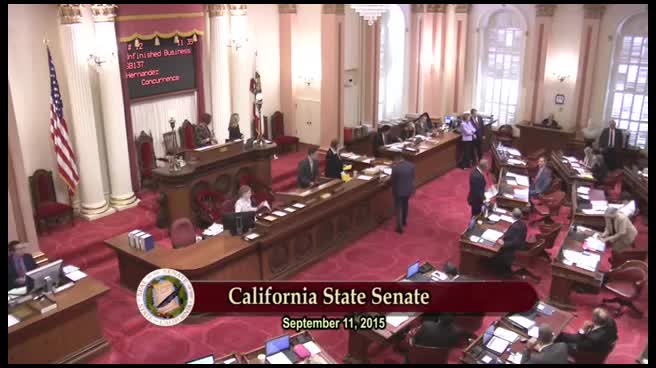 1MIN
Senate Floor
 58SEC
Assembly Floor
 1MIN
Assembly Standing Committee on Appropriations
 16MIN
Assembly Standing Committee on Local Government
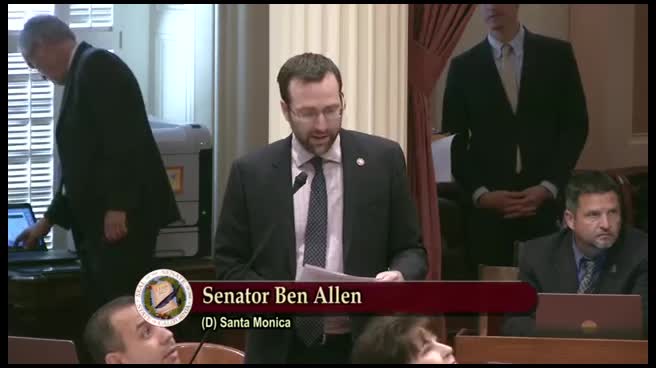 6MIN
Senate Floor
 24MIN
Senate Standing Committee on Governance and Finance
 29MIN
Senate Standing Committee on Transportation and Housing
Bill Author