SB 814: Drought: excessive water use: urban retail water suppliers.
- Session Year: 2015-2016
- House: Senate
- Latest Version Date: 2016-08-29
The California Constitution declares the policy that the water resources of the state be put to beneficial use to the fullest extent of which they are capable, that the waste or unreasonable use or unreasonable method of use of water be prevented, and that the conservation of such waters is to be exercised with a view to the reasonable and beneficial use of the waters in the interest of the people and for the public welfare. Existing law requires the Department of Water Resources and the State Water Resources Control Board to take all appropriate proceedings or actions to prevent waste, unreasonable use, unreasonable method of use, or unreasonable method of diversion of water in this state. Existing law authorizes any public entity, as defined, that supplies water at retail or wholesale for the benefit of persons within the service area or area of jurisdiction of the public entity to, by ordinance or resolution, adopt and enforce a water conservation program to reduce the quantity of water used for the purpose of conserving the water supplies of the public entity. Existing law provides that a violation of a requirement of a water conservation program is a misdemeanor punishable by imprisonment in a county jail for not more than 30 days, or by a fine not exceeding $1,000, or both.
This bill would declare that during prescribed periods excessive water use by a residential customer in a single-family residence or by a customer in a multiunit housing complex, as specified, is prohibited. This bill, during prescribed periods, would require each urban retail water supplier to establish a method to identify and discourage excessive water use. This bill would authorize as a method to identify and discourage excessive water use the establishment of a rate structure that includes block tiers, water budgets, or rate surcharges over and above base rates for excessive water use by residential customers. This bill would authorize as a method to identify and discourage excessive water use the establishment of an excessive water use ordinance, rule, or tariff condition that includes a definition of or procedure to identify and address excessive water use, as prescribed, and would make a violation of this excessive water use ordinance, rule, or tariff condition an infraction or administrative civil penalty and would authorize the penalty for a violation to be based on conditions identified by the urban retail water supplier. By creating a new infraction, this bill would impose a state-mandated local program.
The California Constitution requires the state to reimburse local agencies and school districts for certain costs mandated by the state. Statutory provisions establish procedures for making that reimbursement.
This bill would provide that no reimbursement is required by this act for a specified reason.
The California Constitution declares the policy that the water resources of the state be put to beneficial use to the fullest extent of which they are capable, that the waste or unreasonable use or unreasonable method of use of water be prevented, and that the conservation of such waters is to be exercised with a view to the reasonable and beneficial use of the waters in the interest of the people and for the public welfare. Existing law requires the Department of Water Resources and the State Water Resources Control Board to take all appropriate proceedings or actions to prevent waste, unreasonable use, unreasonable method of use, or unreasonable method of diversion of water in this state. Existing law authorizes any public entity, as defined, that supplies water at retail or wholesale for the benefit of persons within the service area or area of jurisdiction of the public entity to, by ordinance or resolution, adopt and enforce a water conservation program to reduce the quantity of water used for the purpose of conserving the water supplies of the public entity. Existing law provides that a violation of a requirement of a water conservation program is a misdemeanor punishable by imprisonment in a county jail for not more than 30 days, or by a fine not exceeding $1,000, or both.
This bill would declare that during prescribed periods excessive water use by a residential customer, as specified, is prohibited, if during a period when certain conditions exist, as prescribed. customer in a single-family residence or by a customer in a multiunit housing complex, as specified, is prohibited. This bill bill, during prescribed periods, would require each urban retail water supplier to establish a method to identify and discourage excessive water use. This bill would authorize as a method to identify and discourage excessive water use the establishment of a rate structure that includes block tiers, water budgets, or rate surcharges over and above base rates for excessive water use by residential customers. This bill would authorize as a method to identify and discourage excessive water use the establishment of an excessive water use ordinance, rule, or tariff condition that includes a definition of or procedure to identify and address excessive water use, as prescribed, and would make a violation of this excessive water use ordinance, rule, or tariff condition an infraction or administrative civil penalty and would authorize the penalty for a violation to be based on conditions identified by the urban retail water supplier. By creating a new infraction, this bill would impose a state-mandated local program.
The California Constitution requires the state to reimburse local agencies and school districts for certain costs mandated by the state. Statutory provisions establish procedures for making that reimbursement.
This bill would provide that no reimbursement is required by this act for a specified reason.
The California Constitution declares the policy that the water resources of the state be put to beneficial use to the fullest extent of which they are capable, that the waste or unreasonable use or unreasonable method of use of water be prevented, and that the conservation of such waters is to be exercised with a view to the reasonable and beneficial use of the waters in the interest of the people and for the public welfare. Existing law requires the Department of Water Resources and the State Water Resources Control Board to take all appropriate proceedings or actions to prevent waste, unreasonable use, unreasonable method of use, or unreasonable method of diversion of water in this state. Existing law authorizes any public entity, as defined, that supplies water at retail or wholesale for the benefit of persons within the service area or area of jurisdiction of the public entity to, by ordinance or resolution, adopt and enforce a water conservation program to reduce the quantity of water used for the purpose of conserving the water supplies of the public entity. Existing law provides that a violation of a requirement of a water conservation program is a misdemeanor punishable by imprisonment in a county jail for not more than 30 days, or by a fine not exceeding $1,000, or both.
This bill would declare that excessive water use during a state of emergency based on drought conditions by a residential customer, as specified, is prohibited. prohibited, if during a period when certain conditions exist, as prescribed. This bill would require each urban retail water supplier to establish a method to identify and restrict discourage excessive water use. This bill would authorize as a method to identify and restrict discourage excessive water use the establishment of a rate structure that includes block tiers, water budgets, penalties for prohibited uses, or rate surcharges over and above base rates for excessive water use by residential customers. This bill would authorize as a method to identify and restrict discourage excessive water use the establishment of an excessive water use ordinance, rule, or tariff condition that includes a definition of or procedure to identify and address excessive water use, as prescribed, and would make a violation of this excessive water use ordinance, rule, or tariff condition an infraction punishable by a fine of at least $500 per 100 cubic feet of water or per 748 gallons used above the excessive water use threshold established by the urban retail water supplier in a billing cycle. infraction or administrative civil penalty and would authorize the penalty for a violation to be based on conditions identified by the urban retail water supplier. By creating a new infraction, this bill would impose a state-mandated local program.
This bill would provide that these provisions apply only during a period for which the Governor has issued a proclamation of a state of emergency based on drought conditions.
The California Constitution requires the state to reimburse local agencies and school districts for certain costs mandated by the state. Statutory provisions establish procedures for making that reimbursement.
This bill would provide that no reimbursement is required by this act for a specified reason.
The California Constitution declares the policy that the water resources of the state be put to beneficial use to the fullest extent of which they are capable, that the waste or unreasonable use or unreasonable method of use of water be prevented, and that the conservation of such waters is to be exercised with a view to the reasonable and beneficial use of the waters in the interest of the people and for the public welfare. Existing law requires the Department of Water Resources and the State Water Resources Control Board to take all appropriate proceedings or actions to prevent waste, unreasonable use, unreasonable method of use, or unreasonable method of diversion of water in this state. Existing law authorizes any public entity, as defined, that supplies water at retail or wholesale for the benefit of persons within the service area or area of jurisdiction of the public entity to, by ordinance or resolution, adopt and enforce a water conservation program to reduce the quantity of water used for the purpose of conserving the water supplies of the public entity. Existing law provides that a violation of a requirement of a water conservation program is a misdemeanor punishable by imprisonment in a county jail for not more than 30 days, or by a fine not exceeding $1,000, or both.
This bill would declare that excessive water use during a state of emergency based on drought conditions by a residential customer, as specified, is prohibited. This bill would require each urban retail water supplier to establish a method to identify and restrict excessive water use. This bill would authorize as a method to identify and restrict excessive water use the establishment of a rate structure that includes block tiers, water budgets, penalties for prohibited uses, or rate surcharges over and above base rates for excessive water use by residential customers. This bill would authorize as a method to identify and restrict excessive water use the establishment of an excessive water use ordinance, rule, or tariff condition that includes a definition of excessive water use, as prescribed, and would make a violation of this excessive water use ordinance, rule, or tariff condition an infraction punishable by a fine of at least $500 per 100 cubic feet of water or per 748 gallons used above the excessive water use threshold established by the urban retail water supplier in a billing cycle. By creating a new infraction, this bill would impose a state-mandated local program.
This bill would provide that these provisions apply only during a period for which the Governor has issued a proclamation of a state of emergency based on drought conditions.
The California Public Records Act requires that public records, as defined, be open to inspection at all times during the hours of a state or local agency and that every person has a right to inspect any public record, with specified exceptions. Existing law prohibits the act from being construed to require the disclosure of certain information concerning utility customers of local agencies, except that disclosure of the name, utility usage data, and the home address of the utility customer who is the subject of the request and who the local agency has determined has used utility services in a manner inconsistent with applicable local utility usage policies is required to be made available.
This bill would revise this exception to require, upon request, the disclosure of the name and utility usage data of a utility customer who a local agency determines has used utility services in a manner inconsistent with applicable local utility usage policies, with the home address of the customer being disclosed only with the customers consent. By increasing the duties of local officials, the bill would impose a state-mandated local program.
The California Constitution requires local agencies, for the purpose of ensuring public access to the meetings of public bodies and the writings of public officials and agencies, to comply with a statutory enactment that amends or enacts laws relating to public records or open meetings if that enactment contains findings demonstrating that the enactment furthers the constitutional requirements relating to this purpose.
This bill would make legislative findings to that effect.
The California Constitution requires the state to reimburse local agencies and school districts for certain costs mandated by the state. Statutory provisions establish procedures for making that reimbursement.
This bill would provide that no reimbursement is required by this act for a specified reason.
The California Constitution requires the reasonable and beneficial use of water. declares the policy that the water resources of the state be put to beneficial use to the fullest extent of which they are capable, that the waste or unreasonable use or unreasonable method of use of water be prevented, and that the conservation of such waters is to be exercised with a view to the reasonable and beneficial use of the waters in the interest of the people and for the public welfare. Existing law requires the Department of Water Resources and the State Water Resources Control Board to take all appropriate proceedings or actions to prevent waste, unreasonable use, unreasonable method of use, or unreasonable method of diversion of water in this state. Existing law authorizes any public entity, as defined, that supplies water at retail or wholesale for the benefit of persons within the service area or area of jurisdiction of the public entity to, by ordinance or resolution, adopt and enforce a water conservation program to reduce the quantity of water used for the purpose of conserving the water supplies of the public entity. Existing law provides that a violation of a requirement of a water conservation program is a misdemeanor punishable by imprisonment in the a county jail for not more than 30 days, or by a fine not exceeding $1,000, or both.
This bill would declare that excessive water use, as defined by each urban retail water supplier, is a waste or unreasonable use of water. This bill would prohibit excessive water use by a residential customer and use during a state of emergency based on drought conditions by a residential customer, as specified, is prohibited. This bill would require each urban retail water supplier to establish a method to identify and restrict excessive water use. This bill would authorize as a method to identify and restrict excessive water use the establishment of a rate structure that includes block tiers, water budgets, penalties for prohibited uses, or rate surcharges over and above base rates for excessive water use by residential customers. This bill would authorize as a method to identify and restrict excessive water use the establishment of an excessive water use ordinance, rule, or tariff condition that includes a definition of excessive water use, as prescribed, and would make a violation of this prohibition excessive water use ordinance, rule, or tariff condition an infraction punishable by a fine of at least $500 per 100 cubic feet of water or per 748 gallons used above the excessive water use definition threshold established by the urban retail water supplier in a billing cycle. By creating a new infraction, this bill would impose a state-mandated local program.
This bill would provide that these provisions apply only during a period for which the Governor has issued a proclamation of a state of emergency based on drought conditions.
The California Public Records Act requires that public records, as defined, be open to inspection at all times during the hours of a state or local agency and that every person has a right to inspect any public record, with specified exceptions. Existing law prohibits the act from being construed to require the disclosure of certain information concerning utility customers of local agencies, with specified exceptions. except that disclosure of the name, utility usage data, and the home address of the utility customer who is the subject of the request and who the local agency has determined has used utility services in a manner inconsistent with applicable local utility usage policies is required to be made available.
This bill would require certain information about residential customers that violate the prohibition on excessive water use to be made available under the act upon request. revise this exception to require, upon request, the disclosure of the name and utility usage data of a utility customer who a local agency determines has used utility services in a manner inconsistent with applicable local utility usage policies, with the home address of the customer being disclosed only with the customers consent. By increasing the duties of local officials, the bill would impose a state-mandated local program.
The California Constitution requires local agencies, for the purpose of ensuring public access to the meetings of public bodies and the writings of public officials and agencies, to comply with a statutory enactment that amends or enacts laws relating to public records or open meetings if that enactment contains findings demonstrating that the enactment furthers the constitutional requirements relating to this purpose.
This bill would make legislative findings to that effect.
The California Constitution requires the state to reimburse local agencies and school districts for certain costs mandated by the state. Statutory provisions establish procedures for making that reimbursement.
This bill would provide that no reimbursement is required by this act for a specified reason.
The California Constitution requires the reasonable and beneficial use of water. Existing law requires the Department of Water Resources and the State Water Resources Control Board to take all appropriate proceedings or actions to prevent waste, unreasonable use, unreasonable method of use, or unreasonable method of diversion of water in this state. Existing law authorizes any public entity, as defined, that supplies water at retail or wholesale for the benefit of persons within the service area or area of jurisdiction of the public entity to, by ordinance or resolution, adopt and enforce a water conservation program to reduce the quantity of water used for the purpose of conserving the water supplies of the public entity. Existing law provides that a violation of a requirement of a water conservation program is a misdemeanor punishable by imprisonment in the county jail for not more than 30 days, or by fine not exceeding $1,000, or both.
This bill would declare that excessive water use, as defined by each urban retail water supplier, is a waste or unreasonable use of water. This bill would prohibit excessive water use by a residential customer and would make a violation of this prohibition an infraction punishable by a fine of at least $500 per 100 cubic feet of water used above the excessive water use definition in a billing cycle. By creating a new infraction, this bill would impose a state-mandated local program.
This bill would provide that these provisions apply only during a period for which the Governor has issued a proclamation of a state of emergency based on drought conditions.
The California Public Records Act requires that public records, as defined, be open to inspection at all times during the hours of a state or local agency and that every person has a right to inspect any public record, with specified exceptions. Existing law prohibits the act from being construed to require the disclosure of certain information concerning utility customers of local agencies, with specified exceptions.
This bill would require certain information about residential customers that violate the prohibition on excessive water use to be made available under the act upon request. By increasing the duties of local officials, the bill would impose a state-mandated local program.
The California Constitution requires local agencies, for the purpose of ensuring public access to the meetings of public bodies and the writings of public officials and agencies, to comply with a statutory enactment that amends or enacts laws relating to public records or open meetings if that enactment contains findings demonstrating that the enactment furthers the constitutional requirements relating to this purpose.
This bill would make legislative findings to that effect.
The California Constitution requires the state to reimburse local agencies and school districts for certain costs mandated by the state. Statutory provisions establish procedures for making that reimbursement.
This bill would provide that no reimbursement is required by this act for a specified reason.
(a)The Legislature finds and declares that this chapter furthers important state policies of encouraging water conservation and protecting water resources in the interest of the people and for the public welfare.
(b)For the purposes of this chapter, urban retail water supplier has the same meaning as provided in Section 10608.12.
366.(a)During periods described in subdivision (a) of Section 367, excessive water use is prohibited by a residential customer in a single-family residence or by a customer in a multiunit housing complex in which each unit is individually metered or submetered by the urban retail water supplier.
(b)Each urban retail water supplier shall establish a method to identify and discourage excessive water use, through one of the following options:
(1)Establishing a rate structure, subject to applicable constitutional and statutory limitations, that includes block tiers, water budgets, or rate surcharges over and above base rates for excessive water use by a residential water customer.
(2)(A)Establishing an excessive water use ordinance, rule, or tariff condition, or amending an existing ordinance, rule, or tariff condition, that includes a definition of or a procedure to identify and address excessive water use by metered single-family residential customers and customers in multiunit housing complexes in which each unit is individually metered or submetered and may include a process to issue written warnings to a customer and perform a site audit of customer water usage prior to deeming the customer in violation.
(B)For the purposes of subparagraph (A), excessive water use shall be measured in terms of either gallons or hundreds of cubic feet of water used during the urban retail water suppliers regular billing cycle. In establishing the definition of excessive use, the urban retail water supplier may consider factors that include, but are not limited to, all of the following:
(i)Average daily use.
(ii)Full-time occupancy of households.
(iii)Amount of landscaped land on a property.
(iv)Rate of evapotranspiration.
(v)Seasonal weather changes.
(C)(i)A violation of an excessive use ordinance, rule, or tariff condition established pursuant to subparagraph (A) shall result in an infraction or administrative civil penalty. The penalty for a violation may be based on conditions identified by the urban retail water supplier and may include, but is not limited to, a fine of up to five hundred dollars ($500) for each hundred cubic feet of water, or 748 gallons, used above the excessive water use threshold established by the urban retail water supplier in a billing cycle.
(ii)Any fine imposed pursuant to this subparagraph shall be added to the customers water bill and is due and payable with that water bill.
(iii)Each urban retail water supplier shall have a process for nonpayment of the fine, which shall be consistent with due process and reasonably similar to the water suppliers existing process for nonpayment of a water bill.
(D)(i)Consistent with due process, an urban retail water supplier shall establish a process and conditions for the appeal of a fine imposed pursuant to subparagraph (C) whereby the customer may contest the imposition of the fine for excessive water use.
(ii)As part of the appeal process, the customer shall be provided with an opportunity to provide evidence that there was no excessive water use or of a bona fide reason for the excessive water use, including evidence of a water leak, a medical reason, or any other reasonable justification for the water use, as determined by the urban retail water supplier.
(iii)As part of the appeal process, the urban retail water supplier shall provide documentation demonstrating the excessive water usage.
(c)(1)The provisions of subdivision (b) do not apply to an urban retail water supplier that is not fully metered in accordance with Section 527. An urban retail water supplier shall comply with the provisions of subdivision (b) when all of the water suppliers residential water service connections are being billed based on metered water usage.
(2)An urban retail water supplier that is not fully metered shall prohibit water use practices by an ordinance, resolution, rule, or tariff condition that imposes penalties for prohibited uses of water supplied by the water supplier. The urban retail water supplier may include a process to issue written warnings prior to imposing penalties as well as increased penalty amounts for successive violations.
367.(a)This chapter applies only as follows:
(1)During a period for which the Governor has issued a proclamation of a state of emergency under the California Emergency Services Act (Chapter 7 (commencing with Section 8550) of Division 1 of Title 2 of the Government Code) based on statewide drought conditions to an urban retail water supplier that has moved to a stage of action in response to a local water supply shortage condition under the water suppliers contingency plan pursuant to paragraph (1) of subdivision (a) of Section 10632 that requires mandatory water use reductions.
(2)To an urban retail water supplier during a period in which the water supplier has moved to a stage of action in response to a local water supply shortage condition under the water suppliers contingency plan pursuant to paragraph (1) of subdivision (a) of Section 10632 that requires mandatory water use reductions.
(3)To an urban retail water supplier affected during a period for which the Governor has issued a proclamation of a state of emergency under the California Emergency Services Act (Chapter 7 (commencing with Section 8550) of Division 1 of Title 2 of the Government Code) based on local drought conditions.
(b)The provisions of this chapter are in addition to, and do not supersede or limit, any other measures or remedies implemented by an urban retail water supplier.
SEC. 2.No reimbursement is required by this act pursuant to Section 6 of Article XIIIB of the California Constitution because the only costs that may be incurred by a local agency or school district will be incurred because this act creates a new crime or infraction, eliminates a crime or infraction, or changes the penalty for a crime or infraction, within the meaning of Section 17556 of the Government Code, or changes the definition of a crime within the meaning of Section 6 of Article XIIIB of the California Constitution.
(a)The Legislature finds and declares that this chapter furthers important state policies of encouraging water conservation and protecting water resources in the interest of the people and for the public welfare.
(b)For the purposes of this chapter, urban retail water supplier has the same meaning as provided in Section 10608.12.
366.(a)Excessive water use during During periods described in subdivision (a) of Section 367 367, excessive water use is prohibited by a residential customer in a single-family residence or by a customer in a multiunit housing complex in which each unit is individually metered or submetered by the urban retail water supplier is prohibited. supplier.
(b)Each urban retail water supplier shall establish a method to identify and discourage excessive water use, through one of the following options:
(1)Establishing a rate structure, subject to applicable constitutional and statutory limitations, that includes block tiers, water budgets, or rate surcharges over and above base rates for excessive water use by a residential water customer.
(2)(A)Establishing an excessive water use ordinance, rule, or tariff condition, or amending an existing ordinance, rule, or tariff condition, that includes a definition of or a procedure to identify and address excessive water use by metered single-family residential customers and customers in multiunit housing complexes in which each unit is individually metered or submetered and may include a process to issue written warnings to a customer and perform a site audit of customer water usage prior to deeming the customer in violation. Excessive
(B)For the purposes of subparagraph (A), excessive water use shall be measured in terms of either gallons or hundreds of cubic feet of water used during the urban retail water suppliers regular billing cycle. In establishing the definition of excessive use, the urban retail water supplier may consider factors that include, but are not limited to, all of the following:
(i)Average daily use.
(ii)Full-time occupancy of households.
(iii)Amount of landscaped land on a property.
(iv)Rate of evapotranspiration.
(v)Seasonal weather changes.
(B)
(C)(i)A violation of an excessive use ordinance, rule, or tariff condition established pursuant to subparagraph (A) shall result in an infraction or administrative civil penalty. The penalty for a violation may be based on conditions identified by the urban retail water supplier and may include, but is not limited to, a fine of up to five hundred dollars ($500) for each hundred cubic feet of water, or 748 gallons, used above the excessive water use threshold established by the urban retail water supplier in a billing cycle. Any
(ii)Any fine imposed pursuant to this subparagraph shall be added to the customers water bill and is due and payable with that water bill. Each
(iii)Each urban retail water supplier shall have a process for nonpayment of the fine, which shall be consistent with due process and reasonably similar to the water suppliers existing process for nonpayment of a water bill.
(C)
(D)(i)Consistent with due process, an urban retail water supplier shall establish a process and conditions for the appeal of a fine imposed pursuant to subparagraph (B) (C) whereby the customer may contest the imposition of the fine for excessive water use.
(ii)As part of the appeal process, the customer shall be provided with an opportunity to provide evidence that there was no excessive water use or of a bona fide reason for the excessive water use, including evidence of a water leak, a medical reason, or any other reasonable justification for the water use, as determined by the urban retail water supplier.
(iii)As part of the appeal process, the urban retail water supplier shall provide documentation demonstrating the excessive water usage.
(c)(1)The provisions of subdivision (b) do not apply to an urban retail water supplier that is not fully metered in accordance with Section 527. An urban retail water supply supplier shall comply with the provisions of subdivision (b) when all of the water suppliers residential water service connections are being billed based on metered water usage.
(2)An urban retail water supplier that is not fully metered shall prohibit water use practices by an ordinance, resolution, rule, or tariff condition that imposes penalties for prohibited uses of water supplied by the water supplier. The urban retail water supplier may include a process to issue written warnings prior to imposing penalties as well as increased penalty amounts for successive violations.
367.(a)This chapter applies only as follows:
(1)During a period for which the Governor has issued a proclamation of a state of emergency under the California Emergency Services Act (Chapter 7 (commencing with Section 8550) of Division 1 of Title 2 of the Government Code) based on statewide drought conditions to an urban retail water supplier that has moved to a stage of action in response to a local water supply shortage condition under the water suppliers contingency plan pursuant to paragraph (1) of subdivision (a) of Section 10632 that requires mandatory water use reductions.
(2)To an urban retail water supplier during a period in which the water supplier has moved to a stage of action in response to a local water supply shortage condition under the water suppliers contingency plan pursuant to paragraph (1) of subdivision (a) of Section 10632 that requires mandatory water use reductions.
(3)To an urban retail water supplier affected during a period for which the Governor has issued a proclamation of a state of emergency under the California Emergency Services Act (Chapter 7 (commencing with Section 8550) of Division 1 of Title 2 of the Government Code) based on local drought conditions.
(b)The provisions of this chapter are in addition to, and do not supersede or limit, any other measures or remedies implemented by an urban retail water supplier.
SEC. 2.No reimbursement is required by this act pursuant to Section 6 of Article XIIIB of the California Constitution because the only costs that may be incurred by a local agency or school district will be incurred because this act creates a new crime or infraction, eliminates a crime or infraction, or changes the penalty for a crime or infraction, within the meaning of Section 17556 of the Government Code, or changes the definition of a crime within the meaning of Section 6 of Article XIIIB of the California Constitution.
Amended DatePage 1.(a)The Legislature finds and declares that this chapter furthers important state policies of encouraging water conservation and protecting water resources in the interest of the people and for the public welfare.
(b)For the purposes of this chapter, urban retail water supplier has the same meaning as provided in Section 10608.12.
366.(a)Excessive water use during a state of emergency based on drought conditions periods described in Section 367 by a residential customer in a single-family residence or by a customer in a multiunit housing complex in which each unit is individually metered or submetered by the urban retail water supplier is prohibited.
(b)Each urban retail water supplier shall establish a method to identify and restrict discourage excessive water use, through one of the following options:
(1)Establishing a rate structure structure, subject to applicable constitutional and statutory limitations, that includes block tiers, water budgets, penalties for prohibited uses, or rate surcharges over and above base rates for excessive water use by a residential water customer.
(2)(A)Establishing an excessive water use ordinance, rule, or tariff condition, or amending an existing ordinance, rule, or tariff condition, that includes a definition of or a procedure to identify and address excessive water use by metered single-family residential customers and customers in multiunit housing complexes in which each unit is individually metered or submetered and may include a process to issue written warnings to a customer and perform a site audit of customer water usage prior to deeming the customer in violation. Excessive water use shall be measured in terms of either gallons or hundreds of cubic feet of water used during the urban retail water suppliers regular billing cycle. In establishing the definition of excessive use, the urban retail water supplier may consider factors that include, but are not limited to, all of the following:
(i)Average daily use.
(ii)Full-time occupancy of households.
(iii)Amount of landscaped land on a property.
(iv)Rate of evapotranspiration.
(v)Seasonal weather changes.
(B)A violation of an excessive use ordinance, rule, or tariff condition established pursuant to subparagraph (A) is shall result in an infraction punishable by or administrative civil penalty. The penalty for a violation may be based on conditions identified by the urban retail water supplier and may include, but is not limited to, a fine of up to five hundred dollars ($500) per for each hundred cubic feet of water, or per 748 gallons, used above the excessive water use threshold established by the urban retail water supplier in a billing cycle. Any fine imposed pursuant to this subparagraph shall be added to the customers water bill and is due and payable with that water bill. Each urban retail water supplier shall have a process for nonpayment of the fine, which shall be consistent with due process and reasonably similar to the water suppliers existing process for nonpayment of a water bill.
(C)A violation of an excessive water use ordinance, rule, or tariff condition where a demonstrable water leak at the residence occurred and a repair to eliminate that leak is underway shall be considered as a basis for granting an appeal and shall be considered for waiver of the charges consistent with the urban retail water suppliers excessive water use ordinance and existing policies for leak adjustments. Other reasonable justifications for excessive water use shall be considered by the urban retail water supplier consistent with clause (i) of subparagraph (D).
(D)
(C)(i)An Consistent with due process, an urban retail water supplier shall establish a process and conditions for the appeal of a fine imposed pursuant to subparagraph (B) whereby the customer may contest the imposition of the fine for excessive water use.
(ii)As part of the appeal process, the customer shall be provided with an opportunity to provide evidence of a bona fide reason for the excessive water use, including evidence of a water leak in accordance with subparagraph (C), leak, a medical reason, or any other reasonable justification for the water use, as determined by the urban retail water supplier.
(c)(1)The provisions of subdivision (b) do not apply to an urban retail water supplier that is not fully metered in accordance with Section 527. An urban retail water supply shall comply with the provisions of subdivision (b) when all of the water suppliers residential water service connections are being billed based on metered water usage.
(2)An urban retail water supplier that is not fully metered shall prohibit water use practices by an ordinance, resolution, rule, or tariff condition that imposes penalties for prohibited uses of water supplied by the water supplier. The urban retail water supplier may include a process to issue written warnings prior to imposing penalties as well as increased penalty amounts for successive violations.
367.(a)This chapter applies only during as follows:
(1)During a period for which the Governor has issued a proclamation of a state of emergency under the California Emergency Services Act (Chapter 7 (commencing with Section 8550) of Division 1 of Title 2 of the Government Code) based on drought conditions. statewide drought conditions to an urban retail water supplier that has moved to a stage of action in response to a local water supply shortage condition under the water suppliers contingency plan pursuant to paragraph (1) of subdivision (a) of Section 10632 that requires mandatory water use reductions.
(2)To an urban retail water supplier during a period in which the water supplier has moved to a stage of action in response to a local water supply shortage condition under the water suppliers contingency plan pursuant to paragraph (1) of subdivision (a) of Section 10632 that requires mandatory water use reductions.
(3)To an urban retail water supplier affected during a period for which the Governor has issued a proclamation of a state of emergency under the California Emergency Services Act (Chapter 7 (commencing with Section 8550) of Division 1 of Title 2 of the Government Code) based on local drought conditions.
(b)The provisions of this chapter are in addition to, and do not supersede or limit, any other measures or remedies implemented by an urban retail water supplier.
SEC. 2.No reimbursement is required by this act pursuant to Section 6 of Article XIIIB of the California Constitution because the only costs that may be incurred by a local agency or school district will be incurred because this act creates a new crime or infraction, eliminates a crime or infraction, or changes the penalty for a crime or infraction, within the meaning of Section 17556 of the Government Code, or changes the definition of a crime within the meaning of Section 6 of Article XIIIB of the California Constitution.
Nothing in this chapter shall be construed to require the disclosure of the name, credit history, utility usage data, home address, or telephone number of utility customers of local agencies, except that disclosure of name, utility usage data, and the home address of utility customers of local agencies shall be made available upon request as follows:
(a)To an agent or authorized family member of the person to whom the information pertains.
(b)To an officer or employee of another governmental agency when necessary for the performance of its official duties.
(c)Upon court order or the request of a law enforcement agency relative to an ongoing investigation.
(d)Upon determination by the local agency that a utility customer has used utility services in a manner inconsistent with applicable local utility usage policies, if the home address of the customer is not disclosed without the customers consent.
(e)Upon determination by the local agency that the utility customer who is the subject of the request is an elected or appointed official with authority to determine the utility usage policies of the local agency, provided that the home address of an appointed official shall not be disclosed without his or her consent.
(f)Upon determination by the local agency that the public interest in disclosure of the information clearly outweighs the public interest in nondisclosure.
SEC. 2.SECTION 1.Chapter 3.3 (commencing with Section 365) is added to Division 1 of the Water Code, to read:3.3.Excessive Residential Water Use During Drought365.(a)The Legislature finds and declares that this chapter furthers important state policies of encouraging water conservation and protecting water resources in the interest of the people and for the public welfare.
(b)For the purposes of this chapter, urban retail water supplier has the same meaning as provided in Section 10608.12.
366.(a)Excessive water use during a state of emergency based on drought conditions by a residential customer in a single-family residence or by a customer in a multiunit housing complex in which each unit is individually metered or submetered by the water supplier is prohibited.
(b)Each urban retail water supplier shall establish a method to identify and restrict excessive water use, through one of the following options:
(1)Establishing a rate structure that includes block tiers, water budgets, penalties for prohibited uses, or rate surcharges over and above base rates for excessive water use by a residential water customer.
(2)(A)Establishing an excessive water use ordinance, rule, or tariff condition, or amending an existing ordinance, rule, or tariff condition, that includes a definition of excessive water use by single-family residential customers and customers in multiunit housing complexes in which each unit is individually metered or submetered and may include a process to issue written warnings to a customer and perform a site audit of customer water usage prior to deeming the customer in violation. Excessive water use shall be measured in terms of either gallons or hundreds of cubic feet of water used during the urban retail water suppliers regular billing cycle. In establishing the definition of excessive use, the water supplier may consider factors that include, but are not limited to, all of the following:
(i)Average daily use.
(ii)Full-time occupancy of households.
(iii)Amount of landscaped land on a property.
(iv)Rate of evapotranspiration.
(v)Seasonal weather changes.
(B)A violation of an excessive use ordinance, rule, or tariff condition established pursuant to subparagraph (A) is an infraction punishable by a fine of up to five hundred dollars ($500) per hundred cubic feet of water, or per 748 gallons, used above the excessive water use threshold established by the urban retail water supplier in a billing cycle. Any fine imposed pursuant to this subparagraph shall be added to the customers water bill and is due and payable with that water bill. Each urban retail water supplier shall have a process for nonpayment of the fine, which shall be consistent with the water suppliers existing process for nonpayment of a water bill.
(C)A violation of an excessive water use ordinance, rule, or tariff condition where a demonstrable water leak at the residence occurred and a repair to eliminate that leak is underway shall be considered as a basis for granting an appeal and shall be considered for waiver of the charges consistent with the urban retail water suppliers excessive water use ordinance and existing policies for leak adjustments. Other reasonable justifications for excessive water use shall be considered by the urban retail water supplier consistent with clause (i) of subparagraph (D).
(D)(i)An urban retail water supplier shall establish a process for the appeal of a fine imposed pursuant to subparagraph (B) whereby the customer may contest the imposition of the fine for excessive water use.
(ii)As part of the appeal process, the customer shall be provided with an opportunity to provide evidence of a bona fide reason for the excessive water use, including evidence of a water leak in accordance with subparagraph (C), a medical reason, or any other reasonable justification for the water use, as determined by the urban retail water supplier.
367.This chapter applies only during a period for which the Governor has issued a proclamation of a state of emergency under the California Emergency Services Act (Chapter 7 (commencing with Section 8550) of Division 1 of Title 2 of the Government Code) based on drought conditions.
SEC. 3.The Legislature finds and declares that Section 1 of this act, which amends Section 6254.16 of the Government Code, furthers, within the meaning of paragraph (7) of subdivision (b) of Section 3 of Article I of the California Constitution, the purposes of that constitutional section as it relates to the right of public access to the meetings of local public bodies or the writings of local public officials and local agencies. Pursuant to paragraph (7) of subdivision (b) of Section 3 of Article I of the California Constitution, the Legislature makes the following findings:
The Legislature finds that it is in the publics interest to be made aware of excessive water use during a drought in order to help promote water conservation and to protect water resources in the interest of the people and for the public welfare.
SEC. 4.No reimbursement is required by this act pursuant to Section 6 of Article XIIIB of the California Constitution because the costs that may be incurred by a local agency or school district under this act would result from a legislative mandate that is within the scope of paragraph (7) of subdivision (b) of Section 3 of Article I of the California Constitution or because the costs that may be incurred by a local agency or school district will be incurred because this act creates a new crime or infraction, eliminates a crime or infraction, or changes the penalty for a crime or infraction, within the meaning of Section 17556 of the Government Code, or changes the definition of a crime within the meaning of Section 6 of Article XIIIB of the California Constitution.
SEC. 2.No reimbursement is required by this act pursuant to Section 6 of Article XIIIB of the California Constitution because the only costs that may be incurred by a local agency or school district will be incurred because this act creates a new crime or infraction, eliminates a crime or infraction, or changes the penalty for a crime or infraction, within the meaning of Section 17556 of the Government Code, or changes the definition of a crime within the meaning of Section 6 of Article XIIIB of the California Constitution.
Nothing in this chapter shall be construed to require the disclosure of the name, credit history, utility usage data, home address, or telephone number of utility customers of local agencies, except that disclosure of name, utility usage data, and the home address of utility customers of local agencies shall be made available upon request as follows:
(a)To an agent or authorized family member of the person to whom the information pertains.
(b)To an officer or employee of another governmental agency when necessary for the performance of its official duties.
(c)Upon court order or the request of a law enforcement agency relative to an ongoing investigation.
(d)Upon determination by the local agency that the a utility customer who is the subject of the request has used utility services in a manner inconsistent with applicable local utility usage policies. policies, if the home address of the customer is not disclosed without the customers consent.
(e)Upon determination by the local agency that the utility customer who is the subject of the request is an elected or appointed official with authority to determine the utility usage policies of the local agency, provided that the home address of an appointed official shall not be disclosed without his or her consent.
(f)Upon determination by the local agency that the public interest in disclosure of the information clearly outweighs the public interest in nondisclosure.
(g)Regarding residential customers that violate the prohibition on excessive water use described in Section 367 of the Water Code.
SEC. 2.Chapter 3.3 (commencing with Section 365) is added to Division 1 of the Water Code, to read:3.3.Excessive Residential Water Use During Drought365.(a)The Legislature finds and declares that this chapter is in furtherance of Section 2 of Article X of the California Constitution as intended to prevent the unreasonable use or the waste of water and to protect furthers important state policies of encouraging water conservation and protecting water resources in the interest of the people and for the public welfare.
(b)For the purposes of this chapter, urban retail water supplier has the same meaning as provided in Section 10608.12.
366.(a)(1)Each urban retail water supplier shall establish a definition of excessive water use by a customer of the urban retail water supplier that considers, but is not necessarily limited to addressing, all of the following factors:
(A)Average daily use.
(B)Full-time occupancy of households.
(C)Amount of landscaped land on a property.
(D)Rate of evapotranspiration.
(2)An urban retail water supplier may also consider seasonal weather changes when establishing a definition of excessive water use by a customer of the urban retail water supplier.
(b)An urban retail water supplier shall define and measure excessive water use in terms of hundreds of cubic feet of water used during the water suppliers regular billing cycle.
(c)An urban retail water supplier shall adopt the definition of excessive water use and make any other changes necessary to implement this chapter by adopting a new rule or ordinance or by amending an existing rule or ordinance relating to drought or water conservation.
367.(a)Excessive water use is a waste or unreasonable use of water.
(b)Excessive water use by a residential customer is prohibited.
(c)A violation of subdivision (b) is an infraction punishable by a fine of at least five hundred dollars ($500) per hundred cubic feet of water used above the excessive water use definition in a billing cycle. Any fine imposed pursuant to this subdivision shall be added to the customers water bill and is due and payable with that water bill. Each urban retail water supplier shall have a process for nonpayment of the fine, which shall be consistent with the water suppliers existing process for nonpayment of a water bill. That process may include, but is not necessarily limited to, the imposition of nonpayment penalties, interruption of water service, and placing of a lien on the customers real property.
(d)A violation of subdivision (b) where a demonstrable water leak at the residence occurred and a fix to that leak is underway shall not be punishable pursuant to subdivision (c). Other reasonable justifications for excessive water use shall be considered consistent with subdivision (e).
(e)(1)An urban retail water supplier shall establish a process for the appeal of a violation of subdivision (b) whereby the customer may contest the imposition of any fine or penalty for excessive water use.
(2)As part of the appeal process, the customer shall be provided with an opportunity to provide evidence of a bona fide reason for the excessive water use, including evidence of a water leak meeting the requirements of subdivision (d), a medical reason, or any other reasonable justification for the water use.
366.(a)Excessive water use during a state of emergency based on drought conditions by a residential customer in a single-family residence or by a customer in a multiunit housing complex in which each unit is individually metered or submetered by the water supplier is prohibited.
(b)Each urban retail water supplier shall establish a method to identify and restrict excessive water use, through one of the following options:
(1)Establishing a rate structure that includes block tiers, water budgets, penalties for prohibited uses, or rate surcharges over and above base rates for excessive water use by a residential water customer.
(2)(A)Establishing an excessive water use ordinance, rule, or tariff condition, or amending an existing ordinance, rule, or tariff condition, that includes a definition of excessive water use by single-family residential customers and customers in multiunit housing complexes in which each unit is individually metered or submetered and may include a process to issue written warnings to a customer and perform a site audit of customer water usage prior to deeming the customer in violation. Excessive water use shall be measured in terms of either gallons or hundreds of cubic feet of water used during the urban retail water suppliers regular billing cycle. In establishing the definition of excessive use, the water supplier may consider factors that include, but are not limited to, all of the following:
(i)Average daily use.
(ii)Full-time occupancy of households.
(iii)Amount of landscaped land on a property.
(iv)Rate of evapotranspiration.
(v)Seasonal weather changes.
(B)A violation of an excessive use ordinance, rule, or tariff condition established pursuant to subparagraph (A) is an infraction punishable by a fine of up to five hundred dollars ($500) per hundred cubic feet of water, or per 748 gallons, used above the excessive water use threshold established by the urban retail water supplier in a billing cycle. Any fine imposed pursuant to this subparagraph shall be added to the customers water bill and is due and payable with that water bill. Each urban retail water supplier shall have a process for nonpayment of the fine, which shall be consistent with the water suppliers existing process for nonpayment of a water bill.
(C)A violation of an excessive water use ordinance, rule, or tariff condition where a demonstrable water leak at the residence occurred and a repair to eliminate that leak is underway shall be considered as a basis for granting an appeal and shall be considered for waiver of the charges consistent with the urban retail water suppliers excessive water use ordinance and existing policies for leak adjustments. Other reasonable justifications for excessive water use shall be considered by the urban retail water supplier consistent with clause (i) of subparagraph (D).
(D)(i)An urban retail water supplier shall establish a process for the appeal of a fine imposed pursuant to subparagraph (B) whereby the customer may contest the imposition of the fine for excessive water use.
(ii)As part of the appeal process, the customer shall be provided with an opportunity to provide evidence of a bona fide reason for the excessive water use, including evidence of a water leak in accordance with subparagraph (C), a medical reason, or any other reasonable justification for the water use, as determined by the urban retail water supplier.
368.367.This chapter applies only during a period for which the Governor has issued a proclamation of a state of emergency under the California Emergency Services Act (Chapter 7 (commencing with Section 8550) of Division 1 of Title 2 of the Government Code) based on drought conditions.
SEC. 3.The Legislature finds and declares that Section 1 of this act, which amends Section 6254.16 of the Government Code, furthers, within the meaning of paragraph (7) of subdivision (b) of Section 3 of Article I of the California Constitution, the purposes of that constitutional section as it relates to the right of public access to the meetings of local public bodies or the writings of local public officials and local agencies. Pursuant to paragraph (7) of subdivision (b) of Section 3 of Article I of the California Constitution, the Legislature makes the following findings:
The Legislature finds that it is in the publics interest to be made aware of excessive water use during a drought in order to help prevent the unreasonable use or waste of water promote water conservation and to protect water resources in the interest of the people and for the public welfare.
SEC. 4.No reimbursement is required by this act pursuant to Section 6 of Article XIIIB of the California Constitution because the costs that may be incurred by a local agency or school district under this act would result from a legislative mandate that is within the scope of paragraph (7) of subdivision (b) of Section 3 of Article I of the California Constitution or because the costs that may be incurred by a local agency or school district will be incurred because this act creates a new crime or infraction, eliminates a crime or infraction, or changes the penalty for a crime or infraction, within the meaning of Section 17556 of the Government Code, or changes the definition of a crime within the meaning of Section 6 of Article XIIIB of the California Constitution.
Nothing in this chapter shall be construed to require the disclosure of the name, credit history, utility usage data, home address, or telephone number of utility customers of local agencies, except that disclosure of name, utility usage data, and the home address of utility customers of local agencies shall be made available upon request as follows:
(a)To an agent or authorized family member of the person to whom the information pertains.
(b)To an officer or employee of another governmental agency when necessary for the performance of its official duties.
(c)Upon court order or the request of a law enforcement agency relative to an ongoing investigation.
(d)Upon determination by the local agency that the utility customer who is the subject of the request has used utility services in a manner inconsistent with applicable local utility usage policies.
(e)Upon determination by the local agency that the utility customer who is the subject of the request is an elected or appointed official with authority to determine the utility usage policies of the local agency, provided that the home address of an appointed official shall not be disclosed without his or her consent.
(f)Upon determination by the local agency that the public interest in disclosure of the information clearly outweighs the public interest in nondisclosure.
(g)Regarding residential customers that violate the prohibition on excessive water use described in Section 367 of the Water Code.
SEC. 2.Chapter 3.3 (commencing with Section 365) is added to Division 1 of the Water Code, to read:3.3.Excessive Residential Water Use During Drought365.(a)The Legislature finds and declares that this chapter is in furtherance of Section 2 of Article X of the California Constitution as intended to prevent the unreasonable use or the waste of water and to protect water resources in the interest of the people and for the public welfare.
(b)For the purposes of this chapter, urban retail water supplier has the same meaning as provided in Section 10608.12.
366.(a)(1)Each urban retail water supplier shall establish a definition of excessive water use by a customer of the urban retail water supplier that considers, but is not necessarily limited to addressing, all of the following factors:
(A)Average daily use.
(B)Full-time occupancy of households.
(C)Amount of landscaped land on a property.
(D)Rate of evapotranspiration.
(2)An urban retail water supplier may also consider seasonal weather changes when establishing a definition of excessive water use by a customer of the urban retail water supplier.
(b)An urban retail water supplier shall define and measure excessive water use in terms of hundreds of cubic feet of water used during the water suppliers regular billing cycle.
(c)An urban retail water supplier shall adopt the definition of excessive water use and make any other changes necessary to implement this chapter by adopting a new rule or ordinance or by amending an existing rule or ordinance relating to drought or water conservation.
367.(a)Excessive water use is a waste or unreasonable use of water.
(b)Excessive water use by a residential customer is prohibited.
(c)A violation of subdivision (b) is an infraction punishable by a fine of at least five hundred dollars ($500) per hundred cubic feet of water used above the excessive water use definition in a billing cycle. Any fine imposed pursuant to this subdivision shall be added to the customers water bill and is due and payable with that water bill. Each urban retail water supplier shall have a process for nonpayment of the fine, which shall be consistent with the water suppliers existing process for nonpayment of a water bill. That process may include, but is not necessarily limited to, the imposition of nonpayment penalties, interruption of water service, and placing of a lien on the customers real property.
(d)A violation of subdivision (b) where a demonstrable water leak at the residence occurred and a fix to that leak is underway shall not be punishable pursuant to subdivision (c). Other reasonable justifications for excessive water use shall be considered consistent with subdivision (e).
(e)(1)An urban retail water supplier shall establish a process for the appeal of a violation of subdivision (b) whereby the customer may contest the imposition of any fine or penalty for excessive water use.
(2)As part of the appeal process, the customer shall be provided with an opportunity to provide evidence of a bona fide reason for the excessive water use, including evidence of a water leak meeting the requirements of subdivision (d), a medical reason, or any other reasonable justification for the water use.
368.This chapter applies only during a period for which the Governor has issued a proclamation of a state of emergency under the California Emergency Services Act (Chapter 7 (commencing with Section 8550) of Division 1 of Title 2 of the Government Code) based on drought conditions.
SEC. 3.The Legislature finds and declares that Section 1 of this act, which amends Section 6254.16 of the Government Code, furthers, within the meaning of paragraph (7) of subdivision (b) of Section 3 of Article I of the California Constitution, the purposes of that constitutional section as it relates to the right of public access to the meetings of local public bodies or the writings of local public officials and local agencies. Pursuant to paragraph (7) of subdivision (b) of Section 3 of Article I of the California Constitution, the Legislature makes the following findings:
The Legislature finds that it is in the publics interest to be made aware of excessive water use during a drought in order to help prevent the unreasonable use or waste of water to protect water resources in the interest of the people and for the public welfare.
SEC. 4.No reimbursement is required by this act pursuant to Section 6 of Article XIIIB of the California Constitution because the costs that may be incurred by a local agency or school district under this act would result from a legislative mandate that is within the scope of paragraph (7) of subdivision (b) of Section 3 of Article I of the California Constitution or because the costs that may be incurred by a local agency or school district will be incurred because this act creates a new crime or infraction, eliminates a crime or infraction, or changes the penalty for a crime or infraction, within the meaning of Section 17556 of the Government Code, or changes the definition of a crime within the meaning of Section 6 of Article XIIIB of the California Constitution.
|
Date
|
Status
|
|---|---|
| Aug 29, 2016 | Chaptered by Secretary of State. Chapter 230, Statutes of 2016. |
| Aug 29, 2016 | Approved by the Governor. |
| Aug 16, 2016 | Enrolled and presented to the Governor at 11:30 a.m. |
| Aug 11, 2016 | Assembly amendments concurred in. (Ayes 23. Noes 13. Page 4864.) Ordered to engrossing and enrolling. |
| Aug 11, 2016 | Assembly amendments concurred in. (Ayes 22. Noes 13.) Ordered to engrossing and enrolling. |
| Aug 10, 2016 | From committee: That the Assembly amendments be concurred in. (Ayes 6. Noes 1. Page 4848.) |
| Aug 10, 2016 | From committee: That the Assembly amendments be concurred in. (Ayes 6. Noes 1.) |
| Aug 9, 2016 | Set for hearing August 10. |
| Aug 8, 2016 | From committee: Be re-referred to Com. on N.R. & W. pursuant to Senate Rule 29.10(d). (Ayes 5. Noes 0. Page 4819.) Re-referred to Com. on N.R. & W. |
| Aug 8, 2016 | From committee: Be re-referred to Com. on N.R. & W. pursuant to Senate Rule 29.10(d). (Ayes 5. Noes 0.) Re-referred to Com. on N.R. & W. |
| Aug 8, 2016 | Re-referred to Com. on RLS. pursuant to Senate Rule 29.10(d). |
| Aug 4, 2016 | Read third time. Passed. (Ayes 45. Noes 29. Page 5710.) Ordered to the Senate. |
| Aug 4, 2016 | In Senate. Concurrence in Assembly amendments pending. |
| Aug 4, 2016 | Read third time. Passed. Ordered to the Senate. |
| Jun 30, 2016 | Read second time. Ordered to third reading. |
| Jun 29, 2016 | From committee: Do pass. (Ayes 12. Noes 6.) (June 29). |
| Jun 21, 2016 | (Corrected June 21). |
| Jun 21, 2016 | Read second time and amended. Re-referred to Com. on APPR. |
| Jun 16, 2016 | From committee: Do pass as amended and re-refer to Com. on APPR. (Ayes 9. Noes 4.) (June 14). |
| Jun 6, 2016 | From committee with author's amendments. Read second time and amended. Re-referred to Com. on W., P., & W. |
| May 16, 2016 | Referred to Com. on W., P., & W. |
| May 10, 2016 | In Assembly. Read first time. Held at Desk. |
| May 9, 2016 | Read third time. Passed. (Ayes 23. Noes 11. Page 3801.) Ordered to the Assembly. |
| May 9, 2016 | Read third time. Passed. (Ayes 23. Noes 11.) Ordered to the Assembly. |
| May 3, 2016 | Read second time. Ordered to third reading. |
| May 2, 2016 | From committee: Be ordered to second reading pursuant to Senate Rule 28.8. |
| Apr 22, 2016 | Set for hearing May 2. |
| Mar 31, 2016 | Re-referred to Com. on APPR. |
| Mar 31, 2016 | Withdrawn from committee. |
| Mar 30, 2016 | From committee with author's amendments. Read second time and amended. Re-referred to Com. on JUD. |
| Mar 29, 2016 | From committee: Do pass and re-refer to Com. on JUD. (Ayes 7. Noes 2. Page 3312.) (March 29). Re-referred to Com. on JUD. |
| Mar 29, 2016 | From committee: Do pass and re-refer to Com. on JUD. (Ayes 7. Noes 2.) (March 29). Re-referred to Com. on JUD. |
| Mar 17, 2016 | From committee with author's amendments. Read second time and amended. Re-referred to Com. on N.R. & W. |
| Mar 9, 2016 | Set for hearing March 29. |
| Jan 28, 2016 | Referred to Coms. on N.R. & W. and JUD. |
| Jan 5, 2016 | From printer. May be acted upon on or after February 4. |
| Jan 4, 2016 | Introduced. Read first time. To Com. on RLS. for assignment. To print. |
|
Date
|
Description
|
Location
|
Votes
|
|
|---|---|---|---|---|
| Aug 11, 2016 | Unfinished Business SB814 Hill Concurrence | Senate Floor |
Passed |
|
| Aug 10, 2016 | That the Assembly amendments be concurred in | Senate Standing Committee on Natural Resources and Water |
Passed |
|
| Aug 4, 2016 | SB 814 Hill Senate Third Reading By LEVINE | Assembly Floor |
Passed |
|
| Jun 29, 2016 | Do pass. | Assembly Standing Committee on Appropriations |
Passed |
|
| Jun 14, 2016 | Do pass as amended and be re-referred to the Committee on [Appropriations] | Assembly Standing Committee on Water, Parks, and Wildlife |
Passed |
|
| May 9, 2016 | Senate 3rd Reading SB814 Hill | Senate Floor |
Passed |
|
| Mar 29, 2016 | Do pass, but first be re-referred to the Committee on [Judiciary] | Senate Standing Committee on Natural Resources and Water |
Passed |
This list shows positions taken on this bill by organizations on the date displayed, which is linked to the original source.
Positions by individuals are not included.
SENATE COMMITTEE ON NATURAL RESOURCES AND WATER
Senator Fran Pavley, Chair
2015 - 2016 Regular
Bill No: SB Hearing Date: August 10, 2016
Author: | Hill | ||
Version: | June 21, 2016 | ||
Urgency: | No | Fiscal: | Yes |
Consultant: | Dennis O'Connor | ||
Subject: Drought: excessive water use: urban retail water suppliers
BACKGROUND AND EXISTING LAW
1. The California Constitution declares that:
- The water resources of the state are to be put to beneficial use to the fullest extent of which they are capable.
- The waste or unreasonable use or unreasonable method of use of water is to be prevented.
- The conservation of such waters is to be exercised with a view to the reasonable and beneficial use of the waters in the interest of the people and for the public welfare.
2. Existing law authorizes any public entity that supplies water at retail or wholesale for the benefit of persons within the service area or area of jurisdiction of the public entity to, by ordinance or resolution, adopt and enforce a water conservation program to reduce the quantity of water used for the purpose of conserving the water supplies of the public entity.
Existing law further provides that a violation of a requirement of a water conservation program is a misdemeanor punishable by imprisonment in a county jail for not more than 30 days, or by a fine not exceeding $1,000, or both.
3. Under the Urban Water Management Planning Act, urban water agencies are to update their urban water management plans by December 31 in years ending in 0 or 5. Among other things, the update is to include an urban water shortage contingency analysis, which describes the actions the urban water agency would take in response to water supply shortages.
4. Governor Brown has made a series of emergency declarations and executive orders regarding the ongoing drought. In particular, in April 2015, the Governor issued an executive order that, among other things, directed the State Water Resources Control Board to impose restrictions to achieve a 25 percent reduction in potable urban water usage through February 28, 2016. The State Board has adopted regulations regarding achieving that reduction, including the establishment of penalties for failure to comply.
PROPOSED LAW
- Prohibit, during specific types of drought emergencies, excessive water use by metered residential customers. Applicable drought emergencies are:
- Periods for which the Governor has issued a proclamation of a state of emergency based on statewide drought conditions for which an urban retail water supplier has moved to a stage of action under the water supplier’s contingency plan that requires mandatory water use reductions.
- Periods for which an urban retail water supplier has moved to a stage of action in response to a local water supply shortage condition under the water supplier’s contingency plan that requires mandatory water use reductions.
- Periods for which the Governor has issued a proclamation of a state of emergency based on local drought conditions.
- Require each urban retail water supplier, except those not fully metered, to establish a method to identify and discourage excessive water use, through one of the following options:
- Establishing a rate structure that includes block tiers, water budgets, or rate surcharges over and above base rates for excessive water use by a residential water customer.
- Establishing an excessive water use ordinance, rule, or tariff condition, or amending an existing ordinance, rule, or tariff condition, that includes a definition of or a procedure to identify and address excessive water use by metered residential customers. Under this option, urban retail water suppliers:
- Must measure excessive water use in terms of either gallons or hundreds of cubic feet of water used during the urban retail water supplier’s regular billing cycle.
- May consider, in establishing the definition of excessive use, factors that include, but are not limited to, all of the following:
- Average daily use.
- Full-time occupancy of households.
- Amount of landscaped land on a property.
- Rate of evapotranspiration.
- Seasonal weather changes.
- Must issue an infraction or administrative civil penalty for violations of an excessive use ordinance etc. The penalty for a violation may be based on conditions identified by the urban retail water supplier and may include, but is not limited to, a fine of up to five hundred dollars ($500) for each hundred cubic feet of water, or 748 gallons, used above the excessive water use threshold established by the urban retail water supplier in a billing cycle.
- Must, consistent with due process, establish a process and conditions for the appeal of a fine imposed pursuant to an excessive use ordinance etc. whereby the customer may contest the imposition of the fine for excessive water use.
- Provide that an urban retail water supplier that is not fully metered:
- Is exempt from having to establish a method to identify and discourage excessive water use (as described above in 2). An urban retail water supplier would be required to comply with those provisions when all of the water supplier’s residential water service connections are being billed based on metered water usage.
- Is required to prohibit water use practices by an ordinance, resolution, rule, or tariff condition that imposes penalties for prohibited uses of water supplied by the water supplier. The urban retail water supplier may include a process to issue written warnings prior to imposing penalties as well as increased penalty amounts for successive violations.
- Provide that the provisions of this bill are in addition to, and do not supersede or limit, any other measures or remedies implemented by an urban retail water supplier.
ARGUMENTS IN SUPPORT
According to the author, “SB 814 ensures that no one can buy their way out of the drought during a statewide drought emergency. At the peak of the drought most Californians reduced their water use and faced stiff penalties for waste, but some Californians used as much water as they wanted without any repercussions. Statewide, hundreds of households used more than 1 million gallons of water in a year, far above the average level of use. The biggest user consumed almost 12 million gallons in one year. With a couple of exceptions, water agencies do not have policies to target and reduce this excessive water use. SB 814 fixes this gap by simply requiring every water agency to have a policy in place to curb excessive water use.”
ARGUMENTS IN OPPOSITION
According to the Association of California Water Agencies (ACWA), “with the relaxation in the severity of California’s current drought emergency, and the adjustment of emergency conservation regulations by the State Water Resources Control Board (State Water Board), ACWA [has] reevaluated the need for this bill and has concluded that SB 814 would institute an unnecessary mandate and must therefore oppose the bill.”
“[T]he State Water Board approved modifications to the existing emergency water conservation regulation on May 18. The modifications replace the state-imposed mandatory conservation standards with a locally driven, supply-based assessment process. The new regulation recognizes that urban water suppliers have the expertise to self-certify their water supply availability and determine appropriate levels of conservation. ACWA maintains that local control is the most effective path to mitigating the effects of drought and cannot support a top-down statewide approach as proposed in this bill.”
COMMENTS
Assembly amendments. Amendments taken in the Assembly included both policy and technical/clarifying changes. Key amendments include:
- Expanding the types of drought emergencies triggering this bill to include:
- A local water supply shortage condition that requires mandatory water use reductions under the water supplier’s contingency plan.
- Periods for which the Governor has issued a proclamation of a state of emergency based on local drought conditions.
- Adding provisions governing required actions of urban retail water suppliers which are not fully metered.
- Adding administrative civil penalties as an allowable consequence of violating an excessive use ordinance.
- Adding a requirement that, as part of the appeal process, the urban retail water supplier must provide documentation demonstrating the excessive water usage.
- Clarifying that the provisions of this bill are in addition to, and do not supersede or limit, any other measures or remedies implemented by an urban retail water supplier.
Fining major water users seems to work. For example, a article in the LA Times last spring documented how despite educational campaigns, usage restrictions, and written notices for people suspected of wasting water, Beverly Hills missed its mandatory 25 percent reduction in water use, triggering state fines. However, once the city began penalizing wasteful water users, city water usage fell by 26 percent.
Not the last severe drought. While it is true that for at least some areas of the state the drought has eased somewhat, it is also true that there will be severe droughts in the future. Possibly even next year. This bill proposes putting in place prohibitions on excess urban water use before the next severe drought hits.
SUPPORT
California League of Conservation Voters
Clean Water Action
East Bay Municipal Water District
Sierra Club California
OPPOSITION
Association of California Water Agencies
City of Roseville
Desert Water Agency
El Dorado Irrigation District
Mesa Water District
Municipal Water District of Orange County
Placer County Water Agency
Rincon del Diablo Municipal Water District
San Diego County Water Authority
San Juan Water District
Santa Margarita Water Agency
Valley Center Municipal Water District
Office of Senate Floor Analyses (916) 651-1520 Fax: (916) 327-4478 | SB |
UNFINISHED BUSINESS
Bill No: SB 814
:
SENATE NATURAL RES. & WATER COMMITTEE: 7-2, 3/29/16
AYES: Pavley, Allen, Hertzberg, Hueso, Jackson, Monning, Wolk
NOES: Stone, Vidak
SENATE APPROPRIATIONS COMMITTEE: Senate Rule 28.8
SENATE FLOOR: 23-11, 5/9/16
AYES: Allen, Block, De León, Hall, Hancock, Hernandez, Hertzberg, Hill, Hueso, Jackson, Lara, Leno, Leyva, Liu, McGuire, Mendoza, Mitchell, Monning, Pan, Pavley, Roth, Wieckowski, Wolk
NOES: Anderson, Berryhill, Cannella, Fuller, Huff, Moorlach, Morrell, Nguyen, Nielsen, Stone, Vidak
NO VOTE RECORDED: Bates, Beall, Gaines, Galgiani, Glazer, Runner
SENATE NATURAL RES. & WATER COMMITTEE: 6-1, 8/10/16 (Pursuant to Senate Rule 29.10)
AYES: Pavley, Allen, Hertzberg, Jackson, Monning, Wolk
NOES: Vidak
NO VOTE RECORDED: Hueso Stone
ASSEMBLY FLOOR: 45-29, 8/4/16 - See last page for vote
DIGEST: This bill prohibits excessive water use by a residential customer during specified emergency drought conditions. Additionally, if specified conditions are met, requires urban retail water suppliers to establish a method to identify and discourage excessive water use.
Assembly Amendments included both policy and technical/clarifying changes. Key amendments include:
- Expanding the types of drought emergencies triggering this bill to include:
- A local water supply shortage condition that requires mandatory water use reductions under the water supplier’s contingency plan.
- Periods for which the Governor has issued a proclamation of a state of emergency based on local drought conditions.
- Adding provisions governing required actions of urban retail water suppliers which are not fully metered.
- Adding administrative civil penalties as an allowable consequence of violating an excessive use ordinance.
- Adding a requirement that, as part of the appeal process, the urban retail water supplier must provide documentation demonstrating the excessive water usage.
- Clarifying that the provisions of this bill are in addition to, and do not supersede or limit, any other measures or remedies implemented by an urban retail water supplier.
Existing Law:
- Declares, in the California Constitution, that:
- The water resources of the state are to be put to beneficial use to the fullest extent of which they are capable.
- The waste or unreasonable use or unreasonable method of use of water is to be prevented.
- The conservation of such waters is to be exercised with a view to the reasonable and beneficial use of the waters in the interest of the people and for the public welfare.
- Authorizes any public entity that supplies water at retail or wholesale for the benefit of persons within the service area or area of jurisdiction of the public entity to, by ordinance or resolution, adopt and enforce a water conservation program to reduce the quantity of water used for the purpose of conserving the water supplies of the public entity.
- Provides that a violation of a requirement of a water conservation program is a misdemeanor punishable by imprisonment in a county jail for not more than 30 days, or by a fine not exceeding $1,000, or both.
- Requires, under the Urban Water Management Planning Act, urban water agencies to update their urban water management plans by December 31 in years ending in 0 or 5. Among other things, the update is to include an urban water shortage contingency analysis, which describes the actions the urban water agency would take in response to water supply shortages.
- Directs, under emergency declarations and executive orders issued by Governor Brown, specific actions state agencies are to make to address the current drought. In particular, in April 2015, the Governor issued an executive order that, among other things, directed the State Water Resources Control Board to impose restrictions to achieve a 25 percent reduction in potable urban water usage through February 28, 2016. The State Board has adopted regulations regarding achieving that reduction, including the establishment of penalties for failure to comply.
This bill:
- Prohibits, during specific types of drought emergencies, excessive water use by metered residential customers. Applicable drought emergencies are:
- Periods for which the Governor has issued a proclamation of a state of emergency based on statewide drought conditions for which an urban retail water supplier has moved to a stage of action under the water supplier’s contingency plan that requires mandatory water use reductions.
- Periods for which an urban retail water supplier has moved to a stage of action in response to a local water supply shortage condition under the water supplier’s contingency plan that requires mandatory water use reductions.
- Periods for which the Governor has issued a proclamation of a state of emergency based on local drought conditions.
- Requires each urban retail water supplier, except those not fully metered, to establish a method to identify and discourage excessive water use, through one of the following options:
- Establishing a rate structure that includes block tiers, water budgets, or rate surcharges over and above base rates for excessive water use by a residential water customer.
- Establishing an excessive water use ordinance, rule, or tariff condition, or amending an existing ordinance, rule, or tariff condition, that includes a definition of or a procedure to identify and address excessive water use by metered residential customers. Under this option, urban retail water suppliers:
- Must measure excessive water use in terms of either gallons or hundreds of cubic feet of water used during the urban retail water supplier’s regular billing cycle.
- May consider, in establishing the definition of excessive use, factors that include, but are not limited to, all of the following:
- Average daily use.
- Full-time occupancy of households.
- Amount of landscaped land on a property.
- Rate of evapotranspiration.
- Seasonal weather changes.
- Must issue an infraction or administrative civil penalty for violations of an excessive use ordinance etc. The penalty for a violation may be based on conditions identified by the urban retail water supplier and may include, but is not limited to, a fine of up to five hundred dollars ($500) for each hundred cubic feet of water, or 748 gallons, used above the excessive water use threshold established by the urban retail water supplier in a billing cycle.
- Must, consistent with due process, establish a process and conditions for the appeal of a fine imposed pursuant to an excessive use ordinance etc. whereby the customer may contest the imposition of the fine for excessive water use.
- Provides that an urban retail water supplier that is not fully metered:
- Is exempt from having to establish a method to identify and discourage excessive water use (as described above in 2). An urban retail water supplier would be required to comply with those provisions when all of the water supplier’s residential water service connections are being billed based on metered water usage.
- Is required to prohibit water use practices by an ordinance, resolution, rule, or tariff condition that imposes penalties for prohibited uses of water supplied by the water supplier. The urban retail water supplier may include a process to issue written warnings prior to imposing penalties as well as increased penalty amounts for successive violations.
- Provides that the provisions of this bill are in addition to, and do not supersede or limit, any other measures or remedies implemented by an urban retail water supplier.
Comments
Fining major water users seems to work. For example, an article in the LA Times last spring documented how despite educational campaigns, usage restrictions, and written notices for people suspected of wasting water, Beverly Hills missed its mandatory 25 percent reduction in water use, triggering state fines. However, once the city began penalizing wasteful water users, city water usage fell by 26 percent.
Not the last severe drought. While it is true that for at least some areas of the state the drought has eased somewhat, it is also true that there will be severe droughts in the future. Possibly even next year. This bill proposes putting in place prohibitions on excess urban water use before the next severe drought hits.
FISCAL EFFECT: Appropriation: Fiscal Com.: Local:
According to the Assembly Appropriations Committee: Negligible, if any state costs.
California League of Conservation Voters
Clean Water Action
East Bay Municipal Water District
Sierra Club California
Association of California Water Agencies
City of Roseville
Desert Water Agency
El Dorado Irrigation District
Mesa Water District
Municipal Water District of Orange County
Placer County Water Agency
Rincon del Diablo Municipal Water District
San Diego County Water Authority
San Juan Water District
Santa Margarita Water Agency
Valley Center Municipal Water District
ARGUMENTS IN SUPPORT: According to the author, “SB 814 ensures that no one can buy their way out of the drought during a statewide drought emergency. At the peak of the drought most Californians reduced their water use and faced stiff penalties for waste, but some Californians used as much water as they wanted without any repercussions. Statewide, hundreds of households used more than 1 million gallons of water in a year, far above the average level of use. The biggest user consumed almost 12 million gallons in one year. With a couple of exceptions, water agencies do not have policies to target and reduce this excessive water use. SB 814 fixes this gap by simply requiring every water agency to have a policy in place to curb excessive water use.”
ARGUMENTS IN OPPOSITION: According to the Association of California Water Agencies (ACWA), “with the relaxation in the severity of California’s current drought emergency, and the adjustment of emergency conservation regulations by the State Water Resources Control Board (State Water Board), ACWA [has] reevaluated the need for this bill and has concluded that SB 814 would institute an unnecessary mandate and must therefore oppose the bill.”
“[T]he State Water Board approved modifications to the existing emergency water conservation regulation on May 18. The modifications replace the state-imposed mandatory conservation standards with a locally driven, supply-based assessment process. The new regulation recognizes that urban water suppliers have the expertise to self-certify their water supply availability and determine appropriate levels of conservation. ACWA maintains that local control is the most effective path to mitigating the effects of drought and cannot support a top-down statewide approach as proposed in this bill.”
ASSEMBLY FLOOR: 45-29, 8/4/16
AYES: Alejo, Arambula, Atkins, Bloom, Bonilla, Bonta, Brown, Burke, Calderon, Campos, Chau, Chiu, Chu, Dababneh, Dodd, Cristina Garcia, Eduardo Garcia, Gatto, Gipson, Gomez, Gonzalez, Gordon, Holden, Irwin, Jones-Sawyer, Levine, Lopez, Low, McCarty, Medina, Mullin, Nazarian, O'Donnell, Quirk, Ridley-Thomas, Rodriguez, Salas, Santiago, Mark Stone, Thurmond, Ting, Weber, Williams, Wood, Rendon
NOES: Achadjian, Travis Allen, Baker, Bigelow, Brough, Chang, Dahle, Daly, Beth Gaines, Gallagher, Gray, Grove, Hadley, Harper, Jones, Kim, Lackey, Linder, Maienschein, Mathis, Mayes, Melendez, Obernolte, Olsen, Patterson, Steinorth, Wagner, Waldron, Wilk
NO VOTE RECORDED: Chávez, Cooley, Cooper, Eggman, Frazier, Roger Hernández
8/10/16 15:35:02
**** END ****
SENATE THIRD READING
STR Bill Id:SB 814
Author:(Hill)
As Amended Ver:June 21, 2016
Majority vote
SENATE VOTE: 23-11
Committee | Votes | Ayes | Noes |
Water | 9-4 | Levine, Dodd, Eggman, Cristina Garcia, Gomez, Lopez, Medina, Salas, Williams | Gallagher, Bigelow, Harper, Olsen |
Appropriations | 12-6 | Gonzalez, Bloom, Bonta, Calderon, Daly, Eggman, Roger Hernández, Holden, Quirk, Santiago, Weber, Wood | Bigelow, Chang, Gallagher, Jones, Obernolte, Wagner |
SUMMARY: Prohibits excessive water use by a residential customer during statewide or local emergency drought conditions and requires urban retail water suppliers to establish a method to identify and discourage excessive water use. Specifically, this bill:
- Prohibits excessive water use by residential customers in single-family residence or in multiunit housing that is individually metered or submetered by the urban water supplier.
- Requires an urban retail water supplier to establish a method to identify and discourage excessive water use through a rate structure or by ordinance, rule, tariff condition, or procedure.
- Applies specific conditions to how an ordinance, rule, tariff condition, or procedure developed by an urban retail water supplier must apply in fully metered service areas.
EXISTING LAW:
- Declares, in the California Constitution, that:
- The water resources of the state are to be put to beneficial use to the fullest extent of which they are capable.
- The waste or unreasonable use or unreasonable method of use of water is to be prevented.
- The conservation of such waters is to be exercised with a view to the reasonable and beneficial use of the waters in the interest of the people and for the public welfare.
- Authorizes any public entity that supplies water at retail or wholesale to, by ordinance or resolution, adopt and enforce a water conservation program to reduce the quantity of water used for the purpose of conserving the water supplies of the public entity.
- Provides that a violation of a requirement of a water conservation program is a misdemeanor punishable by imprisonment in a county jail for not more than 30 days, or by a fine not exceeding $1,000, or both.
- Requires urban water management plans to, among other things, include a water shortage contingency analysis that has stages of action to be taken in response to water supply shortages.
FISCAL EFFECT: According to the Assembly Appropriations Committee, negligible if any state costs.
COMMENTS: Originally in response to drought beginning in 2014 and now permanently, a fine of up to $500 may be assessed for wasteful water use that includes:
- Using a hose to wash a car without an automatic shutoff valve,
- Washing down a driveway or sidewalk,
- Watering outdoor landscaped area within 48 hours of a measurable rain event,
- Watering lawns in a manner that causes runoff, or
- Watering outdoor landscapes on the wrong day or during the wrong time of day.
There are 411 urban water suppliers in the state and since June of 2015, according to the State Resources Water Control Board, they have issued an average of 8,900 penalties per month for either water waste or drought surcharges. Despite these fines on typical water users there is no requirement for penalties on individuals who are heavy water users.
While local agencies can prohibit excessive water use, this bill makes it a requirement that there is a process to do so when there are local water shortage conditions. This bill allows local discretion in the development of the identification and enforcement that occurs locally against excessive water use.
While there is limited anecdotal evidence, several newspaper articles suggest that, when penalties on heavy water users have been put in place there has been a significant increase in water conservation.
Analysis Prepared by: Ryan Ojakian / W., P., & W. / (916) 319-2096 FN: 0003596
Date of Hearing: June 29, 2016
ASSEMBLY COMMITTEE ON APPROPRIATIONS
Lorena Gonzalez, Chair
SBPCA Bill Id:SB 814
Author:(Hill) – As Amended Ver:June 21, 2016
Policy Committee: | Water, Parks and Wildlife | Vote: | 9 - 4 |
|
| ||
|
|
Urgency: No State Mandated Local Program: Yes Reimbursable: No
SUMMARY:
This bill prohibits excessive water use by a residential customer during statewide or local emergency drought conditions and requires urban retail water suppliers to establish a method to identify and discourage excessive water use. Specifically, this bill:
- Prohibits excessive water use by residential customers in single-family residence or in multiunit housing that is individually metered or submetered by the urban water supplier.
- Requires an urban retail water supplier to establish a method to identify and discourage excessive water use through a rate structure or by ordinance, rule, tariff condition, or procedure.
- Applies specific conditions to how an ordinance, rule, tariff condition, or procedure developed by an urban retail water supplier must apply in fully metered service areas.
FISCAL EFFECT:
Negligible, if any state costs.
COMMENTS:
- Purpose. According to the author, while most Californians have reduced their water use and face stiff penalties for waste, there are some who use as much water as they want without repercussions. This bill requires water districts to have policies and penalties to target and reduce excessive water use.
- Background. In response to drought, a fine of up to $500 may be assessed for wasteful water use that includes: a) using a hose to wash a car without an automatic shutoff valve; b) washing down a driveway or sidewalk; c) watering outdoor landscaped area within 48 hours of rain; watering lawns in a manner that causes runoff; and watering outdoor landscapes on the wrong day or time.
There are 411 urban water suppliers in the state and since June of 2015. According to the State Resources Water Control Board (SWRCB), an average of 8,900 penalties per month have been issued for either water waste or drought surcharges (charges imposed for water use over a specified volumetric amount). Despite existing fines on typical water users, there is no requirement for penalties on individuals who are heavy water users.
While local agencies can prohibit excessive water use, this bill makes it a requirement that there is a process to do so when there are local water shortage conditions. This bill allows local discretion in the development of the identification and enforcement that occurs locally against excessive water use.
While there is limited anecdotal evidence, several newspaper articles suggest that when penalties on heavy water users have been put in place, there has been a significant increase in water conservation.
Analysis Prepared by: Jennifer Galehouse / APPR. / (916) 319-2081
Date of Hearing: June 14, 2016
ASSEMBLY COMMITTEE ON WATER, PARKS, AND WILDLIFE
Marc Levine, Chair
SBPCA Bill Id:SB 814
Author:(Hill) – As Amended Ver:June 6, 2016
SENATE VOTE: 23-11
SUBJECT: Drought: excessive water use: urban retail water suppliers
SUMMARY: This bill prohibits excessive water use by a residential customer during specified emergency drought conditions. Additionally, if specified conditions are met, requires urban retail water suppliers to establish a method to identify and discourage excessive water use. Specifically, this bill:
- Only applies to an urban retail water supplier under any of the following conditions:
- There is a statewide drought emergency declared by the Governor and the urban retail water supplier is in a state of action in response to a local water supply shortage.
- An urban retail water supplier is in a state of action in response to a local water supply shortage.
- An urban retail water supplier is affected during a local drought emergency declared by the Governor.
- Prohibits excessive water use by residential customers in a single-family residence or in multiunit housing that is individually metered.
- Requires an urban retail water supplier to establish a method to identify and discourage excessive water use through either a rate structure, or; by ordinance, rule, tariff condition, or procedure.
- Applies specific conditions to how an ordinance, rule, tariff condition, or procedure developed by an urban retail water supplier must apply in fully metered service areas, including:
- what is to be evaluated for excessive use,
- a process for notification of excessive use,
- a process to appeal an excessive use violation, and
- permits a fine of up to $500 for an excessive use violation for each hundred cubic feet or 748 gallons of water used.
EXISTING LAW:
- Declares, in the California Constitution, that:
- The water resources of the state are to be put to beneficial use to the fullest extent of which they are capable.
- The waste or unreasonable use or unreasonable method of use of water is to be prevented.
- The conservation of such waters is to be exercised with a view to the reasonable and beneficial use of the waters in the interest of the people and for the public welfare.
- Authorizes any public entity that supplies water at retail or wholesale to, by ordinance or resolution, adopt and enforce a water conservation program to reduce the quantity of water used for the purpose of conserving the water supplies of the public entity.
- Provides that a violation of a requirement of a water conservation program is a misdemeanor punishable by imprisonment in a county jail for not more than 30 days, or by a fine not exceeding $1,000, or both.
- Requires urban water management plans to, among other things, include a water shortage contingency analysis that has stages of action to be taken in response to water supply shortages.
FISCAL EFFECT: According to the Senate Appropriations Committee, pursuant to Senate Rule 28.8, negligible if any state costs.
COMMENTS: This bill prohibits excessive water use by a residential customer during specified emergency drought conditions. Additionally, under those specified conditions, this bill requires urban retail water suppliers to establish a method to identify and discourage excessive water use.
- Author’s Statement: This bill ensures that no one can buy their way out of the drought during a drought emergency. While most Californians have reduced their water use and face stiff penalties for waste, there are some Californians that use as much water as they want without any repercussions.
Statewide, there are hundreds of households using more than 1 million gallons of water a year, far above the average level of use. The biggest user consumed almost 12 million gallons in one year.
With few exceptions, water agencies do not have policies to target and reduce this excessive water use. SB 814 fixes this gap by simply requiring every water agency to have a policy in place to curb excessive water use.
- Background: In response to drought, since 2014 and now permanently, a fine of up to $500 may be assessed for wasteful water use that includes:
- using a hose to wash a car without an automatic shutoff valve,
- washing down a driveway or sidewalk,
- watering outdoor landscaped area within 48 hours of a measurable rain event,
- watering lawns in a manner that causes runoff, or
- watering outdoor landscapes on the wrong day or during the wrong time of day.
There are 411 urban water suppliers in the state and since June of 2015, according to the State Resources Water Control Board, they have issued an average of 8,900 penalties per month for either water waste or drought surcharges. Despite these fines on typical water users there is no requirement for penalties on individuals who are heavy water users.
While local agencies can prohibit excessive water use, this bill makes it a requirement that there is a process to do so when there are local water shortage conditions. This bill allows local discretion in the development of the identification and enforcement that occurs locally against excessive water use.
While there is limited anecdotal evidence, several newspaper articles suggest that, when penalties on heavy water users have been put in place there has been a significant increase in water conservation.
- Suggested technical amendments: These are intended only to make the reading of the bill more clear and are not intended to change the substance of the bill.
Amendment 1: The existing language in Section 366 (a) should be rewritten to read as follows:
During periods described in subdivision (a) of Section 367, excessive water use is prohibited by a residential customer in a single-family residence or by a customer in a multiunit housing complex in which each unit is individually metered or submetered by an urban retail water supplier.
Amendment 2: Section 366 (b)(2) should be restructured as follows:
(2) (A) Establishing an excessive water use ordinance, rule, or tariff condition, or amending an existing ordinance, rule, or tariff condition, that includes a definition of or a procedure to identify and address excessive water use by metered single-family residential customers and customers in multiunit housing complexes in which each unit is individually metered or submetered and may include a process to issue written warnings to a customer and perform a site audit of customer water usage prior to deeming the customer in violation.
(B) For purposes of subparagraph (A) excessive water use shall be measured in terms of either gallons or hundreds of cubic feet of water used during the urban retail water supplier’s regular billing cycle. In establishing the definition of excessive use, the urban retail water supplier may consider factors that include, but are not limited to, all of the following:
(i) Average daily use.
(ii) Full-time occupancy of households.
(iii) Amount of landscaped land on a property.
(iv) Rate of evapotranspiration.
(v) Seasonal weather changes.
(C) A violation of an excessive use ordinance, rule, or tariff condition established pursuant to subparagraph (A) shall result in an infraction or administrative civil penalty. The penalty for a violation may be based on conditions identified by the urban retail water supplier and may include, but is not limited to, a fine of up to five hundred dollars ($500) for each hundred cubic feet of water, or 748 gallons, used above the excessive water use threshold established by the urban retail water supplier in a billing cycle.
(i) Any fine imposed pursuant to this subparagraph shall be added to the customer’s water bill and is due and payable with that water bill.
(ii) Each urban retail water supplier shall have a process for nonpayment of the fine, which shall be consistent with due process and reasonably similar to the water supplier’s existing process for nonpayment of a water bill.
(D) (i) Consistent with due process, an urban retail water supplier shall establish a process and conditions for the appeal of a fine imposed pursuant to subparagraph (C) whereby the customer may contest the imposition of the fine for excessive water use.
(ii) As part of the appeal process, the customer shall be provided with an opportunity to provide evidence that there was no excessive water use, or of a bona fide reason for the excessive water use, including evidence of a water leak, a medical reason, or any other reasonable justification for the water use, as determined by the urban retail water supplier.
(iii) As part of the appeal process, the urban retail water supplier shall provide documentation demonstrating the excessive water usage.
This bill was amended and went into print on June 7, 2016. With the exception of the East Bay Municipal Utility District at the time of this analysis all positions represented are to previous versions of the bill. It is unknown if the recent changes to the bill change the previously stated positions.
- Supporting Arguments (to previous version): During the state’s worst drought in recorded history, water users can be fined $500 for infractions such as watering on the wrong day, but residential water users that use an excessive amount of water are not subject to any fines. The great majority of Californias are making sacrifices to conserve but there is a segment of residential water users that appear to be using as much water as they want. For those users, extraordinary measures are needed to provide the impetus to curtail consumption.
- Opposing Arguments (to previous version): All local agencies should have a water shortage contingency plan adopted by their locally elected governing bodies that authorize the use of fines for excessive use. These fining structures should be locally developed to allow for a progressive penalty structure that provides appropriate flexibility and emphasizes education, outreach and customer service. Existing law allows for fines to be imposed for violations of water conservation mandates. Another state law is not needed. A locally controlled approach toward water management will achieve better long-term water use efficiency, a more educated customer base, and a reduction of excessive water use.
REGISTERED SUPPORT / OPPOSITION:
Support (To Previous Version)
California League of Conservation Voters
Clean Water Action
East Bay Municipal Utility District
Sierra Club California
Opposition (To Previous Version)
Association of California Water Agencies (unless amended)
City of Roseville
Desert Water Agency
El Dorado Irrigation District
Mesa Water District
Regional Water Authority
Analysis Prepared by: Ryan Ojakian / W., P., & W. / (916) 319-2096
Office of Senate Floor Analyses (916) 651-1520 Fax: (916) 327-4478 | SB |
THIRD READING
Bill No: SB 814
:
SENATE NATURAL RES. & WATER COMMITTEE: 7-2, 3/29/16
AYES: Pavley, Allen, Hertzberg, Hueso, Jackson, Monning, Wolk
NOES: Stone, Vidak
SENATE APPROPRIATIONS COMMITTEE: Senate Rule 28.8
DIGEST: This bill declares that excessive water use by a residential customer during a state of emergency based on drought conditions is prohibited. This bill further requires each urban retail water supplier to establish a method to identify and restrict excessive water use.
Existing law:
- Declares, in the California Constitution, that:
- The water resources of the state are to be put to beneficial use to the fullest extent of which they are capable.
- The waste or unreasonable use or unreasonable method of use of water is to be prevented.
- The conservation of such waters is to be exercised with a view to the reasonable and beneficial use of the waters in the interest of the people and for the public welfare.
- Authorizes any public entity that supplies water at retail or wholesale for the benefit of persons within the service area or area of jurisdiction of the public entity to, by ordinance or resolution, adopt and enforce a water conservation program to reduce the quantity of water used for the purpose of conserving the water supplies of the public entity.
- Provides that a violation of a requirement of a water conservation program is a misdemeanor punishable by imprisonment in a county jail for not more than 30 days, or by a fine not exceeding $1,000, or both.
- Directs, via the Governor’s April 1, 2015 executive order regarding the ongoing drought, the State Water Resources Control Board to impose restrictions to achieve a 25 percent reduction in potable urban water usage through February 28, 2016. The State Board has adopted regulations regarding achieving that reduction, including the establishment of penalties for failure to comply.
This bill:
- Prohibits, during a period for which the Governor has issued a proclamation of a state of emergency under the California Emergency Services Act based on drought conditions, excessive water use by either:
- A residential customer in a single-family residence, or by
- A customer in a multiunit housing complex in which each unit is individually metered or submetered by the water supplier is prohibited.
- Requires each urban retail water supplier to establish a method to identify and restrict excessive water use, through one of two options:
- Establishing a rate structure that includes block tiers, water budgets, penalties for prohibited uses, or rate surcharges over and above base rates for excessive water use by a residential water customer.
- Establishing an excessive water use ordinance, rule, or tariff condition, or amending an existing ordinance, rule, or tariff condition, that includes a definition of excessive water use by single-family residential customers and customers in multiunit housing complexes in which each unit is individually metered or submetered.
- The ordinance could include a process to issue written warnings to a customer and perform a site audit of customer water usage prior to deeming the customer in violation.
- Excessive water use would be measured in terms of either gallons or hundreds of cubic feet of water used during the urban retail water supplier’s regular billing cycle.
- In establishing the definition of excessive use, the water supplier could consider factors that include, but are not limited to, all of the following:
- Average daily use.
- Full-time occupancy of households.
- Amount of landscaped land on a property.
- Rate of evapotranspiration.
- Seasonal weather changes.
- A violation of an excessive use ordinance, rule, or tariff condition established pursuant to subparagraph would be an infraction punishable by a fine of up to five hundred dollars ($500) per hundred cubic feet of water, or per 748 gallons, used above the excessive water use threshold established by the urban retail water supplier in a billing cycle.
- Any fine imposed pursuant to this subparagraph would be added to the customer’s water bill and is due and payable with that water bill.
- Each urban retail water supplier would be required to have a process for nonpayment of the fine, which shall be consistent with the water supplier’s existing process for nonpayment of a water bill.
- A violation of an excessive water use ordinance, rule, or tariff condition where a residence had a demonstrable water leak and a repair was underway to eliminate that leak would be a basis for granting an appeal and shall be considered for waiver of the charges consistent with the urban retail water supplier’s excessive water use ordinance and existing policies for leak adjustments.
- An urban retail water supplier would be required to establish a process for the appeal of a fine imposed pursuant to this bill whereby the customer could contest the imposition of the fine for excessive water use. The water supplier would further be required to provide the customer with an opportunity to provide evidence of a bona fide reason for the excessive water use, including evidence of a water leak, a medical reason, or any other reasonable justification for the water use, as determined by the urban retail water supplier.
Comments
Fining major water users seems to work. For example, a recent article in the LA Times documented how despite educational campaigns, usage restrictions, and written notices for people suspected of wasting water, Beverly Hills missed its mandatory 25 percent reduction in water use, triggering state fines. However, once the city began penalizing wasteful water users, city water usage fell by 26 percent.
Why is this bill necessary? Proponents argue that penalties associated with violating water conservation programs are ineffective as they are low priority crimes that are rarely prosecuted. The author’s intent with the penalty language is to be consistent with the penalty language in the State Board’s emergency regulations, which establish penalties violating Sec 864 (d): “…is an infraction punishable by a fine of up to five hundred dollars ($500)…”
Also, while nothing in current law appears to prohibit a water agency from establishing an excessive water use ordinance, the author argues that by putting this bill’s language in statute, it will encourage otherwise reluctant water agency to pursue water wasters more vigorously.
FISCAL EFFECT: Appropriation: Fiscal Com.: Local:
California League of Conservation Voters
Clean Water Action
Sierra Club California
Association of California Water Agencies
El Dorado Irrigation District
Desert Water Agency
Mesa Water District
ARGUMENTS IN SUPPORT: According to the author, “No one should be able to buy their way out of a drought. That’s what SB 814 is about. Under mandated water conservation targets during the worst drought in our state’s recorded history, most Californians are making their best effort to conserve water. But, there are a number of people throughout the state who appear to be using as much water as they want, when they want, without any repercussions. SB 814 makes sure all Californians share in the efforts to conserve water by requiring that urban retail water suppliers have a policy in place to curb excessive water use.”
ARGUMENTS IN OPPOSITION: Opponents raise a number of points. El Dorado Irrigation District and Desert Water Agency “believe the provisions of SB 814 represent an unwelcome and unnecessary intrusion into the responsibility of local elected officials to establish policy for the urban retail water suppliers they govern. Mesa Water District states “The infraction is a philosophical sticking point, Mesa Water’s customers aren’t stealing water, they pay for all the water they use plus they already pay penalty fees/fines if they are found to waste water.” The Association of California Water Agencies seeks amendments to provide local water agencies more flexibility in implementing this bill. They also seek more specifics about the timeframe for compliance, such as how to know precisely when they need to begin and end compliance.
5/4/16 14:57:56
**** END ****
SENATE COMMITTEE ON NATURAL RESOURCES AND WATER
Senator Fran Pavley, Chair
2015 - 2016 Regular
Bill No: SB 814 Hearing Date: March 29, 2016
Author: | |||
Version: |
| ||
Urgency: | Fiscal: | ||
Consultant: | |||
Subject: Drought: excessive water use: urban retail water suppliers
BACKGROUND AND EXISTING LAW
- The California Constitution declares that:
- The water resources of the state are to be put to beneficial use to the fullest extent of which they are capable.
- The waste or unreasonable use or unreasonable method of use of water is to be prevented.
- The conservation of such waters is to be exercised with a view to the reasonable and beneficial use of the waters in the interest of the people and for the public welfare.
- Existing law authorizes any public entity that supplies water at retail or wholesale for the benefit of persons within the service area or area of jurisdiction of the public entity to, by ordinance or resolution, adopt and enforce a water conservation program to reduce the quantity of water used for the purpose of conserving the water supplies of the public entity.
Existing law further provides that a violation of a requirement of a water conservation program is a misdemeanor punishable by imprisonment in a county jail for not more than 30 days, or by a fine not exceeding $1,000, or both.
- Under the California Public Records Act, local agencies are to make the name, utility usage data, and the home address of utility customers available upon request IF the local agency determines that the utility customer who is the subject of the request has used utility services in a manner inconsistent with applicable local utility usage policies.
- Governor Brown has made a series of emergency declarations and executive orders regarding the ongoing drought. In particular, in April 2015, the Governor issued an executive order that, among other things, directed the State Water Resources Control Board to impose restrictions to achieve a 25 percent reduction in potable urban water usage through February 28, 2016. The State Board has adopted regulations regarding achieving that reduction, including the establishment of penalties for failure to comply.
PROPOSED LAW
This bill would:
- Prohibit, during a period for which the Governor has issued a proclamation of a state of emergency under the California Emergency Services Act based on drought conditions, excessive water use by either:
- A residential customer in a single-family residence, or by
- A customer in a multiunit housing complex in which each unit is individually metered or submetered by the water supplier is prohibited.
- Require each urban retail water supplier to establish a method to identify and restrict excessive water use, through one of two options:
- Establishing a rate structure that includes block tiers, water budgets, penalties for prohibited uses, or rate surcharges over and above base rates for excessive water use by a residential water customer.
- Establishing an excessive water use ordinance, rule, or tariff condition, or amending an existing ordinance, rule, or tariff condition, that includes a definition of excessive water use by single-family residential customers and customers in multiunit housing complexes in which each unit is individually metered or submetered.
- The ordinance could include a process to issue written warnings to a customer and perform a site audit of customer water usage prior to deeming the customer in violation.
- Excessive water use would be measured in terms of either gallons or hundreds of cubic feet of water used during the urban retail water supplier’s regular billing cycle.
- In establishing the definition of excessive use, the water supplier could consider factors that include, but are not limited to, all of the following:
- Average daily use.
- Full-time occupancy of households.
- Amount of landscaped land on a property.
- Rate of evapotranspiration.
- Seasonal weather changes.
- A violation of an excessive use ordinance, rule, or tariff condition established pursuant to subparagraph would be an infraction punishable by a fine of up to five hundred dollars ($500) per hundred cubic feet of water, or per 748 gallons, used above the excessive water use threshold established by the urban retail water supplier in a billing cycle.
- Any fine imposed pursuant to this subparagraph would be added to the customer’s water bill and is due and payable with that water bill.
- Each urban retail water supplier would be required to have a process for nonpayment of the fine, which shall be consistent with the water supplier’s existing process for nonpayment of a water bill.
- A violation of an excessive water use ordinance, rule, or tariff condition where a residence had a demonstrable water leak and a repair was underway to eliminate that leak would be a basis for granting an appeal and shall be considered for waiver of the charges consistent with the urban retail water supplier’s excessive water use ordinance and existing policies for leak adjustments.
- An urban retail water supplier would be required to establish a process for the appeal of a fine imposed pursuant to this bill whereby the customer could contest the imposition of the fine for excessive water use. The water supplier would further be required to provide the customer with an opportunity to provide evidence of a bona fide reason for the excessive water use, including evidence of a water leak, a medical reason, or any other reasonable justification for the water use, as determined by the urban retail water supplier.
- Amend the California Public Records Act to require local agencies to make the name, utility usage data, and the home address of utility customers available upon request if the local agency determines that a utility customer has used utility services in a manner inconsistent with applicable local utility usage policies, provided that the home address of the customer is not disclosed without the customer’s consent.
ARGUMENTS IN SUPPORT
According to the author, “No one should be able to buy their way out of a drought. That’s what SB 814 is about. Under mandated water conservation targets during the worst drought in our state’s recorded history, most Californians are making their best effort to conserve water. But, there are a number of people throughout the state who appear to be using as much water as they want, when they want, without any repercussions. SB 814 makes sure all Californians share in the efforts to conserve water by requiring that urban retail water suppliers have a policy in place to curb excessive water use.”
ARGUMENTS IN OPPOSITION: None Received
COMMENTS
Fining major water users seems to work. For example, a recent article in the LA Times documented how despite educational campaigns, usage restrictions, and written notices for people suspected of wasting water, Beverly Hills missed its mandatory 25 percent reduction in water use, triggering state fines. However, once the city began penalizing wasteful water users, city water usage fell by 26 percent.
Why is this bill necessary? Proponents argue that penalties associated with violating water conservation programs are ineffective as they are low priority crimes that are rarely prosecuted. The author’s intent with the penalty language is to be consistent with the penalty language in the State Board’s emergency regulations, which establish penalties violating Sec 864 (d): “…is an infraction punishable by a fine of up to five hundred dollars ($500)…”
Also, while nothing in current law appears to prohibit a water agency from establishing an excessive water use ordinance, the author argues that by putting this bill’s language in statute, it will encourage otherwise reluctant water agency to pursue water wasters more vigorously.
Is disclosure of excess water use allowed? There seems to be some uncertainty as to whether disclosure of the identity and other information about individual gross water users is required under the Public Records Act. Some agencies, such as East Bay Municipal Utility District, have disclosed such information about their customers. However, committee staff have heard anecdotally that others interpret the current language to mean that the request has to be made for a specific customer, not for everyone who meets specified criteria; e.g., gross water users. This issue will likely be explored more fully in the Judiciary Committee (see below).
Related Bills:
AB 1520 (Committee on Judiciary). Existing law provides that the Public Records Act shall not be construed to require the disclosure of specified information concerning any utility customers of local agencies, except for certain purposes.
AB 1520 would, instead, provide that the act shall not be construed to require the disclosure of specified information concerning residential utility customers of local agencies.
Double-Referral. The Rules Committee referred this bill to both the Committee on Natural Resources and Water and to the Committee on Judiciary. Therefore, if this bill passes this committee, it will be referred to the Committee on Judiciary, which will consider the issues within their jurisdiction.
SUGGESTED AMENDMENTS: None
SUPPORT
California League of Conservation Voters
Clean Water Action
Sierra Club California
OPPOSITION
None Received
-- END --
Discussed in Hearing
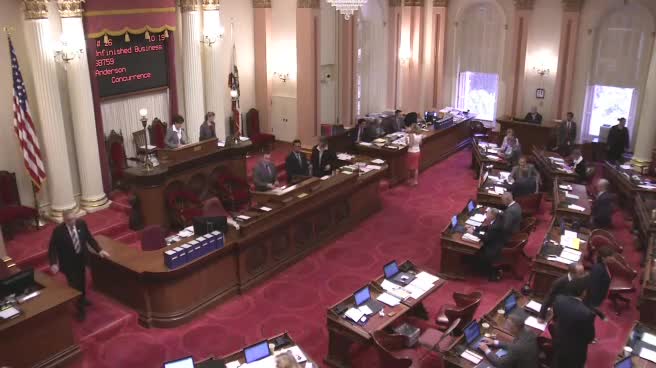 3MIN
Senate Floor
 14MIN
Senate Standing Committee on Natural Resources and Water
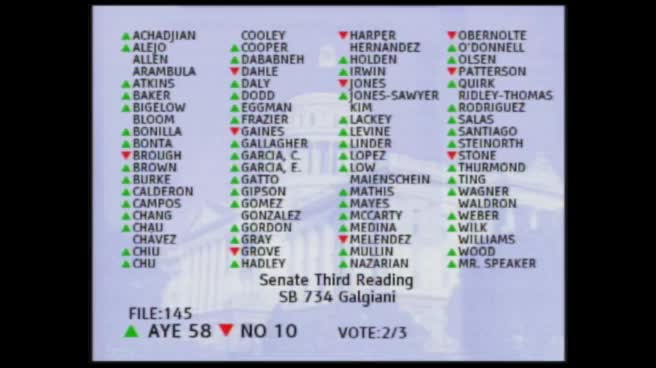 1MIN
Assembly Floor
 9MIN
Assembly Standing Committee on Appropriations
 7MIN
Assembly Standing Committee on Water, Parks, and Wildlife
 4MIN
Senate Floor
 5MIN
Senate Standing Committee on Natural Resources and Water
Bill Author

Bill Co-Author(s):