SB 824: Low Carbon Transit Operations Program.
- Session Year: 2015-2016
- House: Senate
- Latest Version Date: 2016-09-22
Existing law requires all moneys, except for fines and penalties, collected by the State Air Resources Board from the auction or sale of allowances as part of a market-based compliance mechanism relative to reduction of greenhouse gas emissions to be deposited in the Greenhouse Gas Reduction Fund.
Existing law continuously appropriates specified portions of the annual proceeds in the Greenhouse Gas Reduction Fund to various programs, including 5% for the Low Carbon Transit Operations Program, for expenditures to provide transit operating or capital assistance consistent with specified criteria. Existing law provides for distribution of available funds under the program by a specified formula to recipient transit agencies by the Controller, upon approval of the recipient transit agencys proposed expenditures by the Department of Transportation.
This bill would require a recipient transit agency to demonstrate that each expenditure of program moneys allocated to the agency does not supplant another source of funds. The bill would authorize a recipient transit agency that does not submit an expenditure for funding under the program in a particular fiscal year to retain its funding share for expenditure in a subsequent fiscal year for a maximum of 4 years. The bill would allow a recipient transit agency to loan or transfer its funding share in any particular fiscal year to another recipient transit agency within the same region, or to apply to the department to reassign, to other eligible expenditures under the program, any savings of surplus moneys from an approved and completed expenditure under the program or from an approved expenditure that is no longer a priority, as specified. The bill would also allow a recipient transit agency to apply to the department for a letter of no prejudice for any eligible expenditures under the program for which the department has authorized a disbursement of funds, and, if granted, would allow the recipient transit agency to expend its own moneys and to be eligible for future reimbursement from the program, under specified conditions. The bill would also require a recipient transit agency to provide additional information to the department to the extent funding is sought for capital projects.
This bill would incorporate changes to Section 75230 of the Public Resources Code proposed by both this bill and AB 2090, which would become operative only if both bills are enacted and become effective on or before January 1, 2017, and this bill is chaptered last.
Existing law requires all moneys, except for fines and penalties, collected by the State Air Resources Board from the auction or sale of allowances as part of a market-based compliance mechanism relative to reduction of greenhouse gas emissions to be deposited in the Greenhouse Gas Reduction Fund.
Existing law continuously appropriates specified portions of the annual proceeds in the Greenhouse Gas Reduction Fund to various programs, including 5% for the Low Carbon Transit Operations Program, for expenditures to provide transit operating or capital assistance consistent with specified criteria. Existing law provides for distribution of available funds under the program by a specified formula to recipient transit agencies by the Controller, upon approval of the recipient transit agencys proposed expenditures by the Department of Transportation.
This bill would require a recipient transit agency to demonstrate that each expenditure of program moneys allocated to the agency does not supplant another source of funds. The bill would authorize a recipient transit agency that does not submit an expenditure for funding under the program in a particular fiscal year to retain its funding share for expenditure in a subsequent fiscal year for a maximum of 4 years. The bill would allow a recipient transit agency to loan or transfer its funding share in any particular fiscal year to another recipient transit agency within the same region, or to apply to the department to reassign, to other eligible expenditures under the program, any savings of surplus moneys from an approved and completed expenditure under the program or from an approved expenditure that is no longer a priority, as specified. The bill would also allow a recipient transit agency to apply to the department for a letter of no prejudice for any eligible expenditures under the program for which the department has authorized a disbursement of funds, and, if granted, would allow the recipient transit agency to expend its own moneys and to be eligible for future reimbursement from the program, under specified conditions. The bill would also require a recipient transit agency to provide additional information to the department to the extent funding is sought for capital projects.
Existing law requires recipient transit agencies whose service areas include disadvantaged communities, as defined, to expend at least 50% of the funding received from the program on projects and services that benefit disadvantaged communities.
This bill would instead provide for the Department of Transportation to require at least 50% of the total moneys available for the program to be expended on projects and services that benefit disadvantaged communities. The bill would require the department to ensure that investments benefiting disadvantaged communities are made within the jurisdiction of each regional transportation planning agency, and to report to the Legislature on the investments made in that regard by July 1, 2019, and at least every 3 years thereafter.
This bill would incorporate changes to Section 75230 of the Public Resources Code proposed by both this bill and AB 2090, which would become operative only if both bills are enacted and become effective on or before January 1, 2017, and this bill is chaptered last.
Existing law requires all moneys, except for fines and penalties, collected by the State Air Resources Board from the auction or sale of allowances as part of a market-based compliance mechanism relative to reduction of greenhouse gas emissions to be deposited in the Greenhouse Gas Reduction Fund.
Existing law continuously appropriates specified portions of the annual proceeds in the Greenhouse Gas Reduction Fund to various programs, including 5% for the Low Carbon Transit Operations Program, for expenditures to provide transit operating or capital assistance consistent with specified criteria. Existing law provides for distribution of available funds under the program by a specified formula to recipient transit agencies by the Controller, upon approval of the recipient transit agencys proposed expenditures by the Department of Transportation.
This bill would require a recipient transit agency to demonstrate that each expenditure of program moneys allocated to the agency does not supplant another source of funds. The bill would authorize a recipient transit agency that does not submit an expenditure for funding under the program in a particular fiscal year to retain its funding share for expenditure in a subsequent fiscal year. year for a maximum of 4 years. The bill would allow a recipient transit agency to loan or transfer its funding share in any particular fiscal year to another recipient transit agency within the same region, or to apply to the department to reassign, to other eligible expenditures under the program, any savings of surplus moneys from an approved and completed expenditure under the program or from an approved expenditure that is no longer a priority, as specified. The bill would also allow a recipient transit agency to apply to the department for a letter of no prejudice for any eligible expenditures under the program for which the department has authorized a disbursement of funds, and, if granted, would allow the recipient transit agency to expend its own moneys and to be eligible for future reimbursement from the program, under specified conditions. The bill would also require a recipient transit agency to provide additional information to the department to the extent funding is sought for capital projects.
Existing law requires recipient transit agencies whose service areas include disadvantaged communities, as defined, to expend at least 50% of the funding received from the program on projects and services that benefit disadvantaged communities.
This bill would instead provide for the Department of Transportation to require at least 50% of the total moneys available for the program to be expended on projects and services that benefit disadvantaged communities. The bill would require the department to ensure that investments benefiting disadvantaged communities are made within the jurisdiction of each regional transportation planning agency, and to report to the Legislature on the investments made in that regard by July 1, 2019, and at least every 3 years thereafter.
Existing law requires all moneys, except for fines and penalties, collected by the State Air Resources Board from the auction or sale of allowances as part of a market-based compliance mechanism relative to reduction of greenhouse gas emissions to be deposited in the Greenhouse Gas Reduction Fund.
Existing law continuously appropriates specified portions of the annual proceeds in the Greenhouse Gas Reduction Fund to various programs, including 5% for the Low Carbon Transit Operations Program, for expenditures to provide transit operating or capital assistance consistent with specified criteria. Existing law provides for distribution of available funds under the program by a specified formula to recipient transit agencies by the Controller, upon approval of the recipient transit agencys proposed expenditures by the Department of Transportation.
This bill would authorize a recipient transit agency that does not submit a project an expenditure for funding under the program in a particular fiscal year to retain its funding share for expenditure in a subsequent fiscal year. The bill would allow a recipient transit agency to loan or transfer its funding share in any particular fiscal year to another recipient transit agency within the same region, to pool its funding share with those of other recipient transit agencies, or to apply to the department to reassign, to other eligible expenditures under the program, any savings of surplus moneys from an approved and completed expenditure under the program or from an approved expenditure that is no longer a priority, as specified. The bill would also allow a recipient transit agency to apply to the department for a letter of no prejudice for any eligible expenditures under the program for which the department has authorized a disbursement of funds, and, if granted, would allow the recipient transit agency to expend its own moneys and to be eligible for future reimbursement from the program, under specified conditions. The bill would also require a recipient transit agency to provide additional information to the department to the extent funding is sought for capital projects.
Existing law requires all moneys, except for fines and penalties, collected by the State Air Resources Board from the auction or sale of allowances as part of a market-based compliance mechanism relative to reduction of greenhouse gas emissions to be deposited in the Greenhouse Gas Reduction Fund.
Existing law continuously appropriates specified portions of the annual proceeds in the Greenhouse Gas Reduction Fund to various programs, including 5% for the Low Carbon Transit Operations Program, for expenditures to provide transit operating or capital assistance consistent with specified criteria. Existing law provides for distribution of available funds under the program by a specified formula to recipient transit agencies by the Controller, upon approval of the recipient transit agencys proposed expenditures by the Department of Transportation.
This bill would authorize a recipient transit agency that does not submit a project for funding under the program in a particular fiscal year to retain its funding share for expenditure in a subsequent fiscal year. The bill would allow a recipient transit agency to loan or transfer its funding share in any particular fiscal year to another recipient transit agency within the same region, to pool its funding share with those of other recipient transit agencies, or to apply to the department to reassign, to other eligible expenditures under the program, any savings of surplus moneys from an approved and completed expenditure under the program or from an approved expenditure that is no longer a priority, as specified. The bill would also allow a recipient transit agency to apply to the department for a letter of no prejudice for a capital project or component of a capital project any eligible expenditures under the program for which the department has authorized a disbursement of funds, and, if granted, would allow the recipient transit agency to expend its own moneys and to be eligible for future reimbursement from the program, under specified conditions. The bill would also require a recipient transit agency to provide additional information to the department to the extent funding is sought for capital projects.
Existing law requires all moneys, except for fines and penalties, collected by the State Air Resources Board from the auction or sale of allowances as part of a market-based compliance mechanism relative to reduction of greenhouse gas emissions to be deposited in the Greenhouse Gas Reduction Fund.
Existing law continuously appropriates specified portions of the annual proceeds in the Greenhouse Gas Reduction Fund to various programs, including 5% for the Low Carbon Transit Operations Program, for expenditures to provide transit operating or capital assistance consistent with specified criteria. Existing law provides for distribution of available funds under the program by a specified formula to recipient transit agencies by the Controller, upon approval of the recipient transit agencys proposed expenditures by the Department of Transportation.
This bill would authorize a recipient transit agency that does not submit a project for funding under the program in a particular fiscal year to retain its funding share for expenditure in a subsequent fiscal year. The bill would, in that regard, require the department to annually calculate a funding share for each eligible recipient transit agency. The bill would allow a recipient transit agency to loan or transfer its funding share in a any particular fiscal year to another recipient transit agency, agency within the same region, to pool its funding share with those of other recipient transit agencies, or to apply to the department to reassign, to other eligible expenditures under the program, any savings of surplus moneys from an approved and completed expenditure under the program or from an approved expenditure that is no longer a priority, as specified. The bill would also allow a recipient transit agency to apply to the department for a letter of no prejudice for a capital project or component of a capital project for which the department has authorized a disbursement of funds, and and, if granted, would allow the recipient transit agency to expend its own moneys and to be eligible for future reimbursement from the program, under specified conditions. The bill would also require a recipient transit agency to provide additional information to the department to the extent funding is sought for capital projects.
Existing law requires all moneys, except for fines and penalties, collected by the State Air Resources Board from the auction or sale of allowances as part of a market-based compliance mechanism relative to reduction of greenhouse gas emissions to be deposited in the Greenhouse Gas Reduction Fund.
Existing law continuously appropriates specified portions of the annual proceeds in the Greenhouse Gas Reduction Fund to various programs, including 5% for the Low Carbon Transit Operations Program, for expenditures to provide transit operating or capital assistance consistent with specified criteria. Existing law provides for distribution of available funds under the program to recipient transit agencies by the Controller, upon approval of the recipient transit agencys proposed expenditures by the Department of Transportation.
This bill would authorize a recipient transit agency that does not submit a project for funding under the program in a particular fiscal year to retain its funding share for expenditure in a subsequent fiscal year. The bill would, in that regard, require the department to annually calculate a funding share for each eligible recipient transit agency. The bill would allow a recipient transit agency to loan or transfer its funding share in a particular fiscal year to another recipient transit agency, to pool its funding share with those of other recipient transit agencies, or to apply to the department to reassign, to other eligible expenditures under the program, any savings of surplus moneys from an approved and completed expenditure under the program or from an approved expenditure that is no longer a priority, as specified. The bill would also allow a recipient transit agency to apply to the department for a letter of no prejudice for a capital project or component of a capital project for which the department has authorized a disbursement of funds, and if granted, would allow the recipient transit agency to expend its own moneys and to be eligible for future reimbursement from the program, under specified conditions. The bill would also require a recipient transit agency to provide additional information to the department to the extent funding is sought for capital projects.
(a)The Low Carbon Transit Operations Program is hereby created to provide operating and capital assistance for transit agencies to reduce greenhouse gas emissions and improve mobility, with a priority on serving disadvantaged communities.
(b)Funding for the program is continuously appropriated pursuant to Section 39719 of the Health and Safety Code from the Greenhouse Gas Reduction Fund established pursuant to Section 16428.8 of the Government Code.
(c)Funding shall be allocated by the Controller on a formula basis consistent with the requirements of this part and with Section 39719 of the Health and Safety Code, upon a determination by the Department of Transportation that the expenditures proposed by a recipient transit agency meet the requirements of this part and guidelines developed pursuant to this section, and that the amount of funding requested is currently available.
(d)A recipient transit agency shall demonstrate that each expenditure of program moneys allocated to the agency reduces greenhouse gas emissions.
(e)A recipient transit agency shall demonstrate that each expenditure of program moneys does not supplant another source of funds.
(f)Moneys for the program shall be expended to provide transit operating or capital assistance that meets any of the following:
(1)Expenditures that directly enhance or expand transit service by supporting new or expanded bus or rail services, new or expanded water-borne transit, or expanded intermodal transit facilities, and may include equipment acquisition, fueling, and maintenance, and other costs to operate those services or facilities.
(2)Operational expenditures that increase transit mode share.
(3)Expenditures related to the purchase of zero-emission buses, including electric buses, and the installation of the necessary equipment and infrastructure to operate and support these zero-emission buses.
(g)For recipient transit agencies whose service areas include disadvantaged communities, as identified pursuant to Section 39711 of the Health and Safety Code, at least 50 percent of the total moneys received pursuant to this chapter shall be expended on projects or services that meet the requirements of subdivisions (d), (e), and (f) and benefit the disadvantaged communities, as identified consistent with the guidance developed by the State Air Resources Board pursuant to Section 39715.
(h)The Department of Transportation, in coordination with the State Air Resources Board, shall develop guidelines that describe the methodologies that recipient transit agencies shall use to demonstrate that proposed expenditures will meet the criteria in subdivisions (d), (e), (f), and (g) and establish the reporting requirements for documenting ongoing compliance with those criteria.
(i)Chapter 3.5 (commencing with Section 11340) of Part 1 of Division 3 of Title 2 of the Government Code does not apply to the development of guidelines for the program pursuant to this section.
(j)A recipient transit agency shall submit the following information to the Department of Transportation before seeking a disbursement of funds pursuant to this part:
(1)A list of proposed expense types for anticipated funding levels.
(2)The documentation required by the guidelines developed pursuant to this section to demonstrate compliance with subdivisions (d), (e), (f), and (g).
(k)For capital projects, the recipient transit agency shall also do all of the following:
(1)Specify the phases of work for which the agency is seeking an allocation of moneys from the program.
(2)Identify the sources and timing of all moneys required to undertake and complete any phase of a project for which the recipient agency is seeking an allocation of moneys from the program.
(3)Describe intended sources and timing of funding to complete any subsequent phases of the project, through construction or procurement.
(l)A recipient transit agency that has used program moneys for any type of operational assistance allowed by subdivision (f) in a previous fiscal year may use program moneys to continue the same service or program in any subsequent fiscal year if the agency can demonstrate that reductions in greenhouse gas emissions can be realized.
(m)Before authorizing the disbursement of funds, the Department of Transportation, in coordination with the State Air Resources Board, shall determine the eligibility, in whole or in part, of the proposed list of expense types, based on the documentation provided by the recipient transit agency to ensure ongoing compliance with the guidelines developed pursuant to this section.
(n)The Department of Transportation shall notify the Controller of approved expenditures for each recipient transit agency, and the amount of the allocation for each agency determined to be available at that time of approval.
(o)A recipient transit agency that does not submit an expenditure for funding in a particular fiscal year may retain its funding share, and may accumulate and utilize that funding share in a subsequent fiscal year for a larger expenditure, including operating assistance. The recipient transit agency must first specify the number of fiscal years that it intends to retain its funding share and the expenditure for which the agency intends to use these moneys. A recipient transit agency may only retain its funding share for a maximum of four years.
(p)A recipient transit agency may, in any particular fiscal year, loan or transfer its funding share to another recipient transit agency within the same region for any identified eligible expenditure under the program, including operating assistance, in accordance with procedures incorporated by the Department of Transportation in the guidelines developed pursuant to this section, which procedures shall be consistent with the requirement in subdivision (g).
(q)A recipient transit agency may apply to the Department of Transportation to reassign any savings of surplus moneys allocated under this section to the agency for an expenditure that has been completed to another eligible expenditure under the program, including operating assistance. A recipient transit agency may also apply to the Department of Transportation to reassign to another eligible expenditure any moneys from the program previously allocated to the agency for an expenditure that the agency has determined is no longer a priority for the use of those moneys.
(r)The recipient transit agency shall provide annual reports to the Department of Transportation, in the format and manner prescribed by the department, consistent with the internal administrative procedures for the use of the fund proceeds developed by the State Air Resources Board.
(s)The Department of Transportation and recipient transit agencies shall comply with the guidelines developed by the State Air Resources Board pursuant to Section 39715 of the Health and Safety Code to ensure that the requirements of Section 39713 of the Health and Safety Code are met to maximize the benefits to disadvantaged communities as described in Section 39711 of the Health and Safety Code.
(t)A recipient transit agency shall comply with all applicable legal requirements, including the requirements of the California Environmental Quality Act (Division 13 (commencing with Section 21000)), and civil rights and environmental justice obligations under state and federal law. Nothing in this section shall be construed to expand or extend the applicability of those laws to recipient transit agencies.
(u)The audit of public transportation operator finances already required under the Transportation Development Act pursuant to Section 99245 of the Public Utilities Code shall be expanded to include verification of receipt and appropriate expenditure of moneys from the program. Each recipient transit agency receiving moneys from the program in a fiscal year for which an audit is conducted shall transmit a copy of the audit to the Department of Transportation, and the department shall make the audits available to the Legislature and the Controller for review on request.
SEC. 2.Section 75231 is added to the Public Resources Code, to read:75231.(a)A recipient transit agency under the program created pursuant to Section 75230 may apply to the Department of Transportation for a letter of no prejudice for any eligible expenditures under the program, including operating assistance, for which the department has authorized a disbursement of funds. If approved by the department, the letter of no prejudice shall allow the recipient transit agency to expend its own moneys for the expenditures and to be eligible for future reimbursement from moneys available for the program.
(b)The amount expended under subdivision (a) shall be reimbursed by the state from moneys available for the program if all of the following conditions are met:
(1)The expenditures for which the letter of no prejudice was requested have commenced, and any regional or local expenditures, if applicable, have been incurred.
(2)The expenditures made by the recipient transit agency are eligible under the program. If expenditures made by the recipient transit agency are determined to be ineligible, the state has no obligation to reimburse those expenditures.
(3)The recipient transit agency complies with all applicable legal requirements for the expenditures, including the requirements of the California Environmental Quality Act (Division 13 (commencing with Section 21000)), and civil rights and environmental justice obligations under state and federal law. Nothing in this section shall be construed to expand or extend the applicability of those laws to recipient transit agencies.
(4)There are moneys in the Greenhouse Gas Reduction Fund designated for the program and from the recipient transit agencys formula allocation share as determined pursuant to subparagraph (B) of paragraph (1) of subdivision (b) of Section 39719 of the Health and Safety Code that are sufficient to make the reimbursement payment.
(c)The recipient transit agency and the Department of Transportation shall enter into an agreement governing reimbursement as described in this section. The timing and final amount of reimbursement shall be dependent on the terms of the agreement and the availability of moneys in the Greenhouse Gas Reduction Fund for the program.
(d)The Department of Transportation, in consultation with recipient public transit agencies, may develop guidelines to implement this section.
(a)The Low Carbon Transit Operations Program is hereby created to provide operating and capital assistance for transit agencies to reduce greenhouse gas emissions and improve mobility, with a priority on serving disadvantaged communities.
(b)Funding for the program is continuously appropriated pursuant to Section 39719 of the Health and Safety Code from the Greenhouse Gas Reduction Fund established pursuant to Section 16428.8 of the Government Code.
(c)Funding shall be allocated by the Controller on a formula basis consistent with the requirements of this part and with Section 39719 of the Health and Safety Code, upon a determination by the Department of Transportation that the expenditures proposed by a recipient transit agency meet the requirements of this part and guidelines developed pursuant to this section, and that the amount of funding requested is currently available.
(d)A recipient transit agency shall demonstrate that each expenditure of program moneys allocated to the agency reduces greenhouse gas emissions.
(e)A recipient transit agency shall demonstrate that each expenditure of program moneys does not supplant another source of funds.
(f)Moneys for the program shall be expended to provide transit operating or capital assistance that meets any of the following:
(1)Expenditures that directly enhance or expand transit service by supporting new or expanded bus or rail services, new or expanded water-borne transit, or expanded intermodal transit facilities, and may include equipment acquisition, fueling, and maintenance, and other costs to operate those services or facilities.
(2)Operational expenditures that increase transit mode share.
(3)Expenditures related to the purchase of zero-emission buses, including electric buses, or and the installation of the necessary equipment and infrastructure to operate and support these zero-emission buses.
(g)For recipient transit agencies whose service areas include disadvantaged communities, as identified pursuant to Section 39711 of the Health and Safety Code, at least 50 percent of the total moneys received pursuant to this chapter shall be expended on projects or services that meet the requirements of subdivisions (d), (e), and (f) and benefit the disadvantaged communities, as identified consistent with the guidance developed by the State Air Resources Board pursuant to Section 39715.
(h)The Department of Transportation, in coordination with the State Air Resources Board, shall develop guidelines that describe the methodologies that recipient transit agencies shall use to demonstrate that proposed expenditures will meet the criteria in subdivisions (d), (e), (f), and (g) and establish the reporting requirements for documenting ongoing compliance with those criteria.
(i)Chapter 3.5 (commencing with Section 11340) of Part 1 of Division 3 of Title 2 of the Government Code does not apply to the development of guidelines for the program pursuant to this section.
(j)A recipient transit agency shall submit the following information to the Department of Transportation before seeking a disbursement of funds pursuant to this part:
(1)A list of proposed expense types for anticipated funding levels.
(2)The documentation required by the guidelines developed pursuant to this section to demonstrate compliance with subdivisions (d), (e), (f), and (g).
(k)For capital projects, the recipient transit agency shall also do all of the following:
(1)Specify the phases of work for which the agency is seeking an allocation of moneys from the program.
(2)Identify the sources and timing of all moneys required to undertake and complete any phase of a project for which the recipient agency is seeking an allocation of moneys from the program.
(3)Describe intended sources and timing of funding to complete any subsequent phases of the project, through construction or procurement.
(l)A recipient transit agency that has used program moneys for any type of operational assistance allowed by subdivision (f) in a previous fiscal year may use program moneys to continue the same service or program in any subsequent fiscal year if the agency can demonstrate that reductions in greenhouse gas emissions can be realized.
(m)Before authorizing the disbursement of funds, the Department of Transportation, in coordination with the State Air Resources Board, shall determine the eligibility, in whole or in part, of the proposed list of expense types, based on the documentation provided by the recipient transit agency to ensure ongoing compliance with the guidelines developed pursuant to this section.
(n)The Department of Transportation shall notify the Controller of approved expenditures for each recipient transit agency, and the amount of the allocation for each agency determined to be available at that time of approval.
(o)A recipient transit agency that does not submit an expenditure for funding in a particular fiscal year may retain its funding share, and may accumulate and utilize that funding share in a subsequent fiscal year for a larger expenditure, including operating assistance. The recipient transit agency must first specify the number of fiscal years that it intends to retain its funding share and the expenditure for which the agency intends to use these moneys. A recipient transit agency may only retain its funding share for a maximum of four years.
(p)A recipient transit agency may, in any particular fiscal year, loan or transfer its funding share to another recipient transit agency within the same region for any identified eligible expenditure under the program, including operating assistance, in accordance with procedures incorporated by the Department of Transportation in the guidelines developed pursuant to this section, which procedures shall be consistent with the requirement in subdivision (g).
(q)A recipient transit agency may apply to the Department of Transportation to reassign any savings of surplus moneys allocated under this section to the agency for an expenditure that has been completed to another eligible expenditure under the program, including operating assistance. A recipient transit agency may also apply to the Department of Transportation to reassign to another eligible expenditure any moneys from the program previously allocated to the agency for an expenditure that the agency has determined is no longer a priority for the use of those moneys.
(r)The recipient transit agency shall provide annual reports to the Department of Transportation, in the format and manner prescribed by the department, consistent with the internal administrative procedures for the use of the fund proceeds developed by the State Air Resources Board.
(s)The Department of Transportation and recipient transit agencies shall comply with the guidelines developed by the State Air Resources Board pursuant to Section 39715 of the Health and Safety Code to ensure that the requirements of Section 39713 of the Health and Safety Code are met to maximize the benefits to disadvantaged communities as described in Section 39711 of the Health and Safety Code.
(t)A recipient transit agency shall comply with all applicable legal requirements, including the requirements of the California Environmental Quality Act (Division 13 (commencing with Section 21000)), and civil rights and environmental justice obligations under state and federal law. Nothing in this section shall be construed to expand or extend the applicability of those laws to recipient transit agencies.
(u)The audit of public transportation operator finances already required under the Transportation Development Act pursuant to Section 99245 of the Public Utilities Code shall be expanded to include verification of receipt and appropriate expenditure of moneys from the program. Each recipient transit agency receiving moneys from the program in a fiscal year for which an audit is conducted shall transmit a copy of the audit to the Department of Transportation, and the department shall make the audits available to the Legislature and the Controller for review on request.
SEC. 1.5.Section 75230 of the Public Resources Code is amended to read:75230.(a)The Low Carbon Transit Operations Program is hereby created to provide operating and capital assistance for transit agencies to reduce greenhouse gas emissions and improve mobility, with a priority on serving disadvantaged communities.
(b)Funding for the program is continuously appropriated pursuant to Section 39719 of the Health and Safety Code from the Greenhouse Gas Reduction Fund, established pursuant to Section 16428.8 of the Government Code.
(c)Funding shall be allocated by the Controller on a formula basis consistent with the requirements of this part and with Section 39719 of the Health and Safety Code, upon a determination by the Department of Transportation that the expenditures proposed by a recipient transit agency meet the requirements of this part and guidelines developed pursuant to this section, and that the amount of funding requested is currently available.
(d)A recipient transit agency shall demonstrate that each expenditure of program moneys allocated to the agency reduces greenhouse gas emissions.
(e)A recipient transit agency shall demonstrate that each expenditure of program moneys does not supplant another source of funds.
(f)(1)Moneys for the program shall be expended to provide transit operating or capital assistance that meets any of the following:
(A)Expenditures that directly enhance or expand transit service by supporting new or expanded bus or rail services, new or expanded water-borne transit, or expanded intermodal transit facilities, and may include equipment acquisition, fueling, and maintenance, and other costs to operate those services or facilities.
(B)Operational expenditures that increase transit mode share.
(C)Expenditures related to the purchase of zero-emission buses, including electric buses, or the installation of the necessary equipment and infrastructure to operate and support zero-emission buses.
(2)(A)Moneys for the program may additionally be expended to support the operation of existing bus or rail service if all of the following occur:
(i)The governing board of the transit agency declares a fiscal emergency, as defined in paragraph (2) of subdivision (d) of Section 21080.32, within 90 days prior to the agency requesting the funds.
(ii)The expenditure of the requested funds is necessary to sustain the transit agencys transit service in the fiscal year in which the requested funds are to be expended.
(iii)The governing board of the transit agency would be required to reduce or eliminate transit service if the requested funds are not received.
(iv)The governing board makes a finding that a reduction in, or elimination of, transit service would increase greenhouse gas emissions because transit customers would choose other less-efficient modes of transportation.
(v)The transit agency does not request funds over consecutive funding years unless the transit agency has declared a fiscal emergency in each year consistent with clause (i).
(vi)The transit agency does not request funds for more than three consecutive funding years.
(B)Moneys allocated for the purpose of this paragraph shall be expended to provide transit operating assistance that meets both of the following criteria:
(i)The expenditures support current bus- or rail-service operating costs and may include labor, fueling, maintenance, and other costs to operate and maintain those services.
(ii)The recipient transit agency demonstrates that each expenditure directly sustains transit service that would otherwise be reduced or eliminated in the upcoming year if those funds were not received.
(g)For recipient transit agencies whose service areas include disadvantaged communities, as identified pursuant to Section 39711 of the Health and Safety Code, at least 50 percent of the total moneys received pursuant to this chapter shall be expended on projects or services that meet requirements of subdivisions (d), (e), and (f) and benefit the disadvantaged communities, as identified consistent with the guidance developed by the State Air Resources Board pursuant to Section 39715 of the Health and Safety Code.
(h)The Department of Transportation, in coordination with the State Air Resources Board, shall develop guidelines that describe the methodologies that recipient transit agencies shall use to demonstrate that proposed expenditures will meet the criteria in subdivisions (d), (e), (f), and (g) and establish the reporting requirements for documenting ongoing compliance with those criteria.
(i)The Administrative Procedure Act (Chapter 3.5 (commencing with Section 11340) of Part 1 of Division 3 of Title 2 of the Government Code) does not apply to the development of guidelines for the program pursuant to this section.
(j)A recipient transit agency shall submit the following information to the Department of Transportation before seeking a disbursement of funds pursuant to this part:
(1)A list of proposed expense types for anticipated funding levels.
(2)The documentation required by the guidelines developed pursuant to this section to demonstrate compliance with subdivisions (d), (e), (f), and (g).
(k)For capital projects, the recipient transit agency shall also do all of the following:
(1)Specify the phases of work for which the agency is seeking an allocation of moneys from the program.
(2)Identify the sources and timing of all moneys required to undertake and complete any phase of a project for which the recipient agency is seeking an allocation of moneys from the program.
(3)Describe intended sources and timing of funding to complete any subsequent phases of the project, through construction or procurement.
(l)A recipient transit agency that has used program moneys for any type of operational assistance allowed in subdivision (f) in a previous fiscal year may use program moneys to continue the same service or program in any subsequent fiscal year if the agency can demonstrate that reductions in greenhouse gas emissions can be realized.
(m)Before authorizing the disbursement of funds, the Department of Transportation, in coordination with the State Air Resources Board, shall determine the eligibility, in whole or in part, of the proposed list of expense types based on the documentation provided by the recipient transit agency to ensure ongoing compliance with the guidelines developed pursuant to this section.
(n)The Department of Transportation shall notify the Controller of approved expenditures for each recipient transit agency, and the amount of the allocation for each agency determined to be available at that time of approval.
(o)A recipient transit agency that does not submit an expenditure for funding in a particular fiscal year may retain its funding share, and may accumulate and utilize that funding share in a subsequent fiscal year for a larger expenditure, including operating assistance. The recipient transit agency must first specify the number of fiscal years that it intends to retain its funding share and the expenditure for which the agency intends to use these moneys. A recipient transit agency may only retain its funding share for a maximum of four years.
(p)A recipient transit agency may, in any particular fiscal year, loan or transfer its funding share to another recipient transit agency within the same region for any identified eligible expenditure under the program, including operating assistance, in accordance with procedures incorporated by the Department of Transportation in the guidelines developed pursuant to this section, which procedures shall be consistent with the requirement in subdivision (g).
(q)A recipient transit agency may apply to the Department of Transportation to reassign any savings of surplus moneys allocated under this section to the agency for an expenditure that has been completed to another eligible expenditure under the program, including operating assistance. A recipient transit agency may also apply to the Department of Transportation to reassign to another eligible expenditure any moneys from the program previously allocated to the agency for an expenditure that the agency has determined is no longer a priority for the use of those moneys.
(r)The recipient transit agency shall provide annual reports to the Department of Transportation, in the format and manner prescribed by the department, consistent with the internal administrative procedures for the use of the fund proceeds developed by the State Air Resources Board.
(s)The Department of Transportation and recipient transit agencies shall comply with the guidelines developed by the State Air Resources Board pursuant to Section 39715 of the Health and Safety Code to ensure that the requirements of Section 39713 of the Health and Safety Code are met to maximize the benefits to disadvantaged communities, as identified pursuant to Section 39711 of the Health and Safety Code.
(t)A recipient transit agency shall comply with all applicable legal requirements, including the requirements of the California Environmental Quality Act (Division 13 (commencing with Section 21000)), and civil rights and environmental justice obligations under state and federal law. Nothing in this section shall be construed to expand or extend the applicability of those laws to recipient transit agencies.
(u)The audit of public transportation operator finances already required under the Transportation Development Act pursuant to Section 99245 of the Public Utilities Code shall be expanded to include verification of receipt and appropriate expenditure of moneys from the program. Each recipient transit agency receiving moneys from the program in a fiscal year for which an audit is conducted shall transmit a copy of the audit to the Department of Transportation, and the department shall make the audits available to the Legislature and the Controller for review on request.
SEC. 2.Section 75231 is added to the Public Resources Code, to read:75231.(a)A recipient transit agency under the program created pursuant to Section 75230 may apply to the Department of Transportation for a letter of no prejudice for any eligible expenditures under the program, including operating assistance, for which the department has authorized a disbursement of funds. If approved by the department, the letter of no prejudice shall allow the recipient transit agency to expend its own moneys for the expenditures and to be eligible for future reimbursement from moneys available for the program.
(b)The amount expended under subdivision (a) shall be reimbursed by the state from moneys available for the program if all of the following conditions are met:
(1)The expenditures for which the letter of no prejudice was requested have commenced, and any regional or local expenditures, if applicable, have been incurred.
(2)The expenditures made by the recipient transit agency are eligible under the program. If expenditures made by the recipient transit agency are determined to be ineligible, the state has no obligation to reimburse those expenditures.
(3)The recipient transit agency complies with all applicable legal requirements for the expenditures, including the requirements of the California Environmental Quality Act (Division 13 (commencing with Section 21000)), and civil rights and environmental justice obligations under state and federal law. Nothing in this section shall be construed to expand or extend the applicability of those laws to recipient transit agencies.
(4)There are moneys in the Greenhouse Gas Reduction Fund designated for the program and from the recipient transit agencys formula allocation share as determined pursuant to subparagraph (B) of paragraph (1) of subdivision (b) of Section 39719 of the Health and Safety Code that are sufficient to make the reimbursement payment.
(c)The recipient transit agency and the Department of Transportation shall enter into an agreement governing reimbursement as described in this section. The timing and final amount of reimbursement shall be dependent on the terms of the agreement and the availability of moneys in the Greenhouse Gas Reduction Fund for the program.
(d)The Department of Transportation, in consultation with recipient public transit agencies, may develop guidelines to implement this section.
SEC. 3.Section 1.5 of this bill incorporates amendments to Section 75230 of the Public Resources Code proposed by both this bill and Assembly Bill 2090. It shall only become operative if (1) both bills are enacted and become effective on or before January 1, 2017, (2) each bill amends Section 75230 of the Public Resources Code, and (3) this bill is enacted after Assembly Bill 2090, in which case Section 1 of this bill shall not become operative.
(a)The Low Carbon Transit Operations Program is hereby created to provide operating and capital assistance for transit agencies to reduce greenhouse gas emissions and improve mobility, with a priority on serving disadvantaged communities.
(b)Funding for the program is continuously appropriated pursuant to Section 39719 of the Health and Safety Code from the Greenhouse Gas Reduction Fund established pursuant to Section 16428.8 of the Government Code.
(c)Funding shall be allocated by the Controller on a formula basis consistent with the requirements of this part and with Section 39719 of the Health and Safety Code, upon a determination by the Department of Transportation that the expenditures proposed by a recipient transit agency meet the requirements of this part and guidelines developed pursuant to this section, and that the amount of funding requested is currently available.
(d)A recipient transit agency shall demonstrate that each expenditure of program moneys allocated to the agency reduces greenhouse gas emissions.
(e)A recipient transit agency shall demonstrate that each expenditure of program moneys does not supplant another source of funds.
(f)Moneys for the program shall be expended to provide transit operating or capital assistance that meets any of the following:
(1)Expenditures that directly enhance or expand transit service by supporting new or expanded bus or rail services, new or expanded water-borne transit, or expanded intermodal transit facilities, and may include equipment acquisition, fueling, and maintenance, and other costs to operate those services or facilities.
(2)Expenditures Operational expenditures that increase transit mode share.
(3)Expenditures related to the purchase of zero-emission buses, including electric buses, or the installation of the necessary equipment and infrastructure to operate and support zero-emission buses.
(g)(1)The department shall require For recipient transit agencies whose service areas include disadvantaged communities, as identified pursuant to Section 39711 of the Health and Safety Code, at least 50 percent of the total moneys received pursuant to this chapter to shall be expended on projects or services that meet the requirements of subdivisions (d), (e), and (f) and benefit the disadvantaged communities, as identified pursuant to Section 39711 of the Health and Safety Code. communities, as identified consistent with the guidance developed by the State Air Resources Board pursuant to Section 39715.
(2)The department shall ensure that investments benefiting disadvantaged communities as identified pursuant to Section 39711 of the Health and Safety Code are made within the jurisdiction of each regional transportation planning agency, as defined in Section 99214 of the Public Utilities Code. The department, notwithstanding Section 10231.5 of the Government Code, shall report to the Legislature on or before July 1, 2019, and at least every three years thereafter, on the investments made that benefit disadvantaged communities and on the investments made that benefit other communities. The report shall be submitted pursuant to Section 9795 of the Government Code.
(h)The Department of Transportation, in coordination with the State Air Resources Board, shall develop guidelines that describe the methodologies that recipient transit agencies shall use to demonstrate that proposed expenditures will meet the criteria in subdivisions (d), (e), (f), and (g) and establish the reporting requirements for documenting ongoing compliance with those criteria.
(i)Chapter 3.5 (commencing with Section 11340) of Part 1 of Division 3 of Title 2 of the Government Code does not apply to the development of guidelines for the program pursuant to this section.
(j)A recipient transit agency shall submit the following information to the Department of Transportation before seeking a disbursement of funds pursuant to this part:
(1)A list of proposed expense types for anticipated funding levels.
(2)The documentation required by the guidelines developed pursuant to this section to demonstrate compliance with subdivisions (d), (e),(f), (e), (f), and (g).
(k)For capital projects, the recipient transit agency shall also do all of the following:
(1)Specify the phases of work for which the agency is seeking an allocation of moneys from the program.
(2)Identify the sources and timing of all moneys required to undertake and complete any phase of a project for which the recipient agency is seeking an allocation of moneys from the program.
(3)Describe intended sources and timing of funding to complete any subsequent phases of the project, through construction or procurement.
(l)A recipient transit agency that has used program moneys for operating assistance to implement new or expanded transit service any type of operational assistance allowed by subdivision (f) in a previous fiscal year may use program moneys to continue to operate the same service or program in any subsequent fiscal year if the agency can demonstrate that reductions in greenhouse gas emissions can be realized.
(m)Before authorizing the disbursement of funds, the Department of Transportation, in coordination with the State Air Resources Board, shall determine the eligibility, in whole or in part, of the proposed list of expense types, based on the documentation provided by the recipient transit agency to ensure ongoing compliance with the guidelines developed pursuant to this section.
(n)The Department of Transportation shall notify the Controller of approved expenditures for each recipient transit agency, and the amount of the allocation for each agency determined to be available at that time of approval.
(o)A recipient transit agency that does not submit an expenditure for funding in a particular fiscal year may retain its funding share, and may accumulate and utilize that funding share in a subsequent fiscal year for a larger expenditure, including operating assistance. The recipient transit agency must first specify the number of fiscal years that it intends to retain its funding share and the expenditure for which the agency intends to use these moneys. A recipient transit agency may only retain its funding share for a maximum of four years.
(p)A recipient transit agency may, in any particular fiscal year, loan or transfer its funding share to another recipient transit agency within the same region for any identified eligible expenditure under the program, including operating assistance, in accordance with procedures incorporated by the Department of Transportation in the guidelines developed pursuant to this section, which procedures shall be consistent with the requirement in subdivision (g).
(q)A recipient transit agency may apply to the Department of Transportation to reassign any savings of surplus moneys allocated under this section to the agency for an expenditure that has been completed to another eligible expenditure under the program, including operating assistance. A recipient transit agency may also apply to the Department of Transportation to reassign to another eligible expenditure any moneys from the program previously allocated to the agency for an expenditure that the agency has determined is no longer a priority for the use of those moneys.
(r)The recipient transit agency shall provide annual reports to the Department of Transportation, in the format and manner prescribed by the department, consistent with the internal administrative procedures for the use of the fund proceeds developed by the State Air Resources Board.
(s)The Department of Transportation and recipient transit agencies shall comply with the guidelines developed by the State Air Resources Board pursuant to Section 39715 of the Health and Safety Code to ensure that the requirements of Section 39713 of the Health and Safety Code are met to maximize the benefits to disadvantaged communities as described in Section 39711 of the Health and Safety Code.
(t)A recipient transit agency shall comply with all applicable legal requirements, including the requirements of the California Environmental Quality Act (Division 13 (commencing with Section 21000)), and civil rights and environmental justice obligations under state and federal law. Nothing in this section shall be construed to expand or extend the applicability of those laws to recipient transit agencies.
(u)The audit of public transportation operator finances already required under the Transportation Development Act pursuant to Section 99245 of the Public Utilities Code shall be expanded to include verification of receipt and appropriate expenditure of moneys from the program. Each recipient transit agency receiving moneys from the program in a fiscal year for which an audit is conducted shall transmit a copy of the audit to the Department of Transportation, and the department shall make the audits available to the Legislature and the Controller for review on request.
SEC. 1.5.Section 75230 of the Public Resources Code is amended to read:75230.(a)The Low Carbon Transit Operations Program is hereby created to provide operating and capital assistance for transit agencies to reduce greenhouse gas emissions and improve mobility, with a priority on serving disadvantaged communities.
(b)Funding for the program is continuously appropriated pursuant to Section 39719 of the Health and Safety Code from the Greenhouse Gas Reduction Fund Fund, established pursuant to Section 16428.8 of the Government Code.
(c)Funding shall be allocated by the Controller on a formula basis consistent with the requirements of this part and with Section 39719 of the Health and Safety Code, upon a determination by the Department of Transportation that the expenditures proposed by a recipient transit agency meet the requirements of this part and guidelines developed pursuant to subdivision (f), and this section, and that the amount of funding requested that is currently available.
(d)A recipient transit agency shall demonstrate that each expenditure of program moneys allocated to the agency reduces greenhouse gas emissions.
(e)A recipient transit agency shall demonstrate that each expenditure of program moneys does not supplant another source of funds.
(d)Moneys
(f)(1)Moneys for the program shall be expended to provide transit operating or capital assistance that meets all any of the following criteria: following:
(1)
(A)Expenditures that directly enhance or expand transit service by supporting new or expanded bus or rail services, new or expanded water-borne transit, or expanded intermodal transit facilities, and may include equipment acquisition, fueling, and maintenance, and other costs to operate those services or facilities.
(2)The recipient transit agency demonstrates that each expenditure directly enhances or expands transit service to
(B)Operational expenditures that increase transit mode share.
(3)The recipient transit agency demonstrates that each expenditure reduces greenhouse gas emissions.
(C)Expenditures related to the purchase of zero-emission buses, including electric buses, or the installation of the necessary equipment and infrastructure to operate and support zero-emission buses.
(2)(A)Moneys for the program may additionally be expended to support the operation of existing bus or rail service if all of the following occur:
(i)The governing board of the transit agency declares a fiscal emergency, as defined in paragraph (2) of subdivision (d) of Section 21080.32, within 90 days prior to the agency requesting the funds.
(ii)The expenditure of the requested funds is necessary to sustain the transit agencys transit service in the fiscal year in which the requested funds are to be expended.
(iii)The governing board of the transit agency would be required to reduce or eliminate transit service if the requested funds are not received.
(iv)The governing board makes a finding that a reduction in, or elimination of, transit service would increase greenhouse gas emissions because transit customers would choose other less-efficient modes of transportation.
(v)The transit agency does not request funds over consecutive funding years unless the transit agency has declared a fiscal emergency in each year consistent with clause (i).
(vi)The transit agency does not request funds for more than three consecutive funding years.
(B)Moneys allocated for the purpose of this paragraph shall be expended to provide transit operating assistance that meets both of the following criteria:
(i)The expenditures support current bus- or rail-service operating costs and may include labor, fueling, maintenance, and other costs to operate and maintain those services.
(ii)The recipient transit agency demonstrates that each expenditure directly sustains transit service that would otherwise be reduced or eliminated in the upcoming year if those funds were not received.
(e)
(g)For recipient transit agencies whose service areas include disadvantaged communities communities, as identified pursuant to Section 39711 of the Health and Safety Code, at least 50 percent of the total moneys received pursuant to this chapter shall be expended on projects or services that meet requirements of subdivision (d) subdivisions (d), (e), and (f) and benefit the disadvantaged communities, as identified consistent with the guidance developed by the State Air Resources Board pursuant to Section 39715 of the Health and Safety Code.
(f)
(h)The Department of Transportation, in coordination with the State Air Resources Board, shall develop guidelines that describe the methodologies that recipient transit agencies shall use to demonstrate that proposed expenditures will meet the criteria in subdivisions (d) and (e) (d), (e), (f), and (g) and establish the reporting requirements for documenting ongoing compliance with those criteria.
(g)Chapter
(i)The Administrative Procedure Act (Chapter 3.5 (commencing with Section 11340) of Part 1 of Division 3 of Title 2 of the Government Code Code) does not apply to the development of guidelines for the program pursuant to this section.
(h)
(j)A recipient transit agency shall submit the following information to the Department of Transportation before seeking a disbursement of funds pursuant to this part:
(1)A list of proposed expense types for anticipated funding levels.
(2)The documentation required by the guidelines developed pursuant to subdivision (f) this section to demonstrate compliance with subdivisions (d) and (e). (d), (e), (f), and (g).
(k)For capital projects, the recipient transit agency shall also do all of the following:
(1)Specify the phases of work for which the agency is seeking an allocation of moneys from the program.
(2)Identify the sources and timing of all moneys required to undertake and complete any phase of a project for which the recipient agency is seeking an allocation of moneys from the program.
(3)Describe intended sources and timing of funding to complete any subsequent phases of the project, through construction or procurement.
(l)A recipient transit agency that has used program moneys for any type of operational assistance allowed in subdivision (f) in a previous fiscal year may use program moneys to continue the same service or program in any subsequent fiscal year if the agency can demonstrate that reductions in greenhouse gas emissions can be realized.
(i)
(m)Before authorizing the disbursement of funds, the department, Department of Transportation, in coordination with the State Air Resources Board, shall determine the eligibility, in whole or in part, of the proposed list of expense types, types based on the documentation provided by the recipient transit agency to ensure ongoing compliance with the guidelines developed pursuant to subdivision (f). this section.
(j)
(n)The department Department of Transportation shall notify the Controller of approved expenditures for each recipient transit agency, and the amount of the allocation for each transit agency determined to be available at that time of approval.
(o)A recipient transit agency that does not submit an expenditure for funding in a particular fiscal year may retain its funding share, and may accumulate and utilize that funding share in a subsequent fiscal year for a larger expenditure, including operating assistance. The recipient transit agency must first specify the number of fiscal years that it intends to retain its funding share and the expenditure for which the agency intends to use these moneys. A recipient transit agency may only retain its funding share for a maximum of four years.
(p)A recipient transit agency may, in any particular fiscal year, loan or transfer its funding share to another recipient transit agency within the same region for any identified eligible expenditure under the program, including operating assistance, in accordance with procedures incorporated by the Department of Transportation in the guidelines developed pursuant to this section, which procedures shall be consistent with the requirement in subdivision (g).
(q)A recipient transit agency may apply to the Department of Transportation to reassign any savings of surplus moneys allocated under this section to the agency for an expenditure that has been completed to another eligible expenditure under the program, including operating assistance. A recipient transit agency may also apply to the Department of Transportation to reassign to another eligible expenditure any moneys from the program previously allocated to the agency for an expenditure that the agency has determined is no longer a priority for the use of those moneys.
(k)
(r)The recipient transit agency shall provide annual reports to the Department of Transportation, in the format and manner prescribed by the department, consistent with the internal administrative procedures for the use of the fund proceeds developed by the State Air Resources Board.
(l)
(s)The Department of Transportation and recipient transit agencies shall comply with the guidelines developed by the State Air Resources Board pursuant to Section 39715 of the Health and Safety Code to ensure that the requirements of Section 39713 of the Health and Safety Code are met to maximize the benefits to disadvantaged communities as described in communities, as identified pursuant to Section 39711 of the Health and Safety Code.
(t)A recipient transit agency shall comply with all applicable legal requirements, including the requirements of the California Environmental Quality Act (Division 13 (commencing with Section 21000)), and civil rights and environmental justice obligations under state and federal law. Nothing in this section shall be construed to expand or extend the applicability of those laws to recipient transit agencies.
(u)The audit of public transportation operator finances already required under the Transportation Development Act pursuant to Section 99245 of the Public Utilities Code shall be expanded to include verification of receipt and appropriate expenditure of moneys from the program. Each recipient transit agency receiving moneys from the program in a fiscal year for which an audit is conducted shall transmit a copy of the audit to the Department of Transportation, and the department shall make the audits available to the Legislature and the Controller for review on request.
SEC. 2.Section 75231 is added to the Public Resources Code, to read:75231.(a)A recipient transit agency under the program created pursuant to Section 75230 may apply to the Department of Transportation for a letter of no prejudice for any eligible expenditures under the program, including operating assistance, for which the department has authorized a disbursement of funds. If approved by the department, the letter of no prejudice shall allow the recipient transit agency to expend its own moneys for the expenditures and to be eligible for future reimbursement from moneys available for the program.
(b)The amount expended under subdivision (a) shall be reimbursed by the state from moneys available for the program if all of the following conditions are met:
(1)The expenditures for which the letter of no prejudice was requested have commenced, and any regional or local expenditures, if applicable, have been incurred.
(2)The expenditures made by the recipient transit agency are eligible under the program. If expenditures made by the recipient transit agency are determined to be ineligible, the state has no obligation to reimburse those expenditures.
(3)The recipient transit agency complies with all applicable legal requirements for the expenditures, including the requirements of the California Environmental Quality Act (Division 13 (commencing with Section 21000)), and civil rights and environmental justice obligations under state and federal law. Nothing in this section shall be construed to expand or extend the applicability of those laws to recipient transit agencies.
(4)There are moneys in the Greenhouse Gas Reduction Fund designated for the program and from the recipient transit agencys formula allocation share as determined pursuant to subparagraph (B) of paragraph (1) of subdivision (b) of Section 39719 of the Health and Safety Code that are sufficient to make the reimbursement payment.
(c)The recipient transit agency and the Department of Transportation shall enter into an agreement governing reimbursement as described in this section. The timing and final amount of reimbursement shall be dependent on the terms of the agreement and the availability of moneys in the Greenhouse Gas Reduction Fund for the program.
(d)The Department of Transportation, in consultation with recipient public transit agencies, may develop guidelines to implement this section.
SEC. 3.Section 1.5 of this bill incorporates amendments to Section 75230 of the Public Resources Code proposed by both this bill and Assembly Bill 2090. It shall only become operative if (1) both bills are enacted and become effective on or before January 1, 2017, (2) each bill amends Section 75230 of the Public Resources Code, and (3) this bill is enacted after Assembly Bill 2090, in which case Section 1 of this bill shall not become operative.
(a)The Low Carbon Transit Operations Program is hereby created to provide operating and capital assistance for transit agencies to reduce greenhouse gas emissions and improve mobility, with a priority on serving disadvantaged communities.
(b)Funding for the program is continuously appropriated pursuant to Section 39719 of the Health and Safety Code from the Greenhouse Gas Reduction Fund established pursuant to Section 16428.8 of the Government Code.
(c)Funding shall be allocated by the Controller on a formula basis consistent with the requirements of this part and with Section 39719 of the Health and Safety Code, upon a determination by the Department of Transportation that the expenditures proposed by a recipient transit agency meet the requirements of this part and guidelines developed pursuant to this section, and that the amount of funding requested is currently available.
(d)A recipient transit agency shall demonstrate that each expenditure of program moneys allocated to the agency reduces greenhouse gas emissions.
(e)A recipient transit agency shall demonstrate that each expenditure of program moneys does not supplant another source of funds.
(e)
(f)Moneys for the program shall be expended to provide transit operating or capital assistance that meets any of the following:
(1)Expenditures that directly enhance or expand transit service by supporting new or expanded bus or rail services, new or expanded water-borne transit, or expanded intermodal transit facilities, and may include equipment acquisition, fueling, and maintenance, and other costs to operate those services or facilities.
(2)Expenditures that increase mode share.
(3)Expenditures related to the purchase of zero-emission buses, including electric buses, or the installation of the necessary equipment and infrastructure to operate and support zero-emission buses.
(f)For recipient transit agencies whose service areas include disadvantaged communities as identified pursuant to Section 39711 of the Health and Safety Code,
(g)(1)The department shall require at least 50 percent of the total moneys received pursuant to this chapter shall to be expended on projects or services that meet the requirements of subdivision (d) subdivisions (d), (e), and (f) and benefit the disadvantaged communities, consistent with the guidance developed by the State Air Resources Board pursuant to Section 39715 as identified pursuant to Section 39711 of the Health and Safety Code.
(2)The department shall ensure that investments benefiting disadvantaged communities as identified pursuant to Section 39711 of the Health and Safety Code are made within the jurisdiction of each regional transportation planning agency, as defined in Section 99214 of the Public Utilities Code. The department, notwithstanding Section 10231.5 of the Government Code, shall report to the Legislature on or before July 1, 2019, and at least every three years thereafter, on the investments made that benefit disadvantaged communities and on the investments made that benefit other communities. The report shall be submitted pursuant to Section 9795 of the Government Code.
(g)
(h)The Department of Transportation, in coordination with the State Air Resources Board, shall develop guidelines that describe the methodologies that recipient transit agencies shall use to demonstrate that proposed expenditures will meet the criteria in subdivisions (d) and (d), (e), (f), and (g) and establish the reporting requirements for documenting ongoing compliance with those criteria.
(h)
(i)Chapter 3.5 (commencing with Section 11340) of Part 1 of Division 3 of Title 2 of the Government Code does not apply to the development of guidelines for the program pursuant to this section.
(i)
(j)A recipient transit agency shall submit the following information to the Department of Transportation before seeking a disbursement of funds pursuant to this part:
(1)A list of proposed expense types for anticipated funding levels.
(2)The documentation required by the guidelines developed pursuant to this section to demonstrate compliance with subdivisions (d) and (f). (d), (e),(f), and (g).
(j)
(k)For capital projects, the recipient transit agency shall also do all of the following:
(1)Specify the phases of work for which the agency is seeking an allocation of moneys from the program.
(2)Identify the sources and timing of all moneys required to undertake and complete any phase of a project for which the recipient agency is seeking an allocation of moneys from the program.
(3)Describe intended sources and timing of funding to complete any subsequent phases of the project, through construction or procurement.
(k)
(l)A recipient transit agency may use program moneys for operating assistance in the fiscal year in which the service is first implemented, and that has used program moneys for operating assistance to implement new or expanded transit service in a previous fiscal year may use program moneys to continue to operate the same service in any subsequent fiscal year if the agency can demonstrate that reductions in greenhouse gas emissions can be realized.
(l)
(m)Before authorizing the disbursement of funds, the Department of Transportation, in coordination with the State Air Resources Board, shall determine the eligibility, in whole or in part, of the proposed list of expense types, based on the documentation provided by the recipient transit agency to ensure ongoing compliance with the guidelines developed pursuant to this section.
(m)
(n)The Department of Transportation shall notify the Controller of approved expenditures for each recipient transit agency, and the amount of the allocation for each agency determined to be available at that time of approval.
(n)
(o)A recipient transit agency that does not submit an expenditure for funding in a particular fiscal year shall may retain its funding share, and may accumulate and utilize that funding share in a subsequent fiscal year for a larger expenditure, including operating assistance. The recipient transit agency shall must first specify the number of fiscal years that it intends to retain its funding share and the expenditure for which the agency intends to use these moneys. There shall be no limit on the number of fiscal years that a recipient transit agency may retain its funding share. A recipient transit agency may only retain its funding share for a maximum of four years.
(o)
(p)A recipient transit agency may, in any particular fiscal year, loan or transfer its funding share to another recipient transit agency within the same region for any identified eligible expenditure under the program, including operating assistance, in accordance with procedures incorporated by the Department of Transportation in the guidelines developed pursuant to this section, which procedures shall be consistent with the requirement in subdivision (f). (g).
(p)
(q)A recipient transit agency may apply to the Department of Transportation to reassign any savings of surplus moneys allocated under this section to the agency for an expenditure that has been completed to another eligible expenditure under the program, including operating assistance. A recipient transit agency may also apply to the Department of Transportation to reassign to another eligible expenditure any moneys from the program previously allocated to the agency for an expenditure that the agency has determined is no longer a priority for the use of those moneys.
(q)
(r)The recipient transit agency shall provide annual reports to the Department of Transportation, in the format and manner prescribed by the department, consistent with the internal administrative procedures for use of fund proceeds developed by the State Air Resources Board.
(r)
(s)The Department of Transportation and recipient transit agencies shall comply with the guidelines developed by the State Air Resources Board pursuant to Section 39715 of the Health and Safety Code to ensure that the requirements of Section 39713 of the Health and Safety Code are met to maximize the benefits to disadvantaged communities as described in Section 39711 of the Health and Safety Code.
(t)A recipient transit agency shall comply with all applicable legal requirements, including the requirements of the California Environmental Quality Act (Division 13 (commencing with Section 21000)), and civil rights and environmental justice obligations under state and federal law. Nothing in this section shall be construed to expand or extend the applicability of those laws to recipient transit agencies.
(s)
(u)The audit of public transportation operator finances already required under the Transportation Development Act pursuant to Section 99245 of the Public Utilities Code shall be expanded to include verification of receipt and appropriate expenditure of moneys from the program. Each recipient transit agency receiving moneys from the program in a fiscal year for which an audit is conducted shall transmit a copy of the audit to the Department of Transportation, and the department shall make the audits available to the Legislature and the Controller for review on request.
SEC. 2.Section 75231 is added to the Public Resources Code, to read:75231.(a)A recipient transit agency under the program created pursuant to Section 75230 may apply to the Department of Transportation for a letter of no prejudice for any eligible expenditures under the program, including operating assistance, for which the department has authorized a disbursement of funds. If approved by the department, the letter of no prejudice shall allow the recipient transit agency to expend its own moneys for the expenditures and to be eligible for future reimbursement from moneys available for the program.
(b)The amount expended under subdivision (a) shall be reimbursed by the state from moneys available for the program if all of the following conditions are met:
(1)The expenditures for which the letter of no prejudice was requested have commenced, and any regional or local expenditures, if applicable, have been incurred.
(2)The expenditures made by the recipient transit agency are eligible under the program. If expenditures made by the recipient transit agency are determined to be ineligible, the state has no obligation to reimburse those expenditures.
(3)The recipient transit agency complies with all applicable legal requirements for the expenditures, including the requirements of the California Environmental Quality Act (Division 13 (commencing with Section 21000)), if applicable. and civil rights and environmental justice obligations under state and federal law. Nothing in this section shall be construed to expand or extend the applicability of those laws to recipient transit agencies.
(4)There are moneys in the Greenhouse Gas Reduction Fund designated for the program and from the recipient transit agencys formula allocation share as determined pursuant to subparagraph (B) of paragraph (1) of subdivision (b) of Section 39719 of the Health and Safety Code that are sufficient to make the reimbursement payment.
(c)The recipient transit agency and the Department of Transportation shall enter into an agreement governing reimbursement as described in this section. The timing and final amount of reimbursement shall be dependent on the terms of the agreement and the availability of moneys in the Greenhouse Gas Reduction Fund for the program.
(d)The Department of Transportation, in consultation with recipient public transit agencies, may develop guidelines to implement this section.
(a)The Low Carbon Transit Operations Program is hereby created to provide operating and capital assistance for transit agencies to reduce greenhouse gas emissions and improve mobility, with a priority on serving disadvantaged communities.
(b)Funding for the program is continuously appropriated pursuant to Section 39719 of the Health and Safety Code from the Greenhouse Gas Reduction Fund established pursuant to Section 16428.8 of the Government Code.
(c)Funding shall be allocated by the Controller on a formula basis consistent with the requirements of this part and with Section 39719 of the Health and Safety Code, upon a determination by the Department of Transportation that the expenditures proposed by a recipient transit agency meet the requirements of this part and guidelines developed pursuant to subdivision (f), this section, and that the amount of funding requested is currently available.
(d)A recipient transit agency shall demonstrate that each expenditure of program moneys allocated to the agency reduces greenhouse gas emissions.
(e)Moneys for the program shall be expended to provide transit operating or capital assistance that meets any of the following:
(1)Expenditures supporting new or expanded bus or rail services, new or expanded water-borne transit, or expanded intermodal transit facilities, and may include equipment acquisition, fueling, and maintenance, and other costs to operate those services or facilities. A recipient transit agency may use program moneys for the costs to operate new or expanded service in the fiscal year in which the service is first implemented, and in any subsequent fiscal year if the agency can demonstrate that additional reductions in greenhouse gas emissions can be realized.
(2)Expenditures that directly enhance or expand transit service to increase mode share.
(3)Any other expenditure for which the recipient transit agency can demonstrate that the expenditure reduces greenhouse gas emissions.
(3)Expenditures related to the purchase of zero-emission buses, including electric buses, or the installation of the necessary equipment and infrastructure to operate and support zero-emission buses.
(f)For recipient transit agencies whose service areas include disadvantaged communities as identified pursuant to Section 39711 of the Health and Safety Code, at least 50 percent of the total moneys received pursuant to this chapter shall be expended on projects or services that meet requirements of subdivision (d) and benefit the disadvantaged communities, consistent with the guidance developed by the State Air Resources Board pursuant to Section 39715 of the Health and Safety Code.
(g)The Department of Transportation, in coordination with the State Air Resources Board, shall develop guidelines that describe the methodologies that recipient transit agencies shall use to demonstrate that proposed expenditures will meet the criteria in subdivisions (d) and (f) and establish the reporting requirements for documenting ongoing compliance with those criteria.
(h)Chapter 3.5 (commencing with Section 11340) of Part 1 of Division 3 of Title 2 of the Government Code does not apply to the development of guidelines for the program pursuant to this section.
(i)A recipient transit agency shall submit the following information to the Department of Transportation before seeking a disbursement of funds pursuant to this part:
(1)A list of proposed expense types for anticipated funding levels.
(2)The documentation required by the guidelines developed pursuant to this section to demonstrate compliance with subdivisions (d) and (f).
(j)For capital projects, the recipient transit agency shall also do all of the following:
(1)Specify the phases of work for which the agency is seeking an allocation of moneys from the program.
(2)Identify the sources and timing of all moneys required to undertake and complete any phase of a project for which the recipient agency is seeking an allocation of moneys from the program.
(3)Describe intended sources and timing of funding to complete any subsequent phases of the project, through construction or procurement.
(k)A recipient transit agency may use program moneys for operating assistance in the fiscal year in which the service is first implemented, and in any subsequent fiscal year if the agency can demonstrate that reductions in greenhouse gas emissions can be realized.
(k)
(l)Before authorizing the disbursement of funds, the Department of Transportation, in coordination with the State Air Resources Board, shall determine the eligibility, in whole or in part, of the proposed list of expense types, based on the documentation provided by the recipient transit agency to ensure ongoing compliance with the guidelines developed pursuant to this section.
(l)
(m)The Department of Transportation shall notify the Controller of approved expenditures for each recipient transit agency, and the amount of the allocation for each agency determined to be available at that time of approval.
(m)
(n)A recipient transit agency that does not submit a project an expenditure for funding in a particular fiscal year shall retain its funding share, and may accumulate and utilize that funding share in a subsequent fiscal year for a larger expenditure. expenditure, including operating assistance. The recipient transit agency shall specify the number of fiscal years that it intends to retain its funding share and the expenditure for which the agency intends to use these moneys. There shall be no limit on the number of fiscal years that a recipient transit agency may retain its funding share.
(n)
(o)A recipient transit agency may, in any particular fiscal year, loan or transfer its funding share to another recipient transit agency within the same region for any identified eligible expenditure under the program, including operating assistance, in accordance with procedures incorporated by the Department of Transportation in the guidelines developed pursuant to this section, which procedures shall be consistent with the requirement in subdivision (f).
(o)A group of recipient transit agencies may, in any particular fiscal year, enter into an agreement to pool the respective funding shares of each member of the group for any identified eligible expenditure under the program, in accordance with procedures incorporated by the Department of Transportation in the guidelines developed pursuant to this section, which procedures shall be consistent with the requirement in subdivision (f).
(p)A recipient transit agency may apply to the Department of Transportation to reassign any savings of surplus moneys allocated under this section to the agency for an expenditure that has been completed to another eligible expenditure under the program. program, including operating assistance. A recipient transit agency may also apply to the Department of Transportation to reassign to another eligible expenditure any moneys from the program previously allocated to the agency for an expenditure that the agency has determined is no longer a priority for the use of those moneys.
(q)The recipient transit agency shall provide annual reports to the Department of Transportation, in the format and manner prescribed by the department, consistent with the internal administrative procedures for use of fund proceeds developed by the State Air Resources Board.
(r)The Department of Transportation and recipient transit agencies shall comply with the guidelines developed by the State Air Resources Board pursuant to Section 39715 of the Health and Safety Code to ensure that the requirements of Section 39713 of the Health and Safety Code are met to maximize the benefits to disadvantaged communities as described in Section 39711 of the Health and Safety Code.
(s)The audit of public transportation operator finances already required under the Transportation Development Act pursuant to Section 99245 of the Public Utilities Code shall be expanded to include verification of receipt and appropriate expenditure of moneys from the program. Each recipient transit agency receiving moneys from the program in a fiscal year for which an audit is conducted shall transmit a copy of the audit to the Department of Transportation, and the department shall make the audits available to the Legislature and the Controller for review on request.
SEC. 2.Section 75231 is added to the Public Resources Code, to read:75231.(a)A recipient transit agency under the program created pursuant to Section 75230 may apply to the Department of Transportation for a letter of no prejudice for any eligible expenditures under the program program, including operating assistance, for which the department has authorized a disbursement of funds. If approved by the department, the letter of no prejudice shall allow the recipient transit agency to expend its own moneys for the expenditures and to be eligible for future reimbursement from moneys available for the program.
(b)The amount expended under subdivision (a) shall be reimbursed by the state from moneys available for the program if all of the following conditions are met:
(1)The expenditures for which the letter of no prejudice was requested have commenced, and any regional or local expenditures, if applicable, have been incurred.
(2)The expenditures made by the recipient transit agency are eligible under the program. If expenditures made by the recipient transit agency are determined to be ineligible, the state has no obligation to reimburse those expenditures.
(3)The recipient transit agency complies with all legal requirements for the expenditures, including the requirements of the California Environmental Quality Act (Division 13 (commencing with Section 21000)), if applicable.
(4)There are moneys in the Greenhouse Gas Reduction Fund designated for the program that are sufficient to make the reimbursement payment.
(c)The recipient transit agency and the Department of Transportation shall enter into an agreement governing reimbursement as described in this section. The timing and final amount of reimbursement shall be dependent on the terms of the agreement and the availability of moneys in the Greenhouse Gas Reduction Fund for the program.
(d)The Department of Transportation, in consultation with recipient public transit agencies, may develop guidelines to implement this section.
(a)The Low Carbon Transit Operations Program is hereby created to provide operating and capital assistance for transit agencies to reduce greenhouse gas emissions and improve mobility, with a priority on serving disadvantaged communities.
(b)Funding for the program is continuously appropriated pursuant to Section 39719 of the Health and Safety Code from the Greenhouse Gas Reduction Fund established pursuant to Section 16428.8 of the Government Code.
(c)Funding shall be allocated by the Controller on a formula basis consistent with the requirements of this part and with Section 39719 of the Health and Safety Code, upon a determination by the Department of Transportation that the expenditures proposed by a recipient transit agency meet the requirements of this part and guidelines developed pursuant to subdivision (f), and that the amount of funding requested is currently available.
(d)A recipient transit agency shall demonstrate that each expenditure of program moneys allocated to the agency reduces greenhouse gas emissions.
(e)Moneys for the program shall be expended to provide transit operating or capital assistance that meets any of the following:
(1)Expenditures supporting new or expanded bus or rail services, new or expanded water-borne transit, or expanded intermodal transit facilities, and may include equipment acquisition, fueling, and maintenance, and other costs to operate those services or facilities. A recipient transit agency may use program moneys for the costs to operate new or expanded service in the fiscal year in which the service is first implemented, and in any subsequent fiscal year if the agency can demonstrate that additional reductions in greenhouse gas emissions can be realized.
(2)Expenditures that directly enhance or expand transit service to increase mode share.
(3)Any other expenditure for which the recipient transit agency can demonstrate that the expenditure reduces greenhouse gas emissions.
(f)For recipient transit agencies whose service areas include disadvantaged communities as identified pursuant to Section 39711 of the Health and Safety Code, at least 50 percent of the total moneys received pursuant to this chapter shall be expended on projects or services that meet requirements of subdivision (d) and benefit the disadvantaged communities, consistent with the guidance developed by the State Air Resources Board pursuant to Section 39715 of the Health and Safety Code.
(g)The Department of Transportation, in coordination with the State Air Resources Board, shall develop guidelines that describe the methodologies that recipient transit agencies shall use to demonstrate that proposed expenditures will meet the criteria in subdivisions (d) and (f) and establish the reporting requirements for documenting ongoing compliance with those criteria.
(h)Chapter 3.5 (commencing with Section 11340) of Part 1 of Division 3 of Title 2 of the Government Code does not apply to the development of guidelines for the program pursuant to this section.
(i)A recipient transit agency shall submit the following information to the Department of Transportation before seeking a disbursement of funds pursuant to this part:
(1)A list of proposed expense types for anticipated funding levels.
(2)The documentation required by the guidelines developed pursuant to this section to demonstrate compliance with subdivisions (d) and (f).
(j)For capital projects, the recipient transit agency shall also do all of the following:
(1)Specify the phases of work for which the agency is seeking an allocation of moneys from the program.
(2)Identify the sources and timing of all moneys required to undertake and complete any phase of a project for which the recipient agency is seeking an allocation of moneys from the program.
(3)Describe intended sources and timing of funding to complete any subsequent phases of the project, through construction or procurement.
(k)Before authorizing the disbursement of funds, the Department of Transportation, in coordination with the State Air Resources Board, shall determine the eligibility, in whole or in part, of the proposed list of expense types, based on the documentation provided by the recipient transit agency to ensure ongoing compliance with the guidelines developed pursuant to this section.
(l)The Department of Transportation shall notify the Controller of approved expenditures for each recipient transit agency, and the amount of the allocation for each agency determined to be available at that time of approval.
(m)A recipient transit agency that does not submit a project for funding in a particular fiscal year shall retain its funding share, and may accumulate and utilize that funding share in a subsequent fiscal year for a larger expenditure. The recipient transit agency shall specify the number of fiscal years that it intends to retain its funding share and the expenditure for which the agency intends to use these moneys. There shall be no limit on the number of fiscal years that a recipient transit agency may retain its funding share.
(n)A recipient transit agency may, in any particular fiscal year, loan or transfer its funding share to another recipient transit agency within the same region for any identified eligible expenditure under the program, in accordance with procedures incorporated by the Department of Transportation in the guidelines developed pursuant to this section. section, which procedures shall be consistent with the requirement in subdivision (f).
(o)A group of recipient transit agencies may, in any particular fiscal year, enter into an agreement to pool the respective funding shares of each member of the group for any identified eligible expenditure under the program, in accordance with procedures incorporated by the Department of Transportation in the guidelines developed pursuant to this section. section, which procedures shall be consistent with the requirement in subdivision (f).
(p)A recipient transit agency may apply to the Department of Transportation to reassign any savings of surplus moneys allocated under this section to the agency for an expenditure that has been completed to another eligible expenditure under the program. A recipient transit agency may also apply to the Department of Transportation to reassign to another eligible expenditure any moneys from the program previously allocated to the agency for an expenditure that the agency has determined is no longer a priority for the use of those moneys.
(q)The recipient transit agency shall provide annual reports to the Department of Transportation, in the format and manner prescribed by the department, consistent with the internal administrative procedures for use of fund proceeds developed by the State Air Resources Board.
(r)The Department of Transportation and recipient transit agencies shall comply with the guidelines developed by the State Air Resources Board pursuant to Section 39715 of the Health and Safety Code to ensure that the requirements of Section 39713 of the Health and Safety Code are met to maximize the benefits to disadvantaged communities as described in Section 39711 of the Health and Safety Code.
(s)The audit of public transportation operator finances already required under the Transportation Development Act pursuant to Section 99245 of the Public Utilities Code shall be expanded to include verification of receipt and appropriate expenditure of moneys from the program. Each recipient transit agency receiving moneys from the program in a fiscal year for which an audit is conducted shall transmit a copy of the audit to the Department of Transportation, and the department shall make the audits available to the Legislature and the Controller for review on request.
SEC. 2.Section 75231 is added to the Public Resources Code, to read:75231.(a)A recipient transit agency under the program created pursuant to Section 75230 may apply to the Department of Transportation for a letter of no prejudice for a capital project or for any component of a capital project any eligible expenditures under the program for which the department has authorized a disbursement of funds. If approved by the department, the letter of no prejudice shall allow the recipient transit agency to expend its own moneys for the project or any component of the project expenditures and to be eligible for future reimbursement from moneys available for the program.
(b)The amount expended under subdivision (a) shall be reimbursed by the state from moneys available for the program if all of the following conditions are met:
(1)The project or project component expenditures for which the letter of no prejudice was requested has have commenced, and the any regional or local expenditures expenditures, if applicable, have been incurred.
(2)The expenditures made by the recipient transit agency are eligible expenditures under the program. If expenditures made by the recipient transit agency are determined to be ineligible, the state has no obligation to reimburse those expenditures.
(3)The recipient transit agency complies with all legal requirements for the project, expenditures, including the requirements of the California Environmental Quality Act (Division 13 (commencing with Section 21000)). 21000)), if applicable.
(4)There are moneys in the Greenhouse Gas Reduction Fund designated for the program that are sufficient to make the reimbursement payment.
(c)The recipient transit agency and the Department of Transportation shall enter into an agreement governing reimbursement as described in this section. The timing and final amount of reimbursement shall be dependent on the terms of the agreement and the availability of moneys in the Greenhouse Gas Reduction Fund for the program.
(d)The Department of Transportation, in consultation with recipient public transit agencies, may develop guidelines to implement this section.
(a)The Low Carbon Transit Operations Program is hereby created to provide operating and capital assistance for transit agencies to reduce greenhouse gas emissions and improve mobility, with a priority on serving disadvantaged communities.
(b)Funding for the program is continuously appropriated pursuant to Section 39719 of the Health and Safety Code from the Greenhouse Gas Reduction Fund established pursuant to Section 16428.8 of the Government Code. The Department of Transportation, based on the amount of funding available for the program each fiscal year, shall annually compute the funding share for each eligible recipient transit agency.
(c)Funding shall be allocated by the Controller on a formula basis consistent with the requirements of this part and with Section 39719 of the Health and Safety Code, upon a determination by the Department of Transportation that the expenditures proposed by a recipient transit agency meet the requirements of this part and guidelines developed pursuant to subdivision (f), and that the amount of funding requested is currently available.
(d)A recipient transit agency shall demonstrate that each expenditure of program moneys allocated to the agency reduces greenhouse gas emissions.
(d)
(e)Moneys for the program shall be expended to provide transit operating or capital assistance that meets all any of the following criteria: following:
(1)Expenditures supporting new or expanded bus or rail services, new or expanded water-borne transit, or expanded intermodal transit facilities, and may include equipment acquisition, fueling, and maintenance, and other costs to operate those services or facilities. A recipient transit agency may use program moneys for the costs to operate new or expanded service in the fiscal year in which the service is first implemented, and in any subsequent fiscal year if the agency can demonstrate that additional reductions in greenhouse gas emissions can be realized.
(2)The recipient transit agency demonstrates that each expenditure directly enhances or expands Expenditures that directly enhance or expand transit service to increase mode share.
(3)The Any other expenditure for which the recipient transit agency demonstrates that each can demonstrate that the expenditure reduces greenhouse gas emissions.
(e)
(f)For recipient transit agencies whose service areas include disadvantaged communities as identified pursuant to Section 39711 of the Health and Safety Code, at least 50 percent of the total moneys received pursuant to this chapter shall be expended on projects or services that meet requirements of subdivision (d) and benefit the disadvantaged communities, consistent with the guidance developed by the State Air Resources Board pursuant to Section 39715 of the Health and Safety Code.
(f)
(g)The Department of Transportation, in coordination with the State Air Resources Board, shall develop guidelines that describe the methodologies that recipient transit agencies shall use to demonstrate that proposed expenditures will meet the criteria in subdivisions (d) and (e) (f) and establish the reporting requirements for documenting ongoing compliance with those criteria.
(g)
(h)Chapter 3.5 (commencing with Section 11340) of Part 1 of Division 3 of Title 2 of the Government Code does not apply to the development of guidelines for the program pursuant to this section.
(h)
(i)A recipient transit agency shall submit the following information to the Department of Transportation before seeking a disbursement of funds pursuant to this part:
(1)A list of proposed expense types for anticipated funding levels.
(2)The documentation required by the guidelines developed pursuant to subdivision (f) this section to demonstrate compliance with subdivisions (d) and (e). (f).
(i)
(j)For capital projects, the recipient transit agency shall also do all of the following:
(1)Specify the phases of work for which the agency is seeking an allocation of moneys from the program.
(2)Identify the sources and timing of all moneys required to undertake and complete any phase of a project for which the recipient agency is seeking an allocation of moneys from the program.
(3)Describe intended sources and timing of funding to complete any subsequent phases of the project, through construction or procurement.
(j)
(k)Before authorizing the disbursement of funds, the Department of Transportation, in coordination with the State Air Resources Board, shall determine the eligibility, in whole or in part, of the proposed list of expense types, based on the documentation provided by the recipient transit agency to ensure ongoing compliance with the guidelines developed pursuant to subdivision (f). this section.
(k)
(l)The Department of Transportation shall notify the Controller of approved expenditures for each recipient transit agency, and the amount of the allocation for each agency determined to be available at that time of approval.
(l)
(m)A recipient transit agency that does not submit a project for funding in a particular fiscal year shall retain its funding share, and may accumulate and utilize that funding share in a subsequent fiscal year for a larger expenditure. The recipient transit agency shall specify the number of fiscal years that it intends to retain its funding share and the expenditure for which the agency intends to use these moneys. There shall be no limit on the number of fiscal years that a recipient transit agency may retain its funding share.
(m)
(n)A recipient transit agency may, in a any particular fiscal year, loan or transfer its funding share to another recipient transit agency with an within the same region for any identified eligible expenditure under the program, under terms and conditions approved in accordance with procedures incorporated by the Department of Transportation in the guidelines developed pursuant to subdivision (f). this section.
(n)
(o)A group of recipient transit agencies may, in a any particular fiscal year, enter into an agreement to pool the respective funding shares of each member of the group for an any identified eligible expenditure under the program, under terms and conditions approved in accordance with procedures incorporated by the Department of Transportation in the guidelines developed pursuant to subdivision (f). this section.
(o)
(p)A recipient transit agency may apply to the Department of Transportation to reassign any savings of surplus moneys allocated under this section to the agency for an expenditure that has been completed to another eligible expenditure under the program. A recipient transit agency may also apply to the Department of Transportation to reassign to another eligible expenditure any moneys from the program previously allocated to the agency for an expenditure that the agency has determined is no longer a priority for the use of those moneys.
(p)
(q)The recipient transit agency shall provide annual reports to the Department of Transportation, in the format and manner prescribed by the department, consistent with the internal administrative procedures for use of fund proceeds developed by the State Air Resources Board.
(q)
(r)The Department of Transportation and recipient transit agencies shall comply with the guidelines developed by the State Air Resources Board pursuant to Section 39715 of the Health and Safety Code to ensure that the requirements of Section 39713 of the Health and Safety Code are met to maximize the benefits to disadvantaged communities as described in Section 39711 of the Health and Safety Code.
(r)
(s)The audit of public transportation operator finances already required under the Transportation Development Act pursuant to Section 99245 of the Public Utilities Code shall be expanded to include verification of receipt and appropriate expenditure of moneys from the program. Each recipient transit agency receiving moneys from the program in a fiscal year for which an audit is conducted shall transmit a copy of the audit to the Department of Transportation, and the department shall make the audits available to the Legislature and the Controller for review on request.
SEC. 2.Section 75231 is added to the Public Resources Code, to read:75231.(a)A recipient transit agency under the program created pursuant to Section 75230 may apply to the Department of Transportation for a letter of no prejudice for a capital project or for any component of a capital project for which the department has authorized a disbursement of funds. If approved by the department, the letter of no prejudice shall allow the recipient transit agency to expend its own moneys for the project or any component of the project and to be eligible for future reimbursement from moneys available for the program.
(b)The amount expended under subdivision (a) shall be reimbursed by the state from moneys available for the program if all of the following conditions are met:
(1)The project or project component for which the letter of no prejudice was requested has commenced, and the regional or local expenditures have been incurred.
(2)The expenditures made by the recipient transit agency are eligible expenditures under the program. If expenditures made by the recipient transit agency are determined to be ineligible, the state has no obligation to reimburse those expenditures.
(3)The recipient transit agency complies with all legal requirements for the project, including the requirements of the California Environmental Quality Act (Division 13 (commencing with Section 21000)).
(4)There are moneys in the Greenhouse Gas Reduction Fund designated for the program that are sufficient to make the reimbursement payment.
(c)The recipient transit agency and the Department of Transportation shall enter into an agreement governing reimbursement as described in this section. The timing and final amount of reimbursement shall be dependent on the terms of the agreement and the availability of moneys in the Greenhouse Gas Reduction Fund for the program.
(d)The Department of Transportation, in consultation with recipient public transit agencies, may develop guidelines to implement this section.
(a)The Low Carbon Transit Operations Program is hereby created to provide operating and capital assistance for transit agencies to reduce greenhouse gas emissions and improve mobility, with a priority on serving disadvantaged communities.
(b)Funding for the program is continuously appropriated pursuant to Section 39719 of the Health and Safety Code from the Greenhouse Gas Reduction Fund established pursuant to Section 16428.8 of the Government Code. The Department of Transportation, based on the amount of funding available for the program each fiscal year, shall annually compute the funding share for each eligible recipient transit agency.
(c)Funding shall be allocated by the Controller consistent with the requirements of this part and with Section 39719 of the Health and Safety Code, upon a determination by the Department of Transportation that the expenditures proposed by a recipient transit agency meet the requirements of this part and guidelines developed pursuant to subdivision (f), and that the amount of funding requested that is currently available.
(d)Moneys for the program shall be expended to provide transit operating or capital assistance that meets all of the following criteria:
(1)Expenditures supporting new or expanded bus or rail services, new or expanded water-borne transit, or expanded intermodal transit facilities, and may include equipment acquisition, fueling, and maintenance, and other costs to operate those services or facilities.
(2)The recipient transit agency demonstrates that each expenditure directly enhances or expands transit service to increase mode share.
(3)The recipient transit agency demonstrates that each expenditure reduces greenhouse gas emissions.
(e)For recipient transit agencies whose service areas include disadvantaged communities as identified pursuant to Section 39711 of the Health and Safety Code, at least 50 percent of the total moneys received pursuant to this chapter shall be expended on projects or services that meet requirements of subdivision (d) and benefit the disadvantaged communities, consistent with the guidance developed by the State Air Resources Board pursuant to Section 39715 of the Health and Safety Code.
(f)The Department of Transportation, in coordination with the State Air Resources Board, shall develop guidelines that describe the methodologies that recipient transit agencies shall use to demonstrate that proposed expenditures will meet the criteria in subdivisions (d) and (e) and establish the reporting requirements for documenting ongoing compliance with those criteria.
(g)Chapter 3.5 (commencing with Section 11340) of Part 1 of Division 3 of Title 2 of the Government Code does not apply to the development of guidelines for the program pursuant to this section.
(h)A recipient transit agency shall submit the following information to the Department of Transportation before seeking a disbursement of funds pursuant to this part:
(1)A list of proposed expense types for anticipated funding levels.
(2)The documentation required by the guidelines developed pursuant to subdivision (f) to demonstrate compliance with subdivisions (d) and (e).
(i)For capital projects, the recipient transit agency shall also do all of the following:
(1)Specify the phases of work for which the agency is seeking an allocation of moneys from the program.
(2)Identify the sources and timing of all moneys required to undertake and complete any phase of a project for which the recipient agency is seeking an allocation of moneys from the program.
(3)Describe intended sources and timing of funding to complete any subsequent phases of the project, through construction or procurement.
(i)
(j)Before authorizing the disbursement of funds, the department, Department of Transportation, in coordination with the State Air Resources Board, shall determine the eligibility, in whole or in part, of the proposed list of expense types, based on the documentation provided by the recipient transit agency to ensure ongoing compliance with the guidelines developed pursuant to subdivision (f).
(j)
(k)The department Department of Transportation shall notify the Controller of approved expenditures for each recipient transit agency, and the amount of the allocation for each transit agency determined to be available at that time of approval.
(l)A recipient transit agency that does not submit a project for funding in a particular fiscal year shall retain its funding share, and may accumulate and utilize that funding share in a subsequent fiscal year for a larger expenditure.
(m)A recipient transit agency may, in a particular fiscal year, loan or transfer its funding share to another recipient transit agency with an identified eligible expenditure under the program, under terms and conditions approved by the Department of Transportation in the guidelines developed pursuant to subdivision (f).
(n)A group of recipient transit agencies may, in a particular fiscal year, enter into an agreement to pool the respective funding shares of each member of the group for an identified eligible expenditure under the program, under terms and conditions approved by the Department of Transportation in the guidelines developed pursuant to subdivision (f).
(o)A recipient transit agency may apply to the Department of Transportation to reassign any savings of surplus moneys allocated under this section to the agency for an expenditure that has been completed to another eligible expenditure under the program. A recipient transit agency may also apply to the Department of Transportation to reassign to another eligible expenditure any moneys from the program previously allocated to the agency for an expenditure that the agency has determined is no longer a priority for the use of those moneys.
(k)
(p)The recipient transit agency shall provide annual reports to the Department of Transportation, in the format and manner prescribed by the department, consistent with the internal administrative procedures for use of fund proceeds developed by the State Air Resources Board.
(l)
(q)The Department of Transportation and recipient transit agencies shall comply with the guidelines developed by the State Air Resources Board pursuant to Section 39715 of the Health and Safety Code to ensure that the requirements of Section 39713 of the Health and Safety Code are met to maximize the benefits to disadvantaged communities as described in Section 39711 of the Health and Safety Code.
(r)The audit of public transportation operator finances already required under the Transportation Development Act pursuant to Section 99245 of the Public Utilities Code shall be expanded to include verification of receipt and appropriate expenditure of moneys from the program. Each recipient transit agency receiving moneys from the program in a fiscal year for which an audit is conducted shall transmit a copy of the audit to the Department of Transportation, and the department shall make the audits available to the Legislature and the Controller for review on request.
SEC. 2.Section 75231 is added to the Public Resources Code, to read:75231.(a)A recipient transit agency under the program created pursuant to Section 75230 may apply to the Department of Transportation for a letter of no prejudice for a capital project or for any component of a capital project for which the department has authorized a disbursement of funds. If approved by the department, the letter of no prejudice shall allow the recipient transit agency to expend its own moneys for the project or any component of the project and to be eligible for future reimbursement from moneys available for the program.
(b)The amount expended under subdivision (a) shall be reimbursed by the state from moneys available for the program if all of the following conditions are met:
(1)The project or project component for which the letter of no prejudice was requested has commenced, and the regional or local expenditures have been incurred.
(2)The expenditures made by the recipient transit agency are eligible expenditures under the program. If expenditures made by the recipient transit agency are determined to be ineligible, the state has no obligation to reimburse those expenditures.
(3)The recipient transit agency complies with all legal requirements for the project, including the requirements of the California Environmental Quality Act (Division 13 (commencing with Section 21000)).
(4)There are moneys in the Greenhouse Gas Reduction Fund designated for the program that are sufficient to make the reimbursement payment.
(c)The recipient transit agency and the Department of Transportation shall enter into an agreement governing reimbursement as described in this section. The timing and final amount of reimbursement shall be dependent on the terms of the agreement and the availability of moneys in the Greenhouse Gas Reduction Fund for the program.
(d)The Department of Transportation, in consultation with recipient public transit agencies, may develop guidelines to implement this section.
|
Date
|
Status
|
|---|---|
| Aug 30, 2016 | Enrolled and presented to the Governor at 1:30 p.m. |
| Aug 25, 2016 | Assembly amendments concurred in. (Ayes 25. Noes 10. Page 5425.) Ordered to engrossing and enrolling. |
| Aug 25, 2016 | Assembly amendments concurred in. (Ayes 25. Noes 10.) Ordered to engrossing and enrolling. |
| Aug 23, 2016 | Read third time. Passed. (Ayes 60. Noes 11. Page 6100.) Ordered to the Senate. |
| Aug 23, 2016 | In Senate. Concurrence in Assembly amendments pending. |
| Aug 23, 2016 | Read third time. Passed. Ordered to the Senate. |
| Aug 18, 2016 | Ordered to third reading. |
| Aug 18, 2016 | Read third time and amended. |
| Aug 16, 2016 | Read second time. Ordered to third reading. |
| Aug 15, 2016 | Read second time and amended. Ordered to second reading. |
| Aug 12, 2016 | From committee: Do pass as amended. (Ayes 14. Noes 2.) (August 11). |
| Aug 3, 2016 | August 3 set for first hearing. Placed on APPR. suspense file. |
| Jun 28, 2016 | From committee: Do pass and re-refer to Com. on APPR. (Ayes 12. Noes 1.) (June 27). Re-referred to Com. on APPR. |
| Jun 21, 2016 | From committee with author's amendments. Read second time and amended. Re-referred to Com. on TRANS. |
| Jun 9, 2016 | Referred to Com. on TRANS. |
| Jun 2, 2016 | In Assembly. Read first time. Held at Desk. |
| Jun 1, 2016 | Read third time. Passed. (Ayes 26. Noes 11. Page 4097.) Ordered to the Assembly. |
| Jun 1, 2016 | Reconsideration granted. (Ayes 36. Noes 0. Page 4097.) |
| Jun 1, 2016 | Read third time. Passed. (Ayes 25. Noes 9. Page 4089.) Ordered to the Assembly. |
| Jun 1, 2016 | Motion to reconsider made by Senator Beall. |
| Jun 1, 2016 | Read third time. Passed. (Ayes 24. Noes 8.) Ordered to the Assembly. |
| Jun 1, 2016 | Read third time. Passed. (Ayes 26. Noes 11.) Ordered to the Assembly. |
| Jun 1, 2016 | Reconsideration granted. (Ayes 36. Noes 0.) |
| May 31, 2016 | Read second time and amended. Ordered to third reading. |
| May 27, 2016 | From committee: Do pass as amended. (Ayes 6. Noes 1. Page 3998.) (May 27). |
| May 27, 2016 | From committee: Do pass as amended. (Ayes 6. Noes 1.) (May 27). |
| May 20, 2016 | Set for hearing May 27. |
| May 9, 2016 | May 9 hearing: Placed on APPR. suspense file. |
| Apr 29, 2016 | Set for hearing May 9. |
| Apr 20, 2016 | From committee: Do pass and re-refer to Com. on APPR. (Ayes 10. Noes 1. Page 3615.) (April 19). Re-referred to Com. on APPR. |
| Apr 20, 2016 | From committee: Do pass and re-refer to Com. on APPR. (Ayes 10. Noes 1.) (April 19). Re-referred to Com. on APPR. |
| Apr 11, 2016 | From committee with author's amendments. Read second time and amended. Re-referred to Com. on T. & H. |
| Apr 6, 2016 | Set for hearing April 19. |
| Apr 5, 2016 | April 12 hearing postponed by committee. |
| Mar 24, 2016 | Set for hearing April 12. |
| Mar 15, 2016 | From committee with author's amendments. Read second time and amended. Re-referred to Com. on T. & H. |
| Jan 28, 2016 | Referred to Com. on T. & H. |
| Jan 8, 2016 | From printer. May be acted upon on or after February 7. |
| Jan 7, 2016 | Introduced. Read first time. To Com. on RLS. for assignment. To print. |
|
Date
|
Description
|
Location
|
Votes
|
|
|---|---|---|---|---|
| Aug 25, 2016 | Unfinished Business SB824 Beall Concurrence | Senate Floor |
Passed |
|
| Aug 23, 2016 | SB 824 Beall Senate Third Reading By FRAZIER | Assembly Floor |
Passed |
|
| Aug 11, 2016 | Do pass as amended. | Assembly Standing Committee on Appropriations |
Passed |
|
| Jun 27, 2016 | Do pass and be re-referred to the Committee on [Appropriations] | Assembly Standing Committee on Transportation |
Passed |
|
| Jun 1, 2016 | Senate 3rd Reading SB824 Beall | Senate Floor |
Passed |
|
| Jun 1, 2016 | Senate 3rd Reading SB824 Beall Reconsider | Senate Floor |
Passed |
|
| Jun 1, 2016 | Senate 3rd Reading SB824 Beall | Senate Floor |
Passed |
|
| May 27, 2016 | Do pass as amended | Senate Standing Committee on Appropriations |
Passed |
|
| May 9, 2016 | Placed on suspense file | Senate Standing Committee on Appropriations |
Passed |
|
| Apr 19, 2016 | Do pass, but first be re-referred to the Committee on [Appropriations] | Senate Standing Committee on Transportation and Housing |
Passed |
This list shows positions taken on this bill by organizations on the date displayed, which is linked to the original source.
Positions by individuals are not included.
Office of Senate Floor Analyses (916) 651-1520 Fax: (916) 327-4478 | SB 824 |
UNFINISHED BUSINESS
Bill No: SB 824
Amended: 8/18/16
SENATE TRANS. & HOUSING COMMITTEE: 10-1, 4/19/16
AYES: Beall, Cannella, Allen, Bates, Galgiani, Leyva, McGuire, Mendoza, Roth, Wieckowski
NOES: Gaines
SENATE APPROPRIATIONS COMMITTEE: 6-1, 5/27/16
AYES: Lara, Bates, Beall, Hill, McGuire, Mendoza
NOES: Nielsen
SENATE FLOOR: 26-11, 6/1/16
AYES: Allen, Beall, Block, De León, Galgiani, Glazer, Hall, Hancock, Hernandez, Hertzberg, Hill, Hueso, Jackson, Lara, Leno, Leyva, Liu, McGuire, Mendoza, Mitchell, Monning, Pan, Pavley, Roth, Wieckowski, Wolk
NOES: Anderson, Bates, Berryhill, Fuller, Gaines, Moorlach, Morrell, Nguyen, Nielsen, Stone, Vidak
NO VOTE RECORDED: Cannella, Huff, Runner
ASSEMBLY FLOOR: 60-11, 8/23/16 - See last page for vote
SUBJECT: Low Carbon Transit Operations Program
SOURCE: Santa Clara Valley Transportation Authority
DIGEST: This bill modifies the Low Carbon Transit Operations Program (LCTOP).
Assembly Amendments require a recipient agency to demonstrate that LCTOP funds do not supplant other funding sources; allow recipient agencies to spend LCTOP funds on operational expenditures that increase transit mode share; limits the period a recipient agency may carry over LCTOP funds for a maximum of four years; requires a recipient agency to comply with applicable legal requirements, including the California Environmental Quality Act (CEQA) and state and federal civil rights and environmental justice laws; and adds, as a condition for state reimbursement under a letter of no prejudice (LONP), that sufficient funds are available from both the Greenhouse Gas Reduction Fund (GGRF) and the agency’s formula allocation share under LCTOP.
Existing law:
- Establishes the Transit and Intercity Rail Capital Program (TIRCP) (SB 862, Committee on Budget, Chapter 36, Statutes of 2014), a competitive grant program to fund capital improvements and operational investments that reduce greenhouse gas (GHG) emissions and modernize California’s intercity, commuter, and urban rail and bus systems to achieve specific policy objectives. Program goals include providing at least 25% of available funding to projects that provide a direct benefit to disadvantaged communities (DACs). Existing law continuously appropriates 10% of annual GGRF to TIRCP beginning in 2015-16.
- Establishes the LCTOP (SB 862), which provides operating and capital assistance for transit agencies to reduce GHG emissions and improve mobility, with a priority on serving DACs. Eligible projects include new or expanded bus or rail services and expanded intermodal transit facilities, and may include equipment acquisition, fueling, maintenance, and other costs to operate those services or facilities. All projects must reduce GHG emissions. Funds are allocated to transit agencies pursuant to the State Transit Assistance statutory formula. For agencies whose service area includes DACs, at least 50% of the total monies received must be spent on projects that will benefit DACs. Existing law continuously appropriates 5% of annual GGRF funds to LCTOP beginning in 2015-16.
- Makes a number of modifications to the TIRCP (SB 9, Beall, Chapter 710, Statutes of 2015), including:
- Requiring funding of capital improvements that are “transformative,” defined as a rail, bus, or ferry transit project that will significantly reduce vehicle miles traveled, congestion, and GHG emissions by creating a new transit system, increasing the capacity of an existing transit system, or otherwise significantly increasing the ridership of a transit system.
- Eliminating operations funding as an eligible use of TIRCP funds.
- Authorizing the California State Transportation Agency (CalSTA) to make multiyear funding commitments.
- Requiring CalSTA to maximize the total amount of GHG emission reductions achieved under the program.
- Establishing a process whereby an agency applying for funds for a multiyear project can obtain a letter of no prejudice (LONP) from CalSTA to allow the agency to advance its own fund and be eligible for future reimbursement from the program.
This bill:
- Provides that a recipient transit agency must demonstrate that a project reduces GHG emissions in order to receive LCTOP funds.
- Requires a recipient transit agency to demonstrate that expenditures of LCTOP monies do not supplant another funding source.
- Allows a recipient transit agency to spend LCTOP monies on operational expenditures that increase transit mode share.
- Allows a recipient transit agency to use LCTOP monies to purchase zero-emission buses, including electric buses, and to install necessary equipment and infrastructure to operate and support such buses.
- Requires a recipient transit agency for capital projects to:
- Specify the phases of work for which it is seeking an LCTOP allocation
- Identify the sources and timing of all monies required to undertake and complete any phase of a project for which it is seeking an LCTOP allocation
- Describe intended sources and timing of funding to complete any subsequent phases of the project, through construction or procurement
- Allows a recipient transit agency that has used LCTOP monies for any type of eligible operational assistance in a previous fiscal year to use LCTOP monies to continue the same service or program in a subsequent fiscal year if it can demonstrate that additional GHG emissions reductions can be realized.
- Allows a recipient transit agency that does not submit a project for funding in a particular fiscal year to retain its funding share and to utilize the accumulated funding share in a subsequent fiscal year. Requires the recipient transit agency to specify the number of fiscal years it intends to retain its share and the expenditure for which it is intended. Limits fund retention to a maximum of four years.
- Allows a recipient transit agency, in any fiscal year, to loan or transfer its funding share to another recipient transit agency in the same region for any identified eligible expenditure under LCTOP.
- Allows a recipient transit agency to apply to Caltrans to reassign to another eligible expenditure under LCTOP any savings or surplus monies allocated from LCTOP, or any previously allocated LCTOP monies for an expenditure that the agency has determined is no longer a priority.
- Requires a recipient transit agency to comply with all applicable legal requirements, including the California Environmental Quality Act (CEQA) and state and federal civil rights and environmental justice laws.
- Expands the audit of public transit operator finances required by existing law to include verification of receipt and appropriate expenditure of LCTOP monies. Requires each recipient transit agency receiving LCTOP monies in a fiscal year for which an audit is conducted to transmit a copy of the audit to Caltrans, and requires Caltrans to make these audits available to the Legislature and Controller upon request.
- Allows a recipient transit agency to apply to Caltrans for an LONP for program expenditures authorized by Caltrans. Allows the recipient transit agency, if the request is approved, to spend its own monies and to be eligible for future reimbursement from LCTOP. Provides that reimbursement shall be made if:
- The authorized expenditures have commenced and any regional or local expenditures, if applicable, have been incurred
- The expenditures are eligible under LCTOP
- The recipient transit agency complies with all legal requirements for the project, including CEQA and state and federal civil rights and environmental justice obligations, if applicable
- Sufficient monies are available from the GGRF and from the recipient transit agency’s formula allocation share
- Requires the recipient transit agency and Caltrans to enter into an agreement governing LONP reimbursement.
- Authorizes Caltrans to develop guidelines to implement the LONP provisions of this bill.
Comments
- TIRCP v. LCTOP. SB 9 of last year eliminated operations as an eligible expenditure under TIRCP. This resulted in TIRCP exclusively funding transit capital projects. On the other hand, while LCTOP was created to provide both operating and capital assistance, LCTOP currently requires a recipient agency to, among other things, demonstrate that the funds will “directly enhance or expand transit service to increase mode share,” which is primarily an operating expense. Both programs were created under SB 862, and both are funded with GGRF monies, but they also differ in that LCTOP funds are allocated to transit agencies on a formula basis, while TIRCP is a competitive grant program.
- Moving funds around. This bill provides flexibility for recipient transit agencies to loan or transfer funds among themselves. The Santa Clara Valley Transportation Authority (VTA), sponsor of this bill, states that this flexibility will help ensure that an agency that is not ready to move forward with a project in a particular year can loan its share to another agency which has insufficient funds to advance an eligible project. (Currently, LCTOP program guidelines allow transfers but require the agency to demonstrate “mutual benefit.”) It will also help ensure that if an agency has a share so small that it is outweighed by the costs (in staff time) of preparing the application, or an agency does not currently have an eligible use for its share, or did not spend its entire share due to project savings, it can transfer it to another agency within the same region.
- Streamlining project eligibility. Existing law requires a recipient transit agency to demonstrate that a project receiving LCTOP funds increases mode share, expands service, benefits DACs, and reduces GHG emissions. However, this bill intends to establish greater flexibility relative to how LCTOP funds can be used for the above-mentioned eligible projects that aim to reduce GHG emissions. VTA, sponsor of this bill, states that by maximizing flexibility for eligible project expenditures, this bill ensures that agencies will be able to use their formula shares for the broadest array of projects and services to reduce GHG emissions, including the purchase of zero-emission electric buses to replace diesel buses.
- Funding operating costs beyond the first year. This bill allows an agency to continue to use its LCTOP share to support new or expanded service beyond the first year in which the service is implemented, provided it can demonstrate that additional GHG reductions will be achieved beyond the first year. The author states that this provision addresses the fact that it often takes more than one year for new service to “ramp up” to projected ridership — and, by extension, for projected mode share and GHG reductions to be realized.
- Audit streamlining. Existing law, the Transportation Development Act (TDA), requires all public transit agencies to undergo a financial audit each year. This bill includes LCTOP in that audit, rather than subjecting agencies to a separate audit just for LCTOP.
- LONPs. Last year’s SB 9 authorized TIRCP grant recipients to receive an LONP from CalSTA, which enables the recipient to spend alternative funds on a project and later be reimbursed from TIRCP. This bill includes similar LONP provisions for LCTOP, enabling an agency to advance its project using local dollars with the promise of later LCTOP reimbursement, rather than having to wait for the LCTOP allocation.
FISCAL EFFECT: Appropriation: No Fiscal Com.: Yes Local: No
According to the Assembly Appropriations Committee:
- Ongoing special fund costs to Caltrans, which administers the LCTOP, of $200,000 to $300,000 for two or three positions to revise program guidelines, establish systems for tracking the LONP process, monitor transit agencies' accounting for and use of funds, as modified by the bill, prepare the Legislature report, and for workload associated with the expanded audit requirements. [Greenhouse Gas Reduction Fund — GGRF]
- Ongoing special fund cost to the Air Resources Board of $160,000 for one position to coordinate with Caltrans on the adoption of program guidelines, and provide guidance on tracking and reporting GHG reductions and disadvantaged communities’ benefits.
- Potentially significant cost pressures, from expanding eligible use of LCTOP funds to include expenditures for the purchase of zero-emission buses and equipment and infrastructure to operate and support those buses.
Santa Clara Valley Transportation Authority (source)
Alameda-Contra Costa Transit District
Asian Pacific Environmental Network
Associated General Contractors
Bay Area Rapid Transit District
California Bicycle Coalition
California ReLeaf
California Transit Association
California Walks
Central Contra Costa Transit Authority
Coalition for Clean Air
Foothill Transit
Gamaliel of California
Housing California
Investing in Place
Long Beach Transit
Los Angeles County Metropolitan Transportation Authority
Metropolitan Transportation Commission
Monterey-Salinas Transit
Move L.A.
Napa Valley Transportation Authority
North Bay Organizing Project
Orange County Transportation Authority
Peninsula Corridor Joint Powers Board (Caltrain)
Public Advocates
Safe Routes to School National Partnership
San Bernardino Associated Governments
Santa Cruz Metropolitan Transit District
San Mateo County Transit District
San Mateo County Transportation Authority
Santa Monica Big Blue Bus
Solano County Transit
TransForm
Transportation Authority of Marin
Trust for Public Land
Ventura County Transportation Commission
OPPOSITION: (Verified 8/22/16)
None received
ASSEMBLY FLOOR: 60-11, 8/23/16
AYES: Achadjian, Alejo, Arambula, Atkins, Baker, Bloom, Bonilla, Bonta, Brown, Burke, Calderon, Campos, Chau, Chávez, Chiu, Chu, Cooley, Cooper, Dababneh, Daly, Dodd, Eggman, Frazier, Cristina Garcia, Eduardo Garcia, Gatto, Gipson, Gomez, Gonzalez, Gordon, Hadley, Roger Hernández, Holden, Irwin, Jones-Sawyer, Lackey, Levine, Lopez, Low, Maienschein, McCarty, Medina, Mullin, Nazarian, O'Donnell, Quirk, Ridley-Thomas, Rodriguez, Salas, Santiago, Mark Stone, Thurmond, Ting, Wagner, Waldron, Weber, Wilk, Williams, Wood, Rendon
NOES: Travis Allen, Bigelow, Brough, Dahle, Beth Gaines, Gallagher, Grove, Harper, Jones, Melendez, Patterson
NO VOTE RECORDED: Chang, Gray, Kim, Linder, Mathis, Mayes, Obernolte, Olsen, Steinorth
Prepared by: Erin Riches / T. & H. / (916) 651-4121
8/23/16 19:54:33
**** END ****
SENATE THIRD READING
STR Bill Id:SB 824
Author:(Beall)
As Amended Ver:August 15, 2016
Majority vote
SENATE VOTE: 26-11
Committee | Votes | Ayes | Noes |
Transportation | 12-1 | Frazier, Linder, Baker, Bloom, Brown, Chu, Daly, Dodd, Eduardo Garcia, Gomez, Nazarian, O'Donnell | Melendez |
Appropriations | 14-2 | Gonzalez, Bloom, Bonilla, Bonta, Calderon, Daly, Eggman, Eduardo Garcia, Holden, Quirk, Santiago, Weber, Wood, McCarty | Gallagher, Obernolte |
SUMMARY: Makes various program changes to the Low Carbon Transit Operations Program (LCTOP). Specifically, this bill:
- Recasts and streamlines the requirements for eligible uses of funding for LCTOP for operating or capital assistance projects by requiring transit agencies to meet any, instead of all, of the following expanded criteria:
- Directly enhance or expand transit service by supporting new or expanded bus or rail services or water-borne transit; and expanded intermodal transit facilities, including equipment acquisition, fueling, maintenance, and other costs of operating the facility;
- Operational expenditures to increase transit mode share; or,
- The purchase of zero-emission buses, including electric buses, or the installation of the necessary equipment and infrastructure to operate and support zero-emission buses.
- Allows a transit agency to use LCTOP funds for continued operations of new or expanded transit services or programs previously funded from LCTOP if the agency can demonstrate continued reductions in greenhouse gas emissions (GHG).
- Requires a transit agency proposing to use LCTOP expenditures on capital projects to submit information to the California Department of Transportation (Caltrans), specifying the phases of work for which the agency is seeking an allocation, identifying the sources and timing of all moneys required for the project, and describing the intended sources of funding and timing to complete any subsequent phase.
- Allows a transit agency to retain their funding share, for no more than four years, to accumulate and utilize funding in a subsequent year for a larger expenditure. Requires the agency to specify the number of years it intends to retain its share and on what the agency intends to spend the funds.
- Allows a transit agency to loan or transfer its funding share, in a fiscal year, to another eligible transit agency within the same region.
- Allows a transit agency to apply to Caltrans to reassign any project savings to another or reassign funds from a previously approved project to another eligible expenditure.
- Allows a transit agency to apply to Caltrans for a letter of no prejudice (LONP) for eligible expenditures under the program to allow the agency to expend its own resources and be eligible for reimbursement from its future funding share.
- Requires the state to reimburse the transit agency for the LONP if all of the following are met:
- The expenditures have commenced and regional or local expenditures have been incurred;
- The expenditures made by the transit agency are eligible for the program;
- The recipient transit agency has complied with all applicable legal requirements, including the California Environmental Quality Act (CEQA), and federal and state civil rights and environmental justice laws; and,
- There are funds available from the Greenhouse Gas Reduction Fund (GGRF) designated for the program and from the transit agency’s formula allocation.
- Requires Caltrans and the transit agency to enter into an agreement governing the LONP reimbursement.
- Allows Caltrans to develop guidelines for the use of the LONP.
- Requires transit agencies receiving LCTOP funding to demonstrate that the expenditures do not supplant another source of funds.
- Expands the contents of the existing audit of transit agencies required under the Transportation Development Act to include verification and receipt of funds from LCTOP and requires a copy of the audit be sent to Caltrans to be available to the Legislature or the Controller for review.
- Requires that transit agencies comply with all applicable legal requirements, including the CEQA, and federal and state civil rights and environmental justice laws and clarifies that the section does not expand any of those laws to the agencies.
- Adds provisions from AB 2090 (Alejo) of the current legislative session to avoid chaptering out conflicts.
FISCAL EFFECT: According to the Assembly Appropriations Committee:
- Ongoing special fund costs to Caltrans, which administers the LCTOP, of $200,000 for two positions to revise program guidelines, establish systems for tracking the LONP process, monitor transit agencies' accounting for and use of funds, as modified by the bill, prepare the Legislature report, and for workload associated with the expanded audit requirements.
- Ongoing special fund cost to the Air Resources Board of $160,000 for one position to coordinate with Caltrans on the adoption of program guidelines, and provide guidance on tracking and reporting GHG reductions and disadvantaged communities’ benefits.
- Potentially significant cost pressures, from expanding eligible use of LCTOP funds to include expenditures for the purchase of zero-emission buses and equipment and infrastructure to operate and support those buses.
COMMENTS: LCTOP was created by SB 862 (Committee on Budget and Fiscal Review), Chapter 36, Statutes of 2014, as part of a comprehensive package of programs to target GHG reductions in California using funds generated by the state's cap and trade program. LCTOP is administered by Caltrans and is continuously appropriated 5% of GGRF funds. In 2014-15, LCTOP received $25 million, and in 2015-16 it was funded at $100 million. Although, the Governor's January 2016-17 Budget proposed $100 million for the program, it is unclear what the funding level will be for this year.
Specifically, LCTOP was created to provide operating and capital assistance for transit agencies to reduce GHG emission and improve mobility, with a priority on serving disadvantaged communities. Currently, approved projects in LCTOP support new or expanded bus or rail services and expand intermodal transit facilities and may include equipment acquisition, fueling, maintenance, and other costs to operate those services or facilities, with each project reducing GHG emissions. For transit agencies whose service area includes disadvantaged communities, at least 50% of the total moneys received shall be expended on projects that will benefit disadvantaged communities.
Currently, for operations, LCTOP supports only new and expanded transit service that increase mode share – shift new riders out of their cars – to reduce GHG emissions. Prior to receiving an allocation, which is distributed by the State Controller following the State Transit Assistance (STA) formula, eligible transit agencies must submit a description of their proposed expenditures and demonstrate how each expenditure will reduce GHG emissions.
According to the author, this bill makes a few modest adjustments to the existing LCTOP that will give transit agencies more flexibility in how they spent the funds they receive from the program.
More Flexibility: This bill contains numerous changes to the LCTOP program, which give more flexibility to transit agencies to utilize the funds. Specifically, this bill allows transit agencies to use LCTOP funding to support new or expanded transit service and continue funding the operation of that service in subsequent years as long as the service continues to help reduce GHGs. Additionally, this bill authorizes the use of a LONP so that transit agencies can utilize their own resources to initiate new or expanded service or commence a capital project or expenditure and be reimbursed from their future formula share of the program.
Existing Practices: This bill also codifies numerous existing practices in LCTOP. Specifically, this bill allows a transit agency to "bank" their formula fund share, for no more than 4 years, to save up sufficient funds to use for a larger expenditure. Additionally, agencies that are not ready to move forward can loan or transfer their LCTOP formula share to another eligible agency in the region, or the transit agency can reassign their funds to another eligible project and retain any savings from a project for future eligible uses.
Please see the policy committee analysis for full discussion of this bill.
Analysis Prepared by: Melissa White / TRANS. / (916) 319-2093 FN: 0004037
SENATE THIRD READING
STR Bill Id:SB 824
Author:(Beall)
As Amended Ver:August 18, 2016
Majority vote
SENATE VOTE: 26-11
Committee | Votes | Ayes | Noes |
Transportation | 12-1 | Frazier, Linder, Baker, Bloom, Brown, Chu, Daly, Dodd, Eduardo Garcia, Gomez, Nazarian, O'Donnell | Melendez |
Appropriations | 14-2 | Gonzalez, Bloom, Bonilla, Bonta, Calderon, Daly, Eggman, Eduardo Garcia, Holden, Quirk, Santiago, Weber, Wood, McCarty | Gallagher, Obernolte |
SUMMARY: Makes various program changes to the Low Carbon Transit Operations Program (LCTOP). Specifically, this bill:
- Recasts and streamlines the requirements for eligible uses of funding for LCTOP for operating or capital assistance projects by requiring transit agencies to meet any, instead of all, of the following expanded criteria:
- Directly enhance or expand transit service by supporting new or expanded bus or rail services or water-borne transit; and expanded intermodal transit facilities, including equipment acquisition, fueling, maintenance, and other costs of operating the facility;
- Operational expenditures to increase transit mode share; or,
- The purchase of zero-emission buses, including electric buses, and the installation of the necessary equipment and infrastructure to operate and support those zero-emission buses.
- Allows a transit agency to use LCTOP funds for continued operations of new or expanded transit services or programs previously funded from LCTOP if the agency can demonstrate continued reductions in greenhouse gas emissions (GHG).
- Requires a transit agency proposing to use LCTOP expenditures on capital projects to submit information to the California Department of Transportation (Caltrans), specifying the phases of work for which the agency is seeking an allocation, identifying the sources and timing of all moneys required for the project, and describing the intended sources of funding and timing to complete any subsequent phase.
- Allows a transit agency to retain their funding share, for no more than four years, to accumulate and utilize funding in a subsequent year for a larger expenditure. Requires the agency to specify the number of years it intends to retain its share and on what the agency intends to spend the funds.
- Allows a transit agency to loan or transfer its funding share, in a fiscal year, to another eligible transit agency within the same region.
- Allows a transit agency to apply to Caltrans to reassign any project savings to another or reassign funds from a previously approved project to another eligible expenditure.
- Allows a transit agency to apply to Caltrans for a letter of no prejudice (LONP) for eligible expenditures under the program to allow the agency to expend its own resources and be eligible for reimbursement from its future funding share.
- Requires the state to reimburse the transit agency for the LONP if all of the following are met:
- The expenditures have commenced and regional or local expenditures have been incurred;
- The expenditures made by the transit agency are eligible for the program;
- The recipient transit agency has complied with all applicable legal requirements, including the California Environmental Quality Act (CEQA), and federal and state civil rights and environmental justice laws; and,
- There are funds available from the Greenhouse Gas Reduction Fund (GGRF) designated for the program and from the transit agency’s formula allocation.
- Requires Caltrans and the transit agency to enter into an agreement governing the LONP reimbursement.
- Allows Caltrans to develop guidelines for the use of the LONP.
- Requires transit agencies receiving LCTOP funding to demonstrate that the expenditures do not supplant another source of funds.
- Expands the contents of the existing audit of transit agencies required under the Transportation Development Act to include verification and receipt of funds from LCTOP and requires a copy of the audit be sent to Caltrans to be available to the Legislature or the Controller for review.
- Requires that transit agencies comply with all applicable legal requirements, including the CEQA, and federal and state civil rights and environmental justice laws and clarifies that the section does not expand any of those laws to the agencies.
FISCAL EFFECT: According to the Assembly Appropriations Committee:
- Ongoing special fund costs to Caltrans, which administers the LCTOP, of $200,000 for two positions to revise program guidelines, establish systems for tracking the LONP process, monitor transit agencies' accounting for and use of funds, as modified by the bill, prepare the Legislature report, and for workload associated with the expanded audit requirements.
- Ongoing special fund cost to the Air Resources Board of $160,000 for one position to coordinate with Caltrans on the adoption of program guidelines, and provide guidance on tracking and reporting GHG reductions and disadvantaged communities’ benefits.
- Potentially significant cost pressures, from expanding eligible use of LCTOP funds to include expenditures for the purchase of zero-emission buses and equipment and infrastructure to operate and support those buses.
COMMENTS: LCTOP was created by SB 862 (Committee on Budget and Fiscal Review), Chapter 36, Statutes of 2014, as part of a comprehensive package of programs to target GHG reductions in California using funds generated by the state's cap and trade program. LCTOP is administered by Caltrans and is continuously appropriated 5% of GGRF funds. In 2014-15, LCTOP received $25 million, and in 2015-16 it was funded at $100 million. Although, the Governor's January 2016-17 Budget proposed $100 million for the program, it is unclear what the funding level will be for this year.
Specifically, LCTOP was created to provide operating and capital assistance for transit agencies to reduce GHG emission and improve mobility, with a priority on serving disadvantaged communities. Currently, approved projects in LCTOP support new or expanded bus or rail services and expand intermodal transit facilities and may include equipment acquisition, fueling, maintenance, and other costs to operate those services or facilities, with each project reducing GHG emissions. For transit agencies whose service area includes disadvantaged communities, at least 50% of the total moneys received shall be expended on projects that will benefit disadvantaged communities.
Currently, for operations, LCTOP supports only new and expanded transit service that increase mode share – shift new riders out of their cars – to reduce GHG emissions. Prior to receiving an allocation, which is distributed by the State Controller following the State Transit Assistance (STA) formula, eligible transit agencies must submit a description of their proposed expenditures and demonstrate how each expenditure will reduce GHG emissions.
According to the author, this bill makes a few modest adjustments to the existing LCTOP that will give transit agencies more flexibility in how they spent the funds they receive from the program.
More Flexibility: This bill contains numerous changes to the LCTOP program, which give more flexibility to transit agencies to utilize the funds. Specifically, this bill allows transit agencies to use LCTOP funding to support new or expanded transit service and continue funding the operation of that service in subsequent years as long as the service continues to help reduce GHGs. Additionally, this bill authorizes the use of a LONP so that transit agencies can utilize their own resources to initiate new or expanded service or commence a capital project or expenditure and be reimbursed from their future formula share of the program.
Existing Practices: This bill also codifies numerous existing practices in LCTOP. Specifically, this bill allows a transit agency to "bank" their formula fund share, for no more than four years, to save up sufficient funds to use for a larger expenditure. Additionally, agencies that are not ready to move forward can loan or transfer their LCTOP formula share to another eligible agency in the region, or the transit agency can reassign their funds to another eligible project and retain any savings from a project for future eligible uses.
Please see the policy committee analysis for full discussion of this bill.
Analysis Prepared by: Melissa White / TRANS. / (916) 319-2093 FN: 0004361
Date of Hearing: August 3, 2016
ASSEMBLY COMMITTEE ON APPROPRIATIONS
Lorena Gonzalez, Chair
SBPCA Bill Id:SB 824
Author:(Beall) – As Amended Ver:June 21, 2016
Policy Committee: | Transportation | Vote: | 12 - 1 |
Urgency: No State Mandated Local Program: No Reimbursable: No
SUMMARY:
This bill makes numerous program modifications to the Low Carbon Transit Operations Program (LCTOP), including:
- Codifying several program guidelines, with some modifications.
- Expanding eligible uses of the fund to include the purchase of zero-emission buses, including electric buses, or the installation of the necessary equipment and infrastructure to operate and support zero-emission buses.
- Allowing a transit agency to loan or transfer its fiscal year funding share to another transit agency within the same region.
- Requiring 50% of total program funds, rather than 50% of each transit agency's allocation, to be spent on disadvantaged communities.
The bill also:
- Allows a transit agency to apply to Caltrans for a letter of no prejudice (LONP) for eligible expenditures under the program, so that the agency may expend its own resources and be eligible for reimbursement from its future funding share, and establishes procedures and requirements associated with use of an LONP.
- Requires Caltrans to submit a report to the Legislature every three years, starting on
July 1, 2019, on the LCTOP expenditures benefiting disadvantaged communities. - Requires the existing audit of transit agencies required under the Transportation Development Act to include verification of receipt and appropriate expenditure of LCTOP funds.
FISCAL EFFECT:
- Ongoing special fund costs to Caltrans, which administers the LCTOP, of $200,000 to $300,000 for two or three positions to revise program guidelines, establish systems for tracking the LONP process, monitor transit agencies' accounting for and use of funds, as modified by the bill, prepare the Legislature report, and for workload associated with the expanded audit requirements. [Greenhouse Gas Reduction Fund - GGRF]
- Ongoing special fund cost to the Air Resources Board of $160,000 for one position to coordinate with Caltrans on the adoption of program guidelines, and provide guidance on tracking and reporting GHG reductions and disadvantaged communities’ benefits.
- Potentially significant cost pressures, from expanding eligible use of LCTOP funds to include expenditures for the purchase of zero-emission buses and equipment and infrastructure to operate and support those buses.
COMMENTS:
- Background. LCTOP was created to provide operating and capital assistance for transit agencies to reduce greenhouse gas (GHG) emissions and improve mobility, with a priority on serving disadvantaged communities. Approved projects in LCTOP support new or expanded bus or rail services and expand intermodal transit facilities and may include equipment acquisition, fueling, maintenance, and other costs to operate those services or facilities. For transit agencies whose service area includes disadvantaged communities, at least 50% of the total moneys received must be expended on projects that will benefit disadvantaged communities.
LCTOP is administered by Caltrans and is funded by a continuous appropriation of 5% of Greenhouse Gas Reduction Fund (GGRF) revenues. LCTOP received $25 million in 2014-15 and $100 million in 2015-16 and 2016-17.
- Purpose. According to the author, SB 824, which is sponsored by the California Transit Association (CTA), makes a few modest adjustments to the existing LCTOP that will give transit agencies more flexibility in how they spent the funds they receive from the program. The author notes that the total amounts agencies receive each year are small, often in absolute terms and in all cases small relative to the need, so reducing barriers to using these funds is necessary to ensure that all transit agencies actually spend their shares to reduce GHGs.
The sponsor notes that this bill modifies LCTOP, based on feedback from transit agencies across the state, in order to provide recipient transit agencies with the tools necessary for utilizing their funding shares more strategically and with maximum benefit.
- Related Legislation. AB 2090 (Alejo), pending in Senate Appropriations, allows LCTOP funding to sustain a transit agency's existing service if the agency declares a fiscal emergency under existing provisions of the California Environmental Quality Act.
Analysis Prepared by: Chuck Nicol / APPR. / (916) 319-2081
Date of Hearing: June 27, 2016
ASSEMBLY COMMITTEE ON TRANSPORTATION
Jim Frazier, Chair
SBPCA Bill Id:SB 824
Author:(Beall) – As Amended Ver:June 21, 2016
SENATE VOTE: 26-11
SUBJECT: Low Carbon Transit Operations Program
SUMMARY: Makes various program changes to the Low Carbon Transit Operations Program (LCTOP). Specifically, this bill:
- Recasts and streamlines the requirements for eligible uses of funding for LCTOP to provide operating or capital assistance projects by requiring transit agencies to meet any, instead of all, of the following expanded criteria:
- Directly enhance or expand transit service by supporting new or expanded bus or rail services or water-borne transit; and expanded intermodal transit facilities, including equipment acquisition, fueling, maintenance, and other costs of operating the facility;
- Increase mode share; or,
- The purchase of zero-emission buses, including electric buses, or the installation of the necessary equipment and infrastructure to operate and support zero-emission buses.
- Allows a transit agency to use LCTOP funds for continued operations of new or expanded transit services previously funded from the program if the agency can demonstrate continued reductions in greenhouse gas emissions (GHG).
- Requires a transit agency proposing to use LCTOP expenditures on capital projects to submit information to the California Department of Transportation (Caltrans), specifying the phases of work for which the agency is seeking an allocation, identifying the sources and timing of all moneys required for the project, and describing the intended sources of funding and timing to complete any subsequent phase.
- Allows a transit agency to retain their funding share, for no more than four years, to accumulate and utilize funding in a subsequent year for a larger expenditure. Requires the agency to specify the number of years it intends to retain its share and on what the agency intends to spend the funds.
- Allows a transit agency to loan or transfer its funding share, in a fiscal year, to another eligible transit agency within the same region.
- Allows a transit agency to apply to Caltrans to reassign any project savings to another eligible expenditure or reassign funds from a previously approved project to another eligible expenditure.
- Allows a transit agency to apply to Caltrans for a letter of no prejudice (LONP) for eligible expenditures under the program to allow the agency to expend its own resources and be eligible for reimbursement from its future funding share.
- Requires the state to reimburse the transit agency for the LONP if all of the following are met:
- The expenditures have commenced and regional or local expenditures have been incurred;
- The expenditures made by the transit agency are eligible for the program;
- The recipient transit agency has complied with all applicable legal requirements, including the California Environmental Quality Act (CEQA), and federal and state civil rights and environmental justice laws; and,
- There are funds available from the Greenhouse Gas Reduction Fund (GGRF) designated for the program and from the transit agency’s formula allocation.
- Requires Caltrans and the transit agency to enter into an agreement governing the LONP reimbursement.
- Allows Caltrans to develop guidelines for the use of the LONP.
- Requires transit agencies receiving LCTOP funding to demonstrate that the expenditures do not supplant another source of funds.
- Changes the requirements for disadvantaged communities to require at least 50% of the total program moneys for LCTOP, versus 50% of each transit agency allocation, be spent on projects or services that benefit disadvantaged communities, as defined by CalEnviroScreen, and that those investments are made within the jurisdiction of each regional transportation agency.
- Requires Caltrans to submit a report to the Legislature every three years, starting on
July 1, 2019, on the LCTOP expenditures benefiting disadvantaged communities. - Expands the contents of the existing audit of transit agencies required under the Transportation Development Act to include verification and receipt of funds from LCTOP and requires a copy of the audit be sent to Caltrans to be available to the Legislature or the Controller for review.
- Requires that transit agencies comply with all applicable legal requirements, including the CEQA, and federal and state civil rights and environmental justice laws and clarifies that the section does not expand any of those laws to the agencies.
EXISTING LAW:
- Requires the California Air Resources Board (ARB), pursuant to AB 32 (Núñez),
Chapter 488, Statutes of 2006, to develop a plan of how to reduce statewide GHG emissions to 1990 levels by 2020. Under AB 32, ARB is authorized to include the use of market-based mechanisms to comply with these regulations (cap and trade). - Requires, pursuant to the SB 375 (Steinberg), Chapter 728, Statutes of 2008, regions to prepare a regional transportation plan that includes a sustainable communities strategy designed to achieve the regional targets for GHG emission reduction.
- Establishes the GGRF in the State Treasury and requires all money collected pursuant to cap and trade, with limited exceptions, be deposited into the fund and makes the GGRF funds available for appropriation by the Legislature.
- Requires, pursuant to SB 535 (de León), Chapter 830, Statutes of 2012, that a minimum of 25% of the moneys available in GGRF be used to benefits disadvantaged communities.
- Establishes the Transit Intercity Rail Capital Program (TIRCP), administered by the California State Transportation Agency, and continuously appropriates 10% of GGRF fund proceeds to the program for transformative transit capital projects.
- Establishes LCTOP, administered by Caltrans, and continuously appropriates 5% of GGRF fund proceeds to the program for transit operating and capital assistance to expand service, with a priority on serving disadvantaged communities.
- Requires LCTOP funding for transit operations and capital assistance meet all of the following requirements:
- Support new or expanded bus or rail services or water-borne transit; and expanded intermodal transit facilities, including equipment acquisition, fueling, maintenance, and other costs of operating the facility;
- Each expenditure must directly enhance or expand transit service to increase mode share; and,
- Each expenditure must reduce GHGs.
- Requires each eligible transit agency, prior to receiving funding from LCTOP, to submit to Caltrans a list of proposed expenditures and any documentation required by guidelines.
- Requires Caltrans, in consultation with ARB, to determine if the proposed list of expenditures submitted by transit agencies meets the program guidelines.
- Requires that after Caltrans determines the expenditures proposed by the transit agency will meet the requirements of the program, funding for LCTOP is allocated by the Controller through the State Transit Assistance (STA) formula with 50% being allocated according to population and 50% being allocated according to transit operator revenues from the prior fiscal year.
- Requires each transit agency receiving funding from LCTOP whose service area includes disadvantaged communities, as defined by CalEnviroScreen, must expend at least 50% of the funds on projects or services that benefit those communities.
- Requires Caltrans, in consultation with ARB, to develop guidelines, methodologies, and reporting requirements for the program.
- Requires transit agencies to provide annual reports to Caltrans on use of the funds from the program.
FISCAL EFFECT: Unknown
COMMENTS: LCTOP was created by SB 862 (Committee on Budget and Fiscal Review), Chapter 862, Statutes of 2014, as part of a comprehensive package of programs to target GHG reductions in California using funds generated by the state’s cap and trade program. These programs include affordable housing and sustainable communities, transit and intercity rail capital and operating projects, and high-speed rail. LCTOP is administered by Caltrans and is continuously appropriated 5% of GGRF funds. In 2014-15, LCTOP received $25 million, and in 2015-16 it was funded at $100 million. Although, the Governor’s January 2016-17 Budget proposed $100 million for the program, it is unclear what the funding level will be for this year.
Specifically, LCTOP was created to provide operating and capital assistance for transit agencies to reduce GHG emission and improve mobility, with a priority on serving disadvantaged communities. Currently, approved projects in LCTOP support new or expanded bus or rail services and expand intermodal transit facilities and may include equipment acquisition, fueling, maintenance, and other costs to operate those services or facilities, with each project reducing GHG emissions. For transit agencies whose service area includes disadvantaged communities, at least 50% of the total moneys received shall be expended on projects that will benefit disadvantaged communities.
Currently, for operations, LCTOP supports only new and expanded transit service that increase mode share – shift new riders out of their cars – to reduce GHG emissions. Prior to receiving an allocation, which is distributed by the State Controller following the STA formula, eligible transit agencies must submit a description of their proposed expenditures and demonstrate how each expenditure will reduce GHG emissions.
According to the author, SB 824 makes a few modest adjustments to the existing LCTOP that will give transit agencies more flexibility in how they spent the funds they receive from the program. He further notes that, the total amounts agencies receive each year are very small, often in absolute terms and in all cases small relative to the need, so reducing barriers to using these funds is necessary to ensure that all transit agencies actually spend their shares to reduce GHGs.
More Flexibility: SB 824 contains numerous changes to the LCTOP program, which give more flexibility to transit agencies to utilize the funds. Specifically, this bill allows transit agencies to use LCTOP funding to support new or expanded transit service and continue funding the operation of that service in subsequent years as long as the service is helping to reduce GHGs. Additionally, this bill authorizes the use of a LONP so that transit agencies can utilize their own resources to initiate new or expanded service or commence a capital project or expenditure and be reimbursed from their future formula share of the program. LONP is utilized in many other infrastructure programs including those funded by Proposition 1B and the current TIRCP.
In writing in support of SB 824, the California Transit Association (CTA) states that this bill would modify LCTOP, based on feedback from transit agencies across the state, to provide recipient transit agencies with the tools necessary for utilizing their funding shares more strategically and with maximum benefit. They further stare that CTA supports the changes in LCTOP proposed by this bill because they would allow recipient transit agencies to more easily and efficiently pursue investments in projects that maximize GHG reductions and co-benefits, and which are more responsive to changing priorities within their service areas or regions.
Existing Practices: SB 824 also codifies numerous existing practices in LCTOP. Specifically, SB 824 allows a transit agency to “bank” their formula fund share, for no more than 4 years, to save up sufficient funds to use for a larger expenditure. Additionally, agencies that are not ready to move forward can loan or transfer their LCTOP formula share to another eligible agency in the region. This bill also allows transit agencies to reassign their funds to another eligible project and retain any savings from a project for future eligible uses. Finally, the bill expands current transit agency audit requirements to include LCTOP funding to streamline reporting.
Transit agencies have utilized LCTOP for a wide variety of projects and services including reduced transit fare passes. For example, in writing in support of SB 824, the Orange County Transportation Authority notes that they have utilized their LCTOP share to subsidize a Summer Youth Pass providing subsidized bus fares to Orange County youth; and as a result of this investment, youth ridership increased 3.5%. They further contend that this bill will help agencies build on these successes by providing the ability to invest in long-term, multi-year projects to increase ridership and reduce emissions.
Disadvantaged Communities: In addition to changes to the LCTOP funding provisions, SB 824 would change the requirement for funding for disadvantaged communities. Currently, each transit agency that has communities identified under CalEnvorScreen, must spend 50% of their respective formula share on projects or services that benefit those disadvantaged communities. SB 824 would shift the requirement to the programmatic, state-wide level, but retain geographic diversity by requiring investments benefitting disadvantaged communities within the jurisdiction of each regional transportation planning agency. This statewide approach is consistent with other GGRF programs such as the TIRCP and the Affordable Housing Sustainable Communities programs.
In writing support of this bill, the Central Contra Costa Transit Authority highlighted a priority project to help serve communities of concern in their area by increasing bus service in the Monument Corridor in Concord. They state they while the corridor is heavily concentrated with low income and minority populations, it does not meet the current state definition of disadvantaged community. The agency would like to increase service in this corridor using LCTOP funds, and therefore support a statewide disadvantaged communities’ requirement over the current transit operator boundary basis.
Related legislation: AB 2090 (Alejo) authorizes transit agencies to utilize LCTOP funding to support existing transit operations if the governing board of the transit agency declares a fiscal emergency under CEQA. AB 2090 passed the Senate Transportation and Housing Committee and is scheduled to be heard by the Senate Environmental Quality Committee on June 29, 2016.
Previous legislation: SB 862 (Committee on Budget and Fiscal Review), Chapter 36, Statues of 2014, created and funded the Affordable Housing and Sustainable Communities, the Low Carbon Transportation, TIRCP, and LCTOP programs.
REGISTERED SUPPORT / OPPOSITION:
Support
California Transit Association (Sponsor)
Santa Clara Valley Transportation Authority (Sponsor)
Associated General Contractors
Alameda-Contra Costa Transit District
Central Contra Costa Transit Authority
Foothill Transit
Los Angeles County Metropolitan Transportation Authority
Metropolitan Transportation Commission
Monterey-Salinas Transit
Napa Valley Transportation Authority
Orange County Transportation Authority
Peninsula Corridor Joint Powers Board
San Bernardino Associated Governments
San Francisco Bay Area Rapid Transit District
San Mateo County Transit District
San Mateo County Transportation Authority
Santa Cruz Metropolitan Transit District
Santa Monica’s Big Blue Bus
Opposition
None on file
Analysis Prepared by: Melissa White / TRANS. / (916) 319-2093
Office of Senate Floor Analyses (916) 651-1520 Fax: (916) 327-4478 | SB |
THIRD READING
Bill No: SB 824
:
SENATE TRANS. & HOUSING COMMITTEE: 10-1, 4/19/16
AYES: Beall, Cannella, Allen, Bates, Galgiani, Leyva, McGuire, Mendoza, Roth, Wieckowski
NOES: Gaines
SENATE APPROPRIATIONS COMMITTEE: 6-1, 5/27/16
AYES: Lara, Bates, Beall, Hill, McGuire, Mendoza
NOES: Nielsen
SOURCE: Santa Clara Valley Transportation Authority
DIGEST: This bill modifies the Low Carbon Transit Operations Program (LCTOP).
Existing law:
- Establishes the Transit and Intercity Rail Capital Program (TIRCP) (SB 862, Committee on Budget, Chapter 36, Statutes of 2014), a competitive grant program to fund capital improvements and operational investments that reduce greenhouse gas (GHG) emissions and modernize California’s intercity, commuter, and urban rail and bus systems to achieve specific policy objectives. Program goals include providing at least 25% of available funding to projects that provide a direct benefit to disadvantaged communities (DACs). Existing law continuously appropriates 10% of annual greenhouse gas reduction funds (GGRF) to TIRCP beginning in 2015-16.
- Establishes the LCTOP (SB 862), which provides operating and capital assistance for transit agencies to reduce GHG emissions and improve mobility, with a priority on serving DACs. Eligible projects include new or expanded bus or rail services and expanded intermodal transit facilities, and may include equipment acquisition, fueling, maintenance, and other costs to operate those services or facilities. All projects must reduce GHG emissions. Funds are allocated to transit agencies pursuant to the State Transit Assistance statutory formula. For agencies whose service area includes DACs, at least 50% of the total monies received must be spent on projects that will benefit DACs. Existing law continuously appropriates 5% of annual GGRF funds to LCTOP beginning in 2015-16.
- Makes a number of modifications to the TIRCP (SB 9, Beall, Chapter 710, Statutes of 2015), including:
- Requiring funding of capital improvements that are “transformative,” defined as a rail, bus, or ferry transit project that will significantly reduce vehicle miles traveled, congestion, and GHG emissions by creating a new transit system, increasing the capacity of an existing transit system, or otherwise significantly increasing the ridership of a transit system.
- Eliminating operations funding as an eligible use of TIRCP funds.
- Authorizing the California State Transportation Agency (CalSTA) to make multiyear funding commitments.
- Requiring CalSTA to maximize the total amount of GHG emission reductions achieved under the program.
- Establishing a process whereby an agency applying for funds for a multiyear project can obtain a letter of no prejudice (LONP) from CalSTA to allow the agency to advance its own fund and be eligible for future reimbursement from the program.
This bill:
- Provides that a recipient transit agency must demonstrate that a project reduces GHG emissions in order to receive LCTOP funds.
- Allows a recipient transit agency to use LCTOP monies for the costs to operate new or expanded service in the fiscal year in which the service is first implemented, and in any subsequent fiscal year if the agency can demonstrate that additional GHG emissions reductions can be realized.
- Allows a recipient transit agency to use LCTOP monies to purchase zero-emission buses, including electric buses, or to install necessary equipment and infrastructure related to such buses.
- Requires a recipient transit agency for capital projects to:
- Specify the phases of work for which it is seeking an LCTOP allocation;
- Identify the sources and timing of all monies required to undertake and complete any phase of a project for which it is seeking an LCTOP allocation; and
- Describe intended sources and timing of funding to complete any subsequent phases of the project, through construction or procurement.
- Allows a recipient transit agency that does not submit a project for funding in a particular fiscal year to retain its funding share for an unlimited number of fiscal years and to utilize the accumulated funding share in a subsequent fiscal year. Requires the recipient transit agency to specify the number of fiscal years it intends to retain its share and the expenditure for which it is intended.
- Allows a recipient transit agency, in any fiscal year, to loan or transfer its funding share to another recipient transit agency in the same region for any identified eligible expenditure under LCTOP.
- Allows a recipient transit agency to apply to Caltrans to reassign to another eligible expenditure under LCTOP any savings or surplus monies allocated from LCTOP, or any previously allocated LCTOP monies for an expenditure that the agency has determined is no longer a priority.
- Expands the audit of public transit operator finances required by existing law to include verification of receipt and appropriate expenditure of LCTOP monies. Requires each recipient transit agency receiving LCTOP monies in a fiscal year for which an audit is conducted to transmit a copy of the audit to Caltrans, and requires Caltrans to make these audits available to the Legislature and Controller upon request.
- Allows a recipient transit agency to apply to Caltrans for an LONP for program expenditures authorized by Caltrans. Allows the recipient transit agency, if the request is approved, to spend its own monies and to be eligible for future reimbursement from LCTOP. Provides that reimbursement shall be made if:
- The authorized expenditures have commenced and any regional or local expenditures, if applicable, have been incurred;
- The expenditures are eligible under LCTOP;
- The recipient transit agency complies with all legal requirements for the project, including the California Environmental Quality Act, if applicable; and
- Sufficient GGRF monies are available.
- Requires the recipient transit agency and Caltrans to enter into an agreement governing LONP reimbursement.
- Authorizes Caltrans to develop guidelines to implement the LONP provisions of this bill.
Comments
- TIRCP v. LCTOP. SB 9 of last year eliminated operations as an eligible expenditure under TIRCP. This resulted in TIRCP exclusively funding transit capital projects. On the other hand, while LCTOP was created to provide both operating and capital assistance, LCTOP currently requires a recipient agency to, among other things, demonstrate that the funds will “directly enhance or expand transit service to increase mode share,” which is primarily an operating expense. Both programs were created under SB 862, and both are funded with GGRF monies, but they also differ in that LCTOP funds are allocated to transit agencies on a formula basis, while TIRCP is a competitive grant program.
- Moving funds around. This bill provides flexibility for recipient transit agencies to loan or transfer funds among themselves. The Santa Clara Valley Transportation Authority (VTA), sponsor of this bill, states that this flexibility will help ensure that an agency that is not ready to move forward with a project in a particular year can loan its share to another agency which has insufficient funds to advance an eligible project. (Currently, LCTOP program guidelines allow transfers but require the agency to demonstrate “mutual benefit.”) It will also help ensure that if an agency has a share so small that it is outweighed by the costs (in staff time) of preparing the application, or an agency does not currently have an eligible use for its share, or did not spend its entire share due to project savings, it can transfer it to another agency within the same region.
- Streamlining project eligibility. Existing law requires a recipient transit agency to demonstrate that a project receiving LCTOP funds increases mode share, expands service, benefits DACs, and reduces GHG emissions. However, this bill intends to establish greater flexibility relative to how LCTOP funds can be used for the above-mentioned eligible projects that aim to reduce GHG emissions. VTA, sponsor of this bill, states that by maximizing flexibility for eligible project expenditures, this bill ensures that agencies will be able to use their formula shares for the broadest array of projects and services to reduce GHG emissions, including the purchase of zero-emission electric buses to replace diesel buses.
- Funding operating costs beyond the first year. This bill allows an agency to continue to use its LCTOP share to support new or expanded service beyond the first year in which the service is implemented, provided it can demonstrate that additional GHG reductions will be achieved beyond the first year. The author states that this provision addresses the fact that it often takes more than one year for new service to “ramp up” to projected ridership — and, by extension, for projected mode share and GHG reductions to be realized.
- Audit streamlining. Existing law, the Transportation Development Act (TDA), requires all public transit agencies to undergo a financial audit each year. This bill includes LCTOP in that audit, rather than subjecting agencies to a separate audit just for LCTOP.
- LONPs. Last year’s SB 9 authorized TIRCP grant recipients to receive an LONP from CalSTA, which enables the recipient to spend alternative funds on a project and later be reimbursed from TIRCP. This bill includes similar LONP provisions for LCTOP, enabling an agency to advance its project using local dollars with the promise of later LCTOP reimbursement, rather than having to wait for the LCTOP allocation. This bill was amended on April 11 to ensure that the LONP provisions apply to both capital and operating expenditures.
- Recent amendments. To help address opposition concerns, the author amended this bill in the Senate Appropriations Committee to remove the authorization for a recipient transit agency to use LCTOP monies for any expenditure for which it can demonstrate GHG emissions reductions. Instead, this bill now allows expenditures to purchase zero-emission buses or install related equipment and infrastructure. In addition, the author amended this bill to delete a provision allowing recipient transit agencies to pool funds among themselves.
FISCAL EFFECT: Appropriation: Fiscal Com.: Local:
According to the Senate Appropriations Committee:
- Unknown cost pressures, to the extent the bill expands eligible projects to include expenditures for the purchase of zero-emission buses and necessary equipment and infrastructure to operate and support those buses. (Greenhouse Gas Reduction Fund – GGRF)
- Caltrans administrative costs in the range of $100,000 to $200,000 to adopt revised program guidelines, administer the LONP process, and manage workload related to expanded audit procedures. (State Highway Account)
- Estimated California Air Resources Board (ARB) costs of approximately $154,000 annually for one position to coordinate with Caltrans on the adoption of program guidelines, and provide guidance on tracking and reporting GHG reductions and disadvantaged communities’ benefits. (GGRF)
Santa Clara Valley Transportation Authority (source)
Alameda-Contra Costa Transit District
Associated General Contractors
Bay Area Rapid Transit District
California Transit Association
Central Contra Costa Transit Authority
Foothill Transit
Los Angeles County Metropolitan Transportation Authority
Metropolitan Transportation Commission
Monterey-Salinas Transit
Napa Valley Transportation Authority
Peninsula Corridor Joint Powers Board (Caltrain)
San Bernardino Associated Governments
San Mateo County Transit District
San Mateo County Transportation Authority
Ventura County Transportation Commission
OPPOSITION: (Verified 5/27/16)
Asian Pacific Environmental Network
California Bicycle Coalition
California Housing Partnership Corporation
California ReLeaf
Housing California
Move L.A.
Public Advocates
Safe Routes to School National Partnership
TransForm
Trust for Public Land
ARGUMENTS IN SUPPORT: The author states that existing law and program guidelines place unnecessary limits on how LCTOP shares are spent. These limits undermine recipient agencies’ ability to use the funds in ways that could maximize GHG reductions. This bill gives public transit agencies additional tools and greater flexibility for utilizing LCTOP formula shares, as well as including several administrative streamlining provisions. This bill will help recipient agencies manage program funds more efficiently and effectively, similar to changes made to TIRCP by the author’s 2015 legislation.
ARGUMENTS IN OPPOSITION: Opponents’ state that by eliminating the mode share and service requirements, this bill undermines the basic goals of the program. The opponents assert, “Many federal and state funding programs already support capital expansion of transit,” including TIRCP. Specifically, TransForm writes:
TransForm understands the need to address certain issues with LCTOP, including the amounts of money to smaller, largely rural agencies, and the potential “yo-yo” funding to service to meet the target of ridership increases and new service year over year. However, SB 824 doesn’t address these issues in ways that meet the needs of disadvantaged communities or low-income households, who rely overwhelmingly on bus transit when it’s reliable and within reach.
While opponents have expressed a desire to retain the existing eligibility criteria for LCTOP projects, the author and proponents assert that the intent of this bill is to provide local transit agencies with the flexibility to ultimately achieve reductions in GHG emissions based on their regional needs.
5/31/16 20:45:38
**** END ****
SENATE COMMITTEE ON APPROPRIATIONS
Senator Ricardo Lara, Chair
2015 - 2016 Regular Session
SB 824 (Beall) - Low Carbon Transit Operations Program
Version: April 11, 2016 | Policy Vote: T. & H. 10 - 1 |
Urgency: No | Mandate: No |
Hearing Date: May 27, 2016 | Consultant: Mark McKenzie |
Bill Summary:
SB 824 would revise the Low Carbon Transit Operations Program (LCTOP) to provide enhanced flexibility to recipient transit agencies for program expenditures, as specified.
*********** ANALYSIS ADDENDUM – SUSPENSE FILE ***********
The following information is revised to reflect amendments
adopted by the committee on May 27, 2016
Fiscal Impact:
- Unknown cost pressures, to the extent the bill expands eligible projects to include expenditures for the purchase of zero-emission buses and necessary equipment and infrastructure to operate and support those buses. (Greenhouse Gas Reduction Fund – GGRF)
- Department of Transportation (Caltrans) administrative costs in the range of $100,000 to $200,000 to adopt revised program guidelines, administer the LNOP process, and manage workload related to expanded audit procedures. (State Highway Account)
- Estimated California Air Resources Board (ARB) costs of approximately $154,000 annually for one position to coordinate with Caltrans on the adoption of program guidelines, and provide guidance on tracking and reporting GHG reductions and disadvantaged communities’ benefits. (GGRF)
Author Amendments:
- Delete provisions that allow transit agencies to enter into agreements with other transit agencies to pool respective funding shares for any identified eligible program expenditure.
- Delete provisions that authorize transit agencies to use LCTOP funds for any expenditure with demonstrated GHG emission reductions.
- Authorize transit agencies to use LCTOP funds for expenditures related to the purchase of zero-emission buses, including electric buses, or the installation of necessary equipment and infrastructure to operate and support zero-emission buses.
- Make several clarifying changes.
-- END --
SENATE COMMITTEE ON
Senator Ricardo Lara, Chair
2015 - 2016 Regular Session
SB 824 (Beall) - Low Carbon Transit Operations Program
Version: | Policy Vote: |
Urgency: | Mandate: |
Hearing Date: | Consultant: |
This bill meets the criteria for referral to the Suspense File.
Bill Summary:
SB 824 would revise the Low Carbon Transit Operations Program (LCTOP) to provide enhanced flexibility to recipient transit agencies for program expenditures, as specified.
Fiscal Impact:
- Unknown significant cost pressures, to the extent the bill expands eligible projects to include any transit agency expenditure with demonstrated GHG emission reductions. (Greenhouse Gas Reduction Fund – GGRF) -----See staff comments-----
- Department of Transportation (Caltrans) administrative costs in the range of $100,000 to $200,000 to adopt revised program guidelines, administer the LNOP process, and manage workload related to expanded audit procedures. (State Highway Account)
- California Air Resources Board (ARB) costs of approximately $315,000 annually for two positions to coordinate with Caltrans on the adoption of program guidelines, provide guidance on tracking and reporting GHG reductions and disadvantaged communities benefits, and quantify GHG reductions for proposed project expenditures. (GGRF)
Background:
Existing law establishes the LCTOP to provide operating and capital assistance for transit agencies to reduce greenhouse gas (GHG) emissions and improve mobility, with a priority on serving disadvantaged communities. Funds provided for the program must be expended to provide transit operating or capital assistance that meets all of the following criteria: (1) new or expanded bus, rail, or water transit services, or expanded intermodal facilities, and any other costs to operate those services or facilities, and may include equipment acquisition, fueling, and maintenance; (2) the recipient demonstrates that expenditures directly enhance or expand transit service to increase mode share; and (3) the recipient agency demonstrates that each expenditure reduces GHG emissions. At least 50 percent of the money allocated to transit agencies whose service area includes disadvantaged communities must be spent on projects or services that meet the above requirements and benefit those communities. Caltrans is required to coordinate with ARB to develop guidelines that recipient agencies must use to demonstrate that expenditures meet program criteria. Before authorizing disbursement of funds, Caltrans and ARB coordinate to determine eligibility of recipient agencies’ proposed expense types.
Existing law continuously appropriates five percent of annual GGRF proceeds to LCTOP, and funding is allocated to transit agencies pursuant to existing State Transit Assistance formulas. LCTOP received $25 million in 2014-15 and $100 million in 2015-16. The Governor’s 2016-17 Budget proposes $100 million for the program.
Proposed Law:
SB 824 would revise the LCTOP to provide enhanced flexibility to recipient transit agencies for program expenditures. Specifically, this bill would authorize transit agencies to:
- Use funds for the costs to operate new or expanded service in the fiscal year in which the service is first implemented, and in any subsequent year if the agency demonstrates additional GHG emission reductions.
- Use funds for any expenditure with demonstrated GHG emission reductions.
- Retain funding allocations in a given year for an unlimited number of fiscal years and use accumulated funds in a future year for a larger expenditure.
- Loan or transfer funding shares to another recipient transit agency in the same region for any identified eligible expenditure.
- Enter into an agreement with other transit agencies to pool respective funding shares of each member for any identified eligible program expenditure.
- Apply to Caltrans to reassign any savings or surplus amounts allocated for an expenditure that has been completed to another eligible expenditure.
- Apply to Caltrans for a “letter of no prejudice” (LNOP) that allows the agency to expend its own funds for authorized expenditures and be eligible for reimbursement from future allocations, under specified conditions. Caltrans may develop guidelines to implement an LNOP program.
The bill also requires recipient agencies to do all of the following for capital projects: (1) specify the phases of work for which the agency is seeking an allocation; (2) identify the sources and timing of all moneys required to undertake and complete any phase of the project; and (3) describe intended sources and timing of funding to complete any subsequent phases of the project, through construction or procurement.
SB 824 would also expand existing public transportation operator audits to include verification of receipt and appropriate expenditure of LCTOP funds, and require agencies receiving LCTOP funds to transmit a copy of the audit to Caltrans.
Related Legislation:
AB 2090 (Alejo), which has been referred to the Assembly Appropriations Committee’s Suspense File, would authorize LCTOP funds to be used to support operation of an existing bus or rail service if the transit agency declares a fiscal emergency and other criteria are met.
Staff Comments:
Under the existing LCTOP eligibility criteria, transit agencies must prove that a proposed expenditure will expand specified services or facilities, directly enhance or expand service to increase mode share, and reduce GHG emissions. SB 824 would amend those eligibility criteria to authorize expenditures that would meet any one of those specified criteria, which essentially broadens eligibility to any expenditure that reduces GHG emissions, rather than ensuring funds are used for expanded services and facilities and expanded mode share. In addition, provisions that allow an agency to retain funds for future expenditures, loan funds to other agencies, and pool resources with other agencies will likely facilitate expenditures for more expensive projects, which may result in more funds being used for capital improvements rather than operating expenses. Expanding the allowable uses and potentially changing the mix of funds used for different types of expenses creates significant cost pressures on LCTOP funds.
The bill would also impose new administrative duties on both Caltrans and ARB to coordinate on developing and adopting guidelines, and determining eligibility of proposed transit agency expenses. Caltrans would also be required to develop and administer a program that provides for LNOPs, and would have some additional administrative duties pertaining to the enhanced audit requirements. ARB indicates that analyzing and tracking GHG reductions, co-benefits, and disadvantaged community benefits are complicated by the ability to transfer funding among recipients and fiscal years. In addition, allowing funds to be used for any project that reduces GHG emissions will likely require the development of additional GHG quantification methods for proposed projects. Caltrans costs for 1-2 new positions for additional administrative duties would be in the range of $100,000 to $200,000 annually, while ARB indicates it would need two new positions at a cost of approximately $315,000 annually.
-- END --
SENATE COMMITTEE ON TRANSPORTATION AND HOUSING
Senator Jim Beall, Chair
2015 - 2016 Regular
Bill No: SB 824 Hearing Date: 4/19/2016
Author: | Beall | ||
Version: | 4/11/2016 | ||
Urgency: | No | Fiscal: | Yes |
Consultant: | Manny Leon | ||
SUBJECT: Low Carbon Transit Operations Program
DIGEST: This bill modifies the Low Carbon Transit Operations Program (LCTOP).
ANALYSIS:
AB 32 (Núñez and Pavley, Chapter 488, Statutes of 2006) requires the state Air Resources Board (ARB) to develop a plan to reduce emissions to 1990 levels by 2020. It also requires ARB to ensure programs that reduce greenhouse gas (GHG) emissions are targeted, to the extent feasible, to the most disadvantaged communities (DACs) in the state. AB 32 authorizes ARB to deposit any fees paid by GHG emission sources into the Greenhouse Gas Reduction Fund (GGRF).
SB 535 (De León, Chapter 830, Statutes of 2012) requires 25% of GGRF funds to be allocated to projects that provide benefits to DACs, and at least 10% to projects located within DACs. DACs have been identified by the California Environmental Protection Agency using census tract data based on geographic, socioeconomic, public health, and environmental hazard criteria.
SB 862 (Committee on Budget, Chapter 36, Statutes of 2014) established the Transit and Intercity Rail Capital Program (TIRCP), a competitive grant program to fund capital improvements and operational investments that reduce GHG emissions and modernize California’s intercity, commuter, and urban rail and bus systems to achieve specific policy objectives. Program goals include providing at least 25% of available funding to projects that provide a direct benefit to DACs. Existing law continuously appropriates 10% of annual GGRF funds to TIRCP beginning in 2015-16.
SB 862 additionally established the LCTOP, which provides operating and capital assistance for transit agencies to reduce GHG emissions and improve mobility, with a priority on serving DACs. Eligible projects include new or expanded bus or rail services and expanded intermodal transit facilities, and may include equipment acquisition, fueling, maintenance, and other costs to operate those services or facilities. All projects must reduce GHG emissions. Funds are allocated to transit agencies pursuant to the State Transit Assistance statutory formula. For agencies whose service area includes DACs, at least 50% of the total monies received must be spent on projects that will benefit DACs. Existing law continuously appropriates 5% of annual GGRF funds to LCTOP beginning in 2015-16.
SB 9 (Beall, Chapter 710, Statutes of 2015) made a number of modifications to the TIRCP, including:
- Requiring funding of capital improvements that are “transformative,” defined as a rail, bus, or ferry transit project that will significantly reduce vehicle miles traveled, congestion, and GHG emissions by creating a new transit system, increasing the capacity of an existing transit system, or otherwise significantly increasing the ridership of a transit system.
- Eliminating operations funding as an eligible use of TIRCP funds.
- Authorizing the California State Transportation Agency (CalSTA) to make multiyear funding commitments.
- Requiring CalSTA to maximize the total amount of GHG emission reductions achieved under the program.
- Establishing a process whereby an agency applying for funds for a multiyear project can obtain a letter of no prejudice (LONP) from CalSTA to allow the agency to advance its own fund and be eligible for future reimbursement from the program.
This bill:
- Provides that a recipient transit agency must demonstrate that a project reduces GHG emissions in order to receive LCTOP funds.
- Allows a recipient transit agency to use LCTOP monies for the costs to operate new or expanded service in the fiscal year in which the service is first implemented, and in any subsequent fiscal year if the agency can demonstrate that additional GHG emissions reductions can be realized.
- Allows a recipient transit agency to use LCTOP monies for any other expenditure for which it can demonstrate GHG emissions reductions.
- Requires a recipient transit agency for capital projects, to:
- Specify the phases of work for which it is seeking an LCTOP allocation;
- Identify the sources and timing of all monies required to undertake and complete any phase of a project for which it is seeking an LCTOP allocation; and
- Describe intended sources and timing of funding to complete any subsequent phases of the project, through construction or procurement.
- Allows a recipient transit agency that does not submit a project for funding in a particular fiscal year to retain its funding share for an unlimited number of fiscal years and to utilize the accumulated funding share in a subsequent fiscal year. Requires the recipient transit agency to specify the number of fiscal years it intends to retain its share and the expenditure for which it is intended.
- Allows a recipient transit agency, in any fiscal year, to loan or transfer its funding share to another recipient transit agency in the same region for any identified eligible expenditure under LCTOP.
- Allows a group of recipient transit agencies, in any fiscal year, to enter into an agreement to pool their funding shares for any identified eligible expenditure under LCTOP.
- Allows a recipient transit agency to apply to Caltrans to reassign to another eligible expenditure under LCTOP, any savings or surplus monies allocated from LCTOP, or any previously allocated LCTOP monies for an expenditure that the agency has determined is no longer a priority.
- Expands the audit of public transit operator finances required by existing law to include verification of receipt and appropriate expenditure of LCTOP monies. Requires each recipient transit agency receiving LCTOP monies in a fiscal year for which an audit is conducted to transmit a copy of the audit to Caltrans, and requires Caltrans to make these audits available to the Legislature and Controller upon request.
- Allows a recipient transit agency to apply to Caltrans for an LONP for program expenditures authorized by Caltrans. Allows the recipient transit agency, if the request is approved, to spend its own monies and to be eligible for future reimbursement from LCTOP. Provides that reimbursement shall be made if:
- The authorized expenditures have commenced and any regional or local expenditures, if applicable, have been incurred;
- The expenditures are eligible under LCTOP;
- The recipient transit agency complies with all legal requirements for the project, including the California Environmental Quality Act, if applicable; and
- Sufficient GGRF monies are available.
- Requires the recipient transit agency and Caltrans to enter into an agreement governing LONP reimbursement.
- Authorizes Caltrans to develop guidelines to implement the LONP provisions of this bill.
COMMENTS:
- Purpose. The author states that existing law and program guidelines place unnecessary limits on how LCTOP shares are spent. These limits undermine recipient agencies’ ability to use the funds in ways that could maximize GHG reductions. This bill gives public transit agencies additional tools and greater flexibility for utilizing LCTOP formula shares, as well as including several administrative streamlining provisions. This bill will help recipient agencies manage program funds more efficiently and effectively, similar to changes made to TIRCP by the author’s 2015 legislation.
- TIRCP v. LCTOP. SB 9 of last year eliminated operations as an eligible expenditure under TIRCP. This resulted in TIRCP exclusively funding transit capital projects. On the other hand, while LCTOP was created to provide both operating and capital assistance, LCTOP currently requires a recipient agency to, among other things, demonstrate that the funds will “directly enhance or expand transit service to increase mode share,” which is primarily an operating expense. Both programs were created under SB 862, and both are funded with GGRF monies, but they also differ in that LCTOP funds are allocated to transit agencies on a formula basis, while TIRCP is a competitive grant program.
- Moving funds around. This bill provides flexibility for recipient transit agencies to loan, transfer, or pool funds among themselves. The Santa Clara Valley Transportation Authority (VTA), sponsor of this bill, states that this flexibility will help ensure that an agency that is not ready to move forward with a project in a particular year can loan its share to another agency which has insufficient funds to advance an eligible project. (Currently, LCTOP program guidelines allow transfers but require the agency to demonstrate “mutual benefit.”) It will also help ensure that if an agency has a share so small that it is outweighed by the costs (in staff time) of preparing the application, or an agency does not currently have an eligible use for its share, or did not spend its entire share due to project savings, it can either pool its share with others or transfer it to another agency. In all cases, shares could only be transferred to another agency within the same region.
- Streamlining project eligibility. Existing law requires a recipient transit agency to demonstrate that a project receiving LCTOP funds increases mode share, expands service, benefits DACs, and reduces GHG emissions. However, this bill intends to establish greater flexibility relative to how LCTOP funds can be used for the above-mentioned eligible projects that aim to reduce GHG emissions. VTA, sponsor of this bill, states that by maximizing flexibility for eligible project expenditures, this bill ensures that agencies will be able to use their formula shares for the broadest array of projects and services to reduce GHG emissions, including the purchase of zero-emission electric buses to replace diesel buses.
- Funding operating costs beyond the first year. This bill allows an agency to continue to use its LCTOP share to support new or expanded service beyond the first year in which the service is implemented, provided it can demonstrate that additional GHG reductions will be achieved beyond the first year. The author states that this provision addresses the fact that it often takes more than one year for new service to “ramp up” to projected ridership — and, by extension, for projected mode share and GHG reductions to be realized.
- Audit streamlining. Existing law, the Transportation Development Act (TDA), requires all public transit agencies to undergo a financial audit each year. This bill would include LCTOP in that audit, rather than subjecting agencies to a separate audit just for LCTOP.
- LONPs. Last year’s SB 9 authorized TIRCP grant recipients to receive an LONP from CalSTA, which enables the recipient to spend alternative funds on a project and later be reimbursed from TIRCP. This bill includes similar LONP provisions for LCTOP, enabling an agency to advance its project using local dollars with the promise of later LCTOP reimbursement, rather than having to wait for the LCTOP allocation. This bill was amended on April 11 to ensure that the LONP provisions apply to both capital and operating expenditures.
- Opposition concerns. Opponents state that by eliminating the mode share and service requirements, this bill undermines the basic goals of the program. The opponents assert, “Many federal and state funding programs already support capital expansion of transit,” including TIRCP. Specifically, TransForm writes:
TransForm understands the need to address certain issues with LCTOP, including the amounts of money to smaller, largely rural agencies, and the potential “yo-yo” funding to service to meet the target of ridership increases and new service year over year. However, SB 824 doesn’t address these issues in ways that meet the needs of disadvantaged communities or low-income households, who rely overwhelmingly on bus transit when it’s reliable and within reach.
While opponents have expressed a desire to retain the existing eligibility criteria for LCTOP projects, the author and proponents assert that the intent of this bill is to provide local transit agencies with the flexibility to ultimately achieve reductions in GHG emissions based on their regional needs.
Related Legislation:
AB 2090 (Alejo) — authorizes monies appropriated to the LCTOP to support operation of an existing bus or rail service if the governing board of the requesting transit agency declares a fiscal emergency and other criteria are met. This bill passed the Assembly Transportation Committee 16-0 and was referred to the Assembly Appropriations Committee.
SB 9 (Beall, Chapter 710, Statutes of 2015) — modifies the TIRCP to focus on transformative rail and transit system improvements.
FISCAL EFFECT: Appropriation: Fiscal Com.: Local:
POSITIONS: (Communicated to the committee before noon on Wednesday,
April 13, 2016.)
SUPPORT:
Santa Clara Valley Transportation Authority (sponsor)
Associated General Contractors
California Transit Association
Central Contra Costa Transit Authority
Foothill Transit
Monterey-Salinas Transit
San Bernardino Associated Governments
Ventura County Transportation Commission
OPPOSITION:
Asian Pacific Environmental Network
California Bicycle Coalition
Public Advocates
TransForm
-- END --
Discussed in Hearing
 2MIN
Senate Floor
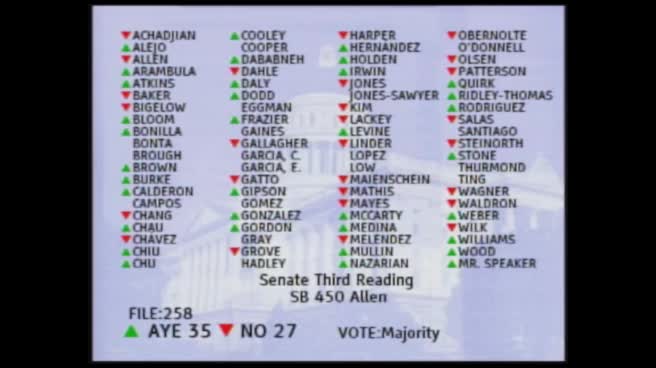 1MIN
Assembly Floor
 59SEC
Assembly Floor
 10MIN
Assembly Standing Committee on Transportation
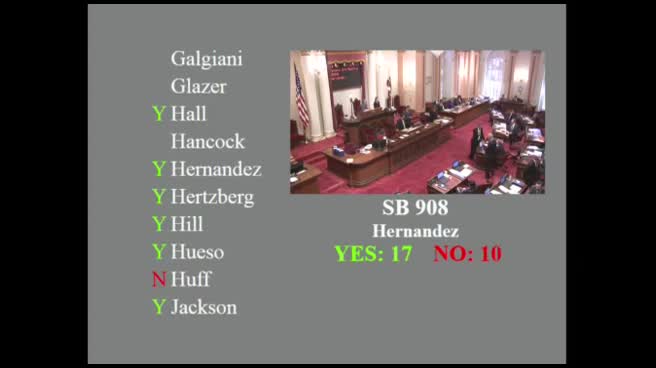 2MIN
Senate Floor
 4MIN
Senate Floor
 24MIN
Senate Standing Committee on Transportation and Housing
Bill Author

Bill Co-Author(s):