SB 878: Work hours: scheduling.
- Session Year: 2015-2016
- House: Senate
- Latest Version Date: 2016-03-15
Existing law governs the relationship between an employer and an employee with regard to hiring, promotion, discipline, wages and hours, working conditions, and administrative and judicial remedies. Existing law authorizes the Labor Commissioner to investigate employee complaints and to conduct a hearing in any action to recover wages, penalties, and other demands for compensation.
This bill would require an employer, which includes a grocery store establishment, restaurant, or retail store establishment, to provide its employees with a work schedule at least 7 calendar days prior to the first shift on that work schedule, except as specified. The bill would require an employer, except as specified, to pay its employees modification pay for each previously scheduled shift that the employer cancels or moves to another date or time, for any previously unscheduled shift that the employer requires an employee to work, or for each on-call shift for which an employee is required to be available but is not called in to work that shift. The bill would require an employer to post a poster containing specified information regarding an employees right to receive modification pay and would require the Labor Commissioner to create the poster and make it available. The bill would define terms for those purposes, including, among others, a grocery store establishment, restaurant, or retail store establishment.
The bill would require the Labor Commissioner to enforce these requirements, including the investigation, mitigation, and relief of violations of these requirements. The bill would authorize the Labor Commissioner to impose specified administrative fines for violations and would authorize the commissioner, the Attorney General, an employee or person aggrieved by a violation of these provisions, or an entity a member of which is aggrieved by a violation of these provisions to recover specified civil penalties against an offender who violated these provisions on behalf of the aggrieved, as well as attorneys fees, costs, and interest.
The bill would not apply to certain categories of employees who meet specified requirements.
Existing law regulates railroad employee hours, and sets forth various penalties for violation of those provisions.
This bill would make nonsubstantive changes to those provisions.
Existing law regulates railroad employee hours, and sets forth various penalties for violation of those provisions.
This bill would make nonsubstantive changes to those provisions.
(a)This section shall be known, and may be cited as, the Reliable Scheduling Act of 2016.
(b)The provisions of this section are in addition to and independent of any other rights, remedies, or procedures available under any other law and do not diminish, alter, or negate any other legal rights, remedies, or procedures available to an aggrieved person.
(c)For the purposes of this section, the following terms have the following meanings:
(1)Employee means any individual except those exempt from the payment of an overtime rate of compensation for executive, administrative, and professional employees pursuant to wage orders by the Industrial Welfare Commission, as described in Section 515.
(2)Employer means a grocery store establishment, a restaurant, or a retail store establishment.
(3)Grocery store establishment means a physical store within the state that sells primarily household foodstuffs for offsite consumption, including, but not limited to, the sale of fresh produce, meats, poultry, fish, deli products, dairy products, canned foods, dry foods, beverages, and baked or prepared foods. Other household supplies or products are secondary to the primary purpose of food sales.
(4)Merchandise means material goods or consumables.
(5)(A)Modification pay means compensation in addition to an employees regular pay awarded for changes to an employees work schedule with less than seven days notice, as required in this section.
(B)Modification pay shall be calculated based on an employees hourly wage. If the employee, in the 90 days of employment prior to earning modification pay, had different hourly rates, was paid by commission or piece rate, or was a nonexempt salaried employee, the rate of pay to be used to calculate modification pay shall be calculated by dividing the employees total wages, not including overtime premium pay, by the employees total hours worked in the full pay periods of the prior 90 days of employment.
(6)Restaurant means any retail establishment serving food or beverages for onsite consumption, including, but not limited to, a restaurant, coffee shop, cafeteria, or cafe.
(7)Retail store establishment means a physical store within the state with more than 50 percent of its revenue generated from merchandise subject to the states sales and use tax, including, but not limited to, electronics, appliances, clothing, furniture, sporting goods, health and personal products, or a limited line of food products for onsite consumption.
(8)Shift means designated hours of work by an employee, with a designated beginning time and ending time.
(9)Work schedule means a written or electronic document that lists all scheduled shifts for all employees for at least 21 consecutive calendar days.
(d)(1)An employer shall provide its employees with a work schedule at least seven calendar days prior to the first shift on that work schedule.
(2)An employer may create separate work schedules for each department.
(3)All hours of work for all employees of an employer shall meet the definition of shift in subdivision (c).
(4)This section shall not be construed to prohibit an employer from providing greater advance notice of an employees work schedule or changes in an employees work schedule.
(5)This section shall not prohibit an employee from requesting additional or fewer hours of work.
(e)An employer shall provide an employee with modification pay, per shift, for each previously scheduled shift that the employer cancels or moves to another date or time or for any previously unscheduled shift that the employer requires an employee to work as follows:
(1)If less than seven days notice but more than 24 hours notice is given to the employee, the employee shall receive modification pay equal to or greater than one hour at the employees regular rate of pay.
(2)If less than 24 hours notice is given to the employee, the employee shall receive modification pay equal to or greater than half of that shifts scheduled hours at the employees regular rate of pay, but in no event for less than two hours nor more than four hours.
(3)Modification pay required by this subdivision shall be in addition to an employees regular pay for working that shift.
(f)Subdivision (e) shall not apply to changes in the scheduling of rest periods, recovery periods, or meal periods.
(g)For each on-call shift for which an employee is required to be available but is not called in to work that shift, an employee shall receive modification pay equal to or greater than half of that shifts scheduled hours at the employees regular rate of pay.
(h)Subdivisions (e) and (g) shall not apply to shifts for which an employee is compensated with reporting time pay as required by any wage order of the Industrial Welfare Commission.
(i)The requirements in subdivisions (e) and (g) shall not apply, and an employer shall not be deemed to have violated subdivision (e) or (g), under any of the following circumstances:
(1)Operations cannot begin or continue due to threats to employees or property, or when civil authorities recommend that work not begin or continue.
(2)Operations cannot begin or continue because public utilities fail to supply electricity, water, or gas or there is a failure in the public utilities or sewer system.
(3)Operations cannot begin or continue due to an act of God or other cause not within the employers control, including, but not limited to, an earthquake or a state of emergency declared by a local government or the Governor.
(4)Another employee previously scheduled to work that shift is unable to work due to illness, vacation, or employer-provided paid or unpaid time off required by existing law or bona fide collective bargaining agreement when the employer did not receive at least seven days notice of the other employees absence.
(5)Another employee previously scheduled to work that shift has not reported to work on time, is fired, sent home as a disciplinary action, or told to stay at home as a disciplinary action.
(6)Two employees have mutually agreed to trade shifts.
(7)The employer requires the employee to work overtime, such as mandatory overtime.
(j)(1)In each workplace of the employer, the employer shall display a poster in a conspicuous place containing all the information in paragraph (2). The Labor Commissioner shall create a poster containing the information in paragraph (2) and shall make it available to all employers.
(2)The poster shall state all of the following:
(A)An employee of an employer is entitled to modification pay.
(B)The amount of modification pay provided for by this section.
(C)An employee has the right under this section to file a complaint with the Labor Commissioner against an employer that retaliates or discriminates against the employee.
(3)An employer that willfully violates paragraph (1) shall be subject to a civil penalty of not more than one hundred dollars ($100) for each offense.
(k)An employer shall keep for at least three years records documenting the hours worked and modification pay awarded and shall allow the Labor Commissioner to access these records pursuant to the requirements in Section 1174. An employer shall make these records available to an employee in the same manner as described in Section 226.
(l)(1)An employer shall not discharge, threaten to discharge, demote, suspend, or in any manner discriminate against an employee for filing a complaint with the appropriate enforcement agency or alleging a violation of this section, cooperating in an investigation or prosecution of an alleged violation of this section, or opposing any policy, practice or act that is prohibited by this section.
(2)There shall be a rebuttable presumption of unlawful retaliation if an employer discharges, threatens to discharge, demotes, suspends, or in any manner discriminates against an employee within 30 days of any of the following:
(A)The filing of a complaint by the employee with the Labor Commissioner or alleging a violation of this section.
(B)The cooperation of an employee with an investigation or prosecution of an alleged violation of this section.
(C)Opposition by the employee to a policy, practice, or act that is prohibited by this section.
(m)The Labor Commissioner shall enforce this section, including investigating an alleged violation and ordering appropriate temporary relief to mitigate the violation or to maintain the status quo, pending the completion of a full investigation or hearing.
(n)(1)If the Labor Commissioner, after a hearing that contains adequate safeguards to ensure that the parties are afforded due process, determines that a violation of this section has occurred, he or she may order any appropriate relief, including, but not limited to, reinstatement, backpay, the payment of modification pay unlawfully withheld, and the payment of an additional sum in the form of an administrative penalty, to an employee or other person whose rights under this section were violated.
(2)If modification pay was unlawfully withheld, the dollar amount of modification pay withheld from the employee multiplied by three or two hundred fifty dollars ($250), whichever amount is greater, but not to exceed an aggregate penalty of four thousand dollars ($4,000), shall be included in the administrative penalty.
(3)If a violation of this section results in other harm to the employee or person, such as discharge from employment, or otherwise results in a violation of the rights of the employee or person, the administrative penalty shall include a sum of fifty dollars ($50) for each day or portion thereof that the violation occurred or continued, not to exceed an aggregate penalty of four thousand dollars ($4,000).
(o)Where prompt compliance by an employer is not forthcoming, the Labor Commissioner may take any appropriate enforcement action to secure compliance, including the filing of a civil action. In compensation to the state for the costs of investigating and remedying the violation, the commissioner may order the violating employer to pay to the state a sum of not more than fifty dollars ($50) for each day or portion of a day a violation occurs or continues for each employee or other person whose rights under this section were violated.
(p)An employee or other person may report to the Labor Commissioner a suspected violation of this section. The commissioner shall encourage reporting pursuant to this subdivision by keeping confidential, to the maximum extent permitted by applicable law, the name and other identifying information of the employee or person reporting the violation. However, the commissioner may disclose that employees or persons name and identifying information as necessary to enforce this section or for other appropriate purposes, upon the authorization of that employee or person.
(q)The Labor Commissioner, the Attorney General, an employee or person aggrieved by a violation of this section, or an entity a member of which is aggrieved by a violation of this section may bring a civil action in a court of competent jurisdiction against the employer or other person violating this section and, upon prevailing, shall be entitled to collect legal or equitable relief on behalf of the aggrieved as may be appropriate to remedy the violation, including, but not limited to, reinstatement, backpay, the payment of modification pay unlawfully withheld, the payment of an additional sum, not to exceed an aggregate penalty of four thousand dollars ($4,000), as liquidated damages in the amount of fifty dollars ($50) to each employee or person whose rights under this section were violated for each day or portion thereof that the violation occurred or continued, plus, if the employer has unlawfully withheld modification pay to an employee, the dollar amount of modification pay withheld from the employee multiplied by three or two hundred fifty dollars ($250), whichever amount is greater, and reinstatement in employment or injunctive relief, and further shall be awarded reasonable attorneys fees and costs, provided, however, that any person or entity enforcing this section on behalf of the public as provided for under applicable state law shall, upon prevailing, be entitled only to equitable, injunctive, or restitutionary relief, and reasonable attorneys fees and costs.
(r)In an administrative or civil action brought under this section, the Labor Commissioner or court, as the case may be, shall award interest on all amounts due and unpaid at the rate of interest specified in subdivision (b) of Section 3289 of the Civil Code.
(s)The remedies, penalties, and procedures provided under this section are cumulative.
(t)The Labor Commissioner may promulgate all regulations and rules of practice and procedures necessary to carry out the provisions of this section.
(u)A violation of this section shall not be a misdemeanor under Section 553.
SECTION 1.Section 600 of the Labor Code is amended to read:600.As used in this chapter, unless the context otherwise indicates, the following definitions shall apply:
(a)Railroad means any steam railroad, electric railroad, or railway, operated in whole or in part in this state.
(b)Railroad corporation means a corporation or receiver operating a railroad.
(c)Trainman means a conductor, motorman, engineer, fireman, brakeman, train dispatcher, or telegraph operator, employed by or working in connection with a railroad.
As used in this chapter, unless the context otherwise indicates: indicates, the following definitions shall apply:
(a)Railroad means any steam railroad, electric railroad, or railway, operated in whole or in part in this State. state.
(b)Railroad corporation means a corporation or receiver operating a railroad.
(c)Trainman means a conductor, motorman, engineer, fireman, brakeman, train dispatcher, or telegraph operator, employed by or working in connection with a railroad.
|
Date
|
Status
|
|---|---|
| May 27, 2016 | May 27 hearing: Held in committee and under submission. |
| May 20, 2016 | Set for hearing May 27. |
| Apr 25, 2016 | April 25 hearing: Placed on APPR. suspense file. |
| Apr 15, 2016 | Set for hearing April 25. |
| Apr 13, 2016 | From committee: Do pass and re-refer to Com. on APPR. (Ayes 4. Noes 1. Page 3520.) (April 13). Re-referred to Com. on APPR. |
| Apr 13, 2016 | From committee: Do pass and re-refer to Com. on APPR. (Ayes 4. Noes 1.) (April 13). Re-referred to Com. on APPR. |
| Apr 5, 2016 | Set for hearing April 13. |
| Mar 31, 2016 | Re-referred to Com. on L. & I.R. |
| Mar 15, 2016 | From committee with author's amendments. Read second time and amended. Re-referred to Com. on RLS. |
| Jan 28, 2016 | Referred to Com. on RLS. |
| Jan 19, 2016 | From printer. May be acted upon on or after February 18. |
| Jan 15, 2016 | Introduced. Read first time. To Com. on RLS. for assignment. To print. |
|
Date
|
Description
|
Location
|
Votes
|
|
|---|---|---|---|---|
| Apr 25, 2016 | Placed on suspense file | Senate Standing Committee on Appropriations |
Passed |
|
| Apr 13, 2016 | Do pass, but first be re-referred to the Committee on [Appropriations] | Senate Standing Committee on Labor and Industrial Relations |
Passed |
This list shows positions taken on this bill by organizations on the date displayed, which is linked to the original source.
Positions by individuals are not included.
SENATE COMMITTEE ON
Senator , Chair
Session
() -
Version: | Policy Vote: |
Urgency: | Mandate: |
Hearing Date: | Consultant: |
This bill meets the criteria for referral to the Suspense File.
Bill Summary:
SB 878 would provide predictable work schedules to covered employees, as specified, in addition to other requirements.
Fiscal Impact:
The Department of Industrial Relations (DIR) estimates that it would incur annual implementation costs ranging from $1 million to $3.6 million (special fund).
Background:
Low-wage workers are generally more likely to be paid hourly, work less than full time, and have erratic schedules with little advance notice of when they are expected to work. Increasingly used in the service sector, just-in-time (JIT) scheduling, also called “scheduling to demand,” is a practice that closely links labor supply to consumer demand. Increasingly used in the service sector, employers rely on scheduling software and measures of demand (such as floor traffic, sales volume, hotel registrations, dinner reservations, or the weather) to match workers’ hours to labor needs. Weekly schedules are sometimes posted with just a few days notice and last minute schedule changes are made often resulting in workers showing up for work only to be sent home, being asked to stay beyond a scheduled shift, or being called in on a day off. Some employers change posted schedules at the last minute even if it means sending workers home after they arrive for work or asking them to stay beyond the end of their shift. Such practices can complicate the lives of workers and their families, especially with respect to child care arrangements, transportation, and working more than one job.
In December 2014, San Francisco passed the “Retail Workers Bill of Rights,” which included two ordinances regulating hours, retention, scheduling, and treatment of part-time employees at some Formula Retail Establishments. The ordinances, which took effect on March 1, 2016 and apply to formula retail establishments with at least 40 locations worldwide and 20 or more employees in San Francisco as well as their janitorial and security contractors, included a component regarding predictive scheduling that required, among other things, the following:
- Initial Estimate of Work Schedule - employers provide new employees with written estimate of the employee’s expected minimum number of scheduled shifts per month and the days and hours of those shifts.
- Two Week's Notice of Work Schedules - Schedules may be posted in the workplace or provided electronically.
- Predictability Pay for Schedule Changes - Changes to an employee’s schedule with less than seven days’ notice requires 1 to 4 hours of pay at the employee's regular hourly rate (depending on the amount of notice and the length of the shift).
- Pay for on Call Shifts – For “on-call” employees not called in to work, the employer must pay 2 to 4 hours of pay at the employee's regular hourly rate.
- Exceptions - Employers do not have to provide “predictability pay” or payment for on-call shifts for specified circumstances outside of the employer’s control, including the exceptions delineated under the provisions of this bill.
Proposed Law:
This bill would enact the Reliable Scheduling Act of 2016 to provide predictable work schedules to covered employees, as specified, in addition to other requirements. Specifically, the bill would, among other things, do the following:
- Require employers of a restaurant, grocery or retail store, as defined, to provide a work schedule listing all shifts for all employees for at least 21 consecutive days at least seven days prior to the first shift on that work schedule.
- Require modification pay, as defined, to be calculated based on an employee’s hourly wage by dividing the employee’s total wages, not including overtime premium pay, by the employee’s total hours worked in the full pay periods of the prior 90 days of work.
- Require an employer to provide modification pay, per shift, for each previously scheduled shift that the employer cancels or moves to another date or time or for any previously unscheduled shift that the employer requires an employee to work as follows:
- If less than 7 days’ notice but more than 24 hours: modification pay equal to or greater than one hour at the employee’s regular rate of pay.
- If less than 24 hours’ notice: modification pay equal to or greater than half of that shift’s scheduled hours at the employee’s regular rate of pay, but in no event less than two hours nor more than four hours.
- Modification pay required shall be in addition to an employee’s regular pay for working that shift.
- Specify that for each on-call shift, as defined, for which an employee is required to be available but is not called in to work, the employer must pay modification pay equal to or greater than half of that shift’s scheduled hours at the employee’s regular rate of pay.
- Authorize employers to create separate work schedules for each department as long as all hours have a designated beginning and ending time.
- Specify that these provisions do not prohibit an employer from providing greater advance notice of an employee’s work schedule or changes in an employee’s work schedule, and that these provisions shall not prohibit an employee from requesting additional or fewer hours of work.
- Specify that modification pay shall not apply to changes in the scheduling of rest periods, recovery periods, or meal periods.
- Specify that modification pay does not apply for shifts for which an employee is compensated with reporting time pay as required by any wage order.
- Provide that the modification pay requirements do not apply, and an employer shall not be deemed to have violated these requirements, under specified circumstances.
- Require employers to display a poster in a conspicuous place in each workplace that contains information regarding modification pay, as well as information regarding an employee’s right to file a complaint with the Labor Commissioner for retaliation or discrimination claims.
- Specify that failure by an employer to display the above referenced poster shall subject the employer to a civil penalty of not more than $100 for each offense.
- Require employers to keep records documenting the hours worked and modification pay awarded to each employee for at least three years, as well as allow employees and the Labor Commissioner access to these records as required by current law.
- Prohibit an employer from discharging, threatening to discharge, demote, suspend, or in any manner discriminate against an employee for filing a complaint or alleging a violation of these provisions, cooperating in an investigation or prosecution of an alleged violation, or opposing any policy, practice or act that is prohibited by law.
- Provide that there shall be a rebuttable presumption of unlawful retaliation if an employer discharges, threatens to discharge, demotes, suspends, or in any manner discriminates against an employee within 30 days of the above referenced protected activity.
- Require the Labor Commissioner to enforce these provisions, including investigating an alleged violation and ordering appropriate temporary relief to mitigate the violation or to maintain the status quo, pending the completion of a full investigation or hearing.
- Authorize the Labor Commissioner, if a violation has occurred, to order any appropriate relief to the employee, including, but not limited to, the following:
- Reinstatement, backpay, the payment of modification pay unlawfully withheld, and the payment of an additional sum in the form of an administrative penalty.
- If modification pay was unlawfully withheld, the dollar amount of modification pay withheld multiplied by three or two hundred fifty dollars ($250), whichever amount is greater, but not to exceed an aggregate penalty of four thousand dollars ($4,000), shall be included in the administrative penalty.
- If a violation of this section results in other harm to the employee or person, such as discharge from employment, the administrative penalty shall include a sum of fifty dollars ($50) for each day or portion thereof that the violation occurred or continued, not to exceed an aggregate penalty of four thousand dollars ($4,000).
- If no prompt employer compliance, the Labor Commissioner can take any appropriate enforcement action including the filing of a civil action and in compensation to the state for the costs of investigating and remedying the violation, the commissioner may order the employer to pay the state $50 for each day a violation occurs or continues for each employee.
- Authorize the Labor Commissioner, the Attorney General, an aggrieved employee or his/her representing entity to bring a civil action against the employer and upon prevailing, the employee is entitled to collect legal or equitable relief as may be appropriate to remedy the violation as well as the previously described remedies and penalties, and reasonable attorney’s fees and costs.
- Provide that in an administrative or civil action brought, the Labor Commissioner or court, as the case may be, shall award interest on all amounts due and unpaid at the rate of interest specified in subdivision (b) of Section 3289 of the Civil Code.
- Provide that the remedies, penalties, and procedures provided are cumulative.
- Specify that the Labor Commissioner may promulgate all regulations and rules of practice and procedures necessary to carry out the provisions of this bill.
- Specify that a violation of these provisions shall not be a misdemeanor.
Related Legislation:
AB 357 (Chiu, 2015) would have enacted the Fair Scheduling Act of 2015 to require a "food and general retail establishment" to provide its employees with at least two weeks' notice of their work schedules. The bill applied to food and retail establishments with 500 or more employees in the state and that has 10 or more retail stores located in the United States. Among other things, the bill included a requirement that employers pay employees additional pay, as specified, for scheduled shift changes and for each on-call shift for which the employee is required to be available but is not called in to work. The bill included a provision allowing an employee to be absent from work without pay for up to 8 hours twice per year to attend required health appointments. The bill was never taken up for an Assembly Floor vote and died on its Inactive File.
Staff Comments:
Estimating the number of wage and retaliation claims DIR would receive under this bill will receive is difficult to predict. With respect to AB 357, DIR estimated costs in the range of $1 million to $2.8 million to cover personnel costs associated with processing claims.
This bill would affect a larger category of employers and employees, and also has more expansive retaliation protections. Consequently, DIR’s estimates implementation costs would be a range of $1 million to $3.6 million in additional staffing to handle additional wage and retaliation claims as a result of this bill.
-- END --
SENATE COMMITTEE ON LABOR AND INDUSTRIAL RELATIONS
Senator Tony Mendoza, Chair
2015 - 2016 Regular
Bill No: SB 878 Hearing Date: April 13, 2016
Author: | Leyva | ||
Version: | March 15, 2016 | ||
Urgency: | No | Fiscal: | Yes |
Consultant: | Alma Perez-Schwab | ||
Subject: Work hours: scheduling
KEY ISSUES
Should the Legislature require restaurants, grocery and retail store establishments to provide a 21 day work schedule listing all shifts for all employees at least seven days prior to the first shift on that work schedule?
Should the Legislature require employers to pay modification pay for schedule shift changes with less than seven days’ notice?
Should the Labor Commissioner be authorized to order appropriate relief to aggrieved employees that include reinstatement, backpay, the payment of modification pay withheld, and the payment of an additional sum up to $4,000 in the form of an administrative penalty?
Should aggrieved employees be able to bring a civil action against an employer for schedule shift change violations and be entitled to collect legal or equitable relief and reasonable attorney’s fees and costs?
ANALYSIS
Existing law:
- Defines a full workday as 8 hours of labor, and 40 hours as a workweek. Overtime wage rates must be paid for any time worked beyond these hours at one and one-half times an employee’s regular rate of pay. Furthermore, work performed beyond 12 hours in a day is to be compensated at twice the regular rate of pay (Labor Code §510)
- Authorizes an employer to approve a written request of an employee to “make up” work time that is lost as a result of a personal obligation of the employee, and the hours of that makeup work time performed in the same week may not be counted towards computing the total number of hours worked, therefore allowing the employee to work over 8 hours a day without the obligation of overtime compensation, as specified. (Labor Code §513)
- Failure to pay an employee all premium pay required by the Labor Code and Wage Orders, such as overtime premium, reporting time pay, meal period/rest period premium, and split shift premium pay, may entitle an employee to waiting time penalties.
Existing Industrial Welfare Commission Wage Orders regarding “reporting” to work pay:
- Provides that when an employee reports to work at his or her regularly scheduled time, but the employer finds it necessary to send the employee home because there is no work, the employee must be paid for at least half of the hours scheduled to work, but in no case, less than 2 hours nor more than 4 hours at the employee’s regular rate of pay.
- If an employee reports for work a second time in any one workday and is furnished less than 2 hours of work, the employee shall be paid for 2 hours at the employee’s regular rate of pay. These reporting pay requirements do not apply when:
- work is interrupted due to an Act of God or other cause not within the employer’s control;
- operations of the employer’s business cannot commence or continue due to threats to employees or property or upon advice of civil authorities; or
- public utilities fail.
Existing regulations regarding “on call” and “stand by” time:
- Requires employers to pay the wages of hourly employees for all time that the employee is under the control of the employer, and includes all the time the employee is suffered or permitted to work, with some exceptions for the health care industry.
- On-call or standby time at the work site is considered hours worked for which the employee must be compensated even if the employee does nothing but wait for something to happen. Whether on-call or standby time off the work site is considered compensable must be determined by looking at the restrictions placed on the employee.
(Division of Labor Standards Enforcement, Department of Industrial Relations)
This Bill would enact the Reliable Scheduling Act of 2016 to provide predictable work schedules to covered employees, as specified, in addition to other requirements.
Specifically, this bill would:
- Require employers of a restaurant, grocery or retail store establishment to provide a work schedule listing all shifts for all employees for at least 21 consecutive days at least seven days prior to the first shift on that work schedule.
- Define “grocery store establishment” as a physical store within the state that sells primarily household foodstuffs for offsite consumption, including, but not limited to, the sale of fresh produce, meats, poultry, fish, deli products, dairy products, canned foods, dry foods, beverages, and baked or prepared foods.
- Define “restaurant” as any retail establishment serving food or beverages for onsite consumption, including, but not limited to, a restaurant, coffee shop, cafeteria, or café.
- Define “retail store establishment” as a physical store within the state with more than 50 percent of its revenue generated from merchandise subject to the state’s sales and use tax, including, but not limited to, electronics, appliances, clothing, furniture, sporting goods, health and personal products, or a limited line of food products for onsite consumption.
- Define “shift” as designated hours or work, with a designated beginning and ending time.
- Define “modification pay,” to be calculated based on an employee’s hourly wages as specified, as compensation in addition to an employee’s regular pay awarded for changes to an employee’s work schedule with less than seven days’ notice.
- Require modification pay to be calculated based on an employee’s hourly wage by dividing the employee’s total wages, not including overtime premium pay, by the employee’s total hours worked in the full pay periods of the prior 90 days of work.
- Require an employer to provide modification pay, per shift, for each previously scheduled shift that the employer cancels or moves to another date or time or for any previously unscheduled shift that the employer requires an employee to work as follows:
- If less than 7 days’ notice but more than 24 hours: modification pay equal to or greater than one hour at the employee’s regular rate of pay.
- If less than 24 hours’ notice: modification pay equal to or greater than half of that shift’s scheduled hours at the employee’s regular rate of pay, but in no event less than two hours nor more than four hours.
- Modification pay required shall be in addition to an employee’s regular pay for working that shift.
- Specify that for each on-call shift for which an employee is required to be available but is not called in to work, the employer must pay modification pay equal to or greater than half of that shift’s scheduled hours at the employee’s regular rate of pay.
- Authorize employers to create separate work schedules for each department as long as all hours have a designated beginning and ending time.
- Specify that these provisions do not prohibit an employer from providing greater advance notice of an employee’s work schedule or changes in an employee’s work schedule.
- Specify that these provisions shall not prohibit an employee from requesting additional or fewer hours of work.
- Specify that modification pay shall not apply to changes in the scheduling of rest periods, recovery periods, or meal periods.
- Specify that modification pay does not apply for shifts for which an employee is compensated with reporting time pay as required by any wage order.
- Provide that the modification pay requirements do not apply, and an employer shall not be deemed to have violated these requirements, under any of the following:
- Operations cannot begin or continue due to threats to employees or property, or when civil authorities recommend that work not begin or continue.
- Operations cannot begin or continue because public utilities fail to supply electricity, water, or gas or there is a failure in the public utilities or sewer system.
- Operations cannot begin or continue due to an act of God or other cause not within the employer’s control, including, but not limited to, an earthquake or a state of emergency declared by a local government or the Governor.
- Another employee previously scheduled to work that shift is unable to work due to illness, vacation, or employer-provided paid or unpaid time off required by existing law or bona fide collective bargaining agreement when the employer did not receive at least seven days’ notice of the other employee’s absence.
- Another employee previously scheduled to work that shift has not reported to work on time, is fired, sent home as a disciplinary action, or told to stay at home as a disciplinary action.
- Two employees have mutually agreed to trade shifts.
- The employer requires the employee to work overtime.
- Require employers to display a poster in a conspicuous place in each workplace that contains information regarding modification pay, as well as information regarding an employee’s right to file a complaint with the Labor Commissioner for retaliation or discrimination claims.
- Specify that failure by an employer to display the above referenced poster shall subject the employer to a civil penalty of not more than $100 for each offense.
- Require employers to keep records documenting the hours worked and modification pay awarded to each employee for at least three years, as well as allow employees and the Labor Commissioner access to these records as required by current law.
- Prohibit an employer from discharging, threatening to discharge, demote, suspend, or in any manner discriminate against an employee for filing a complaint or alleging a violation of these provisions, cooperating in an investigation or prosecution of an alleged violation, or opposing any policy, practice or act that is prohibited by law.
- Provide that there shall be a rebuttable presumption of unlawful retaliation if an employer discharges, threatens to discharge, demotes, suspends, or in any manner discriminates against an employee within 30 days of the above referenced protected activity.
- Require the Labor Commissioner to enforce these provisions, including investigating an alleged violation and ordering appropriate temporary relief to mitigate the violation or to maintain the status quo, pending the completion of a full investigation or hearing.
- Authorize the Labor Commissioner, if a violation has occurred, to order any appropriate relief to the employee, including, but not limited to, the following:
- Reinstatement, backpay, the payment of modification pay unlawfully withheld, and the payment of an additional sum in the form of an administrative penalty.
- If modification pay was unlawfully withheld, the dollar amount of modification pay withheld multiplied by three or two hundred fifty dollars ($250), whichever amount is greater, but not to exceed an aggregate penalty of four thousand dollars ($4,000), shall be included in the administrative penalty.
- If a violation of this section results in other harm to the employee or person, such as discharge from employment, the administrative penalty shall include a sum of fifty dollars ($50) for each day or portion thereof that the violation occurred or continued, not to exceed an aggregate penalty of four thousand dollars ($4,000).
- If no prompt employer compliance, the Labor Commissioner can take any appropriate enforcement action including the filing of a civil action and in compensation to the state for the costs of investigating and remedying the violation, the commissioner may order the employer to pay the state $50 for each day a violation occurs or continues for each employee.
- Encourage employee reporting of violations by requiring the Labor Commissioner to keep confidential, to the maximum extent permitted, the name and other identifying information of the employee or person reporting the violation, as specified.
- Authorize the Labor Commissioner, the Attorney General, an aggrieved employee or his/her representing entity to bring a civil action against the employer and upon prevailing, the employee is entitled to collect legal or equitable relief as may be appropriate to remedy the violation as well as the previously described remedies and penalties, and reasonable attorney’s fees and costs.
- Provide that in an administrative or civil action brought, the Labor Commissioner or court, as the case may be, shall award interest on all amounts due and unpaid at the rate of interest specified in subdivision (b) of Section 3289 of the Civil Code.
- Provide that the remedies, penalties, and procedures provided are cumulative.
- Specify that the Labor Commissioner may promulgate all regulations and rules of practice and procedures necessary to carry out the provisions of this bill.
- Specify that a violation of these provisions shall not be a misdemeanor.
COMMENTS
1. Background on “Unstable and Unpredictable” Work Schedules:
A 2014 report by the Center for Law and Social Policy, Retail Action Project and Women Employed, titled “Tackling Unstable and Unpredictable Work Schedules,” states that unpredictable and unstable work scheduled leave many low-wage workers in a constant state of economic instability and personal turmoil. Unfortunately, for a growing number of employers, these scheduling practices are becoming business as usual. The report describes the extent and scope of the problem as follows:
"With the rise of what is sometimes called “just-in-time scheduling,” managers are expected to carefully control the relationship between consumer demand and expenditures on wages. If customer traffic or sales seem to be lagging on a given day, the expectation is that immediate changes to workers’ hours should ensue. Just-in-time scheduling practices are part of larger trends in business practices – trends that are increasingly accepted as the norm in hourly-wage, service sector industries. These practices disproportionately affect low-income workers, who are already vulnerable financially. Just-in-time scheduling contributes to workers’ income instability, making it difficult to make ends meet; it may threaten their eligibility for government income supports; and because workers may not always be scheduled for enough hours to qualify, it may limit their eligibility to claim firm-provided benefits like health insurance and sick days. In their rush to cut costs, many corporations are adopting business practices that seriously compromise workers’ well-being.
While workers feel pressure on their pocketbooks and strain on their home lives, front-line managers are being pressured too. In the retail industry, managers are often evaluated on whether they meet targets for payroll as a percentage of sales. With minimal control over sales, managers move quickly to decrease staffing levels when sales go down. In a study of low-level, non-production jobs at major US corporations in the retail, transportation, hospitality, and financial services industries, researchers found that managers at all firms experienced pressure and responded by “scheduling to demand.” Across industries, employers have adopted labor strategies that “shift risk from the corporation onto workers, bringing with it instability in hours and income.” For example, one study found that restaurant workers could be scheduled with a start time but no end time. Workers were instead scheduled as “12 BD.” This means that a worker would arrive at work at noon and then leave when “business declined” or BD. That could be anytime and at the discretion of the management.
Employers now also have technological tools to help manipulate workers’ schedules in response to changes in demand. Recent news reports indicate an increasingly widespread use of software created by such companies as Kronos Inc. and Dayforce to “optimize schedules” by breaking them down into small increments of time and by tracking factors such as sales and (as in the case of Jamba Juice) weather patterns. In other words, the software creates schedules that cut costs, but are highly unpredictable for workers."
2. Statistics on Unpredictable Work Schedules:
Several reports as well as worker advocacy groups have drawn attention to the impacts of unpredictable scheduling practices on workers and their families in the last several years. A 2014 University of Chicago report, titled “Precarious Work Schedules among Early-Career Employees in the US: A National Snapshot,” presented an overview of work schedules among a representative sample of early-career adults (ages 26-32) in the United States and found that short notice (one week or less in advance of the workweek) was widespread.
Specifically, the report revealed the following based on data provided by the National Opinion Research Center under the direction of the U.S. Bureau of Labor Statistics:
- 41% of early career workers in hourly jobs (47% of part-time workers) report they know “when they will need to work” one week or less in advance of the workweek.
- 3/4 of early-career adults in hourly jobs report at least some fluctuations in the number of hours they worked in the prior month and on average, hours fluctuate by more than a full, conventional 8-hour day of work and pay.
- 90% of food and service workers report that their hours fluctuated in the last month by, on average, 68% when compared to their usual hours.
- Half of the retail workers reported that they know their work schedule one week or less in advance, and half of janitors and housekeepers report that their employers completely control the timing of their work.
- Respondents with a child 12 or younger (44% of the sample), 69 percent of mothers and 80 percent of fathers report that their hours fluctuated in the prior month by an average of approximately 40 percent when compared to their usual hours.
- For many, fluctuations in work hours are driven by the requirements of their employer rather than personal preferences: half of fathers and 45 percent of mothers report that their employer decides their schedule without their input.
According to the report, the findings suggest that early career workers across the labor market, but especially workers paid by the hour, of color, and in part-time jobs, are at high risk of all three of these dimensions of precarious work schedules: short advance notice, large fluctuations in work hours, and little or no input into the timing of work. The report states that legislation that establishes a broad set of standards on scheduling practices is needed to ensure the well-being of all workers and families and a level playing field for employers.
3. Need for this bill?
As depicted in the findings above, workers with unstable work schedules face many challenges including adverse health effects, difficulty finding and keeping childcare, transportation obstacles, trouble going back to school to advance their education, and experience overall stress and strain on family life. According to the author, unpredictable scheduling practices and last-minute work schedule changes cause workers who are already struggling with low wages to live in a constant state of insecurity about when they will work or how much they will be paid on any given day. To address these problems and attempt to provide workers with a more stable work life, this bill would enact the Reliable Scheduling Act of 2016 to require employers of a restaurant, grocery or retail store establishment to provide a work schedule listing all shifts for all employees for at least 21 consecutive days at least seven days prior to the first shift on that work schedule.
4. San Francisco Ordinance:
In December 2014, the San Francisco Board of Supervisors passed the “Retail Workers Bill of Rights,” which included two ordinances regulating hours, retention, and scheduling, and treatment of part-time employees at some Formula Retail Establishments. On January 29, 2016, the San Francisco Office of Labor Standards Enforcement issued final rules for the ordinances which took effect March 1, 2016.
The ordinances, which apply to formula retail establishments with at least 40 locations worldwide and 20 or more employees in San Francisco as well as their janitorial and security contractors, included a component regarding predictive scheduling that required, among other things, the following:
- Initial Estimate of Work Schedule - employers provide new employees with written estimate of the employee’s expected minimum number of scheduled shifts per month and the days and hours of those shifts.
- Two Week's Notice of Work Schedules - Schedules may be posted in the workplace or provided electronically.
- Predictability Pay for Schedule Changes - Changes to an employee’s schedule with less than seven days’ notice requires 1 to 4 hours of pay at the employee's regular hourly rate (depending on the amount of notice and the length of the shift).
- Pay for on Call Shifts – For “on-call” employees not called in to work, the employer must pay 2 to 4 hours of pay at the employee's regular hourly rate.
- Exceptions - Employers do not have to provide “predictability pay” or payment for on-call shifts for specified circumstances outside of the employer’s control, including the exceptions delineated under the provisions of this bill.
5. AB 357(Chiu) – Fair Scheduling Act of 2015:
Last year, Assembly member Chiu introduced AB 327 which would have enacted the Fair Scheduling Act of 2015 to require a "food and general retail establishment" to provide its employees with at least two weeks' notice of their work schedules. The bill applied to food and retail establishments with 500 or more employees in the state and that has 10 or more retail stores located in the United States. Among other things, the bill included a requirement that employers pay employees additional pay, as specified, for scheduled shift changes and for each on-call shift for which the employee is required to be available but is not called in to work. The bill included a provision allowing an employee to be absent from work without pay for up to 8 hours twice per year to attend required health appointments. AB327 was never taken up for an Assembly Floor vote and died on the inactive file.
6. Proponent Arguments:
According to proponents, in recent years, countless employers in retail and food service have abandoned the traditional weekly work schedule and forced workers to accept a policy known as “just in time” scheduling. This practice, often driven by software programs that closely monitor sales and customer traffic, schedules workers on a day by day basis without regular hours or advance notice of changes, the day suddenly ends when management or the computer program say so. They argue that if the worker wants to stay employed, he or she must always be ready to drop what they are doing and go to work at a moment’s notice. Further, they argue that even workers that received a written schedule often find that the schedule changes frequently with little, if any, warning. Proponents argue that for these workers and their families, this practice goes beyond mere inconvenience.
According to the author, without reliable schedules, working families are more likely to use public benefit programs, more vulnerable to experience hardships and less likely to climb into the middle class. Erratic schedules have severe effects on workers’ lives, and on their families’ wellbeing. Proponents note that child care or elder care cannot be planned without knowing when or for how long work will last, and ongoing education or a second job is out of the question for those who spend virtually all waking hours on call. Additionally, proponents argue that jobs that send workers home at any second also create devastating financial instability, especially considering that such jobs are typically at or just above minimum wage.
Proponents argue that this bill would create certainty for workers and employers alike by giving employees adequate advance notice of their schedule so they may better plan their lives. This bill will guarantee workers one week’s notice of their schedules and also give workers additional pay when planned shifts are changed. Proponents argue that not only would this protect employer flexibility, it would also send a message to workers that their lives outside of work are valued. With one week’s notice, workers can plan child care, elder care, health care appointments, adult education, or countless other activities. They state that a life outside of work should not be a luxury that only management can afford.
Additionally, proponents argue that this important proposal would make California one of the first states in the nation to recognize the importance of reliable schedules for workers while also meeting the day-to-day needs of businesses. Further, they state that this bill does not in any way prohibit an employer from making last minute schedule changes; it simply requires that the workers be paid slightly more when such changes occur.
7. Opponent Arguments:
According to a coalition of employer opposition, this bill will eliminate flexibility in the workplace for both employers and employees, deny employees the opportunity to work additional hours if desired, limit employers’ ability to accommodate customer demands, and subject employers to unnecessary layers of penalties, investigative actions, and costly litigation. Among other things, opponents state the following:
SB 878 Is Significantly Broader than the San Francisco Ordinance, Which Has Created Limited Flexibility for Businesses and Employees: They argue that since going into effect, numerous employers in San Francisco have refused to make changes to a schedule once posted given the threat of penalties, which has harmed employees’ request for changes. Moreover, employers who have last minute fluctuations in customer demand due to unforeseen events simply work short-staffed, rather than face financial penalties. These consequences, they argue, do not benefit the employee, employer or consumer. Additionally, they argue that this bill is significantly broader as it is applicable to any restaurant, grocery store or retail establishment, regardless of the number of employees and basically requires a 28-day notice of an employee’s schedule which will destroy flexibility for employers.
SB 878’s Threat of Modification Pay and Numerous Avenues of Enforcement, Penalties and Investigation for Schedule Changes Will Absolutely Eliminate Flexibility in the Workplace and the Ability for Employees to Earn More Wages: Opponents argue that employers will be wary to make any changes to an employee’s schedule in order to avoid the potential for modification pay. They argue that this bill threatens an employer for failure to properly provide “modification pay” with the following: (1) a $4,000 penalty for failing to accurately provide “modification pay”; (2) another $4,000 penalty for any harm that results to the employee or “another person” from a violation of this law; (3) a $50 per day penalty for failure to “promptly comply” with the Labor Commissioner’s order; (4) investigation by the Labor Commissioner; (5) prosecution by the Attorney General; (6) a representative action by an employee with penalties of $100 per employee per pay period and attorney’s fees; and (6) an unfair competition claim. They argue that with all these potential consequences at risk, an employer will never change an employee schedule, even if it appears the change falls within one of the listed exceptions or the employee actually volunteers and requests the change/additional hours of work. The risk to the employer for a mistake is simply too great.
SB 878 Is Applicable to Both Large and Small Employers, as Well as Those Who Do Not Primarily Engage in Selling Merchandise or Food: They argue that even large employers who have more sophisticated scheduling software and technology face challenges with regard to advance scheduling and accommodating schedule changes. A small employer with limited resources will not be able to manage the 21-day “work schedule” that must be given to employees at least 7 days in advance of their first shift, or the nuances with regard to when “modification pay” applies. Moreover, they argue that it is unclear which employees are covered with regard to an employer who may have hybrid operations. For example, would an employer in the technology industry that has an on-site cafeteria be required to comply with this scheduling requirement for the entire workforce? Will the hotel that has a gift shop, restaurant or bar located on its premises be forced to comply for all employees? They argue that given the broad definition, as well as the statutory scheme of penalties, litigation and enforcement, employers who are not primarily engaged in selling merchandise or food will be forced into the overwhelming provisions of this mandate.
SB 878 Mandates a One-Size-Fits-All Advance Schedule Requirement: First, they argue that this bill fails to take into consideration the varying business models, while some may have predictability in their business cycle, others simply cannot. Second, this mandate will force an employee to predict their own schedule more than 30 days in advance in order to provide their availability to an employer to create a 28-day notice schedule. They note that as employers have experienced in SF with a 14-day notice schedule, many employees simply cannot commit to shifts so far in advance, and end up frustrated with the schedule they receive that the employer cannot or will not change due to the threat of financial penalties.
SB 878 Limits an Employer’s Ability to Respond to Customer Needs: The retail and food environment is entirely dependent upon customer demand. They argue that while larger employers may be able to forecast labor needs based upon prior year sales, such software cannot predict every event. Weather, community events and employee changes all impact the ability to accurately schedule employees. They argue that this bill threatens employers with “modification pay” for responding to unpredictable events.
SB 878 Forces an Employer to Provide “Modification Pay” to an On-Call Employee Who Is Already Being Compensated: “On-call time” and “stand-by time” during which an employee may be called into work and therefore restricting or limiting what he or she can do is already compensable under law. Just last year, in Mendiola v. CPS Security Solutions, Inc., 60 Cal.4th 833 (2015), the Supreme Court stated that, regardless of whether an employee could perform personal activities while on-call, the employer’s control over that time to call-in the employee to work required the employer to provide the employee with compensation. They argue that with this bill, an employer will be forced to not only compensate the employee for the on-call time, even when the employee did not get called in, but also pay “modification pay” of up to half of the employee’s shift.
SB 878 Creates Numerous, Costly Avenues of Litigation: They argue that even if the employer pays the “modification pay” for changes to the employees’ schedule, the employer could still be subject to significant penalties and attorney’s fees under PAGA (Private Attorney General Act) litigation. In addition, they argue that an employee could also threaten an unfair competition claim, as well as a common law wrongful termination claim. Additionally, an employer would also face investigations and enforcement actions by the Labor Commissioner, as well as the Attorney General, for failure to properly provide “modification pay,” thereby exposing the employer to numerous threats of litigation and exposure for simply changing a schedule due to the employee’s request.
SB 878 Eliminates a Key Benefit to Working in the Retail and Food Industries: Opponents argue that flexibility is one of the main reasons employees choose to work in the retail and food industries. Currently, employees can request schedule changes, trade shifts with other employees, work part-time, leave work early to attend to personal needs, etc. This flexibility is favorable for students, employees who are caretakers, and those who only want part-time work. This flexibility will essentially be eliminated by the mandates in this bill.
Lastly, the California Restaurant Association argues that the mandates in this bill will make it particularly challenging given that many factors, beyond the control of restaurant operators, can have significant impacts on operations on any given day. For example, weather, large party reservation either added or canceled, both require substantial adjustments to staffing.
SUPPORT
California Labor Federation, AFL-CIO (Sponsor)
California Conference Board of the Amalgamated Transit Union
California Conference of Machinists
California Employment Lawyers Association
California Professional Firefighters
California Teamsters Public Affairs Council
Engineer & Scientist of California, Local 20, IFPTE Local 20, AFL-CIO
International Longshore and Warehouse Union
Professional & Technical Engineers, IFPTE Local 21, AFL-CIO
UNITE HERE, AFL-CIO
Utilities Workers Union of America, Local 132, AFL-CIO
Voices for Progress
OPPOSITION
Agricultural Council of California
California Ambulance Association
California Asian Pacific Chamber of Commerce
California Assisted Living Association
California Association of Nurseries and Garden Centers
California Chamber of Commerce
California Employment Law Council
California Gaming Association
California Grocers Association
California Hotel and Lodging Association
California Independent Oil Marketers Association – CIOMA
California Manufacturers and Technology Association
California New Car Dealers Association
California Retailors Association
California Restaurant Association
California Ski Industry Association
California State Council of the Society of Human Resource Management
California Travel Association
Camarillo Chamber of Commerce
Carlsbad Chamber of Commerce
Chambers of Commerce Alliance Ventura and Santa Barbara Counties
Civil Justice Association of California
Computing Technology Industry Association – CompTIA
Corona Chamber of Commerce
Culver City Chamber of Commerce
El Centro Chamber of Commerce
El Dorado Hills Chamber of Commerce
Gilroy Chamber of Commerce
Greater Conejo Valley Chamber of Commerce
Greater Fresno Area Chamber of Commerce
Greater San Fernando Valley Chamber of Commerce
International Franchise Association
Lake Tahoe South Shore Chamber of Commerce
Montclair Chamber of Commerce
National Federation of Independent Business
North Orange County Chamber
Orange County Business Council
Oxnard Chamber of Commerce
Redondo Beach Chamber of Commerce & Visitors Bureau
Retail Industry Leaders Association
San Diego Regional Chamber of Commerce
Santa Clara Chamber of Commerce
Santa Maria Valley Chamber of Commerce Visitor & Convention Bureau
Southwest California Legislative Council
The Chamber of the Santa Barbara Region
Torrance Area Chamber of Commerce
United Chambers of Commerce San Fernando Valley & Region
Valley Industry & Commerce Association
Wine Institute
-- END --
Discussed in Hearing
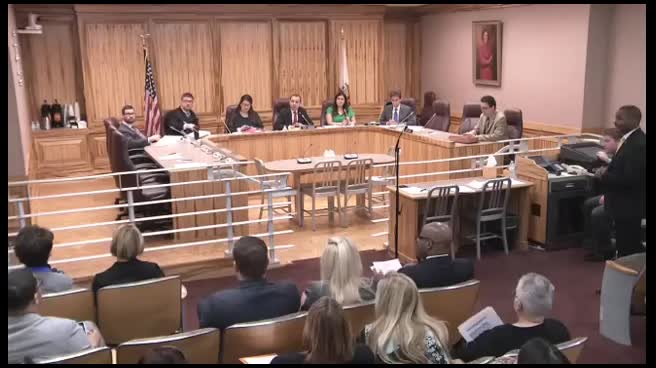 55MIN
Senate Standing Committee on Labor and Industrial Relations
Bill Author

Bill Co-Author(s):
