SB 896: Barbering and cosmetology: nail care establishments: credit and debit cards.
- Session Year: 2015-2016
- House: Senate
- Latest Version Date: 2016-08-12
Existing law, the Barbering and Cosmetology Act, provides for the licensure and regulation of barbers, cosmetologists, estheticians, manicurists, electrologists, and apprentices by the State Board of Barbering and Cosmetology. The act requires the licensure of any person, firm, or corporation operating an establishment engaged in a practice regulated by the board, as specified, and requires a licensed establishment to comply with various requirements. A violation of the Barbering and Cosmetology Act is generally a misdemeanor.
Existing law declares that every gratuity, as defined, is the sole property of the employee or employees to whom it was paid, given, or left for. Existing law prohibits an employer from collecting, taking, or receiving any gratuity, or part thereof, that is paid, given to, or left for an employee by a patron, from deducting any amount from wages due an employee on account of a gratuity, or requiring an employee to credit the amount, or any part thereof, of a gratuity against and as part of the wages due an employee. Existing law also requires an employer that permits patrons to pay gratuities by credit card to pay the employee the full amount of the gratuity without any deductions for any credit card payment processing or costs, and to pay a gratuity made by a patron using a credit card to an employee not later than the next regular payday.
This bill would require an establishment offering nail care services, if it accepts a debit or credit card as payment for nail care services, to also accept a debit or credit card for payment of a tip or gratuity, consistent with the above existing law regarding gratuities. By expanding the scope of the criminal penalty provisions of the Barbering and Cosmetology Act, this bill would impose a state-mandated local program.
The California Constitution requires the state to reimburse local agencies and school districts for certain costs mandated by the state. Statutory provisions establish procedures for making that reimbursement.
This bill would provide that no reimbursement is required by this act for a specified reason.
Existing law, the Barbering and Cosmetology Act, provides for the licensure and regulation of barbers, cosmetologists, estheticians, manicurists, electrologists, and apprentices by the State Board of Barbering and Cosmetology. The act requires the licensure of any person, firm, or corporation operating an establishment engaged in a practice regulated by the board, as specified, and requires a licensed establishment to comply with various requirements. A violation of the Barbering and Cosmetology Act is generally a misdemeanor.
Existing law declares that every gratuity, as defined, is the sole property of the employee or employees to whom it was paid, given, or left for. Existing law prohibits an employer from collecting, taking, or receiving any gratuity, or part thereof, that is paid, given to, or left for an employee by a patron, from deducting any amount from wages due an employee on account of a gratuity, or requiring an employee to credit the amount, or any part thereof, of a gratuity against and as part of the wages due an employee. Existing law also requires an employer that permits patrons to pay gratuities by credit card to pay the employee the full amount of the gratuity without any deductions for any credit card payment processing or costs, and to pay a gratuity made by a patron using a credit card to an employee not later than the next regular payday.
This bill would require an establishment that offers offering nail care services, if it accepts a debit or credit card as payment for nail care services, to also accept a debit or credit card for payment of a tip or gratuity, consistent with the above existing law regarding gratuities. By expanding the scope of the criminal penalty provisions of the Barbering and Cosmetology Act, this bill would impose a state-mandated local program.
The California Constitution requires the state to reimburse local agencies and school districts for certain costs mandated by the state. Statutory provisions establish procedures for making that reimbursement.
This bill would provide that no reimbursement is required by this act for a specified reason.
Existing law, the Barbering and Cosmetology Act, provides for the licensure and regulation of barbers, cosmetologists, estheticians, manicurists, electrologists, and apprentices by the State Board of Barbering and Cosmetology. The act requires the licensure of any person, firm, or corporation operating an establishment engaged in a practice regulated by the board, as specified, and requires a licensed establishment to comply with various requirements. A violation of the Barbering and Cosmetology Act is generally a misdemeanor.
Existing law declares that every gratuity, as defined, is the sole property of the employee or employees to whom it was paid, given, or left for. Existing law prohibits an employer from collecting, taking, or receiving any gratuity, or part thereof, that is paid, given to, or left for an employee by a patron, from deducting any amount from wages due an employee on account of a gratuity, or requiring an employee to credit the amount, or any part thereof, of a gratuity against and as part of the wages due an employee. Existing law also requires an employer that permits patrons to pay gratuities by credit card to pay the employee the full amount of the gratuity without any deductions for any credit card payment processing or costs, and to pay a gratuity made by a patron using a credit card to an employee not later than the next regular payday.
This bill would require an establishment that offers nail care services, if it accepts a debit or credit card as payment for nail care services, to also accept a debit or credit card for payment of a tip. tip or gratuity, consistent with the above existing law regarding gratuities. By expanding the scope of the criminal penalty provisions of the Barbering and Cosmetology Act, this bill would impose a state-mandated local program.
The California Constitution requires the state to reimburse local agencies and school districts for certain costs mandated by the state. Statutory provisions establish procedures for making that reimbursement.
This bill would provide that no reimbursement is required by this act for a specified reason.
Existing law, the Barbering and Cosmetology Act, provides for the licensure and regulation of barbers, cosmetologists, estheticians, manicurists, electrologists, and apprentices by the State Board of Barbering and Cosmetology. The act requires the licensure of any person, firm, or corporation operating an establishment engaged in a practice regulated by the board, as specified, and requires a licensed establishment to comply with various requirements. A violation of the Barbering and Cosmetology Act is generally a misdemeanor.
This bill would require an establishment offering that offers nail care services, if it accepts a debit or credit card as payment for nail care services, to also accept a debit or credit card for payment of a tip. By expanding the scope of the criminal penalty provisions of the Barbering and Cosmetology Act, this bill would impose a state-mandated local program.
The California Constitution requires the state to reimburse local agencies and school districts for certain costs mandated by the state. Statutory provisions establish procedures for making that reimbursement.
This bill would provide that no reimbursement is required by this act for a specified reason.
Existing law, the Barbering and Cosmetology Act, provides for the licensure and regulation of barbers, cosmetologists, estheticians, manicurists, electrologists, and apprentices by the State Board of Barbering and Cosmetology. The act requires the licensure of any person, firm, or corporation operating an establishment engaged in a practice regulated by the board, as specified, and requires a licensed establishment to comply with various requirements. A violation of the Barbering and Cosmetology Act is generally a misdemeanor.
This bill would require an establishment offering nail care services, if it accepts a debit or credit as payment for nail care services, to also accept a debit or credit card for payment of a tip.
The California Constitution requires the state to reimburse local agencies and school districts for certain costs mandated by the state. Statutory provisions establish procedures for making that reimbursement.
This bill would provide that no reimbursement is required by this act for a specified reason.
Existing law, the Health Care Professional Disaster Response Act, states findings of the Legislature regarding the shortage of qualified health care practitioners during times of national or state disasters, and authorizes a physician and surgeon, whose license has been expired for less than 5 years and who meets specified criteria, to obtain a license without paying fees.
This bill would make a nonsubstantive change to those findings.
If an establishment offering nail care services accepts a debit or credit card as payment for nail care services, the establishment shall also accept a debit or credit card for payment of a tip or gratuity, consistent with Section 351 of the Labor Code.
SEC. 2.No reimbursement is required by this act pursuant to Section 6 of Article XIIIB of the California Constitution because the only costs that may be incurred by a local agency or school district will be incurred because this act creates a new crime or infraction, eliminates a crime or infraction, or changes the penalty for a crime or infraction, within the meaning of Section 17556 of the Government Code, or changes the definition of a crime within the meaning of Section 6 of Article XIIIB of the California Constitution.
If an establishment that offers offering nail care services accepts a debit or credit card as payment for nail care services, the establishment shall also accept a debit or credit card for payment of a tip or gratuity, consistent with Section 351 of the Labor Code.
SEC. 2.No reimbursement is required by this act pursuant to Section 6 of Article XIIIB of the California Constitution because the only costs that may be incurred by a local agency or school district will be incurred because this act creates a new crime or infraction, eliminates a crime or infraction, or changes the penalty for a crime or infraction, within the meaning of Section 17556 of the Government Code, or changes the definition of a crime within the meaning of Section 6 of Article XIIIB of the California Constitution.
If an establishment that offers nail care services accepts a debit or credit card as payment for nail care services, the establishment shall also accept a debit or credit card for payment of a tip. tip or gratuity, consistent with Section 351 of the Labor Code.
SEC. 2.No reimbursement is required by this act pursuant to Section 6 of Article XIIIB of the California Constitution because the only costs that may be incurred by a local agency or school district will be incurred because this act creates a new crime or infraction, eliminates a crime or infraction, or changes the penalty for a crime or infraction, within the meaning of Section 17556 of the Government Code, or changes the definition of a crime within the meaning of Section 6 of Article XIIIB of the California Constitution.
If an establishment offering that offers nail care services accepts a debit or credit card as payment for nail care services, the establishment shall also accept a debit or credit card for payment of a tip.
SEC. 2.No reimbursement is required by this act pursuant to Section 6 of Article XIIIB of the California Constitution because the only costs that may be incurred by a local agency or school district will be incurred because this act creates a new crime or infraction, eliminates a crime or infraction, or changes the penalty for a crime or infraction, within the meaning of Section 17556 of the Government Code, or changes the definition of a crime within the meaning of Section 6 of Article XIIIB of the California Constitution.
If an establishment offering nail care services accepts a debit or credit card as payment for nail care services, the establishment shall also accept a debit or credit card for payment of a tip.
SEC. 2.No reimbursement is required by this act pursuant to Section 6 of Article XIIIB of the California Constitution because the only costs that may be incurred by a local agency or school district will be incurred because this act creates a new crime or infraction, eliminates a crime or infraction, or changes the penalty for a crime or infraction, within the meaning of Section 17556 of the Government Code, or changes the definition of a crime within the meaning of Section 6 of Article XIIIB of the California Constitution.
SECTION 1.Section 921 of the Business and Professions Code is amended to read:921.(a)The Legislature finds and declares both of the following:
(1)In times of national or state disasters, a shortage of qualified health care practitioners may exist in areas throughout the state where they are desperately required to respond to public health emergencies.
(2)Health care practitioners with lapsed or inactive licenses could potentially serve in those areas where a shortage of qualified health care practitioners exists, if licensing requirements were streamlined and fees curtailed.
(b)Therefore, it is the intent of the Legislature to address these matters through the Health Care Professional Disaster Response Act.
(a)The Legislature finds and declares both of the following:
(1)In times of national or state disasters, a shortage of qualified health care practitioners may exist in areas throughout the state where they are desperately required to respond to public health emergencies.
(2)Health care practitioners with lapsed or inactive licenses could potentially serve in those areas where a shortage of qualified health care practitioners exists, if licensing requirements were streamlined and fees curtailed.
(b)It is, therefore, Therefore, it is the intent of the Legislature to address these matters through the provisions of the Health Care Professional Disaster Response Act.
|
Date
|
Status
|
|---|---|
| Aug 29, 2016 | In Senate. Consideration of Governor's veto pending. |
| Aug 29, 2016 | Vetoed by the Governor. |
| Aug 16, 2016 | Enrolled and presented to the Governor at 11:30 a.m. |
| Aug 11, 2016 | Assembly amendments concurred in. (Ayes 29. Noes 5. Page 4862.) Ordered to engrossing and enrolling. |
| Aug 11, 2016 | Assembly amendments concurred in. (Ayes 28. Noes 5.) Ordered to engrossing and enrolling. |
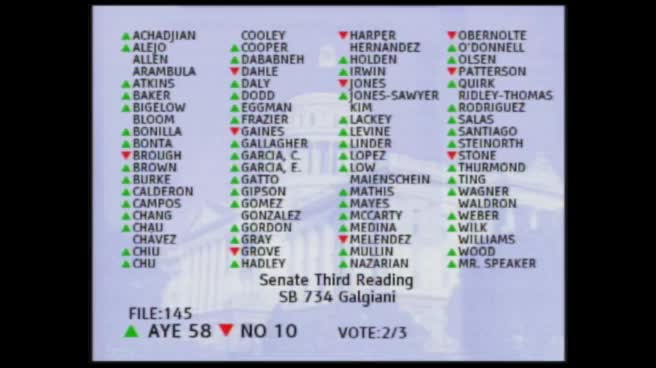
| Aug 4, 2016 | Read third time. Passed. (Ayes 61. Noes 2. Page 5713.) Ordered to the Senate. |
| Aug 4, 2016 | In Senate. Concurrence in Assembly amendments pending. |
| Aug 4, 2016 | Read third time. Passed. Ordered to the Senate. |
| Aug 1, 2016 | Read second time. Ordered to third reading. |
| Jun 30, 2016 | Read second time and amended. Ordered to second reading. |
| Jun 29, 2016 | From committee: Do pass as amended. (Ayes 14. Noes 0.) (June 29). |
| Jun 29, 2016 | From committee: Do pass as amended and re-refer to Com. on APPR. (Ayes 14. Noes 0.) (June 29). |
| Jun 21, 2016 | From committee: Do pass and re-refer to Com. on APPR. (Ayes 13. Noes 1.) (June 21). Re-referred to Com. on APPR. |
| Jun 9, 2016 | Re-referred to Com. on B. & P. pursuant to Assembly Rule 96. |
| Jun 9, 2016 | Re-referred to Com. on RLS. pursuant to Assembly Rule 96. |
| Jun 6, 2016 | Referred to Com. on L. & E. |
| May 26, 2016 | Read third time. Passed. (Ayes 27. Noes 4. Page 3962.) Ordered to the Assembly. |
| May 26, 2016 | In Assembly. Read first time. Held at Desk. |
| May 26, 2016 | Read third time. Passed. (Ayes 27. Noes 4.) Ordered to the Assembly. |
| May 24, 2016 | Read second time. Ordered to third reading. |
| May 23, 2016 | Ordered to second reading. |
| May 23, 2016 | Read third time and amended. |
| May 3, 2016 | Read second time. Ordered to third reading. |
| May 2, 2016 | From committee: Be ordered to second reading pursuant to Senate Rule 28.8. |
| Apr 25, 2016 | From committee with author's amendments. Read second time and amended. Re-referred to Com. on APPR. |
| Apr 22, 2016 | Set for hearing May 2. |
| Apr 19, 2016 | From committee: Do pass and re-refer to Com. on APPR. (Ayes 5. Noes 2. Page 3591.) (April 18). Re-referred to Com. on APPR. |
| Apr 19, 2016 | From committee: Do pass and re-refer to Com. on APPR. (Ayes 5. Noes 2.) (April 18). Re-referred to Com. on APPR. |
| Apr 5, 2016 | Set for hearing April 18. |
| Mar 31, 2016 | Re-referred to Com. on B., P. & E.D. |
| Mar 17, 2016 | From committee with author's amendments. Read second time and amended. Re-referred to Com. on RLS. |
| Feb 4, 2016 | Referred to Com. on RLS. |
| Jan 22, 2016 | From printer. May be acted upon on or after February 21. |
| Jan 21, 2016 | Introduced. Read first time. To Com. on RLS. for assignment. To print. |
|
Date
|
Description
|
Location
|
Votes
|
|
|---|---|---|---|---|
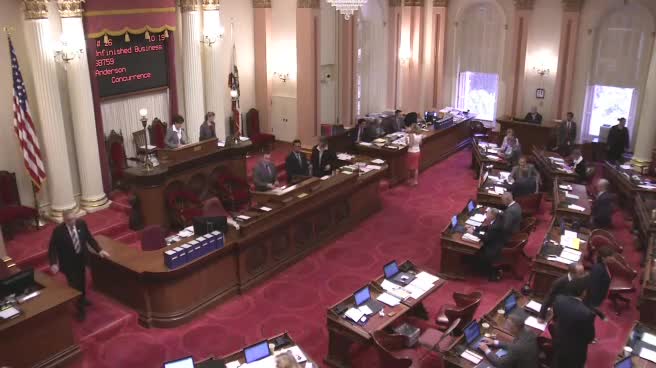
| Aug 11, 2016 | Unfinished Business SB896 Nguyen Concurrence | Senate Floor |
Passed |
|
| Aug 4, 2016 | SB 896 Nguyen Senate Third Reading By GONZALEZ | Assembly Floor |
Passed |
|
| Jun 29, 2016 | Do pass as amended. | Assembly Standing Committee on Appropriations |
Passed |
|
| Jun 21, 2016 | Do pass and be re-referred to the Committee on [Appropriations] | Assembly Standing Committee on Business and Professions |
Passed |
|
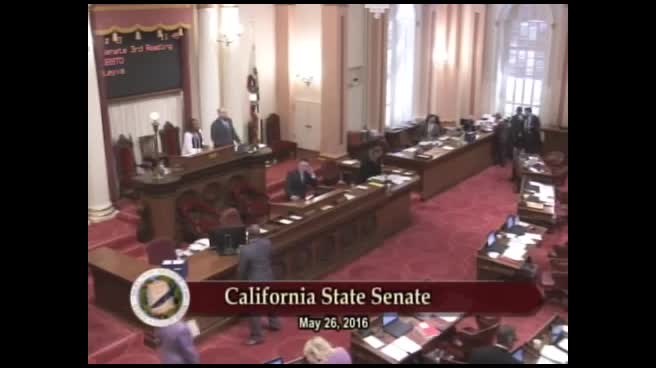
| May 26, 2016 | Senate 3rd Reading SB896 Nguyen | Senate Floor |
Passed |
|
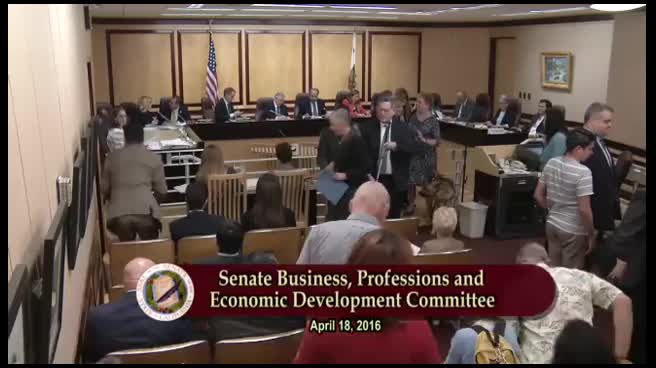
| Apr 18, 2016 | Do pass, but first be re-referred to the Committee on [Appropriations] | Senate Standing Committee on Business, Professions and Economic Development |
Passed |
This list shows positions taken on this bill by organizations on the date displayed, which is linked to the original source.
Positions by individuals are not included.
Office of Senate Floor Analyses (916) 651-1520 Fax: (916) 327-4478 | SB 896 |
VETO
Bill No: SB 896
Amended: 6/30/16
SENATE BUS., PROF. & ECON. DEV. COMMITTEE: 5-2, 4/18/16
AYES: Bates, Berryhill, Galgiani, Jackson, Mendoza
NOES: Hill, Block
NO VOTE RECORDED: Hernandez, Wieckowski
SENATE APPROPRIATIONS COMMITTEE: Senate Rule 28.8
SENATE FLOOR: 27-4, 5/26/16
AYES: Anderson, Bates, Beall, Berryhill, Cannella, Fuller, Gaines, Galgiani, Hall, Hancock, Hertzberg, Hueso, Jackson, Lara, Liu, McGuire, Mendoza, Mitchell, Moorlach, Morrell, Nguyen, Nielsen, Pan, Roth, Stone, Vidak, Wolk
NOES: Glazer, Hill, Leno, Leyva
NO VOTE RECORDED: Allen, Block, De León, Hernandez, Huff, Monning, Pavley, Runner, Wieckowski
SENATE FLOOR: 29-5, 8/11/16
AYES: Anderson, Bates, Beall, Berryhill, Cannella, Fuller, Gaines, Galgiani, Hertzberg, Hill, Hueso, Huff, Jackson, Lara, Liu, McGuire, Mendoza, Mitchell, Moorlach, Morrell, Nguyen, Nielsen, Pan, Pavley, Roth, Stone, Vidak, Wieckowski, Wolk
NOES: Allen, Glazer, Leno, Leyva, Monning
NO VOTE RECORDED: Block, De León, Hall, Hancock, Hernandez
ASSEMBLY FLOOR: 61-2, 8/4/16 - See last page for vote
SUBJECT: Barbering and cosmetology: nail care establishments: credit and debit cards
DIGEST: This bill requires an establishment offering nail care services that accepts a debit or credit card as payment for nail care services to also accept a debit or credit card for payment of a tip in accordance with labor laws.
Assembly Amendments add coauthors and make technical changes.
Existing law:
- Provides for the licensure regulation of the practice of barbering, cosmetology, and electrolysis under the Barbering and Cosmetology Act (Act) by the Board of Barbering and Cosmetology (BBC).
- Establishes nail care as a specialty branch in the practice of cosmetology and defines nail care as the practice of cutting, trimming, polishing, coloring, tinting, cleansing, manicuring, or pedicuring the nails of any person or massaging or beautifying from the elbow to the fingertips or the knee to the toes of any person. (Business and Professions Code (BPC) § 7316 (c) (2))
- Provides for licensure of manicurists by BBC to practice nail care and requires applicants to be over the age of 17, complete 10th grade in public California school or equivalent, not subject to a denial and have either completed a course in nail care from a BBC approved school, or practiced nail care in another state for a period of time equivalent to the study and training of a BBC approved course or completed an apprenticeship program in nail care. (BPC § 7326)
- Defines “establishment” as any premises, building or part of a building where any activity licensed under the Act is practiced and sets forth requirements for licensure as an establishment by BBC. (BPC §§ 7346-7352)
- Requires an employer that permits patrons to pay gratuities by credit card to pay the employees the full amount of the gratuity that the patron indicated on the credit card slip, without any deductions for any credit card payment processing fees or costs that may be charged to the employer by the credit card company. (Labor Code § 351)
This bill requires an establishment offering nail care services that accepts a debit or credit card as payment for nail care services to also accept a debit or credit card for payment of a tip and specifies that acceptance of a tip by debit or credit card must be done in accordance with existing labor laws.
Background
The author notes that there are over 52,000 establishments and almost 600,000 total workers, including over 312,000 cosmetologists and approximately 129,000 nail technicians currently licensed by BBC. According to the author, currently, nail salon establishments in the state accept various forms of payment for a consumer’s service and tip. The author notes that while some establishments accept paying for a service with a credit card, they may not allow a tip to be charged on the credit card, yet other establishments offer the service and tip to be paid with a credit card. The author notes that many people simply do not carry cash with them and most consumers have a credit or debit card that they use for all their transactions. The author states that it is more convenient for the consumer to be able to use their card for both the service and tip, especially if they don’t have cash with them.
Nail Care in California. Nail care is a specialty branch in the field of cosmetology. In California, a licensed cosmetologist can practice nail care and BBC also licenses manicurists as a separate license category. To become a licensed manicurist, an applicant must submit proof of completion to BBC of 400 training hours training covering all practices of a manicurist. BBC currently licenses 126,872 manicurists, 310,041 cosmetologists (whom can also perform nail care services) and 52,785 establishments. BBC does not include information in its establishment license data to differentiate between an establishment offering nail care services specifically or those offering other personal beautification services.
Credit Card Payments and Tips. Card payments are evolving into the most common method of customer payment, as businesses can easily accept card payments and the convenience of using credit cards generally increases the likelihood of consumer purchases, which ultimately contributes to an increase in a business's average sale. Businesses that accept card payments pay processing fees for purchase transactions.
According to the Internal Revenue Service, tips are discretionary (optional or extra) payments determined by a customer that employees receive from customers. Tips include cash tips received directly from customers, tips from customers who leave a tip through electronic settlement or payment (including a credit card, debit card, gift card, or any other electronic payment method), the value of any noncash tips, such as tickets, or other items of value, and tip amounts received from other employees paid out through tip pools or tip splitting, or other formal or informal tip sharing arrangement. According to the United States Department of Labor, tipped employees are those who customarily and regularly receive more than $30 per month in tips. Tips are the property of the employee.
FISCAL EFFECT: Appropriation: Fiscal Com.: Local:
According to the Assembly Appropriations Committee, this bill will have negligible state fiscal impact.
None received
Board of Barbering and Cosmetology
Professional Beauty Federation of California
ARGUMENTS IN SUPPORT: ---
ARGUMENTS IN OPPOSITION: The Professional Beauty Federation of California (PBFC) is opposed to this bill, noting support for efforts to encourage tips to be given to licensees, but concerns about the fees salon owners pay to credit companies for clients to be able to use credit cards. PBFC believes that the decision about using credit cards or not should be left to the salon owner.
I am returning Senate Bill 896 without my signature.
This bill requires a nail salon that accepts credit cards for nail care to also accept a credit card for the payment of tips.
I understand the author's intent to encourage the giving of tips to nail salon workers, but I don't believe that government should mandate the use of credit cards as required by this bill. In matters like this, the competitive marketplace should be sufficient.
I would also note that this bill lacks any enforcement mechanism.
ASSEMBLY FLOOR: 61-2, 8/4/16
AYES: Achadjian, Alejo, Arambula, Atkins, Baker, Bloom, Bonilla, Bonta, Brough, Brown, Burke, Calderon, Campos, Chang, Chau, Chiu, Chu, Cooper, Dababneh, Daly, Dodd, Eggman, Frazier, Eduardo Garcia, Gipson, Gomez, Gonzalez, Gordon, Grove, Holden, Irwin, Jones, Jones-Sawyer, Kim, Lackey, Levine, Lopez, Low, Maienschein, Mathis, Mayes, McCarty, Medina, Mullin, Nazarian, O'Donnell, Quirk, Ridley-Thomas, Rodriguez, Salas, Santiago, Mark Stone, Thurmond, Ting, Wagner, Waldron, Weber, Wilk, Williams, Wood, Rendon
NOES: Gatto, Gray
NO VOTE RECORDED: Travis Allen, Bigelow, Chávez, Cooley, Dahle, Beth Gaines, Gallagher, Cristina Garcia, Hadley, Harper, Roger Hernández, Linder, Melendez, Obernolte, Olsen, Patterson, Steinorth
Prepared by: Sarah Mason / B., P. & E.D. / (916) 651-4104
8/30/16 15:46:09
**** END ****
Office of Senate Floor Analyses (916) 651-1520 Fax: (916) 327-4478 | SB |
UNFINISHED BUSINESS
Bill No: SB 896
:
SENATE BUS., PROF. & ECON. DEV. COMMITTEE: 5-2, 4/18/16
AYES: Bates, Berryhill, Galgiani, Jackson, Mendoza
NOES: Hill, Block
NO VOTE RECORDED: Hernandez, Wieckowski
SENATE APPROPRIATIONS COMMITTEE: Senate Rule 28.8
SENATE FLOOR: 27-4, 5/26/16
AYES: Anderson, Bates, Beall, Berryhill, Cannella, Fuller, Gaines, Galgiani, Hall, Hancock, Hertzberg, Hueso, Jackson, Lara, Liu, McGuire, Mendoza, Mitchell, Moorlach, Morrell, Nguyen, Nielsen, Pan, Roth, Stone, Vidak, Wolk
NOES: Glazer, Hill, Leno, Leyva
NO VOTE RECORDED: Allen, Block, De León, Hernandez, Huff, Monning, Pavley, Runner, Wieckowski
ASSEMBLY FLOOR: 61-2, 8/4/16 - See last page for vote
DIGEST: This bill requires an establishment offering nail care services that accepts a debit or credit card as payment for nail care services to also accept a debit or credit card for payment of a tip in accordance with labor laws.
Assembly Amendments add coauthors and make technical changes.
Existing law:
- Provides for the licensure regulation of the practice of barbering, cosmetology, and electrolysis under the Barbering and Cosmetology Act (Act) by the Board of Barbering and Cosmetology (BBC).
- Establishes nail care as a specialty branch in the practice of cosmetology and defines nail care as the practice of cutting, trimming, polishing, coloring, tinting, cleansing, manicuring, or pedicuring the nails of any person or massaging or beautifying from the elbow to the fingertips or the knee to the toes of any person. (Business and Professions Code (BPC) § 7316 (c) (2))
- Provides for licensure of manicurists by BBC to practice nail care and requires applicants to be over the age of 17, complete 10th grade in public California school or equivalent, not subject to a denial and have either completed a course in nail care from a BBC approved school, or practiced nail care in another state for a period of time equivalent to the study and training of a BBC approved course or completed an apprenticeship program in nail care. (BPC § 7326)
- Defines “establishment” as any premises, building or part of a building where any activity licensed under the Act is practiced and sets forth requirements for licensure as an establishment by BBC. (BPC §§ 7346-7352)
- Requires an employer that permits patrons to pay gratuities by credit card to pay the employees the full amount of the gratuity that the patron indicated on the credit card slip, without any deductions for any credit card payment processing fees or costs that may be charged to the employer by the credit card company. (Labor Code § 351)
This bill requires an establishment offering nail care services that accepts a debit or credit card as payment for nail care services to also accept a debit or credit card for payment of a tip and specifies that acceptance of a tip by debit or credit card must be done in accordance with existing labor laws.
Background
The author notes that there are over 52,000 establishments and almost 600,000 total workers, including over 312,000 cosmetologists and approximately 129,000 nail technicians currently licensed by BBC. According to the author, currently, nail salon establishments in the state accept various forms of payment for a consumer’s service and tip. The author notes that while some establishments accept paying for a service with a credit card, they may not allow a tip to be charged on the credit card, yet other establishments offer the service and tip to be paid with a credit card. The author notes that many people simply do not carry cash with them and most consumers have a credit or debit card that they use for all their transactions. The author states that it is more convenient for the consumer to be able to use their card for both the service and tip, especially if they don’t have cash with them.
Nail Care in California. Nail care is a specialty branch in the field of cosmetology. In California, a licensed cosmetologist can practice nail care and BBC also licenses manicurists as a separate license category. To become a licensed manicurist, an applicant must submit proof of completion to BBC of 400 training hours training covering all practices of a manicurist. BBC currently licenses 126,872 manicurists, 310,041 cosmetologists (whom can also perform nail care services) and 52,785 establishments. BBC does not include information in its establishment license data to differentiate between an establishment offering nail care services specifically or those offering other personal beautification services.
Credit Card Payments and Tips. Card payments are evolving into the most common method of customer payment, as businesses can easily accept card payments and the convenience of using credit cards generally increases the likelihood of consumer purchases, which ultimately contributes to an increase in a business's average sale. Businesses that accept card payments pay processing fees for purchase transactions.
According to the Internal Revenue Service, tips are discretionary (optional or extra) payments determined by a customer that employees receive from customers. Tips include cash tips received directly from customers, tips from customers who leave a tip through electronic settlement or payment (including a credit card, debit card, gift card, or any other electronic payment method), the value of any noncash tips, such as tickets, or other items of value, and tip amounts received from other employees paid out through tip pools or tip splitting, or other formal or informal tip sharing arrangement. According to the United States Department of Labor, tipped employees are those who customarily and regularly receive more than $30 per month in tips. Tips are the property of the employee.
FISCAL EFFECT: Appropriation: Fiscal Com.: Local:
According to the Assembly Appropriations Committee, this bill will have negligible state fiscal impact.
None received
Board of Barbering and Cosmetology
Professional Beauty Federation of California
ARGUMENTS IN SUPPORT: ---
ARGUMENTS IN OPPOSITION: The Professional Beauty Federation of California (PBFC) is opposed to this bill, noting support for efforts to encourage tips to be given to licensees, but concerns about the fees salon owners pay to credit companies for clients to be able to use credit cards. PBFC believes that the decision about using credit cards or not should be left to the salon owner.
ASSEMBLY FLOOR: 61-2, 8/4/16
AYES: Achadjian, Alejo, Arambula, Atkins, Baker, Bloom, Bonilla, Bonta, Brough, Brown, Burke, Calderon, Campos, Chang, Chau, Chiu, Chu, Cooper, Dababneh, Daly, Dodd, Eggman, Frazier, Eduardo Garcia, Gipson, Gomez, Gonzalez, Gordon, Grove, Holden, Irwin, Jones, Jones-Sawyer, Kim, Lackey, Levine, Lopez, Low, Maienschein, Mathis, Mayes, McCarty, Medina, Mullin, Nazarian, O'Donnell, Quirk, Ridley-Thomas, Rodriguez, Salas, Santiago, Mark Stone, Thurmond, Ting, Wagner, Waldron, Weber, Wilk, Williams, Wood, Rendon
NOES: Gatto, Gray
NO VOTE RECORDED: Travis Allen, Bigelow, Chávez, Cooley, Dahle, Beth Gaines, Gallagher, Cristina Garcia, Hadley, Harper, Roger Hernández, Linder, Melendez, Obernolte, Olsen, Patterson, Steinorth
8/5/16 14:04:37
**** END ****
SENATE THIRD READING
STR Bill Id:SB 896
Author:(Nguyen)
As Amended Ver:
Majority vote
SENATE VOTE: 27-4
Committee | Votes | Ayes | Noes |
Business & Professions | 13-1 | Salas, Brough, Baker, Bloom, Campos, Chávez, Dodd, Eggman, Gomez, Holden, Mullin, Ting, Wood | Gatto |
Appropriations | 14-0 | Gonzalez, Bloom, Bonta, Calderon, Chang, Daly, Eggman, Roger Hernández, Holden, Quirk, Santiago, Wagner, Weber, Wood |
|
SUMMARY: Requires an establishment offering nail care services to accept a debit or credit card payment for a tip or gratuity, if the establishment accepts a debit or credit card for payment of nail care services, as specified. Specifically, this bill requires an establishment offering nail care services that accepts a debit or credit card as payment for nail care services to also accept a debit or credit card for payment of a tip, consistent with specified provisions in the Labor Code (LC).
FISCAL EFFECT: According to the Assembly Appropriations Committee, negligible state fiscal impact.
COMMENTS:
Purpose. This bill will require nail care establishments, which are licensed by the Board of Barbering and Cosmetology (BBC), to accept credit or debit cards for purposes of leaving a tip, if they allow credit or debit cards for the payment of services. This bill is sponsored by the author. According to the author, "Currently, nail salons in the state accept various forms of payment for services provided and any tip left for the technician. Some salons only accept cash. Most establishments allow clients to use a debit or credit card for the cost of the service and to leave their technician a tip. A small number of establishments accept paying for a service with a credit or debit card, but do not allow a tip to be charged. Requiring salons that allow clients to use credit or debit cards to also leave a tip on a credit card or debit card will not only be more convenient for the client but it will also ensure that technicians are appropriately compensated for their labor."
Background. Nail Care. In California, a licensed cosmetologist can practice nail care and the BBC also licenses manicurists as a separate licensure category. To become a licensed manicurist, an applicant must submit to the BBC proof of completion of 400 hours of technical instruction and practical training as specified in Title 16 Section 950.4 of the California Code of Regulations. Additionally, the BBC recommends that schools provide training in the area of communication skills including professional ethics, salesmanship, decorum, record-keeping, client service record cards, basic tax responsibilities related to independent contractors, booth renters, employees, and employers.
Licensed Establishments. The BBC licenses and regulates over 550,000 licensees, including over 50,000 establishments. The types of establishments that the BBC regulates, include, but are not limited to, nail salons, barbers, and hair salons. The BBC is required to maintain a program of random and targeted inspections of establishments to ensure compliance with applicable laws relating to health and safety. Currently, the BBC does not differentiate between the types of establishments it licenses, and business models may vary.
The BBC currently licenses over 126,000 manicurists, 310,000 cosmetologists (who can also perform nail care services) and 50,000 establishments. BBC does not include information in its establishment license data to differentiate between an establishment offering nail care services specifically and those offering other personal beautification services.
An establishment licensee may operate a business to conduct any of the professional services for which a license is required under the Act. Establishment owners (establishment licensees) do not need to hold a separate professional license in order to own and operate an establishment; however, Business and Professions Code Section (BPC) 7348 specifies that an establishment must at all times be in the charge of a licensed person.
Under current law, there is no requirement for licensed establishments to accept a certain form of payment for professional services. Establishment owners or individual licensees may choose to accept any form of payment for professional services including, but not limited to prohibiting checks, but accepting credit cards, or requiring cash-only transactions. While the BBC inspects establishments for compliance with applicable health and safety requirements, it does not inspect businesses for labor related issues, including how the payment for services is made. This bill would require nail care establishments, which accept a credit card or debit card as a form of payment, to also allow tips to be added to the debit or credit card. This bill does not require a nail care establishment to accept a credit card or debit card as a form of payment. The author contends that with so many establishments statewide, it would make sense to have a uniform payment system. As currently drafted, this bill would apply only to nail establishments.
Tipping. According to information provided on the website of the Internal Revenue Service (IRS), tips are discretionary (optional or extra) payments determined by a customer that employees receive from customers. Tips can be presented in the form of cash, electronic formats (credit, debit, gift cards or other electronic means), or as noncash items such as tickets. "Employees must report to their employer all cash tips received except for the tips from any month that total less than $20. Cash tips include tips received from customers, charged tips (for example, credit and debit card charges) distributed to the employee by his or her employer, and tips received from other employees under any tip-sharing arrangement."
Credit and Debit Cards. California businesses are not required to accept a credit card or debit card as a form of payment for services. Civil Code Section 1725(a) lists the specific requirements for businesses if they choose to accept credit cards, which include, but are not limited to, prohibiting the recording of a credit card number or contacting a credit card issuer to determine if the credit amount available will cover the amount of the purchase. Under current California law, LC Section 351 specifically prohibits an employer from collecting, taking, or requiring an employee to credit the amount of gratuity as part of the employee's wages. Additionally, LC Section 351specifies that if an employer permits gratuity to be paid though a credit card, the employer may not deduct any payment processing fees or costs that may be charged to the employer by the credit card company. Under this bill, nail establishment owners would need to comply with the provisions of LC Section 351 and would not be permitted to deduct processing fees related to the payment of gratuity. Regardless of the form of payment, tips or gratuity belong solely to the employee, not the employer, and the provisions of this bill do not alter this existing structure in California.
Nail Establishment Concerns. Labor concerns for nail technicians were raised in a May 7, 2015, article from the New York Times, "The Price of Nice Nails," in which it was reported: "The New York Times interviewed more than 150 nail salon workers and owners, in four languages, and found that a vast majority of workers are paid below minimum wage; sometimes they are not even paid. Workers endure all manner of humiliation, including having their tips docked as punishment for minor transgressions, constant video monitoring by owners, even physical abuse. Employers are rarely punished for labor and other violations. …Tips or wages are often skimmed or never delivered, or deducted as punishment for things like spilled bottles of polish."
In August of 2015, the Assembly Select Committees on Women in the Workplace, and Girls and Women of Color held a joint hearing with the Assembly Committees on Health, Business and Professions, and Labor and Employment, which focused on both the health and safety of licensees regarding exposure to chemicals and other ingredients, and concerns about labor practices in nail salons. The purpose of that hearing was for state agencies, advocates, and industry to obtain and share information, address concerns, and discuss policy recommendations regarding nail salon practices. As part of that discussion, the issue of tips was raised.
Analysis Prepared by: Elissa Silva / B. & P. / (916) 319-3301 FN: 0003576
Date of Hearing: June 29, 2016
ASSEMBLY COMMITTEE ON APPROPRIATIONS
Lorena Gonzalez, Chair
SBPCA Bill Id:SB 896
Author:(Nguyen) – As Amended Ver:May 23, 2016
Policy Committee: | Business and Professions | Vote: | 13 - 1 |
Urgency: No State Mandated Local Program: Yes Reimbursable: No
SUMMARY:
This bill requires an establishment that offers nail care services that accepts a debit or credit card as payment for nail care services to also accept a debit or credit card for payment of a tip in accordance with existing labor laws regarding gratuities.
FISCAL EFFECT:
Negligible state fiscal impact.
COMMENTS:
- Purpose. According to the author, "Currently, nail salons in the state accept various forms of payment for services provided and any tip left for the technician. Some salons only accept cash. Most establishments allow clients to use a debit or credit card for the cost of the service and to leave their technician a tip. A small number of establishments accept paying for a service with a credit or debit card, but do not allow a tip to be charged. Requiring salons that allow clients to use credit or debit cards to also leave a tip on a credit card or debit card will not only be more convenient for the client but it will also ensure that technicians are appropriately compensated for their labor."
- Background. The Board of Barbering and Cosmetology (BBC) licenses and regulates over 550,000 licensees, including over 50,000 establishments including, but are not limited to, nail salons, barbers, and hair salons. The BBC is required to maintain a program of random and targeted inspections of establishments to ensure compliance with applicable laws relating to health and safety. The BBC currently licenses over 126,000 manicurists, 310,000 cosmetologists (who can also perform nail care services) and 50,000 establishments.
Under existing law, there is no requirement for licensed establishments to accept a certain form of payment for professional services. Establishment owners or individual licensees may choose to accept any form of payment for professional services including, but not limited, to prohibiting checks, but accepting credit cards, or requiring cash-only transactions. Businesses that accept card payments pay processing fees for purchase transactions. While the BBC inspects establishments for compliance with applicable health and safety requirements, it does not inspect businesses for labor related issues, including how the payment for services is made.
This bill would require nail care establishments which accept a credit card or debit card as a form of payment, to also allow tips to be added to the debit or credit card. This bill does not require a nail care establishment to accept a credit card or debit card as a form of payment, nor does it alter the BBCs enforcement requirements. As currently drafted, this bill would apply only to nail establishments.
- Arguments in Support. This bill is authored sponsored. The author notes that many people simply do not carry cash with them and most consumers have a credit or debit card that they use for all their transactions. The author states that it is more convenient for the consumer to be able to use their card for both the service and tip, especially if they don’t have cash with them. The author further contends that with so many establishments statewide, it would make sense to have a uniform payment system.
- Arguments in Opposition. The Professional Beauty Federation of California writes in opposition, "While we support the intent to encourage tips to be given to our wonderful licensees, we cannot support the level of statutory micromanagement of salon business operations called for under [this bill]. Salon owners pay on average 3% fees to credit card companies for the benefit of allowing their clientele to use such payment methods, and those charges apply to tips. While rare, some salons choose to forgo having to pay that fee for tips (and instead encourage cash tips), and we believe that should be their prerogative."
Analysis Prepared by: Jennifer Swenson / APPR. / (916) 319-2081
Date of Hearing: June 21, 2016
ASSEMBLY COMMITTEE ON BUSINESS AND PROFESSIONS
Rudy Salas, Chair
SBPCA Bill Id:SB 896
Author:(Nguyen) – As Amended Ver:May 23, 2016
SENATE VOTE: 27-4
SUBJECT: Barbering and cosmetology: nail care establishments: credit and debit cards
SUMMARY: Requires an establishment that offers nail care services to accept a debit or credit card payment for a tip or gratuity, if the establishment accepts a debit or credit card for payment of nail care services, as specified.
EXISTING LAW:
- Establishes the Barbering and Cosmetology Act (Act) and the Board of Barbering and Cosmetology (BBC) to license, regulate, and discipline professional work in hair, skin, nail care, and electrolysis; and, ensure the protection of the public is paramount when other interests are sought to be promoted. (Business and Professions Code (BPC) Section 7301, et seq.)
- Establishes nail care as a specialty branch in the practice of cosmetology and defines nail care as the practice of cutting, trimming, polishing, coloring, tinting, cleansing, manicuring, or pedicuring the nails of any person or massaging or beautifying from the elbow to the fingertips or the knee to the toes of any person. (BPC Section 7316(c)(2))
- Provides for licensure of manicurists by the BBC to practice nail care and requires applicants to be over the age of 17, complete 10th grade in public California school or equivalent, not be subject to a denial and have either completed a course in nail care from a BBC approved school, or practiced nail care in another state for a period of time equivalent to the study and training of a BBC approved course or completed an apprenticeship program in nail care. (BPC Section 7326)
- States that every gratuity is the sole property of the employee or employees to whom it was paid, given, or left for. (Labor Code (LC) Section 351)
- Requires an employer who permits patrons to pay gratuities by credit card to pay the employees the full amount of the gratuity that the patron indicated on the credit card slip, without any deductions for any credit card payment processing fees or costs that may be charged to the employer by the credit card company, and requires payment of gratuities by credit card to be made to the employees no later than the next regular payday following the date the patron authorized the credit card payment. (LC Code Section 351)
THIS BILL:
- Requires an establishment offering nail care services that accepts a debit or credit card as payment for nail care services to also accept a debit or credit card for payment of a tip, consistent with specified provisions in the LC.
FISCAL EFFECT: According to the Senate Appropriations Committee, pursuant to Senate Rule 28.8, this bill will result in negligible state costs.
COMMENTS:
Purpose. This bill will require nail care establishments, which are licensed by the BBC, to accept credit or debit cards for purposes of leaving a tip, if they allow credit or debit cards for the payment of services. This bill is sponsored by the author. According to the author, "Currently, nail salons in the state accept various forms of payment for services provided and any tip left for the technician. Some salons only accept cash. Most establishments allow clients to use a debit or credit card for the cost of the service and to leave their technician a tip. A small number of establishments accept paying for a service with a credit or debit card, but do not allow a tip to be charged. Requiring salons that allow clients to use credit or debit cards to also leave a tip on a credit card or debit card will not only be more convenient for the client but it will also ensure that technicians are appropriately compensated for their labor."
Background. Nail Care. In California, a licensed cosmetologist can practice nail care and the BBC also licenses manicurists as a separate licensure category. To become a licensed manicurist, an applicant must submit to the BBC proof of completion of 400 hours of technical instruction and practical training as specified in Title 16 Section 950.4 of the California Code of Regulations. Additionally, the BBC recommends that schools provide training in the area of communication skills including professional ethics, salesmanship, decorum, record-keeping, client service record cards, basic tax responsibilities related to independent contractors, booth renters, employees, and employers.
Licensed Establishments. The BBC licenses and regulates over 550,000 licensees, including over 50,000 establishments. The types of establishments that the BBC regulates, include, but are not limited to, nail salons, barbers, and hair salons. The BBC is required to maintain a program of random and targeted inspections of establishments to ensure compliance with applicable laws relating to health and safety. Currently, the BBC does not differentiate between the types of establishments it licenses, and business models may vary.
The BBC currently licenses over 126,000 manicurists, 310,000 cosmetologists (who can also perform nail care services) and 50,000 establishments. BBC does not include information in its establishment license data to differentiate between an establishment offering nail care services specifically and those offering other personal beautification services.
An establishment licensee may operate a business to conduct any of the professional services for which a license is required under the Act. Establishment owners (establishment licensees) do not need to hold a separate professional license in order to own and operate an establishment; however, BPC Section 7348 specifies that an establishment must at all times be in the charge of a licensed person.
Under current law, there is no requirement for licensed establishments to accept a certain form of payment for professional services. Establishment owners or individual licensees may choose to accept any form of payment for professional services including, but not limited to prohibiting checks, but accepting credit cards, or requiring cash-only transactions. While the BBC inspects establishments for compliance with applicable health and safety requirements, it does not inspect businesses for labor related issues, including how the payment for services is made. This bill would require nail care establishments, which accept a credit card or debit card as a form of payment, to also allow tips to be added to the debit or credit card. This bill does not require a nail care establishment to accept a credit card or debit card as a form of payment. The author contends that with so many establishments statewide, it would make sense to have a uniform payment system. As currently drafted, this bill would apply only to nail establishments.
Tipping. According to information provided on the website of the Internal Revenue Service (IRS), tips are discretionary (optional or extra) payments determined by a customer that employees receive from customers. Tips can be presented in the form of cash, electronic formats (credit, debit, gift cards or other electronic means), or as noncash items such as tickets. "Employees must report to their employer all cash tips received except for the tips from any month that total less than $20. Cash tips include tips received from customers, charged tips (for example, credit and debit card charges) distributed to the employee by his or her employer, and tips received from other employees under any tip-sharing arrangement."
Credit and Debit Cards. California businesses are not required to accept a credit card or debit card as a form of payment for services. Civil Code Section 1725(a) lists the specific requirements for businesses if they choose to accept credit cards, which include, but are not limited to, prohibiting the recording of a credit card number or contacting a credit card issuer to determine if the credit amount available will cover the amount of the purchase. Under current California law, LC Section 351 specifically prohibits an employer from collecting, taking, or requiring an employee to credit the amount of gratuity as part of the employee's wages. Additionally, LC Section 351specifies that if an employer permits gratuity to be paid though a credit card, the employer may not deduct any payment processing fees or costs that may be charged to the employer by the credit card company. Under this bill, nail establishment owners would need to comply with the provisions of LC Section 351 and would not be permitted to deduct processing fees related to the payment of gratuity. Regardless of the form of payment, tips or gratuity belong solely to the employee, not the employer, and the provisions of this bill do not alter this existing structure in California.
At the federal level, according to information retrieved from a United States Department of Labor, Wage and Hour Division, fact sheet, "Where tips are charged on a credit card and the employer must pay the credit card company a percentage on each sale, the employer may pay the employee the tip, less that percentage. For example, where a credit card company charges an employer three percent on all sales charged to its credit service, the employer may pay the tipped employee 97 percent of the tips without violating the Fair Labor Standards Act. However, this charge on the tip may not reduce the employee's wage below the required minimum wage. The amount due the employee must be paid no later than the regular pay day and may not be held while the employer is awaiting reimbursement from the credit card company."
Nail Establishment Concerns. Labor concerns for nail technicians were raised in a May 7, 2015, article from the New York Times, “The Price of Nice Nails,” in which it was reported: "The New York Times interviewed more than 150 nail salon workers and owners, in four languages, and found that a vast majority of workers are paid below minimum wage; sometimes they are not even paid. Workers endure all manner of humiliation, including having their tips docked as punishment for minor transgressions, constant video monitoring by owners, even physical abuse. Employers are rarely punished for labor and other violations…Tips or wages are often skimmed or never delivered, or deducted as punishment for things like spilled bottles of polish."
In August of 2015, the Assembly Select Committees on Women in the Workplace, and Girls and Women of Color held a joint hearing with the Assembly Committees on Health, Business and Professions, and Labor and Employment, which focused on both the health and safety of licensees regarding exposure to chemicals and other ingredients, and concerns about labor practices in nail salons. The purpose of that hearing was for state agencies, advocates, and industry to obtain and share information, address concerns, and discuss policy recommendations regarding nail salon practices. As part of that discussion, the issue of tips was raised.
ARGUMENTS IN SUPPORT:
None on file.
ARGUMENTS IN OPPOSITION:
The Professional Beauty Federation of California writes in opposition, "While we support the intent to encourage tips to be given to our wonderful licensees, we cannot support the level of statutory micromanagement of salon business operations called for under [this bill]. Salon owners pay on average 3% fees to credit card companies for the benefit of allowing their clientele to use such payment methods, and those charges apply to tips. While rare, some salons choose to forgo having to pay that fee for tips (and instead encourage cash tips), and we believe that should be their prerogative."
POLICY ISSUE(S):
Types of Establishments. As currently drafted, this bill is only applicable to nail care establishments; however, the BBC does not issue an establishment license based on the type of services each establishment offers. An establishment license would permit the establishment licensee to offer any of the professional services for which a license is required under BPC Sections 7301, et seq. For example, a licensed establishment may provide hair care (cosmetologist), skin care (esthetician), and nail care (manicurist) under one license. It is unclear if the author's intent is to make this bill applicable to all establishments that provide a broad range of services including nail care services or just to those establishments that provide only nail services.
Ensuring Employees Receive the Proper Tips. The issue of proper tip collection was raised during the previous 2015 joint informational hearing. Part of that discussion called into question the practice of employers not properly distributing tips to their employees, and employees potentially being unaware of the tips they have received. Although, current California law (LC Section 351) specifies that tips are the sole property of the employee for which the tip was made, this bill does not address if tips are properly distributed to the appropriate employee for which the tip was provided.
Compliance. As currently drafted, it is unclear how the provisions of this bill would be enforced. The author may wish to clarify what, if any, role the BBC would play in ensuring compliance with the provisions of this bill.
REGISTERED SUPPORT:
None on file.
REGISTERED OPPOSITION:
Professional Beauty Federation of California
Board of Barbering and Cosmetology
Analysis Prepared by: Elissa Silva / B. & P. / (916) 319-3301
Office of Senate Floor Analyses (916) 651-1520 Fax: (916) 327-4478 | SB |
THIRD READING
Bill No: SB 896
:
SENATE BUS., PROF. & ECON. DEV. COMMITTEE: 5-2, 4/18/16
AYES: Bates, Berryhill, Galgiani, Jackson, Mendoza
NOES: Hill, Block
NO VOTE RECORDED: Hernandez, Wieckowski
SENATE APPROPRIATIONS COMMITTEE: Senate Rule 28.8
DIGEST: This bill requires an establishment offering nail care services that accepts a debit or credit card as payment for nail care services to also accept a debit or credit card for payment of a tip in accordance with labor laws.
Senate Floor Amendments of 5/23/16 add the provision clarifying that acceptance of a tip via debit or credit card be done so in accordance with labor laws in an attempt to ensure that employees of establishments offering nail care services will receive tips, if establishments accept electronic payment for tips.
Existing law:
- Provides for the licensure regulation of the practice of barbering, cosmetology, and electrolysis under the Barbering and Cosmetology Act (Act) by the Board of Barbering and Cosmetology (BBC).
- Establishes nail care as a specialty branch in the practice of cosmetology and defines nail care as the practice of cutting, trimming, polishing, coloring, tinting, cleansing, manicuring, or pedicuring the nails of any person or massaging or beautifying from the elbow to the fingertips or the knee to the toes of any person. (Business and Professions Code (BPC) § 7316 (c) (2))
- Provides for licensure of manicurists by BBC to practice nail care and requires applicants to be over the age of 17, complete 10th grade in public California school or equivalent, not subject to a denial and have either completed a course in nail care from a BBC approved school, or practiced nail care in another state for a period of time equivalent to the study and training of a BBC approved course or completed an apprenticeship program in nail care. (BPC § 7326)
- Defines “establishment” as any premises, building or part of a building where any activity licensed under the Act is practiced and sets forth requirements for licensure as an establishment by BBC. (BPC §§ 7346-7352)
- Requires an employer that permits patrons to pay gratuities by credit card to pay the employees the full amount of the gratuity that the patron indicated on the credit card slip, without any deductions for any credit card payment processing fees or costs that may be charged to the employer by the credit card company. (Labor Code § 351)
This bill requires an establishment offering nail care services that accepts a debit or credit card as payment for nail care services to also accept a debit or credit card for payment of a tip and specifies that acceptance of a tip by debit or credit card must be done in accordance with existing labor laws.
Background
The author notes that there are over 52,000 establishments and almost 600,000 total workers, including over 312,000 cosmetologists and approximately 129,000 nail technicians currently licensed by BBC. According to the author, currently, nail salon establishments in the state accept various forms of payment for a consumer’s service and tip. The author notes that while some establishments accept paying for a service with a credit card, they may not allow a tip to be charged on the credit card, yet other establishments offer the service and tip to be paid with a credit card. The author notes that many people simply do not carry cash with them and most consumers have a credit or debit card that they use for all their transactions. The author states that it is more convenient for the consumer to be able to use their card for both the service and tip, especially if they don’t have cash with them.
Nail Care in California. Nail care is a specialty branch in the field of cosmetology. In California, a licensed cosmetologist can practice nail care and BBC also licenses manicurists as a separate license category. To become a licensed manicurist, an applicant must submit proof of completion to BBC of 400 training hours training covering all practices of a manicurist. BBC currently licenses 126,872 manicurists, 310,041 cosmetologists (whom can also perform nail care services) and 52,785 establishments. BBC does not include information in its establishment license data to differentiate between an establishment offering nail care services specifically or those offering other personal beautification services.
Credit Card Payments and Tips. Card payments are evolving into the most common method of customer payment, as businesses can easily accept card payments and the convenience of using credit cards generally increases the likelihood of consumer purchases, which ultimately contributes to an increase in a business's average sale. Businesses that accept card payments pay processing fees for purchase transactions.
According to the Internal Revenue Service, tips are discretionary (optional or extra) payments determined by a customer that employees receive from customers. Tips include cash tips received directly from customers, tips from customers who leave a tip through electronic settlement or payment (including a credit card, debit card, gift card, or any other electronic payment method), the value of any noncash tips, such as tickets, or other items of value, and tip amounts received from other employees paid out through tip pools or tip splitting, or other formal or informal tip sharing arrangement. According to the United States Department of Labor, tipped employees are those who customarily and regularly receive more than $30 per month in tips. Tips are the property of the employee.
FISCAL EFFECT: Appropriation: Fiscal Com.: Local:
None received
OPPOSITION: (Verified 5/25/16)
Professional Beauty Federation of California
ARGUMENTS IN OPPOSITION: The Professional Beauty Federation of California (PBFC) is opposed to this bill, noting support for efforts to encourage tips to be given to licensees, but concerns about the fees salon owners pay to credit companies for clients to be able to use credit cards. PBFC believes that the decision about using credit cards or not should be left to the salon owner.
5/25/16 13:50:22
**** END ****
Office of Senate Floor Analyses (916) 651-1520 Fax: (916) 327-4478 | SB |
THIRD READING
Bill No: SB 896
:
SENATE BUS, PROF. & ECON. DEV. COMMITTEE: 5-2, 4/18/16
AYES: Bates, Berryhill, Galgiani, Jackson, Mendoza
NOES: Hill, Block
NO VOTE RECORDED: Hernandez, Wieckowski
SENATE APPROPRIATIONS COMMITTEE: Senate Rule 28.8
DIGEST: This bill requires an establishment offering nail care services that accepts a debit or credit card as payment for nail care services to also accept a debit or credit card for payment of a tip.
Existing law:
- Provides for the licensure regulation of the practice of barbering, cosmetology, and electrolysis under the Barbering and Cosmetology Act (Act) by the Board of Barbering and Cosmetology (BBC).
- Establishes nail care as a specialty branch in the practice of cosmetology and defines nail care as the practice of cutting, trimming, polishing, coloring, tinting, cleansing, manicuring, or pedicuring the nails of any person or massaging or beautifying from the elbow to the fingertips or the knee to the toes of any person. (Business and Professions Code (BPC) § 7316 (c) (2))
- Provides for licensure of manicurists by BBC to practice nail care and requires applicants to be over the age of 17, complete 10th grade in public California school or equivalent, not subject to a denial and have either completed a course in nail care from a BBC approved school, or practiced nail care in another state for a period of time equivalent to the study and training of a BBC approved course or completed an apprenticeship program in nail care. (BPC § 7326)
- Defines “establishment” as any premises, building or part of a building where any activity licensed under the Act is practiced and sets forth requirements for licensure as an establishment by BBC. (BPC §§ 7346-7352)
- Requires an employer that permits patrons to pay gratuities by credit card to pay the employees the full amount of the gratuity that the patron indicated on the credit card slip, without any deductions for any credit card payment processing fees or costs that may be charged to the employer by the credit card company. (Labor Code § 351)
This bill requires an establishment offering nail care services that accepts a debit or credit card as payment for nail care services to also accept a debit or credit card for payment of a tip.
Background
The author notes that there are over 52,000 establishments and almost 600,000 total workers, including over 312,000 cosmetologists and approximately 129,000 nail technicians currently licensed by BBC. According to the author, currently, nail salon establishments in the state accept various forms of payment for a consumer’s service and tip. The author notes that while some establishments accept paying for a service with a credit card, they may not allow a tip to be charged on the credit card, yet other establishments offer the service and tip to be paid with a credit card. The author notes that many people simply do not carry cash with them and most consumers have a credit or debit card that they use for all their transactions. The author states that it is more convenient for the consumer to be able to use their card for both the service and tip, especially if they don’t have cash with them.
Nail Care in California. Nail care is a specialty branch in the field of cosmetology. In California, a licensed cosmetologist can practice nail care and BBC also licenses manicurists as a separate license category. To become a licensed manicurist, an applicant must submit proof of completion to BBC of 400 training hours training covering all practices of a manicurist. BBC currently licenses 126,872 manicurists, 310,041 cosmetologists (whom can also perform nail care services) and 52,785 establishments. BBC does not include information in its establishment license data to differentiate between an establishment offering nail care services specifically or those offering other personal beautification services.
Credit Card Payments and Tips. Card payments are evolving into the most common method of customer payment, as businesses can easily accept card payments and the convenience of using credit cards generally increases the likelihood of consumer purchases, which ultimately contributes to an increase in a business's average sale. Businesses that accept card payments pay processing fees for purchase transactions.
According to the Internal Revenue Service, tips are discretionary (optional or extra) payments determined by a customer that employees receive from customers. Tips include cash tips received directly from customers, tips from customers who leave a tip through electronic settlement or payment (including a credit card, debit card, gift card, or any other electronic payment method), the value of any noncash tips, such as tickets, or other items of value, and tip amounts received from other employees paid out through tip pools or tip splitting, or other formal or informal tip sharing arrangement. According to the United States Department of Labor, tipped employees are those who customarily and regularly receive more than $30 per month in tips. Tips are the property of the employee.
FISCAL EFFECT: Appropriation: Fiscal Com.: Local:
None received
Professional Beauty Federation of California
ARGUMENTS IN OPPOSITION: The Professional Beauty Federation of California (PBFC) is opposed to this bill, noting support for efforts to encourage tips to be given to licensees, but concerns about the fees salon owners pay to credit companies for clients to be able to use credit cards. PBFC believes that the decision about using credit cards or not should be left to the salon owner.
5/4/16 14:57:56
**** END ****
SENATE COMMITTEE ON
BUSINESS, PROFESSIONS AND ECONOMIC DEVELOPMENT
Senator Jerry Hill, Chair
2015 - 2016 Regular
Bill No: Hearing Date: April 18, 2016
Author: | |||
Version: | March 17, 2016 | ||
Urgency: | No | Fiscal: | Yes |
Consultant: | Sarah Mason | ||
Subject:
SUMMARY: Requires an establishment offering nail care services that accepts a debit or credit card as payment for nail care services to also accept a debit or credit card for payment of a tip.
Existing law:
- Provides for the licensure regulation of the practice of barbering, cosmetology, and electrolysis under the Barbering and Cosmetology Act (Act) by the Board of Barbering and Cosmetology (BBC).
- Establishes nail care as a specialty branch in the practice of cosmetology and defines nail care as the practice of cutting, trimming, polishing, coloring, tinting, cleansing, manicuring, or pedicuring the nails of any person or massaging or beautifying from the elbow to the fingertips or the knee to the toes of any person. (Business and Professions Code (BPC) § 7316 (c) (2))
- Provides for licensure of manicurists by BBC to practice nail care and requires applicants to be over the age of 17, complete 10th grade in public California school or equivalent, not subject to a denial and have either completed a course in nail care from a BBC approved school, or practiced nail care in another state for a period of time equivalent to the study and training of a BBC approved course or completed an apprenticeship program in nail care. (BPC § 7326)
- Defines “establishment” as any premises, building or part of a building where any activity licensed under the Act is practiced and sets forth requirements for licensure as an establishment by BBC. (BPC §§ 7346-7352)
- Requires an employer that permits patrons to pay gratuities by credit card to pay the employees the full amount of the gratuity that the patron indicated on the credit card slip, without any deductions for any credit card payment processing fees or costs that may be charged to the employer by the credit card company. (Labor Code (LAB) § 351)
This bill: Requires an establishment offering nail care services that accepts a debit or credit card as payment for nail care services to also accept a debit or credit card for payment of a tip.
FISCAL EFFECT: Unknown. This bill is keyed “fiscal” by Legislative Counsel.
COMMENTS:
- Purpose. The Author is the Sponsor of this measure. According to the Author, with so many establishments state wide it makes sense to have them uniformly provide the same payment options for consumers. The Author notes that there are over 52,000 establishments and almost 600,000 total workers, including over 312,000 cosmetologists and approximately 129,000 nail technicians currently licensed by BBC.
According to the Author, currently, nail salon establishments in the state accept various forms of payment for a consumer’s service and tip. The Author notes that while some establishments accept paying for a service with a credit card, they may not allow a tip to be charged on the credit card, yet other establishments offer the service and tip to be paid with a credit card. According to the Author, with so many establishments throughout the state, it would be helpful for a consumer to be able to pay for their service and tip in one transaction when receiving nail care services like a manicure or pedicure. The Author notes that many people simply do not carry cash with them and most consumers have a credit or debit card that they use for all their transactions. The Author states that it is more convenient for the consumer to be able to use their card for both the service and tip, especially if they don’t have cash with them.
- Nail Care in California. Nail care is a specialty branch in the field of cosmetology. In California, a licensed cosmetologist can practice nail care and BBC also licenses manicurists as a separate license category. To become a licensed manicurist, an applicant must submit proof of completion to BBC of 400 training hours training covering all practices of a manicurist, according to the following:
- 300 hours of technical instruction and practical training in nail care – 60 hours of technical instruction in manicures and pedicures (water and oil manicures including hand and arm massage, complete pedicure including foot and ankle massage, application of artificial nails including liquid, gel, and powder brush-ons, nail tips, nail wraps and repairs, and nail analysis); 60 hours of practical operations in manicures and pedicures; and 180 hours of nails
- 100 hours of technical instruction and practical training in health and safety – 10 hours on laws and regulations including the Act and BBC Rules and Regulations; 25 hours on chemistry pertaining to the practices of a manicurist including the chemical composition and purpose of nail care preparations, health and safety/hazardous substances, including training in chemicals and health in establishments, material safety data sheets, protection from hazardous chemicals and preventing chemical injuries, health and safety laws and agencies, ergonomics, and communicable diseases, including HIV/AIDS and Hepatitis B; 20 hours on disinfection and sanitation procedures to protect the health and safety of the consumer as well as the technician which entail disinfecting instruments and equipment as specified with special attention given to pedicure foot spa and basin disinfection procedures and; 10 hours in bacteriology, anatomy and physiology
BBC also recommends in its regulations that schools provide training in communication skills that includes professional ethics, salesmanship, decorum, record-keeping, client service record cards, and basic tax responsibilities related to independent contractors, booth renters, employees, and employers
BBC currently licenses 126,872 manicurists, 310,041 cosmetologists (whom can also perform nail care services) and 52,785 establishments. BBC does not include information in its establishment license data to differentiate between an establishment offering nail care services specifically or those offering other personal beautification services.
- Credit Card Payments and Tips. According to the United States Small Business Administration, credit and debit cards are popular, convenient, flexible, and have become increasingly important in business commerce. Card payments are evolving into the most common method of customer payment, as businesses can easily accept card payments and the convenience of using credit cards generally increases the likelihood of consumer purchases, which ultimately contributes to an increase in a business's average sale. Businesses that accept card payments pay processing fees for purchase transactions.
According to the Internal Revenue Service, tips are discretionary (optional or extra) payments determined by a customer that employees receive from customers. Tips include cash tips received directly from customers, tips from customers who leave a tip through electronic settlement or payment (including a credit card, debit card, gift card, or any other electronic payment method), the value of any noncash tips, such as tickets, or other items of value, and tip amounts received from other employees paid out through tip pools or tip splitting, or other formal or informal tip sharing arrangement. According to the United States Department of Labor (USDL), tipped employees are those who customarily and regularly receive more than $30 per month in tips. Tips are the property of the employee.
- BBC Is Not Able To Differentiate Between Establishment Types. This bill applies specifically to establishments that offer nail care services, however BBC does not currently classify licensed establishments based on the types of services they offer. BBC does not, for example, have the ability to determine the number of licensed establishments that offer nail care services, nor can BBC capture whether an establishment is solely offering nail care services, or offering those in combination with a variety of other beautification services. If the Author intends for nail salons to be the only type of BBC licensed establishment required to accept credit and debit card payment for tips, the Author may wish to require BBC to collect establishment data about type of services provided, to then ensure that the provisions of the bill apply to nail care services establishments.
SUPPORT AND OPPOSITION:
Support: None on file as of April 12, 2016.
Opposition: None on file as of April 12, 2016.
-- END --