SB 898: Sales and use taxes: exemption: animal blood.
- Session Year: 2015-2016
- House: Senate
- Latest Version Date: 2016-08-26
Existing sales and use tax laws impose a tax on retailers measured by the gross receipts from the sale of tangible personal property sold at retail in this state, or on the storage, use, or other consumption in this state of tangible personal property purchased from a retailer for storage, use, or other consumption in this state. Existing law provides for various exemptions from those taxes, including an exemption for certain sales of human blood and containers thereof.
This bill, until January 1, 2022, would exempt from those taxes the gross receipts from the sale in this state of, and the storage, use, or other consumption in this state of, animal whole blood, plasma, blood products, and blood derivatives, sold by a nonprofit animal blood banking business for use in the cure, mitigation, treatment, or prevention of injury or disease in animals pursuant to a specified state law. The bill would define nonprofit for its purposes.
The Bradley-Burns Uniform Local Sales and Use Tax Law authorizes cities and counties to impose local sales and use taxes in conformity with the Sales and Use Tax Law, and existing laws authorize districts, as specified, to impose transactions and use taxes in accordance with the Transactions and Use Tax Law, which generally conforms to the Sales and Use Tax Law. Amendments to the Sales and Use Tax Law are incorporated into the local tax laws.
Existing law requires the state to reimburse cities and counties for revenue losses caused by the enactment of sales and use tax exemptions.
This bill would provide that, notwithstanding these provisions, no appropriation is made and the state shall not reimburse cities and counties for sales and use tax revenues lost by them pursuant to this bill.
This bill would take effect immediately as a tax levy.
Existing sales and use tax laws impose a tax on retailers measured by the gross receipts from the sale of tangible personal property sold at retail in this state, or on the storage, use, or other consumption in this state of tangible personal property purchased from a retailer for storage, use, or other consumption in this state. Existing law provides for various exemptions from those taxes, including an exemption for certain sales of human blood and containers thereof.
This bill bill, until January 1, 2022, would exempt from those taxes the gross receipts from the sale in this state of, and the storage, use, or other consumption in this state of, animal whole blood, plasma, blood products, and blood derivatives, sold by a nonprofit animal blood banking business for use in the cure, mitigation, treatment, or prevention of injury or disease in animals pursuant to a specified state law. The bill would define nonprofit for its purposes.
The bill also would require the State Board of Equalization to cancel any notice of determination and any related penalties and interest, and to not issue any notice of determination, with respect to the sale in this state of, and the storage, use, or other consumption in this state of, animal whole blood, plasma, blood products, and blood derivatives, sold by a nonprofit animal blood banking business for use in the cure, mitigation, treatment, or prevention of injury or disease in animals pursuant to a specified state law. The bill would make findings regarding the public purpose of this provision.
The Bradley-Burns Uniform Local Sales and Use Tax Law authorizes cities and counties to impose local sales and use taxes in conformity with the Sales and Use Tax Law, and existing laws authorize districts, as specified, to impose transactions and use taxes in accordance with the Transactions and Use Tax Law, which generally conforms to the Sales and Use Tax Law. Amendments to the Sales and Use Tax Law are incorporated into the local tax laws.
Existing law requires the state to reimburse cities and counties for revenue losses caused by the enactment of sales and use tax exemptions.
This bill would provide that, notwithstanding these provisions, no appropriation is made and the state shall not reimburse cities and counties for sales and use tax revenues lost by them pursuant to this bill.
This bill would take effect immediately as a tax levy.
Existing sales and use tax laws impose a tax on retailers measured by the gross receipts from the sale of tangible personal property sold at retail in this state, or on the storage, use, or other consumption in this state of tangible personal property purchased from a retailer for storage, use, or other consumption in this state. Existing law provides for various exemptions from those taxes, including an exemption for certain sales of human blood and containers thereof.
This bill would exempt from those taxes the gross receipts from the sale in this state of, and the storage, use, or other consumption in this state of, animal whole blood, plasma, blood products, and blood derivatives, sold by a nonprofit animal blood banking business for use in the cure, mitigation, treatment, or prevention of injury or disease in animals pursuant to a specified state law.
The bill also would require the State Board of Equalization to cancel any notice of determination and any related penalties and interest, and to not issue any notice of determination, with respect to the sale in this state of, and the storage, use, or other consumption in this state of, animal whole blood, plasma, blood products, and blood derivatives, sold by a nonprofit animal blood banking business for use in the cure, mitigation, treatment, or prevention of injury or disease in animals pursuant to a specified state law. The bill would make findings regarding the public purpose of this provision.
The Bradley-Burns Uniform Local Sales and Use Tax Law authorizes cities and counties to impose local sales and use taxes in conformity with the Sales and Use Tax Law, and existing laws authorize districts, as specified, to impose transactions and use taxes in accordance with the Transactions and Use Tax Law, which generally conforms to the Sales and Use Tax Law. Amendments to the Sales and Use Tax Law are incorporated into the local tax laws.
Existing law requires the state to reimburse cities and counties for revenue losses caused by the enactment of sales and use tax exemptions.
This bill would provide that, notwithstanding these provisions, no appropriation is made and the state shall not reimburse cities and counties for sales and use tax revenues lost by them pursuant to this bill.
Existing sales and use tax laws impose a tax on retailers measured by the gross receipts from the sale of tangible personal property sold at retail in this state, or on the storage, use, or other consumption in this state of tangible personal property purchased from a retailer for storage, use, or other consumption in this state. Existing law provides for various exemptions from those taxes, including an exemption for certain sales of human blood and containers thereof.
This bill would exempt from those taxes the gross receipts from the sale in this state of, and the storage, use, or other consumption in this state of, animal whole blood, plasma, blood products, and blood derivatives, sold for use in the cure, mitigation, treatment, or prevention of injury or disease in animals pursuant to a specified state law.
The bill also would require the State Board of Equalization to cancel any notice of determination and any related penalties and interest, and to not issue any notice of determination, with respect to the sale in this state of, and the storage, use, or other consumption in this state of, animal whole blood, plasma, blood products, and blood derivatives, sold for use in the cure, mitigation, treatment, or prevention of injury or disease in animals pursuant to a specified state law. The bill would make findings regarding the public purpose of this provision.
The Bradley-Burns Uniform Local Sales and Use Tax Law authorizes cities and counties to impose local sales and use taxes in conformity with the Sales and Use Tax Law, and existing laws authorize districts, as specified, to impose transactions and use taxes in accordance with the Transactions and Use Tax Law, which generally conforms to the Sales and Use Tax Law. Amendments to the Sales and Use Tax Law are incorporated into the local tax laws.
Existing law requires the state to reimburse cities and counties for revenue losses caused by the enactment of sales and use tax exemptions.
This bill would provide that, notwithstanding these provisions, no appropriation is made and the state shall not reimburse cities and counties for sales and use tax revenues lost by them pursuant to this bill.
Existing sales and use tax laws impose a tax on retailers measured by the gross receipts from the sale of tangible personal property sold at retail in this state, or on the storage, use, or other consumption in this state of tangible personal property purchased from a retailer for storage, use, or other consumption in this state. Existing law provides for various exemptions from those taxes, including an exemption for certain sales of human blood and containers thereof.
This bill would exempt from those taxes the gross receipts from the sale in this state of, and the storage, use, or other consumption in this state of, animal whole blood, plasma, blood products, and blood derivatives, sold for use in the cure, mitigation, treatment, or prevention of injury or disease in animals pursuant to a specified state law.
The bill also would require the State Board of Equalization to cancel any notice of determination and any related penalties and interest, and to not issue any notice of determination, with respect to the sale in this state of, and the storage, use, or other consumption in this state of, animal whole blood, plasma, blood products, and blood derivatives, sold for use in the cure, mitigation, treatment, or prevention of injury or disease in animals pursuant to a specified state law. The bill would make findings regarding the public purpose of this provision.
The Bradley-Burns Uniform Local Sales and Use Tax Law authorizes cities and counties to impose local sales and use taxes in conformity with the Sales and Use Tax Law, and existing laws authorize districts, as specified, to impose transactions and use taxes in accordance with the Transactions and Use Tax Law, which generally conforms to the Sales and Use Tax Law. Amendments to the Sales and Use Tax Law are incorporated into the local tax laws.
Existing law requires the state to reimburse cities and counties for revenue losses caused by the enactment of sales and use tax exemptions.
This bill would provide that, notwithstanding these provisions, no appropriation is made and the state shall not reimburse cities and counties for sales and use tax revenues lost by them pursuant to this bill.
The Corporation Tax Law generally provides that its provisions are applicable to the corporation franchise tax, the corporation income tax, the alternative minimum tax, or the predecessor acts of the Corporation Tax Law.
This bill would make nonsubstantive changes to that provision.
The Corporation Tax Law generally provides that its provisions are applicable to the corporation franchise tax, the corporation income tax, the alternative minimum tax, or the predecessor acts of the Corporation Tax Law.
This bill would make nonsubstantive changes to that provision.
(a)There are exempted from the taxes imposed by this part the gross receipts from the sale in this state of, and the storage, use, or other consumption in this state of, animal whole blood, plasma, blood products, and blood derivatives, sold by a nonprofit animal blood banking business for use in the cure, mitigation, treatment, or prevention of injury or disease in animals pursuant to Section 9241 of the Food and Agricultural Code.
(b)For purposes of this section, nonprofit means an organization exempt from federal income taxation as an organization described in Section 501(c)(3) of the Internal Revenue Code.
(c)This section shall remain in effect only until January 1, 2022, and as of that date is repealed.
SEC. 2.Notwithstanding Section 2230 of the Revenue and Taxation Code, no appropriation is made by this act and the state shall not reimburse cities and counties for any sales and use tax revenues lost by them under this act.
SEC. 3.This act provides for a tax levy within the meaning of Article IV of the Constitution and shall go into immediate effect.
(a)There are exempted from the taxes imposed by this part the gross receipts from the sale in this state of, and the storage, use, or other consumption in this state of, animal whole blood, plasma, blood products, and blood derivatives, sold by a nonprofit animal blood banking business for use in the cure, mitigation, treatment, or prevention of injury or disease in animals pursuant to Section 9241 of the Food and Agricultural Code.
(b)For purposes of this section, nonprofit means an organization exempt from federal income taxation as an organization described in Section 501(c)(3) of the Internal Revenue Code.
(c)This section shall remain in effect only until January 1, 2022, and as of that date is repealed.
SEC. 2.The Legislature finds and declares that animals have emergencies and illnesses that present a critical need for blood products, and that in enacting this act it is in the public interest to relieve from liability those nonprofit animal blood banking businesses that have not paid sales tax or collected sales tax reimbursement on their sales of animal blood products, thereby preventing undue hardship on those nonprofit animal blood banking businesses that offer this vital life service.
SEC. 3.The State Board of Equalization shall cancel any notice of determination and any related penalties and interest, and shall not issue any notice of determination, with respect to the sale in this state of, and the storage, use, or other consumption in this state of, animal whole blood, plasma, blood products, and blood derivatives, sold by a nonprofit animal blood banking business for use in the cure, mitigation, treatment, or prevention of injury or disease in animals pursuant to Section 9241 of the Food and Agricultural Code.
SEC. 4.The Legislature finds and declares that the addition of Section 3 of this act serves a public purpose as described in Section 2 of this act, and does not constitute a gift of public funds within the meaning of Section 6 of Article XVI of the California Constitution.
SEC. 5.SEC. 2.Notwithstanding Section 2230 of the Revenue and Taxation Code, no appropriation is made by this act and the state shall not reimburse cities and counties for any sales and use tax revenues lost by them under this act.
SEC. 3.This act provides for a tax levy within the meaning of Article IV of the Constitution and shall go into immediate effect.
There are exempted from the taxes imposed by this part the gross receipts from the sale in this state of, and the storage, use, or other consumption in this state of, animal whole blood, plasma, blood products, and blood derivatives, sold by a nonprofit animal blood banking business for use in the cure, mitigation, treatment, or prevention of injury or disease in animals pursuant to Section 9241 of the Food and Agricultural Code.
SEC. 2.The Legislature finds and declares that animals have emergencies and illnesses that present a critical need for blood products, and that in enacting this act it is in the public interest to relieve from liability those persons nonprofit animal blood banking businesses that have not paid sales tax or collected sales tax reimbursement on their sales of animal blood products, thereby preventing undue hardship on those persons nonprofit animal blood banking businesses that offer this vital life service.
SEC. 3.The State Board of Equalization shall cancel any notice of determination and any related penalties and interest, and shall not issue any notice of determination, with respect to the sale in this state of, and the storage, use, or other consumption in this state of, animal whole blood, plasma, blood products, and blood derivatives, sold by a nonprofit animal blood banking business for use in the cure, mitigation, treatment, or prevention of injury or disease in animals pursuant to Section 9241 of the Food and Agricultural Code.
SEC. 4.The Legislature finds and declares that the addition of Section 3 of this act serves a public purpose as described in Section 2 of this act, and does not constitute a gift of public funds within the meaning of Section 6 of Article XVI of the California Constitution.
SEC. 5.Notwithstanding Section 2230 of the Revenue and Taxation Code, no appropriation is made by this act and the state shall not reimburse cities and counties for any sales and use tax revenues lost by them under this act.
There are exempted from the taxes imposed by this part the gross receipts from the sale in this state of, and the storage, use, or other consumption in this state of, animal whole blood, plasma, blood products, and blood derivatives, sold for use in the cure, mitigation, treatment, or prevention of injury or disease in animals pursuant to Section 9241 of the Food and Agricultural Code.
SEC. 2.The Legislature finds and declares that animals have emergencies and illnesses presenting that present a critical need for blood products, and that in enacting this act it is in the public interest to relieve from liability those persons that have not paid sales tax or collected sales tax reimbursement on their sales of animal blood products, thereby preventing undue hardship on those persons that offer this vital life service.
SEC. 3.The State Board of Equalization shall cancel any notice of determination and any related penalties and interest, and shall not issue any notice of determination, with respect to the sale in this state of, and the storage, use, or other consumption in this state of, animal whole blood, plasma, blood products, and blood derivatives, sold for use in the cure, mitigation, treatment, or prevention of injury or disease in animals pursuant to Section 9241 of the Food and Agricultural Code.
SEC. 4.The Legislature finds and declares that the addition of Section 3 of this act serves a public purpose as described in Section 2 of this act, and does not constitute a gift of public funds within the meaning of Section 6 of Article XVI of the California Constitution.
SEC. 5.Notwithstanding Section 2230 of the Revenue and Taxation Code, no appropriation is made by this act and the state shall not reimburse cities and counties for any sales and use tax revenues lost by them under this act.
There are exempted from the taxes imposed by this part the gross receipts from the sale in this state of, and the storage, use, or other consumption in this state of, animal whole blood, plasma, blood products, and blood derivatives, sold for use in the cure, mitigation, treatment, or prevention of injury or disease in animals pursuant to Section 9241 of the Food and Agricultural Code.
SEC. 2.The Legislature finds and declares that animals have emergencies and illnesses presenting a critical need for blood products, and that in enacting this act it is in the public interest to relieve from liability those persons that have not paid sales tax or collected sales tax reimbursement on their sales of animal blood products, thereby preventing undue hardship on those persons that offer this vital life service.
SEC. 3.The State Board of Equalization shall cancel any notice of determination and any related penalties and interest, and shall not issue any notice of determination, with respect to the sale in this state of, and the storage, use, or other consumption in this state of, animal whole blood, plasma, blood products, and blood derivatives, sold for use in the cure, mitigation, treatment, or prevention of injury or disease in animals pursuant to Section 9241 of the Food and Agricultural Code.
SEC. 4.The Legislature finds and declares that the addition of Section 3 of this act serves a public purpose as described in Section 2 of this act, and does not constitute a gift of public funds within the meaning of Section 6 of Article XVI of the California Constitution.
SEC. 5.Notwithstanding Section 2230 of the Revenue and Taxation Code, no appropriation is made by this act and the state shall not reimburse cities and counties for any sales and use tax revenues lost by them under this act.
SECTION 1.Section 23002 of the Revenue and Taxation Code is amended to read:23002.Except where otherwise expressly provided, all provisions of this part are applicable to the taxes imposed respectively under Chapter 2 (commencing with Section 23101), Chapter 2.5 (commencing with Section 23400), or Chapter 3 (commencing with Section 23501), or to the predecessor acts of this part, the Bank and Corporation Franchise Tax Act, or the Corporation Income Tax Act, respectively.
Except where otherwise expressly provided, all of the provisions of this part are applicable to the taxes imposed respectively under Chapter 2 (commencing with Section 23101), Chapter 2.5 (commencing with Section 23400), or Chapter 3 (commencing with Section 23501), or to the predecessor acts of this part, the Bank and Corporation Franchise Tax Act Act, or the Corporation Income Tax Act, respectively.
|
Date
|
Status
|
|---|---|
| Sep 13, 2016 | Vetoed by the Governor. |
| Sep 13, 2016 | In Senate. Consideration of Governor's veto pending. |
| Aug 30, 2016 | Enrolled and presented to the Governor at 1:30 p.m. |
| Aug 25, 2016 | Assembly amendments concurred in. (Ayes 39. Noes 0. Page 5428.) Ordered to engrossing and enrolling. |
| Aug 25, 2016 | Assembly amendments concurred in. (Ayes 39. Noes 0.) Ordered to engrossing and enrolling. |
| Aug 23, 2016 | Ordered to special consent calendar. |
| Aug 19, 2016 | In Senate. Concurrence in Assembly amendments pending. |
| Aug 18, 2016 | Read third time. Passed. (Ayes 70. Noes 5. Page 5889.) Ordered to the Senate. |
| Aug 18, 2016 | Read third time. Passed. Ordered to the Senate. |
| Aug 4, 2016 | Read second time. Ordered to third reading. |
| Aug 3, 2016 | From committee: Do pass. (Ayes 17. Noes 3.) (August 3). |
| Jun 27, 2016 | Read second time and amended. Re-referred to Com. on APPR. |
| Jun 23, 2016 | From committee: Do pass as amended and re-refer to Com. on APPR. (Ayes 9. Noes 0.) (June 20). |
| Jun 20, 2016 | June 20 set for first hearing. Placed on REV. & TAX. suspense file. |
| Jun 9, 2016 | Referred to Com. on REV. & TAX. |
| Jun 2, 2016 | Read third time. Passed. (Ayes 39. Noes 0. Page 4147.) Ordered to the Assembly. |
| Jun 2, 2016 | In Assembly. Read first time. Held at Desk. |
| Jun 2, 2016 | Read third time. Passed. (Ayes 39. Noes 0.) Ordered to the Assembly. |
| May 31, 2016 | Ordered to special consent calendar. |
| May 31, 2016 | Read second time and amended. Ordered to third reading. |
| May 27, 2016 | From committee: Do pass as amended. (Ayes 7. Noes 0. Page 3999.) (May 27). |
| May 27, 2016 | From committee: Do pass as amended. (Ayes 7. Noes 0.) (May 27). |
| May 20, 2016 | Set for hearing May 27. |
| May 2, 2016 | May 2 hearing: Placed on APPR. suspense file. |
| Apr 25, 2016 | From committee with author's amendments. Read second time and amended. Re-referred to Com. on APPR. |
| Apr 22, 2016 | Set for hearing May 2. |
| Apr 20, 2016 | From committee: Do pass and re-refer to Com. on APPR. (Ayes 7. Noes 0. Page 3609.) (April 20). Re-referred to Com. on APPR. |
| Apr 20, 2016 | From committee: Do pass and re-refer to Com. on APPR. (Ayes 7. Noes 0.) (April 20). Re-referred to Com. on APPR. |
| Apr 15, 2016 | Set for hearing April 20. |
| Apr 14, 2016 | April 27 hearing postponed by committee. |
| Apr 8, 2016 | Set for hearing April 27. |
| Apr 7, 2016 | Re-referred to Com. on GOV. & F. |
| Apr 4, 2016 | From committee with author's amendments. Read second time and amended. Re-referred to Com. on RLS. |
| Feb 4, 2016 | Referred to Com. on RLS. |
| Jan 22, 2016 | From printer. May be acted upon on or after February 21. |
| Jan 21, 2016 | Introduced. Read first time. To Com. on RLS. for assignment. To print. |
|
Date
|
Description
|
Location
|
Votes
|
|
|---|---|---|---|---|
| Aug 25, 2016 | Special Consent SB898 Nguyen | Senate Floor |
Passed |
|
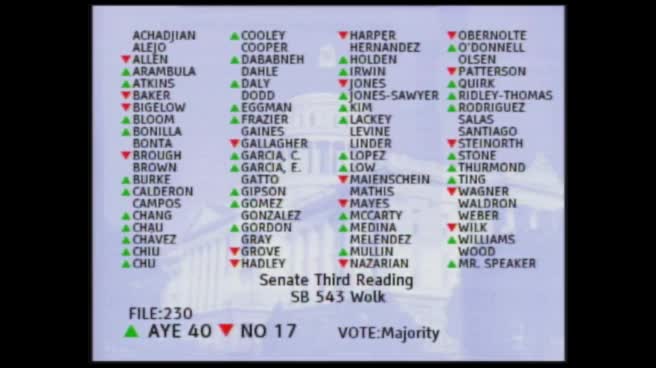
| Aug 18, 2016 | SB 898 Nguyen Senate Third Reading By ALLEN | Assembly Floor |
Passed |
|
| Aug 3, 2016 | Do pass. | Assembly Standing Committee on Appropriations |
Passed |
|
| Jun 20, 2016 | Do pass as amended and be re-referred to the Committee on [Appropriations] | Assembly Standing Committee on Revenue and Taxation |
Passed |
|
| Jun 2, 2016 | Special Consent #10 SB898 Nguyen | Senate Floor |
Passed |
|
| May 27, 2016 | Do pass as amended | Senate Standing Committee on Appropriations |
Passed |
|
| May 2, 2016 | Placed on suspense file | Senate Standing Committee on Appropriations |
Passed |
|
| Apr 20, 2016 | Do pass, but first be re-referred to the Committee on [Appropriations] | Senate Standing Committee on Governance and Finance |
Passed |
This list shows positions taken on this bill by organizations on the date displayed, which is linked to the original source.
Positions by individuals are not included.
Office of Senate Floor Analyses (916) 651-1520 Fax: (916) 327-4478 | SB |
VETO
Bill No: SB 898
:
SENATE GOVERNANCE & FIN. COMMITTEE: 7-0, 4/20/16
AYES: Hertzberg, Nguyen, Beall, Hernandez, Lara, Moorlach, Pavley
SENATE APPROPRIATIONS COMMITTEE: 7-0, 5/27/16
AYES: Lara, Bates, Beall, Hill, McGuire, Mendoza, Nielsen
SENATE FLOOR: 39-0, 6/2/16
AYES: Allen, Anderson, Bates, Beall, Berryhill, Block, Cannella, De León, Fuller, Gaines, Galgiani, Glazer, Hall, Hancock, Hernandez, Hertzberg, Hill, Hueso, Huff, Jackson, Lara, Leno, Leyva, Liu, McGuire, Mendoza, Mitchell, Monning, Moorlach, Morrell, Nguyen, Nielsen, Pan, Pavley, Roth, Stone, Vidak, Wieckowski, Wolk
NO VOTE RECORDED: Runner
SENATE FLOOR: 39-0, 8/25/16
AYES: Allen, Anderson, Bates, Beall, Berryhill, Block, Cannella, De León, Fuller, Gaines, Galgiani, Glazer, Hall, Hancock, Hernandez, Hertzberg, Hill, Hueso, Huff, Jackson, Lara, Leno, Leyva, Liu, McGuire, Mendoza, Mitchell, Monning, Moorlach, Morrell, Nguyen, Nielsen, Pan, Pavley, Roth, Stone, Vidak, Wieckowski, Wolk
ASSEMBLY FLOOR: 70-5, 8/18/16 - See last page for vote
DIGEST: This bill enacts a sales and use tax (SUT) exemption for the sale of animal blood sold by a nonprofit animal blood bank.
Existing law:
- Imposes a SUT on the sale, storage, or use of tangible personal property unless exempted by state law.
- Exempts human whole blood, plasma, blood products, and blood derivatives, or any human body parts held in a bank for medical purposes, from SUT.
This bill:
- Provides a SUT exemption for the sale of animal blood, plasma, blood products, and blood derivatives, sold by nonprofit animal blood banks for use in the cure, mitigation, treatment, or prevention of injury or disease in animals.
- Defines “nonprofit” as an organization qualified under Section 501(c)(3) of the Internal Revenue Code.
- Sunsets on January 1, 2022.
Background
According to the California Department of Food and Agriculture, only two animal blood banks in California hold licenses to produce, market, and sell animal blood and blood products. These facilities provide whole blood, plasma, platelets, and clotting factors to veterinary hospitals and clinics. The blood used to make these products is collected from an animal "blood donor" housed permanently or semi-permanently at the blood bank. California law does not allow pet owners to volunteer their animals as donors to commercial blood banks.
FISCAL EFFECT: Appropriation: Fiscal Com.: Local:
According to the Assembly Appropriations Committee, SB 898 results in annual state and local revenue loss of approximately $80,000, including $38,400 General Fund.
ACVS Veterinary Surgeon
American Emergency Clinic
American Holistic Veterinary Medical Association
American Holistic Veterinary Medical Foundation
Animal Urgent Care
California Veterinary Medical Association
Center for Integrative Animal Medicine
Eye Care for Animals
George Runner, Board of Equalization Member
Hemopet
Humane Society Veterinary Medicine Association
Holistic Veterinary Care
Meridian Veterinary Care
SAGE Centers for Veterinary Specialty and Emergency Care
VCA Emergency Animal Hospital and Referral Center
OPPOSITION: (Verified 10/20/16)
Animal Blood Bank
California State Association of Counties
League of California Cities
ARGUMENTS IN SUPPORT: According to the author, “SB 898 amends the California Revenue and Taxation code to clarify that the sale and use of animal blood, blood products, and derivatives by a licensed animal blood bank are not subject to tax. Since one of the two animal blood bank organizations provides an integral portion of the California’s animal donor blood, the need to ensure the protection of this vital service is necessary and appropriate. Furthermore a similar tax exemption exists in the California tax code for human blood banks, a logical application of this exemption should extend towards animals as well.”
ARGUMENTS IN OPPOSITION: The League of California Cities and the California State Association of Counties argue that sales and use tax exemptions continue to erode the already shrinking local sales tax base. Cities and counties continue to struggle financially, and sales and use tax exemptions only further exacerbate the issue. Animal Blood Bank opposes the measure’s limited application to nonprofits, arguing that these limits preclude many smaller veterinary facilities, or any facility serving cats, from the measure’s benefits.
GOVERNOR'S VETO MESSAGE:
I am returning the following seven bills without my signature:
Assembly Bill 717
Assembly Bill 724
Assembly Bill 1561
Assembly Bill 2127
Assembly Bill 2728
Senate Bill 898
Senate Bill 907
Each of these bills creates a new tax break or expands an existing tax break. In total, these bills would reduce revenues by about $300 million through 2017-18.
As I said last year, tax breaks are the same as new spending -- they both cost the General Fund money. As such, they must be considered during budget deliberations so that all spending proposals are weighed against each other at the same time. This is even more important when the state's budget remains precariously balanced.
Therefore, I cannot sign these measures.
ASSEMBLY FLOOR: 70-5, 8/18/16
AYES: Achadjian, Alejo, Travis Allen, Arambula, Atkins, Baker, Bigelow, Bloom, Bonta, Brough, Brown, Burke, Calderon, Campos, Chang, Chau, Chávez, Chiu, Chu, Cooley, Cooper, Dababneh, Dahle, Daly, Dodd, Eggman, Frazier, Cristina Garcia, Eduardo Garcia, Gatto, Gipson, Gomez, Gonzalez, Gordon, Gray, Grove, Harper, Holden, Irwin, Jones, Jones-Sawyer, Kim, Lackey, Linder, Lopez, Low, Maienschein, Mathis, Mayes, McCarty, Medina, Melendez, Mullin, Nazarian, O'Donnell, Quirk, Ridley-Thomas, Rodriguez, Salas, Santiago, Steinorth, Mark Stone, Thurmond, Ting, Wagner, Waldron, Weber, Williams, Wood, Rendon
NOES: Gallagher, Hadley, Levine, Obernolte, Wilk
NO VOTE RECORDED: Bonilla, Beth Gaines, Roger Hernández, Olsen, Patterson
10/25/16 14:29:19
**** END ****
Office of Senate Floor Analyses (916) 651-1520 Fax: (916) 327-4478 | SB |
UNFINISHED BUSINESS
Bill No: SB 898
:
SENATE GOVERNANCE & FIN. COMMITTEE: 7-0, 4/20/16
AYES: Hertzberg, Nguyen, Beall, Hernandez, Lara, Moorlach, Pavley
SENATE APPROPRIATIONS COMMITTEE: 7-0, 5/27/16
AYES: Lara, Bates, Beall, Hill, McGuire, Mendoza, Nielsen
SENATE FLOOR: 39-0, 6/2/16
AYES: Allen, Anderson, Bates, Beall, Berryhill, Block, Cannella, De León, Fuller, Gaines, Galgiani, Glazer, Hall, Hancock, Hernandez, Hertzberg, Hill, Hueso, Huff, Jackson, Lara, Leno, Leyva, Liu, McGuire, Mendoza, Mitchell, Monning, Moorlach, Morrell, Nguyen, Nielsen, Pan, Pavley, Roth, Stone, Vidak, Wieckowski, Wolk
NO VOTE RECORDED: Runner
ASSEMBLY FLOOR: 70-5, 8/18/16 - See last page for vote
DIGEST: This bill enacts a sales and use tax (SUT) exemption for the sale of animal blood sold by a nonprofit animal blood bank.
Assembly Amendments (1) remove the bill’s requirement for the Board of Equalization (BOE) to cancel any current notice of determination as well as any related penalties and interest, and prohibition against BOE issuing a new notice of determination, (2) provide a definition for “nonprofit,” and (3) sunset the bill’s exemption on January 1, 2022.
Existing law:
- Imposes a SUT on the sale, storage, or use of tangible personal property unless exempted by state law.
- Exempts human whole blood, plasma, blood products, and blood derivatives, or any human body parts held in a bank for medical purposes, from SUT.
This bill:
- Provides a SUT exemption for the sale of animal blood, plasma, blood products, and blood derivatives, sold by nonprofit animal blood banks for use in the cure, mitigation, treatment, or prevention of injury or disease in animals.
- Defines “nonprofit” as an organization qualified under Section 501(c)(3) of the Internal Revenue Code.
- Sunsets on January 1, 2022.
Background
According to the California Department of Food and Agriculture, only two animal blood banks in California hold licenses to produce, market, and sell animal blood and blood products. These facilities provide whole blood, plasma, platelets, and clotting factors to veterinary hospitals and clinics. The blood used to make these products is collected from an animal "blood donor" housed permanently or semi-permanently at the blood bank. California law does not allow pet owners to volunteer their animals as donors to commercial blood banks.
FISCAL EFFECT: Appropriation: Fiscal Com.: Local:
According to the Assembly Appropriations Committee, SB 898 results in annual state and local revenue loss of approximately $80,000, including $38,400 General Fund.
ACVS Veterinary Surgeon
American Emergency Clinic
American Holistic Veterinary Medical Association
American Holistic Veterinary Medical Foundation
Animal Urgent Care
California Veterinary Medical Association
Center for Integrative Animal Medicine
Eye Care for Animals
George Runner, Board of Equalization Member
Hemopet
Humane Society Veterinary Medicine Association
Holistic Veterinary Care
Meridian Veterinary Care
SAGE Centers for Veterinary Specialty and Emergency Care
VCA Emergency Animal Hospital and Referral Center
OPPOSITION: (Verified 8/18/16)
Animal Blood Bank
California State Association of Counties
League of California Cities
ARGUMENTS IN SUPPORT: According to the author, “SB 898 amends the California Revenue and Taxation code to clarify that the sale and use of animal blood, blood products, and derivatives by a licensed animal blood bank are not subject to tax. Since one of the two animal blood bank organizations provides an integral portion of the California’s animal donor blood, the need to ensure the protection of this vital service is necessary and appropriate. Furthermore a similar tax exemption exists in the California tax code for human blood banks, a logical application of this exemption should extend towards animals as well.”
ARGUMENTS IN OPPOSITION: The League of California Cities and the California State Association of Counties argue that sales and use tax exemptions continue to erode the already shrinking local sales tax base. Cities and counties continue to struggle financially, and sales and use tax exemptions only further exacerbate the issue. Animal Blood Bank opposes the measure’s limited application to nonprofits, arguing that these limits preclude many smaller veterinary facilities, or any facility serving cats, from the measure’s benefits.
ASSEMBLY FLOOR: 70-5, 8/18/16
AYES: Achadjian, Alejo, Travis Allen, Arambula, Atkins, Baker, Bigelow, Bloom, Bonta, Brough, Brown, Burke, Calderon, Campos, Chang, Chau, Chávez, Chiu, Chu, Cooley, Cooper, Dababneh, Dahle, Daly, Dodd, Eggman, Frazier, Cristina Garcia, Eduardo Garcia, Gatto, Gipson, Gomez, Gonzalez, Gordon, Gray, Grove, Harper, Holden, Irwin, Jones, Jones-Sawyer, Kim, Lackey, Linder, Lopez, Low, Maienschein, Mathis, Mayes, McCarty, Medina, Melendez, Mullin, Nazarian, O'Donnell, Quirk, Ridley-Thomas, Rodriguez, Salas, Santiago, Steinorth, Mark Stone, Thurmond, Ting, Wagner, Waldron, Weber, Williams, Wood, Rendon
NOES: Gallagher, Hadley, Levine, Obernolte, Wilk
NO VOTE RECORDED: Bonilla, Beth Gaines, Roger Hernández, Olsen, Patterson
8/19/16 19:21:52
**** END ****
SENATE THIRD READING
STR Bill Id:SB 898
Author:(Nguyen)
As Amended Ver:June 27, 2016
Majority vote
SENATE VOTE: 39-0
Committee | Votes | Ayes | Noes |
Revenue & Taxation | 9-0 | Ridley-Thomas, Brough, Dababneh, Gipson, Mullin, O'Donnell, Patterson, Quirk, Wagner | |
Appropriations | 17-3 | Gonzalez, Bigelow, Bloom, Bonilla, Bonta, Calderon, Chang, Daly, Eggman, Eduardo Garcia, Holden, Quirk, Santiago, Wagner, Weber, Wood, Chau | Gallagher, Jones, Obernolte |
SUMMARY: Establishes a sales and use tax (SUT) exemption for animal whole blood, plasma, blood products, and blood derivatives, sold by a "nonprofit" animal blood banking business for use in the cure, mitigation, treatment, or prevention of injury or disease in animals pursuant to Food and Agricultural Code Section 9241. Specifically, this bill:
- Defines "nonprofit" as an organization exempt from federal income taxation as an organization described in Internal Revenue Code Section 501(c)(3).
- Provides that, notwithstanding existing law, the state shall not reimburse cities and counties for any SUT revenues lost by them under this bill.
- Takes immediate effect as a tax levy.
- Sunsets the exemption on January 1, 2022.
EXISTING LAW:
- Imposes a sales tax on retailers for the privilege of selling tangible personal property (TPP), absent a specific exemption. The tax is based upon the retailer's gross receipts from TPP sales in this state.
- Imposes a complimentary use tax on the storage, use, or other consumption of TPP purchased out-of-state and brought into California. The use tax is imposed on the purchaser; and unless the purchaser pays the use tax to an out-of-state retailer registered to collect California's use tax, the purchaser remains liable for the tax. The use tax is set at the same rate as the state's sales tax and must generally be remitted to the State Board of Equalization (BOE).
- Provides that human whole blood, plasma, blood products, and blood derivatives, or any human body parts held in a bank for medical purposes, are exempt from taxation for any purpose. (Revenue and Taxation Code (R&TC) Section 33).
- Exempts from SUT any container used to collect or store human whole blood, plasma, blood products, or blood derivatives that are exempt from taxation under R&TC Section 33, including blood collection units and blood pack units. (R&TC Section 6364.5).
- Prohibits any person from offering for sale or use any of the following:
- Any biologic unless it is manufactured pursuant to the terms of a valid license or permit issued by the United States Department of Agriculture; or,
- Any blood or blood component product unless it is produced in a licensed establishment. (Food and Agricultural Code Section 9241).
FISCAL EFFECT: According to the Assembly Appropriations Committee, annual state and local revenue loss of approximately $80,000, including $38,400 in General Fund loss.
COMMENTS:
- The author has provided the following statement in support of this bill:
Senate Bill 898 amends the California Revenue and Taxation [C]ode to clarify that the sale and use of animal blood, blood products, and derivatives by a licensed CDFA-licensed nonprofit animal blood bank are not subject to tax when sold for use in the cure, mitigation, treatment or prevention of injury or disease in animals.
Animal blood banks serve an important role in saving the lives of animals that are in need of surgical procedures. Human blood banks, such as the American Red Cross, enjoy a similar exemption, partly in recognition that human blood banks help save lives. This same exemption does not apply to nonprofit animal blood banks.
SB 898 will help ensure that animal blood banks continue to be treated under the law the same as human blood banks.
- The BOE notes the following in its staff analysis of this bill:
This bill does not materially impact the BOE's tax audit or administrative functions: "Since this bill applies to one nonprofit licensed animal blood bank that currently exists in California, this bill would not materially impact the BOE's administrative responsibilities."
- Committee Staff Comments
What would this bill do? This bill would provide a complete SUT exemption for animal whole blood, plasma, blood products, and blood derivatives, sold by a nonprofit animal blood banking business for use in the cure, mitigation, treatment, or prevention of injury or disease in animals.
The BOE notes that, according to the California Department of Food and Agriculture, there are two California animal blood bank establishments with licenses to produce, market, and sell animal blood and products. These facilities provide whole blood, plasma, platelets, and clotting factors to veterinary hospitals and clinics. The blood used to make these products is collected from the animal "blood donors" housed permanently or semi-permanently at the blood bank. The BOE notes that, under California law, pet owners are not allowed to volunteer their animals as donors to these commercial blood banks. The BOE further notes that, of the two licensed animal blood banks in California, only one of them operates as a nonprofit business. Thus, it would appear that this bill is designed to provide relief, through a complete SUT exemption, to a single entity.
Analysis Prepared by: M. David Ruff / REV. & TAX. / (916) 319-2098 FN: 0003840
Date of Hearing: August 3, 2016
ASSEMBLY COMMITTEE ON APPROPRIATIONS
Lorena Gonzalez, Chair
SBPCA Bill Id:SB 898
Author:(Nguyen) – As Amended Ver:June 27, 2016
Policy Committee: | Revenue and Taxation | Vote: | 9 - 0 |
Urgency: No State Mandated Local Program: No Reimbursable: No
SUMMARY:
This bill creates a sales and use tax (SUT) exemption for animal whole blood, plasma, blood products, and blood derivatives, sold by a nonprofit animal blood banking business for use in the cure, mitigation, treatment, or prevention of injury or disease in animals. The provisions of this bill will be repealed on January 1, 2022.
FISCAL EFFECT:
Annual state and local revenue loss of approximately $80,000, including $38,400 GF.
COMMENTS:
- Purpose. According to the author, SB 898 extends the tax treatment of human blood sold and used by human blood banks, such as the American Red Cross, to animal blood banks. Specifically, this bill exempts animal blood and blood products and derivatives sold by a licensed nonprofit animal blood bank when those products are sold for use in medical treatment.
- Animal blood banks. According to the California Department of Food and Agriculture (CDFA), only two animal blood banks in California, one of which is a nonprofit, hold licenses to produce, market, and sell animal blood and blood products. These facilities provide whole blood, plasma, platelets, and clotting factors to veterinary hospitals and clinics. The blood used to make these products is collected from an animal "blood donor" housed permanently or semi-permanently at the blood bank. California law does not allow pet owners to volunteer their animals as donors to commercial blood banks.
- Equity for animals in the tax code. SB 898 is not the first piece of legislation that aims to extend certain tax code benefits to goods and services that benefit animals. SB 688 (Galgiani) of 2013 would have established a SUT exemption for certain animal-related drugs and medicine used for the treatment of animals and furnished by a veterinarian, a city or other local government entity, or a nonprofit welfare or rescue organization. That bill was held in the Senate Committee on Appropriations suspense file.
- Policy committee amendments. SB 898 was amended in the Assembly Committee on Revenue and Taxation to include a sunset date and to remove the provision that required the Board of Equalization (BOE) to cancel any notice of determination and any related penalties and interest. These amendments helped address lingering policy concerns about setting a precedent that would allow a taxpayer to escape from paying penalties and fines related to existing tax liability.
- Opposition. The California State Association of Counties opposes this bill.
Analysis Prepared by: Luke Reidenbach / APPR. / (916) 319-2081
Date of Hearing: June 20, 2016
ASSEMBLY COMMITTEE ON REVENUE AND TAXATION
Sebastian Ridley-Thomas, Chair
SBPCA Bill Id:SB 898
Author:(Nguyen) – As Amended Ver:May 31, 2016
Majority vote. Fiscal committee.
SENATE VOTE: 39-0
SUBJECT: Sales and use taxes: exemption: animal blood
SUMMARY: Establishes a sales and use tax (SUT) exemption for animal whole blood, plasma, blood products, and blood derivatives, sold by a nonprofit animal blood banking business for use in the cure, mitigation, treatment, or prevention of injury or disease in animals pursuant to Food and Agricultural Code Section 9241. Specifically, this bill:
- Contains legislative findings noting that animals have emergencies and illnesses that present a critical need for blood products, and that it is in the public interest to relieve from liability those nonprofit animal blood banking businesses that have not paid sales tax or collected sales tax reimbursement on their sales of animal blood products, thereby preventing undue hardship on those nonprofit animal blood banking businesses that offer this vital life service.
- Directs the State Board of Equalization (BOE) to cancel any notice of determination and any related penalties and interest, and not to issue any future notices, with respect to sales of animal whole blood, plasma, blood products, and blood derivatives, sold by a nonprofit animal blood banking business for use in the cure, mitigation, treatment, or prevention of injury or disease in animals pursuant to Food and Agricultural Code Section 9241.
- Contains legislative findings that the cancellation of existing BOE notices of determination serves a public purpose and does not constitute a gift of public funds within the meaning of Section 6 of Article XVI of the California Constitution.
- Provides that, notwithstanding existing law, the state shall not reimburse cities and counties for any SUT revenues lost by them under this bill.
EXISTING LAW:
- Imposes a sales tax on retailers for the privilege of selling tangible personal property (TPP), absent a specific exemption. The tax is based upon the retailer's gross receipts from TPP sales in this state.
- Imposes a complimentary use tax on the storage, use, or other consumption of TPP purchased out-of-state and brought into California. The use tax is imposed on the purchaser; and unless the purchaser pays the use tax to an out-of-state retailer registered to collect California's use tax, the purchaser remains liable for the tax. The use tax is set at the same rate as the state's sales tax and must generally be remitted to the BOE.
- Provides that human whole blood, plasma, blood products, and blood derivatives, or any human body parts held in a bank for medical purposes, are exempt from taxation for any purpose. (Revenue and Taxation Code (R&TC) Section 33).
- Exempts from SUT any container used to collect or store human whole blood, plasma, blood products, or blood derivatives that are exempt from taxation under R&TC Section 33, including blood collection units and blood pack units. (R&TC Section 6364.5).
- Prohibits any person from offering for sale or use any of the following:
- Any biologic unless it is manufactured pursuant to the terms of a valid license or permit issued by the United States Department of Agriculture; or,
- Any blood or blood component product unless it is produced in a licensed establishment. (Food and Agricultural Code Section 9241).
- Any biologic unless it is manufactured pursuant to the terms of a valid license or permit issued by the United States Department of Agriculture; or,
FISCAL EFFECT: Unknown. The BOE notes that this bill would result in annual state and local SUT revenue losses of $78,980. This amount, however, does not include any unpaid liabilities that this bill would direct the BOE to relieve. BOE staff notes that, at present, this bill would only apply to one taxpayer in the state of California. The author's office, in turn, has provided documentation showing a SUT liability for this single taxpayer of $81,830.27 for the period from January 1, 2008 to June 30, 2011. In addition, the BOE's Report of Field Audit disclosed interest of $23,428.71 through July 31, 2014. Thus, assuming these amounts have not been paid, this bill would result in a one-time loss of at least $105,258.98 for past due taxes and interest.
COMMENTS:
- The author has provided the following statement in support of this bill:
Senate Bill 898 amends the California Revenue and Taxation [C]ode to clarify that the sale and use of animal blood, blood products, and derivatives by a licensed CDFA-licensed nonprofit animal blood bank are not subject to tax when sold for use in the cure, mitigation, treatment or prevention of injury or disease in animals.
Animal blood banks serve an important role in saving the lives of animals that are in need of surgical procedures. Human blood banks, such as the American Red Cross, enjoy a similar exemption, partly in recognition that human blood banks help save lives. This same exemption does not apply to nonprofit animal blood banks.
SB 898 will help ensure that animal blood banks continue to be treated under the law the same as human blood banks.
- This bill is supported by the Humane Society Veterinary Medical Association, which notes the following:
Historically, human blood transfers have been exempt from sales and use tax. However, it has been unclear whether sales and use tax applies to the sales of animal blood products. SB 898 amends the California Revenue and Taxation [C]ode, clarifying that transfers of animal blood by licensed non-profit animal blood banks are not subject to these taxes.
We urge all of your colleagues in the Legislature to join in support of this commonsense bill which will help safeguard (1) the viability of nonprofit California animal blood banks providing essential resources to veterinarians statewide, (2) the health and well-being of our companion animal patients, and (3) the peace of mind of their human family members who love them.
- This bill is opposed by the California State Association of Counties, which notes the following:
After the past thirty years of changes to sales and use tax allocations, counties now receive almost half of sales and use tax revenues. About two-thirds of that revenue is constitutionally dedicated to providing local public safety services and federal and state programs, including social services, incarceration, and rehabilitation. Unfortunately, SB 898 would erode an important revenue source for counties. The total estimated losses could be considered minor when compared to the State budget. For counties, though, the combined potential losses proposed in the current legislative session are not insignificant.
More troubling than the direct revenue losses is the forgiveness provision in SB 898 for unpaid sales and use tax liabilities from prior years. This represents further losses and a troubling possible precedent for other sales and use tax exemptions.
- The BOE notes the following in its staff analysis of this bill:
- Effect of the bill: "Nonprofit licensed animal blood banks will not be required to report sales or use tax on their sales of animal blood products when those sales are for the cure, mitigation, treatment or prevention of injury or disease in animals. In addition, they will be relieved of liability for any unpaid sales and use tax related to these sales."
- "Nonprofit animal blood banking business" should be defined: "California currently has one nonprofit licensee; however, for purposes of clarity, the bill should define "nonprofit." For example, an appropriate definition, such as "an organization that qualifies for tax-exempt status under section 501(c)(3) of the Internal Revenue Code" would suffice."
- This bill does not materially impact the BOE's tax audit or administrative functions: "Since this bill applies to one nonprofit licensed animal blood bank that currently exists in California, this bill would not materially impact the BOE's administrative responsibilities."
- Committee Staff Comments
- What is a "tax expenditure"? Existing law provides various credits, deductions, exclusions, and exemptions for particular taxpayer groups. In the late 1960s, U.S. Treasury officials began arguing that these features of the tax law should be referred to as "expenditures" since they are generally enacted to accomplish some governmental purpose and there is a determinable cost associated with each (in the form of foregone revenues).
- How is a tax expenditure different from a direct expenditure? As the Department of Finance notes in its annual Tax Expenditure Report, there are several key differences between tax expenditures and direct expenditures. First, tax expenditures are reviewed less frequently than direct expenditures once they are put in place. Second, there is generally no control over the amount of revenue losses associated with any given tax expenditure. Finally, it should also be noted that, once enacted, it takes a two-thirds vote to rescind an existing tax expenditure absent a sunset date. This effectively results in a "one-way ratchet" whereby tax expenditures can be conferred by majority vote, but cannot be rescinded, irrespective of their efficacy or cost, without a supermajority vote.
- An overview of the SUT Law: California's SUT Law imposes a sales tax on retailers for the privilege of selling TPP, absent a specific exemption. The tax is based upon a retailer's gross receipts from TPP sales in California. The SUT Law also imposes a mirror "use tax" on the storage, use, or other consumption of TPP purchased out-of-state and brought into California. The use tax is imposed on the purchaser, and unless the purchaser pays the use tax to an out-of-state retailer registered to collect California's use tax, the purchaser remains liable for the tax. The use tax is set at the same rate as the state's sales tax and must generally be remitted to the BOE.
- What is a "tax expenditure"? Existing law provides various credits, deductions, exclusions, and exemptions for particular taxpayer groups. In the late 1960s, U.S. Treasury officials began arguing that these features of the tax law should be referred to as "expenditures" since they are generally enacted to accomplish some governmental purpose and there is a determinable cost associated with each (in the form of foregone revenues).
The SUT represents the state's second largest source of General Fund (GF) revenues. Nevertheless, the past 60 years have seen a dramatic reduction in the state's reliance on the SUT and a corresponding increase in its reliance on personal income tax revenues. In fiscal year (FY) 2014-15, SUT revenues were estimated to comprise 23% of the state's GF revenues, down from nearly 60% in FY 1950-51.
- What accounts for the state's reduced reliance on SUT revenues? The SUT Law was enacted in a very different era. In the 1930s, California's economy was largely dominated by manufacturing, and residents mostly bought and sold tangible goods. Thus, in establishing the base for a new consumption tax, it made sense to impose the tax on sales of TPP, defined as personal property that may be "seen, weighed, measured, felt, or touched." Over the past 80 years, however, California's economy has seen dramatic growth in the service and information sectors, resulting in a significant erosion of the SUT base. For example, the Commission on the 21st Century Economy noted that spending on taxable goods represented 34.6% of personal income in 2008, down from 55.4% in 1980. As a result, tax experts and economists from across the political spectrum argue that California should expand its SUT base.
It could be argued that, while well-intentioned, additional SUT exemptions further erode an already shrinking SUT base. This, in turn, increases fiscal pressures to maintain or even increase California's relatively high SUT rate. High rates arguably promote non-compliance and encourage out-of-state purchases, placing California retailers at a competitive disadvantage. High rates also risk impacting consumer decision-making, which runs counter to widely accepted principles of sound tax policy.
- What would this bill do? This bill would provide a complete SUT exemption for animal whole blood, plasma, blood products, and blood derivatives, sold by a nonprofit animal blood banking business for use in the cure, mitigation, treatment, or prevention of injury or disease in animals.
The BOE notes that, according to the California Department of Food and Agriculture, there are two California animal blood bank establishments with licenses to produce, market, and sell animal blood and products. These facilities provide whole blood, plasma, platelets, and clotting factors to veterinary hospitals and clinics. The blood used to make these products is collected from the animal "blood donors" housed permanently or semi-permanently at the blood bank. The BOE notes that, under California law, pet owners are not allowed to volunteer their animals as donors to these commercial blood banks.
The BOE notes that, of the two licensed animal blood banks in California, only one of them operates as a nonprofit business. Thus, it would appear that this bill is designed to provide relief, through a complete SUT exemption, to a single entity. The Committee may wish to consider the policy implications of providing such preferential treatment to one taxpayer.
In addition, this bill would direct the BOE to cancel any notice of determination, along with related penalties and interest, associated with this taxpayer's past sales. Generally, tax expenditure programs are implemented to encourage future taxpayer behavior and not to provide retroactive relief. This bill may establish a precedent for future legislation in cases where a tax liability is discovered through audit, and the taxpayer seeks to escape payment by having legislation introduced to compel the cancellation of their underlying liability.
To the extent this Committee desires to provide retroactive relief, it may wish to make the relief contingent upon a BOE finding that the taxpayer did not collect sales tax reimbursement on its past sales.
- Absence of a sunset date: In its current form, this bill's proposed tax expenditure lacks an automatic sunset provision. This Committee has a longstanding policy favoring the inclusion of sunset dates to allow the Legislature periodically to review the efficacy and cost of such programs. The author may wish to consider the addition of an appropriate sunset provision.
REGISTERED SUPPORT / OPPOSITION:
Support
American Holistic Veterinary Medical Association
California Veterinary Medical Association
Hemopet/Hemolife
Humane Society Veterinary Medical Association
State Board of Equalization Member George Runner
Opposition
California State Association of Counties
Analysis Prepared by: M. David Ruff / REV. & TAX. / (916) 319-2098
Office of Senate Floor Analyses (916) 651-1520 Fax: (916) 327-4478 | SB |
THIRD READING
Bill No: SB 898
:
SENATE GOVERNANCE & FIN. COMMITTEE: 7-0, 4/20/16
AYES: Hertzberg, Nguyen, Beall, Hernandez, Lara, Moorlach, Pavley
SENATE APPROPRIATIONS COMMITTEE: 7-0, 5/27/16
AYES: Lara, Bates, Beall, Hill, McGuire, Mendoza, Nielsen
DIGEST: This bill provides a sales and use tax (SUT) exemption for the sale of animal blood sold by a nonprofit animal blood bank.
Existing law:
- Imposes a SUT on the sale, storage, or use of tangible personal property unless exempted by state law.
- Exempts human whole blood, plasma, blood products, and blood derivatives, or any human body parts held in a bank for medical purposes, from SUT.
This bill:
- Provides a SUT exemption for the sale of animal blood, plasma, blood products, and blood derivatives, sold by nonprofit animal blood banks for use in the cure, mitigation, treatment, or prevention of injury or disease in animals.
- Requires the Board of Equalization (BOE) to cancel any current notice of determination and any related penalties and interest, and precludes BOE from issuing a new notice of determination.
Background
According to the California Department of Food and Agriculture, only two animal blood banks in California hold licenses to produce, market, and sell animal blood and blood products. These facilities provide whole blood, plasma, platelets, and clotting factors to veterinary hospitals and clinics. The blood used to make these products is collected from an animal "blood donor" housed permanently or semi-permanently at the blood bank. California law does not allow pet owners to volunteer their animals as donors to commercial blood banks.
FISCAL EFFECT: Appropriation: Fiscal Com.: Local:
According to the Senate Appropriations Committee:
BOE estimates that this bill would result in an annual revenue loss of $158,000, $76,000 of which would be General Fund. The remainder of the reduction would impact local governments. Additionally, BOE indicates that the bill would result in minor and absorbable implementation costs.
ACVS Veterinary Surgeon
American Emergency Clinic
American Holistic Veterinary Medical Association
American Holistic Veterinary Medical Foundation
Animal Urgent Care; California Veterinary Medical Association
Center for Integrative Animal Medicine; Eye Care for Animals
George Runner, Board of Equalization Member
Hemopet
Holistic Veterinary Care
Meridian Veterinary Care
SAGE Centers for Veterinary Specialty and Emergency Care
VCA Emergency Animal Hospital and Referral Center
OPPOSITION: (Verified 5/31/16)
California State Association of Counties
League of California Cities
ARGUMENTS IN SUPPORT: According to the author, “SB 898 amends the California Revenue and Taxation code to clarify that the sale and use of animal blood, blood products, and derivatives by a licensed animal blood bank are not subject to tax. Since one of the two animal blood bank organizations provides an integral portion of the California’s animal donor blood, the need to ensure the protection of this vital service is necessary and appropriate. Furthermore a similar tax exemption exists in the California tax code for human blood banks, a logical application of this exemption should extend towards animals as well.”
ARGUMENTS IN OPPOSITION: Opponents argue that sales and use tax exemptions continue to erode the already shrinking local sales tax base. Cities and counties continue to struggle financially, and sales and use tax exemptions only further exacerbate the issue.
5/31/16 20:45:44
**** END ****
SENATE COMMITTEE ON APPROPRIATIONS
Senator Ricardo Lara, Chair
2015 - 2016 Regular Session
SB 898 (Nguyen) - Sales and use taxes: exemption: animal blood
Version: April 25, 2016 | Policy Vote: GOV. & F. 7 - 0 |
Urgency: No | Mandate: No |
Hearing Date: May 27, 2016 | Consultant: Robert Ingenito |
Bill Summary:
SB 898 would provide a sales and use tax (SUT) exemption for the sale of animal blood.
*********** ANALYSIS ADDENDUM – SUSPENSE FILE ***********
The following information is revised to reflect amendments
adopted by the committee on May 27, 2016
Fiscal Impact:
This bill would result in an annual revenue loss of less than $150,000, half of which would be General Fund. The remainder of the reduction would impact local governments. Additionally, the Board of Equalization would incur minor and absorbable implementation costs.
Author Amendments:
Provide the SUT exemption to nonprofit animal bloodbanks only.
-- END --
SENATE COMMITTEE ON
Senator Ricardo Lara, Chair
2015 - 2016 Regular Session
SB 898 (Nguyen) - Sales and use taxes: exemption: animal blood
Version: | Policy Vote: |
Urgency: | Mandate: |
Hearing Date: | Consultant: |
This bill meets the criteria for referral to the Suspense File.
Bill Summary:
SB 898 would provide a sales and use tax (SUT) exemption for the sale of animal blood.
Fiscal Impact:
The Board of Equalization (BOE) estimates that this bill would result in an annual revenue loss of $158,000, $76,000 of which would be General Fund. The remainder of the reduction would impact local governments. Additionally, BOE indicates that the bill would result in minor and absorbable implementation costs.
Background:
Except where a specific exemption or exclusion is provided, current law imposes the SUT on all retailers for the privilege of selling tangible personal property (TPP) at retail in California, or on the storage, use, or other consumption in this state of TPP purchased from a retailer. Cities and Counties may increase the SUT rate up to 2 percentage points for either specific or general purposes with a vote of the people. As of January 1, 2017, the average statewide SUT rate will be 8.21 percent.
The Legislature has exempted certain tangible goods from SUT, including food, prescription medicine, household utilities, manufacturing equipment, and a variety of goods related to agriculture. Generally, purchases by nonprofits, public agencies, and charities are subject to SUT, unless otherwise exempted.
Current law exempts from SUT human whole blood, plasma, blood products, blood derivatives, or any human body parts held in a bank for medical purposes. This exemption does not apply to animal blood and blood products.
Proposed Law:
This bill would provide for a SUT exemption for the sale of animal blood, plasma, blood products, and blood derivatives, sold for use in the cure, mitigation, treatment, or prevention of injury or disease in animals. Additionally, the bill would require BOE to cancel any current notice of determination and any related penalties and interest, and preclude BOE from issuing a new notice of determination.
Staff Comments:
The California Department of Food and Agriculture indicates that only two animal blood bank establishments hold licenses to produce, market, and sell animal blood and blood products. These facilities provide whole blood, plasma, platelets, and clotting factors to veterinary hospitals and clinics. The blood used to make these products is collected from one of the animal "blood donors" housed permanently or semi-permanently at the blood bank. California law does not allow pet owners to volunteer their animals as donors to these commercial blood banks.
BOE assumes that state animal blood product sales total roughly $2 billion annually. It also assumes the expiration of the temporary quarter-cent increase SUT approved by the voters in 2012 (Proposition 30).
-- END --
SENATE COMMITTEE ON GOVERNANCE AND FINANCE
Senator Robert M. Hertzberg, Chair
2015 - 2016 Regular
Bill No: | SB 898 | Hearing Date: | 4/20/16 |
Author: | Nguyen | Tax Levy: | No |
Version: | 4/4/16 | Fiscal: | Yes |
Consultant: | Bouaziz | ||
Sales and use taxes: exemption: animal blood
Provides a sales and use tax exemption for the sale of animal blood.
Background
State law imposes a sales and use tax (SUT) on the sale, storage, or use of tangible personal property unless exempted by state law. Generally, nonprofits, public agencies, and charities are subject to sales and use tax, unless otherwise exempted. Cities and Counties may increase the SUT rate up to 2% as a transactions and use tax for either specific or general purposes with a vote of the people.
The current state SUT rate on tangible personal property is 7.5% and is imposed as follows:
Rate | Jurisdiction | Purpose/Authority | |
|---|---|---|---|
3.9375% | State (General Fund) | State general purposes | |
1.0625% |
| Realignment of local public safety services | |
0.25% | State (Fiscal Recovery Fund) | Repayment of the Economic Recovery Bonds | |
0.25% | State (Education Protection Account) | Schools and community college funding | |
0.50% | State (Local Revenue Fund) | Local governments to fund health and welfare programs | |
0.50% | State (Local Public Safety Fund) | Local governments to fund public safety services | |
1.00% | Local (City/County) 0.75% City and County | City and county general operations. Dedicated to county transportation purposes | |
7.50% | Total Statewide Rate |
State law exempts human whole blood, plasma, blood products, and blood derivatives, or any human body parts held in a bank for medical purposes, from SUT. This exemption does not apply to animal blood and blood products. SB 898 seeks to exempt animal blood and blood products from SUT as well.
Proposed Law
Senate Bill 898 provides a sales and use tax exemption for the sale of animal blood, plasma, blood products, and blood derivatives, sold for use in the cure, mitigation, treatment, or prevention of injury or disease in animals.
SB 898 requires the State Board of Equalization (BOE) to cancel any current notice of determination and any related penalties and interest, and shall not issue any new notice of determination.
SB 898 makes findings and declarations.
State Revenue Impact
BOE estimates an annual state and local sales and use tax revenue loss of $158,000. This amount does not include unpaid liabilities that this bill requires the BOE to cancel.
Comments
1. Purpose of the bill. According to the author, “SB 898 amends the California Revenue and Taxation code to clarify that the sale and use of animal blood, blood products, and derivatives by a licensed animal blood bank are not subject to tax. Since one of the two animal blood bank organizations provides an integral portion of the California’s animal donor blood, the need to ensure the protection of this vital service is necessary and appropriate. Furthermore a similar tax exemption exists in the California tax code for human blood banks, a logical application of this exemption should extend towards animals as well.”
2. Animal blood banks. According to the California Department of Food and Agriculture, only two animal blood banks in California hold licenses to produce, market, and sell animal blood and blood products. These facilities provide whole blood, plasma, platelets, and clotting factors to veterinary hospitals and clinics. The blood used to make these products is collected from an animal "blood donor" housed permanently or semi-permanently at the blood bank. California law does not allow pet owners to volunteer their animals as donors to commercial blood banks.
3. Small universe, big impact. With such a small number of taxpayers, proponents argue that absent SB 898, the cost of animal blood will increase and the supply will decrease, even potentially placing one of the two facilities out of business. The two California facilities account for a significant portion of North America’s animal blood supply. Animal blood banks are critical to save animal lives, and proponents state without SB 898, access to life saving animal blood and blood products will be jeopardized.
4. Precedent. SB 898 requires the State Board of Equalization (BOE) to cancel any current notice of determination and any related penalties and interest, and shall not issue any new notice of determination. While in this case the use of the tangible personal property is laudable, and the amount of revenue loss is relatively small, the bill sets a dangerous precedent for future SUT exemptions. Taxpayers that believe a SUT exemption applies to a type of tangible personal property could forgo remitting SUT to BOE, and when a notice of determination is issued, attempt to push legislation through the process with both a SUT exemption and a cancelation of any current notice of determination provision.
5. Shrinking revenue source. SUT exemptions erode an already shrinking base. Although the SUT represents the state's second largest source of General Fund (GF) revenues, in the past 60 years there has been a dramatic reduction in the state's reliance on the SUT and a corresponding increase in its reliance on personal income tax revenues. In fiscal year (FY) 2014-15, SUT revenues are estimated to comprise 23% of the state's GF revenues, down from nearly 60% in FY 1950-51. In effect, each SUT exemption is subsidized by State, city, and county governments whose own taxes produce less revenue from a smaller base.
Support and Opposition
(4/18/16)
Support: ACVS Veterinary Surgeon; American Emergency Clinic; American Holistic Veterinary Medical Association; American Holistic Veterinary Medical Foundation; Animal Urgent Care; California Veterinary Medical Association; Center for Integrative Animal Medicine; Eye Care for Animals; Hemopet; Holistic Veterinary Care; Meridian Veterinary Care; SAGE Centers for Veterinary Specialty and Emergency Care; VCA Emergency Animal Hospital and Referral Center.
Opposition: California State Association of Counties; League of California Cities.
-- END --
Discussed in Hearing
 3MIN
Assembly Floor
 4MIN
Assembly Standing Committee on Appropriations
 2MIN
Senate Standing Committee on Appropriations
 9MIN
Senate Standing Committee on Governance and Finance
Bill Author