SB 904: Public social services: CalFresh.
- Session Year: 2015-2016
- House: Senate
- Latest Version Date: 2016-01-21
Existing federal law provides for the federal Supplemental Nutrition Assistance Program, known in California as CalFresh, under which counties distribute food assistance benefits to eligible individuals. Existing federal law limits an able-bodied adult without dependents (ABAWD) participant to 3 months of CalFresh benefits in a 3-year period unless that participant has met specified work participation requirements. Existing law directs the State Department of Social Services to annually seek a federal waiver of this limitation, and provides that an eligible county is included in this waiver unless the county declines to participate in the waiver request. Existing law authorizes the department to implement this provision by all-county letters or similar instructions.
This bill would require all eligible counties to be included in the federal waiver of the ABAWD time limitation and would delete the authorization for the department to implement this provision by all-county letters or similar instructions. By expanding eligibility for CalFresh benefits, this bill would create a state-mandated local program.
The California Constitution requires the state to reimburse local agencies and school districts for certain costs mandated by the state. Statutory provisions establish procedures for making that reimbursement.
This bill would provide that, if the Commission on State Mandates determines that the bill contains costs mandated by the state, reimbursement for those costs shall be made pursuant to these statutory provisions.
Finding that hunger, undernutrition, and malnutrition are present and continuing problems faced by low-income California households, and further finding that the federal Supplemental Nutrition Assistance Program (Chapter 51 (commencing with Section 2011), Title 7, United States Code) offers significant health-vital benefits, the purpose of this chapter is to establish a statewide program to enable recipients of aid under Part 3 (commencing with Section 11000) or Part 5 (commencing with Section 17000) of this division and other low-income households to receive benefits under the federal Supplemental Nutrition Assistance Program. It is the intent of the Legislature that the CalFresh program be administered in a way that maximizes eligibility and participation in the program, to the extent permitted by federal law.
SEC. 2.Section 18926 of the Welfare and Institutions Code is amended to read:18926.(a)To the extent permitted by federal law, the department shall annually seek a federal waiver of the existing federal Supplemental Nutrition Assistance Program limitation that stipulates that an able-bodied adult without dependents (ABAWD) participant is limited to three months of CalFresh benefits in a three-year period unless that participant has met the work participation requirement.
(b)All eligible counties shall be included in and bound by this waiver unless a county declines to participate in the waiver request. If a county declines, the county shall submit documentation from the board of supervisors of that county to that effect. waiver.
(c)Notwithstanding the rulemaking provisions of the Administrative Procedure Act (Chapter 3.5 (commencing with Section 11340) of Part 1 of Division 2 of the Government Code) the department may implement this section by all-county letters or similar instructions.
SEC. 3.If the Commission on State Mandates determines that this act contains costs mandated by the state, reimbursement to local agencies and school districts for those costs shall be made pursuant to Part 7 (commencing with Section 17500) of Division 4 of Title 2 of the Government Code.
|
Date
|
Status
|
|---|---|
| May 27, 2016 | May 27 hearing: Held in committee and under submission. |
| May 20, 2016 | Set for hearing May 27. |
| Apr 11, 2016 | April 11 hearing: Placed on APPR. suspense file. |
| Apr 1, 2016 | Set for hearing April 11. |
| Mar 30, 2016 | From committee: Do pass and re-refer to Com. on APPR. (Ayes 4. Noes 0. Page 3311.) (March 29). Re-referred to Com. on APPR. |
| Mar 30, 2016 | From committee: Do pass and re-refer to Com. on APPR. (Ayes 4. Noes 0.) (March 29). Re-referred to Com. on APPR. |
| Mar 9, 2016 | Set for hearing March 29. |
| Feb 4, 2016 | Referred to Com. on HUMAN S. |
| Jan 22, 2016 | From printer. May be acted upon on or after February 21. |
| Jan 21, 2016 | Introduced. Read first time. To Com. on RLS. for assignment. To print. |
|
Date
|
Description
|
Location
|
Votes
|
|
|---|---|---|---|---|
| Apr 11, 2016 | Placed on suspense file | Senate Standing Committee on Appropriations |
Passed |
|
| Mar 29, 2016 | Do pass, but first be re-referred to the Committee on [Appropriations] | Senate Standing Committee on Human Services |
Passed |
This list shows positions taken on this bill by organizations on the date displayed, which is linked to the original source.
Positions by individuals are not included.
SENATE COMMITTEE ON HUMAN SERVICES
Senator Mike McGuire, Chair
2015 - 2016 Regular
Bill No: SB 904 Hearing Date: March 29, 2016
Author: | Hertzberg | ||
Version: | January 21, 2016 | ||
Urgency: | No | Fiscal: | Yes |
Consultant: | Taryn Smith | ||
Subject: Public social services: CalFresh
SUMMARY
This bill would require all eligible counties to be included in the annual federal waiver of the Able Bodied Adult Without Dependents (ABAWD) time limitation and would delete the authorization for the California Department of Social Services (CDSS) to implement this provision by all-county letters or similar instructions.
ABSTRACT
Existing law:
- Establishes under federal law the Supplemental Nutrition Assistance Program (SNAP) within the US Department of Agriculture (USDA) to promote the general welfare and to safeguard the health and wellbeing of the nation’s population by raising the levels of nutrition among low-income households. It establishes SNAP eligibility requirements, including income that is at or below 130 percent of the federal poverty level and is determined to be a substantial limiting factor in permitting a recipient to obtain a more nutritious diet (7 CFR 271.1; 7 CFR 273.9)
- Establishes in California statute the CalFresh program to administer the provisions of federal SNAP benefits to families and individuals meeting specified criteria. (WIC 18900 et seq.)
- Requires CDSS annually, to the extent permitted by federal law, to seek a federal SNAP waiver to the three-month limit in a three-year period of CalFresh benefits for an ABAWD, unless that participant has met the work participation requirement. (WIC 18926)
This bill:
- Establishes Legislative intent that the CalFresh program be administered in a way that maximizes eligibility and participation in the program, to the extent permitted by federal law.
- Eliminates the option for a county to decline participation in an existing federal SNAP waiver that waives the limit for an able-bodied adult without dependents to three months of CalFresh benefits in a three-year period, unless that participant has met the work participation requirement.
- Deletes the requirement for counties that decline the waiver to submit documentation from the board of supervisors of that county to that effect.
- Removes the ability of CDSS to notify counties of the federal waiver via all county letter.
FISCAL IMPACT
This bill has not been analyzed by a fiscal committee.
BACKGROUND AND DISCUSSION
According to the author, more than 80 percent of the able-bodied adults without dependents subject to a federally mandated three-month limit to CalFresh benefits live with incomes below half of the poverty line. SB 904 would require California counties and regions to accept extended federal funds (beyond the 3-month limit) for able bodied adults without dependents in areas of declared job shortages. The author states that extended assistance should not be refused when the health and economic realities of CalFresh participants are desperate.
According to the author, considering the existing barriers in participation, requiring all counties to accept ABAWD waivers will easily remove a barrier in delivering food assistance to eligible individuals. The author further states that ensuring CalFresh reaches all eligible individuals is not only important for the nutritional needs of families, but also for strengthening economic activity. The author cites a USDA data that indicates every dollar in SNAP expenditures generates $1.79 in economic activity, and will have an ongoing multiplier effect on the economy.[1]
The author states there is little evidence that participating in CalFresh discourages individuals from working when jobs are available. Instead, participants face limited job prospects since they are more likely to lack basic job skills like reading and math. According to the author, this bill will help prevent hunger and hardship among Californians when jobs are scarce.
Food Insecurity
Nationally, the USDA reported an estimated 14 percent of American households were food insecure at least some time during the year in 2014, meaning they lacked access to enough food for an active, healthy life for all household members.
According to data from the California Health Interview Survey (CHIS), at least 4 million low-income Californians struggled with food insecurity during 2011-12. A research brief published in 2012 by UCLA’s Center for Health Policy Research and the California Food Policy Advocates noted that in 2009, at the height the Recession, more than four in 10 Californian adults, roughly 3.8 million people, who were at or below 200 percent of the Federal Poverty Level suffered from food insecurity. Of those, more than one third – 1.4 million people – reported very low food security. This is defined as having to cut back on food. Nationally, about 5.7 percent of Americans suffered from very low food security.
CalFresh
CalFresh provides monthly benefits to assist low-income households in purchasing food or food product intended for human consumption. CalFresh benefits are 100% federally funded and national eligibility standards and benefit levels are established by the federal government. To participate in CalFresh, households must meet certain income-eligibility standards. The average monthly benefit for a CalFresh recipient in federal fiscal year 2015 was $126.83 per month, or $4.23 per day, according to the USDA. Households who receive or are eligible to receive cash assistance under CalWORKs or General Assistance/General Relief programs are categorically eligible for CalFresh.
CalFresh currently serves approximately 4.4 million people, according to USDA data. Nonetheless, California’s participation rate has been ranked last or near last in the country for years, prompting concerns from the USDA, stories in the state’s newspapers and two Legislative hearings in 2014.
In 2013, the year for which the most recent data is available, California’s SNAP participation rate was 66 percent of eligible individuals. That year, California and Nevada tied for second-lowest participation rate in the country. Wyoming’s participation rates were the lowest at 57 percent. That rate compares to a national average of 85 percent. Just 52 percent of California’s eligible working poor families received CalFresh benefits, the worst rate in the country, compared to a national average of 74 percent.[2]
Work requirements
SNAP requires all recipients, unless exempted by law, to register for work at the appropriate employment office; participate in an employment and training program, if assigned by a state or local administering agency; and accept an offer of suitable employment. SNAP beneficiaries do not have to work or participate in employment and training activities if they are under age 16 or over age 59, are physically or mentally unfit for employment, are caring for a child under the age of six (or 12, in some cases), already employed 30 hours a week, or, subject to and complying with work requirements for other programs, such as those required by CalWORKs, among other exemptions.
Able Bodied Adults Without Dependents (ABAWDs)
Federal law restricts the amount of time a childless, able-bodied adult can receive SNAP benefits to three months during any three-year time period unless they are working at least 20 hours per week. It can be difficult to meet these work requirements when jobs are scarce. To address job shortage issues, the federal government offers waivers to eliminate time limits in areas with high unemployment, known as Labor Surplus Areas. Under a waiver, an ABAWD is still subject to the same work requirements as other adults receiving food stamps, but they are no longer cut off from food aid if they can't find a job by the end of three months.
SB 68 (Senate Budget and Fiscal Review, Chapter 78, Statutes of 2005) made it mandatory, to the extent permitted by federal law, for CDSS to seek a federal waiver of the three month limitation on SNAP benefits for ABAWDs. SB 68 gave counties the option of choosing not to accept the waiver, thereby refusing federal money for food assistance. In 2006, at least one county opted out of the ABAWD waiver. After that, it appears no other county has opted out of the waiver.
Declaration of Recession
A recession in the United States is officially declared by the National Bureau of Economic Research, a private, nonprofit, nonpartisan research organization committed to undertaking and disseminating unbiased economic research in a scientific manner, and without policy recommendations, among public policymakers, business professionals, and the academic community. The NBER was founded in 1920, according to its website, and counts among its researchers 24 Nobel Prize winners in Economics and thirteen past chairs of the President's Council of Economic Advisers.
The National Bureau of Economic Research has declared five recessions since 1980:[3]
Dates | Duration |
January 1980 – July 1980 | 13 months |
July 1981 – November 1982 | 16 months |
July 1990 – March 1991 | 8 months |
March 2001 – November 2001 | 8 months |
December 2007 – July 2009 | 18 months |
Source: National Bureau of Economic Research
Related Legislation:
SB 306 (Hertzberg, 2015) included provisions of SB 904, but also had two components that are not included in SB 904. Those components were to: 1) prohibit any month during a federal-declared recession from being counted toward the CalWORKSs 48-month time limit, and 2) require all counties to participate in the CalFresh Employment and Training program and provide a placement in the program for every able bodied adults without dependents that requests one. SB 306 was held in the Senate Appropriations Committee.
SB 43 (Liu, Chapter 507, Statutes of 2011) permitted counties to defer able-bodied working adults from required employment and training participation in high unemployment areas, as specified.
SB 68 (Budget and Fiscal Review, Chapter 78, Statutes of 2005) added WIC Section 18926, requiring the state to seek available able bodied adults without dependents waivers.
POSITIONS
Support:
Coalition of California Welfare Rights Organizations (Co-sponsor)
Western Center on Law and Poverty (Co-sponsor)
Alameda County Community Food Bank
California Association of Food Banks
California Catholic Conference, INC
California Food Policy Advocates
California Hunger Action Coalition
California Immigrant Policy Center
Courage Campaign
Ella Baker Center for Human Rights
Food Bank of Contra Costa and Solano
Hunger Action Los Angeles
St. Anthony’s Foundation
Oppose:
None received.
-- END --
http://www.ers.usda.gov/topics/food-nutrition-assistance/supplemental-nutrition-assistance-program-(snap)/economic-linkages.aspx ↑
USDA, “Reaching Those in Need: Estimates of State Supplemental Nutrition Assistance Program Participation Rates in 2013,” February 2016 ↑
http://www.nber.org/cycles.html ↑
SENATE COMMITTEE ON
Senator Ricardo Lara, Chair
2015 - 2016 Regular Session
SB 904 (Hertzberg) - Public social services: CalFresh
Version: | Policy Vote: Human Services 4-0 |
Urgency: | Mandate: |
Hearing Date: April 11, 2016 | Consultant: |
This bill meets the criteria for referral to the Suspense File.
Bill Summary:
SB 904 would require all eligible counties to be included in the annual federal waiver of the Able-Bodied Adults Without Dependents (ABAWDs) time limitation for CalFresh benefits, as specified.
Fiscal Impact:
- CalFresh administration: Potentially major state-reimbursable county costs in the millions of dollars (General Fund) for CalFresh administration to the extent counties are no longer allowed to opt out of participation in the federal waiver. Although counties have historically opted to participate in the federal waiver, by eliminating the ability of counties to opt out could result in claims for reimbursement for administrative costs for ABAWDs impacted by the waiver.
- CalFresh/CFAP benefits: To the extent a county would have otherwise opted out of the federal waiver, potentially significant increase in CalFresh (Federal Funds) and CFAP (General Fund) benefits. For every 5,000 ABAWDs impacted, additional CalFresh benefits of $8.6 million and CFAP benefits of $0.1 million could be received annually by ABAWDs that otherwise may have been denied aid (based on an average monthly benefit of $145 per month).
Background:
Existing federal law establishes the Supplemental Nutrition Assistance Program (SNAP) for the purpose of promoting and safeguarding the health and well-being of the nation's population by raising the levels of nutrition among low-income households. (Code of Federal Regulations, Title 7, § 271.1.)
Existing state law establishes the CalFresh program to administer the provision of federal SNAP benefits to families and individuals meeting specified eligibility criteria. (Welfare and Institutions Code (WIC) §§ 18900-18927.) Additionally, existing law establishes the California Food Assistance Program (CFAP) which provides food benefits to eligible legal noncitizens that meet all federal SNAP eligibility criteria with the exception of their immigration status. CFAP benefits and administration costs are funded entirely with General Fund. (WIC §§ 18930-18935.)
Under federal law, able-bodied adults without dependents (ABAWDs) – persons between the ages of 18 and 49 who have no dependents and are not disabled – are restricted to time-limited SNAP benefits of three months during any 36-month period unless special work requirements are met. To be eligible beyond the time limit, an ABAWD must work at least 20 hours per week, participate in qualifying education and training activities at least 80 hours per month, or comply with a workfare program. ABAWDs may also meet work requirements through a SNAP Employment and Training Program.
The federal government has offered states the option to seek waivers of the ABAWD time limit in areas with high unemployment, known as Labor Surplus Areas. Under a federal waiver, an ABAWD is still subject to the same work requirements as other adults receiving SNAP benefits, but they are no longer denied SNAP benefits if unable to find a job within three months.
On February 2, 2016, the Department of Social Services (DSS) notified counties through an All County Information Notice that the USDA Food and Nutrition Service approved California’s request for a one-year extension of the statewide waiver of the three-month time limit for CalFresh benefits for ABAWDs through December 31, 2017.
SB 68 (Senate Budget and Fiscal Review) Chapter 78/2005 made it mandatory, to the extent permitted by federal law, for the DSS to annually seek a federal waiver of the three-month limitation on SNAP benefits for ABAWDs. SB 68 additionally provided counties the option of choosing not to participate in the waiver request, subject to the provision of documentation from the board of supervisors of the non-participating county to that effect. According to the DSS, only one county has opted out of the ABAWD waiver in the past (Lake County in 2006).
This bill seeks to maximize participation in the CalFresh program by eliminating the authority of a county to opt out of a federal waiver request of the ABAWD time limitation for CalFresh benefits.
Proposed Law:
This bill establishes Legislative intent that the CalFresh program be administered in a way that maximizes eligibility and participation in the program, to the extent permitted by federal law. Additionally, this bill:
- Eliminates the option for a county to decline participation in an existing federal SNAP waiver of the benefit time limit for ABAWDs to three months in a three-year period, unless participants have met the work participation requirements.
- Deletes the requirement for counties that opt out of the waiver to submit documentation to the board of supervisors of that county to that effect.
- Deletes the provision of law authorizing the Department of Social Services to notify counties of the federal waiver via all county letter or similar instructions.
Prior Legislation:
SB 306 (Hertzberg) 2015, was similar to but broader in scope than this measure. In addition to the provisions included in this bill, SB 306 prohibited any month during a federally-declared recession from being counted toward the CalWORKs 48-month time limit, and required all counties to participate in the CalFresh Employment and Training program, as specified. This bill was held on the Suspense File of this Committee.
AB 1970 (Skinner) 2012, the Social Services Modernization Act of 2012, included various provisions seeking to streamline the application and recertification process for public benefits. AB 1970 also deleted the county option to decline participation in the annual federal waiver request of the existing SNAP time limitation for ABAWDs. This bill was held on the Suspense File of this Committee.
SB 68 (Budget and Fiscal Review) Chapter 78/2005, added WIC § 18926, mandating the state to annually seek a federal waiver of the SNAP time limitation for ABAWDs.
Staff Comments:
By eliminating the option for counties to decline participation in the annual federal waiver of ABAWD time-limited benefits, this bill creates a state-mandated local program, potentially resulting in significant General Fund costs to reimburse counties for CalFresh administration costs for ABAWDs impacted by the waiver should the Commission on State Mandates determine that these local agency expenditures qualify as a reimbursable state mandate.
The DSS has indicated that all counties are currently participating in the federal waiver that is effective through December 31, 2017. Although counties have historically opted to participate in the waiver, the DSS has indicated that one county did opt out of participation in the federal waiver in 2006.
Based on data from DSS, the number of ABAWDs statewide was approximately 415,000 as of October 1, 2015. Based on the average monthly CalFresh administrative cost per case of $9.73 (based on semi-annual reporting cost assumptions) for non-assistance cases, assuming 50 percent of total ABAWDs would otherwise be impacted by the waiver could result in over $24 million (General Fund) in administrative costs associated with additional benefits provided to ABAWDs. While $12 million would be covered by federal funds, the 15 percent county share of the remaining $12 million could require General Fund to the extent the counties submit claims for state reimbursement of these costs, and the Commission on State Mandates determines these costs are eligible for reimbursement. Costs would be proportionally higher or lower depending on the number of ABAWDs statewide actually impacted by the waiver and the length of time the ABAWDs would have otherwise been denied aid in the absence of mandated participation in the federal waiver.
To the extent a county would have otherwise opted out of the federal waiver, mandating county participation in the waiver would result in additional CalFresh (Federal) and CFAP (General Fund) benefits received by ABAWDs that otherwise may have been cut off from aid. For every 5,000 participants impacted, $8.6 million in additional CalFresh benefits and $0.1 million in CFAP benefits could be received, based on an average monthly benefit of $145 per month. For counties with larger or smaller populations of ABAWDs, the level of benefits potentially received would be accordingly greater or less.
Additionally, any increases in CalFresh and CFAP benefits could subsequently result in increased sales tax revenue, assuming families spend a significant portion of their income on food, and increasing benefits would allow families to spend more income on taxable items.
-- END --
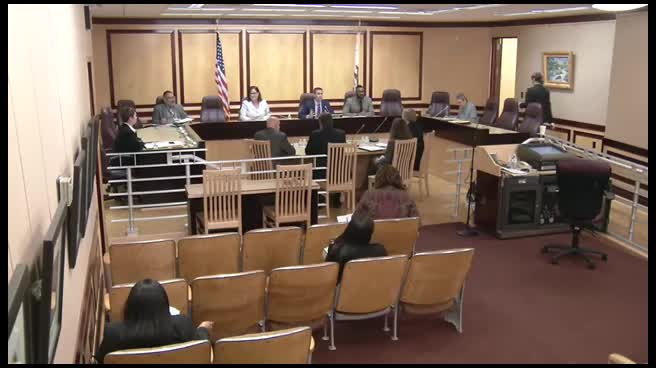
Discussed in Hearing
 7MIN
Senate Standing Committee on Human Services
Bill Author