AB 1416: Foster parent evaluations.
- Session Year: 2015-2016
- House: Assembly
- Latest Version Date: 2015-02-27
Under existing law, it is the policy of the state that all children in foster care have specified rights, including the right to live in a safe, healthy, and comfortable home where they are treated with respect, the right to be free from physical, sexual, emotional, or other abuse, or corporal punishment, and the right to receive adequate and healthy food, adequate clothing, and medical, dental, vision, and mental health services.
This bill would require the State Department of Social Services, in consultation with the County Welfare Directors Association, foster parents, caregivers, and current and former foster youth, to develop and implement a foster parent evaluation process. The bill would require that evaluation process to include a process to allow foster youth over 12 years of age and nonminor dependents to provide feedback on the quality of care received in licensed or certified foster homes and group homes at least once per year and upon any exit from those homes. The bill would also require the evaluation process to include the development of an evaluation tool in partnership with current and former foster youth and caregivers that allows youth to provide feedback on the quality of care received, as specified, including feedback on the caregivers honoring of the rights of foster youth. The bill would require the department to implement the foster parent evaluation process and promulgate all necessary regulations pursuant to this provision on or before January 1, 2017.
(a)The State Department of Social Services, in consultation with the County Welfare Directors Association, foster parents, caregivers, and current and former foster youth, shall develop and implement a foster parent evaluation process.
(b)The evaluation process shall include, but is not limited to, all of the following:
(1)A process to allow foster youth over 12 years of age and nonminor dependents to provide feedback on the quality of care received in licensed or certified foster homes and group homes at least once per year and upon any exit from those homes.
(2)The development of an evaluation tool in partnership with current and former foster youth and caregivers that allows the youth to provide feedback on quality of care received, including, but not limited to, feedback on all of the following:
(A)The caregivers participation in implementing the youths case plan.
(B)The caregivers provision of excellent, nurturing parenting, including incorporating the youth as a full member of the family, inclusion in family activities, and respect for the youths culture, religion, and ethnicity, physical or psychological needs, sexual orientation, gender identification or expression, and family relationships.
(C)The caregivers honoring of the rights of foster youth.
(D)The extent to which the caregiver respects and supports the youths ties to his or her biological family, including parents, siblings, and extended family members, and assists the youth in visitation and other forms of communication.
(E)The caregivers advocacy for the youth with the child welfare system and community agencies, including schools and health and mental health providers.
(F)The caregivers participation in the youths medical, psychological, and dental care, including scheduling regular health and mental health exams and coordinating transportation for the youth.
(G)The caregivers encouragement and support of the youths educational goals and school success, including participation in school activities and meetings, including individualized education plan meetings, as appropriate, assisting with school assignments, tutoring, meeting with teachers, including back to school nights and other school events, and working with an educational representative or surrogate, if one has been appointed.
(H)The caregivers provision of developmentally appropriate opportunities to allow the youth to learn and practice life skills and have hands-on experiences in preparation for transition to adulthood, including participation in family and rulemaking decisions, cooking and cleaning, conflict resolution, assistance with job and career exploration and development, assistance with higher education and financial aid exploration and processes, assistance accessing community resources, and encouragement to learn principles of money management and financial planning.
(I)The caregivers provision of opportunities to develop the youths interests and skills, including identifying and supporting participation in extracurricular and enrichment activities.
(J)The caregivers efforts to ensure any transition to foster care respects the youths developmental stage and psychological needs, allows for ongoing relationships, and is consistent with court orders for visitation.
(c)In the development of the foster parent evaluation process, the department, in consultation with the stakeholders identified in subdivision (a), shall consider how information gathered from evaluations can inform the continuous improvement of existing and future efforts to recruit, train, and retain high-quality foster parents.
(d)The department shall implement the foster parent evaluation process and shall promulgate all necessary regulations pursuant to this section on or before January 1, 2017.
|
Date
|
Status
|
|---|---|
| Feb 1, 2016 | From committee: Filed with the Chief Clerk pursuant to Joint Rule 56. |
| Jan 31, 2016 | Died pursuant to Article IV, Sec. 10(c) of the Constitution. |
| May 28, 2015 | In committee: Held under submission. |
| May 13, 2015 | In committee: Set, first hearing. Referred to APPR. suspense file. |
| Apr 29, 2015 | From committee: Do pass and re-refer to Com. on APPR. with recommendation: To Consent Calendar. (Ayes 7. Noes 0.) (April 28). Re-referred to Com. on APPR. |
| Mar 26, 2015 | Referred to Com. on HUM. S. |
| Mar 2, 2015 | Read first time. |
| Mar 1, 2015 | From printer. May be heard in committee March 31. |
| Feb 27, 2015 | Introduced. To print. |
|
Date
|
Description
|
Location
|
Votes
|
|
|---|---|---|---|---|
| Apr 28, 2015 | Do pass and be re-referred to the Committee on [Appropriations] with recommendation: To Consent Calendar | Assembly Standing Committee on Human Services |
Passed |
This list shows positions taken on this bill by organizations on the date displayed, which is linked to the original source.
Positions by individuals are not included.
AB 1416
Page 2
Date of Hearing: May 13, 2015
ASSEMBLY COMMITTEE ON APPROPRIATIONS
Jimmy Gomez, Chair
AB 1416
(Dababneh) – As Introduced February 27, 2015
Policy Committee: |
Human Services |
Vote: |
7 - 0 |
|
|
|
|
|
|
|
|
Urgency: No State Mandated Local Program: No Reimbursable: No
SUMMARY:
This bill requires the Department of Social Services (DSS), in consultation with the County Welfare Directors Association (CWDA), foster parents, caregivers, and current and former foster youth, to develop and implement a foster parent evaluation process by January 1, 2017. Specifically, this bill:
Specifies the evaluation process shall allow a foster youth over 12 years of age and nonminor dependents, to provide feedback on the quality of care they receive in licensed foster care homes or group homes every six months, and upon exit from those homes.
Requires the development of an evaluation tool that allows foster youth to provide feedback on their caregivers.
Specifies the evaluation shall be designed to gather information on a series of specified subjects.
Requires DSS to consider how the information gathered can improve efforts to recruit, train and retain high quality foster parents.
Requires DSS to implement the foster parent evaluation process and promulgate all necessary regulations no later than January 1, 2017.
FISCAL EFFECT:
One-time costs to DSS in the range of $100,000 (GF) to develop the evaluation process and implement regulations.
On-going costs in the range of $250,000 to $500,000 (GF) per year for the workload associated with social workers administering the evaluation once a year to over 7,000 foster youth and for processing the information obtained through the evaluation.
COMMENTS:
Purpose. The author states that, “Foster youth are removed from their homes because of abuse or neglect and are placed in the care of families or agencies that have stepped forward to care for them and to ensure their needs are met. In order to ensure that these vulnerable young people are properly placed in families that will be a good fit for them or in agencies that can meet their unique needs, the state needs a better system of tracking how they are doing in the environments we place them in. We can learn a lot about how our foster care system is working from foster youth themselves.”
Background. Families wishing to provide foster care, adopt, or both – are the subject of efforts being put forth by DSS, county child welfare agencies, and probation departments to implement a cohesive, family-friendly, and child-centered approval process. Recruiting, training, supporting, and retaining foster parents is a key component of the child welfare system in California.
In 2009, DSS, the County Welfare Directors Association, and the Youth Law Center collaborated to establish the Quality Parenting Initiative (QPI), a statewide approach to the recruitment and retention of high quality caregivers for children in the child welfare system. Currently, 18 counties are participating in this effort, using a county-based recruitment, training, and retention model.
AB 1416 is modeled after a component of Florida's Quality Parenting Initiative (QPI). QPI in Florida has resulted in the development of innovative tools for foster parents and children in foster care, including an exit interview for children and youth in foster care to provide feedback on their caregivers.
Prior Legislation.
This bill is a reintroduction of AB 2583 (Dababneh) 2014. That bill was held on this committee's Suspense File.
AB 196 (Mansoor) from 2013, which provided for a nearly identical evaluation process for foster youth ages 10 and older twice a year. That bill was held on this committee’s Suspense File.
Analysis Prepared by: Jennifer Swenson / APPR. / (916) 319-2081
AB 1416
Page 5
Date of Hearing: April 28, 2015
ASSEMBLY COMMITTEE ON HUMAN SERVICES
Kansen Chu, Chair
AB 1416
(Dababneh) – As Introduced February 27, 2015
SUBJECT: Foster parent evaluations
SUMMARY: Establishes a foster parent evaluation system.
Specifically, this bill:
Directs the Department of Social Services (DSS), in consultation with stakeholders, as specified, to develop and implement a foster parent evaluation process.
Requires the foster parent evaluation process to include a process for foster youth over the age of 12 and nonminor dependents to provide feedback on the quality of care received, as specified, and the development of an evaluation tool in partnership with current and former foster youth and their caregivers that allows youth to give feedback on a number of factors, including the following:
A caregiver’s participation in implementing the youth’s case plan;
A caregiver’s provision of excellent, nurturing parenting, as specified;
A caregiver’s honoring of the rights of the foster youth;
The extent to which a caregiver respects and supports the youth’s ties to his or her biological family, as specified;
A caregiver’s advocacy for the youth, as specified;
A caregiver’s participation in the youth’s medical and wellness care, as specified;
A caregiver’s encouragement and support of the youth’s educational goals and school success, as specified;
A caregiver’s provision of developmentally appropriate opportunities to develop and practice life skills, as specified;
A caregiver’s provision of opportunities to develop the youth’s interests and skills, as specified; and
A caregiver’s efforts to ensure any transition to foster care is appropriate and supported, as specified.
Requires DSS, in consultation with specified caregivers, to consider how information gathered from the evaluations can inform recruitment, training, and retention of high-quality foster parents.
Requires DSS to implement the foster parent evaluation process, and promulgate all necessary regulations, by January 1, 2017.
EXISTING LAW:
States that the purpose of foster care law is to provide maximum safety and protection for children who are being physically, sexually or emotionally abused, neglected, or exploited and to ensure the safety, protection, and physical and emotional well-being of children at risk of such harm. (WIC 300.2)
Declares the intent of the Legislature to, whenever possible: preserve and strengthen a child’s family ties, reunify a foster child with his or her relatives, or when family reunification is not possible or likely, to develop a permanent alternative. Further states the intent of the Legislature to reaffirm its commitment to children who are in out-of-home placement to live in the least restrictive, most family-like setting and as close to the child’s family as possible, as specified. (WIC 16000)
Requires out-of-home placement of a child in foster care to be based upon selection of a safe setting that is the least restrictive or most family-like and the most appropriate setting available and in close proximity to the parent’s home, the child’s school, and best suited to meet the child’s special needs and best interests. Further requires the selection of placement to consider, in order of priority, placement with relatives, nonrelated extended family members, tribal members, and foster family homes, certified homes of foster family agencies, intensive treatment or multidimensional treatment foster care homes, group care placements, such as group homes and community treatment facilities, and residential treatment, as specified. (WIC 16501.1(c)(1))
States that DSS shall promote the participation of current and former foster youth in the development of state foster care and child welfare policy. (WIC 16001.7)
Enumerates rights of minors and nonminors in foster care, including but not limited to the right to: live in a safe, healthy, and comfortable home where he or she is treated with respect; be free from physical, sexual, emotional, or other abuse, or corporal punishment; receive adequate and healthy food, adequate clothing, and, for youth in group homes, an allowance; receive medical, dental, vision, and mental health services; be involved in the development of his or her own case plan and plan for permanent placement; and review his or her own case plan and plan for permanent placement, if he or she is 12 years of age or older and in a permanent placement, and receive information about his or her out-of-home placement and case plan, including being told of changes to the plan. (WIC 16001.9)
Requires DSS to establish a working group, in consultation with stakeholders, charged with developing recommended revisions to the current rate-setting system, services, and programs provided by foster family agencies and group homes, as specified. Further requires the working group to consider, among other things, how to ensure the provision of services in family-like settings and submit a report on its recommendations to the Legislature by October 1, 2014. (WIC 11461.2)
States that is the intent of the Legislature that foster parents, and potential foster parents, receive training in order to assist them in being effective caregivers and to enhance the safety and growth of children placed with them. Further states the need to develop a basic curriculum, a program for continuing education, and specialized training for parents caring for children with unique needs. (HSC 1529.1)
Requires every licensed foster parent to complete a minimum of 12 hours of foster parent training, as specified, prior to any foster youth being placed with him or her. Further requires a licensed foster parent to complete at least 8 hours of foster parent training, as specified, annually. (HSC 1529.2(b))
FISCAL EFFECT: Unknown
COMMENTS:
Child Welfare
Services: California’s Child Welfare Services (CWS)
system provides a number of services, supports, and interventions
aimed at protecting children and their health and safety.
Ultimately, the system aims to preserve and strengthen families by
reuniting children with their biological parents whenever
appropriate. When this reunification is not possible or appropriate,
children are placed in the setting deemed least restrictive and most
suitable; this can include placement with relatives or guardians
(such as a nonrelative extended family member) or adoption.
Under certain
circumstances defined in state law, the juvenile court may deem a
child to be a dependent or ward of the court. The court may then
keep the child in his or her home or remove the child from the home;
removal may either result in eventual reunification with the family,
or the court may determine that an alternate permanent placement is
more fitting. In this latter case, the court must give preference to
potential placements in this order: relatives, nonrelative extended
family members, or family foster homes. Placement in group homes or
other intensive treatment placement settings are considered only in
more challenging situations where a child may need stabilization
services in order to transition to a less restrictive placement, such
as with a relative or foster caregiver.
On January 1, 2015, there were 62,898 children in foster care in California. Approximately 35% of these youth were placed with relatives, non-relative extended family members, or in a tribe-specified home. Another 25% were placed with foster family agencies or foster family agency certified homes, and almost 9% were placed in foster family homes and small family homes.
Foster parent recruitment and retention: Resource families – that is, families wishing to provide foster care, adopt, or both – are the subject of efforts being put forth by DSS, county child welfare agencies, and probation departments to implement a cohesive, family-friendly, and child-centered approval process. Recruiting, training, supporting, and retaining foster parents is a key component of the child welfare system in California.
The need for high quality caregivers in California’s child welfare system has been recognized for some time. For example, the 2008 federal Child and Family Services Review (CFSR), which assessed the state’s achievement of positive outcomes for children and families, found that, “another concern pertained to a lack of foster homes in the State in general and a specific lack of foster homes that reflect the racial/ethnic diversity of the children in foster care. Stakeholders also suggested that there is a lack of State leadership with regard to statewide recruitment efforts.”
DSS’s Children and Family Services Division’s June 2013 Annual Progress and Services Report on its Child and Family Services Plan for 2010-14, addressing the concerns raised by the 2008 CFSR, stated that, “California seeks to improve the state’s diligent recruitment and retention of resource families. The state’s overall goal is to attract quality resource families that reflect the diversity within California, and of the children in foster care, and to provide services that support resource families as they work to improve the lives of children in their care. California continues efforts to consolidate and better coordinate existing efforts, improve customer service and initiating, with philanthropy and counties, a pilot program aimed at enhancing the state’s recruitment and retention efforts of quality foster parents.”
One example of state recruitment and retention efforts is the Quality Parenting Initiative (QPI). In 2009, DSS, the County Welfare Directors Association, and the Youth Law Center collaborated to establish a statewide approach to the recruitment and retention of high quality caregivers for children in the child welfare system. Currently, 18 counties are participating in this effort, using a county-based recruitment, training, and retention model.
Additionally, attention to resource family recruitment and retention is given in current Continuum of Care (CCR) efforts. SB 1013 (Senate Budget and Fiscal Review) Chapter 35, Statutes of 2012, realigned CWS to counties, established a moratorium on the licensing of new group homes, and required DSS to convene a workgroup. This workgroup was charged with examining the use of group homes in California and providing recommendations to the Legislature and the Governor on how to reform this use. In January 2015, DSS submitted the CCR workgroup report to the Legislature, which included general and fiscal recommendations, alongside recommendations on home-based family care, residential treatment, and performance measures and outcomes. One of those recommendations was to “strengthen resource family recruitment, training requirements and retention strategies.”
Need for this bill: The author states that, “Foster youth are removed from their homes because of abuse or neglect and placed in the care of families or agencies that have stepped forward to care for them and to ensure their needs are met. In order to ensure that these vulnerable young people are properly placed in families that will be a good fit for them or in agencies that can meet their unique needs, the state needs a better system of tracking how they are doing in the environments we place them in. We can learn a lot about how our foster care system is working from foster youth themselves.”
Also, according the author, QPI efforts in Florida are more robust, including an exit interview for foster youth that provides valuable feedback on their caregivers. This bill will help make similar connection between foster youth feedback and the recruitment, training, and retention of high-quality caregivers.
The sponsor of this bill, California Youth Connection, states that, “Children in foster care, just like all children, need caring and engaged adults to support their well-being. Currently, licensing agencies lack a satisfactory process to compile, track, and evaluate feedback from foster youth on the care they are receiving from caregivers in foster homes and group homes. While the youth may share information verbally with a social worker, there is no official method for collecting that feedback. [This bill] aims to harness that valuable input in order to better match children with the appropriate caregivers, identify areas of strengths or weakness in the system, improve the overall quality of care, and provide an avenue for foster youth to voice their opinions about improving the system that is ultimately meant to serve them.”
PRIOR LEGISLATION:
AB 2583 (Dababneh), 2014, was very similar to this bill. It died in the Assembly Appropriations Committee.
AB 196 (Mansoor), 2013, was similar to this bill. It died in the Assembly Appropriations Committee.
REGISTERED SUPPORT / OPPOSITION:
Support
California Youth Connection (CYC), sponsor
California Alliance of Child and Family Services
Children NOW
Children’s Law Center
John Burton Foundation
East Bay Children’s Law Offices
Opposition
None on file.
Analysis Prepared by: Daphne Hunt / HUM. S. / (916) 319-2089
Bill Author
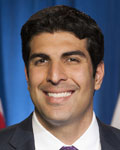
Bill Co-Author(s):