SB 938: Conservatorships: psychotropic medications and secured perimeter facilities.
- Session Year: 2015-2016
- House: Senate
- Latest Version Date: 2016-08-19
Existing law authorizes a conservator to place a conservatee in a secured perimeter residential care facility for the elderly, as specified, or to authorize the administration of certain prescribed medications upon a courts finding that among other things, the conservatee has dementia and a functional impairment. Existing law requires certain findings to be made by the court for each type of authority sought by the conservator and requires a petition for authority to be supported by a declaration of a licensed physician or psychologist, as specified, regarding these findings.
This bill would replace references to the term dementia in these provisions with major neurocognitive disorders (MNCDs), as defined. The bill would require a petition requesting the authority to administer psychotropic medications, as defined, to be supported by a declaration of a physician that includes specified information, including, among other things, the recommended course of medication, the expected effects of the recommended medication on the conservatees overall mental health and treatment plan, including how the medication is expected to improve the conservatees symptoms, and a description of the potential side effects of the recommended medication. The bill would revise the court findings required for placement in a secured perimeter facility. The bill would require the Judicial Council, on or before July 1, 2017, to adopt rules of court and develop appropriate forms for the implementation of these provisions, as specified. The bill would make related changes and additional findings and declarations of the Legislature.
Existing law authorizes a conservator to place a conservatee in a secured perimeter residential care facility for the elderly, as specified, or to authorize the administration of certain prescribed medications upon a courts finding that among other things, the conservatee has dementia and a functional impairment. Existing law requires certain findings to be made by the court for each type of authority sought by the conservator and requires a petition for authority to be supported by a declaration of a licensed physician or psychologist, as specified, regarding these findings.
This bill would replace references to the term dementia in these provisions with major neurocognitive disorders (MNCDs), as defined. The bill would require a petition requesting the authority to administer psychotropic medications, as defined, to be supported by a declaration of a physician that includes specified information, including, among other things, the recommended course of medication, the expected effects of the recommended medication on the conservatees overall mental health and treatment plan, including how the medication is expected to improve the conservatees symptoms, and a description of the potential side effects of the recommended medication. The bill would revise the court findings required for placement in a secured perimeter facility. The bill would require the Judicial Council, on or before July 1, 2017, to adopt rules of court and develop appropriate forms for the implementation of these provisions, as specified. The bill would make related changes and additional findings and declarations of the Legislature.
Existing law authorizes a conservator to place a conservatee in a secured perimeter residential care facility for the elderly, as specified, or to authorize the administration of certain prescribed medications upon a courts finding that among other things, the conservatee has dementia and a functional impairment. Existing law requires certain findings to be made by the court for each type of authority sought by the conservator and requires a petition for authority to be supported by a declaration of a licensed physician or psychologist, as specified, regarding these findings.
This bill would replace references to the term dementia in these provisions with major neurocognitive disorders (MNCDs), as defined. The bill would require a petition requesting the authority to administer psychotropic medications, as defined, to be supported by a declaration of a physician or psychologist that includes specified information, including, among other things, the recommended course of medication, the expected effects of the recommended medication on the conservatees overall mental health and treatment plan, including how the medication is expected to improve the conservatees symptoms, and a description of the potential side effects of the recommended medication. The bill would require the Judicial Council, on or before July 1, 2017, to adopt rules of court and develop appropriate forms for the implementation of these provisions, as specified. The bill would make related changes and additional findings and declarations of the Legislature.
Existing law authorizes a conservator to place a conservatee in a secured perimeter residential care facility, facility for the elderly, as specified, or to administer authorize the administration of certain prescribed medications upon a courts finding that among other things, the conservatee has dementia and a functional impairment. Existing law requires certain findings to be made by the court for each type of authority sought by the conservator and requires a petition for authority to be supported by a declaration of a licensed physician or psychologist, as specified, regarding these findings.
This bill would replace references to the term dementia in these provisions with major neurocognitive disorders (MNCDs). (MNCDs), as defined. The bill would require petitions a petition requesting the authority to administer certain prescribed medications psychotropic medications, as defined, to be supported by a declaration of a physician or psychologist that includes specified information, including, among other things, the recommended course of medication, the expected effects of the recommended medication on the conservatees overall mental health and treatment plan, including how the medication is expected to improve the conservatees symptoms, and a description of the potential side effects of the recommended medication. The bill would require the Judicial Council, on or before July 1, 2017, to adopt rules of court and develop appropriate forms for the implementation of these provisions, as specified. The bill would make additional findings and declarations of the Legislature.
Existing law authorizes a conservator to place a conservatee in a secured perimeter residential care facility, as specified, or to administer certain prescribed medications upon a courts finding that among other things, the conservatee has dementia and a functional impairment. Existing law requires certain findings to be made by the court for each type of authority sought by the conservator and requires a petition for authority to be supported by a declaration of a licensed physician or psychologist, as specified, regarding these findings.
This bill would replace references to the term dementia in these provisions with major neurocognitive disorders (MNCDs). The bill would prohibit the placement of a conservatee in an acute psychiatric hospital and psychiatric health facility, as specified. The bill would require petitions requesting the authority to administer certain prescribed medications to be supported by a declaration of a licensed physician, psychiatrist, physician or psychologist that includes specified information, including, among other things, the reasons for the request, information regarding the rationale for the proposed medication, and information regarding the conservatees overall mental health assessment and treatment plan. the recommended course of medication, the expected effects of the recommended medication on the conservatees overall mental health and treatment plan, including how the medication is expected to improve the conservatees symptoms, and a description of the potential side effects of the recommended medication. The bill would require the Judicial Council, on or before July 1, 2017, to adopt rules of court and develop appropriate forms for the implementation of these provisions, as specified. The bill would make additional findings and declarations of the Legislature.
Existing law authorizes a conservator to place a conservatee in a secured perimeter residential care facility, as specified, or to administer certain prescribed medications upon a courts finding that among other things, the conservatee has dementia and a functional impairment. Existing law requires certain findings to be made by the court for each type of authority sought by the conservator and requires a petition for authority to be supported by a declaration of a licensed physician or psychologist, as specified, regarding these findings.
This bill would replace references to the term dementia in these provisions with major neurocognitive disorders (MNCDs). The bill would prohibit the placement of a conservatee in an acute psychiatric hospital and psychiatric health facility, as specified. The bill would require petitions requesting the authority to administer certain prescribed medications to be supported by a declaration of a licensed physician, psychiatrist, or psychologist that includes specified information including, among other things, the reasons for the request, information regarding the rationale for the proposed medication, and information regarding the conservatees overall mental health assessment and treatment plan. The bill would require the Judicial Council, on or before July 1, 2017, to adopt rules of court and develop appropriate forms for the implementation of these provisions, as specified. The bill would make additional findings and declarations of the Legislature.
(a)The Legislature hereby finds and declares:
(1)That conservatees with major neurocognitive disorders (MNCDs), as defined in the last published edition of the Diagnostic and Statistical Manual of Mental Disorders, should have a conservatorship to serve their unique and special needs.
(2)Common forms of MNCDs are known as Alzheimers disease, vascular dementia, dementia with Lewy bodies, Parkinson dementia, frontotemporal dementia, and mixed dementia.
(3)That, by adding powers to the probate conservatorship for conservatees with MNCDs, their unique and special needs can be met, and the basic dignity and rights of the conservatee can be safeguarded.
(4)Psychotropic medications can be misused for people with MNCDs to control behavior that conveys pain, distress, or discomfort and the administration of psychotropic medications has been and can be abused by those who prescribe and administer these medications.
(5)Since 2005, the federal Food and Drug Administration has required the packaging of all antipsychotic medications, which fall under a class of psychotropic medication, to contain a black box warning label that the medication significantly increases the risk of death for elderly people with MNCDs.
(6)Therefore, granting powers to a conservator to authorize these medications for the treatment of a person with an MNCD requires the additional protections specified in this section.
(b)For the purposes of this section, MNCD means a major neurocognitive disorder, as defined in the latest published edition of the Diagnostic and Statistical Manual of Mental Disorders.
(c)Notwithstanding any other law, a conservator may authorize the placement of a conservatee in a secured perimeter residential care facility for the elderly operated pursuant to Section 1569.698 of the Health and Safety Code, and which has a care plan that meets the requirements of Section 87705 of Title 22 of the California Code of Regulations, upon a courts finding, by clear and convincing evidence, of all of the following:
(1)The conservatee has an MNCD.
(2)The conservatee lacks the capacity to give informed consent to this placement and has at least one mental function deficit pursuant to subdivision (a) of Section 811, and this deficit significantly impairs the persons ability to understand and appreciate the consequences of his or her actions pursuant to subdivision (b) of Section 811.
(3)The conservatee needs or would benefit from a restricted and secure environment, as demonstrated by evidence presented by the physician or psychologist referred to in paragraph (3) of subdivision (f).
(4)The proposed placement in a secured perimeter residential care facility for the elderly is the least restrictive placement appropriate to the needs of the conservatee.
(5)The secured setting is the choice of the conservator from various setting options, as documented in the person-centered care plan.
(d)Notwithstanding any other law, a conservator of a person may authorize the administration of psychotropic medications to a conservatee with an MNCD only upon a courts finding, by clear and convincing evidence, of all of the following:
(1)The conservatee has an MNCD.
(2)The conservatee lacks the capacity to give informed consent to the administration of psychotropic medications for his or her treatment and has at least one mental function deficit pursuant to subdivision (a) of Section 811, and this deficit or deficits significantly impairs the persons ability to understand and appreciate the consequences of his or her actions pursuant to subdivision (b) of Section 811.
(3)The conservatee needs or would benefit from appropriate medication as demonstrated by evidence presented by the physician as provided in subdivision (f).
(e)Pursuant to subdivision (b) of Section 2355, in the case of a person who is an adherent of a religion whose tenets and practices call for a reliance on prayer alone for healing, the treatment required by the conservator under subdivision (d) shall be by an accredited practitioner of that religion in lieu of the administration of medications.
(f)A petition for authority to act under this section is governed by Section 2357, except:
(1)The conservatee shall be represented by an attorney pursuant to Chapter 4 (commencing with Section 1470) of Part 1. Upon granting or denying authority to a conservator under this section, the court shall discharge the attorney or order the continuation of the legal representation, consistent with the standard set forth in subdivision (a) of Section 1470.
(2)The conservatee shall be produced at the hearing, unless excused pursuant to Section 1893.
(3)The petition requesting authority under subdivision (c) shall be supported by a declaration of a physician, or a psychologist within the scope of his or her licensure, regarding each of the findings required to be made under this section for any power requested. The psychologist shall have at least two years of experience in diagnosing MNCDs.
(4)The petition requesting authority under subdivision (d) shall be supported by a declaration of a physician regarding each of the findings required to be made under this section for any power requested. The supporting declaration for a petition requesting authority under subdivision (d) shall also include all of the following:
(A)A description of the conservatees diagnosis and a description of the conservatees behavior.
(B)The recommended course of medication.
(C)A description of the pharmacological and nonpharmacological treatments and medications that have been previously used or proposed, the less invasive treatments or medications used or proposed, and why these treatments or medications have not been or would not be effective in treating the conservatees symptoms.
(D)The expected effects of the recommended medication on the conservatees overall mental health and treatment plan, including how the medication is expected to improve the conservatees symptoms.
(E)A description of the potential side effects of the recommended medication, including any black box warnings issued by the federal Food and Drug Administration as defined in Section 201.57(c)(1) of Title 21 of the Code of Federal Regulations.
(F)Whether the conservatee and his or her attorney have had an opportunity to provide input on the recommended medications.
(5)On or before July 1, 2017, the Judicial Council shall adopt rules of court and develop appropriate forms for the implementation of this section, and shall provide guidance to the court on how to evaluate the request for authorization, including how to proceed if information, otherwise required to be included in a request for authorization under this section, is not included in a request for authorization submitted to the court.
(6)The petition may be filed by any of the persons designated in Section 1891.
(g)The court investigator shall annually investigate and report to the court every two years pursuant to Sections 1850 and 1851 if the conservator is authorized to act under this section. In addition to the other matters provided in Section 1851, the conservatee shall be specifically advised by the investigator that the conservatee has the right to object to the conservators powers granted under this section, and the report shall also include whether powers granted under this section are warranted. If the conservatee objects to the conservators powers granted under this section, or the investigator determines that some change in the powers granted under this section is warranted, the court shall provide a copy of the report to the attorney of record for the conservatee. If no attorney has been appointed for the conservatee, one shall be appointed pursuant to Chapter 4 (commencing with Section 1470) of Part 1. The attorney shall, within 30 days after receiving this report, do one of the following:
(1)File a petition with the court regarding the status of the conservatee.
(2)File a written report with the court stating that the attorney has met with the conservatee and determined that the petition would be inappropriate.
(h)If authority to administer psychotropic medications is granted pursuant to subdivision (d), the conservator may change or adjust psychotropic medications without further notice to, or approval from, the court, provided that the change or adjustment is consistent with the authority granted by the court to administer psychotropic medications for purposes of therapeutic treatment directly related to the MNCD, and the conservator has received information about the risks, benefits, and nonpharmacological alternatives of the proposed change or adjustment in advance of approving the change or adjustment.
(i)If the authority to administer psychotropic medications is granted pursuant to subdivision (d), the court shall review the grant of authority as part of its periodic review conducted pursuant to Section 1850.
(j)A petition to terminate authority granted under this section shall be governed by Section 2359.
(k)Nothing in this section shall be construed to affect a conservatorship of the estate of a person who has an MNCD.
(l)Nothing in this section shall affect the laws that would otherwise apply in emergency situations.
(m)Nothing in this section shall affect current law regarding the power of a probate court to fix the residence of a conservatee or to authorize medical treatment for any conservatee who has not been determined to have an MNCD.
(n)For purposes of this section, psychotropic medications includes, but is not limited to, anxiolytic agents, antidepressants, mood stabilizers, antipsychotic medications, hypnotics, and psychostimulants. Psychotropic medications does not include medications approved by the federal Food and Drug Administration for the treatment of an MNCD or anti-Parkinson agents.
(o)This section shall not apply to a conservatee who is prescribed a psychotropic or antipsychotic medication by a physician in an acute care hospital setting or for purposes of diagnosis or therapeutic treatment not directly related to the MNCD, including, but not limited to, sedation prior to an invasive procedure or nausea prevention or relief. In those circumstances, the informed consent of the conservator may be obtained pursuant to the authority granted under Section 2355.
(a)The Legislature hereby finds and declares:
(1)That conservatees with major neurocognitive disorders (MNCDs), as defined in the last published edition of the Diagnostic and Statistical Manual of Mental Disorders, should have a conservatorship to serve their unique and special needs.
(2)Common forms of MNCDs are known as Alzheimers disease, vascular dementia, dementia with Lewy bodies, Parkinson dementia, frontotemporal dementia, and mixed dementia.
(3)That, by adding powers to the probate conservatorship for conservatees with MNCDs, their unique and special needs can be met, and the basic dignity and rights of the conservatee can be safeguarded.
(4)Psychotropic medications can be misused for people with MNCDs to control behavior that conveys pain, distress, or discomfort and the administration of psychotropic medications has been and can be abused by those who prescribe and administer these medications.
(5)Since 2005, the federal Food and Drug Administration has required the packaging of all antipsychotic medications, which fall under a class of psychotropic medication, to contain a black box warning label that the medication significantly increases the risk of death for elderly people with MNCDs.
(6)Therefore, granting powers to a conservator to authorize these medications for the treatment of a person with an MNCD requires the additional protections specified in this section.
(b)For the purposes of this section, MNCD means a major neurocognitive disorder, as defined in the latest published edition of the Diagnostic and Statistical Manual of Mental Disorders.
(c)Notwithstanding any other law, a conservator may authorize the placement of a conservatee in a secured perimeter residential care facility for the elderly operated pursuant to Section 1569.698 of the Health and Safety Code, and which has a care plan that meets the requirements of Section 87705 of Title 22 of the California Code of Regulations, upon a courts finding, by clear and convincing evidence, of all of the following:
(1)The conservatee has an MNCD.
(2)The conservatee lacks the capacity to give informed consent to this placement and has at least one mental function deficit pursuant to subdivision (a) of Section 811, and this deficit significantly impairs the persons ability to understand and appreciate the consequences of his or her actions pursuant to subdivision (b) of Section 811.
(3)The conservatee needs or would benefit from a restricted and secure environment, as demonstrated by evidence presented by the physician or psychologist referred to in paragraph (3) of subdivision (f).
(4)The proposed placement in a secured perimeter residential care facility for the elderly is the least restrictive placement appropriate to the needs of the conservatee.
(5)The secured setting is the choice of the conservator from various setting options, as documented in the person-centered care plan.
(d)Notwithstanding any other law, a conservator of a person may authorize the administration of psychotropic medications to a conservatee with an MNCD only upon a courts finding, by clear and convincing evidence, of all of the following:
(1)The conservatee has an MNCD.
(2)The conservatee lacks the capacity to give informed consent to the administration of psychotropic medications for his or her treatment and has at least one mental function deficit pursuant to subdivision (a) of Section 811, and this deficit or deficits significantly impairs the persons ability to understand and appreciate the consequences of his or her actions pursuant to subdivision (b) of Section 811.
(3)The conservatee needs or would benefit from appropriate medication as demonstrated by evidence presented by the physician as provided in subdivision (f).
(e)Pursuant to subdivision (b) of Section 2355, in the case of a person who is an adherent of a religion whose tenets and practices call for a reliance on prayer alone for healing, the treatment required by the conservator under subdivision (d) shall be by an accredited practitioner of that religion in lieu of the administration of medications.
(f)A petition for authority to act under this section is governed by Section 2357, except:
(1)The conservatee shall be represented by an attorney pursuant to Chapter 4 (commencing with Section 1470) of Part 1. Upon granting or denying authority to a conservator under this section, the court shall discharge the attorney or order the continuation of the legal representation, consistent with the standard set forth in subdivision (a) of Section 1470.
(2)The conservatee shall be produced at the hearing, unless excused pursuant to Section 1893.
(3)The petition requesting authority under subdivision (c) shall be supported by a declaration of a physician, or a psychologist within the scope of his or her licensure, regarding each of the findings required to be made under this section for any power requested. The psychologist shall have at least two years of experience in diagnosing MNCDs.
(4)The petition requesting authority under subdivision (d) shall be supported by a declaration of a physician regarding each of the findings required to be made under this section for any power requested. The supporting declaration for a petition requesting authority under subdivision (d) shall also include all of the following:
(A)A description of the conservatees diagnosis and a description of the conservatees behavior.
(B)The recommended course of medication.
(C)A description of the pharmacological and nonpharmacological treatments and medications that have been previously used or proposed, the less invasive treatments or medications used or proposed, and why these treatments or medications have not been or would not be effective in treating the conservatees symptoms.
(D)The expected effects of the recommended medication on the conservatees overall mental health and treatment plan, including how the medication is expected to improve the conservatees symptoms.
(E)A description of the potential side effects of the recommended medication, including any black box warnings issued by the federal Food and Drug Administration as defined in Section 201.57(c)(1) of Title 21 of the Code of Federal Regulations.
(F)Whether the conservatee and his or her attorney have had an opportunity to provide input on the recommended medications.
(5)On or before July 1, 2017, the Judicial Council shall adopt rules of court and develop appropriate forms for the implementation of this section, and shall provide guidance to the court on how to evaluate the request for authorization, including how to proceed if information, otherwise required to be included in a request for authorization under this section, is not included in a request for authorization submitted to the court.
(6)The petition may be filed by any of the persons designated in Section 1891.
(g)The court investigator shall annually investigate and report to the court every two years pursuant to Sections 1850 and 1851 if the conservator is authorized to act under this section. In addition to the other matters provided in Section 1851, the conservatee shall be specifically advised by the investigator that the conservatee has the right to object to the conservators powers granted under this section, and the report shall also include whether powers granted under this section are warranted. If the conservatee objects to the conservators powers granted under this section, or the investigator determines that some change in the powers granted under this section is warranted, the court shall provide a copy of the report to the attorney of record for the conservatee. If no attorney has been appointed for the conservatee, one shall be appointed pursuant to Chapter 4 (commencing with Section 1470) of Part 1. The attorney shall, within 30 days after receiving this report, do one of the following:
(1)File a petition with the court regarding the status of the conservatee.
(2)File a written report with the court stating that the attorney has met with the conservatee and determined that the petition would be inappropriate.
(h)If authority to administer psychotropic medications is granted pursuant to subdivision (d), the conservator may change or adjust psychotropic medications without further notice to, or approval from, the court, provided that the change or adjustment is consistent with the authority granted by the court and the conservator has received information about the risks, benefits, and alternatives of the proposed change or adjustment in advance of approving the change or adjustment.
(i)If the authority to administer psychotropic medications is granted pursuant to subdivision (d), the court shall review the grant of authority as part of its periodic review conducted pursuant to Section 1850.
(j)A petition to terminate authority granted under this section shall be governed by Section 2359.
(k)Nothing in this section shall be construed to affect a conservatorship of the estate of a person who has an MNCD.
(l)Nothing in this section shall affect the laws that would otherwise apply in emergency situations.
(m)Nothing in this section shall affect current law regarding the power of a probate court to fix the residence of a conservatee or to authorize medical treatment for any conservatee who has not been determined to have an MNCD.
(n)For purposes of this section, psychotropic medications includes, but is not limited to, anxiolytic agents, antidepressants, mood stabilizers, antipsychotic medications, agents, hypnotics, and psychostimulants. Psychotropic medications does not include medications approved by the federal Food and Drug Administration for the treatment of an MNCD or anti-Parkinson agents.
(o)This section shall not apply to a conservatee who is prescribed a psychotropic or antipsychotic medication by a physician in an acute care hospital setting or for purposes of diagnosis or therapeutic treatment not directly related to the MNCD, including, but not limited to, sedation prior to an invasive procedure or nausea prevention or relief. In those circumstances, the informed consent of the conservator may be obtained pursuant to the authority granted under Section 2355.
(a)The Legislature hereby finds and declares:
(1)That conservatees with major neurocognitive disorders (MNCDs), as defined in the last published edition of the Diagnostic and Statistical Manual of Mental Disorders, should have a conservatorship to serve their unique and special needs.
(2)Common forms of MNCDs are known as Alzheimers disease, vascular dementia, dementia with Lewy bodies, Parkinson dementia, frontotemporal dementia, and mixed dementia.
(3)That, by adding powers to the probate conservatorship for conservatees with MNCDs, their unique and special needs can be met, and the basic dignity and rights of the conservatee can be safeguarded.
(4)Psychotropic medications can be misused for people with MNCDs to control behavior that conveys pain, distress, or discomfort and the administration of psychotropic medications has been and can be abused by those who prescribe and administer these medications.
(5)Since 2005, the federal Food and Drug Administration has required the packaging of all antipsychotic medications, which fall under a class of psychotropic medication, to contain a black box warning label that the medication significantly increases the risk of death for elderly people with MNCDs.
(6)Therefore, granting powers to a conservator to authorize these medications for the treatment of a person with an MNCD requires the additional protections specified in this section.
(b)For the purposes of this section, MNCD means a major neurocognitive disorder, as defined in the latest published edition of the Diagnostic and Statistical Manual of Mental Disorders.
(c)Notwithstanding any other law, a conservator may authorize the placement of a conservatee in a secured perimeter residential care facility for the elderly operated pursuant to Section 1569.698 of the Health and Safety Code, and which has a care plan that meets the requirements of Section 87705 of Title 22 of the California Code of Regulations, upon a courts finding, by clear and convincing evidence, of all of the following:
(1)The conservatee has an MNCD.
(2)The conservatee lacks the capacity to give informed consent to this placement and has at least one mental function deficit pursuant to subdivision (a) of Section 811, and this deficit significantly impairs the persons ability to understand and appreciate the consequences of his or her actions pursuant to subdivision (b) of Section 811.
(3)The conservatee needs or would benefit from a restricted and secure environment, as demonstrated by evidence presented by the physician or psychologist referred to in paragraph (3) of subdivision (f).
(4)The proposed placement in a secured perimeter residential care facility for the elderly is the least restrictive placement appropriate to the needs of the conservatee.
(d)Notwithstanding any other law, a conservator of a person may authorize the administration of psychotropic medications to a conservatee with an MNCD, MNCD only upon a courts finding, by clear and convincing evidence, of all of the following:
(1)The conservatee has an MNCD.
(2)The conservatee lacks the capacity to give informed consent to the administration of psychotropic medications for his or her treatment and has at least one mental function deficit pursuant to subdivision (a) of Section 811, and this deficit or deficits significantly impairs the persons ability to understand and appreciate the consequences of his or her actions pursuant to subdivision (b) of Section 811.
(3)The conservatee needs or would benefit from appropriate medication as demonstrated by evidence presented by the physician or psychologist referred to in paragraph (3) of as provided in subdivision (f).
(e)Pursuant to subdivision (b) of Section 2355, in the case of a person who is an adherent of a religion whose tenets and practices call for a reliance on prayer alone for healing, the treatment required by the conservator under subdivision (d) shall be by an accredited practitioner of that religion in lieu of the administration of medications.
(f)A petition for authority to act under this section is governed by Section 2357, except:
(1)The conservatee shall be represented by an attorney pursuant to Chapter 4 (commencing with Section 1470) of Part 1. Upon granting or denying authority to a conservator under this section, the court shall discharge the attorney or order the continuation of the legal representation, consistent with the standard set forth in subdivision (a) of Section 1470.
(2)The conservatee shall be produced at the hearing, unless excused pursuant to Section 1893.
(3)The petition requesting authority under subdivision (c) or (d) shall be supported by a declaration of a physician, or a psychologist within the scope of his or her licensure, regarding each of the findings required to be made under this section for any power requested, except that the psychologist has requested. The psychologist shall have at least two years of experience in diagnosing MNCDs. The supporting declaration for a petition requesting authority under subdivision (d) shall also include all of the following:
(4)The petition requesting authority under subdivision (d) shall be supported by a declaration of a physician regarding each of the findings required to be made under this section for any power requested. The supporting declaration for a petition requesting authority under subdivision (d) shall also include all of the following:
(A)A description of the conservatees diagnosis and a description of the conservatees behavior.
(B)The recommended course of medication.
(C)A description of the pharmacological and nonpharmacological treatments and medications that have been previously used or proposed, the less invasive treatments or medications used or proposed, and why these treatments or medications have not been or would not be effective in treating the conservatees symptoms.
(D)The expected effects of the recommended medication on the conservatees overall mental health and treatment plan, including how the medication is expected to improve the conservatees symptoms.
(E)A description of the potential side effects of the recommended medication, including any black box warnings issued by the federal Food and Drug Administration as defined in Section 201.57(c)(1) of Title 21 of the Code of Federal Regulations.
(F)Whether the conservatee and his or her attorney have had an opportunity to provide input on the recommended medications.
(4)
(5)On or before July 1, 2017, the Judicial Council shall adopt rules of court and develop appropriate forms for the implementation of this section, and shall provide guidance to the court on how to evaluate the request for authorization, including how to proceed if information, otherwise required to be included in a request for authorization under this section, is not included in a request for authorization submitted to the court.
(5)
(6)The petition may be filed by any of the persons designated in Section 1891.
(g)The court investigator shall annually investigate and report to the court every two years pursuant to Sections 1850 and 1851 if the conservator is authorized to act under this section. In addition to the other matters provided in Section 1851, the conservatee shall be specifically advised by the investigator that the conservatee has the right to object to the conservators powers granted under this section, and the report shall also include whether powers granted under this section are warranted. If the conservatee objects to the conservators powers granted under this section, or the investigator determines that some change in the powers granted under this section is warranted, the court shall provide a copy of the report to the attorney of record for the conservatee. If no attorney has been appointed for the conservatee, one shall be appointed pursuant to Chapter 4 (commencing with Section 1470) of Part 1. The attorney shall, within 30 days after receiving this report, do one of the following:
(1)File a petition with the court regarding the status of the conservatee.
(2)File a written report with the court stating that the attorney has met with the conservatee and determined that the petition would be inappropriate.
(h)If authority to administer psychotropic medications is granted pursuant to subdivision (d), the conservator may change or adjust psychotropic medications without further notice to, or approval from, the court, provided that the change or adjustment is consistent with the authority granted by the court and the conservator has received information about the risks, benefits, and alternatives of the proposed change or adjustment in advance of approving the change or adjustment.
(i)If the authority to administer psychotropic medications is granted pursuant to subdivision (d), the court shall review the grant of authority as part of its periodic review conducted pursuant to Section 1850.
(h)
(j)A petition to terminate authority granted under this section shall be governed by Section 2359.
(i)
(k)Nothing in this section shall be construed to affect a conservatorship of the estate of a person who has an MNCD.
(j)
(l)Nothing in this section shall affect the laws that would otherwise apply in emergency situations.
(k)
(m)Nothing in this section shall affect current law regarding the power of a probate court to fix the residence of a conservatee or to authorize medical treatment for any conservatee who has not been determined to have an MNCD.
(l)
(n)For purposes of this section, psychotropic medications includes, but is not limited to, anxiolytic agents, antidepressants, mood stabilizers, antipsychotic medications, anti-Parkinson agents, hypnotics, and psychostimulants. Psychotropic medications does not include medications approved by the federal Food and Drug Administration for the treatment of an MNCD. MNCD or anti-Parkinson agents.
(o)This section shall not apply to a conservatee who is prescribed a psychotropic or antipsychotic medication by a physician in an acute care hospital setting or for purposes of diagnosis or therapeutic treatment not directly related to the MNCD, including, but not limited to, sedation prior to an invasive procedure or nausea prevention or relief. In those circumstances, the informed consent of the conservator may be obtained pursuant to the authority granted under Section 2355.
(a)The Legislature hereby finds and declares:
(1)That conservatees with major or mild neurocognitive disorders (MNCDs), as defined in the last published edition of the Diagnostic and Statistical Manual of Mental Disorders, should have a conservatorship to serve their unique and special needs.
(2)Common forms of MNCDs are known as Alzheimers disease, vascular dementia, dementia with Lewy bodies, Parkinson dementia, frontotemporal dementia, and mixed dementia.
(3)That, by adding powers to the probate conservatorship for conservatees with MNCDs, their unique and special needs can be met, and the basic dignity and rights of the conservatee can be safeguarded.
(4)Psychotropic medications or psychotropic drugs are those medications administered for the purpose of affecting the central nervous system to treat psychiatric disorders or illnesses.
(5)
(4)Psychotropic medications are often can be misused for people with MNCDs to control behavior that conveys pain, distress, or discomfort and the administration of psychotropic medications has been and can be abused by those who prescribe and administer these medications.
(6)
(5)Since 2005, the federal Food and Drug Administration has required the packaging of all antipsychotic medications, which fall under a class of psychotropic medication, to contain a black box warning label that the medication significantly increases the risk of death for elderly people with MNCDs.
(7)Recent studies have shown that, in many instances, psychotropic drugs are outperformed by placebos and can actually worsen the cognitive ability of a person with an MNCD.
(8)
(6)Therefore, granting powers to a conservator to authorize these medications for the treatment of a person with an MNCD requires the protections specified in this section.
(b)For the purposes of this section, MNCD means a major neurocognitive disorder, as defined in the latest published edition of the Diagnostic and Statistical Manual of Mental Disorders.
(b)
(c)Notwithstanding any other law, a conservator may authorize the placement of a conservatee in a secured perimeter residential care facility for the elderly operated pursuant to Section 1569.698 of the Health and Safety Code, and which has a care plan that meets the requirements of Section 87705 of Title 22 of the California Code of Regulations, upon a courts finding, by clear and convincing evidence, of all of the following:
(1)The conservatee has an MNCD as defined in the last published edition of the Diagnostic and Statistical Manual of Mental Disorders. MNCD.
(2)The conservatee lacks the capacity to give informed consent to this placement and has at least one mental function deficit pursuant to subdivision (a) of Section 811, and this deficit significantly impairs the persons ability to understand and appreciate the consequences of his or her actions pursuant to subdivision (b) of Section 811.
(3)The conservatee needs or would benefit from a restricted and secure environment, as demonstrated by evidence presented by the physician or psychologist referred to in paragraph (3) of subdivision (e). (f).
(4)The court finds that the proposed placement in a locked facility secured perimeter residential care facility for the elderly is the least restrictive placement appropriate to the needs of the conservatee.
(c)
(d)Notwithstanding any other law, a conservator of a person may authorize the administration of psychotropic medications to a conservatee with an MNCD, upon a courts finding, by clear and convincing evidence, of all of the following:
(1)The conservatee has an MNCD, as defined in the last published edition of the Diagnostic and Statistical Manual of Mental Disorders. MNCD.
(2)The conservatee lacks the capacity to give informed consent to the administration of psychotropic medications for the his or her treatment of an MNCD, and has at least one mental function deficit pursuant to subdivision (a) of Section 811, and this deficit or deficits significantly impairs the persons ability to understand and appreciate the consequences of his or her actions pursuant to subdivision (b) of Section 811.
(3)The conservatee needs or would benefit from appropriate medication as demonstrated by evidence presented by the physician or psychologist referred to in paragraph (3) of subdivision (e). (f).
(d)
(e)Pursuant to subdivision (b) of Section 2355, in the case of a person who is an adherent of a religion whose tenets and practices call for a reliance on prayer alone for healing, the treatment required by the conservator under subdivision (c) (d) shall be by an accredited practitioner of that religion in lieu of the administration of medications.
(e)
(f)A petition for authority to act under this section is governed by Section 2357, except:
(1)The conservatee shall be represented by an attorney pursuant to Chapter 4 (commencing with Section 1470) of Part 1. Upon granting or denying authority to a conservator under this section, the court shall discharge the attorney or order the continuation of the legal representation, consistent with the standard set forth in subdivision (a) of Section 1470.
(2)The conservatee shall be produced at the hearing, unless excused pursuant to Section 1893.
(3)The petition requesting authority under subdivision (b) (c) or (c) (d) shall be supported by a declaration of a physician, or a psychologist within the scope of his or her licensure, regarding each of the findings required to be made under this section for any power requested, except that the psychologist has at least two years of experience in diagnosing MNCDs. The supporting declaration for a petition requesting authority under subdivision (c) (d) shall also include all of the following:
(A)A description of the conservatees diagnosis and a description of the conservatees behavior.
(B)The recommended course of medication.
(C)A description of the pharmacological and nonpharmacological treatments and medications that have been previously used or proposed, the less invasive treatments or medications used or proposed, and why these treatments or medications have not been or would not be effective in treating the conservatees symptoms.
(D)The expected effects of the recommended medication on the conservatees overall mental health and treatment plan, including how the medication is expected to improve the conservatees symptoms.
(E)A description of the potential side effects of the recommended medication. medication, including any black box warnings issued by the federal Food and Drug Administration as defined in Section 201.57(c)(1) of Title 21 of the Code of Federal Regulations.
(F)Whether the conservatee and his or her attorney have had an opportunity to provide input on the recommended medications.
(4)On or before July 1, 2017, the Judicial Council shall adopt rules of court and develop appropriate forms for the implementation of this section, and shall provide guidance to the court on how to evaluate the request for authorization, including how to proceed if information, otherwise required to be included in a request for authorization under this section, is not included in a request for authorization submitted to the court.
(5)The petition may be filed by any of the persons designated in Section 1891.
(f)
(g)The court investigator shall annually investigate and report to the court every two years pursuant to Sections 1850 and 1851 if the conservator is authorized to act under this section. In addition to the other matters provided in Section 1851, the conservatee shall be specifically advised by the investigator that the conservatee has the right to object to the conservators powers granted under this section, and the report shall also include whether powers granted under this section are warranted. If the conservatee objects to the conservators powers granted under this section, or the investigator determines that some change in the powers granted under this section is warranted, the court shall provide a copy of the report to the attorney of record for the conservatee. If no attorney has been appointed for the conservatee, one shall be appointed pursuant to Chapter 4 (commencing with Section 1470) of Part 1. The attorney shall, within 30 days after receiving this report, do one of the following:
(1)File a petition with the court regarding the status of the conservatee.
(2)File a written report with the court stating that the attorney has met with the conservatee and determined that the petition would be inappropriate.
(g)
(h)A petition to terminate authority granted under this section shall be governed by Section 2359.
(h)
(i)Nothing in this section shall be construed to affect a conservatorship of the estate of a person who has an MNCD.
(i)
(j)Nothing in this section shall affect the laws that would otherwise apply in emergency situations.
(j)
(k)Nothing in this section shall affect current law regarding the power of a probate court to fix the residence of a conservatee or to authorize medical treatment for any conservatee who has not been determined to have an MNCD.
(l)For purposes of this section, psychotropic medications includes, but is not limited to, anxiolytic agents, antidepressants, mood stabilizers, antipsychotic medications, anti-Parkinson agents, hypnotics, and psychostimulants. Psychotropic medications does not include medications approved by the federal Food and Drug Administration for the treatment of an MNCD.
(a)The Legislature hereby finds and declares:
(1)That conservatees with major or mild neurocognitive disorders (MNCDs), as defined in the last published edition of the Diagnostic and Statistical Manual of Mental Disorders, should have a conservatorship to serve their unique and special needs.
(2)Common forms of MNCDs are known as Alzheimers disease, vascular dementia, dementia with Lewy bodies, Parkinson dementia, frontotemporal dementia, and mixed dementia.
(3)That, by adding powers to the probate conservatorship for conservatees with MNCDs, their unique and special needs can be met. This will reduce costs to the conservatee and the family of the conservatee, reduce costly administration by state and county government, and safeguard the basic dignity and rights of the conservatee. met, and the basic dignity and rights of the conservatee can be safeguarded.
(4)Psychotropic medications or psychotropic drugs are those medications administered for the purpose of affecting the central nervous system to treat psychiatric disorders or illnesses. These medications include, but are not limited to, anxiolytic agents, antidepressants, mood stabilizers, antipsychotic medications, anti-Parkinson agents, hypnotics, medications for dementia, and psychostimulants.
(5)Psychotropic medications are often misused for people with MNCDs to control behavior that conveys pain, distress, or discomfort. discomfort and the administration of psychotropic medications has been and can be abused by those who prescribe and administer these medications.
(6)Since 2005, the federal Food and Drug Administration has required the packaging of all antipsychotic medications, which fall under a class of psychotropic medication, to contain a black box warning label that the medication significantly increases the risk of death for elderly people with MNCDs.
(7)Recent studies have shown that, in many instances, psychotropic drugs are outperformed by placebos and can actually worsen the cognitive ability of a person with an MNCD.
(8)The administration of psychotropic medications has been, and can be, abused by caregivers.
(9)
(8)Therefore, granting powers to a conservator to authorize these medications for the treatment of an MNCD requires the protections specified in this section.
(b)Notwithstanding any other law, a conservator may authorize the placement of a conservatee in a secured perimeter residential care facility for the elderly operated pursuant to Section 1569.698 of the Health and Safety Code, and which has a care plan that meets the requirements of Section 87705 of Title 22 of the California Code of Regulations, upon a courts finding, by clear and convincing evidence, of all of the following:
(1)The conservatee has an MNCD as defined in the last published edition of the Diagnostic and Statistical Manual of Mental Disorders.
(2)The conservatee lacks the capacity to give informed consent to this placement and has at least one mental function deficit pursuant to subdivision (a) of Section 811, and this deficit significantly impairs the persons ability to understand and appreciate the consequences of his or her actions pursuant to subdivision (b) of Section 811.
(3)The conservatee needs or would benefit from a restricted and secure environment, as demonstrated by evidence presented by the physician or psychologist referred to in paragraph (3) of subdivision (f). (e).
(4)The court finds that the proposed placement in a locked facility is the least restrictive placement appropriate to the needs of the conservatee.
(c)Notwithstanding any other law, a conservator of a person may authorize the administration of psychotropic medications appropriate for the care and treatment of to a conservatee with an MNCD, upon a courts finding, by clear and convincing evidence, of all of the following:
(1)The conservatee has an MNCD, as defined in the last published edition of the Diagnostic and Statistical Manual of Mental Disorders.
(2)The conservatee lacks the capacity to give informed consent to the administration of psychotropic medications appropriate to the care of the for the treatment of an MNCD, and has at least one mental function deficit pursuant to subdivision (a) of Section 811, and this deficit or deficits significantly impairs the persons ability to understand and appreciate the consequences of his or her actions pursuant to subdivision (b) of Section 811.
(3)The conservatee needs appropriate medication as demonstrated by evidence presented by the licensed physician, psychiatrist, physician or psychologist referred to in paragraph (4) (3) of subdivision (f). (e).
(d)Pursuant to subdivision (b) of Section 2355, in the case of a person who is an adherent of a religion whose tenets and practices call for a reliance on prayer alone for healing, the treatment required by the conservator under subdivision (c) shall be by an accredited practitioner of that religion in lieu of the administration of medications.
(e)A conservatee who is to be placed in a facility pursuant to this section shall not be placed in a mental health rehabilitation center as described in Section 5675 of the Welfare and Institutions Code, an institution for mental disease as described in Section 5900 of the Welfare and Institutions Code, an acute psychiatric hospital as described in subdivision (b) of Section 1250 of the Health and Safety Code, or a psychiatric health facility as described in subdivision (a) of Section 1250.2 of the Health and Safety Code.
(f)
(e)A petition for authority to act under this section is governed by Section 2357, except:
(1)The conservatee shall be represented by an attorney pursuant to Chapter 4 (commencing with Section 1470) of Part 1. Upon granting or denying authority to a conservator under this section, the court shall discharge the attorney or order the continuation of the legal representation, consistent with the standard set forth in subdivision (a) of Section 1470.
(2)The conservatee shall be produced at the hearing, unless excused pursuant to Section 1893.
(3)The petition requesting authority under subdivision (b) or (c) shall be supported by a declaration of a licensed physician, or a licensed psychologist within the scope of his or her licensure, regarding each of the findings required to be made under this section for any power requested, except that the psychologist has at least two years of experience in diagnosing MNCDs. The supporting declaration for a petition requesting authority under subdivision (c) shall also include all of the following:
(4)The petition requesting authority under subdivision (c) shall be supported by a declaration of the licensed physician, psychiatrist, or psychologist, and provide all of the following:
(A)The reasons for the request.
(B)
(A)A description of the conservatees diagnosis and behavior.
(B)The recommended course of medication.
(C)A description of the pharmacological and nonpharmacological treatments and medications that have been previously used or proposed, the less invasive treatments or medications used or proposed, and why these treatments or medications have not been or would not be effective in treating the conservatees symptoms.
(C)
(D)The expected results of the medication. effects of the recommended medication on the conservatees overall mental health and treatment plan, including how the medication is expected to improve the conservatees symptoms.
(D)
(E)A description of any the potential side effects of the recommended medication.
(E)
(F)Whether the conservatee and his or her attorney have had an opportunity to provide input on the medications being prescribed. recommended medications.
(F)Information regarding the conservatees overall mental health assessment and treatment plan.
(G)Information regarding the rationale for the proposed medication, provided in the context of past and current treatment efforts, including, but not limited to, information on other pharmacological and nonpharmacological treatments that have been utilized and the conservatees response to those treatments, a discussion of symptoms not alleviated or ameliorated by other current or past treatment efforts, and an explanation of how the psychotropic medication being prescribed is expected to improve the conservatees symptoms.
(5)
(4)On or before July 1, 2017, the Judicial Council shall adopt rules of court and develop appropriate forms for the implementation of this section, and shall provide guidance to the court on how to evaluate the request for authorization, including how to proceed if information, otherwise required to be included in a request for authorization under this section, is not included in a request for authorization submitted to the court.
(6)
(5)The petition may be filed by any of the persons designated in Section 1891.
(g)
(f)The court investigator shall annually investigate and report to the court every two years pursuant to Sections 1850 and 1851 if the conservator is authorized to act under this section. In addition to the other matters provided in Section 1851, the conservatee shall be specifically advised by the investigator that the conservatee has the right to object to the conservators powers granted under this section, and the report shall also include whether powers granted under this section are warranted. If the conservatee objects to the conservators powers granted under this section, or the investigator determines that some change in the powers granted under this section is warranted, the court shall provide a copy of the report to the attorney of record for the conservatee. If no attorney has been appointed for the conservatee, one shall be appointed pursuant to Chapter 4 (commencing with Section 1470) of Part 1. The attorney shall, within 30 days after receiving this report, do one of the following:
(1)File a petition with the court regarding the status of the conservatee.
(2)File a written report with the court stating that the attorney has met with the conservatee and determined that the petition would be inappropriate.
(h)
(g)A petition to terminate authority granted under this section shall be governed by Section 2359.
(i)
(h)Nothing in this section shall be construed to affect a conservatorship of the estate of a person who has an MNCD.
(j)
(i)Nothing in this section shall affect the laws that would otherwise apply in emergency situations.
(k)
(j)Nothing in this section shall affect current law regarding the power of a probate court to fix the residence of a conservatee or to authorize medical treatment for any conservatee who has not been determined to have an MNCD.
(a)The Legislature hereby finds and declares:
(1)That people with dementia, conservatees with major neurocognitive disorders (MNCDs), as defined in the last published edition of the Diagnostic and Statistical Manual of Mental Disorders, should have a conservatorship to serve their unique and special needs.
(2)Common forms of MNCDs are known as Alzheimers disease, vascular dementia, dementia with Lewy bodies, Parkinson dementia, frontotemporal dementia, and mixed dementia.
(2)
(3)That, by adding powers to the probate conservatorship for people with dementia, conservatees with MNCDs, their unique and special needs can be met. This will reduce costs to the conservatee and the family of the conservatee, reduce costly administration by state and county government, and safeguard the basic dignity and rights of the conservatee.
(3)That it is the intent of the Legislature to recognize that the administration of psychotropic medications has been, and can be, abused by caregivers and, therefore, granting powers to a conservator to authorize these medications for the treatment of dementia requires the protections specified in this section.
(4)Psychotropic medications or psychotropic drugs are those medications administered for the purpose of affecting the central nervous system to treat psychiatric disorders or illnesses. These medications include, but are not limited to, anxiolytic agents, antidepressants, mood stabilizers, antipsychotic medications, anti-Parkinson agents, hypnotics, medications for dementia, and psychostimulants.
(5)Psychotropic medications are often misused for people with MNCDs to control behavior that conveys pain, distress, or discomfort.
(6)Since 2005, the federal Food and Drug Administration has required the packaging of all antipsychotic medications, which fall under a class of psychotropic medication, to contain a black box warning label that the medication significantly increases the risk of death for elderly people with MNCDs.
(7)Recent studies have shown that, in many instances, psychotropic drugs are outperformed by placebos and can actually worsen the cognitive ability of a person with an MNCD.
(8)The administration of psychotropic medications has been, and can be, abused by caregivers.
(9)Therefore, granting powers to a conservator to authorize these medications for the treatment of an MNCD requires the protections specified in this section.
(b)Notwithstanding any other law, a conservator may authorize the placement of a conservatee in a secured perimeter residential care facility for the elderly operated pursuant to Section 1569.698 of the Health and Safety Code, and which has a care plan that meets the requirements of Section 87705 of Title 22 of the California Code of Regulations, upon a courts finding, by clear and convincing evidence, of all of the following:
(1)The conservatee has dementia, an MNCD as defined in the last published edition of the Diagnostic and Statistical Manual of Mental Disorders.
(2)The conservatee lacks the capacity to give informed consent to this placement and has at least one mental function deficit pursuant to subdivision (a) of Section 811, and this deficit significantly impairs the persons ability to understand and appreciate the consequences of his or her actions pursuant to subdivision (b) of Section 811.
(3)The conservatee needs or would benefit from a restricted and secure environment, as demonstrated by evidence presented by the physician or psychologist referred to in paragraph (3) of subdivision (f).
(4)The court finds that the proposed placement in a locked facility is the least restrictive placement appropriate to the needs of the conservatee.
(c)Notwithstanding any other law, a conservator of a person may authorize the administration of medications appropriate for the care and treatment of dementia, an MNCD, upon a courts finding, by clear and convincing evidence, of all of the following:
(1)The conservatee has dementia, an MNCD, as defined in the last published edition of the Diagnostic and Statistical Manual of Mental Disorders.
(2)The conservatee lacks the capacity to give informed consent to the administration of medications appropriate to the care of dementia, the MNCD, and has at least one mental function deficit pursuant to subdivision (a) of Section 811, and this deficit or deficits significantly impairs the persons ability to understand and appreciate the consequences of his or her actions pursuant to subdivision (b) of Section 811.
(3)The conservatee needs or would benefit from appropriate medication as demonstrated by evidence presented by the physician licensed physician, psychiatrist, or psychologist referred to in paragraph (3) (4) of subdivision (f).
(d)Pursuant to subdivision (b) of Section 2355, in the case of a person who is an adherent of a religion whose tenets and practices call for a reliance on prayer alone for healing, the treatment required by the conservator under subdivision (c) shall be by an accredited practitioner of that religion in lieu of the administration of medications.
(e)A conservatee who is to be placed in a facility pursuant to this section shall not be placed in a mental health rehabilitation center as described in Section 5675 of the Welfare and Institutions Code, or in an institution for mental disease as described in Section 5900 of the Welfare and Institutions Code. Code, an acute psychiatric hospital as described in subdivision (b) of Section 1250 of the Health and Safety Code, or a psychiatric health facility as described in subdivision (a) of Section 1250.2 of the Health and Safety Code.
(f)A petition for authority to act under this section is governed by Section 2357, except:
(1)The conservatee shall be represented by an attorney pursuant to Chapter 4 (commencing with Section 1470) of Part 1. Upon granting or denying authority to a conservator under this section, the court shall discharge the attorney or order the continuation of the legal representation, consistent with the standard set forth in subdivision (a) of Section 1470.
(2)The conservatee shall be produced at the hearing, unless excused pursuant to Section 1893.
(3)The petition requesting authority under subdivision (b) shall be supported by a declaration of a licensed physician, or a licensed psychologist within the scope of his or her licensure, regarding each of the findings required to be made under this section for any power requested, except that the psychologist has at least two years of experience in diagnosing dementia MNCDs.
(4)The petition requesting authority under subdivision (c) shall be supported by a declaration of the licensed physician, psychiatrist, or psychologist, and provide all of the following:
(A)The reasons for the request.
(B)A description of the conservatees diagnosis and behavior.
(C)The expected results of the medication.
(D)A description of any side effects of the medication.
(E)Whether the conservatee and his or her attorney have had an opportunity to provide input on the medications being prescribed.
(F)Information regarding the conservatees overall mental health assessment and treatment plan.
(G)Information regarding the rationale for the proposed medication, provided in the context of past and current treatment efforts, including, but not limited to, information on other pharmacological and nonpharmacological treatments that have been utilized and the conservatees response to those treatments, a discussion of symptoms not alleviated or ameliorated by other current or past treatment efforts, and an explanation of how the psychotropic medication being prescribed is expected to improve the conservatees symptoms.
(5)On or before July 1, 2017, the Judicial Council shall adopt rules of court and develop appropriate forms for the implementation of this section, and shall provide guidance to the court on how to evaluate the request for authorization, including how to proceed if information, otherwise required to be included in a request for authorization under this section, is not included in a request for authorization submitted to the court.
(4)
(6)The petition may be filed by any of the persons designated in Section 1891.
(g)The court investigator shall annually investigate and report to the court every two years pursuant to Sections 1850 and 1851 if the conservator is authorized to act under this section. In addition to the other matters provided in Section 1851, the conservatee shall be specifically advised by the investigator that the conservatee has the right to object to the conservators powers granted under this section, and the report shall also include whether powers granted under this section are warranted. If the conservatee objects to the conservators powers granted under this section, or the investigator determines that some change in the powers granted under this section is warranted, the court shall provide a copy of the report to the attorney of record for the conservatee. If no attorney has been appointed for the conservatee, one shall be appointed pursuant to Chapter 4 (commencing with Section 1470) of Part 1. The attorney shall, within 30 days after receiving this report, do one of the following:
(1)File a petition with the court regarding the status of the conservatee.
(2)File a written report with the court stating that the attorney has met with the conservatee and determined that the petition would be inappropriate.
(h)A petition to terminate authority granted under this section shall be governed by Section 2359.
(i)Nothing in this section shall be construed to affect a conservatorship of the estate of a person who has dementia an MNCD.
(j)Nothing in this section shall affect the laws that would otherwise apply in emergency situations.
(k)Nothing in this section shall affect current law regarding the power of a probate court to fix the residence of a conservatee or to authorize medical treatment for any conservatee who has not been determined to have dementia an MNCD.
|
Date
|
Status
|
|---|---|
| Aug 29, 2016 | Ordered to inactive file on request of Assembly Member Calderon. |
| Aug 19, 2016 | Read third time and amended. (Ayes 73. Noes 0. Page 5951.) |
| Aug 19, 2016 | Ordered to third reading. |
| Aug 19, 2016 | Read third time and amended. |
| Aug 8, 2016 | Read second time. Ordered to third reading. |
| Aug 4, 2016 | Read second time and amended. Ordered to second reading. |
| Aug 3, 2016 | From committee: Do pass as amended. (Ayes 18. Noes 0.) (August 3). |
| Jun 29, 2016 | Read second time and amended. Re-referred to Com. on APPR. |
| Jun 28, 2016 | From committee: Do pass as amended and re-refer to Com. on APPR. (Ayes 10. Noes 0.) (June 28). |
| Jun 13, 2016 | Referred to Com. on JUD. |
| Jun 2, 2016 | Read third time. Passed. (Ayes 39. Noes 0. Page 4148.) Ordered to the Assembly. |
| Jun 2, 2016 | In Assembly. Read first time. Held at Desk. |
| Jun 2, 2016 | Read third time. Passed. (Ayes 39. Noes 0.) Ordered to the Assembly. |
| May 31, 2016 | Ordered to special consent calendar. |
| May 31, 2016 | Read second time and amended. Ordered to third reading. |
| May 27, 2016 | From committee: Do pass as amended. (Ayes 7. Noes 0. Page 4000.) (May 27). |
| May 27, 2016 | From committee: Do pass as amended. (Ayes 7. Noes 0.) (May 27). |
| May 20, 2016 | Set for hearing May 27. |
| Apr 11, 2016 | April 11 hearing: Placed on APPR. suspense file. |
| Apr 1, 2016 | Set for hearing April 11. |
| Mar 30, 2016 | From committee: Do pass and re-refer to Com. on APPR. (Ayes 7. Noes 0. Page 3336.) (March 29). Re-referred to Com. on APPR. |
| Mar 30, 2016 | From committee: Do pass and re-refer to Com. on APPR. (Ayes 7. Noes 0.) (March 29). Re-referred to Com. on APPR. |
| Mar 17, 2016 | Set for hearing March 29. |
| Mar 15, 2016 | From committee with author's amendments. Read second time and amended. Re-referred to Com. on JUD. |
| Feb 18, 2016 | Referred to Com. on JUD. |
| Feb 3, 2016 | From printer. May be acted upon on or after March 4. |
| Feb 2, 2016 | Introduced. Read first time. To Com. on RLS. for assignment. To print. |
|
Date
|
Description
|
Location
|
Votes
|
|
|---|---|---|---|---|
| Aug 19, 2016 | SB 938 Jackson Senate Third Reading Amendment Set #1 | Assembly Floor |
Passed |
|
| Aug 3, 2016 | Do pass as amended. | Assembly Standing Committee on Appropriations |
Passed |
|
| Jun 28, 2016 | Do pass as amended and be re-referred to the Committee on [Appropriations] | Assembly Standing Committee on Judiciary |
Passed |
|
| Jun 2, 2016 | Special Consent # SB938 Jackson | Senate Floor |
Passed |
|
| May 27, 2016 | Do pass as amended | Senate Standing Committee on Appropriations |
Passed |
|
| Apr 11, 2016 | Placed on suspense file | Senate Standing Committee on Appropriations |
Passed |
|
| Mar 29, 2016 | Do pass, but first be re-referred to the Committee on [Appropriations] | Senate Standing Committee on Judiciary |
Passed |
This list shows positions taken on this bill by organizations on the date displayed, which is linked to the original source.
Positions by individuals are not included.
SENATE THIRD READING
STR Bill Id:SB 938
Author:(Jackson)
As Amended Ver:August 19, 2016
Majority vote
SENATE VOTE: 39-0
Committee | Votes | Ayes | Noes |
Judiciary | 10-0 | Mark Stone, Wagner, Alejo, Chau, Chiu, Gallagher, Cristina Garcia, Holden, Maienschein, Ting | |
Appropriations | 18-0 | Gonzalez, Bigelow, Bloom, Bonilla, Bonta, Calderon, Chang, Daly, Eggman, Eduardo Garcia, Holden, Obernolte, Quirk, Santiago, Wagner, Weber, Wood, Chau |
SUMMARY: Requires additional oversight before psychotropic medication can be prescribed to a conservatee with a major neurocognitive disorder (MNCD), generally dementia. Specifically, this bill:
- Defines MNCDs as defined in the latest edition of the Diagnostic and Statistics Manual of Mental Disorders. Legislative findings define MNCDs to include Alzheimer's disease, vascular dementia, dementia with Lewy bodies, and Parkinson dementia.
- Defines psychotropic medication, for purposes of this bill, as including, but not limited to, anxiolytic agents, antidepressants, mood stabilizers, antipsychotic medications, hypnotics and psychostimulants. "Psychotropic medications" does not include medications approved by the Food and Drug Administration for the treatment of MNCDs or anti-Parkinson agents.
- Clarifies a conservator's authority to place a conservatee with a MNCD in a secured perimeter residential facility for the elderly (as opposed to a locked facility), provided it is the least restrictive placement appropriate for the conservatee's needs. States that the secured setting is the choice of the conservator, as specified. Deletes the prohibition against placement of a conservatee in a mental health rehabilitation center or institution for mental disease, as specified.
- Requires that before a conservator can authorize the administration of psychotropic medication to a conservatee, a court must make certain specified findings, already in existing law, by clear and convincing evidence. Requires that the physician's supporting declaration, required for the conservator's petition requesting authority to administer psychotropic medication in existing law, must additionally contain:
- A description of the conservatee's diagnosis and behavior;
- The recommended course of medication;
- A description of the treatments and medications that have been used or proposed, less invasive treatments or medications used or proposed, and why these treatments or medications have not or would not be effective in treating the conservatee;
- The expected effects of the proposed medication on the conservatee's health and treatment plan, including how the medication is expected to improve the conservatee's symptoms;
- The potential side effects of the proposed medication, include any black box warnings; and
- Whether the conservatee and his or her attorney have had an opportunity to provide input on the proposed medications
- Provides that, if a court has granted a conservator the power to administer psychotropic medication to a conservatee, the conservator may, consistent with the authority granted by the court to administer psychotropic medications for purposes of therapeutic treatment directly related to a MNCD, change or adjust the psychotropic medications without further notice or approval by the court, provided the conservator has received information about the risks, benefits and nonpharmacological alternatives before making the change.
- Provides that, if a court has granted a conservator the power to administer psychotropic medication to a conservatee, the court shall review the authority when periodically reviewing the conservatorship as required by law.
- Requires, on or before July 1, 2017, the Judicial Council to adopt rules of court and develop appropriate forms for the implementation of this bill, and to provide guidance to the court on how to evaluate the request for authorization, including how to proceed if information, otherwise required to be included in a request for authorization, is not included in a request for authorization submitted to the court.
- Provides that the requirements of this legislation do not apply to conservatees who are prescribed psychotropic medication by a physician in an acute care hospital or for purposes of diagnostic or therapeutic treatment not directly related to the MNCD, including, but not limited to, sedation prior to an invasive procedure or nausea prevention or relief, and instead, the conservator may make medical decisions if the conservatee lacks capacity, as provided.
- Revises legislative findings and declarations regarding MNCDs.
EXISTING LAW:
- Allows the court to appoint a conservator to act on behalf of a person who is unable to adequately provide for his or her personal needs (a conservator of the person) or incapable of managing his or her property or other financial assets (a conservator of the estate). (Probate Code (PROB) Section 1800 et seq. Unless stated otherwise, all further statutory references are to that code.)
- Specifies the powers and duties of a conservator and the powers and rights retained by a conservatee subject to a conservatorship. (PROB Section 2350 et seq.)
- Authorizes the conservator to establish the residence of the conservatee at any place within California without the permission of the court and requires the conservator to select the least restrictive appropriate residence. (PROB Section 2352 (b).)
- Provides that if the conservatee has not been adjudicated to lack the capacity to give informed consent for medical treatment, the conservatee may consent to his or her medical treatment; the conservator may also give consent to the medical treatment, but the consent of the conservator is not required if the conservatee has the capacity to give informed consent to the medical treatment, and the consent of the conservator alone is not sufficient if the conservatee objects to the medical treatment. After obtaining a court order specifically authorizing medical treatment, authorizes the conservator to require the conservatee to receive medical treatment, whether or not the conservatee consents to the treatment. (PROB Section 2354.)
- If the conservatee has been adjudicated to lack the capacity to make health care decisions, provides the conservator the exclusive authority to make health care decisions for the conservatee that the conservator in good faith, based on medical advice, determines to be necessary. (PROB Section 2355.)
- If a conservatee is unable to give an informed consent to medical treatment for an existing or continuing medical condition which is not authorized to be performed, authorizes the conservator to petition the court for an order authorizing the medical treatment and authorizing the conservator to consent on behalf of the conservatee, as provided. (PROB Section 2357.)
- Makes legislative findings that, among other things the administration of psychotropic medications has been, and can be, abused by caregivers and, therefore, granting powers to a conservator to authorize these medications for the treatment of dementia requires protections. (PROB Section 2356.5 (a).)
- Allows a conservator to place a conservatee in a secured perimeter residential care facility for the elderly, upon a court making specified findings, by clear and convincing evidence, as provided. (PROB Section 2356.5 (b).)
- Allows a conservator to authorize the administration of medications appropriate for the care and treatment of dementia, upon a court making specified findings, by clear and convincing evidence, as provided. (PROB Section 2356.5 (c).
- Prohibits placement of a conservatee in a mental health rehabilitation center or in an institution for mental disease, as specified. (PROB Section 2356.5 (e).)
- Requires the conservatee, at a hearing to either place the conservatee in a secured perimeter residential care facility or allow for the administration of medication appropriate for the care and treatment of dementia, to be represented by an attorney, as specified. (PROB Section 2356.5 (f).
- Requires the court investigator annually to investigate and report to the court every two years, as specified, if the conservator is authorized to place the conservatee in a secured perimeter residential care facility or administer medication appropriate for the care and treatment of dementia, and the investigator is required to specifically advise the conservatee that he or she has the right to object to the conservator's powers, and the report is required to include whether the powers granted are warranted. (PROB Section 2356.5 (g).)
FISCAL EFFECT: According to the Assembly Appropriation Committee:
- Minor one-time costs to the Judicial Council for additional workload likely in the range of $50,000 to $70,000 General Fund (GF) to adopt rules of court, develop appropriate forms, and provide the specified guidance on how to evaluate requests for authorization.
- Unknown potential increase in court workload (GF) for additional petitions to the court requesting authorization for the administration of medications under the category of "psychotropic medications" for the expanded population of conservatees with MNCDs.
COMMENTS: If a person is unable to adequately provide for his or her personal needs or incapable of managing his or her assets, a probate court can establish a conservatorship. Because of concerns of mistreatment and misuse of potent psychotropic medication on those with dementia, the Legislature created special judicial oversight to protect conservatees with dementia from being unnecessarily overmedicated. Psychotropic medications, including antipsychotics, antidepressants and psychostimulants, alter chemical levels in the brain which impact mood and behavior. SB 1481 (Mello), Chapter 910, Statutes of 1996, established protections to provide, within the scheme of a probate conservatorship, the authority to place a person with dementia in a secure facility and to authorize the administration of dementia medications. This bill seeks to update those 20-year old rules and provide better guidance to courts when determining whether to authorize a conservator to give psychotropic medication to a conservatee with dementia. To provide better guidance on whether psychotropic medication should be administered to dementia conservatees, this bill requires additional information to be provided in a physician declaration filed in support of the conservator's petition to authorize the administration of psychotropic medication, and requires Judicial Council to update rules and forms to better assist with the reporting. This bill also revises existing law to reflect the various dementia disorders that fall under the new, broader diagnostic category of MNCDs and make various conforming changes.
Analysis Prepared by: Leora Gershenzon / JUD. / (916) 319-2334 FN: 0004537
SENATE THIRD READING
STR Bill Id:SB 938
Author:(Jackson)
As Amended Ver:August 4, 2016
Majority vote
SENATE VOTE: 39-0
Committee | Votes | Ayes | Noes |
Judiciary | 10-0 | Mark Stone, Wagner, Alejo, Chau, Chiu, Gallagher, Cristina Garcia, Holden, Maienschein, Ting |
|
Appropriations | 18-0 | Gonzalez, Bigelow, Bloom, Bonilla, Bonta, Calderon, Chang, Daly, Eggman, Eduardo Garcia, Holden, Obernolte, Quirk, Santiago, Wagner, Weber, Wood, Chau |
|
SUMMARY: Requires additional oversight before psychotropic medication can be prescribed to a conservatee with a major neurocognitive disorder (MNCD), generally dementia. Specifically, this bill:
- Defines MNCDs as defined in the latest edition of the Diagnostic and Statistics Manual of Mental Disorders. Legislative findings define MNCDs to include Alzheimer's disease, vascular dementia, dementia with Lewy bodies, and Parkinson dementia.
- Defines psychotropic medication, for purposes of this bill, as including, but not limited to, anxiolytic agents, antidepressants, mood stabilizers, antipsychotic medications, hypnotics and psychostimulants. "Psychotropic medications" does not include medications approved by the Food and Drug Administration for the treatment of MNCDs or anti-Parkinson agents.
- Clarifies a conservator's authority to place a conservatee with a MNCD in a secured perimeter residential facility for the elderly (as opposed to a locked facility), provided it is the least restrictive placement appropriate for the conservatee's needs. States that the secured setting is the choice of the conservator, as specified. Deletes the prohibition against placement of a conservatee in a mental health rehabilitation center or institution for mental disease, as specified.
- Requires that before a conservator can authorize the administration of psychotropic medication to a conservatee, a court must make certain specified findings, already in existing law, by clear and convincing evidence. Requires that the physician's supporting declaration, required for the conservator's petition requesting authority to administer psychotropic medication in existing law, must additionally contain:
- A description of the conservatee's diagnosis and behavior;
- The recommended course of medication;
- A description of the treatments and medications that have been used or proposed, less invasive treatments or medications used or proposed, and why these treatments or medications have not or would not be effective in treating the conservatee;
- The expected effects of the proposed medication on the conservatee's health and treatment plan, including how the medication is expected to improve the conservatee's symptoms;
- The potential side effects of the proposed medication, include any black box warnings; and
- Whether the conservatee and his or her attorney have had an opportunity to provide input on the proposed medications.
- Provides that, if a court has granted a conservator the power to administer psychotropic medication to a conservatee, the conservator may, consistent with the authority granted by the court, change or adjust the psychotropic medications without further notice or approval by the court, provided the conservator has received information about the risks, benefits and alternatives before making the change.
- Provides that, if a court has granted a conservator the power to administer psychotropic medication to a conservatee, the court shall review the authority when periodically reviewing the conservatorship as required by law.
- Requires, on or before July 1, 2017, the Judicial Council to adopt rules of court and develop appropriate forms for the implementation of this bill, and to provide guidance to the court on how to evaluate the request for authorization, including how to proceed if information, otherwise required to be included in a request for authorization, is not included in a request for authorization submitted to the court.
- Provides that the requirements of this legislation do not apply to conservatees who are prescribed psychotropic medication by a physician in an acute care hospital or for purposes of diagnostic or therapeutic treatment not directly related to the MNCD, including, but not limited to, sedation prior to an invasive procedure or nausea prevention or relief, and instead, the conservator may make medical decisions if the conservatee lacks capacity, as provided.
- Revises legislative findings and declarations regarding MNCDs.
EXISTING LAW:
- Allows the court to appoint a conservator to act on behalf of a person who is unable to adequately provide for his or her personal needs (a conservator of the person) or incapable of managing his or her property or other financial assets (a conservator of the estate). (Probate Code (PROB) Section 1800 et seq. Unless stated otherwise, all further statutory references are to that code.)
- Specifies the powers and duties of a conservator and the powers and rights retained by a conservatee subject to a conservatorship. (PROB Section 2350 et seq.)
- Authorizes the conservator to establish the residence of the conservatee at any place within California without the permission of the court and requires the conservator to select the least restrictive appropriate residence. (PROB Section 2352 (b).)
- Provides that if the conservatee has not been adjudicated to lack the capacity to give informed consent for medical treatment, the conservatee may consent to his or her medical treatment; the conservator may also give consent to the medical treatment, but the consent of the conservator is not required if the conservatee has the capacity to give informed consent to the medical treatment, and the consent of the conservator alone is not sufficient if the conservatee objects to the medical treatment. After obtaining a court order specifically authorizing medical treatment, authorizes the conservator to require the conservatee to receive medical treatment, whether or not the conservatee consents to the treatment. (PROB Section 2354.)
- If the conservatee has been adjudicated to lack the capacity to make health care decisions, provides the conservator the exclusive authority to make health care decisions for the conservatee that the conservator in good faith, based on medical advice, determines to be necessary. (PROB Section 2355.)
- If a conservatee is unable to give an informed consent to medical treatment for an existing or continuing medical condition which is not authorized to be performed, authorizes the conservator to petition the court for an order authorizing the medical treatment and authorizing the conservator to consent on behalf of the conservatee, as provided. (PROB Section 2357.)
- Makes legislative findings that, among other things the administration of psychotropic medications has been, and can be, abused by caregivers and, therefore, granting powers to a conservator to authorize these medications for the treatment of dementia requires protections. (PROB Section 2356.5 (a).)
- Allows a conservator to place a conservatee in a secured perimeter residential care facility for the elderly, upon a court making specified findings, by clear and convincing evidence, as provided. (PROB Section 2356.5 (b).)
- Allows a conservator to authorize the administration of medications appropriate for the care and treatment of dementia, upon a court making specified findings, by clear and convincing evidence, as provided. (PROB Section 2356.5 (c).)
- Prohibits placement of a conservatee in a mental health rehabilitation center or in an institution for mental disease, as specified. (PROB Section 2356.5 (e).)
- Requires the conservatee, at a hearing to either place the conservatee in a secured perimeter residential care facility or allow for the administration of medication appropriate for the care and treatment of dementia, to be represented by an attorney, as specified. (PROB Section 2356.5 (f).)
- Requires the court investigator annually to investigate and report to the court every two years, as specified, if the conservator is authorized to place the conservatee in a secured perimeter residential care facility or administer medication appropriate for the care and treatment of dementia, and the investigator is required to specifically advise the conservatee that he or she has the right to object to the conservator's powers, and the report is required to include whether the powers granted are warranted. (PROB Section 2356.5 (g).)
FISCAL EFFECT: According to the Assembly Appropriation Committee:
- Minor one-time costs to the Judicial Council for additional workload likely in the range of $50,000 to $70,000 General Fund (GF) to adopt rules of court, develop appropriate forms, and provide the specified guidance on how to evaluate requests for authorization.
- Unknown potential increase in court workload (GF) for additional petitions to the court requesting authorization for the administration of medications under the category of "psychotropic medications" for the expanded population of conservatees with MNCDs.
COMMENTS: If a person is unable to adequately provide for his or her personal needs or incapable of managing his or her assets, a probate court can establish a conservatorship. Because of concerns of mistreatment and misuse of potent psychotropic medication on those with dementia, the Legislature created special judicial oversight to protect conservatees with dementia from being unnecessarily overmedicated. Psychotropic medications, including antipsychotics, antidepressants and psychostimulants, alter chemical levels in the brain which impact mood and behavior. SB 1481 (Mello), Chapter 910, Statutes of 1996, established protections to provide, within the scheme of a probate conservatorship, the authority to place a person with dementia in a secure facility and to authorize the administration of dementia medications. This bill seeks to update those 20-year old rules and provide better guidance to courts when determining whether to authorize a conservator to give psychotropic medication to a conservatee with dementia. To provide better guidance on whether psychotropic medication should be administered to dementia conservatees, the bill requires additional information to be provided in a physician declaration filed in support of the conservator's petition to authorize the administration of psychotropic medication, and requires Judicial Council to update rules and forms to better assist with the reporting. The bill also revises existing law to reflect the various dementia disorders that fall under the new, broader diagnostic category of MNCDs and make various conforming changes.
Analysis Prepared by: Leora Gershenzon / JUD. / (916) 319-2334 FN: 0003818
Date of Hearing: August 3, 2016
ASSEMBLY COMMITTEE ON APPROPRIATIONS
Lorena Gonzalez, Chair
SBPCA Bill Id:SB 938
Author:(Jackson) – As Amended Ver:June 29, 2016
Policy Committee: | Judiciary | Vote: | 10 - 0 |
|
| ||
|
|
Urgency: No State Mandated Local Program: No Reimbursable: No
SUMMARY: This bill requires additional oversight before psychotropic medication can be prescribed to a conservatee with a major neurocognitive disorder (MNCD), generally dementia. Specifically, this bill:
- Clarifies a conservator's authority to place a conservatee with a MNCD in a secured perimeter residential facility for the elderly (as opposed to a locked facility), provided it is the least restrictive placement appropriate for the conservatee's needs. Deletes the prohibition against placement of a conservatee in a mental health rehabilitation center or institution for mental disease, as specified.
- Requires that before a conservator can authorize the administration of psychotropic medication to a conservatee, a court must make certain specified findings, already in existing law, by clear and convincing evidence. Requires that the physician's supporting declaration, required for the conservator's petition requesting authority to administer psychotropic medication in existing law, must contain additional information, as specified.
- Provides that, if a court has granted a conservator the power to administer psychotropic medication to a conservatee, the conservator may, consistent with the authority granted by the court, change or adjust the psychotropic medications without further notice or approval by the court, provided the conservator has received information about the risks, benefits and alternatives before making the change.
- Provides that, if a court has granted a conservator the power to administer psychotropic medication, the court must review the authority when periodically reviewing the conservatorship as required by law.
- Requires, on or before July 1, 2017, the Judicial Council to adopt rules of court and develop appropriate forms for the implementation of this bill.
- Provides that the requirements of this bill do not apply to conservatees who are prescribed psychotropic medication by a physician in an acute care hospital or for purposes of diagnostic or therapeutic treatment not directly related to the MNCD.
FISCAL EFFECT:
- Minor one-time costs to the Judicial Council for additional workload likely in the range of $50,000 to $70,000 (GF) to adopt rules of court, develop appropriate forms, and provide the specified guidance on how to evaluate requests for authorization.
- Unknown potential increase in court workload (GF) for additional petitions to the court requesting authorization for the administration of medications under the category of “psychotropic medications” for the expanded population of conservatees with major NCDs.
COMMENTS:
- Purpose. This bill, sponsored by California Advocates for Nursing Home Reform (CANHR), seeks to update 20-year old rules and provide better guidance to courts when determining whether to authorize a conservator to give psychotropic medication to a conservatee with dementia. To provide better guidance, the bill requires additional information to be provided in a physician declaration filed in support of the conservator’s petition to authorize the administration of psychotropic medication, and requires Judicial Council to update rules and forms to better assist with the reporting. The bill also revises existing law to reflect the various dementia disorders that fall under the new, broader diagnostic category of major neurocognitive disorders and make various conforming changes.
- Background. If a person is unable to adequately provide for his or her personal needs or incapable of managing his or her assets, a probate court can establish a conservatorship. Because of concerns of mistreatment and misuse of potent psychotropic medication on those with dementia, the Legislature created special judicial oversight to protect conservatees with dementia from being unnecessarily overmedicated. Psychotropic medications, including antipsychotics, antidepressants and psychostimulants, alter chemical levels in the brain which impact mood and behavior. SB 1481 (Mello), Chapter 910, Statutes of 1996, established protections to provide, within the scheme of a probate conservatorship, the authority to place a person with dementia in a secure facility and to authorize the administration of dementia medications. This bill seeks to update those protections.
- Prior Legislation. SB 238 (Mitchell and Beall), Chapter 534, Statutes of 2015, among its provisions, revised and enhanced the existing requirements for court authorization for the administration of psychotropic medication to minor placed in foster care.
Analysis Prepared by: Jennifer Swenson / APPR. / (916) 319-2081
Date of Hearing: June 28, 2016
ASSEMBLY COMMITTEE ON JUDICIARY
Mark Stone, Chair
SBPCA Bill Id:SB 938
Author:(Jackson) – As Amended Ver:May 31, 2016
As Proposed to be Amended
SENATE VOTE: 39-0
SUBJECT: Conservatorships: psychotropic medications
KEY ISSUE: IN ORDER TO BETTER PROTECT VULNERABLE CONSERVATEES FROM INAPPROPRIATELY BEING PRESCRIBED POTENT PSYCHOTROPIC DRUGS WITH POTENTIALLY SIGNIFICANT AND EVEN DEADLY HEALTH CONSEQUENCES, SHOULD THE LIMITED COURT OVERSIGHT of prescribing practices today BE IMPROVED?
SYNOPSIS
If a person is unable to adequately provide for his or her personal needs or incapable of managing his or her assets, a probate court can establish a conservatorship. Because of concerns of mistreatment and misuse of potent psychotropic medication, the Legislature created special judicial oversight to protect conservatees with dementia from being unnecessarily overmedicated. Psychotropic medications, including antipsychotics, antidepressants and psychostimulants, alter chemical levels in the brain which impact mood and behavior. SB 1481 (Mello), Chapter 910, Statutes of 1996, established protections to provide, within the scheme of a probate conservatorship, the authority to place a person with dementia in a secure perimeter facility and to authorize the administration of dementia medications. This bill, sponsored by California Advocates for Nursing Home Reform, seeks to update those 20-year old rules and provide better guidance to courts when determining whether to authorize a conservator to give psychotropic medication to a conservatee with dementia. To provide better guidance on whether psychotropic medication should be administered to dementia conservatees, the bill requires additional information to be provided in a physician declaration filed in support of the conservator’s petition to authorize the administration of psychotropic medication, and requires Judicial Council to update rules and forms to better assist with the reporting. The bill also revises existing law to reflect the various dementia disorders that fall under the new, broader diagnostic category of major neurocognitive disorders and make various conforming changes.
This bill is supported by groups and individuals, including the Judicial Council, the Trusts & Estates Section of the State Bar, Disability Rights California, and the California Long-Term Care Ombudsman Association, who argue that the clarifications and updates provided by this bill will better protect vulnerable elderly individuals with dementia from being improperly prescribed strong psychotropic medication without proper court oversight. The bill, as in print, is opposed by a coalition of hospitals, health facilities and assisted living facilities, as well the Alzheimer's Association and the Public Guardian, who are concerned that the additional requirements in the bill could result in harm to the very individuals the bill is trying to protect by making it more difficult for them to get the medication they need and will increase costs for courts, families and conservatees. The author has agreed to amend the bill to, among other things, specifically provide that if a court has granted a conservator the power to administer psychotropic medication to a conservatee, the conservator may, consistent with the authority granted by the court, change or adjust the psychotropic medications without further notice or approval by the court, as provided. This should significantly reduce concerns about having to go back to court for each dose or medication change, thus easing concerns about timely access to medication, clogged courts and higher costs for conservatees. It is unclear if these amendments change opponents' position on the bill.
SUMMARY: Requires additional oversight before psychotropic medication can be prescribed to a conservatee with a major neurocognitive disorder (MNCD, generally dementia). Specifically, this bill:
- Defines MNCDs as defined in the latest edition of the diagnostic and Statistics Manual of Mental Disorders. Legislative findings define MNCDs to include Alzheimer’s disease, vascular dementia, dementia with Lewy bodies, and Parkinson dementia.
- Defines psychotropic medication, for purposes of this bill, as including, but not limited to, anxiolytic agents, antidepressants, mood stabilizers, antipsychotic medications, hypnotics and psychostimulants. “Psychotropic medications” does not include medications approved by the Food and Drug Administration for the treatment of MNCDs or anti-Parkinson agents.
- Clarifies a conservator's authority to place a conservatee with a MNCD in a secured perimeter residential facility for the elderly (as opposed to a locked facility), provided it is the least restrictive placement appropriate for the conservatee's needs. Deletes the prohibition against placement of a conservatee in a mental health rehabilitation center or institution for mental disease, as specified.
- Requires that before a conservator can authorize the administration of psychotropic medication to a conservatee, a court must make certain specified findings, already in existing law, by clear and convincing evidence. Requires that the physician's supporting declaration, required for the conservator's petition requesting authority to administer psychotropic medication in existing law, must additionally contain:
- A description of the conservatee’s diagnosis and behavior;
- The recommended course of medication;
- A description of the treatments and medications that have been used or proposed, less invasive treatments or medications used or proposed, and why these treatments or medications have not or would not be effective in treating the conservatee;
- The expected effects of the proposed medication on the conservatee’s health and treatment plan, including how the medication is expected to improve the conservatee’s symptoms;
- The potential side effects of the proposed medication, include any black box warnings; and
- Whether the conservatee and his or her attorney have had an opportunity to provide input on the proposed medications.
- Provides that, if a court has granted a conservator the power to administer psychotropic medication to a conservatee, the conservator may, consistent with the authority granted by the court, change or adjust the psychotropic medications without further notice or approval by the court, provided the conservator has received information about the risks, benefits and alternatives before making the change.
- Provides that, if a court has granted a conservator the power to administer psychotropic medication to a conservatee, the court shall review the authority when periodically reviewing the conservatorship as required by law.
- Requires, on or before July 1, 2017, the Judicial Council to adopt rules of court and develop appropriate forms for the implementation of this bill, and to provide guidance to the court on how to evaluate the request for authorization, including how to proceed if information, otherwise required to be included in a request for authorization, is not included in a request for authorization submitted to the court.
- Provides that the requirements of this legislation do not apply to conservatees who are prescribed psychotropic medication by a physician in an acute care hospital or for purposes of diagnostic or therapeutic treatment not directly related to the MNCD, including, but not limited to, sedation prior to an invasive procedure or nausea prevention or relief, and instead, the conservator may make medical decisions if the conservatee lacks capacity, as provided.
- Revises legislative findings and declarations regarding MNCDs.
EXISTING LAW:
- Allows the court to appoint a conservator to act on behalf of a person who is unable to adequately provide for his or her personal needs (a conservator of the person) or incapable of managing his or her property or other financial assets (a conservator of the estate). (Probate Code Section 1800 et seq. Unless stated otherwise, all further statutory references are to that code.)
- Specifies the powers and duties of a conservator and the powers and rights retained by a conservatee subject to a conservatorship. (Section 2350 et seq.)
- Authorizes the conservator to establish the residence of the conservatee at any place within California without the permission of the court and requires the conservator to select the least restrictive appropriate residence. (Section 2352 (b).)
- Provides that if the conservatee has not been adjudicated to lack the capacity to give informed consent for medical treatment, the conservatee may consent to his or her medical treatment; the conservator may also give consent to the medical treatment, but the consent of the conservator is not required if the conservatee has the capacity to give informed consent to the medical treatment, and the consent of the conservator alone is not sufficient if the conservatee objects to the medical treatment. After obtaining a court order specifically authorizing medical treatment, authorizes the conservator to require the conservatee to receive medical treatment, whether or not the conservatee consents to the treatment. (Section 2354.)
- If the conservatee has been adjudicated to lack the capacity to make health care decisions, provides the conservator the exclusive authority to make health care decisions for the conservatee that the conservator in good faith, based on medical advice, determines to be necessary. (Section 2355.)
- If a conservatee is unable to give an informed consent to medical treatment for an existing or continuing medical condition which is not authorized to be performed, authorizes the conservator to petition the court for an order authorizing the medical treatment and authorizing the conservator to consent on behalf of the conservatee, as provided. (Section 2357.)
- Makes legislative findings that, among other things the administration of psychotropic medications has been, and can be, abused by caregivers and, therefore, granting powers to a conservator to authorize these medications for the treatment of dementia requires protections. (Section 2356.5 (a).)
- Allows a conservator to place a conservatee in a secured perimeter residential care facility for the elderly, upon a court making specified findings, by clear and convincing evidence, as provided. (Section 2356.5 (b).)
- Allows a conservator to authorize the administration of medications appropriate for the care and treatment of dementia, upon a court making specified findings, by clear and convincing evidence, as provided. (Section 2356.5 (c).)
- Prohibits placement of a conservatee in a mental health rehabilitation center or in an institution for mental disease, as specified. (Section 2356.5 (e).)
- Requires the conservatee, at a hearing to either place the conservatee in a secured perimeter residential care facility or allow for the administration of medication appropriate for the care and treatment of dementia, to be represented by an attorney, as specified. (Section 2356.5 (f).)
- Requires the court investigator annually to investigate and report to the court every two years, as specified, if the conservator is authorized to place the conservatee in a secured perimeter residential care facility or administer medication appropriate for the care and treatment of dementia, and the investigator is required to specifically advise the conservatee that he or she has the right to object to the conservator’s powers, and the report is required to include whether the powers granted are warranted. (Section 2356.5 (g).)
FISCAL EFFECT: As currently in print this bill is keyed fiscal.
COMMENTS: If a person is unable to adequately provide for his or her personal needs or incapable of managing his or her assets, a probate court can establish a conservatorship. Because of concerns of mistreatment and misuse of potent psychotropic medication on those with dementia, the Legislature created special judicial oversight to protect conservatees with dementia from being unnecessarily overmedicated. Psychotropic medications, including antipsychotics, antidepressants and psychostimulants, alter chemical levels in the brain which impact mood and behavior. SB 1481 (Mello), Chapter 910, Statutes of 1996, established protections to provide, within the scheme of a probate conservatorship, the authority to place a person with dementia in a secure facility and to authorize the administration of dementia medications. This bill seeks to update those 20-year old rules and provide better guidance to courts when determining whether to authorize a conservator to give psychotropic medication to a conservatee with dementia. To provide better guidance on whether psychotropic medication should be administered to dementia conservatees, the bill requires additional information to be provided in a physician declaration filed in support of the conservator’s petition to authorize the administration of psychotropic medication, and requires Judicial Council to update rules and forms to better assist with the reporting. The bill also revises existing law to reflect the various dementia disorders that fall under the new, broader diagnostic category of MNCDs and make various conforming changes.
In support of the bill, the sponsor, California Advocates for Nursing Home Reform (CANHR), writes:
The purpose of enacting [SB 1481] was to address the involuntary administration of medication (and locked door residential placement) for people with dementia by establishing a protective review and authorization process within the context of a conservatorship. At the time, psychotropic drugs were known to be used inappropriately, particularly in institutional residential settings like nursing homes, but stood as the primary "treatment" option for people with dementia who presented behavioral challenges.
Since the law was created, studies have shown that psychotropic drugs are a particularly poor treatment option for people with dementia. They often exacerbate rather than ameliorate symptoms, have disabling side effects, and in some cases substantially increase mortality rates. Most notably, psychotropic drugs for people with dementia do not resolve an underlying mental health condition; instead, they mask the real problems such as distress, pain, or discomfort that have been expressed through behaviors. In short, psychotropic drugs for people with dementia typically cause more problems than they solve.
The Judicial Council writes of its support for this bill, which "seeks to strengthen the law governing the use of psychotropic medications for persons subject to dementia conservatorships. The council recognizes that conservatees with dementia are very vulnerable individuals and we are mindful of the important role that probate courts perform in helping to ensure their proper care and treatment. Providing more complete information regarding the proposed use of psychotropic medications for these conservatees should help avoid abuse, thereby improving the court's oversight and administration of these important cases."
Adds the National Association of Social Workers, California Chapter: "It has been shown that psychotropic drugs can be very dangerous for elderly patients with dementia. Unfortunately, these drugs are widely used and it has alerted advocates to the need for reform. . . . This bill will help to protect seniors from being wrongly or over[-]medicated."
Types of Conservatorships: A probate judge may appoint a conservator to act on behalf of a person who is unable to adequately provide for his or her personal needs (a "conservator of the person") or incapable of managing his or her property or other financial assets (a "conservator of the estate"). (Section 1800 et seq.) The Probate Code also offers a "limited conservatorship" for "developmentally disabled adults," under which the court limits the conservator's power so as to preserve the maximum amount of independence and self-sufficiency for the conservatee. (Section 1801 (d).) In addition, the Lanterman-Petris-Short (LPS) Act created a special adult conservatorship for persons who were considered "gravely disabled" by reason of mental illness or chronic alcoholism and subject to confinement in a locked psychiatric facility and administration of psychotropic medication, subject to more extensive oversight than a probate conservatorship. (Welfare & Institutions Code Section 5330 et seq.)
Conservatorship with Special Dementia Powers: In 1996, the Legislature created an alternative to the LPS conservatorship for people with dementia. AB 1481 (Mellow), 1996, allows a conservator under a Probate Code conservatorship to seek special powers to confine a conservatee with dementia in a "secured perimeter" residential care facility and to administer medication for dementia if various conditions, designed to protect the conservatee, are met. These conditions include the appointment of an attorney to represent the conservatee during the court's consideration of the conservator's petition for the dementia powers. While the legislative intent language to the statute discusses psychotropic medication and notes that these drugs have been, and can be, "abused by caregivers and, therefore, granting powers to a conservator to authorize these medications for the treatment of dementia requires the protections specified in this section" (Section 2356.5 (a)(3)), the statutory mandate for court oversight uses the term "medications appropriate for the care and treatment of dementia."
There are significant risks to treating dementia patients with certain psychotropic medication. Beginning in 2005 and expanded in 2008, the United States Food and Drug Administration (FDA) required all antipsychotic medications, which are a class of psychotropic drugs, to include a "black box" warning that these medications significantly increase the risk of death in elderly people with dementia. A typical black box warning looks like this:

The FDA website warns health care professionals against prescribing antipsychotics to patients with dementia:
- Elderly patients with dementia-related psychosis treated with conventional or atypical antipsychotic drugs are at an increased risk of death.
- Antipsychotic drugs are not approved for the treatment of dementia-related psychosis. Furthermore, there is no approved drug for the treatment of dementia-related psychosis. Healthcare professionals should consider other management options.
- Physicians who prescribe antipsychotics to elderly patients with dementia-related psychosis should discuss this risk of increased mortality with their patients, patients’ families, and caregivers. (FDA, Information for Healthcare Professionals: Conventional Antipsychotics (http://www.fda.gov/Drugs/DrugSafety/PostmarketDrugSafetyInformationforPatientsandProviders/ucm124830.htm).)
Following the national movement to reduce the administration of antipsychotic medications to dementia patients, the Centers for Medicare & Medicaid Services Region IX and the California Department of Public Health, together with a diverse group of stakeholders, formed a partnership to develop a collaborative action plan for improving dementia care and reducing the inappropriate use of antipsychotic medication in California Nursing Homes. (Centers for Medicare & Medicaid Services, Region IX, Cal. Dept. of Public Health, Working Together: California Partnership to Improve Dementia Care and Reduce Unnecessary Antipsychotic Medication Drug Use in Nursing Homes, Summary Report (Dec. 2012).) Yet, a 2014 report released by the United States Government Accountability Office on the use of antipsychotic drugs in nursing homes noted that prescribing rates of antipsychotic drugs to nursing home residents with dementia continues to be too high, especially when the FDA has not approved the use of antipsychotic drugs to treat the behavioral symptoms of dementia. (U.S. Government Accountability Office, Report to Congressional Requesters, Antipsychotic Drug Use: HHS Has Initiatives to Reduce Use among Older Adults in Nursing Homes, but Should Expand Efforts to Other Settings (GAO-15-211) (Jan. 2015) pp. 1-2.) According to that report, experts and research attribute the high incidence of antipsychotic use on dementia patients to the culture of the nursing facility, the level of physician and staff training and education, and the number of staff at the nursing home. (Id., p. 23.) Further, the report noted that it is estimated that close to one in five older adults with dementia living outside of a nursing home took an antipsychotic between 2002 and 2004. (Id., p. 3.)
According to the sponsor, other types of psychotropic medication, beyond antipsychotics, also pose significant risk for those with dementia: "Antianxiety and hypnotic drugs have proven quite dangerous for elderly people with dementia and often exacerbate, rather than alleviate, anxiety and dementia." (Footnote omitted.) CANHR states that even antidepressants have risks of harm to people with dementia. And, even assuming the risks are reasonable, CAHNR finds that the benefits of these drugs on those with dementia are minimal:
The benefits -- if they can be called benefits -- in using psychotropic drugs for people with dementia are sedation and submission. The drugs increase fatigue and decrease activity, thereby rendering a patient more "manageable" while often incapacitating them. The subsequent incapacity and decline in physical activity increases the patient’s suseptibility to devastating falls, pressure sores, weight, and infection. These results are the main reason why psychotropic drugs lead to such negative clinical outcomes for elderly people with dementia.
This bill is similar to legislation last year that protected foster children from overmedication with psychotropic medication. In response to growing concerns that psychotropic medications have been relied on by California’s child welfare and children’s mental health systems as a means of controlling, instead of treating, youth who suffer from trauma-related behavioral health challenges, the Legislature last year passed a package of bills designed to reduce the use of psychotropic medication in this most vulnerable population. One bill in that package, SB 238 (Mitchell and Beall), Chapter 534, Statutes of 2015, provides, very similarly to this bill, protections and oversight over psychotropic medication by requiring the Judicial Council to update forms and rules to ensure improved and regularly updated information is solicited from, and received by, appropriate individuals and entities regarding use of psychotropic medication. While conservatees with dementia are very different from foster children suffering trauma, both are extremely vulnerable and under the watchful oversight of the court.
Additional physician declaration requirements. Existing law requires a conservator’s petition for authorization to place a conservatee with dementia in a secure residential care facility for the elderly or to authorize the administration of medications for dementia to be supported by a physician’s or psychologist’s declaration. In order to obtain authorization for the administration of psychotropic medications, the mandatory Judicial Council Form GC-335A, Dementia Attachment to Capacity Declaration – Conservatorship, requires the conservatee’s physician or psychologist to list the psychotropic medications to be administered, describe the conservatee’s mental function deficits, determine whether the conservatee has capacity to give informed consent to the administration of psychotropic medications appropriate to the care of dementia, and state the reasons the conservatee needs, or would benefit from, the administration of the psychotropic medications.
This bill first requires that a declaration on medication can only be provided by a physician (this corrects an ambiguity in current law and is necessary for scope of practice issues, since psychologists cannot prescribe medication). This bill then expands the information to be provided by the physician to include:
- A description of the conservatee’s diagnosis and behavior;
- The recommended course of medication;
- A description of the pharmacological and nonpharmacological treatments and medications that have been previously used or proposed, the less invasive treatments or medications previously used or proposed, and why these treatments and medications have not been or would not be effective in treating the conservatee’s symptoms;
- The expected results of the recommended medication on the conservatee’s overall mental health and treatment plan, including how the medication is expected to improve the conservatee’s symptoms;
- A description of the potential side effects of the recommended medication; and
- Whether the conservatee and his or her attorney have had an opportunity to provide input on the recommended medications.
In accordance with the original intent of existing law to protect conservatees with dementia from overmedication by caregivers, the author argues that these new reporting requirements, better defines the criteria upon which a court would determine whether a conservator should have the ability to authorize the administration of psychotropic medications to a conservatee with dementia.
In addition to that list, the bill also requires the Judicial Council to adopt rules of court and develop appropriate forms for the implementation of the bill, and provide guidance to the court on how to evaluate the request for authorization, including how to proceed if information, otherwise required to be included in a request for authorization, is not included in a request for authorization submitted to the court. Revised forms should help simplify the process and reduce workload for both physicians and the court.
Placement of conservatees with dementia in facilities. This bill strikes from existing law the prohibition on placing a conservatee with an MNCD in a mental health rehabilitation center or institution for mental disease, as specified. It appears that when the original law was drafted in 1996, this prohibition was included to make certain that conservatees with dementia were not placed in a facility that may not provide appropriate dementia care, as opposed to care appropriate for treating other mental disorders. However, existing law and this bill only authorize placement of the conservatee with dementia in a secured perimeter residential care facility for the elderly (RCFE). Additionally, subject to the provisions of a valid and effective advance health care directive, existing law otherwise prohibits placing a conservatee, regardless of whether the conservatee has been diagnosed with dementia, in a mental health treatment facility against his or her will, and involuntary civil placement of a conservatee in a mental health treatment facility may only be obtained pursuant to the Lanterman-Petris-Short Act, as specified. Further, the removal of the prohibition on placing a conservatee with dementia in a mental health rehabilitation center or institution for mental disease is arguably inconsequential since existing law, and this bill, only authorize placement of conservatees with dementia in RCFEs, which are not licensed as mental health or psychiatric facilities.
This bill also cleans-up the incorrect statutory reference to "locked facility," and instead refers to the placement of dementia patients in "secured perimeter" facilities, as opposed to locked facilities.
Opposition to bill in print concerned that it could jeopardize patient access to appropriate medical care, clog courts and result in higher costs. The California Assisted Living Association, the California Association of Health Facilities, the California Council of the Alzheimer's Association, the California Hospital Association, the California Psychiatric Association and LeadingAge California jointly oppose the bill in print because they are concerned that the bill, while well-intentioned, will "jeopardize patients’ access to timely and appropriate medical care, clog the court system, and result in higher medical and legal costs for these patients and their families." The opponents add:
SB 938 (Jackson) places a huge new burden on patients with a MNCD who have a conservator, their families, their physicians and nurses, and the court system. This bill would require such patients to go to court for judicial approval each time a physician orders a new or different antidepressant, sleeping pill, anti-anxiety medication, antipsychotic, or other psychotherapeutic drug. The patient’s medical treatment would be delayed for the time needed to prepare the extensive paperwork for the judge that is required by this bill, get on the judge’s calendar, and obtain a judicial decision. Consider the situation where a woman with Alzheimer’s disease learns that her husband has passed away, and she is so distraught she cannot sleep. Her physician could not order a sleeping pill or anti-anxiety medication — even with the conservator’s approval — without going to court first. This is simply bad patient care.
The State Association of Public Administrators, Public Guardian, and Public Conservators concurs with the other opponents and believes that this bill will make it more difficult for the government's conservators of last resort to do their job and could result in people who legitimately need psychotropic medication being "denied proper treatment."
In response to these concerns, the author has agreed to amend the bill to specifically provide that if a court has granted a conservator the power to administer psychotropic medication to a conservatee, the conservator may, consistent with the authority granted by the court, change or adjust the psychotropic medications without further notice or approval by the court, provided the conservator has received information about the risks, benefits and alternatives before making the change. This should significantly reduce concerns about having to go back to court for each dose or medication change, thus easing issues about timely access to medication, clogged courts and higher costs for conservatees.
The author's amendments also address concerns raised by hospitals of the need to prescribe drugs both in emergency and nonemergency settings by specifically exempting psychotropic medication given in an acute care hospital and for purposes of diagnostic or therapeutic treatment not directly relates to a MNCD, such as sedation prior to an invasive treatment or nausea relief. The amendments also clean-up a scope of practice problems with existing law that seemed to imply that psychologists could prescribe psychotropic medication, and clarifies that courts, in their annual or bi-annual review of conservatorships, should review the powers given to conservators to place a conservatee with dementia in a secure perimeter facility or authorize the administration of psychotropic medication.
What the amendments do not do is limit the bill's application to just antipsychotic drugs that come with the FDA's black box, risk of death, warning. The opponents argue that antipsychotic drugs are the riskiest drugs for those with dementia and thus increased court oversight may be warranted for them, but not necessarily for the broader list of psychotropic drugs. The sponsor counters that existing law already applies to all psychotropic medication and that limiting this bill to just antipsychotic drugs would actually reduce the protections provided by existing law. While existing law contains legislative intent on the dangers of psychotropic medication, the actual language used in the regulating provision is "medications appropriate for the care and treatment of dementia." The Judicial Council, in its required court form (GC-335), combines both language and requires conservators today to seek court approval for administration of "psychotropic medications appropriate to the care of dementia." Moreover, the Trusts & Estates Section of the Bar, a supporter, confirms its understanding that psychotropic medication is already included in existing law and this bill simply clarifies that fact and "provides a mechanism for the court to ensure that an 'evaluation of the risks,' a considerations of the 'reasonable alternative treatment and risks, and why the health professional is recommending the particular treatment' have in fact been considered by the conservator prior to the grant of authority to authorize the use of such psychotropic medications." Thus, this bill helps clears up any possible ambiguity in existing law, consistent with legislative intent, and provides clear direction of the need to have court oversight of psychotropic medication for this very vulnerable population.
It is unclear if these latest amendments change the opponents' position on the bill, but they do go a long way to addressing the issues set forth in their letters of opposition.
REGISTERED SUPPORT / OPPOSITION:
Support
California Advocates for Nursing Home Reform (sponsor)
California Long-Term Care Ombudsman Association
Consumer Attorneys of California
Disability Rights California
Judicial Council of California
National Association of Social Workers – California Chapter
Trusts and Estates Section of the State Bar of California
Some individuals
Opposition (to the bill in print)
California Assisted Living Association
California Association of Health Facilities
California Council of the Alzheimer's Association
California Hospital Association
California Psychiatric Association
LeadingAge California
State Association of Public Administrators, Public Guardian, and Public Conservators
Analysis Prepared by: Leora Gershenzon / JUD. / (916) 319-2334
Office of Senate Floor Analyses (916) 651-1520 Fax: (916) 327-4478 | SB |
THIRD READING
Bill No: SB 938
:
SENATE JUDICIARY COMMITTEE: 7-0, 3/29/16
AYES: Jackson, Moorlach, Anderson, Hertzberg, Leno, Monning, Wieckowski
SENATE APPROPRIATIONS COMMITTEE: 7-0, 5/27/16
AYES: Lara, Bates, Beall, Hill, McGuire, Mendoza, Nielsen
SOURCE: California Advocates for Nursing Home Reform
DIGEST: This bill requires additional information, as specified, to be included in the existing physician or psychologist declaration filed in support of a conservator’s petition to authorize the administration of psychotropic medication to a conservatee with dementia. This bill requires the Judicial Council to adopt rules and guidelines for the court to evaluate a request to authorize the administration of psychotropic medication to the conservatee. This bill updates the term “dementia” to refer instead to major or mild neurocognitive disorders and make various revisions to the codified legislative intent language associated with conservator powers regarding conservatees with dementia.
Existing law:
- Specifies the powers and duties of a conservator and the powers and rights retained by a conservatee subject to a conservatorship.
- Authorizes the conservator to establish the residence of the conservatee at any place within California without the permission of the court and requires the conservator to select the least restrictive appropriate residence, as specified, that is available and necessary to meet the needs of the conservatee, and that is in the best interests of the conservatee.
- Provides that if the conservatee has not been adjudicated to lack the capacity to give informed consent for medical treatment, the conservatee may consent to his or her medical treatment; the conservator may also give consent to the medical treatment, but the consent of the conservator is not required if the conservatee has the capacity to give informed consent to the medical treatment, and the consent of the conservator alone is not sufficient if the conservatee objects to the medical treatment.
- Establishes that after obtaining a court order specifically authorizing medical treatment, the conservator is authorized to require the conservatee to receive medical treatment, whether or not the conservatee consents to the treatment.
- Authorizes, in an emergency case in which medical treatment is required, the conservator to consent to or require medical treatment to be performed upon the conservatee if the conservator determines in good faith based upon medical advice that the case is an emergency case in which the medical treatment is required because (a) the treatment is required for the alleviation of severe pain or (b) the conservatee has a medical condition which, if not immediately diagnosed and treated, will lead to serious disability or death.
- Provides the conservator the exclusive authority to make health care decisions for the conservatee that the conservator in good faith based on medical advice determines to be necessary if the conservatee has been adjudicated to lack the capacity to make health care decisions. The conservator is required to make health care decisions for the conservatee in accordance with the conservatee’s individual health care instructions, if any, and other wishes to the extent known to the conservator; otherwise, the conservator is required to make the decision in accordance with the conservator’s determination of the conservatee’s best interest, including the conservatee’s personal values to the extent known to the conservator.
- Prohibits, subject to the provisions of a valid and effective advance health care directive, placing a conservatee in a mental health treatment facility against his or her will, and the involuntary civil placement of a conservatee in a mental health treatment facility may be obtained only pursuant to the Lanterman-Petris-Short Act, as specified.
- Authorizes the conservator to petition the court for an order authorizing medical treatment and authorizing the conservator to consent on behalf of the conservatee to medical treatment if a conservatee is unable to give an informed consent to medical treatment for an existing or continuing medical condition which is not authorized to be performed upon the conservatee. That petition is required to state, or set forth by medical affidavit attached thereto, all of the following so far as is known to the petitioner at the time the petition is filed:
- The nature of the medical condition of the conservatee which requires treatment;
- The recommended course of medical treatment which is considered to be medically appropriate;
- The threat to the health of the conservatee if authorization to consent to the recommended course of treatment is delayed or denied by the court;
- The predictable or probable outcome of the recommended course of treatment;
- The medically available alternatives, if any, to the course of treatment recommended;
- The efforts made to obtain an informed consent from the conservatee; and
- The name and addresses, so far as they are known to the petitioner, of the conservatee’s spouse, domestic partner, or relatives, as specified.
- Requires the court to appoint the public defender or private counsel, as specified, to consult with and represent the conservatee at the hearing on the petition upon the filing of that petition unless an attorney is already appointed.
- Requires notice of the petition to be given not less than 15 days before the hearing, notice of the time and place of the hearing, and a copy of the petition shall be personally served on the conservatee and the conservatee’s attorney, and a copy of the petition mailed to the conservatee’s spouse, domestic partner, and relatives, as specified.
- Authorizes the court to shorten or waive notice of the hearing if the court takes into account the existing medical facts and circumstances set forth in the petition or in a medical affidavit attached to the petition or medical affidavit presented to the court and the desirability, where the condition of the conservatee permits, of giving adequate notice to all interested persons.
- Permits the court to make an order authorizing the recommended course of medical treatment of the conservatee and authorizing the conservator to consent on behalf of the conservatee to the recommended course of medical treatment for the conservatee if the court determines from the evidence all of the following:
- The existing or continuing medical condition of the conservatee requires the recommended course of medical treatment;
- If untreated, there is a probability that the condition will become life-endangering or result in a serious threat to the physical or mental health of the conservatee; and
- The conservatee is unable to give an informed consent to the recommended course of treatment.
- Authorizes a conservator of a person to authorize the administration of medications appropriate for the care and treatment of dementia, upon a court’s finding, by clear and convincing evidence, of all of the following:
- The conservatee has dementia, as defined in the last published edition of the “Diagnostic and Statistical Manual of Mental Disorders;”
- The conservatee lacks the capacity to give informed consent to the administration of medications appropriate to the care of dementia, and has at least one mental function deficit, and this deficit or deficits significantly impairs the person’s ability to understand and appreciate the consequences of his or her actions; and
- The conservatee needs or would benefit from appropriate medication as demonstrated by evidence presented by the physician or psychologist.
- Requires the conservatee to be represented by an attorney, as specified, and, upon granting or denying authority to a conservator to administer psychotropic medications to the conservatee, requires the court to discharge the conservatee’s attorney or order the continuation of the legal representation, as specified.
- Requires the conservatee to be produced at the hearing unless excused, as specified, and requires the petition for authorization to administer psychotropic medications to be supported by a declaration of a licensed physician, or a licensed psychologist within the scope of his or her licensure, regarding each of the findings required to be made for any power requested, except that the psychologist has at least two years of experience in diagnosing dementia.
- Authorizes the petition to administer psychotropic medication to the conservatee to be filed by the conservator, the conservatee, or the spouse, domestic partners, or any relative or friend of the conservatee.
- Requires the court investigator annually to investigate and report to the court every two years, as specified, if the conservator is authorized to act, and the investigator is required to specifically advise the conservatee that he or she has the right to object to the conservator’s powers, and the report is required to include whether the powers granted are warranted.
- Provides that if the conservatee objects to the conservator’s powers, or the investigator determines that some change in the powers is warranted, the court is required to provide a copy of the report to the attorney of record for the conservatee, or, if no attorney has been appointed, to the court-appointed attorney. And, requires the conservatee’s attorney, within 30 days after receiving the report, to either file a petition with the court regarding the status of the conservatee or file a written report with the court stating that the attorney has met with the conservatee and determined that the petition would be inappropriate.
- Provides for the filing of a petition to terminate the authority granted to the conservator and provides that the petition for authorization to place the conservatee in a facility or to administer psychotropic medications does not affect a conservatorship of the estate of a person who has dementia, the laws that would otherwise apply in emergency situations, or law regarding the power of a probate court to fix the residence of a conservatee or to authorize medical treatment for any conservatee who has not been determined to have dementia.
This bill:
- Codifies legislative findings and declarations that:
- Replaces the term “dementia” with “major or mild neurocognitive disorders (MNCDs),” and lists common forms of MNCDs as Alzheimer’s disease, vascular dementia, dementia with Lewy bodies, Parkinson dementia, frontotemporal dementia, and mixed dementia;
- Psychotropic medications can be misused for people with MNCDs to control behavior that conveys pain, distress, or discomfort, and the administration of psychotropic medications has been, and can be, abused by those who prescribe and administer these medications;
- Since 2005, the federal Food and Drug Administration (FDA) has required the packaging of all antipsychotic medications, which fall under a class of psychotropic medication, to contain a black box warning label that the medication significantly increases the risk of death for elderly people with MNCDs.
- Deletes the provision prohibiting placement of a conservatee in a mental health rehabilitation center or institution for mental disease, as specified.
- Requires the physician’s or psychologist’s declaration filed in support of a petition requesting authority of the conservator to authorize the administration of psychotropic medications to a conservatee to also include all of the following:
- A description of the conservatee’s diagnosis, including whether the conservatee has a major neurocognitive disorder or a mild neurocognitive disorder, and a description of the conservatee’s behavior;
- The recommended course of medication;
- A description of the pharmacological and nonpharmacological treatments and medications that have been previously used or proposed, the less invasive treatments or medications previously used or proposed, and why these treatments or medications have not been or would not be effective in treating the conservatee’s symptoms;
- The expected effects of the recommended medication on the conservatee’s overall mental health and treatment plan, including how the medication is expected to improve the conservatee’s symptoms;
- A description of the potential side effects of the recommended medication, including any black box warning issued by the FDA as defined in Section 201.57(c)(1) of Title 21 of The Code of Federal Regulations; and
- Whether the conservatee and his or her attorney have had an opportunity to provide input on the recommended medications.
- Requires, on or before July 1, 2017, the Judicial Council to adopt rules of court and develop appropriate forms for the implementation of this bill, and provide guidance to the court on how to evaluate the request for authorization, including how to proceed if information, otherwise required to be included in a request for authorization, is not included in a request for authorization submitted to the court.
- Specifies that for purposes of this section, “psychotropic medications” includes, but is not limited to, anxiolytic agents, antidepressants, mood stabilizers, antipsychotic medications, anti-Parkinson agents, hypnotics, and psychostimulants. This bill further specifies that “psychotropic medications” does not include medications approved by the FDA for the treatment of an MNCD.
- Makes other technical or conforming revisions.
Background
Recent studies have shown that antipsychotic drugs can worsen the cognitive ability of a person with dementia and may have no effect on the symptoms of dementia, which may include severe behavioral problems. Notably, a 2011 report from the Office of the Inspector General, Department of Health and Human Services, reported that 83 percent of atypical antipsychotic drugs prescribed for elderly nursing home residents were associated with off-label conditions.
A 2014 report released by the United States Government Accountability Office on the use of antipsychotic drugs in nursing homes noted that prescribing rates of antipsychotic drugs to nursing home residents with dementia continues to be too high, especially when the FDA has not approved the use of antipsychotic drugs to treat the behavioral symptoms of dementia. According to that report, experts and research attribute the high incidence of antipsychotic use on dementia patients to the culture of the nursing facility, the level of physician and staff training and education, and the number of staff at the nursing home. Further, the report noted that it is estimated that close to one in five older adults with dementia living outside of a nursing home took an antipsychotic between 2002 and 2004.
In addition to concern regarding overuse of antipsychotic medications to treat dementia patients both inside and outside of nursing homes, existing law uses outdated terminology regarding dementia. The statute, Probate Code Section 2365.5, relies on the “latest published edition” of the Diagnostic and Statistical Manual of Mental Disorders to define the term “dementia;” however, the latest edition of that manual (DSM-5) includes dementia disorders under a broader diagnostic category of major and minor neurocognitive disorders. Common forms of MNCDs include Alzheimer’s disease, vascular dementia, dementia with Lewy bodies, Parkinson dementia, frontotemporal dementia, and mixed dementia.
Comments
The author writes:
To address the incidence of overmedication in nursing homes and in-home care, SB 938 requires the physician or psychologist declaration attached to a conservator’s petition seeking authorization to administer psychotropic medications to a dementia conservatee to provide additional information particular to the conservatee in order for the court to better evaluate whether to approve a petition to administer psychotropic medication to the conservatee.
This bill also updates existing law on dementia care of conservatees to reflect our current understanding of dementia disorders. Finally, following a national and state movement to limit the administration of psychotropic medications to dementia patients, this bill updates the codified intent language of existing law to provide better instruction to conservators and courts on the dangers of psychotropic medication uses on dementia conservatees.
FISCAL EFFECT: Appropriation: Fiscal Com.: Local:
According to the Senate Appropriations Committee, there are one-time costs to the Judicial Council for additional workload potentially in excess of $50,000 (General Fund) to adopt rules of court, develop appropriate forms, and provide the specified guidance on how to evaluate requests for authorization. There are also potentially significant increases in court workload (General Fund) for additional petitions to the court requesting authorization for the administration of medications under the category of “psychotropic medications” for the expanded population of conservatees with MNCDs.
California Advocates for Nursing Home Reform (source)
California Long-Term Care Ombudsman Association
Consumer Attorneys of California
Executive Committee of the Trusts and Estates Section of the State Bar of California
Judicial Council of California
Law Office of Sally Bergman
Law Offices of John S. Torii
National Association of Social Workers – California Chapter
Office of the State Long-Term Care Ombudsman
Tree of Life Health Advocates
15 individuals
OPPOSITION: (Verified 5/30/16)
None received
5/31/16 21:58:32
SENATE COMMITTEE ON APPROPRIATIONS
Senator Ricardo Lara, Chair
2015 - 2016 Regular Session
SB 938 (Jackson) - Conservatorships: psychotropic drugs
Version: March 15, 2016 | Policy Vote: JUD. 7 - 0 |
Urgency: No | Mandate: No |
Hearing Date: May 27, 2016 | Consultant: Jolie Onodera |
Bill Summary:
SB 938 would increase judicial oversight under existing provisions of law with regard to the authority of probate conservators over conservatees with dementia, as follows:
- Requires additional information to be included in the physician or psychologist declaration filed in support of a conservator’s petition to authorize the administration of psychotropic medication to a conservatee with dementia.
- Requires the Judicial Council to adopt rules of court and develop appropriate forms by July 1, 2017, and provide guidance to the courts on how to evaluate a request to authorize the administration of psychotropic medication to these conservatees.
- Replaces references to the term “dementia” with “major or mild neurocognitive disorders (MNCDs),” as defined in the last published edition of the Diagnostic and Statistical Manual of Mental Disorders (DSM-5).
- Expands the population of conservatees for whom a conservator must petition the court for authority to place in a secured perimeter residential care facility for the elderly (RCFE) or to administer psychotropic medications to include not only those with dementia (major NCDs) but also those with cognitive impairments not severe enough to qualify for a diagnosis of dementia (mild NCDs).
*********** ANALYSIS ADDENDUM – SUSPENSE FILE ***********
The following information is revised to reflect amendments
adopted by the committee on May 27, 2016
Fiscal Impact:
- One-time costs to the Judicial Council for additional workload potentially in excess of $50,000 (General Fund*) to adopt rules of court, develop appropriate forms, and provide the specified guidance on how to evaluate requests for authorization.
- Potentially significant increase in court workload (General Fund*) for additional petitions to the court requesting authorization for the administration of medications under the category of “psychotropic medications” for the expanded population of conservatees with major or mild NCDs.
Author Amendments:
- Exempt FDA-approved drugs from the provisions of the bill.
- Make other technical changes.
Committee Amendments:
Narrow the bill’s provisions to apply to conservatees with major NCDs.
SENATE COMMITTEE ON
Senator Ricardo Lara, Chair
2015 - 2016 Regular Session
SB 938 (Jackson) - Conservatorships: psychotropic drugs
Version: | Policy Vote: |
Urgency: | Mandate: |
Hearing Date: | Consultant: |
This bill meets the criteria for referral to the Suspense File.
Bill Summary:
SB 938 would increase judicial oversight under existing provisions of law with regard to the authority of probate conservators over conservatees with dementia, as follows:
- Requires additional information to be included in the physician or psychologist declaration filed in support of a conservator’s petition to authorize the administration of psychotropic medication to a conservatee with dementia.
- Requires the Judicial Council to adopt rules of court and develop appropriate forms by July 1, 2017, and provide guidance to the courts on how to evaluate a request to authorize the administration of psychotropic medication to these conservatees.
- Replaces references to the term “dementia” with “major or mild neurocognitive disorders (MNCDs),” as defined in the last published edition of the Diagnostic and Statistical Manual of Mental Disorders (DSM-5).
- Expands the population of conservatees for whom a conservator must petition the court for authority to place in a secured perimeter residential care facility for the elderly (RCFE) or to administer psychotropic medications to include not only those with dementia (major NCDs) but also those with cognitive impairments not severe enough to qualify for a diagnosis of dementia (mild NCDs).
Fiscal Impact:
- One-time costs to the Judicial Council for additional workload potentially in excess of $50,000 (General Fund*) to adopt rules of court, develop appropriate forms, and provide the specified guidance on how to evaluate requests for authorization.
- Potentially significant increase in court workload (General Fund*) for additional petitions to the court requesting authorization for the administration of medications under the category of “psychotropic medications” for the expanded population of conservatees with major or mild NCDs.
*Trial Court Trust Fund
Background:
Existing law requires a conservator to petition the court for authorization to place a conservatee with dementia in a secured perimeter residential care facility for the elderly (RCFE) or to authorize the administration of medications appropriate for the care and treatment of conservatees with dementia. (Probate Code § 2356.5.)
For authorization to administer medications appropriate for the care and treatment of dementia, the Judicial Council Form GC-335A, Dementia Attachment to Capacity Declaration-Conservatorship, requires the conservatee’s physician or psychologist to include specified information including a list of the medications to be administered, a description of the conservatee’s mental function deficits, whether the conservatee has the capacity to give informed consent to the administration of psychotropic medications, and the reasons the conservatee needs or would benefit from the administration of the psychotropic medications.
This bill seeks to require additional information to be provided to the court for its determination of whether a petition to authorize a conservator to have psychotropic medications administered to a conservatee is justified.
Under existing law, the enhanced due process protections described above are provided for conservatees with “dementia,” as defined in the last published edition of the Diagnostic and Statistical Manual of Mental Disorders. The newest edition of the manual is Volume 5, commonly referred to as “DSM-5,” which introduced several changes in the diagnostic criteria for dementia. Under DSM-5, cognitive disorders not causing sufficient impairment to qualify for a diagnosis of dementia were redefined as mild neurocognitive disorders (NCDs) and placed on the spectrum with the more severe conditions of dementia which constitute nearly all of the major NCDs.
This bill seeks to replace the term “dementia” with the term “major or mild neurocognitive disorders (MNCDs),” thereby extending the existing due process protections over facility placement and psychotropic medication administration to a larger population of conservatees.
Proposed Law:
This bill would increase judicial oversight under existing provisions of law with regard to the authority provided to probate conservators over conservatees with dementia, as follows:
- Increases the amount of information required in the physician’s or psychologist’s declaration filed in support of a petition requesting authority of the conservator to authorize the administration of psychotropic medications to a conservatee to include information including but not limited to a description of the conservatee’s diagnosis and behavior, the recommended course of medication, the expected effects of the recommended medication on the conservatee’s overall mental health and treatment plan, a description of the potential side effects of the recommended medication, and whether the conservatee and his or her attorney have had an opportunity to provide input on the recommended medications.
- Revises and adds to existing codified legislative findings and declarations regarding probate conservatorships of persons with dementia, as follows:
- Replaces the term “dementia” with “major or mild neurocognitive disorders (MNCDs),” and lists common forms of MNCDs as Alzheimer’s disease, vascular dementia, dementia with Lewy bodies, Parkinson dementia, frontotemporal dementia, and mixed dementia.
- Adds legislative declarations regarding psychotropic medications, including but not limited to, that “psychotropic medications or psychotropic drugs are those medications administered for the purpose of affecting the central nervous system to treat psychiatric disorders or illnesses,” and additionally, “psychotropic medications are often misused for people with MNCDs to control behavior that conveys pain, distress, or discomfort, and the administration of psychotropic medications has been, and can be, abused by those who prescribe and administer these medications.”
- Requires the Judicial Council to, on or before July 1, 2017, adopt rules of court and develop appropriate forms for the implementation of the bill, and provide guidance to the court on how to evaluate the request for authorization, including how to proceed if information, otherwise required to be included in a request for authorization, is not included in a request for authorization submitted to the court.
- Replaces the term “dementia” as referred to throughout Probate Code § 2356.5 with the term “MNCDs,” consistent with the revision to the codified legislative findings and declarations.
Prior Legislation:
SB 238 (Mitchell) Chapter 534/2015, among its provisions, revised and enhanced the existing requirements for court authorization for the administration of psychotropic medication to minors placed in foster care.
Staff Comments:
This bill requires the Judicial Council to adopt rules of court, develop appropriate forms, and provide guidance to the courts on how to evaluate a request to authorize the administration of psychotropic medication to conservatees with MNCDs. As a result, it is estimated the Judicial Council would incur one-time costs potentially in excess of $50,000 (General Fund) for the additional workload created by the mandates in this measure.
By expanding the population of conservatees for which a conservator must petition the court for authorization to place in a secured perimeter RCFE or to administer psychotropic medications, the provisions of this bill could result in an increase in the number of petitions to the court. While the magnitude of the court workload increase cannot be estimated with certainty, as the category of psychotropic medications includes numerous medications, and it is unclear whether multiple petitions to the court would be required under the new requirement to provide the course of recommended medications when dosages or medication changes occur, the increase in court workload could potentially be significant.
-- END --
Senator Hannah-Beth Jackson, Chair
2015-2016 Regular Session
Bill No: SB 938 (Author:Jackson)
Version: March 15, 2016
Hearing Date: March 29, 2016
Fiscal: Yes
Urgency: No
Consultant: TMW
SUBJECT
Conservatorships: psychotropic drugs
DESCRIPTION
This bill would require additional information, as specified, to be included in the existing physician or psychologist declaration filed in support of a conservator’s petition to authorize the administration of psychotropic medication to a conservatee with dementia. This bill would require the Judicial Council to adopt rules and guidelines for the court to evaluate a request to authorize the administration of psychotropic medication to the conservatee. This bill would also update the term “dementia” to refer instead to major or mild neurocognitive disorders (MNCDs) and make various revisions to the codified legislative intent language associated with conservator powers regarding conservatees with dementia.
BACKGROUND
Existing law provides for judicial oversight of the administration of psychotropic medications to conservatees with dementia and requires conservators to petition the court to authorize the administration of psychotropic drugs to conservatees with dementia. (Prob. Code Sec. 2356.5(c).) Since conservatees lack the capacity to make their own medical decisions, judicial oversight is necessary to protect conservatees with dementia from being unnecessarily overmedicated. SB 1481 (Mello, Chapter 910, Statutes of 1996) established these protections to provide, within the scheme of a probate conservatorship, the authority to place a person with dementia in a locked facility and to authorize the administration of medications. Prior to 1996, that authority was only available through a temporary conservatorship established under the Lanterman-Petris-Short Act (LPS Act), which was designed to provide due process safeguards for persons deemed to be “gravely disabled” as a result of a mental disorder.
LPS conservatorships are established on a limited-time basis until the individual is no longer deemed “gravely disabled.” However, dementia is an illness that is progressively degenerative and does not respond to treatment in the same manner as other mental disorders. Accordingly, SB 1481 was enacted to meet the unique conservatorship needs of dementia patients. As noted in the codified intent language in SB 1481, psychotropic medications can be misused on patients with dementia to control behavior that conveys pain, distress, or discomfort.
Beginning in 2005, the United States Food and Drug Administration (FDA) required all antipsychotic medications, which are a class of psychotropic drugs, to include a black box warning that these medications significantly increase the risk of death in elderly people with dementia. By 2011, the FDA had approved the use of eight atypical antipsychotic drugs for the treatment of schizophrenia and/or bipolar disorders, but the side effects associated with those drugs included increased risk of death in elderly persons with dementia. (Office of Inspector General, U.S. Dept. of Health and Human Services, Medicare Atypical Antipsychotic Drug Claims for Elderly Nursing Home Residents (May 2011) <http://oig.hhs.gov/oei/reports/oei-07-08-00150.pdf> [as of Mar. 8, 2016] p. i.) Further, recent studies have shown that antipsychotic drugs can worsen the cognitive ability of a person with dementia and may have no effect on the symptoms of dementia, which may include severe behavioral problems.
Notably, a 2011 report from the Office of the Inspector General, Department of Health and Human Services, reported that 83 percent of atypical antipsychotic drugs prescribed for elderly nursing home residents were associated with off-label conditions (conditions not listed for use of the medication in the FDA’s black box warning). (Office of Inspector General, Dept. of Health and Human Services, Medicare Atypical Antipsychotic Drug Claims for Elderly Nursing Home Residents (May 2011) <http://oig.hhs.gov/oei/reports/oei-07-08-00150.pdf> [as of Mar. 8, 2016] p. ii.)
Following the national movement to reduce the administration of antipsychotic medications to dementia patients, the Centers for Medicare & Medicaid Services Region IX and the California Department of Public Health, together with a diverse group of stakeholders, formed a partnership to develop a collaborative action plan for improving dementia care and reducing the inappropriate use of antipsychotic medication in California Nursing Homes. (Centers for Medicare & Medicaid Services, Region IX, Cal. Dept. of Public Health, Working Together: California Partnership to Improve Dementia Care and Reduce Unnecessary Antipsychotic Medication Drug Use in Nursing Homes, Summary Report (Dec. 2012) <https://www.cdph.ca.gov/programs/LnC/ Documents/CAHPS-WorkingTogetherFinalReport-Jan2013.pdf> [as of Mar. 8, 2016] p. 1.) Yet, a 2014 report released by the United States Government Accountability Office on the use of antipsychotic drugs in nursing homes noted that prescribing rates of antipsychotic drugs to nursing home residents with dementia continues to be too high, especially when the FDA has not approved the use of antipsychotic drugs to treat the behavioral symptoms of dementia. (U.S. Government Accountability Office, Report to Congressional Requesters, Antipsychotic Drug Use: HHS Has Initiatives to Reduce Use among Older Adults in Nursing Homes, but Should Expand Efforts to Other Settings (GAO-15-211) (Jan. 2015) pp. 1-2.) According to that report, experts and research attribute the high incidence of antipsychotic use on dementia patients to the culture of the nursing facility, the level of physician and staff training and education, and the number of staff at the nursing home. (Id., p. 23.) Further, the report noted that it is estimated that close to one in five older adults with dementia living outside of a nursing home took an antipsychotic between 2002 and 2004. (Id., p. 3.)
In addition to concern regarding overuse of antipsychotic medications to treat dementia patients both inside and outside of nursing homes, existing law uses outdated terminology regarding dementia. The statute, Probate Code Section 2365.5, relies on the “latest published edition” of the Diagnostic and Statistical Manual of Mental Disorders to define the term “dementia;” however, the latest edition of that manual (DSM-5) includes dementia disorders under a broader diagnostic category of major and minor neurocognitive disorders. Common forms of MNCDs include Alzheimer’s disease, vascular dementia, dementia with Lewy bodies, Parkinson dementia, frontotemporal dementia, and mixed dementia.
To provide better guidance on whether psychotropic medication should be administered to dementia conservatees, the bill would require additional information to be provided in a physician or psychologist declaration filed in support of the conservator’s petition to authorize the administration of psychotropic medication. The bill would also revise existing law to reflect the various dementia disorders that fall under the new, broader diagnostic category of MNCDs and make various conforming changes.
CHANGES TO EXISTING LAW
Existing law specifies the powers and duties of a conservator and the powers and rights retained by a conservatee subject to a conservatorship. (Prob. Code Sec. 2350 et seq.)
Existing law authorizes the conservator to establish the residence of the conservatee at any place within California without the permission of the court and requires the conservator to select the least restrictive appropriate residence, as specified, that is available and necessary to meet the needs of the conservatee, and that is in the best interests of the conservatee. (Prob. Code. Sec. 2352(b).) Existing law requires filing and service of a notice of change of residence, as specified. (Prob. Code Sec. 2352(e).)
Existing law provides that if the conservatee has not been adjudicated to lack the capacity to give informed consent for medical treatment, the conservatee may consent to his or her medical treatment; the conservator may also give consent to the medical treatment, but the consent of the conservator is not required if the conservatee has the capacity to give informed consent to the medical treatment, and the consent of the conservator alone is not sufficient if the conservatee objects to the medical treatment. (Prob. Code Sec. 2354(a).)
Existing law, after obtaining a court order specifically authorizing medical treatment, authorizes the conservator to require the conservatee to receive medical treatment, whether or not the conservatee consents to the treatment. (Prob. Code Sec. 2354(b).)
Existing law, in an emergency case in which medical treatment is required, authorizes the conservator to consent to or require medical treatment to be performed upon the conservatee if the conservator determines in good faith based upon medical advice that the case is an emergency case in which the medical treatment is required because (1) the treatment is required for the alleviation of severe pain or (2) the conservatee has a medical condition which, if not immediately diagnosed and treated, will lead to serious disability or death. (Prob. Code Sec. 2354(c).)
Existing law, if the conservatee has been adjudicated to lack the capacity to make health care decisions, provides the conservator the exclusive authority to make health care decisions for the conservatee that the conservator in good faith based on medical advice determines to be necessary. (Prob. Code Sec. 2355(a).) Existing law requires the conservator to make health care decisions for the conservatee in accordance with the conservatee’s individual health care instructions, if any, and other wishes to the extent known to the conservator; otherwise, the conservator is required to make the decision in accordance with the conservator’s determination of the conservatee’s best interest, including the conservatee’s personal values to the extent known to the conservator. (Id.)
Existing law, subject to the provisions of a valid and effective advance health care directive, prohibits placing a conservatee in a mental health treatment facility against his or her will, and the involuntary civil placement of a conservatee in a mental health treatment facility may be obtained only pursuant to the Lanterman-Petris-Short Act, as specified. (Prob. Code Sec. 2356(a).)
Existing law, if a conservatee is unable to give an informed consent to medical treatment for an existing or continuing medical condition which is not authorized to be performed upon the conservatee, authorizes the conservator to petition the court for an order authorizing the medical treatment and authorizing the conservator to consent on behalf of the conservatee to the medical treatment. (Prob. Code Sec. 2357(b).) Existing law requires that petition to state, or set forth by medical affidavit attached thereto, all of the following so far as is known to the petitioner at the time the petition is filed:
- the nature of the medical condition of the conservatee which requires treatment;
- the recommended course of medical treatment which is considered to be medically appropriate;
- the threat to the health of the conservatee if authorization to consent to the recommended course of treatment is delayed or denied by the court;
- the predictable or probable outcome of the recommended course of treatment;
- the medically available alternatives, if any, to the course of treatment recommended;
- the efforts made to obtain an informed consent from the conservatee; and
- the name and addresses, so far as they are known to the petitioner, of the conservatee’s spouse, domestic partner, or relatives, as specified. (Prob. Code Sec. 2357(c).)
Existing law, upon the filing of that petition, unless an attorney is already appointed, requires the court to appoint the public defender or private counsel, as specified, to consult with and represent the conservatee at the hearing on the petition. (Prob. Code Sec. 2357(d).)
Existing law requires notice of the petition to be given not less than 15 days before the hearing, notice of the time and place of the hearing, and a copy of the petition shall be personally served on the conservatee and the conservatee’s attorney, and a copy of the petition mailed to the conservatee’s spouse, domestic partner, and relatives, as specified. (Prob. Code Sec. 2357(e).)
Existing law, authorizes the court to shorten or waive notice of the hearing if the court takes into account the existing medical facts and circumstances set forth in the petition or in a medical affidavit attached to the petition or medical affidavit presented to the court and the desirability, where the condition of the conservatee permits, of giving adequate notice to all interested persons. (Prob. Code Sec. 2357(f).)
Existing law permits the court to make an order authorizing the recommended course of medical treatment of the conservatee and authorizing the conservator to consent on behalf of the conservatee to the recommended course of medical treatment for the conservatee if the court determines from the evidence all of the following:
- the existing or continuing medical condition of the conservatee requires the recommended course of medical treatment;
- if untreated, there is a probability that the condition will become life-endangering or result in a serious threat to the physical or mental health of the conservatee; and
- the conservatee is unable to give an informed consent to the recommended course of treatment. (Prob. Code Sec. 2357(h).)
Existing law finds and declares that: (1) people with dementia, as defined in the last published edition of the “Diagnostic and Statistical Manual of Mental Disorders,” should have a conservatorship to serve their unique and special needs; (2) adding powers to the probate conservatorship for people with dementia, their unique and special needs can be met, which will reduce costs to the conservatee and the conservatee’s family, reduce costly administration by state and county governments, and safeguard the basic dignity and rights of the conservatee; (3) it is the intent of the Legislature to recognize that the administration of psychotropic medications has been, and can be, abused by caregivers and, therefore, granting powers to a conservator to authorize these medications for the treatment of dementia requires protections. (Prob. Code Sec. 2356.5(a).)
Existing law, notwithstanding any other law, authorizes a conservator to place a conservatee in a secured perimeter residential care facility for the elderly, as specified, upon a court’s finding, by clear and convincing evidence, of all of the following:
- the conservatee has dementia, as defined in the last published edition of the “Diagnostic and Statistical Manual of Mental Disorders;”
- the conservatee lacks the capacity to give informed consent to this placement and has at least one mental function deficit, as specified, and this deficit significantly impairs the person’s ability to understand and appreciate the consequences of his or her actions;
- the conservatee needs or would benefit from a restricted and secure environment, as demonstrated by evidence presented by the physician or psychologist, as specified; and
- the court finds that the proposed placement in a locked facility is the least restrictive placement appropriate to the needs of the conservatee. (Prob. Code Sec. 2356.5(b).)
Existing law, notwithstanding any other law, authorizes a conservator of a person to authorize the administration of medications appropriate for the care and treatment of dementia, upon a court’s finding, by clear and convincing evidence, of all of the following:
- the conservatee has dementia, as defined in the last published edition of the “Diagnostic and Statistical Manual of Mental Disorders;”
- the conservatee lacks the capacity to give informed consent to the administration of medications appropriate to the care of dementia, and has at least one mental function deficit, and this deficit or deficits significantly impairs the person’s ability to understand and appreciate the consequences of his or her actions; and
- the conservatee needs or would benefit from appropriate medication as demonstrated by evidence presented by the physician or psychologist. (Prob. Code Sec. 2356.5(c).)
Existing law, in the case of a person who is an adherent of a religion whose tenets and practices call for a reliance on prayer alone for healing, authorizes the treatment required by the conservator to be by an accredited practitioner of that religion in lieu of the administration of medications. (Prob. Code Sec. 2356.5(d).)
Existing law prohibits placement of a conservatee in a mental health rehabilitation center, as specified, or in an institution for mental disease, as specified. (Prob. Code Sec. 2356.5(e).)
Existing law requires the conservatee to be represented by an attorney, as specified, and, upon granting or denying authority to a conservator to place the conservatee in a facility or to administer psychotropic medications to the conservatee, requires the court to discharge the conservatee’s attorney or order the continuation of the legal representation, as specified. (Prob. Code Sec. 2356.5(f)(1).)
Existing law requires the conservatee to be produced at the hearing unless excused, as specified, and requires the petition for authorization to place the conservatee in a facility or to administer psychotropic medications to be supported by a declaration of a licensed physician, or a licensed psychologist within the scope of his or her licensure, regarding each of the findings required to be made for any power requested, except that the psychologist has at least two years of experience in diagnosing dementia. (Prob. Code Sec. 2356.5(f)(2)-(3).)
Existing law authorizes the petition to place the conservatee in a facility or to administer psychotropic medication to the conservatee to be filed by the conservator, the conservatee, or the spouse, domestic partners, or any relative or friend of the conservatee. (Prob. Code Sec. 2356.5(f)(4).)
Existing law requires the court investigator annually to investigate and report to the court every two years, as specified, if the conservator is authorized to act, and the investigator is required to specifically advise the conservatee that he or she has the right to object to the conservator’s powers, and the report is required to include whether the powers granted are warranted. (Prob. Code Sec. 2356.5(g).)
Existing law provides that if the conservatee objects to the conservator’s powers, or the investigator determines that some change in the powers is warranted, the court is required to provide a copy of the report to the attorney of record for the conservatee, or, if no attorney has been appointed, to the court-appointed attorney. (Prob. Code Sec. 2356.5(g).) Existing law requires the conservatee’s attorney, within 30 days after receiving the report, to either file a petition with the court regarding the status of the conservatee or file a written report with the court stating that the attorney has met with the conservatee and determined that the petition would be inappropriate. (Id.)
Existing law provides for the filing of a petition to terminate the authority granted to the conservator and provides that the petition for authorization to place the conservatee in a facility or to administer psychotropic medications does not affect a conservatorship of the estate of a person who has dementia, the laws that would otherwise apply in emergency situations, or law regarding the power of a probate court to fix the residence of a conservatee or to authorize medical treatment for any conservatee who has not been determined to have dementia. (Prob. Code Sec. 2356.5(h)-(k).)
This bill would codify legislative findings and declarations that:
- would replace the term “dementia” with “major or mild neurocognitive disorders (MNCDs),” and list common forms of MNCDs as Alzheimer’s disease, vascular dementia, dementia with Lewy bodies, Parkinson dementia, frontotemporal dementia, and mixed dementia;
- psychotropic medications or psychotropic drugs are those medications administered for the purpose of affecting the central nervous system to treat psychiatric disorders or illnesses;
- psychotropic medications are often misused for people with MNCDs to control behavior that conveys pain, distress, or discomfort, and the administration of psychotropic medications has been, and can be, abused by those who prescribe and administer these medications;
- since 2005, the federal Food and Drug Administration has required the packaging of all antipsychotic medications, which fall under a class of psychotropic medication, to contain a black box warning label that the medication significantly increases the risk of death for elderly people with MNCDs; and
- recent studies have shown that, in many instances, psychotropic drugs are outperformed by placebos and can actually worsen the cognitive ability of a person with an MNCD.
This bill would delete the provision prohibiting placement of a conservatee in a mental health rehabilitation center or institution for mental disease, as specified.
This bill would require the physician’s or psychologist’s declaration filed in support of a petition requesting authority of the conservator to authorize the administration of psychotropic medications to a conservatee to also include all of the following:
- a description of the conservatee’s diagnosis and behavior;
- the recommended course of medication;
- a description of the pharmacological and nonpharmacological treatments and medications that have been previously used or proposed, the less invasive treatments or medications previously used or proposed, and why these treatments or medications have not been or would not be effective in treating the conservatee’s symptoms;
- the expected effects of the recommended medication on the conservatee’s overall mental health and treatment plan, including how the medication is expected to improve the conservatee’s symptoms;
- a description of the potential side effects of the recommended medication; and
- whether the conservatee and his or her attorney have had an opportunity to provide input on the recommended medications.
This bill, on or before July 1, 2017, would require the Judicial Council to adopt rules of court and develop appropriate forms for the implementation of the bill, and provide guidance to the court on how to evaluate the request for authorization, including how to proceed if information, otherwise required to be included in a request for authorization, is not included in a request for authorization submitted to the court.
This bill would make other technical or conforming revisions.
COMMENT
1. Stated need for the bill
The author writes:
To address the incidence of overmedication in nursing homes and in-home care, SB 938 requires the physician or psychologist declaration attached to a conservator’s petition seeking authorization to administer psychotropic medications to a dementia conservatee to provide additional information particular to the conservatee in order for the court to better evaluate whether to approve a petition to administer psychotropic medication to the conservatee.
This bill also updates existing law on dementia care of conservatees to reflect our current understanding of dementia disorders. Finally, following a national and state movement to limit the administration of psychotropic medications to dementia patients, this bill updates the codified intent language of existing law to provide better instruction to conservators and courts on the dangers of psychotropic medication uses on dementia conservatees.
2. Additional physician or psychologist declaration requirements
Existing law requires a conservator’s petition for authorization to place a conservatee with dementia in a residential care facility for the elderly or to authorize the administration of medications to be supported by a physician’s or psychologist’s declaration. (Prob. Code Sec. 2356.5.) In order to obtain authorization for the administration of psychotropic medications, the Judicial Council’s Form GC-335A, Dementia Attachment to Capacity Declaration – Conservatorship, requires the conservatee’s physician or psychologist to list the psychotropic medications to be administered, describe the conservatee’s mental function deficits, determine whether the conservatee has capacity to give informed consent to the administration of psychotropic medications appropriate to the care of dementia, and state the reasons the conservatee needs or would benefit from the administration of the psychotropic medications. This bill would expand those requirements to also require the physician or psychologist to provide:
- a description of the conservatee’s diagnosis and behavior;
- the recommended course of medication;
- a description of the pharmacological and nonpharmacological treatments and medications that have been previously used or proposed, the less invasive treatments or medications previously used or proposed, and why these treatments and medications have not been or would not be effective in treating the conservatee’s symptoms;
- the expected results of the recommended medication on the conservatee’s overall mental health and treatment plan, including how the medication is expected to improve the conservatee’s symptoms;
- a description of the potential side effects of the recommended medication; and
- whether the conservatee and his or her attorney have had an opportunity to provide input on the recommended medications.
The author states that home health care is rapidly expanding due to the Baby Boomer generation reaching retirement age and the high cost of and increasing lack of space in nursing homes and hospitals that would otherwise care for seniors with serious medical concerns. The author further states that, as a result, more and more family and alternative caregivers are providing health care to seniors outside of a residential or medical facility. In accordance with the original intent of existing law to protect conservatees with dementia from overmedication by caregivers, the author argues that this bill better defines the criteria upon which a court would determine whether a conservator should have the ability to authorize the administration of psychotropic medications to a conservatee with dementia.
California Advocates for Nursing Home Reform (CANHR), sponsor, notes that “[a]bout one in seven Medicare beneficiaries with dementia who do not live in a nursing home receive an antipsychotic drug. [U.S. Government Accountability Office, Report to Congressional Requesters, ANTIPSYCHOTIC DRUG USE: HHS Has Initiatives to Reduce Use among Older Adults in Nursing Homes, but Should Expand Efforts to Other Settings (GAO-15-211) (Jan. 2015) <http://www.gao.gov/assets/670/ 668221.pdf> [as of Mar. 9, 2016] p. 15.]”
Notably, even when an individual with dementia is living in a care facility, the use of psychotropic medication to treat dementia patients is high, and these medications are reportedly being administered “off-label” to treat medical issues or symptoms for which the medication had not been approved. According to a report on the CMS National Partnership to Improve Dementia Care:
The prevalence of antipsychotic medication use in nursing homes is high; approximately one-quarter to one-third of nursing home residents were prescribed antipsychotic therapy in 2011. In one study, 22 [percent] of residents with dementia who were prescribed an antipsychotic for an off-label use did not have behavioral symptoms and 29.5 [percent] had non-aggressive behavioral symptoms. In some cases, patients may have a clinical indication or psychiatric diagnosis. In other situations these medications were used off-label to treat mild behavioral symptoms such as wandering, or as a sedative or chemical restraint for non-approved uses such as “crying” or “resisting care.”
Antipsychotic drug therapy is not approved for treatment of behavioral and psychological symptoms of dementia. Based on evidence of serious side effects, including an increased risk of death, in 2005 and 2008 the FDA issued a Black Box warning for antipsychotic use in people with dementia. Despite these warnings, and a lack of efficacy noted in several studies, these agents continue to be used commonly to treat behavioral or psychological symptoms of dementia.
(Centers for Medicare & Medicaid Services, Report on the CMS National Partnership to Improve Dementia Care in Nursing Homes: Q4 2011 – Q1 2014 (Apr. 1, 2014) <https://www.cms.gov/medicare/provider-enrollment-and-certification/ surveycertificationgeninfo/downloads/survey-and-cert-letter-14-19.pdf> [as of Mar. 9, 2016] p. 11.)
According to the United States Government Accountability Office, nursing home leadership, such as administrators and medical directors, and nursing home culture were cited by half of the experts and two of the research articles to explain the decision to prescribe antipsychotic drugs to older adults. (U.S. Government Accountability Office, Report to Congressional Requesters, ANTIPSYCHOTIC DRUG USE: HHS Has Initiatives to Reduce Use among Older Adults in Nursing Homes, but Should Expand Efforts to Other Settings (GAO-15-211) (Jan. 2015) <http://www.gao.gov/assets/670/ 668221.pdf> [as of Mar. 9, 2016] p. 23.) That report further states that “[i]n addition to nursing home culture and leadership, many experts and two research articles identified staff or prescriber education and training on antipsychotic prescribing for individuals with dementia as affecting antipsychotic drug prescribing. One industry group we spoke with indicated that physician training specifically regarding older adults with dementia in nursing homes and knowledge of related federal regulations are often lacking.” (Id.)
As noted above (see Background), national and state efforts to decrease the use of psychotropic medications to treat dementia patients continues as the rates of psychotropic medication administered to dementia patients remains high, despite the FDA’s black box warning that psychotropic medication may make a dementia patient’s symptoms worse and could result in death. According to CANHR, “[u]nfortunately, many of our institutions have yet to reflect the evolution of dementia care and misuse continues to be a major problem. One of those institutions is conservatorship court.” CANHR argues that existing law does not give a conservatorship court much information about the reasons for proposing a psychotropic drug for a conservatee with dementia, and the “paucity of information to justify psychotropic drug use often results in courts unwittingly enabling very bad health care practices by authorizing the use of mind-altering drugs when non-drug interventions would have yielded much better and healthier results. In addition, the lack of meaningful review means that California law provides more protection to people with mental illness when psychotropic drugs are FDA-approved than for people with dementia when psychotropic drugs are being used ‘off-label’ as treatments that are not FDA-approved.”
To address the dangers of psychotropic medications used to treat dementia, this bill would require additional information to be provided to the court for its determination of whether to authorize the conservator to have psychotropic medications administered to the conservatee with dementia. Notably, this list of additional information required to be provided in the physician’s or psychologist’s declaration incorporates similar provisions from the petition for conservator authorization to administer medical treatment to a non-dementia conservatee (see Probate Code Section 2357(c)), as well as similar provisions enacted last year in SB 238 (Mitchell, Chapter 534, Statutes of 2015) which, among other things, revised the existing requirement for court authorization for the administration of psychotropic medication to a minor placed in foster care (see Welfare and Institutions Code Section 369.5(a)).
In addition to that list, the bill would also require the Judicial Council to adopt rules of court and develop appropriate forms for the implementation of the bill, and provide guidance to the court on how to evaluate the request for authorization, including how to proceed if information, otherwise required to be included in a request for authorization, is not included in a request for authorization submitted to the court. This requirement also mirrors the language enacted in SB 238.
3. Updating terminology and intent language
Existing law provides enhanced due process protections for conservatees who suffer from “dementia,” as defined in the last published edition of the “Diagnostic and Statistical Manual of Mental Disorders.” The current edition is volume 5, commonly known as the “DSM-5,” which incorporates dementia along with Alzheimer’s disease, vascular dementia, dementia with Lewy bodies, Parkinson dementia, frontotemporal dementia, and mixed dementia, under a new, broader diagnostic category called major neurocognitive disorders (MNCDs).
This bill would update the law to properly reflect today’s understanding of dementia disorders. In order to provide appropriate protection for conservatees with varying levels of dementia disorders, this bill would specify that the conservatee with either a major or mild neurocognitive disorder would qualify for the additional protections in this bill. It is important to note that existing law, which is continued in this bill, protects the due process rights of an individual with a dementia disorder by requiring that a conservatorship is necessary and has been established, as well as clear and convincing evidence that the conservatee lacks capacity to give informed consent to placement in a facility or the administration of psychotropic medication.
Additionally, this bill would make numerous updates to the legislative findings and declarations codified in the statute to better reflect the current unique and special needs of conservatees with dementia.
4. Placement of conservatees with dementia in facilities
This bill would strike from existing law the prohibition on placing a conservatee with an MNCD in a mental health rehabilitation center or institution for mental disease, as specified. (See Prob. Code Sec. 2356.5(e).) It appears that when the original law was drafted in 1996, this prohibition was included in the bill to make certain that conservatees with dementia were not placed in a facility that may not provide appropriate dementia care, as opposed to care appropriate for treating other mental disorders. (See SB 1481 (Mello, Ch. 910, Stats. 1996).)
However, existing law and this bill only authorize placement of the conservatee with dementia in a secured perimeter residential care facility for the elderly (RCFE). (See Prob. Code Sec. 2356.5(b).) Additionally, subject to the provisions of a valid and effective advance health care directive, existing law otherwise prohibits placing a conservatee, regardless of whether the conservatee has been diagnosed with dementia, in a mental health treatment facility against his or her will, and involuntary civil placement of a conservatee in a mental health treatment facility may only be obtained pursuant to the Lanterman-Petris-Short Act, as specified. (See Prob. Code Sec. 2356(a).) Further, the removal of the prohibition on placing a conservatee with dementia in a mental health rehabilitation center or institution for mental disease is arguably inconsequential since existing law, and this bill, only authorize placement of conservatees with dementia in RCFEs, which are not licensed as mental health or psychiatric facilities.
5. Concerns raised
The Alzheimer’s Association (AA) has raised several issues for discussion about the intersection of health care needs of complex patients and the shared desire to safeguard the basic rights and dignity of conservatees. Staff notes that almost all of AA’s issues raised pertain to existing law, which was enacted by SB 1481 (Mello, Chapter 910, Statutes of 1996) and sponsored by AA.
First, AA states that the bill would include 78 medications under the broad category of psychotropic medications, including at least two of the three Federal Drug Administration (FDA) approved dementia medications – Aricept and Namenda. AA suggests the bill should limit the list of medications to which it applies to include only medications such as those with FDA black box warnings known as antipsychotics. AA also notes that sudden changes in condition or challenging behaviors that become unmanageable, causing serious distress or danger to the person with MNCD, family members, fellow residents, and care providers, make these incidents overwhelming and, with a lengthy petition and declaration process with the court, force them to call 9-1-1 and go to the emergency room where psychotropic medications are then administered.
Further, AA ponders whether we are creating a system that forces more ER visits and costly hospitalizations and whether we are further disrupting the lives of individuals who are already disturbed by being transferred by ambulance, held in an ER, admitted to the hospital, or discharged to a new facility. AA also raises concerns that conservators and conservatees will be subject to court schedules and medical appointments in order to pursue and file a declaration, taking between three and six months to complete, making it difficult to respond to patient needs in the interim period or when there is a sudden change of condition.
AA also states that enhanced scrutiny required by physicians and psychologists may necessitate placement in a higher level of care with 24/7 access to medical personnel such as a skilled nursing facility, which runs counter to the Olmstead decision, the closure of California’s state developmental centers, and the intention of the state’s Medicaid Section 1115 waiver to maintain seniors and persons with disabilities in the least restrictive environment. AA also wonders whether the conservator would have to resume the petition process each time the clinician wants to prescribe a new medicine or change the dosage, and notes that a “whole person care” environment is necessary to assure that the conservator and court understand and integrate the complex physical, mental, and emotional needs of the patient. AA also asks if psychologists should be given the role of filling out a declaration pertaining to the administration of medication to a conservatee with dementia, why not also add in social workers, nurses, nurse practitioners, physician assistants and other extenders. AA also wonders who covers the cost for conserved individuals with MNCD who rely on SSI/SSP and Medi-Cal as their sole sources of support, and who will pay for court costs, physician assessments and declarations, and court filings. AA notes that the rigor required in the declaration by the physician or psychologist is not routine and will likely not be reimbursed by Medicare or Medi-Cal with the consumer bearing the brunt of the costs.
In response, the author appreciates the discussion raised by AA. The author also notes that existing law currently would apply to all medications administered to a conservatee with dementia as long as the medications are “appropriate for the care and treatment of dementia.” Yet, this bill would clarify existing law by placing limits on the application of judicial oversight to only psychotropic medications. Although there may be psychotropic medications approved for use on dementia patients, the author argues that psychotropic medications, which include sedatives, such as Lorazepam, Alprazolam, and Temazepam, that may increase confusion, aggression, paranoia, falls, and may be habit forming and extremely dangerous for dementia patients, and potentially misused by caretakers, should continue to be authorized through the petition process.
Further, the author argues that this bill will provide a more informed court process by providing more information to judges than they currently receive when deciding whether to authorize the administration of medication to a conservatee with dementia. As for the new requirement to provide the course of recommended medication and whether it could be read to require multiple petitions if a dosage or medication is changed to meet the needs of the patient, the author has committed to working with AA and other stakeholders to find an appropriate resolution of this issue if clarification is necessary.
The Executive Committee of the Trusts and Estates Section of the State Bar of California, in support, notes that “[t]his bill is consistent with the policy that protections for the conservatee are needed since ‘the administration of psychotropic medications has been, and can be, abused by caregivers, and, therefore, granting powers to a conservator to authorize these medications for the treatment of dementia requires the protections specified in this section.’ [Prob. Code Sec. 2356.5(a)(3).)]”
Further, the Judicial Council of California, in support, states that “the council recognizes that conservatees with dementia are very vulnerable individuals and we are mindful of the important role that probate courts perform in helping to ensure their proper care and treatment. Providing more complete information regarding the proposed use of psychotropic medications for these conservatees should help avoid abuse, thereby improving the court’s oversight and administration of these important cases.”
Support: California Long-Term Care Ombudsman Association; Consumer Attorneys of California; Executive Committee of the Trusts and Estates Section of the State Bar of California; Judicial Council of California; Law Office of Sally Bergman; Law Offices of John S. Torii; National Association of Social Workers – California Chapter; Office of the State Long-Term Care Ombudsman; Tree of Life Health Advocates; 15 individuals
Opposition: None Known
HISTORY
Source: California Advocates for Nursing Home Reform
Related Pending Legislation: None Known
Prior Legislation:
SB 238 (Mitchell, Chapter 534, Statutes of 2015) See Comment 2.
AB 436 (Jones, Chapter 197, Statutes of 2015) required the court, upon granting or denying placement or medication authority to a conservator, to either discharge the attorney representing the conservatee or order continuation of the representation, as specified.
AB 2747 (Committee on Judiciary, Chapter 913, Statutes of 2014), among other things, deleted the placement of a dementia conservatee in a locked and secured nursing facility which specializes in the care and treatment of people with dementia pursuant to Health and Safety Code Section 1569.691(c) to reflect the repeal of that statute in 1998. AB 2747 also corrected the cross-references to the California Code of Regulations.
AB 167 (Harman, Chapter 32, Statutes of 2003), among other things, provided the appropriate cross-reference for the definition of a mental function deficit suffered by the conservatee who lacks the capacity to give informed consent to placement or medication.
AB 1172 (Kaloogian, Chapter 724, Statutes of 1997), among other things, authorized a petition by the conservator for authorization for placement of the conservatee or administration of medication to be supported by a declaration of a licensed psychologist within the scope of his or her licensure.
SB 1481 (Mello, Chapter 910, Statutes of 1996) See Background; Comment 4.
**************
Discussed in Hearing
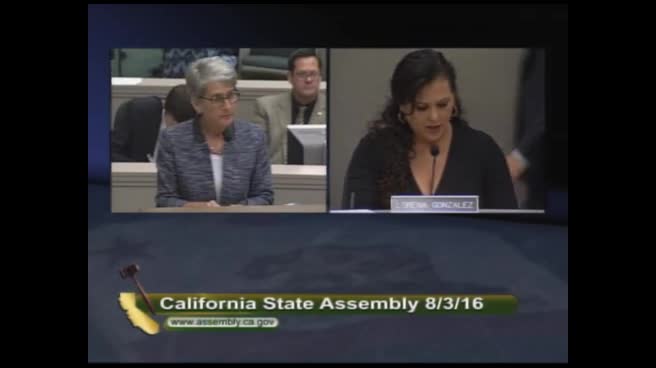 4MIN
Assembly Standing Committee on Appropriations
Bill Author

Bill Co-Author(s):