SB 945: Pet boarding facilities.
- Session Year: 2015-2016
- House: Senate
- Latest Version Date: 2016-09-14
Existing law regulates the care and maintenance of animals in the care of a pet store.
This bill would establish procedures for the care and maintenance of pets boarded at a pet boarding facility, including, but not limited to, sanitation, provision of enrichment for the pet, health of the pet, and safety. The bill would specifically authorize a city, county, or city and county to adopt ordinances that establish additional standards and requirements for a pet boarding facility. The bill would require an animal control officer, a humane officer, or a peace officer who detects a violation of specified provisions by a pet boarding facility operator to issue a notice to correct and would provide that if the operator complies with the notice to correct he or she would not be subject to an infraction, except as provided. The bill would provide that an operator that causes or allows harm or injury to an animal or allows an animal to be subject to an unreasonable risk of harm or injury is guilty of a misdemeanor. The bill, except as provided, would make a violation of these provisions an infraction punishable by a fine not to exceed $250 for the first violation and not to exceed $1,000 for each subsequent violation. Because it would create a new crime, this bill would impose a state-mandated local program.
The California Constitution requires the state to reimburse local agencies and school districts for certain costs mandated by the state. Statutory provisions establish procedures for making that reimbursement.
This bill would provide that no reimbursement is required by this act for a specified reason.
Existing law regulates the care and maintenance of animals in the care of a pet store.
This bill would establish procedures for the care and maintenance of pets boarded at a pet boarding facility, including, but not limited to, sanitation, provision of enrichment devices or activities, for the pet, health of the pet, and safety. The bill would specifically authorize a city, county, or city and county to adopt ordinances that establish additional standards and requirements for a pet boarding facility. The bill would require an animal control officer, a humane officer, or a peace officer who detects a violation of specified provisions by a pet boarding facility operator to issue a notice to correct and would provide that if the operator complies with the notice to correct he or she would not be subject to an infraction, except as provided. The bill would provide that an operator that causes or allows harm or injury to an animal or allows an animal to be subject to an unreasonable risk of harm or injury is guilty of a misdemeanor. The bill bill, except as provided, would make a violation of these provisions an infraction punishable by a fine not to exceed $250 for the first violation and not to exceed $1,000 for each subsequent violation. Because it would create a new crime, this bill would impose a state-mandated local program.
The California Constitution requires the state to reimburse local agencies and school districts for certain costs mandated by the state. Statutory provisions establish procedures for making that reimbursement.
This bill would provide that no reimbursement is required by this act for a specified reason.
Existing law regulates the care and maintenance of animals in the care of a pet store.
This bill would establish procedures for the care and maintenance of pets boarded at a pet boarding facility, including, but not limited to, sanitation, provision of enrichment devices, devices or activities, health of the pet, and safety. The bill would also prohibit a person convicted of an offense related to the welfare of animals, as specified, from operating a pet boarding facility or from being employed as an employee of a pet boarding facility. The bill would specifically authorize a city, county, or city and county to adopt ordinances that establish additional standards and requirements for a pet boarding facility. The bill would make a violation of these provisions an infraction punishable by a fine not to exceed $250 for the first violation and not to exceed $1,000 for each subsequent violation. Because it would create a new crime, this bill would impose a state-mandated local program.
The California Constitution requires the state to reimburse local agencies and school districts for certain costs mandated by the state. Statutory provisions establish procedures for making that reimbursement.
This bill would provide that no reimbursement is required by this act for a specified reason.
Existing law regulates the care and maintenance of animals in the care of a pet store.
This bill would establish procedures for the care and maintenance of pets boarded at a pet boarding facility, including, but not limited to, sanitation, provision of enrichment devices, health of the pet, and safety. The bill would also prohibit a person convicted of an offense related to the welfare of animals, as specified, from operating a pet boarding facility or from being employed as an employee of a pet boarding facility. The bill would specifically authorize a city, county, or city and county to adopt ordinances that establish additional standards and requirements for a pet boarding facility. The bill would make a violation of these provisions an infraction punishable by a fine not to exceed $250 for the first violation and not to exceed $1,000 for each subsequent violation. Because it would create a new crime, this bill would impose a state-mandated local program.
The California Constitution requires the state to reimburse local agencies and school districts for certain costs mandated by the state. Statutory provisions establish procedures for making that reimbursement.
This bill would provide that no reimbursement is required by this act for a specified reason.
Existing law regulates the care and maintenance of animals in the care of a pet store.
This bill would establish procedures for the care and maintenance of pets boarded at a pet boarding facility, including, but not limited to, size of enclosures, sanitation, provision of enrichment devices, health of the pet, and safety. The bill would also prohibit a person convicted of an offense related to the welfare of animals, as specified, from operating a pet boarding facility or from being employed as an employee of a pet boarding facility. The bill would make a violation of these provisions an infraction punishable by a fine not to exceed $250 for the first violation and not to exceed $1,000 for each subsequent violation. Because it would create a new crime, this bill would impose a state-mandated local program.
The California Constitution requires the state to reimburse local agencies and school districts for certain costs mandated by the state. Statutory provisions establish procedures for making that reimbursement.
This bill would provide that no reimbursement is required by this act for a specified reason.
Existing law regulates the care and maintenance of animals in the care of a pet store.
This bill would establish procedures for the care and maintenance of pets boarded at a pet boarding facility, including, but not limited to, size of enclosures, sanitation, provision of enrichment devices, health of the pet, and safety. The bill would make a violation of these provisions an infraction punishable by a fine not to exceed $250 for the first violation and not to exceed $1,000 for each subsequent violation. Because it would create a new crime, this bill would impose a state-mandated local program.
The California Constitution requires the state to reimburse local agencies and school districts for certain costs mandated by the state. Statutory provisions establish procedures for making that reimbursement.
This bill would provide that no reimbursement is required by this act for a specified reason.
As used in this chapter, the following definitions apply:
(a)Enrichment means providing objects or activities, appropriate to the needs of the species, as well as the age, size, and condition of the pet, that stimulate the pet and promote the pets well-being.
(b)Permanent or fixed enclosure means a structure, including, but not limited to, an exercise run, kennel, or room, used to restrict a pet, that provides for the effective separation of a pet from the pets waste products.
(c)Person means an individual, partnership, firm, limited liability company, joint-stock company, corporation, association, trust, estate, or other legal entity.
(d)Pet means any nonhuman animal housed in the pet boarding facility, including, but not limited to, mammals, birds, reptiles, and amphibians. However, pet does not include a horse.
(e)Pet boarding facility means any lot, building, structure, enclosure, or premises, or a portion thereof, whereupon four or more dogs, cats, or other pets in any combination are boarded at the request of, and in exchange for compensation provided by, their owner. However, pet boarding facility does not include a city, county, or city and county animal control agency, society for the prevention of cruelty to animals, or humane society that contracts for the care of stray or abandoned animals, or the premises of a veterinary facility that is registered pursuant to Section 4853 of the Business and Professions Code.
(f)Pet boarding facility operator or operator means a person who owns or operates, or both, a pet boarding facility.
(g)Temporary enclosure means a structure used to restrict a pet, including, but not limited to, a crate or cage, that does not provide for the effective separation of a pet from the pets waste products.
122381.Each pet boarding facility operator shall be responsible for all of the following:
(a)Ensuring that the entire pet boarding facility, including all equipment therein, is structurally sound and maintained in good repair.
(b)Ensuring that pests do not inhabit any part of the pet boarding facility in a number large enough to be harmful, threatening, or annoying to the pets.
(c)Ensuring the containment of pets within the pet boarding facility, and, in the event that a pet escapes, making reasonable efforts to immediately capture the escaped pet.
(d)If an escaped pet has not been captured despite reasonable efforts, ensuring that all material facts regarding the pets escape are reported to the local agency for animal control and to the owner.
(e)Ensuring that the pet boarding facilitys interior building surfaces, including walls and floors, are constructed in a manner that permits them to be readily cleaned and sanitized.
(f)Ensuring that light, by natural or artificial means, is distributed in a manner that permits routine inspection and cleaning, and the proper care and maintenance of the pets.
(g)If pet grooming services are offered by a pet boarding facility, separating the grooming work area from the pet boarding facilitys permanent or fixed and temporary enclosures and ensuring that the grooming areas are cleaned and sanitized at least once daily.
(h)Storing food in an area separate from permanent or fixed enclosures or temporary enclosures.
(i)Maintaining an area for isolating sick pets from healthy pets.
122382.(a)Each permanent or fixed and temporary enclosure shall comply with all of the following standards:
(1)Be structurally sound and maintained in good repair to protect the enclosed pet from injury, to contain the pet, to keep other animals out, and to promote the health and well-being of the pet.
(2)Be maintained in a comfortable and sanitary manner. When being cleaned in a manner or with a substance that is or may be harmful to a pet within the enclosure, that pet shall be removed from the enclosure.
(3)Be constructed of material suitable for regular cleaning and sanitizing.
(4)As needed to ensure the comfort and well-being of the pet, provide heating, cooling, lighting, ventilation, shade, and protection from the elements, including, but not limited to, the sun, wind, rain, and snow.
(5)Allow a pet to turn around freely, stand easily, and sit or lie down in a comfortable position.
(b)Each enclosure is either a permanent or fixed enclosure or a temporary enclosure.
(c)In addition to the requirements set forth in subdivision (a), a permanent or fixed enclosure for a cat shall provide an elevated platform appropriate for the size of the cat.
(d)A pet may be contained in a temporary enclosure for a period not to exceed 4 hours during the day and 12 hours at night or the length of time that is humane for that particular pet, whichever is less. However, the pet shall remain outside the temporary enclosure for no less than the amount of time needed for the pet to eliminate its waste.
122383.A pet boarding facility operator shall comply with all of the following animal care requirements:
(a)House only one pet at a time in an enclosure unless otherwise consented to by the owner.
(b)Observe each pet as necessary, but no less than once every 24 hours, in order to recognize the signs of sickness, injury, or distress, and in order to ensure that the pet, food, and waste or debris is removed as necessary to prevent contamination or injury.
(c)Provide each pet with easy and convenient access to potable water at all times, or if the behavior of the pet makes unrestricted access to water impracticable, offer water as often as necessary to ensure the pets health and well-being. However, water may be restricted as directed by the owner or a licensed veterinarian.
(d)Provide each pet with nutritious food in quantities and at intervals suitable for that pet.
(e)Provide each pet daily with enrichment sufficient to maintain the behavioral health of the pet.
(f)Maintain and abide by written policies and procedures that address animal care, management and safe handling, disease prevention and control, routine care, preventive care, emergency care, veterinary treatment, and disaster planning, evacuation, and recovery that are applicable to the location of the pet boarding facility. These procedures shall be reviewed with each employee who provides animal care and shall be present, in writing, either electronically or physically, in the facility and made available to all employees.
(g)Isolate those pets that have or are suspected of having a contagious condition.
(h)Ensure that each sick or injured pet is immediately provided with appropriate care and, if prudent, veterinary treatment.
(i)Ensure that the owner of a pet is notified immediately that his or her pet is sick or injured unless the owner has indicated in writing that notification of any, or a particular, type of illness or injury is not required.
(j)In the event of a natural disaster, an emergency evacuation, or other similar occurrence, ensure that the humane care and treatment of each animal is provided for, as required by this chapter, to the extent access to the pet is reasonably available.
122384.(a)A pet boarding facility operator shall provide each owner with written information describing all of the following:
(1)Days and times during which the pet boarding facility permits pets to be dropped off and picked up.
(2)Days and times during which personnel are onsite.
(3)The square footage of the permanent or fixed and temporary enclosures in which the species of pet that the owner is boarding is customarily contained.
(4)General observation practices during each 24-hour period for the species of pet that the owner is boarding is customarily observed by personnel.
(5)The pet boarding facilitys customary daily activity schedule for the species of pet that the owner is boarding.
(b)If the pet boarding facility will materially deviate from the customary practices described in the written information required by subdivision (a) with respect to an owners pet, the pet boarding facility operator shall disclose those deviations to the owner or patron, as appropriate.
122385.A pet boarding facility shall maintain either of the following:
(a)A fire alarm system that is connected to a central reporting station that alerts the local fire department in case of fire.
(b)A fire suppression sprinkler system.
122386.(a)An animal control officer, as defined in Section 830.9 of the Penal Code, a humane officer qualified pursuant to Section 14502 or 14503 of the Corporations Code, or a peace officer who detects a violation of Sections 122380 to 122385, inclusive, if he or she decides the violation warrants formal action, shall issue a single notice to correct that shall contain all of the following information:
(1)Specify each violation of this chapter found in the inspection.
(2)Identify the corrective action for each violation.
(3)Include a specific period of time during which the listed violation or violations are to be corrected.
(b)After issuing a notice to correct pursuant to this section, the officer or another qualified officer of the issuing agency shall verify compliance with this chapter by conducting a subsequent investigation of the pet boarding facility within a reasonable period of time.
(c)An exact, legible copy of the notice to correct shall be delivered to the pet boarding facility operator at the time he or she signs the notice. In the alternative, the issuing agency may personally deliver the notice to the operator within 48 hours of its issuance, excluding holidays and weekends. The signing of the notice is an acknowledgment of receipt and does not constitute an admission of guilt.
(d)A pet boarding facility operator who is verified to have complied with a notice to correct shall not be subject to subdivision (g).
(e)A pet boarding facility operator who violates the same provision of this chapter on more than one occasion within a five-year period is not eligible to receive a notice to correct, and is guilty of an infraction on the second violation, and is guilty of a misdemeanor on the third or subsequent violation.
(f)Notwithstanding subdivision (a), a pet boarding facility operator that causes or allows harm or injury to an animal, or allows an animal to be subject to an unreasonable risk of harm or injury is guilty of a misdemeanor.
(g)Except as provided in subdivisions (e) and (f), a pet boarding facility operator who violates any provision of this chapter is guilty of an infraction punishable by a fine not to exceed two hundred fifty dollars ($250) for the first violation and by a fine not to exceed one thousand dollars ($1,000) for each subsequent violation. The court shall weigh the gravity of the offense in setting the penalty.
122387.(a)Nothing in this chapter shall be construed to in any way limit or affect the application or enforcement of any other law that protects animals or the rights of consumers, including, but not limited to, Section 597 of the Penal Code.
(b)Nothing in this chapter limits, or authorizes any act or omission that violates, Section 597 of the Penal Code, or any other local, state, or federal law that protects animals or the rights of consumers.
122388.Pursuant to Section 7 of Article XI of the California Constitution, a city, county, or city and county may adopt ordinances that establish additional standards and requirements for a pet boarding facility.
SEC. 2.No reimbursement is required by this act pursuant to Section 6 of Article XIIIB of the California Constitution because the only costs that may be incurred by a local agency or school district will be incurred because this act creates a new crime or infraction, eliminates a crime or infraction, or changes the penalty for a crime or infraction, within the meaning of Section 17556 of the Government Code, or changes the definition of a crime within the meaning of Section 6 of Article XIIIB of the California Constitution.
As used in this chapter, the following definitions apply:
(a)Enrichment means providing objects or activities, appropriate to the needs of the species, as well as the age, size, and condition of the pet, that stimulate the pet and promote the pets well-being.
(b)Permanent or fixed enclosure means a structure, including, but not limited to, an exercise run, kennel, or room, used to restrict a pet, that provides for the effective separation of a pet from the pets waste products.
(a)
(c)Person means an individual, partnership, firm, limited liability company, joint-stock company, corporation, association, trust, estate, or other legal entity.
(b)
(d)Pet means any nonhuman animal housed in the pet boarding facility, including, but not limited to, mammals, birds, reptiles, and amphibians. However, pet does not include a horse.
(c)
(e)Pet boarding facility means any lot, building, structure, enclosure, or premises premises, or a portion thereof, whereupon four or more dogs, cats, or other pets in any combination are boarded for compensation. at the request of, and in exchange for compensation provided by, their owner. However, pet boarding facility does not include a city, county, or city and county animal control agency, society for the prevention of cruelty to animals, or humane society that contracts for the care of stray or abandoned animals, or the premises of a veterinary facility that is registered pursuant to Section 4853 of the Business and Professions Code.
(d)
(f)Pet boarding facility operator or operator means a person who owns or operates, or both, a pet boarding facility.
(e)Permanent or fixed enclosure means a structure, including, but not limited to, an exercise run, kennel, or room, used to restrict a pet, that provides for the effective separation of a pet from the pets waste products.
(f)
(g)Temporary enclosure means a structure used to restrict a pet, including, but not limited to, a crate or cage, that does not provide for the effective separation of a pet from the pets waste products.
122381.Each pet boarding facility operator shall be responsible for all of the following:
(a)Ensuring that the entire pet boarding facility, including all equipment therein, is structurally sound and maintained in good repair.
(b)Ensuring that pests do not inhabit any part of the pet boarding facility in a number large enough to be harmful, threatening, or annoying to the pets.
(c)Ensuring the containment of pets within the pet boarding facility, and, in the event that a pet escapes, making reasonable efforts to immediately capture the escaped pet.
(d)If an escaped pet has not been captured despite reasonable efforts, ensuring that all material facts regarding the pets escape are reported to the local agency for animal control and to the owner.
(e)Ensuring that the pet boarding facilitys interior building surfaces, including walls and floors, are constructed in a manner that permits them to be readily cleaned and sanitized.
(f)Ensuring that light, by natural or artificial means, is distributed in a manner that permits routine inspection and cleaning, and the proper care and maintenance of the pets.
(g)If pet grooming services are offered by a pet boarding facility, separating the grooming work area from the pet boarding facilitys permanent or fixed and temporary enclosures and ensuring that the grooming areas is are cleaned and sanitized at least once daily.
(h)Storing food in an area separate from permanent or fixed enclosures or temporary enclosures.
(i)Maintaining an area for isolating sick pets from healthy pets.
122382.(a)Each permanent or fixed and temporary enclosure shall comply with all of the following standards:
(1)Be structurally sound and maintained in good repair to protect the enclosed pet from injury, to contain the pet, to keep other animals out, and to promote the health and well-being of the pet.
(2)Be maintained in a comfortable and sanitary manner. When being cleaned in a manner or with a substance that is or may be harmful to a pet within the enclosure, that pet shall be removed from the enclosure.
(3)Be constructed of material suitable for regular cleaning and sanitizing.
(4)As needed to ensure the comfort and well-being of the pet, provide heating, cooling, lighting, ventilation, shade, and protection from the elements, including, but not limited to, the sun, wind, rain, and snow.
(5)Allow a pet to turn around freely, stand easily, and sit or lie down in a comfortable position.
(b)Each enclosure is either a permanent or fixed enclosure or a temporary enclosure.
(c)In addition to the requirements set forth in subdivision (a), a permanent or fixed enclosure for a cat shall provide an elevated platform appropriate for the size of the cat.
(d)A pet may be contained in a temporary enclosure for a period not to exceed 4 hours during the day and 12 hours at night or the length of time that is humane for that particular pet, whichever is less. However, the pet shall remain outside the temporary enclosure for no less than the amount of time needed for the pet to eliminate its waste.
122383.A pet boarding facility operator shall comply with all of the following animal care requirements:
(a)House only one pet at a time in an enclosure unless otherwise consented to by the owner.
(b)Observe each pet as necessary, but no less than once every 24 hours, in order to recognize the signs of sickness, injury, or distress, and in order to ensure that the pet, food, and waste or debris is removed as necessary to prevent contamination or injury.
(c)Provide each pet with easy and convenient access to potable water at all times, or if the behavior of the pet makes unrestricted access to water impracticable, offer water as often as necessary to ensure the pets health and well-being. However, water may be restricted as directed by the owner or a licensed veterinarian.
(d)Provide each pet with nutritious food in quantities and at intervals suitable for that pet.
(e)Provide each pet with at least one enrichment device or activity that is appropriate for the age, size, and condition of the pet unless otherwise directed in writing by the owner.
(e)Provide each pet daily with enrichment sufficient to maintain the behavioral health of the pet.
(f)Maintain and abide by written policies and procedures that address animal care, management and safe handling, disease prevention and control, routine care, preventive care, emergency care, veterinary treatment, and disaster planning, evacuation, and recovery that are applicable to the location of the pet boarding facility. These procedures shall be reviewed with each employee who provides animal care and shall be present, in writing, either electronically or physically, in the facility and made available to all employees.
(g)Isolate those pets that have or are suspected of having a contagious condition.
(h)Ensure that each sick or injured pet is immediately provided with appropriate care and, if prudent, veterinary treatment.
(i)Ensure that the owner of a pet is notified immediately that his or her pet is sick or injured unless the owner has indicated in writing that notification of any, or a particular, type of illness or injury is not required.
(j)In the event of a natural disaster, an emergency evacuation, or other similar occurrence, ensure that the humane care and treatment of each animal is provided for, as required by this chapter, to the extent access to the pet is reasonably available.
122384.(a)A pet boarding facility operator shall provide each owner with written information describing all of the following:
(1)Days and times during which the pet boarding facility permits pets to be dropped off and picked up.
(2)Days and times during which personnel are onsite.
(3)The square footage of the permanent or fixed and temporary enclosures in which the species of pet that the owner is boarding is customarily contained.
(4)General observation practices during each 24-hour period for the species of pet that the owner is boarding is customarily observed by personnel.
(5)The pet boarding facilitys customary daily activity schedule for the species of pet that the owner is boarding.
(b)If the pet boarding facility will materially deviate from the customary practices described in the written information required by subdivision (a) with respect to an owners pet, the pet boarding facility operator shall disclose those deviations to the owner or patron, as appropriate.
122385.A pet boarding facility shall maintain either of the following:
(a)A fire alarm system that is connected to a central reporting station that alerts the local fire department in case of fire.
(b)A fire suppression sprinkler system.
122386.A pet boarding facility operator who violates any provision of this chapter is guilty of an infraction punishable by a fine not to exceed two hundred fifty dollars ($250) for the first violation and by a fine not to exceed one thousand dollars ($1,000) for each subsequent violation. The court shall weigh the gravity of the offense in setting the penalty.
122386.(a)An animal control officer, as defined in Section 830.9 of the Penal Code, a humane officer qualified pursuant to Section 14502 or 14503 of the Corporations Code, or a peace officer who detects a violation of Sections 122380 to 122385, inclusive, if he or she decides the violation warrants formal action, shall issue a single notice to correct that shall contain all of the following information:
(1)Specify each violation of this chapter found in the inspection.
(2)Identify the corrective action for each violation.
(3)Include a specific period of time during which the listed violation or violations are to be corrected.
(b)After issuing a notice to correct pursuant to this section, the officer or another qualified officer of the issuing agency shall verify compliance with this chapter by conducting a subsequent investigation of the pet boarding facility within a reasonable period of time.
(c)An exact, legible copy of the notice to correct shall be delivered to the pet boarding facility operator at the time he or she signs the notice. In the alternative, the issuing agency may personally deliver the notice to the operator within 48 hours of its issuance, excluding holidays and weekends. The signing of the notice is an acknowledgment of receipt and does not constitute an admission of guilt.
(d)A pet boarding facility operator who is verified to have complied with a notice to correct shall not be subject to subdivision (g).
(e)A pet boarding facility operator who violates the same provision of this chapter on more than one occasion within a five-year period is not eligible to receive a notice to correct, and is guilty of an infraction on the second violation, and is guilty of a misdemeanor on the third or subsequent violation.
(f)Notwithstanding subdivision (a), a pet boarding facility operator that causes or allows harm or injury to an animal, or allows an animal to be subject to an unreasonable risk of harm or injury is guilty of a misdemeanor.
(g)Except as provided in subdivisions (e) and (f), a pet boarding facility operator who violates any provision of this chapter is guilty of an infraction punishable by a fine not to exceed two hundred fifty dollars ($250) for the first violation and by a fine not to exceed one thousand dollars ($1,000) for each subsequent violation. The court shall weigh the gravity of the offense in setting the penalty.
122387.(a)Nothing in this chapter shall be construed to in any way limit or affect the application or enforcement of any other law that protects animals or the rights of consumers, including, but not limited to, Section 597 of the Penal Code.
(b)Nothing in this chapter limits, or authorizes any act or omission that violates, Section 597 of the Penal Code, or any other local, state, or federal law that protects animals or the rights of consumers.
122388.Pursuant to Section 7 of Article XI of the California Constitution, a city, county, or city and county may adopt ordinances that establish additional standards and requirements for a pet boarding facility.
SEC. 2.No reimbursement is required by this act pursuant to Section 6 of Article XIIIB of the California Constitution because the only costs that may be incurred by a local agency or school district will be incurred because this act creates a new crime or infraction, eliminates a crime or infraction, or changes the penalty for a crime or infraction, within the meaning of Section 17556 of the Government Code, or changes the definition of a crime within the meaning of Section 6 of Article XIIIB of the California Constitution.
As used in this chapter, the following definitions apply:
(a)Person means an individual, partnership, firm, limited liability company, joint-stock company, corporation, association, trust, estate, or other legal entity.
(b)Pet means any nonhuman animal housed in the pet boarding facility, including, but not limited to, mammals, birds, reptiles, amphibians, and fish. and amphibians. However, pet does not include a horse.
(c)Pet boarding facility means any lot, building, structure, enclosure, or premises whereupon four or more dogs, cats, or other pets in any combination are boarded for compensation. However, pet boarding facility does not include a city, county, or city and county animal control agency, society for the prevention of cruelty to animals, or humane society that contracts for the care of stray or abandoned animals, or the premises of a veterinary facility that is registered pursuant to Section 4853 of the Business and Professions Code.
(d)Pet boarding facility operator or operator means a person who owns or operates, or both, a pet boarding facility.
(e)Primary Permanent or fixed enclosure means a structure, including, but not limited to, an exercise run, kennel, or room, used to restrict a pet, that provides for the effective separation of a pet from the pets waste products.
(f)(1)Temporary enclosure means a structure used to restrict a pet, including, but not limited to, a crate or cage, that does not provide for the effective separation of a pet from the pets waste products.
(2)A pet may be contained in a temporary enclosure for a period not to exceed four hours during the day and 12 hours at night or the length of time that is humane for that particular pet, whichever is less. However, the pet shall remain outside the temporary enclosure for no less than the amount of time needed for the pet to eliminate its waste.
(3)A temporary enclosure shall allow the pet to turn about freely, stand easily, and sit or lie in a comfortable position.
122381.Each pet boarding facility operator shall be responsible for all of the following:
(a)Ensuring that the entire pet boarding facility facility, including all equipment therein, is structurally sound and maintained in good repair, including, but not limited to, heating and cooling systems, drying cages, flooring, and door latches and locks. repair.
(b)Ensuring that pests do not inhabit any part of the pet boarding facility in a number large enough to be harmful, threatening, or annoying to the pets.
(c)Ensuring the containment of pets within the pet boarding facility, and, in the event that a pet escapes, being responsible for reporting this fact immediately to the local agency responsible for animal control and to the owner and making reasonable efforts to immediately capture the escaped pet. making reasonable efforts to immediately capture the escaped pet.
(d)If an escaped pet has not been captured despite reasonable efforts, ensuring that all material facts regarding the pets escape are reported to the local agency for animal control and to the owner.
(d)
(e)Ensuring that the pet boarding facilitys interior building surfaces, including walls and floors, are constructed in a manner that permits them to be readily cleaned and sanitized.
(e)
(f)Ensuring that light, by natural or artificial means, is distributed in a manner that permits routine inspection and cleaning, and the proper care and maintenance of the pets.
(f)When pet
(g)If pet grooming services are offered by a pet boarding facility, separating the grooming work area from the pet boarding facilitys primary enclosures, pet food storage areas, and isolation areas for housing sick pets. The grooming area shall be permanent or fixed and temporary enclosures and ensuring that the grooming areas is cleaned and sanitized at least once daily.
(h)Storing food in an area separate from permanent or fixed enclosures or temporary enclosures.
(i)Maintaining an area for isolating sick pets from healthy pets.
122382.(a)Each primary permanent or fixed and temporary enclosure shall comply with all of the following standards:
(1)Be structurally sound and maintained in good repair to protect the enclosed pet from injury, to contain the pet, to keep other animals out, and to promote the health and well-being of the pet.
(2)Be maintained in a comfortable and sanitary manner. When being cleaned in a manner or with a substance that is or may be harmful to a pet within the enclosure, that pet shall be removed from the enclosure.
(3)Be constructed of material suitable for regular cleaning and sanitizing.
(4)As needed to ensure the comfort and well-being of the pet, provide heating, cooling, lighting, ventilation, shade, and protection from the elements, including including, but not limited to, the sun, wind, rain, and snow.
(5)Allow a pet to turn around freely, stand easily, and sit or lie down in a comfortable position.
(b)Each enclosure is either a primary permanent or fixed enclosure or a temporary enclosure.
(c)In addition to the requirements set forth in subdivision (a), a primary permanent or fixed enclosure for a cat shall provide an elevated platform appropriate for the size of the cat.
(d)A pet may be contained in a temporary enclosure for a period not to exceed four hours during the day and 12 hours at night or the length of time that is humane for that particular pet, whichever is less. However, the pet shall remain outside the temporary enclosure for no less than the amount of time needed for the pet to eliminate its waste.
122383.A pet boarding facility operator shall comply with all of the following animal care requirements:
(a)House only one pet at a time in an enclosure unless otherwise consented to by the owner.
(b)Observe each pet as necessary, but no less than once every 24 hours, in order to recognize the signs of sickness, injury, or distress, and in order to ensure that the pet, food, and waste or debris is removed as necessary to prevent contamination or injury.
(c)Provide each pet with easy and convenient access to potable water at all times, or if the behavior of the pet makes unrestricted access to water impracticable, offer water as often as necessary to ensure the pets health and well-being. However, water may be restricted as directed by the owner or a licensed veterinarian.
(d)Provide each pet with food of the type, in the quantities, and at the intervals as directed in writing by the owner, or in the absence of written directions by the owner, with nutritious food in quantities and at intervals suitable for that pet.
(e)Provide each pet with at least one enrichment device or activity that is appropriate for the age, size, and condition of the pet unless otherwise directed in writing by the owner.
(f)Maintain and abide by written policies and procedures that address animal care, management and safe handling, disease prevention and control, routine care, preventative care, emergency care, veterinary treatment, and disaster planning, evacuation, and recovery that are applicable to the location of the pet boarding facility. These procedures shall be reviewed with each employee who provides animal care and shall be present, in writing, either electronically or physically, in the facility and made available to all employees.
(g)Isolate those pets that have or are suspected of having a contagious condition.
(h)Ensure that each sick or injured pet is immediately provided with veterinary treatment and that the owner of the pet is notified immediately of the pets condition. appropriate care and, if prudent, veterinary treatment.
(i)Ensure that the owner of a pet is notified immediately that his or her pet is sick or injured unless the owner has indicated in writing that notification of any, or a particular, type of illness or injury is not required.
(i)
(j)In the event of a natural disaster, an emergency evacuation, or other similar occurrence, ensure that the humane care and treatment of each animal is provided for, as required by this chapter, to the extent access to the pet is reasonably available.
122384.(a)A pet boarding facility operator shall provide each owner with written information describing all of the following:
(1)Days and times during which the pet boarding facility permits pets to be dropped off and picked up.
(2)Days and times during which no personnel is are onsite.
(3)The square footage of the primary permanent or fixed and temporary enclosures in which the breed species of pet that the owner is boarding is customarily contained.
(4)The number of times and at which intervals General observation practices during each 24-hour period the breed for the species of pet that the owner is boarding is customarily observed by personnel.
(5)The pet boarding facilitys customary daily activity schedule for the breed species of pet that the owner is boarding, including the number of hours spent in primary and temporary enclosures, the time or times at which the breed of pet is fed, and the opportunities the breed of pet has to exercise and eliminate bodily waste. boarding.
(6)Additional services that the owner may purchase for the pet, if any, and the cost of those services.
(b)If the pet boarding facility will materially deviate from the customary practices described in the written information required by subdivision (a) with respect to an owners pet, the pet boarding facility operator shall disclose those deviations to the owner, in writing. owner or patron, as appropriate.
122385.A pet boarding facility shall maintain either of the following:
(a)A fire alarm system that is connected to a central reporting station that alerts the local fire department in case of fire.
(b)A fire suppression sprinkler system.
122386.A person convicted of a misdemeanor or felony directly related to the welfare of animals, including, but not limited to, a violation of Section 597 of the Penal Code, is prohibited from operating a pet boarding facility or from being employed as an employee of a pet boarding facility. If a pet boarding facility is located within a pet store, this prohibition only applies to an employee who works directly with pets that are boarded overnight in the pet boarding facility.
122387.122386.A pet boarding facility operator who violates any provision of this chapter is guilty of an infraction punishable by a fine not to exceed two hundred fifty dollars ($250) for the first violation and by a fine not to exceed one thousand dollars ($1,000) for each subsequent violation. The court shall weigh the gravity of the offense in setting the penalty.
122388.122387.(a)Nothing in this chapter shall be construed to in any way limit or affect the application or enforcement of any other law that protects animals or the rights of consumers, including, but not limited to, Section 597 of the Penal Code.
(b)Nothing in this chapter limits, or authorizes any act or omission that violates, Section 597 of the Penal Code, or any other local, state, or federal law that protects animals or the rights of consumers.
122389.122388.Pursuant to Section 7 of Article XI of the California Constitution, a city, county, or city and county may adopt ordinances that establish additional standards and requirements for a pet boarding facility.
SEC. 2.No reimbursement is required by this act pursuant to Section 6 of Article XIIIB of the California Constitution because the only costs that may be incurred by a local agency or school district will be incurred because this act creates a new crime or infraction, eliminates a crime or infraction, or changes the penalty for a crime or infraction, within the meaning of Section 17556 of the Government Code, or changes the definition of a crime within the meaning of Section 6 of Article XIIIB of the California Constitution.
As used in this chapter, the following definitions apply:
(a)Person means an individual, partnership, firm, limited liability company, joint-stock company, corporation, association, trust, estate, or other legal entity.
(b)Pet means any nonhuman animal housed in the pet boarding facility, including, but not limited to, mammals, birds, reptiles, amphibians, and fish. However, pet does not include a horse.
(c)Pet boarding facility means any lot, building, structure, enclosure, or premises whereupon four or more dogs, cats, or other pets in any combination are boarded for compensation. However, pet boarding facility does not include a city, county, or city and county animal control agency, society for the prevention of cruelty to animals, or humane society that contracts for the care of stray or abandoned animals. animals, or the premises of a veterinary facility that is registered pursuant to Section 4853 of the Business and Professions Code.
(d)Pet boarding facility operator or operator means a person who owns or operates, or both, a pet boarding facility.
(e)Primary enclosure means a structure, including, but not limited to, an exercise run, kennel, or room, used to restrict a pet, that provides for the effective separation of a pet from the pets waste products.
(f)(1)Temporary enclosure means a structure used to restrict a pet, including, but not limited to, a crate or cage, that does not provide for the effective separation of a pet from the pets waste products.
(2)A pet may be contained in a temporary enclosure for a period not to exceed four hours during the day and 12 hours at night or the length of time that is humane for that particular pet, whichever is less. However, the pet shall remain outside the temporary enclosure for no less than the amount of time needed for the pet to eliminate its waste.
(3)A temporary enclosure shall allow the pet to turn about freely, stand easily, and sit or lie in a comfortable position.
122381.Each pet boarding facility operator shall be responsible for all of the following:
(a)Ensuring that the entire pet boarding facility is structurally sound and maintained in good repair, including, but not limited to, heating and cooling systems, drying cages, flooring, and door latches and locks.
(b)Ensuring that pests do not inhabit any part of the pet boarding facility in a number large enough to be harmful, threatening, or annoying to the pets.
(c)Ensuring the containment of pets within the pet boarding facility, and, in the event that a pet escapes, being responsible for reporting this fact immediately to the local agency responsible for animal control and to the owner and making reasonable efforts to immediately capture the escaped pet.
(d)Ensuring that the pet boarding facilitys interior building surfaces, including walls and floors, are constructed in a manner that permits them to be readily cleaned and sanitized.
(e)Ensuring that light, by natural or artificial means, is distributed in a manner that permits routine inspection and cleaning, and the proper care and maintenance of the pets.
(f)When pet grooming services are offered by a pet boarding facility, separating the grooming work area from the pet boarding facilitys primary enclosures, pet food storage areas, and isolation areas for housing sick pets. The grooming area shall be cleaned and sanitized at least once daily.
122382.(a)Each primary and temporary enclosure shall comply with all of the following standards:
(1)Be structurally sound and maintained in good repair to protect the enclosed pet from injury, to contain the pet, to keep other animals out, and to promote the health and well-being of the pet.
(2)Be maintained in a comfortable and sanitary manner. When being cleaned in a manner or with a substance that is or may be harmful to a pet within the enclosure, that pet shall be removed from the enclosure.
(3)Be constructed of material suitable for regular cleaning and sanitizing.
(4)As needed to ensure the comfort and well-being of the pet, provide heating, cooling, lighting, ventilation, shade, and protection from the elements, including but not limited to, the sun, wind, rain, and snow.
(b)Each enclosure is either a primary enclosure or a temporary enclosure.
(c)In addition to the requirements set forth in subdivision (a), a primary enclosure for a cat shall provide an elevated platform appropriate for the size of the cat.
122383.A pet boarding facility operator shall comply with all of the following animal care requirements:
(a)House only one pet at a time in an enclosure unless otherwise consented to by the owner.
(b)Observe each pet as necessary, but no less than once every 24 hours, in order to recognize the signs of sickness, injury, or distress, and in order to ensure that the pet, food, and waste or debris is removed as necessary to prevent contamination or injury.
(c)Provide each pet with easy and convenient access to potable water at all times, or if the behavior of the pet makes unrestricted access to water impracticable, offer water as often as necessary to ensure the pets health and well-being. However, water may be restricted as directed by the owner or a licensed veterinarian.
(d)Provide each pet with food of the type, in the quantities, and at the intervals as directed in writing by the owner, or in the absence of written directions by the owner, with nutritious food in quantities and at intervals suitable for that pet.
(e)Provide each pet with at least one enrichment device that is appropriate for the age, size, and condition of the pet unless otherwise directed in writing by the owner.
(f)Maintain and abide by written policies and procedures that address animal care, management and safe handling, disease prevention and control, routine care, preventative care, emergency care, veterinary treatment, and disaster planning, evacuation, and recovery that are applicable to the location of the pet boarding facility. These procedures shall be reviewed with each employee who provides animal care and shall be present, in writing, either electronically or physically, in the facility and made available to all employees.
(g)Isolate those pets that have or are suspected of having a contagious condition.
(h)Ensure that each sick or injured pet is immediately provided with veterinary treatment and that the owner of the pet is notified immediately of the pets condition.
(i)In the event of a natural disaster, an emergency evacuation, or other similar occurrence, ensure that the humane care and treatment of each animal is provided for, as required by this chapter, to the extent access to the pet is reasonably available.
122384.(a)A pet boarding facility operator shall provide, in writing, provide each owner with written information describing all of the following:
(a)Times, if any, when there will be no personnel on site.
(b)
(1)Days and times during which the pet boarding facility permits pets to be dropped off and picked up.
(2)Days and times during which no personnel is on site.
(3)The square footage of any the primary and temporary enclosures in which the pet will be breed of pet that the owner is boarding is customarily contained.
(c)
(4)The number of times and at which intervals during each 24-hour period the pet will be breed of pet that the owner is boarding is customarily observed by personnel.
(d)
(5)The pets anticipated pet boarding facilitys customary daily activity schedule, schedule for the breed of pet that the owner is boarding, including the length of time the pet will spend in and out of the number of hours spent in primary and temporary enclosures, the time or times at which the pet will be breed of pet is fed, and the opportunities the pet will have breed of pet has to exercise and eliminate bodily waste.
(6)Additional services that the owner may purchase for the pet, if any, and the cost of those services.
(b)If the pet boarding facility will materially deviate from the customary practices described in the written information required by subdivision (a) with respect to an owners pet, the pet boarding facility operator shall disclose those deviations to the owner, in writing.
122385.A pet boarding facility shall maintain either of the following:
(a)A fire alarm system that is connected to a central reporting station that alerts the local fire department in case of fire.
(b)A fire suppression sprinkler system.
122385.122386.A person convicted of an infraction, misdemeanor, a misdemeanor or felony directly related to the welfare of animals, including, but not limited to, a violation of Section 597 of the Penal Code, is prohibited from operating a pet boarding facility or from being employed as an employee of a pet boarding facility. If a pet boarding facility is located within a pet store, this prohibition only applies to an employee who works directly with pets that are boarded overnight in the pet boarding facility.
122386.122387.A pet boarding facility operator who violates any provision of this chapter is guilty of an infraction punishable by a fine not to exceed two hundred fifty dollars ($250) for the first violation and by a fine not to exceed one thousand dollars ($1,000) for each subsequent violation. The court shall weigh the gravity of the offense in setting the penalty.
122387.122388.(a)Nothing in this chapter shall be construed to in any way limit or affect the application or enforcement of any other law that protects animals or the rights of consumers, including, but not limited to, Section 597 of the Penal Code.
(b)Nothing in this chapter limits, or authorizes any act or omission that violates, Section 597 of the Penal Code, or any other local, state, or federal law that protects animals or the rights of consumers.
122389.Pursuant to Section 7 of Article XI of the California Constitution, a city, county, or city and county may adopt ordinances that establish additional standards and requirements for a pet boarding facility.
SEC. 2.No reimbursement is required by this act pursuant to Section 6 of Article XIIIB of the California Constitution because the only costs that may be incurred by a local agency or school district will be incurred because this act creates a new crime or infraction, eliminates a crime or infraction, or changes the penalty for a crime or infraction, within the meaning of Section 17556 of the Government Code, or changes the definition of a crime within the meaning of Section 6 of Article XIIIB of the California Constitution.
As used in this chapter, the following definitions apply:
(a)Person means an individual, partnership, firm, limited liability company, joint-stock company, corporation, association, trust, estate, or other legal entity.
(b)Pet means any nonhuman animal housed in the pet boarding facility, including, but not limited to, mammals, birds, reptiles, amphibians, and fish.
(c)Pet boarding facility means any lot, building, structure, enclosure, or premises whereupon two four or more dogs, cats, or other pets in any combination are boarded for compensation. However, pet boarding facility does not include a city, county, or city and county animal control agency, society for the prevention of cruelty to animals, or humane society that contracts for the care of stray or abandoned animals.
(d)Pet boarding facility operator or operator means a person who owns or operates, or both, a pet boarding facility.
(e)Primary enclosure means a structure, including, but not limited to, an exercise run, kennel, or room, used to restrict a pet, that provides for the effective separation of a pet from the pets waste products, such as by providing the pet with access to a separate indoor room or outside area. A primary enclosure shall enable the pet to turn about freely, stand easily, and sit or lie in a comfortable position. products.
(f)(1)Temporary enclosure means a structure used to restrict a pet, including, but not limited to, a crate or cage cage, that does not provide for the effective separation of a pet from the pets waste products.
(2)A pet may be contained in a temporary enclosure for a period not to exceed eight hours four hours during the day and 12 hours at night or the length of time that is humane for that particular pet, whichever is less. However, the pet shall remain outside the temporary enclosure for no less than 15 minutes for each consecutive hour spent in the enclosure. For example, if a pet spends four consecutive hours in a temporary enclosure, the pet shall remain outside the temporary enclosure for no less than 60 consecutive minutes. no less than the amount of time needed for the pet to eliminate its waste.
(3)A temporary enclosure shall allow the pet to turn about freely, stand easily, and sit or lie in a comfortable position.
122381.Each pet boarding facility operator shall be responsible for all of the following:
(a)Ensuring that the entire pet boarding facility is structurally sound and maintained in good repair, including, but not limited to, heating and cooling systems, drying cages, flooring, and door latches and locks.
(b)Ensuring that pests do not inhabit any part of the pet boarding facility in a number large enough to be harmful, threatening, or annoying to the pets.
(c)Ensuring the containment of pets within the pet boarding facility, and, in the event that a pet escapes, being responsible for reporting this fact immediately to the local agency responsible for animal control and to the owner and making reasonable efforts to immediately capture the escaped pet.
(d)Ensuring that the pet boarding facilitys interior building surfaces, including walls and floors, are constructed in a manner that permits them to be readily cleaned and sanitized.
(e)Ensuring that light, by natural or artificial means, is distributed in a manner that permits routine inspection and cleaning, and the proper care and maintenance of the pets.
(f)When pet grooming services are offered by a pet boarding facility, separating the grooming work area from the pet boarding facilitys primary enclosures, pet food storage areas, and isolation areas for housing sick pets. The grooming area shall be cleaned and sanitized at least once daily.
122382.(a)Each primary and temporary enclosure shall comply with all of the following standards:
(1)Be structurally sound and maintained in good repair to protect the enclosed pet from injury, to contain the pet, to keep other animals out, and to promote the health and well-being of the pet.
(2)Be maintained in a comfortable and sanitary manner. When being cleaned in a manner or with a substance that is or may be harmful to a pet within the enclosure, that pet shall be removed from the enclosure.
(3)Be constructed of a nonporous material suitable for regular cleaning and sanitizing.
(4)As needed to ensure the comfort and well-being of the pet, provide heating, cooling, lighting, ventilation, shade, and protection from the elements, including but not limited to, the sun, wind, rain, and snow.
(b)Each enclosure is either a primary enclosure or a temporary enclosure.
(c)In addition to the requirements set forth in subdivision (a), a primary enclosure for a cat shall provide an elevated platform appropriate for the size of the cat.
(d)In addition to the requirements set forth in subdivision (a), a primary enclosure for a dog shall meet both of the following requirements:
(1)Contain an indoor or outdoor area that is no less than three feet wide for a dog weighing not more than 45 pounds and four feet wide for a dog weighing more than 45 pounds and no less than 10 feet long no matter the size of the dog.
(2)The area described in paragraph (1) shall also have an adjacent indoor enclosure that has at least the following floor area:
(A)For a dog weighing not more than 25 pounds, five square feet.
(B)For a dog weighing more than 25 pounds but not more than 45 pounds, nine square feet.
(C)For a dog weighing over 45 pounds, 16 square feet.
122383.A pet boarding facility operator shall comply with all of the following animal care requirements:
(a)House only one pet at a time in an enclosure unless otherwise consented to in writing by the owner.
(b)Observe each pet as necessary, but no less than once every eight 24 hours, in order to recognize the signs of sickness, injury, or distress, and in order to ensure that the pet, food, and waste or debris is removed as necessary to prevent contamination or injury.
(c)Remove each dog from its primary enclosure at least once every 24 hours and enable the dog to remain outside the primary enclosure for at least 15 minutes each time unless otherwise directed in writing by the owner.
(d)
(c)Provide each pet with easy and convenient access to potable water at all times, or if the behavior of the pet makes unrestricted access to water impracticable, offer water as often as necessary to ensure the pets health and well-being, but not less than every eight hours for at least one hour each time. well-being. However, water may be restricted as directed by the owner or a licensed veterinarian.
(e)
(d)Provide each pet with food of the type, in the quantities, and at the intervals as directed in writing by the owner, or in the absence of written directions by the owner, with nutritious food in quantities and at intervals suitable for that pet.
(f)
(e)Provide each pet with at least one enrichment device that is appropriate for the age, size, and condition of the pet unless otherwise directed in writing by the owner.
(g)
(f)Maintain and abide by written policies and procedures that address animal care, management and safe handling, disease prevention and control, routine care, preventative care, emergency care, veterinary treatment, and disaster planning, evacuation, and recovery that are applicable to the location of the pet boarding facility. These procedures shall be reviewed with each employee who provides animal care and shall be present, in writing, either electronically or physically, in the facility and made available to all employees.
(h)
(g)Isolate those pets that have or are suspected of having a contagious condition.
(i)
(h)Ensure that each sick or injured pet is immediately provided with veterinary treatment and that the owner of the pet is notified immediately of the pets condition.
(j)
(i)In the event of a natural disaster, an emergency evacuation, or other similar occurrence, ensure that the humane care and treatment of each animal is provided for, as required by this chapter, to the extent access to the pet is reasonably available.
122384.A pet boarding facility operator shall provide, in writing, each owner with all of the following:
(a)Times, if any, when there will be no personnel on site.
(b)The square footage of any primary and temporary enclosures in which the pet will be contained.
(c)The number of times and at which intervals during each 24-hour period the pet will be observed by personnel.
(d)The pets anticipated daily activity schedule, including the length of time the pet will spend in and out of primary and temporary enclosures, the time or times at which the pet will be fed, and the opportunities the pet will have to exercise and eliminate bodily waste.
122385.A person convicted of an infraction, misdemeanor, or felony related to the welfare of animals, including, but not limited to, a violation of Section 597 of the Penal Code, is prohibited from operating a pet boarding facility or from being employed as an employee of a pet boarding facility.
122385.122386.A pet boarding facility operator who violates any provision of this chapter is guilty of an infraction punishable by a fine not to exceed two hundred fifty dollars ($250) for the first violation and by a fine not to exceed one thousand dollars ($1,000) for each subsequent violation. The court shall weigh the gravity of the offense in setting the penalty.
122386.122387.(a)Nothing in this chapter shall be construed to in any way limit or affect the application or enforcement of any other law that protects animals or the rights of consumers, including, but not limited to to, Section 597 of the Penal Code.
(b)Nothing in this chapter limits, or authorizes any act or omission that violates, Section 597 of the Penal Code, or any other local, state, or federal law that protects animals or the rights of consumers.
SEC. 2.No reimbursement is required by this act pursuant to Section 6 of Article XIIIB of the California Constitution because the only costs that may be incurred by a local agency or school district will be incurred because this act creates a new crime or infraction, eliminates a crime or infraction, or changes the penalty for a crime or infraction, within the meaning of Section 17556 of the Government Code, or changes the definition of a crime within the meaning of Section 6 of Article XIIIB of the California Constitution.
As used in this chapter, the following definitions apply:
(a)Adequate space means sufficient height and sufficient floor space for a pet to stand up, sit down, turn about freely using normal body movements without the head touching the top of the primary enclosure, lie down with limbs outstretched, exercise normal postural movement, move about freely as appropriate for the species, age, size, and condition of the pet, and, when appropriate, to experience socialization with other pets, if any, in the primary enclosure. However, when freedom of movement would endanger the pet, temporarily and appropriately restricting movement of the pet in a humane manner is permitted.
(b)Enrichment means providing objects or activities, appropriate to the needs of the species, as well as the age, size, and condition of the pet that stimulate the pet and promote the pets well-being.
(c)Impervious to moisture means a surface that prevents the absorption of fluids and that can be thoroughly and repeatedly sanitized, will not retain odors, and from which fluids bead up and run off or can be removed without being absorbed into the surface material.
(d)Intact means a pet that retains its sexual organs or ability to procreate and has not been sterilized.
(e)
(a)Person means an individual, partnership, firm, limited liability company, joint-stock company, corporation, association, trust, estate, or other legal entity.
(f)
(b)Pet means any nonhuman animal housed in the pet boarding facility, including, but not limited to, mammals, birds, reptiles, amphibians, and fish.
(g)
(c)Pet boarding facility means any lot, building, structure, enclosure, or premises whereupon four two or more dogs, cats, or other pets in any combination are boarded for profit. compensation.
(h)
(d)Pet boarding facility operator or operator means a person who owns, owns or operates, or both, a pet boarding facility.
(i)Primary enclosure means a structure used to immediately restrict a pet or pets to a limited amount of space, such as a room, pen, cage, aquarium, terrarium, habitat compartment, or hutch, where the pet or pets reside while they are being boarded.
(j)Sanitize means to make physically clean and to destroy, to the extent practical, agents injurious to health.
(k)Temporary enclosure means a confined space used by the pet boarding facility to house a pet when the pet is not in its primary enclosure for a period not to exceed four consecutive hours. The temporary enclosure shall allow the pet to stand up, lie down, and turn around. An enclosure used by the pet boarding facility to house an animal for longer than four consecutive hours shall meet the requirements of a primary enclosure.
(l)Veterinary treatment means treatment by, or at the direction of, a California-licensed veterinarian.
(e)Primary enclosure means a structure, including, but not limited to, an exercise run, kennel, or room, used to restrict a pet, that provides for the effective separation of a pet from the pets waste products, such as by providing the pet with access to a separate indoor room or outside area. A primary enclosure shall enable the pet to turn about freely, stand easily, and sit or lie in a comfortable position.
(f)(1)Temporary enclosure means a structure used to restrict a pet, including, but not limited to, a crate or cage that does not provide for the effective separation of a pet from the pets waste products.
(2)A pet may be contained in a temporary enclosure for a period not to exceed eight hours or the length of time that is humane for that particular pet, whichever is less. However, the pet shall remain outside the temporary enclosure for no less than 15 minutes for each consecutive hour spent in the enclosure. For example, if a pet spends four consecutive hours in a temporary enclosure, the pet shall remain outside the temporary enclosure for no less than 60 consecutive minutes.
(3)A temporary enclosure shall allow the pet to turn about freely, stand easily, and sit or lie in a comfortable position.
122381.Each pet boarding facility operator shall be responsible for all of the following:
(a)Maintaining the entire pet boarding facility in good repair.
(b)Restricting the entry of pests from outside.
(a)Ensuring that the entire pet boarding facility is structurally sound and maintained in good repair, including, but not limited to, heating and cooling systems, drying cages, flooring, and door latches and locks.
(b)Ensuring that pests do not inhabit any part of the pet boarding facility in a number large enough to be harmful, threatening, or annoying to the pets.
(c)Ensuring the containment of pets within the pet boarding facility, and, in the event that a pet escapes, being responsible for reporting this fact, as necessary, to local authorities and making reasonable efforts to capture the pet that has escaped. fact immediately to the local agency responsible for animal control and to the owner and making reasonable efforts to immediately capture the escaped pet.
(d)Ensuring that the pet boarding facilitys interior building surfaces, including walls and floors, are constructed in a manner that permits them to be readily cleaned and maintained. sanitized.
(e)Uniformly distributing Ensuring that light, by natural or artificial means, is distributed in a manner that permits routine inspection and cleaning, and the proper care and maintenance of the pets.
(f)When pet grooming services are offered by a pet boarding facility, separating the grooming work area from the pet boarding facilitys primary enclosures, pet food storage areas, and isolation areas for housing sick pets. The grooming area shall be cleaned and maintained sanitized at least once daily.
122382.(a)Primary Each primary and temporary enclosures enclosure shall comply with all of the following structural standards:
(1)Primary and temporary enclosures shall be structurally Be structurally sound and maintained in good repair to protect the pets enclosed pet from injury, to contain the pets, pet, to keep other animals out, and to promote the health and well-being of the enclosed pets. Primary enclosures shall be constructed so they can be routinely maintained to allow pets to stay clean. pet.
(2)The floor of the primary enclosure shall be constructed to prevent injury. A solid surface, platform, or shelf shall be provided when a grid-flooring system is used.
(3)Primary enclosures shall be constructed of materials that are impervious to moisture and can be sanitized.
(4)All primary enclosures shall provide adequate space for the pet or pets housed in the enclosure.
(5)Each primary enclosure shall provide each pet with an enrichment device or devices appropriate for the species, age, size, and condition of the pet.
(2)Be maintained in a comfortable and sanitary manner. When being cleaned in a manner or with a substance that is or may be harmful to a pet within the enclosure, that pet shall be removed from the enclosure.
(3)Be constructed of a nonporous material suitable for regular cleaning and sanitizing.
(4)As needed to ensure the comfort and well-being of the pet, provide heating, cooling, lighting, ventilation, shade, and protection from the sun, wind, rain, and snow.
(b)Each enclosure is either a primary enclosure or a temporary enclosure.
(b)
(c)In addition to the requirements set forth in subdivision (a), a primary enclosures for cats enclosure for a cat shall provide an elevated platform as appropriate for the size of the cat.
(c)In addition to the requirements set forth in subdivision (a), primary enclosures for birds shall be designed to ensure all of the following:
(1)A bird can fully extend both of its wings at the same time without contacting the sides of the enclosure.
(2)Perches are provided in a diameter that is appropriate for the species, age, size, and condition of the bird, and for the size of the enclosure.
(3)There is sufficient space to enable each bird to fully extend its wings in every direction while all birds are simultaneously perched.
(d)Primary enclosures for prey species shall be located where they cannot be directly seen by predator animals for that species.
(d)In addition to the requirements set forth in subdivision (a), a primary enclosure for a dog shall meet both of the following requirements:
(1)Contain an indoor or outdoor area that is no less than three feet wide for a dog weighing not more than 45 pounds and four feet wide for a dog weighing more than 45 pounds and no less than 10 feet long no matter the size of the dog.
(2)The area described in paragraph (1) shall also have an adjacent indoor enclosure that has at least the following floor area:
(A)For a dog weighing not more than 25 pounds, five square feet.
(B)For a dog weighing more than 25 pounds but not more than 45 pounds, nine square feet.
(C)For a dog weighing over 45 pounds, 16 square feet.
122383.(a)When a primary or temporary enclosure is being cleaned in a manner, or with a substance, that is or may be harmful to a pet within the enclosure, that pet shall be removed from the enclosure.
(b)Primary enclosures shall be observed at least once every eight hours, and pet and food wastes, used bedding, debris, and any other organic wastes shall be removed as necessary to prevent contamination of the pets and to reduce disease hazards and odors.
(c)Pest control measures shall be implemented to effectively control infestation of vermin, insects, or other pests.
122384.122383.A pet boarding facility operator shall comply with all of the following animal care requirements:
(a)House only compatible pets in the same enclosure. one pet at a time in an enclosure unless otherwise consented to in writing by the owner.
(b)Observe each pet at regular intervals, as necessary, but no less than once every eight hours, in order to recognize and evaluate general symptoms of the signs of sickness, injury, or abnormal behavior. distress, and in order to ensure that the pet, food, and waste or debris is removed as necessary to prevent contamination or injury.
(c)Remove each dog from its primary enclosure at least once every eight 24 hours and enable the dog to remain outside the primary enclosure for at least 15 minutes each time. time unless otherwise directed in writing by the owner.
(d)Separately house intact mammals that have reached sexual maturity in a manner to prevent unplanned reproduction.
(e)Provide potable water at all times, unless otherwise directed by a veterinarian.
(f)Provide each pet with nutritious food in quantities and at intervals suitable for that pet.
(g)Provide each pet with heating and ventilation suitable for that pet.
(d)Provide each pet with easy and convenient access to potable water at all times, or if the behavior of the pet makes unrestricted access to water impracticable, offer water as often as necessary to ensure the pets health and well-being, but not less than every eight hours for at least one hour each time. However, water may be restricted as directed by the owner or a licensed veterinarian.
(e)Provide each pet with food of the type, in the quantities, and at the intervals as directed in writing by the owner, or in the absence of written directions by the owner, with nutritious food in quantities and at intervals suitable for that pet.
(f)Provide each pet with at least one enrichment device that is appropriate for the age, size, and condition of the pet unless otherwise directed in writing by the owner.
(h)
(g)Maintain and abide by written animal husbandry policies and procedures that address animal care, management and safe handling, disease prevention and control, routine care, preventative care, emergency care, veterinary treatment, euthanasia, treatment, and disaster planning, evacuation, and recovery that are applicable to the location of the pet boarding facility. These procedures shall be reviewed with each employee who provides animal care and shall be present, in writing, either electronically or physically, in the facility and made available to all employees.
(i)
(h)Isolate those pets that have or are suspected of having a contagious condition.
(j)Have a documented program of routine care, preventative care, emergency care, disease control and prevention, and veterinary treatment, as outlined in subdivision (h), that is established and maintained by the pet boarding facility in consultation with a licensed veterinarian employed by the pet boarding facility or a California-licensed veterinarian, to ensure adherence to the program with respect to each pet. The program shall also include a documented onsite visit to the pet boarding facility by a California-licensed veterinarian at least once a year.
(k)Ensure that each diseased, ill, or injured pet is provided without delay with veterinary treatment and notify the owner of the pet as soon as is practicable.
(i)Ensure that each sick or injured pet is immediately provided with veterinary treatment and that the owner of the pet is notified immediately of the pets condition.
(l)
(j)In the event of a natural disaster, an emergency evacuation, or other similar occurrence, ensure that the humane care and treatment of each animal is provided for, as required by this chapter, to the extent access to the pet is reasonably available.
122385.(a)Each pet boarding facility operator shall ensure that records of all veterinary visits to the pet boarding facility are documented writing. Veterinary treatment records shall be kept for each animal or group of animals that receives medications or immunizations while in the care of the pet boarding facility. These records shall include summaries of directions received orally from veterinarians, and shall include all of the following, to the extent it is provided by the veterinarian:
(1)Identification of the pet receiving medical treatment.
(2)Name of the medication or immunization used.
(3)Amount of medication used.
(4)Time and date on which the medication or immunization was administered.
(b)Records required by subdivision (a) shall be provided to the owner of the pet upon request.
(c)All records required by this section shall be maintained by the pet boarding facility for two years from the date of boarding of the pet, and shall be made available upon request to an appropriate enforcement officer exercising his or her authority.
122384.A pet boarding facility operator shall provide, in writing, each owner with all of the following:
(a)Times, if any, when there will be no personnel on site.
(b)The square footage of any primary and temporary enclosures in which the pet will be contained.
(c)The number of times and at which intervals during each 24-hour period the pet will be observed by personnel.
(d)The pets anticipated daily activity schedule, including the length of time the pet will spend in and out of primary and temporary enclosures, the time or times at which the pet will be fed, and the opportunities the pet will have to exercise and eliminate bodily waste.
122386.122385.A pet boarding facility operator who violates any provision of this chapter is guilty of an infraction punishable by a fine not to exceed two hundred fifty dollars ($250) for the first violation and by a fine not to exceed one thousand dollars ($1,000) for each subsequent violation. The court shall weigh the gravity of the offense in setting the penalty.
122387.122386.(a)Nothing in this chapter shall be construed to in any way limit or affect the application or enforcement of any other law that protects animals or the rights of consumers, including, but not limited to Section 597 of the Penal Code.
(b)Nothing in this chapter limits, or authorizes any act or omission that violates, Section 597 of the Penal Code, or any other local, state, or federal law that protects animals or the rights of consumers.
SEC. 2.No reimbursement is required by this act pursuant to Section 6 of Article XIIIB of the California Constitution because the only costs that may be incurred by a local agency or school district will be incurred because this act creates a new crime or infraction, eliminates a crime or infraction, or changes the penalty for a crime or infraction, within the meaning of Section 17556 of the Government Code, or changes the definition of a crime within the meaning of Section 6 of Article XIIIB of the California Constitution.
As used in this chapter, the following definitions apply:
(a)Adequate space means sufficient height and sufficient floor space for a pet to stand up, sit down, turn about freely using normal body movements without the head touching the top of the primary enclosure, lie down with limbs outstretched, exercise normal postural movement, move about freely as appropriate for the species, age, size, and condition of the pet, and, when appropriate, to experience socialization with other pets, if any, in the primary enclosure. However, when freedom of movement would endanger the pet, temporarily and appropriately restricting movement of the pet in a humane manner is permitted.
(b)Enrichment means providing objects or activities, appropriate to the needs of the species, as well as the age, size, and condition of the pet that stimulate the pet and promote the pets well-being.
(c)Impervious to moisture means a surface that prevents the absorption of fluids and that can be thoroughly and repeatedly sanitized, will not retain odors, and from which fluids bead up and run off or can be removed without being absorbed into the surface material.
(d)Intact means a pet that retains its sexual organs or ability to procreate and has not been sterilized.
(e)Person means an individual, partnership, firm, limited liability company, joint-stock company, corporation, association, trust, estate, or other legal entity.
(f)Pet means any nonhuman animal housed in the pet boarding facility, including, but not limited to, mammals, birds, reptiles, amphibians, and fish.
(g)Pet boarding facility means any lot, building, structure, enclosure, or premises whereupon four or more dogs, cats, or other pets in any combination are boarded for profit.
(h)Pet boarding facility operator or operator means a person who owns, operates, or both, a pet boarding facility.
(i)Primary enclosure means a structure used to immediately restrict a pet or pets to a limited amount of space, such as a room, pen, cage, aquarium, terrarium, habitat compartment, or hutch, where the pet or pets reside while they are being boarded.
(j)Sanitize means to make physically clean and to destroy, to the extent practical, agents injurious to health.
(k)Temporary enclosure means a confined space used by the pet boarding facility to house a pet when the pet is not in its primary enclosure for a period not to exceed four consecutive hours. The temporary enclosure shall allow the pet to stand up, lie down, and turn around. An enclosure used by the pet boarding facility to house an animal for longer than four consecutive hours shall meet the requirements of a primary enclosure.
(l)Veterinary treatment means treatment by, or at the direction of, a California-licensed veterinarian.
122381.Each pet boarding facility operator shall be responsible for all of the following:
(a)Maintaining the entire pet boarding facility in good repair.
(b)Restricting the entry of pests from outside.
(c)Ensuring the containment of pets within the pet boarding facility, and, in the event that a pet escapes, being responsible for reporting this fact, as necessary, to local authorities and making reasonable efforts to capture the pet that has escaped.
(d)Ensuring that the pet boarding facilitys interior building surfaces, including walls and floors, are constructed in a manner that permits them to be readily cleaned and maintained.
(e)Uniformly distributing light, by natural or artificial means, in a manner that permits routine inspection and cleaning, and the proper care and maintenance of the pets.
(f)When pet grooming services are offered by a pet boarding facility, separating the grooming work area from the pet boarding facilitys primary enclosures, pet food storage areas, and isolation areas for housing sick pets. The grooming area shall be cleaned and maintained at least once daily.
122382.(a)Primary and temporary enclosures shall comply with all of the following structural standards:
(1)Primary and temporary enclosures shall be structurally sound and maintained in good repair to protect the pets from injury, to contain the pets, to keep other animals out, and to promote the health and well-being of the enclosed pets. Primary enclosures shall be constructed so they can be routinely maintained to allow pets to stay clean.
(2)The floor of the primary enclosure shall be constructed to prevent injury. A solid surface, platform, or shelf shall be provided when a grid-flooring system is used.
(3)Primary enclosures shall be constructed of materials that are impervious to moisture and can be sanitized.
(4)All primary enclosures shall provide adequate space for the pet or pets housed in the enclosure.
(5)Each primary enclosure shall provide each pet with an enrichment device or devices appropriate for the species, age, size, and condition of the pet.
(b)In addition to the requirements set forth in subdivision (a), primary enclosures for cats shall provide an elevated platform as appropriate for the size of the cat.
(c)In addition to the requirements set forth in subdivision (a), primary enclosures for birds shall be designed to ensure all of the following:
(1)A bird can fully extend both of its wings at the same time without contacting the sides of the enclosure.
(2)Perches are provided in a diameter that is appropriate for the species, age, size, and condition of the bird, and for the size of the enclosure.
(3)There is sufficient space to enable each bird to fully extend its wings in every direction while all birds are simultaneously perched.
(d)Primary enclosures for prey species shall be located where they cannot be directly seen by predator animals for that species.
122383.(a)When a primary or temporary enclosure is being cleaned in a manner, or with a substance, that is or may be harmful to a pet within the enclosure, that pet shall be removed from the enclosure.
(b)Primary enclosures shall be observed at least once every eight hours, and pet and food wastes, used bedding, debris, and any other organic wastes shall be removed as necessary to prevent contamination of the pets and to reduce disease hazards and odors.
(c)Pest control measures shall be implemented to effectively control infestation of vermin, insects, or other pests.
122384.A pet boarding facility operator shall comply with all of the following animal care requirements:
(a)House only compatible pets in the same enclosure.
(b)Observe each pet at regular intervals, but no less than once every eight hours, in order to recognize and evaluate general symptoms of sickness, injury, or abnormal behavior.
(c)Remove each dog from its primary enclosure at least once every eight hours and enable the dog to remain outside the primary enclosure for at least 15 minutes each time.
(d)Separately house intact mammals that have reached sexual maturity in a manner to prevent unplanned reproduction.
(e)Provide potable water at all times, unless otherwise directed by a veterinarian.
(f)Provide each pet with nutritious food in quantities and at intervals suitable for that pet.
(g)Provide each pet with heating and ventilation suitable for that pet.
(h)Maintain and abide by written animal husbandry procedures that address animal care, management and safe handling, disease prevention and control, routine care, preventative care, emergency care, veterinary treatment, euthanasia, and disaster planning, evacuation, and recovery that are applicable to the location of the pet boarding facility. These procedures shall be reviewed with each employee who provides animal care and shall be present, in writing, either electronically or physically, in the facility and made available to all employees.
(i)Isolate those pets that have or are suspected of having a contagious condition.
(j)Have a documented program of routine care, preventative care, emergency care, disease control and prevention, and veterinary treatment, as outlined in subdivision (h), that is established and maintained by the pet boarding facility in consultation with a licensed veterinarian employed by the pet boarding facility or a California-licensed veterinarian, to ensure adherence to the program with respect to each pet. The program shall also include a documented onsite visit to the pet boarding facility by a California-licensed veterinarian at least once a year.
(k)Ensure that each diseased, ill, or injured pet is provided without delay with veterinary treatment and notify the owner of the pet as soon as is practicable.
(l)In the event of a natural disaster, an emergency evacuation, or other similar occurrence, ensure that the humane care and treatment of each animal is provided for, as required by this chapter, to the extent access to the pet is reasonably available.
122385.(a)Each pet boarding facility operator shall ensure that records of all veterinary visits to the pet boarding facility are documented writing. Veterinary treatment records shall be kept for each animal or group of animals that receives medications or immunizations while in the care of the pet boarding facility. These records shall include summaries of directions received orally from veterinarians, and shall include all of the following, to the extent it is provided by the veterinarian:
(1)Identification of the pet receiving medical treatment.
(2)Name of the medication or immunization used.
(3)Amount of medication used.
(4)Time and date on which the medication or immunization was administered.
(b)Records required by subdivision (a) shall be provided to the owner of the pet upon request.
(c)All records required by this section shall be maintained by the pet boarding facility for two years from the date of boarding of the pet, and shall be made available upon request to an appropriate enforcement officer exercising his or her authority.
122386.A pet boarding facility operator who violates any provision of this chapter is guilty of an infraction punishable by a fine not to exceed two hundred fifty dollars ($250) for the first violation and by a fine not to exceed one thousand dollars ($1,000) for each subsequent violation. The court shall weigh the gravity of the offense in setting the penalty.
122387.(a)Nothing in this chapter shall be construed to in any way limit or affect the application or enforcement of any other law that protects animals or the rights of consumers, including, but not limited to Section 597 of the Penal Code.
(b)Nothing in this chapter limits, or authorizes any act or omission that violates, Section 597 of the Penal Code, or any other local, state, or federal law that protects animals or the rights of consumers.
SEC. 2.No reimbursement is required by this act pursuant to Section 6 of Article XIIIB of the California Constitution because the only costs that may be incurred by a local agency or school district will be incurred because this act creates a new crime or infraction, eliminates a crime or infraction, or changes the penalty for a crime or infraction, within the meaning of Section 17556 of the Government Code, or changes the definition of a crime within the meaning of Section 6 of Article XIIIB of the California Constitution.
|
Date
|
Status
|
|---|---|
| Sep 14, 2016 | Approved by the Governor. |
| Sep 14, 2016 | Chaptered by Secretary of State. Chapter 364, Statutes of 2016. |
| Aug 30, 2016 | Enrolled and presented to the Governor at 1:30 p.m. |
| Aug 24, 2016 | Assembly amendments concurred in. (Ayes 37. Noes 0.) Ordered to engrossing and enrolling. |
| Aug 19, 2016 | In Senate. Concurrence in Assembly amendments pending. |
| Aug 18, 2016 | Read third time. Passed. (Ayes 77. Noes 0. Page 5889.) Ordered to the Senate. |
| Aug 18, 2016 | Read third time. Passed. Ordered to the Senate. |
| Aug 4, 2016 | Read second time. Ordered to third reading. |
| Aug 3, 2016 | From committee: Do pass. (Ayes 18. Noes 0.) (August 3). |
| Aug 1, 2016 | From committee with author's amendments. Read second time and amended. Re-referred to Com. on APPR. |
| Jun 21, 2016 | From committee: Do pass and re-refer to Com. on APPR. (Ayes 15. Noes 0.) (June 21). Re-referred to Com. on APPR. |
| Jun 9, 2016 | From committee with author's amendments. Read second time and amended. Re-referred to Com. on B. & P. |
| Jun 1, 2016 | Referred to Com. on B. & P. |
| May 23, 2016 | Read third time. Passed. (Ayes 32. Noes 0. Page 3928.) Ordered to the Assembly. |
| May 23, 2016 | In Assembly. Read first time. Held at Desk. |
| May 23, 2016 | Read third time. Passed. (Ayes 32. Noes 0.) Ordered to the Assembly. |
| May 17, 2016 | Read second time. Ordered to third reading. |
| May 16, 2016 | From committee: Be ordered to second reading pursuant to Senate Rule 28.8. |
| May 6, 2016 | Set for hearing May 16. |
| Apr 25, 2016 | From committee with author's amendments. Read second time and amended. Re-referred to Com. on APPR. |
| Apr 11, 2016 | April 18 set for first hearing canceled at the request of author. |
| Apr 8, 2016 | Set for hearing April 18. |
| Apr 5, 2016 | From committee: Do pass and re-refer to Com. on APPR. (Ayes 9. Noes 0. Page 3377.) (April 4). Re-referred to Com. on APPR. |
| Mar 29, 2016 | From committee with author's amendments. Read second time and amended. Re-referred to Com. on B., P. & E.D. |
| Mar 11, 2016 | Set for hearing April 4. |
| Mar 7, 2016 | From committee with author's amendments. Read second time and amended. Re-referred to Com. on B., P. & E.D. |
| Feb 18, 2016 | Referred to Com. on B., P. & E.D. |
| Feb 4, 2016 | From printer. May be acted upon on or after March 5. |
| Feb 3, 2016 | Introduced. Read first time. To Com. on RLS. for assignment. To print. |
|
Date
|
Description
|
Location
|
Votes
|
|
|---|---|---|---|---|
| Aug 24, 2016 | Unfinished Business SB945 Monning Concurrence | Senate Floor |
Passed |
|
| Aug 18, 2016 | SB 945 Monning Senate Third Reading By WALDRON | Assembly Floor |
Passed |
|
| Aug 3, 2016 | Do pass. | Assembly Standing Committee on Appropriations |
Passed |
|
| Jun 21, 2016 | Do pass and be re-referred to the Committee on [Appropriations] | Assembly Standing Committee on Business and Professions |
Passed |
|
| May 23, 2016 | Senate 3rd Reading SB945 Monning | Senate Floor |
Passed |
|
| Apr 4, 2016 | Do pass, but first be re-referred to the Committee on [Appropriations] | Senate Standing Committee on Business, Professions and Economic Development |
Passed |
This list shows positions taken on this bill by organizations on the date displayed, which is linked to the original source.
Positions by individuals are not included.
Office of Senate Floor Analyses (916) 651-1520 Fax: (916) 327-4478 | SB |
UNFINISHED BUSINESS
Bill No: SB 945
:
SENATE BUS., PROF. & ECON. DEV. COMMITTEE: 9-0, 4/4/16
AYES: Hill, Bates, Berryhill, Block, Galgiani, Hernandez, Jackson, Mendoza, Wieckowski
SENATE APPROPRIATIONS COMMITTEE: Senate Rule 28.8
SENATE FLOOR: 32-0, 5/23/16
AYES: Allen, Anderson, Bates, Berryhill, Block, Cannella, De León, Fuller, Galgiani, Glazer, Hall, Hancock, Hernandez, Hertzberg, Hill, Hueso, Huff, Jackson, Leno, Leyva, Liu, McGuire, Mendoza, Mitchell, Monning, Nguyen, Nielsen, Pan, Roth, Stone, Vidak, Wieckowski
NO VOTE RECORDED: Beall, Gaines, Lara, Moorlach, Morrell, Pavley, Runner, Wolk
ASSEMBLY FLOOR: 77-0, 8/18/16 - See last page for vote
SOURCE: State Humane Association of California
DIGEST: This bill creates a statewide standard for the operational requirements of pet boarding facilities and facility operators.
Assembly Amendments clarify language throughout the bill, required that facilities have either a fire alarm or fire sprinkler system, and modify the penalty structure for violation of the chapter by requiring a “notice to correct” prior to the issuance of a fine.
Existing law:
- Enacts the Pet Store Animal Care Act (Act) that establishes procedures for the care and maintenance of animals in the custody of a pet store. (Health and Safety Code § 122350 et seq.)
- Establishes that an act of malicious and intentional maiming, mutilating, torturing, wounding, or killing of an animal is punishable as a misdemeanor or felony and fine of not more than $20,000. (Penal Code § 597)
This bill:
- Outlines the responsibilities of a pet boarding facility operator, including:
- Ensuring that pests do not inhabit any part of the pet boarding facility in a number large enough to be harmful, threatening, or annoying to the pets;
- Ensuring the containment of pets within the pet boarding facility, and in the event the pet escapes, being responsible for reporting this fact immediately to the local agency responsible for animal control and to the owner and making reasonable efforts to immediately capture the escaped pet;
- Ensuring that the pet boarding facility's interior building surfaces, including walls and floors, are constructed in a manner that permits them to be readily cleaned and sanitized;
- If grooming services are offered by a pet boarding facility, separating the grooming work area from the pet boarding facility's permanent or fixed or temporary enclosures and ensuring that the grooming area is cleaned and sanitized at least once daily;
- Maintaining an area for isolating sick pets from healthy pets.
- Requires each permanent and fixed enclosure and temporary enclosure to be structurally sound and maintained in a comfortable and sanitary manner.
- Requires cat enclosures to include an elevated platform.
- Specifies the length of time a pet may be contained in a temporary enclosure.
- Requires a pet boarding facility operator to comply with animal care requirements, including:
- Observe each pet as necessary, but no less than once every 24 hours;
- Provide each pet with food, water, and enrichment in quantities and at the intervals suitable for that pet;
- Isolate each sick or injured pet and ensure the pet is immediately provided with veterinary treatment and that the owner of the pet is notified immediately of the pet's condition; and,
- In the event of a natural disaster, an emergency evacuation or other similar occurrence; ensure that the humane care and treatment of each animal is provided for, as specified, to the extent access to the pet is reasonably available.
- Requires a pet boarding facility operator to provide each owner with written disclosures including deviation from customary practices.
- Requires a pet boarding facility to maintain either a fire alarm system that is connected to a central reporting station that alerts the local fire department in case of a fire, or a fire sprinkler suppression sprinkler system.
- Requires an animal control officer, a humane officer, or a peace officer to issue a single notice to correct and conduct a subsequent investigation of the pet boarding facility within a reasonable period of time.
- Relieves a pet boarding facility operator who is verified to have complied with a notice to correct from specified fines.
- States that a pet boarding facility operator who violates the same provision on more than one occasion within a five-year period is not eligible to receive a notice to correct and is guilty of an infraction on the second violation, and is guilty of a misdemeanor on the third or subsequent violation.
- States that a pet boarding facility operator that causes or allows harm or injury to an animal, or allows an animal to be subject to an unreasonable risk of harm or injury is guilty of a misdemeanor.
- States that a pet boarding facility operator, who violates any provision of the pet boarding requirements, unless specified above, is guilty of an infraction, punishable by a fine not to exceed $250 for the first violation and by a fine not to exceed $1,000 for each subsequent violation, as specified.
- Specifies that a city, county, or city and county may adopt ordinances that establish additional standards and requirements for a pet boarding facility.
Background
This bill is sponsored by the State Humane Association of California. According to the author, "[This bill] would establish minimum standards for the care of pets while they are in boarding facilities, as current law is silent on animal and consumer protections relating specifically to pet boarding facilities. Pet owners who board their pets may be unaware that California law does not establish minimum standards of care for conditions at pet boarding facilities such as quantity of food and water, limitations on the time pets spend in cages, veterinary care, or emergency evacuation plans. This bill would provide operators of pet boarding facilities with clear guidance, help ensure the safety and wellbeing of pets, and provide protection to pet-owning consumers."
FISCAL EFFECT: Appropriation: Fiscal Com.: Local:
According to an Assembly Appropriations analysis dated August 3, 2016, “Negligible state fiscal impact. Any local costs are not reimbursable.”
State Humane Association of California (source)
Beagle Freedom Project
Central California Society for Prevention of Cruelty to Animals
Citizens for Safe Boarding Facilities
City of Monterey
Peace of Mind Dog Rescue
Pets in Need
Rover.Com
Social Compassion in Legislation
SPCA for Monterey County
OPPOSITION: (Verified 8/18/16)
California Animal Control Directors Association
Folsom Dog Resort & Training Center
International Boarding & Pet Services Association
The Animal Council
5 individuals
ARGUMENTS IN SUPPORT: Supporters of this measure that the procedures and requirements for pet boarding facilities will provide important improvements to the overall health and safety of pets.
ARGUMENTS IN OPPOSITION: Opponents, such as the Animal Council, are concerned that the standards and requirements for pet boarding facilities would be confusing and disruptive to the businesses which provide such care to animals since pet boarding is highly fragmented , poorly organized and involves radically different business models, setting and locations. Some involve extensive capital investment in high value land, permitting and construction while others might be caring for one other person’s pets in the caretaker’s home with no extra investment or accommodations.
ASSEMBLY FLOOR: 77-0, 8/18/16
AYES: Achadjian, Alejo, Travis Allen, Arambula, Atkins, Baker, Bigelow, Bloom, Bonilla, Bonta, Brough, Brown, Burke, Calderon, Campos, Chang, Chau, Chávez, Chiu, Chu, Cooley, Cooper, Dababneh, Dahle, Daly, Dodd, Eggman, Frazier, Gallagher, Cristina Garcia, Eduardo Garcia, Gatto, Gipson, Gomez, Gonzalez, Gordon, Gray, Grove, Hadley, Harper, Holden, Irwin, Jones, Jones-Sawyer, Kim, Lackey, Levine, Linder, Lopez, Low, Maienschein, Mathis, Mayes, McCarty, Medina, Melendez, Mullin, Nazarian, O'Donnell, Olsen, Patterson, Quirk, Ridley-Thomas, Rodriguez, Salas, Santiago, Steinorth, Mark Stone, Thurmond, Ting, Wagner, Waldron, Weber, Wilk, Williams, Wood, Rendon
NO VOTE RECORDED: Beth Gaines, Roger Hernández, Obernolte
8/19/16 19:21:40
**** END ****
SENATE THIRD READING
STR Bill Id:SB 945
Author:(Monning)
As Amended Ver:August 1, 2016
Majority vote
SENATE VOTE: 32-0
Committee | Votes | Ayes | Noes |
Business & Professions | 15-0 | Salas, Brough, Baker, Bloom, Campos, Chávez, Dodd, Eggman, Gatto, Gomez, Holden, Jones, Mullin, Ting, Wood | |
Appropriations | 18-0 | Gonzalez, Bigelow, Bloom, Bonilla, Bonta, Calderon, Chang, Daly, Eggman, Eduardo Garcia, Holden, Jones, Quirk, Santiago, Wagner, Weber, Wood, Chau |
SUMMARY: Establishes standards for pet boarding facilities and pet boarding operators, as specified. Specifically, this bill:
- Defines "enrichment" to mean providing objects or activities, appropriate to the needs of the species, as well as the age, size, and condition of the pet that stimulate the pet and promote the pet's well-being.
- Defines "person" to mean an individual, partnership, firm, Limited Liability Company, joint-stock company, corporation, association, trust, estate, or other legal entity.
- Defines "pet" to mean any nonhuman animal housed in the pet boarding facility including, but not limited to, mammals, birds, reptiles and amphibians, but does not include a horse.
- Defines "pet boarding facility" to mean any lot, building, structure, enclosure, or premises, or portion thereof, whereupon four or more dogs, cats, or other pets in any combination are boarded at the request of, and in exchange for compensation provided by their owner, but does not include a city, county, or city and county animal control agency, society for the prevention of cruelty to animals, or humane society that contracts for the care of stray or abandoned animals, or the premises of a registered veterinary facility.
- Defines a "pet boarding facility operator" to mean a person who owns or operates, or both, a pet boarding facility.
- Defines a "permanent or fixed enclosure" to mean a structure, including, but not limited to, an exercise run, kennel, or room, used to restrict a pet, that provides for the effective separation of a pet from the pet's waste products.
- Defines a "temporary enclosure" to mean a structure used to restrict a pet, including, but not limited to, a crate or cage that does not provide for the effective separation of a pet from the pet's waste product.
- Requires each pet boarding facility operator to be responsible for all of the following:
- Ensuring the entire pet boarding facility, including all equipment therein, is structurally sound and maintained in good repair;
- Ensuring that pests do not inhabit any part of the pet boarding facility in a number large enough to be harmful, threatening, or annoying to the pets;
- Ensuring the containment of pets within the pet boarding facility, and in the event the pet escapes, being responsible for reporting this fact immediately to the local agency responsible for animal control and to the owner and making reasonable efforts to immediately capture the escaped pet;
- Ensuring that the pet boarding facility's interior building surfaces, including walls and floors, are constructed in a manner that permits them to be readily cleaned and sanitized;
- Ensuring that light, by natural or artificial means, is distributed in a manner that permits routine inspection and cleaning, and the proper care and maintenance of the pets;
- If grooming services are offered by a pet boarding facility, separating the grooming work area from the pet boarding facility's permanent or fixed or temporary enclosures and ensuring that the grooming area is cleaned and sanitized at least once daily;
- Storing food in an area separate from permanent or fixed enclosures or temporary enclosures; and,
- Maintaining an area for isolating sick pets from healthy pets.
- Requires each permanent and fixed enclosure and temporary enclosure to comply with all of the following:
- Be structurally sound and maintained in good repair to protect the enclosed pet from injury, to contain the pet, to keep other animals out, and to promote the health and well-being of the pet;
- Be maintained in a comfortable and sanitary manner, and when being cleaned in a manner or with a substance that is or may be harmful to a pet within the enclosure, the pet must be removed from the enclosure;
- Be constructed of material suitable for regular cleaning and sanitizing;
- Provide heating, cooling, lighting, ventilation, shade, and protection from the elements, as needed to ensure the comfort and well-being of the pet; and,
- Allow a pet to turn around freely, stand easily, and sit or lie down in a comfortable position.
- Requires each enclosure to be either a permanent or fixed enclosure or a temporary enclosure.
- Requires a permanent or fixed closure for a cat to provide an elevated platform, as specified.
- States that a pet may be contained in a temporary enclosure for a period not to exceed four hours during the day and 12 hours at night or the length of time that is humane for that particular pet, whichever is less; and the pet must remain outside the temporary enclosure for no less than the amount of time needed for the pet to eliminate its waste.
- Requires a pet boarding facility operator to comply with all of the following animal care requirements:
- House only one pet at a time in an enclosure, unless otherwise consented to by the owner;
- Observe each pet as necessary, but no less than once every 24 hours, in order to recognize the signs of sickness, injury, or distress, and in order to ensure that the pet, food and waste or debris is removed as necessary to prevent contamination or injury;
- Provide each pet with easy and convenient access to potable water at all times, or if the behavior of the pet makes unrestricted access to water impracticable, offer water as often as necessary to ensure the pet's health and well-being; however, water may be restricted as directed by the owner or a licensed veterinarian;
- Provide each pet with nutritious food in quantities and at the intervals suitable for that pet;
- Provide each pet daily with enrichment sufficient to maintain the behavioral health of the pet;
- Maintain and abide by written policies and procedures that address animal care, management and safe handling, disease prevention and control, routine care, preventative care, emergency care, veterinary treatment, and disaster planning, evacuation, recovery that are applicable to the location of the pet boarding facility which must be reviewed with each employee providing animal care, and must be available in writing in the facility and available to all employees;
- Isolate pets that have, or are suspected of having, a contagious condition;
- Ensure that each sick or injured pet is immediately provided with veterinary treatment and that the owner of the pet is notified immediately of the pet's condition; and,
- In the event of a natural disaster, an emergency evacuation or other similar occurrence; ensure that the humane care and treatment of each animal is provided for, as specified, to the extent access to the pet is reasonably available.
- Requires a pet boarding facility operator to provide each owner with written information describing all of the following:
- Days and times during which the pet boarding facility permits pets to be dropped off and picked up;
- Days and times during which no personnel is on site;
- The square footage of the permanent or fixed enclosures and temporary enclosures in which the species of pet that the owner is boarding is customarily observed by personnel;
- The number of times and at which intervals during each 24-hour period the breed of pet that the owner is boarding is customarily contained; and,
- The pet boarding facility's customary daily activity schedule for the breed of pet that the owner is boarding.
- Requires the pet boarding facility operator to disclose to the owner any deviation from the customary practices.
- Requires a pet boarding facility to maintain either a fire alarm system that is connected to a central reporting station that alerts the local fire department in case of a fire, or a fire sprinkler suppression sprinkler system.
- Requires an animal control officer, a humane officer, or a peace officer, as specified, if he or she decides a violation warrants formal action, to issue a single notice to correct that contains the following:
- Specify each violation found in the inspection;
- Identify the corrective action for each violation; and,
- Include a specific period of time during which the listed violation or violations are to be corrected.
- Requires the appropriate officer in number 17) above, after issuing a notice to correct to verify compliance by conducting a subsequent investigation of the pet boarding facility within a reasonable period of time.
- Requires an exact legible copy of a notice to correct to be delivered to the pet boarding facility operator, as specified.
- Relieves a pet boarding facility operator who is verified to have complied with a notice to correct from specified fines.
- States that a pet boarding facility operator who violates the same provision on more than one occasion within a five-year period in not eligible to receive a notice to correct and is guilty of an infraction on the second violation, and is guilty of a misdemeanor on the third or subsequent violation.
- States that a pet boarding facility operator that causes or allows harm or injury to an animal, or allows an animal to be subject to an unreasonable risk of harm or injury is guilty of a misdemeanor.
- States that a pet boarding facility operator, who violates any provision of the pet boarding requirements, unless specified in 17, 21, and 22 above, is guilty of an infraction, punishable by a fine not to exceed $250 for the first violation and by a fine not to exceed $1,000 for each subsequent violation, as specified.
- States that the above provisions do not limit or affect the application or enforcement of any other law that protects animals or the rights of consumers, as specified.
- Specifies that a city, county, or city and county may adopt ordinances that establish additional standards and requirements for a pet boarding facility.
FISCAL EFFECT: According to the Assembly Appropriations Committee, negligible state fiscal impact. Any local costs are not reimbursable.
COMMENTS:
Purpose. This bill creates a statewide standard for the operational requirements of pet boarding facilities and facility operators. This bill is sponsored by the State Humane Association of California. According to the author, "[This bill] would establish minimum standards for the care of pets while they are in boarding facilities, as current law is silent on animal and consumer protections relating specifically to pet boarding facilities. Pet owners who board their pets may be unaware that California law does not establish minimum standards of care for conditions at pet boarding facilities such as quantity of food and water, limitations on the time pets spend in cages, veterinary care, or emergency evacuation plans. This bill would provide operators of pet boarding facilities with clear guidance, help ensure the safety and wellbeing of pets, and provide protection to pet-owning consumers."
Background. Pet Boarding Facility Regulation. Unlike pet stores, pet boarding facilities, also referred to as "kennels", are not uniformly regulated throughout the state. California law does not provide detail on the daily operating practices of pet boarding facilities, such as what constitutes appropriate animal enclosures, feeding, watering, general health veterinary treatment, and record keeping, among other related matters. Local jurisdictions are responsible for enacting ordinances pertaining to the operation and control of pet boarding facilities. For example, the City of Newport Beach requires the operator of a kennel to obtain a permit from the city. In California, because pet boarding facilities are not licensed, and therefore not directly regulated by a state agency, enforcement is complaint driven.
The Lockyer-Polanco-Farr Pet Protection Act (Pet Protection Act), pertains to the regulation of the retail sale of dogs and cats, but does not specifically address pet boarding facilities (California Health and Safety Code Section (HSC) 122155). As part of the Pet Protection Act, pet dealers are required to maintain facilities where dogs are kept in sanitary conditions, provide dogs with adequate nutrition and water, adequate space appropriate to the age, size and weight of the dog, provide dogs with adequate socialization and exercise, and requires a fire alarm system connected to a central reporting station that alerts the local fire department or maintain a fire suppression sprinkler system, among other requirements. A number of the requirements for facilities in the Pet Protection Act are similar to the provisions in this bill. Currently, under California Building Code Section 431 only those pet kennels regulated under the Pet Protection Act are required to adhere to the specified automatic sprinkler system requirements.
The author notes that because there is no existing law regarding the standards of operating a pet boarding facility, if something were to go wrong with an animal being cared for at a facility, there is no enforcement recourse for the consumer. This bill seeks to establish a new statewide minimum standard for the operation of a pet boarding facility. However, as currently drafted, this bill does not prohibit a city, county, or city and county from adopting an ordinance that establishes additional standards and requirements
Issues at Pet Boarding Facilities. Recent news articles and reports have highlighted issues in pet boarding facilities which have led to animal death or harm. On May 10, 2016, KTLA 5 reported that a five year old Yorkshire terrier was mauled to death by another dog while staying at a boarding facility in Corona. In 2015, a fire at a pet boarding facility killed 14 dogs in Monterey. ABC 7 reported in January of 2016, that an injured dog found near the highway in Brentwood was reunited with his family after escaping from a boarding facility. This bill places requirements on pet boarding facilities including fire systems and a notification protocol for animals that may be harmed or escape.
Other states. There are federal laws which establish the minimum standards for the care of cats and dogs by commercial breeders, but do not necessarily pertain to pet boarding facilities. Some states have enacted regulations that may be more stringent than what is required under federal statutes specifically applicable to breeders. In addition, at least three other states have established uniform requirements for pet boarding facilities. Colorado, Connecticut, and Massachusetts have established standards for the operation of pet boarding facilities. Standards in those states include specifications related to enclosure requirements, protection from inclement weather, flooring standards for cages, specifications for lighting and sanitation, requirements for clean and fresh water, and maintaining general humane conditions, among others.
Analysis Prepared by: Elissa Silva / B. & P. / (916) 319-3301 FN: 0003821
Date of Hearing: August 3, 2016
ASSEMBLY COMMITTEE ON APPROPRIATIONS
Lorena Gonzalez, Chair
SBPCA Bill Id:SB 945
Author:(Monning) – As Amended Ver:August 1, 2016
Policy Committee: | Business and Professions | Vote: | 15 - 0 |
Urgency: No State Mandated Local Program: Yes Reimbursable: No
SUMMARY:
This bill establishes standards for the operational requirements of pet boarding facilities and facility operators, as specified.
FISCAL EFFECT:
Negligible state fiscal impact. Any local costs are not reimbursable.
COMMENTS:
- Purpose. According to the author, "This bill would establish minimum standards for the care of pets while they are in boarding facilities, as current law is silent on animal and consumer protections relating specifically to pet boarding facilities. Pet owners who board their pets may be unaware that California law does not establish minimum standards of care for conditions at pet boarding facilities such as quantity of food and water, limitations on the time pets spend in cages, veterinary care, or emergency evacuation plans. This bill would provide operators of pet boarding facilities with clear guidance, help ensure the safety and wellbeing of pets, and provide protection to pet-owning consumers."
- Background. Recent news articles and reports have highlighted issues in pet boarding facilities which have led to animal death or harm. Among the reports, in 2015, a fire at a pet boarding facility killed 14 dogs in Monterey. In January of 2016, ABC reported that an injured dog found near the highway in Brentwood was reunited with his family after escaping from a boarding facility.
Unlike pet stores, pet boarding facilities are not uniformly regulated throughout the state. California law does not provide detail on the daily operating practices such as what constitutes appropriate animal enclosures, feeding, watering, general health veterinary treatment, record keeping, among other related matters. Local jurisdictions are responsible for enacting ordinances pertaining to the operation and control of pet boarding facilities. For example, the City of Newport Beach requires the operator of a kennel to obtain a permit from the city. In California, because pet boarding facilities are not licensed, and therefore not directly regulated, enforcement is complaint driven and there is little recourse for the consumer should something go wrong.
The Lockyer-Polanco-Farr Pet Protection Act (Pet Protection Act) regulates of the retail sale of dogs and cats. As part of the Pet Protection Act, pet dealers are required to maintain facilities where dogs are kept in sanitary conditions, provide dogs with adequate nutrition and water, adequate space appropriate to the age, size and weight of the dog, provide dogs with adequate socialization and exercise, and requires a fire alarm system connected to a central reporting station or a fire suppression sprinkler system, among other requirements. A number of the requirements for facilities in the Pet Protection Act are similar to the provisions in this bill.
- Prior Legislation.
- AB 1810 (Maienschein), Chapter 86, Statutes of 2014, permits a veterinarian or animal care facility to turn over an abandoned animal to a public animal control agency or shelter rather than euthanize it, as long as the shelter has not refused to take the animal, and deletes the requirement that an abandoned animal be euthanized 10 days after abandonment.
- SB 969 (Vargas) of 2012, would have established the California Pet Grooming Council to administer a voluntary pet groomer and pet bather and brusher certificate program, until January 1, 2017. This bill was held on this Committee's Suspense file.
- AB 490 (Smyth), Chapter, 446, Statutes of 2009, revised the guidelines by which a pet store operator or employee may euthanize rodents and rabbits intended as food for another animal, and modifies the definition of a pet store, as specified.
- AB 1347 (Caballero), Chapter 703, Statutes of 2007, enacted the Pet Store Animal Care Act (Act) that establishes procedures for the care and maintenance of animals in the custody of a pet store and details the responsibilities of the pet shop, the standards for enclosures, animal care requirements, record keeping, standards keeping the animals healthy including veterinary care, euthanasia standards and disclosures that must be made to a person who purchases a pet. Provides for a “notice to correct” and monetary misdemeanor penalties for specified violations of this Act.
Analysis Prepared by: Jennifer Swenson / APPR. / (916) 319-2081
Date of Hearing: June 21, 2016
ASSEMBLY COMMITTEE ON BUSINESS AND PROFESSIONS
Rudy Salas, Chair
SBPCA Bill Id:
Author:() – As Ver:
SENATE VOTE:
SUBJECT:
SUMMARY: Establishes standards for pet boarding facilities and pet boarding operators, as specified.
EXISTING LAW:
- Enacts the Pet Store Animal Care Act (Act) that establishes procedures for the care and maintenance of animals in the custody of a pet store and details the responsibilities of the pet shop, the standards for enclosures, animal care requirements, record keeping, standards for keeping the animals healthy including veterinary care, euthanasia standards, and disclosures that must be made to a person who purchases a pet. Provides for a “notice to correct” and monetary misdemeanor penalties for specified violations of this Act.
(Health and Safety Code (HSC) Section 122350, et seq.) - Deems an animal "abandoned" if an animal is delivered to any veterinarian, dog kennel, cat kennel, pet-grooming parlor, animal hospital, or any other animal care facility pursuant to a written or oral agreement and the owner does not pick up the animal within 14 calendar days after the day the animal was due to be picked up. (Civil Code (CC) Section 1834.5)
- Requires the person into whose care the animal was placed to first try for a period of not less than 10 days to find a new owner for the animal, and, if unable to place the animal with a new owner, humanely destroy the animal. (CC Section 1834.5)
- Requires a veterinarian to humanely destroy an abandoned animal, if the abandoned animal was left with a veterinarian or with a facility which has a veterinarian, and a new owner cannot be found. (CC Section 1834.5)
THIS BILL:
- Defines "person" to mean an individual, partnership, firm, limited liability company, joint-stock company, corporation, association, trust, estate, or other legal entity.
- Defines "pet" to mean any nonhuman animal housed in the pet boarding facility including, but not limited to, mammals, birds, reptiles and amphibians, but does not include a horse.
- Defines "pet boarding facility" to mean any lot, building, structure, enclosure, or premises whereupon four or more dogs, cats, or other pets in any combination are boarded for compensation, but does not include a city, county, or city and county animal control agency, society for the prevention of cruelty to animals, or humane society that contracts for the care of stray or abandoned animals, or the premises of a registered veterinary facility.
- Defines a "pet boarding facility operator" to mean a person who owns or operates, or both, a pet boarding facility.
- Defines a "permanent or fixed enclosure" to mean a structure, including, but not limited to, an exercise run, kennel, or room, used to restrict a pet, that provides for the effective separation of a pet from the pet's waste products.
- Defines a "temporary enclosure" to mean a structure used to restrict a pet, including, but not limited to, a crate or cage that does not provide for the effective separation of a pet from the pet's waste product.
- Requires each pet boarding facility operator to be responsible for all of the following:
- Ensuring the entire pet boarding facility, including all equipment therein, is structurally sound and maintained in good repair;
- Ensuring that pests do not inhabit any part of the pet boarding facility in a number large enough to be harmful, threatening, or annoying to the pets;
- Ensuring the containment of pets within the pet boarding facility, and in the event the pet escapes, being responsible for reporting this fact immediately to the local agency responsible for animal control and to the owner and making reasonable efforts to immediately capture the escaped pet;
- Ensuring that the pet boarding facility's interior building surfaces, including walls and floors, are constructed in a manner that permits them to be readily cleaned and sanitized;
- Ensuring that light, by natural or artificial means, is distributed in a manner that permits routine inspection and cleaning, and the proper care and maintenance of the pets;
- If grooming services are offered by a pet boarding facility, separating the grooming work area from the pet boarding facility's permanent or fixed or temporary enclosures and ensuring that the grooming area is cleaned and sanitized at least once daily;
- Storing food in an area separate from permanent or fixed enclosures or temporary enclosures; and,
- Maintaining an area for isolating sick pets from healthy pets.
- Requires each permanent and fixed enclosure and temporary enclosure to comply with all of the following:
- Be structurally sound and maintained in good repair to protect the enclosed pet from injury, to contain the pet, to keep other animals out, and to promote the health and well-being of the pet;
- Be maintained in a comfortable and sanitary manner, and when being cleaned in a manner or with a substance that is or may be harmful to a pet within the enclosure, the pet must be removed from the enclosure;
- Be constructed of material suitable for regular cleaning and sanitizing;
- Provide heating, cooling, lighting, ventilation, shade, and protection from the elements, as needed to ensure the comfort and well-being of the pet; and,
- Allow a pet to turn around freely, stand easily, and sit or lie down in a comfortable position.
- Requires each enclosure to be either a permanent or fixed enclosure or a temporary enclosure.
- Requires a permanent or fixed closure for a cat to provide an elevated platform, as specified.
- States that a pet may be contained in a temporary enclosure for a period not to exceed four hours during the day and 12 hours at night or the length of time that is humane for that particular pet, whichever is less; and the pet must remain outside the temporary enclosure for no less than the amount of time needed for the pet to eliminate its waste.
- Requires a pet boarding facility operator to comply with all of the following animal care requirements:
- House only one pet at a time in an enclosure, unless otherwise consented to by the owner;
- Observe each pet as necessary, but no less than once every 24 hours, in order to recognize the signs of sickness, injury, or distress, and in order to ensure that the pet, food and waste or debris is removed as necessary to prevent contamination or injury;
- Provide each pet with easy and convenient access to potable water at all times, or if the behavior of the pet makes unrestricted access to water impracticable, offer water as often as necessary to ensure the pet's health and well-being; however, water may be restricted as directed by the owner or a licensed veterinarian;
- Provide each pet with nutritious food in quantities and at the intervals suitable for that pet;
- Provide each pet with at least one enrichment device or activity that is appropriate for the age, size and condition of the pet unless otherwise directed in writing by the owner;
- Maintain and abide by written policies and procedures that address animal care, management and safe handling, disease prevention and control, routine care, preventative care, emergency care, veterinary treatment, and disaster planning, evacuation, recovery that are applicable to the location of the pet boarding facility which must be reviewed with each employee providing animal care, and must be available in writing in the facility and available to all employees;
- Isolate pets that have, or are suspected of having, a contagious condition;
- Ensure that each sick or injured pet is immediately provided with veterinary treatment and that the owner of the pet is notified immediately of the pet's condition; and,
- In the event of a natural disaster, an emergency evacuation or other similar occurrence; ensure that the humane care and treatment of each animal is provided for, as specified, to the extent access to the pet is reasonably available.
- Requires a pet boarding facility operator to provide each owner with written information describing all of the following:
- Days and times during which the pet boarding facility permits pets to be dropped off and picked up;
- Days and times during which no personnel is on site;
- The square footage of the permanent or fixed enclosures and temporary enclosures in which the species of pet that the owner is boarding is customarily observed by personnel;
- The number of times and at which intervals during each 24-hour period the breed of pet that the owner is boarding is customarily contained; and,
- The pet boarding facility's customary daily activity schedule for the breed of pet that the owner is boarding.
- Requires the pet boarding facility operator to disclose to the owner any deviation from the customary practices.
- Requires a pet boarding facility to maintain either a fire alarm system that is connected to a central reporting station that alerts the local fire department in case of a fire, or a fire sprinkler suppression sprinkler system.
- States that a pet boarding facility operator who violates any provision of the pet boarding requirements specified above is guilty of an infraction, punishable by a fine not to exceed $250 for the first violation and by a fine not to exceed $1,000 for each subsequent violation, as specified.
- States that the above provisions do not limit or affect the application or enforcement of any other law that protects animals or the rights of consumers, as specified.
- Specifies that a city, county, or city and county may adopt ordinances that establish additional standards and requirements for a pet boarding facility.
FISCAL EFFECT: According to the Senate Appropriations Committee, pursuant to Senate Rule 28.8, this bill will result in negligible state costs.
COMMENTS:
Purpose. This bill creates a statewide standard for the operational requirements of pet boarding facilities and facility operators. This bill is sponsored by the State Humane Association of California. According to the author, "[This bill] would establish minimum standards for the care of pets while they are in boarding facilities, as current law is silent on animal and consumer protections relating specifically to pet boarding facilities. Pet owners who board their pets may be unaware that California law does not establish minimum standards of care for conditions at pet boarding facilities such as quantity of food and water, limitations on the time pets spend in cages, veterinary care, or emergency evacuation plans. This bill would provide operators of pet boarding facilities with clear guidance, help ensure the safety and wellbeing of pets, and provide protection to pet-owning consumers."
Background. Pet Boarding Facility Regulation. Unlike pet stores, pet boarding facilities, also referred to as "kennels", are not uniformly regulated throughout the state. California law does not provide detail on the daily operating practices of pet boarding facilities, such as what constitutes appropriate animal enclosures, feeding, watering, general health veterinary treatment, record keeping, among other related matters. Local jurisdictions are responsible for enacting ordinances pertaining to the operation and control of pet boarding facilities. For example, the City of Newport Beach requires the operator of a kennel to obtain a permit from the city. In California, because pet boarding facilities are not licensed, and therefore not directly regulated by a state agency, enforcement is complaint driven.
The Lockyer-Polanco-Farr Pet Protection Act (Pet Protection Act), pertains to the regulation of the retail sale of dogs and cats, but does not specifically address pet boarding facilities (HSC Section 122155). As part of the Pet Protection Act, pet dealers are required to maintain facilities where dogs are kept in sanitary conditions, provide dogs with adequate nutrition and water, adequate space appropriate to the age, size and weight of the dog, provide dogs with adequate socialization and exercise, and requires a fire alarm system connected to a central reporting station that alerts the local fire department or maintain a fire suppression sprinkler system, among other requirements. A number of the requirements for facilities in the Pet Protection Act are similar to the provisions in this bill. Currently, under California Building Code Section 431 only those pet kennels regulated under the Pet Protection Act are required to adhere to the specified automatic sprinkler system requirements.
The author notes that because there is no existing law regarding the standards of operating a pet boarding facility, if something were to go wrong with an animal being cared for at a facility, there is no enforcement recourse for the consumer. This bill seeks to establish a new statewide minimum standard for the operation of a pet boarding facility. However, as currently drafted, this bill does not prohibit a city, county, or city and county from adopting an ordinance that establishes additional standards and requirements
Issues at Pet Boarding Facilities. Recent news articles and reports have highlighted issues in pet boarding facilities which have led to animal death or harm. On May 10, 2016, KTLA 5 reported that the owner of a five year old Yorkshire terrier was mauled to death by another dog while staying at a boarding facility in Corona. In 2015, a fire at a pet boarding facility killed 14 dogs in Monterey. ABC 7 reported in January of 2016, that an injured dog found near the highway in Brentwood was reunited with his family after escaping from a boarding facility. This bill places requirements on pet boarding facilities including fire systems and a notification protocol for animals that may be harmed or escape.
Other states. There are federal laws which establish the minimum standards for the care of cats and dogs by commercial breeders, but do not necessarily pertain to pet boarding facilities. Some states have enacted regulations that may be more stringent than what is required under federal statutes specifically applicable to breeders. In addition, at least three other states have established uniform requirements for pet boarding facilities. Colorado, Connecticut, and Massachusetts have established standards for the operation of pet boarding facilities. Standards in those states include specifications related to enclosure requirements, protection from inclement weather, flooring standards for cages, specifications for lighting and sanitation, requirements for clean and fresh water, and maintaining general humane conditions, among others.
Prior Related Legislation. AB 1810 (Maienschein), Chapter 86, Statutes of 2014, permits a veterinarian or animal care facility to turn over an abandoned animal to a public animal control agency or shelter rather than euthanize it, as long as the shelter has not refused to take the animal, and deletes the requirement that an abandoned animal be euthanized 10 days after abandonment.
SB 969 (Vargas) of 2012, would have established the California Pet Grooming Council to administer a voluntary pet groomer and pet bather and brusher certificate program, until January 1, 2017. Status: This bill was held in the Assembly Committee on Appropriations.
AB 490 (Smyth), Chapter, 446, Statutes of 2009, revised the guidelines by which a pet store operator or employee may euthanize rodents and rabbits intended as food for another animal, and modifies the definition of a pet store, as specified.
AB 1347 (Caballero), Chapter 703, Statutes of 2007, enacted the Pet Store Animal Care Act (Act) that would establish procedures for the care and maintenance of animals in the custody of a pet store and details the responsibilities of the pet shop, the standards for enclosures, animal care requirements, record keeping, standards keeping the animals healthy including veterinary care, euthanasia standards and disclosures that must be made to a person who purchases a pet. Provides for a “notice to correct” and monetary misdemeanor penalties for specified violations of this Act.
ARGUMENTS IN SUPPORT:
The State Humane Association of California writes in support, "There are no standards articulated in the statute relative to the conditions and care that animal boarding facilities must provide to pet owners and pets. Several high-profile and very tragic events have occurred at such facilities in recent memory…without a doubt, if standards of care and requirements regarding the state of repair for those facilities had been met, these events would not have transpired."
The Beagle Freedom Project writes in support, "[This bill] addresses a real deficiency of law. There are no appropriate guidelines for such elements of pet boarding care and maintenance like the size of the enclosure, sanitation, provisions of enrichment devices, health of pet, and safety."
ARGUMENTS IN OPPOSITION:
The California Retailers Association is supportive if amended and writes, "A few areas of concern remain and we are seeking clarification to ensure the provision of basic activities satisfies the requirement to provide either enrichment devices or activities. Furthermore, our members are concerned about Section 122388, which allows local municipalities to adopt additional standards and requirements for pet boarding facilities. We understand this is a restatement of current law, however, our members have struggled with a disjointed patchwork of requirements on various other issues."
POLICY ISSUES:
This bill requires a pet boarding facility operator to provide each pet with an enrichment device or activity that is appropriate for the age, size and condition of the pet. As currently drafted, it is unclear what would constitute an "activity." Many boarding facilities offer additional paid services for pets including extra walks, off-leash play, multi-dog playgroups, treadmill walks, among others. It is unclear if a required activity would be included as part of those additional services which are typically not included in the basic boarding rate. The author may wish to clarify.
REGISTERED SUPPORT:
State Humane Association of California (sponsor)
Beagle Freedom Project
Central California Society for Prevention of Cruelty to Animals
REGISTERED OPPOSITION:
The California Retailers Association
Analysis Prepared by: Elissa Silva / B. & P. / (916) 319-3301
Office of Senate Floor Analyses (916) 651-1520 Fax: (916) 327-4478 | SB |
THIRD READING
Bill No: SB 945
:
SENATE BUS., PROF. & ECON. DEV. COMMITTEE: 9-0, 4/4/16
AYES: Hill, Bates, Berryhill, Block, Galgiani, Hernandez, Jackson, Mendoza, Wieckowski
SENATE APPROPRIATIONS COMMITTEE: Senate Rule 28.8
SOURCE: State Humane Association of California
DIGEST: This bill establishes facility standards and operation guidelines for pet boarding facilities including the sound construction and sanitary maintenance of enclosures, maximum hours a pet may be left unobserved, number of pets allowed in an enclosure, and availability of food and water. It provides for consumer notice requirements and creates an infraction punishable by a fine for violation of this chapter.
ANALYSIS: Existing law establishes that an act of malicious and intentional maiming, mutilating, torturing, wounding, or killing of an animal is punishable as a misdemeanor or felony and fine of not more than $20,000. (Penal Code § 597)
This bill:
- Defines “pet” as any nonhuman animal housed in the pet boarding facility, including, but not limited to, mammals, birds, reptiles, amphibians, and fish. However, “pet” does not include a horse.
- Defines “pet boarding facility” as any lot, building, structure, enclosure, or premises where four or more dogs, cats, or other pets in any combination are boarded for compensation, excluding animal control agencies, society for the prevention of cruelty to animals, humane societies that contract for the care of stray or abandoned animals, and the premises of veterinary facilities that are registered pursuant to Section 4853 of the Business and Professions Code.
- Defines “temporary enclosure” as a structure used to restrict a pet that does not provide for the effective separation of a pet from the pet’s waste products. Requires that temporary enclosures allow the pet to turn about freely, stand easily, and sit or lie down in a comfortable position.
- Defines “permanent enclosure” as a structure, including, but not limited to, an exercise run, kennel or room, used to restrict a pet that provides for the effective separation of a pet from the pet’s waste products.
- Requires that a boarded pet be contained in a temporary enclosure for a period not to exceed four hours during the day, 12 hours at night, or the length of time that is humane for that particular pet, whichever is less, and that the pet remain outside the temporary enclosure for no less than the amount of time needed for the pet to eliminate its waste.
- Requires that each primary and temporary enclosure be maintained in a sanitary manner and be structurally sound to protect the enclosed pet from injury, to contain the pet, to keep out other animals, and to promote the health and well-being of the pet.
- Requires a pet boarding facility to maintain either a fire alarm system that is connected to a central reporting station that alerts the local fire department in case of fire or a fire suppression sprinkler system.
- Requires pet boarding facility operator to:
- Ensure pets are contained within the facility, and, in the event that a pet escapes, report this fact immediately to the local animal control agency and the owner and make reasonable efforts to immediately capture the escaped pet.
- House only one pet at a time in an enclosure unless otherwise consented to by the owner.
- Provide each pet with easy and convenient access to potable water at all times, or if the behavior of the pet makes unrestricted access to water impractical, offer water as often as necessary to ensure the pet’s health and well-being. However, water may be restricted as directed by the owner or a licensed veterinarian.
- Provide each pet with food of the type, in the quantities, and at the intervals as directed in writing by the owner, or in the absence of written directions by the owner, with nutritious food in the quantities and at the intervals suitable for that pet.
- Provide each pet with at least one enrichment device that is appropriate for the age, size, and condition of the pet unless otherwise directed in writing by the owner.
- Ensure that each sick or injured pet is immediately provided with veterinary treatment and that the owner of the pet is notified immediately of the pet’s condition.
- Establishes that an operator must provide owner with certain information in writing including:
- The square footage of the primary and temporary enclosures.
- The number of times and at which intervals during each 24-hour period the breed of pet that the owner is boarding is customarily observed by personnel.
- The pet boarding facility’s customary daily activity schedule for the breed of pet that the owner is boarding, including the number of hours spent in primary and temporary enclosures, the time or times at which the breed of pet is fed, and the opportunities the breed of pet has to exercise and eliminate bodily waste.
- Any deviation from customary practices described above.
- Prohibits persons convicted of an infraction, misdemeanor or felony related to the welfare of animals from operating or being employed by a pet boarding facility.
- Makes violation of any provision of the chapter guilty of an infraction punishable by a fine not to exceed $250 for the first violation and not to exceed $1,000 for each subsequent violation.
Background
The State Humane Association of California is the sponsor of this bill. According to the Author, in recent years, several incidents resulting in harm to pets have occurred at unregulated pet boarding facilities. Although some large cities have animal control ordinances, the primary state law for the protection of animals in pet boarding facilities is California Penal Code Section 597, which gives local animal control officers general authority to prosecute the inhumane treatment of animals through the local judicial system as misdemeanors. Section 597 is brief, written very generally, and, as such, is primarily used for serious mistreatment of animals. California law does not provide detail on the daily operating practices of pet boarding facilities, such as what constitutes appropriate animal enclosures, feeding, watering, general health veterinary treatment, record keeping, and other related matters. In California, because pet boarding facilities are not licensed, and therefore not directly regulated by a state agency, enforcement is complaint driven. Local animal control agencies provide the primary enforcement, by responding to complaints and referring violations to the district attorney’s office.
FISCAL EFFECT: Appropriation: Fiscal Com.: Local:
State Humane Association of California (source)
Beagle Freedom Project
Rover.ComSocial Compassion in Legislation
OPPOSITION: (Verified 5/16/16)
Folsom Dog Resort & Training Center
International Boarding & Pet Services Association
The Animal Council
Five individuals
ARGUMENTS IN SUPPORT: Proponents of this bill argue that the failure to provide regulation of the day to day operations of pet boarding facilities is a gap in the law that allows for consumer and animal harm.
ARGUMENTS IN OPPOSITION: Many opponents including the International Boarding & Pet Services Association argue that the bill will adversely affect the pet boarding industry in California and that industry improvement is best achieved through education. The Animal Council believes that the provision prohibiting a person convicted of an infraction, misdemeanor, or felony related to the welfare of animals from operating of being employed by a pet boarding facility “is disproportionally harsh, overbroad, and overreaching in the context of criminal law.”
5/18/16 16:27:50
**** END ****
SENATE COMMITTEE ON
BUSINESS, PROFESSIONS AND ECONOMIC DEVELOPMENT
Senator Jerry Hill, Chair
2015 - 2016 Regular
Bill No: Hearing Date: April 4, 2016
Author: | |||
Version: | March 29, 2016 | ||
Urgency: | No | Fiscal: | Yes |
Consultant: | Nicole Billington | ||
Subject:
SUMMARY: Establishes facility standards and operation guidelines for pet boarding facilities including the sound construction and sanitary maintenance of enclosures, maximum hours a pet may be left unobserved, number of pets allowed in an enclosure, and availability of food and water. Provides for consumer notice requirements and creates an infraction punishable by a fine for violation of this chapter.
Existing law:
- Enacts the Pet Store Animal Care Act (Act) that establishes procedures for the care and maintenance of animals in the custody of a pet store and details the responsibilities of the pet shop, the standards for enclosures, animal care requirements, record keeping, standards keeping the animals healthy including veterinary care, euthanasia standards and disclosures that must be made to a person who purchases a pet. Provides for a “notice to correct” and monetary misdemeanor penalties for specified violations of this Act.
(Health and Safety Code § 122350 et seq.) - Establishes that an act of malicious and intentional maiming, mutilating, torturing, wounding, or killing of an animal is punishable as a misdemeanor or felony and fine of not more than $20,000. (Penal Code § 597)
This bill:
- Defines “pet boarding facility” as any lot, building, structure, enclosure, or premises where four or more dogs, cats, or other pets in any combination are boarded for compensation, excluding city, county, or city and county animal control agency, society for prevention of cruelty to animals, or humane society that contracts for the care of stray or abandoned cats.
- Defines “temporary enclosure” as a structure used to restrict a pet that does not provide for the effective separation of a pet from the pet’s waste products. Requires that temporary enclosures allow the pet to turn about freely, stand easily, and sit or lie down in a comfortable position.
- Defines “permanent enclosure” as a structure, including, but not limited to, an exercise run, kennel or room, used to restrict a pet that provides for the effective separation of a pet from the pet’s waste products.
- Requires that a boarded pet be contained in a temporary enclosure for a period not to exceed four hours during the day, 12 hours at night, or the length of time that is humane for that particular pet, whichever is less, and that the pet remain outside the temporary enclosure for no less than the amount of time needed for the pet to eliminate its waste.
- Requires pet boarding facility operator to:
- Ensure that the entire pet boarding facility is structurally sound and maintained in good repair.
- Ensure that pests do not inhabit any part of the pet boarding facility in a number large enough to be harmful, threatening, or annoying to the pets.
- Ensure pets are contained within the facility, and, in the event that a pet escapes, report this fact immediately to the local animal control agency and the owner and make reasonable efforts to immediately capture the escaped pet.
- Ensure that the pet boarding facility’s interior building surfaces, including walls and floors, are constructed in a manner that permits them to be readily cleaned and sanitized.
- Ensure that light, by natural or artificial means, is distributed in a manner that permits routine inspection and cleaning, as well as the proper care and maintenance of pets.
- Separate the grooming work area from the pet boarding facility’s primary enclosures, pet food storage areas, and isolation areas, as well as clean and sanitize the grooming area at least once daily, if grooming services are offered by the pet boarding facility.
- Requires that each primary and temporary enclosure:
- Be structurally sound and maintained in good repair to protect the enclosed pet from injury, to contain the pet, to keep out other animals, and to promote the health and well-being of the pet.
- Be maintained in a comfortable and sanitary manner. A pet must be removed from the enclosure when being cleaned in a manner or with a substance that is or may be harmful to the pet.
- Be constructed of a material suitable for regular cleaning and sanitizing.
- Provide heating, cooling, lighting, ventilation, shade, and protection from the sun, wind, rain, and snow as needed to ensure the comfort and well-being of the pet.
- Requires a pet boarding facility operator to comply with the following animal care requirements:
- House only one pet at a time in an enclosure unless otherwise consented to by the owner.
- Observe each pet as necessary, but no less than once every 24 hours, in order to recognize the signs of sickness, injury, or distress and to ensure that the pet, food, and waste or debris is removed as necessary to prevent contamination or injury.
- Provide each pet with easy and convenient access to potable water at all times, or if the behavior of the pet makes unrestricted access to water impractical, offer water as often as necessary to ensure the pet’s health and well-being. However, water may be restricted as directed by the owner or a licensed veterinarian.
- Provide each pet with food of the type, in the quantities, and at the intervals as directed in writing by the owner, or in the absence of written directions by the owner, with nutritious food in the quantities and at the intervals suitable for that pet.
- Provide each pet with at least one enrichment device that is appropriate for the age, size, and condition of the pet unless otherwise directed in writing by the owner.
- Maintain and abide by written policies and procedures that address animal care, management and safe handling, disease prevention and control, routine care, preventative care, emergency care, veterinary treatment, and disaster planning, evacuation, and recovery that are applicable to the location of the pet boarding facility. Review these procedures with each employee who provides animal care. Make a copy, either electronically or physically, available to all employees and present in the facility.
- Isolate those pets that have or are suspected of having a contagious condition.
- Ensure that each sick or injured pet is immediately provided with veterinary treatment and that the owner of the pet is notified immediately of the pet’s condition.
- Ensure that the humane care and treatment of each animal is provided for, as required by this chapter, to the extent access to the pet is reasonably available, in the event of a natural disaster, an emergency room evacuation, or other similar occurrence.
- Establishes that an operator must provide, in writing:
- Times, if any, when there will be no personnel on site.
- The square footage of any primary and temporary enclosures in which the pet will be contained.
- The number of times and at which intervals during each 24-hour period the pet will be observed by personnel.
- The pet’s anticipated daily activity schedule, including the length of time the pet will spend in and out of primary and temporary enclosures, the time or times at which the pet will be fed, and the opportunities the pet will have to exercise and eliminate bodily waste.
- Prohibits persons convicted of an infraction, misdemeanor or felony related to the welfare of animals from operating or being employed by a pet boarding facility.
- Makes violation of any provision of the chapter guilty of an infraction punishable by a fine not to exceed $250 for the first violation and not to exceed $1,000 for each subsequent violation.
FISCAL EFFECT: Unknown. This bill is keyed “fiscal” by Legislative Counsel.
COMMENTS:
- Purpose. The Sponsor of this measure is the State Humane Association of California. According to the Author, SB 945 would establish minimum standards for the care of pets while they are in boarding facilities, as current law is silent on animal and consumer protections relating specifically to pet boarding facilities. Pet owners who board their pets may be unaware that California law does not establish minimum standards of care for conditions at pet boarding facilities such as quantity of food and water, limitations on the time pets spend in cages, veterinary care, or emergency evacuation plans. This bill would provide operators of pet boarding facilities with clear guidance, help ensure the safety and wellbeing of pets, and provide protection to pet-owning consumers.
- Incidents of Harm. In recent years, several incidents resulting in harm to pets have occurred at unregulated pet boarding facilities. In 2012, seven dogs were killed in a fire at a pet boarding facility in San Luis Obispo that burned through three kennels in the early morning. Just three years later, in July of 2015, 15 dogs died in a fire at a pet spa in Monterey. In January of this year, a dog escaped from a Brentwood based pet boarding facility, whose operator failed to contact animal control authorities in a timely manner. The dog sustained multiple injuries after escaping from the facility and was reunited with her owner only after a private citizen found and turned her into the Contra Costa County Animal Services.
- Consumer Protection. Although some large cities have animal control ordinances, the primary state law for the protection of animals in pet boarding facilities is California Penal Code Section 597, which gives local animal control officers general authority to prosecute the inhumane treatment of animals through the local judicial system as misdemeanors. Section 597 is brief, written very generally, and, as such, is primarily used for serious mistreatment of animals. California law does not provide detail on the daily operating practices of pet boarding facilities, such as what constitutes appropriate animal enclosures, feeding, watering, general health veterinary treatment, record keeping, and other related matters. In California, because pet boarding facilities are not licensed, and therefore not directly regulated by a state agency, enforcement is complaint driven. Local animal control agencies provide the primary enforcement, by responding to complaints and referring violations to the district attorney’s office.
Proponents of this bill argue that the failure to provide regulation of the day to day operations of pet boarding facilities is a gap in the law that allows for consumer and animal harm.
- Prior Related Legislation. AB 1347 (Caballero, Chapter 703, Statutes of 2007) enacted the Pet Store Animal Care Act to establish procedures for the care and maintenance of animals in the custody of a pet store and detail the responsibilities of the pet shop, the standards for enclosures, animal care requirements, record keeping standards, euthanasia standards, and disclosures that must be made to a person who purchases a pet and provided for monetary misdemeanor penalties for specified violations.
- Arguments in Support. Social Compassion in Legislation is in support of this measure and believes that the procedures and requirements for pet boarding facilities will provide important improvements to the overall health and safety of pets.
- Arguments in Opposition. Rover.com had an oppose unless amended position on this bill and was concerned the definition of “pet boarding facility” as any premise with two or more dogs was too restrictive and believed that it would have an impact on the pet sitting services they facilitate. They argued that raising the pet number to four would be more consistent with exiting California law. The measure has been amended to four or more dogs to address this concern.
The Animal Council is opposed to this bill and are concerned that the standards and requirements for pet boarding facilities would be confusing and disruptive to the businesses which provide such care to animals since pet boarding is highly fragmented , poorly organized and involves radically different business models, setting and locations. Some involve extensive capital investment in high value land, permitting and construction while others might be caring for one other person’s pets in the caretaker’s home with no extra investment or accommodations. Having to meet such diverse standards and procedures and possible criminal violations for non-compliance would be a barrier to many other things involving animals including employment, licensure and even ownership and have impact on preserving existing operations that are greatly needed by the public. Any approach should balance the need of the operators with the realities of pet boarding.
SUPPORT AND OPPOSITION:
Support:
Beagle Freedom Project
State Humane Association of California
Oppose Unless Amended: (Prior to 3/29 amendments)
Rover.com
Opposition:
The Animal Council
-- END --
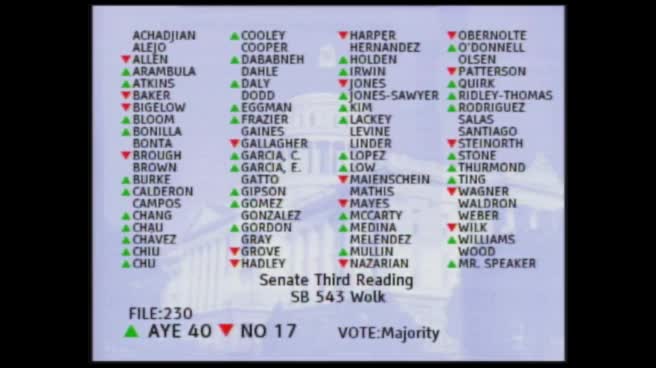

Bill Author

Bill Co-Author(s):