SB 954: Public works: prevailing wage: per diem wages.
- Session Year: 2015-2016
- House: Senate
- Latest Version Date: 2016-08-29
Existing law requires, except for public works projects of $1,000 or less, that workers employed on public works be paid not less than the general prevailing rate of per diem wages for work of a similar character in the locality that the public work is performed, and not less than the general prevailing rate of per diem wages for holiday and overtime work fixed, as prescribed. Existing law requires the Director of Industrial Relations to determine the general prevailing rate of per diem wages for work of a similar character in the locality in which the public work is to be performed, and the general prevailing rate of per diem wages for holiday and overtime work.
Existing law includes, as per diem wages, employer payment for industry advancement and collective bargaining agreements administrative fees, provided that these payments are required under a collective bargaining agreement pertaining to the particular craft, classification, or type of work within the locality or the nearest labor market area at issue. Per diem wages also include employer payments for other purposes similar to those specified, including, but not limited to, certain apprenticeship or other training programs, to the extent that the cost of training is reasonably related to the amount of the contributions, and worker protection and assistance programs or committees established under the federal Labor Management Cooperation Act of 1978, to the extent that the activities of the programs or committees are directed to the monitoring and enforcement of laws related to public works.
This bill would instead require per diem wages to include industry advancement and collective bargaining agreements administrative fees if the payments are made pursuant to a collective bargaining agreement to which the employer is obligated. The bill would also exclude from per diem wages, if the payments are not made pursuant to a collective bargaining agreement to which the employer is obligated, employer payments for other purposes similar to certain apprenticeship or other training programs, worker protection and assistance programs or committees established under the federal Labor Management Cooperation Act of 1978, and industry advancement and collective bargaining agreements administrative fees, as specified.
Existing law provides that employer payments are credits against the obligation to pay the general prevailing rate of per diem wages. Credit is prohibited for benefits required to be provided by other state or federal law or for payments made to monitor and enforce laws related to public works if those payments are not made to a program or committee established under the federal Labor Management Cooperation Act of 1978.
This bill would also prohibit credit for payments for industry advancement and collective bargaining agreement administrative fees if those payments are not made pursuant to a collective bargaining agreement to which the employer is obligated.
Existing law requires, except for public works projects of $1,000 or less, that workers employed on public works be paid not less than the general prevailing rate of per diem wages for work of a similar character in the locality that the public work is performed, and not less than the general prevailing rate of per diem wages for holiday and overtime work fixed, as prescribed. Existing law requires the Director of Industrial Relations to determine the general prevailing rate of per diem wages for work of a similar character in the locality in which the public work is to be performed, and the general prevailing rate of per diem wages for holiday and overtime work.
Existing law includes, as per diem wages, employer payment for industry advancement and collective bargaining agreements administrative fees, provided that these payments are required under a collective bargaining agreement pertaining to the particular craft, classification, or type of work within the locality or the nearest labor market area at issue. Per diem wages also include employer payments for other purposes similar to those specified, including, but not limited to, certain apprenticeship or other training programs, to the extent that the cost of training is reasonably related to the amount of the contributions, and worker protection and assistance programs or committees established under the federal Labor Management Cooperation Act of 1978, to the extent that the activities of the programs or committees are directed to the monitoring and enforcement of laws related to public works.
This bill would instead require per diem wages to include industry advancement and collective bargaining agreements administrative fees, provided that the employer is required by a collective bargaining agreement to make those payments. fees if the payments are made pursuant to a collective bargaining agreement to which the employer is obligated. The bill would also exclude from per diem wages, if the payments are not made pursuant to a collective bargaining agreement to which the employer is obligated, employer payments for other purposes similar to certain apprenticeship or other training programs, worker protection and assistance programs or committees established under the federal Labor Management Cooperation Act of 1978, and industry advancement and collective bargaining agreements administrative fees. fees, as specified.
Existing law provides that employer payments are credits against the obligation to pay the general prevailing rate of per diem wages. Credit is prohibited for benefits required to be provided by other state or federal law or for payments made to monitor and enforce laws related to public works if those payments are not made to a program or committee established under the federal Labor Management Cooperation Act of 1978.
This bill would also prohibit credit for payments for industry advancement if those payments are not required by a collective bargaining agreement. and collective bargaining agreement administrative fees if those payments are not made pursuant to a collective bargaining agreement to which the employer is obligated.
Existing law requires, except for public works projects of $1,000 or less, that workers employed on public works be paid not less than the general prevailing rate of per diem wages for work of a similar character in the locality that the public work is performed, and not less than the general prevailing rate of per diem wages for holiday and overtime work fixed, as prescribed. Existing law requires the Director of Industrial Relations to determine the general prevailing rate of per diem wages for work of a similar character in the locality in which the public work is to be performed, and the general prevailing rate of per diem wages for holiday and overtime work.
Existing law includes, as per diem wages, employer payment for industry advancement and collective bargaining agreements administrative fees, provided that these payments are required under a collective bargaining agreement pertaining to the particular craft, classification, or type of work within the locality or the nearest labor market area at issue. Per diem wages also include employer payments for other purposes similar to those specified, including, but not limited to, certain apprenticeship or other training programs, to the extent that the cost of training is reasonably related to the amount of the contributions, and worker protection and assistance programs or committees established under the federal Labor Management Cooperation Act of 1978, to the extent that the activities of the programs or committees are directed to the monitoring and enforcement of laws related to public works.
This bill would instead require per diem wages to include industry advancement and collective bargaining agreements administrative fees, provided that the employer is required by a collective bargaining agreement to make those payments. The bill would also exclude from per diem wages, employer payments for other purposes similar to certain apprenticeship or other training programs, worker protection and assistance programs or committees established under the federal Labor Management Cooperation Act of 1978, and industry advancement and collective bargaining agreements administrative fees.
Existing law provides that employer payments are credits against the obligation to pay the general prevailing rate of per diem wages. Credit is prohibited for benefits required to be provided by other state or federal law or for payments made to monitor and enforce laws related to public works if those payments are not made to a program or committee established under the federal Labor Management Cooperation Act of 1978.
This bill would also prohibit credit for payments for industry advancement if those payments are not required by a collective bargaining agreement.
(a)Per diem wages, as the term is used in this chapter or in any other statute applicable to public works, includes employer payments for the following:
(1)Health and welfare.
(2)Pension.
(3)Vacation.
(4)Travel.
(5)Subsistence.
(6)Apprenticeship or other training programs authorized by Section 3093, to the extent that the cost of training is reasonably related to the amount of the contributions.
(7)Worker protection and assistance programs or committees established under the federal Labor Management Cooperation Act of 1978 (29 U.S.C. Sec. 175a), to the extent that the activities of the programs or committees are directed to the monitoring and enforcement of laws related to public works.
(8)Industry advancement and collective bargaining agreements administrative fees, provided that these payments are made pursuant to a collective bargaining agreement to which the employer is obligated.
(9)Other purposes similar to those specified in paragraphs (1) to (5), inclusive; or other purposes similar to those specified in paragraphs (6) to (8), inclusive, if the payments are made pursuant to a collective bargaining agreement to which the employer is obligated.
(b)Employer payments include all of the following:
(1)The rate of contribution irrevocably made by the employer to a trustee or third person pursuant to a plan, fund, or program.
(2)The rate of actual costs to the employer reasonably anticipated in providing benefits to workers pursuant to an enforceable commitment to carry out a financially responsible plan or program communicated in writing to the workers affected.
(3)Payments to the California Apprenticeship Council pursuant to Section 1777.5.
(c)Employer payments are a credit against the obligation to pay the general prevailing rate of per diem wages. However, credit shall not be granted for benefits required to be provided by other state or federal law, for payments made to monitor and enforce laws related to public works if those payments are not made to a program or committee established under the federal Labor Management Cooperation Act of 1978 (29 U.S.C. Sec. 175a), or for payments for industry advancement and collective bargaining agreement administrative fees if those payments are not made pursuant to a collective bargaining agreement to which the employer is obligated. Credits for employer payments also shall not reduce the obligation to pay the hourly straight time or overtime wages found to be prevailing. However, an increased employer payment contribution that results in a lower hourly straight time or overtime wage shall not be considered a violation of the applicable prevailing wage determination if all of the following conditions are met:
(1)The increased employer payment is made pursuant to criteria set forth in a collective bargaining agreement.
(2)The basic hourly rate and increased employer payment are no less than the general prevailing rate of per diem wages and the general prevailing rate for holiday and overtime work in the directors general prevailing wage determination.
(3)The employer payment contribution is irrevocable unless made in error.
(d)An employer may take credit for an employer payment specified in subdivision (b), even if contributions are not made, or costs are not paid, during the same pay period for which credit is taken, if the employer regularly makes the contributions, or regularly pays the costs, for the plan, fund, or program on no less than a quarterly basis.
(e)The credit for employer payments shall be computed on an annualized basis when the employer seeks credit for employer payments that are higher for public works projects than for private construction performed by the same employer, unless one or more of the following occur:
(1)The employer has an enforceable obligation to make the higher rate of payments on future private construction performed by the employer.
(2)The higher rate of payments is required by a project labor agreement.
(3)The payments are made to the California Apprenticeship Council pursuant to Section 1777.5.
(4)The director determines that annualization would not serve the purposes of this chapter.
(f)(1)For the purpose of determining those per diem wages for contracts, the representative of any craft, classification, or type of worker needed to execute contracts shall file with the Department of Industrial Relations fully executed copies of the collective bargaining agreements for the particular craft, classification, or type of work involved. The collective bargaining agreements shall be filed after their execution and thereafter may be taken into consideration pursuant to Section 1773 whenever they are filed 30 days prior to the call for bids. If the collective bargaining agreement has not been formalized, a typescript of the final draft may be filed temporarily, accompanied by a statement under penalty of perjury as to its effective date.
(2)When a copy of the collective bargaining agreement has previously been filed, fully executed copies of all modifications and extensions of the agreement that affect per diem wages or holidays shall be filed.
(3)The failure to comply with filing requirements of this subdivision shall not be grounds for setting aside a prevailing wage determination if the information taken into consideration is correct.
(a)Per diem wages, as the term is used in this chapter or in any other statute applicable to public works, includes employer payments for the following:
(1)Health and welfare.
(2)Pension.
(3)Vacation.
(4)Travel.
(5)Subsistence.
(6)Apprenticeship or other training programs authorized by Section 3093, to the extent that the cost of training is reasonably related to the amount of the contributions.
(7)Worker protection and assistance programs or committees established under the federal Labor Management Cooperation Act of 1978 (29 U.S.C. Sec. 175a), to the extent that the activities of the programs or committees are directed to the monitoring and enforcement of laws related to public works.
(8)Industry advancement and collective bargaining agreements administrative fees, provided that the employer is required by a collective bargaining agreement to make these payments. these payments are made pursuant to a collective bargaining agreement to which the employer is obligated.
(9)Other purposes similar to those specified in paragraphs (1) to (5), inclusive. inclusive; or other purposes similar to those specified in paragraphs (6) to (8), inclusive, if the payments are made pursuant to a collective bargaining agreement to which the employer is obligated.
(b)Employer payments include all of the following:
(1)The rate of contribution irrevocably made by the employer to a trustee or third person pursuant to a plan, fund, or program.
(2)The rate of actual costs to the employer reasonably anticipated in providing benefits to workers pursuant to an enforceable commitment to carry out a financially responsible plan or program communicated in writing to the workers affected.
(3)Payments to the California Apprenticeship Council pursuant to Section 1777.5.
(c)Employer payments are a credit against the obligation to pay the general prevailing rate of per diem wages. However, credit shall not be granted for benefits required to be provided by other state or federal law, for payments made to monitor and enforce laws related to public works if those payments are not made to a program or committee established under the federal Labor Management Cooperation Act of 1978 (29 U.S.C. Sec. 175a), or for payments for industry advancement if those payments are not required by a collective bargaining agreement. and collective bargaining agreement administrative fees if those payments are not made pursuant to a collective bargaining agreement to which the employer is obligated. Credits for employer payments also shall not reduce the obligation to pay the hourly straight time or overtime wages found to be prevailing. However, an increased employer payment contribution that results in a lower hourly straight time or overtime wage shall not be considered a violation of the applicable prevailing wage determination if all of the following conditions are met:
(1)The increased employer payment is made pursuant to criteria set forth in a collective bargaining agreement.
(2)The basic hourly rate and increased employer payment are no less than the general prevailing rate of per diem wages and the general prevailing rate for holiday and overtime work in the directors general prevailing wage determination.
(3)The employer payment contribution is irrevocable unless made in error.
(d)An employer may take credit for an employer payment specified in subdivision (b), even if contributions are not made, or costs are not paid, during the same pay period for which credit is taken, if the employer regularly makes the contributions, or regularly pays the costs, for the plan, fund, or program on no less than a quarterly basis.
(e)The credit for employer payments shall be computed on an annualized basis when the employer seeks credit for employer payments that are higher for public works projects than for private construction performed by the same employer, unless one or more of the following occur:
(1)The employer has an enforceable obligation to make the higher rate of payments on future private construction performed by the employer.
(2)The higher rate of payments is required by a project labor agreement.
(3)The payments are made to the California Apprenticeship Council pursuant to Section 1777.5.
(4)The director determines that annualization would not serve the purposes of this chapter.
(f)(1)For the purpose of determining those per diem wages for contracts, the representative of any craft, classification, or type of worker needed to execute contracts shall file with the Department of Industrial Relations fully executed copies of the collective bargaining agreements for the particular craft, classification, or type of work involved. The collective bargaining agreements shall be filed after their execution and thereafter may be taken into consideration pursuant to Section 1773 whenever they are filed 30 days prior to the call for bids. If the collective bargaining agreement has not been formalized, a typescript of the final draft may be filed temporarily, accompanied by a statement under penalty of perjury as to its effective date.
(2)When a copy of the collective bargaining agreement has previously been filed, fully executed copies of all modifications and extensions of the agreement that affect per diem wages or holidays shall be filed.
(3)The failure to comply with filing requirements of this subdivision shall not be grounds for setting aside a prevailing wage determination if the information taken into consideration is correct.
(a)Per diem wages, as the term is used in this chapter or in any other statute applicable to public works, includes employer payments for the following:
(1)Health and welfare.
(2)Pension.
(3)Vacation.
(4)Travel.
(5)Subsistence.
(6)Apprenticeship or other training programs authorized by Section 3093, to the extent that the cost of training is reasonably related to the amount of the contributions.
(7)Worker protection and assistance programs or committees established under the federal Labor Management Cooperation Act of 1978 (29 U.S.C. Sec. 175a), to the extent that the activities of the programs or committees are directed to the monitoring and enforcement of laws related to public works.
(8)Industry advancement and collective bargaining agreements administrative fees, provided that these payments are required under a collective bargaining agreement pertaining to the particular craft, classification, or type of work within the locality or the nearest labor market area at issue. the employer is required by a collective bargaining agreement to make these payments.
(9)Other purposes similar to those specified in paragraphs (1) to (8), (5), inclusive.
(b)Employer payments include all of the following:
(1)The rate of contribution irrevocably made by the employer to a trustee or third person pursuant to a plan, fund, or program.
(2)The rate of actual costs to the employer reasonably anticipated in providing benefits to workers pursuant to an enforceable commitment to carry out a financially responsible plan or program communicated in writing to the workers affected.
(3)Payments to the California Apprenticeship Council pursuant to Section 1777.5.
(c)Employer payments are a credit against the obligation to pay the general prevailing rate of per diem wages. However, credit shall not be granted for benefits required to be provided by other state or federal law, or for payments made to monitor and enforce laws related to public works if those payments are not made to a program or committee established under the federal Labor Management Cooperation Act of 1978 (29 U.S.C. Sec. 175a). 175a), or for payments for industry advancement if those payments are not required by a collective bargaining agreement. Credits for employer payments also shall not reduce the obligation to pay the hourly straight time or overtime wages found to be prevailing. However, an increased employer payment contribution that results in a lower hourly straight time or overtime wage shall not be considered a violation of the applicable prevailing wage determination if all of the following conditions are met:
(1)The increased employer payment is made pursuant to criteria set forth in a collective bargaining agreement.
(2)The basic hourly rate and increased employer payment are no less than the general prevailing rate of per diem wages and the general prevailing rate for holiday and overtime work in the directors general prevailing wage determination.
(3)The employer payment contribution is irrevocable unless made in error.
(d)An employer may take credit for an employer payment specified in subdivision (b), even if contributions are not made, or costs are not paid, during the same pay period for which credit is taken, if the employer regularly makes the contributions, or regularly pays the costs, for the plan, fund, or program on no less than a quarterly basis.
(e)The credit for employer payments shall be computed on an annualized basis when the employer seeks credit for employer payments that are higher for public works projects than for private construction performed by the same employer, unless one or more of the following occur:
(1)The employer has an enforceable obligation to make the higher rate of payments on future private construction performed by the employer.
(2)The higher rate of payments is required by a project labor agreement.
(3)The payments are made to the California Apprenticeship Council pursuant to Section 1777.5.
(4)The director determines that annualization would not serve the purposes of this chapter.
(f)(1)For the purpose of determining those per diem wages for contracts, the representative of any craft, classification, or type of worker needed to execute contracts shall file with the Department of Industrial Relations fully executed copies of the collective bargaining agreements for the particular craft, classification, or type of work involved. The collective bargaining agreements shall be filed after their execution and thereafter may be taken into consideration pursuant to Section 1773 whenever they are filed 30 days prior to the call for bids. If the collective bargaining agreement has not been formalized, a typescript of the final draft may be filed temporarily, accompanied by a statement under penalty of perjury as to its effective date.
(2)When a copy of the collective bargaining agreement has previously been filed, fully executed copies of all modifications and extensions of the agreement that affect per diem wages or holidays shall be filed.
(3)The failure to comply with filing requirements of this subdivision shall not be grounds for setting aside a prevailing wage determination if the information taken into consideration is correct.
|
Date
|
Status
|
|---|---|
| Aug 29, 2016 | Chaptered by Secretary of State. Chapter 231, Statutes of 2016. |
| Aug 29, 2016 | Approved by the Governor. |
| Aug 16, 2016 | Enrolled and presented to the Governor at 11:30 a.m. |
| Aug 11, 2016 | Assembly amendments concurred in. (Ayes 23. Noes 12. Page 4863.) Ordered to engrossing and enrolling. |
| Aug 11, 2016 | Assembly amendments concurred in. (Ayes 22. Noes 11.) Ordered to engrossing and enrolling. |
| Aug 4, 2016 | Read third time. Passed. (Ayes 52. Noes 22. Page 5711.) Ordered to the Senate. |
| Aug 4, 2016 | In Senate. Concurrence in Assembly amendments pending. |
| Aug 4, 2016 | Read third time. Passed. Ordered to the Senate. |
| Jun 30, 2016 | Read second time. Ordered to third reading. |
| Jun 29, 2016 | From committee: Do pass. (Ayes 12. Noes 5.) (June 29). |
| Jun 23, 2016 | From committee: Do pass and re-refer to Com. on APPR. (Ayes 6. Noes 1.) (June 22). Re-referred to Com. on APPR. |
| Jun 14, 2016 | From committee with author's amendments. Read second time and amended. Re-referred to Com. on L. & E. |
| May 5, 2016 | Referred to Com. on L. & E. |
| Apr 21, 2016 | Read third time. Passed. (Ayes 27. Noes 12. Page 3628.) Ordered to the Assembly. |
| Apr 21, 2016 | Reconsideration granted. (Ayes 39. Noes 0. Page 3628.) |
| Apr 21, 2016 | In Assembly. Read first time. Held at Desk. |
| Apr 21, 2016 | Read third time. Passed. (Ayes 27. Noes 12.) Ordered to the Assembly. |
| Apr 21, 2016 | Reconsideration granted. (Ayes 39. Noes 0.) |
| Apr 21, 2016 | Motion to reconsider made by Senator Hertzberg. |
| Apr 21, 2016 | Read third time. Passed. (Ayes 27. Noes 11.) Ordered to the Assembly. |
| Apr 19, 2016 | Read second time. Ordered to third reading. |
| Apr 18, 2016 | From committee: Be ordered to second reading pursuant to Senate Rule 28.8. |
| Apr 8, 2016 | Set for hearing April 18. |
| Apr 6, 2016 | From committee: Do pass and re-refer to Com. on APPR. (Ayes 3. Noes 1. Page 3420.) (April 6). Re-referred to Com. on APPR. |
| Apr 6, 2016 | From committee: Do pass and re-refer to Com. on APPR. (Ayes 3. Noes 1.) (April 6). Re-referred to Com. on APPR. |
| Mar 18, 2016 | Set for hearing April 6. |
| Feb 18, 2016 | Referred to Com. on L. & I.R. |
| Feb 5, 2016 | From printer. May be acted upon on or after March 6. |
| Feb 4, 2016 | Introduced. Read first time. To Com. on RLS. for assignment. To print. |
|
Date
|
Description
|
Location
|
Votes
|
|
|---|---|---|---|---|
| Aug 11, 2016 | Unfinished Business SB954 Hertzberg Concurrence | Senate Floor |
Passed |
|
| Aug 4, 2016 | SB 954 Hertzberg Senate Third Reading By THURMOND | Assembly Floor |
Passed |
|
| Jun 29, 2016 | Do pass. | Assembly Standing Committee on Appropriations |
Passed |
|
| Jun 22, 2016 | Do pass and be re-referred to the Committee on [Appropriations] | Assembly Standing Committee on Labor and Employment |
Passed |
|
| Apr 21, 2016 | Senate 3rd Reading SB954 Hertzberg | Senate Floor |
Passed |
|
| Apr 21, 2016 | Senate 3rd Reading SB954 Hertzberg Reconsider | Senate Floor |
Passed |
|
| Apr 21, 2016 | Senate 3rd Reading SB954 Hertzberg | Senate Floor |
Passed |
|
| Apr 6, 2016 | Do pass, but first be re-referred to the Committee on [Appropriations] | Senate Standing Committee on Labor and Industrial Relations |
Passed |
This list shows positions taken on this bill by organizations on the date displayed, which is linked to the original source.
Positions by individuals are not included.
Office of Senate Floor Analyses (916) 651-1520 Fax: (916) 327-4478 | SB |
UNFINISHED BUSINESS
Bill No: SB 954
:
SENATE LABOR & IND. REL. COMMITTEE: 3-1, 4/6/16
AYES: Mendoza, Leno, Mitchell
NOES: Stone
NO VOTE RECORDED: Jackson
SENATE APPROPRIATIONS COMMITTEE: Senate Rule 28.8
SENATE FLOOR: 27-12, 4/21/16
AYES: Allen, Beall, Block, Cannella, De León, Galgiani, Glazer, Hall, Hancock, Hernandez, Hertzberg, Hill, Hueso, Jackson, Lara, Leno, Leyva, Liu, McGuire, Mendoza, Mitchell, Monning, Pan, Pavley, Roth, Wieckowski, Wolk
NOES: Anderson, Bates, Berryhill, Fuller, Gaines, Huff, Moorlach, Morrell, Nguyen, Nielsen, Stone, Vidak
NO VOTE RECORDED: Runner
ASSEMBLY FLOOR: 52-22, 8/4/16 - See last page for vote
SOURCE: State Building and Construction Trades Council
DIGEST: This bill redefines what benefits employers can pay into as part of their obligation to pay workers on public works projects the prevailing wage. Specifically, this bill qualifies certain prevailing wage benefit payments only if they are made by an employer obligated to do so pursuant to a collective bargaining agreement (CBA). This bill also applies this same standard to employer payments to benefits that are merely similar to those described under existing law. Lastly, this bill does not allow employers to take credit for paying workers the prevailing wage if the abovementioned conditions are not met.
Assembly Amendments incorporate language that specifies that certain payments only qualify as part of prevailing wage requirements and as employer credits for these payments if they are made pursuant to an employer’s obligation to a CBA.
Existing law:
- Requires that the applicable general prevailing rate of per diem wages be paid to workers employed on public works projects in California. This rate is determined by the Director of the Department of Industrial Relations for each locality in which the public work is to be performed and for each craft, classification, or type of worker needed to execute the public works project (Labor Code §1773).
- Defines “public work” to include, among other things, construction, alteration, demolition, installation or repair work done under contract and paid for in whole or in part out of public funds (Labor Code §1720).
- Requires that employers pay the general prevailing rate of per diem wages to all workers employed on a public works project costing over $1,000 (Labor Code §1771).
- Allows employers, in addition to paying these workers basic straight-time and overtime pay, to use payments to the following as a credit against the obligation to pay the general prevailing rate of per diem wages (Labor Code §1773.1):
- Health and welfare.
- Pension.
- Vacation.
- Travel.
- Subsistence.
- Apprenticeship or other training programs authorized by Section 3093 of the Labor Code, to the extent that the cost of training is reasonably related to the amount of contributions.
- Worker protection and assistance programs or committees established under the federal Labor Management Cooperation Act of 1978 (29 U.S.C. Sec. 175a), to the extent that the activities of the programs or committees are directed to the monitoring and enforcement of laws related to public works.
- Industry advancement and CBA administrative fees, provided that these payments are required under a CBA pertaining to the particular craft, classification, or type of work within the locality or the nearest labor market area at issue.
- Other purposes similar to those specified in paragraphs (a) to (h), inclusive.
This bill:
- Redefines the prevailing wage to include industry advancement and CBA administrative fees, provided that the employer is obligated to do so pursuant to a CBA.
- Revises the definition of the prevailing wage to include employer payments for other purposes similar to the following, but only if they are made pursuant to an employer’s obligation to a CBA:
- Certain apprenticeship or other training programs.
- Worker protection and assistance programs or committees established under the federal Labor Management Cooperation Act of 1978 (29 U.S.C. Sec. 175a).
- Industry advancement and CBA administrative fees.
- Prevents the use of employer payments for industry advancement and CBA administrative fees as credit for paying the prevailing wage unless those payments are made pursuant to an employer’s obligation to a CBA.
Comments
Need for this bill? The prevailing wage is derived from the basic hourly rate paid on public works projects to a majority of workers engaged in a particular type of work within the locality and in the nearest labor market area. This ensures, among other things, that government funds do not become tangled up in competitive under-bidding which can reduce worker wages. The prevailing wage in both federal and California law can include two parts: 1) a basic hourly rate of pay and 2) employer payment of various benefits for the employee such as health and life insurance, pension, vacation, among others. In short, rather than just money, these employers can give their employees money and bona fide benefits as long as the value of both components add up to the prevailing wage rate.
This bill revises the definition of acceptable employer payments toward benefits, and thus what counts as payment of the prevailing wage. The author feels that the current broad definition of these employer payments allows non-union employees who are not party to a CBA to have part of their wages deducted for industry advancement purposes. As such, employers can deduct and use these wages without the input or consent of the employees or their labor representatives. The law’s uncertainty regarding benefits is compounded by the inclusion of employer payments for other purposes similar to industry advancement as part of the prevailing wage.
Prior Legislation
SB 776 (Corbett, Chapter 169, Statutes of 2013) prohibited credit from being granted for employer payments made to monitor and enforce laws related to public works if those payments are not made to a program or committee established under the federal Labor Management Cooperation Act of 1978 and provided that an employer may take credit for those specified employer payments, even if those payments are not made, or costs are not paid, during the same pay period for which credit is taken, if the employer regularly makes those payments on no less than a quarterly basis.
FISCAL EFFECT: Appropriation: Fiscal Com.: Local:
According to the Assembly Appropriations Committee, this bill has no significant state fiscal impact.
State Building and Construction Trades Council (source)
Air Conditioning Sheet Metal Association
Air-Conditioning & Refrigeration Contractors Association
California Chapters of the National Electrical Contractors Association
California Labor Federation, AFL-CIO
California Legislative Conference of the Plumbing, Heating and Piping Industry
California State Council of Laborers
Finishing Contractors Association of Southern California
Northern California Allied Trades
Southern California Contractors Association
United Contractors
Wall and Ceiling Alliance
Air Conditioning Trade Association
Associated Builders and Contractors of California
Associated Builders and Contractors-San Diego Chapter
California Construction Advancement Group
Plumbing-Heating-Cooling Contractors Association of California
Western Electrical Contractors Association
ARGUMENTS IN SUPPORT: Proponents state that existing law permits employer credits for industry advancement purposes that are “similar” to those in a CBA pertaining to a particular craft, classification, or type of work in the nearest labor market. This credit, a reduction in the amount of an employee’s check, is diverted into a fund that can be used for lobbying or other activities that are not subject to a specific CBA. Proponents further argue that current law is not sufficiently clear that the employer must actually be a party to a CBA that requires such contributions. This ambiguity has been used by contractors to reduce worker’s wages to fund the contractors’ own “industry advancement.” This is done without worker representation or a say as to whether employees want these deductions to occur, for what purposes the money can be used, and the amount of the deduction. In fact, these funds are often used to support activities that are contrary to the interests of workers, such as efforts to weaken health and safety standards or to reduce wages on public works and apprenticeship training standards. Finally, proponents state that the collective bargaining process is essential to level the playing field between management and labor, so that any payments that reduce workers’ wages are actually in the interests of workers. SB 954 protects worker wages and clarifies the list of credits an employer may claim when reducing per diem wages.
ARGUMENTS IN OPPOSITION: Opponents state that against the total prevailing wage amount, contractors are allowed credits for a range of cash wages and benefit payments. Funds deposited by both union and non-union contractors into the “other payments” category, which include benefits, may be used for “industry advancement.” Opponents claim that SB 954 is now trying to eliminate non-union contractors’ ability to fund industry advancement as part of their permitted credits when calculating the prevailing wage for their workers. Opponents contend that the Legislature should not be singling out prevailing wage contributions based on the union or non-union status of the contractor. This bill is devoid of conditions that empower workers represented by a union to have democratic control and proper accounting of trusts and committees that receive these employer payments. Instead, opponents believe that SB 954 simply bans any payments not made pursuant to a CBA. Finally, opponents claim that California can assist in building a skilled-workforce through education and hands-on training utilizing funds from the “other payments” category for industry advancement and that this would not be possible under SB 954’s provisions.
ASSEMBLY FLOOR: 52-22, 8/4/16
AYES: Alejo, Arambula, Atkins, Bloom, Bonilla, Bonta, Brown, Burke, Calderon, Campos, Chau, Chiu, Chu, Cooper, Dababneh, Daly, Dodd, Eggman, Frazier, Cristina Garcia, Eduardo Garcia, Gatto, Gipson, Gomez, Gonzalez, Gordon, Gray, Holden, Irwin, Jones-Sawyer, Levine, Linder, Lopez, Low, McCarty, Medina, Mullin, Nazarian, O'Donnell, Quirk, Ridley-Thomas, Rodriguez, Salas, Santiago, Steinorth, Mark Stone, Thurmond, Ting, Weber, Williams, Wood, Rendon
NOES: Achadjian, Travis Allen, Baker, Bigelow, Brough, Dahle, Beth Gaines, Gallagher, Grove, Harper, Jones, Kim, Lackey, Maienschein, Mathis, Melendez, Obernolte, Olsen, Patterson, Wagner, Waldron, Wilk
NO VOTE RECORDED: Chang, Chávez, Cooley, Hadley, Roger Hernández, Mayes
8/5/16 11:09:18
**** END ****
SENATE THIRD READING
STR Bill Id:SB 954
Author:(Hertzberg)
As Amended Ver:June 14, 2016
Majority vote
SENATE VOTE: 27-12
Committee | Votes | Ayes | Noes |
Labor | 6-1 | Roger Hernández, Chu, Linder, McCarty, O'Donnell, Thurmond | Patterson |
Appropriations | 12-5 | Gonzalez, Bloom, Bonta, Calderon, Daly, Eggman, Roger Hernández, Holden, Quirk, Santiago, Weber, Wood | Bigelow, Gallagher, Jones, Obernolte, Wagner |
SUMMARY: Qualifies which employer payments may be included as per diem wages for purposes of an employer's obligation to pay prevailing wages on public works projects. Specifically, this bill:
- Provides that those per diem wages may include employer payments for industry advancement and collective bargaining agreement administrative fees only if such payments are made pursuant to a collective bargaining agreement to which the employer is obligated.
- Provides that those per diem wages may include employer payments for "other purposes similar" to certain apprenticeship or other training programs, worker protection and assistance programs or committees established under the federal Labor Management Cooperation Act of 1978, and industry advancement and collective bargaining agreements administrative fees, only if such payments are made pursuant to a collective bargaining agreement to which the employer is obligated.
- Prevents the use of employer payments for industry advancement and collective bargaining agreement administrative fees from being used as a credit against the obligation to pay prevailing wages if those payments are not made pursuant to a collective bargaining agreement to which the employer is obligated.
FISCAL EFFECT: According to the Assembly Appropriations Committee, no significant state fiscal impact.
COMMENTS: According to the author, the current broad definition of these "employer payments" allows non-union employees who are not party to a collective bargaining agreement to have their per diem wage rates include employer payments used for industry advancement purposes. As such, employers can credit these payments towards their prevailing wage obligation without the input or consent of the employees or their labor representatives. In addition, the law's uncertainty regarding benefits is compounded by the inclusion of employer payments for other purposes similar to industry advancement as part of the prevailing wage.
The prevailing wage is derived from the basic hourly rate paid on public works projects to a majority of workers engaged in a particular type of work within the locality and in the nearest labor market area. Proponents of prevailing wage laws contend that this ensures, among other things, that government funds do not become tangled up in competitive under-bidding which can reduce worker wages. The prevailing wage in both federal and California law can include two parts: 1) a basic hourly rate of pay and 2) employer payment of various benefits for the employee such as health and life insurance, pension, vacation, among others. In short, rather than just money, these employers can give their employees money and bona fide benefits as long as the value of both components add up to the prevailing wage rate. This bill would revise the definition of acceptable employer payments toward benefits, and thus what counts as payment of the prevailing wage.
Arguments in Support
The State Building and Construction Trades Council of California is the sponsor of this bill and writes in support:
"This bill will protect construction workers on public works projects by ensuring they receive their rightfully owed wages. The bill prohibits contractors/employers from, without the consent of the worker or worker's collective bargaining representative, deducting a portion of the worker's hourly wages for use by contractor associations.
"The sanctity of the collective bargaining process is essential to level the playing field between management and labor by giving workers a strong voice and a seat at the negotiating table, so that any payments that reduce workers' wages are actually in the interests of workers."
Arguments in Opposition
Opponents state that contractors are allowed credits toward their prevailing wage obligation for a range of cash wages and benefit payments. Funds deposited by both union and non-union contractors into the "other payments" category, which include benefits, may be used for "industry advancement." Opponents claim that this bill is now trying to eliminate non-union contractors' ability to fund industry advancement as part of their permitted credits when calculating the prevailing wage for their workers.
Finally, opponents express particular concern about the most recent amendments to this bill that provide that per diem wages may include employer payments for "other purposes similar" to certain apprenticeship or other training programs only if such payments are made pursuant to a collective bargaining agreement to which the employer is obligated. They argue that this new amendment essentially says that individual and non-union contractors will no longer be able to include their apprenticeship training contributions as part of the prevailing wage calculations because they are not party to a collective bargaining agreement.
Analysis Prepared by: Taylor Jackson / L. & E. / (916) 319-2091 FN: 0003555
Date of Hearing: June 29, 2016
ASSEMBLY COMMITTEE ON APPROPRIATIONS
Lorena Gonzalez, Chair
SBPCA Bill Id:SB 954
Author:(Hertzberg) – As Amended Ver:June 14, 2016
Policy Committee: | Labor | Vote: | 6-1 |
|
| ||
|
|
Urgency: No State Mandated Local Program: No Reimbursable: No
SUMMARY:
This bill qualifies which employer payments may be included as per diem wages for purposes of an employer's obligation to pay prevailing wages on public works projects. Specifically, this bill:
- Redefines the prevailing wage to include industry advancement and collective bargaining agreement (CBA) administrative fees, provided that the employer is required by a CBA to pay them.
- Provides that per diem wages may include employer payments for "other purposes similar" to certain apprenticeship or other training programs, worker protection and assistance programs or committees established under the federal Labor Management Cooperation Act of 1978, and industry advancement and CBA administrative fees, only if such payments are made pursuant to a CBA to which the employer is obligated.
FISCAL EFFECT:
No significant state fiscal impact.
COMMENTS:
- Background. Current law requires the applicable general prevailing rate of per diem wages to be paid to workers employed on public works projects in California. This rate is determined by the Director of the Department of Industrial Relations for each locality in which the public work is to be performed and for each craft, classification, or type of worker needed to execute the public works project. The prevailing wage in both federal and California law can include two parts: 1) a basic hourly rate of pay, and 2) employer payment of various benefits for the employee such as health and life insurance, pension, vacation, among others.
- Purpose. This bill, sponsored by the State Building and Construction Trades Council, revises the definition of acceptable employer payments toward benefits, and thus what counts as payment of the prevailing wage. Supporters state that the current broad definition of these employer payments allows non-union employees who are not party to a collective bargaining agreement to have part of their wages deducted for industry advancement purposes. Supporters also seek to clarify that the employer must actually be a party to a CBA that requires such contributions. According to supporters, this ambiguity has been used by contractors to reduce worker’s wages to fund the contractors’ own “industry advancement.”
- Opposition. Opposition, including the Associated Builders and Contractors of California, are concerned this bill will eliminate non-union contractors’ ability to fund industry advancement as part of their permitted credits when calculating the prevailing wage for their workers. Opponents contend that the Legislature should not be singling out prevailing wage contributions based on the union or non-union status of the contractor.
Analysis Prepared by: Misty Feusahrens / APPR. / (916) 319-2081
Date of Hearing: June 22, 2016
ASSEMBLY COMMITTEE ON LABOR AND EMPLOYMENT
Roger Hernández, Chair
SBPCA Bill Id:SB 954
Author:(Hertzberg) – As Amended Ver:June 14, 2016
SENATE VOTE: 27-12
SUBJECT: Public works: prevailing wage: per diem wages
SUMMARY: Qualifies which employer payments may be included as per diem wages for purposes of an employer's obligation to pay prevailing wages on public works projects. Specifically, this bill:
- Provides that those per diem wages may include employer payments for industry advancement and collective bargaining agreement administrative fees only if such payments are made pursuant to a collective bargaining agreement to which the employer is obligated.
- Provides that those per diem wages may include employer payments for "other purposes similar" to certain apprenticeship or other training programs, worker protection and assistance programs or committees established under the federal Labor Management Cooperation Act of 1978, and industry advancement and collective bargaining agreements administrative fees, only if such payments are made pursuant to a collective bargaining agreement to which the employer is obligated.
- Prevents the use of employer payments for industry advancement and collective bargaining agreement administrative fees from being used as a credit against the obligation to pay prevailing wages if those payments are not made pursuant to a collective bargaining agreement to which the employer is obligated.
EXISTING LAW:
- Requires that the applicable general prevailing rate of per diem wages be paid to workers employed on public works projects in California. This rate is determined by the Director of the Department of Industrial Relations for each locality in which the public work is to be performed and for each craft, classification, or type of worker needed to execute the public works project (Labor Code §1773).
- Defines “public work” to include, among other things, construction, alteration, demolition, installation or repair work done under contract and paid for in whole or in part out of public funds (Labor Code §1720).
- Requires that employers pay the general prevailing rate of per diem wages to all workers employed on a public works project costing over $1,000 (Labor Code §1771).
- Allows employers, in addition to paying these workers basic straight-time and overtime pay, to use payments to the following as a credit against the obligation to pay the general prevailing rate of per diem wages (Labor Code §1773.1):
- Health and welfare
- Pension
- Vacation
- Travel
- Subsistence
- Apprenticeship or other training programs, as specified, to the extent that the cost of training is reasonably related to the amount of contributions.
- Worker protection and assistance programs or committees established under the federal Labor Management Cooperation Act of 1978, to the extent that the activities of the programs or committees are directed to the monitoring and enforcement of laws related to public works.
- Industry advancement and collective bargaining agreement administrative fees, provided that these payments are required under a collective bargaining agreement pertaining to the particular craft, classification, or type of work within the locality or the nearest labor market area at issue.
- Other purposes similar to those specified in paragraphs (a) to (h), inclusive.
FISCAL EFFECT: According to the Senate Appropriations Committee, pursuant to Senate Rule 28.8, negligible state costs.
COMMENTS: According to the author, the current broad definition of these "employer payments" allows non-union employees who are not party to a collective bargaining agreement to have their per diem wage rates include employer payments used for industry advancement purposes. As such, employers can credit these payments towards their prevailing wage obligation without the input or consent of the employees or their labor representatives. In addition, the law’s uncertainty regarding benefits is compounded by the inclusion of employer payments for other purposes similar to industry advancement as part of the prevailing wage.
The prevailing wage is derived from the basic hourly rate paid on public works projects to a majority of workers engaged in a particular type of work within the locality and in the nearest labor market area. Proponents of prevailing wage laws contend that this ensures, among other things, that government funds do not become tangled up in competitive under-bidding which can reduce worker wages. The prevailing wage in both federal and California law can include two parts: 1) a basic hourly rate of pay and 2) employer payment of various benefits for the employee such as health and life insurance, pension, vacation, among others. In short, rather than just money, these employers can give their employees money and bona fide benefits as long as the value of both components add up to the prevailing wage rate. This bill would revise the definition of acceptable employer payments toward benefits, and thus what counts as payment of the prevailing wage.
Arguments in Support
The State Building and Construction Trades Council of California is the sponsor of this bill and writes in support:
“This bill will protect construction workers on public works projects by ensuring they receive their rightfully owed wages. The bill prohibits contractors/employers from, without the consent of the worker or worker’s collective bargaining representative, deducting a portion of the worker’s hourly wages for use by contractor associations.
Contractors on public works projects are required to pay their employees at least the prevailing wage applicable for the craft and for the locality in which the work is performed. The Labor Code lists the types of fringe benefit payments that can be taken as a credit against the obligation to pay cash wages. These include payment for healthcare, pension contributions, vacation, and other payments that directly benefit the employee. Additionally, Labor Code §1773.1 allows employers to take credit for contributions to apprenticeship training and for contributions required by a collective bargaining agreement (CBA) for worker protection programs, administrative fees for collective bargaining, and industry advancement funds.
However, while Labor Code §1773.1 allows contractors to take credits for contributions to industry advancement funds that are required by a CBA, current law is not sufficiently clear that the employer must actually be a party to a CBA that requires the contributions. This ambiguity has been utilized by contractors to reduce workers’ wages to fund their own "industry advancement funds" without worker representation or say on whether they want these deductions to occur, for what purposes the money can be used, and the amount of the deduction. In fact, these funds are often used to support activities that are contrary to the interests of workers, such as efforts to weaken health and safety standards, lower wages on public works, and water down apprenticeship training standards.
[This bill] will protect construction workers on public works projects by ensuring they receive their full prevailing wages, unless, through collective bargaining they have negotiated with employers on deductions for industry advancement funds. Collective bargaining allows workers to be equal partners in the decision-making process on whether such deductions are made and how those funds will be used in order to equally represent the interests and well-being of both contractors and workers.
The sanctity of the collective bargaining process is essential to level the playing field between management and labor by giving workers a strong voice and a seat at the negotiating table, so that any payments that reduce workers’ wages are actually in the interests of workers.”
Arguments in Opposition
Opponents state that contractors are allowed credits toward their prevailing wage obligation for a range of cash wages and benefit payments. Funds deposited by both union and non-union contractors into the “other payments” category, which include benefits, may be used for “industry advancement.” Opponents claim that this bill is now trying to eliminate non-union contractors’ ability to fund industry advancement as part of their permitted credits when calculating the prevailing wage for their workers.
Opponents contend that the Legislature should not be singling out prevailing wage contributions based on the union or non-union status of the contractor. This bill is devoid of conditions that empower workers represented by a union to have democratic control and proper accounting of trusts and committees that receive these employer payments. Instead, opponents believe that this bill simply bans any payments not made pursuant to a CBA. Opponents claim that California can assist in building a skilled-workforce through education and hands-on training utilizing funds from the “other payments” category for industry advancement. This bill takes much of that away by saying only union contractors may use these funds for industry advancement.
In addition, opponents argue that neither the federal government nor the state government require expenditure reports from the entities that receive employer payments under existing law. Therefore, they argue that workers have no means to know of, control or receive a proper accounting of the entities receiving these payments designated as credits against their prevailing wage – even those under a CBA. They suggest that this bill should instead be amended to require the Division of Labor Statistics and Research to annually obtain reports and to examine expenditures of all entities that receive employer payments before it designates those employer payments as a credit against the prevailing wage. They believe there is a strong need for California to exercise strong oversight and regulation of entities that receive employer payments as a legitimate credit against the prevailing wage paid to workers.
Finally, opponents express particular concern about the most recent amendments to this bill that provide that per diem wages may include employer payments for "other purposes similar" to certain apprenticeship or other training programs only if such payments are made pursuant to a collective bargaining agreement to which the employer is obligated. They argue that this new amendment essentially says that individual and non-union contractors will no longer be able to include their apprenticeship training contributions as part of the prevailing wage calculations because they are not party to a collective bargaining agreement.
However, the language of this bill does not appear to impact the ability of an employer under current law to include payments for authorized apprenticeship or other training programs. The qualification that certain payments must be made pursuant to a collective bargaining agreement applies to payments made for "other purposes similar" to payments for apprenticeship or other training programs. Therefore, by definition this limitation applies only to employer payments for something "other" than an authorized apprenticeship or other training program. Moreover, the sponsor of the bill has indicated that this bill is not intended to limit credit for employer payments for authorized apprenticeship or other training programs as provided under existing law.
Previous Related Legislation
SB 776 (Corbett) Chapter 169, Statutes of 2013 prohibited credit from being granted for employer payments made to monitor and enforce laws related to public works if those payments are not made to a program or committee established under the federal Labor Management Cooperation Act of 1978 and provided that an employer may take credit for those specified employer payments, even if those payments are not made, or costs are not paid, during the same pay period for which credit is taken, if the employer regularly makes those payments on no less than a quarterly basis.
REGISTERED SUPPORT / OPPOSITION:
Support
Air Conditioning Sheet Metal Association
Air-conditioning & Refrigeration Contractors Association
California Chapters of the National Electrical Contractors Association
California Labor Federation, AFL-CIO
California Legislative Conference of the Plumbing, Heating and Piping Industry
California State Association of Electrical Workers
California State Pipe Trades Council
Finishing Contractors Association of Southern California
International Union of Elevator Construtors
Northern California Allied Trades
Southern California Contractors Association
State Building and Construction Trades Council (sponsor)
United Contractors
Wall and Ceiling Alliance
Western States Council of Sheet Metal Workers
Opposition
Air Conditioning Trade Association
Associated Builders and Contractors of California
Associated Builders and Contractors-San Diego Chapter
California Construction Advancement Group
California Construction Compliance Group
Plumbing-Heating-Cooling Contractors Association of California
Western Electrical Contractors Association
Analysis Prepared by: Taylor Jackson / L. & E. / (916) 319-2091
Office of Senate Floor Analyses (916) 651-1520 Fax: (916) 327-4478 | SB |
THIRD READING
Bill No: SB 954
:
SENATE LABOR & IND. REL. COMMITTEE: 3-1, 4/6/16
AYES: Mendoza, Leno, Mitchell
NOES: Stone
NO VOTE RECORDED: Jackson
SENATE APPROPRIATIONS COMMITTEE: Senate Rule 28.8
SOURCE: State Building and Construction Trades Council
DIGEST: This bill redefines what benefits employers can pay into as part of their obligation to pay workers on public works projects the prevailing wage. Specifically, it qualifies certain prevailing wage benefit payments only if they are required by a collective bargaining agreement. This bill also eliminates employer payments to benefits that are merely similar to those described under existing law. Lastly, this bill does not allow employers to take credit for paying workers the prevailing wage if the abovementioned conditions are not met.
Existing law:
- Requires that the applicable general prevailing rate of per diem wages be paid to workers employed on public works projects in California. This rate is determined by the Director of the Department of Industrial Relations for each locality in which the public work is to be performed and for each craft, classification, or type of worker needed to execute the public works project (Labor Code §1773).
- Defines “public work” to include, among other things, construction, alteration, demolition, installation or repair work done under contract and paid for in whole or in part out of public funds (Labor Code §1720).
- Requires that employers pay the general prevailing rate of per diem wages to all workers employed on a public works project costing over $1,000 (Labor Code §1771).
- Allows employers, in addition to paying these workers basic straight-time and overtime pay, to use payments to the following as a credit against the obligation to pay the general prevailing rate of per diem wages (Labor Code §1773.1):
- Health and welfare
- Pension
- Vacation
- Travel
- Subsistence
- Apprenticeship or other training programs authorized by §3093 of the Labor Code, to the extent that the cost of training is reasonably related to the amount of contributions.
- Worker protection and assistance programs or committees established under the federal Labor Management Cooperation Act of 1978 (29 U.S.C. Sec. 175a), to the extent that the activities of the programs or committees are directed to the monitoring and enforcement of laws related to public works.
- Industry advancement and collective bargaining agreements (CBAs) administrative fees, provided that these payments are required under a CBA pertaining to the particular craft, classification, or type of work within the locality or the nearest labor market area at issue.
- Other purposes similar to those specified in paragraphs (a) to (h), inclusive.
This bill:
- Redefines the prevailing wage to include industry advancement and CBAs administrative fees, provided that the employer is required by a CBA to pay them.
- Revises the definition of the prevailing wage to exclude employer payments for other purposes similar to:
- Certain apprenticeship or other training programs.
- Worker protection and assistance programs or committees established under the federal Labor Management Cooperation Act of 1978 (29 U.S.C. Sec. 175a).
- Industry advancement and CBAs administrative fees.
- Prevents the use of employer payments for industry advancement as credit for paying the prevailing wage if those payments are not required by a CBA.
Comments
Need for this bill? The prevailing wage is derived from the basic hourly rate paid on public works projects to a majority of workers engaged in a particular type of work within the locality and in the nearest labor market area. This ensures, among other things, that government funds do not become tangled up in competitive under-bidding which can reduce worker wages. The prevailing wage in both federal and California law can include two parts: 1) a basic hourly rate of pay and 2) employer payment of various benefits for the employee such as health and life insurance, pension, vacation, among others. In short, rather than just money, these employers can give their employees money and bona fide benefits as long as the value of both components add up to the prevailing wage rate.
This bill revises the definition of acceptable employer payments toward benefits, and thus what counts as payment of the prevailing wage. The author feels that the current broad definition of these employer payments allows non-union employees who are not party to a collective bargaining agreement to have part of their wages deducted for industry advancement purposes. As such, employers can deduct and use these wages without the input or consent of the employees or their labor representatives. The law’s uncertainty regarding benefits is compounded by the inclusion of employer payments for other purposes similar to industry advancement as part of the prevailing wage.
FISCAL EFFECT: Appropriation: Fiscal Com.: Local:
State Building and Construction Trades Council (source)
California Labor Federation, AFL-CIO
Southern California Contractors Association
OPPOSITION: (Verified 4/20/16)
Air Conditioning Trade Association
Associated Builders and Contractors of California
Associated Builders and Contractors-San Diego Chapter
California Construction Advancement Group
Plumbing-Heating-Cooling Contractors Association of California
Western Electrical Contractors Association
ARGUMENTS IN SUPPORT: The State Building and Construction Trades Council states that existing law permits employer credits for industry advancement purposes that are “similar” to those in a collective bargaining agreement (CBA) pertaining to a particular craft, classification, or type of work in the nearest labor market. This credit, a reduction in the amount of an employee’s check, is diverted into a fund that can be used for lobbying or other activities that are not subject to a specific CBA. Proponents further argue that current law is not sufficiently clear that the employer must actually be a party to a CBA that requires such contributions. This ambiguity has been used by contractors to reduce worker’s wages to fund the contractors’ own “industry advancement.” This is done without worker representation or a say as to whether employees want these deductions to occur, for what purposes the money can be used, and the amount of the deduction. In fact, these funds are often used to support activities that are contrary to the interests of workers, such as efforts to weaken health and safety standards or to reduce wages on public works and apprenticeship training standards. Finally, proponents state that the collective bargaining process is essential to level the playing field between management and labor, so that any payments that reduce workers’ wages are actually in the interests of workers. SB 954 protects worker wages and clarifies the list of credits an employer may claim when reducing per diem wages.
ARGUMENTS IN OPPOSITION: Opponents state that against the total prevailing wage amount, contractors are allowed credits for a range of cash wages and benefit payments. Funds deposited by both union and non-union contractors into the “other payments” category, which include benefits, may be used for “industry advancement.” Opponents claim that SB 954 is now trying to eliminate non-union contractors’ ability to fund industry advancement as part of their permitted credits when calculating the prevailing wage for their workers. Opponents contend that the Legislature should not be singling out prevailing wage contributions based on the union or non-union status of the contractor. This bill is devoid of conditions that empower workers represented by a union to have democratic control and proper accounting of trusts and committees that receive these employer payments. Instead, opponents believe that SB 954 simply bans any payments not made pursuant to a CBA. Opponents claim that California can assist in building a skilled-workforce through education and hands-on training utilizing funds from the “other payments” category for industry advancement. SB 954 takes much of that away by saying only union contractors may use these funds for industry advancement.
4/20/16 16:13:28
**** END ****
SENATE COMMITTEE ON LABOR AND INDUSTRIAL RELATIONS
Senator Tony Mendoza, Chair
2015 - 2016 Regular
Bill No: SB 954 Hearing Date: April 6, 2016
Author: | Hertzberg | ||
Version: | February 4, 2016 | ||
Urgency: | No | Fiscal: | Yes |
Consultant: | Brandon Seto | ||
Subject: Public works: prevailing wage: per diem wages
KEY ISSUE
Should the Legislature redefine what type of employer contributions to benefits count toward the requirement to pay workers the prevailing wage on public works projects?
Should the Legislature prohibit employers from taking credit for paying the prevailing wage by contributing to certain employee benefits, if those contributions are not required by a collective bargaining agreement?
ANALYSIS
Existing law
- Requires that the applicable general prevailing rate of per diem wages be paid to workers employed on public works projects in California. This rate is determined by the Director of the Department of Industrial Relations for each locality in which the public work is to be performed and for each craft, classification, or type of worker needed to execute the public works project (Labor Code §1773).
- Defines “public work” to include, among other things, construction, alteration, demolition, installation or repair work done under contract and paid for in whole or in part out of public funds (Labor Code §1720).
- Requires that employers pay the general prevailing rate of per diem wages to all workers employed on a public works project costing over $1,000 (Labor Code §1771).
- Allows employers, in addition to paying these workers basic straight-time and overtime pay, to use payments to the following as a credit against the obligation to pay the general prevailing rate of per diem wages (Labor Code §1773.1).
- Health and welfare
- Pension
- Vacation
- Travel
- Subsistence
- Apprenticeship or other training programs authorized by §3093 of the Labor Code, to the extent that the cost of training is reasonably related to the amount of contributions.
- Worker protection and assistance programs or committees established under the federal Labor Management Cooperation Act of 1978 (29 U.S.C. Sec. 175a), to the extent that the activities of the programs or committees are directed to the monitoring and enforcement of laws related to public works.
- Industry advancement and collective bargaining agreements administrative fees, provided that these payments are required under a collective bargaining agreement pertaining to the particular craft, classification, or type of work within the locality or the nearest labor market area at issue.
- Other purposes similar to those specified in paragraphs (1) to (8), inclusive.
This Bill
- Redefines the prevailing wage to include industry advancement and collective bargaining agreements administrative fees, provided that the employer is required by a collective bargaining agreement to pay them.
- Revises the definition of the prevailing wage to exclude employer payments for other purposes similar to:
- Certain apprenticeship or other training programs.
- Worker protection and assistance programs or committees established under the federal Labor Management Cooperation Act of 1978 (29 U.S.C. Sec. 175a).
- Industry advancement and collective bargaining agreements administrative fees.
- Prevents the use of employer payments for industry advancement as credit for paying the prevailing wage if those payments are not required by a collective bargaining agreement.
COMMENTS
1. Need for this bill?
The prevailing wage is derived from the basic hourly rate paid on public works projects to a majority of workers engaged in a particular type of work within the locality and in the nearest labor market area. This ensures, among other things, that government funds do not become tangled up in competitive under-bidding which can reduce worker wages. The prevailing wage in both federal and California law can include two parts: 1) a basic hourly rate of pay and 2) employer payment of various benefits for the employee such as health and life insurance, pension, vacation, among others. In short, rather than just money, these employers can give their employees money and bona fide benefits as long as the value of both components add up to the prevailing wage rate.
This bill would revise the definition of acceptable employer payments toward benefits, and thus what counts as payment of the prevailing wage. The author feels that the current broad definition of these employer payments allows non-union employees who are not party to a collective bargaining agreement to have part of their wages deducted for industry advancement purposes. As such, employers can deduct and use these wages without the input or consent of the employees or their labor representatives. The law’s uncertainty regarding benefits is compounded by the inclusion of employer payments for other purposes similar to industry advancement as part of the prevailing wage.
2. Proponent Arguments:
Existing law permits employer credits for industry advancement purposes that are “similar” to those in a collective bargaining agreement (CBA) pertaining to a particular craft, classification, or type of work in the nearest labor market. This credit, a reduction in the amount of an employee’s check, is diverted into a fund that can be used for lobbying or other activities that are not subject to a specific CBA.
Proponents further argue that current law is not sufficiently clear that the employer must actually be a party to a CBA that requires such contributions. This ambiguity has been used by contractors to reduce worker’s wages to fund the contractors’ own “industry advancement.” This is done without worker representation or a say as to whether employees want these deductions to occur, for what purposes the money can be used, and the amount of the deduction. In fact, these funds are often used to support activities that are contrary to the interests of workers, such as efforts to weaken health and safety standards or to reduce wages on public works and apprenticeship training standards.
Finally, proponents state that the collective bargaining process is essential to level the playing field between management and labor, so that any payments that reduce workers’ wages are actually in the interests of workers. SB 954 protects worker wages and clarifies the list of credits an employer may claim when reducing per diem wages.
3. Opponent Arguments:
Against the total prevailing wage amount, contractors are allowed credits for a range of cash wages and benefit payments. Funds deposited by both union and non-union contractors into the “other payments” category, which include benefits, may be used for “industry advancement.” Opponents claim that SB 954 is now trying to eliminate non-union contractors’ ability to fund industry advancement as part of their permitted credits when calculating the prevailing wage for their workers.
Opponents contend that the Legislature should not be singling out prevailing wage contributions based on the union or non-union status of the contractor. The bill is devoid of conditions that empower workers represented by a union to have democratic control and proper accounting of trusts and committees that receive these employer payments. Instead, opponents believe that SB 954 simply bans any payments not made pursuant to a CBA.
Opponents claim that California can assist in building a skilled-workforce through education and hands-on training utilizing funds from the “other payments” category for industry advancement. SB 954 takes much of that away by saying only union contractors may use these funds for industry advancement.
4. Prior Legislation:
- SB 776 (Corbett), Chapter 169, Statutes of 2013 - prohibited credit from being granted for employer payments made to monitor and enforce laws related to public works if those payments are not made to a program or committee established under the federal Labor Management Cooperation Act of 1978 and provided that an employer may take credit for those specified employer payments, even if those payments are not made, or costs are not paid, during the same pay period for which credit is taken, if the employer regularly makes those payments on no less than a quarterly basis.
SUPPORT
State Building and Construction Trades Council (sponsor)
OPPOSITION
Air Conditioning Trade Association
Associated Builders and Contractors of California
Associated Builders and Contractors - San Diego Chapter
California Construction Advancement Group
Plumbing-Heating-Cooling Contractors Association of California
Western Electrical Contractors Association
-- END --
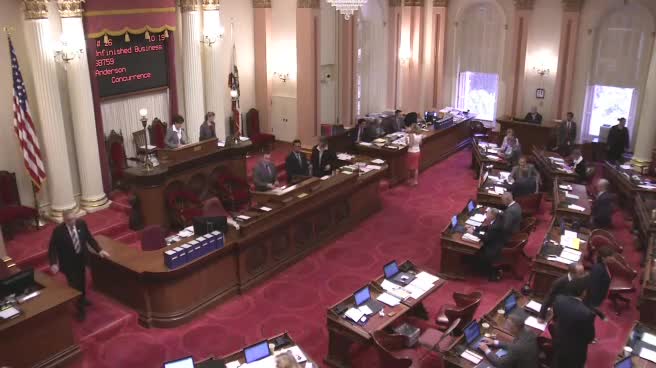
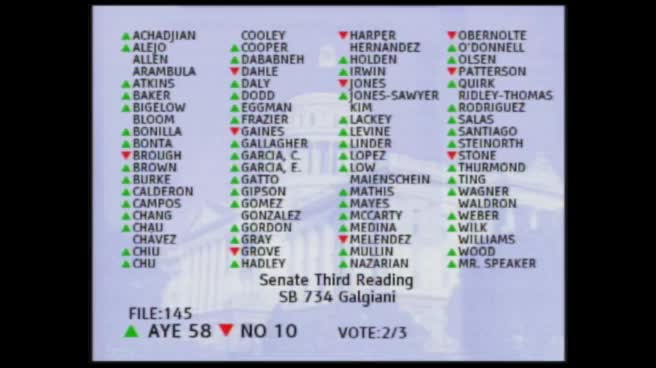
Bill Author

Bill Co-Author(s):