SB 955: State hospital commitment: compassionate release.
- Session Year: 2015-2016
- House: Senate
- Latest Version Date: 2016-09-27
Existing law requires, when a defendant pleads not guilty by reason of insanity, that a jury determine whether the defendant was sane or insane at the time the offense was committed. Under existing law, if a defendant is found to be not guilty by reason of insanity, the court is required to commit the person to a state hospital, or a public or private treatment facility, or place him or her on outpatient status, as specified. Existing law, subject to exceptions, authorizes the release of a prisoner from state prison if the court finds that the prisoner is terminally ill with an incurable condition caused by an illness or disease that would produce death within 6 months, as determined by a physician employed by the department, and that conditions under which the prisoner would be released or receive treatment do not pose a threat to public safety.
This bill would establish similar compassionate release provisions for a defendant who has been committed to a state hospital because, among other reasons, the defendant is incompetent to stand trial or to be adjudged to punishment, or the defendant is a mentally disordered offender, including a person who has been found not guilty by reason of insanity. The bill would make additional conforming changes and would authorize the director to adopt emergency regulations to implement these provisions.
Existing law requires, when a defendant pleads not guilty by reason of insanity, that a jury determine whether the defendant was sane or insane at the time the offense was committed. Under existing law, if a defendant is found to be not guilty by reason of insanity, the court is required to commit the person to a state hospital, or a public or private treatment facility, or place him or her on outpatient status, as specified. Existing law, subject to exceptions, authorizes the release of a prisoner from state prison if the court finds that the prisoner is terminally ill with an incurable condition caused by an illness or disease that would produce death within 6 months, as determined by a physician employed by the department, and that conditions under which the prisoner would be released or receive treatment do not pose a threat to public safety.
This bill would establish similar compassionate release provisions for a defendant who has been committed to a state hospital because, among other reasons, the defendant is incompetent to stand trial or to be adjudged to punishment, or the defendant is a mentally disordered offender, including a person who has been found not guilty by reason of insanity. The bill would make additional conforming changes and would authorize the director to adopt emergency regulations to implement these provisions.
Existing law requires, when a defendant pleads not guilty by reason of insanity, that a jury determine whether the defendant was sane or insane at the time the offense was committed. Under existing law, if a defendant is found to be not guilty by reason of insanity, the court is required to commit the person to a state hospital, or a public or private treatment facility, or place him or her on outpatient status, as specified. Existing law, subject to exceptions, authorizes the release of a prisoner from state prison if the court finds that the prisoner is terminally ill with an incurable condition caused by an illness or disease that would produce death within 6 months, as determined by a physician employed by the department, and that conditions under which the prisoner would be released or receive treatment do not pose a threat to public safety.
This bill would establish similar compassionate release provisions for a defendant who has been committed to a state hospital because, among other reasons, the defendant is incompetent to stand trial or has been to be adjudged to punishment, or the defendant is a mentally disordered offender, including a person who has been found not guilty by reason of insanity. The bill would make additional conforming changes and would authorize the director to adopt emergency regulations to implement these provisions.
Existing law requires, when a defendant pleads not guilty by reason of insanity, that a jury determine whether the defendant was sane or insane at the time the offense was committed. Under existing law, if a defendant is found to be not guilty by reason of insanity, the court is required to commit the person to a state hospital, or a public or private treatment facility, or place him or her on outpatient status, as specified. Existing law, subject to exceptions, authorizes the release of a prisoner from state prison if the court finds that the prisoner is terminally ill with an incurable condition caused by an illness or disease that would produce death within 6 months, as determined by a physician employed by the department, and that conditions under which the prisoner would be released or receive treatment do not pose a threat to public safety.
This bill would establish similar compassionate release provisions for a defendant who has been committed to a state hospital because, among other reasons, the defendant is incompetent to stand trial or has been adjudged to punishment, or the defendant is a mentally disordered offender, including a person who has been found not guilty by reason of insanity. The bill would make additional conforming changes and would authorize the director to adopt emergency regulations to implement these provisions.
Existing law requires, when a defendant pleads not guilty by reason of insanity, that a jury determine whether the defendant was sane or insane at the time the offense was committed. Under existing law, if a defendant is found to be not guilty by reason of insanity, the court is required to commit the person to a state hospital, public or private treatment facility, or place him or her on outpatient status, as specified. Existing law, subject to exceptions, authorizes the release of a prisoner from state prison if the court finds that the prisoner is terminally ill with an incurable condition caused by an illness or disease that would produce death within 6 months, as determined by a physician employed by the department, and that conditions under which the prisoner would be released or receive treatment do not pose a threat to public safety.
This bill would establish similar compassionate release provisions for a defendant who has been committed to a state hospital because, among other reasons, the defendant is incompetent to stand trial or has a severe mental disorder. been adjudged to punishment, or the defendant is a mentally disordered offender, including a person who has been found not guilty by reason of insanity. The bill would make additional conforming changes and would authorize the director to adopt emergency regulations to implement these provisions.
Existing law requires, when a defendant pleads not guilty by reason of insanity, that a jury determine whether the defendant was sane or insane at the time the offense was committed. Under existing law, if a defendant is found to be not guilty by reason of insanity, the court is required to commit the person to a state hospital, public or private treatment facility, or place him or her on outpatient status, as specified. Existing law requires the Director of State Hospitals to notify the Board of Parole Hearings, and requires the State Department of State Hospitals to discontinue treating a parolee, if the prisoners severe mental disorder is put into remission during the parole period, and can be kept in remission. Existing law, subject to exceptions, authorizes the release of a prisoner from state prison if the court finds that the prisoner is terminally ill with an incurable condition caused by an illness or disease that would produce death within 6 months, as determined by a physician employed by the department, and that conditions under which the prisoner would be released or receive treatment do not pose a threat to public safety.
This bill would establish similar compassionate release provisions for a defendant who has been committed to a state hospital because, among other reasons, the defendant is incompetent to stand trial or has a severe mental disorder. The bill would require the Director of State Hospitals to notify the Board of Parole Hearings, and would require the State Department of State Hospitals to discontinue treating a parolee, if the patient meets the criteria established by the bill for release from the state hospital. The bill would make additional conforming changes and would authorize the director to adopt emergency regulations to implement these provisions.
Existing law requires, when a defendant pleads not guilty by reason of insanity, that a jury determine whether the defendant was sane or insane at the time the offense was committed. Under existing law, if a defendant is found to be not guilty by reason of insanity, the court is required to commit the person to a state hospital, public or private treatment facility, or place him or her on outpatient status, as specified. Existing law requires the Director of State Hospitals to notify the Board of Parole Hearings, and requires the State Department of State Hospitals to discontinue treating a parolee, if the prisoners severe mental disorder is put into remission during the parole period, and can be kept in remission. Existing law, subject to exceptions, authorizes the release of a prisoner from state prison if the court finds that the prisoner is terminally ill with an incurable condition caused by an illness or disease that would produce death within 6 months, as determined by a physician employed by the department, and that conditions under which the prisoner would be released or receive treatment do not pose a threat to public safety.
This bill would establish similar compassionate release provisions for a defendant who has been committed to a state hospital because, among other reasons, the defendant is incompetent to stand trial or has a severe mental disorder. The bill would require the Director of State Hospitals to notify the Board of Parole Hearings, and would require the State Department of State Hospitals to discontinue treating a parolee, if the patient meets the criteria established by the bill for release from the state hospital. The bill would make additional conforming changes and would authorize the director to adopt emergency regulations to implement these provisions.
Existing law requires, when a defendant pleads not guilty by reason of insanity, that a jury determine whether the defendant was sane or insane at the time the offense was committed. Under existing law, if a defendant is found to be not guilty by reason of insanity, the court is required to commit the person to a state hospital, public or private treatment facility, or place him or her on outpatient status, as specified. Existing law requires the Director of State Hospitals to notify the Board of Parole Hearings, and requires the State Department of State Hospitals to discontinue treating a parolee, if the prisoners severe mental disorder is put into remission during the parole period, and can be kept in remission. Existing law, subject to exceptions, authorizes the release of a prisoner from state prison if the court finds that the prisoner is terminally ill with an incurable condition caused by an illness or disease that would produce death within 6 months, as determined by a physician employed by the department, and that conditions under which the prisoner would be released or receive treatment do not pose a threat to public safety.
This bill would establish similar compassionate release provisions for a defendant who has been committed to a state hospital because, among other reasons, the defendant is incompetent to stand trial or has a severe mental disorder. The bill would require the Director of State Hospitals to notify the Board of Parole Hearings, and would require the State Department of State Hospitals to discontinue treating a parolee, if the prisoner patient meets the criteria established by the bill for release from the state hospital. The bill would make additional conforming changes and would authorize the director to adopt emergency regulations to implement these provisions.
Existing law requires, when a defendant pleads not guilty by reason of insanity, that a jury determine whether the defendant was sane or insane at the time the offense was committed. Under existing law, if a defendant is found to be not guilty by reason of insanity, the court is required to commit the person to a state hospital, public or private treatment facility, or place him or her on outpatient status, as specified. Existing law requires the Director of State Hospitals to notify the Board of Parole Hearings, and requires the State Department of State Hospitals to discontinue treating a parolee, if the prisoners severe mental disorder is put into remission during the parole period, and can be kept in remission. Existing law, subject to exceptions, authorizes the release of a prisoner from state prison if the court finds that the prisoner is terminally ill with an incurable condition caused by an illness or disease that would produce death within 6 months, as determined by a physician employed by the department, and that conditions under which the prisoner would be released or receive treatment do not pose a threat to public safety.
This bill would establish similar release provisions for a defendant who has been committed to a state hospital because, among other reasons, the defendant is incompetent to stand trial or has a severe mental disorder. The bill would require the Director of State Hospitals to notify the Board of Parole Hearings, and would require the State Department of State Hospitals to discontinue treating a parolee, if the prisoner meets the criteria established by the bill for release from the state hospital. The bill would make additional conforming changes and would authorize the director to adopt emergency regulations to implement these provisions.
(a)If a defendant pleads not guilty by reason of insanity, and also joins with it another plea or pleas, the defendant shall first be tried as if only the other plea or pleas had been entered, and in that trial the defendant shall be conclusively presumed to have been sane at the time the offense is alleged to have been committed. If the jury finds the defendant guilty, or if the defendant pleads only not guilty by reason of insanity, the question whether the defendant was sane or insane at the time the offense was committed shall be promptly tried, either before the same jury or before a new jury in the discretion of the court. In that trial, the jury shall return a verdict either that the defendant was sane at the time the offense was committed or was insane at the time the offense was committed. If the verdict or finding is that the defendant was sane at the time the offense was committed, the court shall sentence the defendant as provided by law. If the verdict or finding is that the defendant was insane at the time the offense was committed, the court, unless it appears to the court that the sanity of the defendant has been recovered fully, shall direct that the defendant be committed to the State Department of State Hospitals for the care and treatment of the mentally disordered or any other appropriate public or private treatment facility approved by the community program director, or the court may order the defendant placed on outpatient status pursuant to Title 15 (commencing with Section 1600) of Part 2.
(b)Prior to making the order directing that the defendant be committed to the State Department of State Hospitals or other treatment facility or placed on outpatient status, the court shall order the community program director or a designee to evaluate the defendant and to submit to the court within 15 judicial days of the order a written recommendation as to whether the defendant should be placed on outpatient status or committed to the State Department of State Hospitals or other treatment facility. A person shall not be admitted to a state hospital or other treatment facility or placed on outpatient status under this section without having been evaluated by the community program director or a designee. If, however, it appears to the court that the sanity of the defendant has been recovered fully, the defendant shall be remanded to the custody of the sheriff until the issue of sanity has been finally determined in the manner prescribed by law. A defendant committed to a state hospital or other treatment facility or placed on outpatient status pursuant to Title 15 (commencing with Section 1600) of Part 2 shall not be released from confinement, parole, or outpatient status unless and until the court that committed the person, after notice and hearing, finds and determines that the persons sanity has been restored, or meets the criteria for release pursuant to Section 4146 of the Welfare and Institutions Code. This section does not prohibit the transfer of the patient from one state hospital to any other state hospital by proper authority. This section does not prohibit the transfer of the patient to a hospital in another state in the manner provided in Section 4119 of the Welfare and Institutions Code.
(c)If the defendant is committed or transferred to the State Department of State Hospitals pursuant to this section, the court may, upon receiving the written recommendation of the medical director of the state hospital and the community program director that the defendant be transferred to a public or private treatment facility approved by the community program director, order the defendant transferred to that facility. If the defendant is committed or transferred to a public or private treatment facility approved by the community program director, the court may, upon receiving the written recommendation of the community program director, order the defendant transferred to the State Department of State Hospitals or to another public or private treatment facility approved by the community program director. If either the defendant or the prosecuting attorney chooses to contest either kind of order of transfer, a petition may be filed in the court requesting a hearing, which shall be held if the court determines that sufficient grounds exist. At that hearing, the prosecuting attorney or the defendant may present evidence bearing on the order of transfer. The court shall use the same procedures and standards of proof as used in conducting probation revocation hearings pursuant to Section 1203.2.
(d)Prior to making an order for transfer under this section, the court shall notify the defendant, the attorney of record for the defendant, the prosecuting attorney, and the community program director or a designee.
(e)When the court, after considering the placement recommendation of the community program director required in subdivision (b), orders that the defendant be committed to the State Department of State Hospitals or other public or private treatment facility, the court shall provide copies of the following documents prior to the admission of the defendant to the State Department of State Hospitals or other treatment facility where the defendant is to be committed:
(1)The commitment order, including a specification of the charges.
(2)A computation or statement setting forth the maximum term of commitment in accordance with Section 1026.5.
(3)A computation or statement setting forth the amount of credit for time served, if any, to be deducted from the maximum term of commitment.
(4)State summary criminal history information.
(5)Any arrest reports prepared by the police department or other law enforcement agency.
(6)Any court-ordered psychiatric examination or evaluation reports.
(7)The community program directors placement recommendation report.
(8)Any medical records.
(f)If the defendant is confined in a state hospital or other treatment facility as an inpatient, the medical director of the facility shall, at six-month intervals, submit a report in writing to the court and the community program director of the county of commitment, or a designee, setting forth the status and progress of the defendant. The court shall transmit copies of these reports to the prosecutor and defense counsel.
(g)For purposes of this section and Sections 1026.1 to 1026.6, inclusive, community program director means the person, agency, or entity designated by the State Department of State Hospitals pursuant to Section 1605 of this code and Section 4360 of the Welfare and Institutions Code.
SEC. 2.Section 1370.015 is added to the Penal Code, to read:1370.015.A person committed to the care of the State Department of State Hospitals because he or she is incompetent to stand trial or to be adjudged to punishment is eligible for compassionate release pursuant to Section 4146 of the Welfare and Institutions Code. In any case in which the criteria for compassionate release apply, the State Department of State Hospitals shall follow the procedures and standards in Section 4146 of the Welfare and Institutions Code to determine if the department should recommend to the court that the persons commitment for treatment and the underlying criminal charges be suspended for compassionate release.
SEC. 3.Section 2977 is added to the Penal Code, to read:2977.A person committed to the care of the State Department of State Hospitals because he or she is a mentally disordered offender, including a person who is found not guilty by reason of insanity, is eligible for compassionate release pursuant to Section 4146 of the Welfare and Institutions Code. In any case in which the criteria for compassionate release apply, the State Department of State Hospitals shall follow the procedures and standards in Section 4146 of the Welfare and Institutions Code to determine if the department should recommend to the court that the persons commitment be suspended for compassionate release. This section applies to persons committed for treatment during parole and persons committed pursuant to Section 2970. If the person for whom compassionate release is recommended is on parole, notice shall be given to the Board of Parole Hearings.
SEC. 4.Section 4146 is added to the Welfare and Institutions Code, to read:4146.(a)This section applies in cases in which a patient has been committed to the department as a mentally disordered offender, including a person found not guilty by reason of insanity, or a person found incompetent to stand trial or be adjudged to punishment.
(b)(1)A physician employed by the department who determines that a patient meets the criteria set forth in subparagraph (A) or (C) of paragraph (5) shall notify the medical director and the patient advocate of the prognosis. If the medical director concurs with the diagnosis, he or she shall immediately notify the Director of State Hospitals. Within 72 hours of receiving notification, the medical director or the medical directors designee shall notify the patient of the discharge procedures under this section and obtain the patients consent for discharge. The medical director or the medical directors designee shall arrange for the patient to designate a family member or other outside agent to be notified as to the patients medical condition, prognosis, and release procedures under this section. If the patient is unable to designate a family member or other outside agent, the medical director or the medical directors designee shall contact any emergency contact listed, or the patient advocate if no contact is listed.
(2)The medical director or the medical directors designee shall provide the patient and his or her family member, agent, emergency contact, or patient advocate with updated information throughout the release process with regard to the patients medical condition and the status of the patients release proceedings, including the discharge plan. A patient shall not be released unless the discharge plan verifies placement for the patient upon release.
(3)The patient or his or her family member or designee may contact the medical director or the executive director at the state hospital where the patient is located or the Director of State Hospitals to request consideration for a recommendation from the medical director or the medical directors designee to the court that the patients commitment be suspended for compassionate release and the patient released from the department facility.
(4)Upon receipt of a notification or request pursuant to paragraph (1) or (3), respectively, the Director of State Hospitals may recommend to the court that the patients commitment be suspended for compassionate release and the patient released from the department facility.
(5)The court has the discretion to suspend the commitment for compassionate release and release the patient if the court finds that the facts described in subparagraphs (A) and (B) or subparagraphs (B) and (C) exist:
(A)The patient is terminally ill with an incurable condition caused by an illness or disease that would likely produce death within six months, as determined by a physician employed by the department.
(B)The conditions under which the patient would be released or receive treatment do not pose a threat to public safety.
(C)The patient is permanently medically incapacitated with a medical condition that renders him or her permanently unable to perform activities of basic daily living and results in the patient requiring 24-hour total care, including, but not limited to, coma, persistent vegetative state, brain death, ventilator-dependency, or loss of control of muscular or neurological function, the incapacitation did not exist at the time of the original commitment, and the medical director responsible for the patients care and the Director of State Hospitals both certify that the patient is incapable of receiving mental health treatment.
(c)Within 10 days of receipt of a recommendation for release by the director, the court shall hold a noticed hearing to consider whether the patients commitment should be suspended and the patient released.
(d)A recommendation for compassionate release submitted to the court shall include at least one medical evaluation, a discharge plan, a postrelease plan for the relocation and treatment of the patient, and the physicians and medical directors determination that the patient meets the criteria set forth in subparagraph (A) or (C) of paragraph (5) of subdivision (b). The court shall order the medical director to send copies of all medical records reviewed in developing the recommendation to all of the following parties:
(1)The district attorney of the county from which the patient was committed.
(2)If the patient is a mentally disordered offender on parole, the district attorney of the county from which the patient was committed to the state prison.
(3)The public defender of the county from which the patient was committed, or the patients private attorney, if one is available.
(4)If the patient is a mentally disordered offender on parole, the public defender of the county from which the patient was committed to the state prison, if one is available, or the patients private attorney, if applicable.
(5)If the patient is a mentally disordered offender on parole, the Board of Parole Hearings.
(6)If the patient is on mandatory supervision or postrelease community supervision and has been found incompetent to be adjudged to punishment, the county entity designated to supervise him or her.
(e)(1)The matter shall be heard before the same judge that originally committed the patient, if possible.
(2)If the patient is a mentally disordered offender on parole and was committed for treatment by the Board of Parole Hearings, the matter shall be heard by the court that committed the patient to the state prison for the underlying conviction, if possible.
(f)If the court approves the recommendation for compassionate release, the patients commitment shall be suspended and the patient shall be released by the department within 72 hours of receipt of the courts order, unless a longer time period is requested by the director and approved by the court.
(g)The executive director of the state hospital or his or her designee shall ensure that upon release, the patient has each of the following in his or her possession, or the possession of the patients representative:
(1)A discharge plan.
(2)A discharge medical summary.
(3)Medical records.
(4)Identification.
(5)All necessary medications.
(6)Any property belonging to the patient.
(h)After discharge, any additional records shall be sent to the patients forwarding address.
(i)The Director of State Hospitals may adopt regulations to implement this section. The adoption of regulations for the implementation of this section by the department is exempt from the Administrative Procedure Act (Chapter 3.5 (commencing with Section 11340) of Part 1 of Division 3 of Title 2 of the Government Code).
(j)For the purposes of this section, a patient whose commitment has been suspended for compassionate release shall not be considered to be under the custody of, or the responsibility of, the State Department of State Hospitals.
(k)If a patients commitment order is suspended pursuant to this section, it may be reinstated by the court pursuant to a finding by the State Department of State Hospitals that the patients condition has changed such that he or she poses a threat to public safety, or no longer meets the criteria for compassionate release described in subparagraph (A) or (C) of paragraph (5) of subdivision (b).
(l)The State Department of State Hospitals, in consultation with relevant stakeholders, including, but not limited to, local law enforcement and correctional officials, shall promulgate regulations in accordance with subdivision (i) to establish a process for petitioning the court for reinstatement of a suspended commitment order, pursuant to subdivision (k).
(a)If a defendant pleads not guilty by reason of insanity, and also joins with it another plea or pleas, the defendant shall first be tried as if only the other plea or pleas had been entered, and in that trial the defendant shall be conclusively presumed to have been sane at the time the offense is alleged to have been committed. If the jury finds the defendant guilty, or if the defendant pleads only not guilty by reason of insanity, the question whether the defendant was sane or insane at the time the offense was committed shall be promptly tried, either before the same jury or before a new jury in the discretion of the court. In that trial, the jury shall return a verdict either that the defendant was sane at the time the offense was committed or was insane at the time the offense was committed. If the verdict or finding is that the defendant was sane at the time the offense was committed, the court shall sentence the defendant as provided by law. If the verdict or finding is that the defendant was insane at the time the offense was committed, the court, unless it appears to the court that the sanity of the defendant has been recovered fully, shall direct that the defendant be committed to the State Department of State Hospitals for the care and treatment of the mentally disordered or any other appropriate public or private treatment facility approved by the community program director, or the court may order the defendant placed on outpatient status pursuant to Title 15 (commencing with Section 1600) of Part 2.
(b)Prior to making the order directing that the defendant be committed to the State Department of State Hospitals or other treatment facility or placed on outpatient status, the court shall order the community program director or a designee to evaluate the defendant and to submit to the court within 15 judicial days of the order a written recommendation as to whether the defendant should be placed on outpatient status or committed to the State Department of State Hospitals or other treatment facility. A person shall not be admitted to a state hospital or other treatment facility or placed on outpatient status under this section without having been evaluated by the community program director or a designee. If, however, it appears to the court that the sanity of the defendant has been recovered fully, the defendant shall be remanded to the custody of the sheriff until the issue of sanity has been finally determined in the manner prescribed by law. A defendant committed to a state hospital or other treatment facility or placed on outpatient status pursuant to Title 15 (commencing with Section 1600) of Part 2 shall not be released from confinement, parole, or outpatient status unless and until the court that committed the person, after notice and hearing, finds and determines that the persons sanity has been restored, or meets the criteria for release pursuant to Section 4146 of the Welfare and Institutions Code. This section does not prohibit the transfer of the patient from one state hospital to any other state hospital by proper authority. This section does not prohibit the transfer of the patient to a hospital in another state in the manner provided in Section 4119 of the Welfare and Institutions Code.
(c)If the defendant is committed or transferred to the State Department of State Hospitals pursuant to this section, the court may, upon receiving the written recommendation of the medical director of the state hospital and the community program director that the defendant be transferred to a public or private treatment facility approved by the community program director, order the defendant transferred to that facility. If the defendant is committed or transferred to a public or private treatment facility approved by the community program director, the court may, upon receiving the written recommendation of the community program director, order the defendant transferred to the State Department of State Hospitals or to another public or private treatment facility approved by the community program director. If either the defendant or the prosecuting attorney chooses to contest either kind of order of transfer, a petition may be filed in the court requesting a hearing, which shall be held if the court determines that sufficient grounds exist. At that hearing, the prosecuting attorney or the defendant may present evidence bearing on the order of transfer. The court shall use the same procedures and standards of proof as used in conducting probation revocation hearings pursuant to Section 1203.2.
(d)Prior to making an order for transfer under this section, the court shall notify the defendant, the attorney of record for the defendant, the prosecuting attorney, and the community program director or a designee.
(e)When the court, after considering the placement recommendation of the community program director required in subdivision (b), orders that the defendant be committed to the State Department of State Hospitals or other public or private treatment facility, the court shall provide copies of the following documents prior to the admission of the defendant to the State Department of State Hospitals or other treatment facility where the defendant is to be committed:
(1)The commitment order, including a specification of the charges.
(2)A computation or statement setting forth the maximum term of commitment in accordance with Section 1026.5.
(3)A computation or statement setting forth the amount of credit for time served, if any, to be deducted from the maximum term of commitment.
(4)State summary criminal history information.
(5)Any arrest reports prepared by the police department or other law enforcement agency.
(6)Any court-ordered psychiatric examination or evaluation reports.
(7)The community program directors placement recommendation report.
(8)Any medical records.
(f)If the defendant is confined in a state hospital or other treatment facility as an inpatient, the medical director of the facility shall, at six-month intervals, submit a report in writing to the court and the community program director of the county of commitment, or a designee, setting forth the status and progress of the defendant. The court shall transmit copies of these reports to the prosecutor and defense counsel.
(g)For purposes of this section and Sections 1026.1 to 1026.6, inclusive, community program director means the person, agency, or entity designated by the State Department of State Hospitals pursuant to Section 1605 of this code and Section 4360 of the Welfare and Institutions Code.
SEC. 2.Section 1370.015 is added to the Penal Code, to read:1370.015.A person committed to the care of the State Department of State Hospitals because he or she is incompetent to stand trial or to be adjudged to punishment is eligible for compassionate release pursuant to Section 4146 of the Welfare and Institutions Code. In any case in which the criteria for compassionate release apply, the State Department of State Hospitals shall follow the procedures and standards in Section 4146 of the Welfare and Institutions Code to determine if the department should recommend to the court that the persons commitment for treatment and the underlying criminal charges be suspended for compassionate release.
SEC. 3.Section 2977 is added to the Penal Code, to read:2977.A person committed to the care of the State Department of State Hospitals because he or she is a mentally disordered offender, including a person who is found not guilty by reason of insanity, is eligible for compassionate release pursuant to Section 4146 of the Welfare and Institutions Code. In any case in which the criteria for compassionate release apply, the State Department of State Hospitals shall follow the procedures and standards in Section 4146 of the Welfare and Institutions Code to determine if the department should recommend to the court that the persons commitment be suspended for compassionate release. This section applies to persons committed for treatment during parole and persons committed pursuant to Section 2970. If the person for whom compassionate release is recommended is on parole, notice shall be given to the Board of Parole Hearings.
SEC. 4.Section 4146 is added to the Welfare and Institutions Code, to read:4146.(a)This section applies in cases in which a patient has been committed to the department as a mentally disordered offender, including a person found not guilty by reason of insanity, or a person found incompetent to stand trial or be adjudged to punishment.
(b)(1)A physician employed by the department who determines that a patient meets the criteria set forth in subparagraph (A) or (C) of paragraph (5) shall notify the medical director and the patient advocate of the prognosis. If the medical director concurs with the diagnosis, he or she shall immediately notify the Director of State Hospitals. Within 72 hours of receiving notification, the medical director or the medical directors designee shall notify the patient of the discharge procedures under this section and obtain the patients consent for discharge. The medical director or the medical directors designee shall arrange for the patient to designate a family member or other outside agent to be notified as to the patients medical condition, prognosis, and release procedures under this section. If the patient is unable to designate a family member or other outside agent, the medical director or the medical directors designee shall contact any emergency contact listed, or the patient advocate if no contact is listed.
(2)The medical director or the medical directors designee shall provide the patient and his or her family member, agent, emergency contact, or patient advocate with updated information throughout the release process with regard to the patients medical condition and the status of the patients release proceedings, including the discharge plan. A patient shall not be released unless the discharge plan verifies placement for the patient upon release.
(3)The patient or his or her family member or designee may contact the medical director or the executive director at the state hospital where the patient is located or the Director of State Hospitals to request consideration for a recommendation from the medical director or the medical directors designee to the court that the patients commitment be suspended for compassionate release and the patient released from the department facility.
(4)Upon receipt of a notification or request pursuant to paragraph (1) or (3), respectively, the Director of State Hospitals may recommend to the court that the patients commitment be suspended for compassionate release and the patient released from the department facility.
(5)The court has the discretion to suspend the commitment for compassionate release and release the patient if the court finds that the facts described in subparagraphs (A) and (B) or subparagraphs (B) and (C) exist:
(A)The patient is terminally ill with an incurable condition caused by an illness or disease that would likely produce death within six months, as determined by a physician employed by the department.
(B)The conditions under which the patient would be released or receive treatment do not pose a threat to public safety.
(C)The patient is permanently medically incapacitated with a medical condition that renders him or her permanently unable to perform activities of basic daily living and results in the patient requiring 24-hour total care, including, but not limited to, coma, persistent vegetative state, brain death, ventilator-dependency, or loss of control of muscular or neurological function, the incapacitation did not exist at the time of the original commitment, and the medical director responsible for the patients care and the Director of State Hospitals both certify that the patient is incapable of receiving mental health treatment.
(c)Within 10 days of receipt of a recommendation for release by the director, the court shall hold a noticed hearing to consider whether the patients commitment should be suspended and the patient released.
(d)A recommendation for compassionate release submitted to the court shall include at least one medical evaluation, a discharge plan, a postrelease plan for the relocation and treatment of the patient, and the physicians and medical directors determination that the patient meets the criteria set forth in subparagraph (A) or (C) of paragraph (5) of subdivision (b). The court shall order the medical director to send copies of all medical records reviewed in developing the recommendation to all of the following parties:
(1)The district attorney of the county from which the patient was committed.
(2)If the patient is a mentally disordered offender on parole, the district attorney of the county from which the patient was committed to the state prison.
(3)The public defender of the county from which the patient was committed, or the patients private attorney, if one is available.
(4)If the patient is a mentally disordered offender on parole, the public defender of the county from which the patient was committed to the state prison, if one is available, or the patients private attorney, if applicable.
(5)If the patient is a mentally disordered offender on parole, the Board of Parole Hearings.
(6)If the patient is on mandatory supervision or postrelease community supervision and has been found incompetent to be adjudged to punishment, the county entity designated to supervise him or her.
(e)(1)The matter shall be heard before the same judge that originally committed the patient, if possible.
(2)If the patient is a mentally disordered offender on parole and was committed for treatment by the Board of Parole Hearings, the matter shall be heard by the court that committed the patient to the state prison for the underlying conviction, if possible.
(f)If the court approves the recommendation for compassionate release, the patients commitment shall be suspended and the patient shall be released by the department within 72 hours of receipt of the courts order, unless a longer time period is requested by the director and approved by the court.
(g)The executive director of the state hospital or his or her designee shall ensure that upon release, the patient has each of the following in his or her possession, or the possession of the patients representative:
(1)A discharge plan.
(2)A discharge medical summary.
(3)Medical records.
(4)Identification.
(5)All necessary medications.
(6)Any property belonging to the patient.
(h)After discharge, any additional records shall be sent to the patients forwarding address.
(i)The Director of State Hospitals may adopt regulations to implement this section. The adoption of regulations for the implementation of this section by the department is exempt from the Administrative Procedure Act (Chapter 3.5 (commencing with Section 11340) of Part 1 of Division 3 of Title 2 of the Government Code).
(j)For the purposes of this section, a patient whose commitment has been suspended for compassionate release shall not be considered to be under the custody of, or the responsibility of, the State Department of State Hospitals.
(k)If a patients commitment order is suspended pursuant to this section, it may be reinstated by the court pursuant to a finding by the State Department of State Hospitals that the patients condition has changed such that he or she poses a threat to public safety, or no longer meets the criteria for compassionate release described in subparagraph (A) or (C) of paragraph (5) of subdivision (b).
(l)The State Department of State Hospitals, in consultation with relevant stakeholders, including, but not limited to, local law enforcement and correctional officials, shall promulgate regulations in accordance with subdivision (i) to establish a process for petitioning the court for reinstatement of a suspended commitment order, pursuant to subdivision (k).
(a)When If a defendant pleads not guilty by reason of insanity, and also joins with it another plea or pleas, the defendant shall first be tried as if only the other plea or pleas had been entered, and in that trial the defendant shall be conclusively presumed to have been sane at the time the offense is alleged to have been committed. If the jury finds the defendant guilty, or if the defendant pleads only not guilty by reason of insanity, then the question whether the defendant was sane or insane at the time the offense was committed shall be promptly tried, either before the same jury or before a new jury in the discretion of the court. In that trial, the jury shall return a verdict either that the defendant was sane at the time the offense was committed or was insane at the time the offense was committed. If the verdict or finding is that the defendant was sane at the time the offense was committed, the court shall sentence the defendant as provided by law. If the verdict or finding is that the defendant was insane at the time the offense was committed, the court, unless it appears to the court that the sanity of the defendant has been recovered fully, shall direct that the defendant be committed to the State Department of State Hospitals for the care and treatment of the mentally disordered or any other appropriate public or private treatment facility approved by the community program director, or the court may order the defendant placed on outpatient status pursuant to Title 15 (commencing with Section 1600) of Part 2.
(b)Prior to making the order directing that the defendant be committed to the State Department of State Hospitals or other treatment facility or placed on outpatient status, the court shall order the community program director or a designee to evaluate the defendant and to submit to the court within 15 judicial days of the order a written recommendation as to whether the defendant should be placed on outpatient status or committed to the State Department of State Hospitals or other treatment facility. A person shall not be admitted to a state hospital or other treatment facility or placed on outpatient status under this section without having been evaluated by the community program director or a designee. If, however, it appears to the court that the sanity of the defendant has been recovered fully, the defendant shall be remanded to the custody of the sheriff until the issue of sanity has been finally determined in the manner prescribed by law. A defendant committed to a state hospital or other treatment facility or placed on outpatient status pursuant to Title 15 (commencing with Section 1600) of Part 2 shall not be released from confinement, parole, or outpatient status unless and until the court that committed the person, after notice and hearing, finds and determines that the persons sanity has been restored, or meets the criteria for release pursuant to Section 4146 of the Welfare and Institutions Code. Nothing in this This section prevents does not prohibit the transfer of the patient from one state hospital to any other state hospital by proper authority. Nothing in this This section prevents does not prohibit the transfer of the patient to a hospital in another state in the manner provided in Section 4119 of the Welfare and Institutions Code.
(c)If the defendant is committed or transferred to the State Department of State Hospitals pursuant to this section, the court may, upon receiving the written recommendation of the medical director of the state hospital and the community program director that the defendant be transferred to a public or private treatment facility approved by the community program director, order the defendant transferred to that facility. If the defendant is committed or transferred to a public or private treatment facility approved by the community program director, the court may, upon receiving the written recommendation of the community program director, order the defendant transferred to the State Department of State Hospitals or to another public or private treatment facility approved by the community program director. If either the defendant or the prosecuting attorney chooses to contest either kind of order of transfer, a petition may be filed in the court requesting a hearing, which shall be held if the court determines that sufficient grounds exist. At that hearing, the prosecuting attorney or the defendant may present evidence bearing on the order of transfer. The court shall use the same procedures and standards of proof as used in conducting probation revocation hearings pursuant to Section 1203.2.
(d)Prior to making an order for transfer under this section, the court shall notify the defendant, the attorney of record for the defendant, the prosecuting attorney, and the community program director or a designee.
(e)When the court, after considering the placement recommendation of the community program director required in subdivision (b), orders that the defendant be committed to the State Department of State Hospitals or other public or private treatment facility, the court shall provide copies of the following documents prior to the admission of the defendant to the State Department of State Hospitals or other treatment facility where the defendant is to be committed:
(1)The commitment order, including a specification of the charges.
(2)A computation or statement setting forth the maximum term of commitment in accordance with Section 1026.5.
(3)A computation or statement setting forth the amount of credit for time served, if any, to be deducted from the maximum term of commitment.
(4)State summary criminal history information.
(5)Any arrest reports prepared by the police department or other law enforcement agency.
(6)Any court-ordered psychiatric examination or evaluation reports.
(7)The community program directors placement recommendation report.
(8)Any medical records.
(f)If the defendant is confined in a state hospital or other treatment facility as an inpatient, the medical director of the facility shall, at six-month intervals, submit a report in writing to the court and the community program director of the county of commitment, or a designee, setting forth the status and progress of the defendant. The court shall transmit copies of these reports to the prosecutor and defense counsel.
(g)For purposes of this section and Sections 1026.1 to 1026.6, inclusive, community program director means the person, agency, or entity designated by the State Department of State Hospitals pursuant to Section 1605 of this code and Section 4360 of the Welfare and Institutions Code.
SEC. 2.Section 1370.015 is added to the Penal Code, to read:1370.015.A person in committed to the care of the State Department of State Hospitals because he or she is incompetent to stand trial or has been to be adjudged to punishment may be is eligible for compassionate release pursuant to Section 4146 of the Welfare and Institutions Code. In any case in which the criteria for compassionate release apply, the State Department of State Hospitals shall follow the procedures and standards in Section 4146 of the Welfare and Institutions Code to determine if the department should recommend to the court that the persons commitment for treatment and the underlying criminal charges be conditionally dismissed suspended for compassionate release.
SEC. 3.Section 2977 is added to the Penal Code, to read:2977.A person in committed to the care of the State Department of State Hospitals because he or she is a mentally disordered offender, including a person who is found not guilty by reason of insanity, may be is eligible for compassionate release pursuant to Section 4146 of the Welfare and Institutions Code. In any case in which the criteria for compassionate release apply, the State Department of State Hospitals shall follow the procedures and standards in Section 4146 of the Welfare and Institutions Code to determine if the department should recommend to the court that the persons commitment be conditionally dismissed suspended for compassionate release. This section shall apply applies to persons committed for treatment during parole and persons committed pursuant to Section 2970. If the person for whom compassionate release is recommended is on parole, notice shall be given to the Board of Parole Hearings.
SEC. 4.Section 4146 is added to the Welfare and Institutions Code, to read:4146.(a)This section shall apply applies in cases in which a patient has been committed to the department as a mentally disordered offender, including a person found not guilty by reason of insanity, or a person found incompetent to stand trial or be adjudged to punishment.
(b)(1)A physician employed by the department who determines that a patient meets the criteria set forth in subparagraph (A) or (C) of paragraph (5) shall notify the medical director and the patient advocate of the prognosis. If the medical director concurs with the diagnosis, he or she shall immediately notify the Director of State Hospitals. Within 72 hours of receiving notification, the medical director or the medical directors designee shall notify the patient of the discharge procedures under this section and obtain the patients consent for discharge. The medical director or the medical directors designee shall arrange for the patient to designate a family member or other outside agent to be notified as to the patients medical condition, prognosis, and release procedures under this section. If the patient is unable to designate a family member or other outside agent, the medical director or the medical directors designee shall contact any emergency contact listed, or the patient advocate if no contact is listed.
(2)The medical director or the medical directors designee shall provide the patient and his or her family member, agent, emergency contact, or patient advocate with updated information throughout the release process with regard to the patients medical condition and the status of the patients release proceedings, including the discharge plan. A patient shall not be released unless the discharge plan verifies placement for the patient upon release.
(3)The patient or his or her family member or designee may contact the medical director or the executive director at the state hospital where the patient is located or the Director of State Hospitals to request consideration for a recommendation from the medical director or the medical directors designee to the court that the patients commitment be conditionally dismissed suspended for compassionate release and the patient released from the department facility.
(4)Upon receipt of a notification or request pursuant to paragraph (1) or (3), respectively, the Director of State Hospitals may recommend to the court that the patients commitment be conditionally dismissed suspended for compassionate release and the patient released from the department facility.
(5)The court shall have has the discretion to conditionally dismiss suspend the commitment for compassionate release and release the patient if the court finds that the facts described in subparagraphs (A) and (B) or subparagraphs (B) and (C) exist:
(A)The patient is terminally ill with an incurable condition caused by an illness or disease that would likely produce death within six months, as determined by a physician employed by the department.
(B)The conditions under which the patient would be released or receive treatment do not pose a threat to public safety.
(C)The patient is permanently medically incapacitated with a medical condition that renders him or her permanently unable to perform activities of basic daily living and results in the patient requiring 24-hour total care, including, but not limited to, coma, persistent vegetative state, brain death, ventilator-dependency, or loss of control of muscular or neurological function, the incapacitation did not exist at the time of the original commitment, and the medical director responsible for the patients care and the Director of State Hospitals both certify that the patient is incapable of receiving mental health treatment.
(c)Within 10 days of receipt of a recommendation for release by the director, the court shall hold a noticed hearing to consider whether the patients commitment should be conditionally dismissed suspended and the patient released.
(d)A recommendation for conditional dismissal compassionate release submitted to the court shall include at least one medical evaluation, a discharge plan, a postrelease plan for the relocation and treatment of the patient, and the physicians and medical directors determination that the patient meets the criteria set forth in subparagraph (A) or (C) of paragraph (5) of subdivision (b). The court shall order the medical director to send copies of all medical records reviewed in developing the recommendation to all of the following parties:
(1)The district attorney of the county from which the patient was committed.
(2)If the patient is a mentally disordered offender on parole, the district attorney of the county from which the patient was committed to the state prison.
(3)The public defender of the county from which the patient was committed, or the patients private attorney, if one is available.
(4)If the patient is a mentally disordered offender on parole, the public defender of the county from which the patient was committed to the state prison, if one is available, or the patients private attorney, if applicable.
(5)If the patient is a mentally disordered offender on parole, the Board of Parole Hearings.
(6)If the patient is on mandatory supervision or postrelease community supervision and has been found incompetent to be adjudged to punishment, the county entity designated to supervise him or her.
(e)(1)The matter shall be heard before the same judge that originally committed the patient, if possible.
(2)If the patient is a mentally disordered offender on parole and was committed for treatment by the Board of Parole Hearings, the matter shall be heard by the court that committed the patient to the state prison for the underlying conviction, if possible.
(f)If the court approves the recommendation for conditional dismissal and compassionate release, the patients commitment shall be conditionally dismissed suspended and the patient shall be released by the department within 72 hours of receipt of the courts order, unless a longer time period is requested by the director and approved by the court.
(g)The executive director of the state hospital or his or her designee shall ensure that upon release, the patient has each of the following in his or her possession, or the possession of the patients representative:
(1)A discharge plan.
(2)A discharge medical summary.
(3)Medical records.
(4)Identification.
(5)All necessary medications.
(6)Any property belonging to the patient.
(h)After discharge, any additional records shall be sent to the patients forwarding address.
(i)The Director of State Hospitals may adopt regulations to implement this section. The adoption of regulations for the implementation of this section by the department is exempt from the Administrative Procedure Act (Chapter 3.5 (commencing with Section 11340) of Part 1 of Division 3 of Title 2 of the Government Code).
(j)For the purposes of this section, if the commitment order is conditionally dismissed, it may be reinstated pursuant to regulations promulgated in accordance with subdivision (i). a patient whose commitment has been suspended for compassionate release shall not be considered to be under the custody of, or the responsibility of, the State Department of State Hospitals.
(k)If a patients commitment order is suspended pursuant to this section, it may be reinstated by the court pursuant to a finding by the State Department of State Hospitals that the patients condition has changed such that he or she poses a threat to public safety, or no longer meets the criteria for compassionate release described in subparagraph (A) or (C) of paragraph (5) of subdivision (b).
(l)The State Department of State Hospitals, in consultation with relevant stakeholders, including, but not limited to, local law enforcement and correctional officials, shall promulgate regulations in accordance with subdivision (i) to establish a process for petitioning the court for reinstatement of a suspended commitment order, pursuant to subdivision (k).
(a)When a defendant pleads not guilty by reason of insanity, and also joins with it another plea or pleas, the defendant shall first be tried as if only the other plea or pleas had been entered, and in that trial the defendant shall be conclusively presumed to have been sane at the time the offense is alleged to have been committed. If the jury finds the defendant guilty, or if the defendant pleads only not guilty by reason of insanity, then the question whether the defendant was sane or insane at the time the offense was committed shall be promptly tried, either before the same jury or before a new jury in the discretion of the court. In that trial, the jury shall return a verdict either that the defendant was sane at the time the offense was committed or was insane at the time the offense was committed. If the verdict or finding is that the defendant was sane at the time the offense was committed, the court shall sentence the defendant as provided by law. If the verdict or finding is that the defendant was insane at the time the offense was committed, the court, unless it appears to the court that the sanity of the defendant has been recovered fully, shall direct that the defendant be committed to the State Department of State Hospitals for the care and treatment of the mentally disordered or any other appropriate public or private treatment facility approved by the community program director, or the court may order the defendant placed on outpatient status pursuant to Title 15 (commencing with Section 1600) of Part 2.
(b)Prior to making the order directing that the defendant be committed to the State Department of State Hospitals or other treatment facility or placed on outpatient status, the court shall order the community program director or a designee to evaluate the defendant and to submit to the court within 15 judicial days of the order a written recommendation as to whether the defendant should be placed on outpatient status or committed to the State Department of State Hospitals or other treatment facility. A person shall not be admitted to a state hospital or other treatment facility or placed on outpatient status under this section without having been evaluated by the community program director or a designee. If, however, it appears to the court that the sanity of the defendant has been recovered fully, the defendant shall be remanded to the custody of the sheriff until the issue of sanity has been finally determined in the manner prescribed by law. A defendant committed to a state hospital or other treatment facility or placed on outpatient status pursuant to Title 15 (commencing with Section 1600) of Part 2 shall not be released from confinement, parole, or outpatient status unless and until the court that committed the person, after notice and hearing, finds and determines that the persons sanity has been restored, or meets the criteria for release pursuant to Section 4146 of the Welfare and Institutions Code. Nothing in this section prevents the transfer of the patient from one state hospital to any other state hospital by proper authority. Nothing in this section prevents the transfer of the patient to a hospital in another state in the manner provided in Section 4119 of the Welfare and Institutions Code.
(c)If the defendant is committed or transferred to the State Department of State Hospitals pursuant to this section, the court may, upon receiving the written recommendation of the medical director of the state hospital and the community program director that the defendant be transferred to a public or private treatment facility approved by the community program director, order the defendant transferred to that facility. If the defendant is committed or transferred to a public or private treatment facility approved by the community program director, the court may, upon receiving the written recommendation of the community program director, order the defendant transferred to the State Department of State Hospitals or to another public or private treatment facility approved by the community program director. If either the defendant or the prosecuting attorney chooses to contest either kind of order of transfer, a petition may be filed in the court requesting a hearing, which shall be held if the court determines that sufficient grounds exist. At that hearing, the prosecuting attorney or the defendant may present evidence bearing on the order of transfer. The court shall use the same procedures and standards of proof as used in conducting probation revocation hearings pursuant to Section 1203.2.
(d)Prior to making an order for transfer under this section, the court shall notify the defendant, the attorney of record for the defendant, the prosecuting attorney, and the community program director or a designee.
(e)When the court, after considering the placement recommendation of the community program director required in subdivision (b), orders that the defendant be committed to the State Department of State Hospitals or other public or private treatment facility, the court shall provide copies of the following documents prior to the admission of the defendant to the State Department of State Hospitals or other treatment facility where the defendant is to be committed:
(1)The commitment order, including a specification of the charges.
(2)A computation or statement setting forth the maximum term of commitment in accordance with Section 1026.5.
(3)A computation or statement setting forth the amount of credit for time served, if any, to be deducted from the maximum term of commitment.
(4)State summary criminal history information.
(5)Any arrest reports prepared by the police department or other law enforcement agency.
(6)Any court-ordered psychiatric examination or evaluation reports.
(7)The community program directors placement recommendation report.
(8)Any medical records.
(f)If the defendant is confined in a state hospital or other treatment facility as an inpatient, the medical director of the facility shall, at six-month intervals, submit a report in writing to the court and the community program director of the county of commitment, or a designee, setting forth the status and progress of the defendant. The court shall transmit copies of these reports to the prosecutor and defense counsel.
(g)For purposes of this section and Sections 1026.1 to 1026.6, inclusive, community program director means the person, agency, or entity designated by the State Department of State Hospitals pursuant to Section 1605 of this code and Section 4360 of the Welfare and Institutions Code.
SEC. 2.Section 1370.015 is added to the Penal Code, to read:1370.015.A person in the care of the State Department of State Hospitals because he or she is incompetent to stand trial or has been adjudged to punishment may be eligible for compassionate release pursuant to Section 4146 of the Welfare and Institutions Code. In any case in which the criteria for compassionate release apply, the State Department of State Hospitals shall follow the procedures and standards in Section 4146 of the Welfare and Institutions Code to determine if the department should recommend to the court that the persons commitment for treatment and the underlying criminal charges be conditionally dismissed for compassionate release.
SEC. 3.Section 2977 is added to the Penal Code, to read:2977.A person in the care of the State Department of State Hospitals because he or she is a mentally disordered offender, including a person who is found not guilty by reason of insanity, may be eligible for compassionate release pursuant to Section 4146 of the Welfare and Institutions Code. In any case in which the criteria for compassionate release apply, the State Department of State Hospitals shall follow the procedures and standards in Section 4146 of the Welfare and Institutions Code to determine if the department should recommend to the court that the persons commitment be conditionally dismissed for compassionate release. This section shall apply to persons committed for treatment during parole and persons committed pursuant to Section 2970. If the person for whom compassionate release is recommended is on parole, notice shall be given to the Board of Parole Hearings.
SEC. 4.Section 4146 is added to the Welfare and Institutions Code, to read:4146.(a)This section shall apply in cases in which a patient has been committed to the department as a mentally disordered offender, including a person found not guilty by reason of insanity, or a person found incompetent to stand trial or be adjudged to punishment.
(b)(1)A physician employed by the department who determines that a patient meets the criteria set forth in subparagraph (A) or (C) of paragraph (5) shall notify the medical director and the patient advocate of the prognosis. If the medical director concurs with the diagnosis, he or she shall immediately notify the Director of State Hospitals. Within 72 hours of receiving notification, the medical director or the medical directors designee shall notify the patient of the discharge procedures under this section and obtain the patients consent for discharge. The medical director or the medical directors designee shall arrange for the patient to designate a family member or other outside agent to be notified as to the patients medical condition, prognosis, and release procedures under this section. If the patient is unable to designate a family member or other outside agent, the medical director or the medical directors designee shall contact any emergency contact listed, or the patient advocate if no contact is listed.
(2)The medical director or the medical directors designee shall provide the patient and his or her family member, agent, emergency contact, or patient advocate with updated information throughout the release process with regard to the patients medical condition and the status of the patients release proceedings, including the discharge plan. A patient shall not be released unless the discharge plan verifies placement for the patient upon release.
(3)The patient or his or her family member or designee may contact the medical director or the executive director at the state hospital where the patient is located or the Director of State Hospitals to request consideration for a recommendation from the medical director or the medical directors designee to the court that the patients commitment be conditionally dismissed for compassionate release and the patient released from the department facility.
(4)Upon receipt of a notification or request pursuant to paragraph (1) or (3), respectively, the Director of State Hospitals may recommend to the court that the patients commitment be conditionally dismissed for compassionate release and the patient released from the department facility.
(5)The court shall have the discretion to conditionally dismiss the commitment for compassionate release and release the patient if the court finds that the facts described in subparagraphs (A) and (B) or subparagraphs (B) and (C) exist:
(A)The patient is terminally ill with an incurable condition caused by an illness or disease that would likely produce death within six months, as determined by a physician employed by the department.
(B)The conditions under which the patient would be released or receive treatment do not pose a threat to public safety.
(C)The patient is permanently medically incapacitated and requires 24-hour total care, with a medical condition that renders him or her permanently unable to perform activities of basic daily living and results in the patient requiring 24-hour total care, including, but not limited to, coma, persistent vegetative state, brain death, ventilator-dependency, or loss of control of muscular or neurological function, the incapacitation did not exist at the time of the original commitment, and the medical director responsible for the patients care and the Director of State Hospitals both certify that the patient is incapable of receiving mental health treatment.
(c)Within 10 days of receipt of a recommendation for release by the director, the court shall hold a noticed hearing to consider whether the patients commitment should be conditionally dismissed and the patient released.
(d)A recommendation for conditional dismissal submitted to the court shall include at least one medical evaluation, a discharge plan, a postrelease plan for the relocation and treatment of the patient, and the physicians and medical directors determination that the patient meets the criteria set forth in subparagraph (A) or (C) of paragraph (5) of subdivision (b). The court shall order the medical director to send copies of all medical records reviewed in developing the recommendation to all of the following parties:
(1)The district attorney of the county from which the patient was committed.
(2)If the patient is a mentally disordered offender on parole, the district attorney of the county from which the patient was committed to the state prison.
(3)The public defender of the county from which the patient was committed, or the patients private attorney, if one is available.
(4)If the patient is a mentally disordered offender on parole, the public defender of the county from which the patient was committed to the state prison, if one is available, or the patients private attorney, if applicable.
(5)If the patient is a mentally disordered offender on parole, the Board of Parole Hearings.
(6)If the patient is on mandatory supervision or postrelease community supervision and has been found incompetent to be adjudged to punishment, the county entity designated to supervise him or her.
(e)(1)The matter shall be heard before the same court judge that originally committed the patient, if possible.
(2)If the patient is a mentally disordered offender on parole and was committed for treatment by the Board of Parole Hearings, the matter shall be heard by the court that committed the patient to the state prison for the underlying conviction, if possible.
(f)If the court approves the recommendation for conditional dismissal and release, the patients commitment shall be conditionally dismissed and the patient shall be released by the department within 72 hours of receipt of the courts order, unless a longer time period is requested by the director and approved by the court.
(g)The executive director of the state hospital or his or her designee shall ensure that upon release, the patient has each of the following in his or her possession, or the possession of the patients representative:
(1)A discharge plan.
(2)A discharge medical summary.
(3)Medical records.
(4)Identification.
(5)All necessary medications.
(6)Any property belonging to the patient.
(h)After discharge, any additional records shall be sent to the patients forwarding address.
(i)The Director of State Hospitals may adopt regulations to implement this section. The adoption of regulations for the implementation of this section by the department is exempt from the Administrative Procedure Act (Chapter 3.5 (commencing with Section 11340) of Part 1 of Division 3 of Title 2 of the Government Code).
(j)Nothing in this section shall preclude a patient who is released pursuant to this section from being committed to a state hospital under the same commitment or another commitment.
(j)For the purposes of this section, if the commitment order is conditionally dismissed, it may be reinstated pursuant to regulations promulgated in accordance with subdivision (i).
(a)When a defendant pleads not guilty by reason of insanity, and also joins with it another plea or pleas, the defendant shall first be tried as if only the other plea or pleas had been entered, and in that trial the defendant shall be conclusively presumed to have been sane at the time the offense is alleged to have been committed. If the jury finds the defendant guilty, or if the defendant pleads only not guilty by reason of insanity, then the question whether the defendant was sane or insane at the time the offense was committed shall be promptly tried, either before the same jury or before a new jury in the discretion of the court. In that trial, the jury shall return a verdict either that the defendant was sane at the time the offense was committed or was insane at the time the offense was committed. If the verdict or finding is that the defendant was sane at the time the offense was committed, the court shall sentence the defendant as provided by law. If the verdict or finding is that the defendant was insane at the time the offense was committed, the court, unless it appears to the court that the sanity of the defendant has been recovered fully, shall direct that the defendant be committed to the State Department of State Hospitals for the care and treatment of the mentally disordered or any other appropriate public or private treatment facility approved by the community program director, or the court may order the defendant placed on outpatient status pursuant to Title 15 (commencing with Section 1600) of Part 2.
(b)Prior to making the order directing that the defendant be committed to the State Department of State Hospitals or other treatment facility or placed on outpatient status, the court shall order the community program director or a designee to evaluate the defendant and to submit to the court within 15 judicial days of the order a written recommendation as to whether the defendant should be placed on outpatient status or committed to the State Department of State Hospitals or other treatment facility. A person shall not be admitted to a state hospital or other treatment facility or placed on outpatient status under this section without having been evaluated by the community program director or a designee. If, however, it appears to the court that the sanity of the defendant has been recovered fully, the defendant shall be remanded to the custody of the sheriff until the issue of sanity has been finally determined in the manner prescribed by law. A defendant committed to a state hospital or other treatment facility or placed on outpatient status pursuant to Title 15 (commencing with Section 1600) of Part 2 shall not be released from confinement, parole, or outpatient status unless and until the court that committed the person, after notice and hearing, finds and determines that the persons sanity has been restored, or meets the criteria for release pursuant to Section 4146 of the Welfare and Institutions Code. Nothing in this section prevents the transfer of the patient from one state hospital to any other state hospital by proper authority. Nothing in this section prevents the transfer of the patient to a hospital in another state in the manner provided in Section 4119 of the Welfare and Institutions Code.
(c)If the defendant is committed or transferred to the State Department of State Hospitals pursuant to this section, the court may, upon receiving the written recommendation of the medical director of the state hospital and the community program director that the defendant be transferred to a public or private treatment facility approved by the community program director, order the defendant transferred to that facility. If the defendant is committed or transferred to a public or private treatment facility approved by the community program director, the court may, upon receiving the written recommendation of the community program director, order the defendant transferred to the State Department of State Hospitals or to another public or private treatment facility approved by the community program director. If either the defendant or the prosecuting attorney chooses to contest either kind of order of transfer, a petition may be filed in the court requesting a hearing, which shall be held if the court determines that sufficient grounds exist. At that hearing, the prosecuting attorney or the defendant may present evidence bearing on the order of transfer. The court shall use the same procedures and standards of proof as used in conducting probation revocation hearings pursuant to Section 1203.2.
(d)Prior to making an order for transfer under this section, the court shall notify the defendant, the attorney of record for the defendant, the prosecuting attorney, and the community program director or a designee.
(e)When the court, after considering the placement recommendation of the community program director required in subdivision (b), orders that the defendant be committed to the State Department of State Hospitals or other public or private treatment facility, the court shall provide copies of the following documents prior to the admission of the defendant to the State Department of State Hospitals or other treatment facility where the defendant is to be committed:
(1)The commitment order, including a specification of the charges.
(2)A computation or statement setting forth the maximum term of commitment in accordance with Section 1026.5.
(3)A computation or statement setting forth the amount of credit for time served, if any, to be deducted from the maximum term of commitment.
(4)State summary criminal history information.
(5)Any arrest reports prepared by the police department or other law enforcement agency.
(6)Any court-ordered psychiatric examination or evaluation reports.
(7)The community program directors placement recommendation report.
(8)Any medical records.
(f)If the defendant is confined in a state hospital or other treatment facility as an inpatient, the medical director of the facility shall, at six-month intervals, submit a report in writing to the court and the community program director of the county of commitment, or a designee, setting forth the status and progress of the defendant. The court shall transmit copies of these reports to the prosecutor and defense counsel.
(g)For purposes of this section and Sections 1026.1 to 1026.6, inclusive, community program director means the person, agency, or entity designated by the State Department of State Hospitals pursuant to Section 1605 of this code and Section 4360 of the Welfare and Institutions Code.
SEC. 2.Section 1370.015 is added to the Penal Code, to read:1370.015.A person in the care of the State Department of State Hospitals because he or she is incompetent to stand trial or has been adjudged to punishment may be eligible for compassionate release pursuant to Section 4146 of the Welfare and Institutions Code. In any case in which the criteria for compassionate release apply, the State Department of State Hospitals shall follow the procedures and standards in Section 4146 of the Welfare and Institutions Code to determine if the department should recommend to the court that the persons commitment for treatment and the underlying criminal charges be dismissed for compassionate release.
SEC. 3.Section 2977 is added to the Penal Code, to read:2977.A person in the care of the State Department of State Hospitals because he or she is a mentally disordered offender offender, including a person who is found not guilty by reason of insanity, may be eligible for compassionate release pursuant to Section 4146 of the Welfare and Institutions Code. In any case in which the criteria for compassionate release apply, the State Department of State Hospitals shall follow the procedures and standards in Section 4146 of the Welfare and Institutions Code to determine if the department should recommend to the court that the persons commitment be dismissed for compassionate release. This section shall apply to persons committed for treatment during parole and in any commitment made persons committed pursuant to Section 2970. If the person for whom compassionate release is recommended is on parole, notice shall be given to the Board of Parole Hearings.
SEC. 4.Section 4146 is added to the Welfare and Institutions Code, to read:4146.(a)(1)This section shall apply in cases where in which a patient has been committed to the department as a mentally disordered offender, because he or she was including a person found not guilty by reason of insanity, or because he or she was a person found incompetent to stand trial or be adjudicated adjudged to punishment.
(b)(1)A physician employed by the department who determines that a patient meets the criteria set forth in subparagraph (A) or (C) of paragraph (5) shall notify the medical director and the patient advocate of the prognosis. If the medical director concurs with the diagnosis, he or she shall immediately notify the Director of State Hospitals. Within 72 hours of receiving notification, the medical director or the medical directors designee shall notify the patient of the discharge procedures under this section and obtain the patients consent for discharge. The medical director or the medical directors designee shall arrange for the patient to designate a family member or other outside agent to be notified as to the patients medical condition, prognosis, and release procedures under this section. If the patient is unable to designate a family member or other outside agent, the medical director or the medical directors designee shall contact any emergency contact listed, or the patient advocate if no contact is listed.
(2)The medical director or the medical directors designee shall provide the patient and his or her family member, agent, emergency contact, or patient advocate with updated information throughout the release process with regard to the patients medical condition and the status of the patients release proceedings, including the discharge plan. A patient shall not be released unless the discharge plan verifies placement for the patient upon release.
(3)The patient or his or her family member or designee may contact the medical director or the executive director at the state hospital where the patient is located or the Director of State Hospitals to request consideration for a recommendation from the medical director or the medical directors designee to the court that the patients commitment be dismissed for compassionate release and the patient released from the department facility.
(4)Upon receipt of a notification or request pursuant to paragraph (1) or (3), respectively, the Director of State Hospitals may recommend to the court that the patients commitment be dismissed for compassionate release and the patient released from the department facility.
(5)The court shall have the discretion to dismiss the commitment for compassionate release and release the patient if the court finds that the facts described in subparagraphs (A) and (B) or subparagraphs (B) and (C) exist:
(A)The patient is terminally ill with an incurable condition caused by an illness or disease that would likely produce death within six months, as determined by a physician employed by the department.
(B)The conditions under which the patient would be released or receive treatment do not pose a threat to public safety.
(C)The patient is permanently medically incapacitated and requires 24-hour total care, and the medical director responsible for the patients care and the Director of State Hospitals both certify that the patient is incapable of receiving mental health treatment.
(c)Within 10 days of receipt of a recommendation for release by the director, the court shall hold a noticed hearing to consider whether the patients commitment should be dismissed and the patient released.
(d)A recommendation for dismissal submitted to the court shall include at least one medical evaluation, a discharge plan, a postrelease plan for the relocation and treatment of the patient, and the physicians and medical directors determination that the patient meets the criteria set forth in subparagraph (A) or (C) of paragraph (5) of subdivision (b). The court shall order the medical director to send copies of all medical records reviewed in developing the recommendation to all of the following parties:
(1)The district attorney of the county from which the patient was committed.
(2)In the case of If the patient is a mentally disordered offender on parole, the district attorney of the county from which the patient was committed to the state prison.
(3)The public defender of the county from which the patient was committed, or the patients private attorney, if one is available.
(4)In the case of If the patient is a mentally disordered offender on parole, the public defender of the county from which the patient was committed to the state prison, if one is available, or the patients private attorney, if applicable.
(5)If the patient is a mentally disordered offender on parole, the Board of Parole Hearings.
(6)If the patient is on mandatory supervision or postrelease community supervision and has been found incompetent to be adjudged to punishment, the county entity designated to supervise him or her.
(e)(1)The matter shall be heard before the same court that originally committed the patient, if possible.
(2)If the patient is a mentally disordered offender on parole and was committed for treatment by the Board of Parole Hearings, the matter shall be heard by the court that committed the patient to the state prison for the underlying conviction, if possible.
(f)If the court approves the recommendation for dismissal and release, the patients commitment shall be dismissed and the patient shall be released by the department within 72 hours of receipt of the courts order, unless a longer time period is requested by the director and approved by the court.
(g)The executive director of the state hospital or his or her designee shall ensure that upon release, the patient has each of the following in his or her possession, or the possession of the patients representative:
(1)A discharge plan.
(2)A discharge medical summary.
(3)Medical records.
(4)Identification.
(5)All necessary medications.
(6)Any property belonging to the patient.
(h)After discharge, any additional records shall be sent to the patients forwarding address.
(i)The director Director of State Hospitals may adopt regulations to implement this section. The adoption of regulations for the implementation of this section by the department is exempt from the Administrative Procedure Act (Chapter 3.5 (commencing with Section 11340) of Part 1 of Division 3 of Title 2 of the Government Code).
(j)Nothing in this section shall preclude a patient who is released pursuant to this section from being committed to a state hospital under the same commitment or another commitment.
(a)When a defendant pleads not guilty by reason of insanity, and also joins with it another plea or pleas, the defendant shall first be tried as if only the other plea or pleas had been entered, and in that trial the defendant shall be conclusively presumed to have been sane at the time the offense is alleged to have been committed. If the jury finds the defendant guilty, or if the defendant pleads only not guilty by reason of insanity, then the question whether the defendant was sane or insane at the time the offense was committed shall be promptly tried, either before the same jury or before a new jury in the discretion of the court. In that trial, the jury shall return a verdict either that the defendant was sane at the time the offense was committed or was insane at the time the offense was committed. If the verdict or finding is that the defendant was sane at the time the offense was committed, the court shall sentence the defendant as provided by law. If the verdict or finding is that the defendant was insane at the time the offense was committed, the court, unless it appears to the court that the sanity of the defendant has been recovered fully, shall direct that the defendant be committed to the State Department of State Hospitals for the care and treatment of the mentally disordered or any other appropriate public or private treatment facility approved by the community program director, or the court may order the defendant placed on outpatient status pursuant to Title 15 (commencing with Section 1600) of Part 2.
(b)Prior to making the order directing that the defendant be committed to the State Department of State Hospitals or other treatment facility or placed on outpatient status, the court shall order the community program director or a designee to evaluate the defendant and to submit to the court within 15 judicial days of the order a written recommendation as to whether the defendant should be placed on outpatient status or committed to the State Department of State Hospitals or other treatment facility. A person shall not be admitted to a state hospital or other treatment facility or placed on outpatient status under this section without having been evaluated by the community program director or a designee. If, however, it appears to the court that the sanity of the defendant has been recovered fully, the defendant shall be remanded to the custody of the sheriff until the issue of sanity has been finally determined in the manner prescribed by law. A defendant committed to a state hospital or other treatment facility or placed on outpatient status pursuant to Title 15 (commencing with Section 1600) of Part 2 shall not be released from confinement, parole, or outpatient status unless and until the court that committed the person, after notice and hearing, finds and determines that the persons sanity has been restored, or meets the criteria for release pursuant to Section 4146 of the Welfare and Institutions Code. Nothing in this section prevents the transfer of the patient from one state hospital to any other state hospital by proper authority. Nothing in this section prevents the transfer of the patient to a hospital in another state in the manner provided in Section 4119 of the Welfare and Institutions Code.
(c)If the defendant is committed or transferred to the State Department of State Hospitals pursuant to this section, the court may, upon receiving the written recommendation of the medical director of the state hospital and the community program director that the defendant be transferred to a public or private treatment facility approved by the community program director, order the defendant transferred to that facility. If the defendant is committed or transferred to a public or private treatment facility approved by the community program director, the court may, upon receiving the written recommendation of the community program director, order the defendant transferred to the State Department of State Hospitals or to another public or private treatment facility approved by the community program director. If either the defendant or the prosecuting attorney chooses to contest either kind of order of transfer, a petition may be filed in the court requesting a hearing, which shall be held if the court determines that sufficient grounds exist. At that hearing, the prosecuting attorney or the defendant may present evidence bearing on the order of transfer. The court shall use the same procedures and standards of proof as used in conducting probation revocation hearings pursuant to Section 1203.2.
(d)Prior to making an order for transfer under this section, the court shall notify the defendant, the attorney of record for the defendant, the prosecuting attorney, and the community program director or a designee.
(e)When the court, after considering the placement recommendation of the community program director required in subdivision (b), orders that the defendant be committed to the State Department of State Hospitals or other public or private treatment facility, the court shall provide copies of the following documents prior to the admission of the defendant to the State Department of State Hospitals or other treatment facility where the defendant is to be committed:
(1)The commitment order, including a specification of the charges.
(2)A computation or statement setting forth the maximum term of commitment in accordance with Section 1026.5.
(3)A computation or statement setting forth the amount of credit for time served, if any, to be deducted from the maximum term of commitment.
(4)State summary criminal history information.
(5)Any arrest reports prepared by the police department or other law enforcement agency.
(6)Any court-ordered psychiatric examination or evaluation reports.
(7)The community program directors placement recommendation report.
(8)Any medical records.
(f)If the defendant is confined in a state hospital or other treatment facility as an inpatient, the medical director of the facility shall, at six-month intervals, submit a report in writing to the court and the community program director of the county of commitment, or a designee, setting forth the status and progress of the defendant. The court shall transmit copies of these reports to the prosecutor and defense counsel.
(g)For purposes of this section and Sections 1026.1 to 1026.6, inclusive, community program director means the person, agency, or entity designated by the State Department of State Hospitals pursuant to Section 1605 of this code and Section 4360 of the Welfare and Institutions Code.
SEC. 2.Section 2968 of the Penal Code is amended to read:2968.If the prisoners severe mental disorder is put into remission during the parole period, and can be kept in remission, or if the prisoner meets the criteria for release pursuant to Section 4146 of the Welfare and Institutions Code, the Director of State Hospitals shall notify the Board of Parole Hearings and the State Department of State Hospitals shall discontinue treating the parolee.
SEC. 2.Section 1370.015 is added to the Penal Code, to read:1370.015.A person in the care of the State Department of State Hospitals because he or she is incompetent to stand trial may be eligible for compassionate release pursuant to Section 4146 of the Welfare and Institutions Code. In any case in which the criteria for compassionate release apply, the State Department of State Hospitals shall follow the procedures and standards in Section 4146 of the Welfare and Institutions Code to determine if the department should recommend to the court that the persons commitment for treatment and the underlying criminal charges be dismissed for compassionate release.
SEC. 3.Section 2977 is added to the Penal Code, to read:2977.A person in the care of the State Department of State Hospitals because he or she is a mentally disordered offender may be eligible for compassionate release pursuant to Section 4146 of the Welfare and Institutions Code. In any case in which the criteria for compassionate release apply, the State Department of State Hospitals shall follow the procedures and standards in Section 4146 of the Welfare and Institutions Code to determine if the department should recommend to the court that the persons commitment be dismissed for compassionate release. This section shall apply to persons committed for treatment during parole and in any commitment made pursuant to Section 2970. If the person for whom compassionate release is recommended is on parole, notice shall be given to the Board of Parole Hearings.
SEC. 3.SEC. 4.Section 4146 is added to the Welfare and Institutions Code, to read:4146.(a)(1)A This section shall apply in cases where a patient has been committed to the department as a mentally disordered offender, because he or she was found not guilty by reason of insanity, or because he or she was found incompetent to stand trial or be adjudicated to punishment.
(b)(1)A physician employed by the department who determines that a patient meets the criteria set forth in subparagraph (A) or (C) of paragraph (5) shall notify the medical director and the patient advocate of the prognosis. If the medical director concurs with the diagnosis, he or she shall immediately notify the Director of State Hospitals. Within 72 hours of receiving notification, the director or the directors designee shall notify the patient of the discharge procedures under this section and obtain the patients consent for discharge. The director or directors designee shall arrange for the patient to designate a family member or other outside agent to be notified as to the patients medical condition, prognosis, and release procedures under this section. If the patient is unable to designate a family member or other outside agent, the director or the directors designee shall contact any emergency contact listed, or the patient advocate if no contact is listed.
(2)The director or the directors designee shall provide the patient and his or her family member, agent, emergency contact, or patient advocate with updated information throughout the release process with regard to the patients medical condition and the status of the patients release proceedings, including the discharge plan. A patient shall not be released unless the discharge plan verifies placement for the patient upon release.
(3)The patient or his or her family member or designee may contact the medical director or director at the state hospital where the patient is located or the Director of State Hospitals to request consideration for a recommendation from the director to the court that the patients commitment be dismissed for compassionate release and the patient released from the department facility.
(4)Upon receipt of a notification or request pursuant to paragraph (1) or (3), respectively, the Director of State Hospitals may recommend to the court that the patients commitment be dismissed for compassionate release and the patient released from the department facility.
(5)The court shall have the discretion to dismiss the commitment for compassionate release and release the patient if the court finds that the facts described in subparagraphs (A) and (B) or subparagraphs (B) and (C) exist:
(A)The patient is terminally ill with an incurable condition caused by an illness or disease that would likely produce death within six months, as determined by a physician employed by the department.
(B)The conditions under which the patient would be released or receive treatment do not pose a threat to public safety.
(C)The patient is permanently medically incapacitated and requires 24-hour total care, and the medical director responsible for the patients care and the Director of State Hospitals both certify that the patient is incapable of receiving mental health treatment.
(b)
(c)Within 10 days of receipt of a recommendation for release by the director, the court shall hold a noticed hearing to consider whether the patients commitment should be dismissed and the patient released.
(c)
(d)A recommendation for dismissal submitted to the court shall include at least one medical evaluation, a discharge plan, a postrelease plan for the relocation and treatment of the patient, and the physicians and medical directors determination that the patient meets the criteria set forth in subparagraph (A) or (C) of paragraph (5) of subdivision (a). (b). The court shall order the medical director to send copies of all medical records reviewed in developing the recommendation to both all of the following parties:
(1)The district attorney of the county from which the patient was committed.
(2)In the case of a mentally disordered offender on parole, the district attorney of the county from which the patient was committed to the state prison.
(2)
(3)The public defender of the county from which the patient was committed, or the patients private attorney, if one is available.
(4)In the case of a mentally disordered offender on parole, the public defender of the county from which the patient was committed to the state prison, if one is available, or the patients private attorney, if applicable.
(5)If the patient is a mentally disordered offender on parole, the Board of Parole Hearings.
(6)If the patient is on mandatory supervision or postrelease community supervision and has been found incompetent to be adjudged to punishment, the county entity designated to supervise him or her.
(d)
(e)(1)The matter shall be heard before the same court that originally committed the patient, if possible.
(2)If the patient is a mentally disordered offender on parole and was committed for treatment by the Board of Parole Hearings, the matter shall be heard by the court that committed the patient to the state prison for the underlying conviction, if possible.
(e)
(f)If the court approves the recommendation for dismissal and release, the patients commitment shall be dismissed and the patient shall be released by the department within 72 hours of receipt of the courts order, unless a longer time period is requested by the director and approved by the court.
(f)
(g)The director or his or her designee shall ensure that upon release, the patient has each of the following in his or her possession, or the possession of the patients representative:
(1)A discharge plan.
(2)A discharge medical summary.
(3)Medical records.
(4)Identification.
(5)All necessary medications.
(6)Any property belonging to the patient.
(g)
(h)After discharge, any additional records shall be sent to the patients forwarding address.
(h)
(i)The director may adopt regulations to implement this section. The adoption of regulations for the implementation of this section by the department is exempt from the Administrative Procedure Act (Chapter 3.5 (commencing with Section 11340) of Part 1 of Division 3 of Title 2 of the Government Code).
(i)
(j)Nothing in this section shall preclude a patient who is released pursuant to this section from being committed to a state hospital under the same commitment or another commitment.
(a)When a defendant pleads not guilty by reason of insanity, and also joins with it another plea or pleas, the defendant shall first be tried as if only those the other plea or pleas had been entered, and in that trial the defendant shall be conclusively presumed to have been sane at the time the offense is alleged to have been committed. If the jury finds the defendant guilty, or if the defendant pleads only not guilty by reason of insanity, then the question whether the defendant was sane or insane at the time the offense was committed shall be promptly tried, either before the same jury or before a new jury in the discretion of the court. In that trial, the jury shall return a verdict either that the defendant was sane at the time the offense was committed or was insane at the time the offense was committed. If the verdict or finding is that the defendant was sane at the time the offense was committed, the court shall sentence the defendant as provided by law. If the verdict or finding is that the defendant was insane at the time the offense was committed, the court, unless it appears to the court that the sanity of the defendant has been recovered fully, shall direct that the defendant be committed to the State Department of State Hospitals for the care and treatment of the mentally disordered or any other appropriate public or private treatment facility approved by the community program director, or the court may order the defendant placed on outpatient status pursuant to Title 15 (commencing with Section 1600) of Part 2.
(b)Prior to making the order directing that the defendant be committed to the State Department of State Hospitals or other treatment facility or placed on outpatient status, the court shall order the community program director or a designee to evaluate the defendant and to submit to the court within 15 judicial days of the order a written recommendation as to whether the defendant should be placed on outpatient status or committed to the State Department of State Hospitals or other treatment facility. A person shall not be admitted to a state hospital or other treatment facility or placed on outpatient status under this section without having been evaluated by the community program director or a designee. If, however, it appears to the court that the sanity of the defendant has been recovered fully, the defendant shall be remanded to the custody of the sheriff until the issue of sanity has been finally determined in the manner prescribed by law. A defendant committed to a state hospital or other treatment facility or placed on outpatient status pursuant to Title 15 (commencing with Section 1600) of Part 2 shall not be released from confinement, parole, or outpatient status unless and until the court that committed the person, after notice and hearing, finds and determines that the persons sanity has been restored, or meets the criteria for release pursuant to Section 4146 of the Welfare and Institutions Code. Nothing in this section prevents the transfer of the patient from one state hospital to any other state hospital by proper authority. Nothing in this section prevents the transfer of the patient to a hospital in another state in the manner provided in Section 4119 of the Welfare and Institutions Code.
(c)If the defendant is committed or transferred to the State Department of State Hospitals pursuant to this section, the court may, upon receiving the written recommendation of the medical director of the state hospital and the community program director that the defendant be transferred to a public or private treatment facility approved by the community program director, order the defendant transferred to that facility. If the defendant is committed or transferred to a public or private treatment facility approved by the community program director, the court may, upon receiving the written recommendation of the community program director, order the defendant transferred to the State Department of State Hospitals or to another public or private treatment facility approved by the community program director. If either the defendant or the prosecuting attorney chooses to contest either kind of order of transfer, a petition may be filed in the court requesting a hearing, which shall be held if the court determines that sufficient grounds exist. At that hearing, the prosecuting attorney or the defendant may present evidence bearing on the order of transfer. The court shall use the same procedures and standards of proof as used in conducting probation revocation hearings pursuant to Section 1203.2.
(d)Prior to making an order for transfer under this section, the court shall notify the defendant, the attorney of record for the defendant, the prosecuting attorney, and the community program director or a designee.
(e)When the court, after considering the placement recommendation of the community program director required in subdivision (b), orders that the defendant be committed to the State Department of State Hospitals or other public or private treatment facility, the court shall provide copies of the following documents prior to the admission of the defendant to the State Department of State Hospitals or other treatment facility where the defendant is to be committed:
(1)The commitment order, including a specification of the charges.
(2)A computation or statement setting forth the maximum term of commitment in accordance with Section 1026.5.
(3)A computation or statement setting forth the amount of credit for time served, if any, to be deducted from the maximum term of commitment.
(4)State summary criminal history information.
(5)Any arrest reports prepared by the police department or other law enforcement agency.
(6)Any court-ordered psychiatric examination or evaluation reports.
(7)The community program directors placement recommendation report.
(8)Any medical records.
(f)If the defendant is confined in a state hospital or other treatment facility as an inpatient, the medical director of the facility shall, at six-month intervals, submit a report in writing to the court and the community program director of the county of commitment, or a designee, setting forth the status and progress of the defendant. The court shall transmit copies of these reports to the prosecutor and defense counsel.
(g)For purposes of this section and Sections 1026.1 to 1026.6, inclusive, community program director means the person, agency, or entity designated by the State Department of State Hospitals pursuant to Section 1605 of this code and Section 4360 of the Welfare and Institutions Code.
SEC. 2.Section 2968 of the Penal Code is amended to read:2968.If the prisoners severe mental disorder is put into remission during the parole period, and can be kept in remission, or if the prisoner meets the criteria for release pursuant to Section 4146 of the Welfare and Institutions Code, the Director of State Hospitals shall notify the Board of Parole Hearings and the State Department of State Hospitals shall discontinue treating the parolee.
SEC. 3.Section 4146 is added to the Welfare and Institutions Code, to read:4146.(a)(1)A physician employed by the department who determines that a patient meets the criteria set forth in subparagraph (A) or (C) of paragraph (5) shall notify the medical director and the patient advocate of the prognosis. If the medical director concurs with the diagnosis, he or she shall immediately notify the Director of State Hospitals. Within 72 hours of receiving notification, the director or the directors designee shall notify the patient of the discharge procedures under this section and obtain the patients consent for discharge. The director or directors designee shall arrange for the patient to designate a family member or other outside agent to be notified as to the patients medical condition, prognosis, and release procedures under this section. If the patient is unable to designate a family member or other outside agent, the director or the directors designee shall contact any emergency contact listed, or the patient advocate if no contact is listed.
(2)The director or the directors designee shall provide the patient and his or her family member, agent, emergency contact, or patient advocate with updated information throughout the release process with regard to the patients medical condition and the status of the patients release proceedings, including the discharge plan. A patient shall not be released unless the discharge plan verifies placement for the patient upon release.
(3)The patient or his or her family member or designee may contact the medical director or director at the state hospital where the patient is located or the Director of State Hospitals to request consideration for a recommendation from the director to the court that the patients commitment be dismissed for compassionate release and the patient released from the department facility.
(4)Upon receipt of a notification or request pursuant to paragraph (1) or (3), respectively, the Director of State Hospitals may recommend to the court that the patients commitment be dismissed for compassionate release and the patient released from the department facility.
(5)The court shall have the discretion to dismiss the commitment for compassionate release and release the patient if the court finds that the facts described in subparagraphs (A) and (B) or subparagraphs (B) and (C) exist:
(A)The patient is terminally ill with an incurable condition caused by an illness or disease that would likely produce death within six months, as determined by a physician employed by the department.
(B)The conditions under which the patient would be released or receive treatment do not pose a threat to public safety.
(C)The patient is permanently medically incapacitated and requires 24-hour total care, and the medical director responsible for the patients care and the Director of State Hospitals both certify that the patient is incapable of receiving mental health treatment.
(b)Within 10 days of receipt of a recommendation for release by the director, the court shall hold a noticed hearing to consider whether the patients commitment should be dismissed and the patient released.
(c)A recommendation for dismissal submitted to the court shall include at least one medical evaluation, a discharge plan, a postrelease plan for the relocation and treatment of the patient, and the findings listed in physicians and medical directors determination that the patient meets the criteria set forth in subparagraph (A) or (C) of paragraph (5) of subdivision (a). The court shall order the medical director to send copies of all medical records reviewed in developing the recommendation to both of the following parties:
(1)The district attorney of the county from which the patient was committed.
(2)The public defender of the county from which the patient was committed, or the patients private attorney, if one is available.
(d)The matter shall be heard before the same court that originally committed the patient, if possible.
(e)If the court approves the recommendation for dismissal and release, the patients commitment shall be dismissed and the patient shall be released by the department within 72 hours of receipt of the courts order, unless a longer time period is requested by the director and approved by the court.
(f)The director or his or her designee shall ensure that upon release, the patient has each of the following in his or her possession, or the possession of the patients representative:
(1)A discharge plan.
(2)A discharge medical summary.
(3)Medical records.
(4)Identification.
(5)All necessary medications.
(6)Any property belonging to the patient.
(g)After discharge, any additional records shall be sent to the patients forwarding address.
(h)The director may adopt regulations to implement this section. The adoption of regulations for the implementation of this section by the department is exempt from the Administrative Procedure Act (Chapter 3.5 (commencing with Section 11340) of Part 1 of Division 3 of Title 2 of the Government Code).
(i)Nothing in this section shall preclude a patient who is released pursuant to this section from being committed to a state hospital under the same commitment or another commitment.
(a)When a defendant pleads not guilty by reason of insanity, and also joins with it another plea or pleas, the defendant shall first be tried as if only those other plea or pleas had been entered, and in that trial the defendant shall be conclusively presumed to have been sane at the time the offense is alleged to have been committed. If the jury finds the defendant guilty, or if the defendant pleads only not guilty by reason of insanity, then the question whether the defendant was sane or insane at the time the offense was committed shall be promptly tried, either before the same jury or before a new jury in the discretion of the court. In that trial, the jury shall return a verdict either that the defendant was sane at the time the offense was committed or was insane at the time the offense was committed. If the verdict or finding is that the defendant was sane at the time the offense was committed, the court shall sentence the defendant as provided by law. If the verdict or finding is that the defendant was insane at the time the offense was committed, the court, unless it appears to the court that the sanity of the defendant has been recovered fully, shall direct that the defendant be committed to the State Department of State Hospitals for the care and treatment of the mentally disordered or any other appropriate public or private treatment facility approved by the community program director, or the court may order the defendant placed on outpatient status pursuant to Title 15 (commencing with Section 1600) of Part 2.
(b)Prior to making the order directing that the defendant be committed to the State Department of State Hospitals or other treatment facility or placed on outpatient status, the court shall order the community program director or a designee to evaluate the defendant and to submit to the court within 15 judicial days of the order a written recommendation as to whether the defendant should be placed on outpatient status or committed to the State Department of State Hospitals or other treatment facility. A person shall not be admitted to a state hospital or other treatment facility or placed on outpatient status under this section without having been evaluated by the community program director or a designee. If, however, it appears to the court that the sanity of the defendant has been recovered fully, the defendant shall be remanded to the custody of the sheriff until the issue of sanity has been finally determined in the manner prescribed by law. A defendant committed to a state hospital or other treatment facility or placed on outpatient status pursuant to Title 15 (commencing with Section 1600) of Part 2 shall not be released from confinement, parole, or outpatient status unless and until the court that committed the person, after notice and hearing, finds and determines that the persons sanity has been restored, or meets the criteria for release pursuant to Section 4146 of the Welfare and Institutions Code. Nothing in this section prevents the transfer of the patient from one state hospital to any other state hospital by proper authority. Nothing in this section prevents the transfer of the patient to a hospital in another state in the manner provided in Section 4119 of the Welfare and Institutions Code.
(c)If the defendant is committed or transferred to the State Department of State Hospitals pursuant to this section, the court may, upon receiving the written recommendation of the medical director of the state hospital and the community program director that the defendant be transferred to a public or private treatment facility approved by the community program director, order the defendant transferred to that facility. If the defendant is committed or transferred to a public or private treatment facility approved by the community program director, the court may, upon receiving the written recommendation of the community program director, order the defendant transferred to the State Department of State Hospitals or to another public or private treatment facility approved by the community program director. If either the defendant or the prosecuting attorney chooses to contest either kind of order of transfer, a petition may be filed in the court requesting a hearing, which shall be held if the court determines that sufficient grounds exist. At that hearing, the prosecuting attorney or the defendant may present evidence bearing on the order of transfer. The court shall use the same procedures and standards of proof as used in conducting probation revocation hearings pursuant to Section 1203.2.
(d)Prior to making an order for transfer under this section, the court shall notify the defendant, the attorney of record for the defendant, the prosecuting attorney, and the community program director or a designee.
(e)When the court, after considering the placement recommendation of the community program director required in subdivision (b), orders that the defendant be committed to the State Department of State Hospitals or other public or private treatment facility, the court shall provide copies of the following documents prior to the admission of the defendant to the State Department of State Hospitals or other treatment facility where the defendant is to be committed:
(1)The commitment order, including a specification of the charges.
(2)A computation or statement setting forth the maximum term of commitment in accordance with Section 1026.5.
(3)A computation or statement setting forth the amount of credit for time served, if any, to be deducted from the maximum term of commitment.
(4)State summary criminal history information.
(5)Any arrest reports prepared by the police department or other law enforcement agency.
(6)Any court-ordered psychiatric examination or evaluation reports.
(7)The community program directors placement recommendation report.
(8)Any medical records.
(f)If the defendant is confined in a state hospital or other treatment facility as an inpatient, the medical director of the facility shall, at six-month intervals, submit a report in writing to the court and the community program director of the county of commitment, or a designee, setting forth the status and progress of the defendant. The court shall transmit copies of these reports to the prosecutor and defense counsel.
(g)For purposes of this section and Sections 1026.1 to 1026.6, inclusive, community program director means the person, agency, or entity designated by the State Department of State Hospitals pursuant to Section 1605 of this code and Section 4360 of the Welfare and Institutions Code.
SEC. 2.Section 2968 of the Penal Code is amended to read:2968.If the prisoners severe mental disorder is put into remission during the parole period, and can be kept in remission, or if the prisoner meets the criteria for release pursuant to Section 4146 of the Welfare and Institutions Code, the Director of State Hospitals shall notify the Board of Parole Hearings and the State Department of State Hospitals shall discontinue treating the parolee.
SEC. 3.Section 4146 is added to the Welfare and Institutions Code, to read:4146.(a)(1)A physician employed by the department who determines that a patient has six months or less to live meets the criteria set forth in subparagraph (A) or (C) of paragraph (5) shall notify the medical director and the patient advocate of the prognosis. If the medical director concurs with the diagnosis, he or she shall immediately notify the Director of State Hospitals. Within 72 hours of receiving notification, the director or the directors designee shall notify the patient of the discharge procedures under this section and obtain the patients consent for discharge. The director or directors designee shall arrange for the patient to designate a family member or other outside agent to be notified as to the patients medical condition, prognosis, and release procedures under this section. If the patient is unable to designate a family member or other outside agent, the director or the directors designee shall contact any emergency contact listed, or the patient advocate if no contact is listed.
(2)The director or the directors designee shall provide the patient and his or her family member, agent, emergency contact, or patient advocate with updated information throughout the release process with regard to the patients medical condition and the status of the patients release proceedings, including the discharge plan.
(3)The patient or his or her family member or designee may contact the medical director or director at the state hospital where the patient is located or the Director of State Hospitals to request consideration for a recommendation from the director to the court that the patients commitment be dismissed for compassionate release and the patient released from the department facility.
(4)Upon receipt of a notification or request pursuant to paragraph (1) or (3), respectively, if the Director of State Hospitals determines that a patient satisfies the criteria set forth in paragraph (5), the director may recommend to the court that the patients commitment be dismissed for compassionate release and the patient released from the department facility.
(5)The court shall have the discretion to dismiss the commitment for compassionate release and release the patient if the court finds that the facts described in subparagraphs (A) and (B) or subparagraphs (B) and (C) exist:
(A)The patient is terminally ill with an incurable condition caused by an illness or disease that would likely produce death within six months, as determined by a physician employed by the department.
(B)The conditions under which the prisoner patient would be released or receive treatment do not pose a threat to public safety.
(C)The patient is permanently medically incapacitated and requires 24-hour total care, and the medical director responsible for the patients care and the Director of State Hospitals both certify that the patient is incapable of receiving mental health treatment.
(b)Within 10 days of receipt of a recommendation for release by the director, the court shall hold a noticed hearing to consider whether the patients commitment should be dismissed and the patient released.
(c)A recommendation for dismissal submitted to the court shall include at least one medical evaluation, a discharge plan, a postrelease plan for the relocation and treatment of the patient, and the findings listed in paragraph (5) of subdivision (a). The court shall order the medical director to send copies of all medical records reviewed in developing the recommendation to both of the following parties:
(1)The district attorney of the county from which the patient was committed.
(2)The public defender of the county from which the patient was committed, or the patients private attorney, if one is available.
(d)The matter shall be heard before the same court that originally committed the patient, if possible.
(e)If the court approves the recommendation for dismissal and release, the patients commitment shall be dismissed and the patient shall be released by the department within 72 hours of receipt of the courts order, unless a longer time period is requested by the director and approved by the court.
(f)The director or his or her designee shall ensure that upon release, the patient has each of the following in his or her possession, or the possession of the patients representative:
(1)A discharge plan.
(2)A discharge medical summary.
(3)Medical records.
(4)Identification.
(5)All necessary medications.
(6)Any property belonging to the patient.
(g)After discharge, any additional records shall be sent to the patients forwarding address.
(h)The director may adopt regulations to implement this section. The adoption of regulations for the implementation of this section by the department is exempt from the Administrative Procedure Act (Chapter 3.5 (commencing with Section 11340) of Part 1 of Division 3 of Title 2 of the Government Code).
(i)Nothing in this section shall preclude a patient who is released pursuant to this section from being committed to a state hospital under the same commitment or another commitment.
(a)When a defendant pleads not guilty by reason of insanity, and also joins with it another plea or pleas, the defendant shall first be tried as if only such those other plea or pleas had been entered, and in that trial the defendant shall be conclusively presumed to have been sane at the time the offense is alleged to have been committed. If the jury shall find finds the defendant guilty, or if the defendant pleads only not guilty by reason of insanity, then the question whether the defendant was sane or insane at the time the offense was committed shall be promptly tried, either before the same jury or before a new jury in the discretion of the court. In that trial, the jury shall return a verdict either that the defendant was sane at the time the offense was committed or was insane at the time the offense was committed. If the verdict or finding is that the defendant was sane at the time the offense was committed, the court shall sentence the defendant as provided by law. If the verdict or finding be is that the defendant was insane at the time the offense was committed, the court, unless it shall appear appears to the court that the sanity of the defendant has been recovered fully, shall direct that the defendant be committed to the State Department of State Hospitals for the care and treatment of the mentally disordered or any other appropriate public or private treatment facility approved by the community program director, or the court may order the defendant placed on outpatient status pursuant to Title 15 (commencing with Section 1600) of Part 2.
(b)Prior to making the order directing that the defendant be committed to the State Department of State Hospitals or other treatment facility or placed on outpatient status, the court shall order the community program director or a designee to evaluate the defendant and to submit to the court within 15 judicial days of the order a written recommendation as to whether the defendant should be placed on outpatient status or committed to the State Department of State Hospitals or other treatment facility. No A person shall not be admitted to a state hospital or other treatment facility or placed on outpatient status under this section without having been evaluated by the community program director or a designee. If, however, it appears to the court that the sanity of the defendant has been recovered fully, the defendant shall be remanded to the custody of the sheriff until the issue of sanity shall have has been finally determined in the manner prescribed by law. A defendant committed to a state hospital or other treatment facility or placed on outpatient status pursuant to Title 15 (commencing with Section 1600) of Part 2 shall not be released from confinement, parole, or outpatient status unless and until the court which that committed the person shall, person, after notice and hearing, find finds and determine determines that the persons sanity has been restored. restored, or meets the criteria for release pursuant to Section 4146 of the Welfare and Institutions Code. Nothing in this section shall prevent prevents the transfer of the patient from one state hospital to any other state hospital by proper authority. Nothing in this section shall prevent prevents the transfer of the patient to a hospital in another state in the manner provided in Section 4119 of the Welfare and Institutions Code.
(c)If the defendant is committed or transferred to the State Department of State Hospitals pursuant to this section, the court may, upon receiving the written recommendation of the medical director of the state hospital and the community program director that the defendant be transferred to a public or private treatment facility approved by the community program director, order the defendant transferred to that facility. If the defendant is committed or transferred to a public or private treatment facility approved by the community program director, the court may, upon receiving the written recommendation of the community program director, order the defendant transferred to the State Department of State Hospitals or to another public or private treatment facility approved by the community program director. Where If either the defendant or the prosecuting attorney chooses to contest either kind of order of transfer, a petition may be filed in the court requesting a hearing hearing, which shall be held if the court determines that sufficient grounds exist. At that hearing, the prosecuting attorney or the defendant may present evidence bearing on the order of transfer. The court shall use the same procedures and standards of proof as used in conducting probation revocation hearings pursuant to Section 1203.2.
(d)Prior to making an order for transfer under this section, the court shall notify the defendant, the attorney of record for the defendant, the prosecuting attorney, and the community program director or a designee.
(e)When the court, after considering the placement recommendation of the community program director required in subdivision (b), orders that the defendant be committed to the State Department of State Hospitals or other public or private treatment facility, the court shall provide copies of the following documents prior to the admission of the defendant to the State Department of State Hospitals or other treatment facility where the defendant is to be committed:
(1)The commitment order, including a specification of the charges.
(2)A computation or statement setting forth the maximum term of commitment in accordance with Section 1026.5.
(3)A computation or statement setting forth the amount of credit for time served, if any, to be deducted from the maximum term of commitment.
(4)State summary criminal history information.
(5)Any arrest reports prepared by the police department or other law enforcement agency.
(6)Any court-ordered psychiatric examination or evaluation reports.
(7)The community program directors placement recommendation report.
(8)Any medical records.
(f)If the defendant is confined in a state hospital or other treatment facility as an inpatient, the medical director of the facility shall, at six-month intervals, submit a report in writing to the court and the community program director of the county of commitment, or a designee, setting forth the status and progress of the defendant. The court shall transmit copies of these reports to the prosecutor and defense counsel.
(g)For purposes of this section and Sections 1026.1 to 1026.6, inclusive, community program director means the person, agency, or entity designated by the State Department of State Hospitals pursuant to Section 1605 of this code and Section 4360 of the Welfare and Institutions Code.
SEC. 2.Section 2968 of the Penal Code is amended to read:2968.If the prisoners severe mental disorder is put into remission during the parole period, and can be kept in remission, or if the prisoner meets the criteria for release pursuant to Section 4146 of the Welfare and Institutions Code, the Director of State Hospitals shall notify the Board of Parole Hearings and the State Department of State Hospitals shall discontinue treating the parolee.
SEC. 3.Section 4146 is added to the Welfare and Institutions Code, to read:4146.(a)(1)A physician employed by the department who determines that a patient has six months or less to live shall notify the medical director and the patient advocate of the prognosis. If the medical director concurs with the diagnosis, he or she shall immediately notify the Director of State Hospitals. Within 72 hours of receiving notification, the director or the directors designee shall notify the patient of the discharge procedures under this section and obtain the patients consent for discharge. The director or directors designee shall arrange for the patient to designate a family member or other outside agent to be notified as to the patients medical condition, prognosis, and release procedures under this section. If the patient is unable to designate a family member or other outside agent, the director or the directors designee shall contact any emergency contact listed, or the patient advocate if no contact is listed.
(2)The director or the directors designee shall provide the patient and his or her family member, agent, emergency contact, or patient advocate with updated information throughout the release process with regard to the patients medical condition and the status of the patients release proceedings, including the discharge plan.
(3)The patient or his or her family member or designee may contact the medical director or director at the state hospital where the patient is located or the Director of State Hospitals to request consideration for a recommendation from the director to the court that the patients commitment be dismissed and the patient released from the department facility.
(4)Upon receipt of a notification or request pursuant to paragraph (1) or (3), respectively, if the Director of State Hospitals determines that a patient satisfies the criteria set forth in paragraph (5), the director may recommend to the court that the patients commitment be dismissed and the patient released from the department facility.
(5)The court shall have the discretion to dismiss the commitment and release the patient if the court finds that the facts described in subparagraphs (A) and (B) or subparagraphs (B) and (C) exist:
(A)The patient is terminally ill with an incurable condition caused by an illness or disease that would likely produce death within six months, as determined by a physician employed by the department.
(B)The conditions under which the prisoner would be released or receive treatment do not pose a threat to public safety.
(C)The patient is permanently medically incapacitated and requires 24-hour total care, and the medical director responsible for the patients care and the Director of State Hospitals both certify that the patient is incapable of receiving mental health treatment.
(b)Within 10 days of receipt of a recommendation for release by the director, the court shall hold a noticed hearing to consider whether the patients commitment should be dismissed and the patient released.
(c)A recommendation for dismissal submitted to the court shall include at least one medical evaluation, a discharge plan, a postrelease plan for the relocation and treatment of the patient, and the findings listed in paragraph (5) of subdivision (a). The court shall order the medical director to send copies of all medical records reviewed in developing the recommendation to both of the following parties:
(1)The district attorney of the county from which the patient was committed.
(2)The public defender of the county from which the patient was committed, or the patients private attorney, if one is available.
(d)The matter shall be heard before the same court that originally committed the patient, if possible.
(e)If the court approves the recommendation for dismissal and release, the patients commitment shall be dismissed and the patient shall be released by the department within 72 hours of receipt of the courts order, unless a longer time period is requested by the director and approved by the court.
(f)The director or his or her designee shall ensure that upon release, the patient has each of the following in his or her possession, or the possession of the patients representative:
(1)A discharge plan.
(2)A discharge medical summary.
(3)Medical records.
(4)Identification.
(5)All necessary medications.
(6)Any property belonging to the patient.
(g)After discharge, any additional records shall be sent to the patients forwarding address.
(h)The director may adopt regulations to implement this section. The adoption of regulations for the implementation of this section by the department is exempt from the Administrative Procedure Act (Chapter 3.5 (commencing with Section 11340) of Part 1 of Division 3 of Title 2 of the Government Code).
|
Date
|
Status
|
|---|---|
| Sep 8, 2016 | Enrolled and presented to the Governor at 5 p.m. |
| Aug 30, 2016 | Assembly amendments concurred in. (Ayes 27. Noes 12. Page 5513.) Ordered to engrossing and enrolling. |
| Aug 30, 2016 | Assembly amendments concurred in. (Ayes 27. Noes 12.) Ordered to engrossing and enrolling. |
| Aug 29, 2016 | In Senate. Concurrence in Assembly amendments pending. |
| Aug 22, 2016 | Read third time. Passed. (Ayes 50. Noes 24. Page 6015.) Ordered to the Senate. |
| Aug 22, 2016 | Read third time. Passed. Ordered to the Senate. |
| Aug 4, 2016 | Read second time. Ordered to third reading. |
| Aug 3, 2016 | From committee: Do pass. (Ayes 14. Noes 6.) (August 3). |
| Aug 1, 2016 | From committee with author's amendments. Read second time and amended. Re-referred to Com. on APPR. |
| Jun 28, 2016 | From committee: Do pass and re-refer to Com. on APPR. (Ayes 6. Noes 1.) (June 28). Re-referred to Com. on APPR. |
| Jun 23, 2016 | From committee with author's amendments. Read second time and amended. Re-referred to Com. on PUB. S. |
| Jun 22, 2016 | Read second time and amended. Re-referred to Com. on PUB. S. |
| Jun 21, 2016 | From committee: Do pass as amended and re-refer to Com. on PUB. S. (Ayes 10. Noes 3.) (June 21). |
| Jun 14, 2016 | June 14 set for first hearing canceled at the request of author. |
| Jun 6, 2016 | Referred to Coms. on HEALTH and PUB. S. |
| Jun 1, 2016 | In Assembly. Read first time. Held at Desk. |
| May 31, 2016 | Read third time. Passed. (Ayes 24. Noes 13. Page 4039.) Ordered to the Assembly. |
| May 31, 2016 | Read third time. Passed. (Ayes 24. Noes 13.) Ordered to the Assembly. |
| May 27, 2016 | From committee: Do pass. (Ayes 5. Noes 2. Page 4000.) (May 27). |
| May 27, 2016 | Read second time. Ordered to third reading. |
| May 27, 2016 | From committee: Do pass. (Ayes 5. Noes 2.) (May 27). |
| May 27, 2016 | May 27 set for first hearing. Held in committee. Reconsideration of favorable vote granted. |
| May 20, 2016 | Set for hearing May 27. |
| May 9, 2016 | May 9 hearing: Placed on APPR. suspense file. |
| Apr 29, 2016 | Set for hearing May 9. |
| Apr 26, 2016 | Read second time and amended. Re-referred to Com. on APPR. |
| Apr 25, 2016 | From committee: Do pass as amended and re-refer to Com. on APPR. (Ayes 5. Noes 2. Page 3612.) (April 19). |
| Apr 25, 2016 | From committee: Do pass as amended and re-refer to Com. on APPR. (Ayes 5. Noes 2.) (April 19). |
| Apr 7, 2016 | Set for hearing April 19. |
| Apr 4, 2016 | Read second time and amended. Re-referred to Com. on PUB. S. |
| Mar 31, 2016 | From committee: Do pass as amended and re-refer to Com. on PUB. S. (Ayes 7. Noes 2. Page 3335.) (March 30). |
| Mar 31, 2016 | From committee: Do pass as amended and re-refer to Com. on PUB. S. (Ayes 7. Noes 2.) (March 30). |
| Mar 28, 2016 | From committee with author's amendments. Read second time and amended. Re-referred to Com. on HEALTH. |
| Mar 17, 2016 | Set for hearing March 30. |
| Feb 18, 2016 | Referred to Coms. on HEALTH and PUB. S. |
| Feb 5, 2016 | From printer. May be acted upon on or after March 6. |
| Feb 4, 2016 | Introduced. Read first time. To Com. on RLS. for assignment. To print. |
|
Date
|
Description
|
Location
|
Votes
|
|
|---|---|---|---|---|
| Aug 30, 2016 | Unfinished Business SB955 Beall Concurrence | Senate Floor |
Passed |
|
| Aug 22, 2016 | SB 955 Beall Senate Third Reading By JONES-SAWYER | Assembly Floor |
Passed |
|
| Aug 3, 2016 | Do pass. | Assembly Standing Committee on Appropriations |
Passed |
|
| Jun 28, 2016 | Do pass and be re-referred to the Committee on [Appropriations] | Assembly Standing Committee on Public Safety |
Passed |
|
| Jun 21, 2016 | Do pass as amended and be re-referred to the Committee on [Public Safety] | Assembly Standing Committee on Health |
Passed |
|
| May 31, 2016 | Senate 3rd Reading SB955 Beall | Senate Floor |
Passed |
|
| May 27, 2016 | Do pass | Senate Standing Committee on Appropriations |
Passed |
|
| May 27, 2016 | [05-27-2016] set for [First] hearing: Reconsideration of favorable vote granted | Senate Standing Committee on Appropriations |
Passed |
|
| May 27, 2016 | Do pass | Senate Standing Committee on Appropriations |
Passed |
|
| May 9, 2016 | Placed on suspense file | Senate Standing Committee on Appropriations |
Passed |
|
| Apr 19, 2016 | Do pass as amended, but first amend, and re-refer to the Committee on [Appropriations] | Senate Standing Committee on Public Safety |
Passed |
|
| Mar 30, 2016 | Do pass as amended, but first amend, and re-refer to the Committee on [Public Safety] | Senate Standing Committee on Health |
Passed |
This list shows positions taken on this bill by organizations on the date displayed, which is linked to the original source.
Positions by individuals are not included.
Office of Senate Floor Analyses (916) 651-1520 Fax: (916) 327-4478 | SB 955 |
UNFINISHED BUSINESS
Bill No: SB 955
Amended: 8/1/16
SENATE HEALTH COMMITTEE: 7-2, 3/30/16
AYES: Hernandez, Hall, Mitchell, Monning, Pan, Roth, Wolk
NOES: Nguyen, Nielsen
SENATE PUBLIC SAFETY COMMITTEE: 5-2, 4/19/16
AYES: Hancock, Glazer, Leno, Liu, Monning
NOES: Anderson, Stone
SENATE APPROPRIATIONS COMMITTEE: 5-2, 5/27/16
AYES: Lara, Beall, Hill, McGuire, Mendoza
NOES: Bates, Nielsen
SENATE FLOOR: 24-13, 5/31/16
AYES: Allen, Beall, Block, De León, Glazer, Hall, Hancock, Hernandez, Hertzberg, Hill, Hueso, Lara, Leno, Liu, McGuire, Mendoza, Mitchell, Monning, Moorlach, Pan, Pavley, Roth, Wieckowski, Wolk
NOES: Anderson, Bates, Berryhill, Cannella, Fuller, Gaines, Galgiani, Huff, Leyva, Morrell, Nielsen, Stone, Vidak
NO VOTE RECORDED: Jackson, Nguyen, Runner
ASSEMBLY FLOOR: 50-24, 8/22/16 - See last page for vote
SUBJECT: State hospital commitment: compassionate release
SOURCE: Union of American Physicians and Dentists
DIGEST: This bill requires the Director of the Department of State Hospitals (DSH) to release a patient, as specified, from confinement, parole, or outpatient status if specified criteria are met for being terminally ill or permanently medically incapacitated and the conditions under which the patient would be released do not pose a threat to public safety.
Assembly Amendments (1) specify medical conditions that make a patient permanently medically incapacitated, including, but not limited to, coma, persistent vegetative state, brain death, ventilator dependency, or loss of control of muscular or neurological function; (2) require DSH to promulgate regulations, as specified, to establish a process for reinstating a patient’s suspended commitment order, as specified; and (3) make other clarifying and technical changes.
Existing law:
- Requires a court to commit a person to a state hospital, public or private treatment facility, or place him or her on outpatient status if he or she is found to be not guilty by reason of insanity.
- Requires the Director of DSH to notify the Board of Parole Hearings (BPH) within the Department of Corrections and Rehabilitation (CDCR), and requires DSH to discontinue treating a parolee, if a prisoner’s severe mental health disorder is put into remission during the parole period and can be kept in remission.
- Authorizes the release of a prisoner from state prison, known as “compassionate release,” if the court finds that the prisoner is terminally ill with an incurable condition caused by an illness or disease that would result in death within six months or is permanently medically incapacitated, as determined by a physician employed by CDCR, and the prisoner’s release does not pose a threat to public safety.
This bill:
- Extends compassionate release, which currently permits the release of state prisoners who are terminally ill or permanently medically incapacitated, to DSH patients who have been committed as a mentally disordered offender (MDO), were found not guilty by reason of insanity (NGI), or were found incompetent to stand trial (IST) or be adjudged to punishment. Gives the court the discretion to suspend the commitment for compassionate release when specified criteria are met.
- Requires a physician employed by DSH to notify the medical director and the patient advocate when a prognosis is made of a patient being eligible for compassionate release. Requires the medical director to notify the DSH Director if he or she concurs with the prognosis. Requires the medical director or the medical director’s designee to notify the patient of the discharge procedures and to obtain the patient’s consent for discharge. Requires the medical director or medical director’s designee to arrange for a patient to designate a family member, other outside agent, an emergency contact, or the patient advocate to be notified of the patient’s medical condition, prognosis, and release procedures, and to provide those individuals with updated information throughout the release process.
- Allows a patient or his or her family member or designee to contact the medical director or the executive director of the state hospital where the patient is located, or the DSH Director, to request consideration for a recommendation from the medical director or the medical director’s designee to the court that the patient’s commitment be suspended for compassionate release.
- Requires the court to hold a noticed hearing within 10 days of receiving a recommendation to consider whether a patient’s commitment should be suspended and the patient released. Requires a recommendation for compassionate release to the court to include at least the following: one medical evaluation, a discharge plan, a post-release plan for the relocation and treatment of the patient, the physician’s and medical director’s determination that the patient meets compassionate release criteria, and the findings by the court that the patient’s release does not pose a threat to public safety.
- Requires the hearing to be held before the same judge that originally committed the patient, if possible. Requires, if the patient is an MDO on parole and was committed for treatment by BPH, the matter to be heard by the court that committed the patient to the state prison for the underlying conviction, if possible.
- Requires the court to order the medical director to send copies of all medical records reviewed in developing the recommendation to all of the following parties:
- The district attorney of the county from which the patient was committed.
- If the patient is an MDO on parole, the district attorney of the county from which the patient was committed to the state prison.
- The public defender of the county from which the patient was committed, or the patient’s private attorney, if available.
- If the patient is an MDO on parole, the public defender of the county from which the patient was committed to the state prison, if one is available, or the patient’s private attorney, if applicable.
- If the patient is an MDO on parole, the BPH.
- If the patient is on mandatory supervision or postrelease community supervision and has been found incompetent to be adjudged to punishment, the county entity designated to supervise him or her.
- Requires a patient’s commitment to be suspended and the patient released if the court approves a determination for compassionate release made by a physician employed by DSH, and the court agrees, and the patient meets the following criteria:
- The patient is terminally ill with an incurable condition caused by an illness or disease that would likely produce death within six months; or
- The patient is permanently medically incapacitated with a medical condition that renders him or her permanently unable to perform activities of basic daily living and results in the patient requiring 24-hour total care, including, but not limited to, coma, persistent vegetative state, brain death, ventilator-dependency, or loss of control of muscular or neurological function, the incapacitation did not exist at the time of the original commitment, and the medical director responsible for the patient’s care and the Director of DSH both certify that the patient is incapable of receiving mental health treatment.
- The release conditions in a) or b) above under which the patient would be released or receive treatment do not pose a threat to public safety.
- Prohibits a patient from being released unless the discharge plan verifies placement for the patient upon release.
- Requires DSH to release a patient, if the court, pursuant to 4) above, approves the recommendation for compassionate release, within 72 hours of receipt of the court’s order unless a longer time period is requested by the director and approved by the court.
- Requires the executive director of the state hospital or a designee to ensure that upon release the patient or the patient’s representative has the following in his or her possession: a discharge plan, discharge medical summary, medical records, identification, all necessary medications, and any property belonging to the patient. Requires any additional records to be sent to the patient’s forwarding address after discharge.
- Prohibits a patient whose commitment has been suspended for compassionate release from being considered to be under the custody of, or the responsibility of, DSH.
- Allows a patient’s suspended commitment to be reinstated by the court pursuant to a finding by DSH that the patient’s condition has changed such that he or she poses a threat to public safety or no longer meets the criteria for compassionate release.
- Requires DSH, in consultation with relevant stakeholders, as specified, to promulgate regulations to establish a process for petitioning the court for reinstatement of a suspended commitment order, as specified.
Comments
- Author’s statement. According to the author, current law provides for a compassionate release program for state prison inmates. The program allows inmates who have six months left to live, including those receiving treatment at a state hospital, to be discharged to spend their remaining time with family. However, other DSH patients, such as those who are NGI or IST, are not eligible for such compassionate release. This creates a situation in which a patient can be in a coma and unable to receive treatment but cannot be released to a more palliative care setting closer to their loved ones. These patients also keep state hospital beds from being used to treat patients that could benefit from treatment. Additionally, patients released from DSH facilities are eligible for federal matching funds for their treatment. This bill creates a compassionate release program for all DSH patients regardless of commitment reason. Patients would be required to meet specific criteria, and petitions for compassionate release would be court-approved. This bill will provide a humane, less restrictive environment for terminally ill and medically incapacitated patients and free up much-needed state hospital beds for patients who are currently waiting for placement and could benefit from treatment.
- DSH. DSH oversees five state hospitals (Atascadero, Coalinga, Metropolitan [in Los Angeles County], Napa, and Patton) and three psychiatric programs located in state prisons. Through an interagency agreement with the CDCR, DSH also treats inmates at prisons in Vacaville, Salinas Valley, and Stockton. According to DSH’s Web site, as of 2015, DSH serves nearly 7,000 patients who are mandated for treatment by either a criminal or civil court judge. These patients are sent to DSH through the criminal court system and have committed or have been accused of committing crimes linked to their mental illness. (According to a 2015 Legislative Analyst’s Office [LAO] budget report, 92% of current DSH patients are forensic commitments.) In addition to forensic commitments, DSH treats patients who have been classified by a judge or jury as sexually violent predators. They are committed to DSH for treatment until a judge deems they are no longer a threat to the community. The remainder of DSH’s population has been committed in civil court for being a danger to themselves or others. These patients are commonly referred to as Lanterman-Petris-Short (LPS) commitments. DSH also works with city and county government on a variety of public safety issues. Several county mental health departments purchase beds at state hospitals for LPS patients.
According to the LAO report, DSH’s population has increased over recent years, with a growth rate of about 14% since Fiscal Year 2010-11. Even though the state provided additional resources to DSH, and the department was able to add nearly 250 additional beds, DSH still had a patient waitlist of nearly 550 individuals as of January 2015. According to the LAO, having such a long waitlist for placement in a DSH facility delays access to care, and poses other legal issues.
The federal Substance Abuse and Mental Health Services Administration’s Web site states that adults who had a mental illness in the past year have higher rates of certain physical illnesses than those not experiencing mental illness, including increased rates of high blood pressure, asthma, diabetes, heart disease, and stroke. The National Institute of Health’s Web site states that the lifespan of people with severe mental illness is shorter compared to the general population. This excess mortality is mainly due to physical illness as a result of individual lifestyle choices, side effects of psychotropic medications, and disparities in health care access, utilization, and provision, which contribute to poor physical health outcomes.
- Concerns over the aging and infirm. A May 2015 article published on The Marshall Project’s Web site states that the costs of holding elderly and infirm inmates, who often have multiple health problems, is extraordinarily high and getting higher, and prison officials don’t or can’t adequately care for them. The article cites interviews with inmates who state they have had heart attacks, surgeries, rely on multiple daily medications, and have a number of chronic diseases, some of which require high-cost medications. The Office of the Inspector General argues that prisons are not only caring for an expensive population but also one that will more than likely not commit more crimes if they were to be released, given their medical conditions. Also cited in the article are cases in which inmates can no longer perform daily activities on their own; are unable to navigate prison quarters; and are forced to leave wheelchairs outside of their small cells.
FISCAL EFFECT: Appropriation: No Fiscal Com.: Yes Local: No
According to the Assembly Appropriations Committee, this bill is likely to result in an overall General Fund (GF) cost savings as described below:
- DSH and CDCR would likely incur minor and absorbable one-time costs to promulgate regulations as well as minor and absorbable ongoing costs to evaluate patients for eligibility and perform other activities related to patient release. DSH anticipates 20-30 patients a year may be eligible for this program. Although patients may be released under this bill, it is not likely to result in fewer commitments, given a waiting list for beds. To the extent persons released under this bill have significantly higher health care costs than an average patient, significant ongoing reductions in health care costs, potentially in the low millions are possible. Those persons eligible for release include those close to the end of life or permanently medically incapacitated, who tend to have high health care costs. For context, the Department of Health Care Services reports the top 1% of highest-utilizing Medi-Cal enrollees have costs of over $100,000 per year.
- Potential cost pressure to the Medi-Cal program for enrollment of persons released under the program. Persons released may also be eligible for Medicare due to age or disability, which is paid by the federal government and would cover a significant portion of hospital and medical costs. If persons released pursuant to this bill are childless adults under age 65, the Medi-Cal costs would be largely paid for through federal funds. To the extent individuals require skilled nursing services, Medi-Cal would likely be the primary payer (GF/federal).
Union of American Physicians and Dentists (source)
American Civil Liberties Union of California
American Federation of State, County, and Municipal Employees, AFL-CIO
American Federation of State, County, and Municipal Employees Local 2620
California Association of Psychiatric Technicians
California Psychiatric Association
Disability Rights California
Legal Services for Prisoners with Children
National Association of Social Workers, California Chapter
OPPOSITION: (Verified 8/17/16)
California State Sheriffs’ Association
ARGUMENTS IN SUPPORT: Supporters argue that keeping terminally ill or permanently medically incapacitated patients in state hospitals prevents health care workers from providing assistance to patients who could benefit from treatment. Supporters state that patients that meet the criteria for compassionate release do not pose a threat to public safety, can no longer benefit from mental health treatment, and should live out the rest of their lives in a less restrictive environment. Disability Rights California states that compassionate release allows a person to live out their final days in the community, and provisions in this bill, such as patient consent and an adequate discharge plan, are critical.
ARGUMENTS IN OPPOSITION: The California State Sheriffs’ Association (CSSA) argues that people who are committed to the state hospital from the criminal justice system are dangerous and in need of significant treatment. CSSA states that the desire to see such a person enjoy a compassionate release because he or she is near the end of life or meets a definition regarding his or her medical condition should not trump the reason the person was committed for treatment. CSSA argues that mechanisms exist to release patients who no longer need care and that this bill goes beyond that notion.
ASSEMBLY FLOOR: 50-24, 8/22/16
AYES: Alejo, Arambula, Atkins, Baker, Bloom, Bonilla, Bonta, Brown, Burke, Calderon, Campos, Chau, Chávez, Chiu, Chu, Cooley, Daly, Dodd, Eggman, Frazier, Cristina Garcia, Eduardo Garcia, Gipson, Gomez, Gonzalez, Gordon, Gray, Roger Hernández, Holden, Jones-Sawyer, Lackey, Levine, Lopez, Low, McCarty, Medina, Mullin, Nazarian, O'Donnell, Quirk, Ridley-Thomas, Salas, Santiago, Mark Stone, Thurmond, Ting, Weber, Williams, Wood, Rendon
NOES: Travis Allen, Bigelow, Brough, Chang, Dahle, Beth Gaines, Gallagher, Gatto, Grove, Hadley, Harper, Irwin, Jones, Kim, Linder, Maienschein, Mathis, Mayes, Obernolte, Patterson, Steinorth, Wagner, Waldron, Wilk
NO VOTE RECORDED: Achadjian, Cooper, Dababneh, Melendez, Olsen, Rodriguez
Prepared by: Reyes Diaz / HEALTH / (916) 651-4111
8/29/16 10:34:30
SENATE THIRD READING
STR Bill Id:SB 955
Author:(Beall)
As Amended Ver:August 1, 2016
Majority vote
SENATE VOTE: 24-13
Committee | Votes | Ayes | Noes |
Health | 10-3 | Wood, Bonilla, Burke, Campos, Roger Hernández, Lackey, Nazarian, Ridley-Thomas, Santiago, Thurmond | Maienschein, Steinorth, Waldron |
Public Safety | 6-1 | Jones-Sawyer, Lackey, Lopez, Low, Quirk, Santiago | Melendez |
Appropriations | 14-6 | Gonzalez, Bloom, Bonilla, Bonta, Calderon, Daly, Eggman, Eduardo Garcia, Holden, Quirk, Santiago, Weber, Wood, Chau | Bigelow, Chang, Gallagher, Jones, Obernolte, Wagner |
SUMMARY: Establishes a compassionate release process for a person who has been committed to the Department of State Hospitals (DSH) as a mentally disordered offender, has been found not guilty by reason of insanity (NGI), or has been found incompetent to stand trial or be adjudicated to punishment (IST), but is now terminally ill, or permanently medically incapacitated, as specified.
EXISTING LAW:
- Requires a court to commit a person to a state hospital, public or private treatment facility, or place him or her on outpatient status if he or she is found to be NGI.
- Requires the Director of DSH to notify the Board of Parole Hearings (BPH) within the Department of Corrections and Rehabilitation (CDCR), and requires DSH to discontinue treating a parolee, if a prisoner's severe mental health disorder is put into remission during the parole period and can be kept in remission.
- Authorizes the release of a prisoner from state prison, known as "compassionate release," if the court finds that the prisoner is terminally ill with an incurable condition caused by an illness or disease that would result in death within six months or is permanently medically incapacitated, as determined by a physician employed by CDCR, and the prisoner's release does not pose a threat to public safety.
FISCAL EFFECT: According to the Assembly Appropriations Committee, this bill is likely to result in an overall General Fund (GF) cost savings as described below.
- DSH and CDCR would likely incur minor and absorbable one-time costs to promulgate regulations as well as minor and absorbable ongoing costs to evaluate patients for eligibility and perform other activities related to patient release. DSH anticipates 20-30 patients a year may be eligible for this program. Although patients may be released under this bill, it is not likely to result in fewer commitments, given a waiting list for beds. To the extent persons released under this bill have significantly higher health care costs than an average patient, significant ongoing reductions in health care costs, potentially in the low millions are possible. Those persons eligible for release include those close to the end of life or permanently medically incapacitated, who tend to have high health care costs. For context, the Department of Health Care Services reports the top 1% of highest-utilizing Medi-Cal enrollees have costs of over $100,000 per year.
- Potential cost pressure to the Medi-Cal program for enrollment of persons released under the program. Persons released may also be eligible for Medicare due to age or disability, which is paid by the federal government and would cover a significant portion of hospital and medical costs. If persons released pursuant to this bill are childless adults under age 65, the Medi-Cal costs would be largely paid for through federal funds. To the extent individuals required skilled nursing services, Medi-Cal would likely be the primary payer (GF/federal).
COMMENTS: According to the author, current law provides for a compassionate release program for state prison inmates. The program allows inmates who have six months left to live, including those receiving treatment in DSH, to be discharged to spend their remaining time with family. However, other DSH patients – such as NGI or IST patients – are not eligible for such compassionate release. This creates a situation in which a patient can be in a coma and unable to receive treatment, but cannot be released to a more palliative care setting closer to their loved ones.
The author states that this situation also keeps state hospital beds from being used to treat patients that could benefit from treatment. Currently, state hospitals have a waiting list of more than 400 people. These individuals are languishing in county jails, state prisons, and hospitals, while patients who are unable to participate in treatment because they are terminally ill or permanently incapacitated remain in state hospitals because DSH has no compassionate release program.
The Union of American Physicians and Dentists, sponsor of the bill and the American Federation of State, County and Municipal Employees, American Federation of Labor and Congress of Industrial Organizations (AFL-CIO), state that these patients do not pose a threat to public safety and can no longer benefit from mental health treatment. These patients are often permanently and medically incapacitated patients and otherwise terminally ill patients. By releasing these patients who fit the compassionate release criteria, more resources are freed for DSH to treat the growing list of patients waiting to be treated; patients who can actually and truly benefit from treatment at DSH. In authorizing DSH to petition for compassionate release, this bill will allow a terminally ill patient to live out the rest of their life in a less restrictive environment.
Disability Rights California (DRC) states in support that compassionate release, when consented to by the patient and with an adequate discharge plan, allows the person to live out their final days in the community. Not all patients have community or family support so ensuring the patient consents, has adequate community support, has patients' rights advocate involvement, and is not removed from familiar surroundings against his or her will is critical. This bill would establish compassionate release provisions for a person committed to a state hospital if the patient meets the criteria established by the bill for release from the state hospital.
DRC further states that under existing law, if a defendant is found to be NGI, the court is required to commit the person to a state hospital, public or private treatment facility, or place him or her on outpatient status. Existing law authorizes the release of a prisoner from state prison if the court finds that the prisoner is terminally ill with an incurable condition that would produce death within six months and conditions under which the prisoner would be released do not pose a threat to public safety.
The California State Sheriffs' Association (CSSA) writes in opposition to the bill that people who are committed to a state hospital from the criminal justice system are dangerous and in need of significant treatment. The desire to see such a person enjoy a "compassionate" release because he or she is near the end of life or meets a definition regarding his or her medical condition should not trump the reason the person was committed for treatment. CSSA argues that mechanisms exist to release patients who no longer need care and that this bill goes beyond that notion.
Analysis Prepared by: Paula Villescaz / HEALTH / (916) 319-2097 FN: 0003810
Date of Hearing: August 3, 2016
ASSEMBLY COMMITTEE ON APPROPRIATIONS
Lorena Gonzalez, Chair
SBPCA Bill Id:SB 955
Author:(Beall) – As Amended Ver:August 1, 2016
Policy Committee: | Health | Vote: | 10 - 3 |
Public Safety | 6 - 1 |
Urgency: No State Mandated Local Program: No Reimbursable: No
SUMMARY:
This bill establishes a compassionate release process for a person who has been committed to, or is in the care of, the Department of State Hospitals (DSH) but is now terminally ill or permanently medically incapacitated.
It would restrict eligibility for release to DSH patients committed as incompetent to stand trial (IST), not guilty by reason of insanity (NGI), or mentally disordered offenders (MDOs). It also authorizes the adoption of regulations by DSH to implement the process, and requires DSH to adopt regulations pertaining to reinstatement of a commitment order suspended for compassionate release.
FISCAL EFFECT:
This bill is likely to result in an overall GF cost savings as described below.
- The Department of State Hospitals (DSH) and California Department of Corrections and Rehabilitation (CDCR) would likely incur the following fiscal impacts:
- Minor and absorbable one-time costs to promulgate regulations, develop processes, and train staff, as well as minor and absorbable ongoing costs to evaluate patients for eligibility and perform other activities related to patient release.
- DSH anticipates 20-30 patients a year may be eligible for this program. Although patients may be released under this bill, it is not likely to result in fewer commitments, given a waiting list for beds. Therefore there is no supervision cost savings to DSH, because it will still be operating at capacity. If individuals are transferred from state prison to DSH, however, it could result in a reduction in costs to CDCR commensurate with the number of transferees.
- Although there will not be fewer patients served, there is a projected reduction in costs associated with the likely differential in health care costs between released and new patients. To the extent persons released under this bill have significantly higher health care costs than an average patient, significant ongoing reductions in health care costs, potentially in the low millions are possible. Those persons eligible for release include those close to the end of life or permanently medically incapacitated, who tend to have high health care costs. For context, the Department of Health Care Services reports the top 1% of highest-utilizing Medi-Cal enrollees have costs of over $100,000 per year.
- Potential cost pressure to the Medi-Cal program for enrollment of persons released under the program. Persons released may also be eligible for Medicare due to age or disability, which is paid by the federal government and would cover a significant portion of hospital and medical costs. If persons released pursuant to this bill are childless adults under age 65, the Medi-Cal costs would be largely paid for through federal funds. To the extent individuals required skilled nursing services, Medi-Cal would likely be the primary payer (GF/federal).
COMMENTS:
- Purpose. This bill creates a compassionate release process for DSH patients, which is a suspension of their commitment. The author explains the bill establishes parity with a similar process for correctional inmates in order to allow patients to spend their last days in a more restrictive setting or with their family. According to the author, it will also free up beds for patients who could benefit from treatment and are currently in county jails, state prisons, and hospitals waiting for treatment capacity.
- Background. To be eligible for compassionate release from the prison system, a prisoner must be "terminally ill with an incurable condition caused by an illness or disease that would produce death within six months, as determined by a physician employed by CDCR." Compassionate release may also be available to a prisoner who is permanently incapacitated by a medical condition and unable to perform activities of daily living, requiring 24-hour care. The court must also make a finding that the conditions under which the prisoner would be released or receive treatment do not pose a threat to public safety. Under SB 955, in order to be eligible for compassionate release, a patient would have to be terminally ill or permanently medically incapacitated, and DSH would have to certify that the patient does not pose a threat to public safety and can no longer benefit from the mental health treatment provided at state hospitals. Patients would be required to meet specific criteria, a discharge treatment plan would need to be in place, and petitions for compassionate release would be court-approved. Recent amendments clarify that a patient whose commitment has been suspended for compassionate release is not under the custody or responsibility of DSH, and also require a process for reinstatement of a suspended commitment order based on changed circumstances, such as a finding that the individual poses a threat to public safety.
- Eligible commitments. An MDO commitment is a post-prison civil commitment, whereby an inmate who is about to be released on parole is deemed to have a mental illness which contributed to the commission of a violent crime. Persons who are incompetent to stand trial (IST) lack the mental competency required to participate in legal proceedings. Finally, persons who are not guilty by reason of insanity (NGI) have been deemed insane at the time an offense was committed.
- Related Legislation. SB 6 (Galgiani) exempts from medical parole and compassionate release eligibility a prisoner who was convicted of the murder of a peace officer, as provided, and applies the provisions of this bill retroactively. SB 6 is also on today's calendar.
- Prior Legislation. AB 1156 (Brown), Chapter 378, Statutes of 2015, among other provisions, extended compassionate release to eligible inmates sentenced to county jail under the 2011 Realignment Act.
Analysis Prepared by: Lisa Murawski / APPR. / (916) 319-2081
Date of Hearing: June 28, 2016
Counsel: Stella Choe
ASSEMBLY COMMITTEE ON PUBLIC SAFETY
Reginald Byron Jones-Sawyer, Sr., Chair
SBPCA Bill Id:SB 955
Author:(Beall) – As Amended Ver:June 23, 2016
SUMMARY: Establishes a compassionate release process for a person who has been committed to, or is in the care of, the Department of State Hospitals (DSH) but is now terminally ill, or permanently medically incapacitated, as specified. Specifically, this bill:
- Specifies that the provisions in this bill apply to a person who has been committed to DSH as a mentally disordered offender (MDO) including a person who has been found not guilty by reason of insanity (NGI), or a person who is in the care of DSH because he or she has been found incompetent to stand trial or be adjudicated to punishment (IST).
- Requires a physician employed by DSH to notify the medical director and the patient advocate when a prognosis is made of a patient being eligible for compassionate release, and if the medical director concurs with the diagnosis, the Director of DSH shall be notified.
- Provides that within 72 hours of receiving notification, the medical director or the medical director's designee shall notify the patient of the discharge procedures pursuant to the provisions in this bill and obtain the patient's consent for discharge.
- Requires the medical director or the medical director's designee to arrange for the patient to designate a family member or other outside agent to be notified as to the patient’s medical condition, prognosis, and release procedures. If the patient is unable to designate a family member or other outside agent, the medical director or the medical director's designee shall contact any emergency contact listed, or the patient advocate if no contact is listed.
- Requires the medical director or the medical director's designee to provide the patient and his or her family member, agent, emergency contact, or patient advocate with updated information throughout the release process with regard to the patient's medical condition and the status of the patient’s release proceedings, including the discharge plan.
- Prohibits the release of a patient unless the discharge plan verifies placement for the patient upon release.
- Allows the patient or his or her family member or designee to contact the medical director or the executive director at the state hospital where the patient is located or the Director of DSH to request consideration for a recommendation to the court that the patient’s commitment be conditionally dismissed for compassionate release and the patient released from the department facility.
- Provides upon notification or request as specified in this bill, the Director of DSH may recommend to the court that the patient’s commitment be conditionally dismissed for compassionate release and the patient released from the department facility.
- Gives the court discretion to conditionally dismiss the commitment for compassionate release and release the patient if the court finds either of the following and that the conditions under which the patient would be released or receive treatment do not pose a threat to public safety:
- The patient is terminally ill with an incurable condition caused by an illness or disease that would likely produce death within six months, as determined by a physician employed by DSH; or,
- The patient is permanently medically incapacitated with a medical condition that renders him or her permanently unable to perform activities of basic daily living, and results in the patient requiring 24-hour total care, including, but not limited to, coma, persistent vegetative state, brain death, ventilator-dependency, loss of control of muscular or neurological function, and that incapacitation did not exist at the time of the original commitment and the medical director responsible for the patient's care and the Director of DSH both certify that the patient is incapable of receiving mental health treatment.
- The patient is terminally ill with an incurable condition caused by an illness or disease that would likely produce death within six months, as determined by a physician employed by DSH; or,
- Requires the court, within 10 days of receiving the recommendation for release, to hold a noticed hearing to consider whether the patient’s commitment should be conditionally dismissed and the patient released.
- Specifies the parties that shall receive copies of the medical records reviewed in developing the recommendation for conditional dismissal.
- Provides that the matter shall be heard before the same judge that originally committed the patient, if possible, or if the patient is an MDO on parole and was committed for treatment by the Board of Parole Hearings (BPH), the matter shall be heard by the court that committed the patient to the state prison for the underlying conviction, if possible.
- Requires the patient to be released within 72 hours of receipt of the court's order for the patient's commitment to be conditionally dismissed, unless a longer time period is requested by the Director of DSH and approved by the court.
- States that the executive director of the state hospital or his or her designee shall ensure that upon release, the patient has each of the following in his or her possession, or the possession of the patient's representative:
- A discharge plan;
- A discharge medical summary;
- Medical records;
- Identification;
- All necessary medications; and,
- Any property belonging to the patient.
- A discharge plan;
- Specifies that after discharge, any additional records shall be sent to the patient's forwarding address.
- Authorizes the Director of DSH to adopt regulations to implement the provisions of this bill and exempts them from the Administrative Procedure Act.
- Provides that the commitment order by the court is conditionally dismissed but may be reinstated per regulations adopted by the Director of DSH.
EXISTING LAW:
- Provides if the Secretary of the Department of Corrections and Rehabilitation (CDCR), BPH, or both determine that a prisoner has six months or less to live or that the prisoner is permanently medically incapacitated with a medical condition that renders him or her permanently unable to perform activities of basic daily living, and results in the prisoner requiring 24-hour total care, and that the conditions under which the prisoner would be released do not pose a threat to public safety, the Secretary of CDCR or BPH may recommend to the court that the prisoner's sentence be recalled (compassionate release). (Pen. Code, § 1170, subd. (e)(1) & (2).)
- States that within 10 days of receipt of a positive recommendation by the Secretary of CDCR or BPH, the court shall hold a hearing to consider whether the prisoner’s sentence should be recalled. (Pen. Code, § 1170, subd. (e)(3).)
- Provides that any physician employed by CDCR who determines that a prisoner has six months or less to live shall notify the chief medical officer of the prognosis. If the chief medical officer concurs with the prognosis, he or she shall notify the warden. Within 48 hours of receiving notification, the warden or the warden’s representative shall notify the prisoner of the recall and resentencing procedures, and shall arrange for the prisoner to designate a family member or other outside agent to be notified as to the prisoner’s medical condition and prognosis, and as to the recall and resentencing procedures. (Pen. Code, § 1170, subd. (e)(4).)
- Requires the warden or the warden's representative to provide the prisoner and his or her family member, agent, or emergency contact, updated information throughout the recall and resentencing process with regard to the prisoner's medical condition and the status of the prisoner’s recall and resentencing proceedings. (Pen. Code, § 1170, subd. (e)(5).)
- Requires any recommendation for recall submitted to the court by the CDCR Secretary or BPH to include one or more medical evaluations, a postrelease plan, and findings of the prisoner's eligibility. (Pen. Code, § 1170, subd. (e)(7).)
- States if the court grants the recall and resentencing application, the prisoner shall be released within 48 hours of receipt of the court order, unless a longer time period is agreed to by the inmate. (Pen. Code, § 1170, subd. (e)(9).)
FISCAL EFFECT: Unknown.
COMMENTS:
- Author's Statement: According to the author, "Current law provides for a compassionate release program for state prison inmates. The program allows inmates who have six months left to live, including those receiving treatment in the Department of State Hospitals (DSH), to be discharged to spend their remaining time with family. However, other DSH patients – such as those who are Not Guilty by Reason of Insanity or Incompetent to Stand Trial – are not eligible for such compassionate release. This creates a situation in which a patient can be in a coma and unable to receive treatment, but cannot be released to a more palliative care setting closer to their loved ones.
"This situation also keeps state hospital beds from being used to treat patients that could benefit from treatment. Currently, the state hospitals have a waiting list of more than 600 people. These individuals are languishing in county jails, state prisons, and hospitals, while patients who are unable to participate in treatment because they are terminally ill or permanently incapacitated remain in state hospitals because DSH has no compassionate release program.
"End-of-life care can be very expensive, and when a state hospital patient requires such care, the department, and the state General Fund, is responsible for 100 percent of the costs. However, if they were to be compassionately released, these patients would be eligible for federal matching funds for their treatment. According to the Senate Appropriations Committee, “to the extent even five DSH commitments are released, SB 955 will result in potential future cost savings…likely in the low millions of dollars (General Fund) annually, given these patients likely require the most intensive medical care.”
"SB 955 would create a compassionate release program for DSH patients who are Not Guilty by Reason of Insanity, Incompetent to Stand Trial, or Mentally Disordered Offenders. Patients would be required to meet specific criteria, a discharge treatment plan would need to be in place, and petitions for compassionate release would be court-approved. SB 955 will provide a humane, less restrictive environment for terminally ill and medically incapacitated patients and free up much-needed state hospital beds for patients who are currently waiting for placement and could benefit from treatment.
"Under SB 955, in order to be eligible for compassionate release, DSH would have to certify that the patient does not pose a threat to public safety and can no longer benefit from the mental health treatment provided at state hospitals. The bill requires that, if possible, the petition shall be heard before the same court that issued the original commitment order for the patient.
"This bill would require the state hospital, in initiating the petition process, to work with the hospital’s patients’ rights advocate, available family members of the patient, and the patient, to the extent possible, and to prepare a discharge and post-release plan. The bill would also ensure that the district attorney and public defender (or patient’s attorney) of the committing county are involved in the process by requiring DSH to share all medical records reviewed in developing the compassionate release recommendation with the court and with both parties to the hearing."
- Background on the Mentally Disordered Offender Act (Pen. Code § 2960 et seq.): An MDO commitment is a post-prison civil commitment. The MDO Act is designed to confine an inmate who is about to be released on parole when it is deemed that he or she has a mental illness which contributed to the commission of a violent crime. Rather than release the inmate to the community, CDCR paroles the inmate to the supervision of the state hospital, and the individual remains under hospital supervision throughout the parole period. The MDO law actually addresses treatment in three contexts - first, as a condition of parole (Pen. Code, § 2962); then, as continued treatment for one year upon termination of parole (Pen. Code § 2970); and, finally, as an additional year of treatment after expiration of the original, or previous, one-year commitment (Pen. Code § 2972). (People v. Cobb (2010) 48 Cal.4th 243, 251.)
Penal Code section 2962 lists six criteria that must be proven for an initial MDO certification, namely, whether: (1) the inmate has a severe mental disorder; (2) the inmate used force or violence in committing the underlying offense; (3) the severe mental disorder was one of the causes or an aggravating factor in the commission of the offense; (4) the disorder is not in remission or capable of being kept in remission without treatment; (5) the inmate was treated for the disorder for at least 90 days in the year before the inmate’s release; and (6) by reason of the severe mental disorder, the inmate poses a serious threat of physical harm to others. (Pen. Code § 2962, subds. (a)-(d); People v. Cobb, supra, 48 Cal.4th at p. 251-252.)
The initial determination that the inmate meets the MDO criteria is made administratively. The person in charge of treating the prisoner and a practicing psychiatrist or psychologist from DSH will evaluate the inmate. If it appears that the inmate qualifies, the chief psychiatrist then will certify to BPH that the prisoner meets the criteria for an MDO commitment.
The inmate may request a hearing before BPH to require proof that he or she is an MDO. If BPH determines that the defendant is an MDO, the inmate may file, in the superior court of the county in which he or she is incarcerated or is being treated, a petition for a jury trial on whether he or she meets the MDO criteria. The jury must unanimously agree beyond a reasonable doubt that the inmate is an MDO. If the jury, or the court if a jury trial is waived, reverses the determination of BPH, the court is required to stay the execution of the decision for five working days to allow for an orderly release of the prisoner.
MDO treatment must be on an inpatient basis, unless there is reasonable cause to believe that the parolee can be safely and effectively treated on an outpatient basis. But if the parolee can no longer be safely and effectively treated in an outpatient program, he or she may be taken into custody and placed in a secure mental health facility. An MDO commitment is for one year; however, the commitment can be extended. (Pen. Code § 2972, subd. (c).) When the individual is due to be released from parole, the state can petition to extend the MDO commitment for another year. The state can file successive petitions for further extensions, raising the prospect that, despite the completion of a prison sentence, the MDO may never be released. The trial for each one-year commitment is done according to the same standards and rules that apply to the initial trial. - Compassionate Release: To be eligible for compassionate release, a prisoner must be "terminally ill with an incurable condition caused by an illness or disease that would produce death within six months, as determined by a physician employed by [CDCR]." (Pen. Code, § 1170, subd. (e)(2)(A).) Compassionate release may also be available to a prisoner who is permanently incapacitated by a medical condition and unable to perform activities of daily living, requiring 24-hour care. (Pen. Code, § 1170, subd. (e)(2)(C).) The court must also make a finding that the conditions under which the prisoner would be released or receive treatment do not pose a threat to public safety. (Pen. Code, § 1170, subd. (e)(2)(B).)
If the secretary of CDCR determines that the prisoner satisfies the criteria for recall of his or her sentence, the secretary or BPH may recommend to the court that the sentence be recalled. At its next lawfully noticed meeting, BPH must consider this information and make an independent judgment and related findings before rejecting the request or making a recommendation to the court. (Pen. Code, § 1170, subd. (e)(6).) Any recommendation for recall of the inmate's sentence submitted to the court shall include one or more medical evaluations, a postrelease plan, and findings regarding the prisoner's eligibility for release. (Pen. Code, § 1170, subd. (e)(7).) Within 10 days of receipt of a positive recommendation, the court must hold a hearing to consider whether recall is appropriate. (Pen. Code, § 1170, subd. (e)(3).) If possible, the matter must be heard by the judge who sentenced the prisoner. (Pen. Code, § 1170, subd. (e)(8).) If the court grants recall of the prisoner's sentence, the prisoner must be released within 48 hours of receipt of the court's order, unless the inmate agrees to a longer time period. (Pen. Code, § 1170, subd. (e)(9).)
Due to its stringent criteria and lengthy process, the number of prisoners released on compassionate release is quite low. From 2007 through the first ten months of 2013, CDCR received 488 requests for compassionate release, of which 99 were approved. In 2012, 97 applications for compassionate release were submitted to CDCR for review; 35 were approved and advanced to the sentencing court; 13 sentences were recalled by judges, clearing the way for release. 27 cases were never completed due to withdrawal, death, or not meeting the criteria. (McNichol, Final Requests (Jan. 2014) California Lawyer, at pp. 18-21.)
According to statistics provided by CDCR, from 2014 through 2015, CDCR received 35 cases for review; 20 of those were approved and referred to the court for recall and resentencing; and 9 of those cases resulted in compassionate release.
- Argument in Support: According to the California Public Defenders Association, "SB 955 would ensure that all state hospitals patients are eligible for compassionate release. This bill is a compassionate measure that ensures that all patients are treated equally and allowed to spend their remaining months with family in a less restrictive environment that a state hospital.
"Current law provides for a compassionate release program for state prison inmates. The program allows inmates who have six months left to live, including those receiving treatment in the Department of State Hospitals (DSH), to be discharged to spend their remaining time with family. However, other DSH patients – such as those who are Not Guilty by Reason of Insanity or Incompetent to Stand Trial – are not eligible for such compassionate release.
"This creates a situation in which a patient can be in a coma and unable to receive treatment, but cannot be released to a more palliative care setting closer to their loved ones. These patients also keep state hospital beds from being used to treat patients that could benefit from treatment. Additionally, patients released from DSH facilities are eligible for Medi-Cal, allowing the state to pursue federal matching funds for their treatment.
"SB 955 would create a compassionate release program for all DSH patients regardless of commitment reason. Patients would be required to meet specific criteria, including no longer posing a risk to society, and petitions for compassionate release would be approved by the court of commitment."
- Argument in Opposition: According to the California State Sheriffs' Association, "SB 955 creates a mechanism to release persons found to be incompetent to stand trial, not guilty by reason of insanity, or mentally disordered offenders from DSH care because they are terminally ill or are permanently, medically incapacitated and do not pose a threat to public safety. People who are committed to the state hospital from the criminal justice system are dangerous and in need of significant treatment. The desire to see such a person enjoy a 'compassionate' release because he or she is near the end of life or meets a definition regarding his or her medical condition should not trump the reason the person was committed for treatment. Mechanisms exist to release patients who no longer need care – this bill goes beyond that notion."
- Related Legislation:
- SB 6 (Galgiani) exempts from medical parole and compassionate release eligibility a prisoner who was convicted of the murder of a peace officer, as provided, and applies the provisions of this bill retroactively. SB 6 is pending hearing by the Committee on Appropriations.
- SB 1295 (Nielsen) authorizes the use of documentary evidence for purposes of satisfying the criteria used to evaluate whether a prisoner released on parole is required to be treated by DSH as an MDO. SB 1295 is pending hearing by the Committee on Appropriations.
- SB 6 (Galgiani) exempts from medical parole and compassionate release eligibility a prisoner who was convicted of the murder of a peace officer, as provided, and applies the provisions of this bill retroactively. SB 6 is pending hearing by the Committee on Appropriations.
- Prior Legislation:
- AB 1156 (Brown), Chapter 378, Statutes of 2015, among other provisions, extended compassionate release to eligible inmates sentenced to county jail under the 2011 Realignment Act.
- SB 1399 (Leno), Chapter 405, Statutes of 2010, established California's medical parole law which allows a prisoner who is determined to be medically incapacitated with a medical condition that renders the prisoner permanently unable to perform activities of basic daily living, and results in the prisoner requiring 24-hour care to be granted medical parole if BPH determines that the conditions under which the prisoner would be released would not reasonably pose a threat to public safety.
- AB 1539 (Krekorian), Chapter 740, Statutes of 2007, established criteria and procedure for which a state prisoner may have his or her sentence recalled and be re-sentenced if he or she is diagnosed with a disease that would produce death within six months or is permanently medically incapacitated and whose release is deemed not to threaten public safety.
- SB 1547 (Romero), of the 2005-06 Legislative Session, would have required CDCR to establish programs that would parole geriatric and medically incapacitated inmates who no longer pose a threat to the public safety. SB 1547 failed passage on the Assembly floor.
- AB 1946 (Steinberg), of the 2003-04 Legislative Session, would have provided that terminally ill or medically incapacitated prisoners, as specified, are eligible to apply to have their sentences recalled and to be re-sentenced; and made legislative findings that programs should be available for inmates that are designed to prepare nonviolent felony offenders for successful reentry into the community. AB 1946 was vetoed by the Governor.
- AB 29 (Villaraigosa), Chapter 751, Statutes of 1997, established a procedure whereby a court may have the discretion to re-sentence or recall a sentence if a prisoner is terminally ill with an incurable condition caused by an illness or disease that would produce death within six months
- AB 1156 (Brown), Chapter 378, Statutes of 2015, among other provisions, extended compassionate release to eligible inmates sentenced to county jail under the 2011 Realignment Act.
REGISTERED SUPPORT / OPPOSITION:
Support
Union of American Physicians and Dentists (Sponsor)
American Federation of State, County and Municipal Employees, AFL-CIO
American Federation of State, County and Municipal Employees, Local 2620
California Association of Psychiatric Technicians
California Attorneys for Criminal Justice
California Psychiatric Association
California Public Defenders Association
Disability Rights California
Legal Services for Prisoners with Children
National Association of Social Workers, California Chapter
Opposition
California District Attorneys Association
California State Sheriffs Association
Analysis Prepared by: Stella Choe / PUB. S. / (916) 319-3744
Date of Hearing: June 21, 2016
ASSEMBLY COMMITTEE ON HEALTH
Jim Wood, Chair
SBPCA Bill Id:SB 955
Author:(Beall) – As Amended Ver:April 26, 2016
SENATE VOTE: 24-13
SUBJECT: State hospital commitment: compassionate release.
SUMMARY: Establishes a compassionate release process for a person who has been committed to the Department of State Hospitals (DSH) as a mentally disordered offender, has been found not guilty by reason of insanity (NGI), or has been found incompetent to stand trial or be adjudicated to punishment (IST), but is now terminally ill, or permanently medically incapacitated, as specified. Specifically, this bill:
- Requires a physician employed by DSH, who determines that a patient is terminally ill or medically incapacitated, is not a threat to public safety, and who meets specified criteria to notify the medical director and the patient advocate of the prognosis. Requires, if the medical director concurs with the diagnosis, to immediately notify the Director of DSH.
- Requires, within 72 hours of receiving notification, the Director or their designee to notify the patient of the discharge procedures and obtain the patient’s consent for discharge.
- Requires the Director or their designee to arrange for the patient to designate a family member or other outside agent to be notified as to the patient’s medical condition, prognosis, and compassionate release procedures. Requires the Director or their designee to contact any emergency contact listed, or the patient advocate if no contact is designated or provided.
- Requires the Director or their designee to provide the patient and his or her family member, agent, emergency contact, or patient advocate with updated information throughout the release process with regard to the patient’s medical condition and the status of the patient’s release proceedings, including the discharge plan. Prohibits a patient from being released unless the discharge plan verifies placement for the patient upon release.
- Permits the patient, or his or her family member or designee, to contact the Director as to where the patient is located or the Director of DSH to request consideration for a recommendation that the patient’s commitment be dismissed for compassionate release and the patient released from the department facility.
- Permits, upon receipt of a notification or request pursuant to paragraph 1), 3), or 5) above, the Director of DSH to recommend to the court that the patient’s commitment be dismissed for compassionate release and the patient released from the department facility.
- Gives the court the discretion to dismiss the commitment for compassionate release and release the patient if the court finds either of the following:
- The patient is: i) terminally ill with an incurable condition caused by an illness or disease that would likely produce death within six months, as determined by a physician employed by the department; and, ii) the conditions under which the patient would be released or receive treatment do not pose a threat to public safety, or;
- The patient is: i) permanently medically incapacitated and requires 24-hour total care, and the medical director responsible for the patient’s care and the Director both certify that the patient is incapable of receiving mental health treatment; and, ii) the conditions under which the patient would be released or receive treatment do not pose a threat to public safety.
- Requires the court to hold a noticed hearing to consider whether the patient’s commitment should be dismissed and the patient released within 10 days of receipt of a recommendation for release.
- Requires a recommendation for dismissal submitted to the court to include at least one medical evaluation, a discharge plan, and a post release plan for the relocation and treatment of the patient, along with the physician’s and medical director’s determination that the patient meets all of the compassionate release criteria in 7) above.
- Requires the court to order the medical director to send copies of all medical records reviewed in developing the recommendation to all of the following parties:
- The district attorney of the county from which the patient was committed;
- In the case of a mentally disordered offender on parole, the district attorney of the county from which the patient was committed to the state prison;
- The public defender of the county from which the patient was committed, or the patient’s private attorney, if one is available;
- In the case of a mentally disordered offender on parole, the public defender of the county from which the patient was committed to the state prison, if one is available, or the patient’s private attorney, if applicable;
- If the patient is a mentally disordered offender on parole, the Board of Parole Hearings; and,
- If the patient is on mandatory supervision or post release community supervision and has been found incompetent to be adjudged to punishment, the county entity designated to supervise him or her.
- Requires the matter to be heard before the same court that originally committed the patient, if possible. Requires, if the patient is a mentally disordered offender on parole and was committed for treatment by the Board of Parole Hearings (BPH), the matter to be heard by the court that committed the patient to the state prison for the underlying conviction, if possible.
- Requires, if the court approves the recommendation for dismissal and release, the patient’s commitment to be dismissed and the patient to be released by the department within 72 hours of receipt of the court’s order, unless a longer time period is requested by the Director and approved by the court.
- Requires the Director or a designee to ensure that upon release the patient or the patient’s representative has the following in his or her possession: a discharge plan; discharge medical summary; medical records; identification; all necessary medications; and, any property belonging to the patient. Requires any additional records to be sent to the patient’s forwarding address after discharge.
- Provides that these provisions do not preclude a patient who is granted compassionate release from being committed to a state hospital under the same commitment or another commitment.
- Authorizes the Director to adopt regulations to implement the provisions of this bill and exempts them from the Administrative Procedure Act (APA).
EXISTING LAW:
- Requires a court to commit a person to a state hospital, public or private treatment facility, or place him or her on outpatient status if he or she is found to be NGI.
- Requires the Director of DSH to notify the BPH within the Department of Corrections and Rehabilitation (CDCR), and requires DSH to discontinue treating a parolee, if a prisoner’s severe mental health disorder is put into remission during the parole period and can be kept in remission.
- Authorizes the release of a prisoner from state prison, known as “compassionate release,” if the court finds that the prisoner is terminally ill with an incurable condition caused by an illness or disease that would result in death within six months or is permanently medically incapacitated, as determined by a physician employed by CDCR, and the prisoner’s release does not pose a threat to public safety.
FISCAL EFFECT: According to the Senate Appropriations Committee:
- One-time costs potentially in excess of $150,000 (General Fund (GF)) to DSH to develop internal policies, training, and regulations for the new process. Ongoing administrative costs potentially in excess of $200,000 (GF) annually to evaluate patients for eligibility, respond to patient and family requests for consideration of release, and other activities related to patient release.
- Negligible impact to receive notification and records of mentally disordered offender releases from the DSH.
- Potentially significant increase in state costs (GF/Trial Court Trust Fund) for additional hearings for consideration of potential dismissal of commitment from DSH.
- Potential increase in Medi-Cal eligibility (federal funds/GF) for treatment services to the extent a patient is released who was previously ineligible for federal reimbursement for services while in custody. Medi-Cal generally provides 50% federal reimbursement for such costs.
- While the number of DSH patients potentially eligible to be released is unknown, to the extent even five DSH commitments are released will result in potential future cost savings (GF) to DSH for custody, treatment, and services likely in the low millions of dollars (GF) annually, given these patients likely require the most intensive medical care.
COMMENTS:
- PURPOSE OF THIS BILL. According to the author, current law provides for a compassionate release program for state prison inmates. The program allows inmates who have six months left to live, including those receiving treatment in DSH, to be discharged to spend their remaining time with family. However, other DSH patients – such as NGI or IST patients – are not eligible for such compassionate release. This creates a situation in which a patient can be in a coma and unable to receive treatment, but cannot be released to a more palliative care setting closer to their loved ones.
The author states that this situation also keeps state hospital beds from being used to treat patients that could benefit from treatment. Currently, state hospitals have a waiting list of more than 400 people. These individuals are languishing in county jails, state prisons, and hospitals, while patients who are unable to participate in treatment because they are terminally ill or permanently incapacitated remain in state hospitals because DSH has no compassionate release program.
- BACKGROUND.
- DSH. DSH oversees five state hospitals, Atascadero, Coalinga, Metropolitan, Napa, and Patton, and three psychiatric programs located in state prisons. Through an interagency agreement with the CDCR, DSH also treats inmates at prisons in Vacaville, Salinas Valley, and Stockton. DSH was established in 2012 after the Department of Mental Health (DMH) was eliminated and responsibility for delivering inpatient behavioral health services to patients at state hospitals was transferred from DMH to DSH. DSH currently treats approximately 6,600 patients at its eight facilities and the average length of stay is less than one year. Patients at the state hospitals receive 24-hour care (including therapy and medication) and fall into one of two categories: civil commitments or forensic commitments. Civil commitments are generally referred to the state hospitals for treatment by counties. This is because they have a mental illness that makes them a danger to themselves or others or makes them gravely disabled. Forensic commitments are typically committed by the courts and include state prison inmates referred by CDCR as well as individuals classified as IST, NGI, or mentally disordered offenders (individuals referred by the BPH to DSH as a condition of state parole), or sexually violent predators. The three classifications of offender addressed by this bill include the following:
- Not Guilty by Reason of Insanity – Determined by a court that the defendant committed a crime and was insane at the time the crime was committed;
- Incompetent to Stand Trial – Determined by court that defendant cannot participate in trial because the defendant is not able to understand the nature of the criminal proceedings or assist counsel in the conduct of a defense. This includes individuals whose incompetence is due to developmental disabilities; and,
- Mentally Disordered Offenders – Certain CDCR inmates referred for required mental health treatment as a condition of parole, and beyond parole under specified circumstances.
- DSH. DSH oversees five state hospitals, Atascadero, Coalinga, Metropolitan, Napa, and Patton, and three psychiatric programs located in state prisons. Through an interagency agreement with the CDCR, DSH also treats inmates at prisons in Vacaville, Salinas Valley, and Stockton. DSH was established in 2012 after the Department of Mental Health (DMH) was eliminated and responsibility for delivering inpatient behavioral health services to patients at state hospitals was transferred from DMH to DSH. DSH currently treats approximately 6,600 patients at its eight facilities and the average length of stay is less than one year. Patients at the state hospitals receive 24-hour care (including therapy and medication) and fall into one of two categories: civil commitments or forensic commitments. Civil commitments are generally referred to the state hospitals for treatment by counties. This is because they have a mental illness that makes them a danger to themselves or others or makes them gravely disabled. Forensic commitments are typically committed by the courts and include state prison inmates referred by CDCR as well as individuals classified as IST, NGI, or mentally disordered offenders (individuals referred by the BPH to DSH as a condition of state parole), or sexually violent predators. The three classifications of offender addressed by this bill include the following:
Currently, 92% of state hospital patients are forensic commitments that are committed to DSH for treatment until a judge deems they are no longer a threat to the community. The remainder of the DSH’s population has been committed in civil court for being a danger to themselves or others. These patients are commonly referred to as Lanterman-Petris-Short (LPS) commitments.
DSH’s population has increased over recent years, with a growth rate of about 14% since fiscal year 2010-11. Even though the state provided additional resources to DSH, and the department was able to add nearly 250 additional beds, DSH still had a patient waitlist of 439 individuals as of January 2016, resulting in delays in access to care, and creating other legal issues. DSH also works with city and county government on a variety of public safety issues. Several county mental health departments purchase beds at state hospitals for LPS patients.
The federal Substance Abuse and Mental Health Services Administration’s Website states that adults who had a mental illness in the past year have higher rates of certain physical illnesses than those not experiencing mental illness, including increased rates of high blood pressure, asthma, diabetes, heart disease, and stroke. The National Institute of Health’s Website states that the lifespan of people with severe mental illness is shorter compared to the general population. This excess mortality is mainly due to physical illness as a result of individual lifestyle choices, side effects of psychotropic medications, and disparities in health care access, utilization, and provision, which contribute to poor physical health outcomes.
- CDCR's Medical Parole & Recall of Sentence (Compassionate Release). SB 1399 (Leno), Chapter 405, Statutes of 2010, established a medical parole process for very ill prisoners before they reach their normal release dates. In February 2014, a federal three-judge court ordered California officials to expand the medical parole program as part of an effort to reduce prison overcrowding. Under the expanded medical parole program, medical staff assess prisoners who are medically incapacitated to determine if and how much help is needed by the prisoner regarding mobility in bed, transferring to a chair or standing position, toileting, and feeding. A primary care physician who believes the prisoner meets specified parole criteria then makes a recommendation to the Chief Medical Executive at the prison. The referral must then be approved by a Classification and Parole Representative at the prison, the prison warden, and finally the CDCR Classification Services Unit, before being reviewed by a BPH panel. The first medical parole hearings under the expanded criteria took place in August 2014.
In limited circumstances, the sentencing court can change the sentence after the prisoner has begun to serve it, if more than four months have passed and if CDCR or the BPH asks it to recall a prisoner’s sentence and re-sentence the prisoner to a shorter term. The most common use of this procedure is to get compassionate release for prisoners who are terminally ill with an incurable condition that is expected to cause death within six months and do not pose a threat to public safety. Compassionate release is not available for prisoners who are sentenced to death or life without the possibility of parole. A request for compassionate release can be made by the prisoner or the prisoner’s family or advocate, or if prison medical staff determines that a prisoner has six months or less to live. After a primary care physician determines that an inmate meets specified medical criteria, the prison's chief medical executive, a Classification and Parole Representative at the prison, the prison warden, the CDCR Classification Services Unit, and the CDCR Secretary must sign off. CDCR requires this process to take place within 30 days.
- Aging and Sick Inmates. A May 2015 article published on The Marshall Project’s Website states that the costs of holding elderly and infirm inmates, who often have multiple health problems, is extraordinarily high and getting higher, and prison officials don’t or can’t adequately care for them. The article cites interviews with inmates who state they have had heart attacks, surgeries, rely on multiple daily medications, and have a number of chronic diseases, some of which require high-cost medications. The Office of the Inspector General argues that prisons are not only caring for an expensive population but also one that will more than likely not commit more crimes if they were to be released, given their medical conditions. Also cited in the article are cases in which inmates can no longer perform daily activities on their own; are unable to navigate prison quarters; and, are forced to leave wheelchairs outside of their small cells.
- SUPPORT. The Union of American Physicians and Dentists (UAPD), sponsor of the bill, the American Federation of State, County and Municipal Employees, AFL-CIO, states that these patients do not pose a threat to public safety and can no longer benefit from mental health treatment. These patients are often permanently and medically incapacitated patients and otherwise terminally ill patients. By releasing these patients who fir the compassionate release criteria, more resources are freed for DSH to treat the growing list of patients waiting to be treated; patients who can actually and truly benefit from treatment at DSH. In authorizing DSH to petition for compassionate release, this bill will allow a terminally ill patient to live out the rest of their life in a less restrictive environment.
Disability Rights California (DRC) states in support that compassionate release, when consented to by the patient and with an adequate discharge plan, allows the person to live out their final days in the community. Not all patients have community or family support so ensuring the patient consents, has adequate community support, has patients’ rights advocate involvement, and is not removed from familiar surroundings against his or her will is critical. This bill would establish compassionate release provisions for a person committed to a state hospital if the patient meets the criteria established by the bill for release from the state hospital.
DRC further states that under existing law, if a defendant is found to be NGI, the court is required to commit the person to a state hospital, public or private treatment facility, or place him or her on outpatient status. Existing law authorizes the release of a prisoner from state prison if the court finds that the prisoner is terminally ill with an incurable condition that would produce death within six months and conditions under which the prisoner would be released do not pose a threat to public safety.
- OPPOSITION. The California State Sheriffs' Association (CSSA) writes in opposition to the bill that people who are committed to a state hospital from the criminal justice system are dangerous and in need of significant treatment. The desire to see such a person enjoy a "compassionate" release because he or she is near the end of life or meets a definition regarding his or her medical condition should not trump the reason the person was committed for treatment. CSSA argues that mechanisms exist to release patients who no longer need care and that this bill goes beyond that notion.
The California District Attorneys Association states in opposition that this bill fails to address several important issues that warrant consideration after a person has been discharged. Most important of these issues is the level of supervision granted to these individuals following release. While they may have terminal illnesses, not all of them will be physically incapacitated. Given the mental health issues experienced by this cohort of offenders, it would be important to ensure that they remain subject to significant supervision while in the community.
- RELATED LEGISLATION. SB 6 (Galgiani) would exempt from medical parole eligibility and compassionate release eligibility a prisoner who was convicted of the first degree murder of a peace officer or a person who had been a peace officer, as provided. SB 6 is pending in the Assembly Public Safety Committee.
- PREVIOUS LEGISLATION.
- SB 1462 (Leno), Chapter 837 Statutes of 2012, authorizes a sheriff to release a prisoner from a county jail after conferring with a jail physician if the sheriff determines the prisoner would not reasonably pose a threat to public safety and the prisoner is deemed to have a life expectancy of six months or less. Authorizes the court, at the request of a sheriff, to grant medical probation to any prisoner sentenced to a county jail who is physically incapacitated, as specified, if that incapacitation did not exist at the time of sentencing, or to a prisoner who requires acute long-term inpatient rehabilitation services. Before a prisoner’s compassionate release or release to medical probation, the sheriff is required to secure a placement option for the prisoner, as specified.
- SB 1399 provides that any prisoner determined to be medically incapacitated with a medical condition that renders the prisoner permanently unable to perform activities of basic daily living, and results in the prisoner requiring 24-hour care, and that incapacitation did not exist at the time of sentencing, is granted medical parole, if BPH determines that the conditions under which the prisoner would be released would not reasonably pose a threat to public safety.
- AB 1539 (Krekorian), Chapter 740, Statutes of 2007, extends the criteria for compassionate release to a state prisoner if he or she is permanently medically incapacitated and the release is deemed not to threaten public safety.
- AB 29 (Villaraigosa), Chapter 751, Statutes of 1997, establishes a procedure, known as “compassionate release,” whereby the Director of the Department of Corrections (now CDCR) or the Board of Prison Terms (now BPH), or both, could recommend to the court that a prisoner's sentence be recalled, and the court may recall the sentence if the court finds that the prisoner is terminally ill and the conditions under which the prisoner would be released or receive treatment do not pose a threat to public safety.
- DOUBLE REFERRAL. This bill is double-referred and upon passage will be referred to the Committee on Public Safety.
- POLICY COMMENT. This bill permits the Director of DSH to adopt regulations exempt from the APA process. The APA was designed to give the public the opportunity to participate in the adoption of regulations. As such, the Committee may wish to inquire as to why an exemption is necessary for this bill.
- SUGGESTED AMENDMENTS. As currently drafted, the bill discusses "director " throughout, and also references a "medical director", the "Director of State Hospitals", and "director at the state hospital where the patient is located" with little consistency. The Committee may wish to consider clarifying the roles of the three different directors identified.
REGISTERED SUPPORT / OPPOSITION:
Support
Union of American Physicians and Dentists (Sponsor)
American Civil Liberties Union of California
American Federation of State, County and Municipal Employees, AFL-CIO
California Association of Psychiatric Technicians
California Psychiatric Association
Disability Rights California
Legal Services for Prisoners with Children
National Association of Social Workers – California Chapter
Opposition
California District Attorneys Association
California State Sheriffs' Association
Analysis Prepared by: Paula Villescaz / HEALTH / (916) 319-2097
Office of Senate Floor Analyses (916) 651-1520 Fax: (916) 327-4478 | SB |
THIRD READING
Bill No: SB 955
:
SEANATE HEALTH COMMITTEE: 7-2, 3/30/16
AYES: Hernandez, Hall, Mitchell, Monning, Pan, Roth, Wolk
NOES: Nguyen, Nielsen
SENATE PUBLIC SAFETY COMMITTEE: 5-2, 4/19/16
AYES: Hancock, Glazer, Leno, Liu, Monning
NOES: Anderson, Stone
SENATE APPROPRIATIONS COMMITTEE: 7-0, 5/27/16
AYES: Lara, Bates, Beall, Hill, McGuire, Mendoza, Nielsen
SOURCE: Union of American Physicians and Dentists
DIGEST: This bill requires the Director of the Department of State Hospitals to release a patient, as specified, from confinement, parole, or outpatient status if specified criteria are met for being terminally ill or permanently medically incapacitated and the conditions under which the patient would be released do not pose a threat to public safety.
Existing law:
- Requires a court to commit a person to a state hospital, public or private treatment facility, or place him or her on outpatient status if he or she is found to be not guilty by reason of insanity.
- Requires the Director of the Department of State Hospitals (DSH) to notify the Board of Parole Hearings (BPH) within the Department of Corrections and Rehabilitation (CDCR), and requires DSH to discontinue treating a parolee, if a prisoner’s severe mental health disorder is put into remission during the parole period and can be kept in remission.
- Authorizes the release of a prisoner from state prison, known as “compassionate release,” if the court finds that the prisoner is terminally ill with an incurable condition caused by an illness or disease that would result in death within six months or is permanently medically incapacitated, as determined by a physician employed by CDCR, and the prisoner’s release does not pose a threat to public safety.
This bill:
- Extends compassionate release, which currently permits the release of state prisoners who are terminally ill or permanently medically incapacitated, to DSH patients who have been committed as a mentally disordered offender (MDO), were found not guilty by reason of insanity (NGI), or were found incompetent to stand trial (IST) or be adjudicated to punishment. Gives the court discretion to dismiss a DSH patient’s commitment for compassionate release when specified criteria are met.
- Requires a physician employed by DSH to notify the DSH medical director and the patient advocate when a prognosis is made of a patient being eligible for compassionate release. Requires the medical director to notify the DSH Director if he or she concurs with the prognosis. Requires the DSH Director or a designee to notify the patient of the discharge procedures and to obtain the patient’s consent for discharge. Requires the DSH Director or designee to arrange for a patient to designate a family member, other outside agent, an emergency contact, or the patient advocate to be notified of the patient’s medical condition, prognosis, and release procedures, and to provide those individuals with updated information throughout the release process.
- Allows a patient or his or her family member or designee to contact the DSH medical director or director of the state hospital where the patient is located, or the DSH Director, to request consideration for a recommendation from the DSH Director to the court that the patient’s commitment be dismissed for compassionate release.
- Requires the court to hold a noticed hearing within 10 days of receiving a recommendation to consider whether a patient’s commitment should be dismissed and the patient released. Requires a recommendation to the court to include at least the following: one medical evaluation, a discharge plan, a post-release plan for the relocation and treatment of the patient, and the findings by the court that the patient’s release does not pose a threat to public safety.
- Requires the hearing to be held before the same court that originally committed the patient, if possible. If the patient is an MDO on parole and was committed for treatment by BPH, the matter shall be heard by the court that committed the patient to the state prison for the underlying conviction, if possible.
- Requires the court to order the DSH medical director to send copies of all medical records reviewed in developing the recommendation to all of the following parties:
- The district attorney of the county from which the patient was committed.
- In the case of an MDO on parole, the district attorney of the county from which the patient was committed to the state prison.
- The public defender of the county from which the patient was committed, or the patient’s private attorney, if available.
- In the case of an MDO on parole, the public defender of the county from which the patient was committed to the state prison, if one is available, or the patient’s private attorney, if applicable.
- If the patient is an MDO on parole, the BPH.
- If the patient is on mandatory supervision or postrelease community supervision and has been found incompetent to be adjudged to punishment, the county entity designated to supervise him or her.
- Requires the DSH Director to release a patient from confinement, parole, or outpatient status if a physician employed by DSH makes a determination, and the court agrees, that the patient meets the following criteria:
- The patient is terminally ill with an incurable condition caused by an illness or disease that would likely produce death within six months; or
- The patient is permanently medically incapacitated and requires 24-hour total care, and the medical director responsible for the patient’s care and the DSH Director both certify that the patient is incapable of receiving mental health treatment.
- The release conditions in a) or b) above under which the patient would be released or receive treatment do not pose a threat to public safety.
- Prohibits a patient from being released unless the discharge plan verifies placement for the patient upon release.
- Requires DSH to release a patient, if the court, pursuant to 4) above, approves the recommendation for dismissal and release, within 72 hours of receipt of the court’s order unless a longer time period is requested by the director and approved by the court.
- Requires the DSH Director or a designee to ensure that upon release the patient or the patient’s representative has the following in his or her possession: a discharge plan, discharge medical summary, medical records, identification, all necessary medications, and any property belonging to the patient. Requires any additional records to be sent to the patient’s forwarding address after discharge.
- Provides that these provisions do not preclude a patient who is granted compassionate release from being committed to a state hospital under the same commitment or another commitment.
Comments
- Author’s statement. According to the author, current law provides for a compassionate release program for state prison inmates. The program allows inmates who have six months left to live, including those receiving treatment at a state hospital, to be discharged to spend their remaining time with family. However, other DSH patients, such as those who are NGI or IST, are not eligible for such compassionate release. This creates a situation in which a patient can be in a coma and unable to receive treatment but cannot be released to a more palliative care setting closer to their loved ones. These patients also keep state hospital beds from being used to treat patients that could benefit from treatment. Additionally, patients released from DSH facilities are eligible for federal matching funds for their treatment. This bill creates a compassionate release program for all DSH patients regardless of commitment reason. Patients would be required to meet specific criteria, and petitions for compassionate release would be court-approved. This bill will provide a humane, less restrictive environment for terminally ill and medically incapacitated patients and free up much-needed state hospital beds for patients who are currently waiting for placement and could benefit from treatment.
- DSH. DSH oversees five state hospitals (Atascadero, Coalinga, Metropolitan [in Los Angeles County], Napa, and Patton) and three psychiatric programs located in state prisons. Through an interagency agreement with the CDCR, DSH also treats inmates at prisons in Vacaville, Salinas Valley, and Stockton. According to DSH’s Web site, as of 2015, DSH serves nearly 7,000 patients who are mandated for treatment by either a criminal or civil court judge. These patients are sent to DSH through the criminal court system and have committed or have been accused of committing crimes linked to their mental illness. (According to a 2015 Legislative Analyst’s Office [LAO] budget report, 92% of current DSH patients are forensic commitments.) In addition to forensic commitments, DSH treats patients who have been classified by a judge or jury as sexually violent predators. They are committed to DSH for treatment until a judge deems they are no longer a threat to the community. The remainder of DSH’s population has been committed in civil court for being a danger to themselves or others. These patients are commonly referred to as Lanterman-Petris-Short (LPS) commitments. DSH also works with city and county government on a variety of public safety issues. Several county mental health departments purchase beds at state hospitals for LPS patients.
According to the LAO report, DSH’s population has increased over recent years, with a growth rate of about 14% since Fiscal Year 2010-11. Even though the state provided additional resources to DSH, and the department was able to add nearly 250 additional beds, DSH still had a patient waitlist of nearly 550 individuals as of January 2015. According to the LAO, having such a long waitlist for placement in a DSH facility delays access to care, and poses other legal issues.
The federal Substance Abuse and Mental Health Services Administration’s Web site states that adults who had a mental illness in the past year have higher rates of certain physical illnesses than those not experiencing mental illness, including increased rates of high blood pressure, asthma, diabetes, heart disease, and stroke. The National Institute of Health’s Web site states that the lifespan of people with severe mental illness is shorter compared to the general population. This excess mortality is mainly due to physical illness as a result of individual lifestyle choices, side effects of psychotropic medications, and disparities in health care access, utilization, and provision, which contribute to poor physical health outcomes.
- Concerns over the aging and infirm. A May 2015 article published on The Marshall Project’s Web site states that the costs of holding elderly and infirm inmates, who often have multiple health problems, is extraordinarily high and getting higher, and prison officials don’t or can’t adequately care for them. The article cites interviews with inmates who state they have had heart attacks, surgeries, rely on multiple daily medications, and have a number of chronic diseases, some of which require high-cost medications. The Office of the Inspector General argues that prisons are not only caring for an expensive population but also one that will more than likely not commit more crimes if they were to be released, given their medical conditions. Also cited in the article are cases in which inmates can no longer perform daily activities on their own; are unable to navigate prison quarters; and are forced to leave wheelchairs outside of their small cells.
FISCAL EFFECT: Appropriation: Fiscal Com.: Local:
According to the Senate Appropriations Committee:
- DSH new process: One-time costs potentially in excess of $150,000 (General Fund) to the DSH to develop internal policies, training, and regulations for the new process. Ongoing administrative costs potentially in excess of $200,000 (General Fund) annually to evaluate patients for eligibility, respond to patient and family requests for consideration of release, and other activities related to patient release.
- BPH: Negligible impact to receive notification and records of MDO releases from the DSH.
- Courts: Potentially significant increase in state costs (General Fund*) for additional hearings for consideration of potential dismissal of commitment from DSH.
- Medi-Cal: Potential increase in Medi-Cal eligibility (Federal Funds/General Fund) for treatment services to the extent a patient is released who was previously ineligible for federal reimbursement for services while in custody. Medi-Cal generally provides 50 percent federal reimbursement for such costs.
- DSH commitment releases: While the number of DSH patients potentially eligible to be released is unknown, to the extent even five DSH commitments are released will result in potential future cost savings (General Fund) to DSH for custody, treatment, and services likely in the low millions of dollars (General Fund) annually, given these patients likely require the most intensive medical care.
* Trial Court Trust Fund
Union of American Physicians and Dentists (source)
American Civil Liberties Union of California
American Federation of State, County and Municipal Employees, AFL-CIO
American Federation of State, County and Municipal Employees, Local 2620
California Association of Psychiatric Technicians
California Psychiatric Association
Disability Rights California
Legal Services for Prisoners with Children
National Association of Social Workers, California Chapter
OPPOSITION: (Verified 5/27/16)
California State Sheriffs’ Association
ARGUMENTS IN SUPPORT: Supporters argue that keeping terminally ill or permanently medically incapacitated patients in state hospitals prevents health care workers from providing assistance to patients who could benefit from treatment. Supporters state that patients that meet the criteria for compassionate release do not pose a threat to public safety, can no longer benefit from mental health treatment, and should live out the rest of their lives in a less restrictive environment. Disability Rights California states that compassionate release allows a person to live out their final days in the community, and provisions in this bill, such as patient consent and an adequate discharge plan, are critical.
ARGUMENTS IN OPPOSITION: The California State Sheriffs’ Association (CSSA) argues that people who are committed to the state hospital from the criminal justice system are dangerous and in need of significant treatment. CSSA states that the desire to see such a person enjoy a compassionate release because he or she is near the end of life or meets a definition regarding his or her medical condition should not trump the reason the person was committed for treatment. CSSA argues that mechanisms exist to release patients who no longer need care and that this bill goes beyond that notion.
5/28/16 16:45:57
**** END ****
SENATE COMMITTEE ON
Senator Ricardo Lara, Chair
2015 - 2016 Regular Session
SB 955 (Beall) - State hospital commitment: compassionate release
Version: | Policy Vote: |
Urgency: | Mandate: |
Hearing Date: | Consultant: |
This bill meets the criteria for referral to the Suspense File.
Bill Summary:
SB 955 would establish a process for specified release from the Department of State Hospitals (DSH) for a person who has been committed to the DSH and meets the criteria of being terminally ill or permanently medically incapacitated, as specified, and the conditions under which the patient would be released or receive treatment do not pose a threat to public safety. This bill would restrict eligibility for release to DSH patients committed as incompetent to stand trial (IST), not guilty by reason of insanity (NGI), or mentally disordered offenders (MDOs).
Fiscal Impact:
- DSH new process: One-time costs potentially in excess of $150,000 (General Fund) to the DSH to develop internal policies, training, and regulations for the new process. Ongoing administrative costs potentially in excess of $200,000 (General Fund) annually to evaluate patients for eligibility, respond to patient and family requests for consideration of release, and other activities related to patient release.
- Board of Parole Hearings (BPH): Negligible impact to receive notification and records of MDO releases from the DSH.
- Courts: Potentially significant increase in state costs (General Fund*) for additional hearings for consideration of potential dismissal of commitment from DSH.
- Medi-Cal: Potential increase in Medi-Cal eligibility (Federal Funds/General Fund) for treatment services to the extent a patient is released who was previously ineligible for federal reimbursement for services while in custody. Medi-Cal generally provides 50 percent federal reimbursement for such costs.
- DSH commitment releases: While the number of DSH patients potentially eligible to be released is unknown, to the extent even five DSH commitments are released will result in potential future cost savings (General Fund) to DSH for custody, treatment, and services likely in the low millions of dollars (General Fund) annually, given these patients likely require the most intensive medical care.
*Trial Court Trust Fund
Background:
Existing law provides that if the Secretary of the Department of Corrections and Rehabilitation (CDCR) or the BPH or both determine that a prisoner is either:
- Terminally ill with an incurable condition caused by an illness or disease that would produce death within six months, as determined by a physician employed by the department; or
- The prisoner is permanently medically incapacitated with a medical condition that renders him or her permanently unable to perform activities of basic daily living, and results in the prisoner requiring 24-hour total care, including, but not limited to, coma, persistent vegetative state, brain death, ventilator-dependency, loss of control of muscular or neurological function, and that incapacitation did not exist at the time of the original sentencing.
And in addition to the above criteria, that the conditions under which the prisoner would be released or receive treatment do not pose a threat to public safety, the Secretary of the CDCR or the BPH may recommend to the court that the prisoner's sentence be recalled and that the court shall have the discretion to resentence or recall if the court finds that the facts described above exist. (Penal Code §§ 1170 (e)(1) and (e)(2).)
This bill seeks to extend a similar process of release from confinement, parole, or outpatient status to specified patients committed to the DSH.
Proposed Law:
This bill would establish a process for the consideration of release from confinement, parole, or outpatient status from the DSH, permitting the release of persons determined to be terminally ill or permanently medically incapacitated, and not posing a threat to public safety, to apply in cases where a patient has been committed to the DSH as a MDO, NGI, or IST. Specifically, this bill:
- Provides that should a DSH physician determine that a patient meets the criteria established for compassionate release to notify the medical director and the patient advocate of the prognosis. If the medical director concurs with the diagnosis, he or she shall immediately notify the Director of State Hospitals. Within 72 hours of receiving notification, the director or the director’s designee shall notify the patient of the discharge procedures and obtain the patient’s consent for discharge.
- Provides that a DSH patient or his or her family member or designee may contact the medical director or director at the state hospital where the patient is located or the Director of State Hospitals to request consideration for a recommendation from the director to the court that the patient’s commitment be dismissed for compassionate release and the patient released from the department facility.
- Upon receipt of a notification or request as described above, authorizes DSH to recommend to the court that the patient’s commitment be dismissed for compassionate release and the patient released from the department facility.
- Provides that the court shall have the discretion to dismiss the commitment for compassionate release and release the patient if the court finds that the facts described in (1) and (2), or (2) and (3), exist:
(1) The patient is terminally ill with an incurable condition caused by an illness or disease that would likely produce death within six months, as determined by a physician employed by the department.
(2) The conditions under which the patient would be released or receive treatment do not pose a threat to public safety.
(3) The patient is permanently medically incapacitated and requires 24-hour total care, and the medical director responsible for the patient’s care and the Director of State Hospitals both certify that the patient is incapable of receiving mental health treatment.
- Requires the court to hold a noticed hearing within 10 days of receipt of a recommendation for release by the director to consider whether the patient’s commitment should be dismissed and the patient released.
- Requires the recommendation for dismissal submitted to the court to include at least one medical evaluation, a discharge plan, a postrelease plan for the relocation and treatment of the patient, and the physician’s and medical director’s determination that the patient meets the specified criteria.
- Requires the court to order the medical director to send copies of all medical records reviewed in developing the recommendation to all of the following parties:
(1) The district attorney of the county from which the patient was committed.
(2) In the case of a MDO on parole, the district attorney of the county from which the patient was committed to the state prison.
(3) The public defender of the county from which the patient was committed, or the patient’s private attorney, if one is available.
(4) In the case of a MDO on parole, the public defender of the county from which the patient was committed to the state prison, if one is available, or the patient’s private attorney, if applicable.
(5) If the patient is a MDO on parole, the BPH.
(6) If the patient is on mandatory supervision or postrelease community supervision and has been found incompetent to be adjudged to punishment, the county entity designated to supervise him or her.
- Specifies venue for court hearings.
- Requires a patient’s commitment to be dismissed and the patient to be released by the DSH within 72 hours of receipt of the court’s order, unless a longer time period is requested by the director and approved by the court.
- Requires the DSH director or his or her designee to ensure that upon release, the patient has each of the following in his or her possession, or the possession of the patient’s representative: A discharge plan, discharge medical summary, medical records, identification, all necessary medications, any property belonging to the patient.
- Requires that after discharge, any additional records shall be sent to the patient’s forwarding address.
- Authorizes the DSH to adopt regulations to implement this section, as specified.
- Provides that nothing in the bill precludes a patient who is released pursuant to the bill’s provisions from being committed to a state hospital under the same commitment or another commitment.
Prior Legislation:
SB 1462 (Leno) Chapter 837/2012 provided for the medical parole or compassionate release of persons incarcerated in county jails.
SB 1399 (Leno) Chapter 495/2010 provided for the medical parole of permanently medically incapacitated state prison inmates.
AB 29 (Villaraigosa) Chapter 751/1997 provided for the compassionate release of state prison inmates with an incurable condition caused by an illness or disease that would produce death within six months.
Staff Comments:
The DSH will likely incur one-time costs potentially in excess of $150,000 to develop internal policies, provide training, and adopt regulations for this process. Ongoing operational costs as required by the provisions of the bill could additionally result in workload that is not absorbable within existing resources.
The BPH has indicated negligible fiscal impact associated with this measure, as the bill just requires the DSH to notify the BPH upon the release of an MDO and send copies of all medical records reviewed in developing the recommendation to the BPH.
Recommended Amendments: The use of the term “compassionate release” in this bill may cause confusion with existing provisions of law. The release of a prison or jail inmate diagnosed with a terminal illness is generally referred to as “compassionate release,” and existing law specifically refers to this term in Government Code § 26605.6 as it relates to jail prisoners. The release of a prison or jail inmate determined to be in a state of permanent medical incapacitation has generally been referred to as “medical parole,” although that term would not be applicable for DSH patients. For clarity, the author may wish to consider an amendment to define the new process, as follows:
"For purposes of this section, 'compassionate release' means release of patients who are either terminally ill, or incapacitated and untreatable, where the other criteria for release are met."
-- END --
SENATE COMMITTEE ON PUBLIC SAFETY
Senator Loni Hancock, Chair
2015 - 2016 Regular
Bill No: SB 955 Hearing Date: April 19, 2016
Author: | Beall | ||
Version: | April 4, 2016 | ||
Urgency: | No | Fiscal: | Yes |
Consultant: | JM | ||
Subject: State Hospital Commitment: Compassionate Release
HISTORY
Source: Union of American Physicians and Dentists
Prior Legislation: SB 1399 (Leno) Ch. 495, Stats. 2010
AB 29 (Villaraigosa) Ch. 751, Stats. 1997
Support: American Federation of State, County, and Municipal Employees, AFL-CIO;
American Federation of State, County, and Municipal Employees Local 2620;
American Civil Liberties Union; California Association of Psychiatric Technicians; California Public Defenders Association; California Psychiatric Association; California Attorneys for Criminal Justice; Disability Rights California; National Association of Social Workers, California Chapter; Legal Services for Prisoners with Children
Opposition: California District Attorneys Association; California State Sheriffs’ Association
PURPOSE
The purpose of this bill is to enact a process for compassionate release from the Department of State Hospitals (DSH) for a person who has been involuntarily committed to DSH but becomes now terminally ill, permanently medically incapacitated, not dangerous and not likely to live more than six months, as specified.
Existing law includes a number of “forensic” civil commitment schemes for persons who have been in the criminal justice system, have a mental disorder that caused or contributed to the persons’ criminal conduct and are involuntarily committed to the Department of State Hospitals for treatment. These include persons who are incompetent to stand trial (IST), not guilty by reason of insanity (NGI), mentally disordered offender-parolees (MDO) and sexually violent predators (SVP). The maximum period of confinement for treatment varies with the category of forensic patient, but generally lasts for the length of time necessary to treat the person’s condition, with limits determined by the maximum criminal sentence for the underlying conduct in the case of an IST or NGI patient. MDO and SVP patients are subject to recommitment hearings, as specified. (Pen. Code §§ 1026, 1367, 2980; Welf. & Inst. Code § 6600 .)
Existing law allows a state prison inmate to be treated in a DSH facility. California Department of Corrections and Rehabilitation (CDCR) can recommend that a mentally ill prisoner be transferred to DMH if recovery can be expedited by treatment at a DMH hospital. DMH must determine if the inmate would benefit from treatment. DMH shall keep the inmate until the inmate will not benefit from further treatment. (Pen. Code § 2684.)
Existing law provides that if the Secretary of the Department of Corrections and Rehabilitation or the Board of Parole Hearings or both determine that a prisoner is either:
- Terminally ill with an incurable condition caused by an illness or disease that would produce death within six months, as determined by a physician employed by the department; or
- The prisoner is permanently medically incapacitated with a medical condition that renders him or her permanently unable to perform activities of basic daily living, and results in the prisoner requiring 24-hour total care, including, but not limited to, coma, persistent vegetative state, brain death, ventilator-dependency, loss of control of muscular or neurological function, and that incapacitation did not exist at the time of the original sentencing;
- And that the conditions under which the prisoner would be released or receive treatment do not pose a threat to public safety;
- The secretary or the board may recommend to the court that the prisoner's sentence be recalled and that the court shall have the discretion to resentence or recall if the court finds that the facts described above exist. (Pen. Code §§ 1170, subd. (e)(1) and (e)(2).)
Existing law provides that any physician employed by the department who determines that a prisoner has six months or less to live shall notify the chief medical officer of the prognosis. If the chief medical officer concurs with the prognosis, he or she shall notify the warden. Within 48 hours of receiving notification, the warden or the warden's representative shall notify the prisoner of the recall and resentencing procedures, and shall arrange for the prisoner to designate a family member or other outside agent to be notified as to the prisoner's medical condition and prognosis, and as to the recall and resentencing procedures. If the inmate is deemed mentally unfit, the warden or the warden's representative shall contact the inmate's emergency contact and provide the information described above, as specified. (Pen. Code §1170, subd. (e)(4).)
Existing law provides that the warden or the warden's representative shall provide the prisoner and his or her family member, agent, or emergency contact, updated information throughout the recall and resentencing process with regard to the prisoner's medical condition and the status of the prisoner's recall and resentencing proceedings. (Pen. Code § 1170, subd. (e)(5).)
Existing law provides that the prisoner or his or her family member or designee may independently request consideration for recall and resentencing by contacting the chief medical officer at the prison or the secretary. Upon receipt of the request, the chief medical officer and the warden or the warden's representative shall follow the procedures described above. If the secretary determines that the prisoner satisfies the criteria for sentencing recall described above, the secretary or board may recommend to the court that the prisoner's sentence be recalled. The secretary shall submit a recommendation for release within 30 days in the case of inmates sentenced to determinate terms and, in the case of inmates sentenced to indeterminate terms, the secretary shall make a recommendation to the Board of Parole Hearings with respect to the inmates who have applied under this section. The board shall consider this information and make an independent judgment of eligibility and make findings related thereto before rejecting the request or making a recommendation to the court. This action shall be taken at the next lawfully noticed board meeting. (Pen. Code §1170, subd. (e)(6).)
Existing law provides that any recommendation for recall submitted to the court by the secretary or the Board of Parole Hearings shall include one or more medical evaluations, a postrelease plan, and findings pursuant to paragraph (2). (Pen. Code §1170 (e)(7).)
Existing law provides that, if possible, the matter shall be heard before the same judge of the court who sentenced the prisoner. (Pen. Code §1170, subd. (e)(8).)
Existing law provides that if the court grants the recall and resentencing application, the prisoner shall be released by the department within 48 hours of receipt of the court's order, unless a longer time period is agreed to by the inmate. At the time of release, the warden or the warden's representative shall ensure that the prisoner has each of the following in his or her possession: a discharge medical summary, full medical records, state identification, parole medications, and all property belonging to the prisoner. After discharge, any additional records shall be sent to the prisoner's forwarding address. (Pen. Code §1170, subd. (e)(9).)
Existing law provides that the secretary shall issue a directive to medical and correctional staff employed by the department that details the guidelines and procedures for initiating a recall and resentencing procedure. The directive shall clearly state that any prisoner who is given a prognosis of six months or less to live is eligible for recall and resentencing consideration, and that recall and resentencing procedures shall be initiated upon that prognosis. (Pen. Code § 1170, subd. (e)(10).)
This bill gives the court that committed the person to DSH the sole discretion to dismiss a DSH patient’s commitment for compassionate release when specified criteria are met.
This bill specifically extends compassionate release to DSH patients committed as NGI.
This bill provides that where an MDO patient meets the requirements for compassionate release, DSH shall inform the Board of Parole Hearings and DSH shall stop treating the patient.
This bill does not include specific references to patients in any other categories of commitment other than the MDO and NGI programs.
This bill requires a physician employed by DSH to notify the DSH medical director and the patient advocate when a prognosis is made of a patient being eligible for compassionate release.
This bill does not limit the categories of patients that physicians and medical directors shall review to determine if patients meet the criteria for compassionate release.
This bill requires the medical director to notify the DSH Director if he or she concurs with the prognosis that a patient meets the criteria for compassionate release. The DSH Director or a designee shall to notify the patient of the discharge procedures and to obtain the patient’s consent.
This bill requires the DSH Director or a designee to arrange for a patient to designate a family member, outside agent, emergency contact, or the patient advocate to be notified of the patient’s medical condition, prognosis, and release procedures, and to provide those individuals with updated information throughout the process.
This bill allows a patient or his or her family member or designee to contact the DSH medical director or director of the state hospital where the patient is located, or the DSH Director, to request consideration for a recommendation from the DSH Director to the court that the patient’s commitment be dismissed for compassionate release.
This bill requires the court to hold a hearing within 10 days of receiving a recommendation from DSH for compassionate release. The hearing shall be held before the same court that originally committed the patient, if possible. The court shall determine whether the patient’s release would pose a threat to public safety.
This bill requires that a recommendation to the court shall include at least the following:
- A medical evaluation;
- Discharge plan; and
- Post-release plan for the relocation and treatment of the patient.
This bill requires the court to order the DSH medical director to send copies of all medical records reviewed in developing the recommendation to the district attorney of the county from which the patient was committed and to the public defender of the county of commitment or the patient’s private attorney.
This bill requires the DSH Director to release a patient from DSH confinement where the court finds that the patient meets the following criteria:
- The patient is terminally ill with an incurable condition caused by an illness or disease that would likely produce death within six months;
- The patient is permanently medically incapacitated and requires 24-hour total care, and the medical director responsible for the patient’s care and the DSH Director both certify that the patient is incapable of receiving mental health treatment; or
- The release conditions do not pose a threat to public safety.
This bill requires DSH to release a patient within 72 hours of receipt of the court’s order for release unless a longer time period is requested by the director and approved by the court.
This bill requires the DSH Director or a designee to ensure that upon release the patient or the patient’s representative has the following in his or her possession: a discharge plan, discharge medical summary, medical records, identification, all necessary medications, and any property belonging to the patient.
This bill requires any additional records to be sent to the patient’s forwarding address after discharge.
This bill provides that these provisions do not preclude a patient who is granted compassionate release from being committed to a state hospital under the same commitment or another commitment.
RECEIVERSHIP/OVERCROWDING CRISIS AGGRAVATION
For the past several years this Committee has scrutinized legislation referred to its jurisdiction for any potential impact on prison overcrowding. Mindful of the United States Supreme Court ruling and federal court orders relating to the state’s ability to provide a constitutional level of health care to its inmate population and the related issue of prison overcrowding, this Committee has applied its “ROCA” policy as a content-neutral, provisional measure necessary to ensure that the Legislature does not erode progress in reducing prison overcrowding.
On February 10, 2014, the federal court ordered California to reduce its in-state adult institution population to 137.5% of design capacity by February 28, 2016, as follows:
- 143% of design bed capacity by June 30, 2014;
- 141.5% of design bed capacity by February 28, 2015; and,
- 137.5% of design bed capacity by February 28, 2016.
In December of 2015 the administration reported that as “of December 9, 2015, 112,510 inmates were housed in the State’s 34 adult institutions, which amounts to 136.0% of design bed capacity, and 5,264 inmates were housed in out-of-state facilities. The current population is 1,212 inmates below the final court-ordered population benchmark of 137.5% of design bed capacity, and has been under that benchmark since February 2015.” (Defendants’ December 2015 Status Report in Response to February 10, 2014 Order, 2:90-cv-00520 KJM DAD PC, 3-Judge Court, Coleman v. Brown, Plata v. Brown (fn. omitted).) One year ago, 115,826 inmates were housed in the State’s 34 adult institutions, which amounted to 140.0% of design bed capacity, and 8,864 inmates were housed in out-of-state facilities. (Defendants’ December 2014 Status Report in Response to February 10, 2014 Order, 2:90-cv-00520 KJM DAD PC, 3-Judge Court, Coleman v. Brown, Plata v. Brown (fn. omitted).)
While significant gains have been made in reducing the prison population, the state must stabilize these advances and demonstrate to the federal court that California has in place the “durable solution” to prison overcrowding “consistently demanded” by the court. (Opinion Re: Order Granting in Part and Denying in Part Defendants’ Request For Extension of December 31, 2013 Deadline, NO. 2:90-cv-0520 LKK DAD (PC), 3-Judge Court, Coleman v. Brown, Plata v. Brown (2-10-14). The Committee’s consideration of bills that may impact the prison population therefore will be informed by the following questions:
- Whether a proposal erodes a measure which has contributed to reducing the prison population;
- Whether a proposal addresses a major area of public safety or criminal activity for which there is no other reasonable, appropriate remedy;
- Whether a proposal addresses a crime which is directly dangerous to the physical safety of others for which there is no other reasonably appropriate sanction;
- Whether a proposal corrects a constitutional problem or legislative drafting error; and
- Whether a proposal proposes penalties which are proportionate, and cannot be achieved through any other reasonably appropriate remedy.
COMMENTS
- Need for This Bill
According to the author:
Currently, the state’s compassionate release program only covers DSH patients who are committed from state prison. First, this creates an inequity for other DSH patients who would like to spend the last months of their lives with their families and loved ones, but are not able to apply for the program. Second, it also creates unnecessary costs. End-of-life care can be very expensive, and when a state hospital patient requires such care, the department is responsible for 100 percent of the costs. If these patients were instead receiving medical care in the community, they would be eligible for a variety of federal matching programs (such as Medi-Cal, Medicare, and Social Security). Third, these patients are often unable to benefit from treatment because of their medical condition (for example, a coma), but are occupying beds in the state hospitals that could otherwise be used to provide treatment to patients who are awaiting transfer to a state hospital (the state hospitals consistently have a waiting list for treatment).
This bill creates a compassionate release program for all state hospital patients who are not covered by the current compassionate release program. SB 955 would authorize the DSH to petition for the compassionate release of state hospital patients. Specifically, this bill would authorize DSH to petition a patient’s committing court to release the patient from his or her commitment if the patient is terminally ill and likely to die within six months or permanently incapacitated.
- Forensic Commitments of Persons From the Criminal Justice System to DSH
Existing law includes procedures and substantive rules for involuntary commitment to DSH of a person from the criminal justice system of a defendant who has a mental disorder that renders him or her incompetent to stand trial or too dangerous to release without treatment. The major categories of forensic patients are described below.
- Incompetent to Stand Trial: A criminal defendant who, because of a mental disorder, can neither understand the court process nor assist his attorney in conducting his defense is incompetent to stand trial or face punishment. An IST defendant is returned to court upon restoration of competency. (Pen Code § 1367 et seq.)
- Not Guilty by Reason of Insanity (NGI): One is NGI if he or she has a mental disorder rendering him or her incapable of knowing or understanding the nature and quality of the charged act, or he or she could not distinguish right from wrong at the time of the offense. (Pen. Code §§ 25 and 1026 et seq.)
- An NGI defendant is committed to a state hospital for treatment. He or she can be held as long as the sentence for crime for which the not guilty by reason of insanity verdict was rendered.
- An NGI defendant can petition for release on the grounds that his or her sanity has been restored. The NGI defendant has the burden of proof in a hearing in the superior court in which the defendant was tried. (Pen. Code §§ 1026, subd. (b), 1026.2 )
- An NGI patient can be confined for as long as the maximum sentence for the underlying offense. At the expiration of the normal maximum confinement time, the commitment can be extended if the person’s mental disorder makes him or her a danger of substantial harm to others. (Pen. Code § 1026.5, subd. (b).)
- Mentally Disordered Offenders (MDO
An MDO is an inmate who committed a specified violent crime that was caused or exacerbated by his or her mental disorder and who cannot be safely released into society. An MDO is involuntary committed for treatment during parole. The commitment can be extended without limitation in one-year increments. (Pen. Code § 2960 et seq.
- Sexually Violent Predators
An SVP is a person who has committed a specified sex crime and has a mental disorder that renders him likely to violent sex crimes if released. At the time an SVP would otherwise be released on parole, he is indeterminately committed for treatment in a state hospital. Annual evaluations are performed to assess the person’s status as an SVP.
- Unclear Provisions About Which Patients are Eligible for Compassionate Release and the Process for Release of MDO Patients
This bill appears to apply to patients who were found not guilty by reason of insanity or were determined during incarceration to be mentally disordered offenders. However, the classes or categories of patients eligible for compassionate release are not entirely clear.
The provisions directing DSH physicians to review patients for compassionate release eligibility appear to apply to all patients, regardless of commitment category. However, the bill amends two sections of the Penal Code governing commitments of NGI defendants and MDO parolees. The bill does not similarly amend the operative statutes concerning patients in any other DSH commitment programs, including the SVPs, IST defendants and non-forensic (LPS)[1] commitments.
The provisions concerning NGI patients specifically give the court that committed an NGI defendant the authority to release him or her on compassionate release. As to MDO patients, the bill specifically directs the Board of Parole Hearings and DSH discontinue treatment of an MDO “prisoner” who meets the criteria for compassionate release. However, it would appear that after an MDO is retained in treatment upon expiration of parole, BPH would not be involved in the matter. Prior to expiration of parole, an MDO patient could have been committed by BPH or the court. The initial order for treatment is made by BPH, but an inmate pending parole has a right to a jury trial on the issue.
The bill does specifically provide that the court that committed the patient to DSH shall rule on the petition or request for compassionate release. The bill also provides that notice must be given to the district attorney in the county of commitment, indicating that the bill would not apply to LPS patients.
In its current form, the bill would likely be difficult to implement. Courts asked to review a petition or request for compassionate release would face a difficult task in interpreting and applying the bill. It is recommended that the bill be amended to clarify the patients to whom it applies and the procedures applicable to MDO patients.
SHOULD THE BILL BE AMENDED TO CLARIFY THE PATIENTS TO WHOM IT APPLIES AND CLARIFY THE PROCESS APPLICABLE TO MDO PATIENTS?
4. Relatively few Recommendations for Compassionate are Made by CDCR; Courts Reject Approximately One-third of CDCR Recommendations
Between 1991 and 2006, 833 compassionate release cases were considered by CDCR. CDCR referred 411 cases to the court with a recommendation for sentence recall (53%). Courts recalled 275 sentences for compassionate release. Those actually released constituted 33% of the total considered and 67% of those recommended by CDCR to the court. (Assembly Appropriations Committee analysis of AB 1539 (Krekorian), 2007.)
- Likely Limited Use of This Bill
DSH housed and treated approximately 9,400 patients in 2014. According to the April 4, 2016 weekly census there were approximately 6,730 patients in DSH, excluding those on leave. Of the total, 1,200 were MDO patients and 1,381 were NGI patients[2]
During the 15-year period from 1991 through 2006 when CDCR referred 833 inmates for compassionate release CDCR populations ranged from approximately 99,000 in December of 1991 to approximately 171,000 in December of 2006. If the proportion of DSH patients granted compassionate release if this bill is enacted are similar to those granted to CDCR inmates, very few DSH patients would be granted compassionate release.
-- END –
SENATE COMMITTEE ON HEALTH
Senator Ed Hernandez, O.D., Chair
BILL NO: SB 955
AUTHOR: | Beall | ||
VERSION: | March 28, 2016 | ||
HEARING DATE: | March 30, 2016 | ||
CONSULTANT: | Reyes Diaz | ||
SUBJECT: State hospital commitment: compassionate release
SUMMARY:
Requires the Director of the Department of State Hospitals (DSH) to release a patient from confinement, parole, or outpatient status if a physician employed by DSH makes a determination, and the court agrees, that the patient meets the same criteria of being terminally ill or permanently medically incapacitated that currently permits the compassionate release of state prisoners.
Existing law:
- Requires a court to commit a person to a state hospital, public or private treatment facility, or place him or her on outpatient status if he or she is found to be not guilty by reason of insanity.
- Requires the Director of DSH to notify the Board of Parole Hearings (BPH) within the Department of Corrections and Rehabilitation (CDCR), and requires DSH to discontinue treating a parolee, if a prisoner’s severe mental health disorder is put into remission during the parole period and can be kept in remission.
- Authorizes the release of a prisoner from state prison, known as “compassionate release,” if the court finds that the prisoner is terminally ill with an incurable condition caused by an illness or disease that would result in death within six months or is permanently medically incapacitated, as determined by a physician employed by CDCR, and the prisoner’s release does not pose a threat to public safety.
This bill:
- Extends compassionate release, which currently permits the release of state prisoners who are terminally ill or permanently medically incapacitated, to DSH patients. Gives the court sole discretion to dismiss a DSH patient’s commitment for compassionate release when specified criteria are met.
- Requires a physician employed by DSH to notify the DSH medical director and the patient advocate when a prognosis is made of a patient being eligible for compassionate release. Requires the medical director to notify the DSH Director if he or she concurs with the prognosis. Requires the DSH Director or a designee to notify the patient of the discharge procedures and to obtain the patient’s consent for discharge. Requires the DSH Director or designee to arrange for a patient to designate a family member, other outside agent, an emergency contact, or the patient advocate to be notified of the patient’s medical condition, prognosis, and release procedures, and to provide those individuals with updated information throughout the release process.
- Allows a patient or his or her family member or designee to contact the DSH medical director or director of the state hospital where the patient is located, or the DSH Director, to request consideration for a recommendation from the DSH Director to the court that the patient’s commitment be dismissed for compassionate release.
- Requires the court to hold a noticed hearing within 10 days of receiving a recommendation to consider whether a patient’s commitment should be dismissed and the patient released. Requires a recommendation to the court to include at least the following: one medical evaluation, a discharge plan, a post-release plan for the relocation and treatment of the patient, and the findings by the court that the patient’s release does not pose a threat to public safety. Requires the hearing to be held before the same court that originally committed the patient, if possible.
- Requires the court to order the DSH medical director to send copies of all medical records reviewed in developing the recommendation to the district attorney of the county from which the patient was committed and to the public defender of the county from which the patient was committed, or the patient’s private attorney, if available.
- Requires the DSH Director to release a patient from confinement, parole, or outpatient status if a physician employed by DSH makes a determination, and the court agrees, that the patient meets the following criteria:
- The patient is terminally ill with an incurable condition caused by an illness or disease that would likely produce death within six months; or
- The patient is permanently medically incapacitated and requires 24-hour total care, and the medical director responsible for the patient’s care and the DSH Director both certify that the patient is incapable of receiving mental health treatment.
- The release conditions in a) or b) above under which the patient would be released or receive treatment do not pose a threat to public safety.
- Requires DSH to release a patient, if the court, pursuant to 4) above, approves the recommendation for dismissal and release, within 72 hours of receipt of the court’s order unless a longer time period is requested by the director and approved by the court.
- Requires the DSH Director or a designee to ensure that upon release the patient or the patient’s representative has the following in his or her possession: a discharge plan, discharge medical summary, medical records, identification, all necessary medications, and any property belonging to the patient. Requires any additional records to be sent to the patient’s forwarding address after discharge.
- Provides that these provisions do not preclude a patient who is granted compassionate release from being committed to a state hospital under the same commitment or another commitment.
FISCAL EFFECT:
This bill has not been analyzed by a fiscal committee.
COMMENTS:
- Author’s statement. According to the author, current law provides for a compassionate release program for state prison inmates. The program allows inmates who have six months left to live, including those receiving treatment at a state hospital, to be discharged to spend their remaining time with family. However, other DSH patients, such as those who are Not Guilty by Reason of Insanity or Incompetent to Stand Trial, are not eligible for such compassionate release. This creates a situation in which a patient can be in a coma and unable to receive treatment but cannot be released to a more palliative care setting closer to their loved ones. These patients also keep state hospital beds from being used to treat patients that could benefit from treatment. Additionally, patients released from DSH facilities are eligible for federal matching funds for their treatment. SB 955 would create a compassionate release program for all DSH patients regardless of commitment reason. Patients would be required to meet specific criteria, and petitions for compassionate release would be court-approved. SB 955 will provide a humane, less restrictive environment for terminally ill and medically incapacitated patients and free up much-needed state hospital beds for patients who are currently waiting for placement and could benefit from treatment.
- DSH. DSH oversees five state hospitals (Atascadero, Coalinga, Metropolitan [in Los Angeles County], Napa, and Patton) and three psychiatric programs located in state prisons. Through an interagency agreement with the CDCR, DSH also treats inmates at prisons in Vacaville, Salinas Valley, and Stockton. According to DSH’s Web site, as of 2015, DSH serves nearly 7,000 patients who are mandated for treatment by either a criminal or civil court judge. These patients are sent to DSH through the criminal court system and have committed or have been accused of committing crimes linked to their mental illness. (According to a 2015 Legislative Analyst’s Office [LAO] budget report, 92% of current DSH patients are forensic commitments.) In addition to forensic commitments, DSH treats patients who have been classified by a judge or jury as sexually violent predators. They are committed to DSH for treatment until a judge deems they are no longer a threat to the community. The remainder of the DSH’s population has been committed in civil court for being a danger to themselves or others. These patients are commonly referred to as Lanterman-Petris-Short (LPS) commitments. DSH also works with city and county government on a variety of public safety issues. Several county mental health departments purchase beds at state hospitals for LPS patients.
According to the LAO report, DSH’s population has increased over recent years, with a growth rate of about 14% since Fiscal Year 2010-11. Even though the state provided additional resources to DSH, and the department was able to add nearly 250 additional beds, DSH still had a patient waitlist of nearly 550 individuals as of January 2015. According to the LAO, having such a long waitlist for placement in a DSH facility delays access to care, and poses other legal issues.
The federal Substance Abuse and Mental Health Services Administration’s Web site states that adults who had a mental illness in the past year have higher rates of certain physical illnesses than those not experiencing mental illness, including increased rates of high blood pressure, asthma, diabetes, heart disease, and stroke. The National Institute of Health’s Web site states that the lifespan of people with severe mental illness is shorter compared to the general population. This excess mortality is mainly due to physical illness as a result of individual lifestyle choices, side effects of psychotropic medications, and disparities in health care access, utilization, and provision, which contribute to poor physical health outcomes.
- Concerns over the aging and infirm. A May 2015 article published on The Marshall Project’s Web site states that the costs of holding elderly and infirm inmates, who often have multiple health problems, is extraordinarily high and getting higher, and prison officials don’t or can’t adequately care for them. The article cites interviews with inmates who state they have had heart attacks, surgeries, rely on multiple daily medications, and have a number of chronic diseases, some of which require high-cost medications. The Office of the Inspector General argues that prisons are not only caring for an expensive population but also one that will more than likely not commit more crimes if they were to be released, given their medical conditions. Also cited in the article are cases in which inmates can no longer perform daily activities on their own; are unable to navigate prison quarters; and are forced to leave wheelchairs outside of their small cells.
- Double referral. Should this bill pass out of this Committee, it will be referred to the Committee on Public Safety.
- Related legislation. SB 6 (Galgiani), would exempt from medical parole eligibility and compassionate release eligibility a prisoner who was convicted of the first degree murder of a peace officer or a person who had been a peace officer, as provided. SB 6 is pending in the Assembly.
- Prior legislation. SB 1462 (Leno, Chapter 837, Statutes of 2012), authorized a sheriff to release a prisoner from a county jail after conferring with a jail physician if the sheriff determines the prisoner would not reasonably pose a threat to public safety and the prisoner is deemed to have a life expectancy of six months or less. Authorized the court, at the request of a sheriff, to grant medical probation to any prisoner sentenced to a county jail who is physically incapacitated, as specified, if that incapacitation did not exist at the time of sentencing, or to a prisoner who requires acute long-term inpatient rehabilitation services. Before a prisoner’s compassionate release or release to medical probation, the sheriff is required to secure a placement option for the prisoner, as specified.
SB 1399 (Leno, Chapter 405, Statutes of 2010), provided that any prisoner determined to be medically incapacitated with a medical condition that renders the prisoner permanently unable to perform activities of basic daily living, and results in the prisoner requiring 24-hour care, and that incapacitation did not exist at the time of sentencing, is granted medical parole, if BPH determines that the conditions under which the prisoner would be released would not reasonably pose a threat to public safety.
AB 1539 (Krekorian, Chapter 740, Statutes of 2007), extended the criteria for compassionate release to a state prisoner if he or she is permanently medically incapacitated and the release is deemed not to threaten public safety.
AB 29 (Villaraigosa, Chapter 751, Statutes of 1997), established a procedure, known as “compassionate release,” whereby the Director of Corrections (now CDCR) or the Board of Prison Terms (now BPH), or both, could recommend to the court that a prisoner's sentence be recalled, and the court may recall the sentence if the court finds that the prisoner is terminally ill and the conditions under which the prisoner would be released or receive treatment do not pose a threat to public safety.
- Support. Supporters argue that keeping terminally ill or permanently medically incapacitated patients in state hospitals prevents health care workers from providing assistance to patients who could benefit from treatment. Supporters state that patients that meet the criteria for compassionate release do not pose a threat to public safety, can no longer benefit from mental health treatment, and should live out the rest of their lives in a less restrictive environment. Disability Rights California states that compassionate release allows a person to live out their final days in the community, and provisions in this bill, such as patient consent and an adequate discharge plan, are critical.
- Technical amendments. One of the provisions of this bill delineates what is required to be submitted to the court as part of the compassionate release process. However, the way this provision is drafted suggests that the court's own findings must be submitted to the court, when the court has yet to make a finding. The author may wish to accept the following amendments to clarify that it is the physician’s and medical director’s determination that is required as part of the recommendation to the court:
In SEC. 3, Section 4146:
(c) A recommendation for dismissal submitted to the court shall include at least one medical evaluation, a discharge plan, a postrelease plan for the relocation and treatment of the patient, and the findings listed in physician’s and medical director’s determination that the patient meets the criteria set forth in (A) or (C) of paragraph (5) of subdivision (a). The court shall order the medical director to send copies of all medical records reviewed in developing the recommendation to both of the following parties:
SUPPORT AND OPPOSITION:
Support: Union of American Physicians and Dentists (sponsor)
American Federation of State, County and Municipal Employees, AFL-CIO
American Federation of State, County and Municipal Employees, Local 2620
California Association of Psychiatric Technicians
California Psychiatric Association
Disability Rights California
National Association of Social Workers, California Chapter
Oppose: None received
-- END --
Discussed in Hearing
 2MIN
Senate Floor
 1MIN
Assembly Floor
 5MIN
Assembly Standing Committee on Appropriations
 7MIN
Assembly Standing Committee on Public Safety
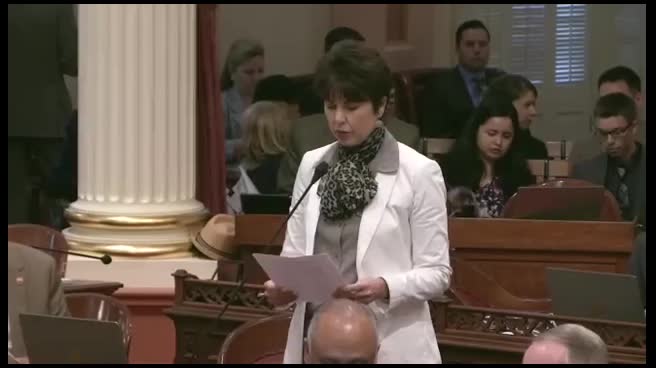 12MIN
Senate Floor
 10MIN
Senate Standing Committee on Public Safety
Bill Author

Bill Co-Author(s):