AB 1422: Transportation network companies.
- Session Year: 2015-2016
- House: Assembly
- Latest Version Date: 2015-10-11
Existing law, the Passenger Charter-party Carriers Act, provides for the regulation of transportation network companies by the Public Utilities Commission, and imposes specified requirements for liability insurance coverage for those transportation network companies and their participating drivers, as defined. A violation of the act is generally a crime. Existing law defines a transportation network company to mean an organization, including, but not limited to, a corporation, limited liability company, partnership, sole proprietor, or any other entity, operating in California that provides prearranged transportation services for compensation using an online-enabled application or platform to connect passengers with drivers using a personal vehicle.
This bill would provide that a transportation network company is eligible and required to participate in the Department of Motor Vehicles pull-notice system to regularly check the driving records of a participating driver regardless of whether the participating driver is an employee or an independent contractor of the transportation network company. Because a violation of this requirement would be a crime, the bill would impose a state-mandated local program.
The California Constitution requires the state to reimburse local agencies and school districts for certain costs mandated by the state. Statutory provisions establish procedures for making that reimbursement.
This bill would provide that no reimbursement is required by this act for a specified reason.
Existing law, the Passenger Charter-party Carriers Act, provides for the regulation of transportation network companies by the Public Utilities Commission, and imposes specified requirements for liability insurance coverage for those transportation network companies and their participating drivers, as defined. A violation of the act is generally a crime. Existing law defines a transportation network company to mean an organization, including, but not limited to, a corporation, limited liability company, partnership, sole proprietor, or any other entity, operating in California that provides prearranged transportation services for compensation using an online-enabled application or platform to connect passengers with drivers using a personal vehicle.
This bill would require provide that a transportation network company is eligible and required to participate in the Department of Motor Vehicles pull-notice system to regularly check the driving records of a participating driver regardless of whether the participating driver is an employee or an independent contractor of the transportation network company. Because a violation of this requirement would be a crime, the bill would impose a state-mandated local program.
The California Constitution requires the state to reimburse local agencies and school districts for certain costs mandated by the state. Statutory provisions establish procedures for making that reimbursement.
This bill would provide that no reimbursement is required by this act for a specified reason.
Existing law, the Passenger Charter-party Carriers Act, provides for the regulation of transportation network companies by the Public Utilities Commission, and imposes specified requirements for liability insurance coverage for those transportation network companies and their participating drivers, as defined. A violation of the act is generally a crime. Existing law defines a transportation network company to mean an organization, including, but not limited to, a corporation, limited liability company, partnership, sole proprietor, or any other entity, operating in California that provides prearranged transportation services for compensation using an online-enabled application or platform to connect passengers with drivers using a personal vehicle.
This bill would authorize require a transportation network company to participate in the Department of Motor Vehicles Vehicles pull-notice system to regularly check the driving records of a participating driver regardless of whether the participating driver is an employee or an independent contractor of the transportation network company. Because a violation of this requirement would be a crime, the bill would impose a state-mandated local program.
The California Constitution requires the state to reimburse local agencies and school districts for certain costs mandated by the state. Statutory provisions establish procedures for making that reimbursement.
This bill would provide that no reimbursement is required by this act for a specified reason.
Existing law, the Passenger Charter-party Carriers Act, provides for the regulation of transportation network companies by the Public Utilities Commission, and imposes specified requirements for liability insurance coverage for those transportation network companies and their participating drivers, as defined. A violation of the act is generally a crime. Existing law defines a transportation network company to mean an organization, including, but not limited to, a corporation, limited liability company, partnership, sole proprietor, or any other entity, operating in California that provides prearranged transportation services for compensation using an online-enabled application or platform to connect passengers with drivers using a personal vehicle.
This bill would authorize a transportation network company to participate in the Department of Motor Vehicles pull-notice system to regularly check the driving records of a participating driver regardless of whether the participating driver is an employee or an independent contractor of the transportation network company.
Existing law establishes the Department of the California Highway Patrol within the Transportation Agency, which is under the control of a civil executive officer known as the Commissioner of the California Highway Patrol. Existing law requires the commissioner to, among other things, perform all duties and exercise all powers and jurisdiction vested by law in the department.
This bill would make technical, nonsubstantive changes to this provision.
Notwithstanding any limitations contained in Section 1808.1 of the Vehicle Code, a transportation network company is eligible to participate and shall participate in the pull-notice system established pursuant to Section 1808.1 of the Vehicle Code to regularly check the driving records of a participating driver regardless of whether the participating driver is an employee or an independent contractor of the transportation network company.
SEC. 2.No reimbursement is required by this act pursuant to Section 6 of Article XIIIB of the California Constitution because the only costs that may be incurred by a local agency or school district will be incurred because this act creates a new crime or infraction, eliminates a crime or infraction, or changes the penalty for a crime or infraction, within the meaning of Section 17556 of the Government Code, or changes the definition of a crime within the meaning of Section 6 of Article XIIIB of the California Constitution.
A Notwithstanding any limitations contained in Section 1808.1 of the Vehicle Code, a transportation network company is eligible to participate and shall participate in the pull-notice system established pursuant to Section 1808.1 of the Vehicle Code to regularly check the driving records of a participating driver regardless of whether the participating driver is an employee or an independent contractor of the transportation network company.
SEC. 2.No reimbursement is required by this act pursuant to Section 6 of Article XIIIB of the California Constitution because the only costs that may be incurred by a local agency or school district will be incurred because this act creates a new crime or infraction, eliminates a crime or infraction, or changes the penalty for a crime or infraction, within the meaning of Section 17556 of the Government Code, or changes the definition of a crime within the meaning of Section 6 of Article XIIIB of the California Constitution.
A transportation network company may shall participate in the pull-notice system established pursuant to Section 1808.1 of the Vehicle Code to regularly check the driving records of a participating driver regardless of whether the participating driver is an employee or an independent contractor of the transportation network company.
SEC. 2.No reimbursement is required by this act pursuant to Section 6 of Article XIIIB of the California Constitution because the only costs that may be incurred by a local agency or school district will be incurred because this act creates a new crime or infraction, eliminates a crime or infraction, or changes the penalty for a crime or infraction, within the meaning of Section 17556 of the Government Code, or changes the definition of a crime within the meaning of Section 6 of Article XIIIB of the California Constitution.
A transportation network company may participate in the pull-notice system established pursuant to Section 1808.1 of the Vehicle Code to regularly check the driving records of a participating driver regardless of whether the participating driver is an employee or an independent contractor of the transportation network company.
SECTION 1.Section 2108 of the Vehicle Code is amended to read:2108.(a)The commissioner shall perform all duties, exercise all powers and jurisdiction, assume and discharge all responsibilities, and carry out and effect all purposes vested by law in the department.
(b)Notwithstanding any other law, the commissioner may administratively determine the geographic area of residence of any member of the department in order to assure the availability of that member for emergency service and the discharge of departmental responsibilities.
(a)The commissioner shall perform all duties, exercise all powers and jurisdiction, assume and discharge all responsibilities, and carry out and effect all purposes vested by law in the department.
Notwithstanding
(b)Notwithstanding any other provision of law, the commissioner may administratively determine the geographic area of residence of any member of the department in order to assure the availability of such that member for emergency service and the discharge of departmental responsibilities.
|
Date
|
Status
|
|---|---|
| Oct 11, 2015 | Chaptered by Secretary of State - Chapter 791, Statutes of 2015. |
| Oct 11, 2015 | Approved by the Governor. |
| Sep 9, 2015 | Enrolled and presented to the Governor at 4 p.m. |
| Aug 31, 2015 | Senate amendments concurred in. To Engrossing and Enrolling. (Ayes 80. Noes 0. Page 2678.). |
| Aug 31, 2015 | Senate amendments concurred in. To Engrossing and Enrolling. (Ayes 80. Noes 0.). |
| Aug 27, 2015 | Read third time. Passed. Ordered to the Assembly. (Ayes 39. Noes 0. Page 2199.). |
| Aug 27, 2015 | In Assembly. Concurrence in Senate amendments pending. May be considered on or after August 30 pursuant to Assembly Rule 77. |
| Aug 27, 2015 | Read third time. Passed. Ordered to the Assembly. |
| Aug 18, 2015 | Read second time. Ordered to third reading. |
| Aug 17, 2015 | From committee: Be placed on second reading file pursuant to Senate Rule 28.8. |
| Jul 16, 2015 | Read second time and amended. Re-referred to Com. on APPR. |
| Jul 16, 2015 | From committee: Amend, and do pass as amended and re-refer to Com. on APPR. (Ayes 11. Noes 0.) (July 14). |
| Jun 30, 2015 | From committee: Do pass and re-refer to Com. on T. & H. (Ayes 9. Noes 0.) (June 30). Re-referred to Com. on T. & H. |
| Jun 11, 2015 | Referred to Coms. on E., U., & C. and T. & H. |
| Jun 2, 2015 | In Senate. Read first time. To Com. on RLS. for assignment. |
| Jun 2, 2015 | Read third time. Passed. Ordered to the Senate. (Ayes 78. Noes 0. Page 1817.) |
| Jun 2, 2015 | Read third time. Passed. Ordered to the Senate. |
| May 28, 2015 | Read second time. Ordered to Consent Calendar. |
| May 27, 2015 | From committee: Do pass. To Consent Calendar. (Ayes 17. Noes 0.) (May 27). |
| May 13, 2015 | In committee: Hearing postponed by committee. |
| Apr 28, 2015 | From committee: Do pass and re-refer to Com. on APPR. (Ayes 16. Noes 0.) (April 27). Re-referred to Com. on APPR. |
| Apr 23, 2015 | Re-referred to Com. on TRANS. |
| Apr 22, 2015 | From committee chair, with author's amendments: Amend, and re-refer to Com. on TRANS. Read second time and amended. |
| Apr 21, 2015 | From committee: Do pass and re-refer to Com. on TRANS. (Ayes 14. Noes 0.) (April 20). Re-referred to Com. on TRANS. |
| Apr 6, 2015 | Re-referred to Com. on U. & C. |
| Mar 26, 2015 | From committee chair, with author's amendments: Amend, and re-refer to Com. on U. & C. Read second time and amended. |
| Mar 26, 2015 | Referred to Coms. on U. & C. and TRANS. |
| Mar 2, 2015 | Read first time. |
| Mar 1, 2015 | From printer. May be heard in committee March 31. |
| Feb 27, 2015 | Introduced. To print. |
|
Date
|
Description
|
Location
|
Votes
|
|
|---|---|---|---|---|
| Aug 31, 2015 | AB 1422 COOPER Concurrence in Senate Amendments | Assembly Floor |
Passed |
|
| Aug 27, 2015 | Assembly 3rd Reading AB1422 Cooper By Allen | Senate Floor |
Passed |
|
| Jul 14, 2015 | Do pass as amended, but first amend, and re-refer to the Committee on [Appropriations] | Senate Standing Committee on Transportation and Housing |
Passed |
|
| Jun 30, 2015 | Do pass, but first be re-referred to the Committee on [Transportation and Housing] | Senate Standing Committee on Energy, Utilities and Communications |
Passed |
|
| Jun 2, 2015 | AB 1422 COOPER Consent Calendar Second Day Regular Session | Assembly Floor |
Passed |
|
| May 27, 2015 | Do pass. To Consent Calendar. | Assembly Standing Committee on Appropriations |
Passed |
|
| Apr 27, 2015 | Do pass and be re-referred to the Committee on [Appropriations] | Assembly Standing Committee on Transportation |
Passed |
|
| Apr 20, 2015 | Do pass and be re-referred to the Committee on [Transportation] | Assembly Standing Committee on Utilities and Commerce |
Passed |
This list shows positions taken on this bill by organizations on the date displayed, which is linked to the original source.
Positions by individuals are not included.
AB 1422
Page 2
CONCURRENCE IN SENATE AMENDMENTS
AB 1422
(Cooper)
As Amended July 16, 2015
Majority vote
ASSEMBLY: |
78-0 |
(June 2, 2015) |
SENATE: |
37-0 |
(August 27, 2015) |
Original Committee Reference: U. & C.
SUMMARY: Requires transportation network companies (TNC) to participate in the Department of Motor Vehicles (DMV) Employer Pull Notice System (EPN). Specifically, this bill provides that a TNC is eligible and required to participate in the DMV EPN to regularly check the driving records of a participating driver regardless of whether the participating driver is an employee or an independent contractor of the TNC.
The Senate amendments make non-substantive clarifying changes.
EXISTING LAW:
Establishes the "Passenger Charter-Party Carriers Act" (CPC), which directs the California Public Utilities Commission (CPUC) to issue permits or certificates to charter party carriers (CPC), investigate complaints against carriers, and cancel, revoke, or suspend permits and certificates for specific violations. (Public Utilities Code Section 5387)
Defines a "transportation network company" to mean an organization, including, but not limited to, a corporation, limited liability company, partnership, sole proprietor, or any entity operating in California that provides prearranged transportation services for compensation using an online-enabled application or platform to connect passengers with drivers using a personal vehicle. (Public Utilities Code Section 5431)
Establishes the EPN administered by the DMV that provides the employer of a driver who drives a specified type of vehicle with a report showing the driver's current public record and any subsequent convictions, driver's license revocations, failures to appear, accidents, driver's license suspensions, driver's license revocations, or any other actions taken against the driving privilege. (Vehicle Code Section 1808.1)
Defines an employee as anyone that renders a service for another, other than as an independent contractor. (Labor Code Section 3357)
FISCAL EFFECT: According to the Senate Appropriations Committee, pursuant to Senate Rule 28.8, negligible state costs.
COMMENTS:
Author's Statement: "AB 1422 promotes driver and public safety by authorizing TNCs to participate in the DMV pull notice program and helps improve the safety of passengers utilizing these transportation services."
Background: California law regulates different modes of passenger transportation for compensation, including taxi services, which are regulated by cities and/or counties, and CPCs and passenger stage companies, which are regulated by the CPUC.
What are CPCs? CPCs are services that charter a vehicle, on a prearranged basis, for the exclusive use of an individual or group. Charges are based on the mileage, or time of use, or a combination of both. The CPUC does not regulate the level of charges for CPCs. Types of CPCs include limos, tour buses, sightseeing services, and charter and party buses.
What are TNCs? Beginning as early as 2009, a new model of transportation service began springing up in cities across the United States. Known as TNCs, these companies work by allowing patrons to prearrange transportation services through an online application on their smartphone or computer. Patrons would request a ride to a predetermined location and the application would connect them with a TNC driver. Payment is processed through the application so that no physical financial transaction occurs during the trip itself between the patron and the driver. The TNC takes a commission on each trip.
Although TNCs do not neatly fall into the conventional definition of either taxis or limousines, the CPUC does believe that TNCS are currently providing passengers transportation for compensation, and reasonably concludes that TNCs are CPCs, therefore, falling under the CPUC’s existing jurisdiction over these services.
DMV EPN: The DMV EPN was created as a means for employers and regulatory agencies to ensure driver safety through the ongoing review of driver records. The system is designed to generate a report of a driver's record and electronically send the report to the employer under specific circumstances, such as upon enrollment of a driver, annually from the date of employment, or whenever a driver commits certain moving violations. Most commercial drivers, including drivers transporting property, passengers, and household goods are required to participate in the EPN.
Specific types of CPC drivers are required to be enrolled in the EPN so that employers may receive automatic notice of an adverse entry or action on a driver's driving record. However, current law limits enrollment in the EPN to employees. Although TNCs are required to check each driver's driving record prior to allowing a driver on the TNC platform, and quarterly thereafter, the DMV does not permit TNCs with nonemployees from enrolling in EPN. There has been a growing debate over whether or not TNC drivers are considered employees or independent contractors of the TNC. This issue is currently pending litigation in United States District Court. This bill, however, would provide that a TNC is eligible and required to participate in the DMV EPN regardless if a participating driver is an employee or an independent contractor.
Analysis Prepared by: Edmond Cheung / U. & C. / (916) 319-2083 FN: 0001461
AB 1422
Page 6
|
Office of Senate Floor Analyses (916) 651-1520 Fax: (916) 327-4478 |
THIRD READING
Bill No: AB 1422
Amended: 7/16/15 in Senate
SENATE ENERGY, U. & C. COMMITTEE: 9-0, 6/30/15
AYES: Hueso, Cannella, Hertzberg, Hill, Lara, Leyva, McGuire, Morrell, Pavley
NO VOTE RECORDED: Fuller, Wolk
SENATE TRANS. & HOUSING COMMITTEE: 11-0, 7/14/15
AYES: Beall, Cannella, Allen, Bates, Gaines, Galgiani, Leyva, McGuire, Mendoza, Roth, Wieckowski
SENATE APPROPRIATIONS COMMITTEE: Senate Rule 28.8
ASSEMBLY FLOOR: 78-0, 6/2/15 (Consent) - See last page for vote
SUBJECT: Transportation network companies
DIGEST: This bill requires transportation network companies (TNCs) to participate in the Department of Motor Vehicles’ (DMV) employer pull-notice (EPN) system to regularly check the driving records of a participating driver.
Existing law:
Establishes the California Public Utilities Commission (CPUC) to regulate privately owned public utilities and common carriers in California. Specifies that the Legislature may prescribe that additional classes of private corporations or other persons are public utilities. (Article XII of the California Constitution; Public Utilities Code §301 et seq.)
Establishes the “Passenger Charter-Party Carriers Act”, which directs the CPUC to regulate, require license or permit to operate, require insurance and workers compensation, takes appropriate enforcement action and other provisions related to transportation charter-party carriers (CPCs). (Public Utilities Code §5351 et seq.)
Defines “charter-party carrier of passengers” as every person engaged in the transportation of persons by motor vehicle for compensation, whether in common or contract carriage, over any public highway in the state. (Public Utilities Code §5360)
Defines TNC as an organization, including, but not limited to, a corporation, limited liability company, partnership, sole proprietor, or any other entity, operating in California that provides prearranged transportation services for compensation using an online-enabled application or platform to connect passengers with drivers using a personal vehicle. (Public Utilities Code §5431)
Requires TNCs to participate in the DMV EPN system to regularly check the driving records of a participating driver regardless of whether the participating driver is an employee or an independent contractor of the TNC.
Establishes the EPN system at the DMV that provides the employer of a driver who drives a specified type of vehicle with a report showing the driver’s current public record and any subsequent convictions, driver license revocations, failures to appear, accidents, driver license suspensions, or any other actions taken against the driving privilege. (Vehicle Code §1808.1)
Requires employers of drivers of specified vehicles such as commercial truck drivers, school buses, farm labor vehicles, tow trucks, youth buses, paratransit vehicles, ambulances, and vehicles that transport hazardous materials, to show EPN reports during regular business hours, upon the request of the California Highway Patrol. (Vehicle Code §1808.1)
Requires employers of drivers of certain vehicles as described above to obtain EPN reports from DMV at least every 12 months, as specified. (Vehicle Code §1808.1)
Defines an employee as anyone that renders a service for another, other than as an independent contractor or expressly exempted. (Labor Code §3357)
Defines an independent contractor as any person who renders service for a specified recompense for a specified result, under the control of his principal as to the result of his work only and not as to the means by which such result is accomplished. (Labor Code §3353)
This bill requires TNCs to participate in the DMV EPN system to regularly check the driving records of a participating driver regardless of whether the participating driver is an employee or an independent contractor of the TNC.
Background
In recent years, the advent of new mobile technology has spurred development of new software applications (apps) that are dramatically altering the transportation industry. The new model of transportation services allows customers to prearrange transportation services through an online application on their smartphone or computer. Known as TNCs, these companies, such as Uber and Lyft, allow customers to request a ride to a predetermined location and the application connects them with a TNC driver. Payment is processed through the application so that no physical financial transaction occurs during the trip itself. Under this model, drivers are considered independent contractors by the TNCs and the TNCs take a commission on each trip. While these services have grown in popularity in the last few years, this new service has not fit neatly into the existing laws and regulations governing transportation services.
CPUC regulation of TNCs. In September 2013, the CPUC adopted the first phase of a two-phase decision related to TNCs. In the decision, the CPUC defined TNCs as a new category of CPCs subject to the CPUC oversight and regulations. The CPUC adopted rules to require TNCs to obtain a permit to operate from the CPUC, require TNCs to conduct background check on drivers, check driver records prior to driving and quarterly, thereafter, establish a driver training program, implement a zero-tolerance policy on drugs and alcohol, conduct vehicle inspections, and obtain authorization from airports before conducting operations on or into airports property. The DMV check criteria is required to provide that a driver have no more than three points within the preceding three years, no “major violations” (reckless driving, hit and run, or driving with a suspended license conviction) within the preceding three years, and no driving under the influence conviction within the past seven years). Subsequently, the Legislature passed AB 2293 (Bonilla, Chapter 389, Statutes of 2014), which codified the CPUC’s definition of TNCs and established liability and insurance requirements for TNCs and their participating drivers.
The DMV employee pull-notice. The DMV EPN was created as a means for employers and regulatory agencies to ensure driver safety through the ongoing review of driver records. The system is designed to generate a report of a driver’s record and electronically send the report to the employer under specific circumstances such as upon enrollment of a driver, annually from the date of employment, or whenever a driver commits certain moving violations. Most commercial drivers, including drivers transporting property, passengers, and household goods are required to participate in the EPN.
Specific types of CPC drivers are required to enroll in the EPN so that employers may receive automatic notice of an adverse entry or action on a driver’s driving record. However, existing law limits enrollment in the EPN to employees. Although TNCs are required to check each driver’s driving record prior to allowing a driver on the TNC app, and quarterly thereafter, the law prevents the DMV from permitting TNCs with nonemployees from enrolling in EPN.
Employee or independent contractor? In adopting the first phase decision regarding TNCs, the CPUC noted that TNCs could not participate in the automatic driver’s background check, the EPN, since TNCs were not employees. The question about whether TNC drivers are employees or independent contractors has become a growing debate in recent years. Most recently, the California Labor Commission has ruled that a former Uber driver was, in fact, an employee and ordered Uber to pay her over $4,000 for expenses incurred while driving. As employees, Uber drivers in the state would qualify for minimum wage, overtime, and worker’s compensation. Uber has maintained that its drivers are independent contractors. The ruling became public when Uber filed an appeal in a state court on June 16, 2015. Uber’s appeal is one of several cases currently up for consideration in the courts that could decide whether TNC drivers are employees or independent contractors. Two other cases – O’Connor, et al., v. Uber Technologies, Inc. et al. (Case No. C-13-3826 EMC) and Cotter, et al., v. Uber Technologies, Inc. et al. (Case No. 13-cv-04065-VC) – are both venued in the U.S. District Court in San Francisco. Both lawsuits were filed by drivers who claim that, although the TNCs classify them as independent contractors, they are actually employees and are therefore owed certain benefits, reimbursements, and protections. The drivers are seeking class action status in both cases.
The language in this bill requires the TNCs to participate in the EPN program regardless of whether their drivers are considered employees or independent contractors.
Prior/Related Legislation
AB 24 (Nazarian, 2015) requires CPC and TNCs to participate in the DMVs EPN System, and submit all drivers to a Department of Justice criminal background check. The bill was held in Assembly Committee on Appropriations.
AB 828 (Low, 2015) excludes from the definition of “commercial vehicle,” for purposes of the Vehicle Code, any motor vehicle operated in connection with a TNC. The bill passed the Assembly on a vote of 71-1 and is currently awaiting consideration by the Senate Committee on Energy, Utilities and Communications.
AB 1360 (Ting, 2015) exempts a rideshare program operated by a TNC that arranges a ride among multiple passengers who share the ride, in whole or in part, from computing transportation charges based on a vehicle mileage or time of use, provided that the fare for each passenger is less than the fare that would be charged to a single passenger traveling alone. The bill passed the Assembly on a vote of 73-0 and is currently awaiting consideration by the Senate Committee on Energy, Utilities and Communications.
AB 612 (Nazarian, 2014) required CPCs to participate in the DMV EPN system, and submit all drivers to a Department of Justice criminal background check. The bill was held in the Assembly Committee on Transportation.
AB 2293 (Bonilla, Chapter 389, Statutes of 2014) established guidelines for insurance coverage for TNCs to ensure personal and financial safety of consumers.
FISCAL EFFECT: Appropriation: No Fiscal Com.: Yes Local: Yes
California Airport Council
Long Beach Police Officers Association
Los Angeles County Professional Peace Officers Association
Riverside Sheriffs’ Association
Sacramento County Deputy Sheriffs’ Association
San Diego Regional Chamber of Commerce
Uber Technologies, Inc.
OPPOSITION: (Verified 8/18/15)
Greater California Livery Association
ARGUMENTS IN SUPPORT: Supporters state that AB 1422 promotes driver and public safety by requiring TNCs to participate in the DMV EPN program and helps improve the safety of passengers utilizing these transportation services. The author notes that, currently, TNCs must manually pull DMV records on a quarterly basis to review driving records – a process that is both inefficient and slow to catch such things as driving under the influences, accidents or license suspensions.
ARGUMENTS IN OPPOSITION: The Greater California Livery Association argues that the “contractual status of the driver of a transportation network vehicle, employee or independent operator, is not and should not, be the subject of the AB 1422.” They argue that this bill “should be amended to delete any reference to the classification of the driver’s status; absent that amendment, it could be perceived that the Legislature is encouraging the “independent contractor” business model to be utilized by CPUC regulated TNCs.”
ASSEMBLY FLOOR: 78-0, 6/2/15
AYES: Achadjian, Alejo, Travis Allen, Baker, Bigelow, Bloom, Bonilla, Bonta, Brough, Brown, Burke, Calderon, Campos, Chang, Chau, Chiu, Chu, Cooley, Cooper, Dababneh, Dahle, Daly, Dodd, Eggman, Frazier, Beth Gaines, Gallagher, Cristina Garcia, Eduardo Garcia, Gatto, Gipson, Gomez, Gonzalez, Gordon, Gray, Hadley, Harper, Roger Hernández, Holden, Irwin, Jones, Jones-Sawyer, Kim, Lackey, Levine, Linder, Lopez, Low, Maienschein, Mathis, Mayes, McCarty, Medina, Melendez, Mullin, Nazarian, Obernolte, O'Donnell, Olsen, Patterson, Perea, Quirk, Rendon, Ridley-Thomas, Rodriguez, Salas, Santiago, Steinorth, Mark Stone, Thurmond, Ting, Wagner, Waldron, Weber, Wilk, Williams, Wood, Atkins
NO VOTE RECORDED: Chávez, Grove
Prepared by: Nidia Bautista / E., U., & C. / (916) 651-4107
8/19/15 20:39:16
**** END ****
AB 1422 (Cooper) Page 5 of 5
SENATE COMMITTEE ON TRANSPORTATION AND HOUSING
Senator Jim Beall, Chair
2015 - 2016 Regular
Bill No: AB 1422 Hearing Date: 7/14/2015
Author: |
Cooper |
||
Version: |
4/22/2015 |
||
Urgency: |
No |
Fiscal: |
Yes |
Consultant: |
Randy Chinn |
||
SUBJECT: Transportation network companies
DIGEST: This bill increases public safety by requiring transportation network companies (TNCs) to participate in the Department of Motor Vehicles’ (DMV) pull notice program.
ANALYSIS:
Existing law establishes a pull notice program which requires employers of drivers to obtain a report showing the drivers’ current driving record from the DMV, and to obtain an updated report at least annually. An employer who, after receiving the record, continues to employ a person against whom a disqualifying action has been taken is guilty of a public offense, punishable by up to six months in jail and a fine of up to $1,000.
This bill requires TNCs to participate in the pull notice program.
COMMENTS:
Purpose. According to the author, the pull notice program helps businesses and government agencies ensure that unsafe drivers are taken off the road quickly. But because the pull notice program is limited to those businesses and agencies operating under an employer-employee relationship, TNCs and their drivers are not covered. The intent of this bill is for TNCs and those who drive for them to participate in the DMV’s pull notice program. In effect, for purposes of the pull notice program in Section 1808.1, the TNC is the employer and the TNC drivers are the employees.
What’s a pulled notice? The pull notice program provides employers with their drivers’ public driving record, which includes any accidents, citations, and license suspensions. An employer who receives a report on a driver whose license has been suspended or revoked must discontinue employment. This could happen because of a DUI or falling behind on child support payments. In the case of the TNCs, this means that the TNC would need to discontinue allowing the driver to participate in their service. The purpose of this program is to protect the public from the most unsafe drivers by preventing them from carrying passengers.
The growing TNC industry. In California, the TNC business is large and growing rapidly. A January 2015 report from Uber1, the largest TNC, reports 20,000 active Uber drivers in Los Angeles, 16,000 in the San Francisco area, and almost 5,000 each in San Diego and Orange County, up from zero in July 2012. Some estimates put the total number of active TNC drivers in the United States at 150,000. TNCs are successfully competing with taxi cabs, limousines, and other regulated transit operators.
An unlevel playing field. The different types of transportation companies (e.g., TNCs, limousines, Super Shuttles, taxis) are all regulated differently. Rates, routes, insurance requirements, vehicle inspections, and driver requirements vary. State law has begun to address the biggest differences between TNCs and others, but there’s little dispute that big differences remain. In an ideal world, companies would compete based on the differences in their business models and competence, not on the differences in how they are regulated.
Creating a level playing field slowly. The laws and regulations governing the provision of transportation services are many decades old. These laws and regulations have evolved slowly, as evidenced by the arcane and complicated carrier classifications. At least over the last several decades, the few new laws have focused on safety issues. The rapid growth of TNCs has disrupted this relatively quiet corner of our economy, changing the economics of transportation and challenging the economic models of the traditional transportation providers. This has upended the lives of many people in the transportation industry, while at the same time providing many benefits to transportation consumers.
Regulators are struggling to keep up with the rapidly evolving transportation industry, a bit hamstrung by laws which never anticipated the different ways that TNCs operate. In September 2013, the California Public Utilities Commission (CPUC), which has regulatory authority over much, though not all, of the passenger transportation industry, issued its first set of rules2 intended to foster the growth of TNCs without compromising public safety. These rules started the process of establishing a level playing field so that all transportation companies would have similar regulatory obligations, allowing them to compete based on their business models. Among the rules were requirements for obtaining an operating permit from the CPUC, requiring criminal background checks for drivers, establishing driver training programs, implementing zero-tolerance policies on drugs and alcohol, and minimum insurance requirements.
The CPUC has initiated a second phase of its investigation to look more closely at the regulation of TNCs and the traditional transportation companies, known as charter-party carriers3. A set of issues has been proposed and comments on the scope of those issues have been submitted; a decision on the scope of issues is expected shortly. As the state’s regulatory agency over transportation matters, the CPUC is in the best position to consider whether its current regulations provide for a fair and competitive market. It can recommend specific changes to law and, in some cases, can implement changes to its own regulations to achieve the goal of a level playing field.
Taking a step forward. This bill helps level the playing field by making TNCs participate in the same pull notice program as their competitors.
Casual driver exemption. Current law allows an exemption from the pull notice program if the employer has employed the driver less than 30 days during the previous six months. This provides a bit of a loophole as a TNC driver could drive three days per week, one each for, say, Uber, Lyft, and Sidecar, and still be eligible for the casual driver exemption. The author believes this is not a concern as the TNCs intend on screening all of their drivers.
Clarifying amendment – While the intent of the bill is clear, the language of the bill is not. The author will accept the following language, which will ensure that the bill can be implemented as intended:
Page 2, line 3
At the beginning of the sentence insert: Notwithstanding any limitations contained in section 1808.1 of the Vehicle Code,
After “company” insert “is eligible to participate and”
Double-referred. This bill was heard by the Senate Energy, Utilities and Communications Committee on June 30, 2015, and approved 9-0.
Related Legislation:
AB 24 (Nazarian, 2015) — requires TNCs to participate in the pull notice program and submit all drivers to a Department of Justice criminal background check. This bill was held in the Assembly Appropriations Committee.
AB 828 (Low, 2015) — exempts vehicles driven in connection with TNCs from the obligation of registration as a commercial vehicle. This bill was heard by the Senate Transportation and Housing Committee on July 7, 2015 and approved 6-5. This bill is pending in the Senate Rules Committee.
AB 1360 (Ting, 2015) — authorizes charter party carriers to charge individual fares. This bill is pending in the Senate Energy, Utilities and Communications Committee.
AB 612 (Nazarian, 2014) — required TNCs to participate in the pull notice program and submit all drivers to a Department of Justice criminal background check. This bill failed on concurrence in the Assembly.
AB 2293 (Bonilla, Chapter 389, Statutes of 2014) — established minimum insurance requirements on TNCs.
Assembly Votes:
Floor: 78-0
Appr: 17-0
Trans: 16-0
U&C: 14-0
FISCAL EFFECT: Appropriation: No Fiscal Com.: Yes Local: Yes
POSITIONS: (Communicated to the committee before noon on Wednesday,
July 8, 2015.)
SUPPORT:
Long Beach Police Officers Association
Los Angeles County Professional Peace Officers Association
Riverside Sheriff’s Association
Sacramento County Deputy Sheriffs’ Association
San Diego Regional Chamber of Commerce
San Francisco International Airport
Uber Technologies, Inc.
OPPOSITION:
Greater California Livery Association
-- END --
1“An Analysis of the Labor Market for Uber’s Driver-Partners in the United States,” by Jonathan V. Hall and Alan B. Kreuger; January 22, 2015.
2 D.13-09-045; issued September 23, 2013.
3 Assigned Commissioner and Administrative Law Judge’s Ruling Amending the Scoping Memo and Ruling for Phase II of Proceeding; Rulemaking 12-12-011; April 28, 2015.
AB 1422 (Cooper) Page 6 of 6
SENATE COMMITTEE ON ENERGY, UTILITIES AND COMMUNICATIONS
Senator Ben Hueso, Chair
2015 - 2016 Regular
Bill No: AB 1422 Hearing Date: 6/30/2015
Author: |
Cooper |
||
Version: |
4/22/2015 As Amended |
||
Urgency: |
No |
Fiscal: |
Yes |
Consultant: |
Nidia Bautista |
||
SUBJECT: Transportation network companies
DIGEST: This bill would require transportation network companies to participate in the Department of Motor Vehicles’ (DMV) employer pull-notice (EPN) system to regularly check the driving records of a participating driver.
ANALYSIS:
Existing law:
Establishes the California Public Utilities Commission (CPUC) to regulate privately owned public utilities and common carriers in California. Specifies that the Legislature may prescribe that additional classes of private corporations or other persons are public utilities. (Article XII of the California Constitution; Public Utilities Code §301 et seq.)
Establishes the “Passenger Charter-Party Carriers Act”, which directs the CPUC to regulate, require license or permit to operate, require insurance and workers compensation, takes appropriate enforcement action and other provisions related to transportation charter-party carriers (CPCs). (Public Utilities Code §5351 et seq.)
Defines “charter-party carrier of passengers” as every person engaged in the transportation of persons by motor vehicle for compensation, whether in common or contract carriage, over any public highway in the state. (Public Utilities Code §5360)
Defines transportation network company (TNC) as an organization, including, but not limited to, a corporation, limited liability company, partnership, sole proprietor, or any other entity, operating in California that provides prearranged transportation services for compensation using an online-enabled application or platform to connect passengers with drivers using a personal vehicle. (Public Utilities Code §5431)
Requires TNCs to participate in the DMV EPN system to regularly check the driving records of a participating driver regardless of whether the participating driver is an employee or an independent contractor of the TNC.
Establishes the EPN system at the DMV that provides the employer of a driver who drives a specified type of vehicle with a report showing the driver’s current public record and any subsequent convictions, driver license revocations, failures to appear, accidents, driver license suspensions, or any other actions taken against the driving privilege. (Vehicle Code §1808.1)
Requires employers of drivers of specified vehicles such as commercial truck drivers, school buses, farm labor vehicles, tow trucks, youth buses, paratransit vehicles, ambulances, and vehicles that transport hazardous materials, to show EPN reports during regular business hours, upon the request of the California Highway Patrol. (Vehicle Code §1808.1)
Requires employers of drivers of certain vehicles as described above to obtain EPN reports from DMV at least every 12 months, as specified. (Vehicle Code §1808.1)
Defines an employee as anyone that renders a service for another, other than as an independent contractor or expressly exempted. (Labor Code §3357)
Defines an independent contractor as any person who renders service for a specified recompense for a specified result, under the control of his principal as to the result of his work only and not as to the means by which such result is accomplished. (Labor Code §3353)
This bill requires TNCs to participate in the DMV EPN system to regularly check the driving records of a participating driver regardless of whether the participating driver is an employee or an independent contractor of the TNC.
Background
In recent years, the advent of new mobile technology has spurred development of new software applications (apps) that are dramatically altering the transportation industry. The new model of transportation services allows customers to prearrange transportation services through an online application on their smartphone or computer. Known as TNCs, these companies, such as Uber and Lyft, allow customers to request a ride to a predetermined location and the application connects them with a TNC driver. Payment is processed through the application so that no physical financial transaction occurs during the trip itself. Under this model, drivers are considered independent contractors by the TNCs and the TNCs take a commission on each trip. While these services have grown in popularity in the last few years, this new service has not fit neatly into the existing laws and regulations governing transportation services.
CPUC regulation of TNCs. In September 2013, the CPUC adopted the first phase of a two-phase decision related to TNCs. In the decision, the CPUC defined TNCs as a new category of CPCs subject to the CPUC oversight and regulations. The CPUC adopted rules to require TNCs to obtain a permit to operate from the CPUC, require TNCs to conduct background check on drivers, check driver records prior to driving and quarterly, thereafter, establish a driver training program, implement a zero-tolerance policy on drugs and alcohol, conduct vehicle inspections, and obtain authorization from airports before conducting operations on or into airports property. The DMV check criteria is required to provide that a driver have no more than three points within the preceding three years, no “major violations” (reckless driving, hit and run, or driving with a suspended license conviction) within the preceding three years, and no driving under the influence conviction within the past seven years). Subsequently, the Legislature passed AB 2293 (Bonilla, Chapter 389, Statutes of 2014), which codified the CPUC’s definition of TNCs and established liability and insurance requirements for TNCs and their participating drivers.
The DMV employee pull-notice. The DMV EPN was created as a means for employers and regulatory agencies to ensure driver safety through the ongoing review of driver records. The system is designed to generate a report of a driver’s record and electronically send the report to the employer under specific circumstances such as upon enrollment of a driver, annually from the date of employment, or whenever a driver commits certain moving violations. Most commercial drivers, including drivers transporting property, passengers, and household goods are required to participate in the EPN.
Specific types of CPC drivers are required to enroll in the EPN so that employers may receive automatic notice of an adverse entry or action on a driver’s driving record. However, current law limits enrollment in the EPN to employees. Although TNCs are required to check each driver’s driving record prior to allowing a driver on the TNC app, and quarterly thereafter, the law prevents the DMV from permitting TNCs with nonemployees from enrolling in EPN.
Employee or independent contractor? In adopting the first phase decision regarding TNCs, the CPUC noted that TNCs could not participate in the automatic driver’s background check, the EPN, since TNCs were not employees. The question about whether TNC drivers are employees or independent contractors has become a growing debate in recent years. Most recently, the California Labor Commission has ruled that a former Uber driver was, in fact, an employee and ordered Uber to pay her over $4,000 for expenses incurred while driving. As employees, Uber drivers in the state would qualify for minimum wage, overtime, and worker’s compensation. Uber has maintained that its drivers are independent contractors. The ruling became public when Uber filed an appeal in a state court on June 16, 2015. Uber’s appeal is one of several cases currently up for consideration in the courts that could decide whether TNC drivers are employees or independent contractors. Two other cases – O’Connor, et al., v. Uber Technologies, Inc. et al. (Case No. C-13-3826 EMC) and Cotter, et al., v. Uber Technologies, Inc. et al. (Case No. 13-cv-04065-VC) – are both venued in the U.S. District Court in San Francisco. Both lawsuits were filed by drivers who claim that, although the TNCs classify them as independent contractors, they are actually employees and are therefore owed certain benefits, reimbursements, and protections. The drivers are seeking class action status in both cases.
The language in this bill would require the TNCs to participate in the EPN program regardless of whether their drivers are considered employees or independent contractors.
Double Referral. Should this bill be approved by this committee, it will be re-referred to the Senate Committee on Transportation and Housing for its consideration.
Prior/Related Legislation
AB 24 (Nazarian, 2015) requires CPC and TNCs to participate in the DMVs EPN System, and submit all drivers to a Department of Justice criminal background check. This bill was held in Assembly Committee on Appropriations.
AB 828 (Low, 2015) excludes from the definition of “commercial vehicle,” for purposes of the Vehicle Code, any motor vehicle operated in connection with a TNC. This bill is scheduled to be heard in the Senate Committee on Transportation and Housing on July 7, 2015.
AB 1360 (Ting, 2015) exempts a rideshare program operated by a TNC that arranges a ride among multiple passengers who share the ride, in whole or in part, from computing transportation charges based on a vehicle mileage or time of use, provided that the fare for each passenger is less than the fare that would be charged to a single passenger traveling alone. This bill is scheduled to be heard in this committee on July 7, 2015.
AB 612 (Nazarian, 2014) requires CPCs to participate in the DMV EPN system, and submit all drivers to a Department of Justice criminal background check. This bill was held in the Assembly Committee on Transportation.
AB 2293 (Bonilla, Chapter 389, Statutes of 2014) established guidelines for insurance coverage for TNCs to ensure personal and financial safety of consumers.
FISCAL EFFECT: Appropriation: No Fiscal Com.: Yes Local: Yes
ASSEMBLY VOTES:
Assembly Floor (78-0)
Assembly Appropriations Committee (17-0)
Assembly Transportation Committee (16-0)
Assembly Utilities & Commerce Committee (14-0)
SUPPORT:
Riverside Sheriffs’ Association
Long Beach Police Officers Association
Los Angeles County Professional Peace Officers Association
Sacramento County Deputy Sheriffs’ Association
Uber Technologies, Inc.
OPPOSITION:
Greater California Livery Association
ARGUMENTS IN SUPPORT: Supporters state that AB 1422 promotes driver and public safety by requiring TNCs to participate in the DMV EPN program and helps improve the safety of passengers utilizing these transportation services. The author notes that, currently, TNCs must manually pull DMV records on a quarterly basis to review driving records – a process that is both inefficient and slow to catch such things as DUIs, accidents or license suspensions.
ARGUMENTS IN OPPOSITION: The Greater California Livery Association argues that the “contractual status of the driver of a transportation network vehicle, employee or independent operator, is not and should not, be the subject of the AB 1422.” They argue that the bill “should be amended to delete any reference to the classification of the driver’s status; absent that amendment, it could be perceived that the legislature is encouraging the “independent contractor” business model to be utilized by CPUC regulated TNCs.”
-- END --
AB 1422
Page 2
Date of Hearing: May 27, 2015
ASSEMBLY COMMITTEE ON APPROPRIATIONS
Jimmy Gomez, Chair
AB 1422
(Cooper) – As Amended April 22, 2015
Policy Committee: |
Utilities and Commerce |
Vote: |
14 - 0 |
|
Transportation |
|
16 - 0 |
|
|
|
|
Urgency: No State Mandated Local Program: Yes Reimbursable: No
SUMMARY:
This bill requires transportation network companies (TNCs) to participate in the DMV's employer pull-notice system (EPN).
FISCAL EFFECT:
There are likely over 150,000 TNC drivers in California who would have to be enrolled in the EPN by their respective TNCs. (Uber alone indicates that it has more than 100,000 active drivers in the state.) The DMV's costs for this enrollment will be covered by a $5 per enrollee fee. Likewise, DMV's costs for providing reports to a TNC following any moving violation by their drivers will be covered by a $1 fee per report. DMV indicates this additional workload can be managed within existing resources.
COMMENTS:
Background. TNCs allow patrons to prearrange transportation services through an online application on their smartphone or computer. Patrons request a ride to a predetermined location, and the application connects them with a TNC driver. Payment is processed through the application so that no physical financial transaction occurs during the trip itself between the patron and the driver. Under this model, drivers are considered independent contractors and TNCs take a commission on each trip.
In a September 2013 decision, the PUC, which regulates various transportation services, began regulating TNCs by creating a distinct new category of charter-party carries (CPCs). The decision requires TNCs to obtain a permit from the PUC, conduct criminal background checks on drivers, check driver's records, establish a driver training program, implement a zero-tolerance policy on drugs and alcohol, conduct vehicle inspections, and obtain authorization from airports before conducting any operations on or into airport property. The commission is currently in the process of rolling out the second phase of this decision, which will include an evaluation of the original set of regulations and also consider any modifications to existing regulations relative to other CPC categories.
Purpose. DMV's EPN was established as a voluntary program in 1983 to provide employers and regulatory agencies with a means of providing driver safety through the ongoing review of driver's records. The current EPN system is designed to automatically generate a report of a driver's record and electronically send the report to the employer under specific circumstances including: upon enrollment of a driver, annually from the date of employment, or whenever a driver commits certain moving violations. Approximately 1.6 million commercial drivers are currently enrolled in the EPN system. Due to their status as independent contractors, TNC drivers are not subject to the same requirement.
AB 1422 requires TNCs to enroll their drivers into the EPN system. The author notes that AB 1422 "promotes driver and public safety by authorizing TNCs to participate in the DMV pull notice program and helps improve the safety of passengers utilizing these transportation services."
Related Legislation. AB 24 (Nazarian), also on today's committee agenda, also requires TNCs to participate in the EPN and additionally requires TNCs to register their drivers with the PUC and to provide a mandatory controlled substance and alcohol testing certification program.
Analysis Prepared by: Chuck Nicol / APPR. / (916) 319-2081
AB 1422
Page 3
Date of Hearing: April 27, 2015
ASSEMBLY COMMITTEE ON TRANSPORTATION
Jim Frazier, Chair
AB 1422
(Cooper) – As Amended April 22, 2015
SUBJECT: Transportation network companies
SUMMARY: Requires a transportation network company (TNC) to participate in the Department of Motor Vehicle's (DMV) employer pull-notice system (EPN).
EXISTING LAW:
Establishes the "Passenger Charter-Party Carriers Act," which directs the California Public Utilities Commission (PUC) to issue permits or certificates to charter-party carrier of passengers (CPCs), investigate complaints against carriers, and cancel, revoke, or suspend permits and certificates for specific violations.
Defines CPCs as every person engaged in the transportation of persons by motor vehicle for compensation, whether in common or contract carriage, over any public highway in the state.
Defines transportation network company as an organization, including, but not limited to, a corporation, limited liability company, partnership, sole proprietor, or any entity operating in California that provides prearranged transportation services for compensation using an online-enabled application or platform to connect passengers with drivers using a personal vehicle.
At the regulatory level, establishes TNCs as a category of CPCs.
Establishes the EPN system administered by the DMV that provides the employer of a driver who drives a specified type of vehicle with a report showing the driver's current public record and any subsequent convictions, driver's license revocations, failures to appear, accidents, driver's license suspensions, driver's license revocations, or any other actions taken against the driving privilege.
Requires employers of drivers of specified vehicles such as commercial truck drivers, school buses, farm labor vehicles, tow trucks, youth buses, paratransit vehicles, ambulances, vehicles that transport hazardous materials, to show EPN reports, during regular business hours, upon the request of the California Highway Patrol.
Requires employers of drivers of certain vehicles as described above to obtain EPN reports from DMV at least every 12 months, as specified.
FISCAL EFFECT: Unknown
COMMENTS: Approximately five years ago, a new model of transportation service began to take place in cities across the United States. Known as TNCs, these companies allow patrons to prearrange transportation services through an online application on their smartphone or computer. Patrons request a ride to a predetermined location, and the application connects them with a TNC driver. Payment is processed through the application so that no physical financial transaction occurs during the trip itself between the patron and the driver. Under this model drivers are considered independent contractors and TNCs take a commission on each trip.
In a September 2013 decision, PUC began regulating TNCs by creating a distinct new category of CPCs. PUC tailored specific new rules in response to the introduction of this new technology into an existing industry. The decision requires TNCs to obtain a permit from the PUC, conduct criminal background checks on drivers, check driver's records, establish a driver training program, implement a zero-tolerance policy on drugs and alcohol, conduct vehicle inspections, and obtain authorization from airports before conducting any operations on or into airport property. PUC is currently in the process of rolling out the second phase of the September 2013 decision which will include an evaluation of the original set of regulations and also consider any modifications to existing regulations relative to other CPC categories.
This bill would require TNCs to participate in DMV's EPN system. DMV's EPN was established as a voluntary program in 1983 to provide employers and regulatory agencies with a means of providing driver safety through the ongoing review of driver records. By 1998, the EPN system had expanded to require participation by most commercial drivers, including drivers transporting property, passengers, and household goods. The current EPN system is designed to automatically generate a report of a driver's record and electronically send the report to the employer under specific circumstances including: upon enrollment of a driver, annually from the date of employment, or whenever a driver commits certain moving violations (e.g. accidents, driving under the influence, suspended driver's license). Presently, approximately 1.6 million commercial drivers are enrolled in the EPN system and while specific types of CPC drivers are currently required to be enrolled in EPN, due to their status as independent contractors, TNC drivers are not subject to the same requirement.
AB 1422 will provide the necessary clarifications to require TNCs to enroll their drivers into the EPN system. The author notes that AB 1422 "promotes driver and public safety by authorizing TNCs to participate in the DMV pull notice program and helps improve the safety of passengers utilizing these transportation services."
Double-referred: This bill passed out of the Assembly Utilities and Commerce Committee on April 20, 2015, with a 14-0 vote.
Related legislation: AB 24 (Nazarian) requires CPCs and TNCs to participate in EPN and requires TNCs to submit their drivers to mandatory drug and alcohol testing. AB 24 passed out of the Assembly Utilities and Commerce Committee on April 20, 2015 with an 8-2 vote and is scheduled to be heard by this committee on April 27, 2015.
AB 828 (Low) excludes from the definition of “commercial vehicle,” any motor vehicle operated in connection with a TNC. AB 828 is scheduled to be heard by this committee on April 27, 2015.
Previous legislation: AB 612 (Nazarian) of 2014, required CPCs, including TNCs, to participate in DMV's EPN and submit all drivers to a Department of Justice criminal background check. AB 612 was held in this committee.
REGISTERED SUPPORT / OPPOSITION:
Support
Riverside Sheriffs' Association
Uber Technologies Inc.
Opposition
None on file
Analysis Prepared by: Manny Leon / TRANS. / (916) 319-2093
AB 1422
Page 5
Date of Hearing: April 20, 2015
ASSEMBLY COMMITTEE ON UTILITIES AND COMMERCE
Anthony Rendon, Chair
AB 1422
(Cooper) – As Amended March 26, 2015
SUBJECT: Transportation network companies
SUMMARY: This bill authorizes transportation network companies (TNC) to participate in the Department of Motor Vehicles (DMV) Employer Pull Notice System (EPN). Specifically, this bill:
Authorizes a TNC to participate in the DMV EPN to regularly check the driving records of a participating driver regardless of whether the participating driver is an employee or an independent contractor of the TNC.
EXISTING LAW:
Establishes the "Passenger Charter-Party Carriers Act" (CPC), which directs the California Public Utilities Commission (CPUC) to issue permits or certificates to charter party carriers (CPC), investigate complaints against carriers, and cancel, revoke, or suspend permits and certificates for specific violations. (Public Utilities Code §5387)
Defines "charter-party carrier of passengers" as every person engaged in the transportation of persons by motor vehicle for compensation, whether in common or contract carriage, over any public highway in the state. (Public Utilities Code §5360)
Defines a “transportation network company” to mean an organization, including, but not limited to, a corporation, limited liability company, partnership, sole proprietor, or any entity operating in California that provides prearranged transportation services for compensation using an online-enabled application or platform to connect passengers with drivers using a personal vehicle. (Public Utilities Code §5431)
Establishes the EPN administered by the DMV that provides the employer of a driver who drives a specified type of vehicle with a report showing the driver's current public record and any subsequent convictions, driver's license revocations, failures to appear, accidents, driver's license suspensions, driver's license revocations, or any other actions taken against the driving privilege. (Vehicle Code §1808.1)
Requires employers of drivers of specified vehicles, such as commercial truck drivers, school buses, farm labor vehicles, tow trucks, youth buses, paratransit vehicles, ambulances, vehicles that transport hazardous materials, to show EPN reports during regular business hours upon the request of the California Highway Patrol. (Vehicle Code §1808.1)
Requires employers of drivers of specified vehicles as described above to obtain EPN reports from DMV at least every 12 months that are to be signed, dated, and maintained by the employer. (Vehicle Code §1808.1)
Defines an employee as anyone that renders a service for another, other than as an independent contractor. (Labor Code §3357)
FISCAL EFFECT: Unknown.
COMMENTS:
Author’s Statement: “AB 1422 promotes driver and public safety by authorizing TNCs to participate in the DMV pull notice program and helps improve the safety of passengers utilizing these transportation services.”
Background: California law regulates different modes of passenger transportation for compensation including taxi services, which are regulated by cities and/or counties; and passenger stage companies (PSC) and CPCs, which are regulated by the CPUC. Beginning as early as 2009, a new model of transportation service began springing up in cities across the United States. Known as transportation network companies, these companies allow patrons to prearrange transportation services through an online application on their smartphone or computer. Patrons would request a ride to a predetermined location and the application would connect them with a TNC driver. Payment is processed through the application so that no physical financial transaction occurs during the trip itself between the patron and the driver. The TNC takes a commission on each trip. The development of TNCs has made the ability for passengers seeking transportation for compensation more readily available to the general public.
What are Passenger Carriers? The CPUC is in charge of regulating passenger carriers. Passenger carriers include services such as PSCs and CPCs. PSCs are services that provide transportation to the general public on an individual fare basis, such as scheduled bus operators, which are buses that operate on a fixed route and scheduled services, or airport shuttles, which operate on an on-call door-to-door share the ride service.
CPCs are services that charter a vehicle, on a prearranged basis, for the exclusive use of an individual or group. Charges are based on the mileage or time of use, or a combination of both. The CPUC does not regulate the level of charges for CPCs. Types of CPCs include limos, tour buses, sightseeing services, and charter and party buses.
The CPUC requires CPCs to meet a number of requirements until an operating permit or certificate is issued. These requirements include providing sufficient proof of financial responsibility, maintain a preventative maintenance program for all vehicles, possessing a safety education and training program, and regularly checking the driving records of all persons operating vehicles used in transportation for compensation.
What are Transportation Network Companies? In September 2013, a CPUC decision put TNCs under the purview of the CPUC, allowing it to exercise and enforce regulatory and safety requirements against TNCs. The CPUC defined TNCs as an “organization, including, but not limited to, a corporation, limited liability company, partnership, sole proprietor, or any entity, operating in California that provides prearranged transportation services for compensation using an online-enabled application or platform to connect passengers with drivers using a personal vehicle.” The CPUC decision requires TNCs to obtain a permit from the CPUC, conduct criminal background checks of drivers, establish a driver training program, implement a zero-tolerance policy on drugs and alcohol, conduct vehicle inspections, and obtain authorization from airports before conducting any operations on or into airport property.
Subsequently, the legislature passed AB 2293 (Bonilla) Chapter 389, Statutes of 2014, which codified the CPUC’s definition of TNCs and imposed certain liability and other insurance coverage for TNCs and their participating drivers. The bill defines when personal and commercial auto insurance come into effect, and at what levels, when the driver logs onto the application until the driver accepts a ride request, and for when a ride request is accepted until the passenger exits the vehicle. The bill sought to make a clear distinction between when a vehicle is being used for TNC business activities and must require commercial insurance, and when a vehicle is not being used for TNC business activities at which time the driver’s personal auto insurance is in effect.
DMV EPN: The DMV EPN was created as a means for employers and regulatory agencies to ensure driver safety through the ongoing review of driver records. The system is designed to generate a report of a driver’s record and electronically send the report to the employer under specific circumstances such as upon enrollment of a driver, annually from the date of employment, or whenever a driver commits certain moving violations. Most commercial drivers, including drivers transporting property, passengers, and household goods are required to participate in the EPN.
Specific types of CPC drivers are required to be enrolled in the EPN so that employers may receive automatic notice of an adverse entry or action on a driver’s driving record. However, current law limits enrollment in the EPN to employees. Although TNCs are required to check each driver’s driving record prior to allowing a driver on the TNC platform, and quarterly thereafter, the DMV does not permit TNCs with nonemployees from enrolling in EPN.
The author may wish to consider an amendment to explicitly require TNCs to participate in the DMV EPN, instead of simply authorizing them to participate.
Employees or Independent Contractors? Under current law, the DMV EPN is limited to employees. Under California law, an employee is anyone who renders a service for another, other than as an independent contractor. There is no set definition of the term “independent contractor.” In general, an employee is anyone who performs a service for another if they can control what will be done and how it will be done. This is so even when the employee is given freedom of action. What is most important is that the other person has the right to control the details of how the service is performed. Furthermore, in general, an independent contractor is self-employed. The general rule is that the payer has the right to control or direct only the result of the work but not what will be done and how it will be done. There has been a growing debate over whether or not TNC drivers are considered employees or independent contractors of the TNC. This issue is currently pending litigation in United States District Court. This bill, however, would authorize a TNC to participate in the DMV EPN regardless if a participating driver is an employee or an independent contractor.
Suggested Amendments:
5444.
A transportation network company may
shall
participate in the pull-notice system established pursuant to Section
1808.1 of the Vehicle Code to regularly check the driving records of
a participating driver regardless of whether the participating driver
is an employee or an independent contractor of the transportation
network company.
Arguments in Support: According to the Sacramento County Deputy Sheriffs’ Association, the Los Angeles County Professional Peace Officers Association, and the Long Beach Police Officers Association, “AB 1422 will improve public safety by providing TNCs with timely information, thereby allowing the TNCs to remove dangerous drivers from their driver pool.”
Related Legislation:
AB 24 (Nazarian) 2015: This bill would require charter party carriers and transportation network companies to participate in the Department of Motor Vehicles Employer Pull Notice System, and submit all drivers to a Department of Justice criminal background check.
AB 828 (Low) 2015: This bill would exclude from the definition of “commercial vehicle,” for purposes of the Vehicle Code, any motor vehicle operated in connection with a transportation network company.
AB 1360 (Ting) 2015: This bill would exempt a rideshare program operated by a transportation network company that arranges a ride among multiple passengers who share the ride, in whole or in part, from computing transportation charges based on a vehicle mileage or time of use, provided that the fare for each passenger is less than the fare that would be charged to a single passenger traveling alone.
Prior Legislation:
AB 612 (Nazarian) 2014: Requires charter-party carriers to participate in the Department of Motor Vehicles Employer Pull Notice system, and submit all drivers to a Department of Justice criminal background check. Held in the Assembly Committee on Transportation.
AB 2293 (Bonilla) 2014: Establishes guidelines for insurance coverage for Transportation Network Companies to ensure personal and financial safety of consumers. Chaptered by the Secretary of State – Chapter 389, Statutes of 2014.
Double Referred: This bill is double referred to the Assembly Committee on Transportation.
REGISTERED SUPPORT / OPPOSITION:
Support
Sacramento County Deputy Sheriffs’ Association
Long Beach Police Officers Association
Los Angeles County Professional Peace Officers Association
Uber Technologies, Inc.
Opposition
Greater California Livery Association
Analysis Prepared by: Edmond Cheung / U. & C. / (916) 319-2083
Discussed in Hearing
 3MIN
Senate Floor
 7MIN
Senate Standing Committee on Transportation and Housing
 11MIN
Senate Standing Committee on Energy, Utilities and Communications
 5MIN
Assembly Standing Committee on Transportation
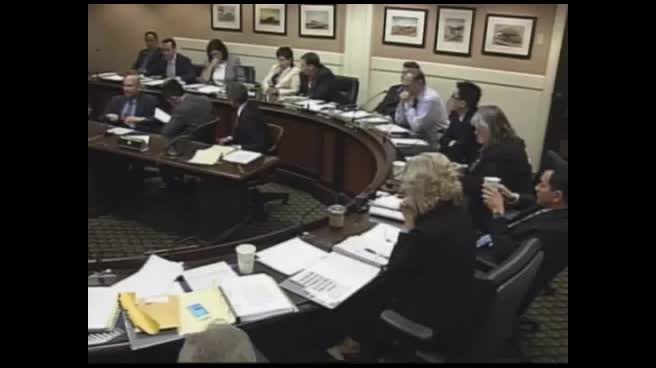 2MIN
Assembly Standing Committee on Utilities and Commerce
Bill Author

Bill Co-Author(s):