SCA 13: Bail: risk of flight exception.
- Session Year: 2015-2016
- House: Senate
- Latest Version Date: 2016-05-13
The California Constitution requires a person to be released on bail, as provided, except for if he or she is accused of certain crimes and offenses, including capital crimes when the facts are evident or the presumption great, and felony offenses involving acts of violence on another person, or felony sexual assault offenses on another person, when the facts are evident or the presumption great and the court finds based upon clear and convincing evidence that there is a substantial likelihood the persons release would result in great bodily harm to others.
This measure would expand the exception from the right to bail described above to include crimes in which a person is accused of committing felony sexual assault offenses against a minor and other, specified sex offenses committed against a minor when the facts are evident or the presumption great and the court finds based on preponderance of the evidence that there is a substantial likelihood the person will flee if he or she is released and that no condition or combination of conditions will reasonably assure ensure the persons appearance at hearing or trial if he or she released.
The California Constitution requires a person to be released on bail, as provided, except for certain crimes and offenses, including capital crimes when the facts are evident or the presumption great, and felony offenses involving acts of violence on another person, or felony sexual assault offenses on another person, when the facts are evident or the presumption great and the court finds based upon clear and convincing evidence that there is a substantial likelihood the persons release would result in great bodily harm to others.
This measure would expand the exception described above to include felony offenses when the facts are evident or the presumption great and the court finds based on preponderance of the evidence that there is a substantial likelihood the person will flee if released and that no condition or combination of conditions will reasonably assure the persons appearance at hearing or trial if released.
Resolved by the Senate, the Assembly concurring, That the Legislature of the State of California at its 201516 Regular Session commencing on the first day of December 2014, two-thirds of the membership of each house concurring, hereby proposes to the people of the State of California, that the Constitution of the State be amended as follows:
(a)A person shall be released on bail by sufficient sureties, except for any of the following crimes and offenses:
(1)Capital crimes when the facts are evident or the presumption great.
(2)Felony offenses involving acts of violence on another person, or felony sexual assault offenses on another person, when the facts are evident or the presumption great and the court finds based upon clear and convincing evidence that there is a substantial likelihood the persons release would result in great bodily harm to others.
(3)Felony offenses when the facts are evident or the presumption great and the court finds based on clear and convincing evidence that the person has threatened another with great bodily harm and that there is a substantial likelihood that the person would carry out the threat if released.
(4)Felony sexual assault offenses against a minor and other sex offenses described in the Sex Offender Registration Act when committed against a minor, including, but not limited to, any of the following, when the facts are evident or the presumption great and the court finds based on preponderance of the evidence that there is a substantial likelihood the person will flee if he or she is released and that no condition or combination of conditions will reasonably assure ensure the persons appearance at hearing or trial if released. he or she is released:
(A)Oral copulation.
(B)Lewd and lascivious acts with a minor or who is under 14 years of age.
(C)Arranging a meeting with a minor or a person he or she believes to be a minor for the purpose of engaging in lewd or lascivious behavior, including, but not limited to, engaging in sexual conduct with, or in the presence of, that minor.
(D)An attempt to commit an act described in subparagraph (A), (B), or (C).
(b)Excessive An excessive amount of bail shall not be required. imposed. In fixing the amount of bail, the court shall take into consideration the seriousness of the offense charged, the previous criminal record of the defendant, and the probability of his or her appearing at the trial or hearing of the case. or trial.
(c)A person may be released on his or her own recognizance in the courts discretion.
Resolved by the Senate, the Assembly concurring, That the Legislature of the State of California at its 201516 Regular Session commencing on the first day of December 2014, two-thirds of the membership of each house concurring, hereby proposes to the people of the State of California, that the Constitution of the State be amended as follows:
(a)A person shall be released on bail by sufficient sureties, except for: for any of the following crimes and offenses:
(a)
(1)Capital crimes when the facts are evident or the presumption great; great.
(b)
(2)Felony offenses involving acts of violence on another person, or felony sexual assault offenses on another person, when the facts are evident or the presumption great and the court finds based upon clear and convincing evidence that there is a substantial likelihood the persons release would result in great bodily harm toothers; or others.
(c)
(3)Felony offenses when the facts are evident or the presumption great and the court finds based on clear and convincing evidence that the person has threatened another with great bodily harm and that there is a substantial likelihood that the person would carry out the threat if released.
(4)Felony offenses when the facts are evident or the presumption great and the court finds based on preponderance of the evidence that there is a substantial likelihood the person will flee if released and that no condition or combination of conditions will reasonably assure the persons appearance at hearing or trial if released.
Excessive
(b)Excessive bail may shall not be required. In fixing the amount of bail, the court shall take into consideration the seriousness of the offense charged, the previous criminal record of the defendant, and the probability of his or her appearing at the trial or hearing of the case.
A
(c)A person may be released on his or her own recognizance in the courts discretion.
|
Date
|
Status
|
|---|---|
| Jun 14, 2016 | June 14 hearing: Testimony taken. Hearing postponed by committee. |
| May 25, 2016 | Set for hearing June 14. |
| May 16, 2016 | From committee with author's amendments. Read second time and amended. Re-referred to Com. on PUB. S. |
| Apr 28, 2016 | Referred to Coms. on PUB. S., E. & C.A., and APPR. |
| Apr 13, 2016 | From printer. May be acted upon on or after May 13. |
| Apr 12, 2016 | Introduced. Read first time. To Com. on RLS. for assignment. To print. |
This list shows positions taken on this bill by organizations on the date displayed, which is linked to the original source.
Positions by individuals are not included.
SENATE COMMITTEE ON PUBLIC SAFETY
Senator Loni Hancock, Chair
2015 - 2016 Regular
Bill No: SCA 13 Hearing Date: June 14, 2016
Author: | Nguyen | ||
Version: | May 16, 2016 | ||
Urgency: |
| Fiscal: | No |
Consultant: | JM | ||
Subject: Bail: Risk of Flight Exception
HISTORY
Source: Orange County District Attorney
Prior Legislation: None directly on point
Support: Unknown
Opposition: Golden State Bail Agents Association
PURPOSE
The purpose of this proposed constitutional amendment is to prohibit bail in cases in which the defendant is charged with a sex crime against a minor and there is high likelihood that the defendant would abscond if granted bail, despite any conditions of release.
Existing law states that bail permits a defendant to be released from custody by posting bond, which is a promise to pay the bond amount unless the defendant meets the conditions, which is generally to make all of their court appearances. (Pen. Code, § 1269.)
Existing California Constitutional provisions state that a person shall be released on bail, except for the following crimes when the facts are evident or the presumption great:
- Capital crimes;
- Felonies involving violence or sexual assault when the court finds by clear and convincing evidence that there is a substantial likelihood the person's release would result in great bodily harm to others; and
- Felonies where the court finds by clear and convincing evidence that the person has threatened another with great bodily harm and that there is a substantial likelihood that the person would carry out the threat if released. (Cal. Const., Art. I, § 12, subds.(a)-(c).)
Existing California Constitutional provisions provide that the court, in setting bail, shall consider the seriousness of the offense, the defendant's criminal record, and the probability of his or her return to court. The court, in its discretion, may release a person on his or her own recognizance. (Cal. Const., Art. I, § 12.)
Existing law states that where a person has been arrested without a warrant for a bailable felony offense or the misdemeanor of violating a domestic violence restraining order, the following provisions apply:
- Where the arresting officer believes that the amount of bail set out in the bail schedule is insufficient to assure the appearance of the defendant in court or the amount is insufficient to assure protection of the victim, or a relative of a victim, of domestic violence the officer shall prepare a declaration setting forth the facts supporting such a conclusion.
- The declaration of the officer shall be made under penalty of perjury.
- The defendant may apply to be released on bail in an amount lower than the schedule provides or on his or her own recognizance.
- The defendant's application may be made personally, through counsel, or by a family member or friend.
- The court or magistrate has discretion to set bail on terms and conditions that are appropriate.
- If no change in bail is made within eight hours following application, the defendant shall be entitled to release pursuant to the bail schedule. (Pen. Code § 1269c.)
Existing law provides that before any person arrested for a serious or violent felony (except residential burglary[1]), spousal rape, stalking, inflicting corporal injury on or battering a cohabitant, as specified, dissuading a witness, or criminal threats may be released on bail in an amount that is more or less than the amount contained in the schedule of bail for the offense, or released on his or her own recognizance ("OR"), a hearing must be held in open court before the magistrate or judge. (Pen. Code § 1270.1 (a).)
Existing law provides that bail is set by the magistrate at the defendant’s first court appearance. (Cal. Const. art. I, section 12; Pen. Code, § 1271.)
Existing law provides that in making a bail decision the court shall consider public safety, the seriousness of the offense, the previous criminal record of the defendant, and the probability of his or her returning to court. Public safety shall be the primary consideration. In considering the seriousness of the offense, the court shall consider the alleged injury to the victim, threats to the victim or a witness, use of a firearm or weapon and the use or possession of controlled substances by the defendant. (Pen. Code § 1275, subd. (a).)
Existing law states that judges fix the bail amount according to a countywide schedule which sets bail amounts according to the offense charged. (Pen. Code, § 1269b, subd. (c).)
Existing law allows judges to adjust the bail up or down from the fee schedule when certain conditions exist, but public safety is the primary concern. (Pen. Code, § 1268, 1269c, 1275, 1289.)
Existing law permits judges to attach conditions on bail which, if violated, can result in forfeiture of the bail. (Pen. Code, § 1269c)
Existing law states that defendants forfeit their bail when they abscond, i.e. when the defendant fails to appear for their court hearing without a valid excuse. (Pen. Code, § 1275, 1305.)
Existing law allows judges to adjust the bail up or down from the fee schedule when certain conditions exist, but public safety is the primary concern. (Pen. Code, § 1268, 1269c, 1275, 1289.)
Existing law permits judges to attach conditions on bail which, if violated, can result in forfeiture of the bail. (Pen. Code, § 1269c)
Existing law states that defendants forfeit their bail when the defendant fails to appear for a court hearing without a valid excuse. (Pen. Code, § 1275, 1305.)
Existing law requires a person convicted of enumerated sex offenses and sexually-related human trafficking crimes to register within five working days of coming into a city or county, with law enforcement officials, as specified. (Pen. Code § 290.)
Existing law grants a sentencing court discretion to order a person convicted of any crime committed out of “sexual compulsion” or for sexual gratification to register as a sex offender. (Pen. Code § 290.006)
This bill prohibits release on bail under the following circumstances:
- The defendant has been charged with a “felony sexual assault” against a minor “and other sex offenses described in the Sex Offender Registration Act when committed against a minor including, but not limited to, any of the following” offenses:
A. Oral copulation.
B. Lewd and lascivious acts with a minor or who is under 14 years of age
C. Arranging a meeting with a minor or a person he or she believes to be a minor for the purpose of engaging in lewd or lascivious behavior, including, but not limited to, engaging in sexual conduct with, or in the presence of, that minor.
D. An attempt to commit an act described in subparagraphs A through C
- The facts are evident and or the presumption great and the court finds by a preponderance of the evidence that “there is a substantial likelihood the person will flee” if released and “no condition or combination of conditions” will ensure the person’s return to court.
RECEIVERSHIP/OVERCROWDING CRISIS AGGRAVATION
For the past several years this Committee has scrutinized legislation referred to its jurisdiction for any potential impact on prison overcrowding. Mindful of the United States Supreme Court ruling and federal court orders relating to the state’s ability to provide a constitutional level of health care to its inmate population and the related issue of prison overcrowding, this Committee has applied its “ROCA” policy as a content-neutral, provisional measure necessary to ensure that the Legislature does not erode progress in reducing prison overcrowding.
On February 10, 2014, the federal court ordered California to reduce its in-state adult institution population to 137.5% of design capacity by February 28, 2016, as follows:
- 143% of design bed capacity by June 30, 2014;
- 141.5% of design bed capacity by February 28, 2015; and,
- 137.5% of design bed capacity by February 28, 2016.
In December of 2015 the administration reported that as “of December 9, 2015, 112,510 inmates were housed in the State’s 34 adult institutions, which amounts to 136.0% of design bed capacity, and 5,264 inmates were housed in out-of-state facilities. The current population is 1,212 inmates below the final court-ordered population benchmark of 137.5% of design bed capacity, and has been under that benchmark since February 2015.” (Defendants’ December 2015 Status Report in Response to February 10, 2014 Order, 2:90-cv-00520 KJM DAD PC, 3-Judge Court, Coleman v. Brown, Plata v. Brown (fn. omitted).) One year ago, 115,826 inmates were housed in the State’s 34 adult institutions, which amounted to 140.0% of design bed capacity, and 8,864 inmates were housed in out-of-state facilities. (Defendants’ December 2014 Status Report in Response to February 10, 2014 Order, 2:90-cv-00520 KJM DAD PC, 3-Judge Court, Coleman v. Brown, Plata v. Brown (fn. omitted).)
While significant gains have been made in reducing the prison population, the state must stabilize these advances and demonstrate to the federal court that California has in place the “durable solution” to prison overcrowding “consistently demanded” by the court. (Opinion Re: Order Granting in Part and Denying in Part Defendants’ Request For Extension of December 31, 2013 Deadline, NO. 2:90-cv-0520 LKK DAD (PC), 3-Judge Court, Coleman v. Brown, Plata v. Brown (2-10-14). The Committee’s consideration of bills that may impact the prison population therefore will be informed by the following questions:
- Whether a proposal erodes a measure which has contributed to reducing the prison population;
- Whether a proposal addresses a major area of public safety or criminal activity for which there is no other reasonable, appropriate remedy;
- Whether a proposal addresses a crime which is directly dangerous to the physical safety of others for which there is no other reasonably appropriate sanction;
- Whether a proposal corrects a constitutional problem or legislative drafting error; and
- Whether a proposal proposes penalties which are proportionate, and cannot be achieved through any other reasonably appropriate remedy.
COMMENTS
- Need for This Bill
According to the author:
Senate Constitutional Amendment 13 is in response to the case of Minh Beo, an entertainer from Vietnam who was arrested on March 24, 2016 for molesting a
child under 14 while recruiting for a talent show in Huntington Beach. Minh Beo has a close relationship with the Vietnamese Government, creating a concern that he might avoid prosecution if released on bail and the Vietnamese government grants him a new visa.
The California Constitution guarantees the pretrial right to be released from custody on non-excessive bail. (Cal. Const. art. I, 12.) Penal Code section 1271 implements this constitutional provision, providing generally that a defendant “may be admitted to bail before conviction, as a matter of right.” (Cal. Pen. Code, § 1271.) There are three exceptions to the constitutional right to bail in California, one for capital offenses and two premised upon public safety. (Cal. Const. art. I, § 12(a)-(c).) A defendant charged with a capital offense cannot be admitted to bail when proof of guilt is evident or the presumption thereof is great. (Cal. Const. art. I, § 12(a); see also, Cal. Pen. Code, § 1270.5.) Bail may be denied in certain noncapital cases where the court finds a substantial likelihood of harm to others if the defendant were to be released. When the facts are evident or the presumption of guilt is great, bail may be denied in a felony cases that either: 1) involve an “act of violence on another person, or felony sexual assault offenses on another person…and the court finds based upon clear and convincing evidence that there is a substantial likelihood the person’s release would result in great bodily harm to others;” or 2) where “the court finds based on clear and convincing evidence that the person has threatened another with great bodily harm and that there is a substantial likelihood that the person would carry out the threat if released.” (Cal. Const. art. I, § 12(b) & (c).)
Presently, the California Constitution does not provide an exemption from the right to bail on the basis of a defendant’s risk of flight if released. Such pretrial detention authority does, however, exist in federal law and has repeatedly survived constitutional challenge.
The federal Bail Reform Act of 1984 provides that a court may detain a defendant pending trial if there exists “[a] serious risk that the person will flee…” and “no condition or combination of conditions will reasonably assure the appearance of the person as required…” (18 U.S.C. § 3142(e)-(f).) Pretrial detention under such circumstances has been upheld as constitutional under the 8th Amendment. (United States v. Winsor (9th Cir. 1986) 785 F.2d 755, 756; United States v. Acevedo-Ramos (1st Cir. 1985) 755 F.2d 203, 206 [“Where risk of flight is unusually great, a court may deny bail and keep a defendant in custody in order to insure that the trial will take place.”]; Numerous other cases are in accord.
As amended, SCA 13 would add flight risk to the exemption to the right of bail under the California Constitution when the defendant is accused of a sex crime against a minor.
2. Very Broad Reach of the Bail Prohibitions in this Bill, Including Defendants Charged with Misdemeanors
The bill applies to a wide range of offenses, including, it appears, misdemeanors. Although the bill uses the term “sexual assault offenses,” that term is not defined.[2] Penal Code Section 220 defines the crime of assault with intent to commit mayhem or a specified sex crime. The penalty for assault with assault to commit a sex crime is greater if the victim is a minor. However, if the intent of the author is to include violations of Penal Code Section 220, that could have been stated. The bill also specifically includes “other sex offenses described in the Sex Offender Registration Act when committed against a minor…” Arguably, the reference to any “sexual assault” is superfluous, although such a statutory interpretation is disfavored and courts must presume that words in a statute have meaning.
It appears that this bill would include virtually all sexual offenses against minors, including misdemeanors. Existing bail prohibitions specifically refer to “felony offenses.” This bill only specifically refers to “felony sexual assault.” The reference to any other offense against a minor for which sex offender registration is required is not modified or described as any felony sex offense. The bill specifically refers to “oral copulation” of or with a minor, a crime that includes misdemeanors. Further, the bill also specifically includes “arranging a meeting with a minor or a person he believes is a minor” for sexual purposes. This provision reads as a summary or description of the crime defined in Penal Code Section 288.4. It is a misdemeanor unless the defendant has been convicted of the offense before or actually goes to the place where the meeting was to occur. Thus, it is unlikely that courts would find that the bill applies only to felonies.
The bill likely excludes unlawful sexual intercourse, as registration is not required under Penal Code Section 290 for that crime.[3] (Johnson v. Dept. of Justice (2015) 60 Cal.4th 871.) However, as “felony sexual assault” is not defined, a prosecutor could argue the unlawful sexual intercourse could be covered by the bill. Crimes covered by this appear to include charges of oral copulation, sodomy, or sexual penetration involving a 17 year old minor and an 18 year old adult. If the minor is under the age of 16 and the perpetrator over the age of 21, these crimes are straight felonies, otherwise the offenses are wobblers.
In a rather anomalous provision, the bill does not include a bail prohibition for any attempt to commit a sex crime other than the enumerated crimes. An attempted sodomy, sexual penetration or rape could be a more egregious than an attempt to commit felony oral copulation, especially in a case involving violence or threatened violence. This provision is difficult to interpret, as an attempt to commit a crime for which registration is required is an offense for which a convicted defendant must register. However, the specific references to attempts to commit the specifically described crimes could well be interpreted to exempt other attempted sex crimes from the bill.
The bill was prompted by concern that a defendant in Orange County with connections in the Government of Vietnam could permanently flee the United States if granted bail of any amount. The defendant has been charged with lewd conduct with a child under the age of 14. This crime is a felony, with a sentencing triad of 3, 6 or years and a triad of 5, 8 or 10 years if any force or coercion is used to commit the crime. Numerous sentencing enhancement apply that can require various life sentences. Members of the Committee may wish to consider whether the amendment to the California Constitution proposed by this measure could be limited to cases similar or equivalent to the case that prompted introduction of the measure.
COULD THIS MEASURE BE LIMITED TO CHARGES OF EGREGIOUS FELONY OFFENSES AGAINST MINORS, SIMILAR TO THE CASE THAT PROMPTED INTRODUCTION OF THIS MEASURE?
- Constitutional Provisions and Statutes Regulating Release on Bail
Many statutes regulate a magistrate or court’s power and discretion to set bail and impose conditions of release. For example, a hearing in open court is required to depart up or down from the published bail schedule where the defendant is charged with a serious felony. (Pen. Code §1270.1) Penal Code Section 1269c authorizes a law enforcement officer, pursuant to an affidavit or declaration, to obtain a court order to raise bail for a defense arrested for domestic violence if the bail set in the bail schedule is “insufficient to assure protection of the victim” or others close to the victim. It does not appear that courts have ignored these statutes or that they have been ineffective in protecting the public and ensuring that defendants return to court.
A constitution enumerates the rights, duties and powers of citizens and the three branches of the government. The right to be free from excessive bail was included in the 8th Amendment to the United States Constitution when the Bill of Rights was enacted in 1791. The bail provisions in the 8th Amendment were drawn from the English Bill of Rights of 1689, although bail had been available under English law for centuries prior to 1689. Bail – and the more general right to pretrial release – was believed to be essential to effectuate the presumption of innocence by allowing an accused to prepare his defense. (Congressional Research Service, Annotated U.S. Constitution, 2000 supplement.)
In contrast with the federal constitution, the California Constitution includes a right to bail, per se, with specified and limited exceptions. Thus, it appears that any outright prohibition on bail for any offense would have to be included in the California Constitution.
- Abbreviated History of Bail
Bail is a contract for release of a person from jail upon a promise to appear at future court hearings. The promise is backed by a bond issued through a bail agent. A bailed defendant is said to be in the constructive custody of the bail agent. (Taylor v. Taintor (1862) (16 Wall.) 83U.S. 366, 372.) “In pre-Norman England, a bondsman … [could] suffer the same penalty as the fugitive. This … led to the allowance of rather extreme measures for capture [of the fugitive].” (Ouzts v. Maryland National Ins. Co. (1974) 505 F.2d 547, 550.) However, it appears that bail in England was typically posted in the form of pledges of land or property by the defendant personally or by a relative. Commercial bail – bail posted by private businesses for profit – was an innovation of the American frontier in the early 1880s. (Illegal Globally, Bail for Profit Remains in U.S., Liptak, New York Times, Jan. 29, 2008.)
- Current Bail Law and Practice in California
Section 12 of Article 1 of the California Constitution provides, with limited exceptions, that a criminal defendant has a right to bail and what conditions shall be taken into consideration in setting bail. A defendant may post bail by depositing cash or an equivalent form of currency, provide a security in real property, or undertake bail using a bail bond. Statutory law describes and governs the process whereby the court sets bail for a criminal defendant. (Pen. Code § 1269b.)
The bail bond is the most common form of posting bail. A bail bond is essentially a contract that provides the court with a guarantee that the defendant will appear for a hearing or trial. A defendant pays a licensed bail agent a percentage of the total amount of bail ordered as a non-refundable fee – often an amount in the range of 10%. The bail agent then contracts with a surety company to issue a bail bond – essentially, an insurance policy. The bond is issued providing that if the defendant fails to appear, the county will receive the full amount of bail set by the court. The bond is provided to the court and, if accepted, the defendant is released. As designed, the bail system often allows the court to rely on the private sector to ensure appearances and provide a means for the county to be made whole in the event that a person fails to appear.
While the main purpose of a bail bond is to provide some assurance that a defendant will return to court to resolve the pending charges, courts also consider the danger a released defendant will pose to the public or specific persons. Bail is set through a bail schedule that lists preset amounts of bail for various crimes. A committee of judges in each county promulgates the bail schedule for that county. (Pen. Code § 1269b, subd. (c).) A defendant or the prosecution can move the judge presiding over a particular case to raise or lower the amount of bail, or the defendant can request release on his or her own recognizance. (Pen. Code § 1275.) Additional statutory rules apply if the defendant is charged with a serious felony or domestic violence. (Pen. Code § 1270.1.)
- Bail Forfeiture
A defendant forfeits the bail they posted when they fail to appear in court or when they do not fulfill the conditions of their bail, such as committing another offense or intimidating witnesses in their case. A motion to vacate forfeiture of bail is simply a motion to seeking a court order to forfeit the bail posted by the defendant. These motions are filed either by defense counsel or the bond surety agent in order to recover the bail funds they posted. When defense counsel, or a surety agent, files a motion to vacate forfeiture of bail, a prosecuting attorney has the option to contest the motion.
- Issues About Money Bail Generally
The United States is one of the few countries in the world that still use money bail. Concerns have been raised in recent years about the great number of defendants who are held in jail throughout the pretrial or pre-plea period because they cannot afford bail. The high number of inmates awaiting resolution of their cases leaves limited space for defendants serving executed sentences for misdemeanor convictions and felony sentences imposed pursuant to Penal Code Section (h) – criminal justice realignment. According to a July 2015 report by the Public Policy Institute of California, over 60% of inmates are awaiting resolution of their cases or sentencing. (http://www.ppic.org/main/publication_quick.asp?i=1154.)
This bill would include a new provision in the California Constitution directing courts to deny bail if the defendant has been charged with a sex crime against a child and there is a great likelihood that the defendant will flee. It can be argued that this bill could be included in a system where pretrial release decisions are based on comprehensive evaluation of each defendant’s risk to flee and endanger the public. Such systems would also require monitoring of each released person to ensure that the defendant returns to court and to protect the public.
Under the money bail system, the financial interest of the bail agent creates a strong incentive for the agent to bring a defendant back to court, even after the defendant initially absconds.
A New York Times article noted that commercial bail has been eliminated in only four jurisdictions in the United States - Illinois, Kentucky, Oregon and Wisconsin. The article noted that the American Bar Association has opined that commercial bail discriminates against the poor and middle class, does little to assure public safety and usurps decisions on release that should be made by the courts. (Illegal Globally, Bail for Profit Remains in U.S., Liptak, New York Times, Jan. 29, 2008.)
A prosecutor in Oregon stated that the bail industry was “rife with corruption” but also noted that failures to appear increased after commercial bail was eliminated. The story noted that the financial incentive for bail agents to apprehend clients and the relatively free hand given bail agents and bounty hunters in arresting fugitive defendants often makes bail agents particularly efficient in returning fugitives to court.
February, 2011 study and policy paper on pretrial release prepared by the International Association of Chiefs of Police (IACP), in collaboration with the United States Department of Justice and the Pretrial Justice Institute. The IACP paper argued that pretrial release decisions should be based on an evaluation of risk. In particular, pretrial release decisions should be made based on the danger the defendant presented to the public and the likelihood the defendant would return to court.
The study concluded that the setting of money bail was often “haphazard.” The amount of money bail set did not adequately reflect or consider the danger the defendant presented to the public. While bail amounts could be raised in response to risk, too often dangerous defendants are released prior to trial solely because they had the money to post bail. The paper noted examples in which bail agents had posted relatively high-amount bonds for dangerous defendants who had paid discounted premiums. Thus, despite the fact that the amount of the bail bond was significant, the value of the bond was not a barrier to the defendant in gaining release.
The IAPC paper recommended adoption of publicly funded and government-run pretrial release programs that evaluated and supervised defendants through the pretrial process. The programs should be consistent with the up-to-date research. The IAPC paper found that pretrial release programs should include the following features and purposes:
- Ensure the safety of the public.
- Supervise defendants awaiting trial.
- Ensure that defendants return to court.
- Reduce jail overcrowding, thereby wisely using public funds.
-- END –
All violent felonies (Pen. Code §667.5, subd. (c) are also serious felonies (Pen. Code §1192.7. subd. (c). For purposes of this analysis, a reference to serious felonies includes violent felonies. ↑
An assault is generally defined as engaging in conduct that a reasonable person would be aware would directly, naturally and probably cause a battery of another person. (People v. Williams (2001) 26 Cal.4th 779, 786. ↑
A court can order a defendant convicted of crime not listed in Section 290 to register as a sex offender if the crimes was committed for sexual gratification. (Pen. Code § 290.006.) ↑
Discussed in Hearing
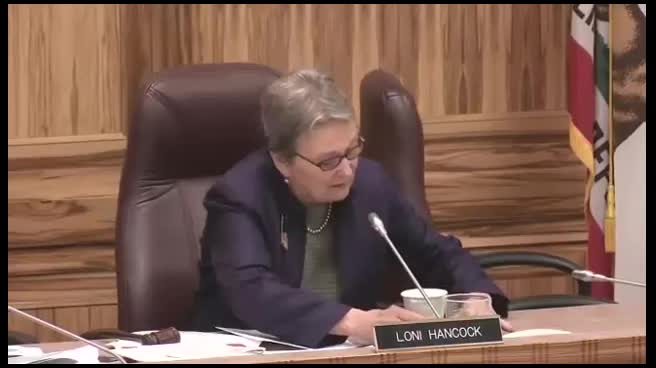 18MIN
Senate Standing Committee on Public Safety
Bill Author

Bill Co-Author(s):