SCR 25: Trade: Israel: memorandum of understanding.
- Session Year: 2015-2016
- House: Senate
- Latest Version Date: 2015-07-22
This measure would state the Legislatures support for the memorandum of understanding for strategic partnerships for joint innovation, exchanges, and cooperation between California and Israel.
This measure would state the Legislatures support for the memorandum of understanding for strategic partnerships for joint innovation, exchanges, and cooperation between California and Israel.
This measure would state the Legislatures support for the memorandum of understanding for strategic partnerships for joint innovation, exchanges, and cooperation between California and Israel.
This measure would state the Legislatures support for the memorandum of understanding for strategic partnerships for joint innovation, exchanges, and cooperation between California and Israel.
This measure would state the Legislatures support for the memorandum of understanding for strategic partnerships for joint innovation, exchanges, and cooperation between California and Israel.
WHEREAS, The California Legislature recognizes the many ties that inexorably bind the State of California to the nation of Israel; and
WHEREAS, Two-way trade between Israel and California totaled over $4.2 billion in 2014one of the largest two-way trade relationships between Israel and a state of the United States; and
WHEREAS, California and Israel share close ties and are global leaders in the alternative energy, environmental technology, and other technology-based industry sectors; and
WHEREAS, California is home to the largest in-state innovation network in the United States, which offers technology-commercialization opportunities for Israel; and
WHEREAS, March 5, 2015, marks the one-year anniversary of the historic meeting at which the Governor of California and the Prime Minister of Israel signed a memorandum of understanding (MOU) for strategic partnerships for joint innovation, exchanges, and cooperation between California and Israel; and
WHEREAS, This action was the culmination of an effort started in the California Legislature as Assembly Bill 1032 of the 200910 Regular Session, calling for the creation of the MOU geared toward fostering the exchange of information and research. The MOU will strengthen relationships with Israel and help California and Israel grow in these areas; and
WHEREAS, The participants in this MOU have expanded the current level of cooperation between Israel and California in areas including, but not limited to, alternative energy, environmental technology, health, food, trade, agriculture, and other technology-based industry sectors, business innovation, research, development, and academia; and
WHEREAS, Two additional agreements have been signed with the assistance of the Governors Office of Business and Economic Development (GO-Biz). The first agreement being an agreement between GO-Biz and Israel to add an economic component to the bilateral partnership and a second agreement between the California Institute of Regenerative Medicine and Israels Ministry of Economy to facilitate matching grants for stem cell research and development; and
WHEREAS, A cybersecurity strategic plan was developed between Israel and California to explore government to government high level security discussions on responding to targeted attacks, gaining access to California or Israel markets and workforce development projects; and
WHEREAS, Israeli water experts met with California elected officials, regional and local water managers, as well as water management experts from the Central Valley; and
WHEREAS, The unfettered collaboration between Israeli and California universities has and will benefit multiple disciplines and enhances the academic experience of the faculty and students from Israel and California; and
WHEREAS, The Rady School of Management at the University of California, San Diego, and the David Nazarian College of Business and Economics at California State University, Northridge, continue to lead Californias collaboration with Israeli universities; and
WHEREAS, The MOU will also establish a formal relationship between the two parties to foster economic cooperation and economic development, facilitate joint industrial research and development, and enhance business relationships and educational opportunities between all Israeli universities and all California universities to foster job creation and incubate global solutions from joint California-Israeli innovation initiatives; and
WHEREAS, Collaboration with Israel will foster peace and democracy in the Middle East; and
WHEREAS, To achieve these aims, the MOU envisions undertaking the following actions: convening bilateral, interagency working groups with international expertise to coordinate initiatives; facilitating collaborations between Israeli and California entrepreneurs and researchers through the California innovation hub network; supporting and encouraging further development of interpersonal contacts and exchanges and promoting mutual cooperation, understanding, and friendship by encouraging ad hoc task forces, trade delegations, and professional exchanges between Israel and California in key sectors; creating public-private partnerships between Californian and Israeli entities in the areas of economic development, social entrepreneurship, and academic research; strengthening the sister city program; and facilitating collaboration between universities in California and Israel to foster research and development; now, therefore, be it
Resolved by the Senate of the State of California, the Assembly thereof concurring, That the Legislature hereby supports the memorandum of understanding for establishing strategic partnerships between California and Israel that support joint innovation in clean technologies, water conservation, health, biotechnology, cybersecurity, education, agricultural technology, research, and other informational exchanges, and that also promote mutual cooperation, understanding, and friendship by encouraging trade delegations and collaboration on mutual projects and issues of interest; and be it further
Resolved, That the Secretary of the Senate transmit copies of this resolution to the author for appropriate distribution.
WHEREAS, The California Legislature recognizes the many ties that inexorably bind the State of California to the nation of Israel; and
WHEREAS, Two-way trade between Israel and California totaled over $4.2 billion in 2014one of the largest two-way trade relationships between Israel and a state of the United States; and
WHEREAS, California and Israel share close ties and are global leaders in the alternative energy, environmental technology, and other technology-based industry sectors; and
WHEREAS, California is home to the largest in-state innovation network in the United States, which offers technology-commercialization opportunities for Israel; and
WHEREAS, March 5, 2015, marks the one year one-year anniversary of the historic meeting at which the Governor of California and the Prime Minister of Israel signed a memorandum of understanding (MOU) for strategic partnerships for joint innovation, exchanges, and cooperation between California and Israel; and
WHEREAS, This action was the culmination of an effort started in the California Legislature as Assembly Bill 1032 of the 200910 Regular Session, calling for the creation of the MOU geared toward fostering the exchange of information and research. The MOU will strengthen relationships with Israel and help California and Israel grow in these areas; and
WHEREAS, The participants in this MOU seek to expand have expanded the current level of cooperation between Israel and California in areas including, but not limited to, alternative energy, environmental technology, health, food and, trade, agriculture, and other technology-based industry sectors, business innovation, research, development, and academia; and
WHEREAS, Two additional agreements have been signed with the assistance of the Governor's Office of Business and Economic Development (GO-Biz). The first agreement being an agreement between GO-Biz and Israel to add an economic component to the bilateral partnership and a second agreement between the California Institute of Regenerative Medicine and Israels Ministry of Economy to facilitate matching grants for stem cell research and development; and
WHEREAS, A cybersecurity strategic plan was developed between Israel and California to explore government to government high level security discussions on responding to targeted attacks, gaining access to California or Israel markets and workforce development projects; and
WHEREAS, Israeli water experts met with California elected officials, regional and local water managers, as well as water management experts from the Central Valley; and
WHEREAS, The unfettered collaboration between Israeli and California universities has and will benefit multiple disciplines and enhances the academic experience of the faculty and students of both countries from Israel and California; and
WHEREAS, The Rady School of Management at the University of California, San Diego, and the David Nazarian College of Business and Economics at California State University, Northridge, continue to lead Californias collaboration with Israeli universities; and
WHEREAS, The MOU will also establish a formal relationship between the two parties to foster economic cooperation and economic development, facilitate joint industrial research and development, and enhance business relationships and educational opportunities between all Israeli universities and all California universities to foster job creation and incubate global solutions from joint California-Israel California-Israeli innovation initiatives; and
WHEREAS, Collaboration with Israel will foster peace and democracy in the Middle East; and
WHEREAS, To achieve these aims, the MOU envisions undertaking the following actions: convening bilateral, interagency working groups with international expertise to coordinate initiatives; facilitating collaborations between Israeli and Californian California entrepreneurs and researchers through the California innovation hub network; supporting and encouraging further development of interpersonal contacts and exchanges and promoting mutual cooperation, understanding, and friendship by encouraging ad hoc task forces, trade delegations, and professional exchanges between Israel and California in key sectors; creating public-private partnerships between Californian and Israeli entities in the areas of economic development, social entrepreneurship, and academic research; strengthening the sister city program; and facilitating collaboration between universities in California and Israel to foster research and development; now, therefore, be it
Resolved by the Senate of the State of California, the Assembly thereof concurring, That the Legislature hereby supports the memorandum of understanding for establishing strategic partnerships between California and Israel that support joint innovation in clean technologies, water conservation, health, biotechnology, cybersecurity, education, agricultural technology, research, and other informational exchanges, and that also promote mutual cooperation, understanding, and friendship by encouraging trade delegations and collaboration on mutual projects and issues of interest; and be it further
Resolved, That the Secretary of the Senate transmit copies of this resolution to the author for appropriate distribution.
WHEREAS, The California Legislature recognizes the many ties that inexorably bind the State of California to the nation of Israel; and
WHEREAS, Two-way trade between Israel and California totaled over $4.2 billion in 2014one of the largest two-way trade relationships between Israel and a state of the United States; and
WHEREAS, California and Israel share close ties and are global leaders in the alternative energy, environmental technology, and other technology-based industry sectors; and
WHEREAS, California is home to the largest in-state innovation network in the United States, which offers technology-commercialization opportunities for Israel; and
WHEREAS, March, 5, 2015, marks the one year anniversary of the historic meeting at which the Governor of California and the Prime Minister of Israel signed a memorandum of understanding (MOU) for strategic partnerships for joint innovation, exchanges, and cooperation between California and Israel; and
WHEREAS, This action was the culmination of an effort started in the California Legislature as Assembly Bill 1032 of the 200910 Regular Session, calling for the creation of the MOU geared toward fostering the exchange of information and research. The MOU will strengthen relationships with Israel and help California and Israel grow in these areas; and
WHEREAS, The participants in this MOU seek to expand the current level of cooperation between Israel and California in areas including, but not limited to, alternative energy, environmental technology, health, food and agriculture, and other technology-based industry sectors, business innovation, research, development, and academia; and
WHEREAS, The unfettered collaboration between Israeli and California universities will benefit multiple disciplines and enhances the academic experience of the faculty and students of both countries; and
WHEREAS, The MOU will also establish a formal relationship between the two parties to foster economic cooperation and economic development, facilitate joint industrial research and development, and enhance business relationships and educational opportunities between all Israeli universities and all California universities to foster job creation and incubate global solutions from joint California-Israel innovation initiatives; and
WHEREAS, Collaboration with Israel will foster peace and democracy in the Middle East; and
WHEREAS, To achieve these aims, the MOU envisions undertaking the following actions: convening bilateral, interagency working groups with international expertise to coordinate initiatives; facilitating collaborations between Israeli and Californian entrepreneurs and researchers through the California innovation hub network; supporting and encouraging further development of interpersonal contacts and exchanges and promoting mutual cooperation, understanding, and friendship by encouraging ad hoc task forces, trade delegations, and professional exchanges between Israel and California in key sectors; creating public-private partnerships between Californian and Israeli entities in the areas of economic development, social entrepreneurship, and academic research; strengthening the sister city program; and facilitating collaboration between universities in California and Israel to foster research and development; now, therefore, be it
Resolved by the Senate of the State of California, the Assembly thereof concurring, That the Legislature hereby supports the memorandum of understanding for establishing strategic partnerships between California and Israel that support joint innovation in clean technologies, water conservation, health, biotechnology, cybersecurity, education, agricultural technology, research, and other informational exchanges, and that also promote mutual cooperation, understanding, and friendship by encouraging trade delegations and collaboration on mutual projects and issues of interest; and be it further
Resolved, That the Secretary of the Senate transmit copies of this resolution to the author for appropriate distribution.
|
Date
|
Status
|
|---|---|
| Jul 22, 2015 | Chaptered by Secretary of State. Res. Chapter 127, Statutes of 2015. |
| Jul 22, 2015 | Enrolled and filed with the Secretary of State at 1:30 p.m. |
| Jul 16, 2015 | Assembly amendments concurred in. (Ayes 37. Noes 0. Page 1983.) Ordered to engrossing and enrolling. |
| Jul 16, 2015 | Assembly amendments concurred in. (Ayes 37. Noes 0.) Ordered to engrossing and enrolling. |
| Jul 14, 2015 | In Senate. Concurrence in Assembly amendments pending. |
| Jul 13, 2015 | Read. Amended. Adopted. (Page 2360.) Ordered to the Senate. |
| Jul 13, 2015 | Read. Amended. Adopted. Ordered to the Senate. |
| Jul 7, 2015 | From committee: Be adopted. Ordered to third reading. (Ayes 9. Noes 0.) (July 7). |
| Jun 30, 2015 | From committee with author's amendments. Read second time and amended. Re-referred to Com. on J., E.D., & E. |
| Jun 11, 2015 | Referred to Com. on J., E.D., & E. |
| Apr 13, 2015 | In Assembly. Held at Desk. |
| Apr 13, 2015 | Read. Adopted. (Ayes 34. Noes 0. Page 558.) Ordered to the Assembly. |
| Apr 9, 2015 | Ordered to third reading. |
| Apr 9, 2015 | From consent calendar on motion of Senator Block. |
| Apr 7, 2015 | Read second time. Ordered to consent calendar. |
| Apr 6, 2015 | From committee: Be adopted. Ordered to consent calendar. (Ayes 9. Noes 0. Page 507.) (April 6). |
| Mar 24, 2015 | Set for hearing April 6. |
| Mar 19, 2015 | Re-referred to Com. on B., P. & E.D. |
| Mar 5, 2015 | Introduced. Referred to Com. on RLS. |
|
Date
|
Description
|
Location
|
Votes
|
|
|---|---|---|---|---|
| Jul 16, 2015 | Unfinished Business SCR25 Block Concurrence | Senate Floor |
Passed |
|
| Jul 7, 2015 | Be adopted. To third reading. | Assembly Standing Committee on Jobs, Economic Development, and the Economy |
Passed |
|
| Apr 13, 2015 | Senate 3rd Reading SCR25 Block | Senate Floor |
Passed |
|
| Apr 6, 2015 | Be adopted and be ordered to the Consent Calendar | Senate Standing Committee on Business, Professions and Economic Development |
Passed |
This list shows positions taken on this bill by organizations on the date displayed, which is linked to the original source.
Positions by individuals are not included.
SCR 25
Page 5
|
Office of Senate Floor Analyses (916) 651-1520 Fax: (916) 327-4478 |
UNFINISHED BUSINESS
Bill No: SCR 25
Author: Block (D), Allen (D), Hertzberg (D), Jackson (D), Leno (D), Stone (R), and Wolk (D), et al.
Amended: 7/13/15
SENATE BUS, PROF. & ECON. DEV. COMMITTEE: 9-0, 4/6/15
AYES: Hill, Bates, Berryhill, Block, Galgiani, Hernandez, Jackson, Mendoza, Wieckowski
SENATE FLOOR: 34-0, 4/13/15
AYES: Allen, Anderson, Bates, Beall, Berryhill, Block, Cannella, De León, Fuller, Galgiani, Hall, Hancock, Hernandez, Hertzberg, Hill, Hueso, Huff, Jackson, Lara, Leno, Leyva, McGuire, Mendoza, Mitchell, Moorlach, Morrell, Nguyen, Nielsen, Pan, Roth, Stone, Vidak, Wieckowski, Wolk
NO VOTE RECORDED: Gaines, Liu, Monning, Pavley, Runner
ASSEMBLY FLOOR: Read and adopted, 7/13/15
SUBJECT: Trade: Israel: memorandum of understanding
DIGEST: This resolution states the Legislature’s recognition and support for the memorandum of understanding for strategic partnerships for joint innovation, exchanges, and cooperation (MOU) between California and Israel which was signed on March 5, 2014.
Assembly Amendments add co-authors and make additional statements about the importance of California’s MOU with Israel.
Existing federal law:
Gives the federal government the power to enter into treaties and trade agreements. Federal law requires Congress to approve international agreements. (United States (U.S.) Constitution, Article II)
Establishes, by executive order, the United States Trade Representative as an agency within the Executive Office of the President to be responsible for international trade negotiations. (Executive Order 12188)
Existing state law:
Establishes the Governor’s Office of Business and Economic Development (GO-Biz) within the Governor's Office for the purpose of serving as the lead state entity for economic strategy and marketing of California on issues relating to business development, private sector investment and economic growth. (Government Code (GC) §§ 12096 – 12098.5)
Specifies that GO-Biz is the primary state agency authorized to attract foreign investments, cooperate in international public infrastructure projects, and support California businesses in accessing markets, and requires the Director of GO-Biz to develop an international trade and investment program attracting employment-producing direct foreign investment to the state and providing support for California businesses in accessing international markets and increasing exports. (GC § 13996.41)
Authorizes GO-Biz to establish international trade and investment offices outside of the U.S. according to certain requirements. (GC § 13996.42)
This
resolution:
States the importance of California’s relationship with Israel and significance of the MOU.
States that the MOU has resulted in increased cooperation between California and Israel in areas of alternative energy, environmental technology, health, food and agriculture, trade and other technology-based industry sectors, business innovation, research, development, and academia.
States that since the MOU was signed in 2014, two additional agreements have been signed with the assistance of GO-Biz including agreements to add an economic component to the bilateral partnership and a second agreement between the California Institute of Regenerative Medicine and Israel’s Ministry of Economy to facilitate matching grants for stem cell research and development.
States that collaboration with Israel will foster peace and democracy in the Middle East.
States that to achieve these aims, the MOU envisions undertaking the following actions: convening bilateral, interagency working groups with international expertise to coordinate initiatives; facilitating collaborations between Israeli and Californian entrepreneurs and researchers through the California innovation hub network; supporting and encouraging further development of interpersonal contacts and exchanges and promoting mutual cooperation, understanding, and friendship by encouraging ad hoc task forces, trade delegations, and professional exchanges between Israel and California in key sectors; creating public-private partnerships between Californian and Israeli entities in the areas of economic development, social entrepreneurship, and academic research; strengthening the sister city program; and facilitating collaboration between universities in California and Israel to foster research and development.
Resolves that the Legislature hereby supports the MOU for establishing strategic partnerships between California and Israel that support joint innovation in clean technologies, water conservation, health, biotechnology, cybersecurity, education, agricultural technology, research, and other informational exchanges, and that also promote mutual cooperation, understanding, and friendship by encouraging trade delegations and collaboration on mutual projects and issues of interest.
Background
On March 5, 2014, Governor Jerry Brown and Israeli Prime Minister Benjamin Netanyahu signed the Israel-California Strategic Partnership for the purposes of establishing a formal relationship between them to foster economic cooperation and economic development, facilitate joint industrial research and development, and enhance business relationships and educational opportunities to foster job creation and incubate global solutions from joint California-Israel innovation initiatives. California would boost economic, cultural, and academic cooperation between California and Israel in the areas of cybersecurity, health, biotechnology, education, agricultural technology, water conservation, and alternative energy.
Since the MOU was signed, there have been a number of collaborative efforts initiated to meet the goals of the agreement. A new California iHub program was developed, iHub Worldwide Innovation Network, to facilitate the introduction of foreign companies, investment and partners, including those in Israel, to the state’s iHubs. Cyber security discussions, including workshops and seminars on business expansion partnerships with Israeli experts and firms are in the works. Leading Israeli water experts visited California to learn more about water management in the state. Israel and the California Department of Food and Agriculture are in contact and GO-Biz works with agri-tech companies from both California and Israel to advance partnership and business opportunities. Alternative energy and clean technology efforts between California and Israel are being advanced through discussions at the California Energy Commission and a delegation visit of Israeli companies, led by Israeli officials, to the Los Angeles Clean Tech Global Showcase. Arts and cultural exchanges are underway, including partnership between the California Arts Council and Israel. California officials have spearheaded introductions between Israel and the University of California Office of the President and California State University Chancellor’s Office to further develop educational partnerships.
FISCAL EFFECT: Appropriation: No Fiscal Com.: No Local: No
American Jewish Committee of Los Angeles
American Jewish Committee of San Francisco
Bay Area Council
California Israel Chamber of Commerce
City of Los Angeles
Consulate General of Israel
Jewish Public Affairs Committee of California
San Francisco Supervisor Scott Wiener
The Anti-Defamation League
University of California
OPPOSITION: (Verified 7/14/15)
None received
ARGUMENTS IN SUPPORT: Supporters state that this resolution sends a powerful message about the state’s support for the MOU signed in 2014 which
will forge a strategic partnership of mutual benefit and note that there are multiple reasons why the MOU makes sense and is beneficial, including California and Israel’s global leadership in the alternative energy, environmental and other technology-based industry sectors as well as job creation, a key area of concern and focus for the state and the nation. Supporters also believe this resolution
assists both California and Israel to fulfill their mutual goals of job creation and economic prosperity.
Prepared by: Sarah Mason / B., P. & E.D. / (916) 651-4104
7/14/15 19:26:04
**** END ****
SCR 25
Page 3
SENATE THIRD READING
SCR 25
(Block, et al.)
As Amended June 30, 2015
Majority vote
SENATE VOTE: 34-0
Committee |
Votes |
Ayes |
Noes |
Jobs |
9-0 |
Eduardo Garcia, Kim, Brough, Brown, Chau, Chu, Gipson, Irwin, Mathis |
|
SUMMARY: Memorializes the Legislature's support for the March 2014 memorandum of understanding (MOU) between California and Israel. Specifically, this resolution:
Makes declarations, which among other things, state:
Two-way trade between Israel and California totaled over $4.2 billion in 2014, representing one of the largest two-way trade relationships between Israel and a United States (U.S.) state;
California and Israel share close ties and are global leaders in the alternative energy, environmental technology, and other technology-based industry sectors;
March 5, 2015, marks the one-year anniversary of the signing of a MOU between California and Israel which called for new strategic partnerships, exchanges, and cooperation on issues of mutual interest;
The signing of the MOU was the culmination of an effort started by the California Legislature in 2009;
The MOU solidifies a formal relationship between the two parties by fostering economic cooperation and economic development, facilitating joint industrial research and development, and enhancing business relationships between Israeli universities and universities throughout California.
Recognizes activities that have already been undertaken as a result of the MOU (described under "Comments").
Resolves that the Legislature supports the purposes of the MOU and the actions that encourage the facilitation of strategic partnerships that advance joint innovation, exchanges, and cooperation between California and Israel on issues related to clean technologies, water conservation, health, biotechnology, cybersecurity, education, agricultural technology, research, and other issues of mutual interest.
FISCAL EFFECT: None
COMMENTS: This resolution formalizes the nature of the Legislature's support for the March 2014 MOU between California and Israel. Among other actions, the MOU encourages the establishment of new business, academic, and government partnerships related to clean technologies, water conservation, health, biotechnology, cybersecurity, education, agricultural technology, research, and other areas of mutual interest.
Update on MOU Activities: In March 2015, the Governor's Office of Business and Economic Development (GO-Biz) submitted a one-year review of MOU activities and outcomes to the government of Israel. The review includes highlights from new agreements, as well as updates on each of the industry focus areas identified in the MOU. Among other highlighted activities and accomplishments:
Two supplementary agreements have been signed including an addendum agreement to include an economic development component to the bilateral relationship, and an agreement to facilitate matching grants for stem cell research and development (R&D) between the California Institute of Regenerative Medicine and the Israel Ministry of Economy. GO-Biz facilitated both of these agreements.
GO-Biz organized an interagency team to discuss elements of the MOU related to trade and investment. Two meetings were held, one in November 2014 and another in February 2015.
GO-Biz established a new Innovation Hub (iHub), the Worldwide Innovation Network, to facilitate the introduction of foreign companies, foreign investment, and foreign partners to the iHub industry-based networks. While this new iHub will be available to assist businesses from all nations, GO-Biz is specifically assessing potential Israeli companies with the intention of individually introducing them to the industry partners at relevant iHubs. The targeted start date for the Worldwide Innovation Network is the summer of 2015 and a counterpart network is being planned for Israel.
The Governor's Office of Emergency Services and Israeli officials are developing a Cyber-Security Strategic Plan for the purpose of exploring potential binational business opportunities. Key areas include, but are not limited to, responding to targeted attacks and helping businesses gain access to markets in California and Israel. GO-Biz is serving as a consultant to the business development related issues. Upcoming projects include individual company introductions, government-to-government exchanges, cyber-security workshops, and a cyber-security seminar focusing on business expansion and new partnerships.
The California Energy Commission has met with Israel officials to discuss possible inclusion within existing energy industrial R&D grant programs. An Israeli company delegation attended the Los Angeles Clean Tech Global Showcase and Israeli officials have created the Los Angeles–Eilat Clean Tech Task Force, as part of an existing sister city relationship.
Short Profile on Israel: In 2014, Israel's gross domestic product (GDP) was $268.3 billion, making it the 56th largest economy in the world. The U.S. State Department in assessing Israel's investment climate describes Israel as being open to foreign investment and that the government actively encourages and supports the inflow of foreign capital. Israel's GDP is driven by services (71.9%), industry, (25.7%), agriculture (2.4%). In 2011, Israel spent the highest percentage of its GDP on research and development than any other industrialized country at 4.38%; this was higher than second place Finland at 3.78% of GDP.
While describing the country as having a "stable domestic environment", the U.S. State Department also notes that the "conflict between Israel and the Palestinians is unresolved, and the risk of politically motivated violence continues." Further, "heightened tensions with Iran due to concerns over Tehran's nuclear program and its support for terrorism also present the potential for regional conflict. Israel's borders with Lebanon and Syria are closed, but instability in Syria and threats from the Iran-backed terrorist group Hezbollah in Lebanon also present some risk of violent incidents or conflict. Israel signed peace treaties with Egypt (1979) and Jordan (1994)."
A significant part of Israel's high tech economy is driven by its significant public investments in education and scientific research. Among other things, Israel provides a variety of support programs to assist the development and commercialization of new technologies including incubators for early stage start-ups. The Office of the Chief Scientist within the Israel Ministry of Economy operates on a yearly budget of $400 million. As a result of these and similar public investments, Israel has also become an attractive investment location for the deployment of private venture capital funds.
Key industries in Israel include, but are not limited to, high-technology products (including aviation, communications, computer-aided design and manufactures, medical electronics, fiber optics), wood and paper products, metal products, chemical products, plastics, cut diamonds, textiles, and footwear. Top exports include machinery and equipment, software, cut diamonds, agricultural products, chemicals, textiles and apparel. The U.S. is Israel's largest trade partner, receiving 26.5% of exports in 2013.
Israel and California share two key industry sections: information and communication technology (ICT) and biotechnology. While California remains a global leader, Israel has one of the most concentrated and extensive networks of high-tech outside of the Silicon Valley. The ICT sector in 2012 employed 7% of the labor force, made up 17% of total GDP, and contributed up to 31% of total Israeli exports. Biotechnology offers another sector where joint research and collaboration could be beneficial for both governments. In a 2010 report, Israeli biotech firms consistently identified the lack of national research infrastructures and the lack of suitable partners to carry out specific research operations as considerable factors in obstructing the growth of the industry. With the most recent MOU in place, it is anticipated that both Israeli and California biotech firms will have greater access to new business and investment opportunities.
Analysis Prepared by: Toni Symonds / J., E.D., & E. / (916) 319-2090 FN: 0001150
SCR 25
Page 8
Date of Hearing: July 7, 2015
ASSEMBLY COMMITTEE ON JOBS, ECONOMIC DEVELOPMENT, AND THE ECONOMY
Eduardo Garcia, Chair
SCR 25
(Block) – As Amended: June 30, 2015
SENATE VOTE: 34-0
SUBJECT: Trade: Israel: memorandum of understanding.
SUMMARY: Memorializes the Legislature's support for the March 2014 memorandum of understanding (MOU) between California and Israel. Specifically, this bill:
Makes declarations, which among other things, state:
Two-way trade between Israel and California totaled over $4.2 billion in 2014, representing one of the largest two-way trade relationships between Israel and a U.S. state;
California and Israel share close ties and are global leaders in the alternative energy, environmental technology, and other technology-based industry sectors; and
California is home to the largest in-state innovation network in the U.S., which offers technology and commercialization opportunities for Israel.
Makes other declarations, which among other things, state:
March 5, 2015 marks the one-year anniversary of the signing of a MOU between California and Israel which called for new strategic partnerships, exchanges, and cooperation on issues of mutual interest;
The signing of the MOU was the culmination of an effort started by the California Legislature in 2009;
Collaboration between California and Israel will foster peace and democracy in the Middle East; and
The MOU solidifies a formal relationship between the two parties by fostering economic cooperation and economic development, facilitating joint industrial research and development, and enhancing business relationships between Israeli universities and universities throughout California.
States that the MOU envisions the following actions, among others, will be undertaken:
The convening of bilateral, interagency working groups comprised of international experts to coordinate initiatives;
The utilization of the California innovation hub (iHub) network to facilitate collaborations between Israeli and Californian entrepreneurs and researchers;
The formation of ad hoc task forces, trade delegations, and professional exchanges between Israel and California in key sectors;
The establishment of public-private partnerships between Californian and Israeli entities in the areas of economic development, social entrepreneurship, or academic research; and
The facilitation of research and other collaborations between universities in California and Israel.
Recognizes other activities that have already been undertaken as a result of the MOU including:
Two additional agreements have been signed with the assistance of the Governor's Office of Business and Econmic Development (GO-Biz). The first agreement being an agreement between GO-Biz and Israel to add an economic component to the bilateral partnership and a second agreement between the California Institute of Regenerative Medicine and the Israel Ministry of Economy to facilitate matching grants for stem cell research and development;
A cyber-security strategic plan was developed between Israel and California to explore government-to-government high level security discussions on responding to targeted attacks, gaining access to California and Israeli markets and workforce development projects;
Israeli water experts met with California elected officials, regional and local water managers, as well as water management experts from the Central Valley; and
The Rady School of Management at the University of California, San Diego, and the David Nazarian College of Business and Economics at California State University, Northridge, continue to lead California’s collaboration with Israeli universities.
Resolves that the Legislature supports the MOU for facilitating the establishment of strategic partnerships that advance joint innovation, exchanges, and cooperation between California and Israel on issues related to clean technologies, water conservation, health, biotechnology, cybersecurity, education, agricultural technology, research, and other issues of mutual interest.
FISCAL EFFECT: None
COMMENTS:
Author's Purpose: According to the author's statement, "SCR 25 would establish the Legislature’s recognition and support for the memorandum of understanding for strategic partnerships for joint innovation, exchanges, and cooperation between California and Israel."
Background on the Legislative Jewish Caucus: The California Legislative Jewish Caucus (Caucus), supporters of SCR 25, was formed in January of 2014 to discuss and advocate for issues of priority to its members, including immigration reform and civil rights including anti-Semitism on college campuses, and support for the nation of Israel. Members of the Caucus have described it as secular, rather than religious.
As one of the Caucus' first official acts, they participated in the California State Senate's official ceremony honoring civil rights leader Martin Luther King, Jr. Senator Marty Block, chair of the Caucus, spoke about the significant work of Martin Luther King Jr. and the important role Jews played in the civil rights movement.
Most recently, the Caucus Members coauthored HR 25 (Medina), which highlighted the contributions immigrants have made to the U.S. including the economy. The resolution also stated that immigrants have been tireless leaders, not only in securing their own rights and ensuring access to equal opportunity, but also in campaigning for a fairer and more just society for all Americans. Assemblymember Medina is both a member of the Legislative Latino Caucus and the Legislative Jewish Caucus.
U.S. Trade Agreements: Within a globally connected economy, trade agreements create the framework by which a significant number of businesses and workers must compete, collaborate, and create economic value. The U.S. is currently negotiating two major trade promotion agreements, the Trans-Pacific Partnership and the Transatlantic Trade and Investment Partnership. In their current iterations, these trade agreements will cover 21% of the world's population, with the U.S. at the nexus. These agreements are especially important to local and regional governments which have been proactive in using trade promotion activities as a springboard for their own economic agendas.
The U.S. has trade agreements in force with 20 countries, including Australia, Bahrain, Canada, Chile, Colombia, Costa Rica, Dominican Republic, El Salvador, Guatemala, Honduras, Israel, Jordan, Korea, Mexico, Morocco, Nicaragua, Oman, Panama, Peru, and Singapore.
The U.S.-Israel Free Trade Agreement (FTA) was signed in 1985 and was the first agreement of its kind between the U.S. and Israel. The FTA is overseen by the U.S.-Israel Joint Committee. Over the years, the U.S.-Israel Committee has served as a forum for evaluating and enhancing the effectiveness of the FTA. Among other issues, the U.S.-Israel Committee addressed concerns voiced by U.S. exporters about meeting Israeli customs requirements, which led to modification of Israeli import standards, customs classifications, and other technical changes to regulations. The FTA is not as comprehensive as later trade agreements with other countries. This has resulted in ongoing negotiations and subsequent side agreements between the U.S. and Israel to address key sectors including telecommunications, market access for certain specialty agricultural products, and intellectual property.
Israel was the U.S.' 24th largest trading partner in 2014 with $15 billion in U.S. goods being exported to Israel and $23 billion in goods imported to the U.S. from Israel. According to the U.S. Department of Commerce, the export of U.S. goods to Israel supported an estimated 40,000 U.S. jobs in 2013. Two-way trade in services between the U.S. and Israel was $9.8 billion in 2014, with U.S. services exported to Israel valued at $4.7 billion and services imported to Israel valued at $5.1 billion.
Top 2014 exports from the U.S. to Israel included: Precious Stones (diamonds) ($6.8 billion); Electrical Machinery ($1.8 billion); Machinery ($1.1 billion); Aircraft ($1.0 billion); and Optic and Medical Instruments ($565 million). U.S. exports of agricultural products to Israel totaled $692 million in 2014. Leading categories include: tree nuts ($124 million); corn ($99 million); feeds and fodders ($61 million); and soybeans ($61 million).
U.S. foreign direct investment (FDI) in Israel was $9.5 billion in 2013, a 9.9% increase from 2011. Israel FDI in the U.S. was $9.5 billion in 2013, up 4.6% from 2012. FDI between both countries is primarily concentrated in the manufacturing sector. Sales of services in Israel by majority U.S.-owned affiliates were $3.0 billion in 2012, while sales of services in the United States by majority Israel-owned firms were $2.9 billion. [Data provided in this section is the most recent available]
Profile on Israel: Israel declared its independence in 1948. As the map on the following page illustrates, Israel lies at the western edge of Eurasia, bordering the Mediterranean Sea, with Egypt to the southwest, Syria and Jordan to the east, and Lebanon to the north. Israel is a relatively small country comprising 20,770 square miles. For comparison, the country is slightly smaller than the U.S. state of New Jersey.
The geography of Israel is characterized by diverse topographies and climates. While in the south, many areas are lush, but less populated, in the North, near the border with Syria, the land is rugged, mountainous, and is the location of Israel's main source of fresh water. More than half of the country is comprised of lowland deserts with an annual rainfall between 60–100 mm (or less). In the last few decades, advances in desert agriculture, including aquaculture, have and will continue to change how the Negev Desert is being economically perceived.
Approximately, 7.8 million people live in Israel, ranking it the 99th largest country in the world. Tel-Aviv is the main business city of Israel where nearly 50% of the population lives. Over 90% of the population lives in an urban area.
In 2014, Israel’s GDP was $268.3 billion, making it the 56th largest economy in the world. The U.S. State Department in assessing Israel's investment climate describes Israel as being open to foreign investment and that the government actively encourages and supports the inflow of foreign capital. Israel's GDP is driven by services (71.9%), industry, (25.7%), agriculture (2.4%).
While describing the country as having a "stable domestic environment", the U.S. State Department also notes that the "conflict between Israel and the Palestinians is unresolved, and the risk of politically motivated violence continues." Further, "heightened tensions with Iran due to concerns over Tehran's nuclear program and its support for terrorism also present the potential for regional conflict. Israel's borders with Lebanon and Syria are closed, but instability in Syria and threats from the Iran-backed terrorist group Hezbollah in Lebanon also present some risk of violent incidents or conflict. Israel signed peace treaties with Egypt (1979) and Jordan (1994)."
A significant part Israel's economy is driven by its high investments in education and scientific research. Among other things, Israel provides a variety of support programs to assist the development of technology including incubators for early stage start-ups. The Office of the Chief Scientist within the Ministry of Economy operates on a yearly budget of $400 million, according to the U.S. State Department. As a result of these and similar activities, Israel has also become an attractive investment location for the deployment of private venture capital funds.
 Key
industries in Israel include high-technology products (including
aviation, communications, computer-aided design and manufactures,
medical electronics, fiber optics), wood and paper products, potash
and phosphates, food, beverages, and tobacco, caustic soda, cement,
construction, metal products, chemical products, plastics, cut
diamonds, textiles, and footwear. Top exports include machinery and
equipment, software, cut diamonds, agricultural products, chemicals,
textiles and apparel. The U.S. is Israel's largest trade partner,
receiving 26.5% of exports, followed by Hong Kong with 8.1% of
exports, UK 5.9% of exports, Belgium 4.7% of exports, and China
receiving 4.3% of exports in 2013.
In 2011, Israel spent the highest percentage of its GDP on research and development than any other industrialized country at 4.38%; this was higher than second place Finland at 3.78% of GDP. In 2011, there were 1,854 patents with foreign co-investors in which 284 of those were made with the U.S, representing 15.4% of the total patents, a higher figure than the European Union at only 4.7%. These figures not only represents Israel’s commitment to intellectual property rights, but also illustrates the country’s effort toward investing in science and technology at a higher rate than historic innovation powerhouses such as Finland, Norway, Denmark, and Australia. In 2013, the patents granted by the U.S. Patent Office in the U.S. were 158,709, from California 43,679, and from Israel 3,617.
Israel and California share two key industry sections: information and communication technology (ICT) and biotechnology. While California remains a global leader, Israel has one of the most concentrated and extensive networks of high-tech outside of the Silicon Valley. The ICT sector in 2012 employed 7% of the labor force, made up 17% of total GDP, and contributed up to 31% of total Israeli exports. Biotechnology offers another sector where joint research and collaboration could be beneficial for both governments. In a 2010 report, Israeli biotech firms consistently identified the lack of national research infrastructures and the lack of suitable partners to carry out specific research operations as considerable factors in obstructing the growth of the industry. With the most recent MOU in place, it is anticipated that both Israeli and California biotech firms will have greater access to new business and investment opportunities.
Update on MOU Activities: In March 2015, GO-Biz submitted a one-year review of MOU activities and outcomes to the government of Israel. The review includes highlights from new agreements, as well as updates on each of the industry focus areas identified in the MOU. Among other highlighted activities and accomplishments:
Two supplementary agreements have been signed including an addendum agreement to include an economic development component to the bilateral relationship, and an agreement to facilitate matching grants for stem cell R&D between the California Institute of Regenerative Medicine and the Israel Ministry of Economy. GO-Biz facilitated both of these agreements.
GO-Biz organized an interagency team to discuss elements of the MOU related to trade and investment. Two meeting were held, one in November 2014 and another in February 2015.
GO-Biz established a new iHub, the Worldwide Innovation Network, to facilitate the introduction of foreign companies, foreign investment, and foreign partners to the iHub industry-based networks. While this new iHub will be available to assist businesses from all nations, GO-Biz is specifically assessing potential Israeli companies with the intention of individually introducing them to the industry partners at relevant iHubs. The targeted start date for the Worldwide Innovation Network is the summer of 2015 and a counterpart network is being planned for Israel.
The Governor's Office of Emergency Services and Israeli officials are developing a Cyber-Security Strategic Plan for the purpose of exploring potential binational business opportunities. Key areas include, but are not limited to, responding to targeted attacks and helping businesses gain access to markets in California and Israel. GO-Biz is serving as a consultant to the business development related issues. Upcoming projects include individual company introductions, government-to-government exchanges, cyber-security workshops, and a cyber-security seminar focusing on business expansion and new partnerships.
The California Energy Commission has met with Israel officials to discuss possible inclusion within existing energy industrial R&D grant programs. An Israeli company delegation attended the Los Angeles Clean Tech Global Showcase and Israeli officials have created the Los Angeles–Eilat Clean Tech Task Force, as part of an existing sister city relationship.
The review also includes a list of California and Israeli government officials who have been assigned or have participated in implementation activities. State government representatives include the Governor's Office, GO-Biz, OES, the California Department of Food and Agriculture, the California Natural Resources Agency, the California Environmental Protection Agency, the California Energy Commission, and the California Arts Council. Israeli representatives include representatives from the Consulates in Los Angeles and San Francisco, as well as the Israel Economic Mission to the West Coast. This list is particularly helpful for businesses who wish to become involved in these activities and the Legislature and other stakeholders who are interested in tracking MOU-related activities.
California's Global Economy: International trade and foreign investment are very important components of California's $2.2 trillion economy. California receives more FDI than any other state in the U.S., which is significant since the U.S. is the largest receiver of FDI in the world. The California economy benefits from FDI in many ways, some of which include assisting in the creation of jobs, boosting worker wages, increasing exports, bringing in new technology and skills, and generally strengthening the state's manufacturing base.
The top 5 regions with the highest foreign owned and affiliated businesses are: Gateway Cities (796 establishments), South Bay-LAX (741 establishments), San Fernando Valley (725 establishments), San Gabriel Valley (698 establishments), and West Side (415 establishments). The top 5 cities with the highest concentration of foreign owned and affiliated businesses are Los Angeles (1591 establishments), Torrance (310 establishments), Long Beach (212 establishments), Santa Monica (134 establishments), and Pasadena (127 establishments).
The federal International Trade Administration estimates that in 2012 over 602,800 California workers benefit from jobs with foreign-owned firms, which accounts for 4.8% of all private sector jobs in the state. California has had the highest level of employment in foreign-owned firms in the nation since at least 1997. Along with employment, foreign-owned firms own more property, plants, and equipment in California than in any other state.
If California were a country, it would be the 31st largest exporter in the world. Exports from California accounted for over 10.7% of total U.S. exports in goods, shipping to over 220 foreign destinations in 2014. California's land, sea, and air ports of entry serve as key international commercial gateways for products entering the country. California exported $174.1 billion in goods in 2014 (up from $168 billion in 2013), ranking only second to Texas with $289 billion in export goods. Computers and electronic products were California's top exports in 2014, accounting for 24.5% of all state exports, or $42.7 billion.
-
2014 Exports From California to the World
Product
Value
Percent
334 Computers & Electronic Prod.
$42.7 billion
24.5 %
336 Transportation Equipment
$18.7 billion
10.7 %
333 Machinery (except electrical)
$14.9 billion
8.5 %
339 Misc. Manufacture Commodities
$14.6 billion
8.4 %
325 Chemical Manufactures
$14.0 billion
8.1%
111 Agricultural Products
$13.5 billion
7.8 %
All Others
$55.5 billion
31.9 %
Total
$161 billion
100 %
Source: Tradestates.com
Manufacturing is California’s most export-intensive activity. Overall, manufacturing exports represent 9.4% of California’s gross domestic product. More than one-fifth (21.9%) of all manufacturing workers in California directly depend on exports for their jobs.
Small- and medium-sized firms generated more than two-fifths (43%) of California's total exports of merchandise. This represents the seventh highest percentage among states and is well above the 29% national average export share for these firms.
Mexico is California's top trading partner, receiving $25.4 billion (14.5%) in goods in 2014. The state's second and third largest trading partners are Canada and China with $18.2 billion (10.4%) and $16.0 billion (9.2%), respectively. Other top-ranking export destinations include Japan, South Korea, Hong Kong, Taiwan, Germany, the Netherlands, and India.
California Exports 2011 to 2014 (billions of dollars) |
|||||
|
Partner |
2011 |
2012 |
2013 |
2014 |
|
World |
159.4 |
161.7 |
168.0 |
174.1 |
1 |
Mexico |
25.8 |
26.3 |
23.9 |
25.4 |
2 |
Canada |
17.2 |
17.4 |
18.8 |
18.2 |
3 |
China |
14.2 |
13.9 |
16.2 |
16.0 |
4 |
Japan |
13.1 |
13.0 |
12.7 |
12.2 |
5 |
South Korea |
8.4 |
8.2 |
8.3 |
8.5 |
6 |
Hong Kong |
7.6 |
7.8 |
7.7 |
8.5 |
7 |
Taiwan |
6.2 |
6.3 |
7.5 |
7.4 |
8 |
Germany |
5.3 |
4.9 |
5.5 |
5.4 |
18 |
Israel |
2.6 |
2.6 |
2.3 |
2.3 |
Source: International Trade Administration, accessed 6/25/2015 |
|||||
Related Legislation: Below is a list of bills from the current and prior sessions.
ACR 100 (Alejo) El Salvador and California Partnership: This resolution memorializes the Legislature's commitment to work cooperatively with the Governor's Office of Business and Economic Development (GO-Biz) on trade promotion and foreign investment activities that enhance the state's economic relations with El Salvador. Status: Chaptered by Secretary of State - Res. Chapter 172, Statutes of 2014.
SCR 6 (Monning) Sister State Santa Fe: This resolution memorializes the intent and commitment of the California Legislature to formalize a sister state relationship with the Province of Santa Fe, Argentina, for the purpose of encouraging and facilitating social, economic, scientific, educational, and cultural exchanges that further promote the prosperity of both regions and to improve the international understanding and goodwill between both regions. Status: Pending on the Assembly Floor.
SCR 82 (Hueso) Sister State with Jalisco: This resolution memorializes the commitment of the California Legislature to establish a sister state relationship with the State of Jalisco, Mexico, for the purpose of promoting economic growth and well-being of small, medium, and large corporations and by increasing their potential trade and investment within the State of Jalisco. Status: Chaptered by the Secretary of State, Resolution Chapter 70, Statutes of 2014.
SCR 121 (Block) California and Israel Memorandum: This resolution memorializes the Legislature's support for the memorandum of understanding (MOU) calling for strategic partnerships between California and Israel. Status: Chaptered by Secretary of State. Res. Chapter 113, Statutes of 2014.
REGISTERED SUPPORT / OPPOSITION:
Support
Anti-Defamation League
Bay Area Council
California Israel Chamber of Commerce
Jewish Public Affairs Committee of California
Los Angeles Regional Office of the American Jewish Committee
Los Angeles, City of
San Francisco Regional Office of the American Jewish Committee
Scott Wiener, Supervisor of the City and County of San Francisco
University of California
Opposition
None received
Analysis Prepared by: Toni Symonds / J., E.D., & E. / (916) 319-2090
SCR 25
Page 5
|
Office of Senate Floor Analyses (916) 651-1520 Fax: (916) 327-4478 |
THIRD READING
Bill No: SCR 25
Author: Block (D),
Allen (D), Hertzberg (D), Jackson (D), Leno (D),
Stone (R), and
Wolk (D), et al.
Introduced: 3/5/15
SENATE BUS., PROF. & ECON. DEV. COMMITTEE: 9-0, 4/6/15
AYES: Hill, Bates, Berryhill, Block, Galgiani, Hernandez, Jackson, Mendoza, Wieckowski
SUBJECT: Trade: Israel: memorandum of understanding
DIGEST: This resolution states the Legislature’s recognition
and support for the memorandum of understanding for strategic
partnerships for joint innovation, exchanges, and cooperation between
California and Israel which was signed
March 5, 2014.
ANALYSIS: This resolution states the following:
The Legislature recognizes the many ties that inexorably bind the State of California to the nation of Israel.
Two-way trade between Israel and California totaled over $4.2 billion in 2014 – one of the largest two-way relationships between Israel and a state in the United States.
California and Israel share close ties and are global leaders in the alternative energy, environmental technology and other technology-based industry sectors.
California is home to the largest in-state innovation network in the U.S., which offers technology-commercialization opportunities for Israel.
March, 5, 2015, marks the one year anniversary of the historic meeting at which the Governor of California and the Prime Minister of Israel signed a memorandum of understanding (MOU) for strategic partnerships for joint innovation, exchanges, and cooperation between California and Israel.
The MOU was the culmination of an effort started in the California Legislature as Assembly Bill 1032 of the 2009–10 Regular Session, calling for the creation of the MOU geared toward fostering the exchange of information and research. States that the MOU will strengthen relationships with Israel and help California and Israel grow in these areas.
The participants in this MOU seek to expand the current level of cooperation between Israel and California in areas including, but not limited to, alternative energy, environmental technology, health, food and agriculture, and other technology-based industry sectors, business innovation, research, development, and academia.
The unfettered collaboration between Israeli and California universities will benefit multiple disciplines and enhances the academic experience of the faculty and students of both countries.
The MOU will also establish a formal relationship between the two parties to foster economic cooperation and economic development, facilitate joint industrial research and development, and enhance business relationships and educational opportunities between all Israeli universities and all California universities to foster job creation and incubate global solutions from joint California-Israel innovation initiatives.
Collaboration with Israel will foster peace and democracy in the Middle East.
To achieve these aims, the MOU envisions undertaking the following actions: convening bilateral, interagency working groups with international expertise to coordinate initiatives; facilitating collaborations between Israeli and Californian entrepreneurs and researchers through the California innovation hub network; supporting and encouraging further development of interpersonal contacts and exchanges and promoting mutual cooperation, understanding, and friendship by encouraging ad hoc task forces, trade delegations, and professional exchanges between Israel and California in key sectors; creating public-private partnerships between Californian and Israeli entities in the areas of economic development, social entrepreneurship, and academic research; strengthening the sister city program; and facilitating collaboration between universities in California and Israel to foster research and development.
This resolution states that the Legislature hereby supports the MOU for establishing strategic partnerships between California and Israel that support joint innovation in clean technologies, water conservation, health, biotechnology, cybersecurity, education, agricultural technology, research, and other informational exchanges, and that also promote mutual cooperation, understanding, and friendship by encouraging trade delegations and collaboration on mutual projects and issues of interest.
Background
On March 5, 2014, Governor Jerry Brown and Israeli Prime Minister Benjamin Netanyahu signed the Israel-California Strategic Partnership for the purposes of establishing a formal relationship between them to foster economic cooperation and economic development, facilitate joint industrial research and development, and enhance business relationships and educational opportunities to foster job creation and incubate global solutions from joint California-Israel innovation initiatives. California would boost economic, cultural, and academic cooperation between California and Israel in the areas of cybersecurity, health, biotechnology, education, agricultural technology, water conservation, and alternative energy. Since the MOU was signed, there have been a number of collaborative efforts initiated to meet the goals of the agreement.
Israel is currently the nation’s 25th largest goods trading partner with $36 billion in total (two ways) goods trade during 2013, including exports of $14 billion and goods imports totaling $23 billion. The top export categories in 2013 were precious stones (diamonds) ($5.8 billion), electrical machinery ($1.6 billion), machinery ($1.0 billion), aircraft ($823 million), and optic and medical instruments ($666 million). U.S. exports of agricultural products to Israel totaled $627 million in 2013, including leading categories of tree nuts ($89 million), soybeans ($83 million), and wheat ($61 million). U.S. exports of private commercial services (excluding military and government) to Israel were $4.1 billion in 2012, 3.5% ($138 million) more than 2011. Other private services (business, professional, and technical services), travel and other transportation (port services) categories accounted for most of U.S. exports.
Israel was the United States' 21st largest supplier of goods imports in 2013. U.S. imports from Israel accounted for 1.0% of overall U.S. imports in 2013. The five largest import categories in 2013 were precious stones (diamonds) ($9.0 billion), pharmaceutical products ($5.4 billion), electrical machinery ($1.4 billion), machinery ($1.4 billion), and optic and medical instruments ($1.3 billion). U.S. imports of agricultural products from Israel totaled $327 million in 2013, including leading categories of snack foods including chocolate ($54 million) and planting seeds ($35 million).
Israel foreign direct investment in the U.S. was $9.8 billion in 2012.
Prior Related Legislation
AB 1166 (Blumenfield, 2013) would have established the California and Israel Trade and Economic Development Act of 2013 to facilitate greater economic development and job creation opportunities. The bill directed the Governor’s Office of Business and Economic Development to formalize an economic relationship between California and Israel and to build a framework to explore new research and development opportunities to increase investments for renewable energy and increase clean technology, promote development of green collar jobs, and expand employment opportunities in the state. (The bill was never heard in a policy committee.)
AB 1032 (Blumenfield, 2010) would have required the Governor to establish a MOU to formalize the relationship between California and the state of Israel for the purpose of fostering technology and business development and education opportunities in solar energy and environmental technology industries. (The bill was held in the Assembly Committee on Appropriations.)
FISCAL EFFECT: Appropriation: No Fiscal Com.: No Local: No
AJC Global Jewish Advocacy, San Francisco Regional Office
American Jewish Committee, Los Angeles Regional Office
Anti-Defamation League
Bay Area Council
California Israel Chamber of Commerce
Consulates General of Israel in Los Angeles and San Francisco
Jewish Public Affairs Committee of California
Scott Weiner, San Francisco County Supervisor
None received
ARGUMENTS IN SUPPORT: Supporters believe that this resolution sends a powerful message about the state’s support for the MOU signed in 2014 which: will forge a strategic partnership of mutual benefit; is beneficial given California and Israel’s global leadership in the alternative energy, environmental and other technology-based industry sectors as well as job creation, a key area of concern and focus for the state and the nation; will assist both California and Israel to fulfill their mutual goals of job creation and economic prosperity and; fostering a formal relationship between these two states sends the clear message that a shared future of prosperity exists, particularly in the areas of alternative energy, environmental technology, and other technology-based sectors.
Prepared by: Sarah Mason / B. P. & E.D. / (916) 651-4104
4/13/15 10:12:33
**** END ****
SCR 25 (Block) Page 8 of 8
SENATE COMMITTEE ON
BUSINESS, PROFESSIONS AND ECONOMIC DEVELOPMENT
Senator Jerry Hill, Chair
2015 - 2016 Regular
Bill No: SCR 25 Hearing Date: April 6, 2015
Author: |
Block, Allen, Hertzberg, Jackson, Leno, Stone, Wolk |
||
Version: |
March 5, 2015 |
||
Urgency: |
No |
Fiscal: |
No |
Consultant: |
Sarah Mason |
||
Subject: Trade: Israel: memorandum of understanding.
SUMMARY: States the Legislature’s recognition and support for the memorandum of understanding for strategic partnerships for joint innovation, exchanges, and cooperation between California and Israel which was signed March 5, 2014.
Existing federal law:
Gives the federal government the power to enter into treaties and trade agreements. Federal law requires Congress to approve international agreements.
(United States (U.S.) Constitution, Article II)
States that treaties and international agreements are laws of the U.S. and as such, are supreme over the laws of the States. (U.S. Constitution Article VI)
Establishes, by executive order, the United States Trade Representative (USTR) as an agency within the Executive Office of the President to be responsible for international trade negotiations. (Executive Order 12188)
Existing law:
Establishes the Governor’s Office of Business and Economic Development (GO-Biz) within the Governor's Office for the purpose of serving as the lead state entity for economic strategy and marketing of California on issues relating to business development, private sector investment and economic growth. (Government Code (GC) §§ 12096 – 12098.5)
Specifies that GO-Biz is the primary state agency authorized to attract foreign investments, cooperate in international public infrastructure projects, and support California businesses in accessing markets, and requires the Director of GO-Biz to develop an international trade and investment program attracting employment-producing direct foreign investment to the state and provides support for California businesses in accessing international markets and increasing exports.
(GC § 13996.41)
Authorizes GO-Biz to establish international trade and investment (ITI) offices outside of the U.S. according to certain requirements. (GC § 13996.42)
This
Resolution:
States that the Legislature recognizes the many ties that inexorably bind the State of California to the nation of Israel.
States that two-way trade between Israel and California totaled over $4.2 billion in 2014 – one of the largest two-way relationships between Israel and a state in the United States.
States that California and Israel share close ties and are global leaders in the alternative energy, environmental technology and other technology-based industry sectors.
States that California is home to the largest in-state innovation network in the United States, which offers technology-commercialization opportunities for Israel.
States that March, 5, 2015, marks the one year anniversary of the historic meeting at which the Governor of California and the Prime Minister of Israel signed a memorandum of understanding (MOU) for strategic partnerships for joint innovation, exchanges, and cooperation between California and Israel.
States that the MOU was the culmination of an effort started in the California Legislature as Assembly Bill 1032 of the 2009–10 Regular Session, calling for the creation of the MOU geared toward fostering the exchange of information and research. States that the MOU will strengthen relationships with Israel and help California and Israel grow in these areas.
States that the participants in this MOU seek to expand the current level of cooperation between Israel and California in areas including, but not limited to, alternative energy, environmental technology, health, food and agriculture, and other technology-based industry sectors, business innovation, research, development, and academia.
States that the unfettered collaboration between Israeli and California universities will benefit multiple disciplines and enhances the academic experience of the faculty and students of both countries.
States that the MOU will also establish a formal relationship between the two parties to foster economic cooperation and economic development, facilitate joint industrial research and development, and enhance business relationships and educational opportunities between all Israeli universities and all California universities to foster job creation and incubate global solutions from joint California-Israel innovation initiatives.
States that collaboration with Israel will foster peace and democracy in the Middle East.
States that to achieve these aims, the MOU envisions undertaking the following actions: convening bilateral, interagency working groups with international expertise to coordinate initiatives; facilitating collaborations between Israeli and Californian entrepreneurs and researchers through the California innovation hub network; supporting and encouraging further development of interpersonal contacts and exchanges and promoting mutual cooperation, understanding, and friendship by encouraging ad hoc task forces, trade delegations, and professional exchanges between Israel and California in key sectors; creating public-private partnerships between Californian and Israeli entities in the areas of economic development, social entrepreneurship, and academic research; strengthening the sister city program; and facilitating collaboration between universities in California and Israel to foster research and development.
Resolves that the Legislature hereby supports the MOU for establishing strategic partnerships between California and Israel that support joint innovation in clean technologies, water conservation, health, biotechnology, cybersecurity, education, agricultural technology, research, and other informational exchanges, and that also promote mutual cooperation, understanding, and friendship by encouraging trade delegations and collaboration on mutual projects and issues of interest.
FISCAL EFFECT: None. This resolution is keyed nonfiscal.
COMMENTS:
Purpose. The Author is the sponsor of this resolution. According to the Author, “SCR 25 would establish the Legislature’s recognition and support for the memorandum of understanding for strategic partnerships for joint innovation, exchanges, and cooperation between California and Israel.”
Background.
Israel-California Strategic Partnership. On March 5, 2014, Governor Jerry Brown and Israeli Prime Minister Benjamin Netanyahu signed the Israel-California Strategic Partnership “for the purposes of establishing a formal relationship between them to foster economic cooperation and economic development, facilitate joint industrial research and development, and enhance business relationships and educational opportunities to foster job creation and incubate global solutions from joint California-Israel innovation initiatives.” California would boost economic, cultural, and academic cooperation between California and Israel in the areas of cybersecurity, health, biotechnology, education, agricultural technology, water conservation, and alternative energy.”
Since the MOU was signed, there have been a number of collaborative efforts initiated to meet the goals of the agreement. A new California iHub program was developed, iHub Worldwide Innovation Network, to facilitate the introduction of foreign companies, investment and partners, including those in Israel, to the state’s iHubs. Cyber security discussions, including workshops and seminars on business expansion partnerships with Israeli experts and firms are in the works. Leading Israeli water experts visited California to learn more about water management in the state. Israel and the California Department of Food and Agriculture are in contact and GO-Biz works with agri-tech companies from both California and Israel to advance partnership and business opportunities. Alternative energy and clean technology efforts between California and Israel are being advanced through discussions at the California Energy Commission and a delegation visit of Israeli companies, led by Israeli officials, to the Los Angeles Clean Tech Global Showcase. Arts and cultural exchanges are underway, including partnership between the California Arts Council and Israel. California officials have spearheaded introductions between Israel and the UC Office of the President and CSU Chancellors Office to further develop educational partnerships.
Trade with Israel. The United States currently has free trade agreements in force with 20 countries, which accounted for $70.4 billion (40 percent) of California’s exports in 2014. During the past 10 years (2005-2014), exports from California to these markets grew by 50 percent.
According to the Office of the United States Trade Representative (USITR), the United States and Israel signed the United States-Israel Free Trade Agreement on August 19, 1985, the first free trade agreement entered into by the United States. According to USITR, it continues to serve as the foundation for expanding trade and investment between the United States and Israel by reducing barriers and promoting regulatory transparency. U.S. exports to Israel are up 526% from 1984, prior to the signing of the free trade agreement.
Israel is currently the nation’s 25th largest goods trading partner with $36 billion in total (two ways) goods trade during 2013, including exports of $14 billion and goods imports totaling $23 billion. The top export categories in 2013 were precious stones (diamonds) ($5.8 billion), electrical machinery ($1.6 billion), machinery ($1.0 billion), aircraft ($823 million), and optic and medical instruments ($666 million). U.S. exports of agricultural products to Israel totaled $627 million in 2013, including leading categories of tree nuts ($89 million), soybeans ($83 million), and wheat ($61 million). U.S. exports of private commercial services (excluding military and government) to Israel were $4.1 billion in 2012, 3.5% ($138 million) more than 2011. Other private services (business, professional, and technical services), travel and other transportation (port services) categories accounted for most of U.S. exports.
Israel was the United States' 21st largest supplier of goods imports in 2013. U.S. imports from Israel accounted for 1.0% of overall U.S. imports in 2013. The five largest import categories in 2013 were precious stones (diamonds) ($9.0 billion), pharmaceutical products ($5.4 billion), electrical machinery ($1.4 billion), machinery ($1.4 billion), and optic and medical instruments ($1.3 billion). U.S. imports of agricultural products from Israel totaled $327 million in 2013, including leading categories of snack foods including chocolate ($54 million) and planting seeds ($35 million).
Israel foreign direct investment in the United States was $9.8 billion in 2012.
Related Legislation. AB 826 (Chau) defines regional center for the purposes of listing contact information for each regional center functioning as part of the state’s participation in the federal EB-5 investment program and adds attracting foreign and domestic investors to the priorities of the California Business Investment Services Program under GO-Biz. The bill would also requires the Director of GO-Biz to work cooperatively with marketing institutions and trade organizations in attracting, retaining, and helping investments grow and be successful in the state.
(Status: The bill is currently pending in the Assembly Committee on Jobs, Economic Development and the Economy.)
Prior Related Legislation. SB 928 (Correa) of 2014 would have required GO-Biz to establish an international trade and investment office in Mexico City, Mexico by January 1, 2016. (Status: The measure was vetoed by Governor Brown who indicated that he is not “convinced we need a legislatively-mandated trade office to continue our growing partnership with Mexico.)
AB 2713 (Quirk-Silva) of 2014 would have authorized GO-Biz to establish public-private partnerships to help guide state activities related to the export of California products and required GO-Biz to establish the South Korean Trade Promotion Advisory Committee to help guide state activities related to the export of California products to South Korea and the attraction of employment-producing direct foreign investment by South Korean investors. (Status: The bill was held in the Senate Committee on Appropriations.)
AB 412 (Allen) of 2013 stated the intent of the Legislature to enact legislation to enhance and expand opportunities for California businesses to engage in international trade. (Status: The bill was held in the Assembly Committee on Appropriations.)
AB 886 (Allen) of 2013 stated the intent of the Legislature to enact legislation that would address issues that enhance and expand opportunities for California business to engage in international trade with Latin America and other nations. (Status: The bill was held in the Assembly Committee on Appropriations.)
AB 1088 (Muratsuchi) of 2013 would have required GO-Biz, no later than January 1, 2016, to establish an overseas trade office in Tokyo, Japan. (Status: This bill was never heard in a policy committee.)
AB 1166 (Blumenfield) of 2013 would have established the California and Israel Trade and Economic Development Act of 2013 to facilitate greater economic development and job creation opportunities. The bill directed GO-Biz to formalize an economic relationship between California and Israel and to build a framework to explore new research and development opportunities to increase investments for renewable energy and increase clean technology, promote development of green collar jobs, and expand employment opportunities in the state. (Status: The bill was never heard in a policy committee.)
AB 1201 (Allen) of 2013 stated the intent of the Legislature to enact legislation that would address issues that enhance and expand opportunities for California business to engage in international trade with the European Union and other nations. (Status: The bill was never heard in a policy committee.)
AJR 4 (Hueso, Pérez, Res. Chapter 24, Statutes of 2013) urges the federal government to fund necessary improvements at the San Ysidro, Calexico, and Otay Mesa Ports of Entry.
AB 2012 (Perez, Chapter 294, Statutes of 2012) transferred the authority for undertaking international trade and foreign investment activities from BTH to GO-Biz, including establishing any international trade and investment office.
SCR 33 (Price, Resolution Chapter 60, Statutes of 2011) expressed the sentiment of the Legislature that the EB-5 visa program is beneficial to the state’s economic development and provides important opportunities for foreign direct investment to California.
AB
29
(John A. Pérez, Chapter 475, Statutes of 2011) established
GO-Biz within the Governor's Office for the purpose of serving as the
lead entity for economic strategy and marketing of California on
issues relating to business development, private sector investment
and economic growth.
AB
1032
(Blumenfield) of 2010 would have required the governor to establish
a MOU to formalize the relationship between California and the state
of Israel for the purpose of fostering technology and business
development and education opportunities in solar energy and
environmental technology industries.
(Status:
The
bill was held in the Assembly Committee on Appropriations.)
AB 2443 (V. Manuel Perez) of 2009 required the state point of contact for trade agreements to provide specified Legislative committees with copies of any official position taken or comments, that any entity within the executive branch of state government provided to the U.S. Trade Representative relating to a pending trade agreement. The bill also created a new process for the establishment of Sister State relationships with a purpose of promoting economic growth and trade and investment opportunities. (Status: This measure was vetoed by the Governor.)
AB 1558 (Assembly Committee on Jobs, 2009) aimed to recodify and reorganize sections of the Government Code to create one comprehensive code for the state's international trade activities and programs. (Status: The measure was amended to deal with reorganization of the state’s economic development programs. This measure was held in the Senate Committee on Appropriations in 2010.)
AB 1722 (Committee on Jobs, Economic Development, and the Economy, 2008) would have required BT&H to provide the Legislature with a copy of the international trade and investment policy, which is a result of its work on the required international trade study and strategy. (Status: This measure was vetoed by the Governor.)
AJR 14 (Jeffries, Resolution Chapter 73, Statutes of 2007) memorialized the President of the U.S. and Congress to enact legislation to ensure that a substantial increment of new revenues derived from customs duties and importation fees be dedicated to mitigating the economic, mobility, security, and environmental impacts of trade in California and other trade-affected states across the U.S.
SB 1513 (Romero, Chapter 663, Statutes of 2006) provided new authority for BT&H to undertake international trade and investment activities, and as a condition of that new authority, directs the development of a comprehensive international trade and investment policy for California.
Arguments in Support. According to AJC Global Jewish Advocacy, San Francisco Regional Office, this resolution sends a powerful message about the state’s support for the MOU signed in 2014 which will forge a strategic partnership of mutual benefit, noting that “joint innovation in clean technologies, water conservation, health, biotechnology, cyber-security, education and agricultural technology promises far-reaching and profound impact.
The Anti-Defamation League writes in support of this resolution, stating that there are multiple reasons why the MOU makes sense and is beneficial including California and Israel’s global leadership in the alternative energy, environmental and other technology-based industry sectors as well as job creation, a key area of concern and focus for the state and the nation.
According to the Bay Area Council and California Israel Chamber of Commerce, this resolution would assist both California and Israel to fulfill their mutual goals of job creation and economic prosperity.
The Consulates General of Israel in Los Angeles and San Francisco supports this resolution, stating that “as we mark the first anniversary of the signing of this historical agreement, we are proud of the remarkable progress we have made in strengthening the Israel - California relationship and we look forward to an even brighter future together.”
According to the Jewish Public Affairs Committee (JPAC), there are multiple reasons why an MOU between Israel and California is beneficial, including: two way trade between Israel and California totaled over $4 billion in 2014; California and Israel are global leaders in the alternative energy, environmental and other technology-based industry sectors; and job creation, a key area of concern and focus for the state and the nation, is a clear outcome of the MOU.
San Francisco County Supervisor Scott Weiner writes that “fostering a formal relationship between these two states sends the clear message that a shared future of prosperity exists, particularly in the areas of alternative energy, environmental technology, and other technology-based sectors. By sharing resources and increasing collaborative efforts, Israel and California can pursue our economic and strategic goals together.”
SUPPORT AND OPPOSITION:
Support:
AJC Global Jewish Advocacy, San Francisco Regional Office
Anti-Defamation League
Bay Area Council
California Israel Chamber of Commerce
Consultates General of Israel in Los Angeles and San Francisco
Jewish Public Affairs Committee of California (JPAC)
Scott Weiner, San Francisco County Supervisor
Opposition:
None on file as of March 31, 2015.
-- END --
Discussed in Hearing
View Older Hearings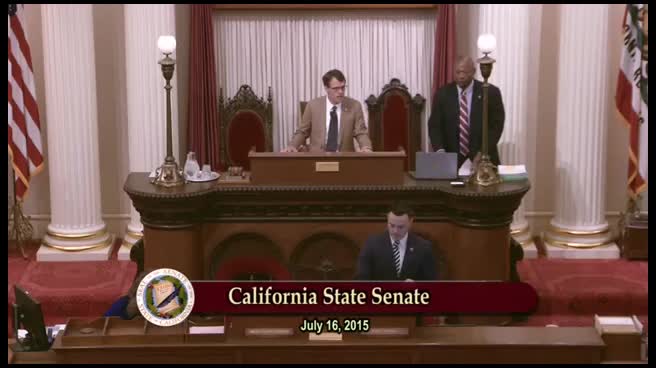
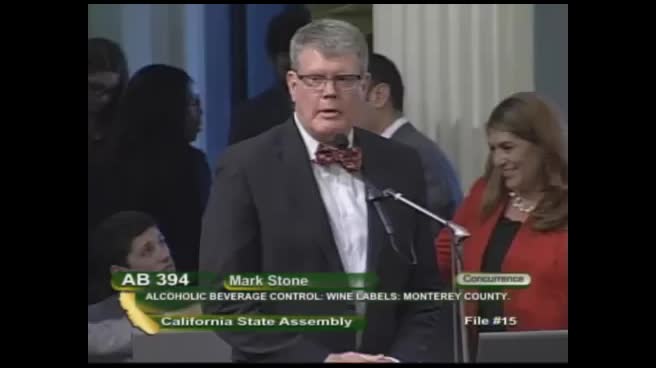
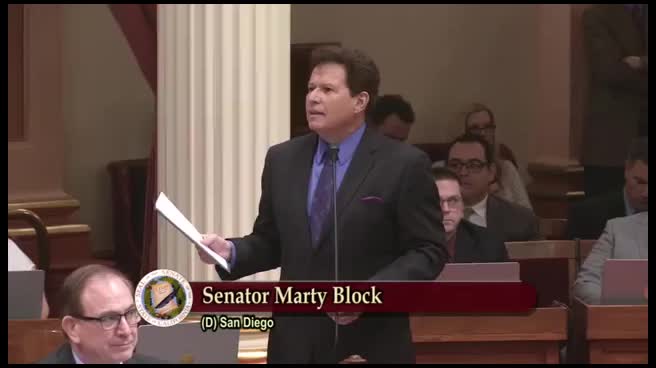
Bill Author






Bill Co-Author(s):