SCR 48: Geothermal Awareness Month and Geothermal Awareness Day.
- Session Year: 2015-2016
- House: Senate
- Latest Version Date: 2015-06-26
This measure would recognize the month of May 2015, as Geothermal Awareness Month and May 21, 2015, as Geothermal Awareness Day.
This measure would recognize the month of May 2015, as Geothermal Awareness Month and May 21, 2015, as Geothermal Awareness Day.
This measure would recognize the month of May 2015, as Geothermal Awareness Month and May 21, 2015, as Geothermal Awareness Day.
WHEREAS, California contains the largest amount of geothermal generating capacity in the United States due to its location on the Pacific Ring of Fire and the tectonic plate junctions; and
WHEREAS, There are 25 Known Geothermal Resource Areas located in California, 14 of which have temperatures of 300 degrees Fahrenheit or greater for commercial geothermal production of electricity; and
WHEREAS, There are major geothermal electrical production locations throughout the State of California in the Counties of Sonoma, Lake, Imperial, Inyo, and Mono; and
WHEREAS, California currently has 2,565.5 megawatts of installed electric generation capacity from geothermal resources with an additional 4,000 megawatts of potential for development; and
WHEREAS, Geothermal energy is a reliable baseload renewable energy source that has been commercially operating in California since 1960 at the Geysers, the worlds most developed geothermal resource area, which has been providing Californians with clean, reliable, and affordable electricity for more than 50 years; and
WHEREAS, Geothermal energy produces electricity 24 hours a day, seven days a week, with a high availability record and is important to balance the needs of the states transmission grid system; and
WHEREAS, Geothermal energy is a clean renewable energy resource. The operation of the Geysers and operations in Imperial County help avoid the emissions of 11.6 billion pounds of carbon dioxide annually, which is equivalent to greenhouse gas emissions from more than 1,050,000 cars being taken off the road, that would otherwise be emitted by fossil fuel plants to meet baseload energy needs; and
WHEREAS, In comparison to other existing renewable technologies, geothermal energy has many unique benefits, including consistent, predictable production, a relatively small land footprint, and low integration costs; and
WHEREAS, Imperial Countys Salton Sea Known Geothermal Resource Area is considered to have a significant near-term growth opportunity of over 2,000 megawatts of electric generation from additional geothermal resource development and additional geothermal resource development opportunities exist in the Counties of Sonoma, Modoc, Mono, and Lake; and
WHEREAS, The geothermal industry is a major employer in the local communities where projects are located, providing a diverse range of full-time employment opportunities as well as contractor jobs throughout all phases of development and operation; and
WHEREAS, Construction of the two proposed projects in Sonoma County is expected to require about 900,000 hours of labor by 190 construction workers, as well as hundreds of millions of dollars in materials, supplies, and services during construction. This new construction would result in an estimated $12 million in one-time sales tax revenue, $7 million in new annual property tax revenues, and millions of dollars in additional royalties paid to state, federal, and private leaseholders. Once operational, the new plants could create up to 19 full-time jobs; and
WHEREAS, Fully developing Imperial Countys Salton Sea Known Geothermal Resource Area could produce 5,214 construction jobs, and up to 1,093 long-term operating and maintenance jobs, substantially improving the economy of one of the most impoverished counties in the state, where over 22 percent of the population is unemployed; and
WHEREAS, Geothermal power contributes to the tax revenue in local communities, serving as the largest property taxpayers in the Counties of Lake, Sonoma, and Inyo, as well as representing 10 percent of all property tax revenue in Imperial County; and
WHEREAS, Geothermal development, from exploration through construction, spurs local economic growth through jobs, sales tax revenues, materials and supplies purchase, and purchase of other associated goods and services; and
WHEREAS, California has one of the most ambitious renewables portfolio standards in the country with a mandate to procure 33 percent of energy from renewable sources by 2020, and geothermal energy is a major contributor to achieving this goal; and
WHEREAS, Governor Brown has proposed expanding Californias Renewables Portfolio Standard Program to require 50 percent of our energy from renewable sources by 2030, further increasing the importance of geothermal energy to achieve our renewable energy goals; and
WHEREAS, California is on course to meet the near-term 2020 greenhouse gas emissions reduction target under the California Global Warming Solutions Act of 2006 (Division 25.5 (commencing with Section 38500) of the Health and Safety Code), but more emissions reductions from the use of clean energy like geothermal and other technological innovations will be needed to maintain and make further reductions in carbon emissions; and
WHEREAS, Geothermal energy presents a unique opportunity to address other environmental issues, such as the Geysers partnership with the City of Santa Rosa and Lake County to use their treated wastewater to recharge the Geysers. This innovative partnership is helping to keep local waterways clean and reduce carbon emissions from the wastewater, all while sustaining this important source of reliable, affordable, and renewable energy; and
WHEREAS, Geothermal energy is essential and complimentary to Californias environmental and economic policies, yet new fully permitted geothermal projects have failed to keep pace with the procurement of other renewable resources; and
WHEREAS, According to the State Air Resources Board, the State Energy Resources Conservation and Development Commission, and the Public Utilities Commission, existing geothermal generation production is expected to drop significantly by 2020, a result of renewable procurement policies that have failed to fully capture the benefits of geothermal generation and the costs associated with other renewable technologies; and
WHEREAS, A diverse renewable energy portfolio fits with Californias energy demand profile and lowers costs; and
WHEREAS, The preservation of Californias existing geothermal generation and the development of new geothermal generation could facilitate the achievement of the states post-2020 energy and environmental goals; now, therefore, be it
Resolved by the Senate of the State of California, the Assembly thereof concurring, That the Legislature recognizes the month of May 2015 as Geothermal Awareness Month to raise awareness of the significant contributions geothermal energy makes to Californias Renewables Portfolio Standard Program and toward meeting the states environmental goals to reduce greenhouse gas emissions; and be it further
Resolved, That the Legislature recognizes May 21, 2015, as Geothermal Awareness Day in California, and urges all citizens to show their support on that day by learning more about geothermal energy in California and supporting public events planned by the geothermal industry; and be it further
Resolved, That the Legislature considers geothermal resources important to Californias future and recognizes the environmental and economic values of existing and future geothermal energy for the state and local communities; and be it further
Resolved, That the Secretary of the Senate transmit copies of this resolution to the Governor, the members of the Public Utilities Commission, the State Energy Resources Conservation and Development Commission, the Independent System Operator, the State Air Resources Board, and to the author for appropriate distribution.
|
Date
|
Status
|
|---|---|
| Jun 26, 2015 | Chaptered by Secretary of State. Res. Chapter 72, Statutes of 2015. |
| Jun 26, 2015 | Enrolled and filed with the Secretary of State at 1:15 p.m. |
| Jun 25, 2015 | In Senate. Ordered to engrossing and enrolling. |
| Jun 25, 2015 | Read. Adopted. (Ayes 79. Noes 0. Page 2150.) Ordered to the Senate. |
| Jun 25, 2015 | Read. Adopted. Ordered to the Senate. |
| Jun 23, 2015 | From committee: Be adopted. Ordered to consent calendar. (Ayes 13. Noes 0.) (June 22). |
| Jun 10, 2015 | June 15 hearing postponed by committee. |
| May 22, 2015 | Referred to Com. on U. & C. |
| May 11, 2015 | In Assembly. Held at Desk. |
| May 11, 2015 | Read. Adopted. (Ayes 36. Noes 0. Page 950.) Ordered to the Assembly. |
| May 11, 2015 | Read. Adopted. (Ayes 36. Noes 0.) Ordered to the Assembly. |
| May 6, 2015 | From committee: Ordered to third reading. |
| Apr 27, 2015 | Introduced. Referred to Com. on RLS. |
|
Date
|
Description
|
Location
|
Votes
|
|
|---|---|---|---|---|
| Jun 25, 2015 | SCR 48 McGuire Consent Calendar Second Day Regular Session | Assembly Floor |
Passed |
|
| Jun 22, 2015 | Be adopted. To Consent Calendar. | Assembly Standing Committee on Utilities and Commerce |
Passed |
|
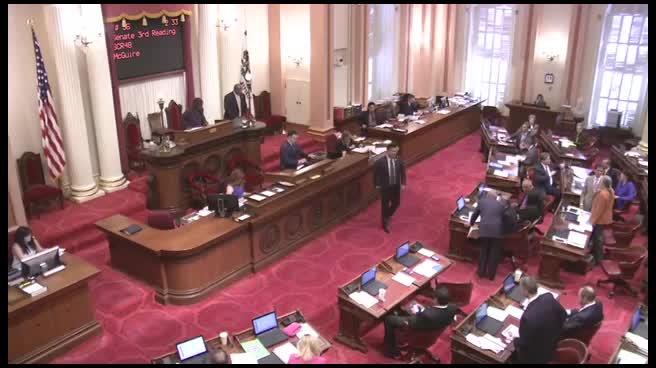
| May 11, 2015 | Senate 3rd Reading SCR48 McGuire | Senate Floor |
Passed |
This list shows positions taken on this bill by organizations on the date displayed, which is linked to the original source.
Positions by individuals are not included.
SCR 48
Page 4
Date of Hearing: June 15, 2015
ASSEMBLY COMMITTEE ON UTILITIES AND COMMERCE
Anthony Rendon, Chair
SCR 48
(McGuire) – As Introduced April 27, 2015
SENATE VOTE: 36-0
SUBJECT: Geothermal Awareness Month and Geothermal Awareness Day.
SUMMARY: This resolution recognizes the month of May 2015, as Geothermal Awareness Month, and May 21, 2015, as Geothermal Awareness Day. Specifically, this resolution:
Makes the following legislative findings:
California contains the largest amount of geothermal generating capacity in the United States due to its location on the Pacific “Ring of Fire” and the tectonic plate junctions.
There are 25 known geothermal resource areas located in California, 14 of which have temperatures of 300 degrees Fahrenheit or greater for commercial geothermal production of electricity.
California currently has 2,565.5 megawatts (MW) of installed electric generation capacity from geothermal resources with an additional 4,000 megawatts of potential for development.
Geothermal energy is a reliable base load renewable energy source that has been commercially operating in California since 1960 at the Geysers, the world’s most developed geothermal resource area, which has been providing Californians with clean, reliable, and affordable electricity for more than 50 years.
Geothermal energy is essential and complimentary to California’s environmental and economic policies, yet new fully permitted geothermal projects have failed to keep pace with the procurement of other renewable resources.
The preservation of California’s existing geothermal generation and the development of new geothermal generation could facilitate the achievement of the state’s post-2020 energy and environmental goals.
Recognizes the month of May 2015 as Geothermal Awareness Month to raise awareness of the significant contributions geothermal energy makes to California’s Renewables Portfolio Standard Program and toward meeting the state’s environmental goals to reduce greenhouse gas emissions.
Recognizes May 21, 2015, as Geothermal Awareness Day in California, and urges all citizens to show their support on that day by learning more about geothermal energy in California and supporting public events planned by the geothermal industry.
The Legislature considers geothermal resources important to California’s future, and recognizes the environmental and economic values of existing and future geothermal energy for the state and local communities.
EXISTING LAW:
Establishes the California Renewables Portfolio Standard (RPS) program, which expresses the intent of the Legislature that the amount of electricity generated per year from eligible renewable energy resources be increased to an amount that equals at least 33% of the total electricity sold to retail customers in California per year by December 31, 2020. (Public Utilities Code Section 399.11)
Defines a renewable electrical generation facility to mean a facility that uses biomass, solar thermal, photovoltaic, wind, geothermal, fuel cells using renewable fuels, small hydroelectric generation of 30 megawatts or less, digester gas, municipal solid waste conversion, landfill gas, ocean wave, ocean thermal, or tidal current, and any additions or enhancements to the facility using that technology. (Public Resources Code Section 25741)
Directs the State Air Resources Board to monitor and regulate sources of emission of greenhouse gases that cause global warming in order to reduce emission of greenhouse gases. (Health and Safety Code Section 38510)
FISCAL EFFECT: Unknown. This resolution is keyed non-fiscal by the Legislative Counsel.
COMMENTS:
Author’s Statement: “California possesses more geothermal generating capacity than anywhere else in the world. Northern California’s Geysers, the largest geothermal field in the world, produces roughly 60% of the energy demand for the North Coast. It not only produces reliable energy for the region, but it also partners with local municipalities in an innovative program that injects 20 million gallons of treated waste water daily into the geysers. This injection of wastewater spurs electricity generation without contributing to greenhouse gas emissions in the atmosphere, and also helps to protect local waterways and streams by diverting the sewer discharge that used to be added into surface waters. Investing in geothermal energy production is an economically and environmentally friendly way for California to fully realize AB 32’s ambitious goals.”
Background: In 2006, the Legislature enacted AB 32 (Nunez, Chapter 488, Statutes of 2006), which tasked the Air Resources Board to adopt rules and regulations that would reduce greenhouse gas emissions in the state to 1990 levels by 2020. Geothermal energy is a form of renewable energy that is generated by drilling into underground hot water reservoirs, such as geysers and hot springs, releasing the hot water as steam to the surface to produce electricity. Unlike solar and wind energy, which are considered intermittent renewables because they are dependent upon the weather to generate energy, geothermal power plants are considered base load facilities because they are able to operate 24 hours per day, 7 days per week, regardless of weather conditions.
California’s Renewables Portfolio Standard: California’s RPS was established in 2002 under SB 1078 (Sher, Chapter 516, Statues of 2002), and was accelerated in 2006 under SB 107 (Simitian, Chapter 464, Statutes of 2006) to require that 20% of electricity retail sales be served by renewable energy resources by 2010. The RPS was again increased in 2011, through SBX1-2 (Simitian, Chapter 1, Statues of 2011), to require that 33% of electricity retail sales be served by renewable energy resources by 2020.
In January 2015, Governor Brown proposed in his inaugural address three ambitious goals to be accomplished within the next 15 years. These goals are:
Increase from 33% to 50% our electricity derived from renewable sources;
Reduce today’s petroleum use in cars and trucks by up to 50%; and
Double the efficiency of existing buildings and make heating fuels cleaner.
California’s Geothermal Industry: California currently has 2,782 MWs of installed physical capacity, which accounts for 4.4% of generation capacity and 25% of the renewable electricity supplied to retail customers. California has more than 22 geothermal projects located across Imperial, Inyo, Lake, Mono, and Sonoma counties. In addition, the world’s largest geothermal field, the Geysers, is located 70 miles north of San Francisco and contains 22 power plants that draw steam from more than 350 wells. An estimate by the United States Geological Survey suggests that California’ geothermal resources could provide 800 to 4,600 MWs, with an additional 3,000 to 25,000 MWs of geothermal resources yet to be discovered but likely to exist. The resolution specifies that it is important to balance the needs of the state’s transmission grid system. The state currently has a balanced transmission grid system and the resolution seeks to emphasize geothermal energy in the system. The resolution also highlights two proposed projects in Sonoma County which would create up to 19 full time jobs. Geothermal may provide a higher number of ongoing full time jobs compared to other renewable sources, once they become operational.
Prior Legislation:
SCR 108 (Evans) 2014: Recognize the month of May 2014 as Geothermal Awareness Month, and May 5, 2014 as Geothermal Awareness Day. Chaptered by the Secretary of State – Resolution Chapter 65, Statutes of 2014.
REGISTERED SUPPORT / OPPOSITION:
Support
Calpine
Center for Climate Protection
Geothermal Energy Association
Geothermal Resources Council
Geysers Geothermal Association
International Brotherhood of Electrical Workers Local 569
Lake County Chamber of Commerce
Ormat Nevada Inc.
Opposition
None on file.
Analysis Prepared by: Edmond Cheung / U. & C. / (916) 319-2083
SCR 48
Page 3
|
Office of Senate Floor Analyses (916) 651-1520 Fax: (916) 327-4478 |
THIRD READING
Bill No: SCR 48
Author: McGuire (D) and Hueso (D), et al.
Introduced: 4/27/15
SUBJECT: Geothermal Awareness Month and Geothermal Awareness Day
DIGEST: This resolution recognizes the month of May 2015, as Geothermal Awareness Month and May 21, 2015, as Geothermal Awareness Day.
ANALYSIS: This resolution makes the following legislative findings:
California contains the largest amount of geothermal generating capacity in the United States due to its location on the Pacific “Ring of Fire” and the tectonic plate junctions.
There are 25 Known Geothermal Resource Areas located in California, 14 of which have temperatures of 300 degrees Fahrenheit or greater for commercial geothermal production of electricity.
California currently has 2,565.5 megawatts of installed electric generation capacity from geothermal resources with an additional 4,000 megawatts of potential for development.
Geothermal energy is a reliable baseload renewable energy source that has been commercially operating in California since 1960 at the Geysers, the world’s most developed geothermal resource area, which has been providing Californians with clean, reliable, and affordable electricity for more than 50 years. Geothermal energy is a clean renewable energy resource. The operation of the Geysers and operations in Imperial County help avoid the emissions of 11.6 billion pounds of carbon dioxide annually, which is equivalent to greenhouse gas emissions from more than 1,050,000 cars being taken off the road, that would otherwise be emitted by fossil fuel plants to meet baseload energy needs.
The geothermal industry is a major employer in the local communities where projects are located, providing a diverse range of full-time employment opportunities as well as contractor jobs throughout all phases of development and operation. Geothermal development, from exploration through construction, spurs local economic growth through jobs, sales tax revenues, materials and supplies purchase, and purchase of other associated goods and services.
Geothermal energy is essential and complimentary to California’s environmental and economic policies, yet new fully permitted geothermal projects have failed to keep pace with the procurement of other renewable resources.
The preservation of California’s existing geothermal generation and the development of new geothermal generation could facilitate the achievement of the state’s post-2020 energy and environmental goals.
This resolution:
Recognizes the month of May 2015 as Geothermal Awareness Month to raise awareness of the significant contributions geothermal energy makes to California’s Renewables Portfolio Standard Program and toward meeting the state’s environmental goals to reduce greenhouse gas emissions.
Recognizes May 21, 2015, as Geothermal Awareness Day in California, and urges all citizens to show their support on that day by learning more about geothermal energy in California and supporting public events planned by the geothermal industry.
Considers geothermal resources important to California’s future and recognizes the environmental and economic values of existing and future geothermal energy for the state and local communities.
FISCAL EFFECT: Appropriation: No Fiscal Com.: No Local: No
Geothermal Energy Association
Geothermal Resources Council
Geysers Geothermal Association
Ormat Technologies, Inc.
None received
ARGUMENTS IN SUPPORT: The Geothermal Energy Association (GEA) states in support:
Geothermal energy is locally produced and boosts rural economies through jobs, royalties, tax payments and more. While in development, a geothermal power project will employ hundreds of individuals, especially during well drilling and construction. Furthermore, a geothermal facility will create substantial permanent employment. GEA estimates that a 50MW facility creates about 100 permanent, local jobs. We estimate that this is significantly more than an equivalent wind, photovoltaic or concentrating solar project.
Geothermal power benefits communities across the state. In the south, The Salton Sea Restoration and Renewable Energy Initiative, a plan to save an important source of water and minerals in the state, can add up to 1,700 MW of low-impact, cost-competitive geothermal energy to the State’s power grid. In the north, geothermal companies work to sustain the production of The Geysers, maximizes the environmental and economic benefits of the resource for the benefit of Lake and Sonoma Counties as well as all Californians.
California has the potential to be a leading geothermal producer globally, with about 50%, estimated hydrothermal geothermal resource remaining to be developed. By growing this sector California has the potential to generate substantial amount of revenue for the State treasury. Over the course of 30 to 50 years an average 20 MW facility will pay nearly $6.3 to $11 million dollars in property taxes. Additionally In 2013, geothermal power producers paid $29 million dollars in annual property taxes, including $21 million dollars to the State of California.
Prepared by: Jonas Austin / SFA / (916) 651-1520
5/8/15 15:24:22
**** END ****
SCR 48
Page 3
|
Office of Senate Floor Analyses (916) 651-1520 Fax: (916) 327-4478 |
THIRD READING
Bill No: SCR 48
Author: McGuire (D) and Hueso (D), et al.
Introduced: 4/27/15
SUBJECT: Geothermal Awareness Month and Geothermal Awareness Day
DIGEST: This resolution recognizes the month of May 2015, as Geothermal Awareness Month and May 21, 2015, as Geothermal Awareness Day.
ANALYSIS: This resolution makes the following legislative findings:
California contains the largest amount of geothermal generating capacity in the United States due to its location on the Pacific “Ring of Fire” and the tectonic plate junctions.
There are 25 Known Geothermal Resource Areas located in California, 14 of which have temperatures of 300 degrees Fahrenheit or greater for commercial geothermal production of electricity.
California currently has 2,565.5 megawatts of installed electric generation capacity from geothermal resources with an additional 4,000 megawatts of potential for development.
Geothermal energy is a reliable baseload renewable energy source that has been commercially operating in California since 1960 at the Geysers, the world’s most developed geothermal resource area, which has been providing Californians with clean, reliable, and affordable electricity for more than 50 years. Geothermal energy is a clean renewable energy resource. The operation of the Geysers and operations in Imperial County help avoid the emissions of 11.6 billion pounds of carbon dioxide annually, which is equivalent to greenhouse gas emissions from more than 1,050,000 cars being taken off the road, that would otherwise be emitted by fossil fuel plants to meet baseload energy needs.
The geothermal industry is a major employer in the local communities where projects are located, providing a diverse range of full-time employment opportunities as well as contractor jobs throughout all phases of development and operation. Geothermal development, from exploration through construction, spurs local economic growth through jobs, sales tax revenues, materials and supplies purchase, and purchase of other associated goods and services.
Geothermal energy is essential and complimentary to California’s environmental and economic policies, yet new fully permitted geothermal projects have failed to keep pace with the procurement of other renewable resources.
The preservation of California’s existing geothermal generation and the development of new geothermal generation could facilitate the achievement of the state’s post-2020 energy and environmental goals.
This resolution:
Recognizes the month of May 2015 as Geothermal Awareness Month to raise awareness of the significant contributions geothermal energy makes to California’s Renewables Portfolio Standard Program and toward meeting the state’s environmental goals to reduce greenhouse gas emissions.
Recognizes May 21, 2015, as Geothermal Awareness Day in California, and urges all citizens to show their support on that day by learning more about geothermal energy in California and supporting public events planned by the geothermal industry.
Considers geothermal resources important to California’s future and recognizes the environmental and economic values of existing and future geothermal energy for the state and local communities.
FISCAL EFFECT: Appropriation: No Fiscal Com.: No Local: No
Geothermal Energy Association
Geysers Geothermal Association
Ormat Technologies, Inc.
None received
ARGUMENTS IN SUPPORT: The Geothermal Energy Association (GEA) states in support:
Geothermal energy is locally produced and boosts rural economies through jobs, royalties, tax payments and more. While in development, a geothermal power project will employ hundreds of individuals, especially during well drilling and construction. Furthermore, a geothermal facility will create substantial permanent employment. GEA estimates that a 50MW facility creates about 100 permanent, local jobs. We estimate that this is significantly more than an equivalent wind, photovoltaic or concentrating solar project.
Geothermal power benefits communities across the state. In the south, The Salton Sea Restoration and Renewable Energy Initiative, a plan to save an important source of water and minerals in the state, can add up to 1,700 MW of low-impact, cost-competitive geothermal energy to the State’s power grid. In the north, geothermal companies work to sustain the production of The Geysers, maximizes the environmental and economic benefits of the resource for the benefit of Lake and Sonoma Counties as well as all Californians.
California has the potential to be a leading geothermal producer globally, with about 50%, estimated hydrothermal geothermal resource remaining to be developed. By growing this sector California has the potential to generate substantial amount of revenue for the State treasury. Over the course of 30 to 50 years an average 20 MW facility will pay nearly $6.3 to $11 million dollars in property taxes. Additionally In 2013, geothermal power producers paid $29 million dollars in annual property taxes, including $21 million dollars to the State of California.
Prepared by: Jonas Austin / SFA / (916) 651-1520
5/6/15 16:49:56
**** END ****


Bill Co-Author(s):