AB 1447: Solid waste: food and beverage packaging.
- Session Year: 2015-2016
- House: Assembly
- Latest Version Date: 2015-05-05
(1)Existing law, the California Beverage Container Recycling and Litter Reduction Act, requires each glass container manufacturer in the state to use a minimum percentage of 35% of postfilled glass, except as specified, in the manufacturing of glass food, drink, or beverage containers. A violation of the act is a crime, except as specified.
The bill would clarify that for purposes of the minimum postfilled glass requirement, a glass container manufacturer in the state includes a glass container manufacturer who imports glass containers from outside of the state for filling.
(2)
(1)Existing law requires all rigid plastic bottles and rigid plastic containers, including bottles and containers composed of polyethylene terephthalate (PET), sold in California to be labeled with a code which indicates the resin used to produce the rigid plastic bottle or rigid plastic container.
This bill would require under the California Beverage Container Recycling and Litter Reduction Act, on and after January 1, 2017, and annually thereafter, a manufacturer of PET plastic packaging primarily composed of polyethylene terephthalate and used to contain food or beverages to report to the department, in a manner determined by the department, certain information, including the total amount of tons of new PET plastic packaging made for sale by that manufacturer. The
This bill would require, on and after commencing July 1, 2016, every manufacturer of PET plastic packaging for sale manufactured in the state to include be manufactured with, and empty PET plastic packaging imported into the state to be filled with food or drink in the state for sale in the state to contain, a minimum of 10% of postfilled PET plastic in its PET plastic packaging. plastic, as measured by weight. The bill would require, commencing January 1, 2017, and annually thereafter, every such manufacturer or importer of PET plastic packaging to demonstrate compliance with that requirement by certifying to the Department of Resources Recycling and Recovery certain information. The bill would provide that a person who violates these provisions is guilty of an infraction and may be assessed civil penalties. By
(3)By expanding the scope of the California Beverage Container Recycling and Litter Reduction Act, a violation of which is a creating a new crime, the bill would impose a state-mandated local program.
(4)
(2)The California Constitution requires the state to reimburse local agencies and school districts for certain costs mandated by the state. Statutory provisions establish procedures for making that reimbursement.
This bill would provide that no reimbursement is required by this act for a specified reason.
The California Integrated Waste Management Act of 1989, which is administered by the Department of Resources Recycling and Recovery, generally regulates the management and recycling of solid waste.
(1)Existing law, the California Beverage Container Recycling and Litter Reduction Act, requires each glass container manufacturer in the state to use a minimum percentage of 35% of postfilled glass, except as specified, in the manufacturing of glass food, drink, or beverage containers. A violation of the act is a crime, except as specified.
The bill would clarify that for purposes of the minimum postfilled glass requirement, a glass container manufacturer in the state includes a glass container manufacturer who imports glass containers from outside of the state for filling.
Existing
(2)Existing law requires all rigid plastic bottles and rigid plastic containers, including bottles and containers composed of polyethylene terephthalate, terephthalate (PET), sold in California on and after January 1, 1992, to be labeled with a code which indicates the resin used to produce the rigid plastic bottle or rigid plastic container.
This bill would require, require under the California Beverage Container Recycling and Litter Reduction Act, on and after January 1, 2017, and annually thereafter, a California manufacturer of containers PET plastic packaging primarily composed of polyethylene terephthalate (PET) and used for to contain food or beverages to report to the department, in a manner determined by the department, certain information, including the total amount of tons of new PET plastic packaging made for sale by that manufacturer. The bill would require, on and after July 1, 2016, every manufacturer of PET plastic packaging for sale in the state to include a minimum of 10% of postfilled PET plastic in its PET plastic packaging.
(3)By expanding the scope of the California Beverage Container Recycling and Litter Reduction Act, a violation of which is a crime, the bill would impose a state-mandated local program.
(4)The California Constitution requires the state to reimburse local agencies and school districts for certain costs mandated by the state. Statutory provisions establish procedures for making that reimbursement.
This bill would provide that no reimbursement is required by this act for a specified reason.
The California Integrated Waste Management Act of 1989, which is administered by the Department of Resources Recycling and Recovery, generally regulates the management and recycling of solid waste. The California Beverage Container Recycling and Litter Reduction Act requires a distributor to pay a redemption payment for every beverage container sold or offered for sale in the state to the department. Existing law provides that nothing in the waste act affects the duties of the department under the beverage act. Existing law requires all rigid plastic bottles and rigid plastic containers, including bottles and containers composed of polyethylene terephthalate, sold in California on and after January 1, 1992, to be labeled with a code which indicates the resin used to produce the rigid plastic bottle or rigid plastic container.
This bill would require, on and after January 1, 2017, and annually thereafter, a California manufacturer of containers primarily composed of polyethylene terephthalate (PET) and used for food or beverages to report to the department, in a manner determined by the department, certain information, including the total amount of tons of new PET plastic packaging made for sale by that manufacturer.
This bill would make nonsubstantive changes to that provision.
The California Integrated Waste Management Act of 1989, which is administered by the Department of Resources Recycling and Recovery, generally regulates the management and recycling of solid waste. The California Beverage Container Recycling and Litter Reduction Act requires a distributor to pay a redemption payment for every beverage container sold or offered for sale in the state to the department. Existing law provides that nothing in the waste act affects the duties of the department under the beverage act.
This bill would make nonsubstantive changes to that provision.
(a)For purposes of this section, PET plastic packaging means beverage containers or food or drink packaging material consisting primarily of polyethylene terephthalate (PET) and used to contain food or beverages.
(b)On and after January 1, 2017, and annually thereafter, every manufacturer of PET plastic packaging for sale in the state shall report to the department, in a manner determined by the department, both of the following:
(1)The total amount of tons of new PET plastic packaging made for sale by that manufacturer.
(2)The total amount of postfilled PET plastic used in the manufacturing of that packaging.
(c)On and after July 1, 2016, each manufacturer of PET plastic packaging for sale in the state shall include a minimum of 10 percent of postfilled PET plastic in the PET plastic packaging that it manufactures, measured in the aggregate, on an annual basis.
SEC. 2.Section 14549 of the Public Resources Code is amended to read:14549.(a)Every glass container manufacturer shall report to the department each month, by a method as determined by the department, the amount of total tons of new glass food, drink, and beverage containers made in California by that glass container manufacturer and the tons of California postfilled glass used in the manufacturing of those new containers.
(b)Each glass container manufacturer in the state, including a glass container manufacturer who imports glass containers from outside of the state for filling, shall use a minimum percentage of 35 percent of postfilled glass in the manufacturing of its glass food, drink, or beverage containers measured in the aggregate, on an annual basis, except that if a glass container manufacturer demonstrates to the satisfaction of the department that its use of postfilled glass during the annual period is made up of at least 50 percent mixed-color cullet, then that manufacturer shall use a minimum percentage of 25 percent postfilled glass in the manufacturing of its glass food, drink, or beverage containers, measured in the aggregate, on an annual basis.
(c)A glass container manufacturer may seek a reduction or waiver of the minimum postfilled glass percentage required to be used in the manufacture of glass food, drink, or beverage containers pursuant to subdivision (b). The department may grant a reduction or waiver of the percentage requirement if it finds and determines that it is technologically infeasible for the glass container manufacturer to achieve the percentage requirement or if the department determines that a glass container manufacturer cannot achieve the minimum percentage because of a lack of available glass cullet.
(d)For the purposes of this section, mixed-color cullet means cullet that does not meet the American Society for Testing and Materials (ASTM) standard specifications for color mix of color sorted postfilled glass as raw material for the manufacture of glass containers.
SECTION 1.Chapter 5.9 (commencing with Section 42360) is added to Part 3 of Division 30 of the Public Resources Code, to read:5.9.PET Plastic Packaging Recycled Content Program42360.For purposes of this chapter, the following terms have the following meanings:
(a)Filled with food or drink means caused to contain food or drink that is poured, placed, packed, or otherwise intentionally introduced into the applicable packaging.
(b)PET plastic packaging means beverage containers or food or drink packaging material consisting primarily of polyethylene terephthalate (PET) and used to contain food or beverages.
42361.(a)Commencing January 1, 2017, and annually thereafter, a manufacturer of PET plastic packaging that is manufactured in the state shall demonstrate compliance with the requirements of Section 42362 by certifying to the department, in a form and manner determined by the department, both of the following:
(1)The total number of tons of new PET plastic packaging manufactured by that manufacturer in the previous year.
(2)The total number of tons of postfilled PET plastic the manufacturer used in the manufacturing of new PET plastic packaging during the previous year.
(b)Commencing January 1, 2017, and annually thereafter, an importer of empty PET plastic packaging that is filled with food or drink in the state to be sold in the state shall demonstrate compliance with the requirements of Section 42362 by certifying to the department, either directly or by an independent third-party certifier, in a form and manner determined by the department, both of the following:
(1)The total number of tons of new PET plastic packaging used in the manufacturing of empty PET plastic packaging imported into the state by the importer during the previous year to be filled with food or drink in the state for sale in the state.
(2)The total number of tons of postfilled PET plastic used in the manufacturing of empty PET plastic packaging imported into the state by the importer during the previous year to be filled with food or drink in the state for sale in the state.
42362.(a)Commencing July 1, 2016, PET plastic packaging manufactured in the state shall be manufactured with a minimum of 10 percent of postfilled PET plastic, as measured by weight and in the aggregate, on an annual basis.
(b)Commencing July 1, 2016, empty PET plastic packaging imported into the state to be filled with food or drink in the state for sale in the state shall contain a minimum of 10 percent of postfilled PET plastic, as measured by weight and in the aggregate, on an annual basis.
42363.(a)A PET plastic packaging manufacturer or importer who is required to submit a certification pursuant to Section 42361 may be subject to an audit by the department to ensure that the certified percentage of postfilled PET plastic was used.
(b)If a PET plastic packaging manufacturer or importer provides the department with a false or misleading report concerning the percentage of postfilled PET plastic used, the department, within 30 days of making this determination, shall refer the false or misleading report to the Attorney General for prosecution for fraud.
(c)A person who violates this chapter is guilty of an infraction punishable by a fine of not more than one thousand dollars ($1,000).
(d)In addition to being guilty of an infraction pursuant to subdivision (c), a person who violates this chapter may be assessed a civil penalty by the department of not more than one thousand dollars ($1,000) for each violation, pursuant to a notice and a hearing conducted in accordance with Chapter 5 (commencing with Section 11500) of Part 1 of Division 3 of Title 2 of the Government Code.
(e)A civil penalty or fine received pursuant to this section shall be deposited in the Integrated Waste Management Account, and the funds in that account may be expended by the department for the administration of this chapter.
SEC. 3.SEC. 2.No reimbursement is required by this act pursuant to Section 6 of Article XIIIB of the California Constitution because the only costs that may be incurred by a local agency or school district will be incurred because this act creates a new crime or infraction, eliminates a crime or infraction, or changes the penalty for a crime or infraction, within the meaning of Section 17556 of the Government Code, or changes the definition of a crime within the meaning of Section 6 of Article XIIIB of the California Constitution.
(a)For purposes of this section, PET plastic packaging means beverage containers or food or drink packaging material consisting primarily of polyethylene terephthalate (PET) and used to contain food or beverages.
(b)On and after January 1, 2017, and annually thereafter, every manufacturer of PET plastic packaging for sale in the state shall report to the department, in a manner determined by the department, both of the following:
(1)The total amount of tons of new PET plastic packaging made for sale by that manufacturer.
(2)The total amount of postfilled PET plastic used in the manufacturing of that packaging.
(c)On and after July 1, 2016, each manufacturer of PET plastic packaging for sale in the state shall include a minimum of 10 percent of postfilled PET plastic in the PET plastic packaging that it manufactures, measured in the aggregate, on an annual basis.
SEC. 2.Section 14549 of the Public Resources Code is amended to read:14549.(a)Every glass container manufacturer shall report to the department each month, by a method as determined by the department, the amount of total tons of new glass food, drink, and beverage containers made in California by that glass container manufacturer and the tons of California postfilled glass used in the manufacturing of those new containers.
(b)Each glass container manufacturer in the state state, including a glass container manufacturer who imports glass containers from outside of the state for filling, shall use a minimum percentage of 35 percent of postfilled glass in the manufacturing of their its glass food, drink, or beverage containers measured in the aggregate, on an annual basis, except that if a glass container manufacturer demonstrates to the satisfaction of the department that its use of postfilled glass during the annual period is made up of at least 50 percent mixed-color cullet, then that manufacturer shall use a minimum percentage of 25 percent postfilled glass in the manufacturing of its glass food, drink, or beverage containers, measured in the aggregate, on an annual basis.
(c)A glass container manufacturer may seek a reduction or waiver of the minimum postfilled glass percentage required to be used in the manufacture of glass food, drink, or beverage containers pursuant to subdivision (b). The department may grant a reduction or waiver of the percentage requirement if it finds and determines that it is technologically infeasible for the glass container manufacturer to achieve the percentage requirement or if the department determines that a glass container manufacturer cannot achieve the minimum percentage because of a lack of available glass cullet.
(d)For the purposes of this section, mixed-color cullet means cullet that does not meet the American Society for Testing and Materials (ASTM) standard specifications for color mix of color sorted postfilled glass as raw material for the manufacture of glass containers.
SEC. 3.No reimbursement is required by this act pursuant to Section 6 of Article XIIIB of the California Constitution because the only costs that may be incurred by a local agency or school district will be incurred because this act creates a new crime or infraction, eliminates a crime or infraction, or changes the penalty for a crime or infraction, within the meaning of Section 17556 of the Government Code, or changes the definition of a crime within the meaning of Section 6 of Article XIIIB of the California Constitution.
SECTION 1.Chapter 3 (commencing with Section 18050) is added to Division 12.7 of the Public Resources Code, to read:3.PET Food Plastic Packaging18050.For purposes of this chapter, PET plastic packaging means packaging consisting primarily of polyethylene terephthalate (PET) and used to contain food or beverages.
18052.On and after January 1, 2017, and annually thereafter, every manufacturer of PET plastic packaging in the state shall report to the Department of Resources Recycling and Recovery, in a manner determined by the department, both of the following:
(a)
The total amount of tons of new PET plastic packaging made for sale by that manufacturer.
(b)
The total amount of postfilled PET plastic used in the manufacturing of that packaging.
For purposes of this chapter, PET plastic packaging means packaging consisting primarily of polyethylene terephthalate (PET) and used to contain food or beverages.
18052.On and after January 1, 2017, and annually thereafter, every manufacturer of PET plastic packaging in the state shall report to the Department of Resources Recycling and Recovery, in a manner determined by the department, both of the following:
(a)The total amount of tons of new PET plastic packaging made for sale by that manufacturer.
(b)The total amount of postfilled PET plastic used in the manufacturing of that packaging.
SECTION 1.Section 40003 of the Public Resources Code is amended to read:40003.Nothing in this division abrogates, limits, or otherwise affects the duties of the department under the California Beverage Container Recycling and Litter Reduction Act (Division 12.1 (commencing with Section 14500)).
Nothing in this division abrogates, limits, or otherwise affects the duties of the Department of Conservation department under the California Beverage Container Recycling and Litter Reduction Act, Division Act (Division 12.1 (commencing with Section 14500) 14500)).
|
Date
|
Status
|
|---|---|
| Feb 1, 2016 | From committee: Filed with the Chief Clerk pursuant to Joint Rule 56. |
| Jan 31, 2016 | Died pursuant to Article IV, Sec. 10(c) of the Constitution. |
| May 28, 2015 | In committee: Held under submission. |
| May 20, 2015 | In committee: Set, first hearing. Referred to APPR. suspense file. |
| May 20, 2015 | In committee: Set, first hearing. Referred to suspense file. |
| May 6, 2015 | Re-referred to Com. on APPR. |
| May 5, 2015 | Read second time and amended. |
| May 4, 2015 | From committee: Amend, and do pass as amended and re-refer to Com. on APPR. (Ayes 6. Noes 3.) (April 27). |
| Apr 13, 2015 | Re-referred to Com. on NAT. RES. |
| Apr 9, 2015 | From committee chair, with author's amendments: Amend, and re-refer to Com. on NAT. RES. Read second time and amended. |
| Apr 6, 2015 | Re-referred to Com. on NAT. RES. |
| Mar 26, 2015 | From committee chair, with author's amendments: Amend, and re-refer to Com. on NAT. RES. Read second time and amended. |
| Mar 26, 2015 | Referred to Com. on NAT. RES. |
| Mar 2, 2015 | Read first time. |
| Mar 1, 2015 | From printer. May be heard in committee March 31. |
| Feb 27, 2015 | Introduced. To print. |
|
Date
|
Description
|
Location
|
Votes
|
|
|---|---|---|---|---|
| Apr 27, 2015 | Do pass as amended and be re-referred to the Committee on [Appropriations] | Assembly Standing Committee on Natural Resources |
Passed |
This list shows positions taken on this bill by organizations on the date displayed, which is linked to the original source.
Positions by individuals are not included.
AB 1447
Page 2
Date of Hearing: May 20, 2015
ASSEMBLY COMMITTEE ON APPROPRIATIONS
Jimmy Gomez, Chair
AB 1447
(Alejo) – As Amended May 5, 2015
Policy Committee: |
Natural Resources |
Vote: |
6 - 3 |
|
|
|
|
|
|
|
|
Urgency: No State Mandated Local Program: Yes Reimbursable: No
SUMMARY:
This bill establishes minimum recycled content standards for polyethylene terephthalate (PET) food and beverage packaging manufactured or filled in the state. Specifically, this bill:
Defines "PET plastic packaging" to mean food, drink, or beverage packaging material that consists primarily of polyethylene terephthalate and used to contain food or beverages.
On and after July 1, 2016, requires each manufacturer of PET plastic packaging for sale in the state to include a minimum of 10% of postfilled PET plastic in the plastic packaging that it manufactures, or any empty plastic packaging, imported into the state to be filled with food or drink in the state contain a minimum of 10% .
Specifies annual reporting requirements to CalRecyle beginning January 1, 2017, and annually thereafter.
Provides violations of this requirement are subject to fines and civil penalties of $1,000 per violation.
FISCAL EFFECT:
Increased annual costs to CalRecyle of $761,000 and 8PYs to implement a new monitoring, tracking and enforcement program (Waste Management Fund).
COMMENTS:
Purpose. According to the author, in order to increase the amount of plastic recycling in-state, meet consumers' basic expectations for buying recycled materials, and create parity with other container minimum recycling laws, AB 1447 proposes to create a minimum recycled content standard for all PET containers sold in the state at 10%.
Backgroud. PET is the most common plastic used in food and beverage packaging, including bottled water and soda. According to CalRecycle data, 43% of Bottle Bill containers are PET, making it the most common beverage packaging material in California.
Several plastic food and drink manufacturers located in California have received non-objection letters from the FDA and comply with the state's existing recycled content requirements for rigid plastic packaging containers. Several beverage manufacturers also include postfilled content in their packaging. For example, Arrowhead and Nestle bottled water both report a 50% recycled content rate; Pepsi reports 10% recycled content; and, Naked Juice reports that their bottles are made from 100% recycled content.
California has seven reclaimers accepting plastic for washing and producing recycled flake or pellets and 30 manufacturers that use recycled plastic to manufacture new products. While there has been significant growth in the use of recycled plastic in California, the vast majority of recycled plastic is sent overseas.
Analysis Prepared by: Jennifer Galehouse / APPR. / (916) 319-2081
AB 1447
Page 5
Date of Hearing: April 27, 2015
ASSEMBLY COMMITTEE ON NATURAL RESOURCES
Das Williams, Chair
AB 1447
(Alejo) – As Amended April 9, 2015
SUBJECT: Solid waste: food and beverage packaging
SUMMARY: Establishes minimum recycled content standards for polyethylene terephthalate (PET) food and beverage packing and expands the recycled content requirement for glass food and beverage containers to containers manufactured out of state.
EXISTING LAW:
Pursuant to the California Beverage Container Recycling and Litter Reduction Act (Bottle Bill):
Requires beverage containers sold in this state to have a California refund value (CRV) of 5 cents for containers that hold fewer than 24 ounces and 10 cents for containers that hold 24 ounces or more and requires a distributor to pay a redemption payment to CalRecycle. Continuously appropriates these funds to CalRecycle for the payment of refund values and processing fees.
Requires that each new glass container manufactured in the state contain a minimum of 35% postfilled (recycled food container cullet) glass. Requires every glass food, drink, or beverage container manufacturer in the state to report the amount of tons of new glass and the tons of postfilled glass used in the manufacturing of those containers to CalRecycle every month.
Pursuant to the Integrated Waste Management Act (IWMA):
Requires that local governments divert at least 50% of solid waste from landfill disposal and establishes a statewide goal that 75% of solid waste be diverted from landfill disposal by 2020.
Requires that 50% of newsprint paper sold in the state contain a minimum of 40% postconsumer recycled content.
Requires that rigid plastic packaging containers sold in the state contain a minimum of 25% postconsumer recycled material and have a recycling rate of at least 45%.
Requires that manufacturers of plastic trash bags that are at or above 0.70 mils thick to annually certify that they comply with one of the following:
That the bags sold in California contain a minimum of 10% recycled content; or,
That all plastic products sold by the manufacturer in California contain a minimum of 30% recycled content.
Requires that fiberglass sold in the state contain a minimum of 30% postconsumer recycled content.
Requires that expanded polystyrene loosefill packaging (i.e., packing peanuts) sold in the state contain a minimum of 60% recycled content.
Prohibits a manufacturer or supplier from selling a plastic food or beverage container that is advertised with a specific recycling content amount unless the manufacturer or supplier is able to provide certification of that claim in a format that is easy to understand and scientifically accurate. Requires a manufacturer or supplier to provide information and documentation verifying the recycling content of a plastic food or beverage container within 90 days of a request for such information made by a member of the public or a state agency.
THIS BILL:
Defines "PET plastic packaging" to mean food, drink, or beverage packaging material that consists primarily of polyethylene terephthalate and used to contain food or beverages.
Requires that, on and after January, 1, 2017, every manufacturer of PET plastic packaging for sale in the state to report to CalRecycle the amount of tons of new PET plastic packaging made for sale by that manufacturer and the total amount of postfilled PET plastic used in the manufacturing of that packaging.
On and after July 1, 2016, requires each manufacturer of PET plastic packaging for sale in the state to include a minimum of 10 percent of postfilled PET plastic in the plastic packaging that it manufactures.
Expands the 35% recycled content requirement for glass food, drink, and beverage containers manufactured in the state to all glass containers sold in the state.
FISCAL EFFECT: Unknown
COMMENTS:
This bill. This bill is intended to increase the use of recycled content in California. According to the author:
Californians are proud of their recycling efforts, but it's unlikely that most Californians are aware that while our collection for recycling rates are high, much of the materials collected for recycling are in fact exported overseas for recycling. Less than half of the PET beverage containers collected for recycling in California are now being directed to California-based reclaimers and sold to California-based manufacturers. The balance of collected PET – over half – is exported out of state, generally overseas.
It can be argued that California consumers can reasonably expect that the beverage and food containers they buy are made out of recycled content, given our high recycling collection rates…
To increase the amount of plastic recycling in-state, meet consumers' basic expectations for buying recycled, and create parity with other container minimum recycling laws, AB 1447 proposes to create a minimum recycled content standard for all PET containers sold in the state at 10%.
In addition, the current glass recycled content standard only applies to containers made in-state. To be uniform and consistent… AB 1447 will require all glass containers manufactured or filled in California to meet the existing 35% recycled content minimum.
Food and beverage packaging. Historically, glass, steel, aluminum, and paper have been recycled for use in food packaging. The risk of post-consumer contamination has not been a major concern with glass and metals, because they are generally impervious to contaminants and are adequately cleaned at the temperatures used in their recycling. In addition, pulp from reclaimed fiber in paper and paperboard may be used for food-contact articles provided it meets federal standards (Title 21 of the Code of Federal Regulations, Section 176.260).
Manufacturers of plastic food packaging that contains recycled plastic are responsible for ensuring that the recycled material is of suitable purity for its intended use and will meet all existing specifications for the virgin material. The federal Food and Drug Association (FDA) states that the main safety concerns with the use of recycled plastic materials in food packaging are: 1) that contaminants from the postconsumer material may appear in the final food-contact product made from the recycled material; 2) that recycled postconsumer material not regulated for food-contact use may be incorporated into food-contact packaging; and, 3) that adjuvants in the recycled plastic may not comply with the regulations for food-contact use. To address these concerns, FDA considers each proposed use of recycled plastic on a case-by-case basis and issues informal advice as to whether the recycling process is expected to produce plastic suitable for food packaging. FDA then issues a "non-objection" letter to the manufacturer for the packaging. Generally, manufacturers use postfilled plastic, which refers to recycled materials that contained food or beverages prior to recycling, to meet FDA standards.
PET. PET is the most common plastic used in food and beverage packaging, including bottled water and soda. According to CalRecycle data, 43% of Bottle Bill containers are PET, making it the most common beverage packaging material in California.
Several plastic food and drink manufacturers located in California have received non-objection letters from the FDA and comply with the state's existing recycled content requirements for rigid plastic packaging containers. Several beverage manufacturers also include postfilled content in their packaging. For example, Arrowhead and Nestle bottled water both report a 50% recycled content rate; Pepsi reports 10% recycled content; and, Naked Juice reports that their bottles are made from 100% recycled content.
California has seven reclaimers accepting plastic for washing and producing recycled flake or pellets and 30 manufacturers that use recycled plastic to manufacture new products. While there has been significant growth in the use of recycled plastic in California, the vast majority of recycled plastic is sent overseas.
Glass. According to data reported to CalRecycle by glass food and beverage containers, the statewide recycling rate for glass containers was just over 48% in 2014. For beverage containers that are included in the Bottle Bill, the rate was 49.7% in 2013. Glass food and beverage containers manufactured in California are required to contain a minimum of 35% postconsumer recycled content.
Five glass container manufacturing facilities are located in California and employ approximately 2,600 people.
Related legislation. SB 732 (Pan) would have required every manufacturer of a beverage sold in any plastic container to demonstrate to CalRecycle that each type of a plastic beverage container sold in this state contains, on average, not less than 10% postfilled material on and after January 1, 2017 and prohibited CalRecycle from reducing the Bottle Bill processing fee requirements for any beverage manufacturer for any beverage sold in the state unless the manufacturer demonstrates to CalRecycle that the container is manufactured at a facility that meets or exceeds the state's recycled content requirements, regardless of whether the container is manufactured in this state. This bill failed passage in the Senate Environmental Quality Committee on a vote of 1-0 (six members did not vote) on April 15th.
Proposed amendments. The author has proposed amendments to the bill, which the committee may wish to adopt if the bill passes. These amendments would:
Delete the section of the bill related to recycled content requirements for glass containers.
Move the requirements related to PET packaging out of the Bottle Bill and into a new chapter in the IWMA.
Clarify that the provisions apply to PET packaging that is manufactured in the state or imported to be filled with food or beverages in the state.
Establish certification reporting, and enforcement provisions to enable CalRecycle to enforce the bill's requirements.
REGISTERED SUPPORT / OPPOSITION:
Support
CA Plastics Recyclers Coalition
Californians Against Waste
California Refuse Recycling Council
Don't Waste LA Project
EcoPet Plastics
Los Angeles Alliance for a New Economy
Napa Recycling and Waste Services
Peninsula Packaging, LLC
Peninsula Plastics Packaging
RePET
rePlanet
StopWaste
Strategic Materials, Inc.
Tri-Ced Community Recycling
Verdeco Recycling, Inc.
Waste Management
Zanker Recycling
Opposition
American Chemistry Council
Glass Packaging Institute
Analysis Prepared by: Elizabeth MacMillan / NAT. RES. / (916) 319-2092
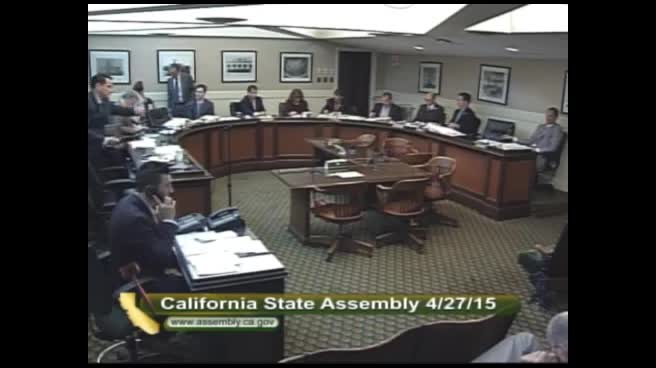
Discussed in Hearing
 14MIN
Assembly Standing Committee on Natural Resources


Bill Co-Author(s):