AB 1448: Personal energy conservation: real property restrictions.
- Session Year: 2015-2016
- House: Assembly
- Latest Version Date: 2015-10-08
(1)Existing law requires a landlord to permit a tenant to participate in personal agriculture in portable containers approved by the landlord if certain conditions are met, including, among others, that the plant crop will not interfere with the maintenance of the rental property.
This bill would require a landlord to permit a tenant to utilize a clothesline or drying rack, as defined, approved by the landlord in the tenants private area, as defined, if certain conditions are met, including, among others, that the clothesline or drying rack will not interfere with the maintenance of the rental property and the use of the clothesline or drying rack does not violate reasonable time or location restrictions imposed by the landlord.
(2)Under existing law, any provision of a governing document, as defined, that effectively prohibits or unreasonably restricts the use of a homeowners backyard for personal agriculture, as defined, is void and unenforceable, unless it imposes a reasonable restriction, as defined, on the use of a homeowners backyard.
This bill would make any provision of a governing document, as defined, void and unenforceable if it effectively prohibits or unreasonably restricts the use of a clothesline or a drying rack, as defined, in an owners backyard, except that reasonable restrictions, as defined, would be enforceable. The bill would specify that these provisions would only apply to backyards that are designated for the exclusive use of the owner.
(1)Existing law requires a landlord to permit a tenant to participate in personal agriculture in portable containers approved by the landlord if certain conditions are met, including, among others, that the plant crop will not interfere with the maintenance of the rental property.
This bill would, subject to reasonable time and place requirements, would require a landlord to permit a tenant to utilize a clothesline or drying rack, as defined, approved by the landlord in the tenants private area, as defined, if certain conditions are met, including, among others, that the clothesline or drying rack will not interfere with the maintenance of the rental property. property and the use of the clothesline or drying rack does not violate reasonable time or location restrictions imposed by the landlord.
(2)Under existing law, any provision of a governing document, as defined, that effectively prohibits or unreasonably restricts the use of a homeowners backyard for personal agriculture, as defined, is void and unenforceable, unless it imposes a reasonable restriction, as defined, on the use of a homeowners backyard.
This bill would make any provision of a governing document, as defined, void and unenforceable if it effectively prohibits or unreasonably restricts the use of a clothesline or a drying rack, as defined, in an owners backyard, except that reasonable restrictions, as defined, would be enforceable. The bill would specify that these provisions would only apply to backyards that are designated for the exclusive use of the owner.
(1)Existing law requires a landlord to permit a tenant to participate in personal agriculture in portable containers approved by the landlord if certain conditions are met, including, among others, that the plant crop will not interfere with the maintenance of the rental property.
This bill would, subject to reasonable time and place requirements, require a landlord to permit a tenant to utilize a clothesline or drying rack, as defined, approved by the landlord in the tenants private area, as defined, if certain conditions are met, including, among others, that the clothesline or drying rack will not interfere with the maintenance of the rental property.
(2)Under existing law, any provision of a governing document, as defined, that effectively prohibits or unreasonably restricts the use of a homeowners backyard for personal agriculture, as defined, is void and unenforceable, unless it imposes a reasonable restriction, as defined, on the use of a homeowners backyard.
This bill would make any provision of a governing document, as defined, void and unenforceable if it effectively prohibits or unreasonably restricts the use of a clothesline or a drying rack, as defined, in an owners yard, backyard, except that reasonable restrictions, as defined, would be enforceable. The bill would specify that these provisions would only apply to yards backyards that are designated for the exclusive use of the owner.
(1)Existing law requires a landlord to permit a tenant to participate in personal agriculture in portable containers approved by the landlord if certain conditions are met, including, among others, that the plant crop will not interfere with the maintenance of the rental property.
This bill would, subject to reasonable time and place requirements, require a landlord to permit a tenant to utilize a clothesline or drying rack, as defined, approved by the landlord in the tenants private area, as defined, if certain conditions are met, including, among others, that the clothesline or drying rack will not interfere with the maintenance of the rental property.
(2)Under existing law, any provision of a governing document, as defined, that effectively prohibits or unreasonably restricts the use of a homeowners backyard for personal agriculture, as defined, is void and unenforceable, unless it imposes a reasonable restriction, as defined, on the use of a homeowners backyard.
This bill would make any provision of a governing document, as defined, void and unenforceable if it effectively prohibits or unreasonably restricts the use of a homeowners backyard for the use of a clothesline, as defined, a clothesline or a drying rack, as defined, in an owners yard, except that reasonable restrictions, as defined, would be enforceable. The bill would specify that these provisions would only apply to yards that are designated for the exclusive use of the homeowner. owner.
(1)Existing law requires a landlord to permit a tenant to participate in personal agriculture in portable containers approved by the landlord if certain conditions are met, including, among others, that the plant crop will not interfere with the maintenance of the rental property.
This bill would would, subject to reasonable time and place requirements, require a landlord to permit a tenant to utilize a clothesline or drying rack, as defined, approved by the landlord in the tenants private area, as defined, if certain conditions are met, including, among others, that the clothesline or drying rack will not interfere with the maintenance of the rental property. The bill would specify that these provisions do not prohibit reasonable time or location restrictions.
(2)Under existing law, any provision of a governing document, as defined, that effectively prohibits or unreasonably restricts the use of a homeowners backyard for personal agriculture, as defined, is void and unenforceable, unless it imposes a reasonable restriction, as defined, on the use of a homeowners backyard.
This bill would make any provision of a governing document, as defined, void and unenforceable if it effectively prohibits or unreasonably restricts the use of a homeowners backyard for personal energy conservation purposes, including, but not limited to, the use of a clothesline, as defined, or any other similar device, a drying rack, except that reasonable restrictions, as defined, would be enforceable. The bill would specify that these provisions would only apply to yards that are designated for the exclusive use of the homeowner.
(1)Existing law requires a landlord to permit a tenant to participate in personal agriculture in portable containers approved by the landlord if certain conditions are met, including, among others, that the plant crop will not interfere with the maintenance of the rental property.
This bill would require a landlord to permit a tenant to utilize a clothesline or drying rack, as defined, approved by the landlord in the tenants private area, as defined, if certain conditions are met, including, among others, that the clothesline or drying rack will not interfere with the maintenance of the rental property. The bill would specify that these provisions do not prohibit reasonable time or location restrictions.
(2)Under existing law, any provision of a governing document, as defined, that effectively prohibits or unreasonably restricts the use of a homeowners backyard for personal agriculture, as defined, is void and unenforceable, unless it imposes a reasonable restriction, as defined, on the use of a homeowners backyard.
This bill would make any provision of a governing document, as defined, void and unenforceable if it effectively prohibits or unreasonably restricts the use of a homeowners backyard for personal energy conservation purposes, including, but not limited to, the use of a clothesline, as defined, or any other similar device, except that reasonable restrictions, as defined, would be enforceable. The bill would specify that these provisions would only apply to yards that are designated for the exclusive use of the homeowner.
Existing law prohibits any covenant, restriction, or condition contained in any deed, contract, security instrument, or other instrument affecting the transfer or sale of, or any interest in, real property, and any provision of a governing document from effectively prohibiting or restricting the installation or use of a solar energy system.
This bill would prohibit these instruments or a rental agreement or lease from effectively prohibiting or restricting the installation or use of a solar energy system, including a clothesline.
(a)For purposes of this section, the following definitions shall apply:
(1)Clothesline includes a cord, rope, or wire from which laundered items may be hung to dry or air. A balcony, railing, awning, or other part of a structure or building shall not qualify as a clothesline.
(2)Drying rack means an apparatus from which laundered items may be hung to dry or air. A balcony, railing, awning, or other part of a structure or building shall not qualify as a drying rack.
(3)Private area means an outdoor area or an area in the tenants premises enclosed by a wall or fence with access from a door of the premises.
(b)A tenant may utilize a clothesline or drying rack in the tenants private area if all of the following conditions are met:
(1)The clothesline or drying rack will not interfere with the maintenance of the rental property.
(2)The clothesline or drying rack will not create a health or safety hazard, block doorways, or interfere with walkways or utility service equipment.
(3)The tenant seeks the landlords consent before affixing a clothesline to a building.
(4)Use of the clothesline or drying rack does not violate reasonable time or location restrictions imposed by the landlord.
(5)The tenant has received approval of the clothesline or drying rack, or the type of clothesline or drying rack, from the landlord.
SEC. 2.Section 4750.10 is added to the Civil Code, immediately following Section 4750, to read:4750.10.(a)For purposes of this section, clothesline includes a cord, rope, or wire from which laundered items may be hung to dry or air. A balcony, railing, awning, or other part of a structure or building shall not qualify as a clothesline.
(b)For purposes of this section, drying rack means an apparatus from which laundered items may be hung to dry or air. A balcony, railing, awning, or other part of a structure or building shall not qualify as a drying rack.
(c)Any provision of a governing document, as defined in Section 4150, shall be void and unenforceable if it effectively prohibits or unreasonably restricts an owners ability to use a clothesline or drying rack in the owners backyard.
(d)(1)This section does not apply to provisions that impose reasonable restrictions on an owners backyard for the use of a clothesline or drying rack.
(2)For purposes of this section, reasonable restrictions are restrictions that do not significantly increase the cost of using a clothesline or drying rack.
(3)This section applies only to backyards that are designated for the exclusive use of the owner.
(e)Nothing in this section shall prohibit an association from establishing and enforcing reasonable rules governing clotheslines or drying racks.
(a)For purposes of this section, the following definitions shall apply:
(1)Clothesline includes a cord, rope, or wire from which laundered items may be hung to dry or air. A balcony, railing, awning, or other part of a structure or building shall not qualify as a clothesline.
(2)Drying rack means an apparatus from which laundered items may be hung to dry or air. A balcony, railing, awning, or other part of a structure or building shall not qualify as a drying rack.
(3)Private area means an outdoor area or an area in the tenants premises enclosed by a wall or fence with access from a door of the premises.
(b)A tenant may utilize a clothesline or drying rack if approved by the landlord, and subject to reasonable time or location restrictions, in the tenants private area if all of the following conditions are met:
(1)The clothesline or drying rack will not interfere with the maintenance of the rental property.
(2)The clothesline or drying rack will not create a health or safety hazard, block doorways, or interfere with walkways or utility service equipment.
(3)The tenant seeks the landlords consent before affixing a clothesline to a building.
(4)Use of the clothesline or drying rack does not violate reasonable time or location restrictions imposed by the landlord.
SEC. 2.Section 4750.10 is added to the Civil Code, immediately following Section 4750, to read:4750.10.(a)For purposes of this section, clothesline includes a cord, rope, or wire from which laundered items may be hung to dry or air. A balcony, railing, awning, or other part of a structure or building shall not qualify as a clothesline.
(b)For purposes of this section, drying rack means an apparatus from which laundered items may be hung to dry or air. A balcony, railing, awning, or other part of a structure or building shall not qualify as a drying rack.
(c)Any provision of a governing document, as defined in Section 4150, shall be void and unenforceable if it effectively prohibits or unreasonably restricts an owners ability to use a clothesline or drying rack in the owners backyard.
(d)(1)This section does not apply to provisions that impose reasonable restrictions on an owners backyard for the use of a clothesline or drying rack.
(2)For purposes of this section, reasonable restrictions are restrictions that do not significantly increase the cost of using a clothesline or drying rack.
(3)This section applies only to backyards that are designated for the exclusive use of the owner.
(e)Nothing in this section shall prohibit an association from establishing and enforcing reasonable rules governing clotheslines or drying racks.
(a)For purposes of this section, the following definitions shall apply:
(1)Clothesline includes a cord, rope, or wire from which laundered items may be hung to dry or air. A balcony, railing, awning, or other part of a structure or building shall not qualify as a clothesline.
(2)Drying rack means an apparatus from which laundered items may be hung to dry or air. A balcony, railing, awning, or other part of a structure or building shall not qualify as a drying rack.
(3)Private area means an outdoor area or an area in the tenants premises enclosed by a wall or fence with access from a door of the premises.
(b)A tenant may utilize a clothesline or drying rack if approved by the landlord, and subject to reasonable time or location restrictions, in the tenants private area if all of the following conditions are met:
(1)The clothesline or drying rack shall will not interfere with the maintenance of the rental property.
(2)The clothesline or drying rack shall will not create a health or safety hazard, block doorways, or interfere with walkways or utility service equipment.
(3)The tenant seeks the landlords consent before affixing a clothesline to a building.
SEC. 2.Section 4750.10 is added to the Civil Code, immediately following Section 4750, to read:4750.10.(a)For purposes of this section, clothesline includes a cord, rope, or wire from which laundered items may be hung to dry or air. A balcony, railing, awning, or other part of a structure or building shall not qualify as a clothesline.
(b)For purposes of this section, drying rack means an apparatus from which laundered items may be hung to dry or air. A balcony, railing, awning, or other part of a structure or building shall not qualify as a drying rack.
(c)Any provision of a governing document, as defined in Section 4150, shall be void and unenforceable if it effectively prohibits or unreasonably restricts an owners ability to use a clothesline or drying rack in the owners yard. backyard.
(d)(1)This section does not apply to provisions that impose reasonable restrictions on an owners yard backyard for the use of a clothesline or drying rack.
(2)For purposes of this section, reasonable restrictions are restrictions that do not significantly increase the cost of using a clothesline or drying rack.
(3)This section applies only to yards backyards that are designated for the exclusive use of the owner.
(e)Nothing in this section shall prohibit an association from establishing and enforcing reasonable rules governing clotheslines or drying racks.
(a)For purposes of this section, the following definitions shall apply:
(1)Clothesline includes a cord, rope, or wire from which clothes laundered items may be hung to dry or air. A balcony, railing, awning, or other part of a structure or building shall not qualify as a clothesline.
(2)Drying rack means an apparatus from which clothes laundered items may be hung to dry or air. A balcony, railing, awning, or other part of a structure or building shall not qualify as a drying rack.
(3)Private area means an outdoor area or an area in the tenants premises enclosed by a wall or fence with access from a door of the premises.
(b)Subject to reasonable time or location restrictions, a landlord shall permit a A tenant to may utilize a clothesline or drying rack if approved by the landlord landlord, and subject to reasonable time or location restrictions, in the tenants private area if all of the following conditions are met:
(1)The clothesline or drying rack shall not interfere with the maintenance of the rental property.
(2)The clothesline or drying rack shall not create a health or safety hazard, block doorways, or interfere with walkways or utility service equipment.
(3)The tenant seeks the landlords consent before affixing a clothesline to a building.
SEC. 2.Section 4750.10 is added to the Civil Code, immediately following Section 4750, to read:4750.10.(a)For purposes of this section, clothesline has the same definition as in Section 1940.20. includes a cord, rope, or wire from which laundered items may be hung to dry or air. A balcony, railing, awning, or other part of a structure or building shall not qualify as a clothesline.
(b)For purposes of this section, drying rack means an apparatus from which laundered items may be hung to dry or air. A balcony, railing, awning, or other part of a structure or building shall not qualify as a drying rack.
(b)
(c)Any provision of a governing document, as defined in Section 4150, shall be void and unenforceable if it effectively prohibits or unreasonably restricts a homeowners an owners ability to use a backyard clothesline or drying rack. rack in the owners yard.
(c)
(d)(1)This section does not apply to provisions that impose reasonable restrictions on a homeowners an owners yard for the use of a clothesline or drying rack.
(2)For purposes of this section, reasonable restrictions are restrictions that do not significantly increase the cost of using a clothesline or drying rack.
(3)This section applies only to yards that are designated for the exclusive use of the homeowner. owner.
(d)
(e)Nothing in this section shall prohibit an association from establishing and enforcing reasonable rules governing clotheslines or drying racks.
(a)For purposes of this section, the following definitions shall apply:
(1)Clothesline includes a cord, rope, or wire from which clothes may be hung to dry or air.
(2)Drying rack means an apparatus from which clothes may be hung to dry or air.
(3)Private area means an outdoor area or an area in the tenants premises enclosed by a wall or fence with access from a door of the premises.
(b)A Subject to reasonable time or location restrictions, a landlord shall permit a tenant to utilize a clothesline or drying rack approved by the landlord in the tenants private area if both all of the following conditions are met:
(1)The clothesline or drying rack shall not interfere with the maintenance of the rental property.
(2)The clothesline or drying rack shall not create a health or safety hazard, block doorways, or interfere with walkways or utility service equipment.
(c)This section does not prohibit reasonable time or location restrictions.
(3)The tenant seeks the landlords consent before affixing a clothesline to a building.
SEC. 2.Section 4750.10 is added to the Civil Code, immediately following Section 4750, to read:4750.10.(a)For purposes of this section, clothesline has the same definition as in Section 1940.20.
(b)Any provision of a governing document, as defined in Section 4150, shall be void and unenforceable if it effectively prohibits or unreasonably restricts the use of a homeowners backyard for personal energy conservation purposes, including, but not limited to, the use of a clothesline or any similar device. a homeowners ability to use a backyard clothesline or drying rack.
(c)(1)This section does not apply to provisions that impose reasonable restrictions on the use of a homeowners yard for personal energy conservation purposes, including the use of a clothesline or any similar device. drying rack.
(2)For purposes of this section, reasonable restrictions are restrictions that do not significantly increase the cost of engaging in personal energy conservation, including the use of a clothesline or any similar device, or significantly decrease the efficiency of personal energy conservation. using a clothesline or drying rack.
(3)This section applies only to yards that are designated for the exclusive use of the homeowner.
(d)Nothing in this section shall prohibit an association from establishing and enforcing reasonable rules governing clotheslines or any similar device. drying racks.
(a)For purposes of this section, the following definitions shall apply:
(1)Clothesline includes a cord, rope, or wire from which clothes may be hung to dry or air.
(2)Drying rack means an apparatus from which clothes may be hung to dry or air.
(3)Private area means an outdoor area or an area in the tenants premises enclosed by a wall or fence with access from a door of the premises.
(b)A landlord shall permit a tenant to utilize a clothesline or drying rack approved by the landlord in the tenants private area if both of the following conditions are met:
(1)The clothesline or drying rack shall not interfere with the maintenance of the rental property.
(2)The clothesline or drying rack shall not create a health or safety hazard, block doorways, or interfere with walkways or utility service equipment.
(c)This section does not prohibit reasonable time or location restrictions.
SEC. 2.Section 4750.10 is added to the Civil Code, immediately following Section 4750, to read:4750.10.(a)For purposes of this section, clothesline has the same definition as in Section 1940.20.
(b)Any provision of a governing document, as defined in Section 4150, shall be void and unenforceable if it effectively prohibits or unreasonably restricts the use of a homeowners backyard for personal energy conservation purposes, including, but not limited to, the use of a clothesline or any similar device.
(c)(1)This section does not apply to provisions that impose reasonable restrictions on the use of a homeowners yard for personal energy conservation purposes, including the use of a clothesline or any similar device.
(2)For purposes of this section, reasonable restrictions are restrictions that do not significantly increase the cost of engaging in personal energy conservation, including the use of a clothesline or any similar device, or significantly decrease the efficiency of personal energy conservation.
(3)This section applies only to yards that are designated for the exclusive use of the homeowner.
(d)Nothing in this section shall prohibit an association from establishing and enforcing reasonable rules governing clotheslines or any similar device.
SECTION 1.Section 714 of the Civil Code is amended to read:714.(a)Any covenant, restriction, or condition contained in any rental agreement, lease, deed, contract, security instrument, or other instrument affecting the transfer or sale of, or any interest in, real property, and any provision of a governing document, as defined in Section 4150 or 6552, that effectively prohibits or restricts the installation or use of a solar energy system, including a clothesline, is void and unenforceable.
(b)This section does not apply to provisions that impose reasonable restrictions on solar energy systems. However, it is the policy of the state to promote and encourage the use of solar energy systems and to remove obstacles thereto. Accordingly, reasonable restrictions on a solar energy system are those restrictions that do not significantly increase the cost of the system or significantly decrease its efficiency or specified performance, or that allow for an alternative system of comparable cost, efficiency, and energy conservation benefits.
(c)(1)A solar energy system shall meet applicable health and safety standards and requirements imposed by state and local permitting authorities, consistent with Section 65850.5 of the Government Code.
(2)Solar energy systems used for heating water in single family residences and solar collectors used for heating water in commercial or swimming pool applications shall be certified by an accredited listing agency as defined in the Plumbing and Mechanical Codes.
(3)A solar energy system for producing electricity shall also meet all applicable safety and performance standards established by the California Electrical Code, the Institute of Electrical and Electronics Engineers, and accredited testing laboratories such as Underwriters Laboratories and, where applicable, rules of the Public Utilities Commission regarding safety and reliability.
(d)For the purposes of this section:
(1)(A)For solar domestic water heating systems or solar swimming pool heating systems that comply with state and federal law, significantly means an amount exceeding 10 percent of the cost of the system, but in no case more than one thousand dollars ($1,000), or decreasing the efficiency of the solar energy system by an amount exceeding 10 percent, as originally specified and proposed.
(B)For photovoltaic systems that comply with state and federal law, significantly means an amount not to exceed one thousand dollars ($1,000) over the system cost as originally specified and proposed, or a decrease in system efficiency of an amount exceeding 10 percent as originally specified and proposed.
(2)Solar energy system has the same meaning as defined in paragraphs (1) and (2) of subdivision (a) of Section 801.5.
(e)(1)Whenever approval is required for the installation or use of a solar energy system, the application for approval shall be processed and approved by the appropriate approving entity in the same manner as an application for approval of an architectural modification to the property, and shall not be willfully avoided or delayed.
(2)For an approving entity that is an association, as defined in Section 4080 or 6528, and that is not a public entity, both of the following shall apply:
(A)The approval or denial of an application shall be in writing.
(B)If an application is not denied in writing within 45 days from the date of receipt of the application, the application shall be deemed approved, unless that delay is the result of a reasonable request for additional information.
(f)Any entity, other than a public entity, that willfully violates this section shall be liable to the applicant or other party for actual damages occasioned thereby, and shall pay a civil penalty to the applicant or other party in an amount not to exceed one thousand dollars ($1,000).
(g)In any action to enforce compliance with this section, the prevailing party shall be awarded reasonable attorneys fees.
(h)(1)A public entity that fails to comply with this section may not receive funds from a state-sponsored grant or loan program for solar energy. A public entity shall certify its compliance with the requirements of this section when applying for funds from a state-sponsored grant or loan program.
(2)A local public entity may not exempt residents in its jurisdiction from the requirements of this section.
(a)Any covenant, restriction, or condition contained in any rental agreement, lease, deed, contract, security instrument, or other instrument affecting the transfer or sale of, or any interest in, real property, and any provision of a governing document, as defined in Section 4150 or 6552, that effectively prohibits or restricts the installation or use of a solar energy system, including a clothesline, is void and unenforceable.
(b)This section does not apply to provisions that impose reasonable restrictions on solar energy systems. However, it is the policy of the state to promote and encourage the use of solar energy systems and to remove obstacles thereto. Accordingly, reasonable restrictions on a solar energy system are those restrictions that do not significantly increase the cost of the system or significantly decrease its efficiency or specified performance, or that allow for an alternative system of comparable cost, efficiency, and energy conservation benefits.
(c)(1)A solar energy system shall meet applicable health and safety standards and requirements imposed by state and local permitting authorities, consistent with Section 65850.5 of the Government Code.
(2)Solar energy systems used for heating water in single family residences and solar collectors used for heating water in commercial or swimming pool applications shall be certified by an accredited listing agency as defined in the Plumbing and Mechanical Codes.
(3)A solar energy system for producing electricity shall also meet all applicable safety and performance standards established by the California Electrical Code, the Institute of Electrical and Electronics Engineers, and accredited testing laboratories such as Underwriters Laboratories and, where applicable, rules of the Public Utilities Commission regarding safety and reliability.
(d)For the purposes of this section:
(1)(A)For solar domestic water heating systems or solar swimming pool heating systems that comply with state and federal law, significantly means an amount exceeding 10 percent of the cost of the system, but in no case more than one thousand dollars ($1,000), or decreasing the efficiency of the solar energy system by an amount exceeding 10 percent, as originally specified and proposed.
(B)For photovoltaic systems that comply with state and federal law, significantly means an amount not to exceed one thousand dollars ($1,000) over the system cost as originally specified and proposed, or a decrease in system efficiency of an amount exceeding 10 percent as originally specified and proposed.
(2)Solar energy system has the same meaning as defined in paragraphs (1) and (2) of subdivision (a) of Section 801.5.
(e)(1)Whenever approval is required for the installation or use of a solar energy system, the application for approval shall be processed and approved by the appropriate approving entity in the same manner as an application for approval of an architectural modification to the property, and shall not be willfully avoided or delayed.
(2)For an approving entity that is an association, as defined in Section 4080 or 6528, and that is not a public entity, both of the following shall apply:
(A)The approval or denial of an application shall be in writing.
(B)If an application is not denied in writing within 45 days from the date of receipt of the application, the application shall be deemed approved, unless that delay is the result of a reasonable request for additional information.
(f)Any entity, other than a public entity, that willfully violates this section shall be liable to the applicant or other party for actual damages occasioned thereby, and shall pay a civil penalty to the applicant or other party in an amount not to exceed one thousand dollars ($1,000).
(g)In any action to enforce compliance with this section, the prevailing party shall be awarded reasonable attorneys fees.
(h)(1)A public entity that fails to comply with this section may not receive funds from a state-sponsored grant or loan program for solar energy. A public entity shall certify its compliance with the requirements of this section when applying for funds from a state-sponsored grant or loan program.
(2)A local public entity may not exempt residents in its jurisdiction from the requirements of this section.
|
Date
|
Status
|
|---|---|
| Oct 8, 2015 | Chaptered by Secretary of State - Chapter 602, Statutes of 2015. |
| Oct 8, 2015 | Approved by the Governor. |
| Sep 18, 2015 | Enrolled and presented to the Governor at 4 p.m. |
| Sep 10, 2015 | Senate amendments concurred in. To Engrossing and Enrolling. (Ayes 53. Noes 22. Page 3083.). |
| Sep 10, 2015 | Senate amendments concurred in. To Engrossing and Enrolling. (Ayes 53. Noes 22.). |
| Sep 10, 2015 | Senate amendments concurred in. To Engrossing and Enrolling. |
| Sep 9, 2015 | Read third time. Passed. Ordered to the Assembly. (Ayes 35. Noes 4. Page 2621.). |
| Sep 9, 2015 | Read third time. Passed. Ordered to the Assembly. |
| Sep 9, 2015 | In Assembly. Concurrence in Senate amendments pending. |
| Sep 8, 2015 | Read second time. Ordered to third reading. |
| Sep 4, 2015 | Read third time and amended. Ordered to second reading. |
| Jul 15, 2015 | Read second time and amended. Ordered to third reading. |
| Jul 14, 2015 | From committee: Amend, and do pass as amended. (Ayes 6. Noes 0.) (July 7). |
| Jun 24, 2015 | From committee: Do pass and re-refer to Com. on JUD. (Ayes 8. Noes 1.) (June 23). Re-referred to Com. on JUD. |
| Jun 16, 2015 | From committee chair, with author's amendments: Amend, and re-refer to committee. Read second time, amended, and re-referred to Com. on T. & H. |
| Jun 4, 2015 | Referred to Coms. on T. & H. and JUD. |
| May 22, 2015 | In Senate. Read first time. To Com. on RLS. for assignment. |
| May 22, 2015 | Read third time. Passed. Ordered to the Senate. (Ayes 52. Noes 18. Page 1551.) |
| May 22, 2015 | Read third time. Passed. Ordered to the Senate. |
| May 18, 2015 | Read second time. Ordered to third reading. |
| May 14, 2015 | Read second time and amended. Ordered returned to second reading. |
| May 13, 2015 | From committee: Amend, and do pass as amended. (Ayes 5. Noes 2.) (May 13). |
| May 7, 2015 | Re-referred to Com. on H. & C.D. |
| May 6, 2015 | Read second time and amended. |
| May 5, 2015 | From committee: Amend, and do pass as amended and re-refer to Com. on H. & C.D. (Ayes 6. Noes 3.) (May 5). |
| Apr 27, 2015 | Re-referred to Com. on JUD. |
| Apr 23, 2015 | From committee chair, with author's amendments: Amend, and re-refer to Com. on JUD. Read second time and amended. |
| Mar 26, 2015 | Referred to Com. on JUD. |
| Mar 2, 2015 | Read first time. |
| Mar 1, 2015 | From printer. May be heard in committee March 31. |
| Feb 27, 2015 | Introduced. To print. |
|
Date
|
Description
|
Location
|
Votes
|
|
|---|---|---|---|---|
| Sep 10, 2015 | AB 1448 LOPEZ Concurrence in Senate Amendments | Assembly Floor |
Passed |
|
| Sep 9, 2015 | Assembly 3rd Reading AB1448 Lopez By Leno | Senate Floor |
Passed |
|
| Jul 7, 2015 | Do pass as amended | Senate Standing Committee on Judiciary |
Passed |
|
| Jun 23, 2015 | Do pass, but first be re-referred to the Committee on [Judiciary] | Senate Standing Committee on Transportation and Housing |
Passed |
|
| May 22, 2015 | AB 1448 LOPEZ Assembly Third Reading | Assembly Floor |
Passed |
|
| May 13, 2015 | Do pass as amended. | Assembly Standing Committee on Housing and Community Development |
Passed |
|
| May 5, 2015 | Do pass as amended and be re-referred to the Committee on [Housing and Community Development] | Assembly Standing Committee on Judiciary |
Passed |
This list shows positions taken on this bill by organizations on the date displayed, which is linked to the original source.
Positions by individuals are not included.
AB 1448
Page 3
CONCURRENCE IN SENATE AMENDMENTS
AB 1448
(Lopez)
As Amended September 4, 2015
Majority vote
ASSEMBLY: |
52-18 |
(May 22, 2015) |
SENATE: |
35-4 |
(September 9, 2015) |
Original Committee Reference: JUD.
SUMMARY: Permits tenants, as well as owners in a homeowners association (HOA), to use clotheslines and drying racks, as specified. Specifically, this bill:
Subject to reasonable time and location restrictions imposed by the law, a tenant may use a clothesline or drying rack, as defined, if all of the following conditions are met:
The clothesline or drying rack shall not interfere with the maintenance of the rental property.
The clothesline or drying rack shall not create a health or safety hazard, block doorways, or interfere with walkways or utility service equipment.
The tenant seeks the landlord's prior approval before affixing a clothesline to a building.
Use of the clothesline or drying rack does not violate reasonable time or location restrictions imposed by the landlord.
The tenant has received approval of the clothesline or drying rack, or the type of clothesline or drying rack, from the landlord.
Makes void and unenforceable any provision in HOA governing documents that effectively prohibits or unreasonably restricts an owner's ability to use a clothesline or drying rack in the owner's backyard. Specifies that nothing in this provision shall prevent the HOA from establishing reasonable rules and restrictions governing clotheslines or drying racks.
Defines "clothesline" and "drying rack" to exclude a balcony, railing, awning, or other parts of a structure or building shall.
The Senate amendments:
Rephrase and clarify the landlord's ability to impose reasonable time and location restrictions.
Specify that the HOA provision may not unreasonably restrict the owner's ability to use a clothesline or drying rack in the owner's "backyard" (as opposed to "yard.")
Specify that the tenant must receive approval of the clothesline or drying rack, or the type of clothesline or drying rack, from the landlord.
EXISTING LAW:
Regulates the terms and conditions of residential tenancies, and generally requires landlords to keep the rental units in a condition fit for occupancy.
Creates an implied covenant of quiet enjoyment in every lease, requiring that the tenant shall not be disturbed in his or her possession by the landlord.
Regulates the purposes for which a renter's security deposit may be used, including, but not limited to, compensating the landlord for default on payment of rent, cleaning or repairing rented property, exclusive of normal wear and tear, or remedying future obligations under the rental agreement, as specified.
Permits the governing board of an HOA to adopt operating rules that apply generally to the management and operation of the common interest development or the conduct of the business and affairs of HOA, provided that the rule is within the authority of the board to make, does not conflict with the association's articles, bylaws, or governing law, and is reasonable.
Provides specified limits to the authority of HOA governing documents to regulate the use of a member's separate interest, including provisions relating to the display of signs, the installation of solar energy systems, and modification to property to accommodate a disability.
FISCAL EFFECT: None
COMMENTS: This modest energy conservation and freedom of choice measure will make it easier for renters and owners in an HOA to make use of an outdoor clothesline or drying rack in order to conserve energy and cut utility costs. This bill has ample protections for landlords and HOAs. First, a landlord may impose reasonable restrictions as to time and location and the tenant must seek landlord approval before attaching a clothesline or drying rack to a building. As for owners in an HOA, this bill provides that any provision in the governing documents that unreasonably prohibits or impairs the ability of the owner to use a clothesline or drying rack in the owner's backyard is unenforceable. However, this bill permits the HOA to impose reasonable restrictions on the use of clotheslines and drying racks. Both the landlord-tenant and HOA provisions of this bill specify that a balcony, railing, awning, or other parts of a structure or building shall not qualify as a clothesline or drying rack.
According to the author and supporters, using clotheslines and drying racks instead of gas or electric dryers does more than save the tenant or HOA owner money; it eases pressures on the state's power supply and reduces the amount of carbon released into the atmosphere.
Many of the concerns raised by the many regional apartment associations originally opposed to this bill appear to have been addressed by the requirement that any clothesline or drying rack is subject to reasonable time and location restriction and the requirement that the tenant seek landlord approval as to the type of clothesline and drying rack and before attaching the clothesline or drying rack to a building. The most recent amendments appear to have removed all opposition to this bill.
Analysis Prepared by: Thomas Clark / JUD. / (916) 319-2334 FN: 0002243
AB 1448
Page 5
|
Office of Senate Floor Analyses (916) 651-1520 Fax: (916) 327-4478 |
THIRD READING
Bill No: AB 1448
Amended: 9/4/15 in Senate
SENATE TRANS. & HOUSING COMMITTEE: 8-1, 6/23/15
AYES: Beall, Allen, Gaines, Galgiani, Leyva, Mendoza, Roth, Wieckowski
NOES: Bates
NO VOTE RECORDED: Cannella, McGuire
SENATE JUDICIARY COMMITTEE: 6-0, 7/7/15
AYES: Jackson, Moorlach, Hertzberg, Leno, Monning, Wieckowski
NO VOTE RECORDED: Anderson
ASSEMBLY FLOOR: 52-18, 5/22/15 - See last page for vote
SUBJECT: Personal energy conservation: real property restrictions
SOURCE: The Utility Reform Network
DIGEST: This bill requires a landlord to allow a tenant to use a clothesline or drying rack in the private area of a tenant’s rental tenancy if certain conditions are met, including that the clothesline or drying rack will not interfere with the maintenance of the rental property. This bill also voids, or makes unenforceable, any provision of a governing document in a common interest development (CID) that prohibits an owner’s ability to use a clothesline or drying rack in the owner’s backyard.
Senate Floor Amendments of 9/4/15 add a requirement that a tenant receive approval of the clothesline or drying rack, or the type of clothesline or drying rack, from the landlord, in order to use a clothesline or drying rack.
Existing law:
Regulates the terms and conditions of residential tenancies, and generally requires landlords to keep the rental units in a condition fit for occupancy.
Creates an implied covenant of quiet enjoyment in every lease, requiring that the tenant shall not be disturbed in his or her possession by the landlord.
Regulates the purposes for which a renter’s security deposit may be used, including, but not limited to, compensating the landlord for default on payment of rent; cleaning or repairing rented property, exclusive of normal wear and tear; or remedying future obligations under the rental agreement, as specified.
Permits the governing board of a homeowners association (HOA) to adopt operating rules that apply generally to the management and operation of the CID or the conduct of the business and affairs of the HOA, provided that the rules are within the authority of the board to make; do not conflict with the association’s articles, bylaws, or governing law; and are reasonable.
Provides specified limits to the authority of HOA governing documents to regulate the use of a member’s separate interest, including provisions relating to the display of signs, the installation of solar energy systems, and modification to property to accommodate a disability.
This bill:
Defines “clothesline” as including a cord, rope, or wire from which laundered items may be hung to dry or air. A balcony, railing, awning, or other part of a structure or building shall not qualify as a clothesline.
Defines “drying rack” as an apparatus from which laundered items may be hung to dry or air. A balcony, railing, awning, or other part of a structure or building shall not qualify as a drying rack.
Defines “private area” as an outdoor area or an area in the tenant’s premises enclosed by a wall or fence with access from a door of the premises.
Provides that a tenant may utilize a clothesline or drying rack in the tenant’s private area if all of the following conditions are met:
The clothesline or drying rack will not interfere with the maintenance of the rental property;
The clothesline or drying rack will not create a health or safety hazard, block doorways, or interfere with walkways or utility service equipment;
The tenant seeks the landlord’s consent before affixing a clothesline to a building;
Use of the clothesline or drying rack does not violate reasonable time or location restrictions imposed by the landlord; and
The tenant has received approval of the clothesline or drying rack, or the type of clothesline or drying rack, from the landlord.
Voids, or makes unenforceable, any provision of a governing document in a CID that effectively prohibits, or unreasonably restricts, an owner’s ability to use a clothesline or drying rack in the owner’s backyard and specifies that this section only applies to backyards that are designated for the exclusive use of the owner.
Permits an HOA to establish reasonable restrictions for the use of a clothesline or drying rack, and defines “reasonable restrictions” as restrictions that do not significantly increase the cost of using a clothesline or drying rack.
Comments
Purpose of the bill. According to the source, The Utility Reform Network, due to an ambiguity in existing law, many homeowners, condominium, or apartment associations have an outright ban on the use of clotheslines. This ban prevents low-income families and energy-conscious persons from using a low-cost, low-technology energy-conservation tool. This bill ensures that associations and landlords cannot enforce an outright prohibition on the use of a clothesline or drying rack in a person’s private area if certain conditions are met.
Permissible use of clotheslines and drying racks. This bill provides that any provision in a CID governing document is unenforceable if it effectively prohibits or unreasonably restricts the ability of an owner to use a backyard clothesline or drying rack. This bill allows HOAs, however, to impose reasonable restrictions on an owner’s use of a clothesline or drying rack. This bill also specifies that use of a clothesline or drying rack is limited to backyard use and may not be used in common areas.
Renters would be authorized to use a clothesline or drying rack in the private area of their tenancy, like a backyard, if they get approval from their landlords and the clothesline or drying rack does not interfere with the maintenance of the rental property; does not create a health or safety hazard, block doorways, or interfere with walkways or utility service equipment; and if the tenant seeks the landlord’s consent before attaching a clothesline to a building.
FISCAL EFFECT: Appropriation: No Fiscal Com.: No Local: No
The Utility Reform Network (source)
California Municipal Utilities Association
California State Grange
Chinatown Community Development Center
Conference of California Bar Associations
Consumer Federation of California
Latino Coalition for a Healthy California
Natural Resources Defense Council
Sebastopol Grange #306
None received
ASSEMBLY FLOOR: 52-18, 5/22/15
AYES: Baker, Bloom, Bonta, Brown, Burke, Calderon, Campos, Chau, Chávez, Chiu, Chu, Cooley, Cooper, Dababneh, Dahle, Daly, Dodd, Eggman, Frazier, Gallagher, Cristina Garcia, Eduardo Garcia, Gomez, Gonzalez, Gordon, Gray, Roger Hernández, Holden, Jones-Sawyer, Kim, Lackey, Levine, Linder, Lopez, Low, McCarty, Medina, Mullin, Nazarian, Patterson, Perea, Quirk, Rendon, Ridley-Thomas, Salas, Santiago, Mark Stone, Thurmond, Ting, Williams, Wood, Atkins
NOES: Achadjian, Travis Allen, Bigelow, Brough, Beth Gaines, Gatto, Hadley, Harper, Irwin, Jones, Maienschein, Mathis, Mayes, Melendez, Obernolte, Steinorth, Wagner, Wilk
NO VOTE RECORDED: Alejo, Bonilla, Chang, Gipson, Grove, O'Donnell, Olsen, Rodriguez, Waldron, Weber
Prepared by: Alison Dinmore / T. & H. / (916) 651-4121
9/8/15 21:59:29
**** END ****
AB 1448
Page 4
|
Office of Senate Floor Analyses (916) 651-1520 Fax: (916) 327-4478 |
THIRD READING
Bill No: AB 1448
Amended: 7/15/15 in Senate
SENATE TRANS. & HOUSING COMMITTEE: 8-1, 6/23/15
AYES: Beall, Allen, Gaines, Galgiani, Leyva, Mendoza, Roth, Wieckowski
NOES: Bates
NO VOTE RECORDED: Cannella, McGuire
SENATE JUDICIARY COMMITTEE: 6-0, 7/7/15
AYES: Jackson, Moorlach, Hertzberg, Leno, Monning, Wieckowski
NO VOTE RECORDED: Anderson
ASSEMBLY FLOOR: 52-18, 5/22/15 - See last page for vote
SUBJECT: Personal energy conservation: real property restrictions
SOURCE: The Utility Reform Network
DIGEST: This bill requires a landlord to allow a tenant to use a clothesline or drying rack in the private area of a tenant’s rental tenancy if certain conditions are met, including that the clothesline or drying rack will not interfere with the maintenance of the rental property. This bill also voids, or makes unenforceable, any provision of a governing document in a common interest development (CID) that prohibits an owner’s ability to use a clothesline or drying rack in the owner’s backyard.
Existing law:
Regulates the terms and conditions of residential tenancies, and generally requires landlords to keep the rental units in a condition fit for occupancy.
Creates an implied covenant of quiet enjoyment in every lease, requiring that the tenant shall not be disturbed in his or her possession by the landlord.
Regulates the purposes for which a renter’s security deposit may be used, including, but not limited to, compensating the landlord for default on payment of rent; cleaning or repairing rented property, exclusive of normal wear and tear; or remedying future obligations under the rental agreement, as specified.
Permits the governing board of a homeowners association (HOA) to adopt operating rules that apply generally to the management and operation of the CID or the conduct of the business and affairs of the HOA, provided that the rules are within the authority of the board to make; do not conflict with the association’s articles, bylaws, or governing law; and are reasonable.
Provides specified limits to the authority of HOA governing documents to regulate the use of a member’s separate interest, including provisions relating to the display of signs, the installation of solar energy systems, and modification to property to accommodate a disability.
This bill:
Defines “clothesline” as including a cord, rope, or wire from which laundered items may be hung to dry or air. A balcony, railing, awning, or other part of a structure or building shall not qualify as a clothesline.
Defines “drying rack” as an apparatus from which laundered items may be hung to dry or air. A balcony, railing, awning, or other part of a structure or building shall not qualify as a drying rack.
Defines “private area” as an outdoor area or an area in the tenant’s premises enclosed by a wall or fence with access from a door of the premises.
Provides that a tenant may utilize a clothesline or drying rack in the tenant’s private area if all of the following conditions are met:
The clothesline or drying rack will not interfere with the maintenance of the rental property;
The clothesline or drying rack will not create a health or safety hazard, block doorways, or interfere with walkways or utility service equipment;
The tenant seeks the landlord’s consent before affixing a clothesline to a building; and
Use of the clothesline or drying rack does not violate reasonable time or location restrictions imposed by the landlord.
Voids, or makes unenforceable, any provision of a governing document in a CID that effectively prohibits, or unreasonably restricts, an owner’s ability to use a clothesline or drying rack in the owner’s backyard and specifies that this section only applies to backyards that are designated for the exclusive use of the owner.
Permits an HOA to establish reasonable restrictions for the use of a clothesline or drying rack, and defines “reasonable restrictions” as restrictions that do not significantly increase the cost of using a clothesline or drying rack.
Comments
Purpose of the bill. According to the source, the Utility Reform Network, due to an ambiguity in existing law, many homeowners, condominium, or apartment associations have an outright ban on the use of clotheslines. This ban prevents low-income families and energy-conscious persons from using a low-cost, low-technology energy-conservation tool. This bill ensures that associations and landlords cannot enforce an outright prohibition on the use of a clothesline or drying rack in a person’s private area if certain conditions are met.
Permissible use of clotheslines and drying racks. This bill provides that any provision in a CID governing document is unenforceable if it effectively prohibits or unreasonably restricts the ability of an owner to use a backyard clothesline or drying rack. This bill allows HOAs, however, to impose reasonable restrictions on an owner’s use of a clothesline or drying rack. This bill also specifies that use of a clothesline or drying rack is limited to backyard use and may not be used in common areas.
Renters would be authorized to use a clothesline or drying rack in the private area of their tenancy, like a backyard, if they get approval from their landlords and the clothesline or drying rack does not interfere with the maintenance of the rental property; does not create a health or safety hazard, block doorways, or interfere with walkways or utility service equipment; and if the tenant seeks the landlord’s consent before attaching a clothesline to a building.
FISCAL EFFECT: Appropriation: No Fiscal Com.: No Local: No
The Utility Reform Network (source)
California Municipal Utilities Association
California State Grange
Chinatown Community Development Center
Conference of California Bar Associations
Consumer Federation of California
Latino Coalition for a Healthy California
Natural Resources Defense Council
Sebastopol Grange #306
OPPOSITION: (Verified 7/14/15)
None received
ASSEMBLY FLOOR: 52-18, 5/22/15
AYES: Baker, Bloom, Bonta, Brown, Burke, Calderon, Campos, Chau, Chávez, Chiu, Chu, Cooley, Cooper, Dababneh, Dahle, Daly, Dodd, Eggman, Frazier, Gallagher, Cristina Garcia, Eduardo Garcia, Gomez, Gonzalez, Gordon, Gray, Roger Hernández, Holden, Jones-Sawyer, Kim, Lackey, Levine, Linder, Lopez, Low, McCarty, Medina, Mullin, Nazarian, Patterson, Perea, Quirk, Rendon, Ridley-Thomas, Salas, Santiago, Mark Stone, Thurmond, Ting, Williams, Wood, Atkins
NOES: Achadjian, Travis Allen, Bigelow, Brough, Beth Gaines, Gatto, Hadley, Harper, Irwin, Jones, Maienschein, Mathis, Mayes, Melendez, Obernolte, Steinorth, Wagner, Wilk
NO VOTE RECORDED: Alejo, Bonilla, Chang, Gipson, Grove, O'Donnell, Olsen, Rodriguez, Waldron, Weber
Prepared by: Alison Dinmore / T. & H. / (916) 651-4121
7/15/15 15:54:48
AB 1448 (Lopez)
Page 8 of 8
Senator Hannah-Beth Jackson, Chair
2015-2016 Regular Session
AB 1448 (Lopez)
Version: June 16, 2015
Hearing Date: July 7, 2015
Fiscal: No
Urgency: No
TH
SUBJECT
Personal Energy Conservation: Real Property Restrictions
DESCRIPTION
This bill would require a landlord to allow a tenant to use a clothesline or drying rack in the private area of a tenant’s rental tenancy if certain conditions are met, including that the clothesline or drying rack will not interfere with the maintenance of the rental property. This bill would also render any provision of a common interest development governing document void and unenforceable if it effectively prohibits or unreasonably restricts the use of a clothesline or a drying rack in an owner’s backyard.
BACKGROUND
In California, common interest developments (CIDs) are governed by the Davis-Stirling Common Interest Development Act. Owners of separate property in CIDs have an undivided interest in the common property of the development and are subject to the CID’s covenants, conditions, and restrictions. CIDs are also governed by a homeowners association, which is run by volunteer directors that may or may not have prior experience managing an association. The Court of Appeal, Fourth Appellate District, previously observed that:
[t]he homeowners associations function almost “as a second municipal government, regulating many aspects of [the homeowners’] daily lives.” “[U]pon analysis of the association’s functions, one clearly sees the association as a quasi-government entity paralleling in almost every case the powers, duties, and responsibilities of a municipal government. As a ‘mini-government,’ the association provides to its members, in almost every case, utility services, road maintenance, street and common area lighting, and refuse removal. In many cases, it also provides security services and various forms of communication within the community. There is, moreover, a clear analogy to the municipal police and public safety functions. . . .” In short, homeowners associations, via their enforcement of the CC&R’s, provide many beneficial and desirable services that permit a common interest development to flourish. (Villa Milano Homeowners Ass’n v. Il Davorge (2000) 84 Cal.App.4th 819, 836 [citations omitted].)
Separately, existing landlord-tenant law regulates the terms and conditions of residential tenancies, allowing landlords to oversee the use of leased or rented real property in certain circumstances, and providing specified tenant protections for the use of rental property. This bill would add to the Davis-Stirling Act and to California’s landlord-tenant laws specific protections for homeowners and tenants to use clothesline or drying racks on residential property under specified conditions.
This bill was heard by the Senate Transportation and Housing Committee on June 23, 2015, and passed out on a vote of 8-1.
CHANGES TO EXISTING LAW
Existing law regulates the terms and conditions of residential tenancies and generally requires a landlord to keep a rental unit in a condition fit for occupancy. (Civ. Code Sec. 1940 et seq.)
Existing law creates an implied covenant of quiet enjoyment in every lease, requiring that the tenant shall not be disturbed in his or her possession by the landlord. (Civ. Code Sec. 1927; Pierce v. Nash (1954) 126 Cal.App.2d 606, 612.)
Existing law regulates the purposes for which a renter’s security deposit may be used, including, but not limited to, compensating the landlord for default on payment of rent, cleaning or repairing rented property, exclusive of normal wear and tear, or remedying future obligations under the rental agreement, as specified. (Code Civ. Proc. Sec. 1950.5 (a)-(e).)
This bill would provide that a tenant may utilize a clothesline or drying rack in the tenant’s private area if approved by the landlord, and subject to reasonable time or location restrictions, if all of the following conditions are met:
the clothesline or drying rack will not interfere with the maintenance of the rental property;
the clothesline or drying rack will not create a health or safety hazard, block doorways, or interfere with walkways or utility service equipment; and
the tenant seeks the landlord’s consent before affixing a clothesline to a building.
This bill would provide the following definitions:
The term “clothesline” means a cord, rope, or wire from which laundered items may be hung to dry or air. A balcony, railing, awning, or other part of a structure or building shall not qualify as a clothesline.
The term “drying rack” means an apparatus from which laundered items may be hung to dry or air. A balcony, railing, awning, or other part of a structure or building shall not qualify as a drying rack.
The term “private area” means an outdoor area or an area in the tenant’s premises enclosed by a wall or fence with access from a door of the premises.
Existing law, the Davis-Stirling Common Interest Development Act, establishes the rules and regulations governing the operation of a common interest development (CID) and the respective rights and duties of a homeowners association (HOA) and its members. (Civ. Code Sec. 4000 et seq.)
Existing law permits the governing board of an HOA to adopt operating rules that apply generally to the management and operation of the CID or the conduct of the business and affairs of an HOA, provided that the rule is within the authority of the board to make, does not conflict with the HOA’s articles, bylaws, or governing law, and is reasonable. (Civ. Code Secs. 4340, 4350.)
Existing law limits the authority of an HOA or the governing documents of a CID to regulate the use of a member’s separate interest. (Civ. Code Sec. 4700 et seq.)
This bill would state that any provision of a CID governing document shall be void and unenforceable if it effectively prohibits or unreasonably restricts an owner’s ability to use a clothesline or drying rack in the owner’s backyard.
This bill would not apply to reasonable restrictions imposed by CID governing documents conditioning the use of a clothesline or drying rack in an owner’s backyard, and would not prohibit an HOA from establishing and enforcing reasonable rules governing clotheslines or drying racks.
This bill would apply only to backyards that are designated for the exclusive use of the owner.
This bill would provide the following definitions:
“clothesline” means a cord, rope, or wire from which laundered items may be hung to dry or air. A balcony, railing, awning, or other part of a structure or building shall not qualify as a clothesline;
“drying rack” means an apparatus from which laundered items may be hung to dry or air. A balcony, railing, awning, or other part of a structure or building shall not qualify as a drying rack; and
“reasonable restrictions” means restrictions that do not significantly increase the cost of using a clothesline or drying rack.
COMMENT
Stated need for the bill
The author writes:
Nationwide, there is a growing movement to allow citizens the personal freedom of hang-drying their clothing harnessing the power of the sun. Six states, Florida, Maine, Utah, Vermont, Colorado, and Hawaii have a statute that overrides or strikes all contractual and covenantal provisions prohibiting the use of clotheslines. The usage of a clothesline and the harnessing of solar power promotes energy conservation in a low-tech, low-cost manner.
Using an indoor, electrical dryer is one of the top ten energy-consuming household appliance[s]. According to the United States Energy Information Administration, a typical U.S. household could save an average 1,500 pounds of carbon dioxide from being released into the atmosphere by foregoing the use of an electric dryer and drying clothes using a clothesline. Unfortunately Californians are experiencing utility shutoffs in large numbers and many Californians rely on clotheslines to alleviate high energy costs.
However, in many locations across California, Homeowners’ Associations, Condo Associations, and Apartment Associations deny a person’s right to utilize the power of the sun, limit[ing] a low-tech energy conservation tool, and prevent[ing] the use of clotheslines, or hanging rack[s], to dry your clothes.
Due to the ambiguity in current law, many homeowners, condominium, [and] apartment associations have an outright ban on the use of clotheslines. This ban prevents low-income families and energy conscious persons from using a low-cost, low-tech energy conservation tool. This bill would ensure that associations and landlords cannot enforce an outright prohibition on the use of a clothesline or drying rack in a person’s private area if certain conditions are met.
Clothes Dryer Energy Consumption
“Clothes dryers can be one of the most expensive home appliances to operate, using approximately 6 percent of a home’s total electricity usage.” (California Energy Commission, Clothes Dryers <http://www.consumerenergycenter.org/residential/ appliances/dryers.html> [as of Jun 24, 2015].) A recent media report states that “[d]ryers are the number two home appliance in energy usage,” and “[o]verall, dryers in the U.S. emit 32 million metric tons of carbon dioxide per year, according to the Environmental Protection Agency, and use 43 billion kilowatt hours and 443 million therms of natural gas.” (Laurie Reeves, The Average Cost an Hour to Run a Dryer <http://homeguides.sfgate.com/average-cost-hour-run-dryer-68320.html> [as of Jun. 24, 2015].) According to the California Energy Commission:
Unlike other appliances, clothes dryers don’t vary much from brand to brand and model to model in the amount of energy used. (That's why the Federal Trade Commission does not require clothes dryers to have a yellow EnergyGuide label.) All clothes dryers being sold today operate the same way - they use electricity to turn a drum that tumbles clothes through heated air to remove moisture. But operating costs vary depending if that air is heated by natural gas or electricity.
Electric dryers use heating coils, while gas dryers use a gas burner to produce heat. Gas dryers cost approximately $50 more to purchase initially, but since natural gas is usually less costly than electricity, gas dryers cost less to operate. Depending on your utility, drying a load of laundry can cost between 32 to 41 cents in an electric dryer, or 15 to 33 cents in a gas dryer. Gas dryers tend to operate at a hotter temperature than electric ones, so clothes can tumble in the dryer for shorter periods, sparing the material and reducing energy costs. Thus a gas dryer can save you up to 50 percent in energy costs. (California Energy Commission, Clothes Dryers <http://www.consumerenergycenter.org/residential/appliances/dryers.html> [as of Jun 24, 2015].)
To avoid the costs and environmental impacts associated with using clothes dryers, the Energy Commission recommends individuals consider using clotheslines. The Commission states:
Let the heat of the sun dry your clothes, and [d]on’t use the clothes dryer at all. Some homeowners’ associations and cities, however, have local CC&Rs that restrict the use of clotheslines in planned communities. So, check the covenants, codes and restrictions covering your property to see if you can use this effective, almost cost-free drying alternative. But even if you can’t use a clothesline, you can set up a small standalone clothes rack to dry shirts and other small items. (Id.)
Permissible use of Clotheslines and Drying Racks
This bill would require homeowners associations in common interest developments (CIDs) and landlords who rent residential property to allow the use of clotheslines and drying racks in private spaces under the exclusive control of an owner, in the case of a common interest development, or a renter, in the case of a residential tenancy. Renters would be authorized to use a clothesline or drying rack in the private area of their tenancy, like a backyard, if they get approval of their landlord and the clothesline or drying rack does not interfere with the maintenance of the rental property, does not create a health or safety hazard, block doorways, or interfere with walkways or utility service equipment, and if the tenant seeks the landlord’s consent before attaching a clothesline to a building. Owners of separate interests in a CID would be free to use clotheslines and drying racks, subject to reasonable restrictions imposed by the CID, in backyards that are designated for the exclusive use of the owner. This bill would not preclude CIDs from restricting the use of clotheslines in other areas of a separate interest, like a front yard, or in common areas.
The Chinatown Community Development Center, writing in support, states:
Many clients from our housing counseling program are low income and cannot afford professional laundry services and/or do not have access to laundry facilities within their unit or building. In addition, through housing counseling, we have seen landlords use doing laundry as a reason to evict tenants from their homes.
. . .
AB 1448 would prevent the outright prohibition of a clothesline in a person’s private area. Chinatown Community Development Center understands that there may be a need to regulate or apply certain limitations to such clothesline usage; however an outright ban would be contrary to our state’s movement towards energy efficiency and environmental consciousness.
Clarifying Amendments
As the author notes in Comment 1 above, the intent of this bill is to ensure that homeowner associations and landlords cannot enforce an outright prohibition on the use of a clothesline or drying rack so long as certain conditions are met. However, as drafted, the section of the bill addressing landlords appears to give them plenary authority to refuse a tenant’s request to use these implements, stating “a tenant may utilize a clothesline or drying rack if approved by the landlord . . .” To address this incongruity, the author offers the following amendments which would clarify that approval may only be withheld if use of a clothesline or drying rack would contravene the conditions listed in the bill:
Author’s Amendments:
On page 2, lines 16 to 18, strike “if approved by the landlord, and subject to reasonable time or location restrictions,”
On page 2, following line 26, insert: “(4) Use of the clothesline or drying rack does not violate reasonable time or location restrictions imposed by the landlord.”
Support: California Municipal Utilities Association; California State Grange; Chinatown Community Development Center; Conference of California Bar Associations; Consumer Federation of California; Natural Resources Defense Council; Sebastopol Grange # 306
Opposition: None Known
HISTORY
Source: Utility Reform Network
Related Pending Legislation: AB 349 (Gonzalez, 2015) would make void and unenforceable any provision of the governing documents or architectural or landscaping guidelines or policies of a common interest development that prohibits use of artificial turf or any other synthetic surface that resembles grass. This bill would also prohibit a common interest development from requiring an owner of a separate interest remove or reverse water-efficient landscaping measures, installed in response to a declaration of a state of emergency, upon the conclusion of the state of emergency. This bill is pending in the Senate Judiciary Committee.
Prior Legislation:
AB 2561 (Bradford, Ch. 584, Stats. 2014) required landlords to permit tenants to participate in personal agriculture in portable containers approved by the landlord in the tenant’s private area so long as certain conditions are met. This bill also rendered void any provision of a governing document of a common interest development that effectively prohibited or unreasonably restricted the use of a homeowner’s backyard for personal agriculture.
AB 2565 (Muratsuchi, Ch. 529, Stats. 2014), among other things, rendered void any term in a lease renewed or extended on or after January 1, 2015, that conveys any possessory interest in commercial property that either prohibits or unreasonably restricts the installation or use of an electric vehicle charging station in a parking space associated with that commercial property. This bill also prescribed requirements for lessor approval of a lessee’s request to install or use an electronic vehicle charging station, and required that a lessor approve a request to install a charging station if the lessee agrees in writing to do specified acts, including paying for various costs associated with the charging station and maintaining insurance naming the lessor as an insured.
SB 209 (Corbett, Ch. 121, Stats. 2011) rendered void and unenforceable any covenant, restriction, or condition contained in any deed, contract, security instrument, or other instrument affecting the transfer or sale of any interest in a common interest development, or any provision of the governing documents of a common interest development, that effectively prohibits or restricts the installation or use of an electrical vehicle charging station. This bill authorized a common interest development to impose reasonable restrictions on the approval and installation of those stations.
AB 2376 (Bates, Ch. 346, Stats. 2004) required a homeowners association to provide a fair and reasonable process for reviewing a request by a homeowner for a physical alteration to their unit or the common area.
Prior Vote:
Senate Transportation and Housing Committee (Ayes 8, Noes 1)
Assembly Floor (Ayes 52, Noes 18)
Assembly Housing and Community Development Committee (Ayes 5, Noes 2)
Assembly Judiciary Committee (Ayes 6, Noes 3)
**************
AB 1448 (Lopez) Page 4 of 4
SENATE COMMITTEE ON TRANSPORTATION AND HOUSING
Senator Jim Beall, Chair
2015 - 2016 Regular
Bill No: AB 1448 Hearing Date: 6/23/2015
Author: |
Lopez |
||
Version: |
6/16/2015 |
||
Urgency: |
No |
Fiscal: |
No |
Consultant: |
Alison Dinmore |
||
SUBJECT: Personal energy conservation: real property restrictions
DIGEST: This bill voids, or makes unenforceable, any provision of a governing document in a common interest development (CID) that prohibits an owner’s ability to use a clothesline or drying rack in the owner’s backyard.
ANALYSIS:
Existing law:
Regulates the terms and conditions of residential tenancies, and generally requires landlords to keep the rental units in a condition fit for occupancy.
Creates an implied covenant of quiet enjoyment in every lease, requiring that the tenant shall not be disturbed in his or her possession by the landlord.
Regulates the purposes for which a renter’s security deposit may be used, including, but not limited to, compensating the landlord for default on payment of rent; cleaning or repairing rented property, exclusive of normal wear and tear; or remedying future obligations under the rental agreement, as specified.
Permits the governing board of a homeowners association (HOA) to adopt operating rules that apply generally to the management and operation of the CID or the conduct of the business and affairs of the HOA, provided that the rules are within the authority of the board to make, do not conflict with the association's articles, bylaws, or governing law, and are reasonable.
Provides specified limits to the authority of HOA governing documents to regulate the use of a member’s separate interest, including provisions relating to the display of signs, the installation of solar energy systems, and modification to property to accommodate a disability.
This bill:
Defines “clothesline” as including a cord, rope, or wire from which laundered items may be hung to dry or air. A balcony, railing, awning, or other part of a structure or building shall not qualify as a clothesline.
Defines “drying rack” as an apparatus from which laundered items may be hung to dry or air. A balcony, railing, awning, or other partof a structure or building shall not qualify as a drying rack.
Defines “private area” as an outdoor area or an area in the tenant’s premises enclosed by a wall or fence with access from a door of the premises.
Provides that a tenant may utilize a clothesline or drying rack if approved by the landlord, and subject to reasonable time or location restrictions, in the tenant’s private area if all of the following conditions are met:
The clothesline or drying rack will not interfere with the maintenance of the rental property;
The clothesline or drying rack will not create a health or safety hazard, block doorways, or interfere with walkways or utility service equipment; and
The tenant seeks the landlord’s consent before affixing a clothesline to a building.
Voids, or makes unenforceable, any provision of a governing document in a CID that effectively prohibits, or unreasonably restricts, an owner’s ability to use a clothesline or drying rack in the owner’s backyard and specifies that this section only applies to backyards that are designated for the exclusive use of the owner.
Permits an HOA to establish reasonable restrictions for the use of a clothesline or drying rack, and defines “reasonable restrictions” as restrictions that do not significantly increase the cost of using a clothesline or drying rack.
COMMENTS:
Purpose of the bill. According to the author, due to an ambiguity in current law, many homeowners, condominium, or apartment associations have an outright ban on the use of clotheslines. This ban prevents low-income families and energy-conscious persons from using a low-cost, low-technology energy-conservation tool. This bill would ensure that associations and landlords cannot enforce an outright prohibition on the use of a clothesline or drying rack in a person’s private area if certain conditions are met.
Effect of the bill. This bill provides that any provision in a CID governing document is unenforceable if it effectively prohibits or unreasonably restricts the ability of an owner to use a backyard clothesline or drying rack. The bill allows HOAs, however, to impose reasonable restrictions on an owner’s use of a clothesline or drying rack. This bill also specifies that use of a clothesline or drying rack is limited to backyard use and may not be used in common areas.
Double-referral. The Senate Rules Committee referred this bill to both this committee and the Senate JudiciaryCommittee. If the bill passes out of this committee, it will be referred to the Judiciary Committee to consider the landlord/tenant provisions of the bill.
Assembly Votes:
Floor: 52-18
H&CD: 5-2
Jud: 6-3
Related Legislation:
AB 2561 (Bradford, Chapter 584, Statutes of 2014) — established conditions under which residents of CIDs and tenants in rental housing may engage in personal agriculture.
FISCAL EFFECT: Appropriation: No Fiscal Com.: No Local: No
POSITIONS: (Communicated to the committee before noon on Wednesday,
June 17, 2015.)
SUPPORT:
The Utility Reform Network (sponsor)
California Municipal Utilities Association
California State Grange
Chinatown Community Development Center
Conference of California Bar Associations
Consumer Federation of California
Latino Coalition for a Healthy California (LCHC)
Natural Resources Defense Council
Sebastopol Grange #306
OPPOSITION:
None received
-- END --
AB 1448
Page 2
ASSEMBLY THIRD READING
AB 1448
(Lopez)
As Amended May 14, 2015
Majority vote
Committee |
Votes |
Ayes |
Noes |
Judiciary |
6-3 |
Mark Stone, Chau, Chiu, Gallagher, Cristina Garcia, Holden |
Wagner, Maienschein, O'Donnell |
Housing |
5-2 |
Chau, Burke, Chiu, Lopez, Mullin |
Steinorth, Beth Gaines |
SUMMARY: Permits tenants, as well as owners in a homeowners association (HOA), to use clotheslines and drying racks, as specified. Specifically, this bill:
Requires a landlord to permit a tenant to use a clothesline or drying rack, as defined, if approved by the landlord, and subject to reasonable time or location restrictions, in the tenant's private area if all of the following conditions are met:
The clothesline or drying rack shall not interfere with the maintenance of the rental property.
The clothesline or drying rack shall not create a health or safety hazard, block doorways, or interfere with walkways or utility service equipment.
The tenant seeks the landlord's prior approval before affixing a clothesline to a building.
Makes void and unenforceable any provision in HOA governing documents that effectively prohibits or unreasonably restricts an owner's ability to use a clothesline or drying rack in the owner's yard. Specifies that nothing in this provision shall prevent the HOA from establishing reasonable rules and restrictions governing clotheslines or drying racks.
Specifies that a balcony, railing, awning, or other parts of a structure or building shall not qualify as a clothesline or drying rack.
EXISTING LAW:
Regulates the terms and conditions of residential tenancies, and generally requires landlords to keep the rental units in a condition fit for occupancy.
Creates an implied covenant of quiet enjoyment in every lease, requiring that the tenant shall not be disturbed in his or her possession by the landlord.
Regulates the purposes for which a renter's security deposit may be used, including, but not limited to, compensating the landlord for default on payment of rent, cleaning or repairing rented property, exclusive of normal wear and tear, or remedying future obligations under the rental agreement, as specified.
Permits the governing board of an HOA to adopt operating rules that apply generally to the management and operation of the common interest development or the conduct of the business and affairs of HOA, provided that the rule is within the authority of the board to make, does not conflict with the association's articles, bylaws, or governing law, and is reasonable.
Provides specified limits to the authority of HOA governing documents to regulate the use of a member’s separate interest, including provisions relating to the display of signs, the installation of solar energy systems, and modification to property to accommodate a disability.
FISCAL EFFECT: None
COMMENTS: This modest energy conservation and freedom of choice measure will make it easier for renters and owners in an HOA to make use of an outdoor clothesline or drying rack in order to conserve energy and cut utility costs. This bill has ample protections for landlords and HOAs. First, a landlord must approve the tenant's choice of clothesline or drying rack and may impose reasonable restrictions as to time and location. As for owners in an HOA, this bill provides that any provision in the governing documents that unreasonably prohibits or impairs the ability of the owner to use a clothesline or drying rack in the owner's yard is unenforceable. However, this bill permits the HOA to impose reasonable restrictions on the use of clotheslines and drying racks. This bill specifies that a balcony, railing, awning, or other parts of a structure or building shall not qualify as a clothesline or drying rack.
According to the author and supporters, using clotheslines and drying racks instead of gas or electric dryers does more than save the tenant or HOA owner money; it eases pressures on the state's power supply and reduces the amount of carbon released into the atmosphere.
Many of the concerns raised by the many regional apartment associations opposed to this bill appear to be already addressed by the requirement that any clothesline or drying rack must be "approved by the landlord" and subject to "reasonable time and location restrictions." The opposition's concerns that clothesline may be placed or attached in manner that damages property or poses a threat to safety or convenience of other tenants or owners, in the case of an HOA, seem more than adequately addressed by recent amendments. Remaining opposition appears to be based on the aesthetics of clotheslines and drying racks.
Necessity for Legislation. The California Apartment Association questions the necessity for this bill. The California Apartment Association claims that most tenants can already use clotheslines and drying racks and regularly work out the details and permissions with landlords. No doubt most landlords and tenants settle the issue reasonably and without incident, but according to the author and supporters many landlords and HOAs in California do, in fact, prohibit clotheslines. To the extent to which tenants and owners are prohibited from using clotheslines and drying racks is not clear, but by the opposition's own reckoning a fair number of landlords and HOAs must prohibit outdoor clotheslines and drying racks, otherwise there would be no basis for opposition to this bill. For tenants and owners dealing with these landlords and HOAs, this bill may permit them to have reasonable clotheslines and drying racks.
Analysis Prepared by: Thomas Clark / JUD. / (916) 319-2334 FN: 0000420
AB 1448
Page 4
Date of Hearing: May 13, 2015
ASSEMBLY COMMITTEE ON HOUSING AND COMMUNITY DEVELOPMENT
Ed Chau, Chair
AB 1448 (
Lopez) – As Amended May 6, 2015
SUBJECT: Personal energy conservation: real property restrictions
SUMMARY: Permits tenants, as well as owners in a homeowners association (HOA), to use clotheslines and drying racks, subject to reasonable restrictions, as specified. Specifically, this bill:
Defines "clothesline” as including a cord, rope, or wire from which clothes may be hung to dry or air.
Defines “drying rack” as meaning an apparatus from which clothes may be hung to dry or air.
Defines “private area” as meaning an outdoor area or an area in the tenant’s premises enclosed by a wall or fence with access from a door of the premises.
Provides that, subject to reasonable time or location restrictions, a landlord shall permit a tenant to utilize a clothesline or drying rack approved by the landlord in the tenant’s private area if all of the following conditions are met:
The clothesline or drying rack shall not interfere with the maintenance of the rental property;
The clothesline or drying rack shall not create a health or safety hazard, block doorways, or interfere with walkways or utility service equipment; and
The tenant seeks the landlord’s consent before affixing a clothesline to a building.
Makes void and unenforceable any provision in a HOA's governing documents that effectively prohibits or unreasonably restricts a homeowner's ability to use a backyard clothesline or drying rack, and specifies that this section applies only to yards that are designated for the exclusive use of the homeowner.
Provides that an HOA may establish reasonable rules and restrictions governing clotheslines or drying racks, and defines “reasonable restrictions" as restrictions that do not significantly increase the cost of using a clothesline or drying rack.
EXISTING LAW:
Regulates the terms and conditions of residential tenancies, and generally requires landlords to keep the rental units in a condition fit for occupancy (Civil Code Section 1940 et seq.).
Creates an implied covenant of quiet enjoyment in every lease, requiring that the tenant shall not be disturbed in his or her possession by the landlord (Civil Code Section 1927; Pierce v. Nash (1954) 126 Cal.App.2d 606, 612).
Regulates the purposes for which a renter's security deposit may be used, including, but not limited to, compensating the landlord for default on payment of rent, cleaning or repairing rented property, exclusive of normal wear and tear, or remedying future obligations under the rental agreement, as specified (Code of Civil Procedure Section 1950.5).
Permits the governing board of a HOA to adopt operating rules that apply generally to the management and operation of the common interest development (CID) or the conduct of the business and affairs of the HOA, provided that the rule is within the authority of the board to make, does not conflict with the association's articles, bylaws, or governing law, and is reasonable (Civil Code Sections 4340 and 4350).
Provides specified limits to the authority of HOA governing documents to regulate the use of a member’s separate interest, including provisions relating to the display of signs, the installation of solar energy systems, and modification to property to accommodate a disability (Civil Code Section 4700 et seq.).
FISCAL EFFECT: None.
COMMENTS: AB 1448 will make it easier for renters, as well as owners in a HOA, to make use of an outdoor clothesline or drying rack in order to conserve energy and cut utility costs. The bill has ample protections for landlords and HOAs. First, a landlord must approve the tenant's choice of clothesline or drying rack and may impose reasonable restrictions as to time and location. As for owners in a HOA, the bill provides that any provision in the governing documents that effectively prohibits or unreasonably restricts the ability of the owner to use a backyard clothesline or drying rack is unenforceable. However, the bill permits the HOA to impose reasonable restrictions on the use of backyard clotheslines and drying racks. The bill also makes it clear that the HOA owner's right to use a clothesline or drying rack is restricted to backyard space that is for the exclusive use of the owner; there would be no right under this bill to use a clothesline or drying rack in any HOA common area.
Need for the bill: According to the author, "due to the ambiguity in current law, many homeowners, condominium, or apartment associations have an outright ban on the use of clotheslines. This ban prevents low-income families and energy conscious persons from using a low-cost, low-tech energy conservation tool. This bill would ensure that associations and landlords cannot enforce an outright prohibition on the use of a clothesline or drying rack in a person’s private area if certain conditions are met."
Arguments in support: The bill's sponsor, The Utility Reform Network (TURN), argues that AB 1448 will "encourage and support low-cost, low-tech solutions for the average citizen to keep and maintain manageable utility bills." According to TURN, there is "a growing movement to allow citizens the personal freedom of hang-drying their clothing, harnessing the power of the sun." TURN reports that six states – Florida, Maine, Utah, Vermont, Colorado, and Hawaii – have adopted statutes that override contracts or covenants that prohibit the use of clotheslines. Federal studies, according to TURN, show that using clothesline instead of electric dryers promotes energy conservation and significantly reduces the amount of carbon dioxide emitted into the atmosphere. Despite the obvious potential for monetary savings and energy conservation, TURN contends that "in many locations across California, Homeowners' Associations, Condo Associations, and Apartment Associations deny a person's right to utilize the power of the sun" by prohibiting the use of clotheslines and drying racks. Supporters add that the bill appropriately recognizes the right of a landlord or HOA to impose reasonable restrictions, so long as clotheslines and drying racks are not unreasonably prohibited altogether.
Arguments in opposition: Opponents represent statewide and regional associations of apartment owners and HOAs. They argue that AB 1448 will interfere with the management and well-established rules of apartment complexes and community interest developments. The San Diego County Apartment Association contends that "if a property owner elects to disallow clotheslines at their rental properties, they should be allowed to do so." For many opponents, a primary objection appears to be aesthetics. They contend that landlords could lose control of the appearance of their properties, and as a result property values will suffer. The Apartment Association of Greater Los Angeles and the Santa Barbara Rental Property Association argue that AB 1448 would "likely become the basis for new disputes as the bill's right to hang laundry clashes with a property owner's concern over the maintaining [of] the appearance of the property." Proposed committee amendments, which include a clarification that a tenant may utilize a clothesline or drying rack if approved by the landlord, address these concerns.
The Educational Community of Homeowners (ECHO), representing community associations, opposes this bill unless amended, and the proposed committee amendments address these concerns.
Related legislation: AB 2561 (Bradford), Chapter 584, Statutes of 2014: Established conditions under which residents of CIDs and tenants in rental housing may engage in personal agriculture.
Committee amendments: The Committee may wish to accept the following amendments:
1. An amendment providing that a balcony, railing, awning, or other parts of a structure or building shall not qualify as a clothesline or drying rack.
2. An amendment clarifying that a tenant may utilize a clothesline or drying rack if approved by the landlord.
3. An amendment changing the term "clothes" to "laundered items."
4. An amendment eliminating the cross-reference to Civil Code Section 1940.20 in Section 2 and replacing it with the definition of "clothesline" found in Section 1.
5. An amendment adding a definition of "drying rack" to Section 2, identical to the definition in Section 1.
6. An amendment replacing the term "homeowner" with "owner."
7. An amendment, in Section 2, changing the term "backyard clothesline or drying rack" to "clothesline or drying rack in the owner's yard."
REGISTERED SUPPORT / OPPOSITION:
Support
The Utility Reform Network (TURN) (sponsor)
California Municipal Utilities Association
California State Grange
Conference of California Bar Associations
Consumer Federation of California
Natural Resources Defense Council
Sebastopol Grange # 306
Opposition
Apartment Association of Greater Los Angeles
Apartment Association of Orange County
Apartment Association, Southern California Cities
East Bay Rental Housing Association
Educational Community for Homeowners (ECHO) (Oppose unless amended)
Nor Cal Rental Property Association
North Valley Property Owners Association
San Diego County Apartment Association
Santa Barbara Rental Property Association
Western Manufactured Housing Communities Association
Analysis Prepared by: Rebecca Rabovsky / H. & C.D. / (916) 319-2085
AB 1448
Page 6
Date of Hearing: May 5, 2015
ASSEMBLY COMMITTEE ON JUDICIARY
Mark Stone, Chair
AB 1448
(Lopez) – As Amended April 23, 2015
As Proposed to be Amended
SUBJECT: clotheslines and drying racks: real property restrictions
KEY ISSUES:
Should a landlord be required to permit a tenant to have an energy-saving clothesline or drying rack in the tenant's private area, so long as it does not interfere with property maintenance or pose a safety threat?
Should a provisIon in the governing documents of a homeowners' association be unenforceable if it unreasonably restricts an owner from using a backyard clothesline or drying rack?
SYNOPSIS
This modest energy conservation measure will make it easier for renters and owners in a homeowners' association (HOA) to use an outdoor clothesline or drying rack in order to conserve energy and cut utility costs. The bill has ample protections for landlords and HOAs. First, a landlord must approve the tenant's choice of clothesline or drying rack and may impose reasonable restrictions as to time and place. Second, as for HOA owners, the bill makes unenforceable any provisions in the governing documents that unreasonably impairs the ability of the owner to use a backyard clothesline or drying rack. The bill specifies, however, that the HOA may still impose reasonable restrictions on the use of backyard clotheslines and drying racks. Notwithstanding the author's effort to clarify the right of landlords and HOAs to impose reasonable restrictions on the use of these simple energy-saving devices, the bill is opposed by landlord and HOA groups who fear that clotheslines will create an eyesore and may damage property. The author has graciously agreed to amend the bill further to clarify that a tenant cannot affix a clothesline to a building exterior without the landlord's prior approval, even though this was probably already covered under existing language. With these amendments, the primary basis for continuing opposition appears to be aesthetics. This bill is sponsored by The Utility Reform Network (TURN) and supported by Conference of California Bar Associations, the Consumer Federation of California, the California State Grange, and the Sebastopol Grange. The author will take amendments in this Committee that are reflected in the analysis.
SUMMARY: Permits tenants, as well as owners in a homeowners association, to use reasonable clotheslines and drying racks, as specified. Specifically, this bill:
Requires a landlord to permit a tenant to use a clothesline or drying rack approved by the landlord in the tenant's private area, subject to reasonable time and location restrictions, if the following conditions are met:
The clothesline or drying rack shall not interfere with the maintenance of the rental property.
The clothesline or drying rack shall not create a health or safety hazard, block doorways, or interfere with walkways or utility service equipment.
The tenant seeks the landlord's prior approval before affixing a clothesline to a building.
Makes void and unenforceable any provision in HOA governing documents that effectively prohibits or unreasonably restricts a homeowner's ability to use a backyard clothesline or drying rack. Specifies that nothing in this provision shall prevent the HOA from establishing reasonable rules and restrictions governing clotheslines or drying racks.
EXISTING LAW:
Regulates the terms and conditions of residential tenancies, and generally requires landlords to keep the rental units in a condition fit for occupancy. (Civil Code Section 1940 et seq.)
Creates an implied covenant of quiet enjoyment in every lease, requiring that the tenant shall not be disturbed in his or her possession by the landlord. (Civil Code Section 1927; Pierce v. Nash (1954) 126 Cal.App.2d 606, 612.)
Regulates the purposes for which a renter's security deposit may be used, including, but not limited to, compensating the landlord for default on payment of rent, cleaning or repairing rented property, exclusive of normal wear and tear, or remedying future obligations under the rental agreement, as specified. (Code of Civil Procedure Section 1950.5 (a)-(e).)
Permits the governing board of a HOA to adopt operating rules that apply generally to the management and operation of the common interest development or the conduct of the business and affairs of HOA, provided that the rule is within the authority of the board to make, does not conflict with the association's articles, bylaws, or governing law, and is reasonable. (Civil Code Sections 4340 and 4350.)
Provides specified limits to the authority of HOA governing documents to regulate the use of a member’s separate interest, including provisions relating to the display of signs, the installation of solar energy systems, and modification to property to accommodate a disability. (Civil Code Section 4700 et seq.)
FISCAL EFFECT: As currently in print this bill is keyed non-fiscal.
COMMENTS: This modest energy conservation and freedom of choice measure will make it easier for renters and owners in a homeowners' association (HOA) to make use of an outdoor clothesline or drying rack in order to conserve energy and cut utility costs. The bill has ample protections for landlords and HOAs. First, a landlord must approve the tenant's choice of clothesline or drying rack and may impose reasonable restrictions as to time and location. As for owners in an HOA, the bill provides that any provision in the governing documents that unreasonably prohibits or impairs the ability of the owner to use a backyard clothesline or drying rack is unenforceable. However, the bill permits the HOA to impose reasonable restrictions on the use of backyard clotheslines and drying racks. The bill also makes it clear that the HOA owner's right to use a clothesline or drying rack is restricted to backyard space that is for the exclusive use of the owner; there would be no right under this bill to use a clothesline or drying rack in any HOA common area.
Opponents Claims Seem Overstated Given Requirement for Landlord Approval: Many of the concerns raised by the many regional apartment associations opposed to this bill appear to be already addressed by the requirement that any clothesline or drying rack must be "approved by the landlord" and subject to "reasonable time and location restrictions." Opponents fear, for example, that tenants may attach clotheslines to buildings by drilling holes or by other means that might damage the property. Most landlords, the opponents contend, prefer free-standing clotheslines or drying racks to ones that are semi-permanently attached. But if the landlord must approve the clothesline, presumably this means that the landlord could choose to approve only freestanding clotheslines that do not entail drilling holes into a building. If the tenant drilled holes without the landlord's permission, existing law would allow the landlord to deduct money from the security deposit to patch them up. As noted below, to address this concern the author as agreed to an amendment making explicit that a clothesline cannot be affixed to a building exterior without the landlord's prior approval.
Requiring prior approval to affix the clothesline to a building will not likely remove the opposition, however. For example, opponents claim that they would support freestanding clotheslines, but this claim does not square with other objections raised. For example, opponents repeatedly proclaim that hanging clothes (and especially underwear, it seems) is aesthetically displeasing to other tenants and the public. But if this is so, it is not clear why those clothes would be more aesthetically pleasing on a freestanding clothesline than on an attached one. Other opposition arguments also appear inconsistent. For example, opponents contend at some points that tenants can already use clotheslines and drying racks inside of their apartments. Putting aside the obvious drawback that refreshing sunlight and breeze cannot reach clothes hanging inside, the opponents elsewhere express the fear that tenants will hang clothes over areas where dripping water will damage property. But it would seem that dripping water inside the building would cause more property damage than dripping water outside. Moreover, it is difficult to imagine how clothes dripping in an outdoor location would cause any more damage than rain. If there is such an outdoor location that cannot be reached by rain and where dripping water would cause property damage, the bill addresses that problem by allowing the landlord to impose reasonable restrictions as to the time and location of the landlord-approved clothesline.
Necessity for Legislation. The California Apartment Association (CAA) shares many of the concerns of the several regional apartment associations, but it asks a more fundamental question: Why is this bill necessary? CAA claims that most tenants can already use clotheslines and drying racks and regularly work out the details and permissions with landlords. No doubt most landlords and tenants settle the issue reasonably and without incident, but according to the author and supporters many landlords and HOAs in California do, in fact, prohibit clotheslines. The Committee does not have any evidence on whether such restrictions are increasing or decreasing, but by the opposition's own reckoning a fair number of landlords and HOAs must prohibit outdoor clotheslines and drying racks, otherwise the bill would not be necessary. For tenants and owners dealing with these landlords and HOAs, this bill may permit them to have reasonably placed clotheslines and drying racks.
Tenant Property Rights and the "Bundle of Sticks." One of the opposition letters invokes the old law-school adage that property rights are best thought of as a "bundle of sticks." The letter contends that one of the "sticks" enjoyed by the property owner is the right to "control" the property. Yet the idea of property as a "bundle of sticks" actually supports this bill. According to the classic formulation, the "bundle of sticks" that make up property rights include the right to possess; the right to exclude; the right to use or enjoy; and the right to transfer or convey. [Jesse Dukeminier & James Krier, Property 93 (5th ed. 2002).] The point of the "bundle of sticks" analogy is that a property interest does not necessarily entail all of those rights; the rights associated with property, that is, are severable. For example, a person with a life estate has a right to possess, exclude, and use the property, but lacks the right to transfer. Though often forgotten by those who invoke sanctity of property rights, a tenant enjoys property rights every bit as worthy of protection as the property rights of a title holder. While the tenancy lasts, the tenant has the "right to possess" stick and the "right to use" stick. The tenant even has the "right to exclude" stick as to everyone but the landlord, and under California law the tenant may even exclude the landlord subject to certain exceptions. (See e.g. Civil Code Section 1927; Pierce v. Nash (1954) 126 Cal.App.2d 606, 612.) Like the holder of a life estate the tenant lacks the right to transfer. Also like the holder of a life estate, the tenant has an obligation not to "waste" (or injure) the property, which is why California landlords are entitled to require a security deposit and withhold parts or all of it to cover cleaning and damage costs. (Code of Civil Procedure Section 1950.5 (a)-(e).)
When a landlord leases property to a tenant, he or she conveys certain "sticks" in the property-rights bundle while retaining others. It is not unreasonable to assume that the tenant's right to use and enjoy the property includes the right to reap the many personal and environmental benefits of a clothesline. Indeed, the tenant might even find the clothesline aesthetically pleasing. Neighbors and members of the public might find the clothesline aesthetically displeasing, but the same would be true of a clothesline installed by a fee simple owner; yet no one would question the fee simple owner's right to install one.
Tenant Provisions Could Be Much Stronger. Despite opposition claims that this bill takes too much control away from the landlord, the bill arguably cedes too much to the landlord. The bill only permits the tenant to use a clothesline or drying rack that is "approved by the landlord." This could undermine the purpose of the bill, as a landlord could simply refuse every reasonable request by the tenant. The eminently reasonable purpose of the bill might be better served by recasting that provision. That is, rather than requiring the clothesline or drying rack to be approved by the landlord, it would be more consistent with the purpose of the bill to provide that the landlord shall not "unreasonably disapprove" of the tenant's use of a clothesline or drying rack so long as it meets all of the bill's other considerable restrictions.
ARGUMENTS IN SUPPORT: The bill's sponsor, The Utility Reform Network (TURN), argues that AB 1448 will "encourage and support low-cost, low-tech solutions for the average citizen to keep and maintain manageable utility bills." According to TURN, there is "a growing movement to allow citizens the personal freedom of hang-drying their clothing, harnessing the power of the sun." TURN reports that six states – Florida, Maine, Utah, Vermont, Colorado, and Hawaii – have adopted statutes that override contracts or covenants that prohibit the use of clotheslines. Federal studies, according to TURN, show that using clothesline instead of electric dryers promotes energy conservation and significantly reduces the amount of carbon dioxide emitted into the atmosphere. Despite the obvious potential for monetary savings and energy conservation, TURN contends that "in many locations across California, Homeowners' Associations, Condo Associations, and Apartment Associations deny a person's right to utilize the power of the sun" by prohibiting the use of clotheslines and drying racks.
The Conference of California Bar Associations (CCBA) supports this bill for similar reasons, claiming that "studies have shown that mechanical clothes dryers often use up to 10% of a household's energy consumption. However, while existing law recognizes the value of easements for energy conservation, it fails to include passive solar devices, such as clotheslines, which could go a long way towards reducing unnecessary energy consumption." AB 1448 is supported by the Consumer Federation of California, the California State Grange, and the Sebastopol Grange for substantially the same reasons as those cited by TURN and CCBA. All supporters add that the bill appropriately recognizes the right of a landlord or a homeowners' association to impose reasonable restrictions, so long as clotheslines and drying racks are not unreasonably prohibited altogether.
ARGUMENTS IN OPPOSITION: Opponents represent statewide and regional associations of apartment owners and HOAs. They argue that AB 1448 will interfere with the management and well-established rules of apartment complexes and community interest developments. If enacted, they claim that AB 1448 would "likely become the basis for new disputes as the bill's right to hang laundry clashes with a property owner's concern over the maintaining [of] the appearance of the property." Opponents claim that there is nothing in this bill to prevent persons from hanging laundry over balcony railings, affixing clotheslines to building exteriors in ways that could damage the property, or hanging lines or racks over areas that could be harmed by dripping water. However, for many opponents, a primary objection appears to be aesthetics: "hanging clothes and underwear are aesthetically displeasing to other tenants and the public" and "property overrun by drying clothes is an eyesore and a real nuisance to the community." As a result, some of the opponents conclude, "property values will be negatively impacted, and tenants will be able to request a diminution of value rent decrease from their local rent board."
The California Apartment Association (CAA) adds that a statute on this topic is unnecessary. CAA claims that nothing in current law would prevent a tenant from using freestanding (unattached) clotheslines or drying racks and that "typically, a landlord and tenant are able to work out these sorts of issues so long as free standing racks are discrete and not visible to neighbors."
The Educational Community of Homeowners (ECHO), representing community associations, opposes this bill unless amended, though the proposed author amendments may address many of these concerns. For example, ECHO argues that the term "personal energy conservation purposes" is unclear, and that therefore the HOA provision should only apply to "clotheslines and drying racks," as does the provision on rental property. As noted, the author has already agreed to take such an amendment in this Committee.
Proposed Author Amendments: Opponents contend, among other things, that the use of the term "personal energy conservation purposes" in the provision dealing with the HOAs could be broadly construed to include things other than clotheslines and drying racks, such as large solar panels. This is not the author's intent. Therefore, the author will amend the HOA provision to mirror the language of the rental provision so that it refers only to "a clothesline or drying rack." The amendments also clarify that a tenant may not affix a clothesline to a building without a landlord's prior permission. Finally, the amendments make clarifying organizational changes. Specifically, the author will take the following amendments:
On page 2 line 13 after "approved" insert: , and subject to reasonable time or location restrictions,
On page 2 after line 19 insert: (3) The tenant seeks the landlord's prior consent before affixing a clothesline to a building.
On page 2 delete lines 20-21
On page 3 line 7 delete "the use of a homeowner's backyard for" and delete lines 8-9 and insert: a homeowner's ability to use a backyard clothesline or drying rack.
On page 3 line 11 delete "the use of"
On page 3 line 12 delete "personal energy conservations purposes, including"
On page 3 line 13 delete "or any similar device" and insert: drying rack
On page 3 line 15 delete "engaging" and delete lines 16-18 and insert: using a clothesline or drying rack.
On page 3 line 23 delete "or any similar device" and insert: or drying rack
REGISTERED SUPPORT / OPPOSITION:
Support
The Utility Reform Network (TURN) (sponsor)
Conference of California Bar Associations
Consumer Federation of California
Sebastopol Grange # 306
Opposition
Apartment Association of Greater Los Angeles
Apartment Association of Orange County
Apartment Association, Southern California Cities
California Apartment Association
East Bay Rental Housing Association
Educational Community for Homeowners (ECHO)
Nor Cal Rental Property Association
North Valley Property Owners Association
Western Manufactured Housing Communities Association
Analysis Prepared by: Thomas Clark / JUD. / (916) 319-2334
Discussed in Hearing
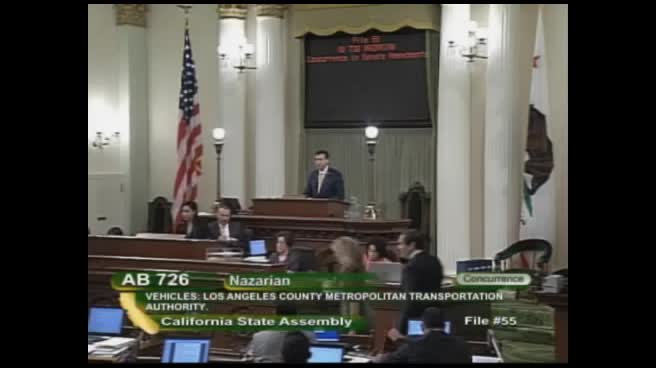 41SEC
Assembly Floor
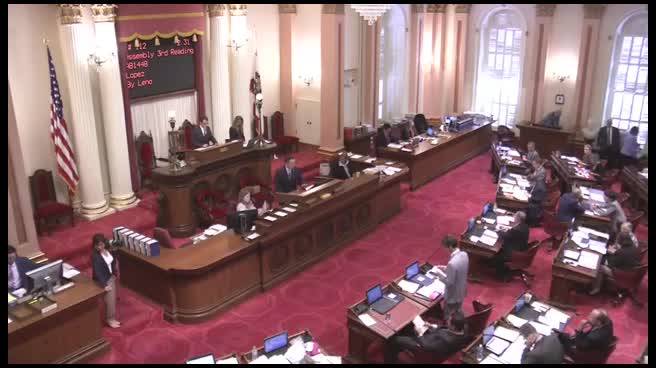 3MIN
Senate Floor
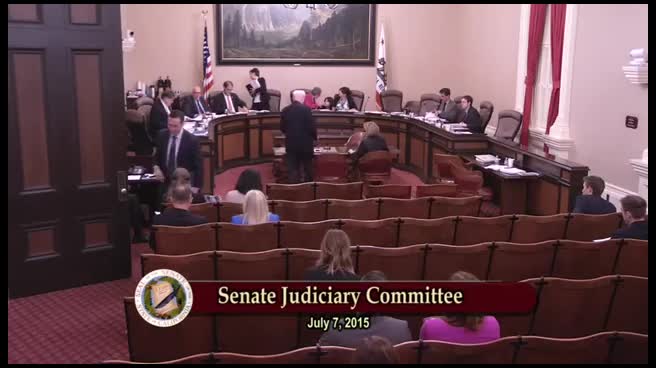 7MIN
Senate Standing Committee on Judiciary
 7MIN
Senate Standing Committee on Transportation and Housing
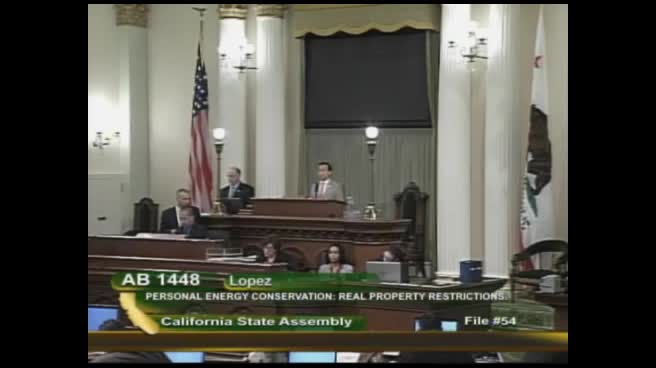 1MIN
Assembly Floor
 11MIN
Assembly Standing Committee on Housing and Community Development
 15MIN
Assembly Standing Committee on Judiciary
Bill Author

Bill Co-Author(s):