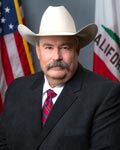
SBX1 12: California Transportation Commission.
- Session Year: 2015-2016
- House: Senate
- Latest Version Date: 2015-08-20
(1)Existing law establishes in state government the Transportation Agency, which includes various departments and state entities, including the California Transportation Commission. Existing law vests the California Transportation Commission with specified powers, duties, and functions relative to transportation matters. Existing law requires the commission to retain independent authority to perform the duties and functions prescribed to it under any provision of law.
This bill would exclude the California Transportation Commission from the Transportation Agency, establish it as an entity in state government, and require it to act in an independent oversight role. The bill would also make conforming changes.
(2)Existing law requires the Department of Transportation to prepare a state highway operation and protection program every other year for the expenditure of transportation capital improvement funds for projects that are necessary to preserve and protect the state highway system, excluding projects that add new traffic lanes. The program is required to be based on an asset management plan, as specified. Existing law requires the department to specify, for each project in the program, the capital and support budget and projected delivery date for various components of the project. Existing law provides for the California Transportation Commission to review and adopt the program, and authorizes the commission to decline to adopt the program if it determines that the program is not sufficiently consistent with the asset management plan.
This bill would instead require the commission to program the projects to be contained in the state highway operation and protection program, and additionally require the department to program capital outlay support resources for each project in the program. The bill would require the department to submit its recommendations for projects to the commission, along with detailed project information relative to cost, scope, and schedule. The bill would provide that the commission is not required to program a project recommended approve the program in its entirety, as submitted by the department, and may approve or reject individual projects programmed by the department, and would authorize the commission to program projects not recommended by the department, as specified. department. The bill would require the department to submit any change in a programmed projects cost, scope, or schedule to the commission for its approval.
(1)Existing law establishes in state government the Transportation Agency, which includes various departments and state entities, including the California Transportation Commission. Existing law vests the California Transportation Commission with specified powers, duties, and functions relative to transportation matters. Existing law requires the commission to retain independent authority to perform the duties and functions prescribed to it under any provision of law.
This bill would exclude the California Transportation Commission from the Transportation Agency, establish it as an entity in state government, and require it to act in an independent oversight role. The bill would also make conforming changes.
(2)Existing law requires the Department of Transportation to prepare a state highway operation and protection program every other year for the expenditure of transportation capital improvement funds for projects that are necessary to preserve and protect the state highway system, excluding projects that add new traffic lanes. The program is required to be based on an asset management plan, as specified. Existing law requires the department to specify, for each project in the program, the capital and support budget and projected delivery date for various components of the project. Existing law provides for the California Transportation Commission to review and adopt the program, and authorizes the commission to decline to adopt the program if it determines that the program is not sufficiently consistent with the asset management plan.
This bill would instead require the commission to program the projects to be contained in the state highway operation and protection program, and to program capital outlay support resources for each project in the program. The bill would require the department to submit its recommendations for projects to the commission, along with detailed project information relative to cost, scope, and schedule. The bill would provide that the commission is not required to program a project recommended by the department, and would authorize the commission to program projects not recommended by the department, as specified. The bill would require the department to submit any change in a programmed projects cost, scope, or schedule to the commission for its approval.
The Legislature finds and declares all of the following:
(a)Over the next 10 years, the state faces a $59 billion shortfall to adequately maintain the state highway system in a basic state of good repair.
(b)The 21st Annual Highway Report by the Reason Foundation, published in September 2014, found the following:
(1)California has 50,462 lane miles of highways under the administration of the Department of Transportation (Caltrans).
(2)Overall, California spent $501,136 per state mile of highway, more than three times the national average, yet Californias state highway system ranks 45th in overall performance and cost effectiveness.
(3)California spent $102,889 per state mile of highway specifically on maintenance, nearly four times the national average.
(4)California spent $48,754 per state mile of highway specifically on administration, more than four times the national average.
(c)The Legislative Analysts Office recommended, in the Capital Outlay Support Program Review report issued in May 2014, that Caltrans should be held accountable for the delivery of State Highway Operation and Protection Program (SHOPP) projects by requiring the California Transportation Commission, acting in an independent oversight role, to review and approve individual SHOPP projects, allocate Capital Outlay Support Program funds for SHOPP, and report on Caltrans project delivery performance, and Caltrans should also be required to provide necessary project information for SHOPP projects to the California Transportation Commission.
SEC. 2.Section 13975 of the Government Code is amended to read:13975.There is in the state government the Transportation Agency. The agency consists of the Department of the California Highway Patrol, the Department of Motor Vehicles, the Department of Transportation, the High-Speed Rail Authority, and the Board of Pilot Commissioners for the Bays of San Francisco, San Pablo, and Suisun.
SEC. 3.Section 14500 of the Government Code is amended to read:14500.There is in state government a California Transportation Commission. The commission shall act in an independent oversight role.
SEC. 4.Section 14526.5 of the Government Code is amended to read:14526.5.(a)Based on the asset management plan prepared and approved pursuant to Section 14526.4, the commission department shall program projects in the prepare, for review by the commission, a state highway operation and protection program for the expenditure of transportation funds for major capital improvements improvement projects that are necessary to preserve and protect the state highway system. Projects included in the program shall be limited to capital improvements relative to maintenance, safety, and rehabilitation of state highways and bridges that do not add a new traffic lane to the system. As part of the programming process, the commission department shall program capital outlay support resources for each project in the program.
(b)The program shall include projects that are expected to be advertised prior to July 1 of the year following submission of the program, but which have not yet been funded. The program shall include those projects for which construction is to begin within four fiscal years, starting July 1 of the year following the year the program is submitted.
(c)The commission, department, at a minimum, shall specify, for each project in the state highway operation and protection program, the capital and support budget, as well as a projected delivery date, for each of the following project components:
(1)Completion of project approval and environmental documents.
(2)Preparation of plans, specifications, and estimates.
(3)Acquisition of rights-of-way, including, but not limited to, support activities.
(4)Construction.
(d)The department shall submit its recommendations proposed program to the commission not later than January 31 of each even-numbered year. Prior to submitting its recommendations, proposed program, the department shall make a draft of its proposed recommendations program available to transportation planning agencies for review and comment and shall include the comments in its submittal to the commission. The department shall provide the commission with detailed information for all recommended programmed projects, including, but not limited to, cost, scope, and schedule.
(e)The commission shall review the proposed program it proposes to adopt relative to its overall adequacy, consistency with the asset management plan prepared and approved pursuant to Section 14526.4 and funding priorities established in Section 167 of the Streets and Highways Code, the level of annual funding needed to implement the program, and the impact of those expenditures on the state transportation improvement program. The commission is not required to approve the program a project recommended in its entirety, as submitted by the department, and may program approve or reject individual projects not recommended programmed by the department. The commission shall adopt the a program of approved projects and submit it to the Legislature and the Governor not later than April 1 of each even-numbered year.
(f)Expenditures for these projects shall not be subject to Sections 188 and 188.8 of the Streets and Highways Code.
(g)Following adoption of the state highway operation and protection program by the commission, any change in a programmed projects cost, scope, or schedule shall be submitted by the department to the commission for its approval before the changes may be implemented.
SEC. 5.Section 14534.1 of the Government Code is repealed.The Legislature finds and declares all of the following:
(a)Over the next 10 years, the state faces a $59 billion shortfall to adequately maintain the state highway system in a basic state of good repair.
(b)The 21st Annual Highway Report by the Reason Foundation, published in September 2014, found the following:
(1)California has 50,462 lane miles of highways under the administration of the Department of Transportation (Caltrans).
(2)Overall, California spent $501,136 per state mile of highway, more than three times the national average, yet Californias state highway system ranks 45th in overall performance and cost effectiveness.
(3)California spent $102,889 per state mile of highway specifically on maintenance, nearly four times the national average.
(4)California spent $48,754 per state mile of highway specifically on administration, more than four times the national average.
(c)The Legislative Analysts Office recommended, in the Capital Outlay Support Program Review report issued in May 2014, that Caltrans should be held accountable for the delivery of State Highway Operation and Protection Program (SHOPP) projects by requiring the California Transportation Commission, acting in an independent oversight role, to review and approve individual SHOPP projects, allocate Capital Outlay Support Program funds for SHOPP, and report on Caltrans project delivery performance, and Caltrans should also be required to provide necessary project information for SHOPP projects to the California Transportation Commission.
SEC. 2.Section 13975 of the Government Code is amended to read:13975.There is in the state government the Transportation Agency. The agency consists of the Department of the California Highway Patrol, the California Transportation Commission, the Department of Motor Vehicles, the Department of Transportation, the High-Speed Rail Authority, and the Board of Pilot Commissioners for the Bays of San Francisco, San Pablo, and Suisun.
SEC. 3.Section 14500 of the Government Code is amended to read:14500.There is in the Transportation Agency state government a California Transportation Commission. The commission shall act in an independent oversight role.
SEC. 4.Section 14526.5 of the Government Code is amended to read:14526.5.(a)Based on the asset management plan prepared and approved pursuant to Section 14526.4, the department commission shall prepare a program projects in the state highway operation and protection program for the expenditure of transportation funds for major capital improvements that are necessary to preserve and protect the state highway system. Projects included in the program shall be limited to capital improvements relative to maintenance, safety, and rehabilitation of state highways and bridges that do not add a new traffic lane to the system. As part of the programming process, the commission shall program capital outlay support resources for each project in the program.
(b)The program shall include projects that are expected to be advertised prior to July 1 of the year following submission of the program, but which have not yet been funded. The program shall include those projects for which construction is to begin within four fiscal years, starting July 1 of the year following the year the program is submitted.
(c)The department, commission, at a minimum, shall specify, for each project in the state highway operation and protection program, the capital and support budget, as well as a projected delivery date, for each of the following project components:
(1)Completion of project approval and environmental documents.
(2)Preparation of plans, specifications, and estimates.
(3)Acquisition of rights-of-way, including, but not limited to, support activities.
(4)Construction.
(d)The program department shall be submitted submit its recommendations to the commission not later than January 31 of each even-numbered year. Prior to submitting the plan, its recommendations, the department shall make a draft of its proposed program recommendations available to transportation planning agencies for review and comment and shall include the comments in its submittal to the commission. The department shall provide the commission with detailed information for all recommended projects, including, but not limited to, cost, scope, and schedule.
(e)The commission may shall review the program it proposes to adopt relative to its overall adequacy, consistency with the asset management plan prepared and approved pursuant to Section 14526.4 and funding priorities established in Section 167 of the Streets and Highways Code, the level of annual funding needed to implement the program, and the impact of those expenditures on the state transportation improvement program. The commission is not required to program a project recommended by the department, and may program projects not recommended by the department. The commission shall adopt the program and submit it to the Legislature and the Governor not later than April 1 of each even-numbered year. The commission may decline to adopt the program if the commission determines that the program is not sufficiently consistent with the asset management plan prepared and approved pursuant to Section 14526.4.
(f)Expenditures for these projects shall not be subject to Sections 188 and 188.8 of the Streets and Highways Code.
(g)Following adoption of the state highway operation and protection program by the commission, any change in a programmed projects cost, scope, or schedule shall be submitted by the department to the commission for its approval before the changes may be implemented.
SEC. 5.Section 14534.1 of the Government Code is repealed.14534.1.Notwithstanding Section 12850.6 or subdivision (b) of Section 12800, as added to this code by the Governors Reorganization Plan No. 2 of 2012 during the 201112 Regular Session, the commission shall retain independent authority to perform those duties and functions prescribed to it under any provision of law.
|
Date
|
Status
|
|---|---|
| Aug 20, 2015 | Read second time and amended. Re-referred to Com. on APPR. |
| Aug 19, 2015 | From committee: Do pass as amended and re-refer to Com. on APPR. (Ayes 12. Noes 0. Page 36.) (August 19). |
| Aug 19, 2015 | From committee: Do pass as amended and re-refer to Com. on APPR. (Ayes 12. Noes 0.) (August 19). |
| Aug 6, 2015 | Set for hearing August 19. |
| Jul 17, 2015 | From printer. |
| Jul 16, 2015 | To print. |
| Jul 16, 2015 | Introduced. Read first time. Referred to Com. on T. & I.D. |
|
Date
|
Description
|
Location
|
Votes
|
|
|---|---|---|---|---|
| Aug 19, 2015 | Do pass as amended, but first amend, and re-refer to the Committee on [Appropriations] | Senate 1st Extraordinary Session on Transportation and Infrastructure Development |
Passed |
This list shows positions taken on this bill by organizations on the date displayed, which is linked to the original source.
Positions by individuals are not included.
SBX1 12 (Runner) Page 5 of 5
SENATE COMMITTEE ON TRANSPORTATION AND INFRASTRUCTURE DEVELOPMENT
Senator Jim Beall, Chair
2015 - 2016 First Extraordinary
Bill No: SBX1 12 Hearing Date: 8/19/2015
Author: |
Runner |
||
Version: |
7/16/2015 |
||
Urgency: |
No |
Fiscal: |
Yes |
Consultant: |
Erin Riches |
||
SUBJECT: California Transportation Commission
DIGEST: This bill makes the California Transportation Commission (CTC) an independent agency and transfers responsibility for the State Highway Operations and Protection Program (SHOPP) from the state Department of Transportation (Caltrans) to the CTC.
ANALYSIS:
Existing law, the Governor’s Reorganization Plan No. 2 of 2012 (GRP 2), eliminated the Business, Transportation, and Housing Agency (BTH) and established the California State Transportation Agency (CalSTA). GRP 2, which became operative in July 2013, transferred Caltrans, the Department of Motor Vehicles, the California Highway Patrol, the Office of Traffic Safety, and the Board of Pilot Commissioners from BTH to CalSTA. It also placed the High-Speed Rail Authority and the CTC within CalSTA.
Existing law directs Caltrans to develop the SHOPP, a program of major capital projects necessary to preserve and protect the state highway system. Projects in the SHOPP are limited to those that do not add new capacity to the system.
Existing law (SB 486, DeSaulnier, Chapter 917, Statutes of 2014) requires Caltrans, in consultation with the CTC, to develop an asset management plan to guide development of the SHOPP and requires the CTC to adopt related targets and performance measures that reflect state policy goals and objectives. It also vests the CTC with authority to review and approve the final asset management plan. Caltrans must provide specific project information in the SHOPP, including the capital and support budget for each project and the projected delivery date by project component, and is required to provide quarterly reports to the CTC on the support budget and expenditures of major SHOPP projects.
Existing law requires the CTC to review the SHOPP relative to its overall adequacy, consistency with the asset management plan, funding priorities, level of annual funding needed to implement the program, and the impact of those expenditures on the State Transportation Improvement Program (STIP), which focuses on regional and interregional transportation systems. The CTC must adopt the SHOPP and submit it to the Legislature and Governor by April 1 of each even-numbered year. The CTC may decline to adopt the SHOPP if it determines that the program is not sufficiently consistent with the asset management plan.
This bill:
Moves the CTC out of CalSTA and makes it an independent agency.
Transfers responsibility for preparing the SHOPP, including allocating funds to capital outlay support for each project, from Caltrans to the CTC.
Requires Caltrans to submit its SHOPP recommendations to the CTC by January 31 of each even-numbered year. Requires Caltrans to provide to the CTC detailed information for all recommended projects including, but not limited to, cost, scope, and schedule.
Maintains the existing law requirement for the CTC to review the SHOPP.
Provides that the CTC is not required to program a project recommended by Caltrans and authorizes the CTC to program projects not recommended by Caltrans.
Requires Caltrans to submit any changes in the cost, scope, or schedule of a project in the SHOPP to the CTC for approval prior to implementing the changes.
COMMENTS:
Purpose. The author states that although Californians pay some of the highest taxes and fees in the country to support the construction, maintenance, and repair of roads, California’s roads rank among the worst in the nation. A recent report by the Reason Foundation concluded that overall, California spends more than three times the national average per mile, yet the state highway system ranks 45th in the nation in overall performance and cost-effectiveness. California spends nearly four times the national average on maintenance and more than four times the national average on administration. Based on current spending practices, California faces an estimated shortfall of $59 billion over the next 10 years to adequately maintain and repair the state’s highway system. Before increasing taxes and fees to generate new revenues for the state’s transportation infrastructure, the author states that existing funds must be spent appropriately and as efficiently as possible; this bill will provide much-needed oversight and accountability of Caltrans’ billion-dollar SHOPP program and will help ensure that Californians are getting the roads for which they are paying.
Oversight for capital outlay support. In its 2014-15 Budget: Capital Outlay Support Program Review, the Legislative Analyst’s Office (LAO) highlighted a lack of external oversight on projects in the SHOPP, which it attributed to the CTC’s lack of authority to allocate capital outlay support (COS) funds for the SHOPP. COS refers to the staff support necessary to deliver a project, such as project design and management, while capital outlay costs are incurred by construction contractors for materials and labor to construct a project. Typical SHOPP projects include pavement and bridge rehabilitation, major reconstruction, and safety improvements. The LAO recommended that the Legislature require the CTC to allocate funds for each phase of a SHOPP project, including COS resources. (Existing law authorizes the CTC to allocate funds for capital outlay costs of the SHOPP, but not COS costs.) The author states that this bill will provide the CTC with the independence and authority to approve individual projects, including COS expenditures, and provide increased oversight and accountability of the SHOPP.
SSTI recommendations. CalSTA recently contracted with a management consultant, the State Smart Transportation Initiative (SSTI), to conduct an external assessment of Caltrans and provide recommendations for improving Caltrans’ performance. The SSTI review found that Caltrans has not kept pace with changes in transportation policy and called for reforms to modernize Caltrans’ mission, strengthen its performance, and help align Caltrans with the state’s policy goals. In response to the SSTI report, CalSTA formed five workgroups to help implement various reforms at Caltrans. One of these workgroups, which is focused on “smart investment and resource alignment,” is considering an SSTI recommendation to allow the CTC to approve individual projects rather than entire programs.
CTC independence. Prior to the establishment of CalSTA, the CTC was not under the purview of any agency. The CTC and others raised concerns that by incorporating the CTC into CalSTA, GRP 2 might diminish the independence of the CTC. Not only is the CTC viewed as an independent voice in reviewing and approving the STIP and SHOPP, but it also provides an avenue for regional planning agencies and self-help counties to appeal disagreements with Caltrans. To help alleviate these concerns, language was subsequently added to statute stating that the CTC “shall retain independent authority to perform these duties and functions prescribed to it under any provision of law.” This bill would once again make the CTC a stand-alone entity.
Biting off more than it can chew? Currently, Caltrans develops the SHOPP and submits it to the CTC for approval and allocation. This bill would assign development of the SHOPP to the CTC. The CTC is a very small agency, comprised of 19 positions, not all of which are currently filled. Although development of the SHOPP would significantly increase the CTC’s workload, this bill does not propose to add any positions to the CTC. To address this concern, the author will accept amendments to instead require Caltrans to develop the SHOPP, as is current practice.
Recent reforms. SB 486 (DeSaulnier, Chapter 917, Statutes of 2014) requires Caltrans, in consultation with the CTC, to develop an asset management plan to guide development of the SHOPP and requires the CTC to adopt related targets and performance measures that reflect state policy goals and objectives. SB 486 specifically provides that the CTC may decline to adopt the SHOPP if the CTC determines that it is not sufficiently consistent with the asset management plan. Prior to SB 486, the CTC could only approve or reject the SHOPP its entirety. Because SB 486 authorizes the CTC to “review and approve” the SHOPP, in theory the CTC could now send the SHOPP back to Caltrans for revisions after review if the CTC takes issue with any part of it. The author states that the CTC should be able to simply reject individual projects in the SHOPP, rather than risk slowing down the process by sending the SHOPP back to Caltrans for revisions. To help achieve the author’s intent, the amendments will explicitly authorize the CTC to reject individual projects within the plan.
Related Legislation:
SB 151 (DeSaulnier, 2014) — would have required the CTC to allocate funds for capital outlay and COS costs for projects in the SHOPP and would have required supplemental allocations for projects that exceed approved allocations. SB 151 was held on the Assembly Appropriations Committee suspense file.
SB 486 (DeSaulnier, Chapter 917, Statutes of 2014) — requires Caltrans, in consultation with the CTC, to develop an asset management plan to guide development of the SHOPP and requires the CTC to adopt related targets and performance measures that reflect state policy goals and objectives. It also vests the CTC with authority to review and approve the final asset management plan. SB 486 requires Caltrans to provide specific project information in the SHOPP, including the capital and support budget for each project and the projected delivery date by project component, and imposes requirements on Caltrans to report to the CTC on a quarterly basis on the support budget and expenditures of major SHOPP projects.
FISCAL EFFECT: Appropriation: No Fiscal Com.: Yes Local: No
POSITIONS: (Communicated to the committee before noon on Thursday,
August 13, 2015.)
SUPPORT:
None received
OPPOSITION:
Sierra Club California
-- END --
Discussed in Hearing
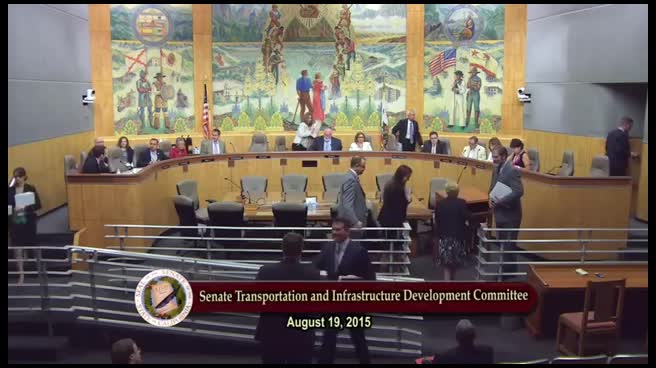 5MIN
Transportation and Infrastructure Development
Bill Author