SBX1 2: Greenhouse Gas Reduction Fund.
- Session Year: 2015-2016
- House: Senate
- Latest Version Date: 2015-06-30
Existing law requires all moneys, except for fines and penalties, collected by the State Air Resources Board from the auction or sale of allowances as part of a market-based compliance mechanism relative to reduction of greenhouse gas emissions to be deposited in the Greenhouse Gas Reduction Fund.
Existing law continuously appropriates 60% of the annual proceeds of the fund to various purposes, including high-speed rail, transit and intercity rail capital, low-carbon transit operations, and affordable housing and sustainable communities.
This bill would exclude from allocation under these provisions the annual proceeds of the fund generated from the transportation fuels sector. The bill would instead provide that those annual proceeds shall be appropriated by the Legislature for transportation infrastructure, including public streets and highways, but excluding high-speed rail.
The Legislature hereby finds and declares all of the following:
(a)Over the next 10 years, the state faces a $59 billion shortfall to adequately maintain the state highway system in a basic state of good repair.
(b)Similarly, cities and counties face a $78 billion shortfall over the next decade to adequately maintain the existing network of local streets and roads.
(c)Since the State Air Resources Board imposed the cap-and-trade tax on gasoline production in January 2015, the Governors budget is projecting that $2.7 billion will be available from the Greenhouse Gas Reduction Fund in the fiscal year that begins July 1. That figure is more than double the amount that was available last year.
(d)Revenue has surged because cap-and-trade now applies to transportation fuels, the source of roughly 40 percent of the states carbon emissions.
(e)The Legislative Analysts Office projects that the imposition of cap-and-trade on transportation fuels will raise $1.9 billion this year. This revenue is raised by taxing consumers (through a pass-through increased cost of gasoline) and should be used to repair our streets and roads.
(f)Investing in our streets and roads will end traffic gridlock and improve mobility, which, in turn, will reduce greenhouse gases in the state.
SEC. 2.Section 39719 of the Health and Safety Code is amended to read:39719.(a)The Legislature shall appropriate the annual proceeds of the fund for the purpose of reducing greenhouse gas emissions in this state in accordance with the requirements of Section 39712.
(b)To carry out a portion of the requirements of subdivision (a), annual proceeds are continuously appropriated for the following:
(1)Beginning in the 201516 fiscal year, and notwithstanding Section 13340 of the Government Code, 35 percent of annual proceeds are continuously appropriated, without regard to fiscal years, for transit, affordable housing, and sustainable communities programs as following:
(A)Ten percent of the annual proceeds of the fund is hereby continuously appropriated to the Transportation Agency for the Transit and Intercity Rail Capital Program created by Part 2 (commencing with Section 75220) of Division 44 of the Public Resources Code.
(B)Five percent of the annual proceeds of the fund is hereby continuously appropriated to the Low Carbon Transit Operations Program created by Part 3 (commencing with Section 75230) of Division 44 of the Public Resources Code. Funds shall be allocated by the Controller, according to requirements of the program, and pursuant to the distribution formula in subdivision (b) or (c) of Section 99312 of, and Sections 99313 and 99314 of, the Public Utilities Code.
(C)Twenty percent of the annual proceeds of the fund is hereby continuously appropriated to the Strategic Growth Council for the Affordable Housing and Sustainable Communities Program created by Part 1 (commencing with Section 75200) of Division 44 of the Public Resources Code. Of the amount appropriated in this subparagraph, no less than 10 percent of the annual proceeds, shall be expended for affordable housing, consistent with the provisions of that program.
(2)Beginning in the 201516 fiscal year, notwithstanding Section 13340 of the Government Code, 25 percent of the annual proceeds of the fund is hereby continuously appropriated to the High-Speed Rail Authority for the following components of the initial operating segment and Phase I Blended System as described in the 2012 business plan adopted pursuant to Section 185033 of the Public Utilities Code:
(A)Acquisition and construction costs of the project.
(B)Environmental review and design costs of the project.
(C)Other capital costs of the project.
(D)Repayment of any loans made to the authority to fund the project.
(c)In determining the amount of annual proceeds of the fund for purposes of the calculation in subdivision (b), the funds subject to Section Sections 39719.1 and 39719.3 shall not be included.
SEC. 3.Section 39719.3 is added to the Health and Safety Code, to read:39719.3.The annual proceeds of the fund generated from the transportation fuels sector shall be appropriated by the Legislature for transportation infrastructure, including public streets and highways, but excluding high-speed rail.
|
Date
|
Status
|
|---|---|
| Sep 1, 2015 | September 1 set for first hearing. Failed passage in committee. (Ayes 3. Noes 9. Page 56.) Reconsideration granted. |
| Aug 28, 2015 | Set for hearing September 1. |
| Jul 1, 2015 | From printer. |
| Jun 30, 2015 | To print. |
| Jun 30, 2015 | Introduced. Read first time. Referred to Com. on T. & I.D. |
|
Date
|
Description
|
Location
|
Votes
|
|
|---|---|---|---|---|
| Sep 1, 2015 | [First] hearing set for [09-01-2015]: Failed passage in Committee. Reconsideration granted | Senate 1st Extraordinary Session on Transportation and Infrastructure Development |
Passed |
|
| Sep 1, 2015 | Do pass, but first be re-referred to the Committee on [Appropriations] | Senate 1st Extraordinary Session on Transportation and Infrastructure Development |
Failed |
This list shows positions taken on this bill by organizations on the date displayed, which is linked to the original source.
Positions by individuals are not included.
SBX1 2 (Huff) Page 5 of 5
SENATE COMMITTEE ON TRANSPORTATION AND INFRASTRUCTURE DEVELOPMENT
Senator Jim Beall, Chair
2015 - 2016 First Extraordinary
Bill No: SBX1 2 Hearing Date: 9/1/2015
Author: |
Huff |
||
Version: |
6/30/2015 |
||
Urgency: |
No |
Fiscal: |
Yes |
Consultant: |
Erin Riches |
||
SUBJECT: Greenhouse Gas Reduction Fund: transportation expenditures
DIGEST: This bill appropriates Greenhouse Gas Reduction Fund (GGRF) monies generated from transportation fuels to transportation infrastructure, excluding high-speed rail.
ANALYSIS:
AB 32: The Global Warming Solutions Act of 2006
Existing law (AB 32, Núñez, Chapter 488, Statutes of 2006) requires the state Air Resources Board (ARB) to develop a plan to reduce emissions to 1990 levels by 2020. It also requires ARB to ensure that programs to reduce greenhouse gas (GHG) emissions are targeted, to the extent feasible, to the most disadvantaged communities in the state. AB 32 authorizes ARB to deposit any fees paid by GHG emission sources into the GGRF. Existing law (AB 1532, Pérez, Chapter 807, Statutes of 2012) specifies that GGRF revenues must be used to facilitate the achievement of GHG emissions reductions.
Existing law specifies that ARB may include market-based compliance mechanisms in the AB 32 regulations, and requires that these mechanisms maximize additional environmental and economic benefits for California, as appropriate. The Scoping Plan approved by ARB in 2008 outlined a suite of measures aimed at achieving AB 32 goals. Average emissions data in the Scoping Plan broken down by sector reveal that transportation accounts for almost 40% of statewide GHG emissions. The industrial sector, including refineries, oil and gas production, cement plants, and food processors, was shown to contribute 20% of the state’s total GHG emissions.
Background on Cap-and-Trade
Beginning on January 1, 2013, the cap-and-trade regulations set a firm, declining cap on total GHG emissions from sources that make up approximately 85% of all statewide GHG emissions. The cap is enforced by requiring each source, known as covered entities, to surrender one “compliance instrument” for every metric ton of carbon dioxide equivalent that it emits at the end of a compliance period. Over time, the cap declines, resulting in GHG emissions reductions.
In the first compliance period, the capped sector includes the electricity and industrial sectors. In the second compliance period, beginning in 2015, distributors of transportation fuels, natural gas, and other fuels also come under the cap. Once under the cap, a covered entity must periodically submit to ARB allowances sufficient to match its GHG emissions during the period. Transportation fuels account for more than half of the allowances sold.
Cap-and-Trade Auction Revenues
The 2014-15 budget agreement allocated $832 million in cap-and-trade revenues to a variety of GHG emission-reduction programs. Beginning in 2015-16, the budget agreement appropriates 25% of GGRF revenues to the state’s high-speed rail project, 20% to affordable housing and sustainable communities grants, 10% to intercity rail capital projects, and 5% to low-carbon transit projects. The remaining 40% of GGRF revenues is available for annual appropriation by the Legislature.
This bill appropriates GGRF monies generated from transportation fuels to transportation infrastructure, excluding high-speed rail.
COMMENTS:
Purpose. The author states that although California’s roads are in disrepair, the taxes that drivers pay on fuel are not funding transportation improvements. The state currently ranks 47th in overall highway performance and 46th in urban congestion. Highway system repair and maintenance is underfunded by $5 billion annually, while local street repair is underfunded by $1.8 billion per year. The state faces $59 billion in deferred road maintenance. The author states that this bill ensures that the “cap-and-trade taxes imposed on gasoline” are dedicated to transportation infrastructure, and prevents these funds from being spent on high-speed rail because it is a “contributor to greenhouse gases.”
Impact of placing transportation fuels under the cap. As transportation fuels are responsible for about 40% of the state’s GHG emissions, as well as about 80% of the emissions of ozone-forming gases and over 95% of diesel particulate matter, inclusion of this sector was a critical piece in the design of the program to achieve the directives of AB 32. The inclusion of transportation fuels in the cap-and-trade program in 2015 more than doubled the size of the program, with respect to GHG emissions and the number of allowances. Some critics argue that including fuels under the cap will lead to a significant increase in gasoline prices, disproportionately hurting consumers who are dependent on car travel and least able to absorb gasoline price hikes. However, it is difficult to estimate any potential price impact from including transportation fuels under the cap. This value depends on the demand for allowances, the extent of investment by transportation fuel providers in alternative fuels, how much of their compliance obligation is met through offsets or allowances on secondary markets, and other factors. In general, gas prices are dependent on a myriad of factors that have created a volatile gasoline market that currently manifests in rapid and large price shifts at the pump.
Creating a hole in the high-speed rail budget. In 2008, California voters approved Proposition 1A, the Safe, Reliable High-Speed Passenger Train Bond Act for the 21st Century (Prop. 1A), which authorized $9 billion in general obligation bonds for the high-speed rail project. In 2009, the federal government augmented the Prop. 1A bond funding with roughly $3.3 billion; the High-Speed Rail Authority (HSRA) committed to match these federal funds with approximately $2.3 billion in state funding. Of the $8.8 billion appropriated thus far for high-speed rail, HSRA spent $950 million through 2013-14 and an estimated $917 million in 2014-15. For 2015-16, HSRA plans to spend $3.0 billion: $1.4 billion in Prop. 1A bond funds, $1.2 billion in federal funds, and $500 million in GGRF revenues. By removing GGRF monies from the mix, this bill would create a large hole in high-speed rail funding; it is unclear what other funds could fill that hole.
Nexus issues? Statute provides that GGRF investments must facilitate the achievement of GHG emissions reductions. Because the term “transportation infrastructure” is quite broad, eligible projects could include projects known to achieve GHG reductions, such as active transportation and public transit (which are already being funded); projects with unclear, even possibly negative GHG impacts, such as congestion relief projects that increase capacity, signal synchronization, grade separations, and road maintenance; and projects that do not appear to achieve any GHG reductions, such as bridge repair and stormwater culvert replacement. If GGRF revenues are used to fund such projects, the state could leave itself open to litigation if critics perceive a lack of nexus between a project and GHG reductions.
A question of priorities. There are currently a variety of bills before the Legislature relating to GGRF revenues. It is difficult to determine what suite of measures best meets the requirements of the GGRF, uses resources most efficiently, and maximizes policy objectives, when bills are scattered across various committees and even in different sessions. Budget discussions on a cap-and-trade investment strategy provide an opportunity for a comprehensive look at the universe of GGRF proposals. The committee may wish to consider whether the subject of this bill is more appropriate to the budget discussion than the transportation special session.
Related Legislation:
SBX1 3 (Vidak) — would have redirected Prop. 1A bond proceeds to state highways and freeways, and local streets and roads, upon voter approval. SBX1 3 failed passage in this committee on August 19, 2015.
SBX1 6 (Runner) — would prohibit expenditure of GGRF funds on the high-speed rail project and appropriate the majority of GGRF monies to the California Transportation Commission for allocation to high-priority transportation projects, as specified. SBX1 6 is also being heard by this committee today.
SBX1 8 (Hill) — would increase the percentage of GGRF funds from 10% to 20% for the Transit and Intercity Rail Capital Program and from 5% to 10% for the Low-Carbon Transit Operations Program. SBX1 8 is also being heard by this committee today.
SB 5 (Vidak) — would have exempted fuel suppliers from ARB’s cap-and-trade program. SB 5 failed passage in the Senate Environmental Quality Committee on April 15, 2015.
ABX1 7 (Nazarian) — is identical to SBX1 8 (Hill). ABX1 7 is pending assignment in the Assembly Rules Committee.
AB 23 (Nielsen) — was almost identical to SB 5 (Vidak). AB 23 failed passage in the Assembly Natural Resources Committee on March 23, 2015.
FISCAL EFFECT: Appropriation: No Fiscal Com.: Yes Local: No
POSITIONS: (Communicated to the committee before noon on Thursday, August 27, 2015.)
SUPPORT:
None received
OPPOSITION:
None received
-- END --
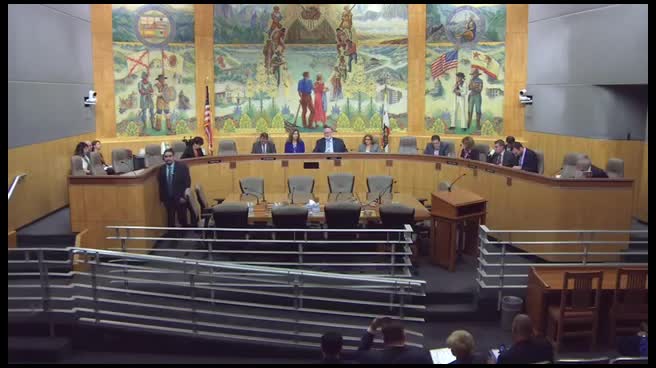
Discussed in Hearing
 30MIN
Transportation and Infrastructure Development
Bill Author