SBX1 3: Transportation bonds: highway, street, and road projects.
- Session Year: 2015-2016
- House: Senate
- Latest Version Date: 2015-08-17
Existing law, the Safe, Reliable High-Speed Passenger Train Bond Act for the 21st Century, approved by the voters as Proposition 1A at the November 4, 2008, general election, provides for the issuance of general obligation bonds in the amount of $9 billion for high-speed rail purposes and $950 million for other related rail purposes. Article XVI of the California Constitution requires measures authorizing general obligation bonds to specify the single object or work to be funded by the bonds and further requires a bond act to be approved by a 2/3 vote of each house of the Legislature and a majority of the voters.
This bill would provide that no further bonds shall be sold for high-speed rail purposes pursuant to the Safe, Reliable High-Speed Passenger Train Bond Act for the 21st Century, except as specifically provided with respect to an existing appropriation for high-speed rail purposes for early improvement projects in the Phase 1 blended system. The bill, subject to the above exception, would require redirection of the unspent proceeds from outstanding bonds issued and sold for other high-speed rail purposes prior to the effective date of these provisions, upon appropriation, for use in retiring the debt incurred from the issuance and sale of those outstanding bonds. The bill, subject to the above exception, would also require the net proceeds of bonds subsequently issued and sold under the high-speed rail portion of the bond act, upon appropriation, to be made available to the Department of Transportation for repair and new construction projects on state highways and freeways, and for repair and new construction projects on local streets and roads, as specified. The bill would make no changes to the authorization under the bond act for the issuance of $950 million in bonds for rail purposes other than high-speed rail. These provisions would become effective only upon approval by the voters at the June 7, 2016, statewide primary election.
(a)(1)Notwithstanding any other provision of this chapter, and except as provided in paragraph (2), no further bonds shall be issued and sold for purposes of Section 2704.06 on and after the effective date of this section.
(2)This section shall not apply to bonds issued and sold for purposes of Section 2704.06 with respect to the appropriation in Item 2665-104-6043 of Section 2.00 of the Budget Act of 2012, as added by Section 3 of Chapter 152 of the Statutes of 2012.
(b)Notwithstanding any other provision of this chapter, and except as otherwise provided in paragraph (2) of subdivision (a), the unspent proceeds from the outstanding bonds issued and sold pursuant to Section 2704.06 prior to the effective date of this section shall, upon appropriation by the Legislature, be redirected from high-speed rail purposes for use in retiring the debt incurred from the issuance and sale of those outstanding bonds.
(c)Notwithstanding any other provision of this chapter, the remaining unissued bonds, as of the effective date of this section, that were previously authorized pursuant to Section 2704.06, except as otherwise provided in paragraph (2) of subdivision (a), are hereby authorized to be issued and sold, and 50 percent of the net proceeds, upon appropriation by the Legislature, shall be made available to the Department of Transportation to fund repair and new construction projects on state highways and freeways, and the remaining 50 percent of the net proceeds, upon appropriation by the Legislature, shall be made available to the Department of Transportation to create a program to fund repair and new construction projects on local streets and roads, with each county to receive a base amount of the local street and road funding, and any additional funding to be allocated based on a countys population.
SEC. 2.Section 1 of this act would modify the single object or work of a general obligation bond act previously submitted to the voters by the Legislature pursuant to Section 1 of Article XVI of the California Constitution, and subsequently approved by the voters as Proposition 1A at the November 4, 2008, statewide general election. Accordingly, Section 1 of this act shall become effective only upon approval by the voters. The Secretary of State shall submit Section 1 of this act to the voters on the ballot of the June 7, 2016, statewide primary election.
(a)(1)Notwithstanding any other provision of this chapter, and except as provided in paragraph (2), no further bonds shall be issued and sold for purposes of Section 2704.06 on and after the effective date of this section.
(2)This section shall not apply to bonds issued and sold for purposes of Section 2704.06 with respect to the appropriation in Item 2665-104-6043 of Section 2.00 of the Budget Act of 2012, as added by Section 3 of Chapter 152 of the Statutes of 2012.
(b)Notwithstanding any other provision of this chapter, and except as otherwise provided in paragraph (2) of subdivision (a), the unspent proceeds from outstanding bonds issued and sold pursuant to Section 2704.06 prior to the effective date of this section shall, upon appropriation by the Legislature, be redirected from high-speed rail purposes for use in retiring the debt incurred from the issuance and sale of those outstanding bonds.
(c)Notwithstanding any other provision of this chapter, the remaining unissued bonds, as of the effective date of this section, that were previously authorized pursuant to Section 2704.06, except as otherwise provided in paragraph (2) of subdivision (a), are hereby authorized to be issued and sold, and 50 percent of the net proceeds, upon appropriation by the Legislature, shall be made available to the Department of Transportation to fund repair and new construction projects on state highways and freeways, and the remaining 50 percent of the net proceeds, upon appropriation by the Legislature, shall be made available to the Department of Transportation to create a program to fund repair and new construction projects on local streets and roads, with each county to receive a base amount of the local street and road funding, and any additional funding to be allocated based on a countys population.
SEC. 2.Section 1 of this act would modify the single object or work of a general obligation bond act previously submitted to the voters by the Legislature pursuant to Section 1 of Article XVI of the California Constitution, and subsequently approved by the voters as Proposition 1A at the November 4, 2008, statewide general election. Accordingly, Section 1 of this act shall become effective only upon approval by the voters. The Secretary of State shall submit Section 1 of this act to the voters on the ballot of the June 7, 2016, statewide primary election.
|
Date
|
Status
|
|---|---|
| Sep 14, 2015 | Returned to Secretary of Senate pursuant to Joint Rule 62(a). |
| Aug 19, 2015 | August 19 set for first hearing. Failed passage in committee. (Ayes 3. Noes 9. Page 36.) |
| Aug 19, 2015 | August 19 set for first hearing. Failed passage in committee. |
| Aug 17, 2015 | From committee with author's amendments. Read second time and amended. Re-referred to Com. on T. & I.D. |
| Aug 6, 2015 | Set for hearing August 19. |
| Jul 2, 2015 | From printer. |
| Jul 1, 2015 | To print. |
| Jul 1, 2015 | Introduced. Read first time. Referred to Com. on T. & I.D. |
|
Date
|
Description
|
Location
|
Votes
|
|
|---|---|---|---|---|
| Aug 19, 2015 | Do pass, but first be re-referred to the Committee on [Appropriations] | Senate 1st Extraordinary Session on Transportation and Infrastructure Development |
Failed |
This list shows positions taken on this bill by organizations on the date displayed, which is linked to the original source.
Positions by individuals are not included.
SBX1 3 (Vidak) Page 5 of 5
SENATE COMMITTEE ON TRANSPORTATION AND INFRASTRUCTURE DEVELOPMENT
Senator Jim Beall, Chair
2015 - 2016 First Extraordinary
Bill No: SBX1 3 Hearing Date: 8/19/2015
Author: |
Vidak |
||
Version: |
8/17/2015 Vote: 2/3 Required |
||
Urgency: |
No |
Fiscal: |
Yes |
Consultant: |
Erin Riches |
||
SUBJECT: Transportation bonds: high-speed rail
DIGEST: This bill redirects high-speed rail bond proceeds to state freeways and highways, and local streets and roads, upon voter approval.
ANALYSIS:
The California High-Speed Rail Authority (HSRA) was established by legislation in 1996 (SB 1420, Kopp, Chapter 796) to direct the development and implementation of intercity high-speed rail service that is fully coordinated with other public transportation services. In 2008, California voters approved Proposition 1A, the Safe, Reliable High-Speed Passenger Train Bond Act for the 21st Century (Prop. 1A), which authorized $9 billion in general obligation bonds for the high-speed rail project. Prop. 1A included a number of requirements the state must meet to access the bond funding for capital construction, including the identification of matching funds, the completion of a funding plan, and approval of required environmental clearance documents.
In 2009, the federal government augmented Prop. 1A bond funding with roughly $3.3 billion in funding from the American Recovery and Reinvestment Act and other federal funding programs. HSRA committed to match these federal funds with approximately $2.3 billion in state funding.
Of the $8.8 billion appropriated thus far for high-speed rail, HSRA spent $950 million through 2013-14 and an estimated $917 million in 2014-15. For 2015-16, HSRA plans to spend $3.0 billion: $1.4 billion in Prop. 1A bond funds, $1.2 billion in federal funds, and $500 million in cap-and-trade revenues.
This bill:
Redirects unspent proceeds from high-speed rail bonds issued and sold prior to the effective date of this legislation to retire the debt incurred from issuance and sale of these bonds.
Directs the proceeds of remaining unissued bonds to repair and new construction projects on state highways and freeways (50%) and local streets and roads (50%). Provides that for the latter, each county shall receive a base amount of the local street and road funding, with any additional funding to be allocated based on a county’s population.
Requires the Secretary of State to place a measure authorizing these provisions on the June 2016 primary election ballot.
COMMENTS:
Purpose. The author states that this bill can help address the transportation infrastructure funding shortfall by redirecting nearly $8 billion in high-speed rail bonds to expansion and restoration of highways and rehabilitation of local roads. The author states that Prop. 1A passed by only a very slim majority, and with 52% of Californians now firmly opposed to the high-speed rail project, according to a September 2013 USC/LA Times poll, there is a critical need for legislation to address these concerns. The author further states that the high-speed rail project is a failure, citing lack of private sector funding, blockage of federal funding, expensive litigation over poor route selections, mismanagement by HSRA, local opposition, and millions of wasted dollars on expensive construction equipment that has sat unused at the side of Highway 99 for months on end. The author states that this bill would provide resources to shovel-ready projects that will put people to work tomorrow instead of decades in the future, if at all.
Status of the high-speed rail project. At a 2014 hearing of the Senate Transportation and Housing Committee, Louis Thompson, Chair of the High-Speed Rail Peer Review Group, noted that what was sold to voters in 2008 was an aspirational vision of high-speed rail service in California. In the years since, the state has had to work within financial and political realities to define a project the state can actually deliver.
As HSRA staff has worked to define the project, they have come up against a number of real-world challenges. First and foremost, it is clear the project is going to cost significantly more than early estimates, and HSRA has been unable to identify all the funding necessary to complete the initial operating segment, or the first 130-mile segment from Fresno to the San Fernando Valley. In addition, further design of the project suggests speeds and travel times initially included in the 2008 ballot measure may be difficult, if not impossible, to achieve. Further, rising costs and political hurdles have led HSRA to adapt the proposed project in ways that blend service in major urban areas instead of building a completely separate and independent infrastructure for the system. Some argue that, given these and other changes to the proposed project compared to what voters approved in 2008, it seems reasonable to resubmit the state bond funds to the electorate for approval.
Fulfilling the promise. Proponents of high-speed rail suggest that the project still technically meets the promises made to voters in 2008. In addition, some advocates argue that the project is transformative and should be pursued regardless of a potentially divergent electorate. These advocates suggest that, while voters today may not approve the project as currently envisioned, when the system is finally running and all of the benefits are realized, Californians will be thankful the state continued to pursue it in the face of its many detractors. They point to the significant opposition to construction of the Bay Area Rapid Transit (BART) system in the 1960s, which today is an integral part of the Bay Area transportation network. Other supporters of high-speed rail argue that, despite the fact that today’s plan may not fully live up to the vision presented to voters in 2008, the large influx of construction dollars and potential jobs created in the Central Valley are too important to risk losing should the voters defeat the project at the ballot. With the Central Valley region suffering one of the worst unemployment rates in the country, the funds from this project could bring much-needed relief to that region’s economy.
Federal matching requirements. Complicating the implementation of this bill is the fact that the federal government requires the state to match any federal funding expended on the project. It is unclear whether the state, if it suddenly ceased to pursue the high-speed rail project, would be in a position to pay back the federal government for some of the funds thus far expended. If that became the case, it is not clear how the state would achieve repayment without access to the Prop. 1A bond funds.
PREVIOUS LEGISLATION:
Many prior legislative attempts to reduce the amount of authorized indebtedness for the high-speed rail project have failed in each house:
SB 901 (Vidak, 2014) — would have required the Secretary of State to place on the November 2014 general election ballot a referendum to prohibit the sale of additional high-speed rail bonds. It would also have authorized the net proceeds from outstanding bonds to be redirected, upon appropriation, to retirement of high-speed rail bond debt and would have prohibited expenditure of bond funds, or issuance of additional bonds, for high-speed rail until November 2014. SB 901 failed passage in the Senate Transportation and Housing Committee.
AB 1501 (Patterson, 2014) — would have prohibited HSRA from spending federal funds for which a state match is required unless state funding for the match is immediately available. AB 1501 failed passage in the Assembly Transportation Committee.
AB 2650 (Conway, 2014) — would have directed the Secretary of State to place on the November 2014 general election ballot a measure to prohibit further issuance and sale of any authorized bonds for high-speed rail, except for specified projects for which appropriations have already been made. It would also have redirected the proceeds of any outstanding bonds issued and sold to debt retirement, and reauthorized the issuance and sale of any unissued bonds for other transportation uses, upon legislative appropriation. AB 2650 failed passage in the Assembly Transportation Committee.
AB 842 (Donnelly, 2013) — would have prohibited the expenditure of state and federal funds for high-speed rail except as necessary to meet contractual commitments entered into before January 1, 2014. AB 842 failed passage in the Assembly Transportation Committee.
AB 1455 (Harkey, 2012) — would have reduced the amount of authorized indebtedness for HSRA to the amount contracted as of January 1, 2013 and excluded from these provisions indebtedness authorized for other rail purposes. AB 1455 failed passage in the Assembly Transportation Committee.
SB 22 (La Malfa, 2011) — would have reduced the amount of indebtedness authorized by Prop. 1A to the amount contracted as of January 1, 2012. SB 22 failed passage in the Senate Transportation and Housing Committee.
AB 76 (Harkey, 2011) — would have reduced the amount of authorized indebtedness for HSRA to the amount contracted as of January 1, 2012. AB 76 failed passage in the Assembly Transportation Committee.
AB 2121 (Harkey, 2010) — would have reduced the amount of general obligation debt authorized pursuant to Prop. 1A to the amount contracted by HSRA. It was amended in the Assembly Transportation Committee to instead require HSRA to annually submit a six-year funding program and a project progress report to the appropriate policy and budget committees of the Legislature. AB 2121 was passed by the Assembly, but died in the Senate Rules Committee.
Related Legislation:
SBX1 2 (Huff) — would require Greenhouse Gas Reduction Fund (GGRF) monies generated from transportation fuels to be spent on transportation infrastructure, excluding high-speed rail. SBX1 1 is also being heard in the Senate Transportation and Infrastructure Development Committee today.
SBX1 6 (Runner) — would eliminate the existing continuous appropriation of GGRF monies for high-speed rail (25% of total GGRF funds) and would prohibit any GGRF monies from being spent on the high-speed rail project. It would continuously appropriate the remaining 65% of GGRF funds to the California Transportation Commission (CTC) to allocate to what the CTC deems as high-priority transportation projects. Of these funds, 40% would go to state highway projects, 40% to local street and road projects, and 20% to public transit projects. It would also require the 2013 Budget Act loan of $400 million from the GGRF to the General Fund to be immediately repaid to the GGRF. SBX1 6 is pending in the Senate Transportation and Infrastructure Development Committee.
FISCAL EFFECT: Appropriation: No Fiscal Com.: Yes Local: No
POSITIONS: (Communicated to the committee before noon on Thursday,
August 13, 2015.)
SUPPORT:
Howard Jarvis Taxpayers Association
OPPOSITION:
Sierra Club California
-- END --
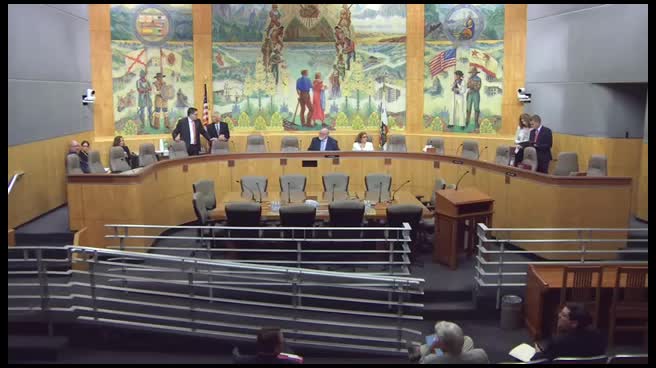
Discussed in Hearing
 29MIN
Transportation and Infrastructure Development
 1H
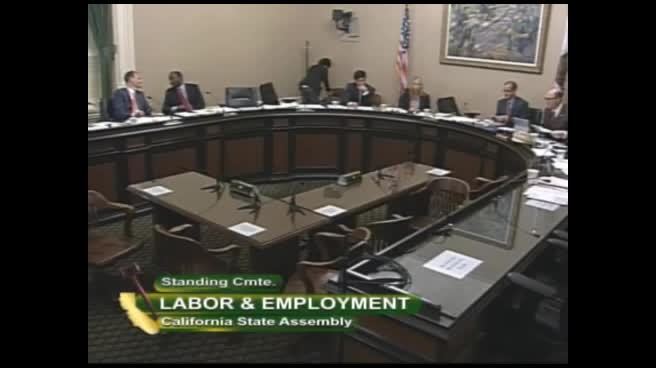
Assembly Standing Committee on Labor and Employment
Bill Author