SBX1 8: Public transit: funding.
- Session Year: 2015-2016
- House: Senate
- Latest Version Date: 2015-07-16
Existing law requires all moneys, except for fines and penalties, collected by the State Air Resources Board from the auction or sale of allowances as part of a market-based compliance mechanism relative to reduction of greenhouse gas emissions to be deposited in the Greenhouse Gas Reduction Fund.
Existing law continuously appropriates 10% of the annual proceeds of the fund to the Transit and Intercity Rail Capital Program and 5% of the annual proceeds of the fund to the Low Carbon Transit Operations Program.
This bill would instead continuously appropriate 20% of those annual proceeds to the Transit and Intercity Rail Capital Program, and 10% of those annual proceeds to the Low Carbon Transit Operations Program, thereby making an appropriation.
(a)The Legislature shall appropriate the annual proceeds of the fund for the purpose of reducing greenhouse gas emissions in this state in accordance with the requirements of Section 39712.
(b)To carry out a portion of the requirements of subdivision (a), annual proceeds are continuously appropriated for the following:
(1)Beginning in the 201516 fiscal year, and notwithstanding Section 13340 of the Government Code, 35 50 percent of annual proceeds are continuously appropriated, without regard to fiscal years, for transit, affordable housing, and sustainable communities programs as following:
(A)Ten Twenty percent of the annual proceeds of the fund is hereby continuously appropriated to the Transportation Agency for the Transit and Intercity Rail Capital Program created by Part 2 (commencing with Section 75220) of Division 44 of the Public Resources Code.
(B)Five Ten percent of the annual proceeds of the fund is hereby continuously appropriated to the Low Carbon Transit Operations Program created by Part 3 (commencing with Section 75230) of Division 44 of the Public Resources Code. Funds shall be allocated by the Controller, according to requirements of the program, and pursuant to the distribution formula in subdivision (b) or (c) of Section 99312 of, and Sections 99313 and 99314 of, the Public Utilities Code.
(C)Twenty percent of the annual proceeds of the fund is hereby continuously appropriated to the Strategic Growth Council for the Affordable Housing and Sustainable Communities Program created by Part 1 (commencing with Section 75200) of Division 44 of the Public Resources Code. Of the amount appropriated in this subparagraph, no less than 10 percent of the annual proceeds, shall be expended for affordable housing, consistent with the provisions of that program.
(2)Beginning in the 201516 fiscal year, notwithstanding Section 13340 of the Government Code, 25 percent of the annual proceeds of the fund is hereby continuously appropriated to the High-Speed Rail Authority for the following components of the initial operating segment and Phase I Blended System as described in the 2012 business plan adopted pursuant to Section 185033 of the Public Utilities Code:
(A)Acquisition and construction costs of the project.
(B)Environmental review and design costs of the project.
(C)Other capital costs of the project.
(D)Repayment of any loans made to the authority to fund the project.
(c)In determining the amount of annual proceeds of the fund for purposes of the calculation in subdivision (b), the funds subject to Section 39719.1 shall not be included.
|
Date
|
Status
|
|---|---|
| Sep 2, 2015 | From committee: Do pass and re-refer to Com. on APPR. (Ayes 8. Noes 0. Page 57.) (September 1). Re-referred to Com. on APPR. |
| Sep 2, 2015 | From committee: Do pass and re-refer to Com. on APPR. (Ayes 8. Noes 0.) (September 1). Re-referred to Com. on APPR. |
| Aug 28, 2015 | Set for hearing September 1. |
| Jul 17, 2015 | From printer. |
| Jul 16, 2015 | To print. |
| Jul 16, 2015 | Introduced. Read first time. Referred to Com. on T. & I.D. |
|
Date
|
Description
|
Location
|
Votes
|
|
|---|---|---|---|---|
| Sep 1, 2015 | Do pass, but first be re-referred to the Committee on [Appropriations] | Senate 1st Extraordinary Session on Transportation and Infrastructure Development |
Passed |
This list shows positions taken on this bill by organizations on the date displayed, which is linked to the original source.
Positions by individuals are not included.
SBX1 8 (Hill) Page 4 of 4
SENATE COMMITTEE ON TRANSPORTATION AND INFRASTRUCTURE DEVELOPMENT
Senator Jim Beall, Chair
2015 - 2016 First Extraordinary
Bill No: SBX1 8 Hearing Date: 9/1/2015
Author: |
Hill |
||
Version: |
7/16/2015 |
||
Urgency: |
No |
Fiscal: |
Yes |
Consultant: |
Erin Riches |
||
SUBJECT: Greenhouse Gas Reduction Fund: transit expenditures
DIGEST: This bill increases the continuous appropriation amounts of Greenhouse Gas Reduction Fund (GGRF) monies for transit programs.
ANALYSIS:
Existing law:
AB 32, Núñez, Chapter 488, Statutes of 2006, requires the state Air Resources Board (ARB) to develop a plan to reduce emissions to 1990 levels by 2020. It also requires ARB to ensure that programs to reduce greenhouse gas (GHG) emissions are targeted, to the extent feasible, to the most disadvantaged communities in the state. AB 32 authorizes ARB to deposit any fees paid by GHG emission sources into the GGRF.
AB 1532, Pérez, Chapter 807, Statutes of 2012, specifies that GGRF revenues must be used to facilitate the achievement of GHG emissions reductions.
The 2014-15 budget agreement allocated $832 million in GGRF revenues to a variety of GHG emission reduction programs. Beginning in 2015-16, the budget agreement appropriates 25% of GGRF revenues to the state’s high-speed rail project, 20% to affordable housing and sustainable communities grants, 10% to intercity capital rail projects, and 5% to low-carbon transit projects. The remaining 40% of GGRF revenues are available for annual appropriation by the Legislature.
The 2014-15 budget agreement established the Transit and Intercity Rail Capital Program (TIRCP). This program provides grants to fund capital improvements and operational investments to modernize transit systems and intercity, commuter, and urban rail systems to reduce GHG emissions by reducing vehicle miles traveled throughout California. Eligible projects include expansion and improvement of rail service to increase ridership; integration of rail service of various rail operations, including integration with the high-speed rail system; and safety improvements. The 2014-15 budget agreement provides for a continuous appropriation of 10% of cap-and-trade funds to TIRCP beginning in 2015-16.
In addition, the 2014-15 budget agreement established the Low Carbon Transit Operations Program (LCTOP) under the California State Transportation Agency. This program provides operating and capital assistance to transit agencies to reduce GHG emissions and improve mobility. Eligible projects include expanded, new, or enhanced transit services; conversion or retrofit of transit vehicles and equipment to zero-emission; expanded intermodal transit facilities; and infrastructure to support zero-emission or plug-in hybrid vehicles. The 2014-15 budget agreement provides for a continuous appropriation of 5% of cap-and-trade funds to LCTOP beginning in 2015-16 (about $200 million annually).
This bill increases the continuous appropriations of GGRF monies from 10% to 20% for the TIRCP and from 5% to 10% for the LCTOP.
COMMENTS:
Purpose. The author states that the current 15% allocation to TIRCP and LCTOP, though sizeable, does little to overcome the $27 billion transit shortfall faced by the state over the next 10 years. It also falls short of providing the support for public transit necessary to ensure that it becomes — and in some areas, remains — a fast, reliable, and convenient alternative to personal vehicle travel. This bill provides an additional $100 million annually for public transit with the goal of building the capacity necessary to move a growing and aging population around our state in a manner that supports our ambitious environmental objectives. The author states that because the transportation sector is responsible for an overwhelming majority of the revenues flowing to the cap-and-trade program, it is warranted that a larger share of the revenues should be used for programs that mitigate the use of these fuels.
The author also states that according to an analysis conducted by CH2M HILL on behalf of the California Transit Association, the state requires approximately $72 billion in new transit funding over the next decade to maintain existing transit infrastructure and build the capacity needed to meet the mobility needs of our state’s growing population, as well as AB 32 objectives. Additionally, the Administration’s draft California Transportation Plan 2040 posits that drastic changes in transit service levels and travel patterns are vital to meet the state’s 2050 GHG emissions reduction targets. The plan recommends that the state provide additional funding for transit improvements.
Winners and losers? Currently, 60% of GGRF revenues are continuously appropriated. This bill would increase that amount to 75%, leaving just 25% to be allocated by the Legislature each year. The author states that this bill would not impact any other program subject to an ongoing appropriation. However, by reducing the unallocated share of GGRF revenues, this bill restricts the flexibility of the Legislature to allocate GGRF revenues to programs outside the current GGRF structure.
Letter to the Senate President Pro Tempore. On June 22, 2015, 17 Senators and Assemblymembers, including six members of this committee, sent a letter to Senate President Pro Tempore Kevin de León urging a minimum of $500 million in GGRF funding to TIRCP, or an increase in TIRCP funding from 10% to 20% of GGRF revenues.
A question of priorities. There are currently a variety of bills before the Legislature relating to GGRF revenues. It is difficult to determine what suite of measures best meets the requirements of the GGRF, uses resources most efficiently, and maximizes policy objectives, when bills are scattered across various committees and even in different sessions. Budget discussions on a cap-and-trade investment strategy provide an opportunity for a comprehensive look at the universe of GGRF proposals. The committee may wish to consider whether the subject of this bill is more appropriate to the budget discussion than the transportation special session.
Related Legislation:
SBX1 7 (Allen) — increases funding for the State Transit Assistance program by raising the portion of sales and use tax on diesel fuel that is dedicated to transit, from 1.75% to 5.25%, effective July 1, 2016. SBX1 7 will also be heard by this committee today.
ABX1 8 (Chiu and Bloom) — is identical to SBX1 7 (Allen). ABX1 8 is pending committee assignment in the Assembly Rules Committee.
FISCAL EFFECT: Appropriation: Yes Fiscal Com.: Yes Local: No
POSITIONS: (Communicated to the committee before noon on Thursday, August 27, 2015.)
SUPPORT:
California Intercity Passenger Rail Leadership Coalition
California Transit Association
Golden Empire Transit District
Metropolitan Transportation Commission
Monterey-Salinas Transit
Peninsula Corridor Joint Powers Board
Sacramento Regional Transit
San Francisco Mayor Edwin M. Lee
San Mateo City/County Association of Governments
San Mateo County Transit District
San Mateo County Transportation Authority
Santa Cruz Metropolitan Transit District
Solano County Transit
Southern California Regional Transit Training Consortium
OPPOSITION:
None received
-- END --
Discussed in Hearing
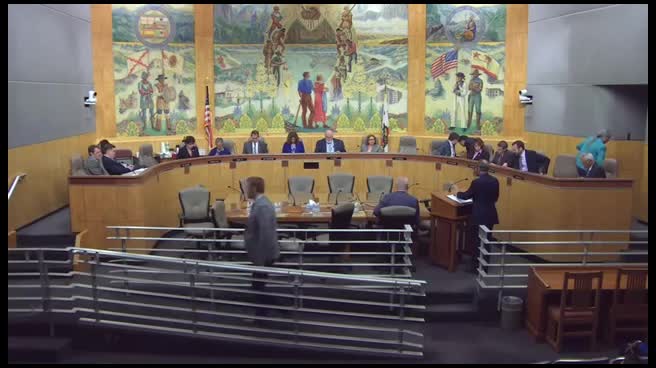 23MIN
Transportation and Infrastructure Development
Bill Author

Bill Co-Author(s):