SCAX1 1: Motor vehicle fees and taxes: restriction on expenditures.
- Session Year: 2015-2016
- House: Senate
- Latest Version Date: 2015-06-19
(1)Article XIX of the California Constitution restricts the expenditure of revenues from taxes imposed by the state on fuels used in motor vehicles upon public streets and highways to street and highway and certain mass transit purposes, and restricts the expenditure of revenues from fees and taxes imposed by the state upon vehicles or their use or operation to state administration and enforcement of laws regulating the use, operation, or registration of vehicles used upon the public streets and highways, as well as to street and highway and certain mass transit purposes. These restrictions do not apply to revenues from taxes or fees imposed under the Sales and Use Tax Law or the Vehicle License Fee Law.
Article XIX prohibits the Legislature from borrowing revenues from taxes imposed by the state on fuels used in motor vehicles, and from using those revenues other than as specifically permitted by Article XIX. Article XIX provides that up to 25% of fuel tax revenues allocated to the state may be pledged or used for the payment of principal and interest on voter-approved transportation bonds issued for street and highway purposes on and after November 2, 2010, upon voter approval and appropriation by the Legislature. Article XIX provides that up to 25% of fuel tax revenues allocated to cities and counties may be pledged or used for the payment of principal and interest on voter-approved transportation bonds issued for street and highway purposes. However, in counties where voters have approved the use of fuel tax revenues for certain mass transit purposes, Article XIX provides that the Legislature may authorize any fuel tax revenues allocated to mass transit purposes to be pledged or used for payment of principal and interest on voter-approved bonds issued for those mass transit purposes.
This measure would prohibit the Legislature from borrowing revenues from fees and taxes imposed by the state on vehicles or their use or operation, and from using those revenues other than as specifically permitted by Article XIX. The measure would also prohibit those revenues from being pledged or used for the payment of principal and interest on bonds or other indebtedness. The measure would delete the provision that provides for use of any fuel tax revenues allocated to mass transit purposes to be pledged or used for payment of principal and interest on voter-approved bonds issued for those mass transit purposes, and would instead subject those expenditures to the existing 25% limitation applicable to the use of fuel tax revenues for street and highway bond purposes.
This measure would also restrict the expenditure of revenues from taxes imposed by the state on motor vehicle fuels used other than in motor vehicles upon public streets and highways, by requiring the use of those revenues for street and highway purposes, but only with respect to the portion of the affected revenues attributable to increases in tax rates that are effective on or after July 1, 2010. This restriction on expenditures would not apply if federal law requires another use of any portion of those revenues. The measure would also prohibit the Legislature from borrowing those revenues or pledging those revenues for debt service.
(2)Article XI of the California Constitution requires the revenues derived under the Vehicle License Fee Law from a rate that does not exceed 0.65% of the market value of a vehicle to be allocated to cities and counties, and does not restrict expenditure of those revenues for a particular purpose.
This measure would require revenues derived from that portion of the vehicle license fee rate that exceeds 0.65% of the market value of a vehicle to be used solely for street and highway purposes and would prohibit the Legislature from borrowing those revenues. The measure would also prohibit those revenues from being pledged or used for the payment of principal and interest on bonds or other indebtedness.
(3)This measure would make other conforming changes.
WHEREAS, Transportation infrastructure is vital to a growing and robust California economy; and
WHEREAS, In order to continue growing and remain a national economic leader, California must prioritize transportation funding; and
WHEREAS, California has 175,499 miles of public roads; and
WHEREAS, California roadways have $59 billion in accumulated deferred maintenance, and 87 percent of county roads have an average pavement rating of at risk or poor; and
WHEREAS, The average California driver pays $832 annually for the increased cost of vehicle maintenance, tire wear, and increased gas costs because California streets and roads are in such disrepair; and
WHEREAS, In 2002, the voters passed Proposition 42, with 69 percent of the vote, which purported to guarantee transportation taxes and fees would only be used for transportation purposes; and
WHEREAS, During the fiscal crisis beginning in 2009, taxes and fees being paid by Californias drivers were diverted to the state General Fund and not used to repair or maintain California streets and roads; and
WHEREAS, The state fiscal crisis has abated but the diversion of transportation taxes and fees continues; and
WHEREAS, Unmet needs caused by the diversion of certain transportation taxes and fees have created an environment of crumbling infrastructure and increased costs to repair the states street and highway system; and
WHEREAS, To keep the Proposition 42 promise to the voters that transportation taxes and fees shall only be used for transportation purposes and not diverted to the General Fund to pay the cost of general obligation bonds, and to ensure that any future transportation fees or taxes are used only for transportation purposes, the voters should be given an opportunity to close the Proposition 42 loophole; now, therefore, be it
Resolved by the Senate, the Assembly concurring, That the Legislature of the State of California at its 201516 First Extraordinary Session commencing on the nineteenth day of June 2015, two-thirds of the membership of each house concurring, hereby proposes to the people of the State of California that the Constitution of the State be amended as follows:
The Legislature shall not borrow revenue from the Highway Users Tax Account, or its successor, revenues subject to Section 2, 3, 11, or 12 and shall not use these revenues for purposes, or in ways, other than those specifically permitted by this article.
Revenues allocated pursuant subject to Section 4 2 may not be expended for the purposes specified in subdivision (b) of Section 2, except for research and planning, until such that use is approved by a majority of the votes cast on the proposition authorizing such that use of such those revenues in an election held throughout the county or counties, or a specified area of a county or counties, within which the revenues are to be expended. The Legislature may authorize the revenues approved for allocation or expenditure under this section to be pledged or used for the payment of principal and interest on voter-approved bonds issued for the purposes specified in subdivision (b) of Section 2.
(a)Up to 25 percent of the revenues subject to Section 2 that are allocated to the State pursuant to Section 4 for the purposes specified in subdivision (a) of Section 2 of this article may be pledged or used by the State, upon approval by the voters and appropriation by the Legislature, for the payment of principal and interest on voter-approved bonds issued by the State on or after November 2, 2010, for such the purposes issued by the State on and after November 2, 2010. specified in Section 2, upon approval by the voters of this use of the revenues and appropriation of the revenues by the Legislature.
(b)Up to 25 percent of the revenues subject to Section 2 that are allocated to any city or county pursuant to Section 4 for the purposes specified in subdivision (a) of Section 2 of this article may be pledged or used only by any that city or county for the payment of principal and interest on voter-approved bonds issued by that city or county for such the purposes specified in Section 2, upon approval by the voters of this use of the revenues.
(c)Revenues subject to Section 2, 3, 11, or 12 shall not be pledged or used for the payment of principal and interest on bonds or other indebtedness, except as specifically provided in this section.
This article shall not affect or apply to fees or taxes imposed pursuant to the Sales and Use Tax Law Law, or the Vehicle License Fee Law, and all amendments and additions now or hereafter made to such those statutes, except as provided in Section 11.
From the revenues derived from taxes imposed pursuant to the Vehicle License Fee Law, and all amendments and additions now or hereafter made to that statute, other than fees on trailer coaches and mobilehomes, over and above the costs of collection and any refunds authorized by law, those revenues derived from that portion of the vehicle license fee rate that exceeds 0.65 percent of the market value of the vehicle shall be used solely for the purposes specified in subdivision (a) of Section 2.
(a)Revenues from taxes imposed by the State on motor vehicle fuels for use other than in motor vehicles upon the public streets and highways, over and above the costs of collection and any refunds authorized by law, shall be used solely for the purposes described in subdivision (a) of Section 2.
(b)Subdivision (a) applies only to the portion of the affected revenues attributable to increases in tax rates that are effective on or after July 1, 2010, and shall not apply if the applicable tax rates are reduced to be equal to or less than the rates in effect on June 30, 2010. In addition, subdivision (a) does not apply to any portion of the affected revenues that are required to be used for another purpose by federal law.
|
Date
|
Status
|
|---|---|
| Sep 9, 2015 | From committee: Be adopted and re-refer to Com. on APPR. (Ayes 13. Noes 0. Page 72.) (September 8). Re-referred to Com. on APPR. |
| Sep 9, 2015 | From committee: Be adopted and re-refer to Com. on APPR. (Ayes 13. Noes 0.) (September 8). Re-referred to Com. on APPR. |
| Sep 4, 2015 | Set for hearing September 8. |
| Sep 2, 2015 | September 1 hearing: Testimony taken. Hearing postponed by committee. |
| Sep 1, 2015 | September 1 hearing: Testimony taken. Hearing postponed by committee. |
| Aug 28, 2015 | Set for hearing September 1. |
| Aug 19, 2015 | August 19 hearing: Testimony taken. Hearing postponed by committee. |
| Aug 6, 2015 | Set for hearing August 19. |
| Jul 8, 2015 | Re-referred to Com. on T. & I.D. |
| Jun 22, 2015 | From Printer. |
| Jun 19, 2015 | To print. |
| Jun 19, 2015 | Introduced. Read first time. Referred to Com. on RLS. |
|
Date
|
Description
|
Location
|
Votes
|
|
|---|---|---|---|---|
| Sep 8, 2015 | Be adopted, but first be re-referred to the Committee on [Appropriations] | Senate 1st Extraordinary Session on Transportation and Infrastructure Development |
Passed |
This list shows positions taken on this bill by organizations on the date displayed, which is linked to the original source.
Positions by individuals are not included.
SCAX1 1 (Huff) Page 4 of 4
SENATE COMMITTEE ON TRANSPORTATION AND INFRASTRUCTURE DEVELOPMENT
Senator Jim Beall, Chair
2015 - 2016 First Extraordinary
Bill No: SCAX1 1 Hearing Date: 9/8/2015
Author: |
Huff |
||
Version: |
6/19/2015 Vote: 2/3 Required |
||
Urgency: |
No |
Fiscal: |
Yes |
Consultant: |
Eric Thronson/Randy Chinn |
||
SUBJECT: Motor vehicle fees and taxes: restriction on expenditures
DIGEST:
This constitutional amendment (SCA) proposes to amend the California Constitution to:
Prohibit the Legislature from borrowing revenues from fees and taxes imposed on vehicles or their use or operation, and from using those revenues other than as specifically permitted in the Constitution.
Require that revenues derived from the portion of the vehicle license fee that exceeds the current rate of 0.65% be used solely for street and highway purposes.
ANALYSIS:
The California Constitution:
Restricts the use of fuel excise tax revenues (from vehicles used on public streets and highways) and vehicle registration fee revenues to transportation purposes.
Restricts the Legislature from borrowing revenues from the Highway Users Tax Account (HUTA).
Restricts fuel excise tax revenues to development and construction of roads and highways, unless a majority of voters in an election throughout a county or counties approves the use of the revenues for fixed-guideway mass transit.
Allows the Legislature to pledge fuel excise tax revenues for payment of bonds to fund voter-approved fixed-guideway mass transit projects.
Allows the Legislature to use up to 25% of the state’s share of fuel excise tax revenues for payment of state-issued, voter-approved bonds for transportation purposes issued after November 2010.
Allows a city or county to use up to 25% of its share of fuel excise tax revenues for payment of locally issued, voter-approved bonds for transportation purposes.
Specifies that the restrictions on fuel excise tax and vehicle registration fee revenues do not apply to revenues derived from sales taxes or vehicle license fees.
This SCA:
Restricts the Legislature from borrowing revenues from any of the following taxes:
Fuel excise (from both on and off public roads and highways)
Vehicle fees and taxes (such as vehicle registration fees and weight fees)
Vehicle license fees above the existing rate of 0.65% of the market value of the vehicle
Eliminates the authority of the Legislature to pledge fuel excise tax revenues for payment of bonds to fund voter-approved fixed-guideway mass transit projects.
Restricts the use of revenues from any fuel excise tax, vehicle fee or tax, or vehicle license fee above the existing rate for the payment of bond indebtedness, except as provided in existing law.
Dedicates any revenues from increases in the vehicle license fee above the existing rate to transportation purposes.
Dedicates all revenues from fuel excise taxes not used on public roads and highways (such as off-road and agricultural, aviation, and boating fuels) to transportation purposes, to the extent that those revenues result from increases in tax rates above the effective rate on or after July 1, 2010.
COMMENTS:
Purpose. According to the author, since 2010, the Legislature has diverted over $5 billion from the State Highway Account to the General Fund to pay debt service on General Obligation Bonds. Additionally, since 2012, $100 million per year in gas taxes has been deposited into the General Fund rather than being used for transportation purposes. This SCA asks the voters to protect transportation taxes by requiring that they be used only for transportation purposes.
Current restrictions. Most transportation revenues, including gasoline and diesel excise taxes and vehicle registration fees, are constitutionally protected from being borrowed or used for purposes other than transportation. This protection does not apply to vehicle license fees and fuel excise taxes for usage outside of public roads. While the Constitution is currently silent on the use of weight fees, there are different opinions on whether those are currently protected. The practice is that weight fees are used by the General Fund to pay for the interest on transportation bonds. This SCA prohibits this practice.
Additional restrictions; vehicle license fee. This SCA proposes a comprehensive set of protections against borrowing taxes and fees raised from fuel excise taxes, vehicle fees and taxes, and vehicle license fees above the existing rate of 0.65%. It also proposes to dedicate any revenues from increases in the vehicle license fee (VLF) above the existing rate and any fuel excise taxes on fuel not used on public roads and highways to transportation purposes. The VLF is a property tax and therefore not subject to the same constitutional restrictions as taxes on motor vehicle fuels or the use of motor vehicles. Most VLF revenues are used for local government purposes.
General Fund impact. If approved by the voters, this SCA will eliminate weight fees as a source of General Fund revenues, which contribute about $1 billion annually to the General Fund. Potential additional revenue from increases in fuel taxes for non-public highway use and from increases in the vehicle license fee will not go to the General Fund, but are instead required to be spent only for transportation purposes.
Non-public highway uses. Representatives of non-public highway users of transportation fuel raise concerns. They believe that taxes from the sale of fuel for aircraft, boating, and off-road uses should be constitutionally protected and dedicated to programs benefiting those users, not to repair and maintenance of public streets and highways.
SBX1 1. The revenue increases proposed in SBX1 1 (Beall) are protected under current constitutional provisions.
Related Legislation:
SCA 7 (Huff) — prohibits the borrowing of transportation fees and taxes and requires those funds to be used for transportation purposes. This bill is pending in the Senate Transportation and Housing Committee.
FISCAL EFFECT: Appropriation: No Fiscal Com.: Yes Local: No
POSITIONS: (Communicated to the committee before noon on Thursday,
September 3, 2015.)
SUPPORT:
Alameda Corridor-East Construction Authority
Howard Jarvis Taxpayers Association
Kern Council of Governments
Kern County Board of Supervisors
San Bernardino, County of
San Joaquin Valley Regional Transportation Planning Agencies
Transportation Agency for Monterey County
OPPOSITION:
Sierra Club of California
-- END --
SCAX1 1 (Huff) Page 4 of 4
SENATE COMMITTEE ON TRANSPORTATION AND INFRASTRUCTURE DEVELOPMENT
Senator Jim Beall, Chair
2015 - 2016 First Extraordinary
Bill No: SCAX1 1 Hearing Date: 8/19/2015
Author: |
Huff |
||
Version: |
6/19/2015 Vote: 2/3 Required |
||
Urgency: |
No |
Fiscal: |
Yes |
Consultant: |
Eric Thronson/Randy Chinn |
||
SUBJECT: Motor vehicle fees and taxes: restriction on expenditures
DIGEST:
This Constitutional Amendment proposes to amend the constitution to:
Prohibit the Legislature from borrowing revenues from fees and taxes imposed on vehicles or their use or operation, and from using those revenues other than as specifically permitted in the constitution.
Require that revenues derived from the portion of the vehicle license fee that exceeds the current rate of 0.65% to be used solely for street and highway purposes.
ANALYSIS:
The California Constitution:
Restricts the use of fuel excise tax revenues (from vehicles used on public streets and highways) and vehicle registration fee revenues to transportation purposes.
Restricts the Legislature from borrowing revenues from the Highway Users Tax Account (HUTA).
Restricts fuel excise tax revenues to development and construction of roads and highways, unless a majority of voters in an election throughout a county or counties approves the use of the revenues for fixed-guideway mass transit.
Allows the Legislature to pledge fuel excise tax revenues for payment of bonds to fund voter-approved fixed-guideway mass-transit projects.
Allows the Legislature to use up to 25% of the state’s share of fuel excise tax revenues for payment of state-issued, voter-approved bonds for transportation purposes issued after November 2010.
Allows a city or county to use up to 25% of its share of fuel excise tax revenues for payment of locally issued, voter-approved bonds for transportation purposes.
Specifies that the restrictions on fuel excise tax and vehicle registration fee revenues do not apply to revenues derived from sales taxes or vehicle license fees.
This constitutional amendment:
Restricts the Legislature from borrowing revenues from any of the following taxes:
Fuel excise (from both on and off public roads and highways)
Vehicle fees and taxes (such as vehicle registration fees and weight fees)
Vehicle license fees above the existing rate of 0.65% of the market value of the vehicle
Eliminates the authority for the Legislature to pledge fuel excise tax revenues for payment of bonds to fund voter-approved fixed-guideway mass-transit projects.
Restricts the use of revenues from any fuel excise tax, vehicle fee or tax, or vehicle license fee above the existing rate for the payment of bond indebtedness, except as provided in existing law.
Dedicates any revenues from increases in the vehicle license fee above the existing rate to transportation purposes.
Dedicates all revenues from fuel excise taxes not used on public roads and highways (such as off-road and agricultural, aviation, and boating fuels) to transportation purposes, to the extent that those revenues result from increases in tax rates above the effective rate on or after July 1, 2010.
COMMENTS:
Purpose. Since 2010, the Legislature has diverted over $5 billion from the State Highway Account to the General Fund to pay debt service on General Obligation Bonds. Additionally, since 2012, $100 million per year in gas taxes has been deposited into the General Fund rather than being used for transportation purposes. This Constitutional Amendment asks the voters to protect transportation taxes by requiring that they be used only for transportation purposes.
Current restrictions. Most transportation revenues, including gasoline and diesel excise taxes and vehicle registration fees, are constitutionally protected from being borrowed or used for purposes other than transportation. This protection does not apply to vehicle license fees and fuel excise taxes for usage outside of public roads. While the Constitution is currently silent on the use of weight fees, there are different opinions on whether those are currently protected. The practice is that weight fees are used by the General Fund to pay for the interest on transportation bonds.
Additional restrictions. This Constitutional Amendment proposes a comprehensive set of constitutional protections against borrowing taxes and fees raised from fuel excise taxes, vehicle fees and taxes, and vehicle license fees above the existing rate of 0.65%. It also proposes to dedicate any revenues from increases in the vehicle license fee above the existing rate and any fuel excise taxes on fuel not used on public roads and highways to transportation purposes. With these additional restrictions, virtually all transportation taxes and fees raised from the use of vehicles will be dedicated to transportation purposes.
General Fund impact. If approved by the voters, this Constitutional Amendment will eliminate weight fees as a source of general fund revenues, which contribute about $1 billion annually to the General Fund. Potential additional revenue from increases in fuel taxes for non-public highway use and from increases in the vehicle license fee will not go to the General Fund, but are instead required to be spent only for transportation purposes.
SBX1 1. The revenue increases proposed in SBX1 1 are protected under current Constitutional provisions.
Related Legislation:
SCA 7 (Huff) — prohibits the borrowing of transportation fees and taxes and requires those funds to be used for transportation purposes. This bill is pending in the Senate Transportation and Housing Committee.
FISCAL EFFECT: Appropriation: No Fiscal Com.: Yes Local: No
POSITIONS: (Communicated to the committee before noon on Thursday,
August 13, 2015.)
SUPPORT:
Alameda Corridor-East Construction Authority
Howard Jarvis Taxpayers Association
San Joaquin Valley Regional Transportation Planning Agencies
Transportation Agency for Monterey County
OPPOSITION:
Sierra Club of California
-- END --
SCAX1 1 (Huff) Page 4 of 4
SENATE COMMITTEE ON TRANSPORTATION AND INFRASTRUCTURE DEVELOPMENT
Senator Jim Beall, Chair
2015 - 2016 First Extraordinary
Bill No: SCAX1 1 Hearing Date: 9/1/2015
Author: |
Huff |
||
Version: |
6/19/2015 Vote: 2/3 Required |
||
Urgency: |
No |
Fiscal: |
Yes |
Consultant: |
Eric Thronson/Randy Chinn |
||
SUBJECT: Motor vehicle fees and taxes: restriction on expenditures
DIGEST:
This constitutional amendment (SCA) proposes to amend the California Constitution to:
Prohibit the Legislature from borrowing revenues from fees and taxes imposed on vehicles or their use or operation, and from using those revenues other than as specifically permitted in the Constitution.
Require that revenues derived from the portion of the vehicle license fee that exceeds the current rate of 0.65% be used solely for street and highway purposes.
ANALYSIS:
The California Constitution:
Restricts the use of fuel excise tax revenues (from vehicles used on public streets and highways) and vehicle registration fee revenues to transportation purposes.
Restricts the Legislature from borrowing revenues from the Highway Users Tax Account (HUTA).
Restricts fuel excise tax revenues to development and construction of roads and highways, unless a majority of voters in an election throughout a county or counties approves the use of the revenues for fixed-guideway mass transit.
Allows the Legislature to pledge fuel excise tax revenues for payment of bonds to fund voter-approved fixed-guideway mass transit projects.
Allows the Legislature to use up to 25% of the state’s share of fuel excise tax revenues for payment of state-issued, voter-approved bonds for transportation purposes issued after November 2010.
Allows a city or county to use up to 25% of its share of fuel excise tax revenues for payment of locally issued, voter-approved bonds for transportation purposes.
Specifies that the restrictions on fuel excise tax and vehicle registration fee revenues do not apply to revenues derived from sales taxes or vehicle license fees.
This SCA:
Restricts the Legislature from borrowing revenues from any of the following taxes:
Fuel excise (from both on and off public roads and highways)
Vehicle fees and taxes (such as vehicle registration fees and weight fees)
Vehicle license fees above the existing rate of 0.65% of the market value of the vehicle
Eliminates the authority of the Legislature to pledge fuel excise tax revenues for payment of bonds to fund voter-approved fixed-guideway mass transit projects.
Restricts the use of revenues from any fuel excise tax, vehicle fee or tax, or vehicle license fee above the existing rate for the payment of bond indebtedness, except as provided in existing law.
Dedicates any revenues from increases in the vehicle license fee above the existing rate to transportation purposes.
Dedicates all revenues from fuel excise taxes not used on public roads and highways (such as off-road and agricultural, aviation, and boating fuels) to transportation purposes, to the extent that those revenues result from increases in tax rates above the effective rate on or after July 1, 2010.
COMMENTS:
Purpose. According to the author, since 2010, the Legislature has diverted over $5 billion from the State Highway Account to the General Fund to pay debt service on General Obligation Bonds. Additionally, since 2012, $100 million per year in gas taxes has been deposited into the General Fund rather than being used for transportation purposes. This SCA asks the voters to protect transportation taxes by requiring that they be used only for transportation purposes.
Current restrictions. Most transportation revenues, including gasoline and diesel excise taxes and vehicle registration fees, are constitutionally protected from being borrowed or used for purposes other than transportation. This protection does not apply to vehicle license fees and fuel excise taxes for usage outside of public roads. While the Constitution is currently silent on the use of weight fees, there are different opinions on whether those are currently protected. The practice is that weight fees are used by the General Fund to pay for the interest on transportation bonds. This SCA prohibits this practice.
Additional restrictions; vehicle license fee. This SCA proposes a comprehensive set of protections against borrowing taxes and fees raised from fuel excise taxes, vehicle fees and taxes, and vehicle license fees above the existing rate of 0.65%. It also proposes to dedicate any revenues from increases in the vehicle license fee (VLF) above the existing rate and any fuel excise taxes on fuel not used on public roads and highways to transportation purposes. The VLF is a property tax and therefore not subject to the same constitutional restrictions as taxes on motor vehicle fuels or the use of motor vehicles. Most VLF revenues are used for local government purposes.
General Fund impact. If approved by the voters, this SCA will eliminate weight fees as a source of General Fund revenues, which contribute about $1 billion annually to the General Fund. Potential additional revenue from increases in fuel taxes for non-public highway use and from increases in the vehicle license fee will not go to the General Fund, but are instead required to be spent only for transportation purposes.
Non-public highway uses. Representatives of non-public highway users of transportation fuel raise concerns. They believe that taxes from the sale of fuel for aircraft, boating, and off-road uses should be constitutionally protected and dedicated to programs benefiting those users, not to repair and maintenance of public streets and highways.
SBX1 1. The revenue increases proposed in SBX1 1 (Beall) are protected under current constitutional provisions.
Related Legislation:
SCA 7 (Huff) — prohibits the borrowing of transportation fees and taxes and requires those funds to be used for transportation purposes. This bill is pending in the Senate Transportation and Housing Committee.
FISCAL EFFECT: Appropriation: No Fiscal Com.: Yes Local: No
POSITIONS: (Communicated to the committee before noon on Thursday,
August 27, 2015.)
SUPPORT:
Alameda Corridor-East Construction Authority
Howard Jarvis Taxpayers Association
Kern Council of Governments
Kern County Board of Supervisors
San Bernardino, County of
San Joaquin Valley Regional Transportation Planning Agencies
Transportation Agency for Monterey County
OPPOSITION:
Sierra Club of California
-- END --
Discussed in Hearing
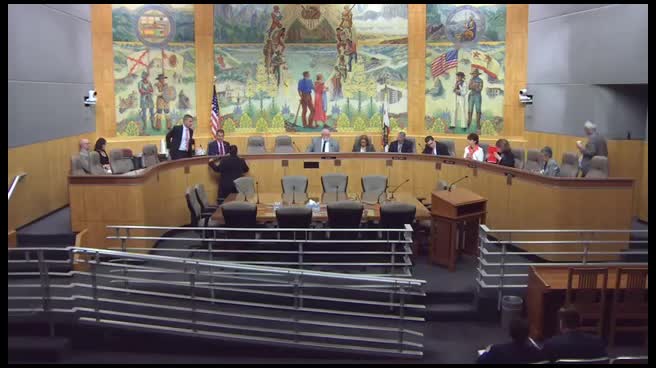 29MIN
Transportation and Infrastructure Development
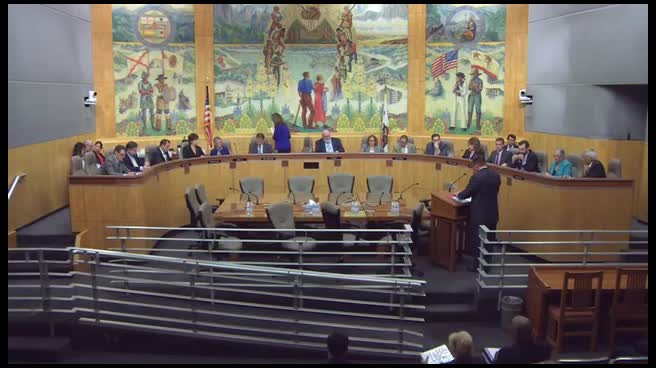 27MIN
Transportation and Infrastructure Development
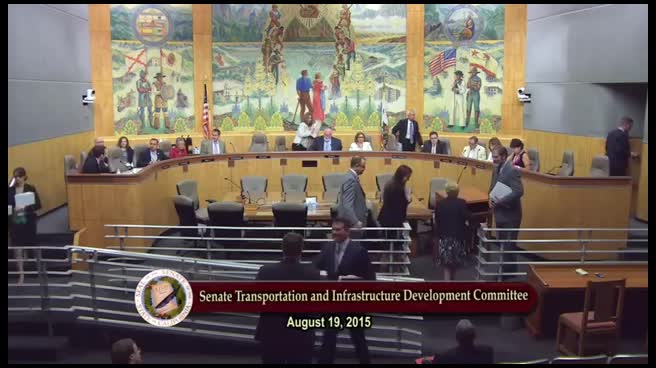 22MIN
Transportation and Infrastructure Development
Bill Author

Bill Co-Author(s):