ABX2 20: Medi-Cal: managed care organization tax.
- Session Year: 2015-2016
- House: Assembly
- Latest Version Date: 2016-02-08
(1)Existing law establishes the Medi-Cal program, administered by the State Department of Health Care Services, under which health care services are provided to qualified low-income persons. The Medi-Cal program is, in part, governed and funded by federal Medicaid Program provisions. Under existing law, one of the methods by which Medi-Cal services are provided is pursuant to contracts with various types of managed care plans. Existing law, until July 1, 2016, imposes a sales tax on sellers of Medi-Cal managed care plans.
This bill, on July 1, 2016, and until July 1, 2019, would establish a new managed care organization provider tax, to be administered by the State Department of Health Care Services. The tax would be assessed by the department on licensed health care service plans, managed care plans contracted with the department to provide Medi-Cal services, and alternate health care service plans (AHCSP), as defined, except as excluded by the bill. The bill would require the department to determine for each health plan using the base data source, as defined, specified enrollment information for the base year. By October 14, 2016, or within 10 business days following the date upon which the department receives approval for federal financial participation, whichever is later, the bill would require the department to commence notification to the health plans of the assessed tax amount due for each fiscal year and the dates on which the installment tax payments are due for each fiscal year.
This bill would establish applicable taxing tiers and per enrollee amounts for the 201617, 201718, and 201819 fiscal years, respectively, for Medi-Cal enrollees, AHCSP enrollees, and all other enrollees, as defined. The bill would require the department to request approval from the federal Centers for Medicare and Medicaid Services as necessary to implement this bill. The bill would authorize the department to implement its provisions by means of provider bulletins, all-plan letters, or similar instructions, and to notify the Legislature of this action.
This bill would establish the Health and Human Services Special Fund in the State Treasury, into which all revenues, less refunds, derived from the taxes imposed by the bill would be deposited into the State Treasury to the credit of the fund. Interest and dividends earned on moneys in the fund would be retained in the fund, as specified. The bill would continuously appropriate the moneys in the fund to the State Department of Health Care Services for purposes of funding the nonfederal share of Medi-Cal managed care rates for health care services furnished to specified persons, thereby making an appropriation.
(2)Existing law imposes a gross premiums tax of 2.35% on all insurers, as defined, doing business in this state, as set forth in the California Constitution. For purposes of the Corporation Tax Law, existing law sets forth items specifically excluded from gross income.
This bill would provide that the qualified health care service plan income, as defined, of health plans that are subject to the managed care organization provider tax would be excluded from the definition of gross income for purposes of taxation under the above provisions, as specified. The bill would reduce the gross premiums tax rate from 2.35% to 0% for those premiums received on or after July 1, 2016, and on or before June 30, 2019, for the provision of health insurance paid by health insurers providing health insurance that has a corporate affiliate, as defined, that is a health care service plan or health plan that is subject to the managed care organization provider tax imposed under the bill, as specified. The bill would require the State Department of Health Care Services to annually report specified information to the Franchise Tax Board with regard to these provisions. The bill would authorize the board to implement these provisions and would exempt the board from the administrative rulemaking process.
Existing law provides that when the laws of another state or foreign county impose certain taxes or other amounts on California insurers, or their agents or representatives, the same taxes or other amounts are imposed in this state upon the insurers, or their agents or representatives, of the other state or country doing business in this state.
The bill would prohibit the Insurance Commissioner from considering the reduction of the gross premiums tax rate under this bill in any determination to impose or enforce a tax under those retaliatory tax provisions.
The bill would provide that these provisions become operative on the later of July 1, 2016, or on the date the Director of Health Care Services certifies in writing that federal approval necessary for receipt of federal financial participation has been obtained.
(3)This bill would include a change in state statute that would result in a taxpayer paying a higher tax within the meaning of Section 3 of Article XIIIA of the California Constitution, and thus would require for passage the approval of 2/3 of the membership of each house of the Legislature.
It is the intent of the Legislature that the Franchise Tax Board Legal Ruling 2006-01 (April 28, 2006) regarding the treatment of apportionment factors attributable to income exempt from income tax shall apply to apportionment factors attributable to the income of qualified health care service plans excluded by Section 24330 of the Revenue and Taxation Code, as added by Section 4 of this act.
SEC. 2.Section 685.5 is added to the Insurance Code, to read:685.5.The reduction in the gross premiums tax rate made by Section 12202.2 of the Revenue and Taxation Code shall not be considered in any determination by the Insurance Commissioner to impose or enforce a tax under the retaliatory tax provisions of Sections 685 to 685.4, inclusive, and reported pursuant to Sections 12281, 12287, 12288, and 12289 of the Revenue and Taxation Code.
SEC. 3.Section 12202.2 is added to the Revenue and Taxation Code, to read:12202.2.(a)Notwithstanding the rate specified by Section 12202, the gross premiums tax rate for premiums received for the provision of health insurance, as defined in subdivision (b) of Section 106 of the Insurance Code, paid by an insurer described in this subdivision shall be 0 percent for any of those premiums received on or after July 1, 2016, and on or before June 30, 2019. Only an insurer that provides health insurance that has a corporate affiliate that is a health care service plan or health plan defined as a health care service plan that meets all of the following requirements, shall be subject to the rate change provided in this section:
(1)Is licensed by the Department of Managed Health Care or is a managed care plan contracted with the State Department of Health Care Services to provide Medi-Cal services.
(2)Had at least one enrollee enrolled in the health plan in the base year, as defined in subdivision (e) of Section 14199.51 of the Welfare and Institutions Code, not including individuals who are enrolled in a Medicare plan, who receive health care services through a health plan pursuant to a subcontract from another health plan, or who are enrollees through the Federal Employees Health Benefits Act of 1959 (Public Law 86-382).
(3)Is subject to the tax imposed by Section 14199.54 of the Welfare and Institutions Code.
(b)For purposes of this section, an insurer that has a corporate affiliate that is a health care service plan or health plan means an insurer that is, directly or indirectly, controlled by, under common control with, or controls a health care service plan.
(c)This section shall remain in effect only until June 30, 2019, and as of June 30, 2020, is repealed.
SEC. 4.Section 24330 is added to the Revenue and Taxation Code, to read:24330.(a)Gross income shall not include the qualified health care service plan income of a qualified health care service plan properly accrued with respect to enrollment or services that occur on or after July 1, 2016, and on or before June 30, 2019.
(b)For purposes of this section, the following definitions shall apply:
(1)Qualified health care service plan means a health care service plan, as defined in subdivision (k) of Section 14199.51 of the Welfare and Institutions Code, that is subject to the tax imposed under Section 14199.54 of the Welfare and Institutions Code.
(2)Qualified health care service plan income means the revenue listed in subparagraphs (A) to (J), inclusive, that is associated with the operation of a qualified health care service plan and that is required to be reported to the Department of Managed Health Care pursuant to the Instructions for filing Financial Statements and Section 1384 of the Health and Safety Code and the regulations adopted thereunder.
(A)Premiums (commercial).
(B)Copayments, COB, subrogation.
(C)Title XIX Medicaid.
(D)Point-of-Service premiums.
(E)Risk pool revenue.
(F)Capitation payments.
(G)Title XVIII Medicare.
(H)Fee-for-service.
(I)Interest.
(J)Aggregate write-ins for other revenues, including capital gains and other investment income.
(c)(1)No later than December 1, 2016, and annually thereafter, the State Department of Health Care Services shall provide to the Franchise Tax Board information regarding every health care service plan that is subject to the tax imposed under Section 14199.54 of the Welfare and Institutions Code. The information shall include the corporate name, address, and calendar period for which each health care service plan is subject to the tax imposed under Section 14199.54 of the Welfare and Institutions Code, and, if applicable, the owner or owners of those health care service plans.
(2)A qualified health care service plan with no income other than qualified health care service plan income that is excluded from gross income pursuant to this section for a taxable year shall be exempt from the minimum franchise tax imposed under Chapter 2 (commencing with Section 23101) for that taxable year.
(d)The Franchise Tax Board may prescribe rules, guidelines, or procedures necessary or appropriate to carry out the purposes of this section. Chapter 3.5 (commencing with Section 11340) of Part 1 of Division 3 of Title 2 of the Government Code does not apply to any rule, guideline, or procedure prescribed by the Franchise Tax Board pursuant to this section.
(e)This section shall remain in effect only until December 1, 2019, and as of June 30, 2020, is repealed.
SEC. 5.Article 6.7 (commencing with Section 14199.50) is added to Chapter 7 of Part 3 of Division 9 of the Welfare and Institutions Code, to read:6.7.Managed Care Organization Provider Tax14199.50.It is the intent of the Legislature that the department implement a managed care organization provider tax effective July 1, 2016, to provide ongoing funding for health care and prevention, minimize to the extent possible any need for new reductions to the program, and meet all of the following goals:
(a)Generate an amount of nonfederal funds for the Medi-Cal program equivalent to the funds generated by the tax imposed pursuant to Article 5 (commencing with Section 6174) of Chapter 2 of Part 1 of Division 2 of the Revenue and Taxation Code.
(b)Comply with federal Medicaid requirements applicable to permissible health care-related taxes, including, but not limited to, Section 433.68 of Title 42 of the Code of Federal Regulations.
14199.51.The following definitions shall apply for the purposes of this article:
(a)Alternate Health Care Service Plan or AHCSP means a nonprofit health care service plan with at least four million enrollees statewide, that owns or operates pharmacies, and provides professional medical services to enrollees in specific geographic regions through an exclusive contract with a single medical group in each specific geographic region in which it is licensed.
(b)AHCSP enrollee means an individual enrolled in an AHCSP, as defined in subdivision (a), who is not a Medi-Cal beneficiary.
(c)AHCSP enrollee tax amount means the amount of tax assessed per countable enrollee within an AHCSP taxing tier.
(d)AHCSP taxing tier means a range of cumulative enrollment of countable AHCSP enrollees for the base year.
(e)Base year means the 12-month period of October 1, 2014, through September 30, 2015.
(f)Base data source means the quarterly financial statement filings submitted by health plans to the Department of Managed Health Care retrieved by the department as of January 1, 2016, and supplemented by, as necessary, Medi-Cal enrollment data for the base year as maintained by the department and retrieved as of January 1, 2016.
(g)Countable enrollee means an individual enrolled in a health plan, as defined in subdivision (k), during a month of the base year according to the base data source. Countable enrollee does not include an individual enrolled in a Medicare plan, a plan-to-plan enrollee, as defined in subdivision (r), or an individual enrolled in a health plan pursuant to the Federal Employees Health Benefits Act of 1959 (Public law 86-382) to the extent the imposition of the tax under this article is preempted pursuant to Section 8909(f) of Title 5 of the United States Code.
(h)Department means the State Department of Health Care Services.
(i)Director means the Director of Health Care Services.
(j)Excluded plan means any of the following:
(1)A health plan licensed pursuant to Section 1351.2 of the Health and Safety Code.
(2)A health plan that is owned and operated by a 501(c)(3) hospital or health system or multiple 501(c)(3) hospitals or health systems if that health plan has both a substantial amount of its enrollment in and is headquartered in either the County of Sacramento or San Diego.
(k)Health care service plan or health plan means a health care service plan, other than a plan that provides only specialized or discount services, that is licensed by the Department of Managed Health Care under the Knox-Keene Health Care Service Plan Act of 1975 (Chapter 2.2 (commencing with Section 1340) of Division 2 of the Health and Safety Code) or a managed care plan contracted with the State Department of Health Care Services to provide Medi-Cal services.
(l)Medi-Cal enrollee means an individual enrolled in a health plan, as defined in subdivision (k), who is a Medi-Cal beneficiary for whom the department directly pays the health plan a capitated payment.
(m)Medi-Cal per enrollee tax amount means the amount of tax assessed per countable Medi-Cal enrollee within a Medi-Cal taxing tier.
(n)Medi-Cal taxing tier means a range of cumulative enrollment of countable Medi-Cal enrollees for the base year.
(o)Other enrollee means an individual enrolled in a health plan, as defined in subdivision (k), who is not a Medi-Cal beneficiary or an AHCSP enrollee.
(p)Other per enrollee tax amount means the amount of tax assessed per countable other enrollee within an other taxing tier.
(q)Other taxing tier means a range of cumulative enrollment of countable other enrollees for the base year.
(r)Plan-to-plan enrollee means an individual who receives his or her health care services through a health plan pursuant to a subcontract from another health plan.
14199.52.(a)The Health and Human Services Special Fund is hereby created in the State Treasury.
(b)All revenues, less refunds, derived from the taxes provided for in this article shall be deposited in the State Treasury to the credit of the Health and Human Services Special Fund.
(c)Notwithstanding Section 16305.7 of the Government Code, any interest and dividends earned on moneys in the Health and Human Services Special Fund shall be retained in the fund and used solely for the purpose specified in subdivision (d).
(d)Notwithstanding Section 13340 of the Government Code, the funds deposited in the Health and Human Services Special Fund pursuant to this article shall be continuously appropriated, without regard to fiscal year, to the department for purposes of funding the nonfederal share of Medi-Cal managed care rates for health care services furnished to children, adults, seniors and persons with disabilities, and persons dually eligible for Medi-Cal and Medicare.
(e)The department shall provide an annual report to all health plans accounting for the funds deposited in and expended from the Health and Human Services Special Fund, in a time and manner as deemed appropriate by the director. The report shall identify the taxes imposed on each health plan pursuant to this article, and shall provide an itemized accounting of expenditures from the fund.
14199.53.(a)The department shall determine for each health plan using the base data source all of the following:
(1)Total cumulative enrollment for the base year.
(2)Total Medicare cumulative enrollment for the base year.
(3)Total Medi-Cal cumulative enrollment for the base year.
(4)Total plan-to-plan cumulative enrollment for the base year.
(5)Total cumulative enrollment through the Federal Employees Health Benefits Act of 1959 (Public Law 86-382) for the base year.
(6)Total other cumulative enrollment for the base year that is not otherwise counted in paragraphs (2) to (5), inclusive.
(b)Notwithstanding any provision in this article, the director may correct any identified material or significant errors in the data, including, but not limited to, the overall cumulative enrollment, the Medicare cumulative enrollment, Medi-Cal cumulative enrollment, cumulative enrollment through the Federal Employees Health Benefits Act of 1959 (Public Law 86-382), and other cumulative enrollment. The directors determination whether to exercise his or her discretion under this section and any determination made by the director under this section shall not be subject to judicial review, except that a health plan may bring a writ of mandate under Section 1085 of the Code of Civil Procedure to rectify an abuse of discretion by the department in correcting that health plans data when that correction results in a greater tax amount for that health plan pursuant to Section 14199.55.
14199.54.(a)A managed care organization provider tax shall be imposed on each health plan that is not an excluded plan. The tax shall be imposed for the following fiscal years:
(1)201617 fiscal year.
(2)201718 fiscal year.
(3)201819 fiscal year.
(b)The department shall compute the annual tax for each health plan subject to the tax during each applicable state fiscal year pursuant to Section 14199.55.
(c)The department shall collect the annual tax for each health plan in four installments and shall determine the amount due for each installment in the state fiscal year by dividing the annual tax for that state fiscal year by four.
(d)The department shall not collect the tax imposed pursuant to this article until the department receives approval from the federal Centers for Medicare and Medicaid Services that this tax is a permissible health care-related tax in accordance with Section 433.68 of Title 42 of the Code of Federal Regulations and is eligible for federal financial participation. On October 1, 2016, or the date the department receives that federal approval from the federal Centers for Medicare and Medicaid Services, whichever is later, the following activities shall commence:
(1)The director shall certify in writing that federal approval has been received, and within five business days, the department shall post the certification on its Internet Web site and send a copy of the certification to the Secretary of State, the Secretary of the Senate, the Chief Clerk of the Assembly, and the Legislative Counsel.
(2)By October 14, 2016, or within 10 business days following receipt of the notice of federal approval, whichever is later, the department shall send a notice to each health plan subject to the tax, which shall contain the following information:
(A)The annual tax due for each fiscal year.
(B)The dates on which the four installment tax payments are due for each fiscal year.
(3)A health plan shall pay the annual tax in installments as calculated pursuant to Section 14199.55, based on a schedule developed by the department. The department shall establish the date that each tax payment is due, provided that the first tax payment shall be due no earlier than 20 days following the date the department sends the notice pursuant to paragraph (2), and the tax payments shall be paid at least one month apart, but no more than one quarter apart.
(4)A health plan shall pay the taxes that are due, if any, in the amounts and at the times set forth in the notice unless superseded by a subsequent notice issued by the department.
(e)The tax assessed pursuant to this article shall be paid by each health plan subject to the tax to the department for deposit in the Health and Human Services Special Fund created pursuant to Section 14199.52.
(f)(1)Interest shall be assessed on an applicable health plan for any amount of the managed care organization provider taxes that are not paid on the date due at a rate of 10 percent per annum. Interest shall begin to accrue the day after the date the tax payment was due and shall be deposited in the Health and Human Services Special Fund created pursuant to Section 14199.52.
(2)If a tax payment is more than 60 days overdue, a penalty equal to the total accrued interest charge described in paragraph (1) shall also be assessed on the applicable health plan and due for each month for which the tax payment is not received after 60 days.
(g)(1)Subject to paragraph (2), the director may waive a portion or all of either the interest or penalties, or both, assessed under this article in the event that the director determines, in his or her sole discretion, that the health plan has demonstrated that imposition of the full amount of the tax pursuant to the timelines applicable under this article has a high likelihood of creating an undue financial hardship for the health plan or creates a significant financial difficulty in providing needed services to Medi-Cal beneficiaries.
(2)Waiver of some or all of the interest or penalties pursuant to this subdivision shall be conditioned on the health plans agreement to make tax payments on an alternative schedule developed by the department that takes into account the financial situation of the health plan and the potential impact on the delivery of services to Medi-Cal beneficiaries.
(h)In the event of a merger, acquisition, establishment, or any other similar transaction that results in the transfer of health plan responsibility for all countable enrollees under this article from a health plan to another health plan or similar entity, and that occurs at any time during which this article is operative, the resultant health plan or similar entity shall be responsible for paying the full tax amount as provided in this article that would have been the responsibility of the health plan to which that full tax amount was assessed, upon the effective date of any such transaction. If a merger, acquisition, establishment, or any other similar transaction results in the transfer of health plan responsibility for only some of a health plans countable enrollees under this article but not all countable enrollees, the full tax amount as provided in this article shall remain the responsibility of that health plan to which that full tax amount was assessed.
14199.55.(a)For each fiscal year, the Medi-Cal taxing tiers shall be as follows:
(1)Medi-Cal taxing tier I shall consist of all countable Medi-Cal enrollees in a health plan from zero to 2,000,000, inclusive.
(2)Medi-Cal taxing tier II shall consist of all countable Medi-Cal enrollees in a health plan from 2,000,001 to 4,000,000, inclusive.
(3)Medi-Cal taxing tier III shall consist of all countable Medi-Cal enrollees in a health plan greater than 4,000,000.
(b)For each fiscal year, the other taxing tiers shall be as follows:
(1)Other taxing tier I shall consist of all countable other enrollees in a health plan from zero to 4,000,000, inclusive.
(2)Other taxing tier II shall consist of all countable other enrollees in a health plan from 4,000,001 to 8,000,000, inclusive.
(3)Other taxing tier III shall consist of all countable other enrollees in a health plan greater than 8,000,000.
(c)For each fiscal year, the AHCSP taxing tier shall consist of all countable AHCSP enrollees in a health plan from zero to 8,000,000, inclusive.
(d)For the 201617 fiscal year, the Medi-Cal per enrollee tax amount for each Medi-Cal taxing tier shall be as follows:
(1)The Medi-Cal per enrollee tax for Medi-Cal taxing tier I shall be forty dollars ($40).
(2)The Medi-Cal per enrollee tax for Medi-Cal taxing tier II shall be nineteen dollars ($19).
(3)The Medi-Cal per enrollee tax for Medi-Cal taxing tier III shall be one dollar ($1).
(e)For the 201617 fiscal year, the other per enrollee tax amount for each other taxing tier shall be as follows:
(1)The other per enrollee tax for the other taxing tier I shall be seven dollars and fifty cents ($7.50).
(2)The other per enrollee tax for the other taxing tier II shall be two dollars and fifty cents ($2.50).
(3)The other per enrollee tax for the other taxing tier III shall be one dollar ($1).
(f)For the 201617 fiscal year, the AHCSP per enrollee tax for the AHCSP taxing tier shall be two dollars ($2).
(g)For the 201718 fiscal year, the Medi-Cal per enrollee tax amount for each Medi-Cal taxing tier shall be as follows:
(1)The Medi-Cal per enrollee tax for Medi-Cal taxing tier I shall be forty-two dollars and fifty cents ($42.50).
(2)The Medi-Cal per enrollee tax for Medi-Cal taxing tier II shall be twenty dollars and twenty-five cents ($20.25).
(3)The Medi-Cal per enrollee tax for Medi-Cal taxing tier III shall be one dollar ($1).
(h)For the 201718 fiscal year, the other per enrollee tax amount for each other taxing tier shall be as follows:
(1)The other per enrollee tax for the other taxing tier I shall be eight dollars ($8).
(2)The other per enrollee tax for the other taxing tier II shall be three dollars ($3).
(3)The other per enrollee tax for the other taxing tier III shall be one dollar ($1).
(i)For the 201718 fiscal year, the AHCSP per enrollee tax for the AHCSP taxing tier shall be two dollars and twenty-five cents ($2.25).
(j)For the 201819 fiscal year, the Medi-Cal per enrollee tax amount for each Medi-Cal taxing tier shall be as follows:
(1)The Medi-Cal per enrollee tax for Medi-Cal taxing tier I shall be forty-five dollars ($45).
(2)The Medi-Cal per enrollee tax for Medi-Cal taxing tier II shall be twenty-one dollars ($21).
(3)The Medi-Cal per enrollee tax for Medi-Cal taxing tier III shall be one dollar ($1).
(k)For the 201819 fiscal year, the other per enrollee tax amount for each other taxing tier shall be as follows:
(1)The other per enrollee tax for the other taxing tier I shall be eight dollars and fifty cents ($8.50).
(2)The other per enrollee tax for the other taxing tier II shall be three dollars and fifty cents ($3.50).
(3)The other per enrollee tax for the other taxing tier III shall be one dollar ($1).
(l)For the 201819 fiscal year, the AHCSP per enrollee tax for the AHCSP taxing tier shall be two dollars and fifty cents ($2.50).
(m)(1)The department may modify or make adjustments to any methodology, tax amount, taxing tier, or other similar provision specified in this article to the extent necessary to meet the requirements of federal law or regulations, obtain federal approval, or to ensure federal financial participation is available provided the modification or adjustment does not otherwise conflict with the purposes of this article. Any modification or adjustment that would result in more than the following aggregate tax amounts for the other enrollees and AHCSP enrollees, combined, shall be considered to conflict with the purposes of this article:
(A)Two hundred sixty-six million dollars ($266,000,000) in the 201617 fiscal year.
(B)Two hundred eighty-seven million dollars ($287,000,000) in the 201718 fiscal year.
(C)Three hundred nine million dollars ($309,000,000) in the 201819 fiscal year.
(2)In implementing any modification or adjustment, the department may only make an adjustment that would result in lowering the amounts in subparagraph (A), (B), or (C) of paragraph (1). Nothing in this subdivision shall limit the authority of the department to make an adjustment that does not impact the amounts in subparagraph (A), (B), or (C) of paragraph (1).
(3)If the department identifies that a modification or adjustment may be necessary in accordance with paragraph (1), the department shall consult with affected health plans, to the extent practicable, to implement that modification or adjustment.
(4)In the event of a modification or adjustment made pursuant to this subdivision, the department shall notify affected health plans, the Joint Legislative Budget Committee, the Senate Committees on Appropriations, Budget and Fiscal Review, and Health, and the Assembly Committees on Appropriations, Budget, and Health within 10 business days of that modification or adjustment.
(n)The department shall request approval from the federal Centers for Medicare and Medicaid Services as is necessary to implement this article. In making that request, the department may seek, as it deems necessary, a request for waiver of the broad-based requirement, waiver of the uniformity requirement, or both, pursuant to Section 433.68(e)(1) and (2) of Title 42 of the Code of Federal Regulations, or a request for waiver of any other provision of federal law or regulation necessary to implement this article.
(o)Notwithstanding Chapter 3.5 (commencing with Section 11340) of Part 1 of Division 3 of Title 2 of the Government Code, the department may implement this article by means of provider bulletins, all plan letters, or other similar instructions, without taking regulatory action. The department shall provide notification to the Joint Legislative Budget Committee and to the Senate Committees on Appropriations, Budget and Fiscal Review, and Health, and the Assembly Committees on Appropriations, Budget, and Health within 10 business days after the above-described action is taken.
14199.56.This article shall become operative on July 1, 2016, and shall become inoperative on July 1, 2019. As of June 30, 2020, this article is repealed. Notwithstanding this section, a tax and any applicable interest and penalties imposed under this article shall continue to be due and payable until the tax and any applicable interest and penalties are fully paid.
SEC. 6.Section 685.5 of the Insurance Code, and Sections 12202.2 and 24330 of the Revenue and Taxation Code shall become effective and operative on the later of July 1, 2016, or the effective date, certified in writing by the Director of the Health Care Services, of the federal approval necessary for receipt of federal financial participation in conjunction with the tax assessed pursuant to Article 6.7 (commencing with Section 14199.50) of Chapter 7 of Part 3 of Division 9 of the Welfare and Institutions Code. The Director of Health Care Services shall post the certification of federal approval on the State Department of Health Care Services Internet Web site and send a copy of the certification to the Secretary of State, the Secretary of the Senate, the Chief Clerk of the Assembly, the Legislative Counsel, the State Board of Equalization, the Department of Insurance, and the Executive Officer of the Franchise Tax Board.
SEC. 7.Section 685.5 of the Insurance Code, and Sections 12202.2 and 24330 of the Revenue and Taxation Code, and Article 6.7 (commencing with Section 14199.50) of Chapter 7 of Part 3 of Division 9 of the Welfare and Institutions Code shall cease to be operative the first day of the state fiscal year beginning on or after the date the Director of Health Care Services, in consultation with the Director of Finance, determines that the taxes have not met the intent as outlined in Section 14199.50 of the Welfare and Institutions Code for the purposes of providing funding for health care and prevention, or the state does not have the federal approval necessary for receipt of federal financial participation in conjunction with the tax assessed pursuant to Article 6.7 (commencing with Section 14199.50) of Chapter 7 of Part 3 of Division 9 of the Welfare and Institutions Code. The Director of Health Care Services shall post the determination on the State Department of Health Care Services Internet Web site and send a copy of the determination to the Secretary of State, the Secretary of the Senate, the Chief Clerk of the Assembly, the Legislative Counsel, the State Board of Equalization, the Department of Insurance, and the Executive Officer of the Franchise Tax Board.
SEC. 8.Section 685.5 of the Insurance Code, Sections 12202.2 and 24330 of the Revenue and Taxation Code, and Article 6.7 (commencing with Section 14199.50) of Chapter 7 of Part 3 of Division 9 of the Welfare and Institutions Code shall cease to be operative the first day of the state fiscal year beginning on or after the effective date of a final judicial determination made by any court of appellate jurisdiction that Section 685.5 of the Insurance Code, Section 12202.2 or 24330 of the Revenue and Taxation Code, or the tax assessed pursuant to Article 6.7 (commencing with Section 14199.50) of Chapter 7 of Part 3 of Division 9 of the Welfare and Institutions Code, cannot be implemented. The Director of the Health Care Services shall post a notification of that final judicial determination on the State Department of Health Care Services Internet Web site and provide this notification to the Secretary of State, the Secretary of the Senate, the Chief Clerk of the Assembly, the Legislative Counsel, the State Board of Equalization, the Department of Insurance, and the Executive Officer of the Franchise Tax Board.
|
Date
|
Status
|
|---|---|
| Mar 15, 2016 | From committee without further action. |
| Feb 10, 2016 | Referred to Coms. on P.H. & D.S. and FINANCE. |
| Feb 9, 2016 | From printer. |
| Feb 8, 2016 | Read first time. To print. |
This list shows positions taken on this bill by organizations on the date displayed, which is linked to the original source.
Positions by individuals are not included.
Date of Hearing: February 10, 2016
ASSEMBLY COMMITTEE ON PUBLIC HEALTH AND DEVELOPMENTAL SERVICES
Rob Bonta, Chair
ABPCA Bill Id:ABX2 20 (
Author:Bonta) – As Introduced Ver:February 8, 2016
SUBJECT: Medi-Cal: managed care organization tax.
SUMMARY: Reforms the existing managed care organization (MCO) provider tax that is only paid by Medi-Cal managed care plans (MCPs) and replaces it with a tax that would be assessed on health care service plans licensed by the Department of Managed Health Care (DMHC), and/or managed care plans contracted with the Department of Health Care Services (DHCS) to provide services to Medi-Cal beneficiaries, unless exempted, from July 1, 2016 to July 1, 2019. Specifically, this bill:
- Specifies it is the intent of the Legislature that DHCS implement an MCO provider tax, effective July 1, 2016, to provide ongoing funding for health care and prevention, and minimize any need for new reductions to the program, and meet all of the following goals: a) generate an amount of nonfederal funds for the Medi-Cal program, equivalent to the sales tax currently imposed on MCPs; and, b) comply with federal Medicaid requirements, as specified.
- Defines various terms, including the following:
- Alternate Health Care Service Plan (AHCSP) is a nonprofit health care service plan with at least 4 million enrollees statewide, that owns or operates pharmacies, and provides professional medical services to enrollees in specific geographic regions through an exclusive contract with a single medical group in each geographic region in which it is licensed;
- AHCSP enrollee is an individual enrolled in an AHCSP, who is not a Medi-Cal beneficiary;
- Base year means the 12-month period of October 1, 2014 through September 30, 2015;
- Base data source means the quarterly financial statement filings submitted by health plans to DMHC retrieved by DHCS as of January 1, 2016, and supplemented by, as necessary, Medi-Cal enrollment data for the base year as maintained by DHCS and retrieved as of January 1, 2016:
- Countable enrollee means an individual enrolled in a health plan, during a month of the base year according to the base data source. Excludes from this definition an individual enrolled in a Medicare plan, a plan-to plan enrollee, or an individual enrolled in a health plan pursuant to the Federal Employees Health Benefits Act of 1959;
- Excluded plan means a prepaid health plan operating under the laws of Mexico or a health plan owned and operated by a 501(c)(3) hospitals or health systems if that health plan has both a substantial amount of its enrollment in and is headquartered in either the County of Sacramento or San Diego;
- Health care service plan or health plan is a health care service plan, other than a plan that provides only specialized or discount services, that is licensed by DMHC under the Knox-Keene Health Care Service Plan Act of 1975 (Knox-Keene) or a managed care plan contracted with DHCS to provide Medi-Cal services;
- Medi-Cal enrollee is an individual enrolled in a health plan who is a Medi-Cal beneficiary for whom DHCS directly pays the health plan in a capitated payment;
- Other enrollee means an individual enrolled in a health plan who is not a Medi-Cal beneficiary or an AHCSP enrollee; and,
- Plan to plan enrollee means an individual who receives his or her health care services through a health plan pursuant to a subcontract from another health plan.
- Imposes a MCO provider tax on each health plan, unless excluded, for the following fiscal years (FY):
- 2016-17;
- 2017-18; and,
- 2018-19.
- Specifies the following Medi-Cal taxing tiers:
Enrollees | 2016-17 | 2017-18 | 2018-19 |
0 – 2,000,000 | $40.00 | $42.50 | $45.00 |
2,000,001 to 4,000,000 | $19.00 | $20.25 | $21.00 |
Over 4,000,000 | $1.00 | $1.00 | $1.00 |
- Specifies the following other taxing tiers:
Enrollees | 2016-17 | 2017-18 | 2018-19 |
0 -4,000,000 | $7.50 | $8.00 | $8.50 |
4,000,001 – 8,000,000 | $2.50 | $3.00 | $3.50 |
Over 8,000,000 | $1.00 | $1.00 | $1.00 |
- Establishes the following taxing tier for AHCSP (Kaiser):
Enrollees | 2016-17 | 2017-18 | 2018-19 |
0 – 8,000,000 | $2.00 | $2.25 | $2.50 |
- Establishes the Health and Human Services Special Fund (HHSS Fund) where all revenues, less refunds derived from the taxes specified in this bill, would be deposited to the credit of the HHSS Fund. Requires that any interest and dividends earned on moneys to be retained in the HHSS Fund for funding the nonfederal share of Medi-Cal managed care rates for health care services furnished to children, adults, seniors and persons with disabilities, and persons dually eligible for Medi-Cal and Medicare.
- Requires DHCS to provide an annual report to all health plans accounting for the funds deposited in and expended from the HHSS Fund, as determined by the DHCS Director. Requires the report to identify the taxes imposed on each health plan and provide an itemized accounting of expenditures from the HHSS Fund.
- Requires DHCS to determine for each health plan using the base data source all of the following: a) total cumulative enrollment for the base year; b) total Medicare cumulative enrollment for the base year; c) total Medi-Cal cumulative enrollment for the base year; d) total plan-to-plan cumulative enrollment for the base year; e) total cumulative enrollment through the Federal Employees Health Benefits Act of 1959; and, f) total cumulative enrollment for the base year that is not otherwise counted in b) to e). Authorizes the DHCS Director to correct any identified material or significant errors in the data. Specifies that the DHCS Director’s determination on whether to exercise discretion and any determination made by the DHCS Director is not subject to judicial review, as specified. Authorizes a health plan to bring a writ of mandate to rectify an abuse of discretion relating to the data specified above.
- Requires DHCS to compute the annual tax for each health plan subject to the tax, as specified.
- Requires DHCS to collect the annual tax in four installments and to determine the amount due for each installment in the state FY by dividing the annual tax for that state FY by four.
- Prohibits DHCS from collecting the tax until it has received approval from the federal Centers for Medicare and Medicaid Services (CMS) that the tax is a permissible health care-related tax and is eligible for federal financial participation (FFP).
- Requires, on October 1, 2016, or the date DHCS receives the federal approval, whichever is later, the following to commence:
- The DHCS Director to certify in writing that the federal approval was received and within five business days, the DHCS to post the certification on its Internet Website and send a copy of the certification to the Legislature and Legislative Counsel;
- By October 14, 2016 or within 10 business days following receipt of the notice of federal approval, whichever is later, DHCS to send a notice to each health plan subject to the tax, to contain: i) the annual tax due for each FY; and, ii) the dates on which the four installment tax payments are due;
- Requires a health plan to pay the annual tax in installments, based on a schedule developed by DHCS. Requires DHCS to establish the date that each tax payment is due, provided that the first tax payment is due no earlier than 20 days following the date the department sends the notice specified in b) above, and the tax payments to be paid at least one month apart, but no more than one quarter apart;
- A health plan to pay the taxes that are due, in the amounts and at times set forth in the notice, as specified. The taxes assessed to be deposited in the HHSS Fund; and,
- Interest accrues the day after the date the tax payment is due. Interest will be assessed for any amount that is not paid on the due date at a rate of 10% per annum. Provides that if a tax payment is more than 60 days overdue, a penalty shall be assessed for each month for which tax payment is not received after 60 days. Authorizes the DHCS Director to waive a portion or all of the interest or penalties or both, if the DHCS Director determines that the imposition of the full amount of the tax pursuant to the timelines has a high likelihood of creating an undue financial hardship for the health plan or creates a significant financial difficulty in providing needed services to Medi-Cal beneficiaries. Conditions a waiver of the interest or penalties on the health plan’s agreement to make tax payments on an alternative schedule that takes into account the financial situation of the health plan and the potential impact on the delivery of services to Medi-Cal beneficiaries.
- Provides that in the event of a merger, acquisition, establishment, or any other similar transaction that results in the transfer of health plan responsibility for all countable enrollees from a health plan to another health plan or similar entity, the resultant health plan shall be responsible for paying the full tax amount upon the effective date of such transaction. If a merger or acquisition results in the transfer of health plan responsibility for only some of a health plan’s countable enrollees, the full tax amount shall remain the responsibility of the health plan to which that full tax amount was assessed.
- Authorizes DHCS to modify or adjust the methodology, tax amount, taxing tier or other similar provision to the extent necessary to meet the requirements of federal law or regulations, obtain federal approval, or to ensure FFP is available, as specified. Specifies that any modification or adjustment that would be higher than the following aggregate amounts for the other enrollees and AHCSP enrollees, combined, would be in conflict with this measure:
- $266,000,000 in the 2016-17 FY;
- $287,000,000 in the 2017-18 FY; and,
- $309,000,000 in the 2018-19 FY.
- Authorizes DHCS to make an adjustment that would result in lowering the amounts in 15) above. States that nothing would limit the authority of DHCS to make an adjustment that does not impact the amounts in 15) above.
- Requires, if DHCS identifies that a modification or adjustment may be necessary under 15) above, to consult with affected health plans, to the extent practicable, to implement that modification or adjustment. Requires DHCS to notify affected health plans, and the Legislature within 10 business days of the modification or adjustment.
- Requires DHCS to request approval from CMS to implement this bill. Authorizes DHCS to request a waiver of the broad-based and uniformity requirements, as specified.
- Authorizes DHCS to implement the provisions of this bill outside of the administrative rulemaking process and to implement this measure pursuant to provider bulletins, all plan letters, or other similar instructions. Requires DHCS to notify specified committees of the Legislature within 10 business days of such action.
- Establishes a the gross premiums tax (GPT) rate of 0% for premiums received for the provision of health insurance on or after July 1, 2016, and on or before June 30, 2019. Limits the application of this GPT rate to premiums received by an insurer that provides health insurance and has a corporate affiliate, which is either a "health care service plan" or "health plan” that meets the following requirements:
- Is licensed by DMHC or is a MCP;
- Has had at least one enrollee enrolled in the health plan in the base year, as defined, not including individuals who are enrolled in a Medicare plan, who receive health care services through a health plan pursuant to a subcontract from another health plan or who are enrollees through the Federal Employees Health Benefits Act of 1959, as specified; and,
- Is subject to the MCO provider tax imposed by this bill.
- Defines an insurer that has a corporate affiliate as a health care service plan or health plan as an “insurer that is, directly or indirectly, controlled by, under common control with, or controls a health care service plan”.
- Prohibits the Insurance Commissioner from considering the reduction of the GPT rate authorized by this bill in any determination to impose or enforce a tax under the relevant retaliatory tax provisions of the Insurance Code and the Revenue and Taxation Code.
- Excludes from the definition of "gross income," under the Corporation Tax (CT) Law, the qualified health care service plan income of a health plan that is subject to the MCO provider tax. Specifies that the income must properly accrue with respect to enrollment or services that occur on or after July 1, 2016, and on or before June 30, 2019. Defines a "qualified health care service plan" as a health care service plan that: a) is licensed by DMHC or is a MCP, and, b) subject to the MCO provider tax imposed by this bill.
- Defines "qualified health care service plan income" as any of the following revenue associated with the operation of a qualified health care service plan and required to be reported to the DMHC, including the following:
- Premiums (commercial);
- Copayments, coordination of benefits, and subrogation;
- Title XIX Medicaid;
- Point-of-Service Premiums;
- Risk pool revenue;
- Capitation payments;
- Title XVIII Medicare;
- Fee-for-service (FFS);
- Interest; and,
- Aggregate write-ins for other revenues, including capital gains and other investment income.
- Requires DHCS to submit to the Franchise Tax Board (FTB), no later than December 1, 2016, information regarding every health care service plan that is subject to the tax, as specified. Requires the information to include the corporate name, address, and calendar period for which each health care service plan is subject to the MCO provider tax.
- Exempts from the minimum franchise tax, a qualified health care service plan with no income other than the excluded qualified health care service plan income.
- Authorizes the FTB to prescribe rules, guidelines, or procedures necessary or appropriate to carry out the purposes of the provisions relating to the gross income exclusion for health care service plans. Exempts the FTB from the administrative rulemaking process.
- Provides Legislative intent that the FTB Legal Ruling 2006-01 of April 28, 2006 regarding the treatment of apportionment factors attributable to income exempt from taxation shall apply to the apportionment factors attributable to the income of qualified health care service plans excluded by this bill.
- Sunsets this measure on July 1, 2019, and as of June 30, 2020, is repealed. States that any tax and applicable interest and penalties imposed under this bill continues to be due and payable until the tax and any applicable interest and penalties are fully paid.
- Provides that this bill's reduction in the GPT rate and gross income exclusion shall become operative on the later of July 1, 2016, or the effective date of the federal approval necessary for receipt of federal financial participation in conjunction with the new MCO provider tax.
- Provides that this bill's tax law modifications shall cease to operate on the first day of the first FY beginning on or after:
- The date the Director of DHCS, in consultation with the Director of the Department of Finance, determines that the taxes have not met their goal of providing funding for health care and prevention, or the state does not have the federal approval necessary for receipt of FFP; or,
- The effective date of a final judicial determination made by a court of appellate jurisdiction that any of the tax law modifications cannot be implemented.
- The date the Director of DHCS, in consultation with the Director of the Department of Finance, determines that the taxes have not met their goal of providing funding for health care and prevention, or the state does not have the federal approval necessary for receipt of FFP; or,
EXISTING LAW:
- Establishes the Medi-Cal program, administered by DHCS, under which qualified low-income patients receive health care benefits. Medi-Cal is California’s version of the federal Medicaid program in which funding is provided by both the state and federal government.
- Establishes the Knox-Keene Act, the body of law governing health care service plans and enforced by DMHC.
- Provides for the regulation of insurers and health insurance agents and brokers by the California Department of Insurance.
- Establishes sales and use tax laws which impose sales tax on retailers for the privilege of selling tangible personal property at retail.
- Establishes a sales tax in the amount of 3.9% on MCPs, beginning July 1, 2013 through July 1, 2016, and specifies that these funds be directed to DHCS for purposes of funding managed care rates for health care services for children, seniors, persons with disabilities, and individuals dually eligible for Medicare and Medi-Cal that reflect the cost of services and acuity of the population served.
- Imposes, under the California Constitution, a 2.35% tax on insurers doing business in California, commonly referred to as the “gross premiums tax,” and specifies that the GPT is in lieu of all other taxes and licenses, with specified exceptions.
- Imposes, under the CT Law, an annual tax on corporations measured by income sourced to California, unless otherwise exempted. Generally, for corporations operating both in and outside of the state, income sourced to California is determined on a worldwide basis applying the unitary method of taxation. The unitary method combines the income of affiliated corporations that are members of a unitary business and apportions the combined income to California based upon either a single sales factor or the average of three factors (the property factor, the payroll factor, and sales factor), whichever is applicable.
FISCAL EFFECT: This bill has not yet been analyzed by a fiscal committee.
COMMENTS:
- PURPOSE OF THIS BILL. According to the sponsor, “This proposed legislation would implement a tax reform proposal to restructure the taxes paid by managed care plans. This includes a replacement MCO tax for the tax expiring at the end of June 2016 and replaces other taxes currently paid by the health plan industry. This tax reform proposal provides three years of critical funding for the Medi-Cal program, allowing for the continued expanded health care coverage for millions of Californians and protecting programs from cuts during future budget deficits.”
- BACKGROUND. Federal Medicaid law authorizes states to impose health care-related taxes on MCO’s without affecting federal matching funding under Medi-Cal. Health care-related taxes are defined as a licensing fee, assessment, or other mandatory payment that is related to the provision of, or payment for, health care services or items. In many states, including California, states collect these payments from health care providers to help finance the nonfederal share of their Medicaid expenditures. To be deemed permissible under federal law, health-care related taxes must be:
- Broad based: imposed on all providers within a specified class of providers;
- Uniform: applied at the same rate for all payers of the tax; and,
- No hold harmless: the state may not provide a direct or indirect guarantee that providers receive their tax payment back, or be “held harmless” from the tax.
Federal rules permit some health care-related taxes that do not meet the definition of being “broad-based” and “uniform.” To obtain permission for such a tax, states must formally request a waiver of the broad-based and uniform requirements from CMS, and within the waiver request, demonstrate that the tax structure is generally redistributive. However, federal law does not allow for any waiver of the no-hold-harmless requirement.
- CALIFORNIA’S PREVIOUS AND CURRENT MCO TAXES. Background information provided by the Administration indicates that since 2005, California has used various forms of MCO fees and taxes. Below are descriptions of these fees/taxes:
- Quality Improvement Fee (2005-2009/10). Based on federal rules, the quality improvement fee (QIF) was assessed on all premiums paid to legal entities providing health coverage to Medi-Cal enrollees. When the fee was established, 75% of the revenue generated was matched with federal funds and used for payments to MCO’s and the remaining 25% was retained by the state GF. Effective October 1, 2007, as part of the implementation of the State’s new managed care rate methodology, this arrangement changed and 50% of the revenue generated by the QIF was matched with federal funds and used for payments to MCOs and the remaining 50% was retained by the state GF. Changes in federal law resulted in this fee to sunset on October 1, 2009, as it no longer complied with federal requirements. New federal law required that provider fees be broad based and uniformly imposed throughout a jurisdiction, meaning that they cannot be levied on a subgroup of providers, such as only those enrolled in Medicaid programs.
- Gross Premium Tax level MCO tax (2010-13). AB 1422 (Bass), Chapter 157, Statutes of 2009, imposed a 2.35% GPT on the total operating revenue of MCPs until July 1, 2011. The proceeds from the tax were be continuously appropriated to: i) DHCS for purposes of the Medi-Cal program in an amount equal to 38.41% of the proceeds from the tax; and, ii) to the Managed Risk Medical Insurance Board (MRMIB) for purposes of the Healthy Families Program in an amount equal to 61.59% of the proceeds from the tax. The tax was extended by ABX1 21 (Blumenfield), Chapter 11, Statutes of 2011, until July 1, 2012 and updated the sharing percentages for DHCS and MRMIB. Finally, SB 78 (Budget and Fiscal Review), Chapter 33, Statutes of 2013, extended the sunset date to June 30, 2013. After the Healthy Families transition to Medi-Cal in 2013, the MRMIB portion was used to offset the GF cost for the Medi-Cal program.
- Current MCO Tax (2013-June 2016). SB 78 imposed a 3.9375% tax based on the state sales tax rate on sellers of Medi-Cal health services. The tax was imposed from July 1, 2013 through July 1, 2016. The revenue derived from this sales tax was continuously appropriated to DHCS to be used solely for the purpose of funding managed care rates for health care services for children, seniors and persons with disabilities, and dual eligibles in the Medi-Cal program that reflect the cost of services and acuity of the population served. In July 2014, CMS issued a guidance indicating that MCO taxes similar to California’s were likely no longer permissible for the purposes of funding the Medi-Cal program, and in turn, required states with such taxes to make appropriate modifications.
- Proposed MCO Tax Reform (July 2016-June 2019). Under the Administration’s proposal as codified in this bill, all full-service health plans licensed by the DMHC and/or plans contracted with DHCS to provide services to Medi-Cal beneficiaries, except plans licensed to provide care across international borders and locally operated non-profit health plans in Sacramento and San Diego, would be subject to the proposed tax. Effective July 1, 2016, a new MCO provider tax would replace the expiring tax, provide an ongoing source of funding for the Medi-Cal program, encourage California’s continued successful implementation of the Affordable Care Act, and minimize the need for reductions to the program.
- TIERED TAX STRUCTURE. In light of CMS’ guidance regarding MCO taxes, the Administration proposes to replace the existing MCO tax on MCPs with a broad-based MCO tax that should satisfy federal requirements. Specifically, the proposal would apply broadly to all managed care plans regulated by DMHC and/or DHCS. It is projected to raise over $1 billion each year, generating enough revenue to maintain the current funding for Medi-Cal. Additionally, the tax structure in this bill would require a waiver of the uniformity requirement since there are difference tax tiers for MCPs, commercial plans and AHCSPs.
- MODIFICATION OR ADJUSTMENT OF TAX. The Administration’s proposal contains language that authorizes DHCS to modify or adjust the tax amount or tax tiers as necessary to meet federal requirements. However, this modification or adjustment cannot be higher than the following aggregate tax amounts for the other enrollees and AHCSP enrollees, combined, for each of the FYs: $266 Million (2016-17), $287 Million (2017-18); and, $309 million (2018-19). If there is any modification or adjustment, DHCS must consult with the affected health plans to implement the modification. Within 10 business days of any adjustment, DHCS must also notify the affected health plans and the Legislature.
- CALIFORNIA’S GROSS PREMIUM TAX. Insurance companies in California are subject to a GPT equal to 2.35% of all premiums written. The GPT is imposed by Article XIII, Section 28, of the California Constitution. Section 28(a), in turn, defines an "insurer" to include "insurance companies or associations and reciprocal or inter-insurance exchanges together with their corporate or other attorneys in fact considered as a single unit, and the State Compensation Insurance Fund.”
For most types of insurers, this tax is in lieu of all other taxes except property taxes and vehicle license fees. Thus, insurers do not pay tax on other forms of income, such as investment income or income earned from other trades or businesses. Most other states also have a state-level GPT.
The special tax treatment of insurance companies is primarily grounded in the economics of the insurance industry. Most businesses calculate their income by subtracting costs incurred in the production of a good or service from the revenues received from sales. Insurance companies, by contrast, collect their revenues "up front," and subsequently make payments to policyholders based on contingent events that may occur months or years later. Thus, it can be challenging to match up revenues to related expenses. For this reason, a gross premiums tax was adopted. As the Legislative Analyst's Office (LAO) has noted:
In an income tax framework, insurers ideally would be allowed to deduct the current value of all future obligations (claims) covered by the insurance policies they have written when calculating their taxable income for a given year. Because the actual amount of these obligations is uncertain, as are the amount of investment earnings on accumulated premiums received during the intervening period, an accurate determination of the theoretically appropriate amount of taxable income proves very difficult to achieve in practice.
The LAO also notes that the GPT appears, in most years, to raise more revenue than would be raised by applying the CT Law to insurers' net income.
- GPT PROVISIONS OF THIS BILL. This bill provides that, notwithstanding existing law, the GPT rate for specified insurers shall be 0% for premiums received on or after July 1, 2016, and on or before June 30, 2019. The 0% rate shall specifically apply only to health insurers with a corporate affiliate operating as a "health care service plan" meeting all the following requirements:
- The plan must be licensed by the DMHC or be a managed care plan contracted with DHCS to provide Medi-Cal services;
- The plan must have had at least one enrollee in the health plan in the base year, as specified; and,
- The plan must be subject to the new MCO provider tax enacted by this bill.
Thus, under this bill, health insurers currently subject to the GPT will receive the functional equivalent of a GPT exemption for FYs 2016-17 through 2018-19, provided the insurer has a corporate affiliate operating as a health care service plan subject to the new MCO provider tax.
- TEMPORARY “GROSS INCOME” EXCLUSION. Under California's CT Law, all corporations doing business in California are subject to the income tax or the franchise tax equal to the greater of the minimum franchise tax of $800 or an amount measured by net income attributable to California multiplied by the current tax rate, which is 8.84%. Multistate or multinational businesses must apportion their income among the jurisdictions in which they do business. California may only tax a portion of the income earned by businesses that operate in other states (or nations), in addition to California. That amount is calculated based on an apportionment formula.
Health care plans (including all HMOs and some PPOs) determined not to be subject to the GPT are subject to the CT Law. As such, a health care provider may be subject to the franchise or income tax as a general "C" corporation. A health care provider may, however, qualify as an exempt (i.e. charitable) organization and thus be subject to franchise or income tax only on the organization's unrelated business income. In the case of a "for-profit" health care plan, its "gross income" generally includes all income, from whatever source derived. This bill would exclude from the CT Law the "qualified health care plan income" of a health care plan subject to the MCO provider tax proposed by this bill. Only the revenue associated with the operation of a qualified health care service plan and required to be reported to the DMHC would qualify for the exclusion. Examples of qualified revenue include premiums, copayments, capitation payments, FFS and investment income, among others. - The Franchise Minimum Tax. A minimum franchise tax of $800 is imposed on all corporations that are incorporated under the laws of California, qualified to transact intrastate business in California, or are doing business in California. Taxpayers must pay the minimum franchise tax only if it is more than their regular franchise tax liability.
Existing law provides certain exceptions with respect to imposition of the minimum franchise tax. For instance, credit unions and nonprofit organizations are not subject to the minimum franchise tax and a corporation is not subject to the minimum franchise tax for its first taxable year. However, even though a corporation is not subject to the minimum tax in its first taxable year, it will be subject to franchise tax in its first taxable year based on its taxable income.
This bill would create an additional exception from the minimum franchise tax for health care service plans with only qualified income, namely income that is excluded from the CT Law under this bill. - Uncodified Provisions. This bill contains a number of uncodified provisions chiefly pertaining to the operative dates of this bill's tax law modifications. For example, this bill contains uncodified language providing that the GPT rate reduction and gross income exclusion shall become operative either on July 1, 2016, or the effective date of federal approval of the new MCO provider tax, whichever is later.
This bill also contains uncodified language providing that the tax law modifications will automatically sunset on the first day of the FY immediately following: a) a final appellate court decision finding that the provisions cannot be implemented; or, b) a determination that the tax law modifications have not met their stated goal or have not received federal approval. - RELATED LEGISLATION. SBX2 15 (Ed Hernandez) is substantially similar to this bill and is currently pending in the Senate Public Health and Developmental Services Committee.
- SUPPORT. Health Net states that it supports a stable funding stream for Medi-Cal to ensure high-quality care to all beneficiaries. It is confident that the proposal represents a balanced approach that will not negatively affect its purchasers, while generating significant revenue to support the Medi-Cal program. Additionally, Health Net points out that this tax reform proposal will have a positive overall aggregate impact on the marketplace and will have, at most, a negligible negative impact on its purchasers.
The Local Health Plans of California (LHPC) believes DHCS has devised a new MCO tax model that is fair and meets federal requirements. Under this proposed MCO model, local health plans will continue to pay the tax on their Medi-Cal enrollment, as well as begin paying a tax on their commercial lines of business. LHPC states that while the local health plans will not benefit from policy reforms because of their non-profit status, they believe that the tax applied to their commercial lines of business is absorbable and supportable – particularly because they recognize it is a critical component to ensuring the continuation of the MCO tax altogether. Finally, LHPC states that if this MCO tax package fails, the Medi-Cal program will lose an estimated $1.1 billion in critical funding and that this loss can neither be absorbed without crisis nor replaced with a source of predictable funding.
Health Access California, also in support, writes that the MCO tax is an existing tax and this bill proposes to reconfigure the state match, which allows California to draw down $1 billion in federal funds that the state would otherwise lose. Another benefit is that the MCO tax is less volatile than the GF because it is based on health plan enrollment. With the enactment of the Patient Protection and Affordable Care Act and its full implementation in California, health plan enrollment is less subject to economic downturns that the portion of GF revenue derived from capital gains. - NEUTRAL. Kaiser Permanente states that it has adopted a neutral position on the proposed MCO tax and that after review of this bill, Kaiser is confident that the proposal is a balanced approach that will not negatively affect its purchasers, while generating important revenue to support the Medi-Cal program. Kaiser also believes that the proposed MCO tax will have a positive impact on the health care marketplace. The National Federation of Independent Business, previously opposed, has changed its position to neutral and indicates that its concerns have been alleviated. The Howard Jarvis Taxpayers Association states that the tax reductions in the MCO proposal represent a far better tax policy.
REGISTERED SUPPORT / OPPOSITION:
Support
Anthem Blue Cross
Bay Area Council
Blue Shield of California
California Association of Health Plans
California Chamber of Commerce
California Chapters of the American College of Physicians
California Dental Association
California Health and Wellness
California Medical Association
California Orthotic & Prosthetic Association
California PACE Association
California Society of Anesthesiologists
California State Association of Counties
County Health Executives Association of California
Health Access California
Health Net
Hearing Healthcare Providers California
L.A. Care Health Plan
Local Health Plans of California
Los Angeles Area Chamber of Commerce
Molina Healthcare of California
North Orange County Chamber
Nurse-Family Partnership
Rancho Cordova Chamber of Commerce
Southwest California Legislative Council
Sutter Health Plan
Urban Counties of California
Western Center on Law & Poverty
Analysis Prepared by: Rosielyn Pulmano/ PH & DS / (916) 319-2097
Discussed in Hearing
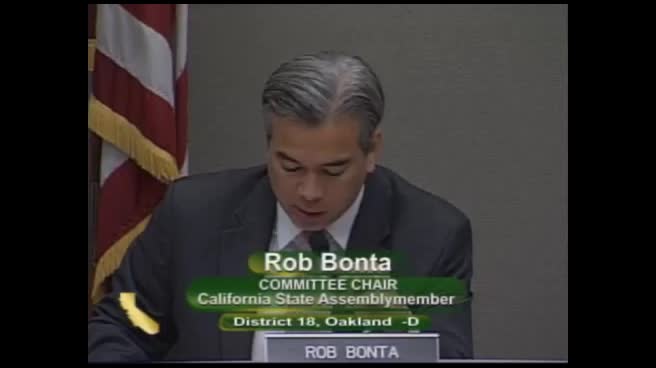 34MIN
Public Health and Developmental Services
Bill Author

Bill Co-Author(s):