AB 1455: Ontario International Airport.
- Session Year: 2015-2016
- House: Assembly
- Latest Version Date: 2015-06-30
The California Airport District Act provides for creation of airport districts having responsibility for the development of airports, spaceports, and air navigation facilities within or including the territories of one or more counties or cities.
This bill would authorize the City of Ontario to issue revenue bonds, for the purpose of financing the acquisition of the Ontario International Airport from the City of Los Angeles, that are secured solely by the revenues and charges at the Ontario International Airport. The bill would require a public agency that acquires the Ontario International Airport to comply with specified conditions relating to incumbent workers, except as provided.
The California Airport District Act provides for creation of airport districts having responsibility for the development of airports, spaceports, and air navigation facilities within or including the territories of one or more counties or cities.
This bill would authorize the City of Ontario to issue revenue bonds, for the purpose of financing the acquisition of the Ontario International Airport from the City of Los Angeles, that are secured solely by the revenues and charges at the Ontario International Airport.
The City of Ontario may issue revenue bonds for the purpose of financing the acquisition of the Ontario International Airport from the City of Los Angeles. The revenue bonds shall be secured solely by future revenues and charges from that airport.
175001.(a)For purposes of this division, the public agency that acquires the Ontario International Airport from the City of Los Angeles shall be referred to as the successor agency.
(b)The following conditions shall apply to the successor agency:
(1)The successor agency and successor contractors shall hire or retain incumbent workers who have been employed for the preceding twelve 12 months or longer by Los Angeles World Airports or contractors at the Ontario International Airport.
(2)Incumbent workers shall be retained for a period of at least ninety (90) 90 days unless there is cause to terminate their employment earlier.
(3)Incumbent workers shall be employed under the terms and conditions established by the successor agency and successor contractors, or as required by law.
(4)The successor agency and successor contractors shall maintain a preferential hiring list of incumbent workers who were not initially hired or retained.
(c)Subdivision (b) shall not apply to any of the following:
(1)A successor contractor that is a small business that operates with less fewer than ten 10 employees.
(2)Management positions.
(3)Specialized skill positions.
The City of Ontario may issue revenue bonds for the purpose of financing the acquisition of the Ontario International Airport from the City of Los Angeles. The revenue bonds shall be secured solely by future revenues and charges from that airport.
175001.(a)For purposes of this division, the public agency that acquires the Ontario International Airport from the City of Los Angeles shall be referred to as the successor agency.
(b)The following conditions shall apply to the successor agency:
(1)The successor agency and successor contractors shall hire or retain incumbent workers who have been employed for the preceding twelve months or longer by Los Angeles World Airports or contractors at the Ontario International Airport.
(2)Incumbent workers shall be retained for a period of at least ninety (90) days unless there is cause to terminate their employment earlier.
(3)Incumbent workers shall be employed under the terms and conditions established by the successor agency and successor contractors, or as required by law.
(4)The successor agency and successor contractors shall maintain a preferential hiring list of incumbent workers who were not initially hired or retained.
(c)Subdivision (b) shall not apply to any of the following:
(1)A successor contractor that is a small business that operates with less than ten employees.
(2)Management positions.
(3)Specialized skill positions.
The City of Ontario may issue revenue bonds for the purpose of financing the acquisition of the Ontario International Airport from the City of Los Angeles. The revenue bonds shall be secured solely by future revenues and charges from that airport.
175001.(a)For purposes of this division, the public agency that acquires the Ontario International Airport from the City of Los Angeles shall be referred to as the successor agency.
(b)The following conditions shall apply to the successor agency:
(1)The successor agency and successor contractors shall hire or retain incumbent workers who have been employed for the preceding twelve months or longer by Los Angeles World Airports or contractors at the Ontario International Airport.
(2)Incumbent workers shall be retained for a period of at least ninety (90) days unless there is cause to terminate their employment earlier.
(3)Incumbent workers shall be employed under the terms and conditions established by the successor agency and successor contractors, or as required by law.
(4)The successor agency and successor contractors shall maintain a preferential hiring list of incumbent workers not initially hired or retained.
(c)Subdivision (b) shall not apply to any of the following:
(1)A successor contractor that is a small business that operates with less than ten employees.
(2)Management positions.
(3)Specialized skill positions.
The City of Ontario may issue revenue bonds for the purpose of financing the acquisition of the Ontario International Airport from the City of Los Angeles. The revenue bonds shall be secured solely by future revenues and charges from that airport.
|
Date
|
Status
|
|---|---|
| Jul 8, 2015 | In committee: Set, first hearing. Hearing canceled at the request of author. |
| Jun 30, 2015 | From committee chair, with author's amendments: Amend, and re-refer to committee. Read second time, amended, and re-referred to Com. on GOV. & F. |
| Jun 4, 2015 | Referred to Com. on GOV. & F. |
| May 22, 2015 | In Senate. Read first time. To Com. on RLS. for assignment. |
| May 22, 2015 | Read third time. Passed. Ordered to the Senate. (Ayes 75. Noes 0. Page 1543.) |
| May 22, 2015 | Read third time. Passed. Ordered to the Senate. |
| May 18, 2015 | Read third time and amended. Ordered to third reading. (Page 1483.) |
| May 18, 2015 | Read third time and amended. Ordered to third reading. |
| May 12, 2015 | Read second time. Ordered to third reading. |
| May 11, 2015 | Read second time and amended. Ordered returned to second reading. |
| May 7, 2015 | From committee: Amend, and do pass as amended. (Ayes 9. Noes 0.) (May 6). |
| Apr 6, 2015 | Referred to Com. on L. GOV. |
| Mar 2, 2015 | Read first time. |
| Mar 1, 2015 | From printer. May be heard in committee March 31. |
| Feb 27, 2015 | Introduced. To print. |
|
Date
|
Description
|
Location
|
Votes
|
|
|---|---|---|---|---|
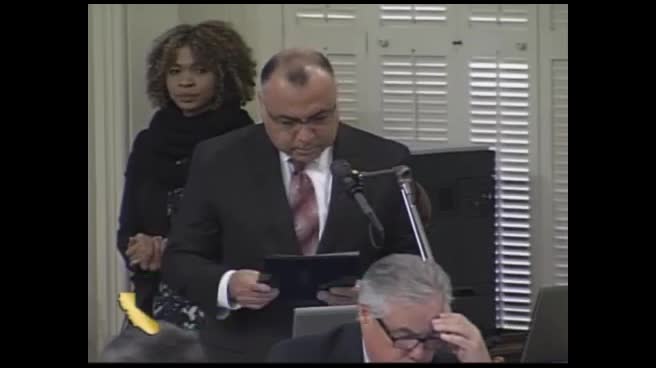
| May 22, 2015 | AB 1455 RODRIGUEZ Assembly Third Reading | Assembly Floor |
Passed |
|
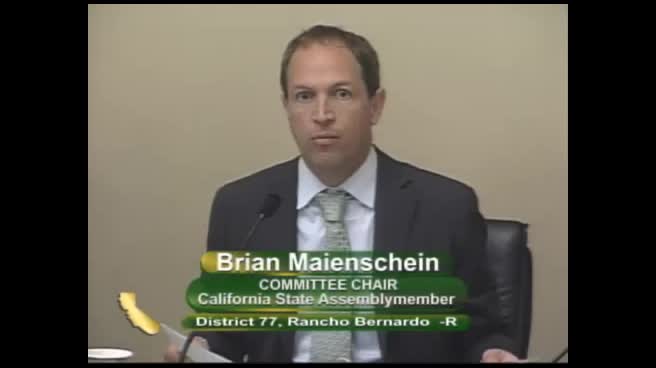
| May 6, 2015 | Do pass as amended. | Assembly Standing Committee on Local Government |
Passed |
This list shows positions taken on this bill by organizations on the date displayed, which is linked to the original source.
Positions by individuals are not included.
AB 1455 (Rodriguez) 6/30/15 Page 4 of 4
SENATE COMMITTEE ON GOVERNANCE AND FINANCE
Senator Robert M. Hertzberg, Chair
2015 - 2016 Regular
Bill No: |
AB 1455 |
Hearing Date: |
7/8/15 |
Author: |
Rodriguez |
Tax Levy: |
No |
Version: |
6/30/15 |
Fiscal: |
No |
Consultant: |
Weinberger |
||
ONTARIO INTERNATIONAL AIRPORT
Allows the City of Ontario to issue revenue bonds to pay for acquiring Ontario International Airport from the City of Los Angeles.
Background and Existing Law
The City of Los Angeles’s Board of Airport Commissioners, referred to as Los Angeles World Airports (LAWA), owns and operates Ontario International Airport (ONT), which is located in the City of Ontario in San Bernardino County. ONT is about 35 miles east of downtown Los Angeles between Interstate 10 and State Route 60, two significant regional highways. ONT was established in 1929. On October 18, 1967, Ontario and Los Angeles entered into a joint powers agreement in which they agreed that Los Angeles would operate ONT. The agreement required Los Angeles to use its best efforts to attract and obtain additional regular scheduled airline service for ONT. In 1985, the two cities agreed to transfer ownership of ONT from Ontario to Los Angeles.
In recent years, the Los Angeles World Airport Authority’s (LAWA’s) continued operation of ONT has generated disputes between the Ontario and Los Angeles. Specifically, since 2013, the City of Ontario has pursued legal claims against the City of Los Angeles alleging that LAWA’s financial and operational management of ONT has violated the terms of agreements between the two cities and has harmed ONT’s economic condition. The City of Los Angeles disputes these claims. A trial date is set for August 17 to hear the City of Ontario v. City of Los Angeles case in Riverside County Superior Court.
Aside from their ongoing legal dispute, the two cities are engaging in discussions about transferring the ownership and operations of ONT back to the City of Ontario. In anticipation of any agreement that might result from those discussions, City of Ontario officials want the Legislature to provide the city with revenue bond authority that will help to facilitate the City’s acquisition of ONT from Los Angeles.
Proposed Law
Assembly Bill 1455 allows the City of Ontario to issue revenue bonds to finance the acquisition of the Ontario International Airport from the City of Los Angeles. AB 1455 requires that the revenue bonds must be secured solely by future revenues and charges from that airport.
AB 1455 directs that the public agency that acquires the Ontario International Airport from the City of Los Angeles must be known as the successor agency and requires that:
The successor agency and successor contractors must hire or retain incumbent workers who have been employed for the preceding twelve months or longer by Los Angeles World Airports or contractors at the Ontario International Airport.
Incumbent workers must be retained for a period of at least 90 days unless there is cause to terminate their employment earlier.
Incumbent workers must be employed under the terms and conditions established by the successor agency and successor contractors, or as required by law.
The successor agency and successor contractors must maintain a preferential hiring list of incumbent workers who were not initially hired or retained.
The bill specifies that the requirements listed above do not apply to:
A successor contractor that is a small business that operates with less than ten employees.
Management positions.
Specialized skill positions.
State Revenue Impact
No estimate.
Comments
1. Purpose of the bill. In the context of ongoing discussions between Ontario and Los Angeles about transferring ownership of ONT back to Ontario, AB 1455 is a vehicle to facilitate that transfer. The bill’s proponents note that ONT is the only unconstrained commercial service airport in Southern California. Other airports in the region are constrained by noise, passenger caps or by facility and/or access constraints. Because ONT has the potential to handle far more passengers than any other airport in Southern California except for Los Angeles International Airport (LAX), its potential growth is virtually limitless. AB 1445 lays the groundwork for the City of Ontario to regain control of ONT and restore one of Southern California's most important economic and jobs engines.
2. Unnecessary? It is unclear whether AB 1455 grants the City of Ontario any revenue bond powers that are not already available to the city under existing law. The Revenue Bond Law of 1941 gives cities full authority to issue revenue bonds for the acquisition, construction, or improvement of any enterprise. The Act defines the term enterprise to include any revenue-producing improvement, building, system, plant, works, facilities, or undertaking used for or useful for public airports and appurtenant facilities. Under this statutory authority, with the approval of city voters granted at an election on September 11, 1956, the City of Ontario issued $2 million in airport revenue bonds to help pay for terminal and runway improvements at the airport, which was owned by the city at that time. Furthermore, a joint powers agreement that the City of Ontario entered into with the County of San Bernardino in 2012 to form the Ontario International Airport Authority, explicitly includes the issuance of airport revenue bonds as one of the joint powers that the two governments can exercise through that JPA. This suggests that the City already has sufficient statutory authority to issue airport revenue bonds, making AB 1455’s grant of airport revenue bond powers to the City of Ontario seem redundant.
3. Ambiguous? AB 1455 does not specifically cross-reference the Revenue Bond Law of 1941, leaving state law ambiguous about what statutes govern the bonds that would be issued by the City of Ontario to acquire ONT from the City of Los Angeles. If the bill’s purpose is to allow the City of Ontario to issue revenue bonds under rules other than those specified in the Revenue Bond Law of 1941, the Committee may wish to consider amending AB 1455 to specify exactly what rules will apply to the bonds issued by Ontario. In the absence of any specific statutory restrictions on the bonds, AB 1455’s grant of revenue bond authority could be misinterpreted. For example, without any specific guidance, it is unclear whether AB 1455 could be interpreted to allow Ontario to issue revenue bonds without the majority-voter approval that is required by the Revenue Bond Law of 1941.
4. Definition. AB 1455 imposes specified worker retention requirements on both the “successor agency,” which the bill defines as the public entity that assumes ownership of the Ontario International Airport from the City of Los Angeles, and “successor contractors.” The bill does not define a “successor contractor,” which is a phrase that is not used anywhere else in the Public Utilities Code. It is unclear whether a successor contractor means any contractor that provides services to the successor agency, regardless of whether the contractor provided the same services under contract with the City of Los Angeles. Or, successor contractor may only refer to those contractors that the successor agency engages to provide services in the place of an existing contractor. To avoid any potential ambiguity, the Committee may wish to consider amending AB 1455 to define the phrase “successor contractor.”
5. Related legislation. SB 446 (Dutton, 2012) would have established the Ontario International Airport Authority and would have authorized the Authority to enter into an agreement with the City of Los Angeles to facilitate the transfer of management and operational control of ONT from the City of Los Angeles to the Authority. SB 446 passed out of the Senate, but died in the Assembly Local Government Committee without a hearing.
6. Back to Rules. Other Senate policy committees may want to review AB 1455. If the Senate Governance & Finance Committee approves the bill on July 8, the Senate Rules Committee has directed this Committee to send the bill back to Rules for further review and possible re-referral.
Assembly Actions
Assembly Local Government Committee 9-0
Assembly Floor 75-0
Support and Opposition
(7/2/15)
Support: Air Fair; Airport Working Group of Orange County; Alliance for a Regional Solution to Airport Congestion; Brea Chamber of Commerce; California Contract Cities; Cities of Adelanto, Apple Valley, Azusa, Canyon Lake, Chino, Chino Hills, Colton, Diamond Bar, Eastvale, Glendora, Grand Terrace, Highland, Jurupa Valley, Lakewood, Montclair, Monterey Park, Newport Beach, Norco, Ontario, Palmdale, Rancho Cucamonga, Riverside, San Gabriel, Upland, Victorville, and Whittier; Corona Chamber of Commerce; El Monte/South El Monte Chamber of Commerce; Fullerton Chamber of Commerce; La Verne Chamber of Commerce; Omnitrans; North Orange County Legislative Alliance; Ontario International Airport Authority;
Ontario Professional Firefighters, Local 1430; Orange County Council of Governments; Regional Chamber of Commerce of San Gabriel Valley; San Bernardino County; San Gabriel Valley Council of Governments; San Gabriel Valley Economic Partnership; SEIU California; SEIU United Service Workers West; Southwest California Legislative Council; Western Riverside Council of Governments.
Opposition: Unknown.
-- END --
AB 1455
Page 4
ASSEMBLY THIRD READING
AB 1455
(Rodriguez and Gomez)
As Amended May 18, 2015
Majority vote
Committee |
Votes |
Ayes |
Noes |
Local Government |
9-0 |
Maienschein, Gonzalez, Alejo, Chiu, Cooley, Gordon, Holden, Linder, Waldron |
|
SUMMARY: Allows the City of Ontario to issue revenue bonds for the purpose of financing the acquisition of the Ontario International Airport from the City of Los Angeles, and places specified worker retention provisions on the successor agency that acquires the Ontario Airport. Specifically, this bill:
Allows the City of Ontario to issue revenue bonds for the purpose of financing the acquisition of the Ontario International Airport from the City of Los Angeles.
Specifies that the revenue bonds shall be secured solely by future revenues and charges from that airport.
Requires the public agency that acquires Ontario International Airport from the City of Los Angeles to be referred to as the "successor agency," and requires the following conditions to apply to the successor agency:
The successor agency and successor contractors shall hire or retain incumbent workers who have been employed for the preceding 12 months or longer by Los Angeles World Airports or contractors at the Ontario International Airport;
Incumbent workers shall be retained for a period of at least 90 days unless there is cause to terminate their employment earlier;
Incumbent workers shall be employed under the terms and conditions established by the successor agency and successor contractors, or as required by law; and,
The successor agency and successor contractors shall maintain a preferential hiring list of incumbent workers who were not initially hired or retained.
Specifies that 3), above, shall not apply to any of the following:
A successor contractor that is a small business that operates with less than 10 employees;
Management positions; and,
Specialized skill positions.
EXISTING LAW:
Allows local agencies to issue bonds for the acquisition, construction, or improvement of any enterprise pursuant to the Revenue Bond Law of 1941.
Defines "local agency" to mean any city, county, city and county, or any municipal or public corporation or district, which is authorized to acquire, construct, own, or operate any enterprise, as defined in the Revenue Bond Law of 1941.
Defines "enterprise" to mean a revenue-producing improvement, building, system, plant, works, facilities, or undertaking used for or useful for any of the following purposes:
The obtaining, conserving, treating and supplying of water for domestic use, irrigation, sanitation, industrial use, fire protection, recreation, or any other public or private uses;
The collection, treatment or disposal of garbage or refuse matter;
The collection, treatment or disposal of sewage, waste or storm water, including drainage;
The providing of public parking lots, garages, or other automotive or vehicular parking facilities, including any and all public off-street vehicular parking facilities;
The providing of public transportation by means of a ferry or ferry system;
The providing of public airports and facilities appurtenant thereto;
The providing of harbors, including without limitation public small boat harbors, and facilities and improvements in connection therewith;
The providing of hospitals and facilities appurtenant thereto;
The providing of public golf courses, and facilities and improvements in connection therewith; and,
The generation, production, or transmission of electric energy for lighting, hearing, and power for public or private uses.
FISCAL EFFECT: None
COMMENTS:
Bill Summary. This bill allows the City of Ontario to issue revenue bonds for the purpose of financing the acquisition of the Ontario International Airport from the City of Los Angeles, and places specified worker retention provisions on the successor agency that acquires Ontario Airport.
This bill is sponsored by the City of Ontario and the Ontario International Airport Authority.
Background. In 1929, the City of Ontario purchased a 30-acre tract in the southwest corner of the present airport for $12,000 and ran an airfield known as the Ontario Municipal Airport. In 1941, the City of Ontario purchased 470 acres surrounding the airport and approved construction of new runways. In 1949, commercial service began at Ontario International Airport and in 1951, a 10,880-square-foot terminal building was constructed. In 1967, the Los Angeles City Department of Airports co-signed a joint powers agreement with the City of Ontario and the airport became part of the Los Angeles' regional airport system. Over the years, the airport continued to purchase more land and expand terminal space; by 1978 the passage volume was two million. In 1985, the official transfer of title from City of Ontario to the City of Los Angeles occurred. By 1998, a new terminal was in construction and passage volume was over six million. In 2005, passenger volume at the airport peaked at seven million, but by 2010, passage volume had declined and stabilized to about 4.8 million passengers annually traveling through the Los Angeles/Ontario International Airport (ONT).
Author's Statement. According to the author, "AB 1455 was introduced to transfer ONT from the City of Los Angeles back to the City of Ontario. Ontario and Los Angeles have been in discussions about transferring the sponsorship of the airport back to Ontario. AB 1445 is the vehicle to facilitate that transfer.
"[ONT] is the only unconstrained commercial service airport in Southern California. Other airports in the region are constrained by noise, passenger caps or by facility and/or access constraints. It has the potential to handle far more passengers than any other airport in Southern California except for Los Angeles International Airport (LAX). As such, its potential growth is virtually limitless.
"In 1967, the City of Los Angeles and the City of Ontario entered into a Joint Powers Agreement (JPA), that allowed Los Angeles to become the airport operator. An Acquisition Agreement was signed by the cities in 1985, and Los Angeles paid $58,329 for the transfer.
"When the Ontario Airport was transferred to LA [Los Angeles], the passenger traffic count was 3.7 million. In 1999, the first year that the new terminals were open, passenger traffic was 6.6 million, peaking in 2007 to 7.2 million. Since that time, passenger service has decreased to less than 4 million. Ontario and Los Angeles are in negotiations to transfer the airport back. In 2012, the City of Ontario and the County of San Bernardino created the Ontario International Airport Authority to receive and manage the operations of the Ontario Airport."
Revenue Bonds. According to the California Debt Investment and Advisory Commission's (CDIAC) Debt Primer, revenue bonds are long-term debt instruments retired by specific dedicated revenues, often revenues generated by a project funded out of bond proceeds. Revenue bonds are designed to be self-supporting through user fees or other special earmarked receipts; the general taxing powers of the jurisdiction are not pledged. The debt created through the issuance of revenue bonds is to be repaid by the earnings from the operations of a revenue-producing enterprise (an enterprise revenue bond), from special taxes (a special revenue bond), or from contract leases or rental agreements (a lease revenue bond).
Previous Legislation. SB 446 (Dutton) of 2012 would have established the Ontario International Airport Authority and would have authorized the Authority to enter into an agreement with the City of Los Angeles to facilitate the transfer of management and operational control of ONT from the City of Los Angeles to the Authority. SB 446 passed out of the Senate, and was referred to the Assembly Local Government Committee, but was never heard.
Policy Considerations. The Legislature may wish to consider the following:
Bond Issuance Process. This bill does not specify any details about how the City of Ontario will issue revenue bonds or the public process in order to do so.
Revenue Bond Law of 1941. The Revenue Bond Law of 1941 (Government Code Title 5, Division 2, Part 1, Chapter 6) allows specified local agencies to issue revenue bonds for the acquisition, construction, or improvement of any enterprise pursuant to the procedures specified in that Chapter. For purposes of the Revenue Bond Law, local agency is defined as a "city, county, city and county, or any municipal or public corporation or district which is authorized to acquire, construct, own, or operate any 'enterprise,'" as defined). "Enterprise" is defined to mean a revenue-producing improvement, building, system, plant, works, facilities, or undertaking used for or useful for specified purposes, including "the providing of public airports and facilities appurtenant thereto."
The Legislature may wish to consider whether the existing Revenue Bond Law of 1941 would allow the City of Ontario to issue bonds without the need for legislation.
Local Fight. The transfer of the Ontario Airport is an issue that has yet to be solved locally, although discussions are ongoing. The Legislature may wish to ask the author for an update on where those negotiations stand, and whether a better approach might be to let those negotiations continue, and if legislation is necessary in the future to implement an agreement, getting the Legislature involved then, rather than the Legislature picking winners and losers in what is a local, regional fight.
Arguments in Support. Supporters argue that this bill would establish local control for Ontario International Airport and restore one of Southern California's most important economic and jobs engines.
Arguments in Opposition. None on file.
Analysis Prepared by: Debbie Michel / L. GOV. / (916) 319-3958 FN: 0000441
AB 1455
Page 4
ASSEMBLY THIRD READING
AB 1455
(Rodriguez and Gomez)
As Amended May 11, 2015
Majority vote
Committee |
Votes |
Ayes |
Noes |
Local Government |
9-0 |
Maienschein, Gonzalez, Alejo, Chiu, Cooley, Gordon, Holden, Linder, Waldron |
|
SUMMARY: Allows the City of Ontario to issue revenue bonds for the purpose of financing the acquisition of the Ontario International Airport from the City of Los Angeles, and places specified worker retention provisions on the successor agency that acquires the Ontario Airport. Specifically, this bill:
Allows the City of Ontario to issue revenue bonds for the purpose of financing the acquisition of the Ontario International Airport from the City of Los Angeles.
Specifies that the revenue bonds shall be secured solely by future revenues and charges from that airport.
Requires the public agency that acquires Ontario International Airport from the City of Los Angeles to be referred to as the "successor agency," and requires the following conditions to apply to the successor agency:
The successor agency and successor contractors shall hire or retain incumbent workers who have been employed for the preceding 12 months or longer by Los Angeles World Airports or contractors at the Ontario International Airport;
Incumbent workers shall be retained for a period of at least 90 days unless there is cause to terminate their employment earlier;
Incumbent workers shall be employed under the terms and conditions established by the successor agency and successor contractors, or as required by law; and,
The successor agency and successor contractors shall maintain a preferential hiring list of incumbent workers not initially hired or retained.
Specifies that 3) above, shall not apply to any of the following:
A successor contractor that is a small business that operates with less than 10 employees;
Management positions; and,
Specialized skill positions.
EXISTING LAW:
Allows local agencies to issue bonds for the acquisition, construction, or improvement of any enterprise pursuant to the Revenue Bond Law of 1941.
Defines "local agency" to mean any city, county, city and county, or any municipal or public corporation or district, which is authorized to acquire, construct, own, or operate any enterprise, as defined in the Revenue Bond Law of 1941.
Defines "enterprise" to mean a revenue-producing improvement, building, system, plant, works, facilities, or undertaking used for or useful for any of the following purposes:
The obtaining, conserving, treating and supplying of water for domestic use, irrigation, sanitation, industrial use, fire protection, recreation, or any other public or private uses;
The collection, treatment or disposal of garbage or refuse matter;
The collection, treatment or disposal of sewage, waste or storm water, including drainage;
The providing of public parking lots, garages, or other automotive or vehicular parking facilities, including any and all public off-street vehicular parking facilities;
The providing of public transportation by means of a ferry or ferry system;
The providing of public airports and facilities appurtenant thereto;
The providing of harbors, including without limitation public small boat harbors, and facilities and improvements in connection therewith;
The providing of hospitals and facilities appurtenant thereto;
The providing of public golf courses, and facilities and improvements in connection therewith; and,
The generation, production, or transmission of electric energy for lighting, hearing, and power for public or private uses.
FISCAL EFFECT: None
COMMENTS:
Bill Summary. This bill allows the City of Ontario to issue revenue bonds for the purpose of financing the acquisition of the Ontario International Airport from the City of Los Angeles, and places specified worker retention provisions on the successor agency that acquires Ontario Airport.
This bill is sponsored by the City of Ontario and the Ontario International Airport Authority.
Background. In 1929, the City of Ontario purchased a 30-acre tract in the southwest corner of the present airport for $12,000 and ran an airfield known as the Ontario Municipal Airport. In 1941, the City of Ontario purchased 470 acres surrounding the airport and approved construction of new runways. In 1949, commercial service began at Ontario International Airport and in 1951, a 10,880-square-foot terminal building was constructed. In 1967, the Los Angeles City Department of Airports co-signed a joint powers agreement with the City of Ontario and the airport became part of the Los Angeles' regional airport system. Over the years, the airport continued to purchase more land and expand terminal space; by 1978 the passage volume was two million. In 1985, the official transfer of title from City of Ontario to the City of Los Angeles occurred. By 1998, a new terminal was in construction and passage volume was over six million. In 2005, passenger volume at the airport peaked at seven million, but by 2010, passage volume had declined and stabilized to about 4.8 million passengers annually traveling through the LA/Ontario International Airport (ONT).
Author's Statement. According to the author, "AB 1455 was introduced to transfer ONT from the City of Los Angeles back to the City of Ontario. Ontario and Los Angeles have been in discussions about transferring the sponsorship of the airport back to Ontario. AB 1445 is the vehicle to facilitate that transfer.
"[ONT] is the only unconstrained commercial service airport in Southern California. Other airports in the region are constrained by noise, passenger caps or by facility and/or access constraints. It has the potential to handle far more passengers than any other airport in Southern California except for Los Angeles International Airport (LAX). As such, its potential growth is virtually limitless.
"In 1967, the City of Los Angeles and the City of Ontario entered into a Joint Powers Agreement (JPA), that allowed Los Angeles to become the airport operator. An Acquisition Agreement was signed by the cities in 1985, and Los Angeles paid $58,329 for the transfer.
"When the Ontario Airport was transferred to LA [Los Angeles], the passenger traffic count was 3.7 million. In 1999, the first year that the new terminals were open, passenger traffic was 6.6 million, peaking in 2007 to 7.2 million. Since that time, passenger service has decreased to less than 4 million. Ontario and Los Angeles are in negotiations to transfer the airport back. In 2012, the City of Ontario and the County of San Bernardino created the Ontario International Airport Authority to receive and manage the operations of the Ontario Airport."
Revenue Bonds. According to the California Debt Investment and Advisory Commission's (CDIAC) Debt Primer, revenue bonds are long-term debt instruments retired by specific dedicated revenues, often revenues generated by a project funded out of bond proceeds. Revenue bonds are designed to be self-supporting through user fees or other special earmarked receipts; the general taxing powers of the jurisdiction are not pledged. The debt created through the issuance of revenue bonds is to be repaid by the earnings from the operations of a revenue-producing enterprise (an enterprise revenue bond), from special taxes (a special revenue bond), or from contract leases or rental agreements (a lease revenue bond).
Previous Legislation. SB 446 (Dutton) of the 2011-12 Regular Session, would have established the Ontario International Airport Authority and would have authorized the Authority to enter into an agreement with the City of Los Angeles to facilitate the transfer of management and operational control of ONT from the City of Los Angeles to the Authority. SB 446 passed out of the Senate, and was referred to the Assembly Local Government Committee, but was never heard.
Policy Considerations. The Legislature may wish to consider the following:
Bond Issuance Process. This bill does not specify any details about how the City of Ontario will issue revenue bonds or the public process in order to do so.
Revenue Bond Law of 1941. The Revenue Bond Law of 1941 (Chapter 6, of Part 1, of Division 2, of Title 5 of the Government Code) allows specified local agencies to issue revenue bonds for the acquisition, construction, or improvement of any enterprise pursuant to the procedures specified in that Chapter. For purposes of the Revenue Bond Law, local agency is defined as a "city, county, city and county, or any municipal or public corporation or district which is authorized to acquire, construct, own, or operate any 'enterprise,'" as defined). "Enterprise" is defined to mean a revenue-producing improvement, building, system, plant, works, facilities, or undertaking used for or useful for specified purposes, including "the providing of public airports and facilities appurtenant thereto."
The Legislature may wish to consider whether the existing Revenue Bond Law of 1941 would allow the City of Ontario to issue bonds without the need for legislation.
Local Fight. The transfer of the Ontario Airport is an issue that has yet to be solved locally, although discussions are ongoing. The Legislature may wish to ask the author for an update on where those negotiations stand, and whether a better approach might be to let those negotiations continue, and if legislation is necessary in the future to implement an agreement, getting the Legislature involved then, rather than the Legislature picking winners and losers in what is a local, regional fight.
Arguments in Support. Supporters argue that this bill would establish local control for Ontario International Airport and restore one of Southern California's most important economic and jobs engines.
Arguments in Opposition. None on file.
Analysis Prepared by: Debbie Michel / L. GOV. / (916) 319-3958 FN: 0000372
AB 1455
Page 4
Date of Hearing: May 6, 2015
ASSEMBLY COMMITTEE ON LOCAL GOVERNMENT
Brian Maienschein, Chair
AB 1455
(Rodriguez and Gomez) – As Introduced February 27, 2015
SUBJECT: Ontario International Airport.
SUMMARY: Allows the City of Ontario to issue revenue bonds for the purpose of financing the acquisition of the Ontario International Airport from the City of Los Angeles, and specifies that the revenue bonds shall be secured solely by future revenues and charges from that airport.
EXISTING LAW:
Allows local agencies to issue bonds for the acquisition, construction, or improvement of any enterprise pursuant to the Revenue Bond Law of 1941.
Defines "local agency" to mean any city, county, city and county, or any municipal or public corporation or district, which is authorized to acquire, construct, own, or operate any enterprise, as defined in the Revenue Bond Law of 1941.
Defines "enterprise" to mean a revenue-producing improvement, building, system, plant, works, facilities, or undertaking used for or useful for any of the following purposes:
The obtaining, conserving, treating and supplying of water for domestic use, irrigation, sanitation, industrial use, fire protection, recreation, or any other public or private uses;
The collection, treatment or disposal of garbage or refuse matter;
The collection, treatment or disposal of sewage, waste or storm water, including drainage;
The providing of public parking lots, garages, or other automotive or vehicular parking facilities, including any and all public offstreet vehicular parking facilities;
The providing of public transportation by means of a ferry or ferry system;
The providing of public airports and facilities appurtenant thereto;
The providing of harbors, including without limitation public small boat harbors, and facilities and improvements in connection therewith;
The providing of hospitals and facilities appurtenant thereto;
The providing of public golf courses, and facilities and improvements in connection therewith; and,
The generation, production, or transmission of electric energy for lighting, hearing, and power for public or private uses.
FISCAL EFFECT: None
COMMENTS:
Bill Summary. This bill allows the City of Ontario to issue revenue bonds for the purpose
of financing the acquisition of the Ontario International Airport from the City of Los Angeles, and specifies that the revenue bonds must be secured solely by future revenues and charges from that airport.
This bill is sponsored by the City of Ontario and the Ontario International Airport Authority.
Background. In 1929, the City of Ontario purchased a 30-acre tract in the southwest corner of the present airport for $12,000 and ran an airfield known as the Ontario Municipal Airport. In 1941, the City of Ontario purchased 470 acres surrounding the airport and approved construction of new runways. In 1949, commercial service began at Ontario International Airport and in 1951, a 10,880-square-foot terminal building was constructed. In 1967, the Los Angeles City Department of Airports co-signed a joint powers agreement with the City of Ontario and the airport became part of the Los Angeles' regional airport system. Over the years, the airport continued to purchase more land and expand terminal space; by 1978 the passage volume was two million. In 1985, the official transfer of title from City of Ontario to the City of Los Angeles occurred. By 1998, a new terminal was in construction and passage volume was over six million. In 2005, passenger volume at the airport peaked at seven million, but by 2010, passage volume had declined and stabilized to about 4.8 million passengers annually traveling through the LA/Ontario International Airport (ONT).
Author's Statement. According to the author, "AB 1455 was introduced to transfer ONT from the City of Los Angeles back to the City of Ontario. Ontario and Los Angeles have been in discussions about transferring the sponsorship of the airport back to Ontario.
AB 1445 is the vehicle to facilitate that transfer.
"[ONT] is the only unconstrained commercial service airport in Southern California. Other airports in the region are constrained by noise, passenger caps or by facility and/or access constraints. It has the potential to handle far more passengers than any other airport in Southern California except for Los Angeles International Airport (LAX). As such, its potential growth is virtually limitless.
"In 1967, the City of Los Angeles and the City of Ontario entered into a Joint Powers Agreement (JPA), that allowed Los Angeles to become the airport operator. An Acquisition Agreement was signed by the cities in 1985, and Los Angeles paid $58,329 for the transfer.
"When the Ontario Airport was transferred to LA, the passenger traffic count was 3.7 million. In 1999, the first year that the new terminals were open, passenger traffic was 6.6 million, peaking in 2007 to 7.2 million. Since that time, passenger service has decreased to less than 4 million. Ontario and Los Angeles are in negotiations to transfer the airport back. In 2012, the City of Ontario and the County of San Bernardino created the Ontario International Airport Authority to receive and manage the operations of the Ontario Airport."
Revenue Bonds. According to the California Debt Investment and Advisory Commission's (CDIAC) Debt Primer, revenue bonds are long-term debt instruments retired by specific dedicated revenues, often revenues generated by a project funded out of bond proceeds. Revenue bonds are designed to be self-supporting through user fees or other special earmarked receipts; the general taxing powers of the jurisdiction are not pledged. The debt created through the issuance of revenue bonds is to be repaid by the earnings from the operations of a revenue-producing enterprise (an enterprise revenue bond), from special taxes (a special revenue bond), or from contract leases or rental agreements (a lease revenue bond).
Previous Legislation. SB 446 (Dutton) of 2012 would have established the Ontario International Airport Authority and would have authorized the Authority to enter into an agreement with the City of Los Angeles to facilitate the transfer of management and operational control of ONT from the City of Los Angeles to the Authority. SB 446 passed out of the Senate, and was referred to the Assembly Local Government Committee, but was never heard.
Policy Considerations. The Committee may wish to consider the following:
Bond Issuance Process. The bill does not specify any details about how the City of Ontario will issue revenue bonds or the public process in order to do so.
Revenue Bond Law of 1941. The Revenue Bond Law of 1941 (Chapter 6, of Part 1, of Division 2, of Title 5 of the Government Code) allows specified local agencies to issue revenue bonds for the acquisition, construction, or improvement of any enterprise pursuant to the procedures specified in that Chapter. For purposes of the Revenue Bond Law, local agency is defined as a "city, county, city and county, or any municipal or public corporation or district which is authorized to acquire, construct, own, or operate any "enterprise,"" as defined). "Enterprise" is defined to mean a revenue-producing improvement, building, system, plant, works, facilities, or undertaking used for or useful for specified purposes, including "the providing of public airports and facilities appurtenant thereto."
The Committee may wish to consider whether the existing Revenue Bond Law of 1941 would allow the City of Ontario to issue bonds without the need for legislation.
Local Fight. The transfer of the Ontario Airport is an issue that has yet to be solved locally, although discussions are ongoing. The Committee may wish to ask the author for an update on where those negotiations stand, and whether a better approach might be to let those negotiations continue, and if legislation is necessary in the future to implement an agreement, getting the Legislature involved then, rather than the Legislature picking winners and losers in what is a local, regional fight.
Arguments in Support. Supporters argue that this bill would establish local control for Ontario International Airport and restore one of Southern California's most important economic and jobs engines.
Arguments in Opposition. None on file.
REGISTERED SUPPORT / OPPOSITION:
Support
City of Ontario [CO-SPONSOR]
Ontario International Airport Authority [CO-SPONSOR]
Air Fair
Airport Working Group of Orange County
Alliance for a Regional Solution to Airport Congestion
Brea Chamber of Commerce
California Contract Cities
Cities of: Adelanto, Canyon Lake, Chino, Chino Hills, Colton, Diamond Bar, Eastvale, Fontana, Glendora, Grand Terrace, Highland, Jurupa Valley, Lakewood, Montclair, Monterey Park, Newport Beach, Norco, Palmdale, Rancho Cucamonga, Riverside, San Gabriel, Upland, Victorville, and Whittier
Corona Chamber of Commerce
County of San Bernardino (In Concept)
El Monte / South El Monte Chamber of Commerce
Fullerton Chamber of Commerce
LaVerne Chamber of Commerce
North Orange County Legislative Alliance
OmniTrans
Ontario Professional Firefighters, Local #1430
Orange County Council of Governments
San Bernardino County
San Gabriel Valley Council of Governments
San Gabriel Valley Economic Partnership
San Gabriel Valley Regional Chamber of Commerce
Service Employees International Union – United Service Workers West
Southwest California Legislative Council
Town of Apple Valley
Western Riverside Council of Governments
Opposition
None on file
Analysis Prepared by: Debbie Michel / L. GOV. / (916) 319-3958
Discussed in Hearing
 1MIN
Assembly Floor
 45SEC
Assembly Floor
 13MIN
Assembly Standing Committee on Local Government


Bill Co-Author(s):