SBX2 7: Tobacco products: minimum legal age.
- Session Year: 2015-2016
- House: Senate
- Latest Version Date: 2016-05-04
Existing law, the Stop Tobacco Access to Kids Enforcement (STAKE) Act, establishes various requirements for distributors and retailers relating to tobacco sales to minors. Existing law prohibits the furnishing of tobacco products to, and the purchase of tobacco products by, a person under 18 years of age. Under existing law, a person is prohibited from making various promotional or advertising offers of smokeless tobacco products without taking actions to ensure that the product is not available to persons under 18 years of age. Existing law also requires the State Department of Public Health to conduct random, onsite sting inspections of tobacco product retailers with the assistance of persons under 18 years of age.
Existing law, the STAKE Act, authorizes an enforcing agency to assess civil penalties against any person, firm, or corporation that sells, gives, or in any way furnishes to another person who is under 18 years of age, any tobacco, cigarette, cigarette papers, any other instrument or paraphernalia that is designed for the smoking or ingestion of tobacco, products prepared from tobacco, or any controlled substance, according to a specified schedule. Existing law also makes every person, firm, or corporation that knowingly or under circumstances in which it has knowledge, or should otherwise have grounds for knowledge, sells, gives, or in any way furnishes to another person who is under 18 years of age any tobacco, cigarette, cigarette papers, blunts wraps, or any other preparation of tobacco, or any other instrument or paraphernalia that is designed for the smoking or ingestion of tobacco, products prepared from tobacco, or any controlled substance, subject to either a criminal action for a misdemeanor or to a civil action brought by a city attorney, a county counsel, or a district attorney, punishable by a fine, as specified.
This bill would extend the applicability of those provisions to persons under 21 years of age. The bill would authorize the State Department of Public Health to conduct random, onsite sting inspections of tobacco product retailers with the assistance of persons under 21 years of age.
The bill would also provide that the STAKE Act does not invalidate existing local government ordinances or prohibit the adoption of local government ordinances requiring a more restrictive legal age to purchase or possess tobacco products.
This bill would make the civil and criminal penalties described above inapplicable if the person being furnished the product is active duty military personnel who is 18 years of age or older, as confirmed by a military identification card.
Existing law makes it a crime, punishable by a fine of $75 or 30 hours of community service work, for a person under 18 years of age to purchase, receive, or possess certain tobacco products. Existing law requires 25% of certain fines to be paid to the city or county for the administration and cost of that community service work component. Existing law immunizes a person under 18 years of age from prosecution for those actions when they were taken while participating in specified enforcement activities.
This bill would delete those provisions.
This bill would incorporate additional changes to Section 22958 of the Business and Professions Code and Section 308 of the Penal Code proposed by SB 5 and AB 6 of the 201516 2nd Extraordinary Session of the Legislature. Those other bills would include an electronic device that delivers nicotine or other vaporized liquids in the definition of a tobacco product. If this bill and those bills are enacted, as specified, and this bill is enacted last, then this bill would prohibit selling, advertising, or furnishing an electronic device that delivers nicotine or other vaporized liquids, as specified, to persons under 21 years of age.
By expanding the scope of existing crimes, the bill would impose a state-mandated local program.
The California Constitution requires the state to reimburse local agencies and school districts for certain costs mandated by the state. Statutory provisions establish procedures for making that reimbursement.
This bill would provide that no reimbursement is required by this act for a specified reason.
Existing law, the Stop Tobacco Access to Kids Enforcement (STAKE) Act, establishes various requirements for distributors and retailers relating to tobacco sales to minors. Existing law prohibits the furnishing of tobacco products to, and the purchase of tobacco products by, a person under 18 years of age. Under existing law, a person is prohibited from making various promotional or advertising offers of smokeless tobacco products without taking actions to ensure that the product is not available to persons under 18 years of age. Existing law also requires the State Department of Public Health to conduct random, onsite sting inspections of tobacco product retailers with the assistance of persons under 18 years of age.
Existing law, the STAKE Act, authorizes an enforcing agency to assess civil penalties against any person, firm, or corporation that sells, gives, or in any way furnishes to another person who is under 18 years of age, any tobacco, cigarette, cigarette papers, any other instrument or paraphernalia that is designed for the smoking or ingestion of tobacco, products prepared from tobacco, or any controlled substance, according to a specified schedule. Existing law also makes every person, firm, or corporation that knowingly or under circumstances in which it has knowledge, or should otherwise have grounds for knowledge, sells, gives, or in any way furnishes to another person who is under 18 years of age any tobacco, cigarette, cigarette papers, blunts wraps, or any other preparation of tobacco, or any other instrument or paraphernalia that is designed for the smoking or ingestion of tobacco, products prepared from tobacco, or any controlled substance, subject to either a criminal action for a misdemeanor or to a civil action brought by a city attorney, a county counsel, or a district attorney, punishable by a fine, as specified.
This bill would extend the applicability of those provisions to persons under 21 years of age. The bill would authorize the State Department of Public Health to conduct random, onsite sting inspections of tobacco product retailers with the assistance of persons under 21 years of age.
The bill would also provide that the STAKE Act does not invalidate existing local government ordinances or prohibit the adoption of local government ordinances requiring a more restrictive legal age to purchase or possess tobacco products.
This bill would make the civil and criminal penalties described above inapplicable if the person being furnished the product is active duty military personnel who is 18 years of age or older, as confirmed by a military identification card.
Existing law makes it a crime, punishable by a fine of $75 or 30 hours of community service work, for a person under 18 years of age to purchase, receive, or possess certain tobacco products. Existing law requires 25% of certain fines to be paid to the city or county for the administration and cost of that community service work component. Existing law immunizes a person under 18 years of age from prosecution for those actions when they were taken while participating in specified enforcement activities.
This bill would delete those provisions.
This bill would incorporate additional changes to Section 22958 of the Business and Professions Code and Section 308 of the Penal Code proposed by SB 5 and AB 6 in the 2nd Extraordinary Session of the 201516 Legislative Session. Those other bills would include an electronic device that delivers nicotine or other vaporized liquids in the definition of a tobacco product. If this bill and those bills are enacted, as specified, and this bill is enacted last, then this bill would prohibit selling, advertising, or furnishing an electronic device that delivers nicotine or other vaporized liquids, as specified, to persons under 21 years of age.
By expanding the scope of existing crimes, the bill would impose a state-mandated local program.
The California Constitution requires the state to reimburse local agencies and school districts for certain costs mandated by the state. Statutory provisions establish procedures for making that reimbursement.
This bill would provide that no reimbursement is required by this act for a specified reason.
Existing law, the Stop Tobacco Access to Kids Enforcement (STAKE) Act, establishes various requirements for distributors and retailers relating to tobacco sales to minors. Existing law prohibits the furnishing of tobacco products to, and the purchase of tobacco products by, a person under 18 years of age. Under existing law, a person is prohibited from making various promotional or advertising offers of smokeless tobacco products without taking actions to ensure that the product is not available to persons under 18 years of age. Existing law also requires the State Department of Public Health to conduct random, onsite sting inspections of tobacco product retailers with the assistance of persons under 18 years of age.
This bill would extend the applicability of those provisions to persons under 21 years of age. The bill would authorize the State Department of Public Health to conduct random, onsite sting inspections of tobacco product retailers with the assistance of persons under 21 years of age.
The bill would also provide that the STAKE Act does not invalidate existing local government ordinances or prohibit the adoption of local government ordinances requiring a more restrictive legal age to purchase or possess tobacco products.
By expanding the scope of existing crimes, the bill would impose a state-mandated local program.
The California Constitution requires the state to reimburse local agencies and school districts for certain costs mandated by the state. Statutory provisions establish procedures for making that reimbursement.
This bill would provide that no reimbursement is required by this act for a specified reason.
The following acts are prohibited:
(a)For any person to offer as part of an advertising plan or program, promotional offers of smokeless tobacco products which require proof of purchase of a smokeless tobacco product unless it carries a designation that the offer is not available to persons under 21 years of age. Each promotional offer shall include in any mail-in coupon a statement requesting purchasers to verify that the purchaser is 21 years of age or older.
(b)For any person to honor mail-in and telephone requests for promotional offers of smokeless tobacco products unless appropriate efforts are made to ascertain that a purchaser is over 21 years of age. For purposes of this subdivision, appropriate efforts to ascertain the age of a purchaser includes, but is not limited to, requests for a purchasers birth date.
(c)For any person by any means, as part of an advertising plan or program, to distribute free samples of smokeless tobacco products within a two-block radius of any premises or facilities whose primary purpose is directed toward persons under 21 years of age including, but not limited to, schools, clubhouses, and youth centers, when those premises are being used for their primary purposes.
(d)For any person to distribute, as part of any advertising plan or program, unsolicited samples of smokeless tobacco products through a mail campaign.
SEC. 2.Section 22951 of the Business and Professions Code is amended to read:22951.The Legislature finds and declares that reducing and eventually eliminating the illegal purchase and consumption of tobacco products by any person under 21 years of age is critical to ensuring the long-term health of our states citizens. Accordingly, California must fully comply with federal regulations, particularly the Synar Amendment, that restrict tobacco sales to minors and require states to vigorously enforce their laws prohibiting the sale and distribution of tobacco products to persons under 18 years of age. Full compliance and vigorous enforcement of the Synar Amendment requires the collaboration of multiple state and local agencies that license, inspect, or otherwise conduct business with retailers, distributors, or wholesalers that sell tobacco.
SEC. 3.Section 22952 of the Business and Professions Code is amended to read:22952.The State Department of Public Health shall do all of the following:
(a)Establish and develop a program to reduce the availability of tobacco products to persons under 21 years of age through the enforcement activities authorized by this division.
(b)Establish requirements that retailers of tobacco products post conspicuously, at each point of purchase, a notice stating that selling tobacco products to anyone under 21 years of age is illegal and subject to penalties. The notice shall also state that the law requires that all persons selling tobacco products check the identification of a purchaser of tobacco products who reasonably appears to be under 21 years of age. The warning signs shall include a toll-free telephone number to the department for persons to report unlawful sales of tobacco products to any person under 21 years of age.
(c)Provide that primary responsibility for enforcement of this division shall be with the department. In carrying out its enforcement responsibilities, the department shall conduct random, onsite sting inspections at retail sites and shall enlist the assistance of persons that are under 21 years of age in conducting these enforcement activities. The department may conduct onsite sting inspections in response to public complaints or at retail sites where violations have previously occurred, and investigate illegal sales of tobacco products to any person under 21 years of age by telephone, mail, or the Internet. A person under 21 years of age who participates in these enforcement activities is immune from prosecution under any provision of law prohibiting the purchase of these products by a person under 21 years of age.
(d)In accordance with Chapter 3.5 (commencing with Section 11340) of Part 1 of Division 3 of Title 2 of the Government Code, the department shall adopt and publish guidelines for the use of persons under 21 years of age in inspections conducted pursuant to subdivision (c) that shall include, but not be limited to, all of the following:
(1)An enforcing agency may use persons under 21 years of age in random inspections to determine if sales of cigarettes or other tobacco products are being made to persons under 21 years of age.
(2)A photograph or video recording of the person under 21 years of age shall be taken prior to each inspection or shift of inspections and retained by the enforcing agency for purposes of verifying appearances.
(3)An enforcing agency may use video recording equipment when conducting the inspections to record and document illegal sales or attempted sales.
(4)The person under 21 years of age, if questioned about his or her age, need not state his or her actual age but shall present a true and correct identification if verbally asked to present it. Any failure on the part of the person under 21 years of age to provide true and correct identification, if verbally asked for it, shall be a defense to an action pursuant to this section.
(5)The person under 21 years of age shall be under the supervision of a regularly employed peace officer during the inspection.
(6)All persons under 21 years of age used in this manner by an enforcing agency shall display the appearance of a person under 21 years of age. It shall be a defense to an action under this division that the persons appearance was not that which could be generally expected of a person under 21 years of age, under the actual circumstances presented to the seller of the cigarettes or other tobacco products at the time of the alleged offense.
(7)Following the completion of the sale, the peace officer accompanying the person under 21 years of age shall reenter the retail establishment and shall inform the seller of the random inspection. Following an attempted sale, the enforcing agency shall notify the retail establishment of the inspection.
(8)Failure to comply with the procedures set forth in this subdivision shall be a defense to an action brought pursuant to this section.
(e)Be responsible for ensuring and reporting the states compliance with Section 1926 of Title XIX of the federal Public Health Service Act (42 U.S.C. Sec. 300x-26) and any implementing regulations adopted in relation thereto by the United States Department of Health and Human Services. A copy of this report shall be made available to the Governor and the Legislature.
(f)Provide that any civil penalties imposed pursuant to Section 22958 shall be enforced against the owner or owners of the retail business and not the employees of the business.
SEC. 4.Section 22956 of the Business and Professions Code is amended to read:22956.All persons engaging in the retail sale of tobacco products shall check the identification of tobacco purchasers, to establish the age of the purchaser, if the purchaser reasonably appears to be under 21 years of age.
SEC. 5.Section 22958 of the Business and Professions Code is amended to read:22958.(a)(1)An enforcing agency may assess civil penalties against any person, firm, or corporation that sells, gives, or in any way furnishes to another person who is under 21 years of age, any tobacco, cigarette, cigarette papers, any other instrument or paraphernalia that is designed for the smoking or ingestion of tobacco, products prepared from tobacco, or any controlled substance, according to the following schedule: (1) a civil penalty of from four hundred dollars ($400) to six hundred dollars ($600) for the first violation, (2) a civil penalty of from nine hundred dollars ($900) to one thousand dollars ($1,000) for the second violation within a five-year period, (3) a civil penalty of from one thousand two hundred dollars ($1,200) to one thousand eight hundred dollars ($1,800) for a third violation within a five-year period, (4) a civil penalty of from three thousand dollars ($3,000) to four thousand dollars ($4,000) for a fourth violation within a five-year period, or (5) a civil penalty of from five thousand dollars ($5,000) to six thousand dollars ($6,000) for a fifth violation within a five-year period.
(2)This subdivision does not apply to the sale, giving, or furnishing of any of the products specified in paragraph (1) to active duty military personnel who are 18 years of age or older. An identification card issued by the United States Armed Forces shall be used as proof of age for this purpose.
(b)(1)In addition to the civil penalties described in subdivision (a), upon the assessment of a civil penalty for the third, fourth, or fifth violation, the department, within 60 days of the date of service of the final administrative adjudication on the parties or payment of the civil penalty for an uncontested violation, shall notify the State Board of Equalization of the violation. The State Board of Equalization shall then assess a civil penalty of two hundred fifty dollars ($250) and suspend or revoke a license issued pursuant to Chapter 2 (commencing with Section 22972) of Division 8.6 in accordance with the following schedule:
(A)A 45-day suspension of the license for a third violation at the same location within a five-year period.
(B)A 90-day suspension of the license for a fourth violation at the same location within a five-year period.
(C)Revocation of the license for a fifth violation at the same location within a five-year period.
(2)The provisions of Chapter 4 (commencing with Section 55121) of Part 30 of Division 2 of the Revenue and Taxation Code apply with respect to the collection of the penalty imposed by the State Board of Equalization pursuant to paragraph (1).
(c)(1)For each suspension or revocation pursuant to subdivision (b), the civil penalty of two hundred fifty dollars ($250) assessed pursuant to that subdivision, notwithstanding Section 22953, shall be deposited into the Cigarette and Tobacco Products Compliance Fund established pursuant to Section 22990. Moneys from that civil penalty deposited into this fund shall be made available to the State Board of Equalization, upon appropriation by the Legislature, for the purposes of meeting its duties under subdivision (b).
(2)The department shall, upon request, provide to the State Board of Equalization information concerning any person, firm, or corporation that has been assessed a civil penalty for violation of the STAKE Act pursuant to this section when the department has notified the State Board of Equalization of the violation.
(d)The enforcing agency shall assess penalties pursuant to the schedule set forth in subdivision (a) against a person, firm, or corporation that sells, offers for sale, or distributes tobacco products from a cigarette or tobacco products vending machine, or a person, firm, or corporation that leases, furnishes, or services these machines in violation of Section 22960.
(e)An enforcing agency may assess civil penalties against a person, firm, or corporation that sells or deals in tobacco or any preparation thereof, and fails to post conspicuously and keep posted in the place of business at each point of purchase the notice required pursuant to subdivision (b) of Section 22952. The civil penalty shall be in the amount of two hundred dollars ($200) for the first offense and five hundred dollars ($500) for each additional violation.
(f)An enforcing agency shall assess penalties in accordance with the schedule set forth in subdivision (a) against a person, firm, or corporation that advertises or causes to be advertised a tobacco product on an outdoor billboard in violation of Section 22961.
(g)If a civil penalty has been assessed pursuant to this section against a person, firm, or corporation for a single, specific violation of this division, the person, firm, or corporation shall not be prosecuted under Section 308 of the Penal Code for a violation based on the same facts or specific incident for which the civil penalty was assessed. If a person, firm, or corporation has been prosecuted for a single, specific violation of Section 308 of the Penal Code, the person, firm, or corporation shall not be assessed a civil penalty under this section based on the same facts or specific incident upon which the prosecution under Section 308 of the Penal Code was based.
(h)(1)In the case of a corporation or business with more than one retail location, to determine the number of accumulated violations for purposes of the penalty schedule set forth in subdivision (a), violations of this division by one retail location shall not be accumulated against other retail locations of that same corporation or business.
(2)In the case of a retail location that operates pursuant to a franchise as defined in Section 20001, violations of this division accumulated and assessed against a prior owner of a single franchise location shall not be accumulated against a new owner of the same single franchise location for purposes of the penalty schedule set forth in subdivision (a).
(i)Proceedings under this section shall be conducted pursuant to Section 131071 of the Health and Safety Code, except in cases where a civil penalty is assessed by an enforcing agency other than the department, in which case proceedings shall be conducted pursuant to the procedures of that agency that are consistent with Section 131071 of the Health and Safety Code.
SEC. 5.5.Section 22958 of the Business and Professions Code is amended to read:22958.(a)(1)An enforcing agency may assess civil penalties against any person, firm, or corporation that sells, gives, or in any way furnishes to another person who is under 21 years of age, any tobacco, cigarette, cigarette papers, any other instrument or paraphernalia that is designed for the smoking or ingestion of tobacco, tobacco products, or any controlled substance, according to the following schedule: (1) a civil penalty of four hundred dollars ($400) to six hundred dollars ($600) for the first violation, (2) a civil penalty of nine hundred dollars ($900) to one thousand dollars ($1,000) for the second violation within a five-year period, (3) a civil penalty of one thousand two hundred dollars ($1,200) to one thousand eight hundred dollars ($1,800) for a third violation within a five-year period, (4) a civil penalty of three thousand dollars ($3,000) to four thousand dollars ($4,000) for a fourth violation within a five-year period, or (5) a civil penalty of five thousand dollars ($5,000) to six thousand dollars ($6,000) for a fifth violation within a five-year period.
(2)This subdivision does not apply to the sale, giving, or furnishing of any of the products specified in paragraph (1) to active duty military personnel who are 18 years of age or older. An identification card issued by the United States Armed Forces shall be used as proof of age for this purpose.
(b)(1)In addition to the civil penalties described in subdivision (a), upon the assessment of a civil penalty for the third, fourth, or fifth violation, the department, within 60 days of the date of service of the final administrative adjudication on the parties or payment of the civil penalty for an uncontested violation, shall notify the State Board of Equalization of the violation. The State Board of Equalization shall then assess a civil penalty of two hundred fifty dollars ($250) and suspend or revoke a license issued pursuant to Chapter 2 (commencing with Section 22972) of Division 8.6 in accordance with the following schedule:
(A)A 45-day suspension of the license for a third violation at the same location within a five-year period.
(B)A 90-day suspension of the license for a fourth violation at the same location within a five-year period.
(C)Revocation of the license for a fifth violation at the same location within a five-year period.
(2)The provisions of Chapter 4 (commencing with Section 55121) of Part 30 of Division 2 of the Revenue and Taxation Code apply with respect to the collection of the penalty imposed by the State Board of Equalization pursuant to paragraph (1).
(c)(1)For each suspension or revocation pursuant to subdivision (b), the civil penalty of two hundred fifty dollars ($250) assessed pursuant to that subdivision, notwithstanding Section 22953, shall be deposited into the Cigarette and Tobacco Products Compliance Fund established pursuant to Section 22990. Moneys from that civil penalty deposited into this fund shall be made available to the State Board of Equalization, upon appropriation by the Legislature, for the purposes of meeting its duties under subdivision (b).
(2)The department shall, upon request, provide to the State Board of Equalization information concerning any person, firm, or corporation that has been assessed a civil penalty for violation of the STAKE Act pursuant to this section when the department has notified the State Board of Equalization of the violation.
(d)The enforcing agency shall assess penalties pursuant to the schedule set forth in subdivision (a) against a person, firm, or corporation that sells, offers for sale, or distributes tobacco products from a cigarette or tobacco products vending machine, or a person, firm, or corporation that leases, furnishes, or services these machines in violation of Section 22960.
(e)An enforcing agency may assess civil penalties against a person, firm, or corporation that sells or deals in tobacco or any preparation thereof, and fails to post conspicuously and keep posted in the place of business at each point of purchase the notice required pursuant to subdivision (b) of Section 22952. The civil penalty shall be in the amount of two hundred dollars ($200) for the first offense and five hundred dollars ($500) for each additional violation.
(f)An enforcing agency shall assess penalties in accordance with the schedule set forth in subdivision (a) against a person, firm, or corporation that advertises or causes to be advertised a tobacco product on an outdoor billboard in violation of Section 22961.
(g)If a civil penalty has been assessed pursuant to this section against a person, firm, or corporation for a single, specific violation of this division, the person, firm, or corporation shall not be prosecuted under Section 308 of the Penal Code for a violation based on the same facts or specific incident for which the civil penalty was assessed. If a person, firm, or corporation has been prosecuted for a single, specific violation of Section 308 of the Penal Code, the person, firm, or corporation shall not be assessed a civil penalty under this section based on the same facts or specific incident upon which the prosecution under Section 308 of the Penal Code was based.
(h)(1)In the case of a corporation or business with more than one retail location, to determine the number of accumulated violations for purposes of the penalty schedule set forth in subdivision (a), violations of this division by one retail location shall not be accumulated against other retail locations of that same corporation or business.
(2)In the case of a retail location that operates pursuant to a franchise as defined in Section 20001, violations of this division accumulated and assessed against a prior owner of a single franchise location shall not be accumulated against a new owner of the same single franchise location for purposes of the penalty schedule set forth in subdivision (a).
(i)Proceedings under this section shall be conducted pursuant to Section 131071 of the Health and Safety Code, except in cases where a civil penalty is assessed by an enforcing agency other than the department, in which case proceedings shall be conducted pursuant to the procedures of that agency that are consistent with Section 131071 of the Health and Safety Code.
SEC. 6.Section 22963 of the Business and Professions Code is amended to read:22963.(a)The sale, distribution, or nonsale distribution of tobacco products directly or indirectly to any person under 21 years of age through the United States Postal Service or through any other public or private postal or package delivery service at locations, including, but not limited to, public mailboxes and mailbox stores, is prohibited.
(b)Any person selling or distributing, or engaging in the nonsale distribution of, tobacco products directly to a consumer in the state through the United States Postal Service or by any other public or private postal or package delivery service, including orders placed by mail, telephone, facsimile transmission, or the Internet, shall comply with the following provisions:
(1)(A)Before enrolling a person as a customer, or distributing or selling, or engaging in the nonsale distribution of, the tobacco product through any of these means, the distributor or seller shall verify that the purchaser or recipient of the product is 21 years of age or older. The distributor or seller shall attempt to match the name, address, and date of birth provided by the customer to information contained in records in a database of individuals whose age has been verified to be 21 years or older by reference to an appropriate database of government records kept by the distributor, a direct marketing firm, or any other entity. In the case of a sale, the distributor or seller shall also verify that the billing address on the check or credit card offered for payment by the purchaser matches the address listed in the database.
(B)If the seller, distributor, or nonsale distributor, is unable to verify that the purchaser or recipient is 21 years of age or older pursuant to subparagraph (A), he or she shall require the customer or recipient to submit an age-verification kit consisting of an attestation signed by the customer or recipient that he or she is 21 years of age or older and a copy of a valid form of government identification. For the purposes of this section, a valid form of government identification includes a drivers license, state identification card, passport, an official naturalization or immigration document, such as an alien registration receipt card (commonly known as a green card) or an immigrant visa, or military identification. In the case of a sale, the distributor or seller shall also verify that the billing address on the check or credit card provided by the consumer matches the address listed in the form of government identification.
(2)In the case of a sale, the distributor or seller shall impose a two-carton minimum on each order of cigarettes, and shall require payment for the purchase of any tobacco product to be made by personal check of the purchaser or the purchasers credit card. No money order or cash payment shall be received or permitted. The distributor or seller shall submit to each credit card acquiring company with which it has credit card sales identification information in an appropriate form and format so that the words tobacco product may be printed in the purchasers credit card statement when a purchase of a tobacco product is made by credit card payment.
(3)In the case of a sale, the distributor or seller shall make a telephone call after 5 p.m. to the purchaser confirming the order prior to shipping the tobacco products. The telephone call may be a person-to-person call or a recorded message. The distributor or seller is not required to speak directly with a person and may leave a message on an answering machine or by voice mail.
(4)The nonsale distributor shall deliver the tobacco product to the recipients verified mailing address, or in the case of a sale, the seller or distributor shall deliver the tobacco product to the purchasers verified billing address on the check or credit card used for payment. No delivery described under this section shall be permitted to any post office box.
(c)Notwithstanding subdivisions (a) and (b), if a seller, distributor, or nonsale distributor, complies with all of the requirements of this section and a person under 21 years of age obtains a tobacco product by any of the means described in subdivision (b), the seller, distributor, or nonsale distributor is not in violation of this section.
(d)For the purposes of the enforcement of this section pursuant to Section 22958, the acts of the United States Postal Service or other common carrier when engaged in the business of transporting and delivering packages for others, and the acts of a person, whether compensated or not, who transports or delivers a package for another person without any reason to know of the packages contents, are not unlawful and are not subject to civil penalties.
(e)(1)(A)For the purposes of this section, a distributor is any person or entity, within or outside the state, who agrees to distribute tobacco products to a customer or recipient within the state. The United States Postal Service or any other public or private postal or package delivery service are not distributors within the meaning of this section.
(B)A nonsale distributor is any person inside or outside of this state who, directly or indirectly, knowingly provides tobacco products to any person in this state as part of a nonsale transaction. Nonsale distributor includes the person or entity who provides the tobacco product for delivery and the person or entity who delivers the product to the recipient as part of a nonsale transaction.
(C)Nonsale distribution means to give smokeless tobacco or cigarettes to the general public at no cost, or at nominal cost, or to give coupons, coupon offers, gift certificates, gift cards, or other similar offers, or rebate offers for smokeless tobacco or cigarettes to the general public at no cost or at nominal cost. Distribution of tobacco products, coupons, coupon offers, gift certificates, gift cards, or other similar offers, or rebate offers in connection with the sale of another item, including tobacco products, cigarette lighters, magazines, or newspapers shall not constitute nonsale distribution.
(2)For the purpose of this section, a seller is any person or entity, within or outside the state, who agrees to sell tobacco products to a customer within the state. The United States Postal Service or any other public or private postal or package delivery service are not sellers within the meaning of this section.
(3)For the purpose of this section, a carton is a package or container that contains 200 cigarettes.
(f)A district attorney, city attorney, or the Attorney General may assess civil penalties against any person, firm, corporation, or other entity that violates this section, according to the following schedule:
(1)A civil penalty of not less than one thousand dollars ($1,000) and not more than two thousand dollars ($2,000) for the first violation.
(2)A civil penalty of not less than two thousand five hundred dollars ($2,500) and not more than three thousand five hundred dollars ($3,500) for the second violation.
(3)A civil penalty of not less than four thousand dollars ($4,000) and not more than five thousand dollars ($5,000) for the third violation within a five-year period.
(4)A civil penalty of not less than five thousand five hundred dollars ($5,500) and not more than six thousand five hundred dollars ($6,500) for the fourth violation within a five-year period.
(5)A civil penalty of ten thousand dollars ($10,000) for a fifth or subsequent violation within a five-year period.
SEC. 7.Section 22964 is added to the Business and Professions Code, to read:22964.This division sets forth minimum state restrictions with respect to the legal age to purchase or possess tobacco products and does not preempt or otherwise prohibit the adoption of a local standard that imposes a more restrictive legal age to purchase or possess tobacco products. A local standard that imposes a more restrictive legal age to purchase or possess tobacco products shall control in the event of any inconsistency between this division and a local standard.
SEC. 8.Section 308 of the Penal Code is amended to read:308.(a)(1)(A)(i)Every person, firm, or corporation that knowingly or under circumstances in which it has knowledge, or should otherwise have grounds for knowledge, sells, gives, or in any way furnishes to another person who is under 21 years of age any tobacco, cigarette, or cigarette papers, or blunt wraps, or any other preparation of tobacco, or any other instrument or paraphernalia that is designed for the smoking or ingestion of tobacco, products prepared from tobacco, or any controlled substance, is subject to either a criminal action for a misdemeanor or to a civil action brought by a city attorney, a county counsel, or a district attorney, punishable by a fine of two hundred dollars ($200) for the first offense, five hundred dollars ($500) for the second offense, and one thousand dollars ($1,000) for the third offense.
(ii)This subparagraph does not apply to the sale, giving, or furnishing of any of the products specified in clause (i) to active duty military personnel who are 18 years of age or older. An identification card issued by the United States Armed Forces shall be used as proof of age for this purpose.
(B)Notwithstanding Section 1464 or any other law, 25 percent of each civil and criminal penalty collected pursuant to this subdivision shall be paid to the office of the city attorney, county counsel, or district attorney, whoever is responsible for bringing the successful action.
(C)Proof that a defendant, or his or her employee or agent, demanded, was shown, and reasonably relied upon evidence of majority shall be defense to any action brought pursuant to this subdivision. Evidence of majority of a person is a facsimile of or a reasonable likeness of a document issued by a federal, state, county, or municipal government, or subdivision or agency thereof, including, but not limited to, a motor vehicle operators license, a registration certificate issued under the federal Selective Service Act, or an identification card issued to a member of the Armed Forces.
(D)For purposes of this section, the person liable for selling or furnishing tobacco products to persons under 21 years of age by a tobacco vending machine shall be the person authorizing the installation or placement of the tobacco vending machine upon premises he or she manages or otherwise controls and under circumstances in which he or she has knowledge, or should otherwise have grounds for knowledge, that the tobacco vending machine will be utilized by persons under 21 years of age.
(2)For purposes of this section, blunt wraps means cigar papers or cigar wrappers of all types that are designed for smoking or ingestion of tobacco products and contain less than 50 percent tobacco.
(b)Every person, firm, or corporation that sells, or deals in tobacco or any preparation thereof, shall post conspicuously and keep so posted in his, her, or their place of business at each point of purchase the notice required pursuant to subdivision (b) of Section 22952 of the Business and Professions Code, and any person failing to do so shall, upon conviction, be punished by a fine of fifty dollars ($50) for the first offense, one hundred dollars ($100) for the second offense, two hundred fifty dollars ($250) for the third offense, and five hundred dollars ($500) for the fourth offense and each subsequent violation of this provision, or by imprisonment in a county jail not exceeding 30 days.
(c)For purposes of determining the liability of persons, firms, or corporations controlling franchises or business operations in multiple locations for the second and subsequent violations of this section, each individual franchise or business location shall be deemed a separate entity.
(d)It is the Legislatures intent to regulate the subject matter of this section. As a result, a city, county, or city and county shall not adopt any ordinance or regulation inconsistent with this section.
SEC. 8.5.Section 308 of the Penal Code is amended to read:308.(a)(1)(A)(i)Every person, firm, or corporation that knowingly or under circumstances in which it has knowledge, or should otherwise have grounds for knowledge, sells, gives, or in any way furnishes to another person who is under 21 years of age any tobacco, cigarette, or cigarette papers, or blunt wraps, or any other preparation of tobacco, or any other instrument or paraphernalia that is designed for the smoking or ingestion of tobacco, tobacco products, or any controlled substance, is subject to either a criminal action for a misdemeanor or to a civil action brought by a city attorney, a county counsel, or a district attorney, punishable by a fine of two hundred dollars ($200) for the first offense, five hundred dollars ($500) for the second offense, and one thousand dollars ($1,000) for the third offense.
(ii)This subparagraph does not apply to the sale, giving, or furnishing of any of the products specified in clause (i) to active duty military personnel who are 18 years of age or older. An identification card issued by the United States Armed Forces shall be used as proof of age for this purpose.
(B)Notwithstanding Section 1464 or any other law, 25 percent of each civil and criminal penalty collected pursuant to this subdivision shall be paid to the office of the city attorney, county counsel, or district attorney, whoever is responsible for bringing the successful action.
(C)Proof that a defendant, or his or her employee or agent, demanded, was shown, and reasonably relied upon evidence of majority shall be defense to any action brought pursuant to this subdivision. Evidence of majority of a person is a facsimile of or a reasonable likeness of a document issued by a federal, state, county, or municipal government, or subdivision or agency thereof, including, but not limited to, a motor vehicle operators license, a registration certificate issued under the federal Selective Service Act, or an identification card issued to a member of the Armed Forces.
(D)For purposes of this section, the person liable for selling or furnishing tobacco products to persons under 21 years of age by a tobacco vending machine shall be the person authorizing the installation or placement of the tobacco vending machine upon premises he or she manages or otherwise controls and under circumstances in which he or she has knowledge, or should otherwise have grounds for knowledge, that the tobacco vending machine will be utilized by persons under 21 years of age.
(2)For purposes of this section, blunt wraps means cigar papers or cigar wrappers of all types that are designed for smoking or ingestion of tobacco products and contain less than 50 percent tobacco.
(b)Every person, firm, or corporation that sells, or deals in tobacco or any preparation thereof, shall post conspicuously and keep so posted in his, her, or their place of business at each point of purchase the notice required pursuant to subdivision (b) of Section 22952 of the Business and Professions Code, and any person failing to do so shall, upon conviction, be punished by a fine of fifty dollars ($50) for the first offense, one hundred dollars ($100) for the second offense, two hundred fifty dollars ($250) for the third offense, and five hundred dollars ($500) for the fourth offense and each subsequent violation of this provision, or by imprisonment in a county jail not exceeding 30 days.
(c)For purposes of determining the liability of persons, firms, or corporations controlling franchises or business operations in multiple locations for the second and subsequent violations of this section, each individual franchise or business location shall be deemed a separate entity.
(d)It is the Legislatures intent to regulate the subject matter of this section. As a result, a city, county, or city and county shall not adopt any ordinance or regulation inconsistent with this section.
(e)For purposes of this section, smoking has the same meaning as in subdivision (c) of Section 22950.5 of the Business and Professions Code.
(f)For purposes of this section, tobacco products means a product or device as defined in subdivision (d) of Section 22950.5 of the Business and Professions Code.
SEC. 9.(a)Section 5.5 of this bill incorporates amendments to Section 22958 of the Business and Professions Code proposed by both this bill and Assembly Bill 8 of the Second Extraordinary Session, Senate Bill 5 of the Second Extraordinary Session, and Assembly Bill 6 of the Second Extraordinary Session. It shall only become operative if (1) all bills are enacted, or just this bill and either or both Senate Bill 5 of the Second Extraordinary Session or Assembly Bill 6 of the Second Extraordinary Session are enacted, and become effective on or before January 1, 2017, (2) each bill amends Section 22958 of the Business and Professions Code, and (3) this bill is enacted after Assembly Bill 8 of the Second Extraordinary Session, Senate Bill 5 of the Second Extraordinary Session, and Assembly Bill 6 of the Second Extraordinary Session, in which case Section 5 of this bill shall not become operative.
(b)Section 8.5 of this bill incorporates amendments to Section 308 of the Penal Code proposed by both this bill and Assembly Bill 8 of the Second Extraordinary Session, Senate Bill 5 of the Second Extraordinary Session, and Assembly Bill 6 of the Second Extraordinary Session. It shall only become operative if (1) all bills are enacted, or just this bill and either or both Senate Bill 5 of the Second Extraordinary Session or Assembly Bill 6 of the Second Extraordinary Session are enacted, and become effective on or before January 1, 2017, (2) each bill amends Section 308 of the Penal Code, and (3) this bill is enacted after Assembly Bill 8 of the Second Extraordinary Session, Senate Bill 5 of the Second Extraordinary Session, and Assembly Bill 6 of the Second Extraordinary Session, in which case Section 8 of this bill shall not become operative.
SEC. 10.No reimbursement is required by this act pursuant to Section 6 of Article XIIIB of the California Constitution because the only costs that may be incurred by a local agency or school district will be incurred because this act creates a new crime or infraction, eliminates a crime or infraction, or changes the penalty for a crime or infraction, within the meaning of Section 17556 of the Government Code, or changes the definition of a crime within the meaning of Section 6 of Article XIIIB of the California Constitution.
The following acts are prohibited:
(a)For a any person to offer as part of an advertising plan or program, promotional offers of smokeless tobacco products which require proof of purchase of a smokeless tobacco product unless it carries a designation that the offer is not available to persons under 21 years of age. Each promotional offer shall include in any mail-in coupon a statement requesting purchasers to verify that the purchaser is 21 years of age or older.
(b)For a any person to honor mail-in and telephone requests for promotional offers of smokeless tobacco products unless appropriate efforts are made to ascertain that a purchaser is over 21 years of age. For purposes of this subdivision, appropriate efforts to ascertain the age of a purchaser include, includes, but are is not limited to, requests for a purchasers birth date.
(c)For a any person by any means, as part of an advertising plan or program, to distribute free samples of smokeless tobacco products within a two-block radius of any premises or facilities whose primary purpose is directed toward persons under 21 years of age including, but not limited to, schools, clubhouses, and youth centers, when those premises are being used for their primary purposes.
(d)For a any person to distribute, as part of any advertising plan or program, unsolicited samples of smokeless tobacco products through a mail campaign.
SEC. 2.Section 22951 of the Business and Professions Code is amended to read:22951.The Legislature finds and declares that reducing and eventually eliminating the illegal purchase and consumption of tobacco products by any person under 21 years of age is critical to ensuring the long-term health of our states citizens. Accordingly, California must fully comply with federal regulations, particularly the Synar Amendment, that restrict tobacco sales to minors and require states to vigorously enforce their laws prohibiting the sale and distribution of tobacco products to persons under 18 years of age. Full compliance and vigorous enforcement of the Synar Amendment requires the collaboration of multiple state and local agencies that license, inspect, or otherwise conduct business with retailers, distributors, or wholesalers that sell tobacco.
SEC. 3.Section 22952 of the Business and Professions Code is amended to read:22952.The State Department of Public Health shall do all of the following:
(a)Establish and develop a program to reduce the availability of tobacco products to persons under 21 years of age through the enforcement activities authorized by this division.
(b)Establish requirements that retailers of tobacco products post conspicuously, at each point of purchase, a notice stating that selling tobacco products to anyone under 21 years of age is illegal and subject to penalties. The notice shall also state that the law requires that all persons selling tobacco products check the identification of a purchaser of tobacco products who reasonably appears to be under 21 years of age. The warning signs shall include a toll-free telephone number to the department for persons to report unlawful sales of tobacco products to any person under 21 years of age.
(c)Provide that primary responsibility for enforcement of this division shall be with the department. In carrying out its enforcement responsibilities, the department shall conduct random, onsite sting inspections at retail sites and shall enlist the assistance of persons that are under 21 years of age in conducting these enforcement activities. The department may conduct onsite sting inspections in response to public complaints or at retail sites where violations have previously occurred, and investigate illegal sales of tobacco products to any person under 21 years of age by telephone, mail, or the Internet. Participation in these enforcement activities by a person under 21 years of age does not constitute a violation of subdivision (b) of Section 308 of the Penal Code for the person under 21 years of age, and the A person under 21 years of age who participates in these enforcement activities is immune from prosecution thereunder, or under any other provision of law prohibiting the purchase of these products by a person under 21 years of age.
(d)In accordance with Chapter 3.5 (commencing with Section 11340) of Part 1 of Division 3 of Title 2 of the Government Code, the department shall adopt and publish guidelines for the use of persons under 21 years of age in inspections conducted pursuant to subdivision (c) that shall include, but not be limited to, all of the following:
(1)An enforcing agency may use persons under 21 years of age in random inspections to determine if sales of cigarettes or other tobacco products are being made to persons under 21 years of age.
(2)A photograph or video recording of the person under 21 years of age shall be taken prior to each inspection or shift of inspections and retained by the enforcing agency for purposes of verifying appearances.
(3)An enforcing agency may use video recording equipment when conducting the inspections to record and document illegal sales or attempted sales.
(4)The person under 21 years of age, if questioned about his or her age, need not state his or her actual age but shall present a true and correct identification if verbally asked to present it. Any failure on the part of the person under 21 years of age to provide true and correct identification, if verbally asked for it, shall be a defense to an action pursuant to this section.
(5)The person under 21 years of age shall be under the supervision of a regularly employed peace officer during the inspection.
(6)All persons under 21 years of age used in this manner by an enforcing agency shall display the appearance of a person under 21 years of age. It shall be a defense to an action under this division that the persons appearance was not that which could be generally expected of a person under 21 years of age, under the actual circumstances presented to the seller of the cigarettes or other tobacco products at the time of the alleged offense.
(7)Following the completion of the sale, the peace officer accompanying the person under 21 years of age shall reenter the retail establishment and shall inform the seller of the random inspection. Following an attempted sale, the enforcing agency shall notify the retail establishment of the inspection.
(8)Failure to comply with the procedures set forth in this subdivision shall be a defense to an action brought pursuant to this section.
(e)Be responsible for ensuring and reporting the states compliance with Section 1926 of Title XIX of the federal Public Health Service Act (42 U.S.C. Sec. 300x-26) and any implementing regulations adopted in relation thereto by the United States Department of Health and Human Services. A copy of this report shall be made available to the Governor and the Legislature.
(f)Provide that any civil penalties imposed pursuant to Section 22958 shall be enforced against the owner or owners of the retail business and not the employees of the business.
SEC. 4.Section 22956 of the Business and Professions Code is amended to read:22956.All persons engaging in the retail sale of tobacco products shall check the identification of tobacco purchasers, to establish the age of the purchaser, if the purchaser reasonably appears to be under 21 years of age.
SEC. 5.Section 22958 of the Business and Professions Code is amended to read:22958.(a)An enforcing agency may assess civil penalties against any person, firm, or corporation that sells, gives, or in any way furnishes to another person who is under 21 years of age, any tobacco, cigarette, cigarette papers, any other instrument or paraphernalia that is designed for the smoking or ingestion of tobacco, products prepared from tobacco, or any controlled substance, according to the following schedule: (1) a civil penalty of from four hundred dollars ($400) to six hundred dollars ($600) for the first violation, (2) a civil penalty of from nine hundred dollars ($900) to one thousand dollars ($1,000) for the second violation within a five-year period, (3) a civil penalty of from one thousand two hundred dollars ($1,200) to one thousand eight hundred dollars ($1,800) for a third violation within a five-year period, (4) a civil penalty of from three thousand dollars ($3,000) to four thousand dollars ($4,000) for a fourth violation within a five-year period, or (5) a civil penalty of from five thousand dollars ($5,000) to six thousand dollars ($6,000) for a fifth violation within a five-year period.
(b)(1)In addition to the civil penalties described in subdivision (a), upon the assessment of a civil penalty for the third, fourth, or fifth violation, the department, within 60 days of the date of service of the final administrative adjudication on the parties or payment of the civil penalty for an uncontested violation, shall notify the State Board of Equalization of the violation. The State Board of Equalization shall then assess a civil penalty of two hundred fifty dollars ($250) and suspend or revoke a license issued pursuant to Chapter 2 (commencing with Section 22972) of Division 8.6 in accordance with the following schedule:
(A)A 45-day suspension of the license for a third violation at the same location within a five-year period.
(B)A 90-day suspension of the license for a fourth violation at the same location within a five-year period.
(C)Revocation of the license for a fifth violation at the same location within a five-year period.
(2)The provisions of Chapter 4 (commencing with Section 55121) of Part 30 of Division 2 of the Revenue and Taxation Code apply with respect to the collection of the penalty imposed by the State Board of Equalization pursuant to paragraph (1).
(c)(1)For each suspension or revocation pursuant to subdivision (b), the civil penalty of two hundred fifty dollars ($250) assessed pursuant to that subdivision, notwithstanding Section 22953, shall be deposited into the Cigarette and Tobacco Products Compliance Fund established pursuant to Section 22990. Moneys from that civil penalty deposited into this fund shall be made available to the State Board of Equalization, upon appropriation by the Legislature, for the purposes of meeting the boards its duties under subdivision (b).
(2)The department shall, upon request, provide to the State Board of Equalization information concerning any person, firm, or corporation that has been assessed a civil penalty for violation of the STAKE Act pursuant to this section when the department has notified the State Board of Equalization of the violation.
(d)The enforcing agency shall assess penalties pursuant to the schedule set forth in subdivision (a) against a person, firm, or corporation that sells, offers for sale, or distributes tobacco products from a cigarette or tobacco products vending machine, or a person, firm, or corporation that leases, furnishes, or services these machines in violation of Section 22960.
(e)An enforcing agency may assess civil penalties against a person, firm, or corporation that sells or deals in tobacco or any preparation thereof, and fails to post conspicuously and keep posted in the place of business at each point of purchase the notice required pursuant to subdivision (b) of Section 22952. The civil penalty shall be in the amount of two hundred dollars ($200) for the first offense and five hundred dollars ($500) for each additional violation.
(f)An enforcing agency shall assess penalties in accordance with the schedule set forth in subdivision (a) against a person, firm, or corporation that advertises or causes to be advertised a tobacco product on an outdoor billboard in violation of Section 22961.
(g)If a civil penalty has been assessed pursuant to this section against a person, firm, or corporation for a single, specific violation of this division, the person, firm, or corporation shall not be prosecuted under Section 308 of the Penal Code for a violation based on the same facts or specific incident for which the civil penalty was assessed. If a person, firm, or corporation has been prosecuted for a single, specific violation of Section 308 of the Penal Code, the person, firm, or corporation shall not be assessed a civil penalty under this section based on the same facts or specific incident upon which the prosecution under Section 308 of the Penal Code was based.
(h)(1)In the case of a corporation or business with more than one retail location, to determine the number of accumulated violations for purposes of the penalty schedule set forth in subdivision (a), violations of this division by one retail location shall not be accumulated against other retail locations of that same corporation or business.
(2)In the case of a retail location that operates pursuant to a franchise as defined in Section 20001, violations of this division accumulated and assessed against a prior owner of a single franchise location shall not be accumulated against a new owner of the same single franchise location for purposes of the penalty schedule set forth in subdivision (a).
(i)Proceedings under this section shall be conducted pursuant to Section 131071 of the Health and Safety Code, except in cases where a civil penalty is assessed by an enforcing agency other than the department, in which case proceedings shall be conducted pursuant to the procedures of that agency that are consistent with Section 131071 of the Health and Safety Code.
SEC. 5.5.Section 22958 of the Business and Professions Code is amended to read:22958.(a)An enforcing agency may assess civil penalties against any person, firm, or corporation that sells, gives, or in any way furnishes to another person who is under the age of 18 years, 21 years of age, any tobacco, cigarette, cigarette papers, any other instrument or paraphernalia that is designed for the smoking or ingestion of tobacco, products prepared from tobacco, tobacco products, or any controlled substance, according to the following schedule: (1) a civil penalty of from four hundred dollars ($400) to six hundred dollars ($600) for the first violation, (2) a civil penalty of from nine hundred dollars ($900) to one thousand dollars ($1,000) for the second violation within a five-year period, (3) a civil penalty of from one thousand two hundred dollars ($1,200) to one thousand eight hundred dollars ($1,800) for a third violation within a five-year period, (4) a civil penalty of from three thousand dollars ($3,000) to four thousand dollars ($4,000) for a fourth violation within a five-year period, or (5) a civil penalty of from five thousand dollars ($5,000) to six thousand dollars ($6,000) for a fifth violation within a five-year period.
(b)(1)In addition to the civil penalties described in subdivision (a), upon the assessment of a civil penalty for the third, fourth, or fifth violation, the department, within 60 days of the date of service of the final administrative adjudication on the parties or payment of the civil penalty for an uncontested violation, shall notify the State Board of Equalization of the violation. The State Board of Equalization shall then assess a civil penalty of two hundred fifty dollars ($250) and suspend or revoke a license issued pursuant to Chapter 2 (commencing with Section 22972) of Division 8.6 in accordance with the following schedule:
(A)A 45-day suspension of the license for a third violation at the same location within a five-year period.
(B)A 90-day suspension of the license for a fourth violation at the same location within a five-year period.
(C)Revocation of the license for a fifth violation at the same location within a five-year period.
(2)The provisions of Chapter 4 (commencing with Section 55121) of Part 30 of Division 2 of the Revenue and Taxation Code apply with respect to the collection of the penalty imposed by the State Board of Equalization pursuant to paragraph (1).
(c)(1)For each suspension or revocation pursuant to subdivision (b), the civil penalty of two hundred fifty dollars ($250) assessed pursuant to that subdivision, notwithstanding Section 22953, shall be deposited into the Cigarette and Tobacco Products Compliance Fund established pursuant to Section 22990. Moneys from that civil penalty deposited into this fund shall be made available to the State Board of Equalization, upon appropriation by the Legislature, for the purposes of meeting its duties under subdivision (b).
(2)The department shall, upon request, provide to the State Board of Equalization information concerning any person, firm, or corporation that has been assessed a civil penalty for violation of the STAKE Act pursuant to this section when the department has notified the State Board of Equalization of the violation.
(d)The enforcing agency shall assess penalties pursuant to the schedule set forth in subdivision (a) against a person, firm, or corporation that sells, offers for sale, or distributes tobacco products from a cigarette or tobacco products vending machine, or a person, firm, or corporation that leases, furnishes, or services these machines in violation of Section 22960.
(e)An enforcing agency may assess civil penalties against a person, firm, or corporation that sells or deals in tobacco or any preparation thereof, and fails to post conspicuously and keep posted in the place of business at each point of purchase the notice required pursuant to subdivision (b) of Section 22952. The civil penalty shall be in the amount of two hundred dollars ($200) for the first offense and five hundred dollars ($500) for each additional violation.
(f)An enforcing agency shall assess penalties in accordance with the schedule set forth in subdivision (a) against a person, firm, or corporation that advertises or causes to be advertised a tobacco product on an outdoor billboard in violation of Section 22961.
(g)If a civil penalty has been assessed pursuant to this section against a person, firm, or corporation for a single, specific violation of this division, the person, firm, or corporation shall not be prosecuted under Section 308 of the Penal Code for a violation based on the same facts or specific incident for which the civil penalty was assessed. If a person, firm, or corporation has been prosecuted for a single, specific violation of Section 308 of the Penal Code, the person, firm, or corporation shall not be assessed a civil penalty under this section based on the same facts or specific incident upon which the prosecution under Section 308 of the Penal Code was based.
(h)(1)In the case of a corporation or business with more than one retail location, to determine the number of accumulated violations for purposes of the penalty schedule set forth in subdivision (a), violations of this division by one retail location shall not be accumulated against other retail locations of that same corporation or business.
(2)In the case of a retail location that operates pursuant to a franchise as defined in Section 20001, violations of this division accumulated and assessed against a prior owner of a single franchise location shall not be accumulated against a new owner of the same single franchise location for purposes of the penalty schedule set forth in subdivision (a).
(i)Proceedings under this section shall be conducted pursuant to Section 131071 of the Health and Safety Code, except in cases where a civil penalty is assessed by an enforcing agency other than the department, in which case proceedings shall be conducted pursuant to the procedures of that agency that are consistent with Section 131071 of the Health and Safety Code.
SEC. 6.Section 22963 of the Business and Professions Code is amended to read:22963.(a)The sale, distribution, or nonsale distribution of tobacco products directly or indirectly to any person under 21 years of age through the United States Postal Service or through any other public or private postal or package delivery service at locations, including, but not limited to, public mailboxes and mailbox stores, is prohibited.
(b)A Any person selling or distributing, or engaging in the nonsale distribution of, tobacco products directly to a consumer in the state through the United States Postal Service or by any other public or private postal or package delivery service, including orders placed by mail, telephone, facsimile transmission, or the Internet, shall comply with the following provisions:
(1)(A)Before enrolling a person as a customer, or distributing or selling, or engaging in the nonsale distribution of, the tobacco product through any of these means, the distributor or seller shall verify that the purchaser or recipient of the product is 21 years of age or older. The distributor or seller shall attempt to match the name, address, and date of birth provided by the customer to information contained in records in a database of individuals whose age has been verified to be 21 years of age or older by reference to an appropriate database of government records kept by the distributor, a direct marketing firm, or any other entity. In the case of a sale, the distributor or seller shall also verify that the billing address on the check or credit card offered for payment by the purchaser matches the address listed in the database.
(B)If the seller, distributor, or nonsale distributor, is unable to verify that the purchaser or recipient is 21 years of age or older pursuant to subparagraph (A), he or she shall require the customer or recipient to submit an age-verification kit consisting of an attestation signed by the customer or recipient that he or she is 21 years of age or older and a copy of a valid form of government identification. For the purposes of this section, a valid form of government identification includes a drivers license, state identification card, passport, an official naturalization or immigration document, such as an alien registration receipt card (commonly known as a green card) or an immigrant visa, or military identification. In the case of a sale, the distributor or seller shall also verify that the billing address on the check or credit card provided by the consumer matches the address listed in the form of government identification.
(2)In the case of a sale, the distributor or seller shall impose a two-carton minimum on each order of cigarettes, and shall require payment for the purchase of any tobacco product to be made by personal check of the purchaser or the purchasers credit card. No money order or cash payment shall be received or permitted. The distributor or seller shall submit to each credit card acquiring company with which it has credit card sales identification information in an appropriate form and format so that the words tobacco product may be printed in the purchasers credit card statement when a purchase of a tobacco product is made by credit card payment.
(3)In the case of a sale, the distributor or seller shall make a telephone call after 5 p.m. to the purchaser confirming the order prior to shipping the tobacco products. The telephone call may be a person-to-person call or a recorded message. The distributor or seller is not required to speak directly with a person and may leave a message on an answering machine or by voice mail.
(4)The nonsale distributor shall deliver the tobacco product to the recipients verified mailing address, or in the case of a sale, the seller or distributor shall deliver the tobacco product to the purchasers verified billing address on the check or credit card used for payment. No delivery described under this section shall be permitted to any post office box.
(c)Notwithstanding subdivisions (a) and (b), if a seller, distributor, or nonsale distributor, complies with all of the requirements of this section and a person under 21 years of age obtains a tobacco product by any of the means described in subdivision (b), the seller, distributor, or nonsale distributor is not in violation of this section.
(d)For the purposes of the enforcement of this section pursuant to Section 22958, the acts of the United States Postal Service or other common carrier when engaged in the business of transporting and delivering packages for others, and the acts of a person, whether compensated or not, who transports or delivers a package for another person without any reason to know of the packages contents, are not unlawful and are not subject to civil penalties.
(e)(1)(A)For the purposes of this section, a distributor is any person or entity, within or outside the state, who agrees to distribute tobacco products to a customer or recipient within the state. The United States Postal Service or any other public or private postal or package delivery service are not distributors within the meaning of this section.
(B)A nonsale distributor is any person inside or outside of this state who, directly or indirectly, knowingly provides tobacco products to any person in this state as part of a nonsale transaction. Nonsale distributor includes the person or entity who provides the tobacco product for delivery and the person or entity who delivers the product to the recipient as part of a nonsale transaction.
(C)Nonsale distribution means to give smokeless tobacco or cigarettes to the general public at no cost, or at nominal cost, or to give coupons, coupon offers, gift certificates, gift cards, or other similar offers, or rebate offers for smokeless tobacco or cigarettes to the general public at no cost or at nominal cost. Distribution of tobacco products, coupons, coupon offers, gift certificates, gift cards, or other similar offers, or rebate offers in connection with the sale of another item, including tobacco products, cigarette lighters, magazines, or newspapers shall not constitute nonsale distribution.
(2)For the purpose of this section, a seller is any person or entity, within or outside the state, who agrees to sell tobacco products to a customer within the state. The United States Postal Service or any other public or private postal or package delivery service are not sellers within the meaning of this section.
(3)For the purpose of this section, a carton is a package or container that contains 200 cigarettes.
(f)A district attorney, city attorney, or the Attorney General may assess civil penalties against any person, firm, corporation, or other entity that violates this section, according to the following schedule:
(1)A civil penalty of not less than one thousand dollars ($1,000) and not more than two thousand dollars ($2,000) for the first violation.
(2)A civil penalty of not less than two thousand five hundred dollars ($2,500) and not more than three thousand five hundred dollars ($3,500) for the second violation.
(3)A civil penalty of not less than four thousand dollars ($4,000) and not more than five thousand dollars ($5,000) for the third violation within a five-year period.
(4)A civil penalty of not less than five thousand five hundred dollars ($5,500) and not more than six thousand five hundred dollars ($6,500) for the fourth violation within a five-year period.
(5)A civil penalty of ten thousand dollars ($10,000) for a fifth or subsequent violation within a five-year period.
SEC. 7.Section 22964 is added to the Business and Professions Code, to read:22964.This division sets forth minimum state restrictions with respect to the legal age to purchase or possess tobacco products and does not preempt or otherwise prohibit the adoption of a local standard that imposes a more restrictive legal age to purchase or possess tobacco products. A local standard that imposes a more restrictive legal age to purchase or possess tobacco products shall control in the event of any inconsistency between this division and a local standard.
SEC. 8.Section 308 of the Penal Code is amended to read:308.(a)(1)Every person, firm, or corporation that knowingly or under circumstances in which it has knowledge, or should otherwise have grounds for knowledge, sells, gives, or in any way furnishes to another person who is under 21 years of age any tobacco, cigarette, or cigarette papers, or blunt wraps, or any other preparation of tobacco, or any other instrument or paraphernalia that is designed for the smoking or ingestion of tobacco, products prepared from tobacco, or any controlled substance, is subject to either a criminal action for a misdemeanor or to a civil action brought by a city attorney, a county counsel, or a district attorney, punishable by a fine of two hundred dollars ($200) for the first offense, five hundred dollars ($500) for the second offense, and one thousand dollars ($1,000) for the third offense.
Notwithstanding Section 1464 or any other law, 25 percent of each civil and criminal penalty collected pursuant to this subdivision shall be paid to the office of the city attorney, county counsel, or district attorney, whoever is responsible for bringing the successful action, and 25 percent of each civil and criminal penalty collected pursuant to this subdivision shall be paid to the city or county for the administration and cost of the community service work component provided in subdivision (b).
Proof that a defendant, or his or her employee or agent, demanded, was shown, and reasonably relied upon evidence of majority shall be defense to any action brought pursuant to this subdivision. Evidence of majority of a person is a facsimile of or a reasonable likeness of a document issued by a federal, state, county, or municipal government, or subdivision or agency thereof, including, but not limited to, a motor vehicle operators license, a registration certificate issued under the federal Selective Service Act, or an identification card issued to a member of the Armed Forces.
For purposes of this section, the person liable for selling or furnishing tobacco products to persons under 21 years of age by a tobacco vending machine shall be the person authorizing the installation or placement of the tobacco vending machine upon premises he or she manages or otherwise controls and under circumstances in which he or she has knowledge, or should otherwise have grounds for knowledge, that the tobacco vending machine will be utilized by persons under 21 years of age.
(2)For purposes of this section, blunt wraps means cigar papers or cigar wrappers of all types that are designed for smoking or ingestion of tobacco products and contain less than 50 percent tobacco.
(b)Every person under 21 years of age who purchases, receives, or possesses any tobacco, cigarette, or cigarette papers, or any other preparation of tobacco, or any other instrument or paraphernalia that is designed for the smoking of tobacco, products prepared from tobacco, or any controlled substance shall, upon conviction, be punished by a fine of seventy-five dollars ($75) or 30 hours of community service work.
(c)
Every person, firm, or corporation that sells, or deals in tobacco or any preparation thereof, shall post conspicuously and keep so posted in his, her, or their place of business at each point of purchase the notice required pursuant to subdivision (b) of Section 22952 of the Business and Professions Code, and any person failing to do so shall, upon conviction, be punished by a fine of fifty dollars ($50) for the first offense, one hundred dollars ($100) for the second offense, two hundred fifty dollars ($250) for the third offense, and five hundred dollars ($500) for the fourth offense and each subsequent violation of this provision, or by imprisonment in a county jail not exceeding 30 days.
(d)
For purposes of determining the liability of persons, firms, or corporations controlling franchises or business operations in multiple locations for the second and subsequent violations of this section, each individual franchise or business location shall be deemed a separate entity.
(e)Notwithstanding subdivision (b), any person under 21 years of age who purchases, receives, or possesses any tobacco, cigarette, or cigarette papers, or any other preparation of tobacco, any other instrument or paraphernalia that is designed for the smoking of tobacco, or products prepared from tobacco is immune from prosecution for that purchase, receipt, or possession while participating in either of the following:
(1)An enforcement activity that complies with the guidelines adopted pursuant to subdivisions (c) and (d) of Section 22952 of the Business and Professions Code.
(2)An activity conducted by the State Department of Public Health, a local health department, or a law enforcement agency for the purpose of determining or evaluating youth tobacco purchase rates.
(f)
It is the Legislatures intent to regulate the subject matter of this section. As a result, a city, county, or city and county shall not adopt any ordinance or regulation inconsistent with this section.
SEC. 8.Section 308 of the Penal Code is amended to read:308.(a)(1)(A)Every person, firm, or corporation that knowingly or under circumstances in which it has knowledge, or should otherwise have grounds for knowledge, sells, gives, or in any way furnishes to another person who is under the age of 18 years 21 years of age any tobacco, cigarette, or cigarette papers, or blunt wraps, or any other preparation of tobacco, or any other instrument or paraphernalia that is designed for the smoking or ingestion of tobacco, products prepared from tobacco, or any controlled substance, is subject to either a criminal action for a misdemeanor or to a civil action brought by a city attorney, a county counsel, or a district attorney, punishable by a fine of two hundred dollars ($200) for the first offense, five hundred dollars ($500) for the second offense, and one thousand dollars ($1,000) for the third offense.
Notwithstanding
(B)Notwithstanding Section 1464 or any other law, 25 percent of each civil and criminal penalty collected pursuant to this subdivision shall be paid to the office of the city attorney, county counsel, or district attorney, whoever is responsible for bringing the successful action, and 25 percent of each civil and criminal penalty collected pursuant to this subdivision shall be paid to the city or county for the administration and cost of the community service work component provided in subdivision (b). action.
Proof
(C)Proof that a defendant, or his or her employee or agent, demanded, was shown, and reasonably relied upon evidence of majority shall be defense to any action brought pursuant to this subdivision. Evidence of majority of a person is a facsimile of or a reasonable likeness of a document issued by a federal, state, county, or municipal government, or subdivision or agency thereof, including, but not limited to, a motor vehicle operators license, a registration certificate issued under the federal Selective Service Act, or an identification card issued to a member of the Armed Forces.
For
(D)For purposes of this section, the person liable for selling or furnishing tobacco products to minors persons under 21 years of age by a tobacco vending machine shall be the person authorizing the installation or placement of the tobacco vending machine upon premises he or she manages or otherwise controls and under circumstances in which he or she has knowledge, or should otherwise have grounds for knowledge, that the tobacco vending machine will be utilized by minors. persons under 21 years of age.
(2)For purposes of this section, blunt wraps means cigar papers or cigar wrappers of all types that are designed for smoking or ingestion of tobacco products and contain less than 50 percent tobacco.
(b)Every person under the age of 18 years who purchases, receives, or possesses any tobacco, cigarette, or cigarette papers, or any other preparation of tobacco, or any other instrument or paraphernalia that is designed for the smoking of tobacco, products prepared from tobacco, or any controlled substance shall, upon conviction, be punished by a fine of seventy-five dollars ($75) or 30 hours of community service work.
(c)
(b)Every person, firm, or corporation that sells, or deals in tobacco or any preparation thereof, shall post conspicuously and keep so posted in his, her, or their place of business at each point of purchase the notice required pursuant to subdivision (b) of Section 22952 of the Business and Professions Code, and any person failing to do so shall, upon conviction, be punished by a fine of fifty dollars ($50) for the first offense, one hundred dollars ($100) for the second offense, two hundred fifty dollars ($250) for the third offense, and five hundred dollars ($500) for the fourth offense and each subsequent violation of this provision, or by imprisonment in a county jail not exceeding 30 days.
(d)
(c)For purposes of determining the liability of persons, firms, or corporations controlling franchises or business operations in multiple locations for the second and subsequent violations of this section, each individual franchise or business location shall be deemed a separate entity.
(e)Notwithstanding subdivision (b), any person under 18 years of age who purchases, receives, or possesses any tobacco, cigarette, or cigarette papers, or any other preparation of tobacco, any other instrument or paraphernalia that is designed for the smoking of tobacco, or products prepared from tobacco is immune from prosecution for that purchase, receipt, or possession while participating in either of the following:
(1)An enforcement activity that complies with the guidelines adopted pursuant to subdivisions (c) and (d) of Section 22952 of the Business and Professions Code.
(2)An activity conducted by the State Department of Public Health, a local health department, or a law enforcement agency for the purpose of determining or evaluating youth tobacco purchase rates.
(f)
(d)It is the Legislatures intent to regulate the subject matter of this section. As a result, a city, county, or city and county shall not adopt any ordinance or regulation inconsistent with this section.
SEC. 8.5.Section 308 of the Penal Code is amended to read:308.(a)(1)(A)Every person, firm, or corporation that knowingly or under circumstances in which it has knowledge, or should otherwise have grounds for knowledge, sells, gives, or in any way furnishes to another person who is under the age of 18 years 21 years of age any tobacco, cigarette, or cigarette papers, or blunt wraps, or any other preparation of tobacco, or any other instrument or paraphernalia that is designed for the smoking or ingestion of tobacco, products prepared from tobacco, tobacco products, or any controlled substance, is subject to either a criminal action for a misdemeanor or to a civil action brought by a city attorney, a county counsel, or a district attorney, punishable by a fine of two hundred dollars ($200) for the first offense, five hundred dollars ($500) for the second offense, and one thousand dollars ($1,000) for the third offense.
Notwithstanding
(B)Notwithstanding Section 1464 or any other law, 25 percent of each civil and criminal penalty collected pursuant to this subdivision shall be paid to the office of the city attorney, county counsel, or district attorney, whoever is responsible for bringing the successful action, and 25 percent of each civil and criminal penalty collected pursuant to this subdivision shall be paid to the city or county for the administration and cost of the community service work component provided in subdivision (b). action.
Proof
(C)Proof that a defendant, or his or her employee or agent, demanded, was shown, and reasonably relied upon evidence of majority shall be defense to any action brought pursuant to this subdivision. Evidence of majority of a person is a facsimile of or a reasonable likeness of a document issued by a federal, state, county, or municipal government, or subdivision or agency thereof, including, but not limited to, a motor vehicle operators license, a registration certificate issued under the federal Selective Service Act, or an identification card issued to a member of the Armed Forces.
For
(D)For purposes of this section, the person liable for selling or furnishing tobacco products to minors persons under 21 years of age by a tobacco vending machine shall be the person authorizing the installation or placement of the tobacco vending machine upon premises he or she manages or otherwise controls and under circumstances in which he or she has knowledge, or should otherwise have grounds for knowledge, that the tobacco vending machine will be utilized by minors. persons under 21 years of age.
(2)For purposes of this section, blunt wraps means cigar papers or cigar wrappers of all types that are designed for smoking or ingestion of tobacco products and contain less than 50 percent tobacco.
(b)Every person under the age of 18 years who purchases, receives, or possesses any tobacco, cigarette, or cigarette papers, or any other preparation of tobacco, or any other instrument or paraphernalia that is designed for the smoking of tobacco, products prepared from tobacco, or any controlled substance shall, upon conviction, be punished by a fine of seventy-five dollars ($75) or 30 hours of community service work.
(c)
(b)Every person, firm, or corporation that sells, or deals in tobacco or any preparation thereof, shall post conspicuously and keep so posted in his, her, or their place of business at each point of purchase the notice required pursuant to subdivision (b) of Section 22952 of the Business and Professions Code, and any person failing to do so shall, upon conviction, be punished by a fine of fifty dollars ($50) for the first offense, one hundred dollars ($100) for the second offense, two hundred fifty dollars ($250) for the third offense, and five hundred dollars ($500) for the fourth offense and each subsequent violation of this provision, or by imprisonment in a county jail not exceeding 30 days.
(d)
(c)For purposes of determining the liability of persons, firms, or corporations controlling franchises or business operations in multiple locations for the second and subsequent violations of this section, each individual franchise or business location shall be deemed a separate entity.
(e)Notwithstanding subdivision (b), any person under 18 years of age who purchases, receives, or possesses any tobacco, cigarette, or cigarette papers, or any other preparation of tobacco, any other instrument or paraphernalia that is designed for the smoking of tobacco, or products prepared from tobacco is immune from prosecution for that purchase, receipt, or possession while participating in either of the following:
(1)An enforcement activity that complies with the guidelines adopted pursuant to subdivisions (c) and (d) of Section 22952 of the Business and Professions Code.
(2)An activity conducted by the State Department of Public Health, a local health department, or a law enforcement agency for the purpose of determining or evaluating youth tobacco purchase rates.
(f)
(d)It is the Legislatures intent to regulate the subject matter of this section. As a result, a city, county, or city and county shall not adopt any ordinance or regulation inconsistent with this section.
(e)For purposes of this section, smoking has the same meaning as in subdivision (c) of Section 22950.5 of the Business and Professions Code.
(f)For purposes of this section, tobacco products means a product or device as defined in subdivision (d) of Section 22950.5 of the Business and Professions Code.
SEC. 9.(a)Section 5.5 of this bill incorporates amendments to Section 22958 of the Business and Professions Code proposed by both this bill and Assembly Bill 8 of the Second Extraordinary Session, Senate Bill 5 of the Second Extraordinary Session, and Assembly Bill 6 of the Second Extraordinary Session. It shall only become operative if (1) all bills are enacted, or just this bill and either or both Senate Bill 5 of the Second Extraordinary Session or Assembly Bill 6 of the Second Extraordinary Session are enacted, and become effective on or before January 1, 2017, (2) each bill amends Section 22958 of the Business and Professions Code, and (3) this bill is enacted after Assembly Bill 8 of the Second Extraordinary Session, Senate Bill 5 of the Second Extraordinary Session, and Assembly Bill 6 of the Second Extraordinary Session, in which case Section 5 of this bill shall not become operative.
(b)Section 8.5 of this bill incorporates amendments to Section 308 of the Penal Code proposed by both this bill and Assembly Bill 8 of the Second Extraordinary Session, Senate Bill 5 of the Second Extraordinary Session, and Assembly Bill 6 of the Second Extraordinary Session. It shall only become operative if (1) all bills are enacted, or just this bill and either or both Senate Bill 5 of the Second Extraordinary Session or Assembly Bill 6 of the Second Extraordinary Session are enacted, and become effective on or before January 1, 2017, (2) each bill amends Section 308 of the Penal Code, and (3) this bill is enacted after Assembly Bill 8 of the Second Extraordinary Session, Senate Bill 5 of the Second Extraordinary Session, and Assembly Bill 6 of the Second Extraordinary Session, in which case Section 8 of this bill shall not become operative.
SEC. 9.SEC. 10.No reimbursement is required by this act pursuant to Section 6 of Article XIIIB of the California Constitution because the only costs that may be incurred by a local agency or school district will be incurred because this act creates a new crime or infraction, eliminates a crime or infraction, or changes the penalty for a crime or infraction, within the meaning of Section 17556 of the Government Code, or changes the definition of a crime within the meaning of Section 6 of Article XIIIB of the California Constitution.
The following acts are prohibited:
(a)For any a person to offer as part of an advertising plan or program, promotional offers of smokeless tobacco products which require proof of purchase of a smokeless tobacco product unless it carries a designation that the offer is not available to minors. persons under 21 years of age. Each promotional offer shall include in any mail-in coupon a statement requesting purchasers to verify that the purchaser is 18 21 years of age or older.
(b)For any a person to honor mail-in and telephone requests for promotional offers of smokeless tobacco products unless appropriate efforts are made to ascertain that a purchaser is over 18 21 years of age. For purposes of this subdivision, appropriate efforts to ascertain the age of a purchaser includes include, but is are not limited to, requests for a purchasers birth date.
(c)For any a person by any means, as part of an advertising plan or program, to distribute free samples of smokeless tobacco products within a two block two-block radius of any premises or facilities whose primary purpose is directed toward persons under the age of 18 21 years of age including, but not limited to, schools, clubhouses, and youth centers, when those premises are being used for their primary purposes.
(d)For any a person to distribute, as part of any advertising plan or program, unsolicited samples of smokeless tobacco products through a mail campaign.
SEC. 2.Section 22951 of the Business and Professions Code is amended to read:22951.The Legislature finds and declares that reducing and eventually eliminating the illegal purchase and consumption of tobacco products by minors any person under 21 years of age is critical to ensuring the long-term health of our states citizens. Accordingly, California must fully comply with federal regulations, particularly the Synar Amendment, that restrict tobacco sales to minors and require states to vigorously enforce their laws prohibiting the sale and distribution of tobacco products to persons under 18 years of age. Full compliance and vigorous enforcement of the Synar Amendment requires the collaboration of multiple state and local agencies that license, inspect, or otherwise conduct business with retailers, distributors, or wholesalers that sell tobacco.
SEC. 3.Section 22952 of the Business and Professions Code is amended to read:22952.On or before July 1, 1995, the The State Department of Public Health shall do all of the following:
(a)Establish and develop a program to reduce the availability of tobacco products to persons under 18 21 years of age through the enforcement activities authorized by this division.
(b)Establish requirements that retailers of tobacco products post conspicuously, at each point of purchase, a notice stating that selling tobacco products to anyone under 18 21 years of age is illegal and subject to penalties. The notice shall also state that the law requires that all persons selling tobacco products check the identification of a purchaser of tobacco products who reasonably appears to be under 18 21 years of age. The warning signs shall include a toll-free telephone number to the department for persons to report unlawful sales of tobacco products to minors. any person under 21 years of age.
(c)Provide that primary responsibility for enforcement of this division shall be with the department. In carrying out its enforcement responsibilities, the department shall conduct random, onsite sting inspections at retail sites and shall enlist the assistance of persons that are 15 and 16 under 21 years of age in conducting these enforcement activities. The department may conduct onsite sting inspections in response to public complaints or at retail sites where violations have previously occurred, and investigate illegal sales of tobacco products to minors any person under 21 years of age by telephone, mail, or the Internet. Participation in these enforcement activities by a person under 18 21 years of age does not constitute a violation of subdivision (b) of Section 308 of the Penal Code for the person under 18 21 years of age, and the person under 18 21 years of age is immune from prosecution thereunder, or under any other provision of law prohibiting the purchase of these products by a person under 18 21 years of age.
(d)In accordance with Chapter 3.5 (commencing with Section 11340) of Part 1 of Division 3 of Title 2 of the Government Code, the department shall adopt and publish guidelines for the use of persons under 18 21 years of age in inspections conducted pursuant to subdivision (c) that shall include, but not be limited to, all of the following:
(1)An enforcing agency may use persons under 18 years of age who are 15 or 16 21 years of age in random inspections to determine if sales of cigarettes or other tobacco products are being made to persons under 18 21 years of age.
(2)A photograph or video recording of the person under 18 21 years of age shall be taken prior to each inspection or shift of inspections and retained by the enforcing agency for purposes of verifying appearances.
(3)An enforcing agency may use video recording equipment when conducting the inspections to record and document illegal sales or attempted sales.
(4)The person under 18 21 years of age, if questioned about his or her age, need not state his or her actual age but shall present a true and correct identification if verbally asked to present it. Any failure on the part of the person under 18 21 years of age to provide true and correct identification, if verbally asked for it, shall be a defense to an action pursuant to this section.
(5)The person under 18 21 years of age shall be under the supervision of a regularly employed peace officer during the inspection.
(6)All persons under 18 21 years of age used in this manner by an enforcing agency shall display the appearance of a person under 18 21 years of age. It shall be a defense to an action under this division that the persons appearance was not that which could be generally expected of a person under 18 21 years of age, under the actual circumstances presented to the seller of the cigarettes or other tobacco products at the time of the alleged offense.
(7)Following the completion of the sale, the peace officer accompanying the person under 18 21 years of age shall reenter the retail establishment and shall inform the seller of the random inspection. Following an attempted sale, the enforcing agency shall notify the retail establishment of the inspection.
(8)Failure to comply with the procedures set forth in this subdivision shall be a defense to an action brought pursuant to this section.
(e)Be responsible for ensuring and reporting the states compliance with Section 1926 of Title XIX of the federal Public Health Service Act (42 U.S.C. Sec. 300x-26) and any implementing regulations adopted in relation thereto by the United States Department of Health and Human Services. A copy of this report shall be made available to the Governor and the Legislature.
(f)Provide that any civil penalties imposed pursuant to Section 22958 shall be enforced against the owner or owners of the retail business and not the employees of the business.
SEC. 4.Section 22956 of the Business and Professions Code is amended to read:22956.All persons engaging in the retail sale of tobacco products shall check the identification of tobacco purchasers, to establish the age of the purchaser, if the purchaser reasonably appears to be under 18 21 years of age.
SEC. 5.Section 22958 of the Business and Professions Code is amended to read:22958.(a)An enforcing agency may assess civil penalties against any person, firm, or corporation that sells, gives, or in any way furnishes to another person who is under the age of 18 years, 21 years of age, any tobacco, cigarette, cigarette papers, any other instrument or paraphernalia that is designed for the smoking or ingestion of tobacco, products prepared from tobacco, or any controlled substance, according to the following schedule: (1) a civil penalty of from four hundred dollars ($400) to six hundred dollars ($600) for the first violation, (2) a civil penalty of from nine hundred dollars ($900) to one thousand dollars ($1,000) for the second violation within a five-year period, (3) a civil penalty of from one thousand two hundred dollars ($1,200) to one thousand eight hundred dollars ($1,800) for a third violation within a five-year period, (4) a civil penalty of from three thousand dollars ($3,000) to four thousand dollars ($4,000) for a fourth violation within a five-year period, or (5) a civil penalty of from five thousand dollars ($5,000) to six thousand dollars ($6,000) for a fifth violation within a five-year period.
(b)(1)In addition to the civil penalties described in subdivision (a), upon the assessment of a civil penalty for the third, fourth, or fifth violation, the department, within 60 days of the date of service of the final administrative adjudication on the parties or payment of the civil penalty for an uncontested violation, shall notify the State Board of Equalization of the violation. The State Board of Equalization shall then assess a civil penalty of two hundred fifty dollars ($250) and suspend or revoke a license issued pursuant to Chapter 2 (commencing with Section 22972) of Division 8.6 in accordance with the following schedule:
(A)A 45-day suspension of the license for a third violation at the same location within a five-year period.
(B)A 90-day suspension of the license for a fourth violation at the same location within a five-year period.
(C)Revocation of the license for a fifth violation at the same location within a five-year period.
(2)The provisions of Chapter 4 (commencing with Section 55121) of Part 30 of Division 2 of the Revenue and Taxation Code apply with respect to the collection of the penalty imposed by the State Board of Equalization pursuant to paragraph (1).
(c)(1)For each suspension or revocation pursuant to subdivision (b), the civil penalty of two hundred fifty dollars ($250) assessed pursuant to that subdivision, notwithstanding Section 22953, shall be deposited into the Cigarette and Tobacco Products Compliance Fund established pursuant to Section 22990. Moneys from that civil penalty deposited into this fund shall be made available to the State Board of Equalization, upon appropriation by the Legislature, for the purposes of meeting its the boards duties under subdivision (b).
(2)The department shall, upon request, provide to the State Board of Equalization information concerning any person, firm, or corporation that has been assessed a civil penalty for violation of the STAKE Act pursuant to this section when the department has notified the State Board of Equalization of the violation.
(d)The enforcing agency shall assess penalties pursuant to the schedule set forth in subdivision (a) against a person, firm, or corporation that sells, offers for sale, or distributes tobacco products from a cigarette or tobacco products vending machine, or a person, firm, or corporation that leases, furnishes, or services these machines in violation of Section 22960.
(e)An enforcing agency may assess civil penalties against a person, firm, or corporation that sells or deals in tobacco or any preparation thereof, and fails to post conspicuously and keep posted in the place of business at each point of purchase the notice required pursuant to subdivision (b) of Section 22952. The civil penalty shall be in the amount of two hundred dollars ($200) for the first offense and five hundred dollars ($500) for each additional violation.
(f)An enforcing agency shall assess penalties in accordance with the schedule set forth in subdivision (a) against a person, firm, or corporation that advertises or causes to be advertised a tobacco product on an outdoor billboard in violation of Section 22961.
(g)If a civil penalty has been assessed pursuant to this section against a person, firm, or corporation for a single, specific violation of this division, the person, firm, or corporation shall not be prosecuted under Section 308 of the Penal Code for a violation based on the same facts or specific incident for which the civil penalty was assessed. If a person, firm, or corporation has been prosecuted for a single, specific violation of Section 308 of the Penal Code, the person, firm, or corporation shall not be assessed a civil penalty under this section based on the same facts or specific incident upon which the prosecution under Section 308 of the Penal Code was based.
(h)(1)In the case of a corporation or business with more than one retail location, to determine the number of accumulated violations for purposes of the penalty schedule set forth in subdivision (a), violations of this division by one retail location shall not be accumulated against other retail locations of that same corporation or business.
(2)In the case of a retail location that operates pursuant to a franchise as defined in Section 20001, violations of this division accumulated and assessed against a prior owner of a single franchise location shall not be accumulated against a new owner of the same single franchise location for purposes of the penalty schedule set forth in subdivision (a).
(i)Proceedings under this section shall be conducted pursuant to Section 131071 of the Health and Safety Code, except in cases where a civil penalty is assessed by an enforcing agency other than the department, in which case proceedings shall be conducted pursuant to the procedures of that agency that are consistent with Section 131071 of the Health and Safety Code.
SEC. 6.Section 22963 of the Business and Professions Code is amended to read:22963.(a)The sale, distribution, or nonsale distribution of tobacco products directly or indirectly to any person under the age of 18 21 years of age through the United States Postal Service or through any other public or private postal or package delivery service at locations, including, but not limited to, public mailboxes and mailbox stores, is prohibited.
(b)Any A person selling or distributing, or engaging in the nonsale distribution of, tobacco products directly to a consumer in the state through the United States Postal Service or by any other public or private postal or package delivery service, including orders placed by mail, telephone, facsimile transmission, or the Internet, shall comply with the following provisions:
(1)(A)Before enrolling a person as a customer, or distributing or selling, or engaging in the nonsale distribution of, the tobacco product through any of these means, the distributor or seller shall verify that the purchaser or recipient of the product is 18 21 years of age or older. The distributor or seller shall attempt to match the name, address, and date of birth provided by the customer to information contained in records in a database of individuals whose age has been verified to be 18 21 years of age or older by reference to an appropriate database of government records kept by the distributor, a direct marketing firm, or any other entity. In the case of a sale, the distributor or seller shall also verify that the billing address on the check or credit card offered for payment by the purchaser matches the address listed in the database.
(B)If the seller, distributor, or nonsale distributor, is unable to verify that the purchaser or recipient is 18 21 years of age or older pursuant to subparagraph (A), he or she shall require the customer or recipient to submit an age-verification kit consisting of an attestation signed by the customer or recipient that he or she is 18 21 years of age or older and a copy of a valid form of government identification. For the purposes of this section, a valid form of government identification includes a drivers license, state identification card, passport, an official naturalization or immigration document, such as an alien registration receipt card (commonly known as a green card) or an immigrant visa, or military identification. In the case of a sale, the distributor or seller shall also verify that the billing address on the check or credit card provided by the consumer matches the address listed in the form of government identification.
(2)In the case of a sale, the distributor or seller shall impose a two-carton minimum on each order of cigarettes, and shall require payment for the purchase of any tobacco product to be made by personal check of the purchaser or the purchasers credit card. No money order or cash payment shall be received or permitted. The distributor or seller shall submit to each credit card acquiring company with which it has credit card sales identification information in an appropriate form and format so that the words tobacco product may be printed in the purchasers credit card statement when a purchase of a tobacco product is made by credit card payment.
(3)In the case of a sale, the distributor or seller shall make a telephone call after 5 p.m. to the purchaser confirming the order prior to shipping the tobacco products. The telephone call may be a person-to-person call or a recorded message. The distributor or seller is not required to speak directly with a person and may leave a message on an answering machine or by voice mail.
(4)The nonsale distributor shall deliver the tobacco product to the recipients verified mailing address, or in the case of a sale, the seller or distributor shall deliver the tobacco product to the purchasers verified billing address on the check or credit card used for payment. No delivery described under this section shall be permitted to any post office box.
(c)Notwithstanding subdivisions (a) and (b), if a seller, distributor, or nonsale distributor, complies with all of the requirements of this section and a minor person under 21 years of age obtains a tobacco product by any of the means described in subdivision (b), the seller, distributor, or nonsale distributor is not in violation of this section.
(d)For the purposes of the enforcement of this section pursuant to Section 22958, the acts of the United States Postal Service or other common carrier when engaged in the business of transporting and delivering packages for others, and the acts of a person, whether compensated or not, who transports or delivers a package for another person without any reason to know of the packages contents, are not unlawful and are not subject to civil penalties.
(e)(1)(A)For the purposes of this section, a distributor is any person or entity, within or outside the state, who agrees to distribute tobacco products to a customer or recipient within the state. The United States Postal Service or any other public or private postal or package delivery service are not distributors within the meaning of this section.
(B)A nonsale distributor is any person inside or outside of this state who, directly or indirectly, knowingly provides tobacco products to any person in this state as part of a nonsale transaction. Nonsale distributor includes the person or entity who provides the tobacco product for delivery and the person or entity who delivers the product to the recipient as part of a nonsale transaction.
(C)Nonsale distribution means to give smokeless tobacco or cigarettes to the general public at no cost, or at nominal cost, or to give coupons, coupon offers, gift certificates, gift cards, or other similar offers, or rebate offers for smokeless tobacco or cigarettes to the general public at no cost or at nominal cost. Distribution of tobacco products, coupons, coupon offers, gift certificates, gift cards, or other similar offers, or rebate offers in connection with the sale of another item, including tobacco products, cigarette lighters, magazines, or newspapers shall not constitute nonsale distribution.
(2)For the purpose of this section, a seller is any person or entity, within or outside the state, who agrees to sell tobacco products to a customer within the state. The United States Postal Service or any other public or private postal or package delivery service are not sellers within the meaning of this section.
(3)For the purpose of this section, a carton is a package or container that contains 200 cigarettes.
(f)A district attorney, city attorney, or the Attorney General may assess civil penalties against any person, firm, corporation, or other entity that violates this section, according to the following schedule:
(1)A civil penalty of not less than one thousand dollars ($1,000) and not more than two thousand dollars ($2,000) for the first violation.
(2)A civil penalty of not less than two thousand five hundred dollars ($2,500) and not more than three thousand five hundred dollars ($3,500) for the second violation.
(3)A civil penalty of not less than four thousand dollars ($4,000) and not more than five thousand dollars ($5,000) for the third violation within a five-year period.
(4)A civil penalty of not less than five thousand five hundred dollars ($5,500) and not more than six thousand five hundred dollars ($6,500) for the fourth violation within a five-year period.
(5)A civil penalty of ten thousand dollars ($10,000) for a fifth or subsequent violation within a five-year period.
SEC. 7.Section 22964 is added to the Business and Professions Code, to read:22964.This division sets forth minimum state restrictions with respect to the legal age to purchase or possess tobacco products and does not preempt or otherwise prohibit the adoption of a local standard that imposes a more restrictive legal age to purchase or possess tobacco products. A local standard that imposes a more restrictive legal age to purchase or possess tobacco products shall control in the event of any inconsistency between this division and a local standard.
SEC. 8.Section 308 of the Penal Code is amended to read:308.(a)(1)Every person, firm, or corporation that knowingly or under circumstances in which it has knowledge, or should otherwise have grounds for knowledge, sells, gives, or in any way furnishes to another person who is under the age of 18 21 years of age any tobacco, cigarette, or cigarette papers, or blunts blunt wraps, or any other preparation of tobacco, or any other instrument or paraphernalia that is designed for the smoking or ingestion of tobacco, products prepared from tobacco, or any controlled substance, is subject to either a criminal action for a misdemeanor or to a civil action brought by a city attorney, a county counsel, or a district attorney, punishable by a fine of two hundred dollars ($200) for the first offense, five hundred dollars ($500) for the second offense, and one thousand dollars ($1,000) for the third offense.
Notwithstanding Section 1464 or any other law, 25 percent of each civil and criminal penalty collected pursuant to this subdivision shall be paid to the office of the city attorney, county counsel, or district attorney, whoever is responsible for bringing the successful action, and 25 percent of each civil and criminal penalty collected pursuant to this subdivision shall be paid to the city or county for the administration and cost of the community service work component provided in subdivision (b).
Proof that a defendant, or his or her employee or agent, demanded, was shown, and reasonably relied upon evidence of majority shall be defense to any action brought pursuant to this subdivision. Evidence of majority of a person is a facsimile of or a reasonable likeness of a document issued by a federal, state, county, or municipal government, or subdivision or agency thereof, including, but not limited to, a motor vehicle operators license, a registration certificate issued under the federal Selective Service Act, or an identification card issued to a member of the Armed Forces.
For purposes of this section, the person liable for selling or furnishing tobacco products to minors persons under 21 years of age by a tobacco vending machine shall be the person authorizing the installation or placement of the tobacco vending machine upon premises he or she manages or otherwise controls and under circumstances in which he or she has knowledge, or should otherwise have grounds for knowledge, that the tobacco vending machine will be utilized by minors. persons under 21 years of age.
(2)For purposes of this section, blunt wraps means cigar papers or cigar wrappers of all types that are designed for smoking or ingestion of tobacco products and contain less than 50 percent tobacco.
(b)Every person under the age of 18 21 years of age who purchases, receives, or possesses any tobacco, cigarette, or cigarette papers, or any other preparation of tobacco, or any other instrument or paraphernalia that is designed for the smoking of tobacco, products prepared from tobacco, or any controlled substance shall, upon conviction, be punished by a fine of seventy-five dollars ($75) or 30 hours of community service work.
(c)Every person, firm, or corporation that sells, or deals in tobacco or any preparation thereof, shall post conspicuously and keep so posted in his, her, or their place of business at each point of purchase the notice required pursuant to subdivision (b) of Section 22952 of the Business and Professions Code, and any person failing to do so shall, upon conviction, be punished by a fine of fifty dollars ($50) for the first offense, one hundred dollars ($100) for the second offense, two hundred fifty dollars ($250) for the third offense, and five hundred dollars ($500) for the fourth offense and each subsequent violation of this provision, or by imprisonment in a county jail not exceeding 30 days.
(d)For purposes of determining the liability of persons, firms, or corporations controlling franchises or business operations in multiple locations for the second and subsequent violations of this section, each individual franchise or business location shall be deemed a separate entity.
(e)Notwithstanding subdivision (b), any person under 18 21 years of age who purchases, receives, or possesses any tobacco, cigarette, or cigarette papers, or any other preparation of tobacco, any other instrument or paraphernalia that is designed for the smoking of tobacco, or products prepared from tobacco is immune from prosecution for that purchase, receipt, or possession while participating in either of the following:
(1)An enforcement activity that complies with the guidelines adopted pursuant to subdivisions (c) and (d) of Section 22952 of the Business and Professions Code.
(2)An activity conducted by the State Department of Public Health, a local health department, or a law enforcement agency for the purpose of determining or evaluating youth tobacco purchase rates.
(f)It is the Legislatures intent to regulate the subject matter of this section. As a result, a city, county, or city and county shall not adopt any ordinance or regulation inconsistent with this section.
SEC. 9.No reimbursement is required by this act pursuant to Section 6 of Article XIIIB of the California Constitution because the only costs that may be incurred by a local agency or school district will be incurred because this act creates a new crime or infraction, eliminates a crime or infraction, or changes the penalty for a crime or infraction, within the meaning of Section 17556 of the Government Code, or changes the definition of a crime within the meaning of Section 6 of Article XIIIB of the California Constitution.
|
Date
|
Status
|
|---|---|
| May 4, 2016 | Chaptered by Secretary of State. Chapter 8, Statutes of 2015-16 Second Extraordinary Session. |
| May 4, 2016 | Approved by the Governor. |
| Apr 22, 2016 | Enrolled and presented to the Governor at 9:30 a.m. |
| Mar 10, 2016 | Assembly amendments concurred in. (Ayes 26. Noes 10.) Ordered to engrossing and enrolling. |
| Mar 3, 2016 | Read third time. Passed. (Ayes 49. Noes 25. Page 175.) Ordered to the Senate. |
| Mar 3, 2016 | In Senate. Concurrence in Assembly amendments pending. |
| Mar 3, 2016 | Read third time. Passed. Ordered to the Senate. |
| Mar 3, 2016 | Assembly Rule 63 suspended. |
| Mar 3, 2016 | Ordered to third reading. |
| Mar 3, 2016 | Withdrawn from committee. |
| Mar 3, 2016 | Assembly Rule 96 suspended. |
| Mar 2, 2016 | From committee with author's amendments. Read second time and amended. Re-referred to Com. on P.H. & D.S. |
| Feb 29, 2016 | From committee with author's amendments. Read second time and amended. Re-referred to Com. on P.H. & D.S. |
| Feb 29, 2016 | Referred to Com. on P.H. & D.S. |
| Aug 27, 2015 | Read third time. Passed. (Ayes 25. Noes 11. Page 51.) Ordered to the Assembly. |
| Aug 27, 2015 | In Assembly. Read first time. Held at Desk. |
| Aug 27, 2015 | Read third time. Passed. (Ayes 25. Noes 11.) Ordered to the Assembly. |
| Aug 25, 2015 | Read second time. Ordered to third reading. |
| Aug 24, 2015 | From committee: Do pass. (Ayes 5. Noes 2. Page 37.) (August 24). |
| Aug 24, 2015 | From committee: Do pass. (Ayes 5. Noes 2.) (August 24). |
| Aug 21, 2015 | Set for hearing August 24. |
| Aug 19, 2015 | From committee: Do pass and re-refer to Com. on APPR. (Ayes 9. Noes 3. Page 28.) (August 19). Re-referred to Com. on APPR. |
| Aug 19, 2015 | From committee: Do pass and re-refer to Com. on APPR. (Ayes 9. Noes 3.) (August 19). Re-referred to Com. on APPR. |
| Aug 13, 2015 | Set for hearing August 19. |
| Jul 17, 2015 | From printer. |
| Jul 16, 2015 | To print. |
| Jul 16, 2015 | Introduced. Read first time. Referred to Com. on P.H. & D.S. |
|
Date
|
Description
|
Location
|
Votes
|
|
|---|---|---|---|---|
| Mar 10, 2016 | Unfinished Business SB7 Hernandez Concurrence | Senate Floor |
Passed |
|
| Mar 3, 2016 | SB 7 Hernandez Senate Third Reading By WOOD Second Extraordinary Session | Assembly Floor |
Passed |
|
| Mar 3, 2016 | SB 7 Hernandez Senate Third Reading By WOOD Move Previous Question By CALDERON Second Extraordinary Session | Assembly Floor |
Passed |
|
| Mar 3, 2016 | SB 7 Hernandez Senate Third Reading By WOOD Motion to Adjourn By GALLAGHER Second Extraordinary Session | Assembly Floor |
Failed |
|
| Mar 3, 2016 | SB 7 Hernandez Senate Third Reading By WOOD Motion to Appeal the Decision of the Chair By BAKER Second Extraordinary Session | Assembly Floor |
Passed |
|
| Aug 27, 2015 | Senate 3rd Reading SB7 Hernandez | Senate Floor |
Passed |
|
| Aug 24, 2015 | Do pass | Senate Standing Committee on Appropriations |
Passed |
|
| Aug 19, 2015 | Do pass, but first be re-referred to the Committee on [Appropriations] | Senate 2nd Extraordinary Session on Public Health and Developmental Services |
Passed |
This list shows positions taken on this bill by organizations on the date displayed, which is linked to the original source.
Positions by individuals are not included.
Office of Senate Floor Analyses (916) 651-1520 Fax: (916) 327-4478 | SBX2 |
UNFINISHED BUSINESS
Bill No: SBX2 7
:
SENATE PUBLIC HEALTH & DEV. SERVICES COMMITTEE: 9-3, 8/19/15
AYES: Hernandez, Beall, Hall, Leno, McGuire, Mitchell, Monning, Pan, Wolk
NOES: Morrell, Moorlach, Nielsen
NO VOTE RECORDED: Anderson
SENATE APPROPRIATIONS COMMITTEE: 5-2, 8/24/15
AYES: Lara, Beall, Hill, Leyva, Mendoza
NOES: Bates, Nielsen
SENATE FLOOR: 25-11, 8/27/15
AYES: Allen, Beall, Block, De León, Glazer, Hall, Hancock, Hernandez, Hill, Hueso, Jackson, Lara, Leno, Leyva, Liu, McGuire, Mendoza, Mitchell, Monning, Pan, Pavley, Roth, Stone, Wieckowski, Wolk
NOES: Anderson, Bates, Berryhill, Cannella, Fuller, Huff, Moorlach, Morrell, Nielsen, Runner, Vidak
NO VOTE RECORDED: Gaines, Galgiani, Hertzberg, Nguyen
ASSEMBLY FLOOR: 49-25, 3/3/16 - See last page for vote
SOURCE: American Cancer Society Cancer Action Network
American Lung Association in California
DIGEST: This bill increases the minimum legal age to purchase or consume tobacco from 18 to 21 and makes additional conforming changes to restrictions and enforcement mechanisms in current law.
Assembly Amendments:
- Remove the criminal penalties for those under 21 that are found in possession of tobacco products.
- Exempt active duty military personnel from the higher age limit.
- Add Assembly Member Wood as Principal Coauthor and Senators Allen and Block as coauthors.
- Seek to provide conflict resolution between SBX2-7 and SBX2-5 (Leno) that would ensure the 21 age limit would only apply if both bills pass.
Existing law:
- Prohibits any person, firm, or corporation from selling, giving, or in any way, furnishing tobacco products to any person under the age of 18, including in person and through mail or telephone.
- Requires all persons engaging in retail sale of cigarettes and tobacco products to check the identification of tobacco purchasers to establish age if the person appears to be under the age of 18.
- Establishes that California fully complies with federal regulations, including the “Synar Amendment,” that prohibits the sale or distribution of tobacco products to individuals under 18, requires strict enforcement, and conditions federal Substance Abuse Prevention and Treatment Block Grant funding upon compliance.
- Requires the Department of Public Health (DPH) to establish programs to reduce the availability of tobacco products, establish requirements for retailers of tobacco products to post conspicuously a notice that selling to minors is illegal, and enforce the laws set forth in the Stop Tobacco Access to Kids Enforcement Act (STAKE Act).
- Creates the STAKE Act to reduce the availability of tobacco products to minors through specified sales restrictions and enforcement activities, including using 15 and 16 year olds for onsite random sting inspections.
- Authorizes DPH to assess civil penalties ranging from $400 to $6,000 against any person, firm, or corporation that sells, gives, or in any way furnishes tobacco products to another person who is under the age of 18 depending on the number of infractions.
- Establishes a fine of $75 or 30 hours of community service work for those persons under age 18 who purchase, receive, or possess any tobacco product, unless participating in STAKE Act activities.
This bill:
- Raises the minimum legal age to purchase and consume tobacco products to 21 and makes all conforming changes in current law.
- Extends the applicability of the 21 years of age restriction to provisions of the STAKE Act.
- Deletes penalty provisions for those under 21 found in possession of tobacco products.
- Exempts military personnel, with the use of a military identification card, from the 21 age limit.
FISCAL EFFECT: Appropriation: Fiscal Com.: Local:
According to the Senate Appropriations Committee:
Reduced total excise tax and sales tax revenues on tobacco products of $68 million per year in the near term. The Board of Equalization (BOE) projects reduced tobacco excise tax revenues of about $43 million per year (about $4 million of which would come from the General Fund and the remainder from special funds that support a variety of public health programs). The BOE estimates reduced sales tax revenues of about $25 million per year (about $13 million coming from the General Fund and the remainder coming from local government sales tax revenues). Additional long-run reductions in tobacco excise and sales tax, likely over $100 million per year.
Unknown, but significant health care cost savings to public payers. According to the Centers for Disease Control and Prevention, estimates of annual direct health care costs related to smoking are between $130 billion and $180 billion per year, nationally. This bill is likely to reduce health care costs, by reducing tobacco use rates. If the long-term reduction in the expenditure of health care costs relating to smoking is proportional to the reduction in the use rate, total direct health care costs in the state would be reduced by as much as $2 billion per year in the long-run. A significant portion of those savings would likely accrue to public payers such as the Medi-Cal program and CalPERS.
American Cancer Society Cancer Action Network (co-source)
American Lung Association in California (co-source)
American Academy of Pediatrics, California
American College of Emergency Physicians, California Chapter
American Heart Association/American Stroke Association
Association of California Healthcare Districts
Association of Northern California Oncologists
California Academy of Family Physicians
California Academy of Preventive Medicine
California Black Health Network
California Chronic Care Coalition
California Dental Association
California Medical Association
California Optometric Association
California Pan Ethnic Health Network
California Primary Care Association
California Society of Addiction Medicine
California State Association of Counties
Community Action Fund of Planned Parenthood Orange and San Bernardino Counties
First 5 Association of California
Health Access California
Kaiser Permanente
March of Dimes, California Chapter
Medical Oncology Association of Southern California, Inc.
Planned Parenthood Advocacy Project Los Angeles
Planned Parenthood Affiliates of California
Planned Parenthood Mar Monte
Planned Parenthood Northern California Action Fund
Planned Parenthood of the Pacific Southwest
San Dieguito Alliance for Drug Free Youth
Santa Clara County Board of Supervisors
Service Employees International Union California
Solano Beach City Council
Solano County Board of Supervisors
American Legion-Department of California
AMVETS – Department of California
Association of the United States Army
California Distributors Association
California Retailers Association
California State NAACP
Fleet Reserve Association
Jewish War Veterans, Department of California
Military Officers Association of America, California Council of Chapters
Military Order of the Purple Heart, Department of California
Vietnam Veterans of America – California State Council
ARGUMENTS IN SUPPORT: The American Lung Association in California (ALA) argues that delaying the age when youth first use tobacco can reduce their likelihood of transitioning to regular tobacco users. ALA states that California has a rich history of tobacco control that has helped to reduce smoking rates, but tobacco companies continue to find replacement smokers. The American Cancer Society Cancer Action Network writes that this bill is an important component in a comprehensive strategy to reduce youth consumption of tobacco.
ARGUMENTS IN OPPOSITION: Various veterans groups write in opposition that this would be unfair to men and women in the armed forces because if they can serve in our military they should be allowed to buy a legal product and there is nothing to justify raising the age to 21. They argue further that this is not about smoking being right or wrong, but about protecting liberty and personal freedom.
ASSEMBLY FLOOR: 49-25, 3/3/16
AYES: Achadjian, Baker, Bloom, Bonilla, Bonta, Brown, Burke, Calderon, Campos, Chang, Chau, Chiu, Chu, Cooley, Cooper, Dababneh, Dodd, Eggman, Cristina Garcia, Eduardo Garcia, Gipson, Gomez, Gonzalez, Gordon, Hadley, Roger Hernández, Holden, Irwin, Jones-Sawyer, Levine, Lopez, Low, Maienschein, McCarty, Medina, Mullin, Nazarian, O'Donnell, Quirk, Rendon, Rodriguez, Santiago, Mark Stone, Thurmond, Ting, Weber, Williams, Wood, Atkins
NOES: Travis Allen, Bigelow, Brough, Chávez, Dahle, Daly, Beth Gaines, Gallagher, Gatto, Gray, Harper, Jones, Kim, Lackey, Linder, Mathis, Mayes, Melendez, Obernolte, Patterson, Ridley-Thomas, Salas, Steinorth, Wagner, Wilk
NO VOTE RECORDED: Alejo, Frazier, Grove, Olsen, Waldron
3/4/16 12:56:46
**** END ****
(Without Reference to File)
SENATE THIRD READING
STR Bill Id:SB 7 X2
Author:(Hernandez)
As Amended Ver:March 2, 2016
Majority vote
SENATE VOTE: 25-11
SUMMARY: Raises the minimum legal smoking age from 18 to 21; conforms existing law regarding the purchase, sale, and enforcement of tobacco and tobacco products to reflect the new age limit; and, clarifies that these provisions are not intended to prohibit a local standard from imposing a more restrictive legal age to purchase or possess tobacco products. Deletes existing penalties applicable when a person under 18 years of age purchases, receives, or possesses certain tobacco products. Specifies that the provisions of this bill do not apply to active duty military personnel who are 18 years of age or older, and that an identification card issued by the United States Armed Forces will be considered proof of age for this purpose. Addresses chaptering out issues with AB 6 X2 (Cooper), SB 5 X2 (Leno), and AB 8 X2 (Wood) of the current legislative session.
FISCAL EFFECT: According to the Senate Appropriations Committee:
- Likely ongoing costs in the tens of thousands to low hundreds of thousands per year for additional survey activities at retail stores that sell tobacco products (Cigarette and Tobacco Tax Surcharge Fund).
- Current federal law requires the state to determine the rate at which individuals under 18 years of age are able to illegally purchase tobacco products. The Department of Public Health (DPH) conducts random inspections at about 750 retail locations annually to determine a statewide average rate at which retailers are not in compliance with state and federal law. The total annual cost to conduct the current survey is $400,000. Federal law would continue to require the DPH to conduct the existing survey. In addition, it is likely that under this bill DPH would expand the existing survey, to determine the rate at which individuals between 18 and 21 years of age are able to purchase tobacco products.
- Likely ongoing costs in the hundreds of thousands per year for enforcement actions relating to illegal sales of tobacco products to individuals between 18 and 21 years of age (General Fund (GF) or tobacco tax funds).
- Under current law, DPH enforces the law prohibiting the sale of tobacco products to minors by conducting compliance inspections using youth decoy purchasers and following up on complaints from the public. The total annual cost for DPH's enforcement program is $1.6 million per year.
- By raising the minimum age to purchase tobacco products, this bill is likely to substantially increase DPH's enforcement workload, at least in the early years. In order to continue to comply with federal restrictions on the sale of tobacco to individuals under age 18, it is likely that DPH will need to keep much of its existing enforcement program in place. In addition, DPH will likely need to take separate enforcement actions against retailers who sell tobacco products to individuals between 18 and 21 years of age. Over time, it is possible that DPH will be able to combine its enforcement activities, reducing overall costs. The total additional enforcement cost is unknown at this time, but is likely to be in the hundreds of thousands per year, based on existing enforcement costs. Because the state has fully allocated the existing federal funding for this program, any additional costs will be borne by the GF, tobacco tax funds, or other fund sources.
- Reduced total excise tax and sales tax revenues on tobacco products of $68 million per year in the near term (various funds). The Board of Equalization (BOE) projects reduced tobacco excise tax revenues of about $43 million per year (about $4 million of which would come from the GF and the remainder from special funds that support a variety of public health programs). BOE estimates reduced sales tax revenues of about $25 million per year (about $13 million coming from the GF and the remainder coming from local government sales tax revenues). This tax loss analysis assumes a reduction in tobacco use proportional to the share of the population between 18 and 21.
- Additional future reductions in tobacco excise and sales tax, likely over $100 million per year (various funds). In the long-run, this bill will reduce tobacco tax use both by prohibiting its use among those 18 to 21 and by reducing the long-term smoking rate in the adult population, because delaying initial tobacco use reduces the likelihood of long-term use. According to the federal Institute of Medicine, raising the legal minimum age to purchase tobacco products is likely to reduce the overall long-term smoking rate amongst adults by 12%. This is because most long-term tobacco users begin using tobacco products before age 21 and a relatively low number of long-term tobacco product users begin using such products after age 21.
- Unknown, but significant health care cost savings to public payers (various funds). According to the Centers for Disease Control and Prevention, estimates of annual direct health care costs related to smoking are between $130 billion and $180 billion per year, nationally. This bill is likely to reduce health care costs, by reducing tobacco use rates. If the long-term reduction in the expenditure of health care costs relating to smoking is proportional to the reduction in the use rate, total direct health care costs in the state would be reduced by as much as $2 billion per year in the long-run. A significant portion of those savings would likely accrue to public payers such as the Medi-Cal program and the California Public Employees' Retirement System.
COMMENTS: According to the author, the health care impacts and cost to society of tobacco products has been widely documented and is no longer disputed. The author notes that adolescent brains are more vulnerable to nicotine addiction, and people who reach the age of 21 as non-smokers have a minimal chance of becoming a smoker. The author states that tobacco use results in increased health care costs and changing the legal age will positively influence the adoption rate of tobacco use. The author contends the legal age for tobacco is no more carved in stone than that of alcohol consumption or voting, both of which changed when society determined there was compelling evidence or need to re-examine those public policies. The author concludes the evidence and need are clear on the legal age for tobacco and now is time for us to make this change.
BACKGROUND.
- Health effects of smoking. Smoking is a major cause of many deadly health problems − heart disease, aneurysms, bronchitis, emphysema, and stroke. Using tobacco can damage a woman’s reproductive health and hurt babies. Tobacco use is linked with reduced fertility and a higher risk of miscarriage, early delivery (premature birth), and stillbirth. It is also a cause of low birth-weight in infants and has been linked to a higher risk of birth defects and sudden infant death syndrome.
Smoking causes 80% of all deaths from chronic obstructive pulmonary disease, and causes stroke and coronary heart disease, the leading causes of death in the United States.
Smokers are 30% to 40% more likely to develop type 2 diabetes than nonsmokers, and people with diabetes who smoke are more likely than nonsmokers to have trouble with insulin dosing and with controlling their disease.
Smoking causes more than 480,000 deaths each year in the Unites States, or about one in five deaths. The average annual smoking-attributable mortality rate in California for the years 2000-04 was 235 per 100,000. The range across states is 138.3 per 100,000 to 370.6 per 100,000. California ranks sixth lowest per capita among all 50 states in deaths attributed to smoking. If nobody smoked, one of every three cancer deaths in the United States would not happen.
- Smoking and youth. California monitors smoking rates among high school students using the California Student Tobacco Survey (CSTS). The 2012 survey showed the percentage of California high school students who reported smoking a cigarette within the previous 30 days was 10.5%, or 297,000 students. Smoking among high school students in California is declining consistently and is lower than for the rest of the United States. Student smoking rates declined 51% from 2000 to 2012; however, there are substantial differences in student smoking prevalence when examined by race or ethnicity. While rates declined for non-Hispanic whites, Hispanics, and Asian/Pacific Islanders, the rate for African-Americans increased by 15.9% over this same time period.
- Youth use of electronic cigarettes (e-cigarettes). According to the January 2015 State Health Officer's report on e-cigarettes, "A Community Health Threat," e-cigarette use is rising rapidly. In California, use among young adults ages 18 to 29 tripled in one year. The report notes that while the long-term health impact resulting from use of this product is presently unknown, it is known that e-cigarettes emit at least 10 chemicals that are found on California's Proposition 65 list of chemicals known to cause cancer, birth defects, or other reproductive harm. A study published July 27, 2015, in the Journal of Pediatrics surveyed almost 2,100 California high school students, and found that one-quarter had tried e-cigarettes. Ten percent were currently using e-cigarettes, and those current users where much more likely than their peers to also smoke cigarettes. E-cigarettes are currently defined in California law as products designed to deliver nicotine or other substances to a user in the form of a vapor. State law also prohibits anyone from selling or furnishing an e-cigarette to anyone under the age of 18.
- Effect of raising the minimum legal smoking age. A March 2015 Institute of Medicine (IOM) report, Public Health Implications of Raising the Minimum Age of Legal Access to Tobacco Products, examined the impacts of raising the legal minimum smoking age to 19, 21, and 25. The IOM determined that relative to status quo projected decreases, raising the age to 19 would result in a 3% additional decrease; raising the age to 21, a 12% additional decrease; and, raising the age to 25, a 15% additional decrease. The IOM concluded that the age group most impacted by raising the minimum legal age would be 15 to 17 year olds for any of the three ages studied. The IOM argued that increasing the age for tobacco purchase will result in delayed use of such products, which in turn will decrease the prevalence of users. The IOM report stated that raising the smoking age to 21 would result in 200,000 fewer premature deaths and potentially millions of years of life gained for those born between 2000 and 2019. On June 9, 2015, the Santa Clara County Board of Supervisors adopted an ordinance to raise the purchase age for tobacco and electronic smoking products from 18 to 21, effective January 1, 2016. Santa Clara County is the first California county to pass such an ordinance.
Analysis Prepared by: Lara Flynn / P.H. & D.S. / (916) 319-2097 FN: 0002646
SBX2 7 (Hernandez) Page 6 of 6
SENATE COMMITTEE ON PUBLIC HEALTH AND DEVELOPMENTAL SERVICES
Senator Ed Hernandez, O.D., Chair
BILL NO: SBX2 7
AUTHOR: |
Hernandez |
||
VERSION: |
July 16, 2015 |
||
HEARING DATE: |
August 19, 2015 |
|
|
CONSULTANT: |
Alex Norring |
||
SUBJECT: Tobacco products: minimum legal age.
SUMMARY:
Increases the minimum legal age to purchase or consume tobacco from 18 to 21 and makes additional conforming changes to restrictions and enforcement mechanisms in current law.
Existing law:
Prohibits any person, firm, or corporation from selling, giving, or in any way, furnishing tobacco products to any person under the age of 18, including in person and through mail or telephone.
Requires all persons engaging in retail sale of cigarettes and tobacco products to check the identification of tobacco purchasers to establish age if the person appears to be under the age of 18.
Establishes that California fully complies with federal regulations, including the “Synar Amendment,” that prohibits the sale or distribution of tobacco products to individuals under 18, requires strict enforcement, and conditions federal Substance Abuse Prevention and Treatment Block Grant funding upon compliance.
Requires the Department of Public Health (DPH) to establish programs to reduce the availability of tobacco products, establish requirements for retailers of tobacco products to post conspicuously a notice that selling to minors is illegal, and enforce the laws set forth in the Stop Tobacco Access to Kids Enforcement Act (STAKE Act).
Creates the STAKE Act to reduce the availability of tobacco products to minors through specified sales restrictions and enforcement activities, including using 15 and 16 year olds for onsite random sting inspections.
Authorizes DPH to assess civil penalties ranging from $400 to $6,000 against any person, firm, or corporation that sells, gives, or in any way furnishes tobacco products to another person who is under the age of 18 depending on the number of infractions.
Establishes a fine of $75 or 30 hours of community service work for those persons under age 18 who purchase, receive, or possess any tobacco product, unless participating in STAKE Act activities.
This bill:
Raises the minimum legal age (MLA) to purchase and consume tobacco products to 21 and makes all conforming changes in current law.
Extends the applicability of the 21 years of age restriction to provisions of the STAKE Act.
FISCAL EFFECT:
This bill has not been analyzed by a fiscal committee.
COMMENTS:
Author’s statement. According to the author, an estimated 90 % of tobacco users start prior to age 21, and 80 % of lifetime users start before the age of 18. By increasing the MLA to 21, this bill intends to prevent or severely restrict youth access to these highly addictive and deadly products. The consumption of tobacco products leads to a lifetime of adverse health effects and remains the leading cause of preventable death in the nation and California. This bill aims to achieve better health outcomes for Californians, while lowering the immense cost on the health care system of tobacco-related disease. UC San Francisco (UCSF) reported tobacco use cost a staggering $18.1 billion in California alone, with $9.8 billion in direct health care expenditures. In 2013, to address the burden of tobacco, the federal Food and Drug Administration (FDA) commissioned the Institute of Medicine (IOM) to study the effectiveness of raising the MLA. The IOM concluded that raising the MLA to 21 would cause the smoking prevalence to decline by 12 % more than existing control policies. California already has a 21 year age restriction for other dangerous activities; it is time for tobacco to be added to that list. This bill will help California be a leader in tobacco control and take steps towards eliminating the addictive, costly, and deadly habit of tobacco use.
Toll of tobacco. The Surgeon General issued a report in 1964 that linked smoking and poor health outcomes, including lung cancer and heart disease. Over the ensuing 50 years since that report, research solidified the link between tobacco and poor health outcomes, both directly and indirectly caused. According to the Center for Disease Control and Prevention (CDC), tobacco use causes cancer, heart disease, stroke, lung diseases, and diabetes and remains the leading cause of preventable death in the United States, resulting in over 480,000 deaths annually. A study conducted by UCSF estimated that, in 2009, 34,000 deaths in California were attributable to smoking. In addition to tobacco-related diseases, like cancer, heart disease, and lung disease, there are a number of physiological effects. Low infant birth weight is associated with mothers who smoke or are exposed to secondhand smoke, and increased hospitalization and inability to heal wounds are both linked to tobacco users. There is also a financial toll as a result of these impacts. Tobacco use costs the nation billions in direct health care expenditures and lost productivity annually. The Campaign for Tobacco-Free Kids estimates that tobacco use in California results in $3.5 billion in costs to Medi-Cal.
Youth and tobacco. The CDC states that nearly all tobacco users begin during their youth, with 3,200 adolescents trying their first cigarette each day. DPH estimates that 64 % of smokers in California start before age 18. According to DPH, California has one of the lowest teenage smoking rates in the nation. But the prevalence of smokeless tobacco use among youth has greatly increased, and there has been a slowing decline in rates of cigarette smoking among youth. Through implementation of the STAKE Act, California also has seen a steady decline in illegal sales to minors, although there has been a slight increase in recent years. Research shows that nicotine exposure has a dynamic impact on developing brains in smaller doses and leads to increased vulnerability to addiction, impulsivity, and mood disorders. Tobacco use for youth is also associated with reduced lung function, reduced lung growth, and early cardiovascular damage.
IOM report. The FDA is granted broad authority over tobacco products by the Family Smoking and Tobacco Control Act of 2009 (Act), but is prohibited from increasing the minimum age above 18 at a federal level. The Act required the FDA to convene a panel to examine the ramifications of increasing the minimum tobacco purchase age. The FDA tasked the IOM with investigating this issue. The IOM recently released a report, Public Health Implications of Raising the Minimum Age of Legal Access to Tobacco Products, which examined the impacts of increasing the age to 19, 21, and 25. The IOM determined that relative to status quo projected decreases, raising the age to 19 would result in a three % additional decrease; raising the age to 21, a 12 % additional decrease; and raising the age to 25, a 15 % additional decrease. The IOM concluded that the age group most impacted by raising the MLA would be 15 to 17 year olds for any of the three ages studied. The IOM argued that increasing the age for tobacco purchase will result in delayed use of such products, which in turn will decrease the prevalence of users. From a health perspective, the impacts of decreased prevalence would be short- and long-term. Reductions in tobacco-related diseases will take decades to realize, but there would be immediate reduction in adverse physiological effects and poor infant health outcomes. The IOM report stated that raising the age to 21 would result in 200,000 fewer premature deaths and potentially millions of years of life gained for those born between 2000 and 2019.
Alternative tobacco products. According to DPH, prevalence of smokeless and other tobacco products have increased among high school students, which often do not have the same regulations placed upon them as cigarettes. In recent years, sales of smokeless tobacco and nicotine products, like snus, have risen dramatically. Hookah, popular with teens and young adults, has been shown to contain the same cancer-causing chemicals as secondhand smoke. Smokeless tobacco has been linked to oral cancer, pancreatic cancer, and gum disease. DPH recently released a report on electronic cigarettes, which stated that teen use of electronic cigarettes has surpassed the use of traditional cigarettes and marketing of these products has increased 1200 % in the last three years. Electronic cigarettes deliver nicotine to the user, which, research from the IOM shows, can be harmful to brain development in adolescents. The DPH report asserts that the aerosol emitted from electronic cigarettes is toxic and contains at least ten chemicals known to cause cancer, birth defects, and other poor health outcomes.
Age restrictions. Federal and state laws have set various standards for age restrictions. For example, at age 16, an individual can obtain a driver’s license. At age 18, an individual gains the right to vote, can join the military, enter into binding contracts, and be tried as an adult in the criminal courts. At age 21, an individual can purchase and consume alcohol, purchase certain firearms, and gamble. Minimum age restrictions can be established at a federal level, and states may opt to make restrictions more stringent.
Other states. A number of other states have attempted to enact legislation or have measures pending that would increase the purchasing age for tobacco to 21, but Hawaii has been the only state thus far to adopt the increase into law. Alabama, Alaska, New Jersey, and Utah currently have an age restriction of 19 for tobacco, which is higher than the national standard of 18. In the absence of federal and state action, tobacco control has been undertaken at a local level. New York City, a number of municipalities in Massachusetts, and Healdsburg, CA, have increased their tobacco purchase age to 21.
Related legislation. SBX2 5 (Leno)/AB X2 6 (Cooper) recast and broaden the definition of “tobacco product” in current law to include electronic cigarettes as specified; extend current restrictions and prohibitions against the use of tobacco products to electronic cigarettes; extend current licensing requirements for manufacturers, importers, distributors, wholesalers, and retailers of tobacco products to electronic cigarettes; and, require electronic cigarette cartridges to be child-resistant. SB X2 5 will be heard on August 19, 2015 in this committee and AB X2 6 is pending in the Assembly.
SBX2 6 (Monning)/AB X2 7 (Stone) prohibit smoking in owner-operated businesses and remove specified exemptions in existing law that allow tobacco smoking in certain workplaces. SB X2 6 will be heard on August 19, 2015 in this committee and AB X2 7 is pending in the Assembly.
AB X2 8 (Wood) would increase the minimum legal age to purchase or consume tobacco from 18 to 21. AB X2 8 is pending in the Assembly.
SBX2 8 (Liu)/ABX2 9 (Thurmond and Nazarian) extend current tobacco use prevention funding eligibility and requirements to charter schools; broaden the definition of products containing tobacco and nicotine, as specified, and prohibit their use in specified areas of schools and school districts, regardless of funding; and require specified signs to be prominently displayed at all entrances to school property. SB X2 8 will be heard on August 19, 2015 in this committee and AB X2 9 is pending in the Assembly.
SBX2 9 (McGuire)/ABX2 10 (Bloom) allow counties to impose a tax on the privilege of distributing cigarettes and tobacco products. SB X2 9 will be heard on August 19, 2015 in this committee and AB X2 10 is pending in the Assembly.
SBX2 10 (Beall)/ABX2 11 (Nazarian) revise the Cigarette and Tobacco Products Licensing Act of 2003 to change the retailer license fee from a $100 one-time fee to a $265 annual fee, and increase the distributor and wholesaler license fee from $1,000 to $1,200. SB X2 10 will be heard on August 19, 2015 in this committee and AB X2 11 is pending in the Assembly.
SB 151 (Hernandez), is substantially similar to this bill and would increase the tobacco purchase age to 21. SBS 151 is currently pending in Assembly Governmental Organizations Committee.
SB 140 (Leno), would change the definition of a tobacco product to include electronic devices that deliver nicotine or other substances, make providing such a product to minors a misdemeanor, and update the restrictions of using tobacco products to reflect the inclusion of electronic devices. This bill was held in Assembly Governmental Organization Committee.
SB 591 (Pan), would, among other provisions, impose an additional tax of $2.00 on each pack of cigarettes sold and require the funds generated to be deposited in the California Tobacco Tax Act of 2015 Fund to be expended for specific outlined purposes. This bill was placed on the Senate Inactive File.
AB 1162 (Holden), would establish tobacco cessation services as covered benefits under Medi-Cal, and require the services to include unlimited quit attempts comprised of counseling and treatment programs. This bill is currently pending hearing in the Senate Appropriations Committee.
AB 1278 (Gray), would allow the use of a United States Armed Forces identification card for age verification, as long as it contains date of birth and photo, to purchase tobacco products. This bill is currently pending on the Senate Floor.
Prior legislation. AB 221 (Koretz, of 2003), was substantially similar to this bill. AB 221 failed passage in the Assembly Governmental Organizations Committee.
SB 1821 (Dunn, of 2003), was substantially similar to this bill. SB 1821 was held on the Senate Appropriations Committee suspense file.
AB 1453 (Koretz, of 2002), was substantially similar to this bill. AB 1453 was subsequently amended to a different subject.
Support. The American Lung Association in California (ALA) argues that delaying the age when youth first use tobacco can reduce their likelihood of transitioning to regular tobacco users. ALA states that California has a rich history of tobacco control that has helped to reduce smoking rates, but tobacco companies continue to find replacement smokers. The American Cancer Society Cancer Action Network writes that this bill is an important component in a comprehensive strategy to reduce youth consumption of tobacco.
Opposition. Various veterans groups write in opposition that this would be unfair to men and women in the armed forces because if they can serve in our military they should be allowed to buy a legal product and there is nothing to justify raising the age to 21. They argue further that this is not about smoking being right or wrong, but about protecting liberty and personal freedom.
SUPPORT AND OPPOSITION:
Support: American Cancer Society Cancer Action Network (co-sponsor)
American Lung Association in California (co-sponsor)
American Academy of Pediatrics, California
American Heart Association/American Stroke Association
Association of Northern California Oncologists
California Black Health Network
California Chronic Care Coalition
California Dental Association
California Pan Ethnic Health Network
California Academy of Preventive Medicine
California Primary Care Association
California Society of Addiction Medicine
First 5 Association
Health Access California
Kaiser Permanente
Medical Oncology Association of Southern California, Inc.
Planned Parenthood Affiliates of California
Santa Clara County Board of Supervisors
Service Employees International Union California
Oppose: American Legion-Department of California
AMVETS – Department of California
Association of the United States Army
California Distributors Association
Fleet Reserve Association
Jewish War Veterans, Department of California
Military Officers Association of America, California Council of Chapters
Military Order of the Purple Heart, Department of California
Vietnam Veterans of America – California State Council
-- END --
SBX2 7
Page 8
|
Office of Senate Floor Analyses (916) 651-1520 Fax: (916) 327-4478 |
THIRD READING
Bill No: SBX2 7
Introduced: 7/16/15
SENATE PUBLIC HEALTH AND DEVELOP. SVCS. COMM.: 9-3, 8/19/15
AYES: Hernandez, Beall, Hall, Leno, McGuire, Mitchell, Monning, Pan, Wolk
NOES: Morrell, Moorlach, Nielsen
NO VOTE RECORDED: Anderson
SENATE APPROPRIATIONS COMMITTEE: 5-2, 8/24/15
AYES: Lara, Beall, Hill, Leyva, Mendoza
NOES: Bates, Nielsen
SUBJECT: Tobacco products: minimum legal age
SOURCE: American Cancer Society Cancer Action Network
American Lung Association in California
DIGEST: This bill increases the minimum legal age to purchase or consume tobacco from 18 to 21 and makes additional conforming changes to restrictions and enforcement mechanisms in existing law.
Existing law:
Prohibits any person, firm, or corporation from selling, giving, or in any way, furnishing tobacco products to any person under the age of 18, including in person and through mail or telephone.
Requires all persons engaging in retail sale of cigarettes and tobacco products to check the identification of tobacco purchasers to establish age if the person appears to be under the age of 18.
Establishes that California fully complies with federal regulations, including the “Synar Amendment,” that prohibits the sale or distribution of tobacco products to individuals under 18, requires strict enforcement, and conditions federal Substance Abuse Prevention and Treatment Block Grant funding upon compliance.
Requires the Department of Public Health (DPH) to establish programs to reduce the availability of tobacco products, establish requirements for retailers of tobacco products to post conspicuously a notice that selling to minors is illegal, and enforce the laws set forth in the Stop Tobacco Access to Kids Enforcement Act (STAKE Act).
Creates the STAKE Act to reduce the availability of tobacco products to minors through specified sales restrictions and enforcement activities, including using 15 and 16 year olds for onsite random sting inspections.
Authorizes DPH to assess civil penalties ranging from $400 to $6,000 against any person, firm, or corporation that sells, gives, or in any way furnishes tobacco products to another person who is under the age of 18 depending on the number of infractions.
Establishes a fine of $75 or 30 hours of community service work for those persons under age 18 who purchase, receive, or possess any tobacco product, unless participating in STAKE Act activities.
This bill:
Raises the minimum legal age (MLA) to purchase and consume tobacco products to 21 and makes all conforming changes in existing law.
Extends the applicability of the 21 years of age restriction to provisions of the STAKE Act.
Comments
Author’s statement. According to the author, an estimated 90 % of tobacco users start prior to age 21, and 80 % of lifetime users start before the age of 18. By increasing the MLA to 21, this bill intends to prevent or severely restrict youth access to these highly addictive and deadly products. The consumption of tobacco products leads to a lifetime of adverse health effects and remains the leading cause of preventable death in the nation and California. This bill aims to achieve better health outcomes for Californians, while lowering the immense cost on the health care system of tobacco-related disease. UC San Francisco (UCSF) reported tobacco use cost a staggering $18.1 billion in California alone, with $9.8 billion in direct health care expenditures. In 2013, to address the burden of tobacco, the federal Food and Drug Administration (FDA) commissioned the Institute of Medicine (IOM) to study the effectiveness of raising the MLA. The IOM concluded that raising the MLA to 21 would cause the smoking prevalence to decline by 12 % more than existing control policies. California already has a 21 year age restriction for other dangerous activities; it is time for tobacco to be added to that list. This bill will help California be a leader in tobacco control and take steps towards eliminating the addictive, costly, and deadly habit of tobacco use.
Toll of tobacco. The Surgeon General issued a report in 1964 that linked smoking and poor health outcomes, including lung cancer and heart disease. Over the ensuing 50 years since that report, research solidified the link between tobacco and poor health outcomes, both directly and indirectly caused. According to the Center for Disease Control and Prevention (CDC), tobacco use causes cancer, heart disease, stroke, lung diseases, and diabetes and remains the leading cause of preventable death in the United States, resulting in over 480,000 deaths annually. A study conducted by UCSF estimated that, in 2009, 34,000 deaths in California were attributable to smoking. In addition to tobacco-related diseases, like cancer, heart disease, and lung disease, there are a number of physiological effects. Low infant birth weight is associated with mothers who smoke or are exposed to secondhand smoke, and increased hospitalization and inability to heal wounds are both linked to tobacco users. There is also a financial toll as a result of these impacts. Tobacco use costs the nation billions in direct health care expenditures and lost productivity annually. The Campaign for Tobacco-Free Kids estimates that tobacco use in California results in $3.5 billion in costs to Medi-Cal.
Youth and tobacco. The CDC states that nearly all tobacco users begin during their youth, with 3,200 adolescents trying their first cigarette each day. DPH estimates that 64 % of smokers in California start before age 18. According to DPH, California has one of the lowest teenage smoking rates in the nation. But the prevalence of smokeless tobacco use among youth has greatly increased, and there has been a slowing decline in rates of cigarette smoking among youth. Through implementation of the STAKE Act, California also has seen a steady decline in illegal sales to minors, although there has been a slight increase in recent years. Research shows that nicotine exposure has a dynamic impact on developing brains in smaller doses and leads to increased vulnerability to addiction, impulsivity, and mood disorders. Tobacco use for youth is also associated with reduced lung function, reduced lung growth, and early cardiovascular damage.
IOM report. The FDA is granted broad authority over tobacco products by the Family Smoking and Tobacco Control Act of 2009 (Act), but is prohibited from increasing the minimum age above 18 at a federal level. The Act required the FDA to convene a panel to examine the ramifications of increasing the minimum tobacco purchase age. The FDA tasked the IOM with investigating this issue. The IOM recently released a report, Public Health Implications of Raising the Minimum Age of Legal Access to Tobacco Products, which examined the impacts of increasing the age to 19, 21, and 25. The IOM determined that relative to status quo projected decreases, raising the age to 19 would result in a three % additional decrease; raising the age to 21, a 12 % additional decrease; and raising the age to 25, a 15 % additional decrease. The IOM concluded that the age group most impacted by raising the MLA would be 15 to 17 year olds for any of the three ages studied. The IOM argued that increasing the age for tobacco purchase will result in delayed use of such products, which in turn will decrease the prevalence of users. From a health perspective, the impacts of decreased prevalence would be short- and long-term. Reductions in tobacco-related diseases will take decades to realize, but there would be immediate reduction in adverse physiological effects and poor infant health outcomes. The IOM report stated that raising the age to 21 would result in 200,000 fewer premature deaths and potentially millions of years of life gained for those born between 2000 and 2019.
Alternative tobacco products. According to DPH, prevalence of smokeless and other tobacco products have increased among high school students, which often do not have the same regulations placed upon them as cigarettes. In recent years, sales of smokeless tobacco and nicotine products, like snus, have risen dramatically. Hookah, popular with teens and young adults, has been shown to contain the same cancer-causing chemicals as secondhand smoke. Smokeless tobacco has been linked to oral cancer, pancreatic cancer, and gum disease. DPH recently released a report on electronic cigarettes, which stated that teen use of electronic cigarettes has surpassed the use of traditional cigarettes and marketing of these products has increased 1,200% in the last three years. Electronic cigarettes deliver nicotine to the user, which, research from the IOM shows, can be harmful to brain development in adolescents. The DPH report asserts that the aerosol emitted from electronic cigarettes is toxic and contains at least 10 chemicals known to cause cancer, birth defects, and other poor health outcomes.
Age restrictions. Federal and state laws have set various standards for age restrictions. For example, at age 16, an individual can obtain a driver’s license. At age 18, an individual gains the right to vote, can join the military, enter into binding contracts, and be tried as an adult in the criminal courts. At age 21, an individual can purchase and consume alcohol, purchase certain firearms, and gamble. Minimum age restrictions can be established at a federal level, and states may opt to make restrictions more stringent.
Other states. A number of other states have attempted to enact legislation or have measures pending that would increase the purchasing age for tobacco to 21, but Hawaii has been the only state thus far to adopt the increase into law. Alabama, Alaska, New Jersey, and Utah currently have an age restriction of 19 for tobacco, which is higher than the national standard of 18. In the absence of federal and state action, tobacco control has been undertaken at a local level. New York City, a number of municipalities in Massachusetts, and Healdsburg, CA, have increased their tobacco purchase age to 21.
FISCAL EFFECT: Appropriation: No Fiscal Com.: Yes Local: Yes
According to the Senate Appropriations Committee, likely ongoing costs in the tens of thousands to low hundreds of thousands per year for additional survey activities at retail stores that sell tobacco products.
Likely ongoing costs in the hundreds of thousands per year for enforcement actions relating to illegal sales of tobacco products to individuals between 18 and 21 years of age.
Reduced total excise tax and sales tax revenues on tobacco products of $68 million per year in the near term. The Board of Equalization (BOE) projects reduced tobacco excise tax revenues of about $43 million per year (about $4 million of which would come from the General Fund and the remainder from special funds that support a variety of public health programs). The BOE estimates reduced sales tax revenues of about $25 million per year (about $13 million coming from the General Fund and the remainder coming from local government sales tax revenues). Additional long-run reductions in tobacco excise and sales tax, likely over $100 million per year.
Unknown, but significant health care cost savings to public payers. According to the CDC, estimates of annual direct health care costs related to smoking are between $130 billion and $180 billion per year, nationally. This bill is likely to reduce health care costs, by reducing tobacco use rates. If the long-term reduction in the expenditure of health care costs relating to smoking is proportional to the reduction in the use rate, total direct health care costs in the state would be reduced by as much as $2 billion per year in the long-run. A significant portion of those savings would likely accrue to public payers such as the Medi-Cal program and CalPERS.
American Cancer Society Cancer Action Network (co-source)
American Lung Association in California (co-source)
American Academy of Pediatrics, California
American College of Emergency Physicians, California Chapter
American Heart Association/American Stroke Association
Association of California Healthcare Districts
Association of Northern California Oncologists
California Academy of Family Physicians
California Academy of Preventive Medicine
California Black Health Network
California Chronic Care Coalition
California Dental Association
California Medical Association
California Optometric Association
California Pan Ethnic Health Network
California Primary Care Association
California Society of Addiction Medicine
California State Association of Counties
Community Action Fund of Planned Parenthood Orange and San Bernardino Counties
First 5 Association of California
Health Access California
Kaiser Permanente
March of Dimes, California Chapter
Medical Oncology Association of Southern California, Inc.
Planned Parenthood Advocacy Project Los Angeles
Planned Parenthood Affiliates of California
Planned Parenthood Mar Monte
Planned Parenthood Northern California Action Fund
Planned Parenthood of the Pacific Southwest
San Dieguito Alliance for Drug Free Youth
Santa Clara County Board of Supervisors
Service Employees International Union California
Solano Beach City Council
Solano County Board of Supervisors
OPPOSITION: (Verified 8/24/15)
American Legion-Department of California
AMVETS – Department of California
Association of the United States Army
California Distributors Association
California Retailers Association
California State NAACP
Fleet Reserve Association
Jewish War Veterans, Department of California
Military Officers Association of America, California Council of Chapters
Military Order of the Purple Heart, Department of California
Vietnam Veterans of America – California State Council
ARGUMENTS IN SUPPORT: The American Lung Association in California (ALA) argues that delaying the age when youth first use tobacco can reduce their likelihood of transitioning to regular tobacco users. ALA states that California has a rich history of tobacco control that has helped to reduce smoking rates, but tobacco companies continue to find replacement smokers. The American Cancer Society Cancer Action Network writes that this bill is an important component in a comprehensive strategy to reduce youth consumption of tobacco.
ARGUMENTS IN OPPOSITION: Various veterans groups write in opposition that this would be unfair to men and women in the armed forces because if they can serve in our military they should be allowed to buy a legal product and there is nothing to justify raising the age to 21. They argue further that this is not about smoking being right or wrong, but about protecting liberty and personal freedom.
Prepared by: Alex Norring / P.H. & D.S. /
8/26/15 15:13:51
**** END ****
SBX2 7 (Hernandez) Page 3 of 3
SENATE COMMITTEE ON APPROPRIATIONS
Senator Ricardo Lara, Chair
2015 - 2016 Regular Session
SBX2 7 (Hernandez) - Tobacco products: minimum legal age
|
|
Version: July 16, 2015 |
Policy Vote: HEALTH 9 - 3 |
Urgency: No |
Mandate: Yes |
Hearing Date: August 24, 2015 |
Consultant: Brendan McCarthy |
This bill meets the criteria for referral to the Suspense File.
Bill Summary:
SB X2 7 would raise the minimum legal age to purchase or consume tobacco products from 18 to 21.
Fiscal Impact:
Likely ongoing costs in the tens of thousands to low hundreds of thousands per year for additional survey activities at retail stores that sell tobacco products (Cigarette and Tobacco Tax Surcharge Fund).
Current federal law requires the state to determine the rate at which individuals under 18 years of age can illegally purchase tobacco products. The Department of Public Health conducts random inspections at about 750 retail locations annually to determine a statewide average rate at which retailers are not in compliance with state and federal law. The total annual cost to conduct the current survey is $400,000. Federal law would continue to require the Department to conduct the existing survey. In addition, it is likely that under this bill the Department would expand the existing survey, to determine the rate at which individuals between 18 and 21 years of age are able to purchase tobacco products.
Likely ongoing costs in the hundreds of thousands per year for enforcement actions relating to illegal sales of tobacco products to individuals between 18 and 21 years of age (General Fund or tobacco tax funds).
Under current law, the Department of Public Health enforces the law prohibiting the sale of tobacco products to minors by conducting compliance inspections using youth decoy purchasers and following up on complaints from the public. The total annual cost for the Department’s enforcement program is $1.6 million per year.
By raising the minimum age to purchase tobacco products, the bill is likely to substantially increase the Department’s enforcement workload, at least in the early years. In order to continue to comply with federal restrictions on the sale of tobacco to individuals under age 18, it is likely that the Department will need to keep much of its existing enforcement program in place. In addition, the Department will likely need to take separate enforcement actions against retailers who sell tobacco products to individuals between 18 and 21 years of age. Over time, it is possible that the Department will be able to combine its enforcement activities, reducing overall costs. The total additional enforcement cost is unknown at this time, but is likely to be in the hundreds of thousands per year, based on existing enforcement costs. Because the state has fully allocated the existing federal funding for this program, any additional costs will be borne by the General Fund, tobacco tax funds, or other fund sources.
Reduced total excise tax and sales tax revenues on tobacco products of $68 million per year in the near term (various funds). The Board of Equalization projects reduced tobacco excise tax revenues of about $43 million per year (about $4 million of which would come from the General Fund and the remainder from special funds that support a variety of public health programs). The Board estimates reduced sales tax revenues of about $25 million per year (about $13 million coming from the General Fund and the remainder coming from local government sales tax revenues). This tax loss analysis assumes a reduction in tobacco use proportional to the share of the population between 18 and 21.
Additional long-run reductions in tobacco excise and sales tax, likely over $100 million per year (various funds). In the long-run, the bill will reduce tobacco tax use both by prohibiting its use among those 18 to 21 and by reducing the long-term smoking rate in the adult population, because delaying initial tobacco use reduces the likelihood of long-term use. According to the federal Institute of Medicine, raising the legal minimum age to purchase tobacco products is likely to reduce the overall long-term smoking rate amongst adults by 12 percent. This is because most long-term tobacco users begin using tobacco products before age 21 and a relatively low number of long-term tobacco product users begin using such products after age 21.
Unknown, but significant health care cost savings to public payers (various funds). According to the Centers for Disease Control and Prevention, estimates of annual direct health care costs related to smoking are between $130 billion and $180 billion per year, nationally. This bill is likely to reduce health care costs, by reducing tobacco use rates. If the long-term reduction in the expenditure of health care costs relating to smoking is proportional to the reduction in the use rate, total direct health care costs in the state would be reduced by as much as $2 billion per year in the long-run. A significant portion of those savings would likely accrue to public payers such as the Medi-Cal program and CalPERS.
Background:
Under current law (the Stop Tobacco Access to Kids Enforcement or STAKE Act) the Department of Public Health is responsible for enforcing the prohibition on furnishing tobacco products to minors. Federal law requires states to demonstrate that they are complying with federal law in this area, by demonstrating that the rate at which minors can purchase tobacco products does not exceed 20%. The Department fulfills these requirements by conducting a survey of about 750 retail stores, using minors to attempt a purchase. Using information from the survey, as well as public complaints and other sources, the Department conducts enforcement actions against retailers in violation of the law. In addition to assessing fines for non-compliance, the Department is authorized to notify the Board of Equalization of repeated violations by a retailer; the Board is then authorized to suspend the retailer’s license.
Current law requires the Board of Equalization to license tobacco wholesalers and retailers. The purpose of this licensing requirement is to facilitate the collection of state tobacco taxes and prevent tax evasion. Tobacco products are subject to both a specific excise tax on tobacco products as well as the general Sales and Use Tax.
Proposed Law:
SB X2 7 would raise the minimum legal age to purchase or consume tobacco products from 18 to 21. The bill would also apply the 21-year age restriction to the provisions of the STAKE Act.
Related Legislation:
AB X2 8 (Wood) is identical to this bill. That bill is pending in the Assembly.
SB 151 (Hernandez) is substantially similar to this bill. That bill is pending in the Assembly Governmental Organization Committee.
AB 221 (Koretz, 2003) was substantially similar to this bill. That bill failed passage in the Assembly Governmental Organization Committee.
Staff Comments:
The only costs that may be incurred by a local agency relate to crimes and infractions. Under the California Constitution, such costs are not reimbursable by the state.
-- END --
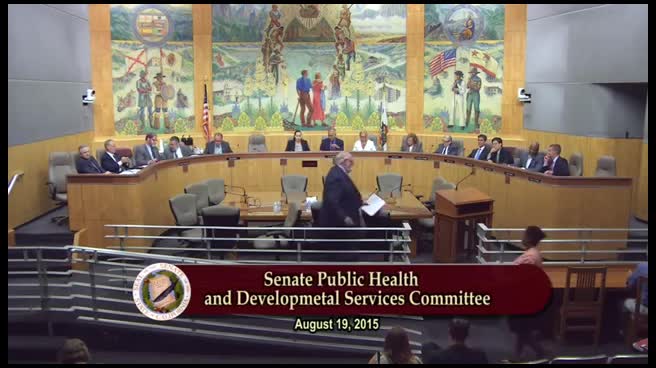
Bill Author