AB 146: Pupil instruction: social sciences: deportations to Mexico.
- Session Year: 2015-2016
- House: Assembly
- Latest Version Date: 2015-10-01
Existing law requires the adopted course of study for grades 1 to 6, inclusive, and for grades 7 to 12, inclusive, to offer courses in specified areas of study, including social sciences. Existing law requires the instruction in social sciences, for grades 7 to 12, inclusive, to provide instruction in, among other things, human rights issues, with particular attention to the study of the inhumanity of genocide, slavery, and the Holocaust, and contemporary issues.
Existing law encourages the State Department of Education to incorporate into publications that provide examples of curriculum resources materials that are age appropriate and consistent with the subject frameworks on history and social science that deal with specified genocides. Existing law states that the Legislature encourages the incorporation of survivor, rescuer, liberator, and witness oral testimony into the teaching of human rights, the Holocaust, and genocide, as specified, and encourages professional development activities to provide teachers with content background and resources to assist in teaching about civil rights, human rights violations, genocide, slavery, the Armenian Genocide, and the Holocaust.
This bill would, for purposes of encouraging the incorporation of survivor and witness testimony into the teaching of human rights, include the unconstitutional deportation to Mexico during the Great Depression of citizens and lawful permanent residents of the United States within the definition of human rights. The bill would encourage professional development activities to provide teachers with content background and resources to assist in teaching about that deportation. The bill would require the State Board of Education to consider providing for the inclusion of the study of that deportation when the curriculum frameworks for history-social science are revised on or after January 1, 2016.
Existing law requires the adopted course of study for grades 1 to 6, inclusive, and for grades 7 to 12, inclusive, to offer courses in specified areas of study, including social sciences. Existing law requires the instruction in social sciences, for grades 7 to 12, inclusive, to provide instruction in, among other things, human rights issues, with particular attention to the study of the inhumanity of genocide, slavery, and the Holocaust, and contemporary issues.
Existing law encourages the State Department of Education to incorporate into publications that provide examples of curriculum resources materials that are age appropriate and consistent with the subject frameworks on history and social science that deal with specified genocides. Existing law states that the Legislature encourages the incorporation of survivor, rescuer, liberator, and witness oral testimony into the teaching of human rights, the Holocaust, and genocide, as specified, and encourages professional development activities to provide teachers with content background and resources to assist in teaching about civil rights, human rights violations, genocide, slavery, the Armenian Genocide, and the Holocaust.
This bill would encourage the incorporation into those publications of, and would, for purposes of encouraging the incorporation of survivor and witness testimony into the teaching of, of human rights, include the unconstitutional deportation to Mexico during the Great Depression of citizens and lawful permanent residents of the United States, and States within the definition of human rights. The bill would encourage professional development activities to provide teachers with content background and resources to assist in teaching about that deportation. The bill would require the State Board of Education to consider providing for the inclusion of the study of that deportation when the curriculum frameworks for history-social science are revised on or after January 1, 2016.
Existing law requires the adopted course of study for grades 1 to 6, inclusive, and for grades 7 to 12, inclusive, to offer courses in specified areas of study, including social sciences. Existing law requires the instruction in social studies sciences, for grades 7 to 12, inclusive, to provide instruction in, among other things, human rights issues, with particular attention to the study of the inhumanity of genocide, slavery, and the Holocaust, and contemporary issues.
Existing law requires encourages the State Department of Education to incorporate into publications that provide examples of curriculum resources materials that are age appropriate and consistent with the subject frameworks on history and social science that deal with civil rights, human rights violations, genocide, slavery, and the Holocaust. specified genocides. Existing law states that the Legislature encourages the incorporation of survivor, rescuer, liberator, and witness oral testimony into the teaching of human rights, the Holocaust, and genocide, as specified, and encourages professional development activities to provide teachers with content background and resources to assist in teaching about civil rights, human rights violations, genocide, slavery, the Armenian Genocide, and the Holocaust.
This bill would add the unconstitutional deportation to Mexico during the Great Depression of citizens and lawful permanent residents of the United States to the instruction that may be included in grades 1 to 6, inclusive, and that may be included in social sciences in grades 7 to 12, inclusive, and to the material that the department is required to incorporate into publications that provide examples of curriculum resources.
The
This bill would encourage the incorporation into those publications of, and the incorporation of survivor and witness testimony into the teaching of of, the unconstitutional deportation to Mexico during the Great Depression of citizens and lawful permanent residents of the United States, and would encourage professional development activities to provide teachers with content background and resources to assist in teaching about that deportation. The bill would require the State Board of Education to ensure that consider providing for the inclusion of the study of that deportation be included when the curriculum frameworks for history/social history-social science are revised on or after January 1, 2016.
Existing law requires the adopted course of study for grades 1 to 6, inclusive, and for grades 7 to 12, inclusive, to offer courses in specified areas of study, including social sciences. Existing law requires the instruction in social studies to provide instruction in, among other things, human rights issues, with particular attention to the study of the inhumanity of genocide, slavery, and the Holocaust, and contemporary issues.
Existing law requires the State Department of Education to incorporate into publications that provide examples of curriculum resources materials that are age appropriate and consistent with the subject frameworks on history and social science that deal with civil rights, human rights violations, genocide, slavery, and the Holocaust. Existing law states that the Legislature encourages the incorporation of survivor, rescuer, liberator, and witness oral testimony into the teaching of human rights, the Holocaust, and genocide, as specified, and encourages professional development activities to provide teachers with content background and resources to assist in teaching about civil rights, human rights violations, genocide, slavery, the Armenian Genocide, and the Holocaust.
This bill would add the unconstitutional deportation to Mexico during the Great Depression of citizens and lawful permanent residents of the United States to the instruction that may be included in grades 1 to 6, inclusive, and that may be included in social sciences in grades 7 to 12, inclusive, and to the material that the department is required to incorporate into publications that provide examples of curriculum resources.
The bill would encourage the incorporation of survivor and witness testimony into the teaching of the unconstitutional deportation to Mexico during the Great Depression of citizens and lawful permanent residents of the United States, and would encourage professional development activities to provide teachers with content background and resources to assist in teaching about that deportation. The bill would require the State Board of Education to ensure that the study of that deportation be included when the curriculum frameworks for history/social science are revised on or after January 1, 2016.
(a)(1)The department shall incorporate into publications that provide examples of curriculum resources for teacher use those materials developed by publishers of nonfiction, trade books, and primary sources, or other public or private organizations, that are age appropriate and consistent with the subject frameworks on history and social science that deal with civil rights, human rights violations, genocide, slavery, and the Holocaust.
(2)The Legislature encourages the department to incorporate into publications that provide examples of curriculum resources for teacher use those materials developed by publishers of nonfiction, trade books, and primary sources, or other public or private organizations, that are age appropriate and consistent with the subject frameworks on history and social science that deal with the Armenian, Cambodian, Darfur, and Rwandan genocides.
(b)(1)The Legislature encourages the incorporation of survivor, rescuer, liberator, and witness oral testimony into the teaching of human rights, the Holocaust, and genocide, including, but not limited to, the Armenian, Cambodian, Darfur, and Rwandan genocides.
(2)As used in this subdivision, oral testimony means the firsthand accounts of significant historical events presented in a format that includes, but is not limited to, in-person testimony, video, or a multimedia option, such as a DVD or an online video.
(c)The Legislature encourages all state and local professional development activities to provide teachers with content background and resources to assist them in teaching about civil rights, human rights violations, genocide, slavery, the Armenian Genocide, and the Holocaust.
(d)The Legislature encourages all state and local professional development activities to provide teachers with content background and resources to assist them in teaching about the Great Irish Famine of 184550.
(e)The Great Irish Famine of 184550 shall be considered in the next cycle in which the history-social science curriculum framework and its accompanying instructional materials are adopted.
(f)When the history-social science curriculum framework is revised as required by law, the Instructional Quality Commission shall consider including the Armenian, Cambodian, Darfur, and Rwandan genocides in the recommended history-social science curriculum framework.
(g)The Model Curriculum for Human Rights and Genocide adopted by the state board, pursuant to Section 51226, shall be made available to schools in grades 7 to 12, inclusive, as soon as funding is available for this purpose. In addition, the department shall make the curriculum available on its Internet Web site.
(h)For purposes of this article, Armenian Genocide means the torture, starvation, and murder of 1,500,000 Armenians, which included death marches into the Syrian desert, by the rulers of the Ottoman Turkish Empire and the exile of more than 500,000 innocent people during the period from 1915 to 1923, inclusive.
(i)When the state board revises and adopts the curriculum framework for history-social science on or after January 1, 2016, the state board shall consider providing for the inclusion, in that curriculum framework, evaluation criteria, and accompanying instructional materials, of instruction on the unconstitutional deportation to Mexico during the Great Depression of citizens and lawful permanent residents of the United States.
(j)As used in subdivisions (b) and (c), human rights and human rights violations include the unconstitutional deportation to Mexico during the Great Depression of citizens and lawful permanent residents of the United States.
(a)(1)The department shall incorporate into publications that provide examples of curriculum resources for teacher use those materials developed by publishers of nonfiction, trade books, and primary sources, or other public or private organizations, that are age appropriate and consistent with the subject frameworks on history and social science that deal with civil rights, human rights violations, genocide, slavery, and the Holocaust. Holocaust.
(2)The Legislature encourages the department to incorporate into publications that provide examples of curriculum resources for teacher use those materials developed by publishers of nonfiction, trade books, and primary sources, or other public or private organizations, that are age appropriate and consistent with the subject frameworks on history and social science that deal with the Armenian, Cambodian, Darfur, and Rwandan genocides and the unconstitutional deportation to Mexico during the Great Depression of citizens and lawful permanent residents of the United States. genocides.
(b)(1)The Legislature encourages the incorporation of survivor, rescuer, liberator, and witness oral testimony into the teaching of human rights, the Holocaust, and genocide, including, but not limited to, the Armenian, Cambodian, Darfur, and Rwandan genocides.
(2)As used in this subdivision, oral testimony means the firsthand accounts of significant historical events presented in a format that includes, but is not limited to, in-person testimony, video, or a multimedia option, such as a DVD or an online video.
(c)The Legislature encourages all state and local professional development activities to provide teachers with content background and resources to assist them in teaching about civil rights, human rights violations, genocide, slavery, the Armenian Genocide, and the Holocaust. Holocaust.
(d)The Legislature encourages all state and local professional development activities to provide teachers with content background and resources to assist them in teaching about the Great Irish Famine of 184550.
(e)The Great Irish Famine of 184550 shall be considered in the next cycle in which the history-social science curriculum framework and its accompanying instructional materials are adopted.
(f)When the history-social science curriculum framework is revised as required by law, the Instructional Quality Commission shall consider including the Armenian, Cambodian, Darfur, and Rwandan genocides in the recommended history-social science curriculum framework.
(g)The Model Curriculum for Human Rights and Genocide adopted by the state board, pursuant to Section 51226, shall be made available to schools in grades 7 to 12, inclusive, as soon as funding is available for this purpose. In addition, the department shall make the curriculum available on its Internet Web site.
(h)For purposes of this article, Armenian Genocide means the torture, starvation, and murder of 1,500,000 Armenians, which included death marches into the Syrian desert, by the rulers of the Ottoman Turkish Empire and the exile of more than 500,000 innocent people during the period from 1915 to 1923, inclusive.
(i)When the state board revises and adopts the curriculum framework for history-social science on or after January 1, 2016, the state board shall consider providing for the inclusion, in that curriculum framework, evaluation criteria, and accompanying instructional materials, of instruction on the unconstitutional deportation to Mexico during the Great Depression of citizens and lawful permanent residents of the United States.
(j)As used in subdivisions (b) and (c), human rights and human rights violations include the unconstitutional deportation to Mexico during the Great Depression of citizens and lawful permanent residents of the United States.
The adopted course of study for grades 1 to 6, inclusive, shall include instruction, beginning in grade 1 and continuing through grade 6, in the following areas of study:
(a)English, including knowledge of, and appreciation for literature, and the language, as well as the skills of speaking, reading, listening, spelling, handwriting, and composition.
(b)Mathematics, including concepts, operational skills, and problem solving.
(c)Social sciences, drawing upon the disciplines of anthropology, economics, geography, history, political science, psychology, and sociology, designed to fit the maturity of the pupils. Instruction shall provide a foundation for understanding the history, resources, development, and government of California and the United States of America; the development of the American economic system including the role of the entrepreneur and labor; the relations of persons to their human and natural environment; eastern and western cultures and civilizations; contemporary issues; and the wise use of natural resources. Instruction may include study of the unconstitutional deportation to Mexico during the Great Depression of citizens and lawful permanent residents of United States.
(d)Science, including the biological and physical aspects, with emphasis on the processes of experimental inquiry and on the place of humans in ecological systems.
(e)Visual and performing arts, including instruction in the subjects of dance, music, theatre, and visual arts, aimed at the development of aesthetic appreciation and the skills of creative expression.
(f)Health, including instruction in the principles and practices of individual, family, and community health.
(g)Physical education, with emphasis upon the physical activities for the pupils that may be conducive to health and vigor of body and mind, for a total period of time of not less than 200 minutes each 10 schooldays, exclusive of recesses and the lunch period.
(h)Other studies that may be prescribed by the governing board.
SEC. 2.Section 51220 of the Education Code is amended to read:51220.The adopted course of study for grades 7 to 12, inclusive, shall offer courses in the following areas of study:
(a)English, including knowledge of and appreciation for literature, language, and composition, and the skills of reading, listening, and speaking.
(b)(1)Social sciences, drawing upon the disciplines of anthropology, economics, geography, history, political science, psychology, and sociology, designed to fit the maturity of the pupils. Instruction shall provide a foundation for understanding the history, resources, development, and government of California and the United States of America; instruction in our American legal system, the operation of the juvenile and adult criminal justice systems, and the rights and duties of citizens under the criminal and civil law and the state and federal Constitutions; the development of the American economic system, including the role of the entrepreneur and labor; the relations of persons to their human and natural environment; eastern and western cultures and civilizations; human rights issues, with particular attention to the study of the inhumanity of genocide, slavery, and the Holocaust, and contemporary issues. Instruction may include study of the unconstitutional deportation to Mexico during the Great Depression of citizens and lawful permanent residents of United States.
(2)For purposes of this subdivision, genocide may include the Armenian Genocide. The Armenian Genocide means the torture, starvation, and murder of 1,500,000 Armenians, which included death marches into the Syrian desert, by the rulers of the Ottoman Turkish Empire and the exile of more than 500,000 innocent people during the period from 1915 to 1923, inclusive.
(c)Foreign language or languages, beginning not later than grade 7, designed to develop a facility for understanding, speaking, reading, and writing the particular language.
(d)Physical education, with emphasis given to physical activities that are conducive to health and to vigor of body and mind, as required by Section 51222.
(e)Science, including the physical and biological aspects, with emphasis on basic concepts, theories, and processes of scientific investigation and on the place of humans in ecological systems, and with appropriate applications of the interrelation and interdependence of the sciences.
(f)Mathematics, including instruction designed to develop mathematical understandings, operational skills, and insight into problem-solving procedures.
(g)Visual and performing arts, including dance, music, theater, and visual arts, with emphasis upon development of aesthetic appreciation and the skills of creative expression.
(h)Applied arts, including instruction in the areas of consumer and homemaking education, industrial arts, general business education, or general agriculture.
(i)Career technical education designed and conducted for the purpose of preparing youth for gainful employment in the occupations and in the numbers that are appropriate to the personnel needs of the state and the community served and relevant to the career desires and needs of the pupils.
(j)Automobile driver education, designed to develop a knowledge of the provisions of the Vehicle Code and other laws of this state relating to the operation of motor vehicles, a proper acceptance of personal responsibility in traffic, a true appreciation of the causes, seriousness, and consequences of traffic accidents, and to develop the knowledge and attitudes necessary for the safe operation of motor vehicles. A course in automobile driver education shall include education in the safe operation of motorcycles.
(k)Other studies as may be prescribed by the governing board.
SEC. 3.SECTION 1.Section 51226.3 of the Education Code is amended to read:51226.3.(a)(1)The department shall incorporate into publications that provide examples of curriculum resources for teacher use those materials developed by publishers of nonfiction, trade books, and primary sources, or other public or private organizations, that are age appropriate and consistent with the subject frameworks on history and social science that deal with civil rights, human rights violations, genocide, slavery, and the Holocaust, and the unconstitutional deportation to Mexico during the Great Depression of citizens and lawful permanent residents of the United States.
(2)The Legislature encourages the department to incorporate into publications that provide examples of curriculum resources for teacher use those materials developed by publishers of nonfiction, trade books, and primary sources, or other public or private organizations, that are age appropriate and consistent with the subject frameworks on history and social science that deal with the Armenian, Cambodian, Darfur, and Rwandan genocides and the unconstitutional deportation to Mexico during the Great Depression of citizens and lawful permanent residents of the United States.
(b)(1)The Legislature encourages the incorporation of survivor, rescuer, liberator, and witness oral testimony into the teaching of human rights, the unconstitutional deportation to Mexico during the Great Depression of citizens and lawful permanent residents of the United States, the Holocaust, and genocide, including, but not limited to, the Armenian, Cambodian, Darfur, and Rwandan genocides.
(2)As used in this subdivision, oral testimony means the firsthand accounts of significant historical events presented in a format that includes, but is not limited to, in-person testimony, video, or a multimedia option, such as a DVD or an online video.
(c)The Legislature encourages all state and local professional development activities to provide teachers with content background and resources to assist them in teaching about civil rights, human rights violations, genocide, slavery, the Armenian Genocide, and the Holocaust, and the unconstitutional deportation to Mexico during the Great Depression of citizens and lawful permanent residents of the United States.
(d)The Legislature encourages all state and local professional development activities to provide teachers with content background and resources to assist them in teaching about the Great Irish Famine of 184550.
(e)The Great Irish Famine of 184550 shall be considered in the next cycle in which the history-social science curriculum framework and its accompanying instructional materials are adopted.
(f)When the history-social science curriculum framework is revised as required by law, the Instructional Quality Commission shall consider including the Armenian, Cambodian, Darfur, and Rwandan genocides in the recommended history-social science curriculum framework.
(g)The Model Curriculum for Human Rights and Genocide adopted by the state board, pursuant to Section 51226, shall be made available to schools in grades 7 to 12, inclusive, as soon as funding is available for this purpose. In addition, the department shall make the curriculum available on its Internet Web site.
(h)For purposes of this article, Armenian Genocide means the torture, starvation, and murder of 1,500,000 Armenians, which included death marches into the Syrian desert, by the rulers of the Ottoman Turkish Empire and the exile of more than 500,000 innocent people during the period from 1915 to 1923, inclusive.
(i)When the state board revises and adopts the curriculum framework for history/social history-social science on or after January 1, 2016, the state board shall provide consider providing for the inclusion, in that curriculum framework, evaluation criteria, and accompanying instructional materials, of instruction on the unconstitutional deportation to Mexico during the Great Depression of citizens and lawful permanent residents of the United States.
(j)As used in subdivisions (b) and (c), human rights and human rights violations include the unconstitutional deportation to Mexico during the Great Depression of citizens and lawful permanent residents of the United States.
The adopted course of study for grades 1 to 6, inclusive, shall include instruction, beginning in grade 1 and continuing through grade 6, in the following areas of study:
(a)English, including knowledge of, and appreciation for literature, and the language, as well as the skills of speaking, reading, listening, spelling, handwriting, and composition.
(b)Mathematics, including concepts, operational skills, and problem solving.
(c)Social sciences, drawing upon the disciplines of anthropology, economics, geography, history, political science, psychology, and sociology, designed to fit the maturity of the pupils. Instruction shall provide a foundation for understanding the history, resources, development, and government of California and the United States of America; the development of the American economic system including the role of the entrepreneur and labor; the relations of persons to their human and natural environment; eastern and western cultures and civilizations; contemporary issues; and the wise use of natural resources. Instruction may include study of the unconstitutional deportation to Mexico during the Great Depression of citizens and lawful permanent residents of United States.
(d)Science, including the biological and physical aspects, with emphasis on the processes of experimental inquiry and on the place of humans in ecological systems.
(e)Visual and performing arts, including instruction in the subjects of dance, music, theatre, and visual arts, aimed at the development of aesthetic appreciation and the skills of creative expression.
(f)Health, including instruction in the principles and practices of individual, family, and community health.
(g)Physical education, with emphasis upon the physical activities for the pupils that may be conducive to health and vigor of body and mind, for a total period of time of not less than 200 minutes each 10 schooldays, exclusive of recesses and the lunch period.
(h)Other studies that may be prescribed by the governing board.
SEC. 2.Section 51220 of the Education Code is amended to read:51220.The adopted course of study for grades 7 to 12, inclusive, shall offer courses in the following areas of study:
(a)English, including knowledge of and appreciation for literature, language, and composition, and the skills of reading, listening, and speaking.
(b)(1)Social sciences, drawing upon the disciplines of anthropology, economics, geography, history, political science, psychology, and sociology, designed to fit the maturity of the pupils. Instruction shall provide a foundation for understanding the history, resources, development, and government of California and the United States of America; instruction in our American legal system, the operation of the juvenile and adult criminal justice systems, and the rights and duties of citizens under the criminal and civil law and the State state and Federal federal Constitutions; the development of the American economic system, including the role of the entrepreneur and labor; the relations of persons to their human and natural environment; eastern and western cultures and civilizations; human rights issues, with particular attention to the study of the inhumanity of genocide, slavery, and the Holocaust, and contemporary issues. Instruction may include study of the unconstitutional deportation to Mexico during the Great Depression of citizens and lawful permanent residents of United States.
(2)For purposes of this subdivision, genocide may include the Armenian Genocide. The Armenian Genocide means the torture, starvation, and murder of 1,500,000 Armenians, which included death marches into the Syrian desert, by the rulers of the Ottoman Turkish Empire and the exile of more than 500,000 innocent people during the period from 1915 to 1923, inclusive.
(c)Foreign language or languages, beginning not later than grade 7, designed to develop a facility for understanding, speaking, reading, and writing the particular language.
(d)Physical education, with emphasis given to physical activities that are conducive to health and to vigor of body and mind, as required by Section 51222.
(e)Science, including the physical and biological aspects, with emphasis on basic concepts, theories, and processes of scientific investigation and on the place of humans in ecological systems, and with appropriate applications of the interrelation and interdependence of the sciences.
(f)Mathematics, including instruction designed to develop mathematical understandings, operational skills, and insight into problem-solving procedures.
(g)Visual and performing arts, including dance, music, theater, and visual arts, with emphasis upon development of aesthetic appreciation and the skills of creative expression.
(h)Applied arts, including instruction in the areas of consumer and homemaking education, industrial arts, general business education, or general agriculture.
(i)Career technical education designed and conducted for the purpose of preparing youth for gainful employment in the occupations and in the numbers that are appropriate to the personnel needs of the state and the community served and relevant to the career desires and needs of the pupils.
(j)Automobile driver education, designed to develop a knowledge of the provisions of the Vehicle Code and other laws of this state relating to the operation of motor vehicles, a proper acceptance of personal responsibility in traffic, a true appreciation of the causes, seriousness, and consequences of traffic accidents, and to develop the knowledge and attitudes necessary for the safe operation of motor vehicles. A course in automobile driver education shall include education in the safe operation of motorcycles.
(k)Other studies as may be prescribed by the governing board.
SEC. 3.Section 51226.3 of the Education Code is amended to read:51226.3.(a)(1)The department shall incorporate into publications that provide examples of curriculum resources for teacher use those materials developed by publishers of nonfiction, trade books, and primary sources, or other public or private organizations, that are age appropriate and consistent with the subject frameworks on history and social science that deal with civil rights, human rights violations, genocide, slavery, and the Holocaust, and the unconstitutional deportation to Mexico during the Great Depression of citizens and lawful permanent residents of the United States.
(2)The Legislature encourages the department to incorporate into publications that provide examples of curriculum resources for teacher use those materials developed by publishers of nonfiction, trade books, and primary sources, or other public or private organizations, that are age appropriate and consistent with the subject frameworks on history and social science that deal with the Armenian, Cambodian, Darfur, and Rwandan genocides.
(b)(1)The Legislature encourages the incorporation of survivor, rescuer, liberator, and witness oral testimony into the teaching of human rights, the unconstitutional deportation to Mexico during the Great Depression of citizens and lawful permanent residents of the United States, the Holocaust, and genocide, including, but not limited to, the Armenian, Cambodian, Darfur, and Rwandan genocides.
(2)As used in this subdivision, oral testimony means the firsthand accounts of significant historical events presented in a format that includes, but is not limited to, in-person testimony, video, or a multimedia option, such as a DVD or an online video.
(c)The Legislature encourages all state and local professional development activities to provide teachers with content background and resources to assist them in teaching about civil rights, human rights violations, genocide, slavery, the Armenian Genocide, and the Holocaust, and the unconstitutional deportation to Mexico during the Great Depression of citizens and lawful permanent residents of the United States.
(d)The Legislature encourages all state and local professional development activities to provide teachers with content background and resources to assist them in teaching about the Great Irish Famine of 184550.
(e)The Great Irish Famine of 184550 shall be considered in the next cycle in which the history-social science curriculum framework and its accompanying instructional materials are adopted.
(f)When the history-social science curriculum framework is revised as required by law, the Instructional Quality Commission shall consider including the Armenian, Cambodian, Darfur, and Rwandan genocides in the recommended history-social science curriculum framework.
(g)The Model Curriculum for Human Rights and Genocide adopted by the state board, pursuant to Section 51226, shall be made available to schools in grades 7 to 12, inclusive, as soon as funding is available for this purpose. In addition, the department shall make the curriculum available on its Internet Web site.
(h)For purposes of this article, Armenian Genocide means the torture, starvation, and murder of 1,500,000 Armenians, which included death marches into the Syrian desert, by the rulers of the Ottoman Turkish Empire and the exile of more than 500,000 innocent people during the period from 1915 to 1923, inclusive.
(i)When the state board revises and adopts the curriculum framework for history/social science on or after January 1, 2016, the state board shall provide for the inclusion, in that curriculum framework, evaluation criteria, and accompanying instructional materials, of instruction on the unconstitutional deportation to Mexico during the Great Depression of citizens and lawful permanent residents of the United States.
|
Date
|
Status
|
|---|---|
| Oct 1, 2015 | Chaptered by Secretary of State - Chapter 392, Statutes of 2015. |
| Oct 1, 2015 | Approved by the Governor. |
| Sep 16, 2015 | Enrolled and presented to the Governor at 4 p.m. |
| Sep 4, 2015 | Senate amendments concurred in. To Engrossing and Enrolling. (Ayes 62. Noes 10. Page 2907.). |
| Sep 4, 2015 | Senate amendments concurred in. To Engrossing and Enrolling. (Ayes 62. Noes 10.). |
| Sep 4, 2015 | Senate amendments concurred in. To Engrossing and Enrolling. |
| Sep 2, 2015 | Read third time. Passed. Ordered to the Assembly. (Ayes 29. Noes 7. Page 2406.). |
| Sep 2, 2015 | In Assembly. Concurrence in Senate amendments pending. May be considered on or after September 4 pursuant to Assembly Rule 77. |
| Sep 2, 2015 | Read third time. Passed. Ordered to the Assembly. |
| Sep 1, 2015 | Read second time and amended. Ordered to third reading. |
| Aug 31, 2015 | From committee: Amend, and do pass as amended. (Ayes 5. Noes 2.) (August 27). |
| Jul 13, 2015 | In committee: Referred to suspense file. |
| Jul 1, 2015 | From committee: Do pass and re-refer to Com. on APPR. (Ayes 6. Noes 0.) (July 1). Re-referred to Com. on APPR. |
| Jun 11, 2015 | Referred to Com. on ED. |
| Jun 2, 2015 | In Senate. Read first time. To Com. on RLS. for assignment. |
| Jun 2, 2015 | Read third time. Passed. Ordered to the Senate. (Ayes 62. Noes 9. Page 1778.) |
| Jun 2, 2015 | Read third time. Passed. Ordered to the Senate. |
| Jun 1, 2015 | Read second time. Ordered to third reading. |
| May 28, 2015 | From committee: Do pass. (Ayes 13. Noes 1.) (May 28). |
| Apr 15, 2015 | In committee: Set, first hearing. Referred to suspense file. |
| Mar 26, 2015 | From committee: Do pass and re-refer to Com. on APPR. (Ayes 6. Noes 0.) (March 25). Re-referred to Com. on APPR. |
| Feb 26, 2015 | Re-referred to Com. on ED. |
| Feb 25, 2015 | From committee chair, with author's amendments: Amend, and re-refer to Com. on ED. Read second time and amended. |
| Jan 26, 2015 | Referred to Com. on ED. |
| Jan 14, 2015 | From printer. May be heard in committee February 13. |
| Jan 13, 2015 | Read first time. To print. |
|
Date
|
Description
|
Location
|
Votes
|
|
|---|---|---|---|---|
| Sep 4, 2015 | AB 146 GARCIA, C. Concurrence in Senate Amendments | Assembly Floor |
Passed |
|
| Sep 2, 2015 | Assembly 3rd Reading AB146 Cristina Garcia By Lara | Senate Floor |
Passed |
|
| Aug 27, 2015 | Do pass as amended | Senate Standing Committee on Appropriations |
Passed |
|
| Jul 13, 2015 | Placed on suspense file | Senate Standing Committee on Appropriations |
Passed |
|
| Jul 1, 2015 | Do pass, but first be re-referred to the Committee on [Appropriations] | Senate Standing Committee on Education |
Passed |
|
| Jun 2, 2015 | AB 146 GARCIA, C. Assembly Third Reading | Assembly Floor |
Passed |
|
| May 28, 2015 | Do pass. | Assembly Standing Committee on Appropriations |
Passed |
|
| Mar 25, 2015 | Do pass and be re-referred to the Committee on [Appropriations] | Assembly Standing Committee on Education |
Passed |
This list shows positions taken on this bill by organizations on the date displayed, which is linked to the original source.
Positions by individuals are not included.
AB 146
Page 2
CONCURRENCE IN SENATE AMENDMENTS
AB 146
(Cristina Garcia)
As Amended September 1, 2015
Majority vote
ASSEMBLY: |
62-9 |
(June 2, 2015) |
SENATE: |
29-7 |
(September 2, 2015) |
Original Committee Reference: ED.
SUMMARY: Requires the State Board of Education (SBE) to consider including content on the deportation of citizens and lawful permanent residents of the United States to Mexico during the Great Depression in the next revision of the history-social science framework and related materials.
The Senate amendments remove the requirement that the specified content be included in curriculum resources for teachers.
EXISTING LAW:
Establishes the Instructional Quality Commission (formerly called the Curriculum Development and Supplemental Materials Commission) as an advisory body to the SBE on matters related to curriculum, instructional materials, and content standards.
Requires the Instructional Quality Commission (IQC) to consider incorporating into the history-social science framework content on specific historical events, including the Armenian, Cambodian, Darfur, and Rwandan genocides and the Great Irish Famine of 1845-1850.
Encourages the Department of Education to incorporate into publications that provide examples of curriculum resources, age-appropriate materials on the Armenian, Cambodian, Darfur, and Rwandan genocides. Encourages the incorporation of survivor, rescuer, liberator, and witness oral testimony into the teaching of human rights, the Holocaust, and genocide.
Encourages state and local professional development activities to provide teachers with content background and resources to assist them in teaching about civil rights, human rights violations, genocide, slavery, and the Holocaust.
FISCAL EFFECT: According to the Senate Appropriations Committee, one-time costs to the California Department of Education (CDE) of approximately $19,000 to the extent that additional information is included in the history-social science curriculum framework on this subject. (General Fund)
COMMENTS:
Origin of this bill. This bill was the winning proposal in a legislative proposal competition sponsored by the author. It was submitted by a 5th grade class at Bell Gardens Elementary School in the Montebello Unified School District.
Draft History-Social Science Framework revision includes references to this event. The draft revision to the History-Social Science Framework released in September, 2014 includes some references to the deportation event. In the chapter of course descriptions for grades Kindergarten through Grade 5, the following reference is included in a section on Modern California: "Students can also learn about other important events in California's civil rights history, such as … the forced repatriation of Mexicans and Mexican Americans to Mexico that took place during the Great Depression." In the chapter of course descriptions for grades nine through twelve, the following reference is made in a section on the Great Depression: "The economic crisis also led to the Mexican Repatriation Program, in which the Secretary of Labor directed government agents to force nearly 400,000 Mexican migrants (both legal and illegal) out of the country."
History-social science framework adoption delayed. The History-Social Science standards currently in use were adopted in 1998, and the most recent framework was published in 2005. The Curriculum Commission (now the IQC) began work revising the History-Social Science Framework in January of 2008. A significant amount of the process had been completed (focus groups, selection of evaluation criteria committee members, five drafting meetings) when in 2009 the state's fiscal emergency led to a statutory suspension (AB 2 X4 (Evans), Chapter 2, Statutes of 2009, Fourth Extraordinary Session) of instructional materials adoptions and framework revisions until the 2013-14 school year. That suspension was later extended until the 2015-16 school year (SB 70 (Budget and Fiscal Review Committee), Chapter 7, Statutes of 2011).
The IQC began work again on the revision in July 2014 and released the draft History-Social Science framework for field review in September 2014. The draft generated extensive public comment it generated (nearly 700 comments). The IQC also determined that more subject matter expertise was needed for certain areas (including some mandated for inclusion by legislation), and submitted a budget request for $124,000 to hire experts through an interagency agreement. These events have caused significant delays in the production of the revised framework. Originally scheduled for adoption in May 2015, this framework is now set to be recommended to the State Board by March 2016, with final publication in fall 2016.
Analysis Prepared by: Tanya Lieberman / ED. / (916) 319-2087 FN: 0001993
AB 146
Page 4
|
Office of Senate Floor Analyses (916) 651-1520 Fax: (916) 327-4478 |
THIRD READING
Bill No: AB 146
Author: Cristina Garcia (D), et al.
Amended: 9/1/15 in Senate
SENATE EDUCATION COMMITTEE: 6-0, 7/1/15
AYES: Liu, Leyva, Mendoza, Monning, Pan, Vidak
NO VOTE RECORDED: Runner, Block, Hancock
SENATE APPROPRIATIONS COMMITTEE: 5-2, 8/27/15
AYES: Lara, Beall, Hill, Leyva, Mendoza
NOES: Bates, Nielsen
ASSEMBLY FLOOR: 62-9, 6/2/15 - See last page for vote
SUBJECT: Pupil instruction: social sciences: deportations to Mexico
DIGEST: This bill requires the State Board of Education (SBE) to consider including instruction on the unconstitutional deportation to Mexico during the Great Depression to the history-social science framework.
Existing law:
Establishes the Instructional Quality Commission (IQC), formerly known as the Curriculum Commission, as an advisory body to the SBE. The IQC is responsible for recommending curriculum frameworks to the SBE, developing criteria for the evaluation of instructional materials, and evaluating and recommending adoption of instructional materials. (Education Code § 33530 and § 60204)
Prohibits the SBE from adopting instructional materials or undertaking the work of the IQC until the 2015-16 school year. (EC § 60200.7)
Specifically authorizes the SBE to consider the adoption of a revised curriculum framework and evaluation criteria for history-social science. (EC § 60200.8)
Requires IQC to consider incorporating into the history-social science framework content on specific historical events, including the Armenian, Cambodian, Darfur, and Rwandan genocides and the Great Irish Famine of 1845 to 1850. Existing law also encourages the California Department of Education (CDE) to incorporate into curriculum resources for teachers, age-appropriate materials on the Armenian, Cambodian, Darfur, and Rwandan genocides. (EC § 51226.3)
Requires the IQC, whenever the history-social science framework is revised, to do all of the following (as appropriate and based on the subject matter of the course):
Receive input from civics learning experts for purposes of integrating civics learning content, concepts and skills with the standards.
Consider how civics and history instruction includes the application of that content to develop the competence and skills needed for civic engagement.
Ensure that voter education information is included in the American government and civics curriculum at the high school level.
Ensure that specified historical documents are incorporated into the framework. (EC § 33540)
States legislative intent that when the history-social science framework is revised after January 1, 2015, the IQC consider whether and how to incorporate the College, Career, and Civic Life Framework for Social Studies State Standards into that framework. (EC § 33540)
Requires the IQC, during the next revision of the history-social science framework, to consider including and recommending for adoption by the SBE, instruction on the election of President Barack Obama and the significance of the United States electing its first African American President. (EC § 33543)
This bill:
Requires the SBE, when it revises and adopts the curriculum framework for history-social science after January 1, 2016, to consider providing for the inclusion of instruction on the unconstitutional deportation to Mexico during the Great Depression of citizens and lawful permanent residents of the United States into the history-social science framework, evaluation criteria, and accompanying instructional materials.
Specifies that “human rights” and “human rights violations” include the deportation to Mexico, in regards to existing law that encourages the incorporation of testimony into instruction and professional development activities.
Comments
Current
revision of the history-social science framework. The
revision to the history-social science framework was suspended in
July 2009, and subsequently resumed in July 2014. The draft revision
was released for field review in September 2014, is expected to be
presented to the SBE in November 2015, and expected to be adopted by
the SBE in May 2016.
The draft generated extensive
public comment (nearly 700 comments). The IQC also determined that
more subject matter expertise was needed for certain areas (including
some mandated for inclusion by legislation), and submitted a budget
request for $124,000 to hire experts through an interagency
agreement. These events have caused significant delays in the
production of the revised framework, which was originally scheduled
for adoption in May 2015.
A schedule once existed for the
revision and updating of curricular frameworks. That schedule was
suspended in 2009 when the prohibition on that process was imposed.
Current law continues to reference an eight-year cycle for revisions
to frameworks and the adoption of instructional materials. It is
likely that the next revision of the history-social science framework
will occur in several years.
Some information is in the draft framework. The existing draft framework includes some references to the deportation to Mexico. In the chapter of course descriptions for grades kindergarten through grade five, the following reference is included in a section on Modern California: "Students can also learn about other important events in California's civil rights history, such as … the forced repatriation of Mexicans and Mexican Americans to Mexico that took place during the Great Depression." In the chapter of course descriptions for grades nine through 12, the following reference is made in a section on the Great Depression: "The economic crisis also led to the Mexican Repatriation Program, in which the Secretary of Labor directed government agents to force nearly 400,000 Mexican migrants (both legal and illegal) out of the country."
FISCAL EFFECT: Appropriation: No Fiscal Com.: Yes Local: No
According to the Senate Appropriations Committee, this bill imposes one-time costs to the CDE of approximately $19,000 to the extent that additional information is included in the history-social science curriculum framework on this subject. (General Fund)
None received
OPPOSITION: (Verified 8/31/15)
None received
ASSEMBLY FLOOR: 62-9, 6/2/15
AYES: Achadjian, Alejo, Baker, Bloom, Bonilla, Bonta, Brown, Burke, Calderon, Campos, Chang, Chau, Chiu, Chu, Cooley, Cooper, Dababneh, Daly, Dodd, Eggman, Frazier, Cristina Garcia, Eduardo Garcia, Gatto, Gipson, Gomez, Gonzalez, Gordon, Gray, Roger Hernández, Holden, Irwin, Jones-Sawyer, Kim, Lackey, Levine, Linder, Lopez, Low, Maienschein, McCarty, Medina, Mullin, Nazarian, O'Donnell, Olsen, Perea, Quirk, Rendon, Ridley-Thomas, Rodriguez, Salas, Santiago, Steinorth, Mark Stone, Thurmond, Ting, Weber, Wilk, Williams, Wood, Atkins
NOES: Bigelow, Brough, Beth Gaines, Gallagher, Harper, Jones, Mathis, Mayes, Waldron
NO VOTE RECORDED: Travis Allen, Chávez, Dahle, Grove, Hadley, Melendez, Obernolte, Patterson, Wagner
Prepared by: Lynn Lorber / ED. / (916) 651-4105
9/1/15 21:30:48
**** END ****
AB 146 (Cristina Garcia) Page 0 of 1
SENATE COMMITTEE ON APPROPRIATIONS
Senator Ricardo Lara, Chair
2015 - 2016 Regular Session
AB 146 (Cristina Garcia) - Pupil instruction: social sciences: deportations to Mexico.
|
|
Version: February 25, 2015 |
Policy Vote: ED. 6 - 0 |
Urgency: No |
Mandate: No |
Hearing Date: August 27, 2015 |
Consultant: Jillian Kissee |
*********** ANALYSIS ADDENDUM – SUSPENSE FILE ***********
The following information is revised to reflect amendments
adopted by the committee on August 27, 2015
Bill Summary:
This bill requires the State Board of Education to consider including in the history-social science curriculum framework, instruction on the unconstitutional deportation of citizens and lawful permanent residents of the United States to Mexico during the Great Depression.
Fiscal Impact:
One-time costs to the California Department of Education (CDE) of approximately $19,000 to the extent that additional information is included in the history-social science curriculum framework on this subject. (General Fund)
Committee Amendments:
Amend to remove cost pressures resulting from the provision that encourages the CDE to incorporate this subject into curriculum resources for teachers.
-- END --
AB 146 (Cristina Garcia) Page 2 of 2
SENATE COMMITTEE ON APPROPRIATIONS
Senator Ricardo Lara, Chair
2015 - 2016 Regular Session
AB 146 (Cristina Garcia) - Pupil instruction: social sciences: deportations to Mexico.
|
|
Version: February 25, 2015 |
Policy Vote: ED. 6 - 0 |
Urgency: No |
Mandate: No |
Hearing Date: July 13, 2015 |
Consultant: Jillian Kissee |
This bill meets the criteria for referral to the Suspense File.
Bill Summary:
This bill requires the State Board of Education (Board) to consider including in the history-social science curriculum framework, instruction on the unconstitutional deportation of citizens and lawful permanent residents of the United States to Mexico during the Great Depression. This bill also provides encouragement from the Legislature for the California Department of Education (CDE) to incorporate this topic into curriculum resources for teachers.
Fiscal Impact:
Approximately $160,000 one-time General Fund (cost pressure of $138,000 and direct costs of $19,000) to the CDE and the Instructional Quality Commission (IQC) within the CDE, respectively.
Background:
Current law establishes the IQC as an advisory body to the Board. The IQC is responsible for recommending curriculum frameworks to the Board, developing criteria for the evaluation of instructional materials, and evaluating and recommending adoption of instructional materials. (Education Code § 33530 and § 60204)
The revision to the history-social science framework was suspended in July 2009, and subsequently resumed in July 2014. The draft revision was released for field review in September 2014, and is expected to be presented to the Board in November 2015, and expected to be adopted in May 2016. The existing draft framework includes some references to the deportation to Mexico during the Great Depression in grades four and 11.
Proposed Law:
This bill adds to the list of items that the Legislature encourages
the CDE to incorporate into publications that provide examples of
curriculum resources for teachers, the unconstitutional deportation
of citizens and lawful permanent residents of the United States to
Mexico during the Great Depression. This bill also requires the
Board to consider including this subject when it revises and adopts
the history-social science curriculum framework, evaluation criteria,
and instructional materials.
Finally, this bill includes
the unconstitutional deportation to Mexico during the Great
Depression within the meaning of “human rights” and “human
rights violations.” In existing law, the Legislature encourages
the incorporation of oral testimony into the teaching of human rights
and that all professional development activities provide teachers
with background and resources to assist them in teaching about human
rights violations.
Related Legislation:
SB 551 (Cedillo, 2007) and SB 1214 (Cedillo, 2008) both required the Board to include the unconstitutional deportation to Mexico during the Great Depression in the next revision of the history-social science framework. SB 551 was held in this committee and SB 1214 was vetoed by the Governor at that time.
SB 1575 (Dunn, 2006) expanded the course of study for grades 7-12 to include instruction on the unconstitutional deportation to Mexico during the Great Depression, and required the CDE to include this instruction in curriculum resources for teachers. SB 1575 was vetoed by the Governor at that time.
Staff Comments:
This bill encourages the CDE to incorporate the unconstitutional deportation of citizens and lawful permanent residents of the United States to Mexico during the Great Depression into teacher curriculum resources. This provision results in cost pressures to the CDE of about $138,000 to incorporate such material.
To the extent it is decided to provide additional information on this topic in the curriculum framework, beyond what is already included, costs would be about $19,000.
-- END --
AB 146 (Cristina Garcia) Page 4 of 4
SENATE COMMITTEE ON EDUCATION
Senator Carol Liu, Chair
2015 - 2016 Regular
Bill No: AB 146
Author: |
Cristina Garcia |
||
Version: |
February 25, 2015 Hearing Date: July 1, 2015 |
||
Urgency: |
No |
Fiscal: |
Yes |
Consultant: |
Lynn Lorber |
||
Subject: Pupil instruction: social sciences: deportations to Mexico
SUMMARY
This bill requires the State Board of Education (SBE) to consider including instruction on the unconstitutional deportation to Mexico during the Great Depression to the history-social science framework.
BACKGROUND
Existing law:
Establishes the Instructional Quality Commission (IQC), formerly known as the Curriculum Commission, as an advisory body to the SBE. The IQC is responsible for recommending curriculum frameworks to the SBE, developing criteria for the evaluation of instructional materials, evaluate and recommend adoption of instructional materials. (Education Code § 33530 and § 60204)
Prohibits the SBE from adopting instructional materials or undertaking the work of the IQC until the 2015-16 school year. (EC § 60200.7)
Specifically authorizes the SBE to consider the adoption of a revised curriculum framework and evaluation criteria for history-social science. (EC § 60200.8)
Requires IQC to consider incorporating into the history-social science framework content on specific historical events, including the Armenian, Cambodian, Darfur, and Rwandan genocides and the Great Irish Famine of 1845 to 1850. Existing law also encourages the California Department of Education to incorporate into curriculum resources for teachers, age-appropriate materials on the Armenian, Cambodian, Darfur, and Rwandan genocides. (EC § 51226.3)
Requires the IQC, whenever the history-social science framework is revised, to do all of the following (as appropriate and based on the subject matter of the course):
Receive input from civics learning experts for purposes of integrating civics learning content, concepts and skills with the standards.
Consider how civics and history instruction includes the application of that content to develop the competence and skills needed for civic engagement.
Ensure that voter education information is included in the American government and civics curriculum at the high school level.
Ensure that specified historical documents are incorporated into the framework. (EC § 33540)
States Legislative intent that when the history-social science framework is revised after January 1, 2015, the Instructional Quality Commission (IQC) consider whether and how to incorporate the College, Career, and Civic Life Framework for Social Studies State Standards into that framework. (EC § 33540)
Requires the IQC, during the next revision of the history-social science framework, to consider including and recommending for adoption by the State Board of Education (SBE), instruction on the election of President Barack Obama and the significance of the United States electing its first African American President.
(EC
§ 33543)
ANALYSIS
This bill requires the SBE to consider including instruction on the unconstitutional deportation to Mexico during the Great Depression to the history-social science framework. Specifically, this bill:
Requires the SBE, when it revises and adopts the curriculum framework for history-social science after January 1, 2016, to consider providing for the inclusion of instruction on the unconstitutional deportation to Mexico during the Great Depression of citizens and lawful permanent residents of the United States into the history-social science framework, evaluation criteria, and accompanying instructional materials.
Expands existing law that encourages the California Department of Education to incorporate into curriculum resources for teachers, materials that deal with specified genocides, to include the unconstitutional deportation to Mexico during the Great Depression of citizens and lawful permanent residents of the United States.
Specifies that “human rights” and “human rights violations” include the deportation to Mexico, in regards to existing law that encourages the incorporation of testimony into instruction and professional development activities.
STAFF
COMMENTS
Need for the bill. According to the author, “In the past years, similar legislation to require historical events such as the Holocaust, Japanese internment camps and other human rights violations are now included in our history-social science textbooks. In a state where 38% of the population is Latino, our children should learn about an event where over 1 million Mexican immigrants and Mexican Americans were unconstitutionally deported to Mexico.”
Current revision of the history-social science framework. The revision to the history-social science framework was suspended in July 2009, and subsequently
resumed in July 2014. The draft revision was released for field
review in September 2014, is expected to be presented to the SBE in
November 2015, and expected to be adopted by the State Board of
Education (SBE) in May 2016.
The draft generated
extensive public comment (nearly 700 comments). The Instructional
Quality Commission (IQC) also determined that more subject matter
expertise was needed for certain areas (including some mandated for
inclusion by legislation), and submitted a budget request for
$124,000 to hire experts through an interagency agreement. These
events have caused significant delays in the production of the
revised framework, which was originally scheduled for adoption in May
2015.
A schedule once existed for the revision and
updating of curricular frameworks. That schedule was suspended in
2009 when the prohibition on that process was imposed. Current law
continues to reference an eight-year cycle for revisions to
frameworks and the adoption of instructional materials. It is likely
that the next revision of the history-social science framework will
occur in several years.
Some information is in the draft framework. The existing draft framework includes some references to the deportation to Mexico. In the chapter of course descriptions for grades Kindergarten through grade five, the following reference is included in a section on Modern California: "Students can also learn about other important events in California's civil rights history, such as … the forced repatriation of Mexicans and Mexican Americans to Mexico that took place during the Great Depression." In the chapter of course descriptions for grades nine through 12, the following reference is made in a section on the Great Depression: "The economic crisis also led to the Mexican Repatriation Program, in which the Secretary of Labor directed government agents to force nearly 400,000 Mexican migrants (both legal and illegal) out of the country."
Fiscal impact. According to the Assembly Appropriations Committee, this bill would impose one-time General Fund costs to the California Department of Education (CDE) of approximately $160,000 to revise the history-social science framework.
Related and prior legislation.
RELATED LEGISLATION
AB 104 (Committee on Budget, Ch. 13, 2015) among other things, imposes a fee on publishers who submit history-social science materials to the SBE for consideration.
AB 740 (Weber, 2015) requires the Superintendent of Public Instruction to recommend to the SBE, by January 1, 2017, a schedule for the regular update of academic content standards in all subjects for which standards have been adopted by the SBE. The schedule must be aligned to the current eight-year cycle of curriculum framework updates and instructional materials adoptions. AB 740 is scheduled to be heard by this Committee on July 15.
PRIOR LEGISLATION
SB 1214 (Cedillo, 2008)
required the State Board of Education (SBE) to provide for such
inclusion when it next revises and adopts the curriculum for the
history-social science framework and instructional materials on or
after January 1, 2009. SB 1214 was vetoed by the Governor, whose
veto message read:
I vetoed a substantively similar bill two years ago on this issue, and I have consistently vetoed legislation that has attempted to mandate specific details or events into areas of instruction. The State Board of Education adopted content standards are developed by a diverse group of experts and are intentionally broad in order to allow coverage of various events, developments, and issues. I continue to believe that the State should establish rigorous standards and frameworks, but refrain from being overly prescriptive in specific school curriculum.
SB 551 (Cedillo, 2007) required the SBE to include instruction
on the unconstitutional deportation to Mexico during the Great
Depression in the next revision of the history-social science
framework. SB 551 was held in the Senate Appropriations
Committee.
SB 1575 (Dunn, 2006) expanded the course of
study for grades 7-12 to include instruction on the unconstitutional
deportation to Mexico during the Great Depression, and required the
California Department of Education (CDE) to include this instruction
in curriculum resources for teachers. SB 1575 was vetoed by the
Governor; staff is unable to locate the veto message.
SUPPORT
American Federation of State, County and Municipal Employees
California Communities United Institute
California Immigrant Policy Center
California Teachers Association
Coalition for Humane Immigrant Rights of Los Angeles
Council of Mexican Federations
Montebello Unified School District
National Association of Social Workers, California Chapter
OPPOSITION
None received.
-- END --
AB 146
Page 2
ASSEMBLY THIRD READING
AB 146
(Cristina Garcia)
As Amended February 25, 2015
Majority vote
Committee |
Votes |
Ayes |
Noes |
Education |
6-0 |
O'Donnell, Kim, McCarty, Santiago, Thurmond, Weber |
|
Appropriations |
13-1 |
Gomez, Bonta, Calderon, Chang, Daly, Eggman, Eduardo Garcia, Gordon, Holden, Quirk, Rendon, Weber, Wood |
Gallagher |
SUMMARY: Requires the State Board of Education (SBE) to consider including content on the deportation of citizens and lawful permanent residents of the United States to Mexico during the Great Depression in the next revision of the history-social science framework and adoption of related materials. Specifically, this bill:
Requires the SBE, in the next revision of the history-social science framework after January 1, 2016, to consider providing for the inclusion in that framework, evaluation criteria, and accompanying instructional materials, instruction on the deportation to Mexico during the Great Depression of citizens and lawful permanent residents of the United States.
Encourages the California Department of Education (CDE) to incorporate into publications that provide examples of curriculum resources, age-appropriate materials that include this topic.
Encourages the incorporation of oral testimony into the teaching of the deportation of citizens and lawful permanent residents of the United States to Mexico during the Great Depression.
Encourages state and local professional development activities to provide teachers with content background and resources to assist them in teaching about the deportation of citizens and lawful permanent residents of the United States to Mexico during the Great Depression.
EXISTING LAW:
Establishes the Instructional Quality Commission (formerly called the Curriculum Development and Supplemental Materials Commission) as an advisory body to the SBE on matters related to curriculum, instructional materials, and content standards.
Requires the Instructional Quality Commission (IQC) to consider incorporating into the history-social science framework content on specific historical events, including the Armenian, Cambodian, Darfur, and Rwandan genocides and the Great Irish Famine of 1845 to 1850.
Encourages the Department of Education to incorporate into publications that provide examples of curriculum resources, age-appropriate materials on the Armenian, Cambodian, Darfur, and Rwandan genocides. Encourages the incorporation of survivor, rescuer, liberator, and witness oral testimony into the teaching of human rights, the Holocaust, and genocide.
Encourages state and local professional development activities to provide teachers with content background and resources to assist them in teaching about civil rights, human rights violations, genocide, slavery, and the Holocaust.
FISCAL EFFECT: According to the Assembly Appropriations Committee, One-time General Fund costs to the California Department of Education (CDE) of approximately $160,000 to revise the History–Social Science Framework to include the Deportation in the adoption of instructional materials.
COMMENTS:
Origin of this bill. This bill was the winning proposal in a legislative proposal competition sponsored by the author. It was submitted by a 5th grade class at Bell Gardens Elementary School in the Montebello Unified School District.
Draft History-Social Science Framework revision includes references to this event. The draft revision to the History-Social Science Framework released in September 2014 includes some references to the deportation event. In the chapter of course descriptions for grades Kindergarten through grade five, the following reference is included in a section on Modern California: "Students can also learn about other important events in California's civil rights history, such as … the forced repatriation of Mexicans and Mexican Americans to Mexico that took place during the Great Depression." In the chapter of course descriptions for grades nine through 12, the following reference is made in a section on the Great Depression: "The economic crisis also led to the Mexican Repatriation Program, in which the Secretary of Labor directed government agents to force nearly 400,000 Mexican migrants (both legal and illegal) out of the country."
History-social science framework adoption delayed. The History-Social Science standards currently in use were adopted in 1998, and the most recent framework was published in 2005. The Curriculum Commission (now the IQC) began work revising the History-Social Science Framework in January of 2008. A significant amount of the process had been completed (focus groups, selection of evaluation criteria committee members, five drafting meetings) when in 2009 the state’s fiscal emergency led to a statutory suspension (AB 2 X4 (Evans), Chapter 2, Statutes of 2009-10of the Fourth Extraordinary Session) of instructional materials adoptions and framework revisions until the 2013-14 school year. That suspension was later extended until the 2015-16 school year (SB 70 (Budget and Fiscal Review Committee), Chapter 7, Statutes of 2011).
The IQC began work again on the revision in July 2014, and released the draft History-Social Science framework for field review in September 2014. The draft generated extensive public comment it generated (nearly 700 comments). The IQC also determined that more subject matter expertise was needed for certain areas (including some mandated for inclusion by legislation), and submitted a budget request for $124,000 to hire experts through an interagency agreement. These events have caused significant delays in the production of the revised framework. Originally scheduled for adoption in May 2015, this framework is now set to be recommended to the State Board by March 2016, with final publication in Fall 2016.
Analysis Prepared by: Tanya Lieberman / ED. / (916) 319-2087 FN: 0000712
AB 146
Page 2
Date of Hearing: April 15, 2015
ASSEMBLY COMMITTEE ON APPROPRIATIONS
Jimmy Gomez, Chair
AB 146
(Cristina Garcia) – As Amended February 25, 2015
Policy Committee: |
Education |
Vote: |
6 - 0 |
|
|
|
|
|
|
|
|
Urgency: No State Mandated Local Program: No Reimbursable: No
SUMMARY: This bill requires the State Board of Education, in the next revision of the history-social science framework after January 1, 2016, to consider including evaluation criteria and accompanying instructional materials on the deportation to Mexico of citizens and lawful permanent residents of the United States, during the Great Depression. The bill further encourages incorporation of this topic into curriculum resources and state and local professional development activities.
FISCAL EFFECT:
One-time General Fund costs to the California Department of Education (CDE) of approximately $160,000 to revise the History–Social Science Framework to include the Deportation in the adoption of instructional materials.
COMMENTS:
Purpose. According to the author, in a state where 38% the population is Latino, our children should learn about an event where over 1 million Mexican Immigrants and Mexican Americans were unconstitutionally deported to Mexico. This bill was the winning legislative proposal in a competition sponsored by the author. It was submitted by a 5th grade class at Bell Gardens Elementary School.
Background. SCR 58 (Cedillo), Chapter 128, Statutes of 2007 recognized the importance of including the events surrounding the Mexican Repatriation Program in the social studies curriculum and requested that the Curriculum Development and Supplemental Materials Commission and the State Board of Education to include these events in the 2009 curriculum framework. In response to this resolution, the September 2014 draft revision to the History-Social Science Framework includes some references to the deportation to Mexico during the Great Depression.
Adoption of the revised History-Social Science Framework has been delayed for several years for a variety of reasons, primarily fiscal. In 2009, work on the framework was halted due to state budget constraints. Work resumed in 2014, however, the draft framework resulted in over 700 comments and created additional workload challenges. The CDE determined additional subject matter knowledge was needed to complete the framework. The Governor's budget proposes $124,000 to assist CDE with framework completion. The Legislature has not yet acted on this proposal.
Prior legislation. SB 1575 (Dunn) of the 2005-06 Session was substantively similar to this bill and was vetoed by the Governor. SB 551 (Cedillo) of the 2007-08 Session was also similar and was held in the Senate Appropriations Committee. Both proposed to add the topic of Mexican American deportation to the required course of study for grades 1-12. SB 1214 (Cedillo), also of the 2007-08 Session proposed similar requirements. That bill was vetoed by Governor Schwarzenegger, who stated:
I vetoed a substantively similar bill two years ago on this issue, and I have consistently vetoed legislation that has attempted to mandate specific details or events into areas of instruction. The State Board of Education adopted content standards are developed by a diverse group of experts and are intentionally broad in order to allow coverage of various events, developments, and issues. I continue to believe that the State should establish rigorous standards and frameworks, but refrain from being overly prescriptive in specific school curriculum.
Analysis Prepared by: Misty Feusahrens / APPR. / (916) 319-2081
AB 146
Page 4
Date of Hearing: March 25, 2015
ASSEMBLY COMMITTEE ON EDUCATION
Patrick O'Donnell, Chair
AB 146
(Cristina Garcia) – As Amended February 25, 2015
SUBJECT: Pupil instruction: social sciences: deportations to Mexico
SUMMARY: This bill requires the State Board of Education to consider including content on the deportation of citizens and lawful permanent residents of the U.S. to Mexico during the Great Depression in the next revision of the history-social science framework and related materials. Specifically, this bill:
Requires the State Board of Education, in the next revision of the history-social science framework after January 1, 2016, to consider providing for the inclusion in that framework, evaluation criteria, and accompanying instructional materials, instruction on the deportation to Mexico during the Great Depression of citizens and lawful permanent residents of the United States.
Encourages the Department of Education to incorporate into publications that provide examples of curriculum resources, age-appropriate materials that include the topic of the deportation of citizens and lawful permanent residents of the U.S. to Mexico during the Great Depression.
Encourages the incorporation of oral testimony into the teaching of the deportation of citizens and lawful permanent residents of the U.S. to Mexico during the Great Depression.
Encourages state and local professional development activities to provide teachers with content background and resources to assist them in teaching about the deportation of citizens and lawful permanent residents of the U.S. to Mexico during the Great Depression.
EXISTING LAW:
Establishes the Instructional Quality Commission (formerly called the Curriculum Development and Supplemental Materials Commission) as an advisory body to the State Board of Education on matters related to curriculum, instructional materials, and content standards.
Requires the Instructional Quality Commission (IQC) to consider incorporating into the history-social science framework content on specific historical events, including the Armenian, Cambodian, Darfur, and Rwandan genocides and the Great Irish Famine of 1845-1850.
Encourages the Department of Education to incorporate into publications that provide examples of curriculum resources, age-appropriate materials on the Armenian, Cambodian, Darfur, and Rwandan genocides.
Encourages the incorporation of survivor, rescuer, liberator, and witness oral testimony into the teaching of human rights, the Holocaust, and genocide.
Encourages state and local professional development activities to provide teachers with content background and resources to assist them in teaching about civil rights, human rights violations, genocide, slavery, and the Holocaust.
FISCAL EFFECT: Unknown
COMMENTS:
Curriculum, standards, frameworks, and model curricula. California’s public school curriculum is based on content standards in various subjects, including English-Language Arts, Mathematics, Science, History-Social Science, Physical Education, English Language Development, Career Technical Education, Health Education, World Languages, and Visual and Performing Arts. These standards are developed by the IQC through a public process, and adopted by the State Board of Education.
The IQC sets standards form the basis of California’s curriculum frameworks, documents which guide the implementation of these standards. The frameworks establish criteria used to evaluate instructional materials. These criteria are used to select, through the state adoption process, instructional materials for kindergarten through grade eight. Frameworks also guide district selection of instructional materials for grades nine through twelve.
Origin of this bill. This bill was the winning proposal in a legislative proposal competition sponsored by the author. It was submitted by a 5th grade class at Bell Gardens Elementary School.
Deportation of Mexican Americans and Mexicans during the Great Depression. The historical event identified by this bill is described by the Library of Congress in its resource materials for teachers as follows:
The Great Depression of the 1930s hit Mexican immigrants especially hard. Along with the job crisis and food shortages that affected all U.S. workers, Mexicans and Mexican Americans had to face an additional threat: deportation. As unemployment swept the U.S., hostility to immigrant workers grew, and the government began a program of repatriating immigrants to Mexico. Immigrants were offered free train rides to Mexico, and some went voluntarily, but many were either tricked or coerced into repatriation, and some U.S. citizens were deported simply on suspicion of being Mexican. All in all, hundreds of thousands of Mexican immigrants, especially farmworkers, were sent out of the country during the 1930s--many of them the same workers who had been eagerly recruited a decade before.i
Draft History-Social Science Framework revision includes references to this event. The draft revision to the History-Social Science Framework released in September, 2014 includes some references to this event.
In the chapter of course descriptions for grades Kindergarten through Grade Five, the following reference is included in a section on Modern California: “Students can also learn about other important events in California’s civil rights history, such as … the forced repatriation of Mexicans and Mexican Americans to Mexico that took place during the Great Depression.” One novel for elementary grade students on the CDE’s Recommended Literature list, Esperanza Rising (Pam Munoz Ryan, 2000) also includes content on this topic.
In the chapter of course descriptions for grades nine through twelve, the following reference is made in a section on the Great Depression: “The economic crisis also led to the Mexican Repatriation Program, in which the Secretary of Labor directed government agents to force nearly 400,000 Mexican migrants (both legal and illegal) out of the country.”
History-social science framework adoption delayed. The History-Social Science standards currently in use were adopted in 1998, and the most recent framework was published in 2005.
The Curriculum Commission (now the IQC) began work revising the History-Social Science Framework in January of 2008. A significant amount of the process had been completed (focus groups, selection of evaluation criteria committee members, five drafting meetings) when in 2009 the state’s fiscal emergency led to a statutory suspension (Chapter 2, Statutes of 2009, Fourth Extraordinary Session) of instructional materials adoptions and framework revisions until the 2013-14 school year. That suspension was later extended until the 2015-16 school year (Chapter 7, Statutes of 2011).
The IQC began work again on the revision in July, 2014, and released the draft History-Social Science framework for field review in September, 2014. The draft generated extensive public comment it generated (nearly 700 comments). The IQC also determined that more subject matter expertise was needed certain areas (including some mandated for inclusion by legislation), and submitted a budget request for $124,000 to hire experts through an interagency agreement.
These events have caused significant delays in the production of the revised framework. Originally scheduled for adoption in May, 2015, this framework is now set to be recommended to the State Board by March 2016, with final publication in fall, 2016.
Prior legislation. SB 1575 (Dunn) of the 2005-06 Session was substantively similar to this bill and was vetoed by the Governor. SB 551 (Cedillo) of the 2007-08 Session was also similar and was held in the Senate Appropriations Committee. Both proposed to add the topic of Mexican American deportation to the required course of study for grades 1-12. SB 1214 (Cedillo), also of the 2007-08 Session proposed similar requirements. That bill was vetoed by Governor Schwarzenegger, who stated:
I vetoed a substantively similar bill two years ago on this issue, and I have consistently vetoed legislation that has attempted to mandate specific details or events into areas of instruction. The State Board of Education adopted content standards are developed by a diverse group of experts and are intentionally broad in order to allow coverage of various events, developments, and issues. I continue to believe that the State should establish rigorous standards and frameworks, but refrain from being overly prescriptive in specific school curriculum.
View of this Committee on curriculum mandates. It has been the view of this Committee that bills which seek to mandate the inclusion of specific historical events in state curricula should be amended to instead “require consideration” or “encourage consideration” of these topics, and that this occur at the next scheduled revision of a framework. This has reflected the view of the Committee that matters of curriculum are the purview of the agencies named in statute as responsible for developing and adopting state curriculum (the Instructional Quality Commission and the State Board of Education). The Committee has recognized that these agencies engage in an extensive and public process, employing expertise in matters of content and instruction. Staff recommends that this remain the view of this Committee, and notes that this bill meets those criteria.
The Committee may wish to consider that, even given this policy, the increasing number of statutory requirements on the IQC, particularly in the area of History-Social Science, has resulted in significant delays in needed revisions as well as increased costs to the state.
Questions the Committee may wish to consider:
Outside of setting broad requirements such as courses of study, are matters of curriculum most appropriately decided by the Legislature or the IQC and the State Board of Education?
Are statutory curriculum requirements causing delays the process of developing and revising curricula?
Are statutory curriculum requirements resulting in increased costs to the state?
REGISTERED SUPPORT / OPPOSITION:
Support
American Federation of State, County and Municipal Employees
California Communities United Institute
California Immigrant Policy Center
California Teachers Association
Council of Mexican Federations
Montebello Unified School District
Opposition
California Right to Life Committee, Inc.
Analysis Prepared by: Tanya Lieberman / ED. / (916) 319-2087
i Immigration: Depression and the Struggle for Survival. Library of Congress. Retrieved March 17, 2015, from http://www.loc.gov/teachers/classroommaterials/presentationsandactivities/presentations/immigration/mexican6.html
Discussed in Hearing
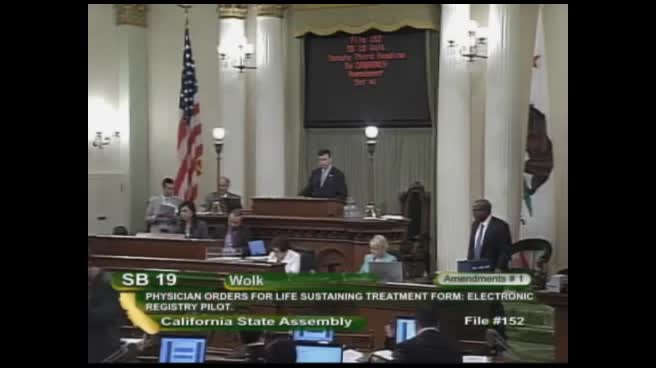 45SEC
Assembly Floor
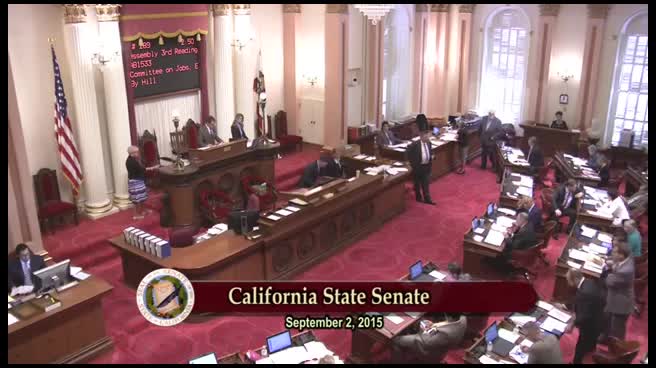 3MIN
Senate Floor
 18SEC
Senate Standing Committee on Appropriations
 5MIN
Senate Standing Committee on Education
 1MIN
Assembly Floor
 22MIN
Assembly Standing Committee on Education
Bill Author

Bill Co-Author(s):
