AB 15: Limitation of actions: human rights abuses.
- Session Year: 2015-2016
- House: Assembly
- Latest Version Date: 2015-10-04
Existing law requires a civil action brought by a victim of human trafficking, as defined, to be commenced within 5 years of the date on which the trafficking victim was freed from the trafficking situation or, if the victim was a minor when the act of human trafficking against the victim occurred, within 8 years after the date the plaintiff attains the age of majority.
This bill would require a civil action for human trafficking, as defined, to be commenced within 7 years of the date on which the trafficking victim was freed from the trafficking situation or, if the victim was a minor when the act of human trafficking against the victim occurred, within 10 years after the date the plaintiff attains the age of majority.
Existing law requires a civil action for assault, battery, or injury to, or for the death of, an individual caused by the wrongful act or neglect of another to be commenced with 2 years.
This bill would require (1) a civil action for assault, battery, or wrongful death, when the conduct would also constitute torture, genocide, a war crime, an attempted extrajudicial killing, or a crime against humanity, as defined, (2) a civil action for the taking of property in violation of international law, as defined, or (3) a civil action seeking benefits under an insurance policy, where the insurance claim arises out of any of the conduct specified above, to be commenced within 10 years. The bill would authorize a prevailing plaintiff to recover reasonable attorneys fees and litigation costs. The bill would provide that the provisions are severable, as specified.
Existing law requires a civil action brought by a victim of human trafficking, as defined, to be commenced within 5 years of the date on which the trafficking victim was freed from the trafficking situation or, if the victim was a minor when the act of human trafficking against the victim occurred, within 8 years after the date the plaintiff attains the age of majority.
This bill would require a civil action for human trafficking, as defined, to be commenced within 7 years of the date on which the trafficking victim was freed from the trafficking situation or, if the victim was a minor when the act of human trafficking against the victim occurred, within 10 years after the date the plaintiff attains the age of majority.
Existing law requires a civil action for assault, battery, or injury to, or for the death of, an individual caused by the wrongful act or neglect of another to be commenced with 2 years.
This bill would require (1) a civil action for assault, battery, or wrongful death, when the conduct would also constitute torture, genocide, a war crime, an attempted extrajudicial killing, or a crime against humanity, as defined, (2) a civil action for the taking of property in violation of international law, as defined, or (3) a civil action seeking benefits under an insurance policy, where the insurance claim arises out of any of the conduct specified above, to be commenced within 10 years. The bill would authorize a prevailing plaintiff to recover reasonable attorneys fees and litigation costs. The bill would require these provisions to be construed as applying retroactively and would provide that these the provisions are severable, as specified.
Existing law requires a civil action brought by a victim of human trafficking, as defined, to be commenced within 5 years of the date on which the trafficking victim was freed from the trafficking situation or, if the victim was a minor when the act of human trafficking against the victim occurred, within 8 years after the date the plaintiff attains the age of majority.
This bill would require a civil action for human trafficking, as defined, to be commenced within 7 years of the date on which the trafficking victim was freed from the trafficking situation or, if the victim was a minor when the act of human trafficking against the victim occurred, within 10 years after the date the plaintiff attains the age of majority.
Existing law requires a civil action for assault, battery, or injury to, or for the death of, an individual caused by the wrongful act or neglect of another to be commenced with 2 years. Existing law requires a civil action brought by a victim of human trafficking, as defined, to be commenced within 5 years of the date on which the trafficking victim was freed from the trafficking situation or, if the victim was a minor when the act of human trafficking against the victim occurred, within 8 years after the date the plaintiff attains the age of majority.
This bill would instead require (1) a civil action for assault, battery, or wrongful death, when the conduct would also constitute torture, genocide, a war crime, an attempted extrajudicial killing, or a crime against humanity, as defined, (2) a civil action for the taking of property in violation of international law, as defined, or (3) a civil action seeking benefits under an insurance policy, where the insurance claim arises out of any of the conduct specified above, to be commenced within 10 years. The bill would also require a civil action for human trafficking or the taking of property in violation of international law, as specified, or a civil action seeking benefits under an insurance policy, where the insurance claim arises out of any of the conduct specified above, to be commenced within 10 years. The bill would authorize a prevailing plaintiff to recover reasonable attorneys fees and litigation costs. The bill would require these provisions to be construed as applying retroactively and would provide that these provisions are severable, as specified.
Existing law requires a civil action for assault, battery, or injury to, or for the death of, an individual caused by the wrongful act or neglect of another to be commenced with 2 years. Existing law requires a civil action brought by a victim of human trafficking, as defined, to be commenced within 5 years of the date on which the trafficking victim was freed from the trafficking situation or, if the victim was a minor when the act of human trafficking against the victim occurred, within 8 years after the date the plaintiff attains the age of majority.
This bill would instead require a civil action for assault, battery, or wrongful death, when the conduct would also constitute torture, genocide, a war crime, an attempted extrajudicial killing, or a crime against humanity, as defined, to be commenced within 10 years. The bill would also require a civil action for human trafficking or the taking of property in violation of international law, as specified, or a civil action seeking benefits under an insurance policy, where the insurance claim arises out of any of the conduct specified above, to be commenced within 10 years. The bill would authorize a prevailing plaintiff to recover reasonable attorneys fees and litigation costs. The bill would require these provisions to be construed as applying retroactively and would provide that these provisions are severable, as specified.
Existing law establishes a minimum wage for all industries and prescribes requirements relative to payment of prevailing wages on public works.
This bill would express the intent of the Legislature to enact legislation that would provide for a living wage for work performed by parties who contract with the state.
(a)A victim of human trafficking, as defined in Section 236.1 of the Penal Code, may bring a civil action for actual damages, compensatory damages, punitive damages, injunctive relief, any combination of those, or any other appropriate relief. A prevailing plaintiff may also be awarded attorneys fees and costs.
(b)In addition to the remedies specified in this section, in an action under subdivision (a), the plaintiff may be awarded up to three times his or her actual damages or ten thousand dollars ($10,000), whichever is greater. In addition, punitive damages may also be awarded upon proof of the defendants malice, oppression, fraud, or duress in committing the act of human trafficking.
(c)An action brought pursuant to this section shall be commenced within seven years of the date on which the trafficking victim was freed from the trafficking situation or, if the victim was a minor when the act of human trafficking against the victim occurred, within 10 years after the date the plaintiff attains the age of majority.
(d)If a person entitled to sue is under a disability at the time the cause of action accrues so that it is impossible or impracticable for him or her to bring an action, the time of the disability is not part of the time limited for the commencement of the action. Disability will toll the running of the statute of limitations for this action.
(1)Disability includes being a minor, lacking legal capacity to make decisions, imprisonment, or other incapacity or incompetence.
(2)The statute of limitations shall not run against a plaintiff who is a minor or who lacks the legal competence to make decisions simply because a guardian ad litem has been appointed. A guardian ad litems failure to bring a plaintiffs action within the applicable limitation period will not prejudice the plaintiffs right to do so after his or her disability ceases.
(3)A defendant is estopped from asserting a defense of the statute of limitations when the expiration of the statute is due to conduct by the defendant inducing the plaintiff to delay the filing of the action, or due to threats made by the defendant causing duress upon the plaintiff.
(4)The suspension of the statute of limitations due to disability, lack of knowledge, or estoppel applies to all other related claims arising out of the trafficking situation.
(5)The running of the statute of limitations is postponed during the pendency of criminal proceedings against the victim.
(e)The running of the statute of limitations may be suspended if a person entitled to sue could not have reasonably discovered the cause of action due to circumstances resulting from the trafficking situation, such as psychological trauma, cultural and linguistic isolation, and the inability to access services.
(f)A prevailing plaintiff may also be awarded reasonable attorneys fees and litigation costs including, but not limited to, expert witness fees and expenses as part of the costs.
(g)Restitution paid by the defendant to the victim shall be credited against a judgment, award, or settlement obtained pursuant to an action under this section. A judgment, award, or settlement obtained pursuant to an action under this section shall be subject to Section 13963 of the Government Code.
(h)A civil action filed under this section shall be stayed during the pendency of any criminal action arising out of the same occurrence in which the claimant is the victim. As used in this section, a criminal action includes investigation and prosecution, and is pending until a final adjudication in the trial court or dismissal.
SEC. 2.Section 354.8 is added to the Code of Civil Procedure, to read:354.8.(a)Notwithstanding any other law, including, but not limited to Section 335.1, the following actions shall be commenced within 10 years:
(1)An action for assault, battery, or both, where the conduct constituting the assault or battery would also constitute any of the following:
(A)An act of torture, as described in Section 206 of the Penal Code.
(B)An act of genocide, as described in Section 1091(a) of Title 18 of the United States Code.
(C)A war crime, as defined in Section 2441 of Title 18 of the United States Code.
(D)An attempted extrajudicial killing, as defined in Section 3(a) of Public Law 102-256.
(E)(i)Crimes against humanity.
(ii)For purposes of this paragraph, crimes against humanity means any of the following acts as part of a widespread or systematic attack directed against a civil population, with knowledge of the attack:
(I)Murder.
(II)Extermination.
(III)Enslavement.
(IV)Forcible transfer of population.
(V)Arbitrary detention.
(VI)Rape, sexual slavery, enforced prostitution, forced pregnancy, enforced sterilization, or any other form of sexual violence of comparable gravity.
(VII)Persecution on political, race, national, ethnic, cultural, religious, or gender grounds.
(VIII)Enforced disappearance of persons.
(IX)Other inhuman acts of similar character intentionally causing great suffering, serious bodily injury, or serious mental injury.
(2)An action for wrongful death, where the death arises out of conduct constituting any of the acts described in paragraph (1), or where the death would constitute an extrajudicial killing, as defined in Section 3(a) of Public Law 102-256.
(3)An action for the taking of property in violation of international law, in which either of the following apply:
(A)That property, or any property exchanged for such property, is present in the United States in connection with a commercial activity carried on in the United States by a foreign state.
(B)That property, or any property exchanged for such property, is owned or operated by an agency or instrumentality of a foreign state and that agency or instrumentality is engaged in a commercial activity in the United States.
(4)An action seeking benefits under an insurance policy where the insurance claim arises out of any of the conduct described in paragraphs (1) to (3), inclusive.
(b)An action brought under this section shall not be dismissed for failure to comply with any previously applicable statute of limitations.
(c)Section 361 shall not apply to an action brought pursuant to this section if all or part of the unlawful act or acts out of which the action arises occurred in this state.
(d)A prevailing plaintiff may be awarded reasonable attorneys fees and litigation costs including, but not limited to, expert witness fees and expenses as part of the costs.
(e)This section shall apply to all actions commenced concerning an act described in paragraphs (1) to (4), inclusive, of subdivision (a), that occurs on or after January 1, 2016.
(f)The provisions of this section are severable. If any provision of this section or its application is held invalid, that invalidity shall not affect other provisions or applications that can be given effect without the invalid provision or application.
(a)A victim of human trafficking, as defined in Section 236.1 of the Penal Code, may bring a civil action for actual damages, compensatory damages, punitive damages, injunctive relief, any combination of those, or any other appropriate relief. A prevailing plaintiff may also be awarded attorneys fees and costs.
(b)In addition to the remedies specified in this section, in an action under subdivision (a), the plaintiff may be awarded up to three times his or her actual damages or ten thousand dollars ($10,000), whichever is greater. In addition, punitive damages may also be awarded upon proof of the defendants malice, oppression, fraud, or duress in committing the act of human trafficking.
(c)An action brought pursuant to this section shall be commenced within seven years of the date on which the trafficking victim was freed from the trafficking situation or, if the victim was a minor when the act of human trafficking against the victim occurred, within 10 years after the date the plaintiff attains the age of majority.
(d)If a person entitled to sue is under a disability at the time the cause of action accrues so that it is impossible or impracticable for him or her to bring an action, the time of the disability is not part of the time limited for the commencement of the action. Disability will toll the running of the statute of limitation limitations for this action.
(1)Disability includes being a minor, lacking legal capacity to make decisions, imprisonment, or other incapacity or incompetence.
(2)The statute of limitations shall not run against a plaintiff who is a minor or who lacks the legal competence to make decisions simply because a guardian ad litem has been appointed. A guardian ad litems failure to bring a plaintiffs action within the applicable limitation period will not prejudice the plaintiffs right to do so after his or her disability ceases.
(3)A defendant is estopped from asserting a defense of the statute of limitations when the expiration of the statute is due to conduct by the defendant inducing the plaintiff to delay the filing of the action, or due to threats made by the defendant causing duress upon the plaintiff.
(4)The suspension of the statute of limitations due to disability, lack of knowledge, or estoppel applies to all other related claims arising out of the trafficking situation.
(5)The running of the statute of limitations is postponed during the pendency of criminal proceedings against the victim.
(e)The running of the statute of limitations may be suspended if a person entitled to sue could not have reasonably discovered the cause of action due to circumstances resulting from the trafficking situation, such as psychological trauma, cultural and linguistic isolation, and the inability to access services.
(f)A prevailing plaintiff may also be awarded reasonable attorneys fees and litigation costs including, but not limited to, expert witness fees and expenses as part of the costs.
(g)Restitution paid by the defendant to the victim shall be credited against a judgment, award, or settlement obtained pursuant to an action under this section. A judgment, award, or settlement obtained pursuant to an action under this section shall be subject to Section 13963 of the Government Code.
(h)A civil action filed under this section shall be stayed during the pendency of any criminal action arising out of the same occurrence in which the claimant is the victim. As used in this section, a criminal action includes investigation and prosecution, and is pending until a final adjudication in the trial court or dismissal.
SEC. 2.Section 354.8 is added to the Code of Civil Procedure, to read:354.8.(a)Notwithstanding any other law, including, but not limited to Section 335.1, the following actions shall be commenced within 10 years:
(1)An action for assault, battery, or both, where the conduct constituting the assault or battery would also constitute any of the following:
(A)An act of torture, as described in Section 206 of the Penal Code.
(B)An act of genocide, as described in Section 1091(a) of Title 18 of the United States Code.
(C)A war crime, as defined in Section 2441 of Title 18 of the United States Code.
(D)An attempted extrajudicial killing, as defined in Section 3(a) of Public Law 102-256.
(E)(i)Crimes against humanity.
(ii)For purposes of this paragraph, crimes against humanity means any of the following acts as part of a widespread or systematic attack directed against a civil population, with knowledge of the attack:
(I)Murder.
(II)Extermination.
(III)Enslavement.
(IV)Forcible transfer of population.
(V)Arbitrary detention.
(VI)Rape, sexual slavery, enforced prostitution, forced pregnancy, enforced sterilization, or any other form of sexual violence of comparable gravity.
(VII)Persecution on political, race, national, ethnic, cultural, religious, or gender grounds.
(VIII)Enforced disappearance of persons.
(IX)Other inhuman acts of similar character intentionally causing great suffering, serious bodily injury, or serious mental injury.
(2)An action for wrongful death, where the death arises out of conduct constituting any of the acts described in paragraph (1), or where the death would constitute an extrajudicial killing, as defined in Section 3(a) of Public Law 102-256.
(3)An action for the taking of property in violation of international law, in which either of the following apply:
(A)That property, or any property exchanged for such property, is present in the United States in connection with a commercial activity carried on in the United States by a foreign state.
(B)That property, or any property exchanged for such property, is owned or operated by an agency or instrumentality of a foreign state and that agency or instrumentality is engaged in a commercial activity in the United States.
(4)An action seeking benefits under an insurance policy where the insurance claim arises out of any of the conduct described in paragraphs (1) to (3), inclusive.
(b)An action brought under this section shall not be dismissed for failure to comply with any previously applicable statute of limitations.
(c)Section 361 shall not apply to an action brought under this section. pursuant to this section if all or part of the unlawful act or acts out of which the action arises occurred in this state.
(d)A prevailing plaintiff may be awarded reasonable attorneys fees and litigation costs including, but not limited to, expert witness fees and expenses as part of the costs.
(e)This section shall apply to all actions commenced concerning an act described in paragraphs (1) to (4), inclusive, of subdivision (a), that occurs on or after January 1, 2016.
(f)The provisions of this section are severable. If any provision of this section or its application is held invalid, that invalidity shall not affect other provisions or applications that can be given effect without the invalid provision or application.
(a)A victim of human trafficking, as defined in Section 236.1 of the Penal Code, may bring a civil action for actual damages, compensatory damages, punitive damages, injunctive relief, any combination of those, or any other appropriate relief. A prevailing plaintiff may also be awarded attorneys fees and costs.
(b)In addition to the remedies specified in this section, in an action under subdivision (a), the plaintiff may be awarded up to three times his or her actual damages or ten thousand dollars ($10,000), whichever is greater. In addition, punitive damages may also be awarded upon proof of the defendants malice, oppression, fraud, or duress in committing the act of human trafficking.
(c)An action brought pursuant to this section shall be commenced within seven years of the date on which the trafficking victim was freed from the trafficking situation or, if the victim was a minor when the act of human trafficking against the victim occurred, within 10 years after the date the plaintiff attains the age of majority.
(d)If a person entitled to sue is under a disability at the time the cause of action accrues, accrues so that it is impossible or impracticable for him or her to bring an action, then the time of the disability is not part of the time limited for the commencement of the action. Disability will toll the running of the statute of limitation for this action.
(1)Disability includes being a minor, lacking legal capacity to make decisions, imprisonment, or other incapacity or incompetence.
(2)The statute of limitations shall not run against a plaintiff who is a minor or who lacks the legal competence to make decisions simply because a guardian ad litem has been appointed. A guardian ad litems failure to bring a plaintiffs action within the applicable limitation period will not prejudice the plaintiffs right to do so after his or her disability ceases.
(3)A defendant is estopped from asserting a defense of the statute of limitations when the expiration of the statute is due to conduct by the defendant inducing the plaintiff to delay the filing of the action, or due to threats made by the defendant causing duress upon the plaintiff.
(4)The suspension of the statute of limitations due to disability, lack of knowledge, or estoppel applies to all other related claims arising out of the trafficking situation.
(5)The running of the statute of limitations is postponed during the pendency of criminal proceedings against the victim.
(e)The running of the statute of limitations may be suspended if a person entitled to sue could not have reasonably discovered the cause of action due to circumstances resulting from the trafficking situation, such as psychological trauma, cultural and linguistic isolation, and the inability to access services.
(f)A prevailing plaintiff may also be awarded reasonable attorneys fees and litigation costs including, but not limited to, expert witness fees and expenses as part of the costs.
(g)Restitution paid by the defendant to the victim shall be credited against a judgment, award, or settlement obtained pursuant to this section. A judgment, award, or settlement obtained pursuant to an action under this section shall be subject to Section 13963 of the Government Code.
(h)A civil action filed under this section shall be stayed during the pendency of any criminal action arising out of the same occurrence in which the claimant is the victim. As used in this section, a criminal action includes investigation and prosecution, and is pending until a final adjudication in the trial court or dismissal.
SEC. 2.Section 354.8 is added to the Code of Civil Procedure, to read:354.8.(a)Notwithstanding any other law, including, but not limited to Section 335.1, the following actions shall be commenced within 10 years:
(1)An action for assault, battery, or both, where the conduct constituting the assault or battery would also constitute any of the following:
(A)An act of torture, as described in Section 206 of the Penal Code.
(B)An act of genocide, as described in Section 1091(a) of Title 18 of the United States Code.
(C)A war crime, as defined in Section 2441 of Title 18 of the United States Code.
(D)An attempted extrajudicial killing, as defined in Section 3(a) of Public Law 102-256.
(E)(i)Crimes against humanity.
(ii)For purposes of this paragraph, crimes against humanity means any of the following acts as part of a widespread or systematic attack directed against a civil population, with knowledge of the attack:
(I)Murder.
(II)Extermination.
(III)Enslavement.
(IV)Forcible transfer of population.
(V)Arbitrary detention.
(VI)Rape, sexual slavery, enforced prostitution, forced pregnancy, enforced sterilization, or any other form of sexual violence of comparable gravity.
(VII)Persecution on political, race, national, ethnic, cultural, religious, or gender grounds.
(VIII)Enforced disappearance of persons.
(IX)Other inhuman acts of similar character intentionally causing great suffering, serious bodily injury, or serious mental injury.
(2)An action for wrongful death, where the death arises out of conduct constituting any of the acts described in paragraph (1), or where the death would constitute an extrajudicial killing, as defined in Section 3(a) of Public Law 102-256.
(3)An action for the taking of property in violation of international law, in which either of the following apply:
(A)That property, or any property exchanged for such property, is present in the United States in connection with a commercial activity carried on in the United States by a foreign state.
(B)That property, or any property exchanged for such property, is owned or operated by an agency or instrumentality of a foreign state and that agency or instrumentality is engaged in a commercial activity in the United States.
(4)An action seeking benefits under an insurance policy where the insurance claim arises out of any of the conduct described in paragraphs (1) to (3), inclusive.
(b)An action brought under this section shall not be dismissed for failure to comply with any previously applicable statute of limitations.
(c)Section 361 shall not apply to an action brought under this section.
(d)A prevailing plaintiff may be awarded reasonable attorneys fees and litigation costs including, but not limited to, expert witness fees and expenses as part of the costs.
(e)(1)This section shall apply to all actions commenced concerning an act described in paragraphs (1) to (4), inclusive, of subdivision (a), that occurs on or after January 1, 2016.
(2)This section shall also be construed to apply retroactively, and shall apply regardless of when an action or claim accrues or is filed and regardless of whether it may have lapsed or otherwise been barred by time under the laws of the state, if the conduct or action upon which the victims or plaintiffs claim is based occurred within 115 years before January 1, 2016.
(f)This section shall apply to all pending and statutorily-barred actions commenced on or before January 1, 2018, including any actions dismissed based on the expiration of statutes of limitations in effect before January 1, 2016, if the judgment in that action is not yet final or if the time for filing an appeal from a decision on that action has not expired, if the action concerns an act described in paragraphs (1) to (4), inclusive, of subdivision (a), that occurred within 115 years before January 1, 2016.
(g)
(f)The provisions of this section are severable. If any provision of this act section or its application is held invalid, that invalidity shall not affect other provisions or applications that can be given effect without the invalid provision or application.
(a)A victim of human trafficking, as defined in Section 236.1 of the Penal Code, may bring a civil action for actual damages, compensatory damages, punitive damages, injunctive relief, any combination of those, or any other appropriate relief. A prevailing plaintiff may also be awarded attorneys fees and costs.
(b)In addition to the remedies specified in this section, in an action under subdivision (a), the plaintiff may be awarded up to three times his or her actual damages or ten thousand dollars ($10,000), whichever is greater. In addition, punitive damages may also be awarded upon proof of the defendants malice, oppression, fraud, or duress in committing the act of human trafficking.
(c)An action brought pursuant to this section shall be commenced within seven years of the date on which the trafficking victim was freed from the trafficking situation or, if the victim was a minor when the act of human trafficking against the victim occurred, within 10 years after the date the plaintiff attains the age of majority.
(c)
(d)If a person entitled to sue is under a disability at the time the cause of action accrues, so that it is impossible or impracticable for him or her to bring an action, then the time of the disability is not part of the time limited for the commencement of the action. Disability will toll the running of the statute of limitation for this action.
(1)Disability includes being a minor, lacking legal capacity to make decisions, imprisonment, or other incapacity or incompetence.
(2)The statute of limitations shall not run against a plaintiff who is a minor or who lacks the legal competence to make decisions simply because a guardian ad litem has been appointed. A guardian ad litems failure to bring a plaintiffs action within the applicable limitation period will not prejudice the plaintiffs right to do so after his or her disability ceases.
(3)A defendant is estopped to assert from asserting a defense of the statute of limitations when the expiration of the statute is due to conduct by the defendant inducing the plaintiff to delay the filing of the action, or due to threats made by the defendant causing duress upon the plaintiff.
(4)The suspension of the statute of limitations due to disability, lack of knowledge, or estoppel applies to all other related claims arising out of the trafficking situation.
(5)The running of the statute of limitations is postponed during the pendency of criminal proceedings against the victim.
(d)
(e)The running of the statute of limitations may be suspended where if a person entitled to sue could not have reasonably discovered the cause of action due to circumstances resulting from the trafficking situation, such as psychological trauma, cultural and linguistic isolation, and the inability to access services.
(e)
(f)A prevailing plaintiff may also be awarded reasonable attorneys fees and litigation costs including, but not limited to, expert witness fees and expenses as part of the costs.
(f)
(g)Restitution paid by the defendant to the victim shall be credited against a judgment, award, or settlement obtained pursuant to this section. A judgment, award, or settlement obtained pursuant to an action under this section shall be subject to the provisions of Section 13963 of the Government Code.
(g)
(h)A civil action filed under this section shall be stayed during the pendency of any criminal action arising out of the same occurrence in which the claimant is the victim. As used in this section, a criminal action includes investigation and prosecution, and is pending until a final adjudication in the trial court or dismissal.
SEC. 2.Section 354.8 is added to the Code of Civil Procedure, to read:354.8.(a)Notwithstanding any other law, including, but not limited to Section 335.1, the following actions shall be commenced within 10 years:
(1)An action for assault, battery, or both, where the conduct constituting the assault or battery would also constitute any of the following:
(A)An act of torture, as described in Section 206 of the Penal Code.
(B)An act of genocide, as described in Section 1091(a) of Title 18 of the United States Code.
(C)A war crime, as defined in Section 2441 of Title 18 of the United States Code.
(D)An attempted extrajudicial killing, as defined in Section 3(a) of Public Law 102-256.
(E)(i)Crimes against humanity.
(ii)For purposes of this paragraph, crimes against humanity means any of the following acts as part of a widespread or systematic attack directed against a civil population, with knowledge of the attack:
(I)Murder.
(II)Extermination.
(III)Enslavement.
(IV)Forcible transfer of population.
(V)Arbitrary detention.
(VI)Rape, sexual slavery, enforced prostitution, forced pregnancy, enforced sterilization, or any other form of sexual violence of comparable gravity.
(VII)Persecution on political, race, national, ethnic, cultural, religious, or gender grounds.
(VIII)Enforced disappearance of persons.
(IX)Other inhuman acts of similar character intentionally causing great suffering, serious bodily injury, or serious mental injury.
(2)An action for wrongful death, where the death arises out of conduct constituting any of the acts described in paragraph (1), or where the death would constitute an extrajudicial killing, as defined in Section 3(a) of Public Law 102-256.
(3)An action brought pursuant to Section 52.5 of the Civil Code.
(4)
(3)An action for the taking of property in violation of international law, in which either of the following apply:
(A)That property, or any property exchanged for such property, is present in the United States in connection with a commercial activity carried on in the United States by a foreign state.
(B)That property, or any property exchanged for such property, is owned or operated by an agency or instrumentality of a foreign state and that agency or instrumentality is engaged in a commercial activity in the United States.
(5)
(4)An action seeking benefits under an insurance policy where the insurance claim arises out of any of the conduct described in paragraphs (1) to (4), (3), inclusive.
(b)An action brought under this section shall not be dismissed for failure to comply with any previously applicable statute of limitations.
(c)Section 361 shall not apply to an action brought under this section.
(d)A prevailing plaintiff may be awarded reasonable attorneys fees and litigation costs including, but not limited to, expert witness fees and expenses as part of the costs.
(e)(1)This section shall apply to all actions commenced concerning an act described in paragraphs (1) to (4), inclusive, of subdivision (a), that occurs on or after January 1, 2016.
(e)
(2)This section shall also be construed to apply retroactively, and shall apply regardless of when an action or claim accrues or is filed and regardless of whether it may have lapsed or otherwise been barred by time under the laws of the state. state, if the conduct or action upon which the victims or plaintiffs claim is based occurred within 115 years before January 1, 2016.
(f)This section shall apply to all pending and future statutorily-barred actions commenced on or before January 1, 2016, 2018, including any actions dismissed based on the expiration of statutes of limitations in effect before January 1, 2016, if the judgment in that action is not yet final or if the time for filing an appeal from a decision on that action has not expired, if the action concerns an act described in paragraphs (1) to (5), (4), inclusive, of subdivision (a), that occurred within 115 years before January 1, 2016.
(g)The provisions of this section are severable. If any provision of this act or its application is held invalid, that invalidity shall not affect other provisions or applications that can be given effect without the invalid provision or application.
(a)A victim of human trafficking, as defined in Section 236.1 of the Penal Code, may bring a civil action for actual damages, compensatory damages, punitive damages, injunctive relief, any combination of those, or any other appropriate relief. A prevailing plaintiff may also be awarded attorneys fees and costs.
(b)In addition to the remedies specified herein, in this section, in an action under subdivision (a), the plaintiff may be awarded up to three times his or her actual damages or ten thousand dollars ($10,000), whichever is greater. In addition, punitive damages may also be awarded upon proof of the defendants malice, oppression, fraud, or duress in committing the act of human trafficking.
(c)An action brought pursuant to this section shall be commenced within five years of the date on which the trafficking victim was freed from the trafficking situation or, if the victim was a minor when the act of human trafficking against the victim occurred, within eight years after the date the plaintiff attains the age of majority.
(d)
(c)If a person entitled to sue is under a disability at the time the cause of action accrues, so that it is impossible or impracticable for him or her to bring an action, then the time of the disability is not part of the time limited for the commencement of the action. Disability will toll the running of the statute of limitation for this action.
(1)Disability includes being a minor, lacking legal capacity to make decisions, imprisonment, or other incapacity or incompetence.
(2)The statute of limitations shall not run against a plaintiff who is a minor or who lacks the legal competence to make decisions simply because a guardian ad litem has been appointed. A guardian ad litems failure to bring a plaintiffs action within the applicable limitation period will not prejudice the plaintiffs right to do so after his or her disability ceases.
(3)A defendant is estopped to assert a defense of the statute of limitations when the expiration of the statute is due to conduct by the defendant inducing the plaintiff to delay the filing of the action, or due to threats made by the defendant causing duress upon the plaintiff.
(4)The suspension of the statute of limitations due to disability, lack of knowledge, or estoppel applies to all other related claims arising out of the trafficking situation.
(5)The running of the statute of limitations is postponed during the pendency of criminal proceedings against the victim.
(e)
(d)The running of the statute of limitations may be suspended where a person entitled to sue could not have reasonably discovered the cause of action due to circumstances resulting from the trafficking situation, such as psychological trauma, cultural and linguistic isolation, and the inability to access services.
(f)
(e)A prevailing plaintiff may also be awarded reasonable attorneys fees and litigation costs including, but not limited to, expert witness fees and expenses as part of the costs.
(g)
(f)Restitution paid by the defendant to the victim shall be credited against a judgment, award, or settlement obtained pursuant to this section. A judgment, award, or settlement obtained pursuant to an action under this section shall be subject to the provisions of Section 13963 of the Government Code.
(h)
(g)A civil action filed under this section shall be stayed during the pendency of any criminal action arising out of the same occurrence in which the claimant is the victim. As used in this section, a criminal action includes investigation and prosecution, and is pending until a final adjudication in the trial court or dismissal.
SEC. 2.Section 354.8 is added to the Code of Civil Procedure, to read:354.8.(a)Notwithstanding any other law, including, but not limited to Section 335.1, the following actions shall be commenced within 10 years:
(1)An action for assault, battery, or both, where the conduct constituting the assault or battery would also constitute any of the following:
(A)An act of torture, as described in Section 206 of the Penal Code.
(B)An act of genocide, as described in Section 1091(a) of Title 18 of the United States Code.
(C)A war crime, as defined in Section 2441 of Title 18 of the United States Code.
(D)An attempted extrajudicial killing, as defined in Section 3(a) of Public Law 102-256.
(E)(i)Crimes against humanity.
(ii)For purposes of this paragraph, crimes against humanity means any of the following acts as part of a widespread or systematic attack directed against a civil population, with knowledge of the attack:
(I)Murder.
(II)Extermination.
(III)Enslavement.
(IV)Forcible transfer of population.
(V)Arbitrary detention.
(VI)Rape, sexual slavery, enforced prostitution, forced pregnancy, enforced sterilization, or any other form of sexual violence of comparable gravity.
(VII)Persecution on political, race, national, ethnic, cultural, religious, or gender grounds.
(VIII)Enforced disappearance of persons.
(IX)Other inhuman acts of similar character intentionally causing great suffering, serious bodily injury, or serious mental injury.
(2)An action for wrongful death, where the death arises out of conduct constituting any of the acts described in paragraph (1), or where the death would constitute an extrajudicial killing, as defined in Section 3(a) of Public Law 102-256.
(3)An action brought pursuant to Section 52.5 of the Civil Code.
(4)An action for the taking of property in violation of international law, in which either of the following apply:
(A)That property, or any property exchanged for such property, is present in the United States in connection with a commercial activity carried on in the United States by a foreign state.
(B)That property, or any property exchanged for such property, is owned or operated by an agency or instrumentality of a foreign state and that agency or instrumentality is engaged in a commercial activity in the United States.
(5)An action seeking benefits under an insurance policy where the insurance claim arises out of any of the conduct described in paragraphs (1) to (4), inclusive.
(b)An action brought under this section shall not be dismissed for failure to comply with any previously applicable statute of limitations.
(c)Section 361 shall not apply to an action brought under this section.
(d)A prevailing plaintiff may be awarded reasonable attorneys fees and litigation costs including, but not limited to, expert witness fees and expenses as part of the costs.
(e)This section shall be construed to apply retroactively, and shall apply regardless of when an action or claim accrues or is filed and regardless of whether it may have lapsed or otherwise been barred by time under the laws of the state.
(f)This section shall apply to all pending and future actions commenced on or before January 1, 2016, including any actions dismissed based on the expiration of statutes of limitations in effect before January 1, 2016, if the judgment in that action is not yet final or if the time for filing an appeal from a decision on that action has not expired, if the action concerns an act described in paragraphs (1) to (5), inclusive, of subdivision (a), that occurred within 115 years before January 1, 2016.
(g)The provisions of this section are severable. If any provision of this act or its application is held invalid, that invalidity shall not affect other provisions or applications that can be given effect without the invalid provision or application.
SECTION 1.(a)The Legislature finds and declares the following:
(1)Raising the pay of low-wage workers increases their morale and the productivity and quality of their work, lowers turnover and its accompanying costs, and reduces supervisory costs.
(2)These savings and quality improvements will lead to improved economy and efficiency in state government procurement.
(b) Accordingly, it is the intent of the Legislature to enact legislation that would increase efficiency and cost savings in the work performed by parties who contract with the state government by providing a living wage.
(a)The Legislature finds and declares the following:
(1)Raising the pay of low-wage workers increases their morale and the productivity and quality of their work, lowers turnover and its accompanying costs, and reduces supervisory costs.
(2)These savings and quality improvements will lead to improved economy and efficiency in state government procurement.
(b) Accordingly, it is the intent of the Legislature to enact legislation that would increase efficiency and cost savings in the work performed by parties who contract with the state government by providing a living wage.
|
Date
|
Status
|
|---|---|
| Oct 4, 2015 | Chaptered by Secretary of State - Chapter 474, Statutes of 2015. |
| Oct 4, 2015 | Approved by the Governor. |
| Sep 17, 2015 | Enrolled and presented to the Governor at 11:30 a.m. |
| Sep 9, 2015 | Senate amendments concurred in. To Engrossing and Enrolling. (Ayes 79. Noes 0. Page 3008.). |
| Sep 9, 2015 | Assembly Rule 77 suspended. (Page 2990.) |
| Sep 9, 2015 | Senate amendments concurred in. To Engrossing and Enrolling. (Ayes 79. Noes 0.). |
| Sep 9, 2015 | Senate amendments concurred in. To Engrossing and Enrolling. |
| Sep 9, 2015 | Assembly Rule 77 suspended. |
| Sep 8, 2015 | Read third time. Passed. Ordered to the Assembly. (Ayes 40. Noes 0. Page 2581.). |
| Sep 8, 2015 | In Assembly. Concurrence in Senate amendments pending. May be considered on or after September 10 pursuant to Assembly Rule 77. |
| Sep 8, 2015 | Read third time. Passed. Ordered to the Assembly. |
| Sep 1, 2015 | Read second time and amended. Ordered to third reading. |
| Aug 31, 2015 | From committee: Amend, and do pass as amended. (Ayes 7. Noes 0.) (August 27). |
| Aug 17, 2015 | In committee: Referred to APPR. suspense file. |
| Jul 15, 2015 | Read second time and amended. Re-referred to Com. on APPR. |
| Jul 14, 2015 | From committee: Amend, and do pass as amended and re-refer to Com. on APPR. (Ayes 6. Noes 0.) (July 7). |
| Jul 7, 2015 | In committee: Set first hearing. Held in committee. Reconsideration of a favorable vote granted. |
| May 28, 2015 | Referred to Coms. on JUD. and APPR. |
| May 14, 2015 | In Senate. Read first time. To Com. on RLS. for assignment. |
| May 14, 2015 | Read third time. Passed. Ordered to the Senate. (Ayes 79. Noes 0. Page 1435.) |
| May 14, 2015 | Read third time. Passed. Ordered to the Senate. |
| May 7, 2015 | Read second time. Ordered to third reading. |
| May 6, 2015 | Read second time and amended. Ordered returned to second reading. |
| May 5, 2015 | From committee: Amend, and do pass as amended. (Ayes 10. Noes 0.) (May 5). |
| Apr 8, 2015 | In committee: Set, first hearing. Hearing canceled at the request of author. |
| Apr 6, 2015 | Re-referred to Com. on JUD. |
| Mar 26, 2015 | From committee chair, with author's amendments: Amend, and re-refer to Com. on JUD. Read second time and amended. |
| Mar 26, 2015 | Referred to Com. on JUD. |
| Dec 2, 2014 | From printer. May be heard in committee January 1. |
| Dec 1, 2014 | Read first time. To print. |
|
Date
|
Description
|
Location
|
Votes
|
|
|---|---|---|---|---|
| Sep 9, 2015 | AB 15 HOLDEN Concurrence in Senate Amendments | Assembly Floor |
Passed |
|
| Sep 8, 2015 | Assembly 3rd Reading AB15 Holden By Jackson | Senate Floor |
Passed |
|
| Aug 27, 2015 | Do pass as amended | Senate Standing Committee on Appropriations |
Passed |
|
| Aug 17, 2015 | Placed on suspense file | Senate Standing Committee on Appropriations |
Passed |
|
| Jul 7, 2015 | Do pass as amended, but first amend, and re-refer to the Committee on [Appropriations] | Senate Standing Committee on Judiciary |
Passed |
|
| Jul 7, 2015 | [07-07-2015] set for [First] hearing: Held in Committee. Reconsideration of favorable vote granted | Senate Standing Committee on Judiciary |
Passed |
|
| Jul 7, 2015 | Do pass, but first be re-referred to the Committee on [Appropriations] | Senate Standing Committee on Judiciary |
Passed |
|
| May 14, 2015 | AB 15 HOLDEN Assembly Third Reading | Assembly Floor |
Passed |
|
| May 5, 2015 | Do pass as amended. | Assembly Standing Committee on Judiciary |
Passed |
This list shows positions taken on this bill by organizations on the date displayed, which is linked to the original source.
Positions by individuals are not included.
AB 15
Page 3
CONCURRENCE IN SENATE AMENDMENTS
AB 15
(Holden)
As Amended September 1, 2015
Majority vote
ASSEMBLY: |
79-0 |
(May 14, 2015) |
SENATE: |
40-0 |
(September 8, 2015) |
Original Committee Reference: JUD.
SUMMARY: Extends the statute of limitations for victims of human trafficking to bring a civil action, as specified, and would create a 10-year statute of limitations to bring actions for specified offenses when the conduct would also constitute torture, genocide, a war crime, an attempted extrajudicial killing, or a crime against humanity, as defined. Specifically, this bill:
Allows a victim up to 10 years to bring a civil tort claim for assault, battery or wrongful death, when a victim can establish that the abuse also constitutes an act of torture, genocide, a war crime, an attempted extrajudicial killing, or a crime against humanity.
Allows an award of reasonable attorney's fees and litigation costs to a prevailing plaintiff.
Requires that a civil action be commenced within 10 years for the taking of property in violation of international law, or a civil action seeking benefits under an insurance policy, where the insurance claim arises out of any conduct that constitutes a human rights violation.
Extends the applicable statutes of limitations for claims by adults and minors: from within five years to within seven years of the date on which the trafficking victim was freed for an adult; and eight years to 10 years after attaining majority age for a minor.
Requires that its provisions are severable and if any provisions or applications are held to be invalid, that invalidity will affect no other provisions or applications that are valid.
The Senate amendments:
Remove the provision that allows the bill to apply retroactively, so long as the conduct or action on which the claim is based occurred within 115 years before January 1, 2016.
Remove the provision that allows this bill to apply to all pending and statutorily barred actions commenced on or before January 1, 2018, including any actions dismissed based on the expiration of statues of limitations in effect before January 1, 2016, with limited exceptions.
Limit the ability of a plaintiff who is a citizen of this state and who has held a cause of action for one of the claims specified in this bill from the time the claim arose in another state, or in a foreign country, and which by the laws of that state or country cannot be maintained there by reason of the lapse of time, to pursue the cause of action within the State of California.
EXISTING LAW:
Requires that an action for assault, battery, or injury to, or for the wrongful death of, an individual be commenced within two years.
Provides that any person who deprives or violates the personal liberty of another intending to obtain forced labor or services, is guilty of human trafficking and will be punished by imprisonment in the state prison for five, eight, or 12 years and a fine of not more than $500,000.
Provides that a victim of human trafficking may bring a civil action for actual damages, compensatory damages, punitive damages, injunctive relief, or any other appropriate relief within five years of the date on which the trafficking victim was freed or, if a minor, when the act of human trafficking occurred, then within eight years after attaining majority age.
Provides that every person who intends to cause cruel or extreme pain and suffering for the purpose of revenge, extortion, persuasion, or for any sadistic purpose, inflicts great bodily injury upon the person of another is guilty of torture.
Provides that whoever, whether in time of peace or in time of war and with the specific intent to destroy, in whole or in substantial part, a national, ethnic, racial, or religious group, is guilty of genocide.
FISCAL EFFECT: According to the Senate Appropriations Committee, unknown, potentially significant increase in state court costs (General Fund) to the extent extending the statutes of limitations to bring civil actions in specified cases results in additional claims. To the extent five additional claims are filed in any one year, assuming one week of court time, annual costs would be in the range of $125,000 (General Fund).
*Trial Court Trust Fund
COMMENTS: This bill creates a new statute of limitations of 10 years in existing law relating to tort claims by victims of human rights violations. It also extends the statute of limitations in existing law relating to civil claims for human trafficking.
Access to California Courts Can Be Critical For Victims. Bringing a lawsuit against perpetrators of human rights violations can deliver justice, offer closure for victims, and act as a powerful deterrent to future abuses. When the perpetrators of these egregious acts are located in California, they should not be able to avoid claims by hiding behind the fact that the acts took place outside of the state or the country. Many of the foreign locations where human rights violations occur do not have adequate mechanisms in place to allow victims the opportunity to have their abuses addressed. Some of these foreign locations have weaker or corrupt legal systems where victims do not stand a chance to attain redress for their injuries. There have even been instances where the foreign government condones the behavior or violations, so protection for victims are nonexistent. This is why the need for an extended statute of limitations for human rights abuses is so great because an extended statute of limitations allows victims time to escape oppressive environments, heal from their wounds, find legal services and then bring their claims before a fair and just court system. Some of the most atrocious human rights violations have occurred in situations where the statute of limitations was too short to allow victims to recover. Many survivors suffer physical and psychological consequences, post-traumatic stress disorders, depression, anxiety, grief and other trauma and are not able to immediately bring their claims. There is also the challenge of finding the right legal services organization to handle the claim. According to those organizations that fight for human rights victims and support this measure, due to the sensitivity and often international nature of human rights abuses, human rights claims require extraordinary time and preparation and pose additional obstacles for victims who need their wrongs to be heard the most.
Analysis Prepared by: Alison Merrilees / JUD. / (916) 319-2334 FN: 0001951
AB 15
Page 9
|
Office of Senate Floor Analyses (916) 651-1520 Fax: (916) 327-4478 |
THIRD READING
Bill No: AB 15
Amended: 9/1/15 in Senate
SENATE JUDICIARY COMMITTEE: 6-0, 7/7/15
AYES: Jackson, Moorlach, Hertzberg, Leno, Monning, Wieckowski
NO VOTE RECORDED: Anderson
[Reconsideration granted on a favorable vote]
SENATE JUDICIARY COMMITTEE: 6-0, 7/7/15
AYES: Jackson, Moorlach, Hertzberg, Leno, Monning, Wieckowski
NO VOTE RECORDED: Anderson
SENATE APPROPRIATIONS COMMITTEE: 7-0, 8/27/15
AYES: Lara, Bates, Beall, Hill, Leyva, Mendoza, Nielsen
ASSEMBLY FLOOR: 79-0, 5/14/15 - See last page for vote
SUBJECT: Limitation of actions: human rights abuses
SOURCE: International Corporate Accountability Roundtable
DIGEST: This bill extends the existing statute of limitations for victims of human trafficking to bring a civil action from seven years, and, in the case of minors, from eight to 10 years after the plaintiff attains the age of majority. This bill also creates a 10 year statute of limitation to bring 1) an action for assault, battery, or both, where the conduct constituting the assault or battery would also constitute specified acts of torture, genocide, a war crime, attempted extrajudicial killing, or crimes against humanity; 2) an action for wrongful death, where the death arises out of conduct constituting any of the acts described above, or where the death would constitute an extrajudicial killing under the federal Torture Victim Protection Act of 1991; 3) an action for specified takings of property in violation of international law; and 4) an action seeking benefits under an insurance policy where the insurance claim arises out of any of the conduct described above.
Existing law:
Provides, under federal law, that any person who engages in any of the following, whether in time of peace or in time of war and with the specific intent to destroy, in whole or in substantial part, a national, ethnic, racial, or religious group as such, is guilty of genocide and will be punished as specified:
Kills members of that group;
Causes serious bodily injury to members of that group;
Causes the permanent impairment of the mental faculties of members of the group through drugs, torture, or similar techniques;
Subjects the group to conditions of life intended to cause the physical destruction of the group in whole or in part;
Imposes measures intended to prevent births within the group; or
Transfers by force children of the group to another group.
Provides, under federal law, that whoever, whether inside or outside the U.S., commits a war crime under certain circumstances (where the person committing the war crime or the victim of the war crime is a member of the U.S. Armed Forces or a national of the U.S.), will be fined or imprisoned for life or any term of years, or both, and, if death results to the victim, will also be subject to the penalty of death. Defines war crimes to include any conduct:
Defined as a grave breach in any of the international conventions signed at Geneva 12 August 1949, or any protocol to such convention to which the U.S. is a party;
Prohibited under specified articles of the Annex to the Hague Convention IV, signed 18 October 1907;
Which constitutes a grave breach, as specified, when committed in the context of and in association with an armed conflict not of an international character; or
Of a person who willfully kills or causes serious injury to civilians, in relation to an armed conflict and contrary to the provisions of the Protocol on Prohibitions or Restrictions on the Use of Mines, Booby-Traps and Other Devices as amended at Geneva on 3 May 1996 (Protocol II as amended on 3 May 1996), when the U.S. is a party to such Protocol.
Provides, under the federal Torture Victim Protection Act of 1991 (TVPA), that an individual who, under actual or apparent authority or color of law of any foreign nation, subjects an individual to torture or to extrajudicial killing, as specified, will be liable for damages to that individual or that individual’s legal representative or to any person who may be a claimant in a wrongful death action. The TVPA provides for a 10 year statute of limitations.
Provides, under the federal Alien Tort Claims Act, that the U.S. federal district courts have original jurisdiction of any civil action by an alien for a tort only, committed in violation of the law of nations or a U.S. treaty.
Provides that every person who, with the intent to cause cruel or extreme pain and suffering for the purpose of revenge, extortion, persuasion, or for any sadistic purpose, inflicts great bodily injury, as specified, upon the person of another is guilty of torture. Provides that the crime of torture requires no proof that the victim suffered pain.
Generally provides that civil actions must be commenced within applicable statutes of limitations, as specified, without exception, unless the Legislature prescribes a different limitation by statute in special cases. Requires, generally that an action for assault, battery, or injury to, or for the death of, an individual caused by the wrongful act or neglect of another be brought within two years.
Provides, under Civil Procedure Code Section 361, that when a cause of action has arisen in another state, or in a foreign country, and by the laws thereof an action thereon cannot be maintained against a person by reason of the lapse of time, an action thereon shall not be maintained against him in California, except in favor of one who has been a citizen of California, and who has held the cause of action from the time it accrued.
Authorizes a victim of human trafficking to bring a civil action for actual damages, compensatory damages, punitive damages, injunctive relief, any combination of those, or any other appropriate relief. Requires those actions to be brought within five years of the date on which the trafficking victim was freed from the trafficking situation, or if the victim was a minor when the act of human trafficking against the victim occurred, within eight years after the date the plaintiff attains the age of majority.
Tolls the running of the statute of limitations for the human trafficking actions, above, if the person entitled to sue is under a disability, as specified, at the time the cause of action accrues. Provides, also, among other things, that the running of the statute of limitations may be suspended where a person entitled to sue could not have reasonably discovered the cause of action due to circumstances resulting from the trafficking situation, such as psychological trauma, cultural and linguistic isolation, and the inability to access services.
This bill:
Provides, notwithstanding any other law, the following actions must be commenced within 10 years:
An action for assault, battery, or both, where the conduct constituting the assault or battery would also constitute any of the following:
An act of torture, as described under the Penal Code, as specified;
An act of genocide, as described in applicable federal law on genocide;
A war crime, as defined in applicable federal law on war crimes;
An attempted extrajudicial killing, as defined under the federal Torture Victim Protection Act of 1991; or
Crimes against humanity, as defined.
An action for wrongful death, where the death arises out of conduct constituting any of the acts described in paragraph (1), or where the death would constitute an extrajudicial killing, as defined in the federal TVPA.
An action for the taking of property in violation of international law, in which either of the following apply:
That property, or any property exchanged for such property, is present in the U.S. in connection with a commercial activity carried on in the U.S. by a foreign state; or
That property, or any property exchanged for such property, is owned or operated by an agency or instrumentality of a foreign state and that agency or instrumentality is engaged in a commercial activity in the U.S.
An action seeking benefits under an insurance policy where the insurance claim arises out of any of the conduct described in (A) – (C), above.
Prohibits an action brought under the above 10 year statutes of limitations provisions, from being dismissed for failure to comply with any previously applicable statute of limitations.
Provides a narrow exception to Section 361 of the Code of Civil Procedure (prohibiting an action from being brought in California against a defendant if the statute of limitations has lapsed against that defendant in the original state or country where the cause of action accrued unless the plaintiff has been a California citizen who has held the cause of action since it accrued) if all or part of the unlawful act(s) out of which the action arises occurred in this state.
Provides that a prevailing plaintiff may be awarded reasonable attorney’s fees and litigation costs including, but not limited to, expert witness fees and expenses as part of the costs.
Specifies that the above provisions shall apply to all actions commenced concerning an act described by the bill that occurs on or after January 1, 2016.
Provides that the provisions of this bill are severable.
Extends the general five year statute of limitation for victims of human trafficking to seven years, and would extend the statute of limitations for victims of human trafficking who are minors from eight years after the plaintiff attains the age of majority to 10 years after the plaintiff attains the age of majority. Makes other technical, non-substantive changes to these provisions.
Background
A statute of limitations is a requirement to commence legal proceedings (either civil or criminal) within a specific period of time. Statutes of limitations are tailored to the cause of action at issue – for example, cases involving injury must be brought within two years from the date of injury, cases relating to written contracts must be brought four years from the date the contract was broken, and, as commonly referenced in the media, there is no statute of limitations for murder. Although it may appear unfair to bar actions after the statute of limitations has elapsed, that limitations period serves important policy goals that help to preserve both the integrity of our legal system and the due process rights of individuals.
For example, one significant reason that a limitations period is necessary in many cases is that evidence may disappear over time – paperwork gets lost, witnesses forget details or pass away, and physical locations that may be key to a case change over time. Limitations periods also promote finality by encouraging an individual who has been wronged to bring an action sooner rather than later – timely actions arguably ensure that the greatest amount of evidence is available to all parties. Despite the above reasons for enacting statutes of limitation, the Ninth Circuit Court of Appeals observed that: “[t]here is typically no statute of limitations for first-degree murder — for the obvious reason that it would be intolerable to let a cold-blooded murderer escape justice through the mere passage of time . . . .” (United States v. Gallaher (2010) 624 F.3d 934, 942.) Accordingly, the lack of a statute of limitations for murder represents a policy choice by the State of California (and other states) that a person who takes another person’s life should not be able to escape prosecution just because the prosecutor did not have sufficient evidence to bring a case within a specified period of time.
In general, California law requires all civil actions to be commenced within applicable statutes of limitations. Currently, the general statute of limitations for an action for assault, battery, or injury to, or for the death of, an individual caused by the wrongful act or neglect of another, is two years. Separately, as a result of legislation enacted in 2005 that made human trafficking a felony, California law specifically grants human trafficking victims a longer statute of limitations period than victims of other civil rights crimes to bring their claims due to the special circumstances faced by human trafficking victims. Specifically, that law permits a human trafficking victim to bring a civil action to recover actual damages, compensatory damages, punitive damages, injunctive relief, any combination of those, or any other appropriate relief, and sets the statute of limitations for bringing such claims within five years of the date on which the trafficking victim was freed from the trafficking situation. Moreover, if the victim was a minor when the act of human trafficking against the victim occurred, the statute of limitations is extended to eight years after the date the plaintiff attains the age of majority.
This bill extends the above statute of limitations for victims of human trafficking to bring a civil action to seven years, and, in the case of minors to 10 years after the plaintiff attains the age of majority. Additionally, this bill would enact a new provision creating an exception to the two year statute of limitations for specified civil actions arising out of assault, battery, or wrongful death.
Comments
As stated by the author:
When victims of human rights violations file in state court, they must assert tort claims, such as wrongful death, assault, or battery. In California, victims only have two years before their claims expire. While there are good reasons for statutes of limitation in the normal context, victims of human rights abuses face unique obstacles to bringing their suit. It often takes many years for victims to find their way out of perilous circumstances, they typically have very little money or resources, and their cases can be especially challenging and time-consuming. The result is that most human rights claims go unheard – allowing even the most reprehensible human rights abusers to escape justice simply because time is on their side.
AB 15 seeks to re-balance the scales of human rights cases and allow survivors ten years to bring their claims to state court, if they can show their claims results from an egregious abuse of their fundamental rights.
FISCAL EFFECT: Appropriation: No Fiscal Com.: No Local: No
According to the Senate Appropriations Committee, unknown, potentially significant increase in state court costs (General Fund) to the extent extending the statutes of limitations to bring civil actions in specified cases results in additional claims. To the extent five additional claims are filed in any one year, assuming one week of court time, annual costs would be in the range of $125,000 (General Fund).
*Trial Court Trust Fund
International Corporate Accountability Roundtable (source)
Accountability Counsel
American Federation of State, County, and Municipal Employees, AFL-CIO
American Jewish World Service
Amnesty International USA
Armenian National Committee of America-Western Region
Attorneys for the Rights of the Child
Bay Area Friends of Tibet
California Catholic Conference of Bishops
California Police Chiefs Association
Center for Justice and Accountability
Center for Women Policy Studies
Clergy and Laity United for Economic Justice
Coalition to Abolish Slavery & Trafficking
Consumer Attorneys of California
EarthRights International
Electronic Frontier Foundation
Girls Against Porn and Human Trafficking
Global Exchange
GoodWeave International
Government Accountability Project
Hadsell, Stromer & Renick, LLP
HealthWrights
Human Rights Center at UC Berkeley Law
Institute for Global Labour and Human Rights
Investors Against Genocide
Jewish World Watch
Latin America Working Group
Los Angeles Peace Council
National Center for Lesbian Rights
National Council of Jewish Women-CA
National Immigration Project of the NLG
National Lawyers Guild-Los Angeles
Network for Cultural Change
Oxfam America
Pesticide Action Network
Runaway Girl, Inc.
Survivors for Solutions
several individuals
OPPOSITION: (Verified 8/28/15)
None received
ASSEMBLY FLOOR: 79-0, 5/14/15
AYES: Achadjian, Alejo, Baker, Bigelow, Bloom, Bonilla, Bonta, Brough, Brown, Burke, Calderon, Campos, Chang, Chau, Chávez, Chiu, Chu, Cooley, Cooper, Dababneh, Dahle, Daly, Dodd, Eggman, Frazier, Beth Gaines, Gallagher, Cristina Garcia, Eduardo Garcia, Gatto, Gipson, Gomez, Gonzalez, Gordon, Gray, Grove, Hadley, Harper, Roger Hernández, Holden, Irwin, Jones, Jones-Sawyer, Kim, Lackey, Levine, Linder, Lopez, Low, Maienschein, Mathis, Mayes, McCarty, Medina, Melendez, Mullin, Nazarian, Obernolte, O'Donnell, Olsen, Patterson, Perea, Quirk, Rendon, Ridley-Thomas, Rodriguez, Salas, Santiago, Steinorth, Mark Stone, Thurmond, Ting, Wagner, Waldron, Weber, Wilk, Williams, Wood, Atkins
NO VOTE RECORDED: Travis Allen
Prepared by: Ronak Daylami / JUD. / (916) 651-4113
9/1/15 20:22:36
AB 15 (Holden) Page 0 of 1
SENATE COMMITTEE ON APPROPRIATIONS
Senator Ricardo Lara, Chair
2015 - 2016 Regular Session
AB 15 (Holden) - Limitation of actions: human rights abuses
|
|
Version: July 15, 2015 |
Policy Vote: JUD. 6 - 0 |
Urgency: No |
Mandate: No |
Hearing Date: August 27, 2015 |
Consultant: Jolie Onodera |
*********** ANALYSIS ADDENDUM – SUSPENSE FILE ***********
The following information is revised to reflect amendments
adopted by the committee on August 27, 2015
Bill Summary:
AB 15 would extend the statute of limitations for victims of human trafficking to bring a civil action, as specified, and would create a 10-year statute of limitations to bring actions for specified offenses when the conduct would also constitute torture, genocide, a war crime, an attempted extrajudicial killing, or a crime against humanity, as defined.
Fiscal Impact:
Unknown, potentially significant increase in state court costs (General Fund) to the extent extending the statutes of limitations to bring civil actions in specified cases results in additional claims. To the extent five additional claims are filed in any one year, assuming one week of court time, annual costs would be in the range of $125,000 (General Fund).
*Trial Court Trust Fund
Committee Amendments:
Narrow the exemption under CCP § 361 to allow a court action only if all or part of the unlawful act(s) occurred in this state.
-- END --
AB 15 (Holden) Page 3 of 3
SENATE COMMITTEE ON APPROPRIATIONS
Senator Ricardo Lara, Chair
2015 - 2016 Regular Session
AB 15 (Holden) - Limitation of actions: human rights abuses
|
|
Version: July 15, 2015 |
Policy Vote: JUD. 5 - 0, JUD. 6 - 0, JUD. 6 - 0 |
Urgency: No |
Mandate: No |
Hearing Date: August 17, 2015 |
Consultant: Jolie Onodera |
This bill meets the criteria for referral to the Suspense File.
Bill Summary:
AB 15 would extend the statute of limitations for victims of human trafficking to bring a civil action, as specified, and would create a 10-year statute of limitations to bring actions for specified offenses when the conduct would also constitute torture, genocide, a war crime, an attempted extrajudicial killing, or a crime against humanity, as defined.
Fiscal Impact:
Unknown, potentially significant increase in state court costs (General Fund) to the extent extending the statutes of limitations to bring civil actions in specified cases, as well as exempting claims otherwise barred under out-of-state or foreign statutes of limitations, results in additional claims. To the extent 10 additional claims are filed in any one year, assuming one week of court time, annual costs would be in the range of $250,000 (General Fund).
*Trial Court Trust Fund
Background:
Existing law requires a civil action brought by a victim of human trafficking, as defined, to be commenced within five years of the date on which the trafficking victim was freed from the trafficking situation or, if the victim was a minor when the act occurred, within eight years after the date the plaintiff attains the age of majority. (Civil Code § 52.5.)
Under existing law, the general statute of limitations in California to bring an action for assault, battery, or injury to, or for the death of, an individual caused by the wrongful act or neglect of another, is two years. (Code of Civil Procedure (CCP) § 335.1.)
Pursuant to Section 361 of the CCP, “when a cause of action has arisen in another State, or in a foreign country, and by the laws thereof an action thereon cannot there be maintained against a person by reason of the lapse of time, an action thereon shall not be maintained against him in this State, except in favor of one who has been a citizen of this State, and who has held the cause of action from the time it accrued.”
This bill seeks to extend the statutes of limitations for bringing a civil action in human trafficking cases and other violations of law involving human rights abuses. Additionally, this bill seeks to provide an exemption from current state law that prohibits claims that otherwise would have been ineligible in another state or country to be brought under the new statute of limitations created in this measure.
Proposed Law:
This bill would extend the existing statute of limitations for victims of human trafficking to bring a civil action from five to seven years, and, in the case of minors, from eight to 10 years after the plaintiff attains the age of majority. Additionally, this bill would create a 10-year statute of limitations to bring the following actions:
For assault, battery, or both, where the conduct constituting the assault or battery would also constitute specified acts of torture, genocide, a war crime, attempted extrajudicial killing, or crimes against humanity;
For wrongful death, where the death arises out of conduct constituting any of the acts described above, or where the death would constitute an extrajudicial killing under the federal Torture Victim Protection Act of 1991;
For specified takings of property in violation of international law;
For seeking benefits under an insurance policy where the insurance claim arises out of any of the conduct described above.
With regard to the above 10-year statutes of limitations provisions, this bill:
Prohibits an action from being dismissed for failure to comply with any previously applicable statute of limitations.
Specifies that CCP § 361, which prohibits an action from being maintained against a person in this State (except in favor of a citizen of California who has held the cause of action from the time it accrued) when a cause of action has arisen in another state or a foreign country, and by the laws thereof an action cannot there be maintained against a person by reason of lapse of time, shall not apply to an action brought under this bill.
Specifies that its provisions apply to all actions commenced concerning an act described under the bill that occurs on or after January 1, 2016.
Prior Legislation:
AB 22 (Lieber) Chapter 240/2005, among other provisions, extended the statute of limitations for bringing a civil action for human trafficking to five years from the date on which the trafficking victim was freed from the trafficking situation, or if the victim was a minor when the act of human trafficking occurred, the action must be brought within eight years after the date the plaintiff attains the age of majority.
Staff Comments:
By extending the statute of limitations for bringing a civil action against an individual, as well as providing an exemption for actions that otherwise would have been barred under out-of-state or foreign statutes of limitations, this bill could potentially result in increased causes of action filed with the trial courts.
It is unknown how many additional claims will be brought under the prospective provisions of this bill, but for every 10 additional claims brought forward statewide, assuming one week of court time, costs would be in the range of $250,000 (General Fund), utilizing an estimated hourly court cost of $600.
Recommended Amendments:
The author has committed to working on amendments to address concerns raised in the Senate Judiciary Committee with regard to the exemption from CCP § 361created in the bill.
-- END --
AB 15 (Holden)
Page 15 of 15
Senator Hannah-Beth Jackson, Chair
2015-2016 Regular Session
AB 15 (Holden)
Version: May 6, 2015
Hearing Date: July 7, 2015
Fiscal: No
Urgency: No
RD
SUBJECT
Limitation of actions: human rights abuses
DESCRIPTION
This bill would extend the existing statute of limitations for victims of human trafficking to bring a civil action from five to seven years, and, in the case of minors, from eight to 10 years after the plaintiff attains the age of majority.
This bill would also create a 10 year statute of limitation to bring:
an action for assault, battery, or both, where the conduct constituting the assault or battery would also constitute specified acts of torture, genocide, a war crime, attempted extrajudicial killing, or crimes against humanity;
an action for wrongful death, where the death arises out of conduct constituting any of the acts described above, or where the death would constitute an extrajudicial killing under the federal Torture Victim Protection Act of 1991;
an action for specified takings of property in violation of international law; and
an action seeking benefits under an insurance policy where the insurance claim arises out of any of the conduct described above.
This bill would specify that an action brought under the 10 year statutes of limitations shall not be dismissed for failure to comply with any previously applicable statute of limitations. This bill would provide that the 10 year statutes of limitations applies to actions commenced concerning an act described by the bill that occurs on or after January 1, 2016, and also applies retroactively, as specified, if the conduct or action upon which the victim’s or plaintiff’s claim is based occurred within 115 years before January 1, 2016. This bill would also apply these 10 year statutes of limitations provisions to all pending and statutorily-barred actions commenced on or before January 1, 2018, including any actions dismissed based on the expiration of statutes of limitations in effect before January 1, 2016, as specified.
BACKGROUND
A statute of limitations is a requirement to commence legal proceedings (either civil or criminal) within a specific period of time. Statutes of limitations are tailored to the cause of action at issue – for example, cases involving injury must be brought within two years from the date of injury, cases relating to written contracts must be brought four years from the date the contract was broken, and, as commonly referenced in the media, there is no statute of limitations for murder. Although it may appear unfair to bar actions after the statute of limitations has elapsed, that limitations period serves important policy goals that help to preserve both the integrity of our legal system and the due process rights of individuals.
For example, one significant reason that a limitations period is necessary in many cases is that evidence may disappear over time – paperwork gets lost, witnesses forget details or pass away, and physical locations that may be key to a case change over time. Limitations periods also promote finality by encouraging an individual who has been wronged to bring an action sooner rather than later – timely actions arguably ensure that the greatest amount of evidence is available to all parties. Despite the above reasons for enacting statutes of limitation, the Ninth Circuit Court of Appeals observed that: “[t]here is typically no statute of limitations for first-degree murder — for the obvious reason that it would be intolerable to let a cold-blooded murderer escape justice through the mere passage of time . . . .” (United States v. Gallaher (2010) 624 F.3d 934, 942.) Accordingly, the lack of a statute of limitations for murder represents a policy choice by the State of California (and other states) that a person who takes another person’s life should not be able to escape prosecution just because the prosecutor did not have sufficient evidence to bring a case within a specified period of time.
In general, California law requires all civil actions be commenced within applicable statutes of limitations. (Code Civ. Proc. Sec. 312.) Under existing law, the general statute of limitations in California to bring an action for assault, battery, or injury to, or for the death of, an individual caused by the wrongful act or neglect of another, is two years. (Code Civ. Proc. Sec. 335.1) Additionally, as a result of legislation enacted in 2005, AB 22 (Lieber, Kuehl, and Liu, Ch. 240, Stats. 2005), existing law makes human trafficking a felony in this state and grants human trafficking victims a longer statute of limitations period than other victims of civil rights crimes to bring their claims due to the special circumstances faced by those victims. (See Comment 2a.) The resulting statute, Section 52.5 of the Civil Code, permits a victim of human trafficking to bring a civil action to recover actual damages, compensatory damages, punitive damages, injunctive relief, any combination of those, or any other appropriate relief, and sets the statute of limitations for bringing such claims within five years of the date on which the trafficking victim was freed from the trafficking situation. Moreover, if the victim was a minor when the act of human trafficking against the victim occurred, the statute of limitations is extended to eight years after the date the plaintiff attains the age of majority. (See Civ. Code Sec. 52.5(c).)
This bill would extend the above statute of limitations for victims of human trafficking to bring a civil action from five to seven years, and, in the case of minors, from eight to 10 years after the plaintiff attains the age of majority. Additionally, this bill would enact a new provision creating an exception to the two year statute of limitations for specified civil actions arising out of assault, battery, or wrongful death, and would apply the new 10 year statute of limitations retroactively, as specified.
CHANGES TO EXISTING LAW
Existing law authorizes a victim of human trafficking to bring a civil action for actual damages, compensatory damages, punitive damages, injunctive relief, any combination of those, or any other appropriate relief. (Civ. Code Sec. 52.5(a).) Existing law requires those actions to be brought within five years of the date on which the trafficking victim was freed from the trafficking situation, or if the victim was a minor when the act of human trafficking against the victim occurred, within eight years after the date the plaintiff attains the age of majority. (Civ. Code Sec. 52.5(c).)
Existing law tolls the running of the statute of limitations for this action if the person entitled to sue is under a disability, as specified, at the time the cause of action accrues. (Civ. Code Sec. 52.5(d).) Existing law also provides that the running of the statute of limitations may be suspended where a person entitled to sue could not have reasonably discovered the cause of action due to circumstances resulting from the trafficking situation, such as psychological trauma, cultural and linguistic isolation, and the inability to access services. (Civ. Code Sec. 52.5(e).) Existing law also requires a civil action to be stayed during the pendency of any criminal action, as specified, arising out of the same occurrence in which the claimant is the victim. (Civ. Code Sec. 52.5(h).)
This bill would extend the general five year statute of limitation for victims of human trafficking to seven years, and would extend the statute of limitations for victims of human trafficking who are minors from eight years after the plaintiff attains the age of majority to 10 years after the plaintiff attains the age of majority. This bill would make other technical, non-substantive changes to these provisions.
Existing federal law, on genocide, provides that any person who engages in any of the following, whether in time of peace or in time of war and with the specific intent to destroy, in whole or in substantial part, a national, ethnic, racial, or religious group as such, is guilty of genocide and will be punished as specified:
kills members of that group;
causes serious bodily injury to members of that group;
causes the permanent impairment of the mental faculties of members of the group through drugs, torture, or similar techniques;
subjects the group to conditions of life intended to cause the physical destruction of the group in whole or in part;
imposes measures intended to prevent births within the group; or
transfers by force children of the group to another group. (18 U.S.C. Sec. 1091(a).)
Existing federal law, on war crimes, provides that whoever, whether inside or outside the U.S., commits a war crime, as defined, under certain circumstances (where the person committing the war crime or the victim of the war crime is a member of the U.S. Armed Forces or a national of the U.S.), will be fined under this title or imprisoned for life or any term of years, or both, and if death results to the victim, will also be subject to the penalty of death. Existing law defines war crimes for these purposes to include any conduct:
defined as a grave breach in any of the international conventions signed at Geneva 12 August 1949, or any protocol to such convention to which the United States is a party;
prohibited specified articles of the Annex to the Hague Convention IV, Respecting the Laws and Customs of War on Land, signed 18 October 1907;
which constitutes a grave breach, as specified, when committed in the context of and in association with an armed conflict not of an international character; or
of a person who, in relation to an armed conflict and contrary to the provisions of the Protocol on Prohibitions or Restrictions on the Use of Mines, Booby-Traps and Other Devices as amended at Geneva on 3 May 1996 (Protocol II as amended on 3 May 1996), when the United States is a party to such Protocol, willfully kills or causes serious injury to civilians. (18 U.S.C. Sec. 2441.)
Existing federal law, the Torture Victim Protection Act of 1991, provides that an individual who, under actual or apparent authority or color of law of any foreign nation, subjects an individual to torture or to extrajudicial killing, as specified, will be liable for damages to that individual or that individual’s legal representative or to any person who may be a claimant in a wrongful death action. Existing law provides for a 10 year statute of limitations under this Act. (Pub. L. No. 102- 256, Section 3(a), 106 Stat. 103 (1992).)
Existing federal law, the Alien Tort Claims Act (or Alien Tort Statute), provides that the district courts of the federal courts of the United States will have original jurisdiction of any civil action by an alien for a tort only, committed in violation of the law of nations or a treaty of the United States. (28 U.S.C. Section 1350.)
Existing law provides that every person who, with the intent to cause cruel or extreme pain and suffering for the purpose of revenge, extortion, persuasion, or for any sadistic purpose, inflicts great bodily injury, as specified, upon the person of another is guilty of torture. Existing law provides that the crime of torture requires no proof that the victim suffered pain. (Pen. Code Sec. 206.)
Existing law generally provides that civil actions must be commenced within applicable statutes of limitations under the Code of Civil Procedure, as specified, without exception, unless the Legislature prescribes a different limitation by statute in special cases. (Code Civ. Proc. Sec. 312.) Existing law specifies time periods under which certain actions other than an action for the recovery of real property must be commenced. (Code Civ. Proc. Sec. 335 et seq.) Existing law generally provides that an action for assault, battery, or injury to, or for the death of, an individual caused by the wrongful act or neglect of another must be brought within two years. (Code Civ. Proc. Sec. 335.1.)
Existing law provides that when a cause of action has arisen in another state, or in a foreign country, and by the laws thereof an action thereon cannot be maintained against a person by reason of the lapse of time, an action thereon shall not be maintained against him in California, except in favor of one who has been a citizen of California, and who has held the cause of action from the time it accrued. (Code Civ. Proc. Sec. 361.)
This bill would provide, notwithstanding any other law, the following actions must be commenced within 10 years:
An action for assault, battery, or both, where the conduct constituting the assault or battery would also constitute any of the following:
an act of torture, as described under the Penal Code, as specified;
an act of genocide, as described in applicable federal law on genocide;
a war crime, as defined in applicable federal law on war crimes;
an attempted extrajudicial killing, as defined under the federal Torture Victim Protection Act of 1991; or
crimes against humanity.
An action for wrongful death, where the death arises out of conduct constituting any of the acts described in paragraph (1), or where the death would constitute an extrajudicial killing, as defined in the federal Torture Victim Protection Act of 1991.
An action for the taking of property in violation of international law, in which either of the following apply:
that property, or any property exchanged for such property, is present in the U.S. in connection with a commercial activity carried on in the U.S. by a foreign state; or
that property, or any property exchanged for such property, is owned or operated by an agency or instrumentality of a foreign state and that agency or instrumentality is engaged in a commercial activity in the U.S.
An action seeking benefits under an insurance policy where the insurance claim arises out of any of the conduct described in (1) – (3), above.
This bill would prohibit an action brought under the above 10 year statutes of limitations provisions, from being dismissed for failure to comply with any previously applicable statute of limitations.
This bill would specify that Section 361 of the Code of Civil Procedure, prohibiting an action from being maintained against a person in this State (except in favor of a citizen of California who has held the cause of action from the time it accrued) when a cause of action has arisen in another state or a foreign country, and by the laws thereof an action thereon cannot there be maintained against a person by reason of the lapse of time, shall not apply to an action brought under this section.
This bill would provide that a prevailing plaintiff may be awarded reasonable attorney’s fees and litigation costs including, but not limited to, expert witness fees and expenses as part of the costs.
This bill would specify that these provisions shall apply to all actions commenced concerning an act described by the bill that occurs on or after January 1, 2016.
This bill would provide that these provisions shall also be construed to apply retroactively, and apply regardless of when an action or claim accrues or is filed and regardless of whether it may have lapsed or otherwise been barred by time under the laws of the state, if the conduct or action upon which the victim’s or plaintiff’s claim is based occurred within 115 years before January 1, 2016.
This bill would further specify that these provisions shall apply to all pending and statutorily-barred actions commenced on or before January 1, 2018, including any actions dismissed based on the expiration of statutes of limitations in effect before January 1, 2016, if the judgment in that action is not yet final or if the time for filing an appeal from a decision on that action has not expired, if the action concerns an act described by the bill, that occurred within 115 years before January 1, 2016.
This bill would provide that the provisions of this section are severable. If any provision of this act or its application is held invalid, that invalidity shall not affect other provisions or applications that can be given effect without the invalid provision or application.
This bill would define “crimes against humanity” to include any of the following specified acts as part of a widespread or systematic attack directed against a civil population, with knowledge of the attack: (1) murder; (2) extermination; (3) enslavement; (4) forcible transfer of population; (5) arbitrary detention; (6) rape, sexual slavery, enforced prostitution, forced pregnancy, enforced sterilization, or any other form of sexual violence of comparable gravity; (7) persecution on political, race, national, ethnic, cultural, religious, or gender grounds; (8) enforced disappearance of persons; (9) other inhuman acts of similar character intentionally causing great suffering, serious bodily injury, or serious mental injury.
COMMENT
1. Stated need for the bill
According to the author:
When victims of human rights violations file in state court, they must assert tort claims, such as wrongful death, assault, or battery. In California, victims only have two years before their claims expire. While there are good reasons for statutes of limitation in the normal context, victims of human rights abuses face unique obstacles to bringing their suit. It often takes many years for victims to find their way out of perilous circumstances, they typically have very little money or resources, and their cases can be especially challenging and time-consuming. The result is that most human rights claims go unheard – allowing even the most reprehensible human rights abusers to escape justice simply because time is on their side.
AB 15 seeks to re-balance the scales of human rights cases and allow survivors ten years to bring their claims to state court, if they can show their claims results from an egregious abuse of their fundamental rights.
In support, the Bay Area Friends of Tibet writes that it believes the bill may help Tibetans. “The International Commission of Jurists in their report on Tibet and the Chinese People’s Republic Geneva, 1960, reported that acts of genocide had been committed in Tibet. A Spanish court handed former President of China, Hu, Jintao an indictment for genocide and ordered the arrest of five defendants on November 18, 2013. Such a bill helps further highlight the red lines that should never be crossed in international politics with respect to Tibet and China. We trust that it will help provide further relief against those who may be complicit with economic and geopolitical interests and there will always be truth, justice, and human rights. We trust that the bill will fight for the benefit of Tibetan people, all Chinese citizens and others persecuted by a government they did not choose.”
2. Bill would extend the statutes of limitations for certain assault, battery, and wrongful death claims to 10 years
As noted in the Background, a statute of limitations is a requirement to commence legal proceedings (either civil or criminal) within a specific period of time. Statutes of limitations are tailored to the cause of action at issue – for example, cases involving injury must be brought within two years from the date of injury, cases relating to written contracts must be brought four years from the date the contract was broken, and, as commonly referenced in the media, there is no statute of limitations for murder. Although it may appear unfair to bar actions after the statute of limitations has elapsed, the limitations period serves important policy goals that help to preserve both the integrity of our legal system and the due process rights of individuals. The purpose is to prevent the assertion of stale claims and, ultimately, “to promote justice by preventing surprises through the revival of claims that have been allowed to slumber until evidence is lost, memories have faded, and witnesses have disappeared.” (3 Witkin Cal. Proc. Actions Sec. 433.)
This bill seeks to create new 10 year statutes of limitations for certain acts of assault, battery, wrongful death, takings of property in violation of international law, and insurance claims. Namely, under this bill, a 10 year statute of limitations would apply to each of the following: (1) an action for assault, battery, or both, where the conduct constituting the assault or battery would also constitute an act of torture, an act of genocide, a war crime, an attempted extrajudicial killing or a crime against humanity; (2) an action for wrongful death, where the death arises out of conduct constituting any of the preceding acts, or where the death would constitute an extrajudicial killing; (3) an action for the taking of property in violation of international law, in which either that property, or any property exchanged for such property, is present in the U.S. in connection with a commercial activity carried on in the U.S. by a foreign state; or that property, or any property exchanged for such property, is owned or operated by an agency or instrumentality of a foreign state and that agency or instrumentality is engaged in a commercial activity in the U.S.; or (4) an action seeking benefits under an insurance policy where the insurance claim arises out of any of the aforementioned conduct.
In response to such concerns that this bill could revive stale claims, the sponsor, International Corporate Accountability Roundtable, writes that:
[E]xtending the statute of
limitations simply removes the arbitrary deadline for filing a claim,
which currently favors abusers over victims. AB 15 does not create
any new causes of actions, and plaintiffs still bear the heavy burden
of proof. Where plaintiffs lack evidence to support their claims, a
defendant need only file a motion to dismiss. The justice system
will work to root out cases that are unsubstantiated by evidence,
allowing those claims that can be proven to go forward and allowing
survivors to recover. Personal jurisdiction restrictions generally
limit these claims to defendants residing in-state, so the state has
a vested interest in not serving as a safe harbor for such abusers.
California also has its own version of forum non conviens or
restrictions on venue to dismiss or transfer the case if needed.
It
is also important to note that California has no statute of
limitations for numerous serious crimes, such as first-degree murder,
kidnapping for ransom, and embezzlement of public funds. Cal. Pen.
Code [Sec.] 799. This point is significant because the burden of
proof in a civil case is a preponderance of the evidence, but the
burden in a criminal case is guilt beyond a reasonable doubt. Despite
that high bar, concerns over stale claims, faded memories, or lost
evidence have not counseled against the ability to bring criminal
charges at any time when the crime is sufficiently serious. Nor
should they in civil cases arising out of egregious human rights
violations, where the burden of proof is lower but the need for a
remedy just as great.
[Furthermore, t]here are also
numerous civil causes of action for which there are no statute of
limitations in California. For example, there is no statute of
limitations for an action to recover money or property deposited with
a bank (Cal. Civ. Proc. [Sec.] 348), or for an action “upon any
bonds or coupons issued by the State of California” (Cal. Civ.
Proc. [Sec.] 348.5).
3. Federal preemption and foreign affairs considerations
Over the years, this Legislature has sought to enact a series of measures to temporarily extend the statute of limitations for victims of wartime atrocities. Likewise, one-by-one, courts subsequently struck down each of those sister statutes as preempted by federal law. (Movsesian v. Victoria Versicherung AG (2009) 578 F.3d 1052 (Section 354.4, permitting Armenian Genocide insurance claims held preempted by federal foreign affairs power), citing Deutsch v. Turner Corp. (2003) 317 F.3d 1105 (Section 354.6, permitting victims of Nazi slave and forced labor programs to recover compensation for labor from any entity or its successor in interest who benefited from that labor, held preempted under foreign policy field preemption doctrine) and Steinberg v. International Commission on Holocaust Insurance Claims (2005) 133 Cal.App.4th 944 (Section 354.5, permitting Holocaust victims or their heirs or beneficiaries to bring claims based on insurance policies issued in Europe before 1945, held preempted by a federal policy favoring settlement of such claims through the International Commission on Holocaust Era Insurance Claims); see also Von Saher v. Norton Simon Museum of Art of Pasadena (2010) 592 F.3d 954 (Section 354.3 of the Code of Civil Procedure, permitting persons to bring claims to recover “Holocaust-era artworks“ taken by the Nazis during World War II, held preempted under the foreign policy field preemption doctrine.) Notably, in Movsesian, the case relating to Armenian Genocide insurance claims, the Ninth Circuit eventually reversed its own opinion upon rehearing, holding that there was no conflict preemption where: (1) was no clear federal policy with respect to references of the Armenian Genocide; and (2) neither the Claims Agreement of 1922 nor the War Claims Act of 1928 resolving World War I-related claims between the U.S. and Germany has any application to life insurance policies issued to citizens of the Ottoman Empire between 1915 and 1923 by private insurance companies. (Movsesian v. Victoria Versicherung AG (2010) 629 F.3d 901 at 905, 908). The court relied in part on the fact that that the Armenian Genocide-related claims addressed by Section 354.4 (arising out of policies from 1875-1923) were private insurance claims, not wartime injuries, and extended past the end of World War I by five years, and past the relevant federal post-war agreement by one year. (Id. at 908.)
That being said, the author maintains that “[s]tates have always had the duty and ability to provide remedies for human rights abuses, either in conjunction with or in place of federal law. While there are some federal remedies available to victims of human rights abuses, these statutes only cover a limited number of offenses and parties, leaving state law to fill in the gaps.” In support, the firm of Hadsell, Stormer & Renick, LLP, writes about their years of experience representing victims of abuse, including international human rights abuses, both in federal and state courts in California:
We know how important state courts, and state law, can be for victims of human rights abuses. In Doe v. Unocal, our firm represented victims of severe human rights abuses – including rapes, torture and killing – by the Burmese (Myanmar) military regime. Although we originally filed the cost in federal court, we litigated in Superior Court in Los Angeles after our federal claims were dismissed. It was the California state court case that brought our clients to a favorable settlement, compensating them for abuses.
In Bowoto v. Chevron, in which we represented victims of torture and killings by the Nigerian military, we also brought both federal and state claims. Some of our California law claims, however, were barred by the statute of limitations, because the victims did not know soon enough which companies were responsible. This law would help ensure that victims have a fair chance to bring their claims in court.
Notably, this bill would also exempt the actions subject to the new 10 year statutes of limitations from existing law, Section 361 of the Code of Civil Procedure. That section creates a general rule that when a cause of action has arisen in another jurisdiction (another state or country), but cannot be maintained against a particular defendant in that jurisdiction because the time to bring the claim has lapsed in that jurisdiction, the action cannot be maintained against that defendant in California. The statute creates an exception, however, for a plaintiff who has been a citizen of California, and who has held the cause of action from the time it accrued. “Past cases establish that this exception applies only where the plaintiff was a California citizen at the time the cause of action accrued, and does not extend to a plaintiff who became a citizen of California after the cause of action accrued but before the lawsuit in question was filed.” (McCann v. Foster Wheeler LLC (2010) 48 Cal.4th 68, 85 (internal citations omitted).) In other words, a plaintiff is generally not allowed to “shop around” for a more favorable state, such as California, to get around a statute of limitations problem. This bill would create an exception to that rule, for acts of torture, war crimes, genocide, attempted extrajudicial killing, or crimes against humanity. Accordingly, this Committee may wish to consider whether such an exception is necessary to effectuate this bill.
Bill would apply retroactively and to pending litigation
As a matter of public policy, it is preferable to ensure that bills apply prospectively, so as not to change the outcome of ongoing litigation in favor of one party. This bill would not only create a new ten year statute of limitations for claims arising out of certain acts of assault, battery, or wrongful death involving specified acts such as torture or genocide, but it would both apply retroactively, and it would apply to certain ongoing cases. Specifically, the bill would provide that the above-discussed 10 year statutes of limitations applies as follows: (1) to actions commenced concerning an act described by the bill that occurs on or after January 1, 2016; (2) retroactively, regardless of when an action or claim accrues or is filed and regardless of whether it may have lapsed or otherwise been barred by time under the laws of the state, if the conduct or action upon which the victim’s or plaintiff’s claim is based occurred within 115 years before January 1, 2016; and (3) to all pending and statutorily-barred actions commenced on or before January 1, 2018, including any actions dismissed based on the expiration of statutes of limitations in effect before January 1, 2016, if the judgment in that action is not yet final or the time for filing an appeal from a decision on that action has not expired, and if the action concerns a specified act that occurred within 115 years before January 1, 2016.
The sponsor of this bill, the International Corporate Accountability Roundtable writes:
California has frequently recognized
the need to eliminate, extend, and/or revive the limitations period
for numerous civil causes of action that are equally or less grave
than the types of abuses covered by this amendment, and the courts
have long recognized that “a legislature’s choice to extend, or
even revive, the statutes of limitations in a civil case does not
violate the defendant’s right to due process.” Cruz
v. United States, 387 F.
Supp. 2d 1057, 1079-80 (N.D. Cal. 2005).
AB 15 is
designed to offer survivors of grave human rights abuses dating
beyond the bill’s ten year threshold a two-year window to file
their civil claims that have been barred by time limits all these
years. Given the complexity of human rights claims, this short
two-year window will serve to limit revived claims to the most
meritorious cases where substantial evidence has already been
gathered. AB 15 is supported by the Armenian National Committee,
Jewish World Watch, and the American Jewish World Service, among
others.
[Moreover,] California recently extended the
statute of limitations for actions for the recovery of a work of art
from a museum or gallery that was unlawfully taken or stolen, and
revived all such claims over the past 100 years. Cal. Civ. Proc.
[Sec.] 338 (c)(3). This provision recently survived a foreign policy
preemption challenge in the Ninth Circuit. Cassirer
v. Thyssen-Bornemisza Collection Found.,
737 F.3d 613 (9th Cir. 2013). The legislature has also revived, and
eliminated the limitations period, for claims arising out of the
Bracero labor importation program between January 1, 1942 and January
1, 1950. Cal. Civ[.]Proc[.] [Sec.] 354.7 (b) & (c). See
also Cruz v. United States,
387 F. Supp. 2d 1057, 1079-80 (N.D. Cal. 2005).
All of
this considered, we do not expect a significant increase in the
number of claims brought under this provision. The bill merely
provides more time to bring an action that may already be heard –
and even then, only under limited and extraordinary circumstances.
Given the concerns that arise with retroactive application of any bill, the Committee may wish to consider whether the bill should be limited to apply prospectively. The following amendment would remove the retroactive language, as well as the language that would affect pending litigation:
Suggested amendment:
On page 6, strike lines 5 - 19, in their entirety.
Bill would extend existing statute of limitations for victims of human trafficking
As noted in the Background, in 2005, California law was amended to not only make human trafficking a crime, but to also add a new section that permits a victim of human trafficking to bring a civil action up to five years after the date on which the victim was freed from the trafficking situation. In the event the victim was a minor at the time the human trafficking occurred, the statute of limitations is instead set at eight years after the plaintiff reaches the age of majority. This section also provides for the tolling of the statute of limitations under various circumstances to, again, accommodate the special circumstances surrounding these victims in particular. Moreover, the section allows these successful plaintiffs to recover actual damages, compensatory damages, punitive damages, injunctive relief, any combination of those, or any other appropriate relief. (See Civ. Code Sec. 52.5.)
When previously considering the addition of a specific statute of limitations for human trafficking victims, this Committee’s analysis noted that the proponents asserted that “the civil remedies provision will encourage private enforcement of victims’ rights, either in addition to criminal prosecution or in cases, in which the trafficker is not prosecuted. ‘In some cases, prosecutors may decide not to prosecute for a variety of reasons including the difficulty of meeting the higher burden of proof in a criminal case. Even where successful prosecution does occur, restitution may be insufficient or unavailable to compensate the victim. This provision will ensure that victims have the opportunity to seek full compensation from traffickers.’” (Sen. Judiciary Com., analysis of AB 22 (2005-2006 Reg. Session), p.9.) Proponents argued that “this lengthy period is necessary because human trafficking victims suffer from serious emotional and psychological trauma that it generally takes them years to even understand what they have been through and to determine that they should exercise a right to be compensated for their suffering. The one-year statute of limitation [under Section 340.3], or even the three-year statute [under Section 340.15 relating to domestic violence claims] . . . might be too soon for a human trafficking victim to get into a mindset of litigating their damages from the human trafficking situation.” As such, a decision was consciously made to allow these victims more time than is otherwise allowed for victims of civil rights violations, domestic violence, or hate crimes. (Id. at pp. 11-12.)
This bill would now extend the statute of limitations under these provisions from five years to seven years, generally; for victims who are minors, the bill would extend the statute of limitations from eight years after the plaintiff reaches the age of majority (18) to 10 years after the plaintiff reaches the age of majority. As noted by multiple proponents of this bill, “[i]t often takes many years for victims to find their way out of perilous circumstances as they typically have very little money or resources, and their cases can be especially challenging and time-consuming.” Also in support, the law firm of Hadsell, Stormer & Renick, LLP, similarly details how in many cases, survivors of abuse may not be able to find lawyers and bring their claims until long after the statute of limitations has passed. “Survivors of abuse may suffer from physical and psychological consequences, including PTSD [post-traumatic stress disorder], depression, anxiety, grief, and other trauma. They may be in a precarious security situation, such as a civil war, or [ . . . ] refugee camps [ . . . ]. Although all personal injury plaintiffs have suffered in some way, the traumatic nature of human rights violations presents a unique obstacle to obtaining counsel and organizing a claim.”
Support: Accountability Counsel; American Federation of State, County, and Municipal Employees (AFSCME), AFL-CIO; American Jewish World Service; Amnesty International USA; Armenian National Committee of America-Western Region; Attorneys for the Rights of the Child; Bay Area Friends of Tibet; California Catholic Conference of Bishops; California Police Chiefs Association; Center for Justice and Accountability; Center for Women Policy Studies; Clergy and Laity United for Economic Justice; Coalition to Abolish Slavery & Trafficking; Consumer Attorneys of California; EarthRights International; Electronic Frontier Foundation; Girls Against Porn and Human Trafficking; Global Exchange; GoodWeave International; Government Accountability Project; Hadsell, Stromer & Renick, LLP; HealthWrights; Human Rights Center at UC Berkeley Law; Institute for Global Labour and Human Rights; Investors Against Genocide; Jewish World Watch; Latin America Working Group; Los Angeles Peace Council; National Center for Lesbian Rights; National Council of Jewish Women-CA; National Immigration Project of the NLG; National Lawyers Guild-Los Angeles; Network for Cultural Change; Oxfam America; Pesticide Action Network; Runaway Girl, Inc.; Survivors for Solutions; several individuals
Opposition: None Known
HISTORY
Source: International Corporate Accountability Roundtable
Related Pending Legislation: None Known
Prior Legislation: AB 22 (Lieber, Keuhl and Liu, Ch. 240, Stats. 2005), See Background.
Prior Vote:
Assembly Floor (Ayes 79, Noes 0)
Assembly Judiciary Committee (Ayes 10, Noes 0)
**************
AB 15
Page 3
ASSEMBLY THIRD READING
AB 15
(Holden)
As Amended May 6, 2015
Majority vote
Committee |
Votes |
Ayes |
Noes |
Judiciary |
10-0 |
Mark Stone, Wagner, Alejo, Chau, Chiu, Gallagher, Cristina Garcia, Holden, Maienschein, O'Donnell |
|
SUMMARY: Creates a 10-year statute of limitations for civil action tort claims where a victim can establish that the conduct constitutes a human rights violation and extends the statute of limitations for civil actions for human trafficking violations. Specifically, this bill:
Allows a victim up to 10 years to bring a civil tort claim for assault, battery or wrongful death, when a victim can establish that the abuse also constitutes an act of torture, genocide, a war crime, an attempted extrajudicial killing, or a crime against humanity.
Allows an award of reasonable attorney’s fees and litigation costs to a prevailing plaintiff.
Requires that a civil action be commenced within 10 years for the taking of property in violation of international law, or a civil action seeking benefits under an insurance policy, where the insurance claim arises out of any conduct that constitutes a human rights violation.
Provides that the provisions be construed to apply retroactively, so long as the conduct or action on which the claim is based occurred within 115 years before January 1, 2016.
Allows that all provisions of this section will apply to all pending and statutorily barred actions commenced on or before January 1, 2018, including any actions dismissed based on the expiration of statues of limitations in effect before January 1, 2016, with limited exceptions.
Extends the applicable statutes of limitations for claims by adults and minors: from within five years to within seven years of the date on which the trafficking victim was freed for an adult; and eight years to 10 years after attaining majority age for a minor.
Requires that its provisions are severable and if any provisions or applications are held to be invalid, that invalidity will affect no other provisions or applications that are valid.
EXISTING LAW:
Requires that an action for assault, battery, or injury to, or for the wrongful death of, an individual be commenced within two years.
Provides that any person who deprives or violates the personal liberty of another intending to obtain forced labor or services, is guilty of human trafficking and will be punished by imprisonment in the state prison for five, eight, or 12 years and a fine of not more than $500,000.
Provides that a victim of human trafficking may bring a civil action for actual damages, compensatory damages, punitive damages, injunctive relief, or any other appropriate relief. A prevailing plaintiff may also be awarded attorney's fees and costs, and up to three times his or her actual damages or $10,000, whichever is greater. Punitive damages may also be awarded upon proof of the defendant's malice, oppression, fraud, or duress in committing the act of human trafficking. An action will be commenced within five years of the date on which the trafficking victim was freed or if a minor, when the act of human trafficking occurred, within eight years after attaining majority age.
Provides that every person who intends to cause cruel or extreme pain and suffering for the purpose of revenge, extortion, persuasion, or for any sadistic purpose, inflicts great bodily injury upon the person of another is guilty of torture. The crime of torture requires no proof that the victim suffered pain.
Provides that whoever, whether in time of peace or in time of war and with the specific intent to destroy, in whole or in substantial part, a national, ethnic, racial, or religious group, is guilty of genocide and will be punished as provided by law. Punishable acts include the following:
Kills members of that group;
Causes serious bodily injury to members of that group;
Causes the permanent impairment of the mental faculties of members of the group through drugs, torture, or similar techniques;
Subjects the group to conditions of life intended to cause the physical destruction of the group in whole or in part;
Imposes measures intended to prevent births within the group; or
Transfers by force children of the group to another group;
Provides that whoever, whether inside or outside the United States, commits a war crime, in any of the circumstances described in subdivision (b), will be fined under this title or imprisoned for life or any term of years, or both, and if death results to the victim, will also be subject to the penalty of death. The circumstances referred to in subdivision (a) are that the person committing such war crime or the victim of such war crime is a member of the Armed Forces of the United States or a national of the United States. (18 United States Code Section 2441(a) and (b).)
Provides that, under federal Torture Victim Protection Act of 1991, an individual who, under authority of any foreign nation subjects an individual to torture or to extrajudicial killing will be liable for damages to that individual or that individual's legal representative or to any person who may be a claimant in a wrongful death action.
Provides that, under the federal Alien Tort Claims Act/Alien Tort Statute, the district courts of the federal courts of the United States will have original jurisdiction of any civil action by an alien for a tort only, committed in violation of the law of nations or a treaty of the United States.
FISCAL EFFECT: None
COMMENTS: This bill creates a new statute of limitations of 10 years in existing law relating to tort claims by victims of human rights violations. It also extends the statute of limitations in existing law relating to civil claims for human trafficking. Specifically, this bill will primarily do four things: 1) allow future victims of assault, battery, and wrongful death who can establish that the conduct also constitutes torture, genocide, a war crime, an attempted extrajudicial killing, or a crime against humanity, 10 years to commence an action; 2) extend the statute of limitation to 10 years for a civil action seeking benefits under an insurance policy where the insurance claim arises out of an action involving a human rights abuse; 3) allow its provisions to be applied retroactively to revive claims by victims of human rights abuses that occurred up to 115 years prior to January 1, 2016, under specified circumstances, as long as the action is commenced prior to January 1, 2018; and 4) allow victims of human trafficking to bring civil lawsuits within seven years of the date on which the trafficking victim is freed, or if the victim was a minor when the act of human trafficking occurred, within 10 years after the date when the plaintiff attains the age of majority.
Access to California Courts Can Be Critical For Victims. Bringing a lawsuit against perpetrators of human rights violations can deliver justice, offer closure for victims, and act as a powerful deterrent to future abuses. When the perpetrators of these egregious acts are located in California, they should not be able to avoid claims by hiding behind the fact that the acts took place outside of the state or the country. Many of the foreign locations where human rights violations occur do not have adequate mechanisms in place to allow victims the opportunity to have their abuses addressed. Some of these foreign locations have weaker or corrupt legal systems where victims do not stand a chance to attain redress for their injuries. There have even been instances where the foreign government condones the behavior or violations, so protection for victims are nonexistent. This is why the need for an extended statute of limitations for human rights abuses is so great because an extended statute of limitations allows victims time to escape oppressive environments, heal from their wounds, find legal services and then bring their claims before a fair and just court system. Some of the most atrocious human rights violations have occurred in situations where the statute of limitations was too short to allow victims to recover. Many survivors suffer physical and psychological consequences, post-traumatic stress disorders, depression, anxiety, grief and other trauma and are not able to immediately bring their claims. There is also the challenge of finding the right legal services organization to handle the claim. According to those organizations that fight for human rights victims and support this measure, due to the sensitivity and often international nature of human rights abuses, human rights claims require extraordinary time and preparation and pose additional obstacles for victims who need their wrongs to be heard the most.
Analysis Prepared by: Khadijah Hargett / JUD. / (916) 319-2334 FN: 0000279
AB 15
Page 9
Date of Hearing: May 5, 2015
ASSEMBLY COMMITTEE ON JUDICIARY
Mark Stone, Chair
AB 15
(Holden) – As Amended March 26, 2015
As Proposed to be Amended
SUBJECT: STATUTE OF LIMITATIONS: HUMAN TRAFFICKING AND HUMAN RIGHTS VIOLATIONS
KEY ISSUES:
SHOULD THE STATUTE OF LIMITATIONS BE EXTENDED FOR CIVIL CLAIMS OF HUMAN TRAFFICKING?
SHOULD A STAUTE BE ENACTED THAT WOULD ALLOW CIVIL ACTIONS FOR TORT CLAIMS ARISING FROM EGREGIOUS HUMAN RIGHTS ABUSES TO BE FILED WITHIN TEN YEARS OF THOSE ACTIONS AND ALSO ALLOW THE STATUTE TO APPLY RETROACTIVELY BY REVIVING ALL TORT CLAIMS BASED UPON HUMAN RIGHTS ABUSES THAT HAVE OCCURED WITHIN THE PAST 115 YEARS IF THEY ARE COMMENCED BY JANUARY 1, 2018?
SYNOPSIS
This bill creates a ten-year statute of limitations for torts that constitute egregious human rights abuses and extends the existing statute of limitations for human trafficking cases. This bill seeks to address the problem that many human rights abuse victims face after suffering egregious harms from the actions of human rights abusers: bringing their claims to an appropriate court in a timely manner. Due to the nature of human rights abuses, many of these egregious acts occur in foreign countries and in jurisdictions with unfair or unstable legal systems, where victims cannot attain any recourse for the harms they have suffered. In addition, the types of harms that victims suffer as a result of torture, war crimes, genocide, extrajudicial killing, and crimes against humanity generally include physical and psychological harms that cannot be brought to a court within a two-year statute of limitations period. According to the author, it often takes many years for victims to find their way out of perilous circumstances. They typically have very little money or resources and their cases can be especially challenging and time consuming. The result is that most human rights claims go unheard, allowing even the most reprehensible human rights abusers to escape justice simply because time is on their side. The same is true of human trafficking victims. This bill, as it is proposed to be amended, seeks to extend the statute of limitations for human rights abuses to allow victims of those crimes the time needed to bring their claims to state court if they can establish that their claims result from an egregious abuse of their fundamental rights. The bill also extends the statute of limitations for cases of human trafficking from five years and eight years to seven years and ten years. The bill is supported by numerous human rights organizations and advocates, including the co-sponsors, EarthRights International and the International Corporate Accountability Roundtable. There is no known opposition to this bill.
SUMMARY: Creates a ten-year statute of limitations for civil action tort claims where a victim can establish that the conduct constitutes a human rights violation and extends the statute of limitations for civil actions for human trafficking violations. Specifically, this bill:
Allows a victim up to ten years to bring a civil tort claim for assault, battery or wrongful death, when a victim can establish that the abuse also constitutes an act of torture, genocide, a war crime, an attempted extrajudicial killing, or a crime against humanity.
Allows an award of reasonable attorney’s fees and litigation costs to a prevailing plaintiff.
Requires that a civil action be commenced within ten years for the taking of property in violation of international law, or a civil action seeking benefits under an insurance policy, where the insurance claim arises out of any conduct that constitutes a human rights violation.
Provides that the provisions be construed to apply retroactively, so long as the conduct or action on which the claim is based occurred within 115 years before January 1, 2016.
Allows that all provisions of this section will apply to all pending and statutorily barred actions commenced on or before January 1, 2018, including any actions dismissed based on the expiration of statues of limitations in effect before January 1, 2016, with limited exceptions.
Extends the applicable statutes of limitations for claims by adults and minors: from within five years to within seven years of the date on which the trafficking victim was freed for an adult; and eight years to ten years after attaining majority age for a minor.
Requires that its provisions are severable and if any provisions or applications are held to be invalid, that invalidity will affect no other provisions or applications that are valid.
EXISTING LAW:
Requires that an action for assault, battery, or injury to, or for the wrongful death of, an individual be commenced within two years. (Code of Civil Procedure Section 335.1. All further statutory references are to this code, unless otherwise indicated.)
Provides that any person who deprives or violates the personal liberty of another intending to obtain forced labor or services, is guilty of human trafficking and will be punished by imprisonment in the state prison for 5, 8, or 12 years and a fine of not more than five hundred thousand dollars ($500,000). (Penal Code Section 236.1.)
Provides that a victim of human trafficking may bring a civil action for actual damages, compensatory damages, punitive damages, injunctive relief, or any other appropriate relief. A prevailing plaintiff may also be awarded attorney’s fees and costs, and up to three times his or her actual damages or ten thousand dollars ($10,000), whichever is greater. Punitive damages may also be awarded upon proof of the defendant’s malice, oppression, fraud, or duress in committing the act of human trafficking. An action will be commenced within five years of the date on which the trafficking victim was freed or if a minor, when the act of human trafficking occurred, within eight years after attaining majority age. (Civil Code Section 52.5(a) & (b).)
Provides that every person who intends to cause cruel or extreme pain and suffering for the purpose of revenge, extortion, persuasion, or for any sadistic purpose, inflicts great bodily injury upon the person of another is guilty of torture. The crime of torture requires no proof that the victim suffered pain. (Penal Code Section 206.)
Provides that whoever, whether in time of peace or in time of war and with the specific intent to destroy, in whole or in substantial part, a national, ethnic, racial, or religious group as such:
kills members of that group;
causes serious bodily injury to members of that group;
causes the permanent impairment of the mental faculties of members of the group through drugs, torture, or similar techniques;
subjects the group to conditions of life intended to cause the physical destruction of the group in whole or in part;
imposes measures intended to prevent births within the group; or
transfers by force children of the group to another group;
is guilty of Genocide and will be punished as provided by law. (18 U.S.C. Section 1091(a).)
Provides that whoever, whether inside or outside the United States, commits a war crime, in any of the circumstances described in subdivision (b), will be fined under this title or imprisoned for life or any term of years, or both, and if death results to the victim, will also be subject to the penalty of death. The circumstances referred to in subdivision (a) are that the person committing such war crime or the victim of such war crime is a member of the Armed Forces of the United States or a national of the United States. (18 U.S.C. Section 2441(a) & (b).)
Provides that an individual who, under authority of any foreign nation subjects an individual to torture or to extrajudicial killing will be liable for damages to that individual or that individual’s legal representative or to any person who may be a claimant in a wrongful death action. (Torture Victim Protection Act of 1991, Pub. L. No.102- 256, Section 3(a), (106 Stat. 103 (1992).)
Provides that the district courts of the federal courts of the United States will have original jurisdiction of any civil action by an alien for a tort only, committed in violation of the law of nations or a treaty of the United States. (Alien Tort Claims Act/Alien Tort Statute, (1789) 28 U.S.C. Section 1350.)
FISCAL EFFECT: As currently in print this bill is keyed non-fiscal.
COMMENTS: This bill creates a new statute of limitations (SOL) of ten years in Section 354.8, relating to tort claims by victims of human rights violations. It also extends the statute of limitations in Civil Code Section 52.5, relating to civil claims for human trafficking. Specifically, this bill will primarily do four things: (1) allow future victims of assault, battery, and wrongful death who can establish that the conduct also constitutes torture, genocide, a war crime, an attempted extrajudicial killing, or a crime against humanity, ten years to commence an action; (2) extend the statute of limitation to ten years for a civil action seeking benefits under an insurance policy where the insurance claim arises out of an action involving a human rights abuse; (3) allow its provisions to be applied retroactively to revive claims by victims of human rights abuses that occurred up to 115 years prior to January 1, 2016, under specified circumstances, as long as the action is commenced prior to January 1, 2018; and (4) allow victims of human trafficking to bring civil lawsuits within seven years of the date on which the trafficking victim is freed, or if the victim was a minor when the act of human trafficking occurred, within ten years after the date when the plaintiff attains the age of majority.
Purpose. This bill seeks to extend the statute of limitations for filing a claim when human trafficking is involved, which currently favors abusers over victims. As importantly, it seeks to address a vexing problem faced by victims of human rights abuses who seek to recover for harms they may have suffered many years ago but were physically, emotionally, psychologically, or legally unable to bring their claims before an unbiased, safe or reasonable court of law. Because the very nature of human rights abuses is the cause of these roadblocks, often victims are traumatized and for long periods of time are unaware of their legal options.
Federal law and courts have recognized the need for a longer statute of limitations period in human rights cases. The statute of limitations period for human rights abuse claims in federal court (torture, genocide, war crimes, and crimes against humanity) has been ten years or more for many years. The Alien Tort Statute (ATS), also known as the Alien Tort Claims Act (ATCA), contains no express statute of limitations period (See 28 U.S.C. Section 1350), but since 1980, courts have generally applied the ten year statute of limitations period found in the Torture Victim Protection Act (TVPA), to claims brought under the ATS/ATCA. (Torture Victim Protection Act, § 2(a), note following 28 U.S.C. § 1350.) In Papa v. United States (2002) 281 F.3d 1004, 1013, the court rejected the lower court’s holding that California’s shorter personal injury statute of limitations should apply to claims brought under the ATS and adopted the ten-year period provided by the TVPA instead.
This bill would adopt the reasoning of the court in Papa that a shorter statute of limitations is not sufficient for claims of egregious human rights violations, like those to which the TVPA ten-year statute of limitations applies. This bill addresses many of the same harms as those contained in the ATS/ATCA and the TVPA and therefore extends the state statute of limitations to ten years for victims who can establish that they have suffered torts that constitute egregious human rights abuses.
In addition, the bill would extend the statute of limitations for victims of human trafficking from five to seven years from the time the victim is freed from the trafficking situation, or if the victim is trafficked as a minor, from eight to ten years from the date the minor attains the age of majority.
According to the author:
When victims of human rights violations file in state court, they must assert tort claims, such as wrongful death, assault, or battery. In California, victims only have two years before their claims expire. While there are good reasons for statutes of limitation in the normal context, victims of human rights abuses face unique obstacles to bringing their suit. It often takes many years for victims to find their way out of perilous circumstances, they typically have very little money or resources, and their cases can be especially challenging and time-consuming. The result is that most human rights claims go unheard – allowing even the most reprehensible human rights abusers to escape justice simply because time is on their side.
AB 15 seeks to re-balance the scales of human rights cases and allow survivors ten years to bring their claims to state court, if they can show their claims results from an egregious abuse of their fundamental rights.
The Legislature has the power to create, extend and change statutes of limitations as it deems appropriate. While the Legislature is authorized to revive actions, the policy behind the statutes of limitation provides that they "are designed to promote justice by preventing surprises through the revival of claims that have been allowed to slumber until evidence has been lost, memories have faded, and witnesses have disappeared. The theory is that even if one has a just claim it is unjust not to put the adversary on notice to defend within the period of limitation and the right to be free of stale claims in time comes to prevail over the right to prosecute them." (3 Witkin, California Procedure § 433, 4th Ed.)
Nonetheless, courts have acknowledged that "the need for repose is not so overarching that the Legislature cannot by express legislative provision allow certain actions to be brought at any time, and it has occasionally done so." (Duty v. Abex Corp. (1989) 214 Cal.App.3rd 742, 749.) The United States Supreme Court has long held that:
Statutes of limitation find their justification in necessity and convenience rather than in logic. They represent expedients, rather than principles. . . . They are by definition arbitrary, and their operation does not discriminate against the just and the unjust claim, or the avoidable or unavoidable delay . . . . Their shelter has never been regarded as what now is called a "fundamental right" . . . . [T]he history of pleas of limitation shows them to be good only by legislative grace and to be subject to a relatively large degree of legislative control. (Chase Securities Corp. v. Donaldson (1945) 325 U.S. 304, 314.)
Subsequently, in Liebig v. Superior Court (1989) 209 Cal.App.3d 828 and Lent v. Doe (1995) 40 Cal.App.4th 1177, the courts cited Chase Securities and clearly affirmed the Legislature's power to revive civil common-law causes of action, even if the actions were otherwise barred by the running of the statute of limitations. In both cases, the court upheld against constitutional attack the retroactive application of prior legislation amending Section 340.1 to revive childhood abuse actions that had lapsed or technically expired under prior law.
Similarly, in Hellinger v. Farmers Group, Inc. (2001) 91 Cal.App.4th 1049, the court upheld the Legislature's revival of certain insurance claims arising out of the Northridge Earthquake that were not brought previously and that otherwise were time-barred, and allowed these claimants a one-year window to file the revived action. (SB 1899 (Burton) Chap. 1090, Stats. 2000, enacting Section 340.9.)
The impetus for this bill is that egregious human rights abuses are instances, as mentioned by the court in Chase Securities, when the “grace of the Legislature” should be extended due to the seriousness of the acts and the severity of the harms that these victims suffer. The statute of limitations should be extended long enough to allow for recourse for victims in these types of cases.
For other civil causes of action, there is no statute of limitations for an action to recover money or property deposited with a bank (Section 348) or for an action for any bonds or coupons issued by the State of California (Section 348.5).
Extending the Statute of Limitations for Human Trafficking Cases. According to one co-sponsor, the International Corporate Accountability Roundtable, the seriousness of human rights violations and the remaining victims, should be held to the same standard, and avenues for recourse and punishment should remain available to the victims who have suffered. California has recognized the seriousness of the crime of human trafficking and has provided an extended statute for civil claims based upon the nature of the crime involved. Sometimes victims are held in captivity for long periods of time and many victims suffer physical, emotional and psychological damage that may last for years. Taking these factors into consideration, the Legislature provided statutes of limitations of five and eight years for victims of human trafficking. To demonstrate the severity of harms caused by human trafficking crimes, the Legislature allows victims to recover numerous types of damages, i.e. actual, constructive, punitive and up to three times the amount of actual damages or ten thousand dollars ($10,000), whichever is greater.
According the author, at its annual meeting in August 2013, the America Bar Association urged all countries to eliminate statutes of limitations on claims of genocide, war crimes, and crimes against humanity. While the ABA’s resolution was focused at the international level, California should heed the recommendation to ensure that victims who must proceed with their claims in state court are not barred from recovery because the statute of limitations has run.
Reviving a Statute of Limitations Period for Civil Causes of Action. The court in Cruz v. United States (2005) 387 F. Supp. 1057, 1079-80, analyzed the ability of a foreign court to revive a claim after the statute of limitations has tolled in the country where the action occurred, the court held “It is not exceptional . . . for civil statutes of limitations to be revived, extended, or originally created that claims may be brought long after they accrued.” California has recognized the need to eliminate, extend, and/or revive the period for filing civil causes of action in cases where the abuses suffered were less than those suffered from human rights violations. California recently extended the statute of limitations for actions to recover art work from galleries or museums where the art was unlawfully taken or stolen, and revived all such claims over the past 100 years. (Section 338(c)(3).) The law survived a constitutional challenge on the basis of due process and federal foreign affairs preemption. The court upheld the statute because it was not directed toward a specific event in history, only for certain events that took place within a certain period of time. Thus, as long as the statute is written to include all similarly situated individuals of similar crimes, a statute should fend off claims of preemption and state court jurisdiction. Other instances where California courts have allowed claims to be brought long after the offense occurred, whether through tolling, revival, and/or extending the statute of limitations include:
Allowing a plaintiff to bring a civil action for damages against a defendant, arising from a felony offense, within one year after the felony conviction judgment, even though the statute of limitations may have passed. (Section 340.3(a).)
Allowing the statute of limitations period to be tolled when a person cannot commence an action, due to a state of war. (Section 354.)
Removing the statute of limitations for claims arising from the Bracero labor importation program between January 1, 1942 and January 1, 1950. (Section 354.7.)
Extending the statute of limitations for victims of terrorists acts, related to the events of September 11, 2001, including for death or injury claims caused by the wrongful act or neglect of another, regardless of whether the action lapsed or was barred by time under another state law that predated the statute being enacted. (Section 340.10.)
There have been numerous attempts by the Legislature to extend, eliminate or revive statute of limitations for civil actions to address other human rights abuses which have been overruled by the courts. In each of these efforts, the specific name of an international event or a specified limited group was included, so these efforts were determined to have been preempted by federal law because federal courts have sole jurisdiction to rule on claims related to international events because of the federal government’s foreign affairs powers. These preempted attempts include:
Waiver of statute of limitations for insurance policy claims for Armenian Genocide victims. (Section 354.4.)
Waiver of statute of limitations for deposited and looted assets of Armenian Genocide Victims. (Section 354.45.)
Waiver of stature of limitations for actions to recover on claims by Holocaust victims for insurance policies that were purchased in Europe. (Section 354.5.)
Waiver of statute of limitations for actions to recover compensation for Second World War slave or forced labor victims. (Section 354.6.)
Whether successful or overruled, these legislative attempts to assist victims of human rights abuses obtain redress for the damages inflicted by those acts demonstrate the Legislature’s commitment to seeing that statutes of limitations do not unjustly bar the claims of victims of egregious human right abuses.
Preemption Issues for Human Rights Abuse claims. The foregoing examples clarify that federal preemption issues generally arise where a state law is attempting to address an issue for which the federal government’s foreign affairs powers have already been exercised to provide a remedy. However, the litigation of claims arising from human rights violations may be addressed in both state and federal courts. While there are federal remedies for some claims, victims may use both federal and state courts to address their claims. According to the bill’s sponsors, federal cases with ATS claims have routinely included parallel state law claims. For example, a complaint alleging summary execution will generally include a state law claim for wrongful death and a complaint alleging torture will generally include a state law claim for assault and battery. Claims brought under the ATS must be filed in federal court, but those same claims may be brought in state court as tort claims.
Access to California Courts Can Be Critical For Victims. Bringing a lawsuit against perpetrators of human rights violations can deliver justice, offer closure for victims, and act as a powerful deterrent to future abuses. When the perpetrators of these egregious acts are located in California, they should not be able to avoid claims by hiding behind the fact that the acts took place outside of the state or the country. Many of the foreign locations where human rights violations occur do not have adequate mechanisms in place to allow victims the opportunity to have their abuses addressed. Some of these foreign locations have weaker or corrupt legal systems where victims do not stand a chance to attain redress for their injuries. There have even been instances where the foreign government condones the behavior or violations, so protection for victims are nonexistent. This is why the need for an extended statute of limitations for human rights abuses is so great because an extended statute of limitations allows victims time to escape oppressive environments, heal from their wounds, find legal services and then bring their claims before a fair and just court system. Some of the most atrocious human rights violations have occurred in situations where the statute of limitations was too short to allow victims to recover. Many survivors suffer physical and psychological consequences, post-traumatic stress disorders, depression, anxiety, grief and other trauma and are not able to immediately bring their claims. There is also the challenge of finding the right legal services organization to handle the claim. According to those organizations that fight for human rights victims and support this measure, due to the sensitivity and often international nature of human rights abuses, human rights claims require extraordinary time and preparation and pose additional obstacles for victims who need their wrongs to be heard the most.
ARGUMENTS IN SUPPORT: The co-sponsors of this bill, EarthRights International and International Corporate Accountability Roundtable write in support:
There is unlikely to be a significant increase in the number of claims brought under this provision. [This bill] does not create a new cause of action; it merely provides for more time to bring an action that could already have been heard. But it does so in only limited circumstances—where the harms arise to such egregious levels as to constitute torture, war crimes, genocide, and extra judicial killing. While it is important to provide remedies in the few cases where these egregious abuses occur, they are not numerous.
They myth that allowing human rights litigations “opens the floodgates” to frivolous lawsuits is particularly misplaced when considered alongside the significant barriers faced by victims of human rights abuses when they try to seek justice in court—whether or state.
Author’s Clarifying Amendments. As the bill is currently in print, a portion of the statute that describes civil actions for human trafficking has been moved from Civil Code Section 52.5 to the new Code of Civil Procedure that describes civil actions for human rights abuses created by this bill, Section 354.8, in an effort to demonstrate that human trafficking is as much a human rights violation as the other acts enumerated in the new Section. However, California has a very specific statute regarding civil actions for human trafficking, which is not the case in many states where the co-sponsors of the bill have successfully fought to have human rights abuses addressed by statute. The author believes that the human trafficking statute in Section 52.5 is optimum and only the current statutes of limitations need to be extended. The author therefore seeks to amend Section 52.5 (c) to extend the applicable statutes of limitations for claims by adults and minors: from within five years to within seven years of the date on which the trafficking victim was freed for an adult; and eight years to ten years after attaining majority age for a minor.
REGISTERED SUPPORT / OPPOSITION:
Support
International Corporate Accountability Roundtable (sponsor)
Accountability Counsel
American Jewish World Service
Amnesty International USA
Armenian National Committee of America
Attorneys for the Rights of the Child
Bay Area Friends of Tibet
Center for Justice and Accountability
Center for Women Policy Studies
Clergy and Laity United for Economic Justice
Coalition to Abolish Slavery & Trafficking
Consumer Attorneys of California
EarthRights International
Girls Against Porn and Human Trafficking
Global Exchange
GoodWeave International
Government Accountability Project
Hadsell, Stromer & Renick, LLP
HealthWrights
Human Rights Center at UC Berkeley Law
Institute for Global Labour and Human Rights
Investors Against Genocide
Jewish World Watch
Latin America Working Group
Los Angeles Peace Council
National Center for Lesbian Rights
National Council of Jewish Women-CA
National Immigration Project of the NLG
National Lawyers Guild-Los Angeles
Network for Cultural Change
Oxfam America
Pesticide Action Network
Runaway Girl, Inc.
Survivors for Solutions
Opposition
None of file
Analysis Prepared by: Khadijah Hargett / JUD. / (916) 319-2334
Discussed in Hearing
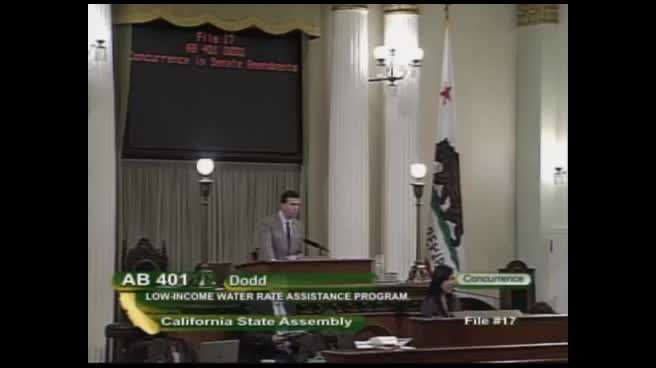 54SEC
Assembly Floor
 2MIN
Senate Floor
 41SEC
Senate Standing Committee on Appropriations
 50MIN
Senate Standing Committee on Judiciary
 12MIN
Senate Standing Committee on Judiciary
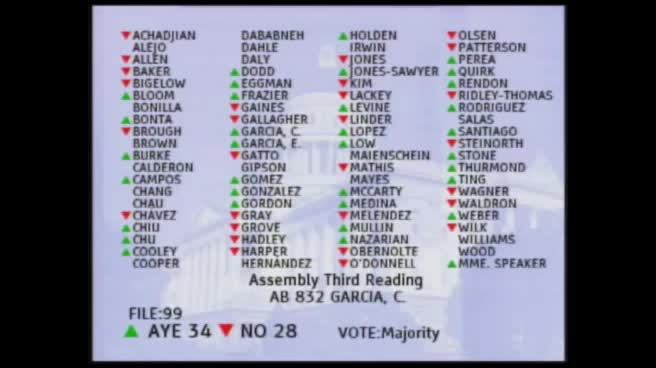 3MIN
Assembly Floor
 10MIN
Assembly Standing Committee on Judiciary
Bill Author

Bill Co-Author(s):