AB 1062: Postsecondary education: cross-enrollment: online education at the California State University.
- Session Year: 2017-2018
- House: Assembly
- Latest Version Date: 2018-09-19
Existing law establishes the California State University, under the administration of the Trustees of the California State University, the California Community Colleges, under the administration of the Board of Governors of the California Community Colleges, and the University of California, as the 3 segments of public postsecondary education in this state. Existing law authorizes any student enrolled in any campus of any of these 3 respective segments who meets prescribed requirements to enroll, without formal admission or payment of additional fees, except as provided, in a maximum of one course per academic term at a campus of either of the other segments on a space-available basis at the discretion of the appropriate campus authorities on both campuses. Existing law authorizes any student enrolled at a CSU campus who meets specified requirements by the beginning of the 201516 academic year, to enroll, without formal admission, and without payment of additional tuition or fees, except as provided, in a course provided entirely online, as defined, by another CSU campus on a space-available basis. Existing law requires the trustees to establish a series of uniform definitions for online education for CSU on or before January 1, 2015, as specified. Existing law also requires the trustees to report performance data, as specified, about online education to the Legislature on or before January 1, 2017, and every 2 years after until 2021.
This bill would remove the January 1, 2015, deadline for authorizing a CSU student to enroll in an online course at another CSU campus, for the trustees to establish an online database of courses, and for the trustees to establish a series of uniform definitions, as specified. This bill would also add to the performance data to be reported to the Legislature on state-supported online courses, as defined, and require this report be submitted to the Legislature on or before January 15, 2019, and on or before January 15, 2 years later.
Existing law establishes the California State University, under the administration of the Trustees of the California State University, the California Community Colleges, under the administration of the Board of Governors of the California Community Colleges, and the University of California, as the 3 segments of public postsecondary education in this state. Existing law authorizes any student enrolled in any campus of any of these 3 respective segments who meets prescribed requirements to enroll, without formal admission or payment of additional fees, except as provided, in a maximum of one course per academic term at a campus of either of the other segments on a space-available basis at the discretion of the appropriate campus authorities on both campuses. Existing law authorizes any student enrolled at a CSU campus who meets specified requirements by the beginning of the 201516 academic year, to enroll, without formal admission, and without payment of additional tuition or fees, except as provided, in a course provided entirely online, as defined, by another CSU campus on a space-available basis. Existing law requires the trustees to establish a series of uniform definitions for online education for CSU on or before January 1, 2015, as specified. Existing law also requires the trustees to report performance data, as specified, about online education to the Legislature on or before January 1, 2017, and every 2 years after until 2021.
This bill would remove the January 1, 2015, deadline for authorizing a CSU student to enroll in an online course at another CSU campus, for the trustees to establish an online database of courses, and for the trustees to establish a series of uniform definitions, as specified. This bill would also add to the performance data to be reported to the Legislature on state-supported online courses, as defined, and require this report be submitted to the Legislature on or before January 1, 15, 2019, and again on or before January 15 2 years later.
Existing law establishes the California State University, under the administration of the Trustees of the California State University, the California Community Colleges, under the administration of the Board of Governors of the California Community Colleges, and the University of California, as the 3 segments of public postsecondary education in this state. Existing law authorizes any student enrolled in any campus of any of these 3 respective segments who meets prescribed requirements to enroll, without formal admission or payment of additional fees, except as provided, in a maximum of one course per academic term at a campus of either of the other segments on a space-available basis at the discretion of the appropriate campus authorities on both campuses. Existing law authorizes any student enrolled at a CSU campus who meets specified requirements by the beginning of the 201516 academic year, to enroll, without formal admission, and without payment of additional tuition or fees, except as provided, in a course provided entirely online, as defined, by another CSU campus on a space-available basis. Existing law requires the trustees to establish a series of uniform definitions for online education for CSU on or before January 1, 2015, as specified. Existing law also requires the trustees to report performance data, as specified, about online education to the Legislature on or before January 1, 2017, and every 2 years after until 2021.
This bill would remove the January 1, 2015, deadline for authorizing a CSU student to enroll in an online course at another CSU campus, for the trustees to establish an online database of courses, and for the trustees to establish a series of uniform definitions, as specified. This bill would also add to the performance data to be reported to the Legislature on state-supported online courses, as defined, and require this report be submitted to the Legislature on or before January 1, 2019, and again 2 years later.
Existing law establishes the various campuses of the California State University under the administration of the Trustees of the California State University. Existing law provides for the membership of the Trustees of the California State University to include 5 specified ex officio members, 16 appointive members appointed by the Governor and subject to confirmation by the Senate, one representative of the alumni associations, a faculty member appointed by the Governor, and 2 student members appointed by the Governor for 2-year staggered terms. Under existing law, each student member serves as a nonvoting member of the board for the first year of his or her term and as a voting member of the board for the 2nd year of his or her term.This bill would make each student member a voting member of the board for both years of his or her 2-year term. The bill would also add a 2nd faculty member appointed by the Governor to the board.Existing law establishes the various campuses of the California State University under the administration of the Trustees of the California State University. Existing law provides for the membership of the Trustees of the California State University to include 5 specified ex officio members, 16 appointive members appointed by the Governor and subject to confirmation by the Senate, one representative of the alumni associations, a faculty member appointed by the Governor, and 2 student members appointed by the Governor for 2-year staggered terms. Under existing law, each student member serves as a nonvoting member of the board for the first year of his or her term and as a voting member of the board for the 2nd year of his or her term.
This bill would make each student member a voting member of the board for both years of his or her 2-year term. The bill would also add a 2nd faculty member appointed by the Governor to the board.
Existing law establishes the various campuses of the California State University under the administration of the Trustees of the California State University. Existing law provides for the membership of the Trustees of the California State University to include 5 specified ex officio members, 16 appointive members appointed by the Governor and subject to confirmation by the Senate, one representative of the alumni associations, 2 student members appointed by the Governor, and a faculty member appointed by the Governor. Governor, and 2 student members appointed by the Governor for 2-year staggered terms. Under existing law, each student member serves as a nonvoting member of the board for the first year of his or her term and as a voting member of the board for the 2nd year of his or her term.
This bill would revise the membership of the board of trustees by requiring the Governor to appoint 2 additional student members, as specified. make each student member a voting member of the board for both years of his or her 2-year term.
Existing law establishes the various campuses of the California State University under the administration of the Trustees of the California State University. Existing law provides for the membership of the Trustees of the California State University to include 5 specified ex officio members, 16 appointive members appointed by the Governor and subject to confirmation by the Senate, one representative of the alumni associations, 2 student members appointed by the Governor, and a faculty member appointed by the Governor.
This bill would make a nonsubstantive change to the provisions governing membership. revise the membership of the board of trustees by requiring the Governor to appoint 2 additional student members, as specified.
Existing law establishes the various campuses of the California State University under the administration of the Trustees of the California State University. Existing law provides for the membership of the Trustees of the California State University to include 5 specified ex officio members, 16 appointive members appointed by the Governor and subject to confirmation by the Senate, one representative of the alumni associations, 2 student members appointed by the Governor, and a faculty member appointed by the Governor.
This bill would make a nonsubstantive change to the provisions governing membership.
A California resident enrolled at a CSU campus who meets the requirements of subdivision (a) of Section 66761 may enroll, without formal admission, and without payment of additional tuition or fees, except as provided in Section 66761.5, in a course provided entirely online by another CSU campus on a space-available basis. Nonresident and international CSU students who meet these conditions may also enroll in an online course provided by another CSU campus, but shall pay the per unit fees for this course at the host campus.
SEC. 2.Section 66764 of the Education Code is amended to read:66764.The trustees shall establish both of the following:
(a)An easily accessible online database of online courses available at all CSU campuses. This database shall provide CSU students with a streamlined process within the CSU system to allow students to find and enroll in courses that will earn them credit toward graduation, general education, and major requirements.
(b)Plans for an intrasystem cross-enrollment process to expedite student learning that will be operational at the beginning of the 201516 academic year.
SEC. 3.Section 89225 of the Education Code is amended to read:89225.For purposes of measuring the effectiveness of online education as a tool in systemwide efforts toward degree or certificate completion, the trustees shall establish a series of uniform definitions for online education. The definitions developed by the trustees under this section shall, at a minimum, include a systemwide definition for an online course where the course can be entirely completed remotely.
SEC. 4.Section 89226 of the Education Code is amended to read:89226.(a)On or before January 15, 2019, and on or before January 15 every two years thereafter, the trustees shall report to the Legislature key performance data on state-supported online courses as defined in Section 89225, including, but not necessarily limited to, all of the following:
(1)The number of students enrolled at each campus.
(2)Course completion rates for courses other than online courses.
(3)Completion rates for degree programs that include no online courses.
(4)Grade point average for students enrolled in online courses.
(5)The number of students (full-time equivalent and headcount) cross-enrolled in online courses at a California State University campus other than the campus at which they are matriculated.
(6)Course completion rates for students enrolled in online courses.
(7)Completion rates for degree programs that include online courses.
(8)Student enrollment (full-time equivalent and headcount) in all state-supported online courses, disaggregated by undergraduate and graduate students, as well as by campus.
(9)Cross-campus online enrollment (full-time equivalent) by host campus.
(10)Successful course completion rates in cross-campus online courses.
(11)Courses completed by cross-enrolled online students, specifying the type of academic credit they received, including lower division, upper division, or graduate level.
(b)Student enrollment and completion rate data included in a report to be submitted pursuant to this section shall be made available by demographics, including age, gender, and ethnicity.
(c)(1)The requirement for submitting a report imposed under subdivision (a) is inoperative on July 1, 2021, pursuant to Section 10231.5 of the Government Code.
(2)The report prepared pursuant to subdivision (a) shall be submitted in compliance with Section 9795 of the Government Code.
A California resident enrolled at a CSU campus who meets the requirements of subdivision (a) of Section 66761 may enroll, without formal admission, and without payment of additional tuition or fees, except as provided in Section 66761.5, in a course provided entirely online by another CSU campus on a space-available basis. Nonresident and international CSU students who meet these conditions may also enroll in an online course provided by another CSU campus, but shall pay the per unit fees for this course at the host campus.
SEC. 2.Section 66764 of the Education Code is amended to read:66764.The trustees shall establish both of the following:
(a)An easily accessible online database of online courses available at all CSU campuses. This database shall provide CSU students with a streamlined process within the CSU system to allow students to find and enroll in courses that will earn them credit toward graduation, general education, and major requirements.
(b)Plans for an intrasystem cross-enrollment process to expedite student learning that will be operational at the beginning of the 201516 academic year.
SEC. 3.Section 89225 of the Education Code is amended to read:89225.For purposes of measuring the effectiveness of online education as a tool in systemwide efforts toward degree or certificate completion, the trustees shall establish a series of uniform definitions for online education. The definitions developed by the trustees under this section shall, at a minimum, include a systemwide definition for an online course where the course can be entirely completed remotely.
SEC. 4.Section 89226 of the Education Code is amended to read:89226.(a)On or before January 1, 15, 2019, and on or before January 1 15 every two years thereafter, the trustees shall report to the Legislature key performance data on state-supported online courses as defined in Section 89225, including, but not necessarily limited to, all of the following:
(1)The number of students enrolled at each campus.
(2)Course completion rates for courses other than online courses.
(3)Completion rates for degree programs that include no online courses.
(4)Grade point average for students enrolled in online courses.
(5)The number of students (full-time equivalent and headcount) cross-enrolled in online courses at a California State University campus other than the campus at which they are matriculated.
(6)Course completion rates for students enrolled in online courses.
(7)Completion rates for degree programs that include online courses.
(8)Student enrollment (full-time equivalent and headcount) in all state-supported online courses, disaggregated by undergraduate and graduate students, as well as by campus.
(9)Cross-campus online enrollment (full-time equivalent) by host campus.
(10)Successful course completion rates in cross-campus online courses.
(11)Courses completed by cross-enrolled online students, specifying the type of academic credit they received, including lower division, upper division, or graduate level.
(b)Student enrollment and completion rate data included in a report to be submitted pursuant to this section shall be made available by demographics, including age, gender, and ethnicity.
(c)(1)The requirement for submitting a report imposed under subdivision (a) is inoperative on July 1, 2021, pursuant to Section 10231.5 of the Government Code.
(2)The report prepared pursuant to subdivision (a) shall be submitted in compliance with Section 9795 of the Government Code.
By the beginning of the 201516 academic year, a A California resident enrolled at a CSU campus who meets the requirements of subdivision (a) of Section 66761 may enroll, without formal admission, and without payment of additional tuition or fees, except as provided in Section 66761.5, in a course provided entirely online by another CSU campus on a space-available basis. Nonresident and international CSU students who meet these conditions may also enroll in an online course provided by another CSU campus, but shall pay the per unit fees for this course at the host campus.
SEC. 2.Section 66764 of the Education Code is amended to read:66764.On or before January 1, 2015, the The trustees shall establish both of the following:
(a)An easily accessible online database of online courses available at all CSU campuses. This database shall provide CSU students with a streamlined process within the CSU system to allow students to find and enroll in courses that will earn them credit toward graduation, general education, and major requirements.
(b)Plans for an intrasystem cross-enrollment process to expedite student learning that will be operational at the beginning of the 201516 academic year.
SEC. 3.Section 89225 of the Education Code is amended to read:89225.On or before January 1, 2015, for For purposes of measuring the effectiveness of online education, education as a tool in systemwide efforts toward degree or certificate completion, the trustees shall establish a series of uniform definitions for online education. The definitions developed by the trustees under this section shall, at a minimum, include a systemwide definition for an online course where the course can be entirely completed remotely.
SEC. 4.Section 89226 of the Education Code is amended to read:89226.(a)On or before January 1, 2017, 2019, and on or before January 1 every two years thereafter, the trustees shall report to the Legislature key performance data on state-supported online courses as defined in Section 89225, including, but not necessarily limited to, all of the following:
(1)The number of students enrolled at each campus.
(2)Course completion rates for courses other than online courses.
(3)Completion rates for degree programs that include no online courses.
(4)Grade point average for students enrolled in online courses.
(5)The number of students (full-time equivalent and headcount) cross-enrolled in online courses at a California State University campus other than the campus at which they are matriculated.
(6)Course completion rates for students enrolled in online courses.
(7)Completion rates for degree programs that include online courses.
(8)Student enrollment (full-time equivalent and headcount) in all state-supported online courses, disaggregated by undergraduate and graduate students, as well as by campus.
(9)Cross-campus online enrollment (full-time equivalent) by host campus.
(10)Successful course completion rates in cross-campus online courses.
(11)Courses completed by cross-enrolled online students, specifying the type of academic credit they received, including lower division, upper division, or graduate level.
(b)(1)On or before January 1, 2017, the trustees shall report to the Legislative Analyst the key performance data described in subdivision (a).(2)On or before January 1, 2018, the Legislative Analyst shall submit a status update to the Legislature regarding the California State Universitys implementation of the provisions of the bill that added this section and an assessment of the extent to which the online programs of the California State University are operating in a manner consistent with legislative intent and statutory requirements.(c)(b)Student enrollment and completion rate data included in a report to be submitted pursuant to this section shall be made available by demographics, including age, gender, and ethnicity.
(d)(c)(1)The requirement for submitting a report imposed under subdivision (a) is inoperative on July 1, 2021, pursuant to Section 10231.5 of the Government Code.
(2)The report prepared pursuant to subdivision (a) shall be submitted in compliance with Section 9795 of the Government Code.
SECTION 1.Section 66602 of the Education Code is amended to read:66602.(a)The board shall be composed of the following five ex officio members: the Governor, the Lieutenant Governor, the Superintendent of Public Instruction, the Speaker of the Assembly, and the person named by the trustees to serve as the Chancellor of the California State University; a representative of the alumni associations of the state university, selected for a two-year term by the alumni council, California State University, which representative shall not be an employee of the California State University during the two-year term; and 16 appointive members appointed by the Governor and subject to confirmation by two-thirds of the membership of the Senate.(b)(1)Two students from the California State University, who shall have at least sophomore year standing at the institutions they attend, and who remain in good standing as students during their respective terms, shall also be appointed by the Governor to serve on the board for two-year terms.(2)In selecting students as members of the board, the Governor shall appoint the students from lists of names of at least two, but not more than five, persons furnished by the governing board of any statewide student organization that represents the students of the California State University and the student body organizations of the campuses of the California State University. An appointment to fill a vacancy of a student member shall be effective only for the remainder of the term of the student members office that became vacated.(3)The term of office of one student member of the board shall commence on July 1 of an even-numbered year and expire on June 30 two years thereafter. The term of office of the other student member of the board shall commence on July 1 of an odd-numbered year and expire on June 30 two years thereafter. Notwithstanding paragraph (1), a student member who graduates from his or her college or university on or after January 1 of the second year of his or her term of office may serve the remainder of the term.(4)A student member shall have his or her tuition fee waived for the duration of his or her term of office.(c)(1)Two faculty members from the California State University, who shall be tenured at the respective California State University campus at which they teach, shall also be appointed by the Governor to serve on the board for a two-year term. In the selection of faculty members as members of the board, the Governor shall appoint the faculty members from a list of names of at least two, but not more than five, persons furnished by the Academic Senate of the California State University.(2)The faculty members of the board appointed by the Governor pursuant to this subdivision shall not participate on any subcommittee of the board responsible for collective bargaining negotiations.(3)The two-year term of office of a faculty member of the board shall commence on July 1, and, if the Governor has not appointed a successor to that faculty member under paragraph (1), the faculty member may remain in office after the term expires for one additional year, or until a successor is appointed by the Governor, whichever occurs first.(a)The board shall be composed of the following five ex officio members: the Governor, the Lieutenant Governor, the Superintendent of Public Instruction, the Speaker of the Assembly, and the person named by the trustees to serve as the Chancellor of the California State University; a representative of the alumni associations of the state university, selected for a two-year term by the alumni council, California State University, which representative shall not be an employee of the California State University during the two-year term; and 16 appointive members appointed by the Governor and subject to confirmation by two-thirds of the membership of the Senate.
(b)(1)Two students from the California State University, who shall have at least sophomore year standing at the institutions they attend, and who remain in good standing as students during their respective terms, shall also be appointed by the Governor to serve on the board for two-year terms.
(2)In selecting students as members of the board, the Governor shall appoint the students from lists of names of at least two, but not more than five, persons furnished by the governing board of any statewide student organization that represents the students of the California State University and the student body organizations of the campuses of the California State University. Any An appointment to fill a vacancy of a student member shall be effective only for the remainder of the term of the student members office that became vacated.
(3)The term of office of one student member of the board shall commence on July 1 of an even-numbered year and expire on June 30 two years thereafter. The term of office of the other student member of the board shall commence on July 1 of an odd-numbered year and expire on June 30 two years thereafter. Notwithstanding paragraph (1), a student member who graduates from his or her college or university on or after January 1 of the second year of his or her term of office may serve the remainder of the term.
(4)A student member shall have his or her tuition fee waived for the duration of his or her term of office.
(c)(1)A Two faculty member members from the California State University, who shall be tenured at the respective California State University campus at which he or she teaches, they teach, shall also be appointed by the Governor to serve on the board for a two-year term. In the selection of a faculty member faculty members as a member members of the board, the Governor shall appoint the faculty member members from a list of names of at least two two, but not more than five, persons furnished by the Academic Senate of the California State University.
(2)The faculty member members of the board appointed by the Governor pursuant to this subdivision shall not participate on any subcommittee of the board responsible for collective bargaining negotiations.
(3)The two-year term of office of the a faculty member of the board shall commence on July 1, and, if the Governor has not appointed a successor to that faculty member under paragraph (1), the faculty member may remain in office after the term expires for one additional year, or until a successor is appointed by the Governor, whichever occurs first.
(a)The board shall be composed of the following five ex officio members: the Governor, the Lieutenant Governor, the Superintendent of Public Instruction, the Speaker of the Assembly, and the person named by the trustees to serve as the Chancellor of the California State University; a representative of the alumni associations of the state university, selected for a two-year term by the alumni council, California State University, which representative shall not be an employee of the California State University during the two-year term; and 16 appointive members appointed by the Governor and subject to confirmation by two-thirds of the membership of the Senate.
(b)(1)Four Two students from the California State University, who shall have at least sophomore year standing at the institutions they attend, and who remain in good standing as students during their respective terms, shall also be appointed by the Governor to serve on the board for two-year terms.
(2)In selecting students as members of the board, the Governor shall appoint the students from lists of names of at least two, but not more than five, persons furnished by the governing board of any statewide student organization that represents the students of the California State University and the student body organizations of the campuses of the California State University. Any appointment to fill a vacancy of a student member shall be effective only for the remainder of the term of the student members office that became vacated.
(3)(A)The term of office of two one student members member of the board shall commence on July 1 of an even-numbered year and expire on June 30 two years thereafter. The term of office of the other two student members member of the board shall commence on July 1 of an odd-numbered year and expire on June 30 two years thereafter. Notwithstanding paragraph (1), a student member who graduates from his or her college or university on or after January 1 of the second year of his or her term of office may serve the remainder of the term.
(B)Each student member, upon appointment to a full-term or during the first year of a term to fill a vacancy, shall be linked with a different student member whose two-year term of office commenced the prior year.(C)(i)Notwithstanding subparagraphs (A) and (B), for the expansion of student membership from two to four members for the 201819 academic year only, one student member shall be appointed to a one-year term of office and one student member shall be appointed to a two-year term of office. These members shall be linked with each other.(ii)For purposes of paragraphs (4) and (5), the student member appointed to a one-year term of office pursuant to this subparagraph shall exercise the same duties and have the same privileges as a student member in the second year of his or her two-year term of office, and if that student member is absent from a meeting due to illness, a family emergency, or medical emergency, or resigns from office, the other student member with whom he or she is linked pursuant to clause (i) shall exercise those duties and have those privileges during that meeting or for the remainder of the term following the resignation.(4)(A)During the first year of a student members term, a student member shall be a member of the board and may attend all meetings of the board and its committees. At these meetings, a student member may fully participate in discussion and debate, but may not vote. During the second year of a student members term, a student member may exercise the same right to attend meetings of the board, and its committees, and shall have the same right to vote as the members appointed pursuant to subdivision (a).(B)Notwithstanding subparagraph (A), a student member, during the first year of his or her two-year term, may vote at a board meeting if the student member with whom he or she is linked, pursuant to subparagraph (B) of paragraph (3), is absent from that meeting due to illness, a family emergency, or a medical emergency.(5)Notwithstanding paragraph (4), if a student member resigns from office or a vacancy is otherwise created in that office during the second year of the student members term, the student member with whom he or she is linked shall immediately assume the office created by the vacancy and all of the participation privileges of the second-year student member, including the right to vote, for the remainder of that term of office.(6)(4)A student member shall have his or her tuition fee waived for the duration of his or her term of office.
(c)(1)A faculty member from the California State University, who shall be tenured at the California State University campus at which he or she teaches, shall also be appointed by the Governor to serve on the board for a two-year term. In the selection of a faculty member as a member of the board, the Governor shall appoint the faculty member from a list of names of at least two persons furnished by the Academic Senate of the California State University.
(2)The faculty member of the board appointed by the Governor pursuant to this subdivision shall not participate on any subcommittee of the board responsible for collective bargaining negotiations.
(3)The two-year term of office of the faculty member of the board shall commence on July 1, and, if the Governor has not appointed a successor under paragraph (1), the faculty member may remain in office after the term expires for one additional year, or until a successor is appointed by the Governor, whichever occurs first.
(a)The board shall be composed of the following five ex officio members: the Governor, the Lieutenant Governor, the Superintendent of Public Instruction, the Speaker of the Assembly, and the person named by the trustees to serve as the Chancellor of the California State University; a representative of the alumni associations of the state university, selected for a two-year term by the alumni council, California State University, which representative shall not be an employee of the California State University during the two-year term; and 16 appointive members appointed by the Governor and subject to confirmation by two-thirds of the membership of the Senate.
(b)(1)Two Four students from the California State University, who shall have at least sophomore year standing at the institutions they attend, and who remain in good standing as students during their respective terms, shall also be appointed by the Governor to serve on the board for two-year terms.
(2)In selecting students as members of the board, the Governor shall appoint the students from lists of names of at least two, but not more than five, persons furnished by the governing board of any statewide student organization that represents the students of the California State University and the student body organizations of the campuses of the California State University. Any appointment to fill a vacancy of a student member shall be effective only for the remainder of the term of the student members office that became vacated.
(3)(A)The term of office of one two student member members of the board shall commence on July 1 of an even-numbered year and expire on June 30 two years thereafter. The term of office of the other two student member members of the board shall commence on July 1 of an odd-numbered year and expire on June 30 two years thereafter. Notwithstanding paragraph (1), a student member who graduates from his or her college or university on or after January 1 of the second year of his or her term of office may serve the remainder of the term.
(B)Each student member, upon appointment to a full-term or during the first year of a term to fill a vacancy, shall be linked with a different student member whose two-year term of office commenced the prior year.
(C)(i)Notwithstanding subparagraphs (A) and (B), for the expansion of student membership from two to four members for the 201819 academic year only, one student member shall be appointed to a one-year term of office and one student member shall be appointed to a two-year term of office. These members shall be linked with each other.
(ii)For purposes of paragraphs (4) and (5), the student member appointed to a one-year term of office pursuant to this subparagraph shall exercise the same duties and have the same privileges as a student member in the second year of his or her two-year term of office, and if that student member is absent from a meeting due to illness, a family emergency, or medical emergency, or resigns from office, the other student member with whom he or she is linked pursuant to clause (i) shall exercise those duties and have those privileges during that meeting or for the remainder of the term following the resignation.
(4)(A)During the first year of a student members term, a student member shall be a member of the board and may attend all meetings of the board and its committees. At these meetings, a student member may fully participate in discussion and debate, but may not vote. During the second year of a student members term, a student member may exercise the same right to attend meetings of the board, and its committees, and shall have the same right to vote as the members appointed pursuant to subdivision (a).
(B)Notwithstanding subparagraph (A), during the first year of a student members term, the a student member member, during the first year of his or her two-year term, may vote at a board meeting if the other student member with whom he or she is linked, pursuant to subparagraph (B) of paragraph (3), is absent from that meeting due to illness, a family emergency, or a medical emergency.
(5)Notwithstanding paragraph (4), if a student member resigns from office or a vacancy is otherwise created in that office during the second year of a the student members term, the remaining student member with whom he or she is linked shall immediately assume the office created by the vacancy and all of the participation privileges of the second-year student member, including the right to vote, for the remainder of that term of office.
(6)A student member shall have his or her tuition fee waived for the duration of his or her term of office.
(c)(1)A faculty member from the California State University, who shall be tenured at the California State University campus at which he or she teaches, shall also be appointed by the Governor to serve on the board for a two-year term. In the selection of a faculty member as a member of the board, the Governor shall appoint the faculty member from a list of names of at least two persons furnished by the Academic Senate of the California State University.
(2)The faculty member of the board appointed by the Governor pursuant to this subdivision shall not participate on any subcommittee of the board responsible for collective bargaining negotiations.
(3)The two-year term of office of the faculty member of the board shall commence on July 1, and, if the Governor has not appointed a successor under paragraph (1), the faculty member may remain in office after the term expires for one additional year, or until a successor is appointed by the Governor, whichever occurs first.
(a)The board shall be composed of the following five ex officio members: the Governor, the Lieutenant Governor, the Superintendent of Public Instruction, the Speaker of the Assembly, and the person named by the trustees to serve as the Chancellor of the California State University; a representative of the alumni associations of the state university, selected for a two-year term by the alumni council, California State University, which representative shall not be an employee of the California State University during the two-year term; and 16 appointive members appointed by the Governor and subject to confirmation by two-thirds of the membership of the Senate.
(b)(1)Two students from the California State University, who shall have at least sophomore year standing at the institutions they attend, and who remain in good standing as students during their respective terms, shall also be appointed by the Governor to serve on the board for two-year terms.
(2)In the selection of selecting students as members of the board, the Governor shall appoint the students from lists of names of at least two, but not more than five, persons furnished by the governing board of any statewide student organization that represents the students of the California State University and the student body organizations of the campuses of the California State University. Any appointment to fill a vacancy of a student member shall be effective only for the remainder of the term of the student members office that became vacated.
(3)The term of office of one student member of the board shall commence on July 1 of an even-numbered year and expire on June 30 two years thereafter. The term of office of the other student member of the board shall commence on July 1 of an odd-numbered year and expire on June 30 two years thereafter. Notwithstanding paragraph (1), a student member who graduates from his or her college or university on or after January 1 of the second year of his or her term of office may serve the remainder of the term.
(4)(A)During the first year of a student members term, a student member shall be a member of the board and may attend all meetings of the board and its committees. At these meetings, a student member may fully participate in discussion and debate, but may not vote. During the second year of a student members term, a student member may exercise the same right to attend meetings of the board, and its committees, and shall have the same right to vote as the members appointed pursuant to subdivision (a).
(B)Notwithstanding subparagraph (A), during the first year of a student members term, the student member may vote at a board meeting if the other student member is absent from that meeting due to illness, a family emergency, or a medical emergency.
(5)Notwithstanding paragraph (4), if a student member resigns from office or a vacancy is otherwise created in that office during the second year of a student members term, the remaining student member shall immediately assume the office created by the vacancy and all of the participation privileges of the second-year student member, including the right to vote, for the remainder of that term of office.
(6)A student member shall have his or her tuition fee waived for the duration of his or her term of office.
(c)(1)A faculty member from the California State University, who shall be tenured at the California State University campus at which he or she teaches, shall also be appointed by the Governor to serve on the board for a two-year term. In the selection of a faculty member as a member of the board, the Governor shall appoint the faculty member from a list of names of at least two persons furnished by the Academic Senate of the California State University.
(2)The faculty member of the board appointed by the Governor pursuant to this subdivision shall not participate on any subcommittee of the board responsible for collective bargaining negotiations.
(3)The two-year term of office of the faculty member of the board shall commence on July 1, and, if the Governor has not appointed a successor under paragraph (1), the faculty member may remain in office after the term expires for one additional year, or until a successor is appointed by the Governor, whichever occurs first.
|
Date
|
Status
|
|---|---|
| Sep 19, 2018 | Chaptered by Secretary of State - Chapter 524, Statutes of 2018. |
| Sep 19, 2018 | Approved by the Governor. |
| Sep 11, 2018 | Enrolled and presented to the Governor at 4:30 p.m. |
| Aug 31, 2018 | Senate amendments concurred in. To Engrossing and Enrolling. |
| Aug 29, 2018 | From committee: That the Senate amendments be concurred in. (Ayes 16. Noes 0.) (August 29). |
| Aug 28, 2018 | From committee: That the Senate amendments be concurred in, but first be re-referred to Com. on APPR. (Ayes 13. Noes 0.) (August 28). Re-referred to Com. on APPR. |
| Aug 24, 2018 | Re-referred to Coms. on HIGHER ED. and APPR. pursuant to Assembly Rule 77.2. |
| Aug 16, 2018 | Re-referred to Com. on HIGHER ED. pursuant to Assembly Rule 77.2. |
| Aug 14, 2018 | In Assembly. Concurrence in Senate amendments pending. May be considered on or after August 16 pursuant to Assembly Rule 77. |
| Aug 13, 2018 | Read third time. Passed. Ordered to the Assembly. |
| Aug 7, 2018 | Read second time. Ordered to Consent Calendar. |
| Aug 6, 2018 | From committee: Be ordered to second reading file pursuant to Senate Rule 28.8 and ordered to Consent Calendar. |
| Jul 5, 2018 | Read second time and amended. Re-referred to Com. on APPR. |
| Jul 3, 2018 | From committee: Amend, and do pass as amended and re-refer to Com. on APPR. with recommendation: To Consent Calendar. (Ayes 7. Noes 0.) (June 27). |
| Jun 20, 2018 | Re-referred to Com. on ED. |
| Jun 14, 2018 | Re-referred to Com. on RLS. pursuant to Senate Rule 29.10(c). |
| Jun 12, 2018 | Read second time. Ordered to third reading. |
| Jun 11, 2018 | Read second time. Ordered to third reading. |
| Jun 7, 2018 | From inactive file. |
| Sep 5, 2017 | Read second time. Ordered to third reading. |
| Sep 1, 2017 | From committee: Do pass. (Ayes 6. Noes 1.) (September 1). |
| Jul 10, 2017 | In committee: Referred to APPR. suspense file. |
| Jun 27, 2017 | Read second time and amended. Re-referred to Com. on APPR. |
| Jun 26, 2017 | From committee: Amend, and do pass as amended and re-refer to Com. on APPR. (Ayes 6. Noes 0.) (June 21). |
| Jun 6, 2017 | In committee: Set, first hearing. Hearing canceled at the request of author. |
| Jun 5, 2017 | From committee chair, with author's amendments: Amend, and re-refer to committee. Read second time, amended, and re-referred to Com. on ED. |
| May 24, 2017 | Referred to Com. on ED. |
| May 15, 2017 | In Senate. Read first time. To Com. on RLS. for assignment. |
| May 15, 2017 | Read third time. Passed. Ordered to the Senate. (Ayes 75. Noes 0. Page 1543.) |
| May 11, 2017 | Read second time. Ordered to third reading. |
| May 10, 2017 | From committee: Do pass. (Ayes 17. Noes 0.) (May 10). |
| Apr 26, 2017 | From committee: Do pass and re-refer to Com. on APPR. (Ayes 12. Noes 0.) (April 25). Re-referred to Com. on APPR. |
| Mar 29, 2017 | Re-referred to Com. on HIGHER ED. |
| Mar 28, 2017 | From committee chair, with author's amendments: Amend, and re-refer to Com. on HIGHER ED. Read second time and amended. |
| Mar 27, 2017 | Referred to Com. on HIGHER ED. |
| Feb 17, 2017 | From printer. May be heard in committee March 19. |
| Feb 16, 2017 | Read first time. To print. |
|
Date
|
Description
|
Location
|
Votes
|
|
|---|---|---|---|---|
| Aug 31, 2018 | AB 1062 LEVINE Concurrence in Senate Amendments | Assembly Floor |
Passed |
|
| Aug 29, 2018 | With recommendation: That Senate amendments be concurred in. | Assembly Standing Committee on Appropriations |
Passed |
|
| Aug 27, 2018 | With recommendation: That Senate amendments be concurred in, but first be re-referred to Com. on [Appropriations] | Assembly Standing Committee on Higher Education |
Passed |
|
| Aug 13, 2018 | Consent Calendar AB1062 | Senate Floor |
Passed |
|
| Jun 27, 2018 | Do pass as amended, but first amend, and re-refer to the Committee on [Appropriations] with the recommendation: To Consent Calendar | Senate Standing Committee on Education |
Passed |
|
| Sep 1, 2017 | Do pass | Senate Standing Committee on Appropriations |
Passed |
|
| Jul 10, 2017 | Placed on suspense file | Senate Standing Committee on Appropriations |
Passed |
|
| Jun 21, 2017 | Do pass as amended, but first amend, and re-refer to the Committee on [Appropriations] | Senate Standing Committee on Education |
Passed |
|
| May 15, 2017 | AB 1062 LEVINE Assembly Third Reading | Assembly Floor |
Passed |
|
| May 10, 2017 | Do pass. | Assembly Standing Committee on Appropriations |
Passed |
|
| Apr 25, 2017 | Do pass and be re-referred to the Committee on [Appropriations] | Assembly Standing Committee on Higher Education |
Passed |
This list shows positions taken on this bill by organizations on the date displayed, which is linked to the original source.
Positions by individuals are not included.
CONCURRENCE IN SENATE AMENDMENTS
CSA2 Bill Id:AB 1062
Author:(Levine)
As Amended Ver:July 5, 2018
Majority vote
ASSEMBLY: | 75-0 | (May 15, 2017) | SENATE: | 39-0 | (August 29, 2018) |
(vote not relevant)
COMMITTEE VOTE: | 13-0 | (August 27, 2018) | RECOMMENDATION: | concur |
(HIGHER ED.)
COMMITTEE VOTE: | 16-0 | (August 29, 2018) | RECOMMENDATION: | concur |
(APPR.)
Original Committee Reference: HIGHER ED.
SUMMARY: Expands existing reporting requirements for the California State University (CSU) Board of Trustees related to key performance data on online courses.
The Senate amendments delete the Assembly version of this bill, and instead:
- Expand, beginning January 15, 2019, the existing requirement for the CSU Trustees to report to the Legislature, by January 15, of every odd numbered year, key performance data on online courses to include:
- Student enrollment (full-time equivalent and headcount) in all state-sponsored online courses, disaggregated by undergraduate students, as well as by campus;
- Cross-campus online enrollment (full-time equivalent) by host campus;
- Successful course completion rates in cross-campus online courses; and,
- Courses completed by cross-enrolled online students, specifying the type of academic credit they received, including lower division, upper division, or graduate level.
- Specify that key performance data is to relate to state-sponsored online courses.
- Specify that the data on the number of students who are cross-enrolled in online courses is to include the number of full-time equivalent and headcount students.
- Provide that the existing requirement to establish uniform definitions for online education, in measuring the effectiveness of online education, is for the purpose for measuring online education as a tool in system-wide efforts toward degree or certificate completion.
- Strike references to outdated timelines by which the CSU is to take specified actions related to online courses, and for the Legislative Analyst to complete the report.
EXISTING LAW:
- Authorizes a California resident enrolled at a CSU campus who meets specified requirements to enroll, without formal admission, in a course provided entirely online by another CSU campus. (Education Code (EDC) Section 66760.5)
- Requires the CSU Trustees, by January 1, 2015, to establish both of the following:
- An easily accessible online database of online courses available at all CSU campuses; and,
- Plans for an intrasystem cross-enrollment process to expedite student learning that will be operational at the beginning of the 2015–16 academic year. (EDC Section 66764)
- Requires the CSU Trustees, by January 1, 2015, for purposes of measuring the effectiveness of online education, to establish a series of uniform definitions for online education. Existing law requires the definitions to, at a minimum, include a system-wide definition for an online course where the course can be entirely completed remotely. (EDC Section 89225)
- Requires the CSU Trustees, by January 1, 2017, and by January 1 every two years thereafter, to report to the Legislature key performance data on online courses including but not limited to all of the following:
- The number of students enrolled at each campus;
- Course completion rates for courses other than online courses;
- Completion rates for degree programs that include no online courses;
- Grade point average for students enrolled in online courses;
- The number of students cross-enrolled in online courses at a CSU campus other than the campus at which they are matriculated;
- Course completion rates for students enrolled in online courses; and,
- Completion rates for degree programs that include online courses. (ESC Section 89226)
- Requires the CSU Trustees, by January 1, 2017, to report to the Legislative Analyst the key performance data described in # 4. (EDC Section 89226)
- Requires the Legislative Analyst's Office (LAO), by January 1, 2018, to submit a status update to the Legislature regarding CSU's implementation of creating an accessible online database of online courses, plans for an intrasystem cross-enrollment system, and establishing uniform definitions for online education, a report on key performance data. Existing law also requires the LAO to include in the report an assessment of the extent to which the online programs of the CSU are operating in a manner consistent with legislative intent and statutory requirements. (EDC Section 89226)
AS PASSED BY THE ASSEMBLY, this bill revised the membership of the Trustees of the California State University (CSU) by requiring the Governor to appoint two additional student members
FISCAL EFFECT: The bill passed out of the Senate Committee on Appropriations pursuant to Rule 28.8.
COMMENTS: Purpose. According to the author, "Chapter 362 of 2013 (AB 386, Levine) requires CSU to improve students' access to online courses by creating a streamlined process for students to find, enroll in, and receive credit for online coursework offered by any CSU campus. The bill required CSU to report biennially on certain enrollment and performance data related to online education. On January 3, 2018, the Legislative Analyst's Office (LAO) released a report based on the bill's requirements. The report recommended additional enrollment and performance data. They found that CSU still has more work to do in order to comply with requirements of Chapter 363, particularly through developing a more student-friendly database of online courses."
Recommendations made by the LAO. The LAO issued a report in January 2018, titled An Evaluation of CSU's Cross-Campus Online Education Program. This report includes a recommendation to require CSU to report on four areas:
- Actions related to boosting cross-campus online enrollment.
- Adopting a common learning management system.
- Additional data on enrollment and key performance data on online education, including the exact information added by this bill.
- More information on online baccalaureate degree completion programs.
Prior legislation. AB 386 (Levine), Chapter 326 of 2016, authorized any CSU student enrolled at a CSU campus, who meets specified requirements, to enroll in an online course provided by another CSU campus; requires the CSU Trustees to establish an easily accessible online database of these courses by January 1, 2015; requires the CSU Trustees to report key performance data on online courses, as specified, to the Legislature by January 1, 2017, and every two years thereafter; and on or before January 1, 2017, requires the Trustees to report the performance data to the Legislative Analyst, as specified.
Analysis Prepared by: Kevin Powers / HIGHER ED. / (916) 319-3960 FN: 0005134
Date of Hearing: August 29, 2018
ASSEMBLY COMMITTEE ON APPROPRIATIONS
Lorena Gonzalez Fletcher, Chair
ABPCA Bill Id:AB 1062
Author:(Levine) – As Amended Ver:July 5, 2018
Policy Committee: | Higher Education | Vote: | 12 - 0 |
Higher Education | 13 - 0 | ||
|
|
Urgency: No State Mandated Local Program: No Reimbursable: No
SUMMARY:
This bill expands existing reporting requirements for cross-campus online enrollment at the California State University (CSU) to include additional information about enrollment and completion rates to provide the Legislature with better oversight of the programs.
FISCAL EFFECT:
Minor General Fund cost pressures to CSU campuses to report additional data. (Costs likely would be minor because very few students participate in the program. An average of two full-time equivalent students per campus enrolled in online courses at another CSU campus in fall 2015.) According to CSU, these costs likely are absorbable.
COMMENTS:
Background. Chapter 363, Statutes of 2013, required CSU to allow students to register in online classes across different CSU campuses and to report related data to the Legislature. In early 2018, the Legislative Analyst's Office released a review of cross-campus online enrollment and at the CSU. The review found CSU has implemented some of Chapter 363’s requirements but had work to do to fully comply. It also found that the Legislature lacks some key information on the programs. The review made several recommendations to improve programs and accountability. Specifically, it recommended the Legislature enact legislation requiring CSU to report on four issues: 1) planned actions to boost cross-campus online enrollment, including a requirement for CSU to revamp its database, (2) opportunities to adopt a common systemwide learning management system using existing funding, (3) additional data on enrollment and outcomes pertaining to online students, and (4) more information on its current programs and future plans to serve former students who started college but never earned a bachelor’s degree.
According to the author, this bill implements the third recommendation.
Analysis Prepared by: Natasha Collins / APPR. / (916) 319-2081
Date of Hearing: August 27, 2018
ASSEMBLY COMMITTEE ON HIGHER EDUCATION
Jose Medina, Chair
ABPCA Bill Id:AB 1062 (
Author:Levine) – As Amended Ver:July 5, 2018
SUBJECT: Postsecondary education: Trustees of the California State University
SUMMARY: Expands existing reporting requirements for the California State University (CSU) Board of Trustees related to key performance data on online courses. Specifically, this bill:
- Expands, beginning January 15, 2019, the existing requirement for the CSU Trustees to report to the Legislature, by January 15, of every odd numbered year, key performance data on online courses to include:
- Student enrollment (full-time equivalent and headcount) in all state-supported online courses, disaggregated by undergraduate students, as well as by campus;
- Cross-campus online enrollment (full-time equivalent) by host campus;
- Successful course completion rates in cross-campus online courses; and,
- Courses completed by cross-enrolled online students, specifying the type of academic credit they received, including lower division, upper division, or graduate level.
- Specifies that key performance data is to relate to state-supported online courses.
- Specifies that the data on the number of students who are cross-enrolled in online courses is to include the number of full-time equivalent and headcount students.
- Provides that the existing requirement to establish uniform definitions for online education, in measuring the effectiveness of online education, is for the purpose of measuring online education as a tool in system-wide efforts toward degree or certificate completion.
- Strikes references to outdated timelines by which the CSU is to take specified actions related to online courses, and for the Legislative Analyst to complete the report.
EXISTING LAW:
- Authorizes a California resident enrolled at a CSU campus who meets specified requirements to enroll, without formal admission, in a course provided entirely online by another CSU campus. (Education Code (EDC) Section 66760.5)
- Requires the CSU Trustees, by January 1, 2015, to establish both of the following:
- An easily accessible online database of online courses available at all CSU campuses; and,
- Plans for an intrasystem cross-enrollment process to expedite student learning that will be operational at the beginning of the 2015–16 academic year. (EDC Section 66764)
- Requires the CSU Trustees, by January 1, 2015, for purposes of measuring the effectiveness of online education, to establish a series of uniform definitions for online education. Existing law requires the definitions to, at a minimum, include a system-wide definition for an online course where the course can be entirely completed remotely. (EDC Section 89225)
- Requires the CSU Trustees, by January 1, 2017, and by January 1 every two years thereafter, to report to the Legislature key performance data on online courses including but not limited to all of the following:
- The number of students enrolled at each campus;
- Course completion rates for courses other than online courses;
- Completion rates for degree programs that include no online courses;
- Grade point average for students enrolled in online courses;
- The number of students cross-enrolled in online courses at a CSU campus other than the campus at which they are matriculated;
- Course completion rates for students enrolled in online courses; and,
- Completion rates for degree programs that include online courses. (ESC Section 89226)
- Requires the CSU Trustees, by January 1, 2017, to report to the Legislative Analyst the key performance data described in # 4. (EDC Section 89226)
- Requires the Legislative Analyst’s Office (LAO), by January 1, 2018, to submit a status update to the Legislature regarding CSU’s implementation of creating an accessible online database of online courses, plans for an intrasystem cross-enrollment system, and establishing uniform definitions for online education, a report on key performance data. Existing law also requires the LAO to include in the report an assessment of the extent to which the online programs of the CSU are operating in a manner consistent with legislative intent and statutory requirements. (EDC Section 89226)
FISCAL EFFECT: The bill passed out of the Senate Committee on Appropriations pursuant to Senate Rule 28.8.
COMMENTS: Purpose. According to the author, “Chapter 362 of 2013 (AB 386, Levine) requires CSU to improve students’ access to online courses by creating a streamlined process for students to find, enroll in, and receive credit for online coursework offered by any CSU campus. The bill required CSU to report biennially on certain enrollment and performance data related to online education. On January 3, 2018, the Legislative Analyst’s Office (LAO) released a report based on the bill’s requirements.”
“The report recommended additional enrollment and performance data. They found that CSU still has more work to do in order to comply with requirements of Chapter 363, particularly through developing a more student-friendly database of online courses. AB 1062 ensures the CSU online programs are continuously improved and evaluated in order to meet the student’s needs.”
Recommendations made by the LAO. The LAO issued a report in January 2018, titled An Evaluation of CSU’s Cross-Campus Online Education Program. This report includes a recommendation to require CSU to report on four areas:
- Actions related to boosting cross-campus online enrollment.
- Adopting a common learning management system.
- Additional data on enrollment and key performance data on online education, including the exact information added by this bill.
- More information on online baccalaureate degree completion programs.
Prior legislation. AB 386 (Levine), Chapter 326 of 2016, authorized any CSU student enrolled at a CSU campus, who meets specified requirements, to enroll in an online course provided by another CSU campus; requires the CSU Trustees to establish an easily accessible online database of these courses by January 1, 2015; requires the CSU Trustees to report key performance data on online courses, as specified, to the Legislature by January 1, 2017, and every two years thereafter; and on or before January 1, 2017, requires the Trustees to report the performance data to the Legislative Analyst, as specified.
REGISTERED SUPPORT / OPPOSITION:
Support
None on file.
Opposition
None on file.
Analysis Prepared by: Kevin J. Powers / HIGHER ED. / (916) 319-3960
CONCURRENCE IN SENATE AMENDMENTS
CSA1 Bill Id:AB 1062
Author:(Levine)
As Amended Ver:July 5, 2018
Majority vote
ASSEMBLY: | 75-0 | (May 15, 2018) | SENATE: | 37-0 | (August 13, 2018) |
Original Committee Reference: HIGHER ED.
SUMMARY: Expands existing reporting requirements for the California State University (CSU) Board of Trustees related to key performance data on online courses.
The Senate amendments delete the Assembly version of this bill, and instead:
- Expand, beginning January 15, 2019, the existing requirement for the CSU Trustees to report to the Legislature, by January 15, of every odd numbered year, key performance data on online courses to include:
- Student enrollment (full-time equivalent and headcount) in all state-sponsored online courses, disaggregated by undergraduate students, as well as by campus;
- Cross-campus online enrollment (full-time equivalent) by host campus;
- Successful course completion rates in cross-campus online courses; and,
- Courses completed by cross-enrolled online students, specifying the type of academic credit they received, including lower division, upper division, or graduate level.
- Specify that key performance data is to relate to state-sponsored online courses.
- Specify that the data on the number of students who are cross-enrolled in online courses is to include the number of full-time equivalent and headcount students.
- Provide that the existing requirement to establish uniform definitions for online education, in measuring the effectiveness of online education, is for the purpose for measuring online education as a tool in system-wide efforts toward degree or certificate completion.
- Strike references to outdated timelines by which the CSU is to take specified actions related to online courses, and for the Legislative Analyst to complete the report.
EXISTING LAW:
- Authorizes a California resident enrolled at a CSU campus who meets specified requirements to enroll, without formal admission, in a course provided entirely online by another CSU campus. (Education Code (EDC) Section 66760.5)
- Requires the CSU Trustees, by January 1, 2015, to establish both of the following:
- An easily accessible online database of online courses available at all CSU campuses; and,
- Plans for an intrasystem cross-enrollment process to expedite student learning that will be operational at the beginning of the 2015–16 academic year. (EDC Section 66764)
- Requires the CSU Trustees, by January 1, 2015, for purposes of measuring the effectiveness of online education, to establish a series of uniform definitions for online education. Existing law requires the definitions to, at a minimum, include a system-wide definition for an online course where the course can be entirely completed remotely. (EDC Section 89225)
- Requires the CSU Trustees, by January 1, 2017, and by January 1 every two years thereafter, to report to the Legislature key performance data on online courses including but not limited to all of the following:
- The number of students enrolled at each campus;
- Course completion rates for courses other than online courses;
- Completion rates for degree programs that include no online courses;
- Grade point average for students enrolled in online courses;
- The number of students cross-enrolled in online courses at a CSU campus other than the campus at which they are matriculated;
- Course completion rates for students enrolled in online courses; and,
- Completion rates for degree programs that include online courses. (ESC Section 89226)
- Requires the CSU Trustees, by January 1, 2017, to report to the Legislative Analyst the key performance data described in 4), above. (EDC Section 89226)
- Requires the Legislative Analyst's Office (LAO), by January 1, 2018, to submit a status update to the Legislature regarding CSU's implementation of creating an accessible online database of online courses, plans for an intrasystem cross-enrollment system, and establishing uniform definitions for online education, a report on key performance data. Existing law also requires the LAO to include in the report an assessment of the extent to which the online programs of the CSU are operating in a manner consistent with legislative intent and statutory requirements. (EDC Section 89226)
AS PASSED BY THE ASSEMBLY, this bill revised the membership of the Trustees of the California State University (CSU) by requiring the Governor to appoint two additional student members
FISCAL EFFECT: The bill passed out of the Senate Committee on Appropriations pursuant to Rule 28.8.
COMMENTS: Purpose. According to the author, "Chapter 363 of 2013 (AB 386, Levine) requires CSU to improve students' access to online courses by creating a streamlined process for students to find, enroll in, and receive credit for online coursework offered by any CSU campus. The bill required CSU to report biennially on certain enrollment and performance data related to online education. On January 3, 2018, the Legislative Analyst's Office (LAO) released a report based on the bill's requirements. The report recommended additional enrollment and performance data. They found that CSU still has more work to do in order to comply with requirements of Chapter 363, particularly through developing a more student-friendly database of online courses."
Recommendations made by the LAO. The LAO issued a report in January 2018, titled An Evaluation of CSU's Cross-Campus Online Education Program. This report includes a recommendation to require CSU to report on four areas:
- Actions related to boosting cross-campus online enrollment.
- Adopting a common learning management system.
- Additional data on enrollment and key performance data on online education, including the exact information added by this bill.
- More information on online baccalaureate degree completion programs.
Prior legislation. AB 386 (Levine), Chapter 363 of 2016, authorized any CSU student enrolled at a CSU campus, who meets specified requirements, to enroll in an online course provided by another CSU campus; requires the CSU Trustees to establish an easily accessible online database of these courses by January 1, 2015; requires the CSU Trustees to report key performance data on online courses, as specified, to the Legislature by January 1, 2017, and every two years thereafter; and on or before January 1, 2017, requires the Trustees to report the performance data to the Legislative Analyst, as specified.
Analysis Prepared by: Kevin J. Powers / HIGHER ED. / (916) 319-3960 FN: 0004017
Office of Senate Floor Analyses (916) 651-1520 Fax: (916) 327-4478 | AB |
CONSENT
Bill No: AB 1062
:
PRIOR VOTES NOT RELEVANT
SENATE EDUCATION COMMITTEE: 7-0, 6/27/18
AYES: Allen, Wilk, Galgiani, Leyva, McGuire, Pan, Vidak
SENATE APPROPRIATIONS COMMITTEE: Senate Rule 28.8
DIGEST:
This bill expands existing reporting requirements for the California State University (CSU) Board of Trustees related to key performance data on online courses.
Existing law:
- Authorizes a California resident enrolled at a CSU campus who meets specified requirements to enroll, without formal admission, in a course provided entirely online by another CSU campus. (Education Code § 66760.5)
- Requires the CSU Trustees, by January 1, 2015, to establish both of the following:
- An easily accessible online database of online courses available at all CSU campuses.
- Plans for an intrasystem cross-enrollment process to expedite student learning that will be operational at the beginning of the 2015–16 academic year. (EC § 66764)
- An easily accessible online database of online courses available at all CSU campuses.
- Requires the CSU Trustees, by January 1, 2015, for purposes of measuring the effectiveness of online education, to establish a series of uniform definitions for online education. Existing law requires the definitions to, at a minimum, include a systemwide definition for an online course where the course can be entirely completed remotely. (EC § 89225)
- Requires the CSU Trustees, by January 1, 2017, and by January 1 every two years thereafter, to report to the Legislature key performance data on online courses including but not limited to all of the following:
- The number of students enrolled at each campus.
- Course completion rates for courses other than online courses.
- Completion rates for degree programs that include no online courses.
- Grade point average for students enrolled in online courses.
- The number of students cross-enrolled in online courses at a CSU campus other than the campus at which they are matriculated.
- Course completion rates for students enrolled in online courses.
- Completion rates for degree programs that include online courses. (EC § 89226)
- The number of students enrolled at each campus.
- Requires the CSU Trustees, by January 1, 2017, to report to the Legislative Analyst the key performance data described in # 4. (EC § 89226)
- Requires the Legislative Analyst’s Office (LAO), by January 1, 2018, to submit a status update to the Legislature regarding CSU’s implementation of creating an accessible online database of online courses, plans for an intrasystem cross-enrollment system, and establishing uniform definitions for online education, a report on key performance data. Existing law also requires the LAO to include in the report an assessment of the extent to which the online programs of the CSU are operating in a manner consistent with legislative intent and statutory requirements. (EC § 89226)
- Requires student enrollment and completion rate data included in the report to be made available by demographics, including age, gender, and ethnicity.
- Sunsets the reporting requirement on July 1, 2021.
This bill:
- Expands, beginning January 15, 2019, the existing requirement for the CSU Trustees to report to the Legislature, by January 15, of every odd numbered year, key performance data on online courses to include:
- Student enrollment (full-time equivalent and headcount) in all state-sponsored online courses, disaggregated by undergraduate students, as well as by campus.
- Cross-campus online enrollment (full-time equivalent) by host campus.
- Successful course completion rates in cross-campus online courses.
- Courses completed by cross-enrolled online students, specifying the type of academic credit they received, including lower division, upper division, or graduate level.
- Specifies that key performance data is to relate to state-sponsored online courses.
- Specifies that the data on the number of students who are cross-enrolled in online courses is to include the number of full-time equivalent and headcount students.
- Provides that the existing requirement to establish uniform definitions for online education, in measuring the effectiveness of online education, is for the purpose for measuring online education as a tool in systemwide efforts toward degree or certificate completion.
- Strikes references to outdated timelines by which the CSU is to take specified actions related to online courses, and for the Legislative Analyst to complete the report. (See first Comment)
Comments
Recommendations made by the LAO. The LAO issued a report in January 2018, titled An Evaluation of CSU’s Cross-Campus Online Education Program. This report includes a recommendation to require CSU to report on four areas:
- Actions related to boosting cross-campus online enrollment.
- Adopting a common learning management system.
- Additional data on enrollment and key performance data on online education, including the exact information added by this bill.
- More information on online baccalaureate degree completion programs.
FISCAL EFFECT: Appropriation: Fiscal Com.: Local:
None received
8/8/18 10:12:21
**** END ****
SENATE COMMITTEE ON EDUCATION
Senator Benjamin Allen, Chair
2017 - 2018 Regular
Bill No: AB 1062 Hearing Date: June 27, 2018
Author: | |||
Version: | June 11, 2018 | ||
Urgency: | No | Fiscal: | Yes |
Consultant: | Lynn Lorber | ||
Subject: Postsecondary education: Trustees of the California State University.
NOTE: This bill was previously heard by this Committee on June 21, 2017, and was subsequently amended to replace its contents. This is the first time the bill is being heard in its current form.
SUMMARY
This bill expands existing reporting requirements for the California State University (CSU) Board of Trustees related to key performance data on online courses.
BACKGROUND
Existing law:
- Authorizes a California resident enrolled at a CSU campus who meets specified requirements to enroll, without formal admission, in a course provided entirely online by another CSU campus. (Education Code § 66760.5)
- Requires the CSU Trustees, by January 1, 2015, to establish both of the following:
- An easily accessible online database of online courses available at all CSU campuses.
- Plans for an intrasystem cross-enrollment process to expedite student learning that will be operational at the beginning of the 2015–16 academic year. (EC § 66764)
- An easily accessible online database of online courses available at all CSU campuses.
- Requires the CSU Trustees, by January 1, 2015, for purposes of measuring the effectiveness of online education, to establish a series of uniform definitions for online education. Existing law requires the definitions to, at a minimum, include a systemwide definition for an online course where the course can be entirely completed remotely. (EC § 89225)
- Requires the CSU Trustees, by January 1, 2017, and by January 1 every two years thereafter, to report to the Legislature key performance data on online courses including but not limited to all of the following:
- The number of students enrolled at each campus.
- Course completion rates for courses other than online courses.
- Completion rates for degree programs that include no online courses.
- Grade point average for students enrolled in online courses.
- The number of students cross-enrolled in online courses at a California State University (CSU) campus other than the campus at which they are matriculated.
- Course completion rates for students enrolled in online courses.
- Completion rates for degree programs that include online courses. (EC § 89226)
- The number of students enrolled at each campus.
- Requires the CSU Trustees, by January 1, 2017, to report to the Legislative Analyst the key performance data described in # 4. (EC § 89226)
- Requires the Legislative Analyst’s Office (LAO), by January 1, 2018, to submit a status update to the Legislature regarding CSU’s implementation of creating an accessible online database of online courses, plans for an intrasystem cross-enrollment system, and establishing uniform definitions for online education, a report on key performance data. Existing law also requires the LAO to include in the report an assessment of the extent to which the online programs of the CSU are operating in a manner consistent with legislative intent and statutory requirements. (EC § 89226)
- Requires student enrollment and completion rate data included in the report to be made available by demographics, including age, gender, and ethnicity.
- Sunsets the reporting requirement on July 1, 2021.
ANALYSIS
This bill expands existing reporting requirements for the CSU Board of Trustees related to key performance data on online courses. Specifically, this bill:
- Expands, beginning January 1, 2019, the existing requirement for the CSU Trustees to report to the Legislature, by January 1, of every odd numbered year, key performance data on online courses to include:
- Student enrollment (full-time equivalent and headcount) in all state-sponsored online courses, disaggregated by undergraduate students, as well as by campus.
- Cross-campus online enrollment (full-time equivalent) by host campus.
- Successful course completion rates in cross-campus online courses.
- Courses completed by cross-enrolled online students, specifying the type of academic credit they received, including lower division, upper division, or graduate level.
- Student enrollment (full-time equivalent and headcount) in all state-sponsored online courses, disaggregated by undergraduate students, as well as by campus.
- Specifies that key performance data is to relate to state-sponsored online courses.
- Specifies that the data on the number of students who are cross-enrolled in online courses is to include the number of full-time equivalent and headcount students.
- Provides that the existing requirement to establish uniform definitions for online education, in measuring the effectiveness of online education, is for the purpose for measuring online education as a tool in systemwide efforts toward degree or certificate completion.
- Strikes references to outdated timelines by which the California State University (CSU) is to take specified actions related to online courses, and for the Legislative Analyst to complete the report. (See Comment # 2)
STAFF COMMENTS
- Need for the bill. According to the author, “Chapter 362 of 2013 (AB 386, Levine) requires CSU to improve students’ access to online courses by creating a streamlined process for students to find, enroll in, and receive credit for online coursework offered by any CSU campus. The bill required CSU to report biennially on certain enrollment and performance data related to online education. On January 3, 2018, the Legislative Analyst’s Office (LAO) released a report based on the bill’s requirements. The report recommended additional enrollment and performance data. They found that CSU still has more work to do in order to comply with requirements of Chapter 363, particularly through developing a more student-friendly database of online courses.”
- Recommendations made by the Legislative Analyst’s Office (LAO). The LAO issued a report in January 2018, titled An Evaluation of CSU’s Cross-Campus Online Education Program. This report includes a recommendation to require CSU to report on four areas:
- Actions related to boosting cross-campus online enrollment.
- Adopting a common learning management system.
- Additional data on enrollment and key performance data on online education, including the exact information added by this bill.
- More information on online baccalaureate degree completion programs.
- Actions related to boosting cross-campus online enrollment.
- Additional data so soon? This bill would take effect on January 1, 2019, and requires the biennial report due on the same day to include additional information. According to the CSU, they are preparing to include this additional data in the report but indicate they will have trouble meeting the January 1, 2019, deadline. The California State University is requesting, and the author has agreed, to push the report due date back to January 15, 2019. Therefore, staff recommends an amendment to change the due date of the biennial report to January 15, 2019, and January 15 every two years thereafter.
- Fiscal impact. This bill has not yet been analyzed by a fiscal committee, as it was recently amended significantly. This is the first time the bill is being heard in its current form.
SUPPORT
None received
OPPOSITION
None received
-- END --
Office of Senate Floor Analyses (916) 651-1520 Fax: (916) 327-4478 | AB |
THIRD READING
Bill No: AB 1062
:
SENATE EDUCATION COMMITTEE: 6-0, 6/21/17
AYES: Allen, Galgiani, Leyva, Mendoza, Pan, Vidak
NO VOTE RECORDED: Wilk
SENATE APPROPRIATIONS COMMITTEE: 6-1, 9/1/17
AYES: Lara, Beall, Bradford, Hill, Nielsen, Wiener
NOES: Bates
ASSEMBLY FLOOR: 75-0, 5/15/17 - See last page for vote
DIGEST:
This bill increases faculty representation and the voting rights of the student members of the California State University (CSU) Board of Trustees.
Existing law:
- Establishes the CSU to be administered by the Trustees of the CSU. The composition of the 25 member Board of Trustees includes:
- Five ex-officio members: (i) the Governor, (ii) the Lieutenant Governor, (iii) Speaker of the Assembly, (iv) the Superintendent of Public Instruction, and (v) the Chancellor of the CSU.
- Sixteen Governor Appointees confirmed by two-thirds of the Senate, each serving an eight-year term.
- One alumni association representative, who cannot be an employee of the CSU, appointed by the Governor serving a two-year term.
- One tenured CSU faculty representative appointed by the Governor, for a two-year term, from a list of names of at least two persons furnished by the CSU Academic Senate. The faculty member cannot participate on any subcommittees of the board responsible for collective bargaining negotiations.
- Two CSU students, who have at least sophomore year standing at the institutions they attend and who remain in good standing during their respective terms, appointed by the Governor for staggered two-year terms from a list of at least two but not more than five nominees furnished by the governing board of any statewide student organization that represents CSU students and the student body organizations of the CSU campuses. Only one student is eligible to vote at any time. (Education Code § 66602)
- Authorizes each appointive Trustee to receive actual and necessary travel expenses and $100 for each day he or she is attending to official business.
(EC 66604.5) - Provides that the term of office of one student member of the Board of Trustees is to begin on July 1 of an even-numbered year and expire on June 30 two years thereafter. Existing law also provides that the term of office of the other student member is to begin on July 1 of an odd-numbered year and expire on June 30 two years thereafter. (EC § 66602)
- Provides that, during the second year of a student member’s term, a student member may attend all meetings of the Board and its committees, and has the same right to vote as the other members of the Board. (EC § 66602)
- Provides that, during the first year of a student member’s term, a student member is a member of the Board of Trustees and may attend all meetings of the Board and its committees. Existing law authorizes a student member to fully participate in discussion and debate but is prohibited from voting. (EC § 66602)
- Authorizes, during the first year of a student member’s term, the student member to vote at a Board of Trustees meeting if the other student member is absent from that meeting. (EC § 66602)
- Provides that a student member is to have his or her tuition fee waived for the duration of his or her term of office. (EC § 66602)
This bill increases faculty representation and the voting rights of the student members of the CSU Board of Trustees. Specifically, this bill:
- Increases faculty representation on the Board of Trustees by adding a second faculty member to the board, and specifies that the list of names of two nominees furnished by the Academic Senate may include the names of up to five persons.
- Deletes existing provisions that prohibit a student member from voting during the first year of the student’s term on the CSU Board of Trustees, and deletes the existing limit on voting to only the student who is in his or her second year of membership on the Board of Trustees.
- Deletes the authority for a student member, during the first year of the student’s term, to vote at a Board of Trustees meeting if the other student member is absent from that meeting.
- Deletes existing provisions that provide for the immediate assumption of office by a student when the other student member resigns from office or a vacancy is otherwise created.
Comments
One nonvoting student. In 1999, the Legislature added one additional student member to the Board of Trustees. At that time, the California State Student Association (CSSA) believed additional representation was needed on behalf of students in order to assure their needs were being met. Furthermore, they had contended the student population had grown by incredible amounts since the initial inception of a student trustee. The CSSA argued it was nearly impossible for one student to represent the concerns of hundreds of thousands of students and 23 campuses, especially when there are a number of committees and subcommittees to attend as a representative of the Board of Trustees.
The two student members of the Board of Trustee serve staggered two-year terms, with the first year of a student’s membership limited to participation but not voting. The first year of a student’s membership is meant to serve as a learning experience to enable the student to be a more experienced and knowledgeable representative in his or her second year of membership on the Board.
FISCAL EFFECT: Appropriation: Fiscal Com.: Local:
According to the Senate Appropriations Committee, CSU indicates that by adding an additional faculty position, this bill would result in approximately $164,000 General Fund. This estimate assumes the average salary and benefits amount for a full time professor and also includes about $20,000 for travel and per diem costs to attend Board of Trustee meetings six times per year as well as other events that include commencements, inaugurations, and presidential searches.
California State Student Association
OPPOSITION: (Verified 8/31/17)
None received
ASSEMBLY FLOOR: 75-0, 5/15/17
AYES: Acosta, Aguiar-Curry, Arambula, Baker, Berman, Bigelow, Bloom, Bocanegra, Bonta, Brough, Burke, Caballero, Calderon, Cervantes, Chau, Chen, Chiu, Choi, Chu, Cooley, Cooper, Cunningham, Dababneh, Dahle, Daly, Flora, Fong, Frazier, Friedman, Gallagher, Cristina Garcia, Eduardo Garcia, Gipson, Gloria, Gomez, Gonzalez Fletcher, Gray, Grayson, Harper, Irwin, Jones-Sawyer, Kalra, Kiley, Lackey, Levine, Limón, Low, Maienschein, Mathis, Mayes, McCarty, Medina, Melendez, Mullin, Muratsuchi, Nazarian, Obernolte, O'Donnell, Patterson, Quirk, Quirk-Silva, Reyes, Ridley-Thomas, Rubio, Salas, Santiago, Steinorth, Mark Stone, Thurmond, Ting, Voepel, Waldron, Weber, Wood, Rendon
NO VOTE RECORDED: Travis Allen, Chávez, Eggman, Holden, Rodriguez
9/2/17 13:37:37
**** END ****
SENATE COMMITTEE ON
Senator Ricardo Lara, Chair
2017 - 2018 Regular Session
AB 1062 (Levine) - Postsecondary education: Trustees of the California State University
Version: | Policy Vote: |
Urgency: | Mandate: |
Hearing Date: | Consultant: |
This bill meets the criteria for referral to the Suspense File.
Bill Summary:
This bill increases the voting rights of the student members of the California State University (CSU) Board of Trustees by removing the non-voting status of one of the two student members, thereby giving both students voting rights. This bill also adds an additional faculty to the Board of Trustees.
Fiscal Impact:
CSU indicates that by adding an additional faculty position, this bill would result in approximately $164,000 General Fund. This estimate assumes the average salary and benefits amount for a full time professor and also includes about $20,000 for travel and per diem costs to attend Board of Trustee meetings six times per year as well as other events that include commencements, inaugurations, and presidential searches.
Background:
Existing law establishes the CSU to be administered by the CSU Board of Trustees. The composition of the 25 member Board of Trustees is as follows:
- Five ex-officio members (the Governor, the Lieutenant Governor, Speaker of the Assembly, the Superintendent of Public Instruction, and the Chancellor of the CSU);
- Sixteen Governor Appointees confirmed by two-thirds of the Senate, each serving an eight-year term;
- One alumni association representative, who cannot be an employee of the CSU, appointed by the Governor serving a two-year term;
- One tenured CSU faculty representative appointed by the Governor, for a two-year term; and
- Two CSU students, who have at least sophomore year standing at the institutions they attend and who remain in good standing during their respective terms, appointed by the Governor for staggered two-year terms from a list of at least two but not more than five nominees furnished by the governing board of any statewide student organization that represents CSU students and the student body organizations of the CSU campuses. Only one student is eligible to vote at any time.
Proposed Law:
This bill increases the voting rights of the student members of the CSU Board of Trustees by removing the non-voting status of one of the two student members, thereby giving both students voting rights. This bill also adds an additional faculty to the Board of Trustees, and clarifies that the list of names of two nominees furnished by the Academic Senate is to be the names of at least two, but not more than five, persons.
Related Legislation:
AB 2386 (Williams, 2016) revised the membership of the CSU Board of Trustees by requiring the Governor to appoint a permanent non-faculty CSU employee for a two-year term. AB 2386 was vetoed by the Governor with the following message:
This bill would require one of my appointments to the California State University (CSU) Board of Trustees to be a permanent non-faculty employee of the CSU, preselected by a newly created systemwide staff council.
While the knowledge and perspective of rank-and-file employees should be sought out and considered within the decision-making authority of the board, I am not convinced that constraining the Gubernatorial appointments process is necessary when other alternatives could achieve the same result.
I would advise both the Trustees and the Chancellor to find ways to utilize the expertise of non-faculty employees in considering the many issues that come before the board.
-- END --
SENATE COMMITTEE ON EDUCATION
Senator Benjamin Allen, Chair
2017 - 2018 Regular
Bill No: AB 1062 Hearing Date: June 21, 2017
Author: | |||
Version: | June 5, 2017 | ||
Urgency: | No | Fiscal: | Yes |
Consultant: | Lynn Lorber | ||
Subject: Postsecondary education: Trustees of the California State University
SUMMARY
This bill increases the voting rights of the student members of the California State University (CSU) Board of Trustees by removing the non-voting status of one of the two student members, thereby giving both students voting rights.
BACKGROUND
Existing law:
- Establishes the CSU to be administered by the Trustees of the California State University. The composition of the 25 member Board of Trustees includes:
- Five ex-officio members: (i) the Governor, (ii) the Lieutenant
Governor, (iii) Speaker of the Assembly, (iv) the Superintendent of Public
Instruction, and (v) the Chancellor of the CSU.
- Sixteen Governor Appointees confirmed by two-thirds of the Senate,
each serving an eight-year term.
- One alumni association representative, who cannot be an employee of
the CSU, appointed by the Governor serving a two-year term.
- One tenured CSU faculty representative appointed by the Governor,
for a two-year term, from a list of names of at least two persons furnished
by the CSU Academic Senate. The faculty member cannot participate on any subcommittees of the board responsible for collective bargaining negotiations.
- Two CSU students, who have at least sophomore year standing at the institutions they attend and who remain in good standing during their respective terms, appointed by the Governor for staggered two-year terms from a list of at least two but not more than five nominees furnished by the governing board of any statewide student organization that represents CSU students and the student body organizations of the CSU campuses. Only one student is eligible to vote at any time. (Education Code § 66602)
- Authorizes each appointive Trustee to receive actual and necessary travel expenses and $100 for each day he or she is attending to official business.
(EC 66604.5) - Provides that the term of office of one student member of the Board of Trustees is to begin on July 1 of an even-numbered year and expire on June 30 two years thereafter. Existing law also provides that the term of office of the other student member is to begin on July 1 of an odd-numbered year and expire on June 30 two years thereafter. (EC § 66602)
- Provides that, during the second year of a student member’s term, a student member may attend all meetings of the Board and its committees, and has the same right to vote as the other members of the Board. (EC § 66602)
- Provides that, during the first year of a student member’s term, a student member is a member of the Board of Trustees and may attend all meetings of the Board and its committees. Existing law authorizes a student member to fully participate in discussion and debate but is prohibited from voting. (EC § 66602)
- Authorizes, during the first year of a student member’s term, the student member to vote at a Board of Trustees meeting if the other student member is absent from that meeting. (EC § 66602)
- Provides that a student member is to have his or her tuition fee waived for the duration of his or her term of office. (EC § 66602)
ANALYSIS
This bill increases the voting rights of the student members of the California State University (CSU) Board of Trustees by removing the non-voting status of one of the two student members, thereby giving both students voting rights. Specifically, this bill:
- Deletes existing provisions that prohibit a student member from voting during the first year of the student’s term on the CSU Board of Trustees.
- Deletes the existing limit on voting to only the student who is in his or her second year of membership on the Board of Trustees.
- Deletes the authority for a student member, during the first year of the student’s term, to vote at a Board of Trustees meeting if the other student member is absent from that meeting.
- Deletes existing provisions that provide for the immediate assumption of office by a student when the other student member resigns from office or a vacancy is otherwise created.
STAFF COMMENTS
- Need for the bill. According to the author, “Students are severely underrepresented on the California State University (CSU) Board of Trustees compared to the population on CSU campuses. Currently, there is one student voting member to represent 478,638 students. Since the 2011-12 academic year, student enrollment has grown by over 50,000 students, or 12.2 percent. Students have never been granted more than one member with voting power. The student population is directly affected by decisions the Board makes such as the recent vote to increase tuition cost. Tuition was raised by $270, or 5 percent, for undergraduate students adding to already burdensome school-related costs.”
- One nonvoting student. In 1999, the Legislature added one additional student member to the Board of Trustees. At that time, the California State Student Association (CSSA) believed additional representation was needed on behalf of students in order to assure their needs were being met. Furthermore, they had contended the student population had grown by incredible amounts since the initial inception of a student trustee. The CSSA argued it was nearly impossible for one student to represent the concerns of hundreds of thousands of students and 23 campuses, especially when there are a number of committees and subcommittees to attend as a representative of the Board of Trustees.
The two student members of the Board of Trustee serve staggered two-year terms, with the first year of a student’s membership limited to participation but not voting. The first year of a student’s membership is meant to serve as a learning experience to enable the student to be a more experienced and knowledgeable representative in his or her second year of membership on the Board.
Should students have two votes while faculty have only one vote? This bill adds a voting member, thereby increasing the total votes from 25 to 26, but makes no provisions for the case of a tie vote. Staff recommends amendments to also add an additional faculty to the Board of Trustees, and clarify that the list of names of two nominees furnished by the Academic Senate is to be the names of at least two, but not more than five, persons. - Related legislation. SCA 14 (Hernandez), among other things, adds to the membership of the University of California Board of Regents undergraduate and graduate students, faculty, and a classified employee. SCA 14 is pending in this Committee.
- Prior legislation. AB 2386 (Williams, 2016) revised the membership of the CSU Board of Trustees by requiring the Governor to appoint a permanent non-faculty CSU employee for a two-year term. AB 2386 was vetoed. The Governor’s veto message read:
This bill would require one of my appointments to the California State University (CSU) Board of Trustees to be a permanent non-faculty employee of the CSU, preselected by a newly created systemwide staff council.
While the knowledge and perspective of rank-and-file employees should be sought out and considered within the decision-making authority of the board, I am not convinced that constraining the Gubernatorial appointments process is necessary when other alternatives could achieve the same result.
I would advise both the Trustees and the Chancellor to find ways to utilize the expertise of non-faculty employees in considering the many issues that come before the board.
SB 1515 (Yee, 2012) reduced the number of gubernatorial appointees requiring Senate confirmation, from 16 to 14, required one member to be a faculty member and one to be a represented permanent non-academic employee at the California State University, and increased the required number of students, from two to four. SB 1515 was held in the Senate Appropriations Committee.
- Fiscal impact. The Assembly Appropriations Committee analysis was based on a prior version of this bill, which increased the membership of the Board of Trustees by an additional two students. This bill no longer increases the membership, and therefore should not result in increased costs (the non-voting student currently enjoys waived fees as well as per diem).
SUPPORT
None received
OPPOSITION
None received
-- END --
ASSEMBLY THIRD READING
ATR Bill Id:
Author:(Levine)
As Amended Ver:March 28, 2017
Majority vote
Committee | Votes | Ayes | Noes |
Higher Education | 12-0 | Medina, Baker, Arambula, Bloom, Choi, Irwin, Kiley, Levine, Low, Quirk-Silva, Santiago, Weber | |
Appropriations | 17-0 | Gonzalez Fletcher, Bigelow, Bloom, Bocanegra, Bonta, Brough, Calderon, Chau, Eggman, Fong, Friedman, Gallagher, Eduardo Garcia, Gray, Muratsuchi, Obernolte, Reyes |
SUMMARY: This bill would revise the membership of the Trustees of the California State University (CSU) by requiring the Governor to appoint two additional student members.
EXISTING LAW:
- Existing law establishes the various campuses of the CSU under the administration of the Trustees of the CSU. (Education Code Section (EC) 66010 et seq.)
- Under current law (EC 66602), the CSU Board of Trustees is comprised of, at any time, 25 members, as follows:
- Five ex-officio members: (i) the Governor, (ii) the Lieutenant Governor, (iii) Speaker of the Assembly, (iv) the Superintendent of Public Instruction, and (v) the Chancellor of the CSU.
- Sixteen Governor appointees confirmed by two-thirds of the Senate, each serving an eight-year term.
- One alumni association representative, who cannot be an employee of the CSU, appointed by the Governor serving a two-year term.
- One tenured CSU faculty representative appointed by the Governor, for a two-year term, from a list of names of at least two persons furnished by the CSU Academic Senate. The faculty member cannot participate on any subcommittees of the board responsible for collective bargaining negotiations.
- Two CSU students appointed by the Governor for staggered two-year terms from a list of nominees furnished by the governing board of any statewide student organization that represents CSU students and the student body organizations of the CSU campuses. Only one student is eligible to vote at any time.
FISCAL EFFECT: According to the Assembly Appropriations Committee, there could be on-going cost of approximately $51,000 to $93,000 for the CSU to appoint two additional student members.
COMMENTS: Purpose. According to the author, "Students are severely underrepresented on the CSU Board of Trustees compared to the population on CSU campuses. Currently, there is one student voting member to represent 478,638 students. Since the 2011-12 academic year, student enrollment has grown by over 50,000 students, or 12.2%. Students have never been granted more than one member with voting power. The student population is directly affected by decisions the Board makes such as the recent vote to increase tuition cost. Tuition was raised by $270, or 5%, for undergraduate students adding to already burdensome school-related costs. The Governor is currently allowed to appoint sixteen members to the Board of Trustees. This bill ensures that students will have more representation."
Background. The Board of Trustees is responsible for the oversight of the CSU. The Trustees adopt rules, regulations, and policies governing the CSU. The Trustees have authority over curricular development, use of property, development of facilities, and fiscal and human resources management.
The 25-member Board of Trustees meets six times per year. Board meetings allow for communication among the Trustees, Chancellor, campus presidents, executive committee members of the statewide Academic Senate, representatives of the California State Student Association, and officers of the statewide Alumni Council.
Policy considerations. In 1999, the Legislature added one additional student to the Board of Trustees. At that time, the California State Student Association (CSSA) believed additional representation was needed on behalf of students in order to assure their needs were being met. Furthermore, they had contended the student population had grown by incredible amounts since the initial inception of a student trustee. The CSSA argued it was nearly impossible for one student to represent the concerns of hundreds of thousands of students and 23 campuses, especially when there are a number of committees and subcommittees to attend as a representative of the Board of Trustees.
The full-time student population at CSU has grown by approximately 39,000, or 9.5%, since the last change in the statutes that govern CSU Trustee appointments. It could reasonably be argued that greater student representation on the Board of Trustees is warranted.
Prior legislation. AB 2386 (Williams) of 2016, vetoed, would have revised the membership of the Trustees of the CSU by requiring the Governor to appoint a permanent nonfaculty CSU employee for a two-year term.
SB 325 (Block), Chapter 175, Statutes of 2013, waived the tuition fee for student Trustees of the CSU for the duration of their terms of office and allowed sophomores to be appointed student Trustees.
Analysis Prepared by: Kevin J. Powers / HIGHER ED. / (916) 319-3960 FN: 0000343
Date of Hearing: May 10, 2017
ASSEMBLY COMMITTEE ON APPROPRIATIONS
Lorena Gonzalez Fletcher, Chair
ABPCA Bill Id:AB 1062
Author:(Levine) – As Amended Ver:March 28, 2017
Policy Committee: | Higher Education | Vote: | 12 - 0 |
|
| ||
|
|
Urgency: No State Mandated Local Program: No Reimbursable: No
SUMMARY:
This bill would revise the membership of the Trustees of the California State University (CSU) by requiring the Governor to appoint two additional student members.
FISCAL EFFECT:
On-going cost of approximately $51,000 to $93,000 for the CSU to appoint two additional student members Existing law requires CSU to waive the systemwide tuition fee for student members of the CSU board of trustee for the duration of their terms of office. This could cost the CSU between $11,000 to $13,500 a year (depending on whether the trustee is an undergraduate or graduate student.). Student trustees also receive travel and per diem for trustee meetings six times per year, as well for a number of other events such as commencements, inaugurations, presidential searches and other campus events.
COMMENTS:
- Purpose. According to the author, “Students are severely underrepresented on the CSU Board of Trustees compared to the population on CSU campuses. Currently, there is one student voting member to represent 478,638 students. Since the 2011-12 academic year, student enrollment has grown by over 50,000 students, or 12.2 percent. Students have never been granted more than one member with voting power. The student population is directly affected by decisions the Board makes such as the recent vote to increase tuition cost. Tuition was raised by $270, or 5 percent, for undergraduate students adding to already burdensome school-related costs. The Governor is currently allowed to appoint sixteen members to the Board of Trustees. This bill ensures that students will have more representation.”
- Background. The Board of Trustees is responsible for the oversight of the CSU. The Trustees adopt rules, regulations, and policies governing the CSU. The Trustees have authority over curricular development, use of property, development of facilities, and fiscal and human resources management. The 25-member Board of Trustees meets six times per year. Board meetings allow for communication among the Trustees, Chancellor, campus presidents, executive committee members of the statewide Academic Senate, representatives of the California State Student Association, and officers of the statewide Alumni.
Analysis Prepared by: Daisy Gonzales / APPR. / (916) 319-2081
Date of Hearing: April 25, 2017
ASSEMBLY COMMITTEE ON HIGHER EDUCATION
Jose Medina, Chair
ABPCA Bill Id:AB 1062 (
Author:Levine) – As Amended Ver:March 28, 2017
SUBJECT: Postsecondary education: Trustees of the California State University
SUMMARY: This bill would revise the membership of the Trustees of the California State University (CSU) by requiring the Governor to appoint two additional student members. Specifically, this bill:
- Increases student members of the Trustees of the CSU to four members, who must have at least sophomore year standing at the institutions they attend and remain in good standing as students during their respective terms
- Stipulates that the term of appointment shall be for two years, except for one initial appointment in the 2018-2019 academic year, where a student shall be appointed to a voting student trustee position.
- Removes a requirement that the Governor choose from a list of more than two, but less than five candidates.
EXISTING LAW:
- Existing law establishes the various campuses of the CSU under the administration of the Trustees of the CSU. (Education Code (EC) Section 66010 et seq.)
- Under current law (EDC 66602), the CSU Board of Trustees is comprised of, at any time, 25 members, as follows:
- Five (5) ex-officio members: (a) the Governor, (b) the Lieutenant Governor, (c) Speaker of the Assembly, (d) the Superintendent of Public Instruction, and (e) the Chancellor of the CSU.
- Sixteen (16) Governor appointees confirmed by two-thirds of the Senate, each serving an eight-year term.
- One (1) alumni association representative, who cannot be an employee of the CSU, appointed by the Governor serving a two-year term.
- One (1) tenured CSU faculty representative appointed by the Governor, for a two-year term, from a list of names of at least two persons furnished by the CSU Academic Senate. The faculty member cannot participate on any subcommittees of the board responsible for collective bargaining negotiations.
- Two (2) CSU students appointed by the Governor for staggered two-year terms from a list of nominees furnished by the governing board of any statewide student organization that represents CSU students and the student body organizations of the CSU campuses. Only one student is eligible to vote at any time.
FISCAL EFFECT: Unknown
COMMENTS: Purpose. According to the author, “Students are severely underrepresented on the CSU Board of Trustees compared to the population on CSU campuses. Currently, there is one student voting member to represent 478,638 students. Since the 2011-12 academic year, student enrollment has grown by over 50,000 students, or 12.2 percent. Students have never been granted more than one member with voting power. The student population is directly affected by decisions the Board makes such as the recent vote to increase tuition cost. Tuition was raised by $270, or 5 percent, for undergraduate students adding to already burdensome school-related costs. The Governor is currently allowed to appoint sixteen members to the Board of Trustees. This bill ensures that students will have more representation.”
Background. The Board of Trustees is responsible for the oversight of the CSU. The Trustees adopt rules, regulations, and policies governing the CSU. The Trustees have authority over curricular development, use of property, development of facilities, and fiscal and human resources management.
The 25-member Board of Trustees meets six times per year. Board meetings allow for communication among the Trustees, Chancellor, campus presidents, executive committee members of the statewide Academic Senate, representatives of the California State Student Association, and officers of the statewide Alumni Council.
Policy considerations. In 1999, the Legislature added one additional student to the Board of Trustees. At that time, the California State Student Association (CSSA) believed additional representation was needed on behalf of students in order to assure their needs were being met. Furthermore, they had contended the student population had grown by incredible amounts since the initial inception of a student trustee. The CSSA argued it was nearly impossible for one student to represent the concerns of hundreds of thousands of students and 23 campuses, especially when there are a number of committees and subcommittees to attend as a representative of the Board of Trustees.
The full-time student population at CSU has grown by approximately 39,000, or 9.5 percent, since the last change in the statutes that govern CSU Trustee appointments. It could reasonably be argued that greater student representation on the Board of Trustees is warranted.
Prior legislation. AB 2386 (Williams, 2016), vetoed, would have revised the membership of the Trustees of the CSU by requiring the Governor to appoint a permanent nonfaculty CSU employee for a two-year term.
SB 325 (Block, Chapter 175, Statutes of 2013), waived the tuition fee for student Trustees of the CSU for the duration of their terms of office and allowed sophomores to be appointed student Trustees.
REGISTERED SUPPORT / OPPOSITION:
Support
None received
Opposition
None received
Analysis Prepared by: Kevin J. Powers / HIGHER ED. / (916) 319-3960
Discussed in Hearing
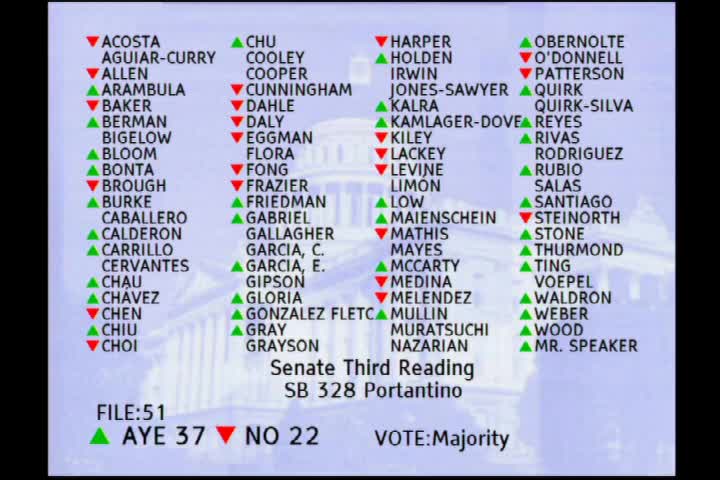 1MIN
Assembly Floor
 2MIN
Assembly Standing Committee on Appropriations
 4MIN
Assembly Standing Committee on Higher Education
 1H
Senate Standing Committee on Appropriations
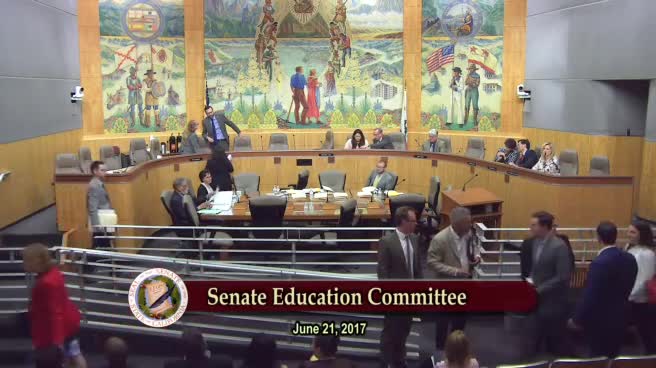 4MIN
Senate Standing Committee on Education
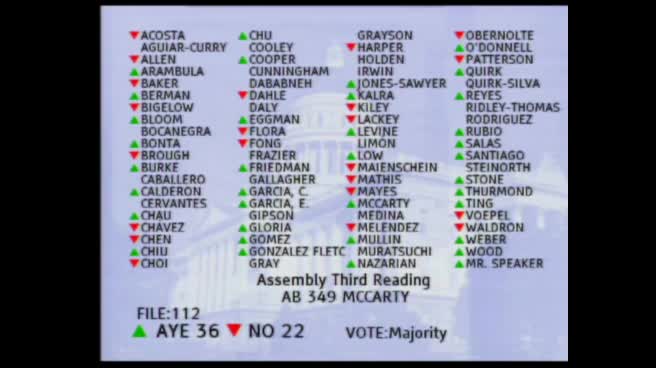 1MIN
Assembly Floor
 37SEC
Assembly Standing Committee on Appropriations
 1MIN
Assembly Standing Committee on Higher Education
Bill Author

Bill Co-Author(s):