AB 1066: Public works: definition.
- Session Year: 2017-2018
- House: Assembly
- Latest Version Date: 2017-10-09
(1)Existing law defines the term public works for purposes of requirements regarding the payment of prevailing wages to include construction, alteration, demolition, installation, or repair work done under contract and paid for in whole or in part out of public funds, except as specified. Existing law makes a willful violation of laws relating to the payment of prevailing wages on public works a misdemeanor.
This bill would expand the meaning of the term public works to include specific types of tree removal work. By expanding the definition of public works, this bill would expand the scope of a crime.
(2)This bill would incorporate additional changes to Section 1720 of the Labor Code proposed by AB 199 to be operative only if this bill and AB 199 are enacted and this bill is enacted last.
(3)The California Constitution requires the state to reimburse local agencies and school districts for certain costs mandated by the state. Statutory provisions establish procedures for making that reimbursement.
This bill would provide that no reimbursement is required by this act for a specified reason.
(1)Existing law defines the term public works for purposes of requirements regarding the payment of prevailing wages to include construction, alteration, demolition, installation, or repair work done under contract and paid for in whole or in part out of public funds, except as specified. Existing law makes a willful violation of laws relating to the payment of prevailing wages on public works a misdemeanor.
This bill would expand the meaning of the term public works to include specific types of tree removal work. By expanding the definition of public works, this bill would expand the scope of a crime.
(2)This bill would incorporate additional changes to Section 1720 of the Labor Code proposed by AB 199 to be operative only if this bill and AB 199 are enacted and this bill is enacted last.
(2)(3)The California Constitution requires the state to reimburse local agencies and school districts for certain costs mandated by the state. Statutory provisions establish procedures for making that reimbursement.
This bill would provide that no reimbursement is required by this act for a specified reason.
(1)Existing law defines the term public works for purposes of requirements regarding the payment of prevailing wages to include construction, alteration, demolition, installation, or repair work done under contract and paid for in whole or in part out of public funds, except as specified. Existing law makes a willful violation of laws relating to the payment of prevailing wages on public works a misdemeanor.
This bill would specify that the term demolition within the definition of public works includes, but is not limited to, tree removal. expand the meaning of the term public works to include specific types of tree removal work. By expanding the definition of public works, this bill would modify the definition expand the scope of a crime.
(2)The California Constitution requires the state to reimburse local agencies and school districts for certain costs mandated by the state. Statutory provisions establish procedures for making that reimbursement.
This bill would provide that no reimbursement is required by this act for a specified reason.
(1)Existing law defines the term public works for purposes of requirements regarding the payment of prevailing wages to include construction, alteration, demolition, installation, or repair work done under contract and paid for in whole or in part out of public funds, except as specified. Existing law makes a willful violation of laws relating to the payment of prevailing wages on public works a misdemeanor.
This bill would specify that the term demolition within the definition of public works includes, but is not limited to, tree removal. By expanding the definition of public works, this bill would modify the definition of a crime.
(2)The California Constitution requires the state to reimburse local agencies and school districts for certain costs mandated by the state. Statutory provisions establish procedures for making that reimbursement.
This bill would provide that no reimbursement is required by this act for a specified reason.
(a)As used in this chapter, public works means:
(1)Construction, alteration, demolition, installation, or repair work done under contract and paid for in whole or in part out of public funds, except work done directly by any public utility company pursuant to order of the Public Utilities Commission or other public authority. For purposes of this paragraph, construction includes work performed during the design and preconstruction phases of construction, including, but not limited to, inspection and land surveying work, and work performed during the postconstruction phases of construction, including, but not limited to, all cleanup work at the jobsite. For purposes of this paragraph, installation includes, but is not limited to, the assembly and disassembly of freestanding and affixed modular office systems.
(2)Work done for irrigation, utility, reclamation, and improvement districts, and other districts of this type. Public work does not include the operation of the irrigation or drainage system of any irrigation or reclamation district, except as used in Section 1778 relating to retaining wages.
(3)Street, sewer, or other improvement work done under the direction and supervision or by the authority of any officer or public body of the state, or of any political subdivision or district thereof, whether the political subdivision or district operates under a freeholders charter or not.
(4)The laying of carpet done under a building lease-maintenance contract and paid for out of public funds.
(5)The laying of carpet in a public building done under contract and paid for in whole or in part out of public funds.
(6)Public transportation demonstration projects authorized pursuant to Section 143 of the Streets and Highways Code.
(7)(A)Infrastructure project grants from the California Advanced Services Fund pursuant to Section 281 of the Public Utilities Code.
(8)Tree removal work done in the execution of a project under paragraph (1).
(B)For purposes of this paragraph, the Public Utilities Commission is not the awarding body or the body awarding the contract, as defined in Section 1722.
(b)For purposes of this section, paid for in whole or in part out of public funds means all of the following:
(1)The payment of money or the equivalent of money by the state or political subdivision directly to or on behalf of the public works contractor, subcontractor, or developer.
(2)Performance of construction work by the state or political subdivision in execution of the project.
(3)Transfer by the state or political subdivision of an asset of value for less than fair market price.
(4)Fees, costs, rents, insurance or bond premiums, loans, interest rates, or other obligations that would normally be required in the execution of the contract, that are paid, reduced, charged at less than fair market value, waived, or forgiven by the state or political subdivision.
(5)Money loaned by the state or political subdivision that is to be repaid on a contingent basis.
(6)Credits that are applied by the state or political subdivision against repayment obligations to the state or political subdivision.
(c)Notwithstanding subdivision (b):
(1)Private residential projects built on private property are not subject to the requirements of this chapter unless the projects are built pursuant to an agreement with a state agency, redevelopment agency, or local public housing authority.
(2)If the state or a political subdivision requires a private developer to perform construction, alteration, demolition, installation, or repair work on a public work of improvement as a condition of regulatory approval of an otherwise private development project, and the state or political subdivision contributes no more money, or the equivalent of money, to the overall project than is required to perform this public improvement work, and the state or political subdivision maintains no proprietary interest in the overall project, then only the public improvement work shall thereby become subject to this chapter.
(3)If the state or a political subdivision reimburses a private developer for costs that would normally be borne by the public, or provides directly or indirectly a public subsidy to a private development project that is de minimis in the context of the project, an otherwise private development project shall not thereby become subject to the requirements of this chapter.
(4)The construction or rehabilitation of affordable housing units for low- or moderate-income persons pursuant to paragraph (5) or (7) of subdivision (e) of Section 33334.2 of the Health and Safety Code that are paid for solely with moneys from the Low and Moderate Income Housing Fund established pursuant to Section 33334.3 of the Health and Safety Code or that are paid for by a combination of private funds and funds available pursuant to Section 33334.2 or 33334.3 of the Health and Safety Code do not constitute a project that is paid for in whole or in part out of public funds.
(5)Unless otherwise required by a public funding program, the construction or rehabilitation of privately owned residential projects is not subject to the requirements of this chapter if one or more of the following conditions are met:
(A)The project is a self-help housing project in which no fewer than 500 hours of construction work associated with the homes are to be performed by the home buyers.
(B)The project consists of rehabilitation or expansion work associated with a facility operated on a not-for-profit basis as temporary or transitional housing for homeless persons with a total project cost of less than twenty-five thousand dollars ($25,000).
(C)Assistance is provided to a household as either mortgage assistance, downpayment assistance, or for the rehabilitation of a single-family home.
(D)The project consists of new construction, expansion, or rehabilitation work associated with a facility developed by a nonprofit organization to be operated on a not-for-profit basis to provide emergency or transitional shelter and ancillary services and assistance to homeless adults and children. The nonprofit organization operating the project shall provide, at no profit, not less than 50 percent of the total project cost from nonpublic sources, excluding real property that is transferred or leased. Total project cost includes the value of donated labor, materials, and architectural and engineering services.
(E)The public participation in the project that would otherwise meet the criteria of subdivision (b) is public funding in the form of below-market interest rate loans for a project in which occupancy of at least 40 percent of the units is restricted for at least 20 years, by deed or regulatory agreement, to individuals or families earning no more than 80 percent of the area median income.
(d)Notwithstanding any provision of this section to the contrary, the following projects shall not, solely by reason of this section, be subject to the requirements of this chapter:
(1)Qualified residential rental projects, as defined by Section 142(d) of the Internal Revenue Code, financed in whole or in part through the issuance of bonds that receive allocation of a portion of the state ceiling pursuant to Chapter 11.8 (commencing with Section 8869.80) of Division 1 of Title 2 of the Government Code on or before December 31, 2003.
(2)Single-family residential projects financed in whole or in part through the issuance of qualified mortgage revenue bonds or qualified veterans mortgage bonds, as defined by Section 143 of the Internal Revenue Code, or with mortgage credit certificates under a Qualified Mortgage Credit Certificate Program, as defined by Section 25 of the Internal Revenue Code, that receive allocation of a portion of the state ceiling pursuant to Chapter 11.8 (commencing with Section 8869.80) of Division 1 of Title 2 of the Government Code on or before December 31, 2003.
(3)Low-income housing projects that are allocated federal or state low-income housing tax credits pursuant to Section 42 of the Internal Revenue Code, Chapter 3.6 (commencing with Section 50199.4) of Part 1 of Division 31 of the Health and Safety Code, or Section 12206, 17058, or 23610.5 of the Revenue and Taxation Code, on or before December 31, 2003.
(e)Notwithstanding paragraph (1) of subdivision (a), construction, alteration, demolition, installation, or repair work on the electric transmission system located in California constitutes a public works project for the purposes of this chapter.
(f)If a statute, other than this section, or a regulation, other than a regulation adopted pursuant to this section, or an ordinance or a contract applies this chapter to a project, the exclusions set forth in subdivision (d) do not apply to that project.
(g)For purposes of this section, references to the Internal Revenue Code mean the Internal Revenue Code of 1986, as amended, and include the corresponding predecessor sections of the Internal Revenue Code of 1954, as amended.
(h)The amendments made to this section by either Chapter 938 of the Statutes of 2001 or the act adding this subdivision shall not be construed to preempt local ordinances requiring the payment of prevailing wages on housing projects.
SEC. 2.Section 1720 of the Labor Code is amended to read:1720.(a)As used in this chapter, public works means:
(1)Construction, alteration, demolition, installation, or repair work done under contract and paid for in whole or in part out of public funds, except work done directly by any public utility company pursuant to order of the Public Utilities Commission or other public authority. For purposes of this paragraph, construction includes work performed during the design and preconstruction phases of construction, including, but not limited to, inspection and land surveying work, and work performed during the postconstruction phases of construction, including, but not limited to, all cleanup work at the jobsite. For purposes of this paragraph, installation includes, but is not limited to, the assembly and disassembly of freestanding and affixed modular office systems.
(2)Work done for irrigation, utility, reclamation, and improvement districts, and other districts of this type. Public work does not include the operation of the irrigation or drainage system of any irrigation or reclamation district, except as used in Section 1778 relating to retaining wages.
(3)Street, sewer, or other improvement work done under the direction and supervision or by the authority of any officer or public body of the state, or of any political subdivision or district thereof, whether the political subdivision or district operates under a freeholders charter or not.
(4)The laying of carpet done under a building lease-maintenance contract and paid for out of public funds.
(5)The laying of carpet in a public building done under contract and paid for in whole or in part out of public funds.
(6)Public transportation demonstration projects authorized pursuant to Section 143 of the Streets and Highways Code.
(7)(A)Infrastructure project grants from the California Advanced Services Fund pursuant to Section 281 of the Public Utilities Code.
(8)Tree removal work done in the execution of a project under paragraph (1).
(B)For purposes of this paragraph, the Public Utilities Commission is not the awarding body or the body awarding the contract, as defined in Section 1722.
(b)For purposes of this section, paid for in whole or in part out of public funds means all of the following:
(1)The payment of money or the equivalent of money by the state or political subdivision directly to or on behalf of the public works contractor, subcontractor, or developer.
(2)Performance of construction work by the state or political subdivision in execution of the project.
(3)Transfer by the state or political subdivision of an asset of value for less than fair market price.
(4)Fees, costs, rents, insurance or bond premiums, loans, interest rates, or other obligations that would normally be required in the execution of the contract, that are paid, reduced, charged at less than fair market value, waived, or forgiven by the state or political subdivision.
(5)Money loaned by the state or political subdivision that is to be repaid on a contingent basis.
(6)Credits that are applied by the state or political subdivision against repayment obligations to the state or political subdivision.
(c)Notwithstanding subdivision (b):
(1)Private residential projects built on private property are not subject to the requirements of this chapter unless the projects are built pursuant to an agreement with a state agency, a redevelopment agency, a successor agency to a redevelopment agency when acting in that capacity, or a local public housing authority.
(2)If the state or a political subdivision requires a private developer to perform construction, alteration, demolition, installation, or repair work on a public work of improvement as a condition of regulatory approval of an otherwise private development project, and the state or political subdivision contributes no more money, or the equivalent of money, to the overall project than is required to perform this public improvement work, and the state or political subdivision maintains no proprietary interest in the overall project, then only the public improvement work shall thereby become subject to this chapter.
(3)If the state or a political subdivision reimburses a private developer for costs that would normally be borne by the public, or provides directly or indirectly a public subsidy to a private development project that is de minimis in the context of the project, an otherwise private development project shall not thereby become subject to the requirements of this chapter.
(4)The construction or rehabilitation of affordable housing units for low- or moderate-income persons pursuant to paragraph (5) or (7) of subdivision (e) of Section 33334.2 of the Health and Safety Code that are paid for solely with moneys from the Low and Moderate Income Housing Fund established pursuant to Section 33334.3 of the Health and Safety Code or that are paid for by a combination of private funds and funds available pursuant to Section 33334.2 or 33334.3 of the Health and Safety Code do not constitute a project that is paid for in whole or in part out of public funds.
(5)Unless otherwise required by a public funding program, the construction or rehabilitation of privately owned residential projects is not subject to the requirements of this chapter if one or more of the following conditions are met:
(A)The project is a self-help housing project in which no fewer than 500 hours of construction work associated with the homes are to be performed by the home buyers.
(B)The project consists of rehabilitation or expansion work associated with a facility operated on a not-for-profit basis as temporary or transitional housing for homeless persons with a total project cost of less than twenty-five thousand dollars ($25,000).
(C)Assistance is provided to a household as either mortgage assistance, downpayment assistance, or for the rehabilitation of a single-family home.
(D)The project consists of new construction, expansion, or rehabilitation work associated with a facility developed by a nonprofit organization to be operated on a not-for-profit basis to provide emergency or transitional shelter and ancillary services and assistance to homeless adults and children. The nonprofit organization operating the project shall provide, at no profit, not less than 50 percent of the total project cost from nonpublic sources, excluding real property that is transferred or leased. Total project cost includes the value of donated labor, materials, and architectural and engineering services.
(E)The public participation in the project that would otherwise meet the criteria of subdivision (b) is public funding in the form of below-market interest rate loans for a project in which occupancy of at least 40 percent of the units is restricted for at least 20 years, by deed or regulatory agreement, to individuals or families earning no more than 80 percent of the area median income.
(d)Notwithstanding any provision of this section to the contrary, the following projects shall not, solely by reason of this section, be subject to the requirements of this chapter:
(1)Qualified residential rental projects, as defined by Section 142(d) of the Internal Revenue Code, financed in whole or in part through the issuance of bonds that receive allocation of a portion of the state ceiling pursuant to Chapter 11.8 (commencing with Section 8869.80) of Division 1 of Title 2 of the Government Code on or before December 31, 2003.
(2)Single-family residential projects financed in whole or in part through the issuance of qualified mortgage revenue bonds or qualified veterans mortgage bonds, as defined by Section 143 of the Internal Revenue Code, or with mortgage credit certificates under a Qualified Mortgage Credit Certificate Program, as defined by Section 25 of the Internal Revenue Code, that receive allocation of a portion of the state ceiling pursuant to Chapter 11.8 (commencing with Section 8869.80) of Division 1 of Title 2 of the Government Code on or before December 31, 2003.
(3)Low-income housing projects that are allocated federal or state low-income housing tax credits pursuant to Section 42 of the Internal Revenue Code, Chapter 3.6 (commencing with Section 50199.4) of Part 1 of Division 31 of the Health and Safety Code, or Section 12206, 17058, or 23610.5 of the Revenue and Taxation Code, on or before December 31, 2003.
(e)Notwithstanding paragraph (1) of subdivision (a), construction, alteration, demolition, installation, or repair work on the electric transmission system located in California constitutes a public works project for the purposes of this chapter.
(f)If a statute, other than this section, or a regulation, other than a regulation adopted pursuant to this section, or an ordinance or a contract applies this chapter to a project, the exclusions set forth in subdivision (d) do not apply to that project.
(g)For purposes of this section, references to the Internal Revenue Code mean the Internal Revenue Code of 1986, as amended, and include the corresponding predecessor sections of the Internal Revenue Code of 1954, as amended.
(h)The amendments made to this section by either Chapter 938 of the Statutes of 2001 or the act adding this subdivision shall not be construed to preempt local ordinances requiring the payment of prevailing wages on housing projects.
SEC. 3.Section 2 of this bill incorporates amendments to Section 1720 of the Labor Code proposed by both this bill and Assembly Bill 199. That section shall only become operative if (1) both bills are enacted and become effective on or before January 1, 2018, (2) each bill amends Section 1720 of the Labor Code, and (3) this bill is enacted after Assembly Bill 199, in which case Section 1 of this bill shall not become operative.
SEC. 4.No reimbursement is required by this act pursuant to Section 6 of Article XIIIB of the California Constitution because the only costs that may be incurred by a local agency or school district will be incurred because this act creates a new crime or infraction, eliminates a crime or infraction, or changes the penalty for a crime or infraction, within the meaning of Section 17556 of the Government Code, or changes the definition of a crime within the meaning of Section 6 of Article XIIIB of the California Constitution.
(a)As used in this chapter, public works means:
(1)Construction, alteration, demolition, installation, or repair work done under contract and paid for in whole or in part out of public funds, except work done directly by any public utility company pursuant to order of the Public Utilities Commission or other public authority. For purposes of this paragraph, construction includes work performed during the design and preconstruction phases of construction, including, but not limited to, inspection and land surveying work, and work performed during the postconstruction phases of construction, including, but not limited to, all cleanup work at the jobsite. For purposes of this paragraph, installation includes, but is not limited to, the assembly and disassembly of freestanding and affixed modular office systems.
(2)Work done for irrigation, utility, reclamation, and improvement districts, and other districts of this type. Public work does not include the operation of the irrigation or drainage system of any irrigation or reclamation district, except as used in Section 1778 relating to retaining wages.
(3)Street, sewer, or other improvement work done under the direction and supervision or by the authority of any officer or public body of the state, or of any political subdivision or district thereof, whether the political subdivision or district operates under a freeholders charter or not.
(4)The laying of carpet done under a building lease-maintenance contract and paid for out of public funds.
(5)The laying of carpet in a public building done under contract and paid for in whole or in part out of public funds.
(6)Public transportation demonstration projects authorized pursuant to Section 143 of the Streets and Highways Code.
(7)(A)Infrastructure project grants from the California Advanced Services Fund pursuant to Section 281 of the Public Utilities Code.
(8)Tree removal work done in the execution of a project under paragraph (1).
(B)For purposes of this paragraph, the Public Utilities Commission is not the awarding body or the body awarding the contract, as defined in Section 1722.
(b)For purposes of this section, paid for in whole or in part out of public funds means all of the following:
(1)The payment of money or the equivalent of money by the state or political subdivision directly to or on behalf of the public works contractor, subcontractor, or developer.
(2)Performance of construction work by the state or political subdivision in execution of the project.
(3)Transfer by the state or political subdivision of an asset of value for less than fair market price.
(4)Fees, costs, rents, insurance or bond premiums, loans, interest rates, or other obligations that would normally be required in the execution of the contract, that are paid, reduced, charged at less than fair market value, waived, or forgiven by the state or political subdivision.
(5)Money loaned by the state or political subdivision that is to be repaid on a contingent basis.
(6)Credits that are applied by the state or political subdivision against repayment obligations to the state or political subdivision.
(c)Notwithstanding subdivision (b):
(1)Private residential projects built on private property are not subject to the requirements of this chapter unless the projects are built pursuant to an agreement with a state agency, redevelopment agency, or local public housing authority.
(2)If the state or a political subdivision requires a private developer to perform construction, alteration, demolition, installation, or repair work on a public work of improvement as a condition of regulatory approval of an otherwise private development project, and the state or political subdivision contributes no more money, or the equivalent of money, to the overall project than is required to perform this public improvement work, and the state or political subdivision maintains no proprietary interest in the overall project, then only the public improvement work shall thereby become subject to this chapter.
(3)If the state or a political subdivision reimburses a private developer for costs that would normally be borne by the public, or provides directly or indirectly a public subsidy to a private development project that is de minimis in the context of the project, an otherwise private development project shall not thereby become subject to the requirements of this chapter.
(4)The construction or rehabilitation of affordable housing units for low- or moderate-income persons pursuant to paragraph (5) or (7) of subdivision (e) of Section 33334.2 of the Health and Safety Code that are paid for solely with moneys from the Low and Moderate Income Housing Fund established pursuant to Section 33334.3 of the Health and Safety Code or that are paid for by a combination of private funds and funds available pursuant to Section 33334.2 or 33334.3 of the Health and Safety Code do not constitute a project that is paid for in whole or in part out of public funds.
(5)Unless otherwise required by a public funding program, the construction or rehabilitation of privately owned residential projects is not subject to the requirements of this chapter if one or more of the following conditions are met:
(A)The project is a self-help housing project in which no fewer than 500 hours of construction work associated with the homes are to be performed by the home buyers.
(B)The project consists of rehabilitation or expansion work associated with a facility operated on a not-for-profit basis as temporary or transitional housing for homeless persons with a total project cost of less than twenty-five thousand dollars ($25,000).
(C)Assistance is provided to a household as either mortgage assistance, downpayment assistance, or for the rehabilitation of a single-family home.
(D)The project consists of new construction, expansion, or rehabilitation work associated with a facility developed by a nonprofit organization to be operated on a not-for-profit basis to provide emergency or transitional shelter and ancillary services and assistance to homeless adults and children. The nonprofit organization operating the project shall provide, at no profit, not less than 50 percent of the total project cost from nonpublic sources, excluding real property that is transferred or leased. Total project cost includes the value of donated labor, materials, and architectural and engineering services.
(E)The public participation in the project that would otherwise meet the criteria of subdivision (b) is public funding in the form of below-market interest rate loans for a project in which occupancy of at least 40 percent of the units is restricted for at least 20 years, by deed or regulatory agreement, to individuals or families earning no more than 80 percent of the area median income.
(d)Notwithstanding any provision of this section to the contrary, the following projects shall not, solely by reason of this section, be subject to the requirements of this chapter:
(1)Qualified residential rental projects, as defined by Section 142(d) of the Internal Revenue Code, financed in whole or in part through the issuance of bonds that receive allocation of a portion of the state ceiling pursuant to Chapter 11.8 (commencing with Section 8869.80) of Division 1 of Title 2 of the Government Code on or before December 31, 2003.
(2)Single-family residential projects financed in whole or in part through the issuance of qualified mortgage revenue bonds or qualified veterans mortgage bonds, as defined by Section 143 of the Internal Revenue Code, or with mortgage credit certificates under a Qualified Mortgage Credit Certificate Program, as defined by Section 25 of the Internal Revenue Code, that receive allocation of a portion of the state ceiling pursuant to Chapter 11.8 (commencing with Section 8869.80) of Division 1 of Title 2 of the Government Code on or before December 31, 2003.
(3)Low-income housing projects that are allocated federal or state low-income housing tax credits pursuant to Section 42 of the Internal Revenue Code, Chapter 3.6 (commencing with Section 50199.4) of Part 1 of Division 31 of the Health and Safety Code, or Section 12206, 17058, or 23610.5 of the Revenue and Taxation Code, on or before December 31, 2003.
(e)Notwithstanding paragraph (1) of subdivision (a), construction, alteration, demolition, installation, or repair work on the electric transmission system located in California constitutes a public works project for the purposes of this chapter.
(f)If a statute, other than this section, or a regulation, other than a regulation adopted pursuant to this section, or an ordinance or a contract applies this chapter to a project, the exclusions set forth in subdivision (d) do not apply to that project.
(g)For purposes of this section, references to the Internal Revenue Code mean the Internal Revenue Code of 1986, as amended, and include the corresponding predecessor sections of the Internal Revenue Code of 1954, as amended.
(h)The amendments made to this section by either Chapter 938 of the Statutes of 2001 or the act adding this subdivision shall not be construed to preempt local ordinances requiring the payment of prevailing wages on housing projects.
SEC. 2.Section 1720 of the Labor Code is amended to read:1720.(a)As used in this chapter, public works means:
(1)Construction, alteration, demolition, installation, or repair work done under contract and paid for in whole or in part out of public funds, except work done directly by any public utility company pursuant to order of the Public Utilities Commission or other public authority. For purposes of this paragraph, construction includes work performed during the design and preconstruction phases of construction, including, but not limited to, inspection and land surveying work, and work performed during the postconstruction phases of construction, including, but not limited to, all cleanup work at the jobsite. For purposes of this paragraph, installation includes, but is not limited to, the assembly and disassembly of freestanding and affixed modular office systems.
(2)Work done for irrigation, utility, reclamation, and improvement districts, and other districts of this type. Public work does not include the operation of the irrigation or drainage system of any irrigation or reclamation district, except as used in Section 1778 relating to retaining wages.
(3)Street, sewer, or other improvement work done under the direction and supervision or by the authority of any officer or public body of the state, or of any political subdivision or district thereof, whether the political subdivision or district operates under a freeholders charter or not.
(4)The laying of carpet done under a building lease-maintenance contract and paid for out of public funds.
(5)The laying of carpet in a public building done under contract and paid for in whole or in part out of public funds.
(6)Public transportation demonstration projects authorized pursuant to Section 143 of the Streets and Highways Code.
(7)(A)Infrastructure project grants from the California Advanced Services Fund pursuant to Section 281 of the Public Utilities Code.
(8)Tree removal work done in the execution of a project under paragraph (1).
(B)For purposes of this paragraph, the Public Utilities Commission is not the awarding body or the body awarding the contract, as defined in Section 1722.
(b)For purposes of this section, paid for in whole or in part out of public funds means all of the following:
(1)The payment of money or the equivalent of money by the state or political subdivision directly to or on behalf of the public works contractor, subcontractor, or developer.
(2)Performance of construction work by the state or political subdivision in execution of the project.
(3)Transfer by the state or political subdivision of an asset of value for less than fair market price.
(4)Fees, costs, rents, insurance or bond premiums, loans, interest rates, or other obligations that would normally be required in the execution of the contract, that are paid, reduced, charged at less than fair market value, waived, or forgiven by the state or political subdivision.
(5)Money loaned by the state or political subdivision that is to be repaid on a contingent basis.
(6)Credits that are applied by the state or political subdivision against repayment obligations to the state or political subdivision.
(c)Notwithstanding subdivision (b):
(1)Private residential projects built on private property are not subject to the requirements of this chapter unless the projects are built pursuant to an agreement with a state agency, a redevelopment agency, a successor agency to a redevelopment agency when acting in that capacity, or a local public housing authority.
(2)If the state or a political subdivision requires a private developer to perform construction, alteration, demolition, installation, or repair work on a public work of improvement as a condition of regulatory approval of an otherwise private development project, and the state or political subdivision contributes no more money, or the equivalent of money, to the overall project than is required to perform this public improvement work, and the state or political subdivision maintains no proprietary interest in the overall project, then only the public improvement work shall thereby become subject to this chapter.
(3)If the state or a political subdivision reimburses a private developer for costs that would normally be borne by the public, or provides directly or indirectly a public subsidy to a private development project that is de minimis in the context of the project, an otherwise private development project shall not thereby become subject to the requirements of this chapter.
(4)The construction or rehabilitation of affordable housing units for low- or moderate-income persons pursuant to paragraph (5) or (7) of subdivision (e) of Section 33334.2 of the Health and Safety Code that are paid for solely with moneys from the Low and Moderate Income Housing Fund established pursuant to Section 33334.3 of the Health and Safety Code or that are paid for by a combination of private funds and funds available pursuant to Section 33334.2 or 33334.3 of the Health and Safety Code do not constitute a project that is paid for in whole or in part out of public funds.
(5)Unless otherwise required by a public funding program, the construction or rehabilitation of privately owned residential projects is not subject to the requirements of this chapter if one or more of the following conditions are met:
(A)The project is a self-help housing project in which no fewer than 500 hours of construction work associated with the homes are to be performed by the home buyers.
(B)The project consists of rehabilitation or expansion work associated with a facility operated on a not-for-profit basis as temporary or transitional housing for homeless persons with a total project cost of less than twenty-five thousand dollars ($25,000).
(C)Assistance is provided to a household as either mortgage assistance, downpayment assistance, or for the rehabilitation of a single-family home.
(D)The project consists of new construction, expansion, or rehabilitation work associated with a facility developed by a nonprofit organization to be operated on a not-for-profit basis to provide emergency or transitional shelter and ancillary services and assistance to homeless adults and children. The nonprofit organization operating the project shall provide, at no profit, not less than 50 percent of the total project cost from nonpublic sources, excluding real property that is transferred or leased. Total project cost includes the value of donated labor, materials, and architectural and engineering services.
(E)The public participation in the project that would otherwise meet the criteria of subdivision (b) is public funding in the form of below-market interest rate loans for a project in which occupancy of at least 40 percent of the units is restricted for at least 20 years, by deed or regulatory agreement, to individuals or families earning no more than 80 percent of the area median income.
(d)Notwithstanding any provision of this section to the contrary, the following projects shall not, solely by reason of this section, be subject to the requirements of this chapter:
(1)Qualified residential rental projects, as defined by Section 142(d) of the Internal Revenue Code, financed in whole or in part through the issuance of bonds that receive allocation of a portion of the state ceiling pursuant to Chapter 11.8 (commencing with Section 8869.80) of Division 1 of Title 2 of the Government Code on or before December 31, 2003.
(2)Single-family residential projects financed in whole or in part through the issuance of qualified mortgage revenue bonds or qualified veterans mortgage bonds, as defined by Section 143 of the Internal Revenue Code, or with mortgage credit certificates under a Qualified Mortgage Credit Certificate Program, as defined by Section 25 of the Internal Revenue Code, that receive allocation of a portion of the state ceiling pursuant to Chapter 11.8 (commencing with Section 8869.80) of Division 1 of Title 2 of the Government Code on or before December 31, 2003.
(3)Low-income housing projects that are allocated federal or state low-income housing tax credits pursuant to Section 42 of the Internal Revenue Code, Chapter 3.6 (commencing with Section 50199.4) of Part 1 of Division 31 of the Health and Safety Code, or Section 12206, 17058, or 23610.5 of the Revenue and Taxation Code, on or before December 31, 2003.
(e)Notwithstanding paragraph (1) of subdivision (a), construction, alteration, demolition, installation, or repair work on the electric transmission system located in California constitutes a public works project for the purposes of this chapter.
(f)If a statute, other than this section, or a regulation, other than a regulation adopted pursuant to this section, or an ordinance or a contract applies this chapter to a project, the exclusions set forth in subdivision (d) do not apply to that project.
(g)For purposes of this section, references to the Internal Revenue Code mean the Internal Revenue Code of 1986, as amended, and include the corresponding predecessor sections of the Internal Revenue Code of 1954, as amended.
(h)The amendments made to this section by either Chapter 938 of the Statutes of 2001 or the act adding this subdivision shall not be construed to preempt local ordinances requiring the payment of prevailing wages on housing projects.
SEC. 3.Section 2 of this bill incorporates amendments to Section 1720 of the Labor Code proposed by both this bill and Assembly Bill 199. That section shall only become operative if (1) both bills are enacted and become effective on or before January 1, 2018, (2) each bill amends Section 1720 of the Labor Code, and (3) this bill is enacted after Assembly Bill 199, in which case Section 1 of this bill shall not become operative.
SEC. 2.SEC. 4.No reimbursement is required by this act pursuant to Section 6 of Article XIIIB of the California Constitution because the only costs that may be incurred by a local agency or school district will be incurred because this act creates a new crime or infraction, eliminates a crime or infraction, or changes the penalty for a crime or infraction, within the meaning of Section 17556 of the Government Code, or changes the definition of a crime within the meaning of Section 6 of Article XIIIB of the California Constitution.
(a)As used in this chapter, public works means:
(1)Construction, alteration, demolition, installation, or repair work done under contract and paid for in whole or in part out of public funds, except work done directly by any public utility company pursuant to order of the Public Utilities Commission or other public authority. For purposes of this paragraph, construction includes work performed during the design and preconstruction phases of construction, including, but not limited to, inspection and land surveying work, and work performed during the postconstruction phases of construction, including, but not limited to, all cleanup work at the jobsite. For purposes of this paragraph, demolition includes, but is not limited to, tree removal. For purposes of this paragraph, installation includes, but is not limited to, the assembly and disassembly of freestanding and affixed modular office systems.
(2)Work done for irrigation, utility, reclamation, and improvement districts, and other districts of this type. Public work does not include the operation of the irrigation or drainage system of any irrigation or reclamation district, except as used in Section 1778 relating to retaining wages.
(3)Street, sewer, or other improvement work done under the direction and supervision or by the authority of any officer or public body of the state, or of any political subdivision or district thereof, whether the political subdivision or district operates under a freeholders charter or not.
(4)The laying of carpet done under a building lease-maintenance contract and paid for out of public funds.
(5)The laying of carpet in a public building done under contract and paid for in whole or in part out of public funds.
(6)Public transportation demonstration projects authorized pursuant to Section 143 of the Streets and Highways Code.
(7)(A)Infrastructure project grants from the California Advanced Services Fund pursuant to Section 281 of the Public Utilities Code.
(8)Tree removal work done in the execution of a project under paragraph (1).
(B)For purposes of this paragraph, the Public Utilities Commission is not the awarding body or the body awarding the contract, as defined in Section 1722.
(b)For purposes of this section, paid for in whole or in part out of public funds means all of the following:
(1)The payment of money or the equivalent of money by the state or political subdivision directly to or on behalf of the public works contractor, subcontractor, or developer.
(2)Performance of construction work by the state or political subdivision in execution of the project.
(3)Transfer by the state or political subdivision of an asset of value for less than fair market price.
(4)Fees, costs, rents, insurance or bond premiums, loans, interest rates, or other obligations that would normally be required in the execution of the contract, that are paid, reduced, charged at less than fair market value, waived, or forgiven by the state or political subdivision.
(5)Money loaned by the state or political subdivision that is to be repaid on a contingent basis.
(6)Credits that are applied by the state or political subdivision against repayment obligations to the state or political subdivision.
(c)Notwithstanding subdivision (b):
(1)Private residential projects built on private property are not subject to the requirements of this chapter unless the projects are built pursuant to an agreement with a state agency, redevelopment agency, or local public housing authority.
(2)If the state or a political subdivision requires a private developer to perform construction, alteration, demolition, installation, or repair work on a public work of improvement as a condition of regulatory approval of an otherwise private development project, and the state or political subdivision contributes no more money, or the equivalent of money, to the overall project than is required to perform this public improvement work, and the state or political subdivision maintains no proprietary interest in the overall project, then only the public improvement work shall thereby become subject to this chapter.
(3)If the state or a political subdivision reimburses a private developer for costs that would normally be borne by the public, or provides directly or indirectly a public subsidy to a private development project that is de minimis in the context of the project, an otherwise private development project shall not thereby become subject to the requirements of this chapter.
(4)The construction or rehabilitation of affordable housing units for low- or moderate-income persons pursuant to paragraph (5) or (7) of subdivision (e) of Section 33334.2 of the Health and Safety Code that are paid for solely with moneys from the Low and Moderate Income Housing Fund established pursuant to Section 33334.3 of the Health and Safety Code or that are paid for by a combination of private funds and funds available pursuant to Section 33334.2 or 33334.3 of the Health and Safety Code do not constitute a project that is paid for in whole or in part out of public funds.
(5)Unless otherwise required by a public funding program, the construction or rehabilitation of privately owned residential projects is not subject to the requirements of this chapter if one or more of the following conditions are met:
(A)The project is a self-help housing project in which no fewer than 500 hours of construction work associated with the homes are to be performed by the home buyers.
(B)The project consists of rehabilitation or expansion work associated with a facility operated on a not-for-profit basis as temporary or transitional housing for homeless persons with a total project cost of less than twenty-five thousand dollars ($25,000).
(C)Assistance is provided to a household as either mortgage assistance, downpayment assistance, or for the rehabilitation of a single-family home.
(D)The project consists of new construction, expansion, or rehabilitation work associated with a facility developed by a nonprofit organization to be operated on a not-for-profit basis to provide emergency or transitional shelter and ancillary services and assistance to homeless adults and children. The nonprofit organization operating the project shall provide, at no profit, not less than 50 percent of the total project cost from nonpublic sources, excluding real property that is transferred or leased. Total project cost includes the value of donated labor, materials, and architectural and engineering services.
(E)The public participation in the project that would otherwise meet the criteria of subdivision (b) is public funding in the form of below-market interest rate loans for a project in which occupancy of at least 40 percent of the units is restricted for at least 20 years, by deed or regulatory agreement, to individuals or families earning no more than 80 percent of the area median income.
(d)Notwithstanding any provision of this section to the contrary, the following projects shall not, solely by reason of this section, be subject to the requirements of this chapter:
(1)Qualified residential rental projects, as defined by Section 142(d) of the Internal Revenue Code, financed in whole or in part through the issuance of bonds that receive allocation of a portion of the state ceiling pursuant to Chapter 11.8 (commencing with Section 8869.80) of Division 1 of Title 2 of the Government Code on or before December 31, 2003.
(2)Single-family residential projects financed in whole or in part through the issuance of qualified mortgage revenue bonds or qualified veterans mortgage bonds, as defined by Section 143 of the Internal Revenue Code, or with mortgage credit certificates under a Qualified Mortgage Credit Certificate Program, as defined by Section 25 of the Internal Revenue Code, that receive allocation of a portion of the state ceiling pursuant to Chapter 11.8 (commencing with Section 8869.80) of Division 1 of Title 2 of the Government Code on or before December 31, 2003.
(3)Low-income housing projects that are allocated federal or state low-income housing tax credits pursuant to Section 42 of the Internal Revenue Code, Chapter 3.6 (commencing with Section 50199.4) of Part 1 of Division 31 of the Health and Safety Code, or Section 12206, 17058, or 23610.5 of the Revenue and Taxation Code, on or before December 31, 2003.
(e)Notwithstanding paragraph (1) of subdivision (a), construction, alteration, demolition, installation, or repair work on the electric transmission system located in California constitutes a public works project for the purposes of this chapter.
(f)If a statute, other than this section, or a regulation, other than a regulation adopted pursuant to this section, or an ordinance or a contract applies this chapter to a project, the exclusions set forth in subdivision (d) do not apply to that project.
(g)For purposes of this section, references to the Internal Revenue Code mean the Internal Revenue Code of 1986, as amended, and include the corresponding predecessor sections of the Internal Revenue Code of 1954, as amended.
(h)The amendments made to this section by either Chapter 938 of the Statutes of 2001 or the act adding this subdivision shall not be construed to preempt local ordinances requiring the payment of prevailing wages on housing projects.
SEC. 2.No reimbursement is required by this act pursuant to Section 6 of Article XIIIB of the California Constitution because the only costs that may be incurred by a local agency or school district will be incurred because this act creates a new crime or infraction, eliminates a crime or infraction, or changes the penalty for a crime or infraction, within the meaning of Section 17556 of the Government Code, or changes the definition of a crime within the meaning of Section 6 of Article XIIIB of the California Constitution.
(a)As used in this chapter, public works means:
(1)Construction, alteration, demolition, installation, or repair work done under contract and paid for in whole or in part out of public funds, except work done directly by any public utility company pursuant to order of the Public Utilities Commission or other public authority. For purposes of this paragraph, construction includes work performed during the design and preconstruction phases of construction, including, but not limited to, inspection and land surveying work, and work performed during the postconstruction phases of construction, including, but not limited to, all cleanup work at the jobsite. For purposes of this paragraph, demolition includes, but is not limited to, tree removal. For purposes of this paragraph, installation includes, but is not limited to, the assembly and disassembly of freestanding and affixed modular office systems.
(2)Work done for irrigation, utility, reclamation, and improvement districts, and other districts of this type. Public work does not include the operation of the irrigation or drainage system of any irrigation or reclamation district, except as used in Section 1778 relating to retaining wages.
(3)Street, sewer, or other improvement work done under the direction and supervision or by the authority of any officer or public body of the state, or of any political subdivision or district thereof, whether the political subdivision or district operates under a freeholders charter or not.
(4)The laying of carpet done under a building lease-maintenance contract and paid for out of public funds.
(5)The laying of carpet in a public building done under contract and paid for in whole or in part out of public funds.
(6)Public transportation demonstration projects authorized pursuant to Section 143 of the Streets and Highways Code.
(7)(A)Infrastructure project grants from the California Advanced Services Fund pursuant to Section 281 of the Public Utilities Code.
(B)For purposes of this paragraph, the Public Utilities Commission is not the awarding body or the body awarding the contract, as defined in Section 1722.
(b)For purposes of this section, paid for in whole or in part out of public funds means all of the following:
(1)The payment of money or the equivalent of money by the state or political subdivision directly to or on behalf of the public works contractor, subcontractor, or developer.
(2)Performance of construction work by the state or political subdivision in execution of the project.
(3)Transfer by the state or political subdivision of an asset of value for less than fair market price.
(4)Fees, costs, rents, insurance or bond premiums, loans, interest rates, or other obligations that would normally be required in the execution of the contract, that are paid, reduced, charged at less than fair market value, waived, or forgiven by the state or political subdivision.
(5)Money loaned by the state or political subdivision that is to be repaid on a contingent basis.
(6)Credits that are applied by the state or political subdivision against repayment obligations to the state or political subdivision.
(c)Notwithstanding subdivision (b):
(1)Private residential projects built on private property are not subject to the requirements of this chapter unless the projects are built pursuant to an agreement with a state agency, redevelopment agency, or local public housing authority.
(2)If the state or a political subdivision requires a private developer to perform construction, alteration, demolition, installation, or repair work on a public work of improvement as a condition of regulatory approval of an otherwise private development project, and the state or political subdivision contributes no more money, or the equivalent of money, to the overall project than is required to perform this public improvement work, and the state or political subdivision maintains no proprietary interest in the overall project, then only the public improvement work shall thereby become subject to this chapter.
(3)If the state or a political subdivision reimburses a private developer for costs that would normally be borne by the public, or provides directly or indirectly a public subsidy to a private development project that is de minimis in the context of the project, an otherwise private development project shall not thereby become subject to the requirements of this chapter.
(4)The construction or rehabilitation of affordable housing units for low- or moderate-income persons pursuant to paragraph (5) or (7) of subdivision (e) of Section 33334.2 of the Health and Safety Code that are paid for solely with moneys from the Low and Moderate Income Housing Fund established pursuant to Section 33334.3 of the Health and Safety Code or that are paid for by a combination of private funds and funds available pursuant to Section 33334.2 or 33334.3 of the Health and Safety Code do not constitute a project that is paid for in whole or in part out of public funds.
(5)Unless otherwise required by a public funding program, the construction or rehabilitation of privately owned residential projects is not subject to the requirements of this chapter if one or more of the following conditions are met:
(A)The project is a self-help housing project in which no fewer than 500 hours of construction work associated with the homes are to be performed by the home buyers.
(B)The project consists of rehabilitation or expansion work associated with a facility operated on a not-for-profit basis as temporary or transitional housing for homeless persons with a total project cost of less than twenty-five thousand dollars ($25,000).
(C)Assistance is provided to a household as either mortgage assistance, downpayment assistance, or for the rehabilitation of a single-family home.
(D)The project consists of new construction, expansion, or rehabilitation work associated with a facility developed by a nonprofit organization to be operated on a not-for-profit basis to provide emergency or transitional shelter and ancillary services and assistance to homeless adults and children. The nonprofit organization operating the project shall provide, at no profit, not less than 50 percent of the total project cost from nonpublic sources, excluding real property that is transferred or leased. Total project cost includes the value of donated labor, materials, and architectural and engineering services.
(E)The public participation in the project that would otherwise meet the criteria of subdivision (b) is public funding in the form of below-market interest rate loans for a project in which occupancy of at least 40 percent of the units is restricted for at least 20 years, by deed or regulatory agreement, to individuals or families earning no more than 80 percent of the area median income.
(d)Notwithstanding any provision of this section to the contrary, the following projects shall not, solely by reason of this section, be subject to the requirements of this chapter:
(1)Qualified residential rental projects, as defined by Section 142(d) of the Internal Revenue Code, financed in whole or in part through the issuance of bonds that receive allocation of a portion of the state ceiling pursuant to Chapter 11.8 (commencing with Section 8869.80) of Division 1 of Title 2 of the Government Code on or before December 31, 2003.
(2)Single-family residential projects financed in whole or in part through the issuance of qualified mortgage revenue bonds or qualified veterans mortgage bonds, as defined by Section 143 of the Internal Revenue Code, or with mortgage credit certificates under a Qualified Mortgage Credit Certificate Program, as defined by Section 25 of the Internal Revenue Code, that receive allocation of a portion of the state ceiling pursuant to Chapter 11.8 (commencing with Section 8869.80) of Division 1 of Title 2 of the Government Code on or before December 31, 2003.
(3)Low-income housing projects that are allocated federal or state low-income housing tax credits pursuant to Section 42 of the Internal Revenue Code, Chapter 3.6 (commencing with Section 50199.4) of Part 1 of Division 31 of the Health and Safety Code, or Section 12206, 17058, or 23610.5 of the Revenue and Taxation Code, on or before December 31, 2003.
(e)Notwithstanding paragraph (1) of subdivision (a), construction, alteration, demolition, installation, or repair work on the electric transmission system located in California constitutes a public works project for the purposes of this chapter.
(f)If a statute, other than this section, or a regulation, other than a regulation adopted pursuant to this section, or an ordinance or a contract applies this chapter to a project, the exclusions set forth in subdivision (d) do not apply to that project.
(g)For purposes of this section, references to the Internal Revenue Code mean the Internal Revenue Code of 1986, as amended, and include the corresponding predecessor sections of the Internal Revenue Code of 1954, as amended.
(h)The amendments made to this section by either Chapter 938 of the Statutes of 2001 or the act adding this subdivision shall not be construed to preempt local ordinances requiring the payment of prevailing wages on housing projects.
SEC. 2.No reimbursement is required by this act pursuant to Section 6 of Article XIIIB of the California Constitution because the only costs that may be incurred by a local agency or school district will be incurred because this act creates a new crime or infraction, eliminates a crime or infraction, or changes the penalty for a crime or infraction, within the meaning of Section 17556 of the Government Code, or changes the definition of a crime within the meaning of Section 6 of Article XIIIB of the California Constitution.
|
Date
|
Status
|
|---|---|
| Oct 9, 2017 | Chaptered by Secretary of State - Chapter 616, Statutes of 2017. |
| Oct 9, 2017 | Approved by the Governor. |
| Sep 26, 2017 | Enrolled and presented to the Governor at 3 p.m. |
| Sep 15, 2017 | Senate amendments concurred in. To Engrossing and Enrolling. |
| Sep 14, 2017 | In Assembly. Concurrence in Senate amendments pending. |
| Sep 13, 2017 | Read third time. Passed. Ordered to the Assembly. |
| Sep 11, 2017 | Read second time. Ordered to third reading. |
| Sep 8, 2017 | Read third time and amended. Ordered to second reading. |
| Aug 22, 2017 | Read second time. Ordered to third reading. |
| Aug 21, 2017 | From committee: Be ordered to second reading pursuant to Senate Rule 28.8. |
| Jul 12, 2017 | From committee: Do pass and re-refer to Com. on APPR. (Ayes 4. Noes 1.) (July 12). Re-referred to Com. on APPR. |
| Jun 29, 2017 | From committee chair, with author's amendments: Amend, and re-refer to committee. Read second time, amended, and re-referred to Com. on L. & I.R. |
| Jun 14, 2017 | Referred to Com. on L. & I.R. |
| Jun 5, 2017 | In Senate. Read first time. To Com. on RLS. for assignment. |
| Jun 1, 2017 | Read third time. Passed. Ordered to the Senate. (Ayes 51. Noes 24. Page 2083.) |
| May 30, 2017 | Read second time. Ordered to third reading. |
| May 26, 2017 | From committee: Do pass. (Ayes 12. Noes 5.) (May 26). |
| Apr 26, 2017 | In committee: Set, first hearing. Referred to APPR. suspense file. |
| Mar 30, 2017 | From committee: Do pass and re-refer to Com. on APPR. (Ayes 6. Noes 1.) (March 29). Re-referred to Com. on APPR. |
| Mar 6, 2017 | Referred to Com. on L. & E. |
| Feb 17, 2017 | From printer. May be heard in committee March 19. |
| Feb 16, 2017 | Read first time. To print. |
|
Date
|
Description
|
Location
|
Votes
|
|
|---|---|---|---|---|
| Sep 15, 2017 | AB 1066 AGUIAR-CURRY Concurrence in Senate Amendments | Assembly Floor |
Passed |
|
| Sep 13, 2017 | Assembly 3rd Reading AB1066 Aguiar-Curry By Hill | Senate Floor |
Passed |
|
| Jul 12, 2017 | Do pass, but first be re-referred to the Committee on [Appropriations] | Senate Standing Committee on Labor and Industrial Relations |
Passed |
|
| Jun 1, 2017 | AB 1066 AGUIAR-CURRY Assembly Third Reading | Assembly Floor |
Passed |
|
| May 26, 2017 | Do pass. | Assembly Standing Committee on Appropriations |
Passed |
|
| Mar 29, 2017 | Do pass and be re-referred to the Committee on [Appropriations] | Assembly Standing Committee on Labor and Employment |
Passed |
This list shows positions taken on this bill by organizations on the date displayed, which is linked to the original source.
Positions by individuals are not included.
CONCURRENCE IN SENATE AMENDMENTS
CSA1 Bill Id:AB 1066
Author:(Aguiar-Curry)
As Amended Ver:September 8, 2017
Majority vote
ASSEMBLY: | 51-24 | (June 1, 2017) | SENATE: | 27-12 | (September 13, 2017) |
Original Committee Reference: L. & E.
SUMMARY: Expands the meaning of the term public works to include tree removal work done in the execution of a project, as defined.
The Senate amendments delete the clarification that for the section on the definition of public works the phrase demolition includes but is not limited to, tree removal. Provide for the term public works to include specific types of tree removal work. Provide technical changes to address chaptering concerns with AB 199 (Chu) of the current legislative session.
EXISTING LAW:
- Defines public works, to include among other things, construction, alteration, demolition, installation, or repair work done under contract and paid for in whole or in part out of public funds, except as specified.
- Requires that the applicable general prevailing rate of per diem wages be paid to workers employed on public works projects in California. This rate is determined by the Director of the Department of Industrial Relations (DIR) for each locality in which the public work is to be performed and for each craft, classification, or type of worker needed to execute the public works project.
- Provides that private residential projects built on private property are not subject to the requirements of public works provisions, unless the projects are built pursuant to an agreement with a state agency, redevelopment agency, or local public housing authority.
- Provides in certain declared state emergencies that the competitive bidding process usually required for public works projects may be suspended, but that prevailing wage must still be paid.
FISCAL EFFECT: According to the Senate Appropriations Committee, pursuant to Senate Rule 28.8, negligible state costs.
COMMENTS: The author states that DIR has determined tree removal for purposes of ongoing maintenance are considered public works projects, and are therefore already subject to prevailing wage. For example, the California Department of Transportation (Caltrans) must regularly contract for tree removal maintenance projects along state highways and rights-of-way. However the author argues that there are loopholes in existing law, because it does not specifically state that all tree removal projects are public works. In 2015 the massive "Valley Fire" burned over 75,000 acres. Lake County issued a Request for Proposals (RFP) for tree removal services to clean up the resulting damage and mitigate risks that result from hazardous trees. The final project cost was over $17 million, funded by a combination of federal, state, and local revenue sources. The ambiguity in existing law resulted in this tree removal work not being considered public works, and therefore not requiring prevailing wage. The author states that contractors paying a prevailing wage were not competitive for the project, and the tree removal contract ended up being awarded to an out-of-state contractor from Florida (Ashbritt, Inc.) who brought out-of-state subcontractors into the area as well. The author argues that this scenario highlights a missed opportunity for local job creation and skilled workforce development in Lake County.[1]
Arguments in Support
The Southern California Contractors Association (SCCA) supports this bill and argues, "Massive construction delays occur if a project is misidentified. When disputes arise questioning the validity of a public works project, the judicial branch is the entity to hear the dispute. Regrettably, courts are incredibly slow in their deliberation. Delay in the construction business means higher costs, expensive legal fees typically paid by the construction industry, and later completion dates… The main determination for a public works construction project is the expenditure of public funds. It makes no policy sense that a public agency using public funds for tree removal work should not be a public work. AB 1066 clarifies that if public funds are used for this type of work, then it is indeed a public work. AB 1066 saves the taxpayers funds by clarifying the definition of public works, promotes safety in the construction field and does so within the confines of existing public works law."
Arguments in Opposition
The Mariposa County Board of Supervisors opposed this bill as introduced and writes, "While we support your intent to keep jobs local, particularly in rural communities where even the smallest number of jobs represents a greater percentage of the workforce than urban areas, this bill would negatively impact rural counties like Mariposa that have already been disproportionately impacted by the tree mortality crisis… Ultimately, our concern is that AB 1066 will actually prevent vital forest management, cleanup, restoration, and mitigation projects from being completed in a timely fashion while not having the intended impacts on the local, rural economy."
Analysis Prepared by: Taylor Jackson / L. & E. / 916-319-2091 FN: 0002241
Morash, Jason. Record-Bee Community News: 11-20-2015. http://www.record-bee.com/article/NQ/20151120/NEWS/151129993 ↑
Office of Senate Floor Analyses (916) 651-1520 Fax: (916) 327-4478 | AB |
THIRD READING
Bill No: AB 1066
:
SENATE LABOR & IND. REL. COMMITTEE: 4-1, 7/12/17
AYES: Bradford, Atkins, Jackson, Mitchell
NOES: Stone
SENATE APPROPRIATIONS COMMITTEE: Senate Rule 28.8
ASSEMBLY FLOOR: 51-24, 6/1/17 - See last page for vote
DIGEST:
This bill expands the definition of the term “public works” to include tree removal work done in the execution of an existing public works project.
Senate Floor Amendments of 9/8/17 add double-jointing language to avoid chaptering issues with AB 199 (Chu).
Existing law:
- Requires that not less than the general prevailing rate of per diem wages be paid to all workers employed on a "public works" project costing over $1,000 dollars and imposes misdemeanor penalties for violation of this requirement. (Labor Code §1771)
- Defines "public work" to include, among other things, construction, alteration, demolition, installation or repair work done under contract and paid for in whole or in part out of public funds. [Labor Code §1720(a)]
- Defines “paid for in whole or in part out of public funds” as, among other things, “Fees, costs, rents, insurance or bond premiums, loans, interest rates, or other obligations normally required in the execution of a contract that are paid, reduced, charged at less than fair market value, waived or forgiven.” [Labor Code §1720(b)]
- Requires that the applicable general prevailing rate of per diem wages be determined by the Director of the Department of Industrial Relations (DIR) for each locality in which the public work is to be performed and for each craft, classification, or type of worker needed to execute the public works project. (Labor Code §1773)
- Provides that private residential projects built on private property are not subject to the requirements of public works provisions, unless the projects are built pursuant to an agreement with a state agency, redevelopment agency, or local public housing authority. [Labor Code §1720(c)(1)]
This bill:
- Expands the definition of “public works” to include tree removal work done in the execution of an existing public works project.
- Includes double-jointing language in order to avoid chaptering out issues with AB 199 (Chu) which amends the same Labor Code §1720.
Background
“Public Works” Projects and Prevailing Wage: Existing law requires that not less than the general prevailing wage rate of per diem wages, as determined by the director of the Department of Industrial Relations (DIR), be paid to all workers employed on a “public works” projects. The prevailing wage rate is the basic hourly rate paid on public works projects to a majority of workers engaged in a particular craft, classification or type of work within the locality and in the nearest labor market area. The determination of whether a project is deemed to constitute a "public work" is important because the Labor Code requires (except for projects of $1,000 or less) that the "prevailing wage" to be paid to all workers employed on public works projects.
In general, "public works" is defined to include construction, alteration, demolition, installation or repair work done under contract and "paid for in whole or in part out of public funds." Over a decade ago, there was much administrative and legislative action over what constituted the term "paid for in whole or in part out of public funds." These debates culminated in the enactment of SB 975 (Alarcón, Chapter 938, Statutes of 2001) which codified a definition of "paid for in whole or in part out of public funds" as well as exempted certain affordable housing, residential and private development projects, as specified.
Need for this bill? As noted above, Labor Code §1720(a) defines public works as construction and other enumerated construction-related tasks [including “maintenance,” (as defined at 8 California Code of Regulations §16000) per Labor Code §1771] done under contract and paid for in whole, or in part, with public funds. There appears to be some ambiguity as to whether or not tree removal is considered a public works project and thus requiring the payment of prevailing wages. The Department of Industrial Relations has issued some decisions on the matter with varying interpretations.
In one particular case in 2008, Reliable Tree Experts (Case No. 08-0018-PWH), at issue was whether or not tree pruning and removal work performed was subject to the payment of prevailing wages, and if so, whether the correct classification for the work was that of “Laborer, Construction specialist.” The Director of DIR concluded that the project constituted "maintenance," as defined by CCR, title 8 §16000, and was subject to the payment of prevailing wages pursuant to Labor Code section 1771.
In another case from 2016, Valley Fire Hazard Tree Mitigation and CAL FIRE Tree Removal Work, County Lake (Public Works Case No. 2016-001), the question again was whether or not tree removal projects were considered “public works” for purposes of prevailing wage requirements. According to DIR, “It is undisputed that both Lake County and CAL FIRE's projects involve work done under contract that will be paid for out of public funds. The issue is whether the work constitutes construction, alteration, demolition, installation, repair, or maintenance work within the meaning of the prevailing wage law.” DIR concluded that tree removal work was not public works and was therefore not subject to prevailing wage requirements.
According to the author, the ambiguity in existing law has resulted in tree removal work not being considered a public work, and therefore not requiring the payment of prevailing wages. The author notes that as a result, contractors paying a prevailing wage are not competitive resulting in tree removal contracts being awarded to private, out-of-state contractors. According to the author, this highlights a missed opportunity for local job creation and skilled workforce development. This bill expands the definition of “public works” to include tree removal work done in the execution of an existing public works project.
FISCAL EFFECT: Appropriation: Fiscal Com.: Local:
CA-NV Conference of Operating Engineers
California State Council of Laborers
California Teamster Public Affairs Council
State Building and Construction Trades Council
Amador County Board of Supervisors
City of Camarillo
Mariposa County Board of Supervisors
Placer County Board of Supervisors
Southern California Contractors Association
ARGUMENTS IN SUPPORT: Proponents argue that currently, the ambiguity on whether or not tree removal is a public work means that certain tree removal workers do not earn the prevailing wage; it also puts contractors who wish to pay the prevailing wage at a competitive disadvantage while bidding for projects. This bill will clear up this ambiguity and help ensure that workers performing dangerous work will earn a middle-class livelihood.
Additionally, proponents argue that evidence has found that prevailing wage regulations are associated with fewer construction injuries and reduced worker compensation costs due to apprenticeship and training, as well as promote the retention of experienced workers, and create an environment of increased compliance with workplace safety and workers’ compensation rules and regulations. They argue that there is no question that tree removal done in preparation for a construction project is part of the demolition process and should be subject to the prevailing wage.
ARGUMENTS IN OPPOSITION: According to the Southern California
Contractors Association (SCCA), the work described in this measure is not covered by any of the master labor agreements and is considered “uncovered” work; therefore, SCCA prefers this work to be negotiated during the course of labor negotiations between management and the appropriate labor unions.
ASSEMBLY FLOOR: 51-24, 6/1/17
AYES: Aguiar-Curry, Arambula, Berman, Bloom, Bocanegra, Bonta, Burke, Caballero, Calderon, Cervantes, Chau, Chiu, Chu, Dababneh, Daly, Eggman, Friedman, Cristina Garcia, Eduardo Garcia, Gipson, Gloria, Gomez, Gonzalez Fletcher, Gray, Grayson, Holden, Irwin, Jones-Sawyer, Kalra, Levine, Limón, Low, McCarty, Medina, Mullin, Muratsuchi, Nazarian, O'Donnell, Quirk, Reyes, Ridley-Thomas, Rodriguez, Rubio, Salas, Santiago, Mark Stone, Thurmond, Ting, Weber, Wood, Rendon
NOES: Acosta, Travis Allen, Baker, Bigelow, Brough, Chávez, Chen, Cooley, Cunningham, Dahle, Fong, Gallagher, Harper, Kiley, Lackey, Maienschein, Mathis, Mayes, Melendez, Obernolte, Patterson, Steinorth, Voepel, Waldron
NO VOTE RECORDED: Choi, Cooper, Flora, Frazier, Quirk-Silva
9/11/17 20:00:52
**** END ****
Office of Senate Floor Analyses (916) 651-1520 Fax: (916) 327-4478 | AB |
THIRD READING
Bill No: AB 1066
:
SENATE LABOR & IND. REL. COMMITTEE: 4-1, 7/12/17
AYES: Bradford, Atkins, Jackson, Mitchell
NOES: Stone
SENATE APPROPRIATIONS COMMITTEE: Senate Rule 28.8
ASSEMBLY FLOOR: 51-24, 6/1/17 - See last page for vote
DIGEST:
This bill expands the definition of the term “public works” to include tree removal work done in the execution of an existing public works project.
Existing law:
- Requires that not less than the general prevailing rate of per diem wages be paid to all workers employed on a "public works" project costing over $1,000 dollars and imposes misdemeanor penalties for violation of this requirement. (Labor Code §1771)
- Defines "public work" to include, among other things, construction, alteration, demolition, installation or repair work done under contract and paid for in whole or in part out of public funds. [Labor Code §1720(a)]
- Defines “paid for in whole or in part out of public funds” as, among other things, “Fees, costs, rents, insurance or bond premiums, loans, interest rates, or other obligations normally required in the execution of a contract that are paid, reduced, charged at less than fair market value, waived or forgiven.” [Labor Code §1720(b)]
- Requires that the applicable general prevailing rate of per diem wages be determined by the Director of the Department of Industrial Relations (DIR) for each locality in which the public work is to be performed and for each craft, classification, or type of worker needed to execute the public works project. (Labor Code §1773)
- Provides that private residential projects built on private property are not subject to the requirements of public works provisions, unless the projects are built pursuant to an agreement with a state agency, redevelopment agency, or local public housing authority. [Labor Code §1720(c)(1)]
This bill expands the definition of “public works” to include tree removal work done in the execution of an existing public works project.
Background
“Public Works” Projects and Prevailing Wage: Existing law requires that not less than the general prevailing wage rate of per diem wages, as determined by the director of the Department of Industrial Relations (DIR), be paid to all workers employed on a “public works” projects. The prevailing wage rate is the basic hourly rate paid on public works projects to a majority of workers engaged in a particular craft, classification or type of work within the locality and in the nearest labor market area. The determination of whether a project is deemed to constitute a "public work" is important because the Labor Code requires (except for projects of $1,000 or less) that the "prevailing wage" to be paid to all workers employed on public works projects.
In general, "public works" is defined to include construction, alteration, demolition, installation or repair work done under contract and "paid for in whole or in part out of public funds." Over a decade ago, there was much administrative and legislative action over what constituted the term "paid for in whole or in part out of public funds." These debates culminated in the enactment of SB 975 (Alarcón, Chapter 938, Statutes of 2001) which codified a definition of "paid for in whole or in part out of public funds" as well as exempted certain affordable housing, residential and private development projects, as specified.
Need for this bill? As noted above, Labor Code §1720(a) defines public works as construction and other enumerated construction-related tasks [including “maintenance,” (as defined at 8 California Code of Regulations §16000) per Labor Code §1771] done under contract and paid for in whole, or in part, with public funds. There appears to be some ambiguity as to whether or not tree removal is considered a public works project and thus requiring the payment of prevailing wages. The Department of Industrial Relations has issued some decisions on the matter with varying interpretations.
In one particular case in 2008, Reliable Tree Experts (Case No. 08-0018-PWH), at issue was whether or not tree pruning and removal work performed was subject to the payment of prevailing wages, and if so, whether the correct classification for the work was that of “Laborer, Construction specialist.” The Director of DIR concluded that the project constituted "maintenance," as defined by CCR, title 8 §16000, and was subject to the payment of prevailing wages pursuant to Labor Code section 1771.
In another case from 2016, Valley Fire Hazard Tree Mitigation and CAL FIRE Tree Removal Work, County Lake (Public Works Case No. 2016-001), the question again was whether or not tree removal projects were considered “public works” for purposes of prevailing wage requirements. According to DIR, “It is undisputed that both Lake County and CAL FIRE's projects involve work done under contract that will be paid for out of public funds. The issue is whether the work constitutes construction, alteration, demolition, installation, repair, or maintenance work within the meaning of the prevailing wage law.” DIR concluded that tree removal work was not public works and was therefore not subject to prevailing wage requirements.
According to the author, the ambiguity in existing law has resulted in tree removal work not being considered a public work, and therefore not requiring the payment of prevailing wages. The author notes that as a result, contractors paying a prevailing wage are not competitive resulting in tree removal contracts being awarded to private, out-of-state contractors. According to the author, this highlights a missed opportunity for local job creation and skilled workforce development. This bill expands the definition of “public works” to include tree removal work done in the execution of an existing public works project.
FISCAL EFFECT: Appropriation: Fiscal Com.: Local:
CA-NV Conference of Operating Engineers
California State Council of Laborers
California Teamster Public Affairs Council
State Building and Construction Trades Council
OPPOSITION: (Verified 8/21/17)
Amador County Board of Supervisors
City of Camarillo
League of California Cities
Mariposa County Board of Supervisors
Placer County Board of Supervisors
Southern California Contractors Association
ARGUMENTS IN SUPPORT: Proponents argue that currently, the ambiguity on whether or not tree removal is a public work means that certain tree removal workers do not earn the prevailing wage; it also puts contractors who wish to pay the prevailing wage at a competitive disadvantage while bidding for projects. This bill will clear up this ambiguity and help ensure that workers performing dangerous work will earn a middle-class livelihood. Additionally, proponents argue that evidence has found that prevailing wage regulations are associated with fewer construction injuries and reduced worker compensation costs due to apprenticeship and training, as well as promote the retention of experienced workers, and create an environment of increased compliance with workplace safety and workers’ compensation rules and regulations. They argue that there is no question that tree removal done in preparation for a construction project is part of the demolition process and should be subject to the prevailing wage.
ARGUMENTS IN OPPOSITION: According to the Southern California
Contractors Association (SCCA), the work described in this measure is not covered by any of the master labor agreements and is considered “uncovered” work; therefore, SCCA prefers this work to be negotiated during the course of labor negotiations between management and the appropriate labor unions.
Additional opposition from the League of California Cities argues that while tree removal may be considered demolition when ancillary to a larger project, local agencies regularly remove trees as part of normal maintenance responsibilities. Unfortunately, they argue, this change in law would subject a rather routine maintenance job to the complexity of low bid contracting and increase the costs on taxpayers to carry out this work.
ASSEMBLY FLOOR: 51-24, 6/1/17
AYES: Aguiar-Curry, Arambula, Berman, Bloom, Bocanegra, Bonta, Burke, Caballero, Calderon, Cervantes, Chau, Chiu, Chu, Dababneh, Daly, Eggman, Friedman, Cristina Garcia, Eduardo Garcia, Gipson, Gloria, Gomez, Gonzalez Fletcher, Gray, Grayson, Holden, Irwin, Jones-Sawyer, Kalra, Levine, Limón, Low, McCarty, Medina, Mullin, Muratsuchi, Nazarian, O'Donnell, Quirk, Reyes, Ridley-Thomas, Rodriguez, Rubio, Salas, Santiago, Mark Stone, Thurmond, Ting, Weber, Wood, Rendon
NOES: Acosta, Travis Allen, Baker, Bigelow, Brough, Chávez, Chen, Cooley, Cunningham, Dahle, Fong, Gallagher, Harper, Kiley, Lackey, Maienschein, Mathis, Mayes, Melendez, Obernolte, Patterson, Steinorth, Voepel, Waldron
NO VOTE RECORDED: Choi, Cooper, Flora, Frazier, Quirk-Silva
8/22/17 16:44:33
**** END ****
SENATE COMMITTEE ON LABOR AND INDUSTRIAL RELATIONS
Senator Steven Bradford, Chair
2017 - 2018 Regular
Bill No: AB 1066 Hearing Date: July 12, 2017
Author: | Aguiar-Curry | ||
Version: | June 29, 2017 | ||
Urgency: | No | Fiscal: | Yes |
Consultant: | Alma Perez-Schwab | ||
Subject: Public works: definition
KEY ISSUE
Should the Legislature require the payment of prevailing wages for any tree removal work done in the execution of an existing public works project?
ANALYSIS
Existing law:
- Requires that not less than the general prevailing rate of per diem wages be paid to all workers employed on a "public works" project costing over $1,000 dollars and imposes misdemeanor penalties for violation of this requirement. (Labor Code §1771)
- Defines "public work" to include, among other things, construction, alteration, demolition, installation or repair work done under contract and paid for in whole or in part out of public funds. [Labor Code §1720(a)]
- Defines “paid for in whole or in part out of public funds” as, among other things, “Fees, costs, rents, insurance or bond premiums, loans, interest rates, or other obligations normally required in the execution of a contract that are paid, reduced, charged at less than fair market value, waived or forgiven.” [Labor Code §1720(b)]
- Requires that the applicable general prevailing rate of per diem wages be determined by the Director of the Department of Industrial Relations (DIR) for each locality in which the public work is to be performed and for each craft, classification, or type of worker needed to execute the public works project. (Labor Code §1773)
- Provides that private residential projects built on private property are not subject to the requirements of public works provisions, unless the projects are built pursuant to an agreement with a state agency, redevelopment agency, or local public housing authority. [Labor Code §1720(c)(1)]
This Bill expands the definition of “public works” to include tree removal work done in the execution of an existing public works project.
COMMENTS
1. Background on “Public Works” Projects and Prevailing Wage:
Existing law requires that not less than the general prevailing wage rate of per diem wages, as determined by the director of the Department of Industrial Relations (DIR), be paid to all workers employed on a “public works” projects. The prevailing wage rate is the basic hourly rate paid on public works projects to a majority of workers engaged in a particular craft, classification or type of work within the locality and in the nearest labor market area. The determination of whether a project is deemed to constitute a "public work" is important because the Labor Code requires (except for projects of $1,000 or less) that the "prevailing wage" to be paid to all workers employed on public works projects.
In general, "public works" is defined to include construction, alteration, demolition, installation or repair work done under contract and "paid for in whole or in part out of public funds." Over a decade ago, there was much administrative and legislative action over what constituted the term "paid for in whole or in part out of public funds." These debates culminated in the enactment of SB 975 (Alarcón), Chapter #938, Statutes of 2001, which codified a definition of "paid for in whole or in part out of public funds" as well as exempted certain affordable housing, residential and private development projects, as specified.
2. Need for this bill?
As noted above, Labor Code §1720(a) defines public works as construction and other enumerated construction-related tasks [including “maintenance,” (as defined at 8 California Code of Regulations §16000) per Labor Code §1771] done under contract and paid for in whole, or in part, with public funds. There appears to be some ambiguity as to whether or not tree removal is considered a public works project and thus requiring the payment of prevailing wage. The Department of Industrial Relations has issued some decisions on the matter with varying interpretations.
In one particular case in 2008, Reliable Tree Experts (Case No. 08-0018-PWH), at issue was whether or not tree pruning and removal work performed was subject to the payment of prevailing wages, and if so, whether the correct classification for the work was that of “Laborer, Construction specialist.” The Director of DIR concluded that the project constituted "maintenance," as defined by CCR, title 8 §16000, and was subject to the payment of prevailing wages pursuant to Labor Code section 1771.
In another case from 2016, Valley Fire Hazard Tree Mitigation and CAL FIRE Tree Removal Work, County Lake (Public Works Case No. 2016-001), the question again was whether or not tree removal projects were considered “public works” for purposes of prevailing wage requirements. According to DIR, “It is undisputed that both Lake County and CAL FIRE's projects involve work done under contract that will be paid for out of public funds. The issue is whether the work constitutes construction, alteration, demolition, installation, repair, or maintenance work within the meaning of the prevailing wage law.” DIR concluded that tree removal work was not public works and was therefore not subject to prevailing wage requirements.
According to the author, the ambiguity in existing law has resulted in tree removal work not being considered public works, and therefore not requiring the payment of prevailing wages. The author notes that as a result, contractors paying a prevailing wage are not competitive resulting in tree removal contracts being awarded to private, out-of-state contractors. According to the author, this highlights a missed opportunity for local job creation and skilled workforce development. This bill would expand the definition of “public works” to include tree removal work done in the execution of an existing public works project.
3. Proponent Arguments:
Proponents argue that currently, the ambiguity on whether or not tree removal is a public work means that certain tree removal workers do not earn the prevailing wage; it also puts contractors who wish to pay the prevailing wage at a competitive disadvantage while bidding for projects. They argue that time and again, in-state contractors who believe in providing construction workers with wages and benefits commensurate with a middle-class livelihood have had to compete against low-road, out of state contractors who barely pay their workers above the minimum wage with no benefits. This bill will clear up this ambiguity and help ensure that workers performing dangerous work will earn a middle-class livelihood.
According to the author, tree work involves many hazards and maintenance workers, including tree trimming and tree removal specialists, have a fatality rate that is over three times that of an average worker. The author notes that Cal/OSHA investigated nearly 70 accidents involving tree work, including trimming or removal services, in the two-year period between October 1, 2014 and September 30, 2016. Nearly three out of four of these accidents (74%) resulted in a worker hospitalization, and 12 of the accidents involved the death of a worker. Additionally, in January 2016, following the death of four workers in a span of six weeks, Cal/OSHA launched a statewide safety awareness campaign for tree service companies and landscapers aimed at protecting the lives of tree service workers.
According to proponents, evidence has found that prevailing wage regulations are associated with fewer construction injuries and reduced worker compensation costs due to apprenticeship and training, as well as promote the retention of experienced workers, and create an environment of increased compliance with workplace safety and workers’ compensation rules and regulations. They argue that there is no question that tree removal done in preparation for a construction project is part of the demolition process and should be subject to the prevailing wage.
4. Opponent Arguments:
According to the Southern California Contractors Association (SCCA), the work described in this measure is not covered by any of the master labor agreements and is considered “uncovered” work; therefore, SCCA prefers this work to be negotiated during the course of labor negotiations between management and the appropriate labor unions. Additionally, they note that this bill uses one fire related incident in Northern California to expand tree removal into every California public works project across the state. SCCA argues that removing a forest of burnt and dangerous trees is far different than removing a single tree on a street project, yet, this bill views them synonymously.
Additional opposition from the League of California Cities argues that while tree removal may be considered demolition when ancillary to a larger project, local agencies regularly remove trees as part of their normal maintenance responsibilities. Unfortunately, they argue, this change in law would subject a rather routine maintenance job to the complexity of low bid contracting and increase the costs on taxpayers to carry out this work. Finally, subjecting tree removal to the months-long bidding process may significantly slow down the process for removing trees that pose immediate public safety hazards
5. Prior Legislation:
AB 219 (Daly), Chapter 739, Statutes of 2015, expanded the definition of “public works” to include the hauling and delivery of ready-mixed concrete on a public works contract.
AB 852 (Burke), Chapter 745, Statutes of 2015, expanded the definition of “public works” to include work done under private contract on a project for a general acute care hospital, as specified, when the project is paid for with the proceeds of conduit revenue bonds.
AB 1598 (Buchanan), Chapter 810, Statutes of 2012, defined “installation,” for the purpose of public works projects, to include the assembly and disassembly of freestanding and affixed modular office systems.
AB 514 (Hernandez), Chapter 676, Statutes of 2011, included in the definition of “hauling of refuse” the hauling of specified materials other than certain recyclable metals, thereby expanding the definition of “public works” and requiring the payment of prevailing wages.
SUPPORT
CA-NV Conference of Operating Engineers
California State Council of Laborers
California Teamster Public Affairs Council
State Building and Construction Trades Council
OPPOSITION
Amador County Board of Supervisors
City of Camarillo
League of California Cities
Mariposa County Board of Supervisors
Placer County Board of Supervisors
Southern California Contractors Association
-- END --
ASSEMBLY THIRD READING
ATR Bill Id:AB 1066
Author:(Aguiar-Curry)
As Introduced Ver:February 16, 2017
Majority vote
Committee | Votes | Ayes | Noes |
Labor | 6-1 | Thurmond, Flora, Calderon, Kalra, McCarty, Reyes | Harper |
Appropriations | 12-5 | Gonzalez Fletcher, Bloom, Bocanegra, Bonta, Calderon, McCarty, Quirk, Friedman, Eduardo Garcia, Gray, Muratsuchi, Reyes | Bigelow, Brough, Fong, Gallagher, Obernolte |
SUMMARY: Clarifies that for purposes of the specified paragraph on the definition of public works, the phrase demolition includes but is not limited to, tree removal.
EXISTING LAW:
- Defines public works, to include among other things, construction, alteration, demolition, installation, or repair work done under contract and paid for in whole or in part out of public funds, except as specified.
- Requires that the applicable general prevailing rate of per diem wages be paid to workers employed on public works projects in California. This rate is determined by the Director of the Department of Industrial Relations (DIR) for each locality in which the public work is to be performed and for each craft, classification, or type of worker needed to execute the public works project.
- Provides that private residential projects built on private property are not subject to the requirements of public works provisions, unless the projects are built pursuant to an agreement with a state agency, redevelopment agency, or local public housing authority.
- Provides in certain declared state emergencies that the competitive bidding process usually required for public works projects may be suspended, but that prevailing wage must still be paid.
FISCAL EFFECT: According to the Assembly Appropriations Committee, annual and ongoing costs of approximately $500,000 for the DIR to enforce the provisions of this bill and to respond to inquiries about determinations and appeals.
COMMENTS: The author states that DIR has determined tree removal for purposes of ongoing maintenance are considered public works projects, and are therefore already subject to prevailing wage. For example, the California Department of Transportation (Caltrans) must regularly contract for tree removal maintenance projects along state highways and rights-of-way. However, existing law does not specify that all tree removal projects are public works. In 2015 the massive "Valley Fire" burned over 75,000 acres. Lake County issued a Request for Proposals (RFP) for tree removal services to clean up the resulting damage and mitigate risks that result from hazardous trees. The final project cost was over $17 million, funded by a combination of federal, state, and local revenue sources. The ambiguity in existing law resulted in this tree removal work not being considered public works, and therefore not requiring prevailing wage. Contractors paying a prevailing wage were not competitive for the project, and the tree removal contract ended up being awarded to an out-of-state contractor from Florida (Ashbritt, Inc.) who brought out-of-state subcontractors into the area as well. This scenario highlights a missed opportunity for local job creation and skilled workforce development in Lake County.[1]
Arguments in Support
The Southern California Contractors Association (SCCA) supports this bill and argues, "Massive construction delays occur if a project is misidentified. When disputes arise questioning the validity of a public works project, the judicial branch is the entity to hear the dispute. Regrettably, courts are incredibly slow in their deliberation. Delay in the construction business means higher costs, expensive legal fees typically paid by the construction industry, and later completion dates. The clarification adding tree removal to demolition work under this definition is consistent with existing public works policy. The main determination for a public works construction project is the expenditure of public funds. It makes no policy sense that a public agency using public funds for tree removal work should not be a public work. AB 1066 clarifies that if public funds are used for this type of work, then it is indeed a public work. AB 1066 saves the taxpayers funds by clarifying the definition of public works, promotes safety in the construction field and does so within the confines of existing public works law."
Arguments in Opposition
The Rural County Representatives of California (RCRC) are not in opposition, however they write with concern, "Tree removal contractors are also currently in high demand because of the sheer volume of dead and dying trees needing attention in the forests, and there may not always be sufficient local contractors to meet the needs in a particular area. We fear that requiring prevailing wage for tree removal services will impede emergency mitigation and cleanup in areas where the need is greatest."
The California Forestry Association (Calforests) and the California Chamber of Commerce oppose unless amended and argue, "This bill would negatively impact rural counties that have already been disproportionately impacted by the tree mortality crisis. Since the Governor issued the Emergency Proclamation in October of 2015, 10 counties have passed resolutions declaring an emergency. However, in order to access state emergency funding, counties are required to provide a portion of money as a matching fund requirement. To date, only one of those counties has been able to meet their matching fund requirement. The one county that was able to meet the matching fund requirement has used up their General Fund in order to address this situation. Adding the increased cost of prevailing wages to critical work that needs to be done in these counties only adds to their financial burdens. Another approach might be a similar solution offered by Senator McGuire in 2016 which sought to waive Lake County's share under the California Disaster Assistance Act (SB 937). If the state could find a way to waive the matching funds for counties that have declared an emergency, we might be able to address the emergency situation these counties are facing instead of punishing them."
Analysis Prepared by: Taylor Jackson / L. & E. / 916-319-2091 FN: 0000610
Morash, Jason. Record-Bee Community News: 11-20-2015. http://www.record-bee.com/article/NQ/20151120/NEWS/151129993 ↑
Date of Hearing: April 26, 2017
ASSEMBLY COMMITTEE ON APPROPRIATIONS
Lorena Gonzalez Fletcher, Chair
ABPCA Bill Id:AB 1066
Author:(Aguiar-Curry) – As Introduced Ver:February 16, 2017
Policy Committee: | Labor and Employment | Vote: | 6 - 1 |
|
| ||
|
|
Urgency: No State Mandated Local Program: Yes Reimbursable: No
SUMMARY:
This bill clarifies that for purposes of a specific definition of public works, the phrase “demolition” includes but is not limited to, tree removal.
FISCAL EFFECT:
Annual and ongoing costs of approximately $500,000 for the Department of Industrial Relations (DIR) to enforce the provisions of this bill and to respond to inquiries about determinations and appeals.
COMMENTS:
- Purpose and Background. Existing state law defines public works, which include construction, alteration, demolition, installation, or repair work done under contract and paid for in part out of public funds. The author notes that certain tree removal projects are subject to prevailing wage requirements. For instance, the California Department of Transportation (Caltrans) must regularly contract for tree removal projects along state highways and rights-of-way. These maintenance projects are considered public works, and are therefore already subject to prevailing wage. However, existing law does not specify that all tree removal projects are public works, which has created some uncertainty for other projects.
This bill is in response to a specific case that highlights the ambiguity of current law. Following the 2015 “Valle Fire,” which burned over 75,000 acres, Lake County issued a Request for Proposals (RFP) for tree removal services to clean up the resulting damage. The final project was over $17 million, and it was funded through a combination of federal, state, and local revenue sources. However, because of the lack of clarity about whether tree removal work was considered a public works project, the project was not considered public works and contractors paying a prevailing wage were not competitive for the project.
- Support. This bill, supported by the Southern California Contractors Association (SCCA), is supported by the California- Nevada Conference of Operating Engineer, the California Teamsters Public Affairs Council, and the California State Council of Laborers. SCCA notes that this bill addresses an ambiguity in state law and could help prevent construction delays and that this clarification is in line with other public works-related definitions, which is that projects are subject to prevailing wage requirements if public funds are used.
- Opposition. This bill is opposed by California Forestry Association (Calforests) and the California Chamber of Commerce. Opponents argue that this bill is overly broad and needs to be narrowed in order to prevent a negative impact on rural counties that have already been disproportionately impacted by the tree mortality crisis.
Analysis Prepared by: Luke Reidenbach / APPR. / (916) 319-2081
Date of Hearing: March 29, 2017
ASSEMBLY COMMITTEE ON LABOR AND EMPLOYMENT
Tony Thurmond, Chair
ABPCA Bill Id:AB 1066 (
Author:Aguiar-Curry) – As Introduced Ver:February 16, 2017
SUBJECT: Public works: definition
SUMMARY: Clarifies that for purposes of the specified paragraph on the definition of public works, the phrase demolition includes but is not limited to, tree removal.
EXISTING LAW:
- Defines public works, to include among other things, construction, alteration, demolition, installation, or repair work done under contract and paid for in whole or in part out of public funds, except as specified.
- Requires that the applicable general prevailing rate of per diem wages be paid to workers employed on public works projects in California. This rate is determined by the Director of the Department of Industrial Relations (DIR) for each locality in which the public work is to be performed and for each craft, classification, or type of worker needed to execute the public works project.
- Provides that private residential projects built on private property are not subject to the requirements of public works provisions, unless the projects are built pursuant to an agreement with a state agency, redevelopment agency, or local public housing authority.
- Provides in certain declared state emergencies that the competitive bidding process usually required for public works projects may be suspended, but that prevailing wage must still be paid.
- Provides that a willful violation of laws relating to the payment of prevailing wages on public works is a misdemeanor.
FISCAL EFFECT: Unknown
COMMENTS: The author argues, “The general definition of prevailing wage as determined by DIR includes tree removal for purposes of ongoing maintenance. For example, the California Department of Transportation (Caltrans) must regularly contract for tree removal projects along state highways and rights-of-way. These maintenance projects are considered public works, and are therefore already subject to prevailing wage. However, existing law does not specify that all tree removal projects are public works. In 2015 a massive fire broke out in Lake County that spread over 75,000 acres, destroyed over one thousand homes, and claimed four lives. This is known as the “Valley Fire.” Following this disaster, Lake County issued a Request for Proposals (RFP) for tree removal services to clean up the resulting damage and mitigate risks that result from hazardous trees. The final project cost was over $17 million, funded by a combination of federal, state, and local revenue sources.
The ambiguity in existing law resulted in tree removal work not being considered public works, and therefore not requiring prevailing wage. Therefore, contractors paying a prevailing wage were not competitive for the project, and upon conclusion of the review, the tree removal contract was awarded to a private, out-of-state contractor from Florida. (Ashbritt, Inc.) This contractor also brought some out-of-state subcontractors into the area as well. This scenario highlights a missed opportunity for local job creation and skilled workforce development in Lake County.[1] Further, tree work involves many hazards. While construction workers represent just over one in 20 of all workers, they account for about one in five workplace fatalities and one in ten workplace injuries. Grounds maintenance workers, including tree trimming and tree removal specialists, have a fatality rate that is over three times that of an average worker. Approximately, 580 people died in tree trimming-related accidents from 2009 through 2015, according to the Tree Care Industry Association. Cal/OSHA investigated nearly 70 accidents involving tree work, including trimming or removal services, in the two-year period between October 1, 2014 and September 30, 2016. Nearly three out of four of these accidents (74%) resulted in a worker hospitalization, and 12 of the accidents involved the death of a worker.[2]
“Tree work involves many hazards, and employers must develop and implement safety procedures and train their employees to prevent accidents,” said Cal/OSHA Chief Juliann Sum. “Most accidents can be prevented.”[3]
Evidence has found that the existence of state prevailing wage regulations was associated with fewer injuries and reduced worker compensation costs. Construction is safer in prevailing wage states because these laws encourage training, promote the retention of experienced workers and create an environment of increased compliance with workplace safety and workers’ compensation rules and regulations.”
Arguments in Support
The Southern California Contractors Association (SCCA) supports this bill and argues, “This measure provides a needed clarification in public works construction law. First, massive construction delays occur if a project is misidentified. When disputes arise questioning the validity of a public works project, the judicial branch is the entity to hear the dispute. Regrettably, the courts are incredibly slow in their deliberation. Delay in the construction business means higher costs, expensive legal fees typically paid by the construction industry, and later completion dates. Secondly, the payment of at least the prevailing wage ensures construction workers are capable of maintaining careers in the construction field. An experienced construction worker is generally more efficient at their job and more likely to avoid jobsite accidents.
Finally, the clarification adding tree removal to demolition work under this definition is consistent with existing public works policy. The main determination for a public works construction project is the expenditure of public funds. It makes no policy sense that a public agency using public funds for tree removal work should not be a public work. AB 1066 clarifies that if public funds are used for this type of work, then it is indeed a public work. AB 1066 saves the taxpayers funds by clarifying the definition of public works, promotes safety in the construction field and does so within the confines of existing public works law.”
The California- Nevada Conference of Operating Engineer’s writes in support, “AB 1066 specifies tree removal services qualify as public works projects under existing prevailing wage law. This bill will clarify in the Public Works Code that tree removal is a type of demolition project. Existing law does not specify that tree removal projects related to clean-up or post-fire recovery is included within the definition of public works. This lack of clarity results in some tree removal workers not receiving prevailing wage for their work; the ambiguity in prevailing wage law also makes it difficult for contractors who pay prevailing wages to compete for tree removal projects. By making this clarification to the definition of a public works project, all skilled workers performing tree removal will qualify for prevailing wage rates.
The California State Council of Laborers writes in support, “AB 1066 will explicitly state in the labor code that “demolition includes but is not limited to tree removal. By making this clarification to the definition of a public works project, all skilled workers performing tree removal will qualify for prevailing wage rates.”
The California Teamsters Public Affairs Council argues in support, “There is no question that tree removal done in preparation for a construction project is part of the demolition process and should be subject to the prevailing wage. It is a necessary precondition to grading of the land and other activities to occur as part of site preparation.”
Concerns
While the Rural County Representatives of California (RCRC) are not in opposition to this bill, they do write with concerns that include, “As you are aware, California’s forested counties are currently suffering myriad impacts from prolonged drought conditions, including the tree mortality disaster which has claimed 102 million dead trees thus far across the Southern and Central Sierras. Even in counties where mortality has yet to have its full impact, such as Lake County, dry conditions have exacerbated wildfire risk and led to increased instances of high severity wildfires such as the 2015 Valley Fire and the 2016 Clayton Fire. And while we have had high levels of precipitation this year, it can take several years for forests to recover from severe drought conditions like what we have seen in California, especially when we have no guarantee from year-to-year that drought conditions won’t return due to our changing climate. While we appreciate your desire to stimulate rural economies and increase local employment opportunities, it is our concern that AB 1066 will have the opposite impact on counties when tree removal services are needed for wildfire cleanup or tree mortality mitigation. Counties in tree mortality areas are struggling to meet the match requirements to receive California Disaster Assistance Act funding, and most forested counties where tree removal services are often needed for wildfire prevention, cleanup, and mitigation are among the State’s most socioeconomically disadvantaged. Tree removal contractors are also currently in high demand because of the sheer volume of dead and dying trees needing attention in the forests, and there may not always be sufficient local contractors to meet the needs in a particular area. We fear that requiring prevailing wage for tree removal services will impede emergency mitigation and cleanup in areas where the need is greatest.”
Arguments in Opposition
The California Forestry Association (Calforests) and the California Chamber of Commerce oppose unless amended and argue, “While we support the author’s intent to keep jobs local, particularly in rural communities where even the smallest number of jobs represents a greater percentage of the workforce than urban areas, this bill would negatively impact rural counties that have already been disproportionately impacted by the tree mortality crisis.
We have met with the author on this bill and all sides have indicated their willingness to work on a compromise. For our part we would like to provide suggestions to narrow the scope of the bill or offer an alternative bill proposal to assist the counties under the Governor’s Emergency Proclamation.
Since the Governor issued the Emergency Proclamation in October of 2015, 10 counties have passed resolutions declaring an emergency. However, in order to access state emergency funding, counties are required to provide a portion of money as a matching fund requirement. To date, only one of those counties has been able to meet their matching fund requirement. The one county that was able to meet the matching fund requirement has used up their General Fund in order to address this situation. Adding the increased cost of prevailing wages to critical work that needs to be done in these counties only adds to their financial burdens. We are concerned that the bill as written would trigger prevailing wages in all of the following scenarios including State Responsibility Area (SRA) funding which helps locals with fire prevention activities including tree removal, Forest Improvement Program (CFIP) which helps small landowners with forest improvement grants, and restoration grants from the state which could include tree removal. From the forest and timber industry perspective, AB 1066 creates additional potential problems as much of the trees being removed are unhealthy or dead and the only place to take them in many instances is to a biomass facility. Biomass is a struggling industry with plants closing across California over the last few years. Prevailing wage would result in the increase in costs for biomass as well.
We are requesting amendments that would resolve our concerns by either narrowing the scope of this bill to state contracts, or to construction projects that also require tree removal. Alternatively, another approach might be to consider a similar solution offered by Senator McGuire in 2016 which sought to waive Lake County’s share under the California Disaster Assistance Act (SB 937). If the state could find a way to waive the matching funds for counties that have declared an emergency, we might be able to address the emergency situation these counties are facing instead of punishing them.”
REGISTERED SUPPORT / OPPOSITION:
Support
CA-NV Conference of Operating Engineers
California State Council of Laborers
California Teamster Public Affairs Council
Southern California Contractors Association
Concerns
Rural County Representatives of California
Oppose Unless Amended
California Chamber of Commerce
California Forestry Association
Analysis Prepared by: Taylor Jackson / L. & E. / 916-319-2091
Morash, Jason. Record-Bee Community News: 11-20-2015. http://www.record-bee.com/article/NQ/20151120/NEWS/151129993 ↑
PR Newswire, Cal/OSHA: 01-11-2017. http://www.prnewswire.com/news-releases/calosha-investigates-four-recent-tree-trimming-deaths-announces-safety-campaign-300389672.html ↑
Department of Industrial Relations, State of California, NEWS RELEASE: 04-21-2016. http://www.dir.ca.gov/DIRNews/2016/2016-44.pdf ↑
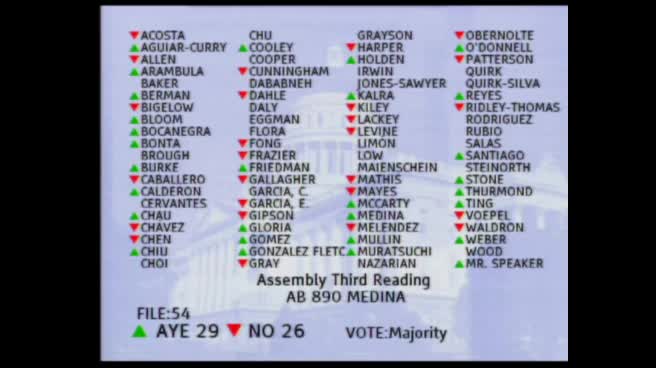

Bill Author

Bill Co-Author(s):